



Fresh-picked cucumbers, crushed to release their subtle sweetness, then dressed in a tangy, aromatic sauce that clings to every broken piece—this is the kind of salad that tastes like summer’s best moments. If you’ve ever had the real thing at a Chinese restaurant or someone’s home kitchen, you know exactly what I mean. It’s nothing like a regular salad where you toss uniform slices in dressing. Smashed cucumber salad is textural, juicy, and because the skin, flesh, and dressing are all broken together, you get flavor in every bite, not just on the outside.
The real magic isn’t complicated, though. It comes down to one technique done right, a handful of ingredients chosen with care, and understanding why each step matters. Once you nail this, you’ll make it constantly—for weeknight dinners, to bring to potlucks, alongside grilled meats, with noodle dishes, or even on its own when you’re too hot to cook anything else. This salad is refreshing without being boring, takes about 15 minutes from start to finish, and tastes even better the longer it sits in the fridge.
I’m going to walk you through exactly how to make this work, including the specific cucumbers to buy, the technique that actually breaks them properly, the dressing proportions that balance heat and acid, and all the little adjustments that turn a decent version into one you’ll crave. You’ll also learn what goes wrong most often and exactly how to fix it before it happens.
Why This Cucumber Salad Deserves a Permanent Spot in Your Rotation
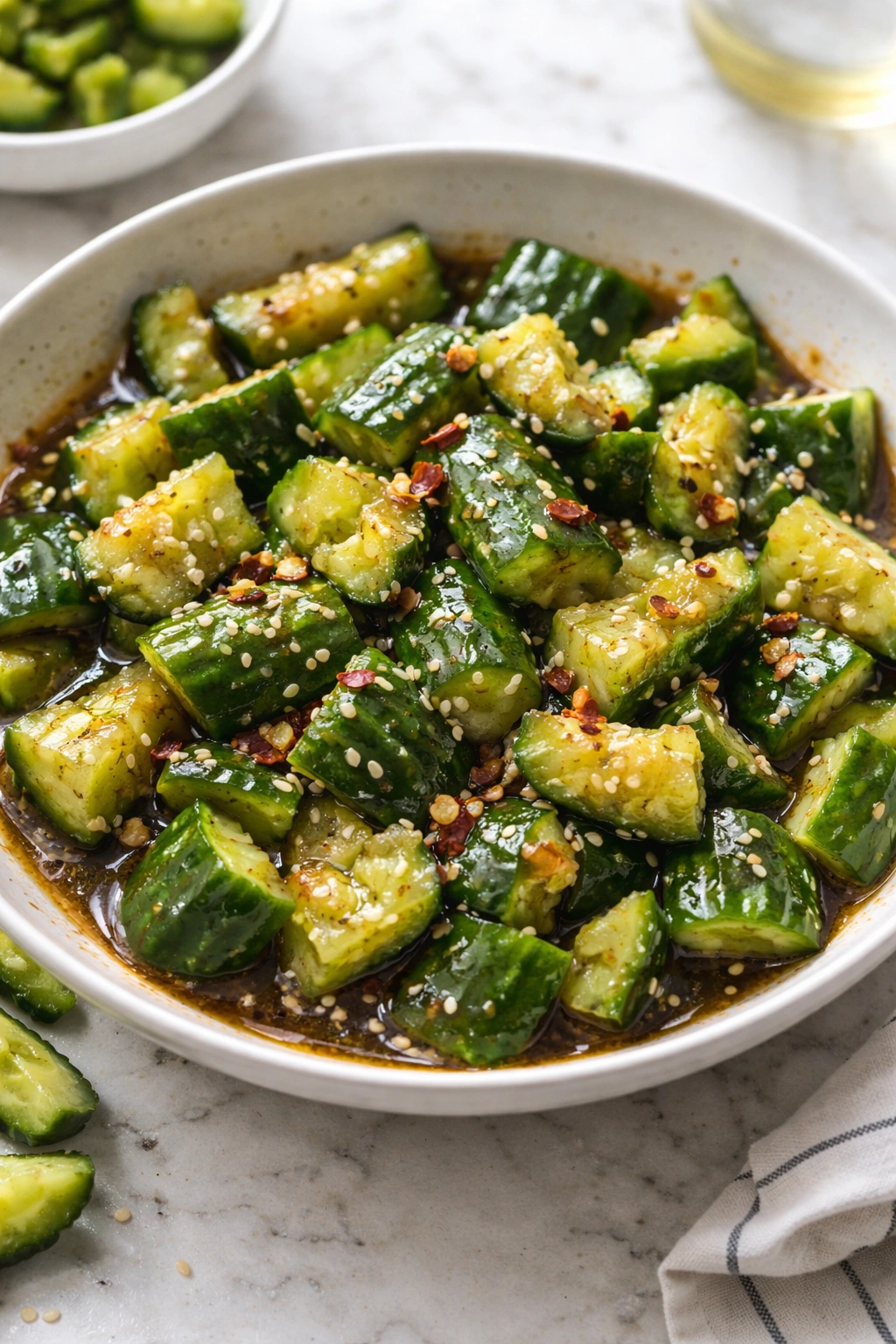
This isn’t a salad you make because you have leftover ingredients or because it’s technically healthy. You make it because it genuinely tastes exceptional—bright, textured, and completely crave-worthy. The contrast between cool, crisp cucumber and warm, garlicky, slightly spicy dressing creates something that feels indulgent without being heavy. On a hot day, it’s genuinely cooling. Alongside rich dishes—grilled fatty fish, roasted chicken thighs, braised pork—it cuts through and refreshes your palate perfectly.
The other reason to keep this on rotation is its flexibility. Same base, completely different feels depending on what you add to the dressing. One night it’s cooling and garlicky, the next it’s fiery with chili oil, the next it’s herbaceous with cilantro and mint. You can make it the morning of a meal and it only improves as it sits. It stores beautifully for three days, travels well, doesn’t wilt if it’s been sitting out, and actually tastes better at room temperature than straight from the fridge.
And honestly, once you understand the smashing technique and the ratio of cucumber to dressing, you’ll never be intimidated by making this again. It becomes one of those automatic recipes—the kind you make without thinking because you’ve done it so many times.
The Magic of Smashing: Why This Technique Changes Everything
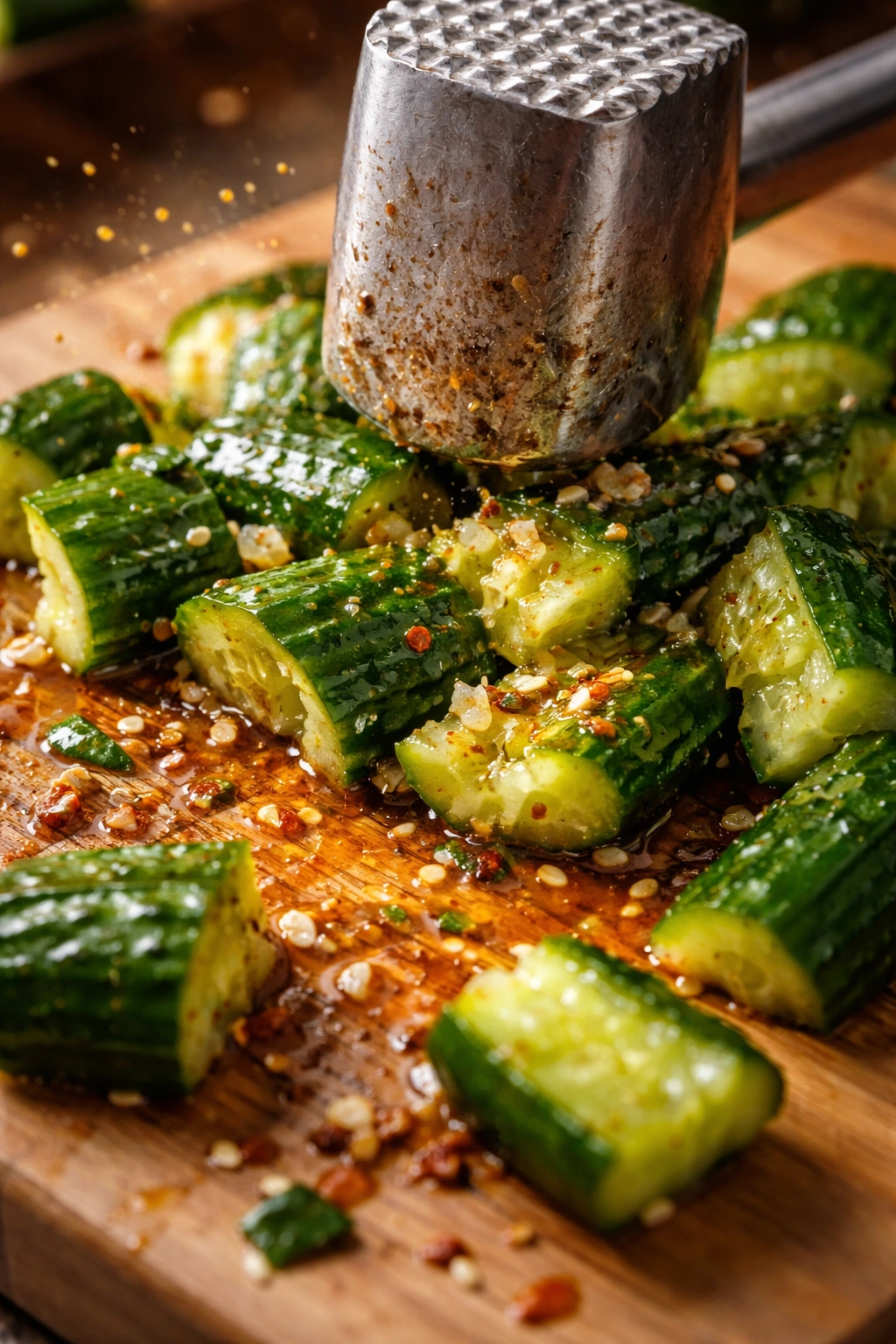
Here’s what makes this salad different from any other you’ve ever made. You don’t slice the cucumbers into neat rounds and toss them gently with vinaigrette the way you would with a traditional salad. Instead, you literally smash them—crack them open, break them into uneven chunks, rupture the flesh so that the insides come into direct contact with the dressing and the seasonings.
This matters for three specific reasons. First, smashing breaks down the cucumber’s cell walls, which means the dressing doesn’t just coat the outside of each piece—it actually soaks into the flesh. Second, it creates irregular, jagged pieces with more surface area than neat slices, so every bite has that contrast between the soft, absorptive interior and the firmer skin. Third, the act of breaking releases cucumber’s own natural juices, which mixes with the dressing and becomes part of the sauce itself. The result is juicier, more flavorful, and more interesting than any sliced-and-tossed salad could ever be.
The technique itself is straightforward but requires the right tool. You want a meat mallet or the side of a heavy knife—something that can deliver real force without cutting. Place the cucumber on a cutting board, set your tool flat against it, and hit with firm, confident strokes. You’re not trying to pulverize it into mush; you want pieces roughly the size of a grape or cherry tomato, still recognizable as cucumber chunks, but thoroughly cracked and broken. It takes maybe 30 seconds per cucumber.
Choosing the Right Cucumbers for Maximum Flavor
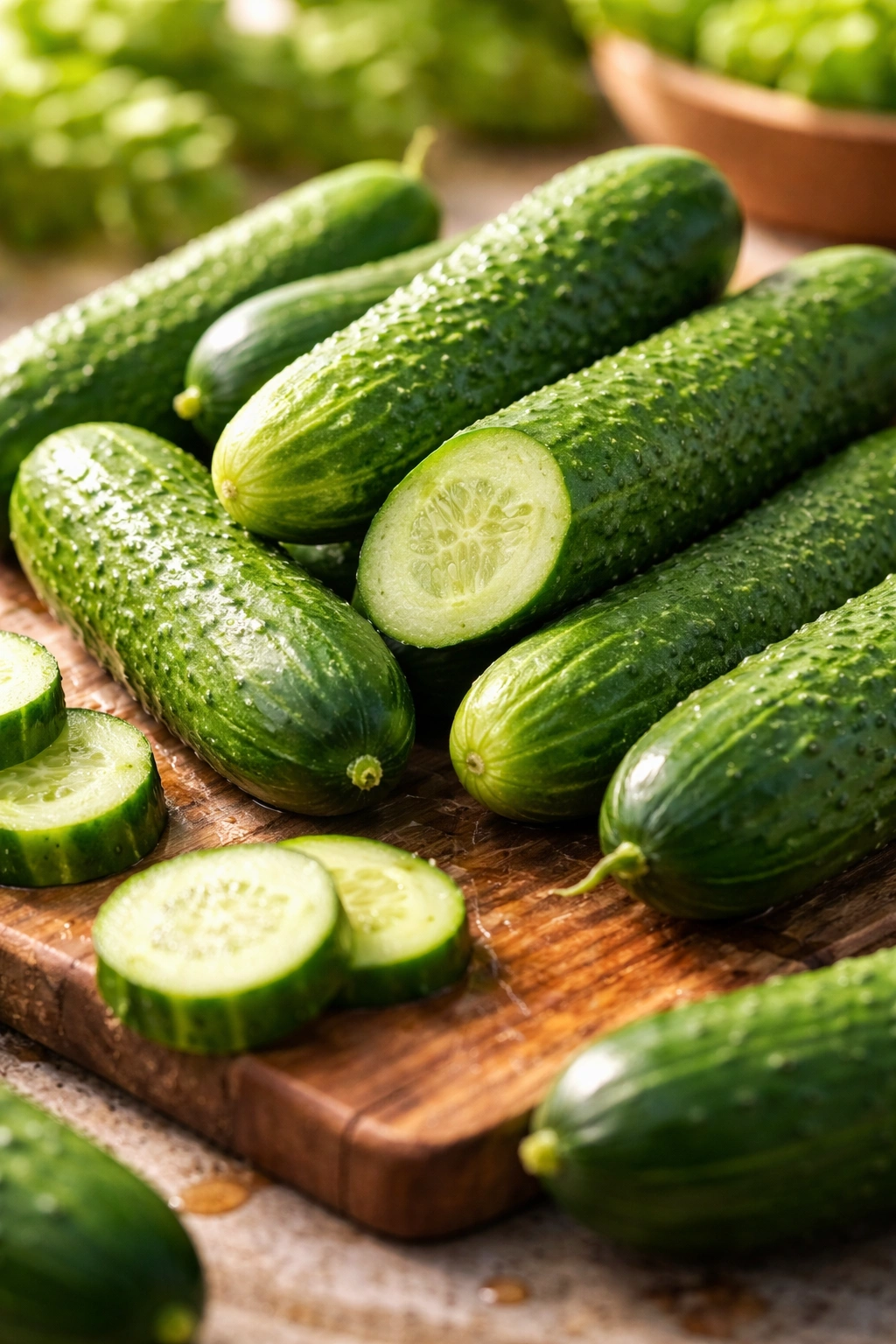
This is where a lot of home versions go wrong. The salad only works if you start with cucumbers that have actual flavor and the right texture when broken. Long, thin English cucumbers from the grocery store tend to be watery and mild—they’ll work, but they’ll be disappointingly bland. Persian cucumbers are better because they’re smaller and denser with thinner skin, but they’re harder to find. The best option, if you have access to a farmers market or can grow them yourself, is the classic pickling cucumber or a short, stubby Asian variety. These have less water, thicker flesh, and real cucumber flavor that stands up to the dressing.
If you’re buying from a regular grocery store, look for cucumbers that feel heavy and firm, not soft or hollow. The skin should be bright and unblemished. Smaller cucumbers generally have fewer seeds and less water than massive ones. Avoid anything labeled “seedless” or “hothouse” unless you literally can’t find anything else—those are bred to be watery and mild. Room-temperature cucumbers taste better than ice-cold ones straight from the fridge because the cold dulls flavor; if you have time, take them out 20 minutes before you plan to prep the salad.
Don’t peel them. The thin green skin provides structure that keeps the chunks from falling apart when they’re broken, and it also tastes good—subtle, slightly vegetal, and it adds visual appeal. Unless your cucumbers have thick, waxy skin, leave the peel on entirely.
The Essential Ingredients That Make This Salad Sing
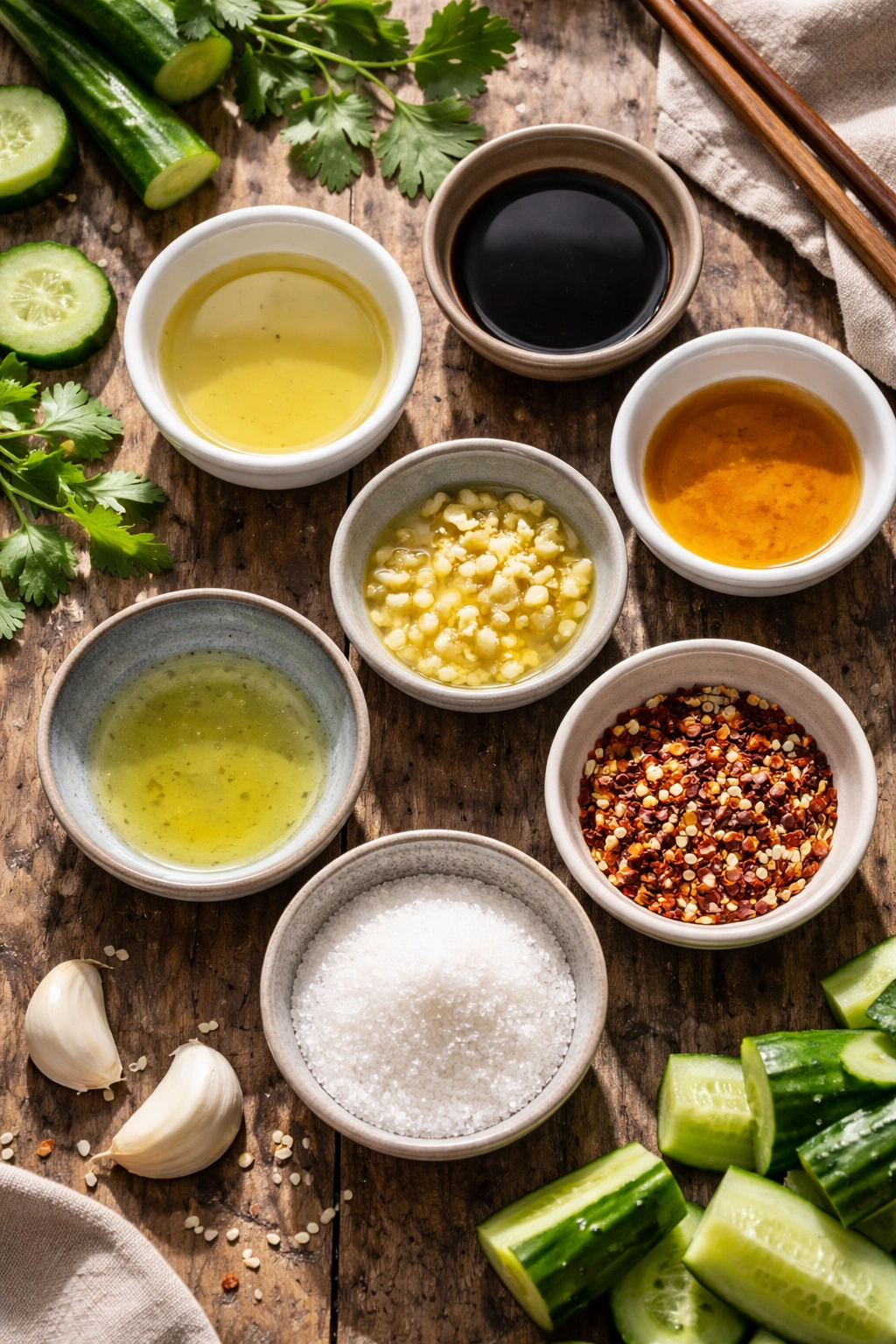
The dressing is what transforms smashed cucumbers from a neutral vegetable into something genuinely delicious. The base is rice vinegar or rice wine vinegar—it’s gentler and slightly sweeter than white vinegar, which matters because you want tang without harshness. You’ll also need sesame oil for depth and nutty richness, soy sauce for salty umami backbone, garlic for sharp bite, and some form of heat, which comes from dried chili flakes or fresh chili oil.
Fresh garlic, not powdered, is non-negotiable. One or two cloves, depending on size, crushed or minced fine. The heat of freshly crushed garlic wakes up the entire salad. Salt is usually just from the soy sauce, but taste and adjust—you might need a pinch more. Some people add a touch of sugar to round out the acid, and that’s fine, but it’s optional. A little splash of the cucumber’s own liquid (which pools at the bottom after smashing) goes right back into the dressing, which strengthens the flavor.
Optional but excellent additions include white or black sesame seeds for crunch and nuttiness, fresh cilantro or Thai basil for herbal notes, crushed peanuts for richness, Sichuan peppercorns for numbing heat and complexity, or a squeeze of fresh lime juice for brightness.
Yield, Prep Time, Cook Time, and Difficulty
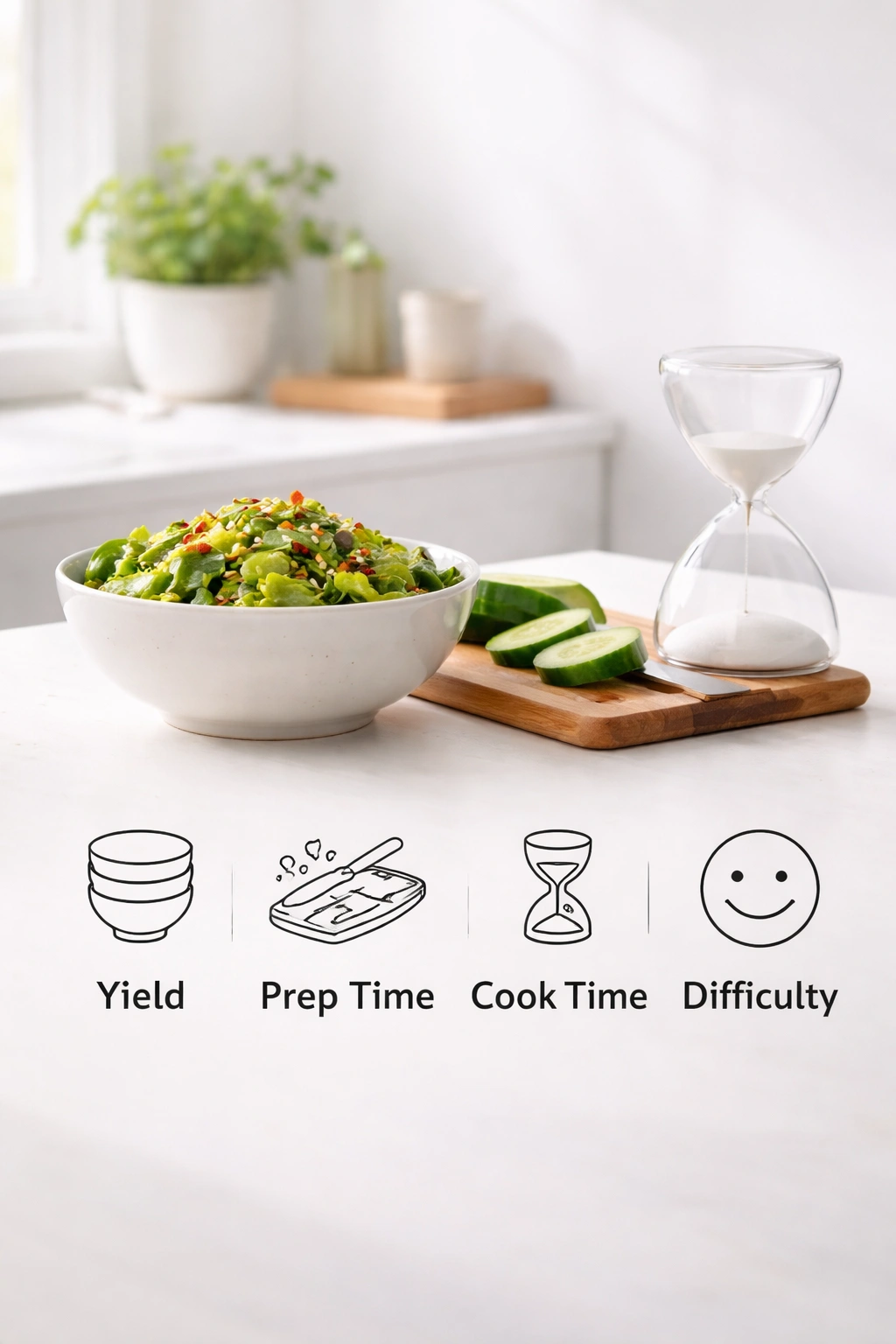
Yield: Serves 4 as a side dish | Makes about 4 cups
Prep Time: 15 minutes (mostly smashing the cucumbers)
Cook Time: 0 minutes (no cooking required — this is a cold salad)
Total Time: 15 minutes active + 30 minutes to 2 hours resting (the salad improves as it sits, but can be served immediately if needed)
Difficulty: Beginner — the smashing technique requires no special skill, the ingredients are straightforward, and there’s genuinely nothing that can go wrong if you follow the steps.
Complete Ingredient List
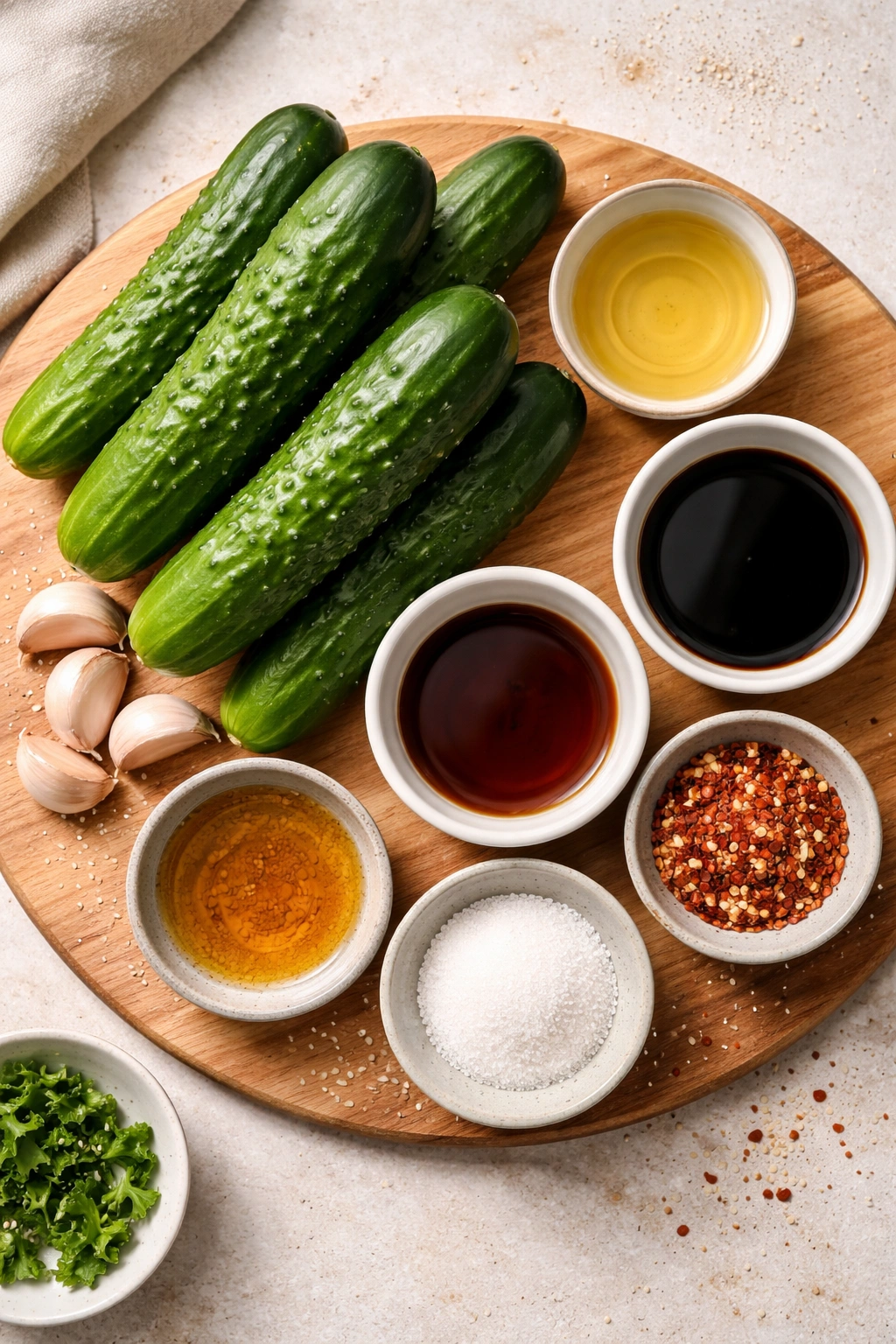
For the Salad:
- 1½ pounds (about 5 to 6 medium) cucumbers, preferably Persian, pickling, or Asian varieties
- ½ teaspoon fine sea salt (for initial seasoning before smashing)
For the Dressing:
- 3 tablespoons rice vinegar (or rice wine vinegar)
- 2 tablespoons soy sauce
- 1 tablespoon sesame oil
- 2 cloves garlic, crushed or minced very fine
- ¼ to ½ teaspoon dried chili flakes (or 1 to 2 tablespoons chili oil, if you prefer — adjust heat level to your preference)
- 1 teaspoon granulated sugar (optional but recommended for balance)
- 2 tablespoons reserved cucumber liquid (the juice that pools after smashing)
Optional Garnishes:
- 1 tablespoon white or black sesame seeds (or both)
- Fresh cilantro or Thai basil, torn gently
- Crushed roasted peanuts
- Thinly sliced scallions
- A pinch of Sichuan peppercorns if you have them
Step-by-Step Instructions
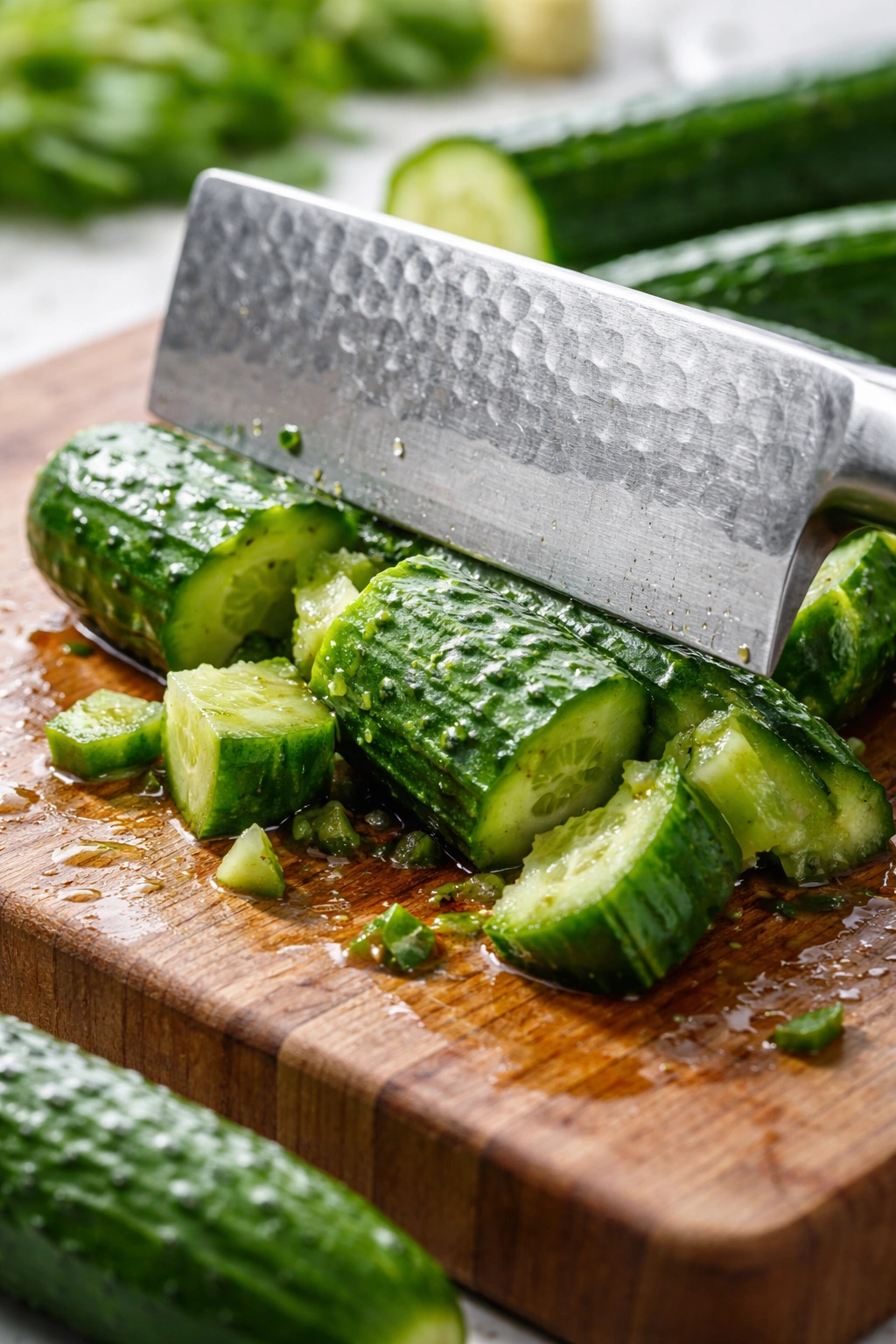
Prepare the Cucumbers:
-
Rinse the cucumbers under cool water and pat dry thoroughly with paper towels. Moisture on the outside will prevent your mallet from making clean contact, so don’t skip this step.
-
Trim off about ¼ inch from each end of the cucumber, where the flesh tends to be watery and the flavor is less developed. Line the cucumbers up on a sturdy cutting board.
-
Using a meat mallet, the flat side of a heavy knife, or even a rolling pin, firmly smash each cucumber with confident, deliberate strokes. You want to hear the crack and feel the flesh break apart. Work along the length of the cucumber, rotating it as you go, until it’s broken into irregular chunks roughly the size of a grape or small cherry tomato. The skin should be cracked and the flesh exposed, but you’re not creating mush—you want recognizable pieces. This takes about 30 seconds per cucumber.
-
Transfer the smashed cucumbers to a colander set over a bowl. Sprinkle them with the fine sea salt and let them sit for 5 minutes. This draws out some of the excess water, which will pool at the bottom of the bowl beneath the colander. You’ll use some of this liquid in the dressing, so save it.
Make the Dressing:
-
In a small bowl, whisk together the rice vinegar, soy sauce, sesame oil, crushed garlic, chili flakes, and sugar (if using). Taste it—it should be balanced between salty, sour, and slightly sweet, with a gentle heat underneath. If it tastes too acidic, add ½ teaspoon more sugar. If it needs more heat, add another pinch of chili flakes. Adjust the soy sauce if it needs more saltiness.
Advertisements -
Pour about 2 tablespoons of the reserved cucumber liquid (the juice from step 4) into the dressing and stir well. This dilutes the dressing slightly and gives it a lighter, more integrated flavor. If the dressing seems too thick or concentrated, add another tablespoon of cucumber liquid.
Combine and Rest:
-
Shake the cucumbers in the colander gently to remove excess water, then transfer them to a serving bowl or a glass storage container. Pour the dressing over the smashed cucumbers and gently toss to coat everything evenly. Do not toss aggressively—your goal is to distribute the dressing, not to break the cucumbers further or mash them into a mushy consistency.
-
Let the salad sit at room temperature for at least 30 minutes before serving. The cucumbers will absorb the dressing and the flavors will meld and deepen. You can serve it right away if you’re in a hurry, but it’s genuinely better with time. The salad actually improves over the next 2 to 4 hours.
-
Taste one more time before serving and adjust salt, soy sauce, vinegar, or chili flakes as needed. Garnish with sesame seeds, fresh herbs, scallions, or crushed peanuts if you’d like. Serve at room temperature or chilled, depending on the weather and what you’re eating it with.
The Common Mistakes That Ruin This Salad (and How to Avoid Them)
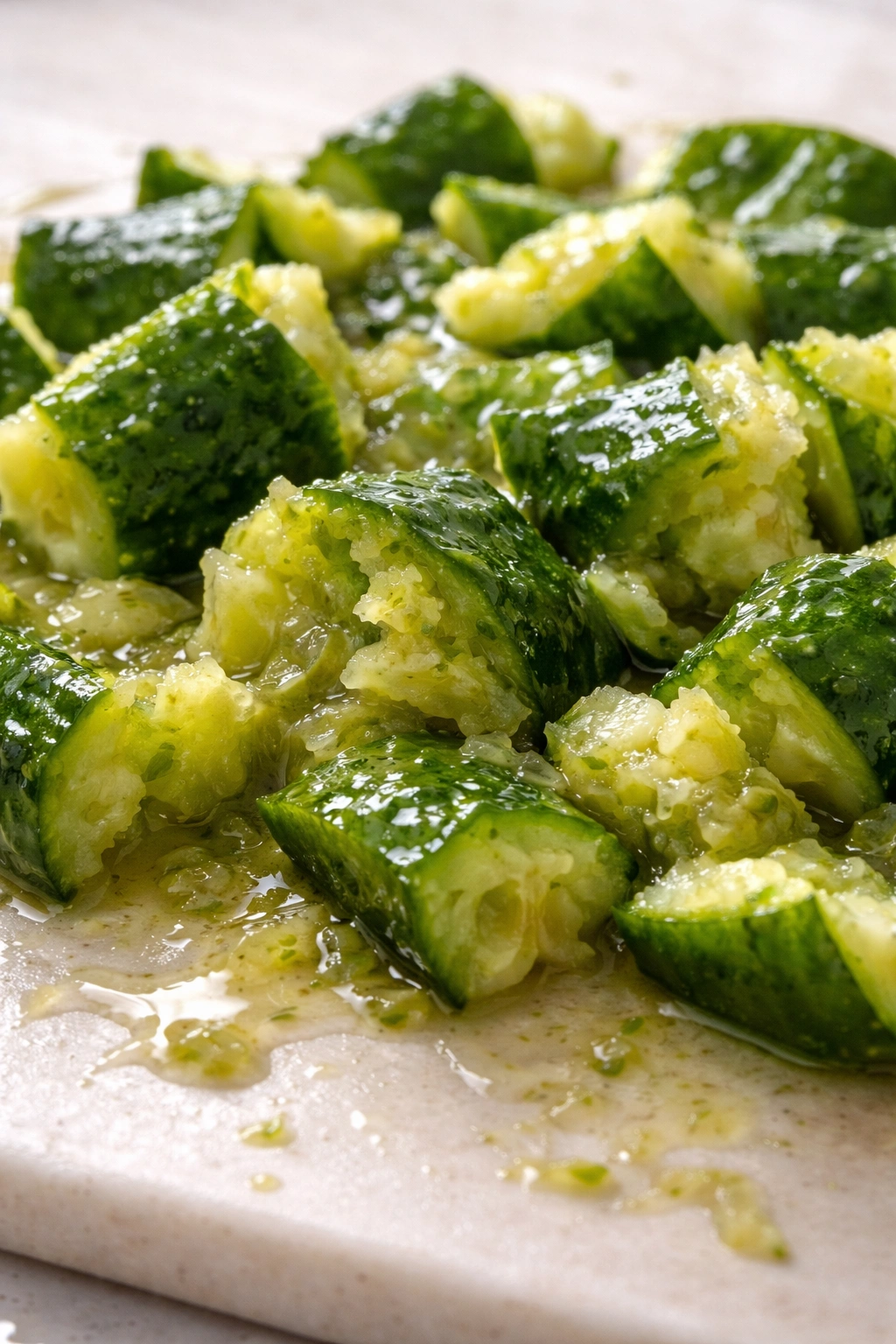
Over-smashing into mush: This is the most common error. If you keep hitting the cucumbers long after they’re broken, they’ll turn into a mushy, unpleasant texture that absorbs too much dressing and becomes soggy. Smash until they’re cracked and chunky, then stop. You want pieces you can actually see and feel, not pulp.
Using watery, bland cucumbers: If your cucumbers are the long, pale, watery English varieties from a conventional grocery store, the salad will taste flat no matter what else you do. Seek out smaller, denser varieties or plan a trip to a farmers market. It genuinely makes the difference between a mediocre salad and one you’ll crave.
Making the dressing taste too strong: A common instinct is to use a heavy hand with vinegar or soy sauce, which makes the dressing overpowering and one-dimensional. Remember that this dressing needs to complement the cucumber, not dominate it. Start with the measurements given, taste, and adjust in small increments. A tiny pinch of sugar balances acid better than more vinegar or soy sauce ever will.
Not letting it rest: If you eat this immediately after assembling it, the flavors haven’t had time to meld and the cucumbers haven’t absorbed the dressing yet. Even 20 minutes makes a noticeable difference. The best version sits for at least 30 minutes. If you’re making it ahead for a meal later in the day, that’s actually perfect—it’ll be at peak flavor by the time you eat it.
Pressing out all the cucumber liquid: Some recipes tell you to salt the cucumbers and let them drain for 30 minutes or longer to remove “excess water.” This is a mistake. Yes, you want to remove some water so the salad doesn’t become a puddle, but you don’t want to press them dry. The cucumber liquid that pools is flavorful—it’s full of subtle sweetness and freshness. That’s why you save it and use it in the dressing. Five minutes of resting with salt is enough.
Forgetting to taste and adjust: Every cucumber variety and every brand of soy sauce and vinegar tastes slightly different. Don’t just follow the recipe blindly. After you’ve made the dressing, taste it. Does it need more salt? More acid? More heat? Make tiny adjustments before you pour it on the cucumbers. That five seconds of tasting will make the difference between a good salad and one that tastes exactly right.
Flavor Variations to Keep Things Interesting
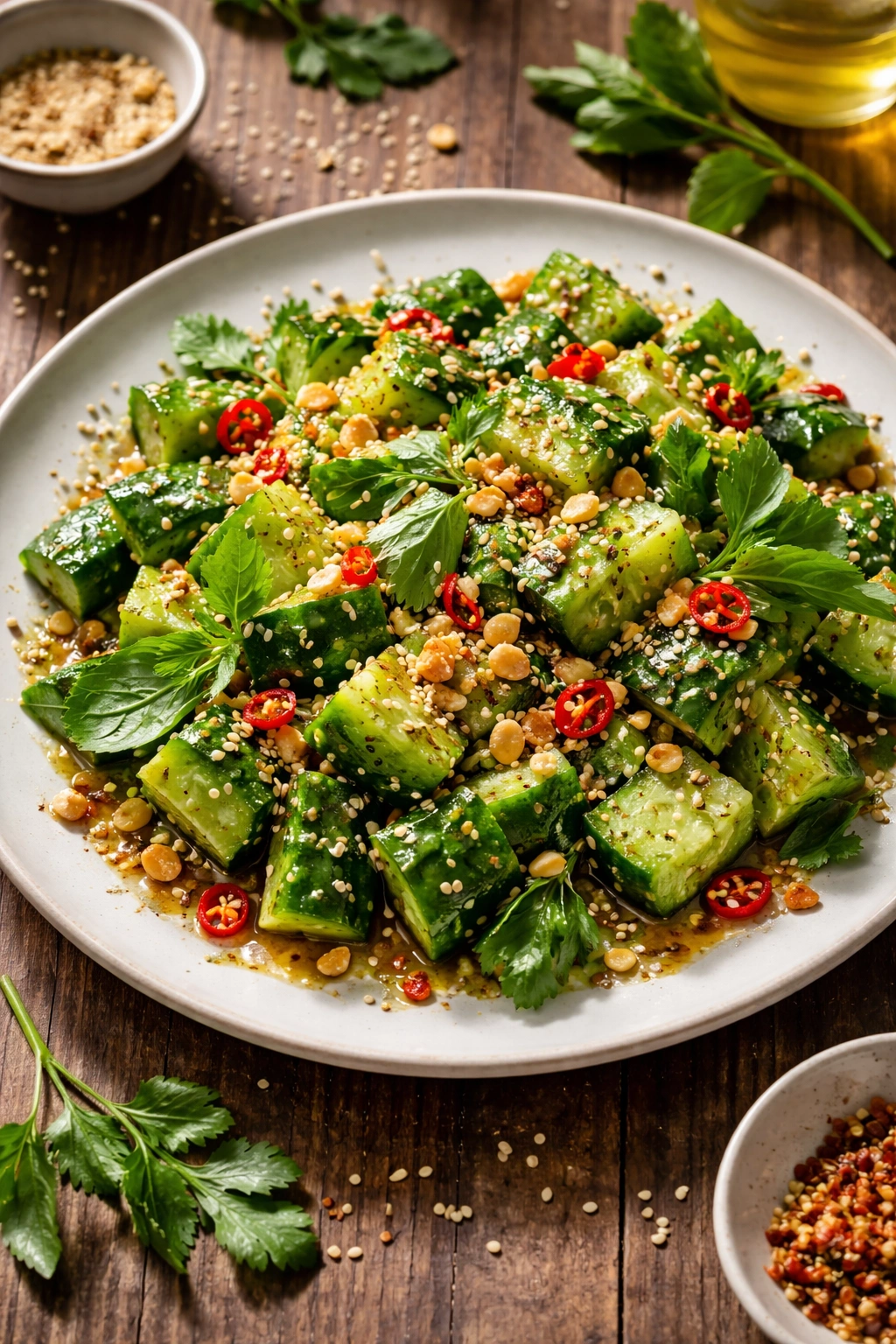
The Sichuan Peppercorn Version: This is for when you want something with numbing heat and aromatic complexity. Add ½ teaspoon of crushed Sichuan peppercorns to the dressing, or toast them lightly in a dry pan first, crush, and sprinkle on top just before serving. Sichuan peppercorns don’t taste hot—they taste peppery and slightly citrusy, and they create a tingling sensation on your mouth. This transforms the salad into something sophisticated and distinctly Asian.
The Herbaceous Thai Version: Swap half the cilantro for fresh Thai basil if you can find it, or regular basil in a pinch. Add the zest and juice of one lime to the dressing instead of some of the vinegar, and use chili oil instead of dried flakes if you have it. Top with crushed roasted peanuts and fried shallots if you have them. This version tastes bright, herbal, and summery.
The Ginger-Scallion Version: Add one tablespoon of freshly grated ginger to the dressing along with the garlic. Reduce the vinegar to 2 tablespoons if the ginger makes it taste too sharp. Top with lots of thinly sliced scallions and a drizzle of more sesame oil. This version has warming spice underneath the cool cucumber.
The Spicy Oil Version: Instead of using dried chili flakes, use 2 to 3 tablespoons of chili oil—the kind with flakes suspended in hot oil. You can buy it or make your own. Use less sesame oil to compensate (reduce to ½ tablespoon) so the salad doesn’t become too oily. This creates a different flavor profile—richer, warmer, and more complex.
The Simple Garlic Version: If you want to dial down the complexity, skip the sugar, the chili flakes, and any garnishes. Just use garlic, soy sauce, rice vinegar, sesame oil, and some of the reserved cucumber liquid. This is the purest version—all about the cucumber flavor with savory, garlicky, slightly acidic dressing. It’s actually perfect alongside other flavorful dishes where you don’t want the side to compete.
The Peanut Noodle Salad: Make the salad exactly as written, but after it’s rested, toss it with cooled cooked noodles (rice noodles or soba work beautifully) and a couple tablespoons of peanut butter thinned with a little water. Top with crushed roasted peanuts, cilantro, and sliced scallions. This transforms it from a side salad into a complete, protein-rich meal.
Storage, Make-Ahead, and Keeping It Fresh
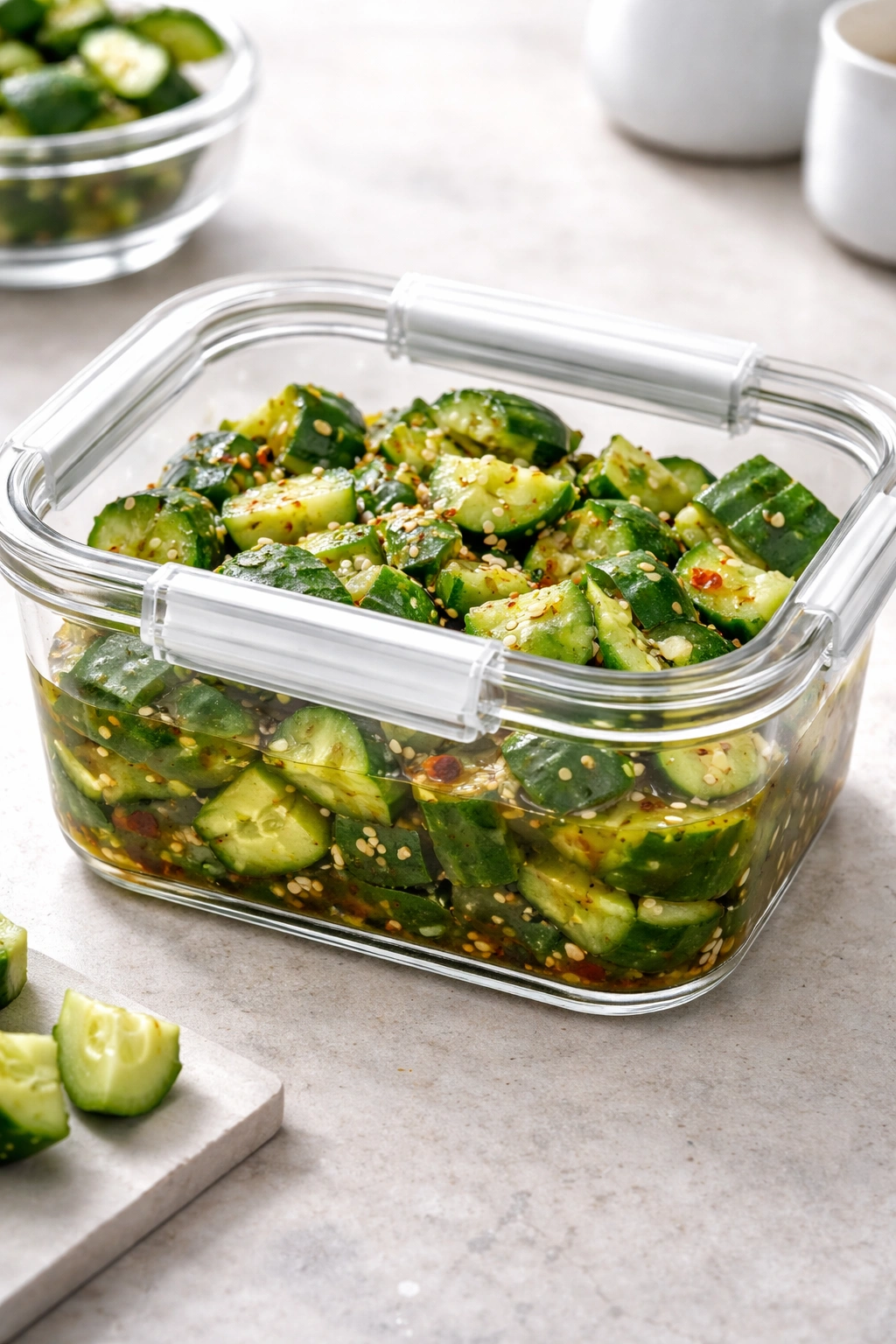
This salad is genuinely excellent the next day and even better the day after that, as long as you store it correctly. The flavors deepen, the cucumbers soften slightly and become more tender, and everything melds into something unified and cohesive. It’s one of the best make-ahead salads you can prepare.
Refrigerator storage: Transfer the salad to a glass container with an airtight lid. It keeps beautifully for three days, sometimes four if your cucumbers were very fresh. Don’t refrigerate it until right before you put it in the fridge—let it rest at room temperature for at least 30 minutes first. When you take it out of the fridge, let it sit at room temperature for 10 to 15 minutes before serving, as the cold dulls the flavors slightly.
How far ahead can you make it: You can prepare this salad anywhere from 4 hours to a full day before serving. The closer to serving time you make it, the fresher it tastes. But honestly, a salad made the morning of dinner will taste better than the same salad made the night before, because the cucumbers stay crisper around the edges. If you’re making it more than 8 hours ahead, slightly underdress it and add a bit more dressing right before serving, as the cucumbers will absorb quite a bit of liquid over time.
Freezing: Don’t freeze this salad. The cucumber’s cell structure breaks down when frozen and thawed, creating a mushy, waterlogged texture that defeats the whole point. However, you can make and freeze the dressing separately (without the cucumber liquid) in an airtight container for up to three months. When you’re ready to use it, thaw it at room temperature, add fresh cucumber liquid, and smash your cucumbers fresh.
Keeping it from becoming too soupy: As the salad sits, cucumbers continue to release water, which can make the whole thing weepy by the next day. If you’re making it ahead and want to keep it crisp, drain off excess liquid before serving and add a fresh splash of the dressing. Alternatively, reserve the cucumbers and dressing in separate containers and combine them 30 minutes before serving.
Best Serving Suggestions and Pairings
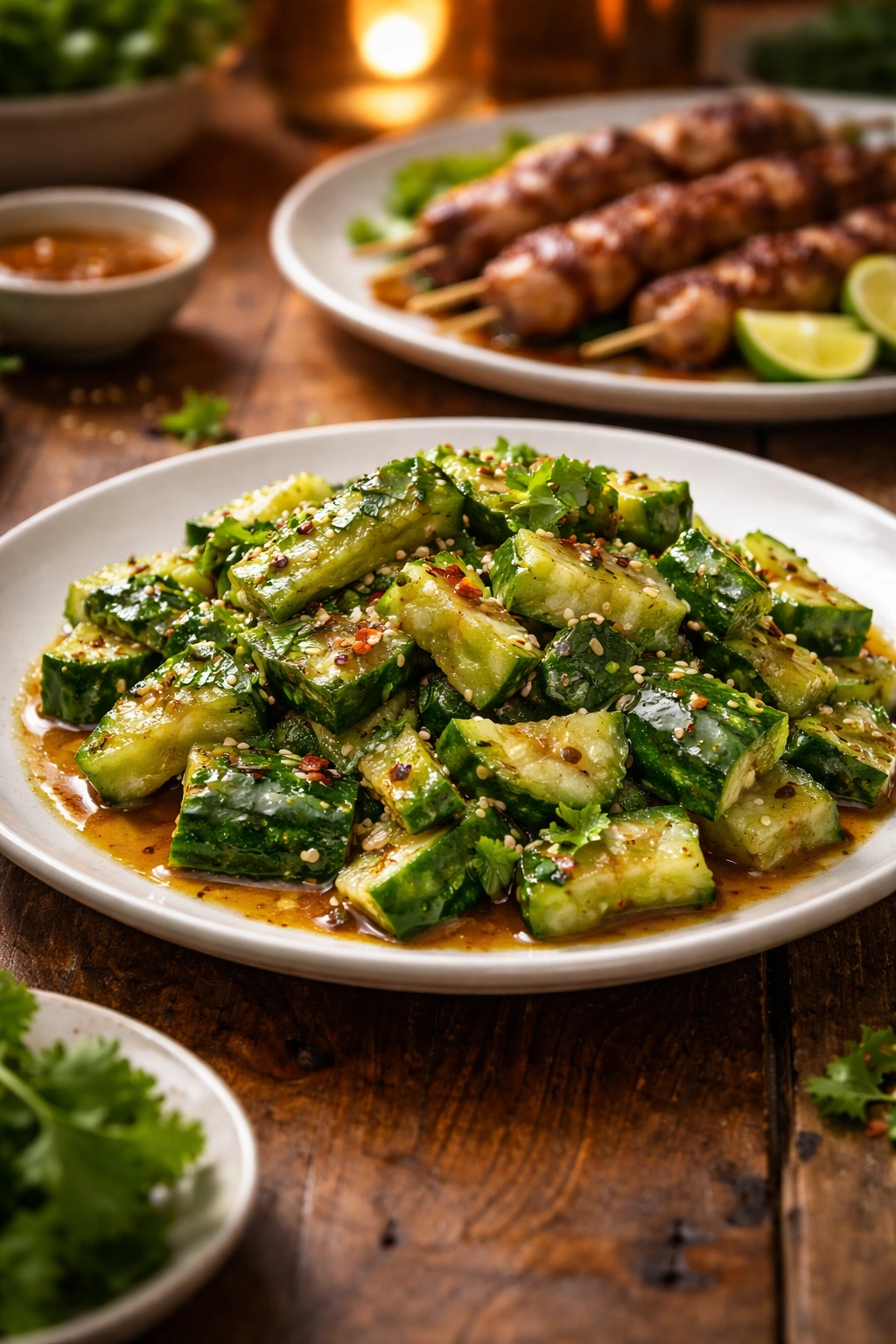
This salad is genuinely versatile, but it shines most alongside rich, savory dishes where its cooling, acidic quality provides balance and brightness.
Alongside grilled meats: This is the classic pairing. Serve it with grilled chicken thighs, duck breast, pork belly, or lamb. The cool, garlicky dressing cuts through the richness of the fat and refreshes your palate between bites. It’s especially excellent with anything served with chili oil or soy-based glazes, because the flavors echo each other.
With noodle dishes: Serve it alongside ramen, lo mein, chow mein, or any Asian noodle preparation. It provides a light, fresh contrast to the richness of broth or oily noodles. It’s also spectacular mixed into cooled noodles to create a cold noodle salad.
As part of a larger spread: In the context of a multi-dish meal—like a Chinese restaurant spread or a mezze board—this salad provides essential freshness and palate-cleansing. Serve it alongside braised meats, fried appetizers, and rich side dishes, and it becomes the thing people return to over and over.
Alongside fish: Smoked salmon, grilled fish, or cured fish all pair beautifully with this salad. The garlicky, acidic dressing complements the delicate fishiness without overpowering it.
In summer picnics: Pack it in a container and bring it to an outdoor gathering. It doesn’t wilt, it travels well, it tastes good at room temperature, and it feels fresh and light when everything else is heavy and rich.
As an actual meal on a hot day: Serve it over cooled rice or noodles with some kind of protein—grilled tofu, shredded rotisserie chicken, or hard-boiled eggs—and you have a complete, satisfying meal that feels light and refreshing despite being genuinely filling.
Texture note: If you’ve made it and the cucumbers have softened more than you’d like (which happens if it’s been sitting for 8+ hours), you can add a small handful of crushed ice to the bowl 10 minutes before serving. The ice will chill everything and crisp up the cucumbers slightly without watering down the dressing.
Final Thoughts
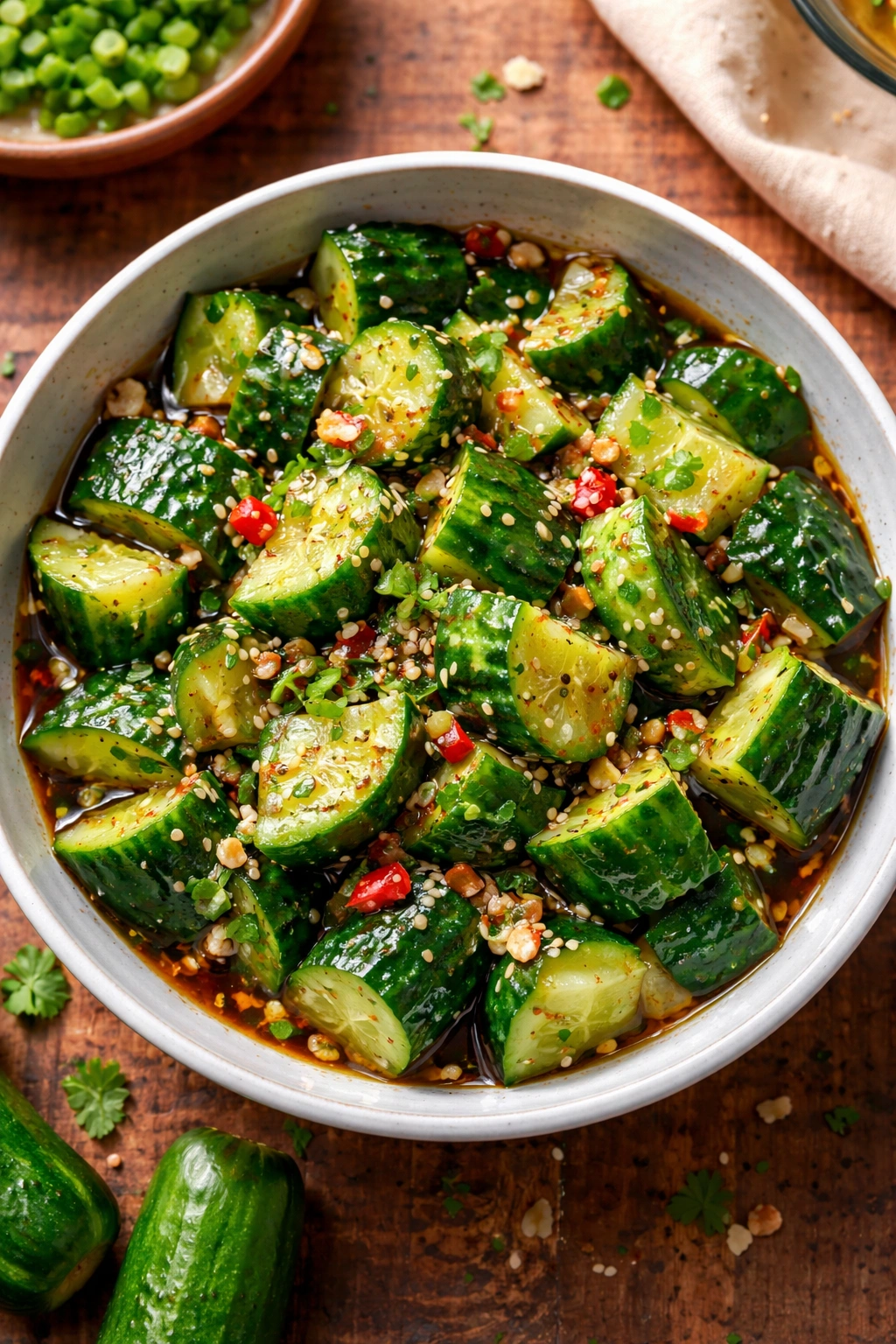
This salad is the kind that seems simple until you’ve tried a mediocre version and realize how much technique and ingredient quality matter. Smashing the cucumbers instead of slicing them changes everything. Using cucumbers that actually taste like something instead of watery default grocery-store ones is non-negotiable. And taking the time to let the salad rest so the flavors can meld means the difference between something forgettable and something you’ll plan meals around.
The beautiful part is that once you understand the core technique and the basic proportions, you can spin it endlessly—more garlic and chili one night, herbal and fresh the next, rich with peanuts and oil on another. It’s fast enough to make for weeknight dinners, impressive enough to bring to gatherings, and good enough to eat on its own when it’s too hot to cook anything else. Make it once, and I promise it becomes a regular in your rotation. Make it a few times, and you’ll have it memorized well enough that you never need to check a recipe again.
