



There’s something about a loaded baked potato salad that stops conversations at a potluck. The moment you set it down, people’s heads turn. They abandon their forks mid-bite of whatever sad casserole they were eating to ask for your recipe. It’s not fancy. It doesn’t pretend to be something it isn’t. It’s just deeply satisfying — warm or cold, rich without being heavy, and absolutely loaded with the things people actually want to eat: cheese, bacon, sour cream, and fresh herbs instead of yet another mayo-heavy bowl of mayonnaise masquerading as a salad.
The beauty of this particular version is that it delivers restaurant-quality flavor through absolutely home-cook-friendly technique. No fancy potato varieties or hard-to-find ingredients. No complicated steps that require fussing over timing. What makes it different from the dozen other potato salads at the buffet table is a combination of textural contrast — crispy, roasted potato edges against creamy centers — and the way the flavors actually taste like themselves instead of blending into a homogeneous blob. The bacon is crispy enough to crunch. The cheese hasn’t dissolved into invisibility. The sour cream and green onions stay bright and distinct. It’s the potato salad that makes people ask for thirds and then look sheepish about it.
Whether you’re making this for a backyard barbecue, a family reunion, a summer wedding, or just because your kitchen smells like it should, this is the version that disappears first and earns you a reputation as someone who knows what they’re doing. The best part? It’s genuinely harder to mess up than most people think. There are a few key techniques that separate a good version from a mediocre one, and once you know them, you’ll make this instinctively and people will keep asking if you’d consider catering their events.
Why This Potato Salad Wins at Every Gathering
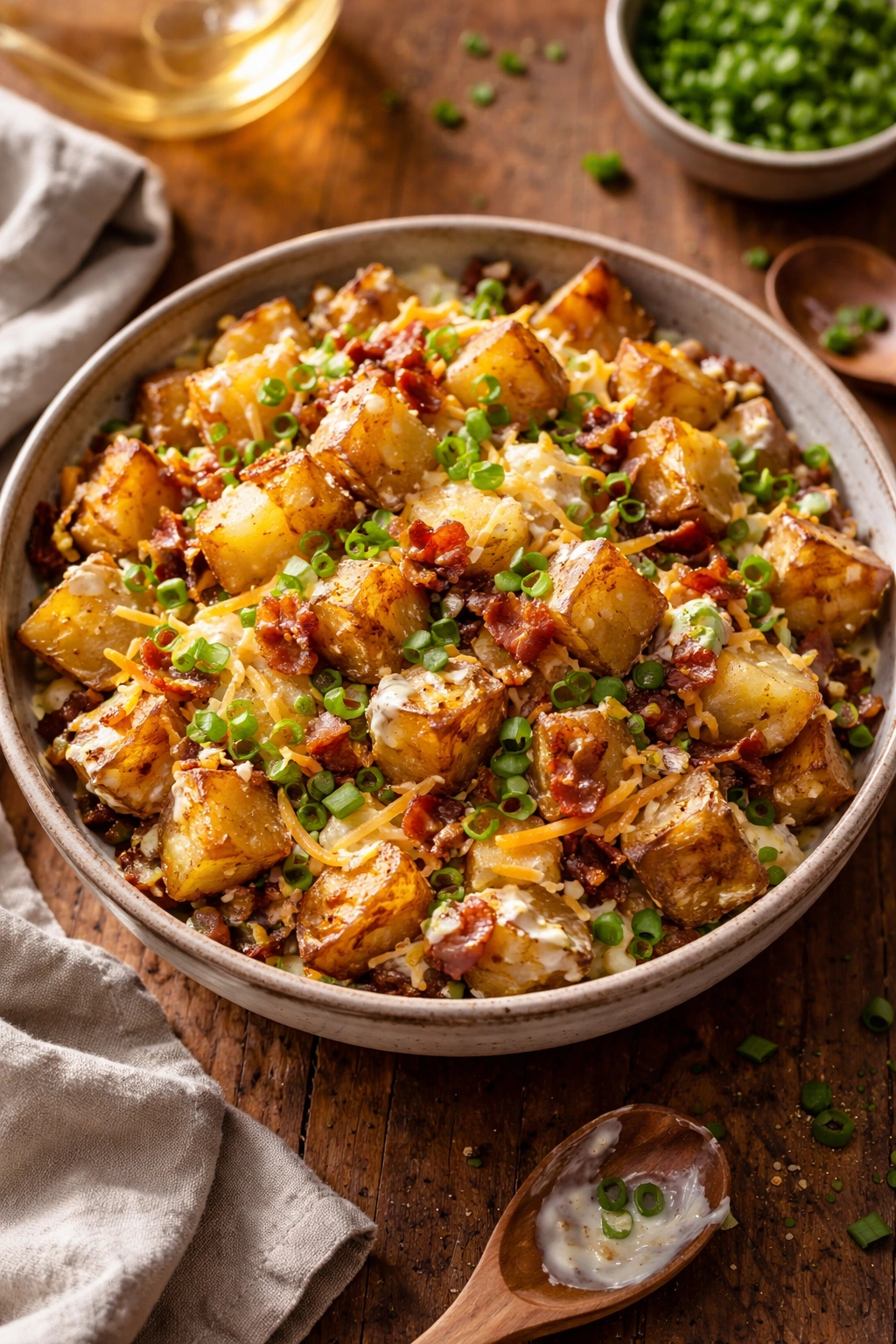
This potato salad wins because it respects the potato. Sounds obvious until you realize how many versions skip this entirely and start with whatever potatoes are on sale. The type of potato matters more than you’d expect, and the cooking method matters even more. A waxy potato like a Yukon gold or red potato holds its shape instead of turning to mush, while a starchy russet would fall apart at even the gentlest touch. That shape retention means you get distinct potato pieces in every bite instead of a chunky paste.
The roasting technique is where the magic actually happens. Instead of boiling potatoes in water like you’re making mashed potatoes, you’re roasting them cut-side down in a hot oven so they develop a golden, slightly crispy exterior. This creates textural interest — the outside gets a little caramelization and crispiness while the inside stays creamy and tender. It’s the same principle that makes roasted vegetables taste infinitely better than steamed ones: high, dry heat caramelizes the starches and develops deeper flavor.
What Makes It Different From Traditional Versions
Traditional mayo-heavy potato salad relies on the dressing to carry all the flavor. This version lets the potatoes themselves be the star and uses sour cream as the base instead of mayonnaise, which keeps things lighter and lets the other flavors come through more clearly. The sour cream also tangles better with the warm potatoes, creating a dressing that’s more cohesive instead of sitting on top like a separate layer.
Why People Actually Eat It at Barbecues
Unlike some salads that sit untouched while everyone gravitates toward the main proteins, this potato salad disappears steadily. It’s hearty enough to work as almost a side-and-protein combo on its own thanks to the bacon and cheese. It works at any temperature — people happily eat it warm right out of the serving dish, or cold straight from the fridge hours later. It pairs well with literally every grilled meat. And it’s not so heavy or rich that it makes you feel like you need to unbutton your shorts immediately after eating it.
The Secret to Crispy-Edged Potatoes That Stay Creamy Inside
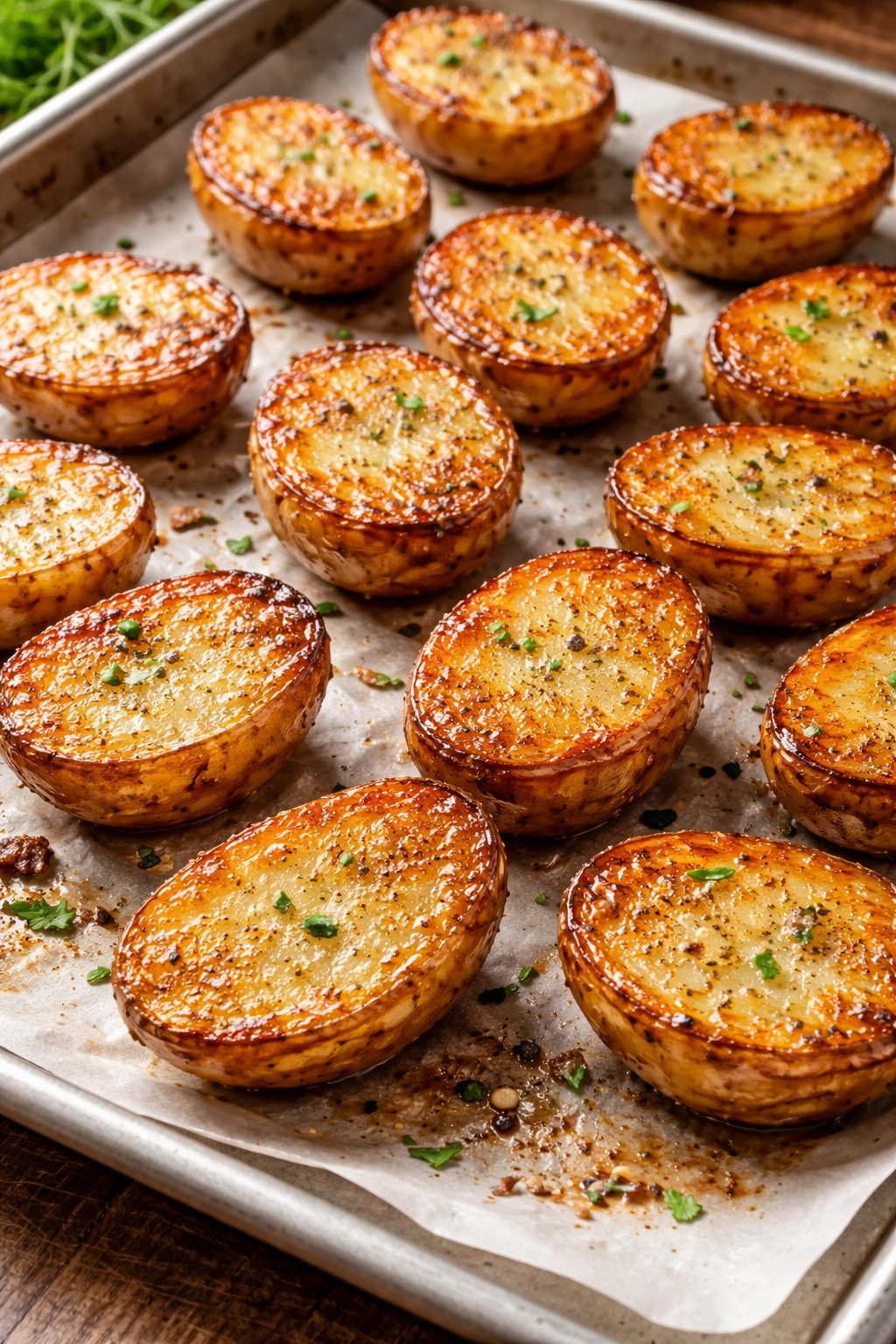
The potato preparation is where most people go wrong without realizing it. They boil potatoes whole, thinking they’re saving time, and end up with waterlogged, mealy results. Or they cube the potatoes, which increases surface area, but then they have no control over whether each piece cooks evenly. This method is different. You’re cutting the potatoes in half, leaving the skin on for texture and nutrients, and roasting them cut-side down on a baking sheet at high heat.
The cut-side down approach is crucial because that flat surface makes direct contact with the hot baking sheet, and that’s where the magic happens. The starch in the potato caramelizes. The exterior develops a light golden crust. Meanwhile, because potatoes are relatively small (you’re working with ones about the size of a golf ball to a walnut), the interior steams perfectly without drying out. You’re essentially creating a tiny, individual potato that tastes like it went through a fancy restaurant kitchen.
Getting the Temperature Right
Preheat your oven to 425°F (220°C) and get it fully heated before the potatoes go in — a full 15 minutes minimum. A cold or barely-warm oven won’t give you the crispy edges you’re after. You want that high initial heat to really attack the cut surface of the potato. If your oven runs cool (and many home ovens do), bump the temperature to 450°F (230°C) and check the potatoes at the earlier side of the cooking time to avoid overdoing them.
The potatoes should take 25 to 30 minutes depending on their size. You’re looking for the cut side to be golden with some darker caramelized spots, and when you pierce the thickest part with a fork, it should go through easily but with just a tiny bit of resistance — they should be tender but not mushy. That resistance is important because they’ll soften slightly more as they cool and then get tossed with the dressing.
Why You Don’t Peel Them
Leaving the skin on serves multiple purposes. It helps the potato hold its shape better during cooking and tossing. It adds visual appeal and textural contrast in the finished salad. It contains a lot of the potato’s nutrients and fiber. And most importantly, it tastes good. That thin, slightly crispy, earthy potato skin is exactly the kind of detail that makes people ask “What’s different about your potato salad?” The answer is never the exotic ingredient they’re hoping for — it’s usually something this simple.
Choosing Potatoes and Other Key Ingredients
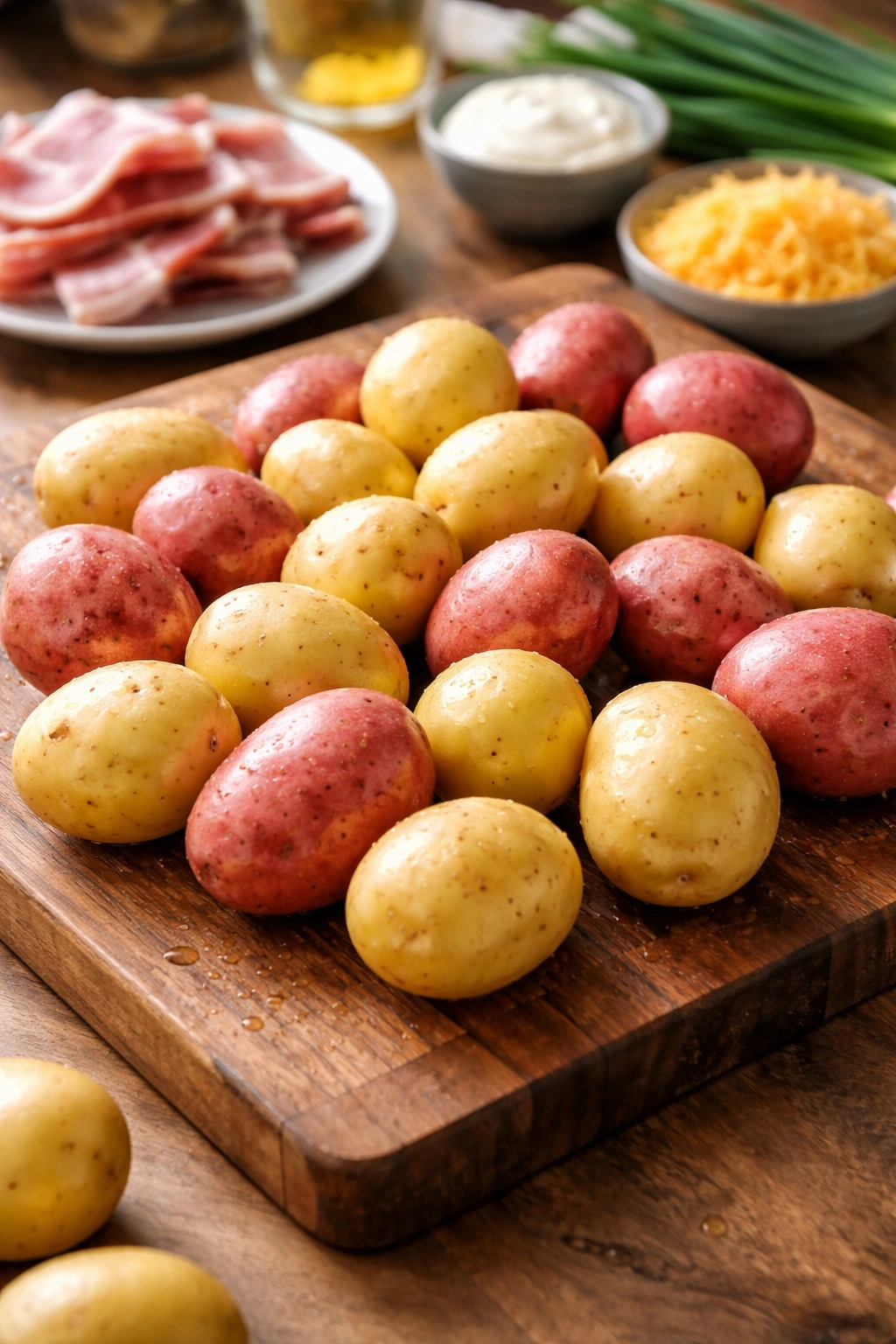
Waxy potatoes are non-negotiable here. Yukon gold potatoes are the gold standard (pun absolutely intended) — they have a naturally buttery flavor, hold their shape beautifully, and have a creamy texture even when cooked. Red potatoes work wonderfully too and have an even firmer structure. Don’t use russets or other high-starch potatoes unless you enjoy potato mush. Red and gold potatoes are also smaller on average, which means more uniform cooking and serving-size pieces.
Look for potatoes that are roughly similar in size — not necessarily tiny ones, but relatively uniform so they all cook at the same rate. If you have a few larger ones mixed in with smaller ones, the smaller ones will be overcooked and falling apart before the larger ones are finished. This is one of those details that seems picky but genuinely matters. If you’re buying them by the bag, give yourself a few minutes to hand-select ones that match in size rather than just grabbing the bag closest to you.
The Bacon Situation
Use thick-cut bacon if you can find it at your grocery store. It crisps differently than thin bacon — it gets sturdier and doesn’t shatter into a million pieces when you toss it through the salad. Regular bacon works fine if that’s what’s available, but thick-cut really does perform better here. Cook it until it’s genuinely crispy, not just mostly-cooked-still-floppy. You want it to have snap when you break it. This is one place where it’s worth cooking it longer than you might normally.
The fat from the bacon matters too. Don’t drain it completely. Save about 2 tablespoons of the rendered bacon fat and let it cool slightly, then whisk it into your sour cream mixture. It adds an incredible savory depth to the dressing and is exactly the kind of detail that separates this potato salad from every generic version. Your guests won’t be able to identify what that delicious savory note is — they’ll just know something is making it taste amazing.
Cheese Selection
Use a good sharp cheddar if you can — either white or orange, depending on what you prefer. Sharp cheddar has more developed flavor than mild cheddar, so you need less of it to make an impact, and it doesn’t get that odd rubbery quality that mild cheddar sometimes develops when mixed into potato salad. Avoid pre-shredded cheese if possible because it contains anti-caking agents that prevent it from melting smoothly and blending into the dressing. A block of cheese and a box grater takes literally two minutes and the results are noticeably better.
If you’re craving something different, extra-sharp cheddar is wonderful, as is a combination of cheddar and gruyere. Smoked cheddar is genuinely good if you want the salad to echo the BBQ flavors. Avoid soft cheeses and very mild options — they don’t contribute enough flavor to be worth the calories.
Sour Cream vs. Mayo
Sour cream is the dressing base here instead of mayo, which is a big deal. Sour cream keeps things lighter in weight and flavor. It lets the potato and other ingredients shine instead of making everything taste like the dressing. It also handles temperature fluctuations better — mayo can break or separate if it gets warm, while sour cream stays stable whether the salad is warm or cold. If you’re allergic to dairy or following a vegan diet, Greek yogurt is an excellent substitute that delivers similar tanginess and creaminess.
Use full-fat sour cream, not the reduced-fat version. The fat is what gives it texture and mouthfeel. Reduced-fat sour cream often contains starches and gums to replace the missing fat, and it makes the dressing feel gluey instead of smooth.
Building Layers of Flavor
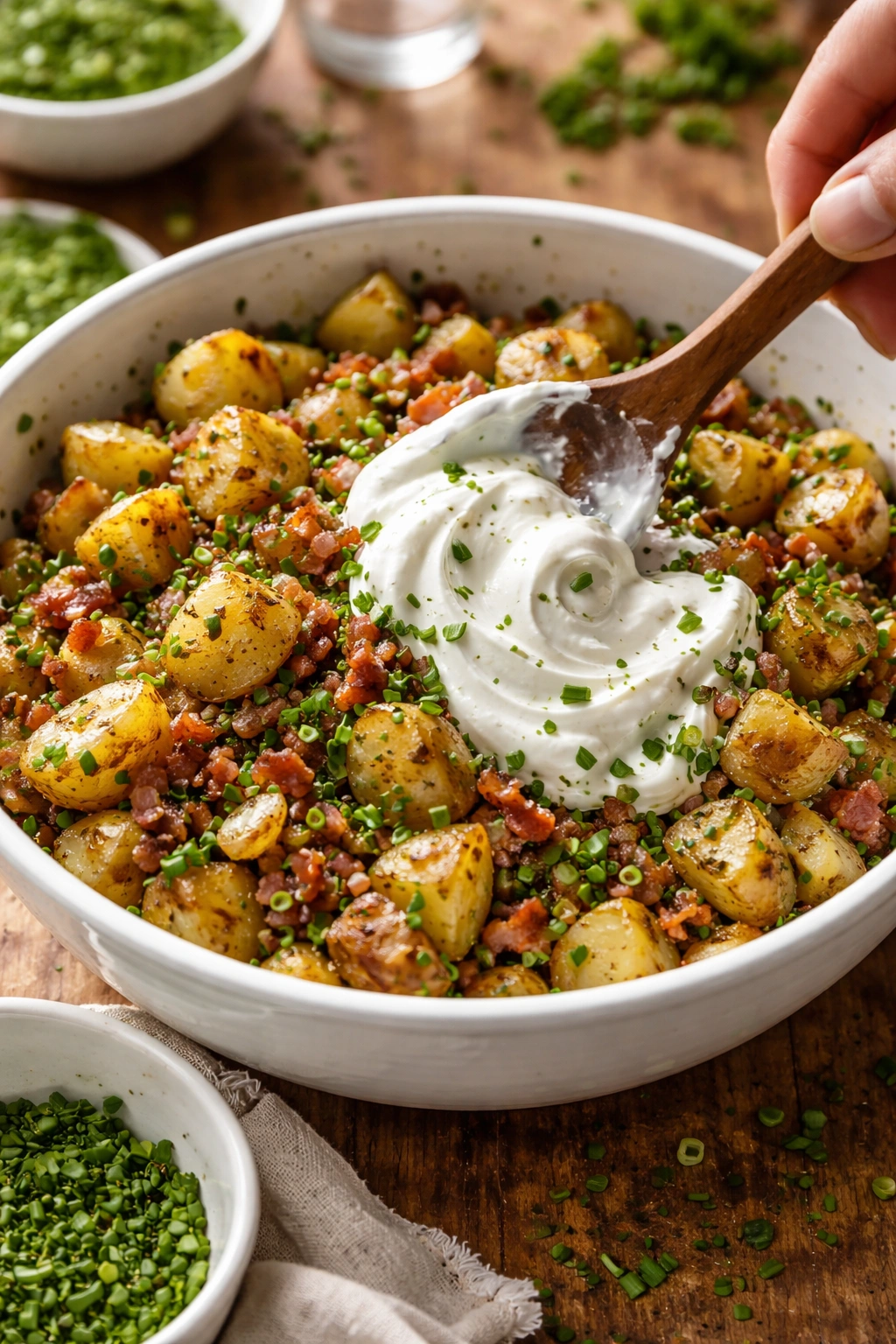
This is where the salad goes from good to memorable. Every ingredient needs to be added at the right moment for maximum flavor impact. The hot potatoes get coated in a simple vinaigrette while they’re still warm so they absorb the flavors instead of having them sit on the surface. Then the creamy sour cream dressing gets folded in gently once the potatoes have cooled enough that they won’t wilt or wilt the herbs.
The sharp components — vinegar, fresh herbs, green onions — stay crisp and distinct instead of being subdued by the mayo-heavy dressing. The result tastes brighter and fresher than traditional versions, even though it’s just as rich and satisfying.
The Warm-Potato Vinaigrette
As soon as your roasted potatoes come out of the oven, while they’re still warm but cool enough to handle, toss them with a simple vinaigrette made from good olive oil, vinegar, salt, pepper, and a bit of Dijon mustard. Warm potatoes are absorbent — they’ll soak up these flavors more thoroughly than cold potatoes would. The acidity from the vinegar brightens the flavor of the potatoes themselves and prevents the salad from tasting flat.
Use a quality vinegar here — apple cider vinegar is traditional and wonderful, or white wine vinegar works beautifully. Avoid harsh distilled vinegar. A single tablespoon of Dijon mustard might seem like a small thing, but it adds an incredible savory depth that people will feel even if they can’t identify it. It acts as an emulsifier too, helping the oil and vinegar stay together instead of separating.
The Dressing and Final Assembly
The sour cream dressing is remarkably simple: sour cream, the reserved bacon fat, salt, pepper, and a touch of garlic powder. That’s it. You’re not trying to make a complicated sauce. You just want a creamy, tangy vehicle for the other flavors. The garlic powder should be just a whisper — you’re not trying to make a garlic potato salad, just adding depth.
Fold this dressing into the potatoes once they’ve cooled from warm to room temperature. Use a rubber spatula and fold gently so you don’t break up the potato pieces. This is not a vigorous mixing situation. You want the dressing to coat everything evenly without aggressively mashing anything. Add the bacon, cheese, and fresh herbs — green onions, fresh dill, and parsley — at the very end, folding them in after the dressing is distributed. This preserves their texture and flavor.
Yield, Prep Time, and Difficulty
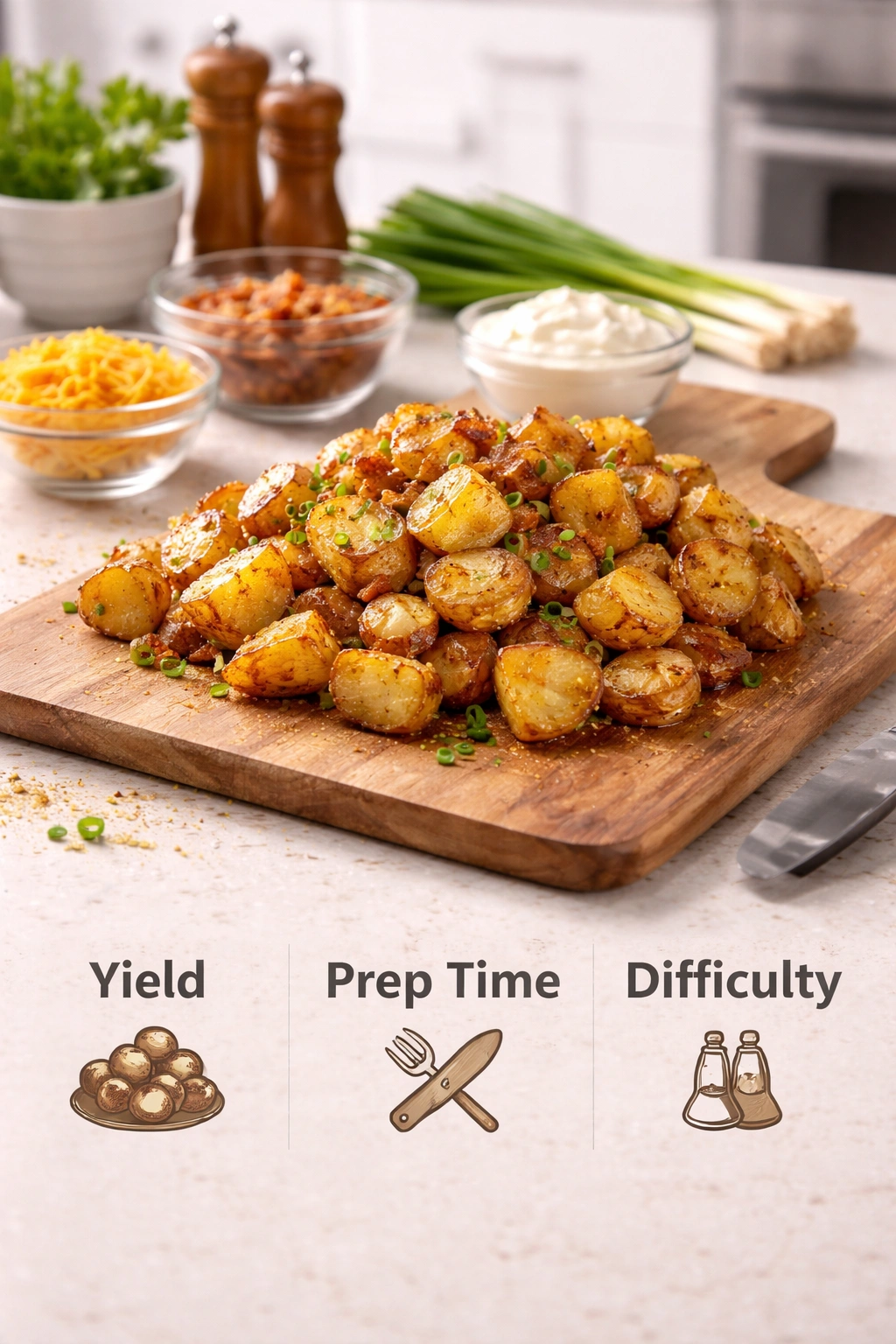
Yield: Serves 8 to 10 as a side dish | Makes about 12 cups
Prep Time: 20 minutes
Cook Time: 40 minutes (includes roasting potatoes)
Total Time: 60 minutes active, plus 30 minutes cooling time before serving
Difficulty: Beginner — No special skills required, straightforward roasting and mixing technique, hard to mess up once you understand the basic approach.
Complete Recipe: Loaded Baked Potato Salad
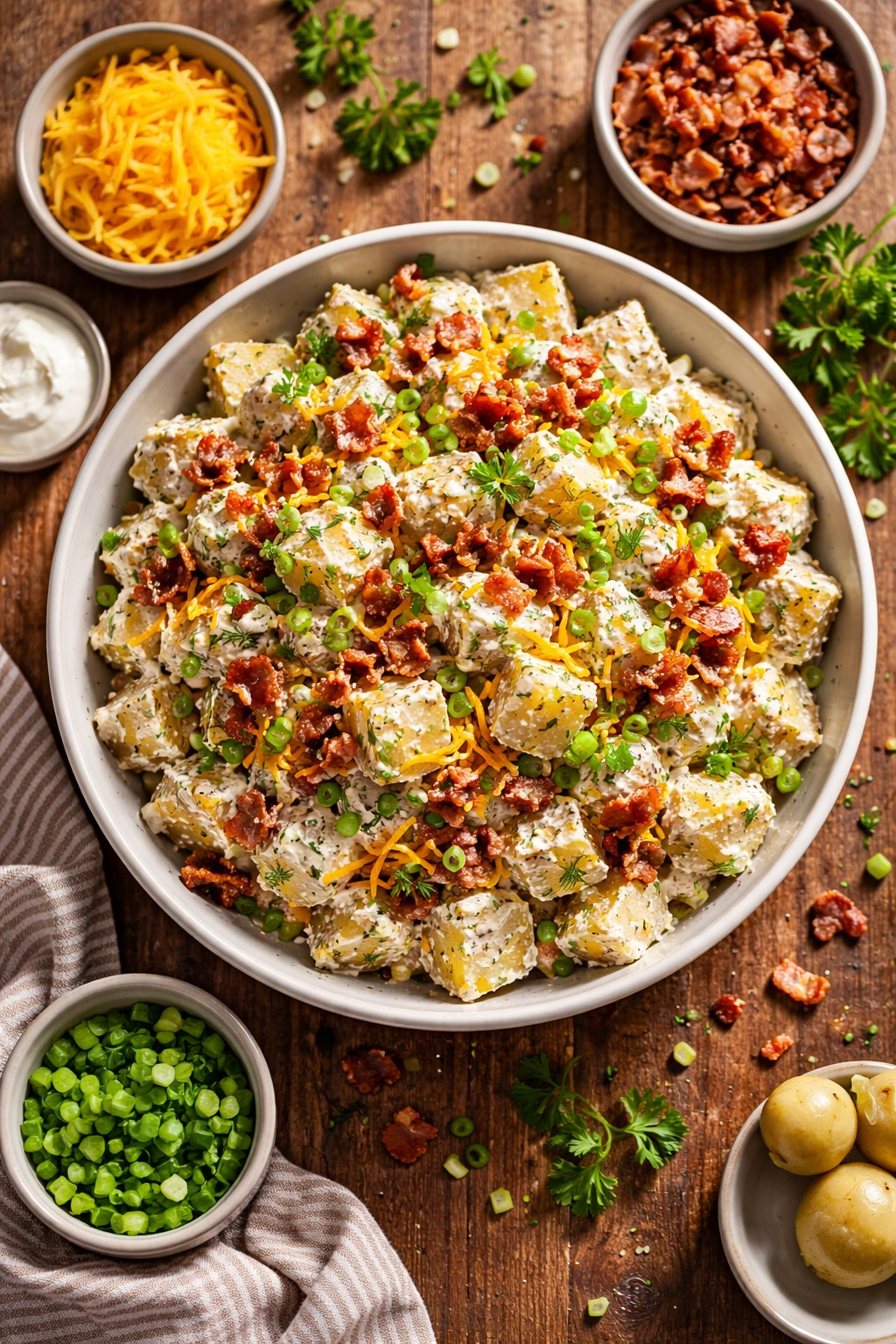
Ingredients
For the Potatoes:
- 3 pounds Yukon gold or red potatoes (about 24-30 small to medium potatoes), scrubbed clean and left unpeeled
- 3 tablespoons extra-virgin olive oil
- 2 tablespoons apple cider vinegar or white wine vinegar
- 1 tablespoon Dijon mustard
- ¾ teaspoon fine sea salt
- ½ teaspoon freshly ground black pepper
For the Salad:
- 10 slices thick-cut bacon (about 6 ounces)
- 1 cup sour cream, full-fat
- 2 tablespoons reserved bacon fat (from cooking the bacon)
- ¼ teaspoon garlic powder
- ½ teaspoon fine sea salt (plus more to taste)
- ¼ teaspoon freshly ground black pepper (plus more to taste)
- 1½ cups sharp cheddar cheese, freshly grated (about 6 ounces)
- 6 green onions (scallions), sliced thin, white and light green parts separated from dark green tops
- ⅓ cup fresh dill, finely chopped (or 1 tablespoon dried dill if fresh is unavailable)
- ⅓ cup fresh Italian parsley, finely chopped
- 2 tablespoons fresh chives, chopped (optional but adds a nice subtle onion note)
Step-by-Step Instructions
Prepare and Roast the Potatoes:
-
Preheat your oven to 425°F (220°C) and position the oven rack in the upper-middle area — high enough that you have clearance but the potatoes are close enough to the heat source to get good color on the cut side.
-
Scrub the potatoes under cold running water, rubbing them with your hands to remove any dirt. You don’t need to peel them. Pat them dry completely with a clean kitchen towel — this is important because water prevents browning.
-
Trim a thin slice from the root end of each potato so they have a flat spot, then cut them in half lengthwise, leaving the skin on. You’re aiming for pieces roughly the size of a walnut or golf ball. Try to keep them relatively uniform in size so they cook evenly.
-
Place the potato halves cut-side down on a large baking sheet (or two baking sheets if needed so they’re in a single layer with no crowding). Drizzle generously with the 3 tablespoons olive oil and toss with your hands so every cut surface gets coated with oil.
-
Sprinkle evenly with the ¾ teaspoon salt and ½ teaspoon pepper, then arrange them cut-side down in a single layer on the baking sheet.
-
Roast in the preheated oven for 25 to 30 minutes, until the cut side is deep golden with some darker caramelized spots, and a fork easily pierces the center of the largest piece with just a tiny bit of resistance. Don’t skip the browning — this is where the flavor comes from. If your oven runs cool, the potatoes may take closer to 35 minutes.
Advertisements
Cook the Bacon:
-
While the potatoes are roasting, lay the bacon slices in a cold skillet in a single layer. Turn the heat to medium. Cook slowly, rendering the fat and allowing the bacon to crisp gradually — this takes about 12 to 15 minutes and produces crispier, more flavorful bacon than cooking on high heat.
-
When the bacon is deeply browned and crispy (bend a piece and it should snap, not flex), transfer the cooked bacon to a paper towel to drain and cool. Leave the bacon fat in the pan — you’ll use about 2 tablespoons of it for the dressing.
-
Once the bacon is cool enough to handle, break it into bite-sized pieces (not powder-fine, but not whole strips either). Set aside.
Make the Dressing and Assemble:
-
In a small bowl, combine the sour cream, the reserved 2 tablespoons of bacon fat (let it cool for a minute first if it’s very hot), garlic powder, ½ teaspoon salt, and ¼ teaspoon pepper. Whisk until smooth and combined. The bacon fat might seem like a small thing, but it adds incredible savory depth — don’t skip it or substitute it with more oil.
-
Remove the hot potatoes from the oven and transfer them to a large mixing bowl. While they’re still warm (but cool enough to handle comfortably), pour the vinaigrette made from the olive oil, vinegar, Dijon mustard, salt, and pepper over them. Toss gently until every piece is coated. Let them sit for about 10 minutes so they can absorb the flavors.
-
Once the potatoes have cooled to room temperature (about 20 to 30 minutes — this is important because warm potatoes will wilt the herbs), add the sour cream dressing and fold it in gently with a rubber spatula. Don’t aggressively stir or mix; use folding motions so you preserve the texture of the potato pieces.
-
Fold in the bacon pieces and cheese. Taste a bite and adjust salt and pepper if needed.
-
Add the white and light green parts of the green onions (save the dark green parts for garnish), along with the dill and parsley. Fold gently until distributed evenly. Add the fresh herbs last so they stay fresh and flavorful instead of getting subdued by sitting in the dressing.
Advertisements -
Transfer to your serving dish and top with the reserved dark green tops of the green onions and the optional chives. Serve warm or chill until serving time.
Pro Tips From Making This 100 Times
The most common mistake people make is not letting the potatoes cool enough before adding the sour cream dressing. Hot sour cream is a sad sour cream — it breaks and separates and gets weepy instead of creamy. Warm to room temperature, then dress. Your patience here is what separates a gorgeous, cohesive salad from one that looks curdled. Similarly, don’t forget to reserve that bacon fat. I know it seems counterintuitive to add rendered pork fat to a sour cream dressing, but it’s exactly what gives this version its savory complexity.
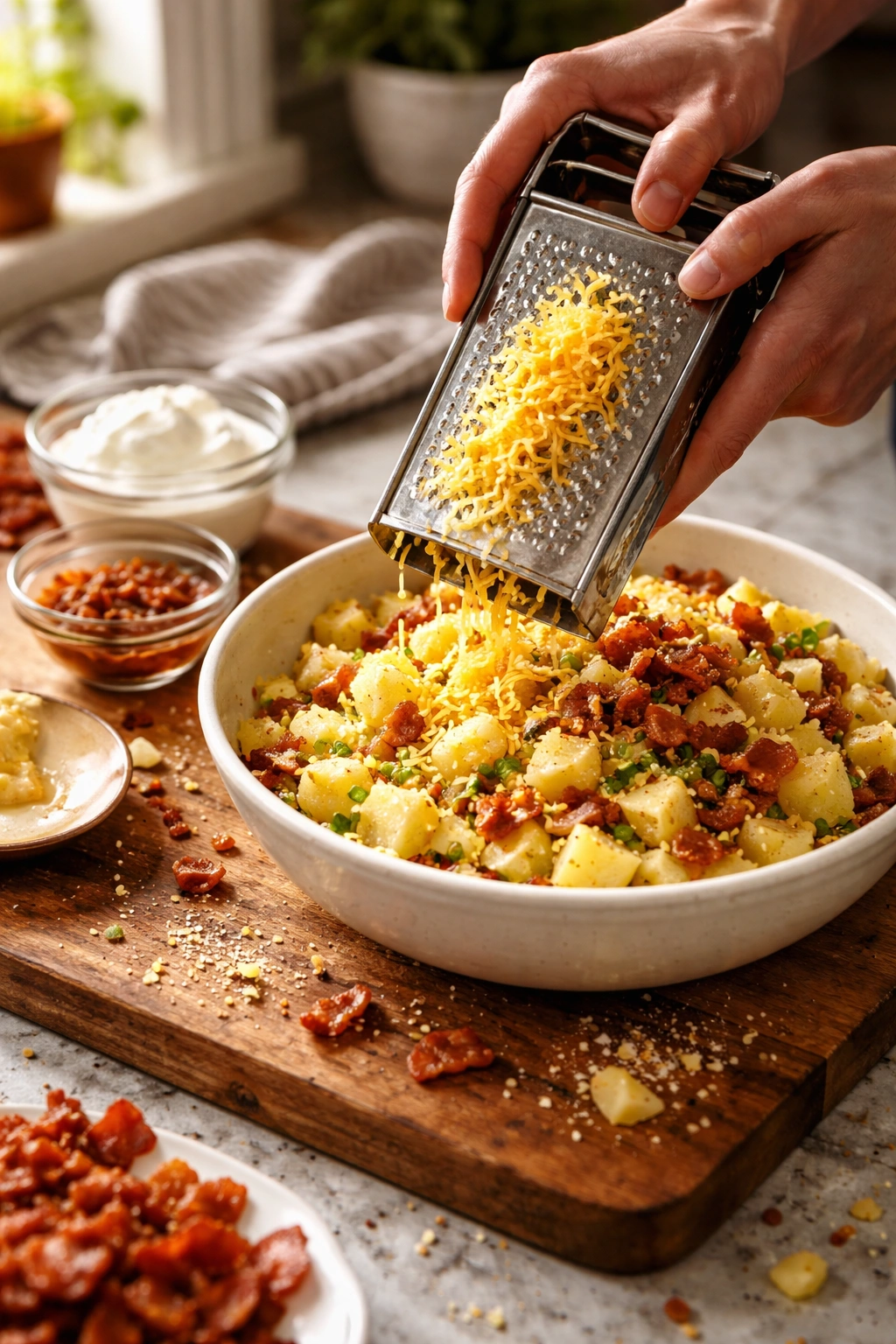
Invest in a box grater and spend two minutes grating your cheese fresh rather than using pre-shredded. The difference is genuinely noticeable. Pre-shredded cheese contains anti-caking agents that prevent the cheese from melting smoothly into the dressing. Fresh-grated cheese melts slightly from the warmth of the potatoes and creates a silkier, more integrated dressing.
The Vinaigrette Application
The step where you toss the warm potatoes in a simple vinaigrette before adding the creamy dressing is non-negotiable. Warm potatoes are absorbent — they’ll soak up acidic flavors whereas cold potatoes just sit with flavors on the surface. This technique is why your homemade potato salad will taste brighter and more flavorful than most deli versions. The vinegar and mustard should be high-quality because they’re actually tasted, not overwhelmed by mayo.
Texture Comes From Knowing When to Stop Stirring
Potato salad can easily become a mashed potato situation if you stir it too aggressively. Use folding motions with a rubber spatula. Go in from the side, fold the mixture over itself, rotate the bowl a quarter turn, and repeat. This distributes the dressing without breaking up the potato pieces into mush. This is especially important for the final herb addition — fold those in very gently at the very end so you preserve their fresh texture.
Temperature Flexibility
This salad is genuinely good warm, room temperature, or cold. Many people make it a few hours ahead and serve it cold, which is perfect for barbecues. Some prefer it warm right out of the oven. Some take a middle road and make it a few hours ahead but serve it at room temperature. All of these work perfectly. If you’re serving it cold, store it covered in the refrigerator. If you’ve made it ahead and want to serve it warm, pull it out of the fridge and let it come to room temperature naturally (takes about 30 minutes), or gently reheat it in a low oven.
Variations and Customizations
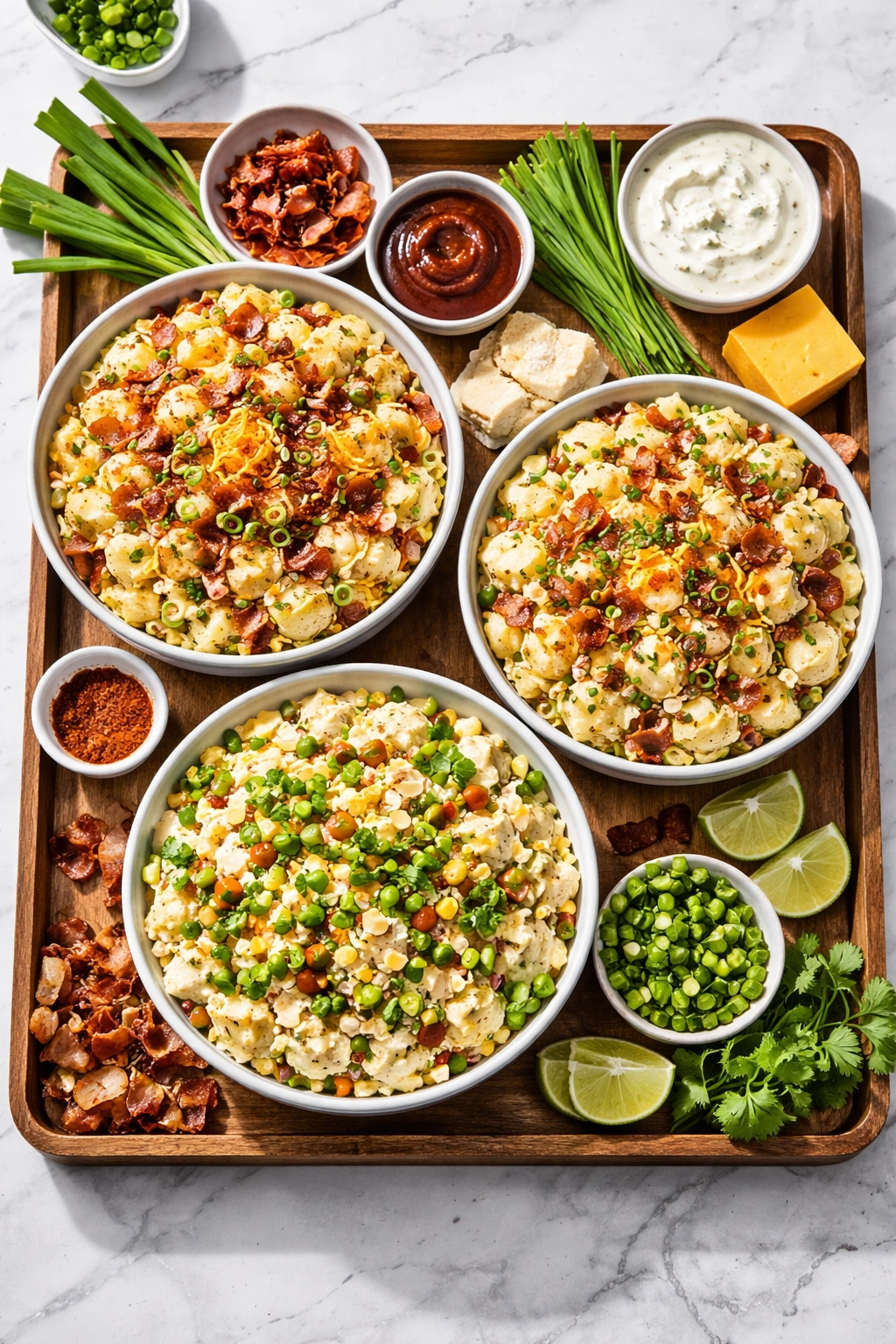
Smoky Barbecue Version
Use smoked cheddar cheese instead of regular sharp cheddar, and add a tablespoon of smoked paprika to the dressing. You can also swap the bacon fat out for a tablespoon of barbecue sauce mixed into the sour cream. Add a touch of hot sauce or smoked hot sauce if you want heat. This version echoes the flavors of the grill and feels perfectly at home at a backyard barbecue.
Ranch-Inspired Version
Add 1 teaspoon of dried ranch seasoning mix (or make your own with dried dill, parsley, chives, garlic powder, and onion powder) to the sour cream dressing, and reduce the Dijon mustard to ½ teaspoon. You can also use the white parts of green onions in the dressing and save the dark green parts for garnish, which gives it more of a ranch feel. This version appeals to people who grew up with ranch dressing on everything.
Jalapeño and Cilantro Version
For something with a Southwest twist, add ¼ cup diced roasted red peppers, ¼ cup sliced fresh jalapeño (seeded if you prefer less heat), a handful of fresh cilantro instead of dill, and ¼ teaspoon smoked paprika to the dressing. Use Monterey Jack or a peppery cheddar instead of sharp white cheddar. This version feels summery and fresh.
Loaded Baked Potato to the Extreme
If you want to embrace the “loaded” part fully, top the finished salad with a drizzle of sour cream, additional shredded cheese, more bacon pieces, and more green onion. Add a few crushed chives and a light dusting of paprika. This makes it visually impressive and gives people extra toppings they can eat.
Vegan Version
Use a dairy-free sour cream made from cashews or coconut. The flavor won’t be identical, but coconut-based or cashew-based sour cream products have come a long way and work reasonably well. Use vegan bacon (coconut bacon made from shredded coconut with soy sauce, maple syrup, and spices is actually delicious), or simply use more herbs and a few roasted nuts for crunch instead of bacon. Use a vegan cheese if you want it, or just leave it out and add more fresh herbs. The potato salad will be lighter and fresher tasting but still absolutely satisfying.
Dairy-Free But Not Vegan
If you can’t have dairy but eat meat, use avocado-based mayo or use a combination of plain dairy-free milk mixed with a bit of olive oil and Dijon mustard to create a creamy dressing. The bacon fat still works beautifully. This gives you richness without dairy.
Make-Ahead and Storage Guidance
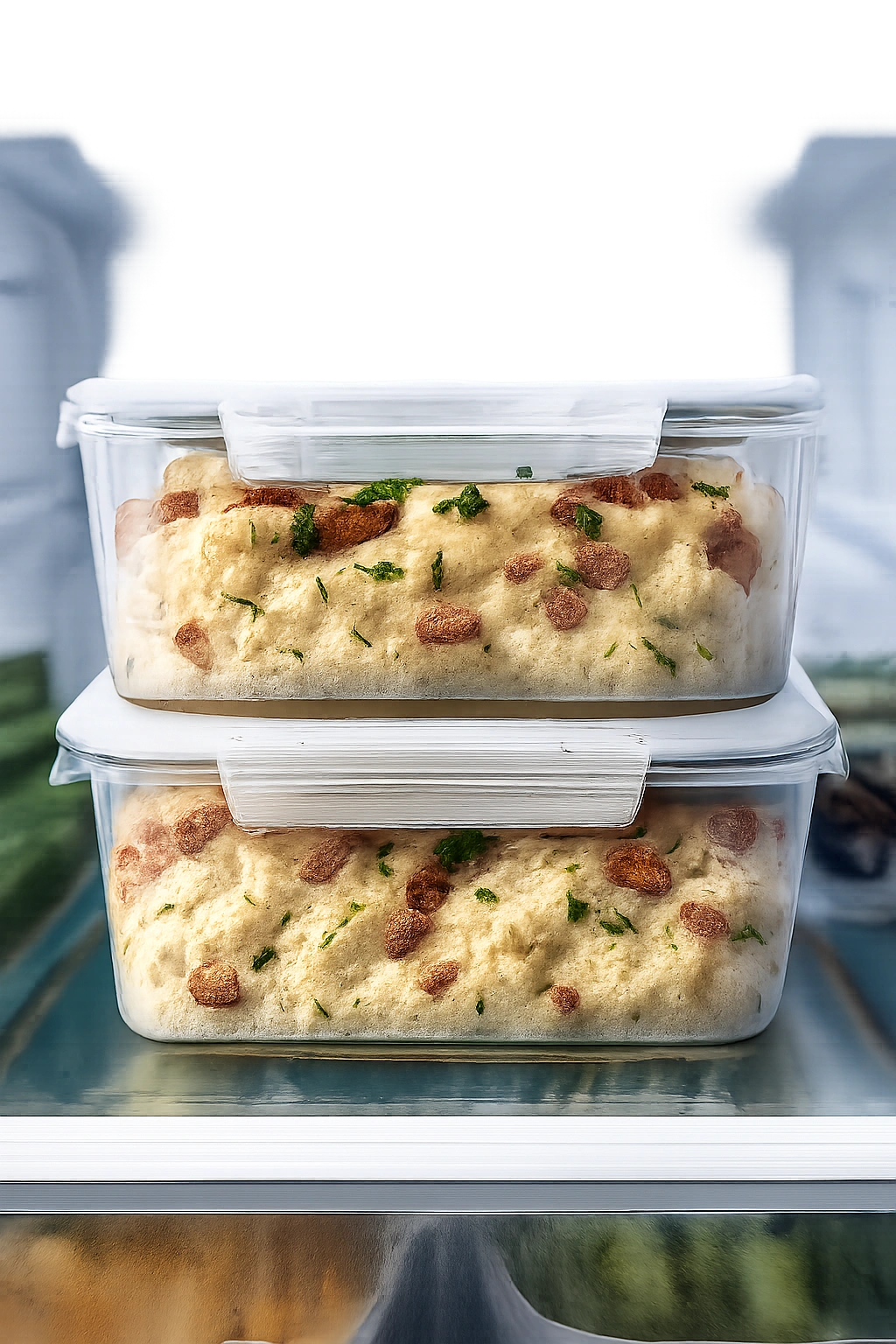
This potato salad is genuinely one of the best make-ahead side dishes. You can make it up to three days before serving, which is ideal for parties or barbecues when you’re busy with other dishes. The flavors actually improve slightly as it sits because the potatoes continue to absorb the flavors in the dressing.
Making It a Day or Two Ahead
Make the salad completely, cover it with plastic wrap or transfer to an airtight container, and refrigerate. When you’re ready to serve, pull it out and let it come to room temperature naturally (about 30 to 45 minutes) so the sour cream dressing loosens up. The sour cream dressing gets a bit stiff when cold. If it looks too thick, fold in an additional tablespoon or two of sour cream or a drizzle of milk to loosen it back to a creamy consistency. Taste and adjust salt and pepper — cold food tastes less flavorful, so you might need to add a tiny bit more salt than you think.
Holding It Warm
If you’re making this on the day of your event and want to hold it warm, you can transfer the cooled salad to a slow cooker set on the keep warm setting. Don’t leave it on high heat because that will dry it out. Stir it gently every 30 minutes or so, and if it seems to be drying out, fold in an extra tablespoon of sour cream. Most people actually prefer this served at room temperature or cold though, which is easier.
Storage Duration
- Room temperature: Up to 2 hours in warm conditions, up to 4 hours in cool conditions
- Refrigerator: Up to 3 days in an airtight container
- Freezer: Not recommended. The potatoes become mealy when frozen and thawed, and the sour cream dressing separates. Just make it fresh or store it in the fridge.
Transporting to an Event
For potlucks and barbecues, you have a few options. Transport it in a covered container and let it sit at room temperature if the party is a few hours long and the weather isn’t too hot. Or bring it in an insulated cooler with an ice pack and pull it out about 30 minutes before serving so it comes to a pleasant temperature. Either way works beautifully.
Serving Suggestions and Pairings
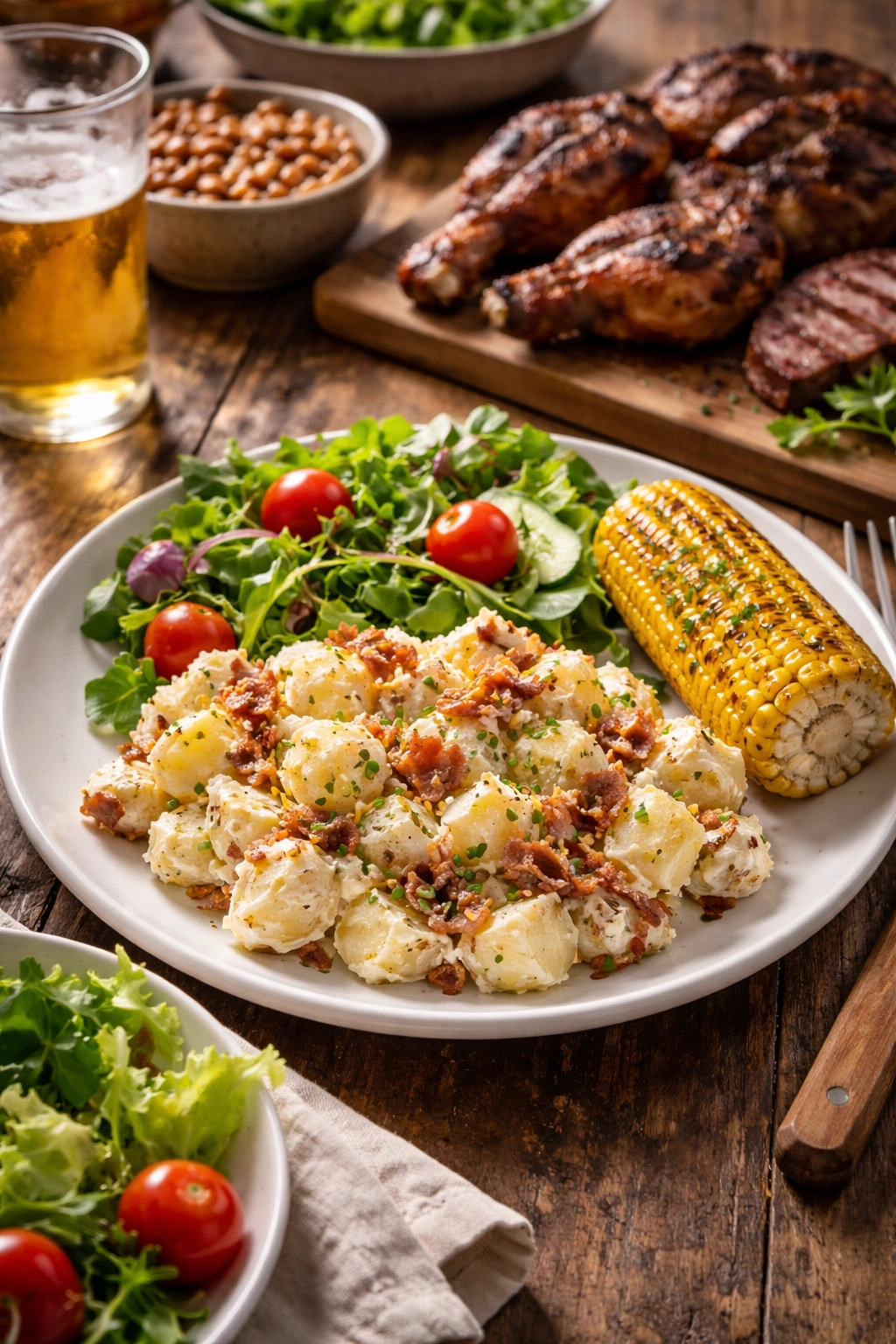
This potato salad is a chameleon — it goes with basically everything. But it absolutely shines alongside grilled chicken, pulled pork, beef brisket, and ribs. The richness of the sour cream and cheese pairs beautifully with smoky, savory grilled meats. It’s equally at home at a casual weeknight grilled chicken dinner or a full backyard barbecue spread.
What Goes Next to It
Serve it alongside grilled corn, a bright coleslaw, grilled vegetables, or a fresh green salad. The richness of the potato salad pairs beautifully with something sharp and fresh to cut through it. A tomato salad with fresh basil is wonderful. Grilled corn with herb butter echoes the fresh herb notes. A vinegar-based coleslaw cuts through the richness and feels balanced.
Beverages That Work
Cold beer is the obvious choice and pairs beautifully. A crisp white wine like a Pinot Grigio or Sauvignon Blanc works wonderfully if you’re going wine. An iced sweet tea, lemonade, or ginger lemonade provides brightness. Even just ice water with lemon feels refreshing alongside the richness of the salad.
Occasions It Suits
This is the potato salad for basically any warm-weather gathering: backyard barbecues, Fourth of July cookouts, family reunions, summer wedding receptions with outdoor catering, casual dinner parties, tailgating, potluck dinners, and community events. It’s fancy enough that you can bring it to a nice event without feeling like you’re bringing something too casual, but it’s also comfortable enough for a low-key neighborhood gathering. It’s the potato salad that makes you look like you know what you’re doing without requiring you to do anything complicated.
Troubleshooting Common Issues
The Salad Is Too Wet and Dressing-Heavy
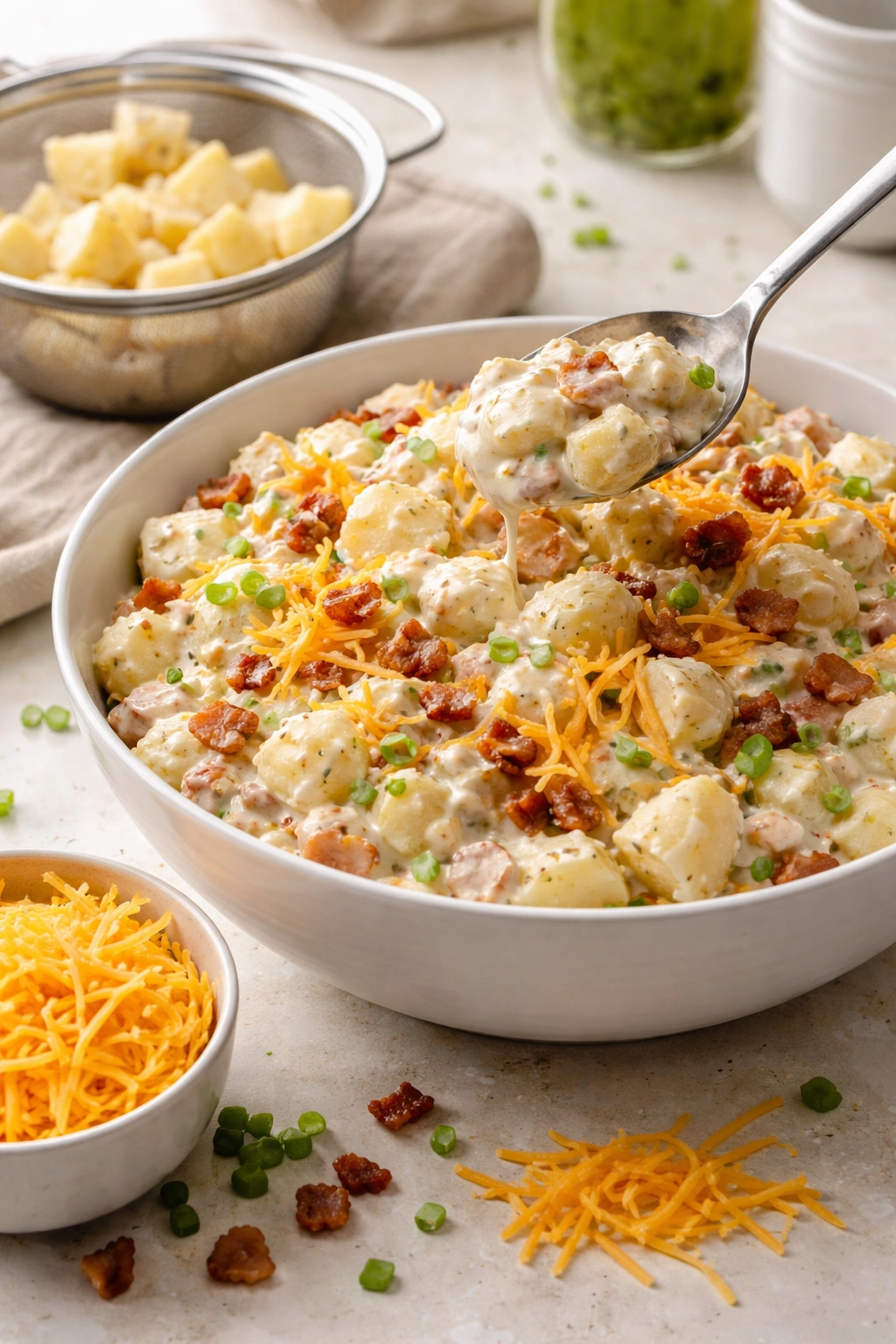
This usually happens because you added the sour cream dressing to potatoes that were still too warm, or because you used sour cream that wasn’t full-fat (which contains more water). Next time, make absolutely certain the potatoes are fully cooled to room temperature before adding the dressing. If you already have a too-wet batch, fold in some freshly grated cheese, which will absorb some of the moisture and add flavor. Or transfer it to a fine-mesh strainer set over a bowl and let it sit for 15 to 20 minutes to drain some of the excess liquid.
The Salad Tastes Bland
Taste it and add more salt and pepper — it needs more than you probably think it needs. Also try adding another tablespoon of Dijon mustard or a splash more vinegar to brighten the flavors. If you didn’t reserve the bacon fat, that’s probably the culprit — the next batch will benefit from it. Fresh herbs also matter a lot; make sure they’re fresh and not sitting in your refrigerator drawer for three weeks.
The Potatoes Are Mushy
This means you either overcooked them or they weren’t uniform in size (so some cooked much longer than others). Next time, roast them only until a fork just barely pierces them, not until they’re completely soft. And sort the potatoes by size before roasting so they cook evenly. You can still eat a mushy batch — it’ll taste good even if the texture isn’t ideal.
The Cheese Isn’t Melting or Is Getting Rubbery
You probably used pre-shredded cheese with anti-caking agents, or the potatoes weren’t warm enough when you added the cheese. Next time use freshly grated cheese and add it to the potatoes while they’re still warm enough to just barely melt it slightly (not hot, but noticeably warm). Freshly grated cheese also blends better into the dressing instead of staying visible as little shreds.
The Salad Tastes Different Each Time I Make It
The biggest variable is the sour cream brand and fat content. Switching between sour cream brands actually does change the flavor noticeably. Also, fresh herbs vary in potency — homegrown dill tastes different than grocery store dill. And if you’re not weighing the potatoes or being consistent about their size, you’ll get different results each time. Write down what worked the time you loved it most, and replicate those variables.
Final Thoughts
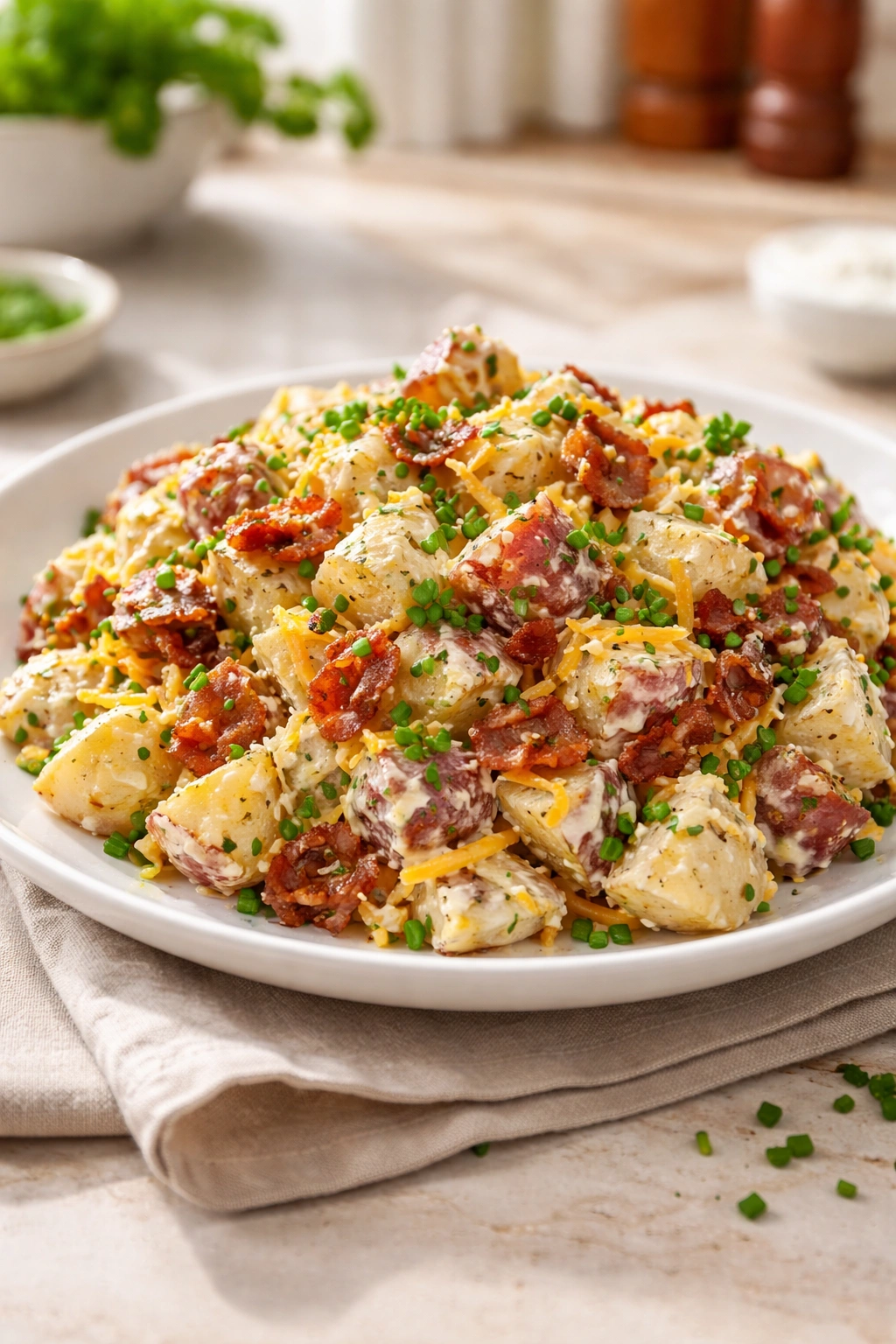
This potato salad works because it respects every component. The potatoes get roasted until they develop real flavor instead of being boiled into blandness. The dressing is simple enough that you actually taste the sour cream and bacon instead of mayonnaise drowning everything. The bacon is crispy enough to add texture. The cheese tastes like cheese. The fresh herbs stay fresh instead of wilting into invisibility.
Make this once and you’ll understand why people ask for the recipe. Make it twice and you’ll stop consulting the instructions. Make it three times and your hands will automatically know how much bacon fat goes into the dressing without measuring. It becomes the dish you make when you want to contribute something to a gathering that you actually feel proud of — not because it’s complicated or fancy, but because it’s done right.
The beauty of this approach is that it’s not precious or fussy. You can make it two days ahead. You can serve it warm or cold. You can customize it endlessly. You can transport it to events. You can hold it in a slow cooker. It’s genuinely harder to mess up once you understand the basic technique of roasting the potatoes properly and cooling them before dressing. That’s it. Everything else follows naturally.
Next time you’re assigned a potluck side dish, or you’re planning a backyard gathering and want something that’ll actually impress people, stop defaulting to the same old recipes. Make this instead. Watch people’s faces when they taste it. Listen to them ask for your recipe. Let this be the version everyone else is secretly trying to recreate.
