



Overnight oats have become the go-to breakfast for people who need protein-packed nutrition but can’t spend 20 minutes at the stove on a weekday morning. The magic is simple: combine oats with liquid, let them soak overnight in the fridge, and wake up to a ready-to-eat meal that tastes like dessert but delivers the macronutrient profile of a legitimate training meal. What most people don’t realize is that basic overnight oats are often protein-light—a standard bowl might only contain 8 to 10 grams of protein, which is fine for a snack but leaves you hungry two hours later if it’s supposed to be breakfast.
The five recipes you’re about to master solve that problem entirely. Each one is engineered to deliver 25 to 35 grams of complete protein, uses ingredients you already have or can grab on a regular grocery run, and tastes genuinely crave-worthy. The best part? You don’t need fancy equipment, unusual ingredients, or any cooking skill whatsoever. Every single recipe in this guide can be assembled in under five minutes, then you walk away while your breakfast builds itself in the fridge.
Why Overnight Oats Are Perfect for Protein
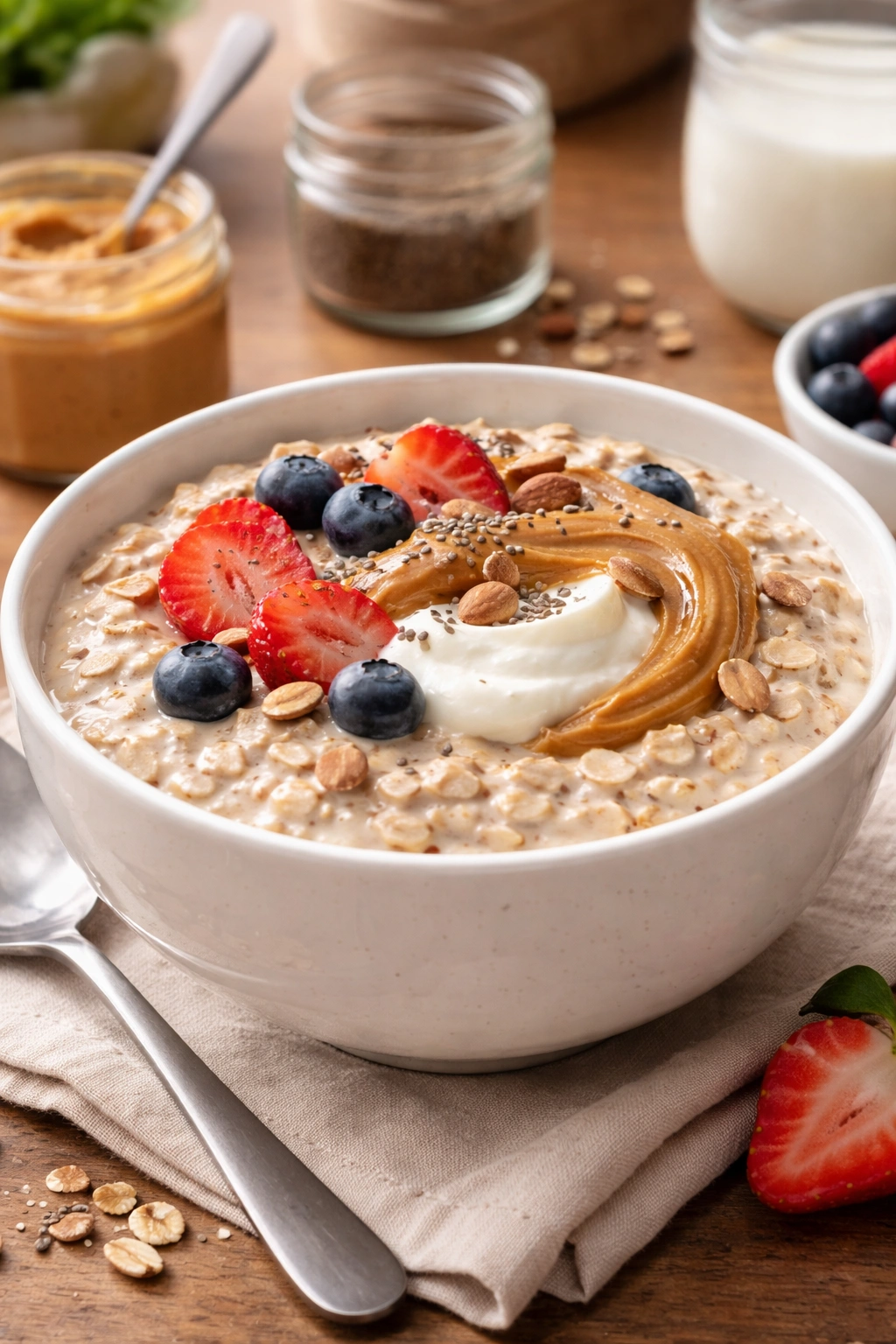
The reason overnight oats became such a phenomenon isn’t just convenience—it’s that the cold-soak method actually improves the texture and digestibility of oats compared to heating them. When oats sit in liquid overnight, they absorb moisture slowly and evenly, creating a creamy, custard-like consistency that feels indulgent without any added sugar or cream.
From a protein perspective, overnight oats solve the biggest problem with traditional oatmeal: it’s hard to add enough protein without the bowl tasting powdery or gritty. A cold overnight oat base allows you to layer multiple protein sources—Greek yogurt, protein powder, nut butters, and milk—and they all integrate seamlessly into the final texture instead of clumping or separating.
The cold environment also keeps protein powders stable. Heat can sometimes cause whey protein to get a chalky, cooked flavor, but a cold soak keeps the powder smooth and integrated into the oat base. This is why overnight oats outperform hot oatmeal for taste when protein powder is involved.
Another advantage is sustained energy. The combination of complex carbohydrates from oats, fat from nuts or nut butter, and protein from yogurt and powder creates a meal that digests slowly and keeps your blood sugar stable for hours. That means no 10 a.m. crash and no hunger spike before lunch.
Choosing Your Base Ingredients
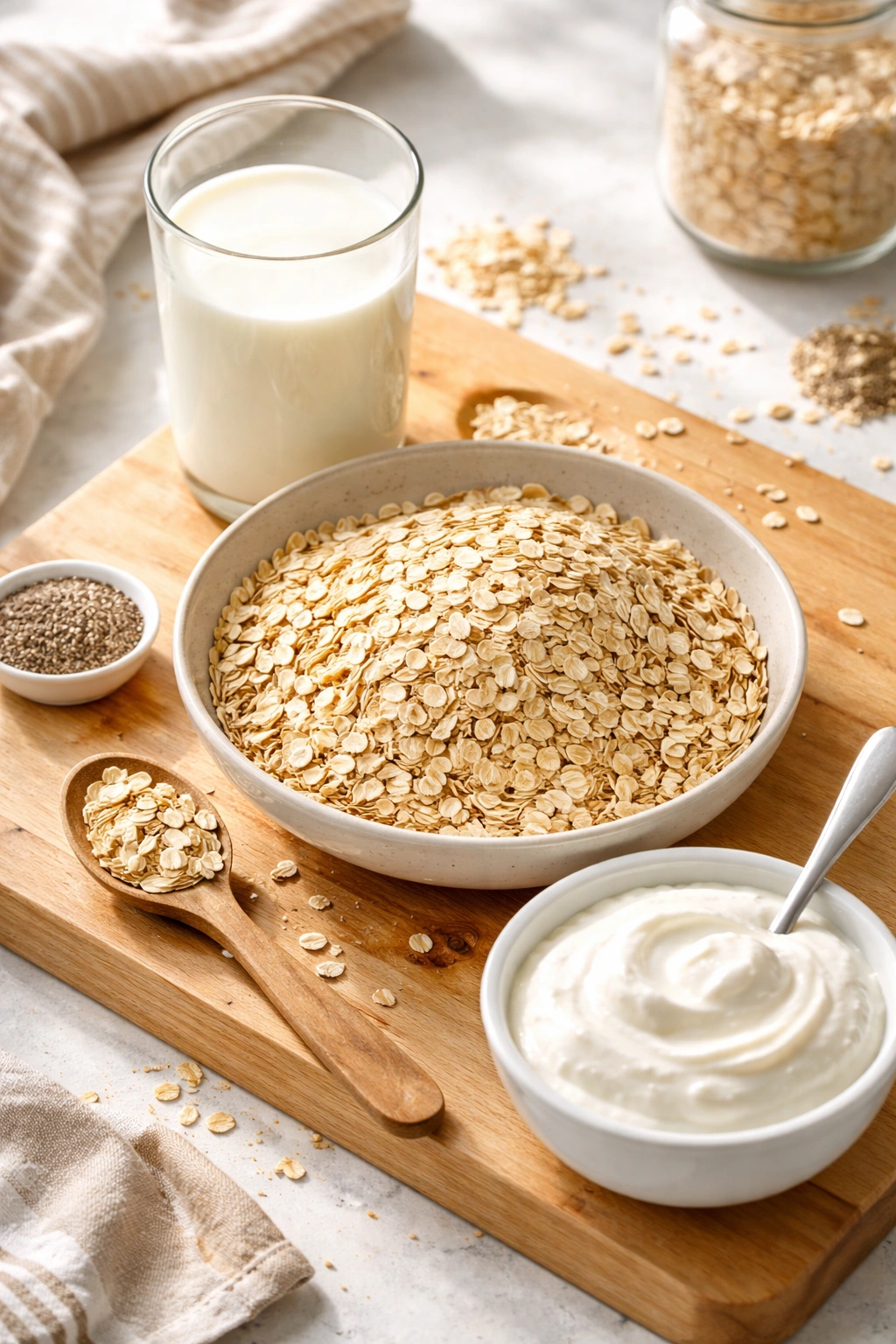
Every one of these overnight oat recipes starts with the same foundational ratio: one part oats to one part liquid. The variation comes in which liquid you choose and what you add to boost protein without compromising the creamy texture.
Rolled oats (old-fashioned oats) are the only choice here—steel-cut oats won’t soften enough overnight, and instant oats will turn into mush. You want the classic rolled oat that takes exactly 12 hours in the fridge to reach that perfect pudding-like consistency.
For liquid, milk is standard, but your choice matters more than you’d think. Whole milk creates the richest, creamiest base, while skim milk requires a bit more added fat (from nut butter or yogurt) to avoid tasting thin. Almond milk, oat milk, and coconut milk all work, though they’re less stable in terms of protein content—if protein is your priority, go with dairy milk or a plant-based milk that’s specifically fortified with pea or soy protein. Regular almond milk has almost none.
Greek yogurt is non-negotiable for high-protein overnight oats. It contributes 15 to 20 grams of protein per half-cup serving, but more importantly, it adds a subtle tang and thickness that balances the sweetness from fruit or mix-ins. Plain, non-fat or full-fat Greek yogurt both work equally well here.
Protein powder is your choice, but whey isolate tends to integrate most smoothly, while plant-based powders are slightly grittier and often require a quick blend with the liquid before adding oats. Whichever you choose, unsweetened powder gives you more control over final sweetness.
The Protein Powder Debate: What Actually Works
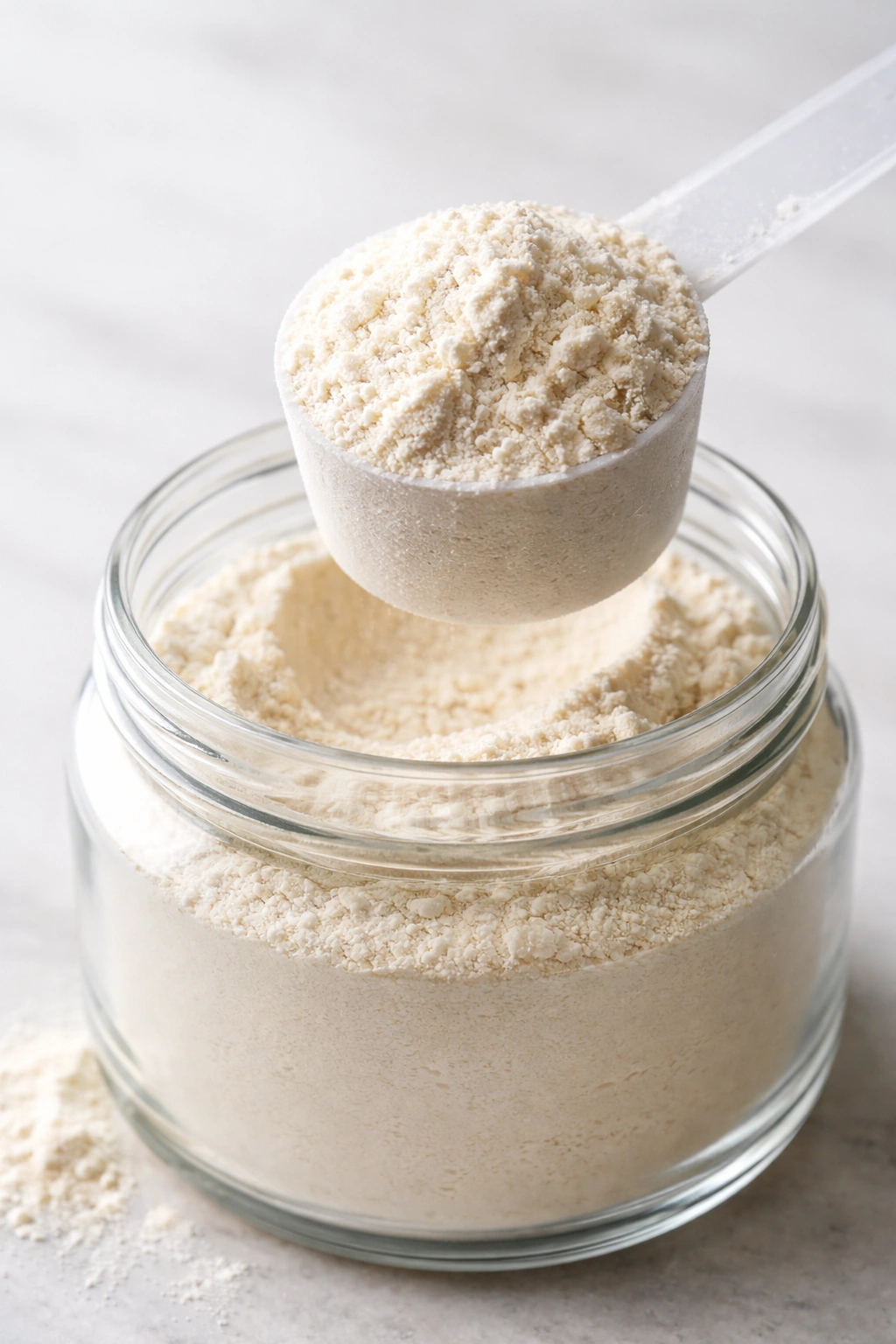
Not all protein powders behave the same way in overnight oats, and choosing the wrong one can result in a sandy, unpleasant texture that you’ll dread eating. The key is understanding how different powder types interact with cold liquid and oats.
Whey protein isolate dissolves fastest and creates the smoothest final texture. It’s more expensive than whey concentrate, but the trade-off is worth it for overnight oats because isolate has fewer milk solids that can cause grittiness. If budget is your concern, whey concentrate still works—just blend it with a bit of your liquid first before mixing it into the full batch.
Plant-based proteins (pea, hemp, brown rice, soy blends) are excellent nutritionally but require more attention. Blend plant-based powder with a tablespoon of your wet ingredient first, then add to the rest of the mixture, rather than dumping it directly into the oat base. This prevents clumping. Soy protein integrates slightly better than pea protein, though pea protein has a cleaner taste profile.
Casein protein is technically a good option—it’s slow-digesting and creates a thicker texture. However, casein can feel slightly rubbery in overnight oats if you leave them more than 12 hours, so keep prep timing consistent.
Collagen peptides are a special case. They don’t provide complete protein on their own (missing some amino acids), but they add 10 grams of high-quality collagen protein and don’t affect texture at all. Many people combine collagen with a scoop of whey powder to get the best of both: complete protein plus the joint and skin benefits of collagen.
1. Classic Greek Yogurt and Vanilla
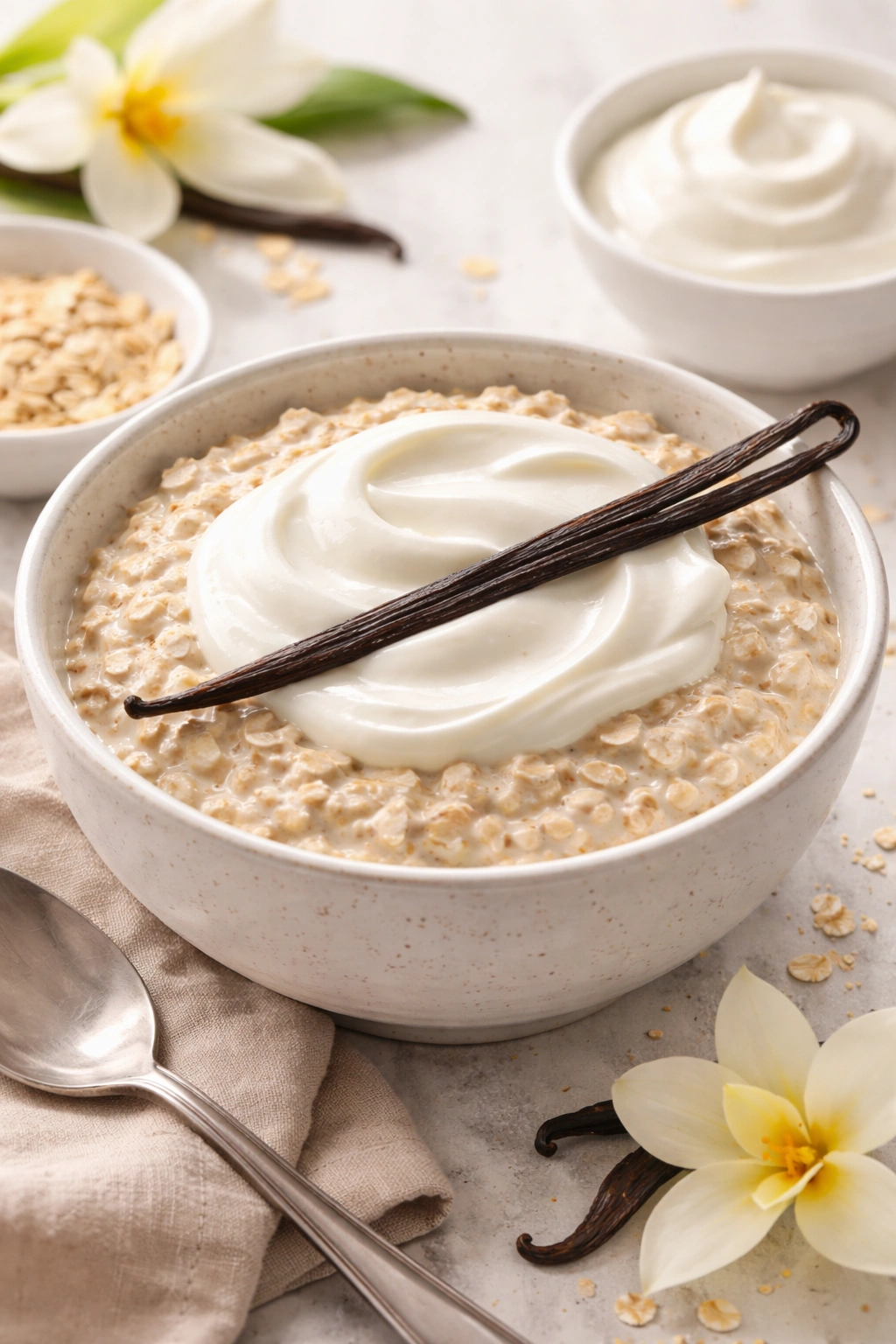
This is the entry-level high-protein overnight oat that converts skeptics into daily eaters. The vanilla flavor is understated enough to let the subtle sweetness of oats and fruit shine through, while Greek yogurt makes up the bulk of the protein. This version works as a grab-and-go breakfast or as a base that’s easy to customize with whatever fruit you have on hand.
Yield: Serves 1 | Prep Time: 5 minutes | Chill Time: Overnight (8 to 12 hours) | Total Time: 5 minutes active + overnight chilling | Difficulty: Beginner — no special equipment or technique required.
For the Overnight Oat Base:
- ½ cup rolled oats (old-fashioned)
- ½ cup whole milk
- ½ cup plain Greek yogurt (full-fat or non-fat, both work equally)
- 1 scoop vanilla whey protein isolate (approximately 25 grams protein)
- 1 tablespoon raw almond butter or natural peanut butter
- ½ teaspoon pure vanilla extract
- ¼ teaspoon fine sea salt
- ½ tablespoon honey or maple syrup (optional — Greek yogurt provides natural sweetness, so this is truly optional)
For Serving:
- ½ cup fresh berries (blueberries, raspberries, or sliced strawberries)
- 2 tablespoons raw almonds or pecans, roughly chopped
- 1 teaspoon honey or maple syrup for drizzling (optional)
Assemble the Overnight Oats:
- Pour the milk into a mason jar or airtight container that holds at least 20 ounces.
- Add the vanilla protein powder and whisk or stir vigorously for 30 seconds until no powder clumps remain at the bottom. The mixture should be smooth and uniform.
- Add the rolled oats, Greek yogurt, almond butter, vanilla extract, salt, and the optional honey if using. Stir everything together until fully combined — the mixture will look thicker than regular oatmeal batter, almost like thick yogurt.
- Seal the container and refrigerate overnight, ideally 8 to 12 hours. The oats will absorb the liquid and continue to soften. You can eat them straight from the fridge or let them sit on the counter for 10 minutes to reach a slightly warmer temperature if you prefer.
To Serve: Top the chilled overnight oat base with fresh berries and chopped nuts. The cold oats will taste slightly sweet from the yogurt and vanilla, with a tender but distinct oat texture. If the mixture feels too thick when you open the jar, stir in a tablespoon of milk to loosen it. If it feels too thin, you either let it chill longer than 12 hours (which is fine) or you used lower-fat yogurt than expected.
Nutritional Breakdown (approximate):
- Protein: 32 grams
- Carbohydrates: 38 grams
- Fat: 12 grams
- Calories: 360 per serving
Pro tip: Make this recipe with a plain Greek yogurt that has no added sweeteners or thickeners. Brands with corn starch or other stabilizers can make the final texture slightly gummy after sitting overnight. Check your yogurt’s ingredient list — it should contain just milk, live cultures, and salt.
Storage Note: This oat stays fresh for up to 4 days in the fridge. If you’re meal-prepping, assemble the full batch without toppings and store it in an airtight container. Add fresh berries and nuts only on the morning you eat it, so the nuts stay crunchy and the berries don’t break down or stain the oats.
2. Chocolate Peanut Butter Protein
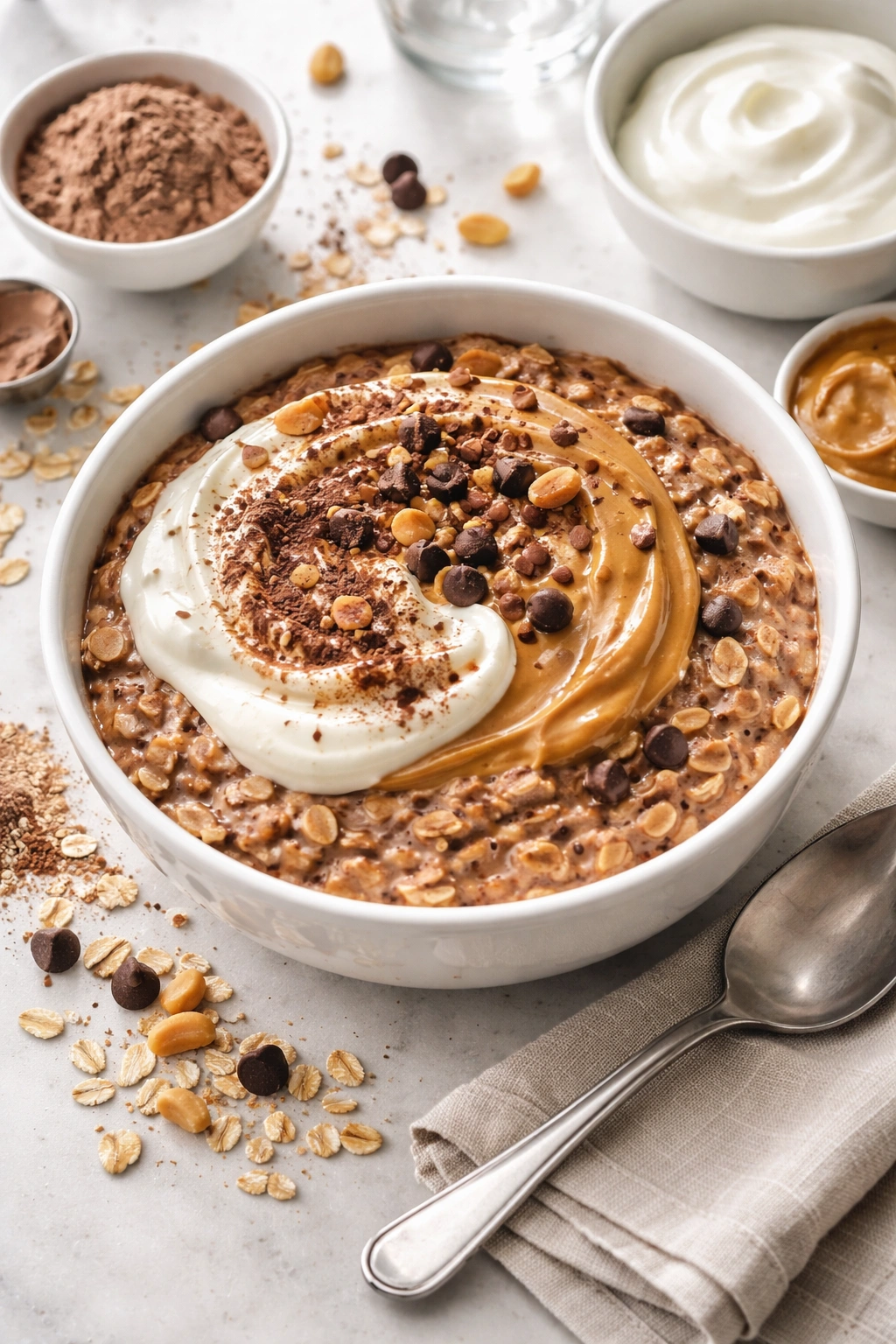
This is the flavor combination that makes high-protein breakfast feel like you’re cheating on your diet. Chocolate and peanut butter together create a rich, satisfying taste that most people associate with dessert rather than a morning meal, which is exactly why this version is so easy to stick to long-term. The cocoa powder provides depth without added sugar, while peanut butter contributes both flavor and additional protein.
Yield: Serves 1 | Prep Time: 5 minutes | Chill Time: Overnight (8 to 12 hours) | Total Time: 5 minutes active + overnight chilling | Difficulty: Beginner — simple mixing, no special technique.
For the Overnight Oat Base:
- ½ cup rolled oats
- ½ cup whole milk
- ½ cup plain Greek yogurt (full-fat preferred for richness, but non-fat works)
- 1 scoop chocolate whey protein isolate (approximately 25 grams protein)
- 2 tablespoons natural peanut butter (creamy or crunchy, both work)
- 1½ tablespoons unsweetened cocoa powder (not hot cocoa mix)
- ½ tablespoon honey or maple syrup
- ⅛ teaspoon fine sea salt
- ⅛ teaspoon instant espresso powder (optional but recommended — it deepens the chocolate flavor without adding coffee taste)
For Serving:
- 1 tablespoon chocolate chips (dark chocolate preferred for less added sugar)
- 2 tablespoons chopped roasted peanuts
- 1 teaspoon peanut butter, dolloped on top
Assemble the Overnight Oats:
- Pour the milk into your container.
- Add the chocolate protein powder and cocoa powder together and whisk for 45 seconds. Cocoa powder can clump easily, so make sure you break up any dry bits at the bottom of the jar. The mixture should be a uniform chocolate color with no visible powder clumps.
- Add the Greek yogurt, peanut butter, honey, salt, and espresso powder (if using). Stir thoroughly — the peanut butter will be thick, so you’ll need to work it in carefully. Stir for about 1 minute until the peanut butter is fully distributed and you don’t see any swirls of it remaining.
- Fold in the rolled oats and stir until everything is evenly combined. The final mixture should look like thick chocolate pudding.
- Cover and refrigerate overnight, at minimum 8 hours.
To Serve: Remove from the fridge and stir once — the mixture may have thickened further as the oats continued to absorb liquid. If it’s too thick, stir in a tablespoon of milk. Top with chocolate chips, chopped peanuts, and a small dollop of peanut butter stirred into the top.
Nutritional Breakdown (approximate):
- Protein: 34 grams (including peanut butter)
- Carbohydrates: 40 grams
- Fat: 16 grams
- Calories: 410 per serving
Common mistake to avoid: Don’t use flavored chocolate protein powder (like double chocolate or chocolate fudge) along with cocoa powder and peanut butter. The layering of chocolate flavors becomes one-dimensional and slightly bitter. Stick with a basic chocolate whey isolate, or use unflavored whey protein and let the cocoa powder be your chocolate source.
Storage Note: These keep for 5 days in the fridge because peanut butter is naturally shelf-stable. The chocolate flavor actually deepens slightly after the first day, so if you’re meal-prepping, make this on Sunday for a mid-week breakfast that tastes better on day 3 than it does on day 1.
3. Tropical Coconut and Mango
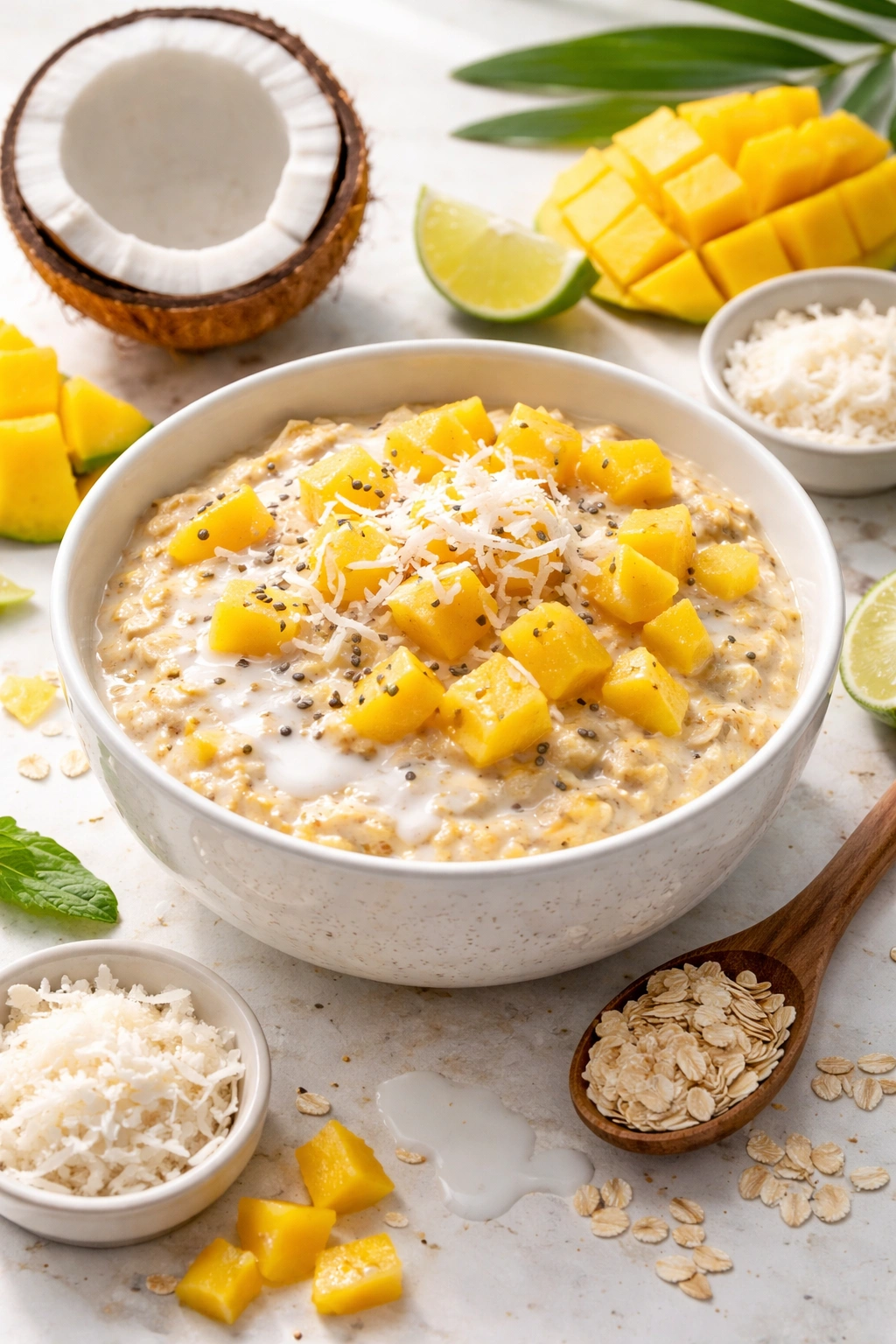
This version tastes like a mango-coconut smoothie bowl without any of the blending work. It’s lighter and more refreshing than the chocolate-heavy options, making it perfect for warm weather or if you prefer fruit-forward flavors over chocolate. The coconut milk creates a naturally sweet base while maintaining the high protein count through Greek yogurt and whey isolate.
Yield: Serves 1 | Prep Time: 5 minutes | Chill Time: Overnight (8 to 12 hours) | Total Time: 5 minutes active + overnight chilling | Difficulty: Beginner — standard mixing, one ingredient substitution.
For the Overnight Oat Base:
- ½ cup rolled oats
- ¼ cup whole milk
- ¼ cup canned coconut milk (full-fat, not light — light coconut milk lacks the richness that works here)
- ½ cup plain Greek yogurt
- 1 scoop vanilla whey protein isolate (approximately 25 grams)
- ½ cup diced fresh or frozen mango (thawed if frozen)
- 2 tablespoons unsweetened shredded coconut
- ½ tablespoon honey (optional — mango provides enough sweetness)
- ⅛ teaspoon fine sea salt
- 1 tablespoon fresh lime juice (approximately ½ lime, squeezed)
For Serving:
- Additional fresh mango slices or chunks
- Extra shredded coconut
- 2 tablespoons chopped macadamia nuts or cashews
Assemble the Overnight Oats:
- Pour the milk and coconut milk into your container and stir to combine.
- Add the vanilla protein powder and whisk for 30 seconds until fully dissolved.
- Add the Greek yogurt, diced mango, shredded coconut, honey (if using), salt, and lime juice. Stir everything together thoroughly. The mixture will be slightly less thick than other versions because you’re using less yogurt, but it should still hold together.
- Fold in the rolled oats and mix until uniform.
- Cover and refrigerate overnight, 8 to 12 hours minimum.
To Serve: Stir once to recombine — the mango pieces will have softened and partially broken down, which is exactly what you want. The coconut milk will have thickened the oats into a creamy texture. Top with additional fresh mango, a sprinkle of shredded coconut, and chopped nuts.
Nutritional Breakdown (approximate):
- Protein: 30 grams
- Carbohydrates: 42 grams
- Fat: 14 grams (mostly from coconut and nuts)
- Calories: 390 per serving
Flavor tip: The lime juice is essential in this version. It provides a bright acidity that cuts through the sweetness of mango and coconut, preventing the bowl from tasting cloying. If you don’t have fresh lime, substitute lime juice from a bottle, but use only a teaspoon to start — bottled lime juice is more concentrated.
Make-ahead variation: Assemble the base without the fresh mango and coconut topping. Keep them separate in the fridge. When you’re ready to eat, stir the fresh mango into the oats just before serving. This keeps the mango pieces from softening too much if you’re meal-prepping several days ahead.
Storage Note: These last 4 to 5 days in the fridge because the acidity from lime juice naturally preserves them. The mango flavor will deepen after 24 hours as the juices continue to soak into the oats.
4. Berry Collagen Smoothie Bowl
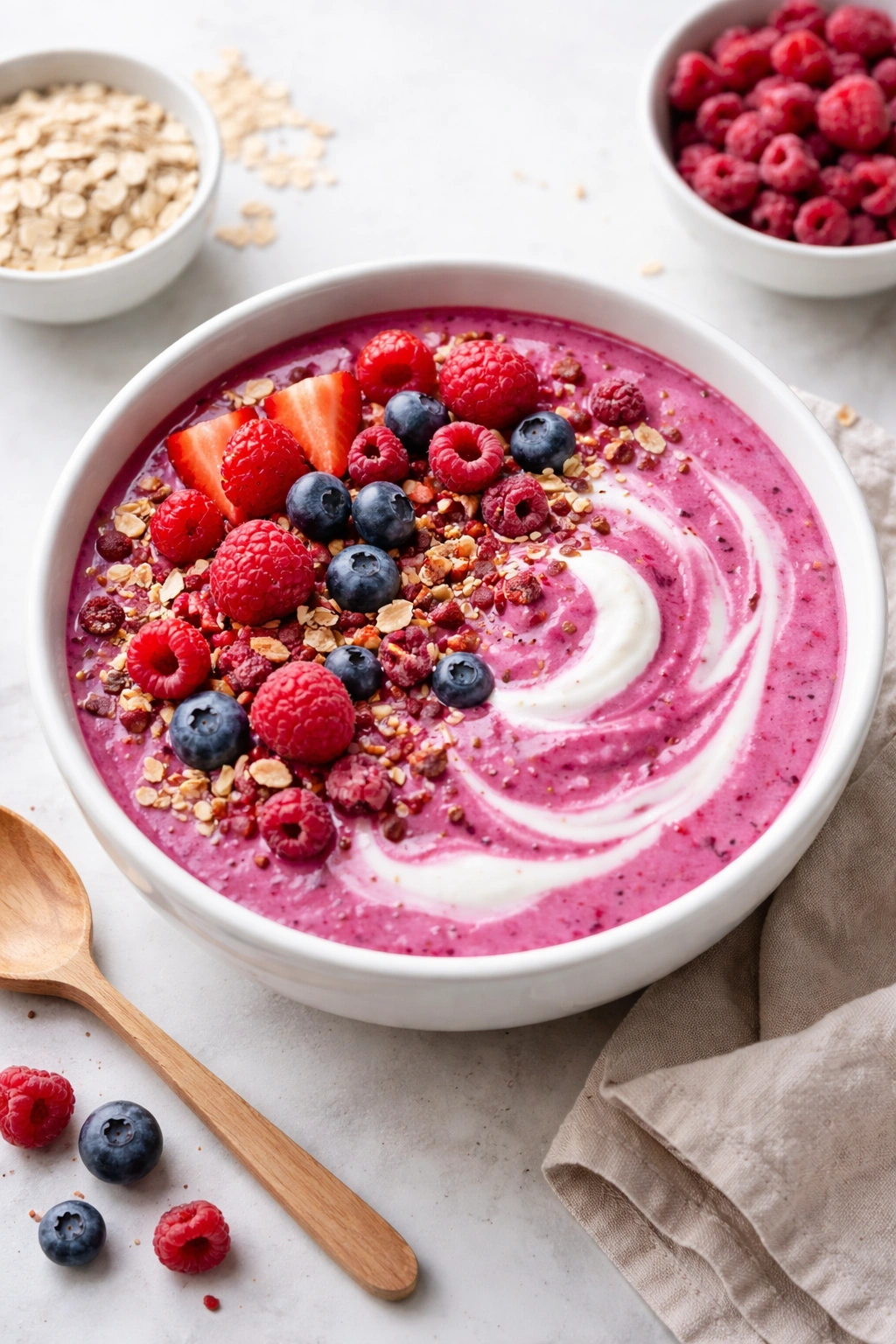
This version combines collagen peptides with whey protein and freeze-dried berries to create a high-protein overnight oat that tastes like a berry smoothie bowl but has the convenience of requiring zero blending. Collagen adds a subtle savory-sweet note that makes the final bowl taste more complex and less obviously “protein powder-ish.” This is the version for people specifically interested in skin and joint benefits alongside muscle protein.
Yield: Serves 1 | Prep Time: 5 minutes | Chill Time: Overnight (8 to 12 hours) | Total Time: 5 minutes active + overnight chilling | Difficulty: Beginner — two protein sources but simple mixing.
For the Overnight Oat Base:
- ½ cup rolled oats
- ½ cup whole milk
- ½ cup plain Greek yogurt
- 1 scoop vanilla or unflavored whey protein isolate (approximately 20 grams)
- 2 tablespoons collagen peptides (approximately 8 grams additional protein)
- ¼ cup freeze-dried mixed berries (cranberries, strawberries, raspberries) — or ½ cup fresh or frozen berries, thawed
- 1 tablespoon honey or maple syrup
- ⅛ teaspoon fine sea salt
- ½ teaspoon fresh lemon juice
For Serving:
- Fresh berries or additional freeze-dried berries
- 2 tablespoons granola or chopped almonds
- 1 tablespoon honey for drizzling
Assemble the Overnight Oats:
- Pour the milk into your container.
- Add the whey protein isolate and collagen peptides together. Whisk or stir for 45 seconds. Collagen dissolves slightly slower than whey, so give yourself time to break up any clumps. The mixture should be smooth and uniform in color.
- Add the Greek yogurt, freeze-dried berries (or thawed fresh berries), honey, salt, and lemon juice. Stir until fully combined. If using freeze-dried berries, they’ll soften significantly overnight and release their flavor into the oat base.
- Fold in the rolled oats and mix until even.
- Cover and refrigerate overnight, 8 to 12 hours.
To Serve: Remove from the fridge and stir. The freeze-dried berries will have plumped up and created a naturally pink or purple-tinted oat base. The texture should be creamy and custard-like. Top with fresh berries, granola, and a drizzle of honey.
Nutritional Breakdown (approximate):
- Protein: 28 grams (20 from whey, 8 from collagen)
- Carbohydrates: 40 grams
- Fat: 10 grams
- Calories: 360 per serving
Why collagen matters here: Whey protein is a complete protein with all nine essential amino acids and builds muscle. Collagen is incomplete but is specifically rich in glycine and proline, amino acids that support skin elasticity, joint cartilage, and gut lining. Using both together gives you the full spectrum. If you want a simpler version, use 1.5 scoops of whey protein instead and skip the collagen — you’ll still hit 35 grams of protein.
Berry selection note: Freeze-dried berries are ideal for overnight oats because they retain their flavor when rehydrated, don’t turn to mush, and don’t stain the oats. Fresh berries work but will break down more. Frozen berries thawed in the mixture work too but can make the final bowl slightly watery if you don’t drain them first.
Storage Note: These keep for up to 5 days. The collagen actually helps stabilize the mixture, and the berries’ natural acidity helps preserve them. After day 2, the berry flavor becomes even more pronounced as the freeze-dried pieces fully absorb the liquid.
5. Cookies and Cream Protein
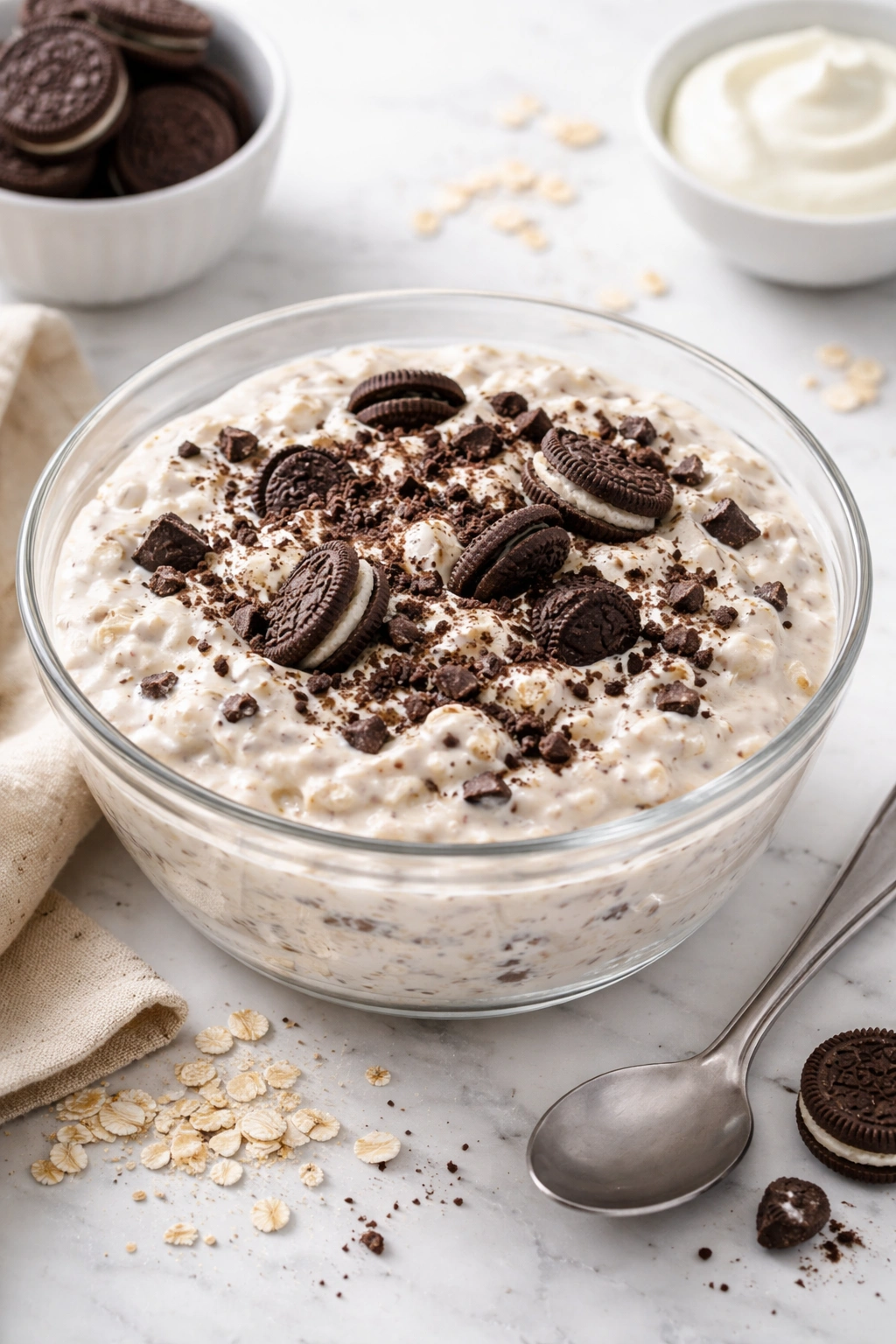
This is the indulgent option that makes high-protein breakfast feel like a real reward rather than a disciplined choice. Real crushed cookies (not imitation flavoring) mixed into creamy vanilla oats creates a texture that mimics a cookies-and-cream ice cream bowl. The protein content stays high through Greek yogurt and whey isolate, while the crushed cookies provide that nostalgic sweet-and-salty contrast.
Yield: Serves 1 | Prep Time: 7 minutes (includes crushing cookies) | Chill Time: Overnight (8 to 12 hours) | Total Time: 7 minutes active + overnight chilling | Difficulty: Beginner — only one extra step: crushing cookies.
For the Overnight Oat Base:
- ½ cup rolled oats
- ½ cup whole milk
- ½ cup plain Greek yogurt (full-fat highly recommended for richness here)
- 1 scoop vanilla whey protein isolate (approximately 25 grams)
- ½ tablespoon honey or maple syrup
- ½ teaspoon pure vanilla extract (not imitation)
- ⅛ teaspoon fine sea salt
For the Cookies and Cream Swirl:
- 5 to 6 vanilla wafer cookies or 4 to 5 Oreo cookies (use regular, not double-stuffed)
- 1 tablespoon crushed cookie pieces, reserved for topping
Assemble the Overnight Oats:
- Place your cookies in a small plastic bag and crush them coarsely with the bottom of a glass or a rolling pin. You want pieces ranging from fine crumbs to small chunks, not a uniform powder. Set aside.
- Pour the milk into your container.
- Add the vanilla protein powder and whisk for 30 seconds until fully dissolved.
- Add the Greek yogurt, honey, vanilla extract, and salt. Stir until smooth.
- Fold in the rolled oats and stir until combined.
- Reserve about 1 tablespoon of crushed cookie pieces for the top. Fold the remaining crushed cookies into the oat mixture gently — you want some cookie pieces to remain distinct rather than dissolving completely, so don’t over-stir.
- Cover and refrigerate overnight, 8 to 12 hours.
To Serve: Stir gently to loosen if needed. The oats will have softened the cookie pieces somewhat, creating pockets of sweet cookie flavor throughout. Top with the reserved crushed cookies and optionally a dollop of whipped cream or Greek yogurt.
Nutritional Breakdown (approximate):
- Protein: 30 grams
- Carbohydrates: 44 grams
- Fat: 14 grams
- Calories: 410 per serving
Cookie selection matters: Vanilla wafer cookies create a cleaner, more subtle cookies-and-cream flavor. Oreos create an unmistakable cookies-and-cream taste that’s closer to the dessert version. Neither is wrong — choose based on whether you want nostalgic indulgence (Oreos) or a more refined sweet flavor (vanilla wafers). Avoid chocolate cookies in this version; they compete with the vanilla base rather than complement it.
Make it your own: If you have a favorite cookie, try it. Crushed shortbread, digestive biscuits, or graham crackers all work. The key is adding them to soft oats, where they’ll absorb some moisture and become tender rather than staying hard and crunchy like they would in a yogurt bowl.
Storage Note: These are best eaten within 3 to 4 days because the cookies continue to soften over time and can eventually lose their distinct texture. If you’re meal-prepping for the week, add the crushed cookies to the top right before serving rather than mixing them in at assembly.
Storage, Make-Ahead, and Meal Prep Tips
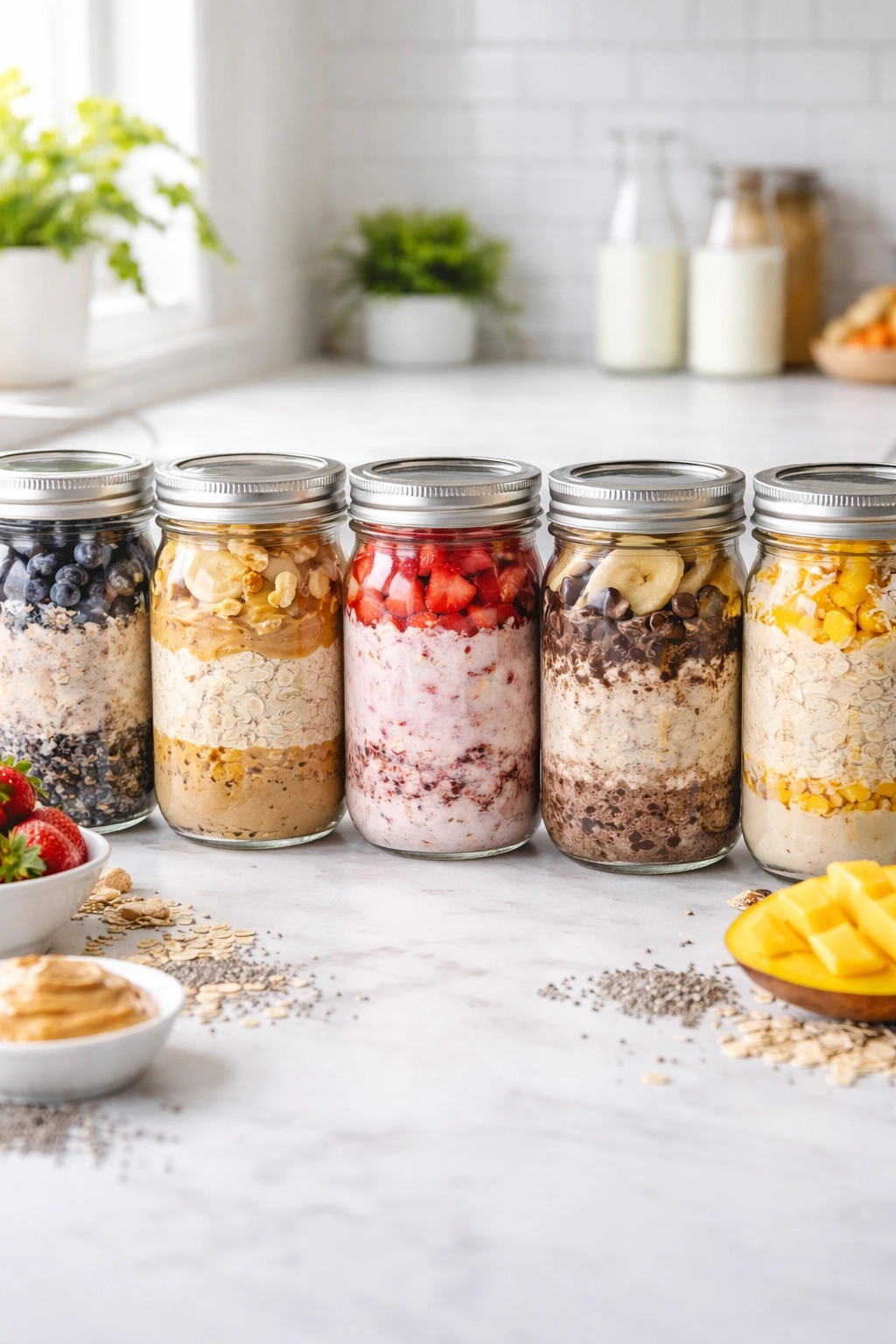
The beauty of overnight oats is their prep-ahead nature, but there are specific techniques that keep them tasting fresh rather than mushy or separated.
Optimal storage conditions: Keep assembled overnight oats in airtight glass mason jars or plastic containers in the coldest part of your refrigerator — typically the back of the bottom shelf. The cold slows any separation or bacterial growth. Most overnight oat combinations stay fresh for 4 to 5 days, though the chocolate peanut butter version lasts slightly longer due to the natural preservative properties of cocoa and peanut butter.
The separation problem and how to prevent it: After 24 hours, you may notice liquid pooling at the top or the oats sinking to the bottom. This isn’t spoilage — it’s just the oats continuing to absorb liquid. Prevent excess separation by using the exact liquid ratios in these recipes. If you make a larger batch or adjust ratios, aim for roughly equal parts oats to liquid by volume. Shake the jar vigorously before serving to recombine everything.
Make-ahead strategies for the busiest weeks: Assemble all five variations on Sunday using individual mason jars. Label each with the date and flavor using a permanent marker. This gives you five completely different breakfast options without any weekday prep. All five will be at peak quality through Wednesday, and most will stay palatable through Friday.
Component-based prep (the advanced version): If you prefer maximum flexibility, assemble only the base (oats, liquid, protein, yogurt) without fresh toppings or mix-ins. Store these in jars for up to 5 days. On the morning you eat each one, add fresh berries, nuts, or crushed cookies. This keeps the oats from getting overly soft and toppings from staining the mixture.
Freezing overnight oats: These freeze surprisingly well. Assemble as usual, leave 1 inch of headspace in your container, and freeze for up to 3 months. Thaw in the fridge overnight before serving, or thaw on the counter for 2 to 3 hours. The texture remains excellent after freezing — oats actually hold their distinct identity better after thawing than they do after 6 days in the fridge.
The overnight is flexible: While “overnight” implies 8 to 12 hours, these oats work from 6 hours onward if you’re in a rush. At 6 hours, the oats will be slightly less thick but still creamy. They can sit for up to 24 hours if needed, though anything past 12 hours means very soft oats and a thinner overall consistency.
How to Customize These Recipes for Your Goals
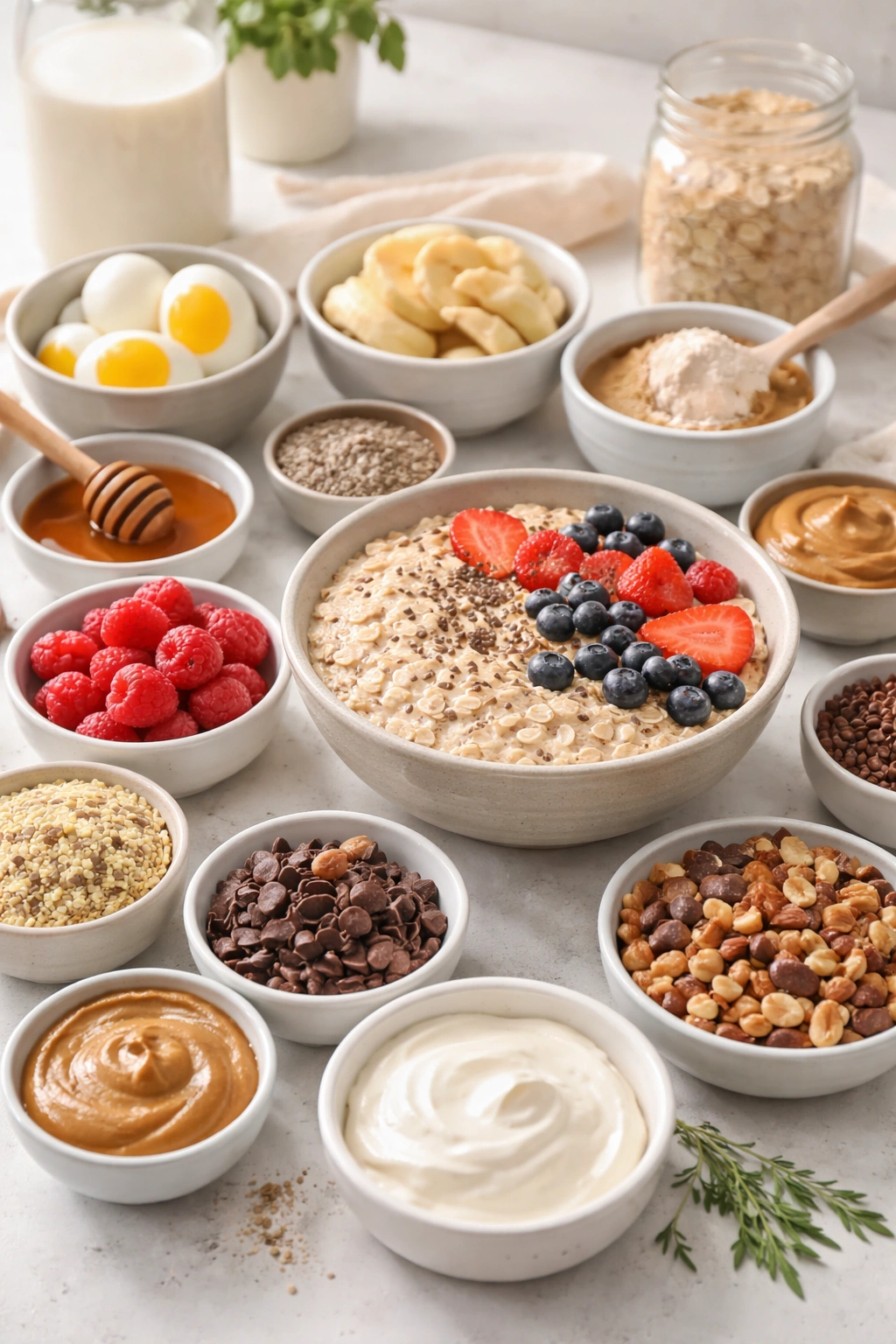
These five base recipes are starting points, not restrictions. Understanding the structure lets you build high-protein overnight oats for whatever your specific goal is — muscle building, weight loss, high energy for workouts, or sustained energy for long workdays.
For muscle building (aim for 35+ grams protein): Use 1.5 scoops of whey protein isolate instead of one, or combine 1 scoop of whey with 2 tablespoons of collagen peptides. Choose full-fat Greek yogurt for the extra calories and protein. Add an extra tablespoon of peanut butter or almond butter to the base. The total calories will be around 450 per serving, which supports muscle growth alongside your training.
For weight loss or maintenance (aim for 25-30 grams protein): Use non-fat or low-fat Greek yogurt, reduce nut butter from 2 tablespoons to 1 tablespoon, and skip additional sweeteners like honey. Use skim milk instead of whole milk. One scoop of whey protein isolate remains standard. This version comes in around 300-320 calories while still delivering substantial protein and satiety.
For pre-workout energy (make it 1 to 2 hours before training): Use the tropical coconut version or a variation that emphasizes carbs slightly more. Mango and coconut provide fast-digesting carbohydrates that fuel hard training. Reduce the fat slightly (use less nut butter) so digestion is quick and you don’t feel heavy during your workout. Aim for roughly equal grams of protein and carbohydrates (around 35-40 grams each).
For post-workout recovery (eat immediately after or up to 2 hours after training): The chocolate peanut butter version is ideal — chocolate provides quick-digesting carbs, peanut butter adds fat for hormone production, and the combination of carbs and protein in a 2:1 ratio is textbook post-workout nutrition. The cold temperature is also refreshing immediately post-sweat.
For sustained energy on long workdays (eat at 7 a.m. and don’t eat until noon): Choose the cookies and cream or classic vanilla version. The combination of carbs, protein, and a small amount of sugar keeps blood glucose stable for hours. The high protein count (30+ grams) triggers satiety hormones that suppress hunger. These versions prevent the 10 a.m. energy crash many people experience.
For digestion sensitivity or IBS: Use rolled oats soaked longer than 12 hours (up to 18 hours) to soften them further, which reduces digestive irritation. Skip nut butters, which are calorie-dense and can trigger symptoms in sensitive individuals. Use vanilla whey isolate instead of concentrate, as isolate has minimal lactose. Add 1 tablespoon of ground flaxseed instead of nuts for fiber that’s easier to digest.
Common Mistakes That Ruin High-Protein Overnight Oats
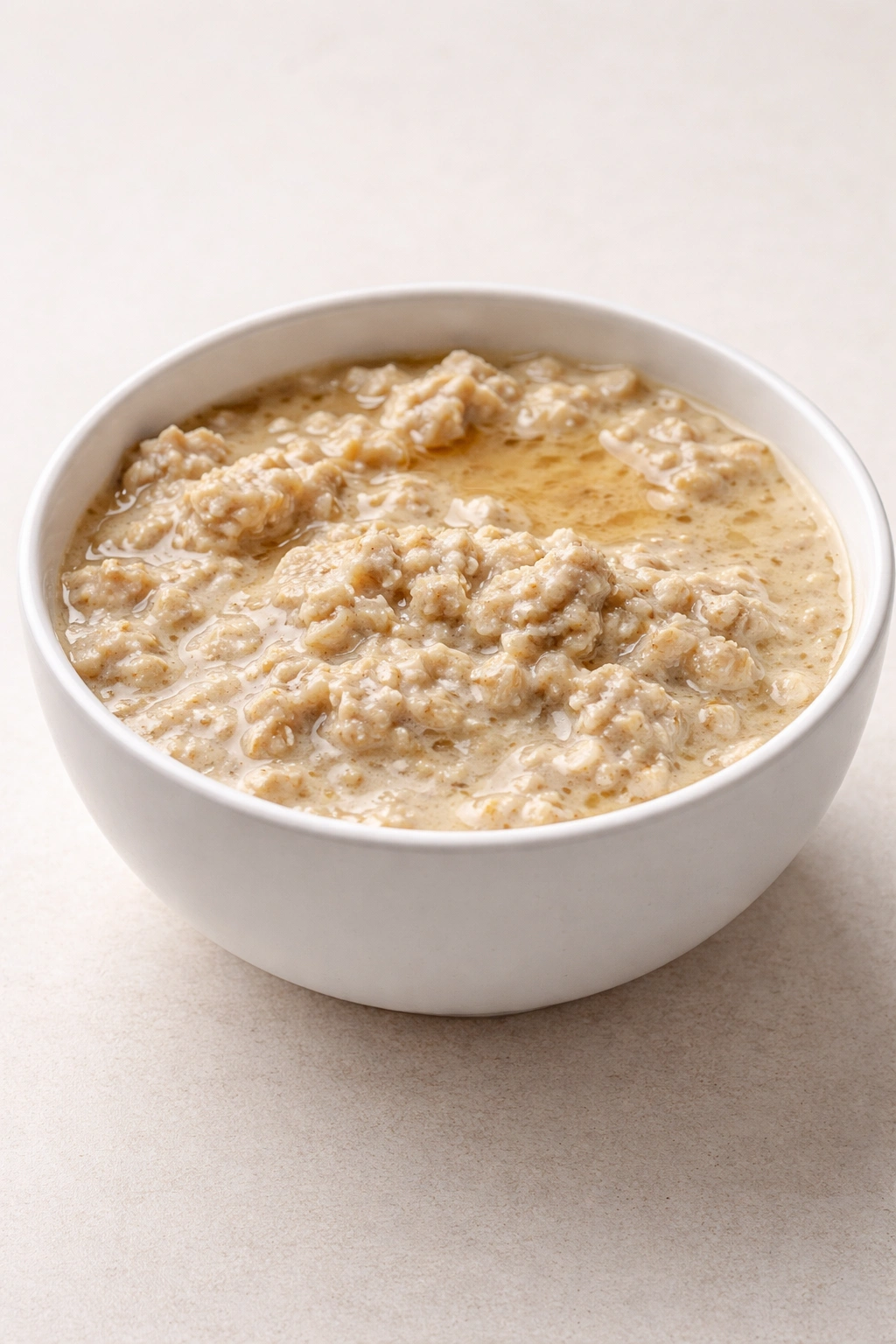
Even with a solid recipe, small execution mistakes can turn high-protein overnight oats from a treat into something you dread eating.
Using the wrong oats: Steel-cut oats won’t soften enough overnight, leaving you with a crunchy, unpleasant texture. Instant oats over-soften and become mushy within 6 hours. Only rolled oats (old-fashioned oats) have the right structure to become creamy without becoming mushy. Check your container — if it says “quick oats” or “instant,” that’s not what you want.
Not mixing protein powder into the liquid first: Adding protein powder directly to the oat base causes it to clump as the oats absorb liquid unevenly. Always whisk your protein powder into the milk by itself for 30 to 45 seconds before adding anything else. This fully hydrates the powder and prevents grit in the final product.
Using too little liquid: If your overnight oats come out thick and stiff rather than creamy, you either used too few oats relative to liquid or you let them chill longer than 12 hours. The remedy is adding milk a tablespoon at a time until you reach the right consistency. The final texture should resemble thick yogurt or pudding, not concrete.
Skipping salt: Salt seems like an unnecessary addition, but ⅛ to ¼ teaspoon per serving actually enhances sweetness and prevents the mixture from tasting one-dimensional and cloying. This is especially true in chocolate or vanilla versions. Don’t skip it.
Forgetting to stir before serving: Overnight oats can separate slightly in the fridge as oats continue absorbing liquid. Stir vigorously before eating to recombine everything and ensure even distribution of protein powder, yogurt, and any mix-ins. You’ll get a better texture and better taste.
Adding toppings the night before: Granola, nuts, and cookies lose their crunch when mixed into the oats overnight. Always add these toppings on the morning you eat the bowl. Fresh fruit can go in the night before, but berries will break down and stain the oats if you’re using acidic varieties like raspberries.
Using flavored yogurt: Vanilla or fruit-flavored yogurt sounds convenient but introduces extra sugar and often strange texture additives. Plain Greek yogurt is smoother, more stable overnight, and lets you control sweetness through your other ingredients. Always buy plain and unsweetened.
Making a full week’s batch without considering timing: If you assemble all five variations on Sunday but don’t eat them until Friday, they’ll be noticeably thinner and mushier by day 5. If meal-prepping multiple days ahead, make only 3 to 4 days’ worth on Sunday and prep the remaining 1 to 2 days’ worth on Wednesday.
Final Thoughts
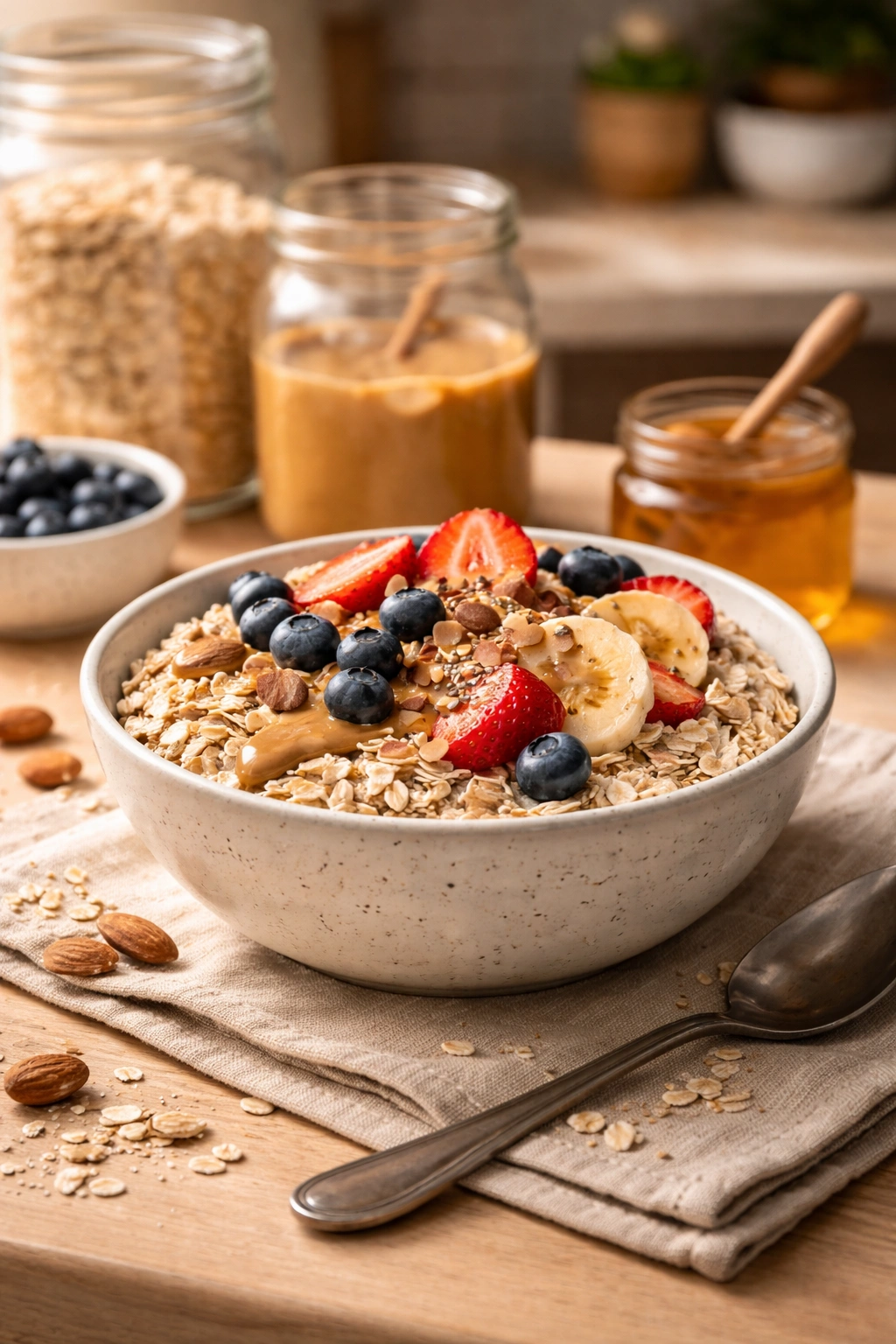
High-protein overnight oats work because they solve the core breakfast problem: maximum nutrition with zero morning effort. Each of these five variations approaches that goal from a different flavor angle, so you have options for when you want chocolate indulgence, tropical refreshment, berry brightness, cookies-and-cream nostalgia, or the clean simplicity of vanilla.
The key to making these work long-term is treating them as a base system rather than fixed recipes. Once you understand that roughly equal parts oats to liquid, combined with Greek yogurt and whey protein, creates a solid foundation, you can swap ingredients based on what you have, what you’re craving, or what your body needs on a given day. The chocolate peanut butter version one morning, tropical coconut the next, and cookies and cream on Friday means you never get bored.
Assemble your first batch tonight, leave it in the fridge overnight, and approach it with genuine hunger in the morning. The moment you realize you have a complete, high-protein breakfast waiting for you that tastes better than anything you’d make if you had unlimited time — that’s when overnight oats become a staple rather than an experiment. These five recipes are your foundation to make that happen.
