



Broccoli gets a bad rap at BBQs — typically relegated to raw veggie platters, neglected in favor of heavier sides. But roasted broccoli tossed with crispy nuts, tangy feta, tart dried cranberries, and a bright lemon-olive oil dressing? That’s the kind of salad people actually come back for seconds on. This Mediterranean version transforms plain broccoli into something herbaceous, textured, and genuinely crave-worthy without requiring any fancy cooking skills or hours of prep work. It’s the rare side dish that works equally well at a casual backyard cookout or a more formal gathering, and it holds up beautifully whether you’re serving it warm, room temperature, or even chilled.
What makes this particular salad special is the balance of opposing elements — the earthiness of roasted broccoli against the brightness of lemon, the richness of toasted almonds against the tang of feta, the chew of dried cranberries against crunchy red onion. It’s not heavy, it’s not fussy, and it won’t compete with grilled proteins for attention. Instead, it complements them perfectly while tasting like you actually put thought into the meal. Once you nail the proportions and technique, this becomes a formula you’ll return to again and again, potentially tweaking it with whatever fresh herbs are on hand or whatever nuts you have in your pantry.
The beauty of serving this at a BBQ specifically is that you can prep almost everything in advance, then do one quick roast of the broccoli just before guests arrive. The whole thing comes together in under 30 minutes from start to finish, which means you’re not spending your afternoon stuck in the kitchen when you should be enjoying the weather and your guests.
Why Mediterranean Broccoli Is a BBQ Must-Have
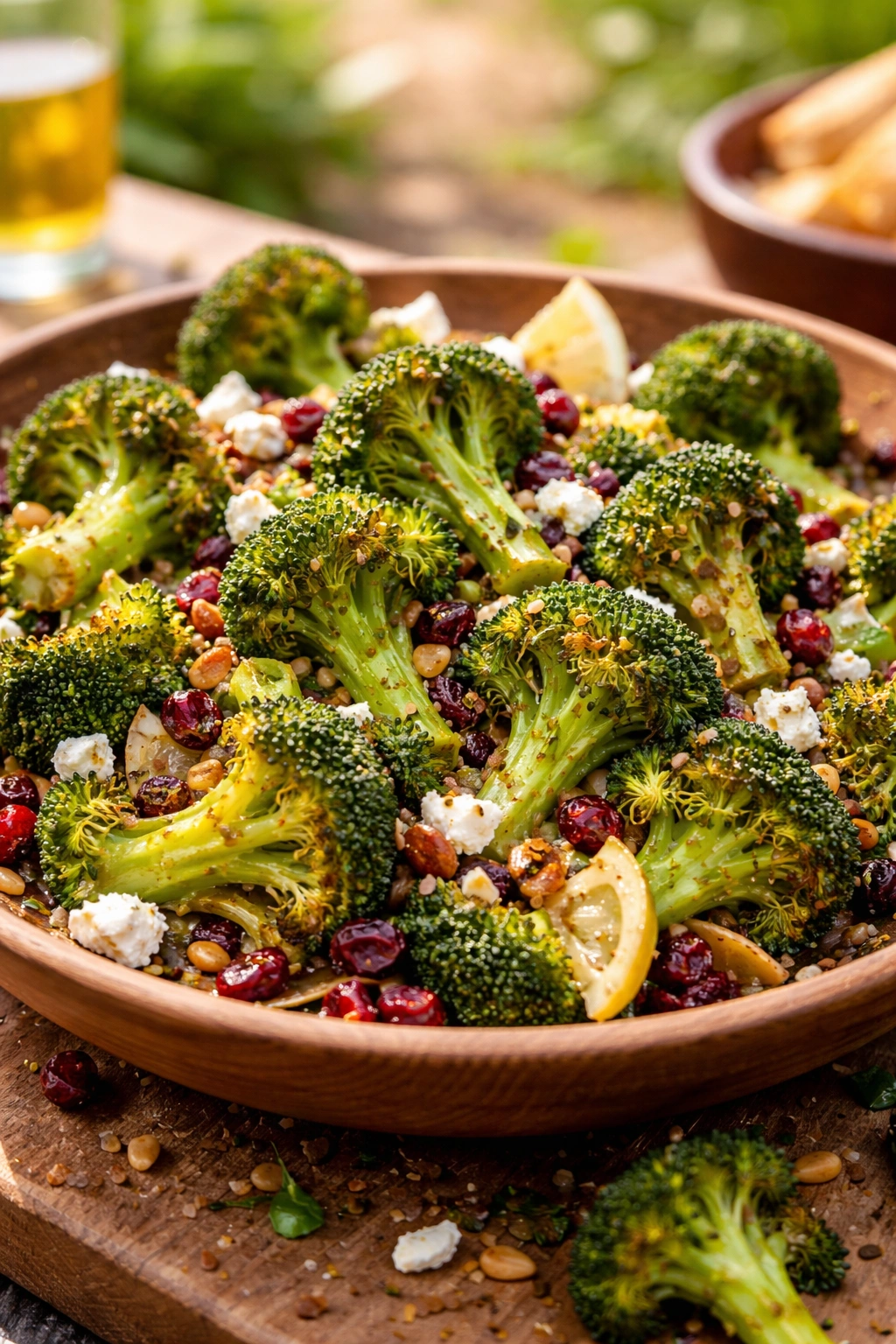
BBQ side dishes tend to fall into predictable categories — potato salad, coleslaw, baked beans. Most of them are mayonnaise-based or overly sweet, which is fine, but they leave you feeling heavy and sluggish in the heat. A bright, herbaceous vegetable salad cuts through grilled meat in exactly the right way. The acidity wakes up your palate, the fresh herbs provide a counterpoint to smoke and char, and the vegetables add textural variety to a plate that might otherwise feel monotonous.
Broccoli specifically is the right choice here because it roasts into something genuinely delicious — not mushy, not bitter, but nutty and slightly caramelized on the edges. Unlike delicate greens that will wilt in warm weather or get dressing-logged if dressed too far in advance, roasted broccoli actually benefits from sitting with its dressing for an hour or two. The florets absorb the flavors, and everything melds together beautifully.
This salad also signals that you’ve put genuine thought into what you’re serving. It’s not a bag of pre-made salad mix or a casserole pulled from the freezer. The combination of textures and flavors tells guests you care about the eating experience, not just getting food on the table. That matters more than you might expect.
Key Mediterranean Flavors in This Salad
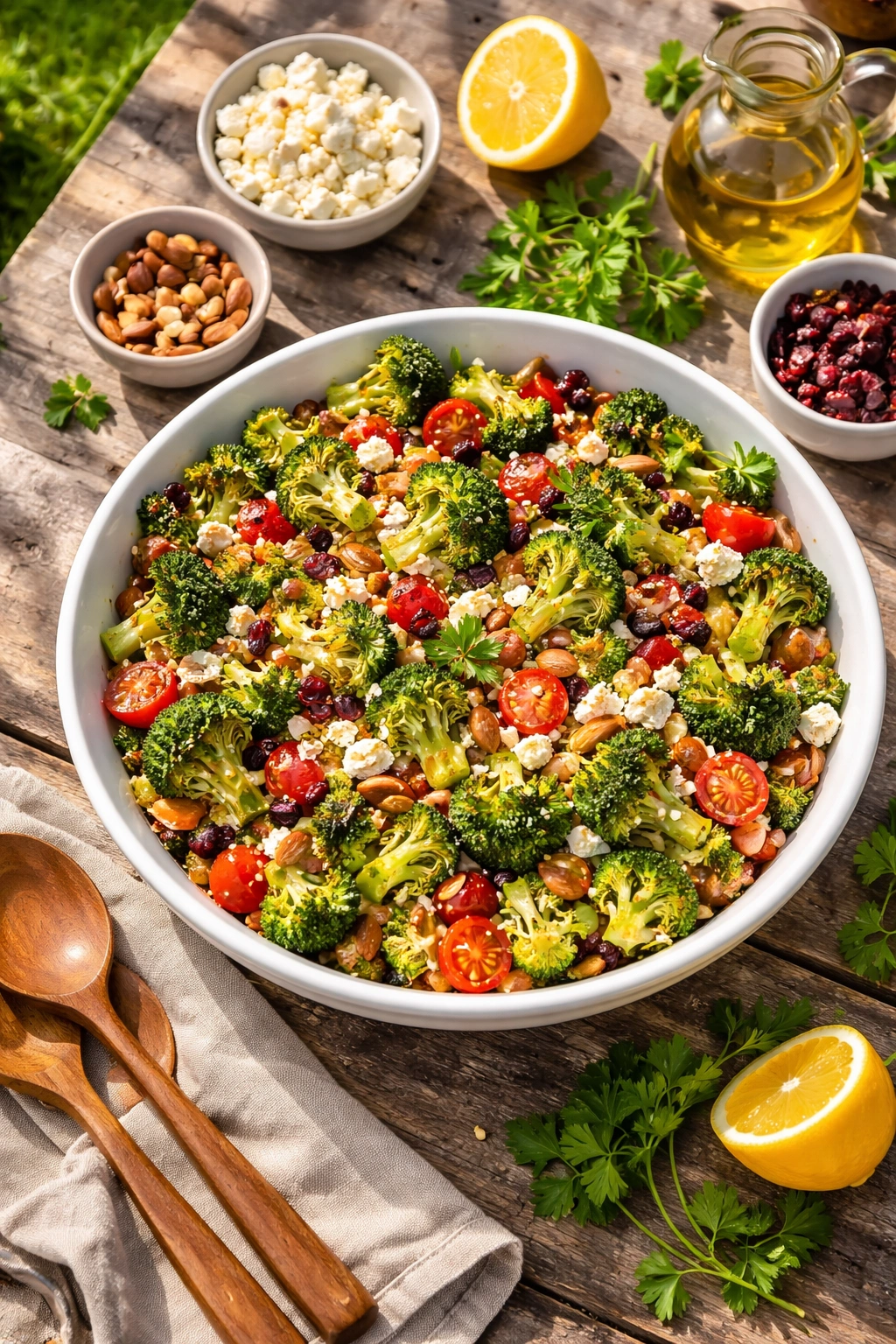
When we talk about Mediterranean flavors, we’re really talking about the sun-soaked coastal regions around the Mediterranean Sea — Greece, Spain, Italy, parts of North Africa and the Middle East. The seasonings and ingredients from those places share common threads: bright citrus, fruity olive oil, briny feta or other salty cheeses, fresh or dried herbs like oregano and parsley, nuts, dried fruit, and good vinegar.
The lemon provides the acidity that brings everything into focus. It’s not subtle or muted — it needs to be enough that you taste it clearly. The olive oil should be reasonably good quality because it’s going to be the dominant fat, and you’ll taste every bit of it. If you only have basic grocery store olive oil, it’s fine, but upgrade to something labeled “extra virgin” if you can.
The feta brings saltiness and tanginess simultaneously. It’s creamier than you might expect when crumbled into a warm salad, and it plays beautifully against the nuttiness of the roasted broccoli. The dried cranberries provide a subtle sweetness and chew that balances the savory elements. Red onion brings a sharp, almost peppery bite that keeps the salad from feeling one-note.
Fresh herbs — particularly parsley, oregano, and maybe dill if you like it — are what take this from “nice side dish” to “where did you find this?” territory. Use fresh whenever possible. Dried oregano is acceptable and actually quite traditional in Mediterranean cooking, but fresh parsley makes a real difference.
Ingredients You’ll Need
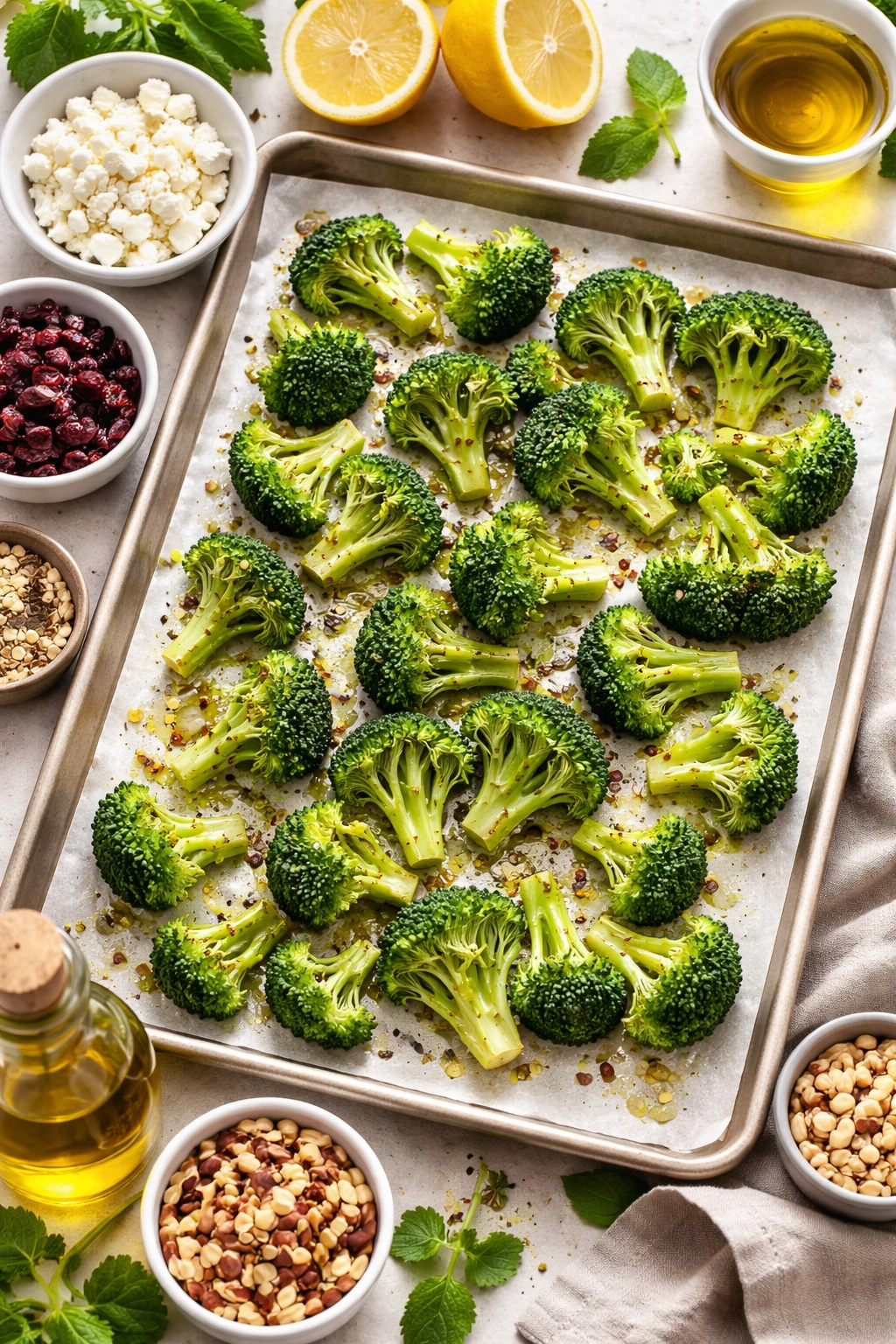
Yield: Serves 8 to 10 as a side dish | Makes approximately 10 cups Prep Time: 20 minutes Cook Time: 20 to 25 minutes Total Time: 45 minutes Difficulty: Beginner — The steps are straightforward, the equipment is basic (just a baking sheet, cutting board, and large mixing bowl), and the technique requires no special skills. Even a first-time cook will nail this without difficulty.
For the Salad:
- 1½ pounds fresh broccoli (about 2 large heads), cut into florets roughly 1½ to 2 inches at the crown (don’t discard the stems — peel the outer layer and cut them into ½-inch pieces; they roast beautifully)
- ⅓ cup raw almonds, roughly chopped into ½-inch pieces
- ⅓ cup raw sunflower seeds (or pine nuts for a more traditional Mediterranean approach — sunflower seeds are slightly less delicate and help the salad travel well)
- ½ cup dried cranberries (or dried cherries, or currants)
- 1 medium red onion, thinly sliced (about ½ cup)
- 1 cup crumbled feta cheese (approximately 5 ounces)
- ⅓ cup fresh flat-leaf parsley, roughly chopped
- 2 tablespoons fresh dill, finely chopped (optional but genuinely lovely)
- 1 teaspoon dried oregano (or 1 tablespoon fresh oregano, finely minced, if you have it)
- Fine sea salt and freshly cracked black pepper
For the Dressing:
- ¼ cup fresh lemon juice (from about 2 medium lemons, juiced just before using — bottled lemon juice will taste thin and sad by comparison)
- ⅓ cup good extra-virgin olive oil
- 1 tablespoon Dijon mustard (this acts as an emulsifier and adds a subtle depth that balances the acidity)
- 1 clove garlic, minced extremely fine or passed through a garlic press
- ½ teaspoon fine sea salt
- ¼ teaspoon freshly cracked black pepper
- Tiny pinch of red pepper flakes (optional, but adds welcome warmth)
How to Toast the Nuts and Seeds for Maximum Flavor
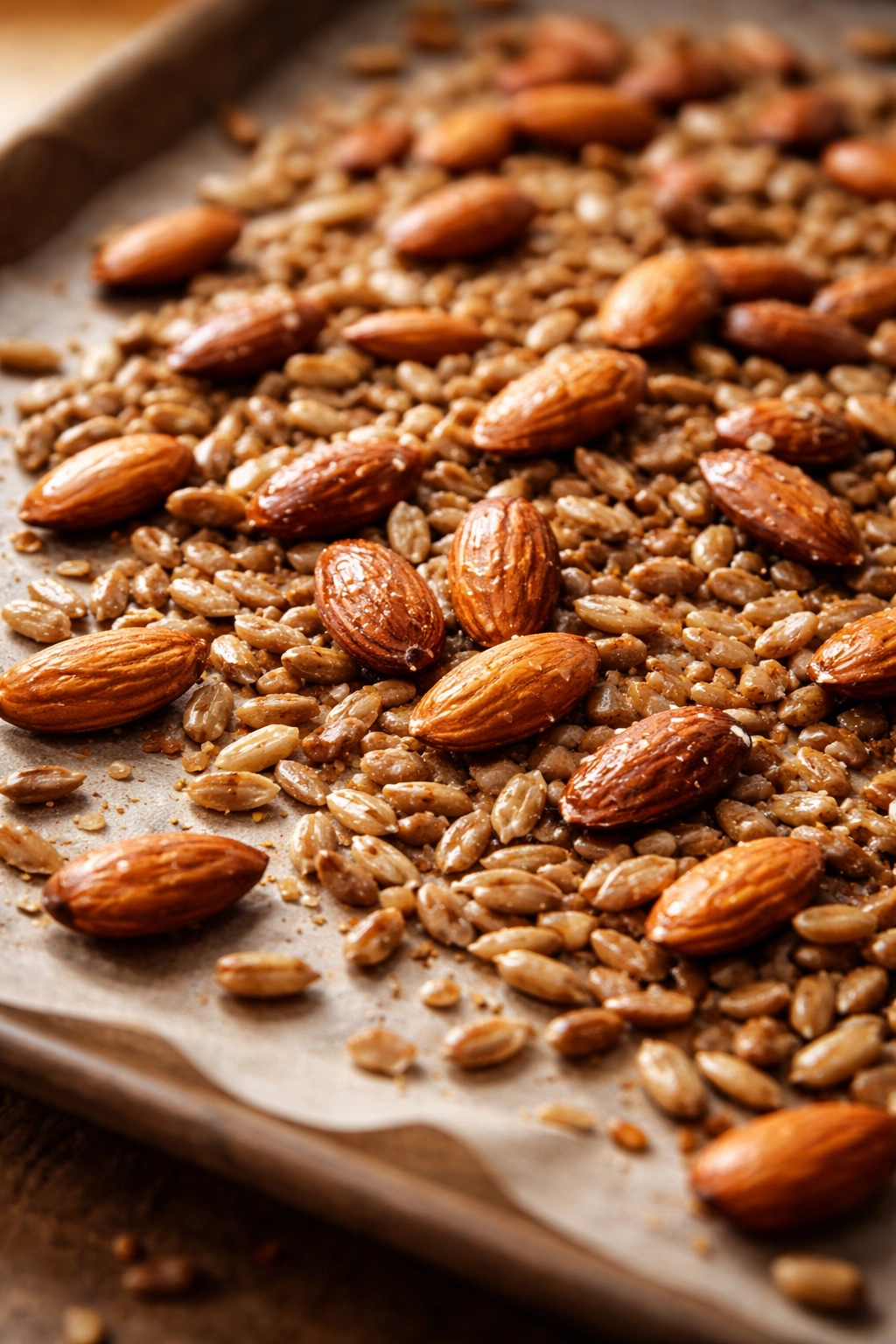
Toasting the almonds and sunflower seeds is a non-negotiable step, even though it’s easy to skip. Raw nuts taste meek and slightly bitter. Toasted nuts taste like actual food — rich, nutty, and complex. The heat transforms their oils and deepens their flavor profile entirely.
There are two approaches: toasting them separately and scattering them into the salad afterward, or mixing them with the broccoli and letting them toast together in the oven. I prefer the second method because it’s one less step and the nuts pick up some of the roasted broccoli flavor, but either works.
If you’re toasting them separately (which is great if you want to get them done while the oven is preheating for the broccoli), spread them on a small baking sheet and roast at 325°F for 8 to 10 minutes, stirring halfway through, until they smell deeply nutty and look very lightly golden. Watch them closely — nuts can go from perfectly toasted to burnt in about 30 seconds. Once they hit that dark golden color, pull them out immediately and let them cool on the baking sheet while you prepare everything else.
The moment they’re cool enough to handle, they’re ready to add to the salad. If you wait too long, they’ll harden fully, which is fine, but they have the best flavor and a slightly crisper texture when stirred into the still-warm roasted broccoli.
Step-by-Step Instructions
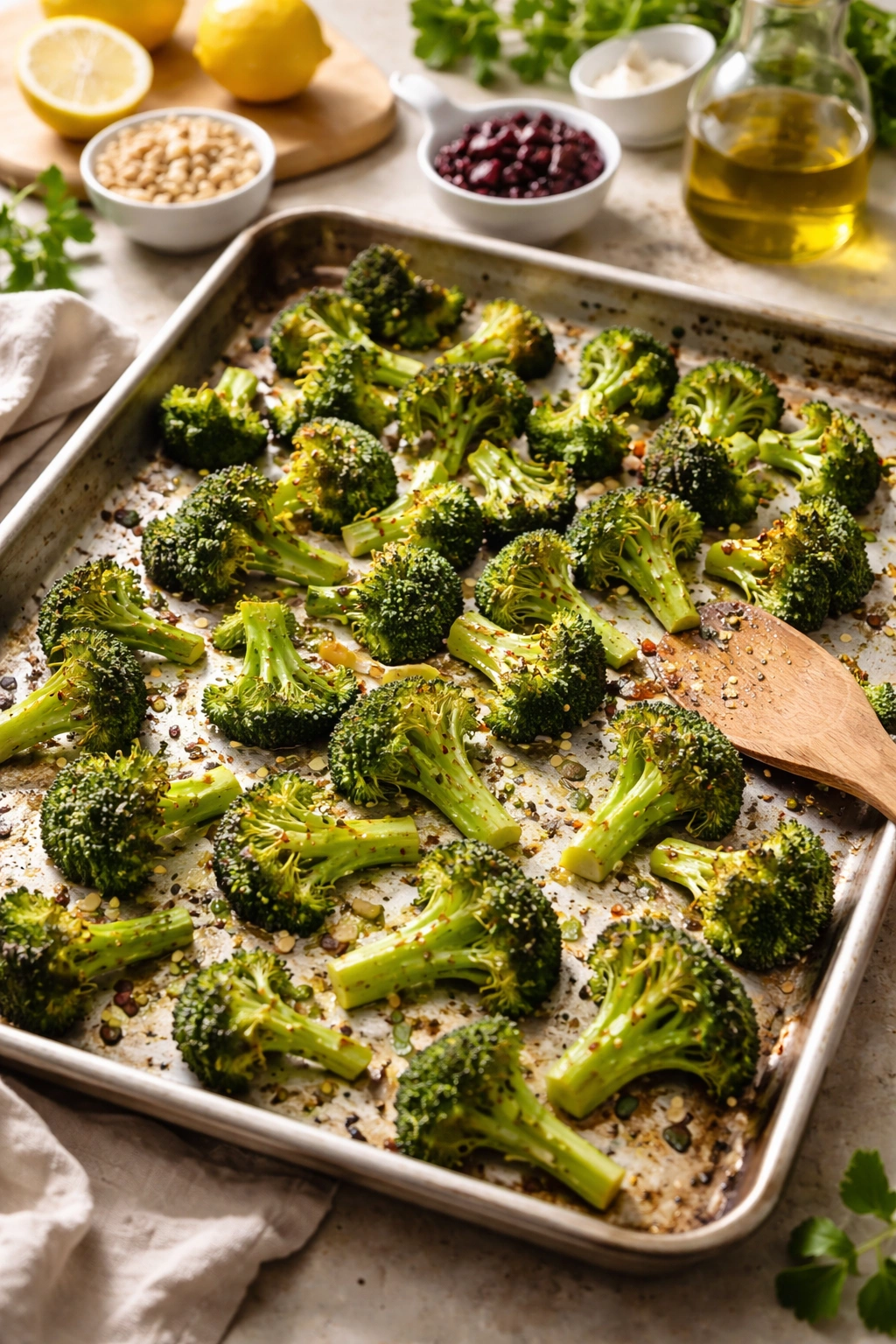
Prepare the Vegetables and Make the Dressing:
-
Preheat your oven to 425°F (220°C) and position a rack in the upper third of the oven. While it heats, prepare all your ingredients so you’re ready to move quickly once the broccoli goes into the oven.
-
Cut the broccoli into florets about 1½ to 2 inches at the crown. Don’t try to make them perfectly uniform — slight variation is fine and actually helps, as smaller pieces will crisp and larger pieces will stay tender and sweet. Peel the thick outer skin from the broccoli stems using a vegetable peeler or small knife, then cut the peeled stems into ½-inch pieces. The stems roast into something tender and delicious — they’re too good to waste.
Advertisements -
In a small bowl or liquid measuring cup, whisk together the lemon juice, minced garlic, Dijon mustard, salt, and pepper. This is your dressing base. Let it sit for just a minute so the garlic can infuse into the lemon juice, which mellows its sharpness slightly.
-
While the dressing sits, whisk in the olive oil. The mustard acts as an emulsifier, helping the lemon and oil combine into something cohesive rather than separating immediately. This dressing will still separate over time (that’s normal and fine — just give it a stir before serving), but it’ll stay together much better during the salad assembly.
Roast the Broccoli with Nuts and Seeds:
-
Place all the prepared broccoli florets and stems into a large bowl. Drizzle generously with about 2 tablespoons of neutral oil (olive oil, avocado oil, or even canola oil works fine — this is separate from the dressing and just helps them roast evenly). Scatter the chopped almonds and sunflower seeds over the top. Season everything generously with fine sea salt and freshly cracked black pepper.
-
Toss everything together with your hands or two spoons until the broccoli and nuts are evenly coated in oil and seasoning. Every piece should have a light sheen. If it looks dry, add a bit more oil — dry broccoli will steam rather than roast, and you want that deep golden color on the florets.
-
Spread the mixture in a single even layer on a large baking sheet (a sheet pan measuring approximately 13×18 inches works perfectly). Don’t crowd it — if it’s piled too high, the broccoli will steam. If it barely fits, use two baking sheets instead. The difference between crowded broccoli and properly spaced broccoli is the difference between tender-inside-steamed-florets and golden-caramelized-delicious-ones.
-
Roast for 20 to 25 minutes, stirring halfway through (around the 12-minute mark), until the broccoli florets are deeply golden to almost brown around the edges and the stems are tender when pierced with a fork. The outer leaves should look crispy and the crowns should be caramelized. Some char is beautiful here — don’t shy away from it. This is when the broccoli tastes best.
Assemble and Dress the Salad:
-
Pour the warm roasted broccoli mixture into a very large bowl. Immediately pour the dressing over it and toss gently but thoroughly to coat every piece. The warmth of the broccoli will help the dressing be absorbed, which is exactly what you want.
-
Let the salad sit for 5 minutes, then add the sliced red onion and dried cranberries. Toss again gently. At this point you can taste and adjust the seasoning — add more salt, more lemon juice, or more pepper as needed. The salad should taste bright and balanced, not salty or aggressively acidic, but with enough lemon and salt that everything pops.
Advertisements -
Just before serving (or up to 2 hours before, if you’re working with a timeline), scatter the crumbled feta, fresh parsley, fresh dill if using it, and the dried oregano across the top. For serving at a BBQ, you can either toss these in or leave them on top where guests can see them — there’s something nice about the visual of the white feta and green herbs against the golden broccoli.
Common Mistakes That Underdeliver
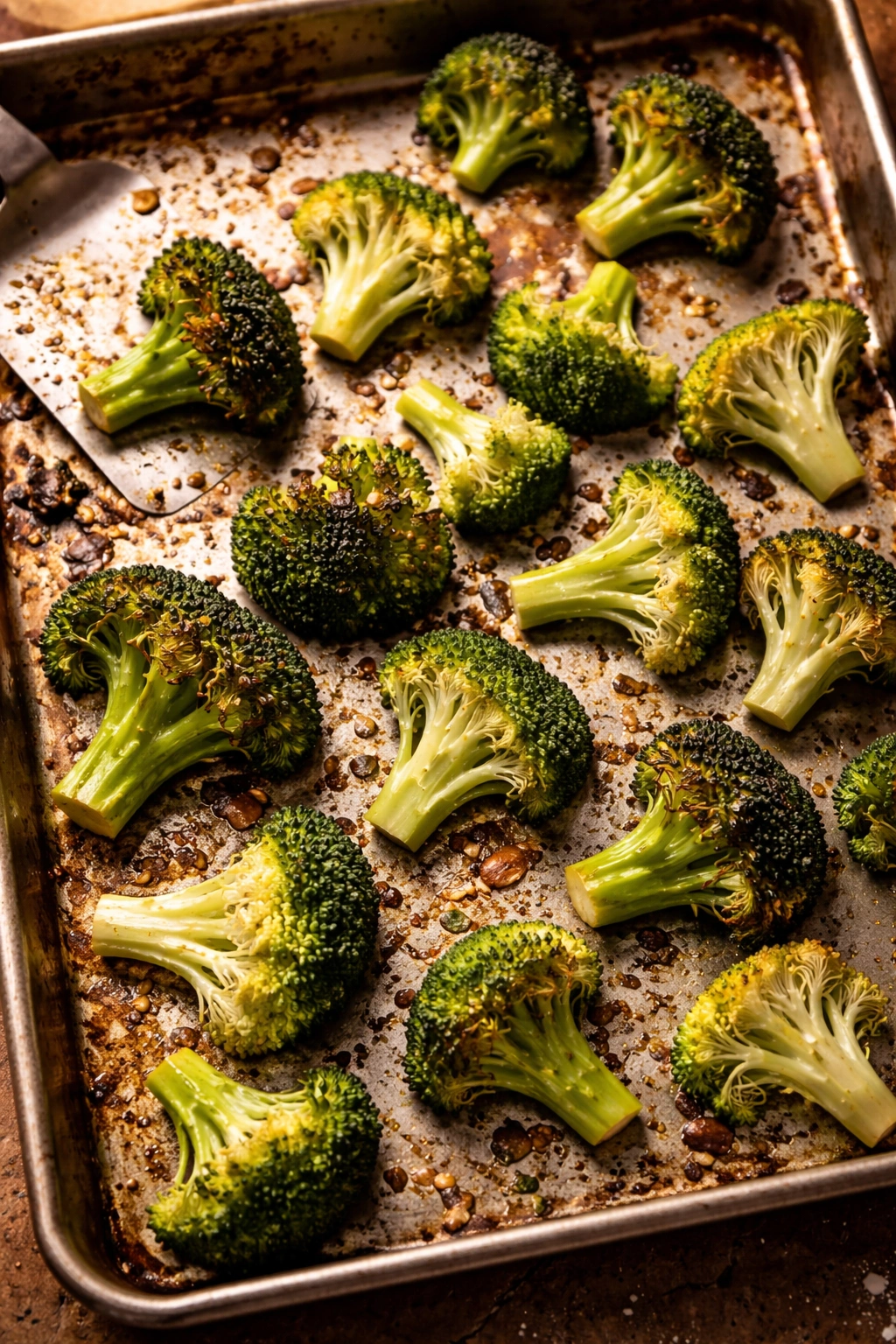
The most frequent mistake is not roasting the broccoli long enough or at a high enough temperature. You want actual caramelization, which requires good heat and adequate time. If your broccoli looks pale and steamed, it needs more time in the oven. Roast it at 425°F or even 450°F, and don’t pull it out until the edges are noticeably golden. This is what transforms the flavor.
The second common mistake is under-seasoning. The broccoli itself should taste well-salted before the dressing even goes on. The dressing should taste quite tangy and lemony on its own — when everything comes together, it balances beautifully. If you taste it and think “this needs more salt” or “I wish this were more lemony,” trust that instinct and adjust while the salad is still warm. You can always add more, but you can’t take it out.
Using bottled lemon juice instead of fresh-squeezed is noticeable. If life happens and you’re stuck with bottled, use slightly less of it — bottled juice tastes thin and medicinal when you use the same amount as fresh. Fresh lemon juice is worth the 3 minutes of effort.
Skipping the nut-toasting step because you’re in a hurry is tempting but disappointing. Raw nuts taste almost bitter against the bright acidity of the dressing. Take the 10 minutes and toast them. You can do this while the broccoli roasts, so it doesn’t actually add time to your overall preparation.
Not slicing the red onion thinly enough will make it too aggressive and peppery. Slice it as thin as you can — ideally on a mandoline if you have one, or with a very sharp knife if you don’t. Thin red onion distributes its bite evenly and adds pleasant crunch rather than overpowering heat.
Timing and Make-Ahead Strategy
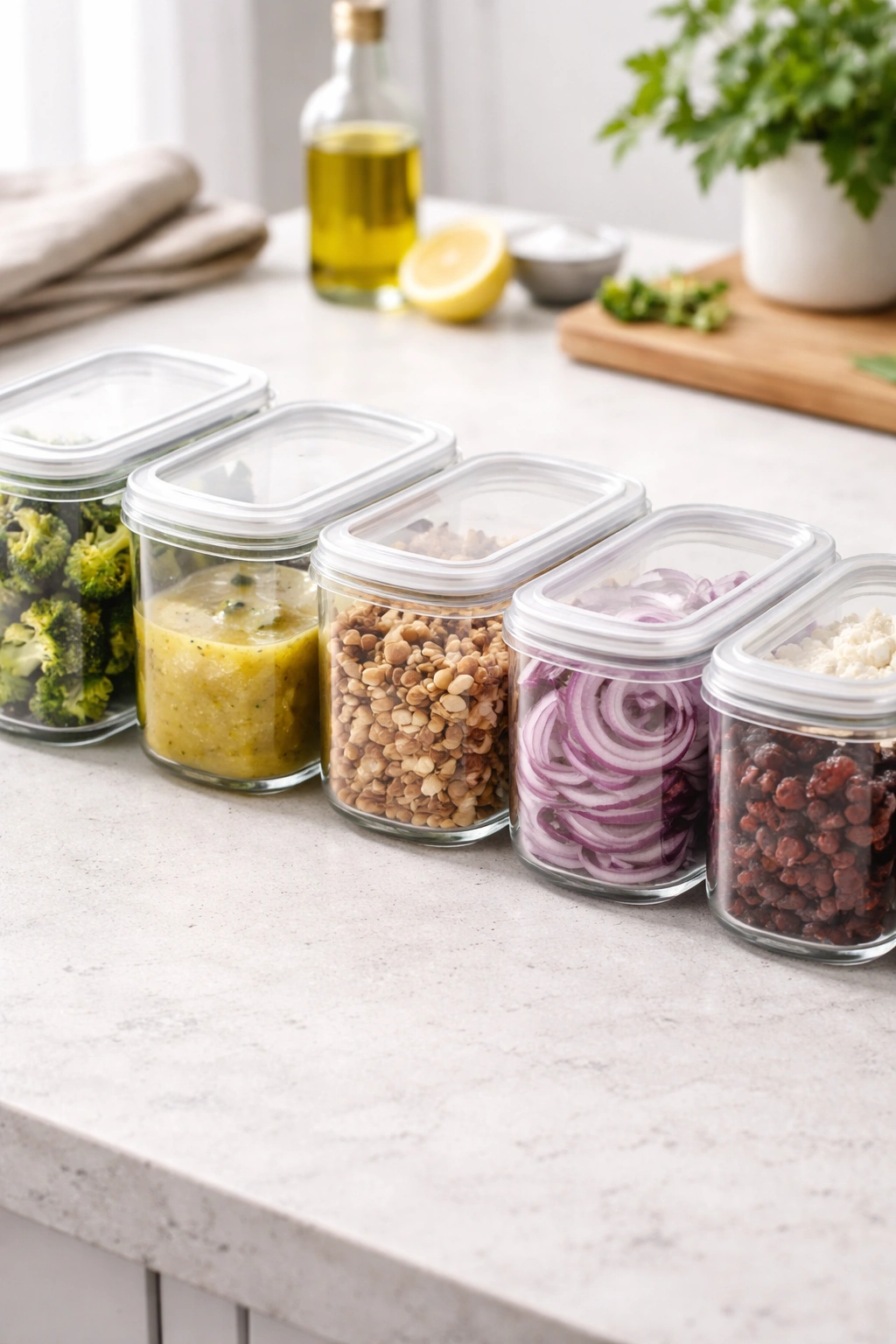
This salad is genuinely flexible with timing, which is one of its great strengths for a BBQ. You can make it completely ahead and it’s excellent, you can make it partially ahead and finish it just before serving, or you can make it entirely fresh — the results are delicious at every stage.
The safest approach for most BBQ situations is to prep everything except the fresh herbs the night before or the morning of the party. Roast the broccoli, prepare the dressing, toast the nuts, slice the red onion, and measure out the dried cranberries and feta. Store them all in separate airtight containers in the refrigerator.
About 30 minutes before you want to serve, combine the roasted broccoli with the dressing (you can do this at room temperature, and it’s fine if the broccoli has cooled completely — it’ll still absorb the dressing beautifully). Stir in the red onion and cranberries. Taste and adjust seasoning if needed.
Right at serving time, scatter the fresh herbs and feta on top. This keeps the herbs bright-tasting and the feta from getting overly soft or dressing-logged.
If you’re serving this warm (which is delicious), assemble the entire salad while the broccoli is still hot, then let it sit in a serving bowl for up to 30 minutes. The flavors will meld and the salad will stay warm longer than you’d expect. If it cools to room temperature, that’s fine too — it’s equally good either way.
If you want to serve it chilled (particularly nice on a hot day), make the whole thing a few hours ahead, store it in the refrigerator, and pull it out 10 minutes before serving so it’s not shocking-cold. Add the fresh herbs right before bringing it to the table.
Storage and Keep-Fresh Tips
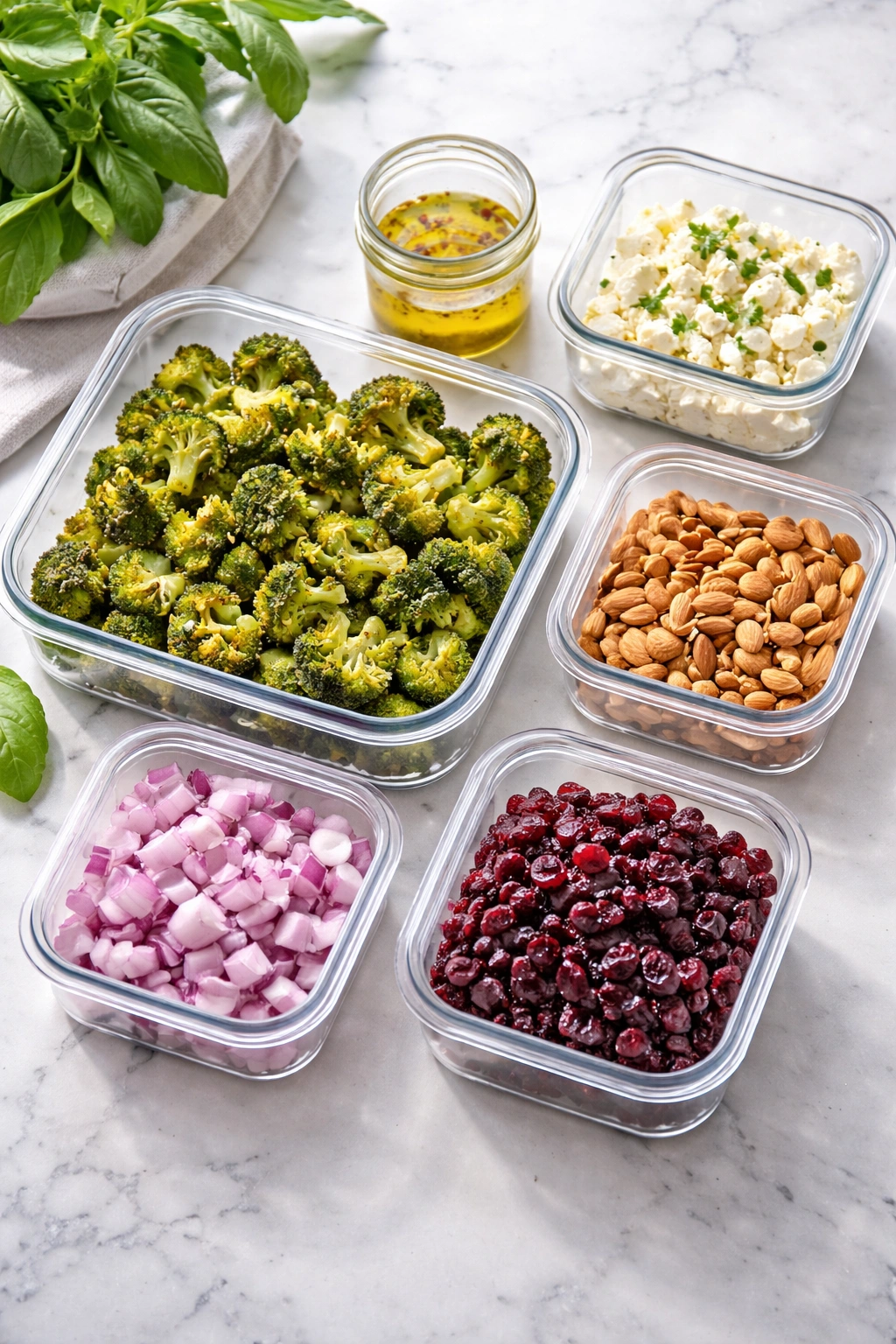
This salad keeps beautifully for up to 4 days in the refrigerator, though it’s best in the first 2 to 3 days when the broccoli still has some texture. After that, it softens gradually and becomes more like a warm salad even when cold.
Store it in an airtight container. If you added all the fresh herbs before storing, they’ll soften and lose their brightness, so ideally add them fresh right before serving. If the dressing has separated (which it will, because it’s a vinaigrette-style dressing made with just lemon juice, oil, and mustard), give it a good stir before serving and the mixture will come back together.
The nuts will gradually soften in the dressing over a day or two, which is fine and honestly quite pleasant — they absorb the lemony flavors. If you prefer them to stay crunchy, you can store them separately and scatter them on top just before serving.
If you have leftovers and they seem a bit dry, add another drizzle of olive oil and a squeeze of fresh lemon juice, stir it through, and taste. Often that’s all that’s needed to bring the flavors back into focus.
This salad does not freeze well. The texture of the broccoli becomes mushy when thawed, and the nuts lose their crispness. If you’re making it more than a few days ahead, it’s better to make the individual components and assemble just before serving.
Fresh Variations to Make It Your Own
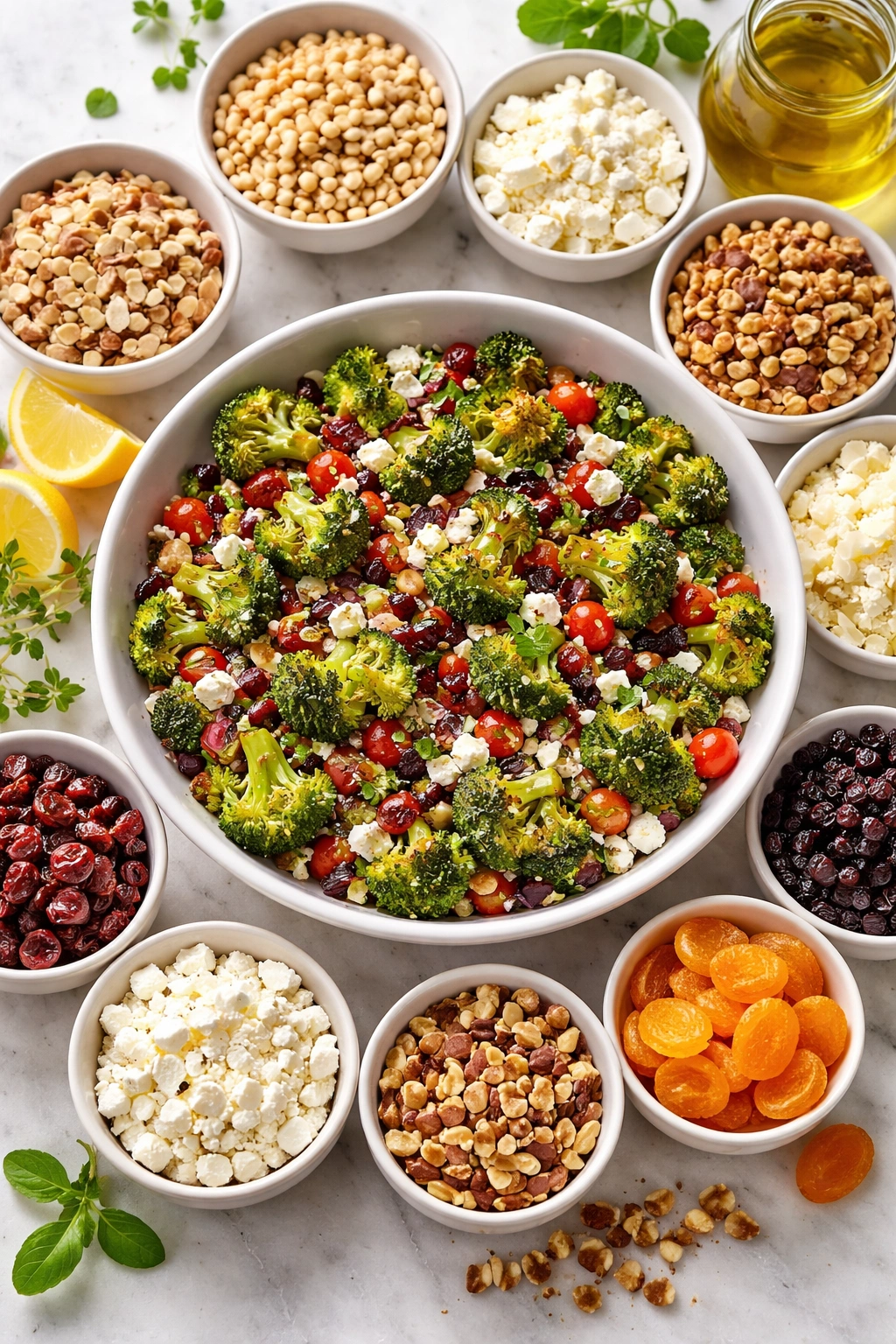
Once you understand the formula — roasted broccoli plus nuts plus dried fruit plus fresh herbs plus a bright dressing plus cheese — you can adapt this in nearly endless ways depending on what you have on hand or what flavors you’re craving.
Nut variations: Pine nuts are the most traditional Mediterranean choice and bring a buttery richness that’s absolutely lovely, but they’re expensive and delicate. Sliced almonds work perfectly. Walnuts add earthiness. Hazelnuts bring an almost chocolate-like depth. Pecans work too, though they’re less traditional. Toast whatever you choose.
Cheese variations: Feta is classic, but you could use crumbled goat cheese for a tangier, creamier option, or shaved Parmesan for something sharper and less creamy. A combination of two cheeses is gorgeous — feta plus goat cheese, for instance. Some people love a hard ricotta salata for a sharper, less salty profile.
Dried fruit variations: Dried apricots, dried cherries, or currants all work beautifully in place of cranberries. If you’re using larger dried fruit like apricots, chop them a bit smaller than the cranberries so they distribute evenly. The principle stays the same — you want something slightly tart and chewy to balance the savory elements.
Fresh herb variations: Parsley is the base, but you can add fresh mint for a different flavor direction, fresh basil if you’re leaning Italian, fresh cilantro if you want something completely different. Tarragon is unexpectedly lovely with roasted broccoli. The quantity of herbs is really to your taste — some people are herb-forward and heavy-handed, others are more subtle. A quarter cup to half a cup of mixed fresh herbs is generally the right range.
Vegetable additions: Sometimes I add thinly sliced fennel for a subtle anise flavor and crisp texture. Cherry tomatoes in summer are excellent when halved and added just before serving (they’ll get too soft if added earlier). Cucumber adds freshness and crunch. Radishes add peppery sharpness. Keep in mind that any vegetable you add should complement rather than compete with the star player — the roasted broccoli.
Dressing variations: While the lemon-based dressing is excellent, you could make this with red wine vinegar instead if you prefer a wine-based flavor profile, or use half lemon juice and half white wine vinegar for a different balance. The mustard can be increased for more tang, or decreased if you prefer subtler flavor. Some people add a teaspoon of honey to the dressing to bring the flavors together more gently — this works particularly well if your lemon juice was very sharp.
Serving Suggestions and Pairings
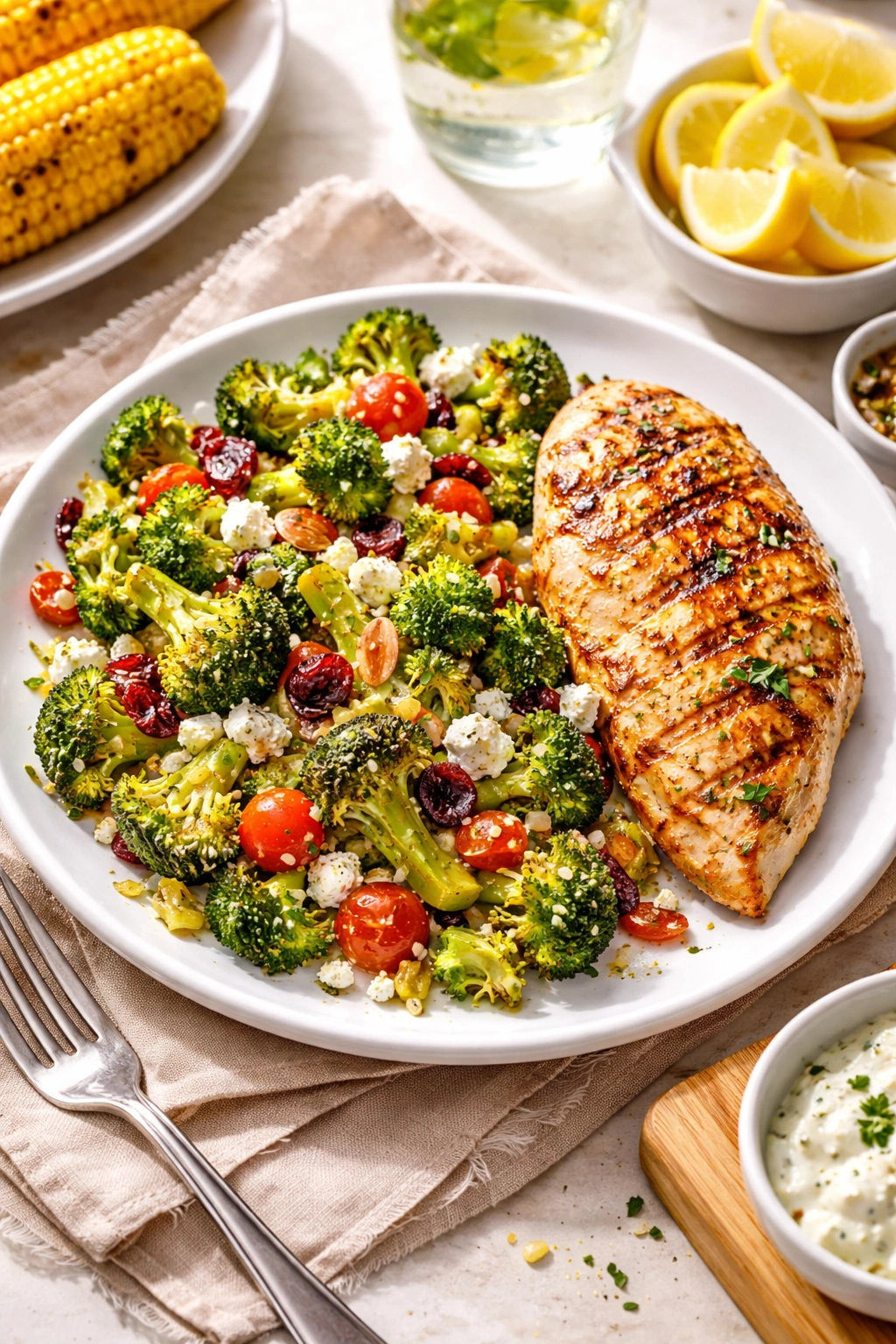
This salad pairs beautifully with almost any grilled protein, but it shines particularly with chicken. Lemony Mediterranean broccoli against smoky grilled chicken breast is genuinely one of the best combinations. It’s equally good with grilled fish, grilled lamb, grilled sausages, or beef if that’s what you’re working with.
If you’re having a vegetarian BBQ, this salad is hearty enough to be a main course alongside some grilled halloumi cheese or grilled portobello mushrooms. Add a grain — bulgur, farro, or even cooked farro — and it becomes a complete satisfying meal.
The brightness of this salad makes it an excellent side with rich, fatty sides. If you’re also serving creamy potato salad or buttery grilled corn, this cuts through beautifully and provides balance on the plate. If your meal is already light and vegetable-forward, that’s fine too — the salad plays well with other fresh options.
As a beverage pairing, this salad calls for white wine or light rosé. The acidity in both wine and salad dance together nicely. A crisp sauvignon blanc or a dry Greek white wine feels very on-theme. If you’re serving beer, a light pilsner or wheat beer works better than something heavy or hoppy.
This salad is substantial enough to serve as a side to 6 to 8 people at a standard American BBQ portion size (roughly ¾ cup to 1 cup per person). If you’re doing a spread with lots of options or serving Mediterranean portions (smaller), it’ll stretch to 10 people comfortably.
Why This Salad Outperforms Traditional Options
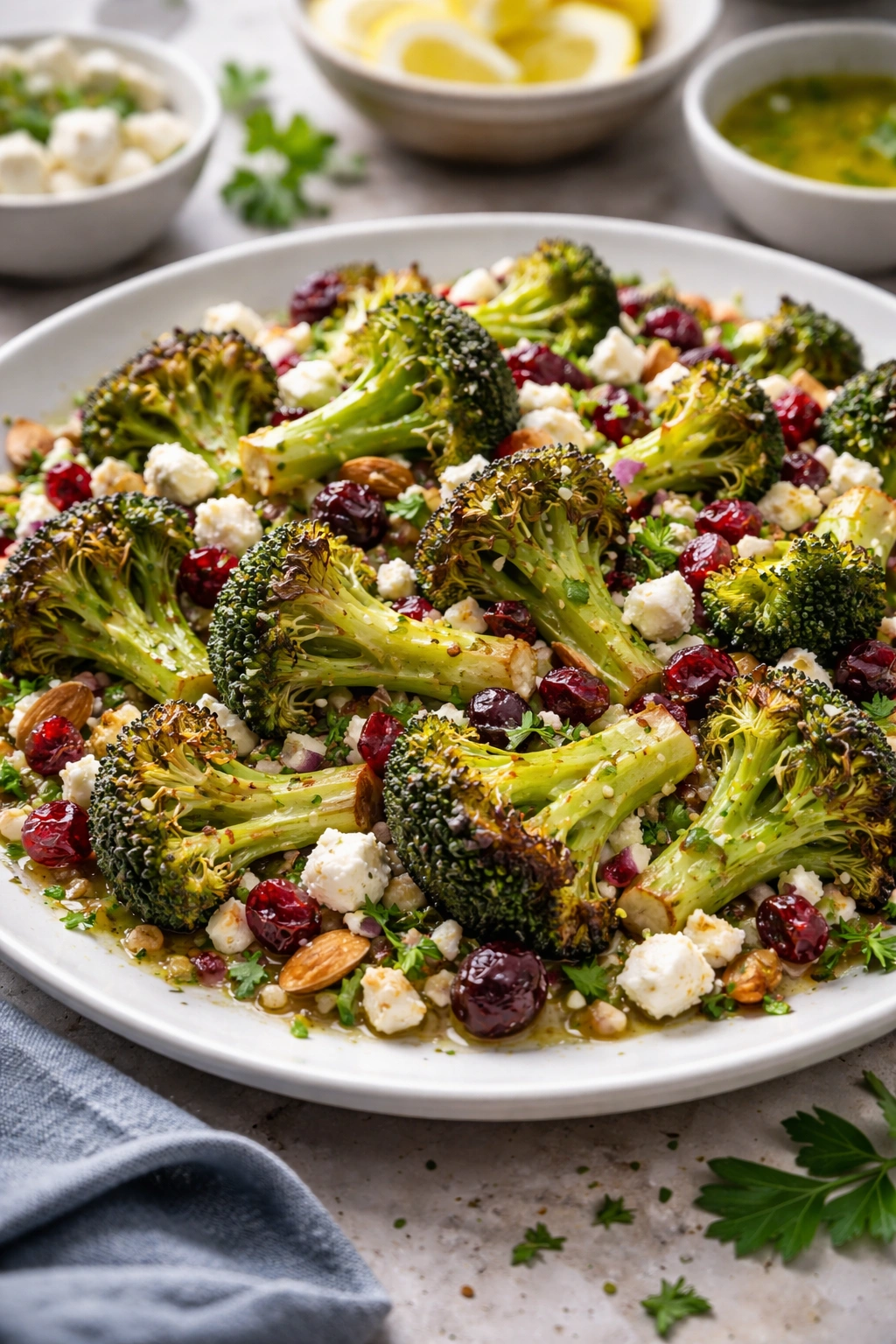
Traditional BBQ sides have problems that this salad solves. Potato salad becomes a brick in the heat, gluey and heavy. Coleslaw gets soggy when dressed too far in advance and turns into a watery mess if not refrigerated. Pasta salad tastes better cold but often becomes clumpy as the pasta absorbs all available moisture.
Roasted broccoli with a light vinaigrette stays bright and fresh-tasting even in warm weather. It doesn’t get heavier as it sits — it gets better as the flavors meld. It doesn’t require refrigeration, so it’s one less thing fighting for space in the cooler. It holds its texture beautifully whether it’s warm, room temperature, or chilled.
This salad also signals that you care about nutrition and flavor balance, not just calories and convenience. People notice when someone’s put actual thought into their food. This is that food. It tastes like someone who loves good eating made it, which means it performs exceptionally well at casual gatherings where the food is actually part of the social experience.
The combination of roasted vegetables, bright acid, good fat, protein (from the nuts and cheese), and fresh herbs creates something genuinely balanced and satisfying. You can eat a bowlful and feel like you’ve actually nourished yourself, not just consumed calories. That’s rare for BBQ sides.
Final Thoughts
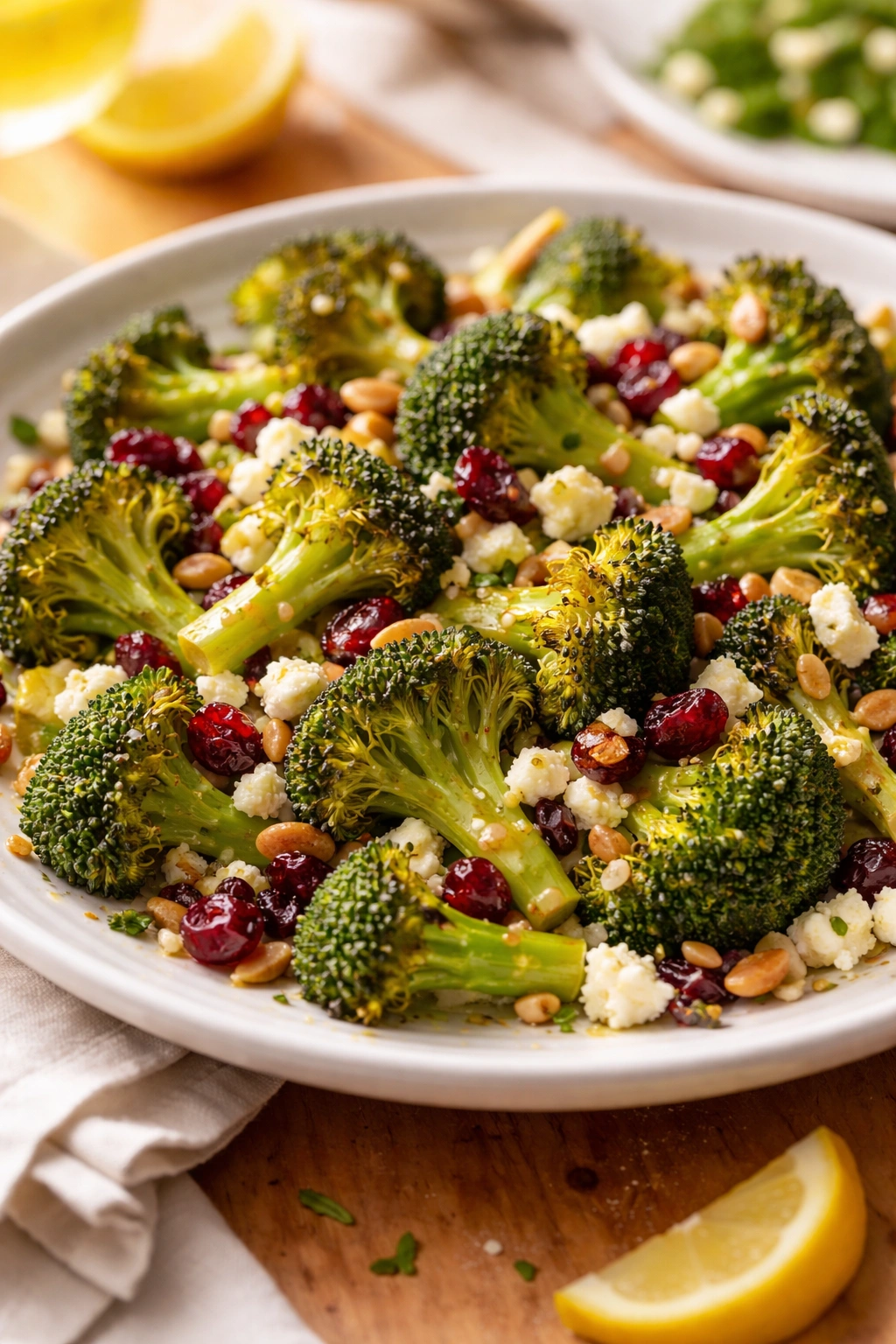
Roasted broccoli isn’t the most exciting ingredient to start with, but what it becomes in this recipe — golden, nutty, tender-crisp, dressed with bright lemon and good olive oil, studded with crunchy nuts and creamy feta — is genuinely something special. It’s the side dish that makes people ask for the recipe, that gets eaten before other options, that people request when they’re bringing a main dish to your next gathering.
The best part is how straightforward it is. No special techniques, no fancy equipment, no intimidating skills required. Just good roasting temperature, proper seasoning, and ingredients that are genuinely good quality. Make this once and you’ll make it again. Probably often. It’s the kind of recipe that earns a permanent place in your rotation because it works, it impresses, and it tastes like real food made with real care.
