



Watching your baby make that first grab for food off your plate is a thrilling milestone. Baby-led weaning (BLW) transforms mealtime into an adventure where your little one takes the lead, and it’s completely transforming how parents approach introducing solids. Instead of spoon-feeding purees, you’re offering soft finger foods that let your baby explore, grab, and feed themselves from the very beginning.
The beauty of baby-led weaning is that it respects your baby’s natural hunger and fullness cues while building independence, coordination, and a healthier relationship with food from day one. Your baby develops hand-eye coordination, learns to chew and explore different textures, and gets to experience the foods your family actually eats. Plus, there’s no need for separate baby food preparation—you’re simply adapting what’s already on your table.
But navigating what to actually serve can feel overwhelming at first. Which foods are soft enough? How do you know if a food is the right texture? What about allergens and choking risks? And honestly, how do you come up with meal ideas when you’re already exhausted from keeping a growing baby alive?
This guide covers everything you need to confidently start and sustain baby-led weaning, with specific, practical meal ideas you can put on your baby’s tray today.
Understanding Baby-Led Weaning and When to Start
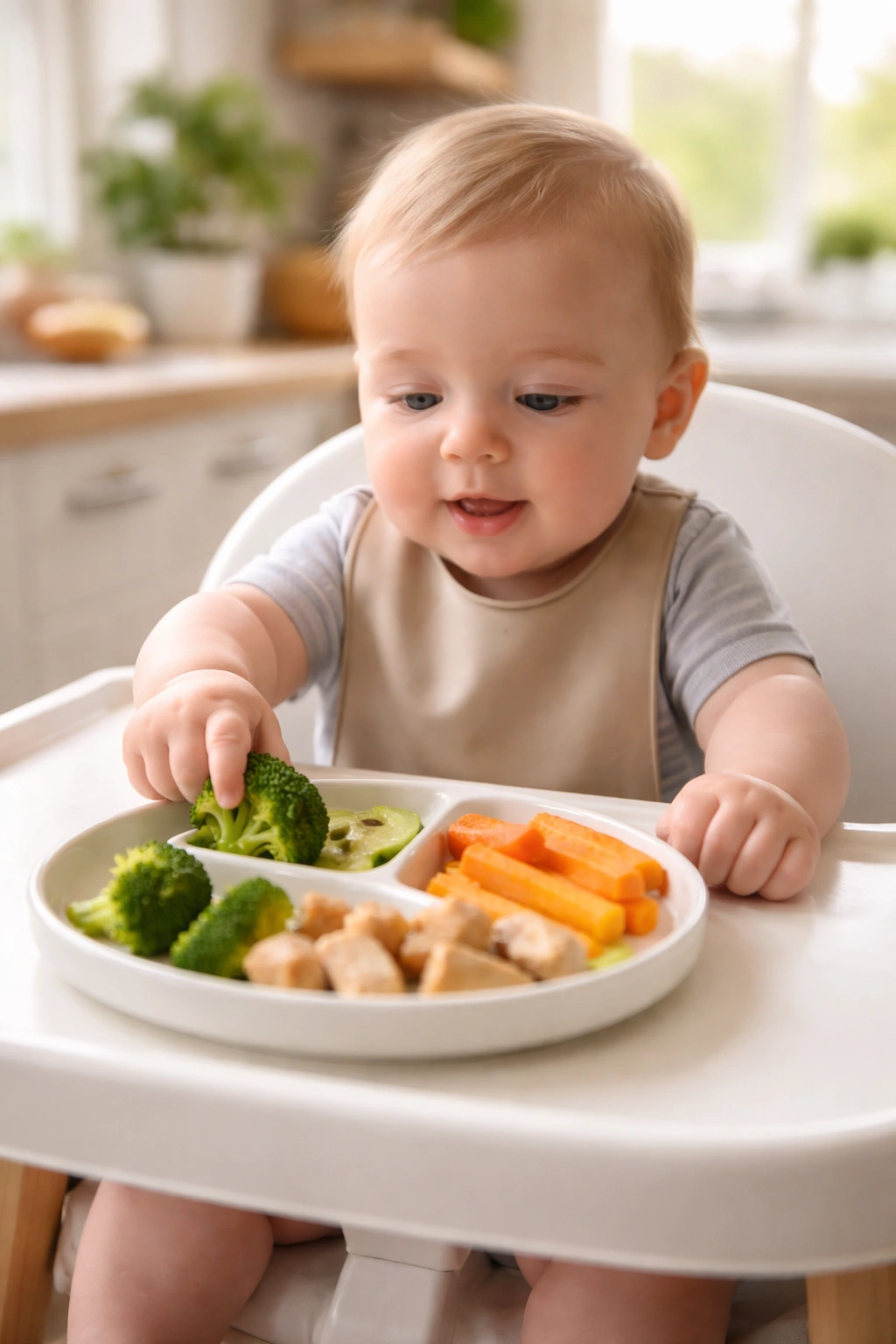
Baby-led weaning is the approach where your baby self-feeds from the start of solids, skipping the puree stage entirely. Instead of you controlling the spoon and deciding how much goes in, your baby reaches for soft finger foods, brings them to their mouth, and explores at their own pace. It’s responsive, intuitive feeding that honors your baby’s developmental readiness and natural instincts.
Most babies are ready to begin solids around six months of age, though readiness signs matter more than a specific date. Your baby should be able to sit upright with minimal support, have lost the tongue-thrust reflex that pushes food out of their mouth, and show genuine interest in food—reaching for what you’re eating, watching intently as you bring food to your mouth, or making chewing motions. If your baby can’t sit up independently yet, wait a few more weeks. Sitting upright prevents food from traveling down the airway and puts your baby in the safest position to self-feed.
The primary advantage of BLW is that your baby learns to recognize and respond to their own hunger and fullness cues. They eat as much or as little as they need, never being pressured to finish a spoon or clean a bowl. This builds a foundation for intuitive eating that can carry through childhood and adulthood. Your baby also develops oral motor skills and hand-eye coordination naturally through the process of grabbing, bringing food to the mouth, and exploring different textures.
Signs Your Baby Is Ready for Solid Foods
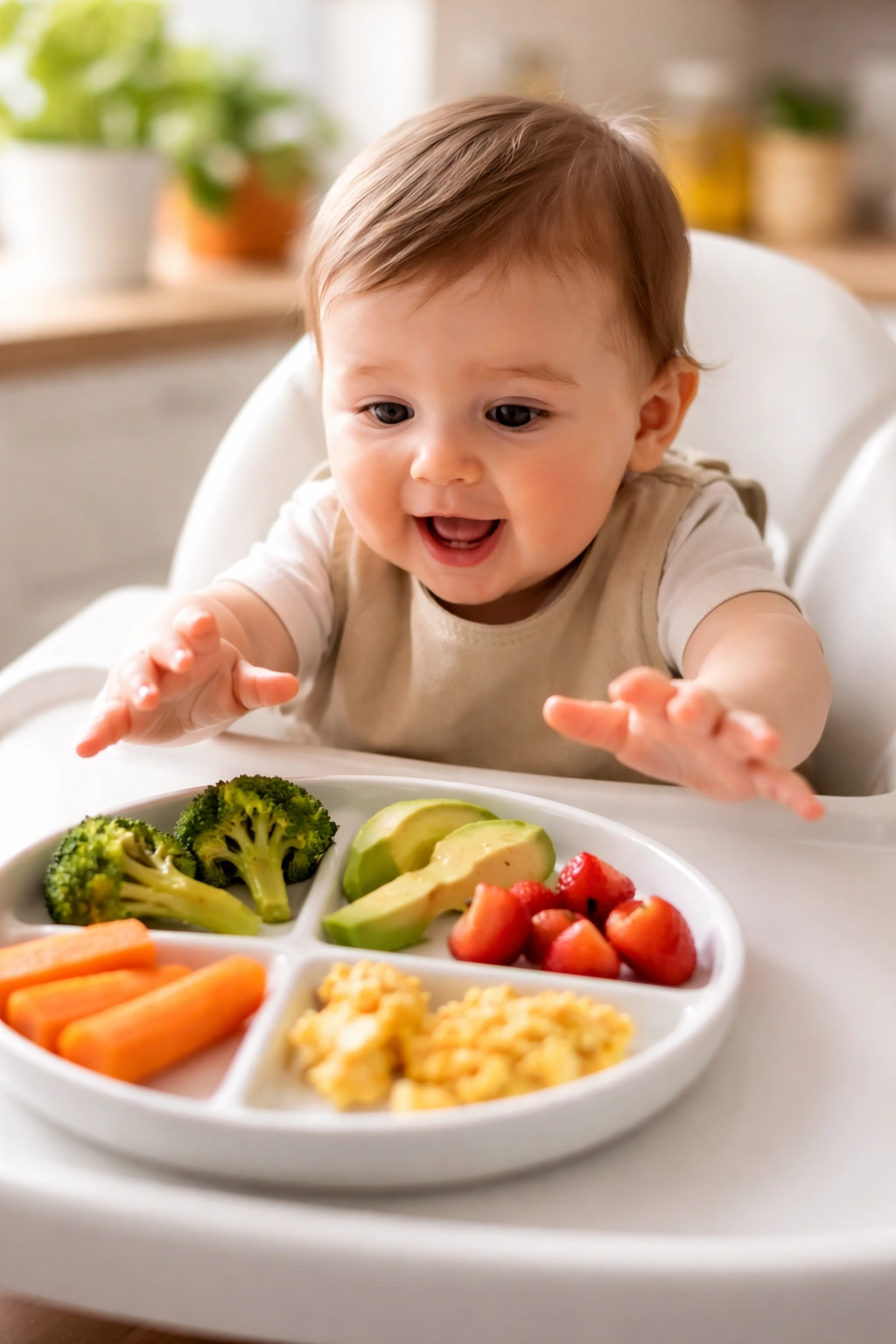
Developmental readiness is far more important than hitting exactly six months. Some babies are ready a bit earlier, and others benefit from waiting another week or two. These concrete signs tell you your baby’s system and skills have caught up to the task of eating solid foods.
Your baby should sit upright with minimal or no support—think high chair or booster seat, not propped up with pillows. They can hold their head steady and aren’t flopping forward or to the side. This upright position is critical for safe swallowing and prevents food from going down the airway. Next, look for the loss of the extrusion reflex, which is when babies automatically push anything in their mouth back out with their tongue. This reflex protected them as newborns, but it needs to fade for them to actually eat solids.
Watch for genuine interest in food beyond simple curiosity. Your baby watches you eat with focused attention, may reach toward your food, or open their mouth when they see you eating. Some babies make chewing motions even before they’ve had any solids. They’re showing you they’re thinking about food and ready to explore it. You might also notice they’re waking more frequently at night or seem hungrier after milk feeds—though this alone isn’t a reliable sign, as developmental leaps and growth spurts can increase appetite temporarily.
Worth knowing: If your baby shows only one or two of these signs, it’s fine to wait another week or two and reassess. Waiting a few extra weeks for complete readiness is always safer than rushing into solids before your baby’s system is truly ready.
The Safety Foundation: Choking vs. Gagging
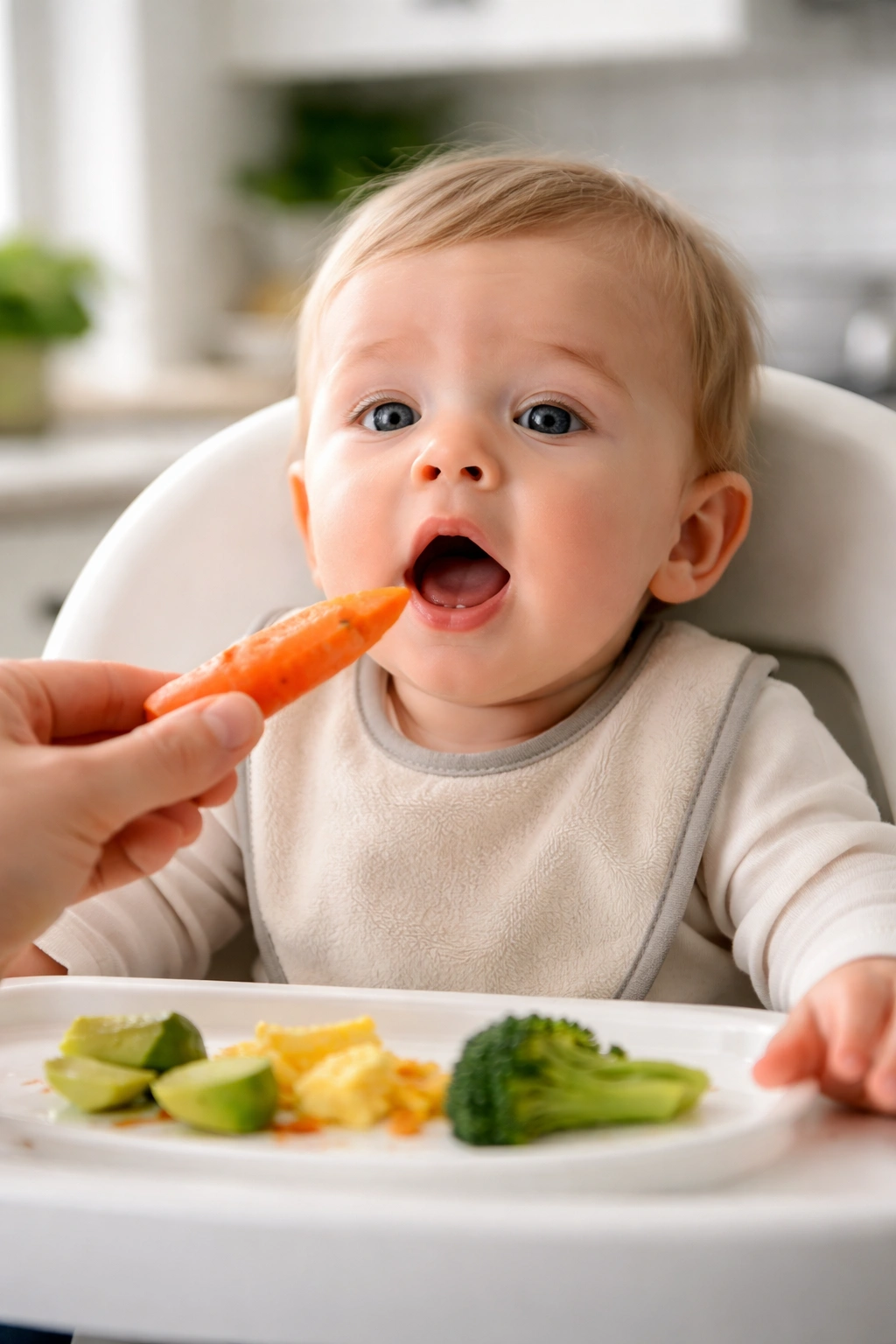
The most common hesitation parents express about baby-led weaning is fear of choking. The good news is that gagging—which looks scary but is actually a protective reflex—is completely normal and actually more common in BLW babies than in spoon-fed babies. Gagging is your baby’s safety mechanism. When food triggers the gag reflex, your baby coughs it forward and out of their mouth. Choking, by contrast, is silent—the airway is blocked and no cough is happening.
Understanding the difference is essential for your peace of mind. Gagging is loud and dramatic. Your baby might make coughing sounds, their face might redden, their eyes might water, and they might drool. Their body is working exactly as designed—the gag reflex is protecting them. Never interrupt a gag. Let it do its job. Your baby will cough the food forward and either spit it out or re-chew it and swallow.
Choking is silent and requires immediate action. There’s no sound, no coughing, no obvious distress signs in the same way. Your baby’s airway is blocked and they cannot breathe or cry. This is extremely rare with BLW when you follow food safety guidelines, but it’s why knowing the difference and being CPR-trained matters tremendously.
To minimize true choking risk, avoid foods that are small, hard, round, or sticky enough to block the airway. Skip whole grapes, cherry tomatoes, raw carrots, popcorn, nuts, seeds, and sticky nut butters. Offer modified versions instead—grapes and cherry tomatoes cut in half lengthwise, carrots steamed until very soft, and nut butters spread thinly on toast. Keep a current infant CPR certification and make sure any caregivers do too.
The Right Texture: How Soft Is Soft Enough
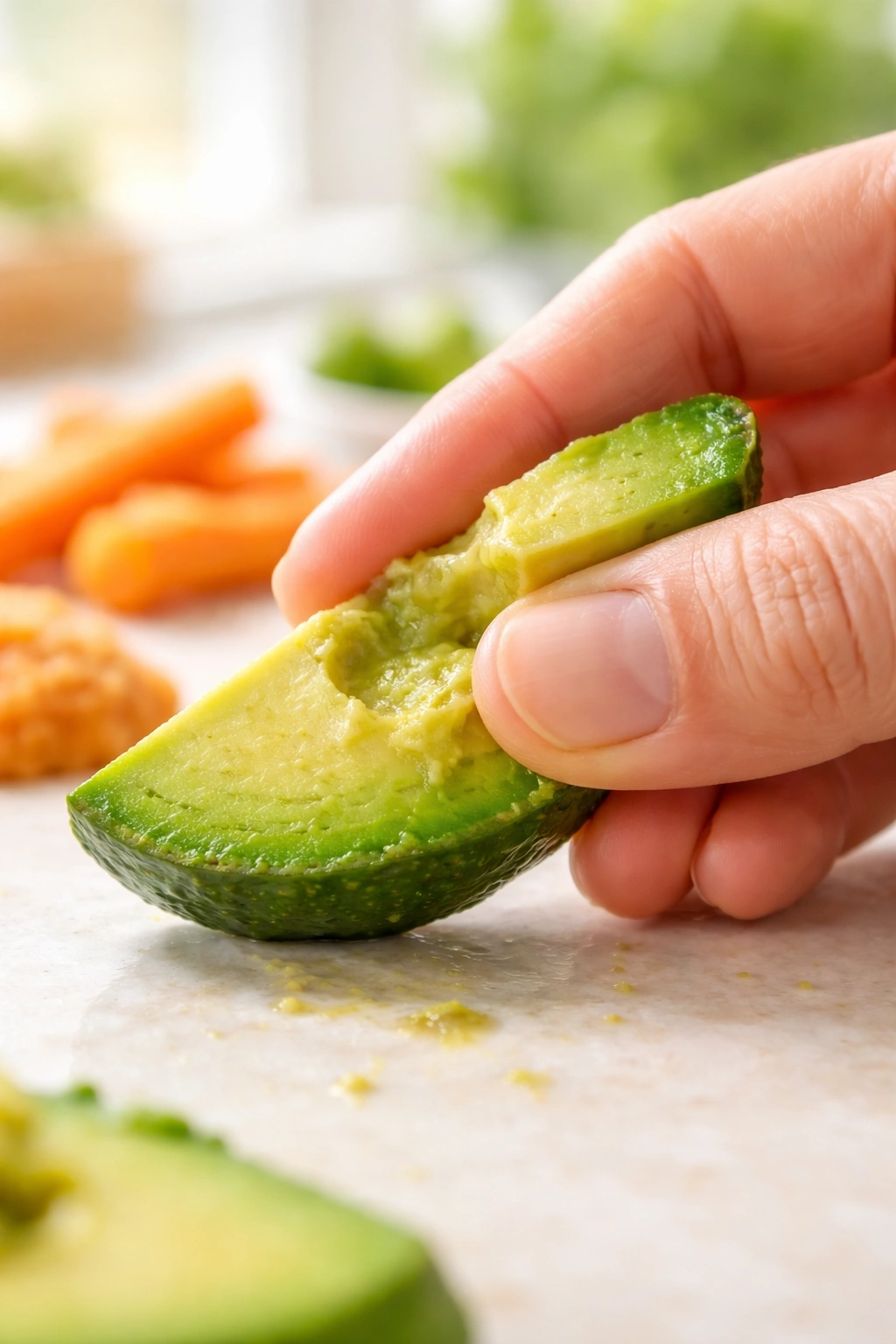
The safest foods for baby-led weaning are soft enough that you can easily squish them between your thumb and forefinger. If you can mash it easily with gentle pressure, it’s safe for your baby to explore. Think of it as the squish test—press the food between your thumb and the inside of your pointer finger. If it breaks apart easily or squishes completely, it’s appropriate for a six-month-old.
Most foods at six months should be very soft because your baby doesn’t have teeth yet and their jaw strength is still developing. Steamed or roasted vegetables should be tender enough that a wooden spoon easily breaks them apart. Meat should be finely shredded or ground and cooked until it’s very moist—never dry or tough. Fruits should be ripe and soft; overripe is actually perfect for early weaning. Grains should be well-cooked and soft.
As your baby grows and develops over the following months, they’ll gradually be able to handle slightly firmer textures. By eight or nine months, they might be able to manage some foods that require a bit more chewing. By twelve months, they can increasingly eat what the family eats—though modified for safety still. But in the earliest months, err on the side of softer. Your baby will communicate when they’re ready for something with more texture through their eating behavior.
Pro tip: Cook vegetables and fruits slightly longer than you might for yourself. They should be fall-apart soft, not just tender. If you’re making a family meal, you can take your baby’s portion out early, mash or shred it, and let it cool before serving, then finish cooking the rest of the family’s meal to your preference.
First Foods: Starting Simple and Safe
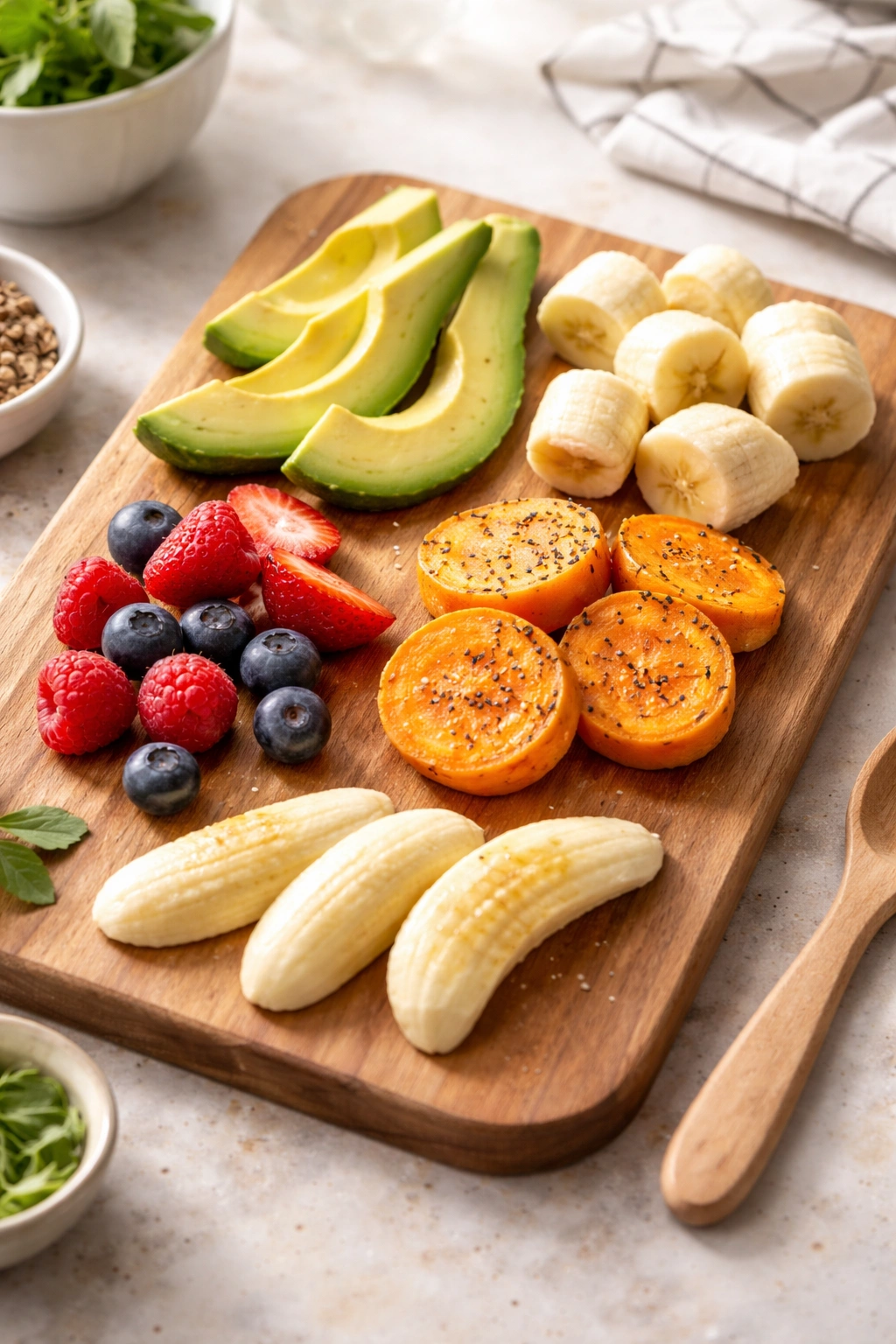
The foods you introduce first don’t need to be special or different from what’s already in your kitchen. Skip the notion that you need to introduce foods in a certain order or wait days between new foods while you watch for reactions. Current research shows that introducing common allergens early—like peanuts, tree nuts, wheat, eggs, dairy, fish, and shellfish—may actually reduce the risk of developing allergies. The idea of introducing one food at a time and waiting isn’t evidence-based for non-allergic families.
Start with foods that are naturally soft and that your family already eats. Ripe avocado is a classic first food—it’s soft, nutritious, needs no cooking, and is rarely allergenic. Offer thin slices your baby can grab easily. Steamed sweet potato or regular potato is another excellent first food; the soft texture is forgiving and the neutral flavor is approachable. You can offer strips or thick coins that your baby can hold and bring to their mouth.
Soft fruits like banana, ripe pear, ripe mango, and soft berries are wonderful first foods too. Offer pieces your baby can grasp and bring to their mouth. Cooked grains like well-cooked rice, oats, or quinoa mixed with a little broth or milk can be offered in soft, thick portions. Soft-cooked eggs are nutrient-dense and easy to grab. Shredded chicken or finely ground beef cooked until very moist works well. Plain full-fat yogurt, ricotta cheese, or other soft dairy foods introduce calcium and protein.
There’s no magic in introducing foods in a specific order. Offer a variety of soft, safe foods and let your baby explore. If your family has a history of severe allergies, discuss your introduction approach with your pediatrician. Otherwise, offering common allergens early and frequently actually supports immune tolerance and can reduce allergy risk.
Preparing Vegetables for Early Eating
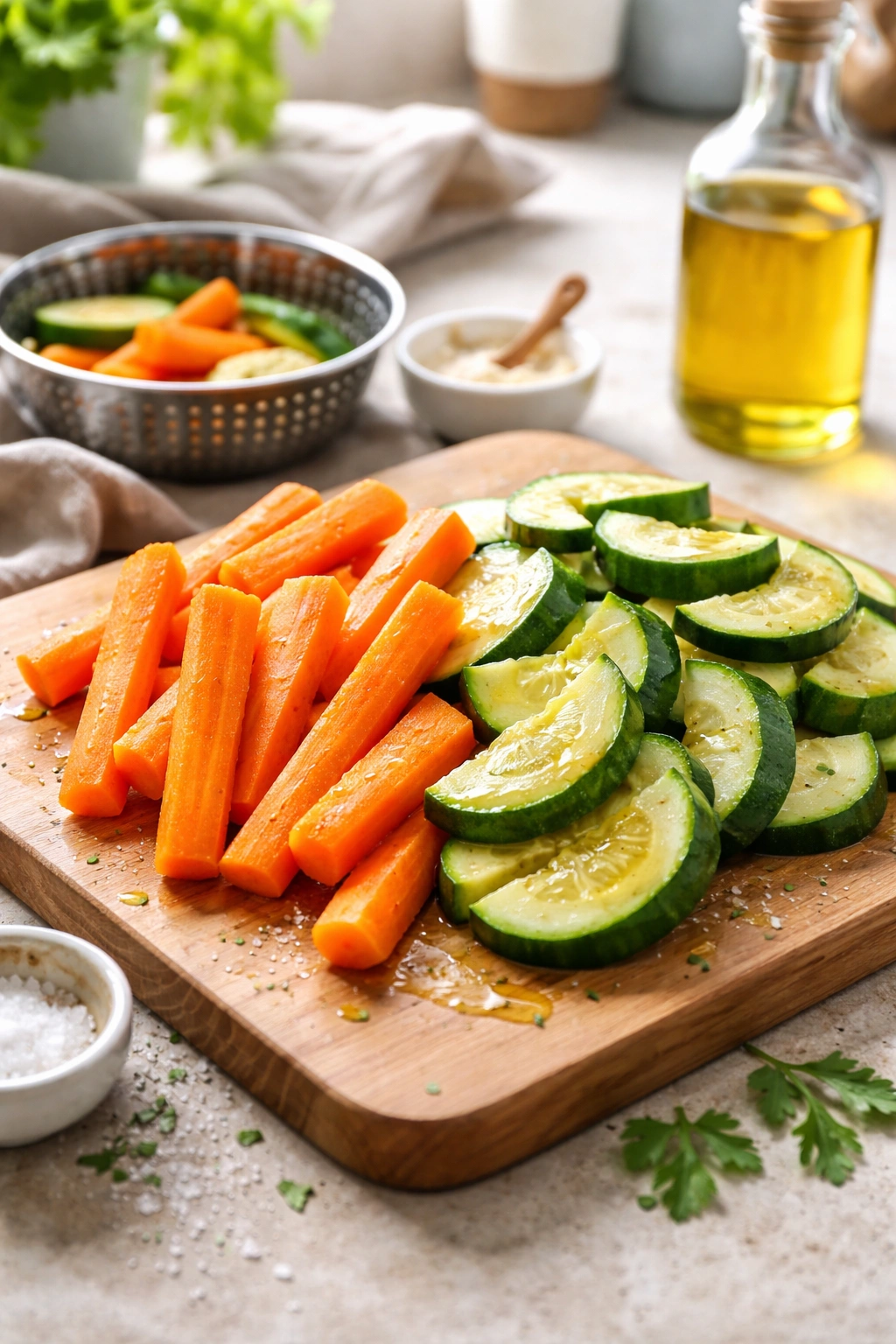
Vegetables offer crucial vitamins, minerals, and fiber, but they need to be prepared thoughtfully for a baby who can’t yet chew hard foods. The goal is maximum flavor and tenderness with minimal prep work.
Steaming vegetables is the easiest method. Cut vegetables into uniformly sized pieces so they cook evenly. For root vegetables like carrots, beets, parsnips, and potatoes, steam for 12-15 minutes until they’re completely tender. Test by piercing with a fork; the fork should slide through easily with no resistance. For softer vegetables like zucchini, broccoli, cauliflower, and green beans, steam for 8-10 minutes. Leafy greens like spinach and kale need just 3-4 minutes until completely soft.
Roasting vegetables is another excellent method that concentrates flavor and creates a slightly caramelized exterior that’s interesting for your baby to explore. Toss vegetables in a tiny bit of olive oil, spread on a sheet pan, and roast at 375°F until completely tender. Roast time varies—softer vegetables like zucchini and bell peppers need 15-20 minutes, while harder vegetables like carrots and beets need 25-35 minutes. Roasted vegetables have a slightly chewier exterior than steamed ones, which is fine as long as the interior is completely soft.
Mashing some vegetables makes them easier for your baby to manage. Steam or roast vegetables until very soft, then lightly mash with a fork to break them into manageable pieces while maintaining some texture. Your baby can pick up lumps of mashed sweet potato or steamed broccoli florets that have been slightly mashed. This gives them both texture exploration and easy handling.
Puréeing vegetables works too, though it’s less common in baby-led weaning. If a vegetable is very fibrous or tough even when cooked, like some winter squashes, you can steam and purée it, then offer it on pre-loaded spoons your baby can grab and bring to their mouth. Your baby develops the same self-feeding skills as with finger foods this way.
Store cooked vegetables in airtight containers in the refrigerator for up to three days, or freeze in ice cube trays for up to three months. Having a stash of prepared vegetables means you can quickly assemble meals even on busy days.
Fruits: Ripeness, Safety, and Preparation
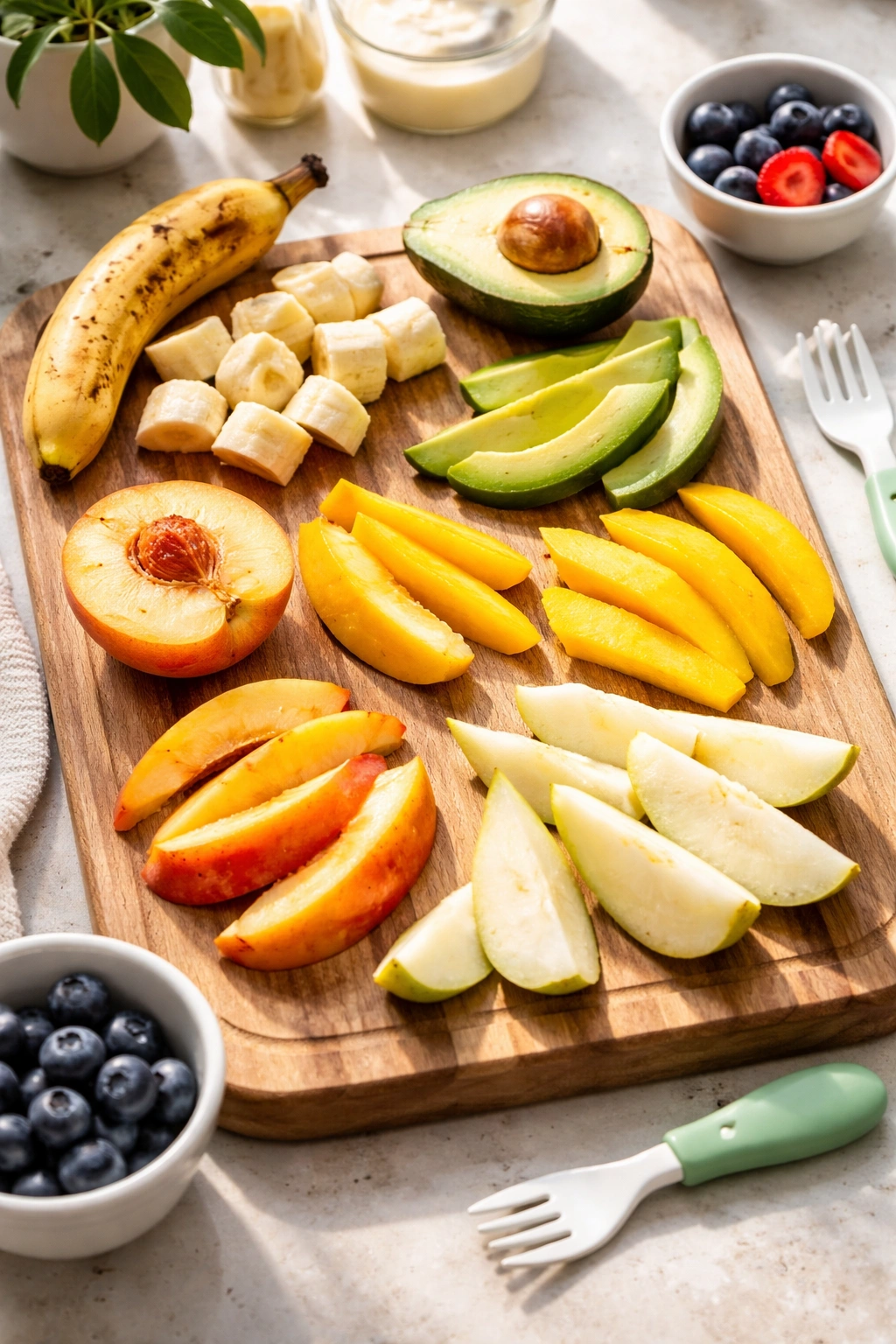
Fruits are naturally sweet, which appeals to babies, and they offer vitamins, fiber, and nutrients. The key is choosing ripe fruits and preparing them safely.
Ripeness matters tremendously. An underripe fruit is hard and potentially choking hazard. A ripe or overripe fruit is soft and safe. When selecting fruits for your baby, choose ones that yield slightly to gentle pressure. If you’re unsure, err on the side of overripe. That soft banana with brown spots is actually perfect for early weaning.
Soft fruits like banana, avocado, ripe mango, ripe papaya, ripe pear, and ripe peach can be offered in appropriately sized pieces—think matchstick-sized pieces for small hands, or softer fruits that break apart easily when your baby gums them. Cut peaches and pears into halves or quarters, removing the pit. Cut mango into wedges. Cut banana into chunks or offer in strips.
Berries are wonderful but need preparation. Whole berries are a choking hazard because of their size and shape. Cut strawberries in half lengthwise. Smash or cut raspberries and blackberries into pieces. Blueberries should be cut in half. This might seem tedious, but it takes just a minute and keeps your baby safe.
Melons like watermelon, cantaloupe, and honeydew are refreshing and hydrating. Remove all seeds completely. Cut into appropriately sized pieces. A half-moon slice of watermelon is easy for your baby to grasp and explore.
Citrus fruits like oranges, clementines, and grapefruits can be offered in segments with the membrane removed. Break the segment apart gently so your baby gets small, manageable pieces.
Dried fruits are best avoided in the early months because they’re concentrated, chewy, and can pose a choking risk. Wait until your baby is older and has more developed chewing skills.
Wash all fruits thoroughly under running water before serving. If you’re concerned about pesticide residue, choose organic when possible, especially for fruits with thinner skins like strawberries and grapes.
Grains and Starches That Work for Young Eaters
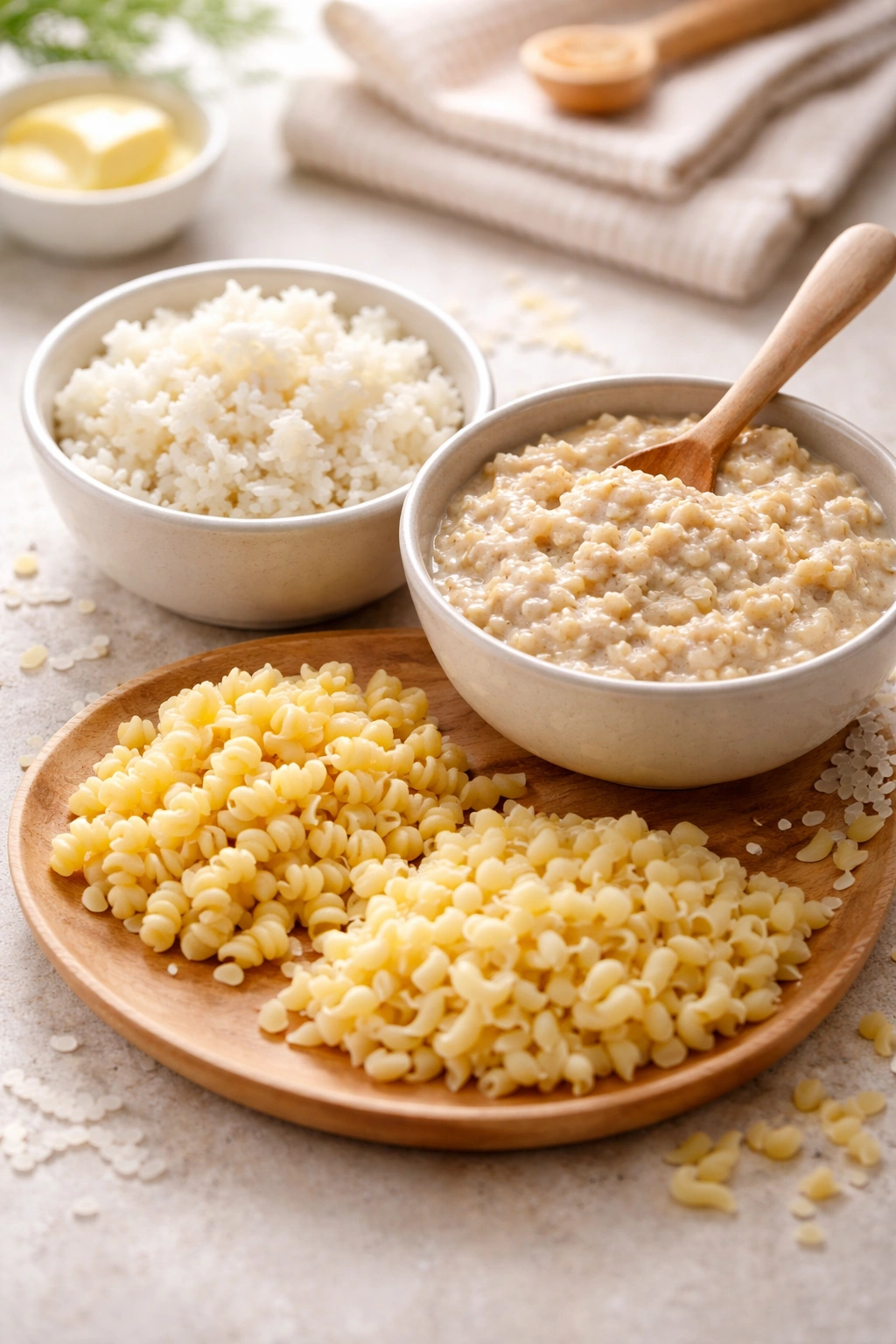
Grains and starchy vegetables provide energy and important nutrients. The key is cooking them until they’re very soft so your baby can manage them without teeth.
Rice is a gentle grain that pairs well with virtually everything. White rice, brown rice, and wild rice all work. Cook rice until it’s very soft and slightly overcooked compared to what you’d serve an adult. The rice should break apart easily when you press it. Offer as clumps your baby can pick up, or serve mixed into vegetables or protein. Basmati and jasmine rice have nice flavor and soft texture.
Oats are nutritious and filling. Steel-cut oats, rolled oats, and quick oats all work—cook whatever type your family prefers. Cook oats until very soft, stirring frequently so they don’t clump. Serve warm with a bit of milk stirred in to loosen the texture. Mix in finely shredded fruit or vegetables for variety.
Pasta is a favorite for good reason—it’s easy for babies to grasp, it’s interesting to explore, and it’s versatile. Cook pasta until very soft, almost approaching the point of falling apart. Small pasta shapes like orzo, ditalini, or small shells are easier for babies to handle than long strands. Offer with a simple sauce—tomato-based, olive oil and garlic, or cheese sauce.
Bread is wonderful as a vehicle for other foods and for exploring texture. Offer soft bread in strips your baby can hold—think bread for dipping in hummus or avocado-spread toast. Avoid very crusty bread that requires hard biting to break apart. Well-baked soft bread, sandwich bread, pita bread, and naan work well.
Potatoes and sweet potatoes are satisfying and nutrient-dense. Boil or steam until completely soft, then cut into manageable pieces. Mash slightly if needed. Roasted sweet potato fries are excellent—cut into sticks and roast until very soft.
Legumes like beans and lentils offer protein and fiber. Red lentils cook down to an almost-purée consistency, which is perfect for early weaning. Other lentils and beans should be well-cooked until very soft. Offer mashed or as soft clumps your baby can pick up. Start with small amounts to allow your baby’s digestive system to adjust to the fiber.
Proteins: Meat, Fish, Eggs, and Plant-Based Options
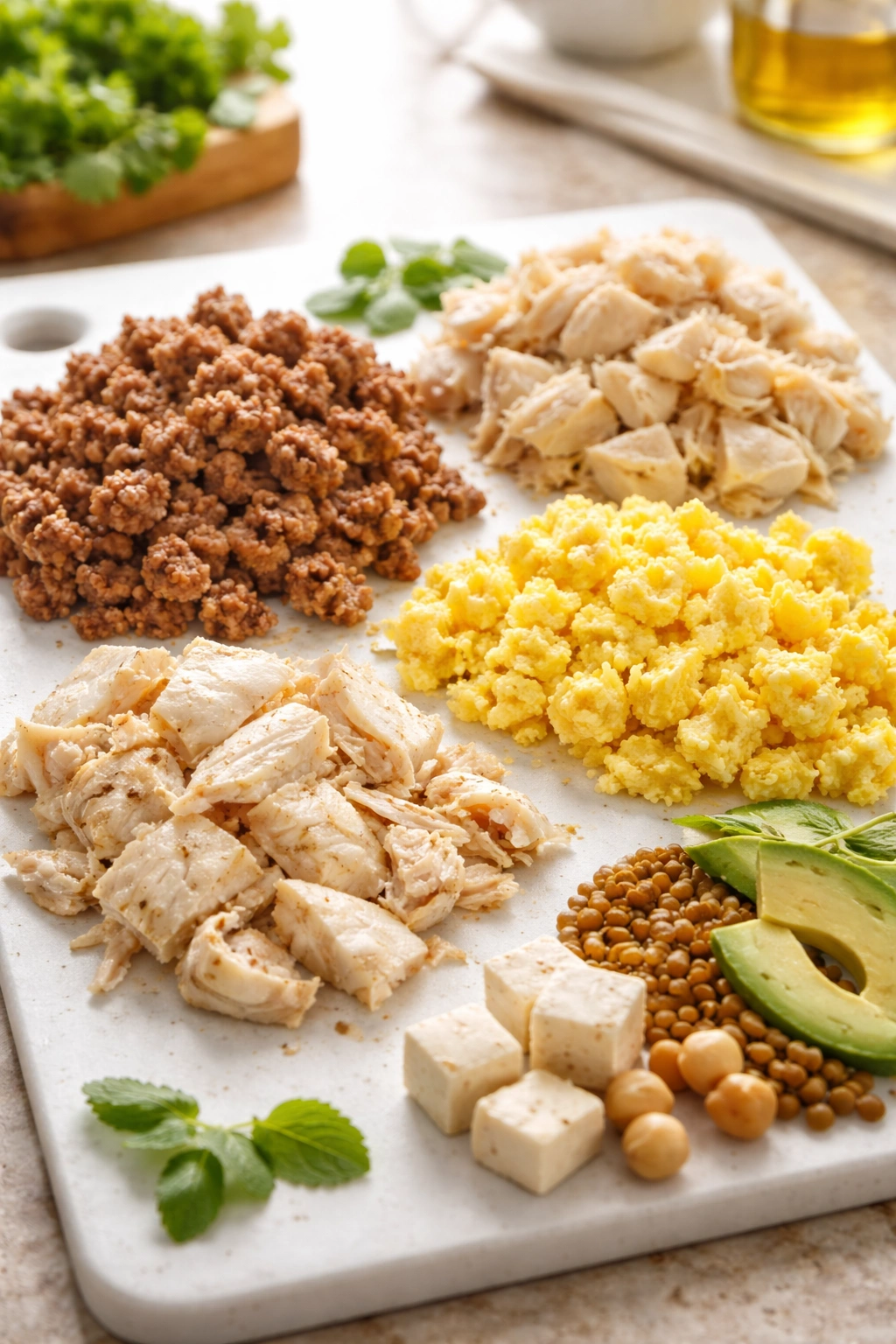
Protein is crucial for your baby’s growth and development. The texture is the main challenge—meat needs to be shredded finely or ground so it’s manageable without chewing.
Ground meat like ground beef, ground chicken, ground turkey, and ground lamb is the easiest protein option. Brown the meat in a pan, breaking it into small pieces as it cooks. Make sure there’s plenty of moisture—you can add broth or the meat’s own juices. The meat should be very moist and soft, never dry. Season minimally (salt and pepper are fine, but skip heavy spices initially). Offer as small, soft clumps your baby can pick up, or mix into grains or vegetables.
Shredded meat works beautifully too. Cook chicken breasts, thighs, or pork in broth until very tender, then shred finely with two forks. The meat should fall apart easily. Mix with grains, vegetables, or offer alone in soft piles. Slow cooker meals are perfect for this—the long, moist cooking creates tender meat that shreds easily.
Fish is nutrient-dense and cooks quickly. Choose mild white fish, salmon, or other varieties your family enjoys. Cook fish until it flakes easily. Check carefully for any bones—even cooked fish bones can splinter. Shred the fish into very small, soft pieces. Offer plain or mixed with other foods.
Eggs are an excellent complete protein. Scrambled eggs, soft boiled eggs, and omelets all work. Cook eggs until they’re completely cooked through—no runny yolks at this stage. Scrambled eggs should be soft and moist, broken into small pieces your baby can grasp. Soft-boiled eggs can be offered in halves for your baby to scoop out with their fingers. Omelets with finely diced vegetables inside can be cut into strips.
Full-fat yogurt, cheese, cottage cheese, and ricotta offer protein and calcium. These are easy for your baby to manage and require no cooking. Offer plain or with soft fruit mixed in. Greek yogurt is thicker and higher in protein. Cheese can be offered as soft cubes or grated. Cottage cheese can be offered in spoonfuls your baby can grab or eat from a pre-loaded spoon.
Plant-based proteins like tofu, tempeh, and legumes offer variety. Tofu is naturally soft and can be cut into cubes or crumbled. Press excess water out first, then cook gently or offer raw. Legumes should be well-cooked and soft—mashed or as small, soft pieces. Nuts and seeds should be offered as nut or seed butters spread on toast, not as whole pieces.
Sample Meal Ideas Your Baby Can Grab and Explore
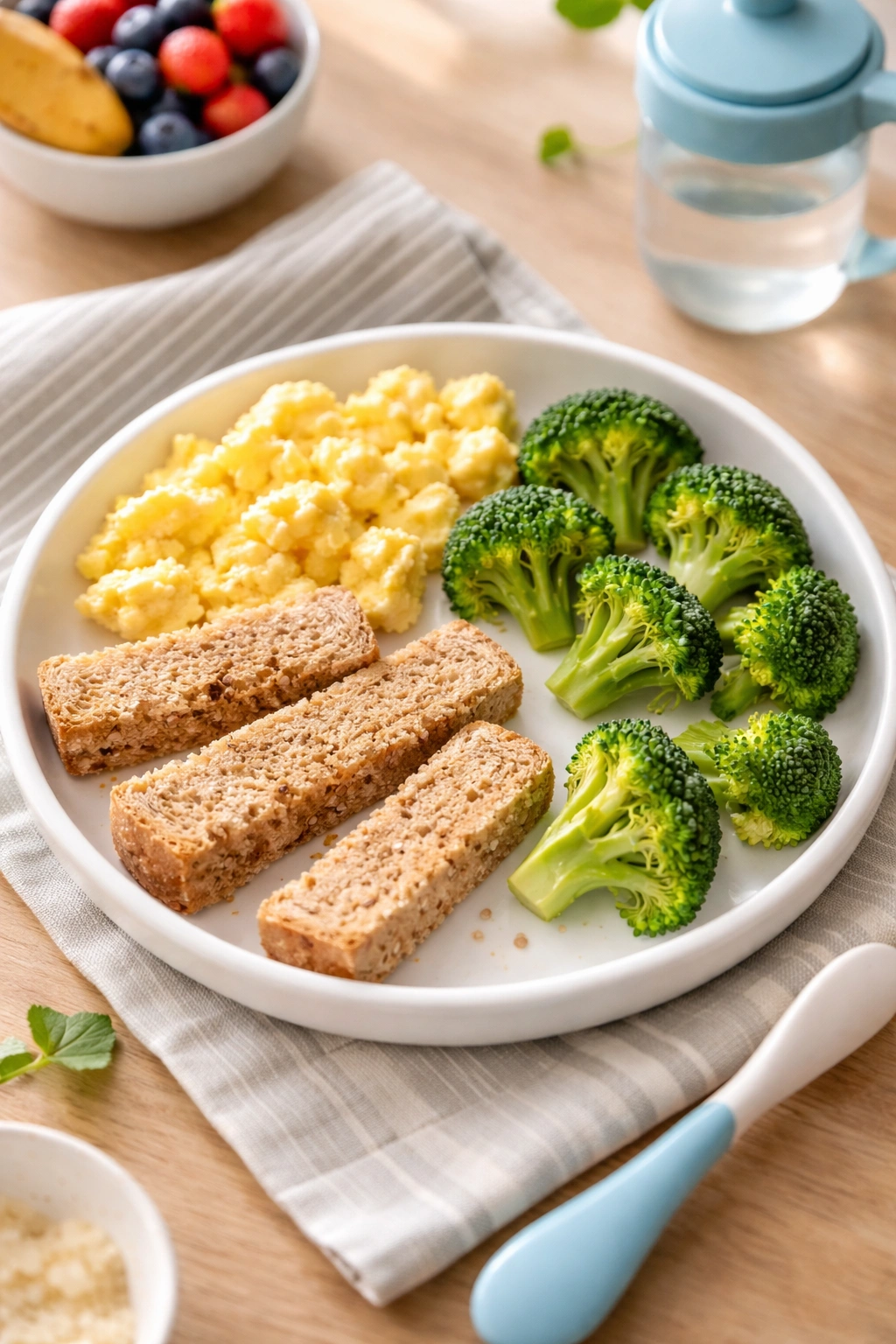
Real meal ideas make planning feel less overwhelming. These aren’t complicated dishes—they’re simple combinations that introduce your baby to the foods your family eats.
Breakfast idea: Soft scrambled eggs with steamed broccoli and toast strips. Scramble eggs in a pan with a bit of butter until they’re soft and slightly creamy. Chop steamed broccoli florets into pieces. Offer the scrambled eggs as small clumps, the broccoli florets as pieces your baby can grab, and strips of soft toast for dipping or chewing. This meal covers protein, vegetables, and grains.
Lunch idea: Shredded chicken, rice, and roasted sweet potato. Shred soft-cooked chicken finely. Offer a spoonful of soft-cooked rice in a small pile. Offer roasted sweet potato wedges. Your baby explores each component separately, building an understanding of different tastes and textures. You might add a tiny sprinkle of mild spice if your family eats this way—your baby is learning your family’s food culture.
Dinner idea: Ground beef, mashed cauliflower, and soft pasta. Brown ground beef with minimal seasoning, keeping it very moist. Offer the cauliflower mashed lightly so it’s manageable. Serve soft-cooked small pasta your baby can pick up. This is a deconstructed family meal—the same components your family eats, just prepared for your baby’s developmental stage.
Snack idea: Avocado toast. Mash ripe avocado onto soft bread, creating a spread your baby can explore. Offer in strips they can hold. This is simple, nutritious, and requires no cooking. Your baby practices bringing food to their mouth and exploring interesting flavors.
Breakfast idea: Oatmeal with ripe banana and berries. Cook oatmeal until soft, then top with mashed ripe banana and halved berries. Offer as a dish your baby can explore with their fingers, picking up pieces and bringing them to their mouth. This introduces multiple textures and flavors in one meal.
Lunch idea: Fish, green beans, and couscous. Cook mild fish until it flakes easily, then shred finely. Steam green beans until very soft. Cook couscous until soft. Offer each component separately on the tray. Fish is less common in early weaning, which makes it a good introduction—your baby learns your family eats a variety of proteins.
Managing Allergens and Common Sensitivities
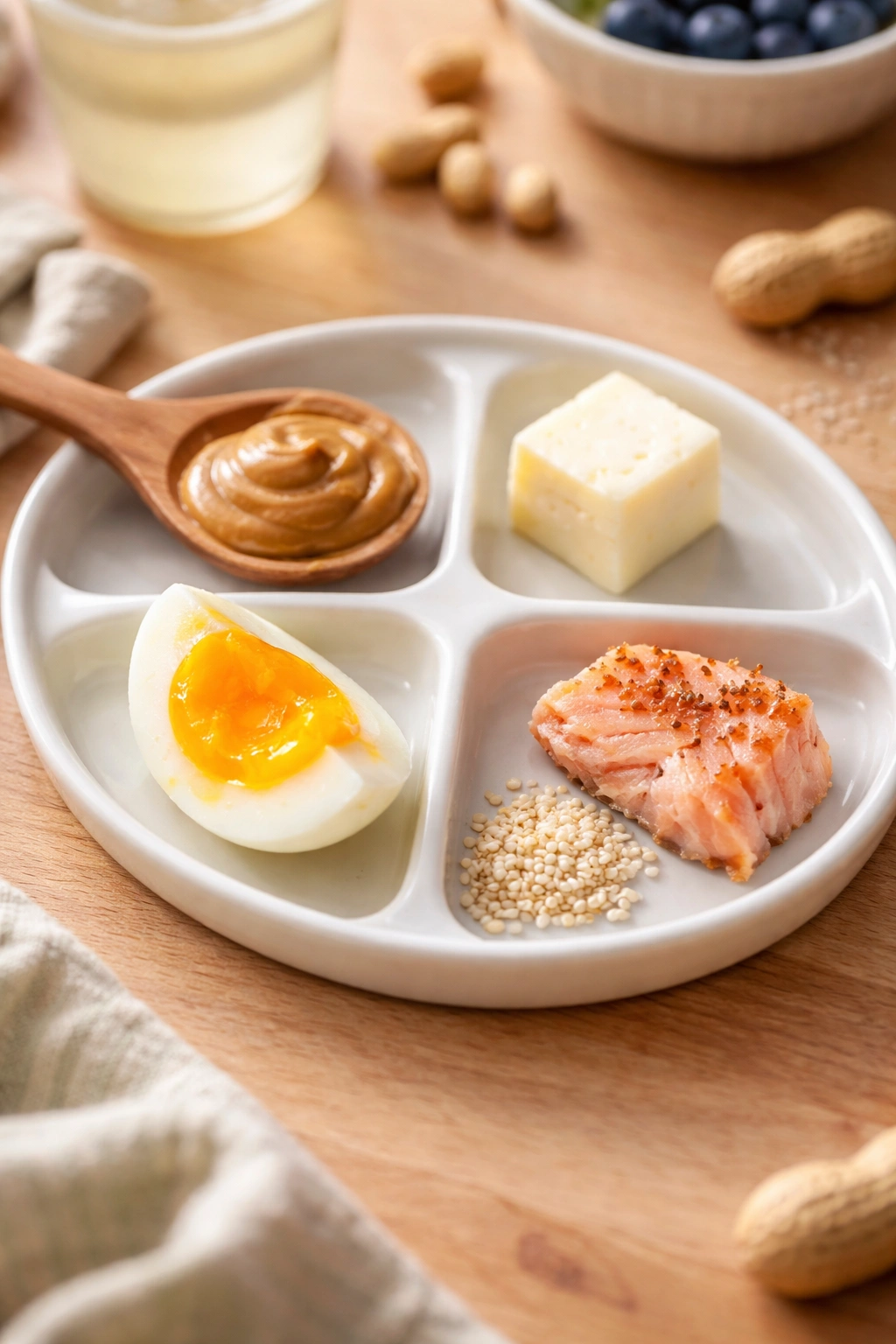
Early introduction of common allergens may actually protect against developing allergies. Unless your family has a strong history of severe allergies, offering allergenic foods early and frequently supports immune tolerance.
Common allergens include peanuts, tree nuts, milk, eggs, fish, shellfish, sesame, soy, wheat, and tree nuts. Each of these can be introduced at six months if your baby shows no other signs of allergies or food sensitivities. Offer small amounts of each new food and watch for reactions over the following days, though immediate severe reactions are rare in non-allergic families.
Introduce one new food every few days if you prefer to track reactions, or introduce multiple new foods simultaneously—both approaches are evidence-based. Repeated exposure to allergens is important; offering them once isn’t enough to build tolerance. Offering them regularly and frequently is what supports oral tolerance development.
Signs of food sensitivity or allergy include hives, vomiting, diarrhea, constipation, bloody stools, severe eczema worsening, or difficulty breathing. Mild skin reactions, slight changes in bowel movements, or mild eczema flares are common with new foods and don’t necessarily indicate allergy. If you’re concerned about a reaction, discuss it with your pediatrician.
If you have a family history of severe allergies, food anaphylaxis, or eczema, discuss your introduction approach with your pediatrician. They might recommend introducing allergens in a specific way or at a specific location where medical support is available, though even in allergic families, early introduction under medical guidance is often recommended.
Cook foods plainly in the early months—minimal salt, sugar, and spices. Your baby is learning to enjoy the natural flavors of foods. As they grow and you become more confident, you can introduce more seasonings and flavor complexity. Your family’s food culture and spice preferences can absolutely be part of your baby’s early eating experience.
Hydration and Drinks Beyond Breast Milk and Formula
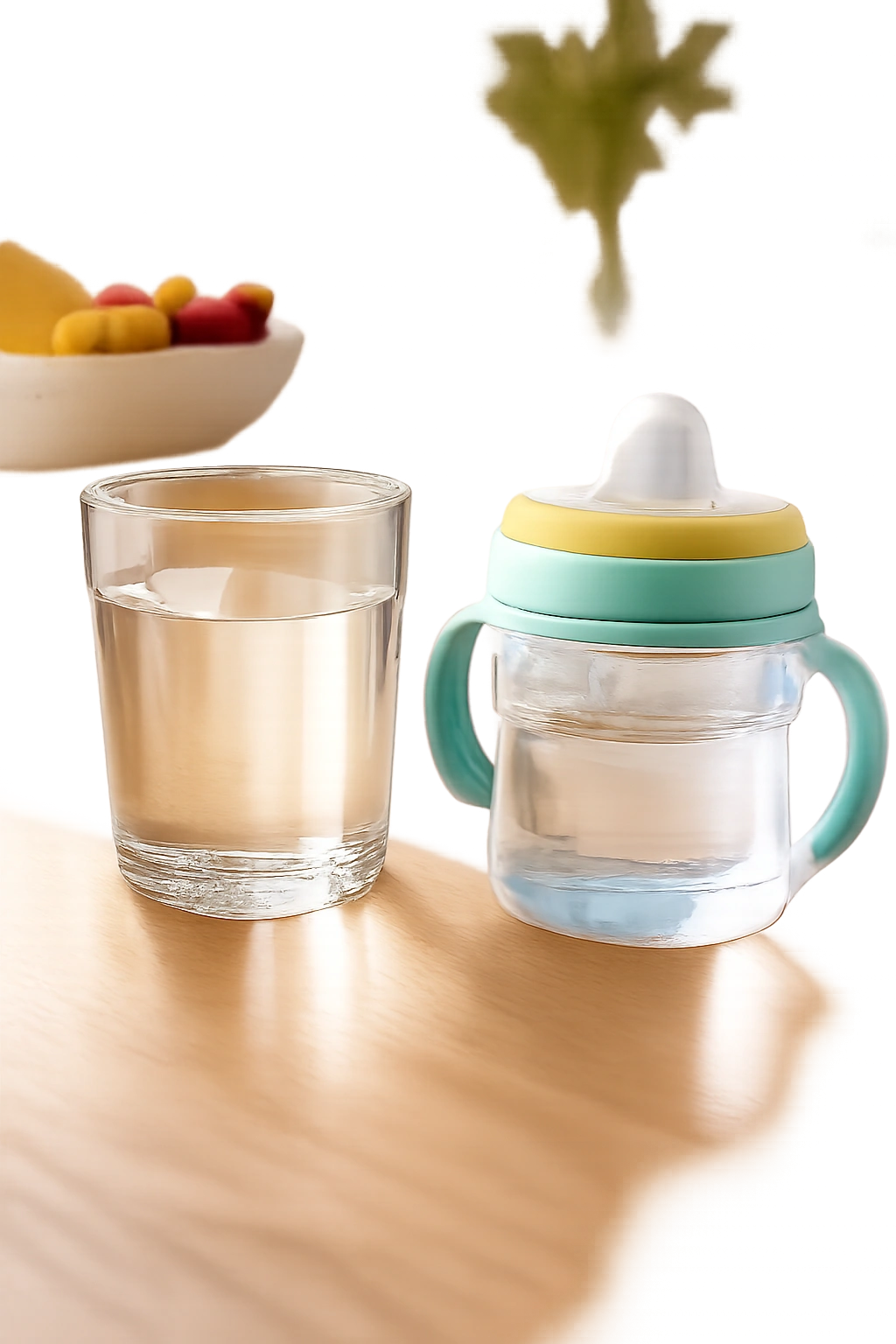
Breast milk or formula remains your baby’s primary source of nutrition throughout the first year. As solids increase, you’ll gradually offer water with meals and between feeds.
Offer water in an open cup, a sippy cup, or a straw cup—whatever your baby shows interest in. Don’t worry about quantity; your baby will drink what they need. Water is particularly important if you live in a hot climate or if your baby seems thirsty. Breast milk and formula provide hydration too, so water intake doesn’t need to be substantial in the early months.
Skip juice, even diluted juice, in the first year. Juice offers sugar without the fiber that whole fruit provides. Whole fruit is infinitely better nutritionally. As your baby gets older and you introduce more foods, you’ll have plenty of hydration from breast milk, formula, water, and foods with high water content like fruits and vegetables.
Cow’s milk can be introduced as a drink around twelve months, though full-fat milk can be used in cooking or mixed with foods before then. In the meantime, breast milk and formula provide all the calcium and nutrition your baby needs.
Avoid honey entirely until after twelve months due to the risk of botulism. Avoid added sugar, artificial sweeteners, and heavily salted foods. Your baby’s taste preferences are developing, and early exposure to naturally sweet and salty foods shapes preferences for years to come.
Common Challenges and How to Handle Them
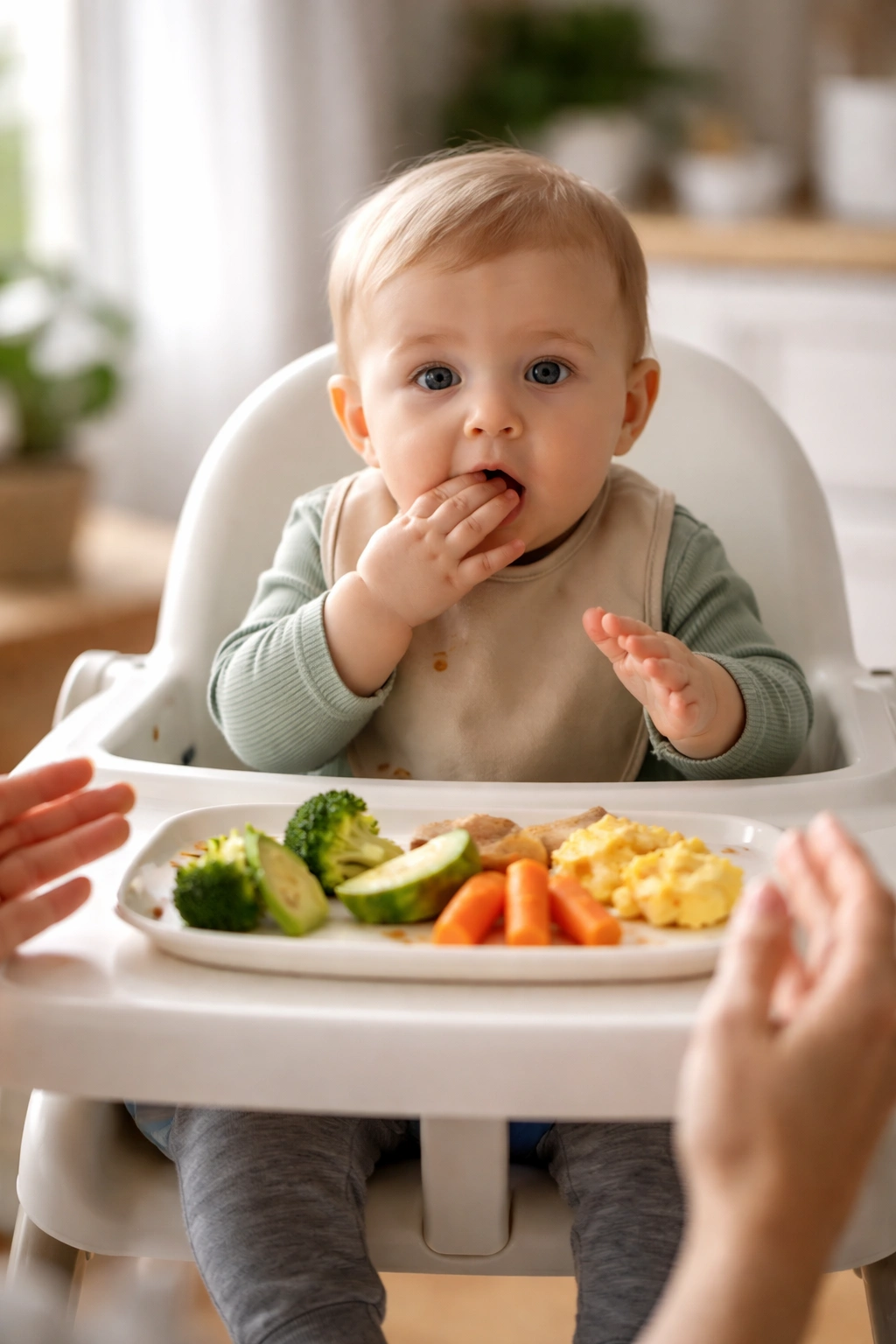
Every baby is different, and some common challenges might arise as you start baby-led weaning. Knowing what’s normal and what deserves concern helps you feel confident.
Your baby is gagging frequently. This is actually a good sign. Your baby’s gag reflex is working to protect them. Let the gag do its job—never interrupt it by reaching in. Your baby might gag less frequently over time as they become more experienced with solid foods, but frequent gagging in early weaning is completely normal and protective. Some babies gag more than others, and that’s okay.
Your baby seems to be swallowing large pieces without chewing. Young babies don’t need to chew food thoroughly before swallowing—their stomach acid and digestive enzymes are strong enough to break down soft foods even if they’re swallowed in larger pieces. This is normal baby-led weaning. As your baby gets older and more experienced, they’ll naturally chew more. Watch that pieces aren’t so large they could block the airway, but otherwise, trust your baby’s ability to manage soft foods.
Your baby seems uninterested in food and is mostly playing. Especially in the first few weeks, your baby might be more interested in exploring and touching food than actually eating it. This is completely normal and developmentally appropriate. Your baby is learning about food through play. Eating will increase over time as their interest develops. Continue offering meals and let your baby explore at their own pace.
Your baby is eating very little compared to what you expected. Breast milk or formula remains your baby’s primary nutrition for the first year. Solids are supplementary. If your baby is growing well, meeting developmental milestones, and having appropriate wet diapers and stools, they’re eating enough. Some babies eat very little solid food in the early months. Others eat more. Both are normal as long as your baby is growing and developing well.
You’re unsure whether your baby is actually swallowing food or just chewing and spitting. Both are fine in early weaning. Your baby is learning the mechanics of eating, whether they’re swallowing yet or not. Over time, they’ll naturally progress to swallowing more. The act of exploring and manipulating food is valuable learning regardless of whether food is being swallowed.
Your baby is constipated. If introducing solids causes constipation, increase water offered throughout the day and focus on high-fiber foods like vegetables, fruits, and whole grains. Constipation usually resolves within a few days of dietary adjustment. If it persists, discuss with your pediatrician.
Your baby has diarrhea. If foods cause loose stools, they might just need time to adjust. Introduce new foods more slowly, spacing them out rather than introducing multiple new foods daily. If diarrhea is severe or bloody, discuss with your pediatrician.
Building Variety and Gradually Expanding the Menu
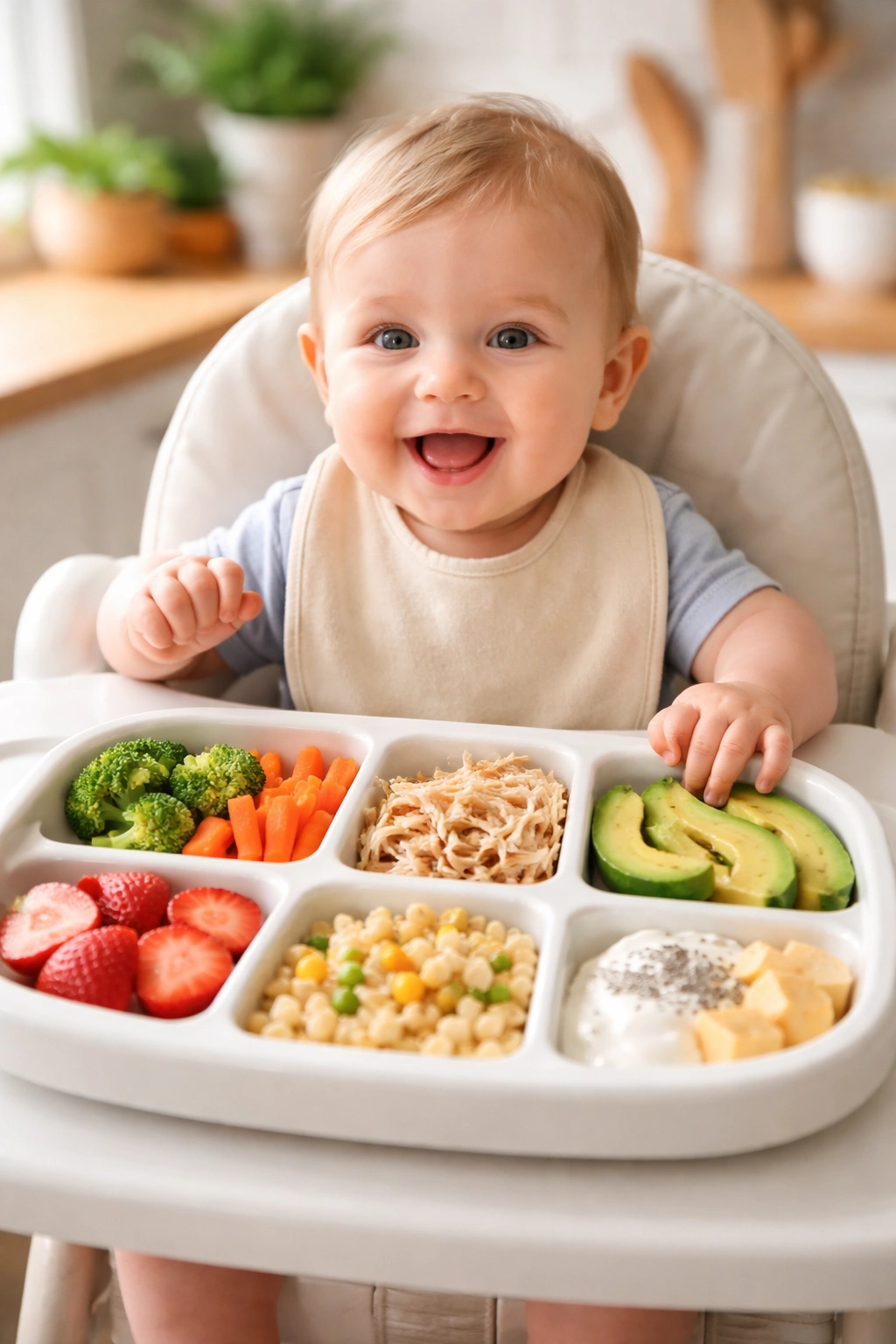
In the beginning, your baby might eat from a limited list of soft, safe foods. As they grow and become more experienced, gradually expand variety and introduce more challenging textures.
Around six to seven months, your baby is exploring soft foods and learning the mechanics of eating. Offer a variety of steamed vegetables, soft fruits, shredded proteins, grains, and soft dairy products. Don’t worry about balance—over a week or two, offer a wide range so your baby gets diverse nutrients.
By eight to nine months, your baby can handle slightly firmer textures and might be chewing more actively. Introduce foods that require a bit more chewing—like slightly firmer cooked vegetables, more textured grains, and foods with visible pieces. Your baby’s coordination is improving, and they can handle slightly smaller pieces and more challenging foods.
By ten to twelve months, your baby can increasingly eat what the family eats, modified slightly for safety. They’re developing preferences, showing interest in specific foods, and becoming more efficient at self-feeding. Continue offering a wide variety. Your baby is learning that eating is social and enjoyable by watching and participating in family meals.
Throughout all stages, offer foods you genuinely enjoy and eat yourself. Your baby learns about food culture by seeing you eat and enjoy various foods. If your family eats foods from multiple cuisines, your baby learns to appreciate diverse flavors early. If your family has vegetarian preferences, your baby learns from that. Your baby’s food world expands naturally from observing and participating in your family’s eating patterns.
Creating a Safe, Positive Eating Environment
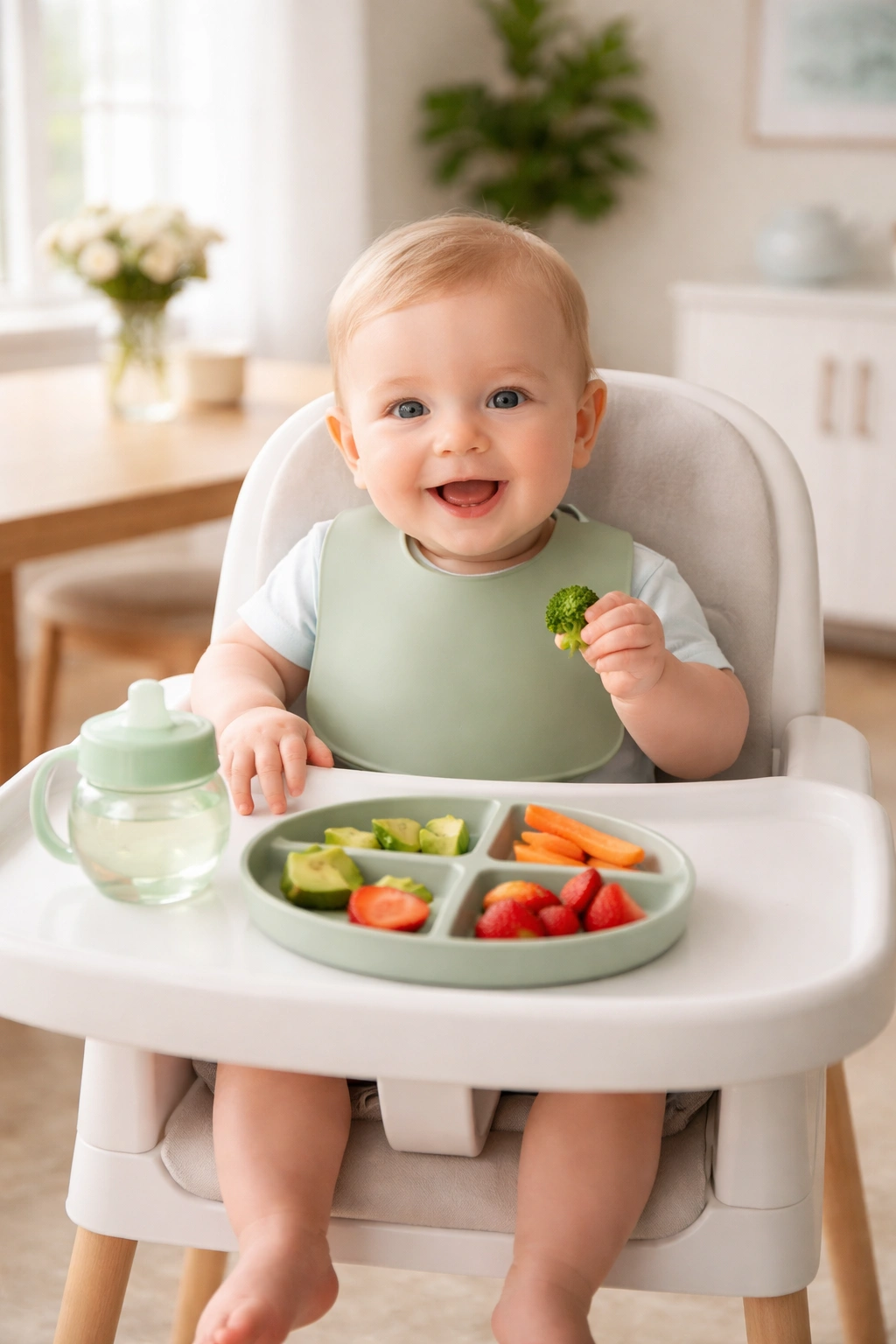
The setting where you offer food matters as much as the food itself. A calm, positive mealtime environment builds healthy eating habits and keeps your baby safe.
Seat your baby in a high chair or secure feeding seat where they can sit upright and safely. They should be able to reach the tray comfortably and bring food to their mouth without straining or slouching. A reclined or tilted position increases choking risk, so ensure your baby is fully upright.
Remove distractions during meals. Turn off screens, put away toys, and focus on eating as the primary activity. This helps your baby concentrate on the task of eating and signals that mealtime is important. You’re also modeling focused, mindful eating.
Offer food on a clean tray or plate within your baby’s reach. Your baby needs to be able to see the food and access it without help. Some babies prefer having all foods on one tray; others like foods separated. Pay attention to what your baby seems to prefer.
Never pressure your baby to eat more than they want. Trust their hunger and fullness cues. If your baby is done eating, they might push food away, turn their head, or simply lose interest. This is your baby communicating clearly. Respect that communication. Pressuring kids to eat more than they want builds disconnection from their own hunger and fullness signals.
Let your baby touch, squish, play with, and explore food. Getting messy is part of learning. Food on the high chair, on the floor, and in the hair is completely normal and developmentally appropriate. Place a splash mat under the high chair if mess bothers you, or embrace it as evidence of learning.
Offer meals at regular times so your baby develops a rhythm of eating. Breakfast, lunch, dinner, and maybe a snack or two at similar times each day creates predictability and allows your baby’s digestive system to develop a pattern.
Eat together whenever possible. Your baby learns about food by watching you eat and enjoy foods. When your baby sees you eating and enjoying the same foods they’re being offered, they’re more likely to be interested in those foods. Family meals are also where your baby learns the social aspects of eating—conversation, togetherness, and enjoyment of food beyond just nutrition.
Final Thoughts
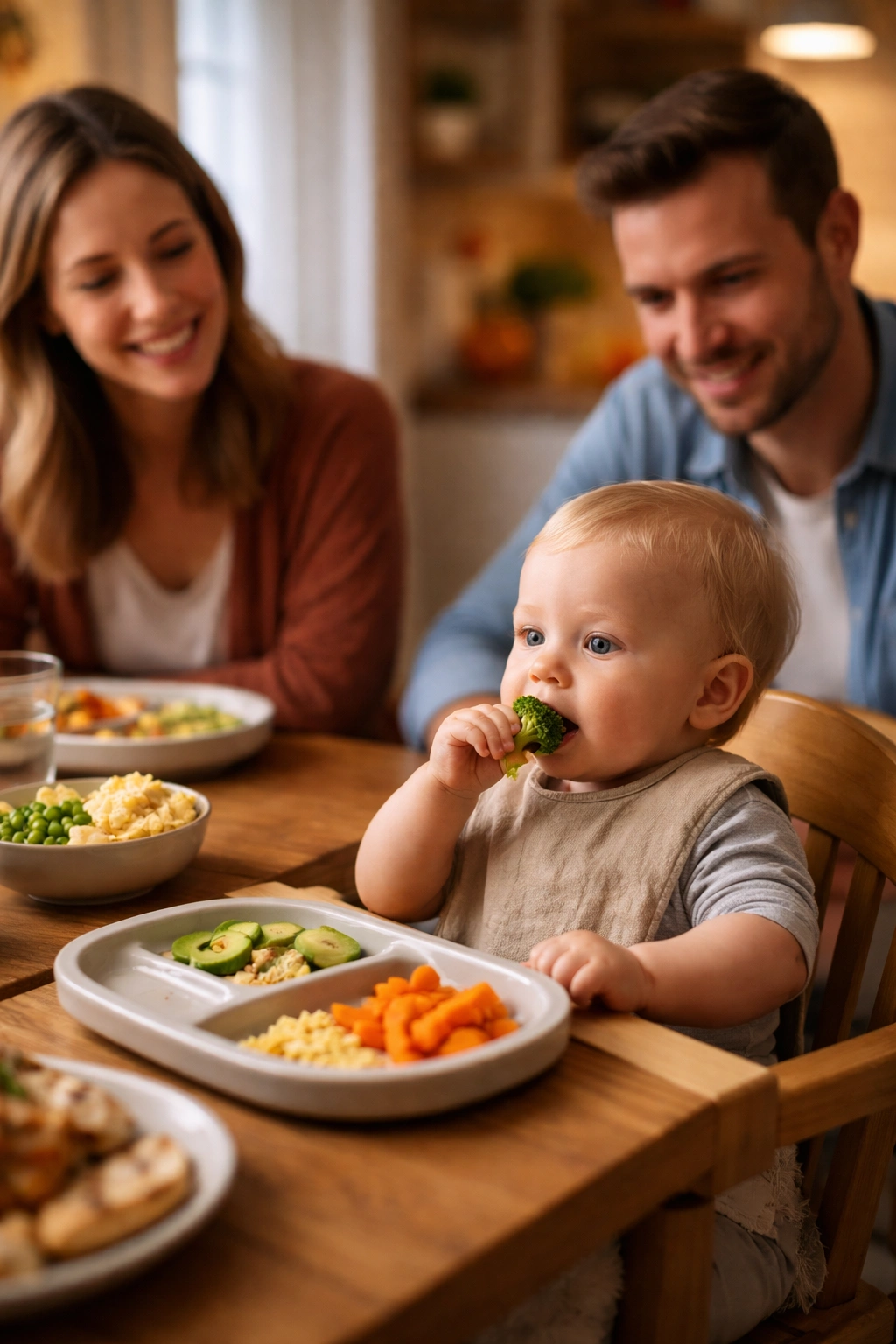
Baby-led weaning isn’t complicated, but it does require letting go of the notion that you need to control exactly what and how much your baby eats. Instead, you’re creating an environment where your baby can explore, learn, and develop a healthy relationship with food from the very start. You’re offering safe, soft foods; trusting your baby’s hunger and fullness cues; and respecting their pace of learning.
The meals you offer are simple combinations of foods your family already enjoys. Steamed vegetables, soft fruits, shredded proteins, and cooked grains aren’t special preparation—they’re just thoughtfully prepared versions of what you’re already eating. Your baby learns your family’s food culture by participating in your meals, even as their version is slightly adapted for their developmental stage.
As your baby grows from six months through the first year, their interest in food increases, their ability to handle different textures develops, and their personality around eating emerges. Some babies are enthusiastic early eaters; others are slow and cautious. Some prefer exploring texture and play; others are focused on the eating part. All of these variations are normal. Your job is to consistently offer a variety of safe, nutritious foods and trust that your baby will eat what they need to grow and develop.
