



Vietnamese pickled vegetables—do chua—are one of those small but essential components that can completely elevate a meal. These bright, crunchy, tangy condiments appear on nearly every Vietnamese dining table, sitting in a small glass jar or ceramic dish, waiting to refresh the palate between bites of rich pho, crispy spring rolls, or grilled meats. They’re the kind of thing that tastes deceptively simple but requires understanding a few crucial balance points to get truly right. The magic isn’t in complicated technique; it’s in respecting the ratio of vinegar to sugar, choosing vegetables that hold their texture, and understanding that the first few hours of pickling matter more than anything else.
What makes do chua different from other pickled vegetables you might encounter is the specific balance Vietnamese home cooks have perfected over generations. This isn’t about preserving vegetables for months in a basement root cellar. Quick pickling means vegetables spend just a few hours in the brine before they’re ready to eat—still crisp, still fresh-tasting, but infused with that perfect sweet-sour-salty punch that makes them utterly addictive. Most people assume you need special equipment or ingredients to make them at home, but the truth is you probably already have everything you need in your kitchen right now. A sharp knife, a cutting board, a small saucepan, and a glass jar are genuinely all it takes.
The versatility here is what I find most compelling. Yes, you can follow a traditional recipe with carrots and daikon radish—and you should, at least once—but once you understand the underlying principles, these pickles become a playground. Want to add fresh chilies for heat? Include them. Prefer cucumber to daikon? Go for it. Have some green beans lingering in the crisper drawer? They pickle beautifully in about two hours. The confidence that comes from truly grasping how this works opens up a whole category of easy, vibrant condiments that transform leftovers into side dishes and add brightness to any plate.
The Soul of Vietnamese Tables: Why Do Chua Matters
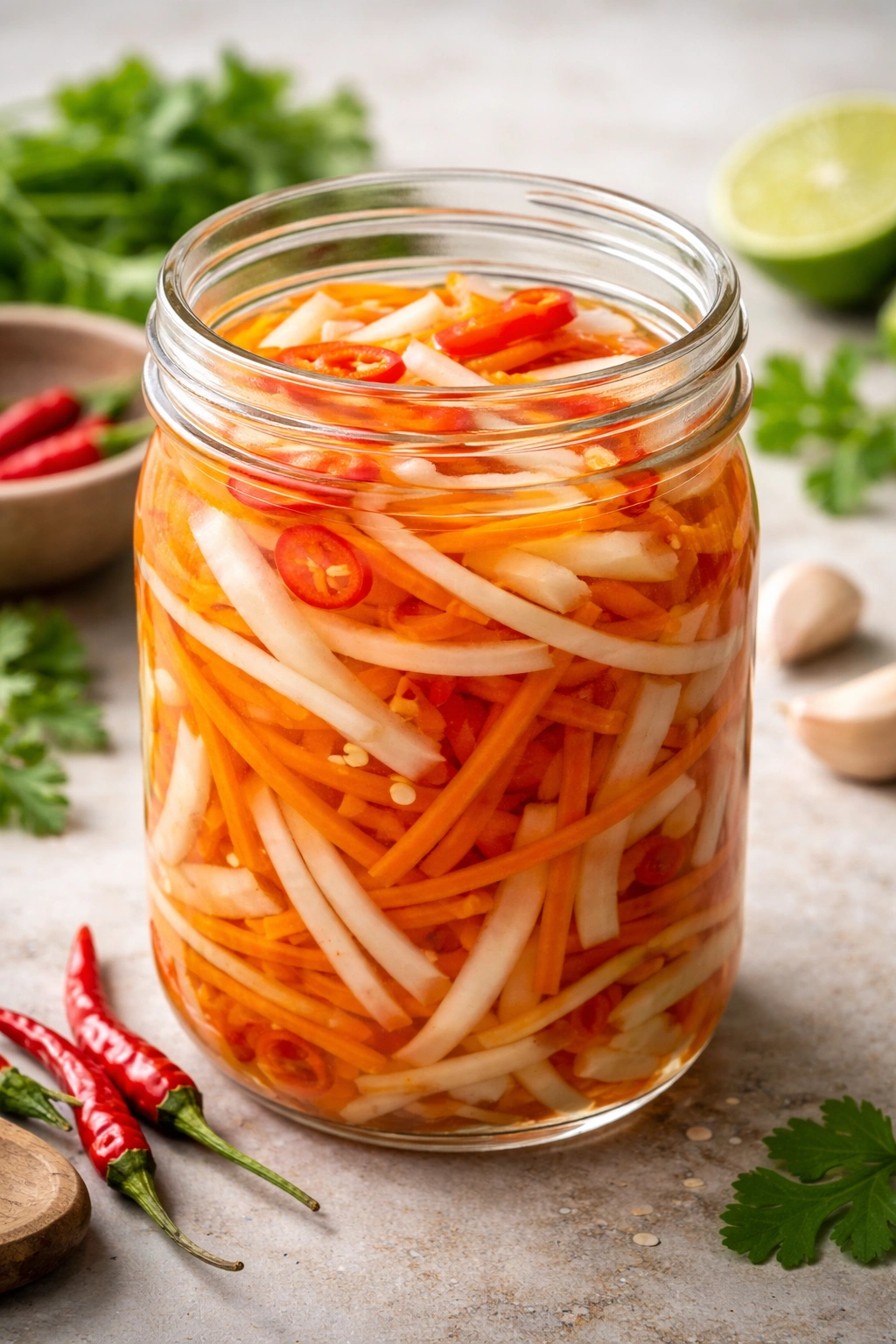
Do chua occupies a specific and essential role in Vietnamese cuisine that goes far beyond being “just a pickle.” These aren’t a garnish you forget about halfway through the meal—they’re an integral part of the eating experience, expected and necessary. When a bowl of pho arrives, you’re meant to reach for those pickled vegetables almost immediately, creating little pockets of bright acidity and crunch that balance the rich warmth of the broth.
The reason these pickles are so important has everything to do with how Vietnamese food is designed to taste. Meals tend toward richness: fatty broths, fried components, grilled meats bathed in butter or oil, creamy or intense sauces. Do chua provides the counterpoint that makes those rich elements feel lighter and more exciting. The vinegar cuts through fat, the sugar smooths out any sharpness, and the crunch provides textural contrast. Without them, the meal feels heavier and one-dimensional. With them, everything snaps into focus.
Beyond the table, do chua represents a form of practical wisdom that’s been embedded in Vietnamese cooking for centuries. Before refrigeration, pickling was one of the few ways to preserve the year’s bounty. But Vietnamese cooks discovered something that Western pickling traditions often miss: sometimes the goal isn’t preservation at all. Sometimes the goal is transformation—taking ordinary vegetables and turning them into something that tastes more alive, more vital, more essential to the meal than they were when raw.
The vegetables themselves aren’t fancy or difficult to source. In fact, that’s part of the beauty. Daikon radish, carrot, cucumber, green beans—these are vegetables you can find anywhere. What transforms them from ordinary into something your family will request by name is understanding the chemistry of the brine and respecting the texture window where vegetables are perfectly pickled but haven’t yet gone soft.
How Vinegar and Sugar Balance Creates the Perfect Brine
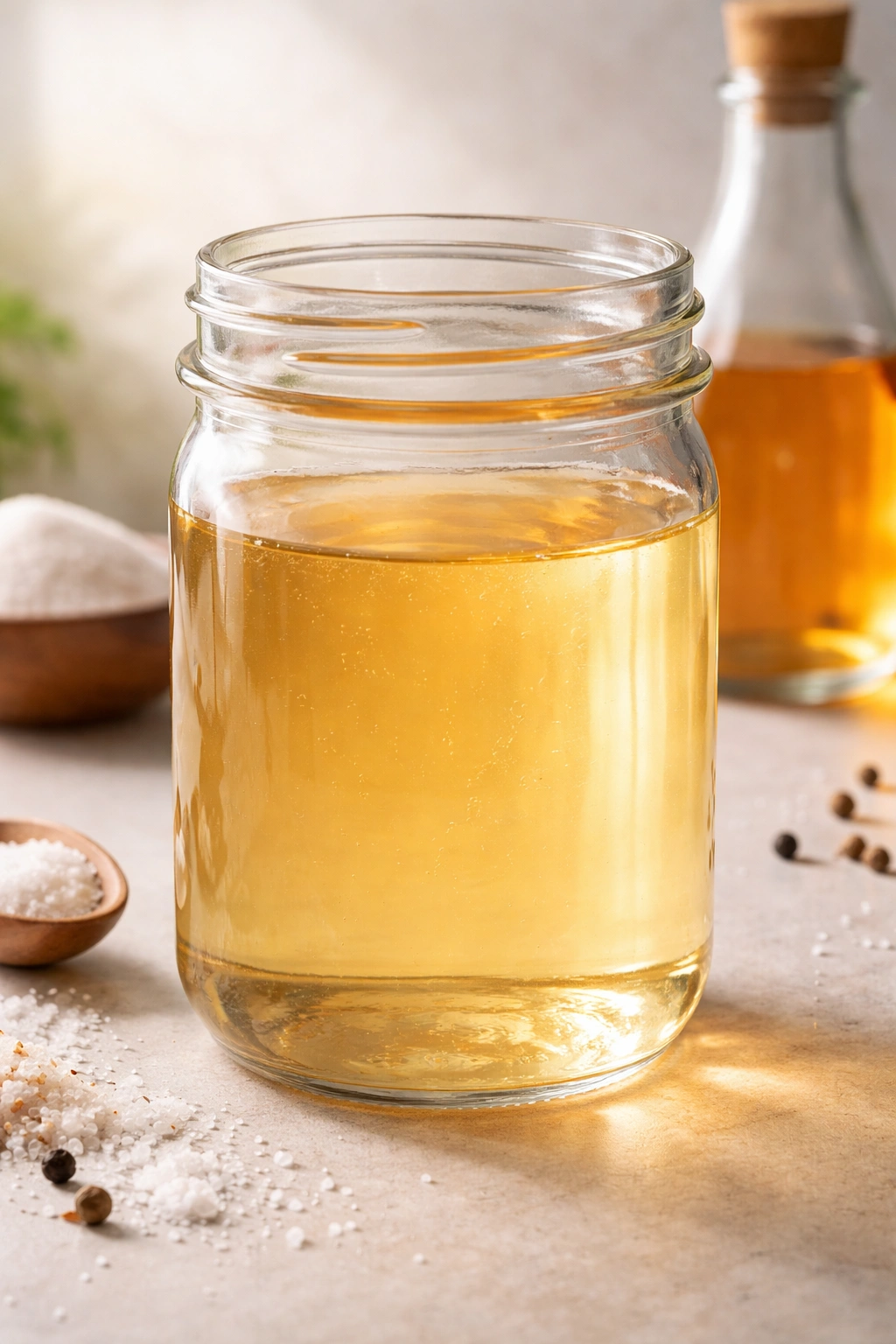
The brine is everything in this recipe, and it follows a deceptively simple ratio that takes just a few minutes to make. Understanding the three-part balance—vinegar, sugar, and salt—is what separates mediocre quick pickles from ones that make you want to drink the liquid straight from the jar.
Vinegar is the star player here. Its acidity both preserves the vegetables and provides that characteristic bright, mouth-watering quality that defines the taste. Vietnamese recipes typically use white distilled vinegar, which is neutral and clean-tasting, allowing the vegetable flavors to shine. Rice vinegar is another excellent choice—it’s slightly softer and rounder in flavor, which some people prefer. The acidity level matters: you want something in the range of 4-5% acetic acid, which most standard white vinegars and rice vinegars contain. The amount you use compared to water is what controls how sharp or mellow the final pickle tastes.
Sugar’s role is more nuanced than simply making things sweet. Sugar balances the harshness of the vinegar, yes, but it also provides a smooth mouthfeel and helps the other flavors integrate. Think of it as a bridge that lets the vinegar play its role without becoming aggressive or unpleasant. The amount you add creates a subtle shift in character—too little and the pickles taste strictly sour, too much and they become candy. The sweet spot is usually a ratio where the sugar is equal to or slightly less than the vinegar by volume, though the exact proportion depends on personal preference and which vegetables you’re pickling.
Salt serves multiple purposes simultaneously. It seasons the brine, preserving the vegetables and ensuring they stay crisp rather than becoming mushy. Salt creates an osmotic pressure that draws water out of the vegetable cells slightly, which paradoxically helps them stay firm. The right amount of salt enhances all the other flavors in the brine without being obviously salty. Most recipes call for about one teaspoon per cup of liquid, which is enough to season without creating a heavily brined pickle.
What’s remarkable about this balance is how forgiving it actually is, once you understand the principle. If you like things sharper, increase the vinegar slightly or reduce the sugar. If you prefer them mellower and sweeter, adjust in the opposite direction. Different vegetables also benefit from slightly different brine ratios—something we’ll explore more thoroughly below—but the foundation is always this same three-part conversation between sour, sweet, and salt.
Choosing the Best Vegetables for Quick Pickling
Not every vegetable is equally suited to quick pickling, and understanding which ones work best is what separates someone who makes do chua occasionally from someone who makes it intuitively and confidently. The ideal vegetables have a few things in common: they’re dense enough to remain crisp even after sitting in liquid for hours, they’re mild enough that pickling enhances rather than obscures their natural flavor, and they benefit from the flavor addition rather than being diminished by it.
Daikon radish is the classic choice for a reason. It’s hearty, stays incredibly crisp even after hours of pickling, and has a subtle peppery quality that the vinegar brine complements beautifully. Daikon is sturdy enough that you can cut it into any shape—thin matchsticks, chunky batons, thin coins—and it will maintain its texture. Its mild flavor means it absorbs the brine without becoming overwhelming.
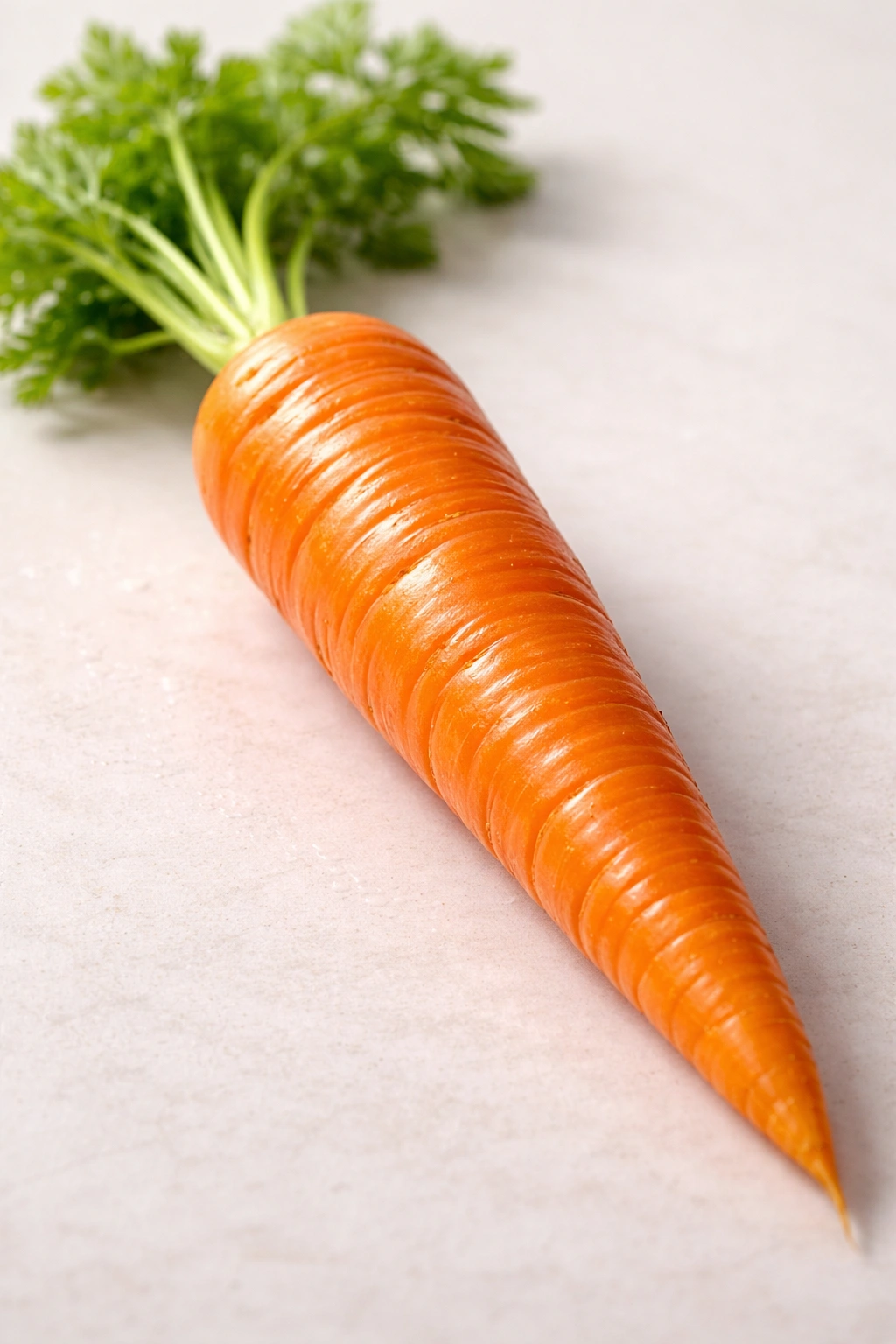
Carrots are the reliable second player that appears in virtually every Vietnamese quick pickle. They’re sweeter than daikon, which adds another layer of flavor to the jar. Like daikon, carrots remain crisp and don’t become soft or mushy when pickled quickly. The natural sweetness of carrot also means you can adjust the sugar in the brine downward slightly without the pickle tasting too sharp. Peeling versus not peeling is a matter of preference—unpeeled carrots add a tiny bit of earthiness, peeled ones look more refined.
Cucumbers work beautifully but require slightly different timing. They’re more delicate than daikon or carrot, which means they’ll be at peak crispness in a shorter window—usually two to three hours. If left longer than that, they start to soften noticeably. The advantage is that cucumbers are lighter and more refreshing, making them perfect during warmer months or when you want a pickle that feels less substantial.
Green beans—long beans in particular, if you can find them—are fantastic and often overlooked. They need to be blanched briefly before pickling (just two or three minutes in boiling water) to soften them slightly, then shocked in ice water. After that, they pickle beautifully and remain crisp for days. Their slightly grassy flavor pairs wonderfully with the vinegar brine.
Jalapeños or other fresh chilies can be added to the jar to provide heat. They infuse their spiciness into the brine gradually, so the heat level increases over time. Start with one or two whole chilies if you’re unsure, then adjust next time. The chilies themselves become edible and delicious, especially after sitting for an hour or two.
Garlic and ginger are usually added directly to the brine or the hot pickling liquid. Thin slices of garlic add subtle flavor without overwhelming, and ginger adds warmth and a slight spicy complexity. Both integrate into the brine beautifully and make the entire jar taste more sophisticated.
Equipment and Ingredients You’ll Need
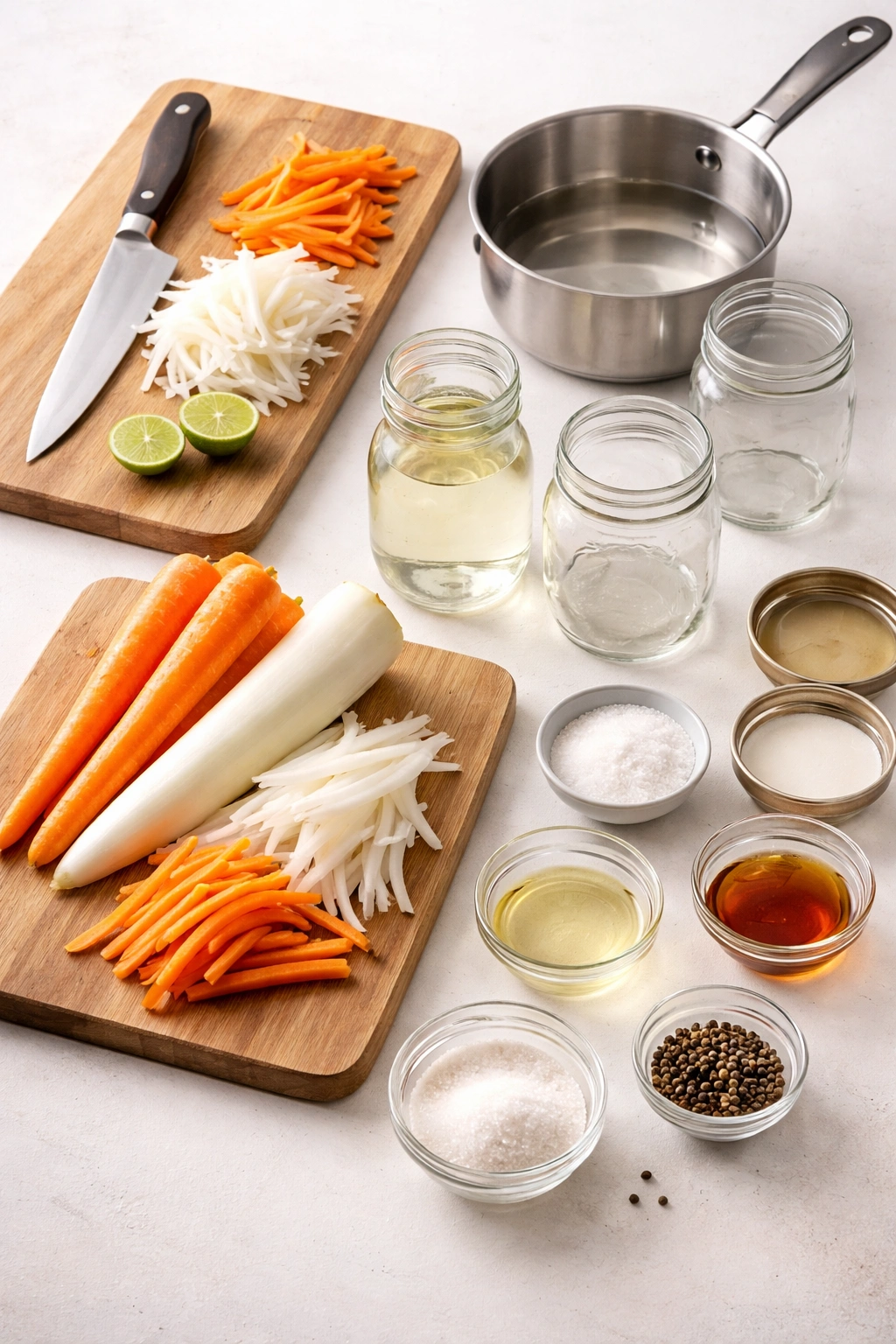
One of the genuine beauties of making do chua is that you need almost no specialized equipment. This isn’t a project that requires a pressure canner, special jars with sealed lids, or a collection of pickling spices you’ll use once and abandon in a cabinet for five years.
For equipment: A sharp knife and cutting board for preparing vegetables. A medium saucepan for heating the brine—nothing fancy, just something that can hold about two cups of liquid. A small wooden spoon or regular spoon for stirring. One or more glass jars with lids for storing the pickles. Pint-sized canning jars work beautifully, or any clean glass jar with a tight-fitting lid. A measuring cup or spoons for assembling the brine. That’s genuinely the entire equipment list. No special skills required.
For ingredients, the list is equally minimal. You’ll need vinegar (white distilled or rice vinegar, your choice), sugar, salt, water, and whatever vegetables you’re pickling. Most people add a few smashed garlic cloves and maybe a piece of ginger to the jar, which you can have on hand or not, depending on your preference. If you want to make it more complex, you might add a pinch of coriander seed or a star anise, but these are completely optional. The simplest, most authentic do chua contains nothing but vinegar, sugar, salt, water, and vegetables—and that version is actually perfect.
The quality of your base ingredients matters slightly more in a recipe this simple. Use fresh, firm vegetables that don’t have soft spots or blemishes. Use good vinegar—not the cheapest or the fanciest, just standard white distilled vinegar from the grocery store or rice vinegar if you prefer it. Use regular granulated sugar. Use salt without additives (table salt, kosher salt, or sea salt all work fine). When there are so few ingredients, each one is in the spotlight, so don’t use anything you wouldn’t want to eat on its own.
Yield, Prep Time, and Difficulty
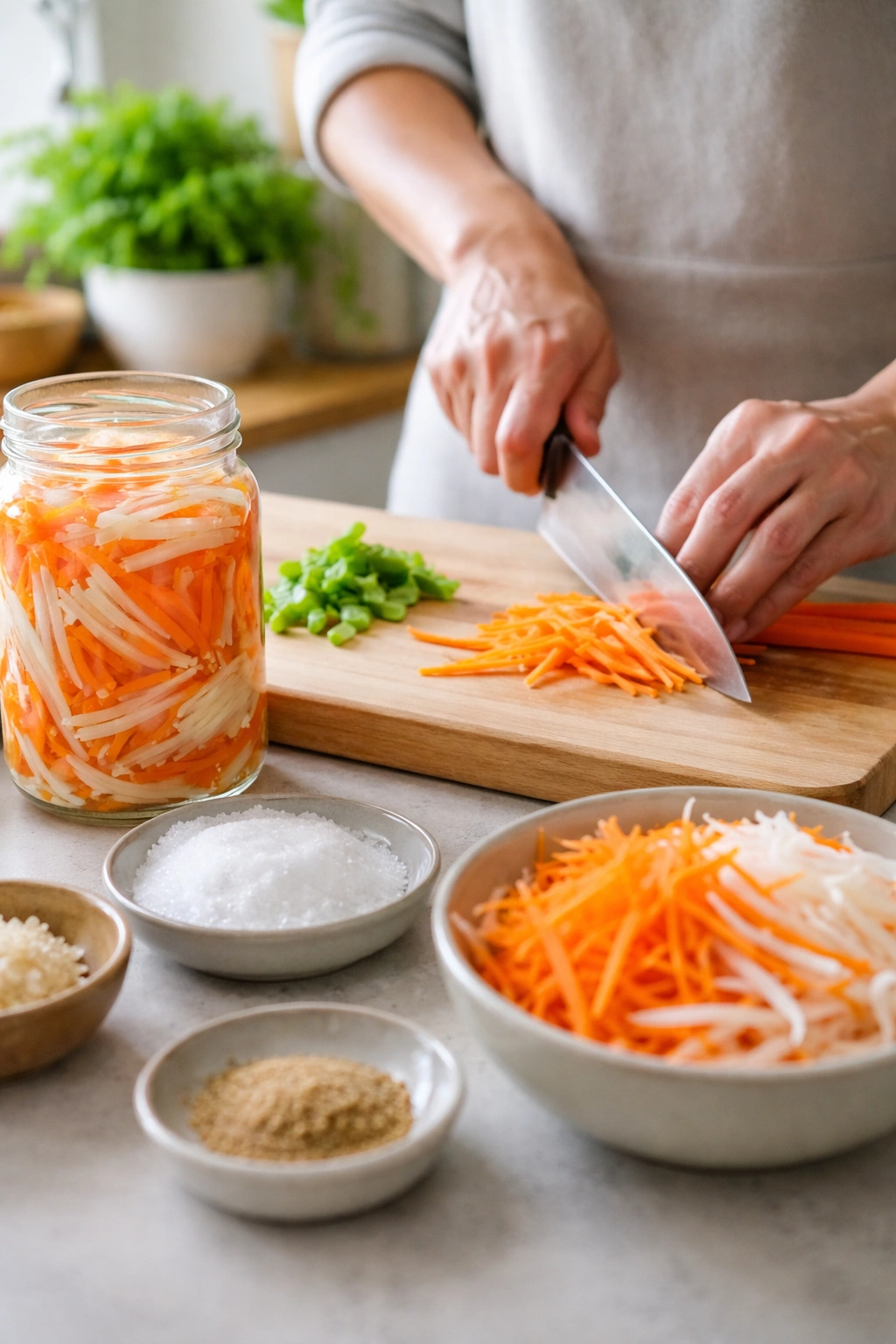
Yield: Makes about 3 cups of pickled vegetables
Prep Time: 20 minutes (cutting vegetables, assembling brine)
Cook Time: 5 minutes (heating the brine only)
Total Time: 25 minutes active + 2-4 hours pickling before serving (can be made ahead and kept refrigerated for up to 2 weeks)
Difficulty: Beginner — This requires no special skills, no cooking experience, and absolutely no pressure or stress. If you can boil water and cut vegetables, you can make do chua. The only thing to remember is that the pickles improve with a few hours of sitting time, so plan accordingly rather than expecting them to be ready immediately.
Complete Ingredient List
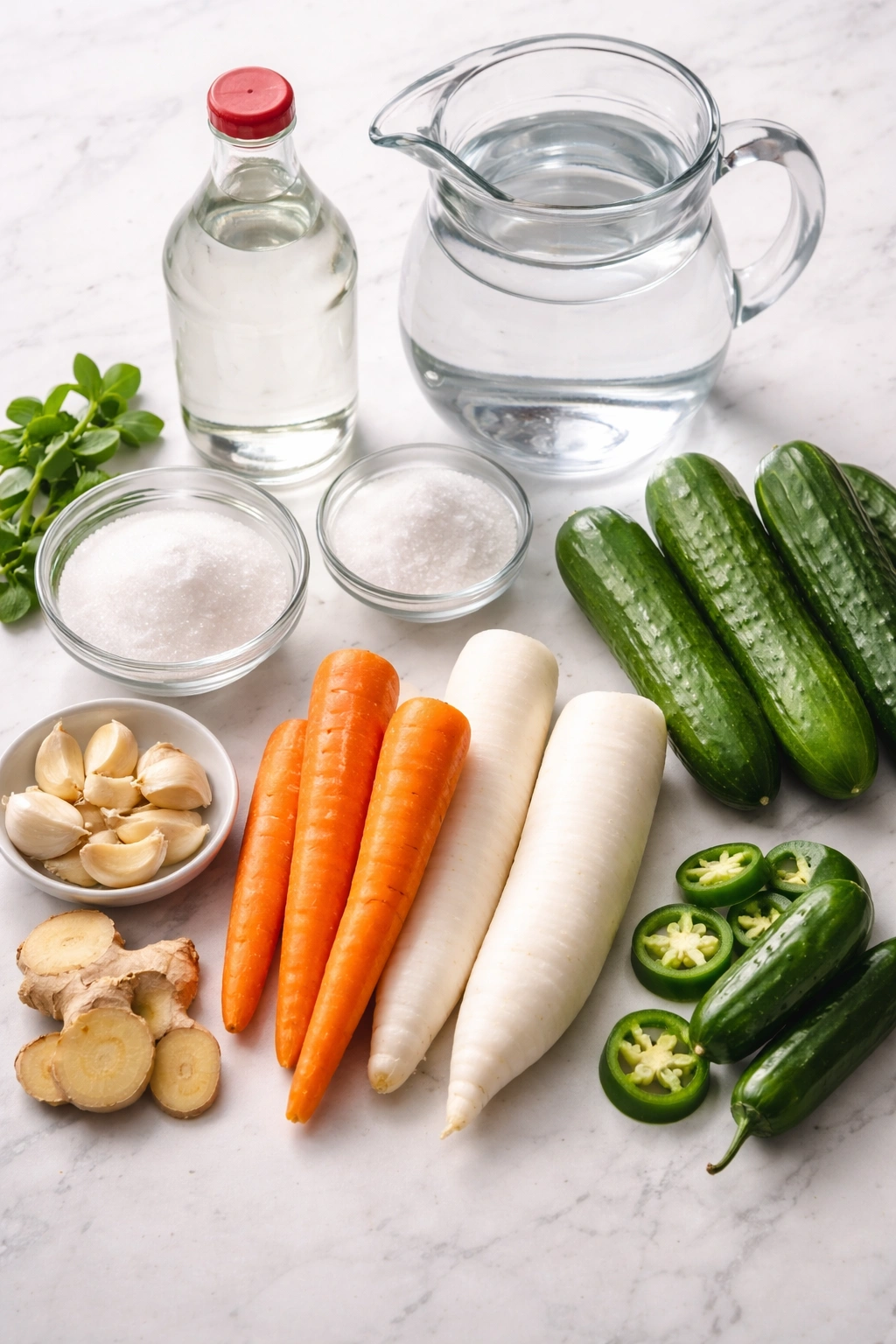
For the Pickling Brine:
- 1 cup white distilled vinegar (or rice vinegar)
- 1 cup water
- ¾ cup granulated sugar
- 1 teaspoon fine sea salt
- 3 cloves garlic, smashed lightly
- 1 teaspoon fresh ginger, thinly sliced (optional but recommended)
For the Vegetables:
- 2 medium carrots, peeled and cut into thin matchsticks or thin batons
- 1 small daikon radish (about 8 ounces), peeled and cut into thin matchsticks or thin batons
- 1 small cucumber (optional), cut into thin batons
- 1-2 fresh jalapeños or other fresh chilies (optional, for heat)
Preparing Your Vegetables for the Brine
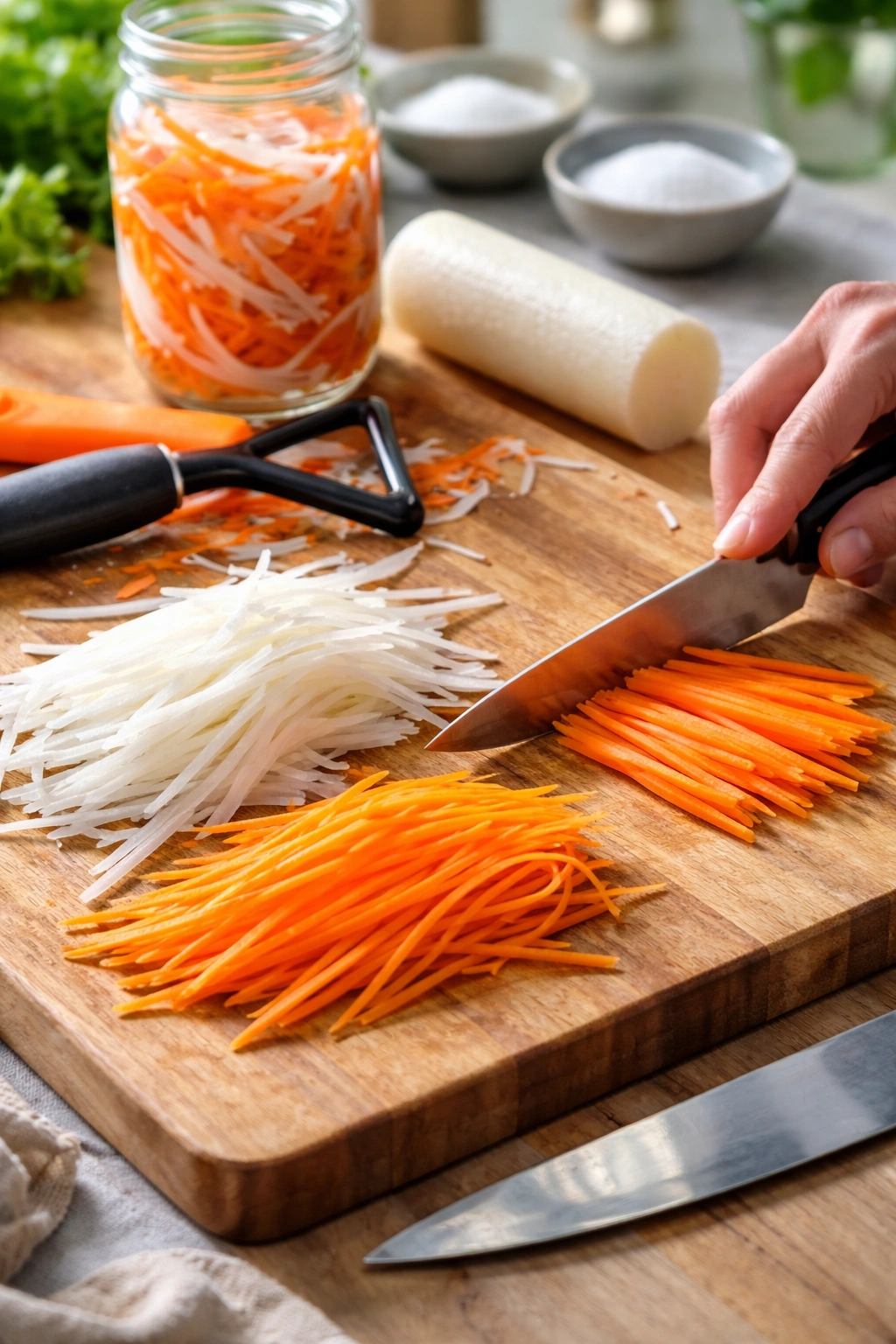
The way you cut your vegetables matters more than people usually realize. The goal is to create pieces that are large enough to feel substantial when you bite into them, but small enough to pickle evenly throughout. Thin matchsticks work beautifully because they pickle quickly and evenly—the vinegar brine reaches the center of the piece almost immediately. Thicker batons take longer to pickle but remain crunchier longer, which some people prefer.
For daikon radish and carrots, a vegetable peeler is actually your best friend. You can create paper-thin slices with a peeler much faster than with a knife, and these thin slices pickle beautifully in just a couple of hours. If you prefer thicker pieces, cut them with a sharp knife into matchsticks roughly the thickness of a pencil lead—about ⅛ inch thick. These will pickle in three to four hours.
The one crucial step with green beans, if you’re using them, is blanching. Bring a small pot of water to a boil, add the trimmed green beans, and cook for exactly two minutes. The beans should still feel crisp when you bite them—you’re not trying to cook them through. Immediately drain them and plunge them into ice water to stop the cooking. Pat them dry before adding them to the jar. This brief cooking makes them tender enough to pickle without becoming mushy, and they’ll hold their color beautifully.
For cucumber, cut them into batons or thin spears. Remove as much of the watery seed interior as you like—some people scoop it out slightly to reduce the final moisture in the jar, while others leave them whole. The choice is entirely yours and doesn’t affect the pickling process.
Garlic should be lightly smashed or left as small cloves to avoid overwhelming the brine with garlic flavor. If you smash the cloves lightly, they release just enough flavor while remaining edible and pleasant. Ginger can be left in thin slices or minced slightly—thin slices are easier to remove later if someone in your household doesn’t enjoy the texture of ginger.
Making and Cooling the Pickling Liquid
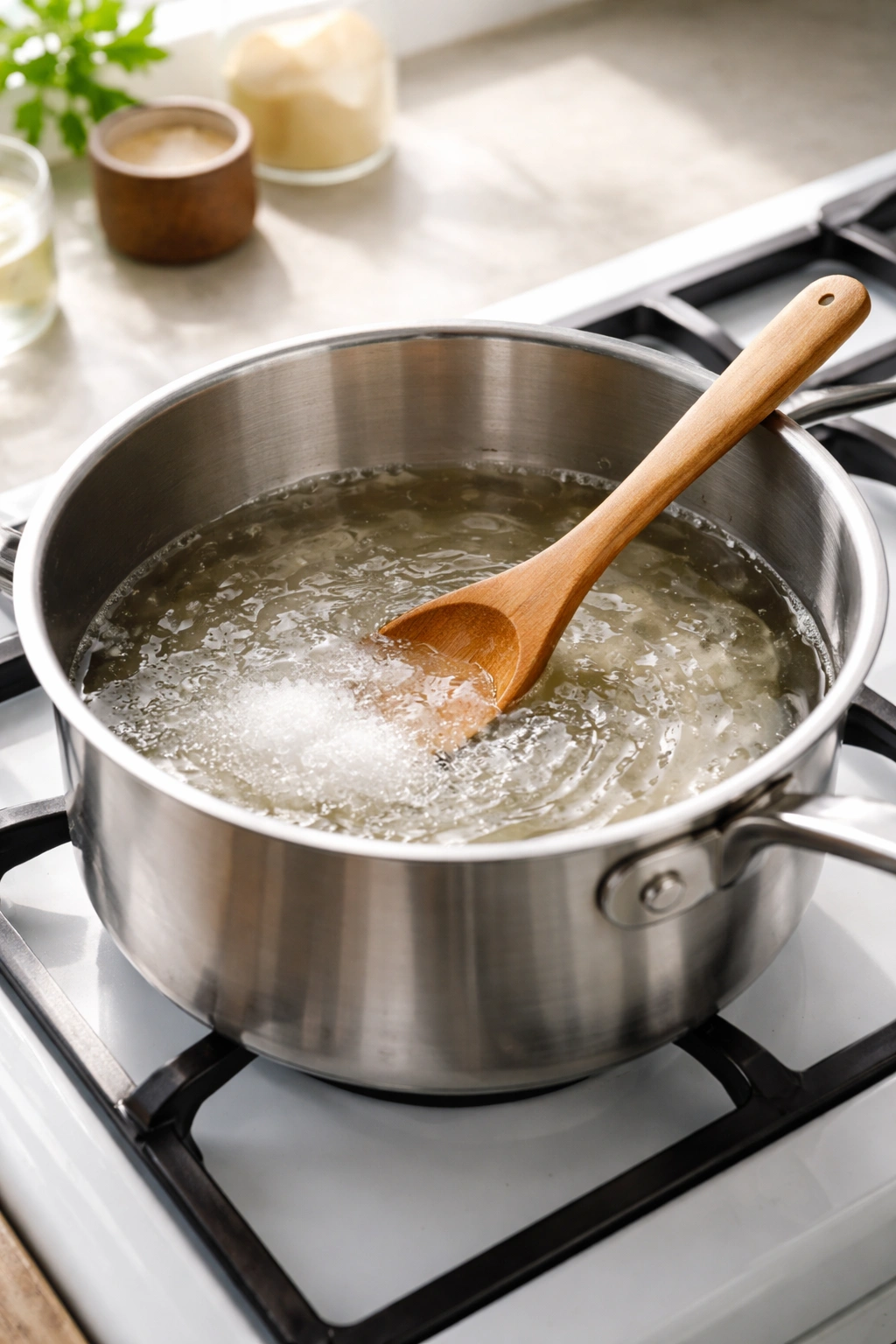
The brine comes together in about five minutes, and there’s no technique to master—just simple proportions and steady stirring. Pour the vinegar and water into a medium saucepan. Add the sugar and salt. Set the pan over medium heat and stir occasionally until the sugar and salt are completely dissolved. You’ll know it’s ready when you stir the liquid and the granules disappear—there should be no visible sugar crystals remaining.
This should take about three to four minutes over medium heat. Don’t rush it by turning up the heat; slow and steady dissolving means even sweetness and seasoning throughout. Once the sugar is completely dissolved, the brine is technically ready, but I always recommend letting it cool to room temperature or slightly warm before pouring it over the vegetables. This is a small but significant step that prevents the vegetables from becoming oversoft.
Here’s why the temperature matters: hot liquid will continue to cook the vegetables even after you pour it, softening them more than you probably want in a quick pickle. Room-temperature or slightly warm brine will preserve the crispness much better. If you’re in a hurry and the brine is still quite warm, you can speed up cooling by pouring it into a glass measuring cup or small bowl and setting it in an ice bath for a few minutes, stirring occasionally.
As the brine cools, the smashed garlic cloves and ginger slices can be added to the jar now or later—it doesn’t matter much either way. Some people prefer to add them to the warm brine so they infuse as the brine cools, while others add them directly to the jar just before adding the vegetables. The end result is essentially the same.
Combining Vegetables with Brine
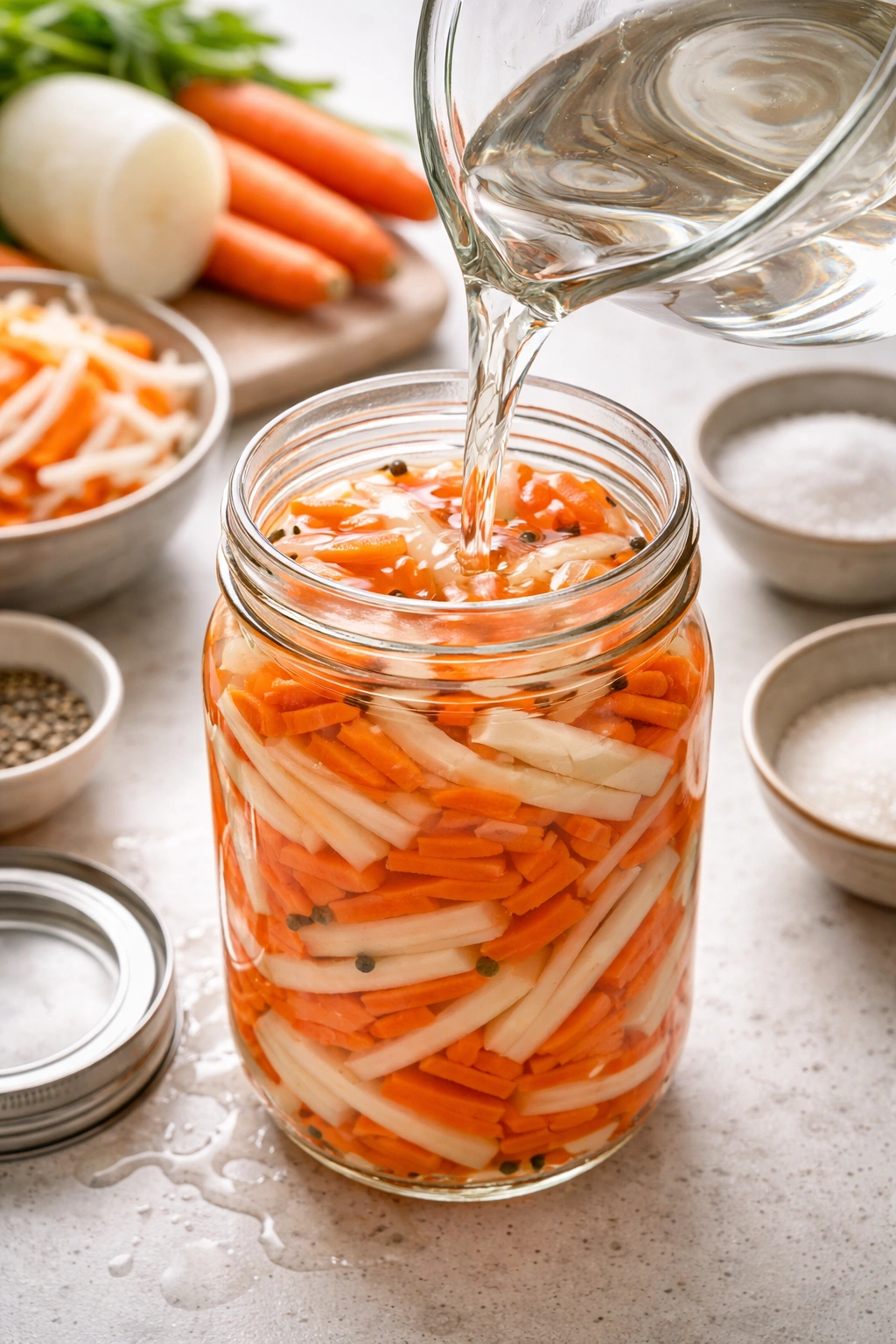
Once your vegetables are cut and your brine is cooling, the assembly is simple. Pack the cut vegetables into your glass jar, mixing the daikon, carrot, and any other vegetables you’re using so they’re fairly evenly distributed. Don’t pack them too tightly—the brine needs to flow around each piece. Leave about half an inch of space at the top of the jar.
Pour the cooled (or room-temperature) brine over the vegetables, covering them completely. This is important: any vegetable pieces that stick above the brine line will be exposed to air and may start to wilt or discolor. Push any vegetables that are floating down beneath the brine surface using a spoon or fork.
If you’re including fresh chilies for heat, they can go in now, nestled among the vegetables. The heat from the chili will gradually infuse into the brine, so the longer they sit, the spicier the entire jar becomes. If you want just a touch of heat that increases over time, use one small chili. If you want serious heat from the moment you eat your first pickle, use two or even three, depending on how hot the chilies are.
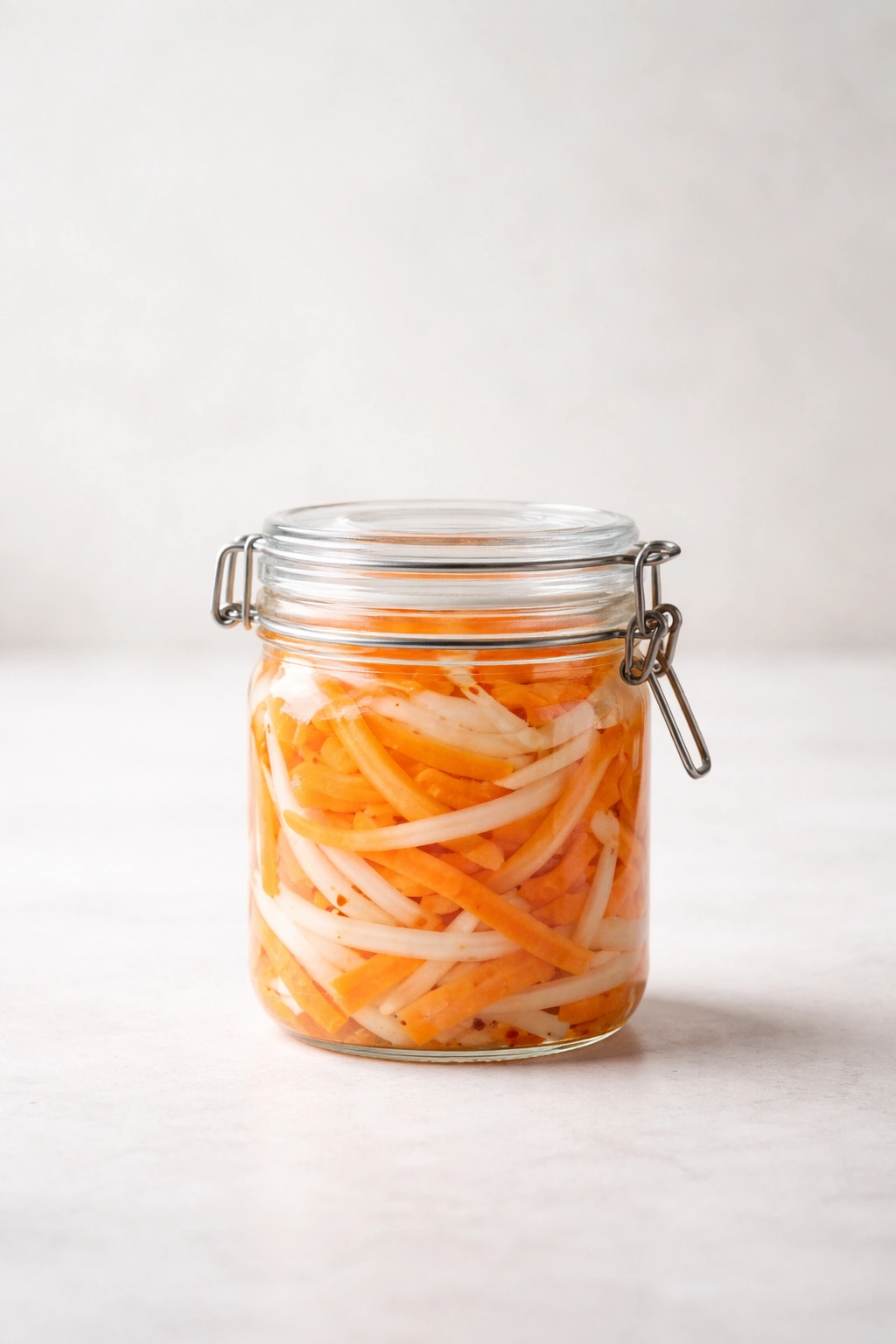
Screw the lid on your jar tightly and set it on the counter or a shelf where you’ll see it. This is where patience becomes your ingredient. The pickles will begin to taste good in about one hour, are genuinely delicious in two to three hours, and reach peak crispness and flavor around the four-hour mark. You don’t have to wait that long—some people eat them after just an hour—but waiting gives you the best balance of flavor absorption and texture preservation.
Storage and How Long They Keep
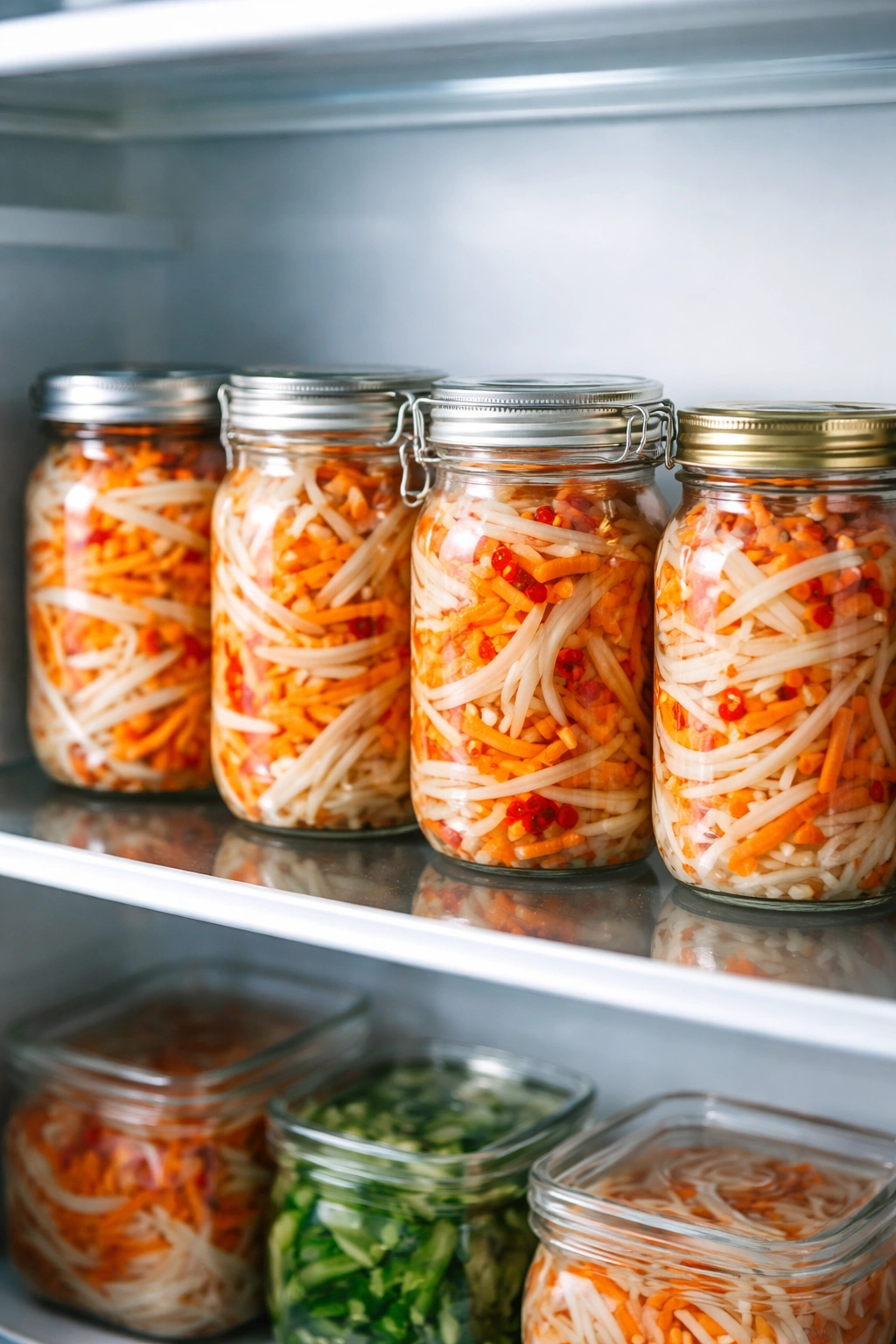
Do chua, once made, will keep refrigerated for about two weeks in a covered glass jar. The vegetables remain crisp for the entire two weeks, though they’ll gradually soften very slightly over time. The flavor deepens and mellows slightly over the first week, becoming more integrated and rounded, which some people actually prefer to the sharp brightness of the first day.
The brine itself actually becomes more flavorful as it sits, absorbing the subtle flavors of the vegetables and becoming slightly more concentrated as vegetables release water. By day three or four, the brine is genuinely delicious and worth saving—it makes an excellent vinaigrette base or dipping sauce for spring rolls and dumplings.
You can also re-use the brine if you’d like, though the flavor will be slightly less sharp the second time around. If you make another batch of do chua, you could use the leftover brine from the first jar, though you’d want to add fresh brine ingredients to replenish what the vegetables have absorbed. Some home cooks save their brine, straining out the vegetable pieces and garlic, then use that brine multiple times by simply adding new vegetables. The pickle flavor becomes increasingly deep and complex with re-use.
Moisture management is the only real consideration for storage. If water accumulates on the lid or around the rim, that’s normal—wipe it away occasionally. If you want to store these for the full two weeks, make sure the jar is truly sealed and refrigerated consistently. Do chua left at room temperature will continue to pickle, becoming softer and eventually developing fermentation flavors you probably don’t want.
Smart Variations for Different Tastes
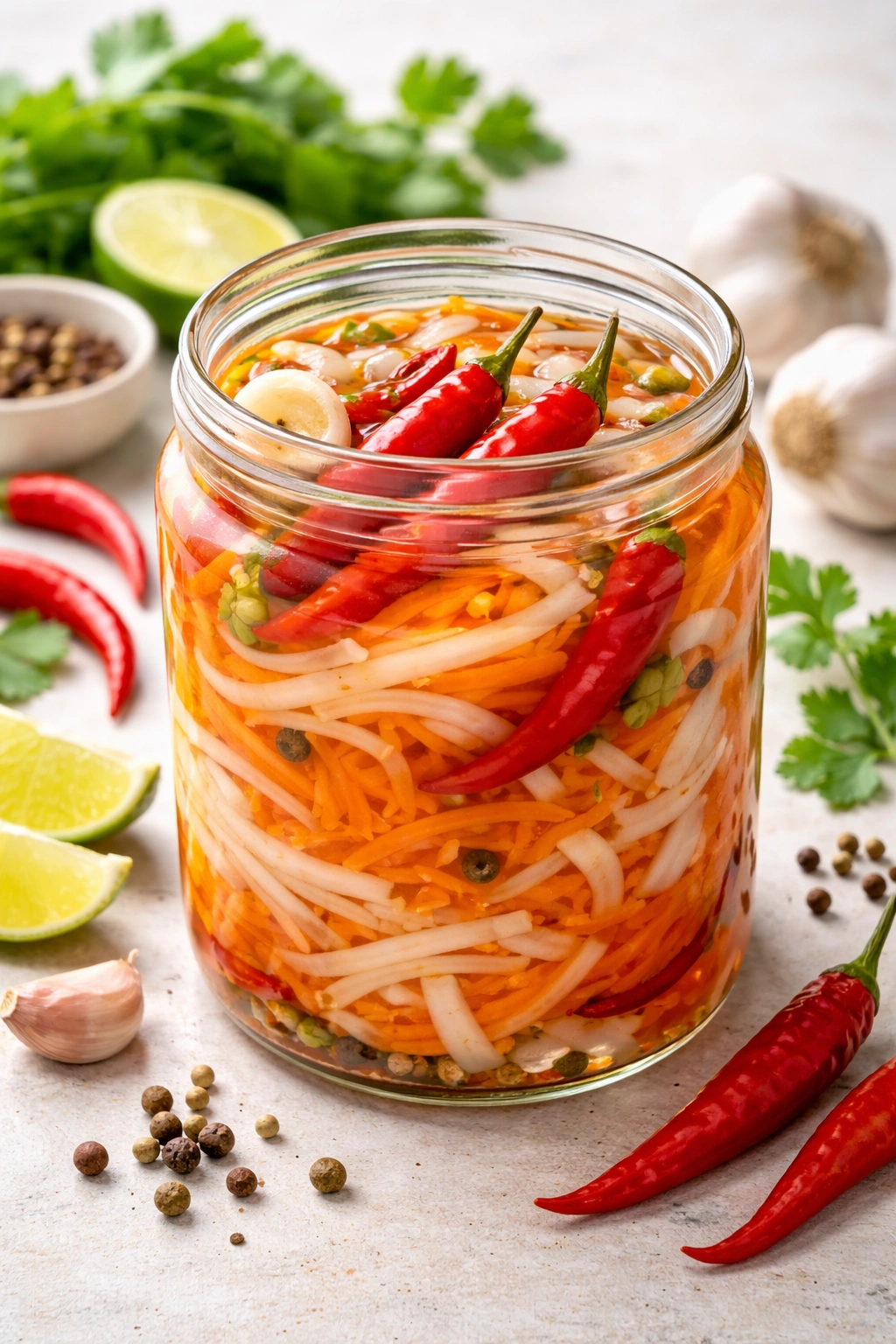
Once you’ve made the basic version, the variations reveal themselves naturally. The foundation—the brine ratio and pickling technique—remains constant, but you can adjust vegetables, heat, and flavor additions based on preference or what’s in your kitchen.
For a spicier version, add fresh red or green chilies directly to the jar. Thai bird’s eye chilies provide serious heat; jalapeños are moderate and fruity; Fresnos are slightly sweet and medium-hot. You can also add a pinch of dried chili flakes to the brine itself if you want heat that’s distributed throughout rather than concentrated in the fresh chili pieces. Start conservatively—you can always add more heat next time.
To make it more aromatic and complex, add whole spices to the brine. A pinch of coriander seed, a single star anise, a few black peppercorns, or a small piece of cinnamon stick all work beautifully. Add these to the brine as it heats, then strain them out after cooking or leave them in the jar to infuse continuously. Be cautious with spice amounts—a little goes a long way, and you want the vegetables to remain the star.
If you prefer sweeter pickles, add another tablespoon or two of sugar to the brine. If you want them sharper and more vinegary, reduce the sugar by half and add another tablespoon of vinegar. These adjustments are easily made on your second batch based on how the first one tastes.
For a cucumber-heavy version, increase the proportion of cucumber and reduce the pickling time to just two hours, since cucumber gets soft faster than daikon. For a daikon-focused version—which creates a more substantial pickle that holds texture for days—use primarily daikon with just a few carrots for sweetness and color.
You can also pickle other vegetables if the spirit moves you: thin-sliced onion, small cauliflower florets, green beans (which require brief blanching first), thin-sliced radish (watermelon radish creates beautiful color), or even thin-sliced celery. The brine ratio stays the same, but the pickling time might adjust—denser vegetables like cauliflower need four to six hours, while something like onion only needs two.
Common Mistakes and How to Avoid Them
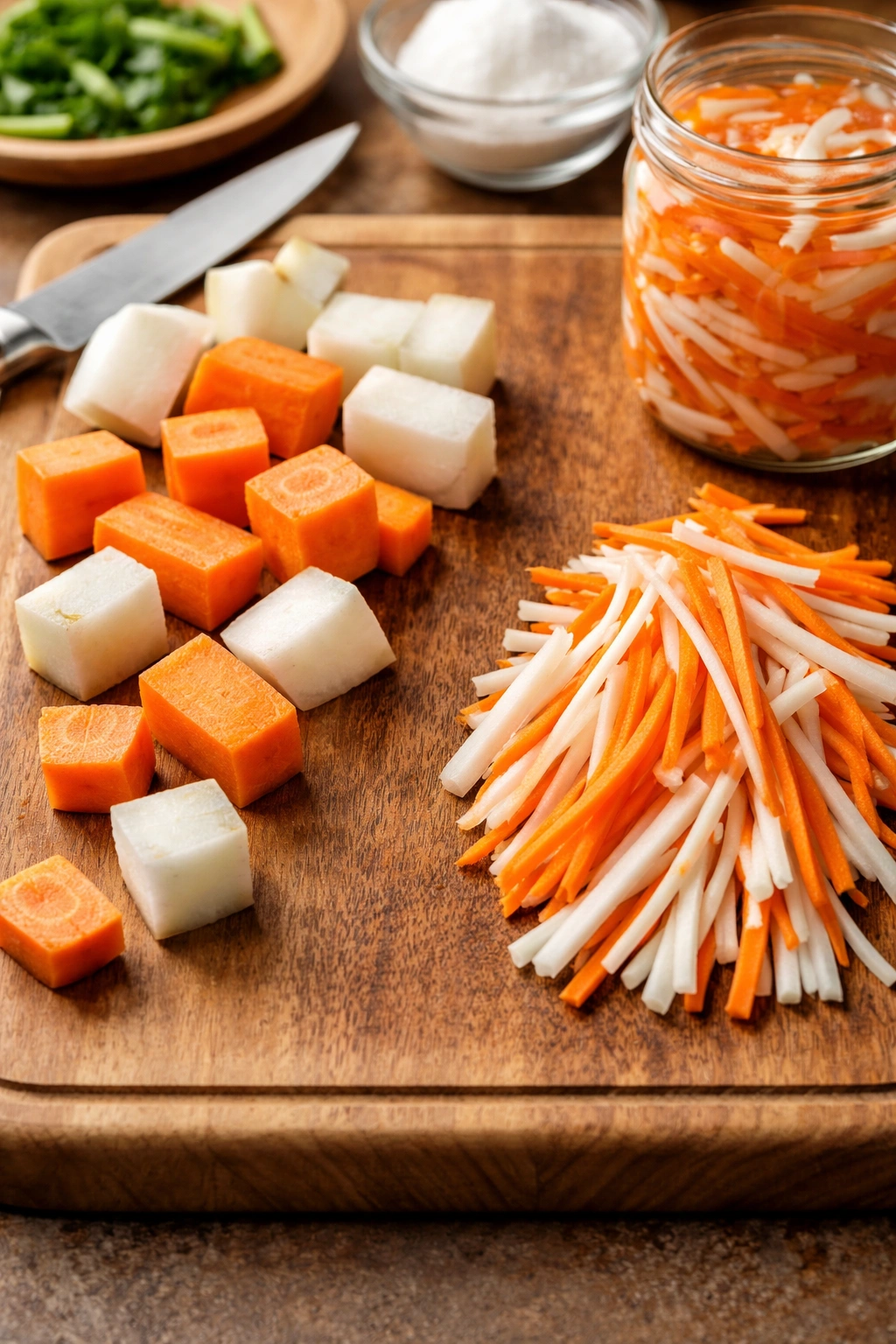
The most frequent mistake people make is cutting vegetables too large. When pieces are thicker than about ¼ inch, the vinegar brine doesn’t penetrate to the center quickly, so you end up with a crispy exterior and an essentially unpickled interior. The solution is almost silly in its simplicity: cut them thinner. Thin matchsticks or thin batons work beautifully and pickle evenly in just a couple of hours.
Another common pitfall is using brine that’s still quite hot when you pour it over the vegetables. Hot liquid will continue to cook them, softening them beyond what you probably want in a quick pickle. Always let the brine cool at least to warm, preferably to room temperature. This takes only ten or fifteen minutes and makes a noticeable difference in the final texture.
Some people salt the vegetables beforehand, thinking it will draw out water and improve crispness. This actually works against you—salt draws water out of the vegetables, which they then re-absorb from the brine, and the result is often a slightly softer texture than if you hadn’t salted. Skip this step and let the salt in the brine do its job.
Overseasoning the brine is less common but does happen. If you add too much sugar, they become candy. If you add too much salt, they become unpleasantly briny. If you add too much vinegar, they become sharply sour. The ratios given here are genuinely well-balanced, and the safest approach is to follow them exactly the first time, then adjust on the second batch based on how the first one tastes. This allows you to calibrate to your personal preference without guessing.
Waiting too long to eat them is actually possible, though less likely. Pickles are best somewhere in that two-to-four-hour window and through the first week. After two weeks, they’re still edible but definitely softer, and the flavor becomes less bright and more muted. Rather than letting a jar sit unopened for two weeks, it’s better to open it after a few days, enjoy the pickles at their best, and start a fresh batch when you want more.
Serving Suggestions and Best Pairings
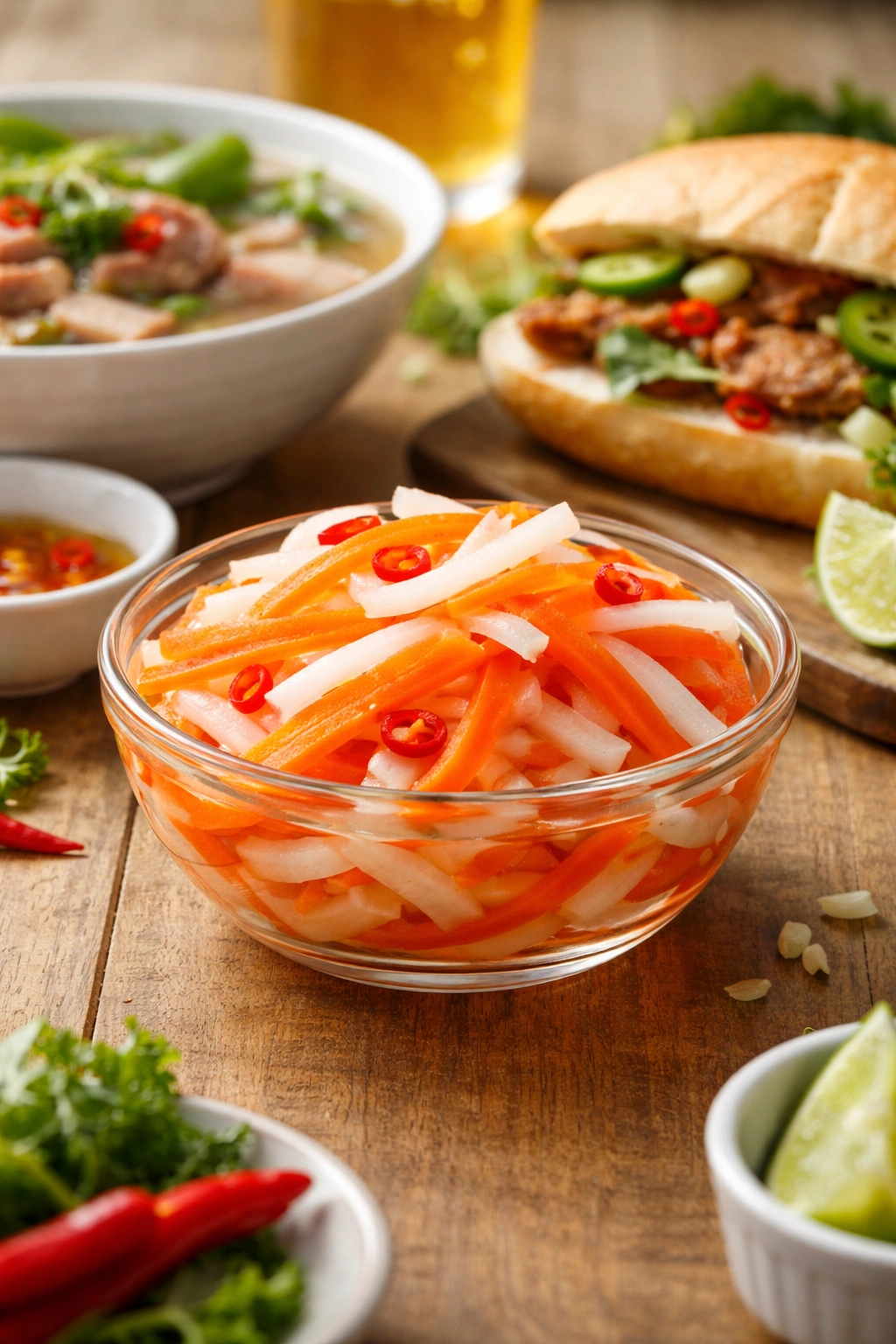
Do chua isn’t something you simply serve on the side and hope people eat it. It’s something you actively encourage people to reach for by placing it front and center at the table. In Vietnam, it typically sits in a small glass or ceramic bowl, sometimes with a small spoon, and everyone helps themselves as they eat their main dish. This casual, accessible presentation is actually what makes them so effective—they’re there if you want them, no pressure, but available whenever you need that refreshing crunch and bright acidity.
With pho, do chua is almost essential. The warm, rich broth and soft noodles benefit enormously from the bright, crunchy counterpoint. Add a spoonful of pickled vegetables to your bowl, bite into them between spoonfuls of broth, and notice how much more alive the entire experience becomes. The heat of the broth slightly warms the pickles, making them feel integrated rather than like a separate dish.
With banh mi sandwiches, pickled vegetables are absolutely mandatory—they’re part of the sandwich’s fundamental architecture. The combination of soft bread, savory fillings, creamy mayo, and bright, crunchy pickles is what makes banh mi so successful. If you’re making banh mi at home, fresh homemade do chua elevates the sandwich dramatically compared to jarred versions.
Spring rolls and dumplings become noticeably better when served with do chua alongside them. The freshness and crunch provide a palate-cleansing contrast to rich fillings and cooking methods. Even something as simple as grilled chicken or pork benefits from a few crispy, vinegary vegetable pieces eaten alongside it.
Do chua is also genuinely wonderful on its own as a simple side, accompanying rice-and-curry meals, grilled fish, or even Western-style roasted vegetables. The pickles provide seasoning and textural interest that makes everything taste more complete and exciting.
You can also chop up the pickles and add them to mayonnaise to create a quick pickle-mayo for sandwiches, burgers, or grain bowls. Use the brine as a vinaigrette base by whisking it with a bit of oil, or use it straight as a dipping sauce for spring rolls. The brine is far too valuable to discard.
Final Thoughts
Making Vietnamese quick pickled vegetables is one of those simple skills that feels disproportionately generous in how much it improves your daily eating. An hour of effort—really just twenty minutes of active work—produces pickles that make meals taste more complete, more interesting, more Vietnamese. You’re not making a side dish, you’re establishing a flavor principle that elevates everything else on the plate.
What I love most about do chua is how it removes the mystique from pickling without removing any of the excellence. You don’t need special equipment, obscure ingredients, or years of culinary training. You just need understanding of the brine ratio and respect for vegetable texture, both of which you now have. Make a batch this week. Taste it at different intervals—one hour, two hours, four hours—and notice how the flavors develop and integrate. By your third or fourth batch, you’ll be making them intuitively, adjusting them to your exact preferences, and genuinely wondering how you ever ate meals without them.
The beautiful truth is that these pickles improve your cooking not because they’re complicated or fancy, but because they’re simple and honest. They make you slow down slightly when you’re assembling a meal, ensuring you add that vegetable element, that bright flavor, that textural contrast that transforms good meals into ones people actually remember. Start with the classic daikon and carrot version, master it, then let your curiosity and your crisper drawer take it from there. This one simple skill unlocks a whole category of Vietnamese cooking that you’ll find yourself returning to again and again.
