



Watermelon salad is one of those dishes that shouldn’t work as well as it does — you’re taking one of summer’s simplest fruits and transforming it into something elegant, surprising, and genuinely crave-worthy in just a few minutes. The beauty of this salad lies in the contrast: the cool, juicy sweetness of watermelon against the bright tang of lime and feta, the pop of fresh herbs, and the textural intrigue of nuts or seeds. It’s the kind of dish that makes people ask “what’s in this?” because it tastes so much more sophisticated than its minimal ingredient list would suggest. And here’s the real magic — it comes together in under 15 minutes of actual hands-on time, making it perfect for weeknight dinners, weekend entertaining, or those moments when you need something impressive that doesn’t require you to spend hours in the kitchen.
The best part? This salad isn’t precious. It doesn’t demand special techniques, uncommon ingredients, or fussy plating. You can make it as simple or as elaborate as you want. Throw watermelon, feta, and lime juice together in a bowl and you’ve already got something delicious. But spend five more minutes adding some herbs and toasted nuts, and suddenly you’ve created something that tastes like it came from a restaurant kitchen. That’s the real appeal of a great watermelon salad — it scales with your effort and never disappoints, whether you’re keeping it minimal or building it out.
Why Watermelon Salad Is Perfect for Any Table
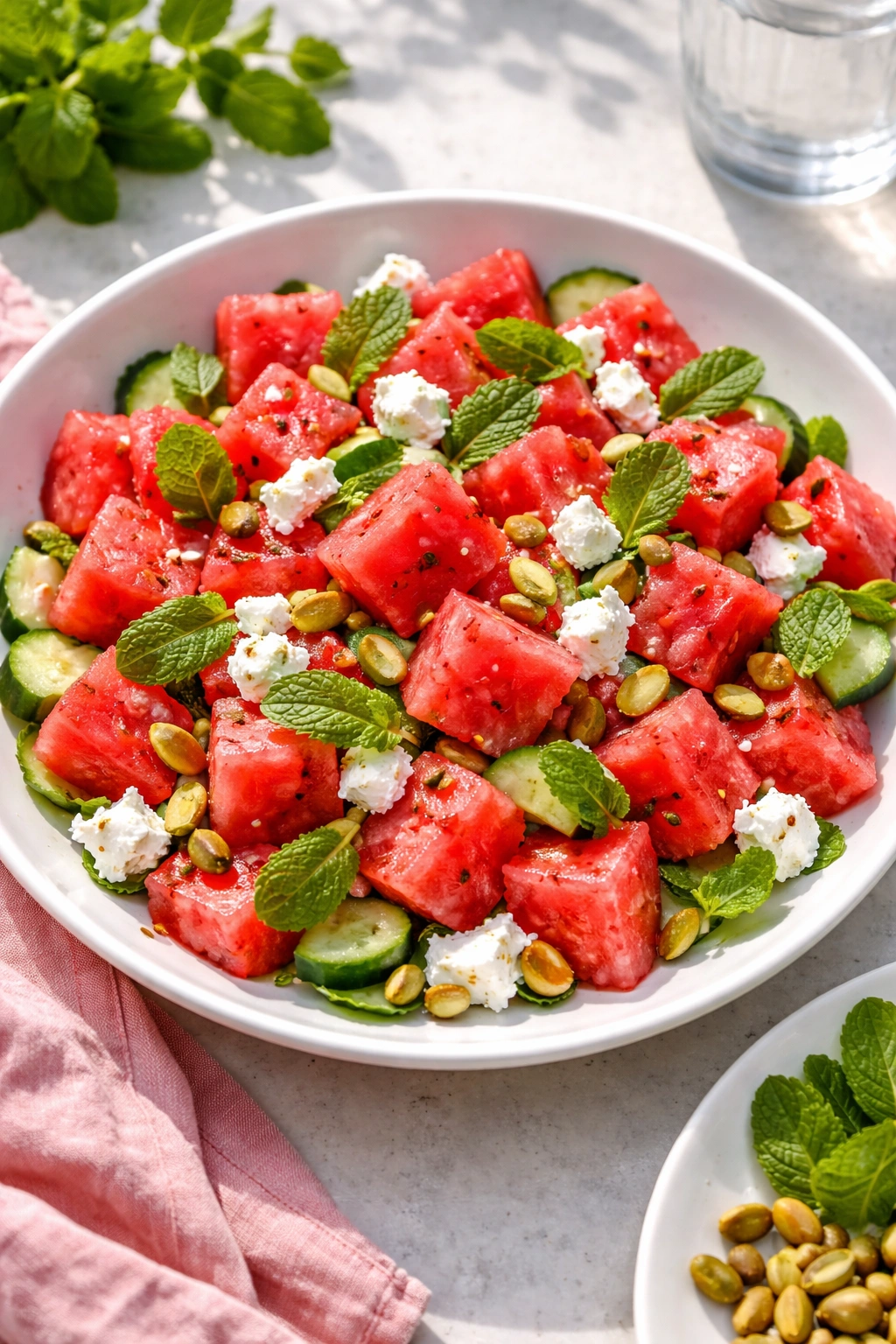
Watermelon salad has become a staple for good reason: it works in almost any setting. It’s light enough to serve alongside heavier mains without weighing anyone down, yet substantial enough (especially with cheese and nuts) to stand on its own as a lunch or light dinner. The fruit-forward approach appeals to people who might not consider themselves salad people, while the savory elements keep it interesting for salad enthusiasts.
The refreshing quality comes from watermelon’s incredibly high water content combined with natural sweetness — about 92% of a watermelon is water, which means every bite delivers pure hydration and subtle flavor. When you add acidic elements like lime juice or vinegar, you’re not masking that sweetness; you’re highlighting it and creating a flavor balance that feels effortless on the palate. It’s the kind of salad you can eat in summer heat without feeling overstuffed, yet it’s satisfying enough to leave you genuinely full.
There’s also something socially intuitive about watermelon salad. It reads as special-occasion food even when it’s genuinely easy. Serve this at a dinner party and people assume you spent time on it. Bring it to a potluck and it disappears. Make it for a weeknight family dinner and suddenly an ordinary Tuesday feels like you put in real effort. That’s the magic of knowing how to pull together a salad that looks intentional and tastes refined.
The Secret to Amazing Watermelon Salad
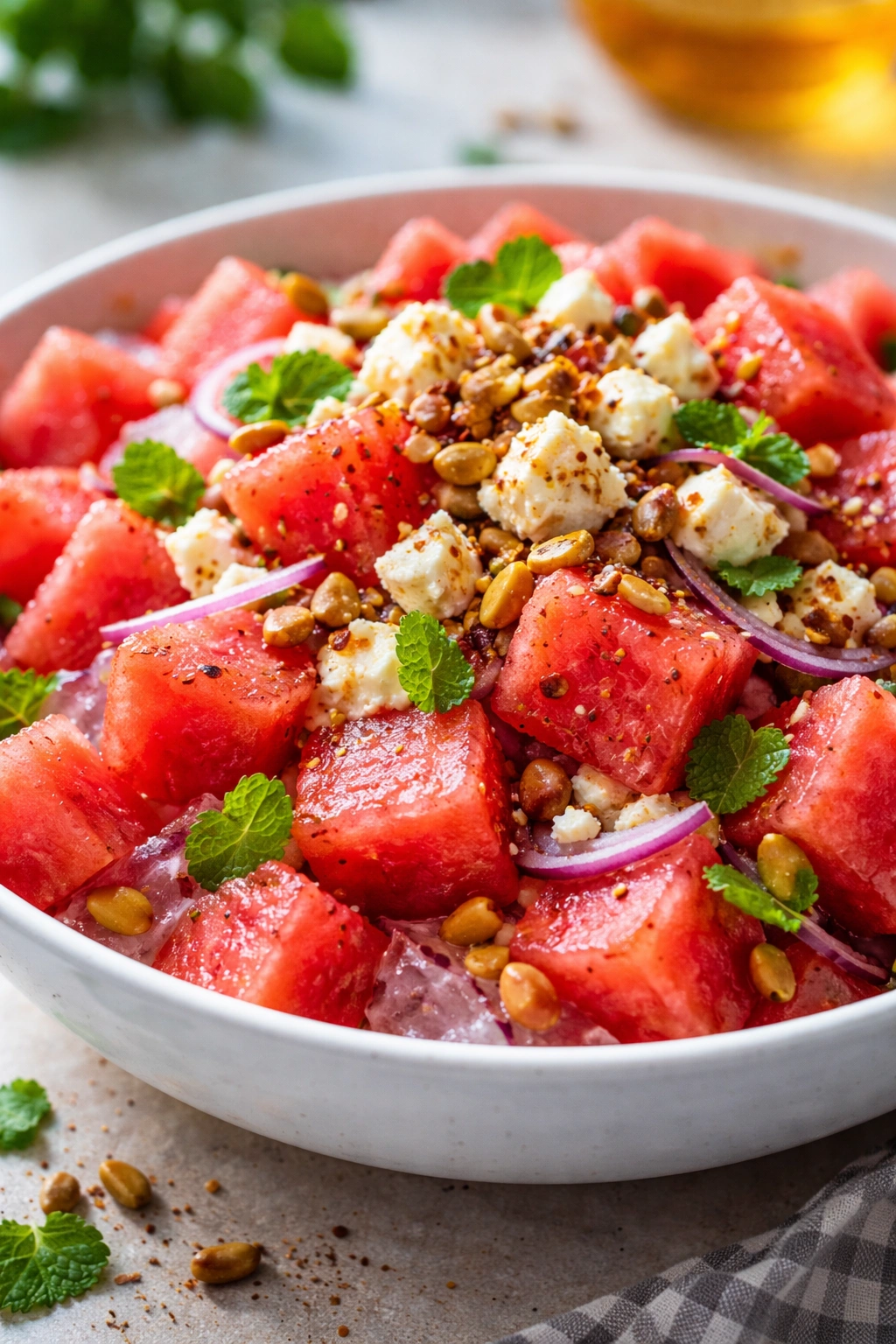
The single most important factor in a memorable watermelon salad isn’t an ingredient you might expect — it’s the temperature contrast. The best watermelon salads have a cold, juicy base with some room-temperature or even slightly warm elements mixed in. Cold watermelon against warm nuts, or chilled melon with fresh herbs at room temperature, creates this dynamic textural experience that keeps each bite interesting. If everything is the same temperature, the salad becomes one-dimensional.
This is why timing matters, even though this salad technically comes together in minutes. You want to chill your watermelon before cutting it (at least 30 minutes in the fridge is ideal), and you want to use it shortly after cutting — not hours later when it starts to weep and become soggy. The brief window between cutting and serving is actually when the salad is at its best. The watermelon is cold, the texture is firm, and the juices haven’t had time to pool and dilute the flavors around it.
The second secret is salt. A proper watermelon salad needs more salt than you might instinctively think, because salt amplifies the melon’s natural sweetness and makes every other flavor pop. People often under-salt because they’re worried about overdoing it, but watermelon is forgiving — it can handle real seasoning. A pinch of fine sea salt on the cut fruit itself, plus salt in any dressing you make, is the baseline. Taste as you build the salad and don’t hesitate to add more if flavors seem muted.
Finally, the acid matters enormously. Lime juice is the classic choice, but lime provides more than just acidity — it adds a subtle herbal floral note that complements watermelon’s mellow sweetness. If you use regular lemon juice, the salad tastes quite different (brighter, more citrusy). White wine vinegar or champagne vinegar creates a different profile again (more floral and delicate). Balsamic vinegar makes the salad feel richer and more savory. Choose your acid intentionally based on the direction you want to take the salad.
Choosing the Best Watermelon for Your Salad
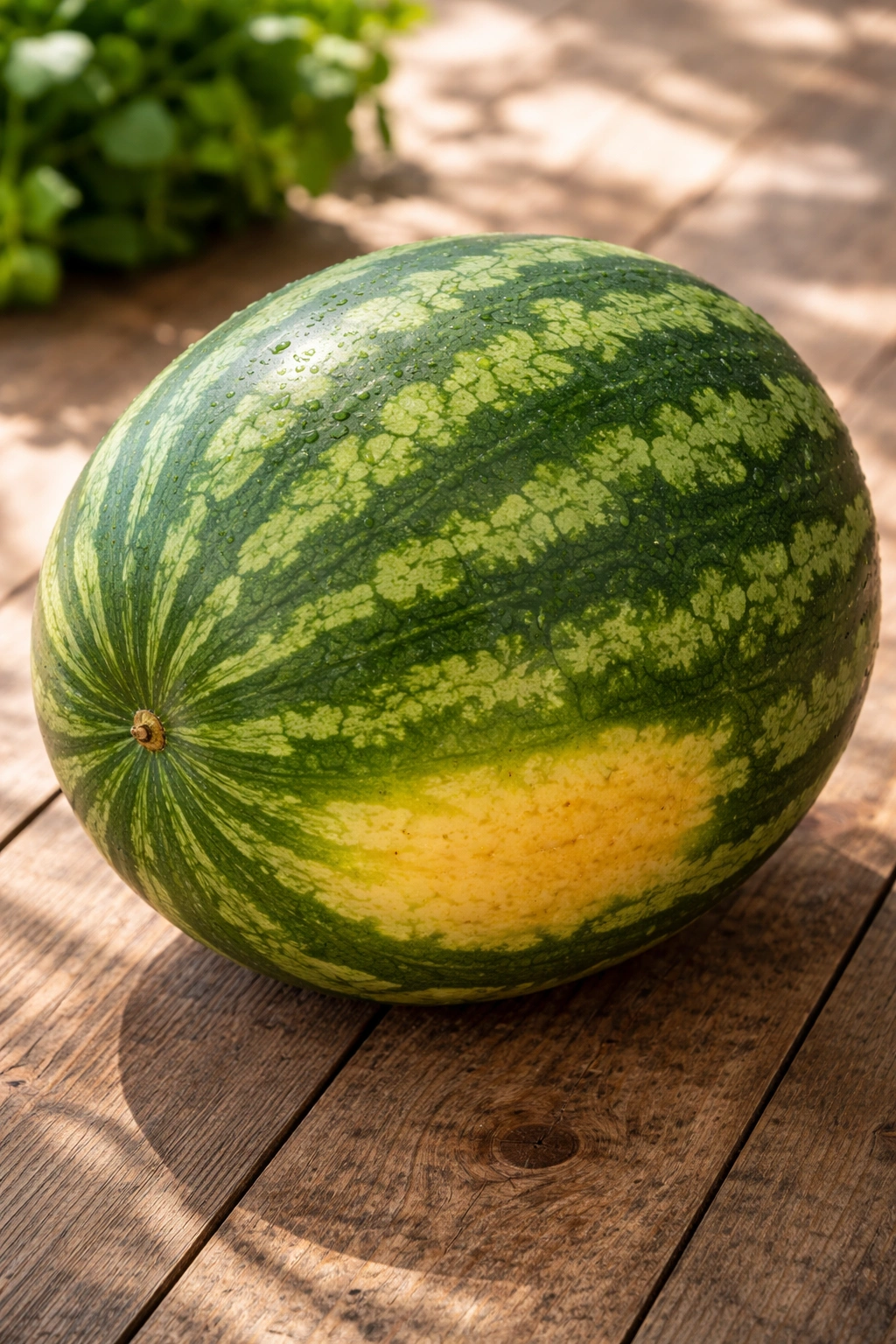
A truly great watermelon salad starts with a melon that’s actually ripe and flavorful — this makes more of a difference than most home cooks realize. The watermelons that spend hours in the sun develop complex sugars and develop real depth. The ones picked too early or stored in cold for weeks taste watery and one-dimensional. So how do you pick a winner?
Look for a melon that feels heavy for its size. Pick it up, hold it, and notice the weight — ripe watermelons are dense and packed with juice. The underside (where it sat on the ground) should have a pale yellow or cream-colored spot, not white. A white spot means it was harvested too early. The yellow spot indicates the melon ripened properly on the vine. The outside should be matte, not shiny — shiny watermelons are often overwatered and less sweet. When you tap the watermelon with your palm, it should sound slightly hollow but not completely empty-sounding. That hollow tone indicates juice inside, not an empty cavity.
The size matters less than the weight-to-size ratio. A smaller watermelon that’s heavy is better than a large, light one. Personal preference determines whether you choose a seedless or seeded variety — seeded watermelons tend to have more pronounced flavor, but seedless varieties are more convenient for salads. Red, yellow, and orange-fleshed watermelons all work beautifully in this salad; the choice is purely aesthetic and personal preference.
Once you get the watermelon home, chill it in the fridge for at least 2 hours before using (overnight is even better). The cold brings out the sweetness and creates that refreshing quality that makes watermelon salad so appealing. A room-temperature watermelon will technically work, but you’ll miss a significant part of the experience.
Essential Ingredients for the Best Flavor
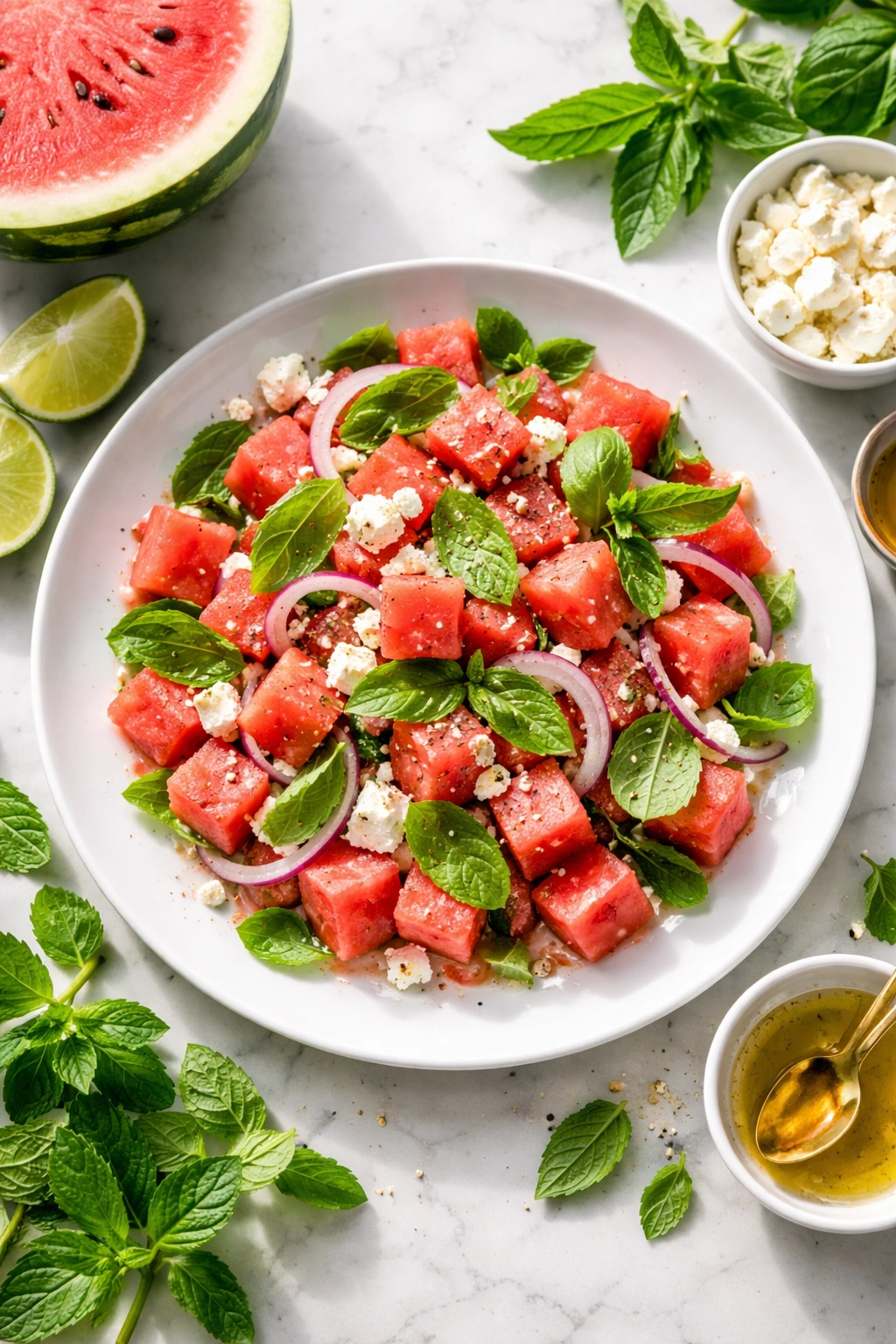
Building a watermelon salad comes down to understanding flavor categories and balance. You need sweet (the watermelon), salty (feta cheese, salt), acid (lime), and herbs for brightness. Everything else is enhancement and personal preference. The foundation of a truly excellent watermelon salad includes these key players, each contributing something distinct.
Feta cheese is the classic pairing because its brininess and slight funkiness complement watermelon’s simple sweetness perfectly. The creamy, crumbly texture also provides contrast to the juicy fruit. Don’t skip the quality here — a good feta will have tang and complexity. Crumbled feta works best for easy distribution through the salad, though some people slice or chunk it depending on their preference.
Fresh mint is arguably the most important herb because its cool, slightly peppery flavor amplifies the refreshing quality of the salad. Basil (particularly Thai basil or regular sweet basil) adds floral complexity. Cilantro works too, though it dramatically changes the flavor profile and isn’t for everyone. Red onion adds sharpness and bite — thin-slice it or dice it fine, and consider soaking it in ice water for 15 minutes if you find raw onion too harsh. The water rinses away the strongest sulfur compounds while maintaining flavor.
For textural interest and flavor depth, add toasted nuts or seeds. Pistachios are exceptional with watermelon, offering buttery richness and slight saltiness. Pepitas (pumpkin seeds) add earthiness and a satisfying crunch. Toasted walnuts bring depth. Sliced almonds offer delicate nuttiness. Toasting your choice (either in a dry skillet or 350°F oven for 5-8 minutes) elevates the flavor compared to raw nuts. The heat brings out oils and deepens the nuttiness significantly.
A good finishing oil is important too — extra-virgin olive oil works, but a toasted sesame oil or even a walnut oil can add depth. The oil carries flavor and helps the salad feel luxurious and finished. A squeeze of fresh lime juice is the standard acid, though as mentioned, other options work depending on your direction.
Yield, Prep Time, and Difficulty
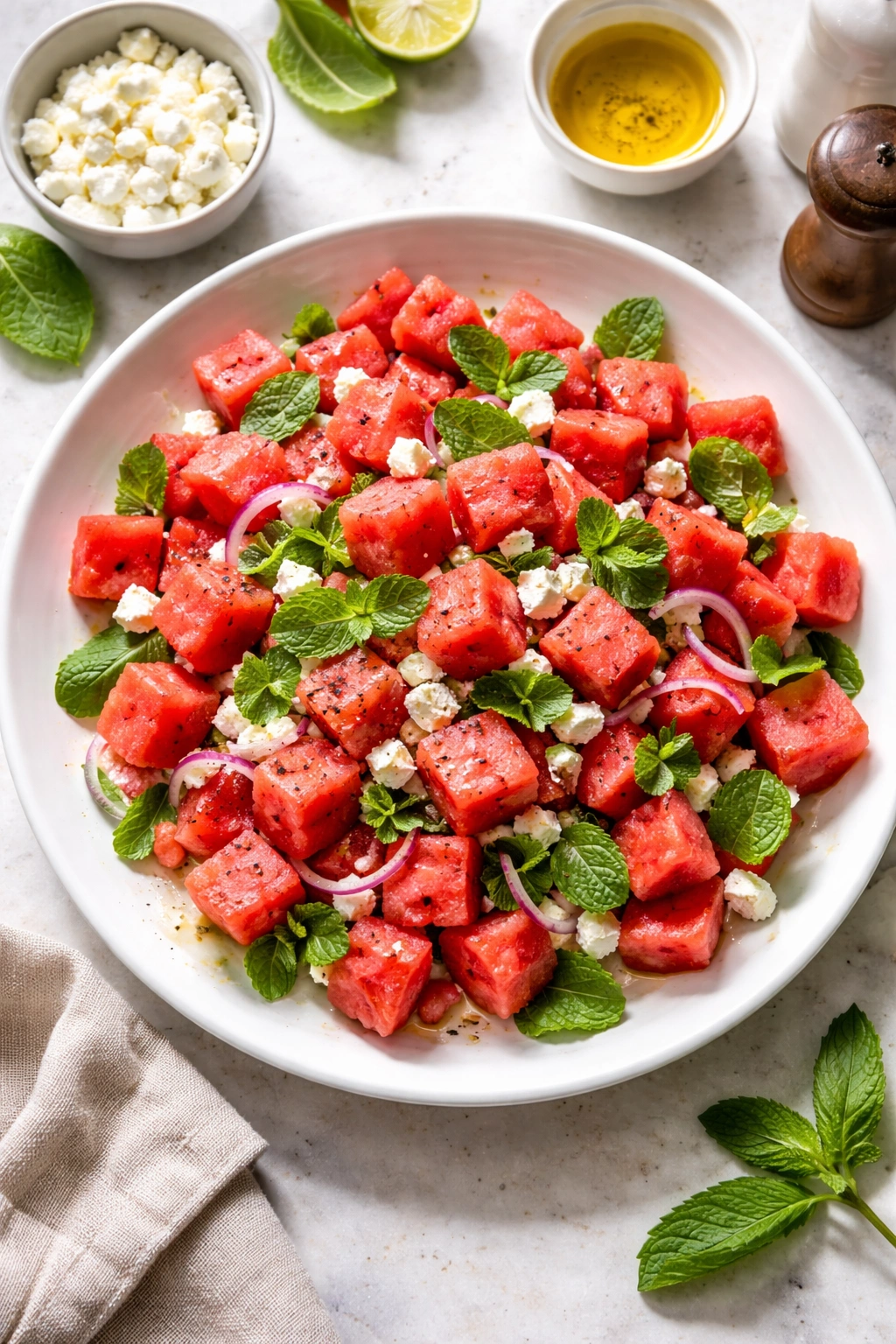
Yield: Serves 4 to 6 as a side dish | Serves 2 to 3 as a main course
Prep Time: 15 minutes (including cutting and assembly)
Cook Time: 0 minutes (no cooking required)
Total Time: 15 minutes active + 30 minutes chilling (optional but recommended)
Difficulty: Beginner — No cooking skills required, just knife work and simple assembly. The only real technique is cutting watermelon evenly, which becomes easy with practice.
Best Served: Immediately after assembly while the watermelon is cold and crisp. This salad is best enjoyed within 30 minutes of coming together, before the watermelon begins to release excess liquid.
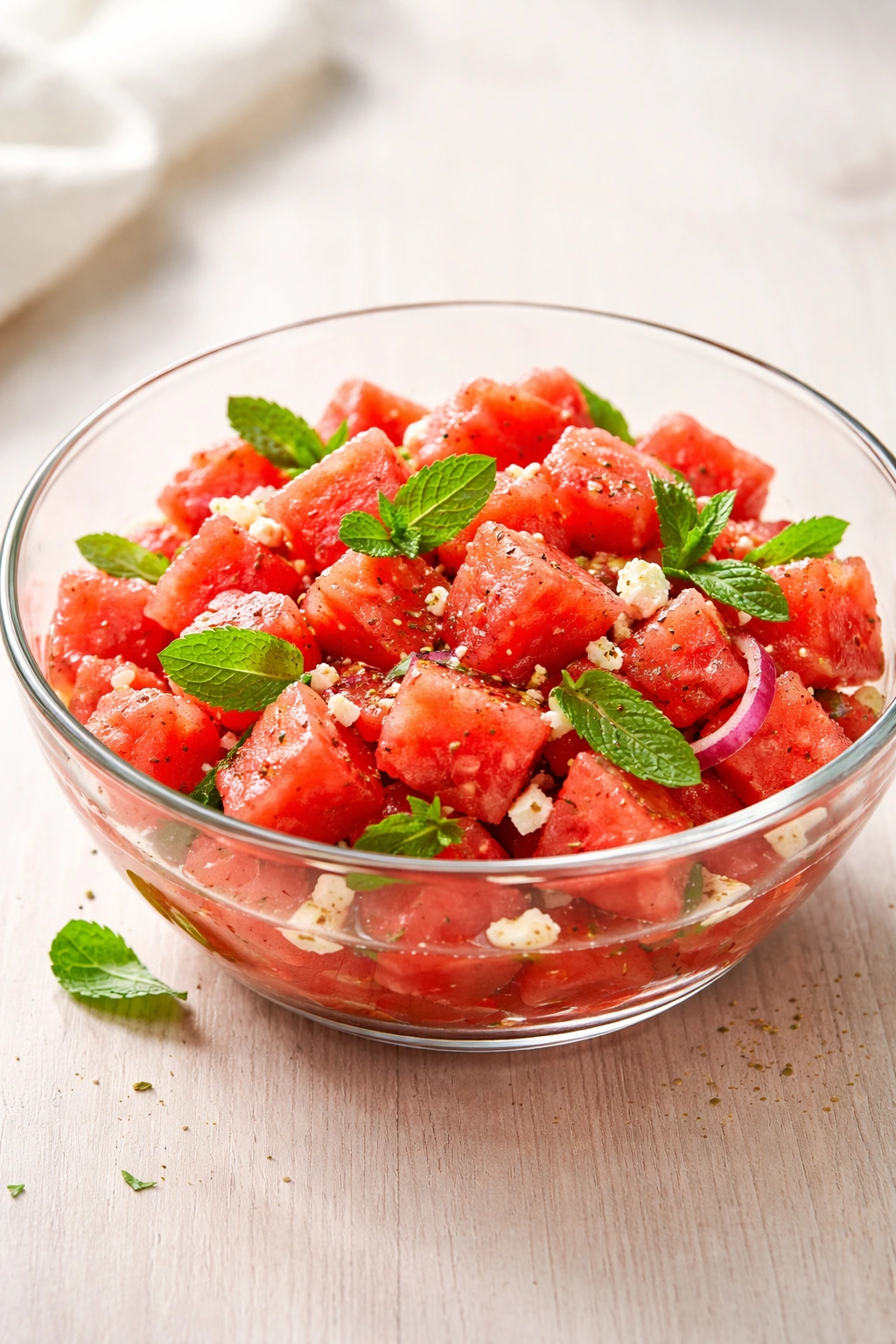
Easy Watermelon Salad with Feta, Mint, and Lime
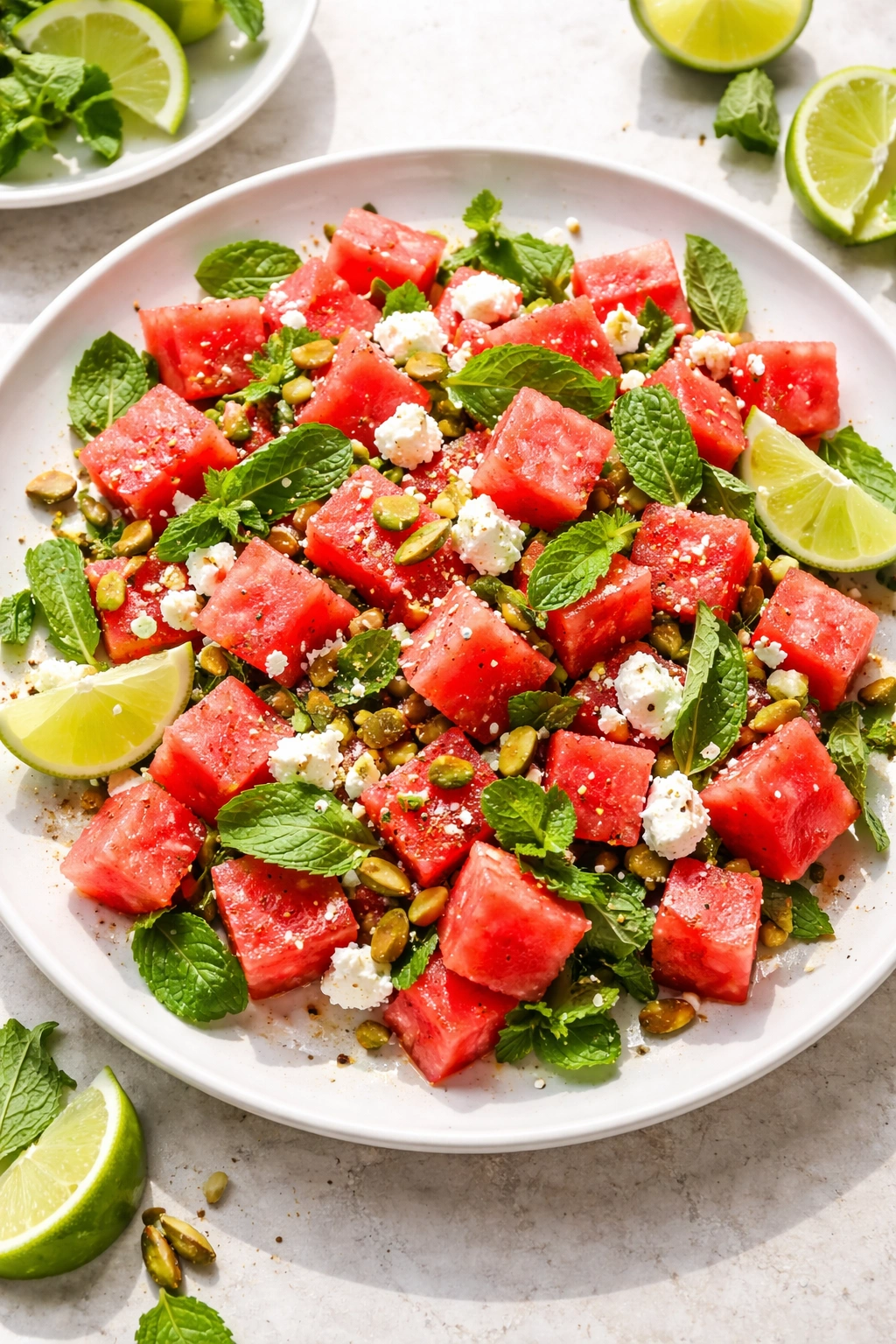
For the Salad:
- 1 medium watermelon (4 to 5 pounds), ripe and chilled
- 8 ounces good-quality feta cheese, crumbled (about 1½ cups)
- ½ red onion, thinly sliced (about ½ cup)
- 1 cup fresh mint leaves, loosely packed, torn or left whole depending on size
- ½ cup toasted pistachios, roughly chopped (unsalted or lightly salted)
- ¼ cup fresh basil leaves, torn (optional but recommended)
For the Dressing:
- Juice of 2 to 3 fresh limes (about ¼ cup fresh lime juice)
- 3 tablespoons extra-virgin olive oil (or toasted sesame oil for deeper flavor)
- Fine sea salt to taste (start with ½ teaspoon, adjust upward)
- Freshly ground black pepper to taste
- Pinch of red pepper flakes (optional, for subtle heat)
How to Make It: Step-by-Step Instructions
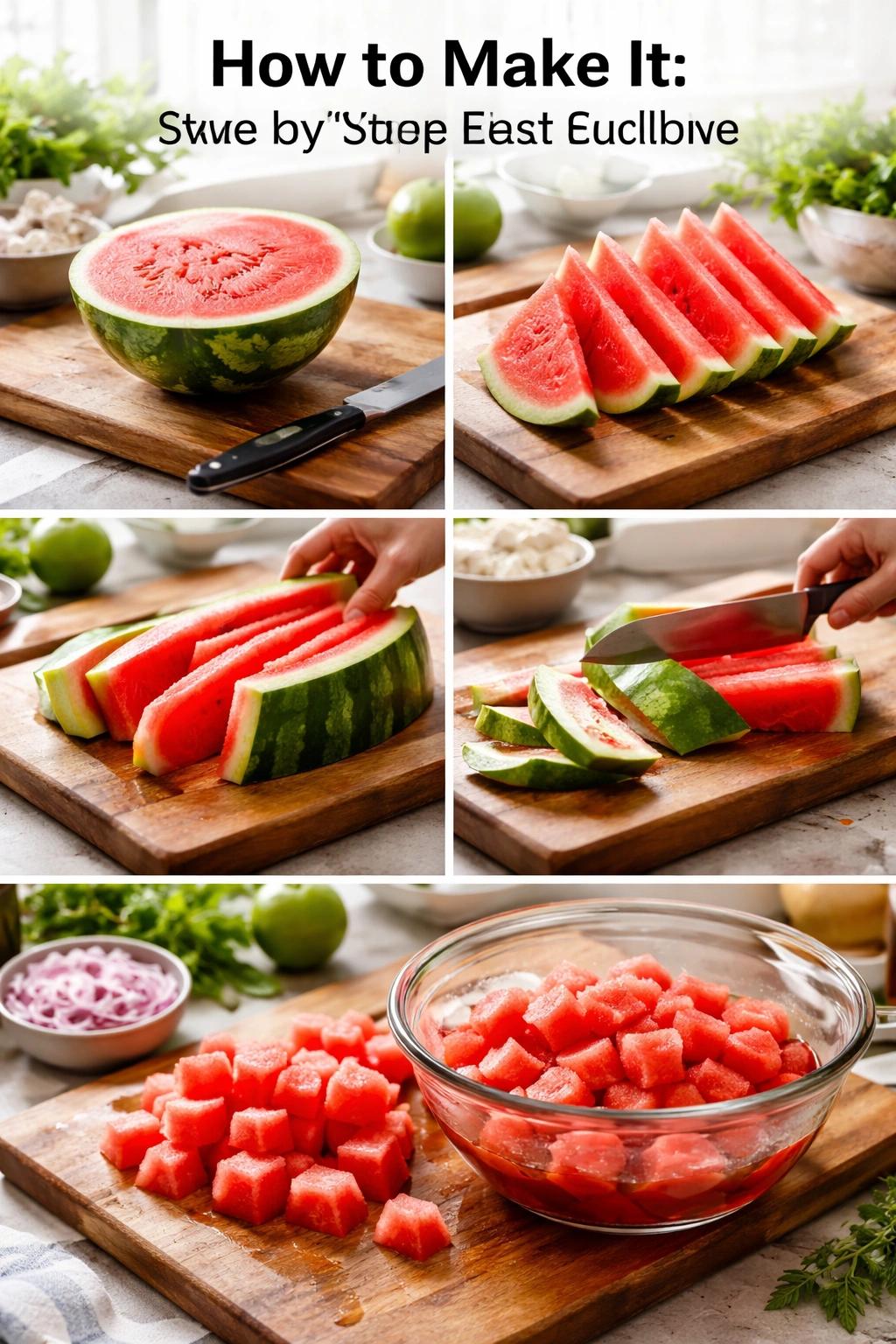
Prepare the Watermelon:
-
Slice the chilled watermelon in half lengthwise, cutting from the stem end to the opposite end. Place the halves cut-side down on your cutting board and cut each half into 3 or 4 long wedges (about 2 inches wide at the widest point).
-
Slice the rind away from each wedge using a sharp knife — work methodically along the length of each wedge, removing the entire rind in one smooth motion rather than hacking at it. You want the flesh exposed completely but waste as little flesh as possible.
-
Cut the watermelon flesh into 1-inch cubes or bite-sized chunks, removing any large seed pockets as you go (if using a seeded variety). If using a seedless watermelon, you can be less fussy about this step. Place the cut watermelon into a large mixing bowl, capturing any juice that runs off — that juice adds flavor to the salad.
-
If you’ve soaked the red onion slices in ice water (which we recommend for 15 minutes), drain them well and pat them completely dry with a clean kitchen towel. Excess water will dilute the dressing and make the salad soggy. Add the drained onion to the watermelon.
Make the Dressing and Assemble:
-
In a small bowl or measuring cup, whisk together the fresh lime juice, olive oil, salt, and pepper. Taste the dressing as you make it — the balance should feel bright and vibrant, not overwhelmingly acidic. If it tastes too sharp, add a touch more olive oil to round it out. You should taste salt and lime equally, with neither dominating.
-
Pour the dressing over the watermelon and onion, then gently fold everything together. Use a rubber spatula and work gently — you’re not trying to break down the watermelon; you’re just mixing flavors. This should take about 30 seconds of gentle folding. If the salad sits too long before adding the cheese and herbs, the watermelon will begin to weep, so don’t dress it too far in advance if you’re serving within the hour.
-
Add the crumbled feta cheese and fresh mint (and basil, if using) directly to the bowl. Fold very gently one more time — the goal is to distribute the cheese and herbs evenly without crushing the feta or bruising the mint. The salad should look bright and vibrant, with visible mint and feta throughout.
-
Transfer the salad to a serving bowl or individual plates immediately. Top each serving with a generous handful of toasted pistachios and a final pinch of fine sea salt and freshly ground black pepper. If you’re using red pepper flakes for heat, sprinkle them now. Serve immediately while the watermelon is cold and crisp.
Pro tip: If you’re making this for a crowd and need to transport it, keep the watermelon chunks, dressing, and toppings separate until just before serving. Pack them in separate containers and assemble at your destination. The watermelon will stay cold, the nuts will stay crispy, and the salad will taste as if you just made it.
Pro Tips for the Most Refreshing Salad
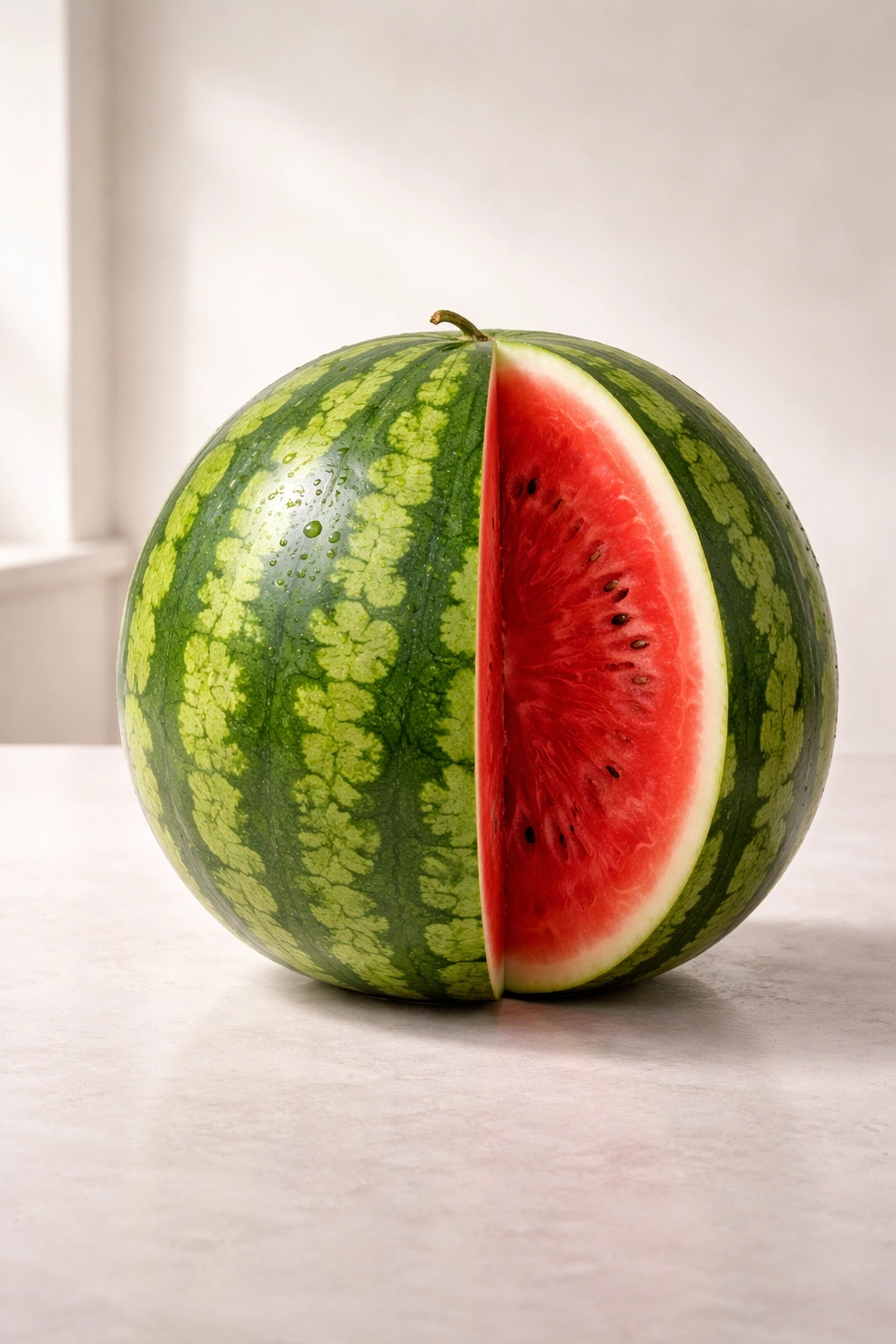
The small details separate a good watermelon salad from an extraordinary one. First, invest time in selecting a genuinely ripe watermelon — it’s the foundation of everything else. A melon with real flavor means your salad will taste vibrant with minimal effort. A bland melon means you’ll be fighting against the base ingredient for the entire salad. One trip to the farmer’s market or good produce section is worth the difference in flavor.
Second, don’t skip the toasting step for nuts. Toasted nuts taste incomparably richer and more flavorful than raw ones. A 5-minute detour through a 350°F oven or a quick toast in a dry skillet transforms pistachios from pleasant to absolutely crave-worthy. The heat brings out natural oils and deepens the flavor. You can toast nuts up to a day ahead and store them in an airtight container, so this isn’t a last-minute task.
Third, taste and adjust as you build. The acid, salt, and sweetness should feel balanced — not one overpowering the others. If the salad tastes flat, it needs salt (add ¼ teaspoon at a time and taste). If it tastes too acidic or sharp, add more oil to round it out. If the watermelon flavor isn’t coming through, you might need both more salt and fresh lime juice. Develop the habit of tasting as you work.
Fourth, keep everything cold until the moment you assemble. Chill your serving bowl for a few minutes before transferring the salad into it. This extends the time the watermelon stays crisp and cold. If your kitchen is very warm, serve the salad in a bowl set inside another bowl filled with ice, or simply serve it in a chilled bowl immediately after assembly.
Fifth, consider the texture of your feta. If you buy a block of feta, crumble it with your fingers shortly before serving — hand-crumbled feta looks more rustic and appealing than feta that’s been pre-crumbled and sitting in liquid. If the crumbled feta is packed in brine, drain it well and pat it dry before adding to the salad, otherwise the saltiness can overwhelm.
Finally, the timing of herbs matters. Tender herbs like mint and basil should go into the salad no more than 15 minutes before serving. Adding them too early wilts them slightly and dilutes their bright flavor. If you’re making the salad ahead, prep everything except the herbs, then add the mint and basil just before serving.
Common Mistakes and How to Avoid Them
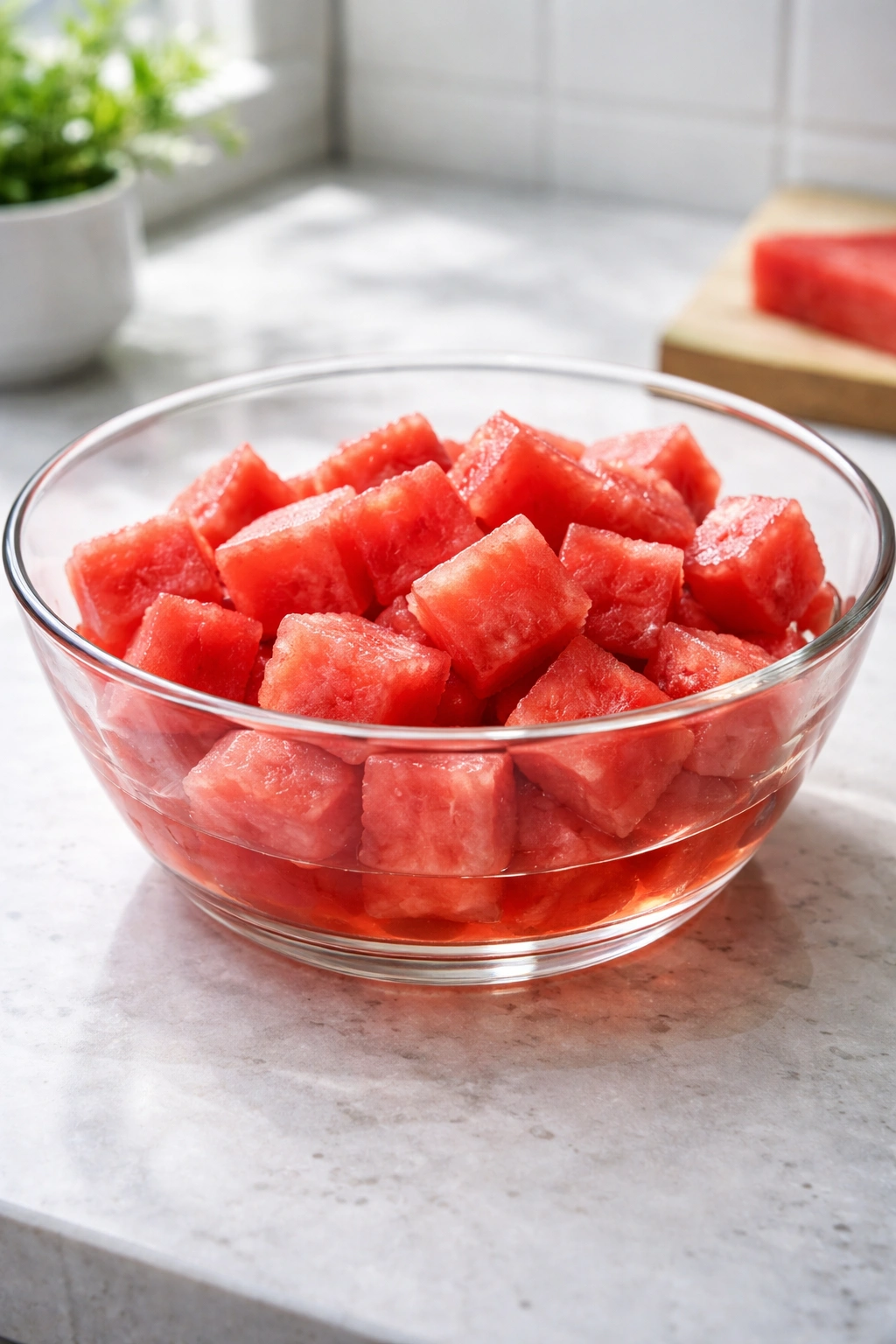
The most common mistake is allowing the salad to sit assembled for too long. Watermelon releases juice as it sits, and that juice pools at the bottom, making the salad watery and diluting the other flavors. This is why timing matters for this particular salad. If you’re serving immediately, assemble generously and don’t hold back. If you’re making ahead, keep components separate and assemble no more than 20 minutes before serving.
Another frequent mishap is using too much feta. It’s easy to get heavy-handed because feta tastes so good. But this salad should taste like watermelon first, with feta as a supporting character. A generous handful per serving (about ¼ cup crumbled) is plenty. Too much feta makes the salad taste salty and one-dimensional instead of balanced and complex.
Skipping the salt on the watermelon itself is another oversight. It seems counterintuitive to salt a fruit, but salt amplifies sweetness and makes flavors pop. A light sprinkle of fine sea salt on the cut watermelon before adding other ingredients is essential. This isn’t about making it taste salty — it’s about making it taste more itself.
People also often under-lime the salad. The bright acidity of fresh lime juice is what prevents the salad from tasting one-note and sweet. If the salad seems flat or dull, nine times out of ten it needs more lime juice (and possibly more salt). Start with the juice of 2 limes and taste, then add the third lime if needed.
Using low-quality or lukewarm watermelon is a bigger problem than most people realize. A melon that wasn’t ripe when harvested won’t improve in your fridge — it’ll just sit there tasting muted and grainy. And a room-temperature watermelon never delivers that crisp, refreshing bite that makes this salad special. Choose your melon wisely and chill it thoroughly.
Finally, don’t skip the toasting step for nuts if you want real flavor impact. Raw nuts are fine, but toasted nuts are genuinely different — richer, more flavorful, and more satisfying. It’s a 5-minute step that makes a noticeable difference in the final dish.
Easy Variations to Make It Your Own
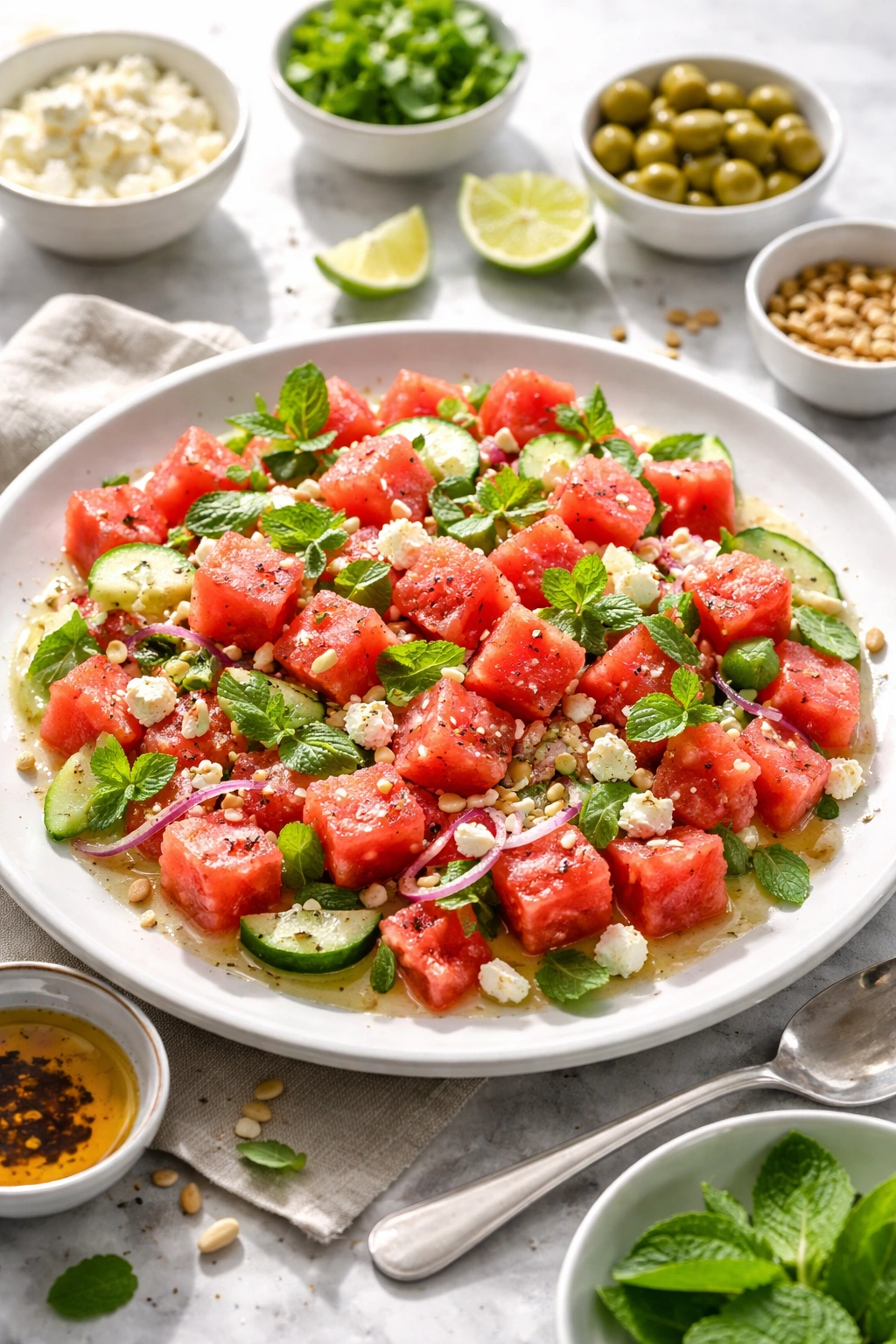
This base salad is adaptable to your preferences and what you have on hand. The formula stays the same (sweet watermelon + salty cheese + bright acid + herbs + nuts), but the specific ingredients can shift. Understanding this formula means you can riff confidently.
For a Mediterranean angle, replace the feta with a creamy goat cheese, add some kalamata olives, swap mint for oregano and dill, and use red wine vinegar instead of lime juice. This version feels more Greek and works beautifully alongside grilled fish or chicken.
For a spicy variation, add a diced jalapeño or serrano chile to the salad, use cilantro instead of mint, and add a pinch of chili powder or Tajín seasoning to the dressing. Lime juice is essential here. This version is fantastic alongside tacos, grilled shrimp, or Southeast Asian-inspired dishes.
For a fall or winter version (when watermelon isn’t available), swap the watermelon for diced jicama or even halved grapes, which maintain that crisp, cool, slightly sweet quality. Feta and mint still work beautifully. Add some toasted pumpkin seeds or walnuts instead of pistachios. This keeps the general concept alive during months when watermelon isn’t ideal.
For a sweeter, more dessert-like salad, use red watermelon, add some fresh raspberries or blackberries, swap feta for crumbled goat cheese sweetened with a touch of honey, use more basil and less mint, and add some candied nuts or honey-roasted pistachios. A splash of honey in the dressing also works here.
For a savory, more dinner-focused version, add some diced cucumber for extra refreshment, use a sharp aged feta (a really pungent, crumbly version), add some thinly sliced red radishes for peppery bite, reduce the mint, and add grilled or baked chicken, shrimp, or halloumi cheese. This transforms the salad from a side dish into a complete meal.
For a Middle Eastern bent, toast some cumin and add it to the dressing, use pomegranate molasses instead of lime juice, add pomegranate seeds to the salad, use pistachios, and add fresh parsley instead of mint. This version feels sophisticated and unexpected.
For a grill-centered version, slice the watermelon into thick slabs and char them briefly on a hot grill (about 2 minutes per side) before cutting into chunks. The heat caramelizes the sugars slightly and adds a subtle smoky note that changes the whole character of the salad. This charred watermelon salad is absolutely stunning served alongside grilled meats or vegetables.
Storage and Make-Ahead Strategy
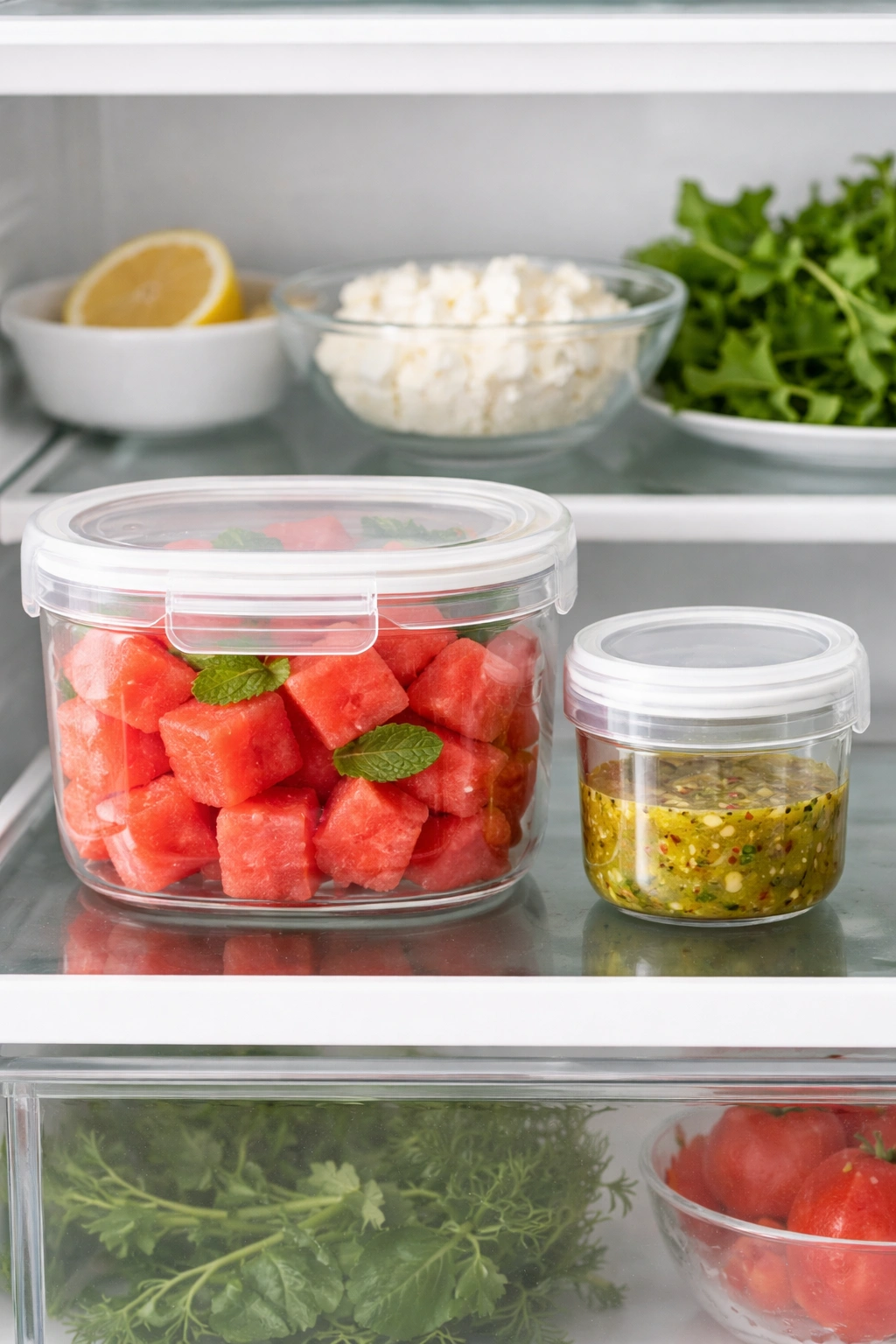
Unlike most salads, watermelon salad is best served immediately after assembly, so your storage strategy involves keeping components ready rather than storing a finished salad. The prepared watermelon chunks keep in an airtight container in the fridge for up to 2 days, though they’re best used within 24 hours. They’ll gradually release juice, which you can drain before using, or save for other applications (watermelon agua fresca, for example).
The dressing itself keeps for up to 3 days in a sealed container in the fridge. It’ll separate slightly (the oil will float above the lime juice), so shake or whisk it before using. This is actually helpful because you can make the dressing ahead and adjust it on the day of serving based on how the watermelon tastes.
The feta, if pre-crumbled, keeps in its original brine container for up to a week. If you’re crumbling fresh feta, do this shortly before serving for the best texture and appearance. The herbs should be added fresh on the day of serving — they don’t benefit from advance prep.
The nuts can be toasted up to a week ahead and stored in an airtight container at room temperature. In fact, toasting ahead is a smart move that reduces last-minute work. Cool them completely before storing, otherwise condensation will form and they’ll lose their crispness.
If you’re making this for a gathering and need to transport it, the best approach is the compartment method: bring the watermelon chunks in one container, the dressing in another, the cheese in another, nuts in another, and fresh herbs in their own container. Assemble the salad at your destination. It takes 5 minutes and guarantees the salad will taste fresh and properly textured when served. Alternatively, if you’re serving at home, prep everything and assemble no more than 15 minutes before guests arrive.
Perfect Pairings and Serving Ideas
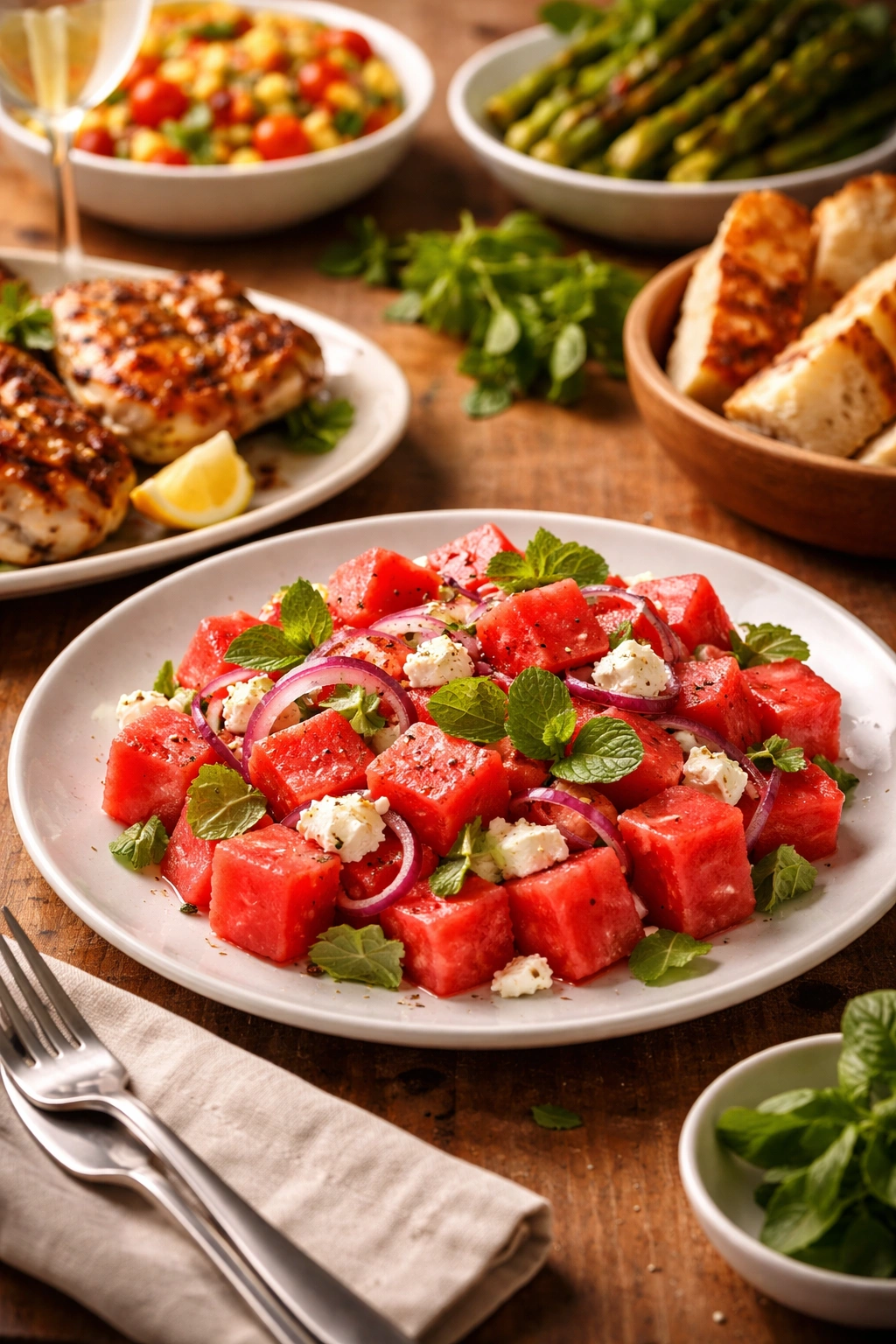
Watermelon salad works beautifully alongside almost any main dish, especially anything grilled or charred. The coolness and freshness of the salad provides perfect contrast to the heat and richness of grilled meats. Serve it alongside grilled lamb (particularly lamb kebabs), grilled chicken, or charred fish like swordfish or tuna. The salad cools the palate between bites and cleanses it for the next one.
For summer meals, pair this salad with grilled corn, grilled vegetables, and a light grain like couscous for a complete vegetarian plate. The sweet watermelon, salty feta, and fresh herbs create a complete flavor and textural experience that doesn’t require animal protein to feel satisfying.
As a starter before a heavier meal, watermelon salad is exceptional — it awakens the palate and prepares the appetite without filling up guests before the main event. Serve it in small portions on individual plates as you would a composed salad course.
For a light lunch or dinner, pair this salad with grilled or baked halloumi cheese, which complements the flavors beautifully. Add some crusty bread to make it more substantial, or serve it alongside a grain bowl with quinoa, farro, or wild rice.
Serve it at potlucks and picnics where it travels well (keep components separate as described above) and appeals to a wide range of people. The fruit-forward appeal draws people who might skip vegetable-heavy salads, while the savory elements satisfy salad enthusiasts.
For brunches, this salad pairs wonderfully with brunch mains like shakshuka, frittatas, or smoked salmon. The freshness complements the richness of eggs and cream-based dishes.
As a side at barbecues, watermelon salad is essential. Serve it alongside burgers, grilled ribs, brisket, or pulled pork. The brightness cuts through the richness and smoke beautifully.
For a cheese and charcuterie board extension, build a watermelon salad and serve it alongside cured meats, additional cheeses, and bread. It transforms the board into something more dynamic and interesting.
Beverages matter too. Serve this salad with sparkling water infused with lime, a crisp white wine like Sauvignon Blanc or Pinot Grigio, or a light rosé. The brightness and acidity of these beverages echo the flavors in the salad and create a cohesive dining experience. For non-alcoholic options, sparkling water with fresh mint is elegant and simple, or a light herbal iced tea like chamomile or lemongrass-infused tea works beautifully.
Final Thoughts
A great watermelon salad comes down to three principles: choose a genuinely ripe melon, build a balance of sweet, salty, acidic, and fresh flavors, and serve it immediately while everything is cold and crisp. There’s no trickery here, no complicated technique, just thoughtful ingredient selection and understanding how flavors work together.
The beauty of mastering this salad is that it becomes a reliable tool in your cooking arsenal. On hot days when you don’t want to heat up the kitchen, you’ve got this. When you need to bring something to a gathering, you know exactly what to make. When someone asks you for a recipe, you have something genuinely impressive to share. And every time you make it, you can adjust it slightly based on what you’re serving it with or what’s available to you, so it never feels tired or routine.
Start with the base recipe as written, taste carefully, and adjust to your preferences. Once you understand how the components interact, you’ll find yourself riffing confidently and creating versions that feel entirely your own. That’s when a recipe becomes real knowledge — when you own it rather than just follow it.
