



There’s something almost magical about how fresh salads transform warm months into an opportunity to eat colorful, light meals that actually taste like an event rather than “just salad.” When the temperature rises and the produce season explodes with ripeness, salads stop being an afterthought and become the star of the meal — which is exactly how it should be. The best warm-weather salads aren’t sad handfuls of iceberg lettuce dressed in thin vinaigrette; they’re vibrant, texturally interesting bowls loaded with crisp vegetables at peak ripeness, bright dressings, proteins that satisfy, and finishing touches that make you genuinely excited about eating them.
The salads in this collection represent different flavor profiles and ingredients that celebrate what’s available when the weather turns warm — fresh herbs, ripe tomatoes, crisp cucumbers, stone fruits, and the kind of produce that tastes completely different when it’s actually in season. Some are complete one-bowl meals with substantial protein; others work beautifully as sides or can be built that way depending on your needs. Each one comes together quickly because the ingredients are meant to shine rather than need long cooking or complicated techniques. The key to any great salad is respecting the quality of your ingredients, using proper proportions in your dressing, and assembling everything just before you eat so nothing gets soggy or wilts.
Whether you’re looking for something sophisticated to serve guests, a meal that comes together in fifteen minutes on a busy weeknight, or a showstopping dish for a special gathering, you’ll find the right salad here. Each recipe includes variations and make-ahead guidance so you can adapt them to what you have on hand or prep components in advance without sacrificing quality. Let’s dive into ten salads that prove warm weather eating can be exciting, nourishing, and genuinely delicious.
1. Classic Greek Salad
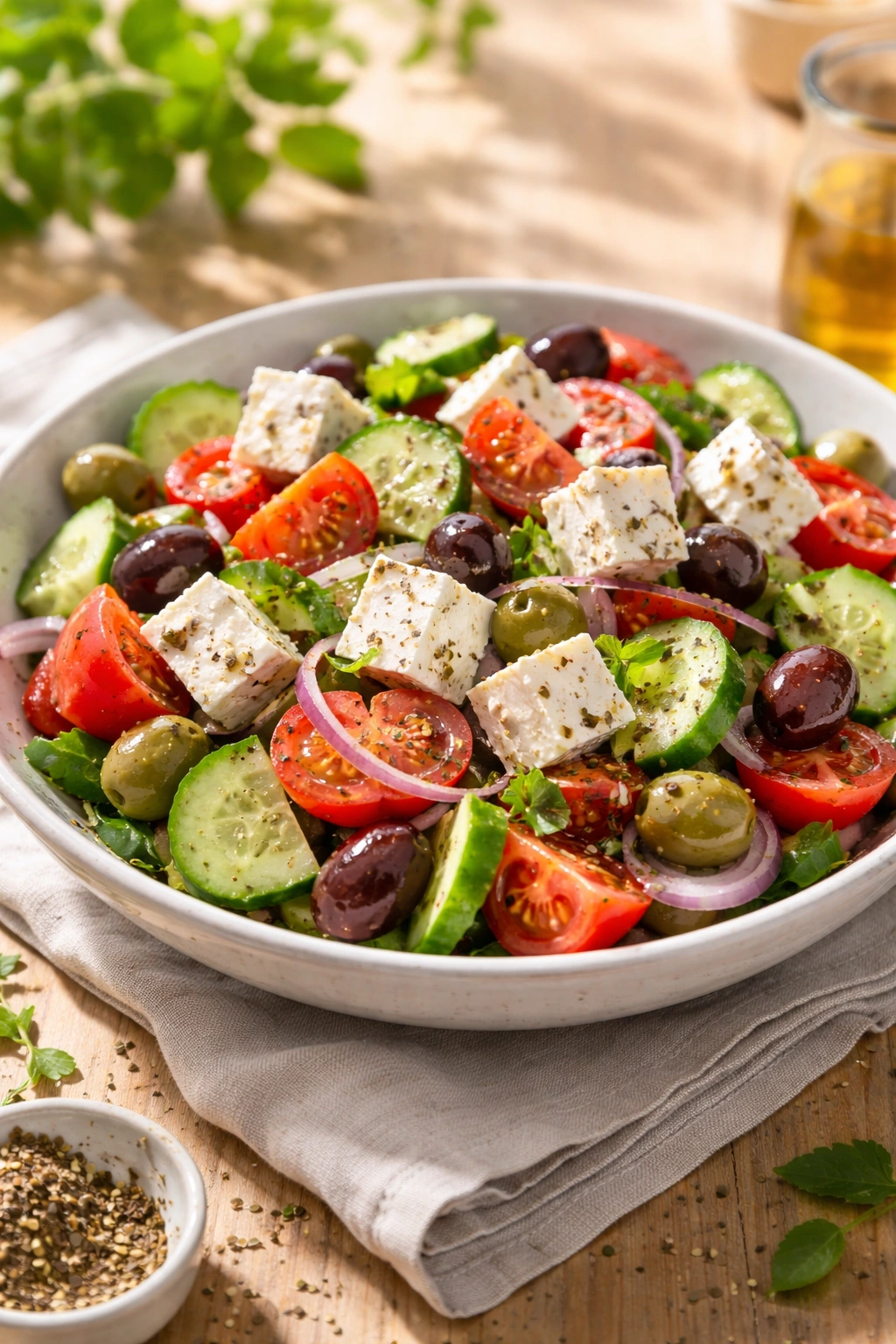
This is the salad that changed everything — the one that proved a simple collection of good ingredients needed little more than olive oil and oregano to become unforgettable. A proper Greek salad isn’t about drowning vegetables in dressing; it’s about crisp cucumbers, perfectly ripe tomatoes, briny olives, creamy feta, and the sharp hit of oregano hitting everything at once. The beauty is that every component stays crunchy and distinct rather than getting mushy or melting into each other.
Why It’s Perfect for Warm Weather
This salad is refreshing without being heavy, made almost entirely from vegetables that thrive in heat and reach their peak flavor when grown in full sun. It’s hydrating, satisfying, and comes together in the time it takes to chop the ingredients. The salty feta and olives make you want to keep eating, and there’s something deeply satisfying about how clean and simple this tastes — no cream, no complicated dressing, just the fundamentals done right.
Yield: Serves 4 as a main course, 6 as a side
Prep Time: 15 minutes
Cook Time: None
Total Time: 15 minutes
Difficulty: Beginner — Just chopping and mixing, no cooking required.
For the Salad:
- 2 medium cucumbers, seeded and cut into ½-inch dice
- 4 medium ripe tomatoes, cut into chunks (about 3 cups)
- 1 red onion, thinly sliced
- 1 cup Kalamata olives, pitted
- 8 ounces crumbled feta cheese
- 3 tablespoons fresh flat-leaf parsley, chopped
- 2 tablespoons fresh dill, chopped (or 1½ teaspoons dried dill)
For the Dressing:
- ¼ cup extra-virgin olive oil
- 3 tablespoons red wine vinegar
- 2 teaspoons dried oregano
- 1 clove garlic, minced
- Salt and freshly ground black pepper to taste
Instructions:
-
In a large bowl, combine the diced cucumbers, tomatoes, red onion slices, and Kalamata olives.
Advertisements -
In a small bowl, whisk together the olive oil, red wine vinegar, oregano, and minced garlic until emulsified. Taste and season with salt and pepper — remember the feta and olives are already salty, so go easy on the salt initially.
-
Pour the dressing over the vegetables and gently toss to coat, being careful not to crush the tomatoes or cucumber.
-
Just before serving, scatter the crumbled feta, parsley, and dill across the top. Toss once more or leave it garnished for visual appeal, depending on your preference.
Tips for the Best Version
Use tomatoes that are actually ripe — pale, mealy supermarket tomatoes will disappoint you here. If you can find heirloom varieties or farmer’s market tomatoes, the improvement is dramatic. Seed your cucumbers to prevent excess water from diluting the dressing; just cut them lengthwise and scoop out the watery centers with a spoon. Let the salad sit for 10-15 minutes before serving so the flavors meld slightly, but don’t make it much earlier than that or the cucumbers will start to soften.
Make-ahead tip: Chop and store vegetables separately in containers; mix dressing ahead. Assemble just before serving and add the feta right at the end to prevent it from absorbing all the liquid.
2. Caprese Salad
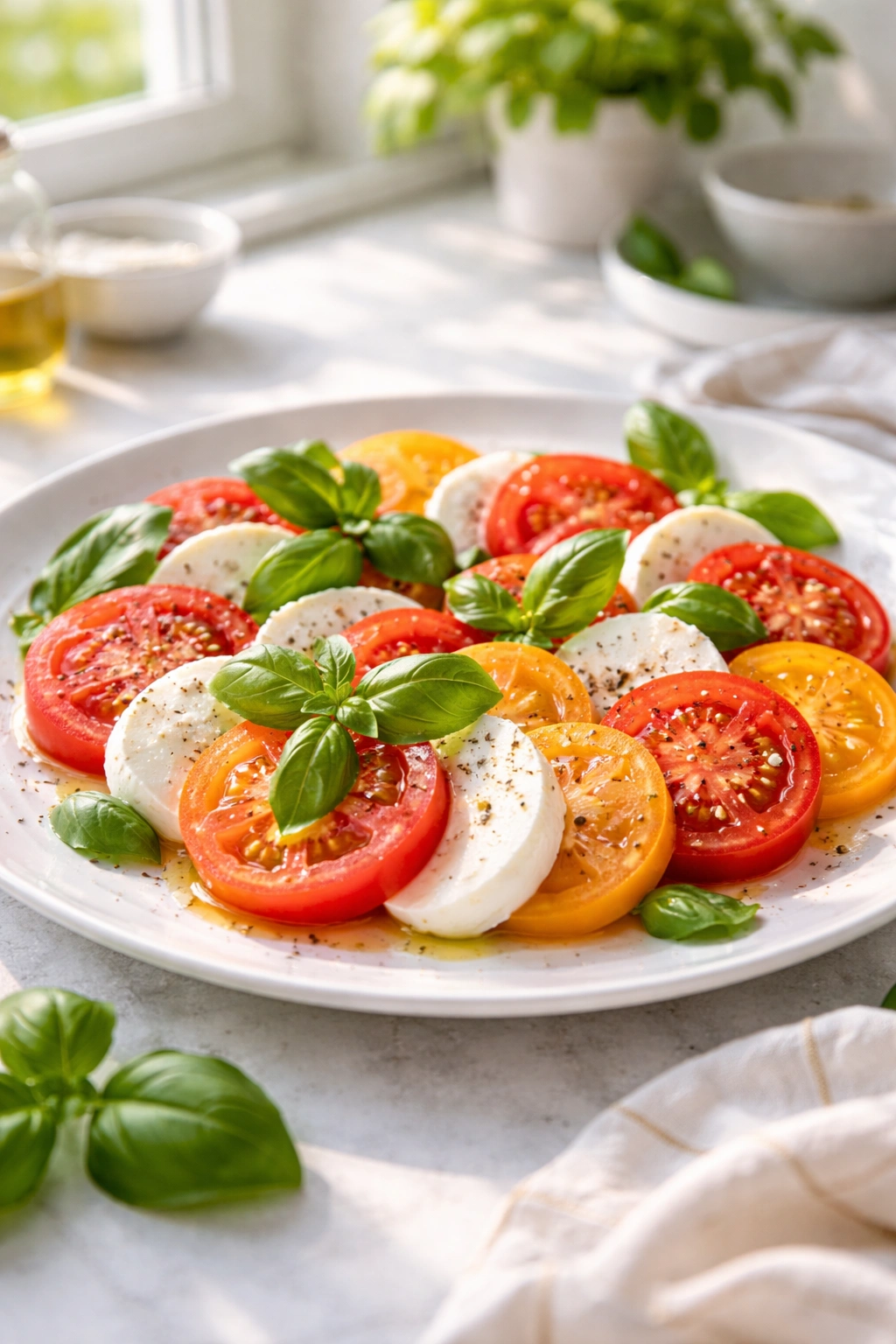
Caprese is the answer to the question “what do I do with beautiful summer tomatoes?” — and the answer is almost nothing. This Italian classic deliberately gets out of the way and lets tomatoes, fresh mozzarella, basil, and olive oil speak for themselves. There’s an elegance to its simplicity that feels more sophisticated than any complicated recipe could be. The contrast between the juicy tomato, creamy mozzarella, peppery basil, and fruity olive oil is pure warm-weather perfection.
Why Simplicity Wins Here
Every ingredient needs to be genuinely excellent because there’s nowhere to hide. Pale tomatoes, rubbery mozzarella, or dusty basil from the grocery store’s sad herb section will disappoint. But when you start with peak-season tomatoes, fresh burrata or buffalo mozzarella from a quality source, and basil you picked within the last few hours, this becomes transcendent. It’s not really a “recipe” so much as an assembly, but that’s precisely the point during hot months when you don’t want to spend time cooking.
Yield: Serves 4 as a light appetizer or side, 2 as a generous light main
Prep Time: 10 minutes
Cook Time: None
Total Time: 10 minutes
Difficulty: Beginner — Assembly only, no cooking.
For the Salad:
- 4 medium heirloom or vine-ripened tomatoes, sliced ¼-inch thick
- 8 ounces fresh mozzarella di bufala or burrata cheese
- 1 cup fresh basil leaves (about 1 ounce)
- Fleur de sel (fine sea salt) or finishing salt
- Freshly ground black pepper
For the Dressing:
- ¼ cup extra-virgin olive oil (use your best bottle here)
- 2 tablespoons aged balsamic vinegar (or 1 tablespoon balsamic reduction)
- 1 small clove garlic, minced (optional)
Instructions:
-
Arrange tomato slices on a serving platter, slightly overlapping if needed, so they cover the surface.
-
Tear the mozzarella into roughly ¼-inch pieces and distribute them evenly among the tomato slices. If using burrata, tear it gently so the creamy center spills out slightly across the tomatoes.
-
Tear the basil leaves by hand (never cut basil with a knife — it bruises and blackens) and scatter them across the entire salad.
-
Whisk together the olive oil and balsamic vinegar in a small bowl, adding the minced garlic if using. Drizzle evenly across the salad.
-
Finish with fleur de sel and a generous crack of fresh black pepper. Serve immediately at room temperature.
Making It Work Year-Round
During peak tomato season, this is transcendent. During other months, you can adapt by using the best tomatoes available, or switch to sliced fresh mozzarella with roasted tomatoes or sun-dried tomatoes for different seasons. Some people add a thin slice of prosciutto or pancetta, while others prefer it vegetarian. The structure works with whatever excellent ingredients you have access to.
Pro tip: Remove tomatoes from the refrigerator 20 minutes before serving — cold tomatoes lose flavor. Room temperature is where they truly shine.
3. Asian Sesame Chicken Salad
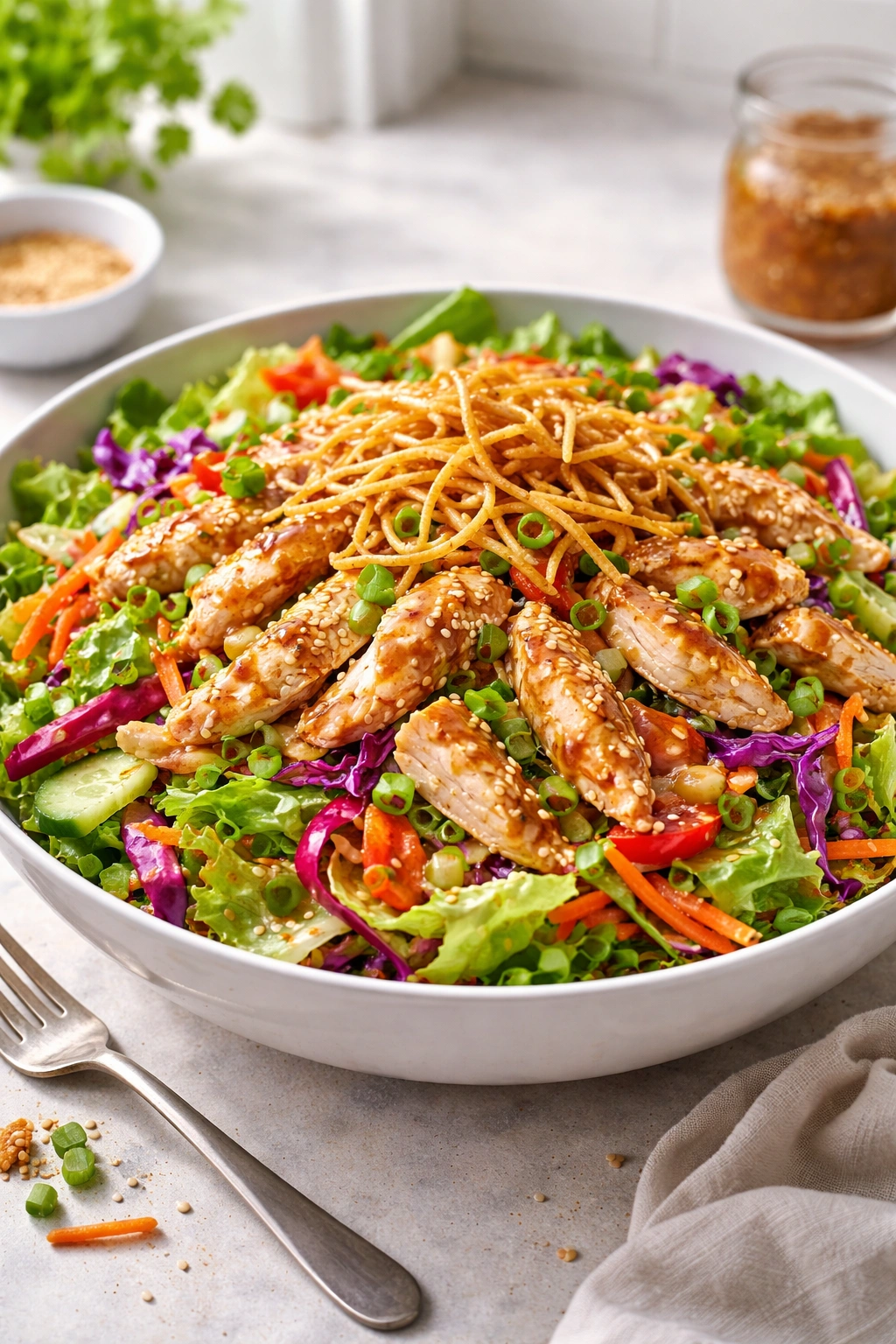
This is the salad that proves warm-weather eating can be truly satisfying as a complete meal — crispy noodles, tender chicken, and a dressing so good you’ll want to drink it straight from the bowl. The combination of sesame oil, rice vinegar, and soy creates something simultaneously nutty, tangy, and savory that makes every vegetable it touches taste better. Crispy chow mein noodles add textural contrast that keeps this from feeling like a healthy-eating obligation and transforms it into something you actually crave.
Why It’s Brilliant for Feeding a Crowd
Unlike lettuce-based salads that get sad and wilted as they sit, this salad actually holds together beautifully for several hours — the cabbage and carrots don’t soften, the noodles stay crispy (because you add them right before serving), and the dressing doesn’t make anything soggy. It’s ideal for meal prep because you can chop everything, cook the chicken, and combine it all within an hour of eating. It’s also endlessly variable depending on what vegetables and proteins you have on hand.
Yield: Serves 4 as a hearty main course
Prep Time: 20 minutes (including cooking chicken)
Cook Time: 15 minutes (for chicken)
Total Time: 35 minutes
Difficulty: Intermediate — Basic cooking required, but straightforward techniques.
For the Salad:
- 1 pound boneless, skinless chicken breast
- 4 cups shredded green cabbage
- 2 cups shredded purple cabbage
- 3 medium carrots, julienned or shredded
- 1 cup shredded or thinly sliced cucumber
- 4 green onions, cut into 1-inch pieces
- ⅓ cup fresh cilantro leaves
- ⅓ cup fresh mint leaves
- 1 cup crispy chow mein noodles (added right before serving)
- ¼ cup roasted sesame seeds (for garnish)
For the Dressing:
- ⅓ cup sesame oil
- 3 tablespoons rice vinegar
- 2 tablespoons soy sauce
- 1 tablespoon honey or agave nectar
- 2 cloves garlic, minced
- 1 tablespoon freshly grated ginger
- 1 teaspoon sriracha or chili paste (adjust to taste)
- 1 tablespoon fresh lime juice
Instructions:
-
Season the chicken breast generously with salt and pepper. Heat 1 tablespoon neutral oil in a large skillet over medium-high heat. Once shimmering, add the chicken and cook for 6-7 minutes per side, until the internal temperature reaches 165°F (74°C) and no pink remains inside. Remove to a cutting board and let rest for 5 minutes, then slice or shred into bite-sized pieces.
-
While the chicken cooks, combine all dressing ingredients in a small bowl and whisk until the honey dissolves. Taste and adjust the balance of salty, sour, spicy, and sweet — this should taste bold because it’s going to dress a lot of vegetables.
-
In a large bowl, combine the green cabbage, purple cabbage, carrots, cucumber, and green onions.
-
Pour about three-quarters of the dressing over the vegetables and toss gently to coat. Add the sliced chicken and toss again.
-
Just before serving, top with the cilantro, mint, crispy noodles, and sesame seeds. Serve the remaining dressing on the side for drizzling.
Variations That Work
Swap the chicken for shrimp, baked tofu, or hard-boiled eggs. Add edamame, snap peas, or sliced bell peppers. Trade the cilantro and mint for basil or scallions. The dressing formula stays the same but works with almost any vegetable combination.
Storage note: Store noodles separately and add them only right before serving, or they’ll lose their crispiness. The salad base keeps beautifully in the refrigerator for 2 days; chicken can be made a day ahead. Dressing keeps for up to a week.
4. Strawberry Spinach Salad
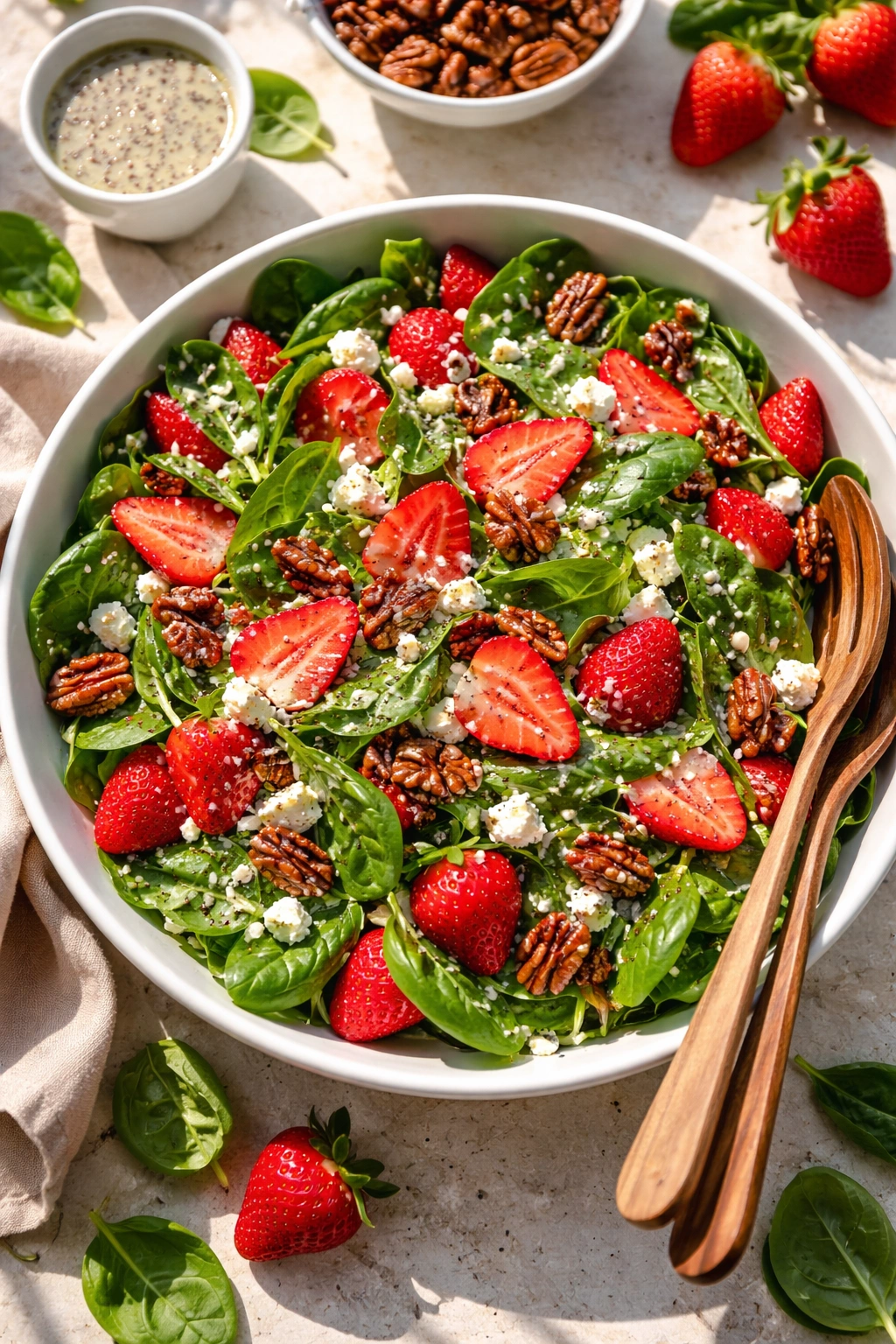
Sweet, juicy strawberries against peppery spinach seems like it shouldn’t work, but then that tangy-sweet poppy seed dressing arrives and everything clicks into place. Candied pecans or walnuts add crunch, creamy goat cheese or blue cheese adds depth, and suddenly you have a salad that tastes almost like dessert but is completely legitimate as a meal. This is the salad that converts skeptics who claim not to like salads.
Why It’s a Game-Changer
The warm months are when strawberries reach their peak — juicy, perfectly sweet, and bursting with flavor. This salad shows them off while relying on the strawberries themselves to provide most of the dressing’s sweetness, so you’re not actually eating something that’s basically a candy bowl disguised as salad (even though it tastes that way). Fresh spinach becomes tender and mild when dressed this way; it doesn’t turn into tough, bitter leaves the way it can in other preparations.
Yield: Serves 4 as a side, 2 as a hearty lunch
Prep Time: 15 minutes
Cook Time: 10 minutes (for nuts)
Total Time: 25 minutes
Difficulty: Beginner — Mostly chopping, with a quick stovetop step for nuts.
For the Salad:
- 6 cups fresh baby spinach (loosely packed)
- 1 pound fresh strawberries, hulled and halved (about 3 cups)
- ¾ cup candied pecans or walnuts (see below or use store-bought)
- 4 ounces goat cheese or crumbled blue cheese
- 2 green onions, thinly sliced
- Fresh mint leaves for garnish (optional)
For the Candied Nuts:
- 1 cup raw pecans or walnut halves
- 3 tablespoons butter
- 3 tablespoons brown sugar
- ½ teaspoon cinnamon
- ¼ teaspoon fine sea salt
For the Poppy Seed Dressing:
- ⅓ cup neutral oil
- 3 tablespoons apple cider vinegar
- 2 tablespoons honey
- 1 tablespoon fresh lemon juice
- ½ teaspoon poppy seeds
- ¼ teaspoon Dijon mustard
- Salt and pepper to taste
Instructions:
-
Make the candied nuts first: Heat butter in a large skillet over medium heat. Add the pecans and stir constantly for about 2 minutes until they’re fragrant and starting to brown. Add the brown sugar, cinnamon, and salt, stirring continuously for another 1-2 minutes until the sugar coats the nuts. Transfer immediately to a parchment-lined plate to cool completely — they’ll crisp up as they cool. Once cool, break apart any clumps.
-
Whisk together all dressing ingredients in a small bowl until well combined. Taste and adjust the balance — it should be sweet, tangy, and balanced. Set aside.
Advertisements -
Place the fresh spinach in a large bowl. Add the halved strawberries, candied nuts, goat cheese, and green onions.
-
Pour about two-thirds of the dressing over the salad and toss gently to coat, being careful not to smash the strawberries or cheese. Add more dressing as needed.
-
Top with fresh mint if using, and serve immediately. The salad can sit for a few minutes but is best enjoyed right after dressing.
Making It Ahead
The candied nuts can be made several days in advance and stored in an airtight container. The dressing keeps for up to a week. Prep the spinach and strawberries in the morning but don’t dress until just before serving. The longer the spinach sits with dressing, the more it wilts — which some people love and others find disappointing.
Substitution note: Any stone fruit works here — swap strawberries for sliced peaches, nectarines, or plums. You can also use raspberries or blueberries if you prefer less sweetness or a different flavor profile.
5. Watermelon and Feta Salad
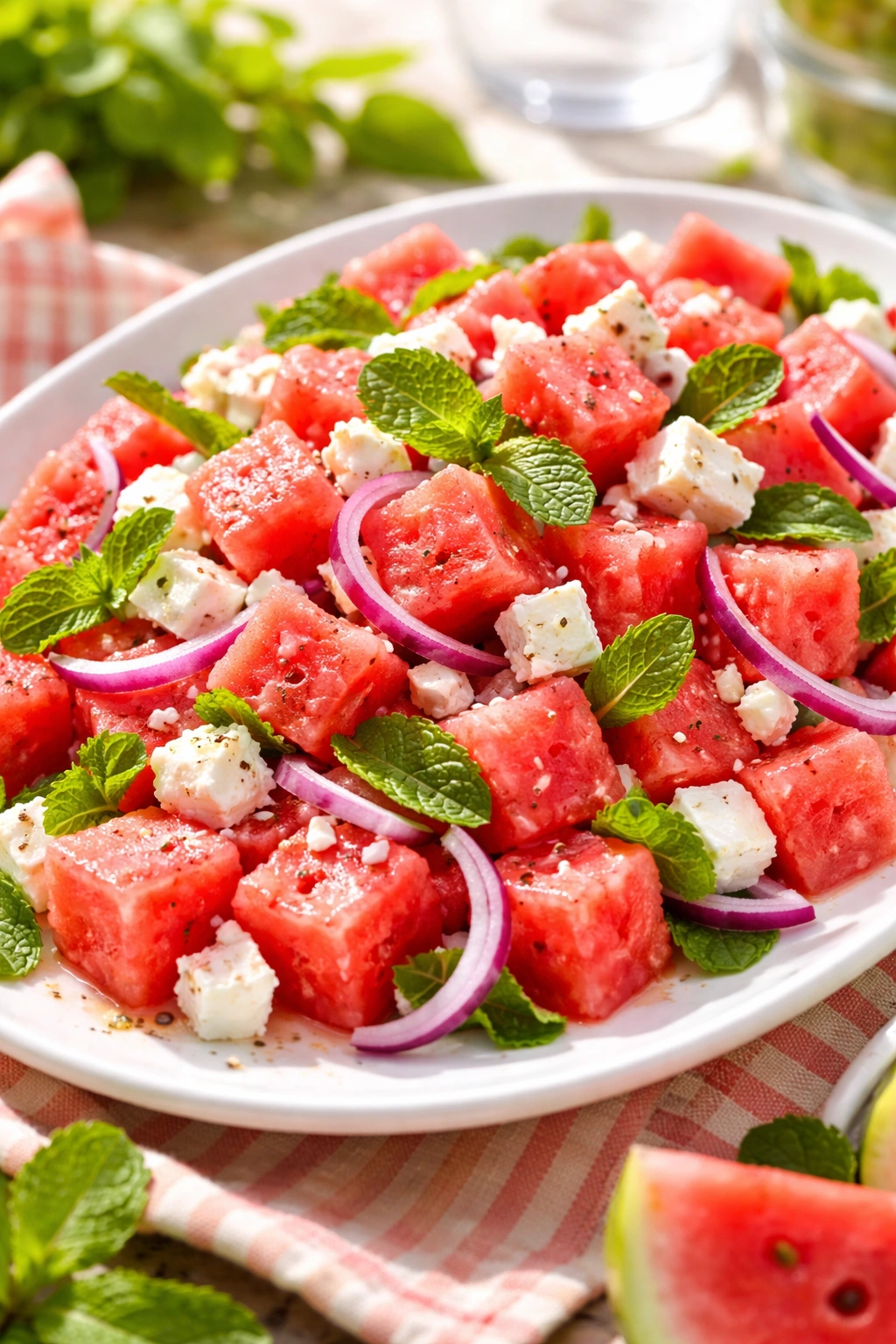
Nobody expects watermelon to be in a savory salad, and that’s precisely why it surprises and delights. Crisp watermelon cubes paired with salty feta, sharp red onion, and bright mint creates a flavor combination that feels almost impossible until you taste it. This is the salad that gets requests for the recipe and converts people who’ve never considered fruit as a salad ingredient. It’s simultaneously refreshing and satisfying, which makes it perfect for hot days when you need to eat but don’t want anything heavy.
Why It Belongs on Your Table
Watermelon is one of the most hydrating foods you can eat, and it reaches absolute perfection during the hottest months. It pairs unexpectedly well with salty, briny flavors rather than sweet ones. The contrast between cool, refreshing watermelon and punchy feta with a lime-mint dressing is exactly what summer tastes like. This salad is also visually stunning — the pink of the watermelon against white feta and bright green mint makes it almost too pretty to eat.
Yield: Serves 4 as a side, 3 as a light main
Prep Time: 15 minutes
Cook Time: None
Total Time: 15 minutes
Difficulty: Beginner — Just cutting and assembling.
For the Salad:
- 4 cups watermelon, cut into ¾-inch cubes (from about a quarter of a medium melon)
- 8 ounces feta cheese, cut into ½-inch cubes or crumbled
- ½ medium red onion, thinly sliced
- 1 cup fresh mint leaves, roughly torn
- ¼ cup fresh basil leaves, roughly torn (optional but adds depth)
- 2 tablespoons roasted pumpkin seeds or sunflower seeds (optional)
- Fleur de sel and freshly ground black pepper to taste
For the Dressing:
- 3 tablespoons extra-virgin olive oil
- 2 tablespoons fresh lime juice
- 1 teaspoon honey or agave nectar
- 1 small clove garlic, minced
- Salt and pepper to taste
Instructions:
-
Prepare the watermelon by cutting it into manageable sections, removing the rind, and cutting the flesh into roughly ¾-inch cubes. Pick out any stray seeds as you go. Place the watermelon in a large shallow bowl.
-
Add the feta cheese cubes and sliced red onion to the watermelon. Gently toss so the ingredients are distributed but not crushed.
-
Whisk together the olive oil, lime juice, honey, and minced garlic in a small bowl. Taste and season with a tiny pinch of salt and pepper — the watermelon and especially the feta already provide saltiness.
-
Pour the dressing over the watermelon and feta and toss very gently — you want to coat everything without breaking up the watermelon cubes or crushing the feta.
-
Just before serving, scatter the fresh mint, basil if using, and seeds across the top. Serve cold or at room temperature.
Timing and Temperature
This salad is best served cold or very cool, straight from the refrigerator. If you need to make it ahead, keep the dressed watermelon and feta in the refrigerator separately from the herbs, then combine and garnish just before serving. The watermelon will release water as it sits, diluting the dressing slightly, but this isn’t necessarily a problem — the extra liquid is refreshing on a hot day.
Pro tip: If your watermelon tastes watery or bland, cut it into pieces and let it drain in a colander for 30 minutes before using — this concentrates the flavor and removes excess liquid that would dilute the dressing.
6. Shrimp and Avocado Salad
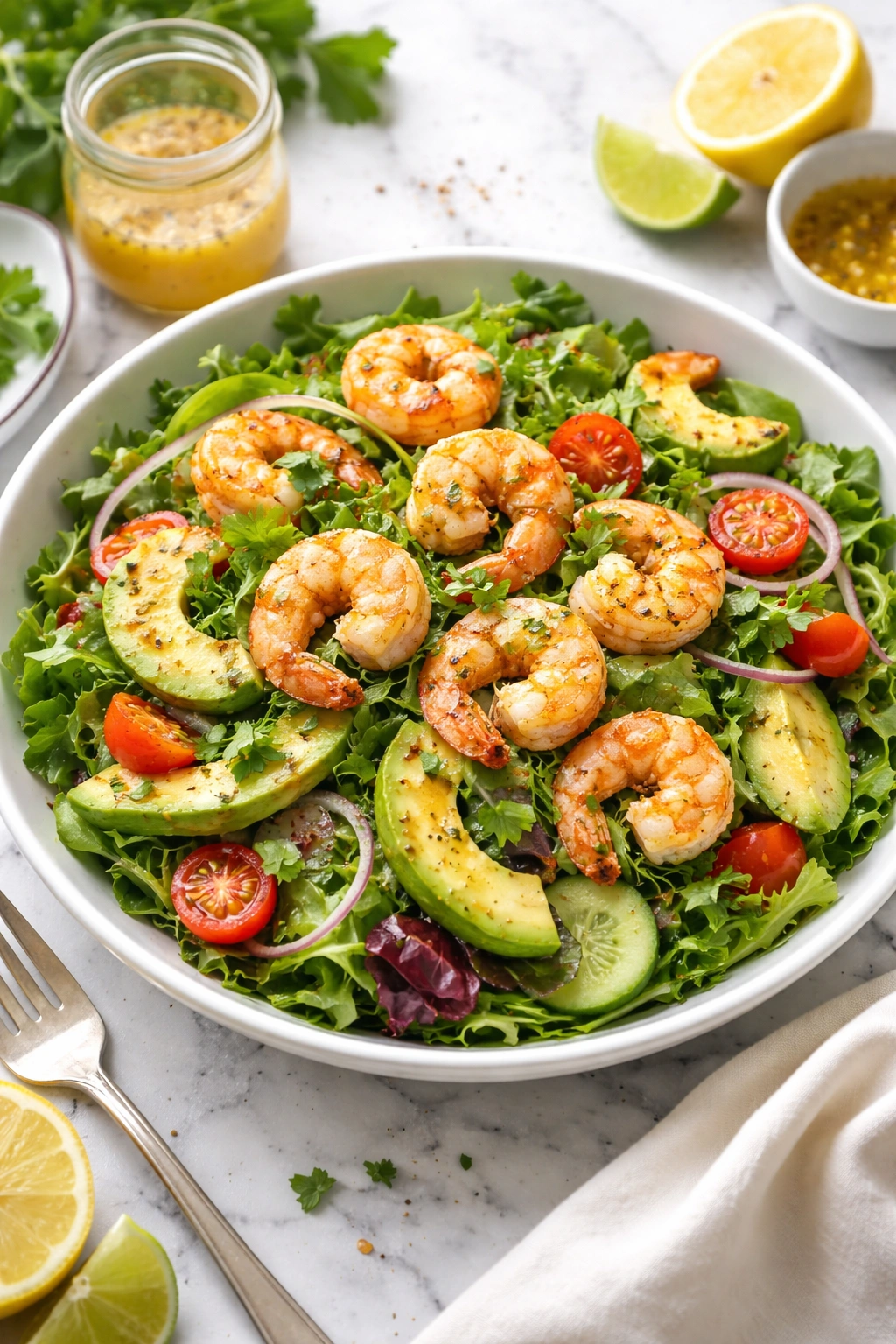
Tender, buttery avocado paired with succulent shrimp and crisp greens creates a salad that feels restaurant-quality but takes only minutes to prepare. A bright citrus vinaigrette brings everything together without overwhelming the delicate flavors of the star ingredients. This is the salad you serve when you want to impress someone without spending hours in the kitchen, and it works beautifully for lunch, dinner, or as part of a composed spread for entertaining.
Why It’s a Star of Warm-Weather Meals
Shrimp cooks in minutes, avocados need no cooking at all, and mixed greens are ready to eat straight from the package. Every component here is inherently elegant — there’s no chopping or transforming required to make these ingredients look and taste sophisticated. The cooling nature of both shrimp and avocado makes this feel refreshing rather than heavy, even though the avocado provides genuine satiation and healthy fats that make you feel satisfied rather than hungry an hour later.
Yield: Serves 4 as a main course
Prep Time: 15 minutes
Cook Time: 5 minutes (for shrimp)
Total Time: 20 minutes
Difficulty: Intermediate — Requires cooking shrimp, but the technique is straightforward.
For the Salad:
- 1½ pounds large shrimp (about 20-24 per pound), peeled and deveined
- 6 cups mixed salad greens (a combination of arugula, butter lettuce, and spinach works beautifully)
- 2 ripe but firm avocados, halved, pitted, and sliced
- 1 cup cucumber, sliced into half-moons
- 1 cup cherry tomatoes, halved
- ¼ cup red onion, thinly sliced
- 2 tablespoons fresh cilantro or parsley, for garnish
- Fleur de sel and freshly cracked black pepper
For the Dressing:
- ¼ cup extra-virgin olive oil
- 3 tablespoons fresh lime juice
- 1 tablespoon fresh orange juice
- 1 small clove garlic, minced
- ½ teaspoon Dijon mustard
- ⅛ teaspoon red pepper flakes (optional)
- Salt and pepper to taste
Instructions:
-
Bring a large pot of salted water to a rolling boil. Add the shrimp and cook, stirring occasionally, for 2-3 minutes until they’re opaque throughout and have turned pink — do not overcook or they’ll become rubbery. The shrimp should curl into a loose C-shape, not a tight circle.
-
Drain the shrimp immediately and transfer them to a plate to cool slightly. Season lightly with salt and pepper while still warm.
-
Whisk together all dressing ingredients in a small bowl. Taste and adjust the balance of citrus, garlic, and heat — this should taste bright and balanced.
-
Arrange the mixed greens on serving plates or a large platter. Top with the sliced avocado, cucumber slices, cherry tomatoes, and red onion slices.
-
Place the warm or room-temperature shrimp on top of the greens and drizzle everything generously with the citrus dressing. Garnish with fresh cilantro or parsley and serve immediately.
Timing and Make-Ahead
The shrimp can be cooked up to 4 hours ahead and stored in the refrigerator; return it to room temperature about 10 minutes before serving. The dressing can be made a day ahead. Slice the avocado just before assembling to prevent browning. The salad greens and other vegetables can be prepped and stored separately; assemble just before serving so nothing gets soggy.
Substitution note: Grilled chicken, white fish, or even seared scallops work beautifully with this same dressing and vegetable combination if you don’t have shrimp on hand.
7. Mediterranean Quinoa Salad
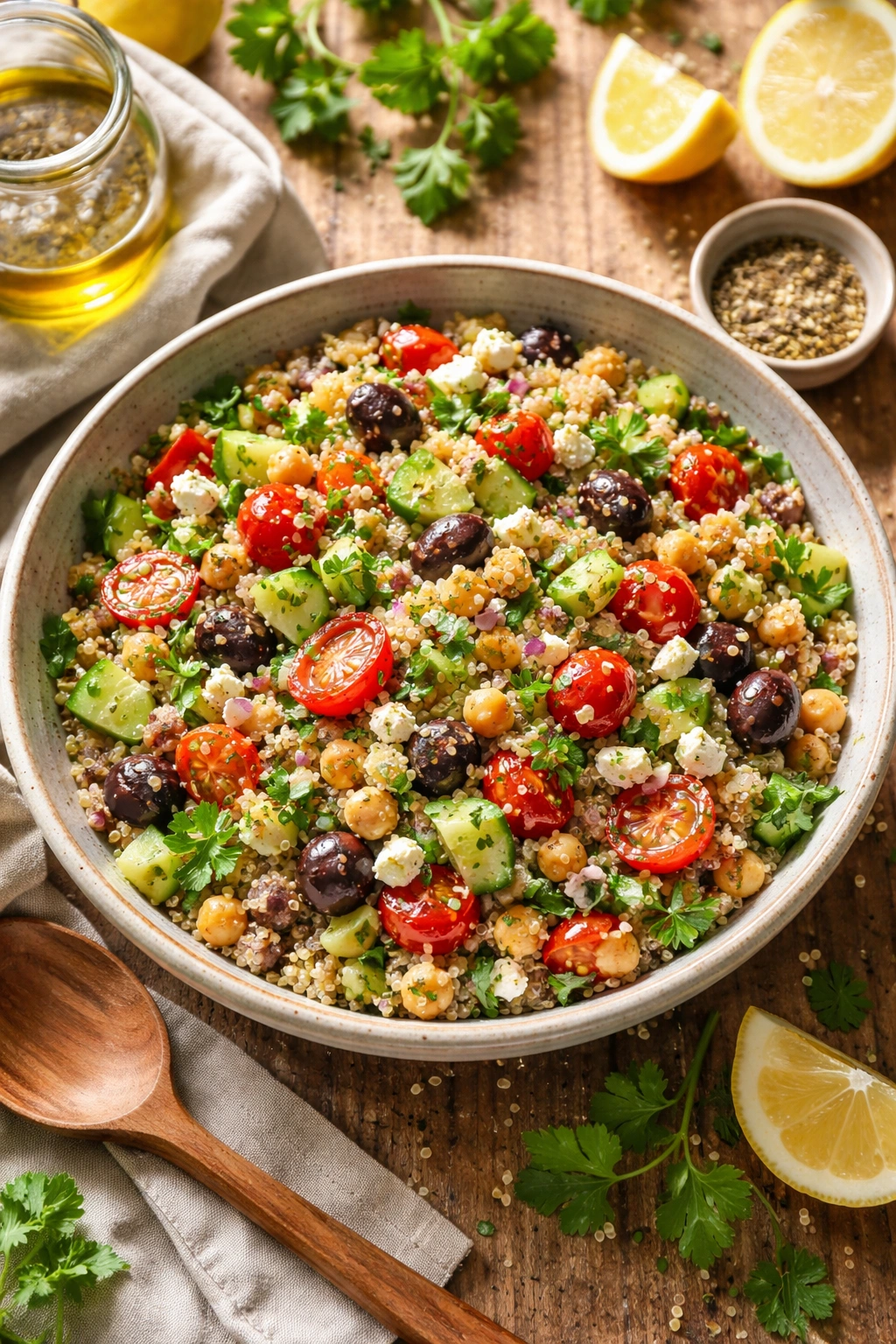
This is the salad that proves salads can be genuinely filling without any animal protein — quinoa provides complete protein and a nutty, slightly fluffy texture that’s completely different from lettuce-based salads. Roasted vegetables, chickpeas, fresh herbs, and a lemon-olive oil dressing create something that works as a substantial lunch or side dish for dinner. It’s also one of the best salads for meal prep because it actually gets better as it sits and the flavors meld together.
Why It’s Your New Favorite Lunch
Quinoa doesn’t wilt; it holds moisture well and actually becomes more flavorful as it absorbs the dressing over time. You can make this on a Sunday, store it in the refrigerator, and it’s better on Wednesday than it was on Monday. It’s substantial enough to eat for lunch without getting hungry two hours later, and it travels beautifully — there’s nothing that wilts or gets sad sitting in a container. The combination of textures (fluffy quinoa, crispy roasted vegetables, creamy chickpeas) and flavors (bright lemon, salty olives, fresh herbs) makes this exciting every time.
Yield: Serves 4-5 as a main course, 6-8 as a side
Prep Time: 15 minutes
Cook Time: 25 minutes (15 for quinoa, 15 for vegetables)
Total Time: 40 minutes
Difficulty: Intermediate — Requires cooking quinoa and roasting vegetables, but straightforward techniques.
For the Salad:
- 1 cup quinoa, rinsed
- 2 cups low-sodium vegetable or chicken broth
- 2 medium zucchini, cut into ½-inch cubes
- 1 red bell pepper, cut into ½-inch pieces
- 1 yellow bell pepper, cut into ½-inch pieces
- 8 ounces cherry tomatoes, halved
- 1 small red onion, thinly sliced
- 1 can (15 oz) chickpeas, drained and rinsed
- ½ cup Kalamata olives, pitted and halved
- ½ cup fresh parsley, chopped
- ¼ cup fresh mint, chopped
- ¼ cup fresh basil, chopped
- ¼ cup crumbled feta cheese (optional)
- 2 tablespoons roasted sunflower seeds or pine nuts
For the Dressing:
- ⅓ cup extra-virgin olive oil
- 3 tablespoons fresh lemon juice
- 1 clove garlic, minced
- 1 teaspoon Dijon mustard
- ½ teaspoon dried oregano
- Salt and pepper to taste
Instructions:
-
Preheat the oven to 425°F (220°C). Line two baking sheets with parchment paper.
-
In a medium saucepan, bring the rinsed quinoa and broth to a boil, then reduce heat to low, cover, and simmer for 15 minutes. Remove from heat and let sit, covered, for 5 minutes, then fluff with a fork. Set aside to cool slightly.
-
While the quinoa cooks, toss the zucchini cubes and bell pepper pieces with 1 tablespoon olive oil, salt, and pepper. Spread on one prepared baking sheet in a single layer. Roast for 12-15 minutes, stirring halfway through, until tender with light golden edges.
Advertisements -
Whisk together all dressing ingredients in a small bowl. Taste and adjust the balance of lemon and garlic — this should taste bright and assertive because it’ll be absorbed by the quinoa.
-
In a large bowl, combine the cooled quinoa, roasted vegetables, cherry tomatoes, red onion, drained chickpeas, and olives.
-
Pour the dressing over the salad and toss gently to combine. Fold in the parsley, mint, and basil. Taste and adjust seasoning.
-
Top with crumbled feta and sunflower seeds just before serving, or hold off until serving time if you’re prepping ahead.
Storage and Make-Ahead
This is one of the best make-ahead salads — it actually improves after 2-3 hours as the flavors meld. It keeps beautifully in the refrigerator for 3-4 days. If the quinoa seems dry when you reheat it, drizzle with a bit of lemon juice or olive oil to refresh it. The fresh herbs can be added right before serving if you’re prepping further ahead, as they’ll darken if mixed in too early.
Variations: Swap vegetables based on what’s available or what you prefer. Add diced cucumber, sliced radishes, or artichoke hearts. Use different beans or leave them out entirely. The framework stays the same but adapts easily.
8. Classic Cobb Salad
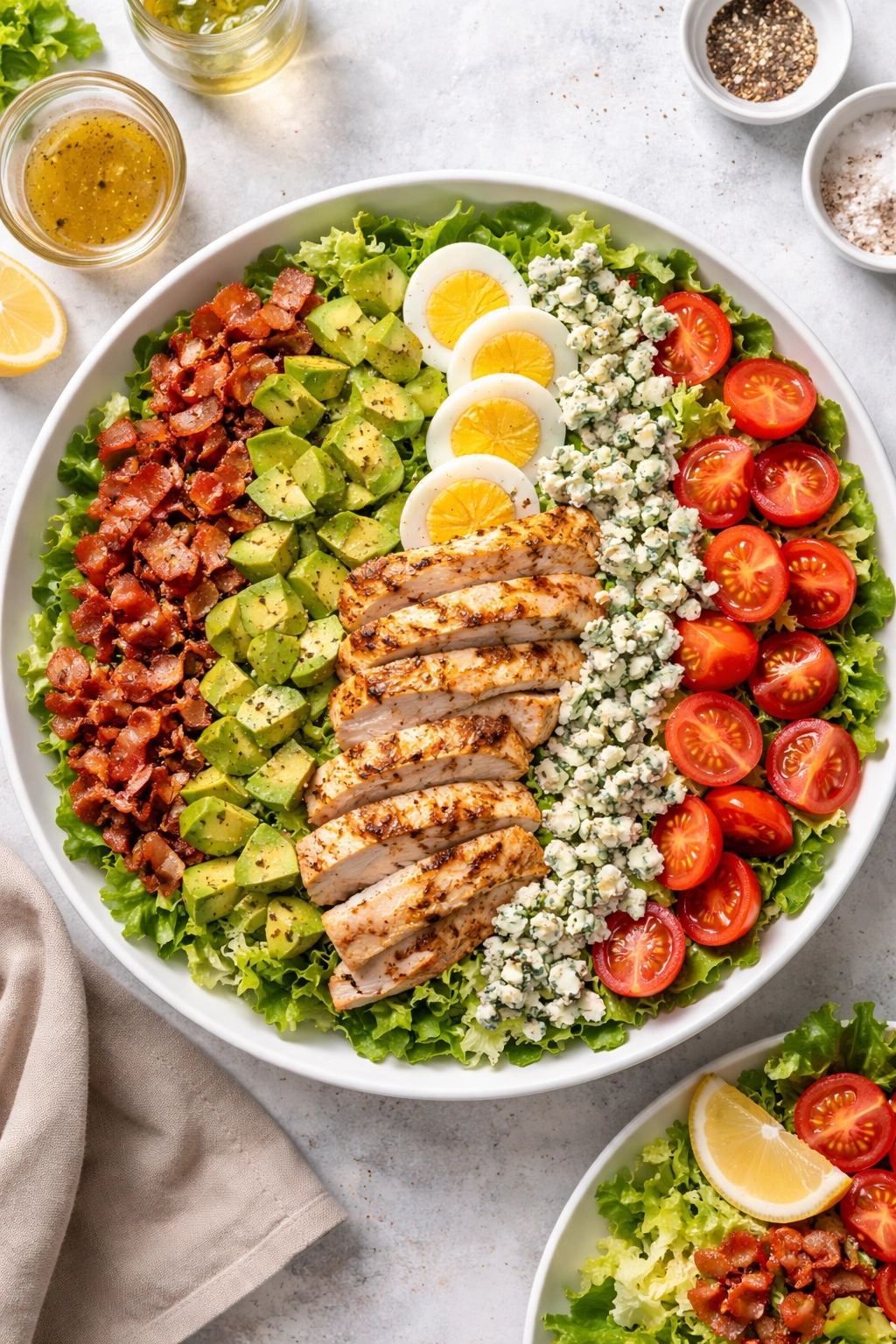
Cobb is the salad that doesn’t mess around — rows of bacon, avocado, hard-boiled eggs, chicken, blue cheese, and tomatoes arranged beautifully on crisp lettuce, then dressed with a tangy vinaigrette that brings everything into harmony. It’s not pretending to be something delicate or light; it’s a composed, substantial salad that’s meant to satisfy completely. There’s a reason this classic has been on restaurant menus for decades — it’s a brilliant formula that consistently delivers excellent results.
Why It Never Goes Out of Style
The Cobb formula works because it combines so many different textures and flavors into one bowl that every bite is interesting. You get creamy avocado, salty bacon, rich egg yolk, tender chicken, sharp blue cheese, and bright tomato all at once. The vinaigrette ties everything together without overwhelming any single component. Unlike some salads that are only good at their exact moment of assembly, Cobb can sit for a bit and actually improve as the dressing is absorbed by the lettuce.
Yield: Serves 4 as a main course, 6 as a side
Prep Time: 20 minutes
Cook Time: 15 minutes (for eggs, bacon, and chicken)
Total Time: 35 minutes
Difficulty: Intermediate — Multiple components that need separate cooking.
For the Salad:
- 1 head butter lettuce or romaine, chopped into bite-sized pieces
- 2 chicken breasts (8 ounces each), cooked and diced
- 8 slices bacon, cooked until crispy and crumbled
- 4 large hard-boiled eggs, peeled and chopped
- 2 ripe avocados, diced
- 3 large ripe tomatoes, diced
- 4 ounces blue cheese, crumbled
- 3 green onions, sliced
- ¼ cup fresh parsley or chives, chopped
For the Vinaigrette:
- ⅓ cup extra-virgin olive oil
- 3 tablespoons red wine vinegar
- 1 tablespoon fresh lemon juice
- 1 teaspoon Worcestershire sauce
- ½ teaspoon Dijon mustard
- 1 clove garlic, minced
- Salt and pepper to taste
Instructions:
-
If you haven’t already cooked the chicken, season it with salt and pepper, then cook in a hot skillet over medium-high heat for 6-7 minutes per side until the internal temperature reaches 165°F (74°C). Let cool slightly, then dice into bite-sized pieces.
-
If you don’t have cooked bacon on hand, cook it now: lay strips in a cold skillet, turn heat to medium, and cook for 8-10 minutes, turning occasionally, until crispy. Transfer to paper towels to drain and cool, then crumble.
-
Place the hard-boiled eggs in a pot, cover with cold water, bring to a boil, then remove from heat and let sit for 10-12 minutes. Transfer to an ice bath to cool completely, then peel and chop.
-
Whisk together all vinaigrette ingredients in a small bowl. Taste and adjust the balance — this should be tangy with just enough richness from the oil to coat everything without being heavy.
-
Arrange the chopped lettuce on a large platter or divide among serving bowls. Arrange the diced chicken, crumbled bacon, chopped eggs, diced avocado, diced tomatoes, blue cheese, and green onions in rows over the lettuce (or toss everything together if you prefer a less composed presentation).
-
Drizzle generously with vinaigrette just before serving. Garnish with fresh parsley or chives.
Making Components Ahead
Each component can be prepared separately hours in advance: chicken can be cooked the night before, bacon keeps for 3-4 days in the refrigerator, hard-boiled eggs keep for up to a week. Assemble right before serving, or dress just before eating if you want the maximum crispness. The dressing keeps for up to a week.
Substitution note: This formula is endlessly adaptable — swap blue cheese for goat cheese or no cheese at all, add or remove vegetables based on preference, use grilled shrimp instead of chicken, or make it completely vegetarian by omitting the meat and adding beans or chickpeas instead.
9. Thai Green Papaya Salad
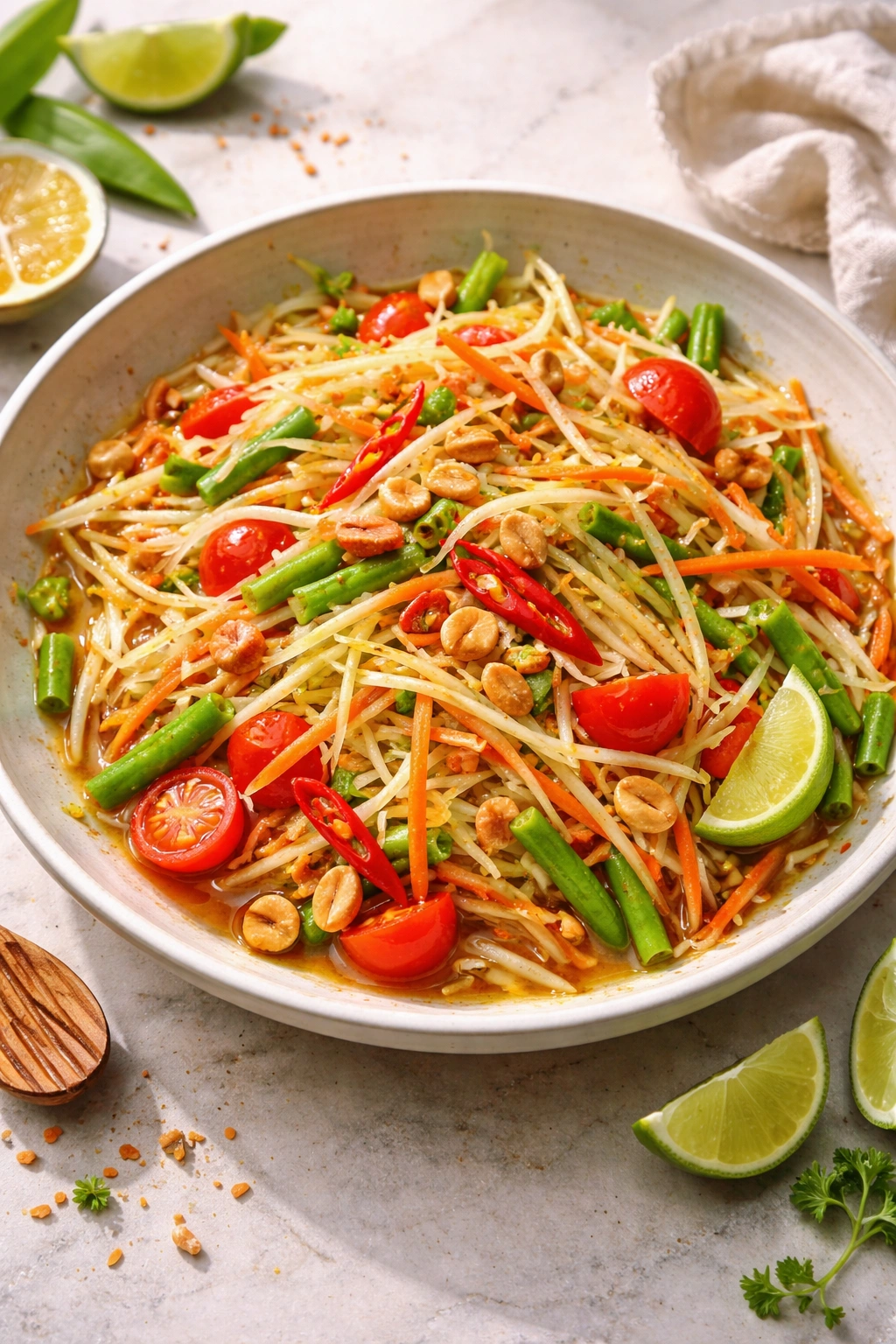
Som tam is the salad that wakes up your palate — green papaya that’s crunchy and slightly tart, a dressing that’s simultaneously salty, sour, spicy, and sweet, and enough lime juice to make your mouth water. This is bold, assertive, and not for the faint of heart, but if you enjoy food with big flavors and aren’t afraid of heat, this becomes absolutely addictive. The green papaya provides a texture you won’t find in typical salads — it’s almost raw-vegetable-like but with its own distinct character.
Why It’s Worth Seeking Out Green Papaya
Green papaya is unripe papaya that’s sold specifically for this purpose — it’s firmer and more vegetable-like than ripe papaya, and it has a slightly tangy taste that works perfectly with the pungent dressing. If you can’t find green papaya, julienned zucchini or green mango provides a similar crunchy texture and mild flavor that plays well with this dressing. This salad is refreshing despite being intensely flavored, and it pairs beautifully with grilled proteins or as part of a spread of different dishes.
Yield: Serves 4 as a side, 2 as a light main
Prep Time: 15 minutes
Cook Time: None
Total Time: 15 minutes
Difficulty: Beginner — Just chopping and mixing, no cooking.
For the Salad:
- 1 medium green papaya (about 1 pound), peeled, seeded, and shredded or julienned
- 2 medium carrots, shredded or julienned
- ½ cup fresh cilantro leaves
- ½ cup fresh mint leaves
- ¼ cup fresh basil leaves
- 3 green onions, cut into 1-inch pieces
- ¼ cup roasted peanuts, crushed
- 2 Thai chilies (or ½-1 teaspoon red pepper flakes), minced
- Lime wedges for serving
For the Dressing:
- 3 tablespoons fresh lime juice
- 2 tablespoons fish sauce (or tamari if you prefer vegetarian)
- 1 tablespoon palm sugar or brown sugar
- 2 cloves garlic, minced
- 1-2 Thai bird’s eye chilies (or ¼-½ teaspoon dried red pepper flakes), minced
- Optional: ½ teaspoon shrimp paste (adds authentic flavor but is optional)
Instructions:
-
Whisk together the lime juice, fish sauce, and palm sugar in a small bowl, stirring until the sugar dissolves. Add the minced garlic, minced chilies, and shrimp paste if using. Taste and adjust the balance — this should be balanced between salty, sour, spicy, and sweet with the sourness and salty elements slightly dominant.
-
In a large bowl, combine the shredded green papaya, shredded carrots, cilantro, mint, basil, and green onions.
-
Pour the dressing over the vegetables and toss gently but thoroughly, making sure the dressing coats everything evenly.
-
Transfer to a serving bowl or plates and top with the crushed peanuts and minced fresh chilies. Serve with lime wedges on the side and additional fish sauce for those who want extra depth.
Advertisements
Heat Level and Adjustments
Thai food is meant to be spicy, but you control the heat level. Start with less chili and work your way up to the amount you prefer. If you find it too spicy, add a dollop of sweetness (more sugar) or creaminess (a splash of coconut milk stirred in). Remember that fish sauce smells intensely funky in the bottle but becomes pleasant and savory once mixed into the dressing — don’t be alarmed by the initial aroma.
Substitution note: If you can’t find green papaya, use thinly shredded zucchini, green mango, or even shredded Granny Smith apple. The dressing formula works with almost any raw vegetable base that has a neutral or slightly tart taste.
10. Burrata and Heirloom Tomato Salad
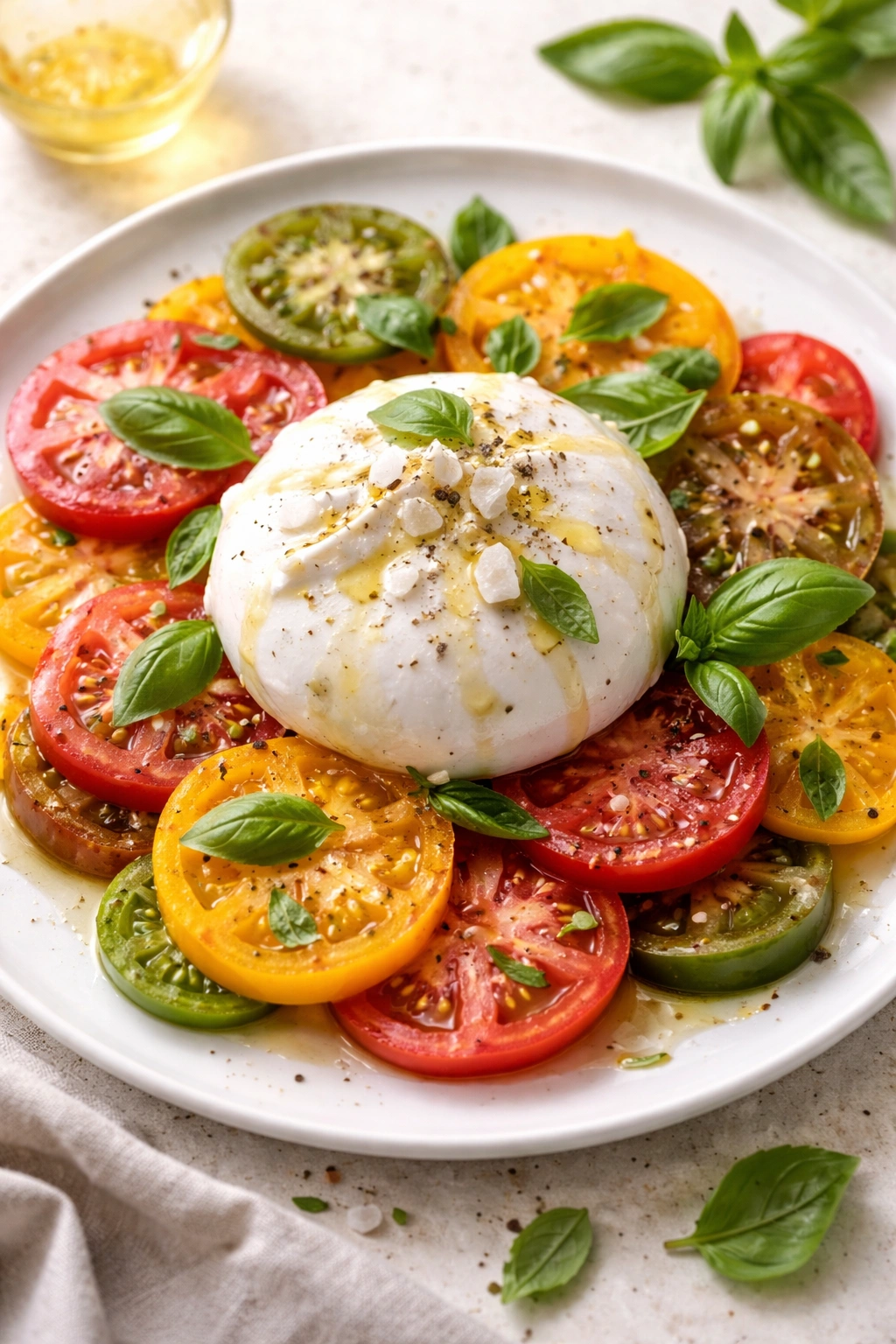
Burrata is the dessert of cheeses — a delicate shell of mozzarella surrounding a creamy interior that practically melts when you bite into it. Pair it with ripe heirloom tomatoes at peak season, fresh basil, a whisper of fleur de sel, and just enough olive oil to bring everything together, and you have something that transcends “salad” and becomes an edible work of art. This is the salad you serve when you want to showcase exceptional ingredients and let them shine with minimal interference.
Why It’s Worth the Splurge
Burrata costs more than regular mozzarella, but it’s worth every penny for its luxurious texture and the way that creamy center contrasts with the mild cheese shell. This salad proves that sometimes the best cooking is non-cooking — respect the ingredients, combine them thoughtfully, and get out of the way. It’s perfect as a light summer meal on its own, or serve it before a simple pasta or grilled protein. Every element here is meant to taste like summer distilled into a bowl.
Yield: Serves 4 as a light appetizer or side, 2 as a generous light main
Prep Time: 10 minutes
Cook Time: None
Total Time: 10 minutes
Difficulty: Beginner — Assembly only.
For the Salad:
- 8 ounces fresh burrata cheese (2-4 pieces depending on size)
- 4-5 large heirloom tomatoes in varied colors, sliced ¼-inch thick or cut into wedges
- 1 cup fresh basil leaves (approximately 1 ounce)
- 1 small red onion, very thinly sliced (optional, but adds nice sharpness)
- Fleur de sel or finishing salt
- Freshly ground black pepper
- Red pepper flakes (optional, for slight heat)
For the Dressing:
- ¼ cup excellent extra-virgin olive oil
- 2 tablespoons aged balsamic vinegar or 1 tablespoon balsamic reduction
- 1 small clove garlic, minced (optional)
- Fresh squeeze of lemon juice (optional)
Instructions:
-
Arrange the sliced tomatoes on a large serving platter, overlapping them slightly if needed so they cover most of the surface. Season the tomatoes lightly with fleur de sel and a crack of black pepper.
-
If using red onion, scatter the thin slices over the tomatoes.
Advertisements -
Tear the burrata pieces gently and place them among the tomatoes, letting the creamy interior spill out slightly for visual effect.
-
Tear the basil leaves by hand (never cut basil with a knife) and scatter them across the entire salad.
-
Whisk together the olive oil, balsamic vinegar, and optional minced garlic in a small bowl. Drizzle evenly across the salad.
-
Finish with another tiny pinch of fleur de sel, additional black pepper, and red pepper flakes if desired. Serve immediately at room temperature.
Storage and Timing
Burrata is best served at room temperature, not straight from the refrigerator. Remove it from the fridge about 20 minutes before serving and store it loosely covered (not sealed, which can make it sweat). Assemble this salad just before serving — any longer and the tomatoes will release water that dilutes the burrata and makes the whole thing soggy. It’s a last-minute assembly situation, but that’s part of its charm.
Purchasing tip: Buy burrata from a quality cheese shop or Italian market if possible, and eat it the same day you buy it. Burrata has a short shelf life and is at its best when absolutely fresh. The flavor difference between fresh and slightly aged burrata is dramatic.
Final Thoughts
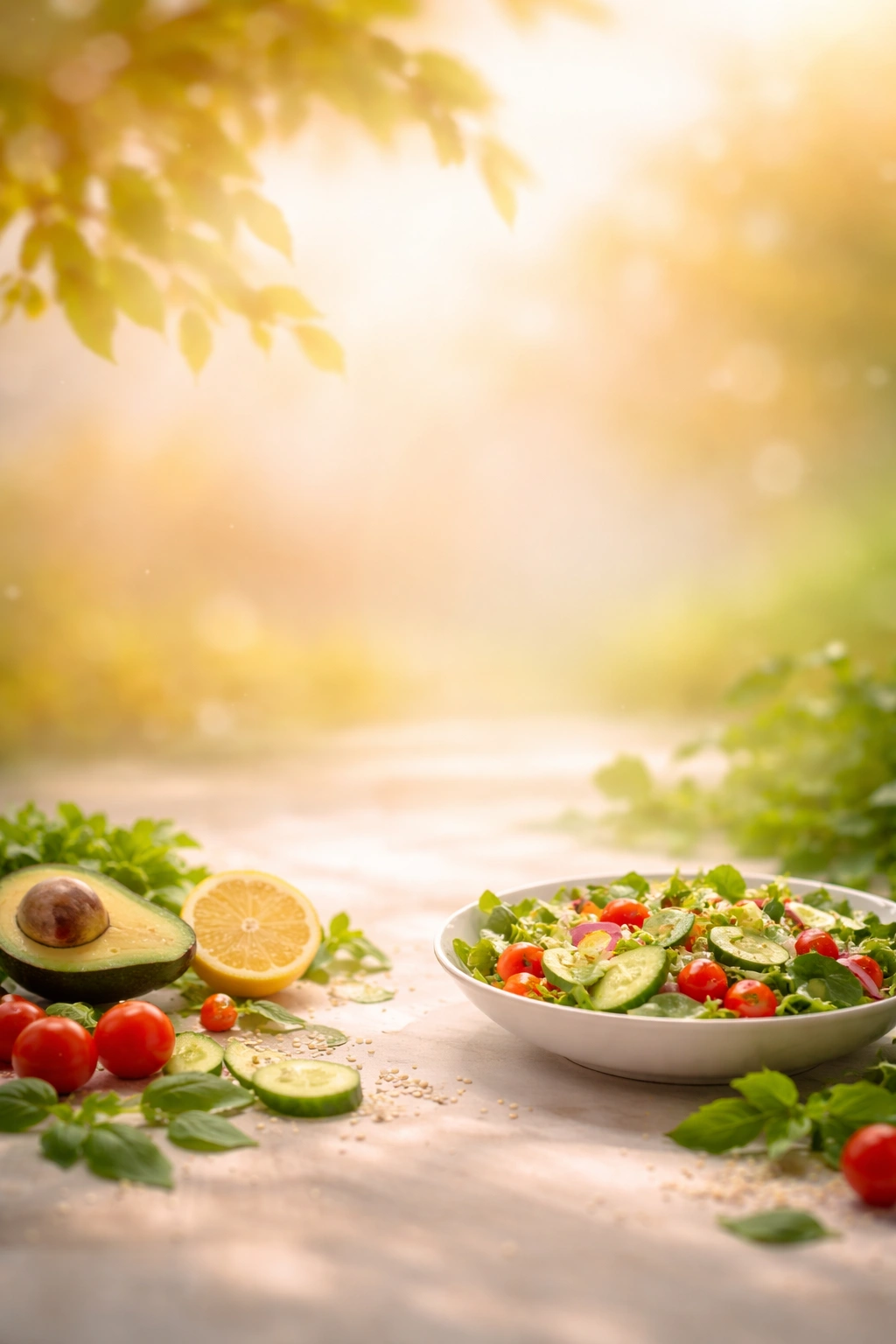
These ten salads represent different approaches to warm-weather eating — from the effortless assembly of Caprese to the grain-based satisfaction of Mediterranean Quinoa, from the bright spice of Thai Green Papaya to the luxurious simplicity of Burrata and Heirloom Tomato. The common thread is that each one celebrates vegetables and ingredients at their peak and combines them in ways that make eating salads feel like a privilege rather than an obligation.
The real secret to loving salads isn’t discovering some magical ingredient or technique — it’s respecting the quality of what you’re working with and not overcomplicating things. A truly ripe tomato needs very little; an excellent avocado becomes a star when paired with something salty and acidic; fresh herbs wake up even the simplest collection of vegetables. Start with the best ingredients you can find, make one of these salads with attention and care, and you’ll understand why salads aren’t just something you eat when you’re dieting, but something you crave when the weather turns warm and the farmer’s market is overflowing.
Keep these recipes in rotation during warm months, adapt them based on what looks good at the market that day, and don’t be afraid to make substitutions based on your preferences or what you have on hand. Each salad provides a formula that works with variations — once you understand why Greek Salad is built the way it is, you can adjust it endlessly while keeping what makes it great. The goal is developing enough comfort with salad-building to make them intuitively, using seasonal ingredients and your own taste preferences as guides. That’s when salads stop being recipes and become meals you look forward to.
