



Whipped butter has quietly become one of the easiest ways to elevate breakfast, desserts, and even savory dishes — and when you add warm cinnamon and honey to the mix, you’ve got something genuinely special. This isn’t your grandma’s regular butter. Whipped cinnamon honey butter is airy, spreadable straight from the countertop, and infinitely more interesting than the stick version most people settle for. The texture is almost mousse-like, fluffy in a way that makes it feel indulgent even though it’s just three ingredients treated with a little patience and a mixer.
What makes this recipe worth learning isn’t just that it tastes incredible — it’s that it transforms how people think about butter. Suddenly, it’s not just a supporting player. It becomes the star of your toast, the reason you actually want to wake up early, the thing guests ask you about. And here’s the real kicker: you can make a batch in the time it takes to brew a good cup of coffee. Five minutes of actual work.
The magic here is pure physics, not chemistry. You’re not doing anything complicated. You’re simply incorporating air into softened butter while flavor compounds from cinnamon and honey marry together. The whipping action creates tiny air pockets that lighten the texture and make the butter spread like silk. It’s foolproof, scalable, and once you understand how it works, you’ll start making flavored butters for everything. But we’ll get to that.
Why Whipped Butter Changes Everything
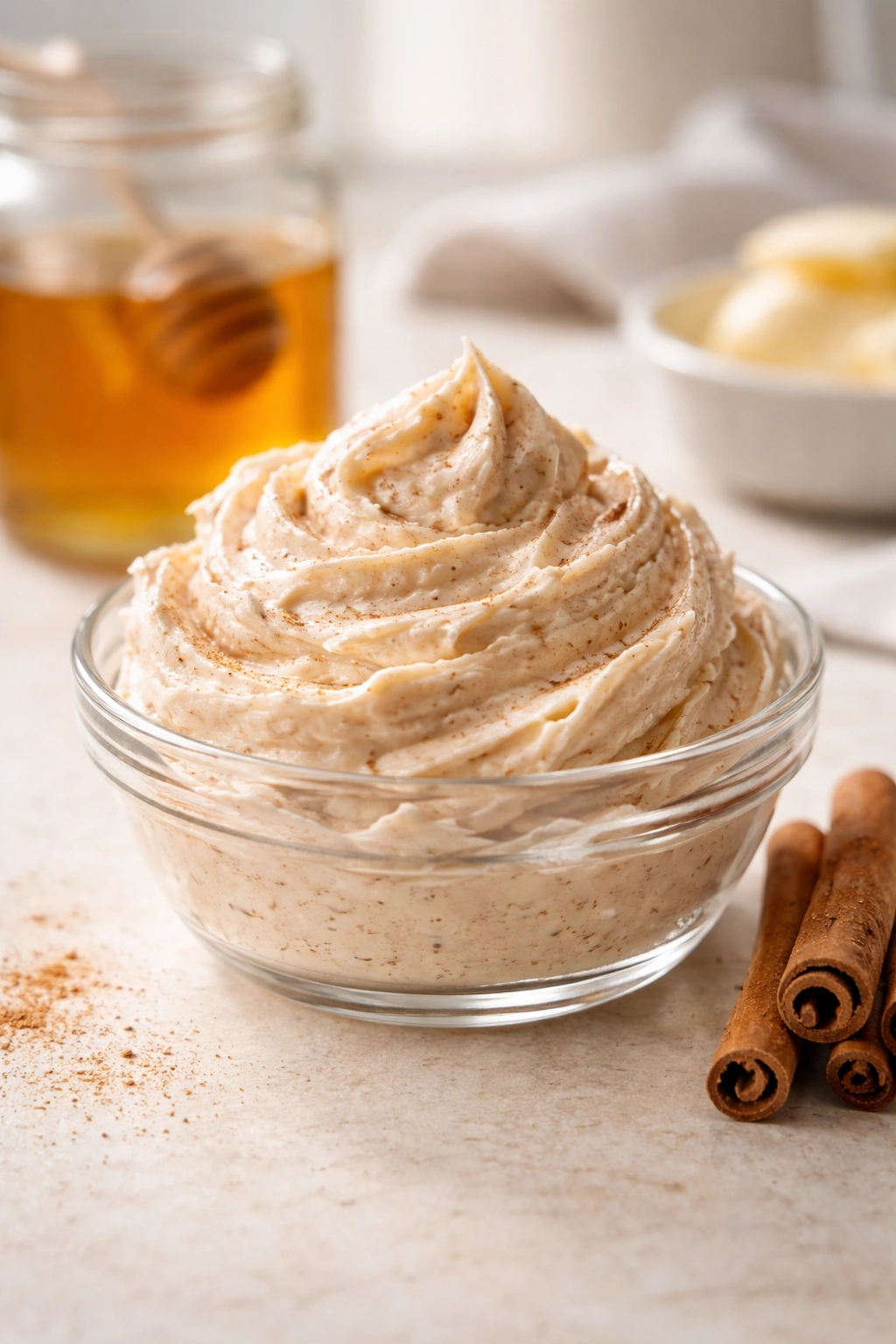
Regular butter straight from the fridge is dense and difficult to spread evenly. You either let it sit on the counter until it’s almost greasy, or you drag it across your toast and tear holes in the bread. Whipped butter solves this problem completely. By incorporating air into softened butter, you increase its volume without adding calories or changing its fundamental nature. The result is butter that spreads like a dream, melts faster on warm surfaces, and tastes lighter on your palate.
The cinnamon and honey combination isn’t random either. Honey brings natural sweetness without the grittiness of granulated sugar, and it adds a subtle floral note that deepens as the butter sits. Cinnamon contributes warmth and complexity — that spice doesn’t fade; it develops and becomes more pronounced over time. Together, they transform simple butter into something that tastes like it came from a specialty bakery.
The speed of this recipe isn’t accidental. Once your butter reaches the right temperature (soft enough to whip but still cool enough to hold its shape), the whipping process is genuinely fast. A stand mixer or even a hand mixer can turn three ingredients into finished, fluffy butter in 3-5 minutes of actual mixing. No chilling required, no resting time, no waiting overnight. Make it in the morning and use it immediately.
The Science Behind Whipped Texture and Flavor Development
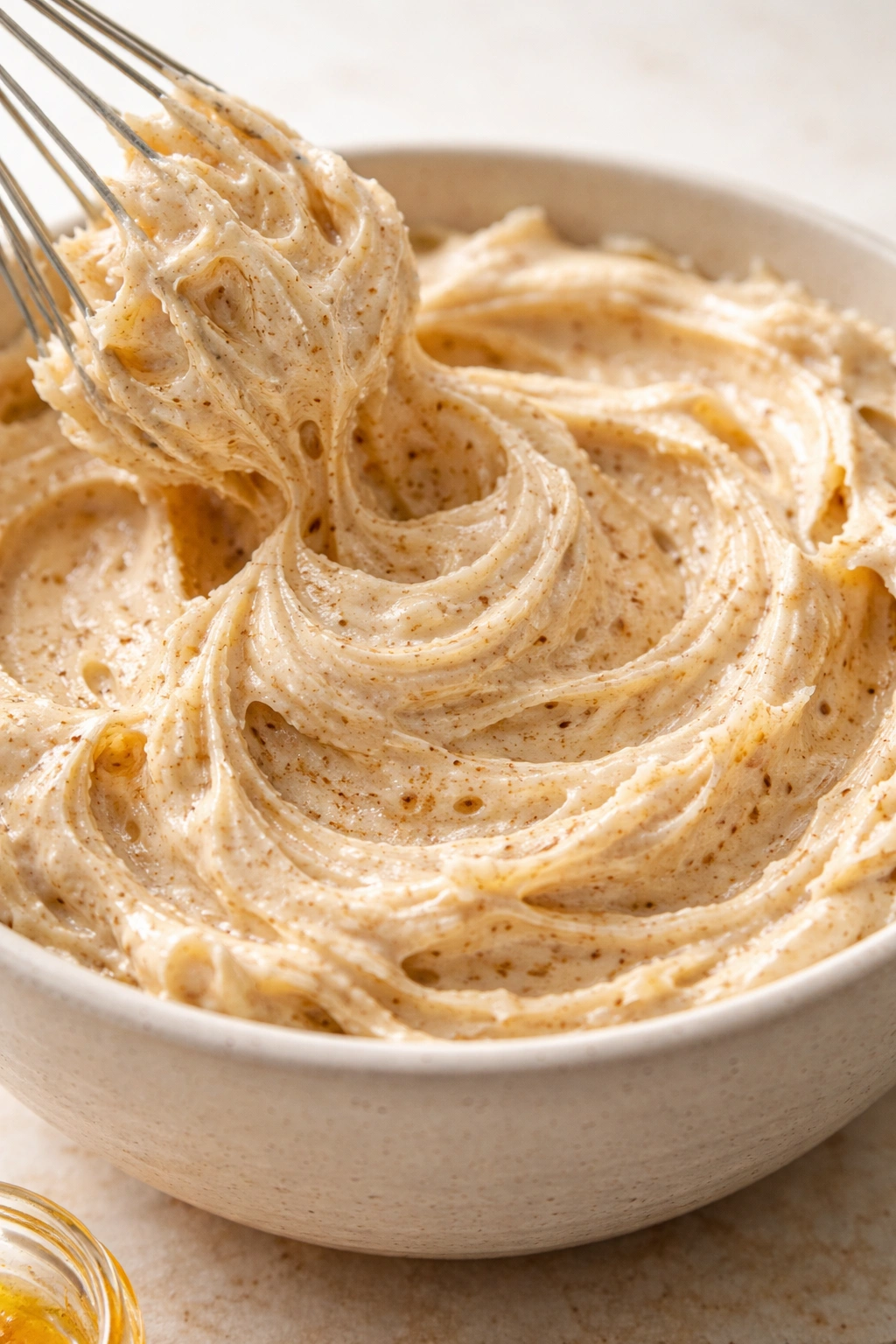
When you whip softened butter, you’re creating an emulsion — a suspension of tiny air bubbles throughout a fat matrix. Those air pockets are what give whipped butter its characteristic light, fluffy texture. The speed at which this happens depends on two things: the temperature of your butter and the speed of your mixer.
Butter that’s too cold won’t incorporate air efficiently; it’ll just break apart into grainy pieces. Butter that’s too warm will turn into separated, greasy liquid. The sweet spot is butter that’s soft enough to be easily indented by your finger but still holds its shape when you press it. Room temperature usually means 65-70°F. If your kitchen is cold, let butter sit out for 20-30 minutes. If it’s warm, you might need less time — or you could place softened butter in the refrigerator for 5-10 minutes to get it to the right consistency.
Honey dissolves slowly into fat, which means it doesn’t distribute evenly if you just dump it in at the beginning. Instead, add honey after the butter has already been whipped for about 2 minutes. By that point, air pockets are established, and the honey can be folded in gently or mixed on low speed without deflating your work. The cinnamon should go in around the same time for even distribution.
Equipment and Preparation
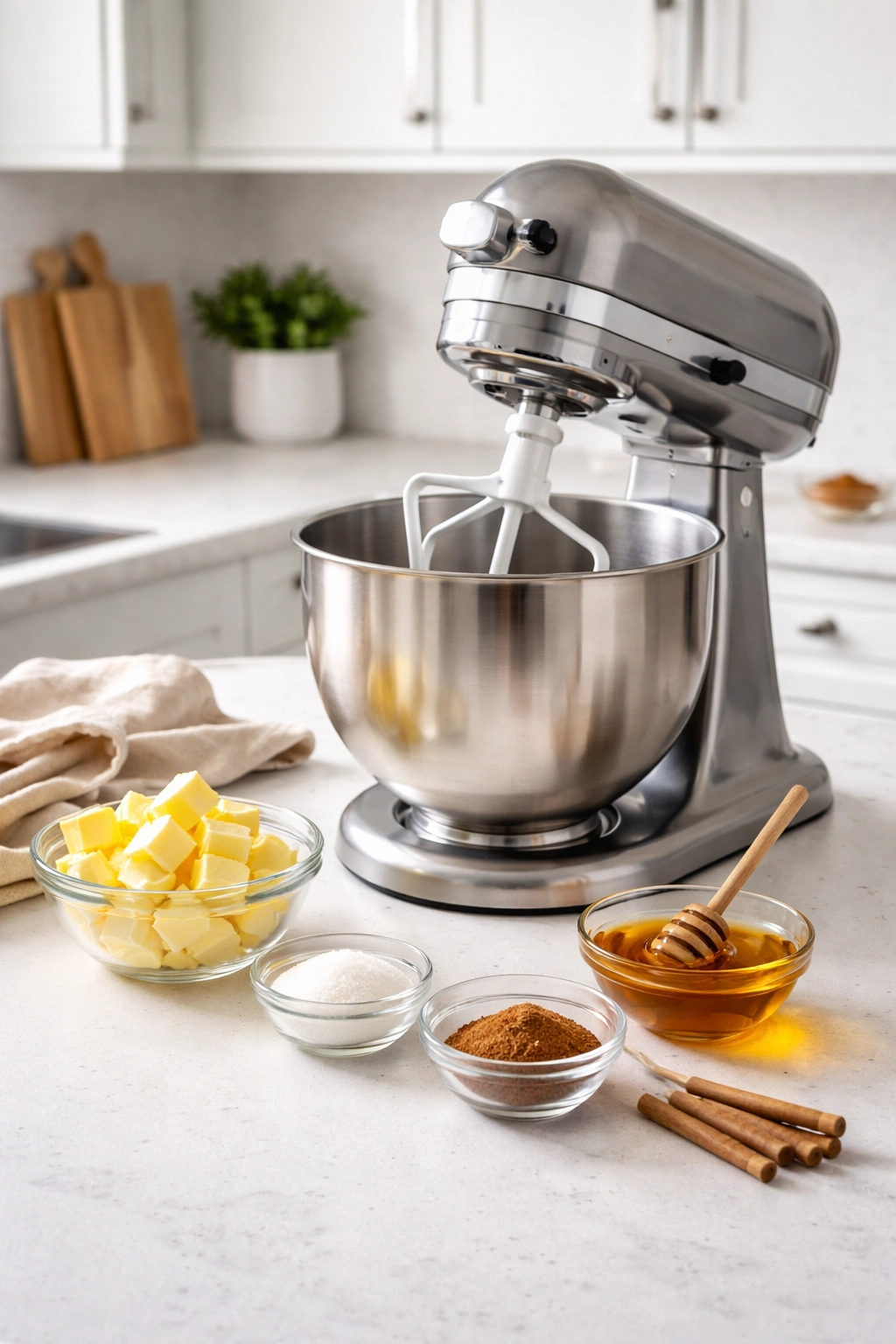
You don’t need fancy equipment to make this recipe successfully. A stand mixer with a paddle attachment is the gold standard — it whips the butter evenly and frees your hands to watch the texture change. But a hand mixer works just fine too, and honestly, some people prefer the hand mixer because they feel more in control of the texture.
If you don’t have an electric mixer, you can technically whip butter by hand using a fork in a medium bowl, but it’ll take 10-15 minutes of genuine elbow work and your arm will absolutely know it. It’s doable if you’re committed, but I wouldn’t recommend it as your regular method. A simple hand mixer from any grocery store costs less than ten dollars and will make this task effortless.
Room temperature is critical here. Not just the butter, but your bowl and paddle should be at room temperature too. If your mixer bowl comes straight from the cabinet and it’s cold from air conditioning, it can slow down the whipping process. I like to run warm water into my bowl for 20 seconds, then dry it completely right before I start. This brings it to a neutral temperature without affecting the butter.
Yield, Timing, and Difficulty
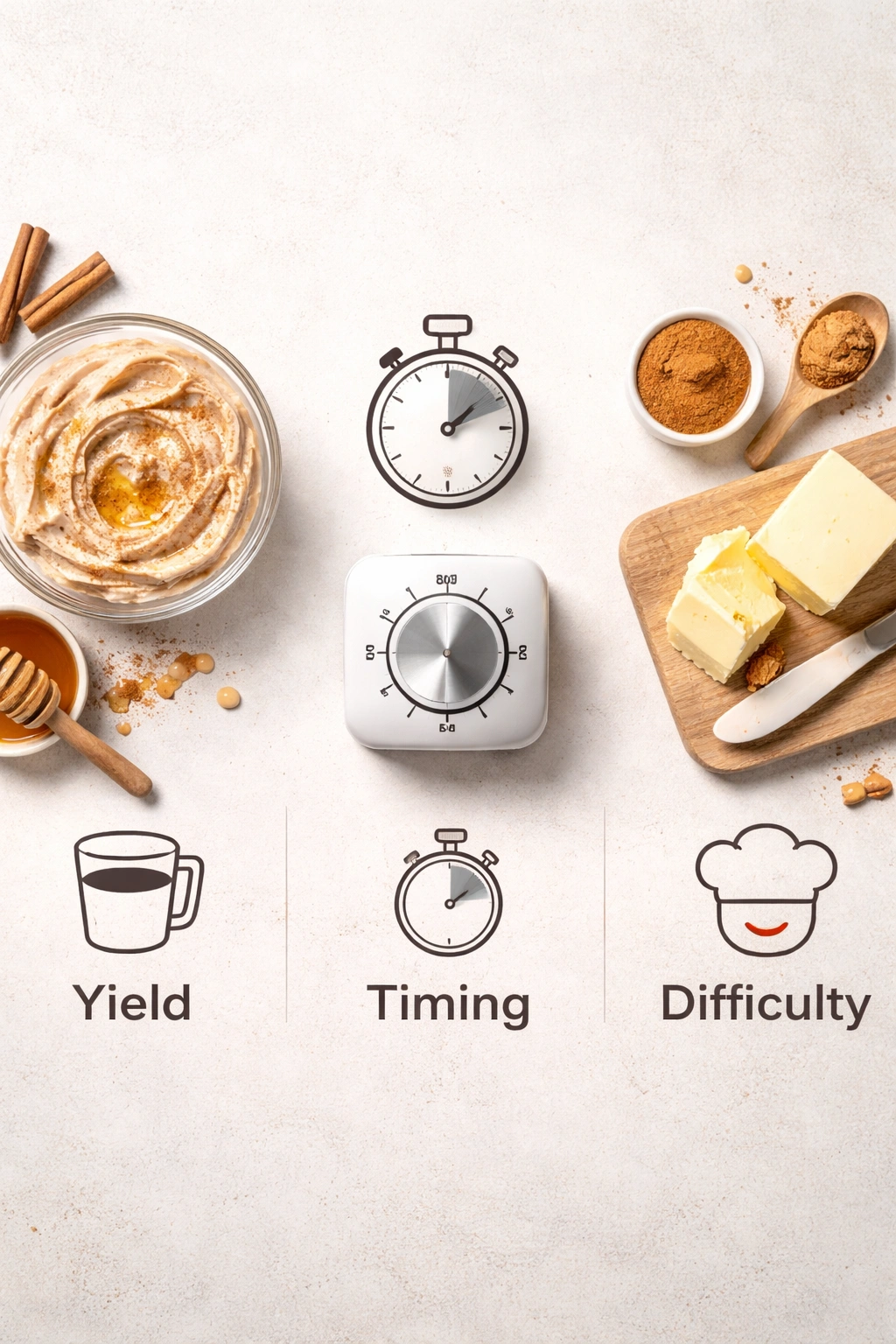
Yield: About 1 cup (enough for 6-8 servings, or one batch that keeps for up to 2 weeks)
Prep Time: 5 minutes (measuring, softening, mixing)
Cook Time: None — this is raw butter, no cooking involved
Total Time: 5 minutes active
Difficulty: Beginner — This requires zero special skills, no precise timing, and almost impossible to mess up. If you can turn on a mixer and measure three ingredients, you’re already there.
Complete Ingredient List
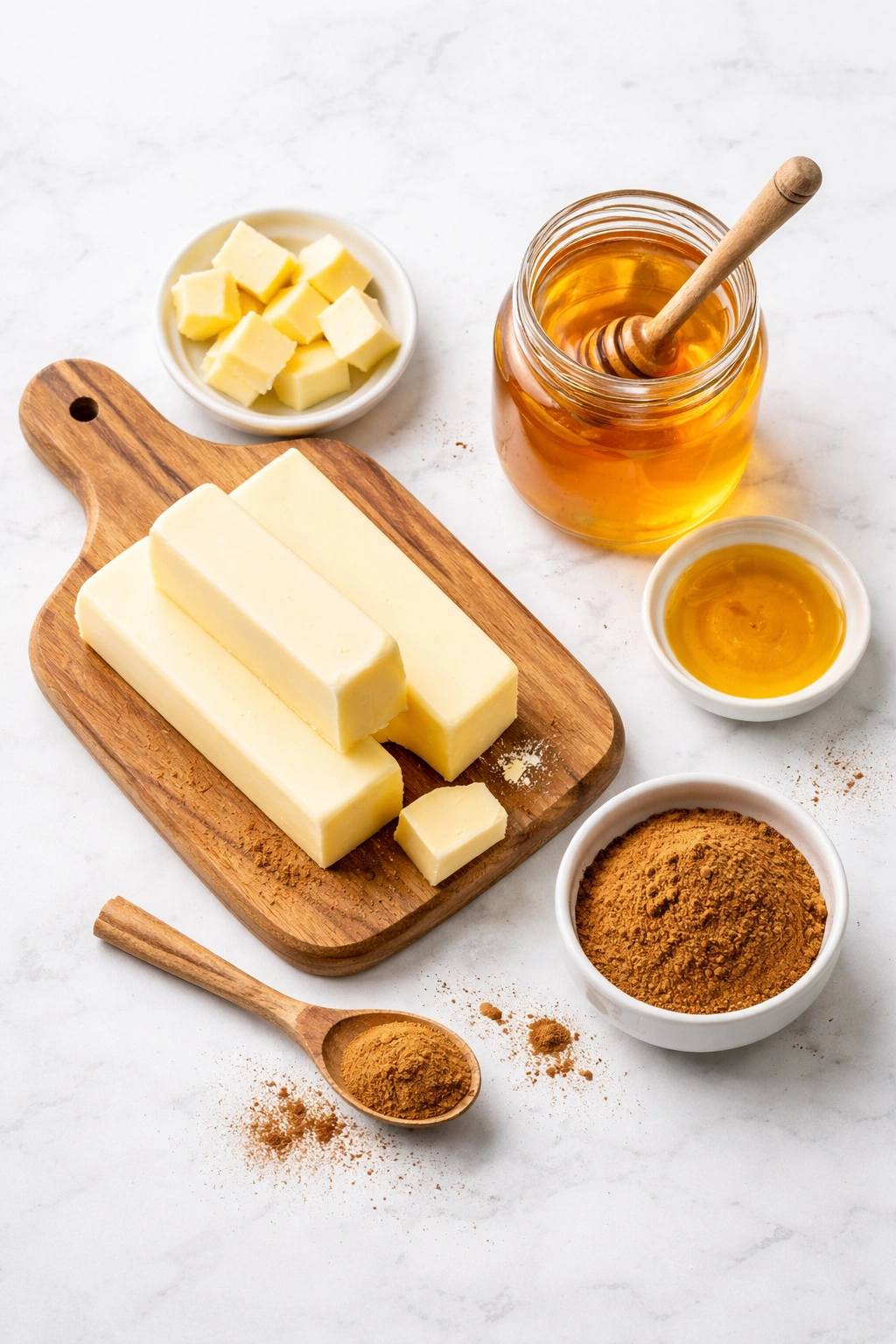
The ingredient list for whipped cinnamon honey butter is beautifully short, which means ingredient quality actually matters. You can’t hide behind complexity here.
For the Whipped Butter:
- 1 cup (2 sticks) unsalted butter, softened to room temperature
- 3 tablespoons raw honey, at room temperature
- 2 teaspoons ground cinnamon (or 2½ teaspoons if you prefer deeper cinnamon flavor)
Optional Flavor Boosters:
- ¼ teaspoon fine sea salt (enhances all the flavors and adds sophistication)
- ⅛ teaspoon vanilla extract (deepens the sweetness subtly)
- Pinch of ground nutmeg (adds warmth and complexity)
A Note on Ingredient Choices:
Butter: Use unsalted butter so you control the salt level entirely. European-style butter with higher fat content (86-88% butterfat versus standard 80%) will whip slightly faster and create a silkier texture, though standard butter works perfectly fine. Cold butter stored in your freezer is usually fresher than butter that’s been sitting in the fridge for weeks.
Honey: Raw honey is preferable to processed because it has more complex flavor notes, but any good honey will work. Avoid honey that’s crystallized unless you plan to warm it first. If your honey is cold from the fridge, let it sit out for 10 minutes before measuring so it flows easily and mixes properly.
Cinnamon: Use ground cinnamon, not cinnamon stick. True Ceylon cinnamon has a more delicate, complex flavor than cassia cinnamon, but either works. I prefer Ceylon for this recipe because it doesn’t overpower the honey. Taste a tiny bit of your cinnamon before adding it — if it’s been sitting in your spice cabinet for three years, it’s lost potency and you might need slightly more.
Step-by-Step Instructions
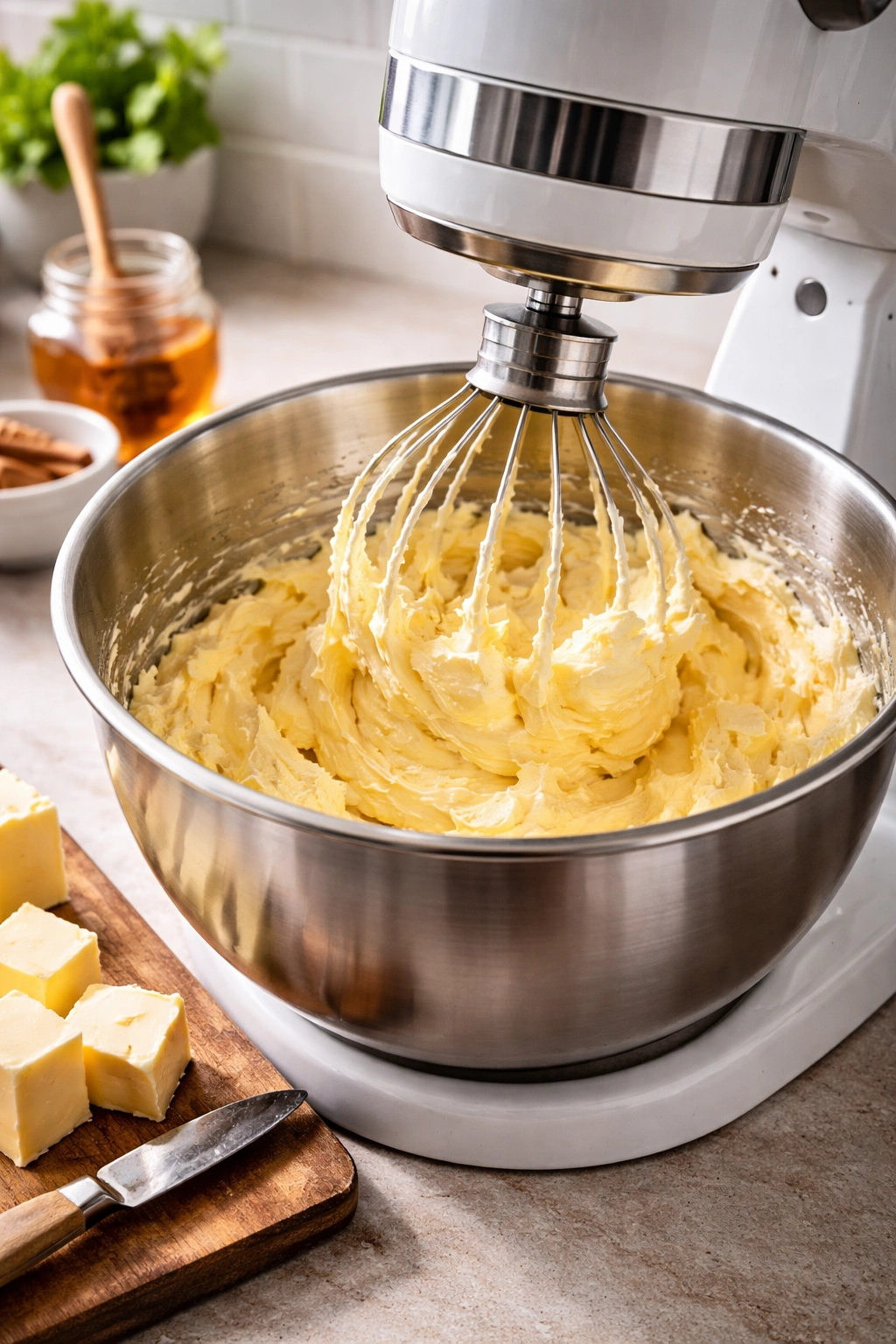
Prepare Your Equipment:
-
Cut the butter into chunks roughly 2 inches across and place them in the bowl of your stand mixer fitted with the paddle attachment. If using a hand mixer, place butter chunks in a medium-sized bowl that gives the beaters room to move freely without splattering. The room-temperature butter should give slightly when you press it but still hold its shape — it should not be greasy or glossy on the surface. If your butter feels too soft, place the bowl in the refrigerator for 5 minutes.
-
Have your honey and cinnamon measured out and ready to add. They should be within arm’s reach so you don’t lose momentum once you start whipping. If your honey is thick or crystallized, run the measuring spoon under warm water first to make it flow smoothly.
Whip the Butter:
-
Turn the mixer to medium-high speed and let it run for about 2 minutes. You’ll see the butter transform from chunky and grainy to pale and fluffy. The volume will noticeably increase — it should roughly double in size — and the color will lighten from pale yellow to almost white.
-
Stop the mixer and scrape down the sides of the bowl with a rubber spatula, getting into the corners where butter tends to stick. This ensures the whipping is even throughout. For a hand mixer, run it for 1-minute intervals and stop to scrape between each interval.
Advertisements
Add Honey and Spices:
-
Add the honey all at once and the cinnamon at the same time. These go in after the initial whipping phase because adding them beforehand can interfere with the air incorporation. Important: Keep the mixer on medium speed (not high) and mix for 30-45 seconds only, just until the honey and cinnamon are fully incorporated and the color is even. If you overbeat at this stage, the mixture can start to break and lose its fluffy texture.
-
If you’re using optional salt, vanilla, or nutmeg, add these with the honey and cinnamon in the same step. Stop the mixer as soon as you don’t see streaks of cinnamon anymore and the color is uniformly pale tan throughout.
Finish and Serve:
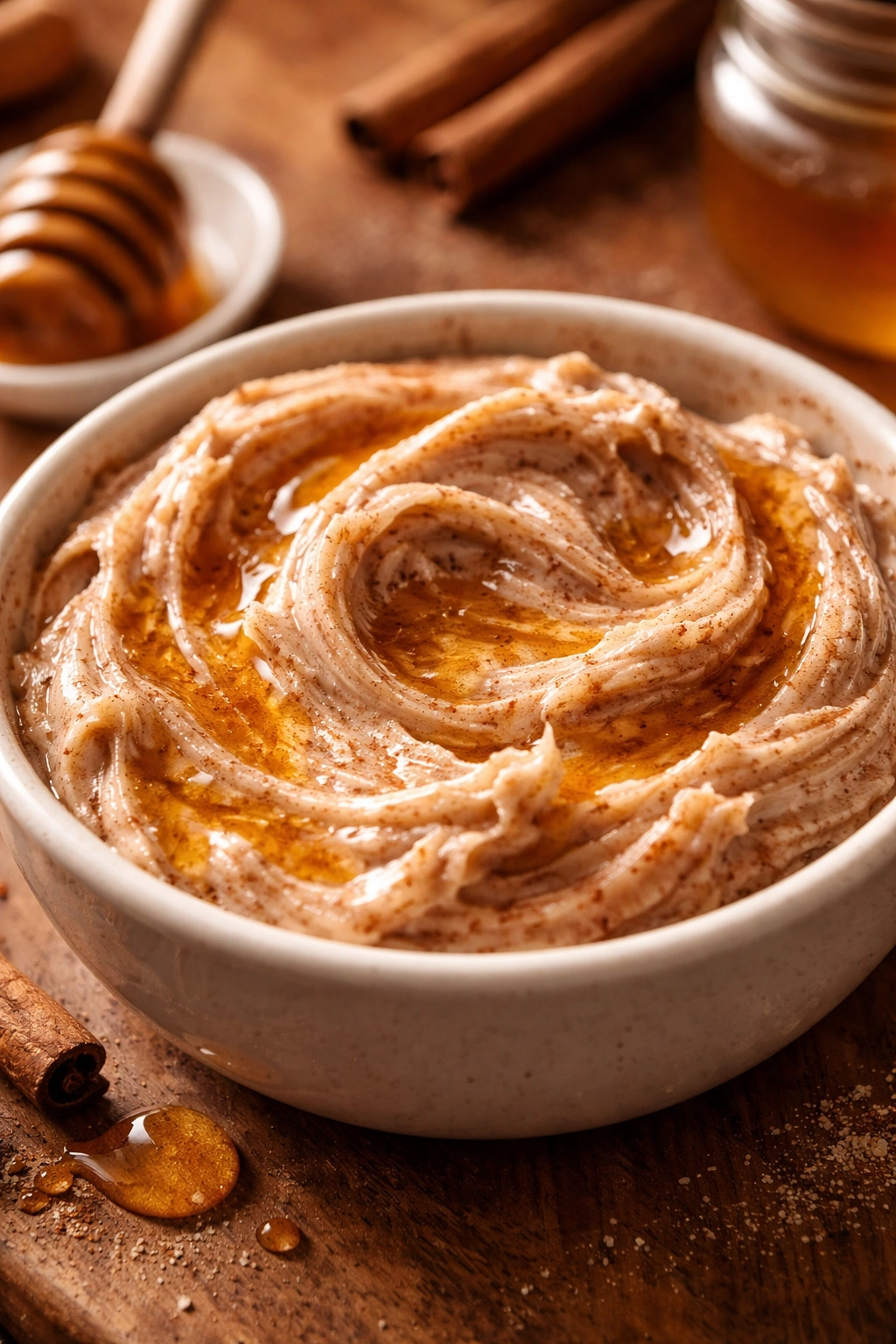
- Transfer the whipped butter to a small serving bowl or a mason jar (if making ahead for storage). Gently smooth the top with a spatula if you like it neat, or leave it rustic and textured. A light dust of cinnamon on top looks beautiful and signals what’s inside.
Making It Look and Taste Perfect
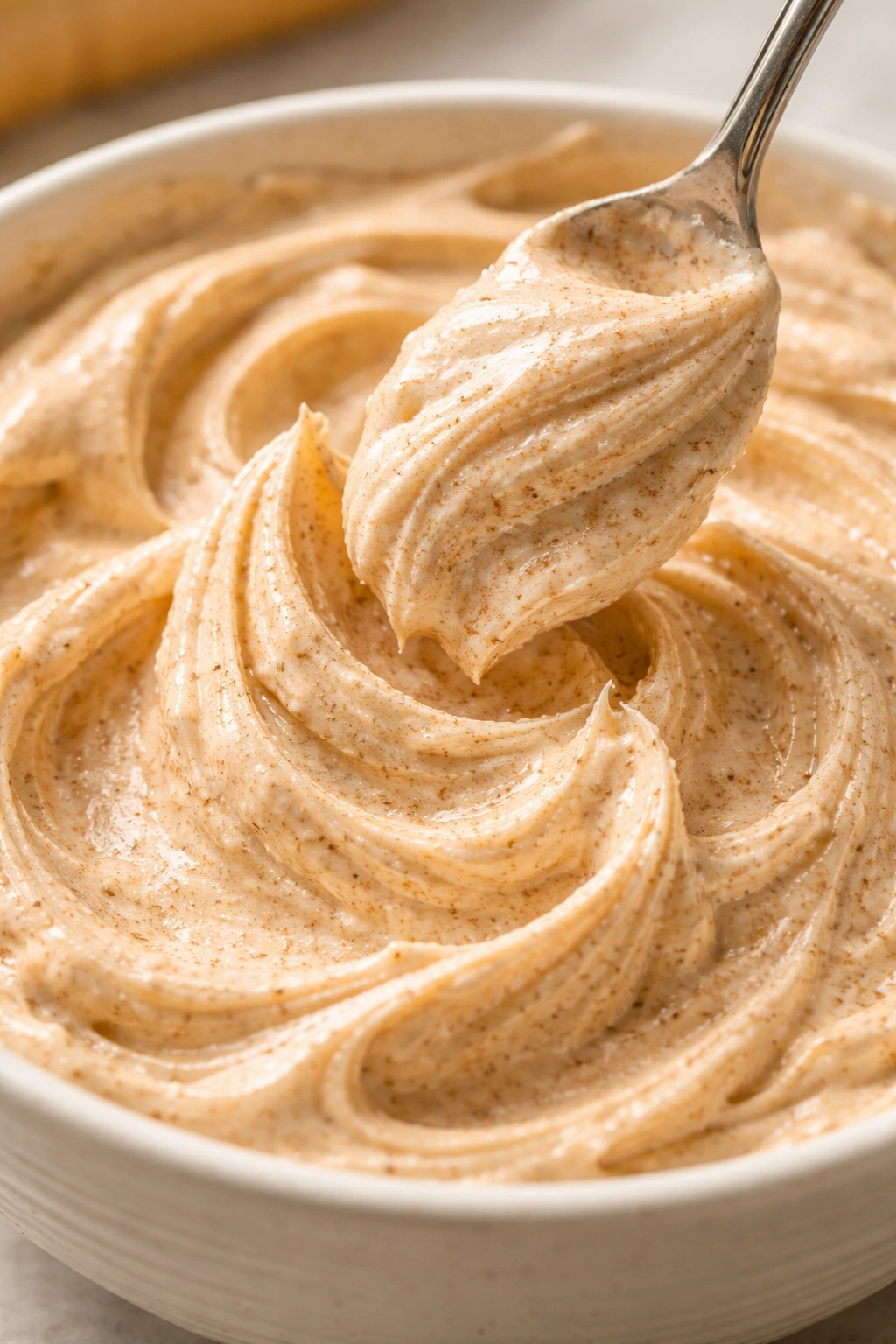
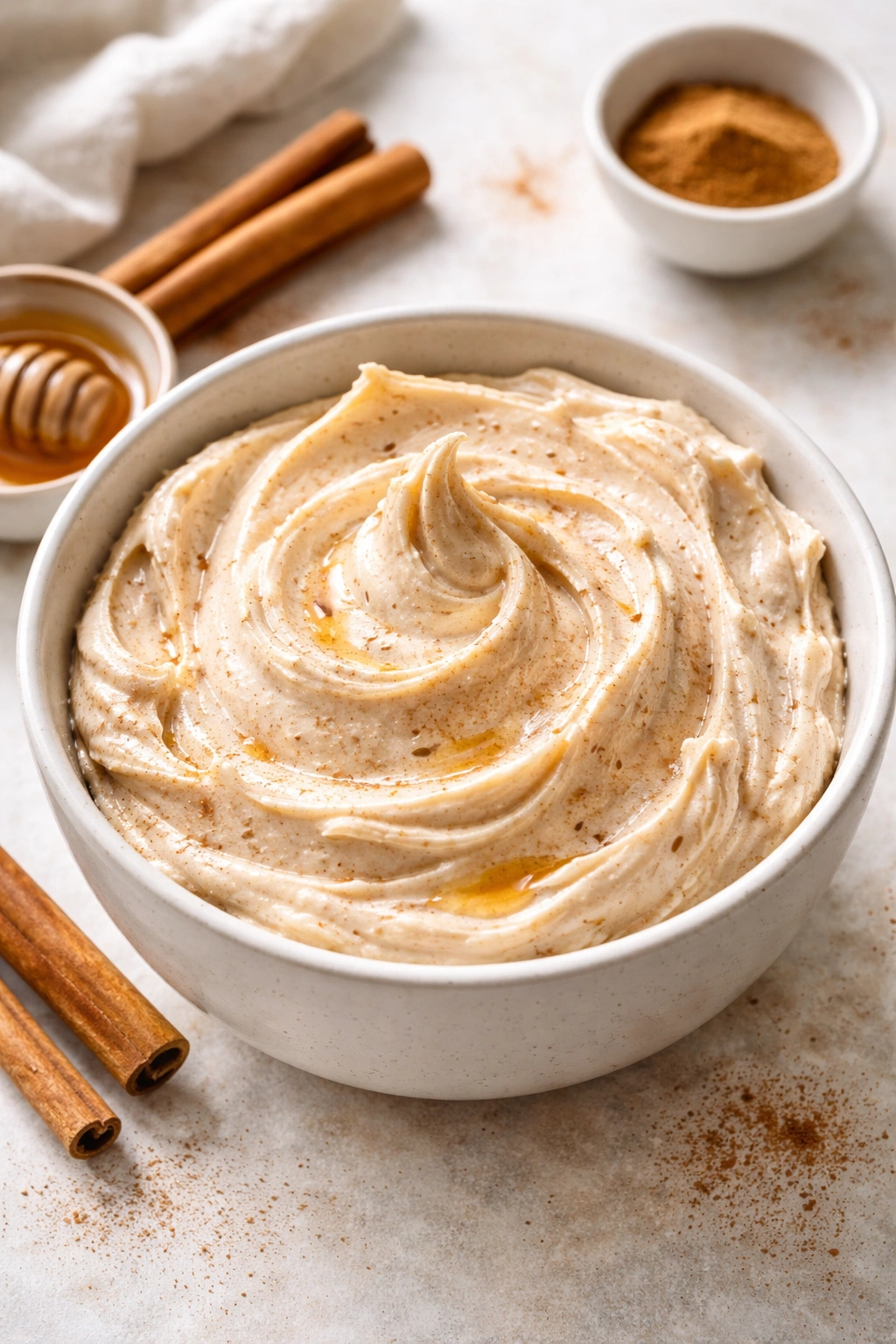
The texture you’re aiming for should be fluffy enough that a spoon sinks into it easily but structured enough to hold peaks if you drag a fork through it. Think of the texture somewhere between softened ice cream and mousse — definitely spreadable but with visible airiness. If you under-whip, the butter will still taste delicious but won’t have that signature light quality. If you over-whip and beat it too long at the end, you’ll start to see small puddles of separated liquid and the texture becomes grainy instead of smooth. The good news: this takes a while to happen, so you have a comfortable window where the texture is perfect.
The color should shift from pale yellow to a creamy tan once the cinnamon is fully incorporated. If you see streaks or patches of cinnamon that haven’t distributed, keep mixing on low speed for another 15-20 seconds. The flavor will be sweet but not overpowering, with warm spice notes that develop on your tongue.
Taste a small spoonful before you finish and transfer it to storage. Does the cinnamon flavor feel right to you? If you prefer stronger cinnamon, you can add another ¼ teaspoon at this point and mix briefly. Honey taste more obvious? That means it’s working — the sweetness will feel more balanced once it’s on warm toast or melting into pancakes.
Tips and Common Mistakes to Avoid
The Temperature Issue:
This is the most common problem people encounter. If your butter is too cold, it won’t whip and will just break into chunky pieces. Solution: Let it sit on the counter and check it every 5 minutes by pressing your finger into it. You’re looking for a surface that gives way easily but doesn’t leave a fingerprint that slowly fills back in. If it’s still too firm, give it another 5 minutes. If your kitchen is very warm, you can soften butter in shorter time — sometimes 10-15 minutes is enough instead of 20.
Adding Ingredients Too Early:
Honey and cinnamon added before the butter is fully whipped will interfere with air incorporation. Wait until you see visible volume increase and lightening of color, then add your flavorings. This is when the mixture is ready to receive them.
Over-Mixing After Adding Honey:
This is the other common mistake. Once you’ve added honey and cinnamon, stop mixing the moment everything is evenly distributed. Continuing to beat at high speed will break down the air pockets you just worked so hard to create, and the butter can begin separating into liquid and solid components. Low speed, 30-45 seconds maximum, and you’re done.
Not Measuring the Cinnamon Properly:
When you scoop cinnamon straight from the container with a measuring spoon, you often get more than you should because the spoon naturally gets pressed into the pile. Always spoon cinnamon into your measuring spoon and level it off with a flat edge. Better yet, sift cinnamon if it feels at all clumpy. This gives you more control over the flavor.
Forgetting to Soften Butter All the Way Through:
Sometimes the outer edges of butter chunks are soft but the interior is still cold. This is especially true if your butter has been sitting out for only a few minutes. Cut your butter into smaller chunks (1-inch instead of 2-inch) so it softens evenly throughout. Or let it sit a bit longer and you’ll know the whole piece is soft.
Starting with Unsalted Versus Salted Butter:
Always use unsalted butter for this recipe. Salted butter has an unpredictable amount of salt added during production, so you can’t control the final salt level of your whipped butter. Unsalted butter lets you decide exactly how much salt goes in, if any.
Flavor Variations and Custom Combinations
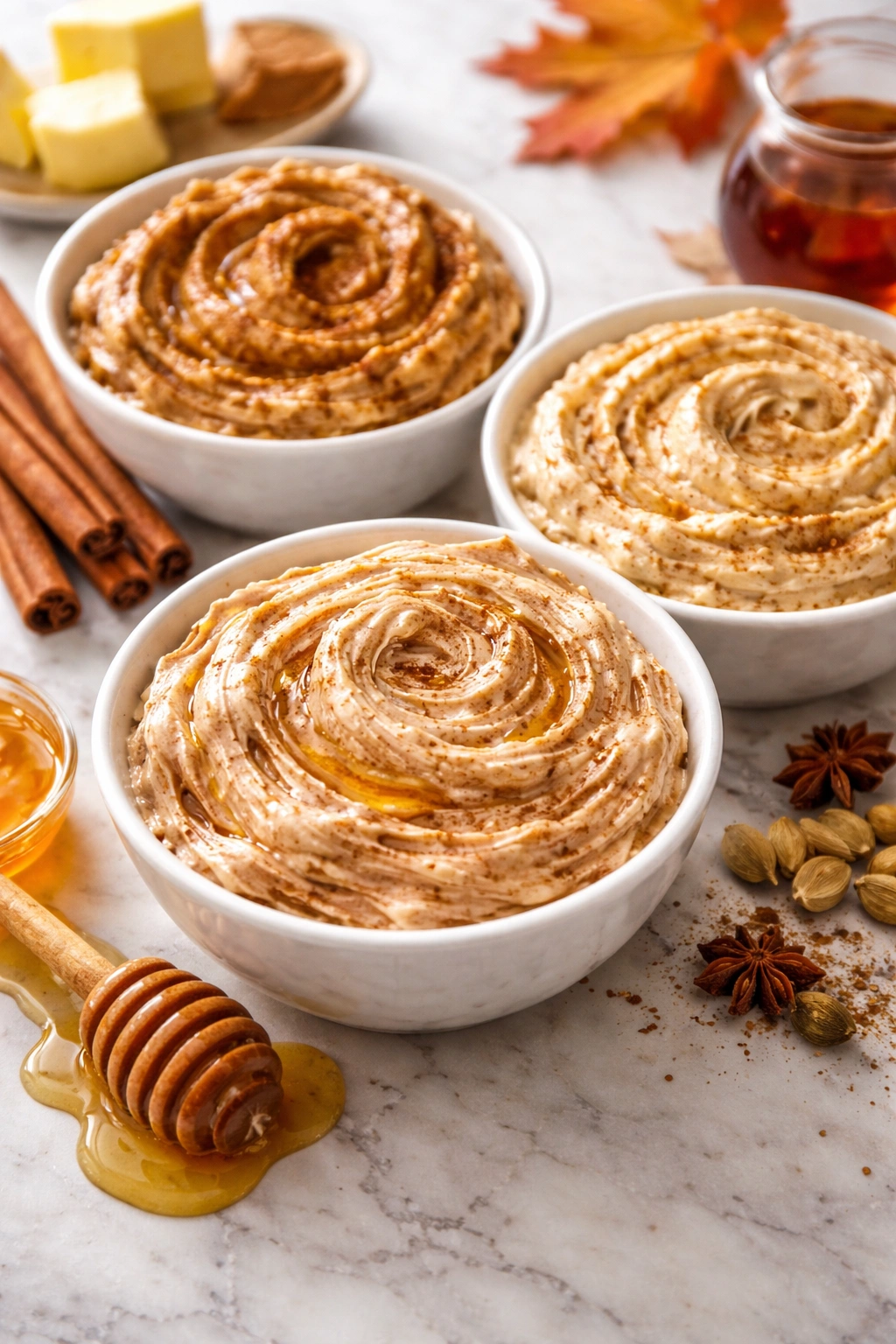
Once you master the basic technique, you can create endless variations using the same 5-minute method. The ratios stay the same — roughly 1 cup butter to 2-3 tablespoons liquid sweetener and 2 teaspoons of your flavoring spice or ingredient.
Brown Butter Cinnamon Honey:
If you want deeper, nuttier flavor, brown your butter first. Let it cool completely to room temperature (this is crucial — warm brown butter won’t whip), then follow the exact same recipe. The browned milk solids add incredible complexity, and the toasted flavor pairs beautifully with cinnamon and honey. This version needs about 3 minutes longer to whip because brown butter is slightly heavier than regular butter, but it gets there.
Maple Cinnamon Version:
Swap the honey for pure maple syrup (use the same 3 tablespoons). The more robust flavor of maple stands up wonderfully to cinnamon, and you get a more autumnal taste profile. Maple syrup is thinner than honey, so it incorporates slightly faster — watch the texture carefully so you don’t over-mix.
Chai-Spiced Butter:
Add 2 teaspoons cinnamon, ½ teaspoon ground ginger, ¼ teaspoon ground cardamom, and a pinch of ground clove. Keep the honey at 3 tablespoons. This is incredible on toast, in coffee, or melted over warm oatmeal. The spice combination is complex and warming.
Vanilla Honey Cinnamon:
Reduce the cinnamon to 1½ teaspoons and add ¼ teaspoon vanilla extract along with the honey and remaining cinnamon. This tastes almost like a baked good without being heavy.
Espresso and Honey:
Add ½ teaspoon instant espresso powder dissolved in the honey before mixing. This adds depth and a subtle coffee note that doesn’t scream coffee — it just adds intrigue. Reduce cinnamon to 1 teaspoon.
Storage, Make-Ahead, and Keeping Quality
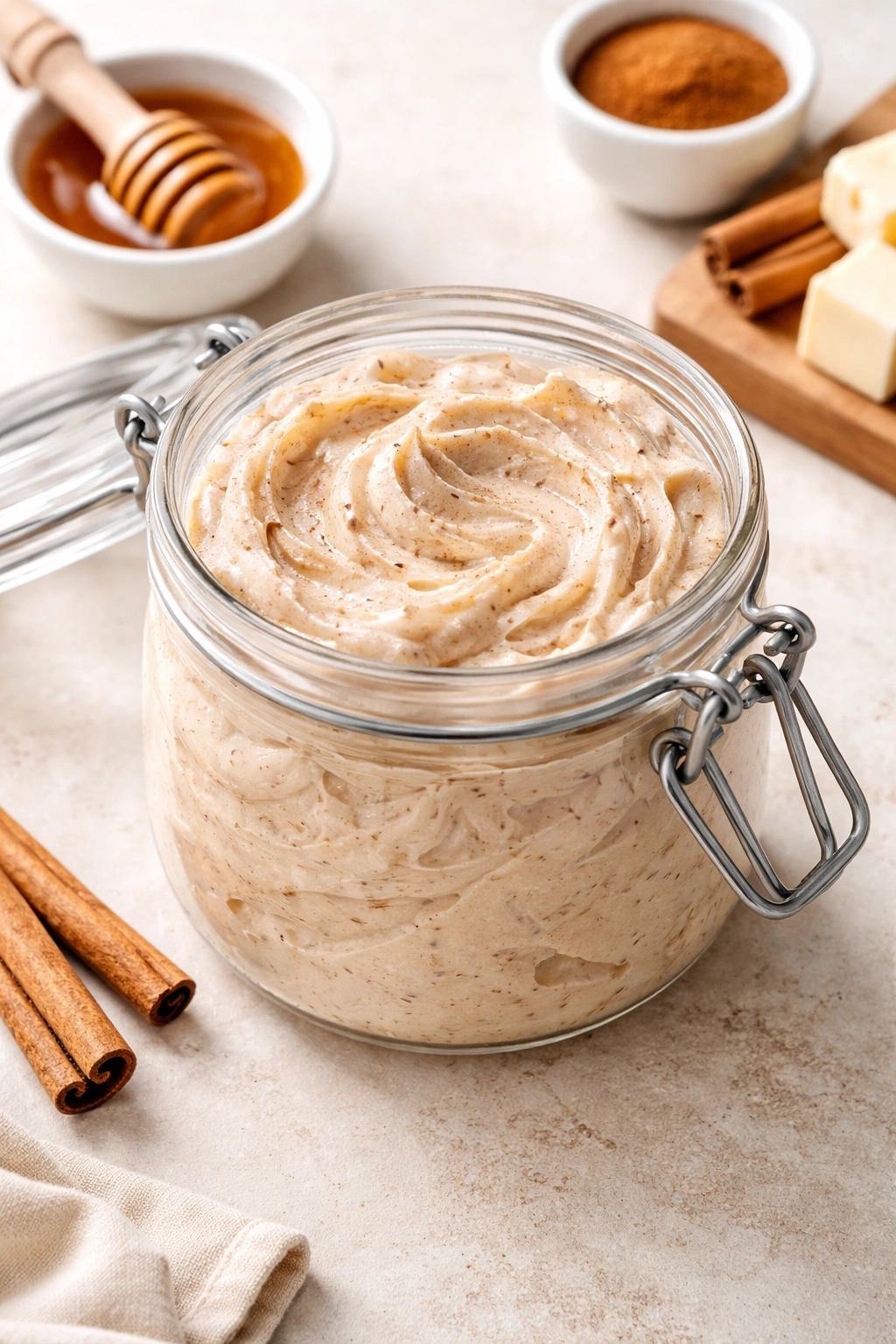
Whipped cinnamon honey butter keeps exceptionally well, which is one of the reasons it’s worth making in bigger batches.
Refrigerator Storage:
Transfer finished butter to an airtight container or jar and refrigerate. It will keep for up to 2 weeks. As it chills, it will firm up but remain spreadable (much softer than regular cold butter because of all those air pockets). When you want to use it, just scoop out what you need. You don’t need to bring it fully to room temperature — it spreads beautifully straight from the fridge.
Room Temperature Storage:
If you’re planning to use it within a day or two, you can leave whipped butter on the counter in a covered dish. It’ll stay soft and spreadable. In warm kitchens, it might get too soft and start to lose its structure — if this happens, move it to the fridge for 20 minutes to re-firm it. Never leave it uncovered on the counter for more than a few hours because it’ll pick up odors and oxidize slightly.
Freezing for Long-Term Storage:
Whipped cinnamon honey butter freezes beautifully for up to 3 months. Scoop it into ice cube trays, freeze solid (about 4 hours), then pop the cubes into freezer bags and label with the date. This way, you can grab exactly what you need without thawing the whole batch. One cube melts perfectly onto a piece of toast or pancakes. Thaw at room temperature for 15-20 minutes, or thaw in the refrigerator overnight.
Does It Improve Over Time:
Unlike many foods, whipped cinnamon honey butter is actually better on day 1 when the texture is fluffiest. However, it doesn’t decline noticeably over its first week. The flavor becomes slightly more mellow and integrated as the days pass — the honey and cinnamon distribute throughout the entire mixture at a molecular level, so by day 3 or 4, the flavor is more cohesive than it was on day 1. Some people prefer it this way. The texture remains spreadable and pleasant throughout its keeping time.
Serving Suggestions and Perfect Pairings
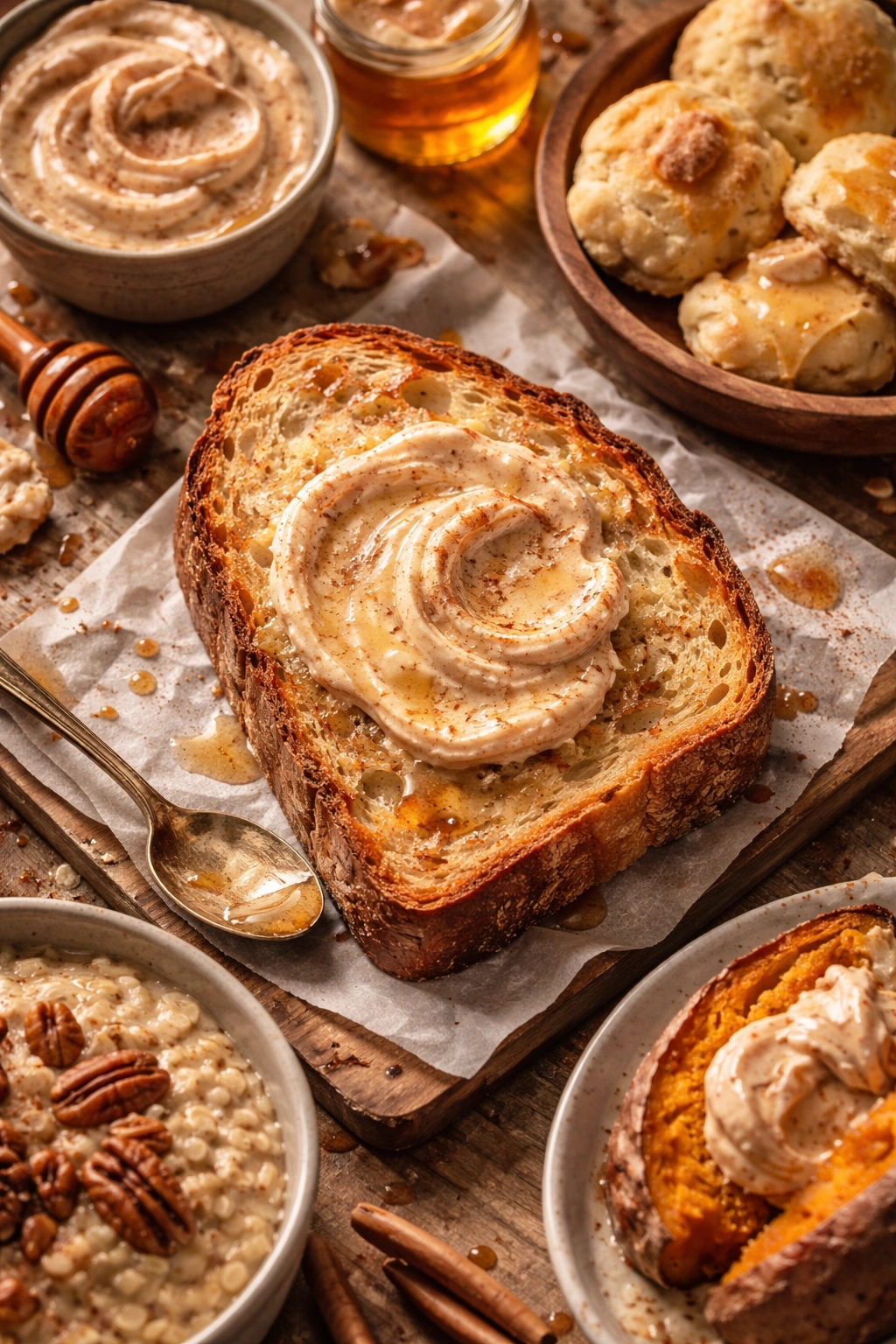
This isn’t just a topping — it’s a complement to specific foods that deserve it.
On Warm Toast:
This is the obvious pairing, but a thick slice of sourdough or whole grain bread with a generous dollop of whipped cinnamon honey butter melting into it is genuinely memorable. The butter soaks into the warm bread, and the cinnamon and honey flavors distribute as it melts. A pinch of fleur de sel or maldon salt on top adds sophistication.
With Fresh Bread or Biscuits:
Warm homemade biscuits or dinner rolls split in half and topped with a spoonful of this butter are irresistible. The butter softens from the heat of the bread and creates pockets of flavor throughout.
Melted Over Pancakes or Waffles:
Put a spoonful directly on top of warm pancakes or waffles instead of (or in addition to) maple syrup. It melts instantly and creates a different texture than syrup — creamier, less sticky, with the cinnamon flavor right there rather than buried in sweetness.
Stirred Into Oatmeal:
Add a spoonful to your bowl of hot oatmeal. It melts into creamy, butter-cinnamon-honey deliciousness that feels indulgent for breakfast but is essentially oatmeal dressed up.
On Sweet Potatoes:
Baked sweet potato halves topped with whipped cinnamon honey butter are a revelation. The earthiness of the sweet potato plays perfectly against the warm spice and floral honey. The butter also helps the dry texture of a baked sweet potato become creamier.
In Coffee or Hot Milk:
A small spoonful stirred into hot coffee creates a cinnamon-honey cream note that’s smooth and luxurious. It dissolves completely, adding sweetness and warmth. You can also stir it into hot milk before bed for something comforting.
On Roasted Pears or Apples:
Warm roasted fruit with a melting dollop of cinnamon honey butter is elegant enough for dessert but simple enough for a weeknight. The sweetness and spice complement stone fruit beautifully.
Served with Crackers:
Whole grain or seed crackers with a small spread of this butter and maybe a thin slice of aged cheddar or gruyere create surprisingly sophisticated appetizer bites. The salt of the cheese and the sweetness-spice of the butter balance each other.
Timing and Integration Into Your Routine
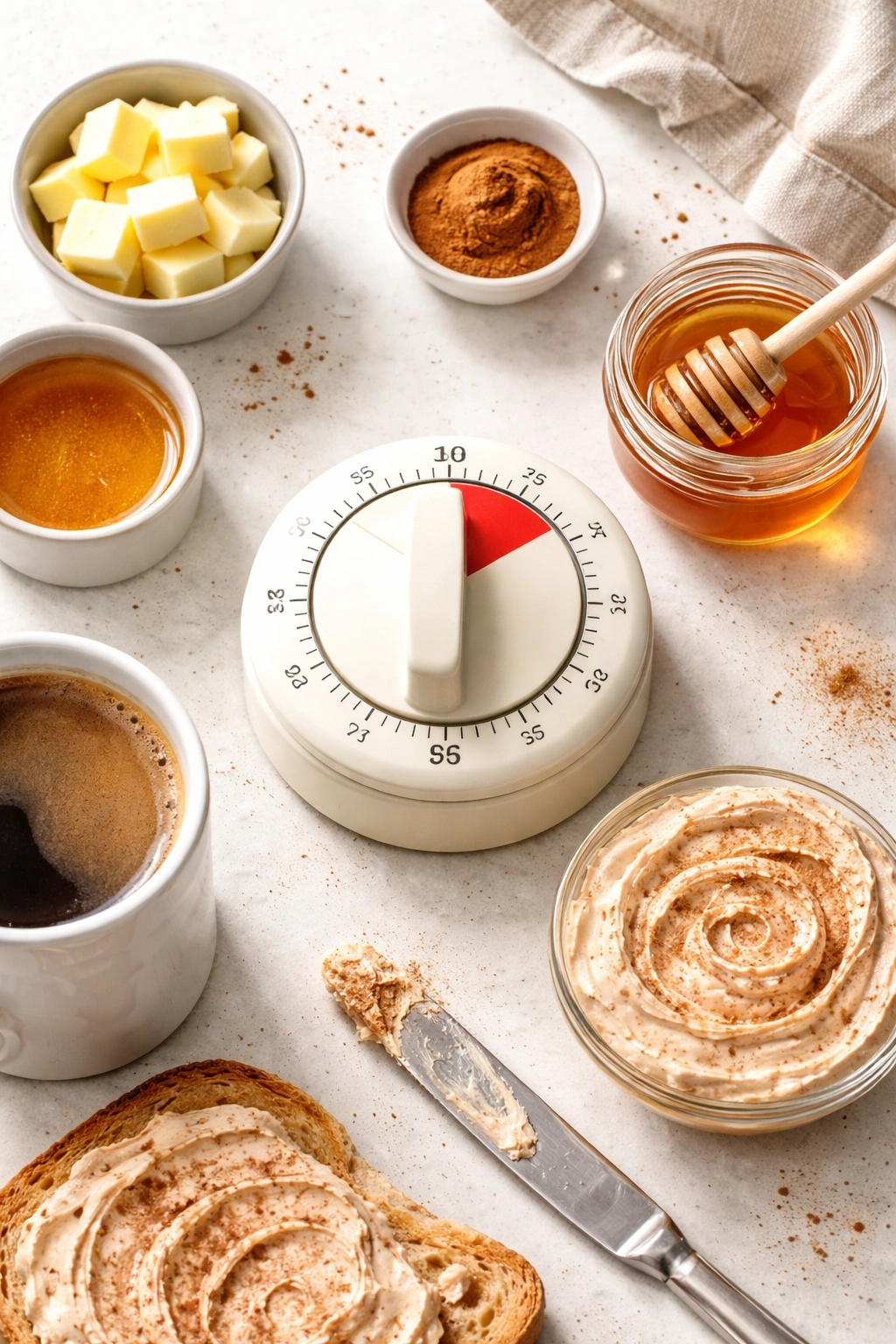
The 5-minute timeline in this recipe’s title is genuine, but it helps to understand what those 5 minutes actually contain. You’re counting: 2-3 minutes to measure and prepare ingredients, 2-3 minutes for the actual whipping and incorporating the honey and cinnamon, plus maybe 1 minute to transfer to a serving container. If you do this while your coffee brews or while you’re getting other breakfast elements together, it doesn’t feel like a separate task — it’s just something you’re doing simultaneously.
Some people make a double batch on Sunday and have whipped butter ready for the entire week. Others make it fresh each morning as part of their breakfast prep. Neither approach is better — it depends on your preference for fresh texture versus convenience. A freshly made batch has the most volume and the lightest, airiest texture. A batch that’s been stored and used throughout the week still tastes wonderful but settles slightly and becomes somewhat denser, though still infinitely more spreadable than regular cold butter.
Final Thoughts
Whipped cinnamon honey butter is one of those recipes that seems almost too simple to be worth learning, until you actually make it and see how dramatically it changes the way breakfast tastes. Once you understand the technique — three ingredients, a mixer, a few minutes — you realize you can apply it to infinite flavor combinations. Maple, vanilla, espresso, brown butter, chai spices, orange zest — the base technique never changes.
What makes this recipe genuinely worth your time isn’t just the taste, though that’s certainly part of it. It’s the fact that something this delicious is so quick to make and keeps so well. You’re not committing to an hour in the kitchen. You’re spending 5 minutes creating something that will improve breakfast or dessert for the next two weeks. That’s the real value here.
Start with the basic cinnamon honey version, practice until you can practically make it without thinking, and then start experimenting with variations that match your preferences. Before long, whipped butter in some form will probably become a regular part of your kitchen repertoire — and you’ll wonder how you ever lived without it.
