



Bacon and salad might seem like an unlikely pairing—one is rich and smoky, the other is supposed to be light and refreshing—but the magic happens when you treat bacon as a garnish and flavor accent rather than the main event. The secret to a bacon salad that feels bright and energizing instead of weighed down lies in three things: using barely enough bacon for maximum impact, choosing peppery or slightly bitter greens that stand up to the richness, and balancing everything with a vinegar-based dressing sharp enough to cut through the salt and smoke.
Most bacon salad recipes load up on heavy mayo-based dressings, cheese by the handful, and enough bacon to make it feel like a composed main course rather than a salad. That’s not what we’re after here. This approach proves you can have that crispy, smoky satisfaction without abandoning the feeling of eating something that actually nourishes you and doesn’t leave you sluggish an hour later. Real talk—once you nail this recipe, you’ll find yourself making it constantly because it hits that impossible sweet spot: deeply satisfying and genuinely light.
Why Bacon Belongs in a Salad
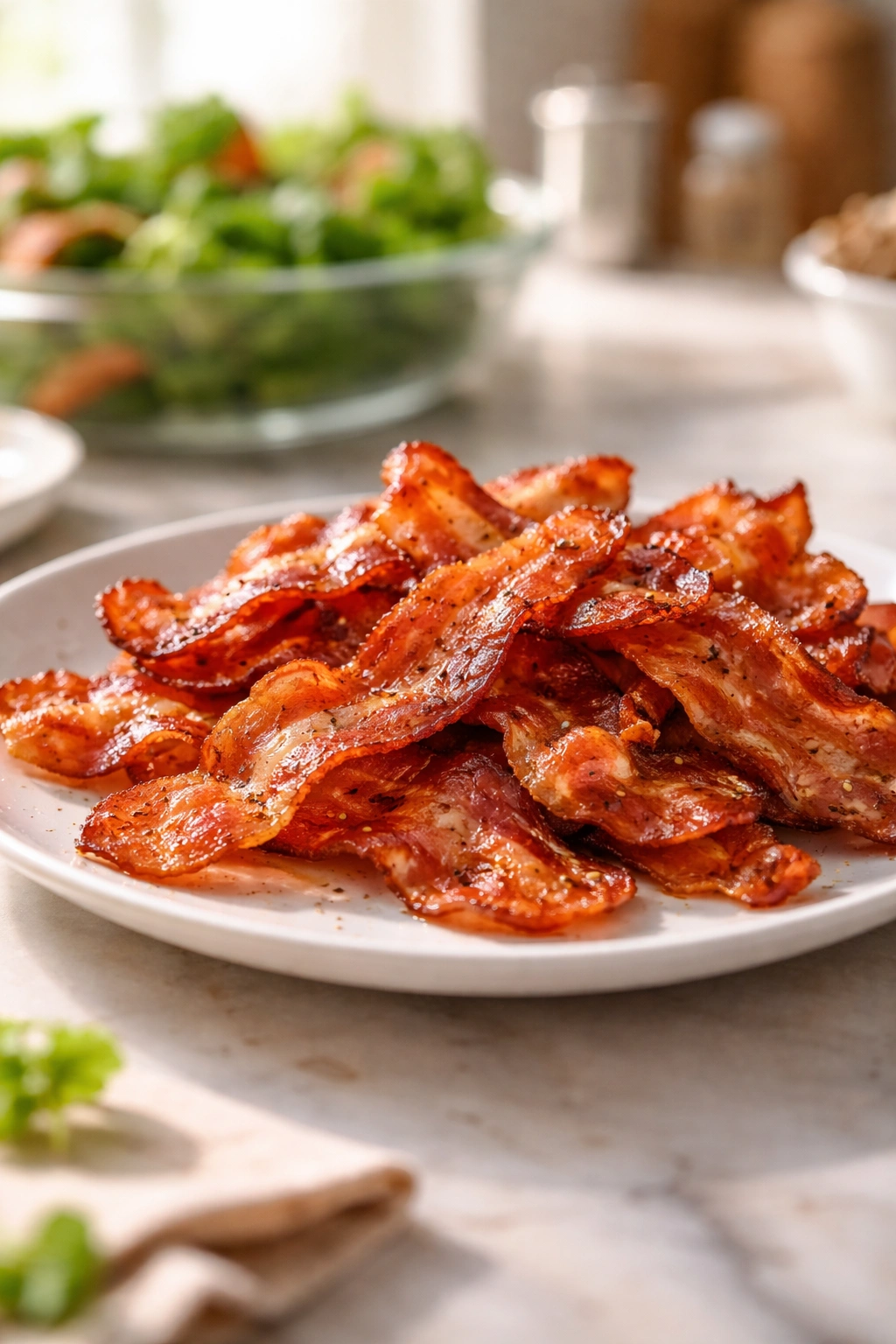
Bacon gets unfairly blamed for being inherently unhealthy, but a small amount of really good bacon adds tremendous flavor without actually adding much fat to your plate. The rendered bacon fat is mostly removed (we drain it thoroughly), and what remains is concentrated flavor that makes expensive salad ingredients sing. Think of bacon less as a main component and more like you would use an anchovy in a Caesar dressing—a small amount of something intensely flavorful that transforms the whole dish.
The smoke compounds in bacon are water-soluble, which means they spread throughout your mouth and keep releasing flavor with every bite. You need far less bacon than you’d think to feel like bacon is present in the salad. A properly crisped strip of bacon, crumbled, will flavor an entire bowl of salad for one person. This is why the rendering technique matters so much—we want maximum crispness and flavor extraction with minimum grease remaining.
Why Crispy Bacon Makes All the Difference
Undercooked bacon contributes a chewy, rubbery texture that doesn’t work in a salad. You want it shattered-crisp, the kind that crumbles between your fingers into irregular pieces that catch the dressing and distribute flavor evenly. Crispy bacon also has a completely different flavor profile than chewy bacon—it develops caramelized, nutty notes that bring complexity to the whole dish.
The other benefit of rendering bacon properly: you remove most of the excess fat that would otherwise weigh down the salad and cling to the greens. Slightly rubbery from undercooking or limp from underdone heat, and the salad immediately feels heavy. Crisp and well-drained, and you get all the flavor without the grease burden.
Finding the Right Greens for a Bacon-Based Salad
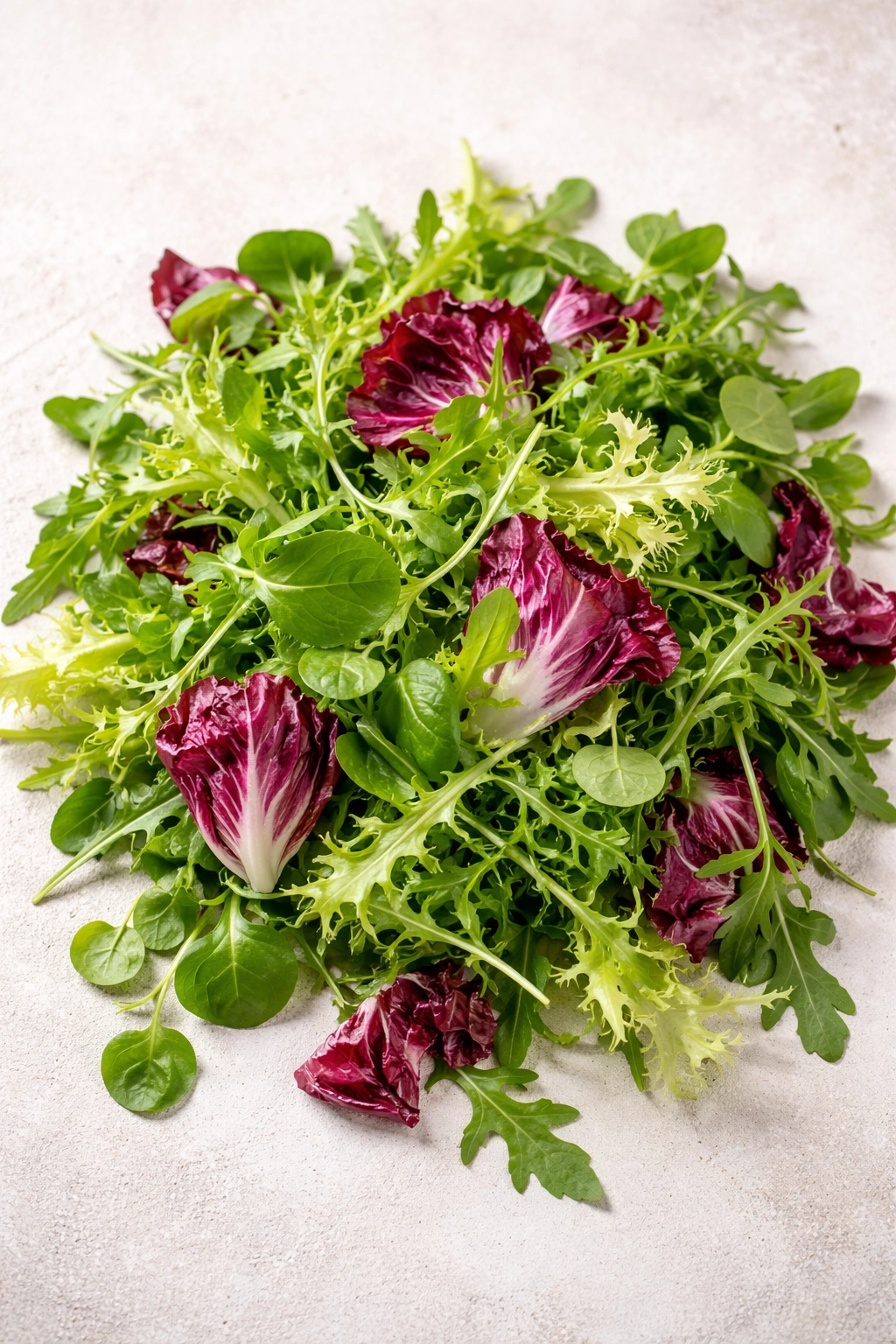
Not all salad greens are created equal when you’re building around bacon. Mild greens like butter lettuce or iceberg actually work against bacon’s strong flavor—they get completely overshadowed. Instead, reach for greens with some backbone: arugula, watercress, frisée, radicchio, or a good peppery spring mix. These have natural spice and slight bitterness that plays beautifully with smoke and salt.
The peppery hit of arugula, in particular, stands up to bacon without competing with it. Instead, the two flavors amplify each other. Frisée brings a pleasant bitterness and an amazing texture—those frilly leaves catch dressing and hold onto crispy bacon bits in a way that flat leaves don’t. A mix of different textures and flavors will give you more interesting bites than relying on a single green.
Quantities and Freshness Matter
For one generous salad serving or two lighter servings, you want about 2 to 3 cups of loosely packed greens—enough that you have breathing room, not a tightly packed bowl that feels overwhelming. The greens should be cold from the fridge and genuinely fresh; any sign of wilting or browning edges will make the whole salad feel sad rather than vibrant.
Wash your greens at least a few hours ahead (or up to a day ahead), then spin them completely dry in a salad spinner or lay them on paper towels to air-dry. Wet greens won’t hold dressing well, and water will dilute the flavors you’re carefully balancing. Dry greens make an enormous difference in how satisfying the final salad feels.
Building Flavor Without Heavy Dressings
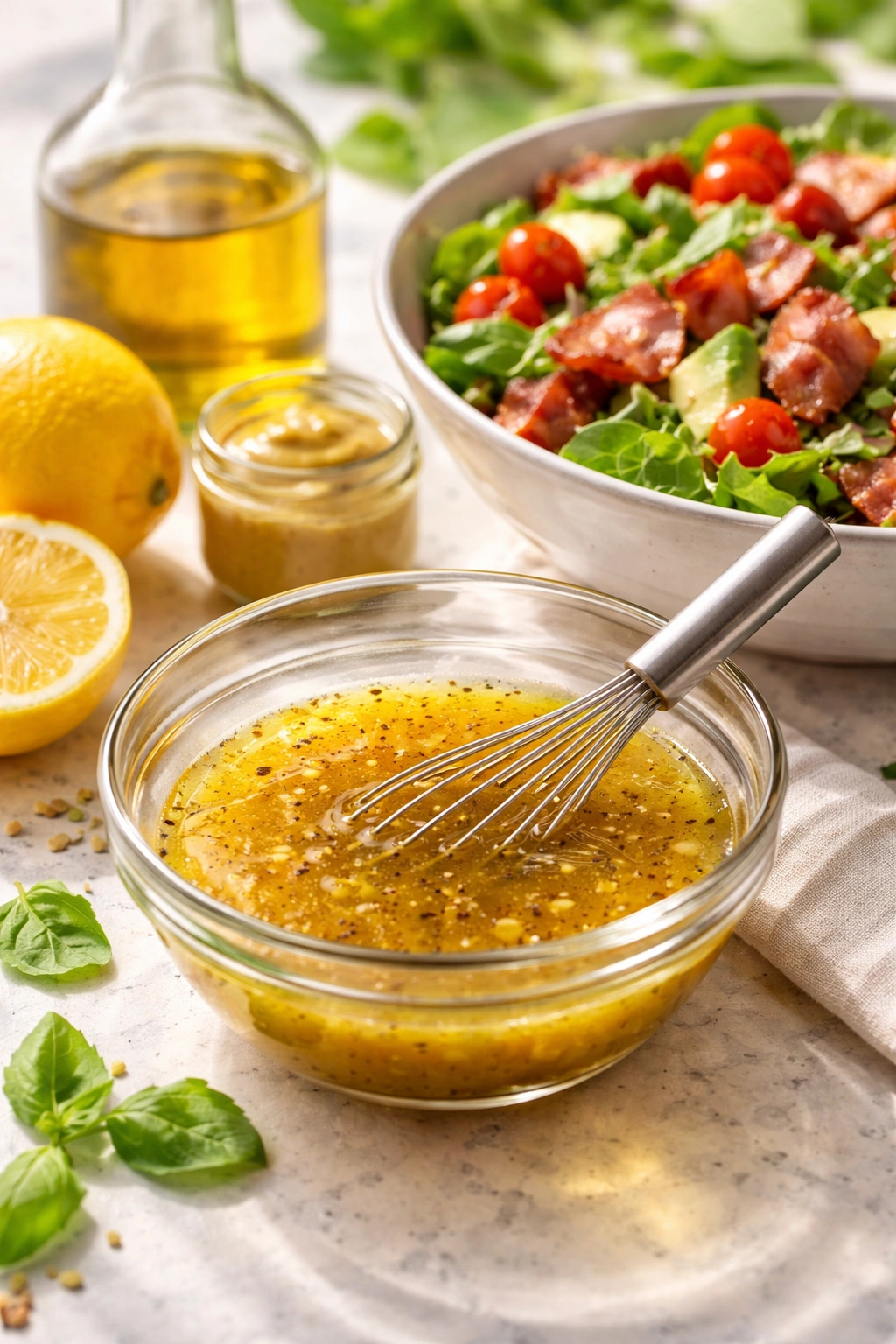
This is where most bacon salads go wrong—people slather them in ranch, blue cheese dressing, or Caesar loaded with mayo and cream. Those dressings turn a light salad into something that sits in your stomach. Instead, we’re making a simple vinaigrette: acid, good oil, a tiny hit of Dijon mustard (which acts as an emulsifier and adds subtle spice), and salt.
The acid should be prominent—you want to taste the brightness of the vinegar before you taste the oil. This cuts through the richness of the bacon without requiring a thick, creamy dressing to do the work. A 3-to-1 or even 2-to-1 ratio of oil to vinegar works beautifully here, depending on how sharp you like your dressing. Sherry vinegar, red wine vinegar, or apple cider vinegar all work; avoid white vinegar, which tastes harsh and one-dimensional.
Dressing Technique Matters
Never pour the full amount of dressing onto your salad at once. Start with about a third of what you think you need, toss gently, taste, and add more if needed. It’s much easier to add dressing than to remove it, and a little goes a surprisingly long way when it’s a proper vinaigrette. The greens should glisten, not glisten and have pooled dressing at the bottom of the bowl.
Toss your salad right before eating. Dressed greens start to wilt almost immediately, and wilted greens don’t deliver that crisp, fresh feeling we’re after. This is a salad to build and eat right away, not to make and sit with.
Serving and Timing Block
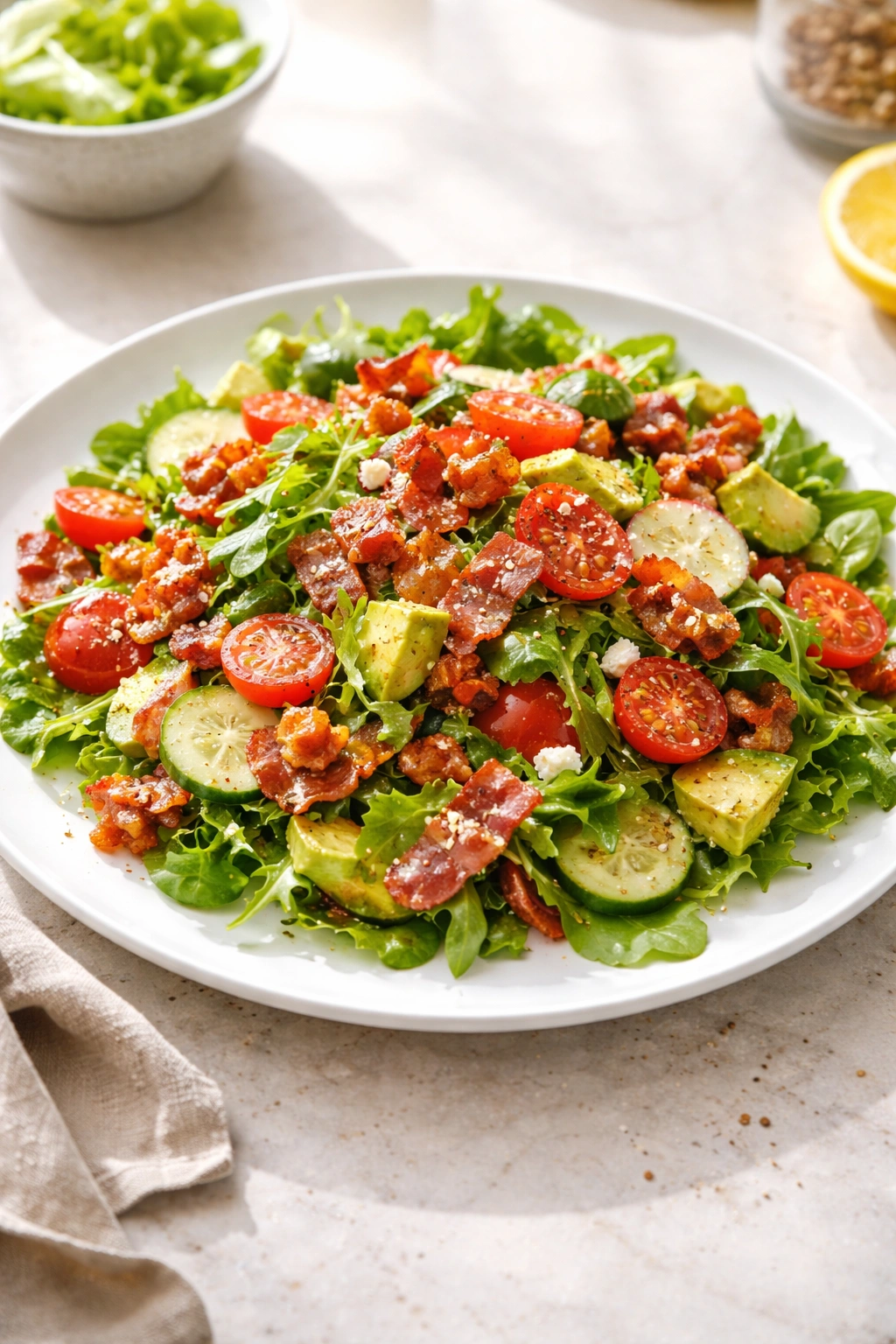
Yield: 1 generous main course serving or 2 light side servings
Prep Time: 15 minutes
Cook Time: 10 minutes (bacon rendering)
Total Time: 25 minutes
Difficulty: Beginner — No special skills required; the cooking is straightforward and the salad comes together in minutes.
Ingredients
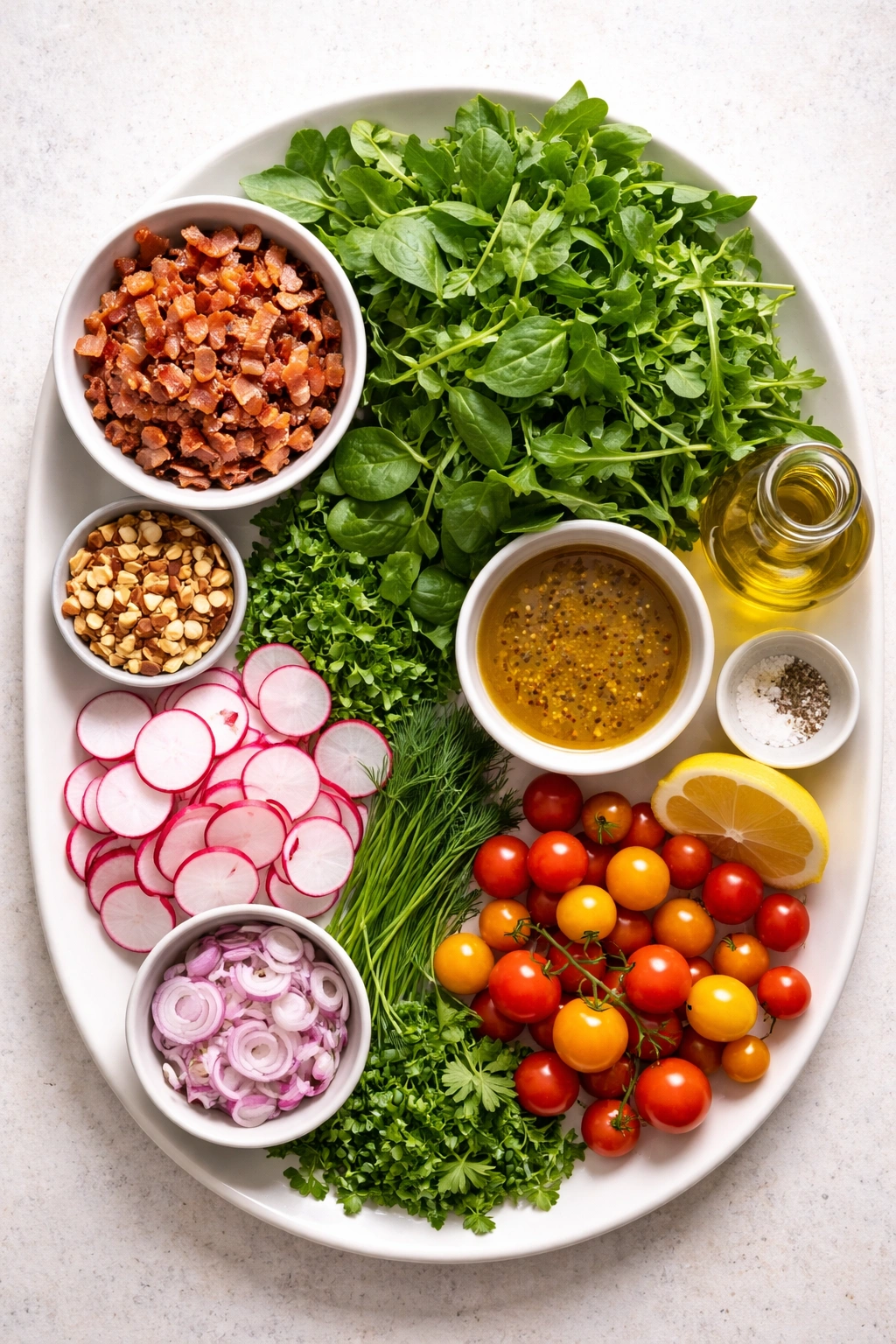
For the Salad:
- 3 to 4 slices of high-quality bacon (about 3 ounces), cut into 1-inch pieces
- 2½ to 3 cups fresh peppery salad greens (arugula, watercress, frisée, or a spicy spring mix), thoroughly washed and dried
- 1 small shallot, thinly sliced (about 2 tablespoons)
- ½ cup cherry tomatoes, halved (or heirloom tomatoes if in season)
- ¼ cup thinly sliced radishes (about 2 medium radishes)
- 2 tablespoons fresh herbs, roughly chopped (mint, basil, tarragon, or a mix)
- ¼ cup toasted nuts or seeds (walnuts, pecans, sunflower seeds, or pumpkin seeds)
- Optional: ¼ cup shaved cheese (Parmesan, aged Cheddar, or Gruyère) or crumbled goat cheese
For the Vinaigrette:
- 2 tablespoons vinegar (sherry, red wine, or apple cider)
- 1 teaspoon Dijon mustard
- 1 small clove garlic, minced (about ½ teaspoon)
- Pinch of fine sea salt
- Generous crack of black pepper
- 5 to 6 tablespoons good olive oil (or a mix of olive oil and a neutral oil like grapeseed if you prefer a lighter taste)
Step-by-Step Instructions
Render the Bacon:
-
Place the bacon pieces in a skillet over medium heat and let them cook undisturbed for 2 minutes, allowing the fat to release into the pan.
-
Stir the bacon occasionally—every minute or so—over medium heat for a total of 8 to 10 minutes. The bacon should gradually turn from pink to light brown to deep golden brown, and the pieces should sound crispy when you move them around with a spoon. Do not walk away entirely; bacon can go from perfectly crispy to slightly burned in the span of a minute.
-
When the bacon is shattered-crisp and deeply golden, pour the contents of the pan through a fine-mesh strainer set over a small bowl, catching the bacon fat. Spread the hot bacon pieces on a paper towel–lined plate to drain and cool for 2 to 3 minutes while you prepare everything else. The bacon will crisp up further as it cools. Reserve the strained bacon fat if you want to add a teaspoon to the dressing for extra depth—this is optional but excellent.
Make the Dressing:
-
In a small bowl or a jar with a tight-fitting lid, combine the vinegar, Dijon mustard, minced garlic, salt, and black pepper. Stir or shake until the salt dissolves slightly—you should see it start to dissolve into the vinegar.
-
Add the olive oil and whisk vigorously for 30 seconds, or shake in a sealed jar for 10 seconds until the mixture emulsifies slightly and looks paler and a little thicker. A tiny bit of bacon fat (about ½ teaspoon) can go in here if you want—it won’t overpower the dressing but will add a subtle richness. Taste the dressing and adjust: if it tastes too sharp, add a bit more oil; if it tastes flat, add a squeeze more vinegar or a pinch more salt. Remember that the bacon itself is already salty, so be conservative with additional salt in the dressing.
Assemble the Salad:
-
Place the clean, dry greens in a large bowl. Add the sliced shallot, halved cherry tomatoes, sliced radishes, and fresh herbs. Toss gently to combine.
Advertisements -
Pour about one-third of the vinaigrette over the salad and toss gently with your hands or two spoons until every piece of green is lightly coated. Taste one bite and add more dressing a little bit at a time until you’re happy with the flavor—you may or may not use all of the dressing.
-
Sprinkle the cooled, crispy bacon over the salad along with the toasted nuts or seeds and cheese (if using). Add a final crack of black pepper and a tiny pinch of fleur de sel or finishing salt if you like. Toss very gently one more time and serve immediately on a chilled plate.
The Critical Tips That Make This Work
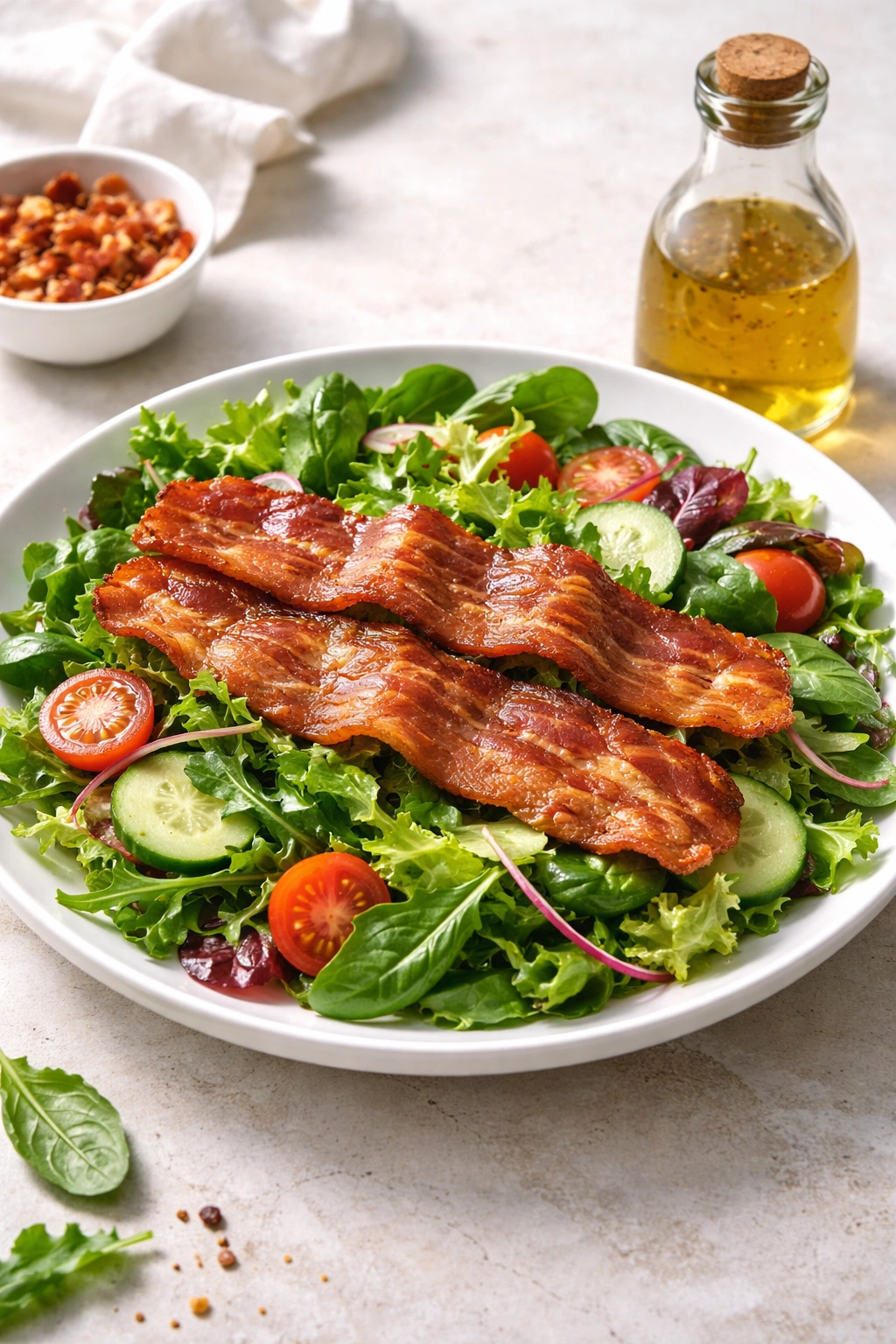
The biggest mistake people make with bacon salads is using too much bacon or not crisping it enough. You don’t need four slices for one salad—the flavor of three slices, properly rendered, will be more than enough. If you cook the bacon to crispy rather than chewy, you’ll be amazed at how much flavor it provides in a small amount.
Another common misstep is using inferior bacon. Thick-cut bacon tastes better than thin, mass-produced bacon, and it’s actually easier to control the cooking. Skip the pre-cooked bacon from the supermarket (it tastes nothing like fresh-rendered) and choose bacon that smells smoky and natural. The difference in the final salad is enormous.
The Dressing Ratio Question
If you’ve always made vinaigrettes with the classic 3-to-1 oil-to-vinegar ratio, this salad might feel a bit sharp when you first try it. That’s intentional—the sharpness is what makes the salad feel fresh and light rather than heavy and oily. If you really can’t get comfortable with the acidity, you can adjust to 3.5-to-1 or even 4-to-1, but try the sharper version at least once. Most people adjust within two or three tastings.
Why Cold Plates Matter
Serving your salad on a plate that’s been in the fridge for even 10 minutes changes how it tastes. Cold salad plates keep the greens crisp longer and prevent the cheese or bacon from warming up too quickly. It sounds small, but cold plates are one of the quickest ways to elevate how the salad feels.
Variations and Flavor Twists
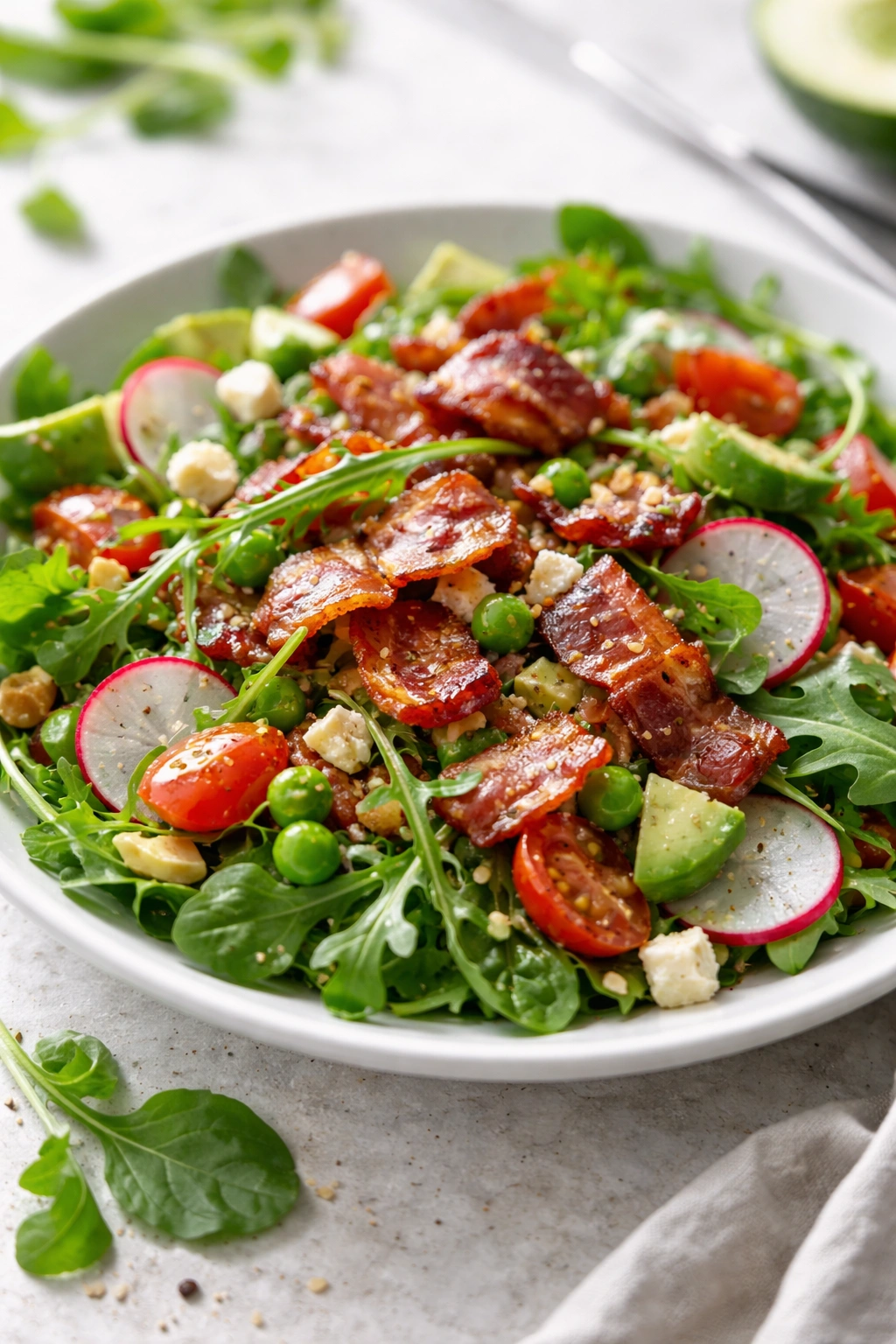
The beauty of this salad framework is that it adapts beautifully to different seasons and preferences. In spring, swap the regular radishes for breakfast radishes if you can find them, or add fresh peas and a squeeze of lemon into the dressing. Summer versions love corn (raw or lightly charred), heirloom tomatoes in any color, fresh tarragon, and a splash of champagne vinegar in the dressing.
Fall and winter versions work well with roasted beets, crispy bacon, and candied or regular walnuts, with balsamic or sherry vinegar as your acid. A little crumbled goat cheese or sharp white Cheddar feels right here. You could also swap in kale or a heartier green mix when you want something that holds up to a more robust dressing.
Dietary Adaptations
For a vegetarian version that still delivers that smoky, salty complexity, crisp up some coconut bacon (thin coconut flakes tossed with soy sauce, maple syrup, and smoked paprika, then roasted until crispy) or make crispy tempeh bacon. The technique is the same, and the flavor satisfaction is genuinely comparable—not a sad vegetarian substitute, but a completely different delicious thing.
If you need to skip the cheese, the salad works beautifully without it. Increase the nuts or seeds slightly, maybe add a soft-poached egg (the runny yolk becomes part of the dressing), or add some creamy avocado. The combination of crispy bacon, peppery greens, and a sharp vinaigrette is so satisfying on its own that cheese is truly optional.
Protein Additions
While this salad is great as a side, you can turn it into a full meal by adding protein. A soft-poached or soft-boiled egg, grilled chicken strips, seared shrimp, or even canned tuna all work beautifully. Add any protein to the salad after the greens are dressed, so the dressing doesn’t prevent the protein from staying warm.
How to Make This Salad Ahead
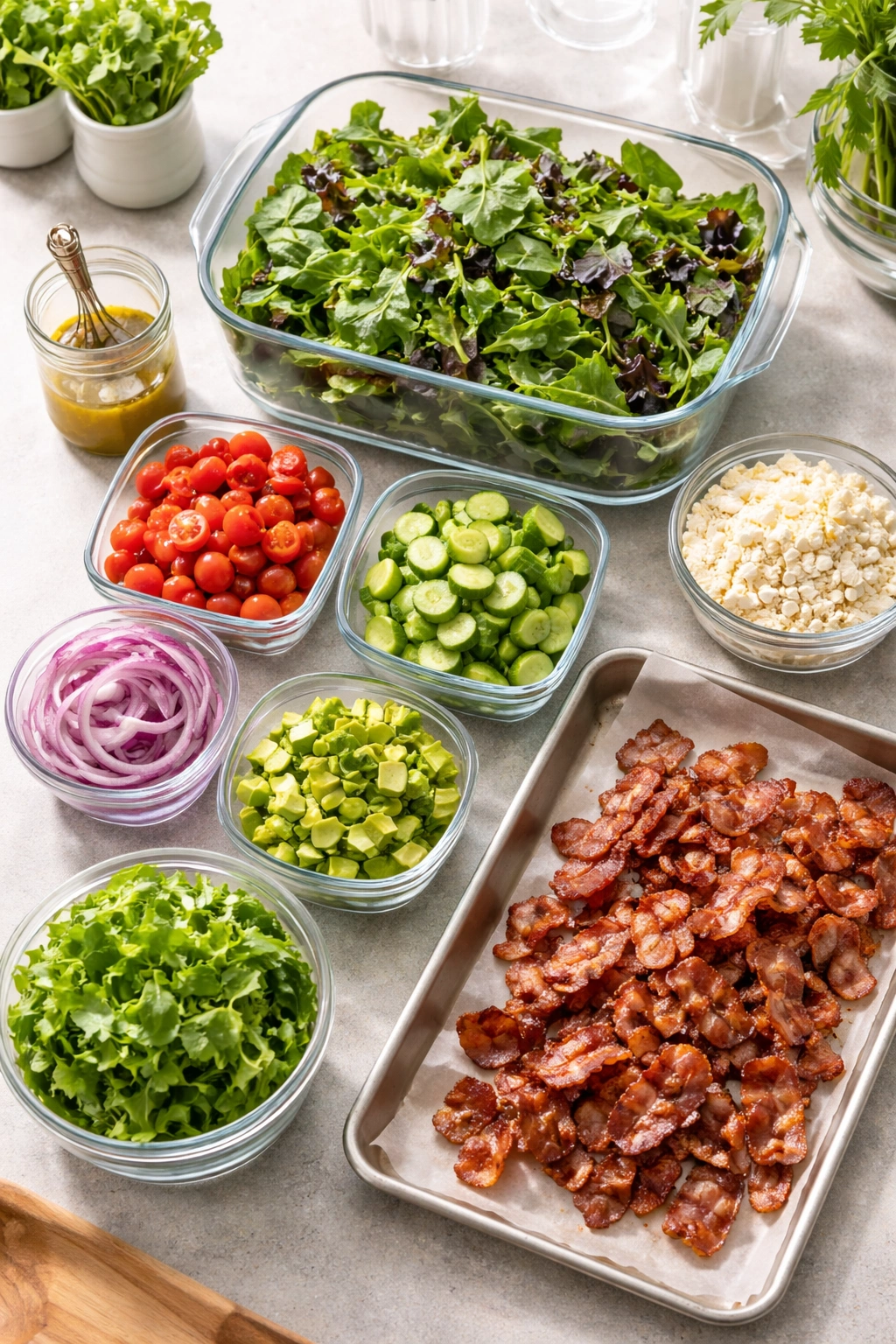
The individual components of this salad can be prepared hours in advance, but the assembled salad should be made and eaten right away. Wash and dry your greens early in the day, then wrap them in a clean kitchen towel and refrigerate in a sealed container. They’ll stay crispy for most of the day.
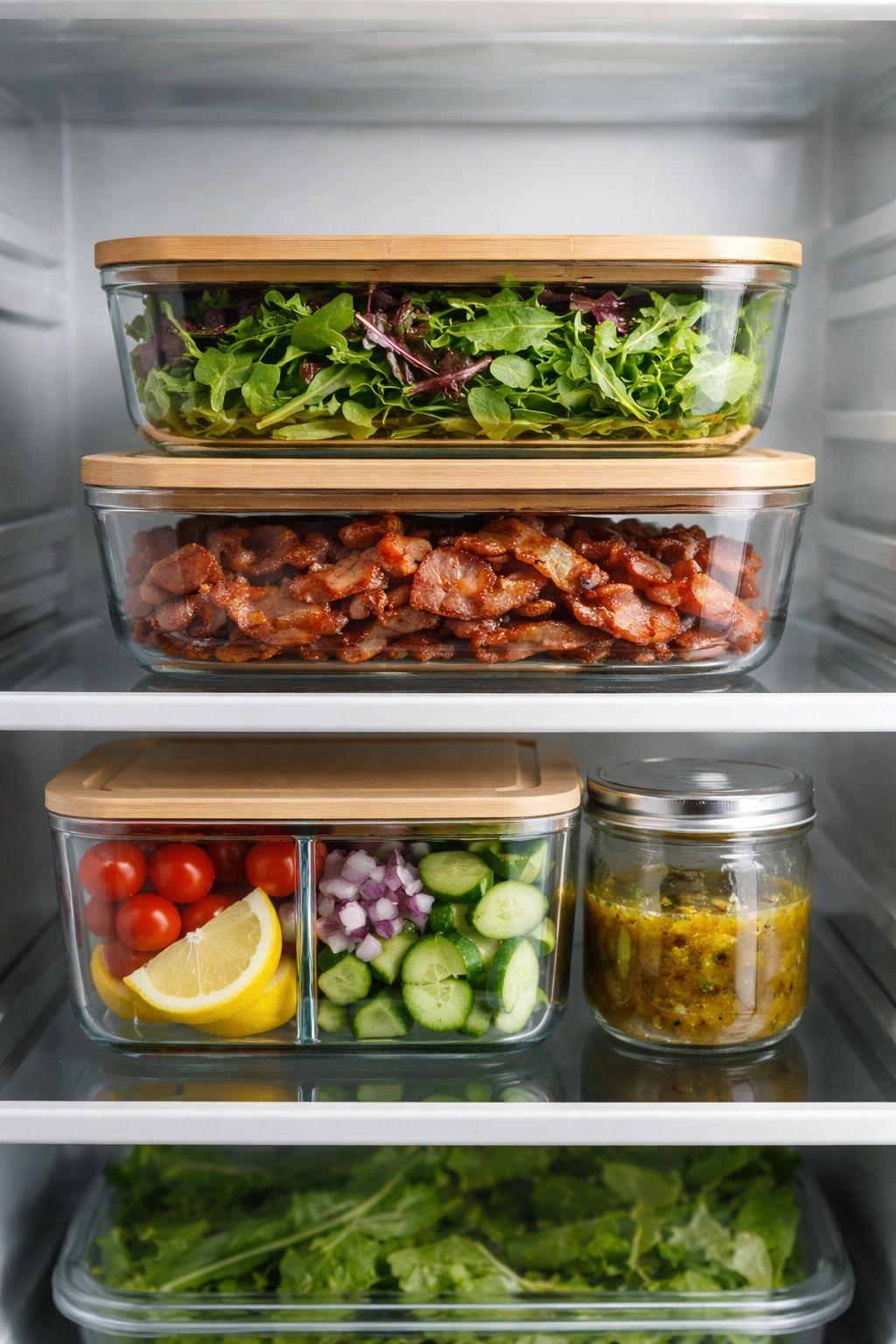
Make the vinaigrette an hour or two ahead, then give it a quick shake before using—emulsified vinaigrettes naturally separate as they sit. Slice your shallots, tomatoes, and radishes up to 4 hours ahead and store them in separate, sealed containers in the fridge so they don’t dry out or let liquid mingle.
Cook your bacon up to 2 hours ahead and store it in an airtight container at room temperature (this keeps it crispest). Toast your nuts or seeds the morning of if you’re making the salad later in the day. The cheese can be shaved and wrapped a few hours ahead.
The Assembly Strategy
When you’re ready to eat, pull everything out of the fridge and work quickly. Combine the greens with the cold vegetables, add the dressing, top with bacon and nuts, and eat right away. This whole final assembly takes less than 3 minutes once you’ve prepped everything.
Storage and Make-Ahead Guidance
A fully assembled salad will start to wilt within 5 to 10 minutes of dressing, and the bacon will start to lose its crispness as it absorbs moisture from the greens. This is a salad that genuinely demands to be eaten fresh. If you have leftover salad (which is unlikely, given how satisfying it is), don’t try to save the assembled version—it becomes limp and sad.
Instead, store leftover greens and vegetables in separate containers for up to 2 days. The dressed greens will wilt beyond saving, but if you underdress your salad from the start, you might be able to eat it for lunch the next day if you keep it in a sealed container in the fridge (though the texture won’t be as ideal). The bacon, if stored separately in an airtight container, stays good for up to 3 days and can be crisped again briefly in a warm oven or skillet to restore some crispness.
The vinaigrette keeps in a sealed jar in the fridge for up to a week, though it’s best used within the first few days. Shake it well before using, since the oil and vinegar will separate as it sits.
Serving Suggestions and Pairings
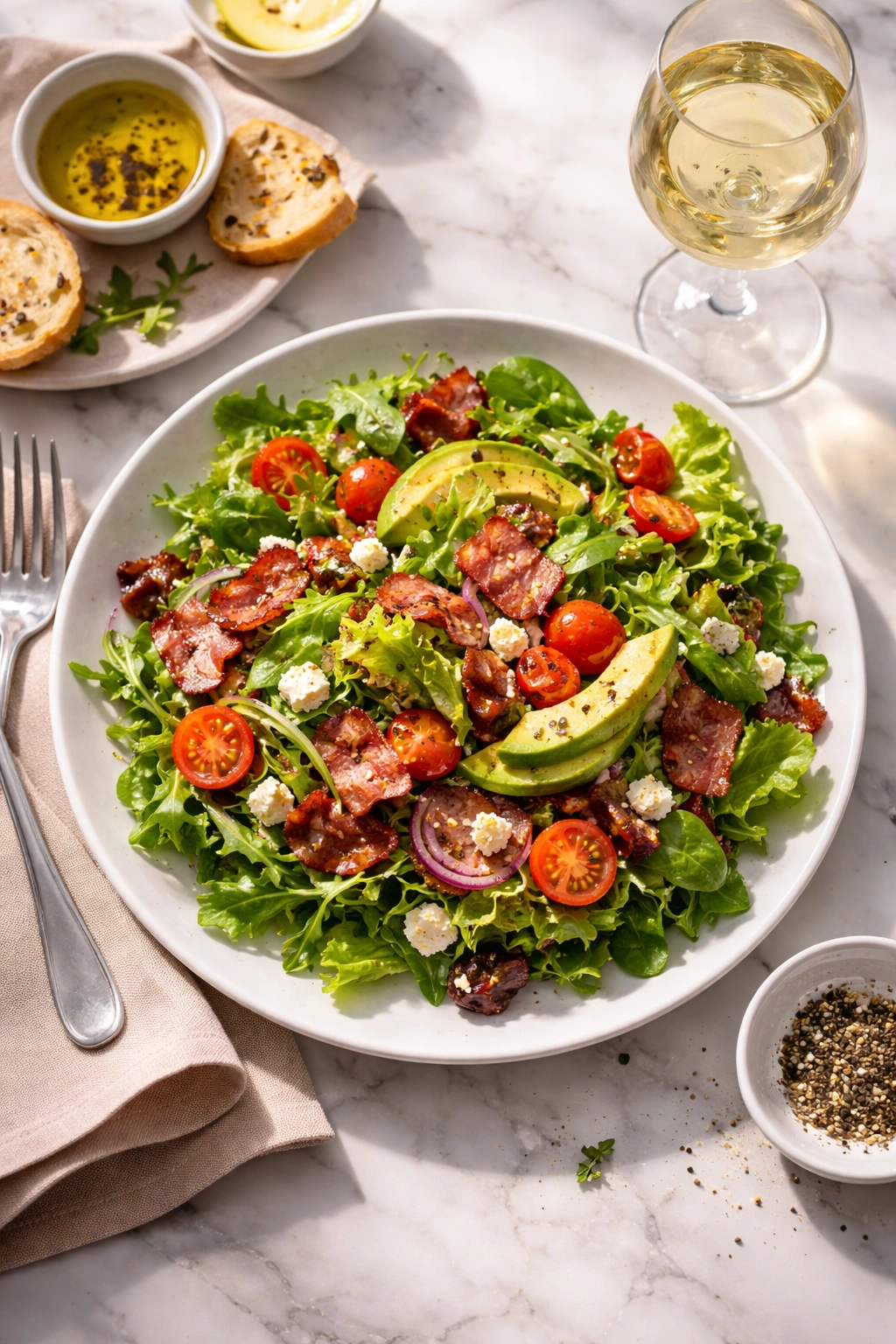
This salad is perfect as a side to grilled fish, roasted chicken, or simple pasta. It’s light enough that it won’t feel heavy when paired with other substantial dishes, but interesting enough that it’s never just an afterthought on the plate. Serve it alongside fresh bread or crusty sourdough to round out a meal.
As a main course for lunch, it’s genuinely satisfying on its own, especially if you add a soft-boiled egg or some grilled protein. The combination of fresh greens, crispy bacon, and sharp dressing will keep you full for hours without that sluggish feeling you get from heavy, creamy salads.
For wine pairing, reach for something crisp and clean—a Sauvignon Blanc, Albariño, or even a dry Riesling. The acidity in the wine echoes the acidity in the dressing, and the salad’s brightness won’t get lost against a heavy red.
For a composed plate that feels restaurant-quality, serve the salad on a chilled plate with the components arranged rather than tossed together—pile the greens in the center, arrange the shallots, tomatoes, and radishes around them, then scatter the bacon and nuts on top. Pour the vinaigrette into a small pitcher or drizzle it around the plate, then let each person dress their own salad to preference.
Final Thoughts
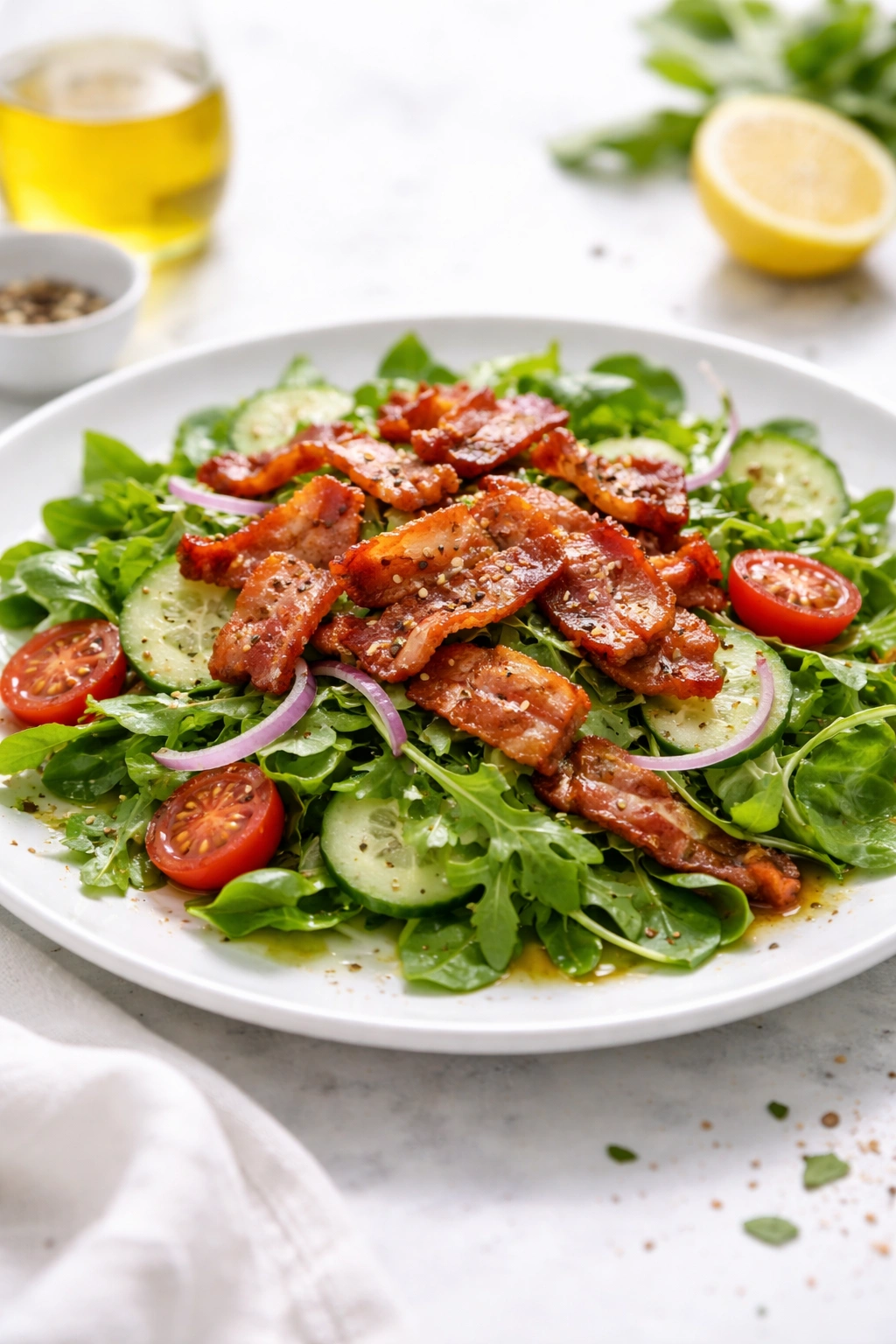
A good bacon salad proves that satisfaction and lightness aren’t opposing forces—they’re just a matter of choosing quality ingredients, respecting them enough not to overdo it, and using proper technique. This salad is about bacon as an accent rather than a crutch, peppery greens that stand up for themselves, and a sharp dressing that makes everything taste alive and bright.
The moment you taste a version of this salad made the right way, you’ll understand why it’s so addictive. There’s no heavy cream weighing you down, no excessive oil making your mouth feel slick, just the pure satisfaction of crispy, smoky bacon combined with fresh greens and a dressing that makes your mouth water. You’ll find yourself making this again and again, not because it’s healthy (though it is), but because it tastes like the exact thing you were craving.
Start with the basic formula and make it your own. Change the greens with the seasons, experiment with different vinegars, try new nut and herb combinations. The fundamental approach—quality bacon rendered until shattered, peppery greens, sharp dressing, and a light hand—will never steer you wrong.
