



Zucchini fritters are one of those weeknight shortcuts that feels more like indulgence than cooking. Crispy on the outside, tender and pillowy within, studded with herbs and a whisper of garlic—they’re the kind of side dish or light meal that makes you wonder why you don’t make them every single week. The best part? You can have golden, crunchy fritters sizzling on a plate in the time it takes to wash the pan. No waiting, no complex techniques, no special equipment. Just fresh zucchini, a few pantry staples, and a hot skillet.
The secret to fritters that actually stay crispy—not soggy or greasy—comes down to two things most recipes skip over: removing enough moisture from the zucchini upfront, and cooking them at the right temperature so the outside crisps before the inside gets oily. I’ve tested every shortcut and technique, and the ones in this article are the ones that actually work. Whether you’re looking for a vegetable side that satisfies like a fried food should, a way to use up a garden surplus, or a gluten-free and naturally vegetarian option that doesn’t feel restricted—crispy zucchini fritters deliver every single time.
Why Zucchini Fritters Deserve Space in Your Regular Rotation
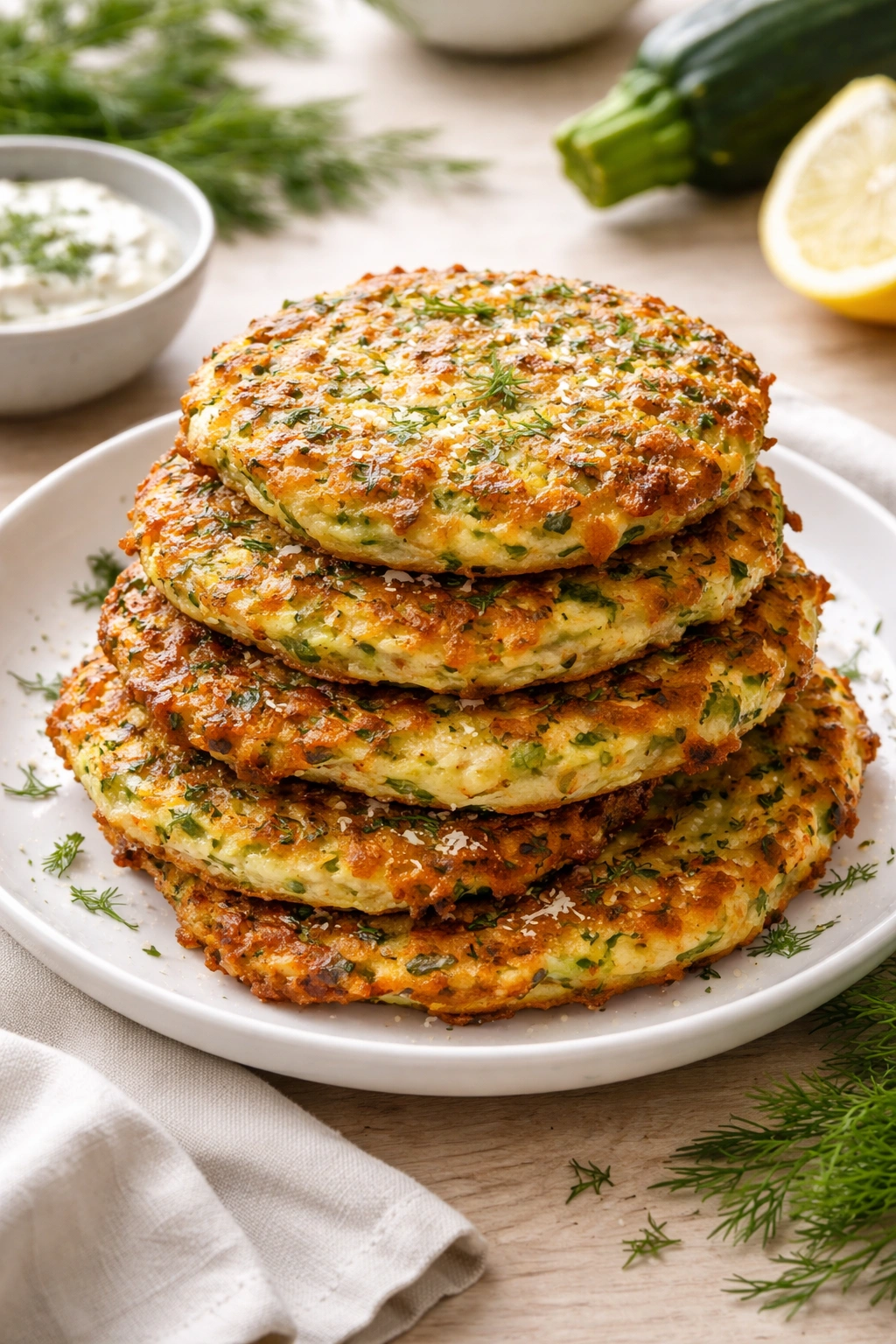
There’s a common assumption that anything deep-fried or golden-crusted has to be either unhealthy or labor-intensive. Zucchini fritters smash both of those myths. A medium zucchini is mostly water and fiber—about 95% water, actually—which means a generous portion of fritters delivers meaningful vegetable nutrition without the heavy feeling of a starchy side dish. They’re naturally low in calories when made with the right technique, and they’re one of the easiest ways to add vegetables to a meal without anyone noticing they’re eating their greens.
The real brilliance of zucchini fritters, though, is their versatility. Serve them warm alongside grilled chicken or fish, pile them into a pita with tzatziki and fresh tomatoes, crumble them over salad, or honestly, just eat them straight off the cooling rack with nothing but a squeeze of lemon. They work equally well as part of a Mediterranean spread, as a side to curry, or as a casual appetizer. They’re not intimidated by bold flavors—they play well with dill and feta, chili and lime, garlic and parmesan, or even just salt and pepper.
The time factor changes everything too. Fifteen minutes from “I should make something” to “dinner is ready” is not usually possible with home cooking. But zucchini fritters operate in that realm. Shred, squeeze, mix, cook. By the time you’ve set the table and poured a drink, they’re done. This is the kind of speed that makes weeknight cooking feel manageable instead of stressful, and that matters more than most recipes acknowledge.
What Makes These Fritters Actually Crispy (Not Greasy)
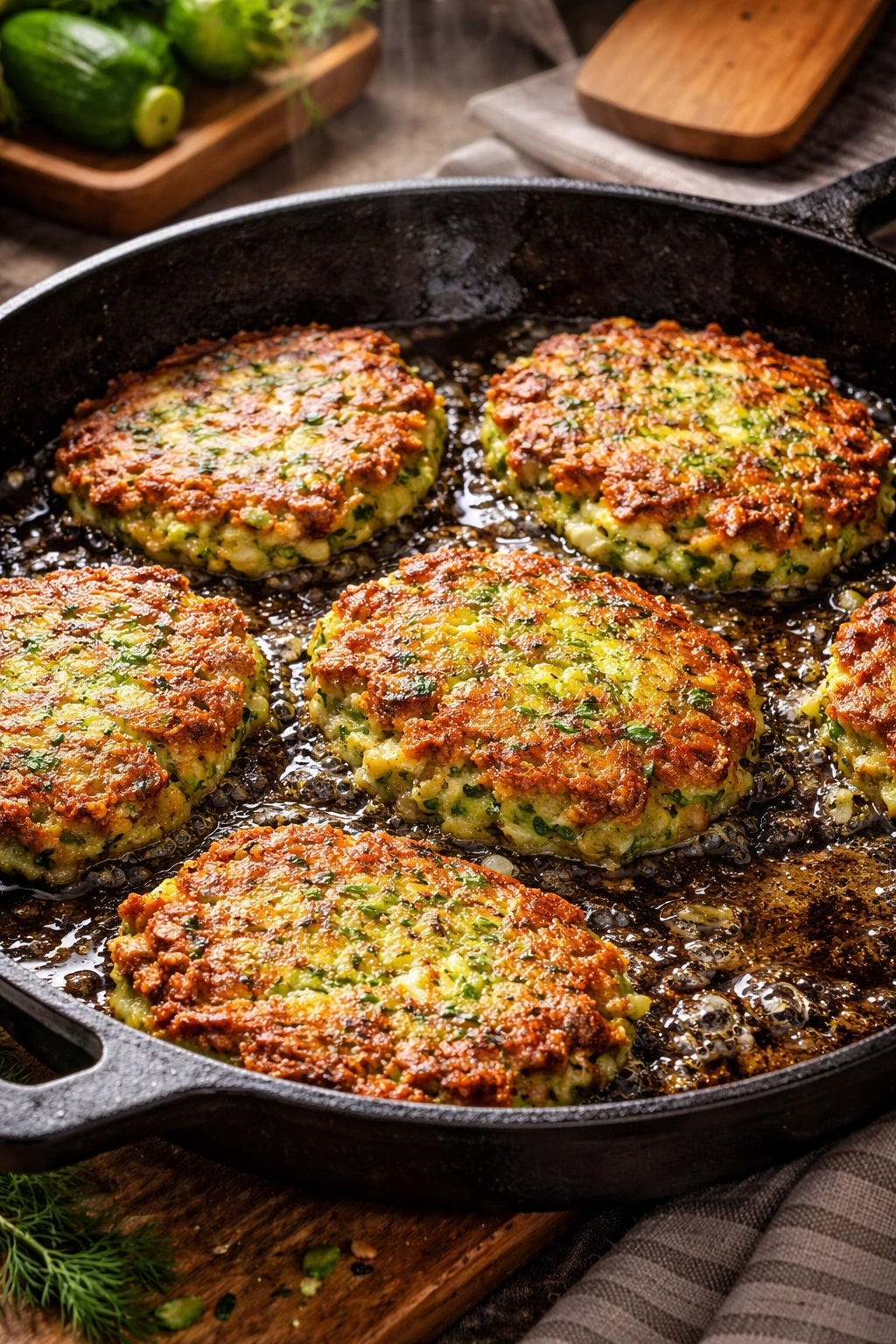
Crispiness in a fritter comes from the contrast between a golden, crunchy exterior and a moist (but not wet) interior. Greasiness happens when oil seeps into the coating instead of staying on the surface, usually because either the outside wasn’t sealed fast enough, or too much water was still trapped inside the zucchini when it hit the pan. The fix is straightforward once you understand the mechanism.
When you shred zucchini, you break down the cell walls and release its water content. That water needs to go somewhere. If you just mix it into the batter, the moisture interferes with the flour and eggs—they can’t form a cohesive coating, and the fritter steams instead of fries. The solution is to shred the zucchini, toss it with salt, let it sit for a few minutes (the salt draws out moisture through osmosis), and then squeeze it aggressively in a clean kitchen towel. You’re looking for zucchini that feels almost dry to the touch.
The second part of crispiness is cooking temperature. Fritters need a hot skillet—about 375°F if you’re measuring, or hot enough that a tiny piece of batter sizzles and browns immediately when it hits the oil. If the pan isn’t hot enough, the fritter will absorb oil like a sponge before the outside firms up and seals. The moment the exterior turns golden and crispy, the oil can’t penetrate any deeper. This is why a neutral oil with a high smoke point (vegetable, canola, light olive oil) matters—it lets you reach that temperature without the oil smoking excessively.
The ratio of binder to vegetables also plays a role. Too much flour or egg, and you get a dense, doughy fritter that tastes more like breaded zucchini than a proper fritter. Too little, and they fall apart. The sweet spot is just enough binder to hold everything together without overpowering the vegetable. A combination of flour and egg, with a little grated cheese for flavor and binding, works perfectly for this balance.
Choosing Zucchini and Preparing It for Maximum Flavor
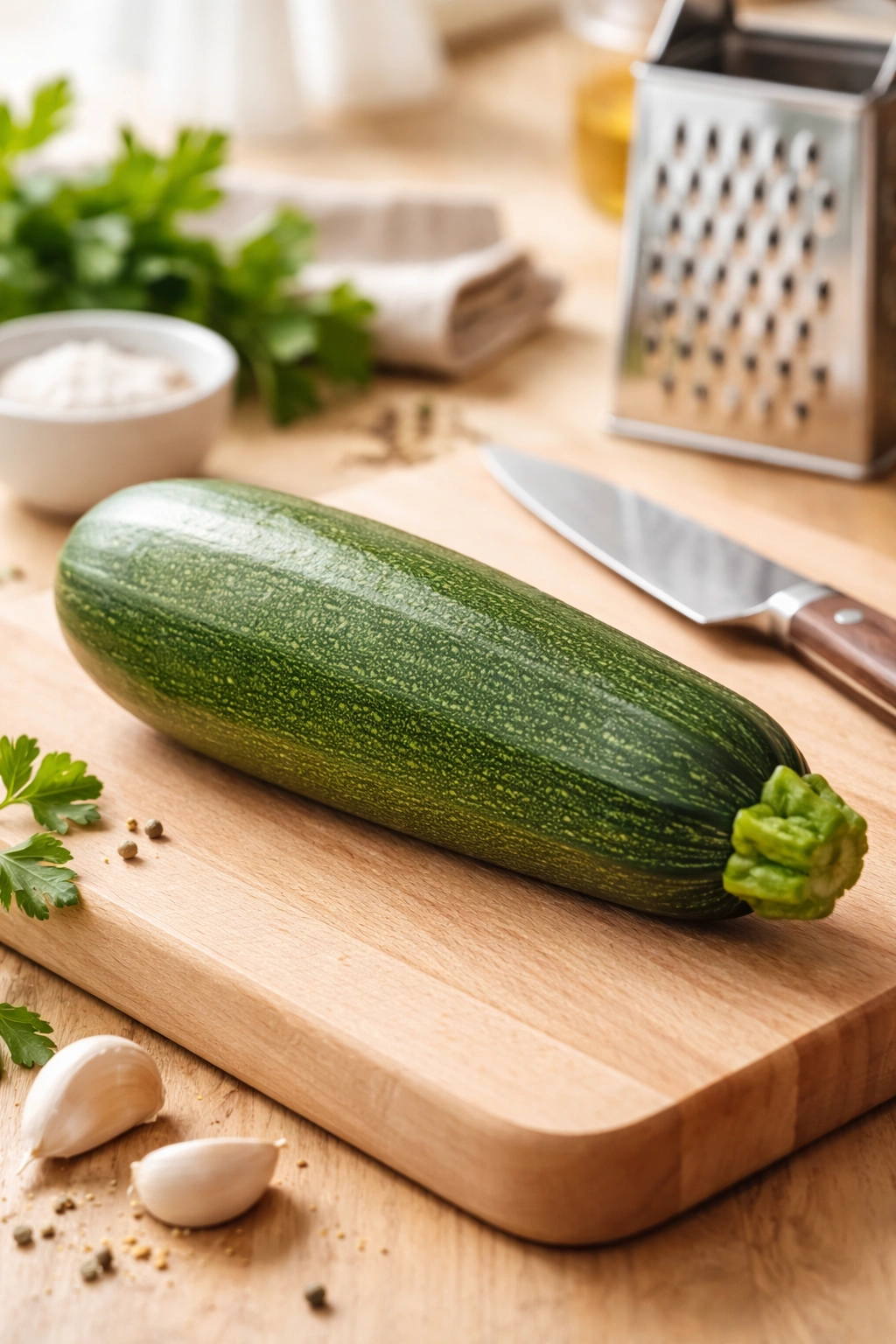
The quality of your starting ingredient matters, especially with something as simple as a zucchini fritter. You want zucchini that’s still relatively young and firm, not the massive watery specimens that have been sitting on a shelf for weeks. A medium zucchini (about 7-8 inches long) has better flavor and fewer seeds than an oversized one. The flesh should be pale green and slightly firm when you press it gently. If it feels mushy or squishy, it’s past its prime and will produce waterlogged fritters no matter how well you squeeze it.
Farm-fresh zucchini from a market or garden is noticeably better than supermarket zucchini that’s been sitting in a plastic bag. If that’s not available, look for zucchini that feels heavy for its size and has skin that’s bright and unblemished. Yellow squash works exactly the same way and produces lovely golden fritters, so don’t hesitate to swap it in if that’s what you have.
One medium zucchini yields about 2 cups of grated zucchini, which becomes roughly 1 cup after squeezing out the water. That’s the yield you’re working with for a full recipe. If you’re in a hurry or making fritters frequently, shredding zucchini ahead of time won’t hurt—store it loosely in a container in the fridge for up to a day. Just squeeze it again right before mixing, since some moisture will release as it sits. Never grate zucchini more than a few hours ahead and leave it unsqueezed; the texture deteriorates and the water content will be impossible to control.
Yield, Timing, and Difficulty Overview
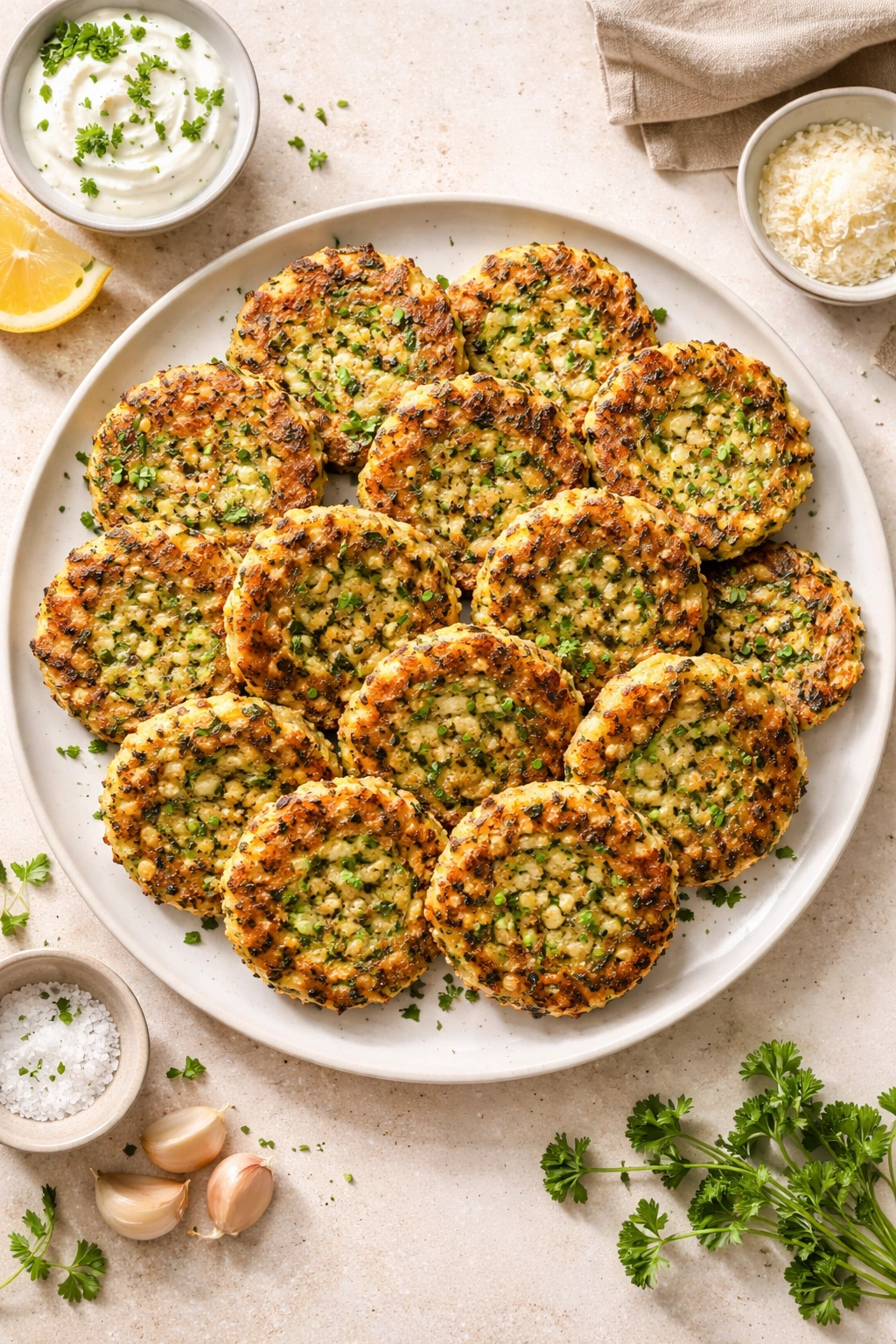
Yield: Makes about 12 to 14 fritters (serves 3 to 4 as a side, or 2 as a main course)
Prep Time: 10 minutes (includes shredding and squeezing zucchini, gathering ingredients, and mixing the batter)
Cook Time: 5 minutes (roughly 1 to 1.5 minutes per batch, depending on how many you cook at once)
Total Time: 15 minutes active cooking, start to finish
Difficulty: Beginner — No special skills or equipment required, and the steps are straightforward. Even someone cooking fritters for the first time will succeed with this method.
Ingredients for Crispy Zucchini Fritters
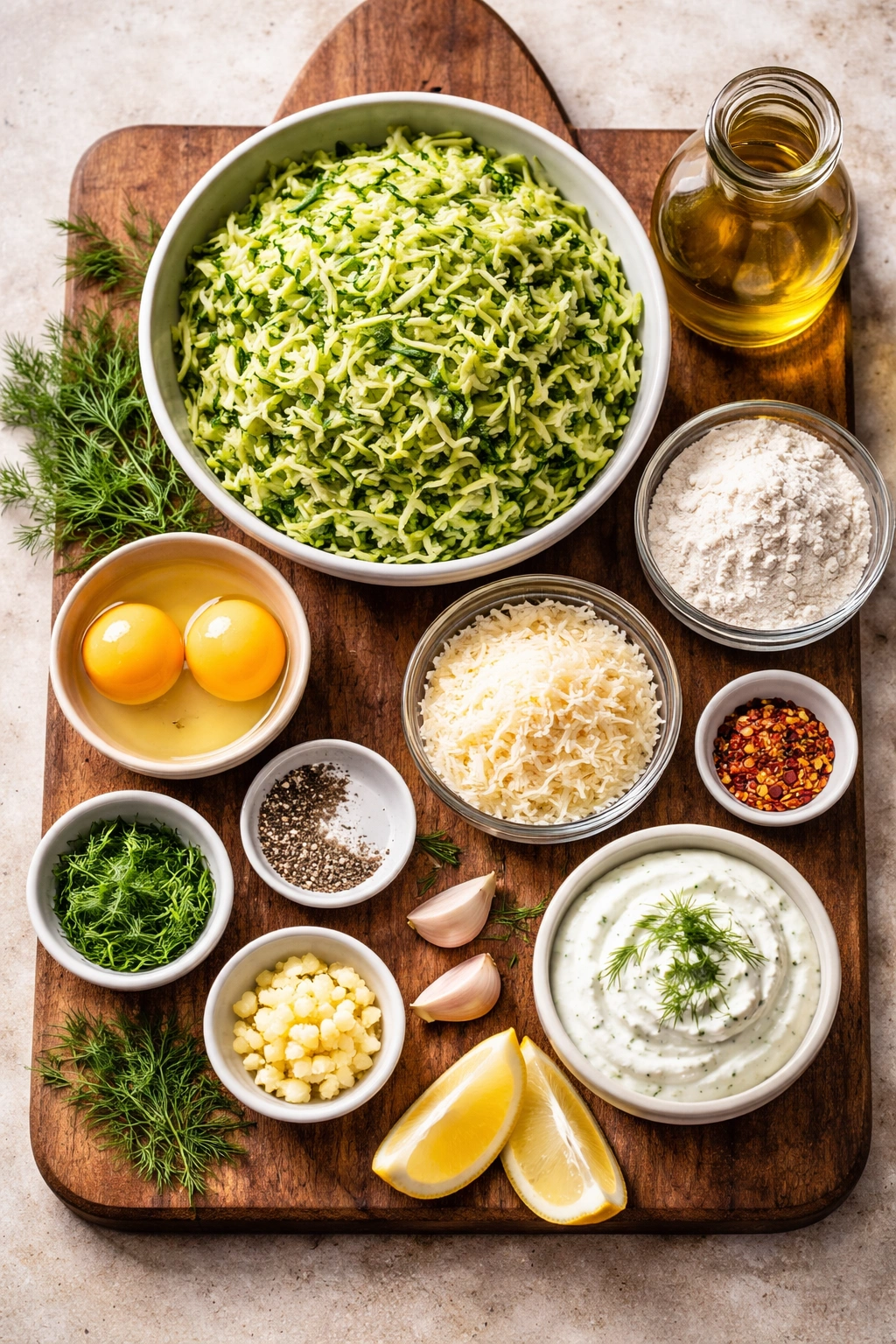
For the Fritters:
- 3 to 4 medium zucchini (about 1.5 to 2 pounds), shredded on the large holes of a box grater or a food processor fitted with the shredding disc
- 1 teaspoon fine sea salt (for drawing out moisture from the zucchini, plus more for seasoning the batter to taste)
- ¾ cup all-purpose flour (or a gluten-free 1-to-1 flour blend if you need gluten-free)
- ½ cup grated Parmesan cheese, finely grated
- 2 large eggs, beaten
- 3 tablespoons fresh dill, finely minced (or 1 tablespoon dried dill, or fresh parsley if you prefer)
- 2 cloves garlic, minced very fine (or ½ teaspoon garlic powder)
- ¼ teaspoon black pepper
- ¼ teaspoon red pepper flakes (optional, but adds warmth and interest)
- Oil for cooking (vegetable, canola, or light olive oil — about ½ cup for shallow frying)
For Serving:
- Fresh lemon wedges (essential—acid brightens these fritters more than you’d expect)
- Tzatziki, Greek yogurt mixed with dill, or sour cream for dipping (optional but highly recommended)
- Additional fresh herbs (dill, parsley, or chives) for garnish
Step-by-Step Instructions for Perfect Fritters
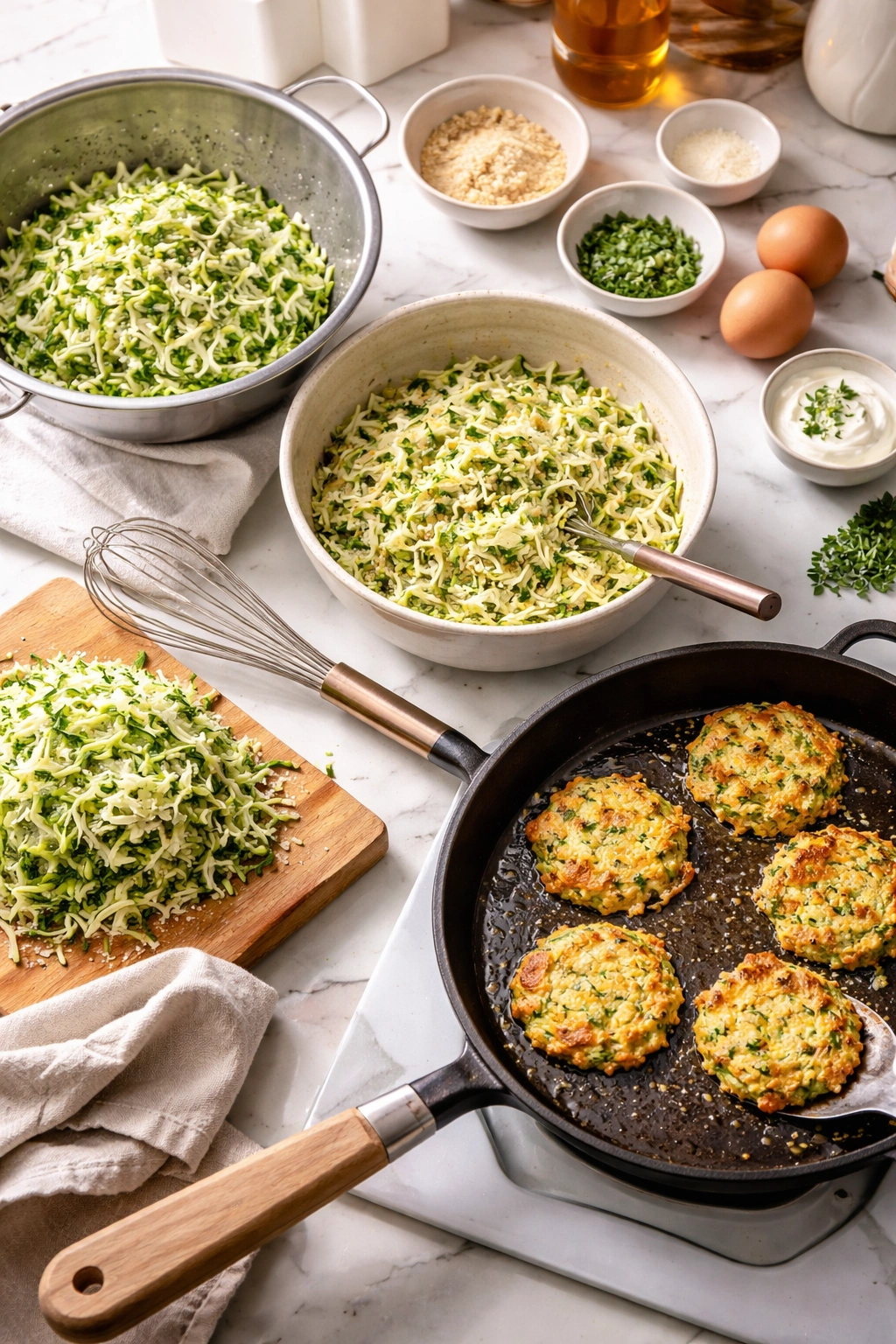
Prepare the Zucchini:
-
Shred the zucchini using the large holes of a box grater or a food processor fitted with a shredding disc. Measure out 3 to 4 cups of loosely packed shredded zucchini — this is your raw yield before squeezing.
-
Transfer the shredded zucchini to a colander set over a bowl or sink. Sprinkle the 1 teaspoon of fine salt evenly over the zucchini and toss well to distribute. Do not skip this salt — it’s not for flavoring yet, but for drawing out the water through osmosis. Let the salted zucchini sit for 3 to 5 minutes.
-
Grab a clean kitchen towel (or a few layers of cheesecloth) and gather a handful of the salted zucchini. Squeeze firmly over the sink or colander, wringing out as much liquid as you possibly can. The zucchini should feel almost dry to the touch when you’re finished — noticeably lighter and more compact than when it went in. Repeat with all the remaining zucchini. You should have about 1½ cups of squeezed zucchini.
Mix the Batter:
-
In a medium bowl, combine the all-purpose flour, grated Parmesan cheese, minced fresh dill, minced garlic, black pepper, and red pepper flakes if using. Whisk these dry ingredients together until evenly combined.
-
In a small bowl, beat the 2 eggs together until the whites and yolks are fully combined.
-
Add the squeezed zucchini and beaten eggs to the flour mixture. Fold everything together with a spatula until just combined — do not overmix, as this can make the fritters dense and tough. The batter should look loose and chunky, not smooth. Taste a tiny spoonful (it’s safe because the eggs will cook) and add more salt if needed — season generously since salt is what makes these taste truly delicious.
Set Up for Cooking:
-
Pour your oil of choice (vegetable, canola, or light olive oil) into a large skillet to a depth of about ¼ to ⅜ inch. Set the skillet over medium-high heat and let the oil heat for about 2 to 3 minutes. The oil is ready when it shimmers and a tiny piece of batter dropped into it sizzles immediately and turns golden within 30 seconds. If the oil smokes excessively, the heat is too high — back it down slightly.
-
Line a plate with paper towels and set it nearby — this is where your cooked fritters will drain.
Advertisements
Cook the Fritters:
-
Using a spoon or a small cookie scoop, gently lower dollops of batter (about 2 to 3 tablespoons per fritter) into the hot oil. Do not overcrowd the skillet — you should fit 4 to 6 fritters comfortably, with space between each one. If they touch, they’ll steam instead of fry.
-
Cook the fritters, undisturbed, for about 1 to 1.5 minutes, until the bottom is deep golden brown. You’ll see the color deepening along the edges where the heat is making contact. Do not flip too early — the bottom needs to set and crisp before you turn it.
-
Using a spatula, gently flip each fritter and cook the second side for 30 to 45 seconds, until it’s also golden brown. The second side cooks faster because it’s already hot from the oil and the fritter is warmed through. The moment both sides are golden, transfer the fritter to the paper towel–lined plate — do not leave them in the oil longer than necessary, or they’ll absorb excess grease.
-
Repeat with the remaining batter, cooking in batches and allowing the oil to return to temperature between batches. If the oil starts to look dark or develops a burnt smell, strain it through a fine-mesh sieve or replace it — you want clean, clear oil for the best-tasting fritters.
Finish and Serve:
-
Once all the fritters are cooked, arrange them on a serving plate. Squeeze fresh lemon juice over them immediately while they’re still warm — the acid cuts through the richness and brightens the flavor significantly.
-
Serve warm, with tzatziki, Greek yogurt mixed with fresh dill, or sour cream on the side for dipping. Fresh herbs scattered over the top add color and a pleasant fresh taste.
The Mistakes That Make Fritters Soggy or Greasy
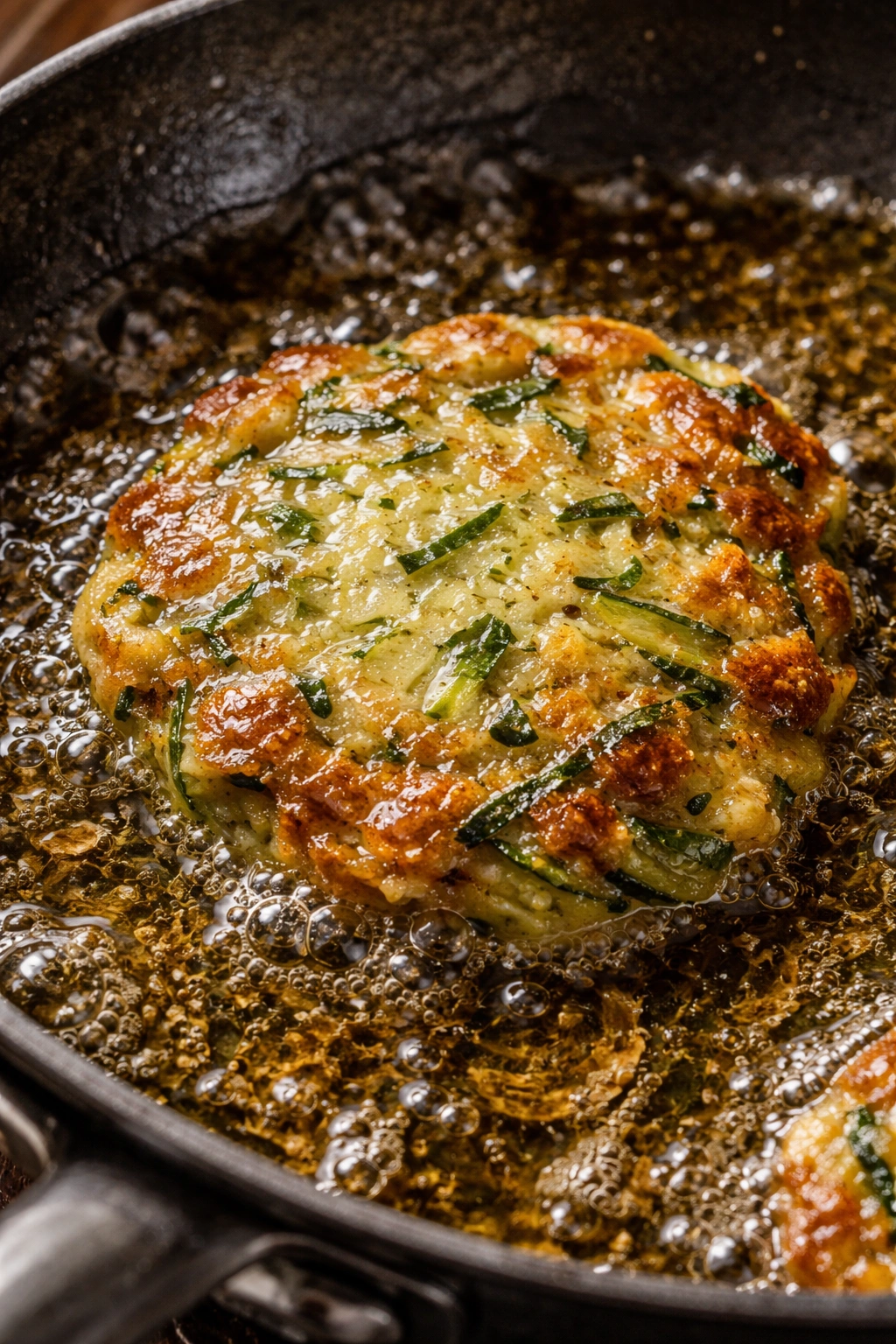
Soggy fritters usually trace back to one of three mistakes, all of which are easy to prevent once you know what to watch for. The most common error is not squeezing the zucchini thoroughly enough. People are often hesitant to apply real pressure, worried they’ll damage the zucchini or end up with nothing left. In reality, the zucchini is incredibly resilient, and it should feel nearly dry after you squeeze it. If you can still see liquid dripping out when you give the towel one final hard twist, squeeze harder. This single step is non-negotiable for crispy fritters.
The second mistake is cooking the fritters in oil that isn’t quite hot enough. Lukewarm oil means the outside cooks slowly, giving it too much time to absorb oil before the exterior seals. The fritter ends up greasy instead of crisp. Use your senses: the oil should shimmers, a tiny piece of batter should sizzle loudly and immediately, and it should turn golden within seconds. If there’s no sizzle or the color develops slowly, wait a bit longer and test again.
The third mistake is not seasoning the batter properly. Salt isn’t just for flavor—it also helps draw any remaining water out of the zucchini and out of the batter during cooking. A well-seasoned fritter will be noticeably crispier and more flavorful. Taste the batter (it’s safe because the eggs will cook) and adjust the salt until it tastes almost slightly too salty on its own. Remember that once you dip it in lemon juice or tzatziki, the flavors will shift, and what seems too strong in the raw batter will taste perfectly balanced in the finished fritter.
Flavor Variations and Ingredient Swaps
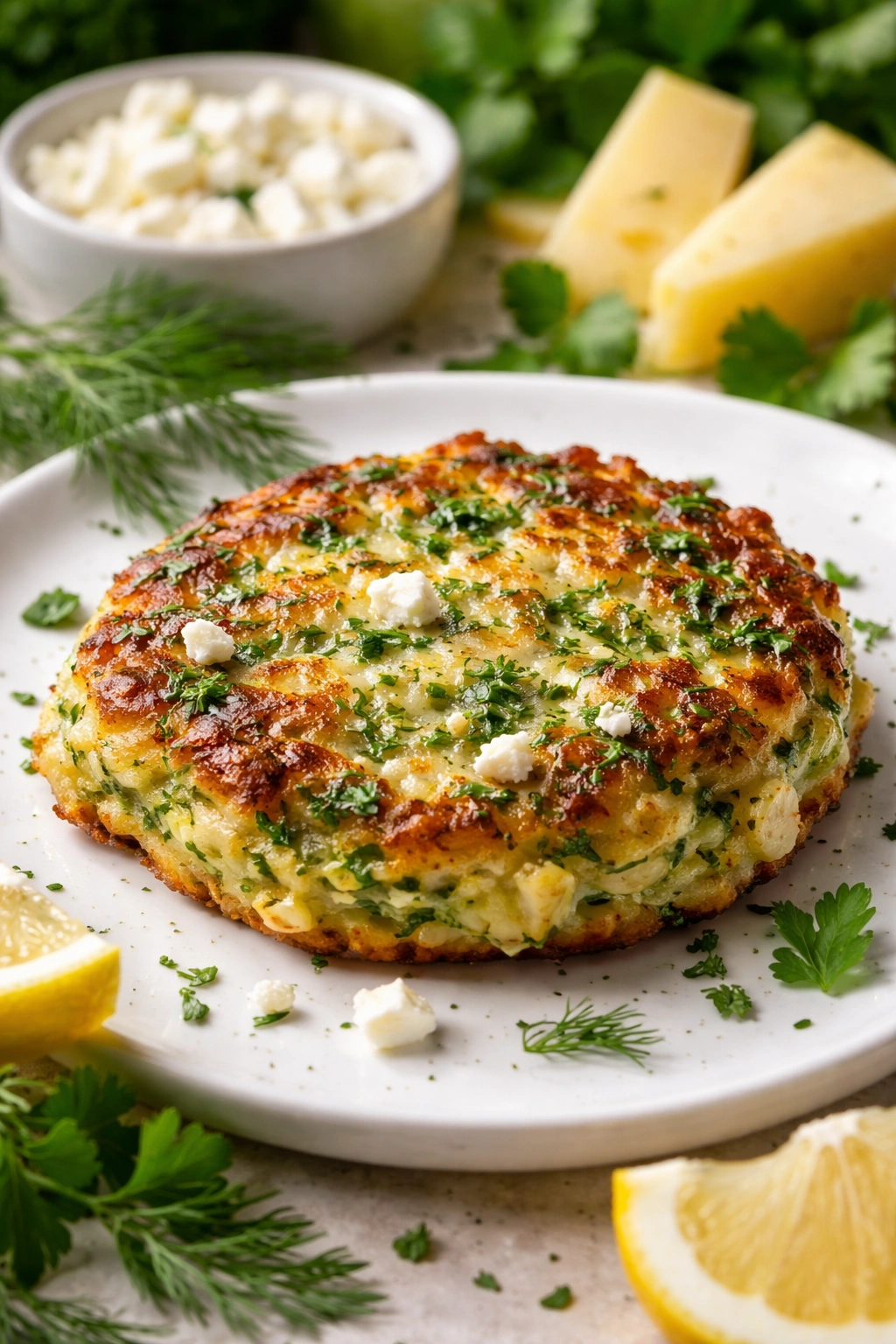
The beauty of zucchini fritters is that the base recipe is neutral enough to accommodate almost any flavor direction you want to take it. Fresh dill is traditional and pairs beautifully with a cooling tzatziki dip, but if that’s not your style, fresh parsley, basil, or even mint work wonderfully. Chives add a subtle onion note without requiring extra knife work. You can also combine herbs—dill and parsley together is a classic combination that feels sophisticated but still tastes like comfort food.
For cheese, Parmesan is classic, but feta crumbled into the batter adds a briny, salty element that’s particularly good if you’re serving them with Mediterranean sides. Gruyère adds nuttiness and creaminess. Sharp cheddar brings warmth and richness. Use whatever hard or semi-hard cheese you have on hand, keeping in mind that softer cheeses like fresh mozzarella will melt and make the batter oily. If you’re serving the fritters to someone dairy-free, simply omit the cheese and increase the salt slightly to compensate for the lost flavor.
Spice-forward variations work well too. Add ½ teaspoon of smoked paprika and ¼ teaspoon of cumin for a Moroccan angle, and serve with harissa stirred into Greek yogurt. Add a teaspoon of grated lemon zest and a pinch of nutmeg for a brighter, almost floral note. Use Italian seasoning in place of the fresh dill for something that tastes more “European comfort food.” A handful of fresh corn kernels folded in at the end (no extra liquid, so this is a good add-on) gives the fritters a sweet note and attractive flecks.
If you have zucchini beyond what fits in your first batch, consider making a second batch with a completely different flavor profile. That way you’re building a variety platter without cooking for hours. Your guests can taste the difference between the herb-and-dill version and the spice-and-feta version, and everyone finds their favorite.
Make-Ahead and Storage Options
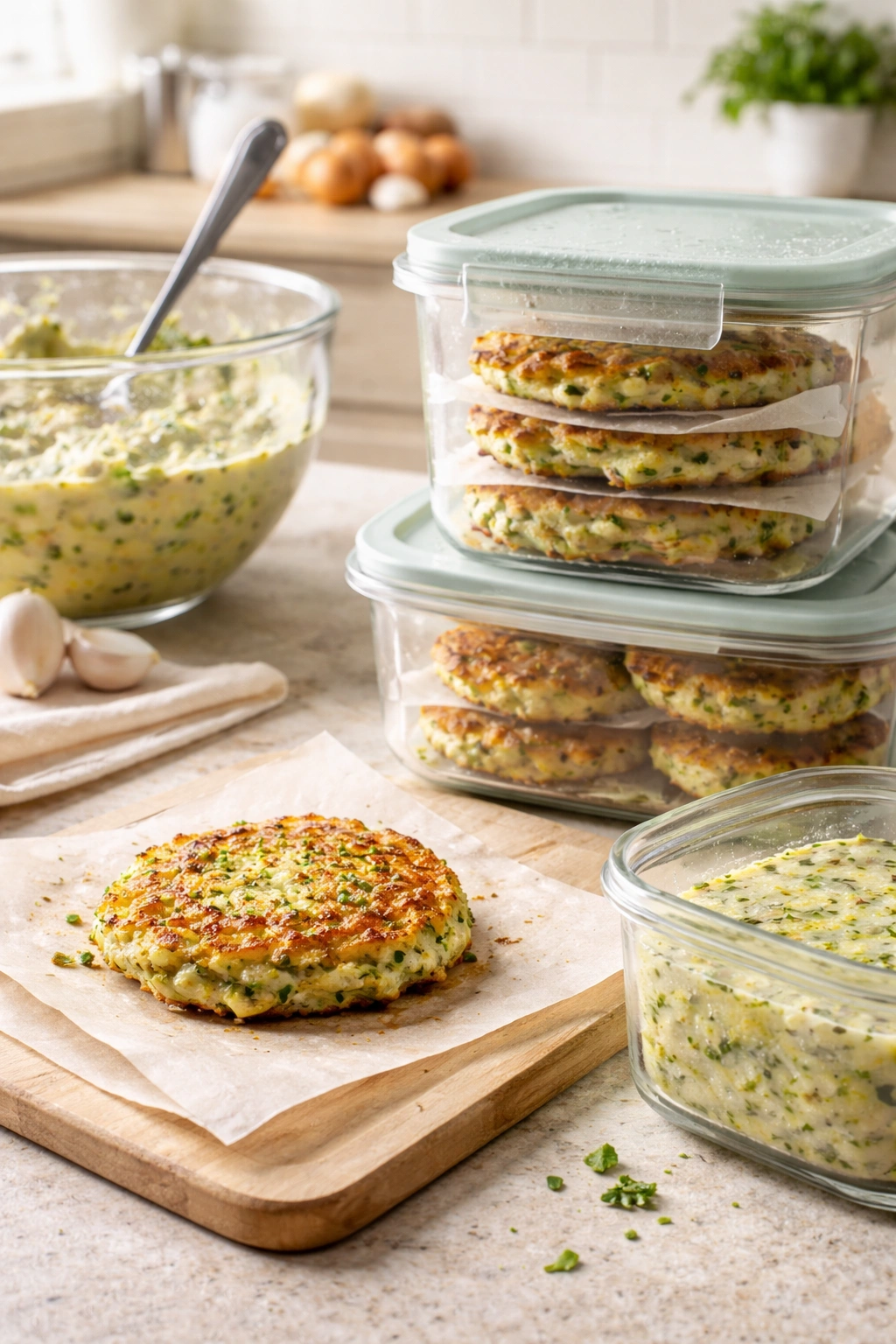
Zucchini fritters are best eaten fresh and warm, immediately after cooking, when the exterior is crackling and the center is still steaming. That said, real life doesn’t always cooperate with that ideal. If you need to make them ahead or have leftovers, they’ll keep and reheat reasonably well with a little planning.
The batter can be mixed up to 2 hours before cooking, stored in a covered bowl in the refrigerator. The longer it sits, the more liquid the zucchini will release, so stir it again right before cooking and squeeze the batter through a fine-mesh sieve if it looks watery. Some home cooks even squeeze the batter again in the towel right before cooking, which ensures maximum crispiness. This extra step takes 30 seconds and makes a noticeable difference in texture.
Cooked fritters keep in an airtight container in the refrigerator for up to 3 days. To reheat them and restore as much crispiness as possible, place them on a baking sheet and warm them in a 375°F oven for about 5 to 7 minutes, until they’re hot through and the outside crisps back up. The oven is far better than the microwave for this, which would turn them soggy. You can also reheat them in a skillet over medium heat with just a touch of oil, about 1 minute per side, which actually re-crisps the exterior. Avoid the microwave entirely—it will make them soggy and unpleasant.
Uncooked fritters (as in, the batter with zucchini) cannot be stored for extended periods, as the zucchini will continue to release water and the batter will become unmanageable. However, you can freeze the cooked fritters. Arrange them in a single layer on a baking sheet, freeze until solid (about 2 hours), then transfer to a freezer bag and store for up to 2 months. Reheat directly from the frozen state in a 375°F oven for 8 to 10 minutes—they don’t need to thaw first.
Serving Suggestions and Flavor Pairings
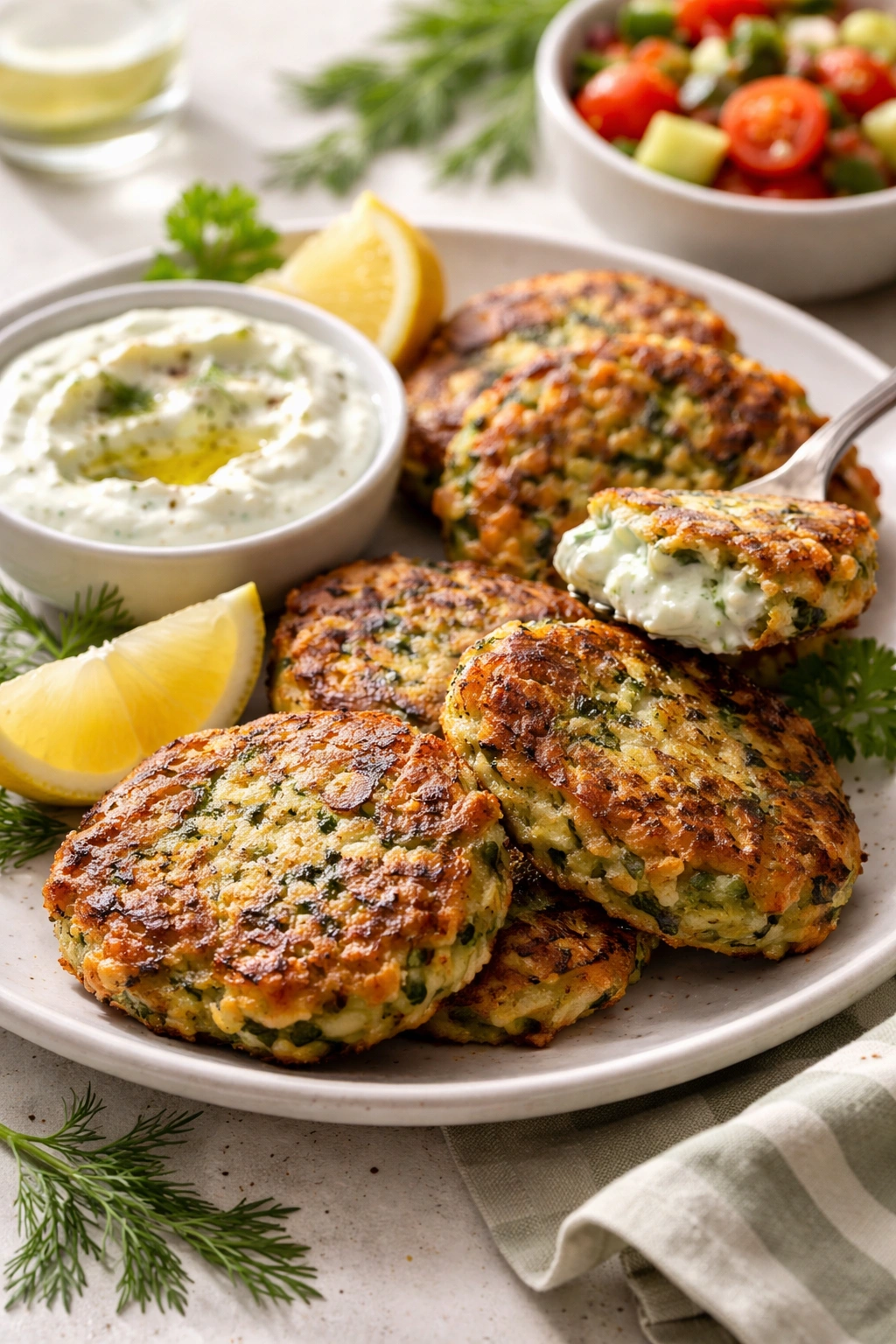
Zucchini fritters are most famous as a side dish to Mediterranean or Middle Eastern mains—grilled chicken with a squeeze of lemon, salmon, lamb, or roasted chickpeas. In that context, they’re a vegetable side that actually excites people instead of feeling obligatory. A squeeze of lemon juice is essential; the acid is what transforms a fried zucchini cake into something that feels fresh and bright despite the oil.
The dipping sauce matters as much as the fritter itself. Tzatziki (Greek yogurt, grated cucumber, fresh dill, and garlic) is the obvious pairing and for good reason—the cool, creamy sauce with hints of acid and garlic perfectly balances the warm, crispy fritter. If you don’t have tzatziki on hand, plain Greek yogurt mixed with a handful of fresh herbs and a squeeze of lemon works in a pinch. Sour cream thinned with a little lemon juice and seasoned with salt and pepper is more casual but equally delicious. Hot sauce, sriracha mayo, or a spiced yogurt sauce (yogurt with a pinch of paprika, cumin, and cayenne) brings a different energy—less Mediterranean and more globally curious.
Consider serving the fritters as part of a composed plate or platter rather than just a side vegetable. Arrange them alongside fresh greens, roasted vegetables, crumbled feta, a few olives, crusty bread, and a variety of dips. They suddenly feel like an appetizer spread or a casual dinner party centerpiece instead of a weeknight side. This presentation trick—same fritters, different context—is why they’re so useful in a home cook’s repertoire. They transform depending on what surrounds them.
You can also build fritter-centric meals. Stuff a pita or flatbread with a warm fritter, some fresh tomatoes, red onion, crumbled feta, and tzatziki for a quick, satisfying lunch. Pile them into a bowl with grains (rice, farro, couscous), roasted vegetables, and a tahini dressing for a grain bowl that feels substantial. Crumble them over a green salad with a lemon vinaigrette, walnuts, and pomegranate seeds for a warm-and-cold contrast that’s genuinely exciting. They’re more versatile than they appear on the surface.
Dietary Adaptations and Inclusive Cooking
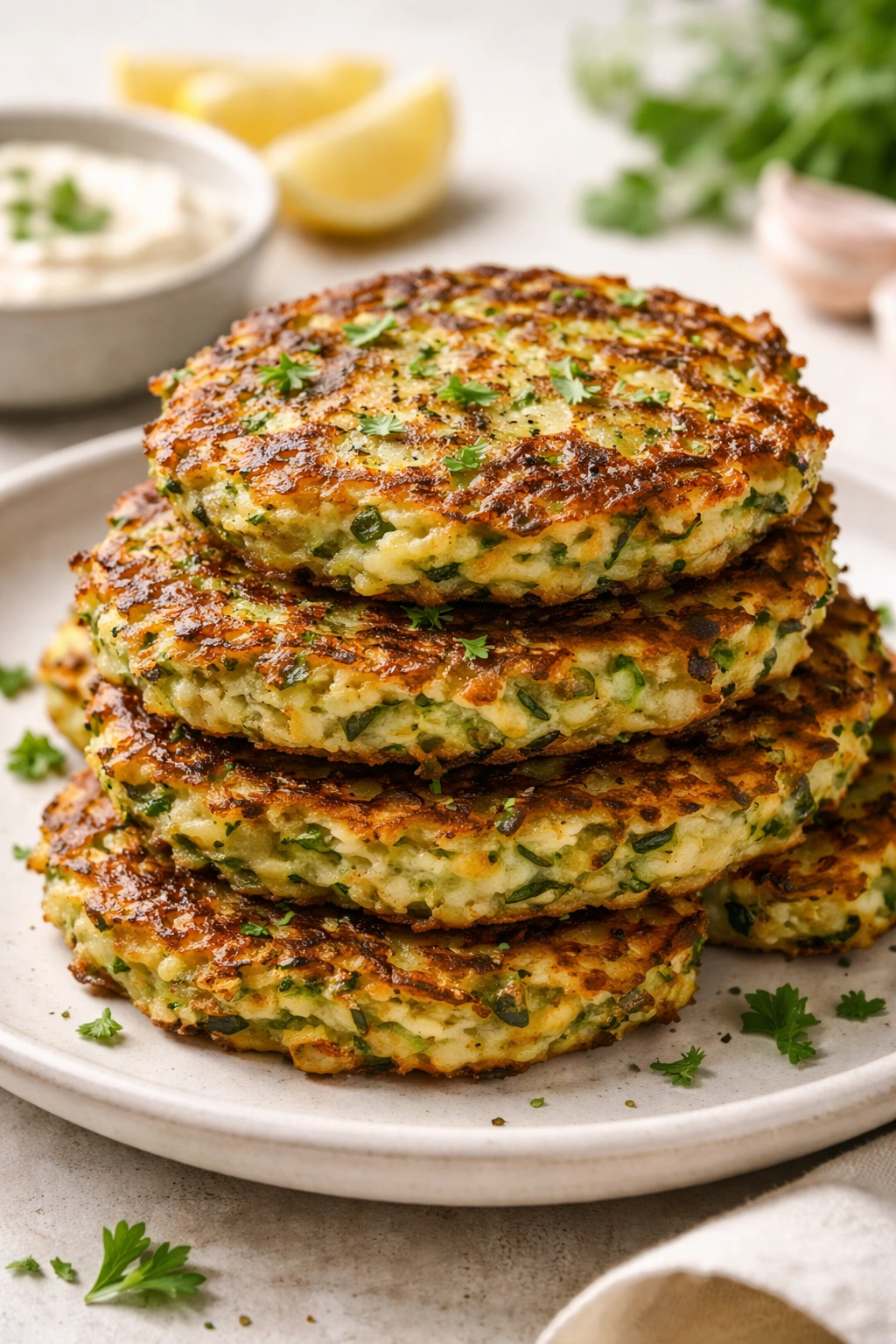
Zucchini fritters are naturally vegetarian and can be made vegan with a straightforward swap: use a flax egg (1 tablespoon ground flaxseed mixed with 3 tablespoons water, left to sit for 5 minutes) in place of the 2 beaten eggs, and use nutritional yeast or omit the cheese entirely. The fritters won’t bind quite as tightly, so handle them gently when flipping. They’re still crispy and delicious, just slightly more delicate.
For a gluten-free version, use a gluten-free 1-to-1 flour blend in place of the all-purpose flour. Most of these blends already include a binder like xanthan gum, so you don’t need to add anything extra. The fritters will cook and crisp identically. Some people feel uneasy about baking and cooking with gluten-free flour, but fritters are one of the most forgiving applications—there’s no yeast, no leavening, and no complex gluten development to worry about. They either hold together or they don’t, and most gluten-free 1-to-1 blends hold together beautifully.
For paleo or whole30 compliant fritters, skip the flour entirely and substitute with almond flour or arrowroot powder. Almond flour produces a softer, more delicate fritter with a slightly nuttier flavor—still crispy on the outside but more crumb-like inside. You may need to add an extra egg since almond flour is less absorbent than wheat flour. Arrowroot powder keeps the fritter lighter and closer to the original texture. Neither of these alternatives is a perfect 1-to-1 swap for wheat flour, so you’ll need to experiment slightly to get the consistency right.
A dairy-free version simply omits the Parmesan cheese and adds an extra ½ teaspoon of salt to make up for the flavor and savory depth the cheese was providing. The fritters will still be delicious and crispy. Nutritional yeast stirred into the batter (2 tablespoons) adds a cheesy umami note if you want to recover some of that richness.
Why These Fritters Beat All the Other Methods
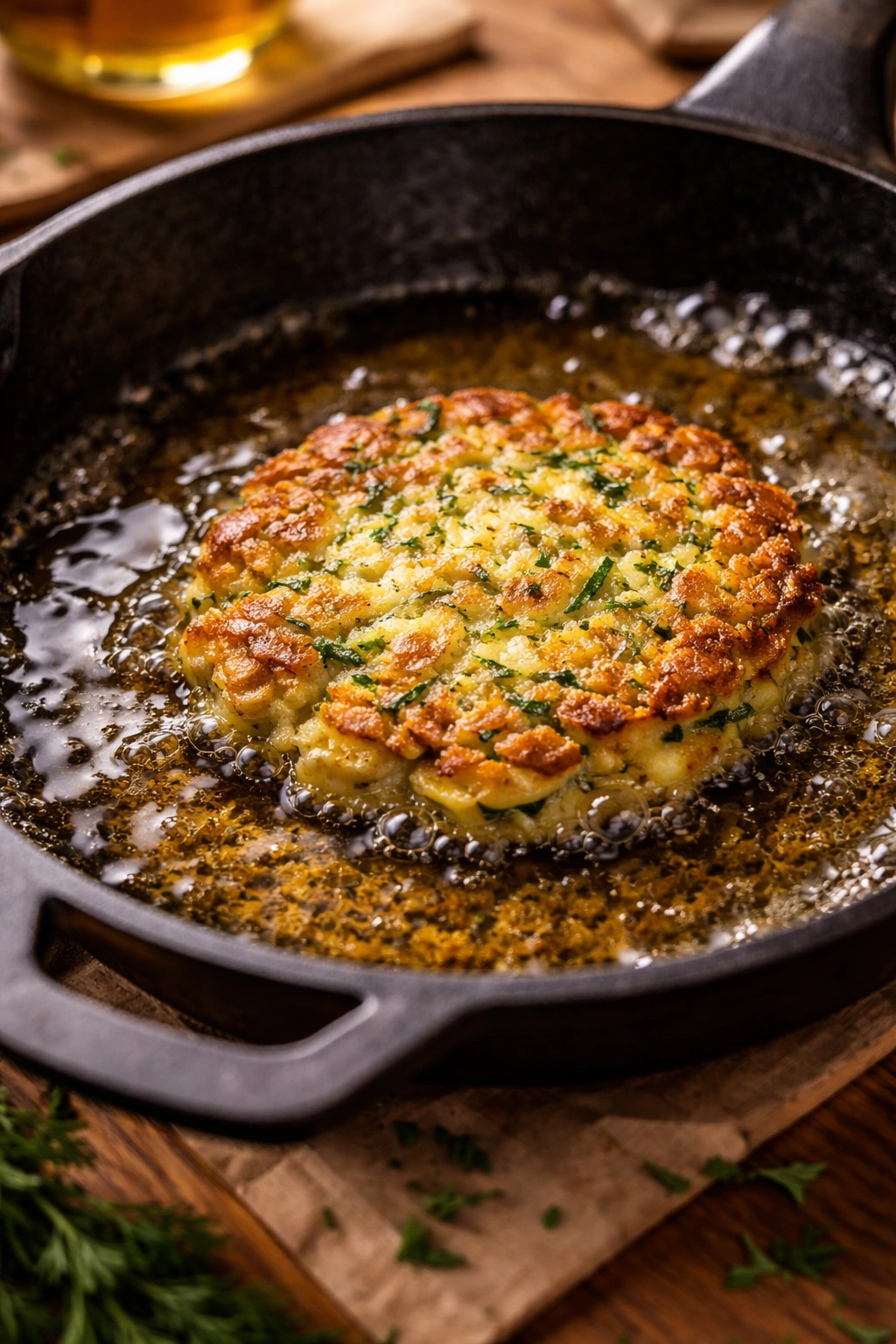
You’ll find zucchini fritter recipes that bake them in the oven (safer, less oil, but they never get truly crispy), deep-fry them (crispier but oil-heavy and time-consuming), or pan-fry them in just a teaspoon of oil (quicker cleanup but they don’t crisp properly). This shallow-fry method—heating a ¼-inch depth of oil in a standard skillet—splits the difference. It uses significantly less oil than deep-frying (so they’re not greasy), but enough that the fritters completely submerge and cook evenly on both sides, producing genuine crispiness. You get the texture of a deep-fried food with a fraction of the oil and mess.
The 15-minute timeline is real, not a marketing promise. This isn’t a recipe that says 15 minutes and really takes 45 once you factor in soaking, marinating, or cooling time. From pulling zucchini out of the fridge to eating warm fritters takes genuinely about 15 minutes if your ingredients are straightforward. That speed comes from working with a vegetable that’s almost entirely water (no long roasting needed), a simple batter that requires no resting, and cooking equipment you already have.
The crispiness stays around too. Unlike baked fritters that soften within minutes or deep-fried versions that get greasy as they cool, these hold their texture for 10 to 15 minutes after cooking. You can platter them, set them on a table, and people can eat them over the course of a few minutes without them turning disappointing. They’re also forgiving to slight variations in technique—if you cook them a few seconds longer than ideal, they don’t turn rubbery or burn. If your oil is 50 degrees cooler than ideal, they still work.
Final Thoughts
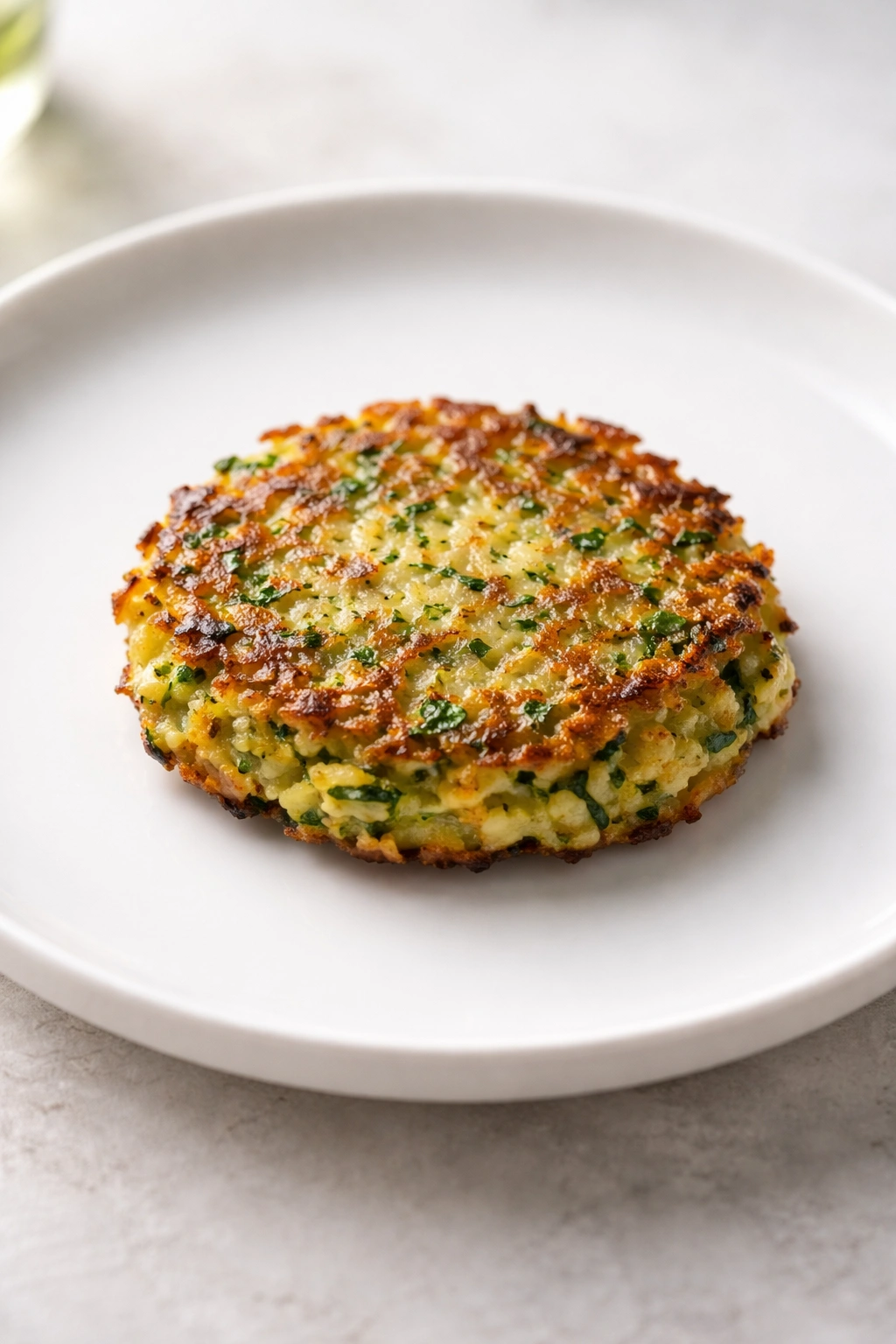
Zucchini fritters occupy a rare category: they’re genuinely fast and genuinely delicious, which is a combination most weeknight recipes fail to achieve. They’re the kind of dish that makes you feel like you’re serving something restaurant-quality when really you’ve invested only 15 minutes and basic ingredients. That’s worth repeating a lot.
The technique—squeezing moisture, hot oil, proper seasoning—is the same foundation you’d use for any fritter, so once you’re comfortable making these, zucchini fritters become a template you can remix endlessly. Corn, cauliflower, Brussels sprout shreds, even shredded potatoes follow the same logic. You’re just learning one transferable skill that opens up a whole category of quick, crispy vegetable sides.
Keep the core recipe in your mental recipe box, treat the lemon juice and dipping sauce as non-negotiable additions, and feel free to play with the seasoning and cheese depending on what sounds good that day. The fritters will be delicious either way, and you’ll have dinner on the table faster than you thought possible.
