



When temperatures soar and the kitchen becomes unbearably hot, the last thing you want to do is stand over a stove for hours. This is exactly when gazpacho—a chilled Spanish tomato soup that requires no cooking whatsoever—becomes your kitchen hero. The beauty of gazpacho lies in its simplicity: fresh vegetables, good olive oil, and a blender are all you need to transform raw ingredients into a silky, satisfying soup that feels indulgent despite being surprisingly light.
Gazpacho is more than just a way to avoid heating your kitchen on sweltering days. It’s a celebration of peak-season tomatoes, peppers, and cucumbers at their most flavorful. When you bite into a spoonful of well-made gazpacho, you taste the pure essence of summer—clean, bright, slightly savory, and deeply refreshing. The soup cools you from the inside out without leaving you feeling overstuffed, making it the perfect meal when eating feels like too much effort.
The beauty of making gazpacho at home is the control you have over texture, flavor, and freshness. Store-bought versions often taste thin and watered down or overly salted to compensate for lack of real tomato flavor. Making it yourself means you can use the best tomatoes available at your local farmers market, adjust the garlic and vinegar to your exact preference, and create something that tastes like it came from a sun-drenched Spanish villa rather than a supermarket shelf. Best of all, you’ll have a full pot of soup ready in about 15 minutes of hands-on time.
Why Gazpacho Is Perfect for Hot Weather
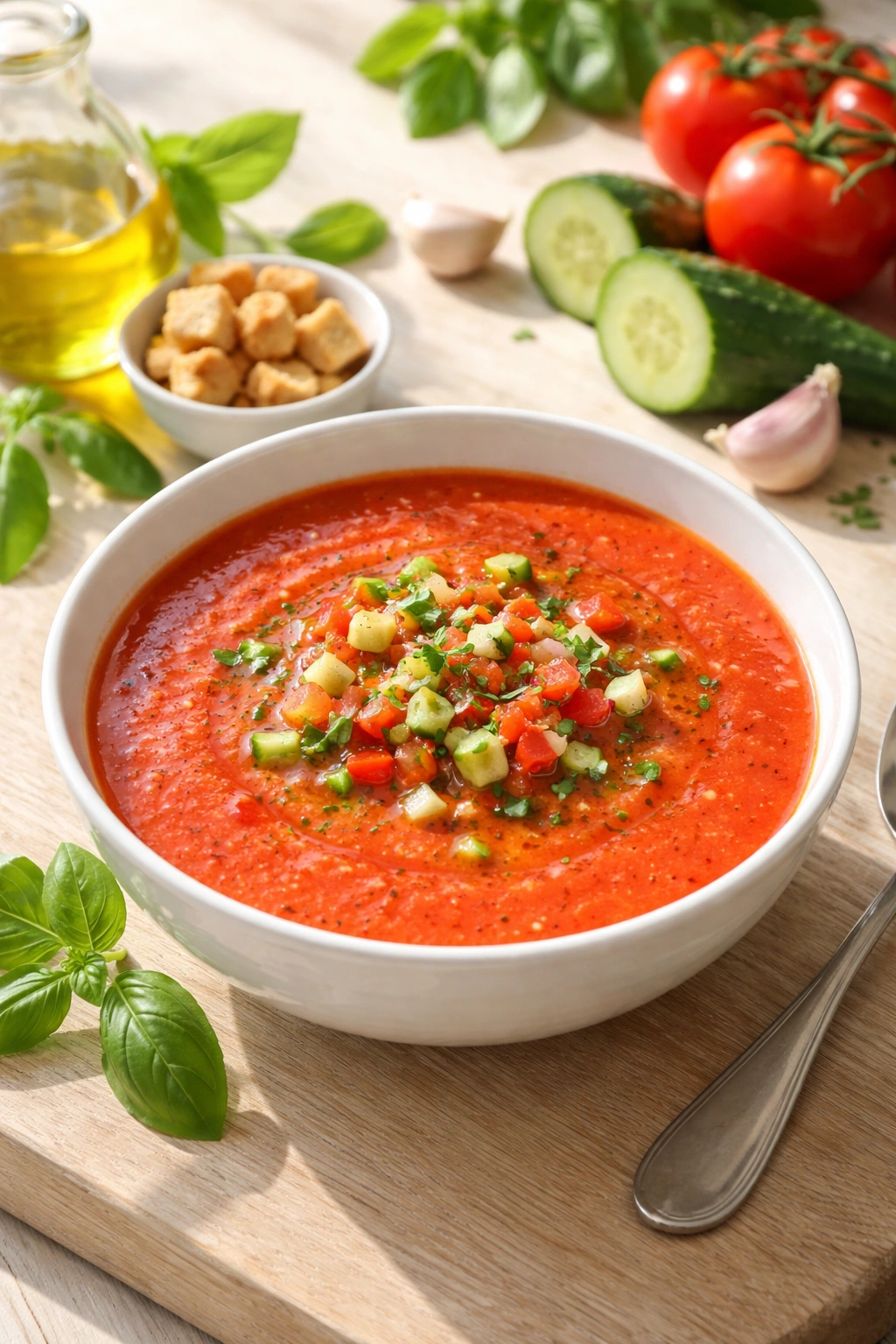
Gazpacho solves multiple problems that arise during heat waves. First, there’s the purely practical advantage: you don’t have to turn on your oven or stove, which means your kitchen stays cooler and you don’t add heat to your living space when you’re already uncomfortable. No hot cooking means lower electricity bills and a more pleasant environment overall.
Beyond the practical benefits, gazpacho’s cold temperature and high water content provide genuine physiological relief. The soup hydrates you while delivering nutrients and flavor—your body gets the nourishment it needs without the weight of a heavy meal. There’s no heavy protein or starch sitting in your stomach, making digestion easier when your body is working hard to regulate its temperature.
The flavor profile of gazpacho also happens to be perfect for hot weather. Tomatoes, cucumbers, and bell peppers are at their peak during the warmest months, which means they taste incredible right now. The acidity from vinegar and tomatoes feels crisp and palate-cleansing rather than heavy. Fresh herbs like basil and cilantro add brightness that makes every spoonful feel alive and refreshing.
The Spanish Origins of This No-Cook Soup
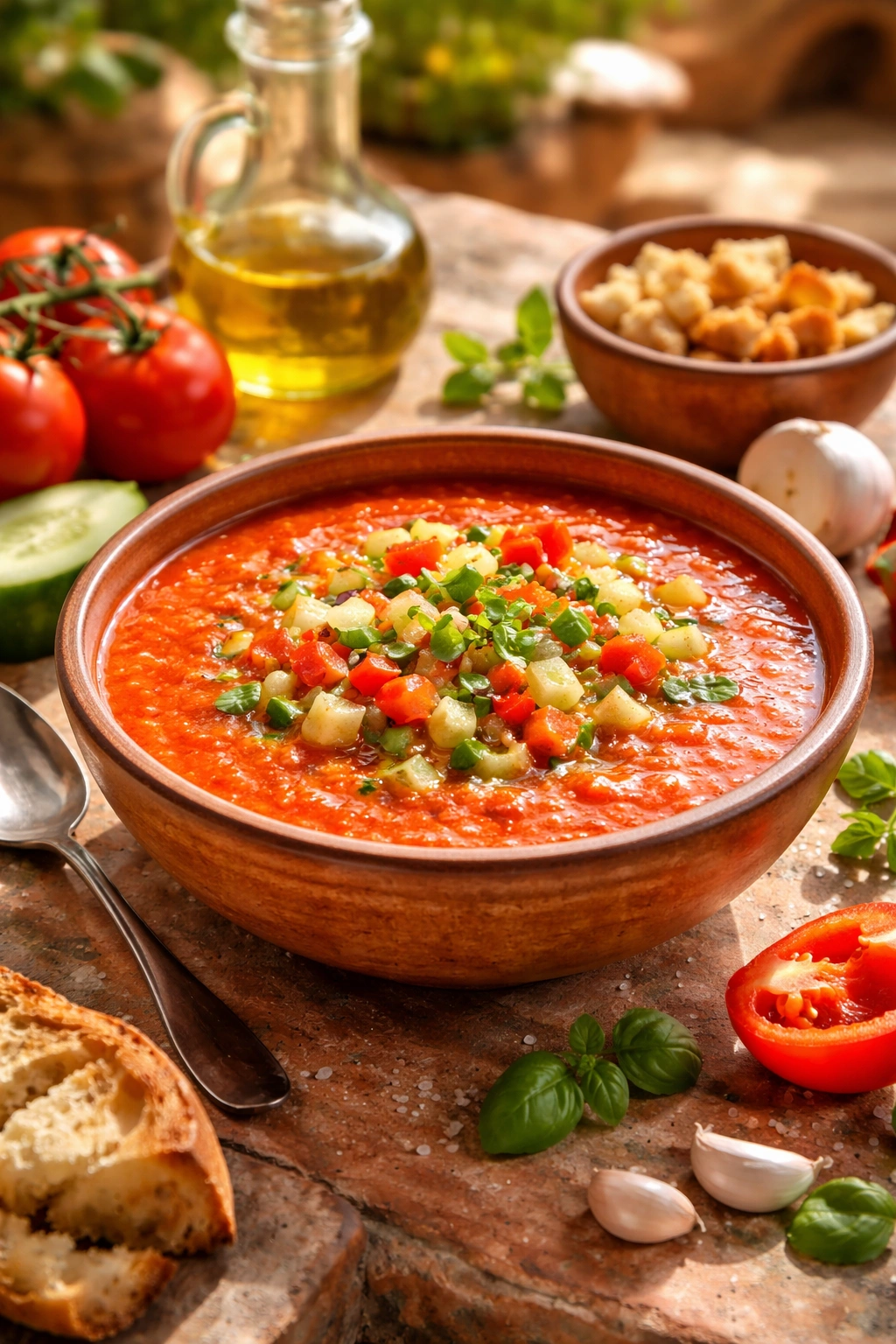
Gazpacho emerged in southern Spain, particularly in Andalusia, where summer heat is intense and unforgiving. Centuries ago, before refrigeration and modern kitchens existed, Spanish cooks developed gazpacho as a way to preserve stale bread and use overripe tomatoes that couldn’t be stored. What began as peasant food—a way to stretch ingredients—transformed into a beloved dish that’s now served in restaurants worldwide.
The original Spanish gazpacho looked quite different from modern versions. Early recipes included torn bread as a thickening ingredient, creating a thicker consistency than the smooth gazpacho most people encounter today. Some traditional recipes still include bread, while others skip it entirely in favor of a purer vegetable blend.
What makes gazpacho remarkable is how completely it took advantage of the season’s abundance. Nothing was wasted, every vegetable was used fully, and the result was both practical and delicious. The Spanish understood something fundamental about cooking: sometimes the simplest preparations taste the best, especially when they start with excellent ingredients.
Choosing the Best Tomatoes for Gazpacho
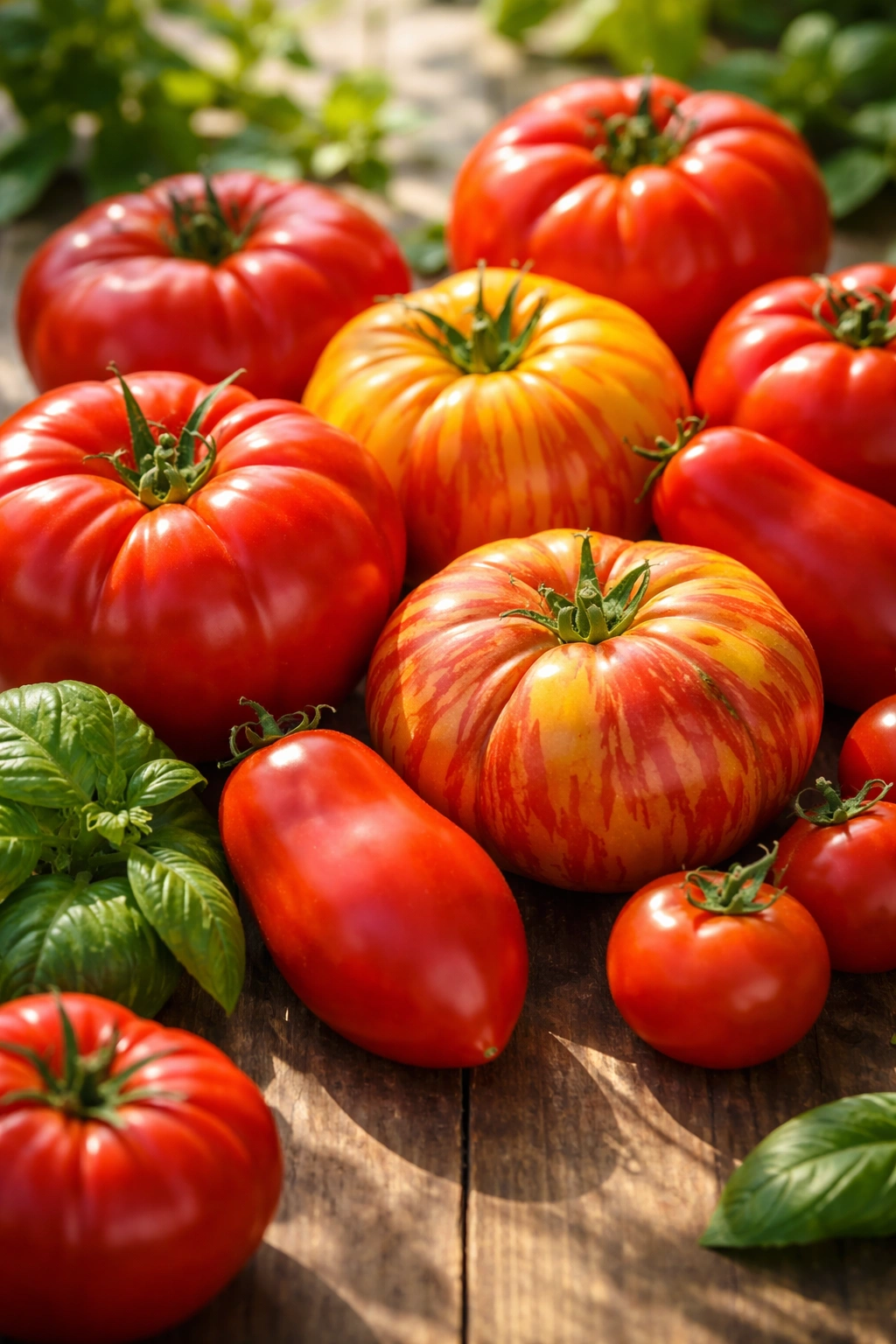
The foundation of exceptional gazpacho is exceptional tomatoes, and this choice matters more than any other ingredient. You want tomatoes that taste like tomatoes—with sweet, acidic depth and real umami flavor. This eliminates most supermarket tomatoes that were picked green, shipped long distances, and ripened artificially. Instead, seek out tomatoes that are deeply colored, heavy for their size, and smell fragrant when you bring your nose close.
The variety you choose shapes your gazpacho’s character. Beefsteak tomatoes deliver robust, rich flavor with a slightly lower water content, making them excellent for a thicker, more substantial soup. San Marzano tomatoes are naturally sweeter and less seedy, though they’re traditionally used for cooked sauces. Heirloom varieties like Brandywine or Cherokee Purple offer complex, nuanced flavors with more acidity than supermarket standards. Cherry or grape tomatoes work beautifully if they’re truly ripe and flavorful, adding sweetness and a lighter body.
The absolute best approach is shopping at a farmers market during peak tomato season, tasting a sample if the vendor offers one, and choosing varieties based on your preferences. If you find tomatoes from a specific grower that you love, buy from them again. Building a relationship with local farmers often means access to the best produce before it hits the farmers market stand.
Prepping Your Vegetables for Smooth Blending
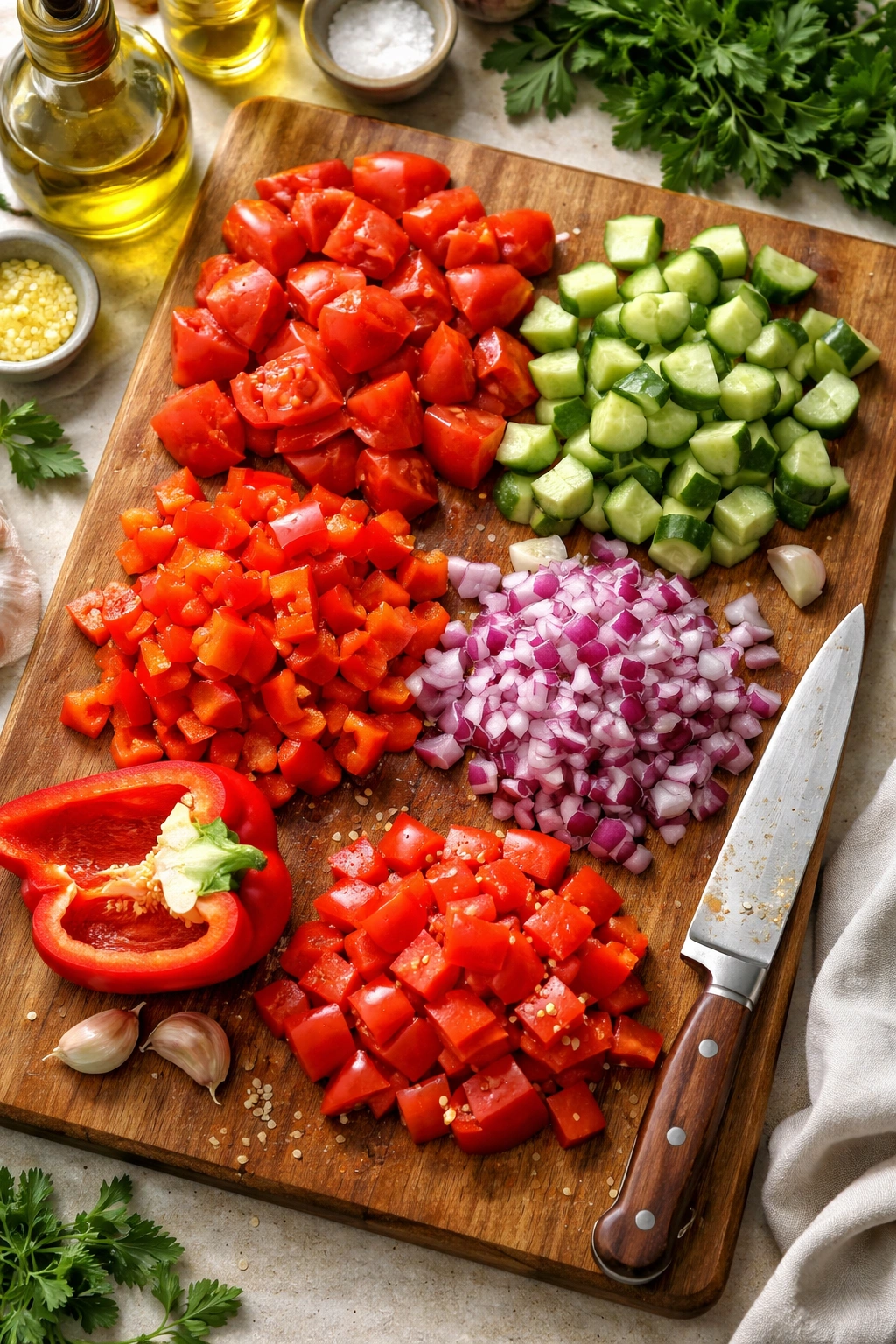
How you prepare your vegetables affects both the final texture and how efficiently your blender works. Start by washing everything thoroughly under cool running water, then patting dry. Wet vegetables don’t blend as smoothly and can dilute your gazpacho with excess water. A kitchen towel works perfectly for this.
For tomatoes, cut them in half and gently squeeze out excess seeds and liquid into a separate bowl—you want to preserve this flavorful juice but remove the watery center portion that makes gazpacho taste diluted. Roughly chop the tomato halves into quarters or sixths, keeping the pieces large enough for your blender to handle easily but small enough that they process quickly.
Bell peppers should be cut in half, cored to remove seeds, and cut into rough 2-inch chunks. Cucumbers are best peeled unless you’re using thin-skinned varieties or prefer the visible flecks of green skin—seeding them first prevents wateriness and bitter aftertaste, though this step is optional if you prefer a thinner consistency. Garlic cloves should be peeled but left whole or halved, since they’ll break down completely in blending. Red onion needs a rough chop into chunks about 1-inch in size.
Prep everything in advance and have it ready by your blender. This speeds up the actual blending process and ensures you don’t have vegetables oxidizing or drying out while you work. Cold vegetables also blend more smoothly and create a colder final soup.
Yield: Serves 6 to 8 | Makes about 8 cups
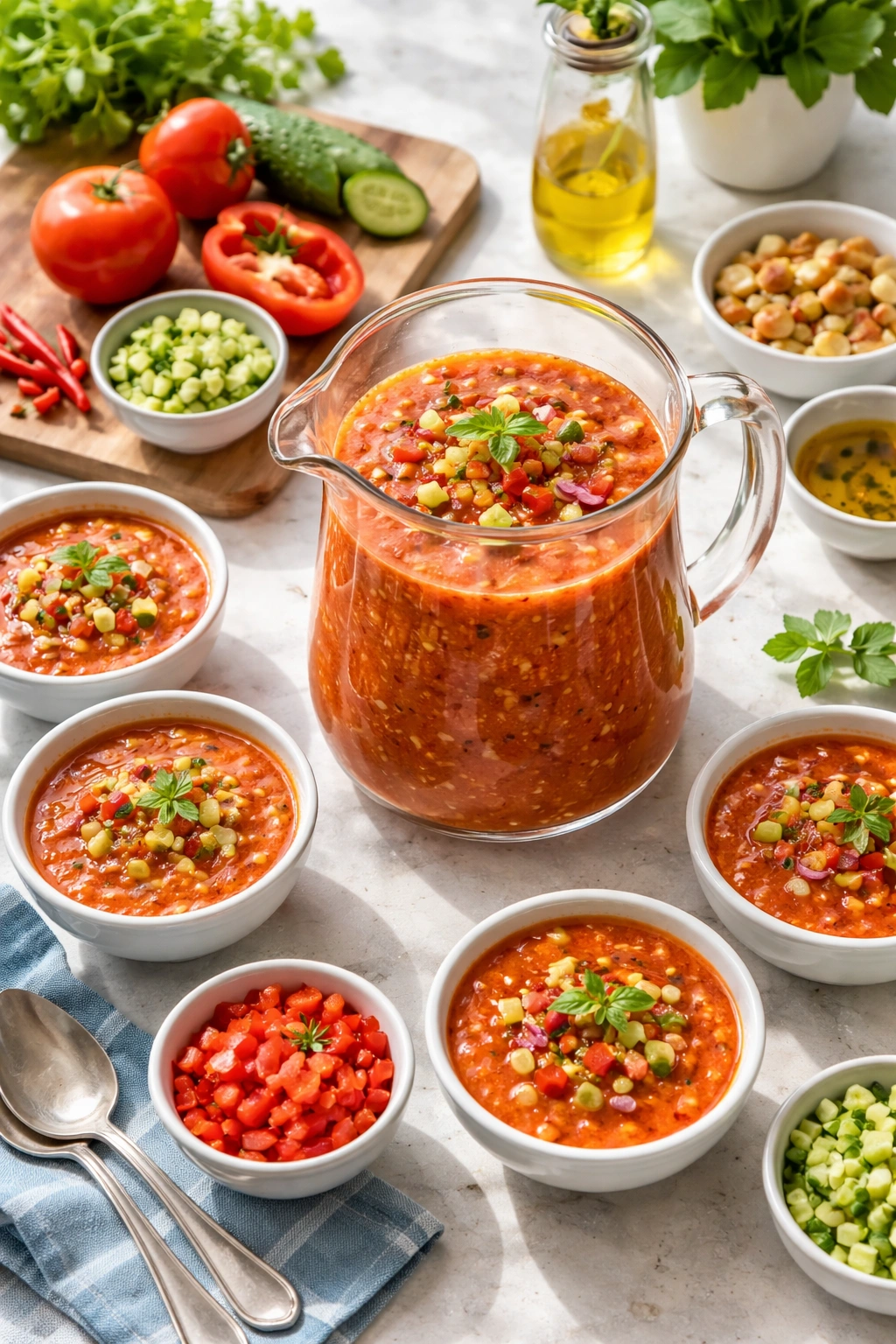
Prep Time: 15 minutes
Cook Time: 0 minutes (no cooking required)
Total Time: 15 minutes active + 2 to 3 hours chilling (best served very cold)
Difficulty: Beginner — no cooking skills required, just blending and basic vegetable prep
The Complete Ingredient List
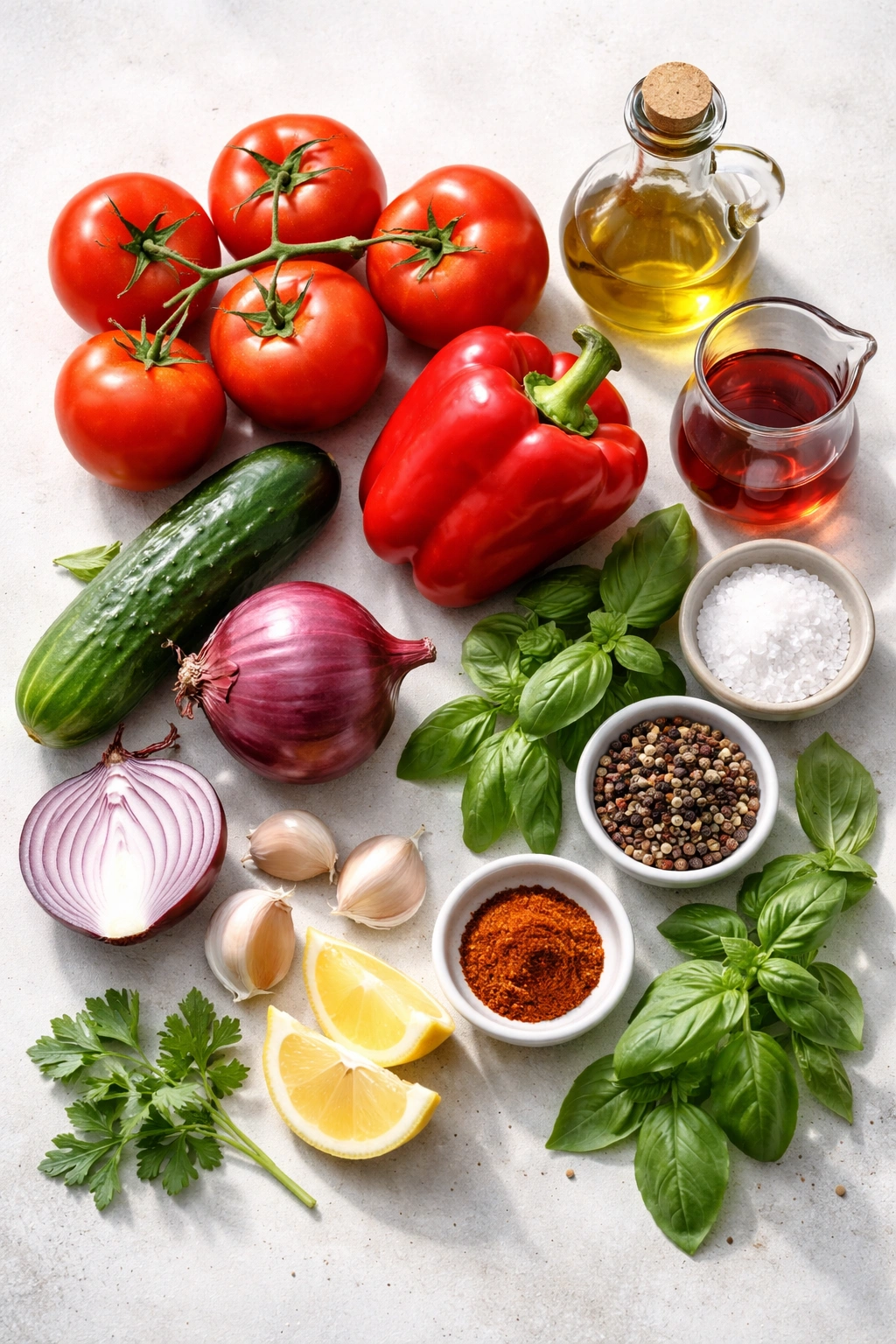
For the Gazpacho:
- 3 pounds ripe tomatoes (about 7 to 8 medium tomatoes), cut in half, excess seeds and liquid removed and reserved
- 1 large red bell pepper (about 8 ounces), cored and roughly chopped
- 1 large English cucumber (about 12 ounces), peeled, seeded, and roughly chopped (or 2 regular cucumbers)
- 1/2 small red onion (about 2 ounces), roughly chopped
- 2 garlic cloves, peeled
- 3 tablespoons sherry vinegar (or red wine vinegar or white wine vinegar, depending on preference)
- 3 tablespoons extra-virgin olive oil, plus more for drizzling
- 3/4 teaspoon fine sea salt, plus more to taste
- 1/4 teaspoon freshly ground black pepper
- 1/2 teaspoon smoked paprika (optional but recommended)
- 2 tablespoons fresh basil leaves (or 1 tablespoon fresh cilantro for a different flavor profile)
- 1/2 cup ice-cold water (or tomato juice for richer flavor), plus more as needed to reach desired consistency
For Serving (Optional Garnishes):
- Diced cucumber
- Diced tomato
- Croutons or crusty bread cubes
- Fresh basil or cilantro leaves
- Drizzle of excellent olive oil
- Thin slices of Spanish ham or prosciutto
- Hard-boiled egg slices
- A splash of sherry vinegar
Making the Gazpacho: Step-by-Step
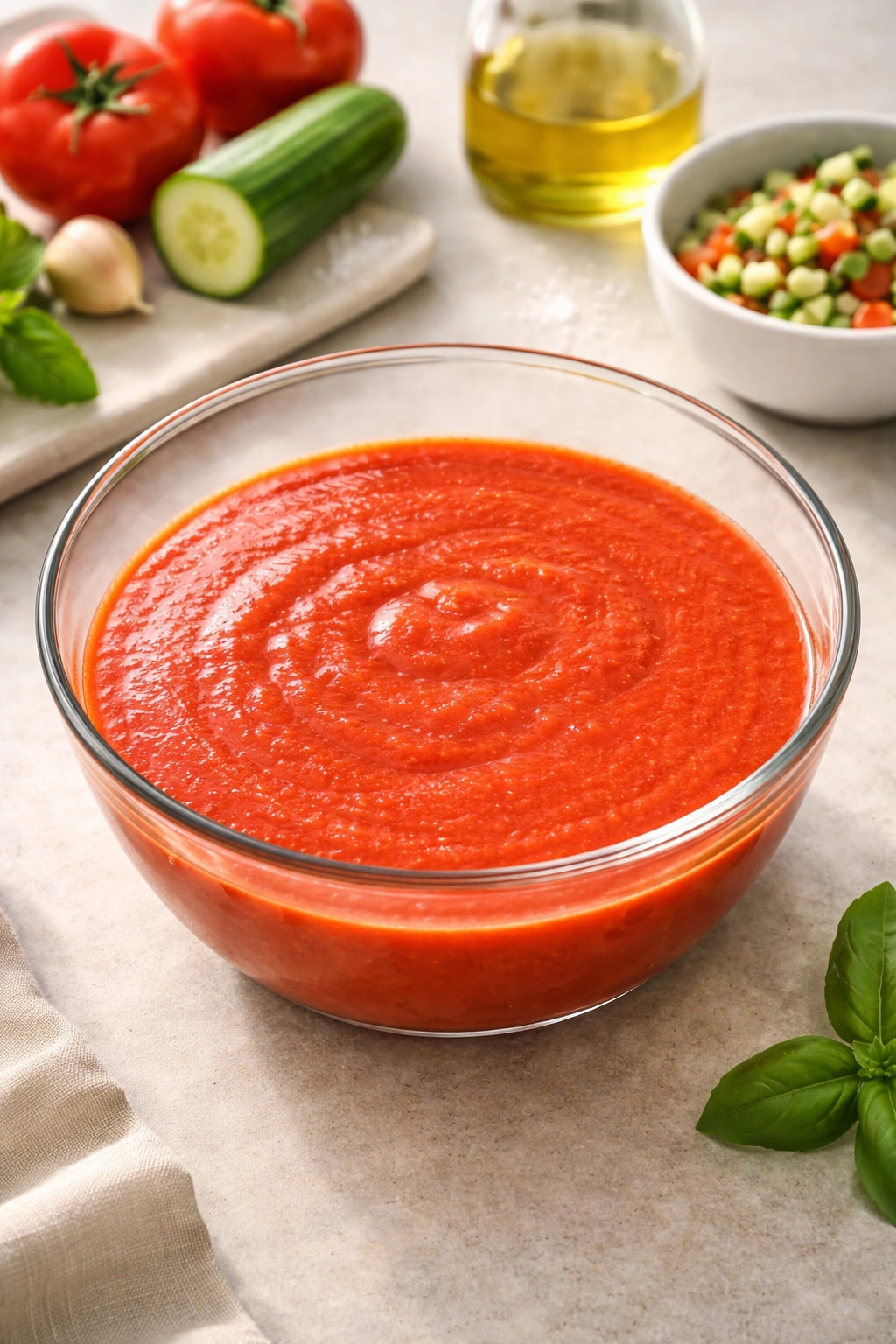
Prepare Your Vegetables:
-
Wash all vegetables thoroughly under cool running water and pat them completely dry with a kitchen towel. Dry vegetables blend more smoothly and prevent excess water from diluting your gazpacho.
-
Cut the tomatoes in half and gently squeeze out the seeds and watery center portion into a separate bowl. Reserve this liquid—it’s flavorful tomato juice that will become part of your gazpacho base. Roughly chop the tomato flesh into quarters or sixths.
-
Cut the bell pepper in half, remove the core and seeds, then roughly chop into 2-inch pieces.
-
Peel the cucumber, cut it in half lengthwise, and use a small spoon to scoop out the seeds. Cut the seeded cucumber into rough 2-inch chunks.
-
Chop the red onion into rough 1-inch chunks. You want pieces large enough to handle easily but small enough to blend smoothly.
-
Leave the garlic cloves whole or halved. Have all vegetables ready by your blender before you begin blending.
Blend the Vegetables:
-
Add the chopped tomatoes, bell pepper, cucumber, red onion, and garlic cloves to a blender. Add the sherry vinegar, olive oil, salt, pepper, and smoked paprika (if using).
-
Pour in the reserved tomato juice you squeezed from the tomatoes, plus 1/2 cup of ice-cold water.
-
Blend on high speed for 30 to 45 seconds, until the mixture is completely smooth with no visible chunks of vegetable remaining. Do not overfill the blender—if your blender is small or you’re doubling the recipe, work in batches to prevent overflowing.
-
If you prefer an absolutely silky smooth texture, strain the gazpacho through a fine-mesh sieve into a large bowl, pressing gently with the back of a spoon to extract all the liquid and push through as much pulp as possible. This step is completely optional—leaving the gazpacho slightly thicker with more texture is perfectly authentic and adds a more rustic quality.
Adjust the Flavor and Consistency:
-
Taste the gazpacho and adjust the seasoning. Add more salt, vinegar, or olive oil as needed—gazpacho’s flavor should taste slightly more intense than you want because it will taste less concentrated once served very cold. Cold dulls flavor perception, so you need to overseasoning slightly now.
-
If the gazpacho feels too thick, add more ice-cold water or tomato juice, 2 to 3 tablespoons at a time, until you reach your preferred consistency. Gazpacho should be the thickness of a heavy cream or a thin tomato soup—pourable but with body, not thin and watery.
-
Roughly tear the fresh basil (or cilantro) into the gazpacho and stir to combine. Fresh herbs release their flavor better when torn by hand rather than finely chopped.
Chill Thoroughly:
-
Transfer the gazpacho to a storage container and refrigerate for at least 2 to 3 hours, ideally 4 hours or overnight. Gazpacho tastes dramatically better when ice-cold, and the flavors mellow and meld together beautifully during chilling. The cold temperature is essential to the dish—serve it warm or at room temperature and it loses its magic entirely.
Advertisements -
Just before serving, stir the gazpacho well and give it a taste. You may want to adjust the seasoning one more time, as some flavors become more or less pronounced after sitting. Add another pinch of salt or splash of vinegar if needed.
Common Mistakes and How to Avoid Them
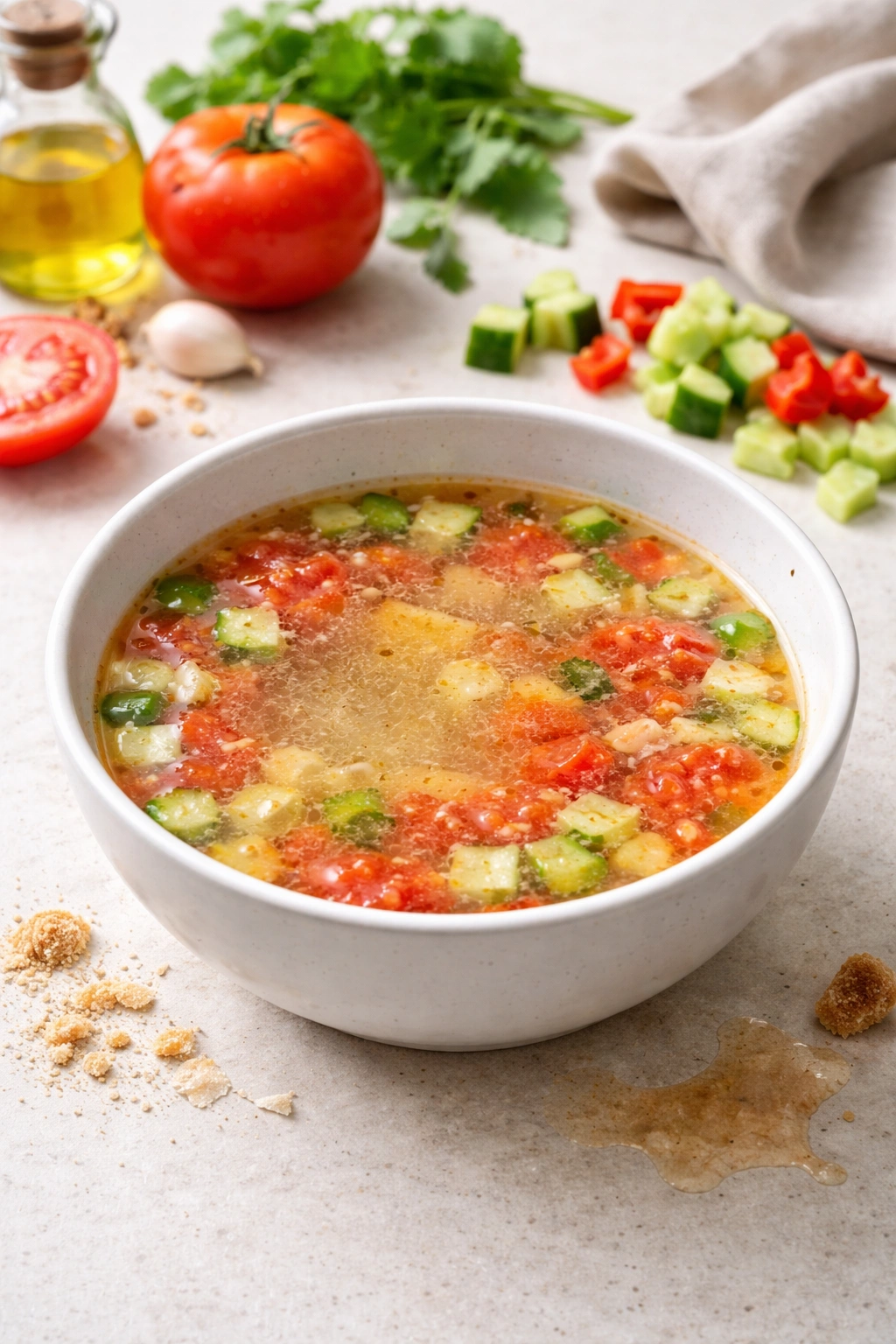
Using Mediocre Tomatoes
This is the biggest mistake people make, and it’s completely fixable with better shopping. Pale, flavorless supermarket tomatoes will create pale, flavorless gazpacho—no amount of blending or seasoning can fix bad raw ingredients. Spend the extra money on farmers market tomatoes or grow your own if possible. Honestly, if you can’t find good tomatoes, it’s better to make gazpacho another week than to make it with inferior ones.
Not Removing Seeds and Excess Liquid
The watery center of tomatoes contributes mainly dilution and bitterness, not flavor. Squeezing it out first means your gazpacho stays concentrated and delicious. Some home cooks skip this step to save time, then end up with thin, watery soup. Take the extra 90 seconds—it makes a real difference in the final result.
Insufficient Chilling Time
Gazpacho served cold is transcendent; gazpacho served cool is just okay. Your refrigerator needs at least 3 hours to chill the soup properly—longer is better. If you’re in a hurry, add extra ice-cold water during blending and use cold vegetables straight from the refrigerator, but truly, there’s no substitute for proper chilling time. Plan ahead and make gazpacho the morning before you want to eat it.
Over-Blending or Using a Food Processor
A blender creates a smooth, silky texture. A food processor, by contrast, creates a chunky, grainy texture because it cuts rather than purees. Stick with a blender for the best results. Similarly, don’t blend longer than necessary—you want smooth soup, not broken-down vegetable mush that oxidizes and loses its bright color.
Adding Too Much Garlic
Garlic becomes sharper and more aggressive as it sits in the cold soup. Two cloves is plenty for a full batch—you can always add more after tasting once chilled, but you can’t remove it. Many people find gazpacho made with excessive garlic unpleasant to eat. Start conservative and adjust upward if needed.
Forgetting That Cold Dulls Flavor
Everything tastes less intensely when cold. This is why your gazpacho needs to taste slightly overseasoned when you finish blending it. Taste it again after chilling and season a second time. Professional chefs always account for this temperature effect in their seasoning strategy.
Tips for the Best Gazpacho Every Time
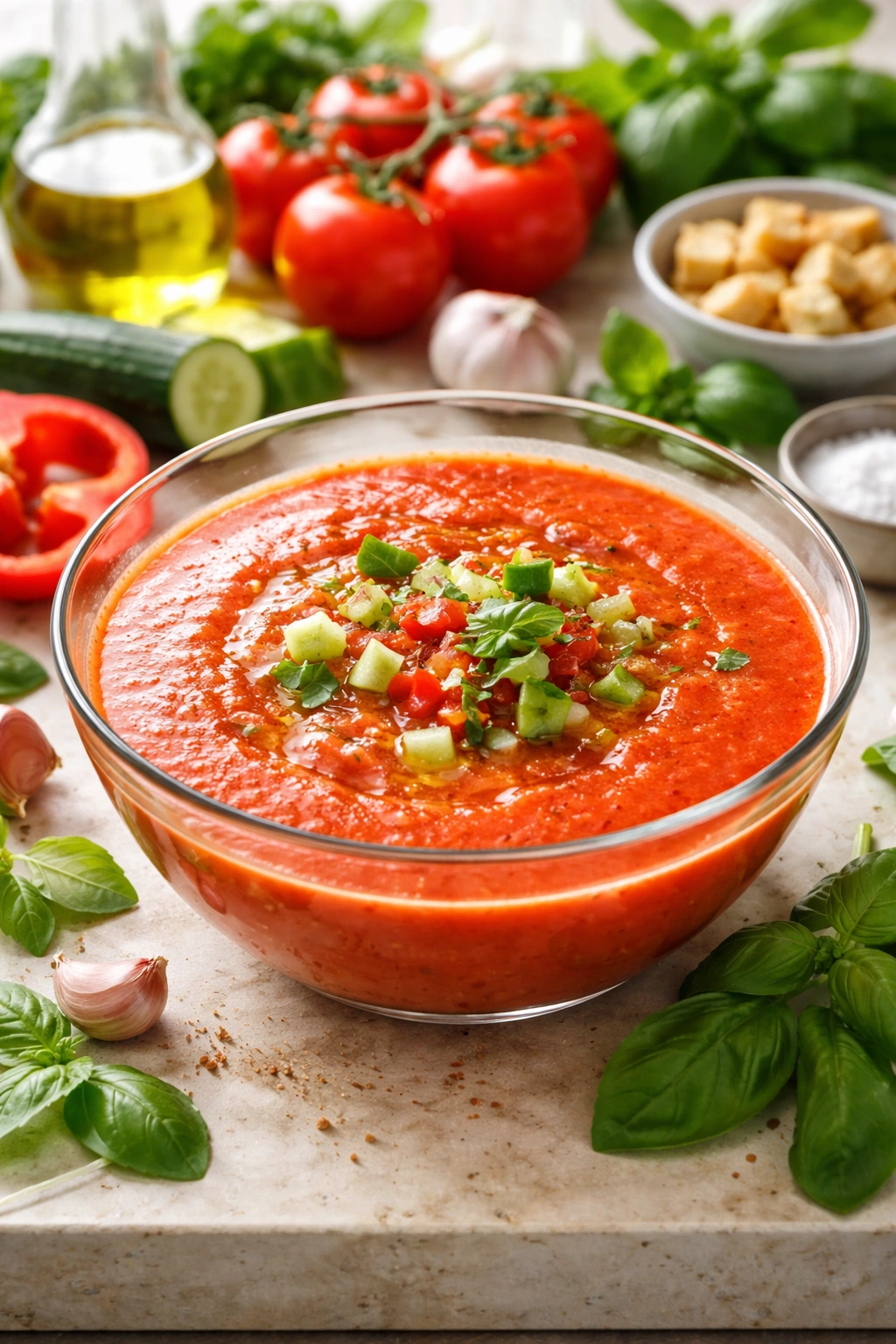
Buy tomatoes at their peak. Visit a farmers market on a warm day when the tomato vendors have just harvested. Ask which varieties are ripest and most flavorful. This single choice determines whether your gazpacho is exceptional or mediocre.
Use sherry vinegar if possible. It’s milder and more complex than distilled vinegar, with subtle oak notes that complement tomatoes beautifully. Red wine vinegar or white wine vinegar work as solid alternatives, but sherry vinegar creates the most authentic Spanish-style gazpacho.
Invest in good olive oil. This is one of the few recipes where the olive oil flavor remains prominent and noticeable. A grassy, peppery extra-virgin oil from Spain or Italy elevates gazpacho significantly. Cheap olive oil makes cheap gazpacho.
Make it the day before. Flavors meld and deepen overnight. Gazpacho made the afternoon before you want to eat it tastes noticeably better than gazpacho eaten the same day, even if the chilling time is the same. The vegetables break down slightly, releasing more flavor, and the ingredients integrate into a more cohesive whole.
Serve in chilled bowls. Ten minutes before serving, place your bowls in the freezer. A cold bowl keeps gazpacho colder longer and signals to your mouth that you’re about to eat something special and intentional.
Add toppings just before serving. Gazpacho is best served simply in a bowl with a drizzle of olive oil and maybe a crack of pepper, but if you want garnishes, add them right at the moment of serving so they don’t get soggy or oxidized. Croutons especially need to stay crispy.
Refreshing Variations to Try
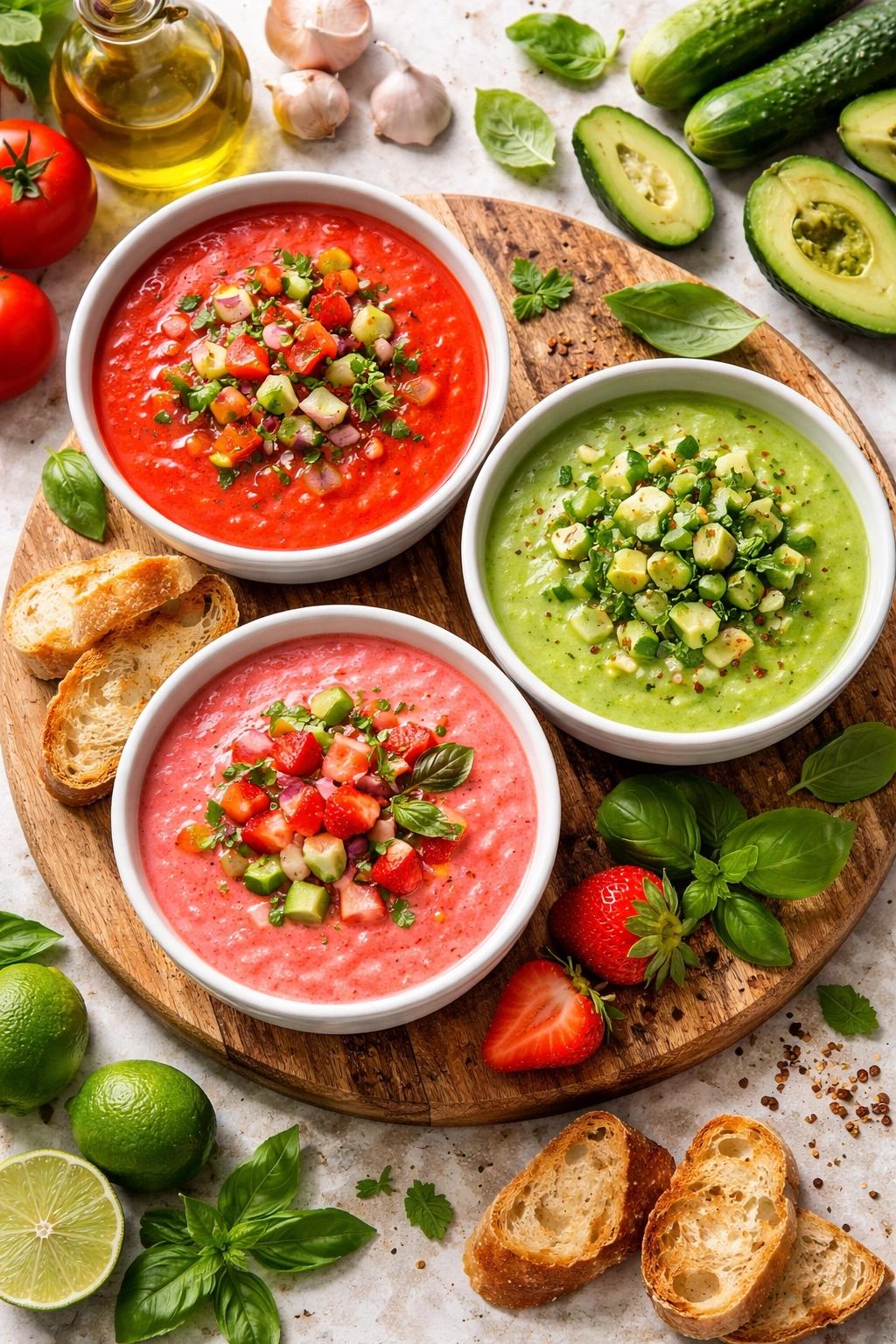
Cucumber-Dominated Gazpacho
If you prefer a lighter, more refreshing soup, increase the cucumber to 2 large English cucumbers and reduce the tomatoes to 2 pounds. This version tastes cleaner and more subtle, almost like a cold vegetable broth. It’s less traditional but incredibly refreshing and doesn’t overpower you with tomato flavor.
Strawberry Gazpacho
For a completely different angle, replace half the tomatoes with ripe strawberries. The sweetness balances the tomato’s acidity and creates a soup that’s floral and unexpected. This works beautifully as a first course at a special dinner. Keep the cucumber, bell pepper, and vinegar the same, but reduce the salt slightly since strawberries don’t need as much seasoning.
Charred Pepper and Tomato Version
If you have access to a grill or gas stovetop, char your tomatoes and bell peppers directly over the flame until they’re lightly blackened on one side. The charring adds smokiness and depth that’s harder to achieve with raw vegetables. Proceed with blending as usual. This method requires a bit more work but creates exceptional flavor.
Spicy Gazpacho
Add 1/4 to 1/2 of a fresh red chile (serrano, jalapeño, or Thai bird’s eye, depending on heat preference), deseeded and roughly chopped, to the blender. Or use 1/4 teaspoon of cayenne pepper stirred in at the end. The heat won’t overwhelm you—the cold temperature and acidity actually balance spice beautifully.
Herb-Forward Version
Double the fresh basil or add a handful of fresh cilantro, parsley, and mint. Make this when fresh herbs are at their peak in the garden. The herbs almost become a starring ingredient rather than a background note, creating a greener, more herbaceous soup that’s especially lovely in mid-summer.
White Gazpacho (Ajoblanco)
This is an entirely different traditional Spanish soup that uses almonds and bread instead of tomatoes. Blend 1 cup blanched sliced almonds, 2 cups cubed day-old bread (crust removed), 3 to 4 garlic cloves, 3 tablespoons sherry vinegar, 3 tablespoons olive oil, and 1 to 1.5 cups ice-cold water until completely smooth. Season with salt to taste. It’s creamy, subtle, and delicious—a white, cool soup that’s perfect alongside traditional red gazpacho.
How to Make Gazpacho Ahead
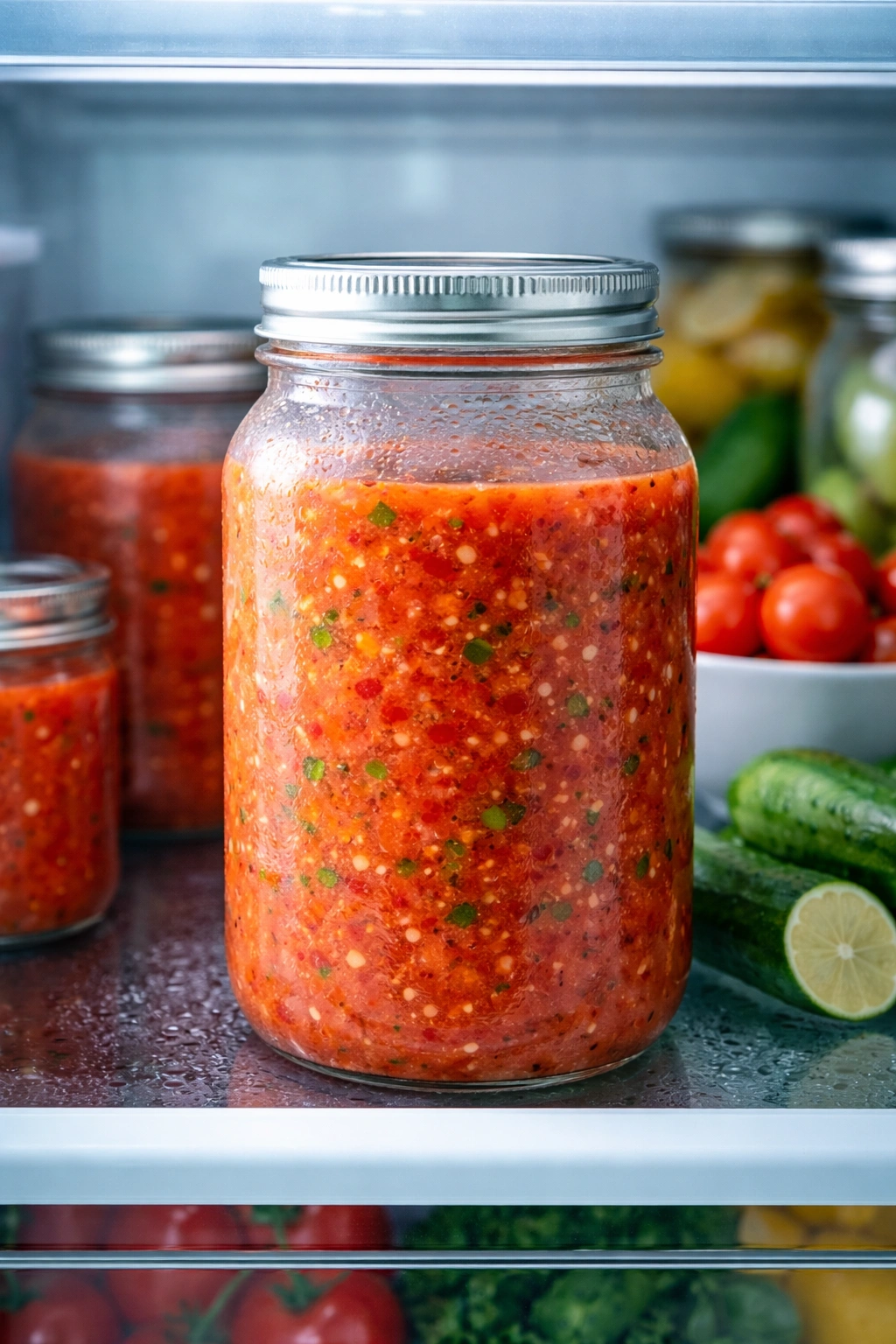
Advance Preparation
You can prep all your vegetables the morning of the day you want to eat gazpacho. Wash, chop, and store them in airtight containers in the refrigerator. The exception is the bell pepper—cut and prepped bell peppers oxidize and develop an off-flavor after several hours, so cut them no more than 4 hours before blending.
Making It Days in Advance
Gazpacho keeps beautifully in the refrigerator for 3 to 4 days in an airtight container. The flavors actually improve slightly for the first day or two as ingredients meld. After 3 days, the soup begins to separate and lose its vibrant color, though it’s still safe to eat.
Freezing Gazpacho
You can freeze gazpacho, though the texture becomes less silky after thawing—the vegetables break down further and the soup becomes slightly more separated. If you want to freeze it, do so in a rigid container with 1 inch of headspace to allow for expansion. Thaw in the refrigerator overnight and stir well before serving. Frozen gazpacho keeps for up to 3 months.
Making It in Batches
If you’re entertaining or want gazpacho available throughout the week, double or triple the recipe. It actually tastes better when made in larger batches because the flavors integrate more fully. Store in separate containers to maintain freshness, opening only what you need each day.
Serving and Pairing Ideas
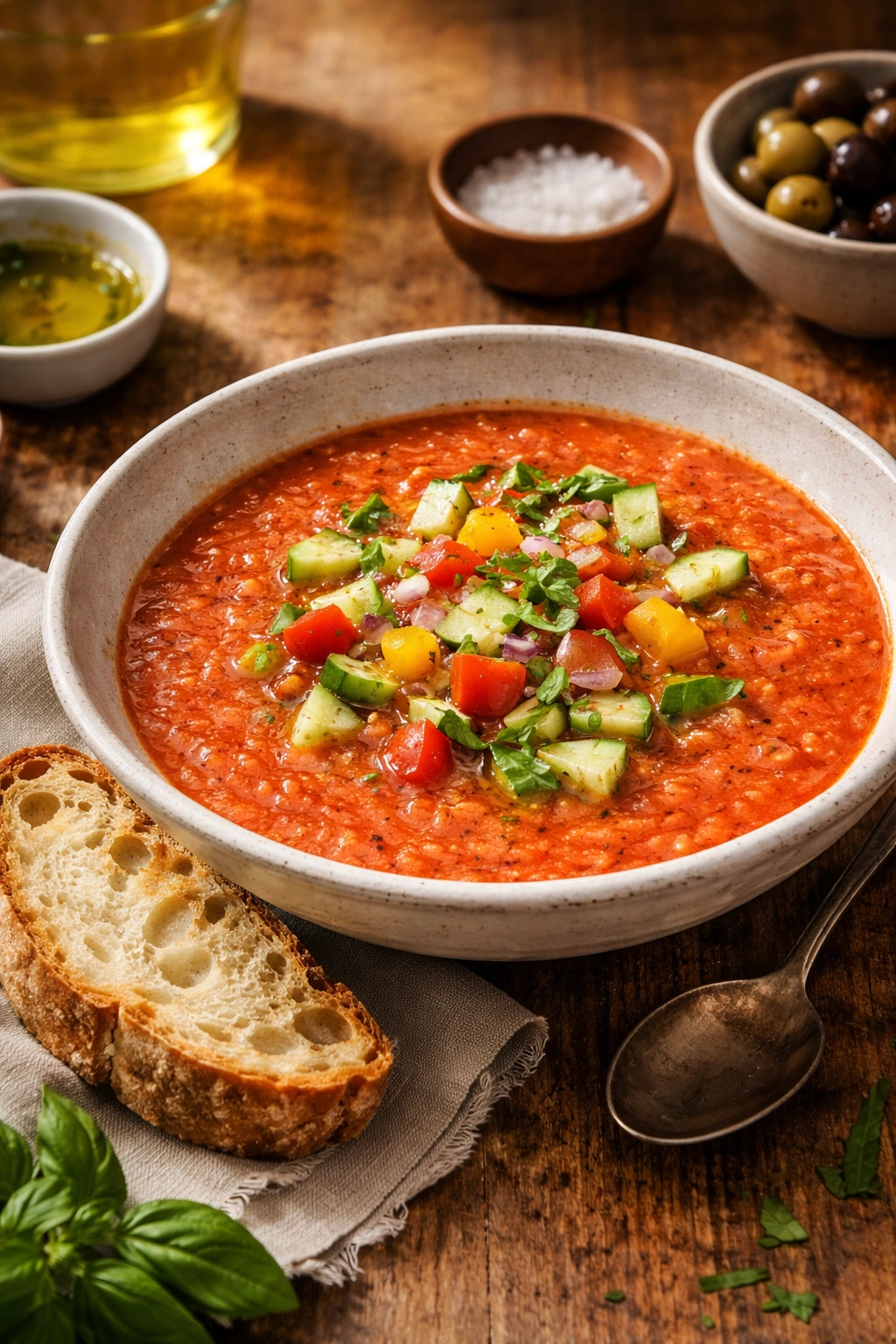
As a Standalone Meal
Gazpacho works as a light lunch on its own, especially when topped with torn bread, a handful of cheese, and sliced hard-boiled eggs. Add a side salad or crusty bread for a more substantial meal, but truly, a large bowl of gazpacho is satisfying enough on its own.
As a First Course
Serve gazpacho in small bowls or teacups as the opening course to a summer dinner. It awakens the palate without filling guests up before the main course. This is especially elegant when you float a few perfectly diced tomato or cucumber cubes on top and drizzle with your best olive oil.
With Spanish Cured Meats
Traditional gazpacho pairing includes thin slices of jamón ibérico or other Spanish cured ham draped over the soup or served alongside. The saltiness and richness of the ham complements gazpacho’s bright acidity perfectly. Prosciutto works beautifully as an alternative.
With Crusty Bread
Crusty bread alongside gazpacho is essential. Tear off chunks and dip them into the soup, or cube the bread and add it directly as a garnish. Day-old bread works best because it has more structure and won’t immediately dissolve into the soup.
With Seafood
A small portion of chilled gazpacho pairs wonderfully with shrimp, scallops, crab, or white fish. The acidity of the soup echoes seafood’s natural brightness, creating a harmonious combination. Serve the gazpacho as the base of a light seafood appetizer.
With Cheese
Gazpacho and cheese might seem counterintuitive, but aged cheddar, manchego, or feta create interesting contrasts. The sharp saltiness and richness of cheese against the soup’s brightness creates balance and complexity.
Drinks Pairing
Gazpacho pairs beautifully with crisp white wines like Albariño, Vermentino, or Pinot Grigio. Spanish sherries (especially fino or manzanilla) are traditional pairings. A cold rosé works gorgeously on a hot day. Avoid heavy reds or anything with high tannins.
Final Thoughts
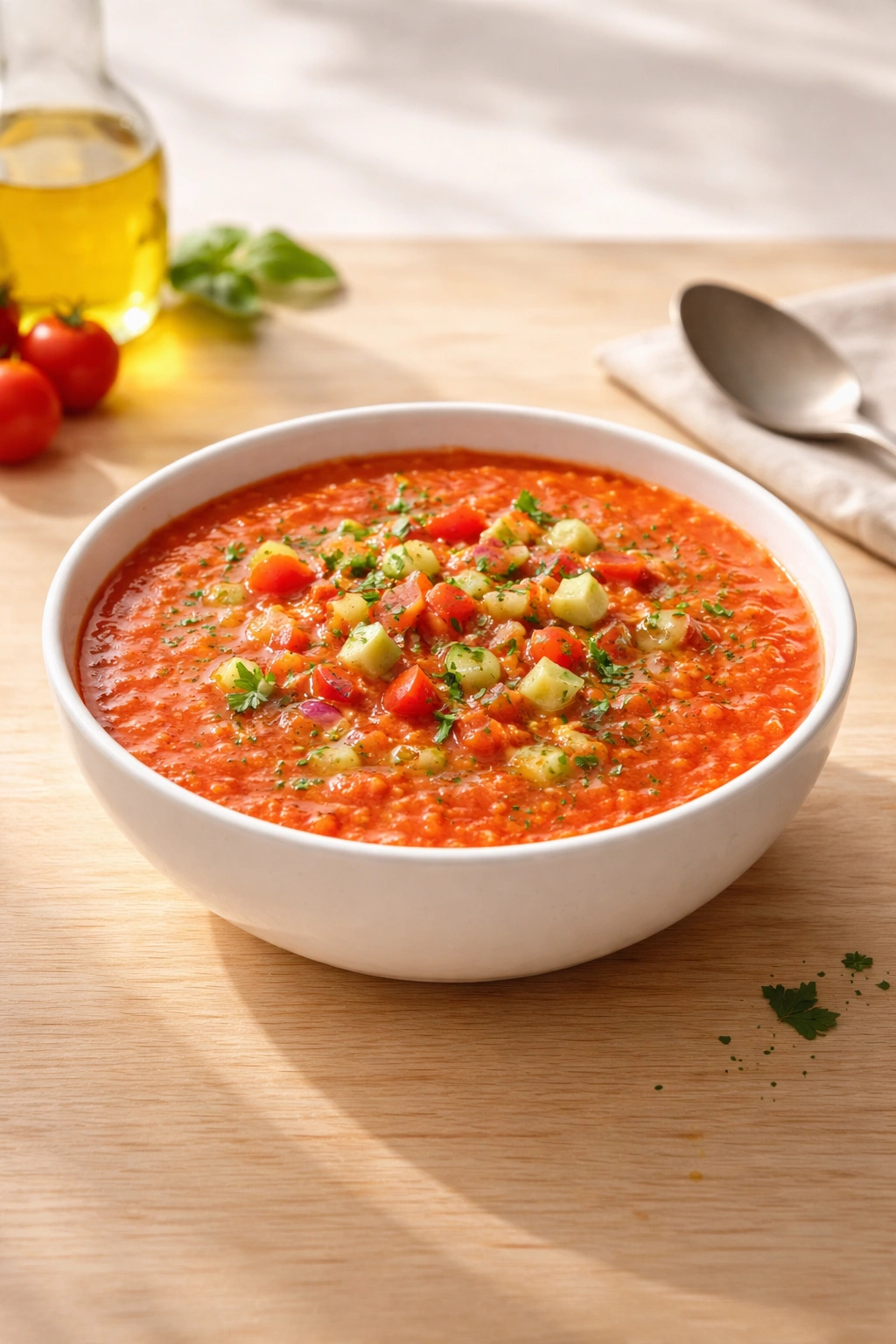
Gazpacho is proof that some of the best dishes require no cooking—just excellent ingredients, a blender, and the patience to let flavors develop in cold storage. When temperatures climb and the idea of turning on your stove feels overwhelming, gazpacho is your answer. You’ll have a satisfying, refreshing, restaurant-quality soup ready in minutes of active work.
The magic of gazpacho lies in its simplicity and in how completely it captures the season. A bowl of cold gazpacho on a sweltering afternoon tastes like summer itself—bright, fresh, and deeply nourishing. Make it with the best tomatoes you can find, season it boldly, and chill it thoroughly. Then serve it simply with a drizzle of olive oil and taste what happens when you start with excellent ingredients and trust that less is more.
