



There’s a moment when fresh mango salsa hits the table—the bright golden-orange color practically glowing under the light, the aroma of cilantro and lime cutting through the kitchen air, and somehow you already know this one small bowl is going to be the star of the entire meal. Whether it lands next to warm tacos, nestles beside crispy tortilla chips, or adorns a perfectly grilled piece of fish, mango salsa has this quiet power to make everything taste better. It’s not just a condiment; it’s a flavor bridge that brings together sweet, spicy, acidic, and fresh all at once—a combination that somehow feels both sophisticated and completely approachable.
What makes homemade mango salsa so transformative is the difference between what you get from a jar and what you can create in your own kitchen. Store-bought versions sit under fluorescent lights losing their brightness, while the real thing—the version you make yourself—tastes like the best version of a tropical morning. The mangoes are at their peak ripeness, the cilantro was snipped minutes ago, the lime juice is sharp and alive, and you control every single flavor note. It’s genuinely one of the easiest condiments to master, requiring nothing more than a sharp knife, a cutting board, and about fifteen minutes of your time.
This salsa works because of contrast. The sweetness of ripe mango plays against the brightness of lime and the heat of jalapeño. The crispness of red onion and bell pepper gives your mouth something to bite into, while the cilantro adds an herbaceous undertone that makes the whole thing feel less like a topping and more like a proper component of your meal. Add in a pinch of salt and maybe a whisper of honey, and you’ve got something that transcends the “sides” category entirely. People will ask you for the recipe. They’ll try to replicate it at home and text you asking why theirs doesn’t taste the same (it’s probably the ripeness of the mangoes—we’ll cover that).
The best part? Once you understand the basic structure and technique, you’ll find yourself making this every time you’re entertaining or want dinner to feel a little more special. It stores beautifully, comes together faster than you’d think, and works with almost anything savory and warm.
Why Fresh Mango Salsa Belongs on Your Table
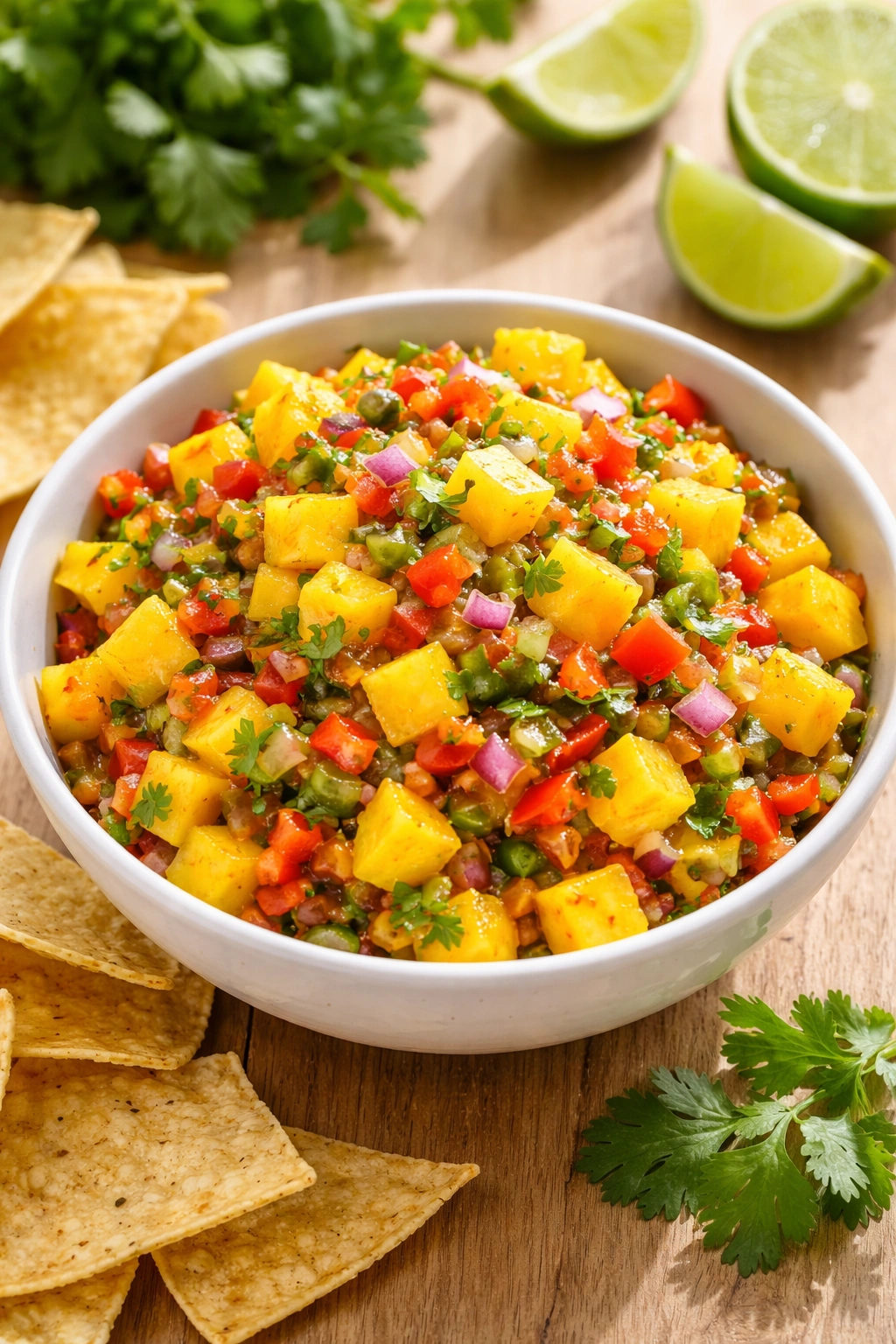
Understanding what makes mango salsa so uniquely valuable changes how you approach making it. This isn’t just about chopping fruit and calling it done—it’s about understanding flavor balance and texture contrast, which are the fundamentals that separate delicious condiments from forgettable ones.
Mango salsa brings what tropical cuisines have known forever: fruit and vegetables create a flavor profile that tastes both light and deeply satisfying. The natural sugars in ripe mango don’t feel heavy the way creamy salsas sometimes do, yet they create a subtle sweetness that anchors all the spice and acid. It’s this balance that makes mango salsa addictive without being cloying, refreshing without being watery, and flavorful without overwhelming the dishes it accompanies.
The texture element matters as much as flavor. When you bite into proper mango salsa, you get distinct, separately identifiable components. There’s the yielding soft mango, the crunch of pepper and onion, the burst of cilantro leaves, and that crucial lime juice coating everything. Every bite is slightly different from the last, which keeps your palate engaged. This is why proper chopping technique and cutting size consistency—which we’ll cover in detail—makes such a dramatic difference.
Mango salsa also acts as a flavor multiplier, which is why it appears in so many cuisines. Latin American cooks use it as a counterpoint to rich proteins. Asian chefs layer it over fish to add brightness. Mediterranean cooks treat it as a fresh-fruit alternative to tomato-based accompaniments. Whatever cuisine you’re working with, mango salsa enhances without dominating. It makes good food taste better without requiring you to have advanced cooking skills.
Choosing and Preparing Mangoes That Actually Taste Like Something
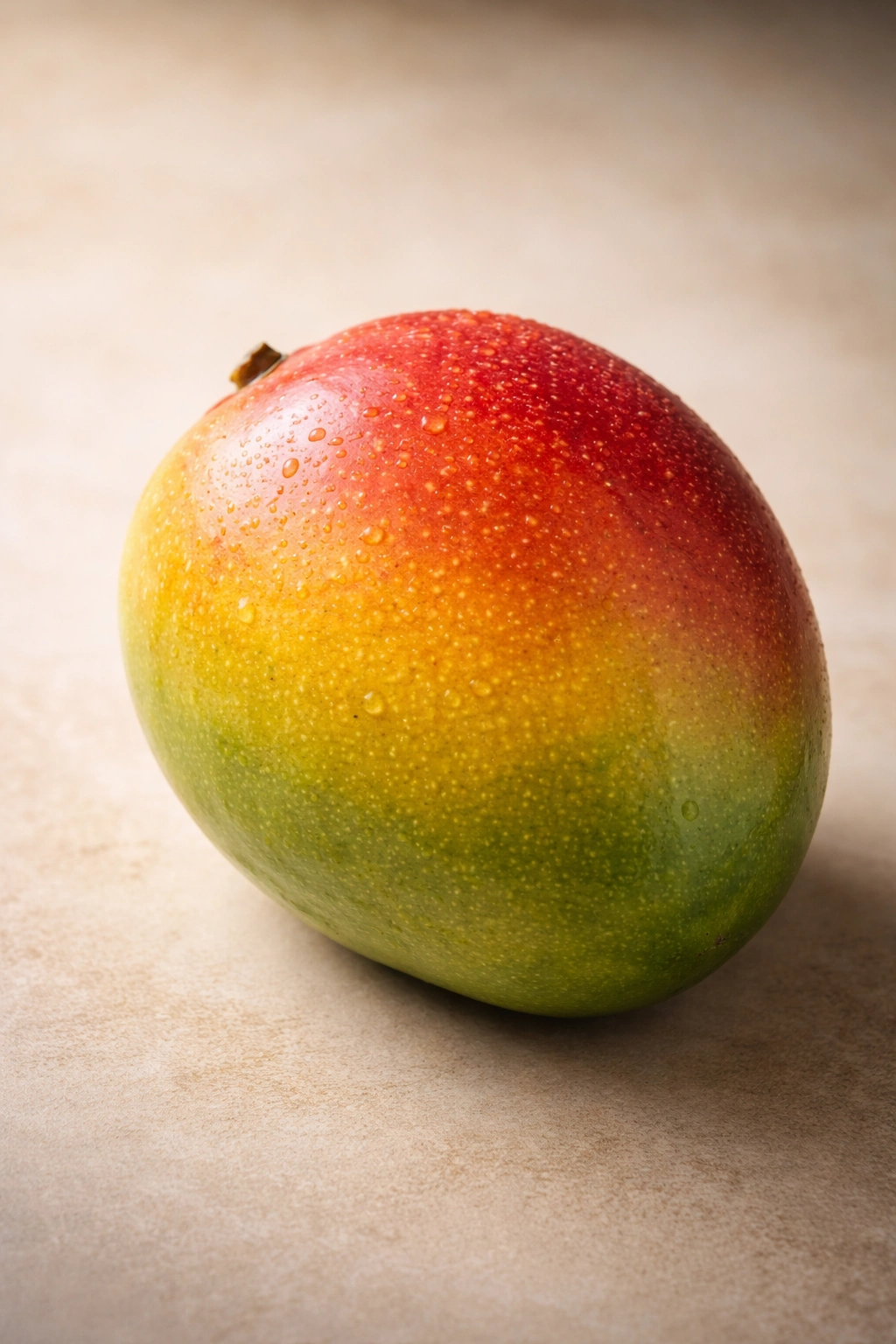
The entire success of your mango salsa rests on a single factor: the ripeness and quality of your mangoes. You could have every other ingredient perfect, but if your mangoes are underripe or mealy, the whole salsa suffers. Learning to select mangoes is the single most important skill you’ll develop in this process, and fortunately it’s simple.
How to Identify Ripe Mangoes
The moment you pick up a mango, you want it to yield slightly to gentle pressure from your palm, but not squish. Press it with the fleshy part of your palm near your thumb—not your fingertips, which will bruise the fruit. A ripe mango feels like a peach or avocado at peak ripeness: there’s give, but it springs back slightly. If it’s rock-hard, it needs another few days on your counter. If your fingers sink in easily, it’s overripe and likely mealy inside.
Color is helpful but not definitive. Different mango varieties range from green to yellow to deep red, and some perfectly ripe mangoes never turn completely red. A better indicator is aroma—bring the wider end (the opposite end from the stem) to your nose and smell it. A ripe mango smells distinctly sweet and fruity, almost floral. If it has no smell at all, it’s not ready. If it smells slightly fermented or vinegary, it’s past its prime.
The weight in your hand also matters. Hold two mangoes of similar size—one should feel noticeably heavier, which indicates higher water content and better flavor density. That’s your pick. Store unripe mangoes on the counter at room temperature, away from direct sunlight. They’ll ripen in 2-5 days depending on how underripe they started. Once they reach the right ripeness, eat them immediately or refrigerate them to slow the ripening process further.
Cutting and Preparing Mangoes Without Frustration
Mango prep intimidates a lot of home cooks because the pit is large, flat, and centered in a way that makes cutting feel awkward. Here’s the technique that eliminates frustration: imagine the mango has two flat sides and one thin middle. The pit runs lengthwise through the center, closer to one flat side than the other.
Position your mango on a cutting board with one pointed end facing you. Using a sharp 7-8 inch chef’s knife, cut from the top of the mango down, aiming to stay about ½ inch away from center on one side. You’ll feel the knife glide along the flat side of the pit. Repeat this on the opposite side, and you’ll have two large cheek pieces. Use a knife to score the flesh in a crosshatch pattern about ¼ inch deep—don’t cut through the skin. Be careful not to press so hard that you puncture the skin, which will cause juice loss and make scooping harder.
Hold the cheek with both hands, skin-side down, and use your thumbs to push up gently while pressing the skin down. The flesh will pop outward into cube-shaped pieces, which you can then scoop into a bowl with a spoon. For the thin sides with the pit, simply use your knife to slice the flesh away from the bone. You can also peel these pieces with a vegetable peeler and chop them separately.
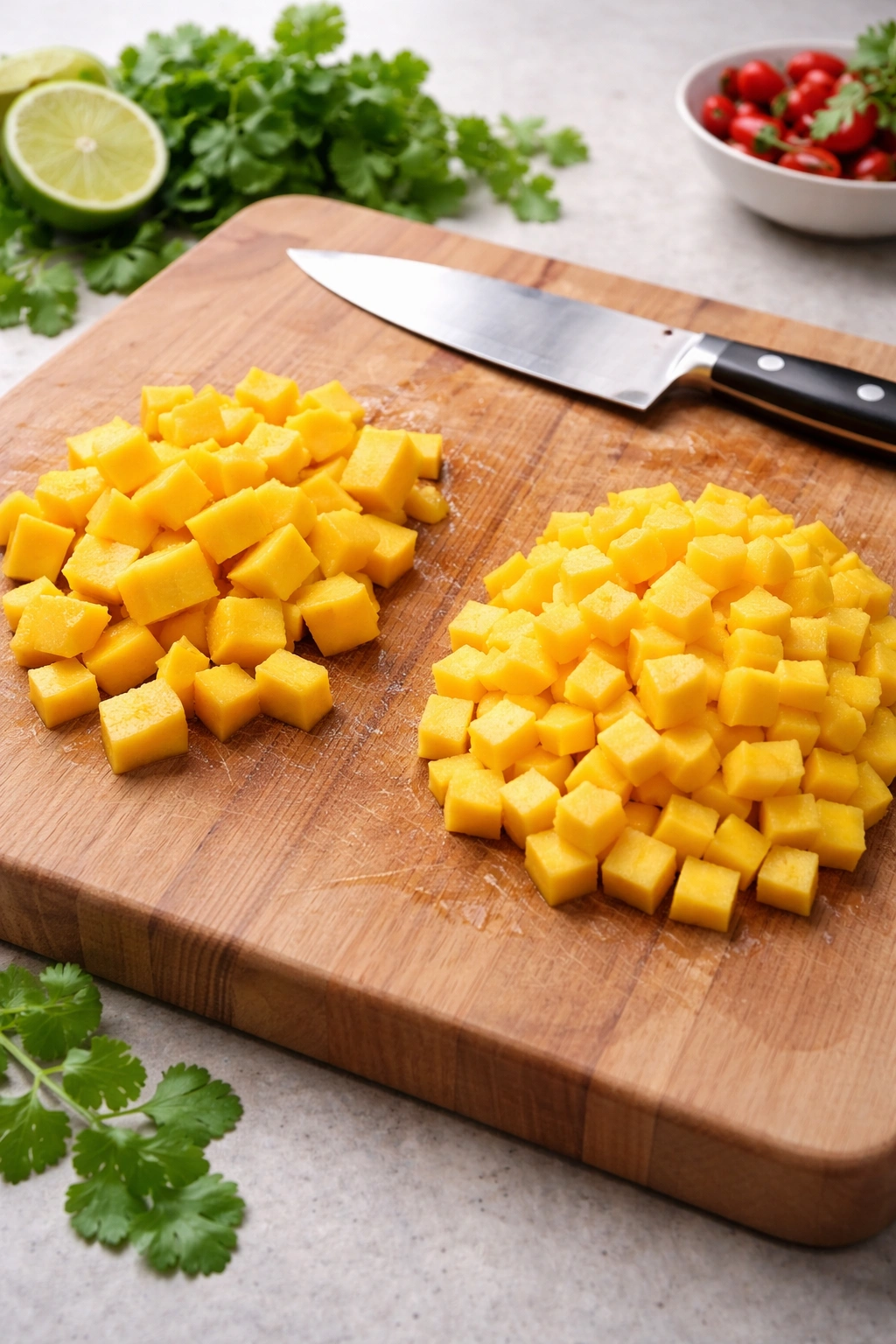
The goal for salsa is consistent ¼-inch dice. Uniformly sized pieces distribute flavors evenly and create a better texture in every bite. Take your time here—rushing the cutting step leads to uneven sizes and frustration.
Yield, Timing, and Difficulty
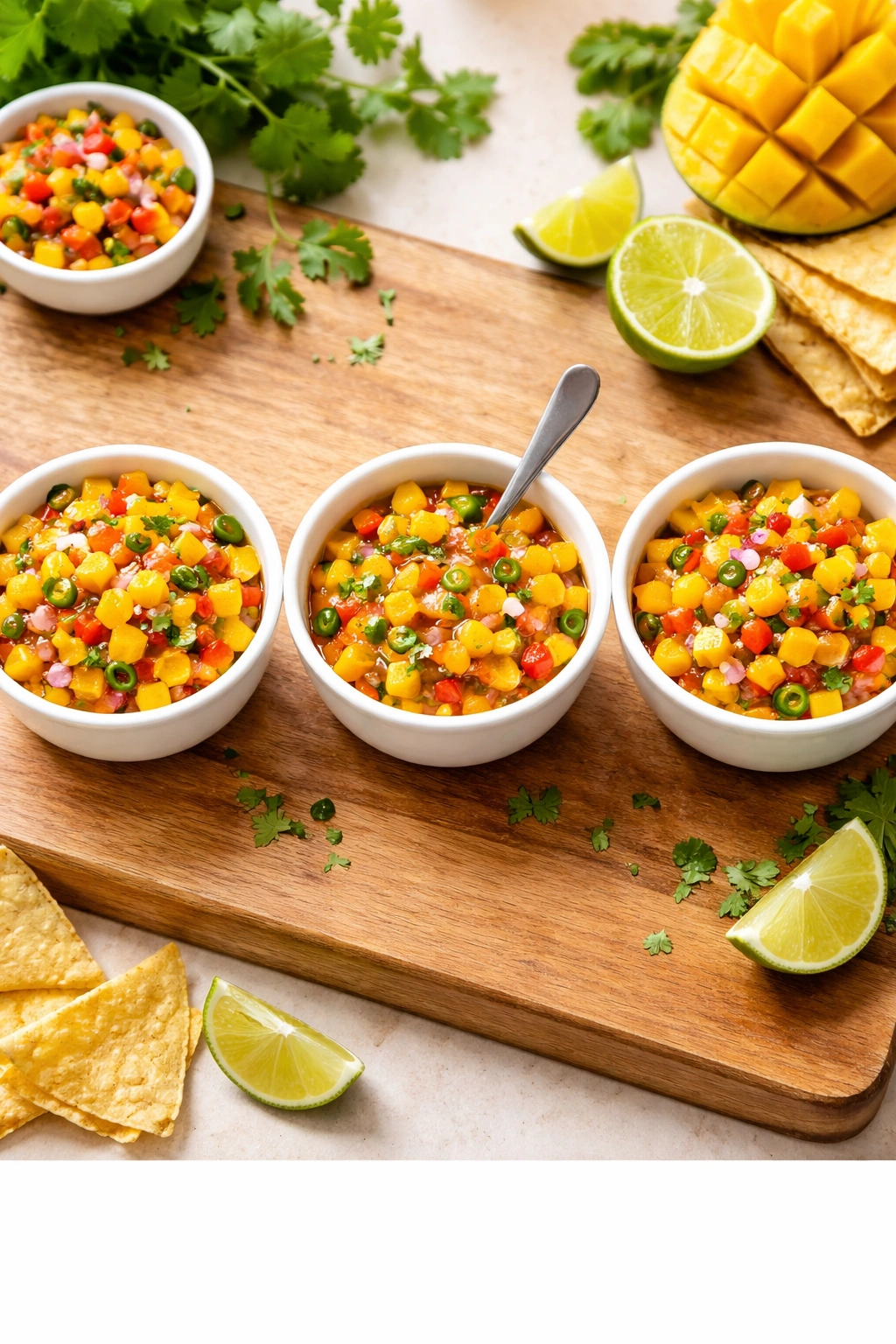
Yield: Makes about 3 cups, serving 6-8 people as a side condiment, or 4 people as a more generous topping
Prep Time: 20 minutes
Cook Time: None
Total Time: 20 minutes plus 15-20 minutes resting time (optional but recommended)
Difficulty: Beginner — No special equipment needed beyond a sharp knife. The steps are straightforward and forgiving. Even if your pieces aren’t perfectly uniform in size, the salsa will still taste delicious.
Ingredients for Fresh Mango Salsa
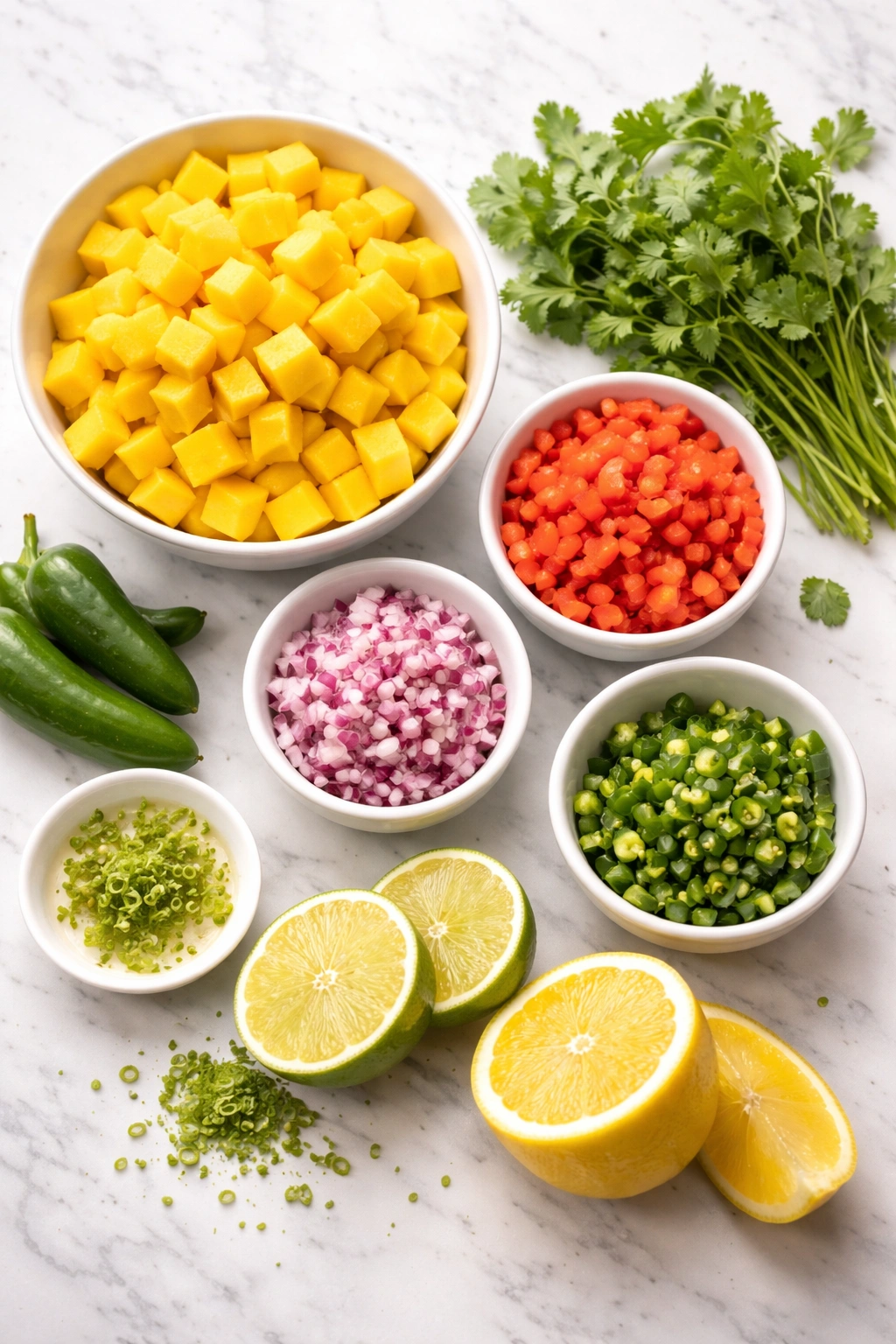
For the Base:
- 3 ripe mangoes (about 2 pounds total, yielding roughly 3 cups of diced fruit)
- 1 medium red bell pepper, finely diced (about ¾ cup)
- ½ medium red onion, minced very finely (about ⅓ cup)
- 1 to 2 jalapeños (depending on heat preference), seeded and minced very fine (about 2-3 tablespoons)
- ⅓ cup fresh cilantro leaves, roughly chopped
- Juice and zest of 2 limes (about 3 tablespoons fresh lime juice)
- ½ teaspoon fine sea salt
- ¼ teaspoon ground black pepper
- 1 tablespoon honey (optional but recommended for balancing acidity and bringing out sweetness)
- ¼ teaspoon ground cumin (optional, adds depth)
Optional Additions (Choose One or None):
- Pinch of cayenne pepper or chili powder (for extra heat without additional bulk)
- 1 jalapeño, roasted over an open flame until blackened and charred, skin rubbed off, minced (for smoky depth)
- 1 tablespoon fresh mint, chopped (adds a cooling element alongside cilantro)
- ¼ teaspoon vanilla extract (sounds unusual but adds complexity and rounds out sweetness)
Making Perfect Mango Salsa: Step by Step
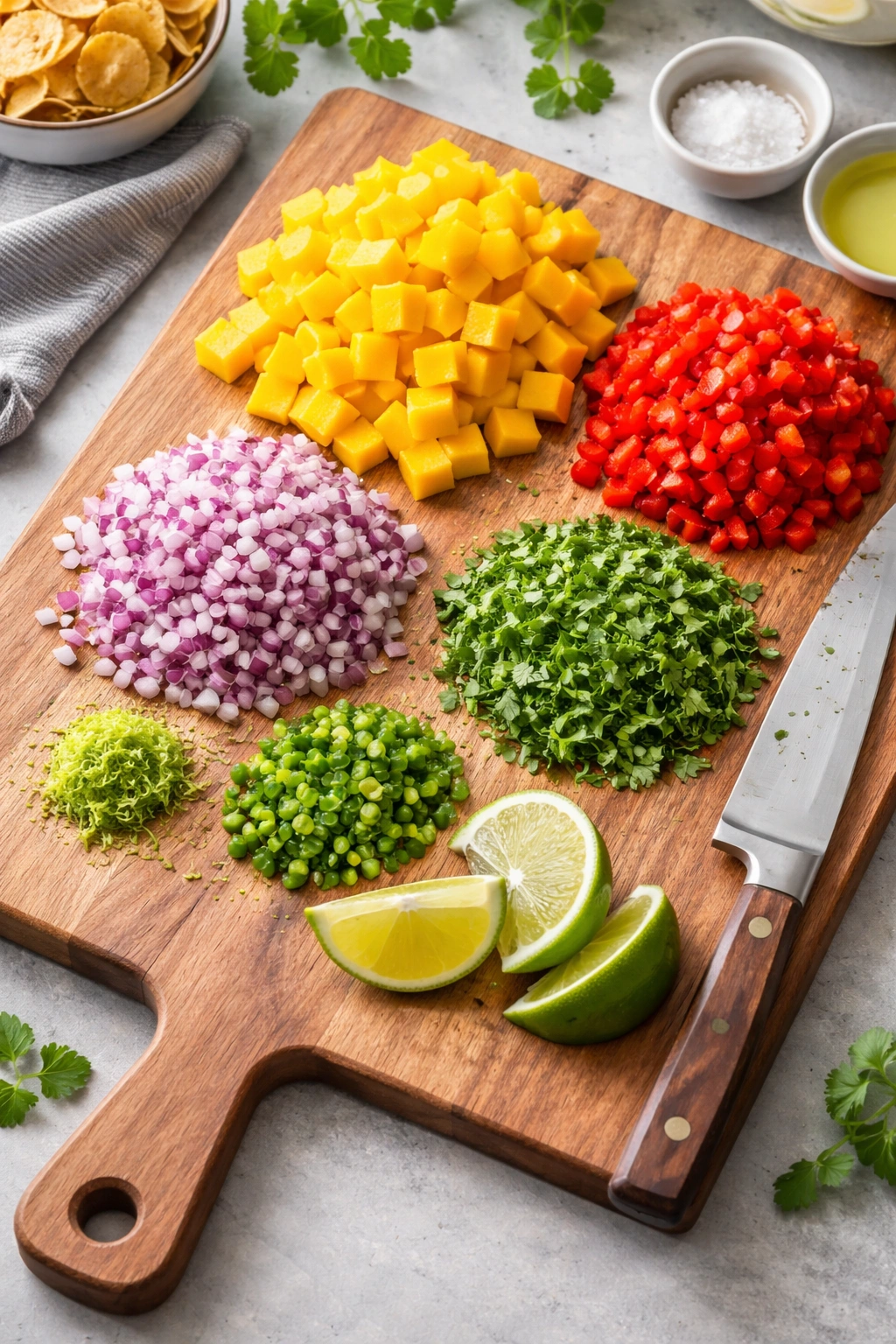
Prepare All Ingredients:
-
Wash and dice your three ripe mangoes according to the cutting technique described above, transferring all pieces to a large stainless steel or glass bowl. You’re aiming for roughly 3 cups of diced fruit. Avoid aluminum bowls, as the acidity of lime juice can react with the metal and affect flavor.
-
Wash your red bell pepper and dice it into ¼-inch pieces, removing and discarding the stem and all white seeds. The consistent size here matters because you’ll see and taste every piece.
-
Slice your red onion in half lengthwise and place the cut side down on your board. This gives you a stable surface for fine mincing. Slice it as thinly as possible, then turn those thin slices and cut perpendicular to create tiny dice. Red onion has a sharp bite that mellows slightly as it sits—you want pieces small enough that they’re not overwhelming in any single bite.
-
Cut your jalapeños in half lengthwise and scrape out all the seeds and white pith with the tip of your knife. This removes about 90% of the heat; if you want spicier salsa, leave in some or all of the seeds. Mince the jalapeño flesh as finely as possible. Wash your hands and knife thoroughly after handling hot peppers—lime juice on your fingers combined with pepper oils creates a burning sensation that lingers.
-
Pluck cilantro leaves from the stems, roughly chop them, and set aside. Some cooks discard all stems, but thin tender stems are edible and flavorful. You can include them if you’d like.
-
Cut your limes in half and juice them using a citrus juicer or by hand, capturing all liquid in a separate small bowl. Use a microplane or fine grater to zest one lime directly into that bowl.
Advertisements
Combine and Balance:
-
Add the diced bell pepper, minced red onion, minced jalapeño, and chopped cilantro to the bowl with the mango. Gently fold everything together using a soft spatula or wooden spoon, turning the mixture over itself several times. Avoid mashing or aggressively stirring, which will break down the mango pieces and make the texture mushy.
-
Pour the lime juice and zest over the mixture, then sprinkle the salt and black pepper evenly across the top. Add the honey (if using) and ground cumin (if using). Gently fold again, incorporating the lime and seasonings throughout.
-
Taste a small spoonful. The flavors should sing—sweet mango, bright lime, fresh cilantro, and a gentle heat from the jalapeño should all be present and distinct. If it tastes too acidic, add another ¼ teaspoon honey. If it tastes flat, add ¼ teaspoon more salt. If it lacks brightness, squeeze in more lime juice (start with 1 teaspoon at a time).
Rest and Meld (Recommended):
- Cover the bowl loosely with plastic wrap or leave it uncovered, and allow the salsa to sit at room temperature for 15 to 20 minutes. During this resting period, the mango releases some of its natural juices, the lime juice penetrates the fruit, the red onion and jalapeño begin to soften slightly, and all the flavors start to meld together. The difference between fresh-made salsa and rested salsa is noticeable—it tastes more cohesive and balanced. If you’re serving immediately, the salsa is still delicious, but it will taste even better after this brief resting period.
The Details That Make Your Mango Salsa Restaurant-Quality
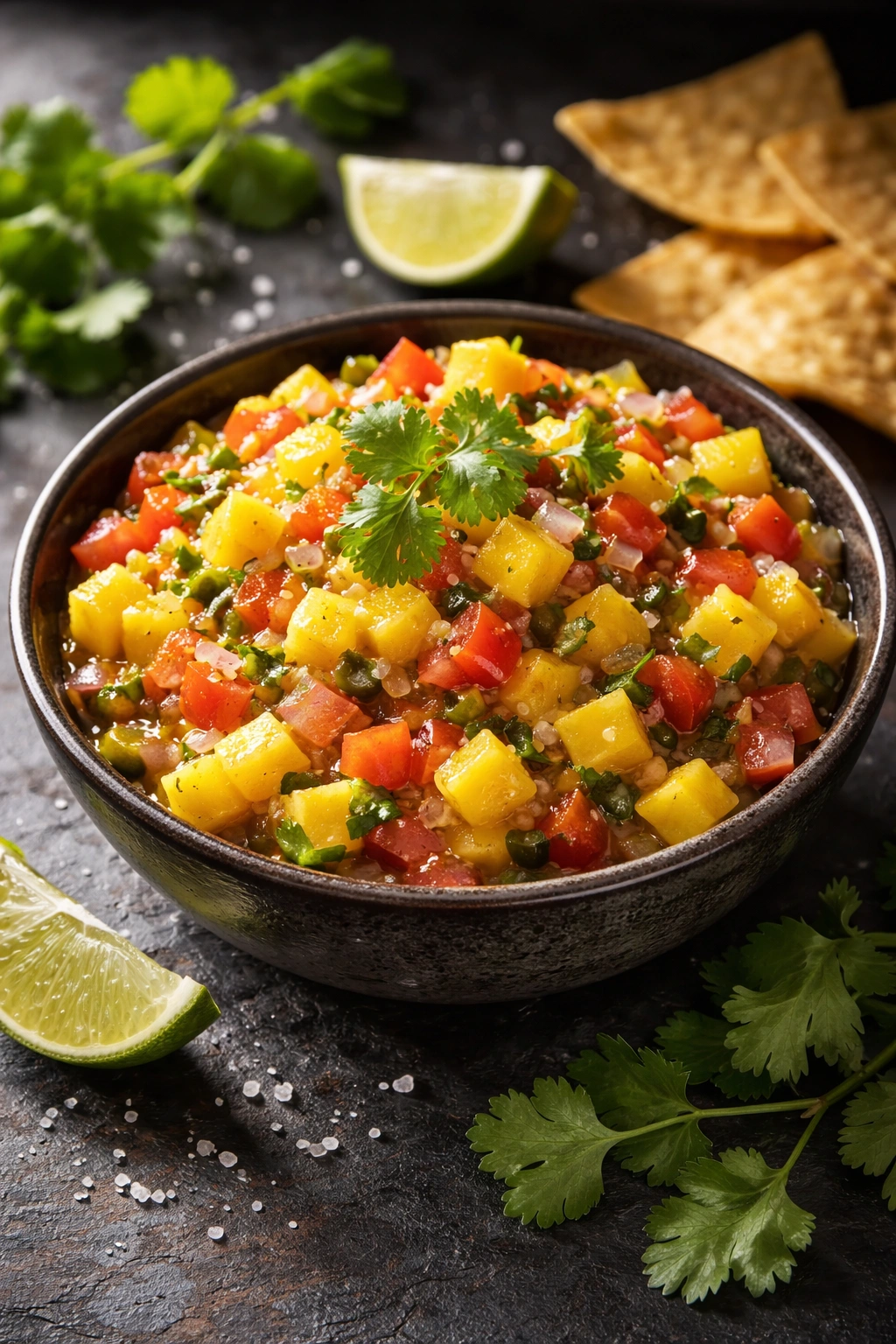
The difference between good homemade mango salsa and genuinely excellent mango salsa comes down to understanding several specific techniques and flavor mechanics. These aren’t complicated, but they require intention.
Balancing the Four Tastes
Every exceptional salsa balances four distinct taste elements: sweet, acidic, salty, and spicy. You should be able to taste each one separately in the first few seconds, then they should meld together harmoniously. If one dominates, the salsa feels one-dimensional.
The mango provides sweetness—this is your base. The lime juice provides acid, which brightens everything and prevents sweetness from becoming cloying. Salt enhances all flavors and prevents the whole thing from tasting flat. Spice from the jalapeño adds a pleasant tingle that makes your mouth want more. These four work together, not against each other.
Start with less salt and acid than you think you need. You can always add more in small increments, but you can’t take it out. Add lime juice by the teaspoon, salt by the quarter-teaspoon, and taste after each addition. Most home cooks under-season salsa; professional cooks know that proper seasoning is the difference between forgettable and crave-worthy.
Why the Red Onion Has to Be Minced Very Fine
If you’ve had mango salsa with chunks of raw onion that taste aggressively sharp and overpowering, you now know why—it wasn’t minced finely enough. When you have large pieces of raw onion, you get bursts of pungent sharpness with no other flavor to balance against. When you mince onion finely into rice-grain-sized pieces, it distributes throughout and mellows, adding complexity without harshness.
Soaking finely minced onion in lime juice for those 15-20 minutes of resting time actually softens it further through a process called “cooking” with acid. The citric acid breaks down some of the compounds responsible for onion’s bite, leaving you with mild, sweet onion flavor. This is a fundamental technique in Latin American cuisine.
The Cilantro Factor
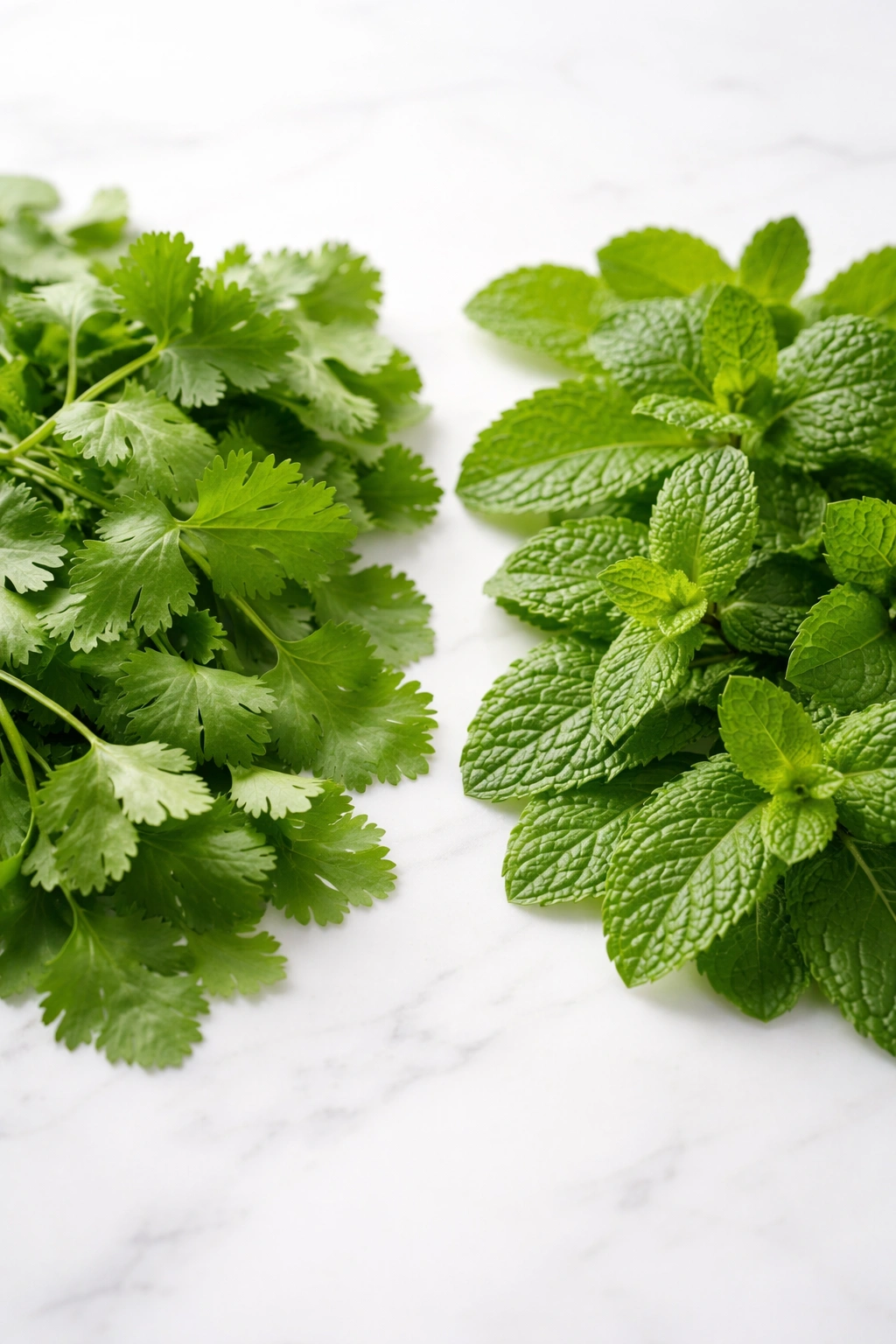
Cilantro is controversial—some people have a genetic variation that makes it taste soapy to them. If you’re one of those people, substitute fresh mint or flat-leaf parsley. But for those who love cilantro, it’s essential to understanding mango salsa’s signature flavor. Cilantro adds an herbal freshness that prevents the salsa from tasting sweet and heavy.
Add cilantro at the very end and don’t let it sit too long in the salsa before serving. Cilantro wilts and oxidizes quickly, losing its bright flavor. If you’re making salsa ahead, chop and add the cilantro no more than an hour before serving. If you’re making it several hours ahead, add the cilantro just before serving.
The Role of Honey
A tiny amount of honey seems counterintuitive in a savory condiment, but it’s a professional technique that rounds out all the other flavors. The honey doesn’t make the salsa taste sweet—it prevents the lime juice from making it taste overly tart. It also brings out the mango’s natural sweetness, making that flavor more prominent without tasting sugary. Use a light hand: one tablespoon in three cups of salsa is all you need.
Common Mistakes and How to Prevent Them
Mistake: Underripe Mangoes
This is the most common issue and ruins the entire salsa. Underripe mangoes taste bland and starchy, no matter how perfectly you season everything else.
Fix: Taste a small piece of mango before you cut up the whole fruit. If it tastes bland or slightly green, wait 24-48 hours and try again. Look for that soft yield to pressure and the sweet aroma at the broader end. If you bought mangoes that won’t ripen in time, visit a different produce section where the selection is fresher.
Mistake: Chopping Ingredients Unevenly
Big chunks of pepper next to tiny pieces of onion next to large mango cubes creates texture chaos. Every bite tastes different, and not in a good way.
Fix: Take your time cutting. Use a sharp knife—a dull knife requires more pressure and creates ragged edges instead of clean cuts. Measure your cuts by eye: aim for roughly ¼-inch dice across all ingredients. It doesn’t have to be perfect, but consistent size matters.
Mistake: Over-Seasoning or Under-Seasoning
Both ruin the experience. Over-seasoned salsa tastes harsh and one-dimensional. Under-seasoned salsa tastes flat and boring, making you wonder why you bothered.
Fix: Add all seasonings gradually in small increments. Taste between additions. Understand that once salsa sits for even a few minutes, flavors meld and intensify slightly. Account for this—season toward the lighter side of where you think it should be, knowing it will taste slightly stronger after resting.
Mistake: Using Room-Temperature Lime Juice
Cold limes yield more juice than warm ones. Room-temperature lime juice loses some brightness compared to cold-squeezed.
Fix: Refrigerate your limes for at least a few hours before using. Roll them on the counter under the heel of your hand before cutting, applying moderate pressure. This breaks down some of the internal membranes and helps release juice more easily.
Mistake: Letting It Sit Too Long Before Serving
Mango salsa is best eaten within 24 hours. After that, the mango starts to oxidize and brown slightly at the edges, the lime juice turns the entire mixture slightly mushy, and flavors become muddled instead of distinct.
Fix: Make salsa no more than 24 hours before serving. Store it in an airtight container in the refrigerator. If you’re making it more than a few hours ahead, wait to add the cilantro until shortly before serving.
Flavor Variations That Expand What Mango Salsa Can Do
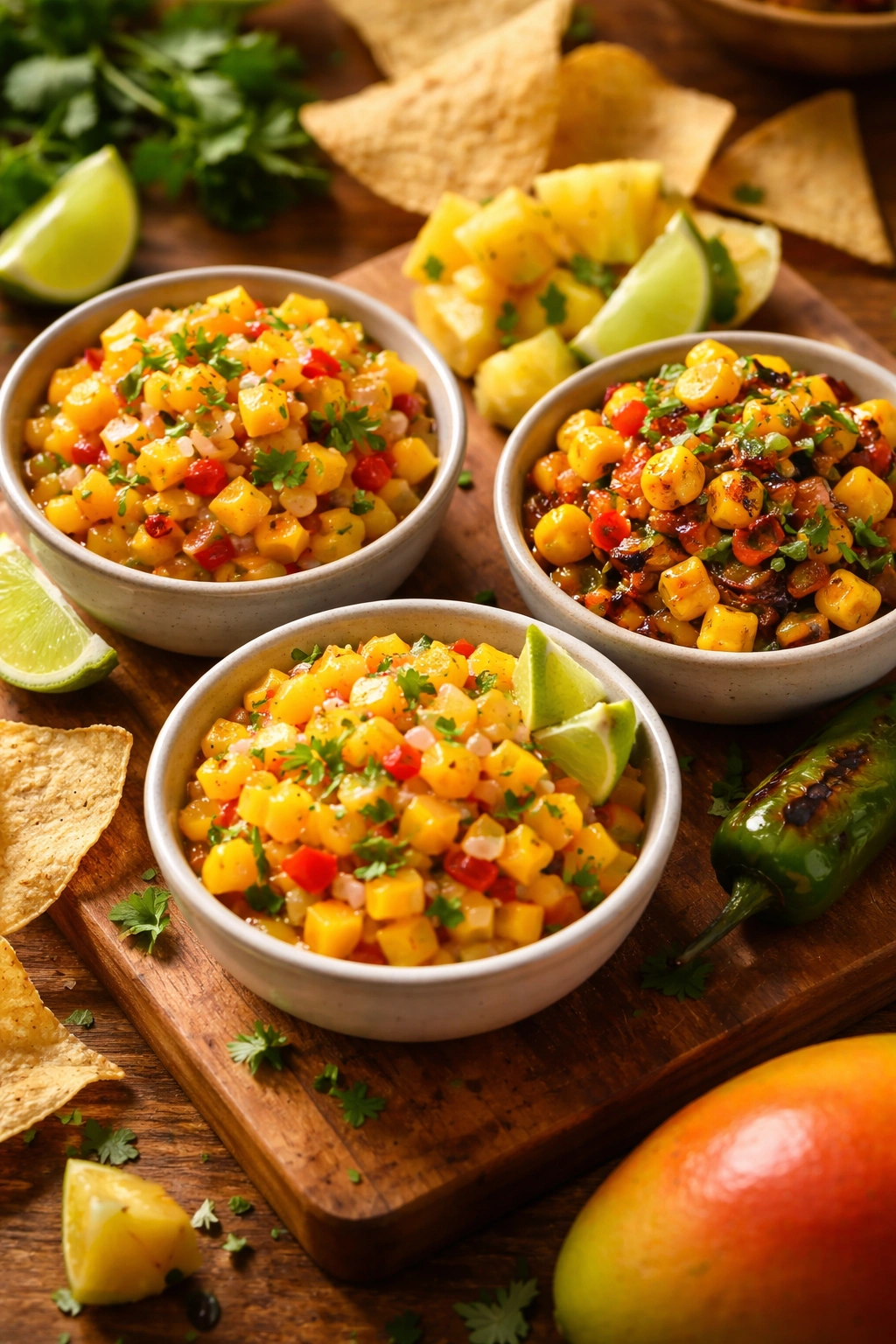
Once you’ve mastered the basic version, these variations open up entirely new flavor territories. Each works brilliantly with different meals and cuisines.
Spicy Mango Salsa with Habanero and Cumin
For meals where you want real heat and deeper spice notes, replace the jalapeño with half a habanero (a much hotter pepper) and add the full ¼ teaspoon of ground cumin. The cumin adds an earthy undertone that complements the habanero’s fruity heat. This version pairs beautifully with grilled chicken or fish tacos. The heat builds gradually rather than hitting immediately, making it more interesting than a simple hot salsa.
Tropical Mango Salsa with Pineapple and Mint
Use 2 cups diced ripe mango and add 1 cup fresh pineapple (diced small), reduce the cilantro to 2 tablespoons, and add 3 tablespoons fresh mint leaves. The combination of mango and pineapple creates a flavor that feels more tropical and slightly less savory. This works wonderfully with pulled pork, roasted fish, or alongside coconut rice. The mint adds a cooling element that makes this version perfect for warm-weather eating.
Charred Jalapeño Mango Salsa
Hold one jalapeño directly over a gas flame (or under your oven broiler for 2-3 minutes) until the skin is completely blackened and charred. Cool it slightly, then rub the charred skin under running water until mostly removed. Mince this roasted jalapeño instead of using a raw one. The charring creates a smoky, roasted depth that transforms the salsa into something more sophisticated. This pairs beautifully with carne asada or grilled steak tacos.
Lime and Tequila Mango Salsa
Add 2 tablespoons of good tequila (reposado or añejo) to the basic salsa, which adds warmth and complexity without tasting like alcohol once it’s incorporated. You can also make this by reducing the lime juice to 2 tablespoons and adding 1 tablespoon white vinegar for additional acid. The tequila creates a subtle warmth that makes this version feel special. Serve it alongside grilled fish or shrimp.
Peach or Nectarine Mango Salsa for Summer
Substitute half the mango with fresh, ripe peaches or nectarines (diced the same size), add 1 tablespoon of honey, and slightly reduce the lime juice to 2 tablespoons to avoid too much acidity. This creates a milder, subtly different flavor that feels completely appropriate during peak stone fruit season. It’s wonderful alongside grilled chicken or pork, or even with vanilla ice cream as a dessert element.
How to Store, Make Ahead, and Transport Your Salsa
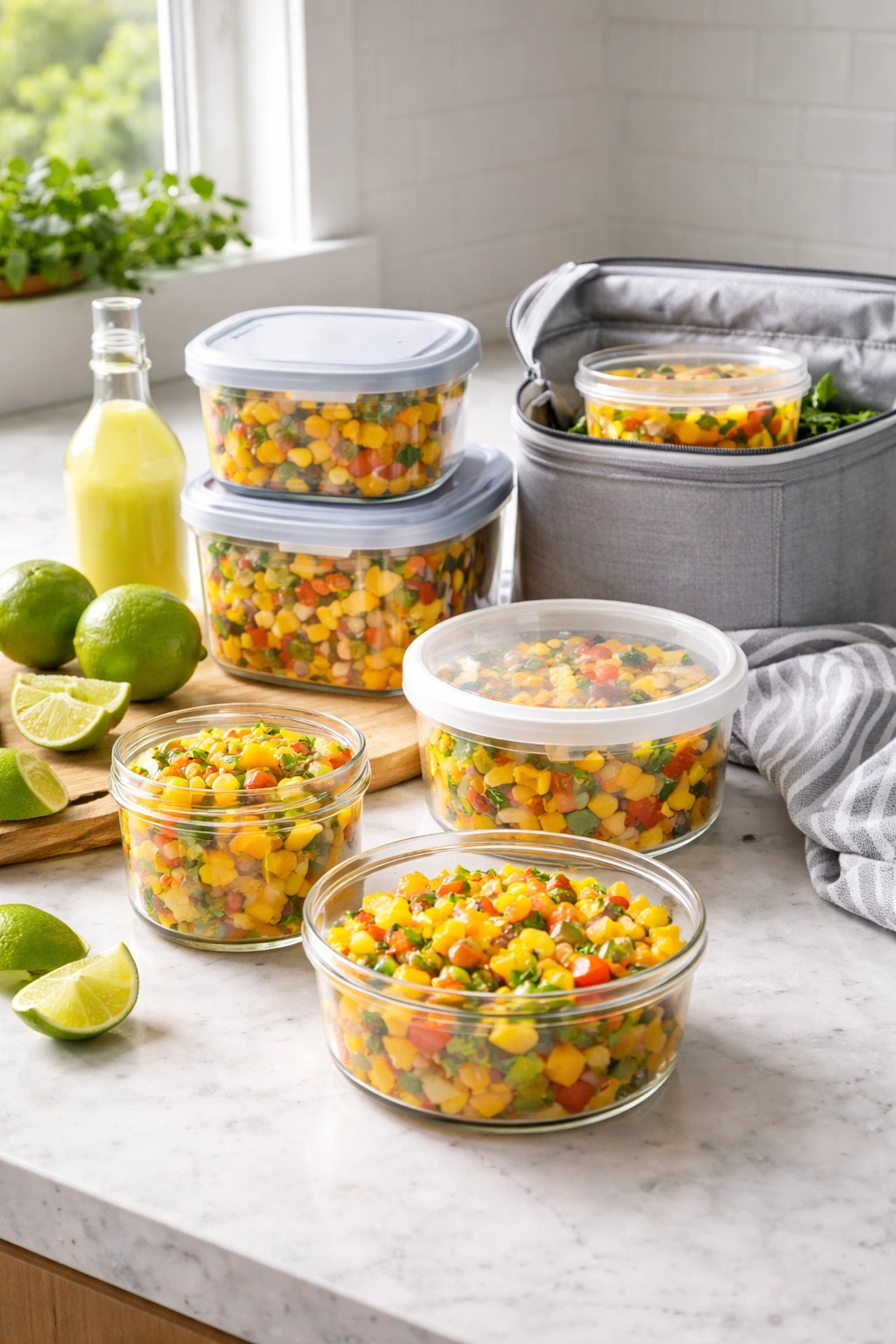
Storage at Room Temperature
Fresh mango salsa lasts about 1-2 hours at room temperature before the mango begins to oxidize and the texture softens noticeably. During this window, flavors are brightest and texture is best. If you’re serving at a gathering, plan to make salsa no more than 2 hours before guests arrive. The lime juice will preserve the mango slightly, but not indefinitely.
Refrigeration and Timing
Properly stored mango salsa keeps in an airtight container in the refrigerator for up to 24 hours. After 24 hours, the mango’s texture degrades and browning begins around the edges. Flavors also begin to blur together rather than remaining distinct. If you’re making salsa for a meal 1-2 days away, make the components separately and assemble just before serving. You can dice your mango, dice your peppers and onion, and chop your cilantro, storing each separately. Combine them with lime juice and seasoning just before service.
Freezing
Mango salsa doesn’t freeze well because mango’s delicate texture becomes mushy upon thawing. The lime juice and water content create ice crystals that break down the fruit’s cell structure. However, you can freeze individual components like mango cubes (if you want to use them in blended drinks later) or cilantro (though its flavor dulls). The fresh salsa itself is best made fresh.
Transporting to a Party or Gathering
If you need to bring salsa to a gathering, transport it in an airtight container as is. Transport the container in a cooler with an ice pack if you’ll be traveling longer than 30 minutes. Drain any excess liquid (the mango releases juice as it sits) right before serving. If the salsa seems too wet, pour it into a fine-mesh strainer for a few minutes to let excess liquid drain. Alternatively, transport the components separately and assemble on-site—this ensures maximum freshness and brightness.
The Best Ways to Serve Mango Salsa
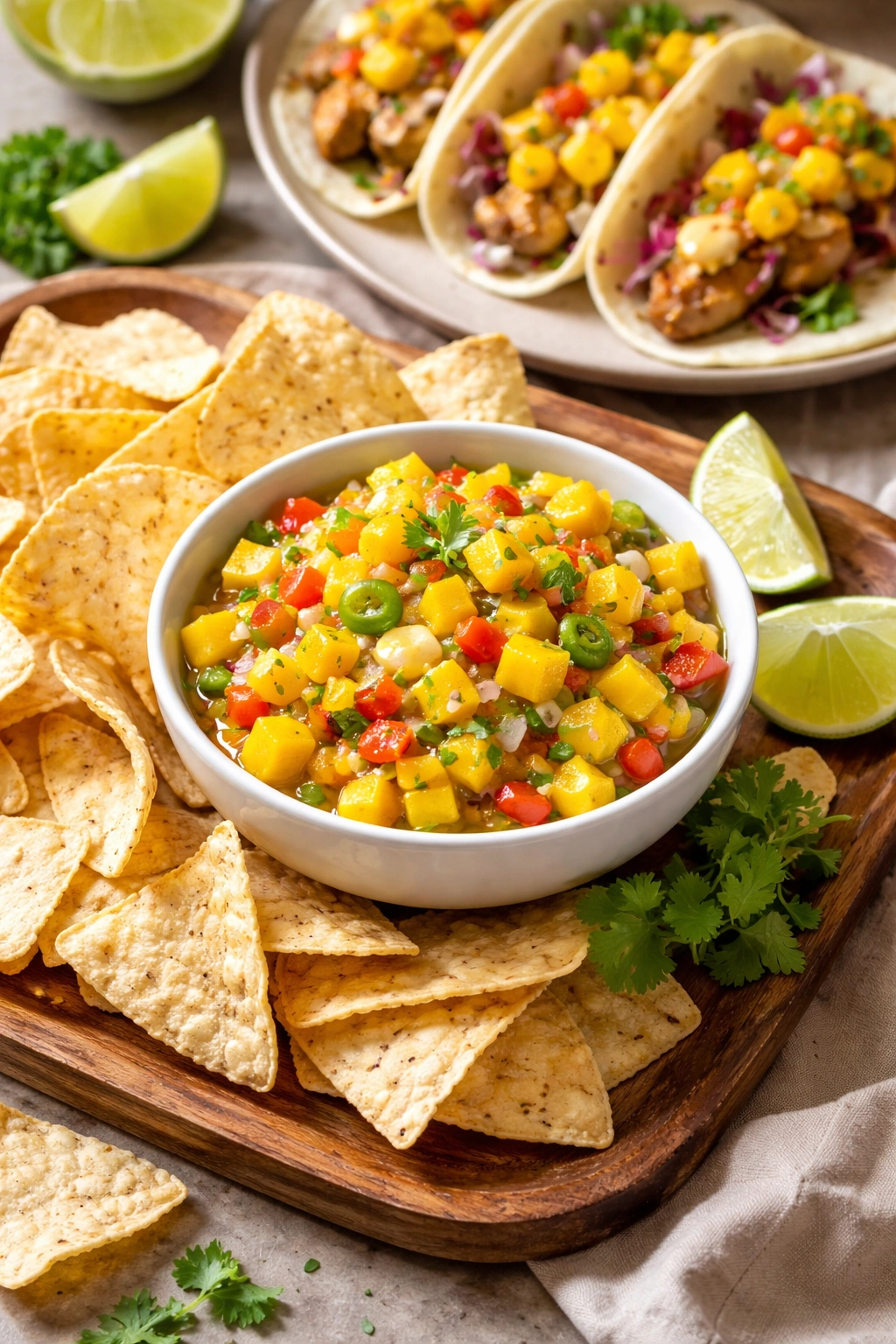
With Tacos (The Classic Approach)
Fish tacos are the most obvious match: white fish, blackened fish, grilled fish, beer-battered fish—all shine alongside mango salsa’s brightness. The acidity of the lime and salsa cuts through rich fish beautifully. Chicken tacos also work wonderfully, especially with grilled or roasted chicken. The mango complements poultry’s mild flavor without overwhelming it. Pulled pork tacos benefit from mango salsa’s sweetness playing against the richness of the meat. Vegetarian tacos with roasted poblanos, corn, black beans, or crispy tofu all pair beautifully with this salsa.
The best taco application involves warm flour or corn tortillas, your protein, some crunch (shredded lettuce, cabbage, or jicama), and a generous dollop of mango salsa. Serve it alongside lime crema or plain Greek yogurt if the taco filling is very rich.
With Tortilla Chips
One of the best entertaining applications—mango salsa and tortilla chips require nothing else. Set out a bowl of high-quality tortilla chips and a generous bowl of mango salsa alongside. People will demolish it. Make at least 3 cups if you’re serving a group; salsa disappears faster than you’d expect. Set out small plates so people can hold chips without double-dipping, which keeps everything cleaner.
Alongside Grilled Fish or Seafood
Grilled mahi-mahi, swordfish, sea bass, halibut, or salmon all taste better with a spoonful of mango salsa on top. The salsa adds brightness and counterbalances the fish’s richness. Shrimp tacos or grilled shrimp skewers become restaurant-worthy with this topping. Ceviche benefits from a spoonful of mango salsa stirred in or served alongside for garnish.
Over Grilled Chicken or Pork
A simple grilled chicken breast becomes exciting topped with mango salsa. The same applies to pork chops, tenderloin, or pulled pork. The fruit and acid elevate simple proteins into something that tastes more thoughtful and intentional.
As a Garnish for Soups or Salads
A spoonful of mango salsa adds unexpected brightness to a creamy soup like butternut squash or coconut curry. It also works as a garnish for composed salads—especially ones with arugula, romaine, or mixed greens.
For Breakfast or Brunch
Scrambled eggs, omelets, or breakfast burritos gain interesting character with mango salsa as a filling or topping. It’s also lovely over avocado toast, especially when the toast is made from hearty whole grain bread.
Dietary Adaptations and Ingredient Swaps
Mango salsa is naturally friendly to most dietary needs. It’s inherently vegan and gluten-free, making it suitable for almost any diet restriction or preference.
For Those Avoiding Raw Onion
If raw red onion bothers your digestion or stomach, or if you simply dislike its sharp flavor, omit it entirely. The salsa will be slightly less complex but still delicious. Alternatively, use a much smaller amount of finely minced white or sweet onion, which is milder than red.
Substituting Cilantro
If cilantro tastes soapy to you (a genetic variation, not a preference), substitute fresh mint for the same quantity. Mint adds a different herbal note but still provides freshness. Flat-leaf parsley is another option, though it’s milder and less distinctive. Some people use a combination—half cilantro, half mint—if they want to please everyone at the table.
For Those Who Prefer Less Heat
Omit the jalapeño entirely and add ⅛ teaspoon of cayenne pepper instead, which provides background heat without chunky pepper pieces. Alternatively, use half a jalapeño and remove all seeds. The salsa will be mild enough for heat-sensitive palates while still tasting interesting.
Substituting Bell Pepper Color
Any color bell pepper works, though flavors differ slightly. Red peppers are sweetest (they’re fully ripened green ones), yellow and orange peppers are moderately sweet, and green peppers are more grassy and slightly sharp. Use red or yellow if you want to emphasize sweetness; use orange for a middle ground. Avoid green bell peppers unless you specifically want the sharper, more herbaceous flavor.
For Those Preferring No Honey
Omit honey entirely, but reduce lime juice slightly to 2½ tablespoons instead of 3 to avoid excessive tartness. The salsa will taste slightly less rounded but still delicious.
Making It Spicy for Heat Lovers
Add a pinch of cayenne pepper or chili powder for background heat, or keep the jalapeño’s seeds for more punch. Use a habanero instead of jalapeño for serious heat. You can also drizzle in a tiny amount of your favorite hot sauce (¼ teaspoon at a time, tasting as you go).
Quick Troubleshooting Guide
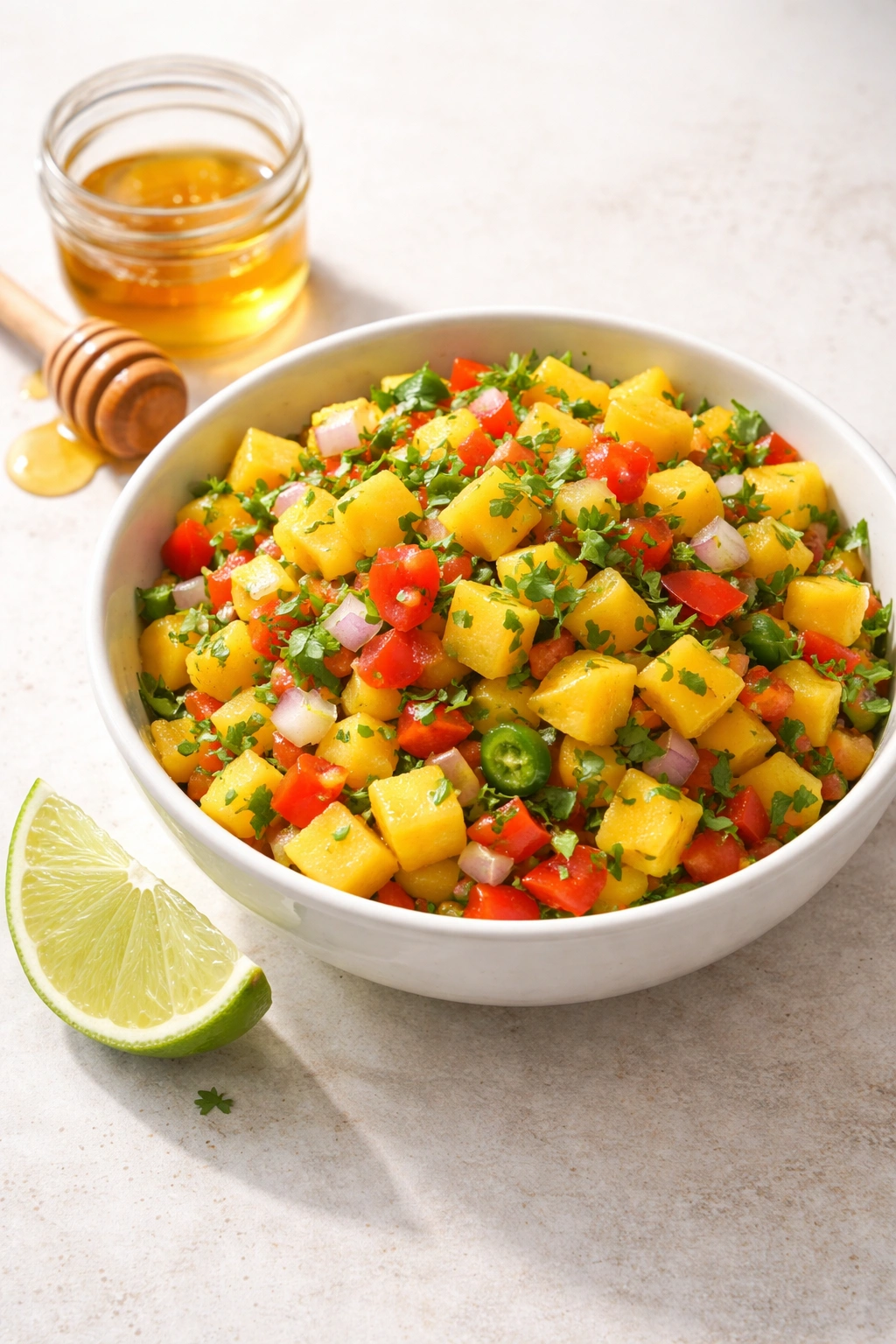
The salsa tastes too sweet: Add lime juice by the teaspoon, stirring gently, until the tartness balances the sweetness. You need brightness to counteract sugar.
The salsa tastes too sour or acidic: Add a small pinch of salt (⅛ teaspoon) or a tiny drizzle of honey. Acid often reads as overly harsh when salt isn’t balancing it.
The texture is mushy: You’ve waited too long to serve it, or your mangoes were overripe to begin with. For future batches, use firmer, less-ripe mangoes and serve within a few hours.
The mango pieces fell apart while cutting: You used an underripe mango (which is too soft) or overripe mango (which is too soft in a different way). Choose mangoes that feel like a peach at peak ripeness—a specific sweet spot that’s easier to cut than either extreme.
It tastes flat or boring: Add salt in tiny increments (⅛ teaspoon at a time). Salt is the primary flavor enhancer here; even one pinch makes a dramatic difference.
There’s too much liquid pooling at the bottom: This is normal—mangoes release juice as they sit. Drain some of the liquid before serving, or use a slotted spoon to serve.
The cilantro tastes bitter or turned dark: You waited too long to serve the salsa. For next time, add cilantro within an hour of serving, or add it just before guests eat.
Final Thoughts
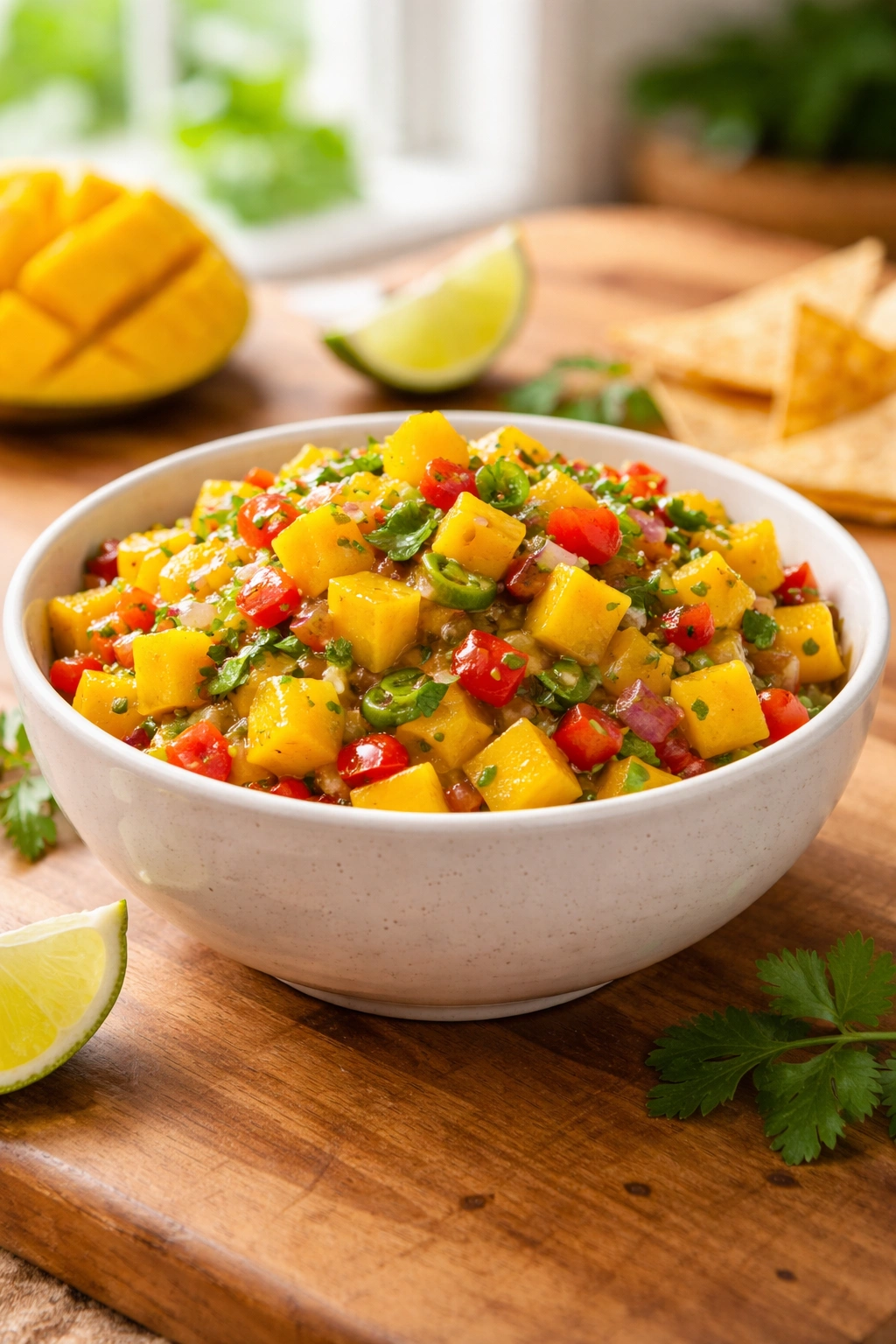
Fresh mango salsa is one of those condiments that demonstrates how small technique details create disproportionately large flavor impacts. The difference between a great batch and a mediocre one rarely comes down to special ingredients or advanced cooking skills. It comes down to choosing ripe mangoes, balancing flavors thoughtfully, cutting ingredients consistently, and serving everything fresh and cold.
Once you’ve made this salsa a few times, you’ll develop an intuition about it. You’ll know just by looking at a mango whether it’s the right ripeness. You’ll taste the lime juice and know instantly if you need more. You’ll understand what fresh cilantro contributes and why those extra minutes of resting time matter. This isn’t expertise that arrives through complicated learning—it’s familiarity that comes from making something repeatedly and paying attention each time.
Keep this salsa in your regular rotation. Make it when you want dinner to taste special without significant effort. Make it when you’re entertaining and want something that tastes restaurant-quality but proves you’re not stressed or overworked. Make it when you have ripe mangoes and want to use them at their peak. Make it and discover how something so simple becomes the favorite dish that people specifically request, the condiment that transforms ordinary meals into memorable ones, and the recipe that finally proves that sometimes the best cooking happens when you’re not trying to impress anyone—you’re just chasing flavor.
