



When you’re staring down a gathering of friends, unexpected guests, or a party you promised to bring something to, you need something impressive that won’t chain you to the kitchen. Italian puff pastry bites are exactly that — they look like you spent hours in the kitchen when really you spent twenty minutes tops. The magic happens because you’re starting with one of cooking’s greatest shortcuts: frozen puff pastry, which already does most of the heavy lifting for you.
What makes these bites so special isn’t just the time savings, though that’s definitely part of their appeal. It’s the combination of crispy, buttery, golden-brown pastry with the bold, briny flavors of Italy — salty olives, tangy sun-dried tomatoes, fresh basil, creamy ricotta. Each bite delivers that satisfying crunch followed by layers of flavor that make people assume you’re far more complicated in the kitchen than you actually are. The best part? You’re not actually deceiving them. You are producing something genuinely delicious and restaurant-quality, just efficiently.
These bites work for almost any situation. Serve them as an appetizer before dinner, pack them into a picnic basket, set them out during a casual hangout, or bring them to a potluck where everyone else is showing up with store-bought cookies. They’re equally at home on a formal cheese board or casually piled on a paper napkin. Because they’re small, handheld, and not messy in the way that, say, a mozzarella-stuffed pastry might be, they’re the kind of thing people can actually eat while standing, talking, and moving around.
Why Puff Pastry Bites Are the Perfect Quick Appetizer
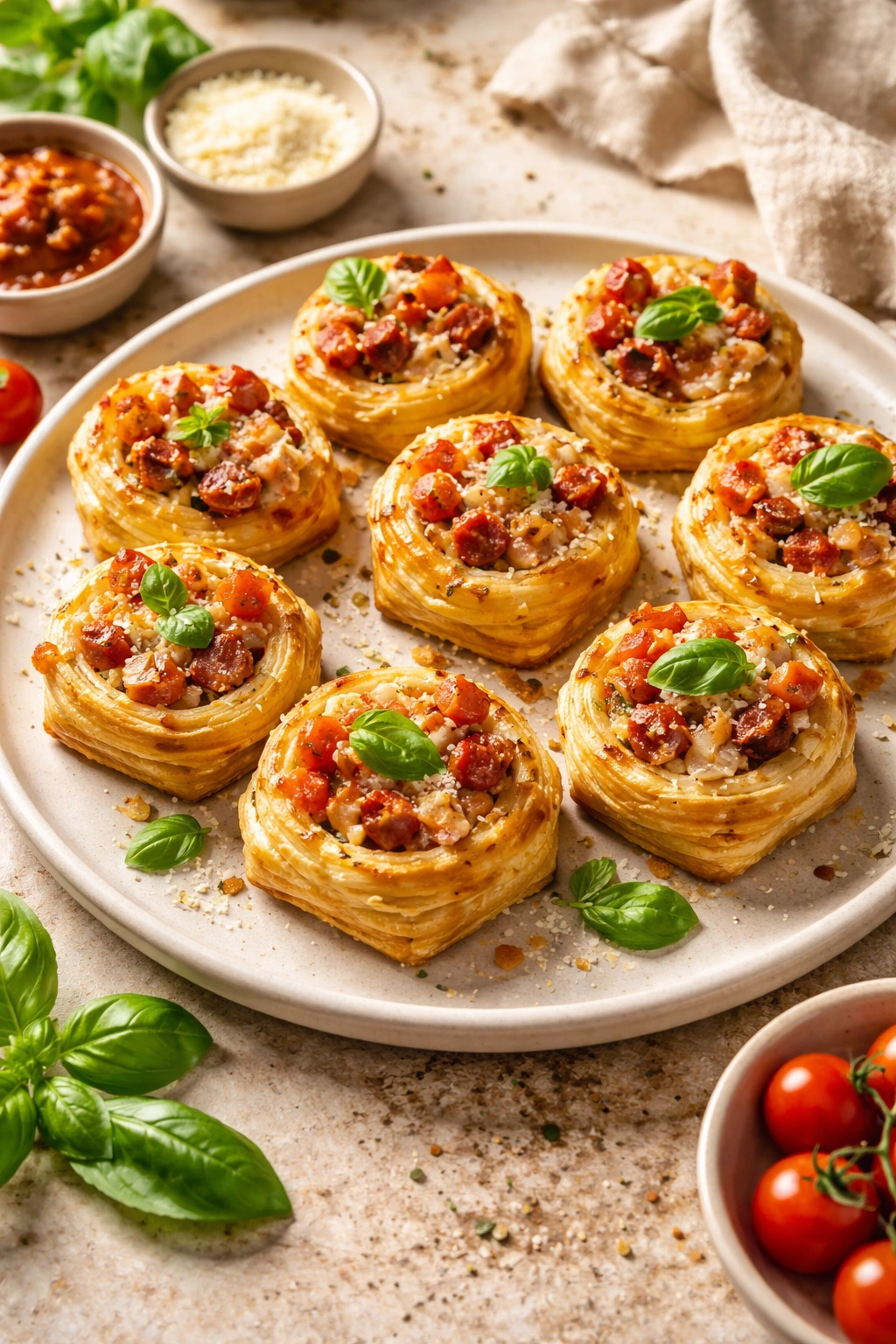
Frozen puff pastry has become a legitimate secret weapon for home cooks. It’s not a cheat or a shortcut in a negative sense — it’s a well-engineered product that delivers results a home baker would struggle to replicate from scratch. Puff pastry is technically a laminated dough, which means butter and dough are layered together dozens of times to create those characteristic flaky layers. Doing that by hand takes patience, skill, and a temperature-controlled environment. The frozen version lets you skip that entire process and get straight to the part where you’re assembling something delicious.
The texture of properly baked puff pastry is nearly impossible to get wrong if you’re starting with quality frozen sheets. As they bake, the moisture in the butter creates steam, which pushes the layers apart and creates that incredible shattering crispness. You’re not trying to develop gluten, nail a specific hydration percentage, or time a complex rise — you’re literally just assembling toppings and letting the oven do the work.
Beyond the technical advantages, puff pastry bites are genuinely versatile. You can top them with Italian ingredients, Mediterranean flavors, classic French combinations, or completely different cuisines. The pastry itself is neutral enough to play well with almost anything. That flexibility means you can make the same recipe multiple times and have it feel like something different each time, just by changing what you put on top.
These bites also read as more sophisticated than they actually are. Someone will taste one, experience that crispy exterior, the rich butter flavor, the interesting toppings, and assume you’re someone who spends time in the kitchen. They won’t need to know that your hands-on time was basically the length of a sitcom episode. That’s not dishonesty — that’s just smart entertaining.
Essential Ingredients for Italian Puff Pastry Bites
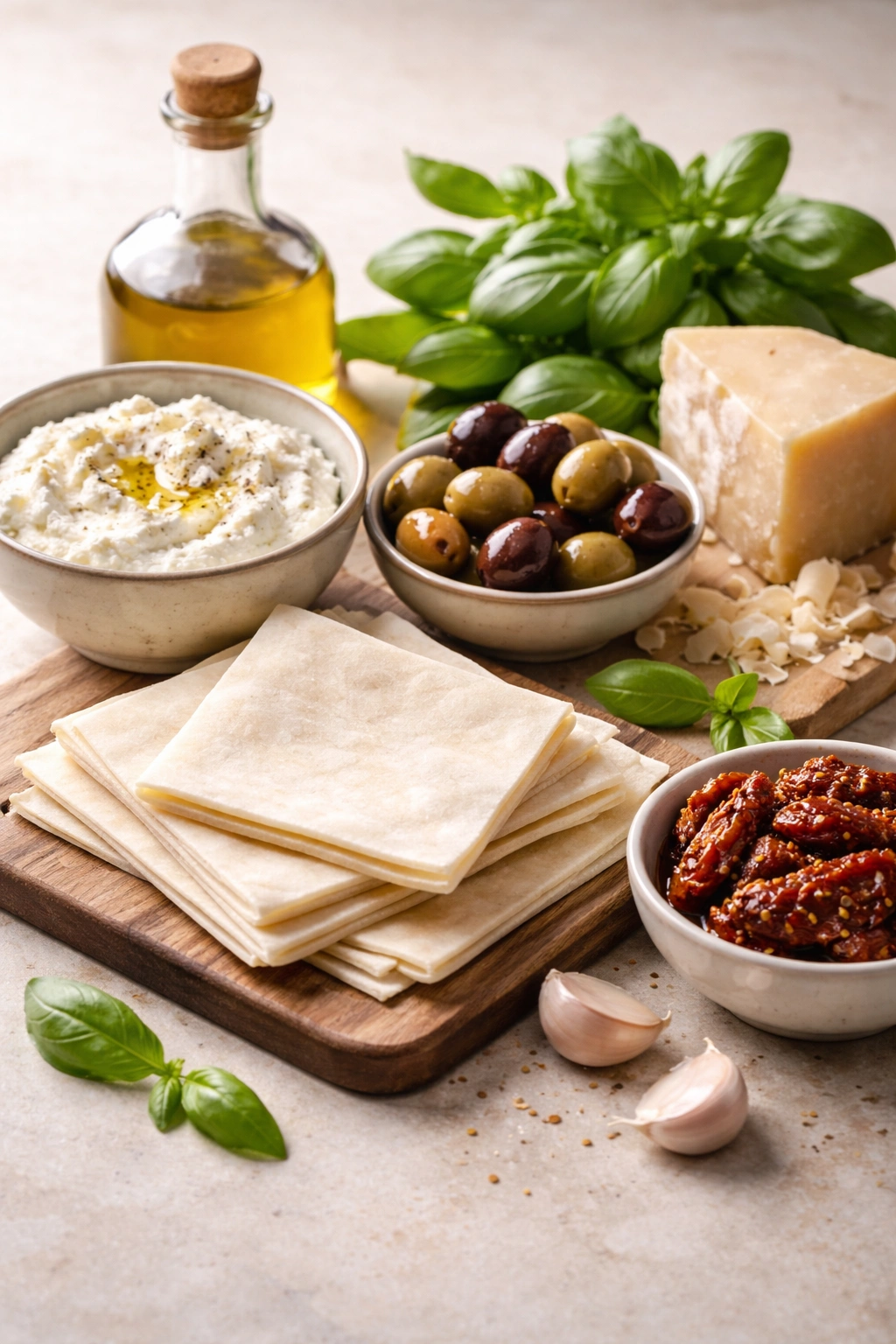
The ingredient list is deliberately short and relies on high-quality staples rather than hard-to-find specialty items. You want good puff pastry as your foundation, then build Italian flavor through a few key components: either fresh ricotta or a creamy cheese like mascarpone, good olives (not the canned kind if you can help it), sun-dried tomatoes packed in oil, fresh basil, and Parmesan or a similar hard cheese for finishing.
Good olive oil matters here because it’s doing double duty — both flavoring your filling and providing the richness that makes these taste indulgent. Don’t use your most expensive bottle, but don’t grab the lowest-priced option either. There’s a sweet spot in the mid-range where you get actual olive flavor without the premium price tag. Similarly, your olives and sun-dried tomatoes should be reasonably good quality. These are small components, but they’re tasting components, so they actually matter to the final flavor.
Fresh basil is preferable to dried here because you’re using it as a fresh topping that hits right at the end of baking. If all you have is dried basil, you can use it, but add it into the ricotta filling mixture instead of sprinkling it on top, because basil loses its bright flavor when exposed to heat for very long. The filling can be made an hour or two ahead, which actually makes assembling these even faster when you’re ready to bake.
One final note on the puff pastry itself: buy the good stuff. A box of two sheets is the standard package size, and that’s all you’ll need for these bites. Some brands are made with butter, some with vegetable oil. The butter versions have better flavor, but either works fine. The key is that you let it thaw fully before working with it — trying to cut or shape frozen puff pastry leads to cracks and uneven cooking.
Serving and Timing Block
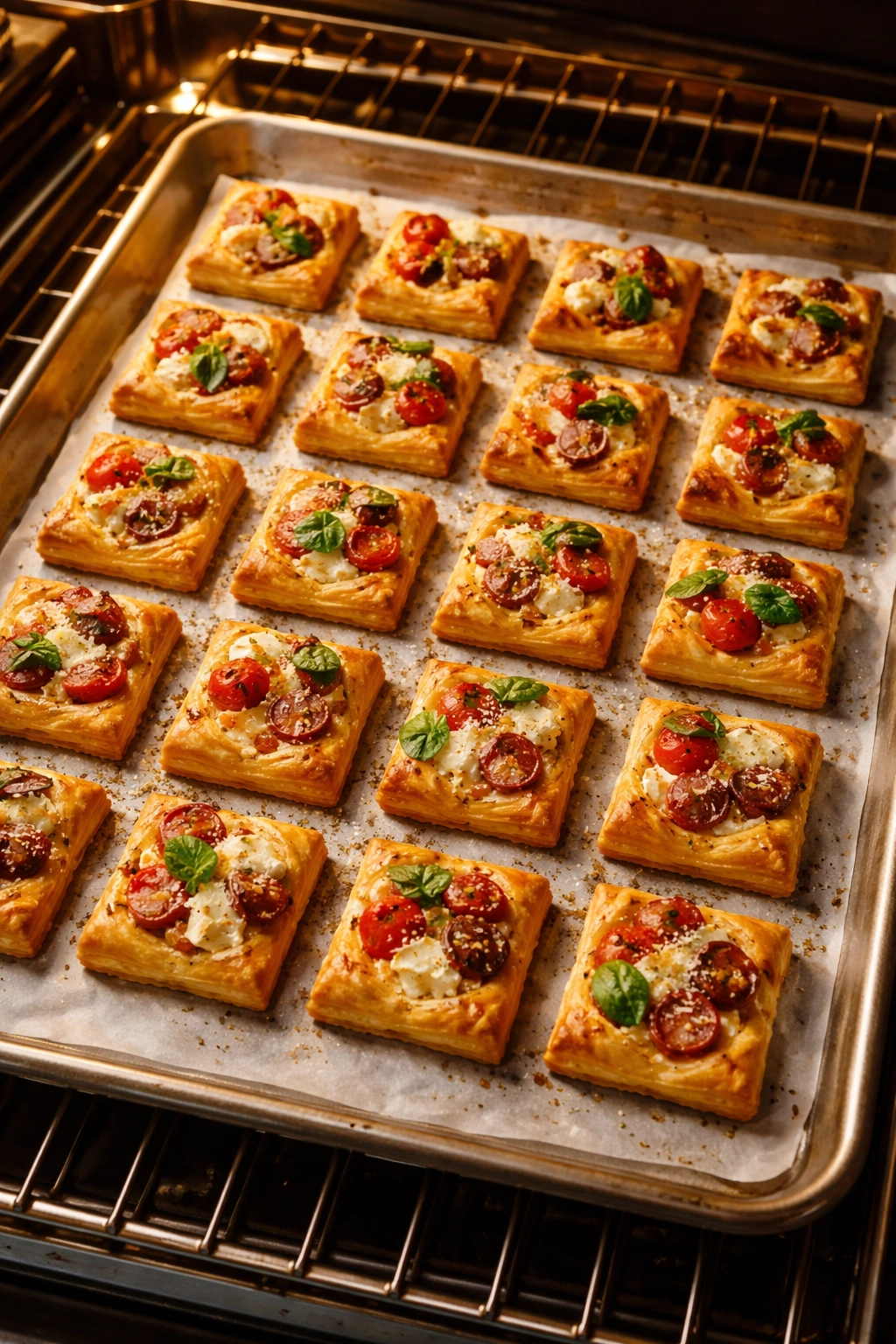
Yield: Makes 24 bites (serves 6 to 8 as an appetizer) Prep Time: 12 minutes Cook Time: 18 to 20 minutes Total Time: 30 to 32 minutes active (plus time for puff pastry to thaw if starting from frozen) Difficulty: Beginner — no special equipment needed, assembly is straightforward, and everything happens on one baking sheet.
Best Served: Warm from the oven or at room temperature within a few hours of baking.
Italian Puff Pastry Bites Recipe
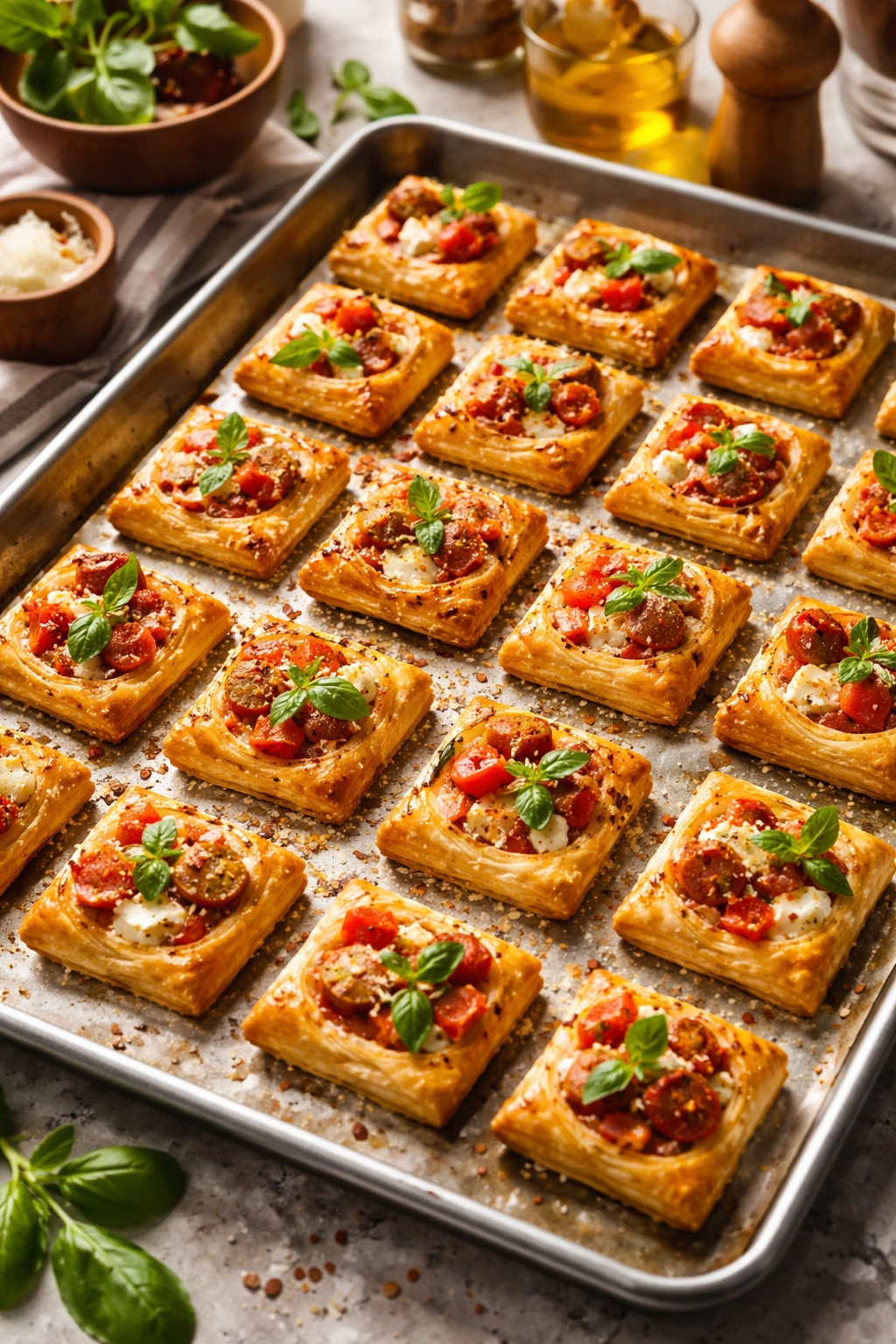
Yield: Makes 24 bites (serves 6 to 8 as an appetizer) Prep Time: 12 minutes Cook Time: 18 to 20 minutes Total Time: 30 to 32 minutes active (plus thawing time for frozen pastry) Difficulty: Beginner — no special equipment, straightforward assembly, and everything bakes on a single sheet.
Best Served: Warm from the oven or at room temperature within a few hours of baking.
Ingredients
For the Puff Pastry Bites:
- 1 box (about 14 ounces) frozen puff pastry sheets (2 sheets), fully thawed to room temperature
- ¾ cup fresh ricotta cheese or mascarpone
- ¼ cup finely grated Parmigiano-Reggiano or Pecorino Romano cheese
- 3 tablespoons good-quality olive oil, divided
- ½ cup Kalamata or other good-quality olives, pitted and chopped (about ½ inch pieces)
- ½ cup sun-dried tomatoes packed in oil, drained and chopped into ½-inch pieces
- 2 cloves garlic, minced very fine
- ¼ teaspoon red pepper flakes (optional, but adds a nice subtle heat)
- ½ cup fresh basil leaves, roughly torn
- Fine sea salt and freshly cracked black pepper to taste
- 1 egg, beaten (for egg wash)
- Coarse sea salt for finishing (optional)
For Serving:
- Fresh basil sprigs for garnish (optional)
- Extra virgin olive oil for drizzling (optional)
- Freshly cracked black pepper for finishing
Instructions
Prepare the Filling:
-
In a small bowl, combine the ricotta, grated Parmigiano-Reggiano, 2 tablespoons of the olive oil, chopped olives, sun-dried tomatoes, minced garlic, and red pepper flakes (if using). Stir gently until just combined — you want the ingredients evenly distributed but not overworked, so the ricotta maintains a light, creamy texture.
-
Fold the torn fresh basil into the ricotta mixture. Taste the filling and adjust the seasoning with a generous pinch of fine sea salt and a crack or two of black pepper. Keep in mind that the olives, sun-dried tomatoes, and cheese are all quite salty, so taste before adding much salt. Set the filling aside while you prepare the pastry.
Advertisements
Prepare the Pastry Sheets:
-
Preheat your oven to 425°F (220°C) and line a large baking sheet with parchment paper. If you have two baking sheets, line both — you’ll need the space for all 24 bites.
-
Lay one thawed puff pastry sheet on a clean, dry work surface. Using a sharp knife or pizza wheel, cut the sheet into a 3×4 grid, creating 12 equal squares. Do not cut all the way through with a single aggressive motion — use several gentle saw-like passes to cut cleanly without tearing or crushing the layers. Repeat with the second puff pastry sheet to create 24 squares total.
-
Place the pastry squares onto the prepared baking sheet(s), spacing them about 1 inch apart. If using two baking sheets, divide the squares evenly between them.
Assemble and Top:
-
Using a small spoon or small ice cream scoop, place about ½ teaspoon of the ricotta filling in the center of each pastry square. Do not overfill — if you use too much filling, it will bubble out the sides and burn, and the pastry won’t bake evenly. The filling should sit in a small mound in the center, leaving a border of bare pastry on all sides.
-
In a small bowl, whisk together the beaten egg with 1 teaspoon of water to create an egg wash. Using a pastry brush or the back of a small spoon, carefully brush the egg wash onto just the bare pastry border around each filling, avoiding the ricotta mixture itself. The egg wash on the bare pastry will give you that beautiful golden-brown color, while the egg wash on the filling can sometimes cause it to brown too quickly.
-
If you’re using coarse sea salt as a finishing touch, sprinkle just a tiny pinch onto the pastry border of each bite — not on the filling. This is optional but adds a nice textural contrast.
Bake:
-
Bake for 18 to 20 minutes, rotating the baking sheet(s) halfway through (around the 9-minute mark), until the pastry is puffed and deeply golden brown at the edges. The pastry should be crispy and shattered when you tap it, and there should be no wet or pale spots remaining. If using two baking sheets, you may need to swap their oven positions halfway through baking to ensure even browning.
Advertisements -
Remove from the oven and let the bites cool on the baking sheet for 2 to 3 minutes — this allows the pastry to set up slightly and become fully crispy. Transfer to a wire cooling rack or a serving platter.
Finish and Serve:
-
While the bites are still warm, tear or place a small leaf of fresh basil on top of each one (optional but highly recommended). If desired, drizzle very lightly with extra virgin olive oil and crack a tiny bit of fresh black pepper over the top.
-
Serve warm or at room temperature within a few hours of baking. If you’re serving these later, you can reheat them in a 350°F (175°C) oven for about 5 minutes to restore crispness.
Pro Tips for Perfect Crispy Bites Every Time
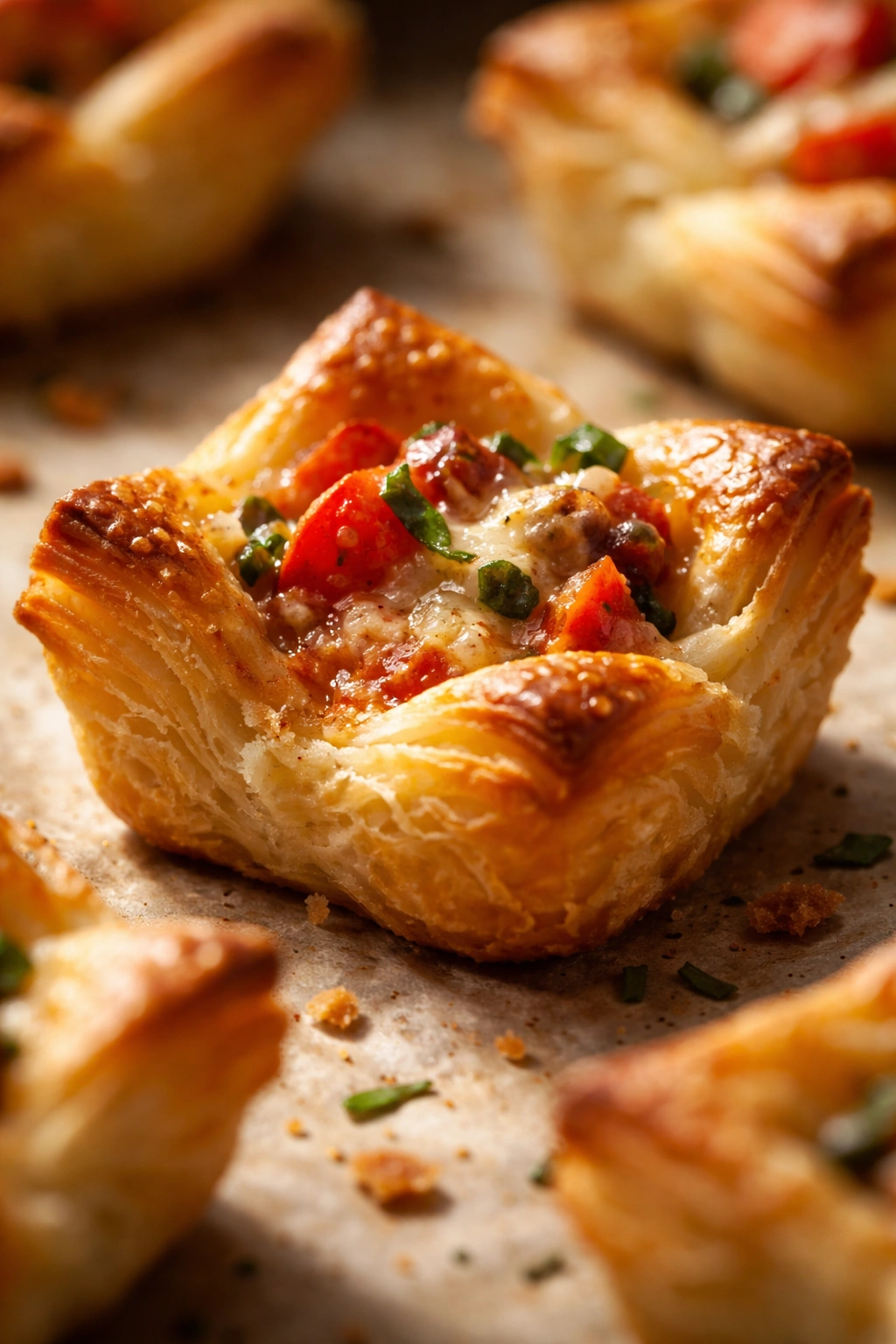
The difference between bites that are merely good and bites that are genuinely crispy comes down to a few specific details. First, make sure your puff pastry is fully thawed but still cold before you assemble these. If the pastry has been sitting out at room temperature for too long, it becomes difficult to cut cleanly, and the edges can be harder to work with. Fully thawed but cold is the sweet spot — you want it pliable enough to cut and shape but cold enough that the butter inside the pastry stays firm.
Second, don’t skip rotating the baking sheet halfway through baking. Most home ovens have hot spots — areas where the temperature runs a few degrees higher or lower than others. By rotating mid-bake, you’re compensating for that and getting more even browning across all 24 bites. If you’re using two baking sheets, swap their positions, too. It takes thirty seconds and it genuinely matters for the final texture.
The egg wash matters more than it sounds. Brush it only on the bare pastry, not on the filling, because it creates that attractive sheen and helps the pastry brown evenly. If egg wash gets on the filling, it tends to overbrown and can make that part taste slightly cooked rather than fresh and creamy. Apply the egg wash right before baking — if it sits for more than five minutes, it starts to dry and the effect diminishes.
Finally, the cheese in the filling adds moisture that can make the pastry soggy if you over-fill. Resist the urge to pile on more ricotta to make each bite feel more substantial. The ½ teaspoon amount is exactly right — it gives you a flavorful bite without compromising the pastry’s crispy texture. If you want the bites to feel more filling, serve them with other things: a soup, a salad, or additional appetizers. Let each component do what it does best rather than overloading the pastry itself.
Common Mistakes and How to Avoid Them
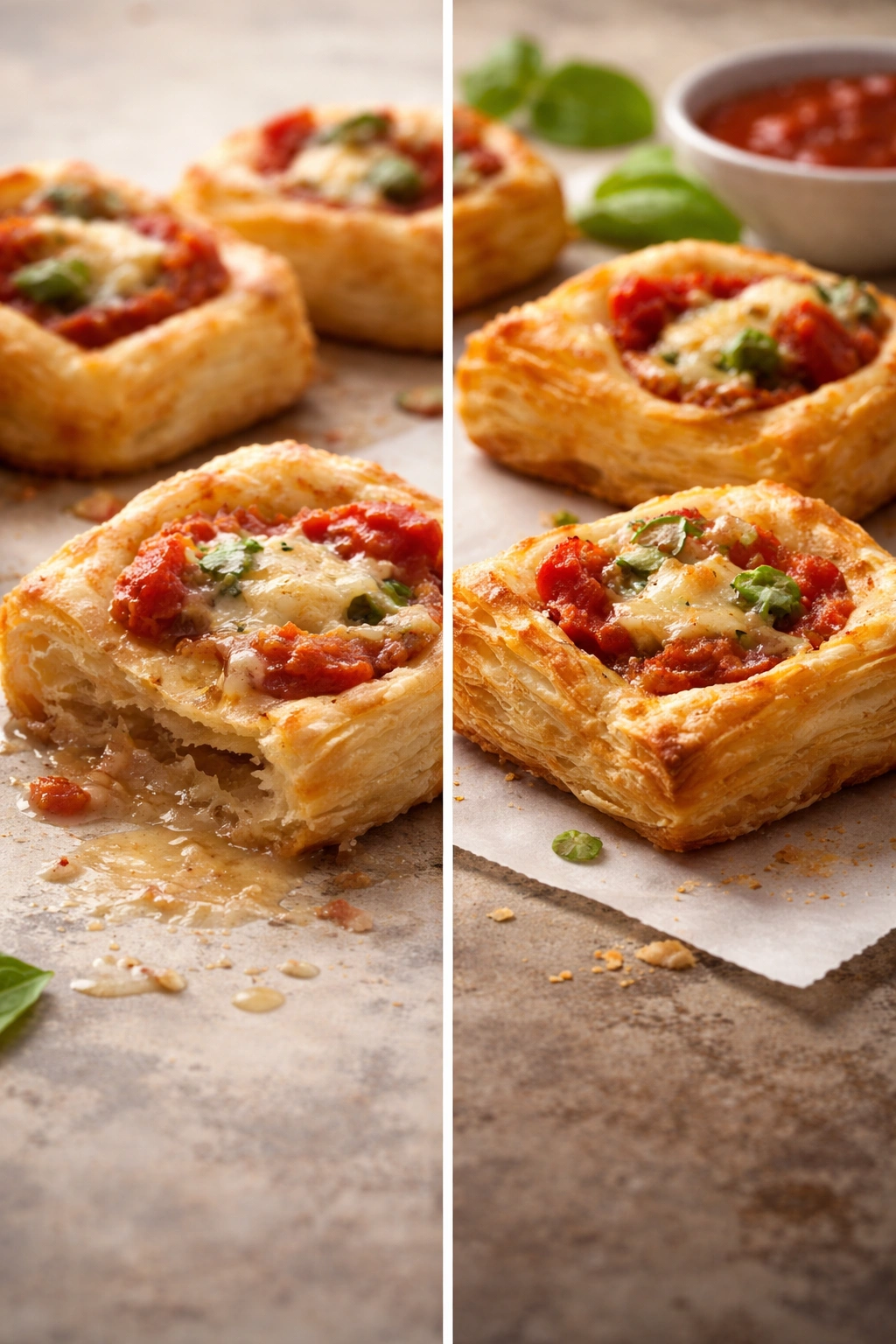
The most frequent problem people encounter is soggy pastry, and it usually comes from one of three sources. First, uneven or incomplete thawing of the puff pastry. If the center is still partially frozen while the edges are thawed, the frozen part won’t puff properly and you’ll get an uneven result. Give yourself a full 30 to 45 minutes for thawing at room temperature. The pastry should bend without cracking but shouldn’t be warm or sticky.
Second, overfilling is the arch-nemesis of crispy pastry. When you put too much ricotta on each square, two things happen: the filling leaks out during baking, making the pastry soggy and burnt, and also the filling doesn’t cook through evenly because it’s too thick. The filling doesn’t need to cook — it’s just there to add flavor — so you want a thin, distributed layer, not a thick mound. Think of it as topping the pastry, not filling a pastry case.
Third, not letting the pastry cool enough before eating. The pastry is actually still setting during those first 2 to 3 minutes after it comes out of the oven. If you try to bite into one immediately, you’ll get softness rather than that satisfying crunch. Wait just a few minutes and the difference is remarkable.
Another common issue is cutting the pastry unevenly. This matters more than it might seem because the squares that are smaller or slightly thinner will bake faster and can brown too much before the larger squares are done. Use a sharp knife or pizza wheel and make measured cuts. If you don’t have a ruler, you can use the edge of your hand as a guide — holding your hand as a straight edge while you cut helps create consistent lines.
Finally, some people worry that the filling is too flavorful or “strong-tasting.” But these bites are supposed to taste decidedly Italian and briny. If you prefer something milder, use less of the sun-dried tomato and olive combination and increase the ricotta proportion. You can also skip the red pepper flakes if heat is a concern. The beauty of this recipe is that you can adjust the filling intensity to match your preferences.
Creative Variations to Try
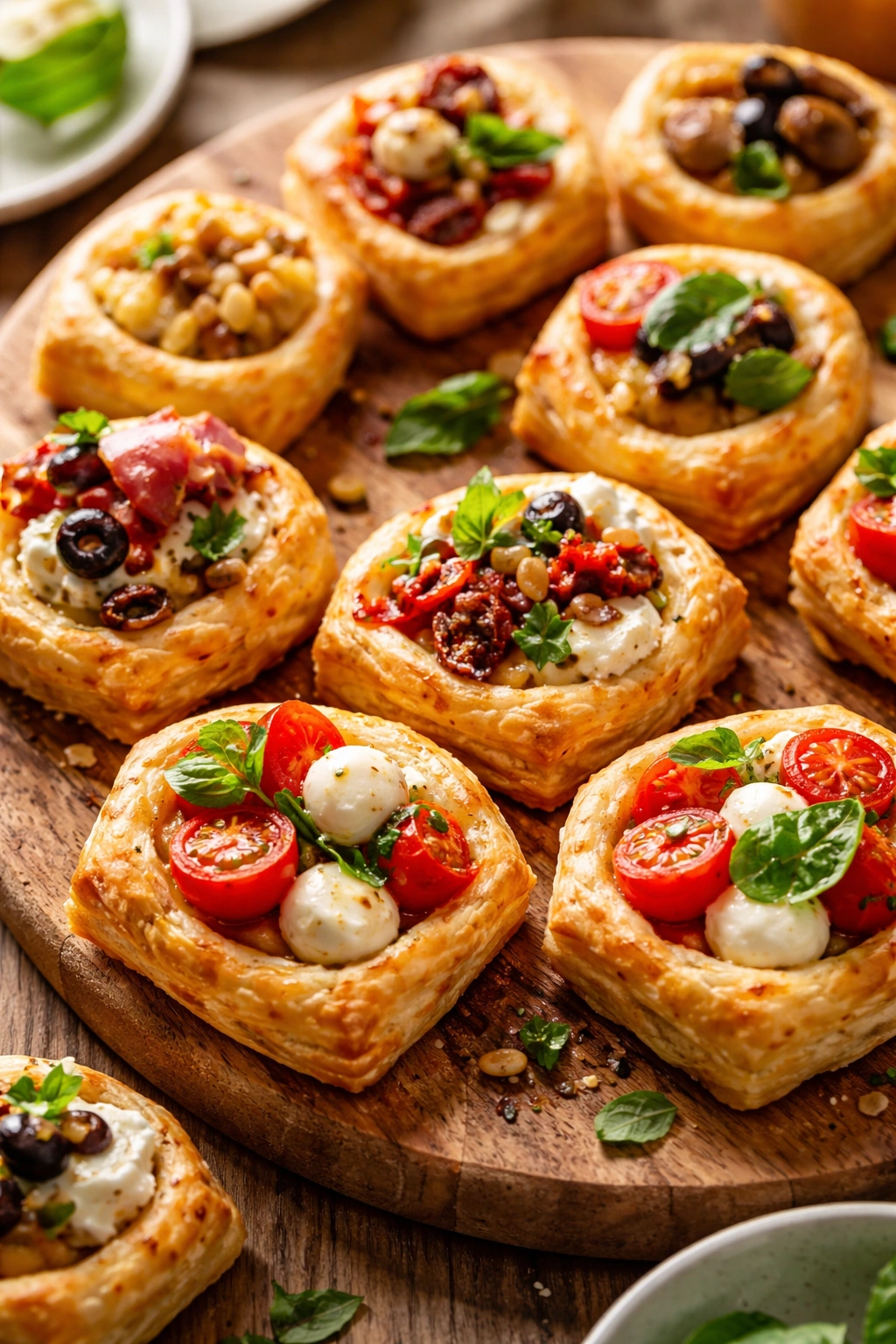
While the classic Italian version is wonderful, these bites are endlessly adaptable. One easy variation is a Mediterranean version: replace the ricotta with a mixture of whipped goat cheese and cream cheese, add sun-dried tomatoes as in the original, but swap the olives for roasted red peppers (jarred is fine), and top with fresh mint instead of basil. This version feels lighter and brighter.
For a more elegant dinner-party version, try a white anchovy and caper variation. Mix ricotta with a tiny bit of lemon zest and grated Pecorino Romano, then top each pastry square with a single white anchovy fillet and a small spoonful of capers, finishing with a tiny basil leaf. This is decidedly adult-tasting and impresses people who appreciate assertive flavors.
If you want something less intense, create a fresh tomato and mozzarella version. Skip the sun-dried tomatoes entirely and use fresh cherry tomatoes, halved or quartered. Replace the ricotta with small balls of fresh mozzarella or burrata cheese. Top with fresh basil and finish with a tiny drizzle of good balsamic vinegar. This version celebrates pure, simple flavors.
For a warmer, cozier variation, try a roasted garlic and herb version. Make a filling of ricotta mixed with roasted garlic (store-bought is fine), fresh thyme, and Parmigiano-Reggiano, then top with crispy prosciutto pieces and a basil leaf. This works beautifully for fall and winter entertaining.
You can also scale up the recipe if you’re feeding a crowd. A full box of puff pastry makes 24 bites, but you can use multiple boxes — the assembly time only grows a little while the impact grows significantly. These bites freeze beautifully before baking, so you can assemble them hours or even a day ahead and bake them right before guests arrive.
Making Ahead and Storage Solutions
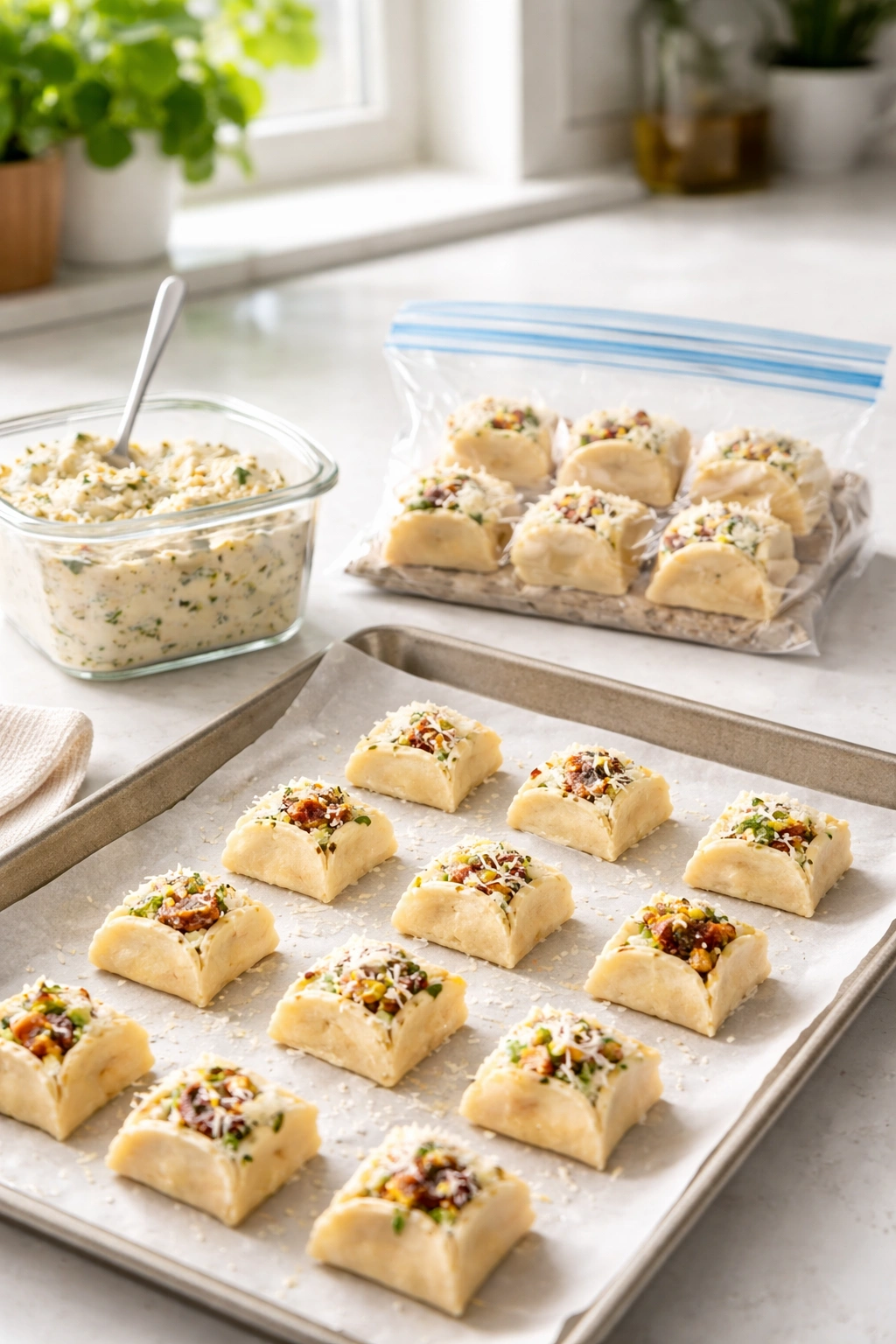
These bites are exceptionally convenient because you can prepare them at several different stages. The ricotta filling can be made up to 2 days ahead and stored in an airtight container in the refrigerator. This is actually the stage where making ahead saves the most time — you can prep the filling whenever you have a spare ten minutes, then just assemble and bake shortly before serving.
You can also assemble the bites completely, including the egg wash, and freeze them on the baking sheet for up to 1 week. Once they’re frozen solid, transfer them to a freezer bag for storage. When you’re ready to bake, there’s no need to thaw them — simply add 2 to 3 extra minutes to the baking time and bake directly from frozen. They’ll still puff up beautifully and crisp completely.
If you bake them ahead and want to serve them warm later, they reheat beautifully. Store cooled bites in an airtight container at room temperature for up to 4 hours, or in the refrigerator for up to 2 days. To reheat, arrange them on a baking sheet and place in a 350°F (175°C) oven for 5 to 8 minutes, just until they’re warmed through and crispy again. Avoid microwaving because it makes the pastry soft and rubbery.
They also freeze beautifully after baking. Arrange cooled bites in a single layer on a baking sheet, freeze until solid, then transfer to a freezer bag for storage up to 1 month. Reheat frozen bites directly in a 325°F (163°C) oven for 10 to 12 minutes until warmed through and crispy. The pastry will re-crisp as it reheats, restoring the original texture.
Serving Ideas and Pairing Suggestions

These bites work best as part of a larger spread rather than as a standalone appetizer. Serve them alongside a simple arugula salad dressed with lemon and olive oil, a board of cured meats and cheeses, or a bowl of good olives. They pair beautifully with charcuterie because they’re rich enough to be interesting but not so filling that they crowd out other flavors.
For a wine pairing, these go wonderfully with crisp white wines that have a bit of salinity — think Vermentino, Verdicchio, or even a dry Prosecco. If you’re serving beer, a light lager or a crisp pilsner complements the flavors without overwhelming them. Aperol Spritz is a classic Italian choice and works perfectly.
You can build a whole Italian-inspired appetizer table around these bites. Add fresh mozzarella with roasted tomatoes, a simple bruschetta station, marinated vegetables, and some Italian bread for people to put the bites on if they want. Keep it simple — the bites are flavorful enough that you don’t need elaborate accompaniments.
For a more casual gathering, just set out a platter of the warm bites with small napkins. People can pop them in their mouths while standing and chatting. Because they’re not messy and not too heavy, they’re the perfect casual entertainment food.
If you’re bringing these to a potluck, transport them in a flat container and offer to reheat them on arrival if there’s an oven available. If not, they’re completely delicious at room temperature, and most people will be delighted by anything homemade that tastes this good. The fact that it’s crispy and interesting makes it stand out among typical potluck fare.
Why This Recipe Works So Well
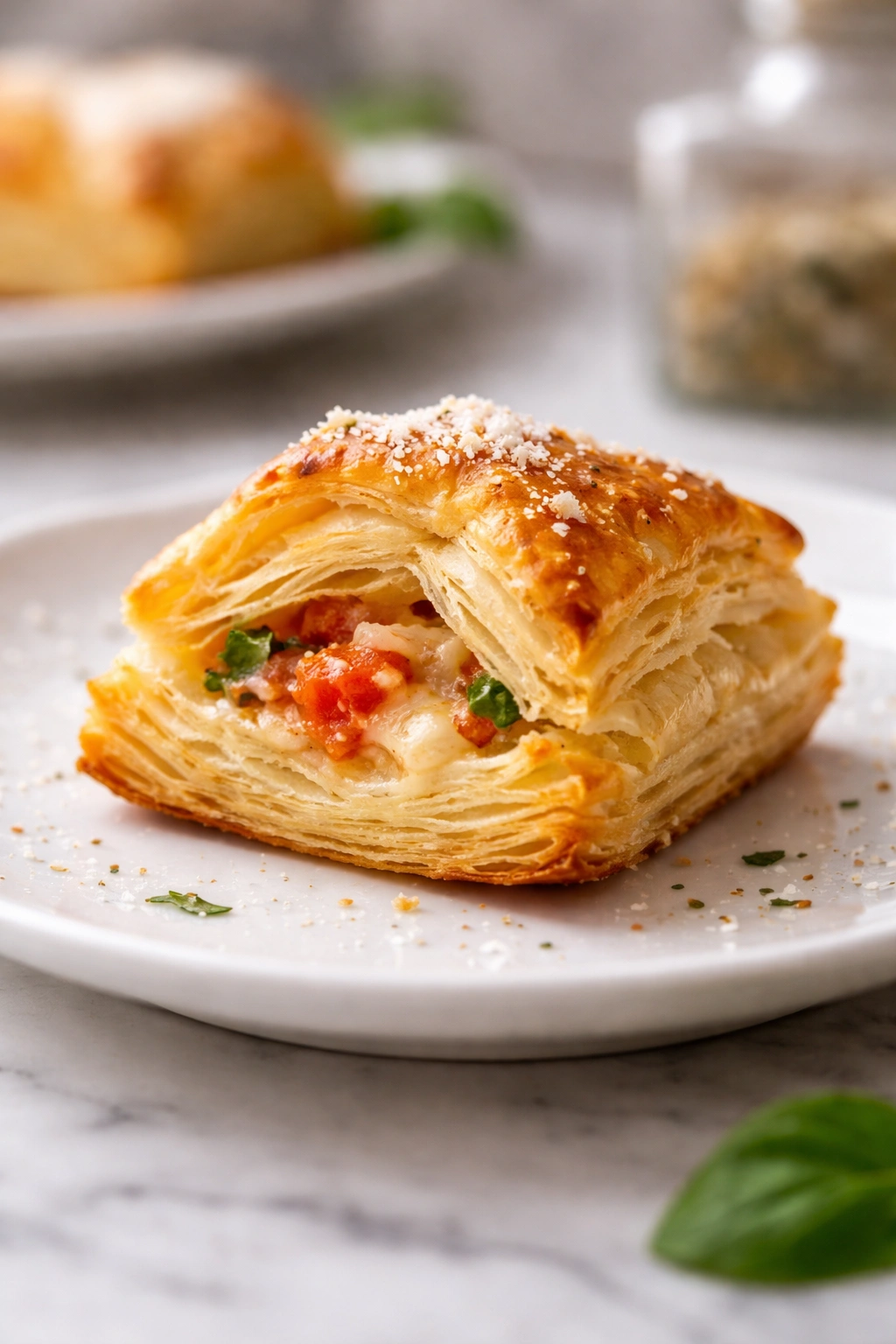
The reason this recipe feels restaurant-quality despite being so simple comes down to a few fundamental principles. First, you’re starting with an already-excellent product — frozen puff pastry — that does the technical heavy lifting. You’re not trying to create something complex from raw ingredients. You’re just adding intelligent flavor to something that’s already structurally sound.
Second, you’re using high-quality individual components rather than trying to create one complicated sauce or mixture. The ricotta is creamy. The olives are briny. The sun-dried tomatoes are concentrated and rich. The basil is fresh and bright. Each element is good on its own and they work together because of how Italian cuisine traditionally combines them. You’re not inventing something new — you’re using a proven flavor combination.
Third, the proportions are right. The amount of filling is just enough to taste genuinely flavorful without compromising the pastry texture. The ingredients are balanced so that no single flavor overwhelms the others. Nothing is too salty, too sharp, or too intense. It’s seasoned with restraint and sophistication.
Finally, the timing is perfect for real life. Twenty minutes total is long enough to create something that feels special and impressive, but short enough that you can actually do it on a random weeknight or while guests are arriving. There’s no multi-day planning, no complex preparation, no special equipment. You just need a knife, a baking sheet, and basic kitchen ingredients that most people already have.
Final Thoughts
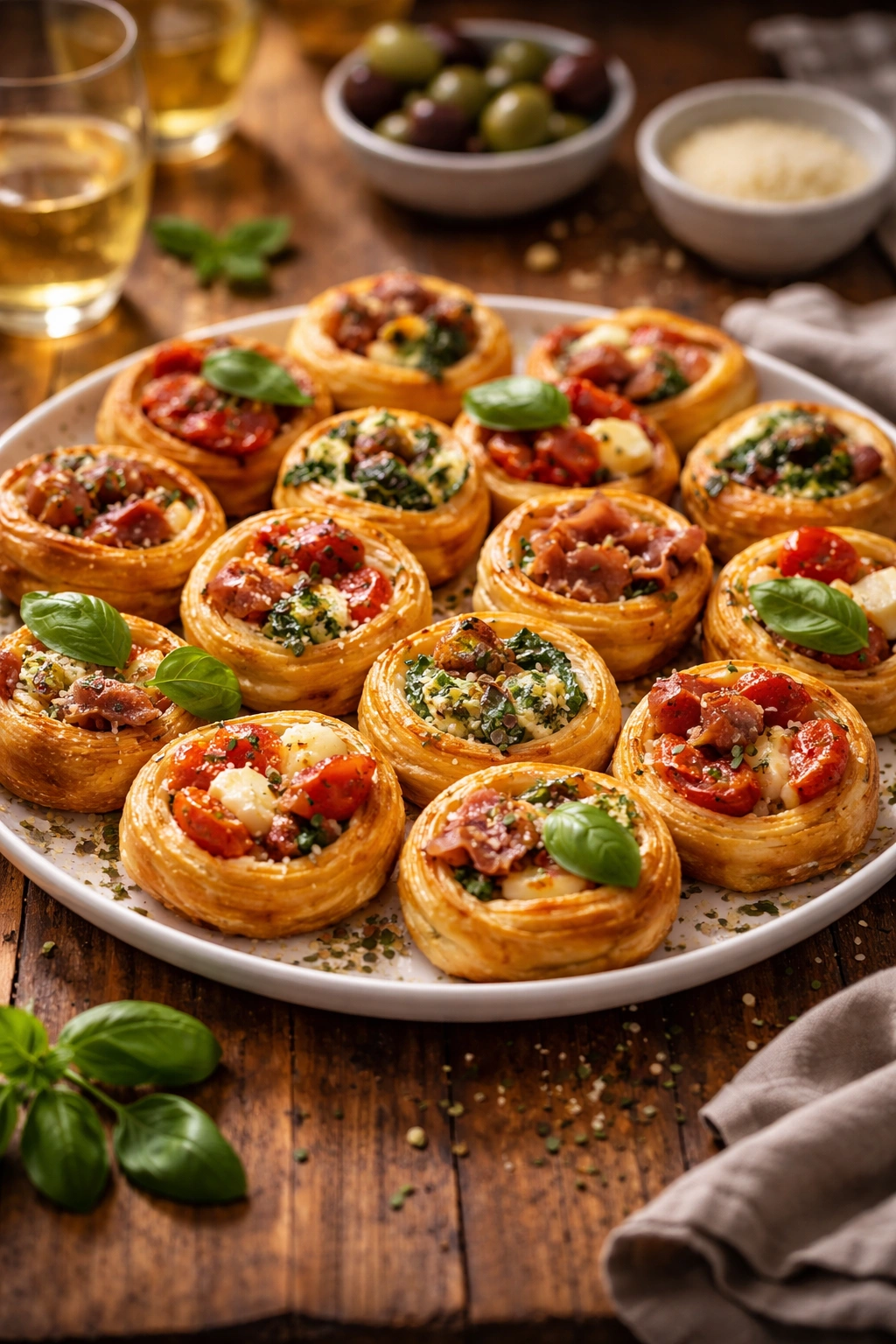
Italian puff pastry bites represent everything that’s wonderful about cooking from scratch with smart shortcuts. You’re not cutting corners in any way that matters — you’re just being efficient about which parts of the cooking process you tackle and which parts you wisely let happen on their own or let a well-made commercial product handle.
These bites prove that impressive entertaining doesn’t require hours in the kitchen or an advanced degree in baking. It requires knowing which shortcuts are honest and reliable, understanding flavor combinations that work, and executing them with attention to a few key details. The pastry needs to be crispy, the filling needs to be balanced, and the proportions need to be right. Get those three things correct and you’ve created something genuinely delicious.
Make these once and you’ll reach for this recipe repeatedly. They work for casual gatherings and elegant dinner parties. They’re memorable enough that people request them and simple enough that you’ll actually want to make them again. That’s the mark of a recipe worth keeping — not because it’s complicated or trendy, but because it’s reliable, delicious, and genuinely makes your entertaining easier.
