



There’s something deeply satisfying about a bowl of japchae—those slippery, chewy glass noodles coated in a sweet and savory sauce, studded with vibrant ribbons of vegetables and tender beef. Yet for all its restaurant elegance, this beloved Korean dish is actually a surprisingly achievable weeknight dinner that comes together in under an hour. Unlike many traditional Korean recipes that demand multiple components cooked separately, japchae can be streamlined into a one-pan wonder without sacrificing any of that authentic, layered flavor that keeps people coming back for more. The magic lies in understanding a few simple techniques: how to treat the glass noodles so they stay bouncy instead of turning mushy, how to build flavor efficiently, and when to add each ingredient so everything comes together in perfect harmony.
If you’ve walked into a Korean restaurant and felt intimidated by japchae’s complexity, or if you’ve made it before and found the traditional method exhausting, this guide will change your approach. You’ll learn how to create a genuinely impressive dinner that tastes like you spent hours in the kitchen—when really, most of that time is just passive soaking and simmering. Whether you’re cooking for family weeknight, preparing for a potluck, or looking for a show-stopping side dish for a Korean meal, japchae delivers both the comfort and the celebration you’re after.
What Exactly Is Japchae
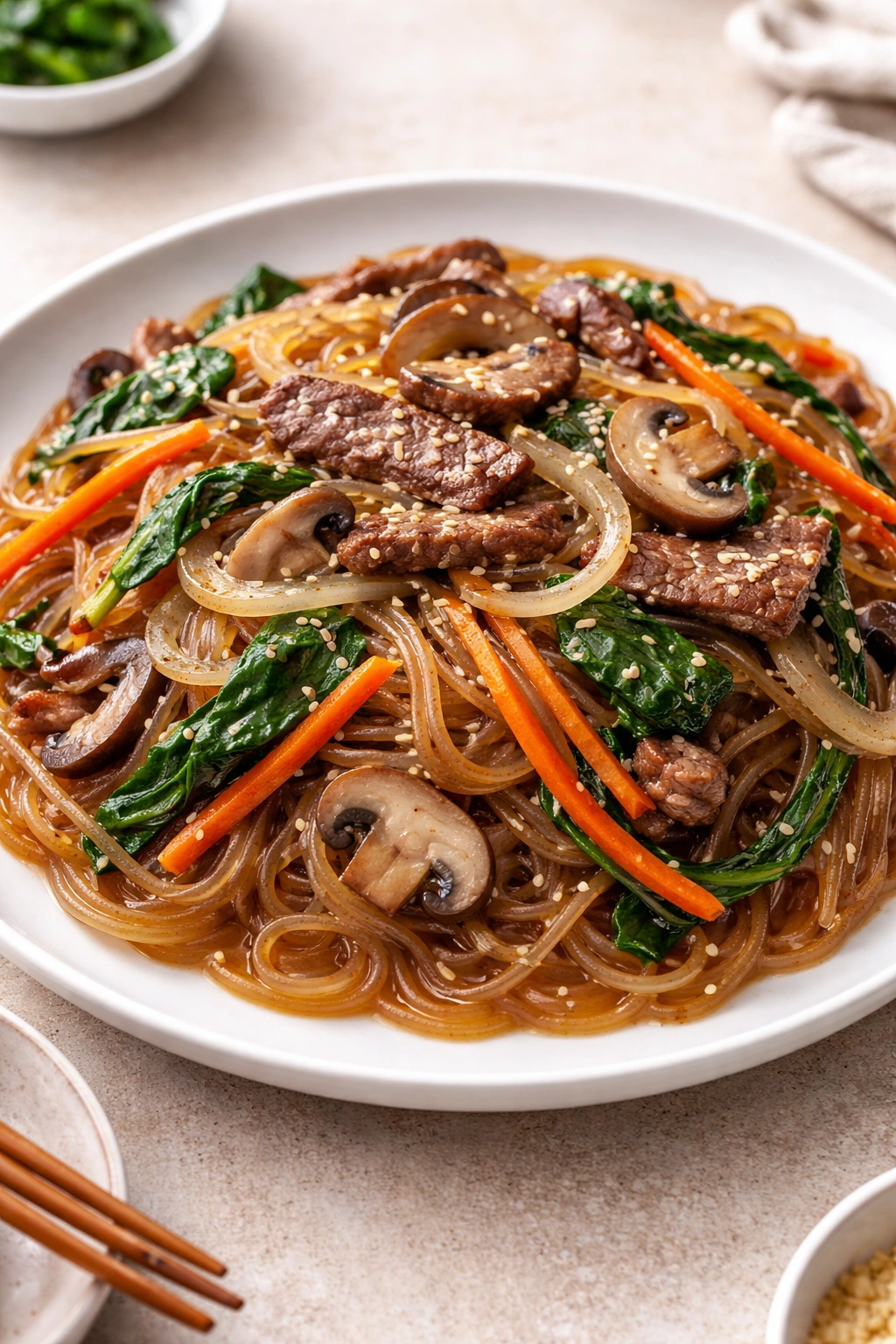
Japchae (잡채), sometimes romanized as chapchae, sits at the intersection of stir-fry and noodle dish—a category that Korean cuisine has perfected. The word itself translates to “mixed vegetables,” which hints at what makes this dish so compelling: it’s fundamentally about balance, texture, and the interplay of ingredients rather than relying on a single star component. What you’re really making is a harmony of chewy noodles, lightly cooked vegetables that still have some bite, tender protein, and a sauce that’s simultaneously sweet and savory with a whisper of toasted sesame running through it all.
The noodles themselves deserve special attention. Unlike wheat-based pasta or even rice noodles, japchae uses sweet potato glass noodles (called dangmyeon in Korean), which are made from sweet potato starch. When cooked properly, these noodles develop a distinctive bouncy, slippery texture that’s almost impossible to replicate with other varieties. They’re naturally gluten-free, which makes japchae an excellent option for people with wheat sensitivities. The starch composition means they absorb sauce beautifully—rather than remaining separate from the flavoring agents, the noodles actively soak up every bit of that umami-rich, slightly sweet coating.
Traditionally, japchae appears as a side dish (banchan) at Korean tables, particularly during holidays, celebrations, and family gatherings. You’ll find it served at room temperature, which makes it exceptionally practical for entertaining or meal prep. That said, it’s equally delicious eaten warm, and many home cooks now serve it as a light main course rather than exclusively as a supporting player. The dish evolved over centuries—interestingly, the original japchae from the 17th century didn’t include noodles at all, just vegetables. The addition of glass noodles came later, transforming it into the beloved version we know today.
Why Japchae Makes an Easy Weeknight Dinner
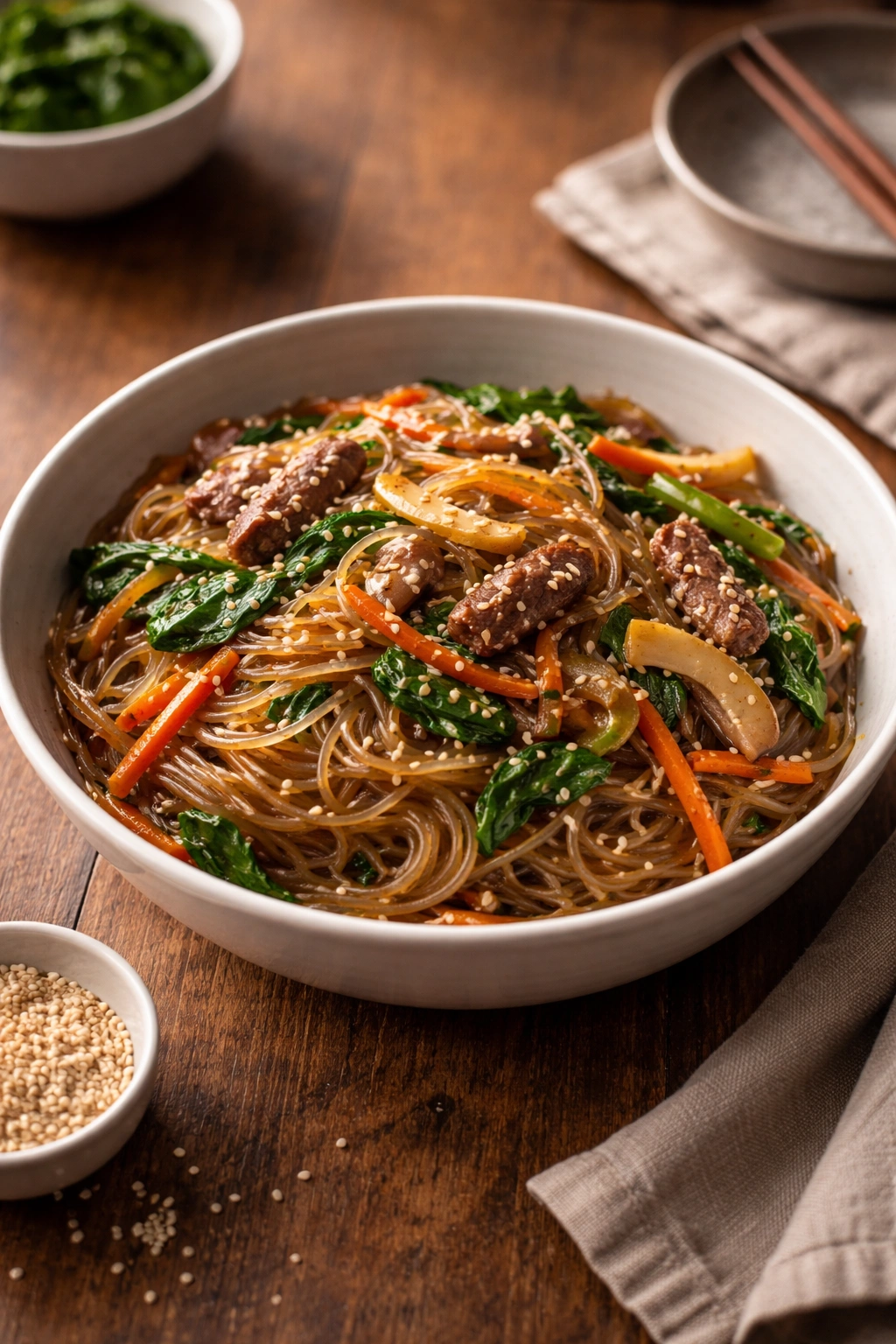
The biggest misconception about japchae is that it’s too complicated for casual cooking. Yes, traditional Korean recipes for japchae involve cooking each vegetable separately in its own pan to preserve individual flavors and textures, then assembling everything at the end. That method is beautiful for special occasions, but it’s not necessary for a genuinely delicious weeknight version. What matters far more is understanding the three core elements: treating the noodles correctly, seasoning properly, and building the sauce with intention.
The real advantage of japchae for busy cooking is that there’s minimal active cooking time. Most of the process happens while you’re doing something else—the noodles soak while you prep vegetables, the vegetables cook while you handle the protein, and the whole thing comes together in one final push. Unlike stir-fries that require constant attention and a blazing hot wok, japchae is forgiving. You’re not racing against time to prevent overcooking. The noodles finish in the pan with the sauce, absorbing flavor rather than sitting alone and hardening.
Nutritionally, japchae is built on vegetables. You’re getting carrots for beta-carotene, bell peppers for vitamin C, mushrooms for umami and minerals, spinach for iron and antioxidants, and onions for their aromatic compounds. The sweet potato noodles bring fiber and complex carbohydrates. Yes, there’s beef in the traditional version, but even that component is optional—japchae is exceptional as a vegetarian dish, with the noodles and sauce providing all the satisfaction you need. This flexibility means you can adjust to what you have on hand, what’s in season, and what your family actually enjoys eating.
Understanding Korean Glass Noodles
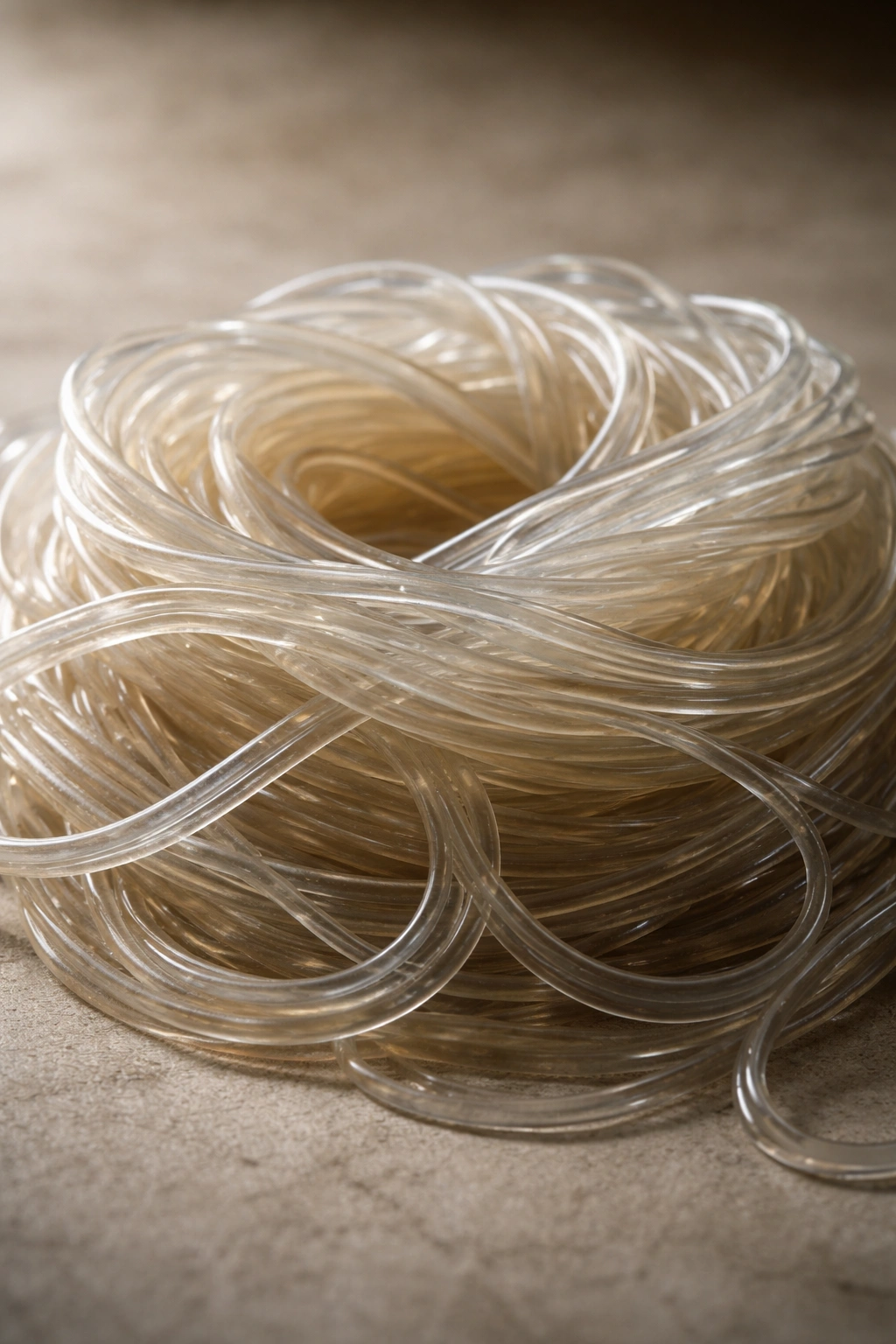
Glass noodles aren’t a mystery once you understand how they’re made and what makes them special. Sweet potato starch is the entire secret. When manufacturers process sweet potatoes into starch, then extrude it into thin strands and dry it, the result is these translucent, hard noodles that look almost like uncooked angel hair pasta. They’re labeled as “glass” noodles because of their clear, glassy appearance—not because there’s anything glass-like about the eating experience.
The challenge with glass noodles is getting the texture right. If you boil them following the package directions (which usually suggest 8-10 minutes in rapidly boiling water), you’ll often end up with noodles that are mushy on the outside but still slightly firm in the center, or noodles that have absorbed too much water and turned into mush. This happens because the boiling water agitates the starch, causing it to gelatinize unevenly. The solution that works beautifully for japchae is to soak the noodles rather than boil them, then finish cooking them in the pan with the sauce.
When you soak sweet potato noodles in hot water for about 15-20 minutes, they soften gradually and evenly. They won’t be fully cooked at the end of the soak—they’ll still have a slight firmness to them. This is exactly where you want them. When you add these partially cooked noodles to the pan with sauce and vegetables, they finish cooking gently while absorbing all the flavoring. The starch granules hydrate steadily, the noodles become translucent, and you get that perfect bouncy, chewy texture that makes japchae so special.
Essential Ingredients and Substitutions
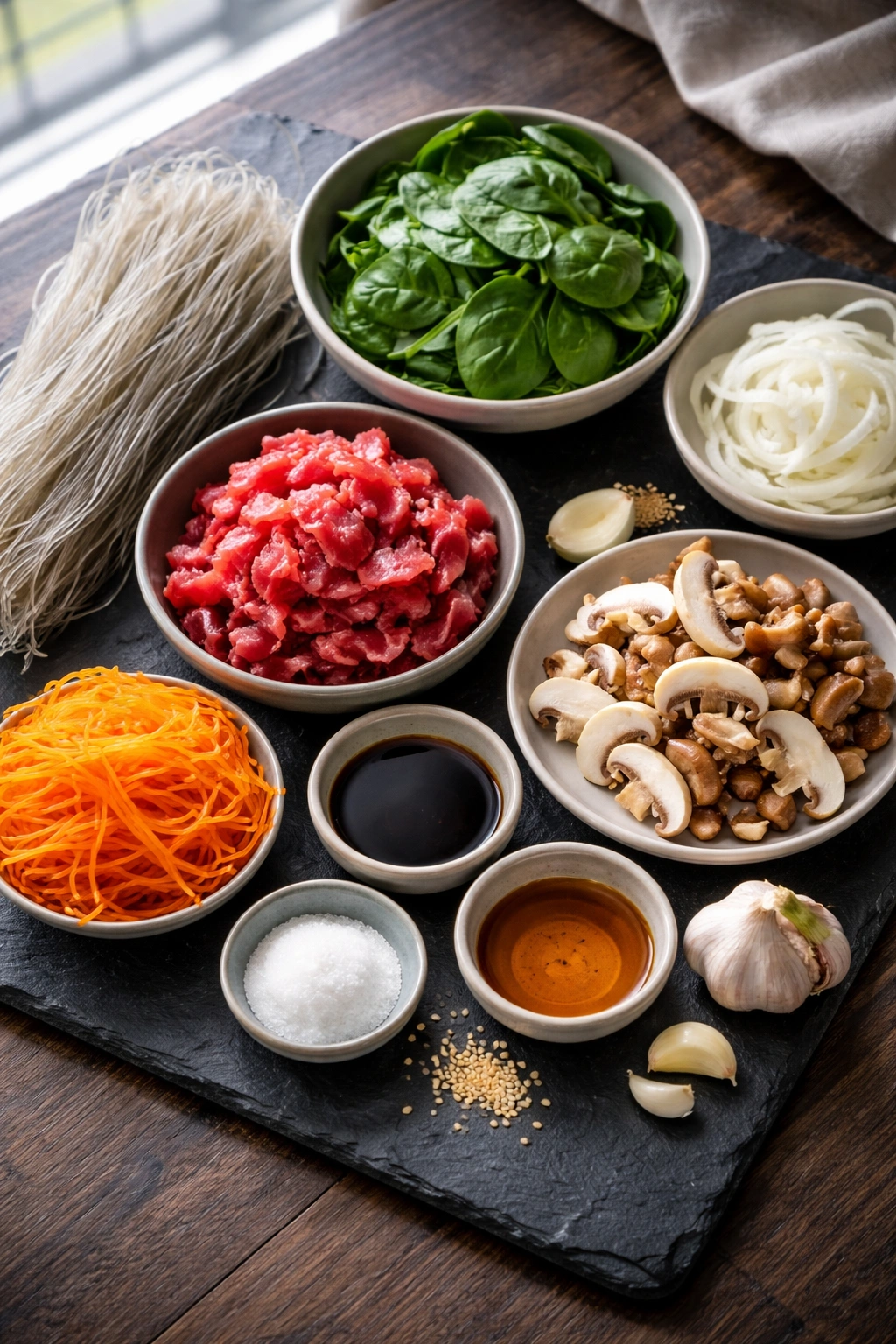
Japchae works because of the quality and balance of its components. You don’t need an enormous ingredient list, but the ones you do use should be good quality, especially the soy sauce and sesame oil. These aren’t fancy or hard to find—most are available at regular grocery stores, and they’re significantly cheaper at Asian markets.
For the noodles: You specifically want Korean sweet potato glass noodles (dangmyeon), not Chinese glass noodles or mung bean vermicelli. Look for packages that are clearly labeled with the Korean name or that specifically say “sweet potato starch.” The noodles should be pale and translucent even before cooking. These are widely available in the Asian aisle of most supermarkets, and you’ll find them for 1-3 dollars per 8-ounce package.
For the sauce: You’ll need good soy sauce (use all-purpose or light soy, never dark soy which is too intense), toasted sesame oil (the brown one with the deep, nutty flavor, not the pale untoasted version), sugar or honey for sweetness, and optionally a bit of rice wine (mirin). These combine into a sauce that’s balanced—not cloyingly sweet, but with enough sugar to complement the soy’s saltiness.
For the protein: Beef is traditional, and thin-sliced rib eye, sirloin, or striploin works beautifully. You’re not looking for premium cuts because the thin slicing and quick cooking mean that even moderately priced beef tastes tender and juicy. A quick marinade in soy sauce, garlic, and a bit of sugar seasons the meat thoroughly. That said, you can absolutely skip the beef and serve japchae vegetarian or vegan. Some cooks add tofu batons, others add scrambled egg ribbons, and many simply focus on the noodles and vegetables as the main event.
For the vegetables: Traditional combinations include onions, carrots, bell peppers, shiitake mushrooms, and spinach. Each brings a different texture—carrots and peppers for sweetness and firmness, mushrooms for umami, spinach for earthiness. Here’s where you gain flexibility. Use what you have, what’s in season, and what your family enjoys. Zucchini, snap peas, water chestnuts, wood ear mushrooms, and other vegetables all work. The only rule is that you want a mix of colors and textures so the final dish is visually interesting and textually varied.
Making Korean Glass Noodles
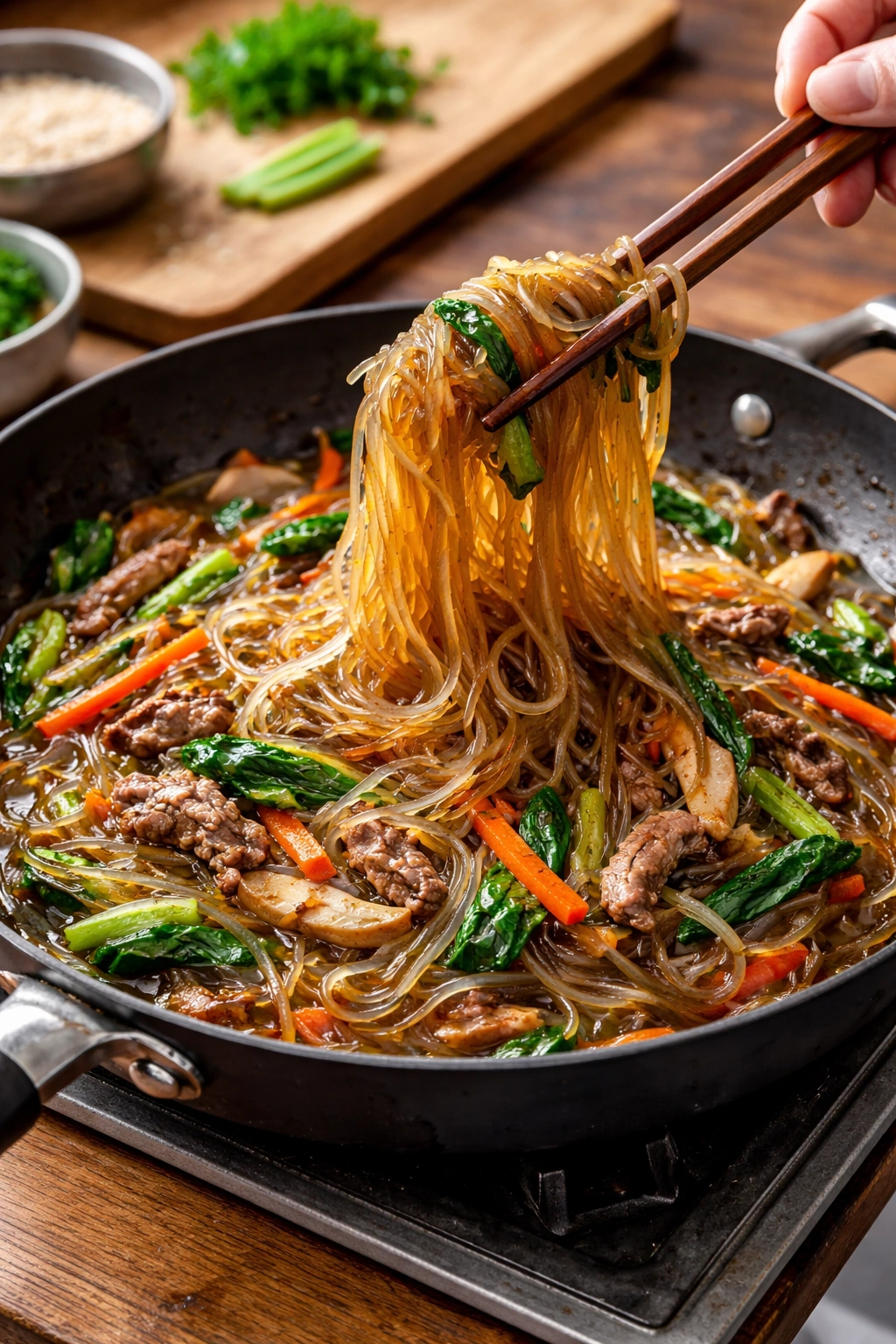
Yield: Serves 4 to 6 | Can be scaled up easily for 8-10 servings
Prep Time: 20 minutes
Cook Time: 15 minutes
Total Time: 55 minutes (including noodle soaking time, which is mostly passive)
Difficulty: Beginner — no special equipment required, the steps are straightforward and forgiving, and the timing is flexible throughout the process.
For the Beef
For the Beef Marinade:
- 1 tablespoon soy sauce
- 1 teaspoon sugar
- ½ teaspoon minced garlic
- ¼ teaspoon ground black pepper
- ½ teaspoon toasted sesame oil
- 6 ounces beef rib eye or sirloin, thinly sliced into strips about ¼-inch thick
For the Japchae Sauce
Mix these ingredients together in a small bowl:
- 4 tablespoons soy sauce (all-purpose or light soy sauce, not dark)
- 1 tablespoon honey or white sugar
- 1 tablespoon brown sugar
- 1 tablespoon toasted sesame oil
- ½ teaspoon minced garlic
- ⅛ teaspoon ground black pepper
- 2 tablespoons water
For the Noodles and Vegetables
Main Ingredients:
- 8 ounces Korean sweet potato glass noodles (dangmyeon)
- 2 tablespoons neutral cooking oil (vegetable, canola, or rice bran oil)
- ½ yellow onion (about 3 ounces), peeled and thinly sliced
- 1 medium carrot (about 4 ounces), peeled and cut into thin matchsticks about 2 inches long
- 1 red or yellow bell pepper (about 3 ounces), thinly sliced into strips
- 4 ounces fresh shiitake mushrooms, stems removed and thinly sliced (or oyster mushrooms as a substitute)
- 2 cups (about 4 ounces) fresh baby spinach, rinsed
- 2 tablespoons toasted sesame seeds
- ¼ teaspoon fine sea salt (for seasoning vegetables)
- Water for soaking noodles
For Optional Garnish
- 1 tablespoon additional toasted sesame oil
- Extra sesame seeds for topping
- Green onion slices (if desired)
Step-by-Step Instructions for Japchae
Prepare the Ingredients:
-
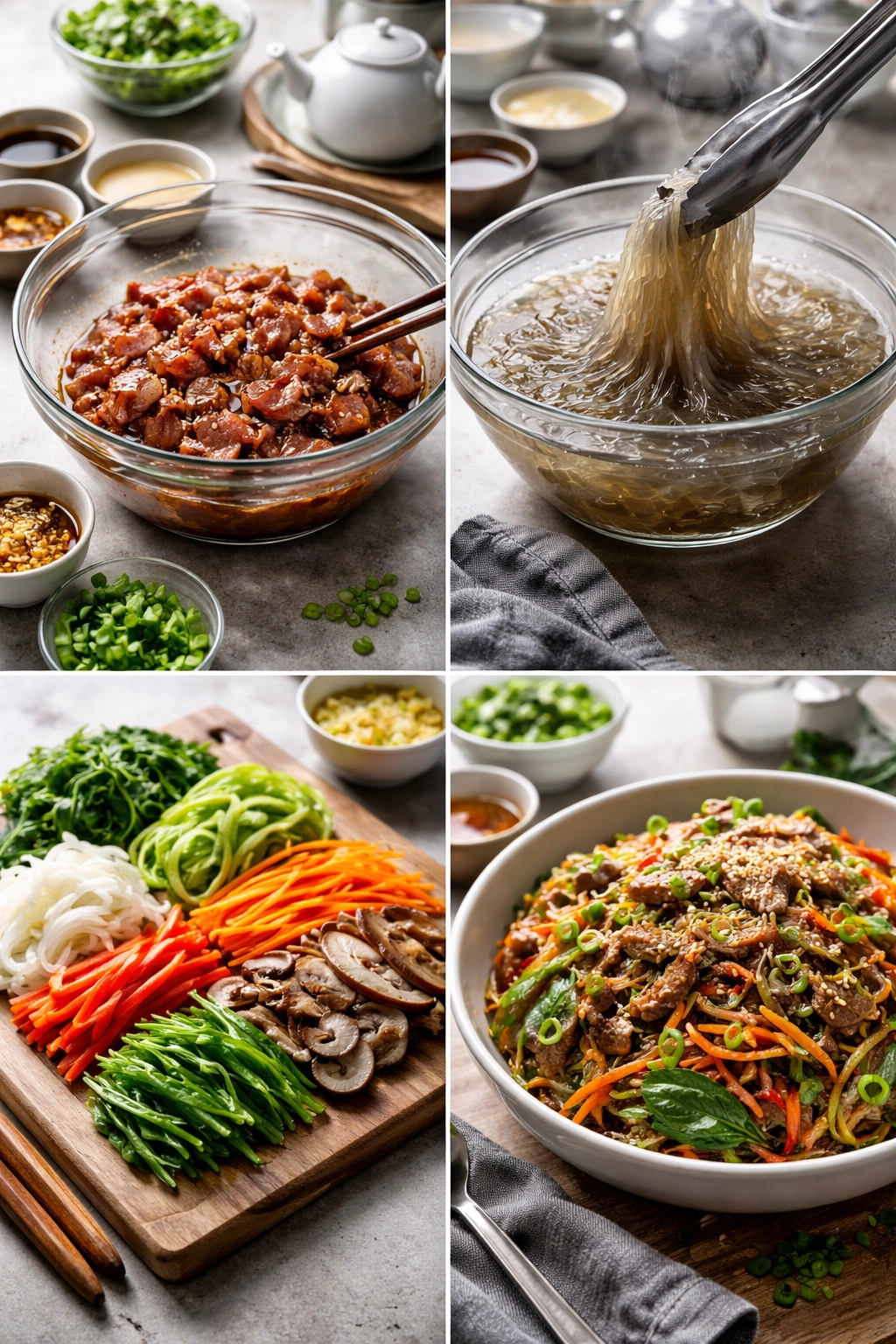
Cut the beef against the grain into thin strips approximately ¼-inch thick and 2 inches long. Place into a medium bowl and add all the marinade ingredients. Toss gently to coat the beef evenly. Cover and set aside while you work on the other components—this allows the beef to marinate for 15-20 minutes and absorb the flavors.
-
Place the glass noodles in a large bowl and cover with hot tap water (the water should be hot but not boiling—around 160-180°F is ideal). Let them soak for 15 minutes while you prepare everything else. The noodles will soften and become pliable but will still retain some firmness. After 15 minutes, drain the water completely and set the noodles aside.
-
Prepare all the vegetables on a cutting board: slice the onion into thin wedges, cut the carrot into thin matchsticks (about the thickness of a matchstick, roughly 1/8-inch), slice the bell pepper into thin strips, slice the mushrooms into thin pieces, and rinse the spinach. Having everything prepped and ready means the cooking will move smoothly without scrambling.
-
In a small bowl, combine all the sauce ingredients—soy sauce, honey, brown sugar, sesame oil, garlic, and pepper. Stir until the sugars dissolve. Set this aside. It’s important to mix the sauce in advance so it’s ready to add to the noodles at the right moment.
Cook the Japchae:
-
Heat 1 tablespoon of cooking oil in a large non-stick skillet or wok over medium-high heat. Once the oil shimmers and moves easily around the pan, add the sliced onion and mushroom slices along with a small pinch of salt. Stir-fry for 2-3 minutes, stirring frequently, until the mushrooms are softened and the onions are beginning to turn translucent and lightly golden at the edges. Watch carefully—you’re looking for soft but not collapsed vegetables. Transfer the cooked vegetables to a clean plate or bowl and set aside.
-
Add the remaining 1 tablespoon of oil to the same pan (don’t wash it—the browned bits add flavor). Heat over medium-high heat. Add the carrot and bell pepper slices along with a small pinch of salt. Stir-fry for 2-3 minutes, stirring constantly, until the vegetables are tender-crisp. The carrot and pepper should still have a slight bite to them, not soft all the way through. Add the spinach and continue stirring for another 1-2 minutes just until the spinach wilts and turns a bright green. Do not overcook the spinach—it will continue to soften slightly from residual heat. Transfer all the vegetables to the plate with the first batch and set aside.
-
If the pan seems dry, add just a tiny bit more oil to prevent sticking. Increase the heat to medium-high and add the marinated beef. Let it cook undisturbed for about 30 seconds to develop some color on one side, then stir and cook for another 1-2 minutes total until the beef is no longer pink inside. You want the beef cooked through but still tender—avoid overcooking or it will become tough and chewy. Transfer the cooked beef to the plate with the vegetables.
-
In the same pan, add the drained glass noodles and pour in the japchae sauce mixture. Stir constantly with a wooden spoon or tongs, tossing the noodles gently to coat them evenly with the sauce. You’ll see the noodles begin to turn shiny and translucent as they absorb the sauce. This should take about 2-3 minutes. The noodles may stick together slightly at first, but that’s normal—keep stirring gently and they’ll separate as they cook.
-
Once the noodles look glossy and transparent and have absorbed most of the sauce, return the cooked vegetables and beef to the pan. Toss everything gently but thoroughly with the noodles, making sure the sauce is evenly distributed. Be gentle here—glass noodles can break if you’re too rough with them. If everything feels a bit dry, add 1-2 tablespoons of water and toss again.
-
Turn off the heat and sprinkle the sesame seeds over the top. Add an additional tablespoon of sesame oil if you like a richer flavor. Toss everything one more time gently to distribute the oil and seeds throughout. Taste the noodles—they should taste balanced between salty and sweet. If they’re too salty, add a splash of water. If they’re too sweet, add a few drops of soy sauce. Adjust to your preference.
-
Transfer the japchae to a serving bowl or divide among individual bowls. Serve warm or at room temperature. Japchae is actually excellent at room temperature, which is why it’s so popular for Korean celebrations and potlucks.
Tips for Getting Perfect Japchae Every Time
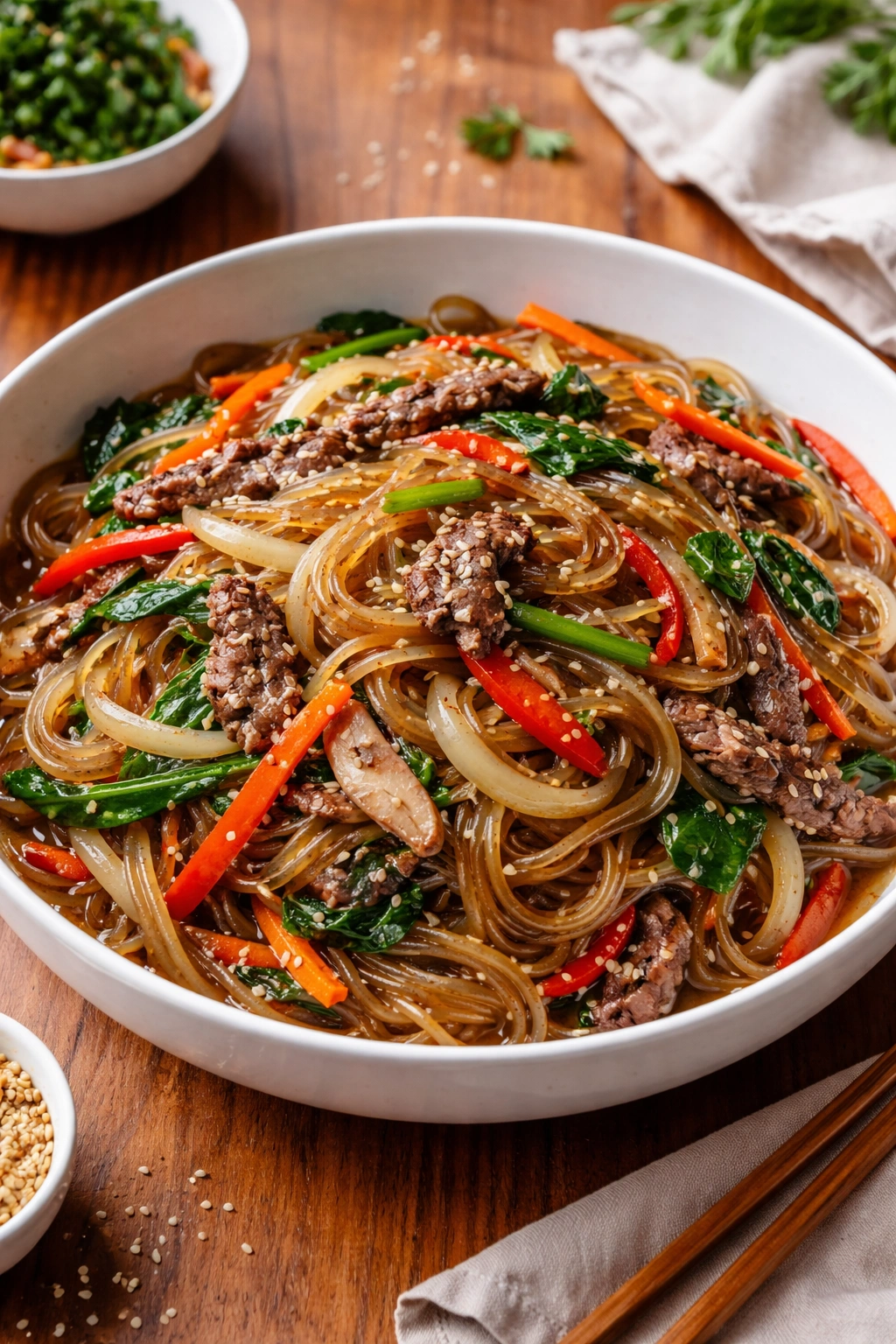
The difference between good japchae and exceptional japchae often comes down to small details that home cooks usually discover through trial and error. Here’s what actually matters, based on what works in real kitchens rather than restaurant kitchens with professional equipment.
Don’t skip the soaking step. Boiling glass noodles in a pot, especially if you’re boiling aggressively, tends to overcook the outside while leaving the center underdone. Soaking in hot water hydrates the starch gradually and evenly. The noodles will be slightly undercooked when you drain them—this is intentional. They’ll finish cooking in the pan with the sauce, and by that point they’ll be perfectly tender.
Cook vegetables in batches if possible. Mushrooms and onions take longer to soften than carrots and peppers, which is why you’re cooking them separately. This isn’t a hard rule—if you’re in a hurry, you can toss everything in together. But if you want each vegetable to taste its best and maintain its individual character rather than becoming a homogeneous mush, cooking in two batches gives you better results without much extra effort.
Slice vegetables uniformly. This matters more than people realize. When carrot pieces are all roughly the same size, they cook at the same rate. If some are twice as thick as others, you’ll end up with some that are mushy and some that are still crunchy. You don’t need to be perfect—aim for “close enough” consistency. The other benefit of uniform slicing is that the dish looks more appealing and professional.
Use the marinating time strategically. While the beef marinates, you’re preparing vegetables and soaking noodles. Nothing is sitting around waiting. This is one of those happy situations where the recipe’s timing naturally builds in downtime for other tasks.
Don’t overthink the seasoning. The sauce comes together with just the right balance of salt from soy sauce, sweetness from sugar and honey, and richness from sesame oil. If you taste the sauce before it’s mixed with the noodles, it’ll taste overly salty and intensely sweet. Once it coats the noodles and vegetables, the flavors distribute and the balance becomes apparent. Trust the recipe initially, then adjust your personal preference if needed for future batches.
Common Mistakes That Keep Japchae from Being Perfect
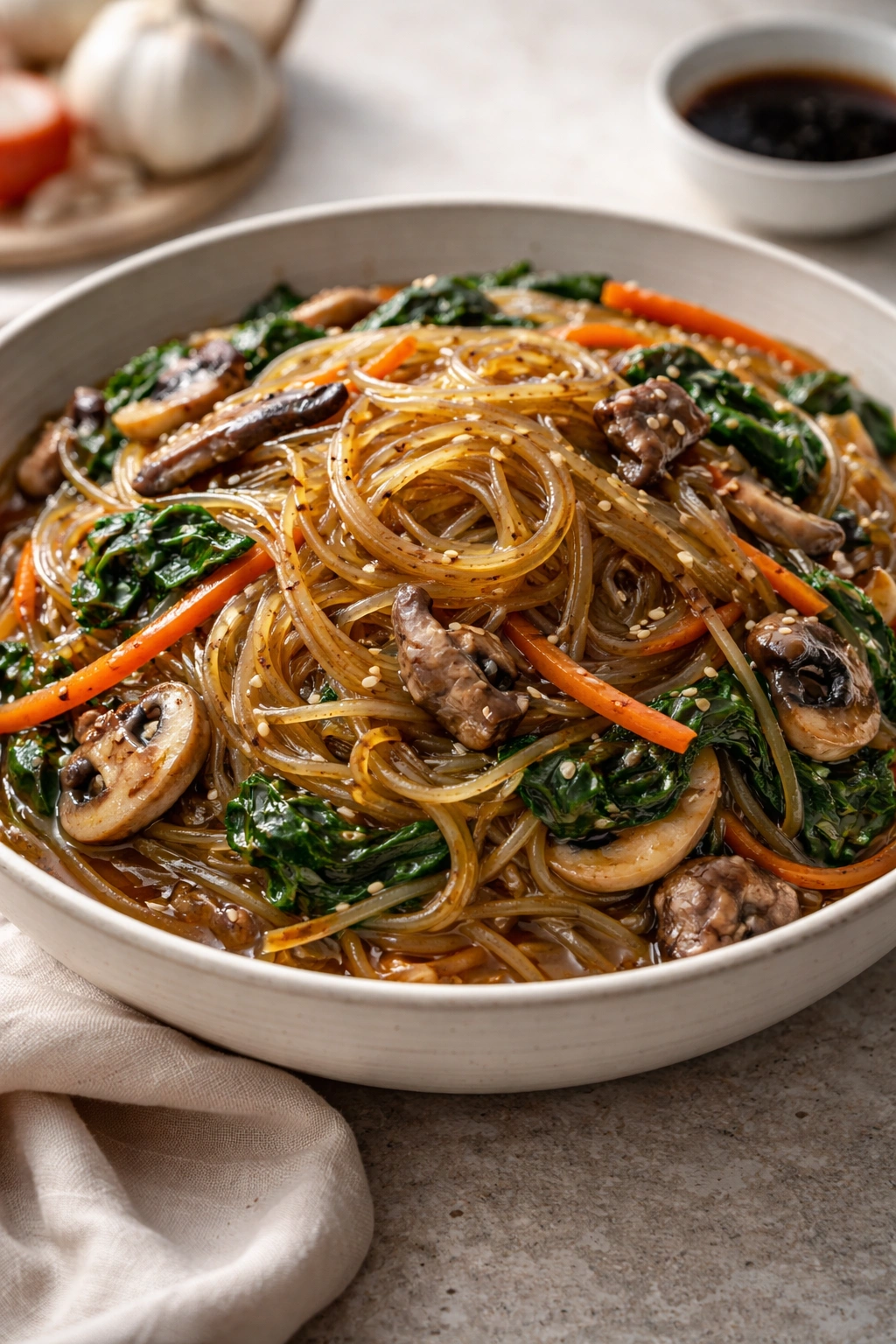
Using the wrong noodles. The biggest mistake is buying regular glass noodles (mung bean vermicelli) instead of sweet potato noodles. The texture will be entirely different—thinner, less chewy, less substantial. Make sure your package says “sweet potato starch” or has the Korean name “dangmyeon” on it.
Boiling the noodles in rapidly boiling water. This breaks down the starch unevenly and leads to that gummy, mushy texture that makes people think glass noodles are impossible to cook well. Soaking works so much better.
Adding sauce too early. If you add the sauce before the vegetables and beef are cooked, they’ll steam in the liquid and become soft rather than maintaining their texture. Always cook components separately, then combine at the very end. This seems inefficient until you taste the difference it makes.
Overcooking the spinach. Spinach goes from perfectly wilted and bright green to dull and mushy in about 30 seconds. Add it near the end of cooking the second batch of vegetables, and pull everything off heat as soon as it’s limp. It’ll continue cooking slightly from residual heat.
Using dark soy sauce. Dark soy sauce has a different flavor profile—stronger, slightly bitter, and it will turn the whole dish a dark brown color that looks less appetizing. Stick with all-purpose or light soy sauce. If you can’t find those specifically, regular soy sauce is usually close enough.
Cooking the beef too long or at too high a temperature. Thin-sliced beef goes from cooked to tough in seconds. Once it’s no longer pink, you’re done. If you’re worried about it not being cooked enough, cut a piece in half to check rather than cooking it further.
Adding too much sauce. The noodles should be coated and glossy, not swimming in liquid. If you pour in all the sauce at once and the noodles look soupy, you’ve added too much. You can always add more sauce if needed—you can’t take it out. Start with less and adjust upward.
Variations and Adaptations for Different Preferences
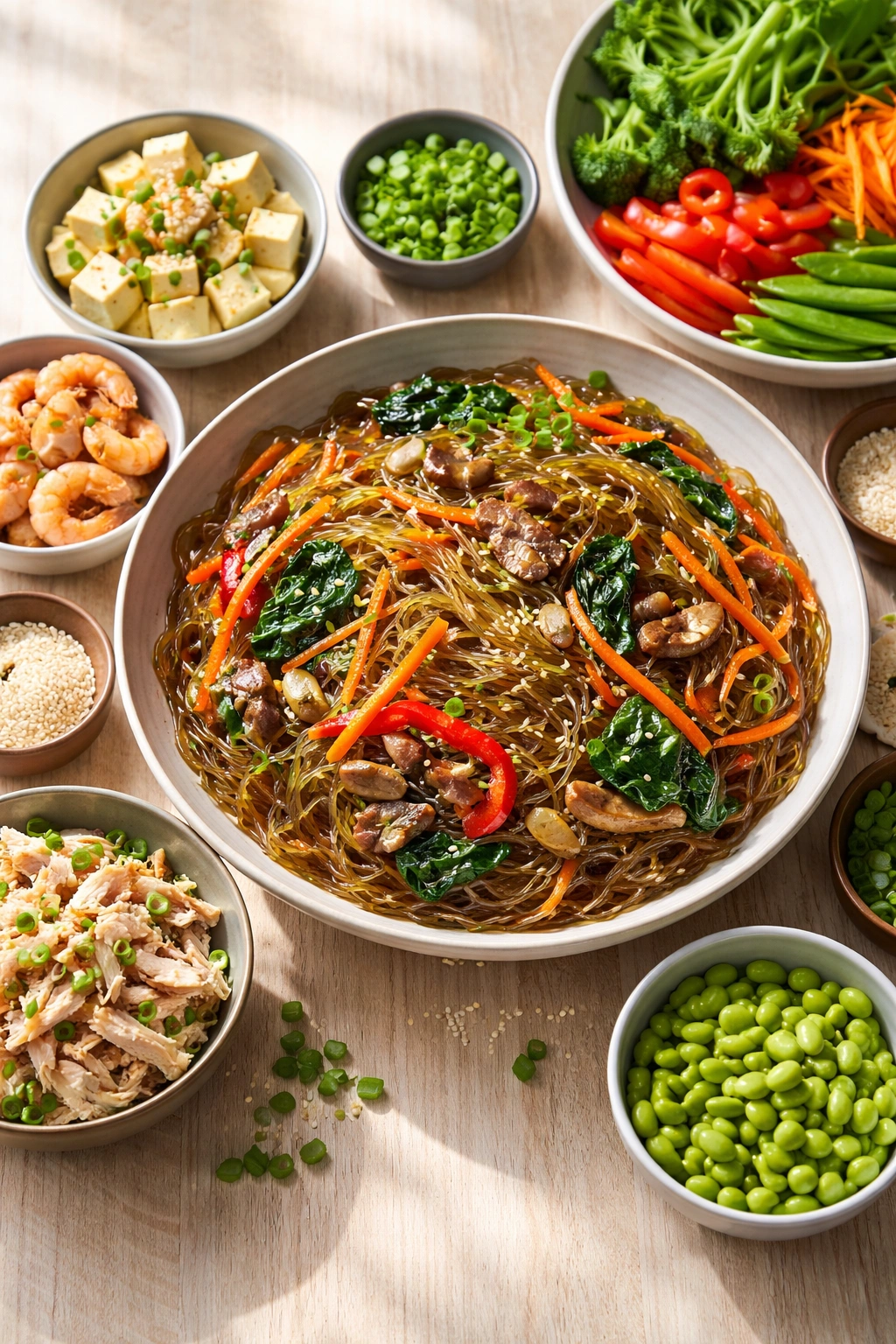
One of japchae’s greatest strengths is that it adapts beautifully to different diets, preferences, and what’s available. The core—glass noodles, sauce, and vegetables—remains constant, but you can build around that in many directions.
Vegetarian japchae. Simply omit the beef entirely. The noodles and sauce provide all the umami and satisfaction you need. If you want to add more protein, fold in baked tofu cubes, stir-fried tempeh, or even scrambled eggs and egg ribbons (gyeran mari). Many people find the vegetarian version lighter and actually prefer it on warm days.
Adding more protein. Traditional japchae uses beef, but you can use pork tenderloin, chicken breast, or shrimp instead. Cook them the same way—marinate for 15 minutes in the soy-based mixture, then stir-fry until cooked through. If you use shrimp, just watch the timing carefully as they cook very quickly.
Adjusting the vegetables. The foundation is usually onion, carrot, bell pepper, mushrooms, and spinach, but you can substitute or add from this list: zucchini, snap peas, broccoli, asparagus, water chestnuts, bamboo shoots, wood ear mushrooms, or bok choy. The only limitation is that you want vegetables that can be sliced thinly and cook quickly over medium to medium-high heat.
Making it spicier. Japchae is traditionally mild, but if you prefer heat, add gochugaru (Korean red chili flakes) or gochujang (Korean red chili paste) to the sauce. Start with ½ teaspoon of chili flakes and adjust upward, or dissolve 1 teaspoon of gochujang into the sauce mixture before adding it to the noodles. You’ll get the signature sweet-spicy combination that’s so popular in Korean cuisine.
Creating a cold version. After cooking, you can refrigerate japchae and serve it chilled or at room temperature. It’s actually excellent cold—the noodles remain chewy, the vegetables stay crisp, and the flavors become more concentrated. Some families prefer it this way on warm days. Just toss it with your hands to loosen the noodles before serving if they’ve compressed together during storage.
Gluten-free adjustments. Swap regular soy sauce for tamari or another gluten-free soy sauce product. The noodles are already naturally gluten-free, so that’s the only ingredient you need to modify. Everything else in the recipe is gluten-free as written.
Storage, Make-Ahead, and Reheating Guidance
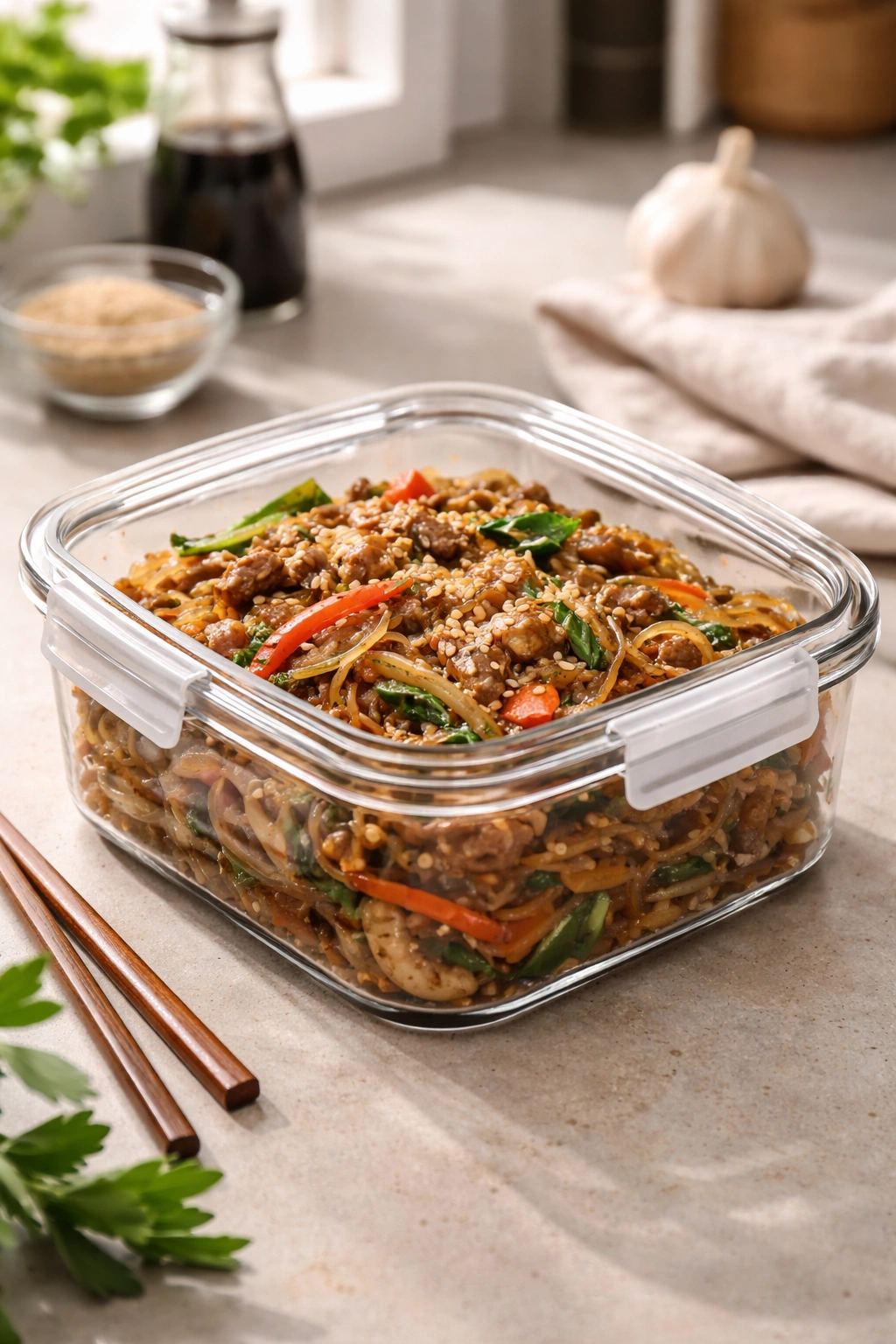
One of japchae’s best qualities is that it’s genuinely better when made in advance or prepared for meal prep. Japchae actually tastes more cohesive after a few hours, once the flavors have had time to meld together. This makes it ideal for potlucks, celebrations, and meal prep routines.
Room temperature storage. Japchae can sit at room temperature for 2-3 hours without any problems. This is actually the traditional way it’s served in Korea—made in advance and placed on the table at room temperature, allowing guests to serve themselves throughout the meal. If you’re taking it to a potluck or party, pack it in a container, cover it, and it’ll be fine for several hours.
Refrigerator storage. Store leftover japchae in an airtight container in the refrigerator for up to 3-4 days. The noodles will firm up as they cool—this is completely normal and expected. They don’t soften as they sit; they actually become slightly firmer as the starch sets. This isn’t a problem; japchae eaten cold or at room temperature is delicious.
Reheating from the fridge. Don’t microwave japchae directly from the cold refrigerator for long periods, as this can make the noodles tough and gummy. Instead, transfer it to a skillet over low to medium-low heat with a small splash of water (about 2 tablespoons). Toss gently and heat for 3-5 minutes, stirring occasionally, until it’s warmed through. The water helps steam and soften the noodles back to their original texture. You can also briefly microwave it in 30-second intervals, stirring between intervals, which prevents the noodles from overheating and becoming mushy.
Make-ahead strategy. You can prep all the vegetables and marinate the beef the morning of, storing them separately in the refrigerator. The actual cooking takes only about 15 minutes once everything is prepped. Alternatively, you can cook the entire dish several hours ahead—it tastes just as good served at room temperature, and the flavor actually improves slightly as it sits.
Freezing japchae. Glass noodle dishes don’t freeze well. The texture of the noodles changes when they thaw, becoming either mushy or tough rather than bouncy and chewy. It’s better to make japchae fresh or eat it within a few days of cooking rather than freezing it.
Serving Suggestions and Pairing Ideas
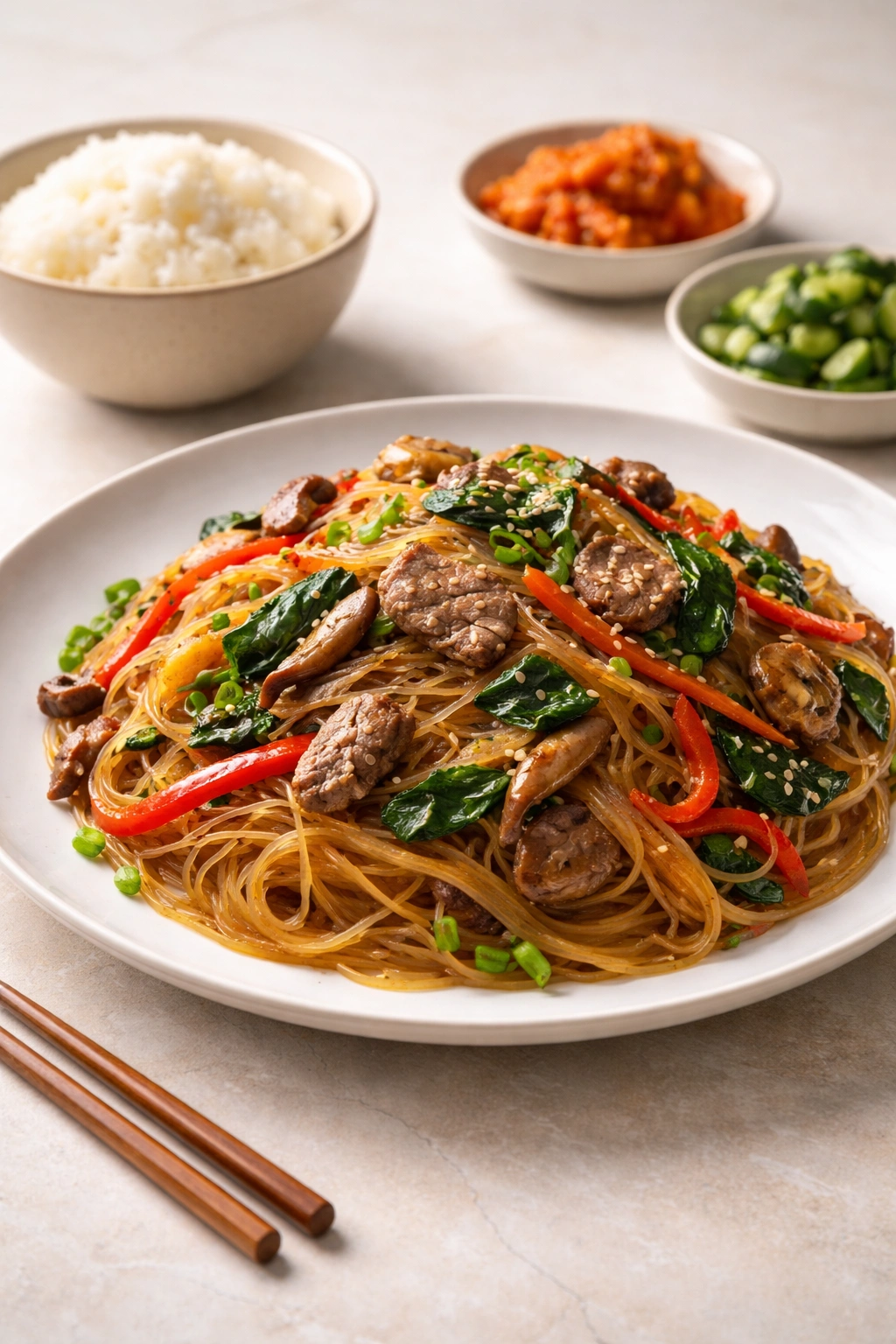
Japchae is versatile enough to fit into several different meal structures. The traditional Korean approach treats it as a banchan (side dish) served alongside rice, soup, and other sides. But it’s equally delicious as part of a broader meal or as a standalone main course.
With Korean rice and multiple side dishes. This is the traditional approach—serve japchae as one of several dishes around a table with a bowl of steamed white or brown rice, a hot soup (often tteokguk or a simple beef broth), and several other banchan like kimchi, seasoned vegetables, or fresh salads. Diners take small portions of each dish and eat everything together.
As a main course over rice. You can serve japchae over a bed of warm steamed rice (called japchae-bap) for a more substantial meal. This transforms it from a side dish into something that feels more complete on its own. Some restaurants serve it this way with a drizzle of extra sauce and a fried egg on top.
With Korean proteins. Japchae pairs exceptionally well with Korean grilled meats like bulgogi, galbi (short ribs), or grilled chicken. If you’re making a Korean-themed dinner, serve japchae alongside whatever meat dish you’re preparing. The noodles and sauce complement rather than compete with grilled preparations.
As a potluck or picnic dish. Japchae’s ability to sit at room temperature and taste excellent makes it perfect for potlucks, picnics, and outdoor gatherings. It’s transportable, requires no reheating, and is usually one of the first dishes to disappear from the table.
Alongside simple proteins. You can serve japchae with simple roasted or grilled proteins—salmon, chicken breast, pork chops. The Asian flavors and vegetable-forward nature of japchae complement Western proteins surprisingly well.
With cucumber or radish salad. A crisp, cooling side like Korean cucumber salad (oi muchim) or pickled radish balances the richness of japchae beautifully. The vinegar and freshness cut through the richness of the sesame oil.
Understanding the History and Tradition Behind Japchae
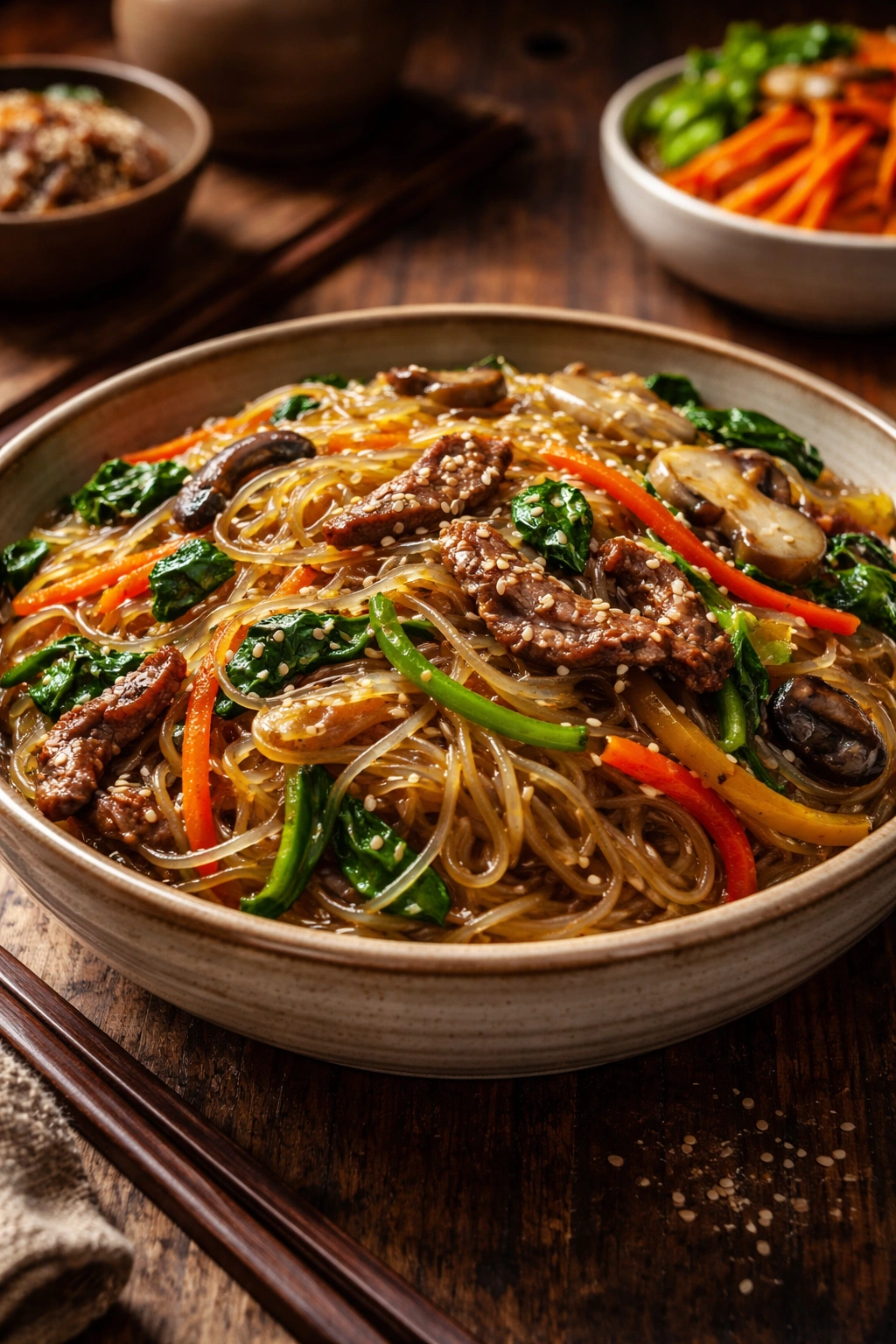
Japchae has an unusual history that explains some of its characteristics. When it was first created during Korea’s Joseon Dynasty in the 17th century, the dish didn’t include noodles at all—it was simply a mixture of seasoned vegetables. Over time, as Korean cuisine evolved and trade increased, glass noodles were incorporated, transforming japchae into the dish we know today. This evolution explains why japchae feels simultaneously traditional and adaptable—it’s always been flexible.
The dish gained particular prominence as a celebratory food, appearing at special occasions, holidays, and family gatherings. Its appearance on Korean tables during Lunar New Year, harvest festivals, and birthday celebrations solidified its status as important food rather than everyday eating. Yet unlike some celebration foods that feel heavy and formal, japchae remains accessible. It’s sophisticated enough for special occasions yet simple enough for regular cooking.
The individual cooking of vegetables—a hallmark of traditional japchae preparation—comes from the broader Korean cooking philosophy that each ingredient deserves its own moment to shine. This approach is most famously seen in bibimbap, another beloved Korean dish with multiple components. Both japchae and bibimbap reflect a culinary belief that harmony comes from honoring each ingredient’s individual characteristics rather than blending everything together from the start.
Why Glass Noodle Quality Actually Matters
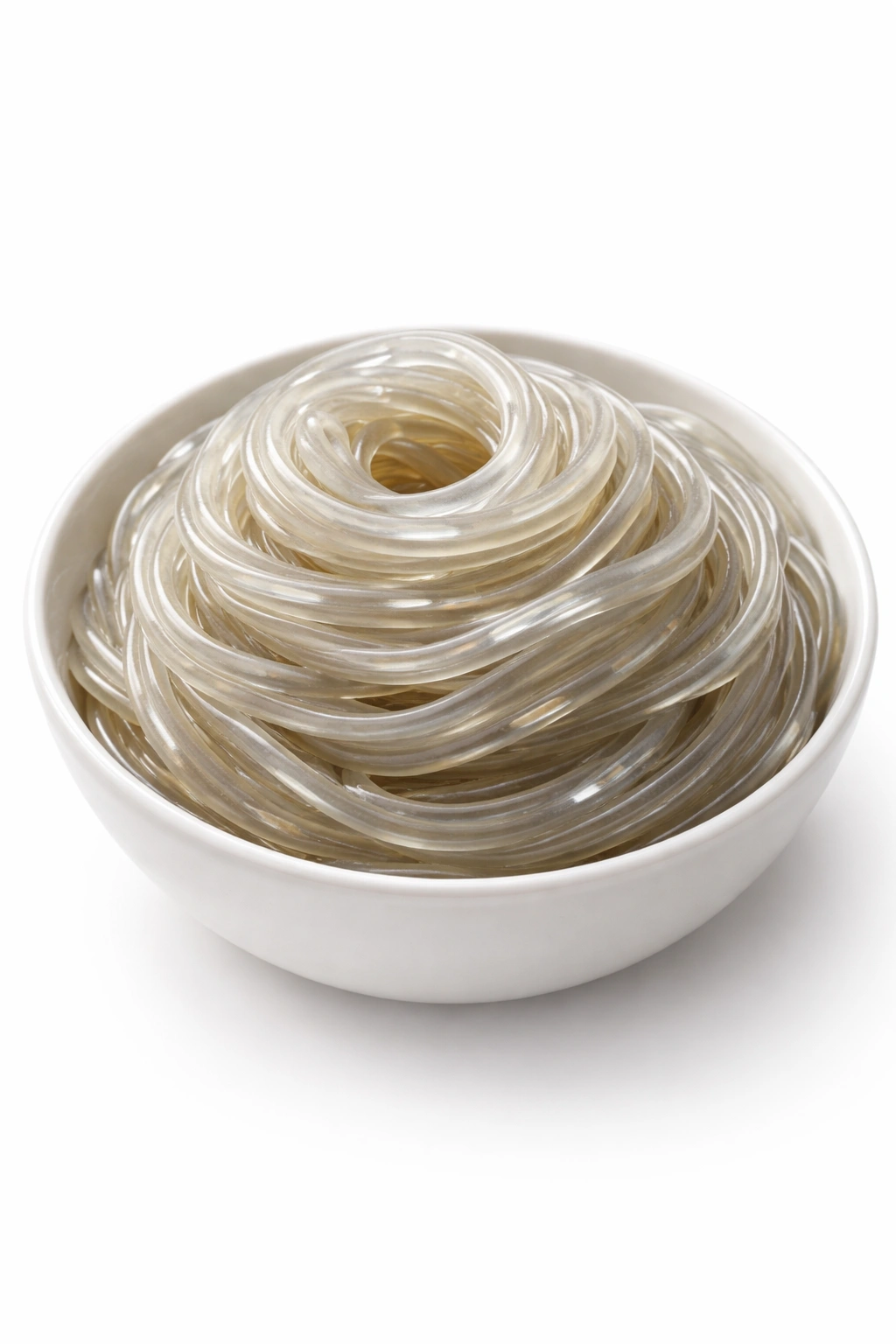
Not all glass noodles are created equal, and understanding the difference helps you choose the right product. Korean sweet potato noodles (dangmyeon) are distinctly different from other types of glass noodles available globally. Chinese mung bean glass noodles, for instance, are thinner and have a different texture when cooked. Vietnamese glass noodles are made with different starches and behave differently in the pan.
When you buy Korean dangmyeon specifically for japchae, you’re getting noodles that are designed for this exact application. They’re about 2mm in diameter (compared to thinner varieties), and they develop that signature bouncy, chewy texture when cooked properly. They also absorb sauce in a way that other glass noodles don’t—the starch composition is more receptive to the marinade and sauce.
The difference becomes apparent the moment you cook them. Korean sweet potato noodles, when treated correctly, remain distinct and chewy rather than becoming gelatinous or gummy. This is why restaurants that make japchae regularly—whether in Korea or elsewhere—specify that they use genuine Korean glass noodles rather than substitutes. It’s not snobbery; it’s the difference between a dish that tastes right and one that feels off.
Frequently Asked Questions About Making Japchae at Home
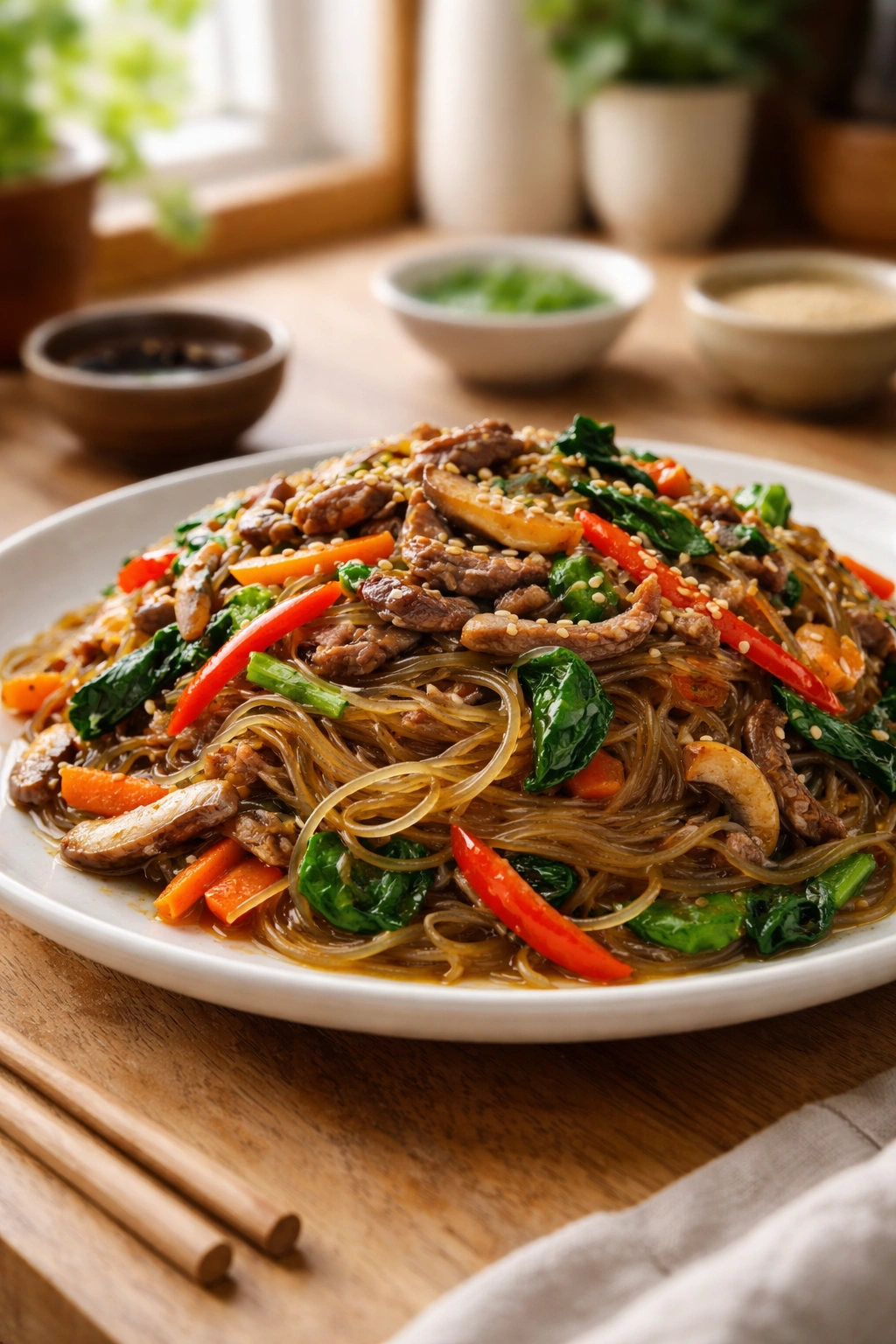
Can I Make Japchae Without Beef
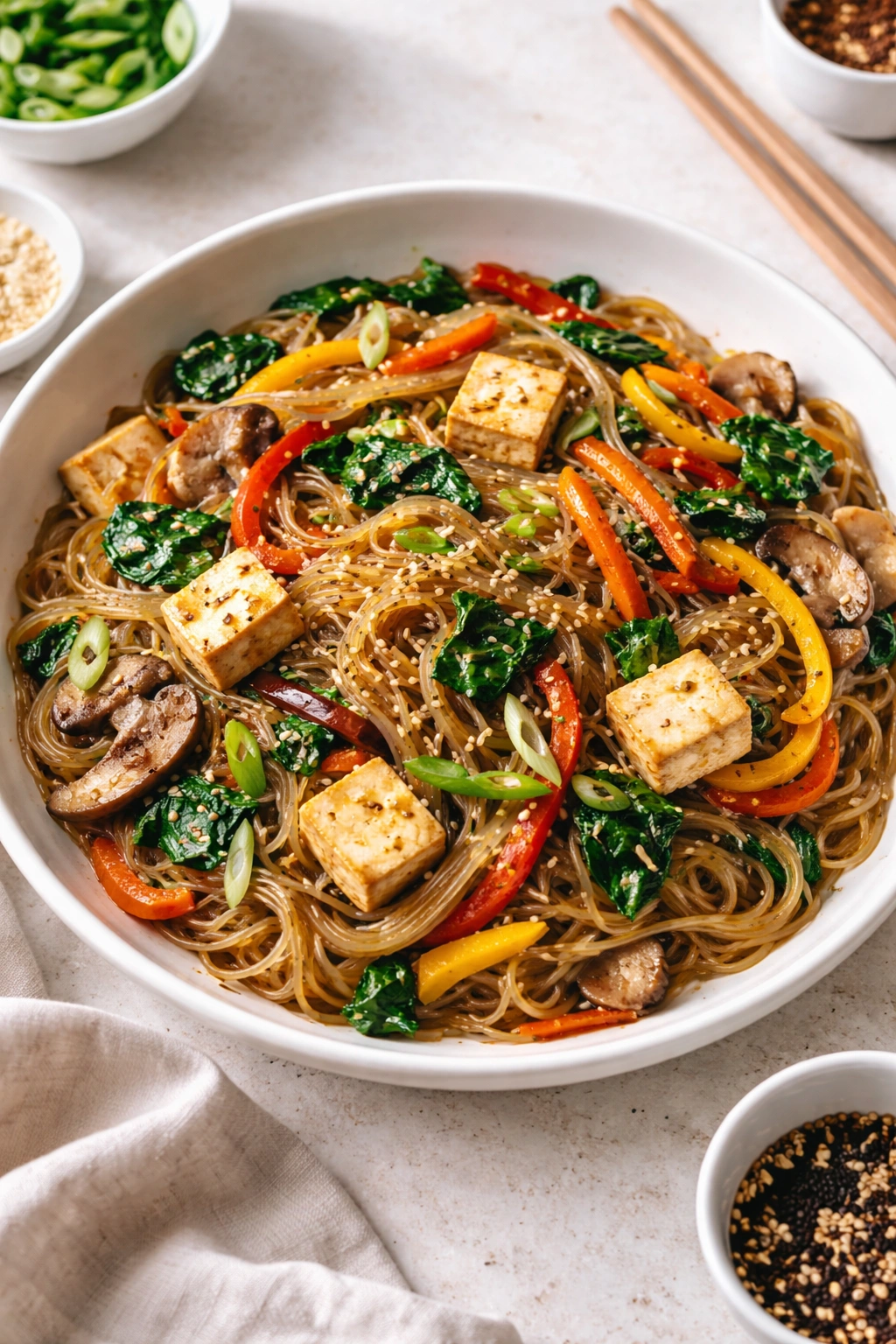
Absolutely. Many people make vegetarian japchae regularly, and it’s just as delicious as the traditional version. The sauce and noodles provide all the depth of flavor you need. Some cooks add tofu for additional protein, while others focus on the vegetables as the main element. A vegetarian version is lighter and actually suits warm weather better than the beef version.
What If I Can’t Find Sweet Potato Glass Noodles
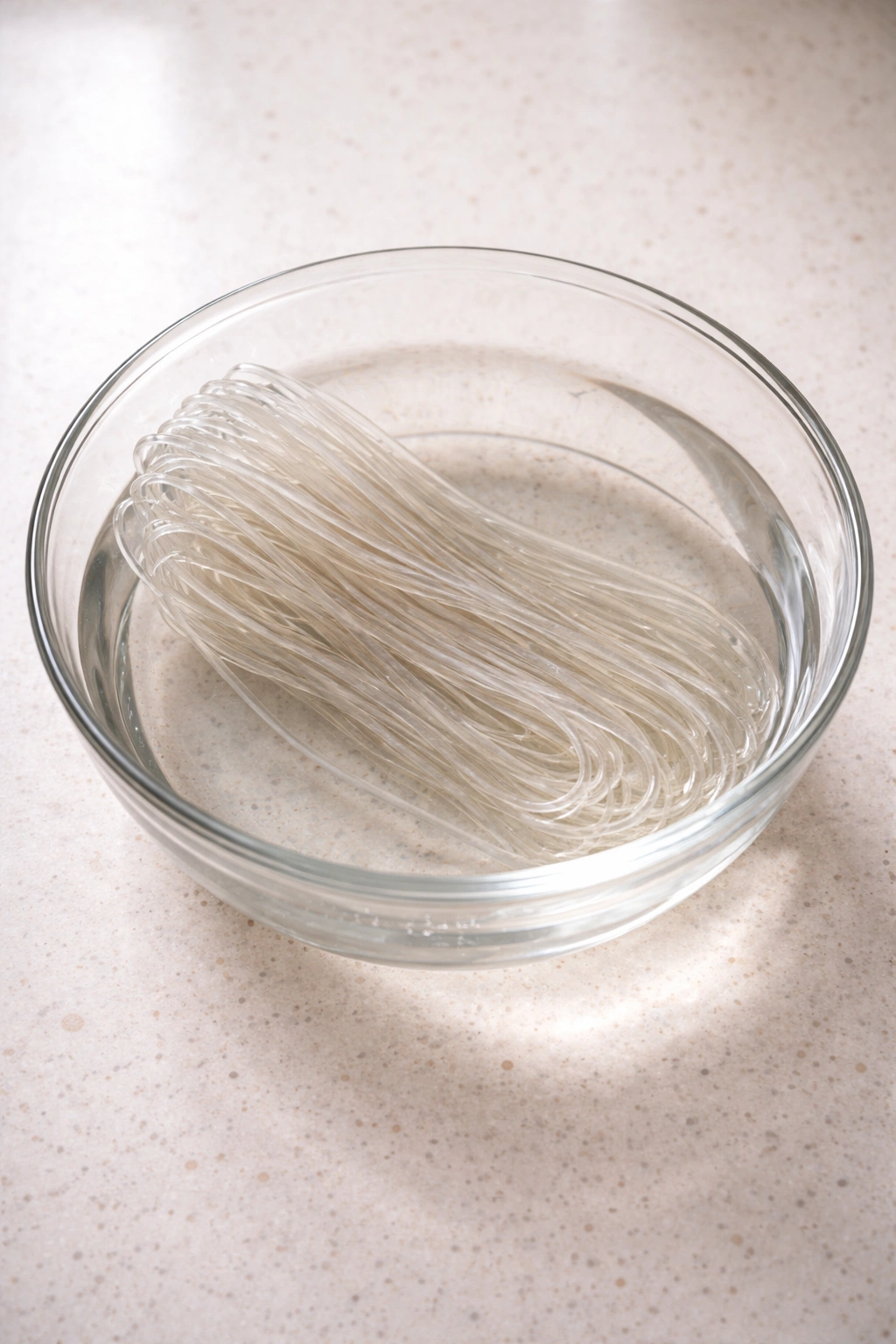
While sweet potato noodles are specifically designed for japchae and give you the best texture, you can substitute with other very thin noodles if necessary. Chinese mung bean glass noodles work, though they’ll be thinner and have a slightly different texture. Thin rice noodles can work in a pinch. Regular pasta or egg noodles will completely change the character of the dish, so they’re not recommended. If possible, special order sweet potato noodles from an online Asian grocery—they’re inexpensive and worth having on hand.
How Sweet Should Japchae Taste
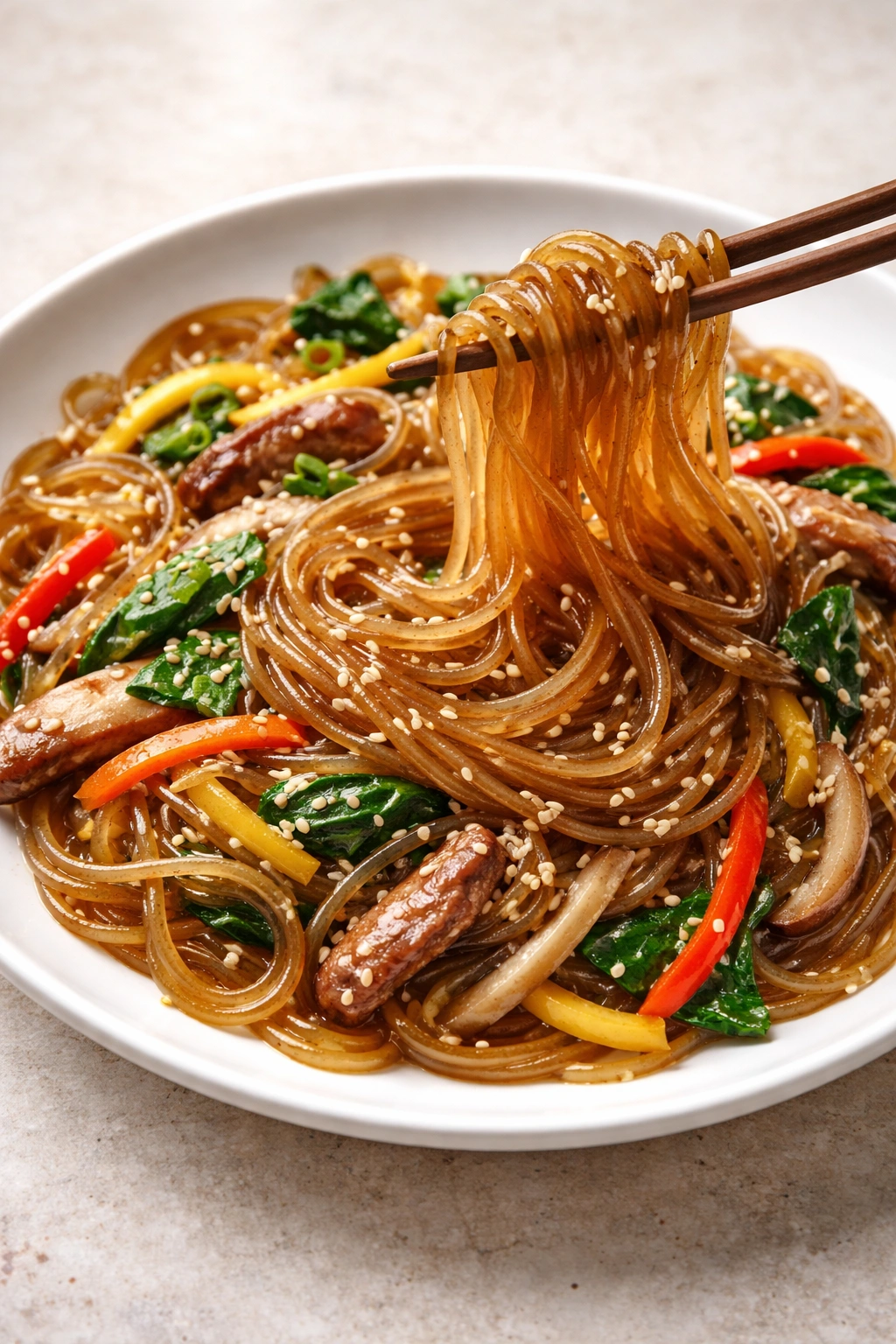
Japchae should taste balanced, with the sweetness noticeable but not dominant. When you taste the sauce before it’s mixed into the dish, it’ll taste quite sweet and salty—almost shocking on its own. Once it coats the noodles and combines with vegetables, that balance becomes clear. If your finished japchae tastes too sweet, add a splash of soy sauce or a tiny bit of rice vinegar. If it tastes too salty, add a tablespoon or two of water and toss to distribute.
Can I Use Light or Dark Soy Sauce
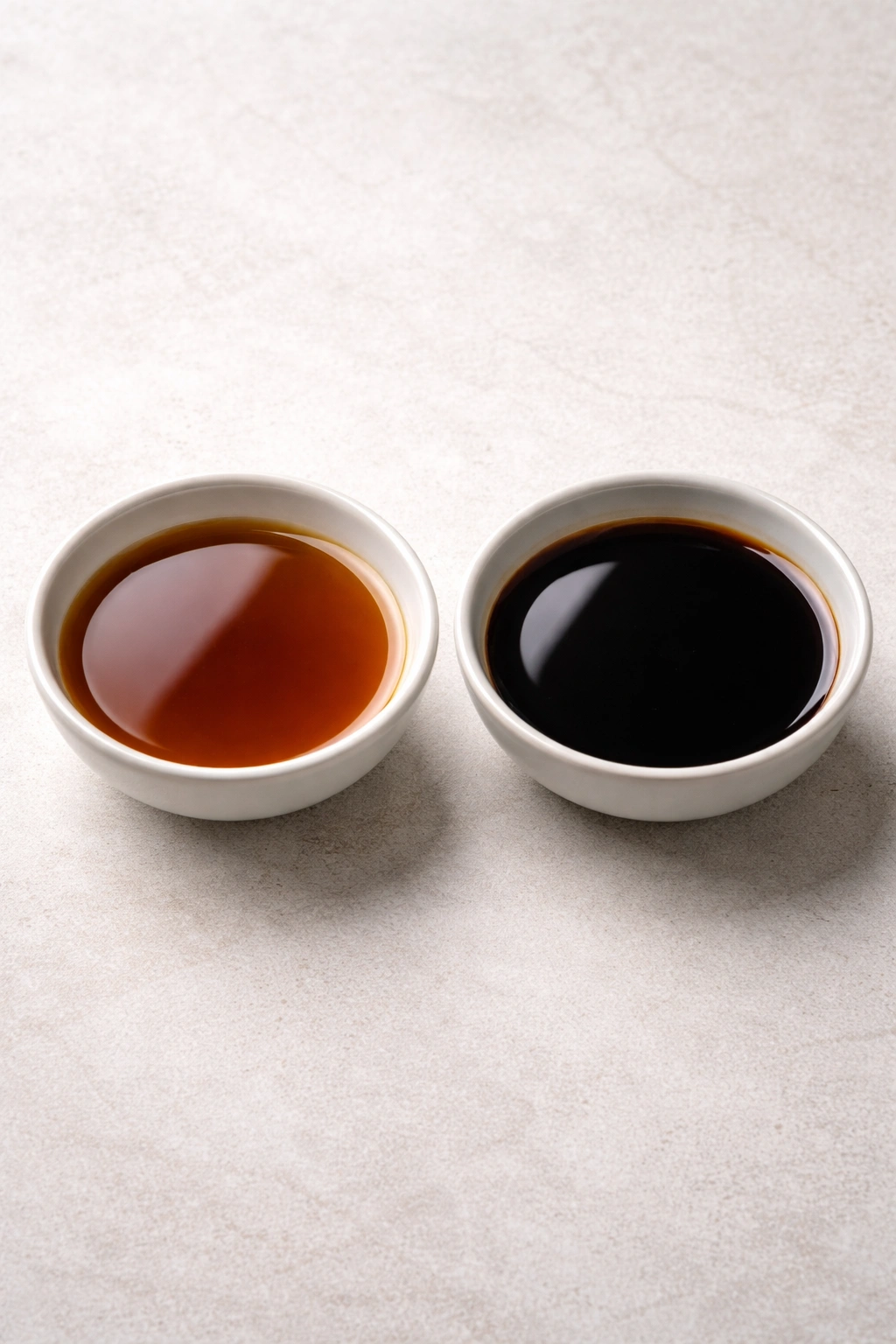
Use all-purpose or light soy sauce, not dark. Dark soy sauce has a stronger, slightly bitter flavor that will overpower the other ingredients, and it’ll turn the whole dish an unappealing dark brown color. Light soy sauce is actually the standard choice in japchae—it provides saltiness without the intensity or color of dark varieties.
Why Did My Noodles Turn Out Mushy
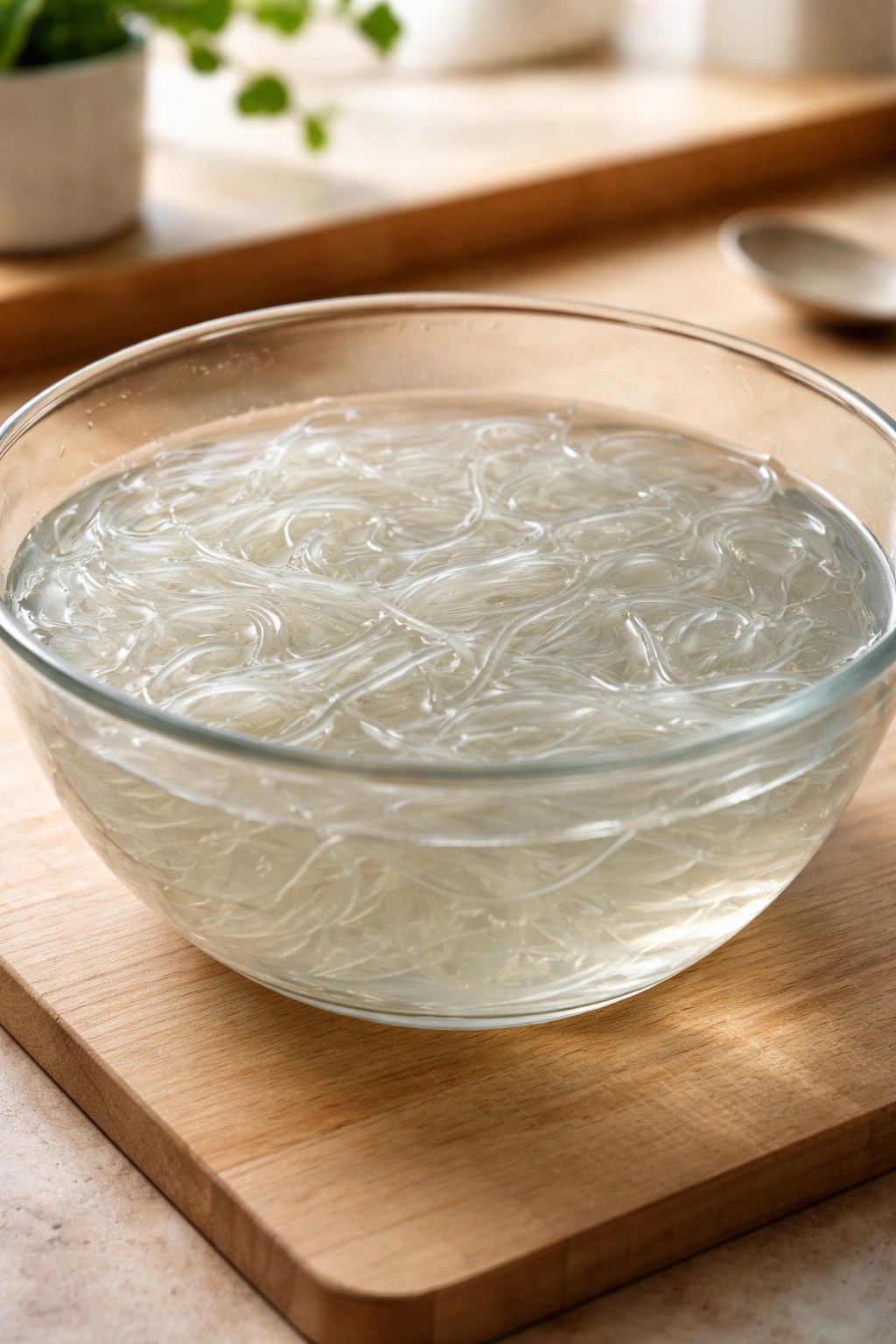
The most common cause is boiling them aggressively in a pot. The mechanical action of boiling water agitates the starch, causing it to gelatinize unevenly. Soaking in hot water is the gentler method that produces properly textured noodles. Also, make sure you’re soaking for only 15-20 minutes—if you leave them longer, they’ll overcook and soften. Finally, don’t rinse the noodles after soaking—that washes off some of the starch that helps them absorb sauce.
Can I Make Japchae Ahead for a Party
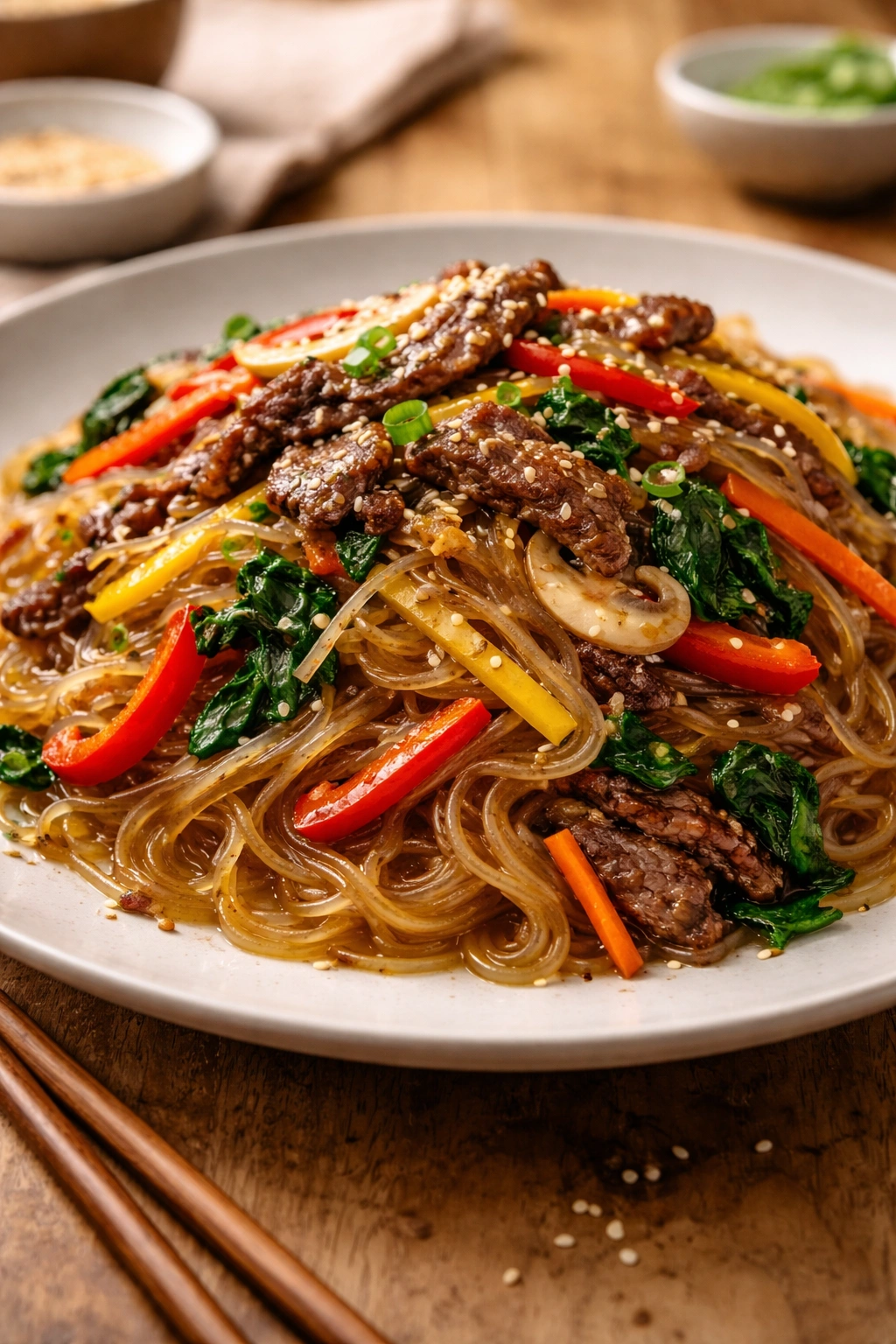
Absolutely—this is one of japchae’s best qualities. You can cook it several hours ahead and serve it at room temperature, or cook it the morning of and reheat it gently before serving. The flavors actually improve slightly as it sits. Just store it covered at room temperature if serving within a few hours, or in the refrigerator if making it a day ahead.
How Long Does Japchae Keep in the Fridge
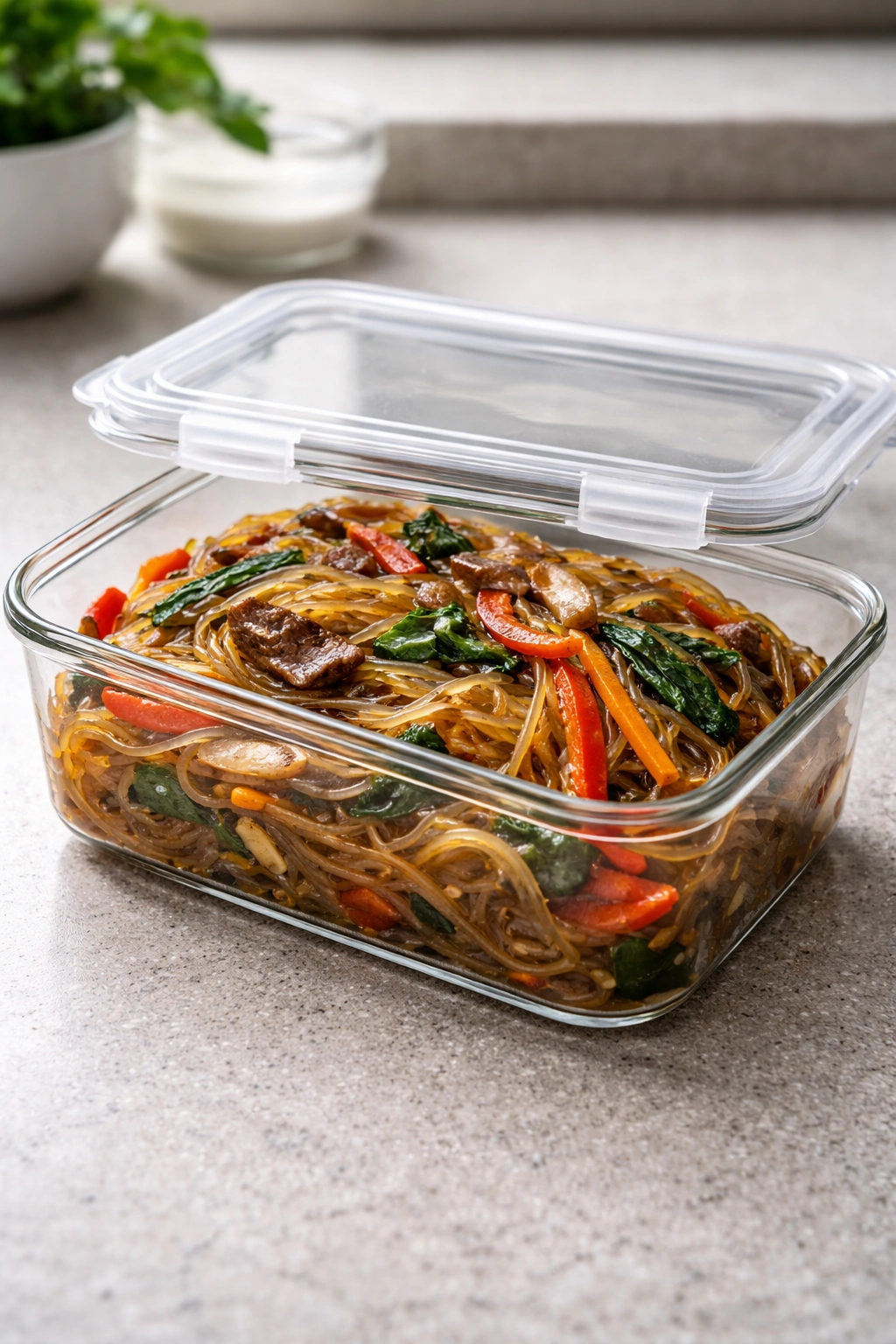
Stored in an airtight container, japchae keeps for 3-4 days in the refrigerator. The noodles will firm up as they cool—this is normal. Reheat gently in a skillet with a splash of water rather than microwaving directly from the cold, which can make them tough.
What’s the Difference Between Japchae and Other Korean Noodle Dishes
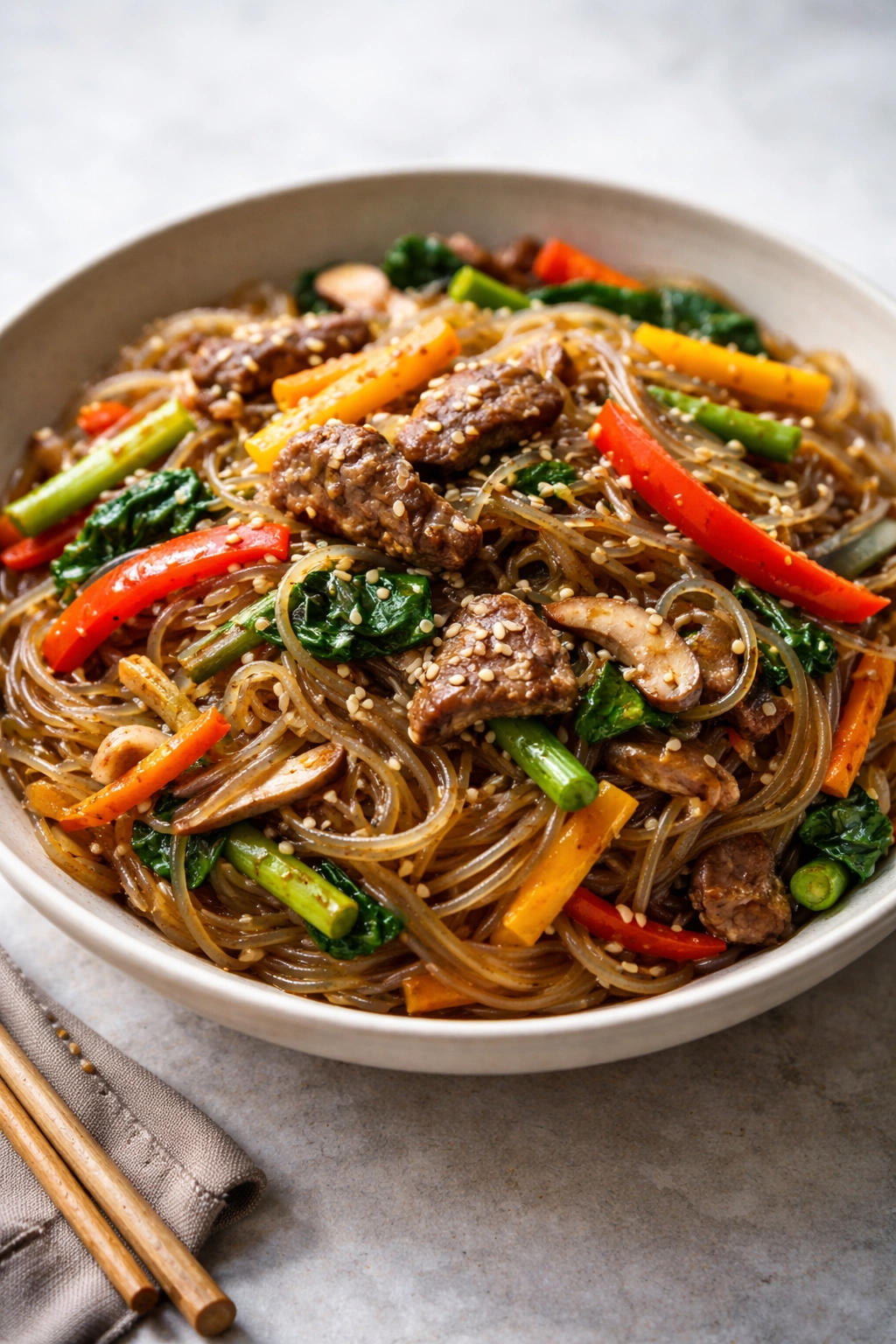
Japchae is distinguished by its sweet potato glass noodles and the combination of vegetables and protein mixed directly into the noodles, all coated in a sweet-savory sauce. Other Korean noodle dishes like kalguksu (knife-cut noodles in broth), jajangmyeon (noodles with black bean sauce), or naengmyeon (cold noodles in broth) use different noodles and different cooking methods. Japchae is unique in being a relatively dry noodle dish where each ingredient maintains its individual character.
Should Japchae Be Served Hot, Warm, or Cold
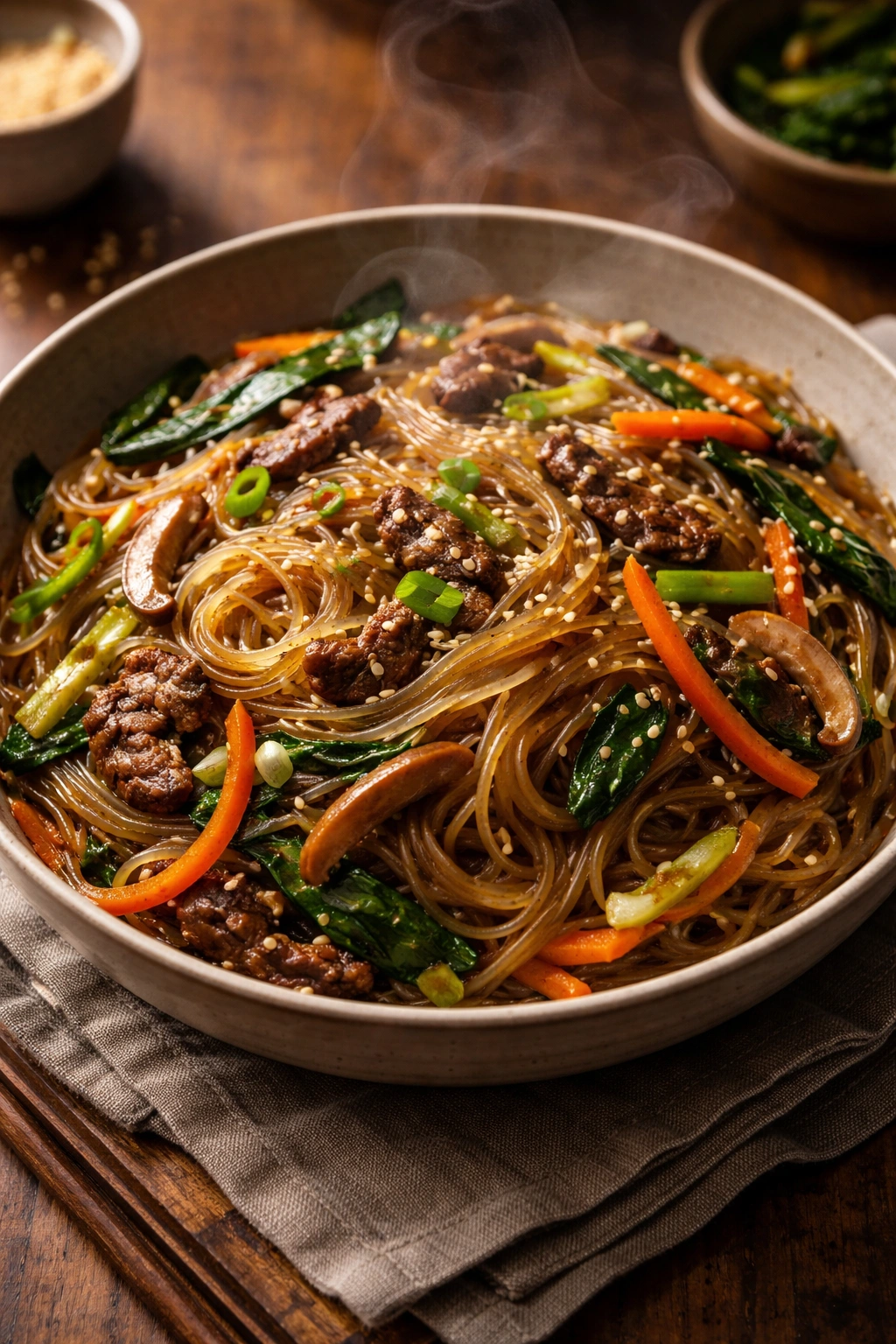
Japchae is traditionally served at room temperature or warm, which is part of what makes it ideal for celebrations and potlucks. It’s also delicious eaten straight after cooking while still warm. Cold japchae from the refrigerator is less appealing because the noodles firm up and lose their chewy texture. If you’re eating refrigerated japchae, reheat it gently rather than eating it cold.
Final Thoughts
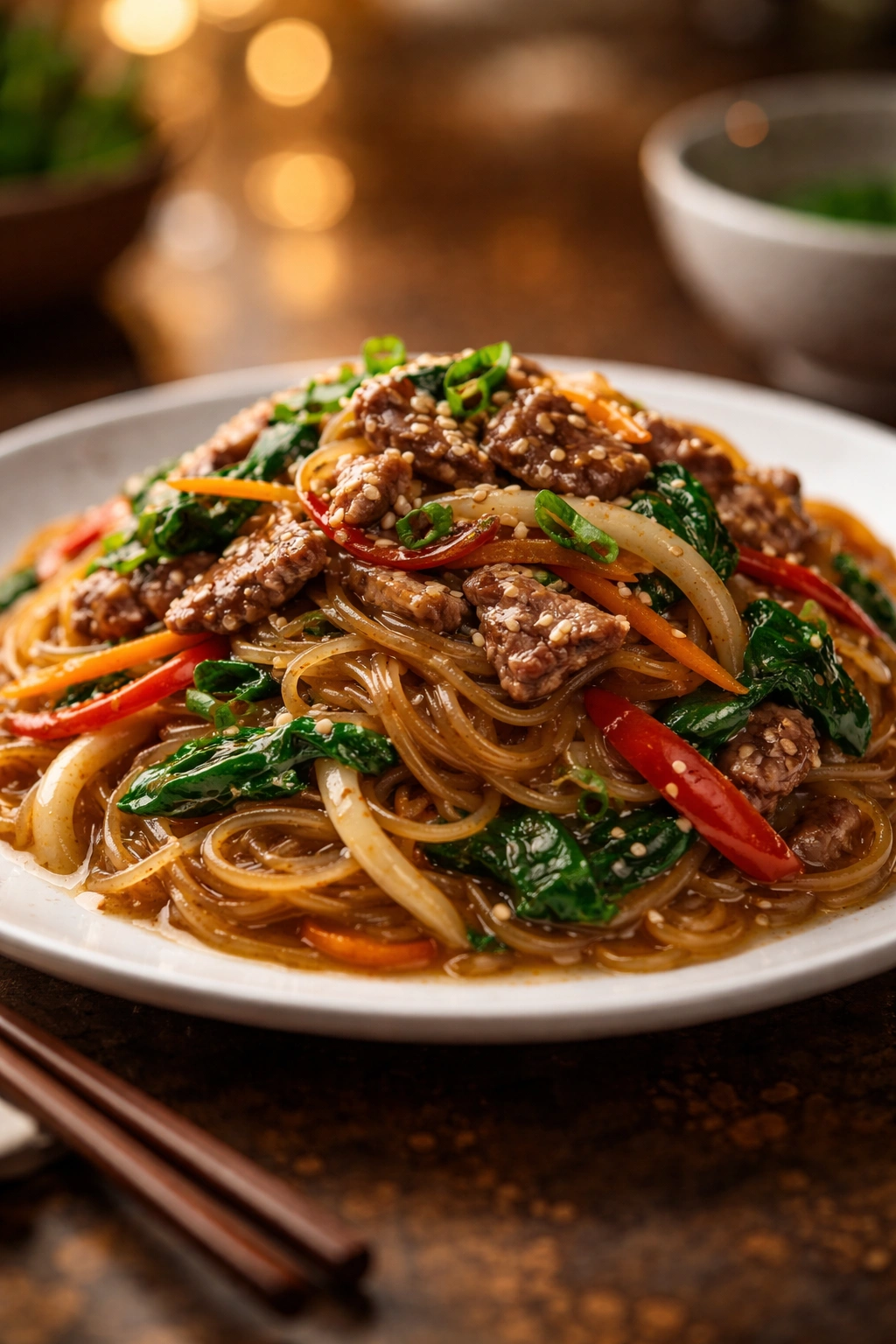
Japchae occupies a special place in Korean cuisine—it’s celebratory enough for holidays and special occasions, yet approachable enough for any weeknight when you want something special. The secret to making it successfully isn’t complicated technique or hard-to-find ingredients. It’s understanding that glass noodles need gentle heat and adequate time to absorb sauce rather than overcooking in boiling water. It’s cooking each component with intention so flavors remain distinct rather than muddling together. It’s trusting that the balance of salt, sweetness, and sesame oil works, then letting the dish sit for a moment while flavors meld.
What makes japchae such a rewarding dish to cook at home is how accessible it is. You’ll find glass noodles at most grocery stores now. The vegetables are standard farmers’ market fare. Soy sauce and sesame oil are staples in most pantries. Within an hour—much of which is passive soaking—you’ll have a dish that tastes like you’ve been cooking all day. The first time you make it, follow the recipe exactly. The second time, start experimenting with different vegetables or slightly adjusting the sweetness level to match your preferences. By the third time, you’ll have made it your own while respecting the core techniques that make japchae special.
Whether you’re cooking for your family, preparing for a potluck, or impressing guests with what seems like an elaborate Korean dish, japchae delivers. It’s the kind of recipe that reminds you why home cooking matters—because restaurants didn’t invent this food, home cooks did, perfecting it over generations until it became exactly what people wanted to eat.
