



A truly great spicy tomato sauce doesn’t rely on heat alone—it builds flavor from the ground up, layers complexity, and uses chili peppers as one note in an intricate composition. This is the sauce that transforms a weeknight dinner into something you crave all week, works equally well on a crispy pizza crust or silky pasta, and tastes even better the next day after flavors have melded and deepened overnight. Whether you’re cooking for yourself, impressing guests, or building a pantry staple you’ll reach for again and again, this spicy tomato sauce method gives you complete control over every variable: heat level, tomato depth, spice profile, and that crucial element of richness that separates memorable sauce from merely adequate.
What makes this approach different from standard tomato sauces is the intentional balance between slow-built flavor and bold spice. You’re not dumping hot peppers into a pot and hoping for the best. Instead, you’ll bloom aromatics and spices in oil, build a flavor base from tomatoes that taste like actual tomatoes, then layer heat strategically so it enhances rather than overshadows. The result is a sauce that’s genuinely spicy but never one-dimensional, with a complexity that deepens on your palate and lingers in the best possible way.
The History and Appeal of Spicy Tomato Sauce
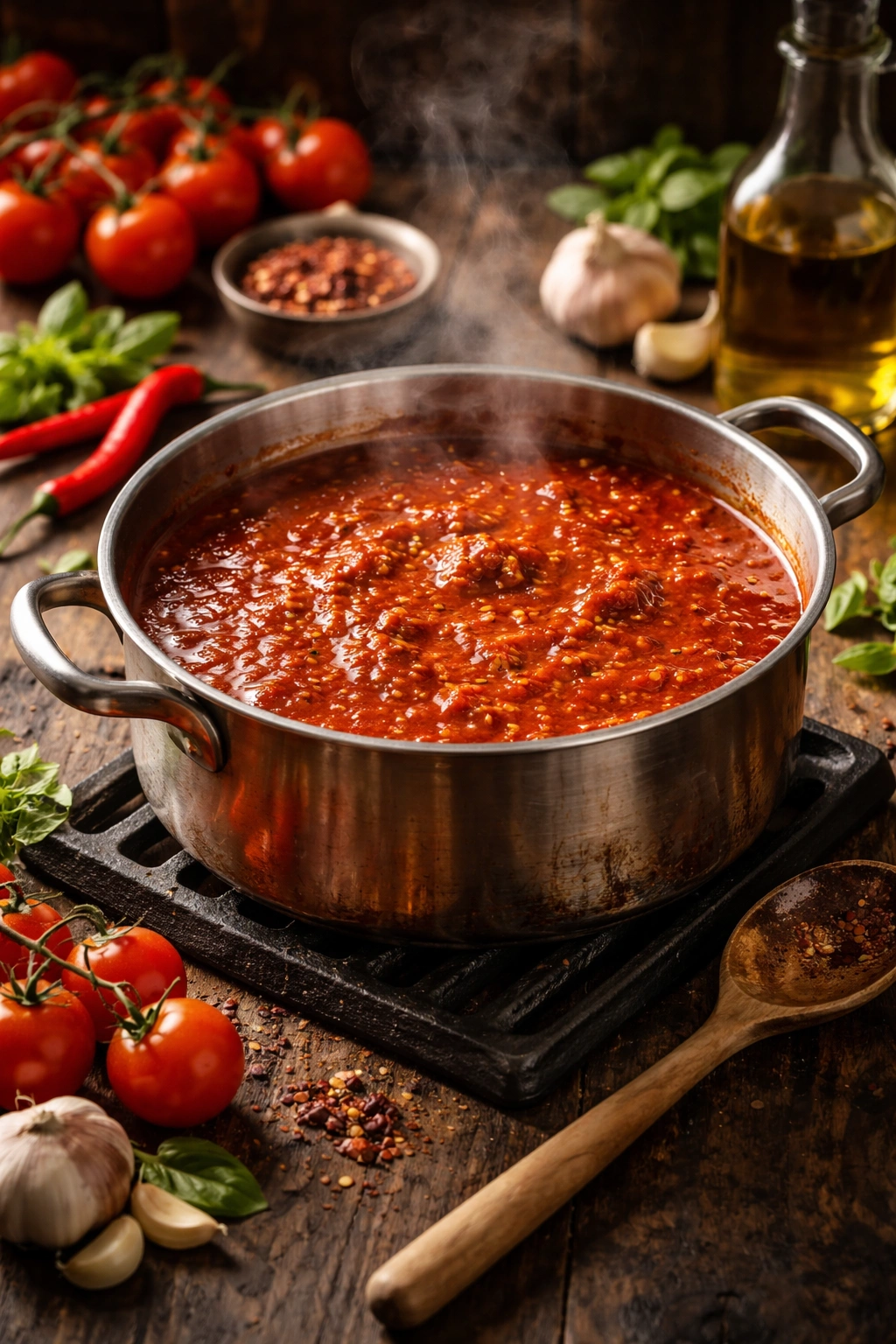
Spicy tomato sauce sits at the intersection of two major culinary traditions. European pasta sauces developed centuries ago, built on slowly cooked tomatoes, garlic, and olive oil—deeply flavorful but fundamentally mild. Meanwhile, chili-based sauces emerged across the Americas, Africa, and Asia, where heat and spice were essential to flavor profiles and food preservation. Modern spicy tomato sauce merges these legacies, keeping the deep, caramelized tomato foundation while adding the brightness and fire of fresh or dried chilies.
The beauty of this sauce is its versatility. In Italian cuisine, a harissa-inspired spicy version becomes arrabbiata or amatriciana territory. In Mediterranean cooking, it becomes the base for shakshuka. Pizza makers swear by it for depth under cheese and toppings. Home cooks use it for soups, stews, shakshuka, scrambled eggs, grilled fish, roasted vegetables, and as a dipping sauce for bread. It’s practical, forgiving, and endlessly customizable—once you understand the principles, you can adjust heat levels, choose different peppers, and play with seasonings to match whatever you’re cooking.
Quality Ingredients That Make the Difference
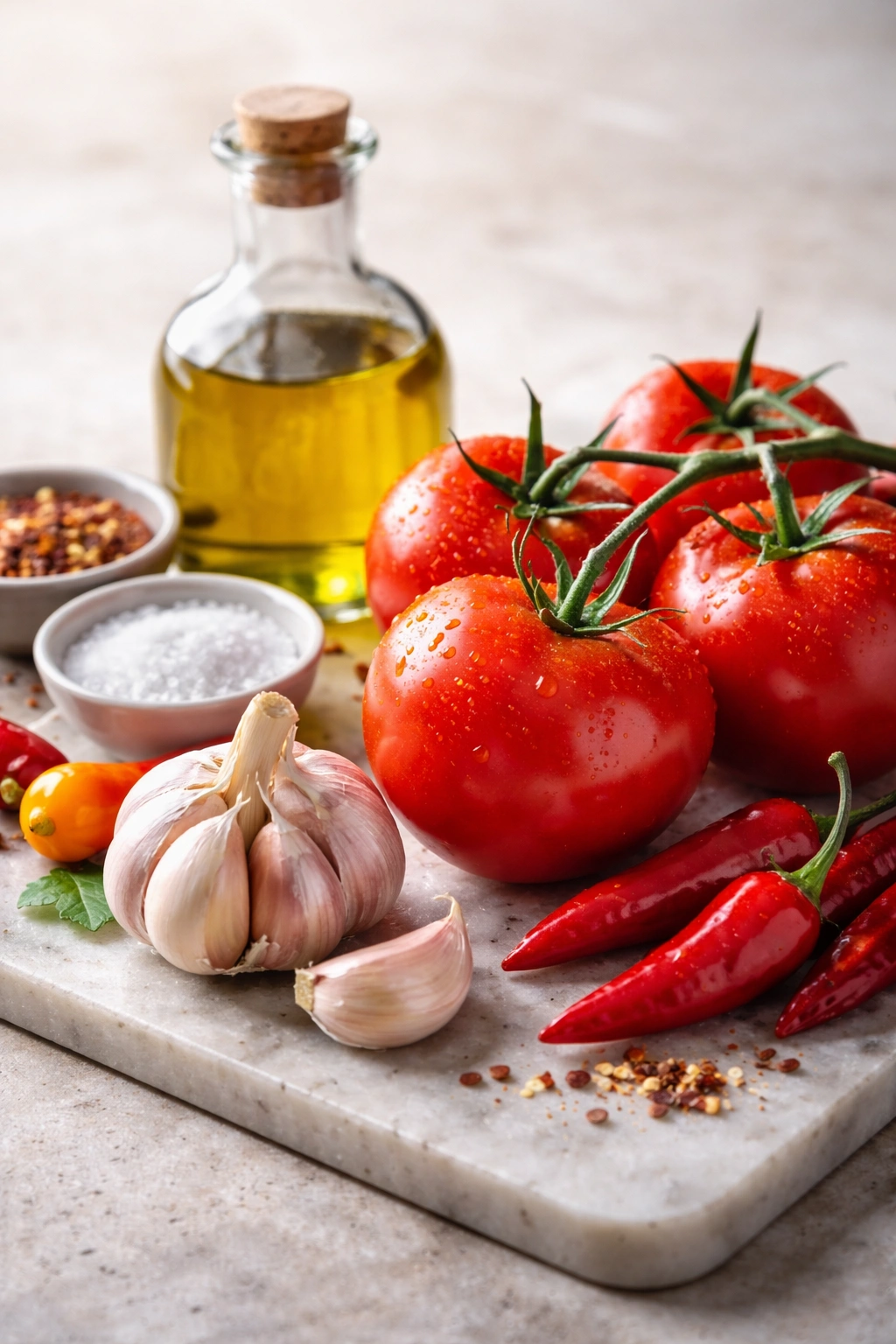
The difference between a forgettable spicy tomato sauce and one you’ll make repeatedly comes down to ingredient choices. This isn’t a place to cut corners or grab whatever’s on sale.
Tomatoes are your foundation. Canned whole tomatoes or crushed tomatoes from a good brand—one that lists only tomatoes and salt on the ingredient label—matter infinitely more than fresh tomatoes outside peak season. San Marzano tomatoes have earned their reputation for good reason: lower acidity, fewer seeds, sweeter flavor, and a texture that breaks down beautifully into sauce. If San Marzano isn’t available or fits your budget, look for tomatoes labeled as Italian tomatoes or tomatoes from California. Taste the brand if possible before committing to a large quantity—quality varies dramatically, and a mediocre tomato product will hold your sauce back no matter what else you do.
Olive oil acts as both flavor and texture component. Use a good extra-virgin olive oil, not the light or pure versions. This is where delicate peppery or fruity notes belong. You’ll taste it directly in the finished sauce, so choose one you genuinely enjoy.
Fresh garlic and onions form your aromatic base. Pre-minced garlic or garlic powder cannot deliver the complexity of fresh cloves sliced or minced moments before cooking. The same applies to onion—fresh provides a sweetness and depth that powder cannot replicate.
Chili peppers deserve individual attention based on what heat and flavor profile you want. Red chili flakes are convenient and reliable. Fresh serrano peppers add brightness and vegetal heat. Dried chilies like guajillo or ancho bring smoky complexity without devastating heat. You’re not locked into one choice—the genius of this sauce is mixing and matching to find your preference.
Aromatics and spices—oregano, thyme, bay leaf, and optionally crushed red pepper flakes—should be dried herbs from containers less than a year old. Stale spices deliver minimal flavor and won’t give you the aromatic lift that makes sauce sing.
The Art of Building Deep Tomato Flavor
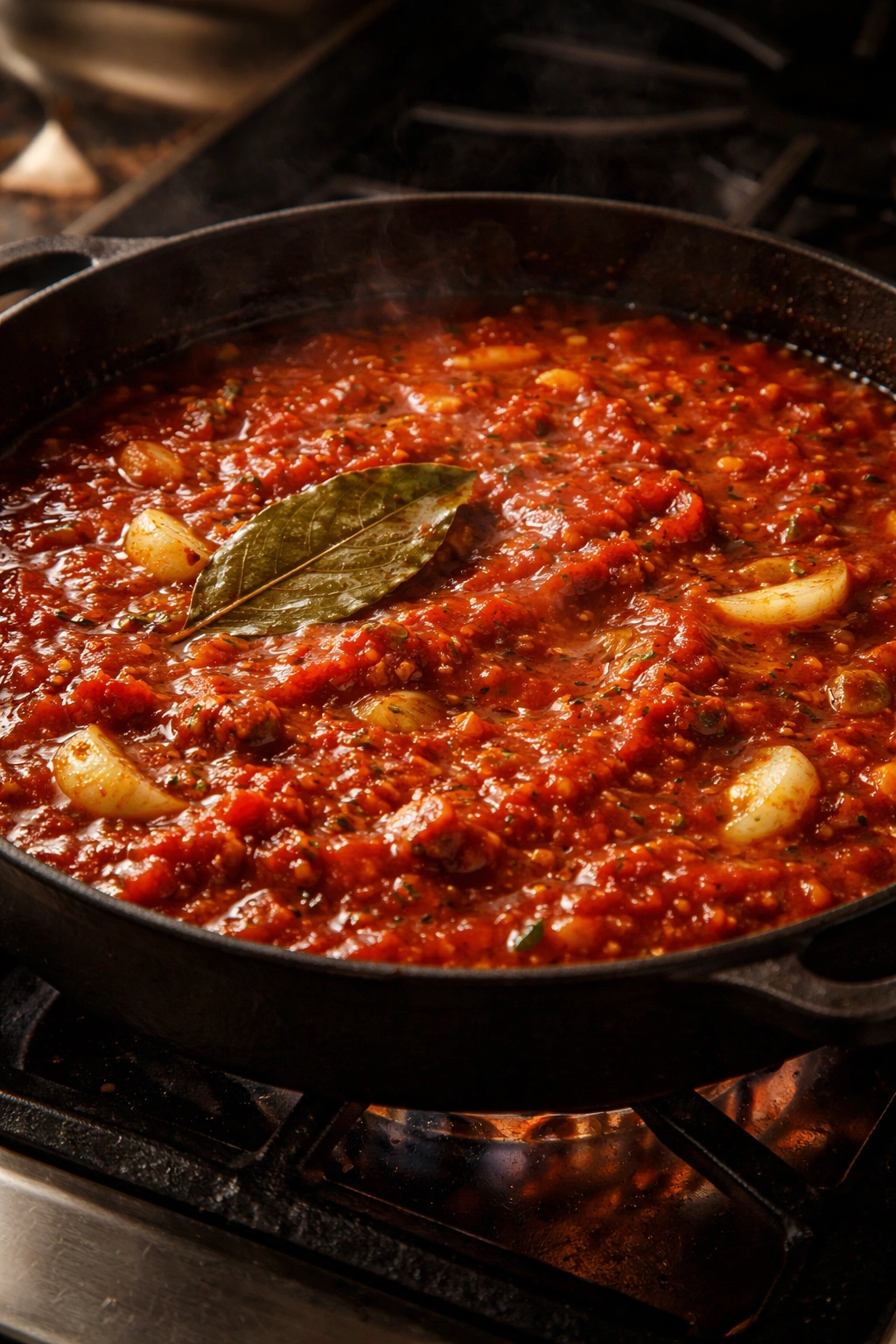
Many home cooks skip the essential step of letting tomatoes develop depth through slow cooking. They dump everything in the pot, boil hard for 15 minutes, and wonder why the sauce tastes thin and acidic. Real tomato flavor develops through time and gentle heat—the slower the simmer, the more flavor compounds break down and concentrate.
Start by sautéing your aromatics (garlic and onion) in olive oil until they’re soft and translucent but not brown. This takes about 4-5 minutes on medium heat. You’re not rushing this step. Next, add your dried spices—oregano, thyme, bay leaf—and let them toast in the oil for 30-45 seconds. You’ll smell the shift immediately; the spices release essential oils and become fragrant and alive. This is called “blooming” spices, and it’s non-negotiable if you want real flavor.
Only then do you add your tomatoes. Pour them in along with any juice or liquid, stir well, and let the mixture come to a gentle simmer. This is crucial: you want a bare simmer, not a rolling boil. A rolling boil breaks down tomatoes quickly but boils away delicate flavors and can make the sauce taste flat and slightly burned. A gentle simmer—just an occasional bubble breaking the surface—develops sweetness, acidity mellows naturally through evaporation and time, and the sauce becomes velvety rather than watery.
Let this simmer uncovered for at least 20 minutes. Better still, give it 30-40 minutes if you have the time. You’re watching as water evaporates, as the red deepens slightly, as the whole sauce becomes thicker and more concentrated. Taste periodically. You’ll notice the shift—the sauce goes from tasting like tomato juice to tasting like tomatoes, with actual depth.
Understanding Heat Levels and Spice Selections
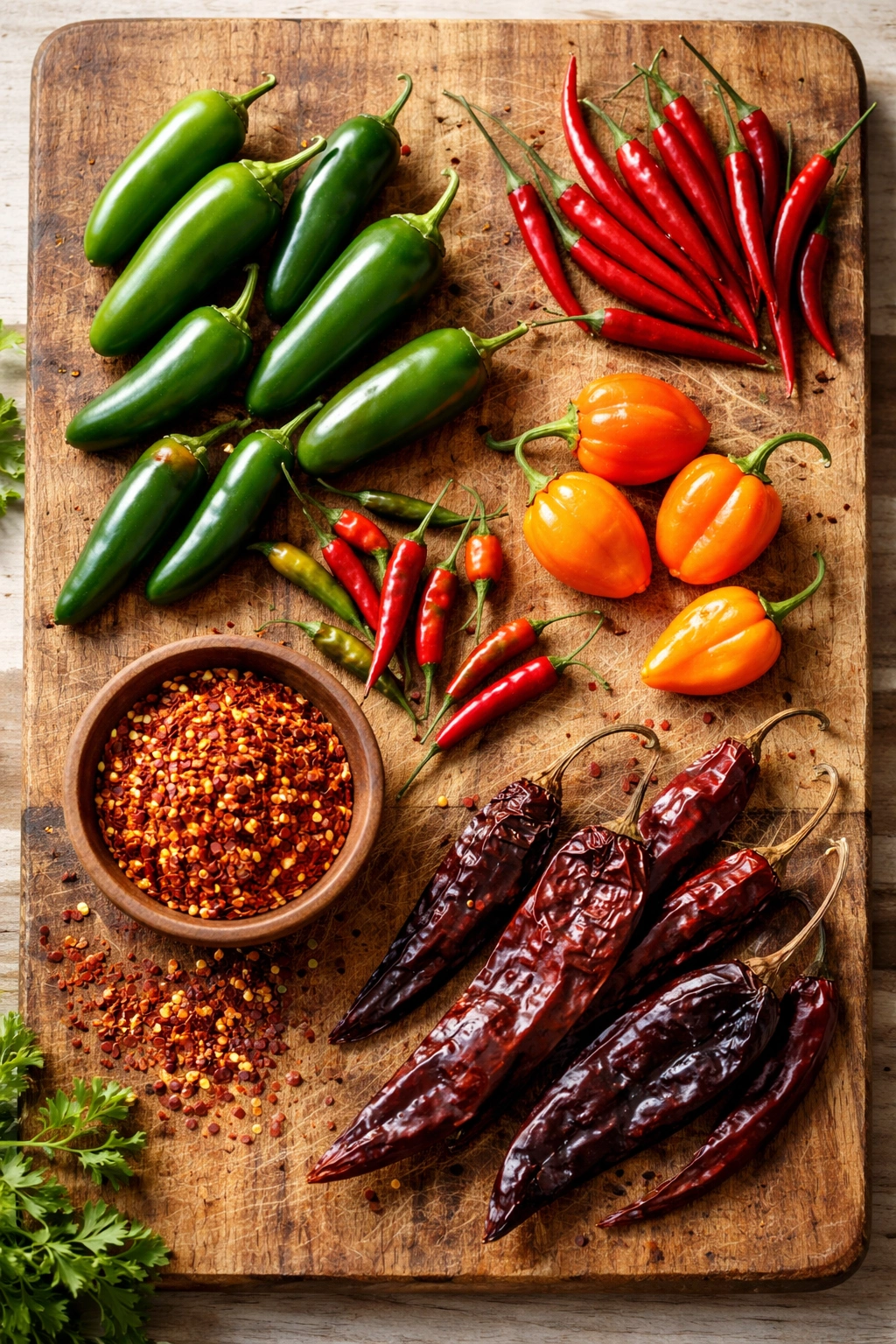
This is where your personal preference and creative choice come in. Heat level is not binary; you’re creating a spectrum from pleasantly warm to genuinely fiery. The beauty of making your own sauce is controlling this precisely.
Red chili flakes are the most straightforward heat source. They’re consistent (a given amount of flakes delivers predictable heat), easy to measure, and you can add more if the finished sauce isn’t spicy enough. Start with 1/2 teaspoon and taste before adding more. Remember that heat intensifies slightly as sauce cooks; what seems mild while simmering often becomes noticeably spicy once cooled slightly.
Fresh chili peppers—serranos, jalapeños, Thai birds—add heat plus bright, vegetal flavor. Serranos are hotter than jalapeños but less hot than Thai peppers. Remove seeds and membranes if you want less heat; these contain concentrated capsaicin (the compound that creates spice). The flesh alone delivers flavor with less fire.
Dried chili peppers like guajillo, ancho, or New Mexican are worth exploring if you want smoky, complex spice. Toast them lightly in a dry skillet first (15-20 seconds per side), then soften them in hot water for 5-10 minutes and puree them into the sauce. The result is silky, rounded heat that tastes like something rather than just burning hot.
The secret is using multiple heat sources together. A combination of red chili flakes, fresh serrano pepper, and maybe a pinch of smoked paprika creates more interesting heat than red chili flakes alone. The flavors layer and build rather than overwhelming.
Serving and Timing Information
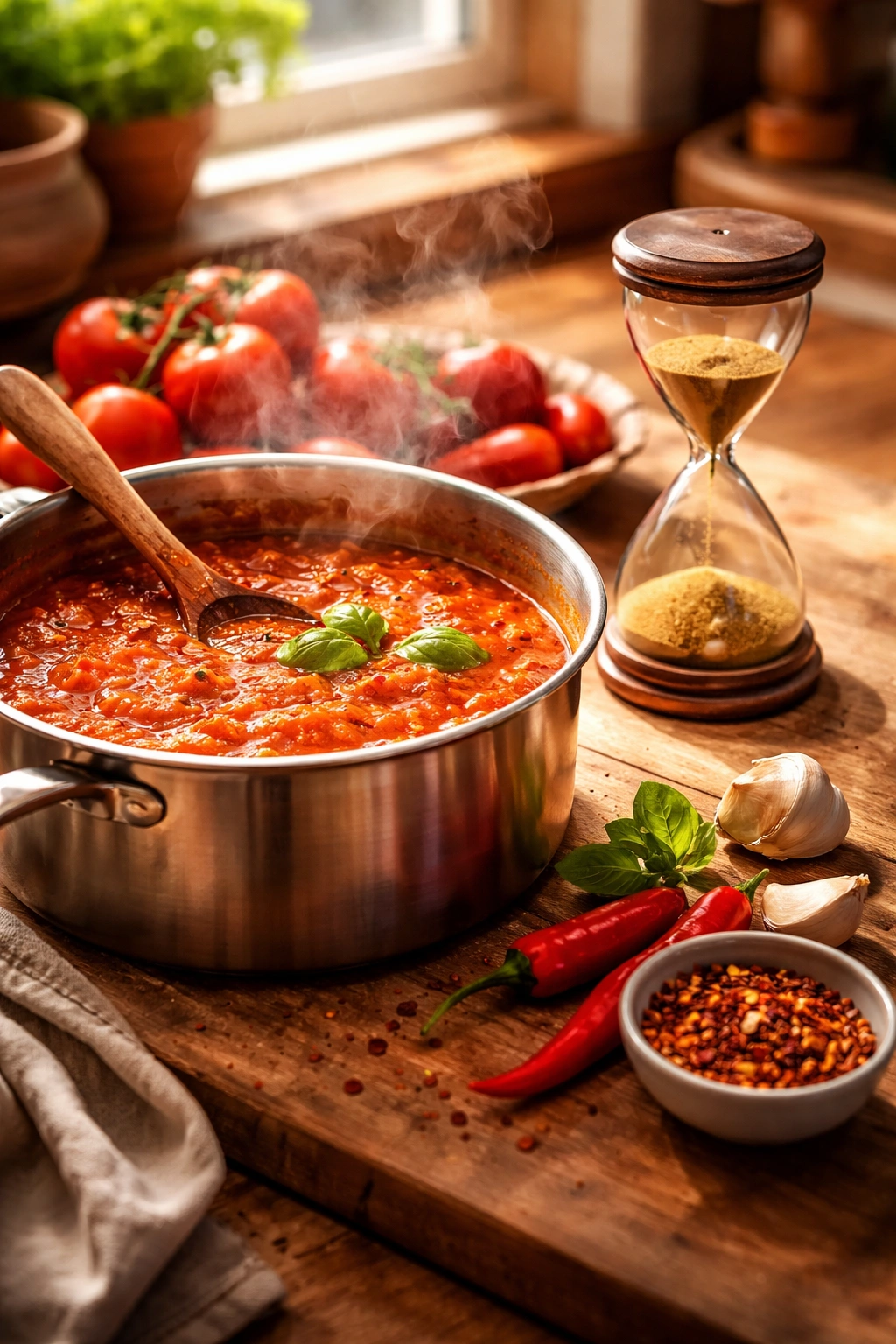
Yield: Makes about 3 cups (enough to sauce about 1 pound of pasta, or top 2-3 pizzas, or serve 4-6 people depending on use)
Prep Time: 15 minutes
Cook Time: 35-40 minutes (mostly unattended simmering)
Total Time: 50-55 minutes active cooking, plus optional additional time for deeper flavor development
Difficulty: Beginner — there’s no fancy technique here, just good ingredients, proper timing, and basic heat management. Even a first-time cook will succeed following these steps.
Best Served: Freshly made and warm, or made a day or two ahead for even deeper flavor melding. Exceptional reheated.
Ingredients for Spicy Tomato Sauce
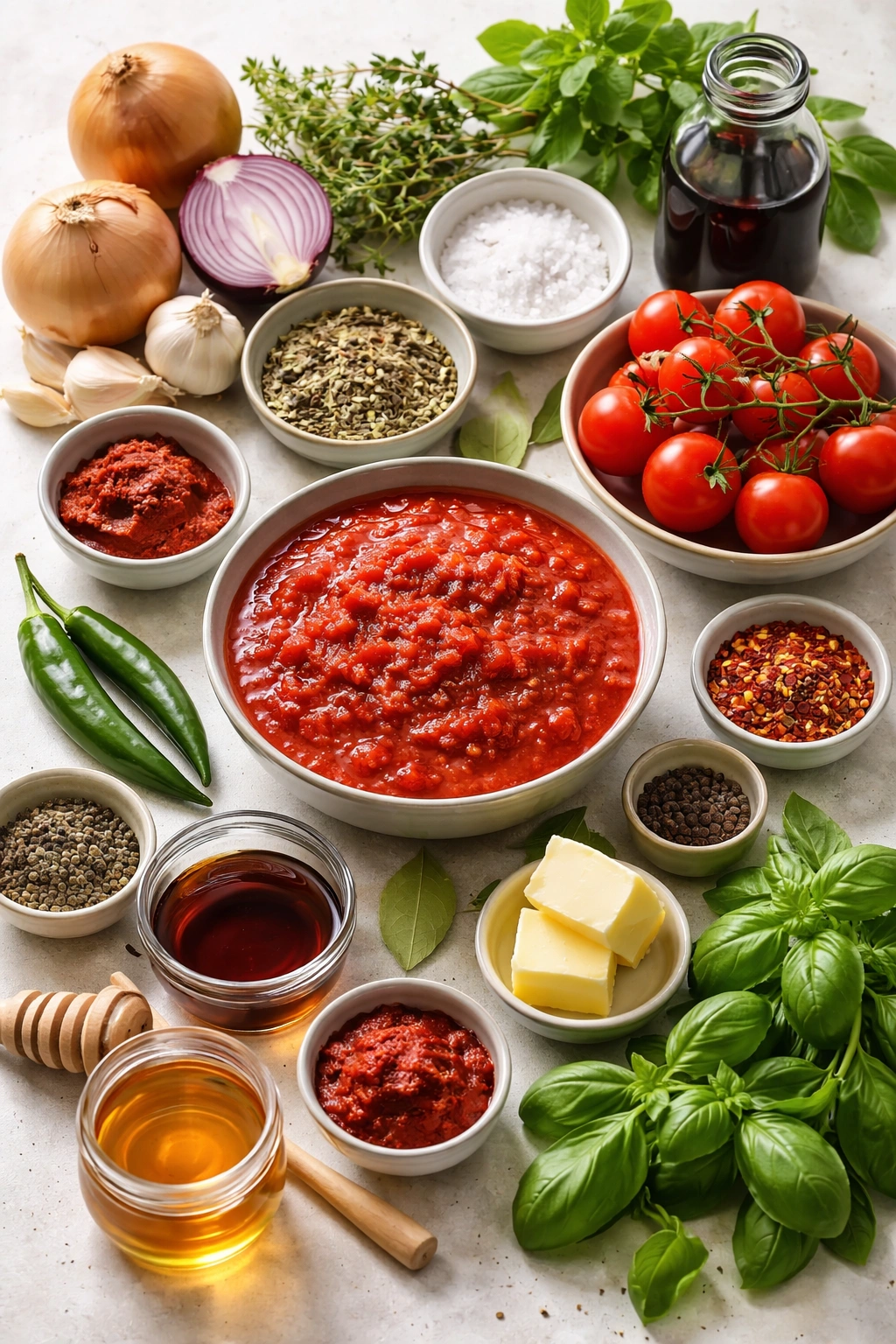
For the Base:
- 3 tablespoons extra-virgin olive oil
- 1 medium yellow onion, diced finely
- 5-6 cloves fresh garlic, minced
- 1 teaspoon dried oregano
- ½ teaspoon dried thyme
- 1 bay leaf
- ¼ teaspoon fine sea salt (more added to taste after cooking)
For the Tomatoes:
- One 28-ounce can whole peeled tomatoes (preferably San Marzano), or 35 ounces crushed tomatoes
- 1 tablespoon tomato paste (optional but recommended for depth)
- 1 tablespoon balsamic vinegar (optional, adds subtle sweetness)
For the Spice:
- ½ to ¾ teaspoon red chili flakes (depending on heat preference; start with ½ teaspoon)
- 1 fresh serrano pepper, halved lengthwise and seeded (optional, for fresh heat and flavor)
- ¼ teaspoon smoked paprika (optional, adds subtle smokiness)
- Black pepper to taste
Optional Additions:
- 1 tablespoon fresh basil, torn, added in the last minute of cooking (optional; dried basil loses nuance in long cooking)
- ½ teaspoon honey or pinch of sugar (if sauce tastes too acidic after cooking)
- 1 tablespoon butter, swirled in at the end (adds silky texture and richness)
Step-by-Step Instructions
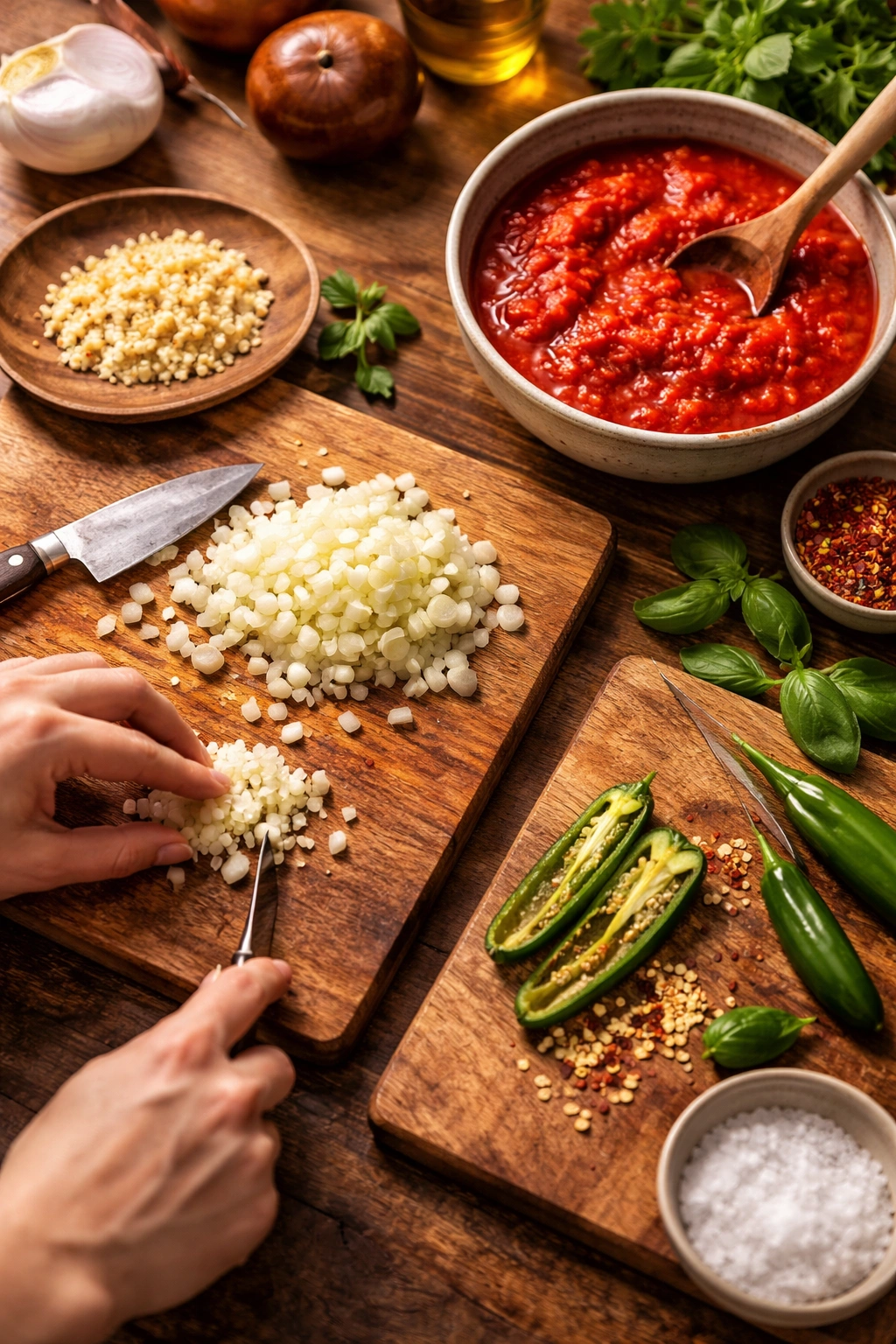
Prep the Ingredients:
- Dice the onion into small, uniform pieces, roughly ¼-inch cubes. Mince the garlic cloves finely; aim for pieces about the size of a match head. If using a fresh serrano pepper, slice it in half lengthwise and use a small spoon or knife tip to scrape out the seeds and white membrane (this is where most of the heat lives). Roughly chop the pepper flesh into small chunks.
- Open your canned tomatoes. If using whole tomatoes, place them in a large bowl and crush them by hand, squeezing them between your fingers until they’re broken into bite-sized pieces. It doesn’t need to be perfectly smooth—some chunks are welcome and will contribute texture to the finished sauce. Drain off about half the liquid and set it aside; you’ll add it back if the sauce becomes too thick.
Build the Flavor Base: 3. Heat the olive oil in a heavy-bottomed pot or large saucepan over medium heat. Wait 30 seconds for it to warm, then add the diced onion. Stir occasionally, cooking for about 4-5 minutes, until the onion turns translucent and soft but not browned. Do not skip this step or rush it—this is when the onion sweetness develops. 4. Add the minced garlic to the pot and stir constantly for about 30-45 seconds. You’ll smell the garlic become fragrant and alive. Stop before it browns; the moment it shifts from white to light golden is when you move to the next step. 5. Add the dried oregano, thyme, and bay leaf, stirring for another 30-45 seconds. You’ll notice the pot become more aromatic—the spices bloom and release their essential oils. This is the moment the sauce shifts from basic to flavorful.
Add Tomatoes and Begin Simmering: 6. Pour the crushed tomatoes (including all their liquid) into the pot, along with the reserved drained liquid if you set some aside. Stir well, scraping the bottom of the pot to incorporate any browned bits of flavor. If using tomato paste, stir it in now—it will distribute more evenly if added at the beginning of the simmer. 7. Add the red chili flakes and the chopped fresh serrano pepper (if using). Stir well. Taste the sauce—it will taste very tomatoey and fresh at this point, not yet developed. 8. Bring the sauce to a gentle simmer over medium-high heat. You’re watching for a steady but gentle bubble breaking the surface every few seconds—not a rolling boil. Reduce the heat to medium-low or low if needed to maintain this gentle simmer. A hard boil will cook off delicate flavors and make the sauce taste flat and bitter. 9. Add a pinch of salt (about ¼ teaspoon for now; you’ll adjust at the end). Stir once.
The Long Simmer (This Is Where Magic Happens): 10. Simmer uncovered for 30-40 minutes, stirring occasionally (every 5-8 minutes). You’re watching the transformation: the sauce will deepen in color slightly, the raw tomato flavor will mellow and develop sweetness, the sauce will become slightly thicker as water evaporates, and the heat from the peppers will integrate into every spoonful rather than remaining sharp and separated. 11. After 30 minutes, taste the sauce. Does it taste like tomatoes—complex, slightly sweet, with developed flavor—or does it still taste like tomato juice? If it still tastes thin or sharp, give it another 10 minutes. The difference between a good sauce and a great one is often those final minutes of cooking. 12. If using balsamic vinegar, add it now (about 1 tablespoon) and stir. This adds subtle sweetness and complexity. Taste and adjust the heat level at this point: if you want more spice, add another ¼ teaspoon red chili flakes and stir. 13. If the sauce tastes too acidic or sharp, stir in a tiny pinch of sugar or honey (start with ¼ teaspoon). Tomatoes vary in acidity; this subtle sweetness rounds out sharpness without making the sauce taste sweet. 14. Taste and adjust salt. Salt is the backbone of flavor. Most sauces need ½ to 1 full teaspoon of salt. Add it in pinches, stir, and taste after each addition. The sauce should taste slightly salty to you when tasted from a spoon (it will taste less salty when combined with unseasoned pasta or pizza). 15. If using fresh basil, tear it roughly and stir it in now—just in the last minute of cooking so it contributes brightness without cooking into insignificance. 16. If using butter, add a tablespoon of cold butter cut into small pieces and swirl the pan or stir until it melts and incorporates. This adds silky richness and helps flavors bind together.
Final Check: 17. Remove the bay leaf. Do a final taste. Ask yourself: Is the spice level exactly what I want? Does the sauce taste like tomatoes or more like the peppers? Does it taste complete and complex, or is something missing? This is your chance to adjust before serving or storing. 18. Use immediately or store according to the instructions below.
Pro Tips for the Perfect Spicy Tomato Sauce
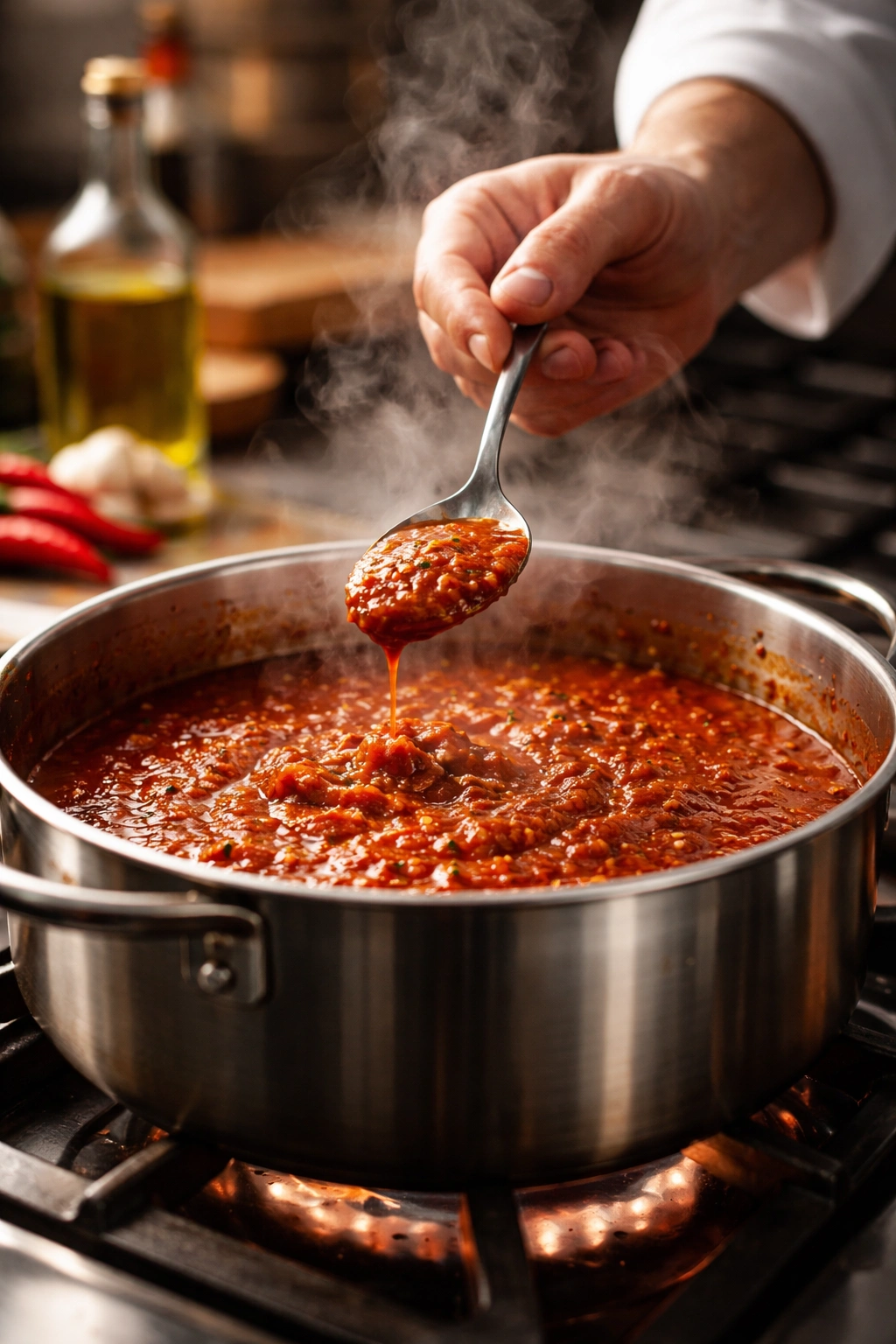
Don’t skip the onion and garlic bloom. The difference between sauce that tastes generic and sauce that tastes like someone who knows what they’re doing made it often comes down to those first few minutes. Rushing through the onion and spice blooming is where homemade sauce loses flavor. Give it time.
Tasting along the way prevents regret at the end. Taste your sauce at the 20-minute mark, again at 30 minutes, and a final time after 40 minutes. You’ll watch the flavor develop in real time and learn exactly how long you prefer your sauce to cook. Some people like it thinner and fresher; others want it thick and deeply cooked. By tasting regularly, you dial in your preference.
Control heat by adjusting pepper type, not just quantity. A heavy hand with red chili flakes creates one-note fire. Using a combination—maybe a quarter-teaspoon of red chili flakes plus one fresh serrano pepper plus a pinch of smoked paprika—creates complexity where the spice enhances flavor rather than overwhelming it. This is the difference between a sauce that’s spicy and a sauce that’s delicious and spicy.
Don’t be afraid of a little tomato paste. A tablespoon of tomato paste adds depth and umami (savory richness) that makes the sauce taste more complete and developed. It’s not a shortcut; it’s an enhancement. Stir it in at the beginning so it cooks evenly throughout.
Fresh herbs belong at the end, not the beginning. Delicate herbs like basil, parsley, or fresh cilantro lose their brightness and subtle flavor if cooked for 30+ minutes. Stir them in during the last minute of cooking so they contribute brightness without cooking into nothing. Hearty dried herbs like oregano and thyme, however, develop flavor during the long simmer and belong at the beginning.
Slightly undersalt while cooking, then adjust at the end. Salt is cumulative. As water evaporates, salt concentration rises. It’s easier to add more salt than to remove it, so season conservatively during cooking and do your final seasoning adjustment in the last few minutes when you can taste the finished product.
Let the heat mellow overnight. If you make sauce and immediately taste it, the chili pepper heat can feel sharp and separate from the tomato flavor. Make it a day ahead if possible, cover and refrigerate, and reheat it gently the next day. The cold overnight rest allows flavors to marry and the heat to integrate so it tastes harmonious rather than aggressive.
Common Mistakes That Dull Your Sauce
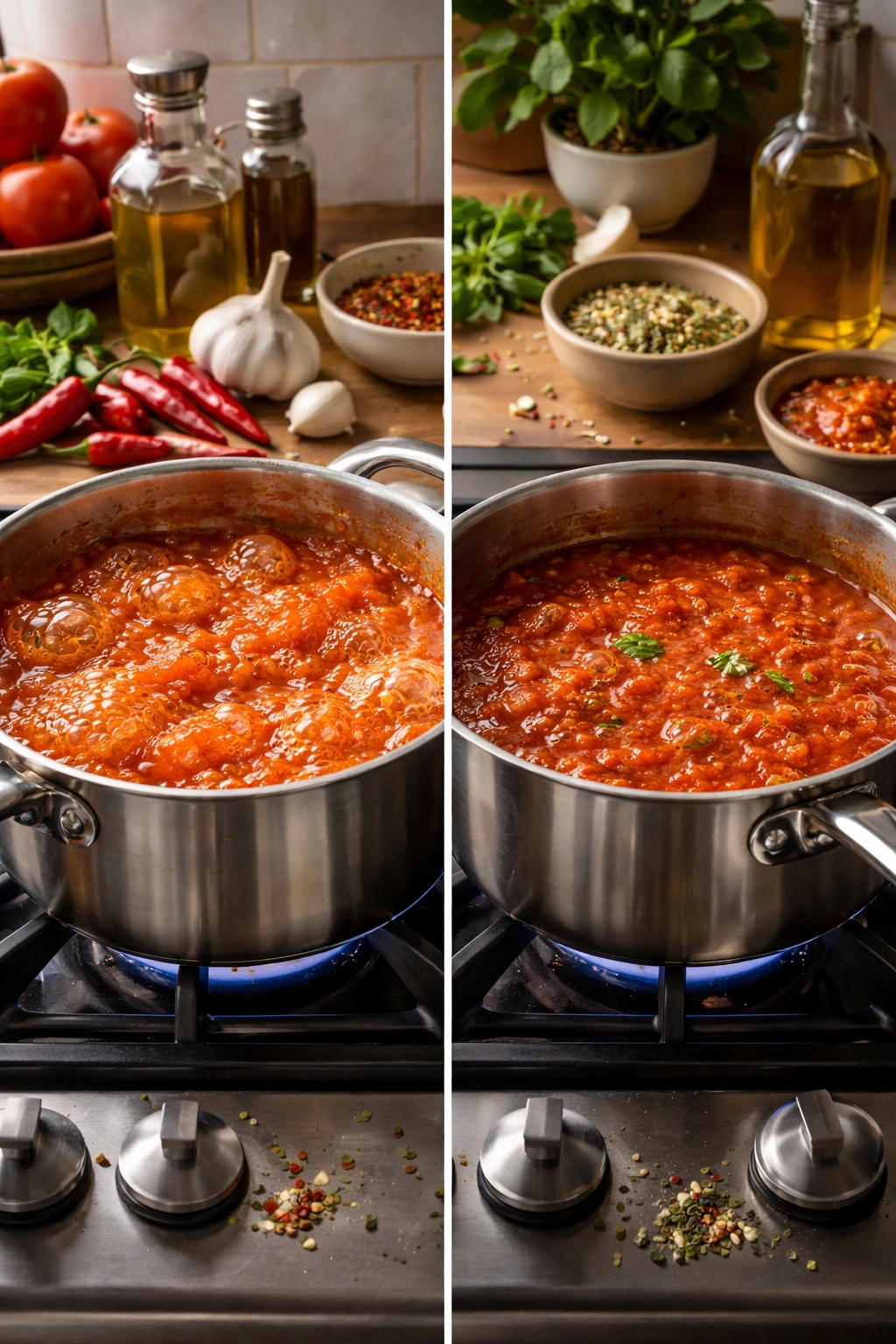
Boiling too hard and too fast. A rolling boil cooks off delicate aromatics and can impart a slightly burned taste. A gentle simmer develops flavor; aggressive heat destroys it. If your pot is bubbling vigorously, your heat is too high.
Using jarred minced garlic or garlic powder instead of fresh cloves. Pre-minced garlic loses volatile aromatic compounds within hours of being cut. The flavor flattens. Garlic powder is even worse—it tastes dusty and one-dimensional. Fresh garlic takes 30 seconds to mince and makes an enormous difference.
Adding fresh herbs at the beginning. Basil, parsley, and other delicate fresh herbs cook into invisibility during 30-40 minutes of simmering. Their brightness and subtle flavor vanish. Add them in the final minute, or add them individually to serving bowls if you prefer.
Not tasting as you cook. Many home cooks make the sauce, taste it only at the end, and then try to fix problems. By then, it’s too late to dial in the flavor properly. Taste at 20 minutes, 30 minutes, and 40 minutes. This teaches you how your sauce develops and lets you adjust intelligently.
Using stale spices. Dried oregano and thyme that have been in your cabinet for two years taste like paper. If your spice containers are more than a year old, replace them. The difference is remarkable.
Afraid to use enough salt. Salt is not an enemy; it’s the foundation of flavor. Most under-seasoned home sauces lack salt, not sugar or other additions. Add salt in small amounts, taste, and keep adjusting until the sauce tastes complete and dimensional.
Using low-quality tomatoes. You can’t make a great tomato sauce with mediocre tomatoes. Read the label: it should list tomatoes and salt, nothing else. Taste brands if your store allows it. One good brand of tomatoes will produce a noticeably better sauce than a budget brand, every single time.
Heat Without Overkill: Balancing Spice Levels
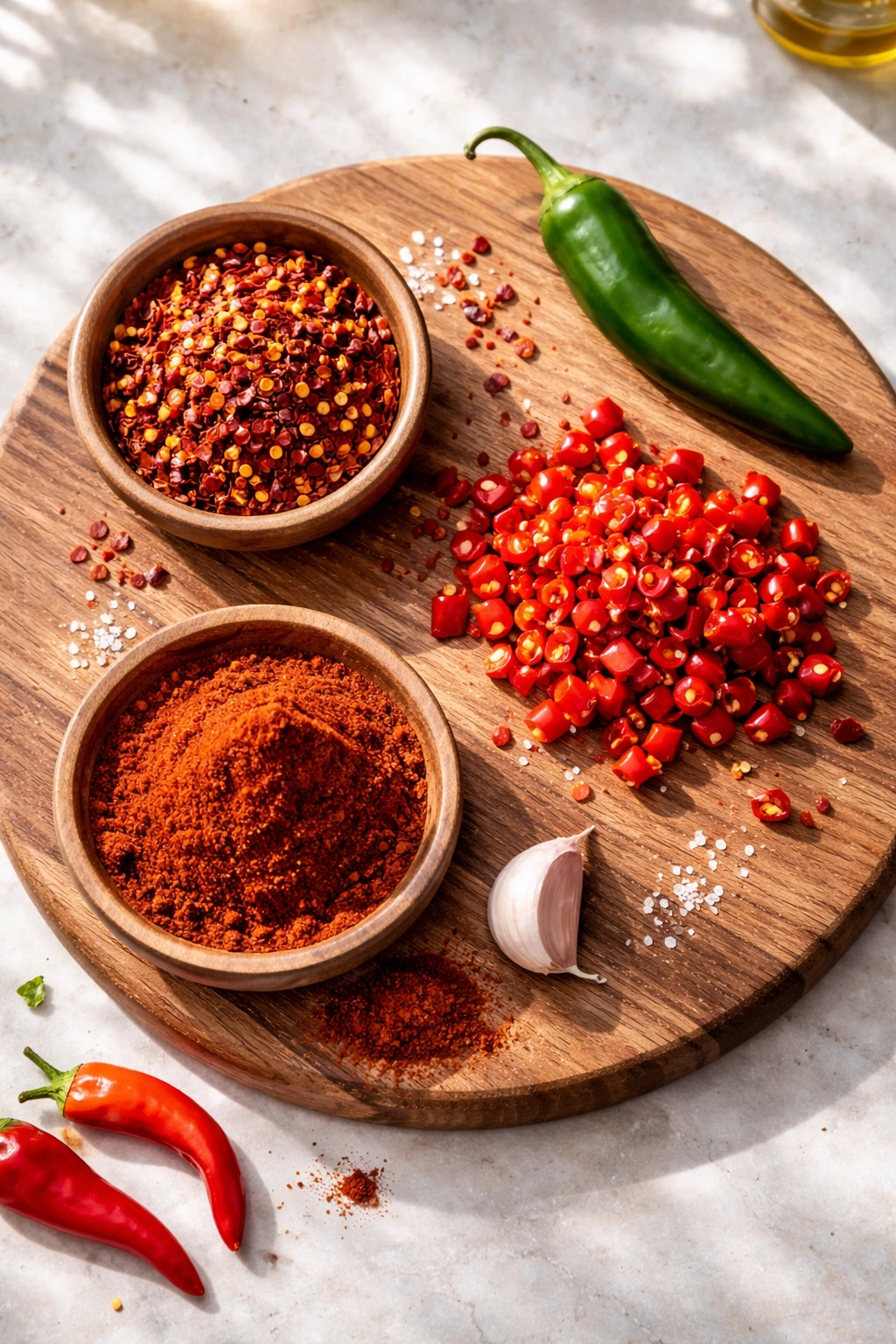
The question every cook asks: How much spice is too much? The answer depends entirely on your tolerance and preference, but here’s a framework for thinking about it.
Mild sauce (good for pizza, family meals, timid eaters): Use just ¼ to ⅓ teaspoon red chili flakes, with no fresh peppers. The spice is barely noticeable—it’s present as a warm undertone rather than active heat. Add fresh basil at the end for brightness.
Medium sauce (standard, crowd-pleasing heat): Use ½ teaspoon red chili flakes plus half a fresh serrano pepper, diced. The heat is noticeable but not overwhelming; it sits pleasantly on the back of your palate. This is the default for most palates.
Spicy sauce (for spice lovers and experienced eaters): Use ¾ teaspoon red chili flakes plus one whole fresh serrano pepper, plus a pinch of smoked paprika. The heat builds and lingers; people will definitely notice. This is genuinely spicy but not burning hot.
Very hot sauce (warning label required): Use 1 teaspoon red chili flakes plus one serrano pepper plus half a habanero pepper (which is significantly hotter than serrano). This is for people who actually enjoy heat as a central flavor component. First-time eaters should approach with caution.
The trick is understanding that different peppers contribute different types of heat. Red chili flakes deliver sharp, immediate heat that builds quickly. Fresh serrano peppers contribute fruity brightness alongside heat. Smoked paprika adds warmth without significant bite. Dried peppers like ancho or guajillo bring earthy, mellow spice. By mixing pepper types, you create complexity where pure heat would flatten everything else.
Adjust heat during cooking, not after. If you’re making the sauce and want it spicier, taste at the 30-minute mark and add more pepper then, giving it time to integrate. If you add heat at the very end, it tastes sharp and separate. If you add it during cooking, it melds with the tomato flavor and tastes more harmonious.
Flavor Variations and Creative Twists
Once you master the base sauce, countless directions open up. These aren’t complicated modifications—they’re strategic additions that shift the whole personality of the sauce.
Garlic-forward sauce: Increase garlic from 5-6 cloves to 8-10 cloves. Slice some of it thinly so it remains slightly visible in the finished sauce. This creates a bold, almost pungent sauce—perfect for pizza or as a dipping sauce for bread.
Smoky and spicy: Add ¼ teaspoon smoked paprika, use dried chipotle peppers (soaked, pureed, and added to the sauce) instead of red chili flakes, and reduce the fresh serrano by half. The result tastes like it was made over a fire. Exceptional with grilled vegetables or fish.
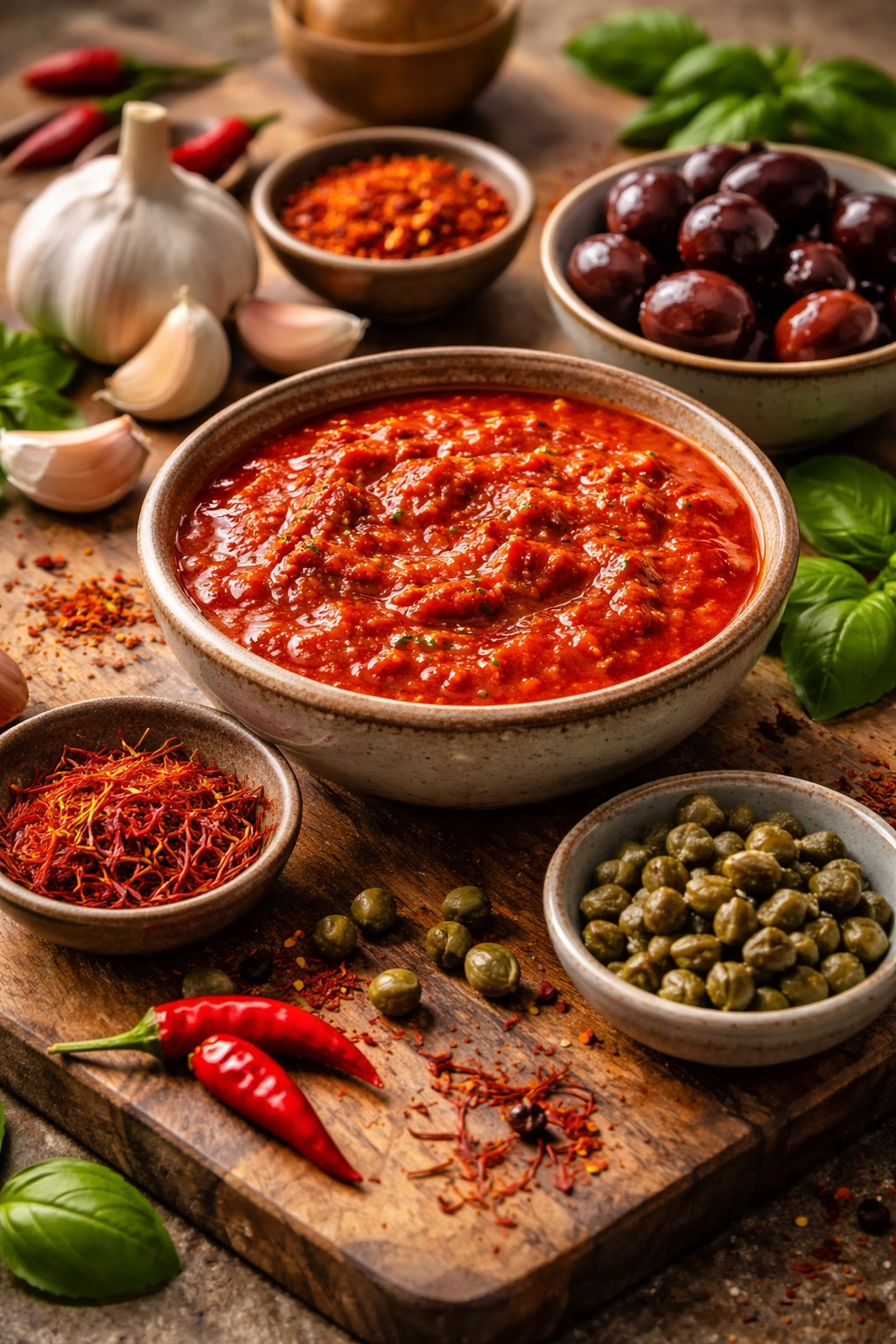
Spanish-inspired with saffron: Add a pinch of saffron (about ¼ teaspoon) to a small dish of hot water, let it steep for 5 minutes, then stir into the sauce at the end. Saffron adds an almost honeyed, floral note that plays beautifully with spice and tomato. Use cautiously—a little goes a long way.
Mediterranean with olives and capers: In the last 2 minutes of cooking, stir in ¼ cup pitted Kalamata olives and 2 tablespoons capers (rinsed if packed in salt). Add a pinch of dried oregano if using dried basil instead of fresh. This creates a savory, briny sauce perfect for seafood or pasta.
Heat with honey and cinnamon (Middle Eastern direction): Add a pinch of ground cinnamon (about ⅛ teaspoon), ½ tablespoon honey, and ¼ teaspoon ground cumin to the sauce in the last 5 minutes of cooking. This creates a sauce with sweet, warm spice—less familiar but complex and deeply satisfying. Use with lentils, roasted vegetables, or as a base for shakshuka.
Creamy tomato with spice: In the last minute of cooking, stir in ¼ cup heavy cream or whole milk. The sauce becomes silky and luxurious while the spice remains apparent. This version works beautifully with fresh pasta or vegetables.
Herby and fresh: Add 1-2 tablespoons each of freshly chopped basil and parsley, plus a teaspoon of fresh thyme (not dried), in the last minute of cooking. If you have fresh oregano, tear a pinch into the sauce as well. This emphasizes herbaceousness over spice—still hot, but brighter and more garden-fresh.
Fermented hot sauce direction: For a tangier, more complex heat, add 1-2 tablespoons of an aged hot sauce or fermented chili paste (like gochujang or harissa) to the sauce during the last 5 minutes of cooking. This adds depth and umami alongside heat.
Storage, Freezing, and Make-Ahead Guidance
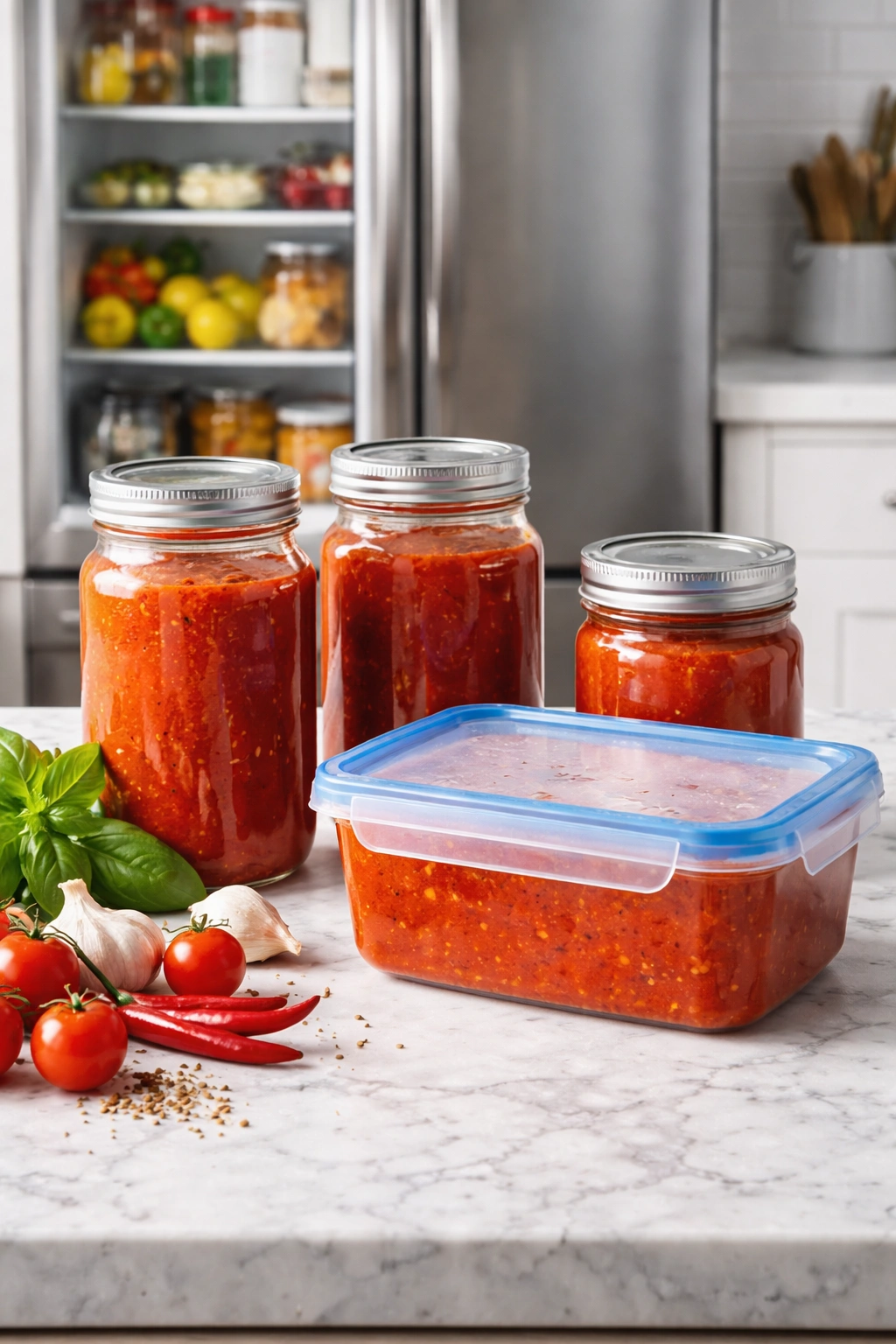
Room temperature: Spicy tomato sauce keeps safely at room temperature for about 2 hours. If you’re serving it at a party or slow meal, use a slow cooker on the warm setting to keep it hot without degrading flavor.
Refrigerator: Covered in an airtight container, the sauce keeps beautifully for up to 5 days. The flavor actually improves after a day as the ingredients meld together—heat integrates, spice feels less sharp, and overall complexity deepens. Many experienced cooks make sauce several days ahead intentionally.
Freezer: This sauce freezes exceptionally well for up to 3 months. Use freezer-safe containers and leave about ½ inch headspace at the top (sauce expands slightly as it freezes). Thaw overnight in the refrigerator before reheating, or reheat gently from frozen on the stove over medium-low heat, stirring frequently. Microwave reheating works in a pinch but direct heat preserves sauce texture better.
Make-ahead strategy: This sauce is ideal for making on a weekend and using throughout the week. Make it Friday, and you have a ready base for weeknight meals. Portion it into pint-sized containers immediately after it cools slightly—this makes grabbing a serving for one or two people easy.
Reheating without losing flavor: Always reheat on the stovetop over low to medium-low heat, stirring occasionally. Gentle reheating preserves sauce texture and flavor. If the reheated sauce seems a touch thick, add a splash of water or pasta water to loosen it. Avoid high-heat reheating, which can burn the bottom of the pot and impart a bitter taste.
Flavor after freezing: Sauces sometimes taste slightly flat after freezing and thawing—not bad, just less vibrant. Brighten thawed sauce by adding a small pinch of fresh lemon juice or a tear of fresh basil just before serving. This restores some of the brightness.
Beyond Pasta: Creative Uses for Spicy Tomato Sauce
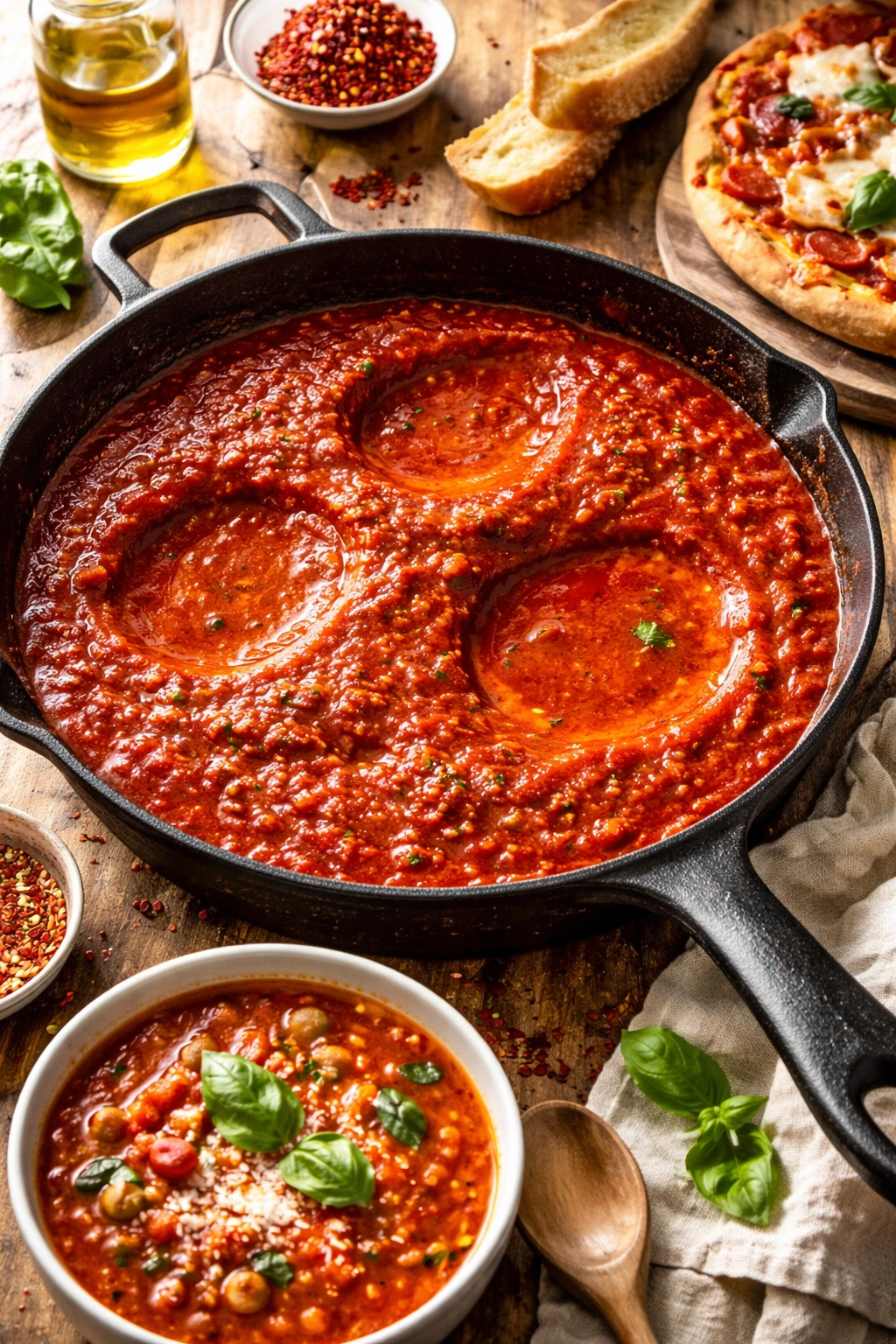
Yes, this sauce is stunning on pasta. But that’s only the beginning of what you can do with it.
Shakshuka base: Spoon the sauce into a shallow skillet, create small wells in the sauce with the back of a spoon, crack eggs into the wells, cover with a lid, and simmer until egg whites set but yolks remain runny (about 3-4 minutes). Serve with crusty bread for dipping.
Pizza topping: Spread the sauce directly on pizza dough before cheese and toppings. One batch of sauce tops 2-3 medium pizzas. For deeper flavor, brush the sauce on and let it bake slightly (2-3 minutes) before adding cheese.
Soup base: Thin the sauce with chicken or vegetable broth (use a 1:1 ratio) and simmer gently. Add grilled chicken, white beans, or vegetables for a complete meal.
Shakshuka (baked eggs): Heat the sauce in an oven-safe skillet, create wells, crack eggs into them, and transfer the skillet to a 350°F oven. Bake until whites set (about 8-10 minutes). The sauce warms the eggs from below while baking.
Fish or seafood base: Spoon the sauce into a skillet, nestle fish fillets, shrimp, or clams into it, cover with a lid, and simmer gently until the seafood is cooked through. The spicy sauce complements delicate seafood beautifully.
Vegetable braise: Use the sauce as the braising liquid for eggplant, zucchini, or other summer vegetables. Roast vegetables in the oven with sauce, covered, until tender.
Soup or stew thickener: Use the sauce to add body and spice to clear broths or light soups. It enriches without overwhelming.
Dipping sauce: Serve warm or at room temperature as a dip for bread, grilled vegetables, or even chip-like crackers at a party.
Shakshuka in a muffin tin: Spoon sauce into muffin cups, crack an egg into each, bake at 375°F until egg whites set (about 12 minutes). Perfect single-serving breakfast or appetizer portions.
Polenta topping: Spoon the sauce over creamy polenta, add a crack of black pepper, and serve with grated Parmesan. Deeply satisfying in a bowl.
Chicken braise: Brown chicken pieces, remove them, sauté aromatics, add the sauce, nestle the chicken back in, cover, and simmer gently until chicken is cooked through. The sauce becomes a complete pan sauce for serving with the chicken.
Pairing and Serving Suggestions
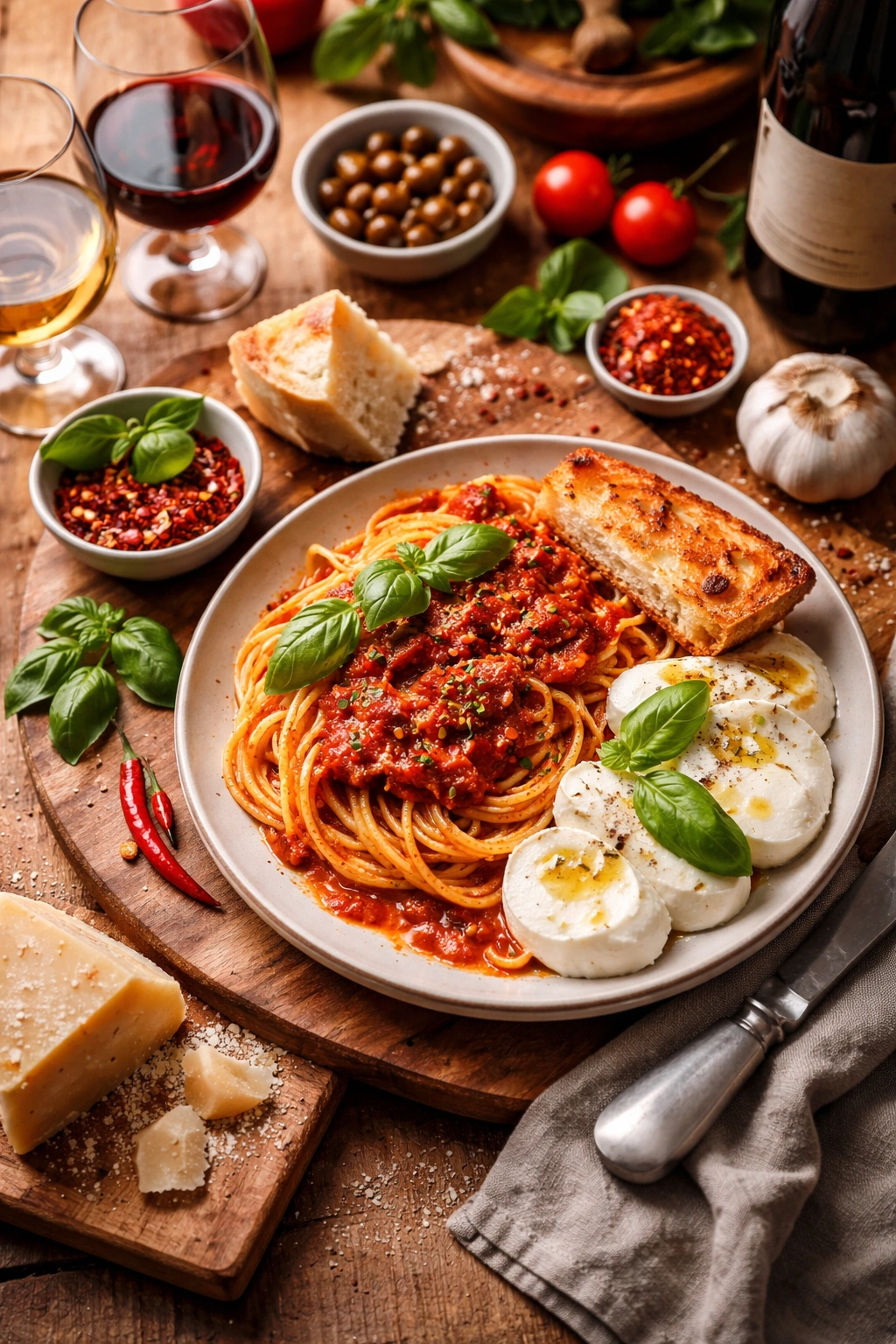
The spice level you chose determines what pairs best alongside the sauce.
For milder sauce: Pair with fresh pasta like fettuccine or linguine, fresh mozzarella, grilled vegetables, mild cheeses, and light wines like Pinot Grigio. The food won’t compete with subtle spice.
For medium-spicy sauce: Pair with heartier pasta like penne or rigatoni, aged Pecorino or Parmesan, grilled meats, and medium-bodied wines like Chianti or Barbera. The spice balances richer foods.
For genuinely spicy sauce: Pair with bold flavors—sharp cheeses, cured meats, strong greens, rich meats—and bolder wines or even beer. The spice won’t overwhelm these foods; instead, they’ll play together.
Cheese pairing: Fresh mozzarella is always welcome. Aged Pecorino Romano adds sharp saltiness that complements spice beautifully. Feta creates a Mediterranean turn. Smoked Gouda adds depth. Parmesan, either fresh or grated, works with everything.
Bread pairing: Crusty bread is essential for soaking up sauce. A simple grilled bread brushed with olive oil, a rustic garlic bread, or focaccia all work beautifully. For dipping, toasted crostini are perfect.
Vegetable pairing: Roasted eggplant, zucchini, or summer squash sits beautifully under this sauce. A simple arugula salad dressed with lemon and olive oil provides cooling contrast to the spice.
Wine pairing: Medium-bodied reds like Chianti or Barbera work best. If serving the sauce on seafood, a crisp white like Vermentino or Picpoul de Pinet complements without adding richness that would dull the spice.
Garnish ideas: A tear of fresh basil, a sprinkle of Parmesan, a small drizzle of good olive oil, and a final crack of black pepper are all you need. Sometimes a pinch of red chili flakes on top adds drama. Don’t over-garnish; the sauce should be the star.
Final Thoughts
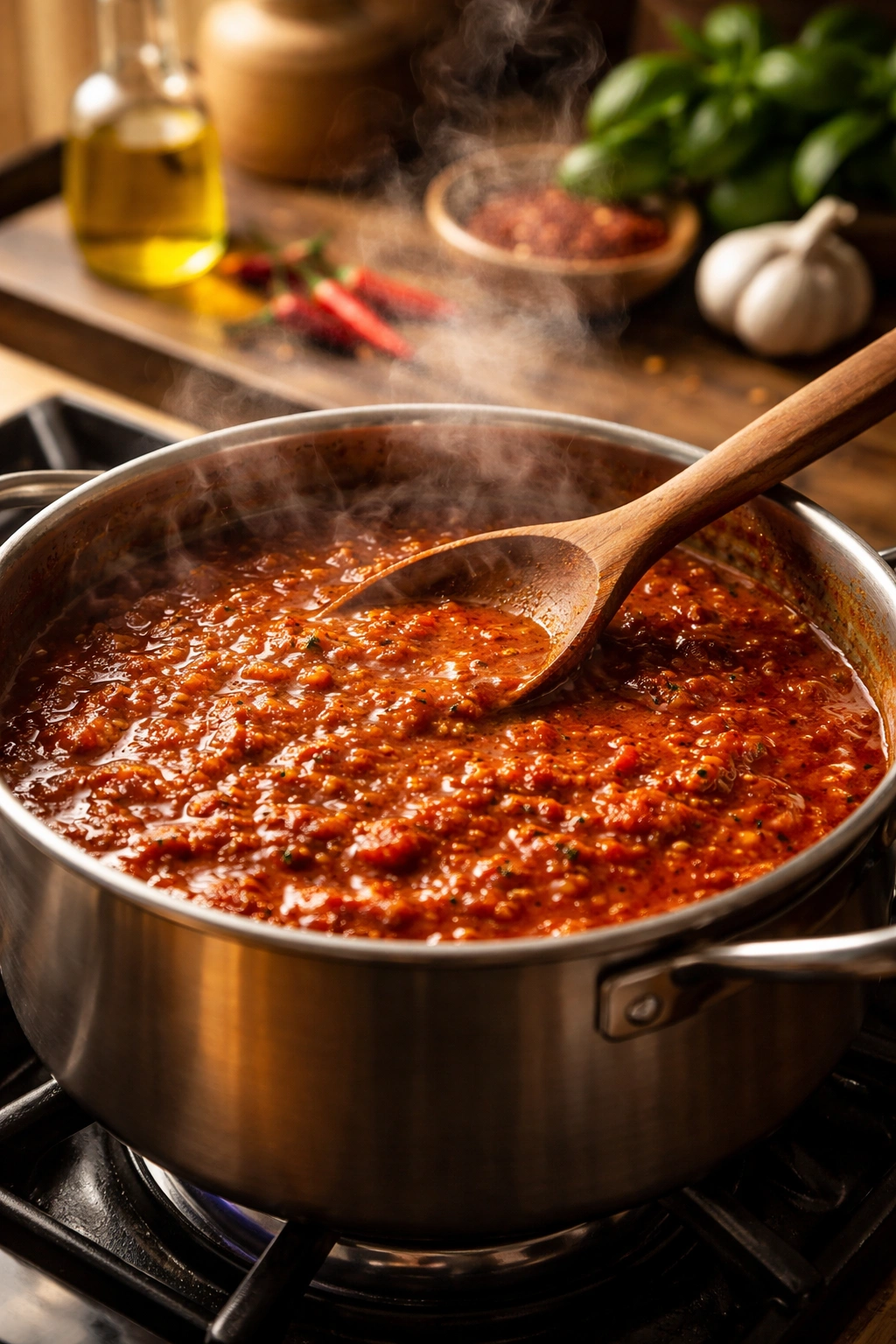
A truly great spicy tomato sauce isn’t about having the hottest peppers or the most expensive ingredients. It’s about understanding how flavors build and interact—how slow simmering develops sweetness, how salt is the foundation of taste, how spice enhances complexity when balanced thoughtfully, and how taking your time at the beginning creates rewards at the end.
This sauce rewards practice. Make it once and it’ll be good. Make it three times and you’ll have your heat level dialed in, you’ll know exactly when to stop simmering, and you’ll understand how to adjust it to your taste. By the fifth or sixth time, you’ll be making it without thinking—hands working while your brain is elsewhere—because the method has become second nature.
The best part is that batch you made on Sunday that you’re still eating on Friday—the sauce that tasted good when fresh but has somehow become transcendent after a few days in the refrigerator. That’s when you know you’ve got it right.
