



There’s something almost magical about biting into a cold slice of watermelon on a hot summer afternoon—that burst of sweet, juicy refreshment paired with the surprise of salty, creamy feta creates a flavor combination that feels both simple and sophisticated at the same time. This isn’t a complicated salad, but it’s one that rewards attention to detail and quality ingredients. When you bring together the right watermelon, good feta, fresh mint, and a balanced vinaigrette, you end up with something that tastes infinitely more impressive than the sum of its parts.
What makes this salad so compelling is the contrast it creates. The sweetness of the melon plays against the brininess of the cheese in a way that makes your taste buds wake up. Add in the cool, refreshing mint and a touch of red onion’s sharp bite, and suddenly you’ve got a dish that feels restaurant-worthy but couldn’t be easier to pull together at home. It’s the kind of salad that works as a light lunch on its own, a stunning side dish at a backyard gathering, or even a palate-cleansing course between heavier dishes.
The beauty of this recipe is that it doesn’t require cooking, just thoughtful assembly and a keen eye for quality. Everything comes together in minutes once you’ve done your prep work. Whether you’re hosting a dinner party or simply looking for something refreshing to eat after a long day, this watermelon feta salad delivers on flavor, nutrition, and visual appeal without any fuss or stress.
Why Watermelon and Feta Is the Perfect Pairing
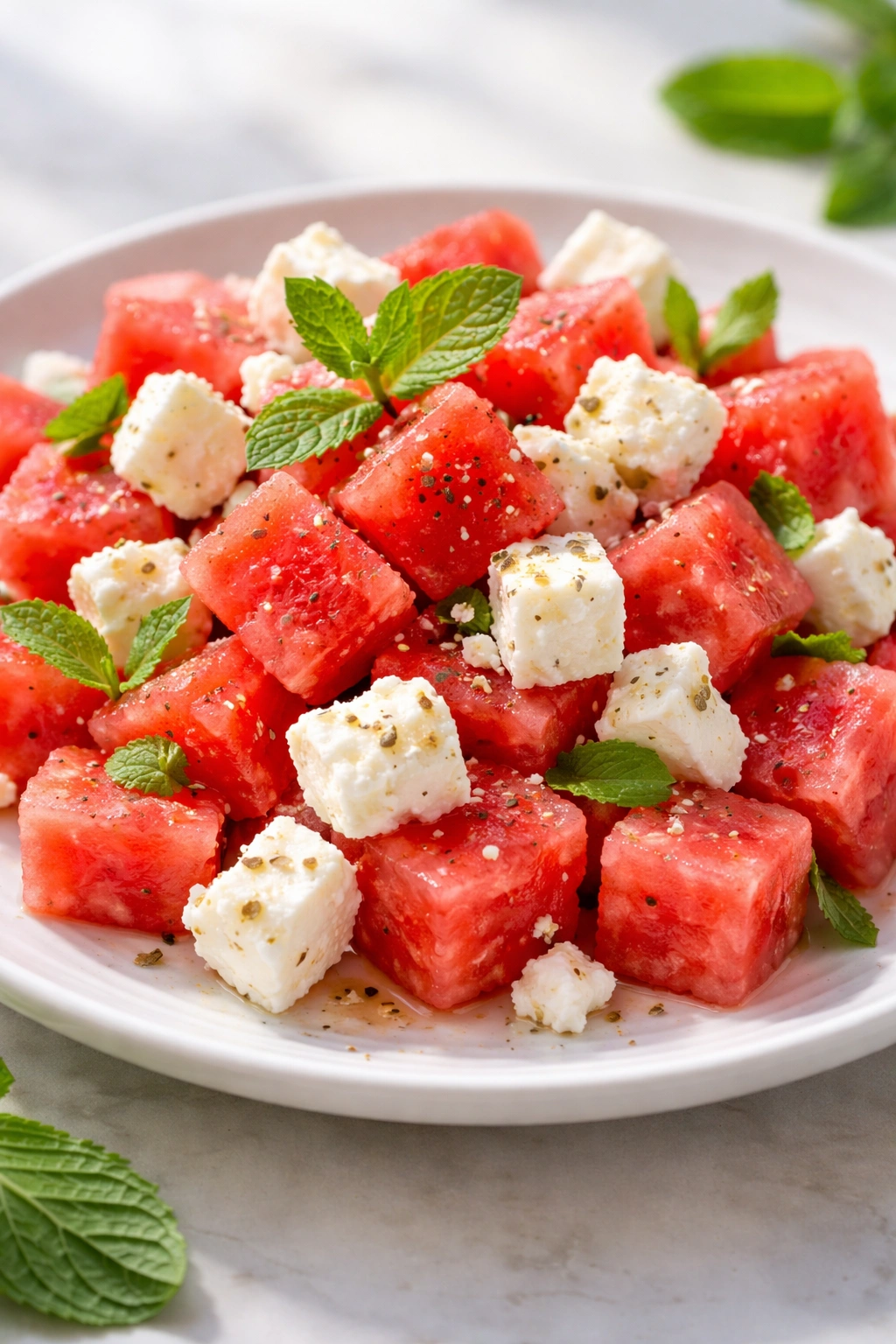
The combination of watermelon and feta might seem unexpected at first, but it’s actually grounded in solid flavor science. Feta’s salty, tangy intensity cuts through the melon’s sweetness in a way that intensifies both flavors rather than competing with them. Each bite becomes more interesting because your palate has to process and reconcile these contrasting tastes.
This pairing also works beautifully on a textural level. The crisp, juicy flesh of the melon provides moisture and lightness, while the crumbly, dense feta adds substance and a slight resistance to the bite. Together, they create a salad that feels both refreshing and satisfying—it’s not just a pile of light vegetables, but something with enough complexity to leave you genuinely nourished.
Historically, this combination has roots in Mediterranean cuisine, where watermelon has been grown for thousands of years and feta cheese is a staple. The pairing shows up throughout Greece, Turkey, and other regions where both ingredients thrive in similar climates. The fact that this combination works so well isn’t accidental—it’s the result of centuries of people eating what grows locally and discovering what naturally complements what.
The Science Behind Salty-Sweet Flavor Combinations
When salt and sweetness are combined, something unexpected happens: they amplify each other rather than canceling out. This is why a pinch of salt makes chocolate taste more chocolatey, or why salted caramel is infinitely more interesting than plain caramel. The salt essentially heightens your perception of sweetness while also adding its own savory dimension.
In the case of watermelon and feta, the salt in the cheese actually makes the watermelon taste sweeter than it would on its own. Your taste receptors are being stimulated in multiple directions simultaneously, which keeps your palate engaged and interested with every single bite. It’s not boring sweetness—it’s sweetness with complexity and intrigue.
There’s also a hydration element at play. Feta is a fairly dry cheese, and the watermelon’s high water content (around 92 percent) means that eating them together creates an interesting interplay of moisture levels. The cheese absorbs some of the melon’s juice while maintaining its own structural integrity, creating a texture that’s neither too wet nor too dry.
Choosing the Right Watermelon for Your Salad
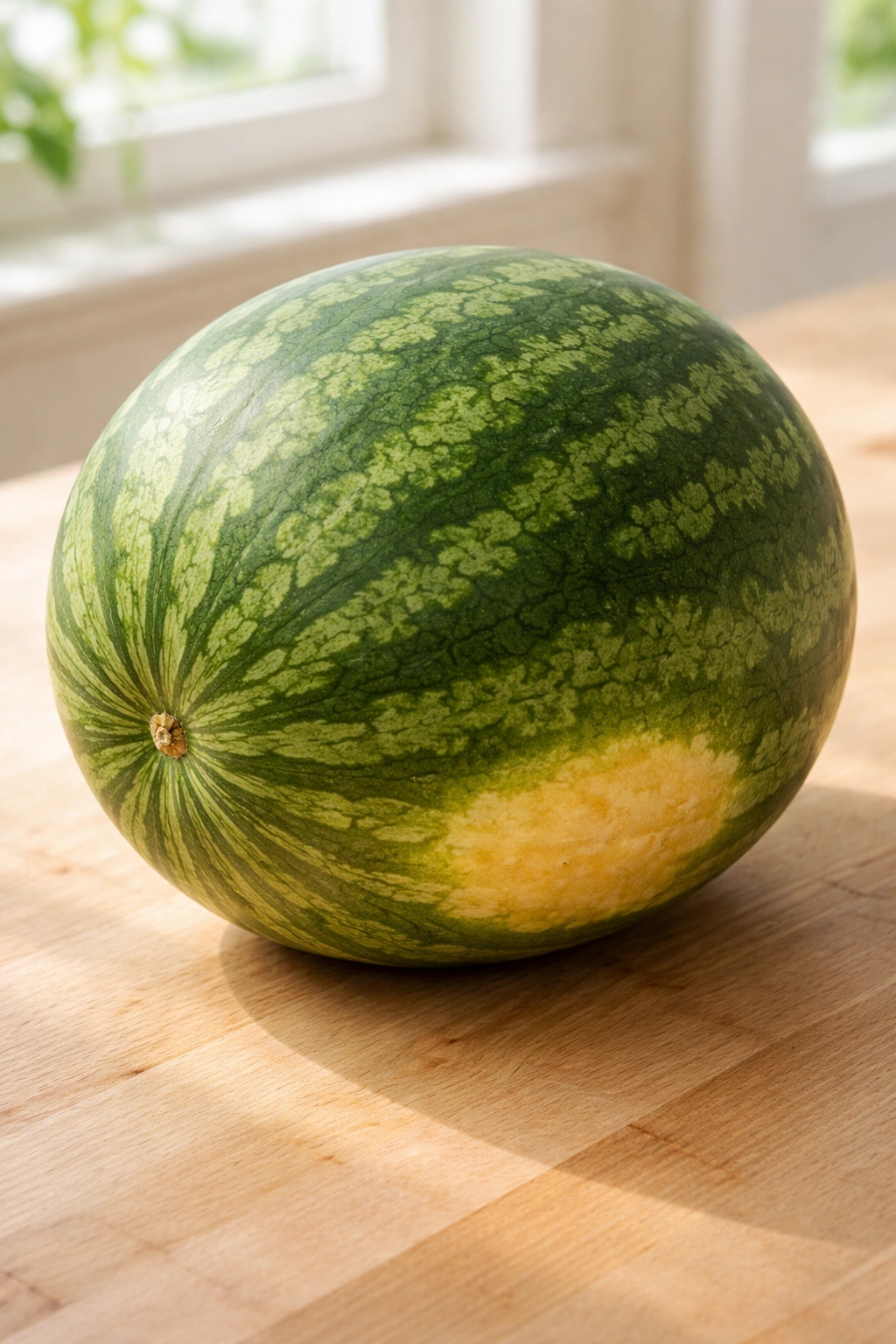
Not all watermelons are created equal, and picking a truly good one makes an enormous difference in the final salad. You’re looking for a melon that’s sweet and flavorful, not one that’s watery and bland. The best way to select a watermelon starts before you even pick it up from the pile—look for one that feels heavy for its size, which indicates good water content and density.
When you lift a watermelon, it should feel substantial in your hands. A light, hollow-feeling melon is likely to be mushy or flavorless inside. You want something dense and solid, which suggests the flesh is firm and properly developed. The skin should be dull rather than shiny—a super-glossy watermelon often indicates it’s not quite ripe, while a deeply colored, matte finish suggests ripeness.
Look for the sugar spot, which is the pale, yellowish patch on the bottom of the watermelon where it sat on the ground. A melon that’s been sitting on the warm earth and properly ripening will develop this lighter colored spot. The larger and more developed this spot, the sweeter your watermelon is likely to be. Some people tap the watermelon to listen for a deep, resonant hollow sound, though this is more of an art than a science.
Size matters too. For a salad like this, you don’t need an enormous melon—a medium-sized one (around 5 to 8 pounds) will be sweeter and more flavorful than a giant specimen. Bigger isn’t better when it comes to watermelon flavor. A smaller melon has had a better chance to concentrate its sugars and develop better flavor.
The season matters less than many people think, though watermelons are generally at their peak during the warmer months when they’re locally grown. However, quality melons are available year-round from various growing regions, so you’re not limited to eating them only during certain times. What matters most is choosing a specific melon that meets the criteria above rather than buying whatever looks reddest.
Selecting Quality Feta Cheese
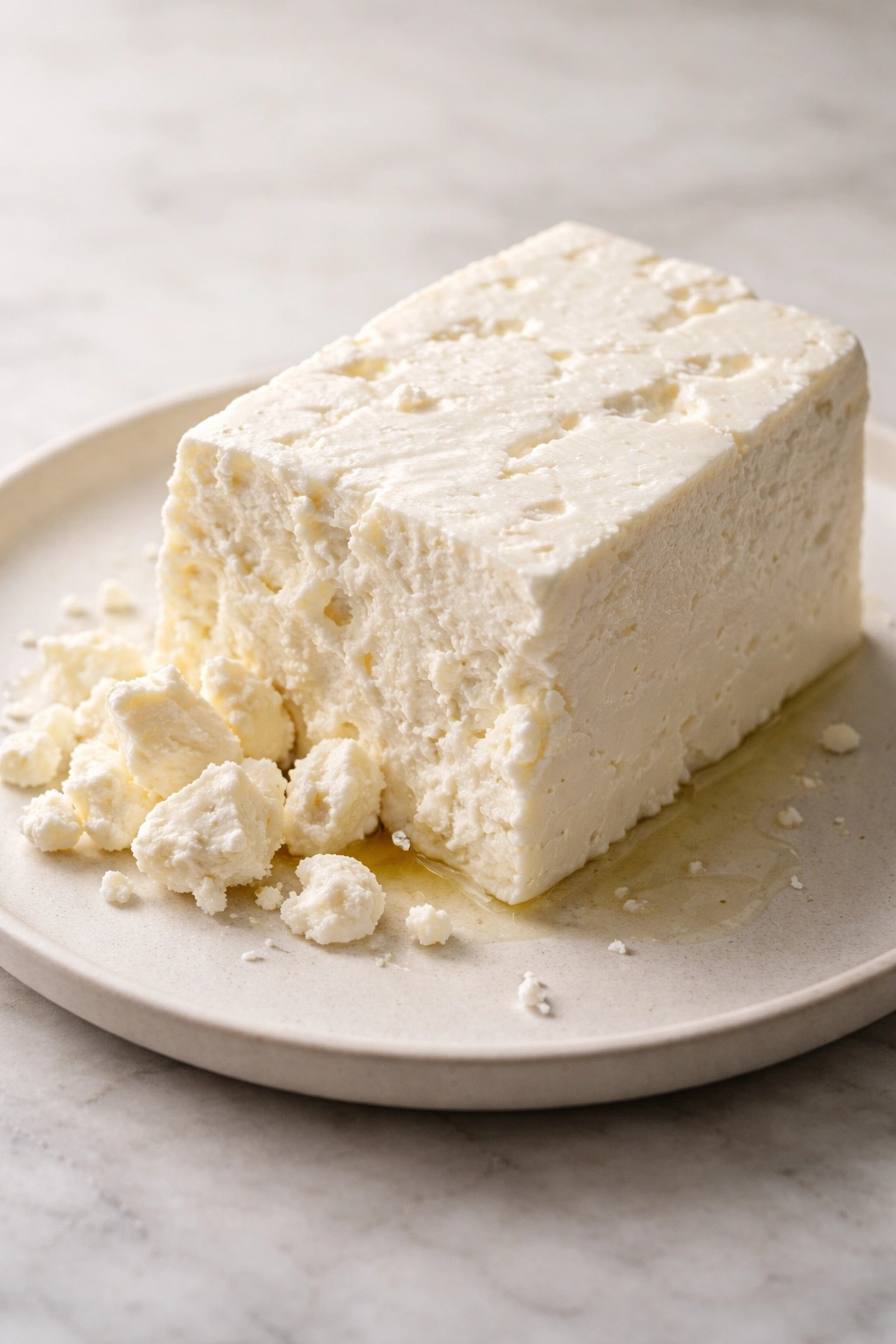
Feta cheese is incredibly variable in quality depending on where it comes from and how it’s made, and using a good feta truly elevates this entire salad. The difference between mediocre feta and excellent feta is immediately apparent—good feta is creamy, tangy, and has actual complexity in flavor, while poor feta is often rubbery, one-dimensionally salty, and underwhelming.
For this salad, you want authentic or traditionally-made feta, preferably from Greece, Turkey, or another Mediterranean country where feta production has centuries of tradition behind it. Feta made in other regions is sometimes of excellent quality, but the traditional versions from feta’s countries of origin tend to be superior. The cheese should come packed in brine (a salty liquid that preserves it), which you can see through the container if you’re buying it from a bulk bin or a tub.
When you open the feta, it should smell pleasantly tangy and briny—not overwhelmingly sharp or off-putting, but definitely aromatic and complex. The texture should be creamy but crumbly, not gummy or rubbery. If you press your finger against it, it should break apart rather than compress and bounce back. Good feta crumbles naturally with just a fork or your fingertips, without requiring any real effort.
The brine that feta comes packed in is actually useful—save it and store your feta submerged in it in the refrigerator. It’ll keep for weeks and actually improves in flavor over time as it picks up more salty goodness. If you find yourself with feta that’s become too salty, you can soak it in fresh water or milk for 15 to 30 minutes to mellow it out before using it in your salad.
Avoid pre-crumbled feta in plastic containers if possible. While it’s convenient, feta crumbles much better when you break it yourself, and the flavor of freshly crumbled cheese is noticeably superior. There’s something about the mechanical breakdown that happens when you crumble it by hand that keeps the texture better and helps the cheese maintain its creamy, tangy character.
Fresh Herbs That Elevate This Salad
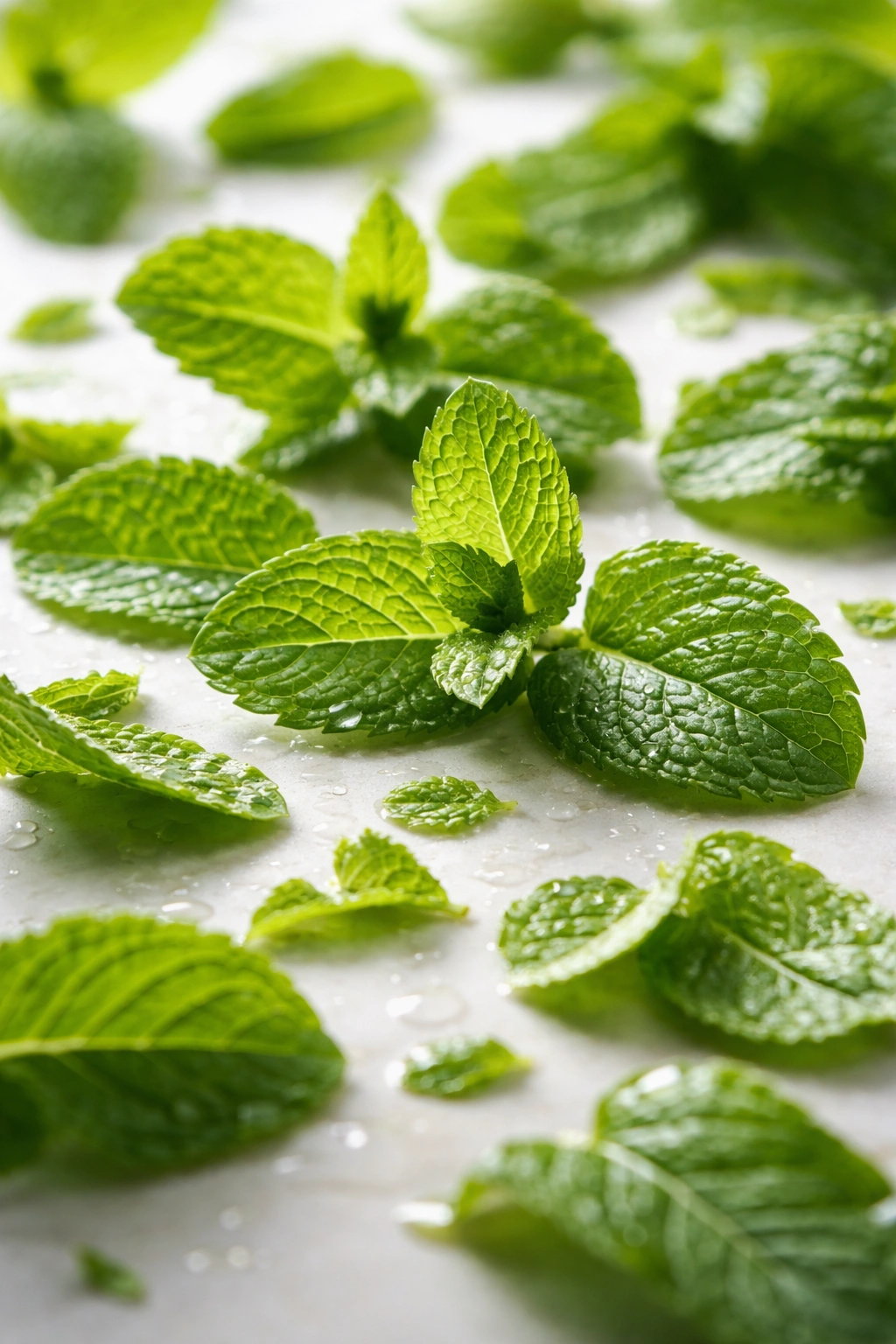
Mint is absolutely essential to this salad—it’s not an optional garnish, but a core ingredient that brings the whole thing together. The cooling, aromatic quality of fresh mint is what makes watermelon taste like summer. The menthol compounds in mint create a mild cooling sensation on your tongue that actually enhances how refreshing the watermelon feels. You’re not just eating mint as a flavor—you’re adding a sensory experience.
Choose fresh mint with bright green leaves that are tender but not wilted. If the mint is brown around the edges or smells stale, it won’t add the fresh character you’re going for. I prefer to use about 10 to 12 fresh mint leaves per serving, torn by hand rather than chopped—tearing releases the oils and fragrance while keeping the leaves from becoming bruised and oxidizing.
Red onion adds a sharp, peppery bite that cuts through the sweetness of the melon and the richness of the feta. A thin slice or two per serving is all you need—you want just enough to add complexity without making the salad unpleasantly sharp. The sharpness of red onion mellows slightly as it sits with the acidic vinaigrette, so don’t be afraid to slice it generously when you first prepare it.
Basil is an optional but worthwhile addition. Thai basil or regular sweet basil both work beautifully, though I tend to prefer the slight anise notes of Thai basil with this combination. Use it sparingly—just a few leaves torn and scattered over the top just before serving. Basil oxidizes and darkens quickly once it’s been torn, so it’s best to add it at the very last moment.
A tiny pinch of cilantro is wonderful if you enjoy it, though it’s definitely a matter of personal preference. The bright, slightly citrusy notes complement both the watermelon and the feta. A few small leaves scattered over the top add visual interest and another layer of flavor without overwhelming anything else.
The Dressing That Brings Everything Together
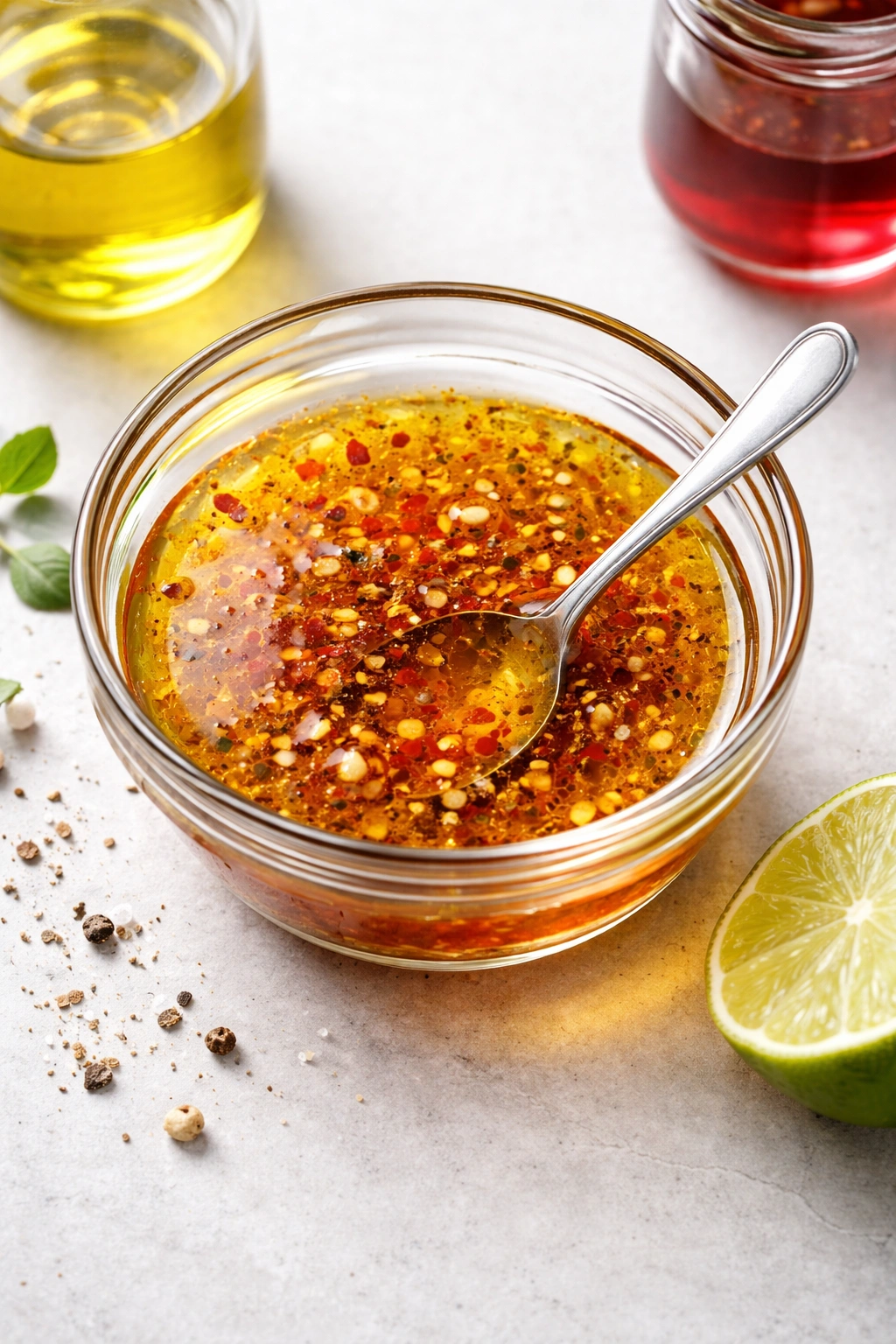
The dressing for this salad is refreshingly simple—you’re not looking for anything heavy or complicated. A basic vinaigrette made from good olive oil, a bright acid, and a touch of something sweet is all you need. The acid is crucial because it brightens everything and helps balance the sweetness of the melon without adding heaviness.
Red wine vinegar is my preference for this particular salad. It’s got enough depth and complexity to stand up to the other flavors without being too assertive, and it’s acidic enough to cut through the feta’s richness. A good red wine vinegar has a smooth, slightly fruity taste rather than the harsh sharpness of a cheap vinegar. Lime juice is an excellent alternative if you want something lighter and more citrusy, and it gives the salad a slightly different character that’s equally delicious.
The olive oil should be good quality but not necessarily your most expensive finishing oil. You want something with flavor that’ll come through in the dressing, but you’re also dressing a salad with delicate, cool ingredients, so the oil will be noticeable and shouldn’t be overly heavy. A fruity, peppery olive oil from a recent harvest works beautifully here.
A touch of honey or a tiny pinch of sugar in the dressing adds balance and deepens the melon’s natural sweetness without making the salad taste like dessert. You’re not adding much—just enough so that the dressing tastes complete and harmonious rather than one-dimensionally acidic. A teaspoon of honey in a vinaigrette for a whole salad is sufficient.
Minced shallot or a tiny amount of garlic can add savory depth to the dressing, though with all the other flavors in this salad, it’s optional. If you do add it, use just a small amount—the idea is to enhance, not to overpower or make the salad taste like a traditional leafy green salad dressing.
Yield, Prep Time, and Difficulty
Yield: Serves 4 as a main course | Serves 6 as a side dish
Prep Time: 20 minutes
Cook Time: 0 minutes (no cooking required)
Total Time: 20 minutes
Difficulty: Beginner — This recipe requires no cooking, just knife skills and ingredient selection. Anyone can assemble it confidently on their first try.
Best Served: Immediately after assembly, while everything is still cold and crisp. The salad is best eaten within 30 to 45 minutes of being put together, though you can prep all components in advance and assemble just before serving.
Ingredients for Watermelon Feta Salad
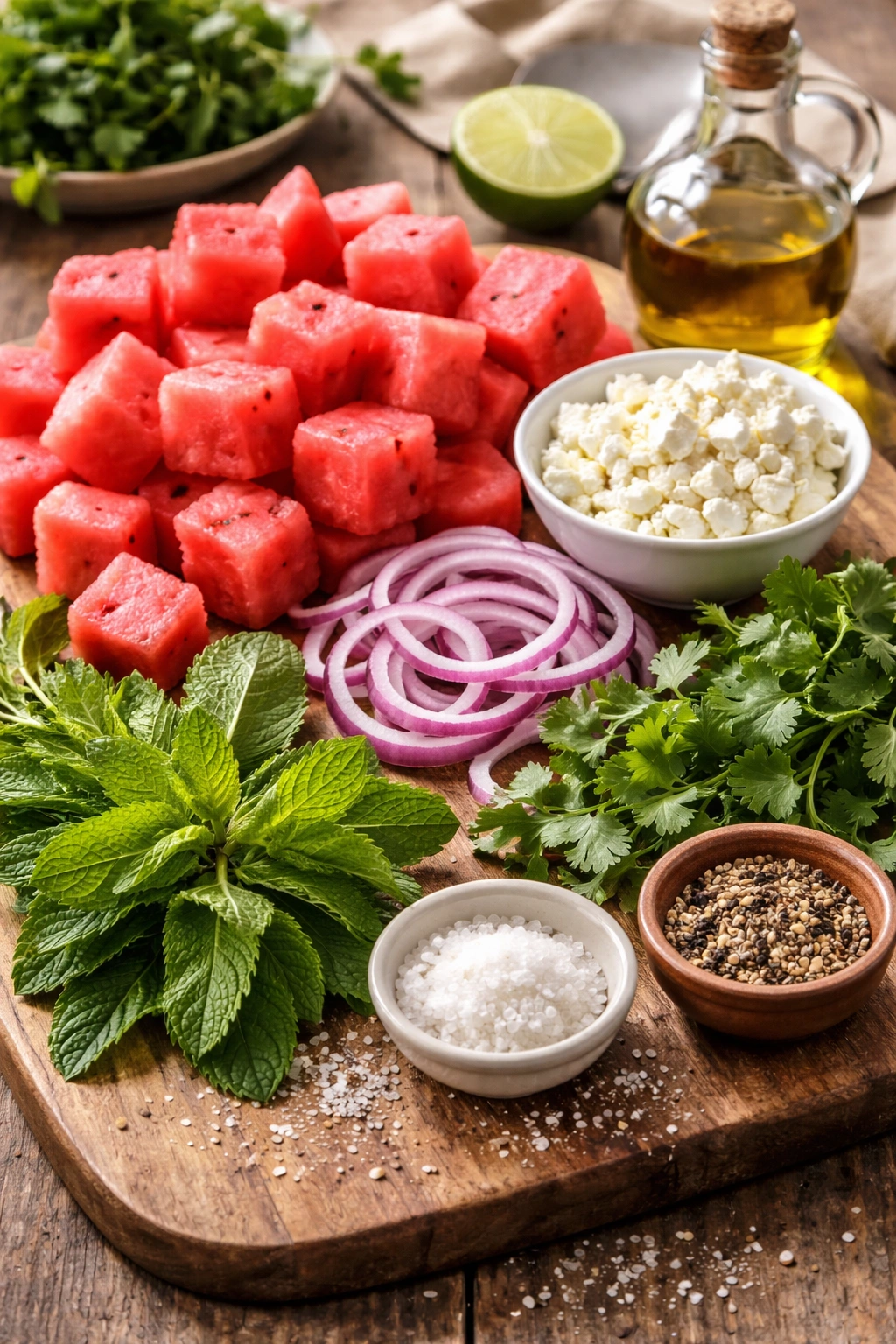
For the Salad:
- 4 to 5 pounds fresh, ripe watermelon (about half a medium melon), cut into 1-inch cubes or half-moon slices
- 10 ounces quality feta cheese, crumbled by hand into irregular pieces (ranging from pea-sized to walnut-sized chunks)
- 1 small red onion, thinly sliced into half-moons
- 12 to 15 fresh mint leaves, torn by hand
- 1 tablespoon fresh cilantro leaves, roughly chopped (optional but recommended)
- Fleur de sel or good finishing salt for seasoning
- Freshly cracked black pepper to taste
For the Vinaigrette:
- 3 tablespoons high-quality extra virgin olive oil
- 1½ tablespoons red wine vinegar (or fresh lime juice for a lighter version)
- 1 teaspoon honey or a tiny pinch of granulated sugar
- ¼ teaspoon Dijon mustard (optional, but adds depth)
- Pinch of fine sea salt
- Small crack of freshly ground black pepper
Step-by-Step Assembly Instructions
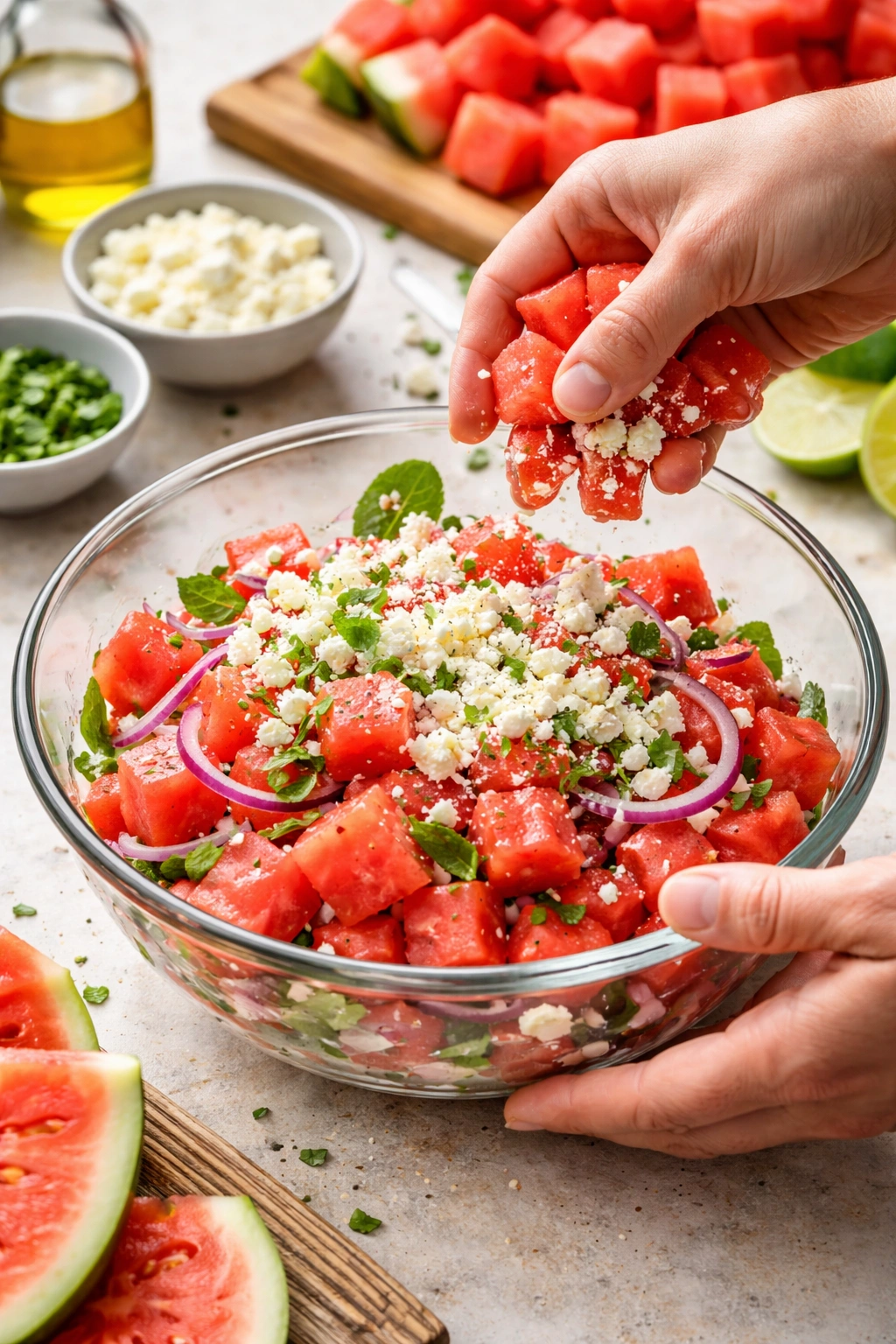
Prepare Your Ingredients:
-
Rinse the watermelon under cool running water and pat it completely dry with paper towels. Any excess moisture on the surface will dilute your dressing.
-
Cut the watermelon in half lengthwise, then cut each half in half again to create four quarter-melons. Cut the rind away from the flesh in thick strips, working from top to bottom and removing all the green skin and white pith—the flesh should be completely exposed with no white remaining. A sharp 8-inch chef’s knife makes this task much easier than a dull blade.
Advertisements -
Cut the watermelon flesh into 1-inch cubes by making parallel cuts across the melon, then rotating 90 degrees and making another set of parallel cuts, then rotating 90 degrees again to cut vertically. Alternatively, you can cut the watermelon into half-moon slices about ½-inch thick, which creates a more elegant presentation for a formal gathering. Place the cut watermelon in a large bowl.
-
Slice the red onion lengthwise first (from root to tip), then slice each half into thin half-moons. Place in a separate small bowl and cover with just enough cool water to submerge—this will mellow the raw sharpness slightly while you prepare the other components.
Make the Vinaigrette:
-
In a small bowl, whisk together the olive oil, red wine vinegar, honey, Dijon mustard (if using), salt, and pepper. Whisk vigorously for about 30 seconds until the ingredients are emulsified and the dressing looks slightly thickened and cohesive rather than separated. The honey should fully dissolve into the dressing, leaving no visible granules.
-
Taste the vinaigrette on its own and adjust the seasoning. The dressing should be balanced—not too acidic, not too sweet, with just enough salt to make all the flavors pop. If it tastes too sharp, add another ½ teaspoon of honey. If it tastes flat, add a tiny pinch more salt.
Assemble the Salad Just Before Serving:
-
Drain the red onion slices in a small colander and gently press out any excess water with the back of a spoon—you want them damp but not dripping.
-
In a large, shallow bowl or on a wide platter, gently combine the watermelon cubes with the drained red onion slices. Pour approximately three-quarters of the vinaigrette over the watermelon and onion, and gently toss with a large spoon or rubber spatula—use a folding motion rather than aggressive stirring, which can break up the watermelon pieces and make them mushy. Be gentle; the goal is to coat everything lightly without mangling the delicate melon.
-
Scatter the crumbled feta cheese over the top of the salad, distributing it evenly so that there’s feta in every bite. Use your hands if necessary to position some of the larger chunks strategically.
-
Tear the fresh mint leaves into pieces (not too small) and scatter them over the salad along with the optional cilantro. The herbs should be visible and not buried—they’re part of the salad’s visual appeal.
Advertisements -
Drizzle the remaining vinaigrette over the top, distributing it across the whole salad. Give the salad one final, very gentle toss if needed to incorporate everything.
-
Season with a small pinch of fleur de sel and a crack of fresh black pepper over the top. Serve immediately in chilled bowls if possible, ensuring that each serving gets a good mix of watermelon, feta, onion, and herbs.
Tips for Assembling the Perfect Salad
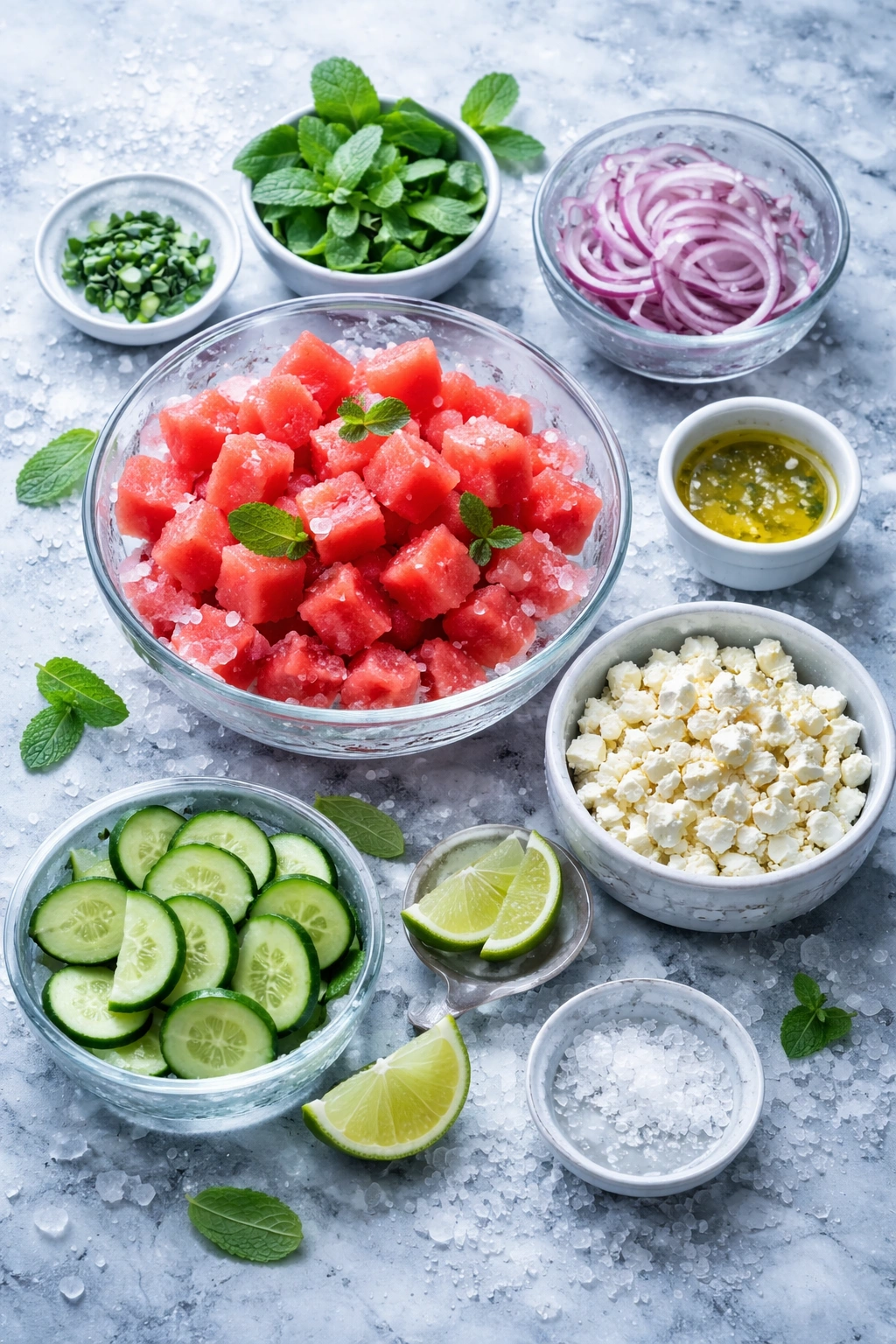
The temperature of every component matters tremendously here. Chill your bowls or serving platter in the freezer for 10 minutes before you assemble the salad—this keeps everything as cold as possible, which intensifies the refreshing quality and keeps the feta from warming up too quickly. A warm feta salad tastes completely different and loses much of its appeal.
Cut the watermelon as close to serving time as possible. Once watermelon is cut, it begins to lose its juice and texture within an hour or two. If you’re preparing this salad for a gathering and need to cut it in advance, store the cut watermelon in an airtight container in the refrigerator, but assemble the salad no more than 30 to 45 minutes before serving.
Don’t overdress the salad. It’s tempting to pour on all the vinaigrette at once, but watermelon releases water as it sits, and excess vinaigrette will become diluted and watery. Start with three-quarters of the dressing and taste as you go. You can always add more, but you can’t remove it once it’s been mixed in. The salad should taste vibrant and well-seasoned, not swimming in liquid.
The texture of your cuts affects both the eating experience and the visual presentation. If you’re serving this at a casual gathering, 1-inch cubes are forgiving and easy to eat. If you’re plating this for a nicer dinner, thin half-moon slices look more elegant and sophisticated. Medium cubes (about ¾-inch) offer a nice middle ground—visually appealing but still easy to eat with a fork.
Handle the feta gently and don’t crumble it too finely. You want pieces that range from pea-sized to walnut-sized, which creates interesting texture variation as you eat. If the feta is overly crumbled into powder, it loses its structural appeal and becomes harder to notice individual bites of cheese. The visible chunks of feta are part of what makes this salad special.
Tear the mint rather than chopping it with a knife. When you slice fresh herbs with a blade, you crush the cell walls and cause rapid oxidation, which darkens the leaves and damages the delicate flavor. Tearing with your fingers is gentler and keeps the mint fresher and more vibrant, both in appearance and taste.
Common Mistakes and How to Avoid Them
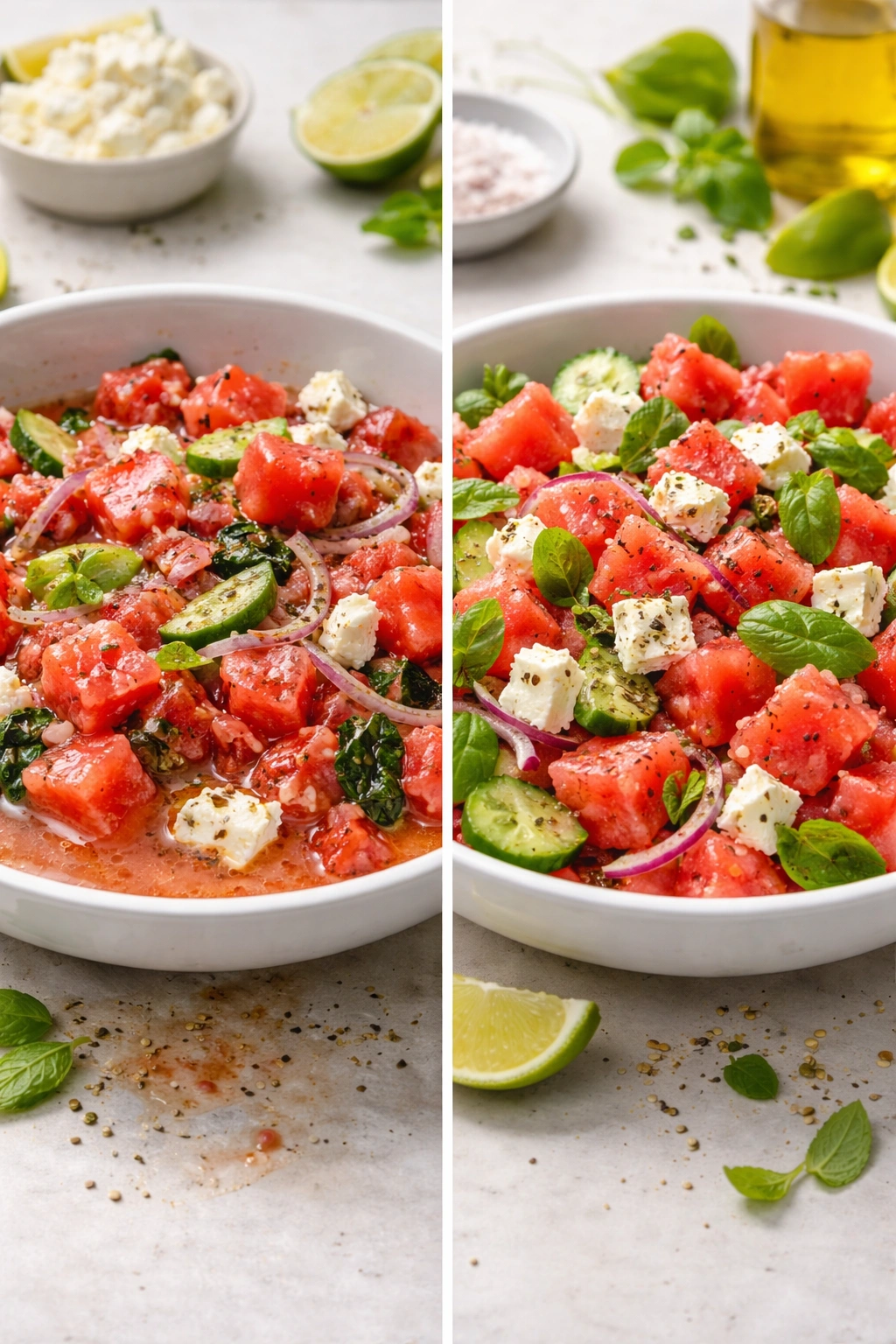
The biggest mistake is choosing a mediocre watermelon and hoping for the best. A flavorless watermelon can’t be rescued by good feta or a great dressing. Spend the extra minute selecting a watermelon that meets the criteria—it’s the difference between a good salad and an exceptional one. If you’re unsure whether a melon is ripe, ask the produce staff to cut into one so you can taste it before you buy.
Using watermelon that’s been sitting around for days is another common issue. The flesh becomes increasingly watery and bland as time passes. Buy watermelon only a day or two before you plan to serve it, or check the flesh when you cut it to make sure it’s still firm and deeply colored rather than pale and mushy.
Making the salad too far in advance is a frequent problem. The watermelon releases water, the dressing becomes diluted, the mint darkens and loses its fresh appeal, and the feta begins to absorb water and become less creamy. Assemble the salad within 30 to 45 minutes of serving for the best results. You can prep all the components in advance, but final assembly should happen just before people eat.
Using cheap feta is a false economy. It won’t taste good enough to justify being a key ingredient in such a simple dish, and it’ll actually make the entire salad taste worse. The difference in price between mediocre feta and good feta is minimal, and the difference in the final salad is massive.
Overdressing the salad makes it soggy and dilutes all the flavors. Start with less dressing than you think you need, taste it, and add more if necessary. The feta will also release some salty liquid as it sits, which adds to the overall moisture in the bowl.
Not seasoning to taste at the end is a surprisingly common oversight. Taste the finished salad before serving and add a pinch of salt and pepper if needed. The feta is salty, but the watermelon dilutes that saltiness, so the salad often needs an additional small pinch to taste fully seasoned and balanced.
Variations and Flavor Twists
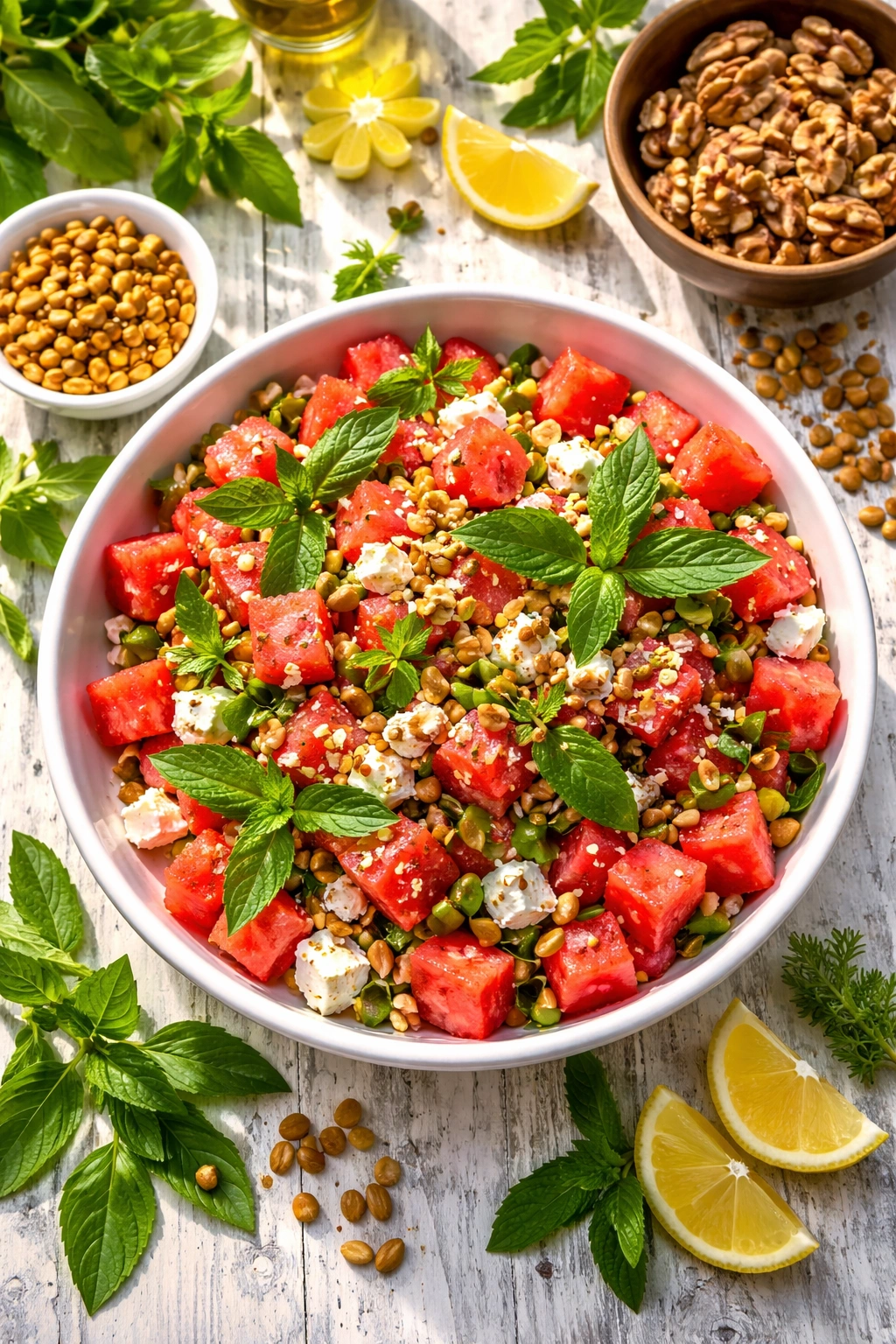
This basic formula is incredibly flexible. You can play with almost every component and end up with something delicious. One of my favorite variations is to add candied or roasted pepitas (pumpkin seeds) for crunch and a subtle nuttiness that complements the feta beautifully. Toast about ¼ cup of raw pepitas in a dry skillet over medium heat for 3 to 4 minutes until fragrant, then toss with a tiny pinch of salt and a small drizzle of honey. Add these to the salad just before serving so they stay crispy.
Switching up the herbs opens up interesting possibilities. Basil creates a more Italian feeling—try using Thai basil for something with slight anise notes, or regular sweet basil for a more traditional approach. The basil flavor intensity is slightly higher than mint, so use a bit less. Flat-leaf parsley also works, though it’s more subtle and grassy rather than cool and refreshing.
If you want to add more substance or make this into more of a complete meal, add crumbled toasted walnuts or pine nuts for protein and richness. Toast them separately in a dry pan first to bring out their flavor, then scatter them over the salad. About ¼ cup per serving is sufficient. They add body without overwhelming the delicate watermelon flavor.
For a Mediterranean twist, add a handful of good Kalamata olives, pitted and halved. The briny, intense flavor of olives pairs beautifully with watermelon and feta, though use them sparingly—they’re assertive and can easily dominate if you get too generous.
A sliced cucumber adds another cooling, refreshing element, especially if you’re serving this salad during particularly hot weather. Slice an English cucumber (the long seedless variety) into thin half-moons and treat it the same way as the watermelon.
If you want to make this salad a bit more substantial, add some hearty greens. A few handfuls of peppery arugula or tender spinach underneath or mixed into the salad creates a more complete dish while still keeping the bright, fresh character. The cool watermelon and feta balance out any bitterness in the greens.
For something different, swap the red wine vinegar for white balsamic vinegar, which is sweeter and less acidic than regular balsamic. This creates a different flavor balance that’s excellent if you prefer a less sharp vinaigrette. You might need slightly more vinegar since it’s less assertive than red wine vinegar.
Try adding a tiny pinch of Aleppo pepper or smoked paprika to the vinaigrette for subtle depth and color. These add warmth and complexity without being spicy or overwhelming. Start with just a pinch—¼ teaspoon in the entire batch of dressing is usually sufficient.
A touch of orange zest adds surprising brightness. Finely zest half an orange directly into the vinaigrette, or add it to the finished salad as a garnish. The citrus notes tie everything together and add a floral quality.
Storage and Make-Ahead Strategies
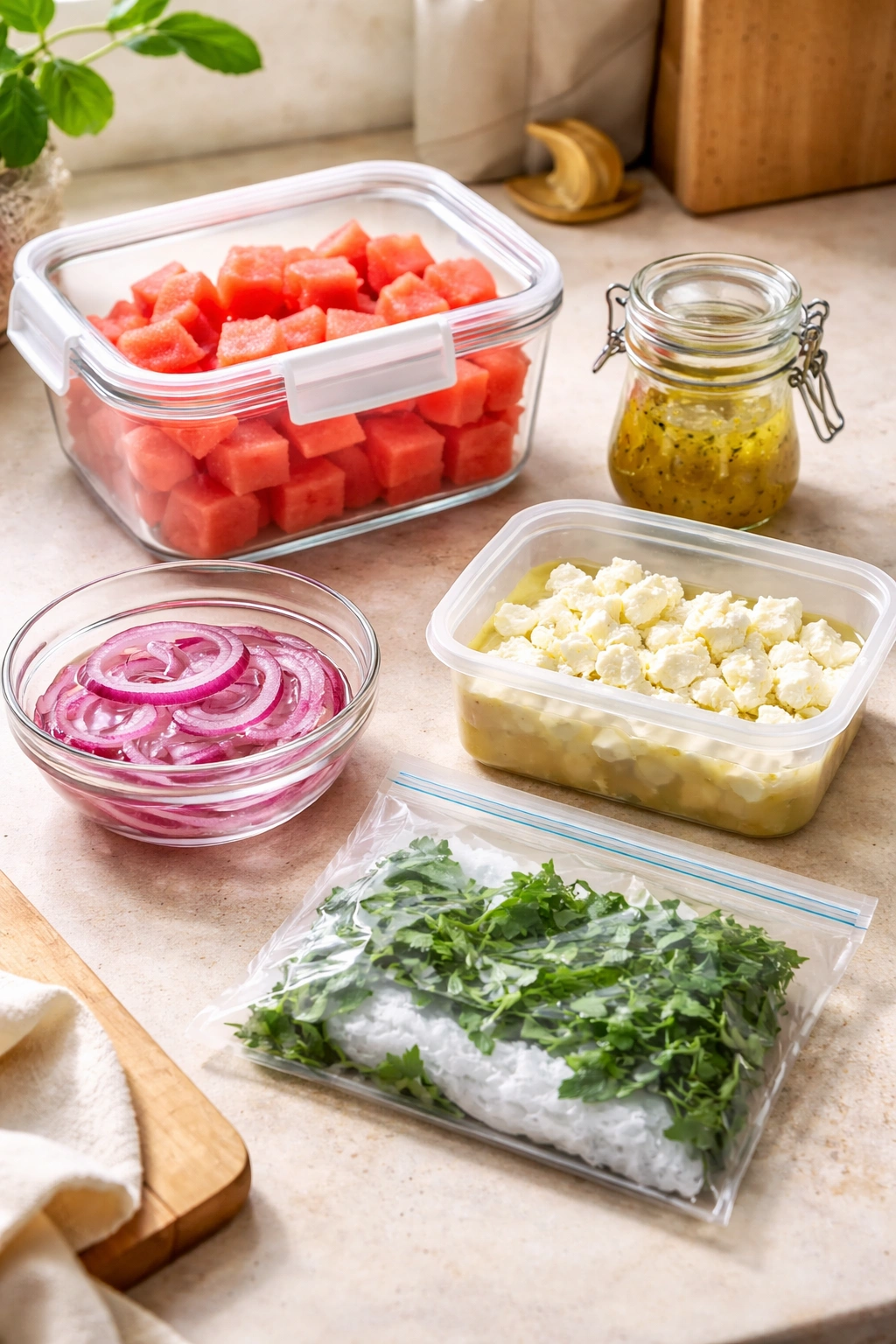
The individual components of this salad can be prepped in advance, which is wonderful if you’re hosting a gathering. Cut the watermelon and store it in an airtight container in the refrigerator for up to 24 hours before serving. The melon will lose some texture and firmness over time, so don’t cut it more than a day ahead.
Prepare the vinaigrette and store it in a small jar or bowl, covered with plastic wrap or a tight-fitting lid, for up to 2 days in the refrigerator. It may separate slightly as it sits—just whisk it again before using.
Slice the red onion and store it in a container of cool water (which mellows the sharpness) in the refrigerator for up to 2 days. This actually improves the onion by making it less aggressively sharp.
Crumble the feta and store it in an airtight container in the refrigerator in its own brine (the salty liquid it comes in) for up to a week. Don’t cover it in fresh water, as that will make it bland. Keep it in the original brine or in a mixture of equal parts water and salt.
Tear the fresh herbs and store them in a plastic bag with a damp paper towel in the refrigerator, but don’t do this more than a few hours ahead—herbs that are torn and stored will begin to oxidize and brown. It’s better to tear them fresh right before assembly.
Important: Do not assemble the complete salad more than 45 minutes before serving. Once the watermelon, feta, and dressing come together, the salad begins to decline in quality. The watermelon releases water, the dressing becomes diluted, and the overall texture suffers. Prep your components ahead, but wait until the last moment to combine them.
If you have leftovers (which is rare because this salad is usually completely gone), store any leftover salad in an airtight container in the refrigerator for up to 24 hours, though the quality will have declined significantly. The watermelon will have released water, and the texture of everything will be soft and mushy rather than crisp and fresh. It’s still edible, but it won’t taste anything like the fresh salad.
Serving Suggestions and Pairings
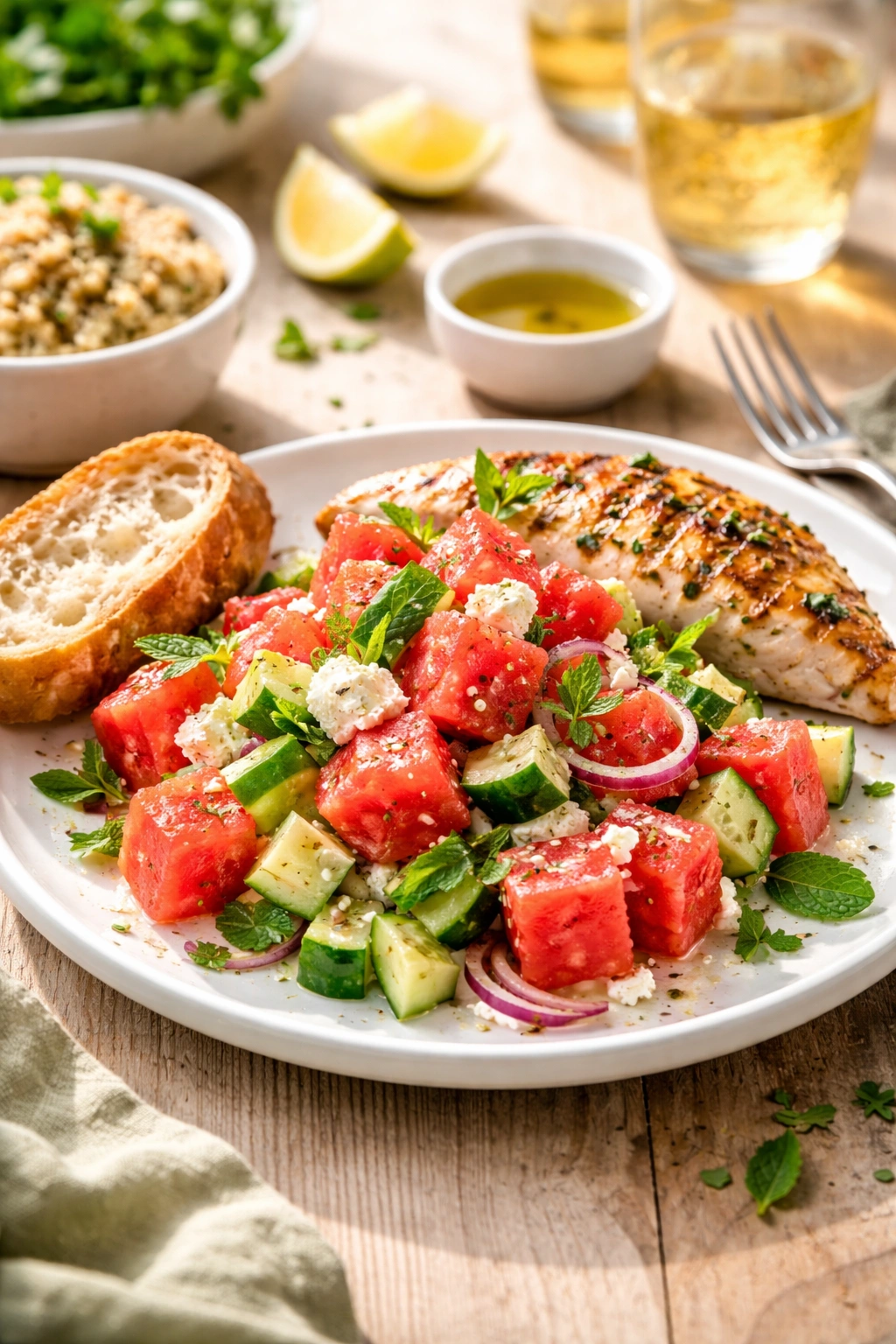
This salad is remarkably versatile. It works beautifully as a light lunch on its own, especially if you serve it with a slice of good bread and perhaps some grilled chicken on the side. The cool, refreshing quality makes it perfect for warm-weather eating when you don’t want anything heavy.
As a side dish, it pairs exceptionally well with grilled proteins. Serve it alongside grilled salmon, shrimp kebabs, lamb chops, or chicken. The bright, salty-sweet flavor cuts through the richness of grilled meat and helps cleanse the palate between bites. The acidity of the vinaigrette also aids in digestion of rich foods.
It’s an outstanding accompaniment to lighter grain-based dishes. Serve it alongside herbed couscous, chilled quinoa salad, or farro. The watermelon adds moisture and freshness that keeps these grains from feeling dry, and the contrasting flavors make the meal more interesting.
For a vegetarian main course, pair this salad with grilled halloumi cheese (which becomes creamy and soft when heated) or crispy tofu for added protein and substance. A warm component alongside the cool salad creates nice temperature contrast and makes the meal more balanced.
Serve this salad as an elegant first course at a summer dinner party, plating it on chilled white plates and making sure each serving has a beautiful mix of watermelon, feta, herbs, and red onion. The visual appeal is part of the charm.
It works as part of a mezze or tapas-style spread, alongside other Mediterranean dishes like hummus, grilled vegetables, warm pita bread, and olives. The salad’s bright flavors complement these other dishes without competing with them.
For beverages, this salad pairs beautifully with crisp white wines like Sauvignon Blanc or Pinot Grigio. The acidity and mineral quality of white wine complement the salty feta and bright herbs without being overwhelmed by the sweetness of the melon. A very cold rosé is also excellent. For non-alcoholic options, try iced herbal tea (mint or chamomile are particularly good), sparkling water with fresh lemon, or fresh lemonade.
Serve this salad on a hot day when people are seeking something refreshing and light. The cold watermelon and mint are naturally cooling, and the high water content makes this an excellent choice for staying hydrated. The feta adds just enough richness and substance to make it feel like actual food rather than just a snack.
Final Thoughts
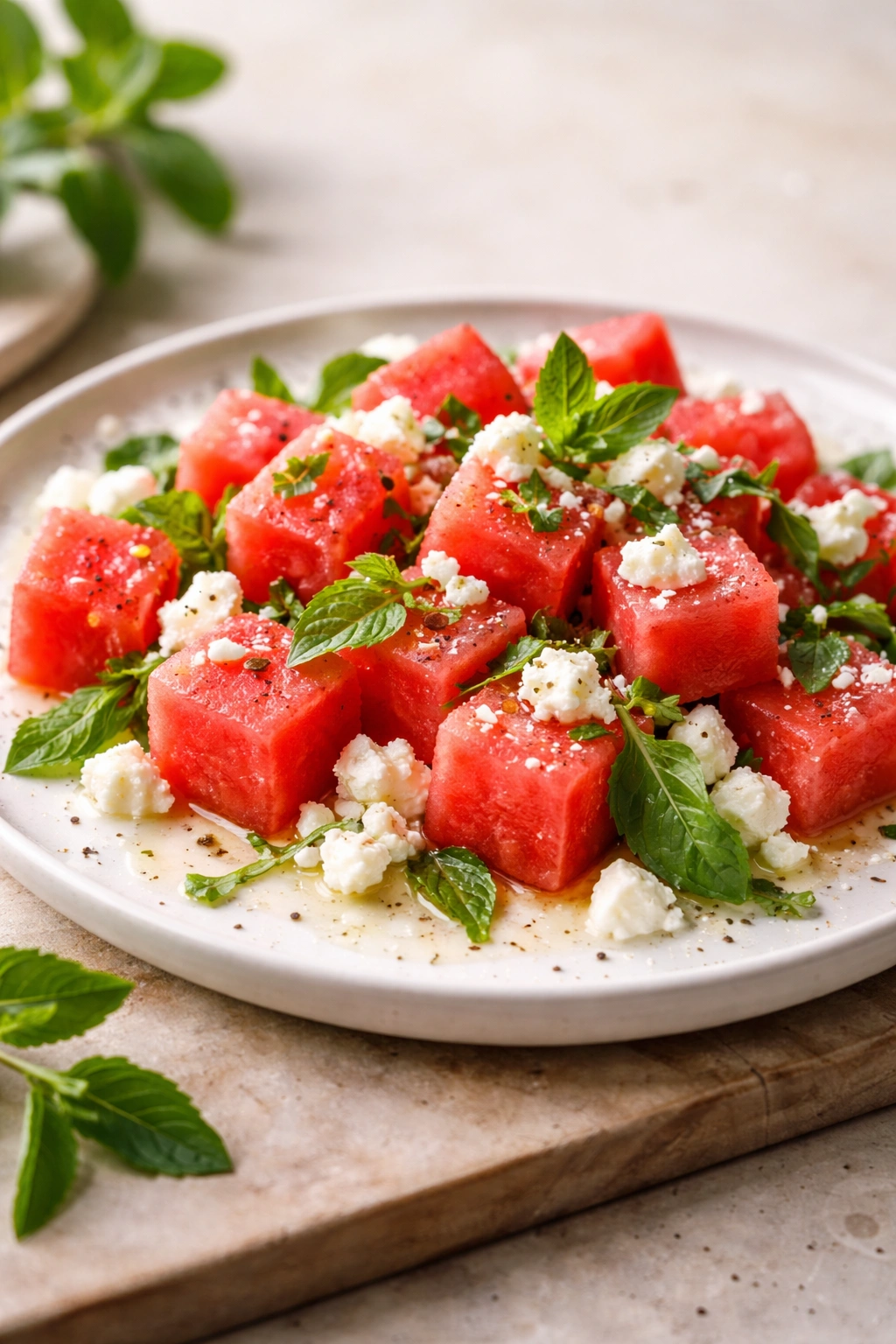
What makes this salad special isn’t the complexity of the recipe—it’s the quality of the ingredients and the care you take in selecting and combining them. You’re starting with a handful of beautiful, simple components and letting them shine rather than covering them up with elaborate cooking techniques or heavy sauces.
The contrast between sweet and salty, cool and creamy, crisp and tender is what keeps you coming back for another bite. There’s something deeply satisfying about a salad that tastes as good as it looks and comes together without any fuss or stress. It’s the kind of dish that reminds you why simple food is often the best food.
Make this salad regularly during the season when watermelons are at their peak, and play with variations to keep it interesting. Use it as an excuse to seek out the best watermelon at your market, to taste several types of feta and find one you love, and to appreciate fresh herbs at their most vibrant. A great salad like this comes from paying attention to every detail, and the payoff is worth the effort.
