



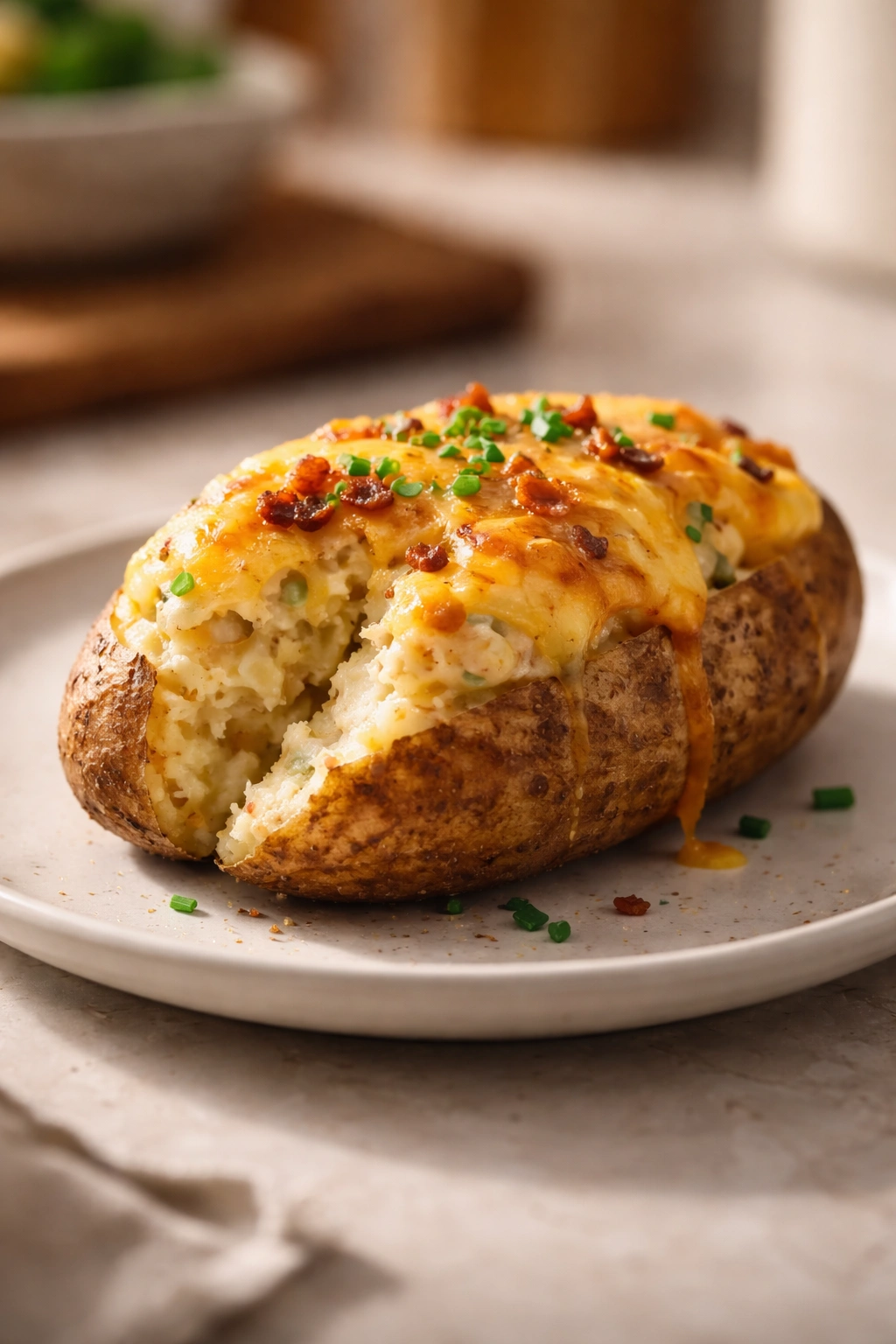
Twice-baked potatoes feel like they belong on a special-occasion menu, yet they’re actually one of the easiest sides you can assemble. They look impressive when they arrive at the table—golden, puffy, and topped with melted cheese—but the technique is straightforward enough that you can make them on a Tuesday without stress. What makes them genuinely valuable isn’t just their appearance, though. A well-made twice-baked potato delivers texture, it keeps warm without drying out, and it pairs beautifully with everything from grilled steak to roasted chicken to a simple weeknight meal. They’re also forgiving—you can prep them hours ahead, customize them to match what’s in your kitchen, and reheat them without losing their creamy interior or crispy skin.
The best part? They don’t demand your constant attention while everything else on the table is cooking. You bake them once, scoop and prepare the filling while they cool slightly, stuff them back in their skins, and finish them with a quick final bake. That two-stage approach actually works in your favor for timing—you can complete the first bake while your oven is occupied with something else, then give them their second life when you’re ready to plate dinner.
A Classic Dinner Side That Never Gets Old
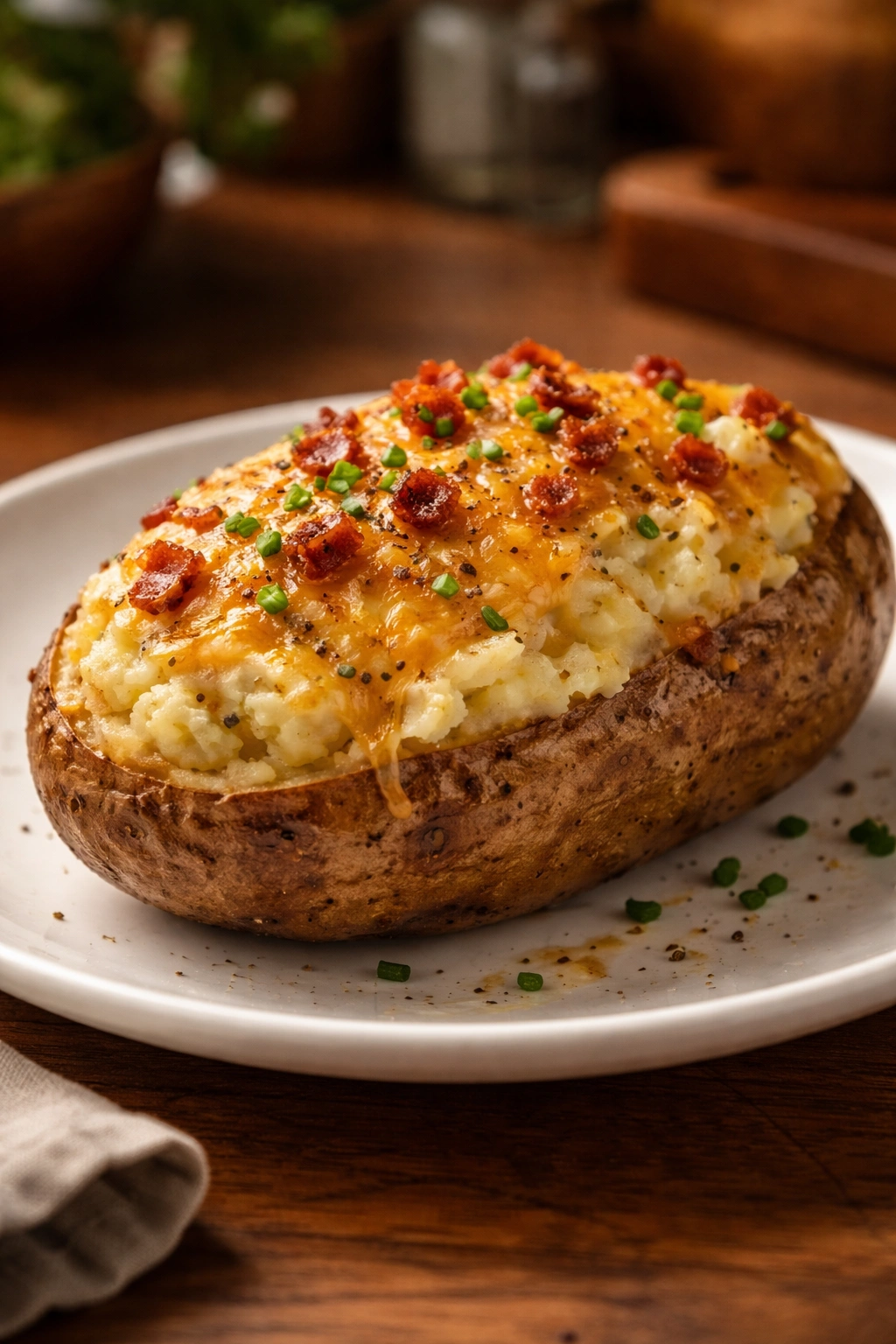
Twice-baked potatoes have been showing up at American tables since at least the 1950s, though the technique likely goes back further—any time cooks figured out that the insides of a baked potato were valuable enough to save, separate, and repurpose. The version we know today is pure comfort food: a baked russet potato, its fluffy interior mixed with butter, sour cream, cheese, and bacon or chives, then baked again until the top browns. It’s not complicated or fancy, which is exactly why it works.
What’s changed over the decades is mostly the flavor customizations. The bones of the dish remain the same—a sturdy potato skin that holds everything together—but the filling has room for interpretation. Some versions stay strictly classic (bacon, cheddar, chives), while others add caramelized onions, roasted garlic, fresh herbs, or even jalapeños for heat. The fundamental formula works with all of them because the potato itself is neutral enough to support whatever you decide to add.
This makes twice-baked potatoes one of those rare dishes that genuinely belongs on both everyday tables and more formal dinners. They’re humble enough for a weeknight side with grilled chicken, but elegant enough to serve alongside a beef roast when you’re entertaining. They travel well to potlucks, they’re easy to scale up or down, and they appeal to most palates without much fussing.
Why These Deserve a Spot on Every Table
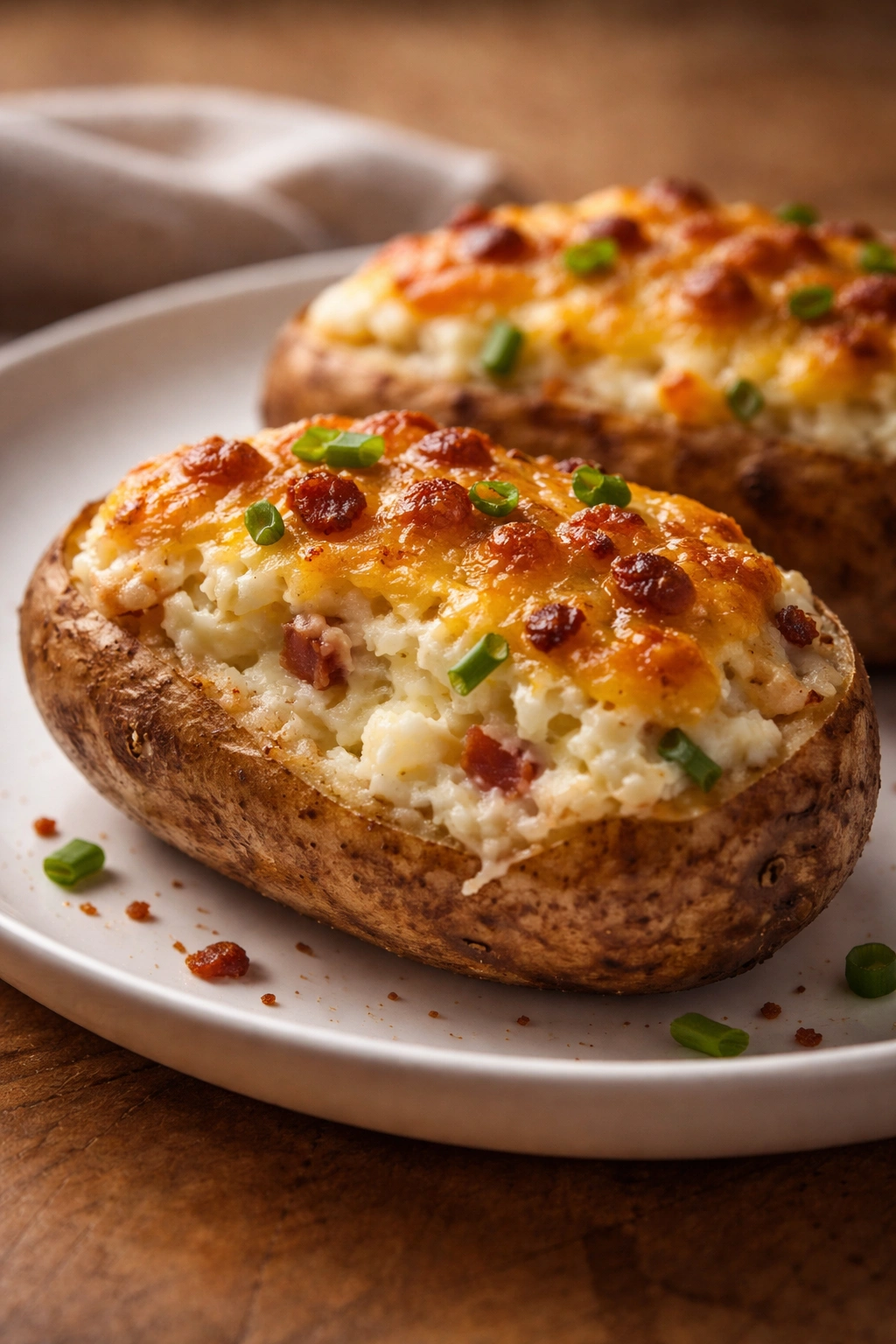
The texture contrast is what really makes twice-baked potatoes shine. You get the crispy, slightly salty exterior of the potato skin, the creamy, buttery interior studded with cheese and mix-ins, and often a browned, crunchy topping—three completely different sensations in every bite. That combination is harder to achieve with other sides, and it’s why people remember these long after they’ve forgotten about a basic baked potato or mashed potatoes.
They’re also genuinely convenient for the cook. Most side dishes demand your presence—you’re stirring, adjusting heat, watching something boil over, or keeping something warm once it’s done. Twice-baked potatoes are different. You get both bakes done during the time your main course is cooking, and they actually improve slightly if they sit for a few minutes after coming out of the oven. There’s no stress about timing them perfectly alongside other dishes.
The third advantage is flexibility. You can make them in advance, freeze them, thaw them, and reheat them without any real loss of quality. You can customize the filling to your preferences without changing the basic structure. You can add luxurious ingredients like smoked salmon and crème fraîche, or keep them simple with just butter and sharp cheddar. The potato skin is the container—everything inside is negotiable.
Selecting Potatoes That Will Hold Up Beautifully
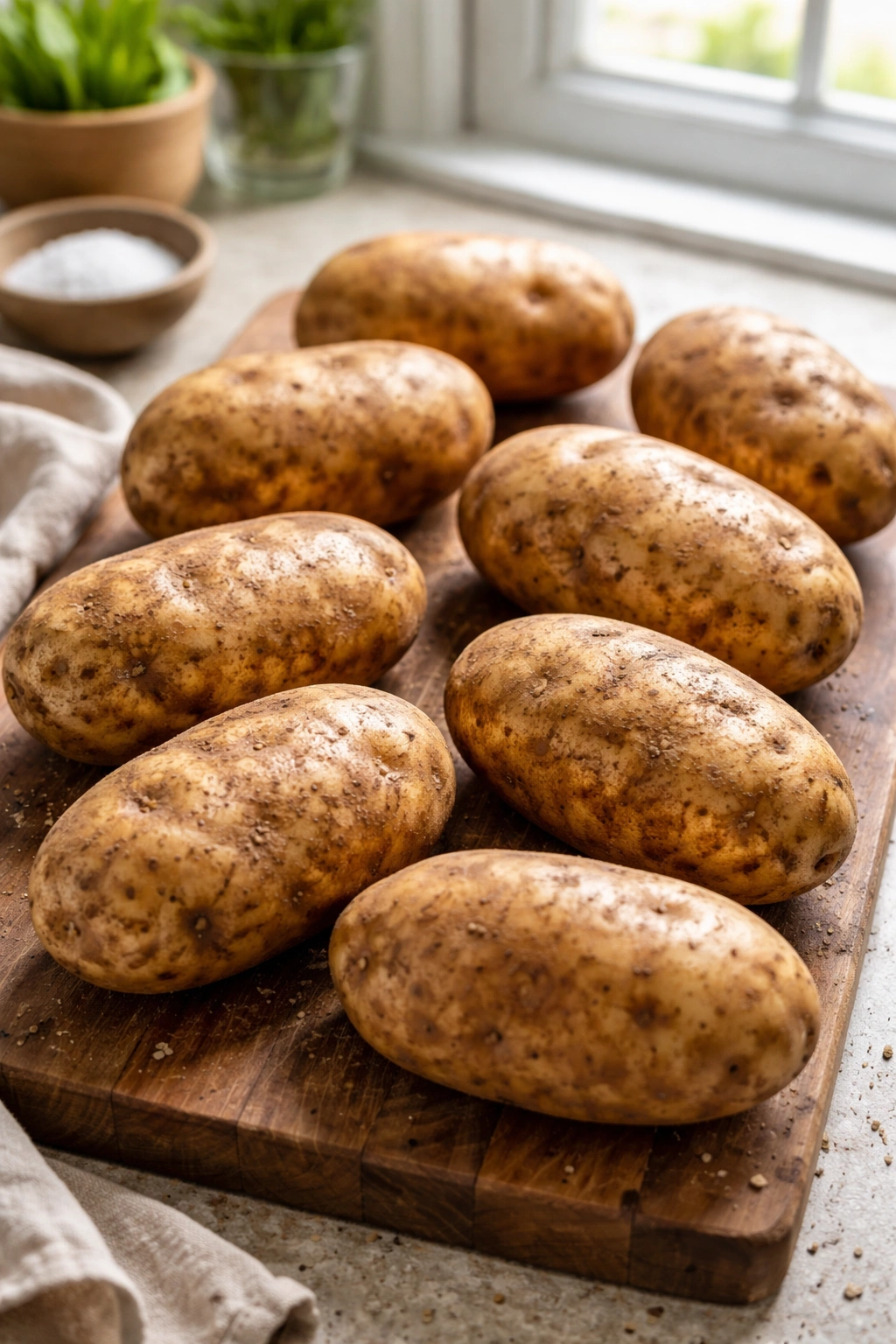
Size matters more than you might think with twice-baked potatoes. You want medium to large russet potatoes—roughly the size of your fist or slightly larger. Too small, and you won’t have enough room for a generous filling; too large, and the baking time extends awkwardly, and the insides can become mealy before the outside finishes cooking. Russet potatoes are the right choice here, not red potatoes or fingerlings. Russets have the starch content and texture that makes them fluffy when baked and sturdy enough to hold the filling without collapsing.
Choose potatoes that are roughly similar in size so they bake evenly. One giant potato and four tiny ones mean uneven cooking—some will dry out while others are still raw inside. Hold each potato and look for one that feels dense and solid, not soft or sprouting. A little dirt on the skin is actually a good sign; it means the potato hasn’t been sitting in cold storage too long.
Before baking, scrub them under running water with a stiff brush or the rough side of a sponge to remove all the dirt. Dry them thoroughly, then prick each one multiple times with a fork—four or five deep pricks on all sides. This prevents steam from building up and exploding inside the oven, though it’s rare that it actually happens. The holes also help them bake more evenly.
The Magic of the Creamy Potato Filling
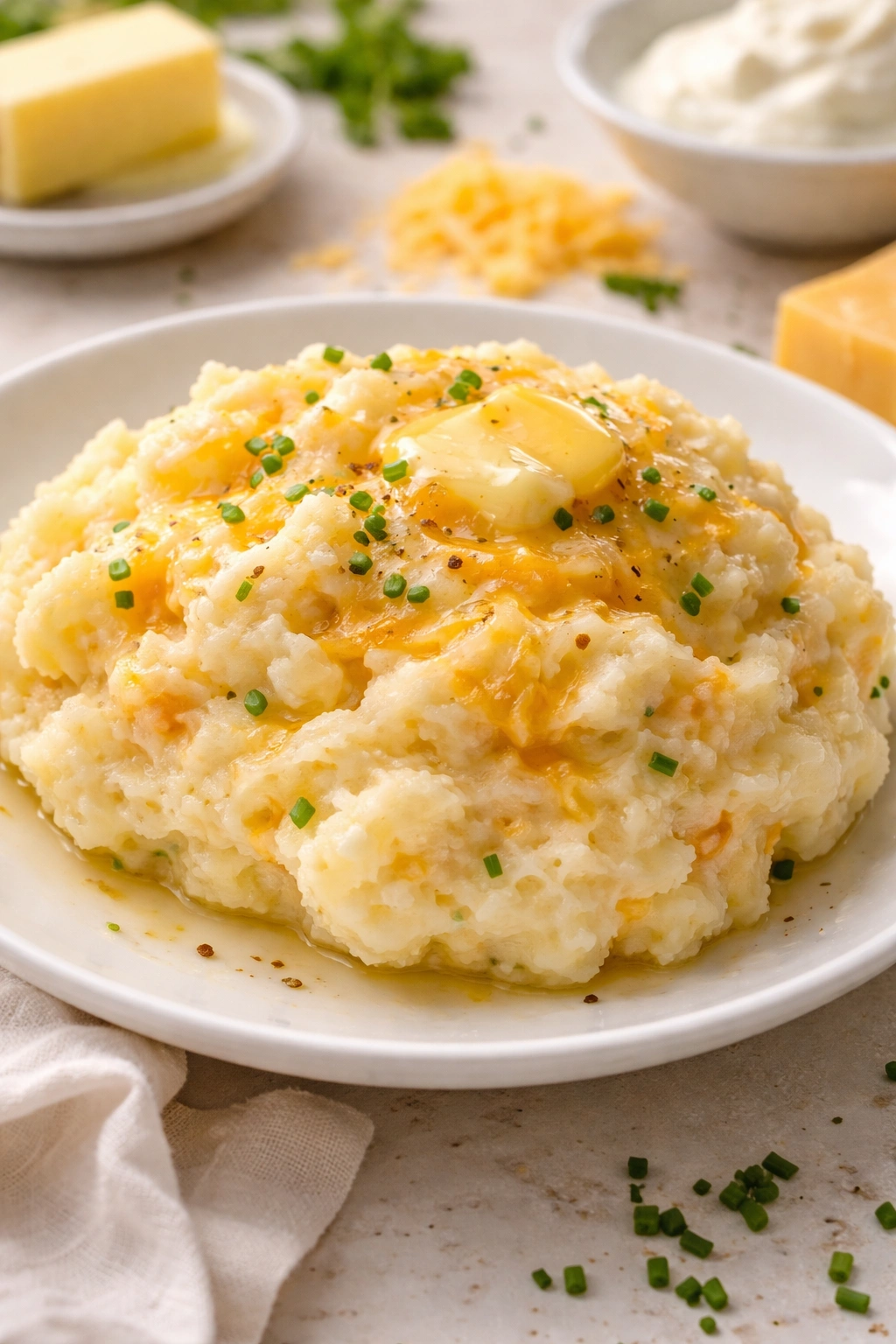
The filling is where twice-baked potatoes get their personality. The base is always the same: scooped potato insides mixed with butter, sour cream, and cheese. That combination creates the creamy texture and rich flavor that makes this dish crave-worthy. Sour cream is essential—regular cream or milk won’t give you the same tanginess and richness, and it changes the texture to something more pudding-like than fluffy.
Use full-fat sour cream, not the light version. The fat is what carries the flavor and keeps the filling from getting gelatinous when it’s reheated. Plan on about one part sour cream to two parts scooped potato (you’ll have roughly two cups of scooped potato insides from four medium russets, so aim for about ¾ to 1 cup of sour cream).
For cheese, sharp cheddar is classic, but gruyère adds a nuttier note, and a combination of cheddar and parmesan gives more depth than either alone. Shred your own cheese if possible—pre-shredded cheese has anti-caking agents that sometimes make the filling feel grainy. Plan on about 1 to 1½ cups of cheese total per four potatoes. Some of it gets mixed into the filling, and some goes on top for that browned, melted exterior.
The butter shouldn’t be skipped, even though you’re already using sour cream. It adds richness that sour cream alone can’t provide, and it helps the filling stay creamy through reheating. Aim for about 3 to 4 tablespoons (one-half stick) per four potatoes. Add it while the scooped-out potato insides are still warm so it melts and incorporates evenly.
Building Bold Flavors on Top
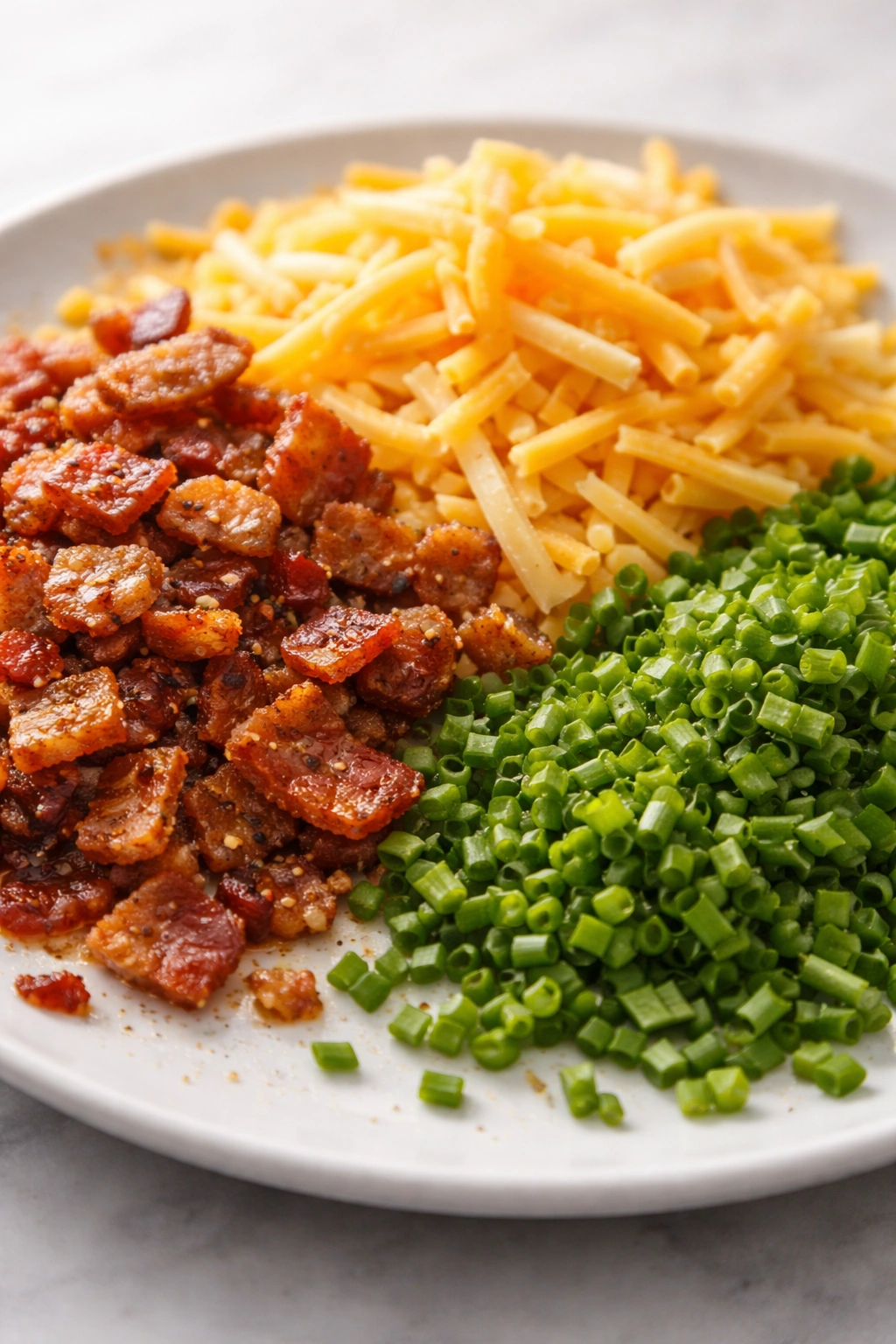
The filling base is creamy and comforting, but what makes twice-baked potatoes truly memorable is what you add on top and mix in. Bacon is the classic—crispy, salty, smoky bacon mixed into the filling and sprinkled on top gives you that contrast of textures. If you’re making four potatoes, cook about 6 to 8 slices of bacon, crumble it, and use roughly half in the filling and half on the topping.
Fresh chives are nearly essential; their mild onion flavor and bright green color add freshness without overpowering anything else. Minced fresh parsley works too, or a combination of both. If you want more savory depth, add a teaspoon or two of Dijon mustard to the filling, or mince some garlic fine and mix it in—just don’t add raw garlic cloves; cook them first or the flavor will be harsh.
Some versions add a little bit of heat with a pinch of cayenne pepper or a few sliced jalapeños mixed into the filling. Others incorporate caramelized onions, which add sweetness and depth. The point is that you’re building flavor layers—creamy base, rich cheese, savory protein, fresh herbs—so that every bite has interest.
For the topping that goes on before the second bake, combine shredded cheese with panko breadcrumbs and a bit of melted butter, then sprinkle it over the filled potatoes. This creates a crispy, golden crust that’s visually stunning and adds textural contrast. Some recipes skip the breadcrumbs and just use cheese, which is fine—you’ll get a crispier, more intensely cheesy top without the breadcrumbs.
Picking Out Your Ingredients
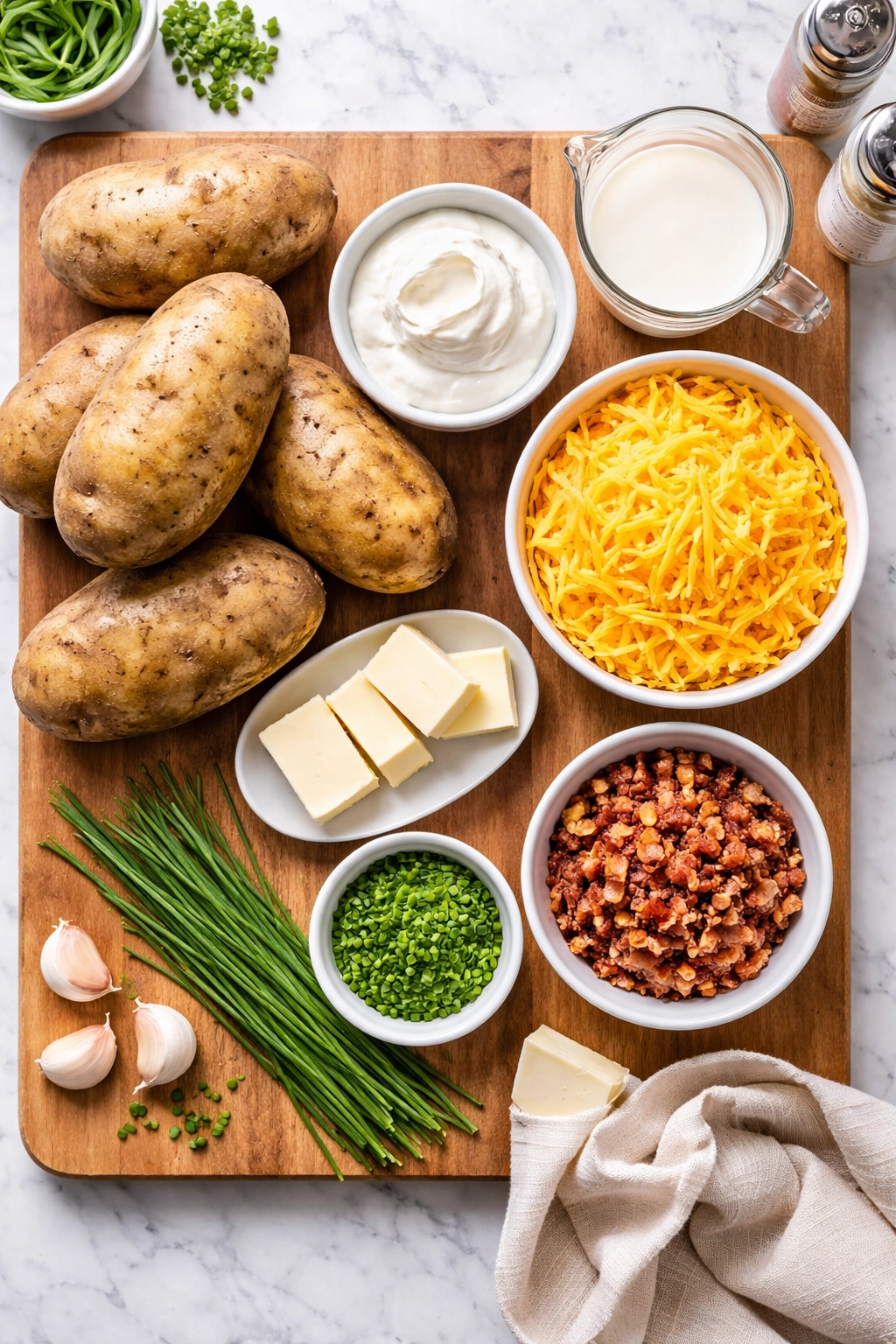
For the Potatoes:
- 4 medium to large russet potatoes (about 8-10 ounces each)
- 3 tablespoons unsalted butter
- ¾ cup full-fat sour cream
- ½ cup heavy cream (or whole milk, though cream is richer)
- 1 cup sharp cheddar cheese, shredded, divided (more for topping, less for filling)
- ¼ cup finely minced fresh chives (or fresh parsley, or a combination)
- 6 to 8 slices bacon, cooked and crumbled, divided (use half in filling, half for topping)
- ¼ teaspoon freshly ground black pepper
- ¼ teaspoon fine sea salt, plus more to taste
- Pinch of garlic powder (optional but recommended—about ⅛ teaspoon)
For the Topping:
- ½ cup shredded cheddar or gruyère
- ¼ cup panko breadcrumbs
- 2 tablespoons unsalted butter, melted
- ¼ teaspoon coarse sea salt
Yield: Serves 4 as a generous side dish (one stuffed potato per person) or 8 as a smaller side (half a potato per person)
Prep Time: 25 minutes (includes baking and cooling the potatoes)
Cook Time: 50 minutes total (initial bake: 40 minutes; second bake: 10-12 minutes)
Total Time: 1 hour 15 minutes (plus cooling time between bakes)
Difficulty: Beginner — The technique is straightforward and forgiving. No special equipment or advanced skills are required; the two-stage baking method means there’s time to work without rushing.
Making Twice-Baked Potatoes From Start to Finish
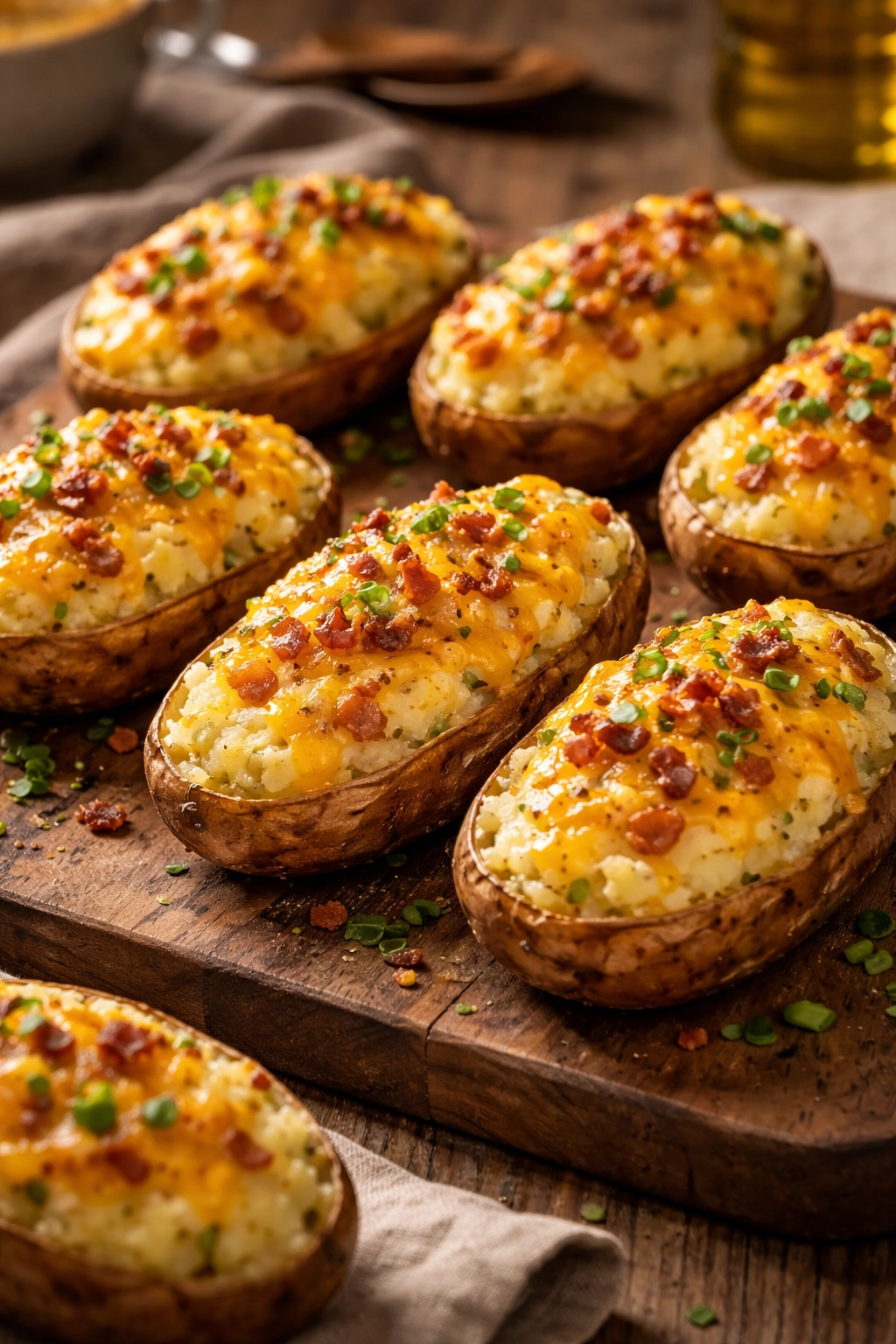
Prepare and Bake the Potatoes:
-
Preheat your oven to 400°F (200°C) and position the rack in the center of the oven. Line a rimmed baking sheet with aluminum foil or parchment paper for easy cleanup.
-
Scrub each potato thoroughly under running water with a stiff brush to remove all dirt. Pat them completely dry with a kitchen towel.
-
Prick each potato 4-5 times all over with a fork, pressing the tines deep into the flesh. This prevents steam from building up inside during baking.
Advertisements -
Place the potatoes directly on the prepared baking sheet. Do not wrap them in foil. You want the skin to develop a slight crisp, which happens only with direct heat.
-
Bake for 40-45 minutes, until the skin is light brown and the interior feels completely tender when pierced with a fork (insert the fork through one of your prick holes—it should slide through with no resistance).
-
Remove from the oven and let the potatoes cool for about 5 minutes until they’re cool enough to handle but still quite warm (this makes scooping the insides much easier).
Scoop and Prepare the Filling:
-
Working with one potato at a time, carefully cut it in half lengthwise. A sharp serrated knife works better than a straight blade for this—the saw motion is less likely to cause the hot potato to slip.
-
Using a sturdy spoon (an old-fashioned metal measuring spoon works well), scoop out the insides of each potato half, leaving about ¼-inch shell all around so the skin stays structurally sound. Transfer the scooped insides to a large bowl. You should have roughly 2 cups total.
-
Place the hollowed potato skins skin-side down on the baking sheet. Set aside.
-
While the scooped potato is still hot, add the butter, sour cream, and heavy cream to the bowl. Gently fold together until mostly combined—some lumps are fine and actually desirable; you want the texture to be fluffy, not smooth and uniform.
-
Add ½ cup of the shredded cheese, the chives, half of the cooked bacon crumbles, the black pepper, and the salt. Fold gently until everything is evenly distributed. Taste the mixture and adjust seasoning as needed. It should taste a bit over-seasoned at this point since the potato skins will dilute the flavors slightly when mixed together.
-
Divide the filling evenly among the eight potato skin halves, mounding it generously and smoothing the top with the back of a spoon.
Advertisements
Make the Topping and Final Bake:
-
In a small bowl, combine the remaining ½ cup shredded cheese with the panko breadcrumbs and the coarse salt. Drizzle the melted butter over the mixture and toss with a fork until the breadcrumbs are evenly coated and resemble coarse sand.
-
Sprinkle the crumb mixture evenly over the top of each filled potato half, pressing it gently so it adheres. Top each with a pinch of the remaining bacon crumbles.
-
Return the filled potatoes to the oven (no need to increase the temperature) and bake for 10-12 minutes, until the topping is light golden brown and the filling is heated through. If you’re making these from completely chilled (after refrigerating assembled potatoes), add 3-5 extra minutes to the baking time.
-
Remove from the oven and let rest for 2-3 minutes before serving. This allows the filling to set slightly and makes them easier to handle.
The Secrets That Guarantee Perfect Results
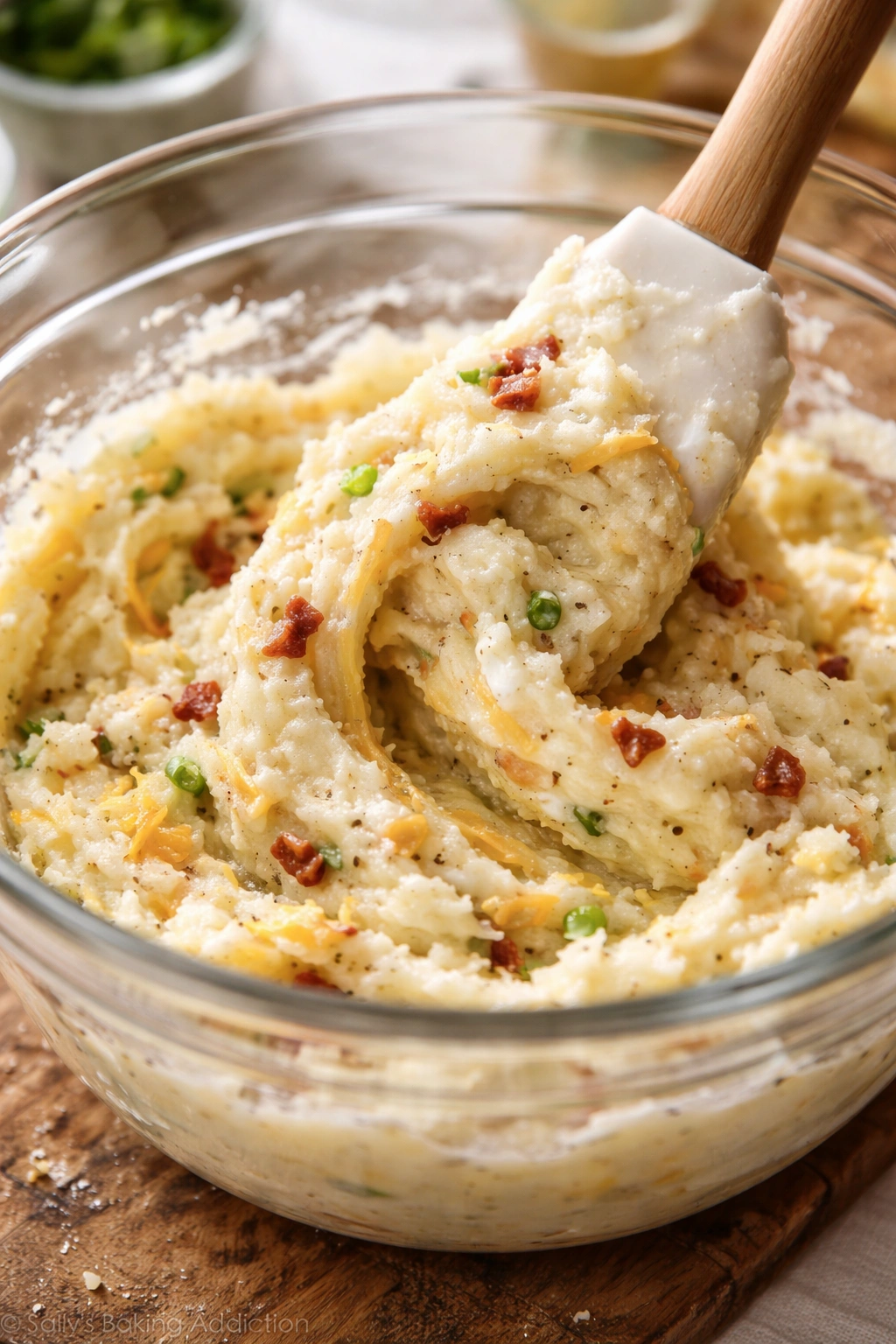
The texture of your filling depends entirely on how you combine the ingredients. Fold gently—don’t stir vigorously. When you’re too aggressive, you develop gluten in the potato, which makes the insides dense and gluey instead of fluffy. Think of it like folding egg whites into a soufflé batter; the goal is to combine without deflating or overworking. A few lumps of potato in the filling are completely fine and actually preferred.
The second bake is short on purpose. You’re not actually cooking anything at this point—you’re just heating the filling through and browning the top. If you bake the filled potatoes too long, the insides will dry out and the filling will separate. Twelve minutes is about the max for potatoes at room temperature; if they’ve been refrigerated, you might need 15 minutes. The top should be golden, but the filling underneath should still be creamy and soft.
Temperature matters for the initial bake. If your oven runs hot, check the potatoes at 35 minutes instead of the full 40. If it runs cold, they might need closer to 50 minutes. You’ll know they’re done when a fork inserted into the thickest part meets no resistance—the inside should feel almost like soft tofu.
Cool the scooped potatoes slightly before scooping out the insides. If they’re too hot, the flesh will be so soft that you lose it to the spoon and can’t create a sturdy shell. If they’re completely cool, the butter won’t melt evenly into the mixture and the filling will feel gritty instead of creamy. The sweet spot is about 5 minutes of cooling—still plenty warm enough that the butter melts, but cool enough that the insides hold together.
Don’t skip the folding motion in step 10. Simply stirring the hot potato insides with butter and cream looks the same as folding, but the result is different. Folding preserves the airiness of the potato; stirring collapses those air pockets and leaves you with dense, pasty filling instead of fluffy filling.
Where Most People Go Wrong
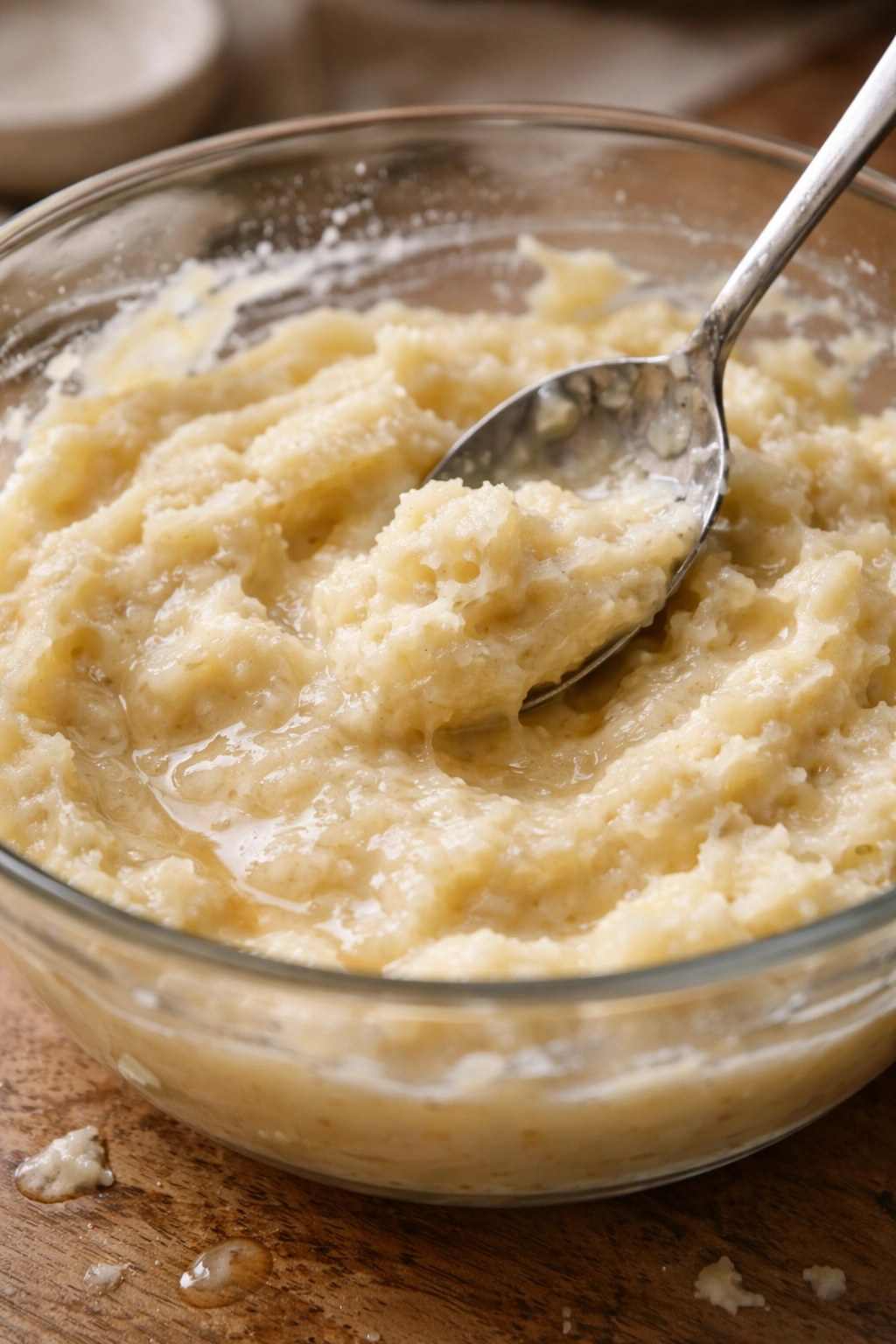
The single biggest mistake is making the filling too wet. When people reheat twice-baked potatoes, they often notice the filling seems watery or separated, and they blame the reheating process. Usually the problem started much earlier—the ratio of sour cream and heavy cream to potato was too high, or they added extra liquid when they shouldn’t have. Use exactly the amounts listed. If your sour cream is particularly thin or tangy, you might use slightly less; if it’s very thick, you might use slightly more. But start with the recipe amounts and adjust only if you have reason to believe your dairy is unusual.
The second common mistake is using pre-shredded cheese with anti-caking agents. This cheese doesn’t melt smoothly into the filling, and when you reheat the potatoes, the cheese can become grainy and separate from the cream. Buy a block of cheddar and grate it yourself. It costs a bit more and takes five extra minutes, but the difference in the final result is noticeable and worth it.
Some people forget to leave enough potato skin intact when scooping. You need a sturdy ¼-inch border all around, or the skins will collapse under the weight of the filling when you try to move them or serve them. If you accidentally create a thin spot, you can patch it by pressing a small piece of aluminum foil underneath, or just be extra careful when handling them.
Underbaking the potatoes in the first bake is another common issue. If the interior isn’t completely tender, the texture will be waxy and unpleasant, and the scooped insides won’t combine smoothly with the other ingredients. The baking time depends on your oven and the exact size of your potatoes, so don’t assume they’re done at exactly the time the recipe says. Use a fork as your guide—it should slide through with zero resistance.
Finally, some people overseason the filling, forgetting that the potato skin is bland and will dilute the flavors. Taste the mixture and adjust seasonings upward slightly from where you think they should be for the final dish. When you mix the filled skins with the filling, the flavor will be perfect. If the filling tastes perfectly seasoned before you stuff it, the final dish will taste underseasoned.
Creative Variations to Personalize Your Batch
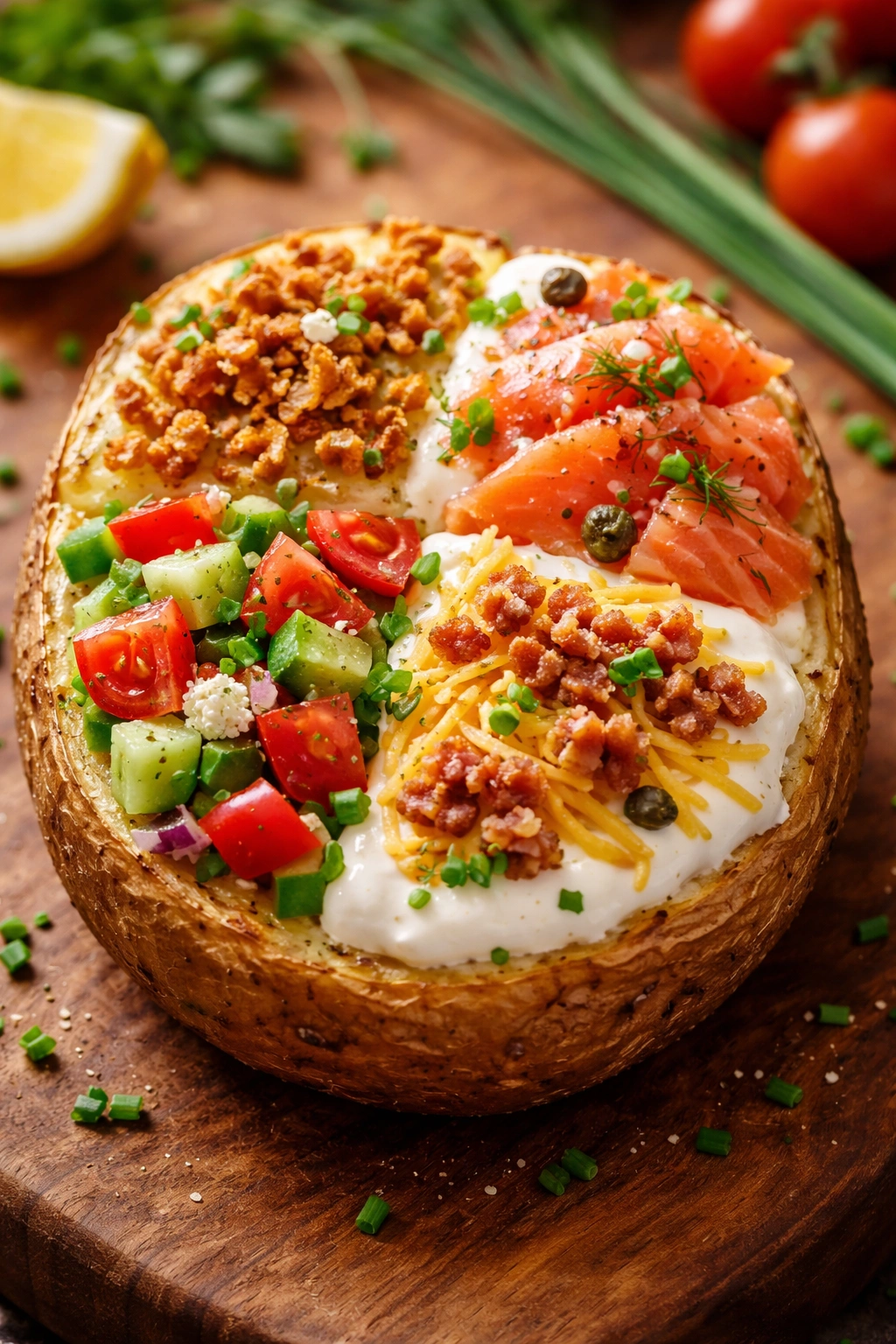
The Loaded Deli Version: Skip the bacon and use smoked salmon or pastrami instead. Add a tablespoon of fresh dill to the filling, use cream cheese mixed with sour cream for extra richness, and top with capers and a squeeze of lemon juice before serving.
The Garden Fresh Approach: Use half the cheese and instead add a cup of finely chopped roasted vegetables—caramelized onions, roasted garlic, roasted red peppers, or a combination. Add fresh basil or tarragon to the chives. This version is lighter but still deeply flavored.
The Buffalo Chicken Version: Mix cooked shredded chicken (rotisserie is perfect) with a few tablespoons of buffalo sauce into the filling. Use blue cheese or a sharp cheddar on top. Add diced celery if you want extra crunch. Serve with a drizzle of ranch dressing.
The Vegetarian Version: Replace the bacon with crispy fried onions or roasted mushrooms for umami depth. Add a tablespoon of whole-grain mustard to the filling and use a combination of sharp cheddar and gruyère. Fresh thyme instead of chives gives it a more sophisticated edge.
The Brunch Version: Mix in 2-3 tablespoons of cream cheese and a beaten egg to the filling, along with minced fresh dill and crispy crumbled sausage. Top with shredded smoked gouda and a few chives. These are phenomenal served with fresh fruit and a salad for a special brunch.
The Spicy Southwestern Version: Add a diced jalapeño (seeds removed unless you like serious heat), a teaspoon of cumin, and ¼ teaspoon of smoked paprika to the filling. Use a blend of cheddar and monterey jack cheese. Top with crispy tortilla strips instead of breadcrumbs and serve with a dollop of sour cream and fresh cilantro.
All of these variations follow the same technique as the classic version—the filling proportions and baking times stay the same, only the flavor components change.
How to Store and Reheat Without Losing Quality
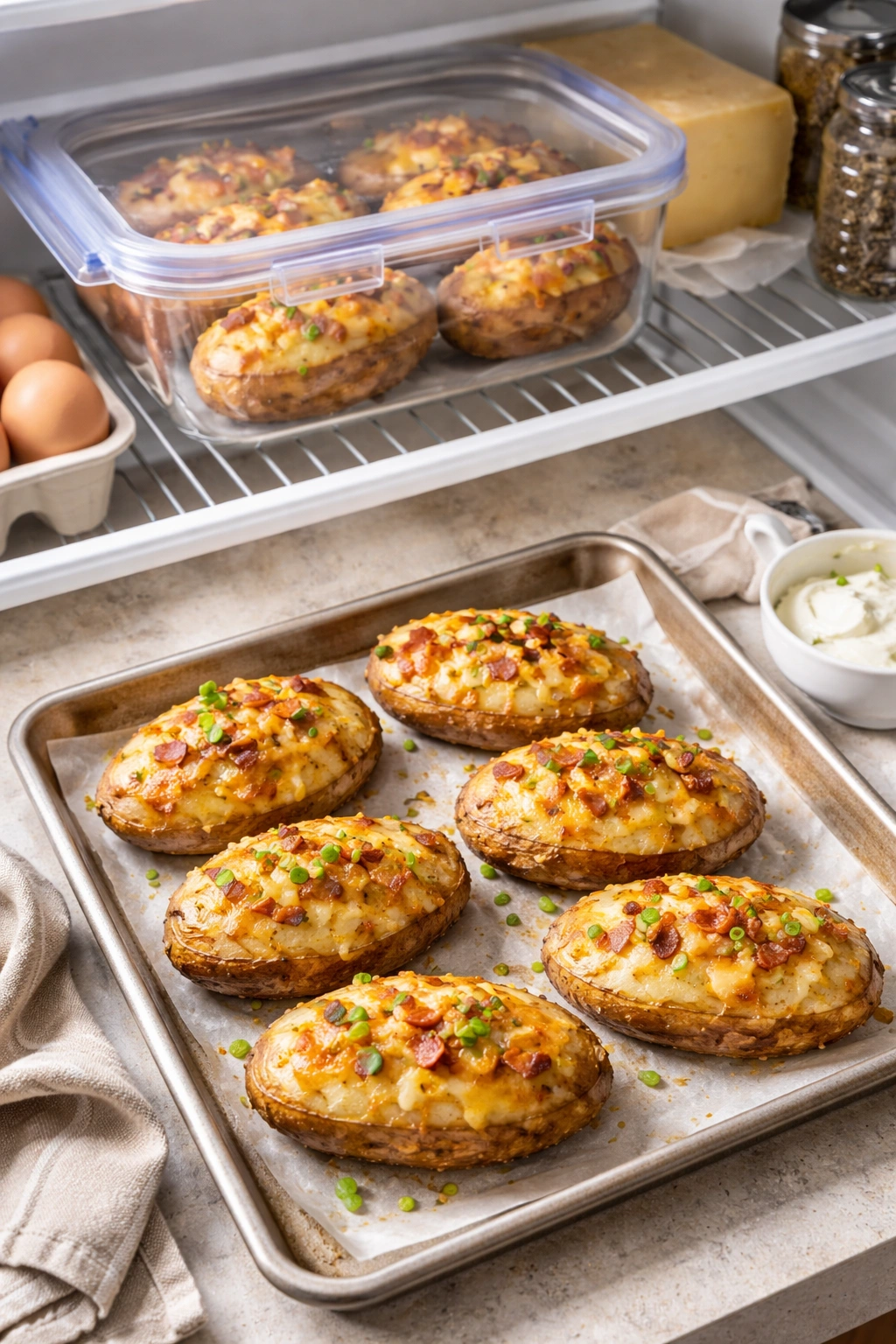
Twice-baked potatoes keep beautifully in the refrigerator for up to 4 days after baking. Let them cool to room temperature first, then transfer them to an airtight container. If you’re stacking them, place parchment paper between layers so the toppings don’t stick together.
To reheat from the refrigerator, place the cold potatoes on a baking sheet and reheat in a 350°F oven for 12-15 minutes, until they’re heated through and the topping is warm and slightly recrispy. Don’t use the microwave unless you’re in a real time crunch—it heats them unevenly and can make the filling rubbery.
You can also freeze twice-baked potatoes before the second bake if you want to make them even further in advance. Assemble the potatoes completely (with topping), cover them well with plastic wrap and then aluminum foil, and freeze for up to 3 months. Reheat directly from the freezer at 350°F for 25-30 minutes, until heated through and the top is golden. You may need an extra few minutes, depending on how frozen they are.
If you freeze after both bakes (which is totally fine and sometimes more convenient), you can reheat them at 375°F for 15-18 minutes, or microwave individual potatoes for 2-3 minutes.
Don’t store them in the potato skins at room temperature for more than an hour or two—cold potatoes are fine, but leftover potatoes sitting at room temperature will dry out and the filling can separate.
What to Serve Alongside These Potatoes
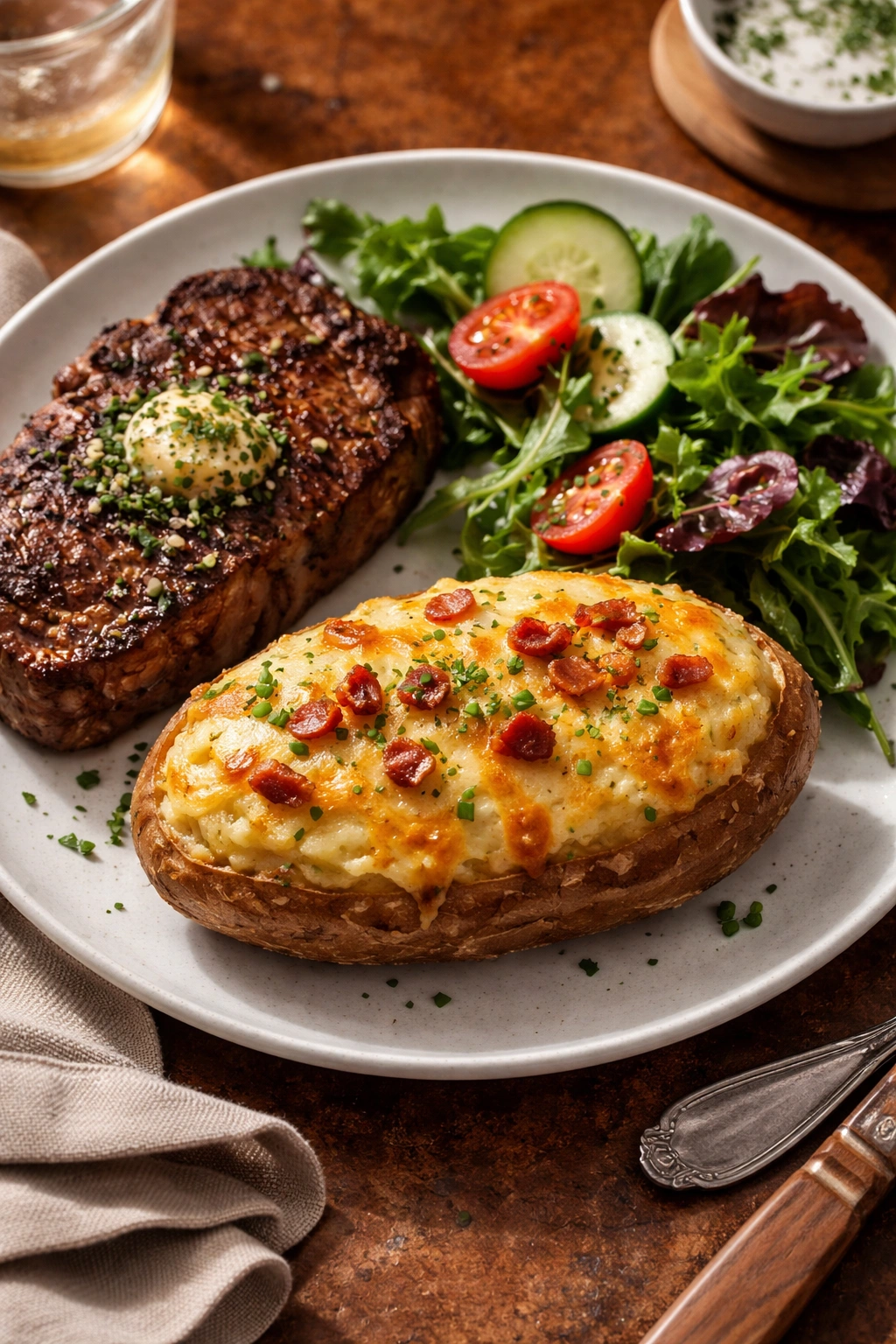
Twice-baked potatoes are rich and satisfying, so they work best with main dishes and sides that don’t compete for attention. They’re perfect alongside a simply grilled or pan-seared steak, where the buttery richness of the potato complements the meat beautifully. They pair equally well with roasted chicken, especially if the chicken has crispy skin and a flavorful seasoning.
For lighter mains, serve twice-baked potatoes with grilled fish or salmon. The cheese and bacon won’t overpower delicate fish, and they provide a comforting textural contrast to any fish preparation.
If you’re serving multiple sides, keep the others relatively simple. A crisp green salad with a sharp vinaigrette works well—the acidity cuts through the richness of the potatoes. Roasted or steamed vegetables that are lightly seasoned (green beans, broccoli, asparagus) add color and nutrition without competing for attention. Skip rich, cream-based sides like creamed corn or au gratin vegetables; they’ll make the meal feel too heavy.
For sauces, serve these alongside simple preparations: a pan sauce from the meat you’re serving, a squeeze of fresh lemon, or a dollop of sour cream mixed with fresh herbs. Hold off on heavy sauces that would add more richness to an already indulgent side.
If you’re serving these at a formal dinner or special occasion, plate them carefully. Set each potato half on the plate with the topping facing forward (not tucked under), and arrange your other components artfully around them. The golden, browned top of a well-made twice-baked potato is genuinely attractive—let it be a focal point.
Final Thoughts
Twice-baked potatoes succeed because they’re simultaneously simple and impressive. The technique isn’t fussy or demanding, yet the result looks like you spent hours in the kitchen. They’re forgiving enough to make confidently on a regular weeknight, but fancy enough to serve when you’re entertaining. They reheat beautifully, they can be customized to match any flavor profile, and they satisfy in a way that simpler sides sometimes don’t.
What really matters is starting with good potatoes, not overworking the filling, and getting the seasoning right. Everything else is negotiable—the specific additions, the toppings, even the baking time can shift slightly based on your oven and your preferences. Once you’ve made them once or twice, you’ll develop an intuition for what works, and you’ll start inventing your own variations.
Keep them in your regular rotation, not just for special occasions. They’re genuinely easy, genuinely delicious, and they make any meal feel a little more complete.
