



Crostini are the easiest way to impress at a party without spending half the day in the kitchen. They’re basically just toasted bread with something delicious on top, yet somehow they feel elegant enough to serve alongside cocktails or bring to a dinner party. The beauty is that you can assemble most of them in under five minutes, and they’re naturally portion-controlled, so guests can grab one or two without feeling guilty. Whether you’re hosting a casual gathering or bringing a dish to share, crostini hit that sweet spot between impressive and stress-free.
The real magic of crostini isn’t complicated—it’s about building layers of flavor with quality ingredients that complement each other. You don’t need fancy techniques or obscure ingredients. A good crostini starts with bread that’s toasted until it’s crispy enough to hold toppings without getting soggy, then you layer on something creamy or spreadable as a base, followed by a main component (protein, vegetable, or legume), and finish with a bright garnish that adds freshness and pop. Once you understand that formula, you can make dozens of variations depending on what’s in your pantry and what season it is.
Here’s what makes crostini perfect for any gathering: you can prep the toasted bread a day or two ahead, make most of the toppings in advance, and assemble them just before serving. No last-minute stress, no hot pans to manage while you’re greeting guests. You’ll find crostini work equally well at a wine and cheese night, a casual appetizer spread, a holiday party, or even as a light lunch. Let me walk you through ten variations that range from classic to creative—every single one comes together faster than you’d expect.
1. Tomato, Basil & Fresh Mozzarella
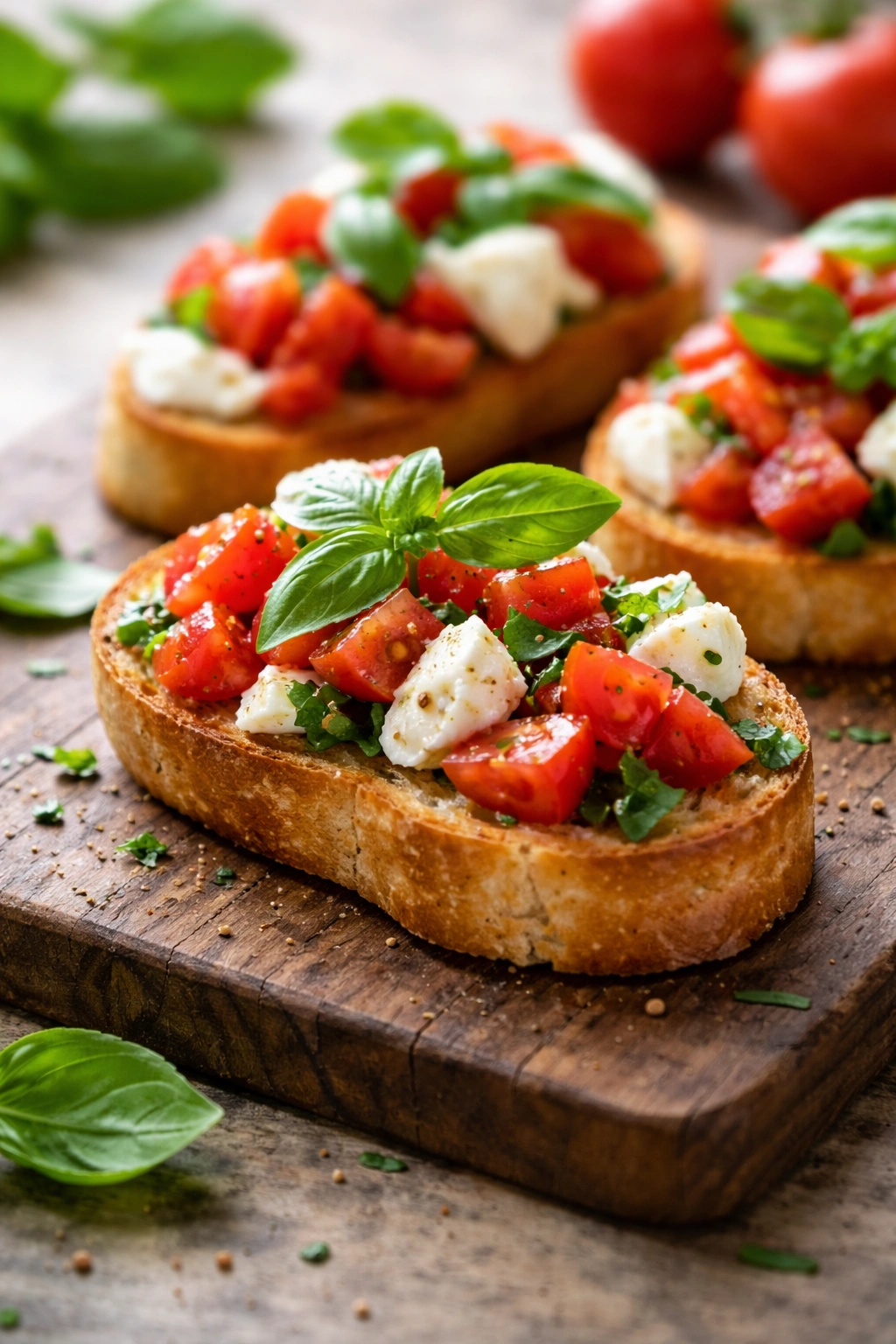
This is the crostini that never goes out of style because the combination just works. Ripe tomatoes, creamy mozzarella, and fresh basil is a flavor pairing that’s been proven over decades of Italian cooking, and it tastes even better when you concentrate all those flavors onto a crispy piece of bread. The key to making this shine is using the best tomatoes you can find—farmers market tomatoes in their peak season, or small heirloom varieties that burst with flavor.
Why This Combo Always Impresses
The contrast between the cool, creamy cheese and the warm crispy bread creates texture that keeps people reaching for more. Fresh basil brings an herbaceous brightness that cuts through the richness of the mozzarella, while a tiny pinch of good sea salt and a whisper of balsamic vinegar wakes everything up. This is proof that simplicity done right beats complicated toppings every time.
What You Actually Need
- 1 baguette, sliced ⅛-inch thick and toasted until golden brown and crispy
- 8 ounces fresh mozzarella (burrata or fior di latte work beautifully), torn into bite-sized pieces
- 3 ripe medium tomatoes, cored and diced small
- ½ cup fresh basil leaves, hand-torn just before serving
- 3 tablespoons good extra-virgin olive oil
- 1 tablespoon aged balsamic vinegar
- Fine sea salt and freshly cracked pepper
Toss the diced tomatoes with a pinch of salt and let them sit for 5 minutes so they release their juices and flavors concentrate. Just before serving, arrange a piece of mozzarella on each toast, top with a small spoonful of tomatoes (drain excess liquid so they don’t make the bread soggy), then scatter basil on top. Finish with the tiniest drizzle of balsamic and olive oil, plus a crack of black pepper. Assemble these no more than 10 minutes before serving to keep the bread from getting soft.
Pro tip: If your tomatoes are watery or out of season, pat them dry with paper towels after dicing to remove excess moisture—this prevents soggy crostini and keeps the bread crispy.
2. Whipped Ricotta with Roasted Garlic & Herbs
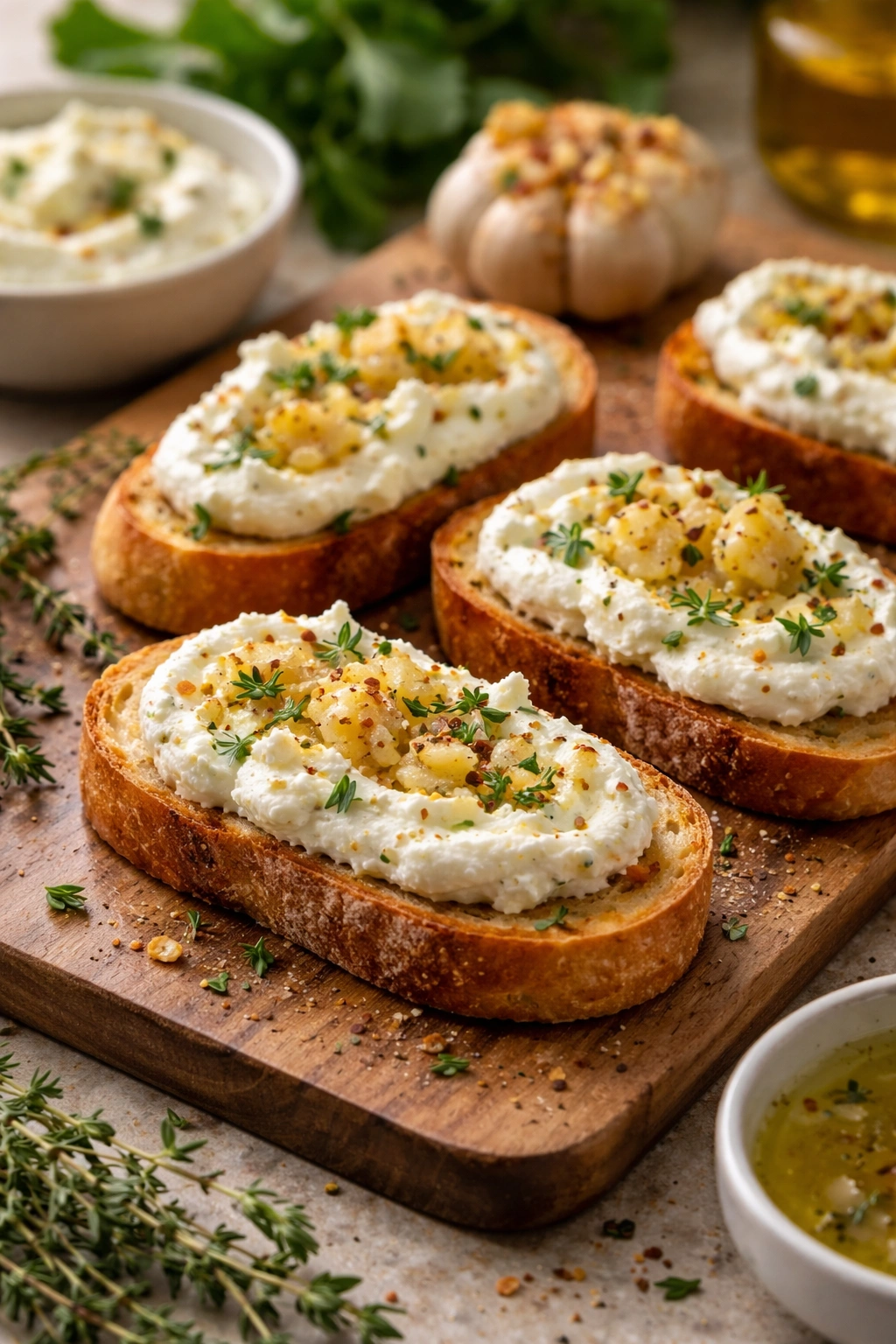
Whipped ricotta is a game-changer for crostini because it’s creamy, mild enough to let other flavors shine, and it spreads easily without tearing the delicate toast. When you whip ricotta with a fork (or pulse it in a food processor for a fluffier texture), it becomes almost cloud-like, and you use less of it per crostini, so a little goes a long way. Roasted garlic adds depth and sweetness—nothing harsh or sharp, just mellow, buttery garlic flavor that makes people ask what’s in the crostini because they can’t quite put their finger on it.
What Makes This Work So Well
Whipped ricotta is neutral enough that it works as a canvas for whatever herbs and toppings you want to layer on top. It soaks up flavors while staying creamy, and it’s simultaneously lighter than cream cheese or mascarpone but more forgiving than plain cheese. The roasted garlic brings umami depth without tasting “garlicky” in the obvious way. This is elegant enough for a wine party but comfortable enough for a casual game night.
Your Building Blocks
- 1 cup whole-milk ricotta cheese, drained if very wet
- 4 cloves roasted garlic (roast in a small dish with olive oil at 400°F for 15 minutes), mashed
- 3 tablespoons good olive oil
- 2 tablespoons fresh lemon juice
- 2 tablespoons mixed fresh herbs (parsley, dill, thyme, or chives), finely chopped
- Fine sea salt and freshly cracked pepper
- 1 baguette, sliced and toasted
- Fleur de sel for finishing (optional but lovely)
Whip the ricotta with a fork (or pulse in a food processor for 10 seconds) until it’s lighter and fluffier. Fold in the roasted garlic, olive oil, lemon juice, and herbs. Taste and adjust salt and pepper. Spread a generous dollop on each toast and finish with a tiny pinch of fleur de sel and a crack of pepper. If you want to fancy it up, top with a single candied walnut, a drizzle of aged balsamic, or a small spoonful of roasted red peppers.
Worth knowing: Roasted garlic can be made several days ahead and stored in an airtight container in the fridge. You can also use jarred roasted garlic if you’re short on time—just drain it well and skip the salt if the jar was already salty.
3. Crispy Prosciutto with Fig Jam & Goat Cheese
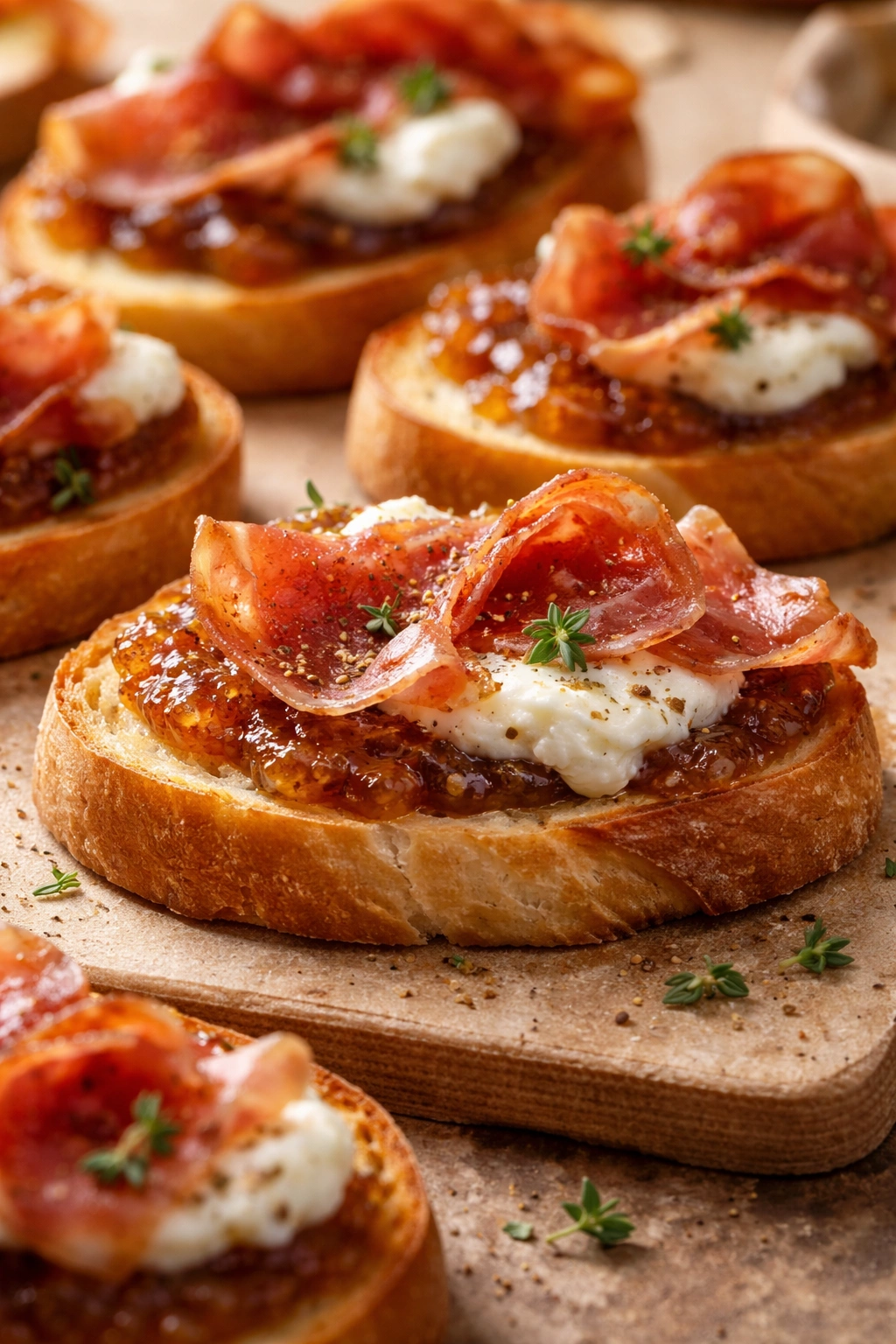
This one delivers the salty-sweet combo that makes people’s eyes light up. Prosciutto gets even more flavorful when it’s crisped up in the oven, and when you add the tart creaminess of goat cheese and the sweet musk of fig jam, you’ve got layers of flavor that feel restaurant-quality but take maybe 8 minutes of actual work. The salt from the prosciutto, the richness of the goat cheese, and the jammy sweetness create a flavor balance that’s almost addictive.
Why This Combination Works
Fig and prosciutto is a classic pairing that chefs have been using for years, and crostini are the perfect vessel for it. The contrast between crispy salty prosciutto and soft creamy goat cheese is textural heaven, while fig jam adds a subtle sweetness and slight tartness that bridges the two. Toasted bread provides the structure and a little textural contrast. This feels indulgent but isn’t heavy.
What Goes on the Bread
- 6 ounces thinly sliced prosciutto (about 18 slices)
- 6 ounces fresh goat cheese, softened to room temperature
- ½ cup fig jam (store-bought is fine, or homemade if you have it)
- 1 baguette, sliced and toasted
- 2 tablespoons fresh thyme or honey drizzle (optional)
- Freshly cracked black pepper
Lay the prosciutto slices on a baking sheet and bake at 400°F for 8 to 10 minutes until completely crisp and darkened at the edges. Let it cool on the pan for a minute, then break each slice into 2 to 3 pieces. Spread a thin layer of goat cheese on each toast (you want just enough to taste it, not so much that it overwhelms), add a small spoonful of fig jam, top with a piece or two of crispy prosciutto, and finish with a crack of pepper.
Pro tip: Make crispy prosciutto ahead of time and store it in an airtight container for up to 2 days—it’ll stay crispy and you can assemble the crostini in minutes when guests arrive.
4. Hummus with Roasted Red Pepper & Pine Nuts
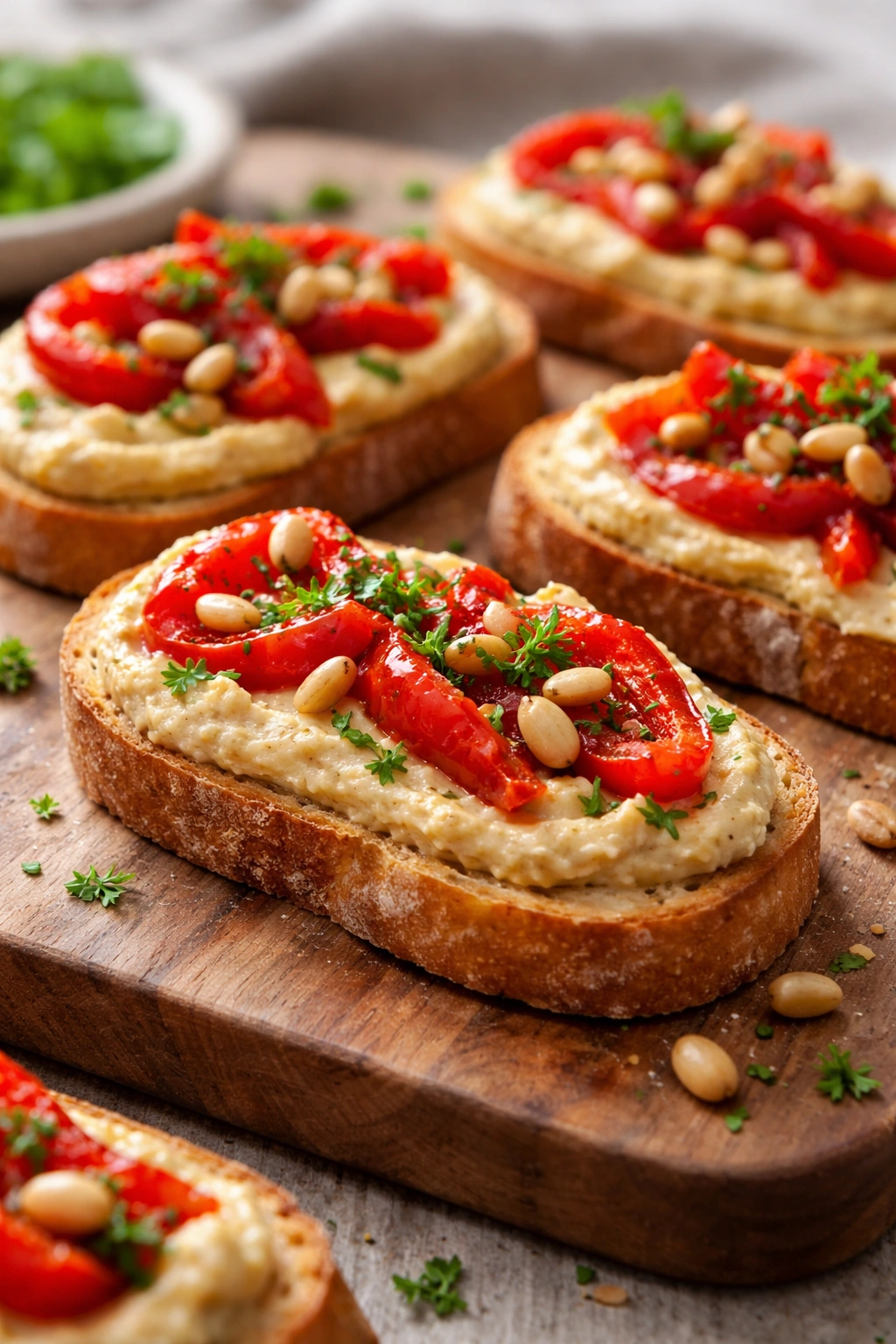
Hummus-based crostini are vegetarian-friendly, naturally rich, and feel substantial even though they’re completely plant-based. Roasted red peppers add sweetness and smokiness, while pine nuts contribute a buttery crunch that keeps people reaching for more. This is the crostini that works for any dietary preference, and it’s often the first thing to disappear from an appetizer spread because it tastes indulgent despite being basically beans and olive oil.
Why This Version Stands Out
Store-bought hummus is convenient and totally acceptable, but it becomes something special when you layer it with the sweet-smoky depth of roasted red peppers and the textural richness of toasted pine nuts. The peppers aren’t just a garnish—they’re roasted until they’re soft and concentrated in flavor, bringing body to the topping. Pine nuts add a luxury feel that makes people think you spent way more time on this than you actually did.
Your Ingredient List
- 1 cup store-bought hummus (or homemade if you prefer)
- 2 large roasted red peppers (jarred is perfectly fine), drained and cut into strips
- ⅓ cup pine nuts, lightly toasted in a dry skillet for 3 to 4 minutes
- 2 tablespoons fresh lemon juice
- 1 tablespoon good olive oil
- 2 tablespoons fresh parsley, chopped
- Smoked paprika for finishing
- 1 baguette, sliced and toasted
- Salt and pepper to taste
Mix the hummus with lemon juice and olive oil until you get a consistency that’s spreadable but not too thin. Spread a generous layer on each toast, top with a strip of roasted red pepper, sprinkle with toasted pine nuts and fresh parsley, then finish with a tiny pinch of smoked paprika. The paprika adds color and brings out the smoky flavors in the peppers.
Insider note: If pine nuts are expensive or hard to find, try toasted walnuts or sunflower seeds as a substitute—they’ll give you similar texture and richness for less money.
5. Herbed Cream Cheese with Smoked Salmon

Smoked salmon crostini feel fancy but are actually one of the simplest to assemble. The salty, smoky richness of the salmon pairs beautifully with the cool creaminess of herbed cream cheese, and a squeeze of fresh lemon brightens everything up. This one gets compliments at every party because it looks restaurant-quality, but you’re basically just spreading and arranging.
What Makes This Classic
Cream cheese is stable, holds toppings well, and doesn’t compete with the quality of good smoked salmon—it just provides a creamy base. Fresh herbs (especially dill, which is the classic partner for salmon) add freshness without heaviness. Lemon is essential because it cuts through the richness and brings out the salmon’s subtle brine and smoke. This is the crostini people expect at a nice gathering, and it never disappoints.
What You Need to Assemble
- 8 ounces cream cheese, softened to room temperature
- 3 tablespoons fresh dill (or a mix of dill and chives), finely chopped
- 2 tablespoons fresh lemon juice
- 1 tablespoon good olive oil
- 6 ounces sliced smoked salmon, cut into pieces that fit on a crostini
- ½ red onion, sliced paper-thin (optional but adds a nice bite)
- Capers for garnish (optional)
- 1 baguette, sliced and toasted
- Fine sea salt and cracked pepper
Beat the softened cream cheese with dill, lemon juice, and olive oil until smooth and light. Taste and adjust seasoning—you might want a pinch of salt depending on how salty your smoked salmon is. Spread a thin layer on each toast, top with a piece of smoked salmon, a thin slice of red onion if using, a few capers, and a tiny crack of pepper. Finish with a single fresh dill frond if you’re feeling fancy.
Real talk: Buy the best smoked salmon you can afford for this one—it’s the star, so the quality matters. Scottish or Norwegian smoked salmon tends to be silkier and more delicate than bulk grocery store varieties.
6. White Bean Spread with Rosemary & Truffle Oil
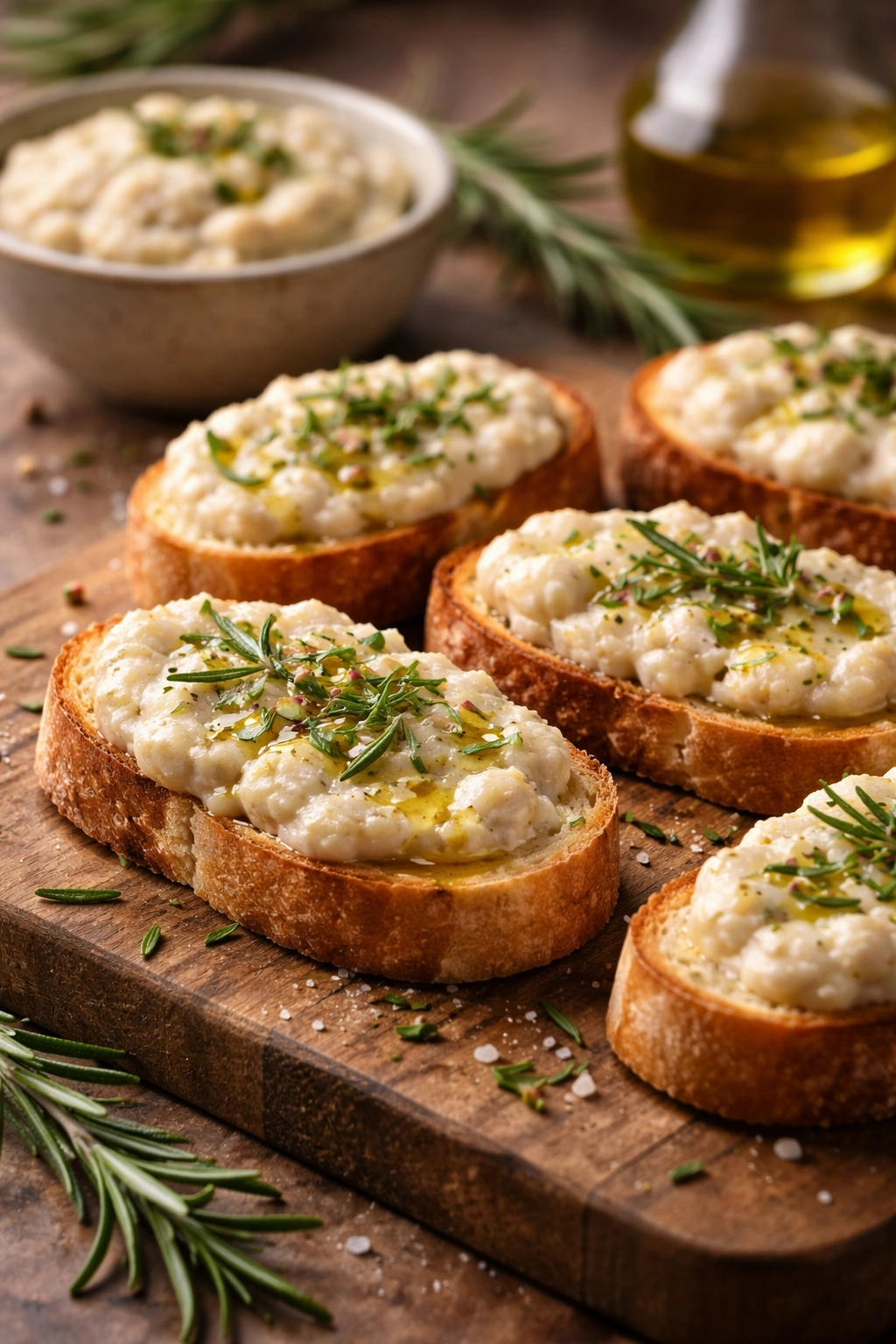
Creamy white beans make an incredibly luxurious crostini topping that’s vegan, naturally rich, and substantial enough to be satisfying. Rosemary adds an earthy, piney note that’s classic and sophisticated, while a drizzle of truffle oil at the end makes this feel indulgent. This is the crostini that surprises people—they eat one, say “wow, what is that?” and then eat several more because it’s addictively good.
Why White Beans Are Your Secret Weapon
White beans (cannellini or great northern) blend into an incredibly smooth, creamy spread that rivals any dairy-based topping. They’re mild enough that they don’t dominate but have enough body to feel luxurious. With good olive oil, lemon, and herbs, they become something people genuinely crave. This is proof that elegant appetizers don’t need expensive ingredients—they need flavor balance and a little technique.
Building This Topping
- 1 can (15 ounces) white beans (cannellini), drained and rinsed very well
- 3 cloves garlic, minced
- 3 tablespoons good olive oil
- 2 tablespoons fresh lemon juice
- 1 tablespoon water (to reach the right consistency)
- 1 teaspoon fresh rosemary, finely chopped
- ½ teaspoon fine sea salt
- ¼ teaspoon cracked pepper
- Truffle oil for finishing
- 1 baguette, sliced and toasted
- Sea salt flakes and fresh rosemary sprigs for garnish
Pulse the white beans, garlic, olive oil, lemon juice, and water in a food processor until completely smooth and creamy—this should take about 1 to 2 minutes. Add the chopped rosemary, salt, and pepper, then pulse once or twice more to incorporate. Taste and adjust seasonings. Spread generously on each toast, drizzle with truffle oil (just a tiny bit—it’s potent), and top with a small pinch of sea salt and a tiny sprig of fresh rosemary.
Pro tip: Make this spread up to 2 days ahead and store it in an airtight container in the fridge. If it thickens, loosen it with a touch more lemon juice or olive oil just before serving.
7. Caramelized Onions, Brie & Thyme
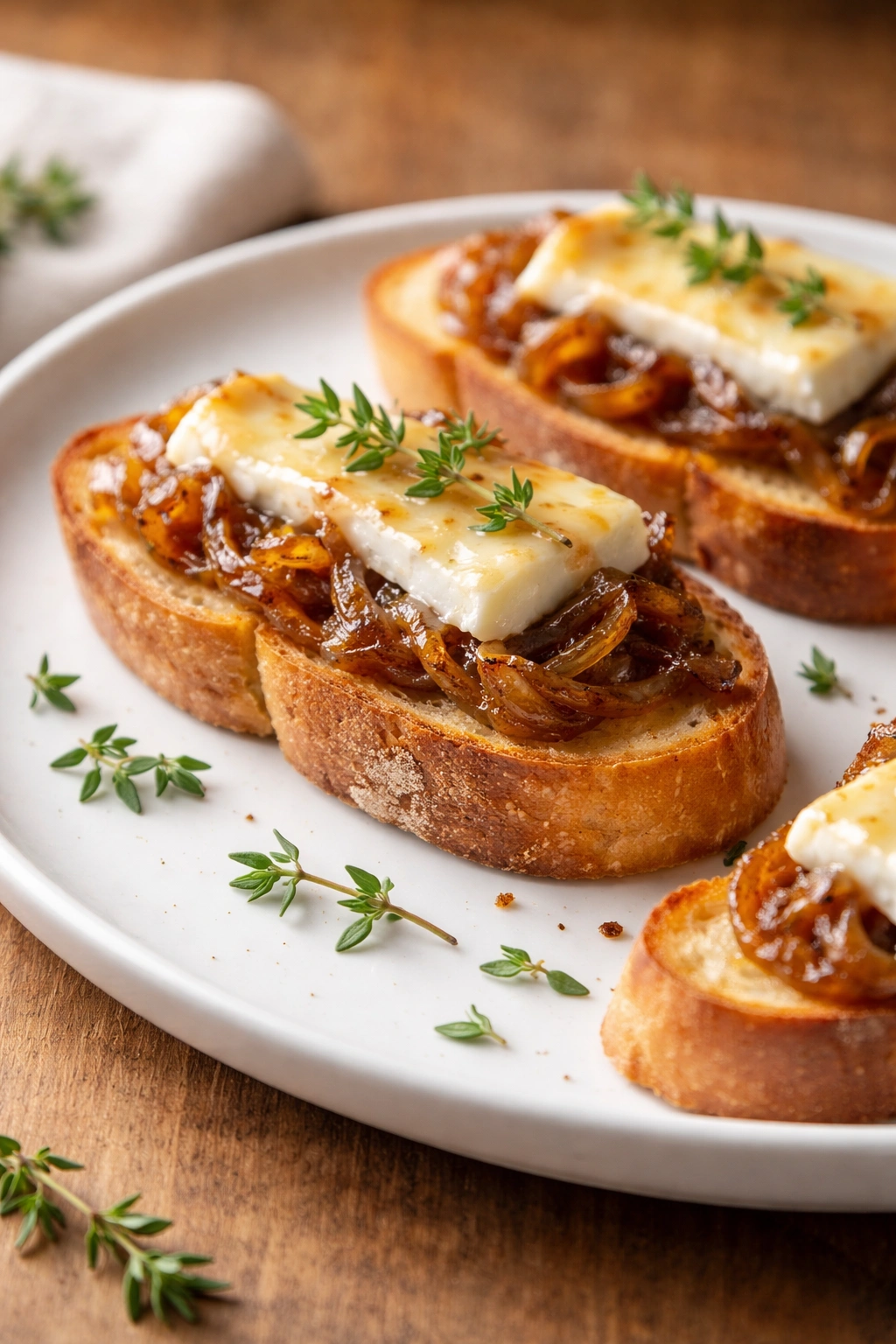
Caramelized onions are the secret weapon of experienced cooks because they transform simple onions into something deeply sweet, complex, and addictive through nothing but time and heat. When you combine them with melty brie and fresh thyme, you get a crostini that tastes like it came from a French bistro. The slow caramelization concentrates the onions’ natural sugars, creating layers of flavor that just get better the longer they cook.
What Makes This Combination Shine
Brie is mild and melts beautifully on warm toasted bread. Caramelized onions add sweetness and umami richness that makes the brie taste even creamier. Fresh thyme brings an earthy herbal note that ties everything together. This is comfort food elevated to appetizer status, and it’s the kind of thing that makes guests ask for the recipe. Warm from the oven, it’s absolutely irresistible.
Your Components
For the Caramelized Onions:
- 3 large yellow onions, sliced ¼-inch thick
- 2 tablespoons butter or olive oil
- ½ teaspoon fine sea salt
- ¼ teaspoon freshly cracked pepper
- ½ teaspoon balsamic vinegar (optional but deepens flavor)
For Assembly:
- 8 ounces brie cheese, cut into thin slices
- 1 baguette, sliced and toasted
- 2 tablespoons fresh thyme leaves
- Fleur de sel for finishing
To caramelize the onions, heat butter in a large skillet over medium heat. Add the sliced onions and salt, then stir occasionally. They’ll look watery at first—don’t panic. Keep cooking for 30 to 40 minutes, stirring every few minutes. The onions will release their moisture, then slowly turn golden and deeply brown. Around 35 minutes in, they should be a deep caramel color with no liquid left in the pan. Finish with a pinch of balsamic vinegar if using.
Spread a tablespoon of caramelized onions on each toast, top with a thin slice of brie, then sprinkle with fresh thyme leaves. You can serve these at room temperature or warm them in a 350°F oven for 3 to 4 minutes if you want the brie to be extra melty. Finish with a tiny pinch of fleur de sel.
Worth knowing: Caramelized onions can be made several days ahead and stored in the fridge, which makes assembly incredibly fast. Just reheat them gently before topping the crostini, or use them at room temperature—they’re delicious either way.
8. Tapenade with Feta & Fresh Herbs
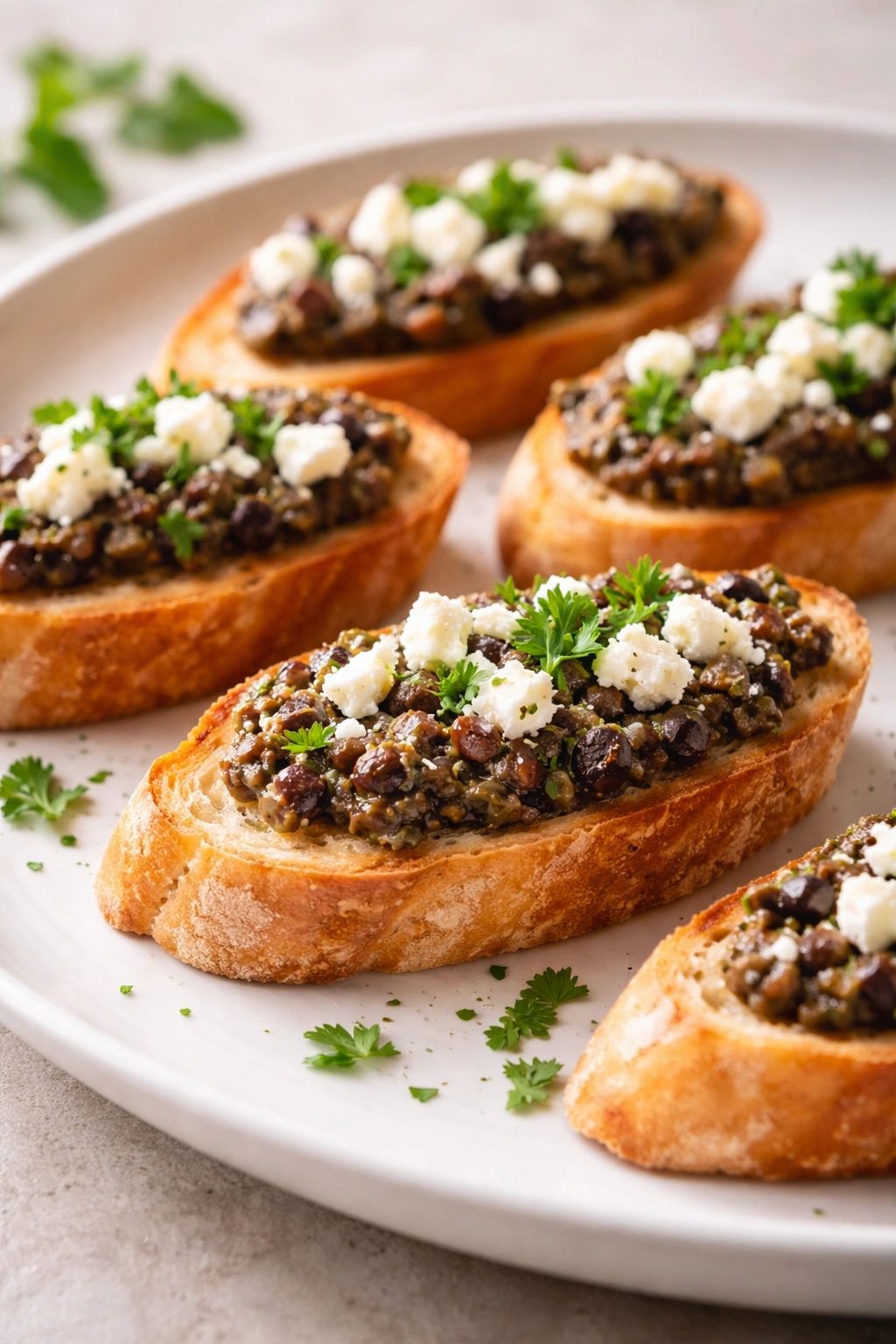
Olive tapenade brings bold, briny, Mediterranean flavor in a small amount, and when you layer it with crumbly feta and fresh herbs, you get something that tastes like a vacation in southern France. Tapenade is basically olives, capers, and garlic blended together, creating an intensely flavored spread that’s complex and salty without tasting boring. This is the crostini for people who love bold, unapologetic flavors.
Why This Works So Well
Tapenade is salty and intense, so you don’t need much of it—a thin layer is plenty. The feta adds creaminess and more saltiness that somehow feels balanced against the sharp brightness of fresh parsley and lemon. This combination is refreshing, flavorful, and very Mediterranean. It’s the kind of crostini that stays with you and makes you want another one immediately.
What You’ll Layer
- ¾ cup good-quality olive tapenade (store-bought works perfectly)
- 4 ounces feta cheese, crumbled or sliced thin
- 1 baguette, sliced and toasted
- 3 tablespoons fresh flat-leaf parsley, chopped
- 1 tablespoon fresh lemon juice
- ½ tablespoon good olive oil for drizzling
- ¼ red onion, sliced paper-thin (optional)
- Freshly cracked black pepper
Spread a thin layer of tapenade on each toast (remember, it’s intense, so less is more), top with a small piece of feta, scatter fresh parsley, add a paper-thin slice of red onion if you like, then finish with the tiniest drizzle of olive oil and a crack of black pepper. The combination of salty tapenade, creamy feta, and bright herbs creates a flavor explosion that tastes way more complicated than it is.
Pro tip: If store-bought tapenade is too salty for your taste, you can buy a jar and thin it slightly with a little olive oil and lemon juice, or mix it half-and-half with a milder spread like whipped ricotta.
9. Avocado Crema with Lime & Chili
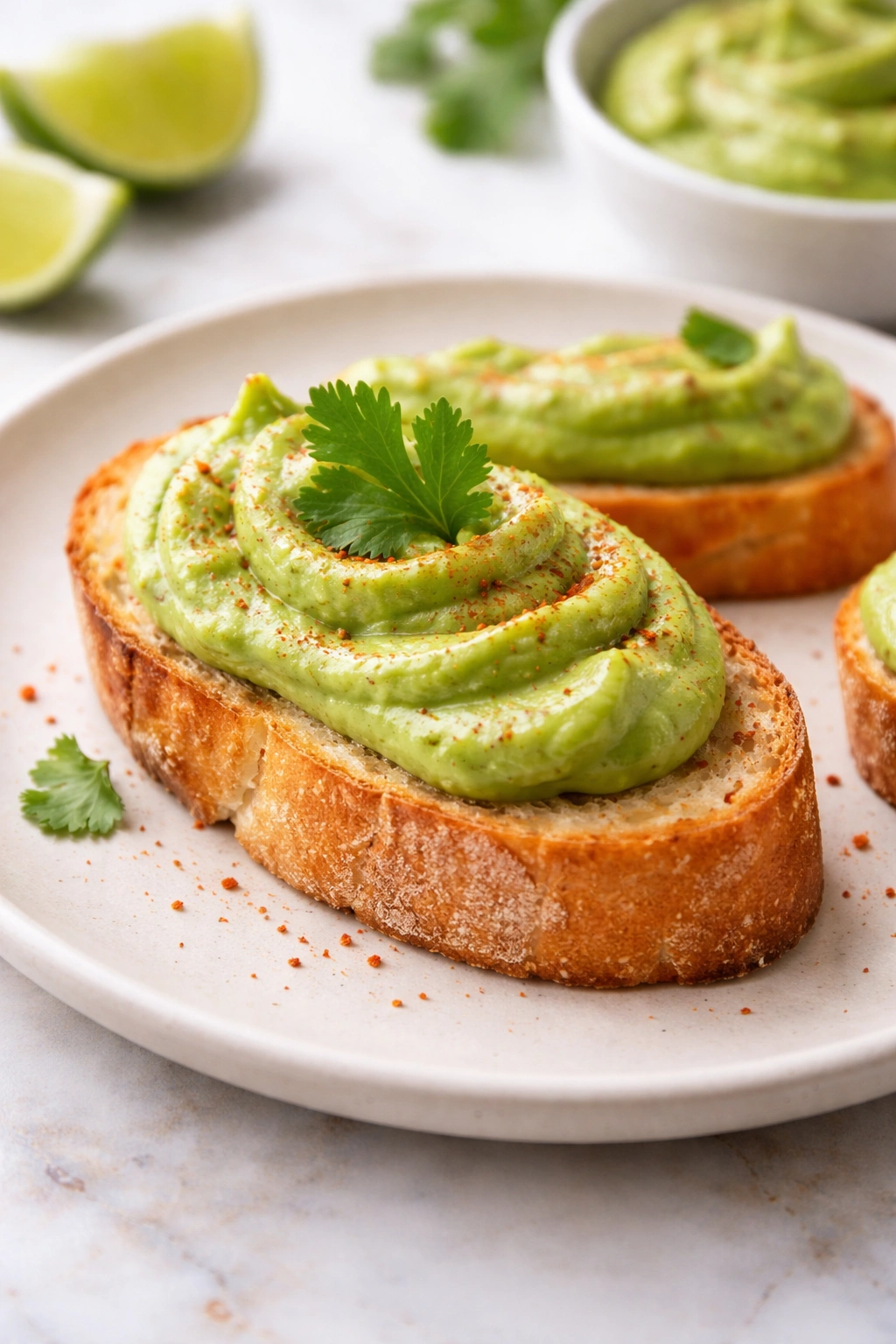
Avocado crema is the crostini for people who love something a little brighter and more unexpected than traditional options. Ripe avocado becomes luxuriously creamy when you mash it with lime juice and a pinch of salt, and adding a whisper of chili powder brings heat and depth without overwhelming. Top it with something fresh and a little pop of protein, and you’ve got something modern and exciting.
What Makes This Stand Out
Avocado is naturally creamy and pairs beautifully with lime’s brightness. A pinch of chili powder (or fresh jalapeño) adds an unexpected warmth that makes people perk up. This tastes fresh and contemporary compared to more classic crostini, which makes it perfect if you want something different from what everyone else brings to a gathering. It’s also naturally vegan if that’s relevant for your crowd.
Your Toppings & Base
- 2 ripe avocados, cut in half, pit removed, flesh scooped into a bowl
- 3 tablespoons fresh lime juice
- ¼ teaspoon fine sea salt
- ⅛ teaspoon chili powder (or to taste)
- 1 tablespoon cilantro, chopped
- 1 baguette, sliced and toasted
- Optional toppings: crispy chickpeas, pomegranate seeds, crumbled cotija cheese, or crispy bacon pieces
- Lime wedges for serving
Mash the avocado with lime juice, salt, and chili powder until you reach a consistency you like—some people prefer it smooth, others like small chunks. Fold in the cilantro. Spread a generous spoonful on each toast and immediately top with your chosen garnish. Avocado browns quickly when exposed to air, so assemble these as close to serving time as possible. If you’re making them more than 5 minutes ahead, press plastic wrap directly on the surface of the avocado mixture to slow oxidation.
Real talk: The avocado needs to be perfectly ripe—soft enough to mash easily but not brown or mushy. If you’re making these for a gathering, shop for avocados a few days ahead and let them ripen at room temperature until they yield slightly to gentle pressure.
10. Roasted Mushrooms with Garlic & Parmesan
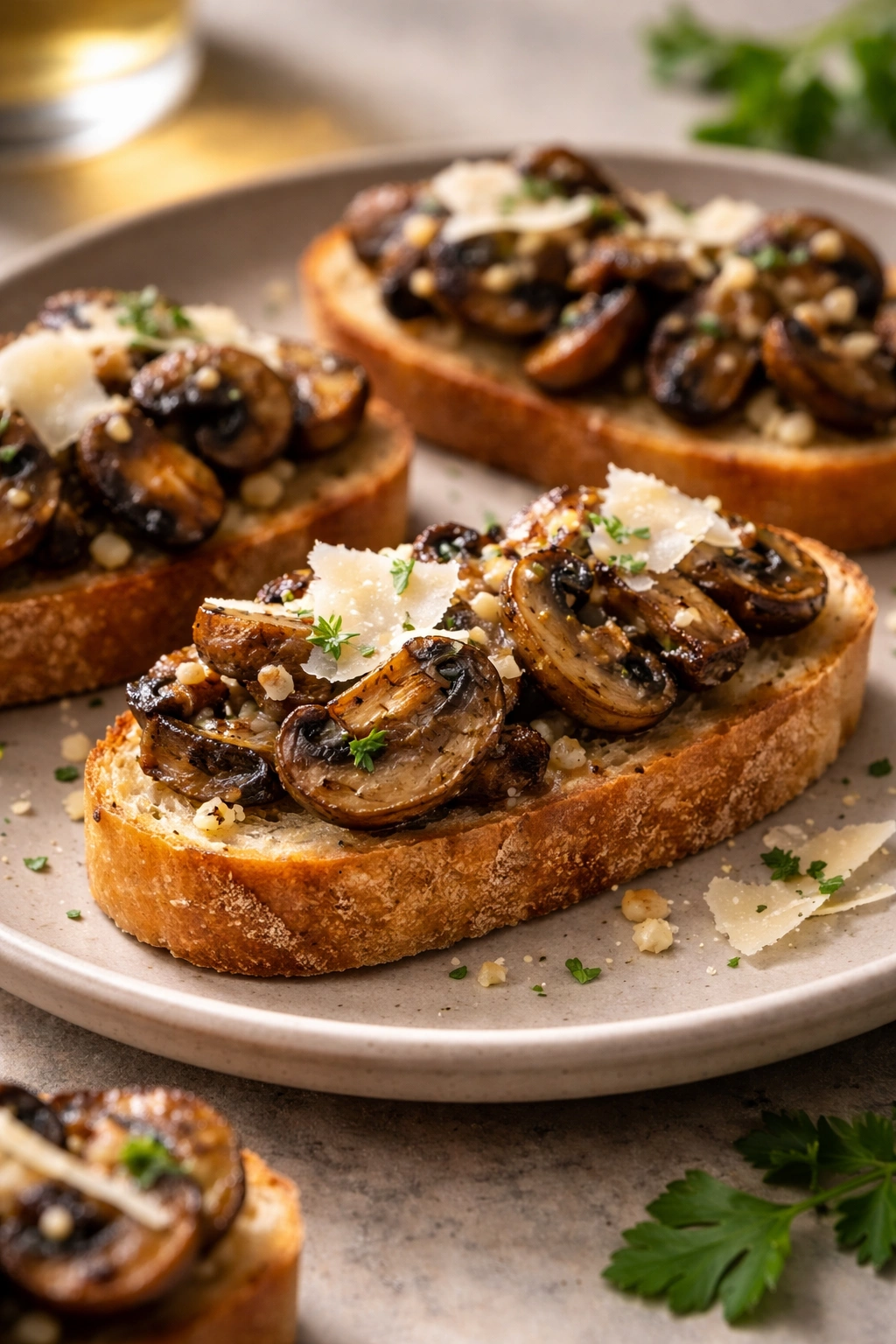
Roasted mushroom crostini showcase how vegetables can be just as satisfying as any protein-based topping when they’re cooked well. Mushrooms, when roasted at high heat, become deep golden brown with concentrated umami flavor, then tossed with garlic and finished with Parmesan, they’re absolutely irresistible. This is earthy, savory, and sophisticated—the vegetarian crostini that even meat-lovers keep coming back to.
Why This Works So Beautifully
Roasting brings out mushrooms’ natural umami, which is that savory, mouth-filling flavor that makes something taste incredibly satisfying. Garlic added during roasting becomes mellow and sweet, while a shower of fresh Parmesan on top adds salty, slightly nutty richness. The combination feels luxurious and comforting at the same time. This is the crostini that makes people realize vegetables don’t need to be a supporting player.
Your Ingredients & Preparation
- 1 pound mushrooms (cremini, button, or a mix), cleaned and sliced
- 5 tablespoons good olive oil, divided
- 4 cloves garlic, minced
- 1 teaspoon fresh thyme (or ½ teaspoon dried)
- ½ teaspoon fine sea salt
- ¼ teaspoon cracked pepper
- 1 baguette, sliced and toasted
- ⅓ cup finely grated Parmesan cheese
- 2 tablespoons fresh parsley, chopped
- Fleur de sel for finishing
Toss the mushroom slices with 3 tablespoons olive oil, salt, and pepper, then spread them on a baking sheet in a single layer. Roast at 425°F for 18 to 22 minutes, stirring halfway through, until they’re deep golden brown on the edges and any liquid they released has evaporated. Meanwhile, heat 2 tablespoons olive oil in a small pan, add the minced garlic and thyme, and cook gently for 1 to 2 minutes until fragrant but not browned.
When the mushrooms are done roasting, toss them with the garlic oil and taste for seasoning. Divide among the toasted bread slices, top with a sprinkle of Parmesan and fresh parsley, then finish with a tiny pinch of fleur de sel. These are best served warm, so you can assemble them just a few minutes before serving and even warm the crostini in a 350°F oven for 2 to 3 minutes if needed.
Pro tip: Make the roasted mushrooms up to a day ahead and store them in the fridge. Reheat gently in a 300°F oven for 5 minutes before assembling, or serve at room temperature if you prefer.
Final Thoughts
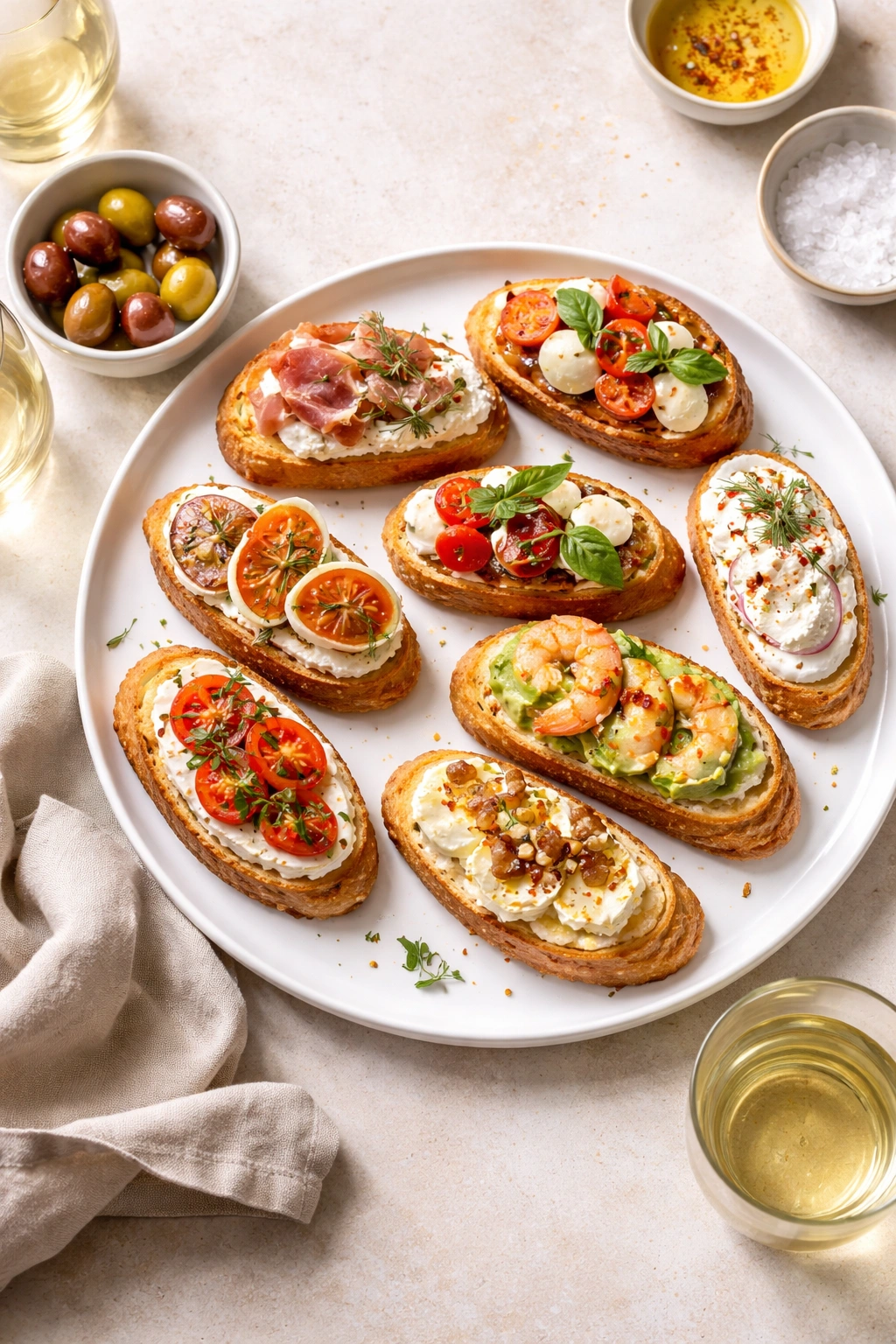
The beauty of crostini is that once you understand the basic formula—crispy bread, creamy or spreadable base, a flavorful main component, and a bright garnish—you can build endless variations based on what’s in your pantry and what season you’re shopping in. None of these ten recipes requires special equipment or hard-to-find ingredients, and every single one comes together faster than the time it would take to order takeout.
What makes crostini such a crowd-pleasing appetizer is that they feel special without requiring special skills. You’re literally toasting bread and adding toppings, yet somehow the result impresses people and gets eaten immediately. The key is choosing quality ingredients that you actually like, and then letting them do the work. A really good tomato doesn’t need much—just cheese and basil. Good smoked salmon needs only a thin spread and lemon. Well-roasted mushrooms speak for themselves.
The next time you’re hosting a gathering or bringing something to share, skip the complicated recipes and reach for crostini. Assemble them just before guests arrive, arrange them on a nice platter, and watch them disappear. You’ll have time to actually enjoy your gathering instead of spending the whole time in the kitchen, and everyone will go home convinced you spent way more effort than you actually did.
