



Potatoes are one of those magical pantry staples that somehow satisfy everyone at the dinner table — whether you’re feeding picky eaters, health-conscious adults, or people who just want something genuinely delicious. They’re budget-friendly, endlessly adaptable, and require no special cooking skills to transform into real showstoppers. The beauty of a good potato recipe is that it doesn’t need to be complicated; some of the best family meals come from straightforward techniques that let the humble potato shine.
What makes potato dishes so universally loved is their comforting nature combined with their chameleon-like ability to work with almost any flavor profile. A perfectly roasted potato with crispy edges tastes like luxury but takes minutes to prepare. A creamy potato casserole becomes the star of the table and feeds a crowd without fuss. Even the simplest baked potato can become an entirely customizable meal when everyone gets to load their own toppings. Kids who turn their noses up at vegetables often happily devour them when they’re part of a potato-based dish.
The recipes ahead all share one crucial trait: they’re straightforward enough that you’ll actually make them on a regular weeknight, yet impressive enough that your family will ask for them again and again. No complicated techniques, no hard-to-find ingredients, and nothing that requires more than one pot or pan (most of them). Whether you’re looking for a side dish that steals the spotlight, a main course that fills everyone up, or something warm and comforting to get dinner on the table fast, potatoes deliver every single time.
1. Crispy Roasted Potatoes with Garlic and Fresh Herbs
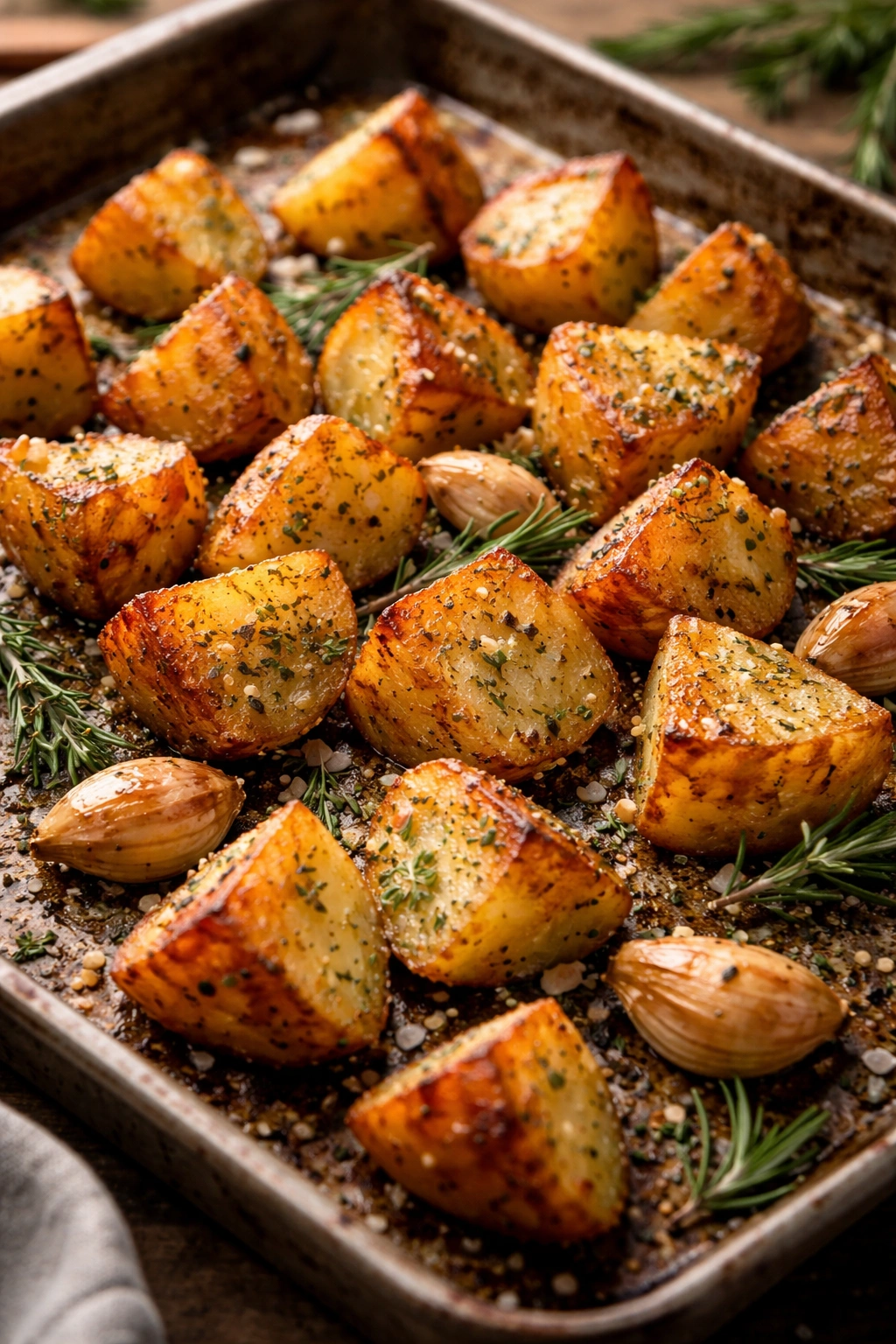
Roasted potatoes are the gateway drug to potato cooking — once you master this technique, you’ll find yourself making it constantly because the results are so reliably delicious. The secret isn’t complicated: cut your potatoes into roughly the same size, toss them generously with oil, season aggressively, and roast them hot enough to develop a caramelized, crispy exterior while the inside stays tender. This isn’t a side dish that hides in the corner of the plate; it’s the thing people actually fight over.
Why This Variation Stands Out
The combination of roasted garlic cloves and fresh herbs transforms basic roasted potatoes into something that tastes restaurant-quality but takes no real skill. The garlic becomes sweet and mild as it roasts, the potatoes develop crispy edges from the high heat, and fresh rosemary or thyme adds complexity that makes people ask what your secret ingredient is. There’s something magical about the interaction between crispy potato exteriors and soft, caramelized garlic that makes this impossible to stop eating.
What You Need to Know
- Cut potatoes into 1½-inch chunks so they cook evenly (too small and they dry out, too large and the outside burns before the inside is done)
- Toss with at least 3-4 tablespoons of oil per pound of potatoes — this isn’t optional, it’s what creates the crispiness
- Roast at 425°F for 25-30 minutes, stirring halfway through, until the edges are deeply golden and crispy
- Squeeze the roasted garlic cloves out of their skins over the top just before serving
- Fresh herbs added at the end (not before roasting, or they burn) make a huge difference
Pro tip: Let the potatoes rest in a cold bowl for 10 minutes before roasting — this helps them cook more evenly and develop crispier exteriors.
2. Loaded Baked Potatoes with All the Toppings
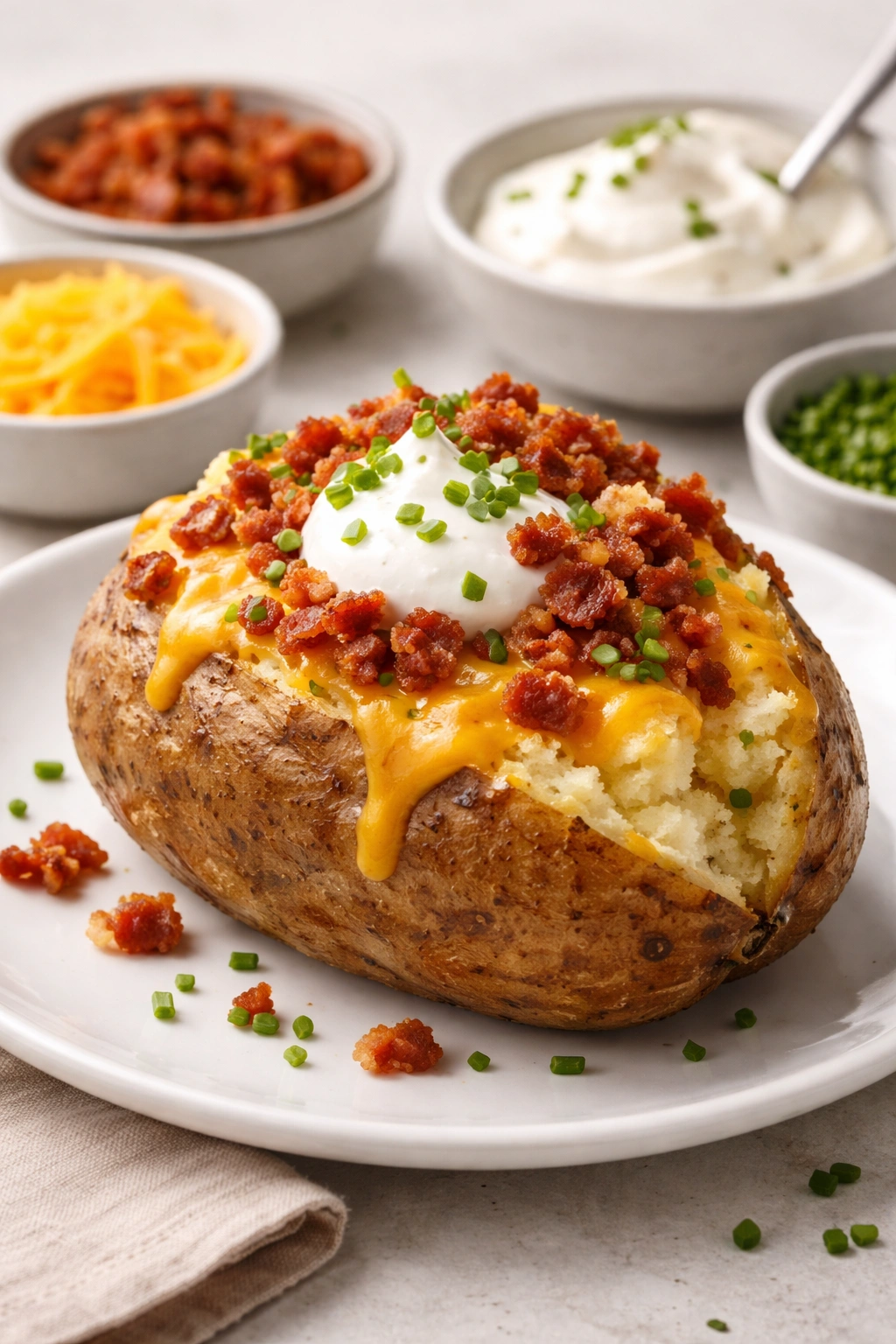
The beauty of a loaded baked potato bar is that everyone builds exactly what they want, which means no pickiness battles and zero waste. You bake the potatoes, set out your toppings, and watch people actually excited about dinner. It’s the ultimate interactive meal for families because the cooking part is effortless and the customization part is genuinely fun.
Why Families Love Building Their Own
When kids (and adults) get to choose what goes on their plate, they eat more and complain less. One person might want a steakhouse-style loaded potato with steak, sour cream, and chives. Another wants chili and cheese. Someone else might pile on roasted broccoli and ranch. The flexibility means that vegetable-averse kids will happily eat toppings they’d normally refuse because they’re choosing what goes on their potato, not being told what to eat.
Simple Baking and Topping Strategy
- Scrub potatoes, prick with a fork, and bake at 400°F for 45-50 minutes until completely tender inside
- Set out toppings in separate bowls: shredded cheese, sour cream, chopped bacon, sautéed broccoli, chili, steamed corn, caramelized onions, jalapeños, fresh herbs
- Have butter and salt available because a hot potato with just butter and salt is genuinely perfect
- Bake extra potatoes because people always want seconds once they start building
Worth knowing: If you’re short on time, microwave potatoes for 5-8 minutes first, then finish them in a 425°F oven for 15 minutes. You get crispy skin and much faster overall cooking.
3. Creamy Potato and Vegetable Soup
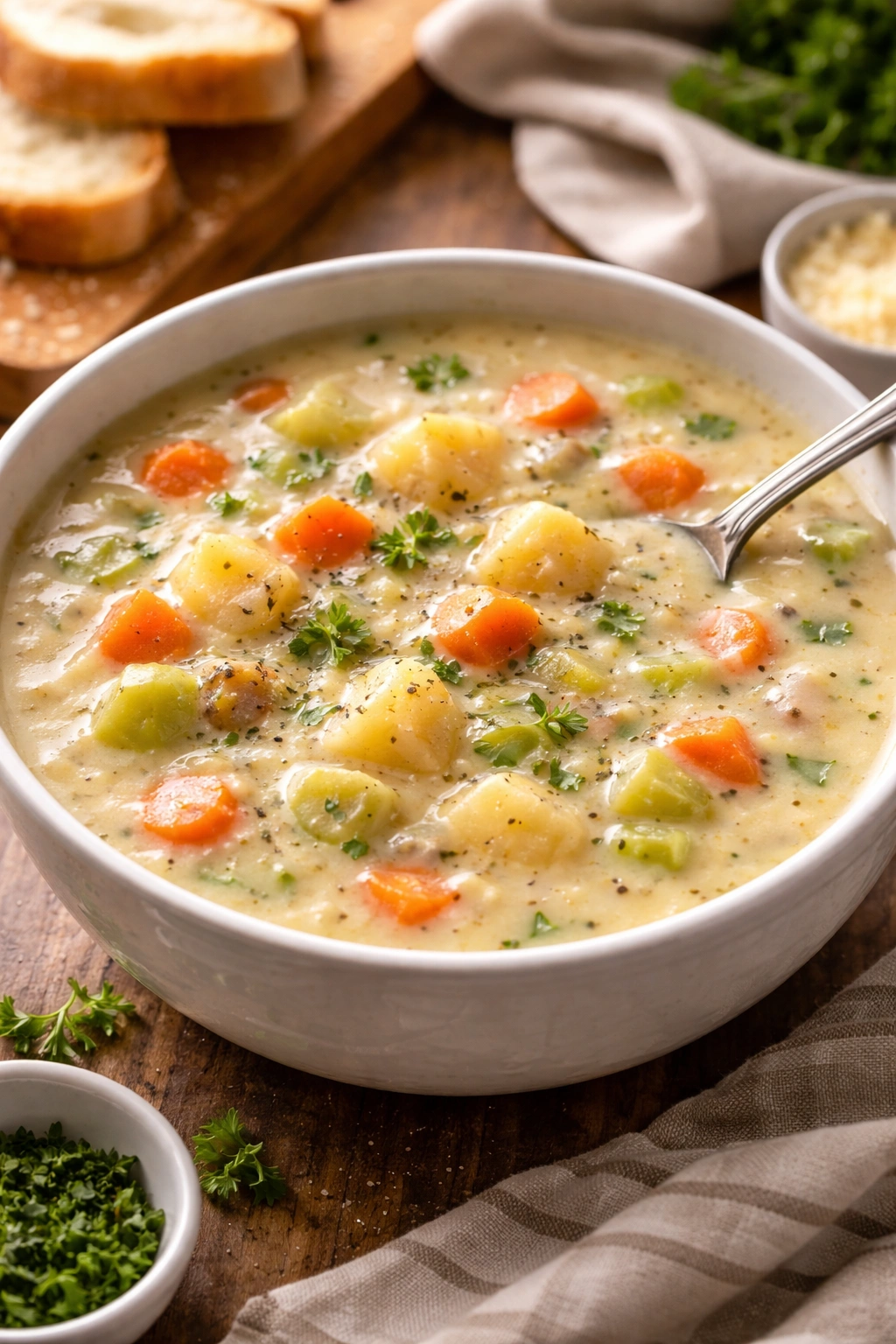
A big bowl of creamy potato soup is pure comfort food, and making it from scratch proves that homemade soups are faster and more rewarding than anything from a can. This one uses a basic technique — sauté aromatics, add potatoes and broth, simmer until tender, then blend half of it to create creaminess without cream. It’s a trick restaurants use, and it’s so simple you’ll wonder why you ever thought soup was complicated.
The Technique That Makes It Work
Blending half the finished soup creates a naturally creamy texture from the potatoes themselves, which means you’re adding body and richness without heavy cream. The other half stays chunky, giving you texture and letting you see all the good vegetables inside. This balance — some smooth, some chunky — is why homemade potato soup tastes so much better than versions made with cream and flour.
Building Flavor Layers
- Start by sautéing diced onion, celery, and carrot in butter until soft (this is your flavor base)
- Add minced garlic and cook for another minute until fragrant
- Add diced potatoes, vegetable or chicken broth, and bring to a simmer
- Cook for 15-20 minutes until potatoes are completely tender
- Blend about half the soup until smooth, leaving the rest chunky
- Season generously with salt and pepper
- Stir in a splash of milk or cream if you want it richer (optional but delicious)
Easy add-in ideas: Diced ham, crumbled bacon, wilted spinach, shredded cheese, diced chicken, or sautéed mushrooms — add these in the last few minutes of cooking.
4. Cheesy Potato and Broccoli Casserole
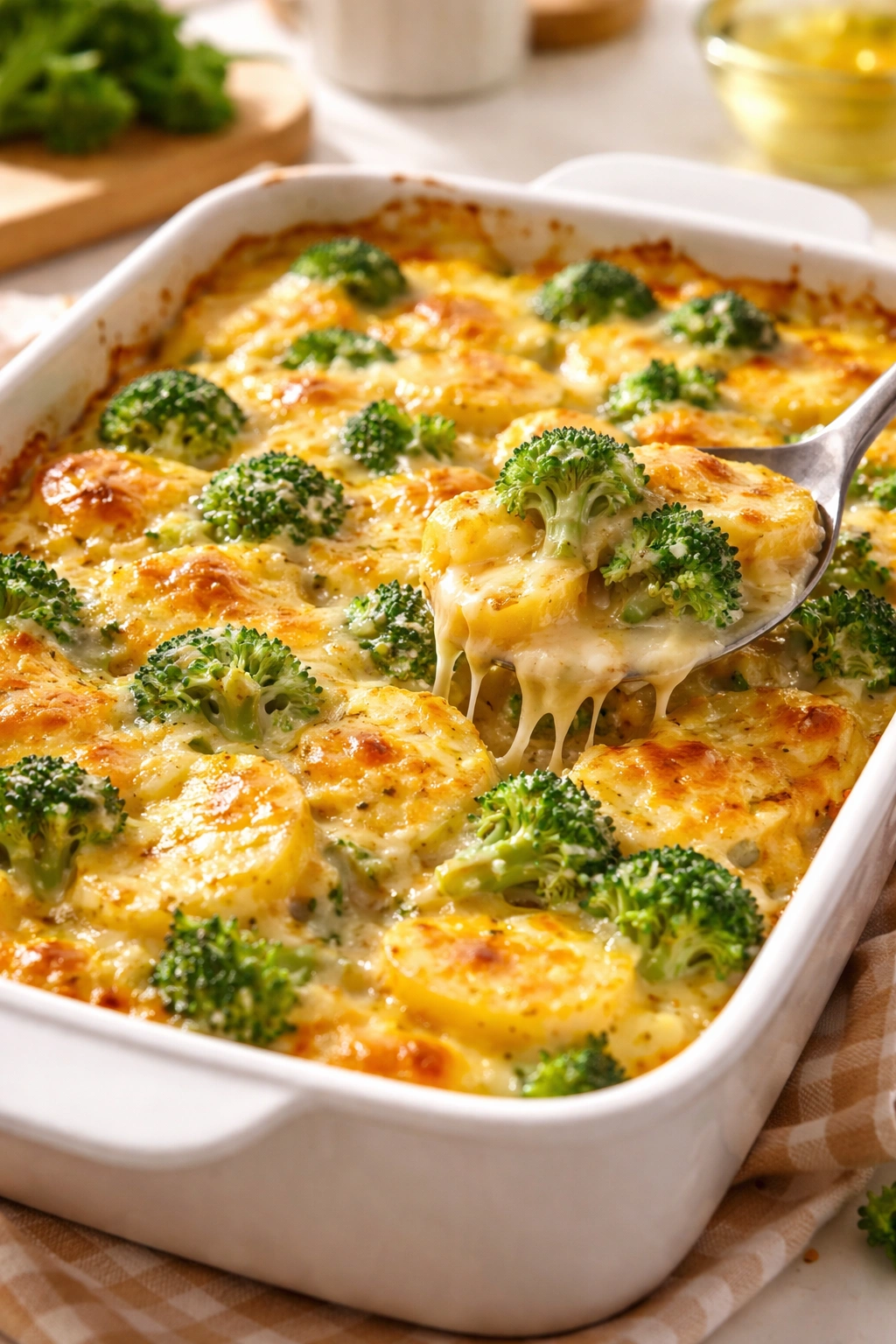
A potato casserole is the warm hug of dinner — cheesy, filling, and comforting in a way that makes people go back for seconds. What makes this one work for whole families is that the broccoli hides in the creamy sauce without screaming “vegetables,” so even skeptics eat it happily. It’s also one of those dishes that gets better as it sits, makes excellent leftovers, and easily feeds a crowd.
Why This Casserole Always Disappears
The combination of tender potatoes, broccoli, sharp cheddar, and a simple cream sauce creates something that tastes indulgent but isn’t complicated to make. Kids eat the cheese part and don’t mind the broccoli bits mixed in. Adults love that there’s actual vegetable nutrition hiding inside something that tastes like pure comfort. It’s the kind of dish people remember and request for dinners months later.
Building Your Casserole Layers
- Peel and cube about 3 pounds of potatoes, boil them until just fork-tender (about 10-12 minutes — don’t overcook)
- Cut broccoli into bite-sized florets and steam for 3-4 minutes until bright green but still slightly crisp
- Make a simple sauce: melt butter, whisk in flour, add milk or broth slowly while stirring to avoid lumps, cook until thickened
- Stir in shredded sharp cheddar (not the mild stuff — you want real cheese flavor)
- Mix the drained potatoes and broccoli with the sauce, pour into a baking dish
- Top with more shredded cheese and breadcrumbs if you want a crispy top
- Bake at 350°F for 30-35 minutes until bubbly and golden
Time-saver: This casserole assembles beautifully the night before. Cover, refrigerate, and bake the next day — just add 10-15 minutes to the baking time since it’s starting cold.
5. Crispy Hash Brown Patties for Breakfast or Dinner
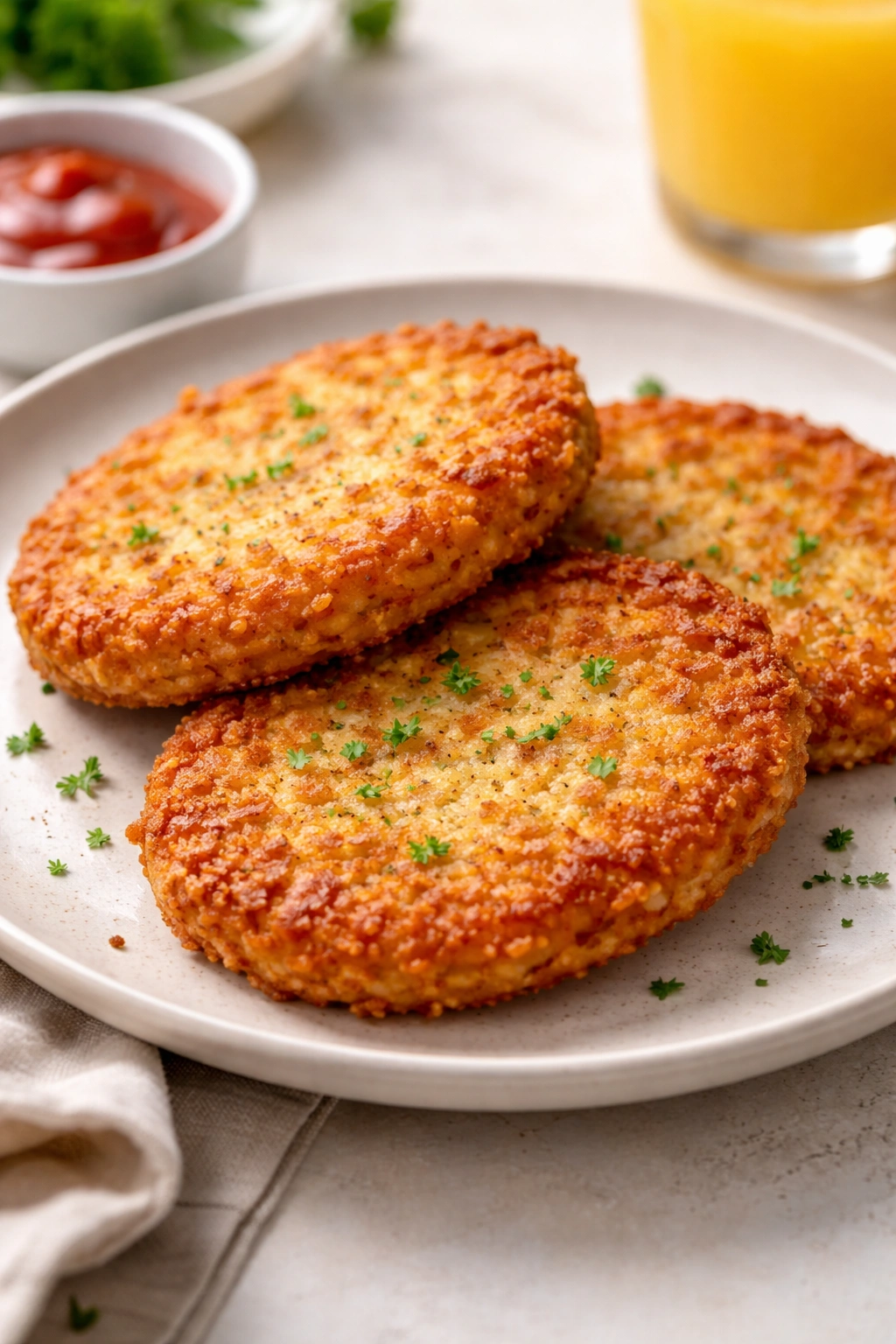
Hash browns don’t have to come frozen from a box. Homemade hash brown patties are crunchy, golden, and so much better that once you make them fresh, the frozen versions feel like an insult to potatoes. They’re perfect for breakfast, but honestly, they’re delicious alongside dinner too, or piled with toppings to become a whole meal on their own.
The Technique Behind Extra-Crispy Hash Browns
The secret to crispy hash browns is pressing all the moisture out of the shredded potatoes before they hit the pan. Moisture is the enemy of crispiness — wet potatoes steam instead of brown, and you end up with pale, soggy patties. Using clarified butter or oil with a high smoke point is also crucial because it lets you get the heat high enough to develop that golden crust.
Building Patties That Hold Together
- Shred peeled raw potatoes on a box grater (a food processor works too)
- Place in a clean kitchen towel and squeeze hard to remove as much moisture as possible
- Toss the dried potatoes with a pinch of salt, pepper, and a tiny bit of flour (just a tablespoon helps them bind)
- Heat clarified butter or oil in a cast-iron skillet over medium-high heat until shimmering
- Form the potatoes into compact patties (about ½ inch thick, roughly the size of a hockey puck) and carefully place them in the hot oil
- Press them gently with the back of a spatula as they cook
- Cook for 4-5 minutes per side until deep golden brown and crispy
Pro tip: Don’t flip them too early — let them sit undisturbed for 4 minutes so the bottom develops a proper crust before you flip.
6. Loaded Potato Salad with Bacon and Cheddar
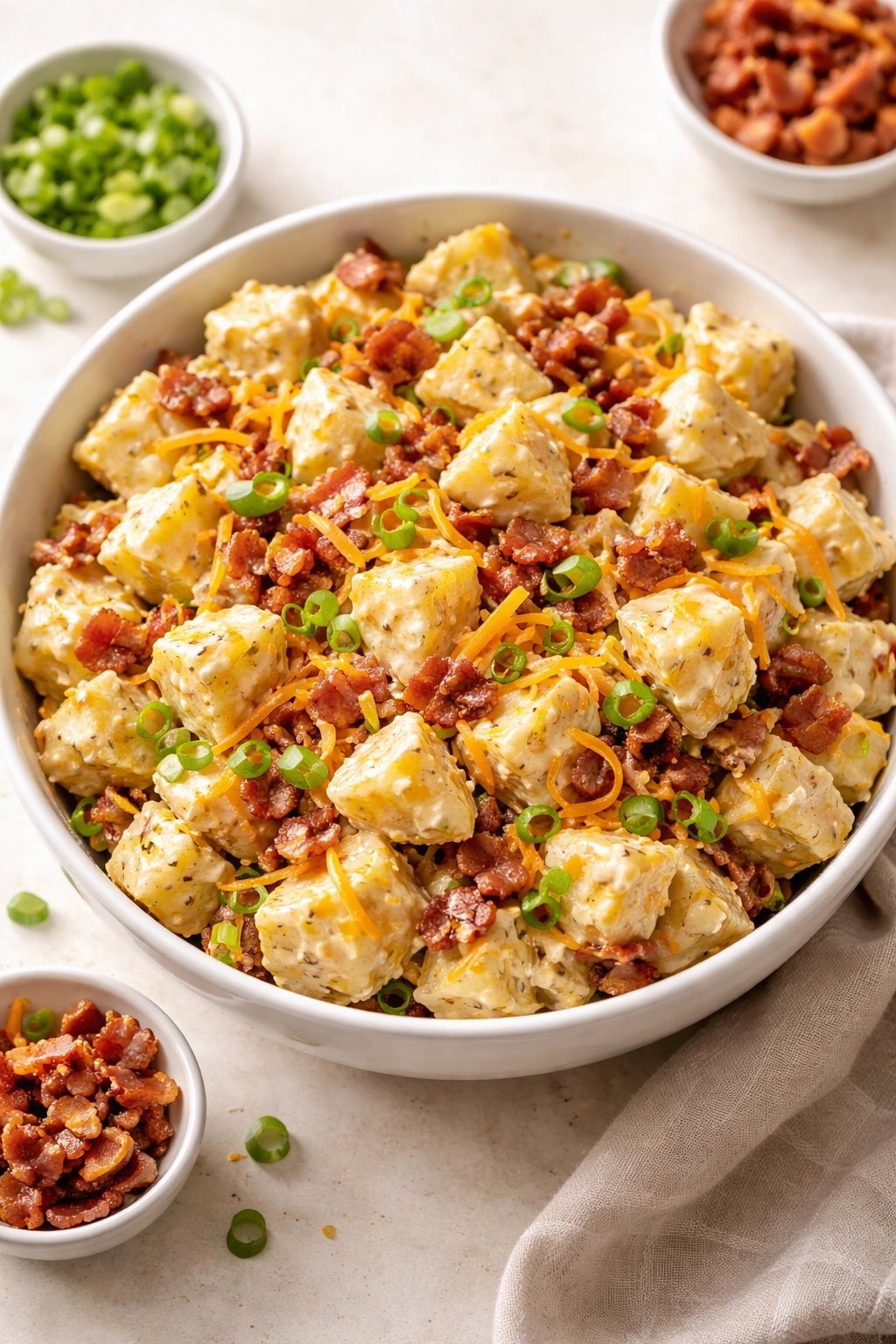
A really good potato salad is substantial enough to be a main course, and this version — loaded with bacon, sharp cheddar, and a tangy-creamy dressing — tastes nothing like the heavy mayonnaise-based versions from grocery store deli cases. It’s hearty, flavorful, and actually gets better as it sits in the fridge, making it perfect for a make-ahead meal or picnic dish.
What Makes This Version Different
Most potato salads are cream-heavy and one-note. This one uses a combination of mayo and sour cream with apple cider vinegar and Dijon mustard, which keeps it from being overwhelming while giving it actual complexity. The addition of crispy bacon, sharp cheddar, and fresh green onions means every bite has flavor and texture, not just mayonnaise-covered potatoes.
Building Your Potato Salad
- Boil cubed potatoes until just tender (they should still hold their shape, not be falling apart)
- While they’re still warm, toss them with a few tablespoons of apple cider vinegar so they absorb the flavor
- Whisk together mayo, sour cream, Dijon mustard, salt, and pepper to make your dressing
- Mix the warm potatoes with the dressing while they’re still slightly warm (they absorb seasoning better this way)
- Fold in crispy crumbled bacon, shredded sharp cheddar, diced celery, and chopped green onions
- Refrigerate for at least 2 hours before serving
- Taste before serving and adjust seasoning — it may need extra salt after sitting
What to know: Don’t chop your potatoes too small or they’ll fall apart. Aim for 1-inch cubes that hold together but aren’t too chunky.
7. Garlic Parmesan Mashed Potatoes
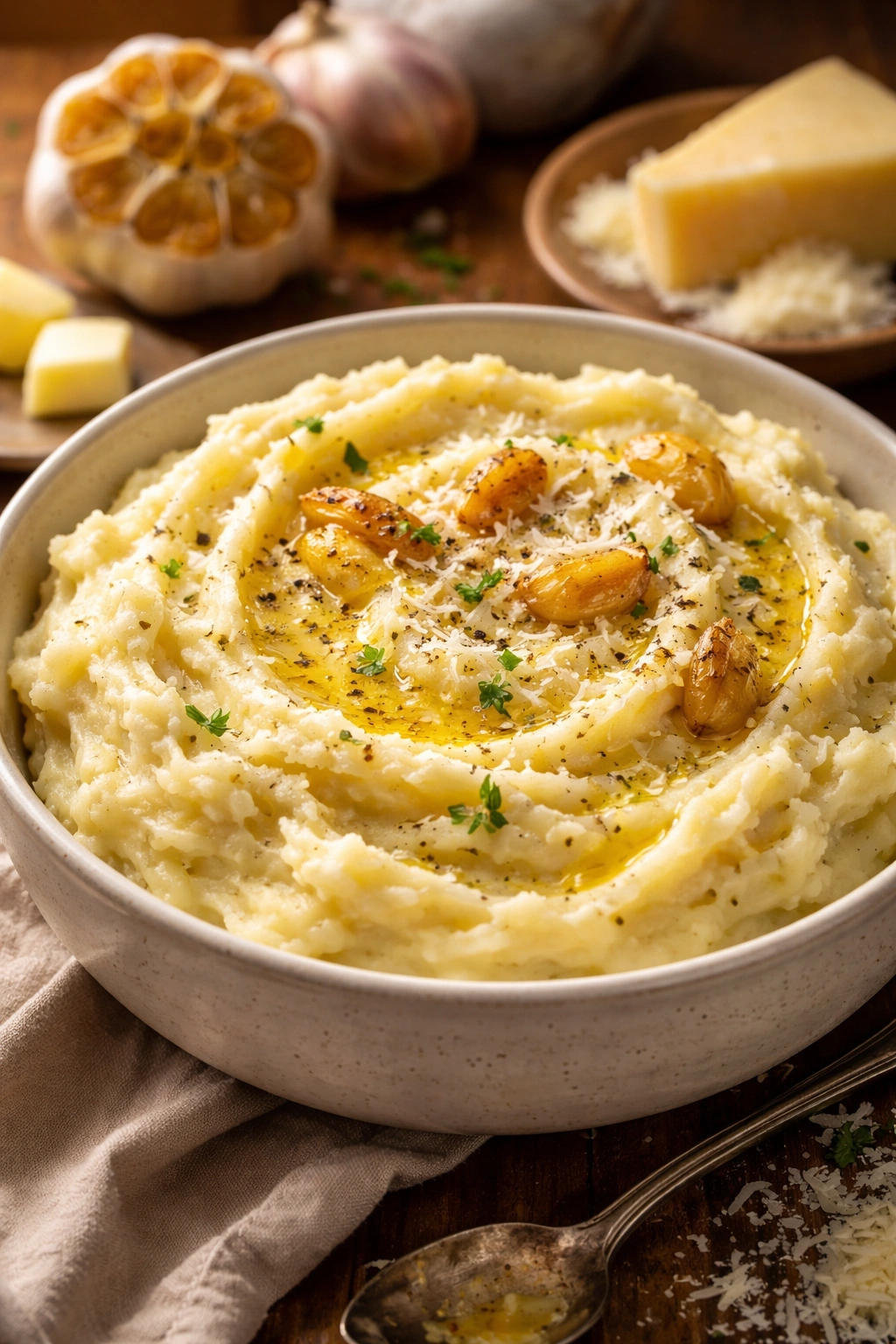
Mashed potatoes aren’t hard, but most versions are forgettable — bland, gluey, or somehow both. The version that actually gets raves is made with roasted garlic (which adds real sweetness and depth), plenty of butter and cream (no apologies), freshly grated Parmesan (not the shaker kind), and fresh cracked pepper. It’s the side dish that ends up being the real star.
The Foundation of Great Mashed Potatoes
Start with the right potatoes: russets or Yukon golds are traditional, but Yukon golds give you a slightly more buttery, golden result. Peel and cut them into roughly equal chunks so they cook evenly. Boil in salted water until completely fork-tender — this usually takes 15-18 minutes depending on chunk size. Don’t skip the salt in the cooking water; this is where half your seasoning comes from.
Mashing and Flavoring Technique
- Drain the cooked potatoes well — excess moisture makes gluey mashed potatoes
- While they’re still hot, mash with a traditional potato masher (not a blender, which overworks the starch)
- Add warm butter and cream a bit at a time, stirring gently until you reach your desired creaminess
- Fold in squeezed roasted garlic cloves (roasted garlic has a mild, sweet flavor that’s nothing like raw garlic’s bite)
- Stir in freshly grated Parmesan cheese
- Season with salt and white pepper (white pepper is milder and blends more invisibly than black)
Real talk: Make the mashed potatoes just before serving. Reheated mashed potatoes get gluey and lose their fluffy texture. If you must make them ahead, reheat them gently over a double boiler with extra warm cream stirred in.
8. Crispy Smashed Potatoes with Herbs
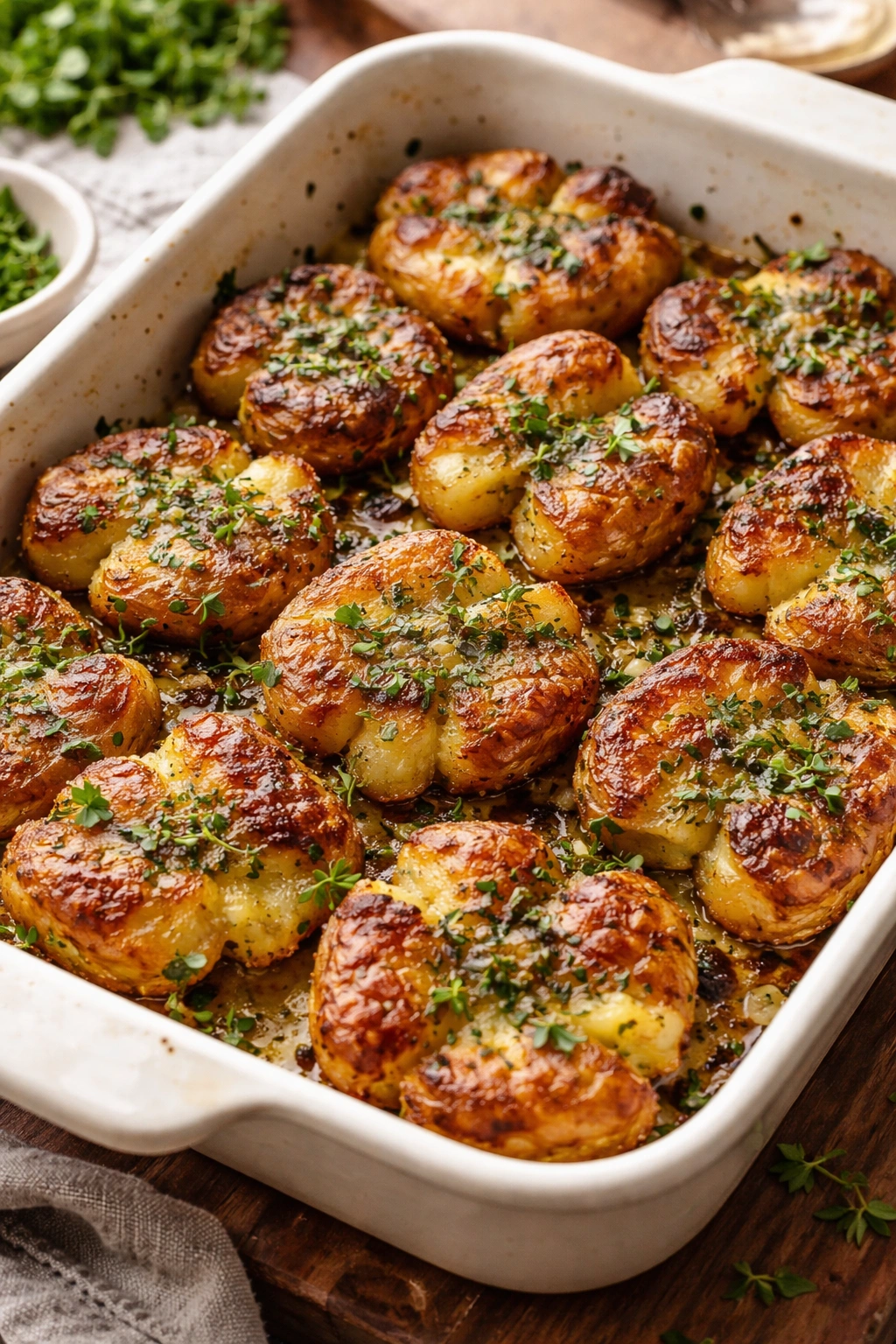
This is the hybrid between mashed potatoes and twice-baked potatoes — still creamy inside, but with a crispy, golden exterior that makes them textually interesting. They’re technically easier than twice-baked potatoes (no scooping out and refilling), and they look fancier than regular mashed potatoes, which makes them perfect for a family dinner that feels a little special without being fussy.
The Technique That Creates the Crispy Exterior
The trick is spreading the finished mashed potatoes into a shallow baking dish, brushing the top with melted butter, and then baking them until golden and crispy. The edges get especially crunchy, and when you scoop out a portion, you get creamy potato underneath with a crispy butter crust on top. It’s essentially a casserole version of mashed potatoes, but the presentation and texture make it feel completely different.
Building Your Crispy Smashed Potatoes
- Make your mashed potatoes using the basic method (boil, drain, mash with butter and cream)
- Add fresh chopped herbs (parsley, chives, thyme, or dill) to the warm potatoes
- Spread the mixture evenly in a buttered baking dish (about 1½ to 2 inches thick)
- Brush the top generously with melted butter
- Optionally sprinkle with grated Parmesan or breadcrumbs
- Bake at 400°F for 20-25 minutes until the top is golden and crispy
- Let rest for 5 minutes before serving (this helps them hold together when scooping)
Easy variation: Add crispy bacon bits, sautéed mushrooms, or caramelized onions to the mashed potatoes before spreading them in the baking dish for extra flavor and texture.
9. Sheet Pan Potatoes with Sausage and Peppers
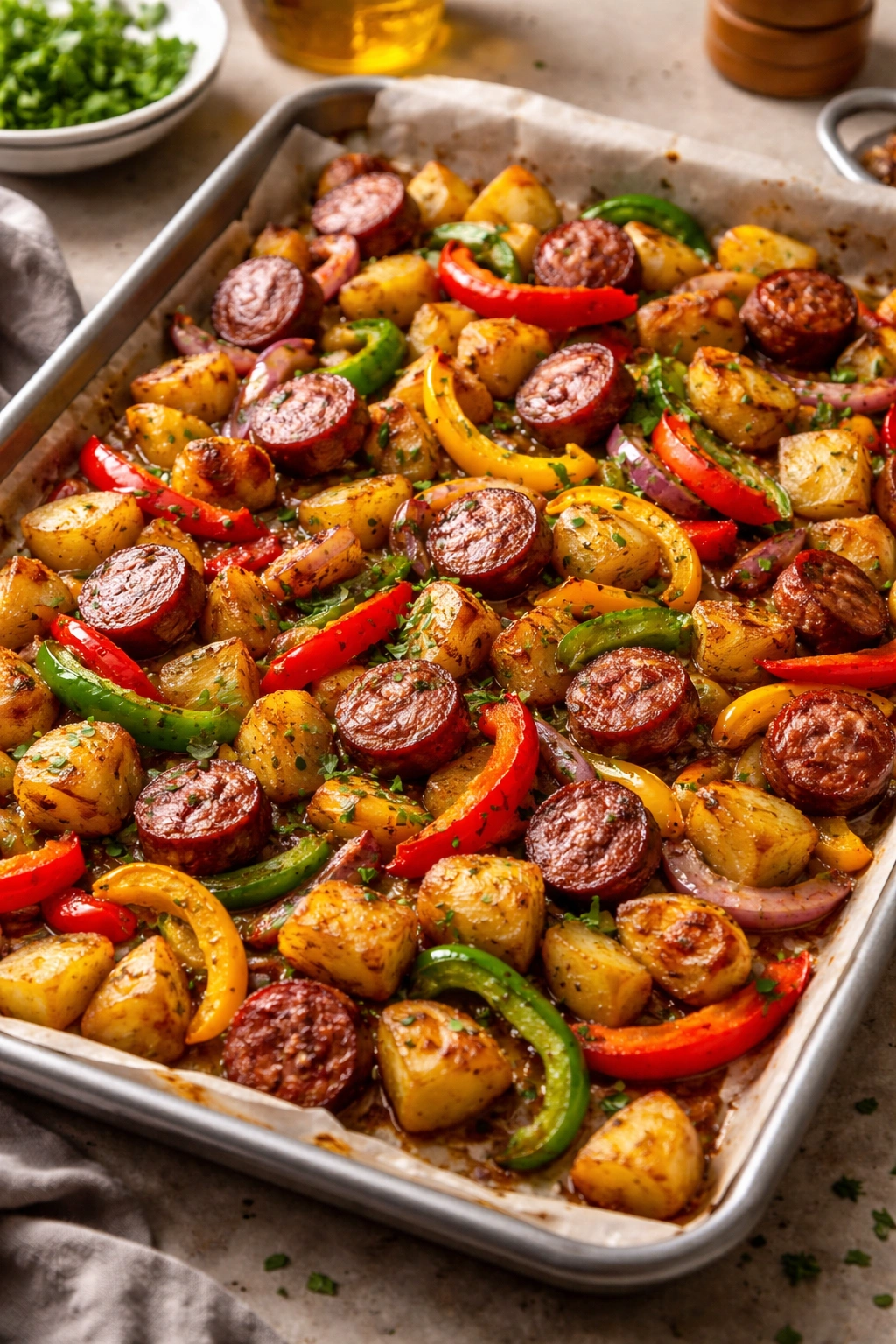
A sheet pan meal is lifesaving on nights when you need dinner on the table with minimal cleanup. This one-pan situation gets everything done in about 40 minutes: tender, browned potatoes, caramelized peppers, and sausage that’s developed a nice crust. It’s the kind of meal where everything cooks together, flavors mingle, and you literally have just one pan to wash.
Why Sheet Pan Cooking Works for Families
Everyone gets a complete, balanced meal — protein, vegetables, and starch all in one. The potatoes absorb flavor from the sausage as everything roasts together. Kids who might not eat sausage and peppers separately suddenly eat them happily when they’re roasted with potatoes they recognize. And from a practical standpoint, one sheet pan means less stress for the cook and less cleanup afterward.
Building Your Sheet Pan Meal
- Cut potatoes into 1-inch chunks and slice bell peppers into chunky strips
- Slice sausage into thick rounds (leave them whole if they’re thin links)
- Toss everything on a sheet pan with olive oil, salt, pepper, and Italian seasoning
- Spread in an even layer (everything should have room to brown, not steam in a pile)
- Roast at 425°F for 35-40 minutes, stirring halfway through, until potatoes are tender and everything has developed color
- Taste and adjust seasoning — finish with fresh parsley if you have it
What to know: Use Italian sausage or similar flavorful sausage; mild sausage gets a bit lost in the mix. And don’t crowd the pan — use two sheet pans if needed so everything browns properly.
10. Twice-Baked Potatoes Loaded with Everything
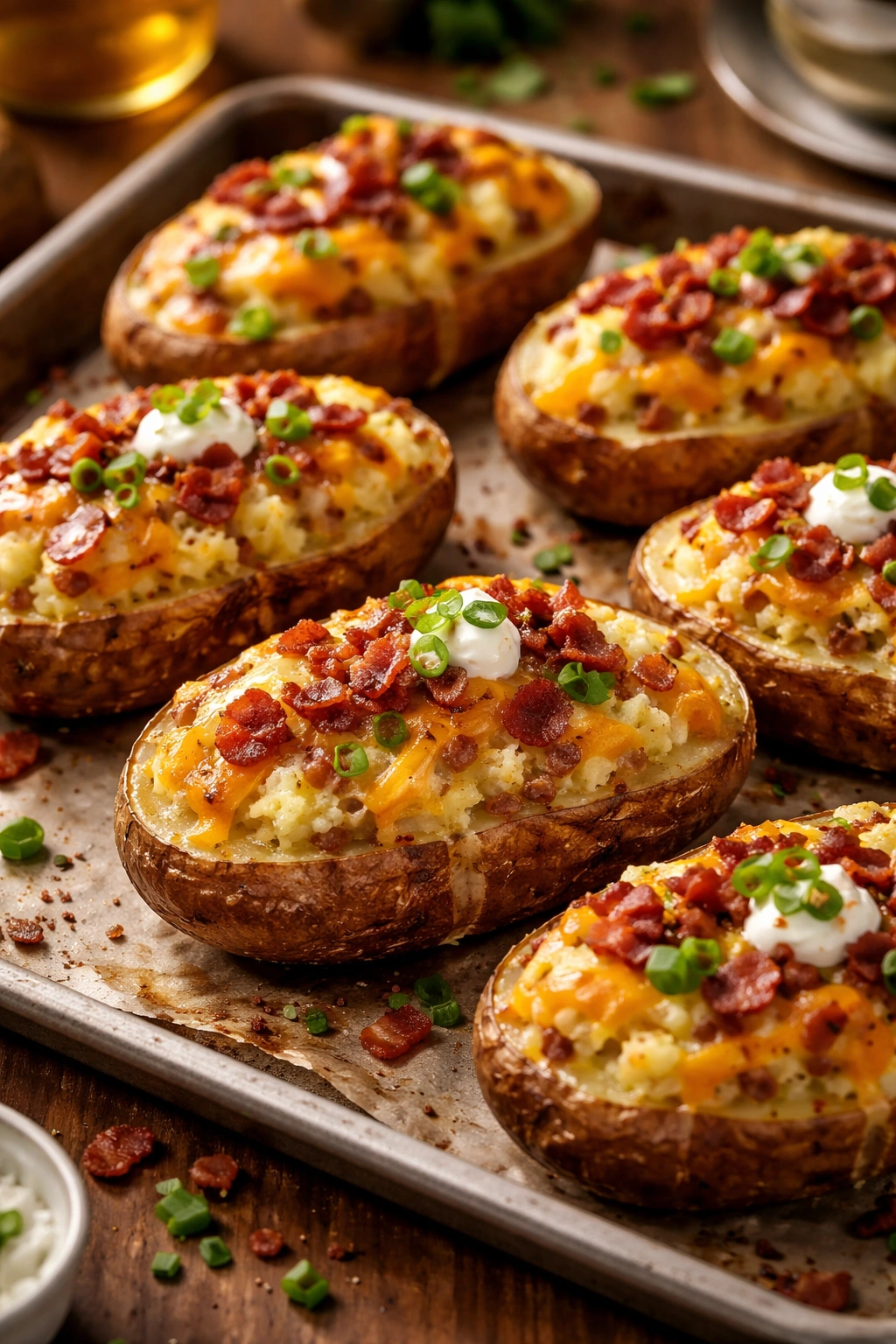
Twice-baked potatoes look impressive, taste fantastic, and make people feel like you put in real effort, even though they’re honestly not complicated. Cut your potatoes in half, scoop out the insides, mix them with cheese and toppings, pile it back in, and bake again. They’re the kind of dish that makes a regular dinner feel like a special occasion, and they’re genuinely delicious leftovers if you reheat them properly.
Why Twice-Baked Potatoes Impress
The presentation is inherently impressive — there’s something about a loaded baked potato that feels like a restaurant dish. But more importantly, they taste great. The potato skin becomes part of the dish instead of just a vehicle, and scooping out and remixing the inside lets you load them with flavor without them falling apart. They also hold together better than loaded baked potatoes for easy eating.
Making Twice-Baked Potatoes That Hold Together
- Bake large russet potatoes at 400°F for about 50 minutes until tender
- Cut them in half lengthwise and let them cool just enough to handle
- Scoop out the insides, leaving about a ¼-inch shell so they hold their shape
- Mash the scooped-out potato with butter, sour cream, and sharp cheddar cheese
- Fold in crispy bacon bits, chopped green onions, and jalapeños if you like heat
- Pile the mixture back into the potato shells
- Top with more cheese and bake at 350°F for about 15-20 minutes until warmed through and the tops are golden
- Sprinkle with fresh chives or parsley just before serving
Pro tip: You can assemble these ahead, cover them, and refrigerate for up to 24 hours before the final bake. Just add an extra 5-10 minutes to the baking time since they’ll start cold.
Final Thoughts
Potatoes have earned their place as the most versatile and forgiving vegetable in home cooking. Whether you’re looking for a quick weeknight side dish, a crowd-pleasing casserole, or something that makes a regular dinner feel special, a good potato recipe delivers every single time. The recipes above prove that you don’t need complex techniques or fancy ingredients to create family meals that people ask for again and again — just a few straightforward methods, quality ingredients, and the confidence to season generously.
The real secret to potato cooking is understanding that potatoes themselves are neutral and excellent, which means they’re a blank canvas for whatever flavors you want to build. A perfectly roasted potato tastes like luxury. A creamy potato soup becomes a complete meal. A loaded baked potato bar becomes an event where everyone gets exactly what they want. Once you have a few reliable techniques under your belt, you’ll find yourself reaching for potatoes constantly because they’re cheap, filling, and genuinely delicious when treated with respect.
Start with whichever of these sounds most appealing for your next meal, trust the technique, and taste as you go. In a week or two, you’ll have new family favorites that appear in regular rotation on your dinner table — the highest compliment any recipe can receive.
