



Pasta salad has become the MVP of cookout season, and for good reason. It’s make-ahead friendly, travels beautifully, actually tastes better the next day, and there’s genuinely something for everyone. Whether your crew leans toward bright and fresh, rich and creamy, or packed with protein, a killer pasta salad can steal the show as easily as any grilled main course—and usually costs a fraction of the price.
The magic of a great cookout pasta salad isn’t just about throwing cooked pasta and some veggies into a bowl. It’s about building layers of flavor that develop and deepen as everything mingles together overnight. The right dressing, the right texture balance, and the right mix of ingredients transform what could be boring into something people actually request the recipe for. You want something sturdy enough to hold up through hours of sitting in the heat, flavorful enough that it doesn’t need to stay chilled (though it’s better when it does), and interesting enough that people come back for seconds instead of just picking at it out of politeness.
The ten salads here cover the full spectrum of cookout personalities. Some are light and vegetable-forward, others are loaded with protein, a few lean into creamy richness, and some pack a serious flavor punch. Most can be prepped the day before, travel beautifully in a sealed container, and actually improve if you let them sit for a few hours before serving. Each one uses ingredients you’ll easily find, and most take about 20 minutes of active time to pull together.
1. Classic Caprese Pasta Salad
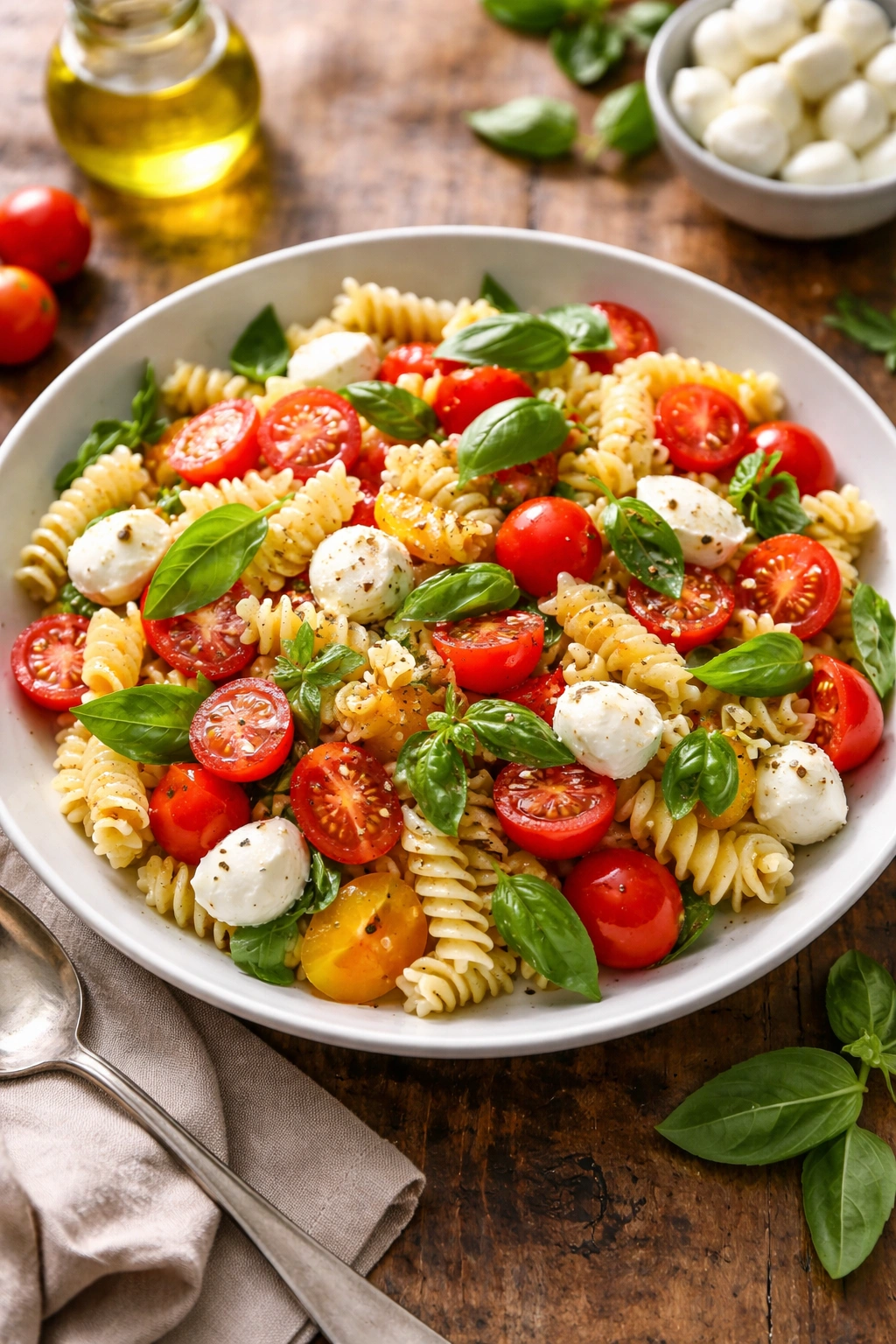
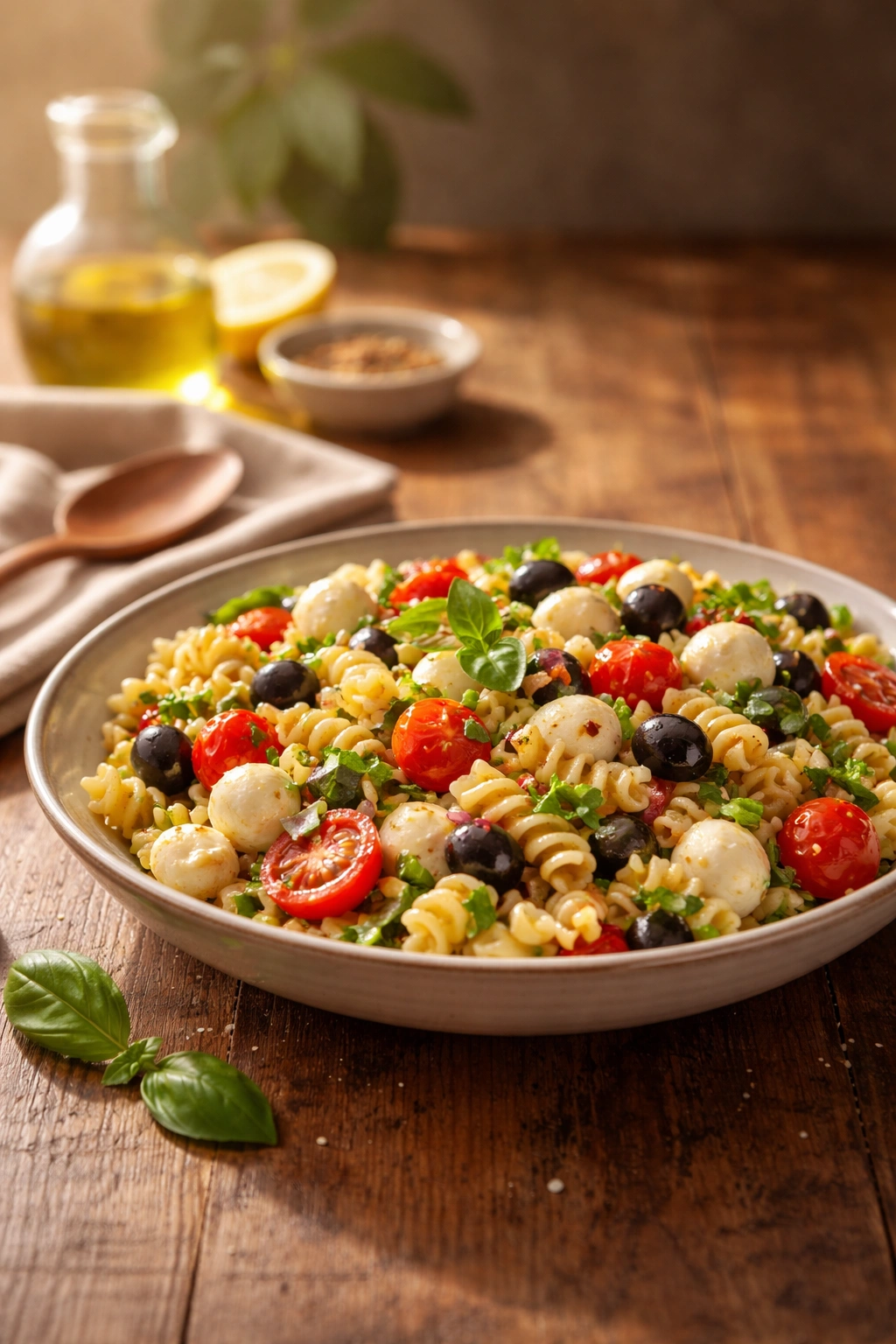
This is the pasta salad equivalent of a perfectly ripe tomato—simple, elegant, and capable of tasting amazing or falling completely flat depending on ingredient quality. Fresh mozzarella, bright tomatoes, fragrant basil, and a good olive oil are non-negotiable here. The beauty is that it looks impressive and tastes fresh without ever feeling heavy or overwhelming on a hot afternoon.
Why It’s a Cookout Essential
Caprese flavors feel instantly summery and familiar. The combination of warm pasta, cool fresh mozzarella, and juicy tomatoes creates a pleasant temperature contrast that actually feels refreshing. It’s the kind of salad that makes people feel like they’re eating something light and sophisticated, even though it takes 15 minutes to assemble. The acidity from tomatoes and balsamic keeps everything tasting bright no matter how long it sits.
What Makes This Version Work
- Start with really good tomatoes — the salad lives or dies on tomato quality. Grab the best ones you can find, even if they’re heirloom varieties or from a local farm stand.
- Use fresh mozzarella, not pre-shredded — the texture and flavor difference is dramatic. A whole ball torn into pieces tastes infinitely better than shreds from a bag.
- Don’t dress it too far in advance — the tomato liquid will dilute the dressing and make everything watery. Assemble everything except the mozzarella and basil the day before, then finish it an hour before serving.
- Skip heavy vinaigrettes — keep it to a simple mixture of excellent olive oil, good balsamic vinegar, minced garlic, salt, and fresh cracked pepper.
Pro Tips That Matter
The secret to preventing this from becoming a soggy mess is draining your tomatoes. Cut them in half lengthwise and gently squeeze out excess juice before cutting them into pieces—you’ll lose some seeds too, which is fine. Use a short pasta like penne or farfalle that holds a light dressing well without getting clumpy. Add the fresh mozzarella and basil no more than 30 minutes before serving, so they stay tender and don’t get bruised.
2. BBQ Pulled Pork Pasta Salad
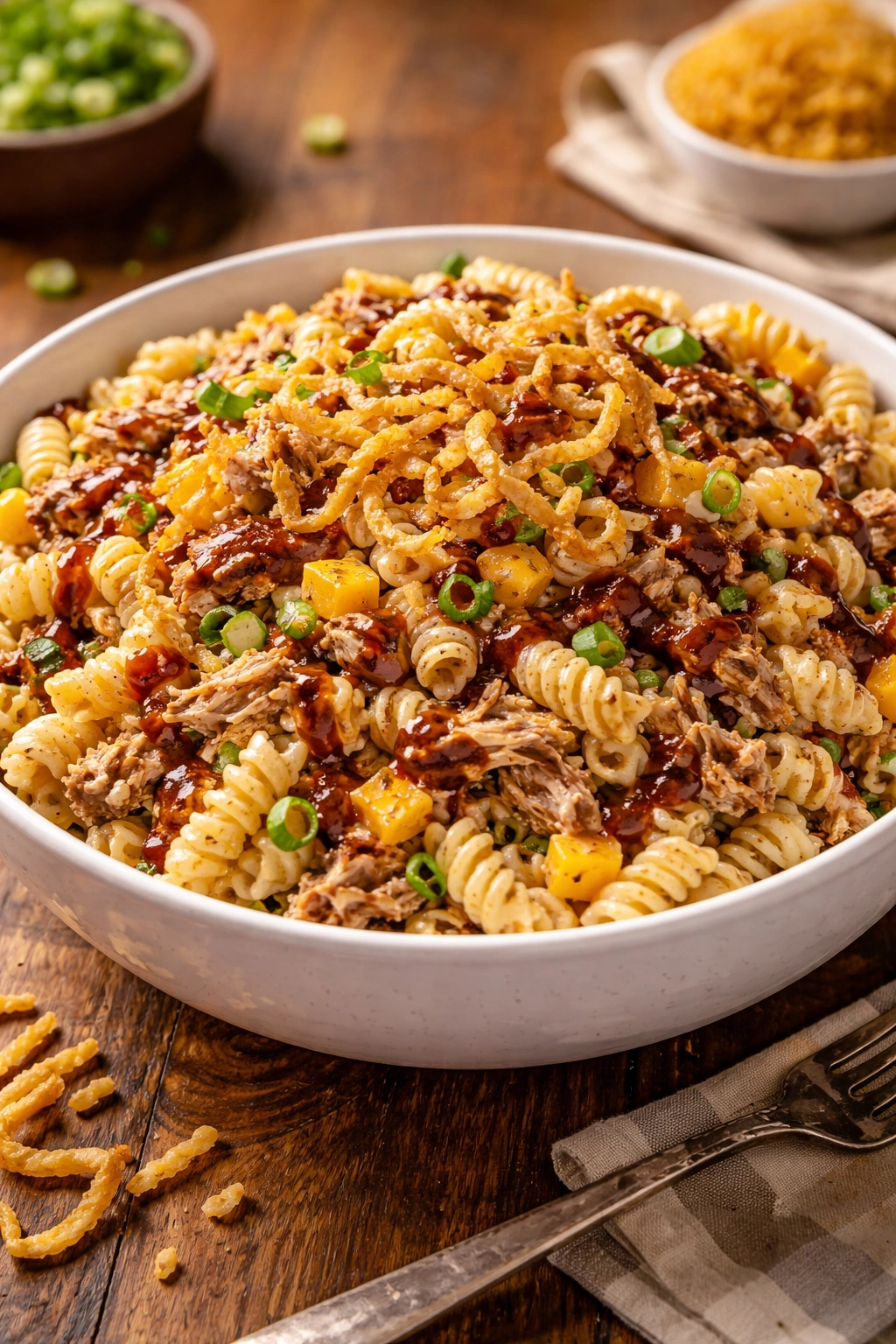
This one flips the traditional cookout formula on its head—imagine all the smoky, tangy pull-together flavor of a BBQ sandwich, but in pasta form. Tender pulled pork, smoky BBQ sauce, crispy fried onions, sharp cheddar, and a touch of creamy mayo create something that reads as comfort food, but still feels fresh enough for an outdoor meal.
Why It Works for Crowds
Most people weren’t expecting pasta salad to taste like their favorite BBQ, so there’s an element of delightful surprise. It’s filling and satisfying without feeling heavy, and the combination of textures—tender pork, creamy dressing, crispy fried onions—keeps things interesting. Plus, if your cookout already has pulled pork on hand for sandwiches, you can raid some of it for this salad without needing an entirely separate protein.
Building Maximum Flavor
- Use quality pulled pork — smoked pulled pork is ideal, but slow-cooker pulled pork dressed in BBQ sauce works beautifully too. Shred it finely so it distributes evenly throughout.
- Make a creamy BBQ dressing — whisk together mayo, the BBQ sauce you’re already using, a splash of apple cider vinegar, and a pinch of smoked paprika. You want something that clings to the pasta rather than pooling at the bottom.
- Toast the fried onions fresh — don’t add them until right before serving. They lose their crispness and taste stale if they sit in the dressing overnight.
- Balance smoky with something bright — a handful of fresh cilantro or a squeeze of lime juice cuts through the richness and prevents it from tasting one-dimensional.
Smart Assembly Details
Cook your pasta slightly firmer than usual—al dente or even just shy of it. The creamier dressing will soften it more as it sits, and you don’t want mushy pasta. Toss everything except the fried onions and cilantro together a few hours in advance so the flavors blend, but keep the crispy and fresh components separate until the last moment. If it seems dry when you pull it out of the cooler, stir in a little extra mayo or a splash of apple cider vinegar rather than adding more dressing all at once.
3. Mediterranean Herb Pasta Salad
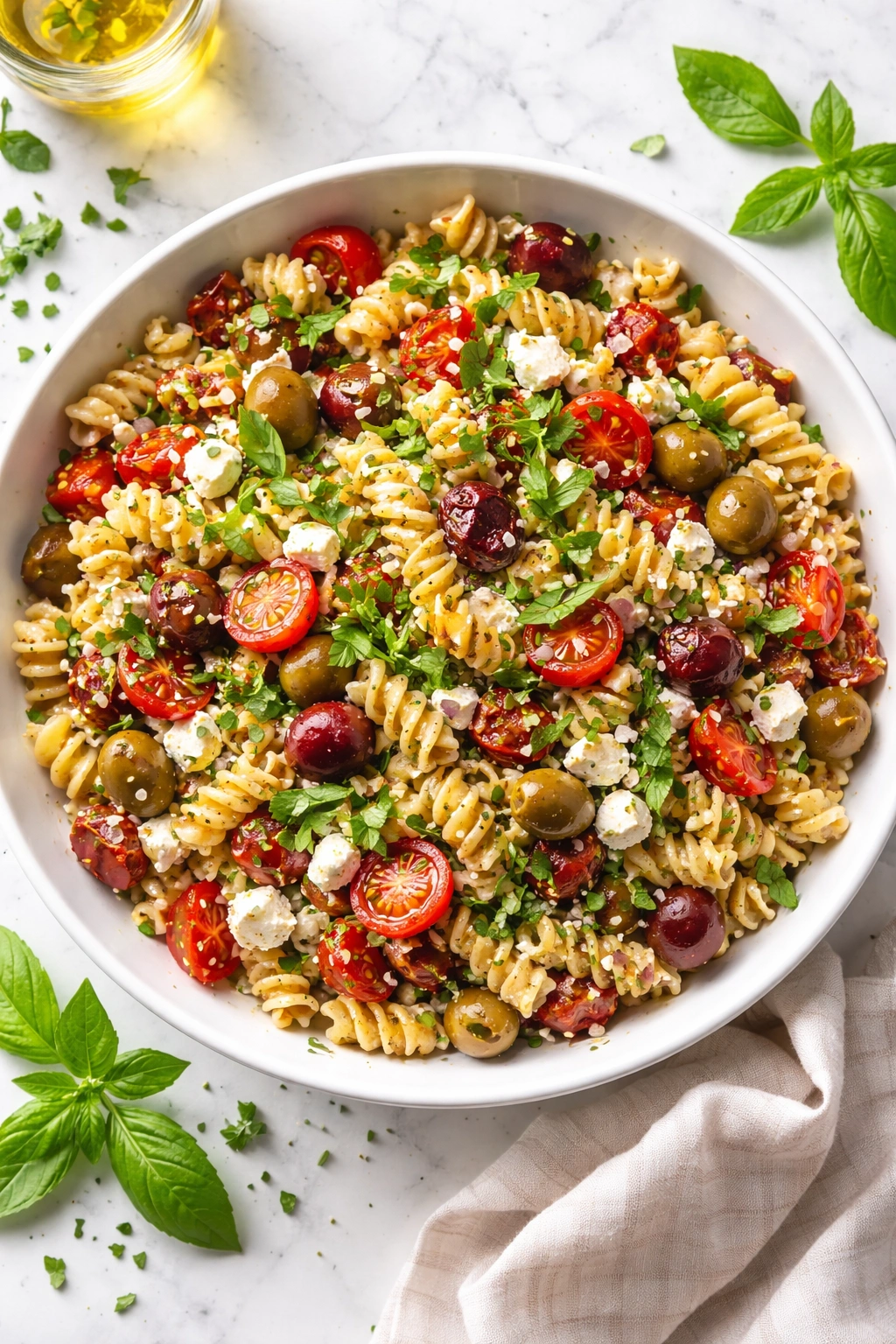
This salad celebrates everything great about Mediterranean cooking—bold herbs, briny olives, sharp feta, sun-dried tomatoes, and plenty of garlic. It’s bright, it’s herbaceous, and it tastes more interesting the longer it sits as all those Mediterranean flavors deepen and meld.
Why This Tastes Like a Vacation
The combination of fresh oregano, basil, dill, and parsley gives this a garden-fresh intensity that most pasta salads lack. The olives and sun-dried tomatoes add brininess and depth that prevent it from ever tasting boring. Crumbled feta doesn’t get melted down by the dressing—it stays bright and sharp and provides a satisfying textural contrast.
The Flavor Foundation
- Make an herb-forward dressing — whisk together good olive oil, red wine vinegar, minced garlic, oregano, basil, and black pepper. Use way more herbs than feel reasonable; they mellow out as the salad sits overnight.
- Don’t skip fresh herbs on top — save about a quarter of your herbs to sprinkle on right before serving so you get bursts of fresh flavor.
- Include sun-dried tomatoes and roasted red peppers — they add sweetness and depth that fresh vegetables alone won’t provide. You want a salad with real layers.
- Toast some pine nuts — they add a subtle nutty richness that feels more substantial than this salad has any right to be given how light it tastes.
Keeping Everything Fresh
The feta will release liquid as it sits, which actually enhances the dressing, so don’t worry about it breaking down. If anything, the salad tastes better the next day. The only component that can get soggy is fresh spinach—if you’re adding any greens, keep them separate and toss them in just before serving. The pasta should be a short shape like rotini or shells; the little pockets trap the herb oil and make every bite flavorful.
4. Creamy Dill and Cucumber Pasta Salad
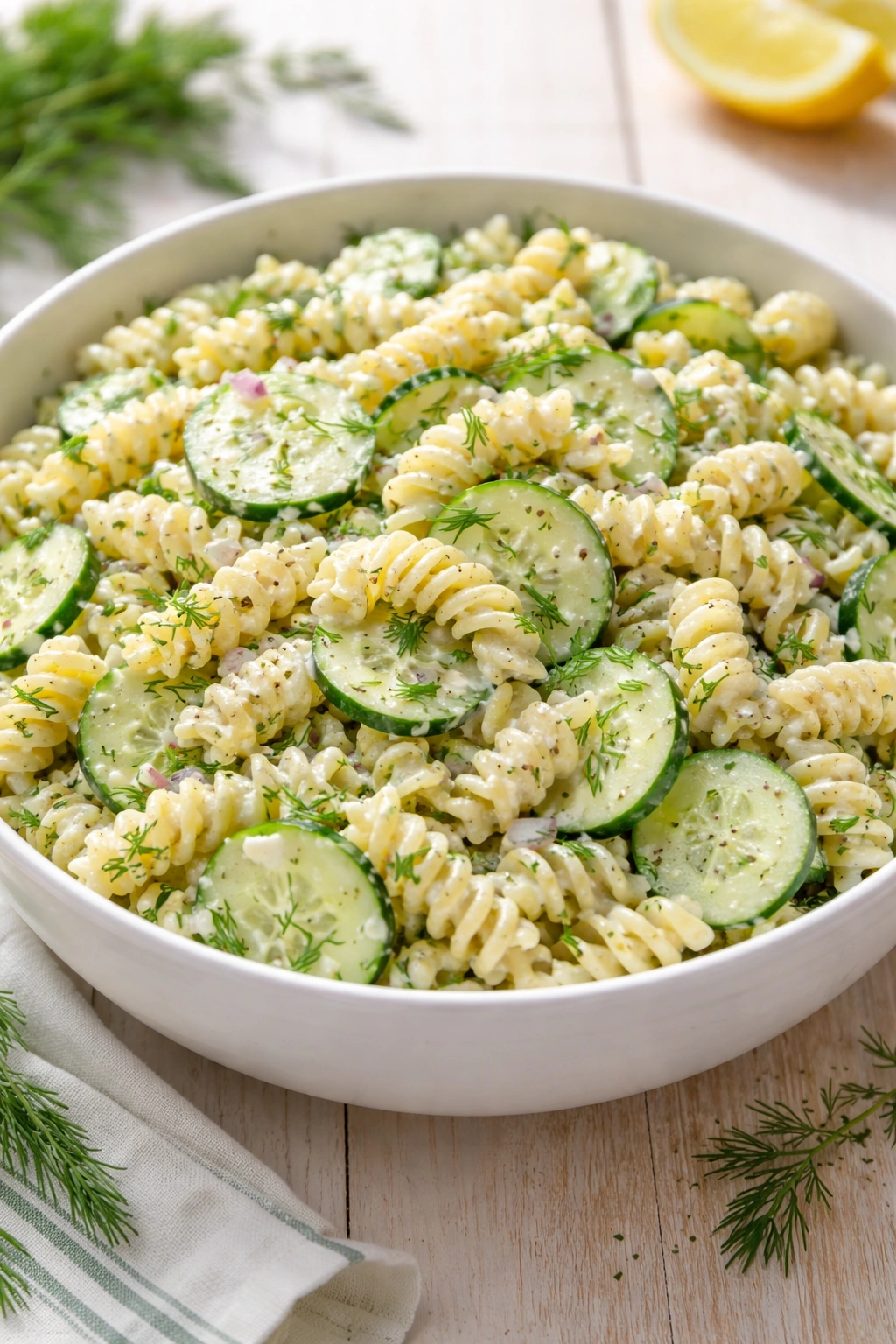
This one tastes like cooling down on a hot day. It’s creamy without being heavy, bright with dill and lemon, and absolutely full of crisp, refreshing cucumbers. It’s the kind of salad that people think they’re too full to eat, then find themselves going back for another serving.
Why It’s Criminally Underrated
The combination of fresh dill and cucumber is classic for a reason—they taste fresh, summery, and genuinely refreshing. Cream-based pasta salads sometimes feel heavy on a hot afternoon, but this one stays light because you’re using mostly Greek yogurt with just a touch of mayo, and the lemon and dill cut right through any richness. There’s enough substance to make it satisfying as a side, but not so much that you feel weighed down afterward.
The Secret to Not-Boring Creamy Salad
- Use Greek yogurt as your base — mix it with just enough mayo for texture and richness, then thin with lemon juice and chicken broth until you get a pourable dressing that’s not too thick.
- Fresh dill is non-negotiable — dried dill tastes nothing like the real thing and will make this taste sad. Use at least a quarter cup of chopped fresh dill.
- Add red onion and radishes — they provide crunch and bite that prevents this from turning into a bland, mushy bowl of paste. The bite of raw red onion and the crispness of radishes are essential.
- Include some protein — smoked ham, shrimp, or hard-boiled eggs add substance and make it feel more like a complete meal.
Timing and Temperature
This salad is best served cold, so make sure your serving bowl is chilled and that everything has a chance to sit together for at least 30 minutes before serving. The cream dressing will continue to coat the pasta as it sits, and the flavors will meld. Add the fresh cucumber right before serving if possible—if it sits too long in the dressing, it releases water and dilutes everything.
5. Roasted Red Pepper and Feta Pasta Salad
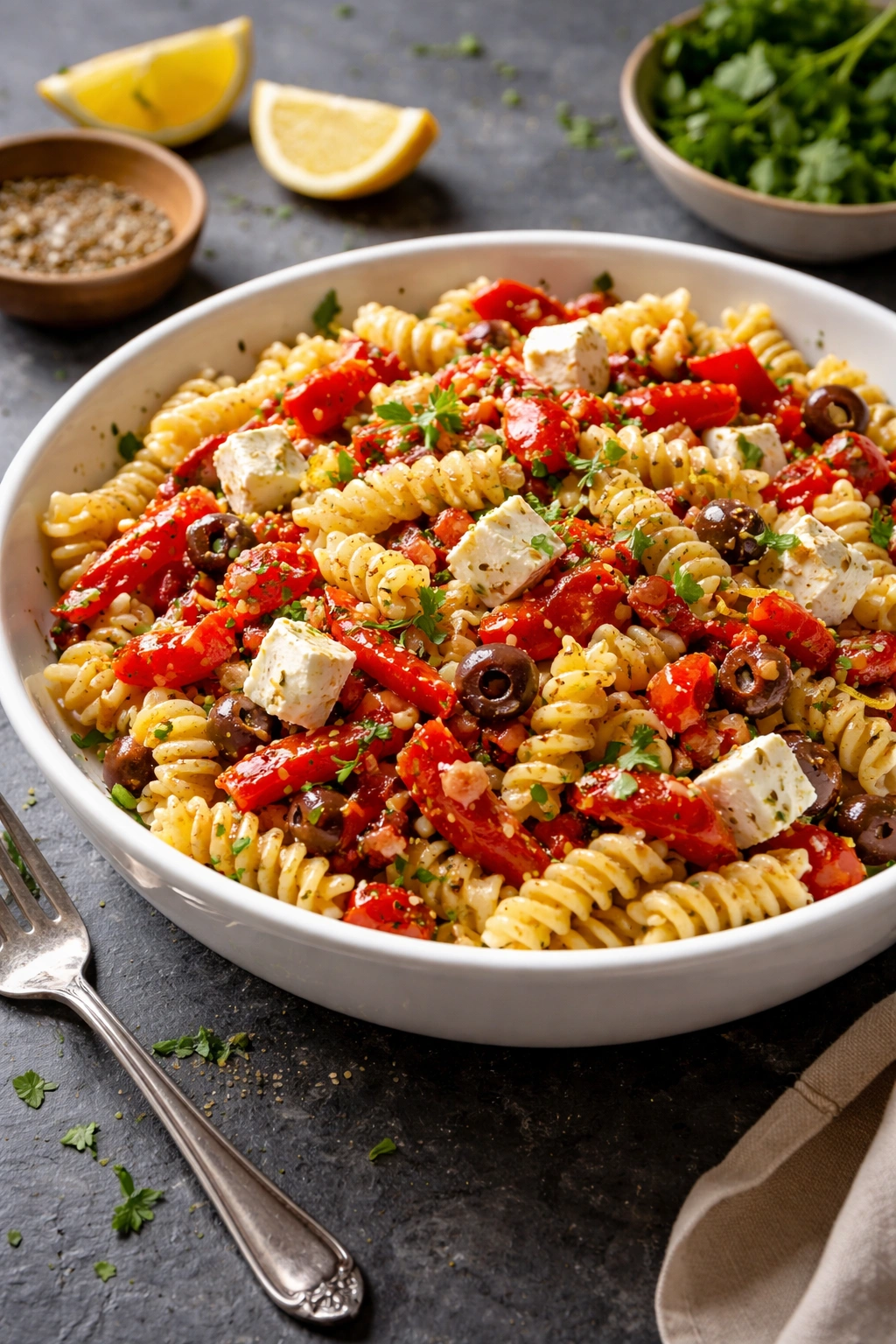
Sweet roasted red peppers, tangy feta, bright lemon, and fragrant oregano come together in something that tastes sophisticated while being completely weeknight-friendly. The peppers become almost jammy when roasted, creating depth and sweetness that balances the sharp feta perfectly.
Why Roasted Peppers Change Everything
Roasting peppers transforms them from slightly bitter raw vegetables into something with real caramelized sweetness. They become almost tender enough to spread, with a jammy quality that creates a sauce-like consistency in the salad. This isn’t a salad that requires a separate dressing in the traditional sense—the roasted peppers and their oils form the dressing, with help from good olive oil and a bright acid.
Building This Correctly
- Roast your own peppers, or grab good quality jarred ones — store-bought roasted red peppers are convenient and honestly quite good. Just make sure you’re getting ones packed in olive oil, not vinegar.
- Create a simple lemon-oregano dressing — whisk together olive oil from the pepper jar, fresh lemon juice, minced garlic, dried oregano, salt, and pepper. That’s genuinely all you need.
- Add some crunch and texture — toasted pine nuts, crispy breadcrumbs, or even some crispy chickpeas add a textural element that makes this feel more substantial.
- Use a hearty short pasta — rotini, penne, or orzo work well; they trap the dressing and don’t get overwhelmed by the peppers.
Make-Ahead and Storage Notes
This salad actually improves overnight as all the flavors get cozy together. You can assemble it completely the day before, cover it, and it’ll taste even better when you serve it. The peppers soften slightly and the flavors integrate more deeply. Just stir it once more before serving and taste for salt and lemon—sometimes it needs a small adjustment.
6. Asian Sesame Pasta Salad
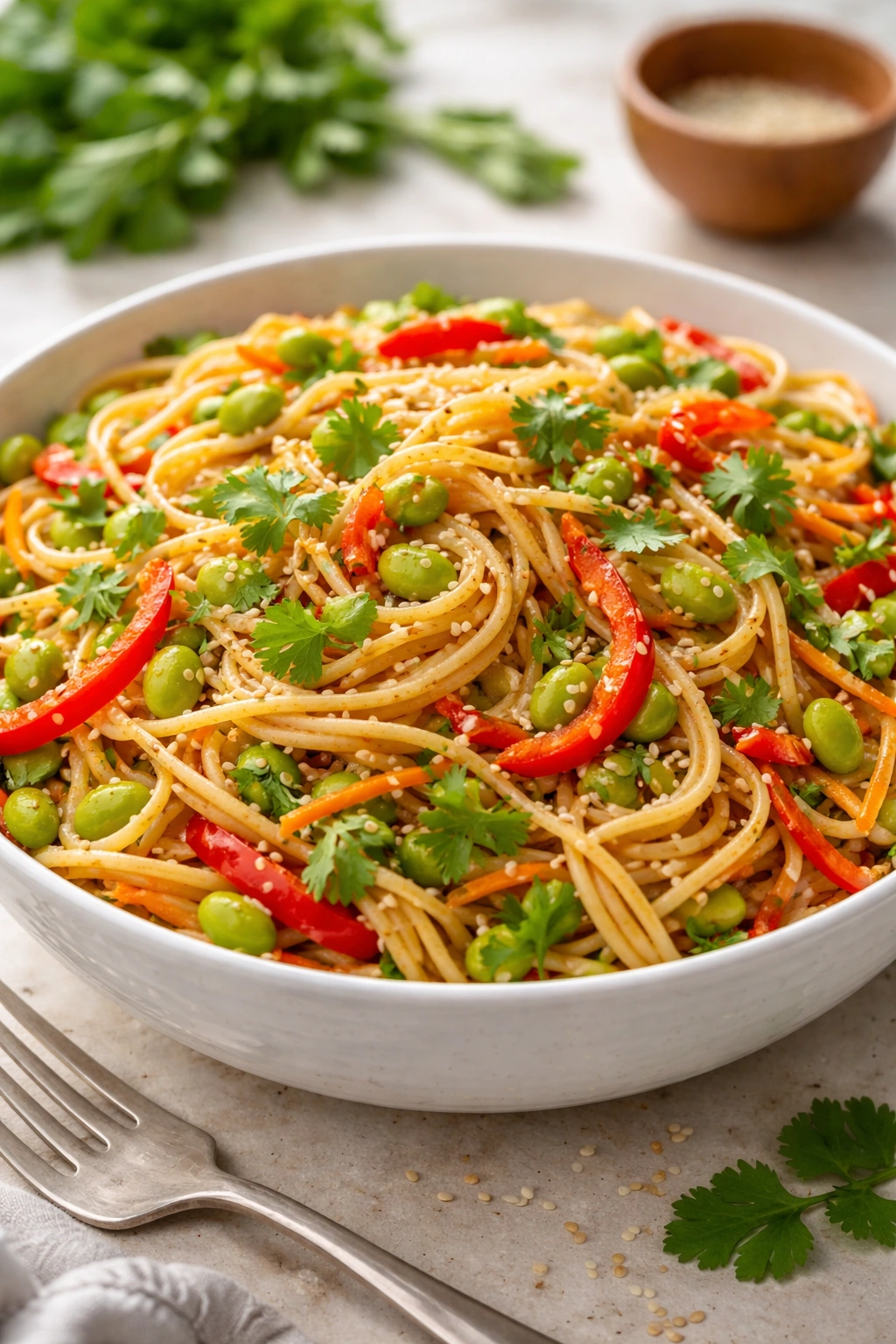
This one tastes like a lighter, fresher take on Asian noodle salads. Toasted sesame oil, soy sauce, rice vinegar, fresh ginger, and cilantro create something vibrant and alive. Edamame, shredded carrots, thinly sliced bell peppers, and scallions add color and crunch that keep you coming back for more.
Why This Stands Out at Cookouts
Most cookout pasta salads are Italian-leaning or mayo-based, so an Asian sesame version feels fresh and interesting. It’s lighter than creamy salads, but has more depth than a simple vinaigrette would provide. The toasted sesame oil is the star ingredient here—even a small amount gives an incredible savory, nutty depth that tastes sophisticated and intentional.
Creating Authentic Flavor
- Don’t skip toasted sesame oil — it’s worth buying a bottle for this alone. Regular sesame oil will give you heat and bitterness; toasted sesame oil gives you rich, savory nuttiness.
- Make a proper Asian dressing — whisk together toasted sesame oil, soy sauce, rice vinegar, minced ginger, minced garlic, and a touch of honey. A splash of lime juice brightens the whole thing.
- Include fresh herbs — cilantro and scallions are essential. They’re not optional. They’re what makes this taste vibrant instead of flat.
- Add crunch strategically — toasted sesame seeds, crispy wonton strips, or even crushed cashews provide texture. Add these right before serving so they stay crispy.
Smart Ingredient Choices
Use a thin pasta like angel hair or thin spaghetti broken into shorter pieces, or go with a shape like penne that won’t clump. Cook it just slightly al dente because the dressing is relatively light and won’t soften it as much as cream-based dressings would. This salad is best served cool or at room temperature, but not ice-cold—the flavors open up more when it’s not too cold.
7. Italian Antipasto Pasta Salad
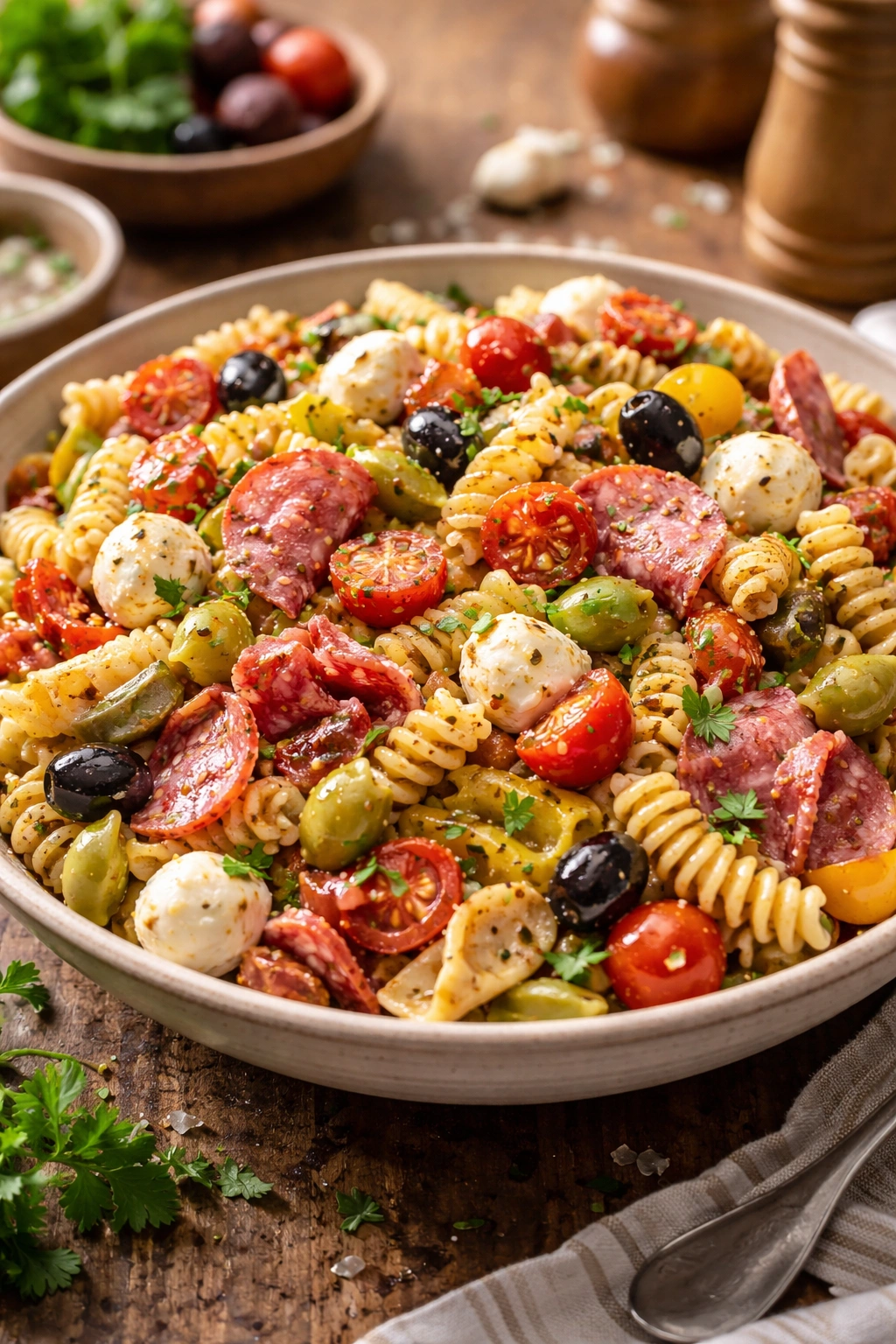
This is basically an Italian charcuterie board transformed into pasta form. Salami, capicola, fresh mozzarella, marinated artichokes, pepperoncini, olives, and cherry tomatoes create something that tastes indulgent but stays light. It’s the kind of salad that feels like you’re not even at a cookout because it’s so sophisticated.
Why It Tastes Like a Restaurant Dish
The combination of cured meats, briny vegetables, good cheese, and a simple vinaigrette creates complexity and depth without requiring any cooking skills beyond boiling pasta. There’s something about the interplay of salty, briny, creamy, and acidic elements that just works together. Every bite has multiple flavors happening, which is why it never gets boring.
Assembling with Intent
- Use quality cured meats and fresh mozzarella — this is not the place to use budget ingredients. Good salami, capicola, or prosciutto make a real difference. Fresh mozzarella should be soft and fresh-tasting, not rubbery.
- Marinate the hard vegetables ahead — drain canned artichokes and red peppers and toss them in a little olive oil, red wine vinegar, and Italian seasoning a few hours before serving. Let them get cozy together.
- Make a simple vinaigrette — good olive oil, red wine vinegar, minced garlic, Italian seasoning, salt, and pepper. Don’t overthink it.
- Add fresh basil right at the end — it brightens the whole salad and prevents it from tasting heavy.
The Timeline for Success
Cook your pasta, cool it completely, then toss with the vinaigrette while it’s still warm so it absorbs the flavors. Let it cool to room temperature, then add all the cured meats, cheeses, and vegetables. This way the meats and cheese don’t get warm and weird, but the pasta still gets properly dressed. You can assemble this in the morning and let it sit in the fridge all day—it only gets better.
8. Summer Garden Vegetable Pasta Salad
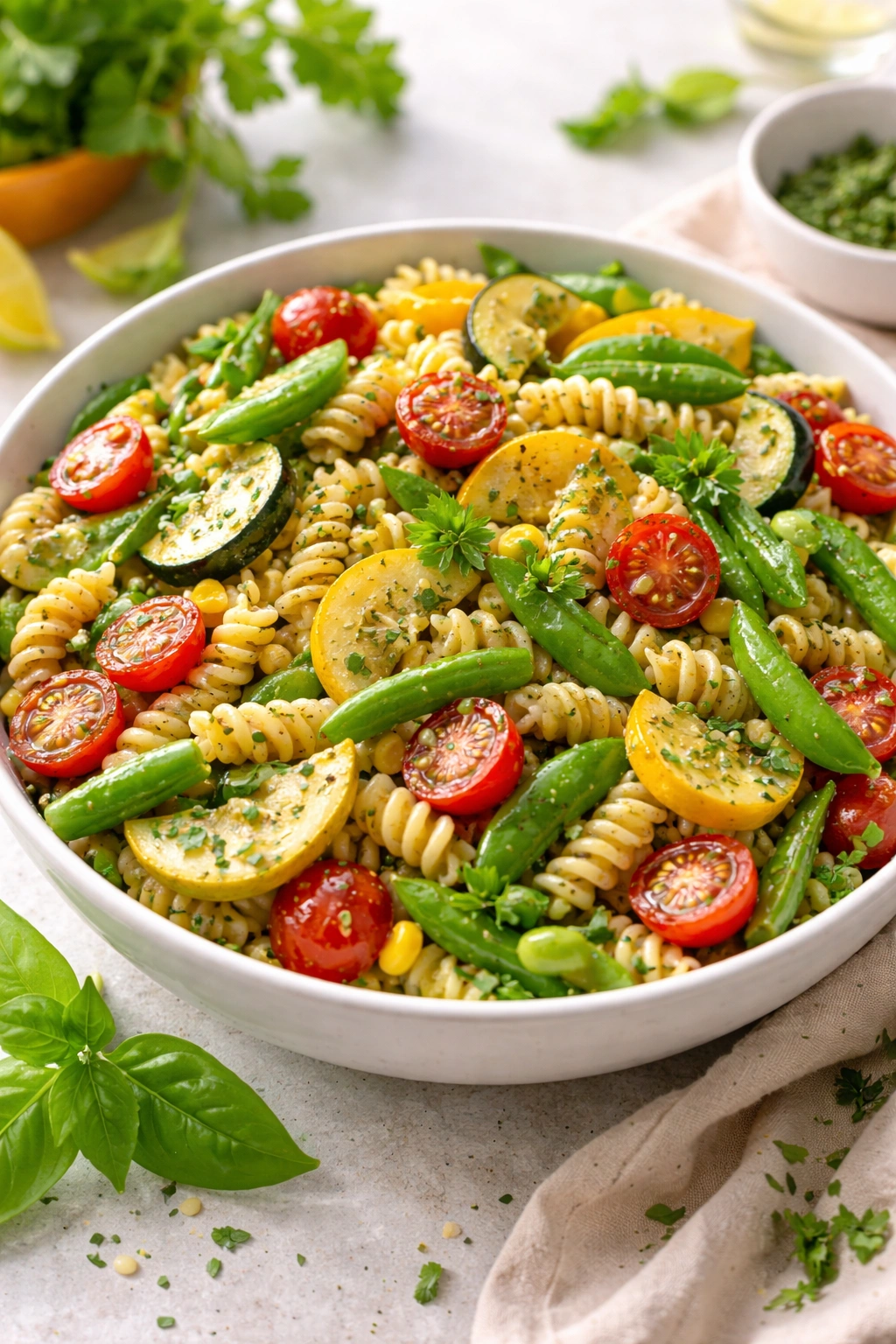
This is the salad you make when your garden (or farmers market) is absolutely exploding with vegetables. Zucchini, yellow squash, fresh corn, cherry tomatoes, sugar snap peas, and green beans all work together in something that tastes bright, fresh, and full of summer.
Why Vegetable-Forward Works at Cookouts
You’ve got enough grilled meat happening at the cookout—what you need is something that tastes light and fresh and lets vegetables shine. A well-made vegetable pasta salad can be as satisfying as something loaded with protein, especially when you’ve built in plenty of flavor through a good dressing and maybe some herbs and cheese.
Building Vegetable Depth
- Lightly cook or blanch tender vegetables — raw zucchini and yellow squash can be watery; give them a quick minute-long blanch and shock in ice water, then dry them thoroughly. This removes excess moisture and prevents a soggy salad.
- Keep some vegetables raw — cherry tomatoes, sugar snap peas, and bell peppers taste better raw. You want a mix of textures and temperatures.
- Add a creamy herb dressing — something with fresh basil, dill, or tarragon creates a background that makes all the vegetables taste better together. Don’t skip the fresh herbs.
- Include something salty and rich — feta cheese, pine nuts, or crispy bacon bits add a contrast that keeps the salad from tasting one-note.
Preventing Waterlogged Disasters
The biggest challenge with vegetable salads is managing moisture. Pat everything dry after cooking or washing. Don’t dress it until an hour or two before serving, and if you notice excess liquid pooling at the bottom, drain it before serving. You can make the pasta and dressing ahead, add the heartier vegetables, then add tender raw vegetables closer to serving time.
9. Smoky Bacon and Tomato Pasta Salad
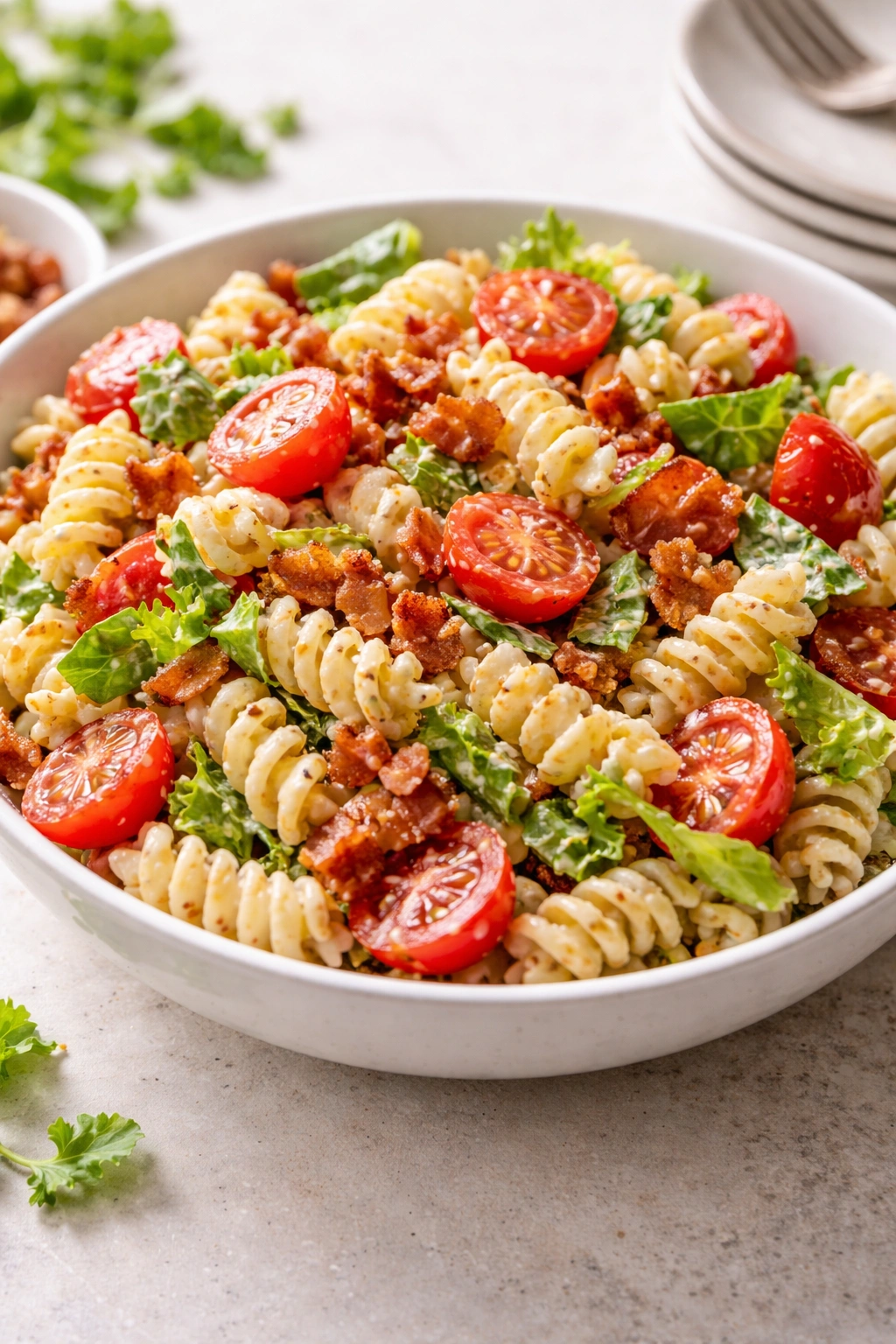
This tastes like a BLT sandwich but in pasta form—crispy bacon, fresh tomato, cool lettuce, a touch of mayo, and enough seasoning to make it taste like summer on a plate. It’s simple, it’s satisfying, and it somehow never gets old.
Why This Works Better Than Expected
Bacon and tomato is such a classic combination that people sometimes think it’s basic, but when you get it right—with really crispy bacon, really good tomato, fresh lettuce—it becomes something genuinely craveable. The combination of crispy, creamy, fresh, and juicy creates a texture experience that keeps people going back for more.
Getting the Flavors Right
- Cook bacon until it’s actually crispy — it should shatter when you bite it, not bend. Crispy bacon stays crispy longer; limp bacon gets soggy.
- Use really good tomatoes — this salad depends on tomato quality. If you can’t get good tomatoes, use high-quality canned San Marzano tomatoes instead of sad, watery supermarket ones.
- Make a simple bacon mayo dressing — whisk together mayo, a little apple cider vinegar, minced garlic, and some of the bacon fat for richness. Season generously with salt and pepper.
- Add fresh lettuce right before serving — crisp romaine or butter lettuce adds textural contrast and freshness. It will wilt if it sits too long in the dressing.
Assembly and Timing
Build this salad in layers: pasta and dressing, then the more delicate ingredients closer to serving time. You can prep the bacon and tomato earlier in the day, but add the lettuce no more than an hour before serving. Use a short chunky pasta like farfalle or penne that holds up well to a creamy dressing.
10. Lemon Shrimp Pasta Salad
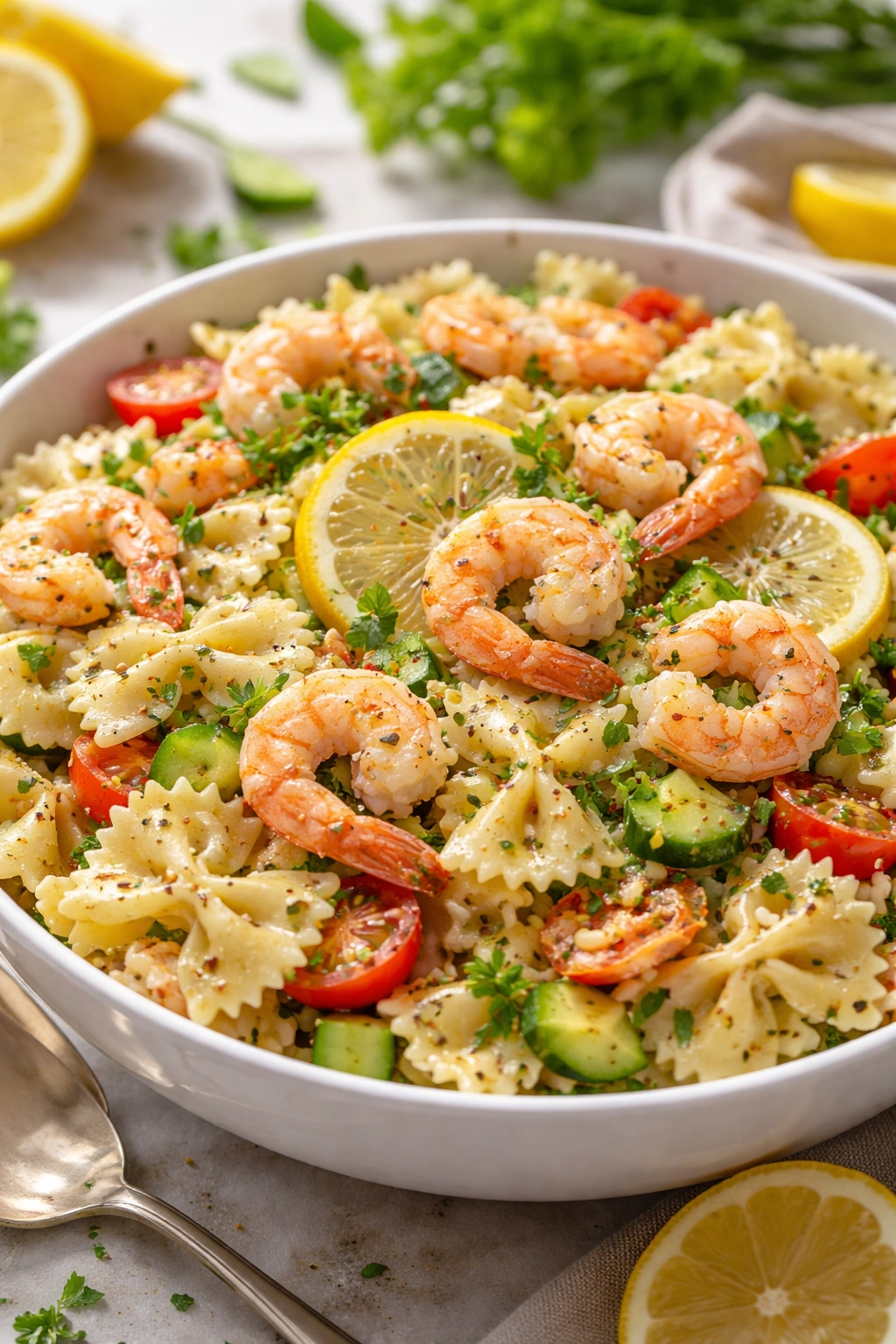
This feels elegant and restaurant-quality, but takes maybe 20 minutes from start to finish. Tender shrimp, bright lemon, fresh herbs, and a touch of garlic create something that tastes light but substantial. It’s the kind of salad that makes people think you spent way more effort than you actually did.
Why Shrimp Elevates Everything
Shrimp cooks in minutes, tastes naturally elegant, and makes a salad feel special without being complicated. It’s a protein that doesn’t compete with other flavors—it enhances them. The combination of tender shrimp, bright lemon, and fresh herbs feels more sophisticated than a typical creamy cookout salad, but it’s actually simpler to make.
Building This Right
- Don’t overcook the shrimp — cook until they’re just opaque in the center, usually 2-3 minutes depending on size. Overcooked shrimp is rubbery and sad.
- Season the shrimp before the salad — toss the cooked shrimp in a little olive oil, lemon juice, minced garlic, salt, and pepper while it’s still warm so they absorb flavor.
- Make a light lemon dressing — olive oil, fresh lemon juice, minced garlic, fresh dill or tarragon, and a touch of Dijon mustard. You want something that tastes bright and doesn’t overpower the delicate shrimp.
- Add peas and snap peas for color and sweetness — they contrast beautifully with the lemon and shrimp, and add a textural element.
Keeping It Fresh
This salad is best served cool but not ice-cold. Make it an hour or two before serving rather than the day before—the shrimp can get rubbery if it sits too long. You can prep the pasta and dressing ahead and add the shrimp closer to serving time. If you need to make it further ahead, keep the shrimp separate and toss it in just before serving.
Final Thoughts
The perfect cookout pasta salad comes down to understanding that it’s not a vehicle for leftovers—it’s a dish that deserves real flavor-building, quality ingredients, and the same attention you’d give to anything else on the table. Whether you go with something classic like caprese, something unexpected like BBQ pulled pork, or something elegant like lemon shrimp, the principle is the same: taste as you go, don’t be shy with seasonings, and remember that flavors flatten when cold, so season generously.
Most of these salads actually taste better the next day after the dressing has had time to settle and the flavors have melded together. That’s the best-kept secret about cookout pasta salads—you can make them the day before, forget about them, and they’ll be better than fresh. That’s the opposite of most side dishes, and it’s why pasta salad is genuinely the MVP of cookout season.
The key to a pasta salad that people actually want to eat is variety in texture—creamy or crispy or fresh depending on the salad, but always something to bite down on, always something that makes it interesting. Don’t make it too heavy, don’t oversalt it (remember, cold food tastes less salty, so you need to be generous), and don’t dress it so far in advance that it gets soggy. Start with one of these, make it once or twice until you understand how it works, then feel free to riff on the flavors based on what you’ve got on hand. The framework is what matters, and once you’ve got that down, you’ll be making pasta salads that people request by name.
