



Every holiday dinner needs a star player alongside the turkey or ham—and that’s exactly what a golden, perfectly seasoned bread dressing brings to the table. It’s the kind of dish that people think back on fondly long after the meal ends, the one they actually hope you’ll make again next year. The magic isn’t in complicated techniques or exotic ingredients. It’s in understanding a few core principles: how to build flavor from the ground up, when to add moisture and when to hold back, and why technique matters as much as ingredients.
The version I’m sharing with you here comes from years of testing different approaches, learning what works and what leads to disappointment. It’s streamlined enough that you’re not stressed in the kitchen during the busiest day of the year, but built with enough depth that it tastes genuinely excellent—savory, herbaceous, with a buttery crumb and soft interior that actually soaks up pan juices beautifully. This isn’t the bland, dense brick that lives in many people’s memories. This is the kind of dressing that makes someone at the table ask for the recipe.
What sets this version apart is the combination of technique and intentional ingredient choices. You’ll use a mix of bread textures, build aromatics properly, season in layers rather than all at once, and understand exactly how much liquid your dressing can handle before it tips from moist into soggy. You’ll also learn the shortcuts that actually save time without sacrificing quality, plus the troubleshooting answers for when something doesn’t go to plan.
What Makes This Bread Dressing Special
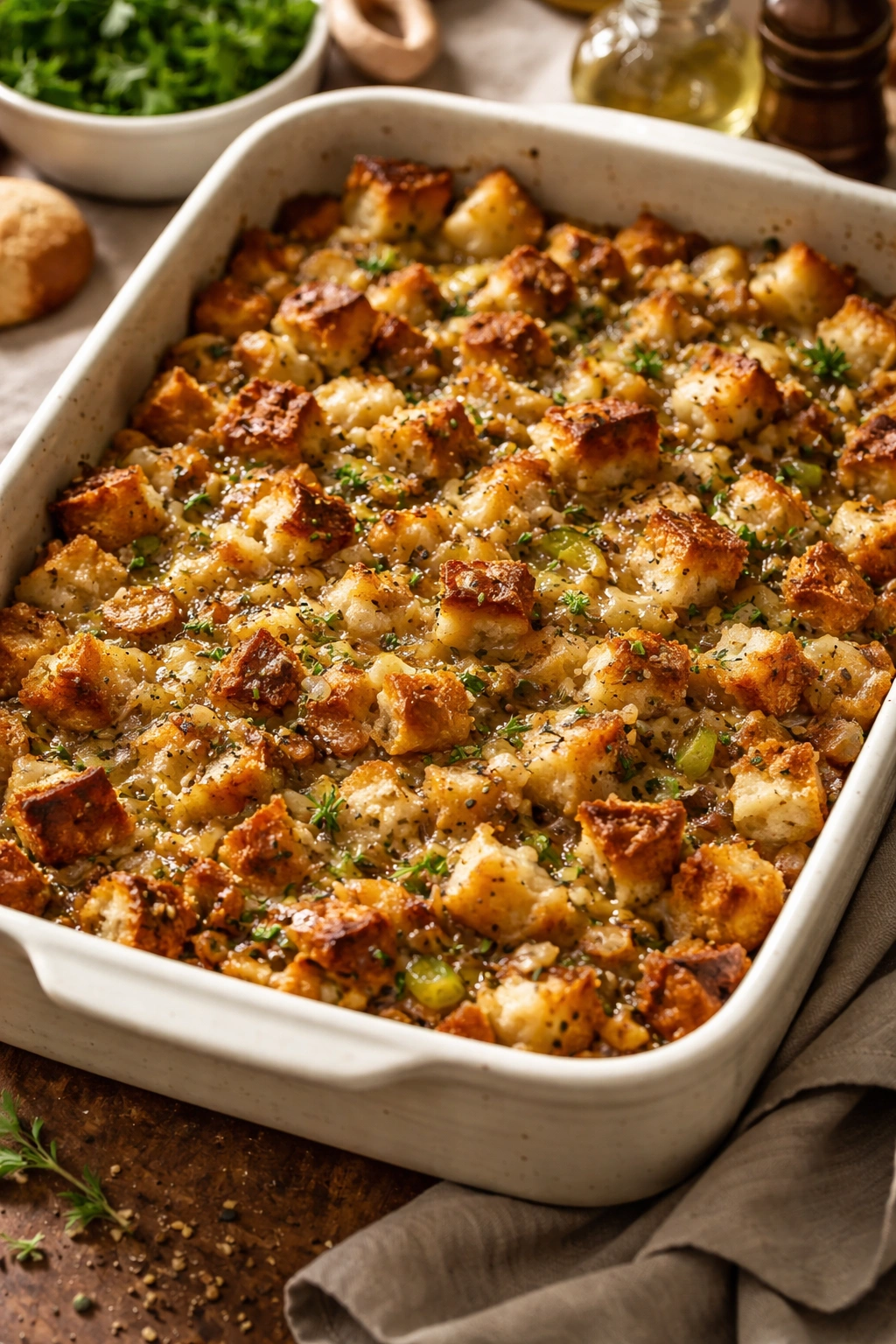
This recipe delivers consistent results because it starts with a clear understanding of what bread dressing actually is: a vehicle for deeply flavored broth and aromatics, bound together by bread cubes that should have some structure without being tough. Many home cooks either underseasoned their dressing (leading to bland results) or oversaturate it with broth (leading to mush). This version navigates that line carefully.
The secret starts with using two types of bread instead of one. Fresh bread and day-old bread work together—the fresh bread absorbs liquid and becomes tender, while the slightly stale bread maintains some structure and doesn’t dissolve into a paste. You’ll also skip the common mistake of tossing everything together raw and hoping the oven cooks it evenly. Instead, you’ll sauté your aromatics in butter until they’re genuinely caramelized and fragrant, which builds a flavor foundation that survives the oven and makes every bite taste intentional.
The broth matters too, more than most people realize. Homemade chicken or vegetable broth has body and depth that a thin store-bought version can’t deliver—but if that’s what you have, you make it work. The technique of adding broth gradually rather than all at once lets you control moisture precisely. You’re aiming for bread that’s noticeably moist but not waterlogged, with enough structure that a spoon cuts through it cleanly rather than turning to mush.
Why This Recipe Works Every Time
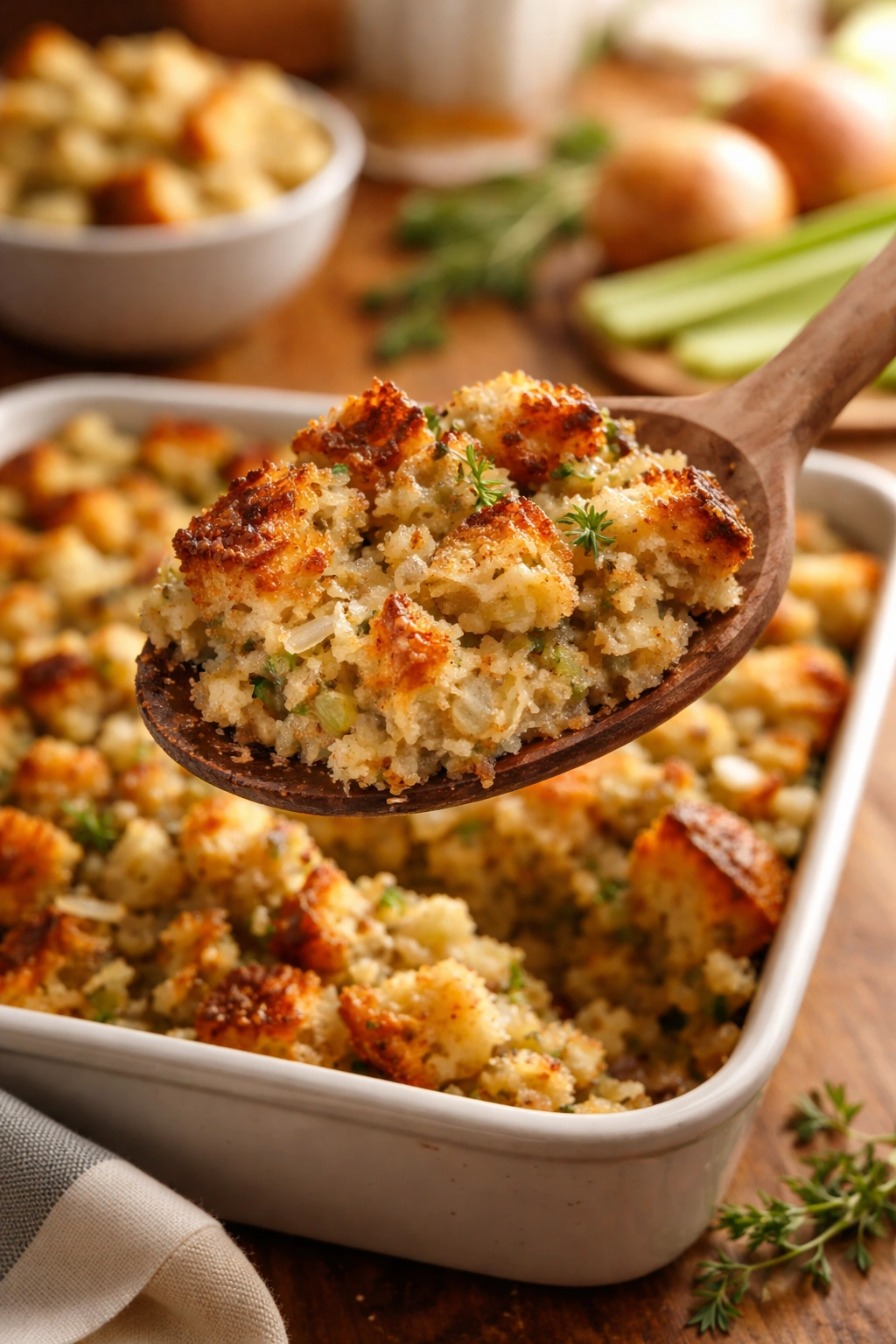
This dressing succeeds because it’s built on three non-negotiable foundations: proper bread selection and preparation, deeply flavored aromatics sautéed until caramelized, and measured liquid addition rather than guesswork.
First, the bread matters more than people acknowledge. You’ll use a mix of fresh and day-old bread cubes—this combination gives you both the tender crumb you want and the structural integrity to keep the whole thing from becoming a puddle. The bread should be cut into roughly ¾-inch cubes, not tiny dice (which disappears into the dressing) and not large chunks (which don’t absorb liquid evenly or cook through).
Second, your aromatics are getting sautéed until caramelized, which means cooking them long enough that the natural sugars in onions and celery transform into deeper, savory notes. This takes longer than you might expect—a solid 8 to 10 minutes on medium-high heat, stirring regularly. You’ll know you’re done when the onions have turned from translucent to pale golden, with the edges just starting to brown. This step creates a flavor bomb that carries the entire dish.
Third, you’re adding broth strategically. Rather than dumping all the liquid in at once, you’ll add it in stages, mixing well after each addition, then giving the assembled dressing a final check before it goes into the oven. This lets you hit the exact moisture level you want without ending up with soggy bread or a dry, crumbly result.
Yield, Prep Time, and Difficulty
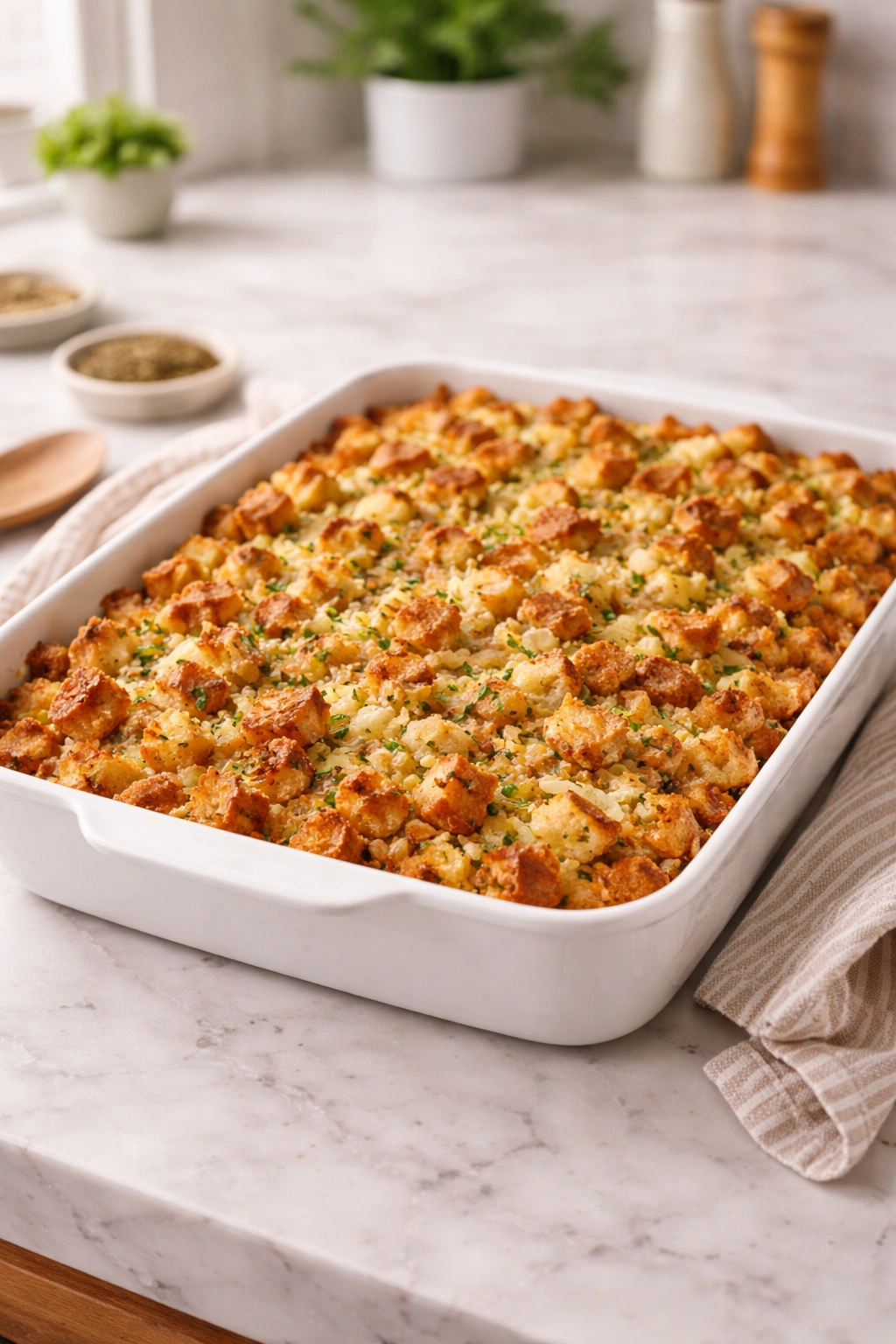
Yield: Serves 8 to 10 | Makes one 9×13-inch dish
Prep Time: 25 minutes
Cook Time: 45 to 50 minutes
Total Time: About 1 hour 15 minutes active (plus 1 hour if you’re making your own broth)
Difficulty: Beginner — No special equipment required, steps are straightforward, and adjustments are easy to make even while cooking. Even a first-time baker or cook will have success with this dressing.
Ingredients for Your Bread Dressing
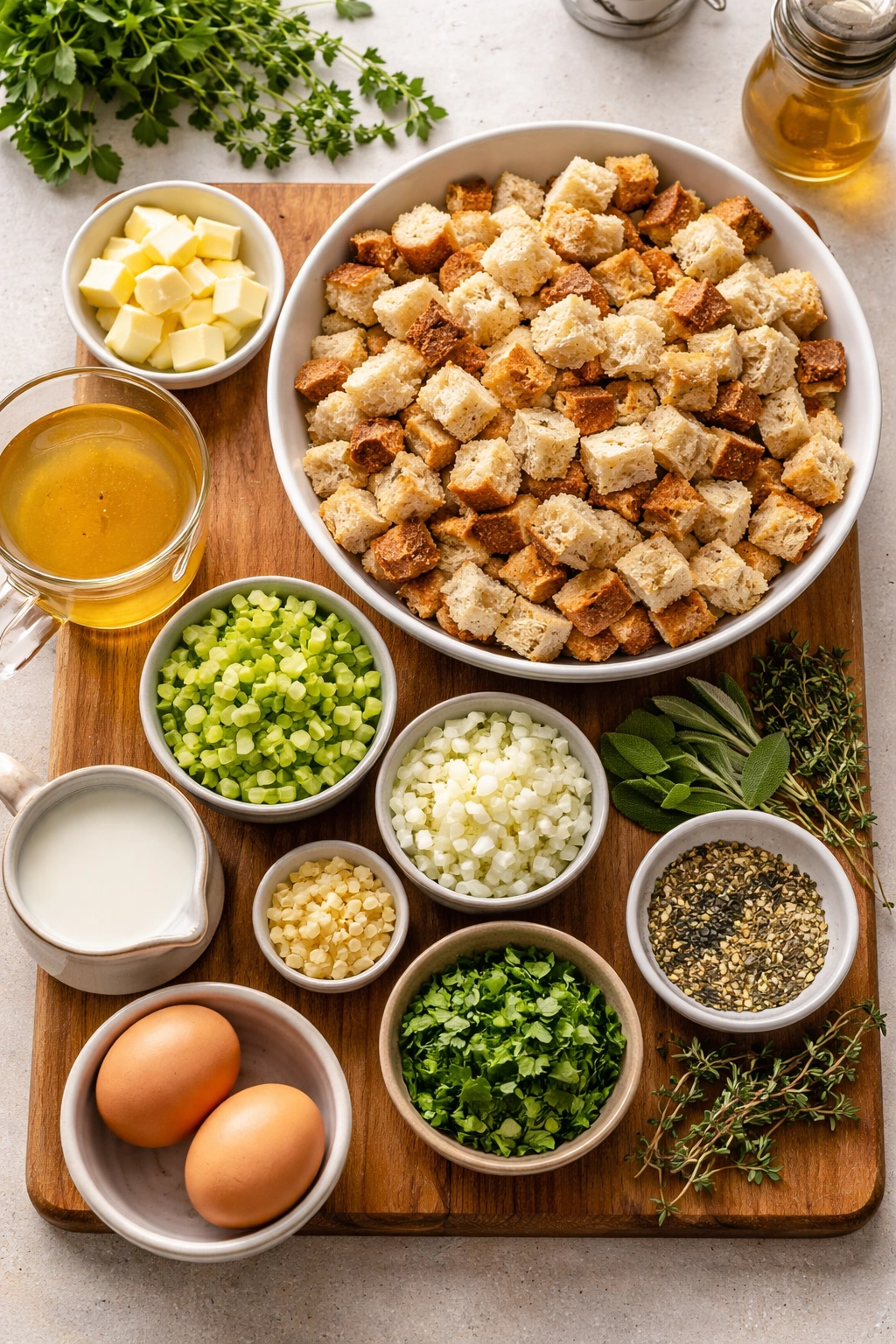
For the Dressing:
- 8 cups bread cubes (a mix of about half fresh bread and half day-old bread, cut into roughly ¾-inch pieces)
- 4 tablespoons unsalted butter, divided
- 1 large yellow onion, finely diced (about 1½ cups)
- 4 celery stalks, finely diced (about 2 cups)
- 3 garlic cloves, minced
- 2 teaspoons fresh or dried sage (or 1 teaspoon if using powdered sage from a jar)
- 1 teaspoon fresh or dried thyme
- ½ teaspoon dried rosemary, crumbled slightly
- ½ teaspoon black pepper, freshly ground
- 1¼ teaspoons fine sea salt, divided
- 2½ cups chicken or vegetable broth, warm
- ½ cup whole milk or half-and-half
- 2 large eggs
- ¼ cup fresh flat-leaf parsley, finely chopped (optional but adds freshness)
- 2 tablespoons finely grated Parmesan cheese (optional)
For Assembly:
- 2 tablespoons unsalted butter, softened, for buttering the baking dish
- Extra broth or milk (½ cup, reserved just in case) for adjusting moisture during assembly
Step-by-Step Instructions for Perfect Bread Dressing
Prepare the Pan and Bread:
-
Preheat your oven to 375°F (190°C) and position the rack in the center of the oven. Butter a 9×13-inch baking dish thoroughly with the softened butter, paying special attention to the corners and edges.
-
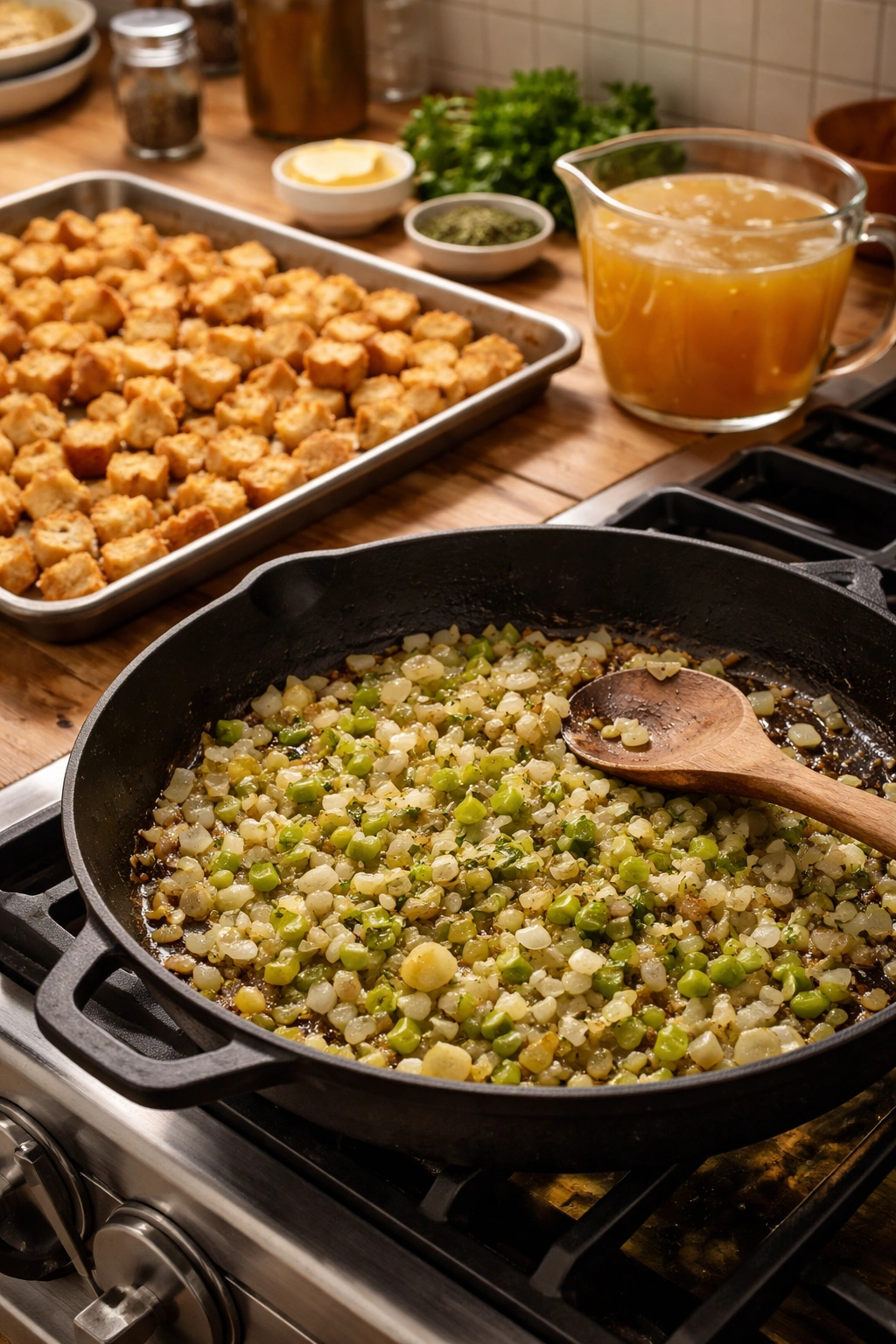
Spread the bread cubes on a large baking sheet in a single layer. Toast them in the oven for 8 to 10 minutes, stirring once halfway through, until the edges are just beginning to dry out and turn lightly golden—they should still feel slightly soft in the center, not completely hard. This toasting step matters because it removes excess moisture from the bread so it can absorb your broth and aromatics without becoming mushy. Set the toasted bread cubes aside to cool slightly.
Advertisements
Cook the Aromatics:
-
In a large skillet, melt 4 tablespoons of butter over medium-high heat. Once the butter is foaming and fragrant, add the diced onion and celery, stirring to coat them with the butter.
-
Cook for 8 to 10 minutes, stirring frequently, until the onions and celery have turned from translucent to pale golden, with the edges just beginning to brown. You’ll notice the mixture becoming more fragrant and the volume reducing as the vegetables release their water. Don’t skip this caramelization step—it’s where the flavor depth comes from. The vegetables should smell deeply savory at this point, almost like a good soup base.
-
Add the minced garlic and cook for another 1 minute, stirring constantly, until the raw smell of garlic is gone and it’s fragrant. This timing is important—garlic burns quickly and tastes bitter if you cook it too long.
-
Sprinkle the sage, thyme, rosemary, black pepper, and ¾ teaspoon of the salt over the vegetables. Stir everything together and cook for 1 more minute until the herbs release their oils and the whole mixture smells incredible. Remove the skillet from heat and let it cool for 2 to 3 minutes.
Combine and Season:
-
Transfer the toasted bread cubes to a large mixing bowl. Pour the cooked vegetable mixture (including all the butter) over the bread and stir gently until the bread is evenly coated. The bread should still retain some structure at this point—you’re not trying to break it down, just coat it.
-
In a small bowl, whisk together the warm broth, milk, and eggs until combined. This mixture will become the binder that makes the dressing cohesive.
-
Pour half of the broth mixture over the bread, stirring very gently with a large spoon or spatula until the liquid is absorbed. The bread will start to soften. Wait 1 to 2 minutes and then stir again—you’ll notice the bread absorbing more liquid as it sits.
-
Add the remaining broth mixture and stir gently until all the bread is moistened. The dressing should look moist but not soupy—individual bread cubes should still be visible, not floating in liquid. If it looks too dry, add a few tablespoons of the reserved broth. If it looks too wet, wait 2 more minutes for the bread to absorb liquid before adding more.
Advertisements -
Stir in the parsley and Parmesan cheese if using. Taste a small spoonful (careful, it’s still warm) and adjust salt if needed—remember that it will taste less salty once it cooks, so it should taste very slightly over-seasoned at this point.
Bake and Finish:
-
Transfer the dressing mixture to the prepared baking dish, spreading it into an even layer and gently pressing down so the top is level. It should fill the dish almost completely but not overflow—there should be about ½ inch of space between the dressing and the rim of the dish.
-
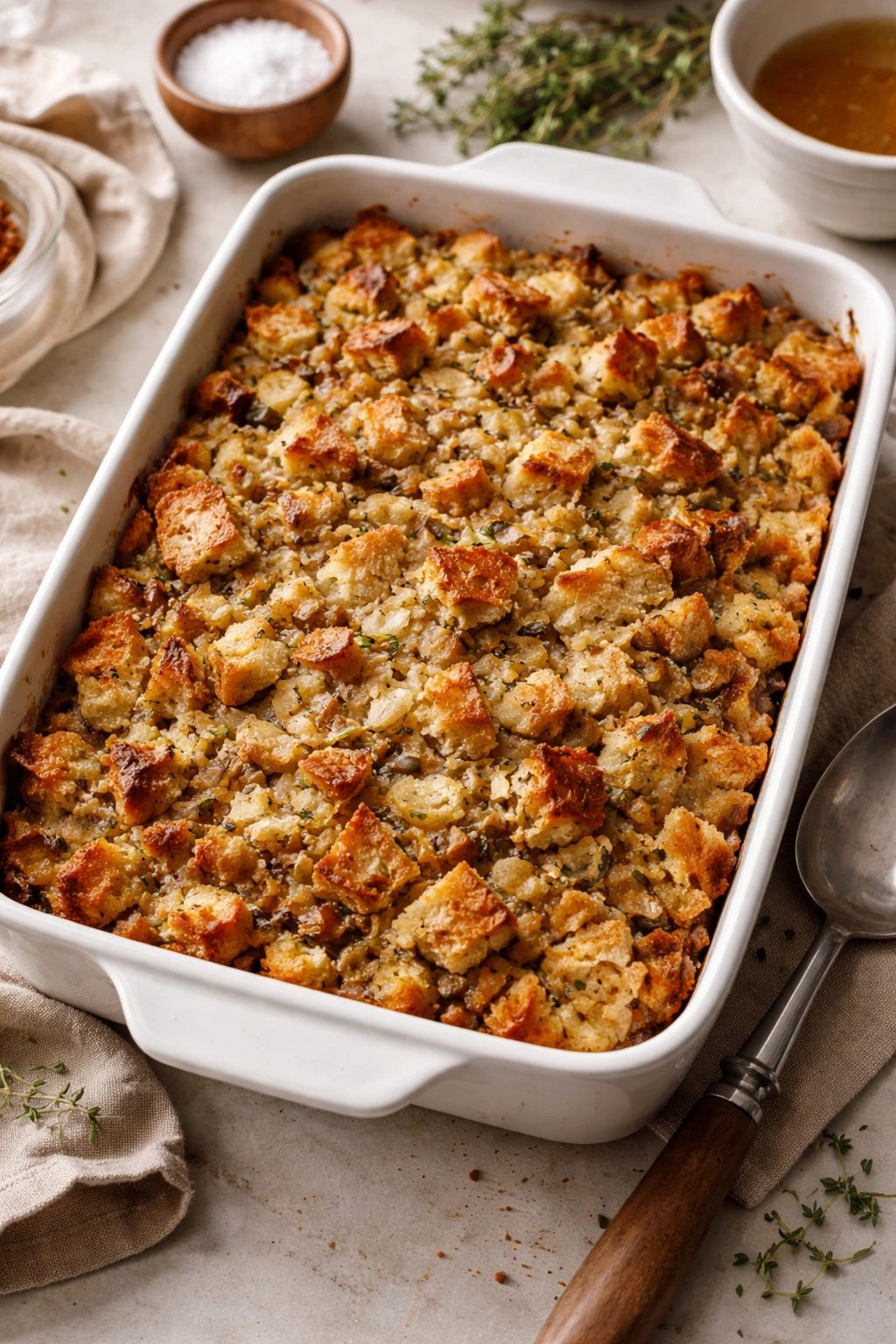
Bake for 45 to 50 minutes, uncovered, until the top is deeply golden and the edges are slightly crispy and caramelized. The dressing will puff up slightly as it bakes. A knife inserted into the center should come out clean with no wet batter clinging to it. When you shake the dish gently, the dressing should have a slight jiggle (indicating it’s set but still moist) rather than moving around freely.
-
Remove from the oven and let it rest for 5 minutes before serving. This brief rest allows everything to set up slightly, making it easier to serve with clean portions. The dressing will still be hot but won’t be steaming hot in the way that makes it fall apart.
Pro Tips and Common Mistakes to Avoid
Don’t skip the bread-toasting step. Fresh bread holds too much water and becomes a dense, gluey paste in the oven. Day-old bread is too dry. The combination of lightly toasted fresh and day-old bread gives you the ideal texture. If you’re using artisanal bread, toast it a bit longer since artisanal loaves are often denser and moister than sandwich bread.
Caramelize your aromatics completely. This isn’t step you can rush. Eight to ten minutes of cooking over medium-high heat transforms the flavor profile completely. The Maillard reaction that creates caramelization adds complexity and depth that survives the oven time. Rushing this step results in dressing that tastes like bread with some vegetables mixed in, rather than dressing with actual flavor.
Add broth gradually, not all at once. The most common mistake is turning dressing into a soggy mess by adding too much liquid at the beginning. Add half the broth, let the bread soak it up, then add the rest and check the moisture level. You should be able to see individual bread cubes, not a puddle.
Taste and adjust salt before baking. Baking concentrates flavors, so the dressing will taste less salty after cooking. What seems slightly over-seasoned before baking will taste properly seasoned after. If you underseasoned it going in, you can’t fix it after the oven.
Don’t forget the eggs. The eggs aren’t noticeable as a flavor—they act as a binder that makes the dressing cohesive instead of a loose, crumbly pile. They also add richness.
Resist the urge to add cheese everywhere. A small amount of Parmesan at the end adds pleasant savory notes. A lot of cheese turns the dressing into something else entirely and can overpower the subtler herb flavors.
If your dressing is looking dry after 30 minutes of baking, you can fix it. Warm an additional ½ cup of broth, add it to a measuring cup, pour it slowly around the edges of the dressing (not directly on top), and continue baking. The dressing will absorb it as it finishes cooking. This is one of the few adjustments you can make mid-bake without ruining it.
Flavor Variations to Try
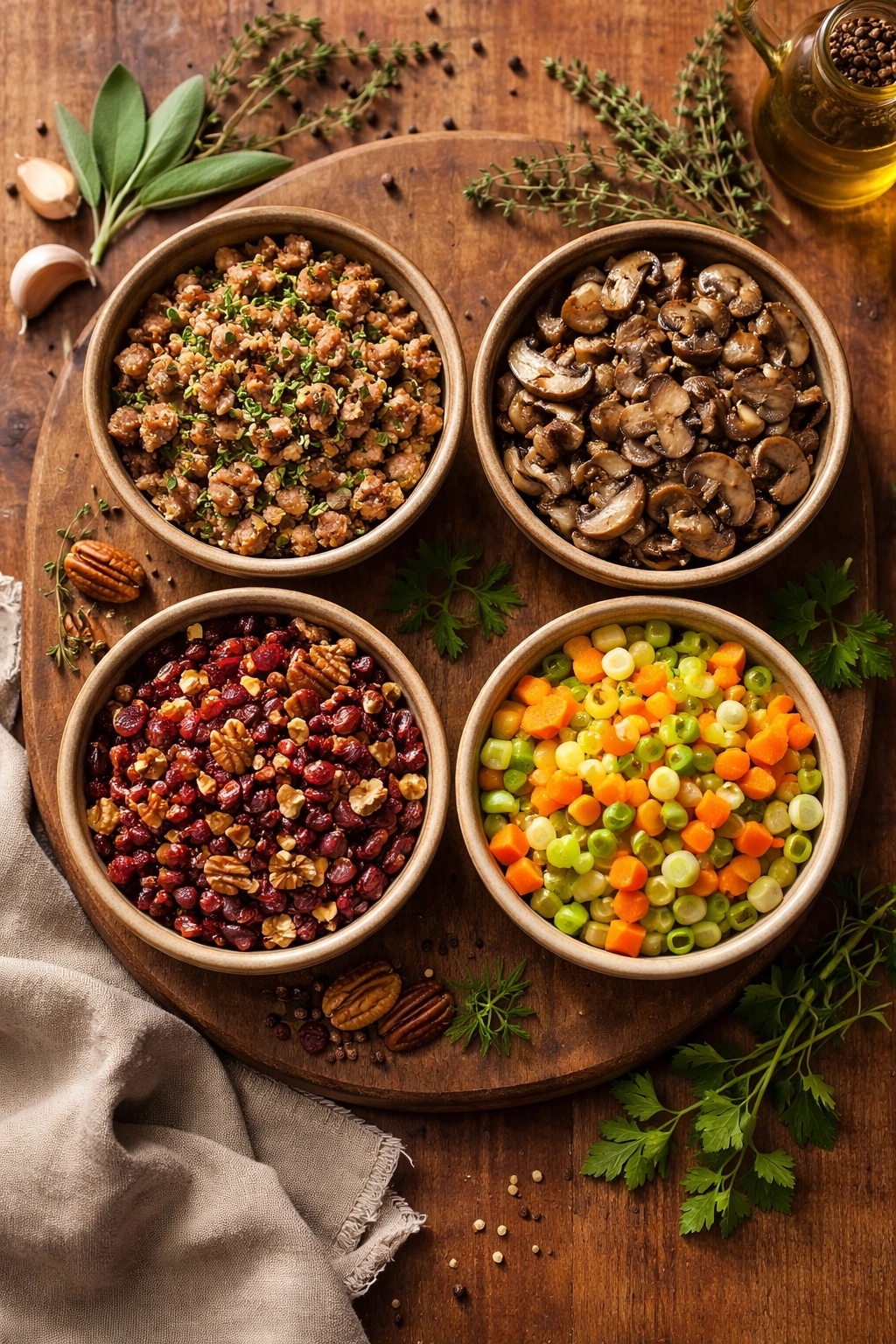
Sausage and Sage Version: Brown 1 pound of bulk Italian sausage in the same skillet before cooking the aromatics. Break it into small pieces as it cooks, then drain off excess fat before adding the onions and celery. This adds meaty depth and extra richness. You might want to slightly reduce the salt since sausage is seasoned.
Mushroom and Thyme Version: Add 8 ounces of mushrooms, finely chopped, to the vegetables while sautéing. Mushrooms add umami depth and work beautifully with thyme. Cook them until they’ve released their moisture and started to brown slightly, about 5 to 7 minutes. Proceed with the recipe as written.
Cranberry and Pecan Version: Fold in 1 cup of dried cranberries and 1 cup of toasted pecans, finely chopped, when you combine the bread with the vegetable mixture. Reduce the herbs slightly (use just 1 teaspoon each of sage and thyme) to let the sweet-tart cranberries and rich pecans shine. This version works beautifully with chicken or turkey.
Vegetable-Forward Version: Add 1 cup of diced carrots to the onion and celery, cooking them along with the aromatics so they caramelize slightly. You could also add ½ cup of corn kernels, fresh or frozen, adding them in the last step so they don’t get mushy. Fresh herbs like parsley and chives added at the end bring brightness.
Cornbread Dressing: Replace half of the bread cubes with crumbled cornbread. Cornbread adds a slightly sweet, different texture that many people find more interesting than all-wheat bread. Use leftover cornbread, or make a quick batch using a box mix if you need it fast.
Oyster Dressing (Traditional): Add 1 pint of fresh oysters with their liquor to the broth mixture. Shuck the oysters and chop them roughly, reserving any liquid. Reduce the broth by ½ cup to account for the oyster liquor. Stir in the chopped oysters and liquor with the broth mixture. This is the traditional way dressing is made in some Southern and coastal regions—decadent and special.
Make-Ahead and Storage Guide
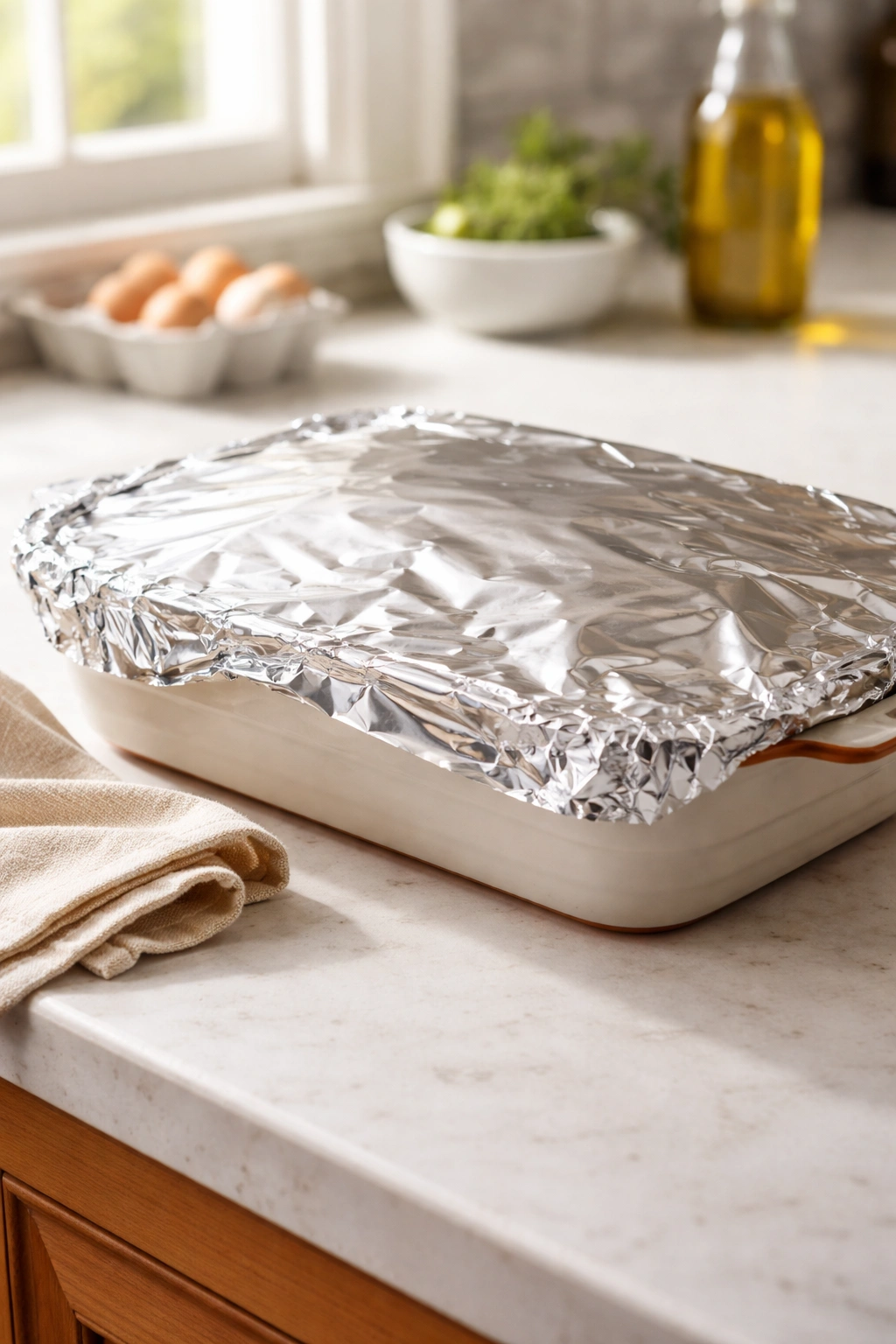
Preparing dressing the day before: Completely assemble the dressing (through step 11) and transfer it to your baking dish the night before. Cover it tightly with foil and refrigerate overnight. When you’re ready to bake, remove it from the fridge 15 minutes before putting it in the oven (this lets it come closer to room temperature, though it doesn’t need to be fully warm). Bake exactly as written, though you may need an extra 5 to 10 minutes of baking time since it’s starting colder. This is incredibly helpful on a busy holiday morning.
Freezing assembled dressing: You can freeze the dressing in the baking dish for up to 2 months. Cover it tightly with plastic wrap, then foil, and label it with the date. To cook it from frozen, add about 15 minutes to the baking time and tent it loosely with foil for the first 30 minutes of baking so the top doesn’t brown too quickly while the inside heats through.
Storing leftovers: Dressing keeps in an airtight container in the refrigerator for up to 4 days. It actually tastes slightly better the next day once the flavors have melded together.
Reheating properly: To reheat without drying it out, sprinkle a little extra broth or milk over the top, cover the dish with foil, and warm it in a 325°F (160°C) oven for about 20 to 25 minutes. Remove the foil for the last 5 minutes if you want to re-crisp the top.
Freezing leftovers: You can also freeze leftover dressing in an airtight container for up to 2 months. Thaw it in the refrigerator overnight and reheat as described above, adding an extra 5 to 10 minutes for the reheating time.
How to Serve and Pair Your Dressing
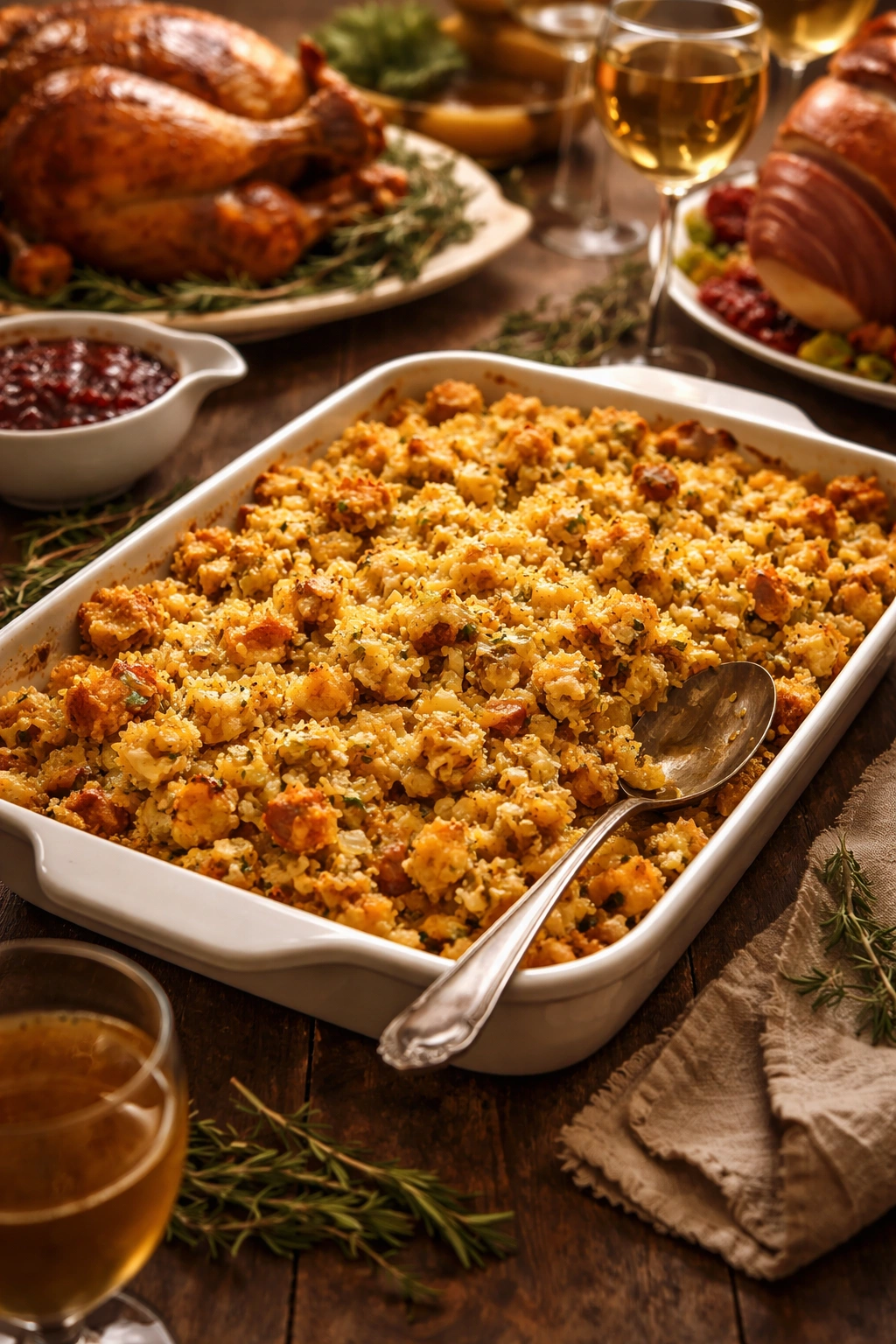
Bread dressing is naturally a side dish, but the best dressings actually partner with your main protein thoughtfully. With roasted turkey, this herb-forward version sings—the sage, thyme, and rosemary echo the flavors you’re looking for. With chicken, you can dial back the herbs slightly or add sausage for richness. With ham, the dressing can stand alone, but adding cranberries and pecans creates a beautiful complementary flavor story.
Serve the dressing in the baking dish at the table, using a large spoon to give people generous portions. One scoop per person is usually enough—this is a rich, filling side, not a light one. Leftovers are excellent eaten cold straight from the container, though most people prefer it reheated.
Dressing pairs beautifully with any cranberry sauce or orange-based sauce. The tartness cuts through the richness of the butter and bread. Gravy is the obvious partner—some people even pour gravy directly over their dressing. A simple green salad with a sharp vinaigrette provides color and brightness. A roasted vegetable like Brussels sprouts or green beans adds freshness.
For drinks, dressing works well alongside wine (a full-bodied white or light red), sparkling cider, or even beer. The herb flavors are savory and substantial enough to pair with slightly bitter or acidic drinks.
Scaling the Recipe Up or Down
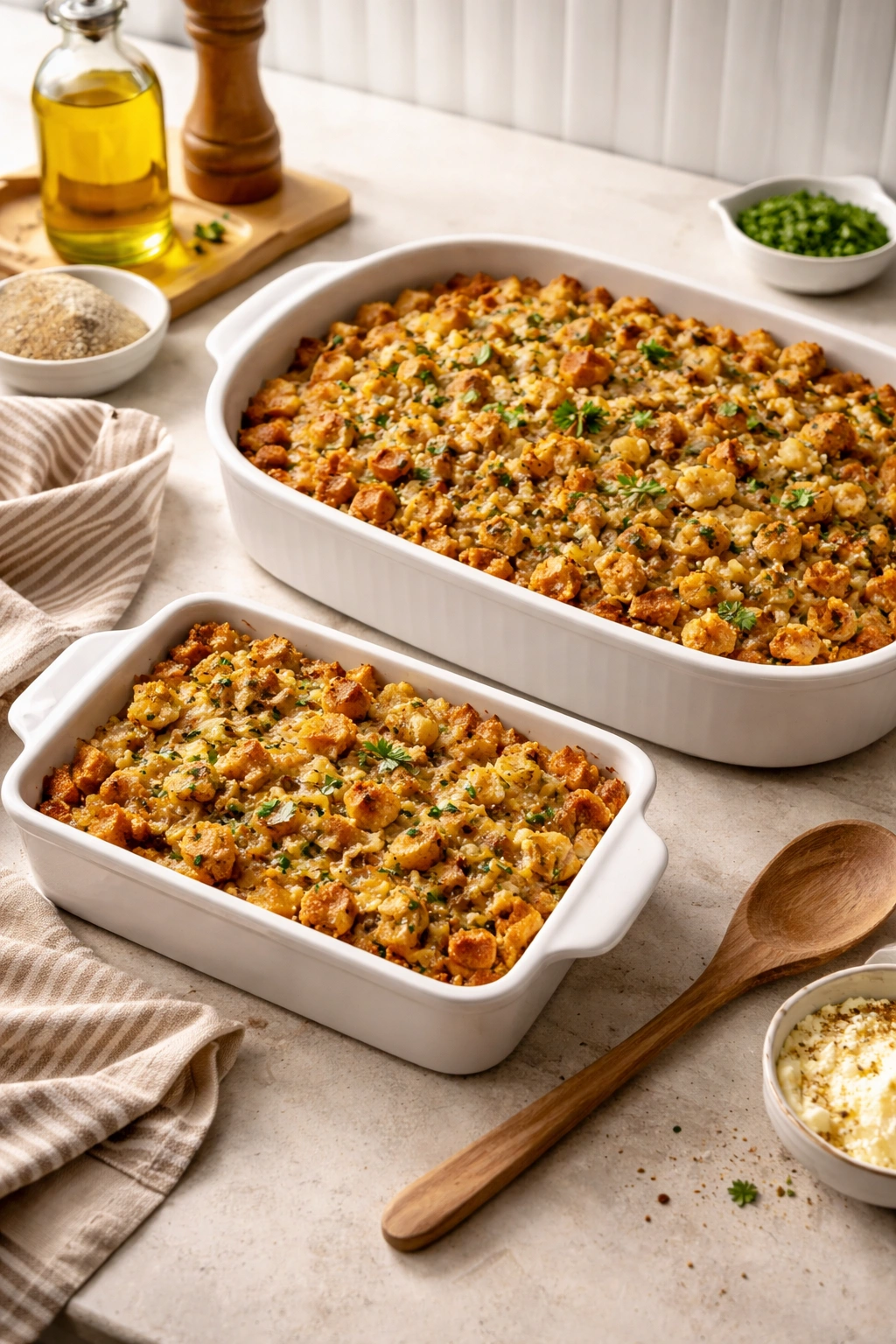
For a Smaller Gathering (serves 4 to 6): Halve every ingredient in the recipe. Use a 6×9-inch baking dish instead of 9×13-inch. Everything else stays the same, though you may need to reduce the baking time by 5 to 10 minutes since the smaller dish will heat through more quickly. Start checking for doneness at 40 minutes.
For a Larger Gathering (serves 14 to 16): Use 1.5 times the recipe and bake in two 9×13-inch dishes. The baking time stays the same since you’re still working with the standard dish size. Alternatively, double the recipe and use two standard dishes. When using two dishes, stagger them in the oven if possible, rotating them halfway through baking so they cook evenly.
Ratio to remember: For every 2 cups of bread cubes, you need about 1 tablespoon of butter (for sautéing aromatics), 1 small onion and 1 celery stalk (finely diced), and about ⅝ cup of broth. This lets you easily scale up or down from the base recipe using proportions rather than guessing.
Troubleshooting Dense or Dry Dressing
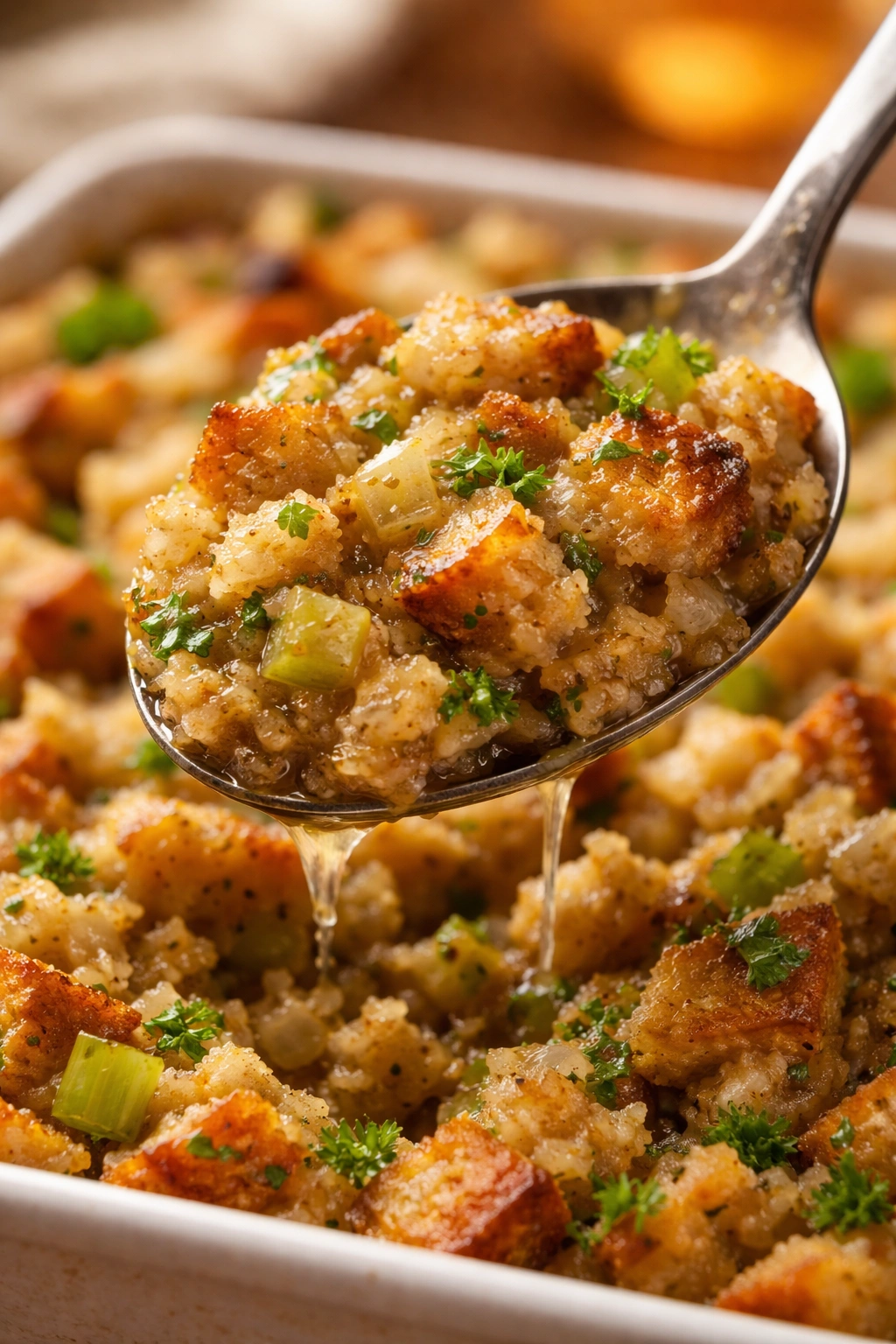
Your dressing came out dense and heavy: This usually means one of three things. The bread wasn’t toasted enough before using (it was too wet), the aromatics weren’t cooked long enough (they’re still releasing water into the mixture), or there wasn’t enough broth added. Next time, toast the bread slightly longer and make sure the onions and celery are genuinely caramelized. Also check that you’re using warm broth, not cold—cold broth takes longer to be absorbed by the bread.
Your dressing is dry and crumbly: The bread absorbed all the liquid but there wasn’t enough moisture added in the first place. Use the full amount of broth called for and don’t skip the eggs (they help retain moisture). If your leftover dressing is drying out, reheat it with a splash of warm broth spooned on top.
The top is burned but the inside is undercooked: Your oven may be running hot, or you’re baking the dressing uncovered at a temperature that’s too high. Try covering the dish loosely with foil for the first 30 to 35 minutes of baking, then removing it for the final 10 to 15 minutes so the top can brown. Alternatively, reduce your oven temperature by 25°F if you notice this happening.
The dressing is unevenly cooked (wet in the center, dry at the edges): This suggests your oven has hot spots. Rotate the baking dish halfway through baking from front to back and side to side. Next time, position it in the center of the oven rather than near the front or back where heat distribution is less even.
You can see visible raw egg in the dressing after baking: The dressing didn’t reach a high enough internal temperature. This is rare since bread dressing typically bakes at a high enough temperature that eggs cook easily, but if it happens, the dressing may not have been baked long enough or your oven may be running cold. Use a meat thermometer—the center of the dressing should reach 165°F (74°C).
Final Thoughts
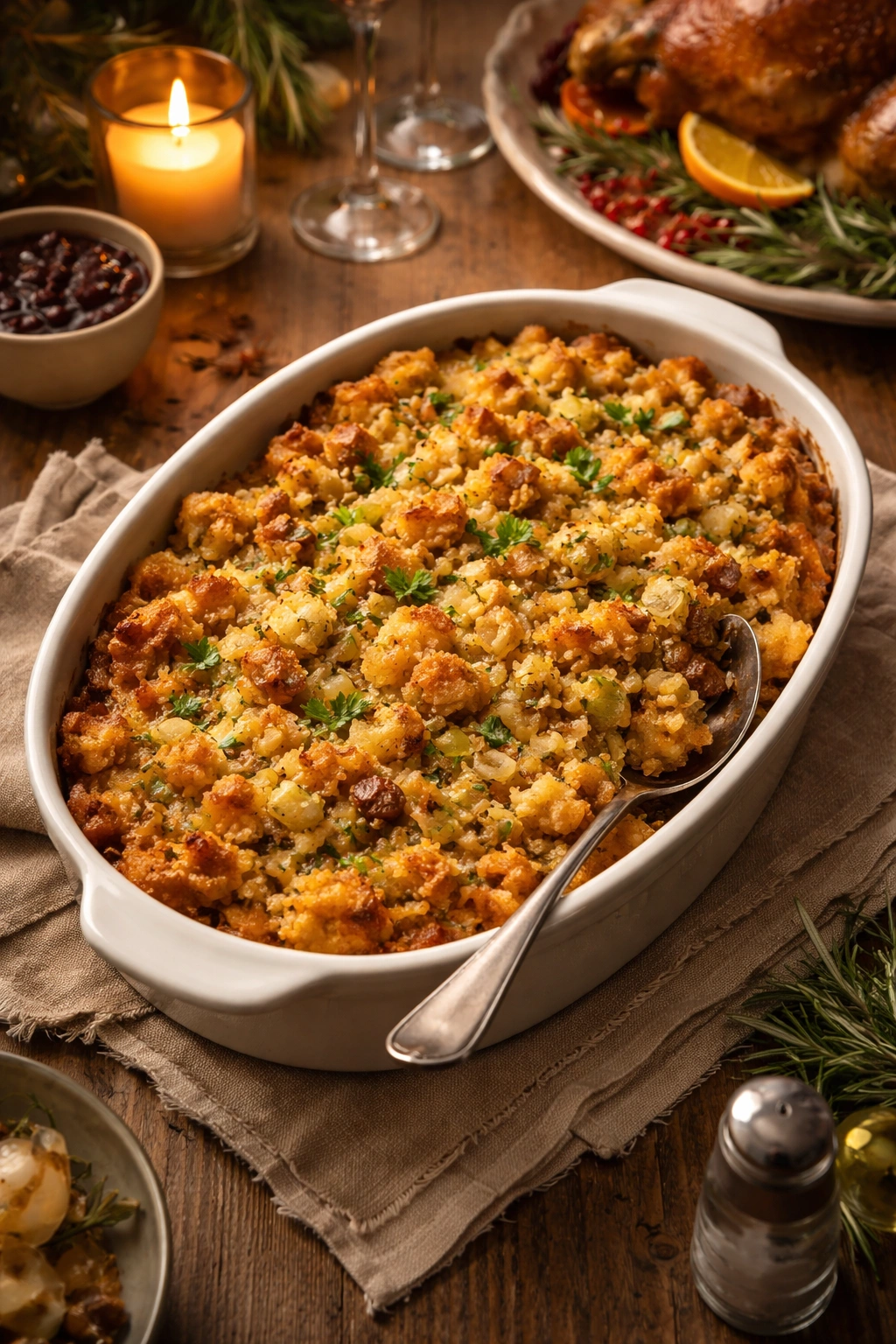
Bread dressing succeeds when you approach it with intention rather than treating it as an afterthought. The technique isn’t difficult—sauté vegetables properly, build flavor from the ground up, add liquid carefully, and bake until golden—but each step matters. Do them well and you’ll have dressing that people actually request, that tastes elegant and deeply savory, and that holds its own alongside your main protein.
The beautiful thing about this recipe is how forgiving it actually is. You can make it ahead, freeze it, or assemble it in the morning and bake it that evening. You can scale it up or down based on your crowd. You can swap vegetables, add sausage, fold in cranberries and pecans, or keep it simple and herbaceous. The fundamentals stay the same: good bread, properly caramelized aromatics, measured liquid, and enough time in the oven to develop a golden crust.
Even on a chaotic holiday when everything else feels uncertain, this dressing delivers. Start it early, let it come together gradually, and by the time you pull it from the oven, you’ll have something genuinely excellent to set on the table—the kind of side dish that lingers in memory long after the meal ends.
