



Protein for breakfast does something remarkable—it kills morning hunger for hours, stabilizes blood sugar so you won’t crash by 10 a.m., and keeps your metabolism humming from the moment you wake up. Yet most people skip breakfast entirely or grab something that’s basically dessert masquerading as a meal. The real problem isn’t that high-protein breakfasts don’t exist. It’s that you think they require an hour of meal prep, a food processor, and ingredients you can’t pronounce.
Here’s what actually happens: when you eat protein in the morning, your body burns more calories digesting it than it would carbs or fat. You stay fuller longer. You don’t reach for that mid-morning snack. And you show up to lunch actually hungry instead of grazing mindlessly all morning. The science is solid, but the excuse is always the same—”I don’t have time.”
This is where quick, genuinely high-protein breakfasts become a game-changer. Not smoothies that taste like thin milkshakes. Not protein bars that snap your teeth. Real, satisfying breakfast foods you can throw together in 10 minutes or less, using ingredients you probably already have. Some of these involve cooking for maybe five minutes. Others are literally just assembly—grab, pour, stir, done.
The breakfasts below aren’t “quick and dirty” compromises. They’re legitimate morning meals that contain 25-40 grams of protein, keep you satisfied until lunch, and taste genuinely good enough that you’ll actually stick with them. No tricks. No “just one easy ingredient.” Just straightforward food that works.
1. Greek Yogurt Protein Bowl
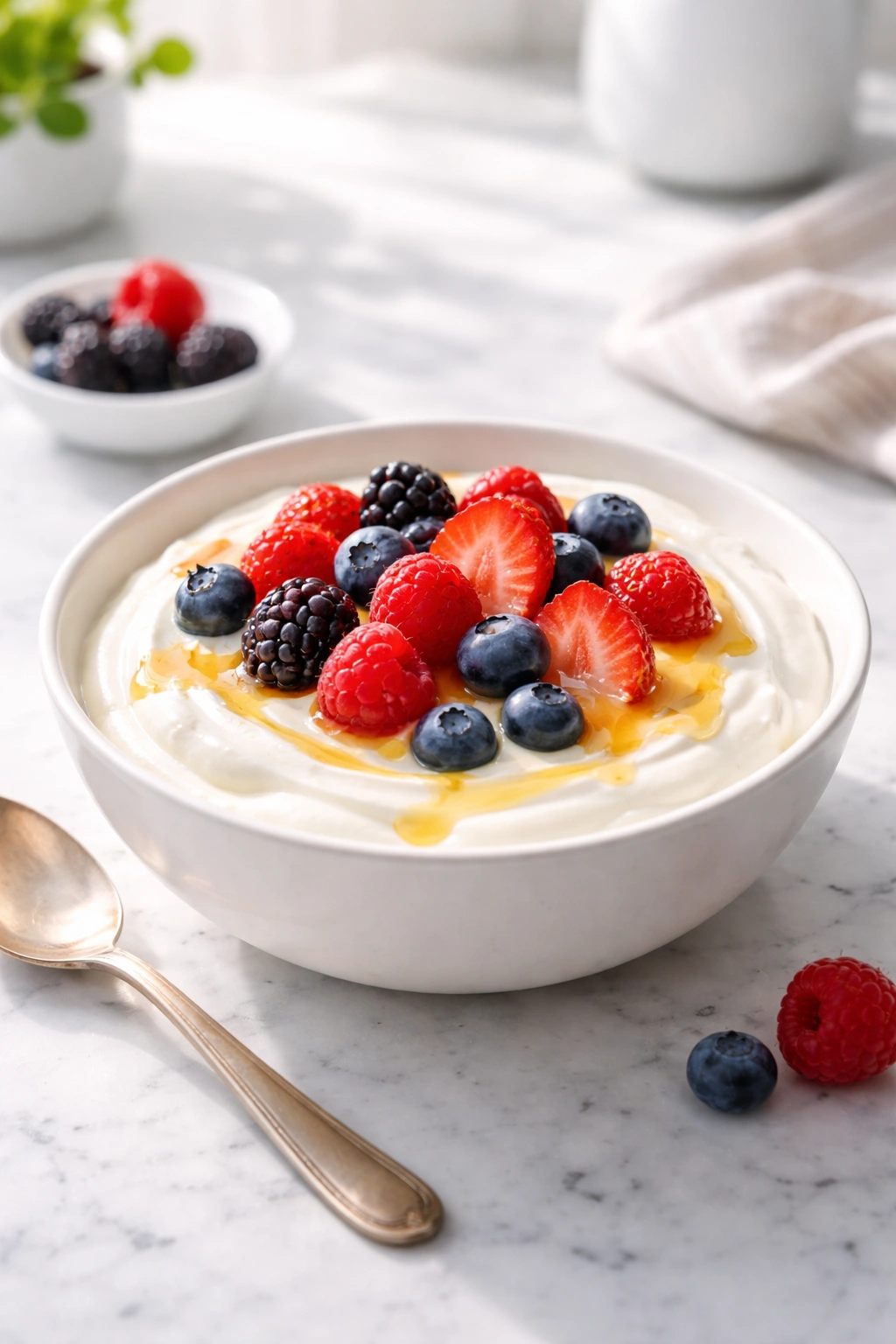
Greek yogurt is the ultimate lazy protein vehicle—it contains about 15-20 grams of protein per cup without you doing anything except opening a container. But here’s where most people go wrong: they dump granola on top and eat candy for breakfast. Instead, build it right, and you’ve got a bowl that tastes indulgent while delivering serious nutrition.
Why This Breakfast Wins
Greek yogurt has roughly double the protein of regular yogurt because it’s strained to remove whey. That density means a single bowl sits in your stomach longer, keeping hunger at bay. The tangy flavor profile also means you don’t need much sweetener to make it taste genuinely good—a small amount of honey or fruit goes much further than you’d expect. Most importantly, there’s no cooking involved whatsoever.
Build It in Three Steps
Start with a cup of plain or vanilla Greek yogurt as your base—this is roughly 18-20 grams of protein right there. The vanilla option (if unsweetened) gives you flavor without added sugar. If you use plain, add a teaspoon of honey or a handful of berries to start the sweetness.
Next, add texture and fat. A quarter cup of granola (roughly 4-5 grams additional protein if you choose a quality brand), a tablespoon of almond butter, or a small handful of chopped nuts accomplishes this. The fat slows digestion even more, extending that fullness window.
Finally, add fruit for fiber and freshness. Blueberries, strawberries, sliced banana, or thawed frozen berries work perfectly. The fiber adds to satiety without adding calories that matter.
Pro assembly hack: Layer yogurt, then granola, then yogurt again, then fruit. The middle yogurt layer prevents the granola from getting soggy, and you get better texture throughout instead of mushy cereal by bite three.
Total protein: 20-25 grams | Time: 2 minutes | Storage tip: Keep ingredients separate and assemble fresh each morning—pre-mixed bowls get soggy within a few hours.
2. Scrambled Eggs with Whole-Grain Toast
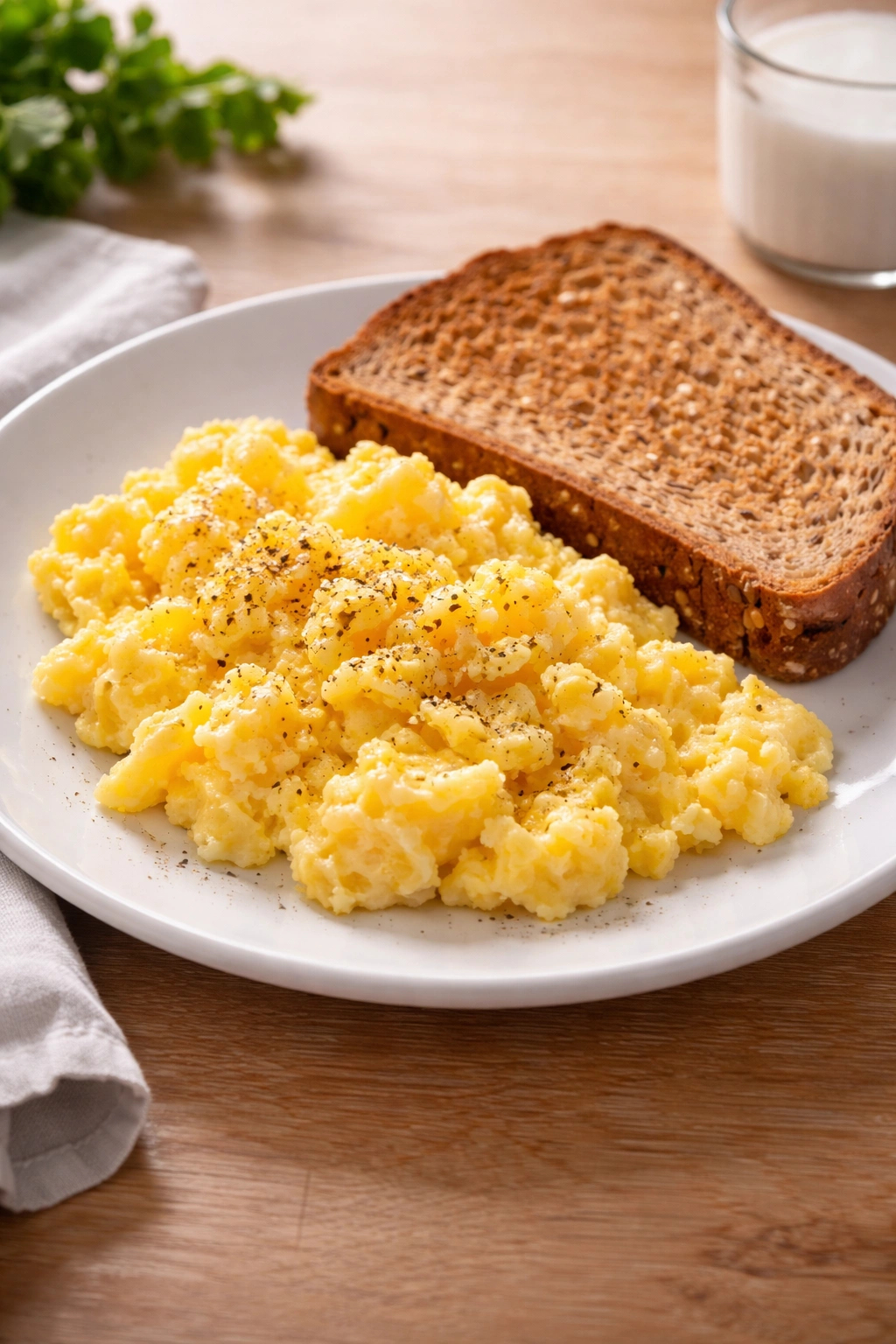
An egg contains roughly 6 grams of protein in the white and most of the remaining nutrition in the yolk. Two eggs scrambled with a pinch of salt and pepper, cooked in a nonstick pan with zero added fat, takes exactly four minutes. Add whole-grain toast with a thin spread of almond butter, and you’ve just created a breakfast that tastes simple but delivers complex carbs, healthy fat, and complete protein.
Why Eggs Remain the Gold Standard
Eggs contain choline, which your brain needs for focus and memory. They’re nutrient-dense—meaning you get vitamins, minerals, and antioxidants in addition to protein. The yolk contains lutein and zeaxanthin, which protect your eyes. And unlike many processed “high-protein” breakfast foods, eggs are a complete protein, containing all nine essential amino acids your body can’t make on its own.
The versatility also matters. You can scramble, fry, boil, or poach them. You can add vegetables, cheese, or hot sauce without adding much time. For someone eating the same breakfast every morning, eggs prevent boredom because you can vary the preparation and additions infinitely.
The Two-Minute Method
Crack two eggs into a small bowl and whisk with a fork—about 15 seconds. Heat a nonstick skillet over medium-high heat and once it’s hot, add the eggs. Let them sit for 10 seconds, then push them gently with a spatula from the edges toward the center, letting uncooked egg flow to the edges. After 2-3 minutes of gentle pushing, they’ll be set but still slightly creamy.
While the eggs cook, start your toast. Whole grain is the play here because the fiber and slower carbs maintain your blood sugar stability. Once toast pops, spread a thin layer of almond butter (about a tablespoon—this adds fat and a bit more protein) while the toast is still warm so it absorbs into the bread.
Total protein: 15-18 grams (13 from eggs, 3-4 from almond butter) | Time: 5 minutes | Variation: Add a small handful of spinach to the eggs in the last 30 seconds of cooking, or top with a slice of cheese for extra protein and richness.
3. High-Protein Pancakes
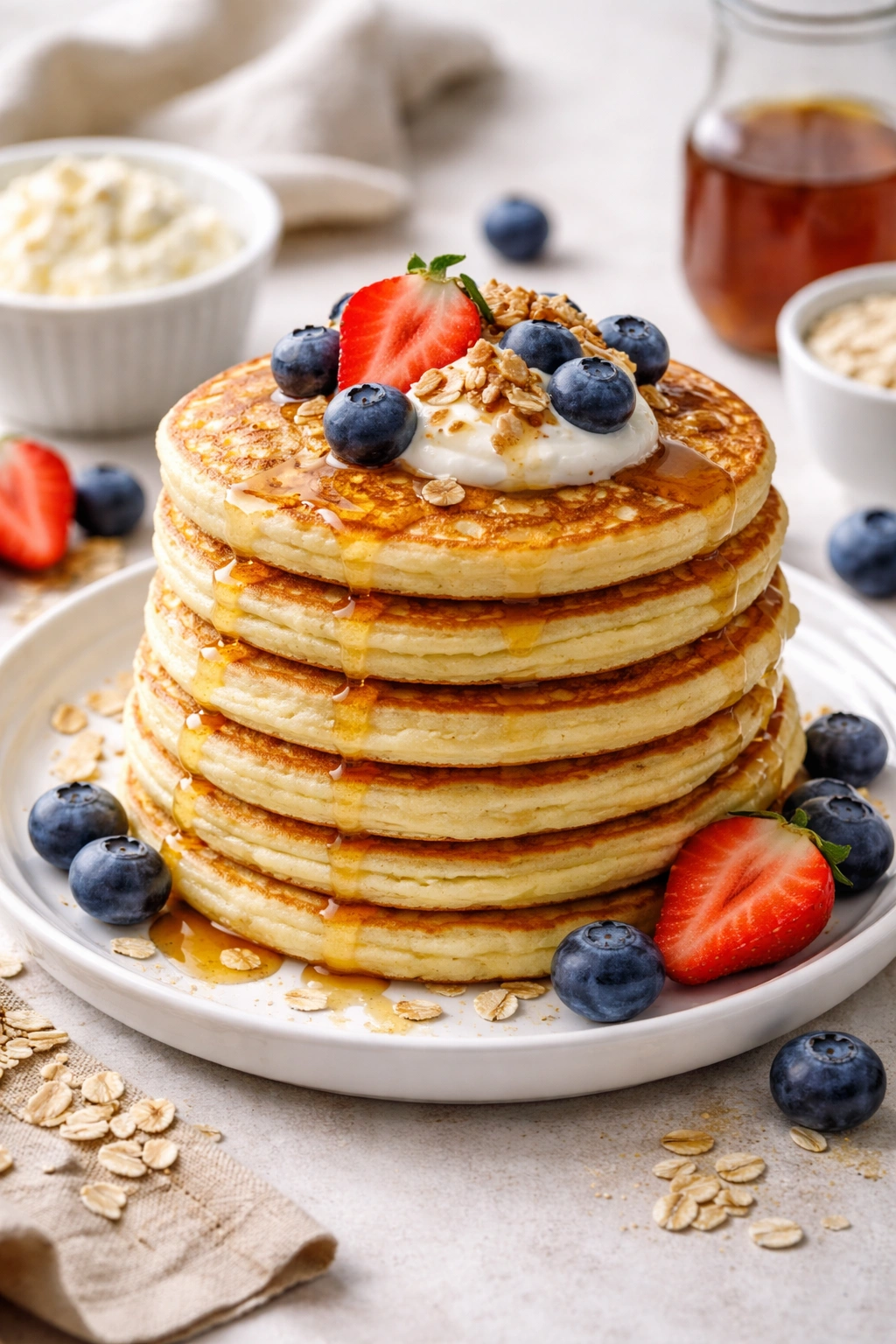
Protein pancakes sound like a gym rat’s fever dream, but they’re genuinely delicious when you make them right. The secret isn’t using “protein pancake mix” (which often tastes like cardboard). It’s using a simple base of eggs, cottage cheese, and oats, which creates pancakes that are fluffy, naturally sweet, and contain 20-25 grams of protein per serving—more than some protein shakes.
The Science of Cottage Cheese Pancakes
Cottage cheese adds creamy moisture and protein without much flavor of its own. When blended with eggs and oats, it creates a batter that cooks up fluffy because the eggs provide structure. The oats add fiber and complex carbs. There’s no flour, no added sugar, and no weird aftertaste. It’s genuinely good food, not a protein hack disguised as breakfast.
These pancakes also keep you satisfied longer than regular pancakes because the protein digests slowly. Your blood sugar won’t spike and crash like it would with white-flour pancakes.
Blend and Cook in 8 Minutes
In a blender, combine half a cup of old-fashioned oats, one cup of cottage cheese, two eggs, and a teaspoon of vanilla extract. If you like, add a pinch of cinnamon or a quarter teaspoon of almond extract. Blend on high for about 30 seconds until mostly smooth—a few oat chunks are fine and actually add texture.
Heat a nonstick skillet over medium heat. Lightly coat it with cooking spray. Pour quarter-cup amounts of batter onto the skillet, spacing them so they don’t touch. Let them cook for about two minutes on the first side until the edges look set and slightly dry. Flip gently and cook another 90 seconds on the second side until golden.
Cook in batches if needed—you’ll get about four decent-sized pancakes from this batter. Top with a small amount of Greek yogurt and fresh berries rather than syrup, which keeps the protein-to-carb ratio favorable.
Total protein: 24-26 grams | Time: 8 minutes | Make-ahead hack: Prepare the dry ingredients (oats, vanilla, cinnamon) the night before in a small container. In the morning, just add eggs and cottage cheese, blend, and cook. This cuts the morning time to under five minutes.**
4. Overnight Oats with Protein Powder
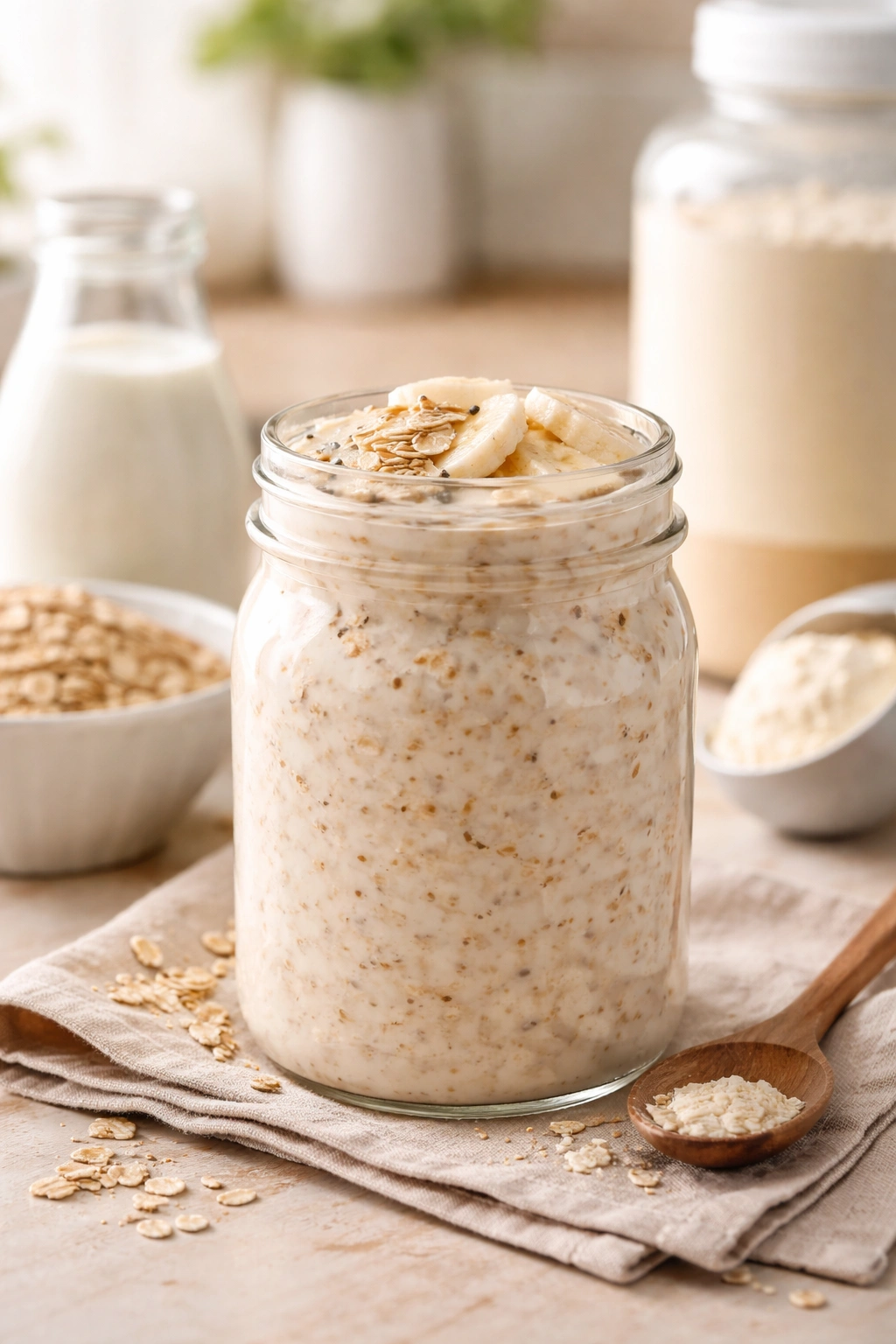
Overnight oats are technically a no-cook breakfast—you assemble them the night before and eat straight from the container in the morning. While that defeats the “ready in 10 minutes” criteria, the beauty is you do the work when you have time, not during a frantic morning rush. Scoop it from the fridge already made and you’re literally eating five seconds after waking up.
Why Overnight Oats Work for Protein
The base is simple: rolled oats, milk (dairy or non-dairy), and a scoop of protein powder. The milk hydrates the oats overnight, turning them into a custard-like texture that’s weirdly satisfying. The protein powder dissolves into the milk, creating a creamy base with 25-35 grams of protein depending on the powder you choose. Add fruit, nuts, and maybe a touch of honey, and you’ve got a breakfast that tastes dessert-adjacent while being genuinely nutritious.
The biggest advantage: there’s zero decision-making in the morning. You don’t choose whether you have time for breakfast. It’s already made. You eat or you don’t, but the excuse “I didn’t have time” disappears.
Assemble the Night Before
In a mason jar or container, combine half a cup of old-fashioned rolled oats, three-quarters cup of milk (cow, almond, or oat milk all work), one scoop of your preferred protein powder, and a tablespoon of almond butter or chia seeds for additional fat and texture.
Add optional flavor boosters: a pinch of vanilla extract, cinnamon, cocoa powder, or a tiny drizzle of honey. Stir well so the protein powder fully incorporates—lumps of powder in your breakfast are genuinely unpleasant.
Cover and refrigerate overnight. In the morning, check the consistency. If it’s too thick, add a splash more milk. If it’s too thin, wait five minutes for the oats to absorb liquid. The texture should be creamy porridge, thicker than yogurt but looser than pudding.
Top with a small handful of granola or sliced fruit, eat straight from the container or transfer to a bowl, and you’re done.
Total protein: 28-35 grams | Time: 3 minutes to assemble the night before, 30 seconds to eat in the morning | Flavor combos: Vanilla protein + banana + cinnamon. Chocolate protein + cherry + almond butter. Vanilla protein + blueberries + lemon zest.
5. Cottage Cheese Fruit Bowl
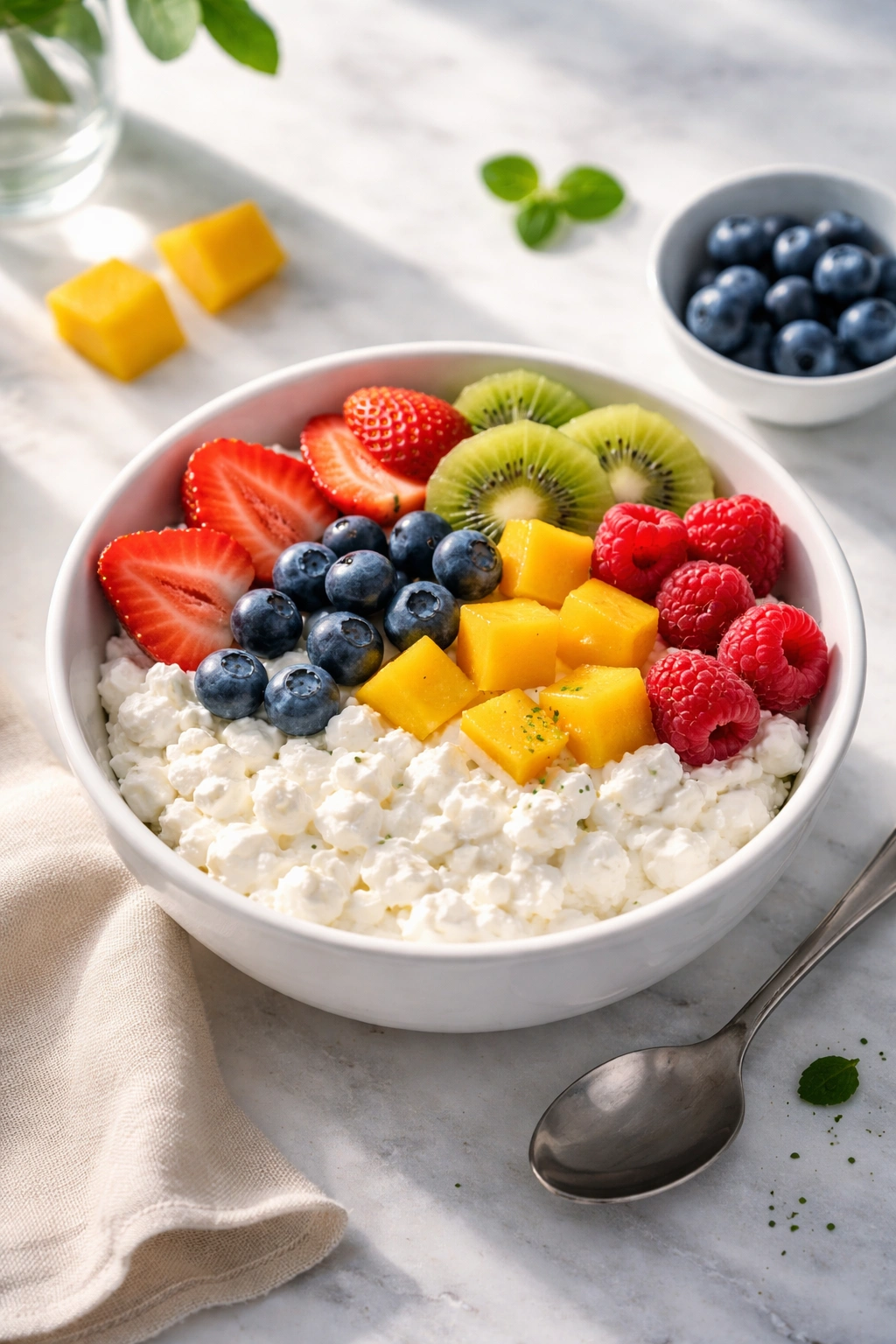
Cottage cheese gets unfairly maligned because of its reputation as a diet food. The stuff most people tried in 1985 was genuinely unpleasant—watery, bland, weirdly gelatinous. Modern cottage cheese is different. Brands like Breakstone’s, Good Culture, and store brands have drastically improved the texture and flavor. A bowl of good cottage cheese with fresh fruit contains 25-28 grams of protein and tastes bright, clean, and genuinely satisfying.
Why Cottage Cheese Is Underrated
Cottage cheese contains casein protein, which digests slowly compared to whey. This means it stays in your system longer, keeping you satisfied even past lunchtime. It’s also incredibly dense nutritionally—packed with B vitamins, selenium, and phosphorus. And while Greek yogurt gets all the attention, cottage cheese actually contains slightly more protein per serving in many cases.
The key to making it work is quality. Buy a brand you actually like the taste of, because you’re eating it prominently, not hiding it in a smoothie.
Quick Assembly Bowl
Grab a bowl. Scoop in half a cup of cottage cheese—this is your protein base. Add a handful of your favorite fruit: berries (blueberries, strawberries, raspberries), sliced peaches, melon chunks, or diced pineapple. The fresh fruit adds fiber, vitamins, and natural sweetness that plays perfectly against the creamy, slightly tangy cottage cheese.
Add one of these for texture and fat: a quarter cup of granola, a small handful of nuts (almonds, walnuts, pecans), or a tablespoon of chia seeds. If you want additional sweetness, drizzle a half-teaspoon of honey or a pinch of cinnamon sugar across the top.
Eat immediately while the fruit is fresh and the textures haven’t started to blur together.
Total protein: 25-28 grams | Time: 2 minutes | Pro move: Add a tablespoon of ground flaxseed for omega-3s and additional fiber without adding much flavor. Flavor combo that works: Cottage cheese + blueberries + granola + honey + cinnamon.**
Final Thoughts

The pattern across all five of these breakfasts is the same: they’re protein-forward, they take genuinely under 10 minutes, and they use straightforward ingredients without weird tricks or specialty products. None of them require a blender, a food processor, or special equipment beyond a skillet and basic kitchen tools.
The real benefit of eating high-protein breakfasts isn’t the protein itself—it’s what the protein does. It stabilizes your energy, extends your hunger window, supports muscle maintenance, and keeps your metabolism ticking faster than a carb-heavy breakfast would. You end up eating less throughout the day because you’re actually satiated instead of just “full.”
Pick one breakfast. Make it three mornings this week. Notice how you feel at 11 a.m. instead of grabbing a snack at 9:30. That’s not placebo. That’s protein doing exactly what protein does—keeping you satisfied and functioning optimally. Once one breakfast becomes automatic, add a second one so you have variety and can rotate based on what you’re in the mood for. The whole point is removing the friction so that eating well becomes the path of least resistance, not another thing requiring willpower.
