



Biscuits and gravy holds a special place in the American brunch canon—it’s comfort food at its most honest, a dish that says welcome and nourishes without pretense. But here’s the thing: the classic recipe, delicious as it is, demands last-minute attention. You’re frying biscuits while the gravy breaks on the stove, timing everything to land hot on the plate simultaneously. For a big weekend brunch, that’s a nightmare. This baked version changes the entire equation.
A biscuits and gravy bake—sometimes called a breakfast casserole—solves the timing problem entirely. You layer split biscuits with a rich, seasoned sausage gravy, pour an egg-cream custard over top, cover it, and let the oven do the work. Everything cooks together into a cohesive, golden dish that stays hot without drying out. The biscuits absorb just enough custard to become tender and moist, the gravy stays creamy and luxurious, and you can have the whole thing ready to bake before your first guest arrives. This is the kind of recipe that changes how you approach weekend entertaining—it gives you back your morning.
What makes this bake work so well is that it respects the integrity of each component while making them work as a unified dish. The biscuits don’t fall apart; the gravy doesn’t separate; the custard sets properly. The technique matters, the ingredient choices matter, and understanding why you’re making each decision matters. This is absolutely a recipe for beginners to master, but it also rewards attention to detail and small adjustments that push it from good to genuinely memorable.
Why This Biscuits and Gravy Bake Works for Feeding a Crowd
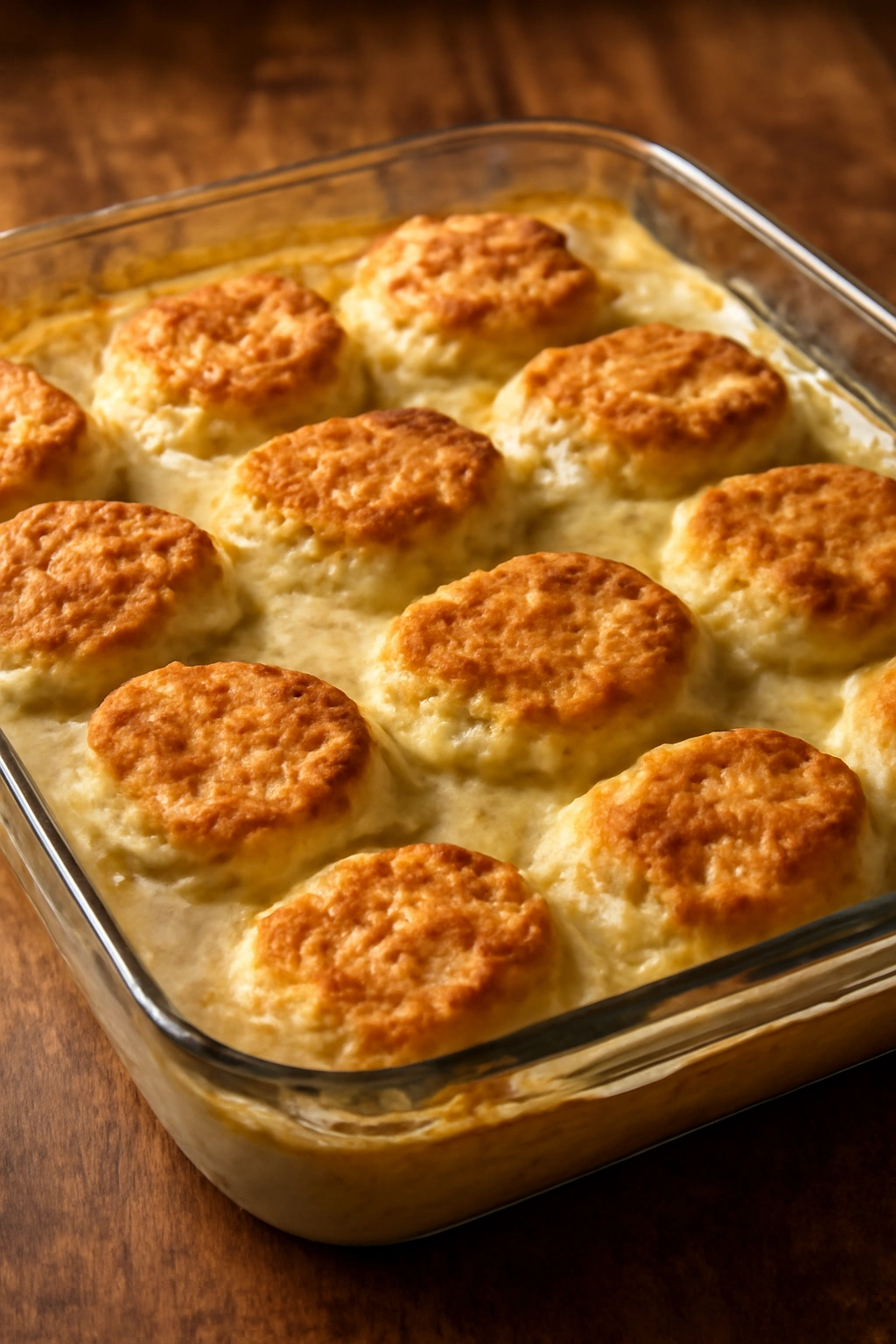
The practical advantages of this casserole format are immediately obvious—you make it ahead, you bake it, you serve it hot to many people at once. But the real genius is deeper than convenience. This dish actually tastes better as a bake than the traditional skillet version, because the components integrate in ways that happen only under the specific conditions of gentle oven heat.
The biscuits, for instance, don’t get the hard, crunchy bottoms that skillet-fried biscuits develop. Instead, they soften slightly, absorb the custard, and become almost bread-pudding-like in texture—tender and fluffy throughout rather than crispy-chewy-soft in separate layers. The gravy doesn’t have the chance to break from overheating or under-stirring; it stays silky and uniform because the oven’s gentle, even heat is simply better at coaxing a sauce to perfection than the stovetop’s hot spots and temperature swings.
The egg custard layer—something you’d never have in a traditional biscuits-and-gravy meal—becomes the ingredient that ties everything together. It enriches the gravy further, adds a light fluffiness as it sets, and creates those coveted little caramelized patches on top. It’s the element that transforms this from “biscuits and gravy that I happened to bake” into its own distinct, recognizable dish.
For a gathering of eight to twelve people, this single casserole becomes your main protein and starch course, requiring nothing more than a simple fruit or vegetable side and maybe coffee. You’re not juggling four skillets, you’re not standing over the stove for an hour, and everyone eats at the same temperature. That’s not a small thing when you’re trying to be present with your guests.
The History Behind This Southern Staple
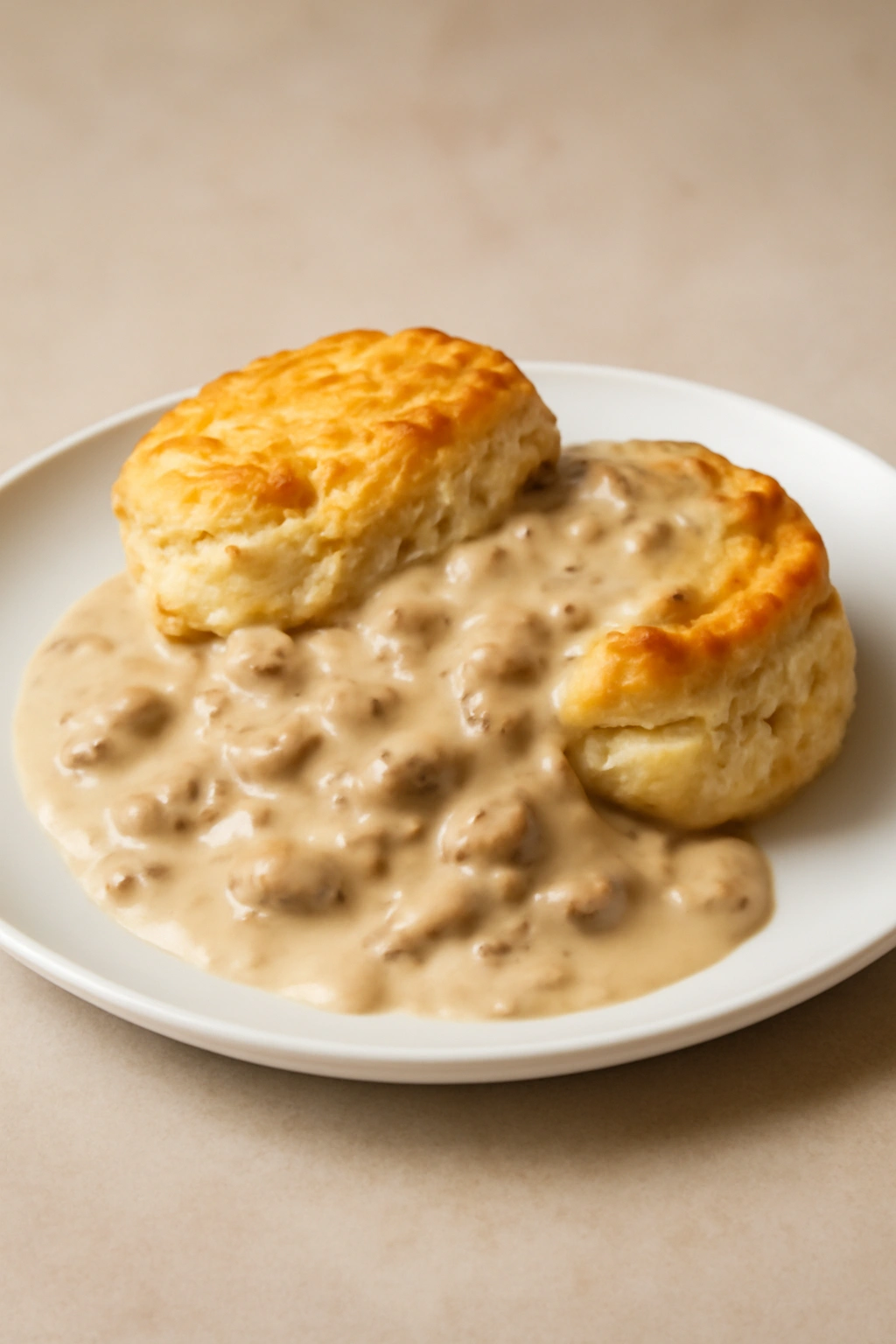
Biscuits and gravy as a dish emerged from genuine necessity and resourcefulness. The combination likely developed across the American South during the 18th and 19th centuries, born from what cooks had on hand: leftover biscuits from breakfast or the previous day, sausage scraps or rendered pork, milk or cream from the dairy, and time to develop flavors slowly over low heat.
The gravy itself—a roux-thickened sauce—became a cornerstone of Southern cooking partly because it was a way to stretch expensive proteins and partly because the technique was proven reliable. Pork sausage was economical and flavorful; a flour and fat roux provided body and richness without requiring cream you might not have. Pepper was cheap and abundant compared to other seasonings, which explains why black pepper is such a dominant flavor in the traditional version.
The biscuit component matters too. American biscuits—quick breads leavened with baking powder, made with cold butter—are fundamentally different from the sweetened scones of British tradition. They emerged as a distinctly American creation, refined over generations of Southern home cooks and tested in commercial bakeries. A proper biscuit is tender, flaky, and slightly salty, designed to be a vehicle for gravy, not a standalone food.
When this casserole adaptation emerged—and it’s become increasingly popular over the past two decades—it honored the original combination while solving the very real problem of timing in a modern kitchen. The recipe respects tradition while acknowledging that cooking for guests is different from cooking for family, and both deserve respect.
Understanding Your Ingredients and Why Each Choice Matters
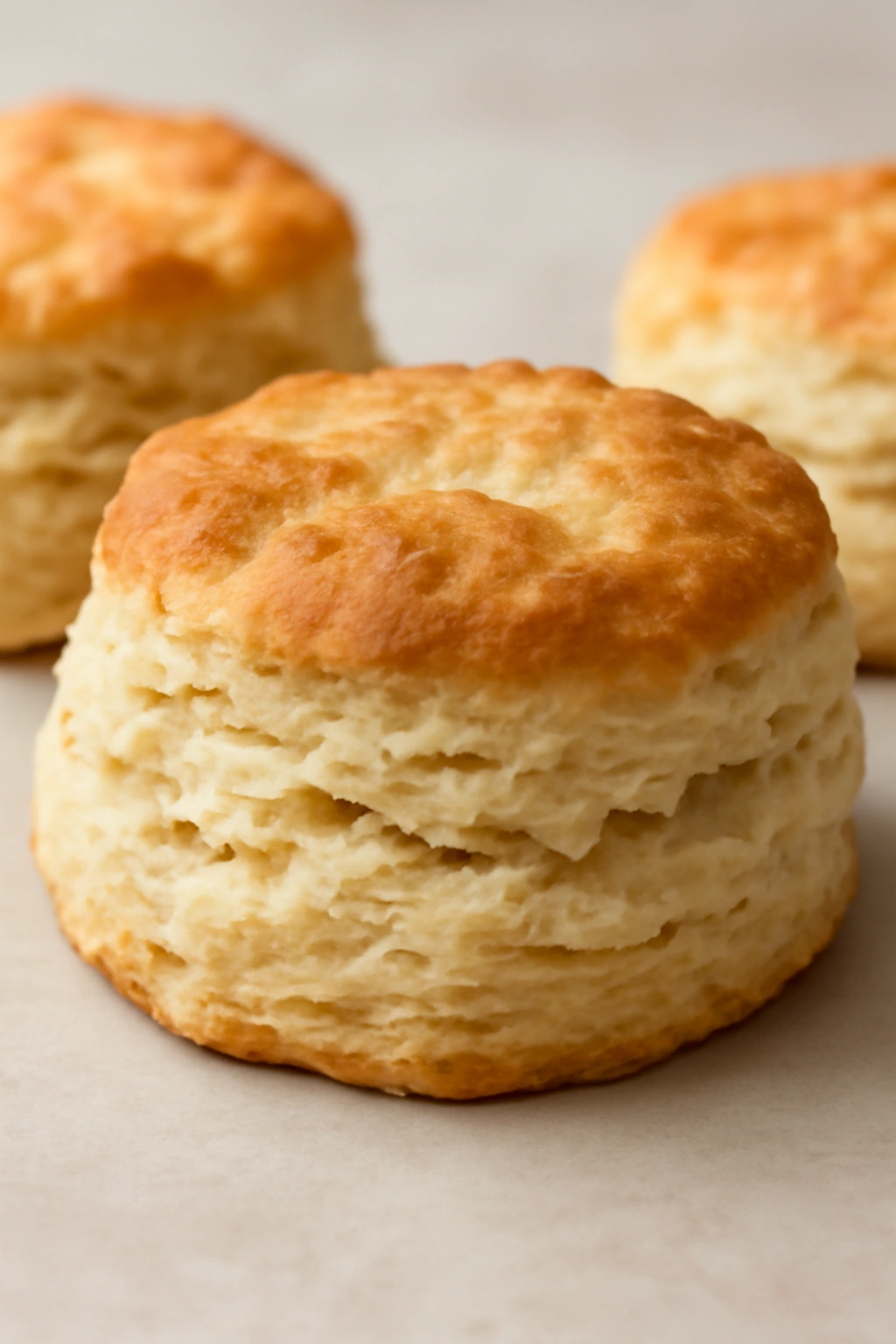
The foundation of this bake rests on three main components: biscuits, sausage gravy, and a custard layer. Each one has specific characteristics that make it work in this format.
Biscuits deserve a moment of real attention. This recipe works best with home-made biscuits or high-quality frozen biscuits from a reliable brand—the kind that require baking before you assemble the casserole. Don’t use canned biscuits in the pop-open tubes; they bake at a different temperature, they’re more delicate, and they’ll disintegrate into the casserole rather than holding their structure. Homemade biscuits are genuinely easier than they seem and worth the minimal effort; frozen ones from the grocery store are your reliable backup. The biscuits should be about 2 to 2.5 inches in diameter—large enough that they hold shape but small enough that they bake through before the top browns.
Sausage is the protein backbone. Use bulk sausage rather than links; remove it from its casing and crumble it as it browns. The fat content matters—80/20 ground sausage will give you better flavor and richness than extra-lean. A mix of sage, pepper, and salt is traditional, but don’t overthink it; good bulk breakfast sausage already has most of these seasonings built in. If you prefer a lighter version, you can use ground turkey sausage, but you’ll need to add a little extra fat (butter or olive oil) so the gravy develops proper body.
Milk and cream combine to create the gravy base. Don’t skip the cream or replace it entirely with milk; the cream provides richness and helps stabilize the sauce. A ratio of about two parts whole milk to one part heavy cream gives you luxurious results without being excessive. If you’re avoiding dairy, unsweetened oat milk mixed with a splash of coconut milk creates a surprisingly similar texture and flavor, though you may need a tiny bit of extra cornstarch or flour to achieve the same body.
Flour and butter form the roux—the thickened base of the gravy. This is straightforward chemistry: fat soluble ingredients (butter) plus starch (flour) creates a paste that, when cooked into liquid, thickens everything evenly. Use all-purpose flour; don’t try to substitute other flours here because the starch profile is different and you’ll end up with a gravy that either won’t thicken or will become gluey.
Eggs in the custard layer are what binds the casserole together and creates that light, fluffy texture. Use whole eggs; the yolks provide richness and the whites create structure. Don’t use egg whites only unless you’re deliberately cutting fat, because you’ll lose flavor and end up with a thin, slightly rubbery custard instead of the creamy, tender result you want.
Salt and pepper are not minor details. Taste your gravy as you make it and season generously; underseasoned gravy tastes thin and weak no matter how much cream you add. Black pepper should be almost noticeable—not overwhelming, but present. A pinch of cayenne or a dash of hot sauce in the gravy adds complexity that keeps people reaching for another bite without tasting obviously spicy.
Choosing and Making Quality Biscuits
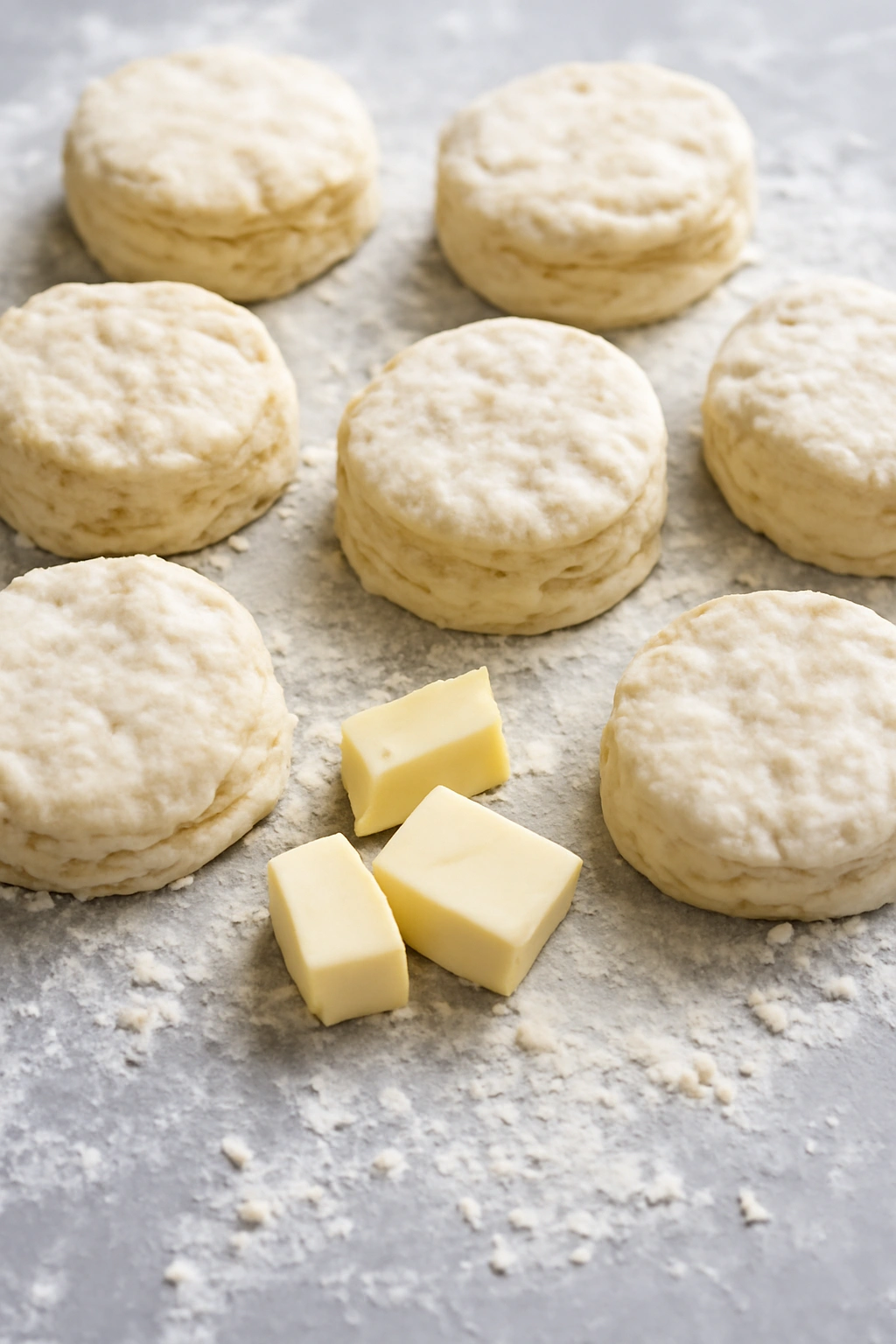
The biscuits are what define this dish visually and texturally, so it’s worth understanding what makes them work here. In a traditional biscuits-and-gravy meal, the biscuits are the vehicle for the gravy. In this casserole, they become part of the dish itself, soaking up custard and creating the structure that holds everything together.
If you’re making biscuits from scratch, the fundamentals are simple: cold butter cut into dry ingredients creates flakiness, ice-water brings everything together without overdeveloping gluten, and high heat creates lift and browning. The traditional ratio is about three parts flour to one part cold butter, with just enough liquid to bring it together. You’re aiming for a dough that’s barely cohesive, almost crumbly to the touch—that’s what creates the characteristic flakiness.
Work quickly and handle the dough as little as possible. Overworking develops gluten, which makes the biscuits tough and dense rather than tender and light. Cut your biscuits with a sharp cutter and avoid twisting as you press down; a twisted cut seals the edges and prevents the biscuits from rising properly. Place them on a baking sheet and chill them for at least 30 minutes before baking—cold biscuits rise higher and bake more evenly.
Bake the biscuits at 450°F for about 12 to 15 minutes, until they’re golden on top and cooked through. This first baking is important because it sets the structure; when you reassemble them in the casserole with the gravy and custard, they won’t disintegrate the way unbaked dough would.
If you’re using frozen biscuits, follow the package directions for prebaking. Most need to go into a 400°F oven for about 10 to 12 minutes—they won’t be fully cooked through, but they’ll be set and slightly golden. This partial baking is essential; it prevents the biscuits from absorbing too much liquid during the final casserole bake.
Quality matters here. Spend a few extra dollars on biscuits that you’d actually be happy to eat on their own. A bland, dense frozen biscuit will stay bland and dense even with the best gravy around it. A fluffy, buttery, well-seasoned biscuit makes the entire casserole better.
Making Rich, Flavorful Sausage Gravy from Scratch
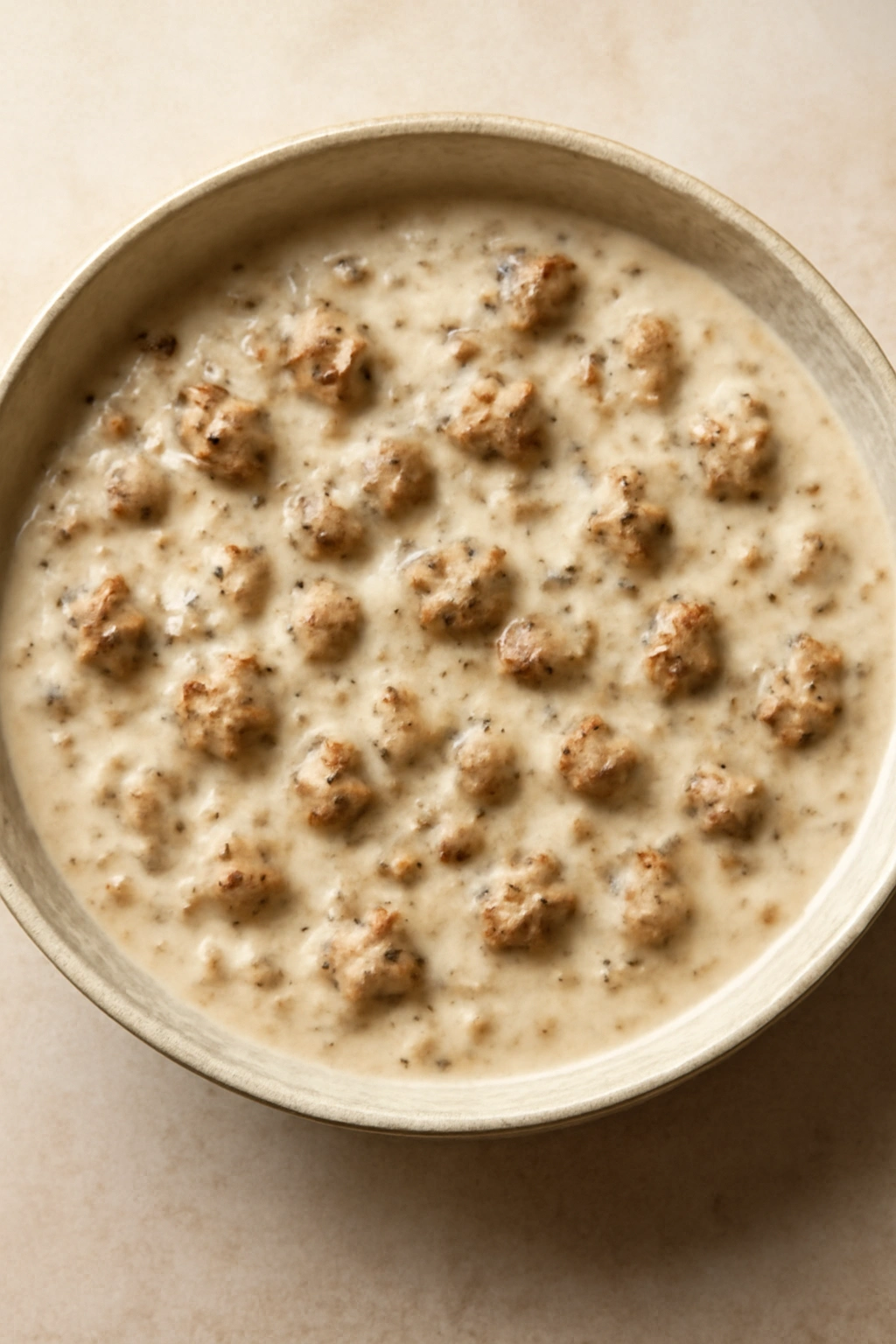
Sausage gravy is deceptively simple, but the details matter enormously. The goal is a sauce that’s thick enough to coat a spoon, creamy without being heavy, and deeply seasoned so it tastes like sausage and pepper came first and cream was added to make it smooth, not the other way around.
Start by browning your sausage in a large, heavy skillet over medium-high heat. Break it up as it cooks, pressing it into smaller and smaller pieces—you want it crumbled fine rather than chunky, which gives you more surface area for browning and distributes flavor more evenly. This takes about 5 to 7 minutes. The sausage is done when there’s no pink remaining and it’s begun to caramelize slightly on the pan bottom.
Don’t drain all the fat. This is key. You need that rendered pork fat—it’s where flavor lives. If your sausage is extremely fatty and there’s nearly a quarter-inch of grease in the pan, pour off about half of it. But if there’s just a thin layer, leave it; you’ll use it to make your roux.
Sprinkle the flour over the sausage (allow about 3 tablespoons of flour for every pound of sausage) and stir constantly for about 2 minutes. You’re cooking the flour in the fat, which removes the raw flour taste and starts building the base of the sauce. The mixture should look like wet sand or coarse breadcrumbs.
Slowly add your milk and cream, whisking constantly to prevent lumps. Don’t dump it all in at once; add it gradually over the course of about a minute, whisking as you go. This steady incorporation prevents the flour from clumping. Once all the liquid is in, keep whisking for about a minute more to make sure everything is smooth.
Turn the heat to medium and let the gravy cook, stirring frequently, for about 5 to 8 minutes. It will gradually thicken as the starch in the flour swells with heat. You’re looking for a consistency that coats the back of a spoon thickly but still drips off—not so thick it’s like pudding, but definitely not thin and pourable.
Season generously with salt and fresh ground black pepper. Taste it repeatedly; gravy needs more seasoning than you think initially. If it tastes one-dimensional or weak, it’s under-seasoned. Keep tasting and adjusting until you have something that tastes distinctly savory and peppery, with the sausage flavor singing through the cream.
Some people add a pinch of cayenne, a tiny splash of hot sauce, or even a little fresh thyme or sage. These additions are optional, but they can add complexity and keep the dish from tasting one-note. Taste as you go and add sparingly.
Perfect for a Crowd: Yield and Timing Details
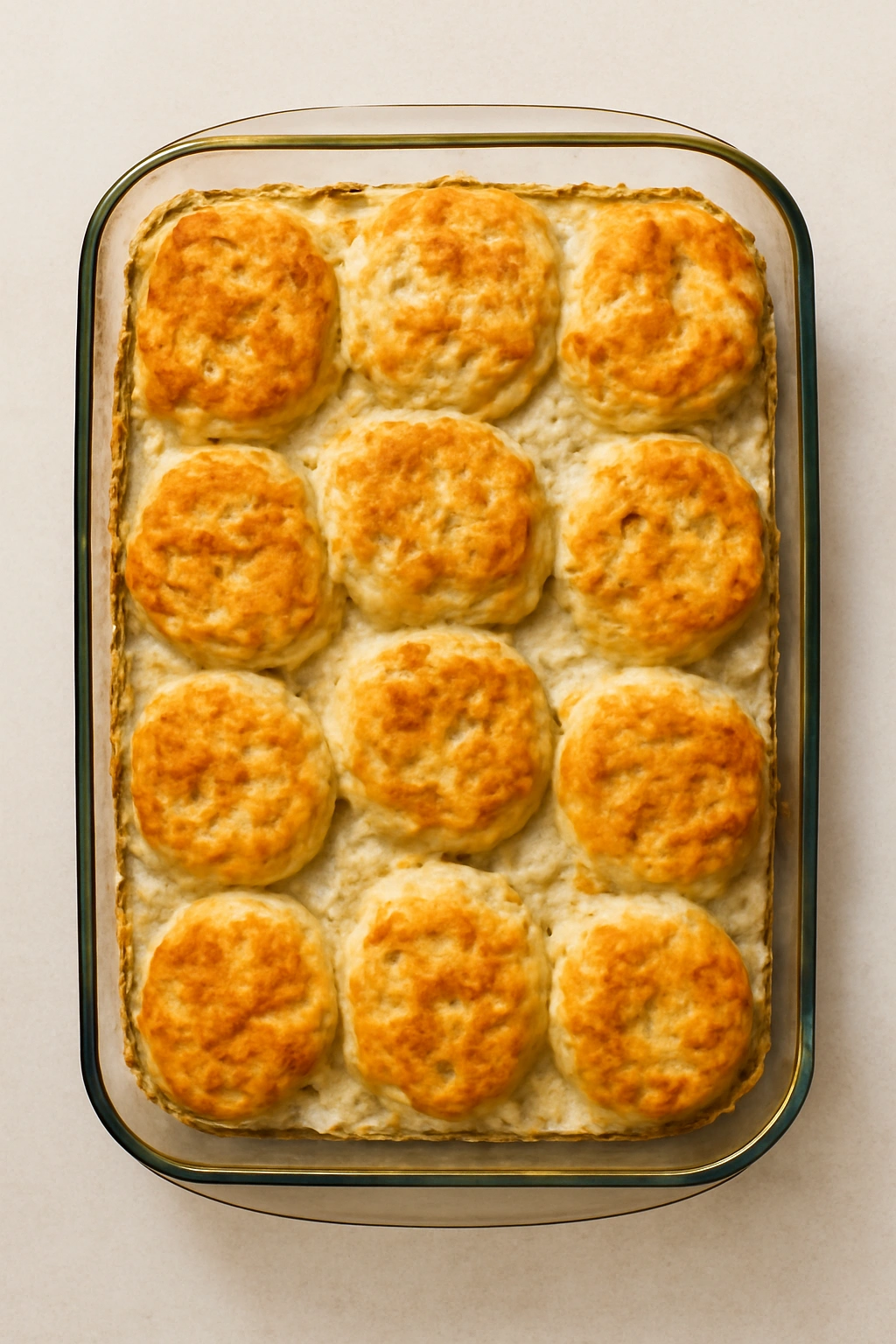
Yield: Serves 8 to 10 | Makes one 9×13-inch casserole
Prep Time: 30 minutes (including biscuit baking if starting from scratch; 15 minutes if using prebaked or frozen)
Cook Time: 35 to 45 minutes
Total Time: 1 hour 15 minutes active + up to 8 hours chilling (optional but recommended)
Difficulty: Intermediate — The individual components are straightforward, but timing the biscuits and assembling the casserole requires attention to the recipe sequence. No special equipment needed.
Best Served: Immediately from the oven while the biscuits are still warm and the top is slightly crispy, or at room temperature up to 2 hours later. Reheats beautifully (see reheating guide below).
Complete Ingredient List
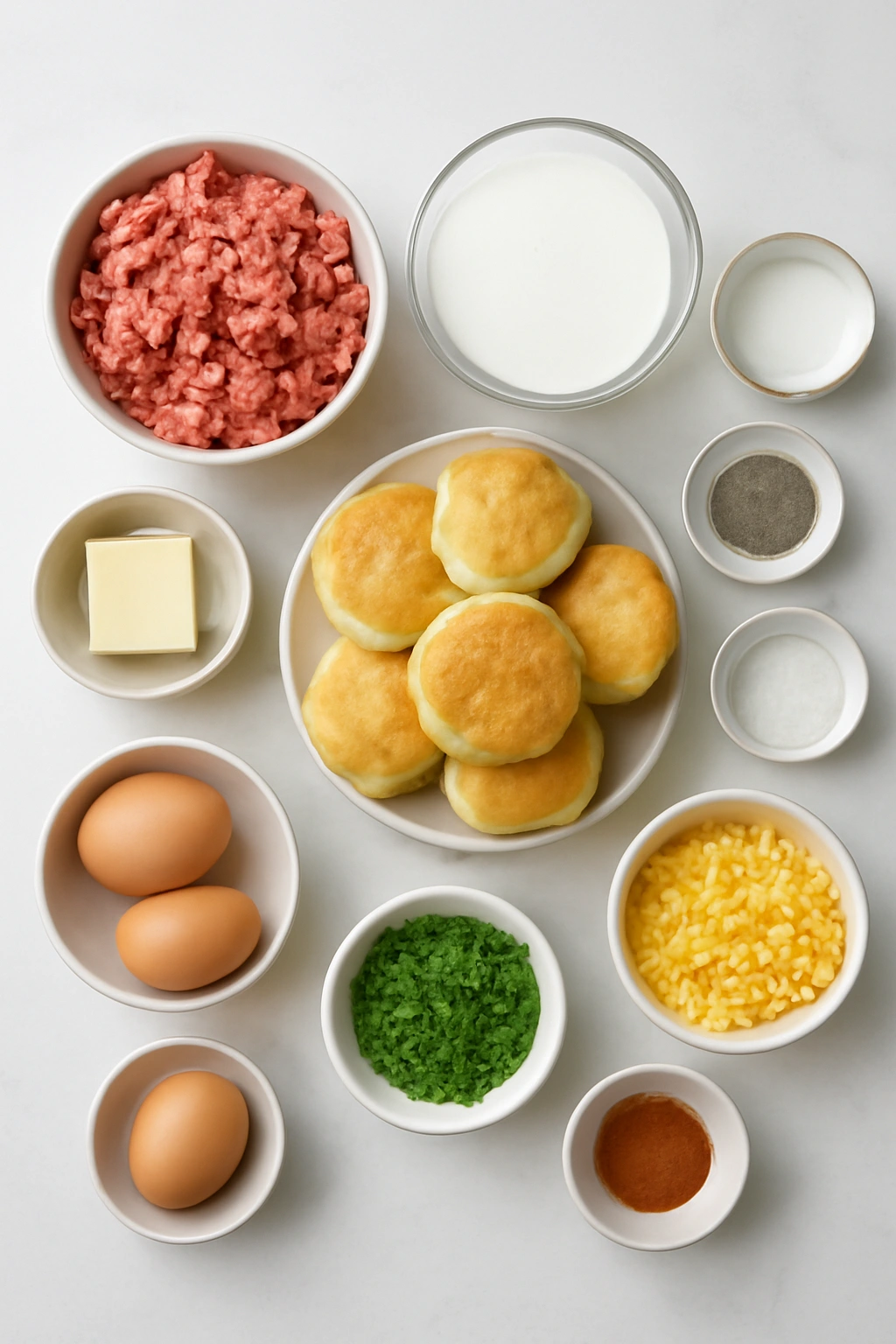
For the Sausage Gravy:
- 1½ pounds bulk breakfast sausage (not links), about 80/20 lean-to-fat ratio
- 3 tablespoons all-purpose flour
- 2 cups whole milk, room temperature
- 1 cup heavy cream, room temperature
- ½ teaspoon fine sea salt, plus more to taste
- ½ teaspoon freshly ground black pepper, plus more to taste
- Pinch of cayenne pepper (optional, but adds welcome complexity)
- Pinch of fresh thyme or sage (optional)
For the Biscuits and Casserole Assembly:
- 16 to 20 medium biscuits, either homemade and baked, or high-quality frozen biscuits that have been baked according to package directions (about 2 to 2.5 inches in diameter each)
- 2 tablespoons unsalted butter, softened, for greasing the baking dish
- 4 large eggs, room temperature
- 1 cup heavy cream
- ½ cup whole milk
- ¼ teaspoon fine sea salt
- ⅛ teaspoon freshly ground black pepper
- Pinch of freshly grated nutmeg (optional but traditional)
- 1 cup shredded cheddar or gruyere cheese (optional but highly recommended)
- 2 tablespoons fresh chives or parsley, chopped, for garnish (optional)
Step-by-Step Instructions
Prepare the Pan:
-
Preheat the oven to 350°F and position the rack in the center. Generously butter a 9×13-inch baking dish (glass or ceramic works perfectly), paying special attention to the corners and edges. This prevents sticking and browning. Set the prepared dish aside.
-
If you haven’t already baked your biscuits, do that now. Follow the recipe instructions for homemade biscuits, or follow package directions for frozen biscuits, baking them at the temperature and time specified until they’re lightly golden and set. They should be cooked through but not deeply browned—you’re going to bake them again in the casserole. Set the baked biscuits aside to cool for about 5 minutes.
Make the Sausage Gravy:
-
While the biscuits cool, heat a large, heavy skillet over medium-high heat. Once it’s hot enough that a tiny droplet of water sizzles on contact, add the crumbled sausage and cook, breaking it up as it browns, for 5 to 7 minutes. You want the sausage to lose all its pink color and begin to brown slightly on the bottom of the pan. Stir frequently so it cooks evenly rather than burning on one side.
-
Sprinkle the flour evenly over the cooked sausage and stir constantly with a wooden spoon or spatula for about 2 minutes. The mixture should look like wet sand—the flour is cooking in the rendered sausage fat, which removes any raw flour taste and creates the base of the sauce.
-
Whisk the milk and cream together in a large measuring cup or bowl, then slowly add this mixture to the sausage, whisking constantly to prevent lumps from forming. Add it gradually over the course of about a minute, whisking as you go. Once all the liquid is incorporated, continue whisking for another minute to ensure the gravy is smooth and lump-free.
-
Reduce the heat to medium and let the gravy cook, stirring frequently with a wooden spoon, for 5 to 8 minutes. It will gradually thicken as the starch from the flour absorbs the liquid and swells with heat. The gravy is done when it coats the back of a spoon thickly but still drips off—like a loose pudding, not like cement. Taste and season generously with salt and pepper—more than you think is needed. Gravy that tastes slightly underseasoned on its own will be perfectly seasoned once it’s assembled with the bland custard and mild biscuits. Add the optional cayenne and herbs if using, stir to combine, and remove from heat.
Make the Custard Mixture:
- In a large bowl, whisk together the 4 eggs, 1 cup heavy cream, ½ cup whole milk, ¼ teaspoon salt, ⅛ teaspoon pepper, and the optional pinch of nutmeg. Whisk vigorously for about 30 seconds until the mixture is light, homogeneous, and slightly frothy. The nutmeg adds a subtle warmth that’s traditional in breakfast custards and worth the small effort of grating it fresh—skip the pre-ground stuff, which tastes dusty.
Assemble the Casserole:
-
Cut each cooled biscuit in half horizontally, creating thin rounds. You’ll have about 32 to 40 biscuit halves total.
-
Spread a thin layer of sausage gravy (about ½ cup) on the bottom of the prepared baking dish, just enough to lightly coat.
-
Arrange about half of the biscuit halves over the gravy in a single layer, fitting them close together but not overlapping. They don’t need to cover the pan completely; it’s okay if small gaps remain.
-
Pour half of the remaining sausage gravy over the biscuits, spreading it gently with a spatula so it distributes evenly. Try to get the gravy into the gaps between biscuits so everything is integrated.
-
Layer the remaining biscuit halves on top in a single layer.
-
Pour the remaining sausage gravy over the second layer of biscuits, again spreading gently to distribute evenly.
-
If you’re using cheese, sprinkle the shredded cheddar or gruyere over the top gravy layer now. It will melt slightly and create pockets of richness.
-
Pour the custard mixture slowly over everything, letting it seep down between the biscuits and into the gravy. Pour carefully; you don’t want to knock the biscuits out of place, but you do want the custard to reach down to the bottom of the dish. Some will pool on top—that’s fine.
-
Let the assembled casserole sit at room temperature for about 15 minutes. This allows the biscuits to start absorbing the liquid and the custard to settle.
Chill (Optional but Highly Recommended):
- Cover the baking dish tightly with aluminum foil and refrigerate for at least 2 hours, or up to 8 hours. Chilling allows the flavors to develop, gives the custard time to fully permeate the biscuits, and makes the casserole easier to handle. This step transforms the dish from good to genuinely excellent—if you have time, don’t skip it. The casserole can go directly into the oven from the refrigerator; just add about 5 extra minutes to the baking time.
Bake:
-
Remove the casserole from the refrigerator about 10 minutes before baking (this helps it bake more evenly, though you can skip this step if you’re in a rush). Keep the foil covering in place.
-
Bake covered with foil for 20 minutes. The foil traps steam and prevents the top from browning before the interior is set.
-
Remove the foil and continue baking for 15 to 25 more minutes (total 35 to 45 minutes), until the top is golden brown and the edges are bubbling slightly. The center should jiggle very slightly when you gently shake the dish—it shouldn’t be completely firm, as carryover heat will continue cooking it as it rests. If the top is browning too quickly before the center is set, tent it loosely with foil again.
-
Remove from the oven and let it rest for 5 to 10 minutes before serving. This resting period allows the custard to set further and makes serving cleaner. During this rest, the casserole will continue cooking slightly from residual heat.
Finish and Serve:
- Garnish with fresh chopped chives or parsley if desired. Serve hot, directly from the baking dish or portioned onto plates. A small side salad or fresh fruit balances the richness beautifully.
Common Mistakes and How to Avoid Them
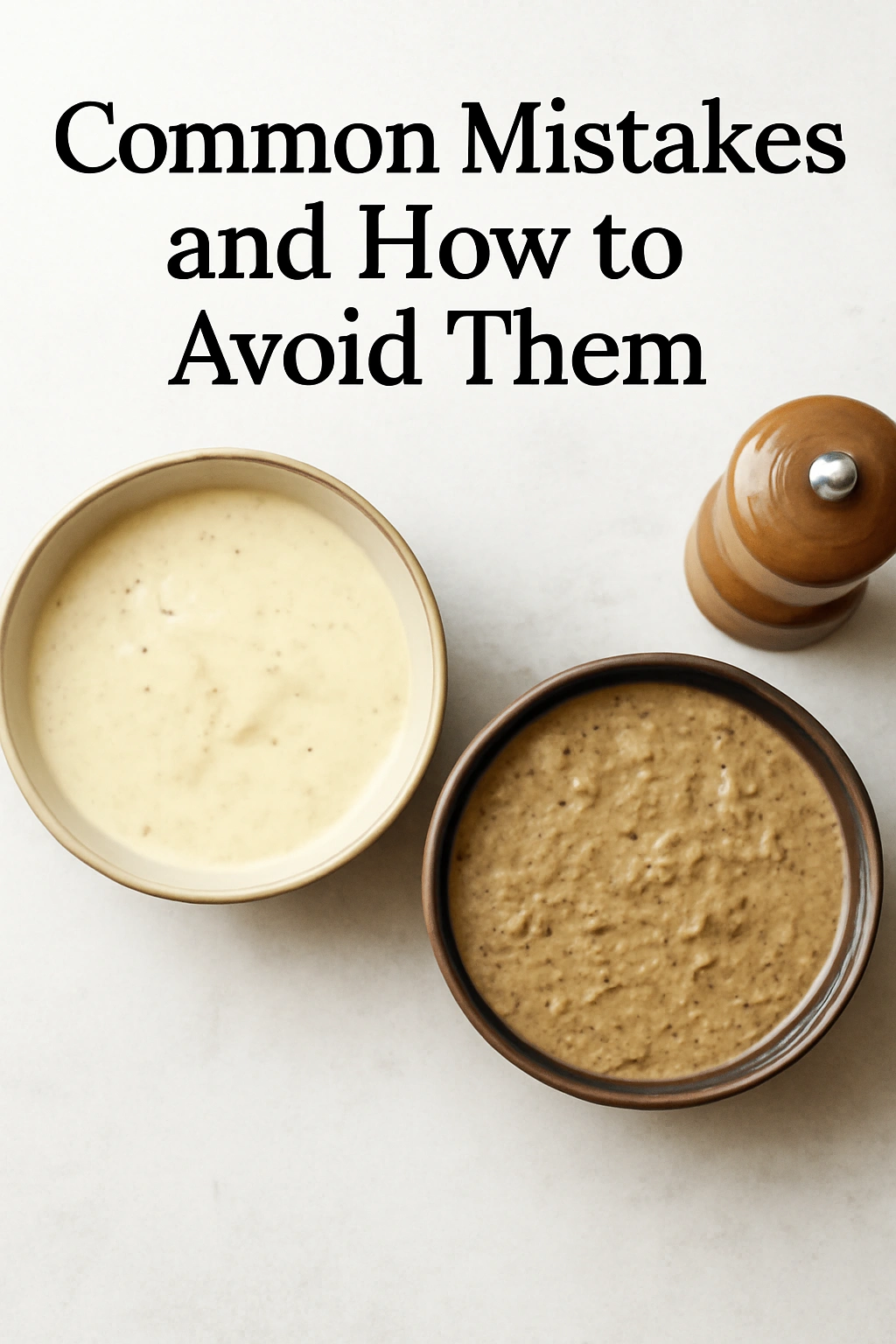
Underseasoning the gravy is the number one mistake people make. The gravy is made almost entirely of mild ingredients—sausage is seasoned, but cream is neutral, flour is neutral, milk is neutral. When they all come together, the seasoning gets diluted. You need to taste as you go and season more aggressively than you think is necessary. The finished gravy should taste distinctly peppery and savory on its own, not mellow and one-dimensional. If you’re shy about seasoning, your entire casserole suffers.
Using unbaked biscuits creates soggy, doughy results. The biscuits must be baked first—this sets their structure and prevents them from absorbing too much liquid and falling apart. A partially baked biscuit is acceptable; a completely unbaked one will create gummy pockets in your casserole that never properly cook through.
Pouring the custard too quickly can knock biscuits out of place and create uneven texture. Pour slowly and deliberately, letting the custard filter down naturally rather than splashing it on top. If the custard doesn’t reach all the way to the bottom, that’s okay—it will absorb as the casserole sits.
Skipping the chilling step is tempting when you’re in a hurry, but it matters. The casserole needs time for the custard to penetrate the biscuits and for everything to come together as one integrated dish rather than separate layers. If you’re absolutely pressed for time, let it sit at room temperature for at least 30 minutes before baking, but ideally give it 2 to 8 hours in the refrigerator.
Baking at too high a temperature browns the top before the center is set. 350°F is correct for this casserole. Higher temperatures cook the edges too quickly and leave the center custard unset.
Overcooking the casserole creates a firm, slightly rubbery texture. The custard should jiggle slightly in the very center when you remove it from the oven—it’s not fully set and that’s intentional. Carryover heat finishes the job as it rests, and you’ll end up with a creamy, tender custard rather than something firm and dry.
Making the gravy too thick or too thin affects the entire dish. If it’s too thin, it won’t coat the biscuits and the casserole will be dry and grainy. If it’s too thick, it becomes pasty and heavy. The gravy should flow slightly—think of a loose pudding or a thick sauce, not a soup and not a spread.
Make-Ahead Timeline and Strategic Timing
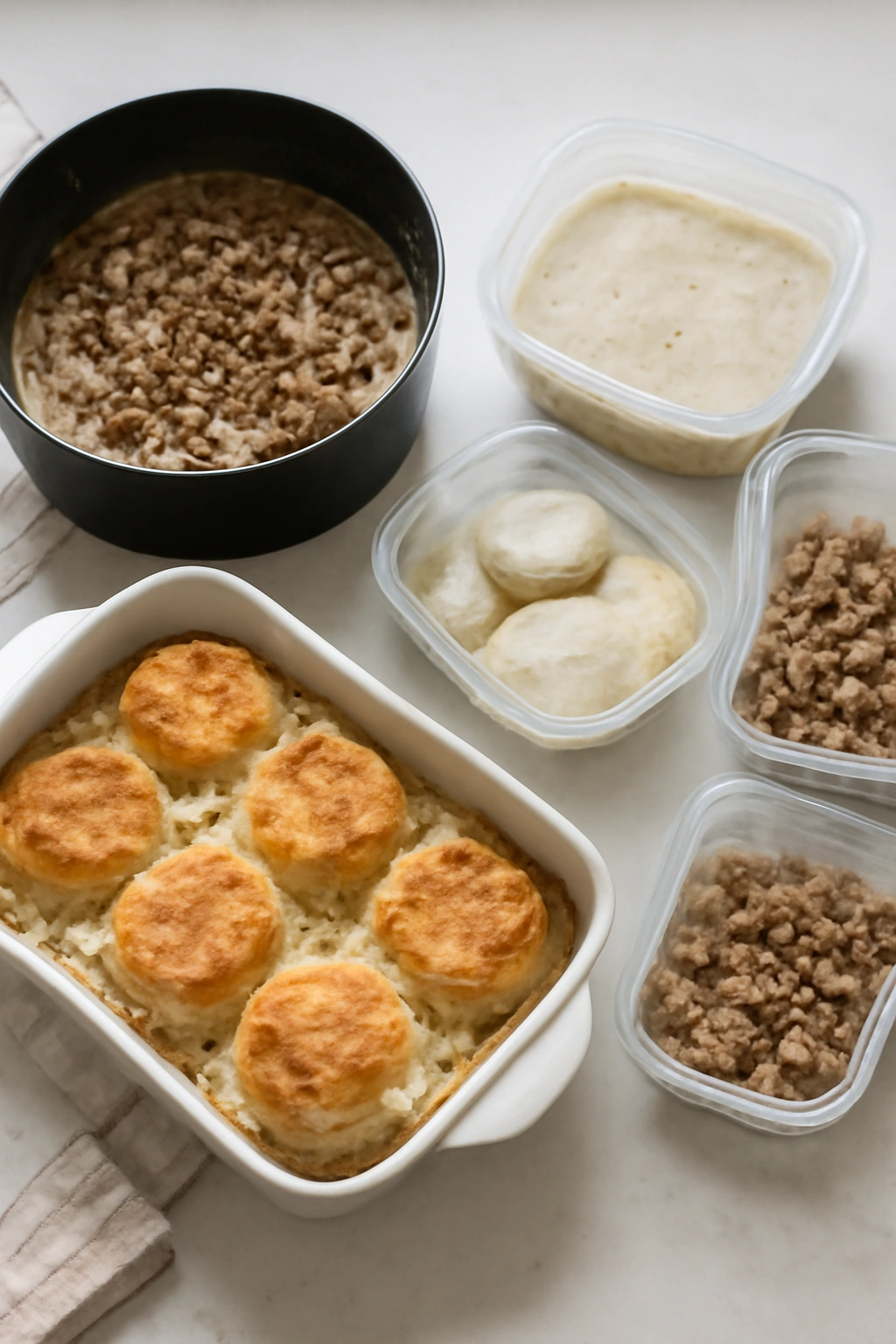
This dish is built for advance preparation, which is what makes it so valuable for entertaining. Here’s a strategic timeline for different preparation lengths.
If preparing the day before: Brown the sausage and make the gravy the night before, then cool it to room temperature and refrigerate in an airtight container. In the morning, reheat the gravy gently over low heat on the stovetop (stirring frequently to prevent scorching) or in a microwave in 30-second bursts, stirring between each, until it’s warm and pourable again. Assemble the rest of the casserole as directed, chill for at least 2 hours, then bake.
If preparing 4 to 8 hours ahead: Assemble the entire casserole, cover tightly with foil, and refrigerate. Remove from the refrigerator 10 minutes before baking and proceed with the baking instructions (add about 5 minutes to the bake time since it’s coming straight from the cold fridge).
If preparing 2 hours ahead: Assemble the casserole, cover, and refrigerate for at least 2 hours. Remove and bake as directed.
If preparing same-day morning: Assemble after breakfast or first thing in the morning, chill for at least 30 minutes (longer is better), then bake. This gives you time to finish other preparations before putting the casserole in the oven.
Baking day timing strategy: If you want the casserole ready at 9:00 a.m., and the bake takes 40 minutes plus a 10-minute rest, you need to put it in the oven at 8:10 a.m. Add another 30 minutes if you need to reheat the gravy from cold. Work backward from your desired serving time and plan accordingly.
Creative Variations and Adaptations
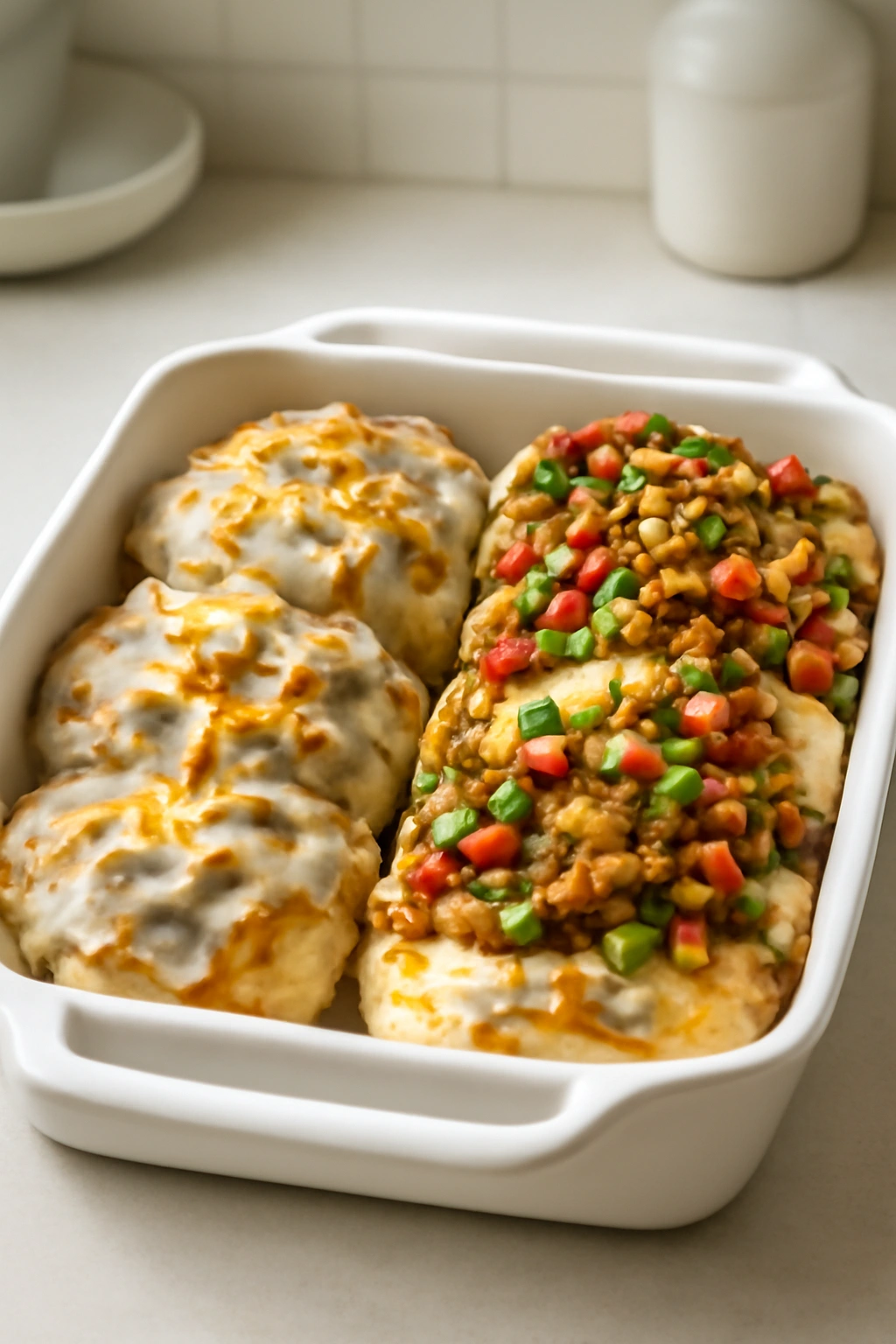
The basic formula is forgiving enough to support variations without losing its identity. Here are tested approaches to making it your own.
Vegetarian version: Replace the sausage with finely crumbled cooked tempeh or extra-firm tofu that’s been sautéed with sage, thyme, and plenty of black pepper until it’s golden. You’ll need to add a little butter or olive oil when making the roux since you won’t have rendered sausage fat. The gravy will be lighter, but it’s still delicious and satisfying.
Add vegetables: Sauté diced bell peppers, onions, and mushrooms in the rendered sausage fat before adding the flour. A half-cup of diced vegetables total is about right—more than that dilutes the sausage flavor too much. Fresh thyme or sage works beautifully with these additions.
Spicy version: Add ½ teaspoon of cayenne to the gravy, a pinch of hot paprika, and possibly a tablespoon of hot sauce. Layer in some diced pickled jalapeños between the biscuit layers. Top with a sharp cheddar or smoked gouda instead of the standard cheddar.
Smoked version: Use smoked sausage instead of regular breakfast sausage, or add a teaspoon of smoked paprika to the gravy. Both approaches deepen the flavor substantially.
Cheese variations: Sharp cheddar is traditional, but you can substitute gruyere (elegant and rich), smoked gouda (deeper, more complex), fontina (creamy and mild), or a combination. A little grated parmesan mixed in adds umami depth.
Herb variations: Fresh thyme or sage during the gravy-making stage are both wonderful. Add them in the last minute of cooking so the volatile oils don’t evaporate. Fresh rosemary is a bit strong for this dish, so use it sparingly if at all.
Make it lighter: Use half-and-half instead of heavy cream for both the gravy and the custard, and use 93% lean ground turkey sausage. You’ll need to add an extra tablespoon of butter to the roux since turkey sausage has less fat. It’s not as rich as the traditional version, but it’s still deeply satisfying.
Breakfast meat swaps: Bulk ground turkey sausage, ground chicken sausage, or even ground beef seasoned with sage and pepper can all work. Bacon—cooked until crispy, crumbled, and mixed into the sausage—adds richness if you want to go all-in on the pork direction.
Storage and Reheating: Keeping Quality Intact
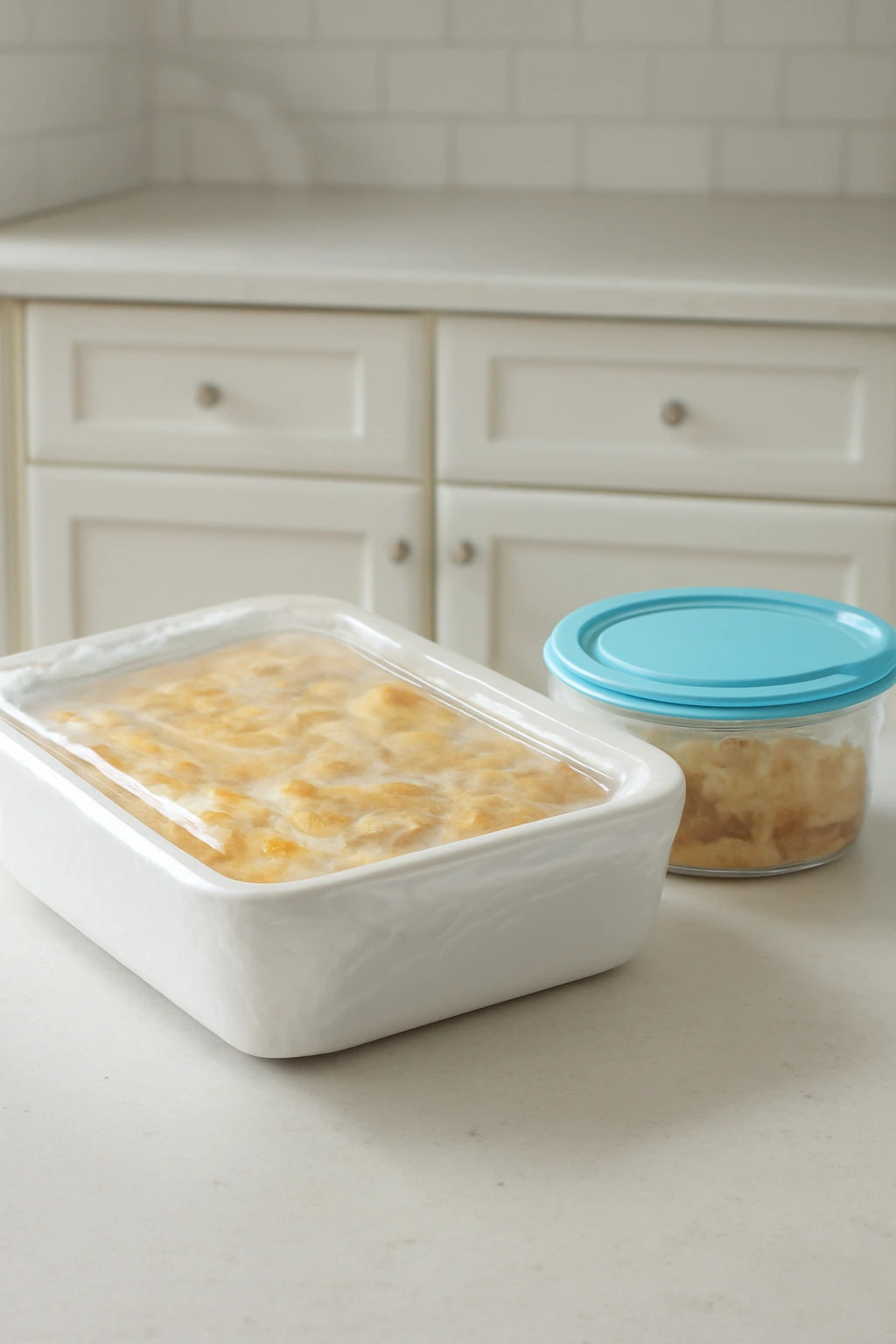
This casserole stores beautifully and reheats even better than it bakes fresh. Proper storage and reheating technique keep it from drying out or separating.
Room temperature: The casserole holds at room temperature for up to 2 hours after coming from the oven. Cover it loosely with foil to retain warmth without steaming it into mushiness.
Refrigerator: Cool the casserole to room temperature, then cover tightly with foil or transfer to an airtight container and refrigerate for up to 4 days. The flavors actually improve slightly on day two as everything melts together.
Freezer: The baked casserole freezes beautifully for up to 3 months. Cool it completely, wrap it tightly in foil, then wrap again in plastic wrap or slide the whole thing into a large freezer bag. Label with the date. Do not freeze the uncooked assembled casserole—the biscuits texture and the custard freezes unevenly.
Reheating from refrigerator: Cover the casserole with foil and reheat in a 325°F oven for 15 to 20 minutes, until it’s warmed through and bubbling gently at the edges. Remove the foil for the last few minutes if you want to crisp the top slightly.
Reheating from freezer: Thaw the casserole in the refrigerator overnight, then reheat as above. Alternatively, you can reheat from frozen: cover tightly with foil and bake at 325°F for 40 to 50 minutes, removing the foil for the last 10 minutes. It’ll take longer, but the result is just as good—the lower temperature prevents the edges from drying before the center is warm.
Stovetop reheating: If you need to reheat a single portion or a small amount, cut a piece and reheat it in a skillet over low heat, covered with foil, for about 5 minutes. Alternatively, microwave individual portions on 50% power for 2 to 3 minutes, stirring halfway through, to reheat gently without creating hot spots.
Reheating tip: The casserole may look slightly dry when it comes out of the fridge because the custard has fully set. Spoon a little warm milk or cream over the top after reheating if it seems dry, and let it sit covered for a minute to absorb.
Serving Suggestions and Perfect Pairings
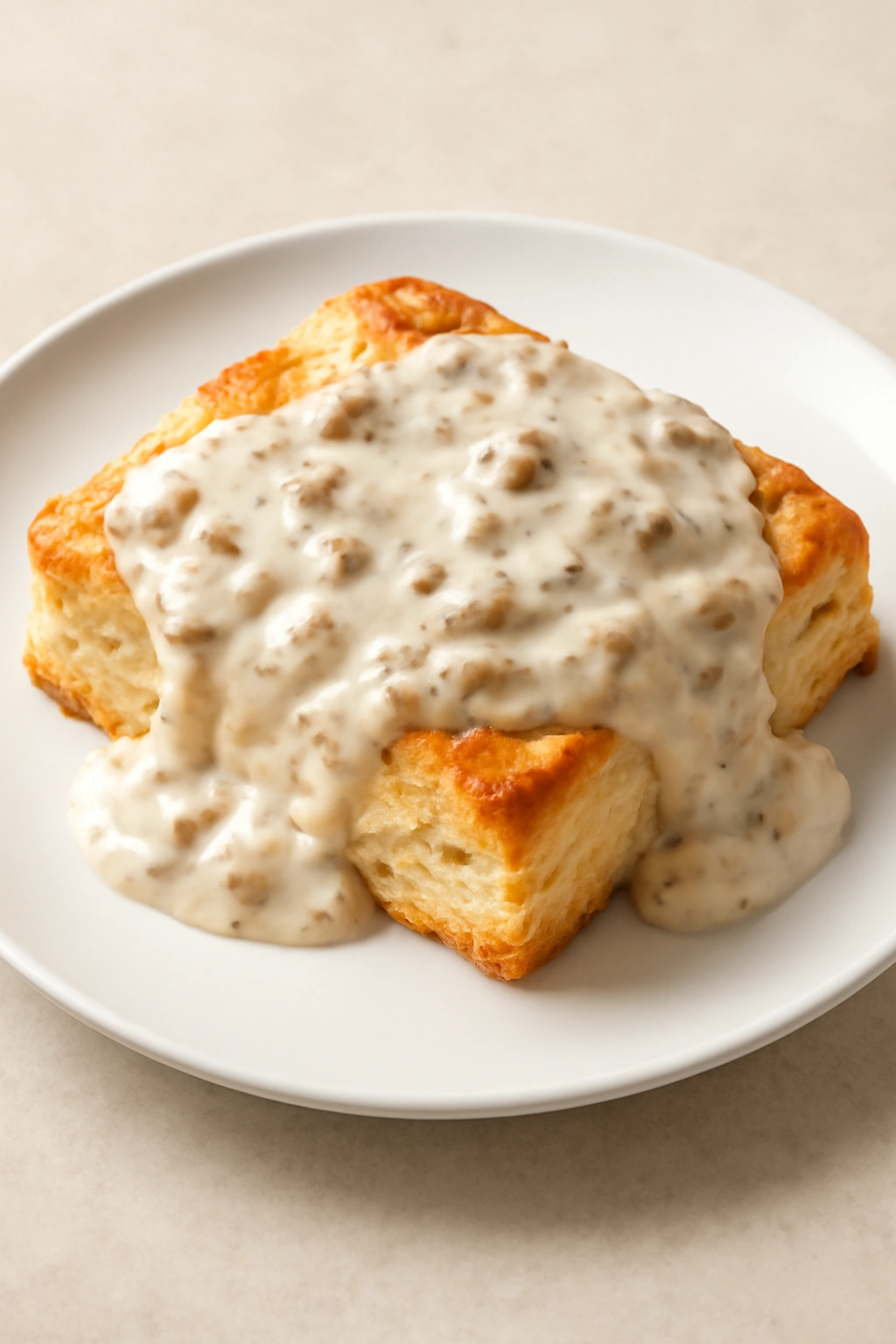
A biscuits and gravy casserole is substantial enough to be the centerpiece of brunch, but it benefits from smart accompaniments that add brightness, freshness, and contrast.
Light salad: A simple vinaigrette-dressed salad of baby greens, fresh herbs, and maybe some shaved radish or cucumber provides crisp contrast to the rich casserole. The acidity cuts through the fat and refreshes your palate between bites. A simple lemon vinaigrette is all you need.
Fresh fruit: Sliced strawberries, fresh melon, a small fruit salad, or a fruit compote adds freshness and visual brightness to the plate. The natural sugar and acidity balance the savory depth of the casserole.
Roasted or sautéed vegetables: Asparagus, green beans, or broccoli roasted with a little olive oil and salt provide a vegetable element without being heavy. Alternatively, sautéed spinach or kale with garlic is elegant and easy.
Bread and butter: Good sourdough toast or fresh-baked rolls are wonderful for soaking up extra gravy or for having alongside the casserole. Some people skip bread if the casserole is their starch; others can’t imagine brunch without it.
Eggs (if you want to go all-in): Some brunch spreads include both the casserole and individually prepared eggs—poached or fried. It’s not necessary and makes for a very heavy meal, but some people love it.
Beverages: Strong black coffee, herbal tea, fresh-squeezed orange juice, or a light sparkling wine or mimosa all pair beautifully. The casserole is rich enough that you want beverages that either complement or contrast—very sweet drinks feel cloying alongside all that cream and sausage.
Condiments on the side: Hot sauce, fresh salsa, or a simple pickled onion relish on the table lets guests add their own finishing touches. Some people love a dash of hot sauce on their casserole; others want nothing but straight gravy.
Cheese and charcuterie board: If you’re setting up a full brunch spread, a small charcuterie board of cured meats, aged cheeses, and crackers nearby lets guests graze if they want something lighter between casserole bites.
Final Thoughts
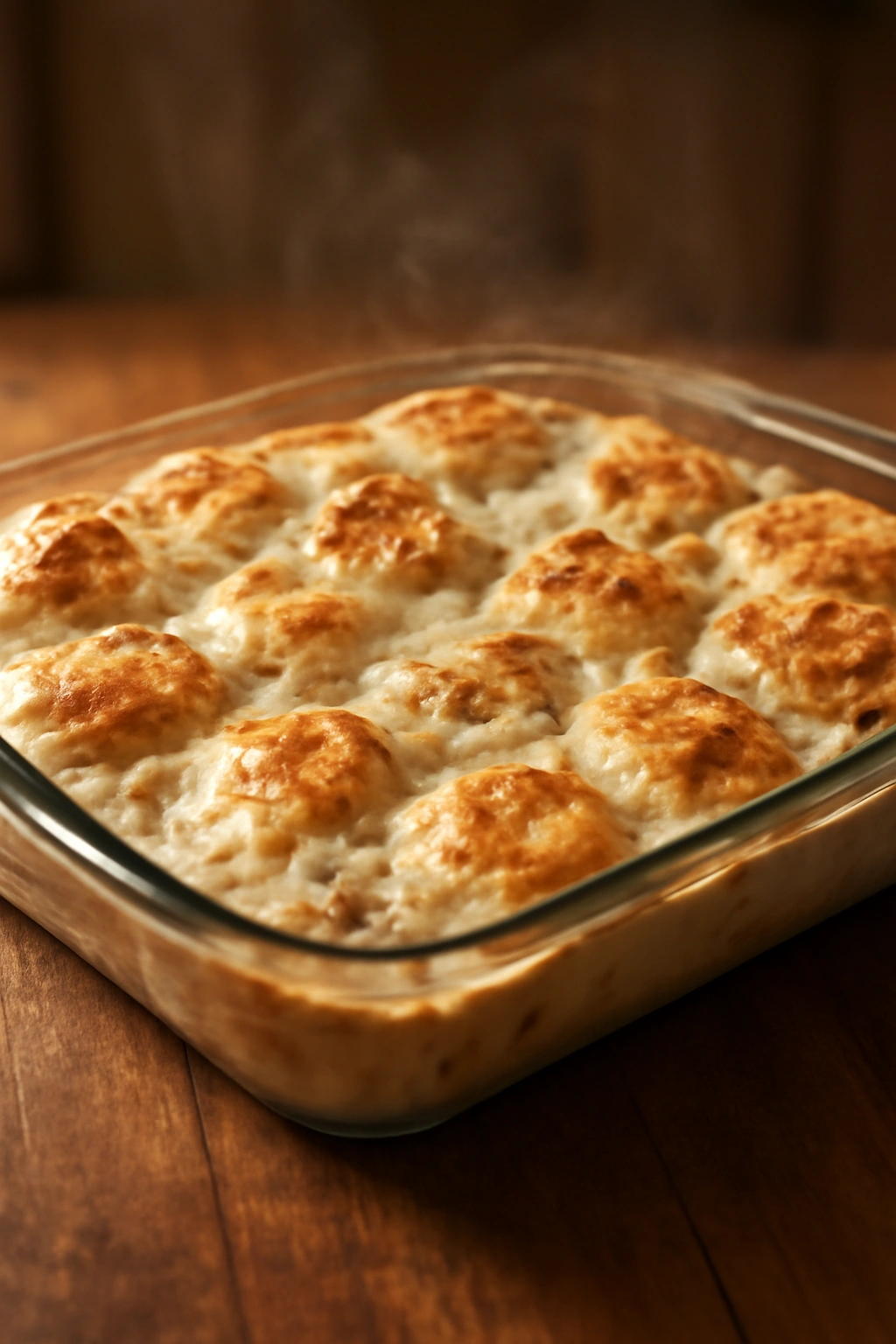
The beauty of this biscuits and gravy bake is that it honors a beloved Southern tradition while making it manageable for feeding people. You’re not a short-order cook standing over the stove while your guests wait for hot biscuits; you’re a host who spent time thinking ahead, who assembled something beautiful, and who can now sit down and actually enjoy the meal.
The technique is straightforward—gravy, biscuits, custard, bake. The results are reliably delicious. The flexibility is generous enough that you can make it your own with different cheeses, vegetables, seasonings, or meat swaps. Most importantly, it’s a dish that tastes genuinely good, not like a shortcut version of something better. The biscuits are actually tender and flavored, the gravy stays silky and peppery, and the custard layer adds unexpected richness and texture. It’s completely different from the skillet version, and in the best way—it’s better suited to generous portions and leisurely conversation.
Make it the night before, let it chill while you sleep, and put it in the oven an hour before guests arrive. Serve it hot, with a simple salad and good coffee, and watch people circle back for seconds. This is the kind of recipe that makes weekend entertaining feel effortless, even when you’ve put real thought and care into it. That’s not a small thing.
