



There’s something almost sacred about the moment when the air turns crisp, the leaves shift to amber and crimson, and you start craving anything with apples baked into it. Whether you’re settling in with a book, watching the sky darken earlier each evening, or gathering around a table with people you love, there’s genuine comfort in the ritual of a warm apple dessert — the way it fills your kitchen with cinnamon-spiced, butter-caramelized warmth that feels like comfort wrapped in flavor.
Apples are uniquely positioned as autumn’s fruit. Unlike the berries and stone fruits that define summer, apples improve as the weather cools — their sugar content peaks, their flesh becomes crisp and structured enough to hold together through baking, and somehow their flavor seems to deepen and concentrate when the first frost hits. But beyond the fruit itself, there’s something about the preparation of apples that embodies fall. The slow simmer. The gentle spice. The way a humble apple transforms into something that tastes like it’s been simmering in your grandmother’s kitchen for hours.
This isn’t about overly complicated desserts or finicky restaurant techniques. Real cozy fall cooking means recipes that reward patience without demanding constant attention, dishes that use simple ingredients but build layers of flavor, and results that make your entire home smell like autumn itself. It’s the difference between a dessert you eat and a dessert that becomes an experience — one that lingers in your memory as much as it does in your kitchen.
The recipes below represent that sweet spot: they’re genuinely cozy (warm, spiced, deeply satisfying), they work with apples as the star ingredient (not just a supporting player), and they’re completely achievable in your own kitchen on a chilly evening. Some are baked, some are stovetop-simple, and all of them will make you feel like you’ve earned the comfort they provide.
1. Spiced Apple Crisp with Oat and Almond Topping
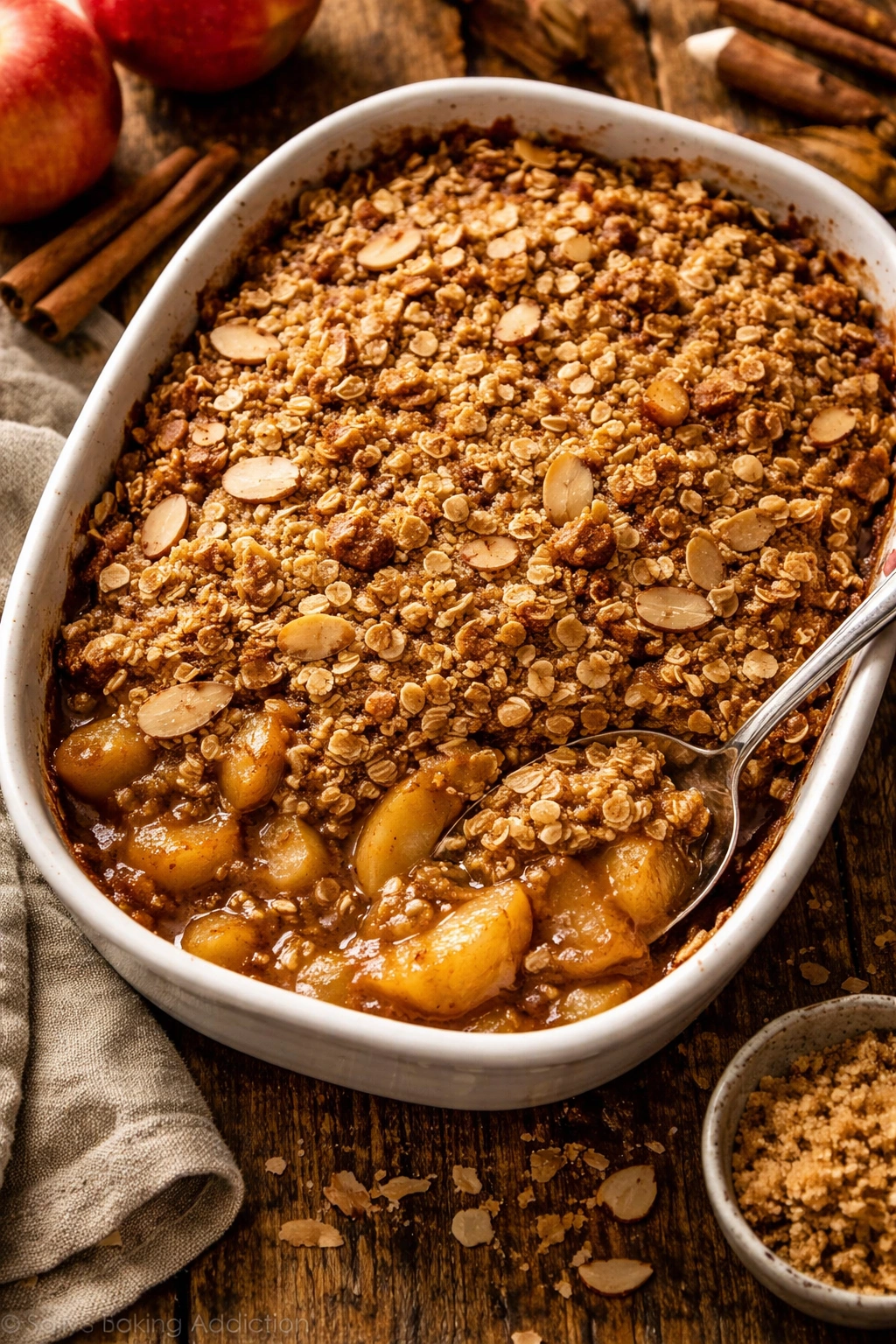
Apple crisp is autumn’s most forgiving dessert — it’s technically impossible to fail at, yet it tastes like you’ve spent the afternoon perfecting it. The magic here is the contrast between soft, spiced apples bubbling underneath and a crispy, buttery, slightly nutty topping that stays crunchy even after it cools. Unlike apple pie (which demands a properly executed crust) or apple cake (which requires balanced mixing), crisp rewards you simply for layering and baking.
The fruit filling is where your apple choice matters most. You want a mix of tart and sweet — Granny Smith apples contribute snap and acidity, while Honeycrisp or Gala apples add natural sweetness and soften beautifully. Peel and slice about four pounds of mixed apples into roughly quarter-inch pieces (thick enough to hold their shape, thin enough to cook through). Toss them with two tablespoons of lemon juice (this brightens the flavors and prevents browning while you work), half a cup of granulated sugar, a quarter cup of brown sugar, one and a half teaspoons of ground cinnamon, a quarter teaspoon of ground nutmeg, an eighth teaspoon of ground cloves, and a pinch of fine sea salt. Let this mixture sit while you make the topping — the apples will start releasing their juices, which becomes your sauce.
The topping is where crisp earns its name and its reputation. Combine one cup of old-fashioned rolled oats, three-quarters cup of raw almonds (roughly chopped), half a cup of all-purpose flour, one-third cup of light brown sugar, a pinch of cinnamon, and half a teaspoon of fine salt in a bowl. Add six tablespoons of cold unsalted butter, cut into small cubes, and work it through the dry ingredients with your fingertips until the mixture resembles coarse breadcrumbs with some pea-sized butter pieces still visible. This texture — not a smooth dough, but a distinct crumbly mixture — is exactly what creates the crisp, rather than a cake-like topping.
Spread the apples and their accumulated juices into a nine-by-thirteen-inch baking dish, then distribute the topping evenly across the surface. Don’t pack it down — loose and scattered will bake up crispier than pressed. Bake at 350°F (175°C) for forty to forty-five minutes, rotating the pan halfway through, until the edges are bubbling vigorously and the topping is deep golden brown.
The secret to truly crisp topping: Let it cool for at least ten minutes after baking before serving. The topping hardens as it cools, and if you dig in while it’s still hot, it will be soft and almost cake-like. That cooling period transforms it into something genuinely crispy.
Variations and Adaptations
If you’re dairy-free, use cold coconut oil or vegan butter in the topping — the ratio stays exactly the same and the results are virtually identical. For a gluten-free version, swap the all-purpose flour for a one-to-one baking flour blend. Swap the almonds for pecans, walnuts, or pumpkin seeds depending on what you have. If you prefer a less crunchy topping, increase the butter to seven tablespoons and follow the same method.
2. Deep-Dish Apple Pie with Brown Butter Crust
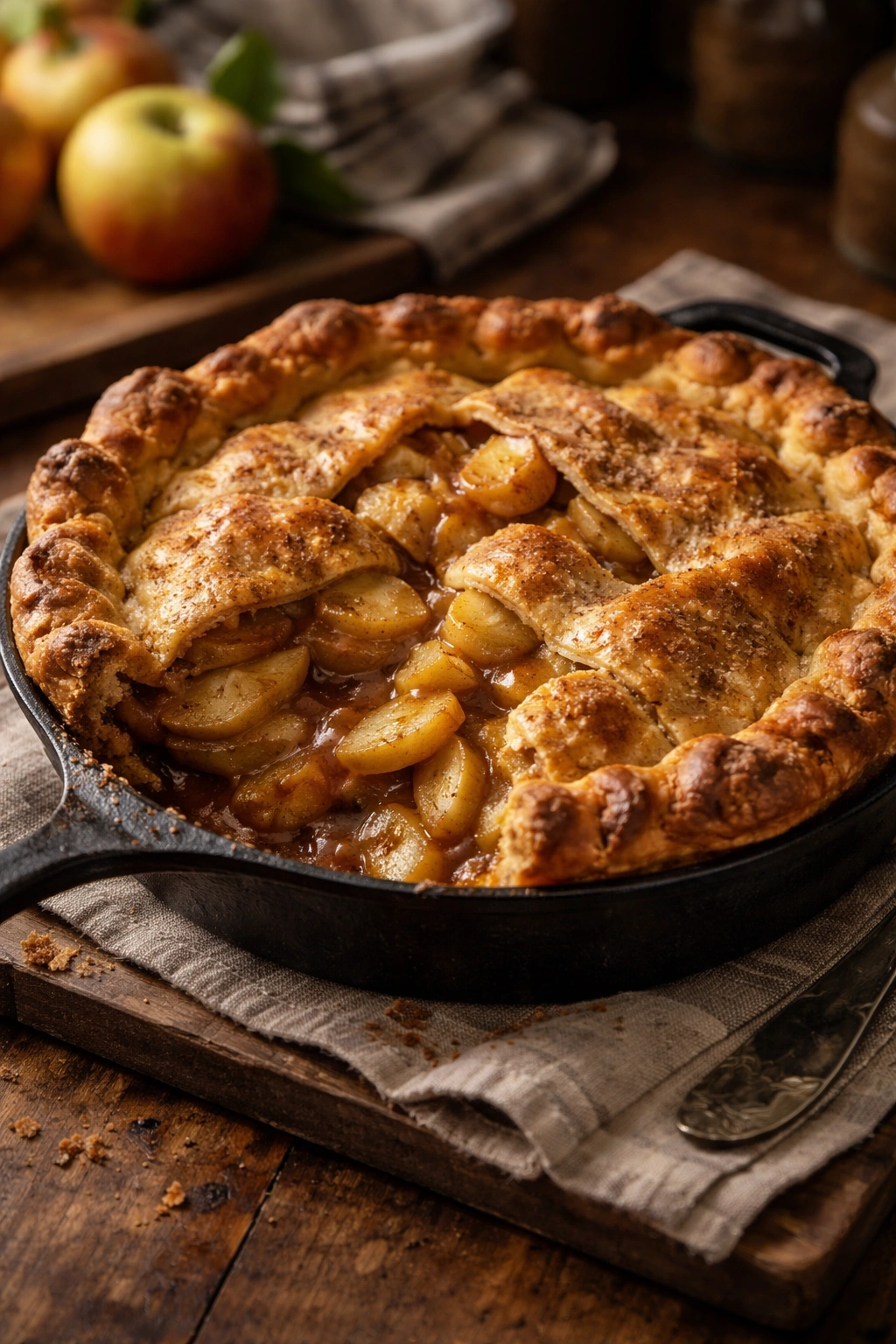
This isn’t your grandmother’s apple pie — this is a pie that sits in a cast-iron or deep pie dish, filled nearly to the brim with apples that cook down slowly, creating a dense, apple-forward filling that tastes less like a dessert and more like concentrated, caramelized apple essence. The crust is made with brown butter, which adds a subtle nuttiness that transforms traditional pie crust from flavorless vehicle into something memorable in its own right.
Start with the crust because it needs to rest. Melt ten tablespoons of unsalted butter in a small saucepan over medium heat, swirling it occasionally as the milk solids settle to the bottom and turn golden and fragrant (about five to seven minutes). Pour it into a bowl, scraping every bit of those browned solids into the fat, and let it cool to room temperature. Once cooled, measure out six tablespoons of the brown butter and reserve the rest (with its solids) separately.
Mix two cups of all-purpose flour with one tablespoon of sugar and one teaspoon of salt in a large bowl. Add the six tablespoons of measured brown butter, cut into small cubes, and work it in with a fork and your fingertips until the texture resembles coarse meal with some pea-sized pieces of butter still visible. Add six to eight tablespoons of ice water, one tablespoon at a time, mixing gently until the dough just comes together without being wet or sticky. Divide it in half, shape each half into a disk, wrap in plastic, and refrigerate for at least one hour (or up to two days).
For the filling, you’ll need about six pounds of apples — use a mix that leans toward tart (at least half Granny Smith). Peel, core, and slice them into thin, even slices. Toss with a quarter cup of sugar, two tablespoons of brown sugar, one tablespoon of cornstarch (this thickens the filling without making it gluey), one tablespoon of lemon juice, one teaspoon of vanilla extract, three-quarters teaspoon of ground cinnamon, a quarter teaspoon of ground nutmeg, and a generous pinch of salt. Let the apples macerate for twenty minutes, stirring once halfway through, so they release their juices and the sugar dissolves.
On a floured surface, roll one dough disk into a thin circle large enough to line a nine-inch deep-dish pie pan with about an inch of overhang. Brush the interior with a thin coating of the reserved brown butter solids, using a pastry brush to get into every corner. This step sounds small but it makes a difference — it prevents a soggy bottom crust. Pile the apples into the shell, mounding them slightly in the center. Drizzle any remaining juices from the bowl over the top. Roll the second dough disk into a circle slightly larger than the pie pan. You can either lay it flat on top for a traditional pie, or cut it into strips and weave them into a lattice if you want that classic look.
Trim the overhang to one inch, then fold the edges under and crimp with a fork. Brush the entire surface with a beaten egg mixed with one tablespoon of water. Sprinkle with a small pinch of cinnamon sugar if you like. Freeze the assembled pie for at least thirty minutes while you preheat your oven to 400°F (200°C).
Bake the pie for twenty minutes at 400°F, then reduce heat to 350°F (175°C) and bake for another thirty-five to forty-five minutes, until the crust is deep golden and you see the filling bubbling at the edges. If the edges are browning too fast, tent them with foil. Let it cool on a rack for at least two hours before slicing — this allows the filling to set so it won’t be runny.
The brown butter difference: Once you taste a pie crust made with brown butter, you’ll never make it the standard way again. That nutty, caramelized flavor is subtle but unmistakable, and it elevates the entire dessert.
Variations and Adaptations
Add a tablespoon of bourbon or brandy to the apple filling for an adults-only depth. A pinch of cardamom mixed with your spices brings an unexpected, sophisticated note. If you want a true escape from pie-making, use a quality store-bought crust — the apple filling and brown butter combination will still shine through.
3. Apple Cinnamon Dutch Baby Pancake
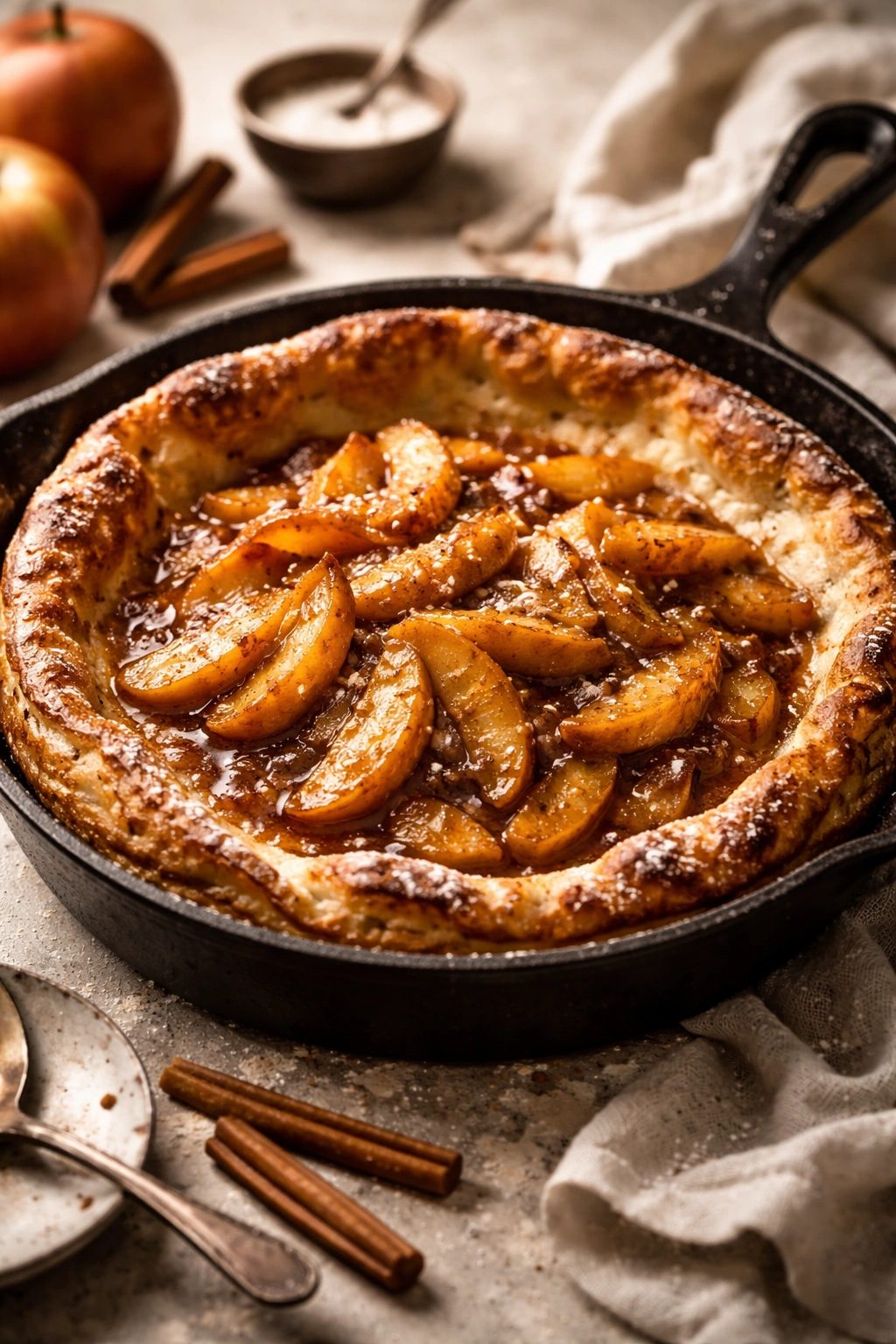
A Dutch baby pancake is one of those desserts that feels fancy and complicated but is genuinely simple — basically a Yorkshire pudding batter that puffs up spectacularly in the oven, then gets topped with spiced apples that you’ve cooked down until they’re jammy and caramelized. It’s breakfast-for-dessert in the best possible way, especially served warm with a dollop of whipped cream or vanilla ice cream on top.
Start by cooking your apples. Slice three large apples (any variety, but Honeycrisp or Fuji work beautifully here because they hold their shape) into thin wedges. Heat three tablespoons of unsalted butter in a large skillet over medium heat. Once it’s foaming, add the apples, three tablespoons of brown sugar, one tablespoon of granulated sugar, three-quarters teaspoon of ground cinnamon, a pinch of ground nutmeg, a pinch of salt, and one tablespoon of lemon juice. Stir gently and cook, stirring occasionally, for fifteen to twenty minutes until the apples are very tender, have released their juices, and the liquid has reduced to a syrupy glaze. The apples should look almost like chunky applesauce by the time you’re done. Set this aside to cool slightly.
For the pancake itself, combine three-quarters cup of all-purpose flour, one tablespoon of granulated sugar, and a quarter teaspoon of salt in a medium bowl. In another bowl, whisk together three large eggs, three-quarters cup of whole milk, two tablespoons of melted unsalted butter, and one teaspoon of vanilla extract until completely smooth. Pour the wet ingredients into the dry ingredients and whisk until you have a smooth batter with no lumps. Let this batter rest at room temperature for thirty minutes — this helps it puff more dramatically in the oven.
While the batter rests, preheat your oven to 425°F (220°C) and place a twelve-inch cast-iron skillet (or large oven-safe skillet) inside to heat for at least ten minutes. Once the skillet is screaming hot, carefully remove it from the oven (use a thick kitchen towel) and add two tablespoons of unsalted butter, swirling it around to coat the entire bottom and sides. Working quickly, pour the batter into the hot skillet — it will sizzle aggressively and start to cook immediately. Return it to the oven and bake for fifteen to eighteen minutes, until the pancake has puffed up dramatically around the edges and the center is just set (it will jiggle slightly if you give the pan a gentle shake, and that’s okay — it will continue cooking from residual heat).
Remove from the oven and immediately top with the spiced apples and any syrup they’ve released. The heat of the pancake will warm them through. Serve immediately while the pancake is still puffed and warm.
Why the resting period matters: The thirty-minute rest allows the flour to fully hydrate, which helps create a lighter, more even crumb and more dramatic puffing in the oven. It’s a small step that makes a visible difference.
Variations and Adaptations
Make this at breakfast time and serve it as a savory-sweet brunch dish — skip the extra sugar in the pancake batter and serve with a squeeze of fresh lemon juice instead of whipped cream. You can prepare the apples up to four hours ahead and reheat them gently on the stovetop just before serving. Swap the cinnamon for cardamom or ground ginger if you want to explore different spice profiles.
4. Skillet Apple Cake with Caramel Drizzle
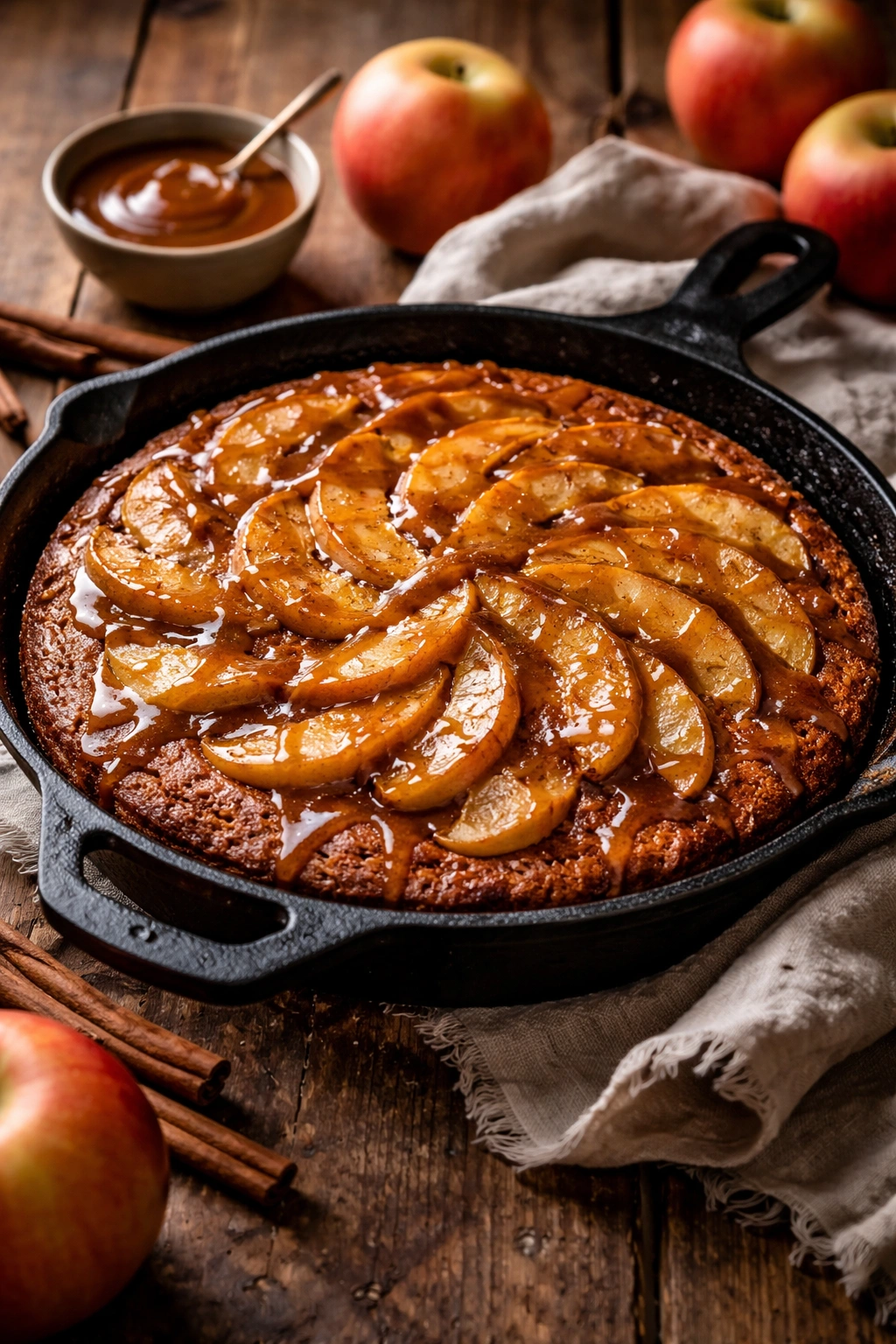
This is the cake you make when you want something that tastes like it took hours but honestly takes less than an hour from start to table. A single layer of moist, spiced cake bakes right in a cast-iron skillet with sautéed apples on the bottom, so when you flip it out onto a plate, you get a beautiful crown of glossy, caramelized apples. It’s almost absurdly simple but looks genuinely impressive.
Start with the apples. Slice four medium apples (Granny Smith and Honeycrisp mix is ideal) into relatively thin, even slices — about a quarter inch. Heat four tablespoons of unsalted butter in a twelve-inch cast-iron skillet over medium-high heat. Once foaming, add three tablespoons of brown sugar and let it melt and caramelize for about a minute, then add the apple slices in a single, overlapping layer. Cook without stirring for three to four minutes until the bottom is golden, then carefully flip sections of the apples and cook another two to three minutes on the other side. The apples should be tender but still holding their shape, and the pan should have a light caramel glaze. Remove from heat.
While the apples cook, make the batter. Whisk together one and a half cups of all-purpose flour, one teaspoon of baking powder, one teaspoon of ground cinnamon, a quarter teaspoon of ground nutmeg, a pinch of ground cloves, and a quarter teaspoon of salt in a bowl. In another bowl, cream together six tablespoons of softened unsalted butter and one cup of granulated sugar until pale and fluffy (about two to three minutes by hand, or one minute with a mixer). Add one large egg and one teaspoon of vanilla extract and beat well. Add half of the flour mixture, then one-third cup of Greek yogurt or sour cream, then the remaining flour mixture, mixing on low speed just until combined. The batter should be thick but pourable.
Pour the batter carefully over the apples in the skillet, spreading it gently to the edges without disturbing the apples underneath. Bake at 350°F (175°C) for twenty-eight to thirty-two minutes, until a toothpick inserted in the center comes out clean and the edges have just started to pull away from the sides of the skillet.
Let the cake cool in the skillet for five minutes, then run a thin knife around the edges to loosen it. Place a serving plate over the skillet and carefully but confidently flip the whole thing over. The apples should tumble out on top. If any stick to the pan, fish them out with a fork and press them back onto the cake.
The yogurt secret: Substituting Greek yogurt or sour cream for some of the liquid in the batter adds moisture and tenderness without making the cake dense. It also adds a subtle tang that balances the sweetness and spice beautifully.
Variations and Adaptations
Make a brown butter version by browning four tablespoons of butter before creaming it with the sugar — the nutty flavor is extraordinary in a cake. Drizzle with a simple glaze (powdered sugar + milk + vanilla) or a caramel sauce if you want to lean into indulgence. Top with whipped cream or vanilla ice cream for serving.
5. Apple Butter Cinnamon Rolls with Cream Cheese Frosting
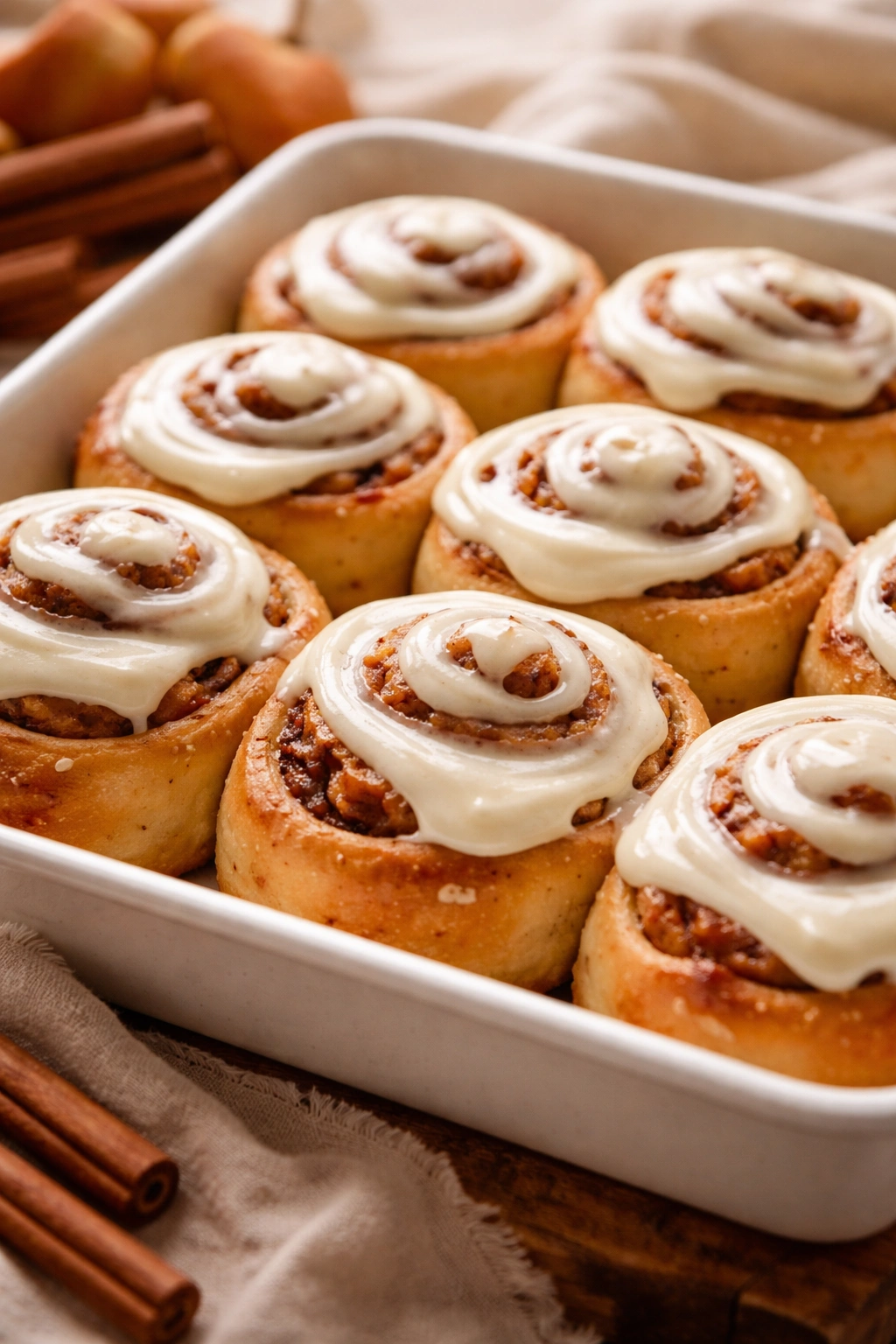
Apple butter cinnamon rolls are basically the indulgent, fall-spiced cousins of regular cinnamon rolls. Instead of the standard cinnamon sugar filling, you’re using thick, concentrated apple butter that’s been simmered with extra spices. The result is rolls that taste like autumn in every bite, with an almost caramel-like depth of apple flavor running through them.
This recipe does require time (the dough needs to rise), but almost none of it is hands-on time. For the dough, combine one cup of whole milk, four tablespoons of unsalted butter, two tablespoons of granulated sugar, and one teaspoon of salt in a small saucepan and heat gently until the butter melts and the mixture is warm to the touch (about 110°F / 43°C). Remove from heat and let cool slightly.
Combine two and a quarter teaspoons of instant yeast and one-quarter cup of warm water in a small bowl and let sit for a minute to bloom. Pour the yeast mixture into a large bowl, add the warm milk mixture, then add one large egg and stir to combine. Add three and a quarter cups of all-purpose flour and stir until a shaggy dough forms. Let it rest for five minutes, then knead (by hand or stand mixer with a dough hook) for five to seven minutes until the dough is smooth, elastic, and just barely tacky. Shape into a ball, place in a lightly buttered bowl, cover, and let rise at room temperature until doubled, about an hour and a half.
While the dough rises, make your filling. Combine one cup of apple butter (store-bought is completely acceptable, or make it ahead), three tablespoons of light brown sugar, one tablespoon of unsalted butter (softened), one teaspoon of ground cinnamon, a quarter teaspoon of ground nutmeg, a pinch of ground cloves, and a pinch of salt in a small bowl and stir until you have a thick paste.
Once the dough has doubled, turn it out onto a lightly floured surface and roll into a thirteen-by-nine-inch rectangle. Spread the apple butter filling evenly across the dough, leaving a half-inch border on all sides. Starting from the long side closest to you, roll the dough tightly into a log. Cut into nine equal rolls (a bench scraper or sharp knife works well here), and arrange them cut-side-up in a buttered nine-by-thirteen-inch baking pan. Cover loosely and let rise until puffy and nearly touching, about forty minutes to an hour.
Preheat your oven to 350°F (175°C). Bake the rolls for twenty-five to thirty minutes, until they’re golden on top but still tender. While they bake, make a quick frosting by beating together four ounces of softened cream cheese, three tablespoons of softened unsalted butter, one cup of powdered sugar, one-half teaspoon of vanilla extract, and a pinch of salt until smooth and fluffy.
Remove the rolls from the oven and let them cool for just five minutes — still warm but not piping hot — then spread or drizzle the frosting over the top. It will partially melt into the warm rolls, which is exactly what you want.
The apple butter shortcut: Don’t feel obligated to make apple butter from scratch unless you’re planning to anyway. Quality store-bought apple butter gives you the same deep, concentrated flavor without the hours of simmering. Just make sure it’s not the sweetened, spiced variety if you’re adding your own spices.
Variations and Adaptations
If you’re short on time, use a no-rise dough recipe or even pizza dough as a base — the apple butter filling will carry the flavor and the difference will be minimal. Make these rolls the night before, refrigerate overnight, then bake in the morning. They’ll take slightly longer to bake (about thirty-five minutes) since they’re cold, but the result is a convenient breakfast. Swap the cream cheese frosting for a simple maple glaze if you prefer less sweetness.
6. Slow Cooker Spiced Apple Compote with Toasted Almond Granola
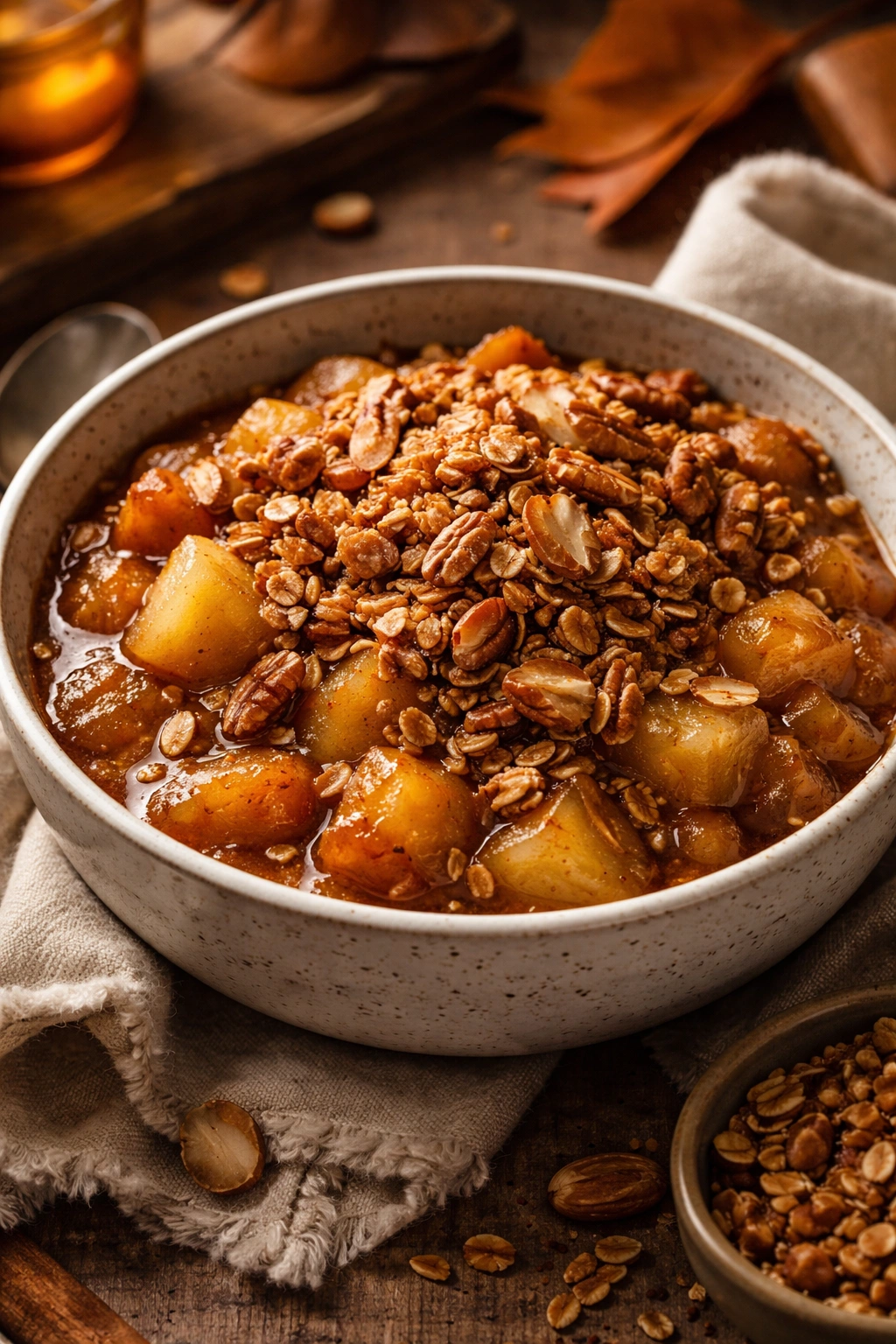
Sometimes cozy means simplicity. This apple compote is basically a back-of-the-stove approach to apple butter — you layer sliced apples with sugar and spices in a slow cooker, let it cook on low for six to eight hours, then mash it to whatever consistency you prefer. Serve it warm with a crunchy, homemade almond granola on top and you’ve got a dessert that tastes far more complicated than it actually is.
For the compote, slice about four pounds of mixed apples (a combination of tart and sweet is ideal) into roughly quarter-inch pieces. Don’t bother peeling them — the skins will soften completely during cooking and add a lovely rustic texture. Toss them with one-third cup of granulated sugar, a quarter cup of light brown sugar, two tablespoons of lemon juice, one and a half teaspoons of ground cinnamon, a quarter teaspoon of ground nutmeg, a pinch of ground cloves, and a quarter teaspoon of salt. Transfer to a slow cooker and cook on low for six to eight hours. The apples should be completely soft and starting to break down when done.
Stir the mixture once or twice during cooking if you think of it, but it’s not essential. After the time is up, mash the apples with a potato masher to your preferred consistency — you can leave them chunky for a rougher texture, or mash them quite smooth for more of a sauce consistency. Most people prefer something in between.
For the granola, combine one cup of old-fashioned rolled oats, three-quarters cup of sliced almonds, one-third cup of coconut oil (or melted unsalted butter), one-quarter cup of raw honey (or pure maple syrup), one-quarter cup of light brown sugar, one teaspoon of vanilla extract, three-quarters teaspoon of ground cinnamon, a pinch of salt, and one tablespoon of apple cider vinegar in a bowl. Stir until every oat and almond is coated. Spread onto a baking sheet in an even layer and bake at 325°F (165°C) for twenty to twenty-five minutes, stirring halfway through, until deeply golden and fragrant. Let cool completely on the pan — it will crisp up as it cools.
Serve the warm compote topped with a generous handful of the granola and a dollop of whipped cream or Greek yogurt.
Why apple cider vinegar in granola: A small splash of apple cider vinegar adds a subtle tang that prevents the granola from tasting one-dimensional and sweet. It’s completely undetectable as “vinegar” but adds complexity that makes you want another bite.
Variations and Adaptations
Make the granola in a regular oven instead of waiting for the slow cooker if you want immediate gratification. The compote also freezes beautifully for up to three months, so you can make a double batch and save half for a simple dessert on a busy evening. Swap the almonds for pecans or walnuts, or use a combination of nuts and seeds.
7. Apple Fritter Beignets with Spiced Sugar
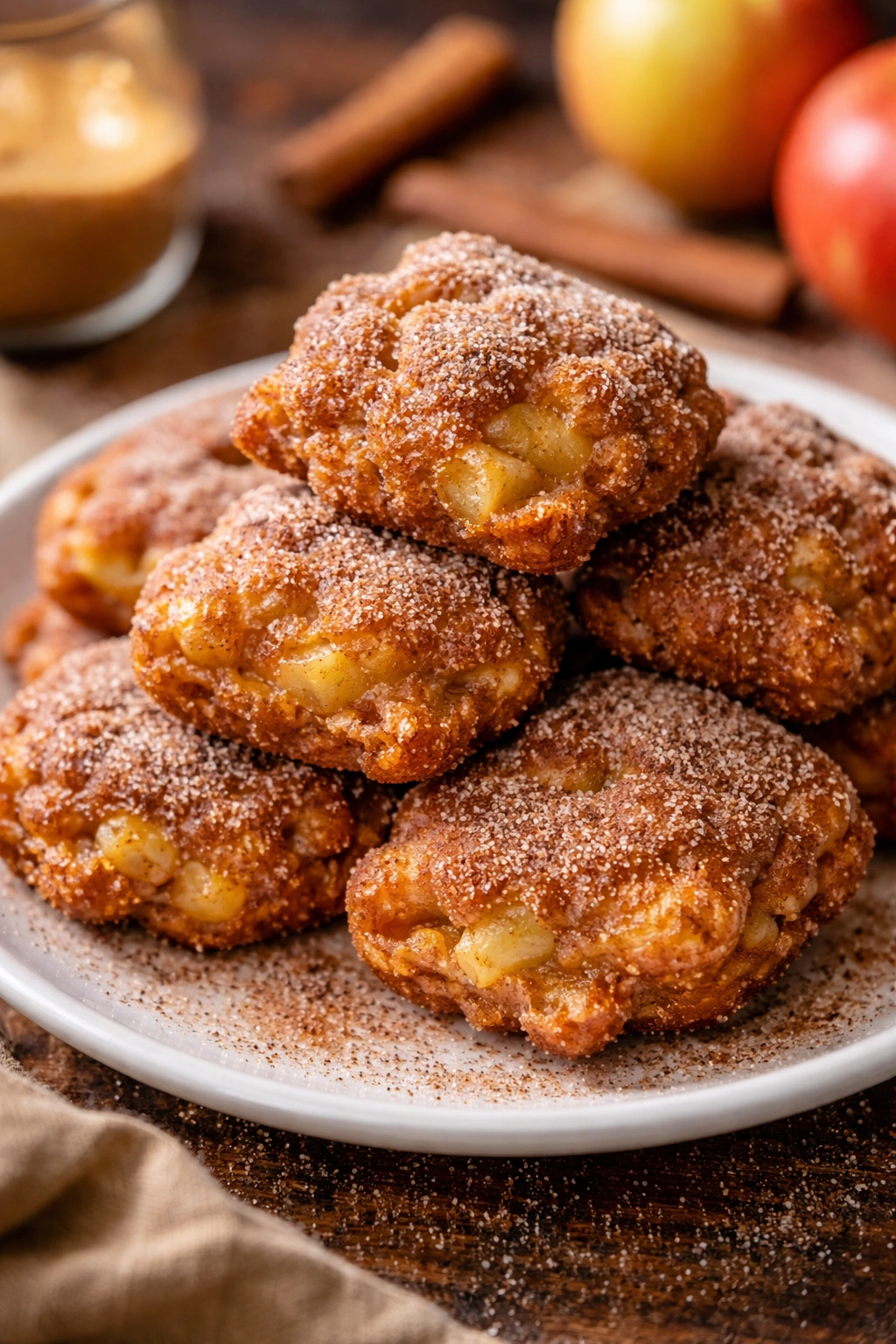
These are like apple pie crossed with a donut — thin-sliced apples bound together with a delicate fried batter, then dusted while hot with cinnamon sugar. They’re indulgent and crispy on the outside, tender apple on the inside, and they taste incredible served warm with a simple vanilla or dulce de leche dipping sauce.
Start with the batter. Whisk together one cup of all-purpose flour, one tablespoon of granulated sugar, one and a half teaspoons of baking powder, one teaspoon of ground cinnamon, a quarter teaspoon of ground nutmeg, and a quarter teaspoon of salt in a large bowl. In another bowl, whisk together one large egg, one-third cup of whole milk, two tablespoons of melted unsalted butter, and one-half teaspoon of vanilla extract. Pour the wet ingredients into the dry and stir just until combined — the batter should be lumpy, not smooth. A few streaks of flour are fine.
Peel and slice two large apples into very thin slices — we’re talking paper-thin here, no thicker than one-eighth of an inch. Toss the apple slices gently into the batter and fold to coat evenly. The goal is for each beignet to have multiple layers of apples bound together by the batter.
Fill a large, heavy-bottomed pot with three inches of neutral oil (vegetable, peanut, or canola oil works well) and heat to 350°F (175°C). Use a candy or deep-fry thermometer to track the temperature accurately — too cool and they’ll be greasy, too hot and they’ll burn outside before cooking through.
Working in batches of three to four, gently lower golf-ball-sized spoonfuls of the apple-batter mixture into the hot oil using an ice cream scoop or two spoons. They’ll sink slightly then float to the surface. Cook for about two minutes until the bottom is golden, then carefully flip and cook another one to two minutes on the other side until evenly golden and cooked through. Use a slotted spoon to transfer them to a paper-towel-lined plate.
While they’re still hot, toss them in a mixture of one-third cup of granulated sugar, one tablespoon of light brown sugar, and one and a half teaspoons of ground cinnamon.
Temperature is everything: Invest in a candy thermometer if you don’t have one. The difference between 325°F and 350°F is massive when it comes to fried foods — the right temperature gives you a golden, crispy exterior with a cooked-through interior and no greasiness.
Variations and Adaptations
Make a dulce de leche dipping sauce by gently warming a can of sweetened condensed milk in a water bath, but it’s frankly not necessary — these are perfect on their own. You can prepare the batter a couple hours ahead and hold it at room temperature, adding the apples just before frying. If you want to avoid deep frying, make these as a baked Apple Cinnamon Cake instead using the same batter and baked apple mixture approach.
8. Apple Bread Pudding with Bourbon Caramel Sauce
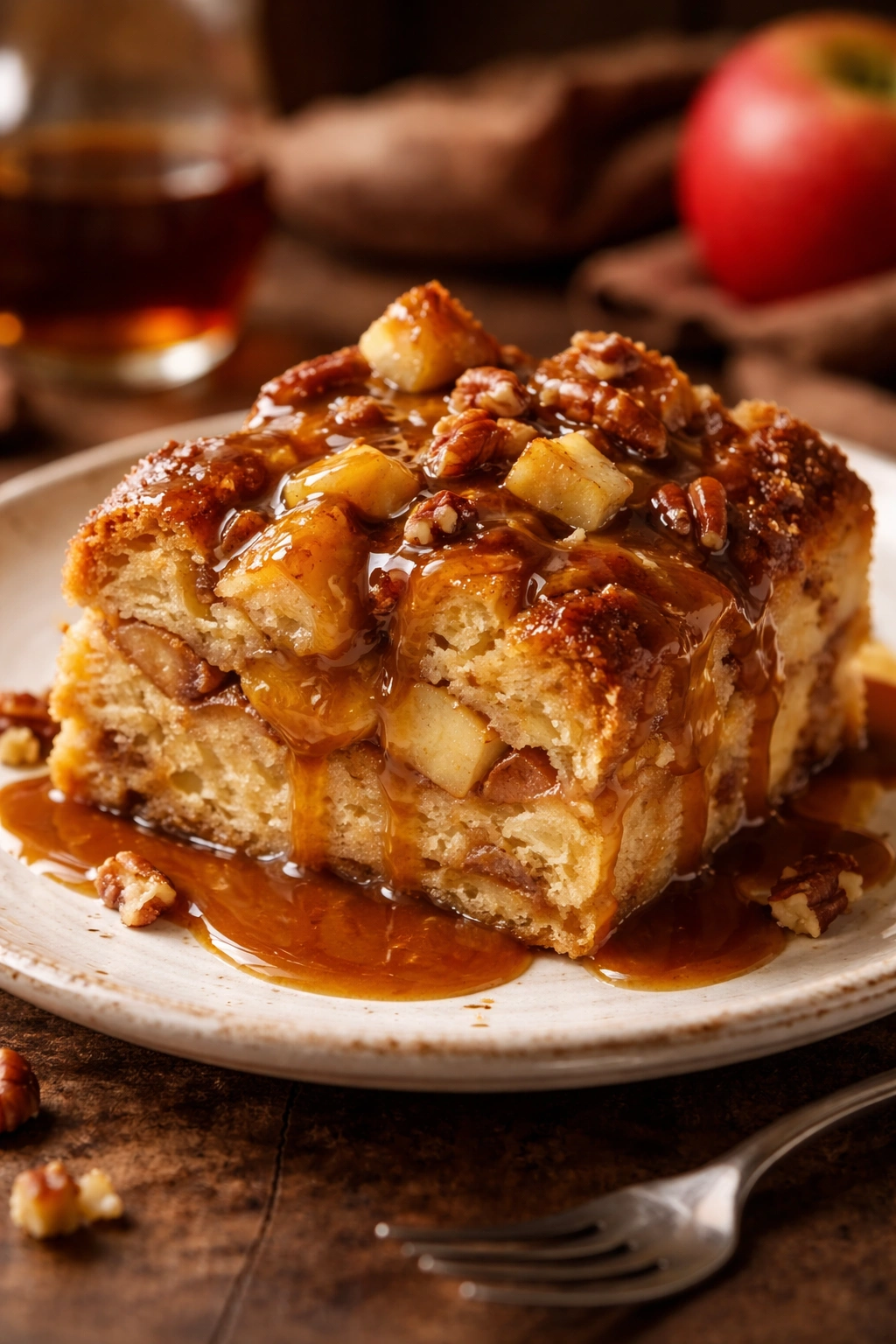
Bread pudding might sound fancy, but it’s one of the most forgiving desserts in existence. Basically, you soak chunks of bread in a spiced custard, bake it until it’s set but still tender, then drizzle it with a glossy caramel sauce. It’s comfort food elevated to dessert status, and it’s perfect for serving warm with vanilla ice cream melting on top.
Cube about eight ounces of a sturdy bread (brioche, challah, or a good-quality white bread work beautifully) into roughly one-inch pieces. You should have about four loosely packed cups. Spread the cubes on a baking sheet and toast them at 300°F (150°C) for about ten minutes, stirring halfway, until they’re starting to dry out slightly but not yet browning. This step prevents the pudding from becoming mushy.
Toss three medium apples (peeled, cored, and cut into half-inch cubes) with one tablespoon of lemon juice in a small bowl. Prepare a nine-by-thirteen-inch baking dish by buttering it generously, then spread the toasted bread cubes and diced apples evenly across the bottom.
For the custard, whisk together three large eggs, one cup of heavy cream, one cup of whole milk, one-third cup of granulated sugar, one teaspoon of vanilla extract, three-quarters teaspoon of ground cinnamon, a quarter teaspoon of ground nutmeg, a pinch of ground cloves, and a quarter teaspoon of salt in a large bowl. Pour this mixture evenly over the bread and apples, pressing gently so all the bread gets some contact with the custard. Let it sit for twenty minutes, pressing down occasionally, so the bread absorbs the liquid.
Bake at 350°F (175°C) for forty to forty-five minutes, until the top is golden and the center is just set (it should jiggle slightly if you give the pan a gentle shake — it will continue cooking from residual heat). Remove from the oven and let rest for ten minutes before serving.
While the pudding bakes, make the caramel sauce. Melt six tablespoons of unsalted butter in a heavy-bottomed saucepan over medium-high heat. Once melted, add one cup of light brown sugar and stir constantly until the mixture comes to a gentle boil. Cook, stirring occasionally, for three to four minutes until the sauce smells deeply caramelized and turns a shade darker. Remove from heat and carefully add one-half cup of heavy cream — it will bubble up, so go slowly. Stir in one tablespoon of bourbon (or skip it entirely if you prefer), one-half teaspoon of vanilla extract, and a tiny pinch of salt. Let cool for a few minutes until it’s a pourable consistency.
Pour the warm caramel sauce generously over each serving of bread pudding.
Why you toast the bread: Toasting drives out moisture so the bread maintains structure and doesn’t turn into mush when soaked in custard. It’s a small step that makes a huge difference in the final texture.
Variations and Adaptations
Make this ahead and reheat gently in a 300°F oven for about ten minutes before serving — it actually tastes better the next day as the flavors meld. Skip the bourbon caramel and drizzle with a simple maple glaze if you prefer. You can substitute the eggs with a mixture of two tablespoons of cornstarch mixed with two tablespoons of water plus one tablespoon of aquafaba (chickpea brine) per egg if you need to avoid eggs.
Final Thoughts
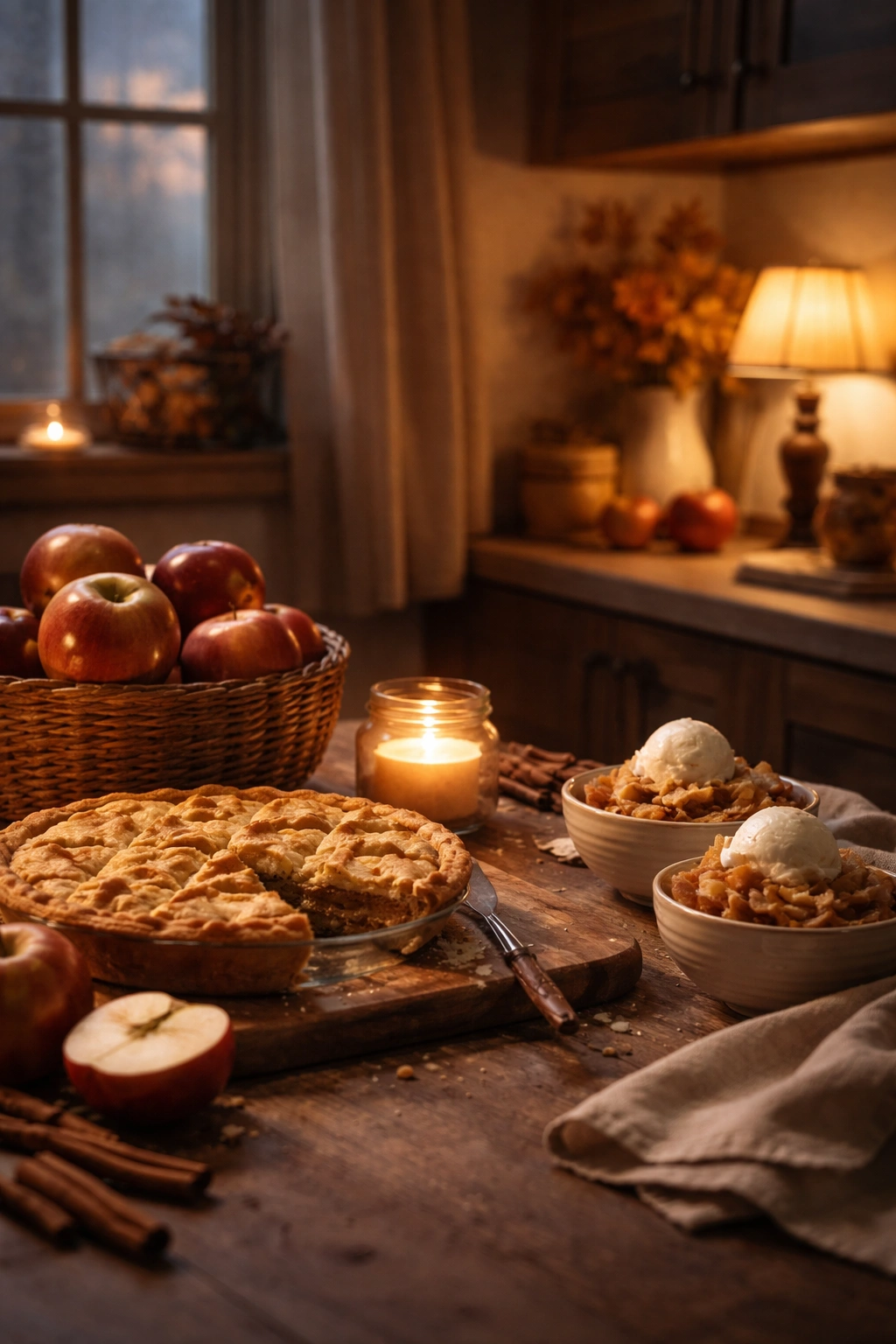
Cozy isn’t really about the recipe — it’s about the choice to slow down and give yourself permission to make something that warms you from the inside. Each of these eight approaches to apples offers a different flavor and texture, but they all share that same quality: they make your kitchen smell like comfort, they reward patience and presence, and they taste best shared with someone (even if that someone is just you, on an evening when you need exactly this kind of gentle pleasure).
The beauty of these recipes is that none of them requires fancy equipment or hard-to-find ingredients. You’re working with apples (the most reliable fall fruit), basic pantry staples, and techniques that become easier every time you practice them. Start with whichever one calls to you most — the one whose description made you crave it immediately. That instinct is your guide.
And remember: a slightly imperfect crisp or a cinnamon roll that’s not perfectly shaped tastes exactly as good as a picture-perfect version. The goal isn’t Instagram-worthiness. It’s that moment when you pull something warm from the oven and the entire evening suddenly feels intentional, nourished, and genuinely cozy.
