



It’s 5 PM on a Wednesday. You’re tired, hungry, and staring at a completely empty kitchen mentally. The last thing you want to do is spend an hour cooking, but you’re also tired of takeout and want to eat something that actually nourishes your body instead of leaving you feeling bloated and regretful. The good news? You can absolutely have a delicious, satisfying dinner on the table in 30 minutes or less, and keep it under 500 calories — without eating plain chicken breast and steamed broccoli again.
The real secret isn’t complicated recipes or fancy ingredients. It’s about understanding which dishes naturally come together quickly, knowing which proteins cook fastest, and building a smart pantry so you’re never starting from scratch. When you work with the grain of how food actually cooks instead of against it, speed and health stop being competing goals. They work together.
I’ve made thousands of quick dinners, and I’ve figured out exactly what works when the clock is ticking. These aren’t sad, deprivation meals. They’re the kind of dinners that make you feel genuinely satisfied, taste genuinely good, and somehow manage to be healthy without feeling like punishment. Let me show you how.
Why Quick, Low-Calorie Dinners Don’t Have to Taste Like Compromise
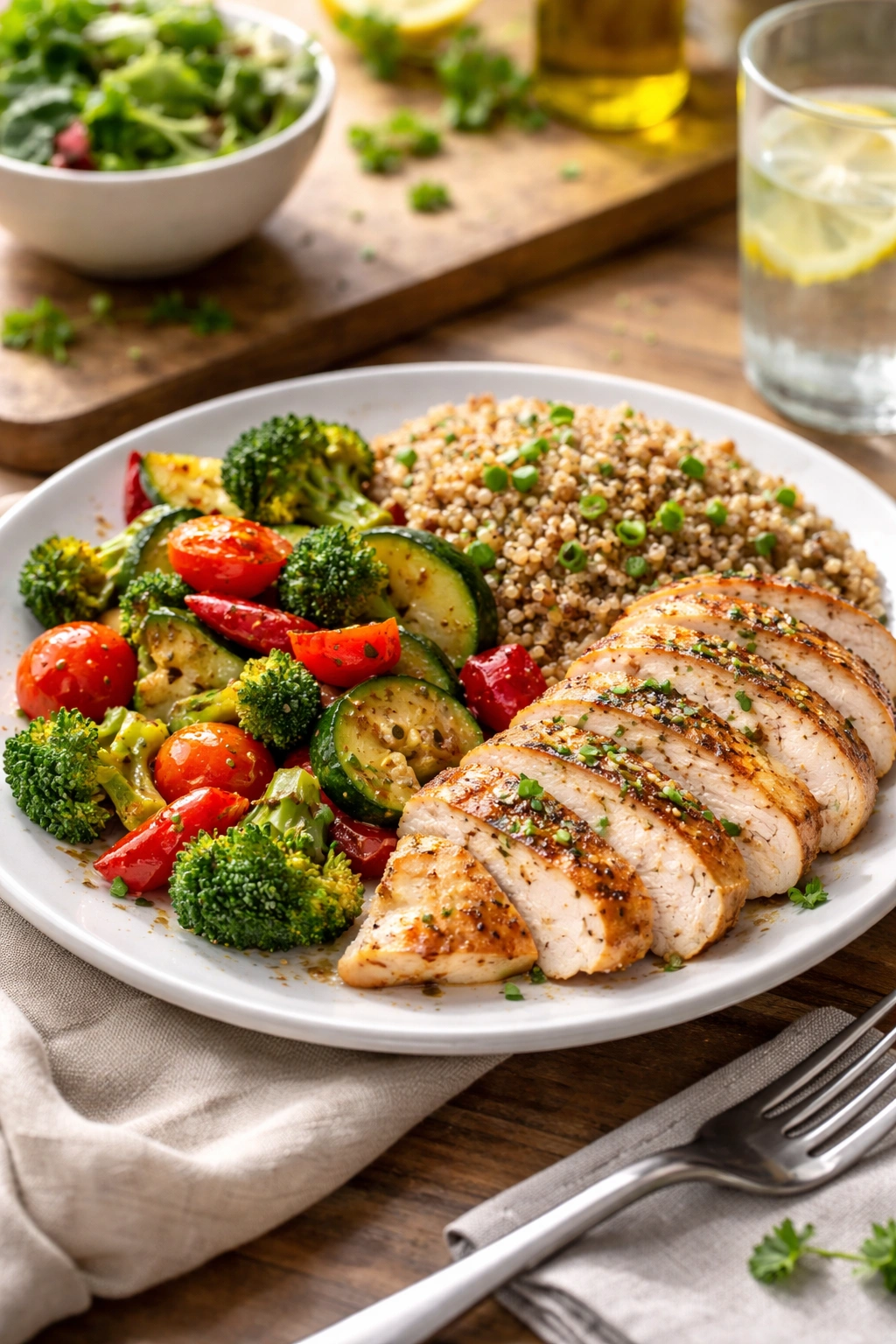
Most people assume that “healthy” and “quick” can’t happen at the same time, especially when you’re aiming for a specific calorie target. They imagine sad salads or rubbery microwaved meals. The reality is almost the opposite. When you skip heavy sauces, unnecessary fats, and oversized portions, food actually tastes better because you get more of the actual flavor rather than a thick coating of oil or cream.
Quick dinners force you to think simply. Simple seasoning. Simple cooking methods. Simple plating. Somehow, that simplicity is exactly what makes food taste alive again — you taste the vegetables, the protein, the individual spices — rather than one muted, heavy blob on the plate.
The 500-calorie target also changes the equation in your favor. That’s not starvation; that’s a genuinely satisfying dinner. It just means no cream sauces, no deep-fried components, and no oversized portions. When you nail the seasonings and cooking technique, portion size stops feeling like deprivation and starts feeling like abundance.
Building Your Quick Dinner Pantry
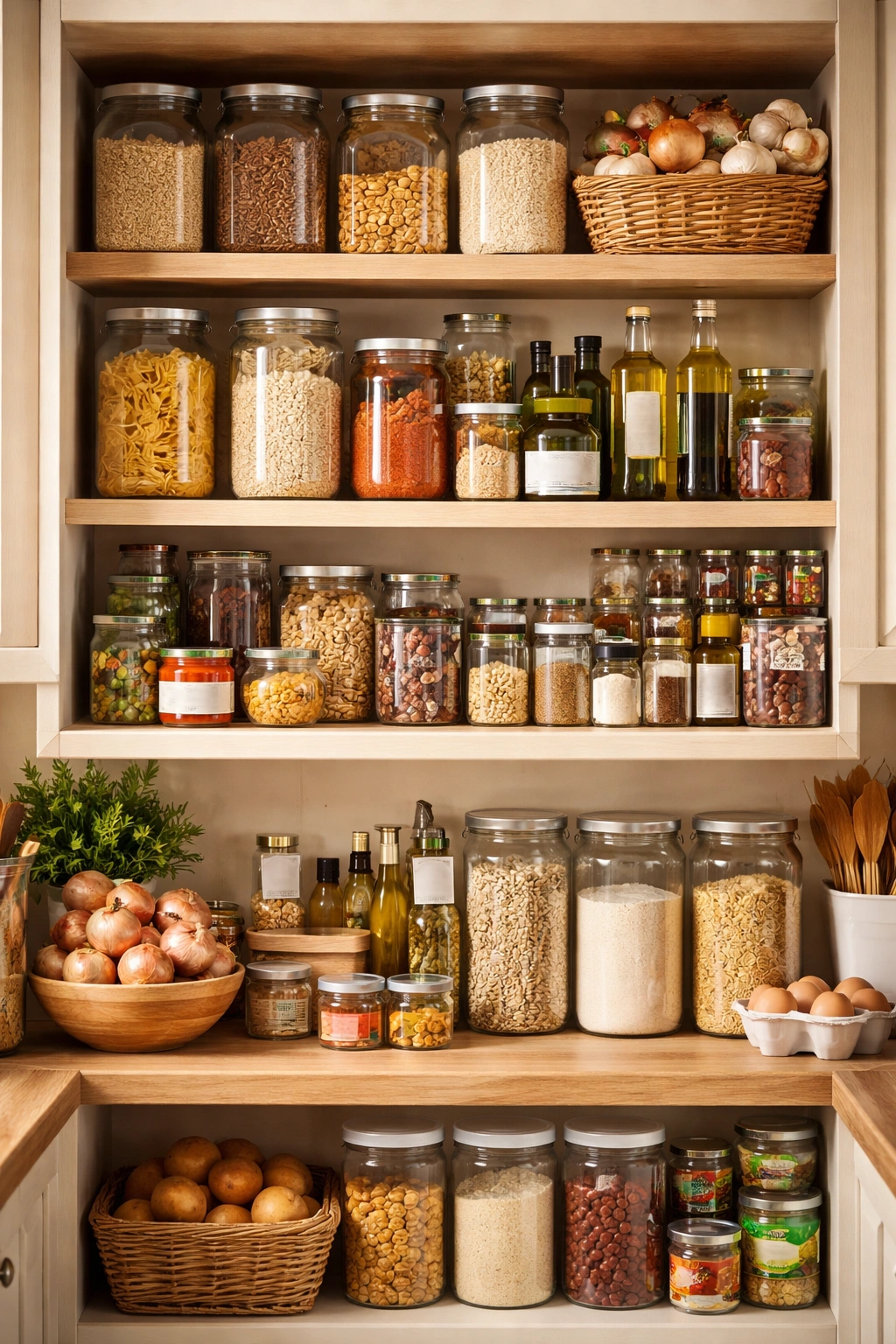
Speed comes from having the right things already on hand. The moment you realize you’re missing a key ingredient is the moment your 30-minute dinner plan falls apart. What you keep in your kitchen is more important than how you cook.
Your freezer should always have: boneless, skinless chicken breasts, shrimp, lean ground turkey, and frozen broccoli or mixed vegetables. These are the foundation of fast meals. Chicken defrosts quickly under running water if you plan ahead even slightly; shrimp thaws in minutes. Frozen vegetables are already prepped and cook in minutes without the waste of fresh vegetables you might not get to in time.
Your pantry needs: olive oil spray (this changes your calorie math dramatically), low-sodium broth, canned tomatoes, coconut milk (light is crucial for calories), garlic, onions, soy sauce, vinegars (rice, balsamic, white), hot sauce, dried herbs, and spices like cumin, smoked paprika, and Italian seasoning. Rice, pasta, and quinoa are your carb options, but dried noodles (especially thin varieties) cook the fastest.
Your fridge should always have: eggs, fresh lemon and lime, fresh herbs if possible (or dried cilantro, parsley), and a few fresh vegetables that store well — carrots, bell peppers, zucchini, and snap peas. These last longer than delicate salad greens and cook quickly when you need them.
Having these things in your kitchen means you can make a genuinely good dinner in the time it takes to get takeout delivered, and you’ll actually know what’s going into your body.
Essential Equipment That Actually Speeds You Up
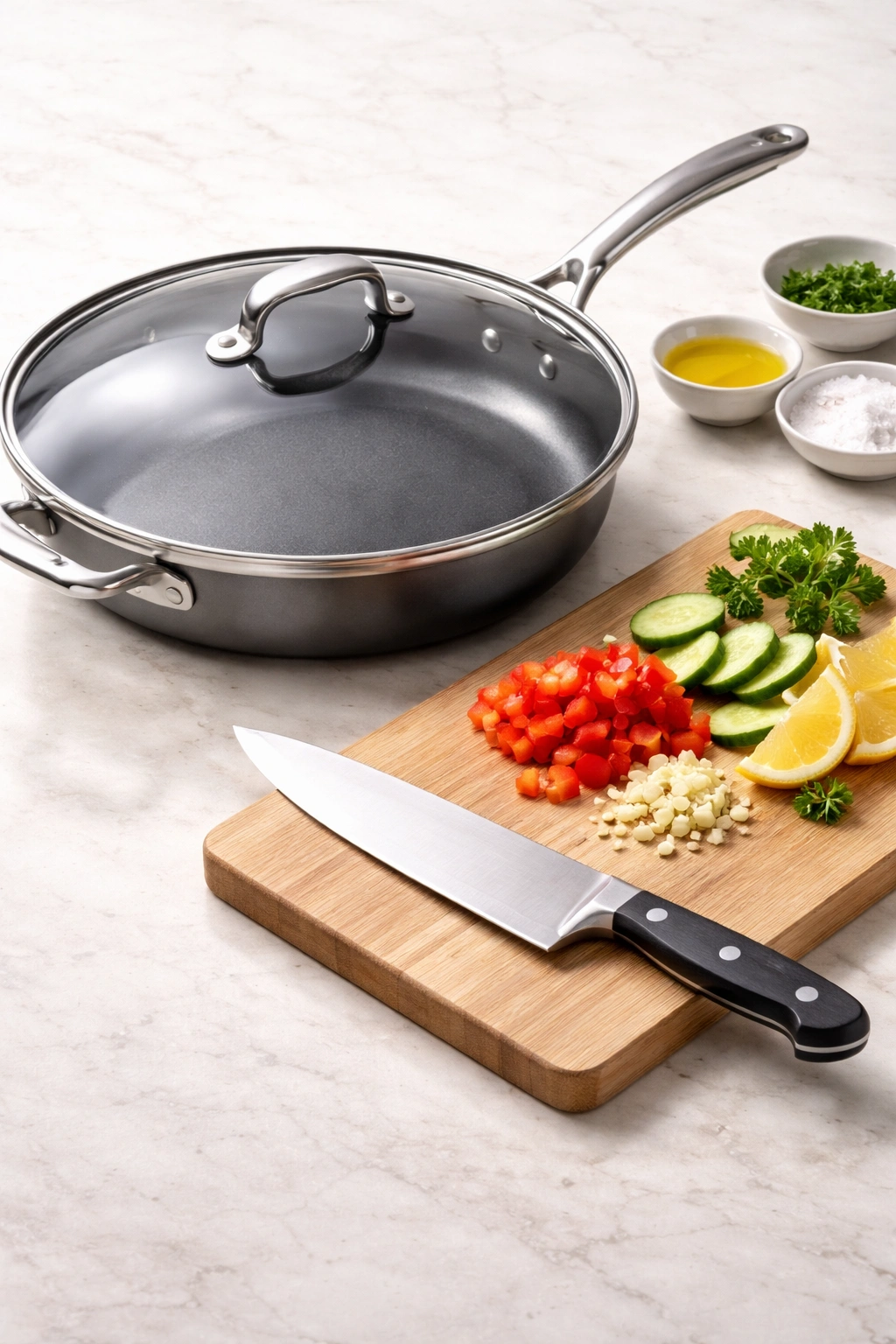
Not every kitchen tool is necessary, but a few specific ones make the difference between a frantic 35-minute dinner and a relaxed 28-minute one.
A large skillet with a lid is your MVP. Most quick dinners happen in a single pan. You sear, you add liquid, you cover it and walk away while it cooks itself. One pan means less cleanup, faster cooking, and less babysitting. Cast iron or stainless steel both work; non-stick is fine too but not essential.
A sharp chef’s knife matters for speed. Chopping is the slowest part of quick cooking. A dull knife turns a 5-minute prep into a 15-minute ordeal. You don’t need expensive, but you need sharp. One good knife beats a full block of mediocre ones.
An instant-read thermometer sounds silly but saves you from overcooking. You stop guessing and start knowing exactly when chicken is safe to eat — which means you can cook it faster without drying it out or leaving it undercooked.
Everything else is nice-to-have, not essential. A good blender helps if you want to make creamy sauces without cream. A food processor speeds up chopping. But honestly, a sharp knife and a big skillet get you 90% of the way there.
The 30-Minute Math: Planning Backwards From Serving Time
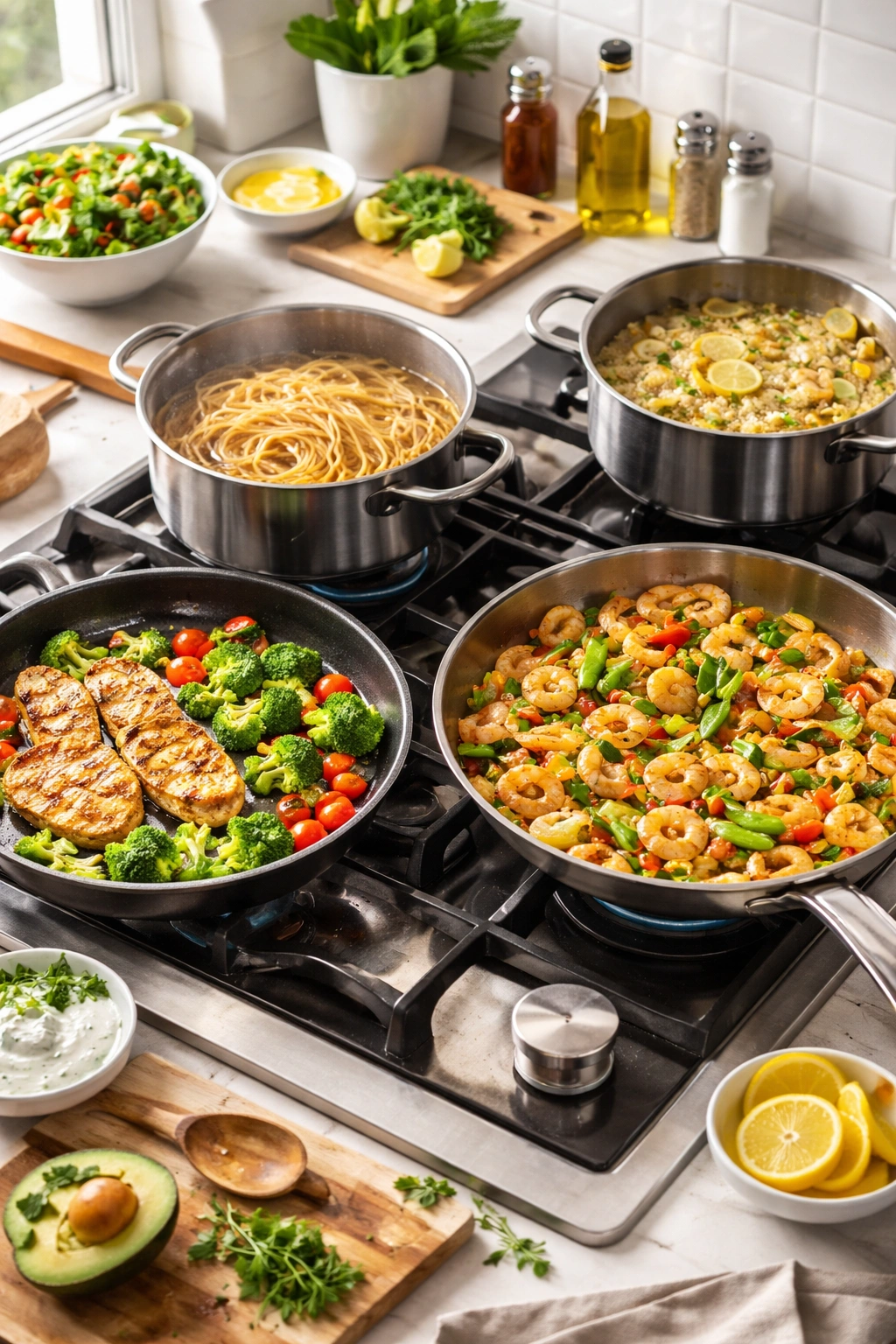
Here’s the time-management secret that separates fast dinners from panicked ones: work backwards. Decide what time you want to eat. Now subtract 30 minutes. That’s when you need to start cooking.
Everything that cooks slower gets started first. If you’re cooking rice, that goes on first because it takes 18 minutes. If you’re making pasta, that goes on at about the 20-minute mark. Proteins and vegetables that cook quickly — shrimp, thin chicken, or chopped vegetables — go in later so they don’t overcook while you’re waiting for everything else.
The best quick dinners have components that cook simultaneously in different spots on your stove or oven. Your rice is simmering in a pot. Your protein is cooking in a skillet. Your vegetables are either roasting quickly under the broiler or sautéing in a separate pan. Everything finishes at almost the same time, and assembly takes 90 seconds.
This requires some mental mapping, but after you’ve done it a few times, it becomes automatic. The key is: never wait for anything to finish before starting the next component.
Sheet Pan Teriyaki Chicken With Snap Peas and Ginger Rice
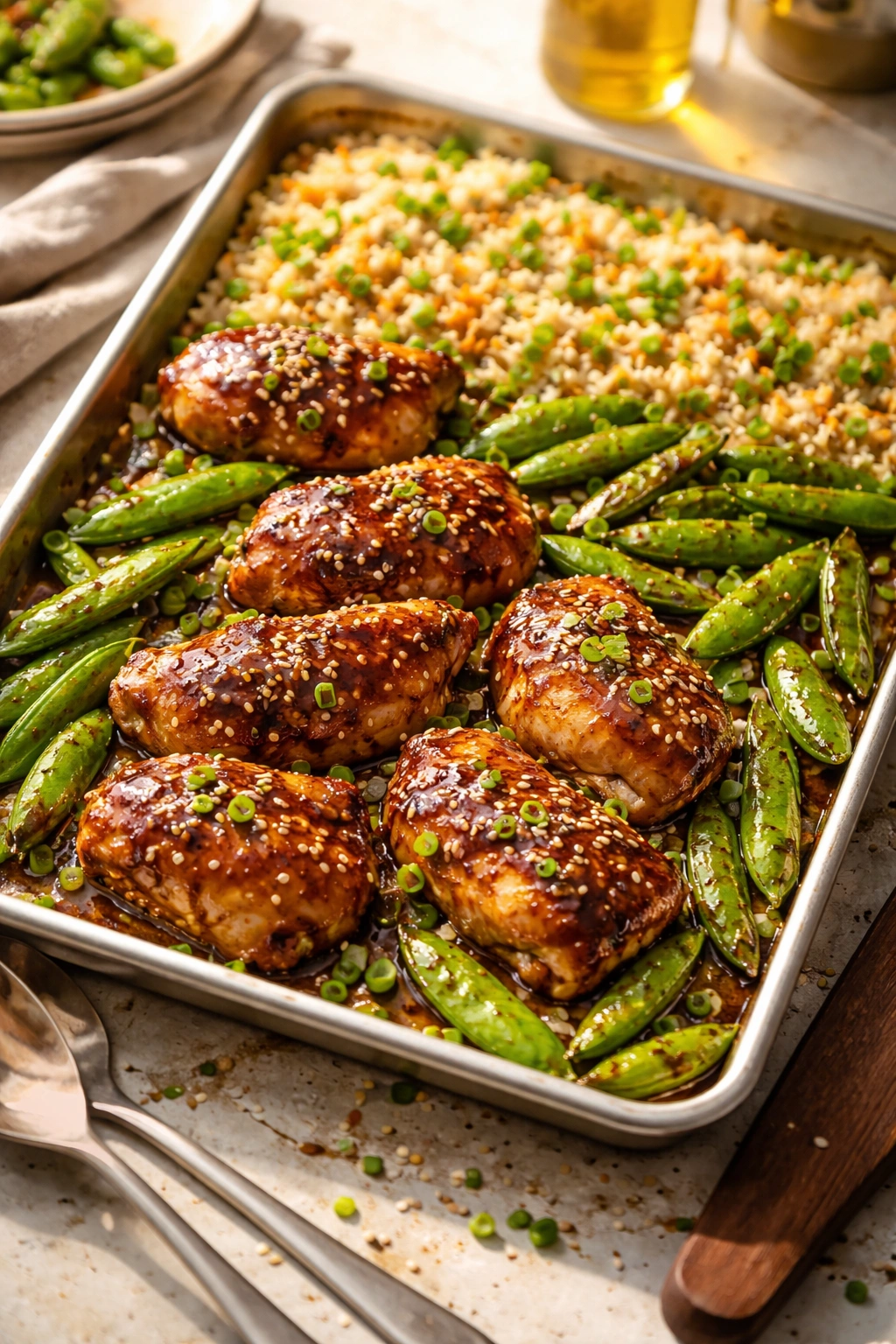
Teriyaki is fast because the sauce cooks down quickly, and everything — protein, vegetables, and even the rice — can come together with intentional timing. The snap peas stay crispy, the chicken stays juicy, and ginger gives the rice enough personality that it doesn’t feel like diet food.
Start your rice first. Use a 2:1 water-to-rice ratio with a pinch of salt, bring it to a boil, then cover and reduce heat to low. While that’s going, slice your chicken breast thin — about a quarter-inch thick. This is critical for speed; thin chicken cooks through in 4-5 minutes instead of 12.
Mix your teriyaki sauce: 3 tablespoons low-sodium soy sauce, 1 tablespoon rice vinegar, 1 teaspoon fresh ginger (grated), 1 teaspoon honey, and a quarter teaspoon of red pepper flakes. Set it aside.
On a sheet pan, toss chicken pieces with a light spray of olive oil and a pinch of salt and pepper. Spread them in a single layer. Roast at 425°F for 4 minutes until nearly cooked through. Pull the pan out, push the chicken to the sides, and add your snap peas (3 cups) tossed lightly in a bit of soy sauce. Pour the teriyaki sauce over everything. Roast for another 3 minutes until the sauce is bubbling and the snap peas are tender-crisp.
When the rice finishes (around 18-20 minutes total), fluff it with a fork and stir in a half teaspoon of grated ginger and a teaspoon of sesame oil.
Plate the rice, top with the chicken and snap peas, and drizzle any pan sauce over everything. Calories: 480 | Protein: 38g | Carbs: 48g | Fat: 12g
15-Minute Shrimp and Zucchini With Garlic Butter Sauce
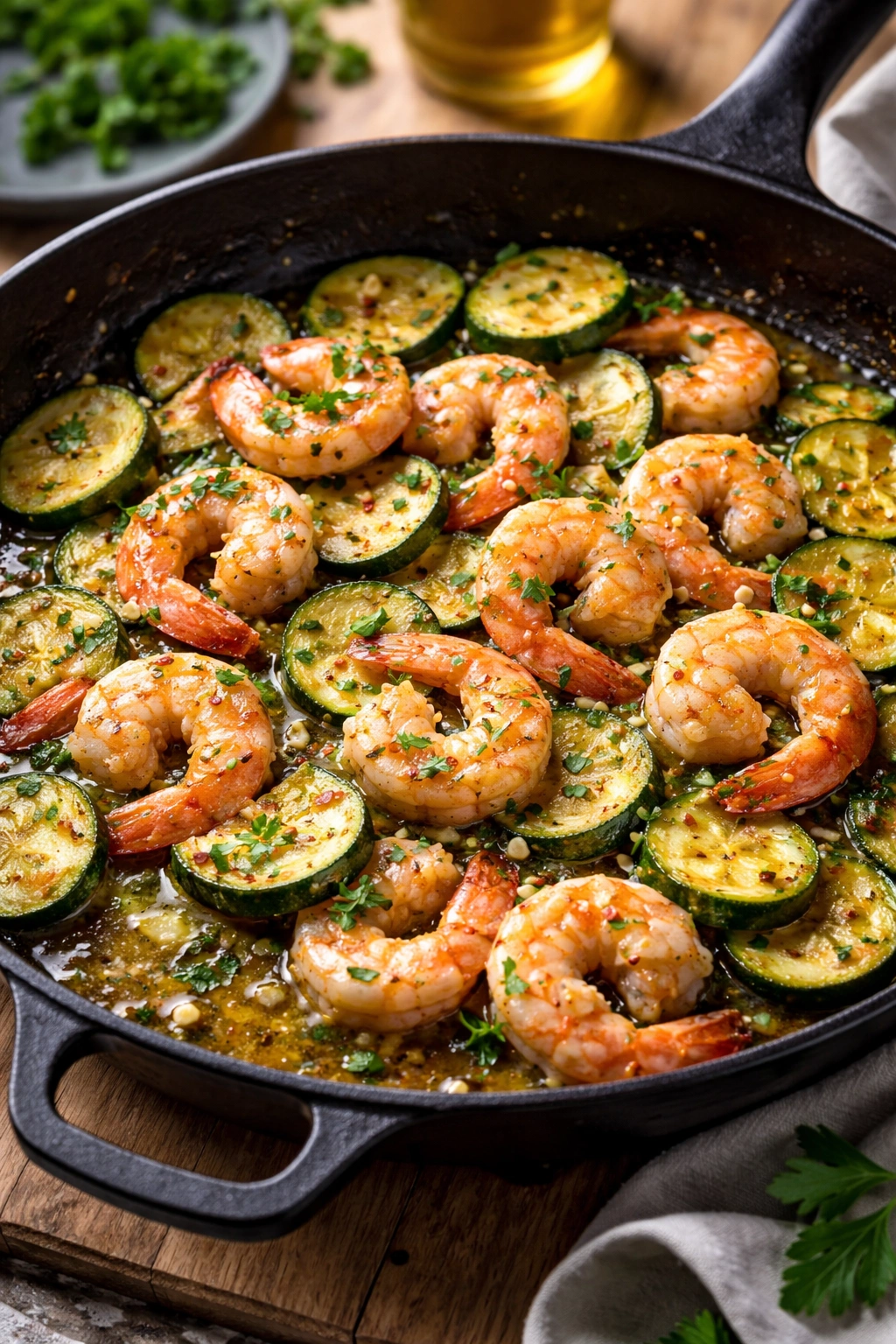
This is speed incarnate. Shrimp goes from frozen to cooked in about 5 minutes once heat hits it. Zucchini is soft within seconds. The whole thing is done before your rice finishes, which is why this pairs perfectly with quick-cooking grains or just a cauliflower rice base if you want even fewer calories.
Get your rice or grain of choice started first (or heat 2 cups of cauliflower rice in a microwave — 3 minutes). While that’s happening, slice a medium zucchini into half-inch rounds or half-moons. Mince 4 cloves of fresh garlic. Have 12 ounces of shrimp (thawed if frozen) ready and pat them dry — this is important for quick cooking.
In a large skillet over medium-high heat, add 1 tablespoon of butter and a light spray of olive oil. Once the butter foams, add the garlic and cook for literally 15 seconds — you want it fragrant, not brown. Add the zucchini rounds and cook for 2 minutes, stirring occasionally, until they start to soften.
Push the zucchini to the sides of the pan. Add shrimp in a single layer. Don’t move them for 2 minutes — you want a quick sear on the first side. Flip them and cook for another 90 seconds. They should be pink and firm.
Add the juice of half a lemon, a quarter teaspoon of salt, and black pepper. Toss everything together. The shrimp will release its liquid, creating a quick pan sauce.
Serve over your rice or cauliflower rice. If you want a bit more substance, add a handful of spinach directly to the warm rice — it’ll wilt from the heat. Calories: 290 with cauliflower rice | Protein: 32g | Carbs: 12g | Fat: 9g (If you use regular rice, add about 150 calories and 35g carbs.)
Spiced Ground Turkey Taco Lettuce Wraps
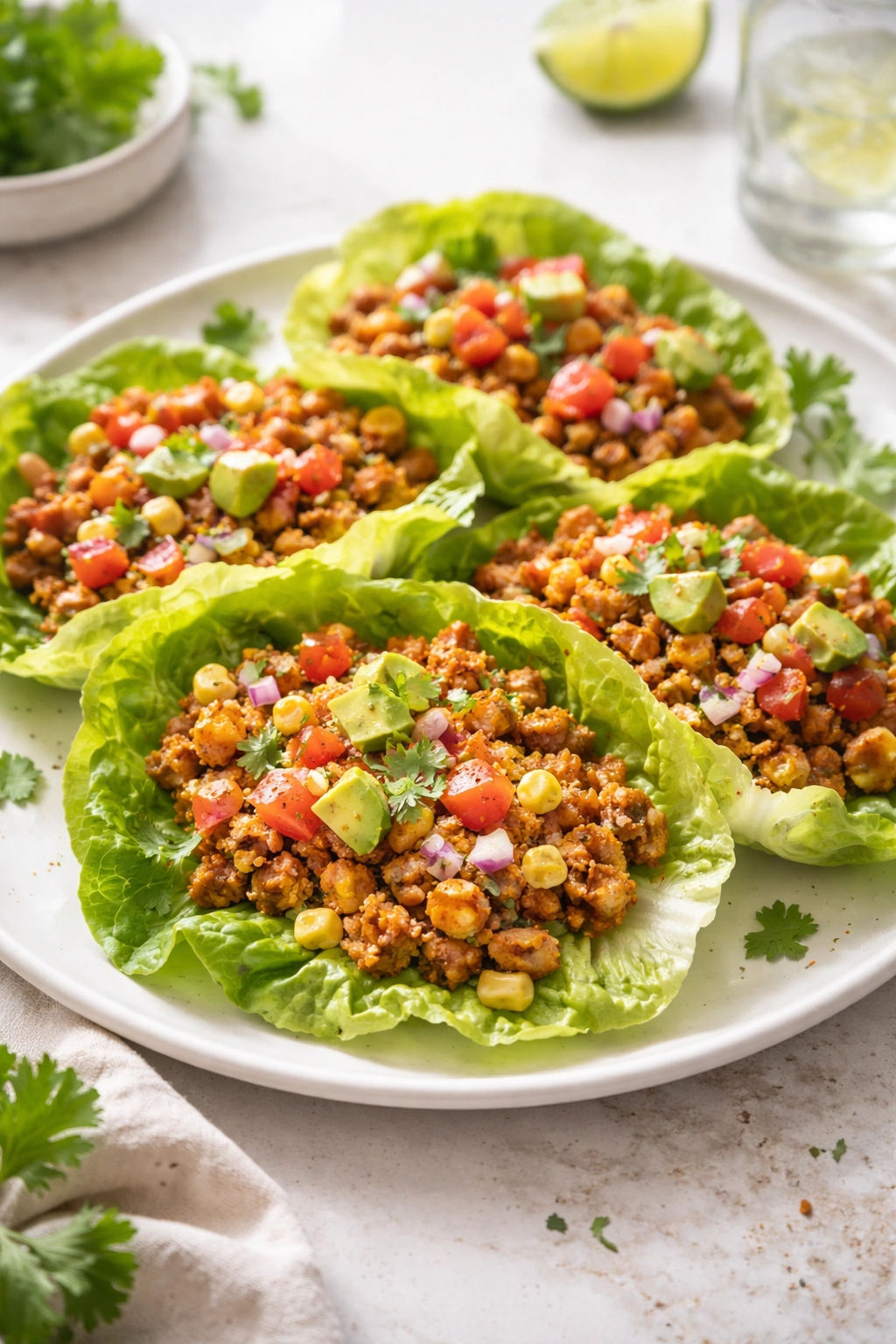
Tacos are fast because ground meat cooks through in about 8 minutes. Lettuce wraps cut out the carbs and cooking time compared to tortillas. If you have lettuce, a few spices, and ground turkey, you have a complete dinner ready in 25 minutes.
Brown a pound of lean ground turkey in a large skillet over medium-high heat. Break it up as it cooks so it’s evenly crumbled. Once it’s no longer pink (about 7-8 minutes), add your spices: 1 tablespoon chili powder, 1 teaspoon cumin, 1 teaspoon smoked paprika, half a teaspoon of garlic powder, a quarter teaspoon of cayenne, a half teaspoon of salt, and several grinds of black pepper.
Add 3-4 tablespoons of water and let it simmer for 2 minutes so the spices bloom and the liquid reduces a bit.
While that’s happening, wash a head of butter lettuce and separate the leaves. Chop a quarter of a red onion finely. Have fresh cilantro ready if you have it. Dice a tomato or grab a jar of salsa.
Spoon the seasoned turkey into lettuce leaves. Top with diced onion, tomato, salsa, cilantro, and a squeeze of lime. Serve with a side of black beans (canned are fine — just rinse them) and a lime wedge.
Calories: 380 with beans | Protein: 42g | Carbs: 18g | Fat: 14g This is filling, high in protein, and absolutely comes together in 25 minutes including cleanup.
Baked White Fish With Roasted Broccoli and Garlic
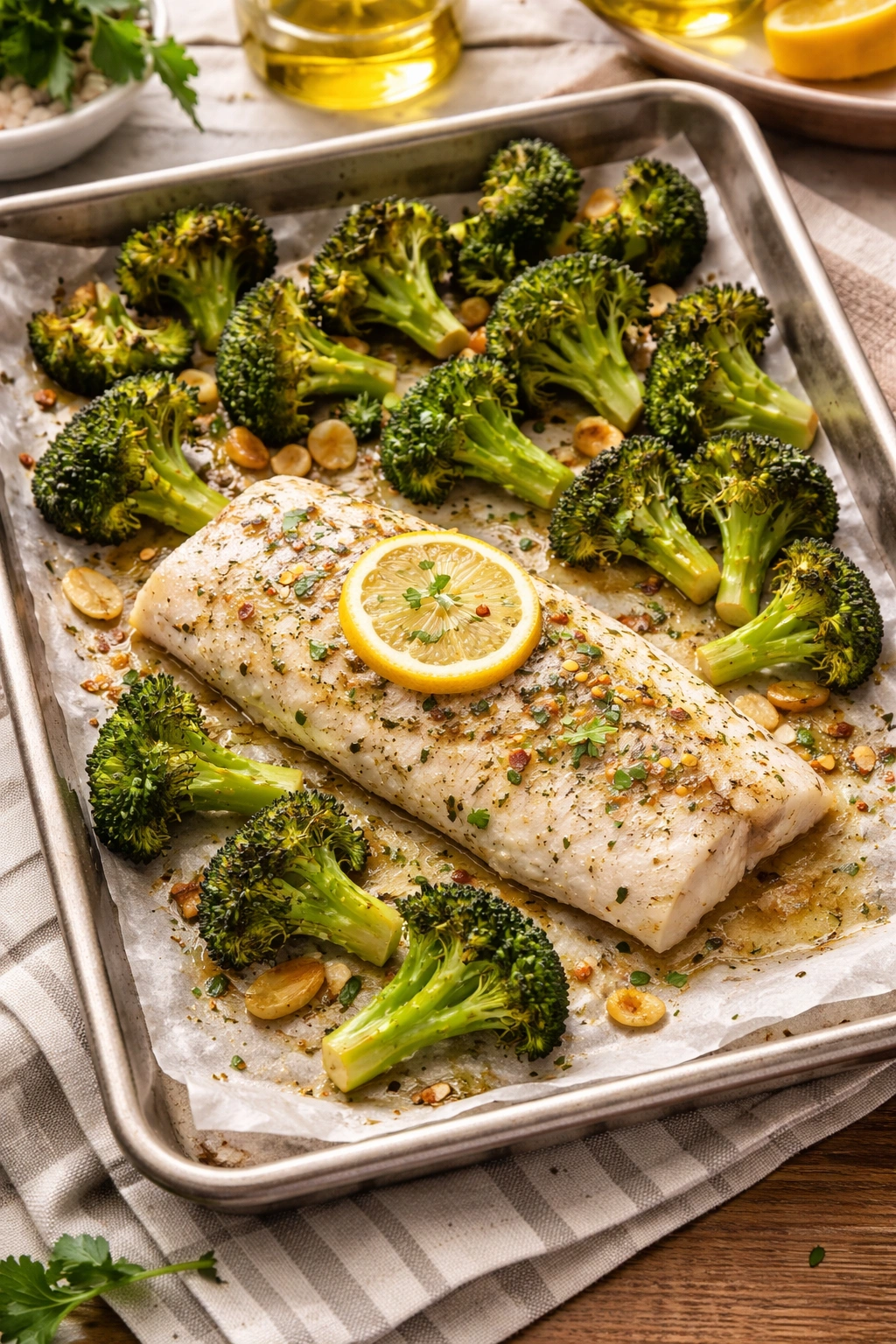
Fish is intimidating to cook quickly until you realize it actually cooks faster than chicken — a thin fillet takes 12 minutes at high heat. Paired with broccoli that roasts in the same oven, this is a no-fuss dinner that feels elegant without being complicated.
Preheat your oven to 425°F. While it’s heating, trim about 4 cups of broccoli florets, toss them with a light spray of olive oil, salt, and pepper, and spread them on a sheet pan in a single layer. Once your oven is ready, put the broccoli in for 12 minutes.
Season a white fish fillet (cod, haddock, or halibut — about 5-6 ounces) with salt, pepper, and a pinch of dried thyme or dill. Place it on a piece of parchment paper on another sheet pan. Squeeze lemon juice over it, add a thin slice of lemon on top, and drizzle with a teaspoon of olive oil.
At the 12-minute mark with the broccoli, add the fish to the oven on a separate rack. The fish will cook in about 10-12 minutes until it’s opaque and flakes easily with a fork. Everything finishes at almost the same time.
Serve the fish with the roasted broccoli. If you want a starch, cook some instant brown rice (it takes 10 minutes and is ready right on time) or add roasted potatoes if you’ve planned ahead and halved some small potatoes to roast alongside the broccoli.
Calories: 280 with just broccoli | Protein: 38g | Carbs: 8g | Fat: 9g (Add rice or potatoes for more filling substance.)
Egg Fried Rice With Frozen Vegetables and Tofu
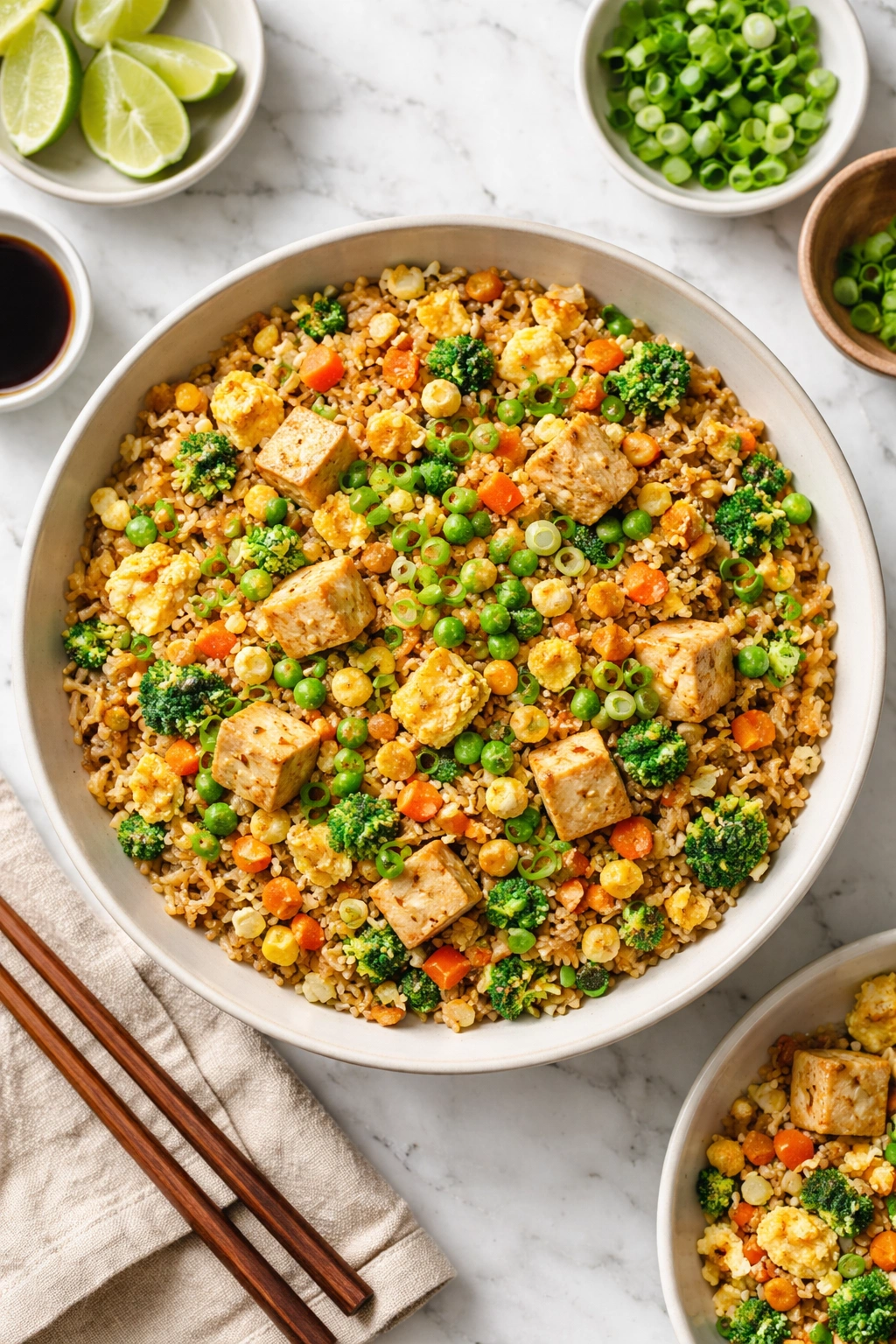
This is the dinner equivalent of magic — it tastes like you’ve been cooking for an hour, but it genuinely takes 18 minutes from start to finish. The secret is day-old rice from the fridge (or quick-cooking minute rice) and cooking over high heat so everything develops flavor fast.
Get your rice going first if using regular rice — or if you have leftover rice in the fridge, that’s even faster. While rice cooks, press a block of firm tofu between paper towels with a weight on top (even a heavy skillet works) for 5 minutes to remove moisture. Cube it into bite-sized pieces.
In a large skillet or wok over medium-high heat, add a spray of oil. Once hot, add the tofu cubes and cook for 4-5 minutes, stirring occasionally, until they’re golden on multiple sides. This gives them flavor and texture. Push them to the side of the pan.
Add a bit more oil to the empty space. Add a tablespoon of minced garlic and a teaspoon of fresh ginger, cook for 15 seconds. Add 2 cups of frozen mixed vegetables (peas, carrots, corn, broccoli — whatever mix you have) and cook for 2 minutes, stirring.
Push everything to the sides and add 2 beaten eggs to the empty space in the center of the pan. Let them set for 30 seconds, then scramble them, breaking them into small pieces. Fold in the tofu and vegetables.
Once your rice is ready, add 2-3 cups of cooked rice to the pan. (The rice should be cooled or day-old — warm fresh rice gets mushy.) Add 2-3 tablespoons of soy sauce, a teaspoon of sesame oil, and a splash of rice vinegar. Toss everything together for about 2 minutes until the rice is heated through and everything is well mixed.
Top with sliced green onions and sesame seeds if you have them. Calories: 420 | Protein: 18g | Carbs: 52g | Fat: 14g
Lemon Herb Chicken Thighs With Roasted Green Beans
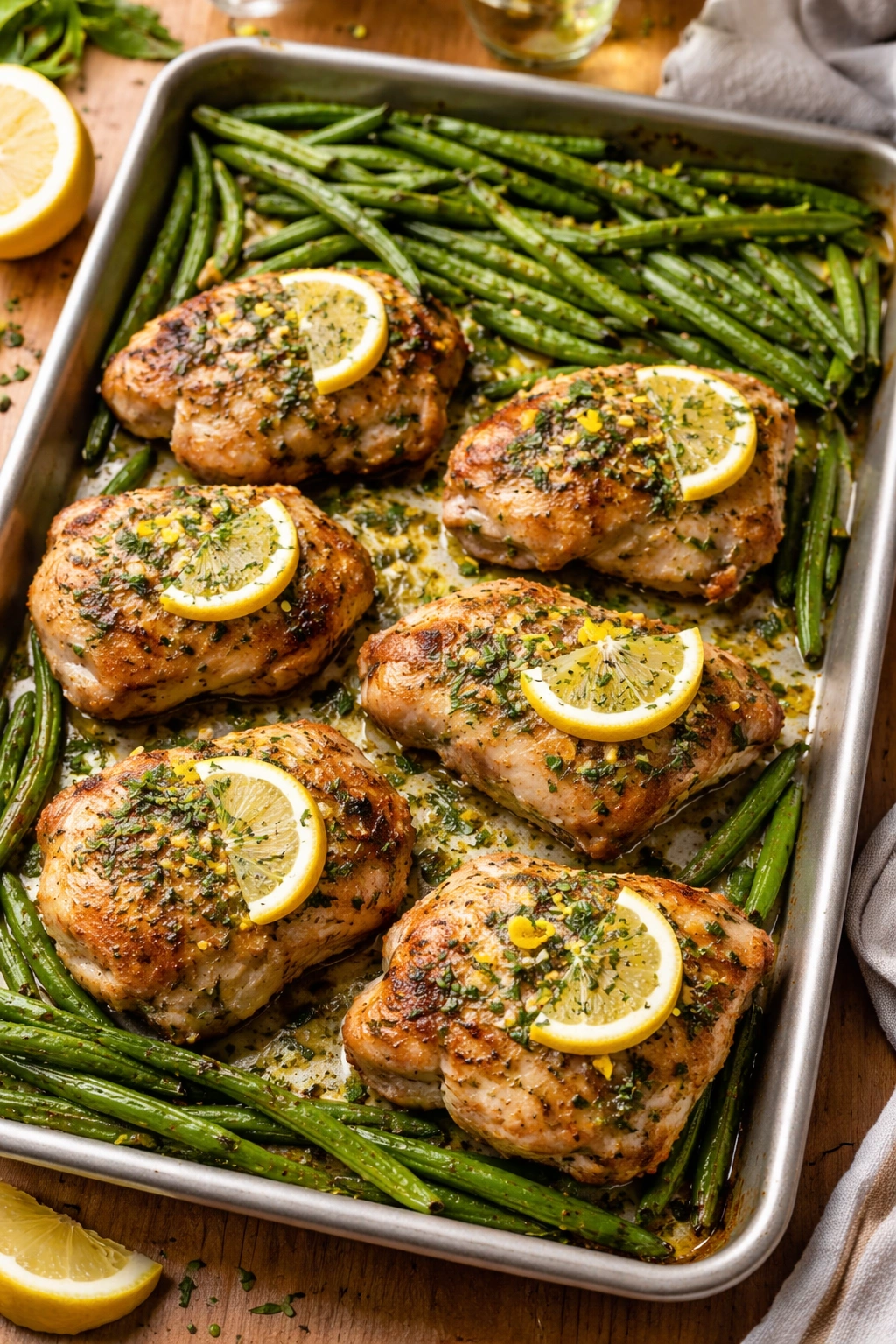
Chicken thighs are more forgiving than breasts and have more flavor, which is perfect for quick cooking. They’re also cheaper and stay juicier even if you accidentally don’t time things perfectly. Green beans roast in the same oven, so this is a two-component dinner that feels complete.
Preheat your oven to 425°F. While it’s heating, pat 4 boneless, skinless chicken thighs dry with a paper towel. Season them generously with salt, black pepper, 1 teaspoon of dried oregano or Italian seasoning, and the zest of one lemon.
Toss 4 cups of fresh green beans with a light spray of olive oil, salt, and pepper. Spread them on a sheet pan.
Once the oven is ready, place the green beans in for 8 minutes. After 8 minutes, push them to the sides and nestle the chicken thighs into the pan, nestling them among the beans. Drizzle the chicken with a teaspoon of olive oil and a squeeze of lemon juice.
Roast for 12-14 minutes until the chicken is cooked through (165°F at the thickest part) and the green beans are tender-crisp and slightly caramelized at the tips.
Serve the chicken with the green beans. If you want a starch, add some roasted cauliflower rice or a quick side of instant brown rice. The beauty of this dinner is that it’s complete and satisfying as-is, or you can add whatever sides your family prefers.
Calories: 310 with just green beans | Protein: 35g | Carbs: 8g | Fat: 14g
Turkey Meatball Minestrone Soup
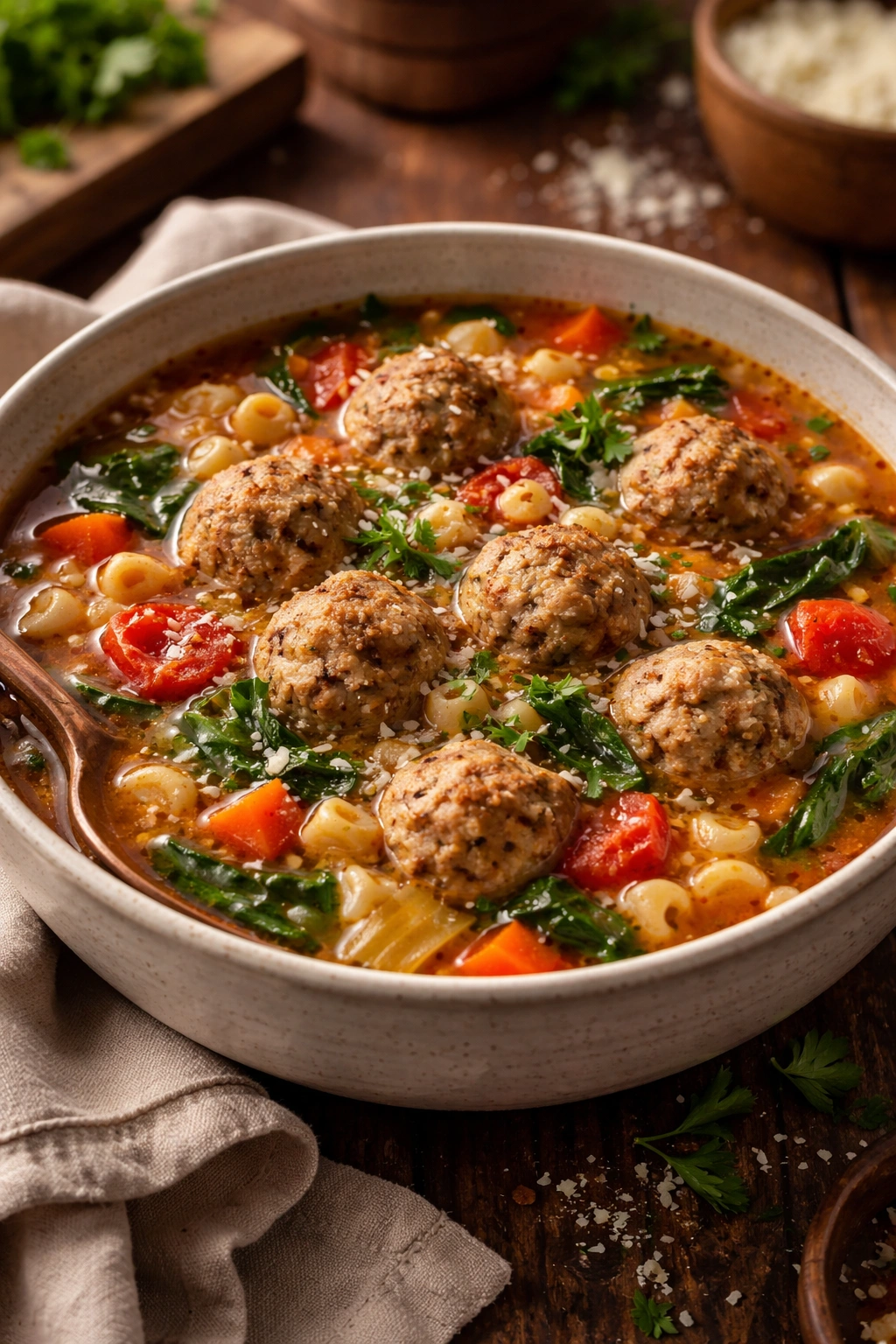
Soup feels like comfort food but comes together surprisingly fast, especially with frozen vegetables and ground meat. The whole pot is ready in 28 minutes, and it feels way more nourishing than its calorie count suggests.
In a large pot, brown a pound of ground turkey with 4 minced garlic cloves and a diced small onion over medium-high heat. Break up the turkey as it cooks. Once it’s browned (about 8 minutes), add 6 cups of low-sodium vegetable or chicken broth, a can of diced tomatoes (14 ounces, with their juice), 2 cups of frozen mixed vegetables, 1 cup of small pasta (like ditalini or small shells), 2 teaspoons of dried Italian seasoning, salt, and pepper.
Bring it to a boil, then reduce heat and simmer for 12-15 minutes until the pasta is tender. Stir in a handful of fresh spinach or kale in the last minute — it’ll wilt right in.
Taste and adjust seasoning with more salt, pepper, or a squeeze of lemon juice if it needs brightness. Ladle into bowls and top with grated Parmesan if you have it.
Calories: 380 | Protein: 32g | Carbs: 38g | Fat: 9g This makes about 4 servings, so you might have leftovers — which actually taste better the next day as flavors meld.
Stir-Fried Chicken and Bell Peppers With Brown Rice
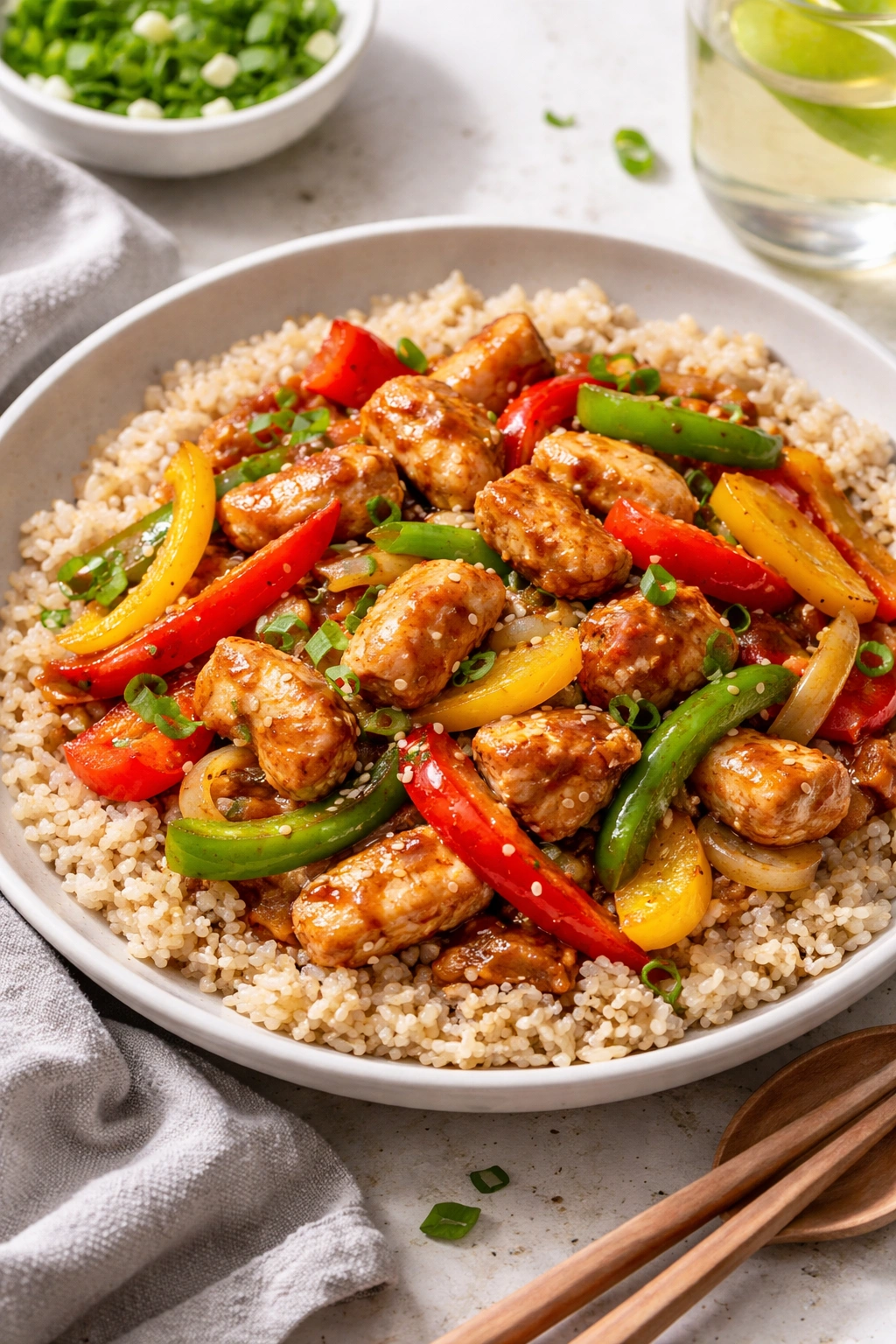
Stir-frying is one of the fastest cooking methods because everything happens over high heat and cooks in minutes. The key is having everything prepped before heat touches the pan — once you start cooking, there’s no time to chop.
Get your brown rice started first (or use quick-cooking rice, or make cauliflower rice if calories are the priority). While that cooks, slice 12 ounces of boneless, skinless chicken breast into bite-sized pieces. Cut 2 bell peppers (any color) into 1-inch chunks. Mince 3 cloves of garlic. Have 1 tablespoon of low-sodium soy sauce, 1 teaspoon of rice vinegar, 1 teaspoon of honey, and a quarter teaspoon of red pepper flakes mixed together in a small bowl.
In a large skillet or wok over medium-high to high heat, add a light spray of oil. Once it shimmers, add the chicken pieces in a single layer. Let them sear for 2 minutes without stirring — you want browning, not just cooking through. Stir and cook for another 2-3 minutes until mostly cooked through.
Add the bell peppers and garlic. Stir-fry for 2 minutes. Pour in your sauce and toss everything together for another minute until the sauce coats everything and the peppers are tender-crisp.
Serve over your rice. If you want extra vegetables, a handful of broccoli florets can go in at the same time as the peppers.
Calories: 400 with brown rice | Protein: 36g | Carbs: 48g | Fat: 8g
Cioppino-Style Shrimp and White Fish Broth
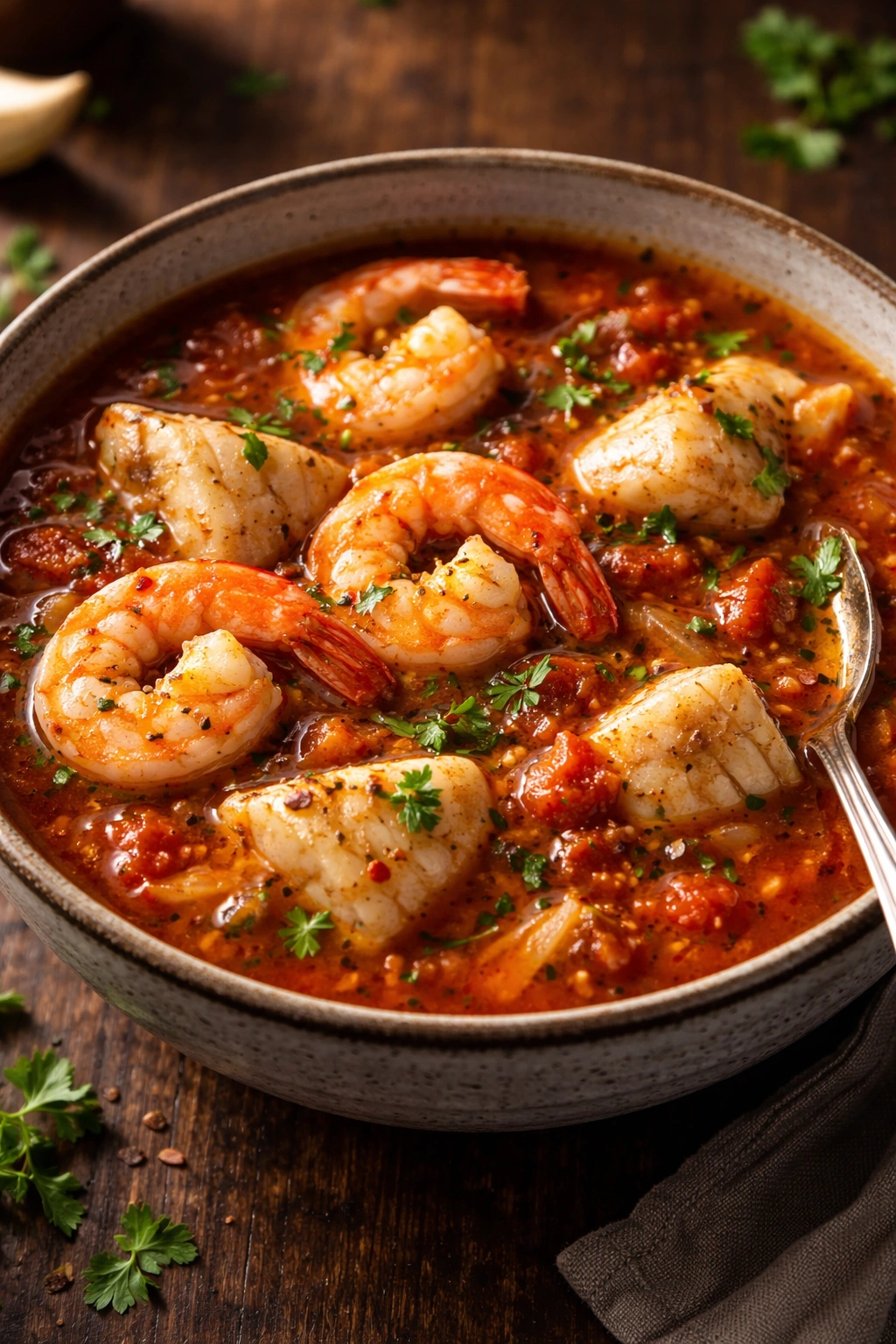
This tastes like restaurant food but happens in 20 minutes. It’s a one-pot wonder where everything cooks together, and you feel like you’ve made something fancy while actually doing minimal work.
In a large pot, sauté half a diced onion and 4 minced garlic cloves in a teaspoon of olive oil for 2 minutes. Add 4 cups of low-sodium chicken or vegetable broth, a can of crushed tomatoes (14 ounces), 2 bay leaves, 1 teaspoon of dried Italian seasoning, a pinch of saffron threads if you have them (optional but nice), salt, and pepper. Bring to a simmer.
Add 12 ounces of white fish cut into chunks (cod, halibut, or haddock). Simmer for 4 minutes. Add 12 ounces of shrimp (thawed) and 1 cup of frozen mussels or clams if you have them (or just leave them out). Simmer for another 3-4 minutes until the shrimp is pink and the fish flakes easily.
Stir in a squeeze of lemon juice and a handful of fresh parsley if available. Taste and adjust seasoning.
Serve in bowls with crusty bread on the side for dunking, or skip the bread and keep it purely protein and vegetables.
Calories: 280 without bread | Protein: 42g | Carbs: 10g | Fat: 5g
Cooking Techniques That Save Real Time
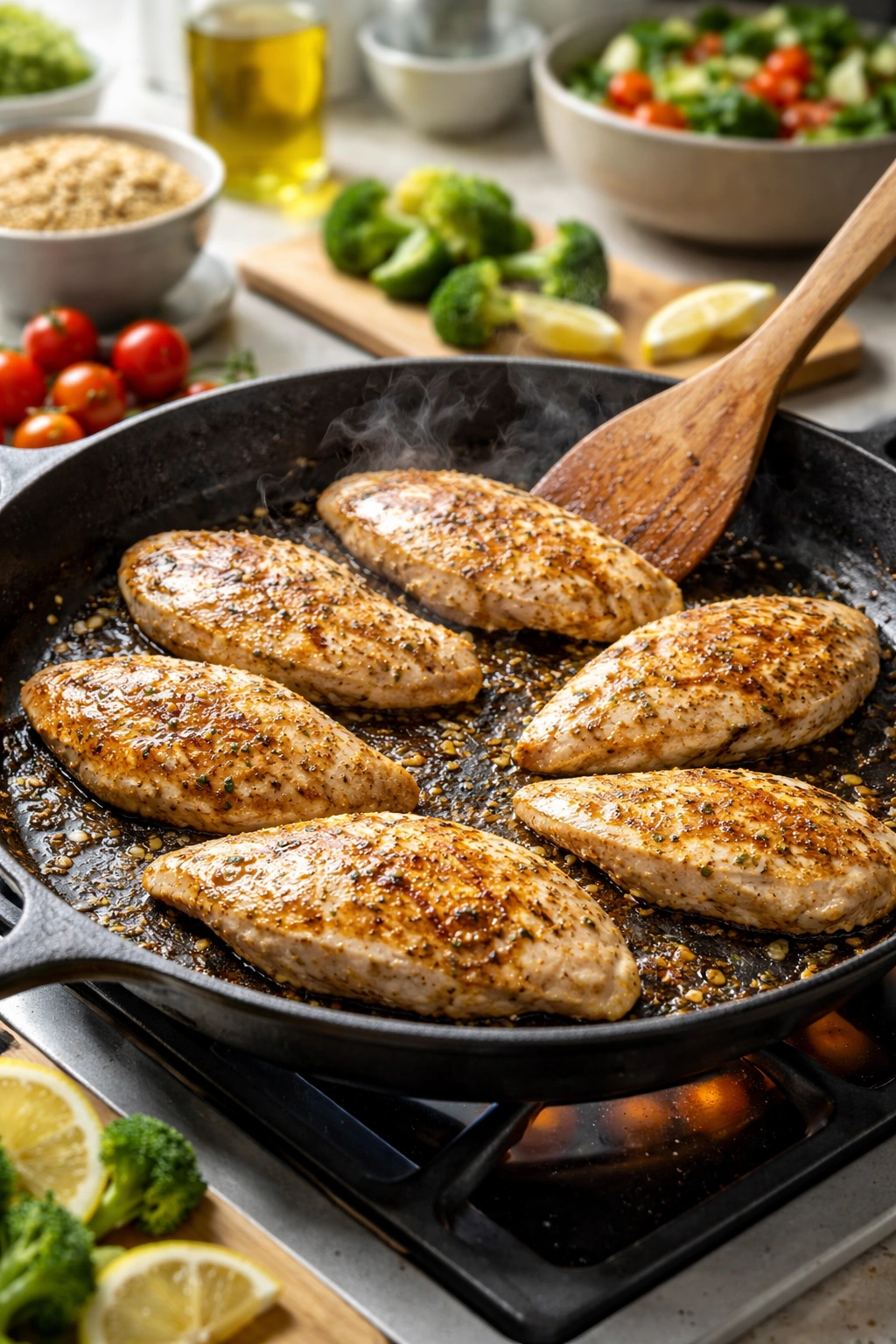
Understanding how heat works changes everything about speed. High heat sears proteins quickly and adds flavor through browning. That’s not wasting time — that’s the difference between bland and delicious.
Thin cuts cook faster than thick ones. Slice your chicken thin, pound it flat, or buy thin-cut fish. A quarter-inch chicken breast cooks in 5 minutes; a one-inch breast takes 12. When speed matters, thickness matters.
Cooking in batches keeps things hot and efficient. Don’t crowd your pan with protein. Give it room to sear instead of steaming. Two batches takes longer but tastes infinitely better.
Multitasking staggered components is the real secret. Your rice goes on first because it takes longest. Vegetables go on next because they’re faster. Protein goes in last because it cooks fastest. By the time you’ve prepped everything, your rice is done. By the time you’ve started the protein, everything else is ready to come together.
Staying Naturally Under 500 Calories Without Feeling Deprived
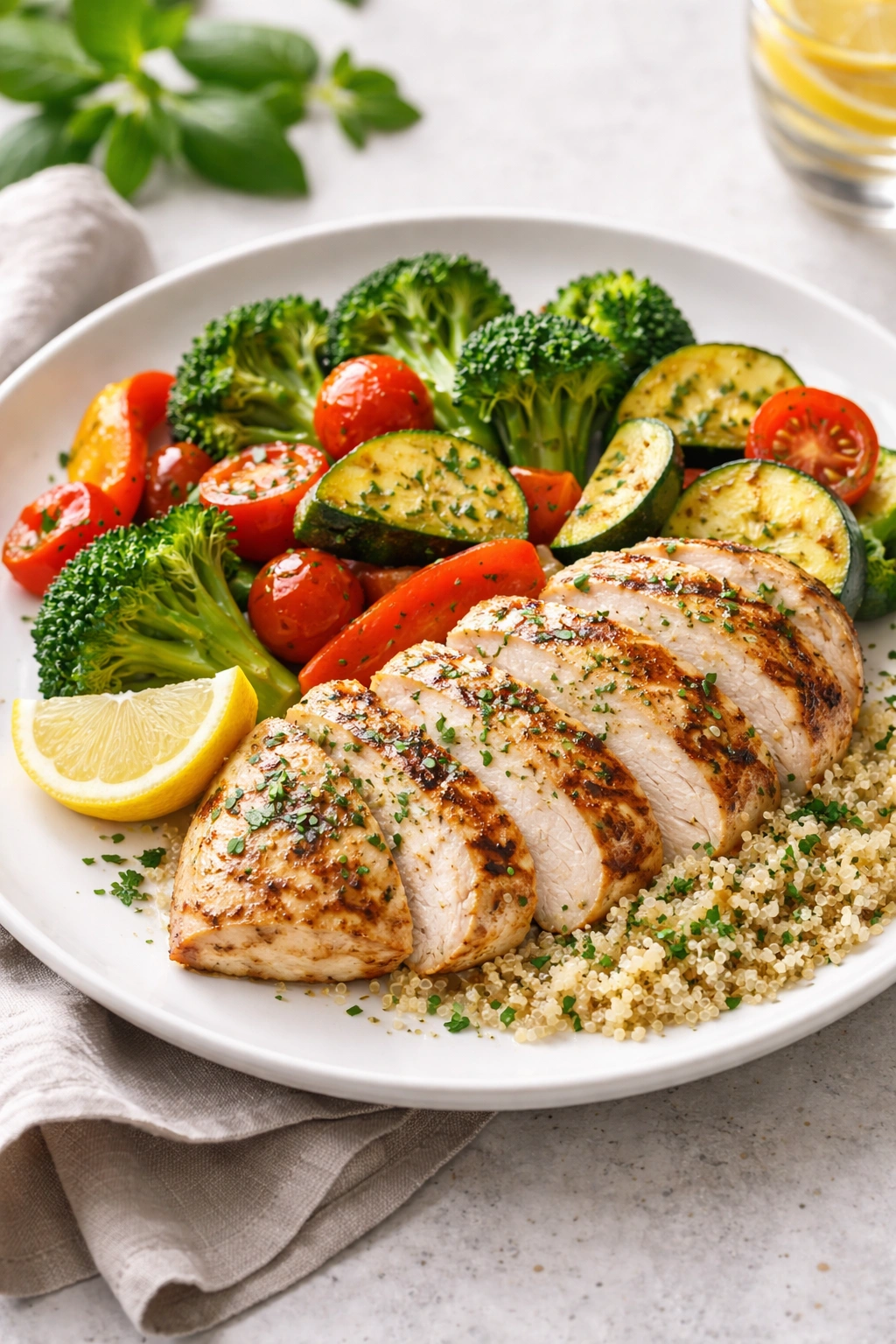
The 500-calorie target is actually generous for a dinner — it just means you’re being intentional instead of casual. Most of the “overage” comes from fat, which makes sense because fat is calorie-dense. A single tablespoon of oil is 120 calories. Butter is similar. Cream is worse.
This doesn’t mean you can’t have fat; it means you use it intentionally for flavor. A teaspoon of sesame oil tastes stronger than a tablespoon of neutral oil, so you use less and get more flavor. A small amount of butter gives more flavor than a large amount of oil. Spray oil portions things out automatically so you’re not overpouring.
Protein is your friend at 500 calories. It’s the most filling macronutrient at similar calorie density to carbs. A 4-ounce serving of cooked protein is roughly 150-200 calories depending on the type, and it’s genuinely satisfying. Pair that with vegetables (which are essentially free calorically) and a modest serving of carbs, and you have a full, nourishing dinner.
Vegetables are the secret abundance hack. You can eat enormous amounts of vegetables for almost no calories. A 4-cup salad is fewer calories than a half-cup of pasta. Roasted vegetables are more filling than raw ones because the heat concentrates flavors and breaks down cell walls, making them feel more substantial.
Skip cream sauces. Use broth-based sauces instead. Skip deep frying. Use roasting or pan-searing with minimal oil. These aren’t deprivation tactics — they’re just working with how food actually tastes good.
Smart Prep and Batch Cooking
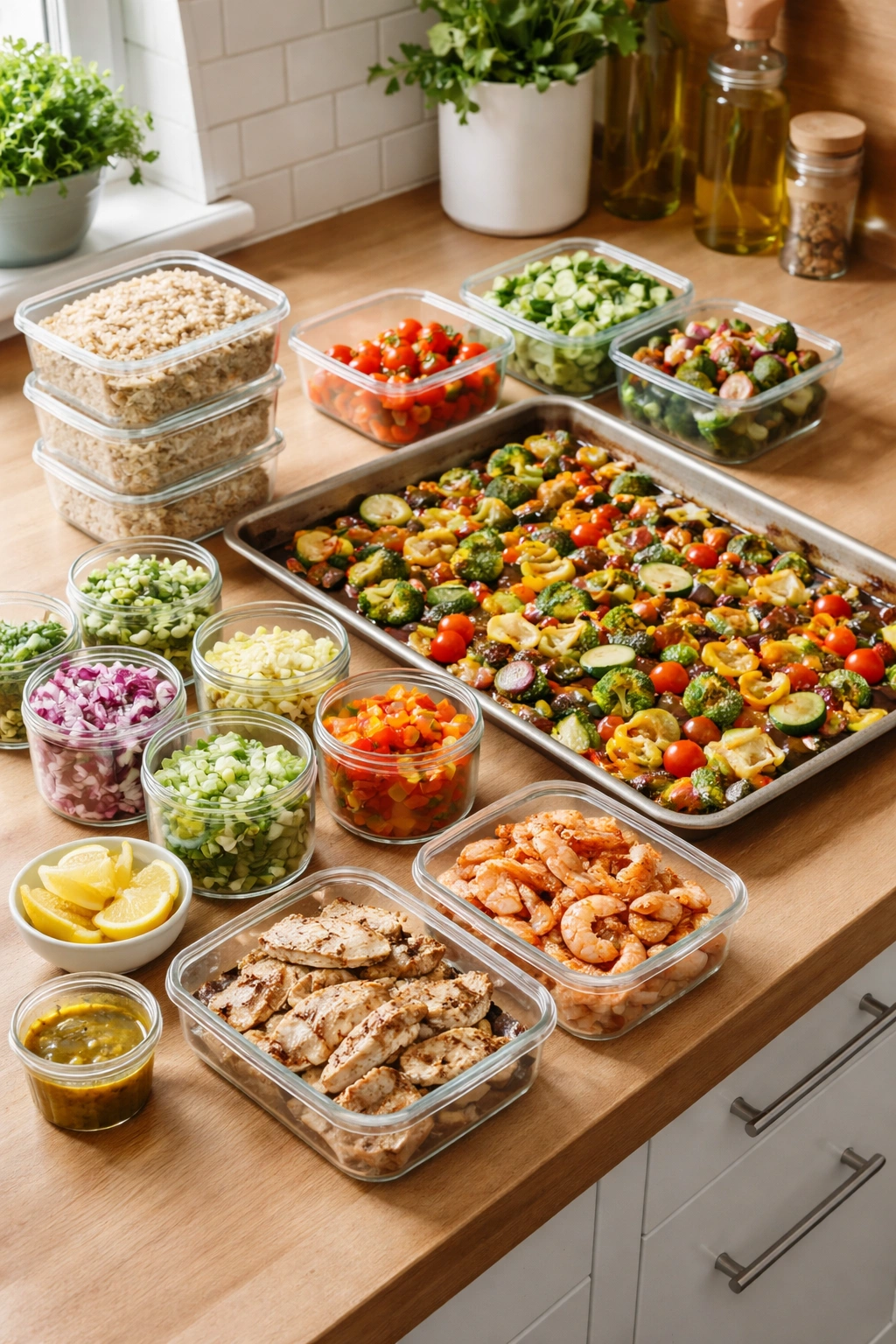
The hidden time-saver is doing a tiny bit of prep on the weekend. You don’t need to meal-prep entire meals; you just need ingredients ready to go.
Cook a batch of brown rice on Sunday. It takes 30 minutes active time and then it’s done for the whole week. Store it in containers in the fridge. Every 30-minute dinner that needs rice now takes 15 minutes because that step is already done.
Chop an onion, mince garlic, and store them in airtight containers. Roast a big sheet pan of vegetables and refrigerate them. Do none of these things need to be done perfectly — you just need them done ahead so you’re not racing the clock when you’re tired and hungry.
Have cooked proteins ready too. A rotisserie chicken can be shredded and stored. Cooked ground turkey can be portioned into containers. These aren’t full-on meal prep — they’re just removing the slowest parts of cooking so your 30-minute dinners are actually 15 minutes of active time.
Even if you don’t have time for this level of prep, simply having frozen vegetables and protein on hand changes the equation. There’s no guilt, no takeout ordering, and no scrambling.
Key Takeaways
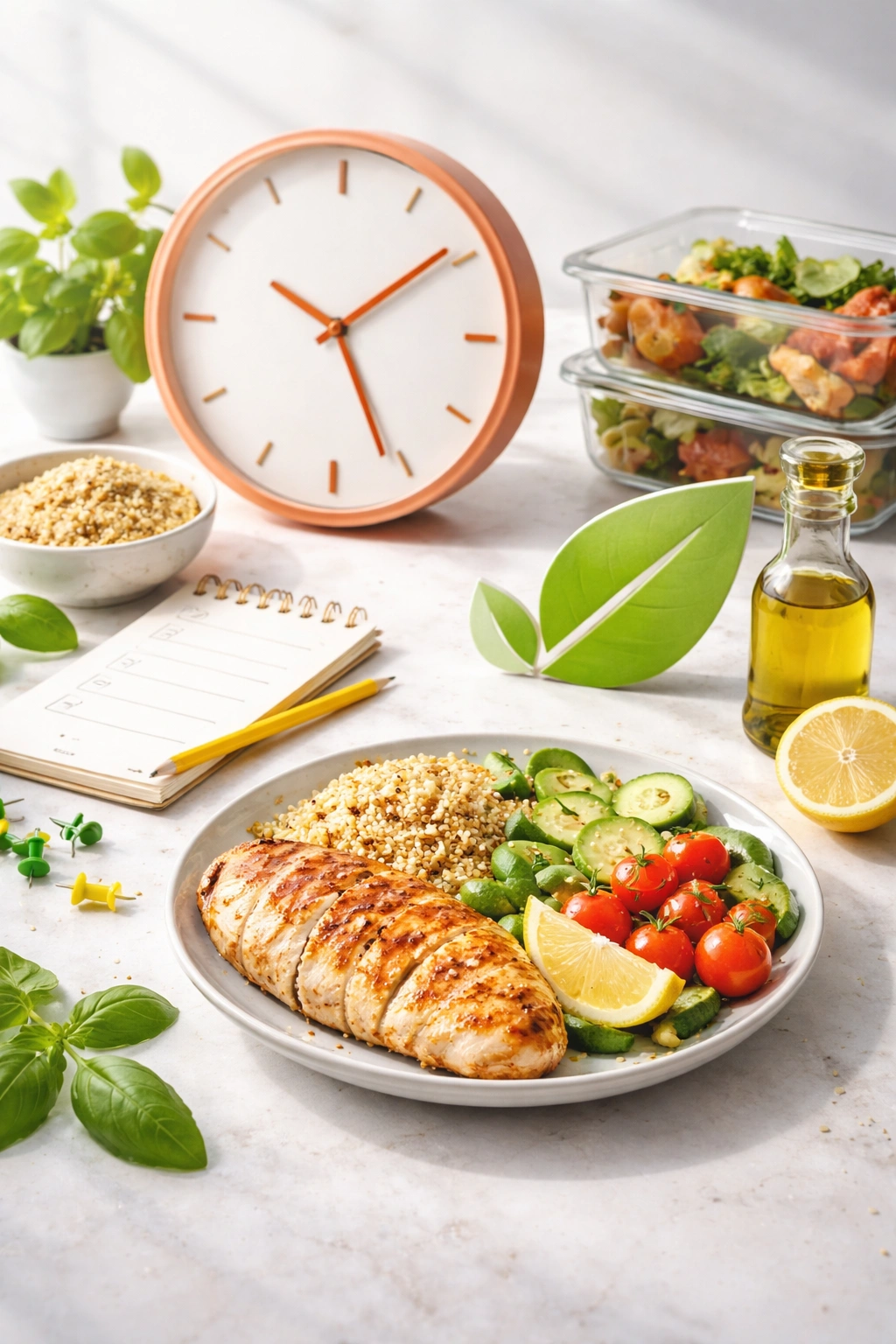
The difference between a stressful, rushed dinner and a relaxed, genuinely good one comes down to planning and having the right things in your kitchen. 30 minutes is actually plenty of time if you’re strategic about what you cook.
Choose fast-cooking proteins like thin chicken, shrimp, ground meat, or fish. Pair them with frozen vegetables or vegetables that cook quickly like zucchini, snap peas, or broccoli. Start everything that takes longest first — rice, pasta, dense vegetables. Multitask ruthlessly so components finish around the same time.
Stay under 500 calories by using fat intentionally, eating huge amounts of vegetables, hitting your protein target so you feel full, and keeping portions of starches modest. This isn’t about eating tiny amounts; it’s about being selective about where your calories go.
The real win is that after a week of these 30-minute dinners, you’ll realize you’ve actually saved money compared to takeout, eaten better than you would have ordered, and somehow have more energy. That’s not a coincidence — it’s what happens when you feed yourself food that was actually made for your body instead of just for convenience or profit.
