



There’s something uniquely comforting about cornbread dressing studded with seasoned sausage—the way the crispy edges of toasted cornbread contrast with the moist, herbaceous center, and how the savory sausage adds depth that plain vegetable-and-broth dressing simply can’t match. This dish occupies a special place in holiday tables across the country, beloved equally by traditionalists and those who appreciate a little meat-forward twist on a classic side. What makes cornbread dressing exceptional, though, isn’t luck—it’s understanding a few essential techniques that separate soggy, bland dressing from the kind that makes people ask for seconds and actually remember what they ate.
If you’ve ever pulled a casserole dish of dressing out of the oven only to find it’s turned into a gluey, compressed mess, or worse, completely dried out, you’ve experienced what happens when cornbread dressing isn’t handled with intention. The stakes feel higher with dressing than with other sides because people expect it to taste a particular way—comforting, flavorful, with layers of texture that invite you to take another forkful. Cornbread adds a natural sweetness and slight crumble that regular bread dressing lacks, while sausage contributes richness and a savory backbone that prevents the whole thing from tasting too one-note. The combination is genuinely difficult to get wrong if you understand the mechanics of why it works and what each ingredient contributes to the finished dish.
This approach to cornbread dressing draws on decades of holiday cooking experience—the kind of knowledge that comes from making it multiple times, adjusting ratios, testing different sausage options, and learning exactly when the dressing is finished without overdoing it. The good news is that once you understand the method, scaling it up for a crowd or adapting it to your family’s preferences becomes straightforward, even enjoyable.
Why Cornbread Dressing Deserves a Place on Your Table

Cornbread dressing occupies its own category in the hierarchy of holiday sides. Unlike traditional bread stuffing, which relies on day-old white or wheat bread, cornbread brings a natural sweetness and a crumbly texture that absorbs broth differently, creating pockets of texture rather than a uniform sponge. The cornmeal base has a slightly grainy quality that stands up beautifully to moisture without becoming pasty, and it pairs with sausage in ways that wheat-based breads simply cannot.
The sausage component elevates dressing from a vegetable-forward accompaniment to something genuinely satisfying as its own course. When you bite into a forkful, the rendered fat from the sausage coats your palate, the herbs in the sausage seasoning mingle with the sage and celery already in the dressing, and the whole dish develops a complexity that makes you pause and actually taste what you’re eating rather than just eating reflexively.
Cornbread dressing with sausage also tends to be more forgiving during the cooking process than you might expect. Because cornbread has less gluten than wheat bread, it resists compacting and turning dense if you handle it carefully. The sausage contributes fat that naturally keeps things moist, reducing the risk of that dreaded dry dressing that requires a ladle of gravy to be edible. This means you can actually relax a bit while it bakes, knowing the dish is more likely to turn out well.
Choosing Your Ingredients for Success

The foundation of excellent cornbread dressing starts with understanding what each ingredient brings to the table and making intentional choices rather than reaching for whatever’s convenient. This doesn’t mean every ingredient needs to be premium, but it does mean understanding what matters and where you can simplify without sacrificing quality.
The cornbread itself is the star—using homemade cornbread that you’ve baked specifically for this dish makes an enormous difference compared to using store-bought cornbread mixes or day-old bakery cornbread that’s been sitting under fluorescent lights. The crumb structure and moisture content of homemade cornbread are entirely different, and they translate directly into a better finished dressing. If you’re making cornbread the night before, that’s perfect—the slight drying that happens overnight actually works in your favor, creating bread that absorbs broth more efficiently without turning into mush.
The sausage choice deserves genuine thought. Spicy breakfast sausage works beautifully in this application, but so does a milder Italian sausage if you prefer less heat. The key is choosing actual sausage with visible seasoning and a loose texture, not pre-made patties that you’ll need to crumble. Bulk sausage gives you better control over how fine or coarse the pieces are, and it browns more evenly in the skillet because the pieces aren’t forced into a specific shape.
For aromatics, fresh celery and onion are non-negotiable—this is genuinely not a place to use dried onion or rely on what’s sitting around. Fresh celery brings a subtle earthiness that dried celery salt absolutely cannot replicate, and fresh onion caramelizes in the sausage fat, creating a sweet, deeply savory base that anchors the entire dish. If you have access to good chicken or turkey broth, use it—homemade is ideal, but a quality store-bought broth makes a measurable difference in the final flavor.
Yield: Serves 8 to 10 | Makes one 9×13-inch casserole
Prep Time: 25 minutes (including baking homemade cornbread, if making from scratch)
Cook Time: 45 to 50 minutes
Total Time: 1 hour 15 minutes active + overnight for cornbread to dry slightly (or use day-old cornbread)
Difficulty: Intermediate — The technique itself is straightforward, but success depends on understanding the ratio of bread to liquid and knowing when to stop mixing. No special equipment required beyond a 9×13-inch baking dish and a large skillet.
Best Served: Immediately from the oven while the top is still crispy and warm, or at room temperature the following day (reheated gently).
Ingredients You’ll Need
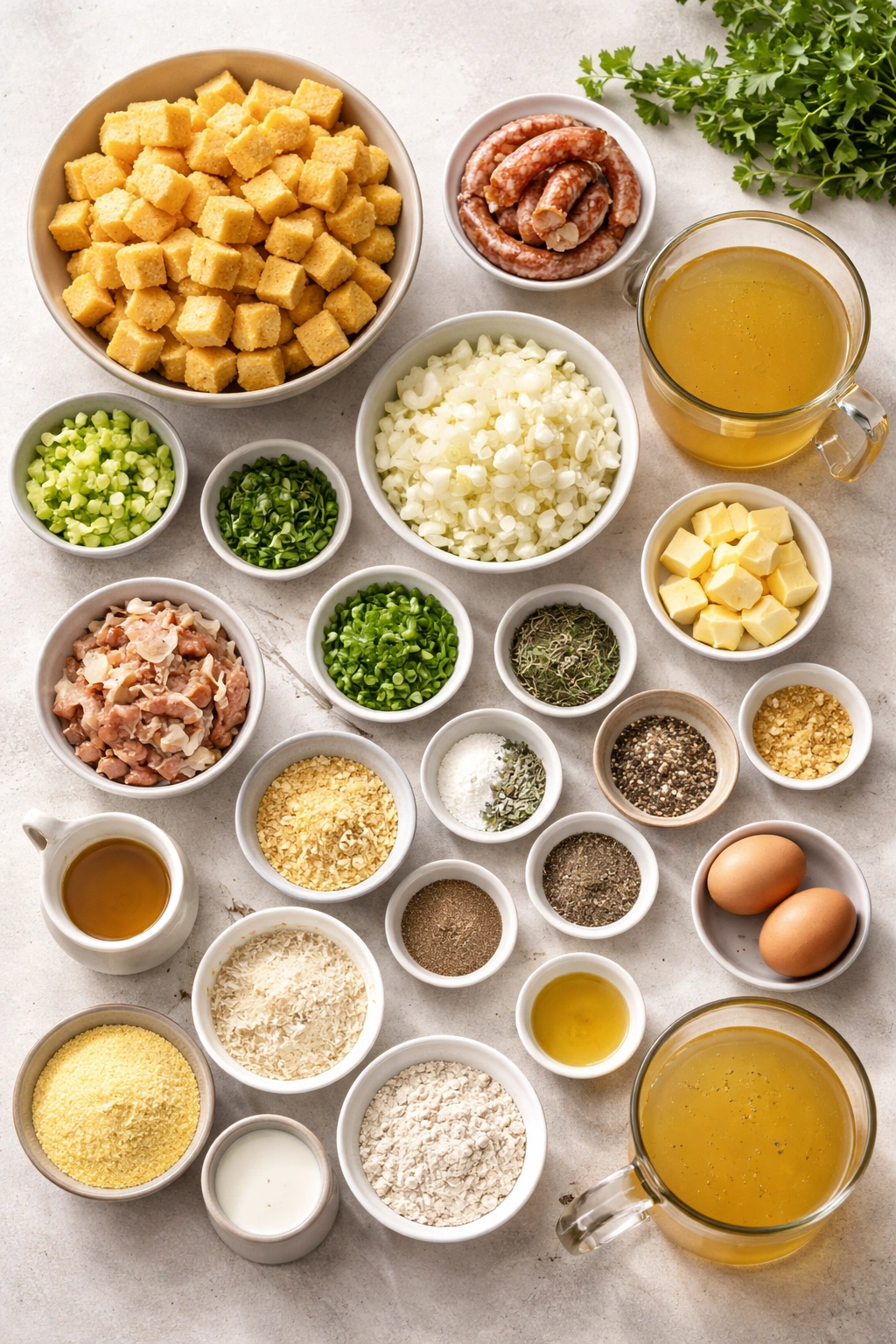
For the Cornbread (if making fresh):
- 1 cup all-purpose flour
- 1 cup cornmeal
- 3 tablespoons granulated sugar
- 1½ teaspoons baking powder
- ½ teaspoon baking soda
- ½ teaspoon fine sea salt
- 1 cup whole milk
- 1 large egg
- 3 tablespoons unsalted butter, melted
For the Dressing:
- 1 batch cornbread (approximately 6 cups crumbled, loosely packed) or one 8×8-inch store-bought cornbread, day-old
- 1 pound bulk pork sausage (spicy or mild, your preference)
- 3 medium celery stalks, finely diced (about 1½ cups)
- 1 large yellow onion, finely diced (about 1½ cups)
- 4 tablespoons unsalted butter
- 2 cups chicken or turkey broth (preferably homemade or low-sodium)
- 1 cup whole milk
- 2 large eggs
- 2 tablespoons fresh sage leaves, finely chopped (or 1 tablespoon dried sage)
- 1 tablespoon fresh thyme leaves, finely chopped (or 1 teaspoon dried thyme)
- 1 teaspoon fine sea salt, or more to taste
- ½ teaspoon freshly ground black pepper
- ¼ teaspoon poultry seasoning
- 3 tablespoons fresh parsley, finely chopped (optional garnish)
The Secret to Perfectly Moist Dressing Every Time
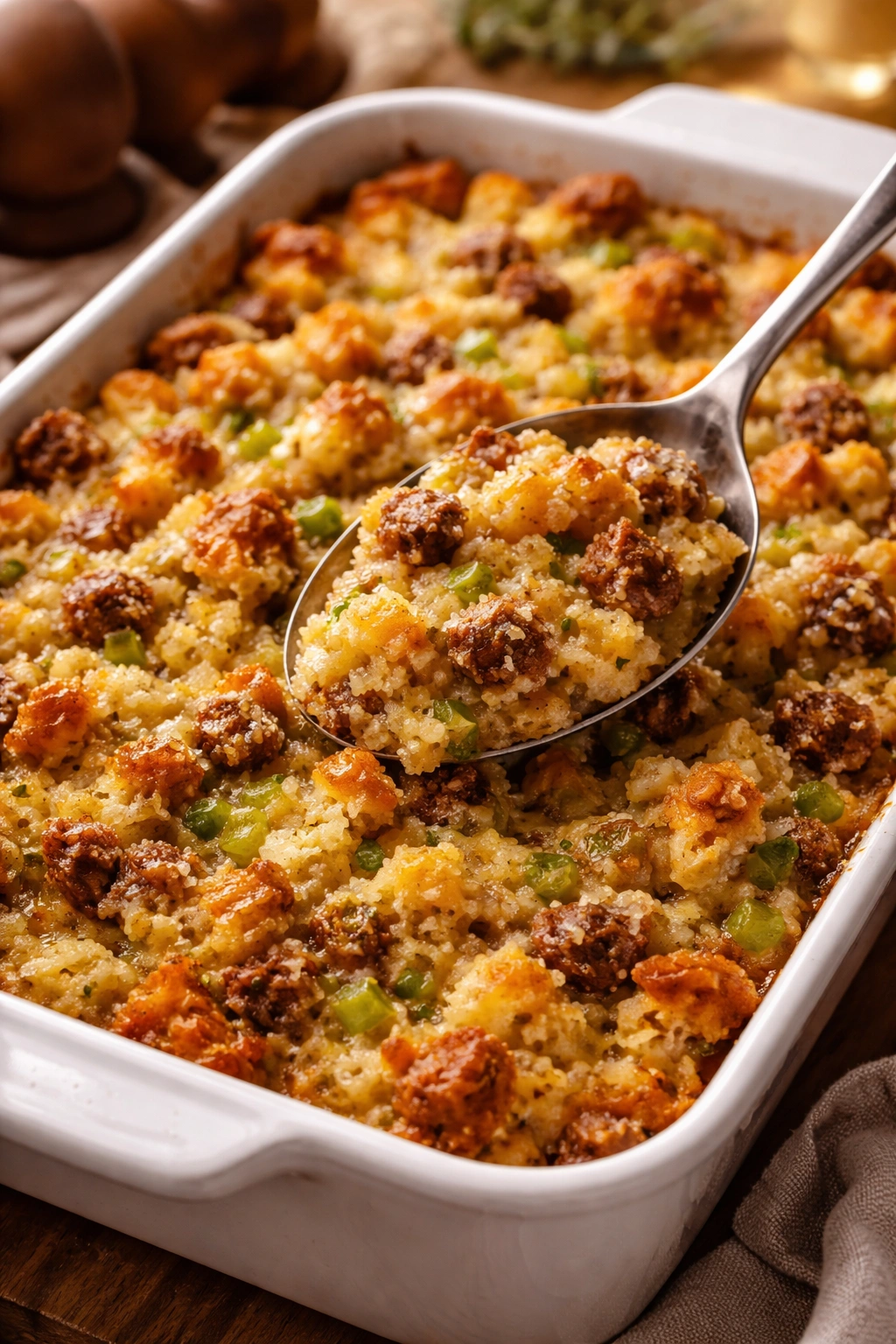
The most common mistake people make with cornbread dressing is overthinking the moisture ratio or second-guessing themselves once the dressing is in the oven. The dressing should feel slightly wetter than you expect when you pour it into the baking dish—it will look a bit soupy, maybe even concerning if you’re used to making more compact stuffings. This initial wetness is intentional and necessary.
What happens during baking is a process of gradual evaporation and absorption. The bread absorbs the broth and milk slowly as it heats, and the eggs set, creating a structure that traps the moisture rather than letting it evaporate completely. If you start with dressing that feels merely moist rather than noticeably wet, you’ll end up with something closer to a dense bread pudding than proper dressing. The eggs are critical here—they create a binding matrix that holds the dish together while the bread contributes most of the structure. Two eggs for this amount of bread is precisely the right ratio.
Another secret is the timing of when you mix the liquid ingredients with the bread. You want to do this as close to baking time as possible—within 10 to 15 minutes before it goes into the oven. If you let the bread soak too long, it over-absorbs the liquid and creates an uneven texture. The bread on the edges of the bowl will have absorbed significantly more liquid than the bread in the center, leading to soggy edges and dry centers. By mixing close to baking time, every piece of bread absorbs at roughly the same rate during the actual baking, resulting in even texture throughout.
The rendered sausage fat is doing more work than you might realize. As the sausage cooks, it releases fat that coats the celery and onion, creating a rich, savory base. This fat also helps the bread toast in those spots where it edges against the baking dish, creating those coveted golden-brown bits that give the dressing personality and texture. Don’t drain the sausage aggressively—a little of that fat in the mixture is genuinely your friend.
Step-by-Step Instructions for Cornbread Dressing
Make the Cornbread (if baking fresh):
-
Preheat the oven to 425°F (220°C) and position the rack in the center. Grease an 8×8-inch baking pan or cast-iron skillet with softened butter.
-
In a large bowl, whisk together the flour, cornmeal, sugar, baking powder, baking soda, and salt until no lumps remain.
-
In a separate bowl, whisk together the milk, egg, and melted butter until the egg is fully incorporated.
-
Pour the wet ingredients into the dry ingredients and stir gently with a spatula or wooden spoon until just combined. Do not overmix—the batter should be slightly lumpy. Overmixing develops gluten and creates tough, dense cornbread.
-
Pour the batter into the prepared pan and spread it into an even layer. Bake for 18 to 22 minutes, until a toothpick inserted in the center comes out clean and the top is golden. The edges should be slightly darker than the top.
-
Remove from the oven and allow the cornbread to cool completely in the pan—about 20 to 30 minutes. Once cooled, crumble it roughly with your hands into bite-sized pieces (about ½ to ¾ inch). You should have roughly 6 cups of loosely packed crumbles.
-
Optional but highly recommended: Spread the crumbled cornbread on a baking sheet in a single layer and allow it to sit at room temperature for several hours, or preferably overnight. This slight drying makes the cornbread better at absorbing broth without becoming mushy.
Advertisements
Prepare the Dressing Components:
-
In a large skillet over medium-high heat, add the bulk sausage, breaking it apart with a wooden spoon as it cooks. Cook for 6 to 8 minutes, stirring occasionally, until the sausage is completely cooked through and no pink remains. The meat should be crumbled into small, bite-sized pieces. Pour off about half of the rendered fat, leaving roughly 2 tablespoons in the skillet.
-
Add the diced celery and onion to the skillet with the sausage. Cook over medium heat for 6 to 8 minutes, stirring occasionally, until the celery and onion have softened and the onion has turned translucent with lightly golden edges. The vegetables should smell fragrant and sweet.
-
Add the butter to the skillet and stir until completely melted. Remove the skillet from the heat and set it aside to cool for about 5 minutes.
Assemble and Bake:
-
Preheat the oven to 350°F (175°C) and position the rack in the center. Lightly grease a 9×13-inch baking dish with softened butter.
-
Place the crumbled cornbread in a very large mixing bowl. Pour the sausage mixture (including all the fat and cooked vegetables) over the cornbread.
-
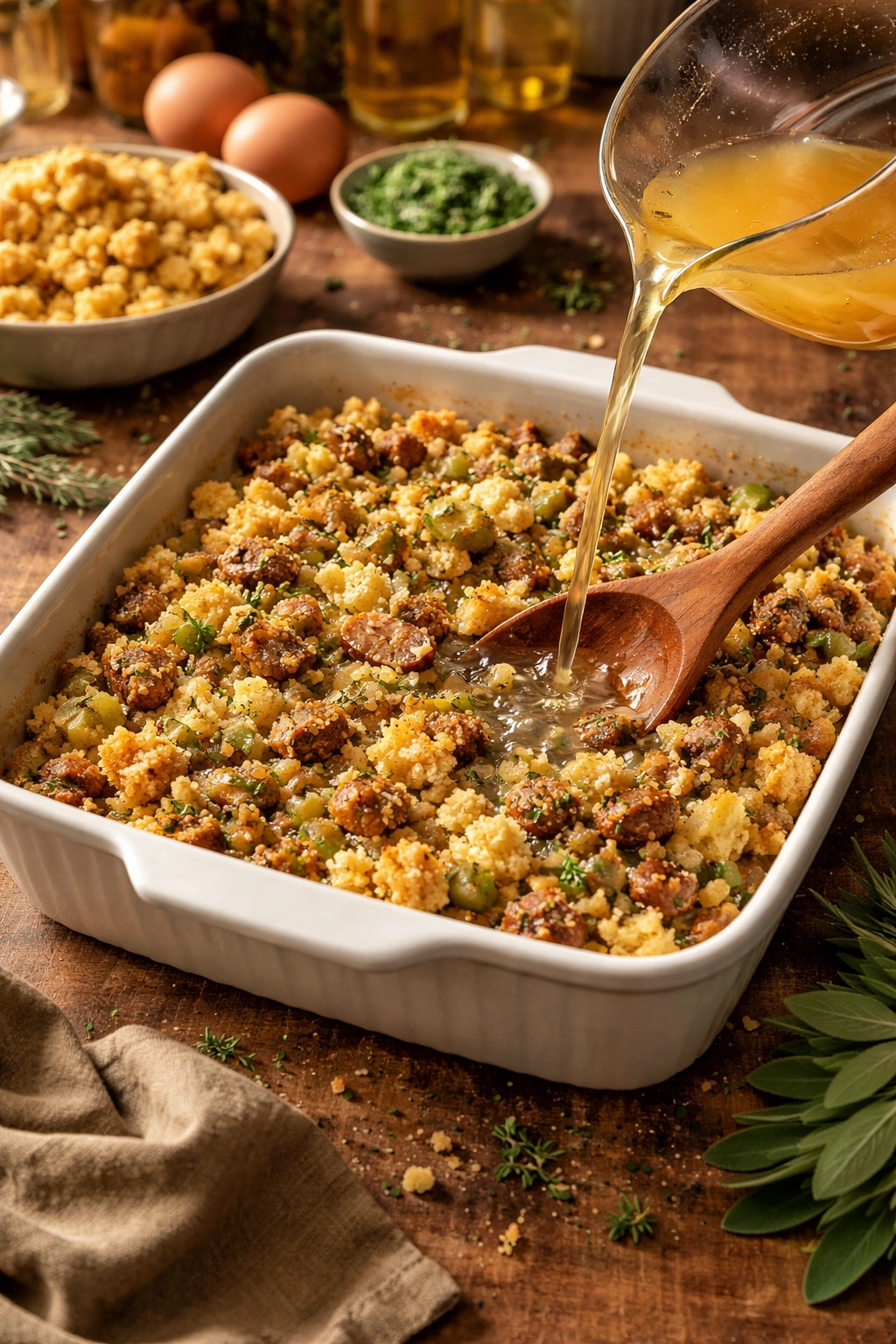
In a separate bowl, whisk together the broth, milk, and eggs until the eggs are fully incorporated and the mixture is uniform. Pour this over the cornbread and sausage mixture.
-
Sprinkle the sage, thyme, salt, pepper, and poultry seasoning over everything. Using a large spoon or your hands (clean hands work best here), fold the mixture together gently until the cornbread is evenly coated with the liquid and all the dry seasonings are distributed. The mixture should feel noticeably wet—this is correct. Fold just until combined; avoid stirring vigorously, which breaks the cornbread into smaller pieces and creates a denser texture.
-
Pour the entire mixture into the prepared baking dish, spreading it into an even layer. The dressing should look like thick batter rather than a solid mass—some liquid visible in spots is exactly right.
Advertisements -
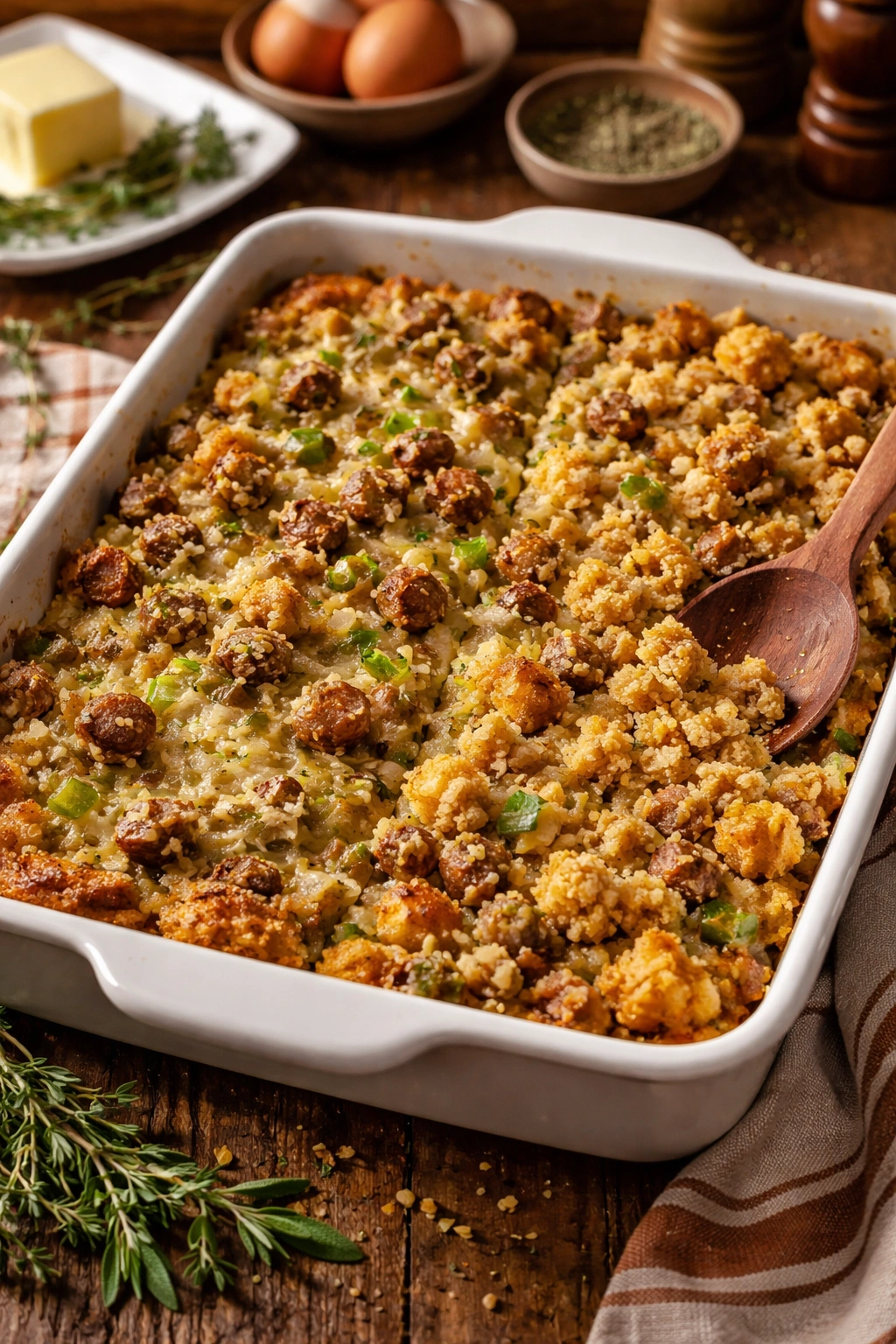
Bake, uncovered, for 45 to 50 minutes, until the top is golden brown and the edges are noticeably darker, almost caramelized. The center should still jiggle slightly when you gently shake the dish—this means it’s set but still moist inside. If the top is browning too quickly, loosely tent it with aluminum foil for the last 15 minutes of baking.
-
Remove the dressing from the oven and allow it to rest for 5 to 10 minutes before serving. This resting period allows the structure to set slightly, making it easier to scoop without the whole thing falling apart.
-
Garnish with fresh parsley if desired, and serve warm directly from the baking dish.
Common Mistakes and How to Avoid Them
The most frequent error is using bread that’s too moist or fresh. Regular sandwich bread or fresh bakery bread won’t work well in dressing because it over-absorbs liquid and becomes pasty. If you’re using fresh cornbread, absolutely let it dry out overnight before crumbling it. Even a few hours at room temperature helps. If you only have fresh cornbread available, spread the crumbles on a baking sheet and dry them at 300°F for 10 to 15 minutes, then cool completely before mixing into the dressing.
Another common mistake is over-mixing the dressing once you’ve combined the wet and dry ingredients. Every time you stir or fold, you’re breaking the cornbread into smaller pieces, and smaller pieces absorb more liquid and create a denser texture. Mix until everything is just combined, then stop. The cornbread doesn’t need to be evenly coated with liquid at this stage—that happens during baking as the moisture redistributes.
Some people drain the sausage too thoroughly, removing most of the fat that makes the dressing flavorful and helps it brown properly. You want to drain excess fat if there’s a visible pool of it, but leaving a couple of tablespoons in the skillet is intentional. That fat is seasoning and texture.
Underbaking is less common than overbaking, but it does happen. If the dressing still jiggles noticeably in the center (not just at the very edges), it needs more time. Conversely, if you bake it until it looks completely set and firm, it’s probably overdone and will be dry when you cut into it. The goal is a center that has just set, with a slight wobble in the very middle. This ensures the inside stays moist while the edges and top brown properly.
Finally, some people assume that more broth equals moister dressing. In reality, dressing has a fairly specific ratio of liquid to bread. Too much broth and the dressing becomes soup. The two-cup broth to one-cup milk ratio, combined with the eggs, creates the right balance for cornbread specifically—it’s wetter than what you’d use for wheat bread dressing, but not so wet that the structure doesn’t set.
Variations and Flavor Adaptations

The beauty of cornbread dressing is how easily you can adapt it to your family’s preferences or the ingredients you have available. If you want less spicy sausage, use mild Italian sausage instead of spicy breakfast sausage, or use a combination of both. Some people add a small amount of fennel seeds if using mild sausage, which adds a subtle anise note that feels traditional without being obvious.
Vegetable additions beyond celery and onion work beautifully here. Finely diced fresh mushrooms add umami and earthiness—sauté them with the celery and onion in the sausage fat. Some people add diced bell peppers (red and orange are milder and slightly sweet), though if you do, reduce the amount of onion slightly since you’re adding more moisture. Fresh corn kernels stirred in after everything is combined add sweetness and texture—about ¾ cup is right for this quantity.
If you want to make a vegetarian or sausage-free version, simply omit the sausage and increase the butter to 6 tablespoons. Sauté the celery and onion in the butter, then proceed as written. Some vegetarian cooks add finely diced mushrooms and a tablespoon of miso paste to the broth, which creates a savory depth that somewhat replaces the richness the sausage would have provided.
Herbal variations are endless. Dried cranberries or fresh cranberries stirred in at the end add brightness and tartness. Chopped toasted pecans or walnuts add texture and a subtle earthiness. Some families add a tablespoon of apple cider vinegar to the broth mixture for subtle acidity that brightens the overall flavor. A small amount of fresh ginger or a pinch of nutmeg adds warmth without being detectable as “spiced.”
If you want to make this in individual-sized portions, divide the mixture among a muffin tin filled with muffin liners and bake at 350°F for 25 to 30 minutes. These actually reheat beautifully and are lovely for anyone wanting a personal portion rather than scooping from a large casserole.
Make-Ahead Strategies and Storage Tips
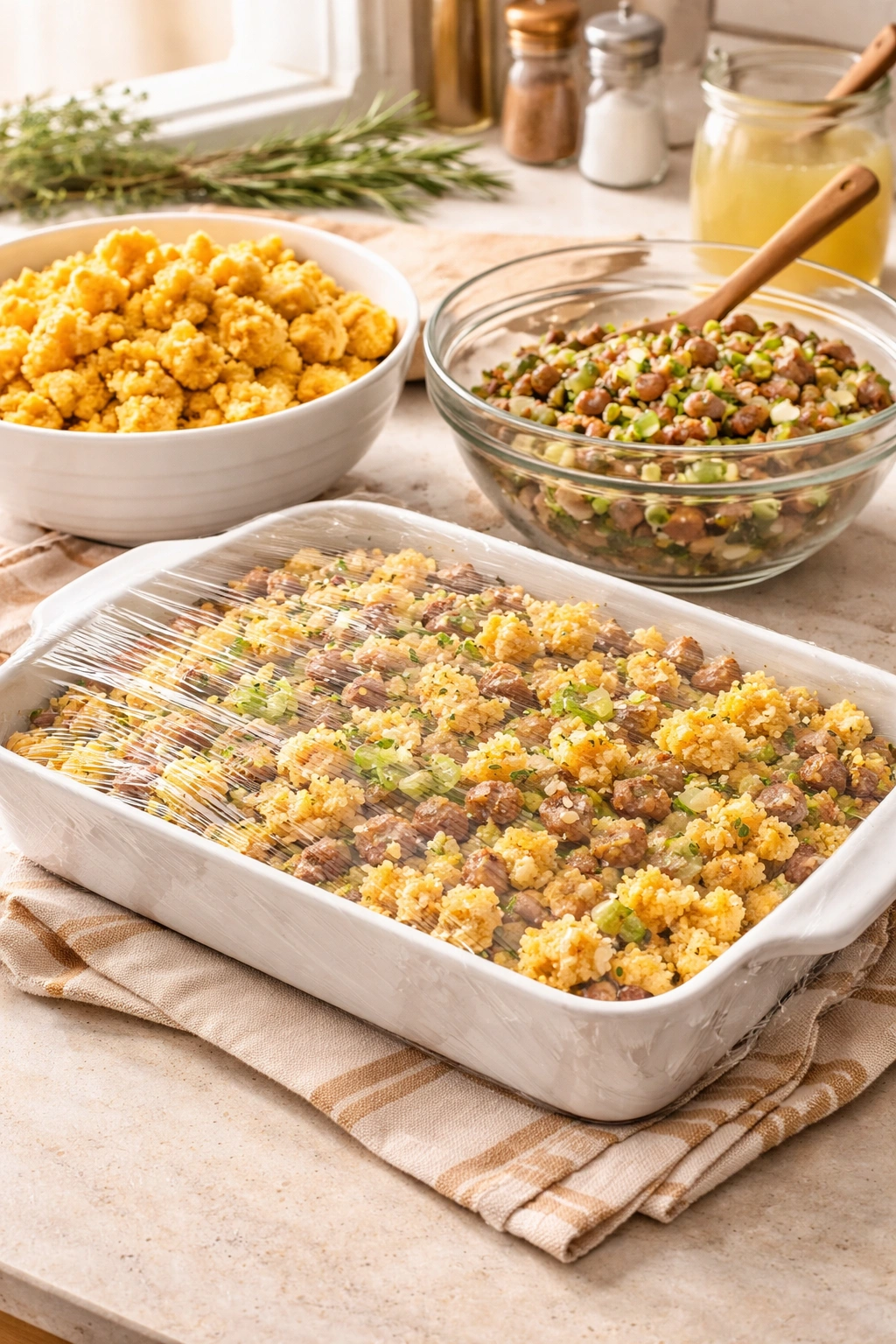
This dressing is genuinely designed to be made partially ahead, which makes it practical for holiday cooking when oven space is at a premium. You can make the cornbread up to two days in advance—wrap it well and store it at room temperature. You can prepare the sausage, celery, and onion mixture up to one day ahead, transfer it to a container, and refrigerate it. The only step you need to do the day of is combining everything with the cornbread and baking.
For maximum convenience, you can even assemble the entire dressing in the baking dish, cover it tightly with plastic wrap, and refrigerate it for up to 8 hours before baking. When you bake it directly from the refrigerator, add about 5 to 10 minutes to the baking time since the cold dressing will take longer to heat through. This approach means you literally just pop it in the oven on the day you’re serving it.
After baking, the dressing keeps beautifully. It’s actually delicious at room temperature, though most people prefer it warm. If you’re serving it the next day, cover the leftovers and refrigerate them for up to four days. To reheat, place the dressing in a baking dish, cover it loosely with foil, and warm it at 325°F for 15 to 20 minutes, until it’s heated through. Don’t microwave it, which dries it out despite the moistness of the original dish.
Freezing is also straightforward. The baked dressing freezes beautifully for up to two months, wrapped tightly or in a freezer-safe container. To reheat frozen dressing, allow it to thaw in the refrigerator overnight, then warm it in a 325°F oven covered loosely with foil for 20 to 25 minutes. You can also reheat it directly from frozen at 325°F for 35 to 40 minutes covered, then uncovered for the final 5 minutes if you want the top to crisp slightly. The texture remains excellent, and most people cannot distinguish frozen-and-reheated dressing from freshly made.
Some people specifically make this dressing early in the season and freeze it, then reheat it for different gatherings throughout the year. This approach takes pressure off holiday cooking and means you can focus your oven on other dishes. The comfort of knowing your dressing is already handled is genuinely valuable during busy cooking days.
How to Serve and Pair Your Dressing
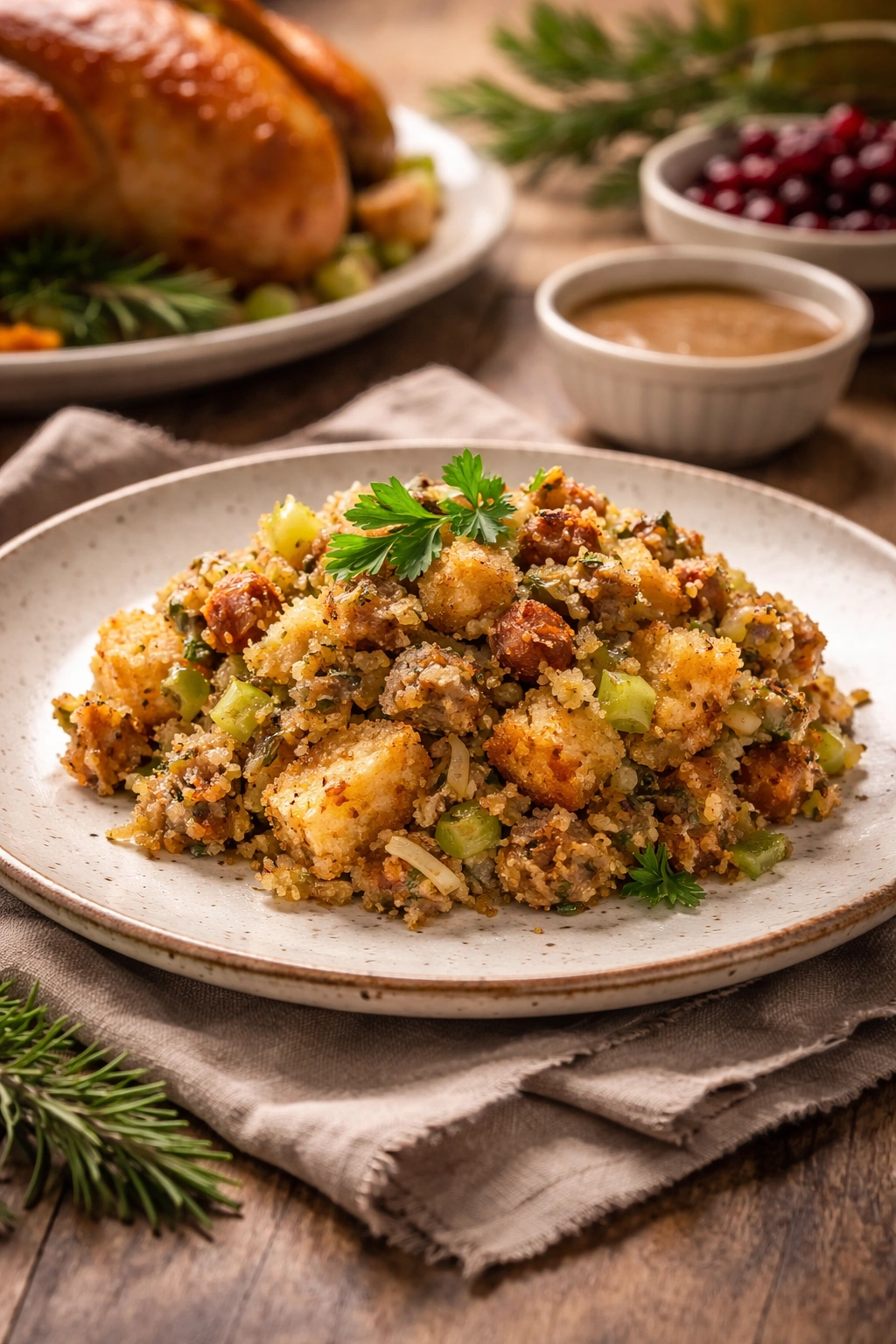
Cornbread dressing with sausage is rich enough to be its own course, though it functions perfectly as a side alongside the traditional holiday proteins. It pairs beautifully with roasted turkey, which is unsurprising since they’re often cooked together. With ham, it’s equally excellent—the slight sweetness of the cornbread works well against salty ham. It’s also wonderful with roasted chicken, pork, or duck.
If you’re serving it as part of a traditional holiday meal, position it near the vegetables and grains rather than next to the protein, which allows people to take it as a side rather than in competition with the main. Some families serve it in individual portions on small plates, almost like a grain course, rather than offering it family-style. This approach makes it easier to control portion sizes and allows people to take as much or as little as they want without feeling like they’re scooping a massive spoonful.
For sauce or gravy, cornbread dressing needs something rich but not heavy. Turkey or chicken gravy is perfect, as is a simple butter and herb sauce. The gravy shouldn’t be needed for moisture—well-made dressing is already moist—but rather for flavor and richness. Some people drizzle warm pan drippings over individual portions right before serving.
As a side complement, this dressing pairs well with roasted or glazed vegetables like roasted Brussels sprouts, roasted carrots, or roasted root vegetables. The richness of the dressing means lighter vegetable sides work better than heavier starches—you don’t need both this dressing and mashed potatoes on the same plate unless someone specifically wants both. Acidic sides like cranberry sauce or pickled vegetables are wonderful counterpoints to the richness.
This dressing is also excellent left over, whether served cold at room temperature or gently reheated. Many people find it tastes even better the next day as the flavors meld and intensify. It’s wonderful alongside cold turkey for sandwiches, or as a base for a breakfast-style savory bread pudding if you add extra eggs and warm milk, then bake it gently until set.
Reheating Without Losing That Golden Texture
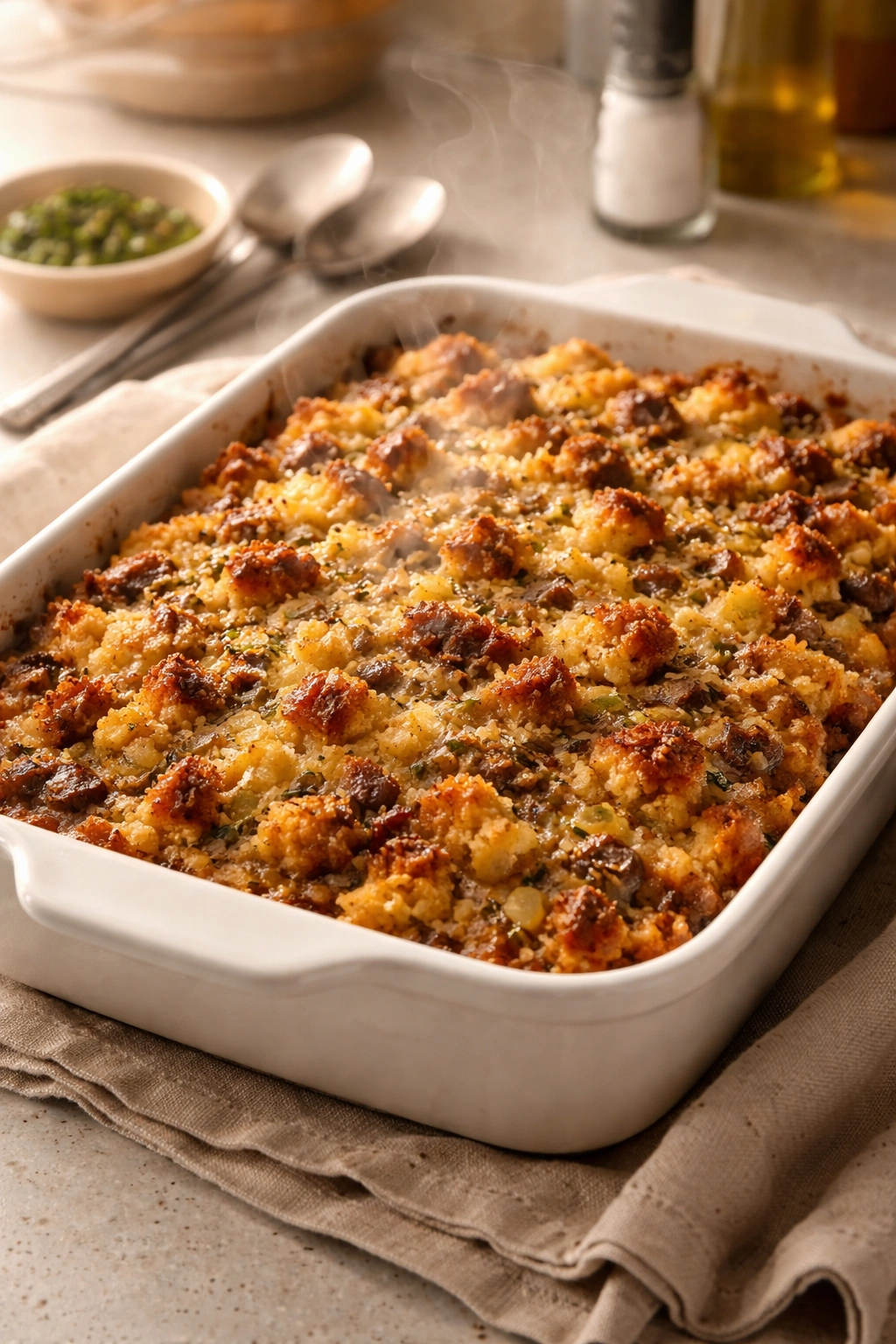
The biggest challenge with reheating baked dressing is maintaining the crispy, golden exterior while warming the moist interior. Your goal is gentle, even heat rather than high-heat reheating, which can cause the edges to dry out while the center stays cold.
For leftover dressing stored in the refrigerator, the best approach is low and slow. Preheat your oven to 325°F and place the dressing in a baking dish (it’s fine to use the same dish it was originally baked in). Cover it loosely with aluminum foil to prevent the top from drying out, and warm it for 15 to 20 minutes, until it’s heated through. If you prefer a crisper top, remove the foil for the final 5 minutes of reheating.
Never use a microwave to reheat dressing if you care about texture. Microwaves reheat unevenly, and the outer edges tend to dry while the center remains moist or even cold. If you’re in a time crunch and must use a microwave, do it in short bursts of 30 seconds, stirring between each burst, and transfer the dressing to a conventional oven for the final 5 minutes to restore some texture to the top.
For frozen dressing, allow it to thaw in the refrigerator overnight before reheating using the oven method above. If you’re reheating directly from frozen (which is possible), extend the reheating time to 35 to 40 minutes covered at 325°F. The texture will be identical to fresh dressing despite the freezing and reheating process, which is genuinely impressive if you’ve never tried it before.
Dressing that’s been frozen and reheated can be revived slightly if it feels dry after reheating. Drizzle a little warm broth or butter over the top of warmed dressing just before serving, which adds moisture and richness without actually baking it further. Some people brush the top with melted butter mixed with a tiny amount of broth, which adds richness and moisture in concentrated form.
Final Thoughts
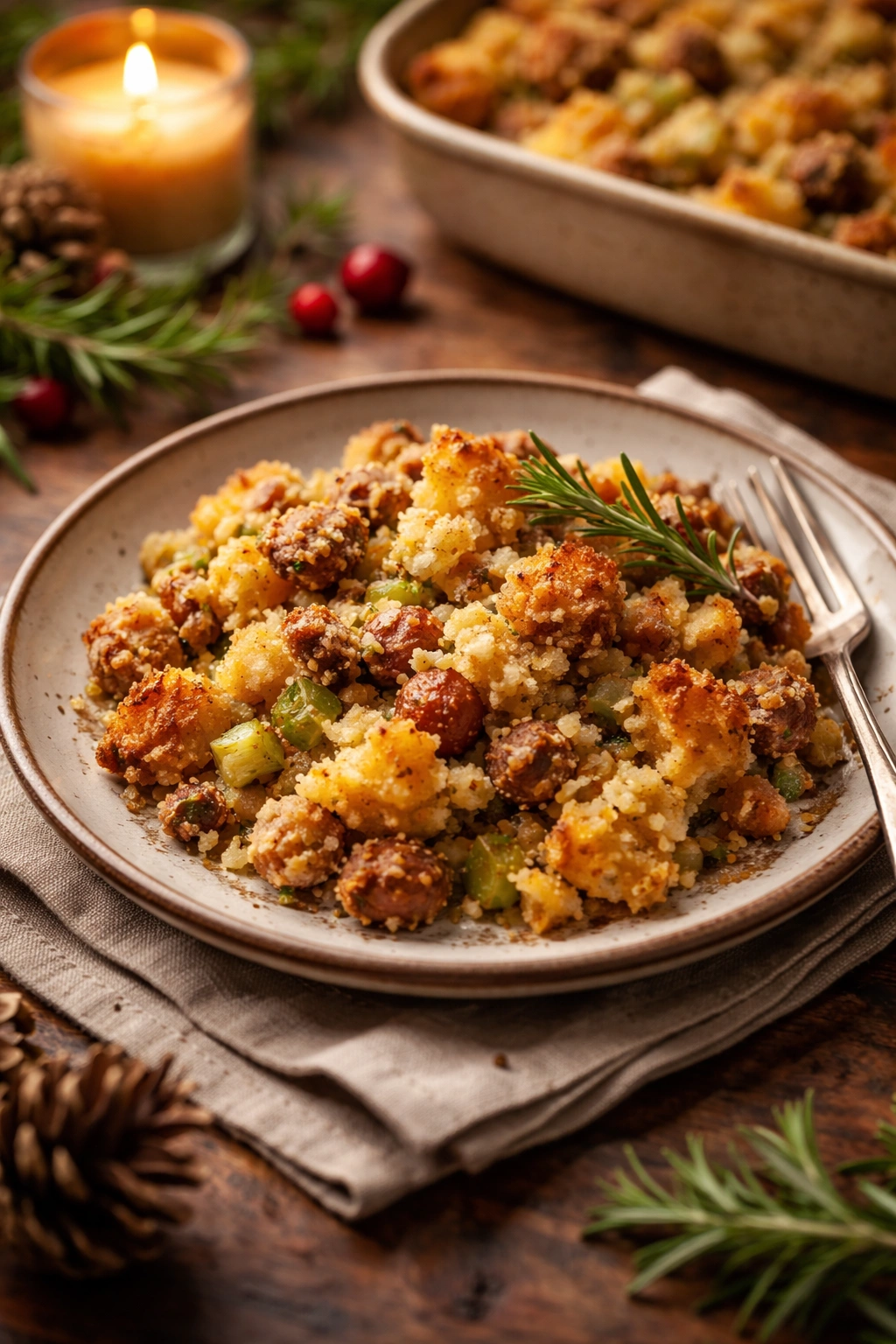
Cornbread dressing with sausage becomes less intimidating once you understand that the technique is genuinely forgiving. The cornbread is forgiving because it resists compacting. The sausage is forgiving because its fat naturally keeps things moist. The egg-and-broth mixture is forgiving because it sets reliably and evenly if you don’t overthink the mixing stage. The whole dish is designed to be made and served without excessive worry, which is exactly what you need during the kind of cooking marathon that comes with holiday entertaining.
The real reward of learning to make this dressing well is that you get to serve something genuinely delicious that tastes like care and effort, even though the actual process is straightforward. Every bite should taste rich and savory, with pockets of crispy golden cornbread, tender vegetables, and seasoned sausage distributed throughout. The texture should be lightly set but still moist—almost bread-pudding-like in the best possible way, not dense and heavy.
Once you’ve made this cornbread dressing successfully once, you’ll understand the fundamentals well enough to adapt it confidently to what you have available or what you actually want to eat. You might add oysters one year, fresh corn another year, or swap in fennel sausage if that suits your family better. The foundation is solid enough to support variations without losing its essential character. That’s what makes it genuinely useful beyond just one holiday season—it becomes a technique you can come back to and make your own.
