



There’s a particular magic to the broccoli salad that gets requested by name at potlucks, barbecues, and community dinners. You know the one—the dish people actually fight over at the buffet table, the recipe friends text you asking for, the salad that disappears first and leaves people asking “who brought this?” You’ve probably been asked to make it. More than once. Maybe at your last three gatherings.
This isn’t just raw broccoli dumped into a bowl with ranch dip. The best version combines tender-crisp roasted broccoli florets with a crowd-pleasing balance of creamy, tangy, and slightly sweet flavors—usually a mixture of mayo-based dressing, crispy bacon, sweet raisins or cranberries, and crunch from sunflower seeds or nuts. It’s the kind of salad that works as a side dish, a light lunch, or a satisfying component of a larger meal. It’s substantial enough that people feel genuinely nourished, but it never feels heavy or fussy.
The reason this salad gets requested so consistently is that it solves a real problem: it’s one of the few vegetable-forward dishes that doesn’t require an acquired taste. Kids eat it. People who claim they “don’t like salads” eat it. It travels beautifully in a container, doesn’t wilt or separate, and actually improves slightly as it sits for a few hours. You can make it hours ahead, which makes it perfect for the person who needs to bring something but doesn’t want to arrive at the party frazzled and stressed.
If you’ve been asked to bring this salad—or if you want to be the person people ask—here’s everything you need to know to make a version that becomes the star of the table every single time.
Why This Salad Works Better Than You’d Expect
Most people underestimate how much technique matters in a simple broccoli salad. The difference between an average version and an exceptional one comes down to a few specific choices: how you cook the broccoli, how you balance the dressing, and when you combine everything.
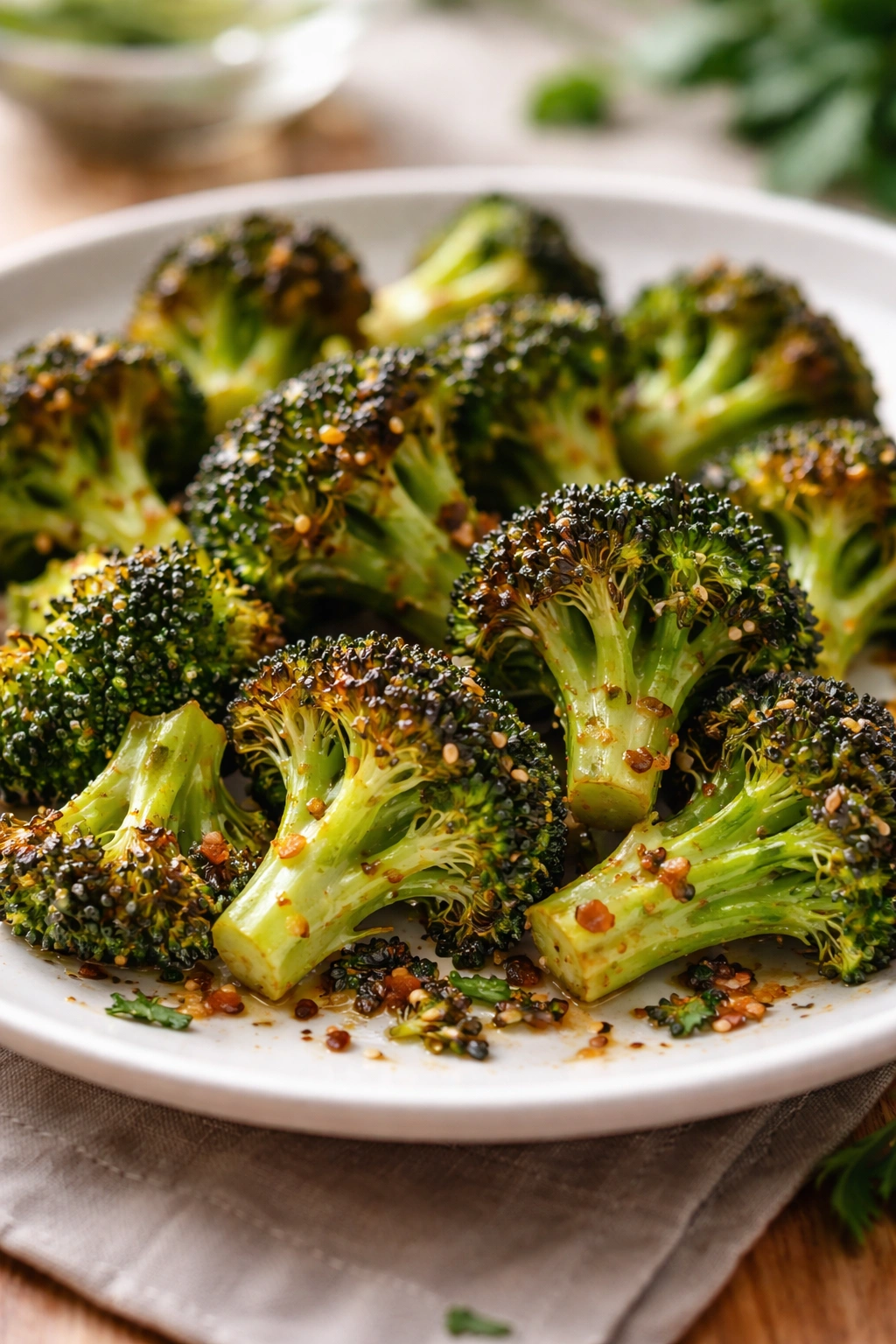
Raw broccoli in a salad can be tough and slightly bitter—nobody wants to gnaw through fibrous florets. Lightly roasting the broccoli instead of leaving it raw changes everything. It softens the vegetable just enough to make it pleasant to eat while still maintaining a slight firmness, brings out the natural sweetness, and mellows the sulfurous bite that some people find off-putting. This single step transforms the salad from “vegetable obligation” to “actually delicious.”
The dressing is where personality happens. A basic mayo and vinegar mixture forms the backbone, but the ratio matters tremendously. Too much mayo and the salad becomes heavy and obscures the broccoli’s flavor. Too little and it tastes dry. The sweet component—whether it’s sugar, honey, or a combination—shouldn’t make the salad taste like dessert, but rather should add just enough balancing sweetness to round out the vinegar’s sharpness. This creates a savory-sweet-tangy harmony that makes people reach for more.
The texture contrast is what keeps people eating. Soft roasted broccoli needs something crunchy alongside it. Crispy bacon provides not just texture but also umami depth and salt. Seeds or nuts add a different kind of crunch. The contrast between soft and crispy, mild and bold, sweet and savory keeps every forkful interesting.
The Surprising History of Broccoli Salad
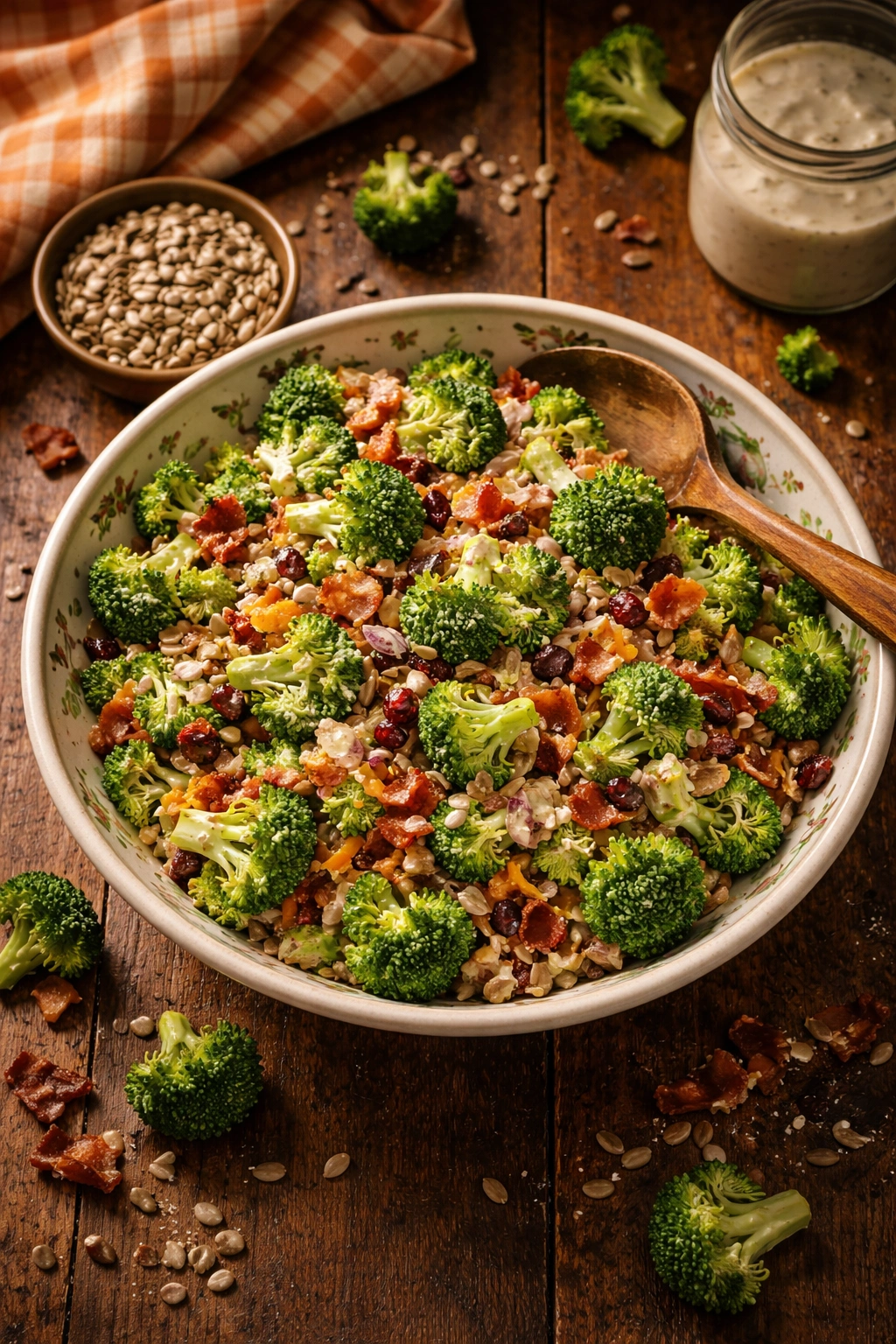
Broccoli salad as we know it today became popular over the past few decades, particularly in the American South and Midwest, where it became a go-to potluck staple. Unlike some traditional vegetable salads with centuries of history, broccoli salad is a relatively modern invention, which actually works in its favor—it has no stuffy traditions to follow, just a mission to taste good and satisfy a crowd.
The earliest widespread versions appeared in church cookbooks and community recipe collections sometime in the 1980s and 1990s. These early recipes were often more heavily sweetened and mayo-based than modern versions, reflecting the food trends of that era. Over time, home cooks have refined the formula, reducing excessive sweetness, experimenting with different nuts and dried fruits, and tweaking the vinegar-to-mayo ratio to find better balance.
What makes this salad so enduring isn’t novelty—it’s reliability. People know what to expect, they enjoy it consistently, and it never requires explaining or apologizing for. In a potluck environment where you’re competing for attention against dozens of other dishes, that predictable excellence is actually an advantage.
What Makes This Version Different
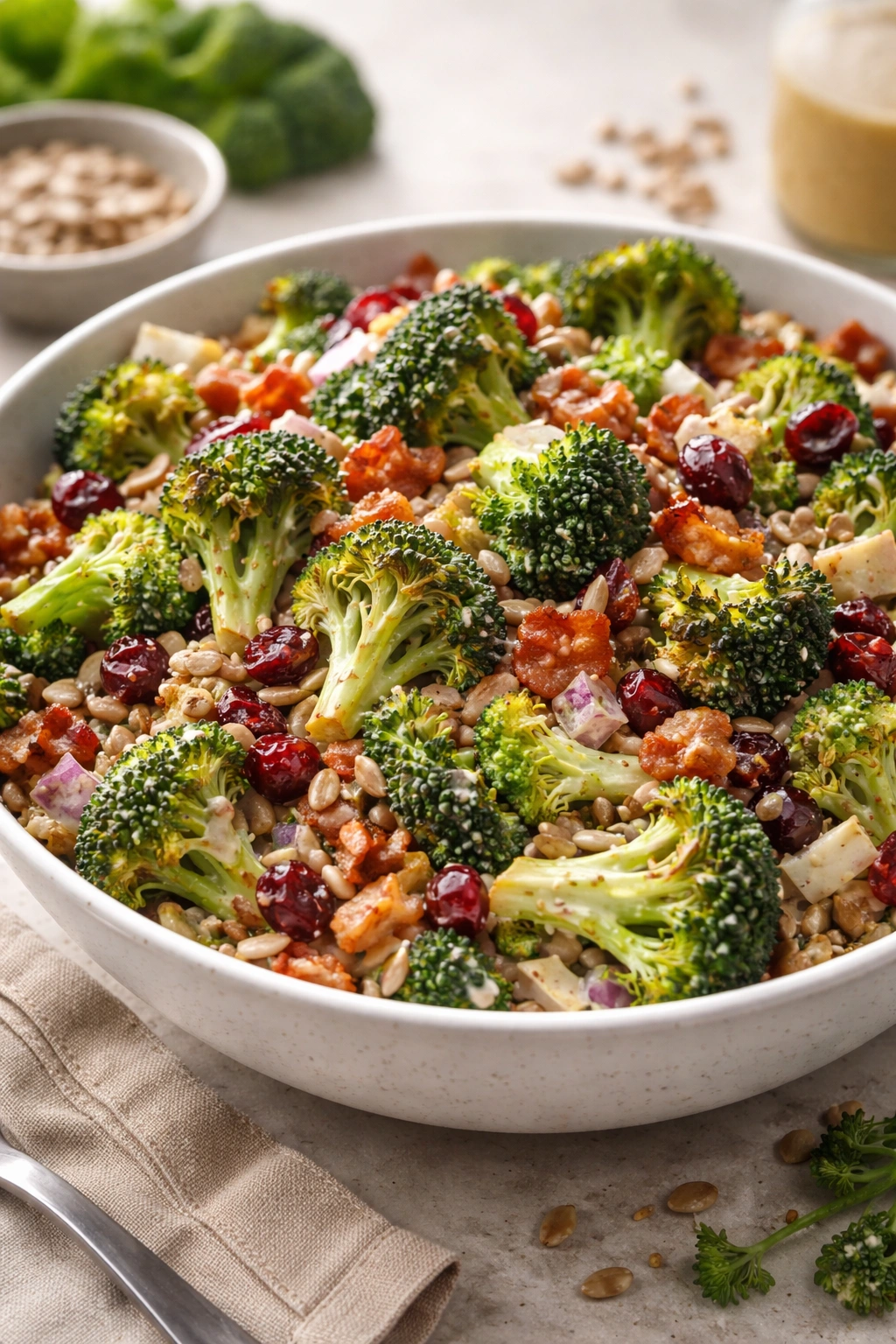
This particular formula emphasizes proper broccoli preparation, a well-balanced dressing that doesn’t veer toward either mayo-heavy or vinegar-forward, and a careful selection of add-ins that complement rather than overwhelm. The roasting method ensures every floret gets lightly caramelized and tender. The dressing comes together quickly but tastes like it was carefully balanced. The bacon, dried cranberries, and sunflower seeds create multiple layers of flavor and texture that keep the salad interesting all the way to the bottom of the bowl.
Yield: Serves 10 to 12 | Makes about 10 cups
Prep Time: 20 minutes (mostly hands-on chopping and mixing)
Cook Time: 20 minutes (roasting the broccoli)
Total Time: 40 minutes active + 15-30 minutes cooling time before dressing
Difficulty: Beginner — No special equipment beyond a cutting board and sheet pan; the steps are straightforward and very forgiving.
Ingredients for the Broccoli and Bacon
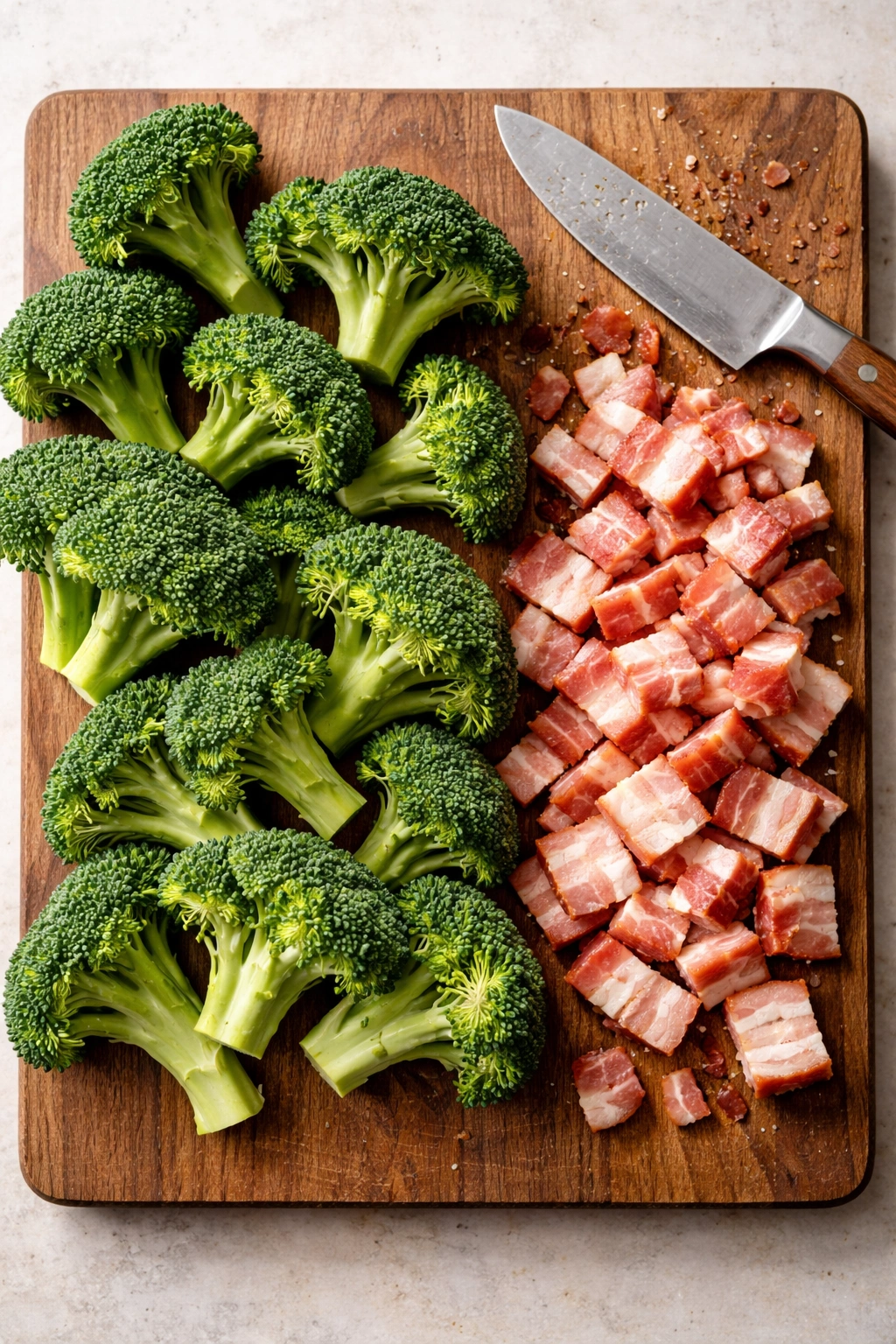
- 2 pounds fresh broccoli crowns (about 2 large crowns, or 3 medium ones), cut into bite-sized florets
- 3 tablespoons olive oil
- ¾ teaspoon fine sea salt
- ¼ teaspoon freshly ground black pepper
- 8 ounces bacon, preferably thick-cut, chopped into bite-sized pieces (about ¾ inch pieces)
Ingredients for the Dressing
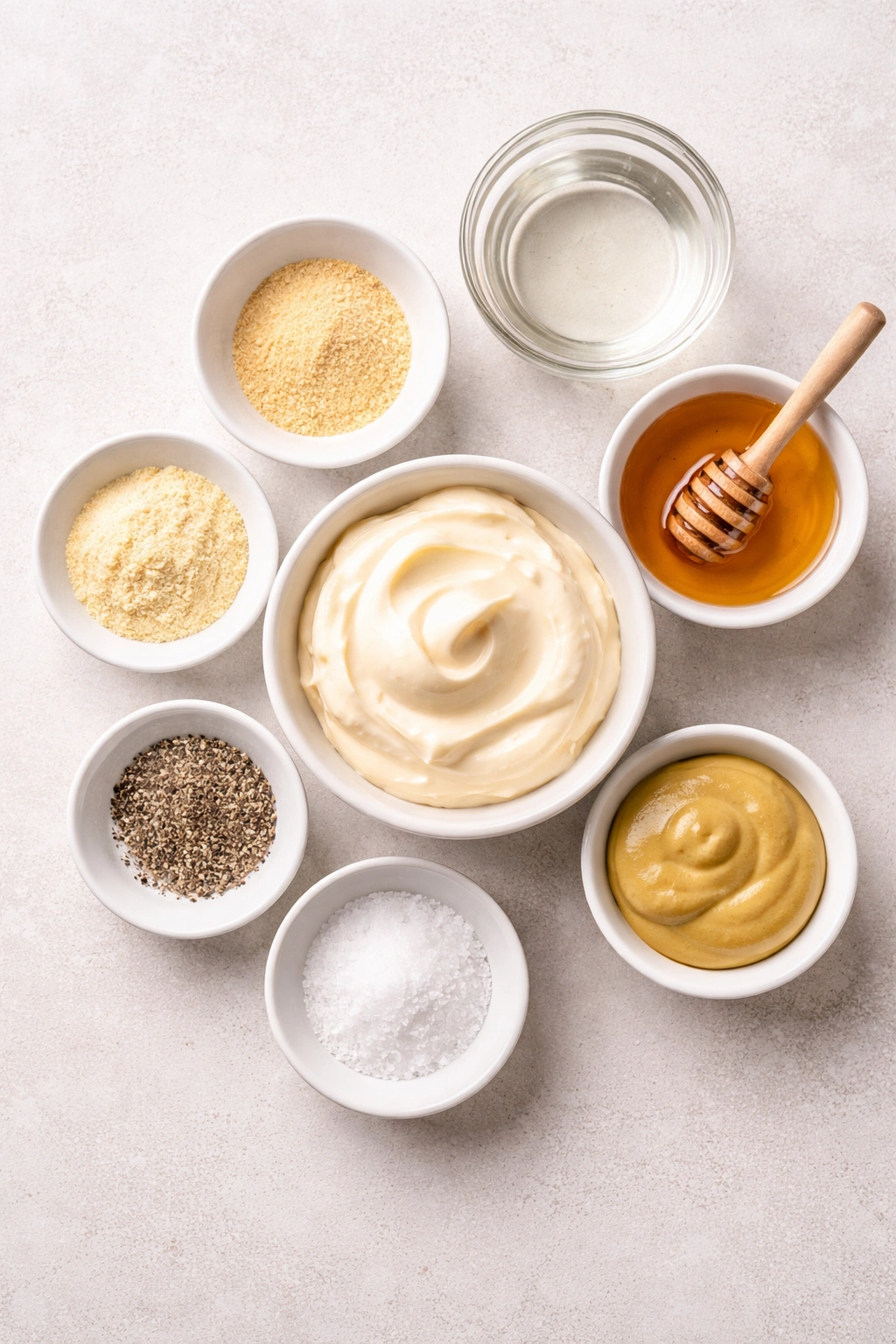
- ¾ cup mayonnaise (full-fat works best; Greek yogurt mixed 50-50 with mayo works too for a lighter version)
- 2 tablespoons apple cider vinegar or white vinegar
- 2 tablespoons honey (or 2½ tablespoons granulated sugar if you prefer)
- 1 teaspoon Dijon mustard
- ½ teaspoon garlic powder
- ½ teaspoon fine sea salt
- ¼ teaspoon freshly ground black pepper
Ingredients for the Salad Assembly
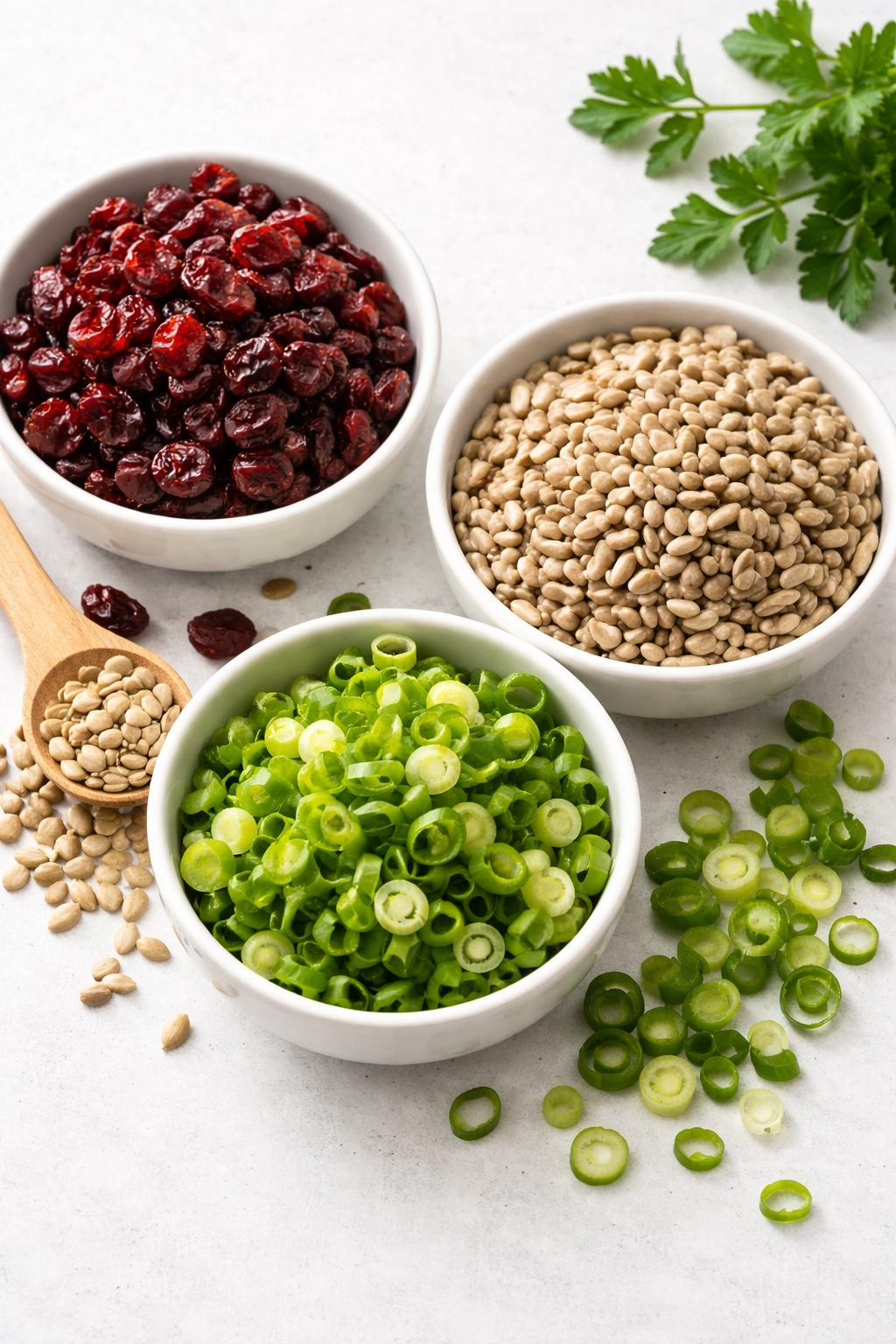
- 1 cup dried cranberries (or raisins, or a 50-50 mix of both)
- 1 cup unsalted sunflower seeds (or raw sliced almonds, or a combination of both)
- 3 green onions (scallions), white and light green parts, sliced thin on the bias (about ⅓ cup)
- Optional: 2 tablespoons fresh parsley or chives, chopped fine, for color and fresh herb brightness
Prepare the Broccoli and Render the Bacon
-
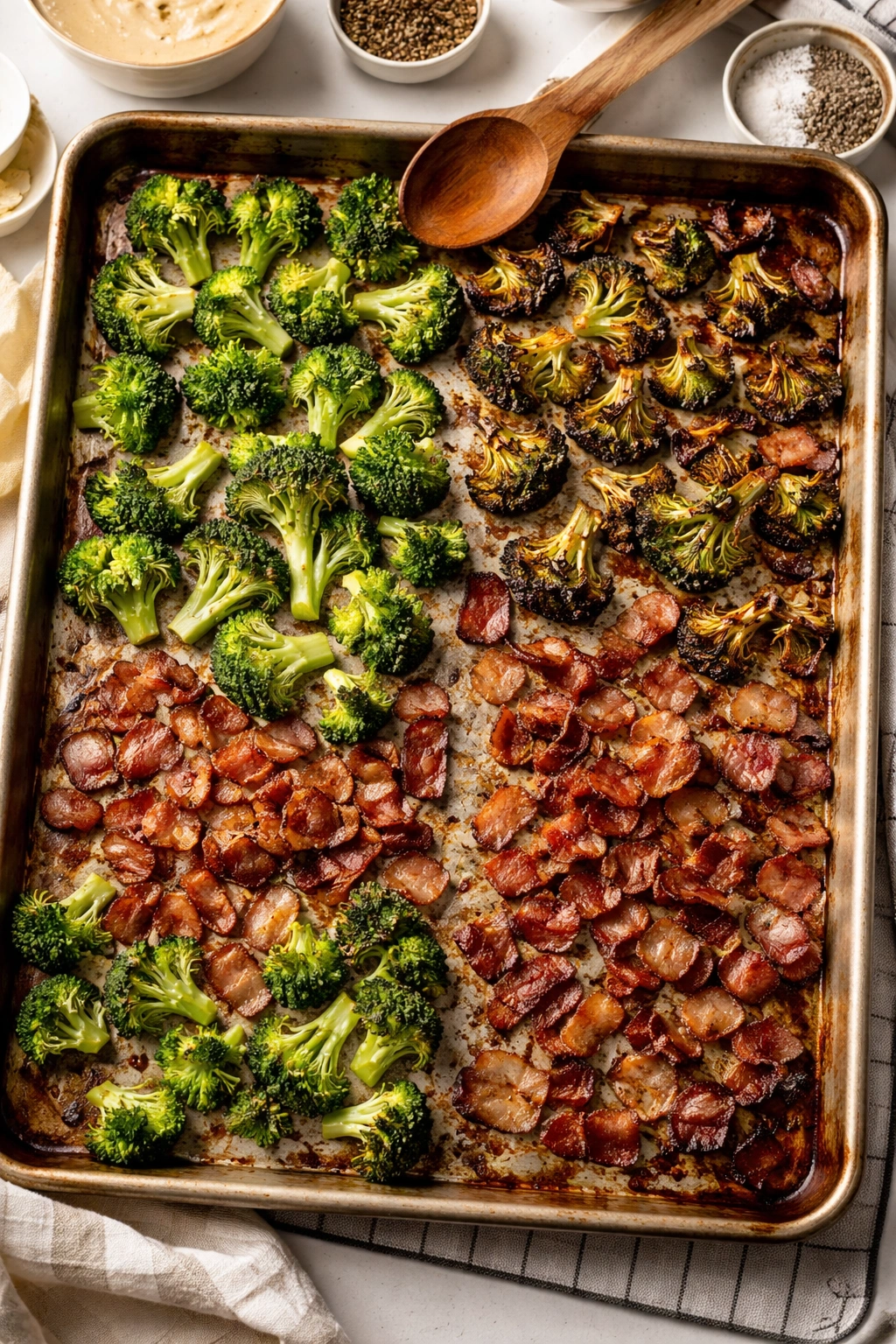
Position a rack in the upper third of your oven and preheat it to 400°F (200°C). Line a large, rimmed sheet pan (or two medium ones) with parchment paper for easy cleanup.
-
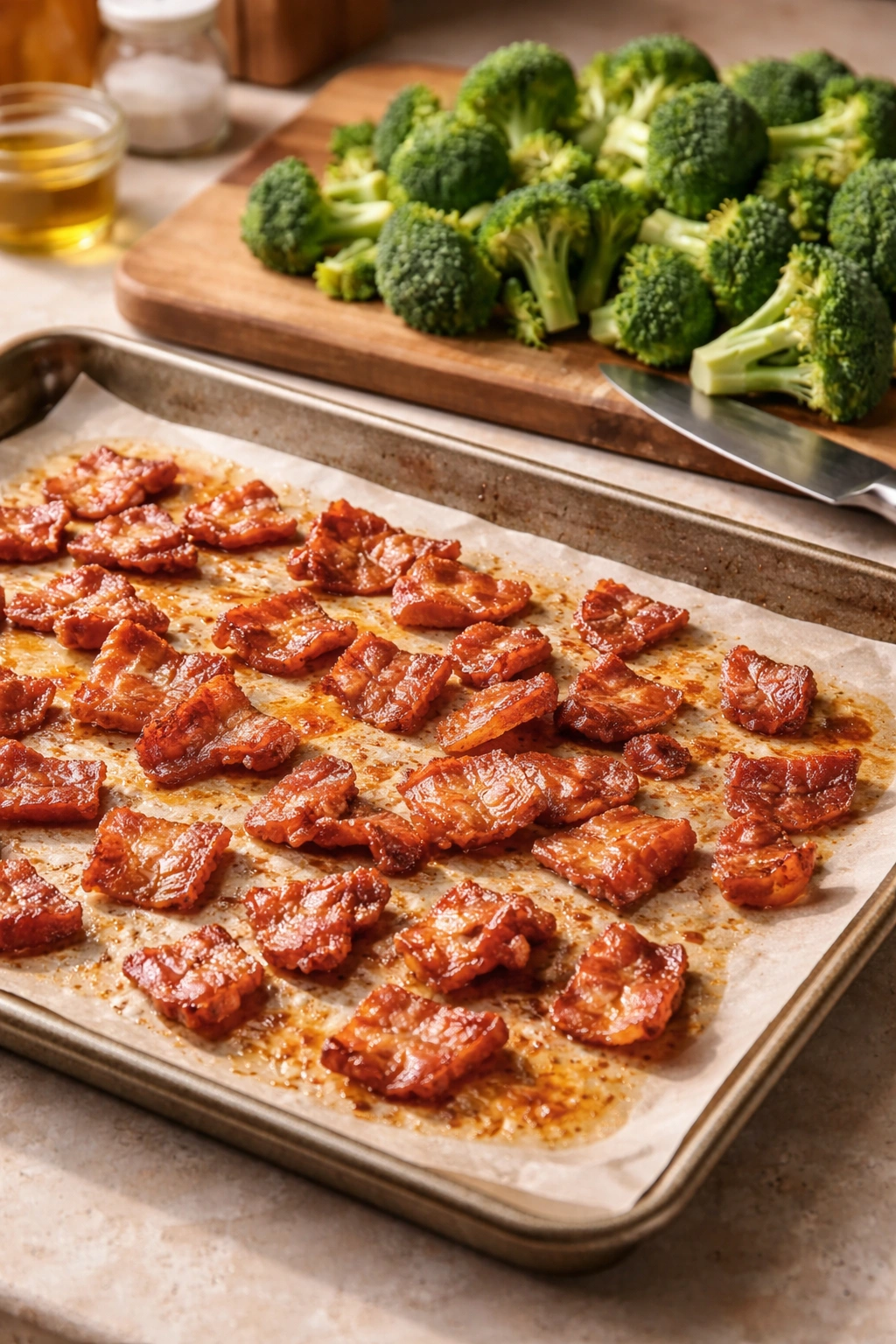
Chop the bacon into roughly ¾-inch pieces and spread them in a single layer on the sheet pan. Place the sheet pan in the oven and roast the bacon for 10 to 12 minutes, stirring once about halfway through, until the bacon is crispy and deeply golden brown — the pieces should be fully rendered and starting to darken at the edges. Don’t skip this roasting step for the bacon; baking it in the oven renders the fat evenly and gives you crispier results than stovetop cooking, plus you’re using the oven anyway, so it’s efficient.
-
While the bacon roasts, wash the broccoli and cut it into bite-sized florets — you’re aiming for pieces roughly the size of a walnut in its shell, small enough that they’re easy to eat but large enough that they won’t shrivel to nothing when roasted. Chop any extra-large florets so they cook evenly.
Advertisements -
When the bacon is done, transfer it to a paper-towel-lined plate and let it cool for 3 to 4 minutes. Leave about 2 tablespoons of the rendered bacon fat on the sheet pan — it’s liquid gold for roasting the broccoli. (You can save the remaining bacon fat for cooking eggs or other uses.)
Roast the Broccoli
-
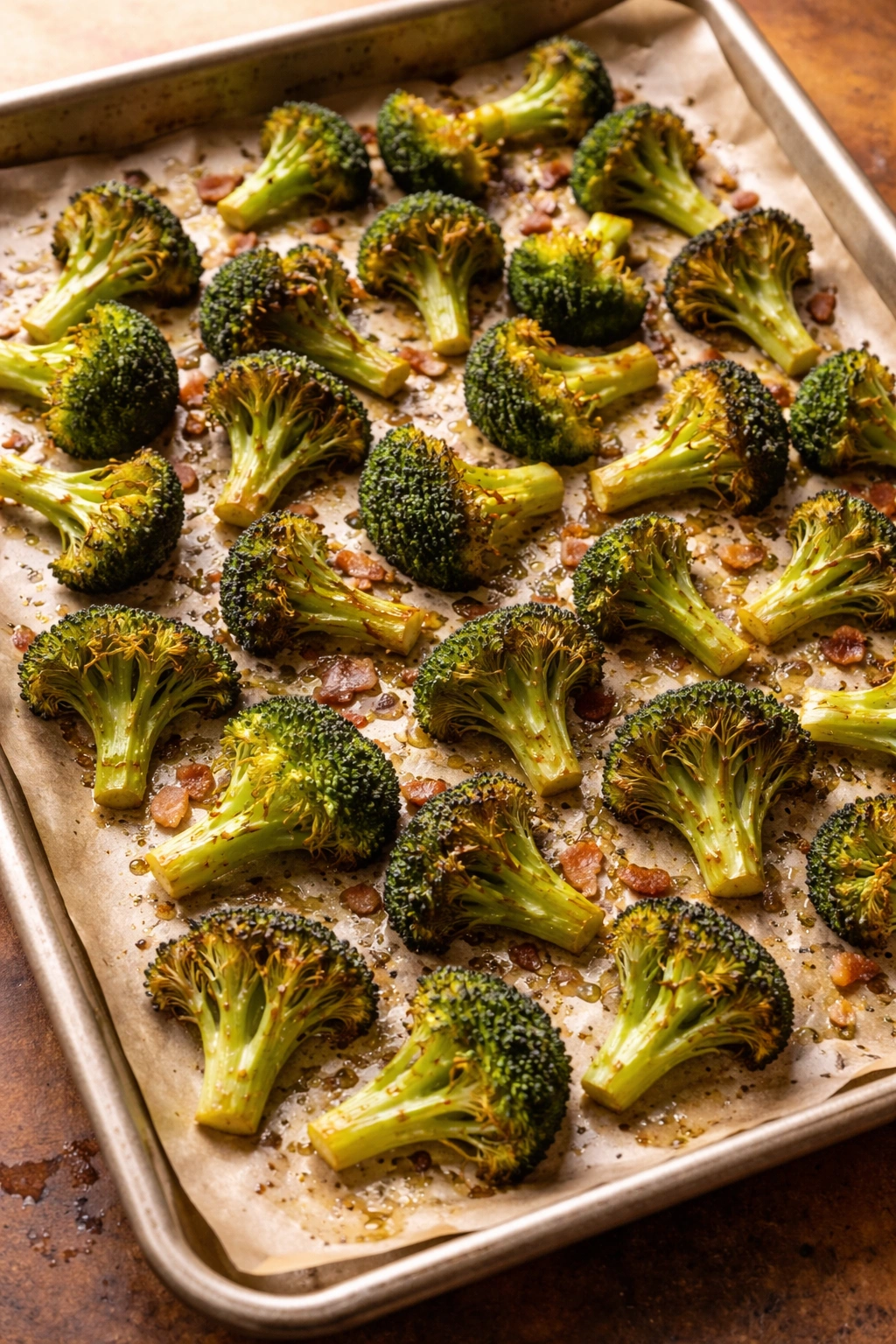
Add the chopped broccoli florets to the sheet pan with the bacon fat. Drizzle with the 3 tablespoons of olive oil, sprinkle with the ¾ teaspoon salt and ¼ teaspoon black pepper, and toss everything together with your hands or a large spoon until every floret is lightly coated with oil and fat. Spread the broccoli in a single layer, cut-side down whenever possible — this helps the florets caramelize and develop a light brown crust.
-
Roast the broccoli for 15 to 18 minutes, stirring halfway through the cooking time, until the florets are tender when pierced with a fork and the cut surfaces are light golden brown — not dark brown or charred, just a gentle caramelization. The broccoli should still have a slight firmness when you bite it, not mushy. Overcooked broccoli becomes sulfurous and unpleasant, so watch the clock carefully in these final few minutes.
-
Remove the sheet pan from the oven and set it aside to cool for at least 15 to 20 minutes — ideally, you want the broccoli and bacon to cool to room temperature or slightly warm before you dress the salad. Warm vegetables will cause the mayo-based dressing to separate or break. If you’re in a hurry, you can spread the roasted broccoli on a clean sheet pan to cool faster.
Make the Dressing
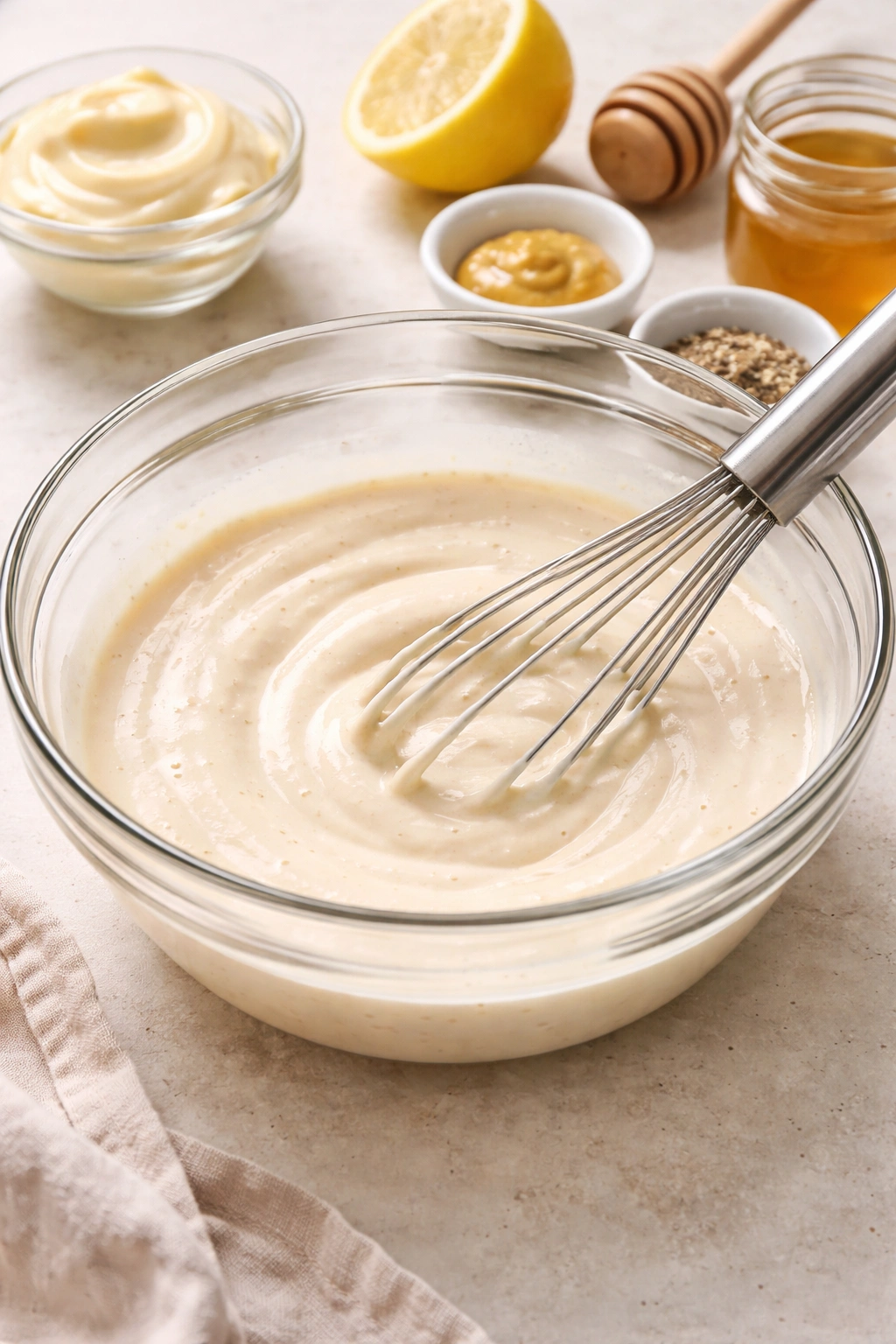
- While the broccoli cools, prepare the dressing so it’s ready when you need it. In a medium bowl, whisk together the mayonnaise, vinegar, honey, Dijon mustard, garlic powder, salt, and pepper until completely smooth and combined. Taste the dressing carefully — you’re looking for a balance where you can taste the tang of the vinegar and the sharpness of the mustard, but not so much that it overwhelms the creaminess of the mayo. The honey should add subtle sweetness, not make the dressing taste sugary. If the dressing tastes too sharp or acidic, whisk in an extra tablespoon of mayo. If it tastes flat or one-dimensional, add ½ teaspoon more vinegar. Don’t skip the tasting step — a well-balanced dressing makes all the difference between a good salad and one people can’t stop eating.
Assemble the Salad
-
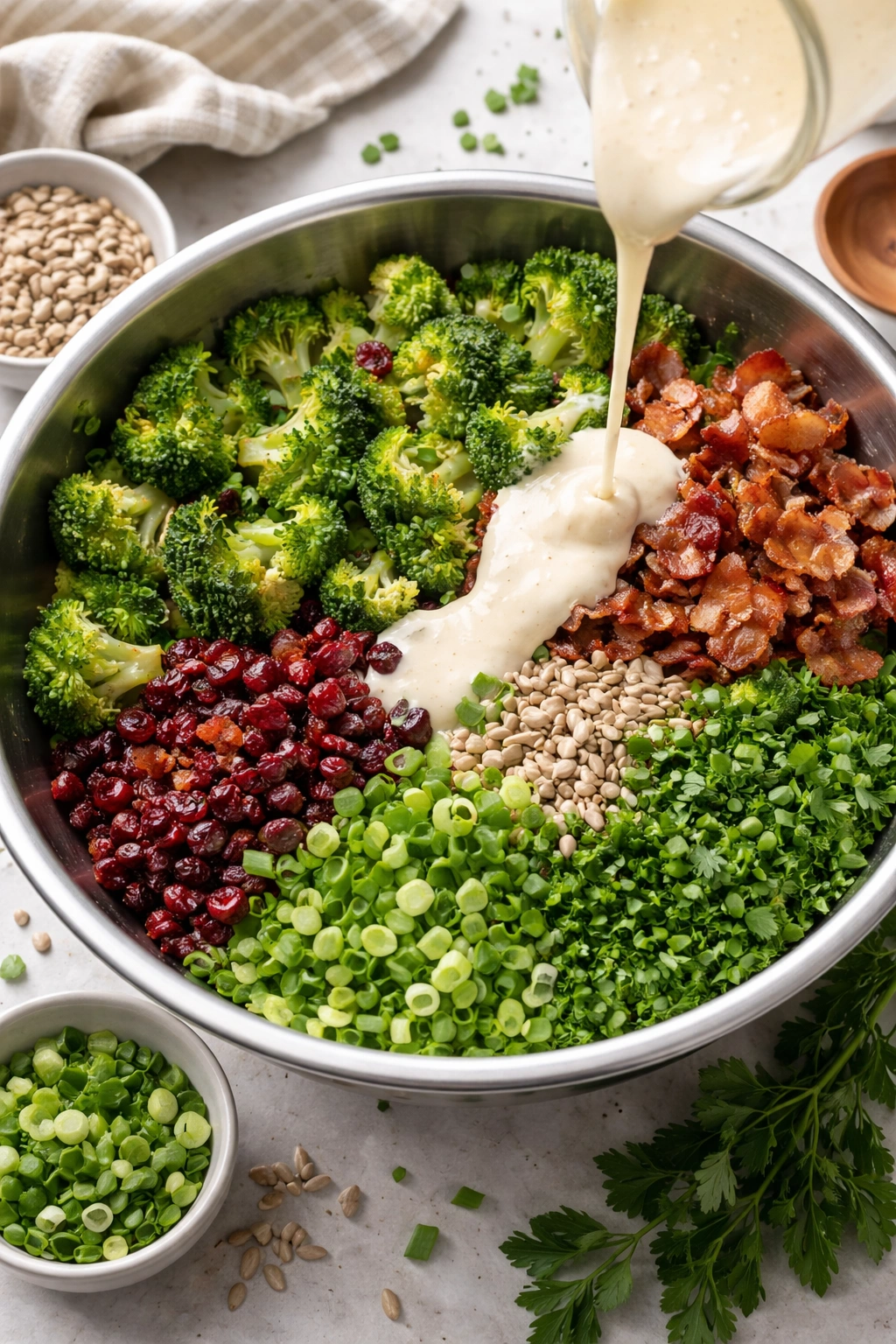
Once the roasted broccoli and bacon have cooled to room temperature or just slightly warm, transfer them to a large bowl — the biggest bowl you have is ideal because you need room to toss everything together gently without crushing the broccoli.
-
Add the dried cranberries, sunflower seeds, sliced green onions, and the crumbled cooled bacon (if it hasn’t broken into pieces already) to the bowl with the broccoli. Sprinkle the fresh parsley or chives on top if you’re using them.
-
Pour the dressing over the salad and fold everything together gently but thoroughly with a large spoon or silicone spatula. Work from the bottom of the bowl upward, turning the vegetables over the dressing, until every piece of broccoli is coated. The salad should look evenly dressed — not one wet spot at the bottom and dry spots at the top, but everything glistening lightly with dressing.
-
Let the assembled salad sit at room temperature for 10 to 15 minutes before serving, which allows the flavors to meld and the broccoli to absorb a little bit of the dressing’s flavor. The salad will continue to absorb dressing as it sits, so if you make it an hour or two ahead of time, it may look slightly drier than when you first tossed it. That’s not only fine, it’s actually ideal — the broccoli will taste more flavorful.
Why This Recipe Works Every Single Time
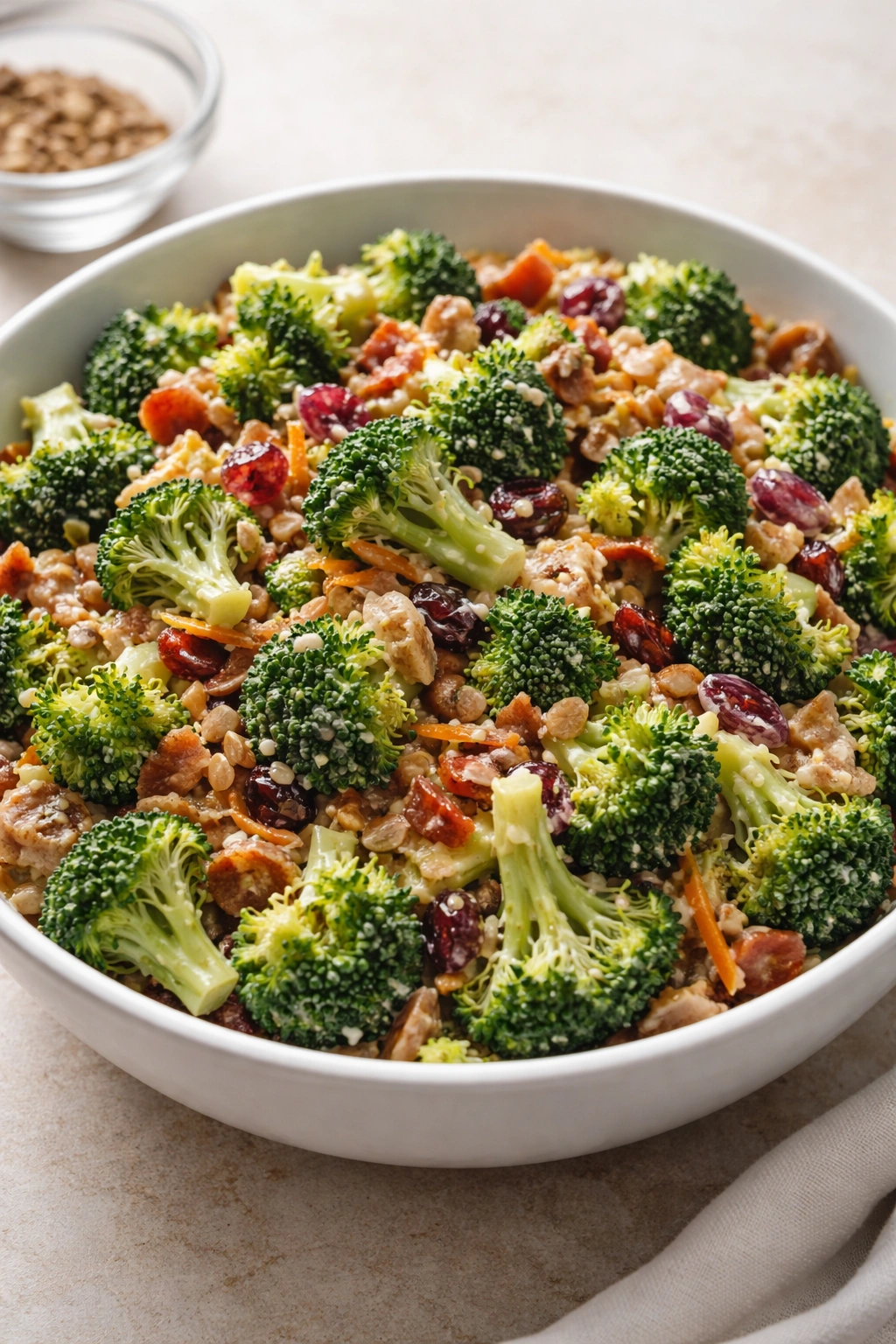
The secret to a broccoli salad that people actually request is that you’re not trying to mask the broccoli or make it taste like something else. You’re enhancing what’s already good about it. Roasting brings out natural sweetness and creates a slightly caramelized exterior that’s more interesting than raw broccoli. The dressing isn’t an afterthought but a carefully balanced component that complements rather than overpowers. The add-ins—bacon, seeds, dried fruit—are present in appropriate proportions, giving you multiple textures and flavors in every bite without any single ingredient dominating.
The other reason this salad travels so well and holds up for hours is that the roasted broccoli doesn’t continue to soften the way a raw vegetable salad would, and the mayo-based dressing doesn’t separate or wilt. You can make this in the morning for an evening gathering, and it’ll taste just as good at the end of the party as it did when you made it. That reliability is worth its weight in gold when you’re trying to impress.
Common Mistakes That Even Experienced Cooks Make
The most frequent error is cutting the broccoli too small. Tiny florets roast too fast and turn into little nuggets of concentrated flavor that are almost bitter. They also disappear into the salad, making the finished dish look sparse. Aim for walnut-sized pieces—they roast gently, stay visibly present in the salad, and are the perfect size for eating.
Overcooking the bacon is another one. Bacon that’s been roasted until it’s nearly black tastes acrid and overwhelms the other flavors. You want it crispy and deeply browned, but not burnt. The moment it’s dark golden with some darker bits around the edges, it’s ready to come out. It’ll continue to crisp slightly as it cools.
Under-seasoning the dressing is deceptively common. A lot of people taste the dressing as soon as they make it and think “this needs more mayo,” when really what it needs is to hit the proper salt level or a tiny bit more acid. The dressing should taste a bit bold and flavorful on its own—when it coats the mild broccoli, it’ll be perfectly balanced. If the dressing tastes delicate and subtle on its own, the final salad will taste flat.
Dressing warm broccoli is a guaranteed way to end up with a broken, separated dressing that looks unappealing. Always wait for the vegetables to cool completely. This is non-negotiable if you want a salad that looks beautiful and professional.
Variations That Let You Make This Your Own
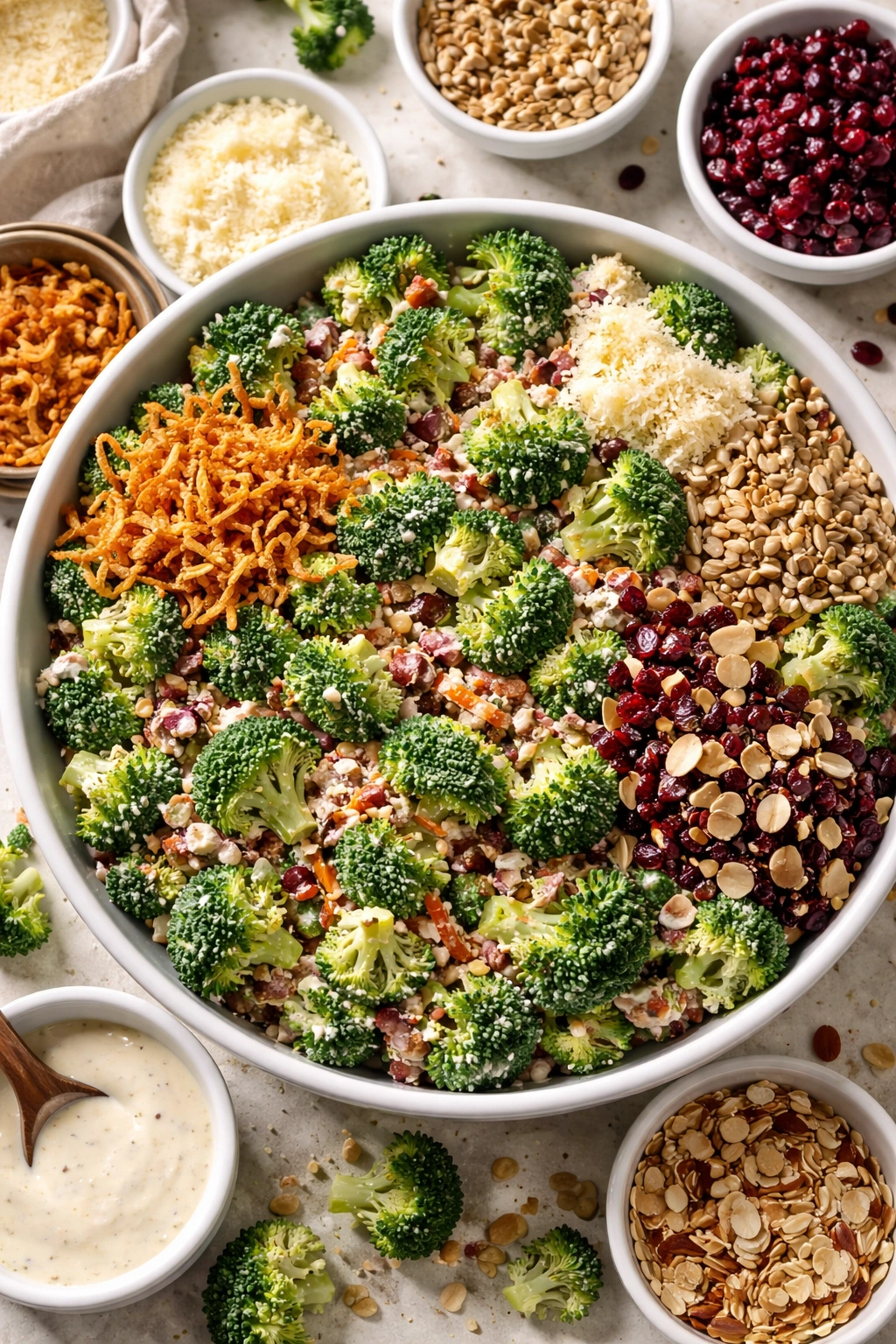
The beauty of broccoli salad is that it’s deeply customizable. You’re not locked into one specific combination—you’re working with a formula that’s flexible enough to adapt to what you have on hand, dietary preferences, or flavor directions you want to explore.
For a lighter version, replace half the mayo with Greek yogurt or sour cream. The dressing will be slightly tangier and less rich while maintaining good creaminess. You might need to add an extra ½ teaspoon of honey to balance the increased tartness.
For a more luxurious version, add 2 to 3 tablespoons of crispy fried onions or shallots right before serving (never earlier, or they’ll lose their crunch). You could also stir in ¼ cup of real grated Parmesan cheese, which adds umami depth and a slightly salty edge.
If you don’t have sunflower seeds, use raw almonds (sliced or slivered), raw pecans (chopped), raw walnuts (chopped), or cashews (halved). If you want a roasted nut flavor, buy pre-roasted versions. Avoid salted varieties unless you reduce the salt in the dressing by ¼ teaspoon.
To shift the flavor profile, experiment with the dried fruit. Dried tart cherries create a more sophisticated, less obviously sweet version. Golden raisins taste less tart than cranberries. A 50-50 mix of cranberries and raisins offers the best of both worlds. Some people add chopped dried apricots or figs for a more complex sweetness.
For a more herbaceous version, increase the green onions to 4 or 5, or add ¼ cup of fresh parsley (flat-leaf or curly), ¼ cup of fresh dill, or 2 tablespoons of fresh tarragon. Add fresh herbs right before serving so they stay vibrant and don’t darken.
To make this work for different diets, replace the bacon with crispy chickpeas or tempeh bacon if serving vegetarians. The texture contrast is still there, and many people won’t notice the difference. For a dairy-free version, use dairy-free mayo (several good brands exist) and skip the optional Parmesan.
If you want a spicier salad, add ¼ teaspoon of cayenne pepper, a pinch of smoked paprika, or ½ teaspoon of sriracha mixed into the dressing. These additions should be subtle—they should make people say “what is that flavor?” rather than “wow, this is spicy.”
Make-Ahead and Storage Strategy
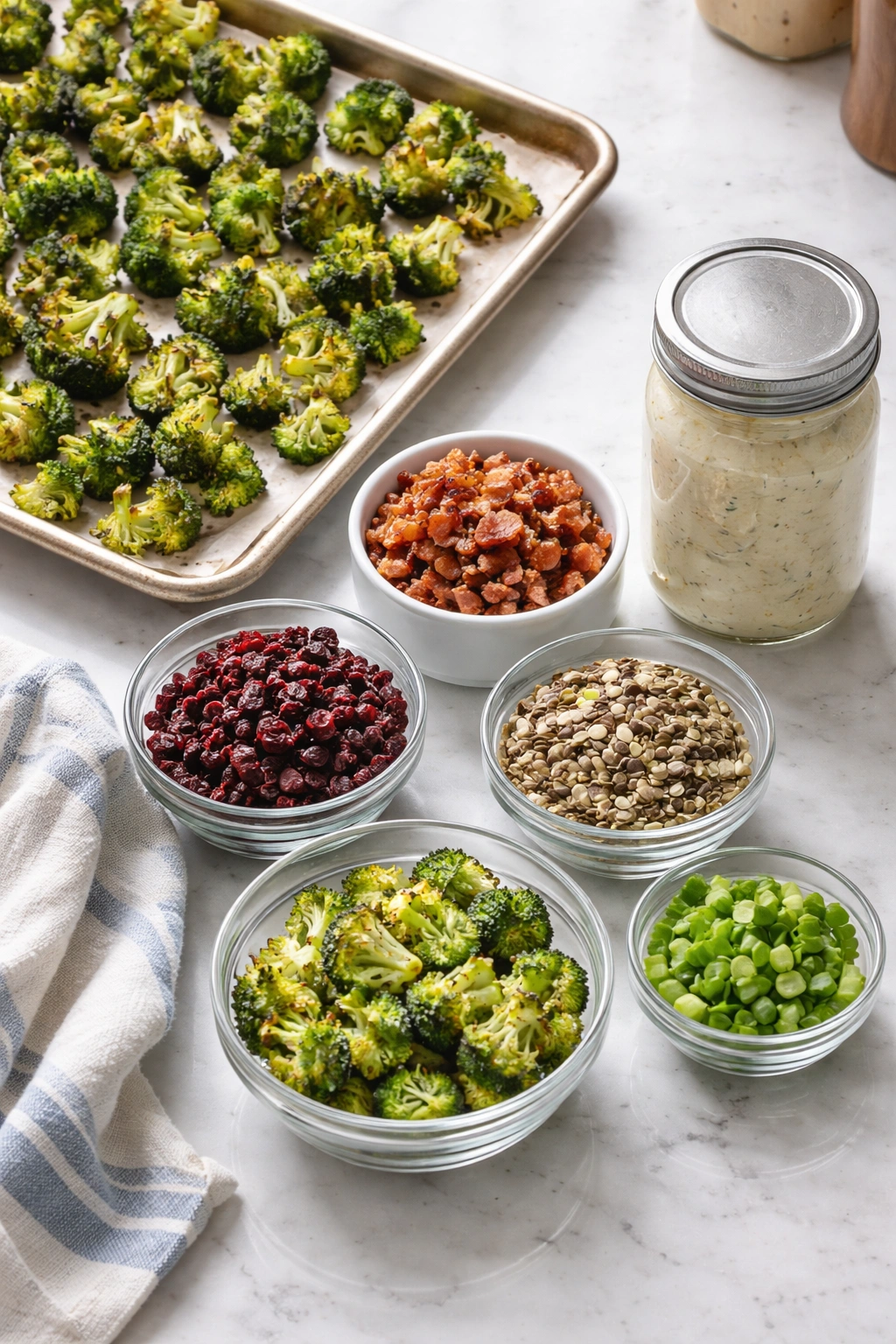
This salad is a make-ahead dream. You can roast the broccoli and bacon the evening before, store them separately in airtight containers in the refrigerator, and assemble the salad the next morning. The dressing can be made up to 2 days ahead and stored in a covered container in the refrigerator.
If you’re assembling the salad more than a few hours before serving, there’s a technique that prevents it from looking dry when you get to your destination. Prepare the broccoli, bacon, and all the solid ingredients (cranberries, seeds, green onions) without the dressing. Transport these in a large container. Pack the dressing separately in a jar or small container. Just before serving or right when you arrive at the gathering, toss the salad with the dressing so it looks freshly dressed and glistening.
In a covered container in the refrigerator, this salad keeps beautifully for 3 to 4 days. It won’t wilt or separate the way a delicate green salad would. The flavors actually meld and deepen on the second day, so if you’re eating it for dinner tonight, it might taste even better tomorrow for lunch.
You can also prepare and dress the salad up to 8 hours ahead—it travels well in a covered container and holds up beautifully on a buffet table for a couple of hours. If it sits out for more than 2 hours and looks like it’s absorbed all its dressing (the vegetables will look slightly dry), you can freshen it up by stirring in a quick dressing made with just 2 to 3 tablespoons of mayo mixed with 1 tablespoon of vinegar and a small squeeze of honey. This won’t be as balanced as the original dressing, but it’ll restore the shine and moisture without disturbing the flavors.
Serving Suggestions and Pairing Ideas
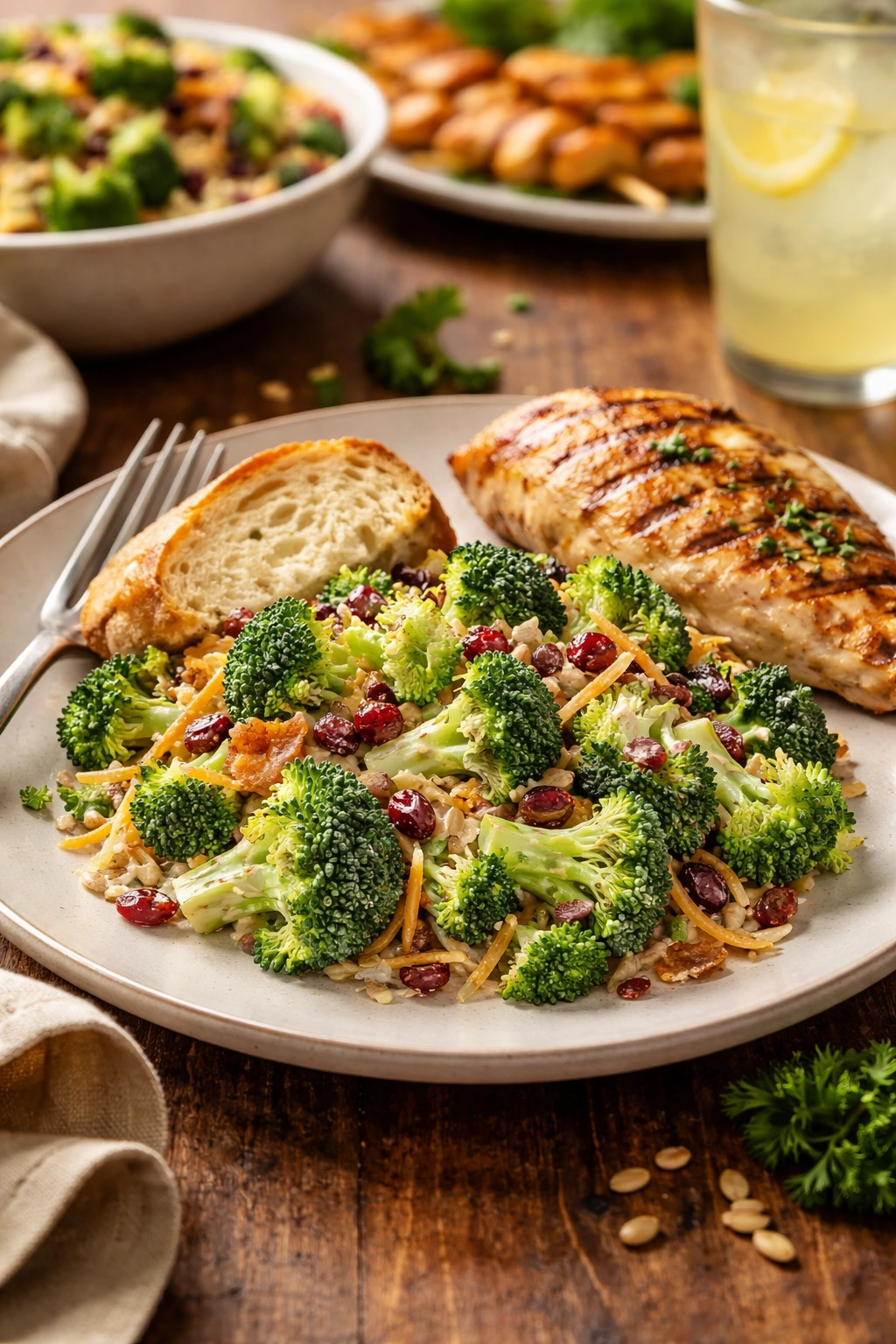
This salad works beautifully in multiple contexts. It’s substantial enough to be a light lunch on its own, paired with some crusty bread and maybe a simple soup. It’s the perfect side dish for grilled chicken or fish—the brightness and crunch of the salad balance rich, savory proteins beautifully. It’s a star at potlucks, barbecues, picnics, and any gathering where dishes are laid out buffet-style.
If you’re serving it as a main-course salad, consider adding some protein—grilled chicken, hard-boiled eggs, crispy tofu, or chickpeas would all be excellent additions without disrupting the flavor balance.
As a side dish at a backyard gathering, it pairs especially well with pulled pork, grilled chicken, smoked ribs, or hamburgers. The cool, fresh salad is a perfect counterpoint to hot, smoky, or rich main courses.
For a more formal meal, serve it as a composed salad on individual plates rather than in a large bowl. This makes it feel more intentional and elegant, even though the ingredients are exactly the same. You could also serve small portions as a side salad course between the main and dessert at a multi-course dinner.
In a potluck setting, this salad will be one of the first things to disappear. Budget for people taking large portions—it’s so good that people will go back for seconds. If you need to serve a large crowd, double the recipe. It scales beautifully, and you’ll be known as the person who brought “that amazing broccoli salad.”
Final Thoughts
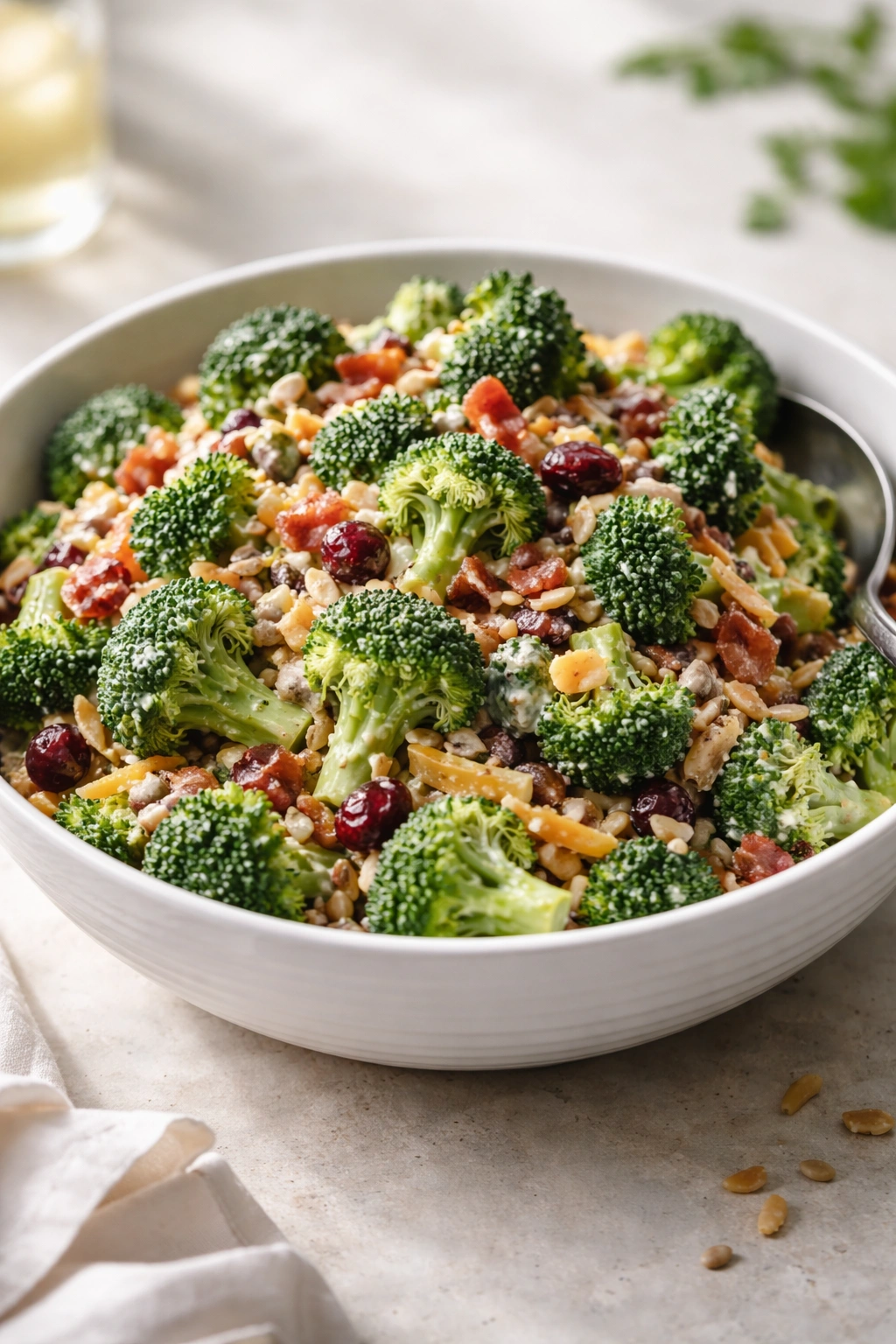
The reason you get asked to bring this salad isn’t because it’s difficult or impressive—it’s because it hits that perfect sweet spot of being genuinely delicious, easy to transport, reliable, and substantial enough that people feel satisfied eating it. It’s not a showstopper that people make once and forget about; it’s a salad people remember and specifically request. They picture it before your name is even mentioned at the invitation.
Once you’ve made this recipe a few times, you’ll feel confident tweaking it to suit your own taste or the specific gathering you’re attending. You’ll know whether you prefer it slightly sweeter or more tangy. You’ll have a sense of whether to use cranberries or raisins based on what you’re serving it alongside. You’ll develop your own signature version that people will ask for by name.
The real magic isn’t in any single ingredient—it’s in understanding how the components work together. The roasted broccoli provides vegetable substance and subtle sweetness. The bacon adds umami and crispy texture. The dressing provides creaminess and tang. The seeds and dried fruit add contrast and visual interest. Together, these elements create a salad that’s greater than the sum of its parts, the kind of dish that gets requested again and again, the one you’ll find yourself making for every summer gathering and cold-weather potluck without ever getting tired of it.
