



Mushrooms are the unsung heroes of vegetarian cooking, and honestly, they deserve way more credit than they typically get. These earthy, umami-rich fungi can be the starring role in a dinner that’s so satisfying, your meat-eating friends won’t even notice the absence of protein—though you’ll definitely know you’re getting plenty from the mushrooms themselves. Whether you’re cooking for a household of dedicated vegetarians, planning meals for Meatless Monday, or simply looking to expand your dinner rotation with something hearty and flavorful, mushroom-based dishes deliver the depth, texture, and satiating quality that make dinners feel complete and genuinely craveable.
The beauty of mushrooms lies in their versatility. A cremini mushroom has a completely different character than a meaty portobello, a delicate oyster mushroom behaves differently than a chewy shiitake, and a rich porcini offers complexity that button mushrooms can’t touch. This variety means you’re not locked into repeating the same dish over and over—you can shift the entire flavor profile and cooking method by simply changing your mushroom selection. Beyond just being vegetarian-friendly, these dinners are genuinely good food that happens to have no meat, not meals built around an absence.
What makes mushroom dinners particularly appealing is how they work in virtually any cuisine and cooking style. You can build Italian risottos, Asian stir-fries, Mediterranean mezze plates, rustic French preparations, or comforting American casseroles, all anchored by mushrooms in their different forms. The recipes below represent a range of flavors and cooking techniques, so you’ll find options whether you’re in the mood for something warming and slow-cooked, quick and weeknight-friendly, elegant enough for guests, or pure comfort food.
1. Mushroom and Walnut Wellington with Red Wine Sauce
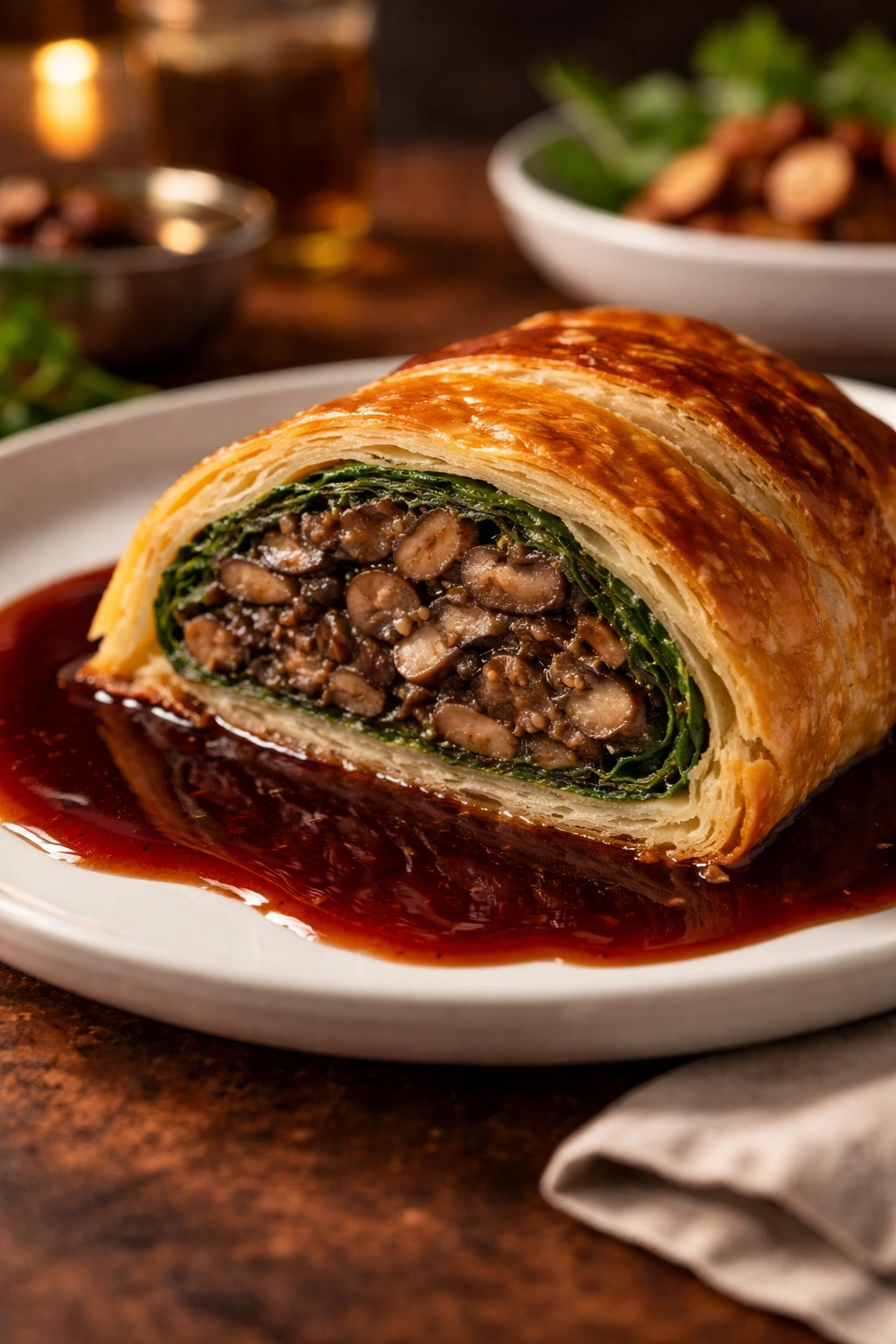
This is the vegetarian dinner that makes a statement—the kind of centerpiece dish you’d serve at a dinner party, yet it’s entirely approachable for a special weeknight meal at home. A mixture of finely chopped mushrooms, toasted walnuts, herbs, and breadcrumbs is wrapped in layers of seasoned spinach and flaky puff pastry, then roasted until the exterior is golden and crackling. The result is a slice that has texture, complexity, and visual drama, with a rich umami depth that satisfies like a traditional wellington but completely stands on its own merits.
What Makes It Special
This dish delivers the impression of sophisticated cooking without requiring advanced technique. The “meat” layer is actually a carefully balanced vegetable-based mixture that provides substance, heartiness, and genuine flavor development. Red wine is reduced into the pan juices to create a sauce that’s silky and rich, deeply flavored without any hint of simplification.
Yield: Serves 4 to 6 | Prep Time: 45 minutes | Cook Time: 35 to 40 minutes | Total Time: 1 hour 25 minutes | Difficulty: Intermediate — involves assembly and layering steps, but each component is straightforward.
For the Mushroom-Walnut Mixture:
- 1 pound mixed mushrooms (cremini, portobello, shiitake), roughly chopped
- 1 cup raw walnuts
- 2 tablespoons olive oil
- 1 medium shallot, minced
- 4 cloves garlic, minced
- ½ cup fresh breadcrumbs
- ¼ cup fresh parsley, finely chopped
- 2 tablespoons balsamic vinegar
- 1 teaspoon fresh thyme leaves
- Salt and freshly cracked black pepper to taste
For Assembly:
- 10 ounces fresh spinach (or 5 ounces frozen and thawed)
- 1 sheet vegan puff pastry (or regular puff pastry), thawed
- 2 tablespoons olive oil for brushing
- 2 tablespoons sesame seeds (optional but lovely)
For the Red Wine Sauce:
- 1 cup dry red wine
- 1 cup vegetable broth
- 2 tablespoons balsamic vinegar
- 1 tablespoon cornstarch mixed with 2 tablespoons cold water
- 1 sprig fresh thyme
- Salt and pepper to taste
Prepare the Filling:
-
Toast the walnuts in a dry skillet over medium heat for 3 to 4 minutes, shaking the pan occasionally, until fragrant and lightly browned. Transfer to a cutting board and let cool slightly, then chop finely (almost to crumb consistency, but with some small pieces remaining for texture).
-
Place the chopped mushrooms on a clean kitchen towel or several layers of paper towels. Gather the towel around the mushrooms and squeeze firmly to remove excess moisture—this is critical for achieving the right texture and preventing a soggy filling. The mushrooms should be quite dry.
-
Heat 2 tablespoons olive oil in a large skillet over medium-high heat. Add the minced shallot and cook for 2 minutes until softened. Add the garlic and cook for another 30 seconds until fragrant.
-
Add the squeezed-dry mushrooms to the pan and cook over medium-high heat for 8 to 10 minutes, stirring occasionally, until the mixture is very dark, deeply caramelized, and almost no moisture remains in the pan. The browning step is essential—it concentrates flavor and prevents the filling from being watery.
-
Remove from heat and stir in the toasted walnuts, breadcrumbs, parsley, balsamic vinegar, and thyme. Season generously with salt and pepper. Taste and adjust seasoning. The filling should be quite flavorful and hold together when pressed. Let cool to room temperature.
Assemble and Bake:
-
Preheat the oven to 400°F (200°C). Line a baking sheet with parchment paper.
-
Wilt the fresh spinach in a large skillet over medium heat (or thaw frozen spinach and squeeze very dry). Season lightly with salt and pepper, then spread on a plate to cool.
-
Lay the puff pastry sheet on a lightly floured surface. Layer half the spinach down the center third of the pastry, leaving a 2-inch border on the sides. Spread the mushroom-walnut mixture on top of the spinach, then top with the remaining spinach, creating a log shape.
-
Fold the left and right edges of pastry over the filling, sealing with a damp finger. Fold the top and bottom edges to fully encase the filling. The seal must be tight all the way around, or the pastry may split during baking. Transfer seam-side-down to the prepared baking sheet.
Advertisements -
Brush the surface generously with olive oil and sprinkle with sesame seeds if using. Score the top lightly with a sharp knife (decorative lines only—don’t cut through). Bake for 35 to 40 minutes until the pastry is deep golden brown and puffed.
-
While the wellington bakes, make the sauce. Combine the red wine, vegetable broth, balsamic vinegar, and thyme sprig in a saucepan. Bring to a simmer over medium-high heat and let reduce by half (about 8 to 10 minutes), until rich and concentrated. Whisk the cornstarch slurry to recombine and stir it into the sauce. Simmer for 1 minute until thickened and glossy. Season with salt and pepper. Remove the thyme sprig.
-
Remove the wellington from the oven and let rest for 5 minutes before slicing. Slice cleanly with a very sharp knife (a serrated knife works well). Serve with the red wine sauce spooned alongside or drizzled over.
Serving and Pairing Notes
This wellington pairs beautifully with roasted root vegetables—carrots, parsnips, or Brussels sprouts tossed with a little olive oil and sea salt, roasted at 400°F for 25 to 30 minutes. A simple arugula salad with lemon vinaigrette provides brightness against the richness of the pastry. For wine pairing, a medium-bodied red like Pinot Noir or a Côtes du Rhône complements the earthiness and the red wine sauce perfectly.
Make-Ahead and Storage
The mushroom-walnut filling can be made up to 2 days ahead and stored in an airtight container in the refrigerator. Assemble the wellington the morning of serving (up to 8 hours ahead), wrap it loosely in plastic, and refrigerate. Bring to room temperature for 10 minutes before baking. Leftovers keep refrigerated for 3 days and are excellent cold or reheated gently in a 300°F oven.
2. Creamy Mushroom and Barley Risotto with Thyme
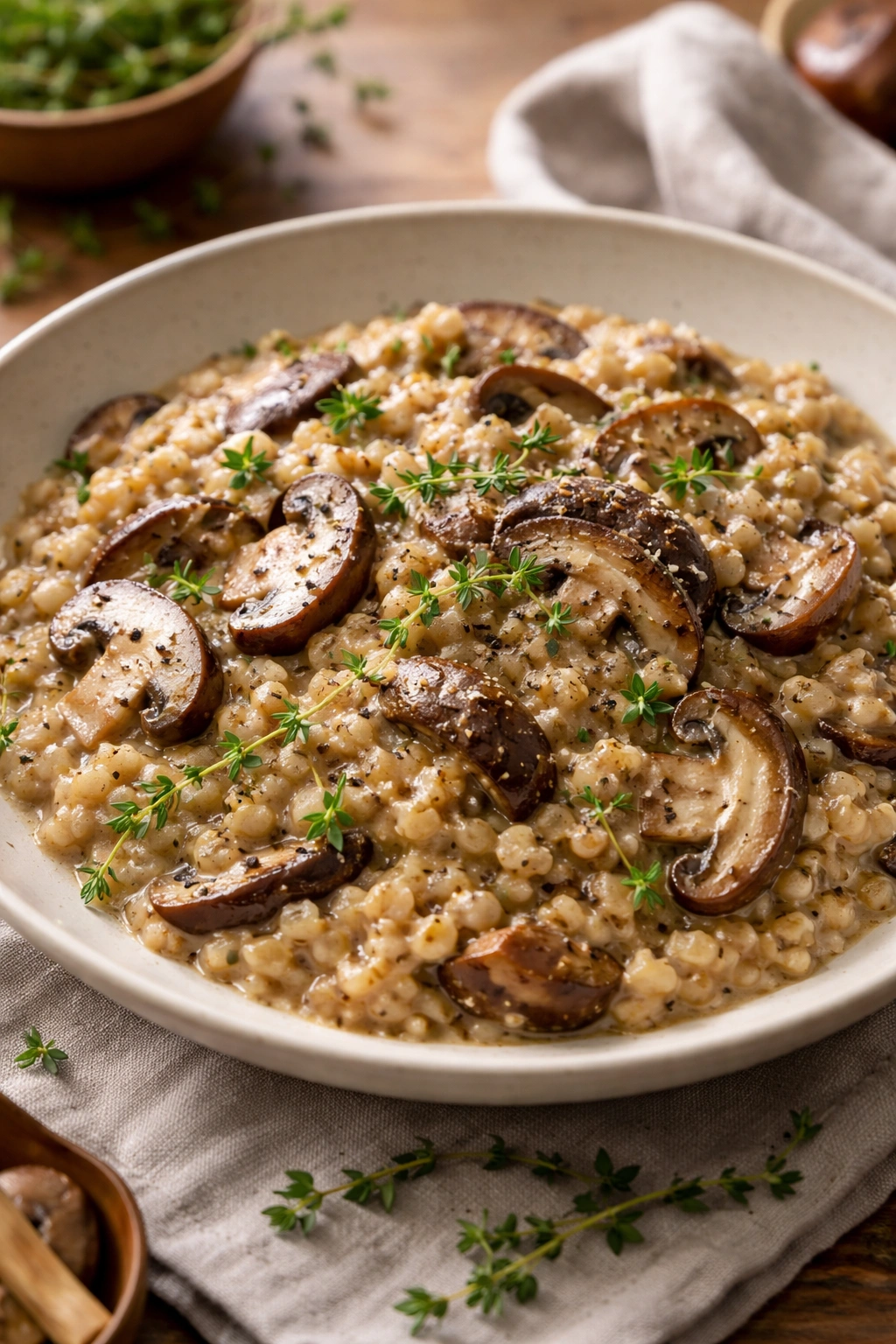
Risotto might seem fancy, but it’s actually one of the most forgiving dishes once you understand the basic principle: slowly adding warm broth to toasted grains while stirring continuously, building creaminess through the starch release of the grain itself rather than relying on cream. Barley gives this version a slightly nutty character and heartier texture than traditional rice risotto, while the mushrooms provide an umami richness that makes the dish feel luxuriously savory. The key is patience and the willingness to stand at the stove and pay attention—it’s only about 20 minutes of active cooking, but those minutes matter.
Why This Works So Well
Barley contains more soluble fiber and protein than rice, making this risotto genuinely satisfying as a standalone dinner. The combination of cremini and shiitake mushrooms provides two different flavor depths—the creminis are earthy and mild, while shiitakes contribute a deeper, almost smoky character. Fresh thyme ties everything together with a subtle herbal note that doesn’t overpower.
Yield: Serves 4 as a main course | Prep Time: 20 minutes | Cook Time: 35 minutes | Total Time: 55 minutes | Difficulty: Intermediate — requires attention while cooking but no advanced technique.
For the Risotto:
- 2 tablespoons olive oil
- 4 tablespoons unsalted butter, divided
- 1 medium onion, diced finely
- 8 ounces cremini mushrooms, sliced ¼-inch thick
- 6 ounces shiitake mushrooms, stems removed and caps sliced ¼-inch thick
- 4 cloves garlic, minced
- 1½ cups pearl barley
- ½ cup dry white wine (or vegetable broth)
- 4½ cups vegetable broth, kept warm on a back burner
- ½ cup whole milk or heavy cream (or cashew cream for dairy-free)
- ¼ cup grated Parmesan cheese (optional, or use nutritional yeast)
- 2 tablespoons fresh thyme leaves
- 1 tablespoon fresh lemon juice
- Salt and freshly cracked black pepper to taste
Sauté the Mushrooms:
-
Heat 2 tablespoons olive oil in a large, heavy-bottomed pot or wide skillet over medium-high heat. When it shimmers, add the cremini mushrooms in a single layer. Don’t stir—let them sit undisturbed for 3 to 4 minutes until the bottoms are deep brown. Stir, then cook for another 2 minutes until golden. Transfer to a plate.
-
Add the shiitake mushrooms to the same pot and repeat the process: sit undisturbed for 3 to 4 minutes, stir, cook for 2 minutes more. Transfer to the plate with the cremini mushrooms. Season both mushrooms with a pinch of salt and pepper.
Build the Risotto:
-
Add 2 tablespoons butter to the pot and reduce heat to medium. Add the diced onion and cook for 4 to 5 minutes, stirring occasionally, until softened and translucent. Add the garlic and cook for 30 seconds until very fragrant.
-
Add the barley to the pot and stir constantly for 2 minutes, toasting it lightly. The barley should smell nutty and warm.
-
Pour in the white wine and stir until completely absorbed, about 2 minutes.
-
Begin adding the warm broth one ladleful (about ¾ cup) at a time. Stir frequently—not constantly, but every minute or so—allowing each addition of broth to be mostly absorbed before adding the next. This process takes 25 to 30 minutes total. The stirring helps release the starches from the barley, creating the creamy texture that defines risotto. After about 20 minutes, begin tasting the barley; it should be tender but still slightly al dente (with just a tiny bit of firmness when you bite it).
-
When the barley is cooked through and most of the broth has been absorbed (you may not need all of it—add only enough for the risotto to flow slightly on the plate), remove the pot from heat. Stir in the remaining 2 tablespoons butter, the milk or cream, and the Parmesan cheese (if using).
-
Gently fold in the cooked mushrooms, fresh thyme leaves, and lemon juice. Taste and season with additional salt and pepper as needed—risotto should be well-seasoned and taste savory and rich.
-
Serve immediately in shallow bowls, drizzling a little extra olive oil on top if desired. The risotto should flow slightly but hold its shape—if it seems too thick, stir in a few tablespoons of warm broth or milk.
Advertisements
Tips for Success
Don’t skip the toasting step for the mushrooms. The Maillard reaction creates browning that adds tremendous flavor depth. You’re not just cooking them; you’re building flavor through browning.
Keep your broth warm. This sounds fussy but it matters—adding cold broth to the hot barley lowers the temperature of the pot, slowing the cooking and affecting the texture. Keep the broth in a separate pot on a low burner.
Taste frequently toward the end. Barley takes time to become tender, and you want it cooked through but not mushy. Start tasting at the 20-minute mark and keep tasting every minute or two.
Storage and Reheating
Risotto is best eaten immediately, but leftovers can be refrigerated for up to 2 days. Reheat gently in a saucepan over low heat, stirring frequently and adding broth or milk a bit at a time until it reaches the right consistency again—it will have thickened considerably as it cooled.
3. Stuffed Portobello Mushrooms with Quinoa and Roasted Vegetables
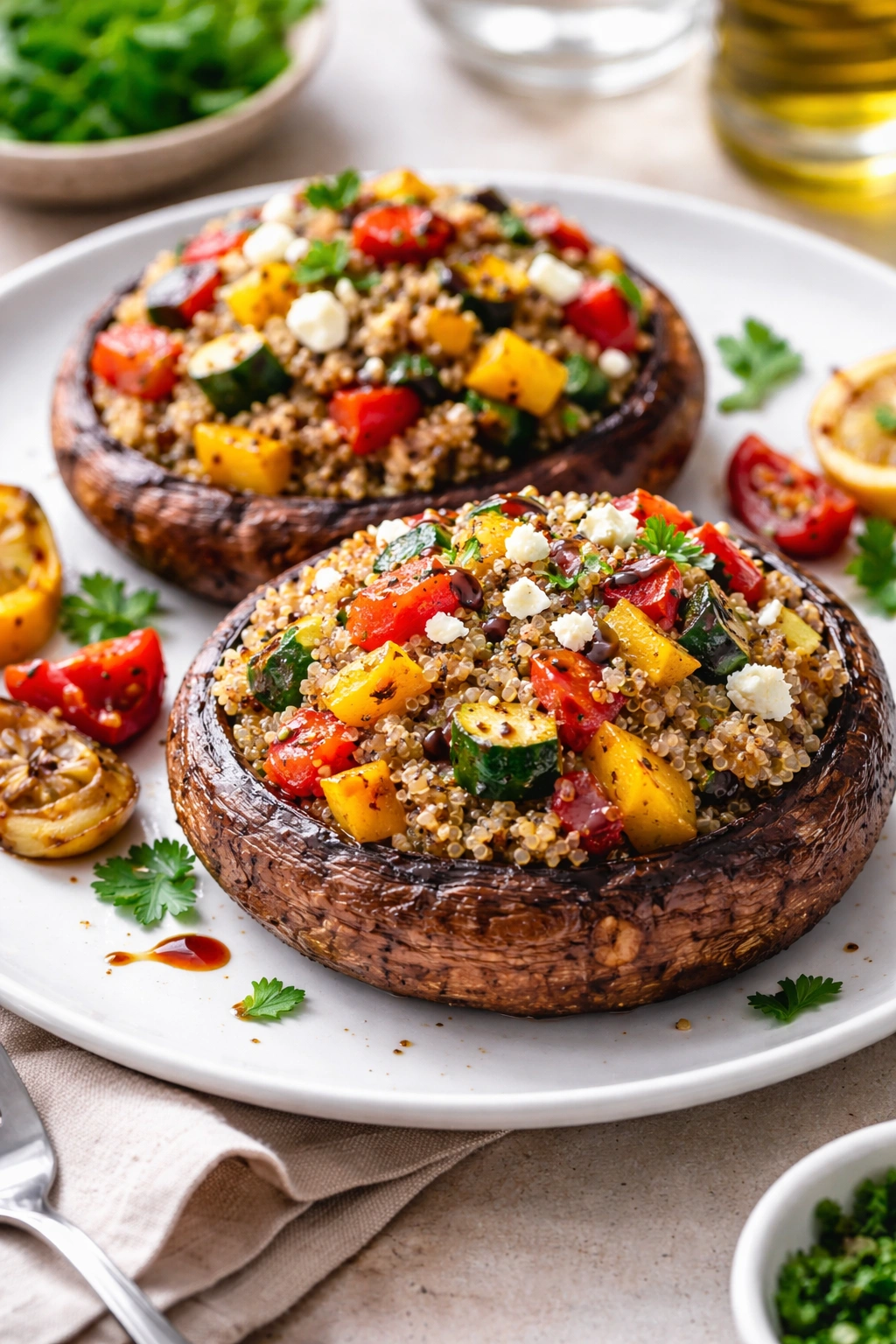
This is the dinner that looks restaurant-quality on the plate but comes together in less than an hour. Large portobello mushroom caps are roasted until tender, then filled with a warm mixture of cooked quinoa, roasted vegetables, herbs, and a touch of balsamic reduction. It’s elegant enough for company but straightforward enough for a regular weeknight—and each person gets their own substantial, beautiful portobello “steak” on the plate.
Why Portobellos Work Here
Portobello mushrooms have a meaty texture and substantial size that makes them feel like a main course rather than a side. The dark gills underneath hold liquid and develop rich flavor as they cook. Their mild flavor won’t compete with the stuffing but provides an earthy foundation that ties everything together.
Yield: Serves 4 | Prep Time: 25 minutes | Cook Time: 30 minutes | Total Time: 55 minutes | Difficulty: Beginner — roasting is very forgiving, and assembly is straightforward.
For the Mushrooms and Vegetables:
- 4 large portobello mushroom caps (about 4 to 5 inches across)
- 2 tablespoons olive oil, plus more for brushing
- 1 medium red bell pepper, diced
- 1 medium zucchini, diced into ½-inch cubes
- 1 cup cherry tomatoes, halved
- 4 cloves garlic, minced
- Salt and freshly cracked black pepper to taste
For the Stuffing:
- 1 cup cooked quinoa (see note below for cooking instructions)
- ¼ cup sun-dried tomatoes, chopped
- ¼ cup fresh basil, chopped (or 2 tablespoons if using fresh parsley)
- 2 tablespoons pine nuts, toasted
- 2 tablespoons balsamic vinegar
- 1 tablespoon honey or maple syrup
- ½ cup crumbled feta cheese (or omit for dairy-free)
- 1 tablespoon fresh lemon juice
- Salt and pepper to taste
Note on Quinoa: If you don’t have cooked quinoa on hand, cook ½ cup raw quinoa according to package directions (usually about 15 minutes simmering in 1 cup vegetable broth). This can be done while the vegetables roast to save time.
Prepare the Mushrooms:
-
Preheat the oven to 425°F (220°C). Line a large baking sheet with parchment paper.
-
Use a damp cloth to wipe the portobello caps clean, removing any dirt. Gently scrape out the dark gills from the underside of each cap using a small spoon—this prevents excess liquid from pooling. Brush both sides of each cap lightly with olive oil and season with salt and pepper. Place them gill-side-up on the prepared baking sheet.
Roast the Vegetables:
-
On a separate baking sheet, toss together the diced bell pepper, zucchini, cherry tomatoes, and garlic with 2 tablespoons olive oil. Season with salt and pepper. Spread in a single layer.
-
Place both baking sheets in the oven. Roast the vegetables for 15 to 18 minutes, stirring halfway through, until they’re tender and lightly caramelized at the edges. The mushrooms will be nearly done at this point—they should be tender when pierced with a fork but still holding their shape.
Make the Filling:
-
While everything roasts, prepare the filling. In a medium bowl, combine the cooked quinoa, sun-dried tomatoes, fresh basil, toasted pine nuts, feta cheese (if using), and lemon juice. Toss gently to combine.
-
When the vegetables come out of the oven, add them to the quinoa mixture. Toss everything together gently and season with salt and pepper to taste.
-
In a small saucepan, combine the balsamic vinegar and honey. Bring to a simmer over medium heat and let reduce for 3 to 4 minutes until thickened and syrupy. You should have about 2 to 3 tablespoons of balsamic reduction.
Advertisements
Assemble and Finish:
-
If the mushrooms have released a lot of liquid, tip each one and pour out the excess liquid. Divide the quinoa-vegetable mixture evenly among the four mushroom caps, mounding it gently in the center. Don’t pack the filling in tightly—it should look abundant but not compressed.
-
Return the stuffed mushrooms to the oven for 8 to 10 minutes to warm through and meld the flavors. The mushrooms should be completely tender and the filling should be warm throughout.
-
Remove from the oven and drizzle each mushroom with a small amount of the balsamic reduction. Serve immediately, offering any remaining reduction on the side for drizzling.
Variations and Adaptations
For a warmer-weather version, serve these at room temperature as part of a mezze spread alongside hummus, roasted vegetables, and warm flatbread. Swap the pine nuts for walnuts or sunflower seeds if that’s what you have. Use whatever fresh herbs you have available—dill, oregano, or parsley all work beautifully here.
Serving Ideas
These stuffed mushrooms pair wonderfully with a simple green salad dressed with lemon vinaigrette, or with warm crusty bread for soaking up any pan juices. A glass of crisp white wine like Sauvignon Blanc complements the earthiness of the mushrooms and the brightness of the vegetables.
4. Mushroom and Lentil Shepherd’s Pie with Cauliflower Topping
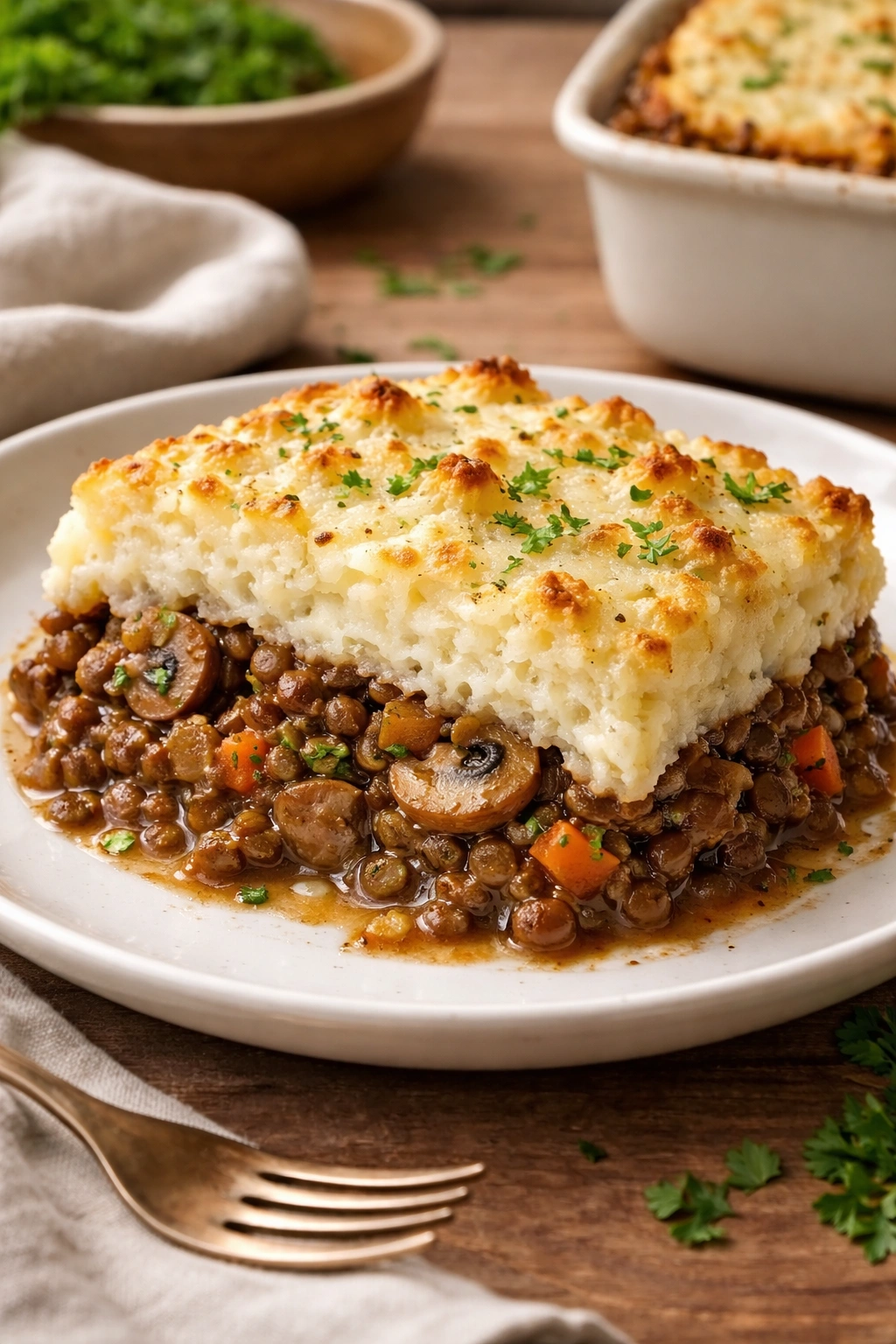
This is vegetarian comfort food at its finest—a rich, savory filling of cooked lentils and finely chopped mushrooms, seasoned like a proper pie filling and topped not with mashed potatoes but with a lighter, equally delicious cauliflower mash. The result is substantial, warming, deeply satisfying, and just a bit more nutritionally forward than the traditional version. One slice of this pie, with its slightly spiced filling and creamy-but-not-heavy topping, will convince anyone that vegetarian dinners are genuinely good food.
What Makes This Special
The filling is built on the umami foundation of mushrooms and the protein-and-fiber base of lentils, creating a texture that’s remarkably meaty without any meat substitutes. The cauliflower topping provides the comfort-food element of mashed potatoes without the heaviness—it whips up light and fluffy while still delivering that creamy mouthfeel everyone craves in a shepherd’s pie.
Yield: Serves 4 to 6 | Prep Time: 25 minutes | Cook Time: 45 minutes | Total Time: 1 hour 10 minutes | Difficulty: Intermediate — multiple components, but each step is straightforward.
For the Filling:
- 2 tablespoons olive oil
- 1 large onion, diced
- 4 medium carrots, diced into ½-inch pieces
- 2 celery stalks, diced
- 1 pound mixed mushrooms (cremini and portobello), finely chopped
- 4 cloves garlic, minced
- 2 tablespoons tomato paste
- 1 tablespoon balsamic vinegar
- 1 teaspoon dried oregano
- 1 teaspoon dried thyme
- ½ teaspoon smoked paprika
- 2 cups cooked brown or green lentils (or one 15-ounce can, drained and rinsed)
- 1 cup vegetable broth
- ¼ cup fresh parsley, chopped
- Salt and freshly cracked black pepper to taste
For the Cauliflower Topping:
- 1 large head cauliflower (about 1½ pounds), cut into florets
- 4 tablespoons unsalted butter
- ¼ cup whole milk or heavy cream (or plant-based alternative)
- ½ teaspoon fine sea salt
- ¼ teaspoon white pepper
- 2 tablespoons grated Parmesan cheese (optional)
- Fresh thyme sprigs for garnish
Make the Filling:
-
Heat 2 tablespoons olive oil in a large, heavy pot over medium heat. Add the diced onion, carrots, and celery. Cook for 8 to 10 minutes, stirring occasionally, until the vegetables begin to soften and the onion becomes translucent. This is your aromatic base and it matters—don’t skip this step or rush it.
-
Add the finely chopped mushrooms and cook for 8 to 10 minutes, stirring occasionally, until the mushrooms release their liquid and then reabsorb it, becoming darker and more concentrated. At this point, the mixture should be considerably darker than when you started—this browning develops deep, savory flavor.
-
Add the minced garlic and stir constantly for 30 seconds until fragrant. Add the tomato paste and stir for another 2 minutes, coating everything—this step helps cook off the rawness of the tomato paste and deepen the flavor.
-
Add the balsamic vinegar, oregano, thyme, and smoked paprika. Stir well and cook for 1 minute until fragrant.
-
Add the cooked lentils and vegetable broth. Bring to a gentle simmer and cook for 10 to 12 minutes, stirring occasionally, until the filling is thick and much of the liquid has been absorbed. The mixture should be thick enough to mound on a spoon without running off—if it seems too thin, simmer for another few minutes.
-
Remove from heat and stir in the fresh parsley. Taste and season generously with salt and pepper. The filling should taste deeply savory and well-seasoned.
Make the Cauliflower Topping:
-
While the filling simmers, prepare the cauliflower topping. Bring a large pot of salted water to a boil. Add the cauliflower florets and cook for 10 to 12 minutes until very tender when pierced with a fork—you want the cauliflower completely soft, not al dente.
Advertisements -
Drain the cauliflower very thoroughly in a colander, pressing gently with a wooden spoon to remove excess water. Excess moisture will make the topping soggy, so don’t skip this step.
-
Transfer the drained cauliflower to a food processor fitted with a metal blade. Add the butter and milk. Pulse until the mixture reaches a consistency similar to mashed potatoes—fluffy but with no large lumps. Add the salt and white pepper and pulse briefly to combine. If using Parmesan, add it now and pulse once more to distribute.
-
Taste and adjust seasoning as needed. The topping should taste creamy, slightly salty, and have the texture of fluffy mashed potatoes.
Assemble and Bake:
-
Preheat the oven to 375°F (190°C). Transfer the lentil filling to a 9×13-inch baking dish (or similar casserole), spreading it into an even layer.
-
Spoon the cauliflower topping over the filling, spreading it gently with a spatula or the back of a spoon into an even layer that covers the filling completely. The topping will expand slightly as it bakes, so don’t worry if it seems like a thin layer.
-
Bake for 25 to 30 minutes until the topping is very lightly golden and the filling is bubbling slightly at the edges. Garnish with fresh thyme sprigs if desired.
-
Remove from the oven and let rest for 5 minutes before serving. This allows the pie to set slightly, making it easier to serve in clean portions.
Storage and Make-Ahead
This shepherd’s pie can be assembled up to 1 day ahead, covered, and refrigerated. Bake it directly from the refrigerator, adding 5 to 10 minutes to the baking time. Leftovers keep refrigerated for up to 4 days. Reheat individual servings in a microwave or warm the entire pie in a 300°F oven until warmed through.
5. Pan-Seared Mushroom Steaks with Chimichurri and Roasted Root Vegetables
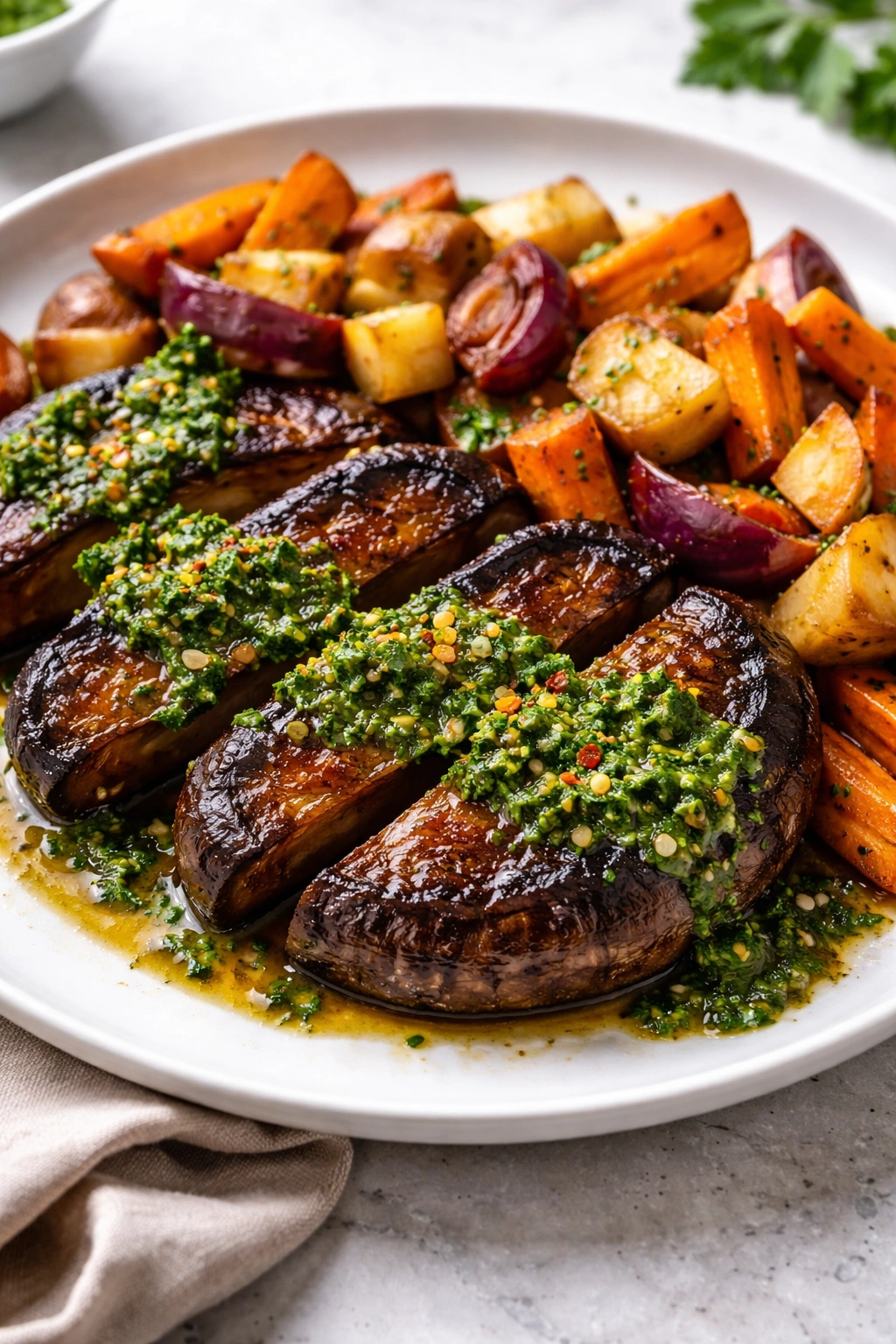
Sometimes the simplest preparations yield the most impressive results. Large, thick-cut mushroom slices—crown-cut from the caps of portobello mushrooms—are treated like steaks: seared in a hot pan until deeply browned on both sides, then served with a vibrant, herbaceous chimichurri sauce and a medley of roasted roots. This is elegant, straightforward, and entirely satisfying, with the kind of restaurant-quality presentation that looks like you spent hours in the kitchen when really you spent about 40 minutes.
Why This Method Works
Searing at high heat creates a flavorful crust through the Maillard reaction while keeping the interior tender. The thick-cut mushroom caps stay intact and substantial rather than collapsing into a watery mess. Chimichurri’s bright acidity and herbal intensity cuts through the richness of the seared mushrooms and roasted vegetables, creating balance and depth.
Yield: Serves 4 | Prep Time: 20 minutes | Cook Time: 35 minutes | Total Time: 55 minutes | Difficulty: Beginner — straightforward searing and simple side components.
For the Mushroom Steaks:
- 4 large portobello mushroom caps (about 4 to 5 inches across)
- 3 tablespoons olive oil, divided
- 1 teaspoon fine sea salt
- ½ teaspoon freshly cracked black pepper
For the Chimichurri Sauce:
- 1 cup fresh parsley leaves, loosely packed
- ¼ cup fresh cilantro leaves (or more parsley if cilantro isn’t available)
- ¼ cup olive oil
- 3 tablespoons red wine vinegar
- 4 cloves garlic, roughly chopped
- 1 small red chili pepper, seeded (or ¼ teaspoon red pepper flakes)
- 1 teaspoon dried oregano
- Salt and pepper to taste
For the Roasted Vegetables:
- 1 pound baby rainbow carrots, halved lengthwise
- 12 ounces baby potatoes, halved
- 8 ounces Brussels sprouts, halved
- 3 tablespoons olive oil
- 1 teaspoon garlic powder
- 1 teaspoon fine sea salt
- ½ teaspoon freshly cracked black pepper
Make the Chimichurri:
- Add the parsley, cilantro, olive oil, red wine vinegar, garlic, chili pepper, oregano, and a pinch of salt and pepper to a food processor. Pulse until the mixture is finely chopped and well combined but still has a slightly chunky texture—you’re looking for a thick, pourable sauce, not a smooth puree. Taste and adjust seasoning with salt, pepper, or vinegar as needed. Set aside.
Prepare the Vegetables:
-
Preheat the oven to 425°F (220°C). On a large baking sheet, toss together the carrots, potatoes, and Brussels sprouts with 3 tablespoons olive oil, garlic powder, salt, and pepper. Spread in a single layer, cut-side down for the carrots and potatoes, cut-side down for the Brussels sprouts (this helps them caramelize).
-
Roast for 30 to 35 minutes, stirring once halfway through, until the vegetables are tender and caramelized at the edges.
Sear the Mushrooms:
-
While the vegetables roast, prepare the mushroom steaks. Use a damp cloth to wipe the portobello caps clean. Using a small sharp knife or spoon, gently scrape out the dark gills from the underside of each cap—this prevents excess moisture from pooling. Pat the caps dry with paper towels (this is important for achieving a good sear).
-
Heat 1½ tablespoons olive oil in a large cast-iron skillet or heavy-bottomed skillet over medium-high heat until it shimmers and just begins to smoke slightly. This high temperature is key to getting a good sear.
-
Season both sides of the mushroom caps with salt and pepper. Carefully lay two of the mushroom caps gill-side-down in the hot pan. Do not move them—let them sit undisturbed for 4 to 5 minutes so they develop a deep, caramelized crust. The mushrooms will release liquid and reabsorb it; this is completely normal.
-
Using a thin metal spatula, carefully flip each mushroom cap gill-side-up. Cook for another 4 to 5 minutes until the other side is deeply browned and the mushroom is tender when pressed gently with a fork. Transfer to a serving platter. Repeat with the remaining 2 tablespoons olive oil and the remaining two mushroom caps.
To Serve:
- Arrange each mushroom steak on a plate with a portion of the roasted root vegetables. Drizzle each mushroom steak with 2 to 3 tablespoons of the chimichurri sauce. Serve any remaining sauce on the side.
Tips and Variations
If you prefer, you can substitute thick-cut slices of other large mushrooms—giant oyster mushrooms work beautifully with this treatment. For a lighter version, omit the potatoes and use roasted mushrooms as your main and vegetable component alongside just the carrots and Brussels sprouts. The chimichurri also freezes beautifully—make a double batch and freeze it in ice cube trays for quick sauce additions throughout the month.
6. Mushroom Risotto Cakes with Crispy Edges and Garlicky Yogurt
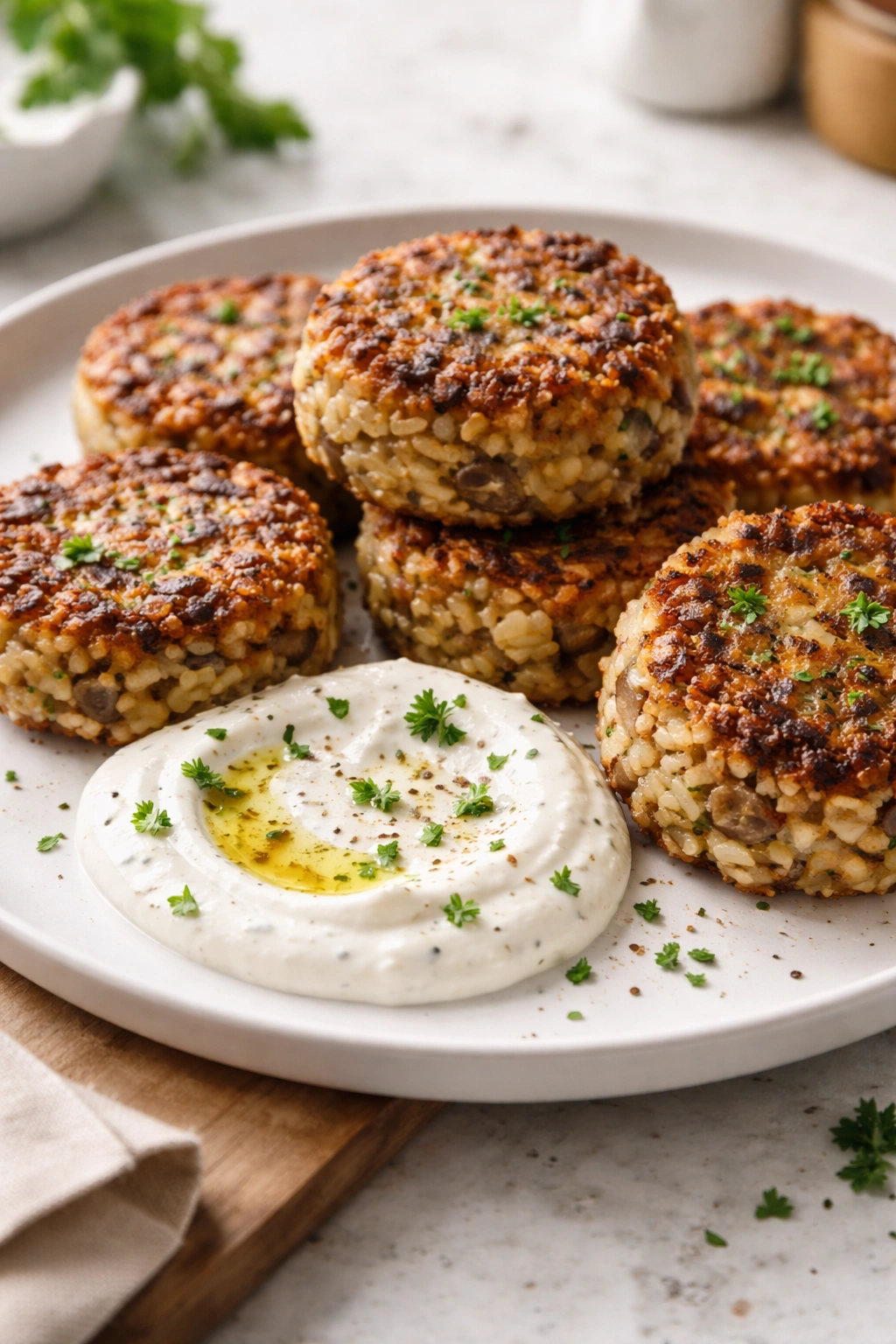
Here’s where yesterday’s leftover mushroom risotto gets a glamorous second life: formed into patties, pan-fried until the outside is golden and crispy while the inside stays creamy, then served with a cool, herby garlicky yogurt sauce. These are excellent as a main course for dinner, or they become elegant appetizers if you press the risotto into smaller shapes. The contrast between the crispy exterior and the creamy, earthy risotto interior is textural bliss.
Why Risotto Cakes Are Brilliant
Risotto cakes transform a dish that’s best eaten the day it’s made into something that’s actually better when you use cooled risotto that’s had time to firm up. The rice binds together more readily, and the cooler temperature prevents the risotto from collapsing as it fries. You’re building on a foundation of umami-rich risotto with the meaty depth of mushrooms, then adding textural interest through the crispy fried exterior.
Yield: Serves 4 (makes 12 to 16 cakes, depending on size) | Prep Time: 15 minutes (plus chilled risotto) | Cook Time: 20 minutes | Total Time: 35 minutes active time (not counting risotto preparation) | Difficulty: Beginner — straightforward shaping and pan-frying.
For the Risotto Cakes:
- 3 cups cooked mushroom risotto, cooled to room temperature (see Creamy Mushroom and Barley Risotto recipe, or use any mushroom risotto you have)
- ½ cup grated Parmesan cheese
- 1 egg yolk
- ¼ cup finely grated breadcrumbs or panko
- Salt and pepper to taste
- 3 tablespoons olive oil (divided in half—1½ tablespoons per batch)
For the Garlicky Yogurt Sauce:
- 1 cup plain Greek yogurt (or regular yogurt)
- 3 cloves garlic, minced very finely
- Zest of 1 lemon
- 2 tablespoons fresh dill, finely chopped (or 1 teaspoon dried dill)
- 1 tablespoon fresh lemon juice
- Salt and pepper to taste
- Optional: ¼ teaspoon red pepper flakes for a touch of heat
Prepare the Yogurt Sauce:
- Combine the Greek yogurt, minced garlic, lemon zest, dill, and lemon juice in a small bowl. Whisk until smooth and well combined. Season with salt, pepper, and red pepper flakes if using. Taste and adjust seasonings—the sauce should taste garlicky, herbaceous, and bright. Cover and refrigerate until ready to serve.
Shape the Risotto Cakes:
-
In a medium bowl, combine the cooled risotto, Parmesan cheese, and egg yolk. Fold gently until everything is evenly distributed. The mixture should hold together; if it seems too loose, add a tablespoon more breadcrumbs.
-
Place the breadcrumbs in a shallow dish. Using your hands or an ice cream scoop, form the risotto into 12 to 16 cakes (about 2-3 inches across and ¾-inch thick, the size of a thick cookie). Working with one cake at a time, roll it in the breadcrumbs, coating all sides lightly. Arrange coated cakes on a plate. If the risotto is very soft and the cakes are difficult to handle, refrigerate them for 30 minutes to an hour before frying.
Pan-Fry the Cakes:
-
Heat 1½ tablespoons olive oil in a large skillet over medium-high heat until it shimmers. Carefully lay 6 to 8 risotto cakes in the hot pan (don’t overcrowd). Do not move them—let them sit undisturbed for 4 to 5 minutes so they develop a deep golden crust. The bottoms should be deeply browned and crispy.
-
Using a thin metal spatula, carefully flip each cake and cook on the other side for 3 to 4 minutes until golden brown. The cakes should feel firm when pressed gently—the exterior is crispy, but the interior stays creamy. Transfer to a paper towel-lined plate to drain briefly.
-
Repeat with the remaining 1½ tablespoons olive oil and the remaining risotto cakes.
Serve:
- Arrange the warm risotto cakes on a platter. Dollop a spoonful of garlicky yogurt sauce onto or alongside each cake. Serve warm, with extra sauce available for dipping.
Variations
Add finely minced sun-dried tomatoes or fresh herbs directly to the risotto mixture before shaping for flavor variations. These cakes are also delicious served cold at room temperature as part of a picnic or lunch spread. For a vegan version, replace the egg yolk with 2 tablespoons of aquafaba (the liquid from a can of chickpeas) mixed with 1 tablespoon cornstarch, and use nutritional yeast instead of Parmesan.
7. Creamy Mushroom Pasta with Sautéed Greens and Crispy Breadcrumbs
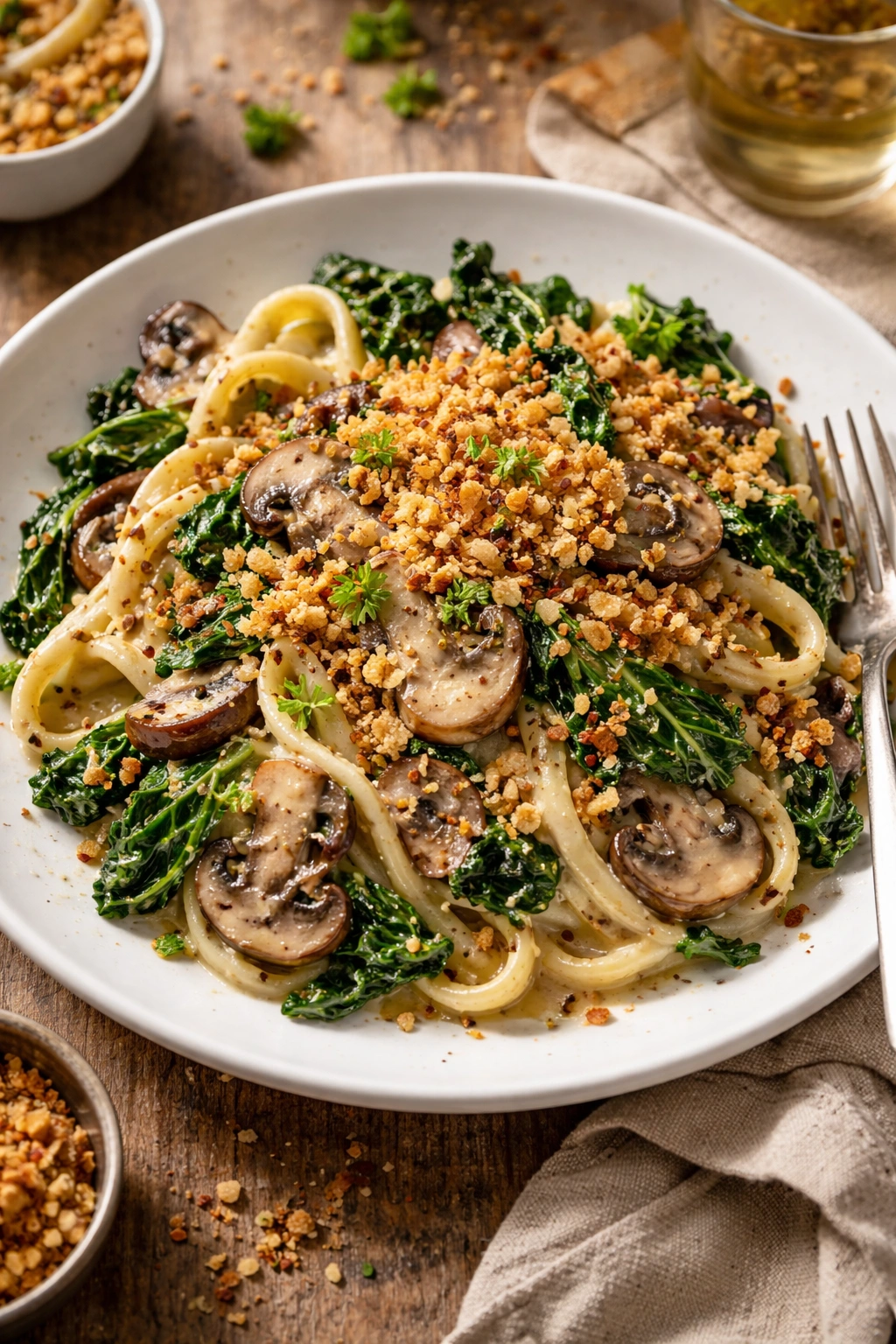
This is the vegetarian pasta dinner that satisfies like a proper cream sauce without requiring actual cream (though you can add it if you like). Mushrooms are sautéed until browned and concentrated, then simmered in vegetable broth with garlic and thyme until they create a naturally creamy, umami-rich sauce. Sautéed greens add color, nutrition, and a pleasant bitter edge, while crispy breadcrumbs toasted in garlic-infused oil add texture and a golden finish.
What Makes This Approach Clever
The creaminess comes entirely from the starches released by the mushrooms as they cook, plus a touch of the pasta water, creating a sauce that’s luxurious without being heavy. This technique produces a naturally vegan sauce (before any optional cream is added) while delivering the rich mouthfeel and savoriness of a traditional cream sauce. Mushrooms and greens together create a complete-feeling vegetarian main.
Yield: Serves 4 | Prep Time: 20 minutes | Cook Time: 25 minutes | Total Time: 45 minutes | Difficulty: Beginner — straightforward sautéing and pasta cooking, no special technique.
For the Pasta and Sauce:
- 1 pound pasta (pappardelle, fettuccine, or any long ribbon pasta works well)
- 1½ pounds mixed mushrooms (cremini, shiitake, oyster), sliced ¼-inch thick
- 3 tablespoons olive oil, divided
- 4 cloves garlic, minced
- ½ cup dry white wine
- 1½ cups vegetable broth
- 2 sprigs fresh thyme (or 1 teaspoon dried thyme)
- ¼ cup heavy cream or cashew cream (optional but delicious)
- 2 tablespoons fresh parsley, chopped
- 1 tablespoon fresh lemon juice
- Salt and freshly cracked black pepper to taste
For the Greens:
- 10 ounces fresh spinach, Swiss chard, or lacinato kale, chopped
- 1 tablespoon olive oil
- 2 cloves garlic, minced
- Pinch of salt and pepper
For the Crispy Breadcrumbs:
- ¾ cup panko or fresh breadcrumbs
- 2 tablespoons olive oil
- 2 cloves garlic, minced very finely
- ¼ teaspoon fine sea salt
- 2 tablespoons fresh parsley, finely chopped
Make the Crispy Breadcrumbs:
- Heat 2 tablespoons olive oil in a large skillet over medium-high heat. Add the minced garlic and cook for 15 seconds until fragrant. Add the breadcrumbs and stir constantly for 4 to 5 minutes until golden brown and toasted—they will continue to brown slightly as they cool, so remove them from heat while they’re still a light golden color. Stir in the parsley and salt. Transfer to a small bowl and set aside. (This can be made several hours ahead.)
Cook the Pasta:
- While the breadcrumbs toast, bring a large pot of generously salted water to a rolling boil. Add the pasta and cook according to package directions until al dente. Drain, reserving 1 cup of pasta water. Set aside.
Sauté the Mushrooms:
-
Heat 1½ tablespoons olive oil in a large, heavy-bottomed pot or wide skillet over medium-high heat. Add about half the sliced mushrooms in a single layer. Don’t stir—let them sit undisturbed for 4 to 5 minutes so they develop a deep golden-brown crust. Stir and cook for another 2 minutes. Transfer to a plate. Repeat with the remaining 1½ tablespoons oil and remaining mushrooms.
-
Return all the mushrooms to the pot and reduce heat to medium. Add the minced garlic and cook for 30 seconds until fragrant. Pour in the white wine and let it reduce by half, about 2 minutes, as you scrape up any browned bits stuck to the bottom.
-
Add the vegetable broth and thyme sprigs. Bring to a gentle simmer and cook for 10 to 12 minutes, until the mushrooms are very tender and the liquid is reduced by about one-third. The mushrooms will have released their moisture and then reabsorbed much of it, creating a concentrated, savory base.
-
Remove the thyme sprigs. If using cream, stir it in now. Add the cooked pasta to the sauce along with a splash of reserved pasta water—use enough to create a glossy sauce that lightly coats the pasta. Stir in the lemon juice and fresh parsley. Season generously with salt and pepper. Taste and adjust seasoning as needed.
Prepare the Greens:
- While the pasta and sauce come together, heat 1 tablespoon olive oil in a separate large skillet over medium-high heat. Add the minced garlic and cook for 15 seconds. Add the chopped greens (it will seem like a lot, but it will wilt down considerably). Cook, stirring occasionally, for 4 to 5 minutes until the greens are wilted and tender. Season with salt and pepper.
To Serve:
- Divide the mushroom pasta among four bowls or plates. Top each portion with a spoonful of the sautéed greens and a generous handful of the crispy breadcrumbs. Serve immediately while everything is warm.
Storage and Make-Ahead Notes
This pasta is best served immediately, but leftovers can be refrigerated for up to 2 days. Reheat gently over low heat with a splash of additional broth or cream to restore the sauce consistency—pasta continues to absorb liquid as it sits. The crispy breadcrumb topping is best added just before serving so it stays crisp; store cooked breadcrumbs in an airtight container for up to 3 days.
8. Mushroom Moussaka with Béchamel Top
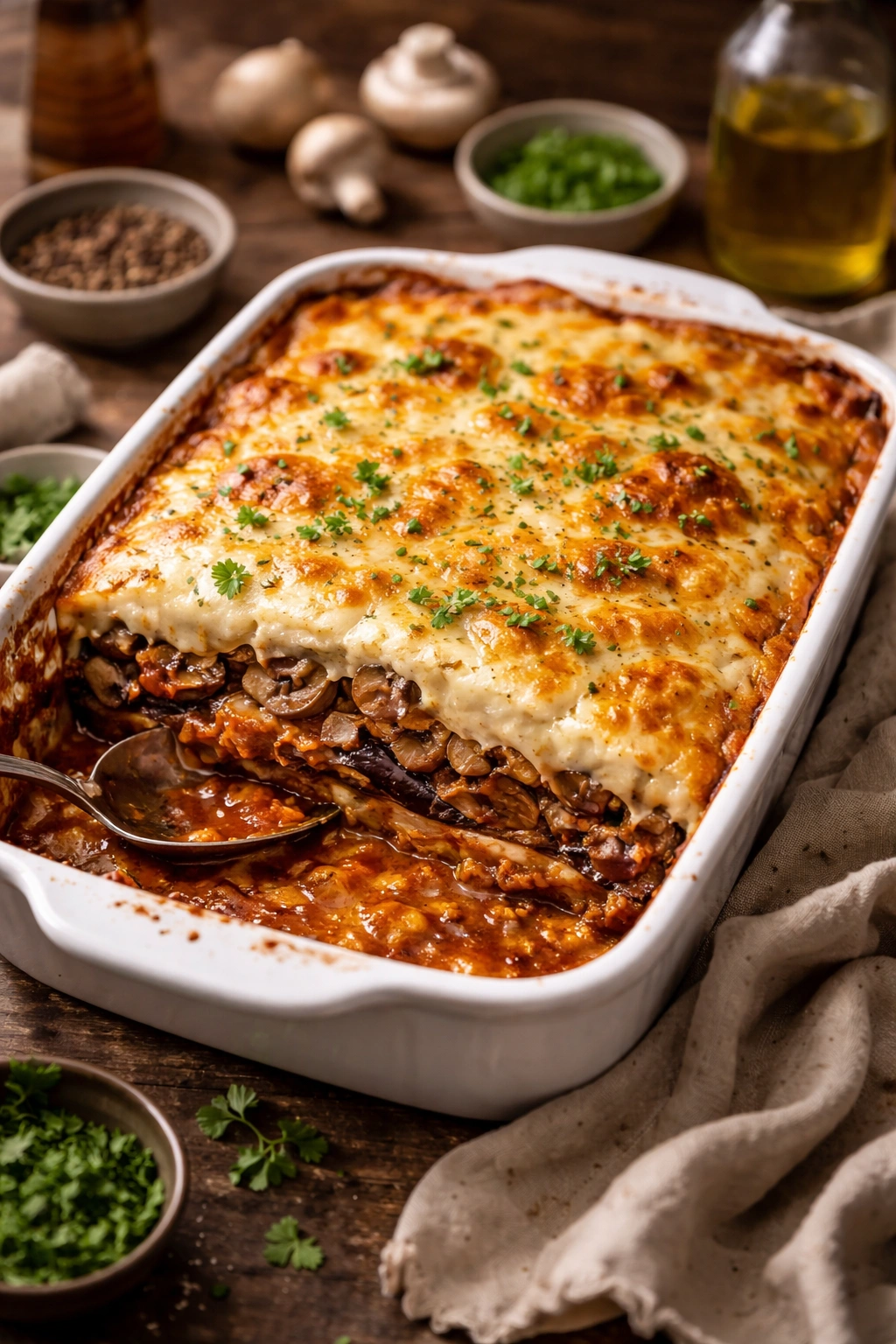
Moussaka is traditionally made with ground meat, but this vegetarian version, built on layers of eggplant, mushrooms, and a rich tomato sauce, is sophisticated enough for company while still being deeply comforting. A silky béchamel sauce crowns the whole thing, creating a gorgeous golden crust as it bakes. This is the kind of dinner that feels special and elegant but comes together through a series of simple, logical steps.
Why This Works
The combination of eggplant’s mild, subtle flavor and mushrooms’ earthy umami creates a naturally satisfying, meaty texture that doesn’t rely on any substitutes. The béchamel provides richness and a traditional moussaka topping, while the tomato-based mushroom sauce provides acidity and bright flavor. All three layers contribute distinctly to the whole.
Yield: Serves 6 to 8 | Prep Time: 40 minutes | Cook Time: 1 hour | Total Time: 1 hour 40 minutes | Difficulty: Intermediate — multiple components and layers, but each step is straightforward.
For the Eggplant:
- 2 large eggplants (about 2 pounds total)
- 4 tablespoons olive oil, divided
- ½ teaspoon fine sea salt per eggplant layer
- Freshly cracked black pepper
For the Mushroom-Tomato Sauce:
- 2 tablespoons olive oil
- 1 large onion, diced
- 1½ pounds mixed mushrooms (cremini, portobello, shiitake), finely chopped
- 4 cloves garlic, minced
- 1 tablespoon tomato paste
- 1 can (28 ounces) crushed tomatoes
- ½ cup red wine (or additional tomato juice)
- 1 teaspoon dried oregano
- 1 teaspoon dried basil
- ½ teaspoon cinnamon (this adds depth and warmth, traditional to moussaka)
- 2 bay leaves
- Salt and pepper to taste
- 2 tablespoons fresh parsley, chopped
For the Béchamel Sauce:
- 4 tablespoons unsalted butter
- 4 tablespoons all-purpose flour
- 3 cups whole milk, warmed
- ½ teaspoon fine sea salt
- ¼ teaspoon white pepper
- Pinch of freshly grated nutmeg
- 2 egg yolks
- ¼ cup grated Parmesan cheese
Prepare the Eggplant:
-
Preheat the oven to 400°F (200°C). Line two baking sheets with parchment paper. Slice the eggplants lengthwise into ¼-inch-thick slabs (you’ll get about 6 to 8 slabs per eggplant).
-
Brush both sides of each eggplant slice lightly with olive oil (about 4 tablespoons total). Arrange in a single layer on the prepared baking sheets. Sprinkle lightly with salt and pepper.
-
Bake for 20 to 25 minutes, turning the slices halfway through, until the eggplant is very tender and lightly golden. The slices should be flexible but cooked through. Remove from the oven and set aside to cool slightly.
Make the Mushroom-Tomato Sauce:
-
While the eggplant roasts, heat 2 tablespoons olive oil in a large, heavy-bottomed pot over medium-high heat. Add the diced onion and cook for 5 minutes, stirring occasionally, until softened.
-
Add the finely chopped mushrooms and cook for 10 to 12 minutes, stirring occasionally, until the mushrooms are very dark, concentrated, and have released and then reabsorbed their liquid. This browning step is essential for deep flavor.
Advertisements -
Add the minced garlic and stir for 30 seconds until fragrant. Add the tomato paste and stir for 2 minutes to cook it through.
-
Add the crushed tomatoes, red wine, oregano, basil, cinnamon, and bay leaves. Bring to a simmer and cook for 15 to 20 minutes, stirring occasionally, until the sauce has thickened and the flavors have melded. Taste and season with salt and pepper. Stir in the fresh parsley. Remove the bay leaves.
Make the Béchamel:
-
While the mushroom sauce simmers, prepare the béchamel. In a medium saucepan, melt the butter over medium heat. Add the flour and whisk constantly for 2 minutes, creating a roux. The mixture should look sandy and smell nutty.
-
Slowly add the warmed milk, whisking constantly to prevent lumps from forming. Start with about ½ cup of milk, whisking until smooth, then add the remaining milk in a steady stream while continuing to whisk. Warm milk incorporates more smoothly than cold milk, so don’t skip the warming step.
-
Continue cooking and stirring for 5 to 7 minutes until the sauce thickens enough to coat the back of a spoon. Remove from heat and stir in the salt, white pepper, and nutmeg.
-
In a small bowl, whisk the egg yolks. Temper them by adding about ¼ cup of the warm béchamel to the egg yolks while whisking constantly (this brings the eggs up to temperature without scrambling them). Pour the tempered egg mixture back into the saucepan of béchamel, whisking constantly. Stir in the Parmesan cheese. Set aside to cool slightly.
Assemble the Moussaka:
-
Reduce the oven temperature to 375°F (190°C). Spread a thin layer of the mushroom-tomato sauce on the bottom of a 9×13-inch baking dish (about ½ cup). Layer eggplant slices over the sauce (you may need to trim or overlap them to fit), then spread another layer of mushroom-tomato sauce (about 1 cup), then another layer of eggplant, continuing to alternate until all the eggplant is used and the final layer is sauce. The final layer should be sauce, not eggplant.
-
Pour the béchamel sauce evenly over the top, spreading it gently with a spatula to cover the entire surface.
Advertisements -
Bake for 40 to 45 minutes until the top is golden brown and the edges are bubbling slightly. A toothpick inserted in the center should come out hot (about 165°F on an instant-read thermometer).
-
Remove from the oven and let rest for 10 minutes before serving. This allows the layers to set so you can cut clean portions.
Serving Suggestions
Moussaka is traditionally served with a simple Greek salad on the side—crisp romaine, tomatoes, cucumbers, olives, and feta dressed with olive oil and lemon juice. Serve with warm crusty bread for soaking up any pan juices.
Storage and Make-Ahead
Moussaka actually improves overnight as the flavors meld, making it excellent to prepare a day ahead. Cover and refrigerate after assembling (before baking). Bake directly from the refrigerator, adding 10 to 15 minutes to the baking time. Leftovers keep refrigerated for up to 4 days. Reheat gently in a 300°F oven until warmed through, covering with foil if the top begins to brown too quickly.
Final Thoughts

Mushroom dinners offer something genuinely special for vegetarian cooking: deep, complex flavor without any sense of compromise, and textural satisfaction that comes from the earthy substance of the mushrooms themselves rather than from meat substitutes. These eight preparations represent different cooking techniques and flavor profiles, so there’s something here whether you’re in the mood for elegant plating, comforting casseroles, quick weeknight dinners, or show-stopping dishes for guests.
The common thread across all of these recipes is respect for the mushrooms themselves. Whether they’re seared until crispy, simmered until they release their umami-rich juices, or formed into the backbone of a hearty filling, these recipes understand that mushrooms aren’t a substitute for meat—they’re an ingredient of genuine merit that deserves center stage. Once you start thinking of mushroom dinners as cuisine in their own right rather than as vegetarian adaptations of meat dishes, suddenly your dinner possibilities expand tremendously.
Start with whichever recipe appeals to you most based on your current mood and available time. Make notes as you cook—which mushroom varieties you preferred, what seasonings you might adjust next time, which components came together most naturally for your kitchen. Vegetarian cooking built on mushrooms becomes more intuitive and personal the more you practice it, and these eight dinners provide a solid foundation for understanding how mushrooms behave in different preparations and flavor contexts.
