



Feeding yourself and your family on a tight budget doesn’t mean resorting to processed convenience foods or spending hours in the kitchen each night. The real secret isn’t deprivation—it’s strategy. When you approach your grocery list with intention, prioritize versatile ingredients, and plan meals that build on each other, you can feed a household for a week on far less than you’d expect, while still eating food that actually tastes good.
The difference between a grocery bill that breaks the bank and one that stays reasonable often comes down to a single choice: whether you shop with a plan or shop with hunger and impulse. People who struggle with grocery costs are often making at least three critical mistakes—buying ingredients they don’t actually use, overlooking the cheapest versions of staple items, and choosing proteins and produce that lock them into single meals rather than flexible building blocks. This article cuts through the noise and gives you the exact roadmap to a week of real, satisfying meals without the financial stress.
What you’ll discover here is built on the principle that eating well on a budget isn’t about eating less—it’s about eating smarter. You’ll learn which proteins offer the best value and versatility, which produce items stretch the furthest, which pantry staples anchor affordable meals, and exactly how to structure your shopping list so nothing goes to waste. By the end, you’ll have a clear picture of what to buy, how much to spend, and what to cook—no guesswork, no waste, just results.
Smart Shopping Strategies That Cut Your Bill in Half
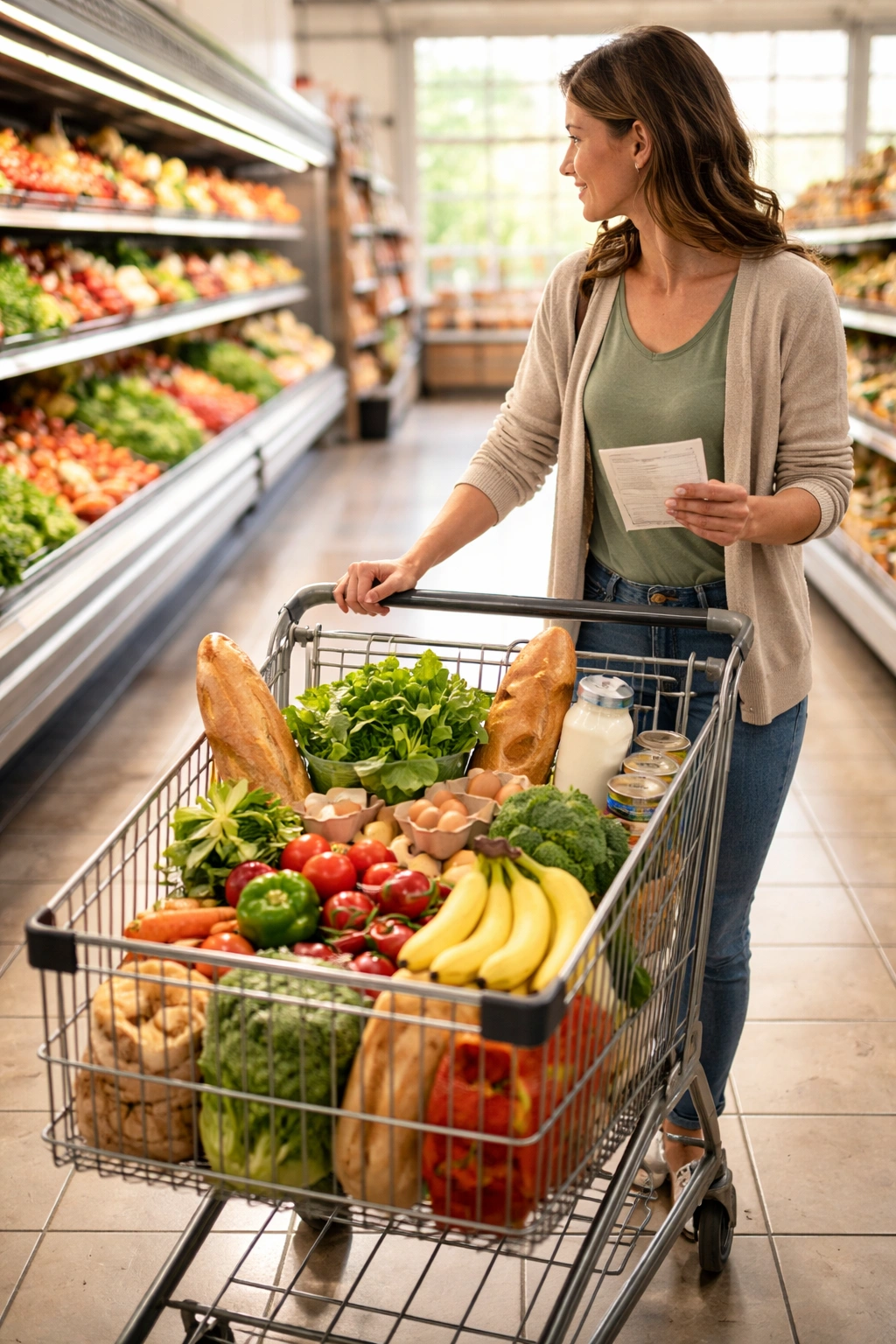
The way you approach the grocery store matters more than where you shop. Your mindset walking through those doors determines whether you’ll leave with a 40-dollar haul or a 150-dollar one, and it has nothing to do with willpower. It’s about removing the opportunity for poor decisions in the first place.
Write your list before you go, and stick to it like you’re following a recipe. The moment you improvise at the store, your budget dies. Studies on shopping behavior consistently show that purchases made without a list are more expensive, less nutritious, and include more items that get thrown away uneaten. Your list should be organized by the store’s layout—produce, proteins, dairy, pantry—so you move through efficiently and aren’t wandering the aisles where you’ll spot things you don’t need.
Shop the perimeter of the store first. The outside aisles contain real food—produce, proteins, eggs, dairy, bread. The center aisles are where convenience items and markup-heavy products hide. Most of your budget should be spent on the edges. When you do venture into the center, you’re there for specific pantry staples you’ve planned for, not to browse.
Buy seasonal and sale produce, but only what you’ll actually eat within a week. A head of cabbage for 79 cents is only a bargain if you eat it before it wilts. Frozen vegetables are genuinely better than fresh in many cases—they’re flash-frozen at peak ripeness, last longer, and cost less. Don’t feel like buying frozen is settling. For meal prep, frozen broccoli, mixed vegetables, and berries are often superior to fresh because you control exactly how much you use.
Check unit prices, not just shelf prices. A bulk item that costs more overall might cost less per ounce, but not always—sometimes the name-brand single item is cheaper per unit than the bulk version. Store apps and coupon sections save real money if you’re buying things you already planned to buy. Don’t buy something just because it’s on sale; you’re just shopping for sale prices rather than for meals.
Budget-Friendly Proteins That Work Hard in Your Kitchen
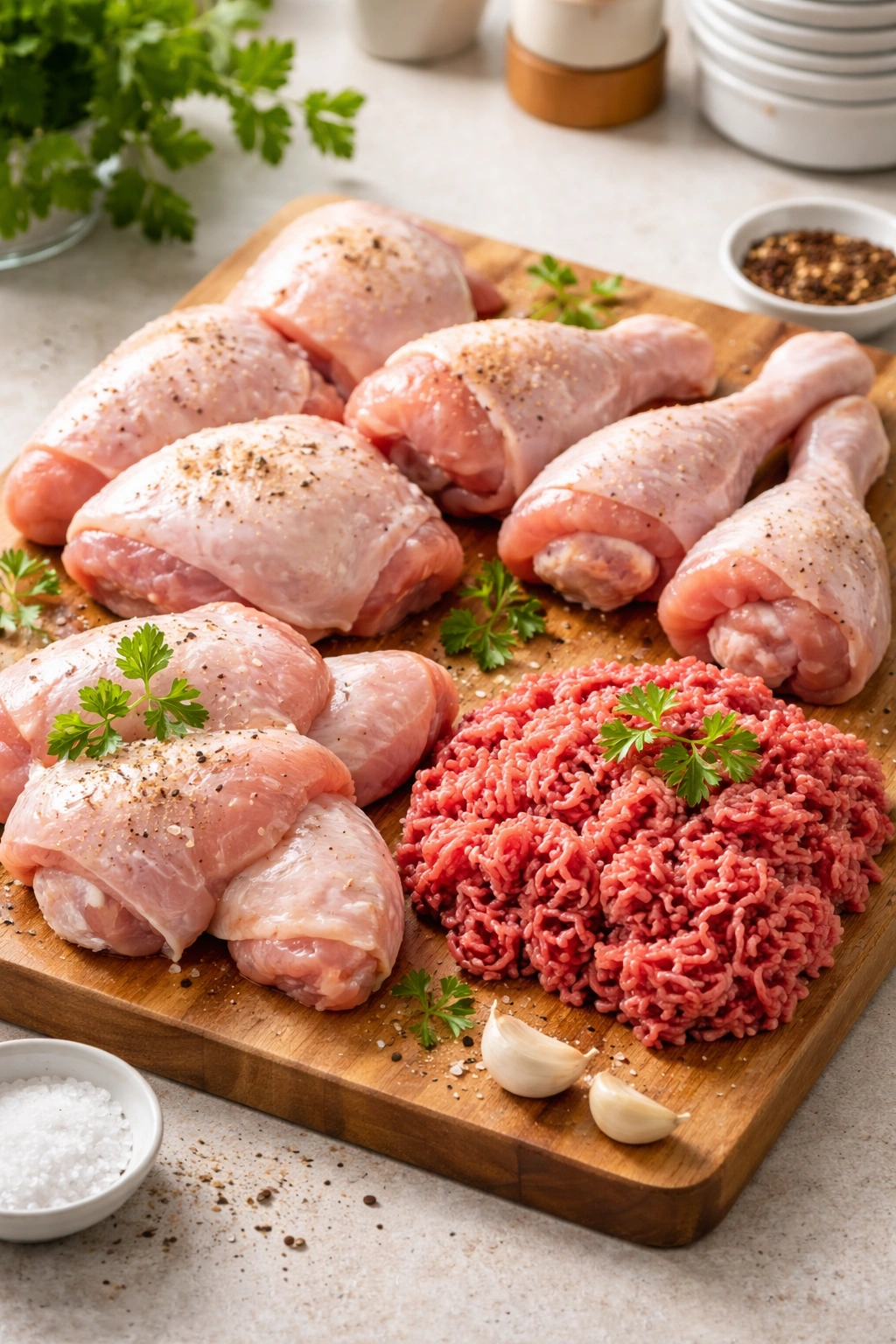
Protein is usually the biggest line item in a grocery budget, and it’s where most people overspend without realizing it. Premium cuts of meat, specialty proteins, and animal products not planned into multiple meals blow budgets faster than anything else in the store. The key is choosing proteins that are inexpensive and flexible enough to anchor different meals throughout the week.
Chicken—specifically the cheapest bulk packages of breasts and thighs—is your foundation. Thighs are often cheaper than breasts and stay juicier when you cook them, so don’t skip them just because breasts feel more “healthy.” A five-pound bag of chicken thighs or a three-pound package of drumsticks costs 40 to 60 percent less than individual breasts, and you can cook them all at the beginning of the week, shredding some for tacos, using some diced in pasta, and eating the rest as a straight protein with vegetables. One package of chicken can become four or five different meals without tasting repetitive.
Ground beef—the leanest version you can afford, often 85/15 or 80/20—is cheaper per pound than whole cuts and works in tacos, pasta sauce, casseroles, stir-fries, and skillet meals. Buy it in bulk (two to three pounds at a time), brown and season it on Sunday, and divide it into meal-sized portions. Eggs are an underrated budget protein—a dozen eggs costs 2 to 4 dollars and provides 12 servings of protein, making them the cheapest protein per gram in most stores. They work as a breakfast, a quick lunch, or stirred into rice bowls and pasta.
Canned beans and lentils are the unsung heroes of budget cooking. A can of black beans, chickpeas, or kidney beans costs 60 cents to a dollar and provides three servings of protein and fiber. They’re already cooked, so they skip the planning needed for dried beans. Peanut butter adds protein to oatmeal, toast, or side dishes for pennies per serving. Greek yogurt (the plain, full-fat version, not the fancy flavored tubs) works as a breakfast, a cooking ingredient, and a sauce base.
Budget turkey, when it’s on sale after holidays, becomes ground turkey or deli meat that stretches through multiple meals. Canned tuna and salmon are reliable backups when fresh proteins run out. The goal is buying two to three proteins per week rather than five, using each one in multiple forms—this cuts both costs and decision fatigue.
Affordable Vegetables and Fruits That Last
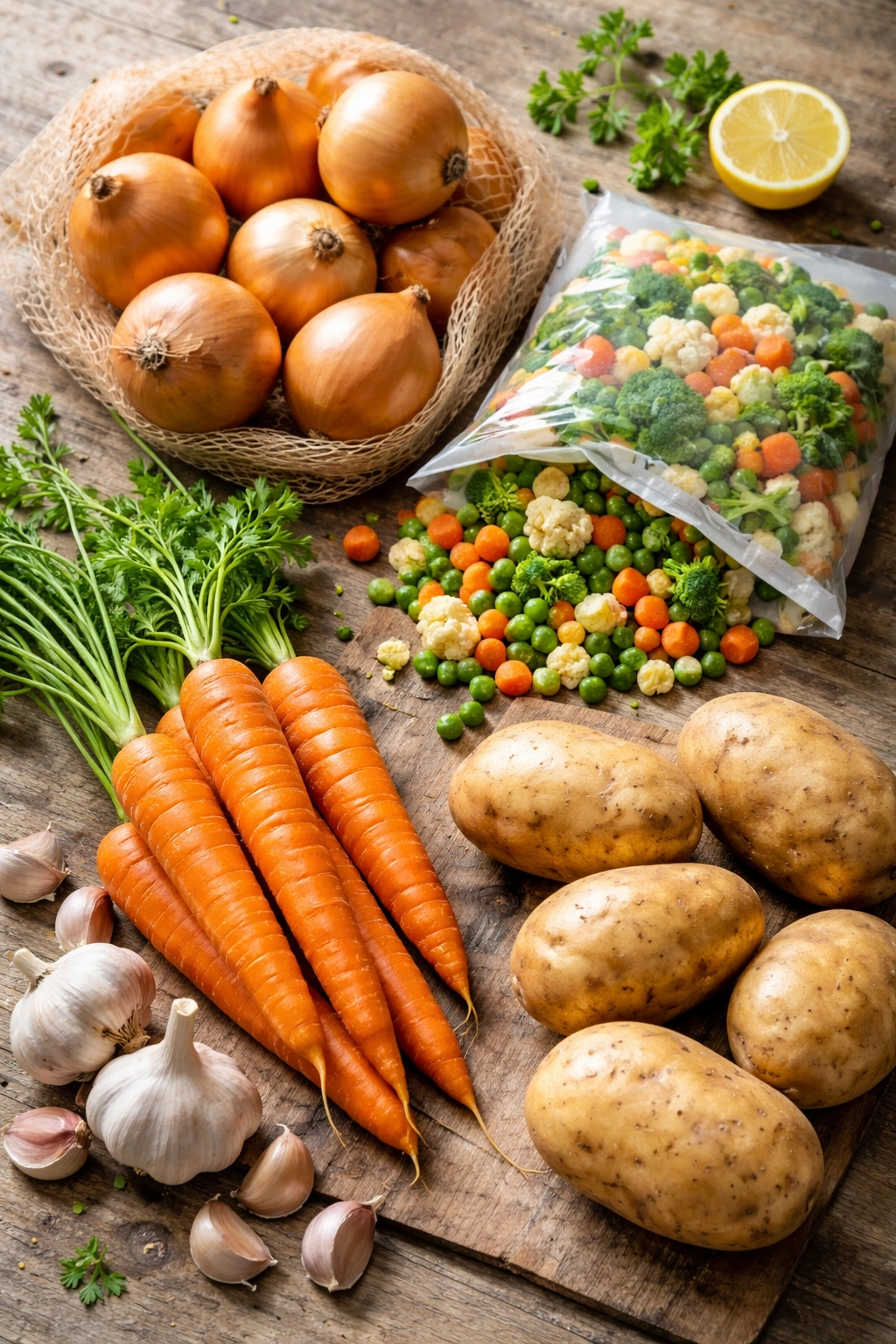
Produce can either drain your budget or fuel it, depending on what you choose and when. The mistake most people make is buying the same vegetables regardless of season and price. If broccoli is three dollars a bunch but cabbage is 50 cents, buy cabbage. It keeps longer, works in more meals, and stretches further.
Onions, garlic, potatoes, and carrots are the backbone vegetables. They’re cheap, they last weeks or months in the right storage conditions, and they show up in countless meals. A bag of yellow onions costs two to three dollars and gives you base vegetables for stir-fries, soups, tacos, and casseroles. Potatoes are filling, versatile, and often under a dollar per pound. Buy whatever variety is cheapest—white, red, Russet—and rotate based on what’s on sale.
Frozen vegetables are your secret weapon. A two-pound bag of frozen stir-fry mix or frozen broccoli costs two to three dollars and lasts weeks. You use exactly what you need and waste nothing. Fresh vegetables are beautiful, but they wilt, they spoil, and they’re often more expensive for less nutrition. Frozen vegetables are a complete legitimate choice, not a compromise.
Bananas, apples, and oranges are the most affordable fresh fruits most of the year. Buy what’s in season locally—in winter, citrus is cheap; in summer, berries occasionally drop in price. Frozen berries are cheap enough year-round and work in oatmeal, yogurt, or smoothies. Avoid pre-cut produce (vegetables cut into chunks, pre-made salad mixes) because you’re paying a 50 to 100 percent markup for someone else’s knife work.
Cabbage, bell peppers (when on sale), lettuce, spinach, and tomatoes round out your produce list. A head of cabbage stays fresh for weeks and can be eaten raw, stir-fried, or cooked. Bell peppers are pricier but last longer than many vegetables and add color and nutrition to several meals. Buy them when they’re on sale and use them within a few days.
Pantry Staples That Anchor Affordable Meals
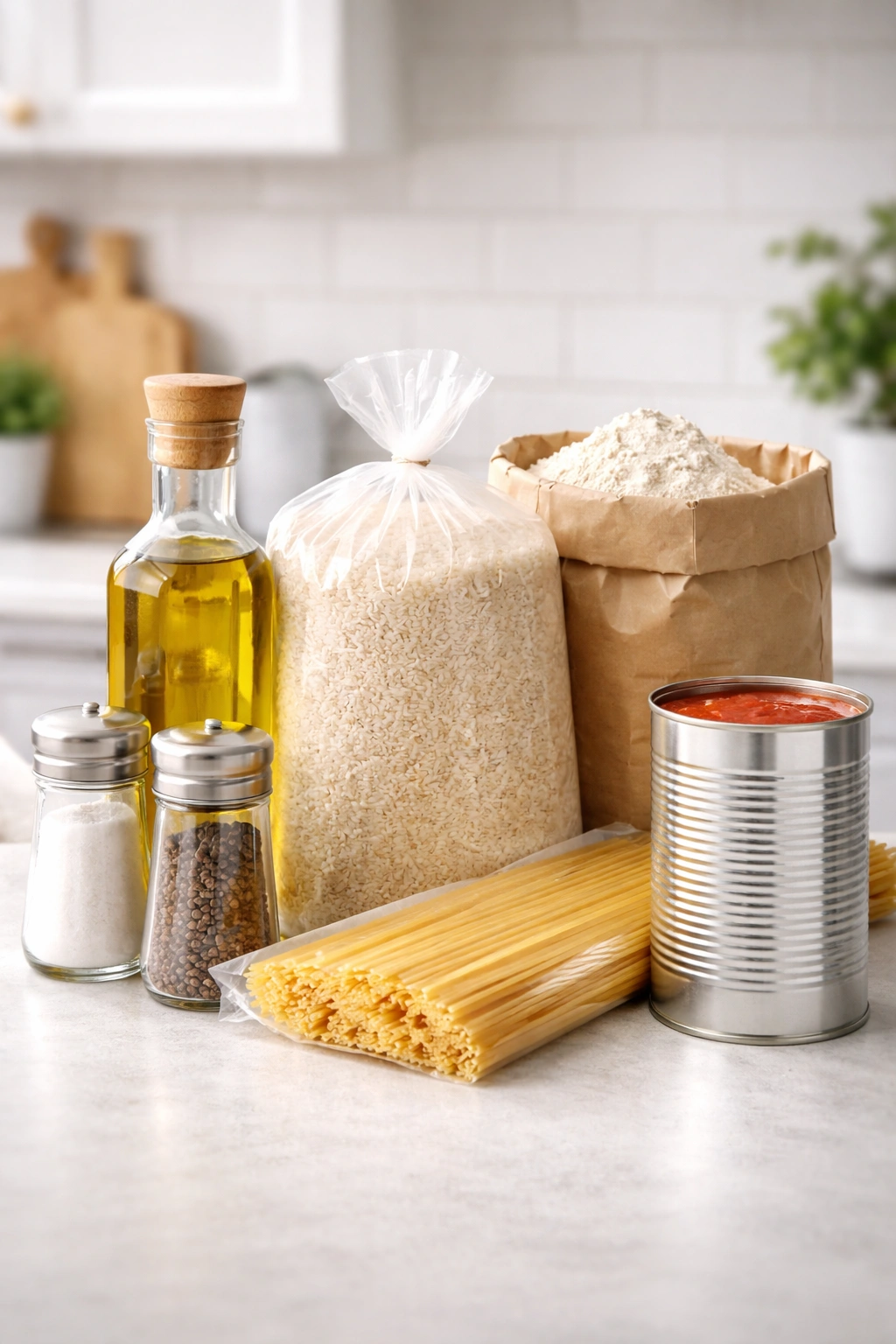
Your pantry is where budget meals live or die. If you have the right basics on hand, you can throw together a complete, satisfying meal from almost anything. If your pantry is empty except for five takeout menus, you’re always going to be stuck paying someone else to cook.
Oil (olive or vegetable), salt, and pepper are non-negotiables. You need onions and garlic (if not using the fresh versions, buy garlic powder and onion powder in bulk spice sections). Rice and pasta are your carbohydrate anchors—they’re cheap, they keep forever, and they work in dozens of meals. White rice is often cheaper than brown, and frankly, it’s fine. A five-pound bag of rice costs five to eight dollars and provides 20+ servings.
All-purpose flour, baking powder, and a basic sweetener (sugar or honey) let you make your own baked goods if needed, though whole grain bread from the bakery section is usually affordable and worth the space in your budget. Canned tomato sauce and canned diced tomatoes are 60-cent ingredients that become pizza sauce, pasta sauce, taco filling, or soup base.
Soy sauce, hot sauce, or another flavor-building condiment costs under five dollars and transforms plain meals into intentional ones. Spices matter, but you don’t buy them all at once. Buy them from bulk bins if your store has them (you pay 30 to 50 percent less than pre-packaged containers), and focus on cumin, chili powder, and paprika first—they work in more meals than others. Cooking spray saves money compared to pouring oil into pans.
Canned or dry beans, lentils, and peas live in the pantry. Broth or stock (canned or boxed) costs one to two dollars and becomes soup, rice base, or cooking liquid for beans. Peanut butter, if not already mentioned as a protein, belongs in pantry staples. A jar costs four to six dollars and lasts weeks, providing breakfast, snacks, and a cooking ingredient. Oats, whether rolled or steel-cut, are cheap carbohydrates that make multiple breakfast servings from one bag.
Sample Weekly Meal Ideas Within Budget
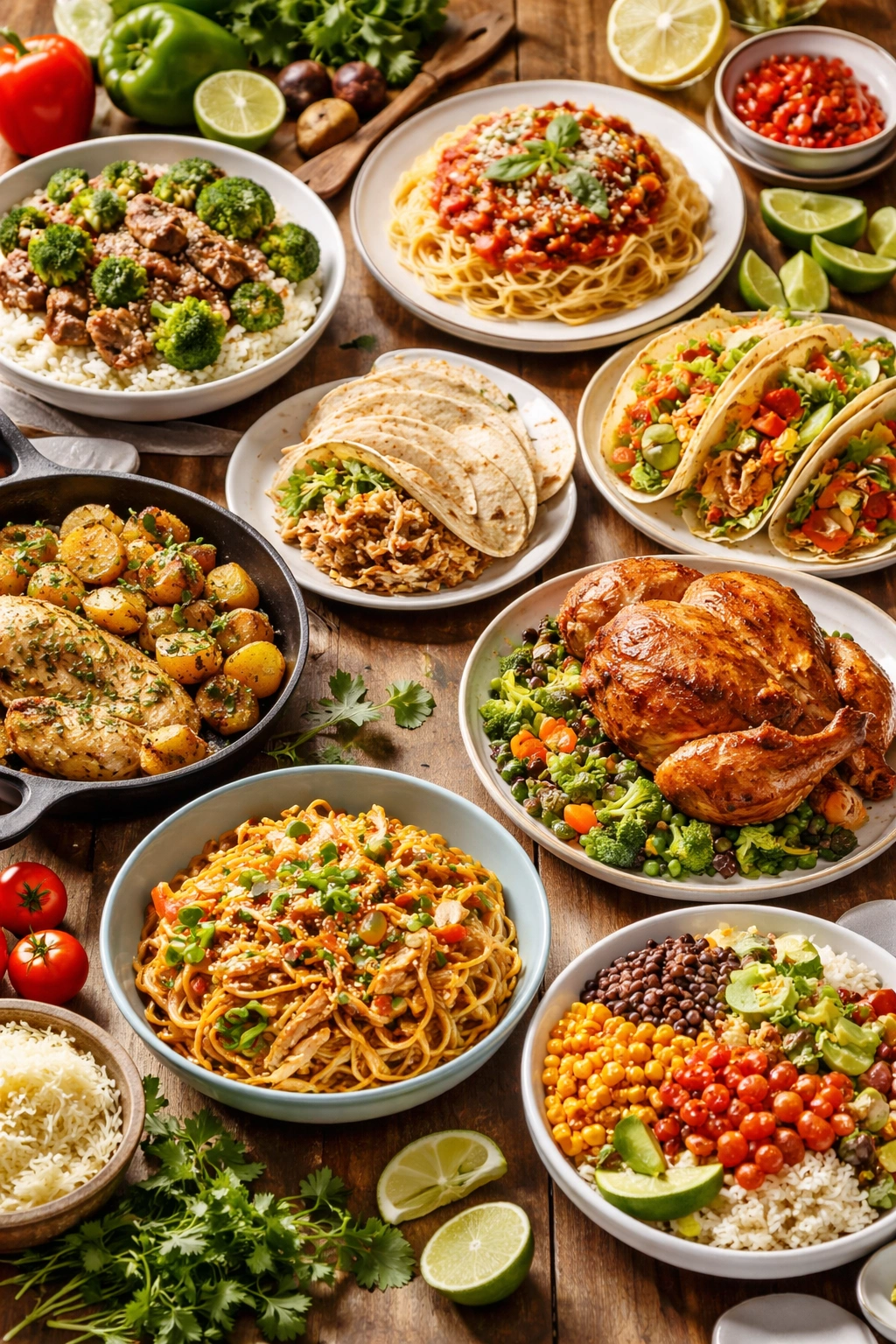
Understanding the principle is one thing; seeing exactly how it works in practice is another. Here’s a week’s worth of real meals that cost roughly 30 to 40 dollars in groceries and feed two people three meals per day.
Monday: Brown rice, ground beef seasoned with cumin and tomato sauce, steamed frozen broccoli. Tuesday: Pasta with the same tomato-beef mixture, side salad with cabbage and carrot. Wednesday: Shredded chicken from the batch you cooked Sunday, soft tortillas, black beans, the last of the tomato sauce as taco filling, cabbage slaw. Thursday: Chicken and potato skillet with onion and garlic. Friday: Pasta with peanut sauce (peanut butter, soy sauce, garlic, lemon if you have it or vinegar) mixed with rotisserie chicken (a Sunday splurge) and frozen vegetables. Saturday: Ground beef tacos with all the toppings you can afford. Sunday: Bean and rice bowls with fried eggs on top, hot sauce.
Breakfasts are rotating eggs, oatmeal with peanut butter and banana, or toast with peanut butter. Lunches are often leftovers from dinner or assembled from parts—rice and beans with an egg, pasta salad, chicken and vegetables. Snacks are bananas, apples, peanut butter on crackers, or hard-boiled eggs made during meal prep time.
This isn’t gourmet. It’s intentional, it’s nutritious, and it’s delicious in the way that simple, well-seasoned food is delicious. More importantly, it’s achievable without stress or sacrifice.
Shopping List Organization That Prevents Waste
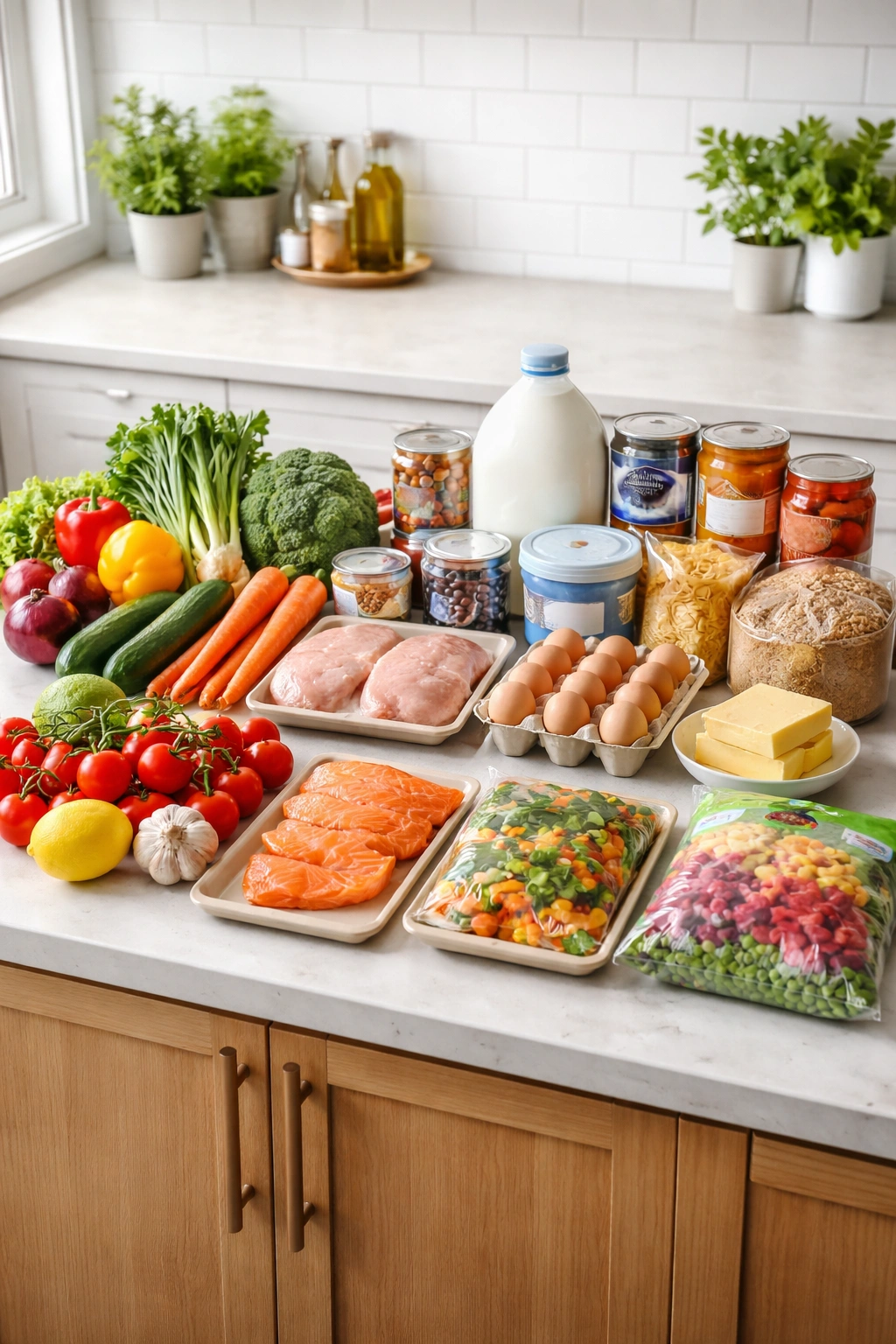
The way you organize your shopping list directly affects how much food you throw away. If your list is random, you’ll forget what you have, what you’ve planned to use, and how to use things before they spoil. If it’s organized by meal and by store layout, you’ll shop efficiently and use everything you buy.
Start by planning five main dinners for the week—not seven, because lunch and breakfast leftovers will cover some days. Write down what you’re cooking each night. Next to each meal, list the ingredients you need to buy. Group those ingredients by category: proteins, produce, dairy, pantry, and frozen.
On your actual shopping list, write it in the order you’ll encounter items in the store. Produce first, then proteins, then dairy, then pantry, then frozen. This prevents you from wandering and impulse-buying. As you shop, check items off so you don’t double-buy or forget anything.
Before you leave the store, pause and think: Do I actually have a meal plan for all of this, or am I buying because it looks good? If you can’t visualize eating something within the week, leave it behind. That broccoli that looked great but you didn’t plan a meal for it? That becomes the vegetable that rots in your crisper. The fancy cheese because you felt like splurging? It dries out and gets thrown away.
Some people photograph their list with their phone before shopping so they can refer to it while at the store without digging through a purse or pocket. Others bring a small notebook. The medium doesn’t matter; the discipline does. You’re there to buy what you planned, not what the store is promoting.
Meal Prep Strategies That Save Money and Time
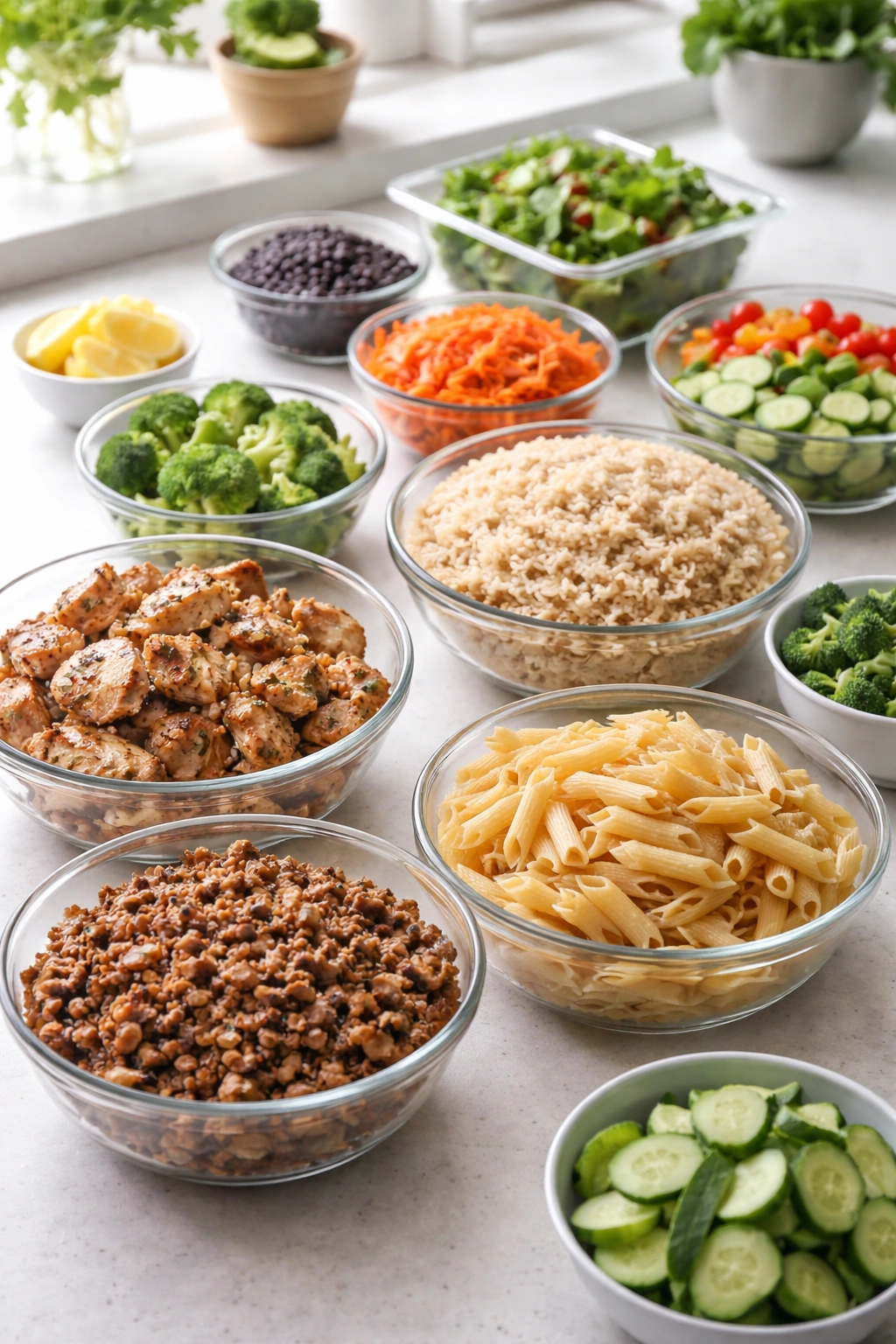
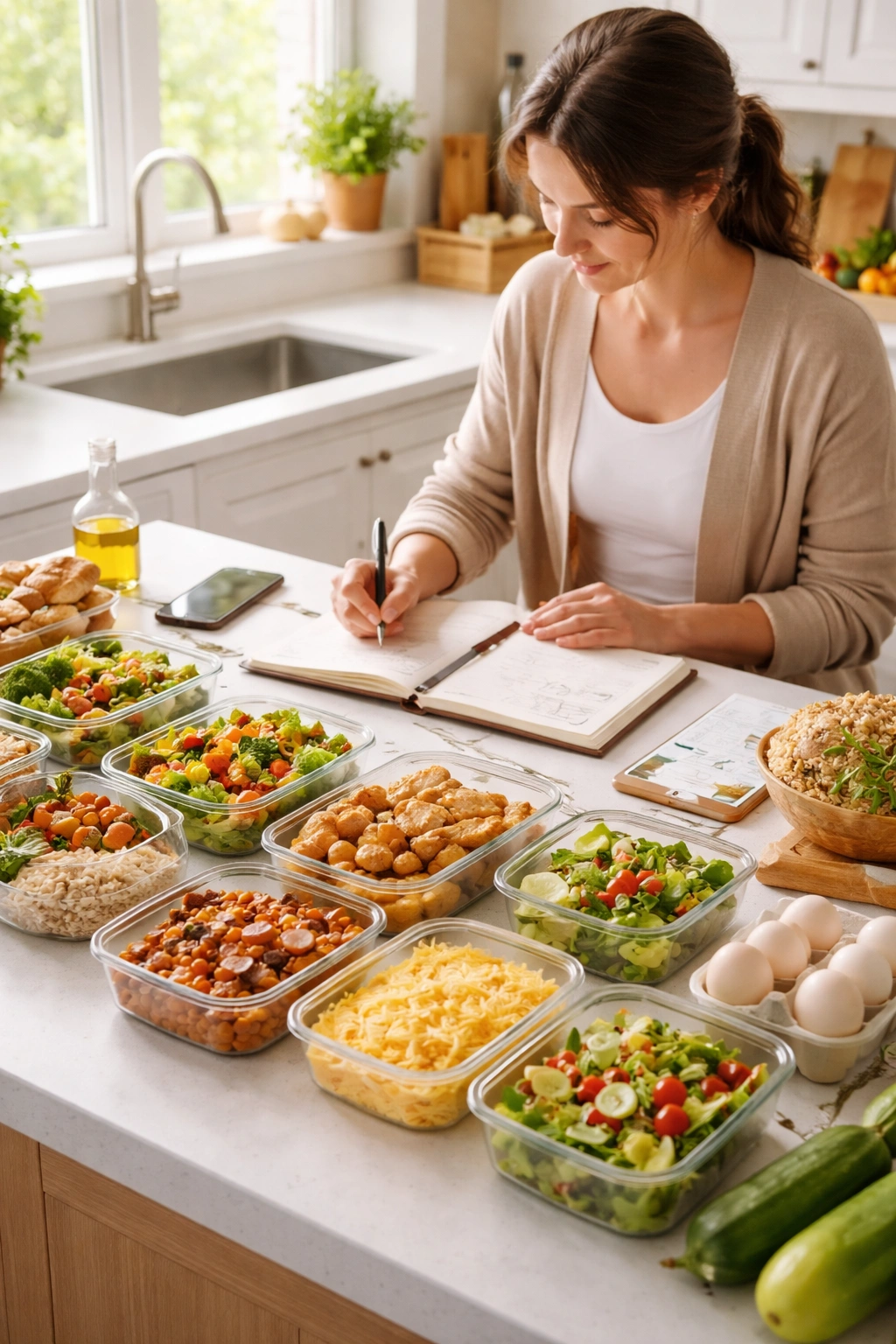
Meal prepping on one day—ideally a weekend day when you have a couple of hours—cuts both your time during the week and your food waste. When you cook proteins and base grains all at once, you use them efficiently and prevent the scenario where something goes bad before you remember it’s there.
Cook all your proteins at once on Sunday or whatever day works for you. Roast the chicken thighs at 400°F for 40 minutes. Brown the ground beef in a large skillet with onion and garlic, seasoning with salt, pepper, and cumin. Cook dried beans or reheat canned ones. Hard-boil a dozen eggs. The house smells amazing, the work is done in about 90 minutes, and you’ve got proteins ready to go for the entire week.
Cook a large batch of rice and a large batch of pasta or keep them separate. You’ll use both throughout the week as bases for different meals. Chop vegetables when you get home from shopping—onions and garlic if you’re prepping them, or just wash and separate produce so it’s visible and ready to grab.
Don’t prep complete meals (like containers of pasta with sauce already mixed in) unless you’re going to eat them within two days. Prep components: rice, proteins, vegetables, simple sauces. Store them separately so you can combine them however you want on any given night. This prevents the boredom of eating the same exact meal all week, and it gives you flexibility when plans change.
Strategic Shopping Tips and Hidden Savings
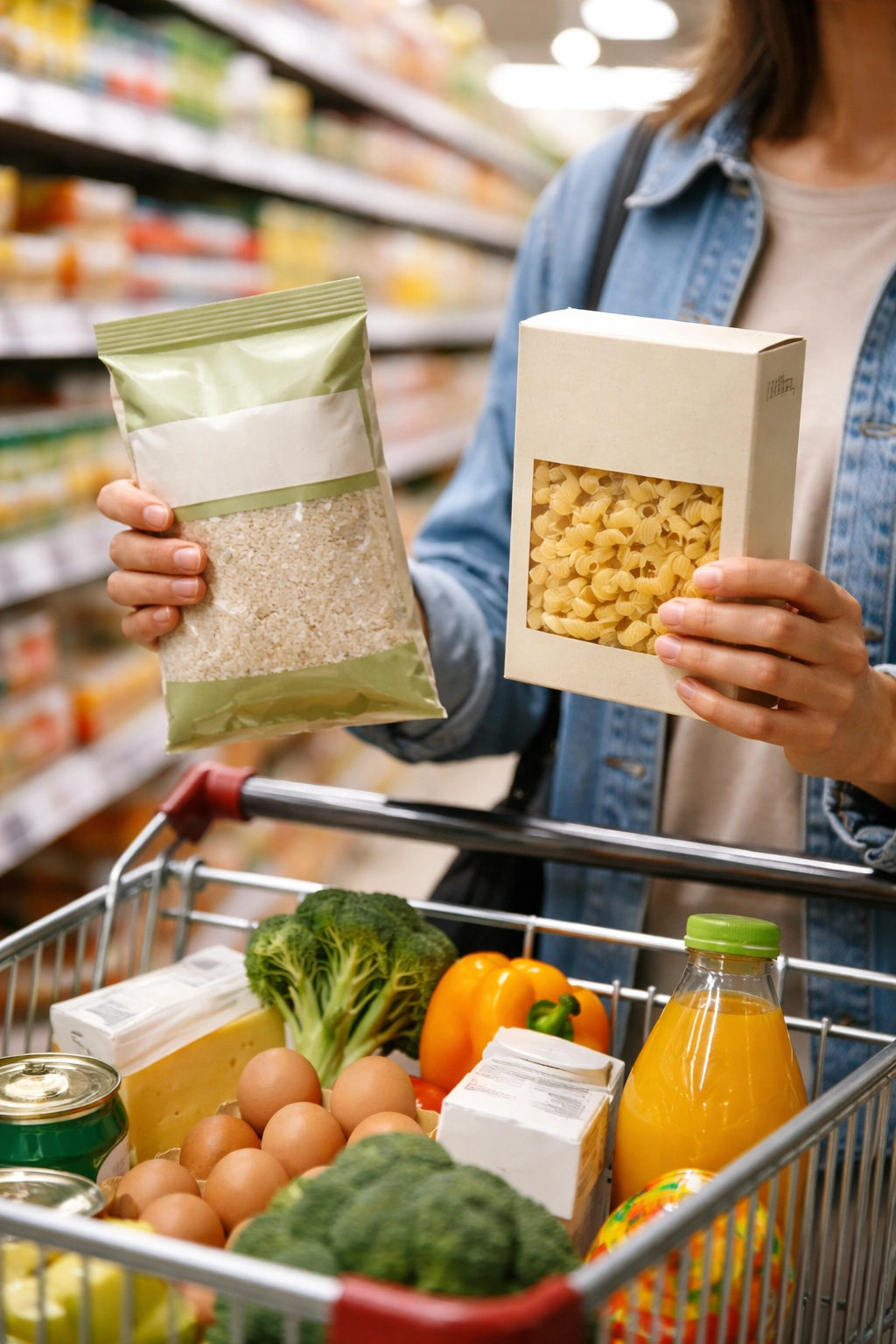
Beyond the major strategies, there are smaller moves that add up to real money saved without requiring any sacrifice. The first: shop without hunger. Hungry shoppers spend 15 to 30 percent more than satiated ones—it’s a documented fact. Eat a proper meal or snack before you go.
Use your store’s loyalty program if it exists, but don’t buy things just because they’re on sale. Sign up for the app and check what’s on sale for the proteins and produce you actually plan to buy. Buy multiple quantities of things on deep discount—if chicken is 30 percent off this week, buy extra and freeze it.
Buy store-brand versions of everything. Store brands are often made in the same facilities as name brands, and they cost 20 to 40 percent less. The exceptions are vanishingly rare. Try the store brand once; if you hate it, go back to the name brand for that specific item. But most people find they can’t tell the difference.
Check the clearance section and discount bins, particularly near produce and the back of the meat section. These are items approaching their sell-by date, and stores discount them heavily. If you’re going to use them today or tomorrow, this is free money.
Buy produce that’s slightly imperfect or smaller. Farmers markets often have bins of slightly bruised apples or oddly shaped vegetables at deep discounts. They taste exactly the same as the pretty ones, and the blemish doesn’t affect the inside. Reject the idea that every piece of produce needs to look like a magazine photo.
Making Smart Substitutions Without Sacrificing Taste
Part of budgeting on groceries is flexibility. Sometimes an ingredient is expensive this week; sometimes it’s a great deal. Knowing how to swap ingredients without ruining a meal keeps you from being locked into buying something overpriced.
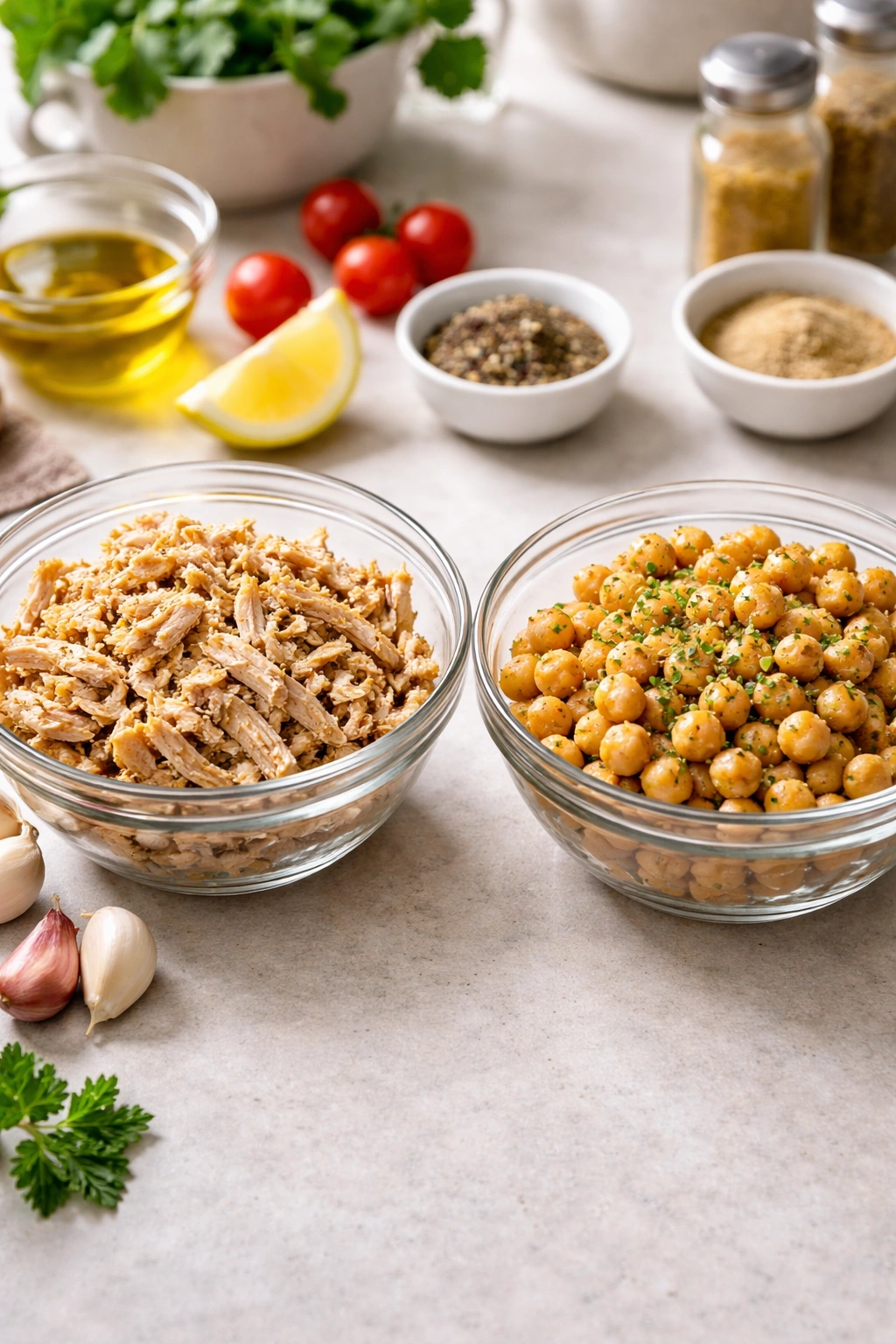
If chicken is expensive, ground beef or ground turkey steps in. If ground beef is the pricey one, beans become your protein alongside rice or pasta. If fresh tomatoes cost five dollars a pound, canned tomatoes at 60 cents deliver the same nutrition and flavor in a sauce.
If fresh garlic seems expensive, garlic powder works—use 1/8 teaspoon of powder for each clove. If fresh onion is dear, onion powder or frozen diced onion substitutes. If the fresh spinach looks wilted and costs too much, frozen spinach is honestly more nutritious and costs half as much. If milk is pricey, buy powdered milk for cooking and save the liquid milk for drinking and cereal.
Rice and pasta are interchangeable bases—if one costs more this week, buy the cheaper one. Chicken can become turkey, beef, pork shoulder, or beans depending on what’s affordable. The meal structure stays the same; you’re just swapping one protein for another.
Don’t confuse flexibility with accepting low quality. You’re not buying the cheapest version of everything just because it’s the cheapest. You’re buying strategically—paying a bit more for proteins that are versatile and will be used multiple ways, and being very frugal with single-use items. A ten-dollar rotisserie chicken might serve multiple meals and save you both time and heartache. A one-dollar bag of generic crackers you never eat is a dollar wasted.
Avoiding Common Budget Grocery Mistakes
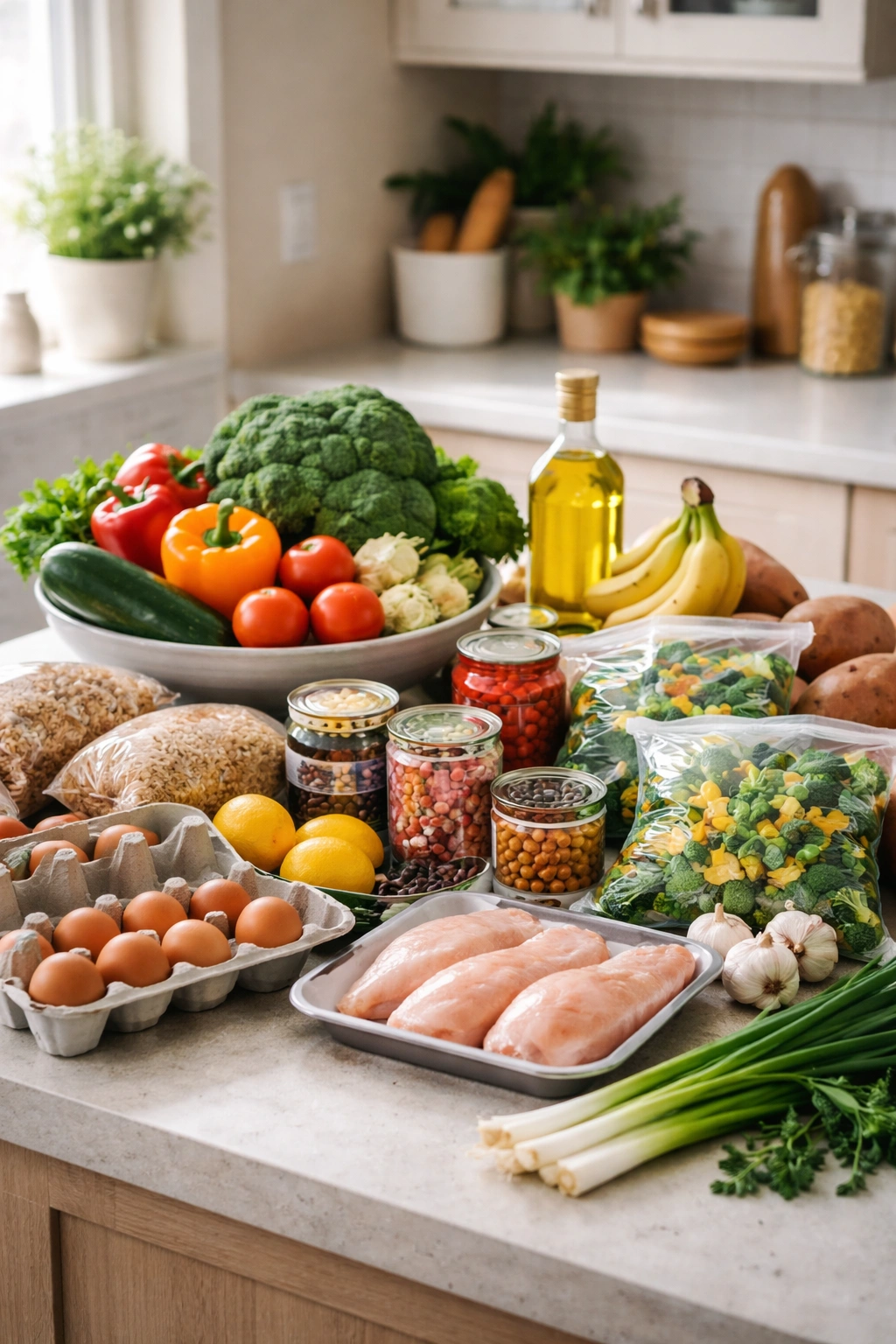
Some patterns sabotage even the best-intentioned budget. Recognizing them before you fall into them saves money and frustration. The first mistake: buying too much produce at once. Fresh vegetables and fruit go bad. You have good intentions—salad for lunch every day!—and three days later, you’re throwing wilted lettuce and rotting tomatoes into the compost. Buy less fresh produce than you think you need, and rely on frozen vegetables and hardy produce like potatoes, onions, and cabbage that last.
The second mistake: not planning dinners ahead of time. You show up at the store without a list, buy things that sound good, and end up with a cart full of ingredients that don’t combine into actual meals. Roasted vegetables with no protein. Pasta with no sauce. You then grab something convenient or go out to eat, and all that food is wasted. Spend 15 minutes writing down five dinners before you shop. That one decision saves you hundreds of dollars a month.
The third mistake: buying expensive convenient versions of things you can make yourself. Pre-made salad, pre-cut vegetables, rotisserie chickens, jarred minced garlic, bottled lemon juice—these cost two to three times more than the raw ingredients. For budget grocery shopping, you need to have time to prep. If you’re too busy, the budget grocery strategy doesn’t work. But if you have even an hour on a weekend, you can do the prep that saves money.
The fourth mistake: buying too many different things. Variety feels good while shopping, but it leads to waste—you’ve got seven vegetables, but your meal plans only call for three, so four go bad. Buy fewer items in larger quantities. You’ll eat more pasta and less variety in produce and proteins, but you’ll waste far less and spend far less.
The fifth mistake: shopping at multiple stores. Yes, store A has cheap chicken and store B has cheap rice. But driving to two or three stores costs time and gas, and you’ll invariably pick up extra items at each stop. One store, one list, one trip. Even if individual items cost one or two cents more, your total bill is lower and your time is free.
Storage, Prep, and Keeping Food Fresh Longer
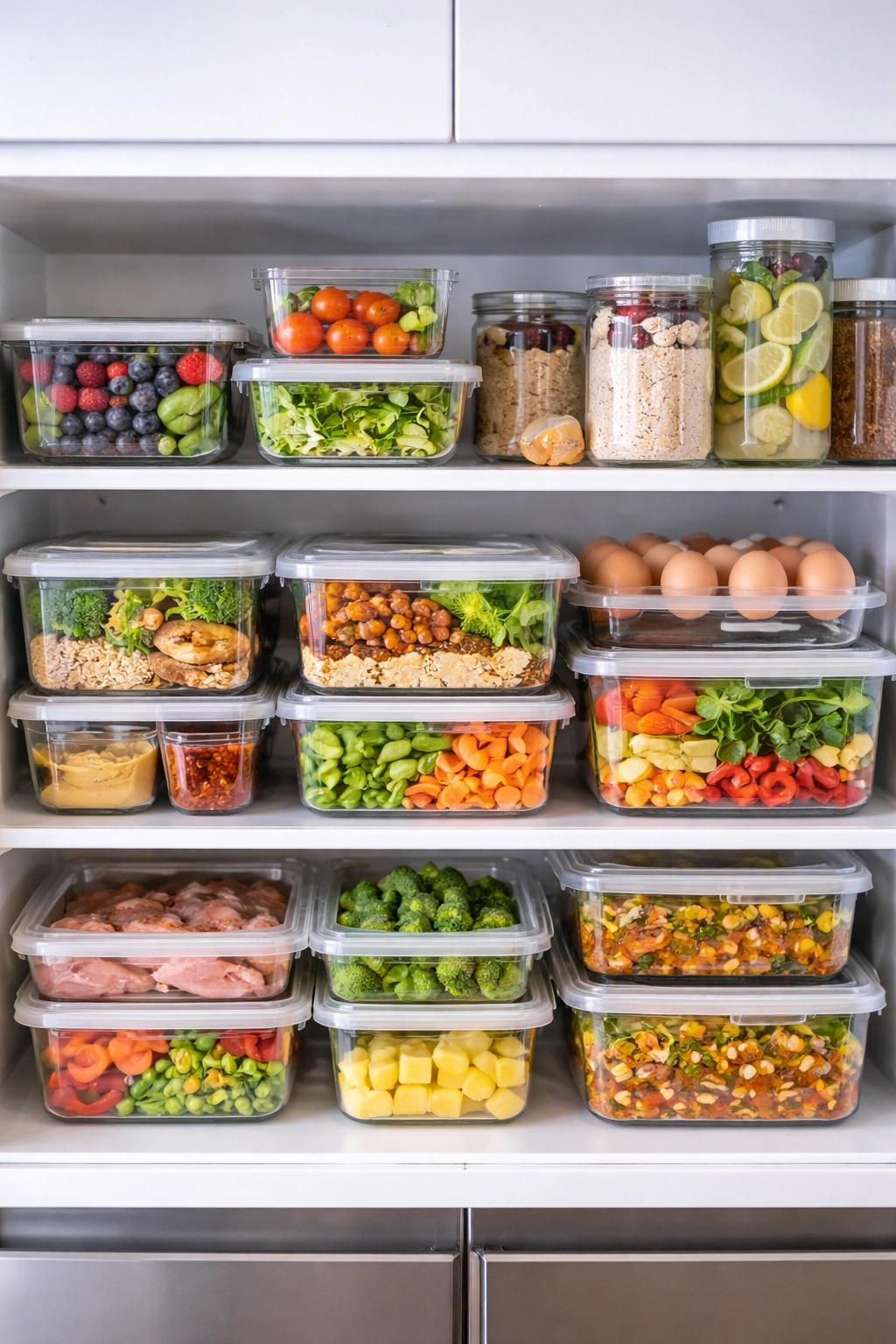
Even cheap food is a waste if it spoils before you eat it. Knowing how to store and preserve what you buy extends the life of your groceries and gets you more meals per dollar.
Proteins go straight into the fridge or freezer when you get home. If you’re cooking them today or tomorrow, they go in the fridge on the coldest shelf (usually the bottom back). If they’ll sit longer than two days, freeze them immediately. Frozen meat keeps for months; a thawed protein kept in the fridge keeps for two to three days before it should be cooked.
Fresh vegetables belong in the crisper drawer, where the humidity is controlled. Separate vegetables from fruits because fruits produce ethylene gas that ripens vegetables faster. Plastic wrap over cut vegetables helps them stay fresh longer. Potatoes, onions, and garlic go in a cool, dark place (a cabinet or pantry), not the fridge. Root vegetables like carrots and beets keep for weeks in the crisper.
Cooked proteins keep for four days in the fridge in airtight containers. Cooked rice and pasta keep four to five days. Use this window to plan your week—if you cooked everything on Sunday, you’re planning meals for Sunday through Wednesday or Thursday from that batch.
Bread goes in the fridge to last longer, or freeze slices you won’t eat within a few days. Canned goods last for months or longer, making them a reliable backup for weeks when you’re tight on budget.
Label containers with what they are and when you made them. This prevents the mystery container situation where you find something in the back of the fridge and have no idea how old it is. If you forget, the general rule is when in doubt, throw it out.
Calculating and Tracking Your Budget

Knowing what you’re actually spending is the only way to know if you’re staying on budget. It sounds simple, but most people have no idea whether a week of groceries costs them 60 dollars or 120 dollars because they’ve never tracked it.
Add up every receipt for a month and divide by 4.3 (the average number of weeks in a month) to see your weekly cost. For two people eating three meals a day, a 40 to 60 dollar weekly budget is reasonable and achievable without sacrifice. For a family of four, 80 to 120 dollars is reasonable. If you’re spending significantly more, something in your approach needs to change.
Track where the money is going. Are you spending 40 percent of your budget on proteins? 20 percent on produce? 15 percent on pantry staples? This breakdown helps you spot where cuts can be made. Maybe you’re buying too much fresh produce that’s going bad. Maybe you’re overspending on proteins because you’re not buying them in bulk or picking the cheapest cuts.
Once you see where your money is going, you can make intentional choices about what to cut and what to prioritize. If you find you’re spending 60 percent of your budget on proteins and you want to lower that, you shift to more beans and fewer animal proteins. The visibility is what changes behavior.
Seasonal Eating and Adjusting Your List Year-Round
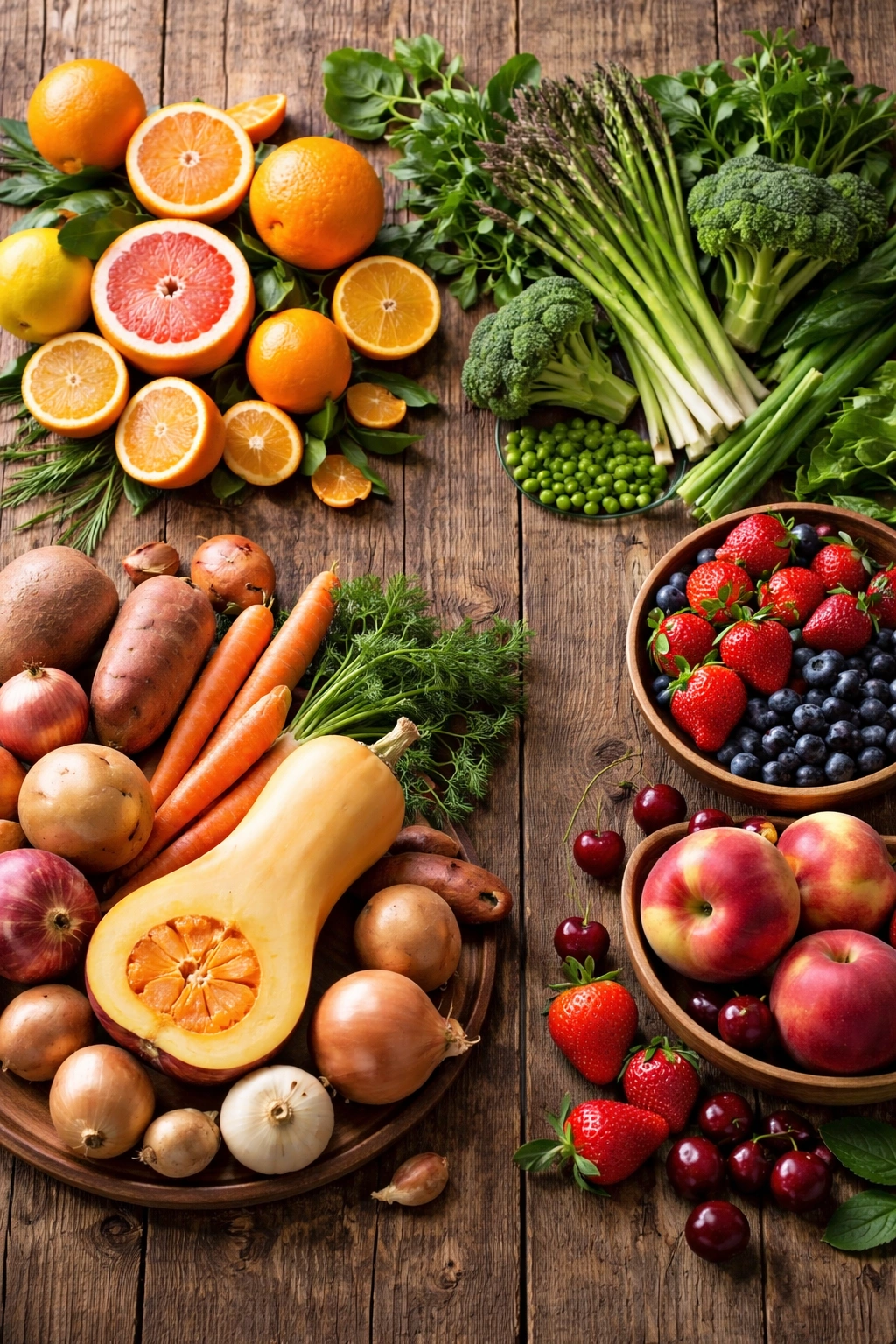
What’s affordable changes throughout the year, and eating seasonally keeps your budget low while supporting local agriculture (if that matters to you). In summer, berries drop in price—stock your freezer and use them all winter. In fall, apples and root vegetables are abundant and cheap. In winter, citrus is at its peak and most affordable. In spring, lighter vegetables come in.
Rather than expecting the same items to be affordable all year, build flexibility into your approach. Your go-to vegetable in August might be zucchini at 99 cents a pound. In December, zucchini costs three dollars a pound, and carrots are 40 cents. You shift your meals and your shopping list to match.
Keep a simple note of what’s inexpensive at different times of year. When berries hit the farmer’s market in June for five dollars a flat, you buy multiple flats and freeze them. When they cost seven dollars a pint in January, you’re using the frozen ones you stockpiled. This kind of intentional buying and using aligns your spending with natural abundance.
Final Thoughts
Eating well on a tight budget isn’t a deprivation sentence; it’s a different set of choices about what to prioritize. You’re choosing versatile ingredients over specialty items, you’re buying proteins that work in multiple meals, and you’re spending your prep time upfront so your cooking time during the week is minimal.
The single biggest lever you have is planning—five minutes before you go to the store to write down what you’re cooking, and 90 minutes on a weekend day to prep your proteins and base ingredients. Everything else flows from those two commitments. You’ll save money, eat better, and feel more in control of your food and your budget. That’s not a small thing.
