



There’s something magical about a perfectly executed cornbread salad at a potluck. You show up with a big bowl of something that looks nothing like traditional salad—layered, substantial, a little bit indulgent—and within twenty minutes it’s half gone while the green salads sit untouched. This isn’t coincidence. Cornbread salad hits a sweet spot that almost no other side dish can touch: it’s hearty enough to satisfy the people who didn’t come for rabbit food, familiar enough for the skeptics who wrinkle their noses at anything “too fancy,” and delicious enough that even the health-conscious folks end up coming back for seconds. When you need to feed a crowd, this is the secret weapon that makes people forget all about whatever casserole they brought and instead ask you for the recipe.
The genius of cornbread salad lies in its perfect balance of textures and flavors. You’ve got the savory richness of crumbled cornbread mixing with crisp fresh vegetables, tangy-creamy dressing, and sometimes smoky bacon or cheese. Unlike a traditional tossed salad that gets soggy and sad after sitting for thirty minutes, cornbread salad actually improves as it sits—the flavors meld together, the cornbread softens slightly while staying substantial, and everything becomes more cohesive and delicious. It travels beautifully, looks impressive when you set it down, and honestly requires way less effort than people assume.
The best part? This recipe makes enough to actually feed a real crowd—we’re talking twelve to sixteen generous servings from a single bowl. You can scale it up if you need to feed even more people, and it comes together in stages so you’re not working frantically the morning of the potluck. Whether you’re bringing this to a summer barbecue, a church dinner, a family reunion, or a casual neighborhood gathering, people are going to eat it, enjoy it, and ask where the recipe came from.
What Makes This Cornbread Salad So Special for Potlucks
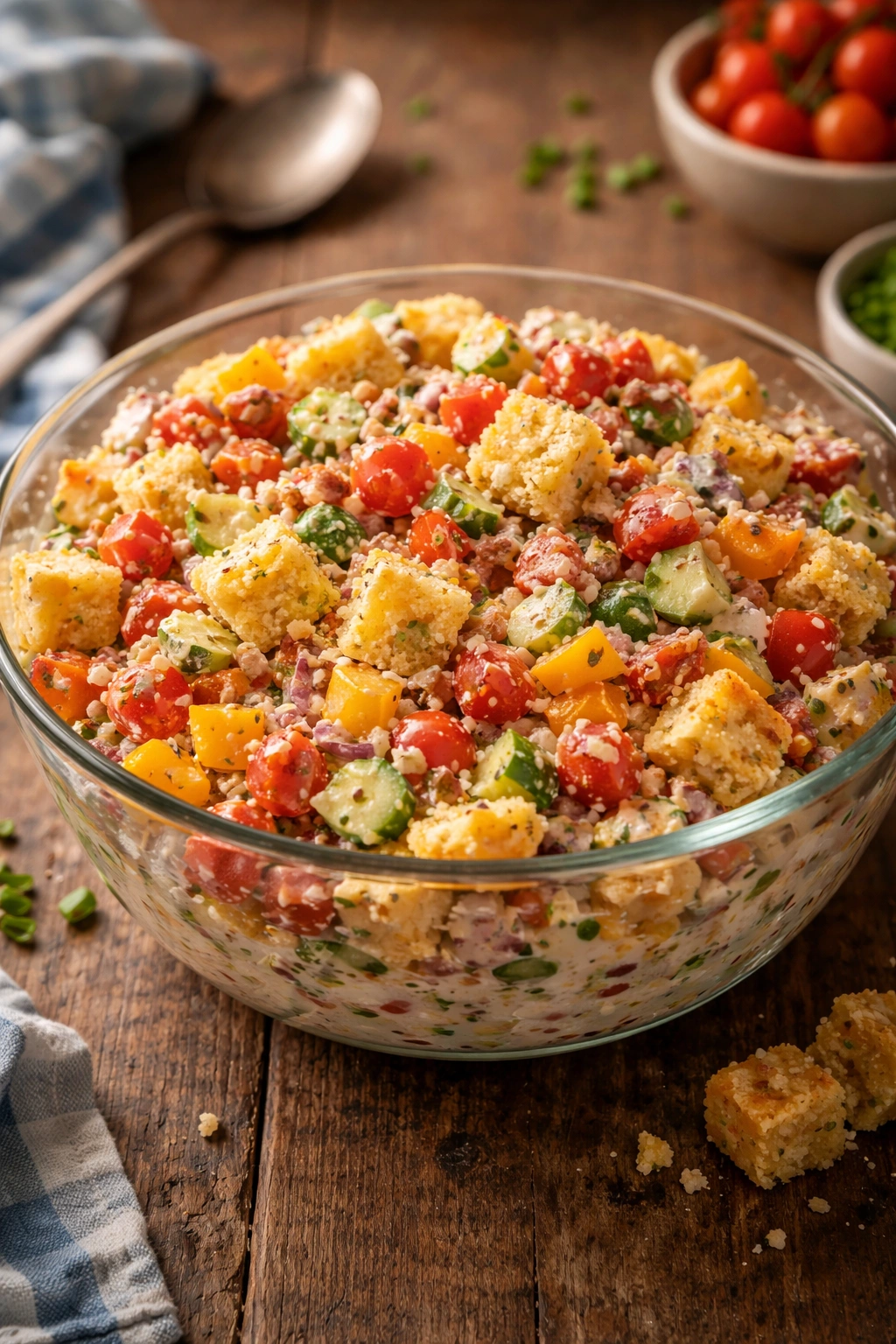
The fundamental appeal of cornbread salad comes down to something most potluck sides struggle with: it’s satisfying without being heavy. A person can eat a substantial portion without feeling like they need to lie down afterward, yet it’s filling and flavorful enough that it registers as a real part of the meal, not just filler. This is why it tends to disappear faster than more traditional salads.
Another huge advantage is the texture contrast. You’re not biting into leaves that all feel the same. Instead, every spoonful includes soft cornbread, crisp bell peppers, juicy tomatoes, cool cucumbers, and a creamy dressing that ties everything together. This variety keeps people interested and satisfied in a way that a simple green salad rarely manages. The cornbread pieces act almost like croutons but with way more personality and flavor.
There’s also something forgiving about layered salads that makes them ideal for potlucks. Unlike dishes that require careful timing or staying at a specific temperature, cornbread salad actually benefits from sitting for a couple of hours before serving. The flavors marry, the textures soften slightly and become more cohesive, and you can prepare it hours ahead without any stress. You literally just make it, cover it, keep it cool, and bring it to the potluck—no reheating, no last-minute fussing, no worries about food safety since it’s cold.
The History and Evolution of Cornbread Salad
Cornbread salad emerged as a distinctly American potluck staple, particularly in the South and Midwest, though it’s now beloved everywhere. The concept came from a practical impulse: cornbread is beloved in these regions, and creative cooks started thinking about how to stretch it further and make it work as part of a composed salad rather than just as a side bread. The earliest versions were likely simple—crumbled cornbread with some vegetables and a basic dressing.
What makes cornbread salad different from many other American potluck dishes is how relatively recent its widespread popularity is. While cornbread itself has been made in America for centuries, the concept of cornbread salad as we know it probably only became common in the latter half of the twentieth century. It represented cooks experimenting with making salad more substantial and more appealing to people who found traditional green salads boring or unsatisfying.
The dish evolved as home cooks added their own touches. Some versions include corn kernels (playing nicely with the cornbread theme), some add black beans for substance and protein, others layer in cheese, and still others get creative with the dressing. What they all share is that core genius: crumbled cornbread creates a texture and flavor that regular salad ingredients just can’t match. The recipe continues to evolve, with modern versions sometimes including ingredients like cilantro, lime juice, or even a touch of jalapeño to add more personality.
Why This Salad Works Better Than Traditional Sides
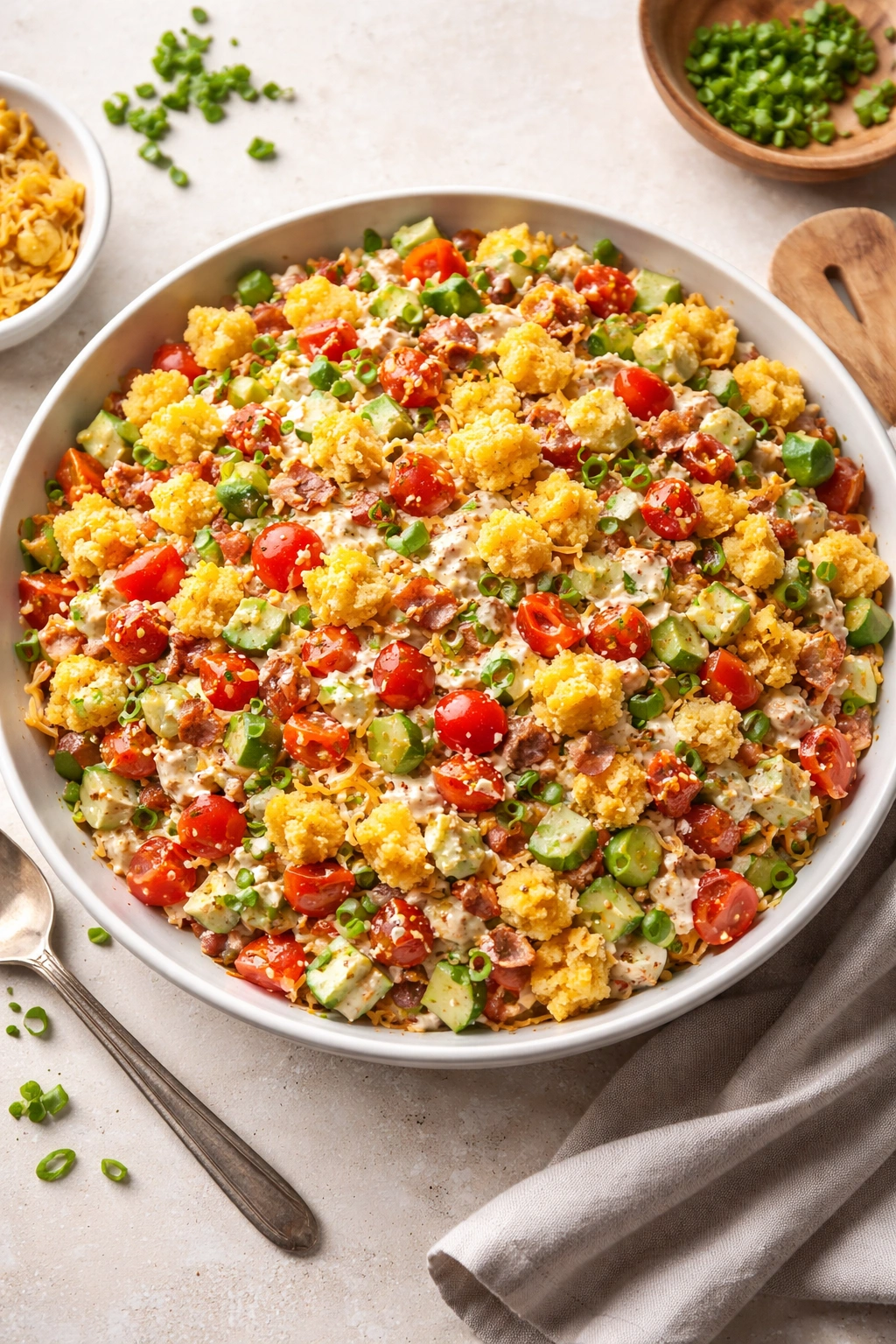
Traditional green salads have a real problem at potlucks: they wilt. Even if you bring the dressing separately, the lettuce starts breaking down the moment it gets warm, and after an hour or two of sitting out, you’re looking at a limp, unappetizing mess. Cornbread salad has no such issue. The cornbread doesn’t wilt—it might soften slightly, but it stays integral and delicious. The vegetables hold up better in the creamy dressing environment than they would in an oil-based vinaigrette.
Beyond logistics, there’s the fundamental question of who’s actually going to eat what you bring. A straight green salad at many potlucks is going to sit nearly untouched while people gravitate toward the heavier, more interesting dishes. Cornbread salad sits in this sweet spot where it appeals to almost everyone. The person who came for the barbecue brisket sees the cornbread and gets interested. The person watching their diet can have a reasonable portion without feeling deprived. Kids who normally eat nothing but bread and butter find themselves actually enjoying a dish full of vegetables because they’re suspended in cornbread and creamy dressing.
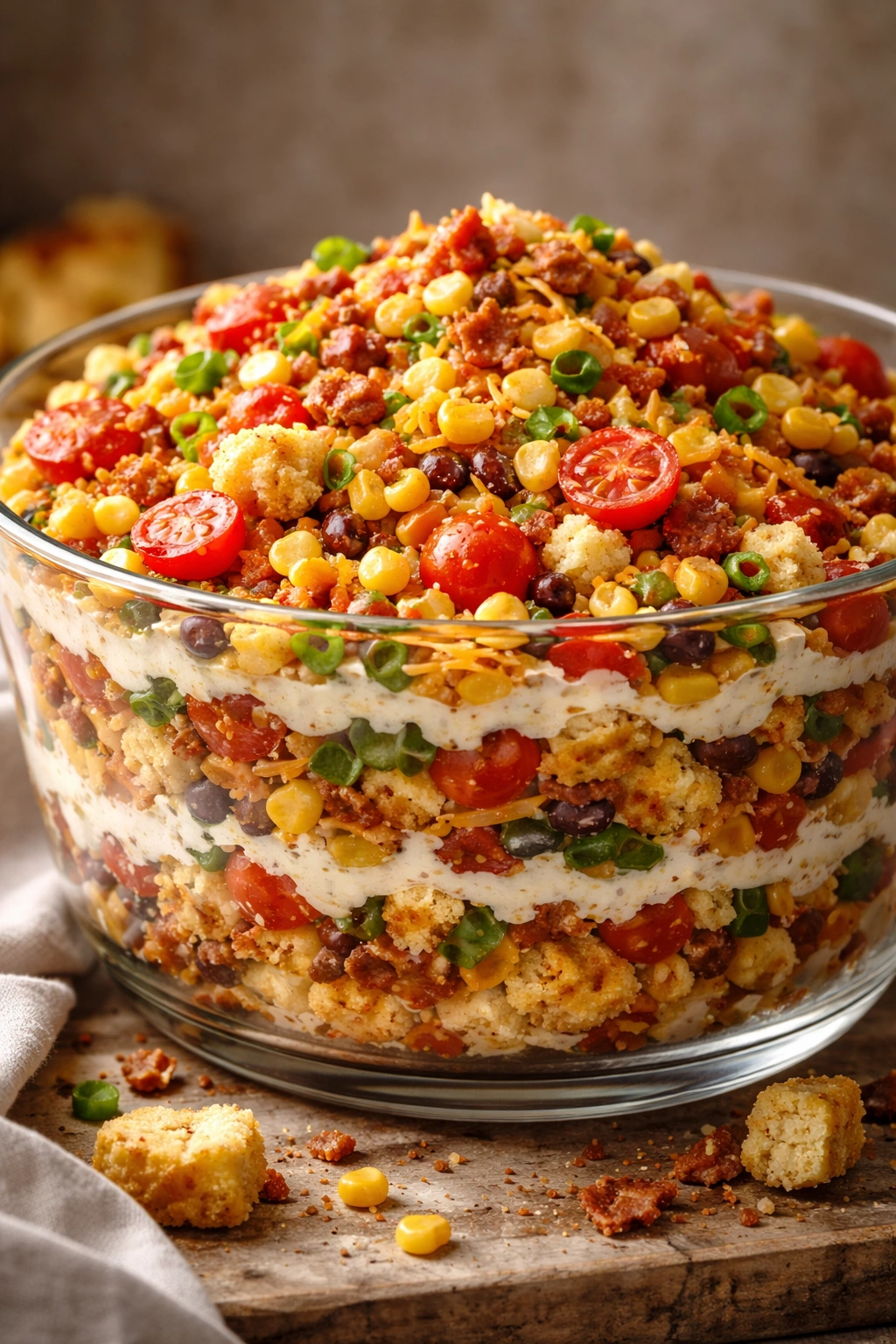
Cornbread salad also looks more impressive than it sounds. When you set down a big glass bowl with visible layers of golden cornbread, colorful vegetables, maybe some bacon or cheese catching the light, and a creamy dressing, people immediately perceive it as something worth trying. It photographs well. It looks like someone put real thought and effort into it, even though it’s honestly quite straightforward to make.
Choosing Your Cornbread and Building the Base
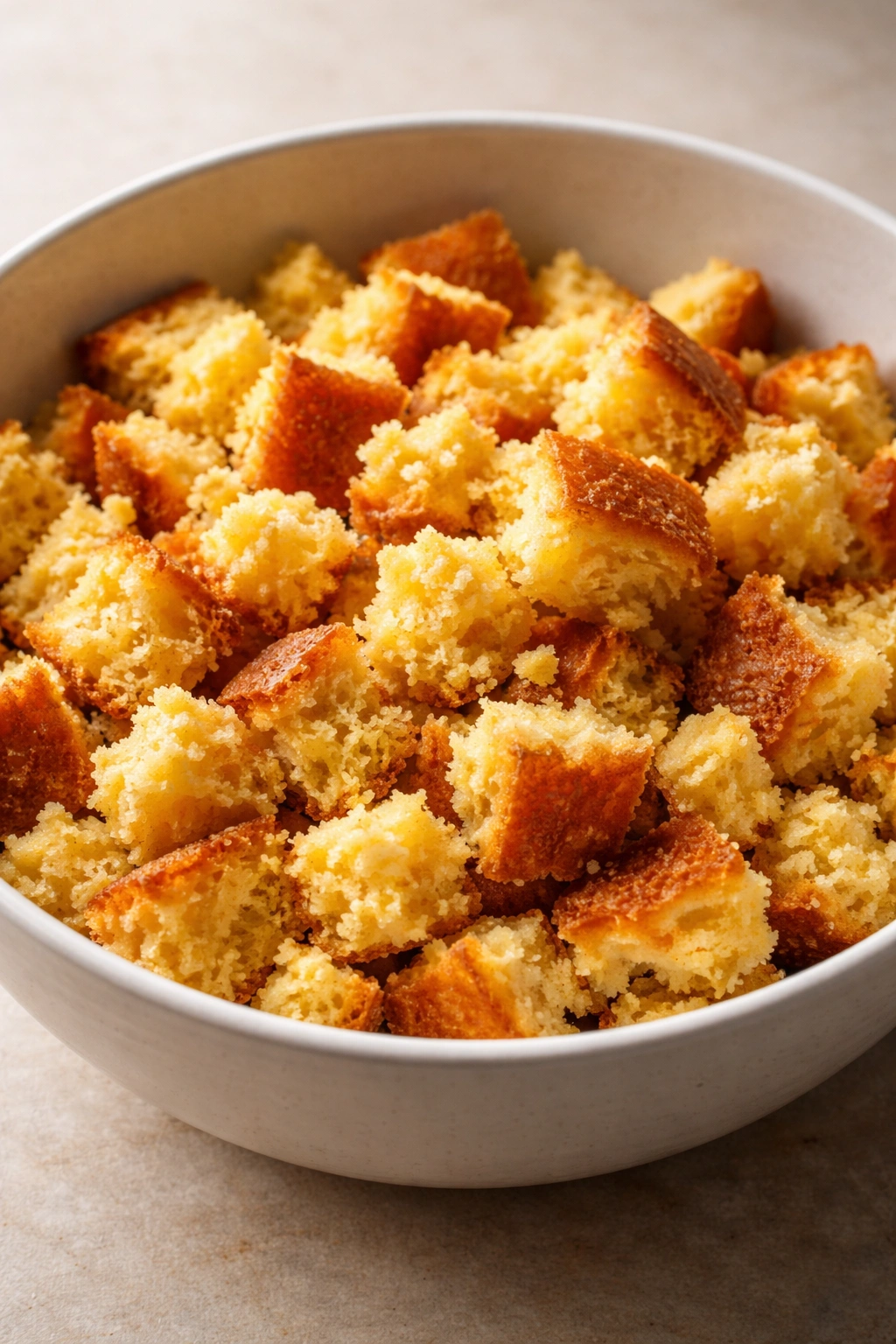
The foundation of any great cornbread salad is, obviously, the cornbread itself. You have two realistic paths here: bake it from scratch or use a quality boxed mix. Both work beautifully. Homemade cornbread gives you more control over the flavor and texture—you can make it slightly less sweet if you prefer, adjust the corn flavor, maybe add jalapeños or cheese directly to the batter. Boxed mix is faster and more convenient, and honestly, it makes excellent salad because you don’t need the cornbread to be perfect on its own; it’s going to be crumbled and mixed with other ingredients anyway.
Regardless of how you get your cornbread, here’s what matters for salad purposes: you want cornbread that’s sturdy enough to crumble into substantial pieces without turning into fine crumbs, and you want it to be fully cooled before you break it up. Warm cornbread gets crumbly and mushy in ways that don’t work well for salad. Make your cornbread the day before if you can, or at least a few hours ahead and let it cool completely to room temperature.
When you crumble the cornbread, break it into pieces that are roughly the size of large croutons—not dust, not giant chunks. You want pieces that’ll stay visible in the finished salad and contribute their own texture. A good way to do this is to place cooled cornbread in a large bowl and break it up by hand, then use a gentle motion to separate any pieces that have stuck together. You’re aiming for pieces roughly a half-inch to three-quarter-inch in size. If you end up with too much fine crumb, that’s okay—it’ll distribute throughout the salad and add subtle flavor—but the larger pieces are what give cornbread salad its characteristic appeal.
The Vegetables and Fresh Components You’ll Need
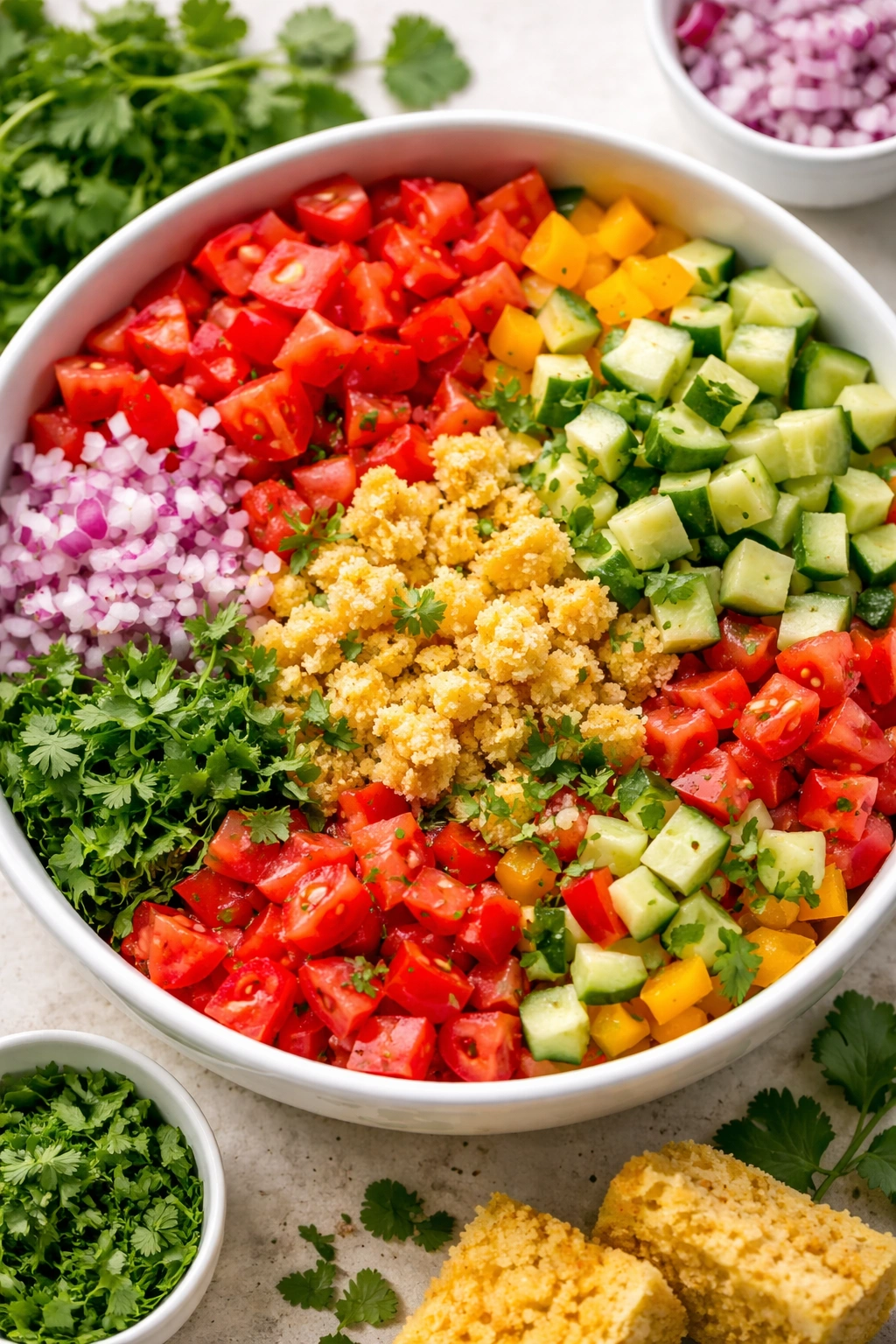
The vegetable selection is where you can let your preferences guide you while staying true to the basic formula. The classic combination includes diced bell peppers (red and yellow add great color and sweetness), diced tomatoes (fresh are best, but drained canned work if that’s what you have), diced red onion (gives a sharp bite that balances the sweetness), and often diced cucumbers for freshness and crunch. Some versions add corn kernels fresh or frozen, which creates a nice flavor echo with the cornbread.
Fresh herbs make a substantial difference. A handful of fresh cilantro adds brightness and personality (though you can skip it or swap for parsley if cilantro isn’t your thing). Fresh green onions contribute a mild onion flavor without the bite of raw onion. Some versions add diced fresh jalapeños if you want a subtle heat. Tomatoes should ideally be in-season tomatoes that actually taste like something—a February tomato from the grocery store is a sad thing, so if you’re making this in winter, canned tomatoes drained well are genuinely better.
Consider your protein additions too. Crumbled crispy bacon is classic and delicious, adding smoky richness. Shredded sharp cheddar cheese works beautifully, giving a tangy, savory note. Some versions include diced ham or even cooked chicken if you want to make it more of a complete meal. You don’t need every addition at once—pick what appeals to you and your crowd. Even without added protein, the cornbread and dressing make it substantial enough.
Making the Creamy Dressing
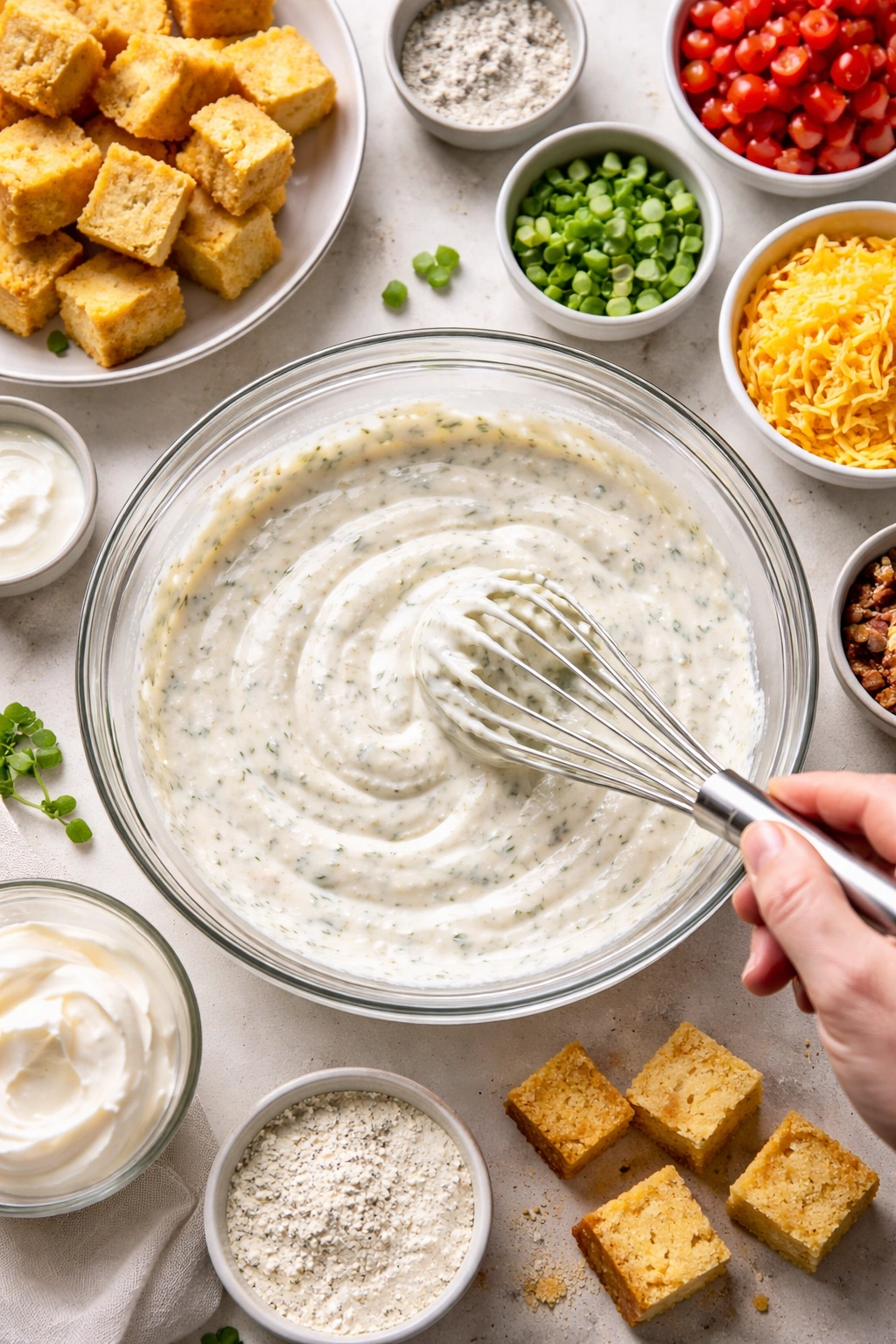
The dressing is what ties everything together, so it’s worth getting right. You’re building something that’s creamy, tangy, and flavorful enough to be noticed without being heavy. The classic base is mayonnaise mixed with ranch seasoning, sour cream, and a little buttermilk or milk to thin it to the right consistency. This creates something that clings to all the ingredients while letting the individual flavors still shine through.
Start with good-quality mayonnaise as your base—this is not the place to skimp. Mix it with sour cream, which adds tang and helps keep the dressing from being one-note. A bit of buttermilk or regular milk lets you control the thickness; you want it pourable but not runny, thick enough to coat ingredients but thin enough that it distributes throughout the salad without needing to be stirred constantly. Some people use Greek yogurt to cut the richness, which works fine if that’s your preference, though the traditional approach with mayo and sour cream really does taste better.
For seasoning, dry ranch dressing mix is the easy route and it works well because those seasonings are specifically designed for this type of application. If you prefer to avoid the packet, you can make a simple substitute with dried dill, parsley, chives, garlic powder, onion powder, and a little salt and pepper. The key is getting the dressing flavorful enough that it’s interesting but not so aggressively seasoned that it overpowers the fresh vegetable flavors. I like to add a little fresh lemon juice or lime juice for brightness, and a touch of honey or sugar to balance any sharpness. Taste as you go—you can always add more seasoning, but you can’t take it back.
Yield: Serves 12 to 16 | Makes one large (9×13-inch) serving bowl
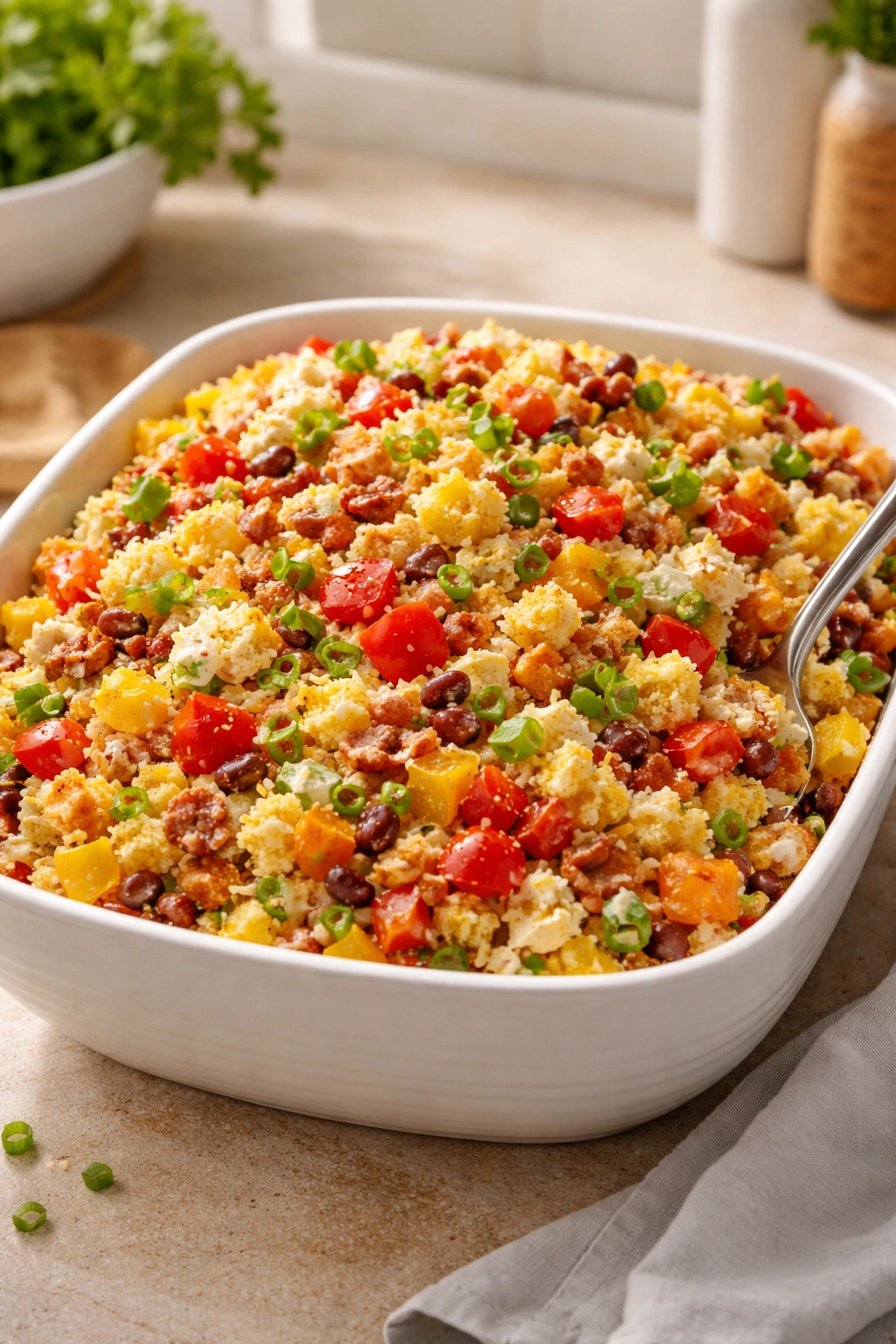
Prep Time: 30 minutes (including cornbread crumbling)
Cook Time: 25 to 30 minutes for cornbread (if baking from scratch) + 10 minutes for bacon (if using)
Total Time: 1 hour active + cooling time if baking cornbread from scratch. Make-ahead: This salad is best assembled 2 to 4 hours before serving, allowing flavors to meld and textures to soften slightly.
Difficulty: Beginner — No special skills required, straightforward layering technique, and the only cooking involved is basic cornbread baking (or using a mix) and optionally crisping bacon.
For the Cornbread:
- One 8.5-ounce package cornbread mix (such as Jiffy) prepared according to package directions, or homemade cornbread (one 8 or 9-inch square baked cornbread, cooled completely), roughly 4 to 5 cups crumbled into bite-sized pieces
- 6 slices bacon, cut into bite-sized pieces and crisped until crackling (optional but highly recommended), or 4 ounces smoked ham, diced
For the Vegetables:
- 2 large red bell peppers, diced into small pieces (about ¾ cup)
- 1 large yellow or orange bell pepper, diced (about ¾ cup)
- 4 medium Roma or beefsteak tomatoes, diced and drained of excess liquid (about 2 cups), or one 15-ounce can diced tomatoes, well drained
- 1 medium red onion, finely diced (about ¾ cup)
- 1 large English cucumber, diced (about 1½ cups)
- 1½ cups fresh corn kernels (fresh, frozen and thawed, or canned and drained) — optional but adds nice flavor
- 1 jalapeño, minced, seeds and ribs removed for less heat (optional)
- ½ cup fresh cilantro, roughly chopped (or ¼ cup fresh flat-leaf parsley if you prefer)
- 4 green onions (white and light green parts), sliced thin
For the Dressing:
- 1 cup mayonnaise (full-fat, not light or reduced-fat)
- ¾ cup sour cream
- ¼ cup buttermilk or whole milk
- 1 packet (1 ounce) dry ranch dressing mix (or homemade substitute: 1 tablespoon dried parsley, 1 teaspoon dried dill, ½ teaspoon dried chives, 1 teaspoon garlic powder, 1 teaspoon onion powder, ½ teaspoon salt, ¼ teaspoon black pepper)
- Juice of 1 fresh lemon (about 2 tablespoons)
- 1 teaspoon honey
- ½ teaspoon salt (taste and adjust based on how salty your mix is)
- ¼ teaspoon freshly ground black pepper
- ½ cup sharp cheddar cheese, shredded (optional but adds great flavor)
Prepare Your Ingredients:
-
If baking cornbread from scratch, prepare and bake according to your preferred recipe or box directions, then allow to cool completely to room temperature. Once cooled, break the cornbread into bite-sized pieces (roughly three-quarter-inch pieces) in a large bowl until you have 4 to 5 cups of crumbled cornbread. Set aside. If using leftover cornbread from the day before, this step is ready to go.
Advertisements -
If using bacon, cook the strips in a large skillet over medium-high heat until crispy and browned, about 8 to 10 minutes. Transfer to a paper towel–lined plate to drain, then crumble into bite-sized pieces once cool enough to handle. This can be done several hours ahead and stored in an airtight container. If omitting bacon, you can skip this step entirely.
-
Prepare all your vegetables while the bacon crisps (or at any point before assembling): Dice the bell peppers into small, roughly uniform pieces and place in a large mixing bowl. Dice the tomatoes, drain excess liquid in a fine-mesh strainer, then add to the bowl. Dice the red onion, cucumber, and jalapeño if using, and add them to the bowl. Add the corn kernels if using. Prepare the cilantro and green onions and set aside separately (you’ll add these fresh herbs just before assembling to preserve their brightness).
-
Make the dressing while your vegetables are prepped: In a medium bowl, whisk together the mayonnaise and sour cream until smooth. Add the buttermilk or milk slowly, whisking until the dressing reaches a pourable but creamy consistency. Stir in the ranch dressing mix (or your homemade seasoning blend), lemon juice, honey, salt, and pepper. Taste the dressing and adjust seasoning to your preference—it should taste flavorful and interesting on its own, since it’s the primary seasoning for the entire salad. Set aside.
Assemble the Salad:
-
Choose your serving vessel carefully. A large clear glass bowl (at least 4 quarts) is ideal because it shows off the beautiful layers, but a 9×13-inch baking dish or any large serving bowl works equally well. The size matters because you want a bowl that’s wide and shallow enough that you can see the layers and scoop attractive portions.
-
Start with the cornbread base. Spread half of your crumbled cornbread (roughly 2 to 2.5 cups) across the bottom of your serving bowl, breaking up any clumps and distributing it in an even layer. This creates the foundation that will soak up flavor from the dressing above.
-
Add the fresh vegetables. Spread the mixed diced vegetables (everything except the cilantro and green onions) in an even layer over the cornbread. Don’t be stingy here—you want a full, generous layer that creates distinct color variation.
-
Drizzle with dressing. Pour about one-third of your prepared dressing evenly over the vegetable layer. It doesn’t need to coat everything completely; the dressing will distribute and settle as the salad sits. This is intentional—you want some vegetables to stay slightly crisp while others soften slightly into the dressing.
-
Add the remaining cornbread. Layer the remaining cornbread pieces (about 2 to 2.5 cups) over the dressed vegetables. This creates a sort of cornbread-vegetable sandwich layer in the middle of your salad.
-
Add cheese and bacon. If using cheddar cheese, sprinkle the shredded cheese over the top cornbread layer. Distribute the crispy bacon pieces over the cheese. These toppings on top add visual appeal and ensure everyone gets some in their serving.
Advertisements -
Finish with dressing and fresh herbs. Pour the remaining dressing over the top in an even layer (it’ll look like quite a bit, but this is correct—the dressing is what makes cornbread salad work). Scatter the fresh cilantro and sliced green onions over the very top, just before serving or within an hour of assembly. These fresh herbs are your last-minute addition because they stay brightest and most flavorful when not sitting in the dressing for hours.
-
Cover and chill. Once assembled, cover the bowl loosely with plastic wrap and refrigerate for at least 1 hour and up to 4 hours before serving. This resting period is when the magic happens—flavors meld, the cornbread softens slightly while staying substantial, and the whole dish becomes cohesive and delicious. Do not assemble more than 4 hours ahead, as the cornbread will eventually become mushy and the fresh herbs will lose their brightness.
-
Before serving, give it a gentle stir. Using a large spoon or serving fork, gently fold the salad together once or twice to distribute the dressing throughout and ensure each serving includes cornbread, vegetables, and dressing in every bite. Don’t over-stir—you want to maintain some texture variation and avoid mashing the vegetables.
Tips for Baking Perfect Cornbread at Home
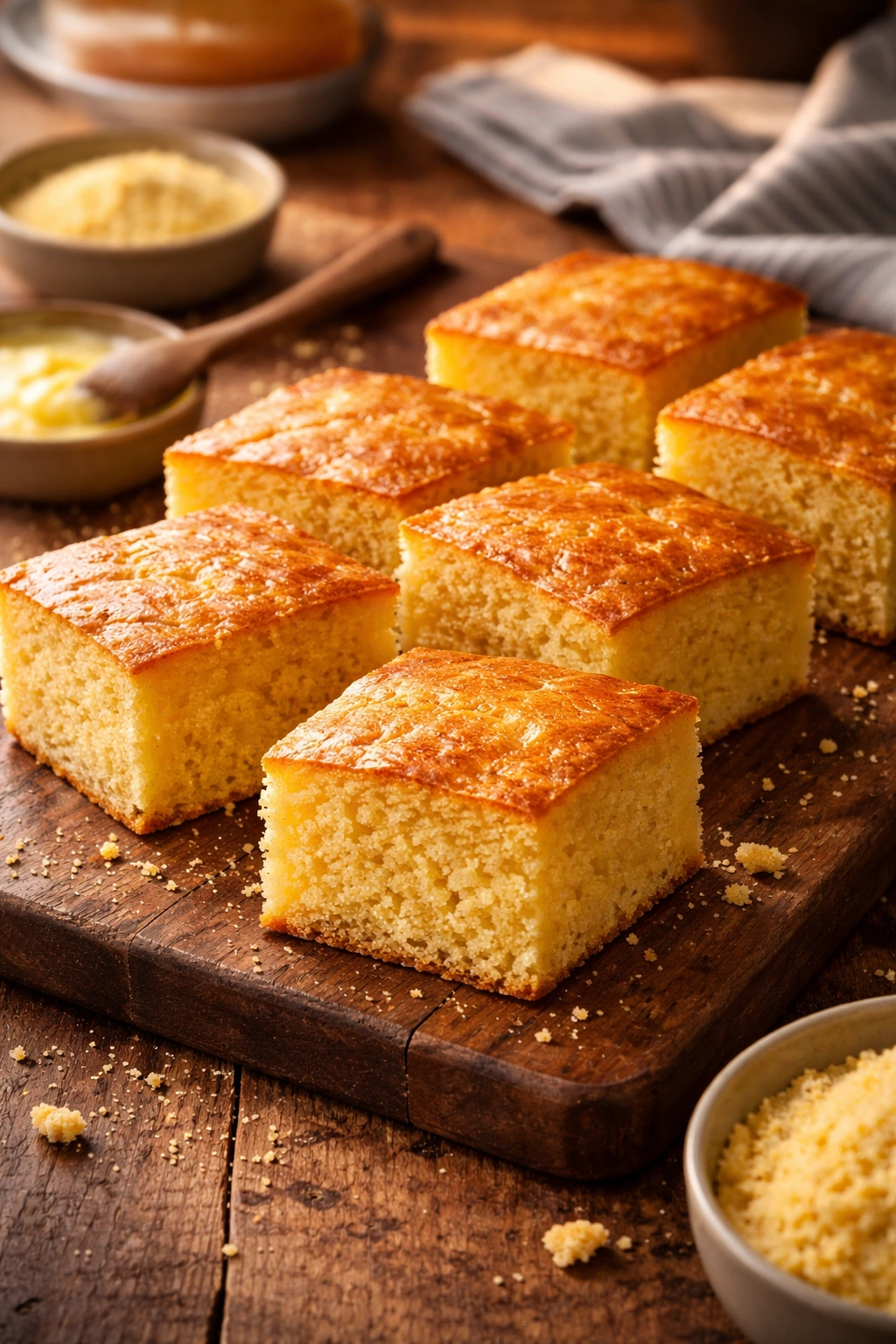
If you’re making cornbread from scratch, here are a few techniques that’ll elevate it beyond what a box mix can do. The secret to tender cornbread is not overmixing the batter. Mix your dry ingredients together, mix your wet ingredients separately, then combine them with just a few quick folds until they barely come together. Some small lumps of dry ingredients are fine and will disappear during baking. Overmixed batter produces dense, tough cornbread that doesn’t work as well in salad.
For extra flavor and richness, substitute buttermilk or Greek yogurt for some of the liquid. A little honey or maple syrup adds subtle sweetness and helps keep cornbread moist. Fresh or frozen corn kernels mixed into the batter add texture and reinforce that corn flavor. Some people swear by adding sharp cheddar cheese and diced jalapeños to the batter itself, which makes the cornbread more interesting even when eaten plain.
Temperature matters too. Bake at 400°F (200°C) for a higher, more evenly cooked cornbread. Make sure your oven is fully preheated before the batter goes in. If you want a crispy golden crust on the bottom and edges, preheat your baking pan in the oven with a little butter, then carefully pour the batter into the hot pan. That sizzle creates amazing crust. Bake until a toothpick inserted in the center comes out clean or with just a few moist crumbs—don’t overbake or the cornbread will be dry.
Common Mistakes and How to Avoid Them
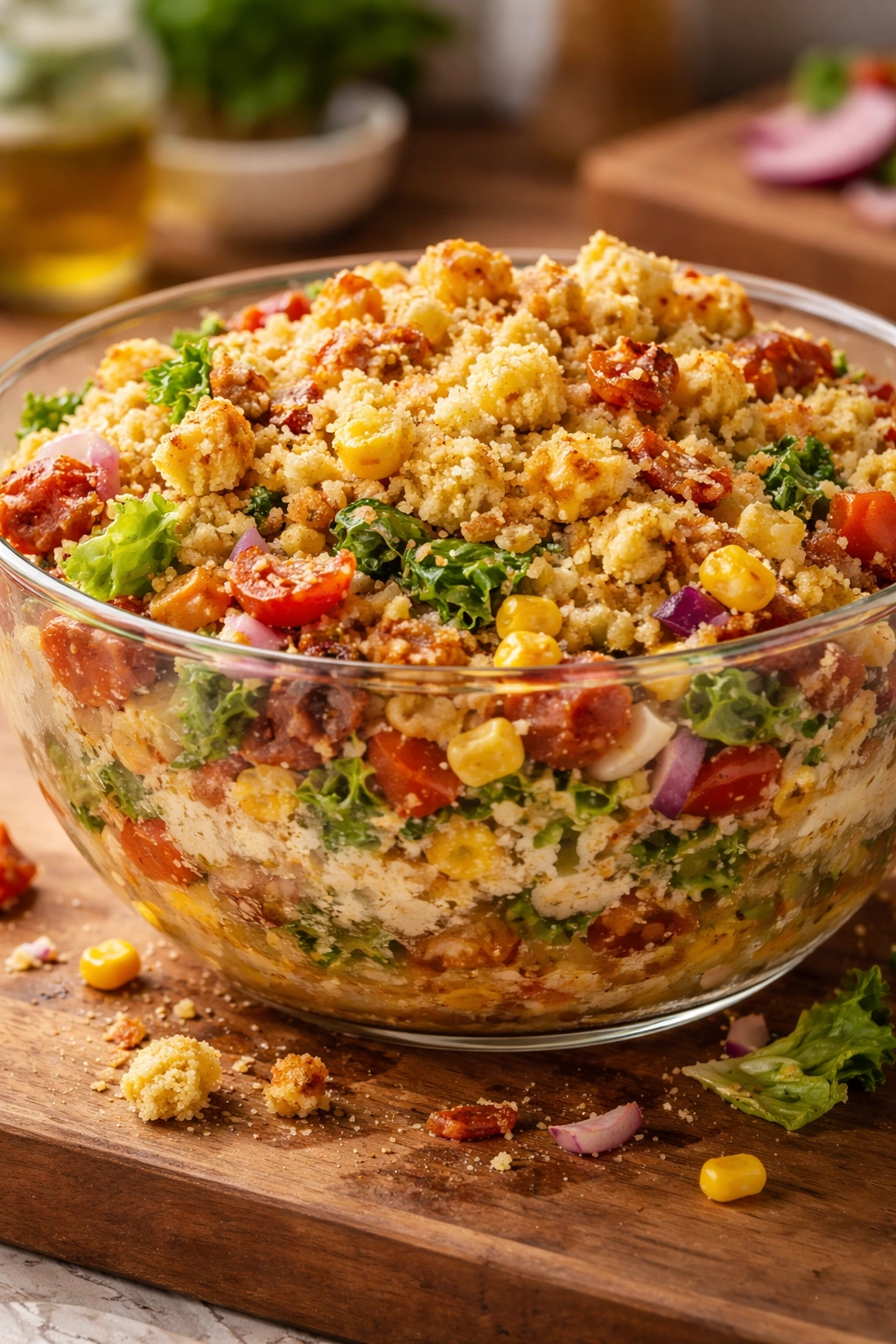
The biggest mistake people make with cornbread salad is not letting it sit long enough before serving. It’s tempting to assemble it thirty minutes before the potluck and go, but cornbread salad genuinely improves after sitting for a couple of hours. The flavors marry, the textures become more cohesive, and it tastes significantly better. Two to four hours in the refrigerator is the sweet spot. If you assemble it right before serving, every component still tastes distinct and separate rather than melded together into something greater than the sum of its parts.
Another common issue is making the dressing too thick or too thin. Too-thick dressing won’t distribute properly throughout the salad and will create pockets of undressed vegetables. Too-thin dressing gets absorbed into the cornbread and doesn’t coat everything. The right consistency is creamy and pourable, similar to ranch dip consistency. If you’ve mixed it and it’s not quite right, you can thin it with a splash more buttermilk or thicken it with a tablespoon of sour cream.
Some people underdress the salad, thinking they’re keeping it from getting soggy. Cornbread salad actually needs that dressing to work properly. The cornbread absorbs it and softens slightly while staying substantial. If you’re stingy with dressing, you end up with a dry, crumbly salad that’s not pleasant to eat. Go ahead and use all of the dressing.
Don’t add the fresh herbs (cilantro, green onions) hours in advance. They’ll lose their brightness and can start to wilt slightly in the dressing environment. Add them within an hour of serving, ideally right before you serve.
Make-Ahead Strategies for Busy Potluck Season
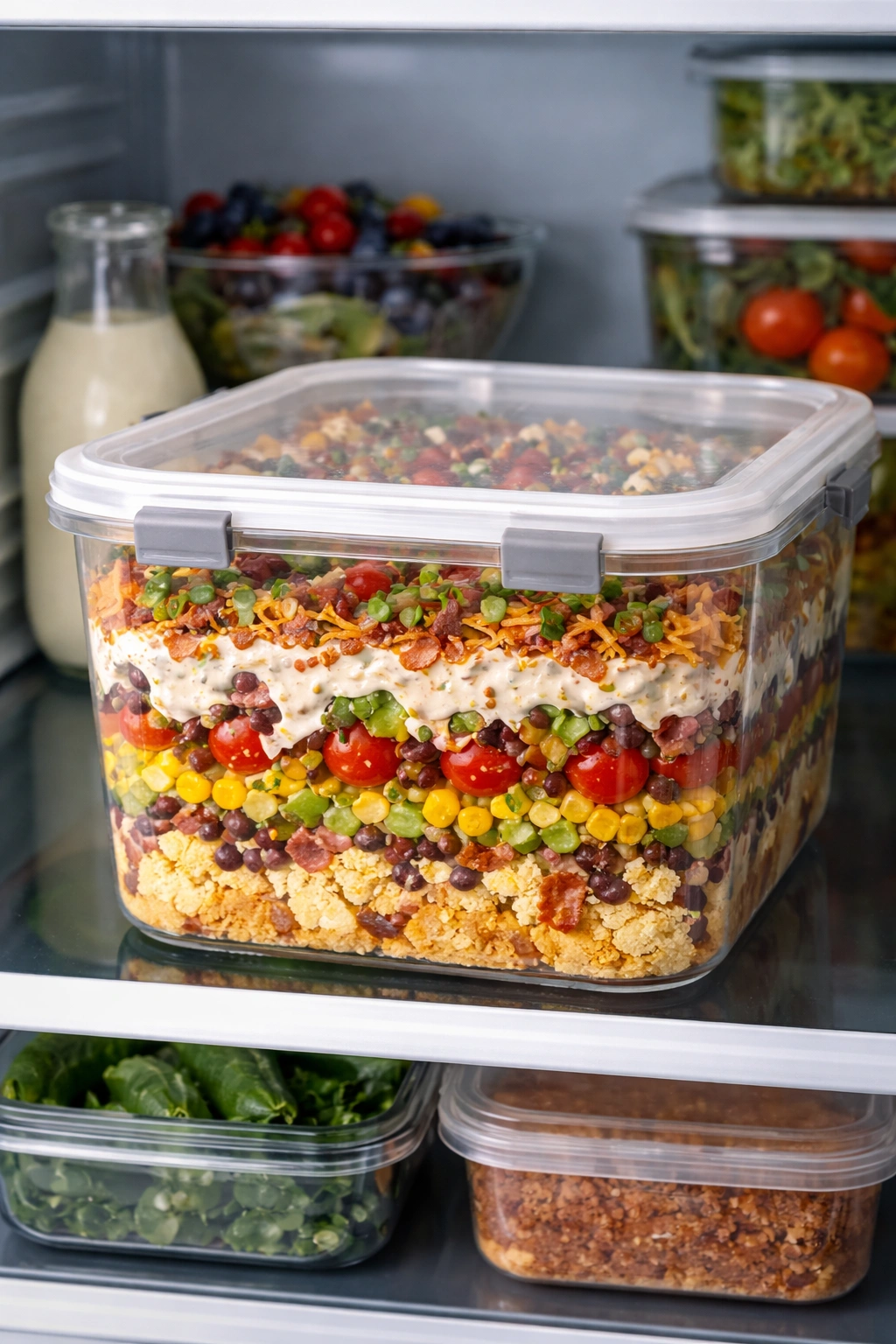
The beauty of cornbread salad for potluck season is how flexible it is with timing. You can bake your cornbread a full day or even two days ahead; just store it in an airtight container at room temperature or wrapped in foil. The crumbled pieces keep perfectly fine, and the salad will actually taste better if you have cornbread that’s been sitting a day because it develops more corn flavor and firms up slightly.
You can prep all your vegetables the morning of, dice them, and store them in airtight containers in the refrigerator. This saves you significant time the hour before the potluck when you’re inevitably running behind. Make your dressing and store it separately in a covered container—it’ll keep in the fridge for up to three days.
The real time-saver is assembling the salad at home before you even leave for the potluck. Get it fully assembled except for the final fresh herbs, cover it, and pack it in a cooler or insulated bag. Transport it to the potluck, uncover it when you arrive, scatter the cilantro and green onions on top just before setting it out, and you’re done. You look like you spent hours on this when you actually did most of the work at home in your own kitchen where everything’s organized and clean.
If you’re ultra-organized, you can even assemble it the night before, but don’t add the fresh cilantro and green onions until the morning of or right before transport. The dressing will keep everything moist and delicious, the flavors will actually be more developed, and you’ll show up to the potluck with something spectacular that required minimal effort on the day itself.
Variations to Match Your Crowd’s Preferences
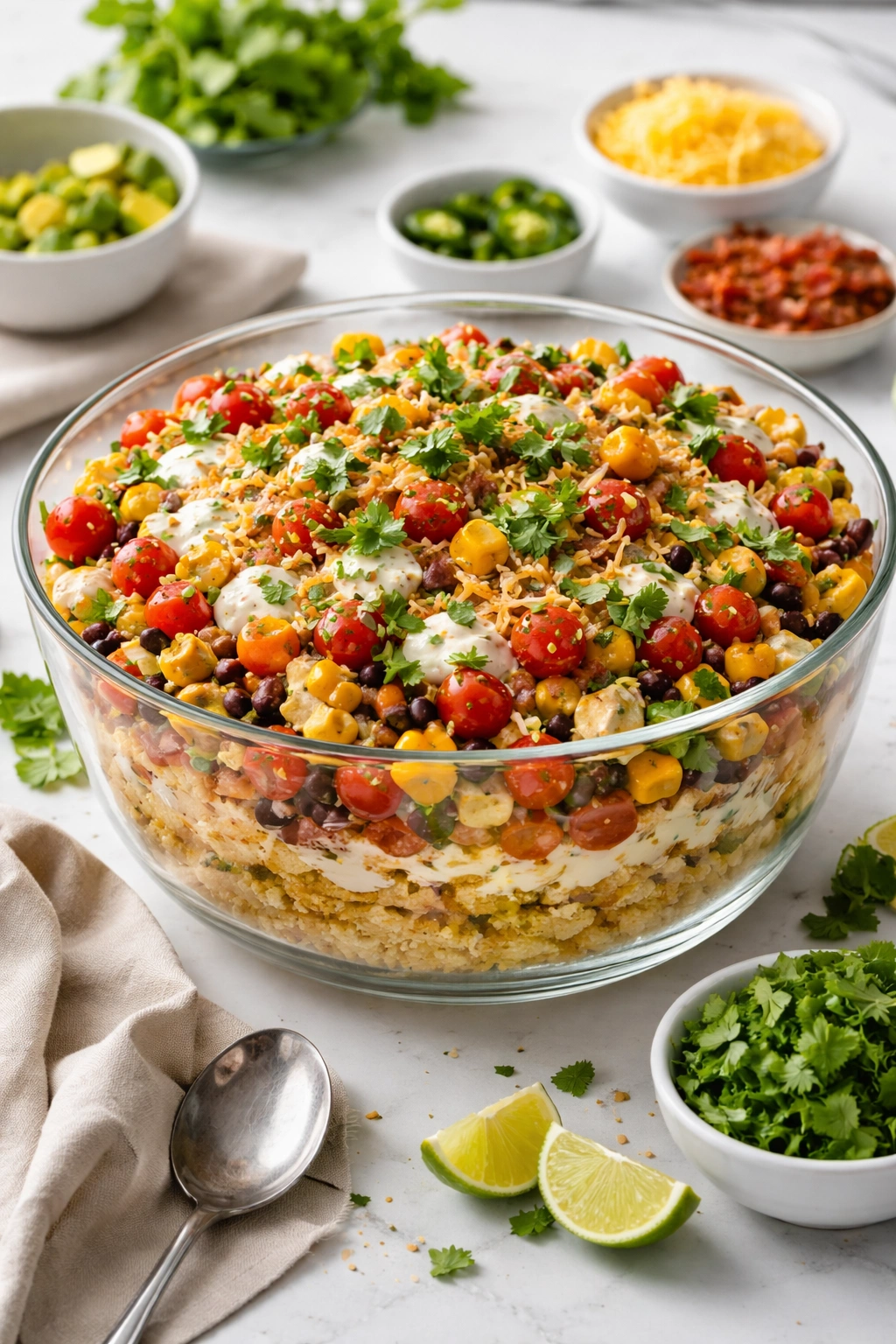
The base formula is delicious and classic, but cornbread salad is endlessly adaptable. If you want to make a Southwestern version, use cilantro instead of parsley, add a cup of black beans (drained and rinsed), use lime juice instead of lemon in the dressing, and add a jalapeño or two. Swap the ranch seasoning for a blend of cumin, chili powder, and smoked paprika. Add cotija cheese instead of cheddar. This version pairs beautifully with barbecue.
For a lighter version that appeals to people counting calories, reduce the mayonnaise and use more Greek yogurt in the dressing. Add more fresh vegetables and less cornbread. Use turkey bacon or skip the bacon entirely and add grilled chicken instead. It’ll still be delicious and satisfying, just with a different calorie profile.
If you’re cooking for people with dietary restrictions, there are several easy swaps. Make the cornbread vegan using a vegan cornbread mix and non-dairy milk in the batter. Use vegan mayo and dairy-free sour cream (cashew cream works beautifully) for the dressing. Skip the bacon and cheese or use dairy-free versions. The result is still absolutely delicious.
A more indulgent version can include a cup of shredded sharp cheddar mixed into the dressing itself (not just sprinkled on top), extra bacon, and perhaps some crispy fried onions scattered over the top for extra texture. Some people add a cup of corn kernels and a touch of honey to play up the sweet-savory thing cornbread salad does so well.
If you’re serving this at a summer potluck when fresh tomatoes are amazing, load them in generously. In winter when tomatoes are mediocre, rely more on corn, peppers, and cucumber. You can also add diced fresh pineapple for sweetness and brightness, or diced roasted red peppers from a jar for smokiness and depth. There’s no wrong version—just build on the foundation with what appeals to you and your guests.
Storage and Keeping It Fresh Until Serving
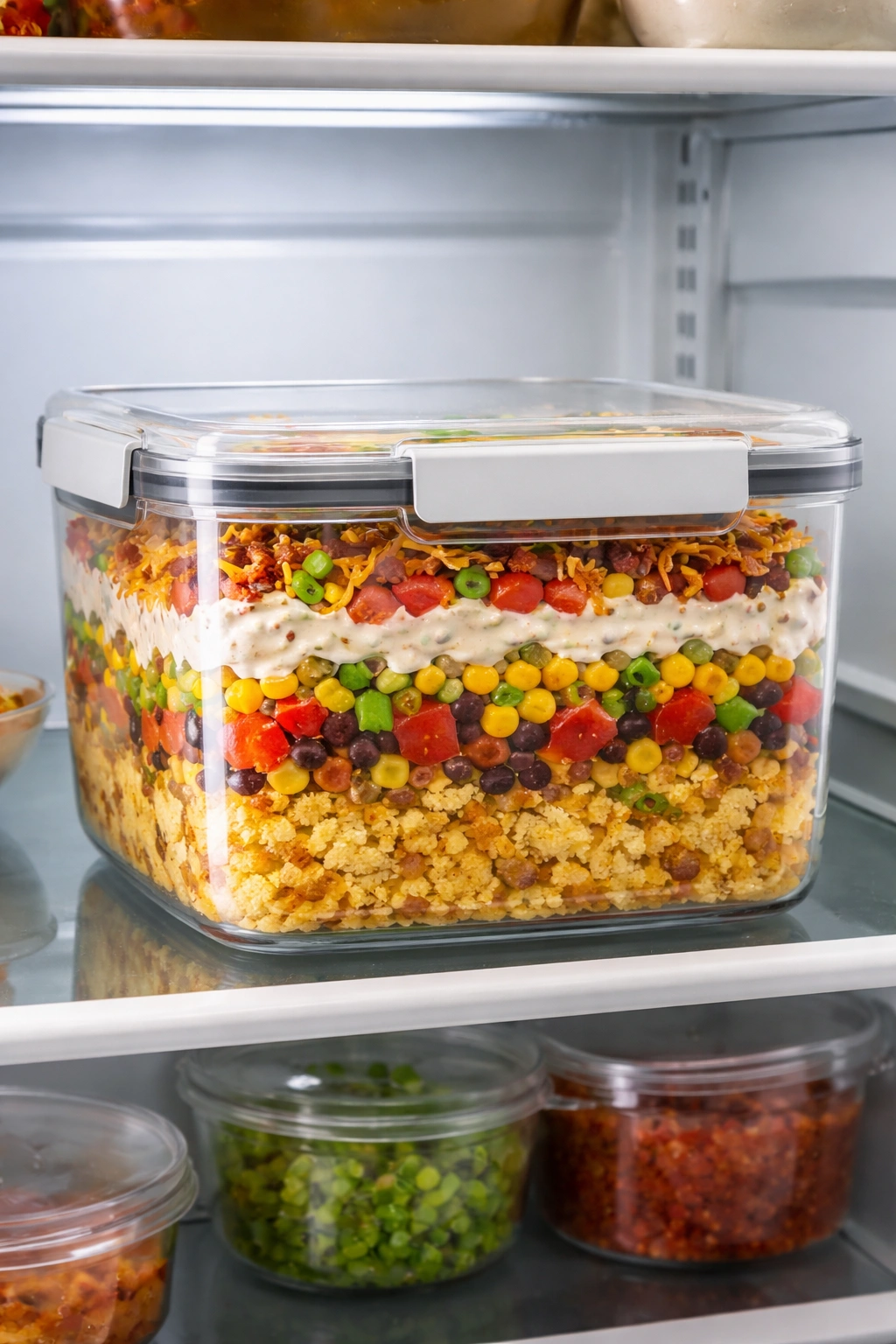
Cornbread salad will keep in the refrigerator for up to three days once assembled, which is remarkable for a salad with fresh vegetables. The dressing preserves everything beautifully, and the flavors actually deepen over time. Cover it with plastic wrap or a fitted lid to prevent it from absorbing refrigerator odors or drying out.
If for some reason you have leftovers after the potluck, store them in the same way—covered tightly in the fridge. It’ll stay good for up to three days. The texture will become progressively softer as the cornbread absorbs more dressing, but this isn’t a bad thing; many people prefer it this way because it becomes more of a unified dish rather than distinct ingredients. If you want to refresh it slightly before eating leftovers, you can add a few fresh cilantro leaves and sliced green onions right before serving to brighten the flavors.
You can also freeze cornbread salad, though the texture will change slightly—the cornbread gets softer and the vegetables give up more moisture. It’s not ideal, but it’s possible if you need to store it longer than three days for some reason. Thaw it in the refrigerator overnight rather than at room temperature. The dressing will help hold everything together, but expect it to be wetter and softer than the original.
If you’re transporting cornbread salad to the potluck, keep it in an insulated cooler with ice packs to maintain the right temperature. It shouldn’t sit at room temperature for more than two hours, and if the weather is particularly hot, be even more cautious. Unlike dishes that get served hot, cold salads depend on staying cold for both food safety and texture.
Serving Suggestions and Pairing Ideas
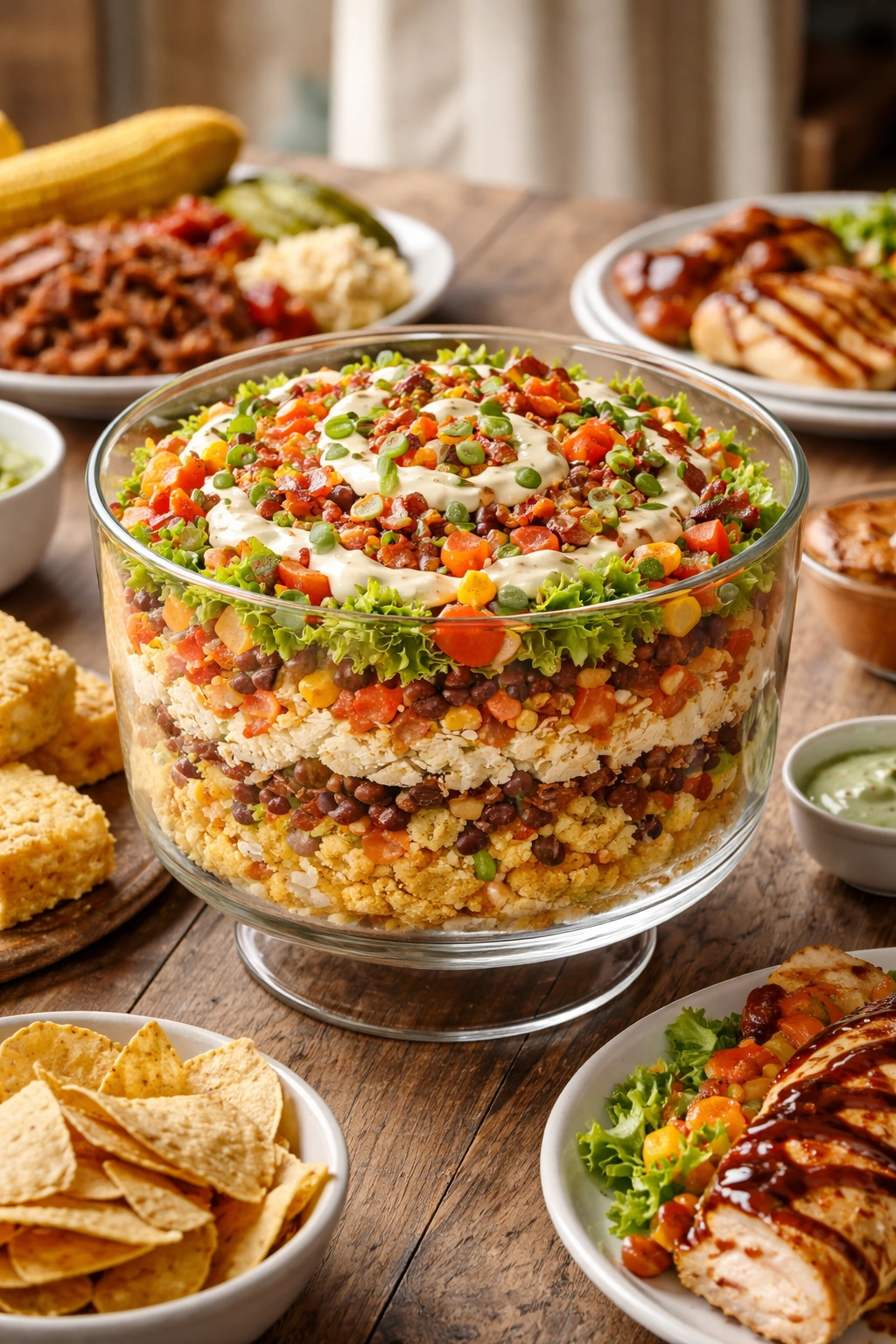
Cornbread salad is substantial and interesting enough to serve as its own side dish, but it also pairs beautifully with specific main dishes. At a barbecue, it’s perfect alongside pulled pork, brisket, ribs, or grilled chicken. The cornbread salad adds freshness and brightness that balances the richness of smoked or grilled meat. At a summer potluck with grilled burgers and hot dogs, it’s a refreshing counterpoint to heavier foods.
It also works wonderfully with Tex-Mex food. Serve it alongside enchiladas, tacos, or chile con carne. If you made the Southwestern variation, it’s almost essential with those dishes. With fried chicken at a picnic, cornbread salad feels like a natural partner since both foods draw from similar culinary traditions.
For plating, use a sturdy spoon or a deli-style slicer to cut neat portions from the bowl. Because of the layers, each serving should include all the components—cornbread, vegetables, and dressing. If you’re plating individual servings, a shallow bowl or a small plate works better than trying to scoop a massive portion onto a napkin.
You can garnish individual servings with a small sprinkle of extra shredded cheese, a tiny cilantro leaf, or a single piece of crispy bacon. These aren’t necessary—the salad is beautiful on its own—but they make people feel like they’re getting something special. If you’re serving at a casual potluck where people grab from the communal bowl, clear serving spoons and maybe some small plates next to the bowl make the process easy.
Final Thoughts
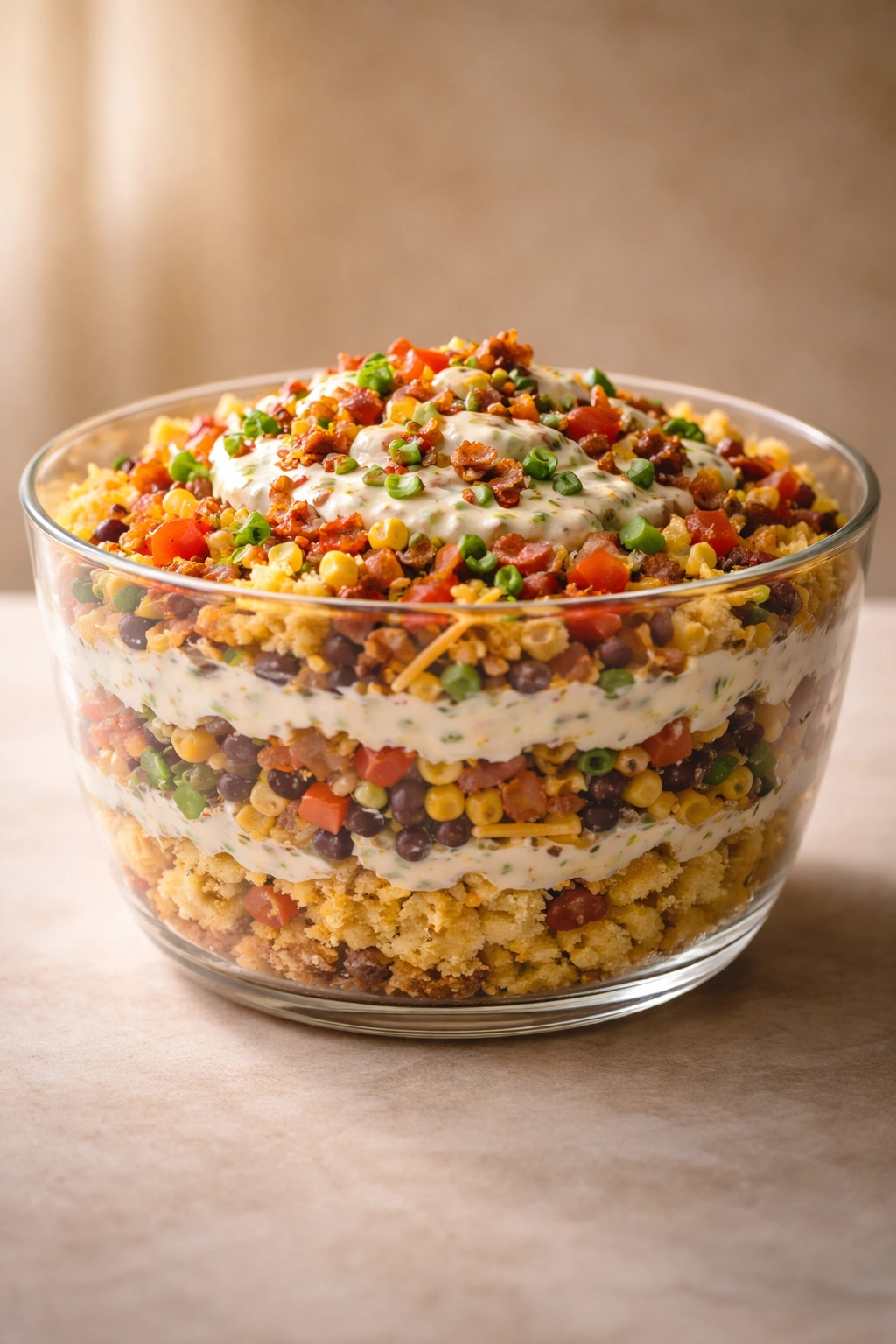
Cornbread salad is one of those rare dishes that somehow feels both simple and impressive, casual and special, healthy and indulgent all at once. It’s the kind of thing that makes people at a potluck remember who you are because they remember the dish you brought. You’re not trying to compete with the fancier casseroles or the homemade sides that took hours—you’re bringing something completely different that fills a niche nobody else is touching.
The real magic of this recipe is that it scales beautifully. Make it exactly as written and you’ve got enough for a dozen people with reasonable portions. Want to feed thirty people? Just double or triple everything and use a bigger bowl. The formula stays the same, the technique doesn’t change, and it’s still just as easy. That’s why this is truly a potluck champion—it works at any scale, tastes better the longer it sits, travels beautifully, and people actually want to eat it.
The next time you’re planning what to bring to a gathering and you’re tired of bringing the same old thing, make this cornbread salad instead. Assemble it at home in your own time, transport it in a cooler, and watch what happens when you set it down on the potluck table. It’ll be gone within thirty minutes, and you’ll spend the next week getting requests for the recipe. That’s what actually feeding a crowd looks like.
