



There’s something genuinely magical about opening a jar of vibrant green sauce and knowing that what you’re about to taste will transform whatever’s on your plate. Chimichurri sauce does that effortlessly—it’s herbaceous, garlicky, a little vinegary, and bright in a way that makes your mouth water before the first bite even happens. What makes chimichurri so extraordinary isn’t its complexity or the number of ingredients involved. It’s the opposite, actually. A handful of fresh herbs, a good acid, quality oil, and a few other simple staples come together to create something that tastes like sunshine in a bottle.
If you’ve never made chimichurri at home, you’ve been missing out on one of the easiest and most rewarding condiments you can pull together in about ten minutes. Store-bought versions exist, sure, but they rarely capture that fresh, herbaceous quality that makes chimichurri genuinely special. The homemade version is brighter, more alive, and infinitely more customizable to your exact taste preferences. Once you learn how to make it, you’ll find yourself putting it on everything—grilled meats, roasted vegetables, simple rice, crusty bread, eggs, fish, avocado, you name it.
This isn’t about following some complicated technique or tracking down hard-to-find ingredients. It’s about understanding how a few quality components work together, knowing what to avoid so your sauce doesn’t turn into a bitter paste, and having the confidence to make adjustments so it tastes exactly right for your palate. That’s what this recipe delivers—a straightforward, foolproof approach to chimichurri that works every single time.
The Story Behind Chimichurri
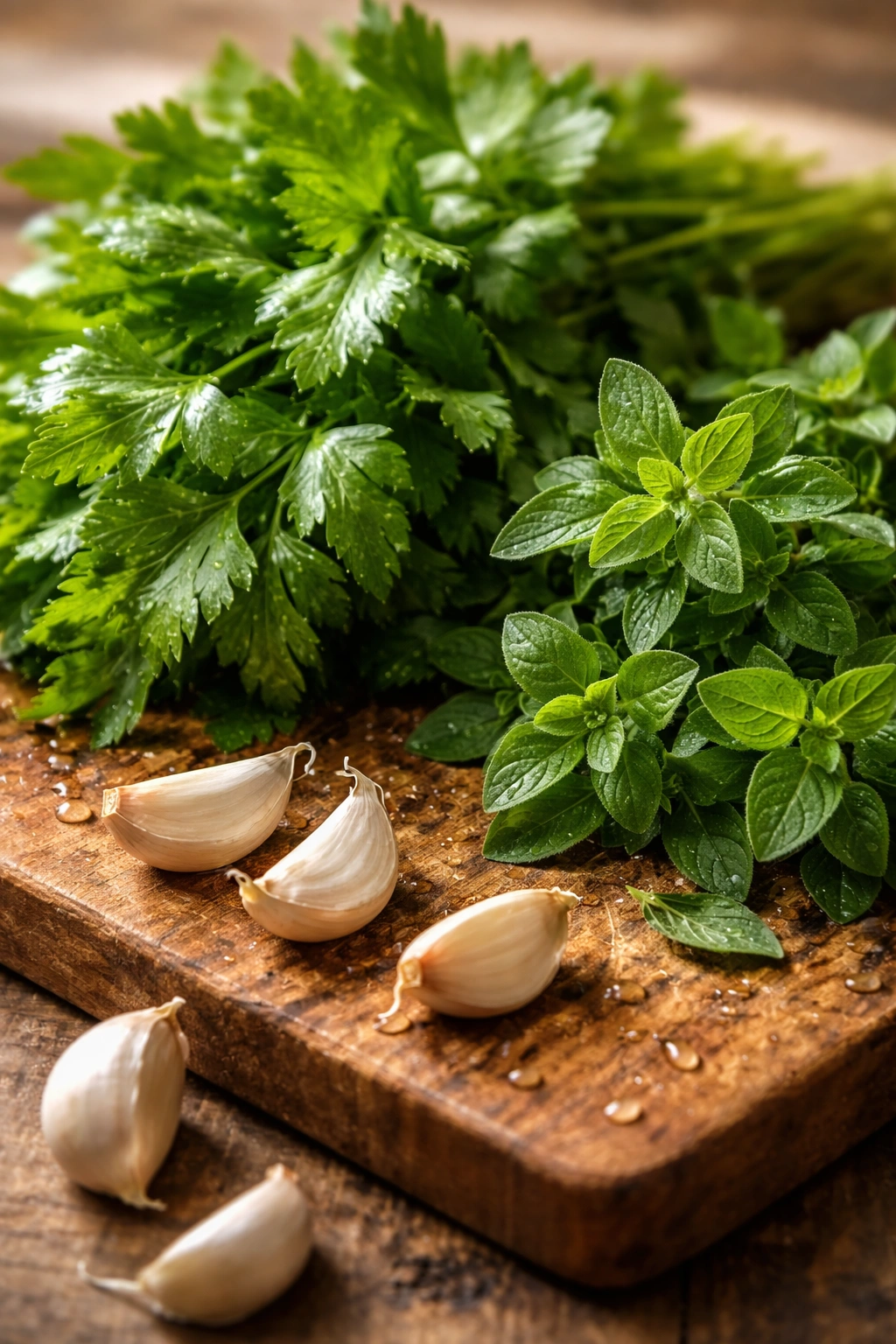
Chimichurri hails from Argentina and Uruguay, where it’s been a staple of grilled meat culture for generations. The sauce’s origins are actually debated among food historians—some point to Basque influence, others credit English immigrants who brought mustard-making traditions to South America. Regardless of its true beginning, chimichurri became deeply woven into the culinary identity of the Río de la Plata region, the area where Argentina and Uruguay meet.
What’s fascinating is that chimichurri was never a fancy restaurant creation. It emerged as a practical, affordable way to add flavor to large cuts of meat that were grilled over open fires. The sauce kept costs down—you could literally pick fresh herbs from a backyard garden—while adding tremendous flavor and brightness. It was food born from necessity and resourcefulness, which is exactly why it tastes so honest and unpretentious.
The sauce showed up on the barbecue table with various names and slight regional variations. Some families added more vinegar, others preferred oil as the dominant liquid. Some blended it smooth, others left it chunky. But the core identity remained: fresh herbs, garlic, acid, oil, and nothing more complicated than that. What began as a humble condiment has now spread across the globe, and home cooks everywhere have realized it belongs alongside far more than just grilled beef.
Today, chimichurri appears on taco trucks, in upscale restaurants, and in home kitchens from Buenos Aires to Brooklyn. Each culture that adopts it puts its own spin on the formula, but the spirit stays the same—herbaceous, punchy, and alive. That versatility is part of what makes chimichurri so appealing. It’s equally at home on a simple grilled chicken breast or alongside elaborate charred vegetables.
What Makes This Chimichurri Different
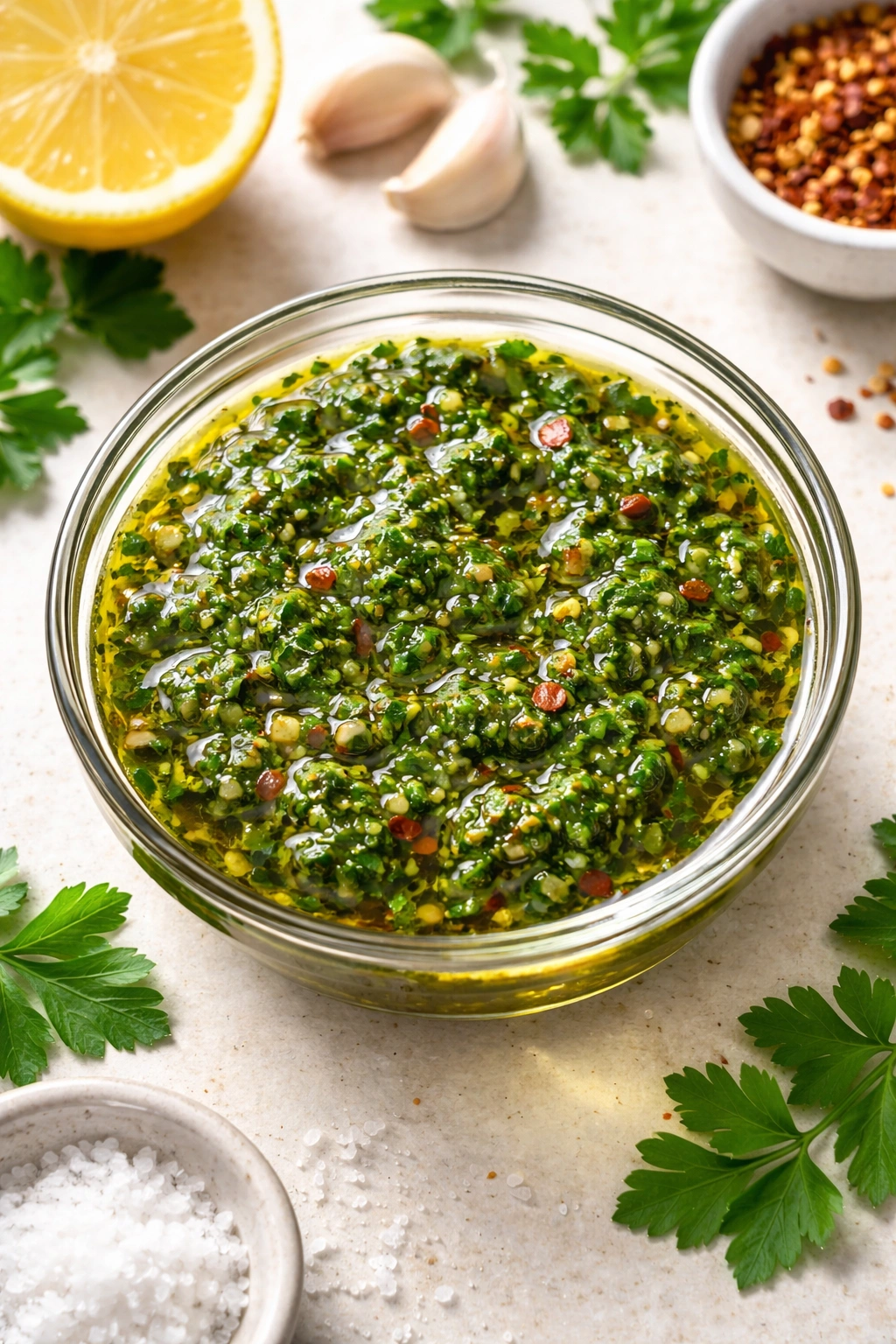
Here’s the truth: there’s no “official” chimichurri recipe that’s more correct than any other. What matters is understanding the core components and how they interact, then making intentional choices about your ratios and technique. This particular approach focuses on keeping the herbs bright and fresh-tasting rather than oxidized or bitter—a critical distinction that many home cooks overlook.
The biggest mistake most people make when making chimichurri is over-processing the herbs. When you blend or food-process the leaves too much, you break down their cell walls excessively, which releases compounds that taste harsh and bitter. You end up with something that tastes slightly off, like you left it sitting for days even though you just made it. This recipe uses a gentler hand—you’ll mince the herbs finely, but you’re not pulverizing them into an unrecognizable paste.
The ratio of herbs to everything else also matters tremendously. This version leans heavily on fresh herbs—they should be the dominant flavor you taste, not an afterthought buried under oil. The acid (vinegar) is present and noticeable, but balanced so it brightens rather than overwhelms. The garlic is garlicky without being aggressive. That balance is what separates a sauce that tastes like a genuine condiment from one that tastes like you dumped herbs in oil and called it a day.
The final detail is freshness and quality. Because the ingredient list is so short, there’s nowhere to hide mediocre components. You need genuinely fresh parsley, quality garlic that doesn’t taste stale or sharp, and good vinegar. You’re not buying expensive imported ingredients here—you’re simply being intentional about choosing the best version of regular, everyday staples. That intentionality is what transforms chimichurri from ordinary to extraordinary.
Sourcing the Freshest Herbs and Ingredients
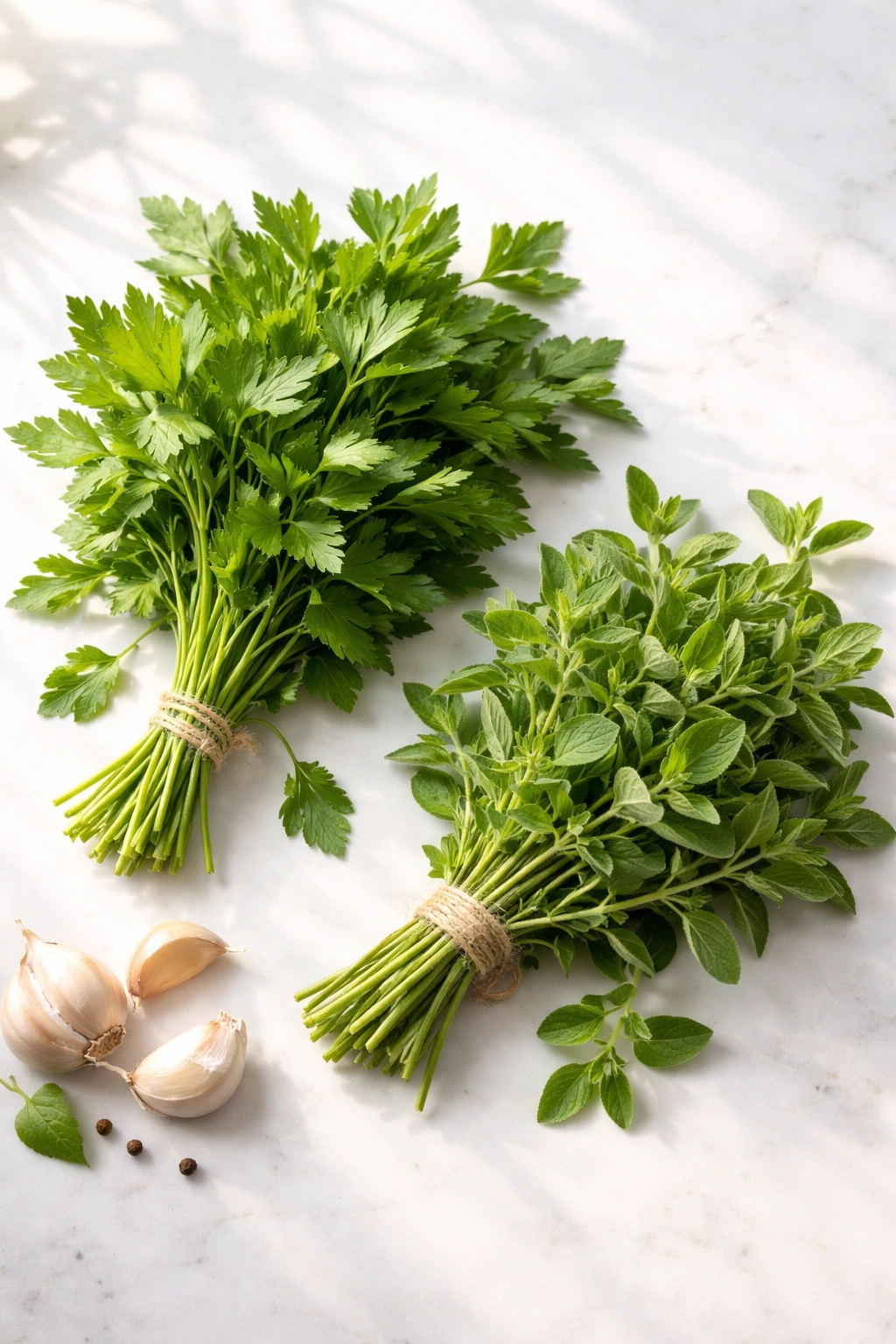
The foundation of exceptional chimichurri is starting with the highest quality ingredients available to you. This doesn’t mean expensive—it means fresh, flavorful, and at peak quality. Fresh flat-leaf parsley is non-negotiable. The curly kind doesn’t work as well because it’s more delicate and breaks down differently when minced. Look for parsley that’s deeply green, doesn’t have any yellowing or wilting, and smells herbaceous and fresh when you brush your fingers across the leaves.
Oregano is the secondary herb that defines chimichurri’s character. Fresh oregano is ideal, but dried oregano works beautifully too—actually, many traditional versions use dried oregano exclusively. If using dried, you’ll want to use about half the quantity by weight compared to fresh, since drying concentrates the flavor. Some people swear by a mix of fresh and dried oregano, which gives you the brightness of fresh herbs plus the concentrated punch of dried. Experiment to find your preference.
Garlic quality makes a genuine difference in the final flavor. Use fresh, firm garlic bulbs that don’t smell sharp or have any green sprouts inside. Avoid pre-minced jarred garlic or garlic powder—the fresh version is so superior it’s not even comparable. Plan to mince it finely by hand or with a microplane rather than using a garlic press, which can make the texture slightly mushy and affect the final consistency of your sauce.
For vinegar, red wine vinegar is the traditional choice, though white wine vinegar, sherry vinegar, or even white vinegar work perfectly well. The type you choose will slightly alter the flavor profile—red wine vinegar is bolder and slightly more complex, while white vinegar is more sharply acidic and lets the herb flavors shine more clearly. Choose based on what you taste in other foods and what appeals to you. The vinegar shouldn’t taste harsh or chemical; it should taste bright and pleasant on its own.
Extra virgin olive oil is worth using here because it’s a primary ingredient and its quality directly affects the final flavor. That said, this isn’t the place to use your most expensive, fancy olive oil—save that for finishing dishes where the oil’s complexity will shine. A good, reliable extra virgin olive oil that you actually enjoy tasting is perfect. The oil carries the other flavors and acts as the sauce’s base, so quality matters, but you don’t need to spend a fortune.
Complete Ingredient List and Timing
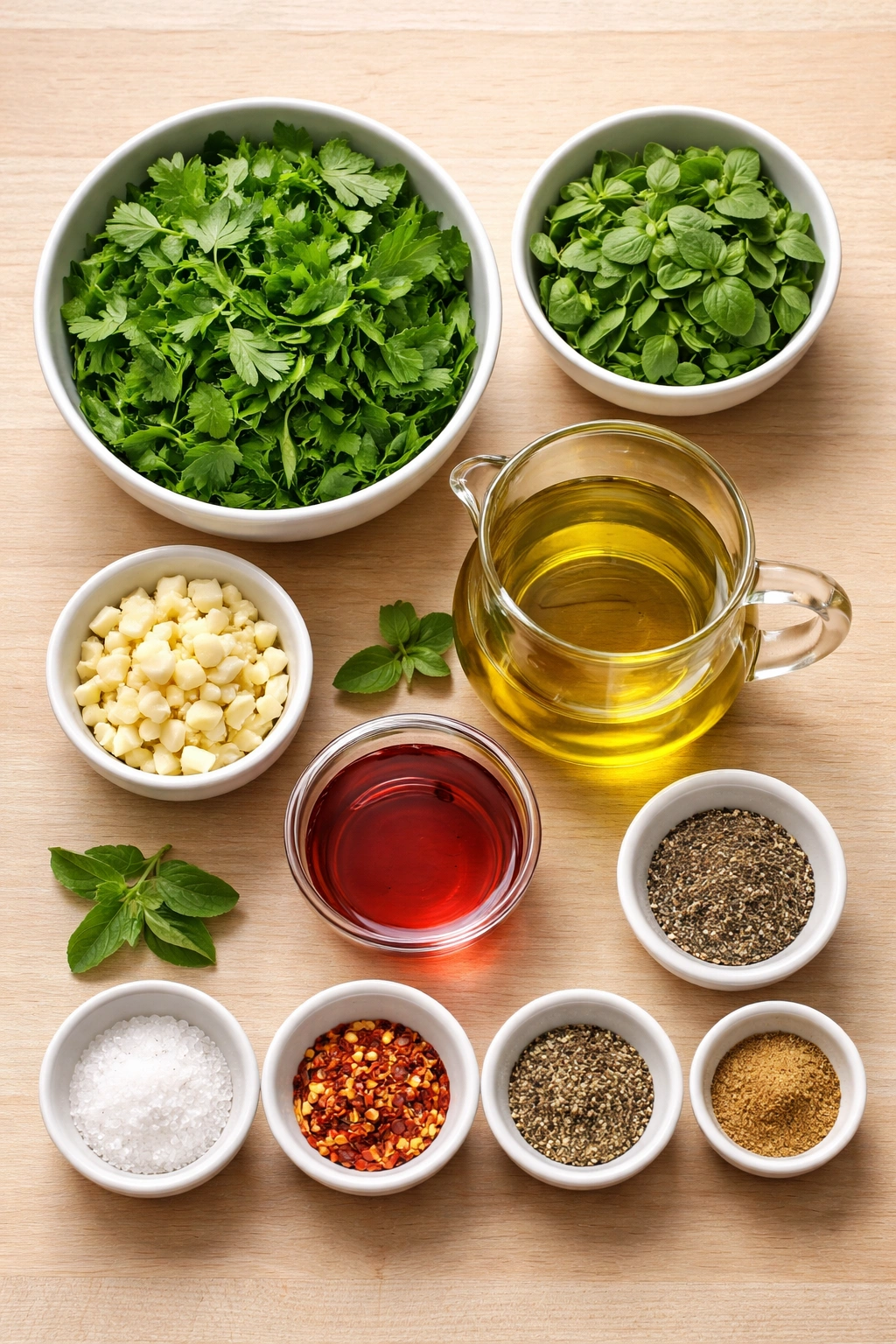
Yield: Makes about 1 cup of chimichurri sauce | Serves 6-8 as a condiment Prep Time: 10 minutes (mainly mincing herbs and garlic) Cook Time: None—this is a raw sauce Total Time: 10 minutes Difficulty: Beginner — no special equipment required, no cooking involved, just simple mincing and mixing. Even first-time sauce makers will succeed with this straightforward approach.
Ingredients:
- 1 cup fresh flat-leaf parsley, loosely packed, leaves and tender stems only
- ½ cup fresh oregano leaves (or 2 tablespoons dried oregano, or a combination of 3 tablespoons fresh + 1 tablespoon dried)
- 4 medium garlic cloves, peeled
- ½ cup extra virgin olive oil
- 3 tablespoons red wine vinegar (white wine vinegar or sherry vinegar work beautifully too)
- ½ teaspoon fine sea salt, plus more to taste
- ¼ teaspoon red pepper flakes (optional, for gentle heat—omit if you prefer no spice)
- ¼ teaspoon freshly ground black pepper
- Pinch of ground cumin (optional, but adds subtle depth)
How to Make Chimichurri Sauce: Step-by-Step
Prepare the Herbs and Garlic:
-
Rinse the parsley and oregano thoroughly under cool running water and pat completely dry with clean paper towels or a kitchen towel. Moisture on the leaves will dilute your sauce and make it watery—this drying step is genuinely important, even though it takes just a minute.
Advertisements -
Pick the parsley leaves from the thick central stems, discarding the woody portions but keeping the tender, thinner stems attached. These tender stems are flavorful and tender enough to mince finely. Place the prepared parsley on your cutting board.
-
If using fresh oregano, pick the leaves from their stems in the same way, discarding the woody portions. If using dried oregano, you can skip this step and add it directly to the bowl later.
-
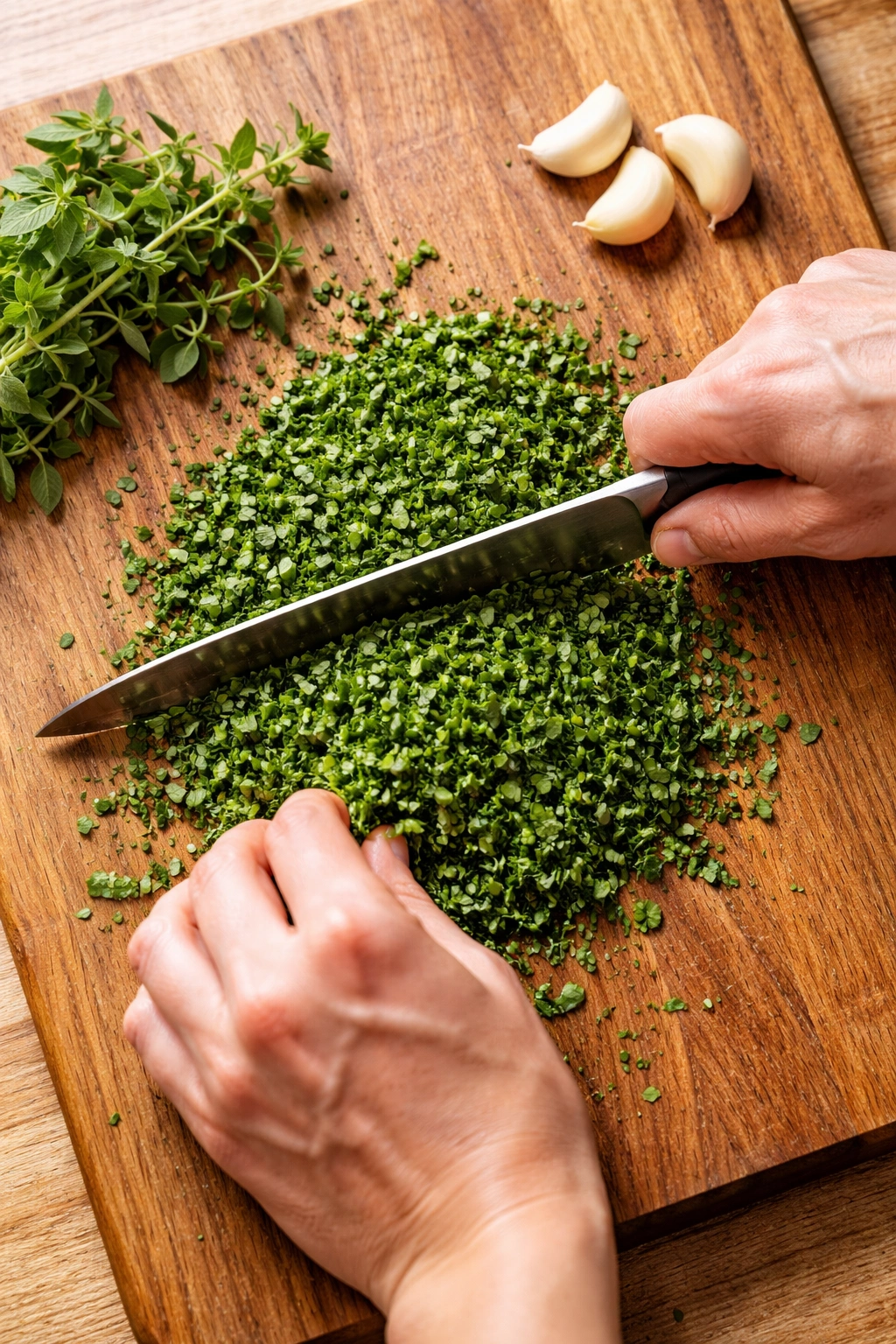
Mince both the parsley and fresh oregano (if using) as finely as you reasonably can without pulverizing the leaves into a slurry. The goal is fine, distinct pieces, not a smooth paste. Work slowly and deliberately—this is where your sauce’s texture and brightness are determined. If your knife is sharp, the mincing will go quickly. A dull knife will crush the herbs and damage them, so make sure you’re using a sharp chef’s knife.
-
Once the herbs are minced, transfer them to a medium mixing bowl. Mince the garlic very finely—you want tiny pieces rather than large chunks. Add the minced garlic to the bowl with the herbs.
Build the Sauce:
-
Pour the olive oil over the herb and garlic mixture. Add the vinegar, fine sea salt, red pepper flakes (if using), black pepper, and ground cumin (if using). Stir well to combine all ingredients. The sauce should look vibrant green with visible flecks of garlic and herbs throughout.
-
Taste the sauce. This is crucial—your palate is the real guide here. Does it need more salt? More vinegar? More herbs? Adjust as needed. Remember that the flavors will meld slightly as the sauce sits, so if you’re on the fence, err on the side of under-seasoning now and you can always adjust before serving.
-
Let the sauce sit at room temperature for at least 15 minutes before serving, though it’s best after 30 minutes to an hour. This resting time allows the flavors to meld and deepen, and it gives the garlic a chance to mellow slightly while still maintaining its punch.
Pro Tips for Perfect Chimichurri Every Time
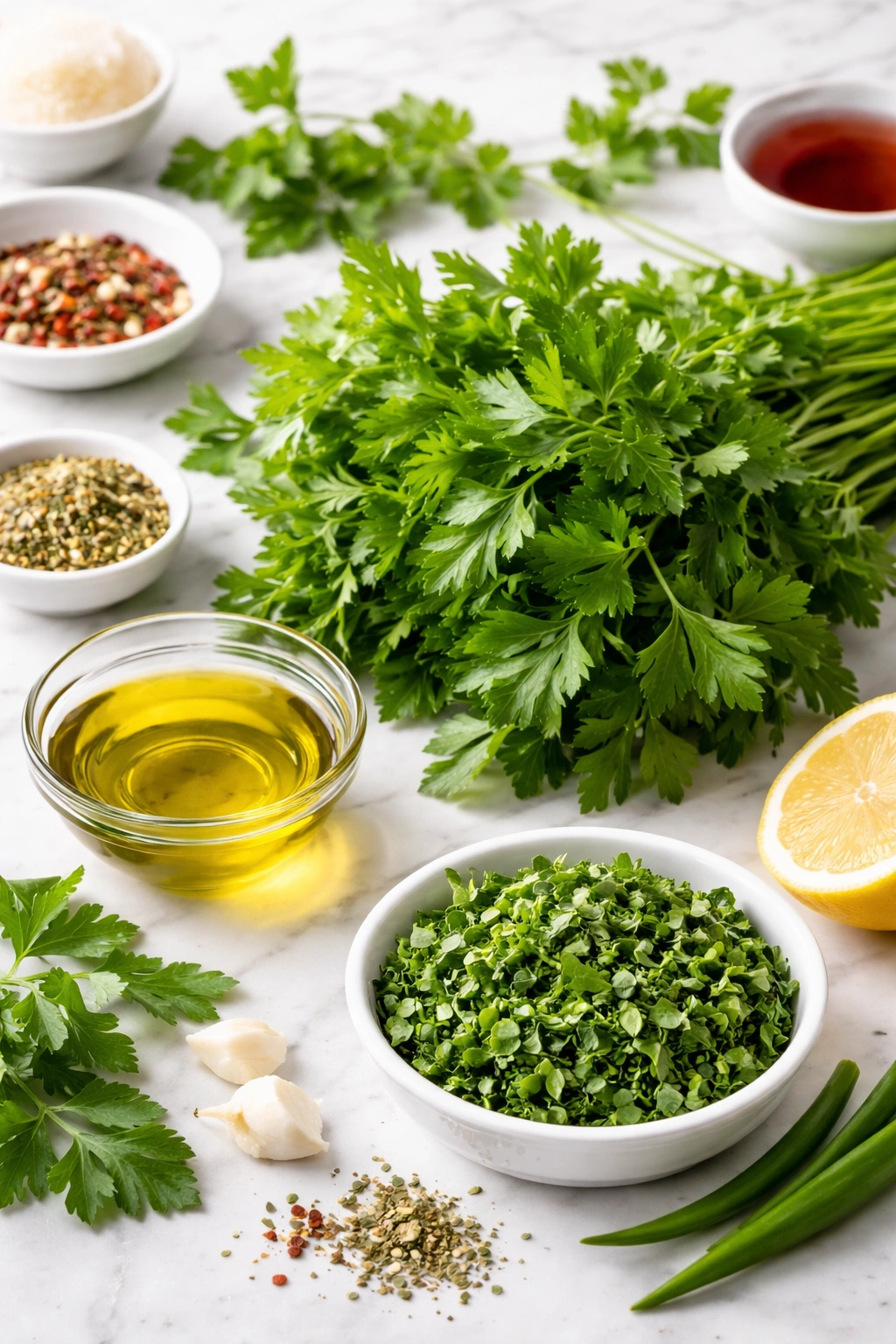
The herbs are the star of chimichurri, so treat them with respect and they’ll reward you with a genuinely exceptional sauce. Always use the freshest herbs available—wilted or sad-looking parsley will make your sauce taste wilted and sad too. If you have access to farmers’ market parsley, that’s often fresher and more flavorful than supermarket versions. That said, supermarket parsley works fine; just choose bunches that look vibrant and smell herbaceous.
Never blend or food-process fresh herbs to make chimichurri. Seriously, this is the single most important tip. When you blend the herbs, you pulverize their cell walls and release compounds that taste bitter and oxidize quickly. Hand-mincing preserves the herb’s cellular structure, keeps the sauce brighter, and extends its shelf life considerably. Yes, hand-mincing takes a few minutes longer, but the difference in the final flavor is absolutely worth it.
Dry your herbs thoroughly before mincing. Any excess water will make your sauce watery and dilute the flavors. Use paper towels and pat the herbs dry after rinsing them, then lay them on a clean kitchen towel for a minute or two if you have time. This extra step prevents a sauce that’s too thin or lacks proper consistency.
Taste and adjust the vinegar and salt carefully. The acidity and salt level directly affect how bright and delicious your sauce tastes. If the sauce tastes flat, usually a tiny pinch more salt will wake it up immediately—salt enhances the perception of all other flavors. If it tastes too herbal or heavy, a teaspoon more vinegar will balance it and add brightness. Make adjustments a little at a time rather than dumping in large amounts.
Let the sauce rest before serving. This fifteen-minute to one-hour resting period is when chimichurri truly comes together. The flavors meld, the garlic softens slightly, and the overall taste becomes more harmonious and less raw. You can serve it immediately if you’re in a rush, but the resting time genuinely improves it. Plan ahead when possible.
Use a sharp knife. A dull knife will crush the herbs instead of cutting them cleanly, which damages the cell walls and makes the sauce taste rough and slightly bitter. A sharp chef’s knife makes mincing quick, easy, and produces a superior final product. If you’re not sure whether your knife is sharp enough, here’s a quick test: it should glide through a tomato skin without requiring pressure. If you need to saw or press, sharpen it before making your sauce.
Adjust the amount of garlic to your preference. Four cloves is standard and what most people love, but if you’re garlic-averse, start with three and work your way up. Conversely, if you adore garlic, five cloves is totally reasonable. Garlic is a very personal preference, so there’s no wrong answer—only what tastes right to you.
Common Mistakes to Avoid
The most frequent error people make is over-processing the herbs, which we’ve covered extensively because it’s genuinely that important. It’s the difference between a brilliant, bright sauce and one that tastes slightly off and oxidized.
Making the sauce too oily happens when people eyeball the proportions without measuring. A half cup of oil to one cup of herbs and the other ingredients might sound like a lot, but it’s actually the correct balance. If your sauce looks too oily or separates when sitting, you likely added too much oil. You want enough oil to carry the flavors and give the sauce body, but not so much that it tastes slick or overpowers the herbs. Use a measuring cup and be precise.
Using old or stale garlic creates an unpleasant, harsh flavor that’s hard to fix. If your garlic has a papery appearance, green sprouts inside, or smells sharp and chemical, replace it. Fresh garlic tastes mild and slightly sweet compared to older bulbs. Inspect your garlic before you buy it, and store it in a cool, dry place where it will stay fresh for weeks.
Skipping the resting time means you’ll be serving raw, somewhat aggressive sauce rather than something harmonious and mellow. The resting period isn’t optional if you want the best possible flavor. Even twenty minutes makes a noticeable difference.
Making the vinegar too prominent happens when people add too much acid trying to achieve brightness. Remember that vinegar will intensify slightly as the sauce sits, so if you’re unsure, add a little less than you think you need. You can always add more, but you can’t take it out.
Using dried parsley instead of fresh creates a very different, much less pleasant sauce. Dried parsley tastes musty and flat compared to fresh, and it doesn’t create the same vibrant flavor profile. Fresh parsley is essential—dried just doesn’t work here. If you can’t find fresh parsley, this isn’t the time to make chimichurri. Wait until fresh herbs are available.
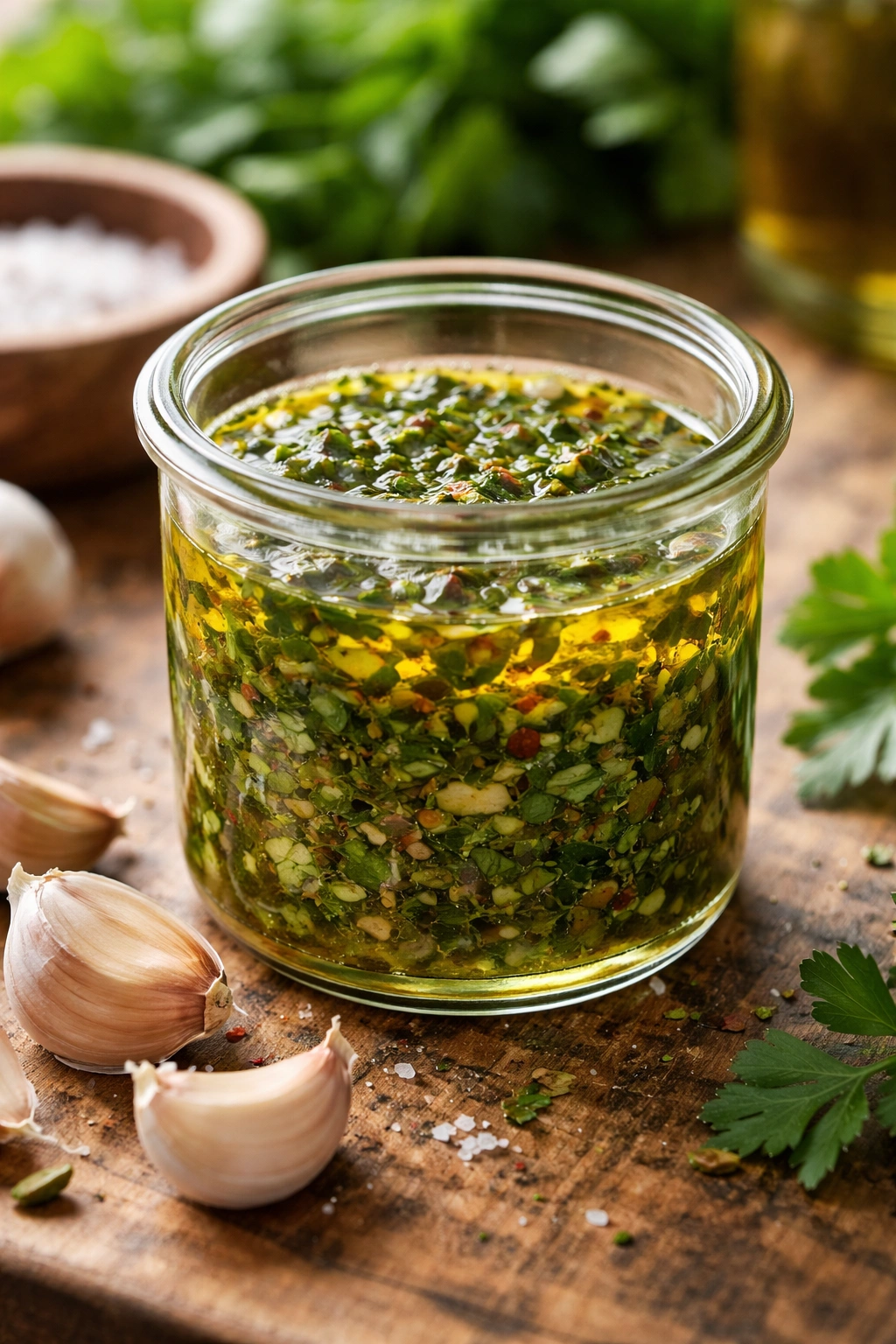
Storing it improperly allows the sauce to oxidize and darken, losing brightness and developing slightly off flavors. Store chimichurri in a clean jar with a tight-fitting lid, in the refrigerator, where it will keep for about a week. The longer it sits, the more the herbs will oxidize and darken, and the less vibrant it becomes. That’s not dangerous—it’s still perfectly edible—but it tastes less exceptional. Make it fresh for the best experience, or make a smaller batch more frequently.
Delicious Variations to Try
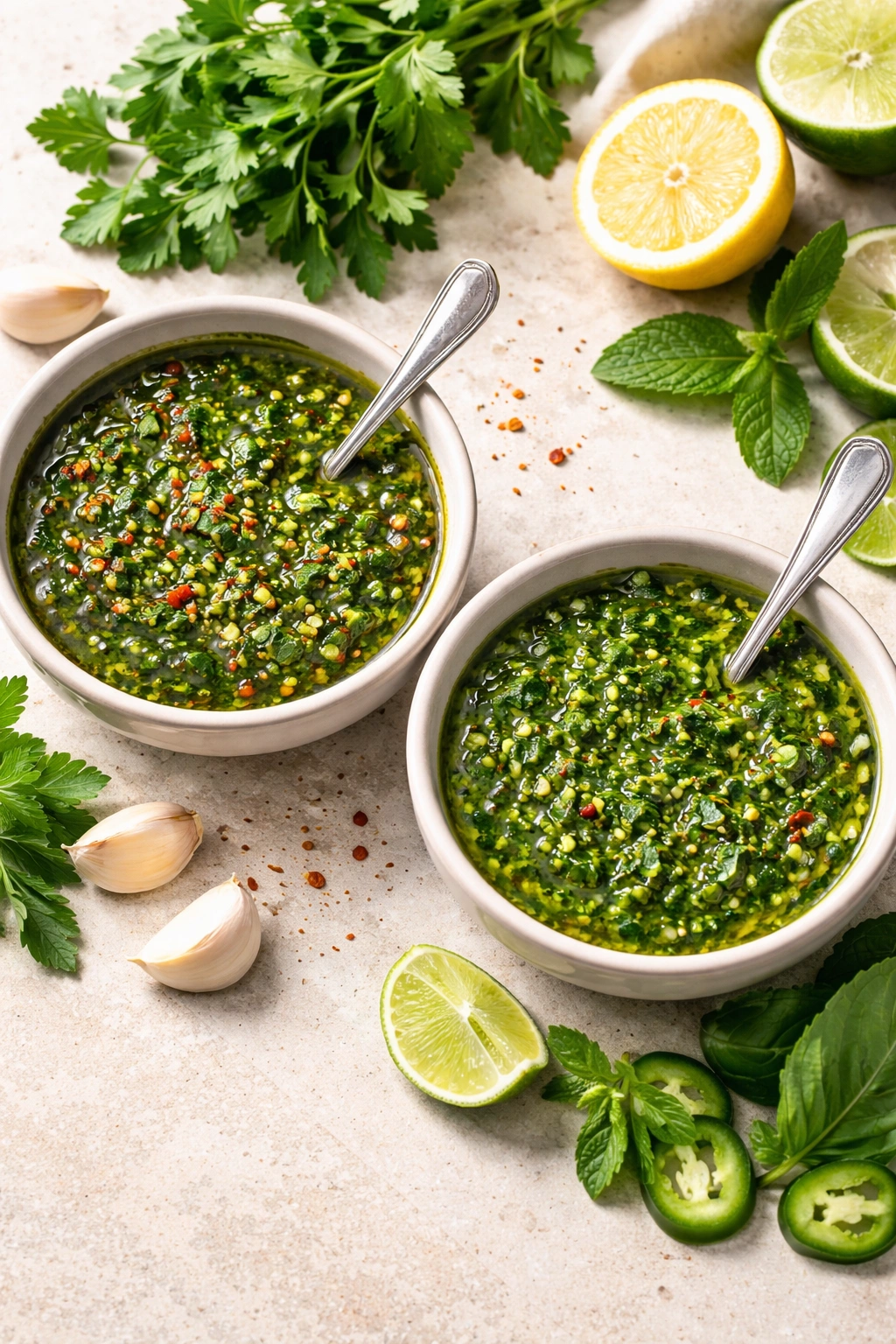
Once you master the basic chimichurri formula, the possibilities expand beautifully. Add fresh cilantro in place of some of the parsley if you love the flavor—use about ¾ cup parsley and ¼ cup cilantro for a lighter, more tropical twist. Some people absolutely love cilantro in chimichurri; others find it clashes slightly. Try it and see where you fall on the spectrum.
Make it spicier by increasing the red pepper flakes or adding minced fresh hot peppers. A minced jalapeño or two creates a chimichurri with more kick that works beautifully on already-spicy foods or as a condiment for people who love heat. Start with one minced pepper and adjust from there.
Add a subtle sweetness with a teaspoon of honey or maple syrup blended into the oil and vinegar before adding to the herbs. This mellows any harshness and creates a more complex, balanced flavor that some find irresistible. The sweetness shouldn’t be noticeable as sweetness—just a rounding-out of the overall profile.
Create green chimichurri (chimichurri verde) by adding fresh mint and basil alongside or in place of some oregano. Use about ¼ cup fresh basil and 2-3 fresh mint leaves minced finely. This variation is brighter and more garden-fresh, with a slight minty note that’s particularly lovely on fish or vegetables.
Make a chunky version by not mincing the herbs as finely and leaving more texture. Some people prefer this coarser texture for application and presentation. It looks more rustic and feels less like a paste.
Add roasted garlic instead of raw garlic for a sweeter, mellower sauce. Roast whole garlic cloves until soft and golden, then mash them into the sauce. This creates a completely different flavor profile—less sharp, more savory and deep.
Blend in a small amount of fresh bread crumbs (about 2-3 tablespoons) to create a thicker, more spreadable chimichurri that sticks to foods better. This is traditional in some Argentine regions and creates a different texture entirely.
Experiment with different vinegars. Sherry vinegar creates a more complex, slightly sweeter sauce. Apple cider vinegar adds a different kind of brightness. White balsamic is interesting and slightly sweet. Try different vinegars and see how they change the overall personality of your sauce.
How to Store and Make Ahead
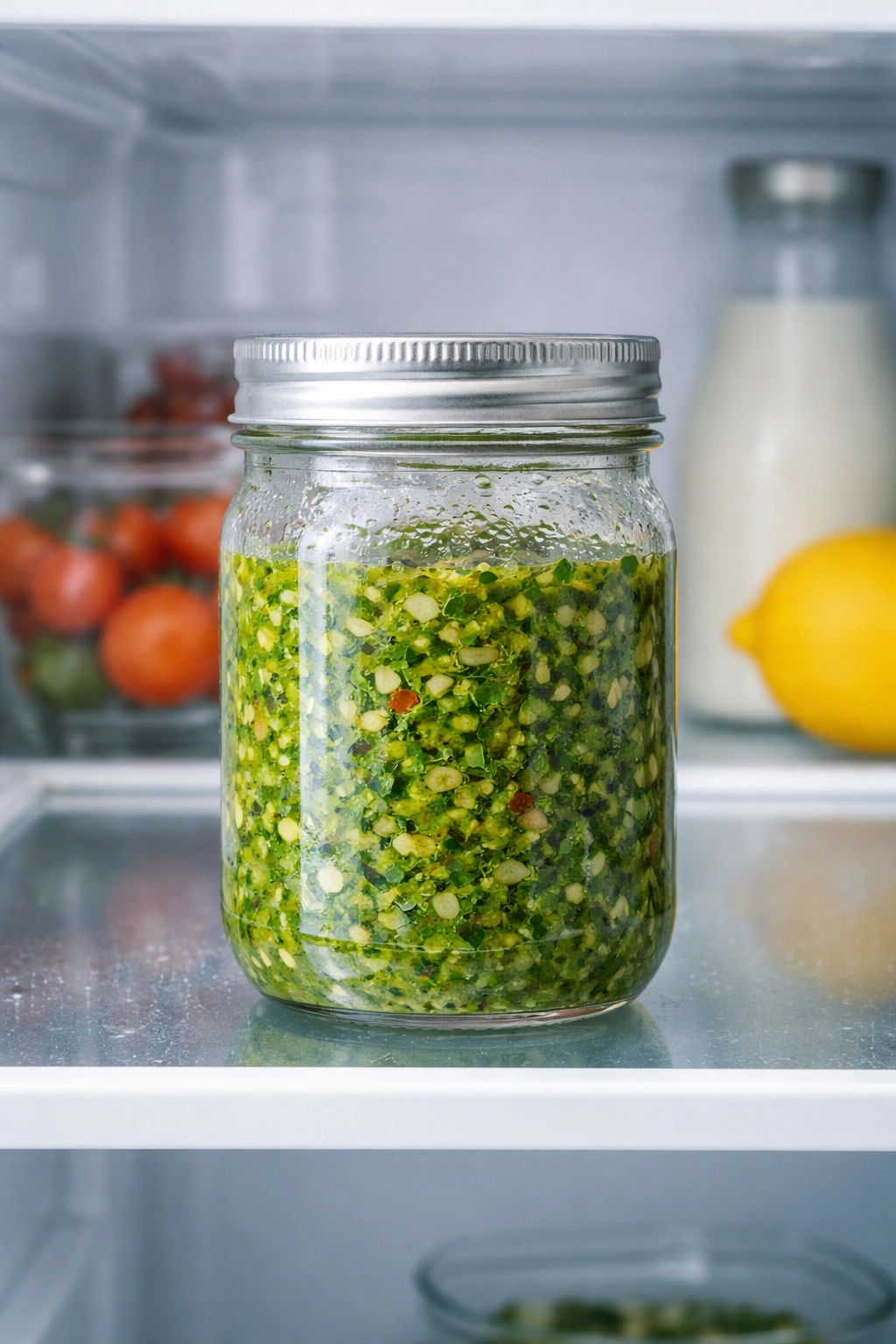
Chimichurri is actually one of the most convenient condiments to have on hand. You can make it several days ahead, and it improves slightly as flavors meld and mellow. Store chimichurri in a clean glass jar with a tight-fitting lid in the refrigerator. It will keep for about five to seven days before the herbs start to darken noticeably and the overall brightness fades.
The sauce will separate as it sits—the oil will rise to the top while the herbs settle to the bottom. This is completely normal and not a sign of anything wrong. Just stir it well before using, and the texture comes right back together.
If you prefer not to have visible herbs floating in oil, you can strain the sauce through a fine-mesh strainer into another jar. This creates a smoother, less chunky version that some prefer for pouring or drizzling. You can either discard the strained herbs or use them for something else—toss them with pasta, incorporate them into eggs, or add them to soups.
You can make chimichurri several days in advance. In fact, making it a day ahead and letting it rest overnight allows the flavors to deepen and mellow considerably. Just keep it refrigerated in a sealed container and give it a good stir before serving.
Freezing chimichurri works, but with caveats. The herbs will darken and lose some vibrancy after thawing, so the sauce won’t taste quite as bright as freshly made. That said, if you have extra and want to preserve it, freezing in small ice cube trays creates convenient portion-sized cubes you can pop out and use for cooking. Thaw in the refrigerator and use within a week of thawing for the best flavor.
Fresh is genuinely best. While chimichurri keeps for a week or more, it tastes most exceptional in the first few days after making it. If you find yourself making it frequently, consider making smaller batches more often rather than one large batch that sits for days. The difference in brightness and flavor is noticeable.
Perfect Pairings and Serving Ideas
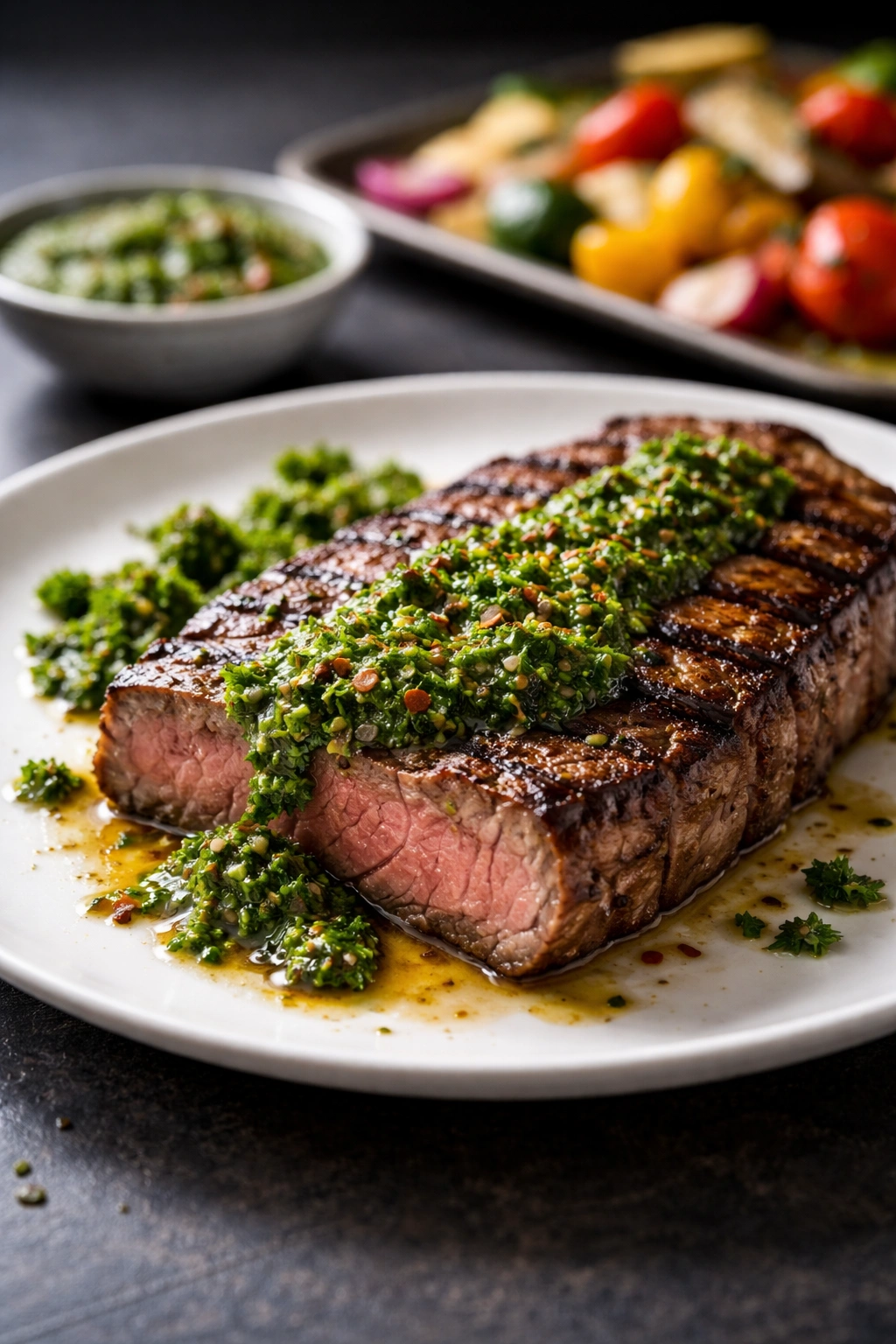
This is where chimichurri truly shines as a condiment—it pairs beautifully with an enormous range of foods. Grilled and roasted meats are the classic pairing. Chimichurri on a perfectly grilled steak, grilled chicken, roasted lamb, or grilled pork chops elevates these proteins significantly. The bright, herbaceous sauce cuts through rich, fatty meats and adds complexity that makes simple proteins taste restaurant-quality.
Grilled and roasted vegetables benefit tremendously from chimichurri. Charred zucchini, roasted eggplant, grilled peppers, roasted cauliflower, charred asparagus—basically any vegetable you can grill or roast becomes more interesting with a dollop of chimichurri on top or mixed in afterward.
Fish and seafood become more elegant with chimichurri as a finish. Grilled fish fillets, roasted salmon, seared scallops, or even canned tuna stirred into it creates depth. The acid in the vinegar and the brightness of the herbs complement fish beautifully.
Potatoes in any form become more exciting with chimichurri. Roasted potatoes, mashed potatoes, baked potatoes, french fries, potato salad—they all benefit from the herbal brightness. Toss hot roasted potatoes with chimichurri while they’re still warm and the flavors really penetrate.
Crusty bread with chimichurri is a simple but genuinely delicious snack or appetizer. Tear bread into chunks and dip into the sauce, or spread it on toasted bread and top with whatever protein you have on hand.
Rice, grains, and legumes all become more flavorful with a spoonful of chimichurri stirred in. Plain rice becomes interesting. Cooked beans become a side dish instead of an afterthought. Farro, quinoa, or other grains are elevated with the herbal brightness.
Eggs benefit from chimichurri in every form—scrambled, fried, poached, or in egg salad. A spoonful stirred into warm scrambled eggs creates breakfast that tastes unexpectedly sophisticated.
Soups and stews often benefit from a spoonful of chimichurri stirred in at the end. It adds brightness and freshness that can make hearty winter soups feel lighter. Add it just before serving so the herbs stay vibrant.
Avocado toast or avocado bowls are enhanced with a generous amount of chimichurri. The sauce complements the richness of avocado perfectly.
Hamburgers and sandwiches become more interesting when spread with chimichurri instead of or alongside mayo. It works on any sandwich where you want brightness and herbaceous flavor.
Dips and spreads can be created by mixing chimichurri with yogurt, sour cream, or cream cheese for a creamy dipping sauce that’s perfect for vegetable platters or chips.
The key is thinking about chimichurri as a flavor booster for anything that’s a little plain. If a dish tastes good but needs something more, chimichurri is likely the answer.
Final Thoughts
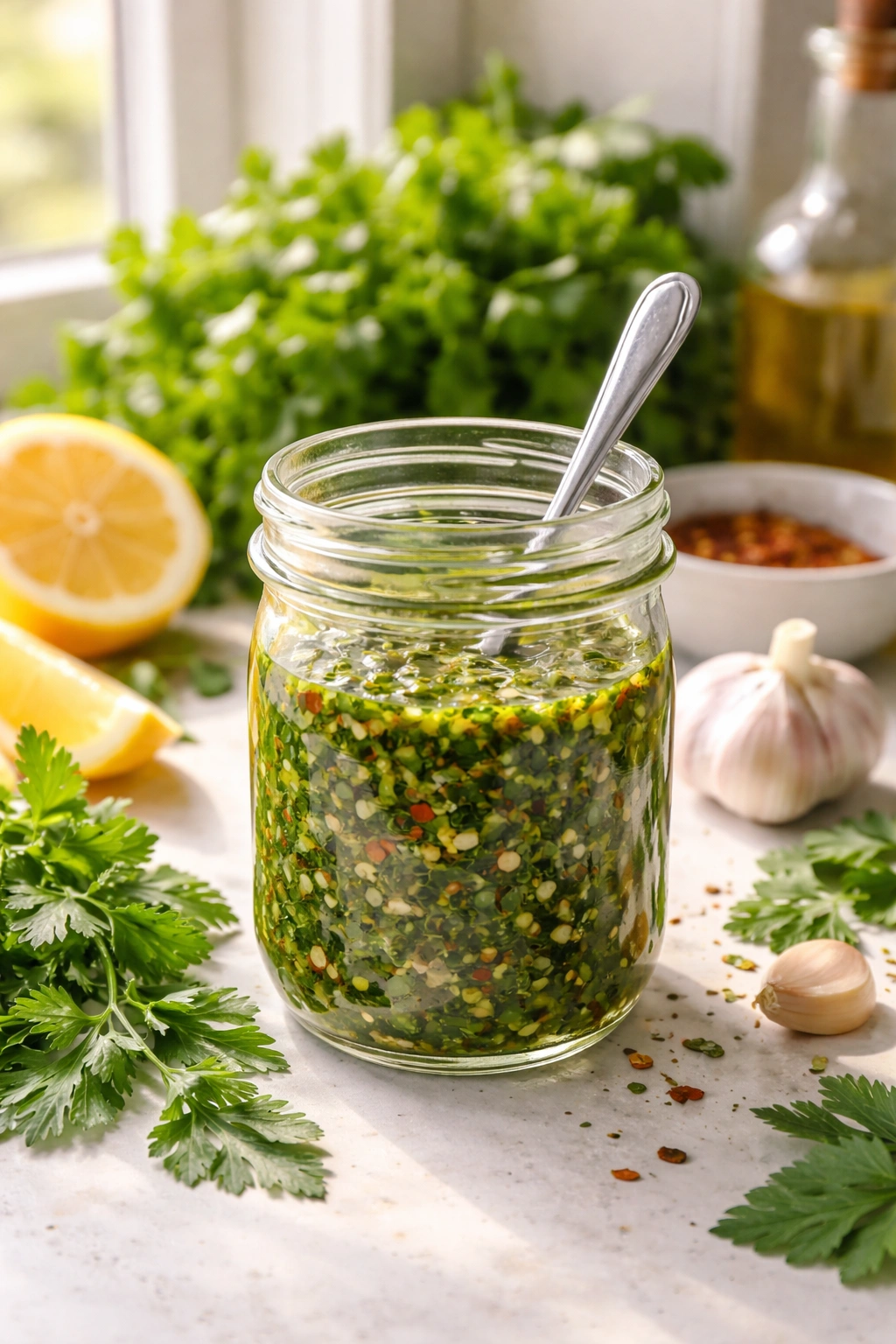
Making chimichurri from scratch changes how you think about condiments. Once you realize how simple it is and how much better homemade tastes than store-bought versions, you’ll find yourself making it regularly. It takes ten minutes, uses ingredients you probably already have on hand, and transforms meals from ordinary to genuinely exciting.
The beauty of chimichurri is that it works with your intuition. Taste as you go, adjust the seasoning and acid to your preference, and don’t worry about getting it exactly “right.” There’s no official chimichurri police—there’s only what tastes delicious to you. Some people prefer it oilier, others like it more vinegary. Some people want more garlic, others prefer herbaceous subtlety.
Keep a jar in your refrigerator for the week and find yourself reaching for it constantly. Put it on everything—breakfast, lunch, dinner, snacks. Once you have chimichurri on hand, you’ll realize how many meals it improves and how much more interesting your everyday eating becomes. That’s the real magic of this simple, brilliant sauce.
