



Weeknights are notorious for derailing even the most committed low-carb goals. You’re tired from work, the kids need feeding, and suddenly you’re tempted by pasta, rice, or takeout loaded with hidden sugars. But here’s what most people don’t realize: some of the fastest, easiest dinners you can make are naturally low in carbs — and they’re genuinely delicious, not “diet food” sacrifices.
The real secret isn’t elimination or deprivation. It’s swapping starchy fillers for vegetables that cook just as fast, choosing proteins that fit into your schedule, and building meals around flavors so satisfying that nobody misses the bread. A good low-carb weeknight meal should come together in 20-30 minutes, use ingredients you already have or can grab on a routine grocery run, and actually taste like something you’d want to eat — not something you’re punishing yourself with.
The meals below aren’t fancy restaurant recreations or complicated multi-step projects. They’re the kind of food that works on a exhausting Tuesday, tastes good enough to look forward to, and keeps your blood sugar stable so you don’t crash at 8 p.m. Every single one is built around simplicity, speed, and the kind of protein-plus-vegetable foundation that makes low-carb eating work over the long run.
1. Zucchini Noodle Stir-Fry with Shrimp and Garlic
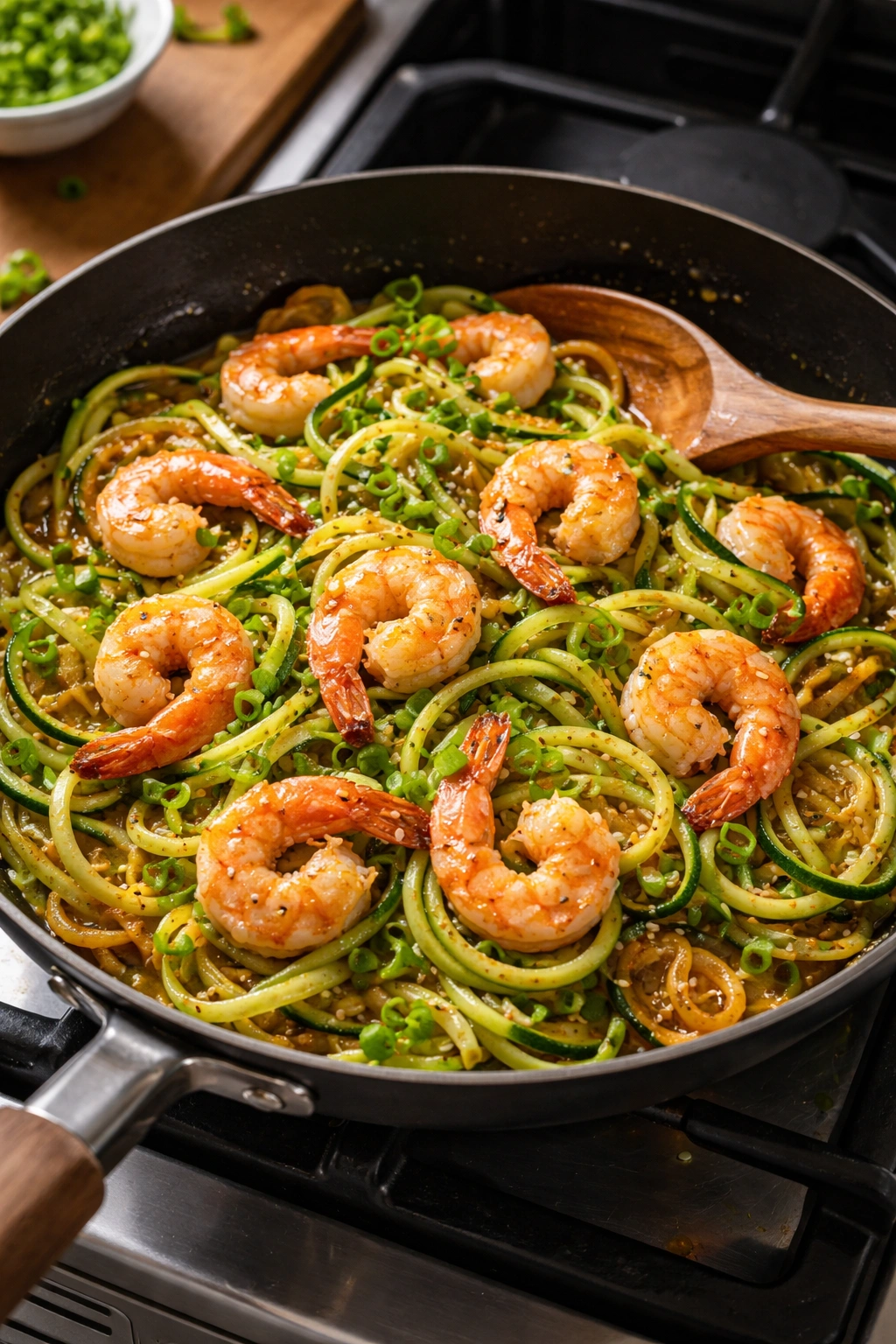
Shrimp cooks in literally three minutes, zucchini noodles soften in the same pan in about two minutes, and you’ve got a complete meal that tastes restaurant-quality without the delivery time. This is the kind of weeknight dinner that feels indulgent even though it’s under 10 grams of carbs and packed with protein.
Why Shrimp Is Perfect for Busy Nights
Shrimp is one of the few proteins that requires almost no prep beyond thawing. Unlike chicken that needs to cook through completely or beef that needs rest time, shrimp goes from raw to done in the time it takes to stir a pan. The texture stays tender, the flavor is delicate enough to absorb whatever sauce you’re making, and it pairs beautifully with zucchini noodles, which have a similarly quick cook time.
What You’ll Actually Need
- 1 pound large frozen shrimp (thawed)
- 4 medium zucchini, spiralized into noodles (or buy pre-spiralized)
- 4 cloves garlic, minced
- 3 tablespoons soy sauce or tamari
- 1 tablespoon sesame oil
- 1 tablespoon butter or avocado oil
- ¼ teaspoon red pepper flakes (optional)
- 1 teaspoon ginger (fresh, grated)
- 2 tablespoons green onions for garnish
How to Get It on the Table Fast
Heat your oil in a large skillet over medium-high heat. Toss in the garlic and ginger for 30 seconds until fragrant, then add the shrimp. Let it sear for 1-2 minutes on the first side, flip, and cook another minute or two until it’s just turned opaque (it cooks faster than you think). Remove the shrimp to a plate. In the same pan, add the zucchini noodles and stir constantly for about 2 minutes — you want them still slightly tender-crisp, not mushy. Return the shrimp, pour in the soy sauce and sesame oil, toss everything together for 30 seconds to combine, and finish with green onions and red pepper flakes.
Pro tip: Spiralize your zucchini while the shrimp cooks so you’re not waiting around. If you’re buying pre-spiralized noodles, pat them dry with a paper towel before cooking so they release less water and stay crispy.
2. Cauliflower Rice Burrito Bowls with Ground Beef
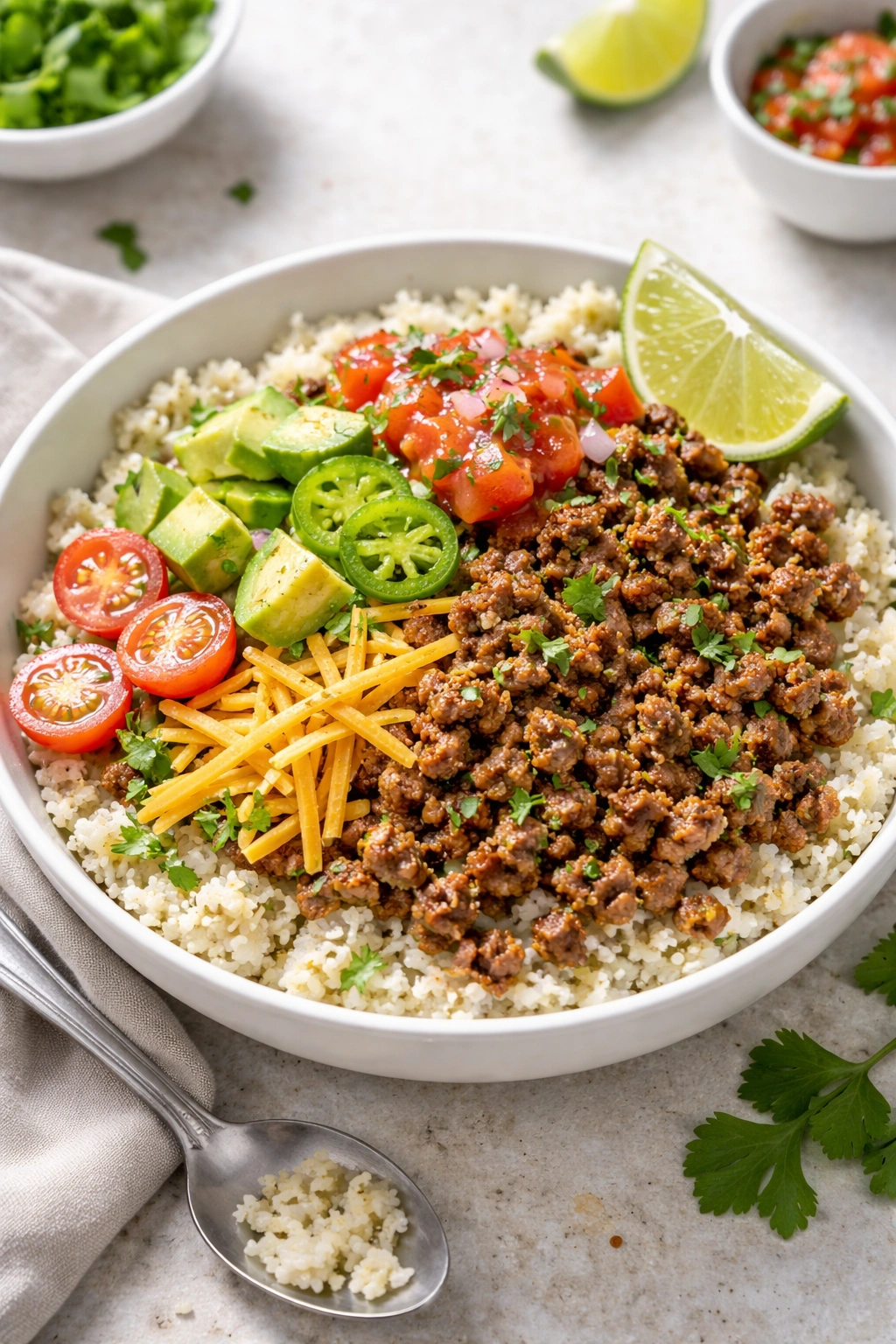
This is the meal that made me realize low-carb eating didn’t mean giving up the comfort-food flavors that actually satisfy on a long day. Ground beef is inexpensive, seasons beautifully, and cooks in about 8 minutes. Cauliflower rice absorbs all those flavors without tasting like you’re eating steamed vegetables.
The Foundation That Actually Works
Burrito bowls succeed or fail based on whether the base is flavorful. This isn’t the time to be timid with seasonings. Brown your ground beef over medium-high heat, breaking it into small pieces as it cooks. When most of the pink is gone, add your seasonings: cumin, chili powder, garlic powder, onion powder, a pinch of smoked paprika, and a squeeze of lime juice at the end. Let it cook for another 2-3 minutes so everything melds together.
Building Your Bowl Properly
Spread a base of cauliflower rice (either store-bought frozen or riced fresh, cooked in a skillet with a little butter). Top with the seasoned ground beef, then load with toppings that don’t have sneaky carbs: shredded cheese, sour cream, guacamole or sliced avocado, jalapeños, and a salsa made from fresh tomatoes. Some people skip the tomato salsa completely and just use hot sauce because tomatoes still have natural sugars — that’s a smart move if you’re tracking very strictly.
What Happens When You Prep This Way
The real magic of this meal is that it’s endlessly customizable and feels completely different depending on which toppings you grab. Monday it’s one flavor profile; Wednesday it’s something else entirely. Your family members can build their own bowls with different toppings, so nobody feels restricted. Ground beef seasoned this way also freezes perfectly, so if you’re making it once, double the batch and freeze half for a night when you’re even more tired.
Worth knowing: Cauliflower rice varies wildly in quality between brands. Some are watery, some have odd textures. Frozen cauliflower rice usually performs better than the refrigerated version because it’s frozen at peak freshness and less likely to release water when cooked.
3. Baked Salmon with Roasted Asparagus and Lemon
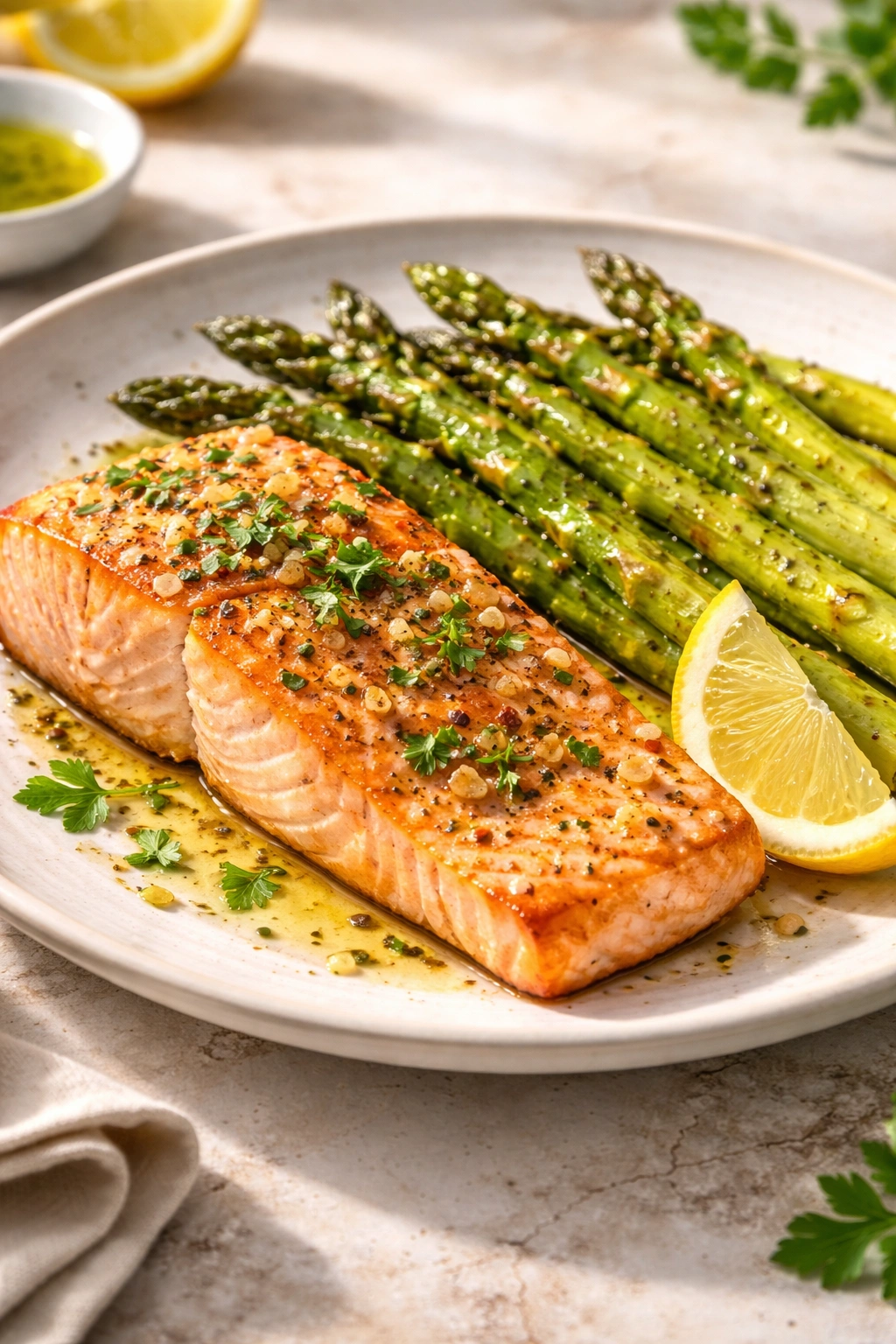
This is the meal that tastes like you’re taking care of yourself, and it legitimately takes about 20 minutes from start to eating. Salmon is high in omega-3 fatty acids, one of the few proteins that doesn’t need more than 12-15 minutes in the oven, and tastes elegant enough to serve on a night when you want to feel good about dinner.
Why Salmon Cooks Faster Than Other Fish
Salmon’s fat content means it doesn’t dry out the way leaner fish do. You can’t accidentally overcook it into a rubbery situation. It goes from raw to perfectly done and stays moist and tender even if you’re 2 minutes off on timing. Because of that reliability, it’s genuinely one of the lowest-stress proteins to cook on a weeknight.
Setting Yourself Up for Success
Pat your salmon fillets dry with a paper towel — moisture is the enemy of browning, and a quick sear on the stovetop gives you better texture than just baking from raw. Place a large oven-safe skillet over medium-high heat with a little butter or oil. Once it’s hot, place the salmon skin-side up in the pan and sear for 2-3 minutes until the flesh side is golden. Flip, transfer to the oven at 400°F (200°C), and bake for 10 minutes until the thickest part flakes when you press it gently with a fork.
The Asparagus That Makes the Whole Meal
While the salmon goes in the oven, toss fresh asparagus spears with olive oil, salt, pepper, and minced garlic. Spread them on a separate baking sheet and roast alongside the salmon for the full 10 minutes. The asparagus will be tender-crisp and caramelized, with little charred edges that add flavor. Finish everything with fresh lemon juice and a sprinkle of fleur de sel right before eating.
Insider note: If you’re cooking for picky eaters, cut the asparagus into shorter pieces so it’s less “vegetable-forward” looking and more integrated into the plate visually.
4. Ground Turkey Lettuce Wraps with Ginger and Soy
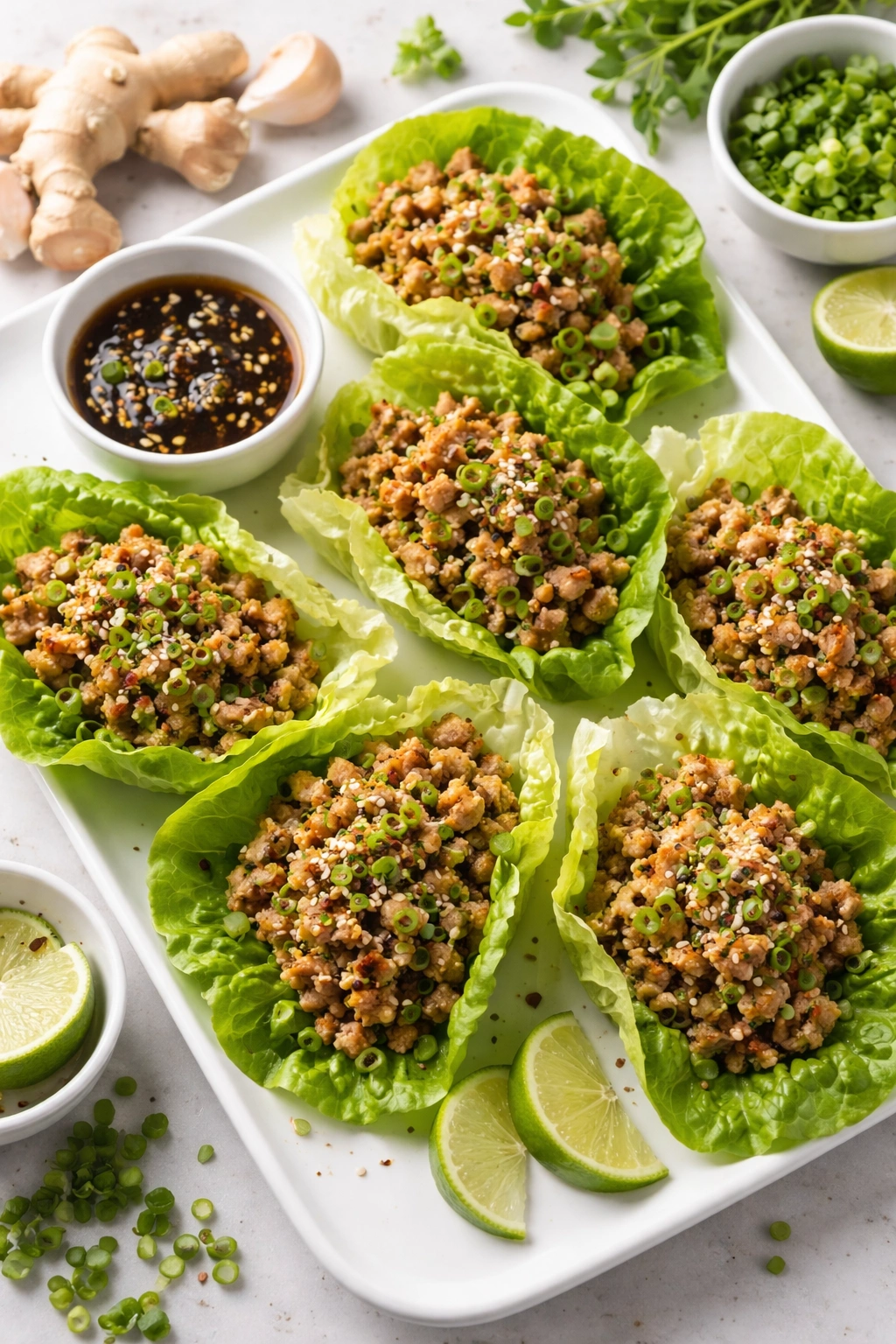
These wraps hit that perfect balance between feeling light and being completely filling. Ground turkey is leaner than beef, cooks quickly, and takes on Asian seasonings in a way that feels restaurant-quality but requires zero special equipment or technique.
The Sauce That Makes It Work
The sauce is where the flavor lives here, not the protein itself. In a small bowl, whisk together 4 tablespoons soy sauce, 2 tablespoons rice vinegar, 1 tablespoon sesame oil, 1 tablespoon grated fresh ginger, 2 cloves minced garlic, and a pinch of red pepper flakes. This takes two minutes and is the non-negotiable flavor foundation. Set it aside.
Building the Filling
Brown 1 pound ground turkey in a large skillet over medium-high heat, breaking it apart as it cooks. Once it’s cooked through, pour in your sauce and add about 1 cup shredded cabbage (either pre-shredded or use a box grater — it cooks in 1 minute). Stir everything together, cook for 1-2 minutes until the cabbage is just barely softened but still has some crunch, and taste it. You’re looking for a balance of salty, tangy, and slightly spicy.
Why Lettuce Wraps Beat Carb-Heavy Alternatives
Butter lettuce or romaine leaves are sturdy enough to hold the filling without falling apart, but delicate enough that they don’t feel like you’re eating a salad when you’re actually just eating seasoned meat and vegetables. Some people warm the lettuce briefly by dipping it in hot water (from the boiling water you’d use for pasta) so it’s more pliable, but honestly, cold lettuce works perfectly fine and is actually faster.
Pro tip: Set out all your lettuce leaves on a plate before you start cooking so you’re not hunting for them while the filling cools. Top each wrap with sliced green onions, a dab of sriracha, and crushed peanuts if you want a little textural contrast.
5. Beef and Zucchini Skillet with Garlic Butter Sauce
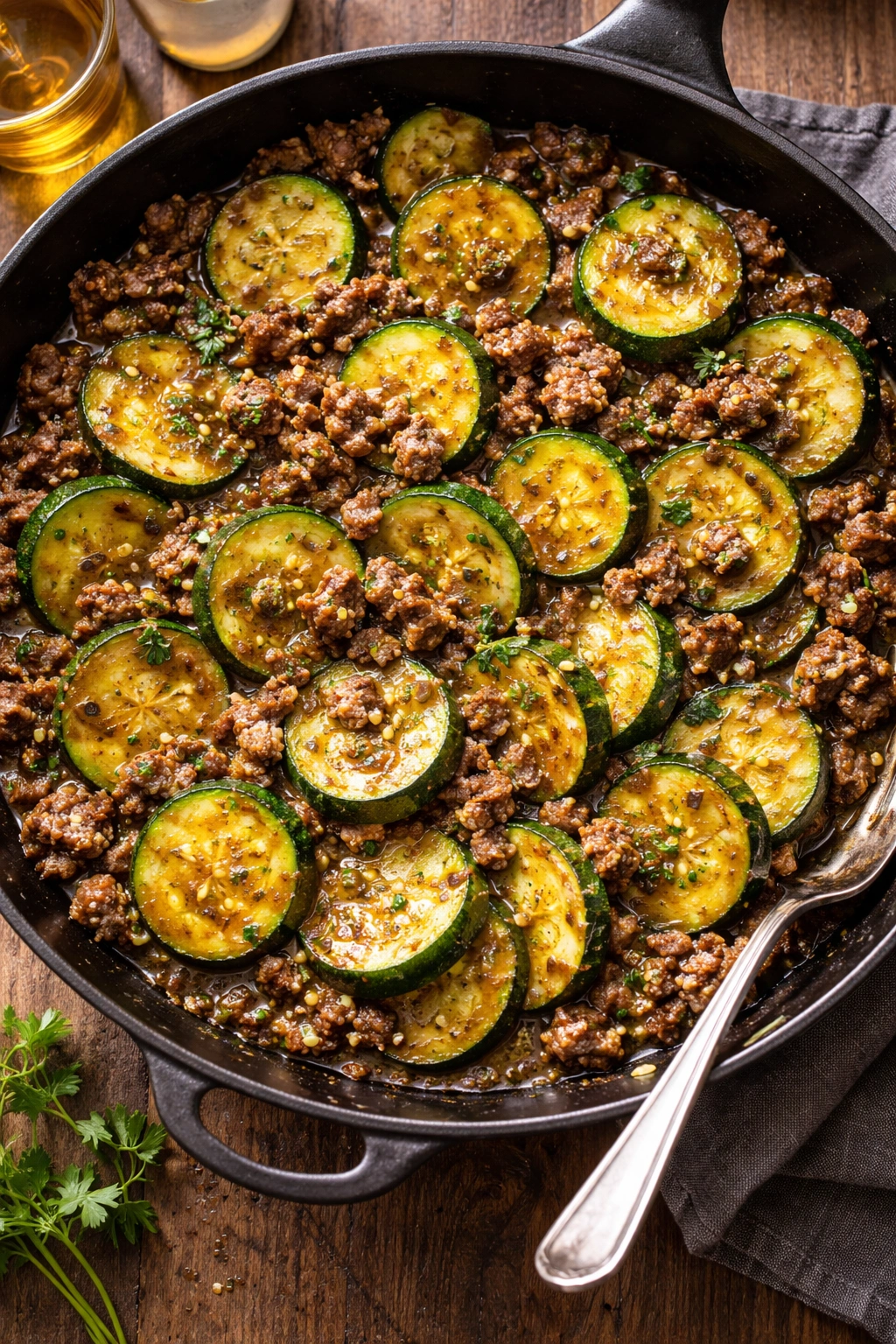
This is the meal for nights when you want something hearty and deeply savory without any vegetables that need chopping into a thousand pieces. Ground beef browns in 8 minutes, zucchini softens in another 5, and the whole thing comes together in a single pan — which means less cleanup and faster dinner.
Choosing the Right Cut and Cooking Method
Ground beef with 80/20 lean-to-fat ratio works beautifully here because the fat renders out as you cook, creating a flavorful sauce base without needing extra oil. Cook it over medium-high heat in a large skillet, breaking it apart into small crumbles as it browns. Once it’s mostly cooked through, add minced garlic (4-5 cloves), salt, pepper, and a teaspoon of Italian seasoning. Let that cook for another minute until the garlic is fragrant.
The Zucchini Addition That Keeps It Fast
Slice your zucchini into half-moons about ¼-inch thick. Add them to the pan with the cooked beef and increase the heat slightly. Let them cook without stirring for about 2 minutes so they get a little caramelized on one side, then toss everything and cook another 3-4 minutes until the zucchini is tender but still holds its shape. Add 2 tablespoons butter and fresh lemon juice to finish — the butter melts into a light sauce that ties everything together.
Finishing Touches That Make It Special
Grate some Parmesan cheese over the top and garnish with fresh parsley if you have it. The brightness of the lemon and the richness of the butter and cheese make this feel much more interesting than “ground beef and zucchini,” which is a little generic on paper.
Insider note: If you can source ground beef from a local farmer or butcher, it often has better flavor and a nicer texture than supermarket ground beef. It costs a bit more but makes a noticeable difference in how satisfying this simple meal feels.
6. Chicken Thighs with Brussels Sprouts and Bacon
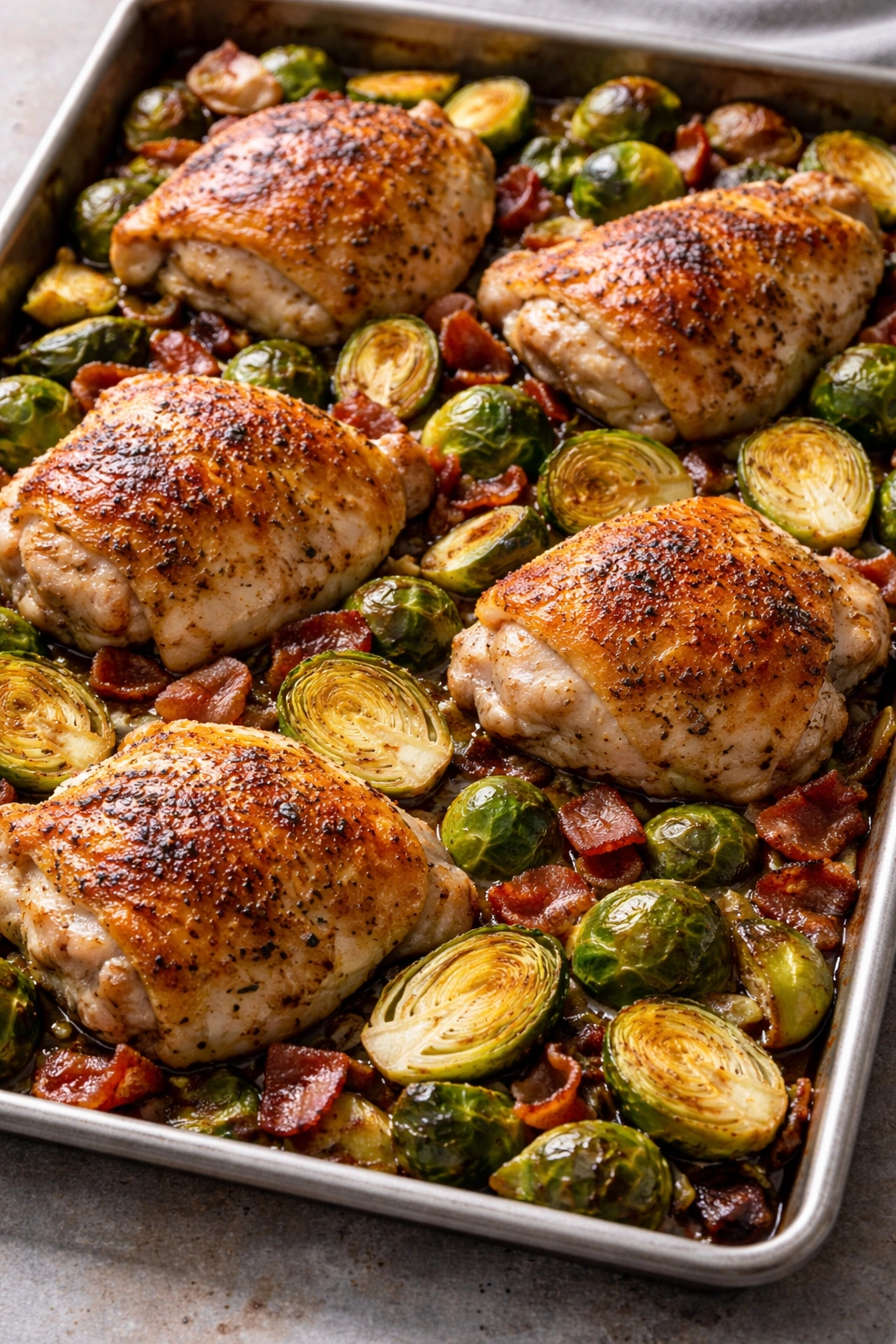
Dark meat chicken cooks faster than breasts, doesn’t dry out when you’re not paying perfect attention, and tastes significantly better — especially when you’re roasting it with bacon and Brussels sprouts. This meal practically cooks itself once you get it in the oven.
Why Thighs Win Over Breasts for Weeknights
Chicken thighs have more fat and connective tissue, which means they forgive overcooking and absorb flavors more readily. They also stay juicy even if you’re not constantly babying them. Pat them dry, season generously with salt and pepper, and you can nearly forget about them while they cook. Breasts need more attention and can turn stringy if you’re distracted.
Building the Sheet Pan Meal
Pat 4 bone-in, skin-on chicken thighs dry with paper towels (dry skin crisps beautifully; wet skin steams). Arrange them on a sheet pan and cut 4-5 strips of bacon into 2-inch pieces. Toss the Brussels sprouts (about 1 pound, halved) with olive oil, salt, pepper, and the bacon pieces, then spread everything around the chicken.
Roast at 425°F (220°C) for 25-30 minutes until the chicken skin is golden and crispy and the internal temperature reaches 165°F (74°C) at the thickest part. The bacon renders its fat, which flavors the Brussels sprouts, and everything cooks together in one pan.
The Texture That Makes This Exciting
Crispy chicken skin, charred caramelized Brussels sprouts, and salty bacon pieces all together is just deeply satisfying. This isn’t a diet meal that you’re tolerating — this is something you actually want to eat after a long day. The fat from the chicken and bacon means you’re satisfied for hours.
Worth knowing: Don’t crowd the pan. If your sheet pan is small or your chicken thighs are huge, use two sheet pans so the Brussels sprouts can spread out and caramelize instead of steaming.
7. Shrimp and Broccoli in Garlic-Butter Sauce
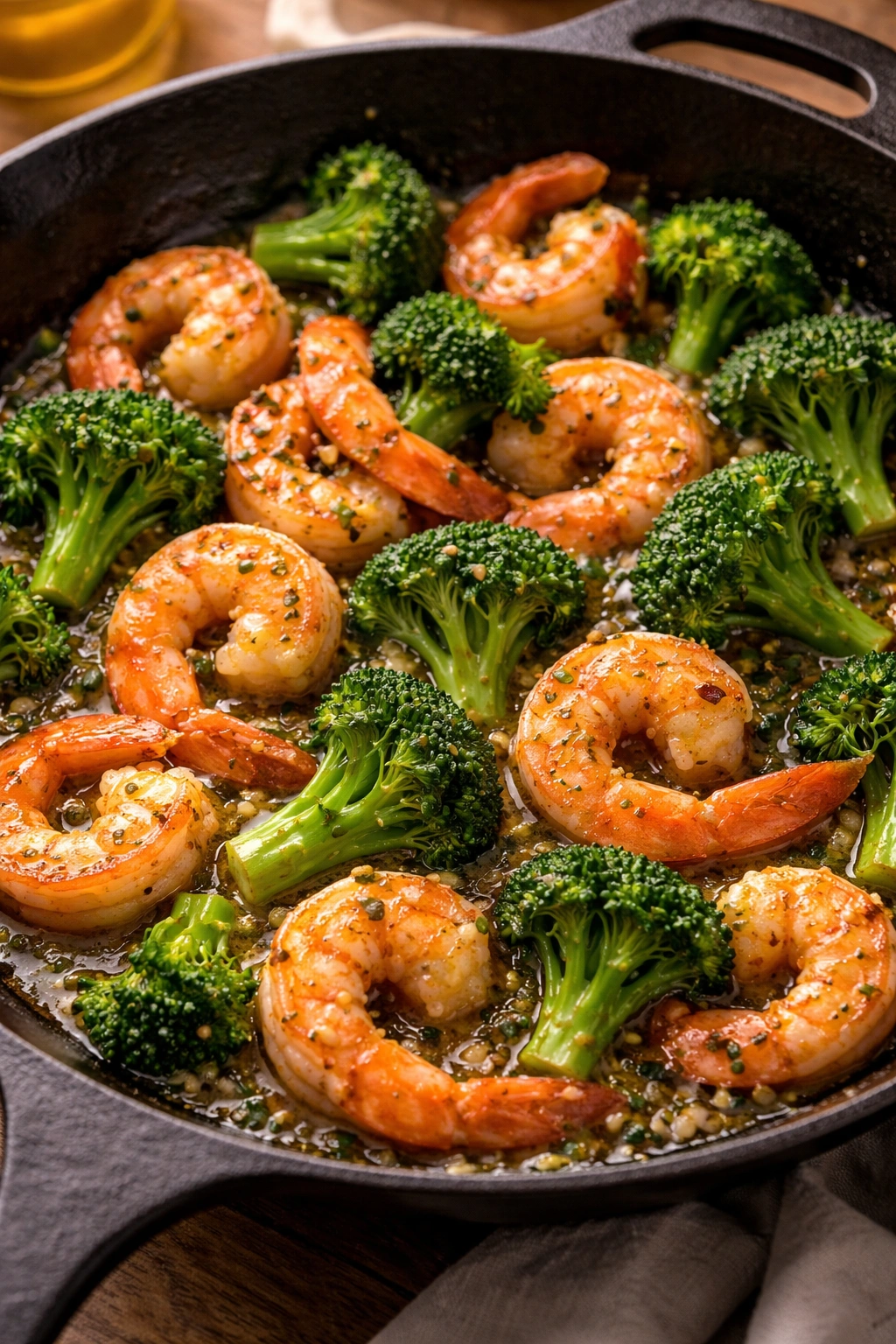
This is the meal that takes 15 minutes and tastes like restaurant takeout. Shrimp and broccoli are a classic combination because broccoli’s earthiness balances shrimp’s sweetness, and they cook on nearly identical timelines.
The Sauce Base That Changes Everything
In a small bowl, combine 4 tablespoons butter, 6 cloves minced garlic, ½ teaspoon red pepper flakes, salt, and pepper. You’re not cooking this sauce separately — you’re going to cook everything in one skillet and this mixture will melt into the pan and coat the food, creating a light but deeply flavored sauce.
Cooking in the Right Order
Heat 1 tablespoon oil in a large skillet over medium-high heat. Add your broccoli florets and cook them for about 4 minutes, stirring occasionally, until they’re mostly cooked through and starting to show some brown edges. Push the broccoli to the sides of the pan, add your shrimp to the center, and let them cook undisturbed for 1-2 minutes. Flip them, cook another minute or two until they’re opaque, then add your butter-garlic mixture to the pan.
Toss everything together and cook for another 30 seconds so the butter melts and coats everything. Finish with fresh lemon juice and a handful of fresh parsley. The total cook time from start to plating is about 10 minutes.
Why This Tastes Like You Tried Much Harder
The combination of sweet shrimp, tender-crisp broccoli, and silky garlic-butter sauce makes this feel indulgent even though it’s perfectly simple. Serve it on its own, or if you want a vehicle for the sauce, use cauliflower rice or even just a bowl to eat it with a spoon. The sauce is too good to waste.
Pro tip: Buy shrimp that’s already been deveined and peeled to save yourself 5 minutes of prep. The cost difference is minimal and the time saved is real.
8. Pork Chops with Green Beans and Garlic
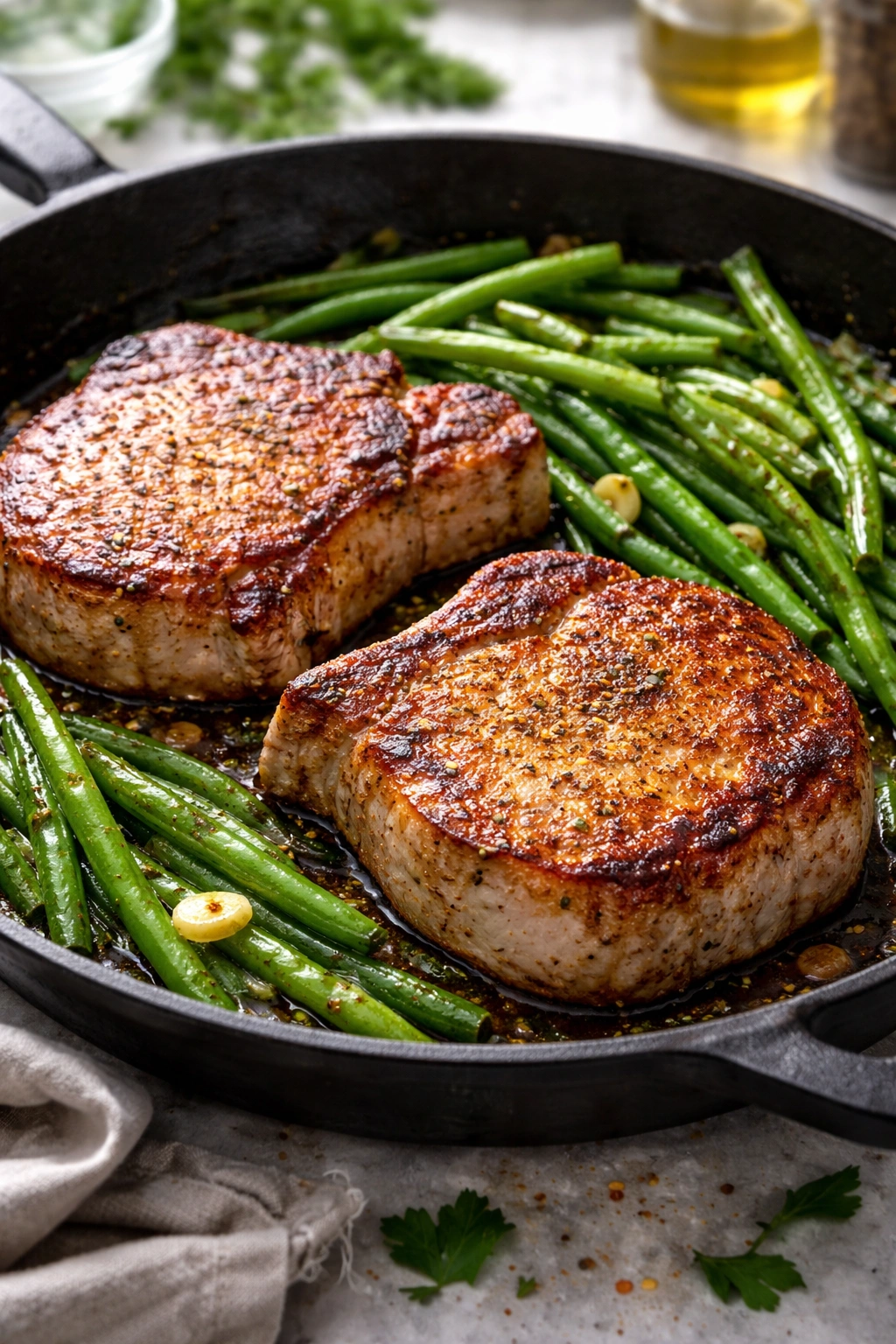
Pork chops are criminally underrated as a weeknight protein. They’re leaner than beef, cook faster than chicken, and develop incredible crust when you sear them properly. Add green beans and you’ve got a meal that’s complete, nutritious, and genuinely delicious.
The Searing Technique That Makes Them Crispy
Pat your pork chops dry and season both sides generously with salt and pepper. Heat a skillet over medium-high heat with a little butter or oil. Once it’s hot, place the pork chops in the pan and leave them alone for 3-4 minutes — no fussing, no poking. This creates a golden-brown crust. Flip and cook another 3-4 minutes on the other side. The internal temperature should reach 145°F (63°C) at the thickest point. Unlike chicken, pork doesn’t need to be cooked to 165°F, so it stays slightly more tender.
Green Beans That Don’t Taste Like Sad Vegetables
While the pork cooks, trim fresh green beans and toss them with olive oil, salt, and pepper. In the same oven-safe skillet you used for the pork (once you’ve removed it and set it aside), sauté the green beans over medium-high heat for about 5 minutes, stirring occasionally, until they’re tender-crisp and starting to show some light brown spots. Add minced garlic in the last minute and let it cook just until fragrant.
Pulling It All Together
Return the pork chops to the skillet with the green beans, add a squeeze of lemon juice and maybe a splash of chicken broth if you want extra sauce, and cook everything together for 1 minute. The pork is done, the green beans are tender-crisp with garlic flavor, and you’ve got a complete meal.
Insider note: Bone-in pork chops are more flavorful and forgiving than boneless, but boneless cook slightly faster if you’re in a rush. Both work perfectly fine.
9. Egg Roll in a Bowl (Unstuffed Egg Rolls)
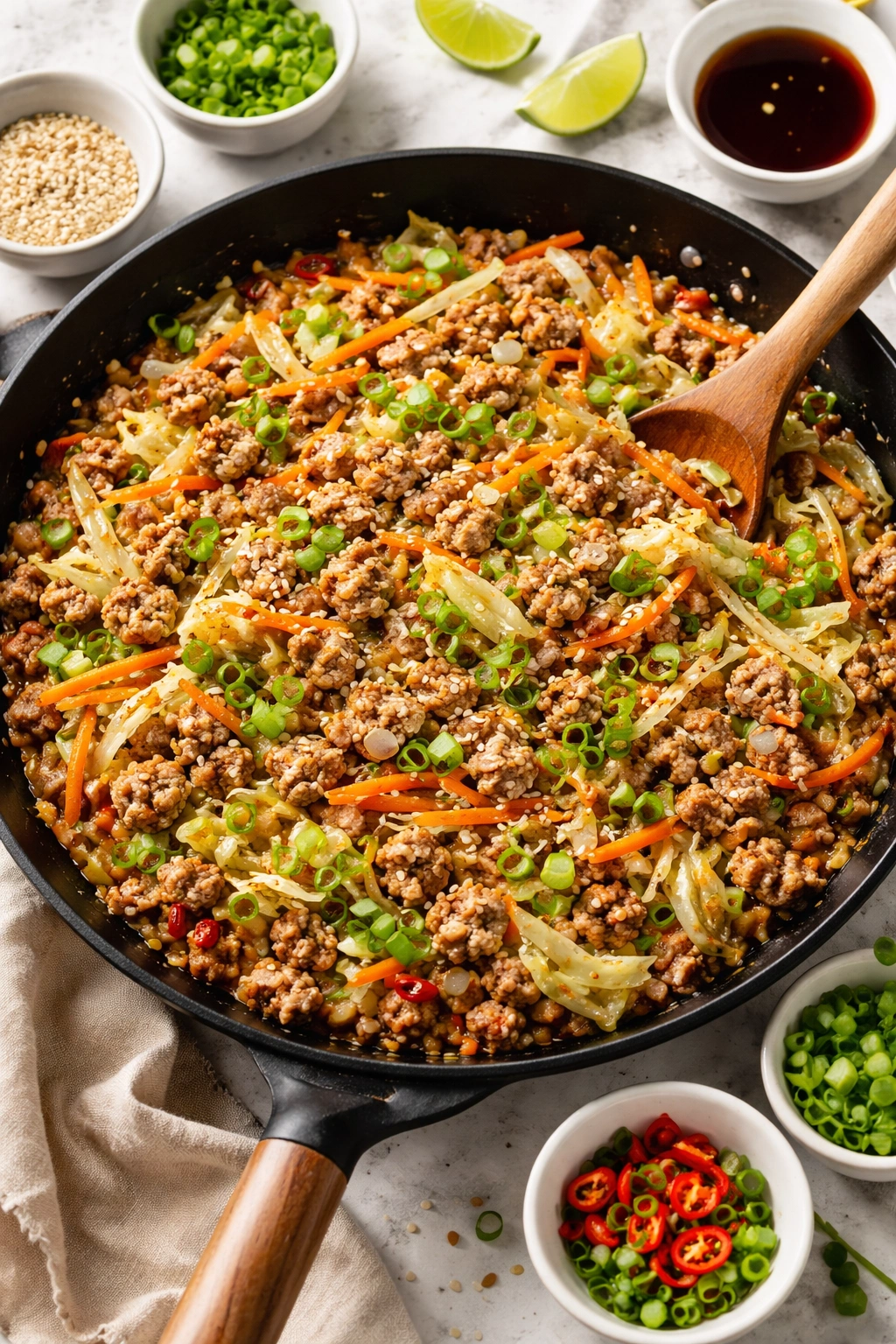
This is the scrambled cabbage and meat situation that tastes like you’re eating takeout but takes about 12 minutes and costs a fraction of the price. It’s endlessly customizable and genuinely satisfying.
Why This Works as a Weeknight Go-To
Cabbage is cheap, cooks incredibly fast, and is naturally very low in carbs. Ground pork or ground beef is inexpensive and quick-cooking. Together with a few simple seasonings, you’ve got something that tastes completely finished and restaurant-quality without any intimidating techniques.
Building the Filling
Brown 1 pound ground pork (or beef) in a large skillet over medium-high heat. Once it’s cooked through, add minced ginger (1 tablespoon), minced garlic (4 cloves), and let it cook for 30 seconds. Add about 6 cups shredded cabbage (which seems like a lot but wilts dramatically), soy sauce (3 tablespoons), sesame oil (1 tablespoon), and a pinch of white pepper. Stir everything together and let it cook for about 5 minutes, stirring occasionally, until the cabbage is tender but still has a little bite to it.
Finishing It Right
Taste and adjust seasonings — you might want a little more soy sauce or a squeeze of lime juice. Finish with sliced green onions and, if you want, a drizzle of sriracha on the side. Serve it in a bowl and eat it with a spoon, or wrap it in lettuce leaves if you want something a bit more structured.
Worth knowing: Pre-shredded cabbage works fine here and saves you 5 minutes. It’s not as fresh as shredding it yourself, but for this particular meal where everything gets cooked down anyway, the difference is minimal and the time savings are real.
10. Cobb Salad with Crispy Bacon and Blue Cheese
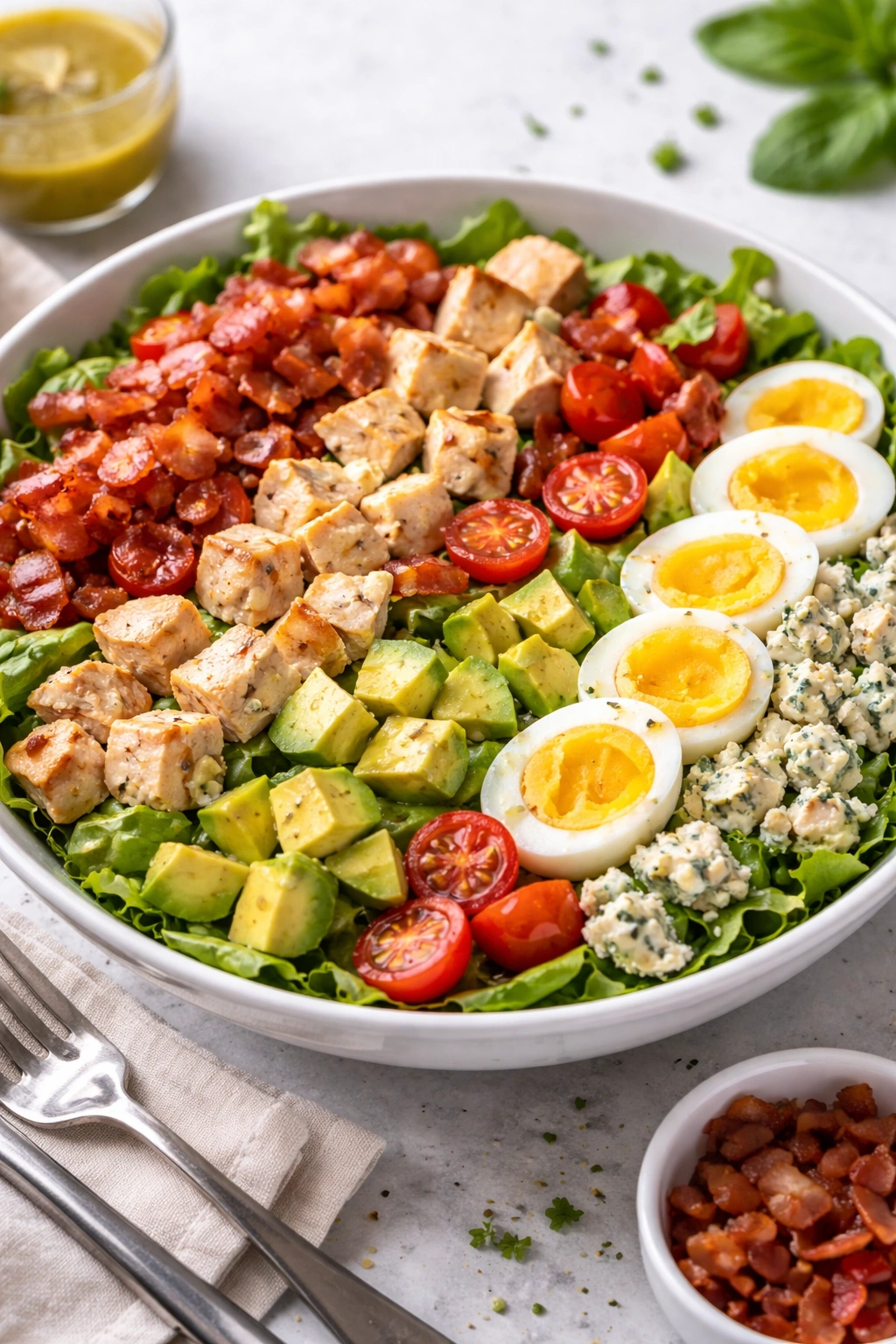
Sometimes a good salad is exactly what your body needs on a weeknight, especially when the salad is loaded with protein and fat so you’re actually satisfied. This is a complete meal, not a side dish. The key is building it with ingredients that genuinely excite you.
Why This Tastes Nothing Like “Diet Food”
The combination of bacon, avocado, egg, and blue cheese means this salad has serious fat and flavor content. You’re not eating rabbit food and pretending it’s satisfying — you’re eating something genuinely delicious that happens to be low in carbs. The vinaigrette should be simple and let the ingredients shine: olive oil, red wine vinegar, a teaspoon of Dijon mustard, salt, and pepper.
Building Your Salad Strategically
Start with a base of greens — romaine, mixed greens, or spinach, whatever you prefer. Add your toppings in separate sections so the salad feels intentional and composed, not just “stuff thrown together.” One section for the hard-boiled eggs (you can buy these pre-made if you need to), one for the bacon (cook it fresh or grab it from the grocery store’s prepared foods section on nights when you really need to shortcut), one for the avocado, one for the blue cheese, and one for any vegetables you like — tomato if you’re less strict on carbs, cucumber, red onion, whatever appeals to you.
The Timing of Everything
If you’re hard-boiling eggs, do that while you’re making everything else or use the pre-made ones. Cook bacon while you’re assembling everything else. Slice your avocado just before you eat so it doesn’t brown. Dress the greens at the last second so they don’t wilt.
Why This Works as a Regular Meal
Cobb salad feels light but is actually calorie-dense and protein-rich, so you’re satisfied for hours. It’s different enough from your other weeknight meals that it doesn’t feel repetitive. And if you keep these ingredients on hand — eggs, bacon, avocado, quality salad greens, and blue cheese — you can throw this together on literally any night without needing to plan ahead.
Pro tip: Make your vinaigrette in a mason jar and store it in the fridge. Shake it up whenever you need it, and you’ll always have good salad dressing ready rather than reaching for bottled versions with hidden sugars.
Final Thoughts
The real success with low-carb weeknight meals isn’t about finding magic recipes or perfectly balanced macros. It’s about choosing proteins that cook fast, pairing them with vegetables that are naturally low-carb and interesting, and building meals around flavors you actually crave rather than deprivation-based food rules.
The 10 meals here work because they’re genuinely simple — nothing requires more than one or two pans, most come together in 20-30 minutes, and they’re all flexible enough to work with whatever you have on hand. You can swap proteins, change vegetables, adjust seasonings to your taste, and still end up with something satisfying.
The best low-carb meal is the one you’ll actually make on a Tuesday night when you’re tired and hungry. Build your weeknight rotation around foods that excite you rather than foods you think you should eat. That’s when consistency happens, and consistency is what actually works.
