



There’s something almost primitive about the appeal of a loaded baked potato. It’s simultaneously a complete meal and a blank canvas, humble enough to eat alone on a weeknight but impressive enough to serve at a casual dinner party. The magic is in its simplicity: a perfectly cooked potato with a crispy exterior and fluffy interior becomes the foundation for building layers of flavor and texture that feel far more indulgent than they have any right to be.
What makes loaded baked potatoes so endlessly appealing is that they work for nearly every occasion and every craving. You can go steakhouse-fancy with prime toppings and sour cream, embrace comfort-food excess with multiple kinds of meat and cheese, build something light and vegetable-forward, or even turn breakfast potatoes into an egg-topped morning meal. The beauty is that once you understand the fundamentals—how to bake a potato properly, what makes an ideal topping ratio, which combinations sing together—you can confidently build your own versions without ever feeling like you’re just throwing things at carbs.
Most people, though, approach loaded baked potatoes with unnecessary hesitation. They either undersalt the potato itself (a critical mistake that no amount of toppings can rescue), underbake it so the texture stays dense and mealy, or drown everything in so many toppings that the potato becomes an afterthought. The real skill isn’t complicated, but it does matter: knowing that the potato itself needs aggressive seasoning, that the baking time matters more than the oven temperature variability, and that a loaded potato is actually built in layers with purpose, not just piled randomly with whatever you have on hand.
Why Loaded Baked Potatoes Are Easier Than You Think
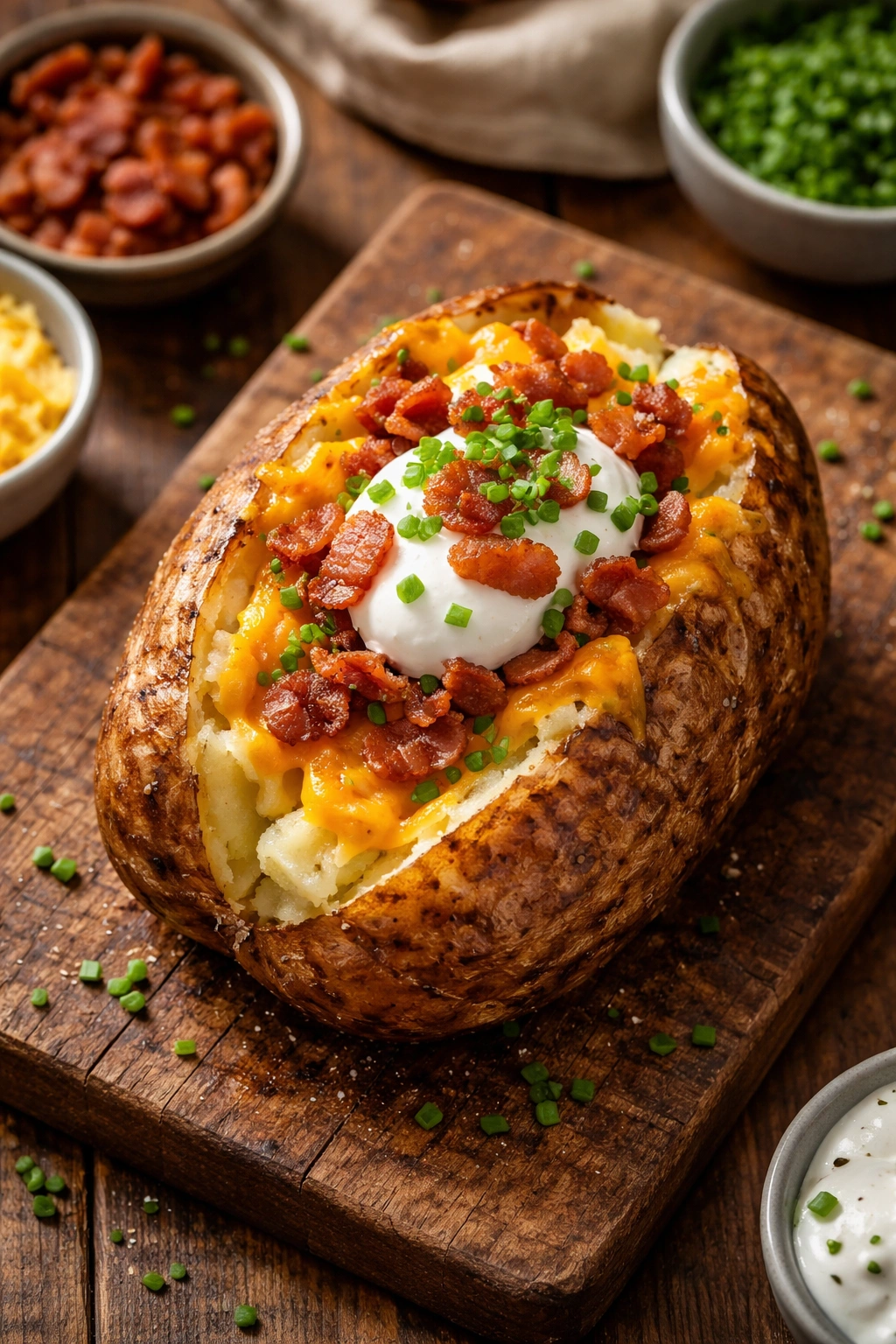
Loaded baked potatoes occupy a wonderful middle ground in cooking—they feel more involved than they actually are, which means you get outsized credit for minimal effort. The cooking itself is mostly hands-off: you pierce the potato, bake it, and walk away. The real magic happens in understanding that a properly baked potato is already delicious on its own, and every topping you add should enhance rather than mask that potato flavor.
The versatility is genuinely staggering. A loaded baked potato isn’t trapped in one category—it functions as a main course, a side dish that can anchor an entire meal, a vehicle for using up small amounts of leftover proteins and vegetables, or even a lunch item that reheats beautifully. During colder months when comfort food cravings hit hardest, baked potatoes feel exactly right. During warmer months, you can lighten them with fresh herbs, bright vinaigrettes, and crisp vegetables. They work equally well for feeding a crowd (each person customizes their own toppings) or for a solo dinner where you’re building exactly what you’re craving.
The financial value is also a significant advantage. A quality baking potato costs pennies, and a single potato becomes a complete, satisfying meal when layered thoughtfully with toppings. You don’t need expensive specialty ingredients—most loaded baked potatoes are built from pantry and refrigerator staples: cheese, sour cream, butter, bacon, chives, and salt. This is food that tastes indulgent but doesn’t require the budget or advanced technique of actually indulgent cooking.
Choosing and Preparing Your Potatoes
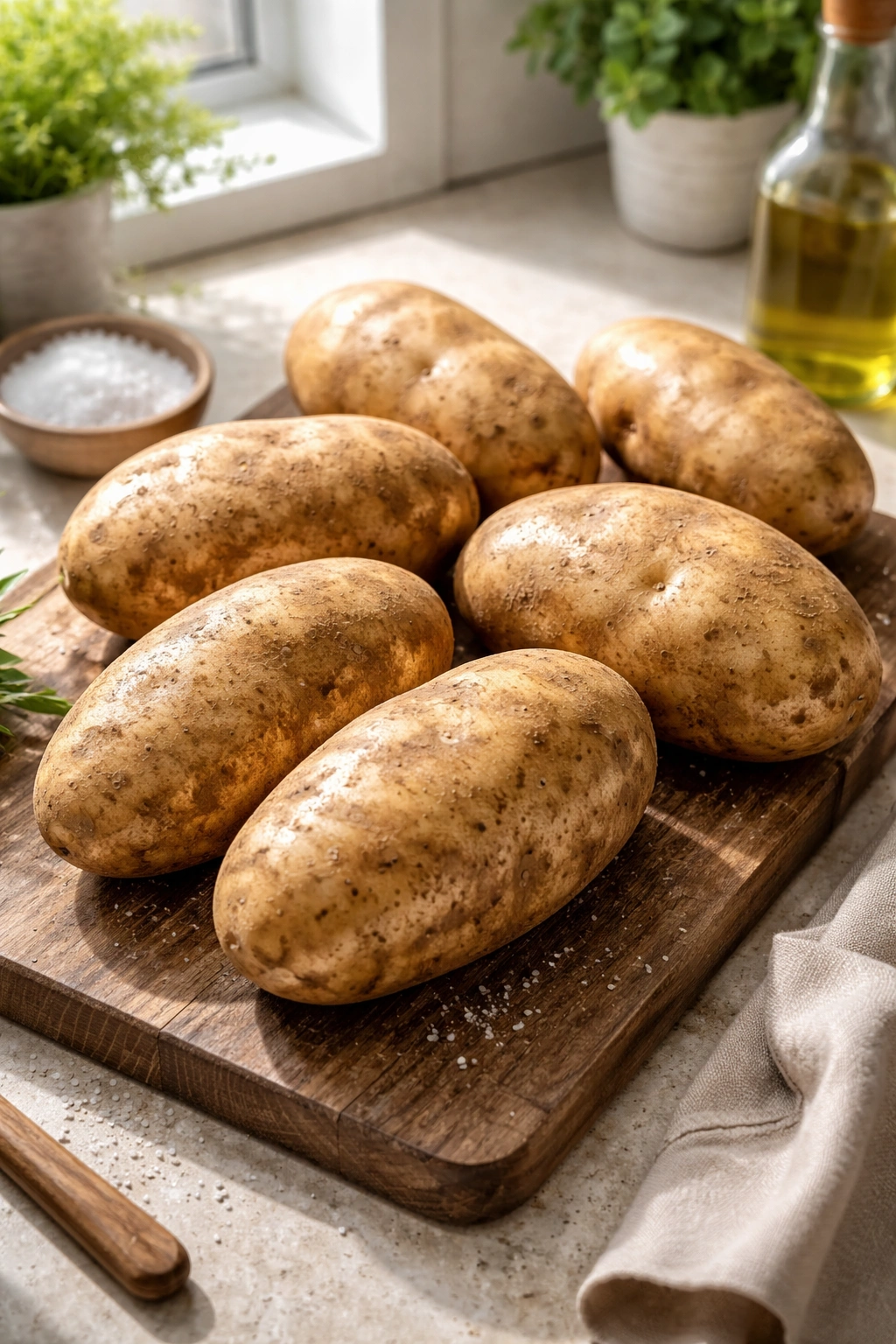
The potato you select matters far more than most cooks realize, because the wrong variety will never bake properly no matter how long you leave it in the oven. Russet potatoes are your absolute best choice for loaded baked potatoes—they have high starch content and low moisture, which means they develop that dry, fluffy interior and crispy exterior that you’re chasing. Avoid waxy potatoes like red potatoes or fingerlings; they’ll stay dense and almost gluey inside, and no amount of baking time will change that.
Size absolutely impacts cooking time and the ratio of topping to potato flesh. Medium to large russets are ideal—roughly 8 to 10 ounces each. They’re large enough to hold a generous pile of toppings without feeling like the topping is drowning the potato, but not so enormous that the baking time stretches beyond 45 minutes. If you’re selecting potatoes at the store, choose ones that are similar in size so they finish baking at roughly the same time.
The outside skin needs to be clean and dry. A damp potato will steam rather than roast, which is the enemy of crispy skin. Rinse your potatoes under cool water and scrub gently with a vegetable brush to remove any clinging soil, then pat completely dry with a clean kitchen towel. This step genuinely matters—it’s the difference between crispy skin and leathery, wrinkled skin.
Piercing the potato before baking is non-negotiable. Use a sharp fork or small knife to poke each potato 5-6 times all over, going about halfway through to the center. This prevents steam buildup from causing the potato to burst in the oven. I prefer using a fork with forceful downward pressure, making decent-sized holes rather than tentative scratches—the more reliable the steam escape route, the more even the cooking.
The Basic Baked Potato Method
Yield: Serves 4 | Makes 4 loaded baked potatoes
Prep Time: 10 minutes (just cleaning, pricking, and seasoning)
Cook Time: 45 minutes at 400°F (the most reliable temperature for consistent results)
Total Time: 55 minutes active + 5 minutes resting
Difficulty: Beginner — You’re literally baking a potato and applying toppings. The only potential pitfall is underbaking, which you avoid by following the doneness cues instead of just watching the clock.
For the Potatoes:
- 4 medium to large russet potatoes (about 8-10 ounces each)
- 2 tablespoons olive oil or melted butter
- 1½ teaspoons fine sea salt (divided—¾ teaspoon per potato for outsides, plus additional for the interior)
- ½ teaspoon freshly cracked black pepper
For Building Your Loaded Potatoes:
- 4 tablespoons unsalted butter, softened
- ½ cup sour cream (or Greek yogurt for a lighter option)
- ½ cup whole milk or heavy cream
- 1 cup sharp cheddar cheese, shredded (or your preferred melting cheese)
- 6 slices bacon, cooked until crispy and crumbled
- 3 tablespoons fresh chives, finely chopped
- 1 tablespoon fresh parsley, finely chopped (optional but adds brightness)
- Salt and freshly cracked black pepper to taste
Bake the Potatoes:
-
Preheat your oven to 400°F (200°C) with the rack positioned in the center. A consistent, moderate temperature works better than a hotter oven for baking potatoes—you want the inside to cook through while the outside crisps up, and very high heat creates burnt skin before the center is done.
-
Rinse each potato under cool running water and scrub gently with a vegetable brush to remove all surface dirt. Pat completely dry with a clean kitchen towel—this dryness is essential for crispy skin. A wet potato steams; a dry potato roasts.
-
Using a fork or small sharp knife, prick each potato firmly 5-6 times all over the surface, piercing about halfway through to create steam escape routes. Press downward with confident force rather than tentatively scratching—you’re creating functional holes, not just surface marks.
-
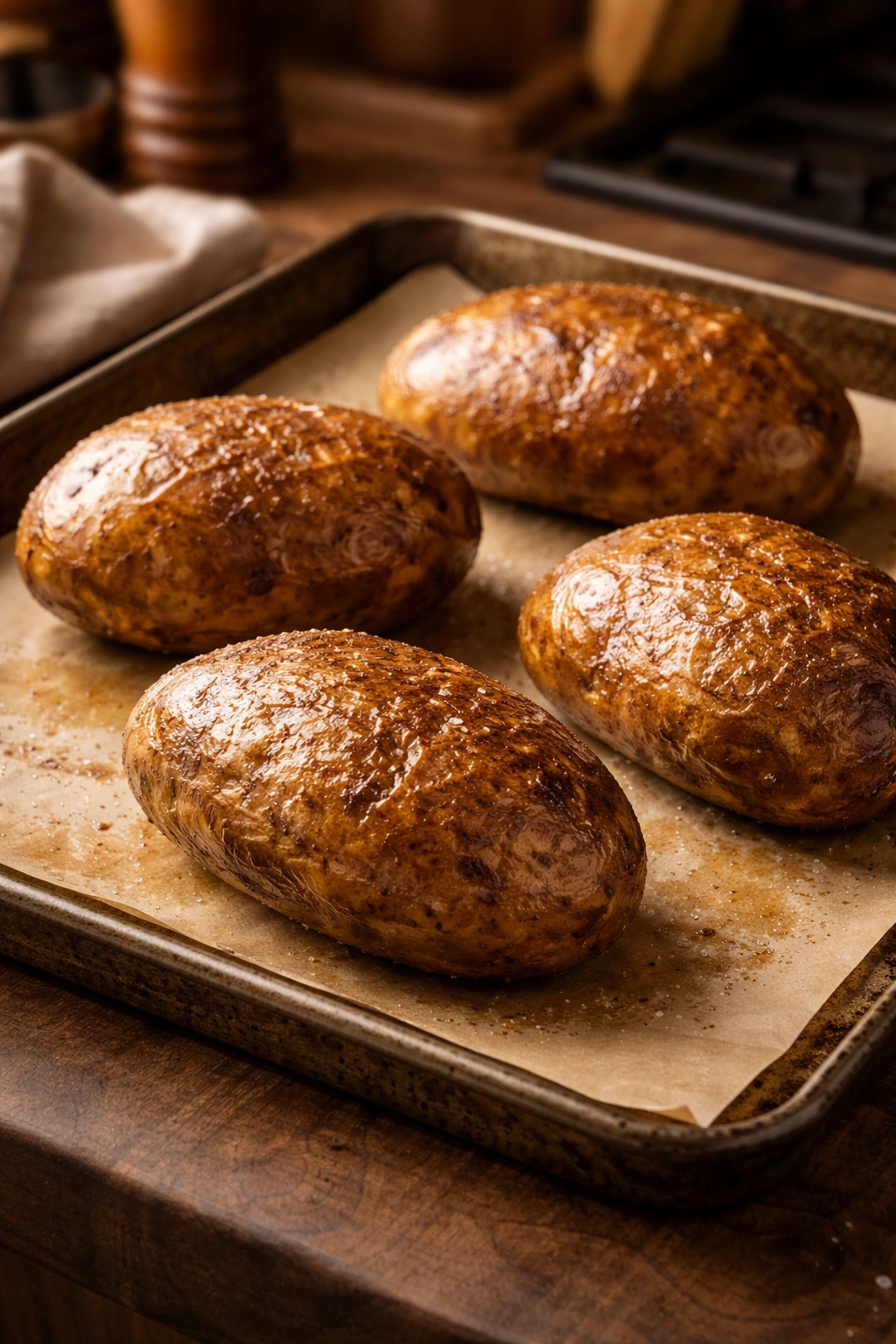
Drizzle each potato with ½ tablespoon of olive oil or melted butter, then rub the oil all over the exterior with your hands, coating the entire surface evenly. This oil is what creates the crispy, slightly golden skin.
Advertisements -
Sprinkle each potato evenly with about ⅜ teaspoon of fine sea salt, distributing it all over the outside. This seems like a generous amount of salt for the exterior, but it is absolutely correct—this salt creates a flavorful crust and seasons the flesh beneath. Season with a pinch of black pepper as well.
-
Place the potatoes directly on the center oven rack, leaving space between each one for air circulation. Do not wrap them in foil—foil traps steam and prevents the skin from crisping. If you’re concerned about drips, place a baking sheet on the rack below, but keep the potatoes uncovered.
-
Bake for 40-45 minutes, depending on the exact size of your potatoes. The potato is done when a sharp knife slides through the center with zero resistance, like piercing butter. You should feel no firmness whatsoever in the thickest part. A potato that still has any resistance inside is underbaked, and you’ll notice the difference in texture immediately. If you’re uncertain, go 5 minutes longer—overcooked potatoes are nearly impossible, but underbaked ones are disappointing.
-
Remove the potatoes from the oven and let them rest for 5 minutes. This allows the internal steam to redistribute and makes them easier to handle.
Prepare the Topping Base:
-
While the potatoes bake, prepare your topping base. In a small bowl, whisk together the softened butter, sour cream, and milk until smooth and creamy. This mixture will be stirred into each potato immediately after cutting, creating a luxurious, fluffy interior. If your sour cream is cold from the fridge, let it sit out for a few minutes first—cold sour cream won’t incorporate smoothly into the hot potato.
-
In a separate small bowl, toss together the crumbled bacon, chopped chives, and parsley. Set aside until you’re ready to top the potatoes.
Finish and Serve:
-
Once the potatoes have rested for 5 minutes, cut each potato in half lengthwise with a sharp knife. The interior should be steaming hot. Using a fork or small spoon, gently fluff the interior without breaking through the skin—you’re creating a fluffy texture and making room for the butter mixture.
-
Spoon one-quarter of the butter-sour cream mixture into each potato, dividing equally among the four potatoes. Stir gently with a fork to incorporate the mixture throughout the fluffed potato, creating a creamy, buttery consistency.
Advertisements -
Divide the shredded cheese among the potatoes, sprinkling it evenly over the hot potato flesh. The residual heat will melt the cheese beautifully. Top each potato with the bacon and herb mixture, dividing equally.
-
Taste a small spoonful of the potato (be careful—it’s hot) and season with additional salt and black pepper as needed. The potato itself needs seasoning, not just the toppings.
-
Serve immediately while the potatoes are still steaming hot and the cheese is melted.
What Makes a Loaded Potato Actually Taste Good
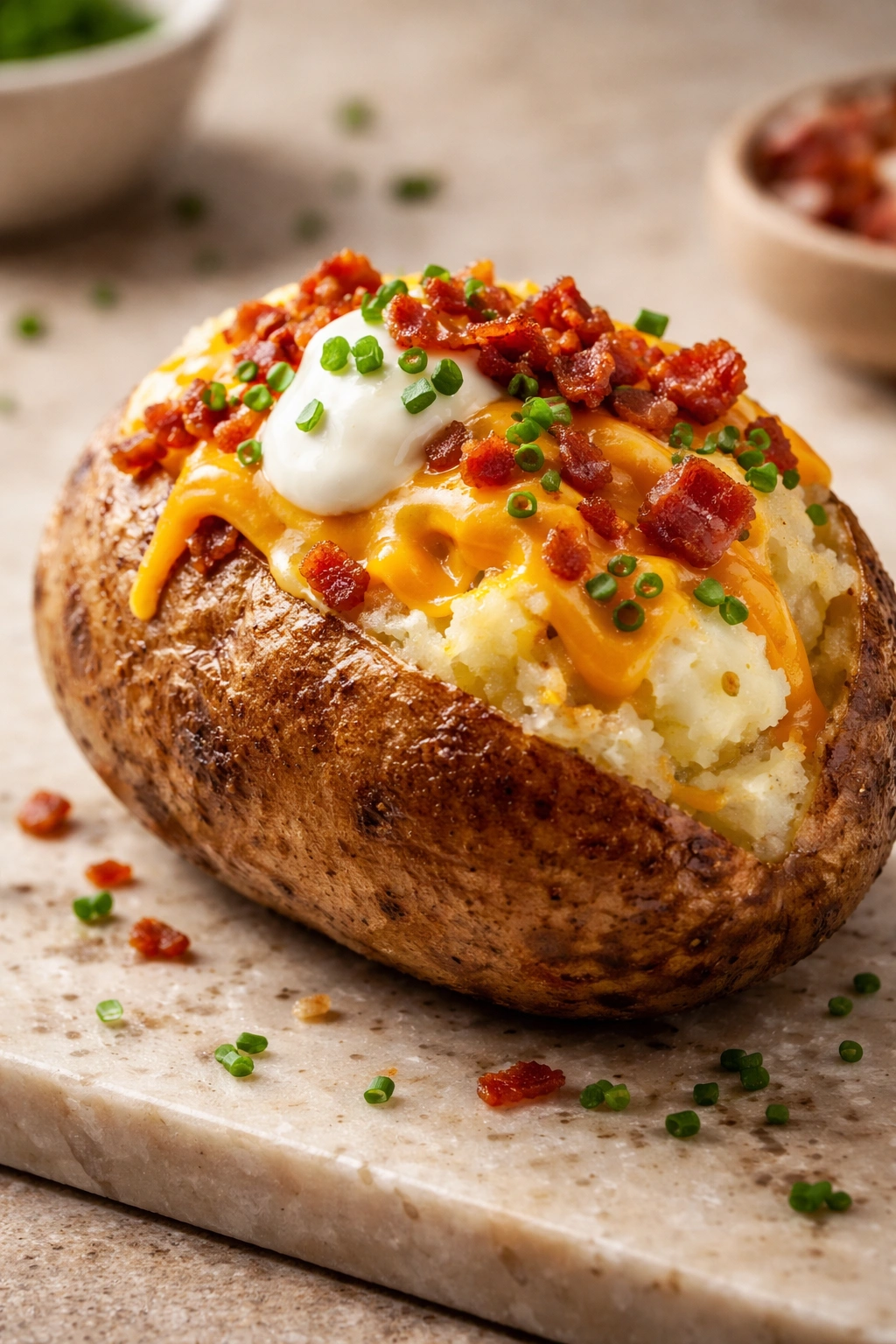
The reason many homemade loaded potatoes disappoint compared to restaurant versions isn’t ingredient quality—it’s balance and proportion. A great loaded baked potato follows an invisible architecture: the potato itself must be seasoned assertively enough to stand up to the toppings, never disappearing beneath layers of cheese and sour cream. The toppings should enhance the potato, not replace it.
Think about the ratio of topping to potato. Too much topping, and you’re essentially eating cheese and sour cream on a potato base rather than eating a baked potato with delicious additions. The potato should still be the star. Most people undersalt the potato flesh and then try to compensate with salty toppings, which creates an unbalanced bite.
Temperature contrast also matters more than it sounds. Hot crispy potatoes with cool sour cream and cold cheese create textural interest. If everything arrives at the table lukewarm, the experience flattens. Some restaurants serve loaded potatoes with the toppings cold by default, which seems counterintuitive—until you realize it’s intentional and delicious.
The other key insight is that you’re building layers, not dumping everything on at once. Hot sour cream melts into the potato and creates a creamy base, while crispy bacon stays crispy on top. Cheese melts into the warm potato but retains definition. Herbs stay bright and verdant rather than wilting into nothing. Each component lands exactly where it contributes the most flavor and texture.
Classic Steakhouse-Style Loaded Potatoes
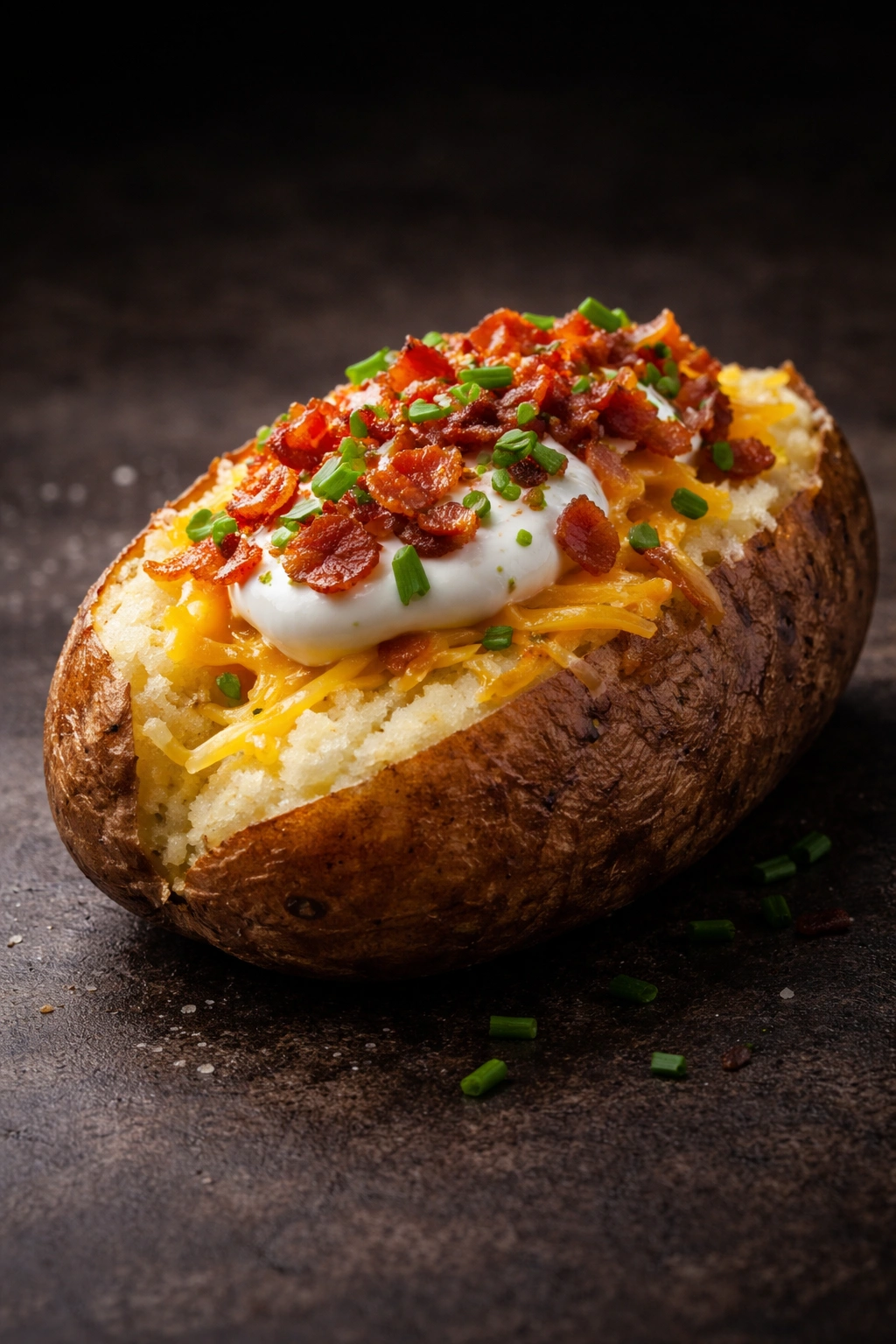
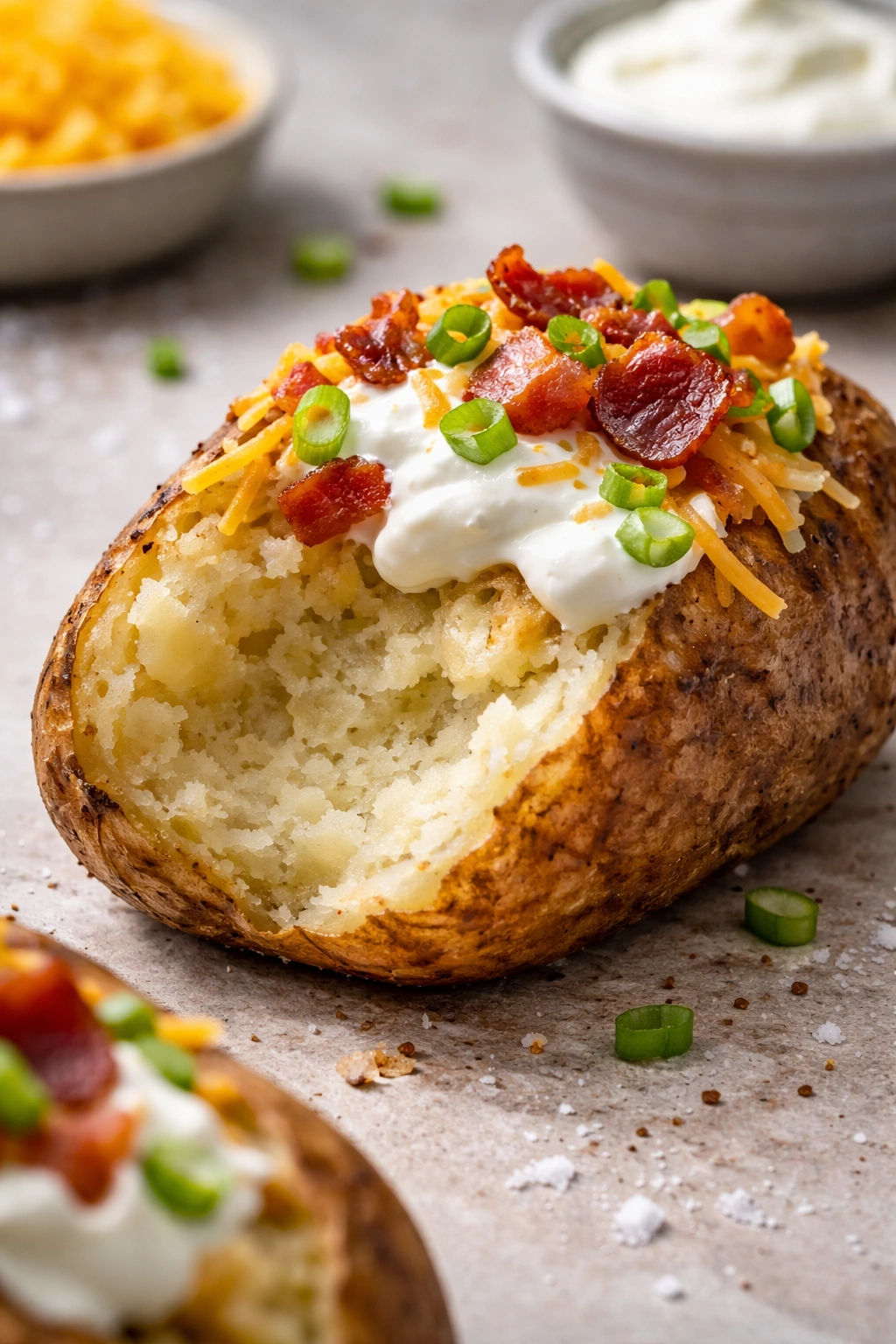
The steakhouse version is the loaded baked potato template that most people have in their mental picture: defined layers of toppings, generous cheese, crispy bacon, sour cream, and chives. It’s elegant in its simplicity and works for nearly any occasion from casual weeknight to fancy dinner party.
The secret to steakhouse authenticity is in restraint and presentation. These potatoes don’t look chaotic—they look intentional. The cheese is a thick, even layer. The sour cream is distributed purposefully, not carelessly dolloped. The bacon crumbles are visible and represent real bacon (not bits), and the chives are genuinely fresh and fragrant, not dried or substituted with scallions.
To build it: Start with a hot baked potato halved lengthwise and forked gently to fluff. Spoon in a mixture of softened butter (about 1 tablespoon per potato), sour cream (2-3 tablespoons per potato), and a splash of milk or cream. Stir this mixture into the hot potato gently, creating a creamy interior. Top with shredded sharp cheddar (about ¼ cup per potato), which melts into the warm flesh. Crown it with crispy bacon crumbles (about 1½ slices per potato, finely crumbled), fresh chives (about ¾ tablespoon per potato, finely chopped), a tiny pinch of paprika for color, and coarse black pepper. The paprika isn’t for flavor—it’s for the visual appeal that marks a restaurant-quality version.
This version reheats beautifully. The potato flesh stays creamy, the cheese re-melts, and the bacon maintains its crispness if you eat it quickly. Some people like to add a tiny bit of crispy fried onion on top for extra texture.
BBQ Pulled Pork & Crispy Onion Loaded Potatoes
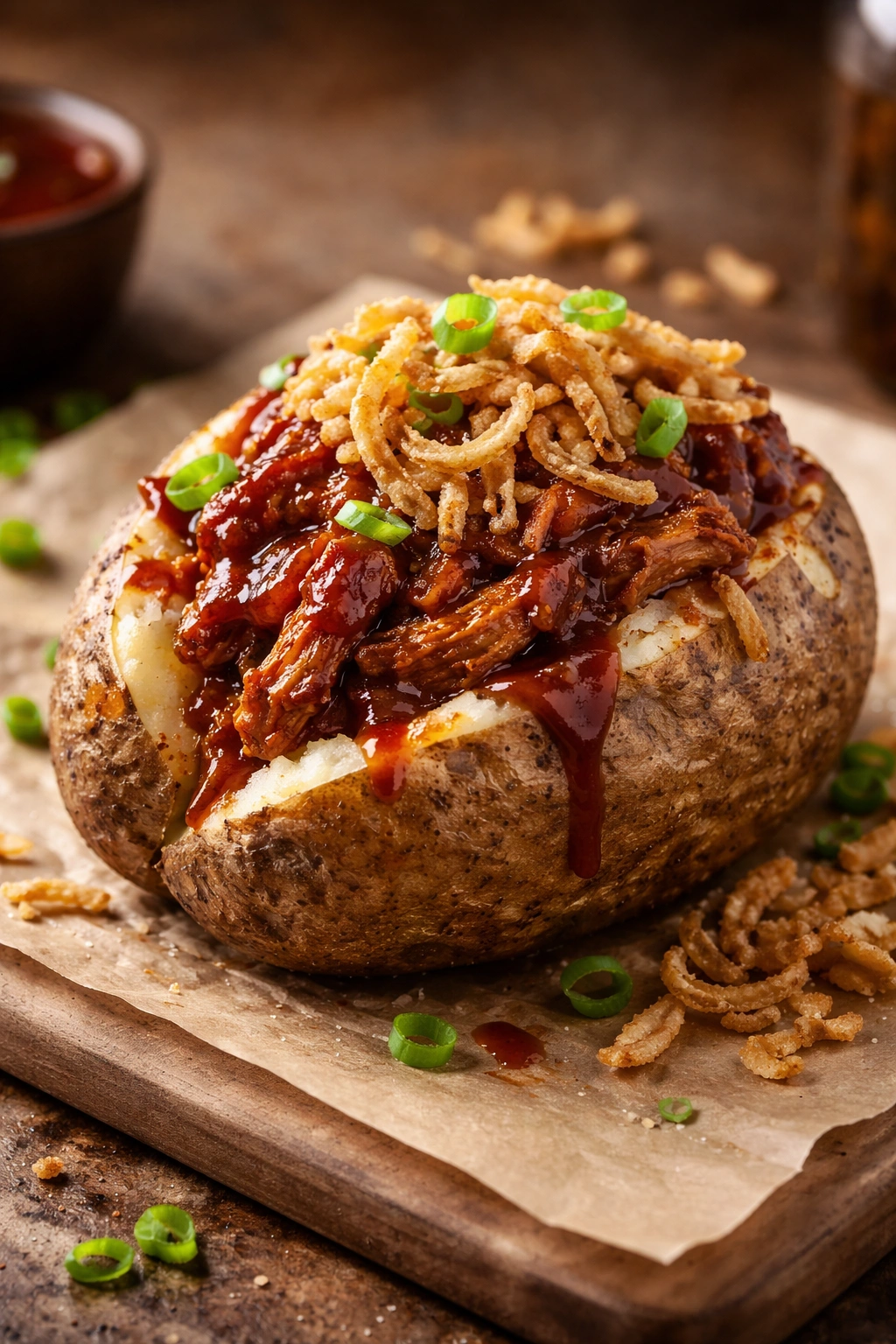
This variation brings real flavor complexity and works wonderfully for casual gatherings where you want something meatier and more interesting than the classic version. The pulled pork is the star, barbecue sauce provides a sweet and tangy component, and crispy onions add a crucial textural contrast that elevates the whole experience.
You can use leftover pulled pork from any source—homemade, rotisserie chicken shredded and tossed in BBQ sauce, or even high-quality deli meat pulled into chunks. Warm the pulled pork gently with about ½ to ¾ cup of your favorite barbecue sauce per pound of meat, mixing it evenly so every piece is coated. This takes about 5 minutes in a small saucepan over medium heat—you’re just warming it through and melding the flavors.
Build the potato as you would the steakhouse version: fluff it with a fork, add the butter-sour cream mixture, season generously. Then layer on the pulled pork, distributing it generously so you get pork in every bite. Top with shredded cheddar or Monterey Jack (BBQ pairs beautifully with these lighter cheddars), a handful of crispy fried onions (these don’t soften like regular onions—they stay crunchy, which is the whole point), and a scattering of fresh cilantro if you have it. A tiny drizzle of additional BBQ sauce and a squeeze of lime juice makes it sing.
The crispy onions are essential here—they prevent the topping from becoming one-note and add a satisfying crunch that contrasts with the creamy potato flesh and tender pork. Store-bought crispy fried onions work beautifully and are worth keeping in your pantry specifically for this application.
Bacon, Cheddar & Ranch Loaded Potatoes
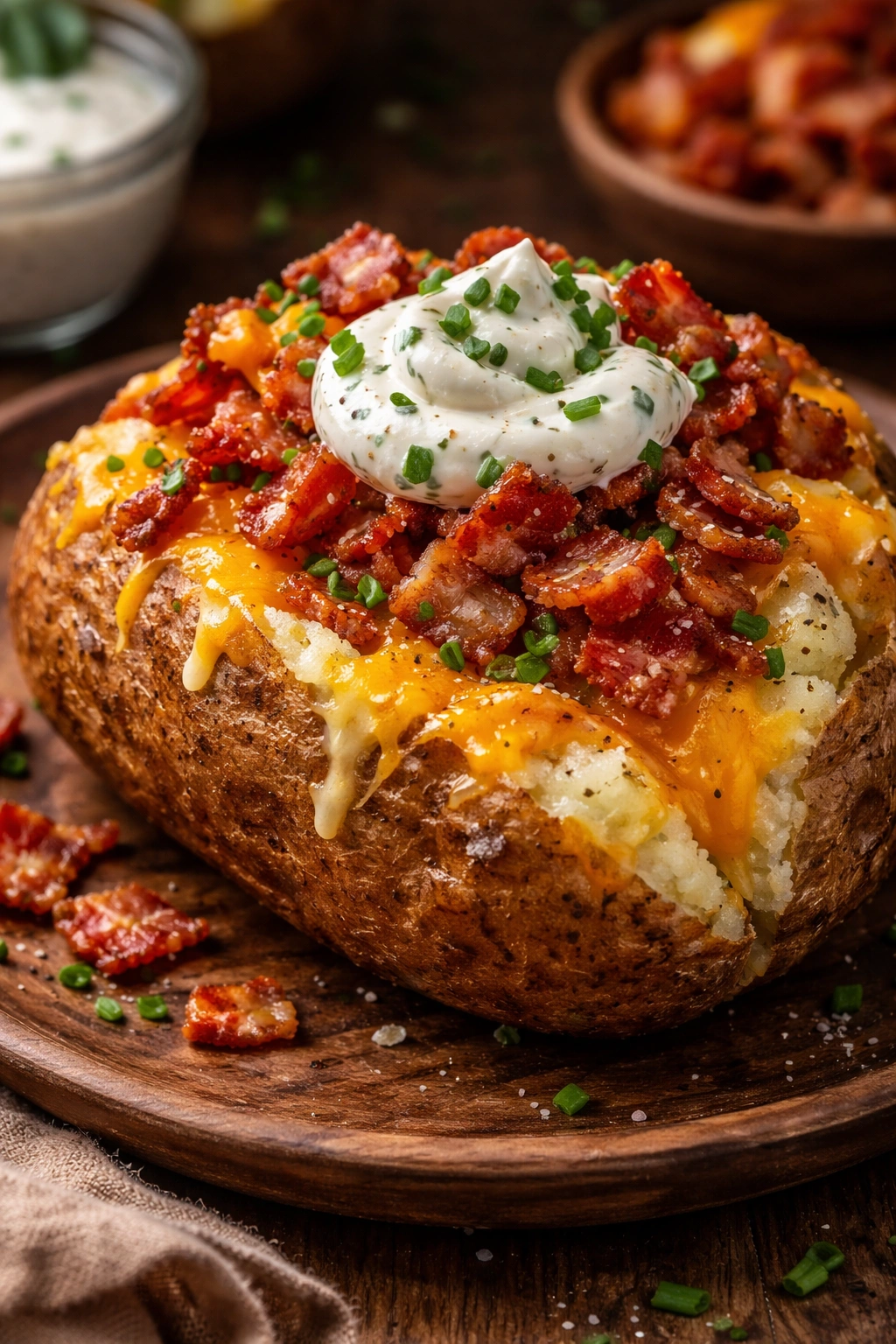
If you love the flavors of a loaded baked potato chip or a ranch-based dip, this variation builds those exact flavors directly into a potato. The secret is using both sour cream and a small amount of ranch dressing mix (dry mix, not bottled dressing), which adds depth and a subtle herb note that pure sour cream alone can’t provide.
Mix together the sour cream with a small amount of ranch seasoning mix—start with ½ teaspoon mixed into your butter-sour cream base, taste, and adjust upward if you want more ranch flavor. This is seasoning, so a little goes a long way. The butter and milk proportions stay the same, and you proceed with the standard method.
Top with generous amounts of crispy bacon (these potatoes are very bacon-forward—aim for 2 slices worth of crumbles per potato rather than the more conservative 1½), extra sharp cheddar, and then finish with a combination of fresh chives and fresh parsley. Some people add crispy crumbled onions here too, which creates an interesting textural layer. A final pinch of coarse sea salt and black pepper, and you’ve created something that tastes like a favorite snack elevated into a complete meal.
The ranch flavor is subtle enough that it doesn’t overpower, but pronounced enough that if you love ranch, you’ll recognize and appreciate it in every bite. This version is particularly popular with people who grew up eating loaded baked potato chips—it’s not an accident.
Sour Cream, Chive & Black Pepper Loaded Potatoes
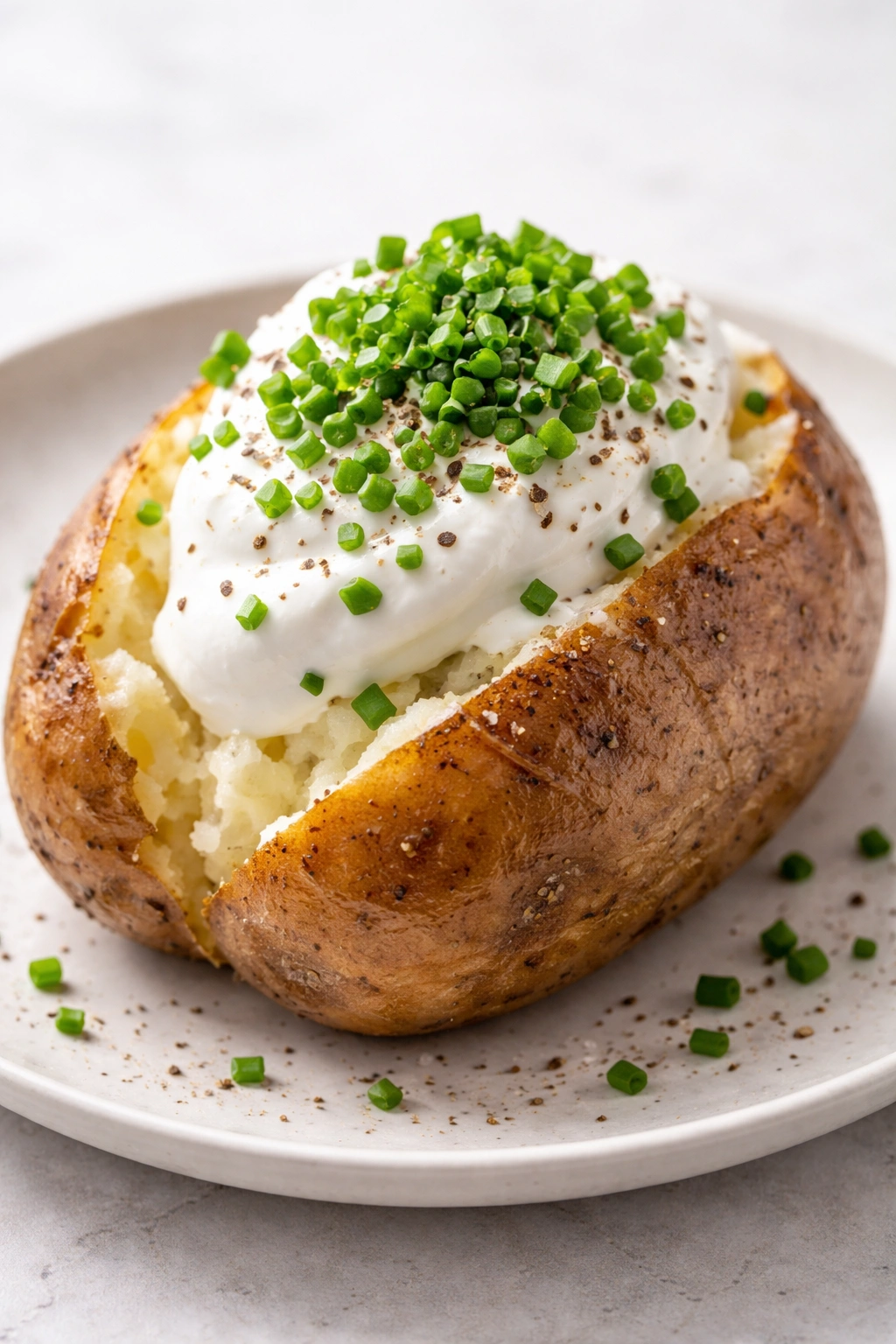
Sometimes the most sophisticated version is the simplest: a study in pure, clear flavors with zero distraction. This minimalist approach celebrates the potato itself and relies on exceptional ingredient quality rather than complexity.
Use full-fat sour cream (not non-fat), real butter (not margarine), fresh chives harvested or purchased just before you cook (dried chives are wrong here—they’re flavorless), and coarse sea salt along with freshly cracked black pepper. This version isn’t about bacon or cheese, though you can include them if you want to adjust the sophistication level.
Fluff the potato with the butter-sour cream mixture. Top with several tablespoons of additional sour cream, a generous scattering of fresh chives (these should be the dominant flavor after the potato itself), and visible cracks of black pepper. Some people add a tiny bit of shredded Parmigiano-Reggiano, but even that can feel like gilding the lily. The beauty is in the restraint and the assumption that a perfectly baked russet potato with quality toppings needs nothing else.
This version appeals to people who taste each component of what they’re eating rather than eating for the sensory overload. A restaurant with refined taste might serve this version as their loaded baked potato, because it demonstrates complete confidence in the potato and the supporting ingredients.
Breakfast-Style Hash & Egg Loaded Potatoes
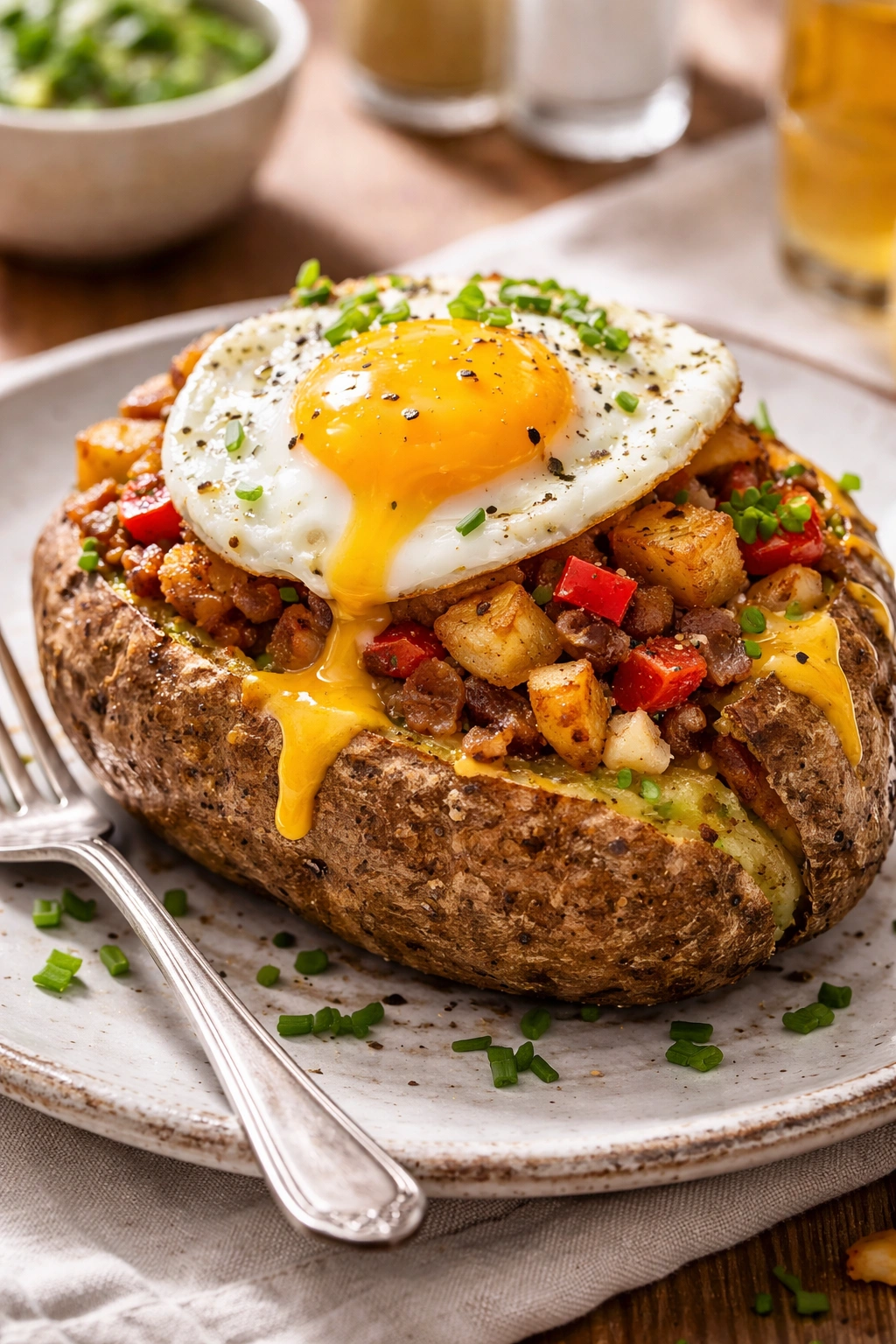
Baked potatoes make an underrated breakfast or brunch vehicle, and there’s no reason to save them for lunch and dinner. This version builds a complete breakfast experience: diced potatoes (from another baked potato or from scratch), sautéed with peppers and onions, then topped with a fried egg and cheese that creates a runny yolk that becomes sauce.
To build this, you need a baked potato (prepared by the standard method) and a small side of breakfast hash. This hash can be as simple as diced bell peppers and onions sautéed in butter until soft, or you can add diced ham, breakfast sausage crumbles, or additional diced potatoes that you’ve pre-cooked. Season the hash well with salt and pepper as it cooks.
Prepare a fried egg per person—a sunny-side-up egg where the yolk is still runny is ideal, since that yolk becomes a sauce for the whole potato. You want the white fully set so it’s not slimy, but the yolk liquid enough to flow when you break it.
Fluff the baked potato gently with a fork and a small amount of butter or sour cream. Top with the warm breakfast hash, then carefully place the fried egg on top. A sprinkle of shredded cheddar, a scatter of fresh chives, salt, and pepper. The moment you cut into that egg and the yolk flows over the potato and hash, you have an incredibly satisfying breakfast that tastes fancy but is actually quite straightforward.
This version is particularly good if you’re cooking for guests at brunch—it feels special and restaurant-quality, but it’s not technically challenging. You’re just assembling components that you’ve cooked separately.
Vegetarian & Lighter Loaded Potato Options
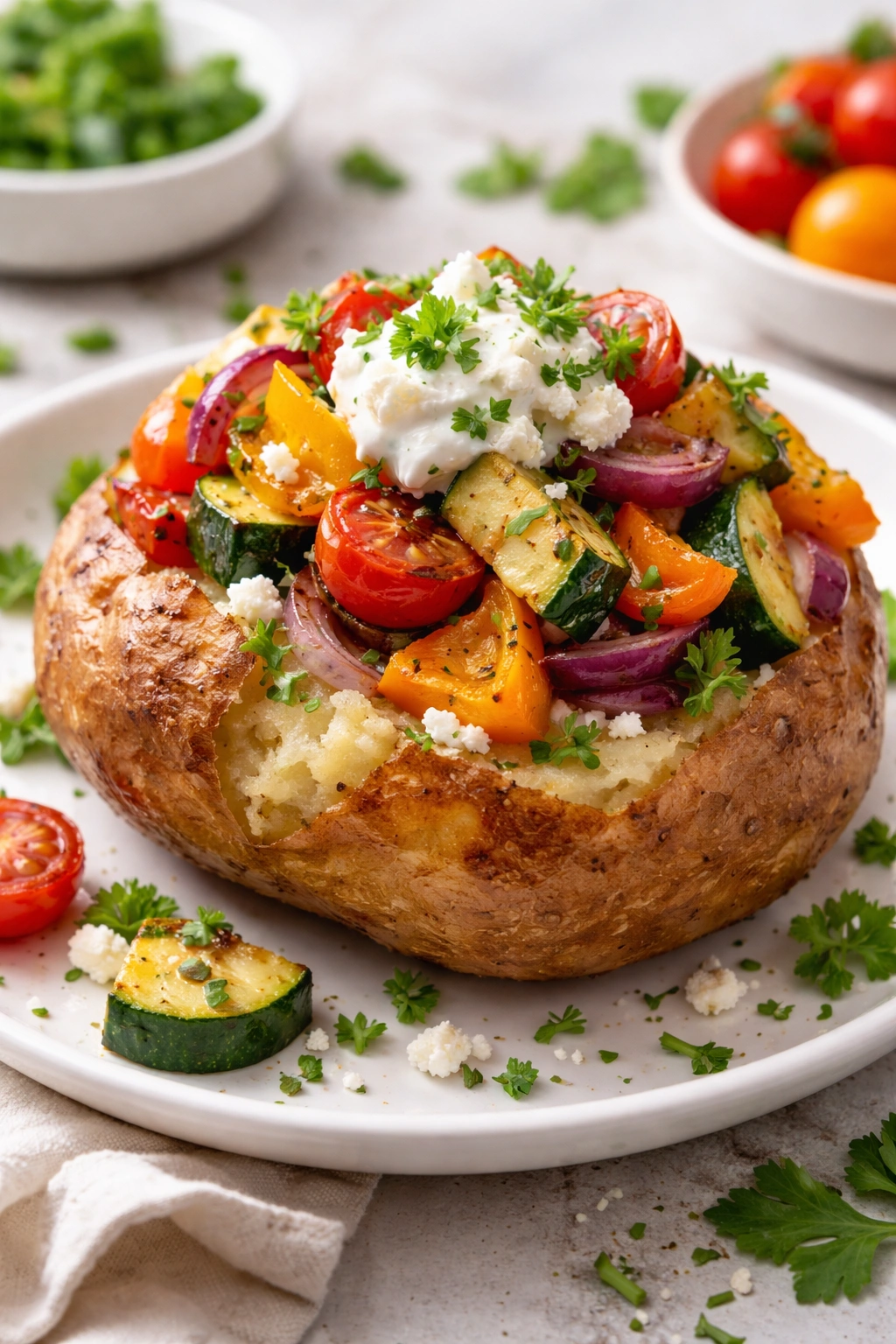
Not every loaded potato needs to be centered around meat, and light versions don’t have to feel like deprivation. These variations work beautifully for vegetarians and for anyone looking for something that feels nourishing rather than heavy.
Roasted Vegetable & Herb Version: Toss diced bell peppers, zucchini, cherry tomatoes, and red onions with olive oil, salt, and pepper, then roast at 425°F for 20-25 minutes until lightly caramelized. Fluff your baked potato with a combination of butter and Greek yogurt (lighter than sour cream but still creamy). Top with the roasted vegetables, a small amount of shredded Gruyère or fontina, fresh basil if it’s summer or fresh parsley if it’s any other season, and a squeeze of lemon juice. This feels bright and nourishing.
Broccoli Cheddar Version: Steam or roast broccoli florets with olive oil, salt, and pepper until tender. Fluff the potato with butter and a light sour cream mixture. Top generously with the broccoli, sharp cheddar cheese (which pairs beautifully with broccoli), and a small amount of crispy breadcrumbs for texture. Some people add a tiny bit of garlic powder here, and it works. This version is comfort food that doesn’t feel guilty.
Caprese-Inspired Version: This works particularly well during peak tomato season. Fluff the potato with a light mixture of mascarpone and olive oil rather than sour cream (the mascarpone adds richness without heaviness). Top with fresh mozzarella torn into pieces, ripe tomato slices, fresh basil, a light drizzle of balsamic vinegar, and a pinch of sea salt. This tastes like tomato season in potato form and is something you’d honestly crave.
Loaded Potato with Hummus & Feta: Fluff the potato and fold in a few tablespoons of hummus along with a small amount of olive oil—this creates a completely different (and delicious) creamy base. Top with diced cucumber, diced red onion, crumbled feta, fresh parsley, and a squeeze of lemon. This leans more Mediterranean and works as either a lunch or a light dinner.
Each of these proves that a loaded potato doesn’t need meat to be satisfying or interesting. The focus is on flavor development and textural contrast, which vegetables absolutely provide.
Common Mistakes That Ruin Loaded Potatoes
Most loaded potato disappointments trace back to a handful of avoidable errors. Understanding what goes wrong helps you avoid it entirely.
Underbaking the Potato: This is the single most common mistake. A potato that hasn’t fully cooked all the way through will have a dense, mealy, undercooked center that no amount of butter and sour cream can fix. The knife-through-butter test is reliable—if there’s any resistance, it needs more time. Many people bake at too high a temperature thinking they’re saving time, then end up with a burnt exterior and an underdone interior. Medium heat (400°F) and appropriate timing (45 minutes) works reliably.
Undersalting the Potato Itself: People salt the exterior (correctly) and then salt the toppings (correctly), but they forget to season the actual fluffed potato flesh. The potato interior should taste good on its own—if you taste the plain potato and it’s bland, no amount of bacon and cheese will fix it. The salt should be noticeable in every bite.
Adding Too Many Toppings: There’s a threshold beyond which you’re no longer eating a loaded potato—you’re eating a potato under a pile of stuff. The toppings should enhance the potato, not bury it. You should be able to taste the potato in every bite. Restraint is actually more delicious than excess.
Using Cheese That Won’t Melt: Avoid hard, aged cheeses that don’t melt, or super cheap pre-shredded cheese that has anti-caking agents preventing proper melting. Sharp cheddar, Gruyère, fontina, and Monterey Jack all melt beautifully. The melted cheese should pool slightly into the potato, not sit in distinct pieces on top.
Foil-Wrapping the Potatoes During Baking: Foil traps steam, which turns the skin soft and pale instead of crispy and golden. Your potatoes should sit directly on the oven rack uncovered. If you’re worried about drips, put a baking sheet on the rack below—but keep the potatoes themselves uncovered.
Serving Them Cold or Room Temperature: A loaded potato is a hot food. If it arrives lukewarm, the cheese is partially congealed, the sour cream isn’t stirring into the potato properly, and the whole experience is diminished. These should go from oven to plate to mouth while they’re actively hot.
Using Stale or Poor-Quality Sour Cream: Sour cream is a major flavor component, so the quality matters. Old sour cream tastes off, and non-fat or low-fat versions are thin and unsatisfying. Reach for the full-fat version from a reputable brand.
Storage, Make-Ahead, and Reheating Guide
Loaded baked potatoes are best eaten immediately, but they store reasonably well and reheat better than most people expect.
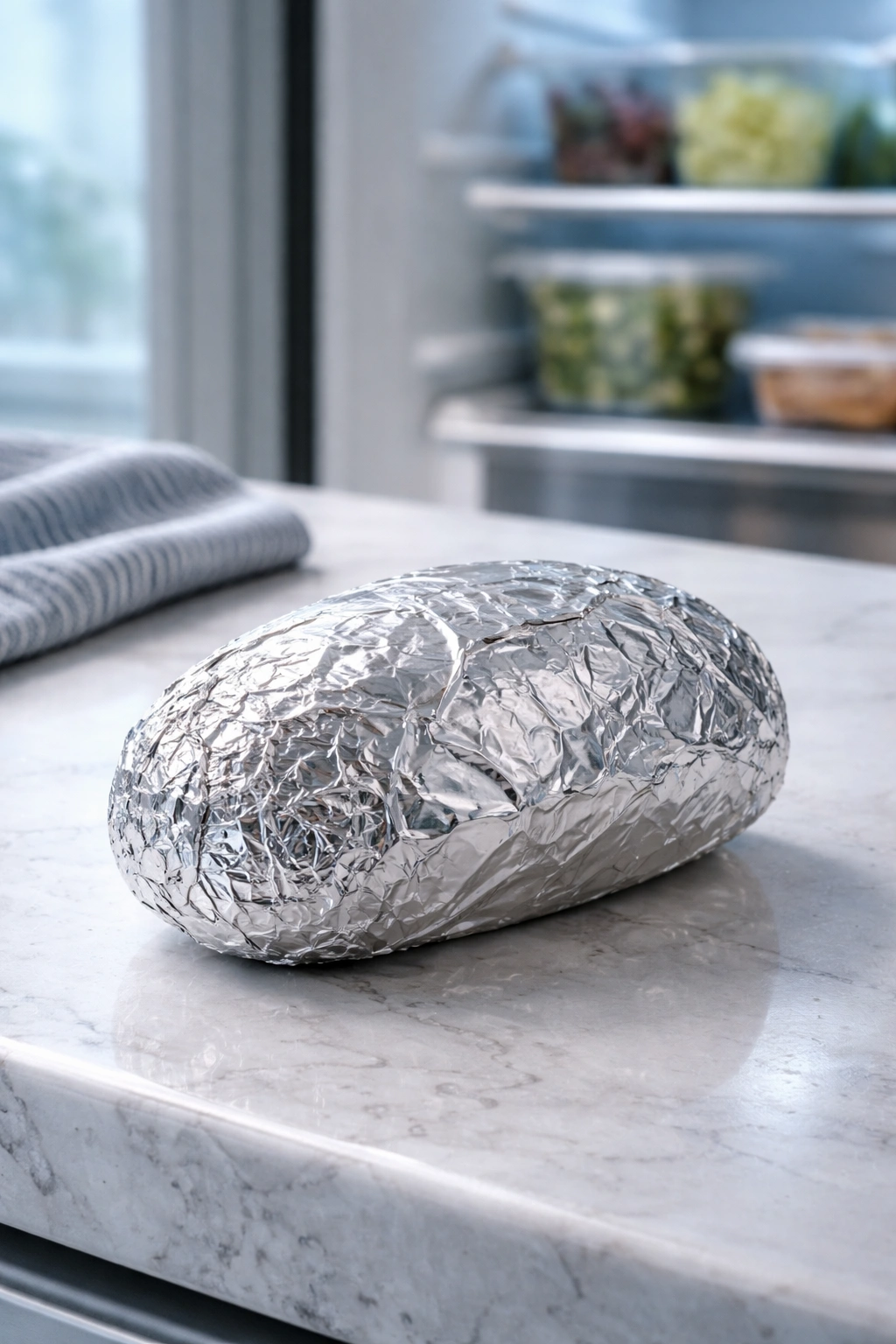
Making Ahead: You can bake the potatoes several hours before serving and reheat them, which is useful for entertaining. Bake and cool them completely, then wrap each in foil and refrigerate for up to 1 day. To reheat, wrap in foil and place in a 350°F oven for 15-20 minutes until heated through. The skin will soften slightly during storage and reheating—this is normal. You can also prepare your topping components (cooked bacon, cheese grated, sour cream mixture made) several hours ahead, then assemble the potatoes just before serving.
Storing Leftovers: If you have leftover assembled loaded potatoes, wrap them individually in foil and refrigerate for up to 2 days. Don’t leave them at room temperature for more than 2 hours (1 hour if your kitchen is warm). These do develop an odd texture if left too long—the potato flesh gets slightly gluey and the cheese congeals—so eat them sooner rather than later.
Freezing: Individual baked potatoes (unloaded) freeze acceptably well for up to 3 months. Wrap them tightly in foil or plastic wrap, then place in a freezer bag. Thaw overnight in the refrigerator, then reheat in a 350°F oven for 20-25 minutes. Don’t freeze assembled loaded potatoes—the texture of the sour cream and toppings doesn’t survive the freeze-thaw cycle gracefully.
Reheating: The best method is an oven. Wrap the loaded potato loosely in foil and heat at 350°F for 15-20 minutes until warmed through. This keeps the skin from getting too hard and allows the toppings to warm gradually. You can microwave a loaded potato in 2-3 minutes (loosely covered so it doesn’t dry out), but the texture won’t be quite as good.
Next-Day Transformation: If you have leftover loaded potato components, don’t try to reassemble it as a loaded potato—transform it. Scoop out the potato flesh and mix it with the leftover toppings, then use it as a filling for an omelet, a topping for salad, or a mix-in for hash. The texture is better when the components are integrated rather than layered.
Serving Ideas and Perfect Pairings
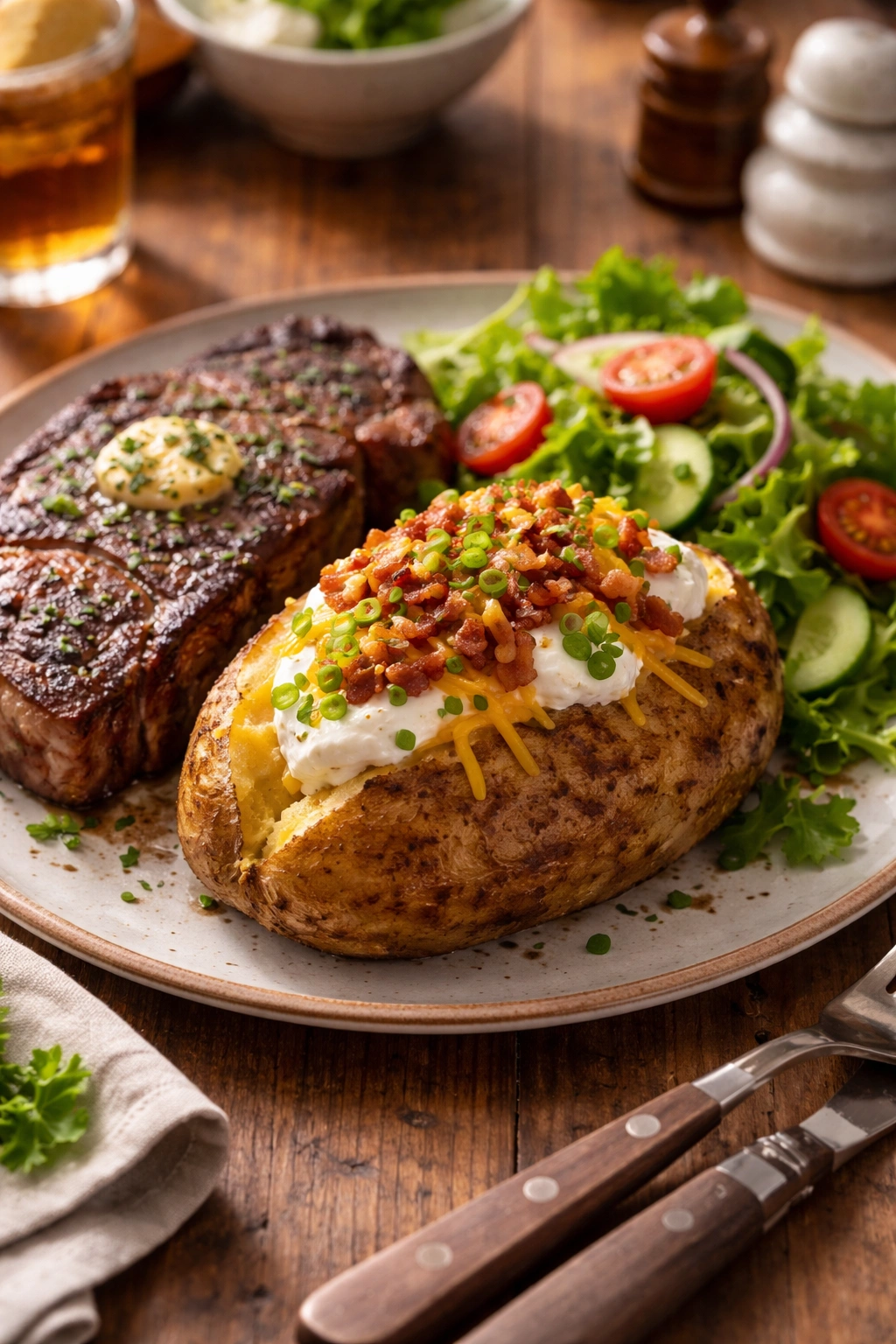
A loaded baked potato is substantial enough to be a complete meal on its own, but pairing it with something else creates a more interesting dinner.
As Part of a Steak Dinner: This is the classic pairing—a perfectly baked loaded potato alongside a grilled steak, with simple grilled vegetables and a fresh salad. The potato complements beef without competing with it.
With Grilled Chicken: A leaner protein pairs beautifully with a loaded potato. Serve it alongside a simple grilled chicken breast or thighs, and let the potato be the indulgent side. Add a crisp green salad for balance.
With Roasted Fish: This works particularly well with the lighter, vegetable-forward potato versions. A roasted white fish with a lemon beurre blanc, a loaded potato topped with roasted vegetables, and steamed broccoli creates a balanced, elegant plate.
For a Vegetarian Main: A loaded potato (especially one topped with roasted vegetables or a hearty legume-based mixture) is a legitimate main course, not a side. Serve it with a significant salad and crusty bread, and you have a complete, satisfying dinner.
At Casual Gatherings: Set up a loaded potato bar where each person customizes their own: put out a platter of hot baked potatoes, and let guests choose their toppings from small bowls of bacon, cheese, sour cream, chives, and anything else you’ve prepared. This works beautifully for casual dinners, game-day gatherings, or anywhere you’re feeding a crowd.
Beverage Pairings: A classic loaded potato pairs with cold beer, crisp white wine, or even iced tea. If you’ve gone fancy with the steakhouse version, pair it with a bolder red wine. Lighter vegetable-forward versions work with Sauvignon Blanc or even sparkling water with fresh lemon.
Sauce Pairings: While loaded potatoes are complete as-is, some people like a small side of gravy (especially over the vegetable versions) or a dollop of sour cream on the side (not instead of the topping, but in addition to it). Hot sauce works if you’ve built a version that can handle the heat.
Final Thoughts
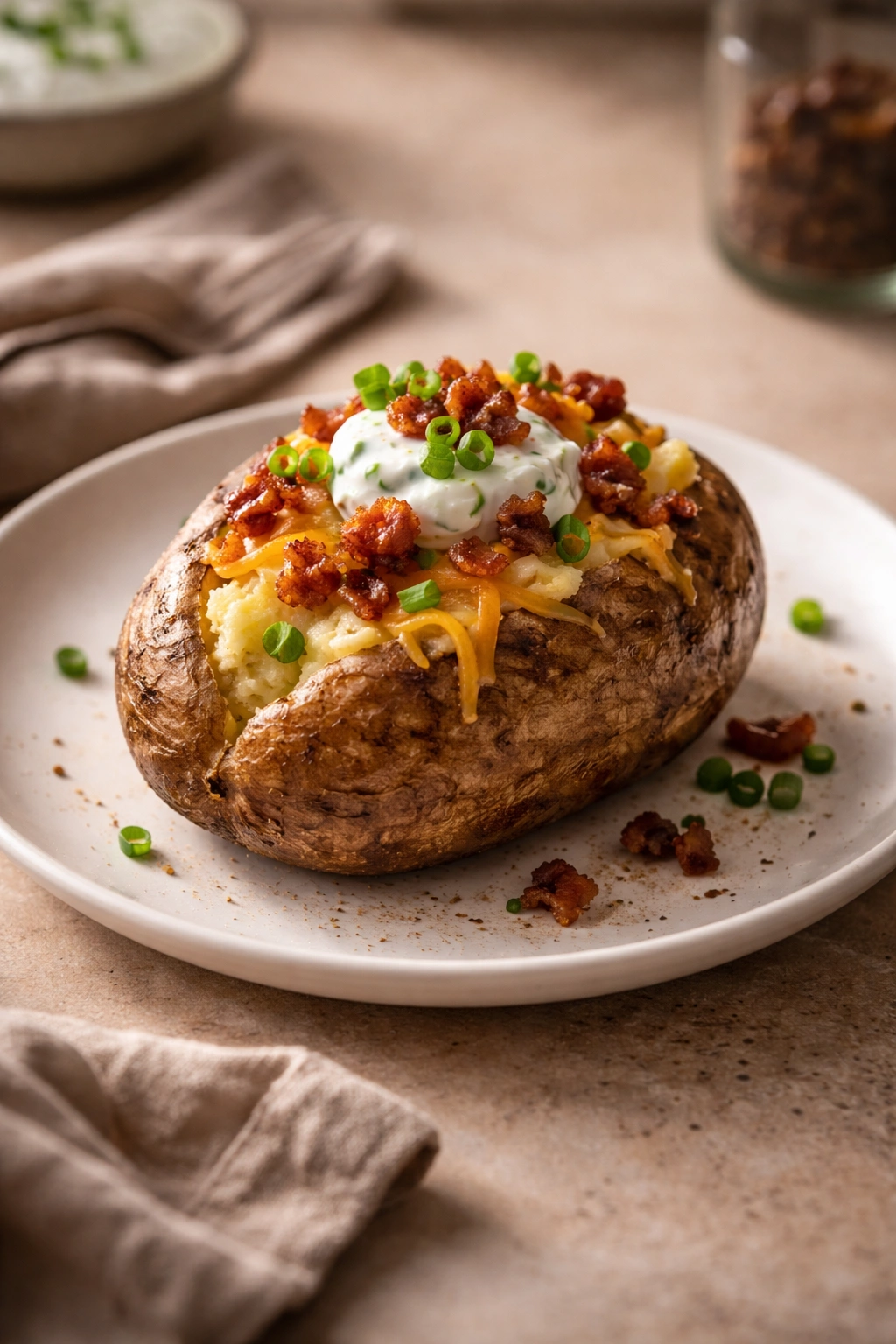
A loaded baked potato is proof that simplicity and indulgence aren’t mutually exclusive. It’s rustic enough for a weeknight, elegant enough for entertaining, and endlessly adaptable to whatever’s in your kitchen and whatever you’re craving on any given evening. The fundamentals are straightforward—a properly baked potato, seasoned thoughtfully, topped with quality ingredients in measured proportions—but those fundamentals matter far more than any complexity or difficulty level.
The real skill in making loaded baked potatoes isn’t technique; it’s understanding that the potato itself deserves respect and attention. It’s the foundation, not an afterthought. When you approach it that way—when you take the time to salt it properly, bake it fully, and treat the toppings as enhancements rather than disguises—you’ll end up with something genuinely delicious that tastes like you spent far more effort than you actually did. That’s exactly the kind of cooking that makes people happy.
