



Macaroni salad has an almost magical power at potlucks — it disappears faster than the potato salad, gets devoured before the lasagna is even served, and somehow manages to taste good no matter who brings it. But there’s a reason some versions are genuinely crave-worthy while others feel like mayo-heavy regret. The difference isn’t complicated, and it’s not about following some overly fussy French technique. It’s about understanding a few simple principles that transform ordinary elbow pasta into something creamy, flavorful, and actually interesting enough that people come back for seconds (and thirds).
This version exists somewhere in the sweet spot between homemade care and weeknight simplicity. It’s the kind of macaroni salad that makes people ask “whose recipe is this?” because they’ve never had one quite this good from a store-bought container or someone’s vague memory of what their grandmother used to make. It travels well, actually improves when it sits overnight in the fridge, and tastes equally good at room temperature or cold straight from the cooler — which is precisely what you need when you’re schlepping food to someone else’s backyard.
What makes this version special isn’t a secret ingredient or some technique that requires special equipment. It’s the combination of using the right kind of pasta shape (which matters more than you’d think), building flavor through the dressing rather than relying on mayo alone, and understanding how to keep everything balanced so it doesn’t split into a pool of oil and separated mayo within a few hours. You’ll also learn which variations actually improve the salad without overcomplicating it, and exactly how far ahead you can prepare everything without ending up with a watery mess.
Why Macaroni Salad Is the Potluck MVP
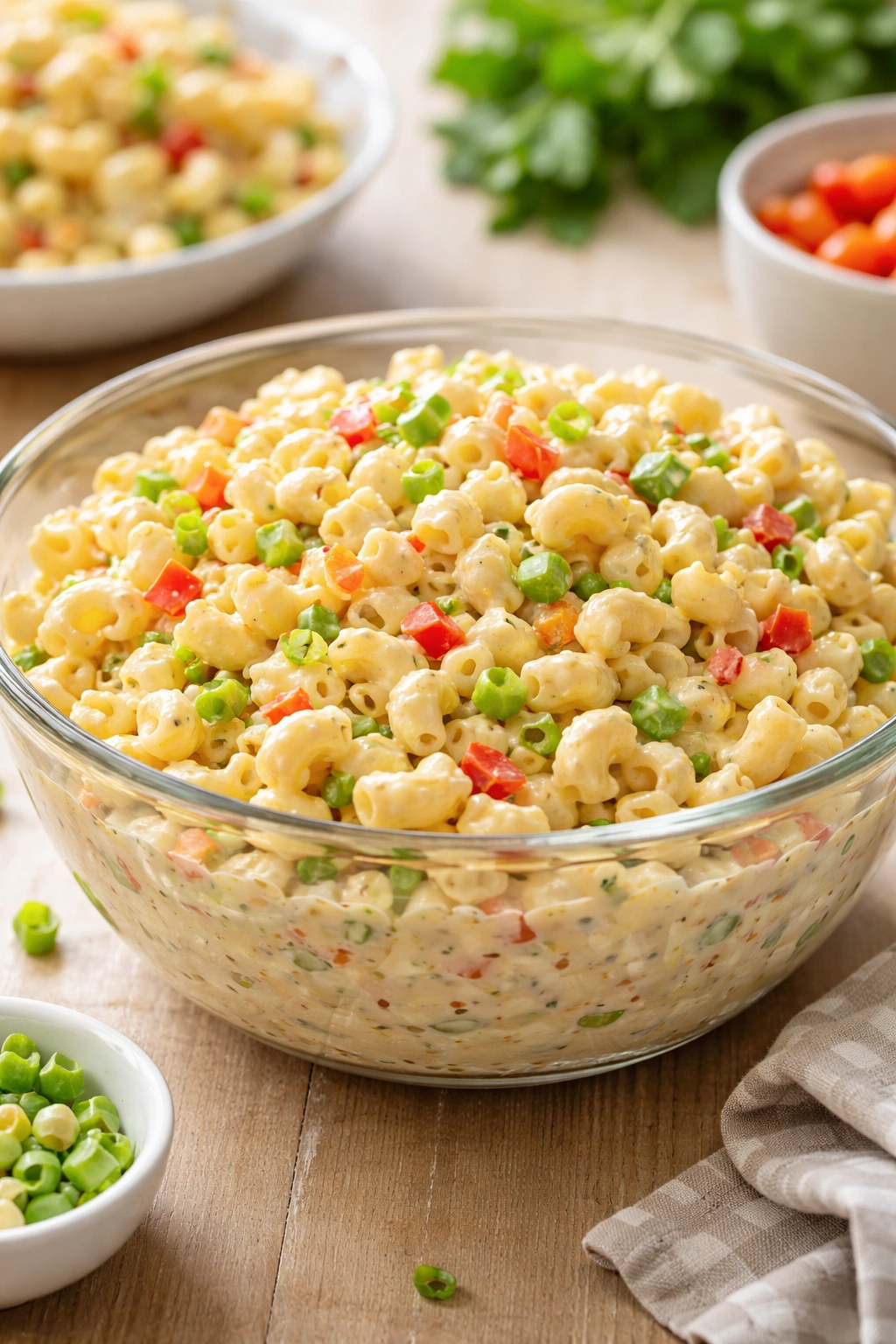
Macaroni salad holds a special place in American potluck culture, and it’s worth understanding why it’s so universally reliable. Unlike something delicate that needs careful transportation and last-minute assembly, macaroni salad actually tastes better when it’s had some time to sit. The pasta absorbs the dressing, flavors meld together, and what might have seemed slightly loose when you packed it becomes perfectly cohesive by the time you arrive at the destination.
It also bridges an invisible gap in most potluck spreads. You’ve got hot dishes, vegetable sides, and proteins — but macaroni salad fills the role of being substantial enough to be a side dish, creamy enough to feel indulgent, and light enough that people can eat it alongside heavier items without feeling overstuffed. It genuinely works with barbecue, fried chicken, grilled burgers, or pulled pork. It pairs equally well with seafood-based cookouts or vegetarian spreads.
There’s also something psychologically satisfying about a bowl of macaroni salad. It evokes nostalgia, comfort, and abundance. It says “this person put thought into this” without screaming “I stressed for hours.” For the potluck host, it’s essentially crowd-pleasing insurance — one bowl of good macaroni salad is going to outsell three elaborate sides that require explanations.
The Secret to Creamy, Not-Overly-Mayonnaise-y Flavor
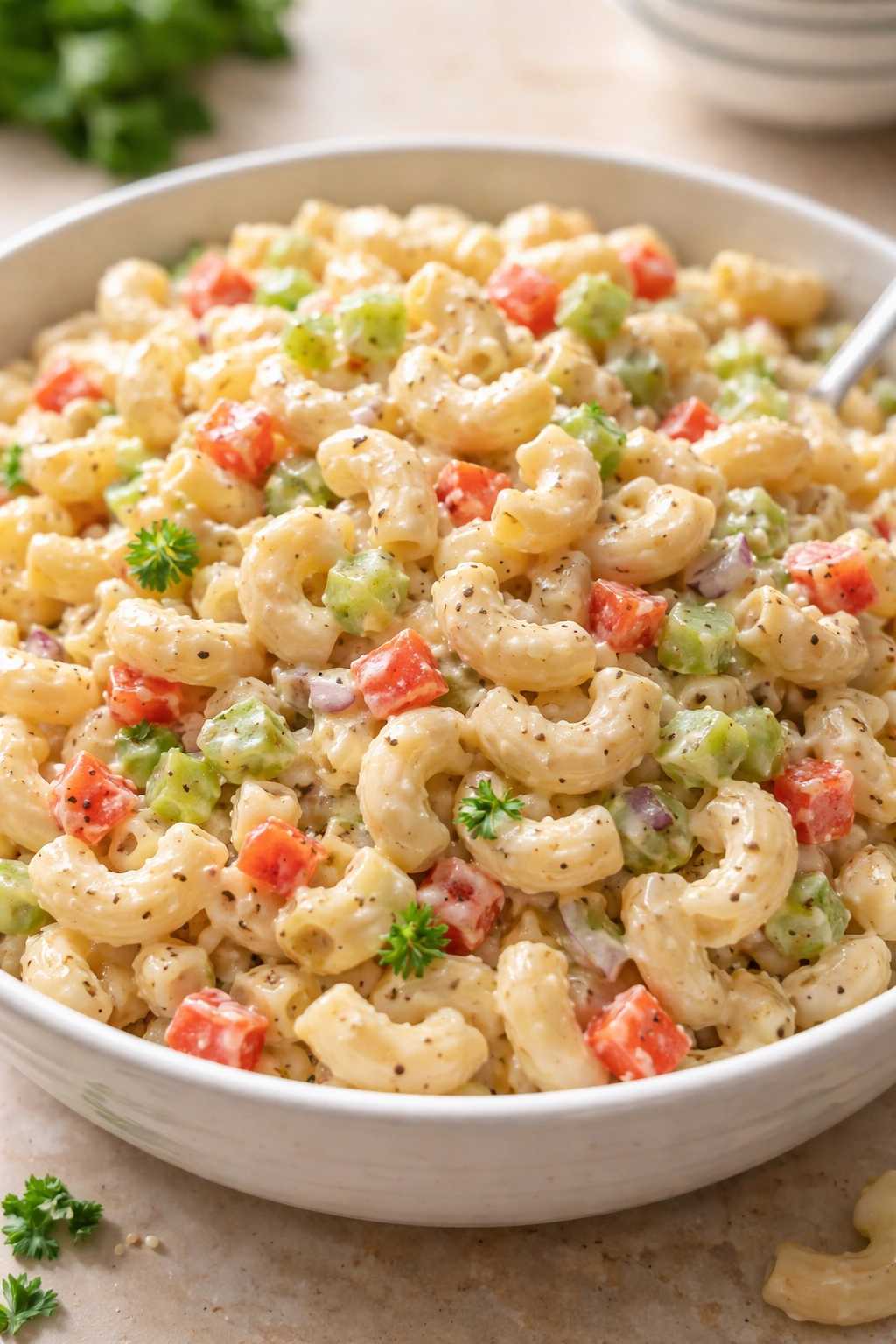
The biggest complaint about macaroni salad is that it tastes like straight mayo with some pasta mixed in, or worse, like sad, bland, watery mush three hours after it arrived at the party. Both of these problems stem from the same root issue: relying entirely on mayonnaise for flavor and moisture.
This version uses mayo as a foundation, but it builds actual flavor on top of that through a combination of other ingredients that work together. You’re not just adding random vegetables and calling it a day — you’re adding things that serve a purpose. Some add crunch, some add acid to brighten the mayo, some add savory depth, and together they create a dressing that’s coherent and interesting rather than one-note creamy.
The other critical secret is understanding the ratio between pasta and dressing. Too little dressing and the salad feels dry. Too much and you get the separated, oily catastrophe that no one wants. This recipe uses a measured approach: enough dressing that every bite of pasta is coated, but not so much that there’s a pool of liquid sitting at the bottom of the bowl after it’s been sitting for a few hours.
Choosing Your Pasta and Supporting Ingredients
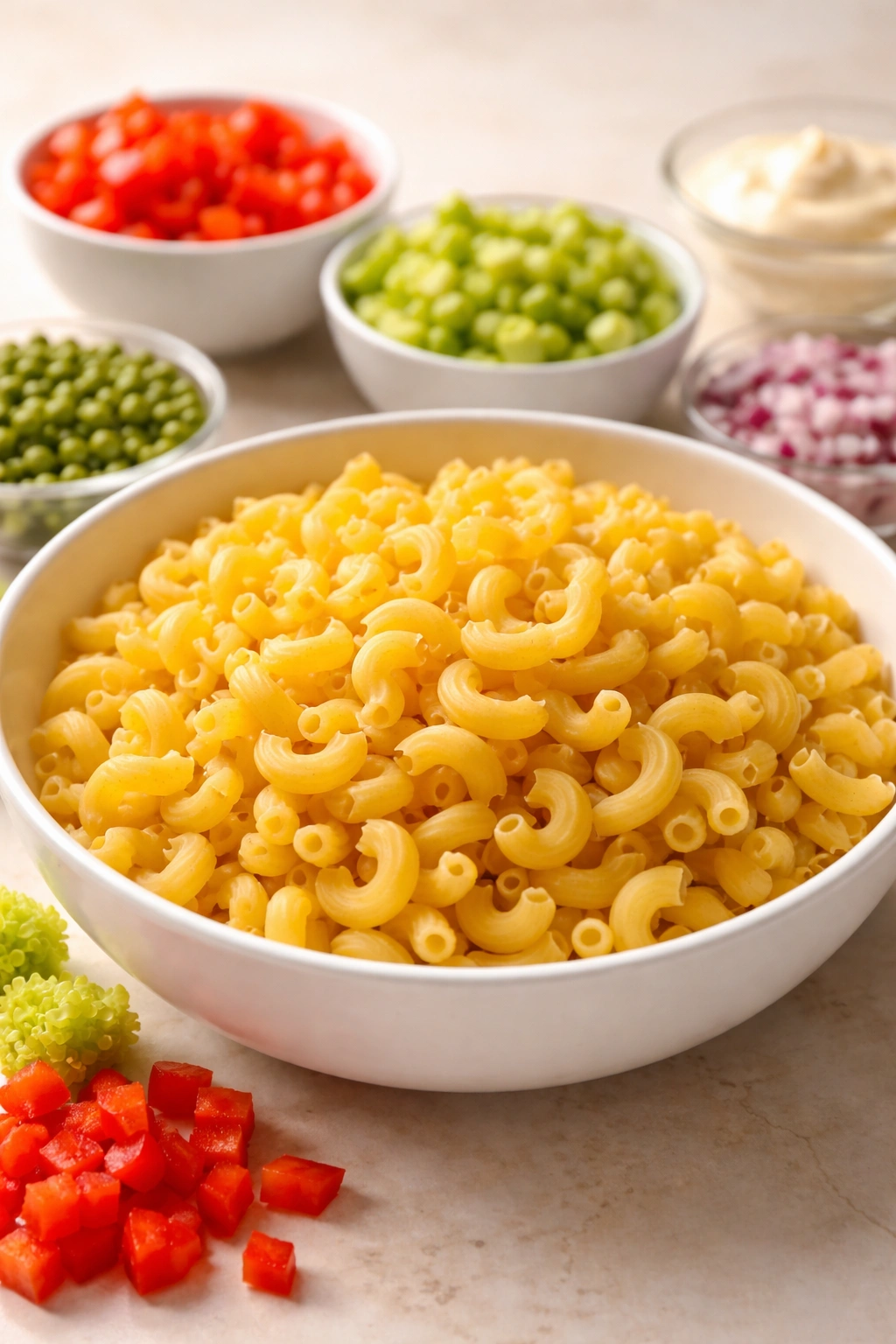
Pasta shape matters more than most home cooks realize. Elbow pasta is the classic choice for a reason — it’s shaped like a curved tube with a hollow center, which means the dressing actually gets inside the pasta, not just coating the outside. This gives you better flavor distribution and better texture.
Avoid using long pasta like linguine or spaghetti (it doesn’t hold the dressing well and feels wrong texturally), and think twice about tiny pasta shapes like orzo unless you specifically want something that feels more like a grain salad than a traditional macaroni salad. The standard elbow is genuinely the best choice. Use the short, curved ones, not the large jumbo elbows. Medium-sized elbow pasta cooks quickly, holds its shape when you toss the dressed salad, and creates the right mouthfeel.
When it comes to other ingredients, quality matters but you don’t need luxury items. Good mayo is important since it’s a primary ingredient, but you don’t need artisanal small-batch mayo — regular grocery store mayo works perfectly fine. Fresh vegetables are essential, though — not because they’re precious or expensive, but because they make a tangible difference in taste and texture. A crisp red onion from the farmers market will taste noticeably different (and better) than a sad onion that’s been sitting in your fridge for two weeks. Celery should be genuinely fresh and snappy. Bell peppers should have a natural waxy sheen, not a wrinkled tired look.
Yield: Serves 10 to 12 as a side dish | Makes about 8 cups
Prep Time: 25 minutes (includes chopping and mixing)
Cook Time: 10 minutes (pasta cooking only)
Total Time: 35 minutes active + 1 hour chilling (or make ahead up to 2 days before)
Difficulty: Beginner — no special equipment needed, straightforward chopping and mixing, very forgiving recipe
Ingredients for the Macaroni Salad
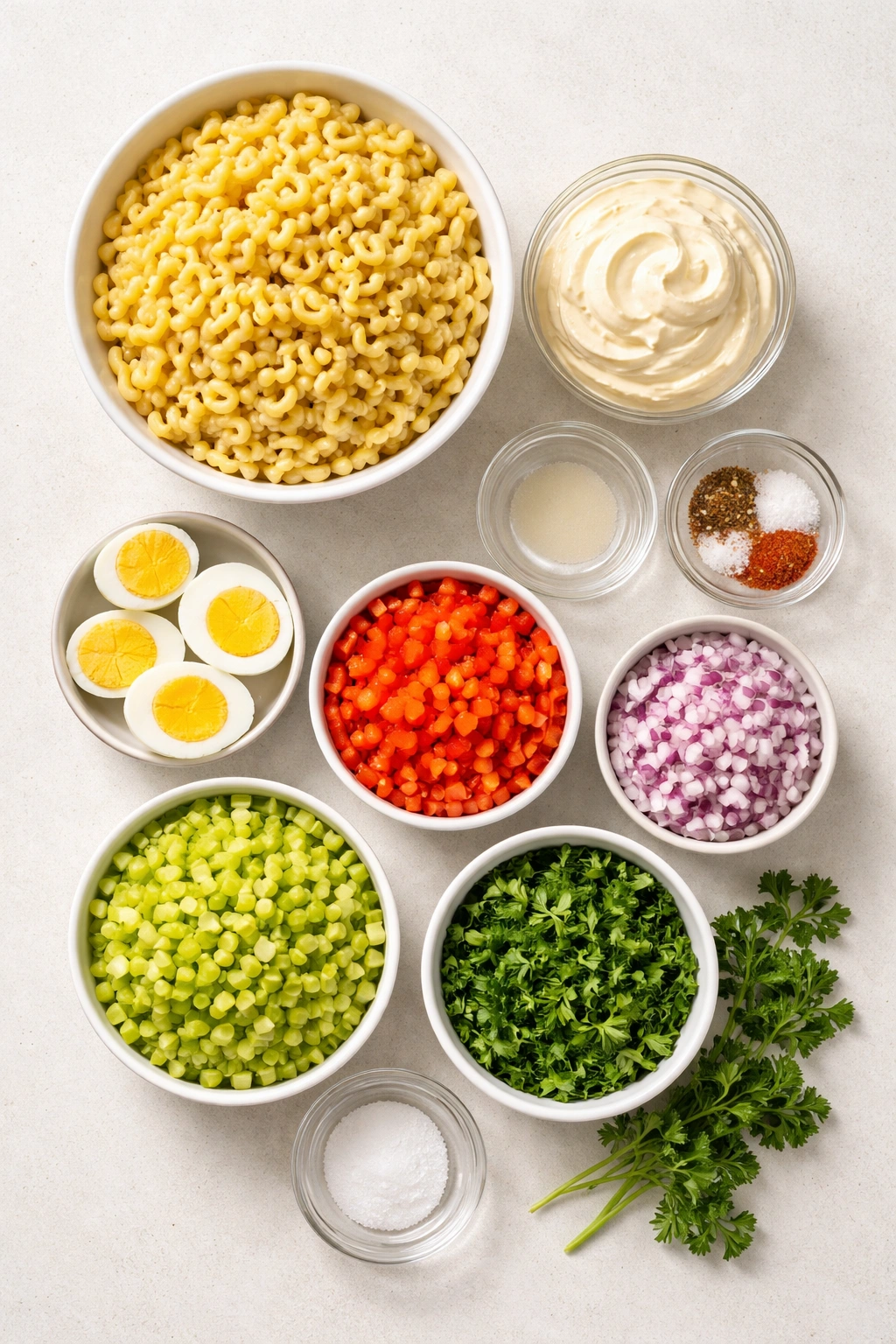
For the Salad:
- 1 pound (about 4 cups uncooked) elbow pasta
- 2 cups mayonnaise (use standard grocery-store mayo, not oil-heavy brand variations)
- 3 tablespoons apple cider vinegar or white vinegar (this brightness is non-negotiable)
- 2 tablespoons granulated sugar
- 1½ teaspoons fine sea salt (adjust to taste — you may want slightly more depending on your mayo brand)
- ½ teaspoon freshly ground black pepper
- ½ teaspoon garlic powder
- ¼ teaspoon onion powder
- 1 large red bell pepper, seeded and diced into ¼-inch pieces (about 1½ cups)
- 1 large yellow or orange bell pepper, seeded and diced into ¼-inch pieces (about 1½ cups)
- 4 stalks celery, diced into ¼-inch pieces, removing the stringy parts (about 1½ cups)
- ½ red onion, finely diced (about ¾ cup) — use red onion specifically for color and mild sweetness
- ½ cup fresh parsley, finely chopped (or ¼ cup if using flat-leaf, as it’s more densely flavored than curly parsley)
- 3 hard-boiled eggs, roughly chopped (optional but recommended — they add richness)
Optional Mix-Ins to Consider:
- 1 cup fresh or frozen peas, thawed (adds sweetness and texture)
- ½ cup diced sharp cheddar cheese (adds savory depth)
- ¼ cup crispy bacon bits, added just before serving (prevents sogginess)
- 2 tablespoons fresh dill, finely chopped (adds brightness that works especially well with seafood main courses)
Instructions for Perfect Macaroni Salad
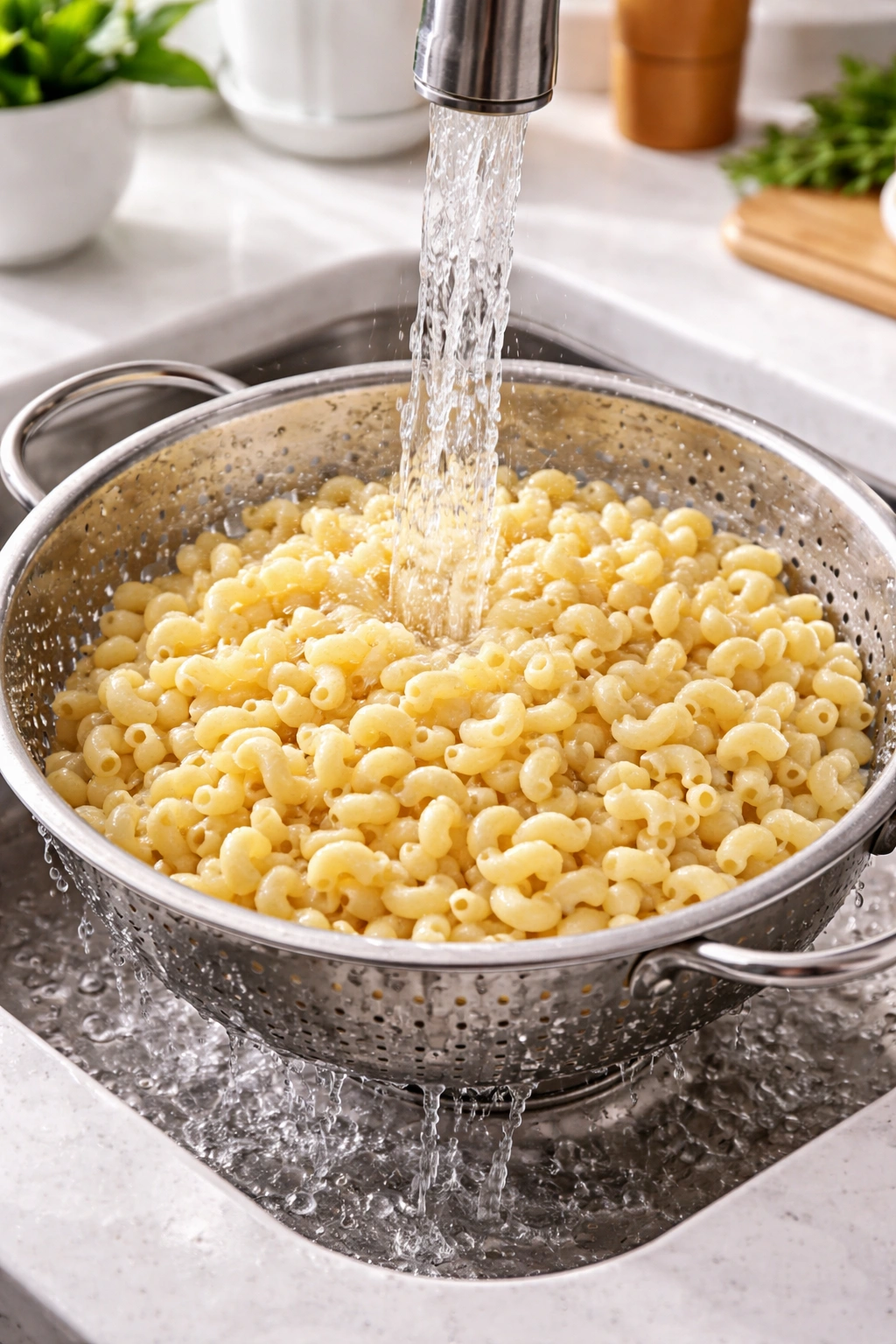
Cook the Pasta:
-
Bring a large pot of salted water to a rolling boil — the water should taste noticeably salty, like seawater. This is where you season the pasta itself, not just the dressing.
-
Add the elbow pasta and stir immediately with a wooden spoon to prevent any pieces from sticking together. Cook for exactly one minute less than the package directions indicate. If the package says 8 minutes, cook for 7. If it says 10 minutes, cook for 9. This is critical — you want the pasta to be just barely underdone at this point because it will continue to soften as it cools and as the dressing sits on it.
-
Drain the pasta in a colander and rinse it with cold running water while stirring gently with your hand. This stops the cooking process immediately and prevents the pasta from becoming a mushy pile. Continue rinsing until the pasta is cooled to room temperature and no longer feels hot to the touch. Do not skip this step or use the hot pasta directly — hot pasta will begin to break down the structure of the mayo when you dress it.
-
Spread the cooled pasta on a clean kitchen towel or paper towels for 2 minutes to remove any excess moisture. Completely dry pasta allows the dressing to coat it properly instead of sliding off wet pasta.
Make the Dressing:
-
In a large mixing bowl, combine the mayo, vinegar, sugar, salt, pepper, garlic powder, and onion powder. Whisk until the mixture is completely smooth and the sugar has dissolved. Taste it directly — this is your dressing tasting point. It should taste slightly too vinegary and salty right now, which is correct. The pasta will mellow these flavors as it absorbs the dressing.
-
If the dressing tastes too acidic, add another tablespoon of mayo to balance it. If it tastes flat, add an extra ½ teaspoon of vinegar. Make these adjustments now, before you add the pasta and vegetables, so you can taste precisely what you’re creating.
Assemble the Salad:
-
Add the cooled pasta to the dressing and toss gently but thoroughly with a wooden spoon, making sure every piece of pasta gets coated. This takes about 2 minutes of steady, gentle tossing — you’re trying to coat everything evenly without breaking up the pasta.
-
Add the diced bell peppers, celery, red onion, parsley, and hard-boiled eggs (if using). Toss again gently until everything is evenly distributed and coated with dressing.
Advertisements -
Taste the salad now — remember that it will taste slightly more seasoned after it’s been in the fridge for a few hours as the flavors settle. Adjust salt and pepper if needed, adding just ¼ teaspoon at a time.
Chill Before Serving:
-
Transfer the macaroni salad to a serving bowl or container and cover it with plastic wrap or an airtight lid. Refrigerate for at least 1 hour before serving — the flavors will taste noticeably better when chilled, and the dressing will have time to fully coat every element.
-
Before transporting to a potluck, give the entire bowl a gentle stir with a spoon. If it looks a bit loose or separated, don’t panic — this is normal as condensation forms on the cold pasta. Toss it gently and it will come back together.
The Technique That Keeps It from Getting Watery
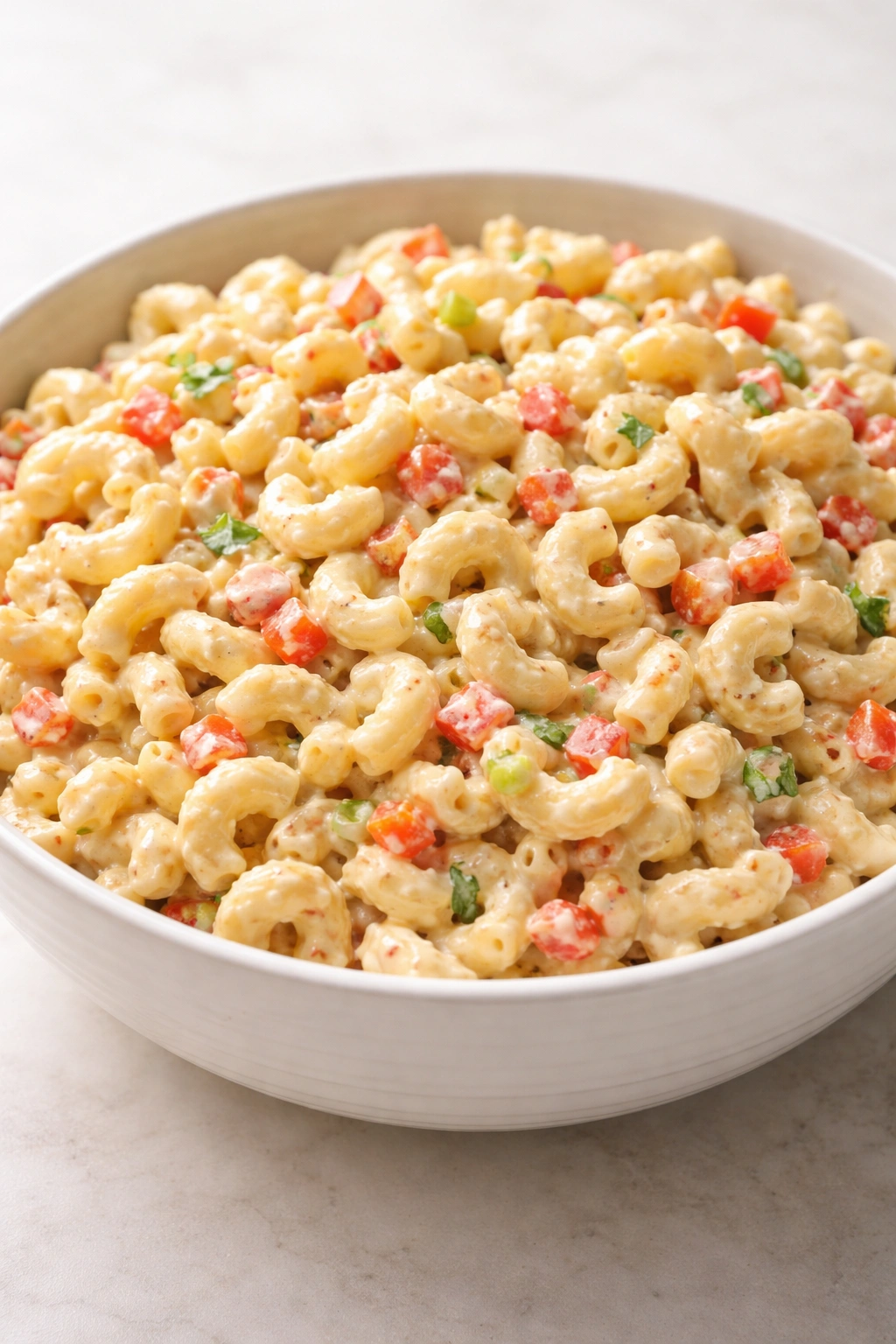
The biggest enemy of macaroni salad is the slow leaking of moisture over time, creating a pool of separated liquid at the bottom while the pasta becomes increasingly soggy. This happens for a few specific reasons, and understanding them means you can prevent them entirely.
The first is using hot pasta. When you add hot pasta to mayo-based dressing, the heat breaks down the emulsion of the mayonnaise. The oil separates from the other ingredients, and you end up with a greasy, split mess. This is why cooling the pasta completely is absolutely essential — it’s not a nice optional step, it’s the foundation of the entire technique.
The second is not rinsing the pasta. When you cook pasta, a starchy, cloudy layer forms on the outside as the pasta releases starches into the water. If you don’t rinse it away, that starch absorbs moisture from the dressing and slowly releases it back, creating that pool of liquid. Rinsing removes this problem.
The third is adding too much dressing relative to the amount of pasta. This recipe uses a specific ratio that creates a creamy salad without being dressing-heavy. The pasta should look well-coated but you shouldn’t see visible liquid pooling underneath when you look at the uncooked salad.
The fourth is adding vegetables that release a lot of liquid, like fresh tomatoes or cucumbers. If you want to include these, add them just before serving, not hours before, or dice them into very small pieces so they’re more stable. Similarly, if you’re adding anything crunchy like bacon or nuts, wait until just before serving to add them so they don’t soften from sitting in the moist environment.
Common Mistakes That Ruin Macaroni Salad
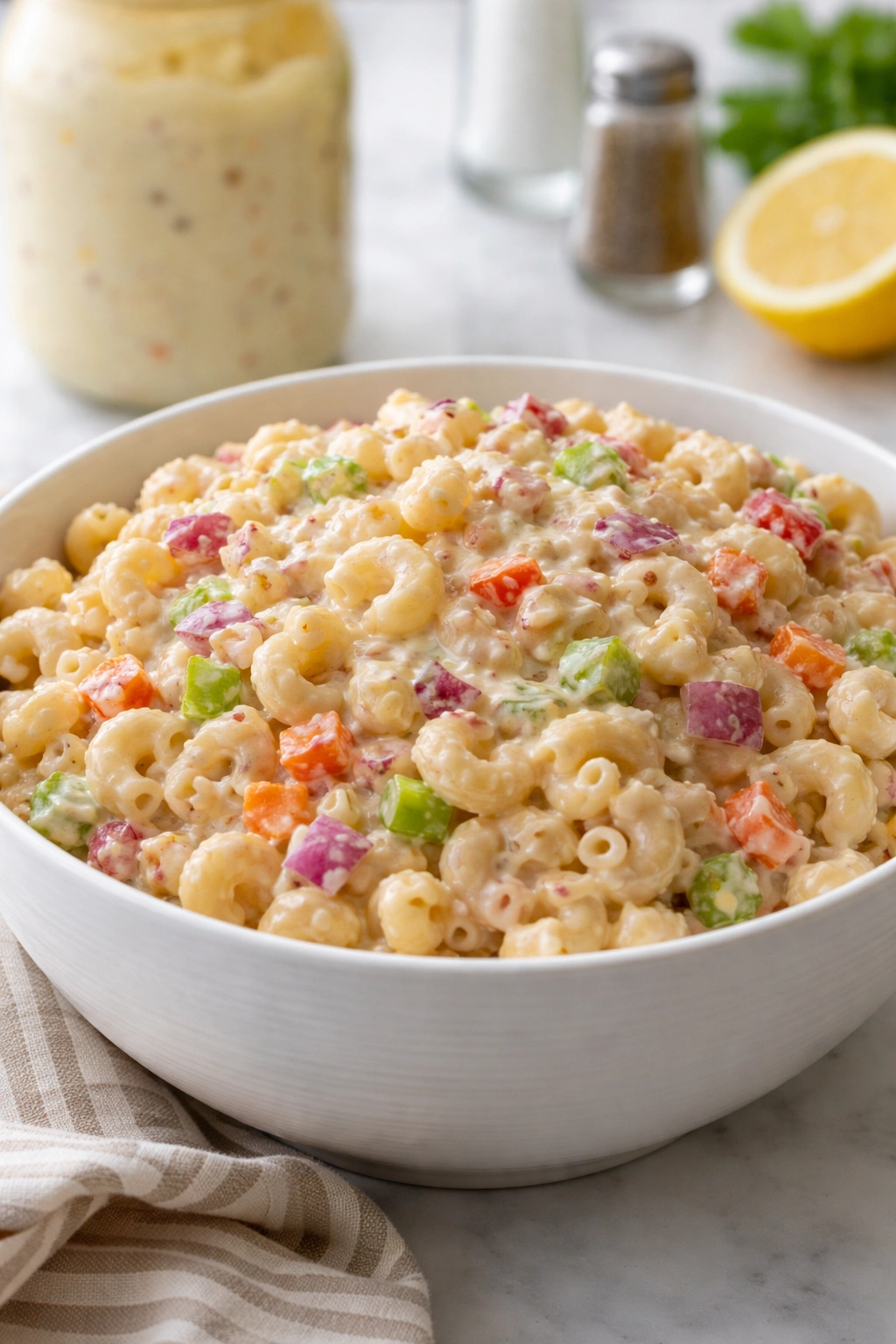
The most common error is underseasoning the dressing. Because mayo is fairly neutral and can mask flavors, people often don’t realize the dressing needs more seasoning than they’d think. The vinegar, salt, and sugar are what actually make this taste good, not the mayo. If your finished salad tastes blah, it’s almost always because you didn’t add enough of these three things — and more mayo isn’t the answer.
Using mayonnaise that’s already starting to separate or is old is another silent killer. Mayo has a long shelf life, but once you open a jar, quality degrades over time. If your mayo already looks slightly oily or separated in the jar, the finished salad will have the same problem. Fresh mayo makes a noticeably better salad.
Cutting vegetables into pieces that are too large is another issue. When chunks of bell pepper or celery are larger than about ¼ inch, they’re harder to eat and distribute unevenly through the salad. Smaller, more uniform pieces are easier to mix throughout and create a better bite-by-bite experience. Think of it as medium dice, not chunky cutting.
Adding the vegetables to the salad hours and hours before serving (anything more than 4-5 hours) can cause them to weep water into the dressing. If you’re making this far in advance, prepare the dressed pasta and keep the vegetables separate, then fold them in no more than a couple hours before serving.
Forget about adding ingredients like sun-dried tomatoes, olives, or hard cheeses to the main batch if you’re transporting this to a potluck. These salty, assertive ingredients can overpower the delicate balance, and they’re better added by individual people at serving time if they want them.
Flavor Variations to Make It Your Own
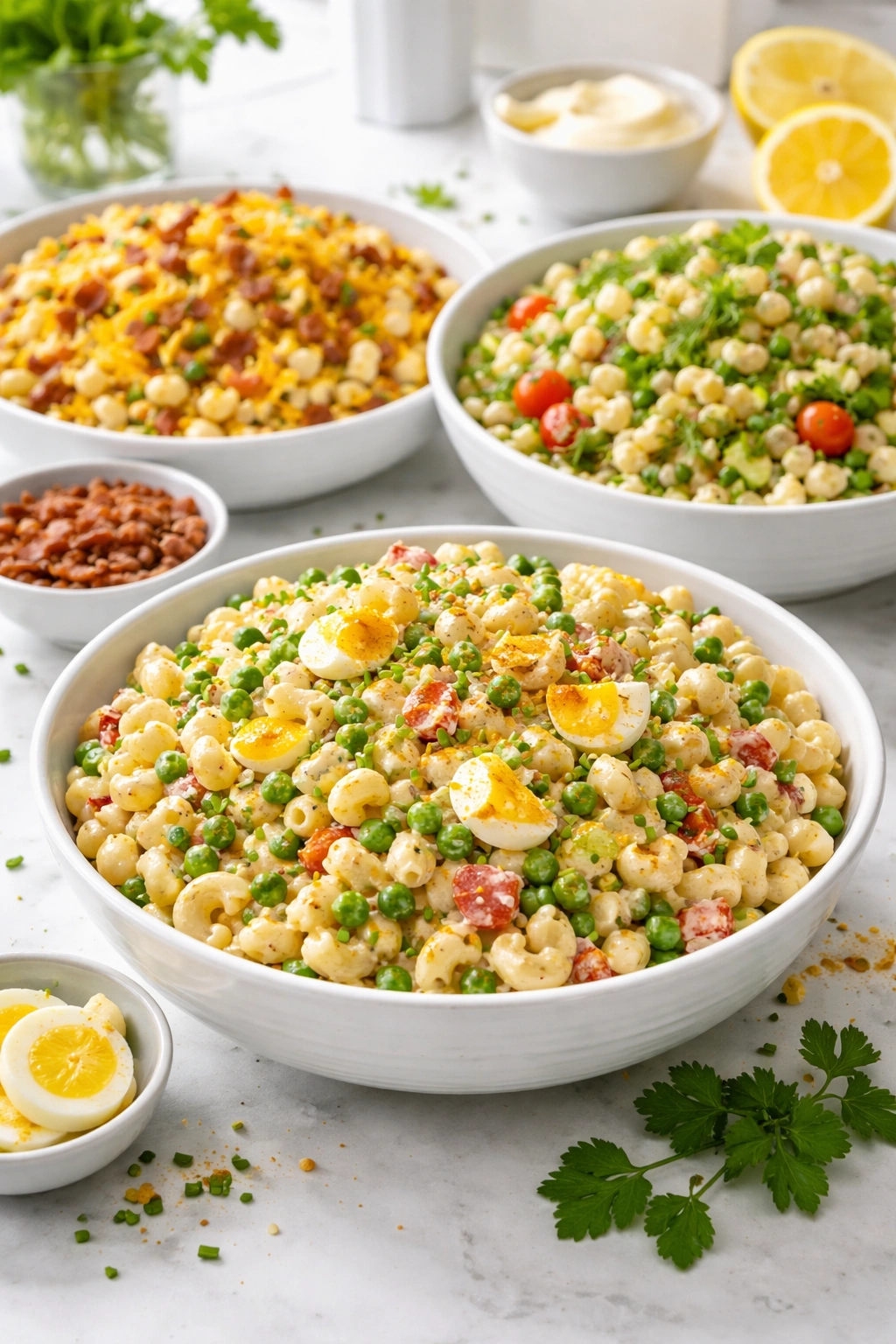
The beauty of this base recipe is that it’s flexible enough to adapt without losing its essential identity as macaroni salad. These variations all work because they respect the same foundational technique and ratio.
Classic American Version with Peas and Eggs is the most traditional variation and what many people grew up eating. Simply add 1 cup of fresh or frozen peas (thawed, if frozen) along with the hard-boiled eggs. The peas add a sweet, tender element and the eggs add richness. This is the version you see in most delis and it’s genuinely great.
Barbecue-Friendly with Sharp Cheddar and Bacon skews savory and works especially well when the main course is pulled pork, grilled chicken, or burgers. Add ½ cup of diced sharp cheddar cheese to the dressing before you toss in the pasta. Just before serving, add ¼ cup of crispy bacon bits (or actual cooked bacon, crumbled) to avoid sogginess. The cheese adds depth and the bacon adds smokiness that complements barbecue perfectly.
Herb-Forward Version with Dill and Tarragon is perfect if you’re serving this alongside seafood or at a summer gathering where fresh herbs are what people crave. Keep the red and yellow peppers but reduce them to ¾ cup each. Add 2 tablespoons of fresh dill (finely chopped) and 1 tablespoon of fresh tarragon (or ½ teaspoon of dried tarragon if fresh isn’t available). Add the herbs to the dressing itself before you toss in the pasta. This version is bright, sophisticated, and different enough that people will ask what makes it taste special.
Lighter Mayo-Based Version with Greek Yogurt reduces the mayo while keeping the creamy texture. Use 1½ cups of mayo mixed with ½ cup of plain Greek yogurt (full-fat, not non-fat). This adds tanginess and reduces the richness slightly while still delivering that creamy coating. The yogurt also helps keep the salad stable over time. Everything else stays exactly the same — the ratio and technique adjust automatically for the different dressing.
Southwestern Version with Black Beans and Cilantro takes macaroni salad in a completely different direction. Keep the dressing exactly the same but add 1 cup of black beans (canned is fine; just rinse and drain them), ¾ cup of corn kernels (fresh or frozen, thawed), and ½ cup of fresh cilantro instead of parsley. Use only one red bell pepper instead of two colors. Add ½ teaspoon of cumin and ¼ teaspoon of smoked paprika to the dressing. Serve at room temperature and squeeze fresh lime juice over the top just before serving. This version is hearty and feels almost like a salad-side-dish hybrid.
Make-Your-Own Mix-In Station Version for potlucks where you want to seem impressive without extra work: Prepare the base macaroni salad (the plain version without extra mix-ins), transport it, and set out small bowls of optional additions. Include fresh herbs like parsley and dill, shredded cheddar, crispy bacon bits, fresh peas, hard-boiled eggs, and pickled jalapeños. Let people customize their own portions. This solves the problem of not knowing everyone’s preferences and makes the dish feel special.
Lighter and Dietary-Specific Versions
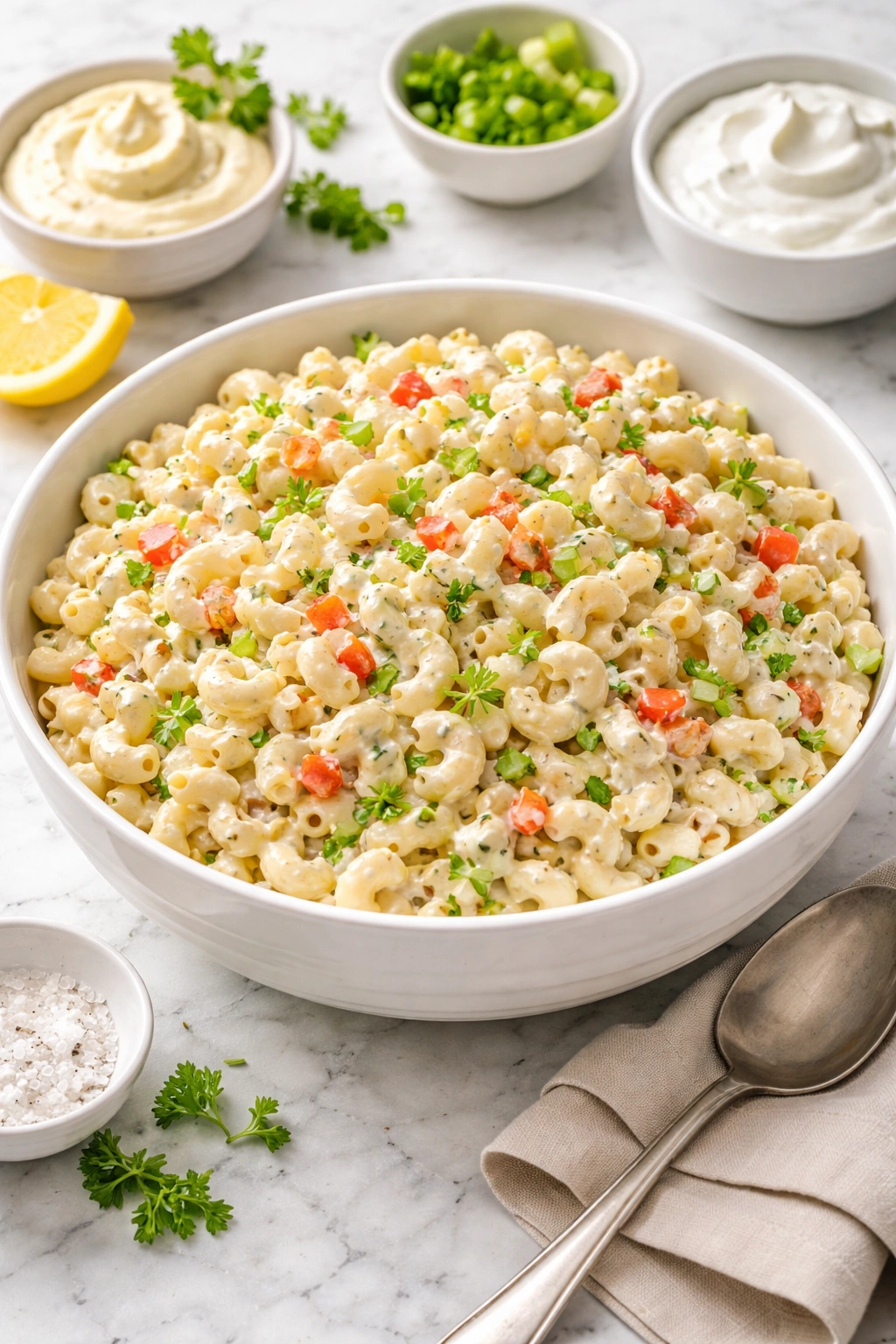
If you’re making this for a group with specific dietary needs, the good news is that the technique is flexible enough to adapt without sacrificing taste.
For a Lighter Version that uses less mayo overall, swap half the regular mayo with Greek yogurt or sour cream. You’ll maintain the creamy texture while reducing the richness and calorie density. The dressing might look slightly thinner when you first mix it, which is fine — it will thicken slightly as the pasta absorbs it over a couple hours. You may need to add an extra ½ teaspoon of vinegar to compensate for the tanginess that the yogurt reduces.
For a Dairy-Free Version (mayo is made with eggs, so it’s not vegan but it’s dairy-free), use a high-quality vegan mayo. The key here is choosing a brand that actually tastes good, because some vegan mayos have a noticeably different flavor profile. Brands like Just Mayo or Follow Your Heart are decent choices. The technique stays exactly the same, but vegan mayo can sometimes be slightly thinner, so you might reduce the vinegar by ½ teaspoon and add an extra tablespoon of mayo to get the consistency right.
For a Gluten-Free Version, simply use gluten-free pasta. The technique doesn’t change at all. Some gluten-free pastas cook faster, so watch them carefully and pull them from the water one minute earlier than you would with regular pasta. Rinse and cool exactly as you would regular pasta. The finished salad will taste and look identical.
For a Vegetarian/Vegan Version, simply omit the hard-boiled eggs and don’t add bacon if you’re using it. Everything else is already vegetarian. If you want to add protein to make it feel more substantial, toss in some chickpeas or white beans — about ¾ cup, rinsed and drained. They add substance and nutrition without changing the essential character of the salad.
Make-Ahead Strategy for Potluck Day
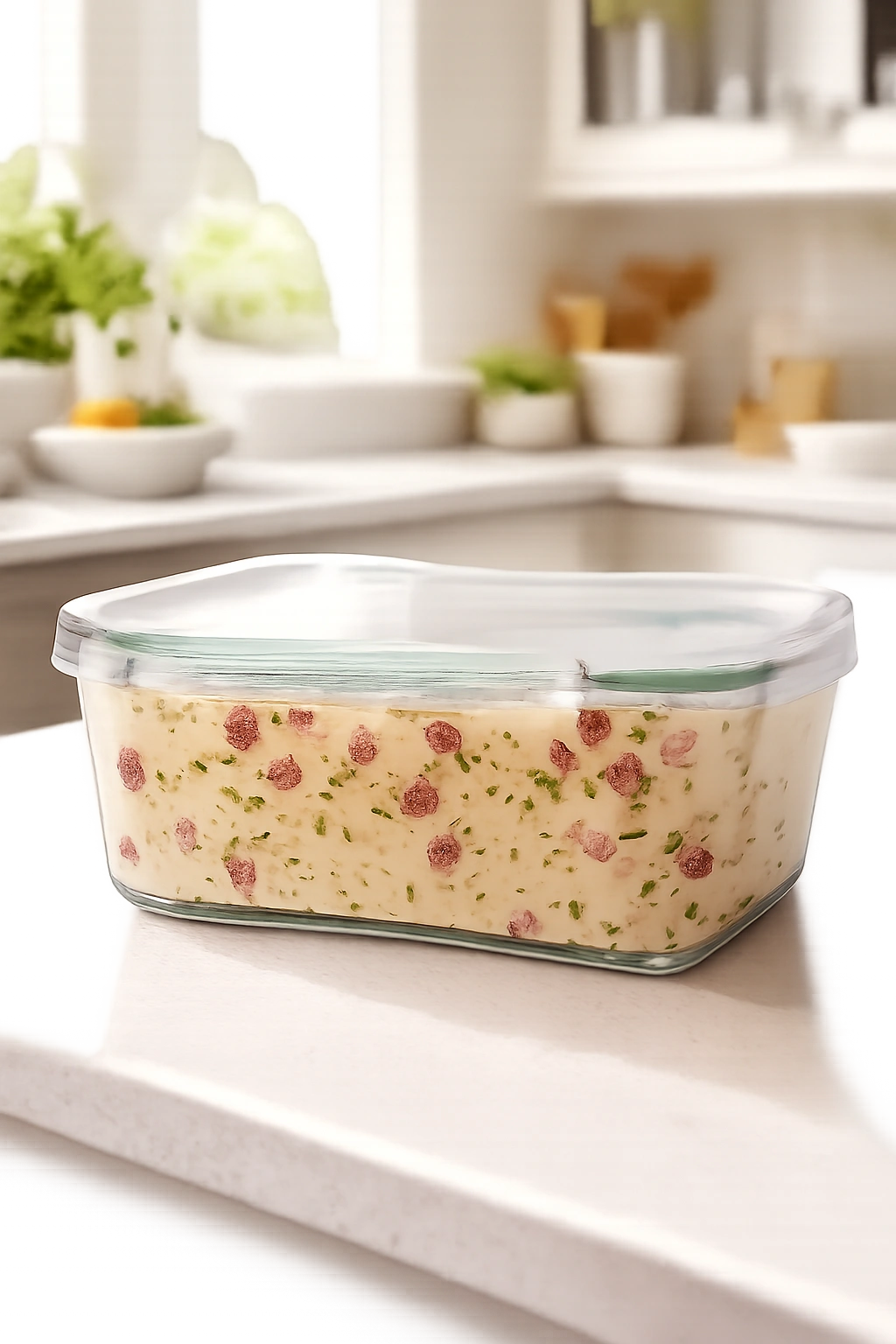
Macaroni salad is genuinely wonderful when planned strategically for potluck logistics. You can prepare this either the day before, the morning of, or just a few hours before you need to transport it — your choice depends on your schedule.
For Maximum Convenience, make the entire salad 1-2 days in advance. Cover it completely and refrigerate. On potluck day, give it a gentle stir about 30 minutes before you transport it, and it’s ready to go. The flavors actually improve overnight as everything melds together. Just before serving, you can add fresh herbs, bacon bits, or other garnishes if they benefit from being added at the last minute.
If You’re Cooking the Morning Of, you can prepare it 2-4 hours in advance. The salad will be fully chilled and ready to transport by the time you need to leave. This gives you enough time for the flavors to develop without worrying about it being stale.
If You’re Making It Just a Few Hours Before, that’s fine too. The salad doesn’t need to sit overnight to taste good — it tastes good basically immediately. A couple hours of chilling just makes it taste even better.
The Parts You Can Prepare in Advance to save yourself time on the actual day: Chop all your vegetables the day before and store them separately in airtight containers in the fridge. Cook the pasta the night before, cool it, and store it in the fridge in a container (it’ll be fine for up to 2 days). On the day you assemble the salad, you’re really just mixing three components together — the pasta, the dressing, and the vegetables. It takes maybe 10 minutes.
Transportation Tips: If you’re traveling more than 20 minutes, bring the salad in an insulated cooler with an ice pack to keep it cold. Pack it in a sturdy container with a lid that seals completely — you don’t want any spilling or sloshing. If you’re really concerned about it staying cold, you can even put the whole container in a freezer bag before placing it in the cooler.
Storage, Keeping Quality, and Reheating
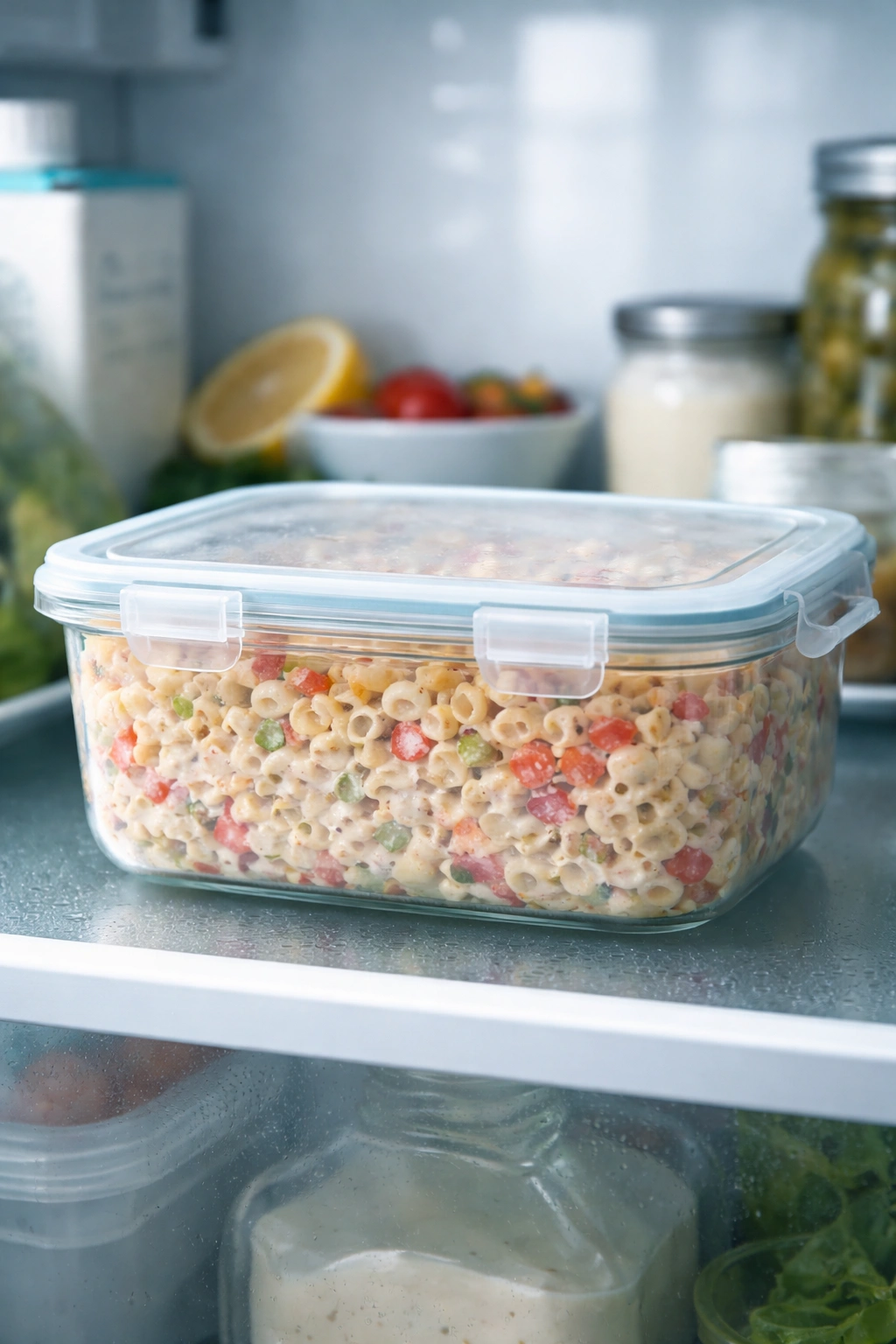
This macaroni salad keeps beautifully in the refrigerator, which is one of its superpowers as a potluck dish. You can make it days in advance without worrying about quality degradation.
In the Refrigerator, covered with plastic wrap or in an airtight container, macaroni salad stays fresh and delicious for 3-4 days. The flavors actually become more integrated and better on day 2 and day 3 than they are on day 1. After day 4, the vegetables start to soften noticeably and the overall freshness declines, though it’s still technically safe to eat if it’s been properly stored at 40°F or below.
In the Freezer, you can freeze it for up to 1 month in an airtight, freezer-safe container. The quality will be decent but not identical to fresh — the mayo-based dressing can separate slightly after thawing, the vegetables get softer, and the overall texture is less vibrant. If you do freeze it, thaw it completely in the refrigerator overnight before serving, then give it a gentle stir to re-emulsify the dressing. Add a fresh squeeze of lemon or vinegar when you reheat it to brighten the flavors.
Serving at Room Temperature is actually how this salad is often served at potlucks, and it works great. You don’t need to heat or reheat it — just pull it out of the cooler 15-20 minutes before serving so it’s not ice-cold. Room temperature macaroni salad has a slightly different texture than cold, more tender and less firm, and some people actually prefer it this way.
Keeping Quality at Room Temperature: If you’re serving this at an outdoor potluck in warm weather, try to keep it in a cooler until right before serving, then set it out only for an hour or so. Food safety guidelines say mayonnaise-based salads shouldn’t sit out in temperatures above 85°F for more than 2 hours total. If you’re in doubt, keep it in the cooler and let people serve themselves from there.
The Refreshing Trick if It Sits Too Long
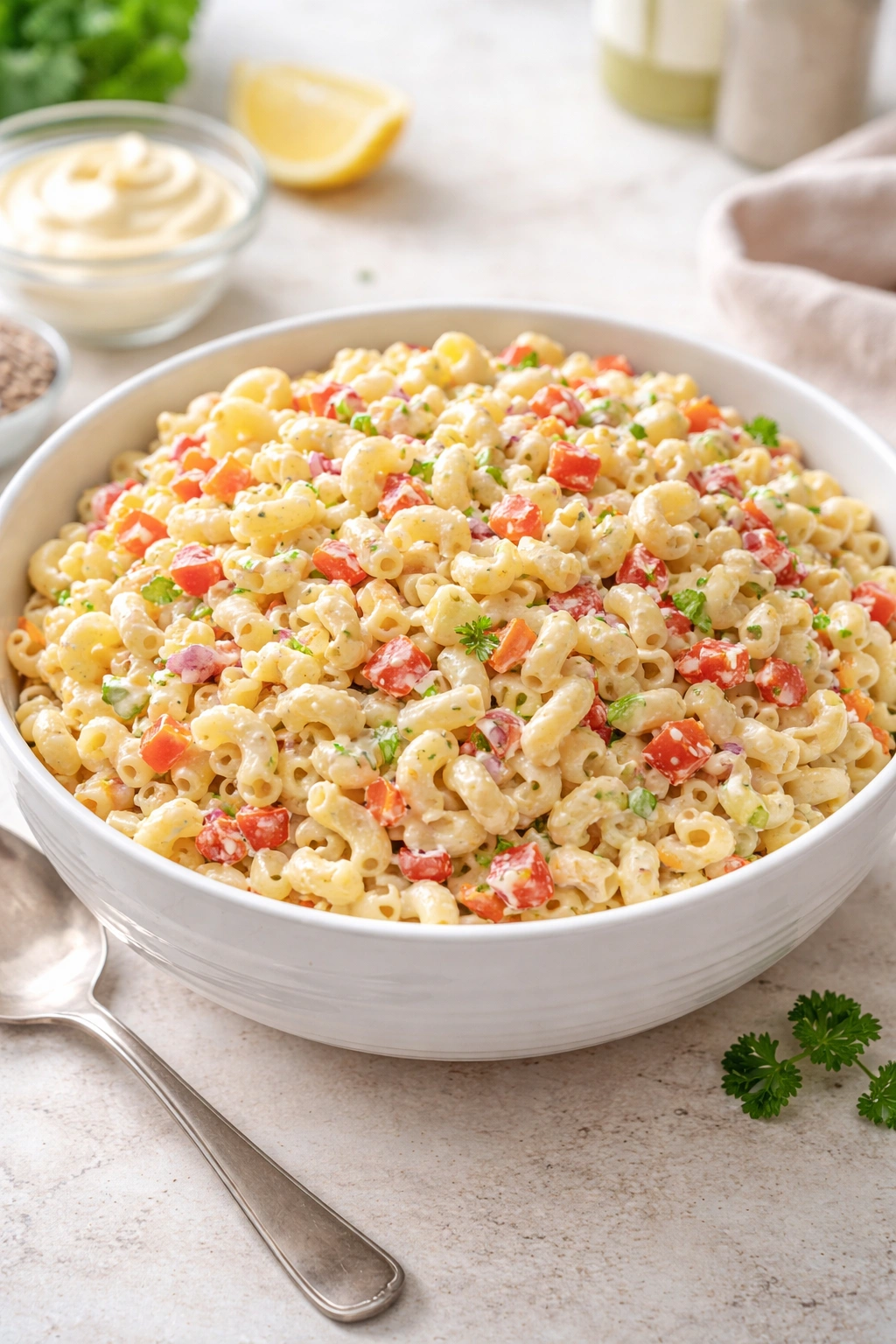
If your macaroni salad has been sitting for a while and looks a bit dry or separated, you have a simple fix. Whisk together 2 tablespoons of mayo, 1 tablespoon of vinegar, and ½ teaspoon of salt in a small bowl, then gently fold this into the salad. It re-emulsifies everything and brings back the creamy, cohesive texture. This trick also works if you’ve made the salad a day or two in advance and it’s lost some of its initial moisture to evaporation.
Plating and Serving Suggestions
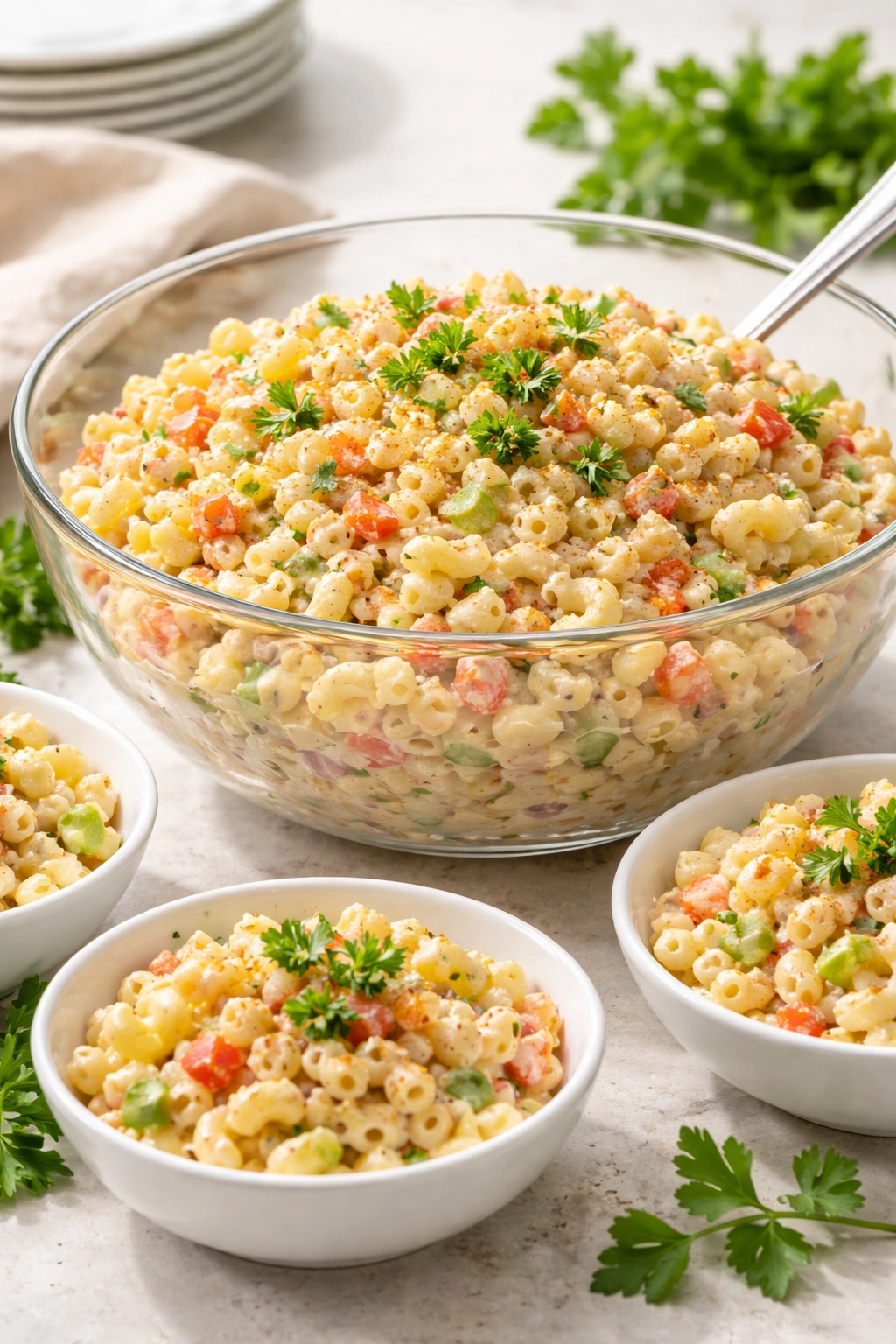
Macaroni salad is casual enough that it doesn’t need fancy plating, but a few small touches make it look more intentional and appetizing.
Serving Container: Use a clear glass bowl rather than an opaque one if you have the option. People can see the colors and that makes them more likely to want some. If you’re bringing it to a potluck, transfer it to a pretty serving dish when you get there rather than leaving it in the transport container.
Garnish Just Before Serving: Add a fresh sprinkle of finely chopped parsley, a light dusting of paprika, or a few crispy croutons right on top just before people start serving themselves. These garnishes add color and draw the eye. If you’re using bacon or nuts, add them at the very last moment so they stay crunchy.
Temperature: Serve it cold (right out of the fridge) or at cool room temperature (about 15 minutes out of the fridge). Either works beautifully. Cold is more refreshing, room temperature feels more indulgent. Offer both options and let people choose.
Portion Size: Serve in a ½ cup to ¾ cup portions on individual plates, or let people serve themselves from the larger bowl. Macaroni salad goes a long way — it’s rich and filling, so smaller portions are actually more satisfying than you’d expect.
What to Serve It With: Macaroni salad works alongside virtually any outdoor meal. Serve it with grilled chicken, pulled pork, ribs, grilled fish, burgers, hot dogs, or plant-based proteins. It pairs beautifully with simple sides like grilled corn, coleslaw, or grilled vegetables. It’s also great on its own as a lunch with some fresh fruit on the side.
Flavor Pairings: If there’s a particularly acidic main course like lemon-herb chicken, the creamy macaroni salad provides nice balance. If the main is rich like ribs or pulled pork, the macaroni salad’s richness is completely appropriate and expected. If the main is light and simple, macaroni salad can be the standout dish that people remember.
Final Thoughts
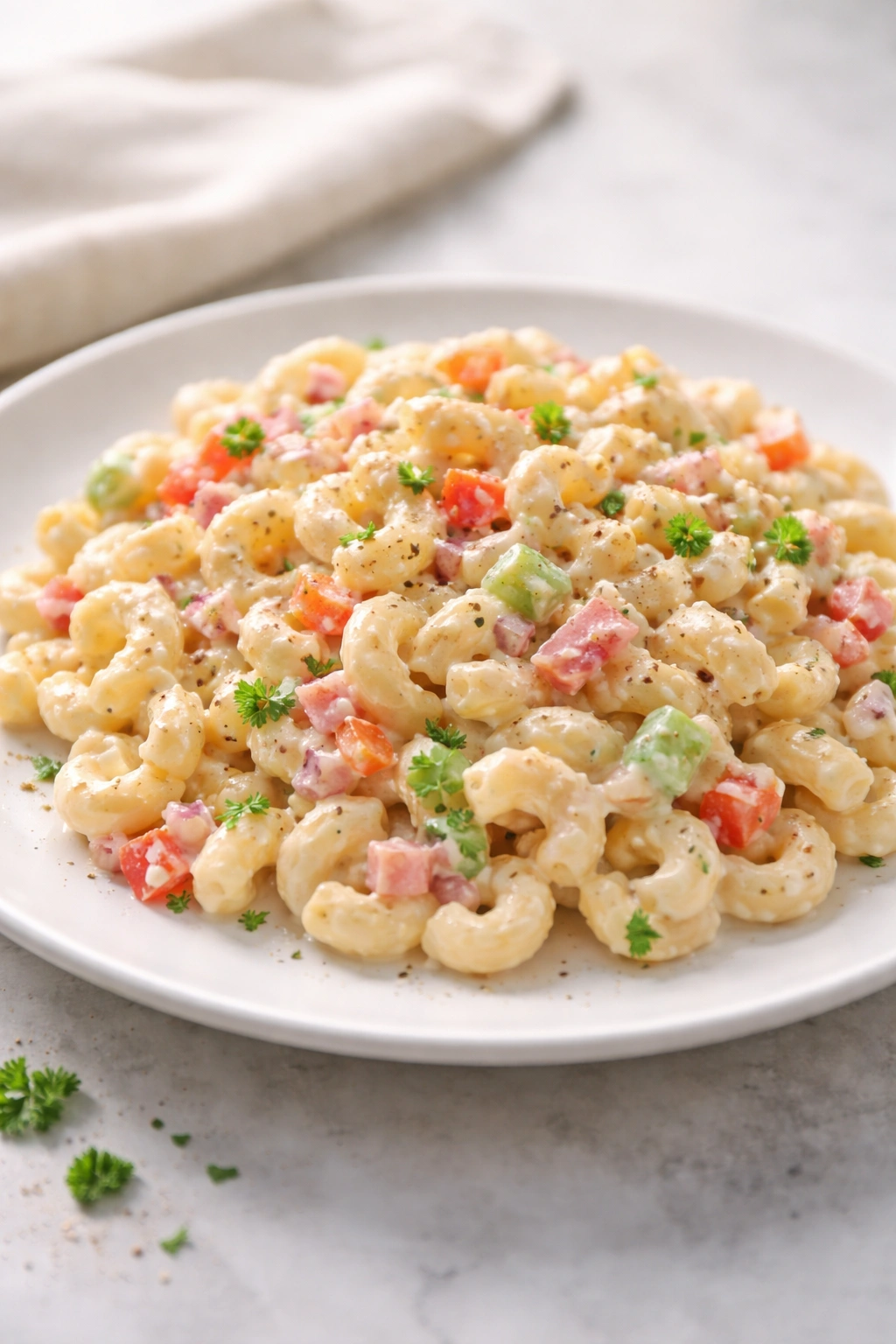
Macaroni salad isn’t complicated, but the difference between a genuinely great version and a mediocre one comes down to respecting a few principles: using properly cooled pasta, building actual flavor into the dressing rather than relying on mayo alone, not using too much dressing, and giving the salad time to chill so flavors develop and everything melds together.
The version in this article is designed to be flexible enough that you can adapt it to whatever occasion you’re bringing it to, while holding strong on the fundamentals that make it reliably good. Whether you make it exactly as written or use it as a starting point for variations, the technique stays the same.
What makes this a dish people actually request is that it tastes genuinely better than the version most people grew up with, but it doesn’t feel fussy or difficult to make. You’re not spending hours on it. You’re not using fancy imported ingredients. You’re just using a straightforward technique and paying attention to the details that actually matter. Make it once and you’ll understand why macaroni salad is a potluck staple — not despite its simplicity, but because of it.
