



There’s a reason potato salad shows up at practically every cookout, potluck, and summer gathering—it’s the one side dish that works with absolutely everything and genuinely tastes better the next day. But not all potato salad is created equal. The difference between a watery, bland bowl and one that actually has people asking for your recipe comes down to a few critical techniques that most home cooks skip over: choosing the right potatoes, salting them while they’re still hot, building flavor intentionally instead of dumping everything together, and understanding why creamy texture matters way more than most people realize.
This is the potato salad that converts skeptics. It’s tangy without being aggressive, creamy without feeling heavy, and structured in a way that holds up beautifully whether you’re serving it two hours after you make it or the next afternoon. The secret isn’t some exotic ingredient—it’s respect for technique, precise seasoning at every stage, and knowing exactly when to add each component so flavors actually integrate rather than just sitting on top of each other.
The History and Appeal of a Great Potato Salad
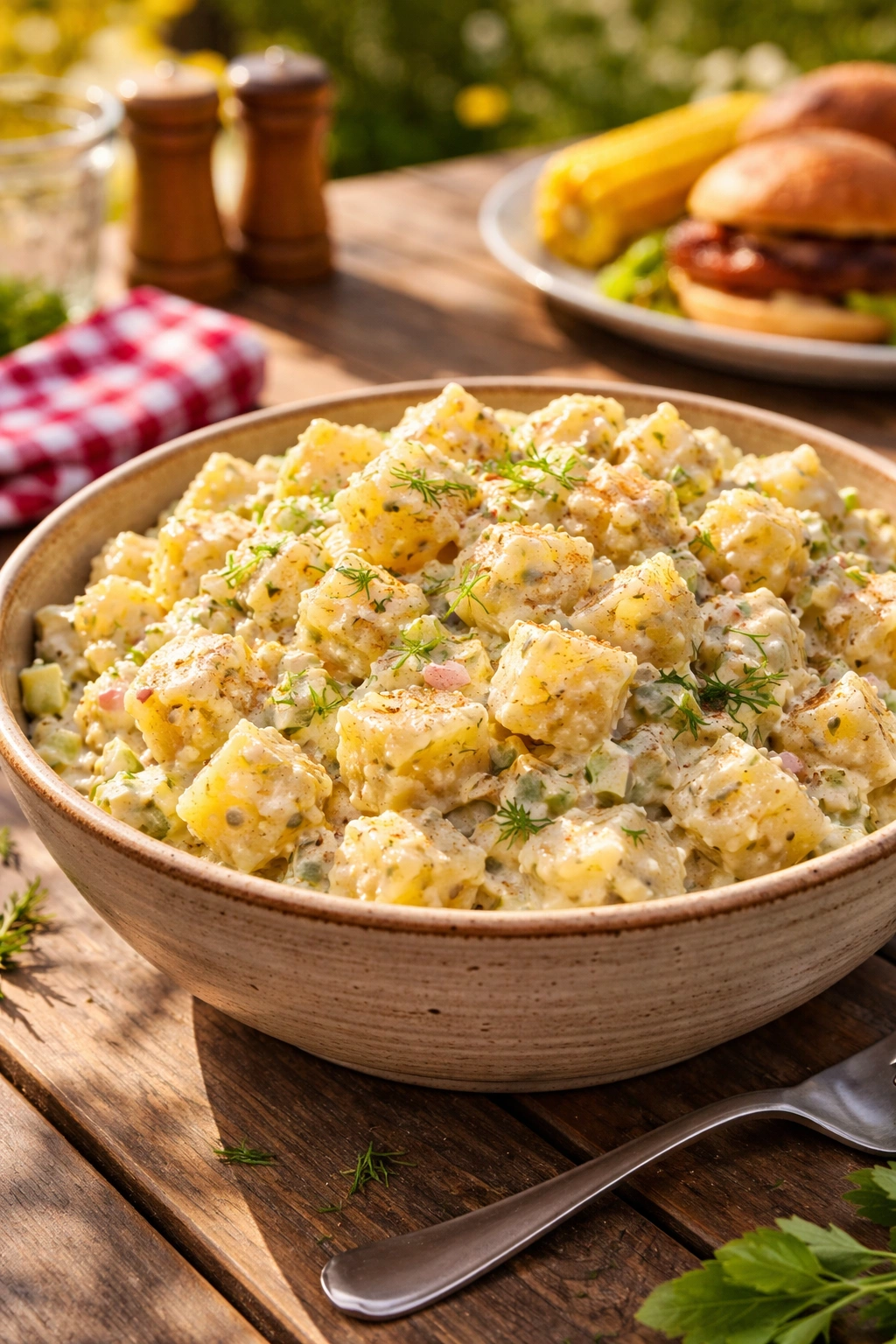
Potato salad has been a cornerstone of American summer cooking for well over a century, and honestly, there’s a reason it’s stuck around. Unlike mayonnaise-based salads that break down and separate, or vinegar-based versions that get too sharp over time, a well-made potato salad actually improves as it sits—the potatoes continue to absorb the dressing, flavors deepen, and the whole thing becomes more cohesive.
The dish originally developed from German traditions, where potato salads were traditionally made with warm vinaigrette rather than mayo. American versions evolved to embrace mayonnaise, creating that creamy texture most of us crave at a summer meal. What makes this particular version special is the hybrid approach: you build a flavor base with vinegar and broth while the potatoes are still warm, which lets them actually absorb seasoning, then you add just enough mayo to create richness without making the salad feel heavy or taste like it’s just a delivery vehicle for condiment.
The other thing worth knowing: potato salad is one of those dishes where quality ingredients genuinely matter. Not in a pretentious way, but in a practical way. The difference between waxy potatoes and starchy ones completely changes your texture. The difference between fresh herbs you’re actually excited about and sad grocery store dill that’s been sitting in a plastic package completely changes whether people reach for seconds.
What Makes This Version Stand Out
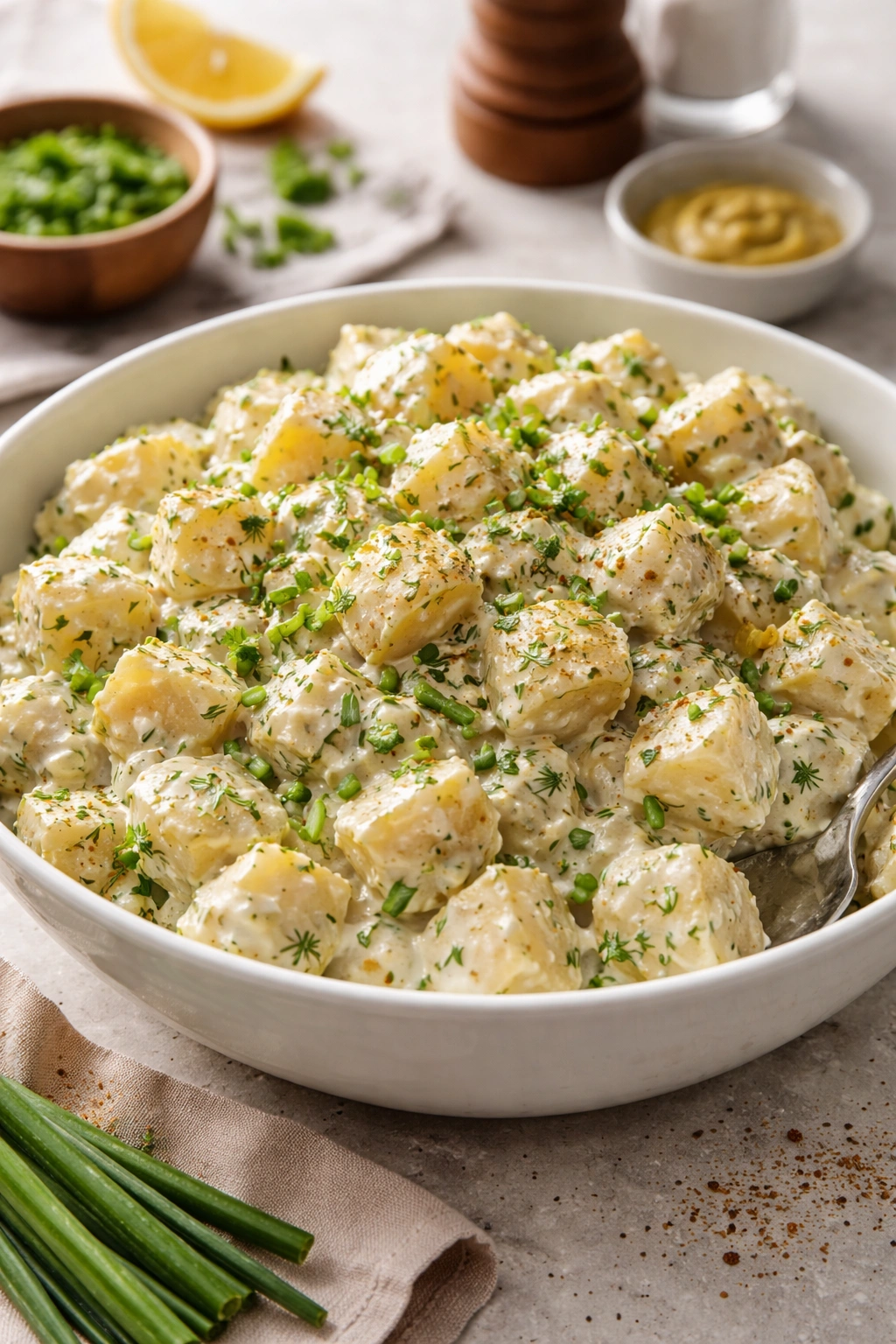
This isn’t a minimalist two-ingredient salad, but it’s also not a kitchen-sink situation where you’re throwing in ten different things just to add complexity. Every single component serves a purpose, and you’ll understand why as you make it. The approach centers on three distinct flavor-building stages: first, the potatoes absorb a warm vinaigrette that seasons them deeply; second, you add the creamy base that coats everything smoothly; third, you fold in fresh herbs and final adjustments right before serving so they taste bright rather than wilted.
The result is a salad that tastes intentional. You notice the tang of vinegar and the brightness of fresh dill. You feel the creaminess without feeling weighted down. The potatoes hold their shape—they’re not falling apart or getting mushy. When people taste it, they taste seasoning and flavor, not just mayo and lettuce-adjacent side dish energy.
One more thing that matters: this recipe is made entirely from scratch. No creepy celery, no hard-boiled eggs if you don’t want them, no mystery ingredients. You control the salt level, you can adjust the tanginess, you can add heat or not. That control is part of what makes it genuinely better than potato salad made from a recipe that calls for mayo straight out of the jar without any flavor architecture underneath.
Yield, Timing, and Difficulty
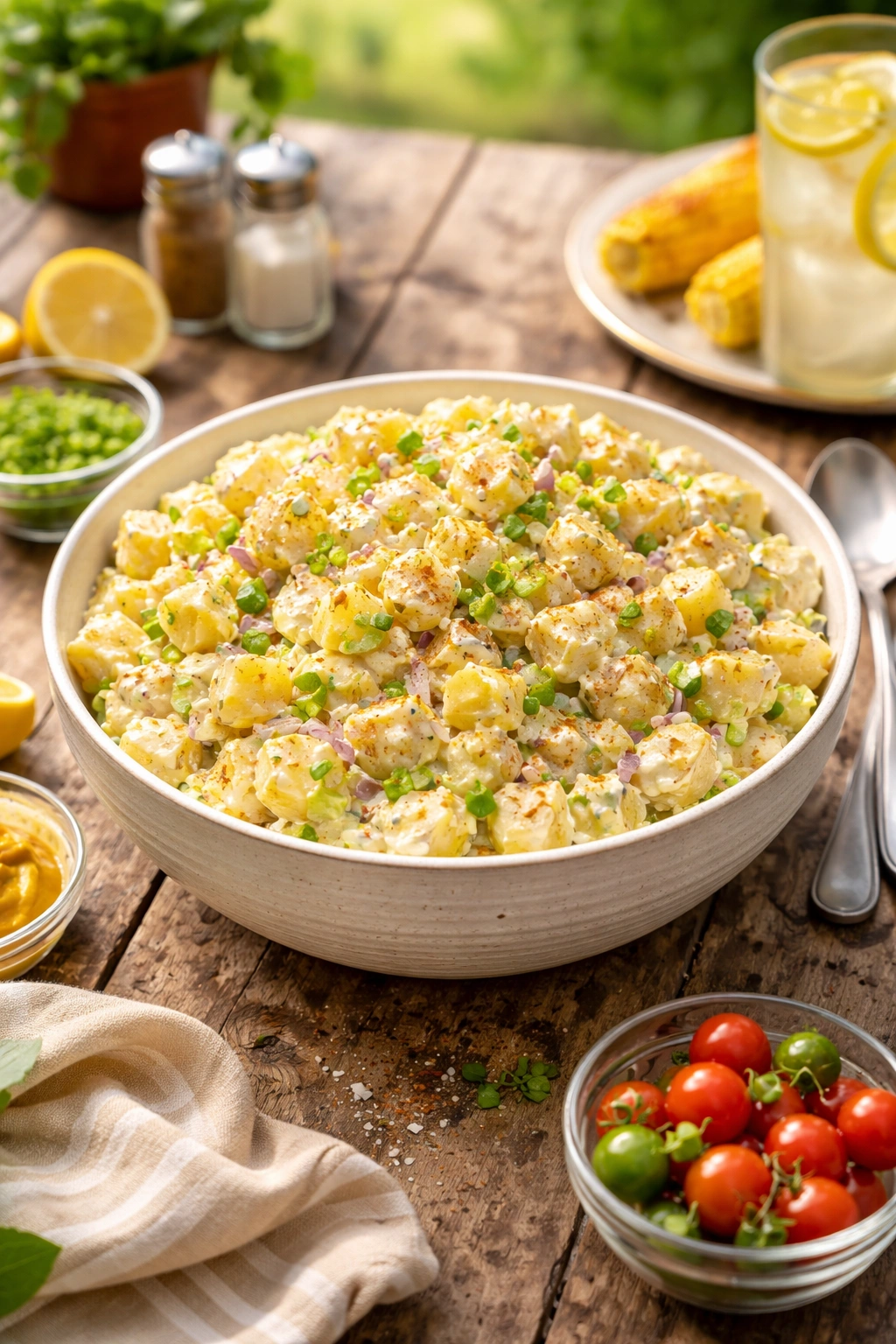
Yield: Serves 8 to 10 as a side dish | Makes about 8 cups
Prep Time: 25 minutes
Cook Time: 25 minutes
Total Time: 50 minutes active + 30 minutes chilling before serving
Chill/Rest Time: 30 minutes minimum (can be made up to 1 day ahead and chilled overnight)
Best Served: Chilled or at cool room temperature, not straight from the fridge straight out of a sealed container—let it sit for 10 minutes before serving so flavors aren’t muted by cold
Difficulty: Intermediate — There’s no complicated technique here, but there are several sequential stages that need to happen in the right order, and precision with seasoning matters more than in a dump-and-mix situation. If you’ve boiled potatoes before and are comfortable tasting and adjusting seasoning, you’re good.
Complete Ingredient List
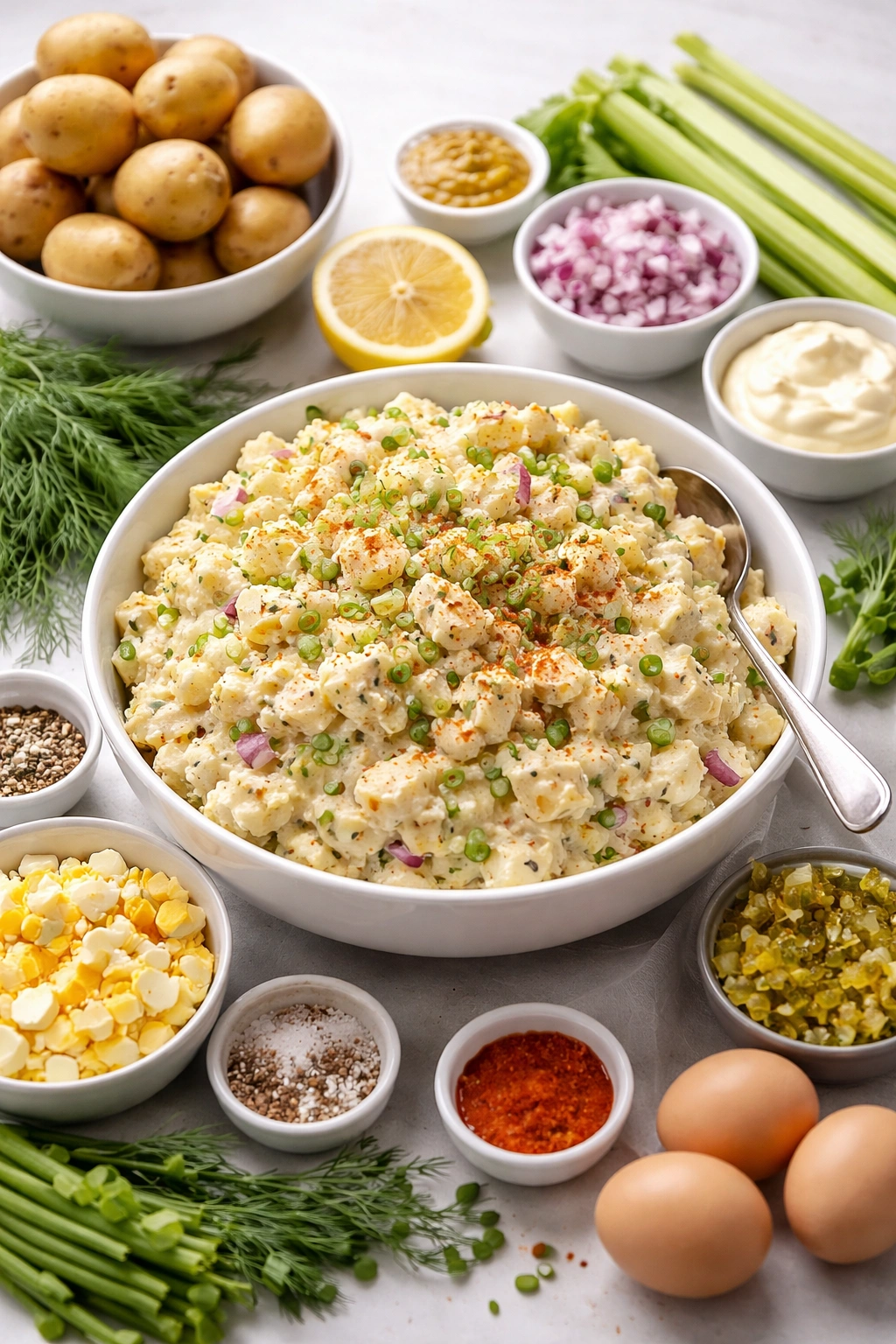
For the Potatoes and Warm Dressing:
- 3 pounds medium Yukon Gold potatoes (about 10–12 medium potatoes, or 18–20 if using smaller ones)
- 1 teaspoon fine sea salt (for the boiling water)
- ½ cup low-sodium vegetable or chicken broth, still warm
- ¼ cup white wine vinegar (or apple cider vinegar if you prefer a slightly rounder tang)
- 2 tablespoons Dijon mustard
- 1 tablespoon granulated sugar
- ½ teaspoon fine sea salt (added to the warm dressing, separate from boiling salt)
- ¼ teaspoon freshly ground black pepper
- 2 tablespoons extra-virgin olive oil
For the Creamy Component:
- ¾ cup mayonnaise (or a combination of ½ cup mayo + ¼ cup sour cream if you want a tangier, slightly lighter texture)
- 2 tablespoons fresh lemon juice (approximately 1 medium lemon)
- 1 teaspoon fine sea salt (adjust to taste—you may not need all of it)
- ¼ teaspoon white pepper (or ⅛ teaspoon cayenne pepper for subtle heat, optional)
For Texture and Freshness:
- 3 stalks celery, diced small (about ¾ cup)
- 4 green onions (scallions), white and light green parts sliced thin (about ½ cup)
- ⅓ cup fresh dill, chopped (or 2–3 tablespoons dried dill if fresh isn’t available, though fresh is noticeably better)
- 2 tablespoons fresh flat-leaf parsley, chopped (optional but adds brightness)
- 2 large hard-boiled eggs, chopped (optional—includes these if you want them, skip entirely if you don’t)
The Step-by-Step Process
Prepare and Cook the Potatoes:
-
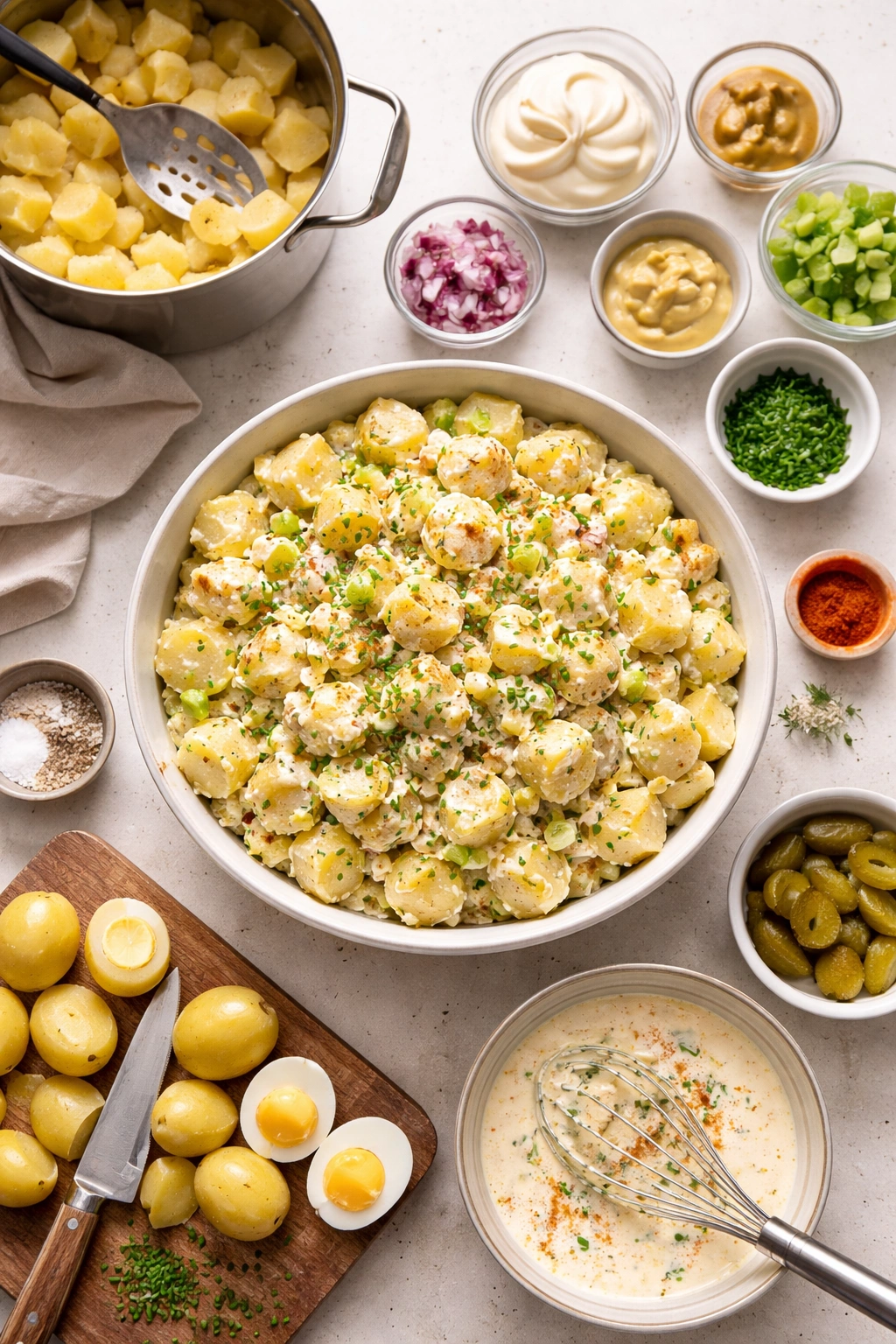
Cut the Yukon Gold potatoes into 1-inch chunks—not smaller. Smaller pieces cook faster but disintegrate more easily; 1-inch chunks give you control over texture and are less likely to become mushy when you’re tossing the salad later. Leave the skin on for texture and nutrition.
Advertisements -
Place the cut potatoes in a large pot, cover them completely with cold water (you need at least 2 inches of water above the potatoes), and bring to a boil over high heat.
-
Once the water reaches a rolling boil, add 1 teaspoon of fine sea salt and reduce the heat to maintain a gentle, steady boil. Too vigorous a boil breaks up the potatoes; a gentle boil cooks them evenly.
-
Cook the potatoes for 12 to 15 minutes, testing them after 12 minutes by piercing the largest chunk with a fork. The potato should slide off the fork easily, but the piece should still hold together—you’re aiming for tender but not soft enough to fall apart when you toss it. A minute or two of overcooking completely changes the texture.
-
Drain the potatoes in a colander and let them sit for exactly 1 minute—this allows excess moisture to evaporate without cooling them down too much.
Build the Warm Dressing:
-
While the potatoes are draining, whisk together the warm broth, vinegar, Dijon mustard, sugar, salt, and black pepper in a large mixing bowl. Stir the olive oil in last—the salad will be built in this bowl, so use one large enough to comfortably toss without splashing.
-
Taste the warm dressing. It should taste tangy and a bit briny, almost like a flavorful light soup—this is intentional. The potatoes will mellow it as they absorb it.
Season the Potatoes While Warm:
-
Transfer the hot drained potatoes directly to the bowl with the warm dressing. This is the critical step—warm potatoes absorb dressing far more effectively than cooled ones. Gently fold the potatoes with the dressing using a rubber spatula or wooden spoon for about 2 minutes, coating every piece. Do not aggressively toss or stir; this breaks up the potatoes. Fold gently and deliberately.
-
Let the potatoes sit in the warm dressing for 5 minutes, then gently fold again. You’ll notice the dressing has been mostly absorbed by the potatoes. Let them cool to room temperature—about 15 minutes.
Advertisements
Add the Creamy Base:
-
Once the potatoes have cooled to room temperature (this is important—adding mayo to hot potatoes breaks the emulsion and makes it greasy), prepare the creamy component. In a separate small bowl, whisk together the mayonnaise, lemon juice, 1 teaspoon salt, and white pepper until smooth.
-
Pour the mayo mixture over the cooled potatoes and fold gently until every piece is evenly coated. The salad should look creamy but not heavy—you should still see flecks of potato, not a thick mayo shell. Do not overmix at this stage; you’re coating, not beating the potatoes into submission.
-
Taste the salad and adjust seasoning. Add salt or lemon juice a small pinch or squeeze at a time—seasoning adjustments are easier to make now than after you’ve added everything else. Remember that salt is subtle; taste, adjust, wait 30 seconds, and taste again.
Add Vegetables and Herbs:
-
Fold in the diced celery and sliced green onions gently, distributing them evenly throughout the salad. These add texture and fresh flavor without overpowering the potatoes.
-
Fold in the fresh dill and parsley if using. Fresh herbs wilt and lose brightness if they sit too long, so add them as close to serving time as possible—though if you’re making this ahead, they’ll still taste fine, just slightly less vibrant.
-
If you’re using hard-boiled eggs, fold them in last so they don’t break apart when you’re mixing other components. Add them just before serving if possible, so they stay distinct rather than integrating completely into the salad.
-
Transfer the potato salad to a serving bowl or container, cover it, and refrigerate for at least 30 minutes before serving. The cold allows flavors to settle and intensify.
Tips and Common Mistakes to Avoid
Choose the Right Potato Variety
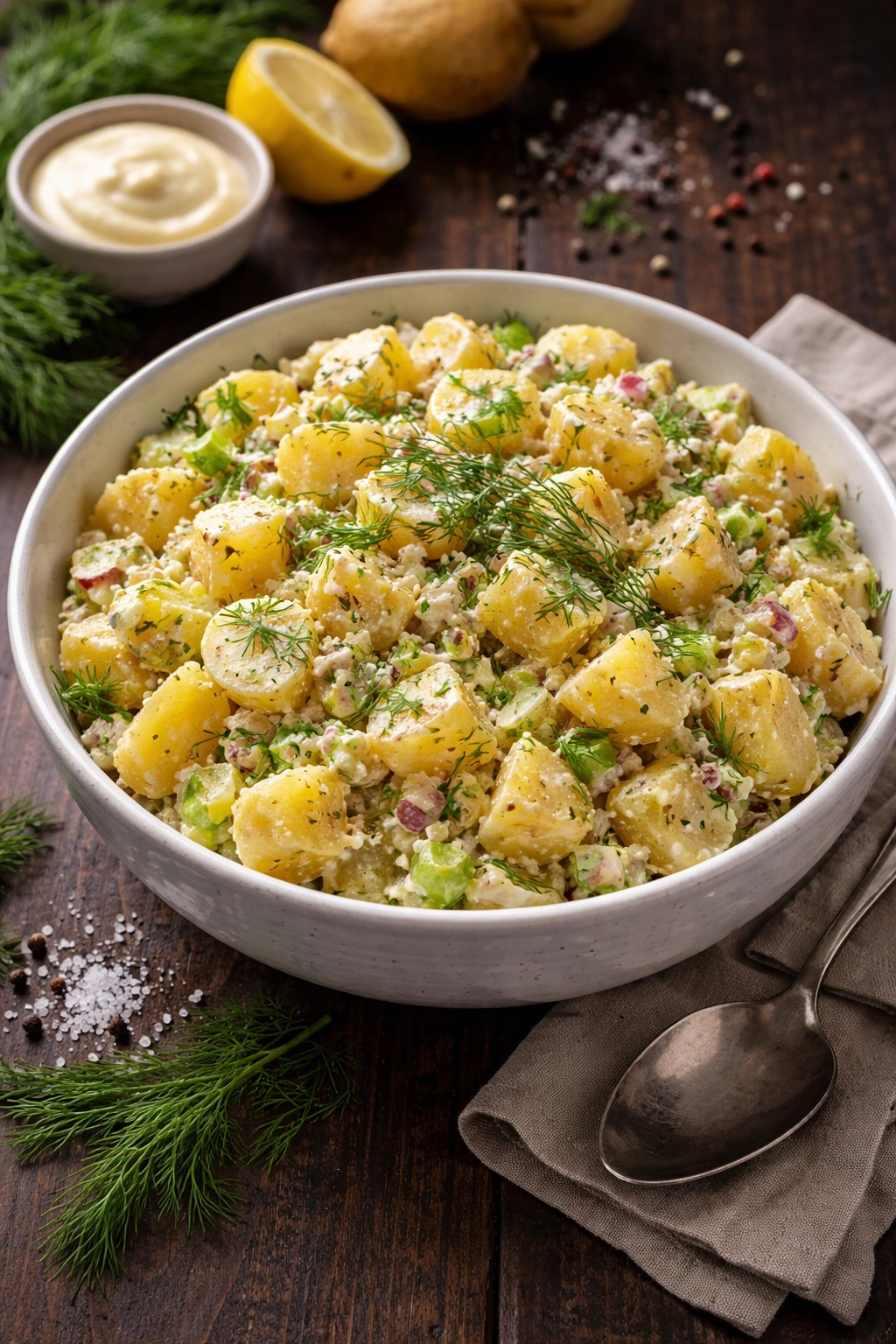
The potato you use matters more than you’d think. Yukon Gold potatoes are ideal here because they’re waxy potatoes—they hold their shape when cooked and have a naturally buttery, creamy flavor that complements the mayo. Red potatoes work if that’s what you have, though they’re slightly waxier and less flavorful. Avoid russet potatoes entirely; they’re starchy and will break down into a mushy, mealy texture. If you’re at a farmer’s market, pick waxy varieties like fingerlings, red creamer, or any potato labeled as a “salad potato.”
Don’t Cool the Potatoes Before Dressing Them
This is the single biggest difference between potato salads that taste seasoned and ones that taste bland. Warm potatoes have open cell structure that absorbs liquid and seasoning deeply. Cold potatoes have closed, dense cell structure and basically repel dressing—it sits on the surface instead of being absorbed. The warm dressing-on-warm-potato step is non-negotiable.
Taste and Adjust Seasoning Before You Add Mayo
Once mayo is in there, it’s harder to taste the actual seasoning accurately because fat coats your palate. Season the warm dressing and the potatoes thoroughly before you add the creamy component, then do a final taste adjustment. Salt builds over time as the salad sits, so you might want it to taste slightly undersalted when you first taste it.
Don’t Skip the Vinegar Stage
Mayonnaise alone creates a flat, one-dimensional flavor. Vinegar, mustard, and broth underneath create complexity and depth. The mayo is there to create texture and richness, not to be the sole flavor driver. This layering is what separates genuinely good potato salad from “mayo delivery system” potato salad.
Don’t Overmix
Potatoes are sturdy, but they’re not indestructible. Vigorous stirring breaks them apart, turns them into mashed potato salad, and actually encourages them to absorb more liquid than they should (which makes the salad watery over time). Fold gently every time you combine components.
Add Fresh Herbs Last
If you’re serving the salad immediately, add dill and parsley just before serving so they taste bright rather than wilted. If you’re making it ahead, add them 30 minutes before serving if possible. Either way, don’t add them more than a few hours ahead unless you enjoy dull, grayed-out herb flavor.
Keep Celery and Green Onions Consistent in Size
Smaller pieces distribute flavor more evenly and are less noticeable in texture if someone isn’t expecting large chunks. Uniformity in vegetable cutting makes the salad feel more intentional and finished.
Resist the Urge to Add Everything at Once
The best potato salads build flavor gradually. Warm dressing first, then mayo, then fresh herbs—each stage matters. Layering prevents any single flavor from overwhelming and makes the salad taste balanced rather than confused.
Variations and Adaptations
Herb Variations
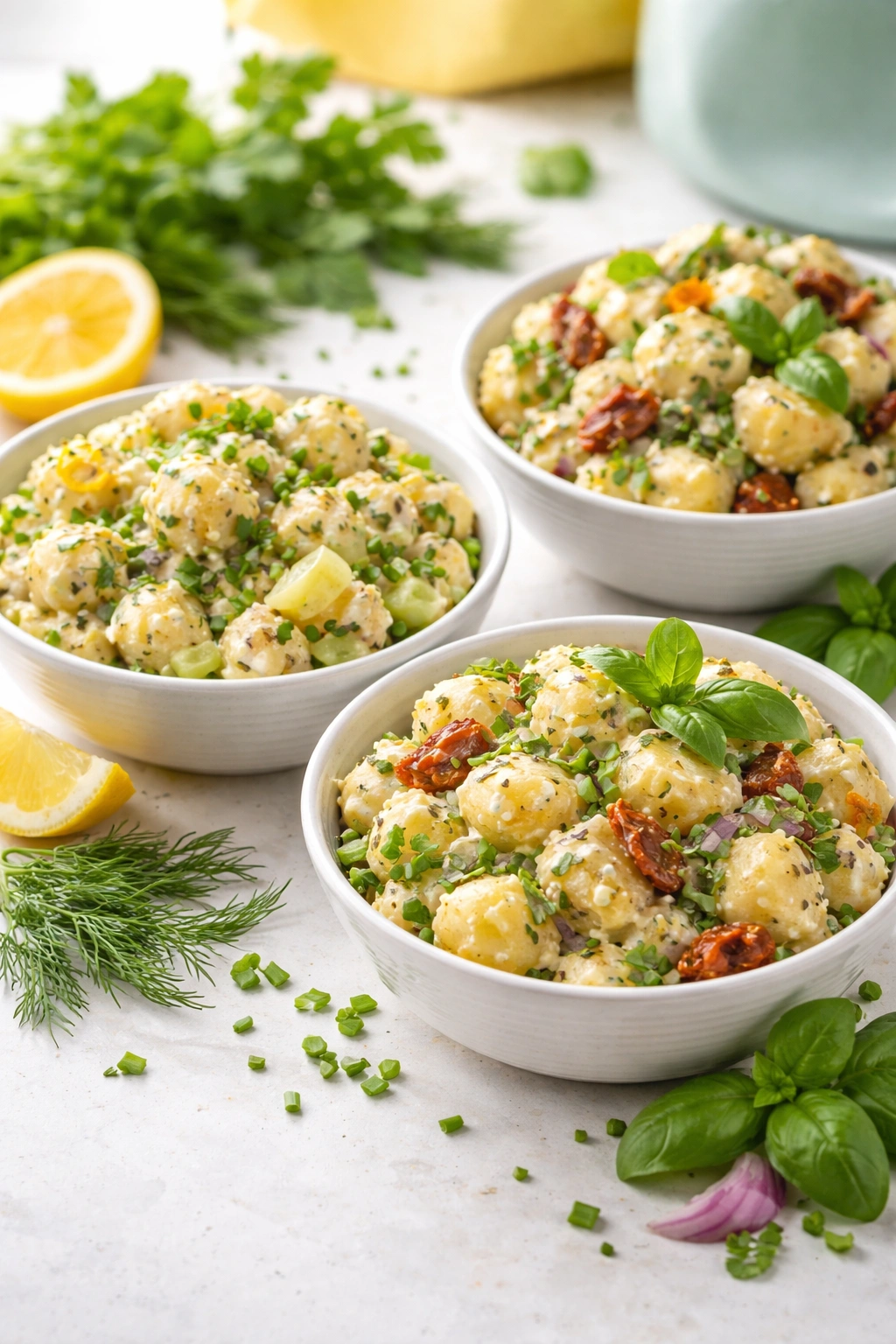
If you don’t love dill, swap it for tarragon (which pairs beautifully with the Dijon and lemon), fresh chives mixed with parsley, or even a combination of basil and oregano if you want an Italian-leaning flavor. Each changes the character slightly—tarragon makes it taste more elegant, chives keep it classic, Mediterranean herbs make it feel different. Use about ⅓ cup fresh herbs total, or 2–3 tablespoons dried.
Creamy Adjustments
For a tangier salad, swap half the mayo for sour cream or Greek yogurt. For a lighter version, use all Greek yogurt mixed with a couple tablespoons of olive oil to replace the mayo entirely—it’ll be tangier and less rich. For a vegan version, substitute dairy-free mayo (which works surprisingly well) and skip the eggs.
Vegetable Additions
Beyond the celery and green onions, consider adding diced sweet pickle (about 2 tablespoons—adds sweetness and texture), crispy bacon pieces (if you’re not vegetarian—about 4–5 strips cooked and crumbled adds smokiness), diced red onion (about ¼ cup—assertive but delicious), or cherry tomatoes halved (add just before serving so they don’t make the salad watery). Add no more than two additions beyond the core recipe, or flavors get muddled.
Spice Variations
For subtle heat, add ⅛ to ¼ teaspoon cayenne pepper to the mayo mixture. For something more interesting, add 1 tablespoon of hot sauce (Frank’s RedHot or similar) mixed into the mayo—it adds flavor, not just heat. For a smoky angle, add ½ teaspoon smoked paprika to the warm dressing.
Warm Potato Salad Version
If you’re serving this at a casual outdoor gathering in cooler weather and want it warm, skip the chilling step entirely. Make it as written through step 16, then serve it warm (about an hour after you make it, so it’s warm but not piping hot). Warm potato salad has a completely different, almost more luxurious feel—the flavors taste more vibrant, and the texture feels more voluptuous. It’s genuinely excellent this way, especially with grilled chicken.
Scaled-Down Version
All quantities can be cut in half for a smaller gathering—you’d end up with about 4 cups, serving 4 to 5 people. Cooking time stays the same, but watch the potatoes more carefully since there’s less thermal mass in the pot.
Storage, Make-Ahead, and Keeping It Fresh
How Long It Keeps
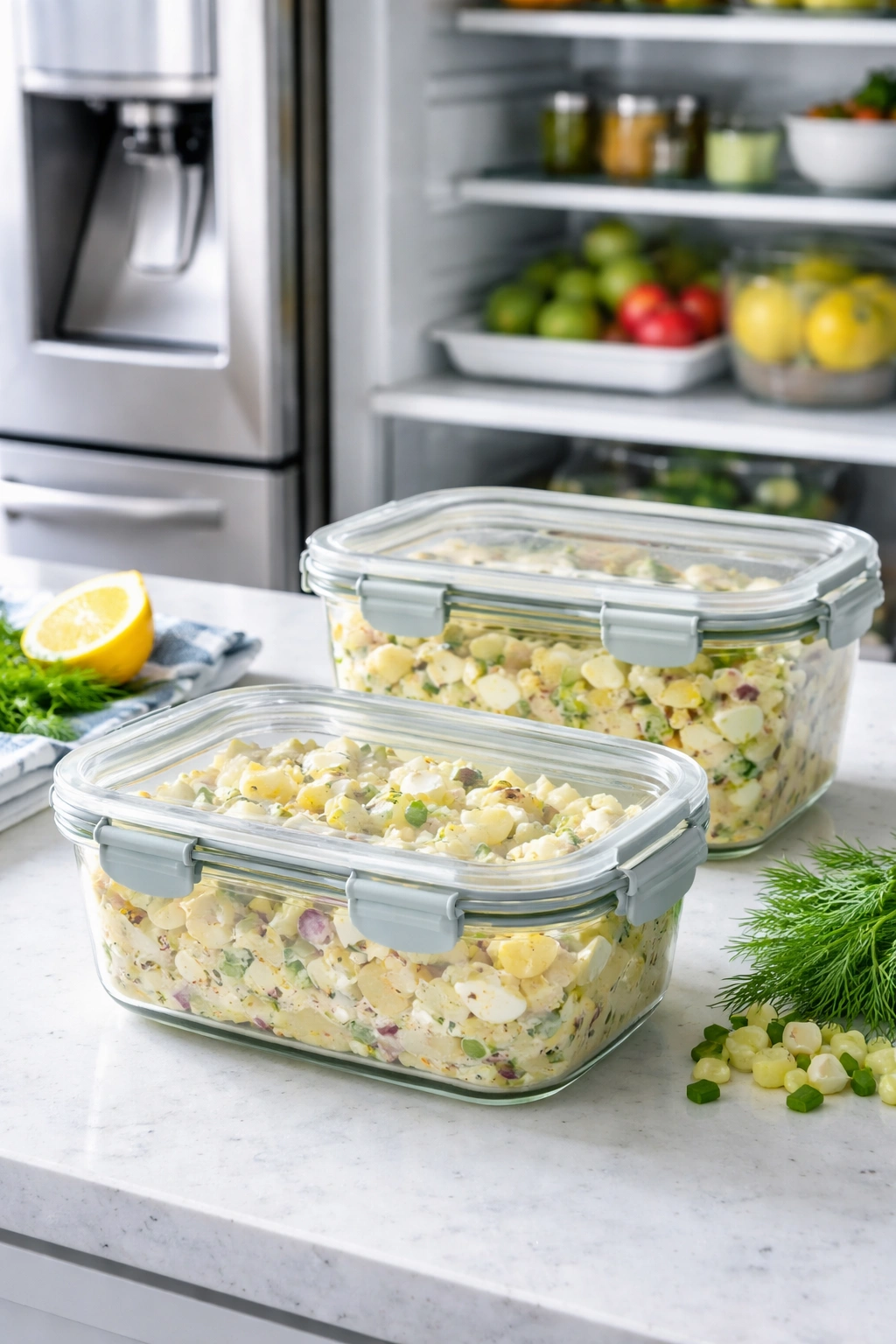
This potato salad keeps beautifully in the refrigerator for up to 4 days, covered. The flavors actually deepen after the first day, which makes it perfect for prepping ahead. It does not freeze well—the texture of the potatoes becomes grainy and odd when thawed. It’s also not safe to leave unrefrigerated for more than 2 hours in warm weather due to the mayo content.
Making It Ahead
You can make this salad up to 24 hours before you need it. In fact, there’s an argument for making it the day before—it gives the potatoes more time to absorb the dressing and flavors to settle. If you’re making it more than a few hours ahead, don’t add the fresh herbs until closer to serving time. You can add them up to 2 hours before serving without them looking completely sad, but adding them 30 minutes before is ideal if you want them to taste bright.
Keeping It from Getting Watery
Potato salad can sometimes get watery as it sits—this happens when potatoes continue releasing moisture that gets absorbed by the dressing. To prevent this, make sure you’re draining the cooked potatoes well and letting them sit for just 1 minute (not longer) before adding the dressing. Don’t add salt to the cooking water and then also season heavily in the dressing—that compounds the moisture-drawing effect. If the salad does get slightly watery after sitting, gently drain off excess liquid with a spoon before serving, or stir in a bit more mayo.
Reheating if Needed
If you somehow end up with leftovers and want to serve them warm again, gently reheat the salad in a pot over low heat, stirring carefully. It won’t be quite as good as fresh (the potatoes will feel slightly softer), but it’s absolutely edible and still tastes good.
Transporting to a Potluck
Pack the salad in a container with a tight-fitting lid. If it’s going to sit in a warm car, put the container in a cooler with an ice pack underneath (not directly touching the bottom—wrap the ice pack in a towel). The salad will stay cold and fresh for several hours. If you’re bringing it to serve immediately, you can skip the cooler—just don’t leave it sitting in the sun.
Serving Suggestions and Pairings
What It Goes With
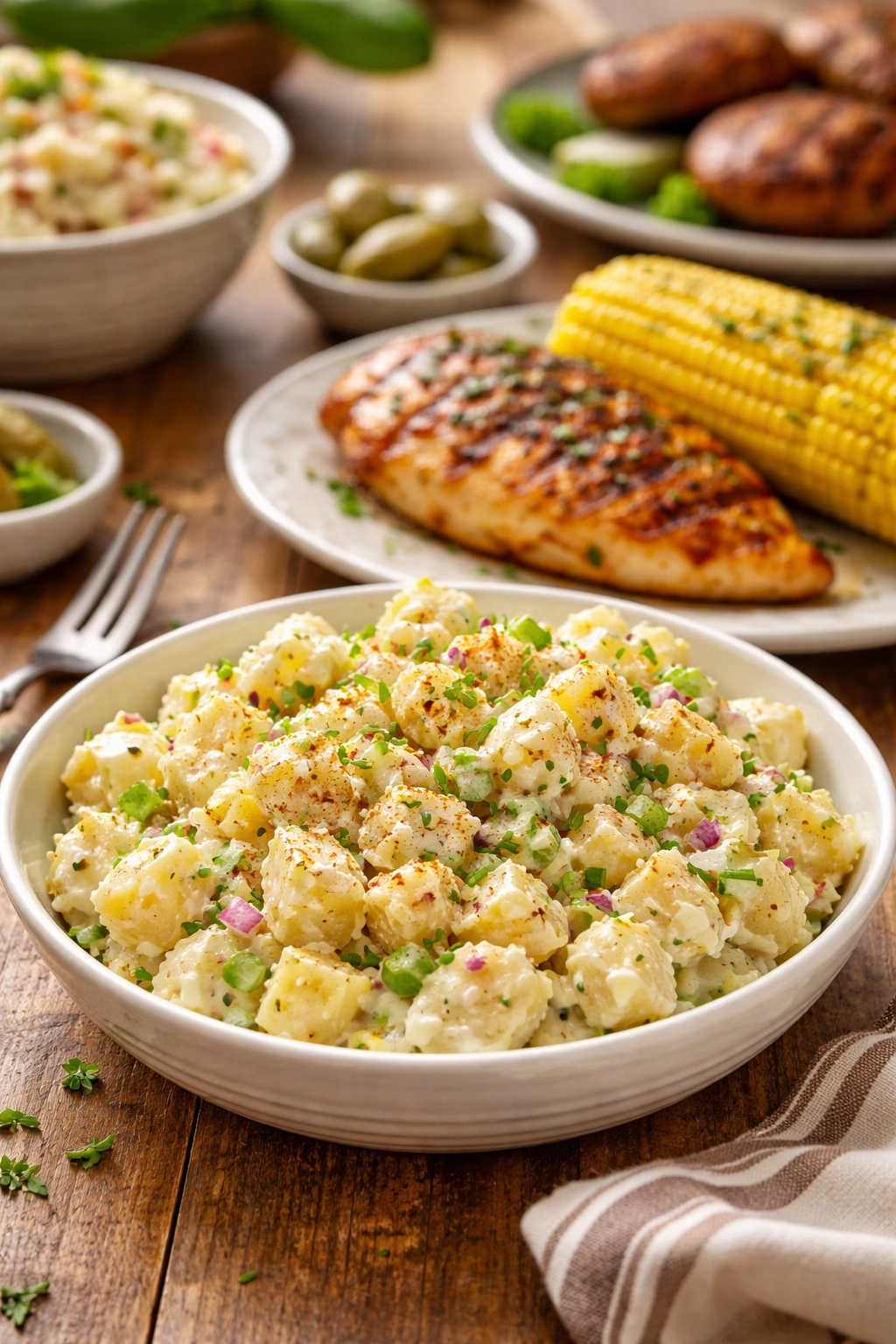
This potato salad is genuinely universal. It pairs beautifully with grilled chicken (especially if the chicken has char and spice—the cool, creamy salad balances smokiness perfectly), burgers (the bright dill flavor cuts through the richness of beef), grilled fish (it’s not overpowering enough to compete with delicate fish), ribs, pulled pork, and vegetarian mains like grilled corn or bean-based dishes. It’s equally at home at a casual weeknight dinner, a formal cookout, or a potluck where you have no idea what else will be there.
Temperature Matters
Serve it chilled or at cool room temperature, not straight from the fridge. Cold dulls flavor, so take it out 10 to 15 minutes before serving and let it sit at room temperature so the flavors wake up. That said, on a sweltering day, you probably want it genuinely cold—just be aware that it’ll taste slightly more muted when it’s ice-cold.
Plating and Presentation
Scoop it into a serving bowl with a wide spoon or salad server. If you want to get fancy, you can mound it on a bed of fresh greens (lettuce or arugula—the sharpness of greens contrasts nicely with the creamy salad) or serve individual portions on small plates with a side of fresh dill as garnish. It’s also completely fine to just scoop it into a simple bowl—this salad doesn’t need pretension.
Drink Pairings
Cold lager or pilsner beer pairs beautifully because the crispness cuts through the richness. Crisp white wines like Sauvignon Blanc or Albariño also work if you’re serving wine. Iced tea, especially slightly sweet tea with lemon, is genuinely excellent alongside. Sparkling water with fresh lemon is perfect if you want something non-alcoholic.
Side Pairings
Serve alongside grilled vegetables (zucchini, bell peppers, asparagus—anything with char), fresh corn (the sweet-mild flavor echoes the potato salad), crusty bread or dinner rolls for soaking up any extra dressing, and a simple green salad if you want something to balance the richness. Fresh fruit like watermelon or sliced tomatoes add brightness to the plate.
Final Thoughts
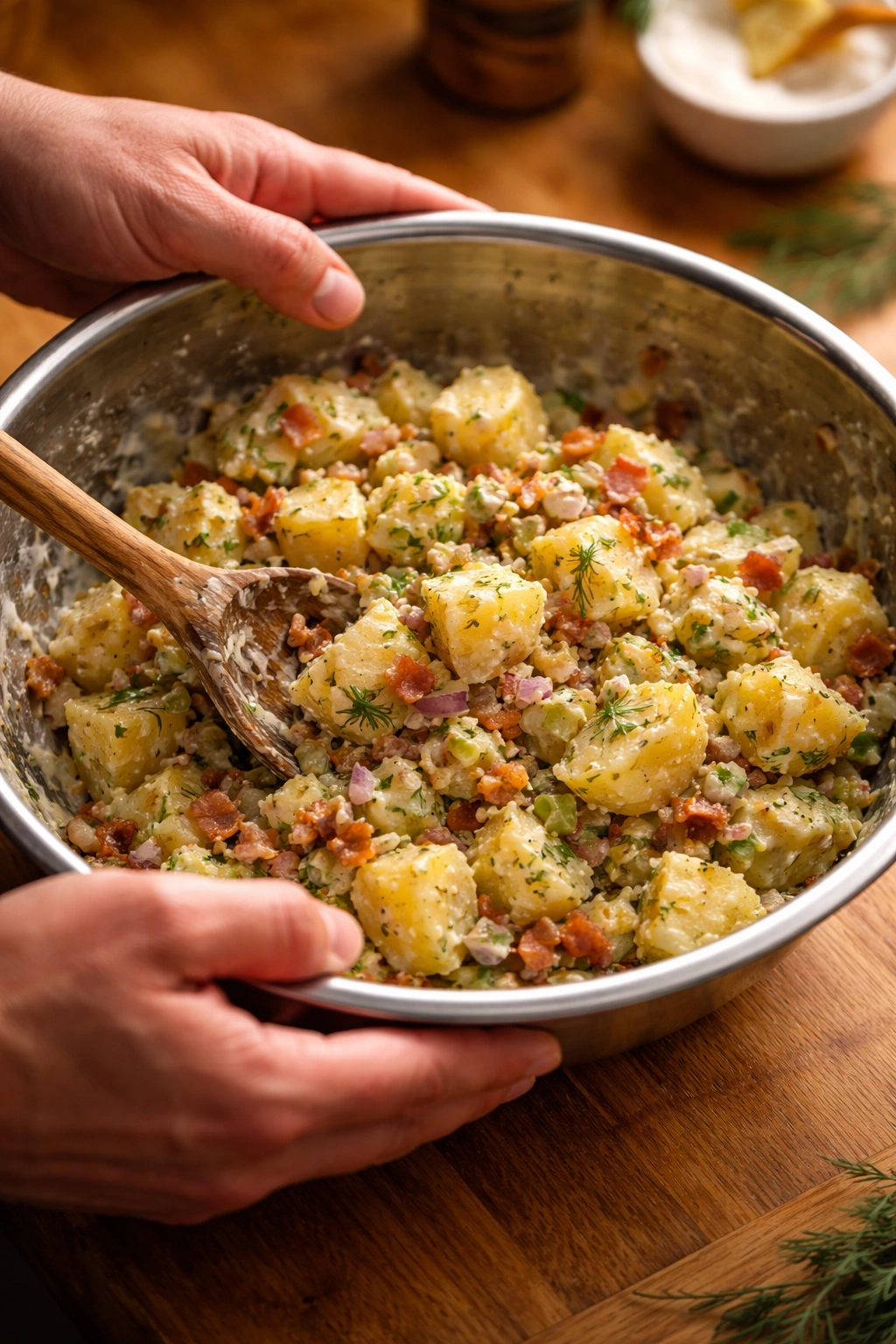
A genuinely good potato salad seems simple on the surface, but it’s actually built on technique and intention. The warm dressing stage isn’t optional—it’s what separates potato salad that tastes seasoned and complex from potato salad that’s basically cold mayo with potatoes in it. The layering of flavors, the precise seasoning adjustments, the gentle folding instead of aggressive mixing—these are what make people ask for your recipe.
What you’re really making here is a salad that tastes like someone who knows what they’re doing put thought and care into it. It’s the kind of side dish that makes people genuinely satisfied, not just full. It holds up for hours at a gathering without getting soggy or separating, it’s actually better the next day, and it works with literally any main protein you’re grilling or smoking.
Make this once and you’ll understand why people serve potato salad at cookouts. Make it a few times and you’ll own it—you’ll feel confident adjusting the seasoning to your taste, swapping herbs if you want something different, and knowing exactly how far ahead you can make it without anything suffering. That’s the real difference between following a recipe and understanding a dish.
