



A great taco salad doesn’t need to apologize for being a salad — it’s a satisfying, complete dinner that just happens to be built on lettuce. When you layer crispy components, seasoned protein, creamy toppings, and a killer dressing, you end up with something far more craveable than a basic green salad, with more texture variety and depth of flavor than most main dishes. The secret is building it thoughtfully, with enough substance and richness that you actually feel full and satisfied afterward, not like you’re eating diet food.
Most taco salads either go one of two directions: they’re either drowning in heavy cream-based dressing and fried components to the point where they taste more like a deconstructed burrito, or they’re so light and virtuous that they feel like an obligation rather than a meal you genuinely want to eat. The magic happens in the middle — when you’ve got enough protein, enough crunch, enough creaminess, and enough bold flavor that every single bite feels intentional and delicious. This version walks that line perfectly.
What makes this particular approach work is the combination of hot, seasoned ground beef tossed with fresh, cool lettuce; the contrast between crispy tortilla chips and creamy avocado; the brightness of lime and cilantro cutting through richness; and the way a good dressing ties everything together into something that feels both fresh and indulgent at the same time. You’re eating vegetables and lean protein, but you’re also getting enough richness and satisfaction that you don’t walk away hungry an hour later. It’s the kind of salad that works as a weeknight dinner, a meal prep option, and a weekend lunch all equally well.
Why This Taco Salad Works as Your Complete Dinner
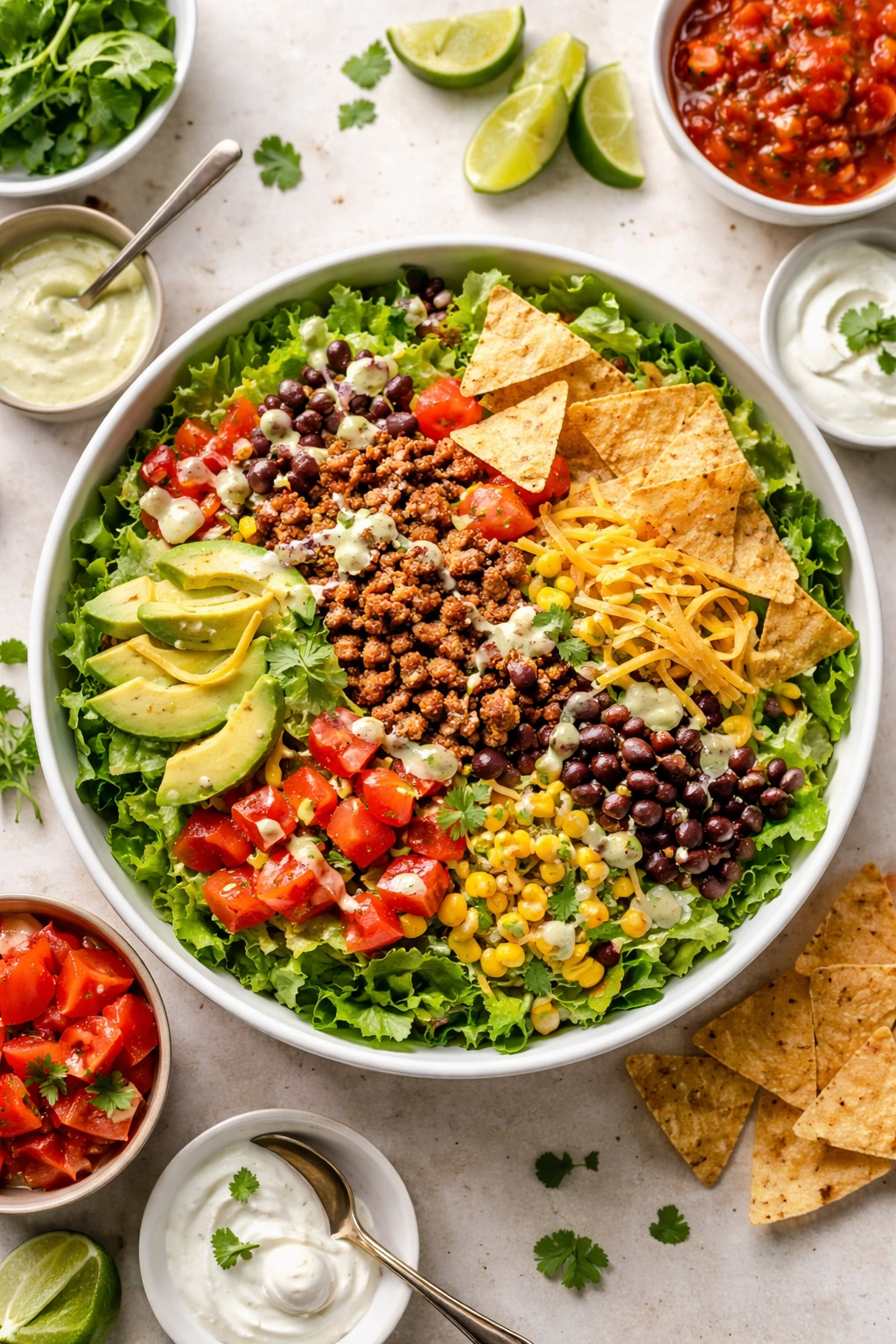
A taco salad earns its place as a full dinner because it checks every nutritional box without feeling like a nutritional checklist. You’ve got your greens and raw vegetables for fiber, vitamins, and minerals. You’ve got lean or standard ground beef providing substantial protein and iron. You’ve got healthy fats from avocado and olive oil-based dressing. You’ve got a bit of carbohydrate crunch from the tortilla chips or crispy tortilla bowl. There’s no component missing, and there’s no component that makes you feel like you’re sacrificing anything.
The satisfaction factor is what really sets it apart, though. A plain grilled chicken breast and steamed vegetables is technically a complete dinner too, but this salad tastes like something you chose to eat because you wanted it, not because you felt obligated to eat it. The flavors are bold — lime, cilantro, cumin, garlic, chili powder. The textures are interesting — tender lettuce, crispy chips, creamy avocado, warm seasoned beef. The richness from cheese and dressing keeps you feeling satiated for hours afterward.
You can customize it endlessly based on what you have on hand, what you’re in the mood for, and how much time you want to spend in the kitchen. A weeknight version with rotisserie chicken and jarred salsa comes together in fifteen minutes. A weekend version with homemade seasoned beef, freshly made guacamole, and crispy tortilla strips takes a bit longer but tastes noticeably better. Both work. Both count as dinner.
Building the Foundation With Fresh Greens
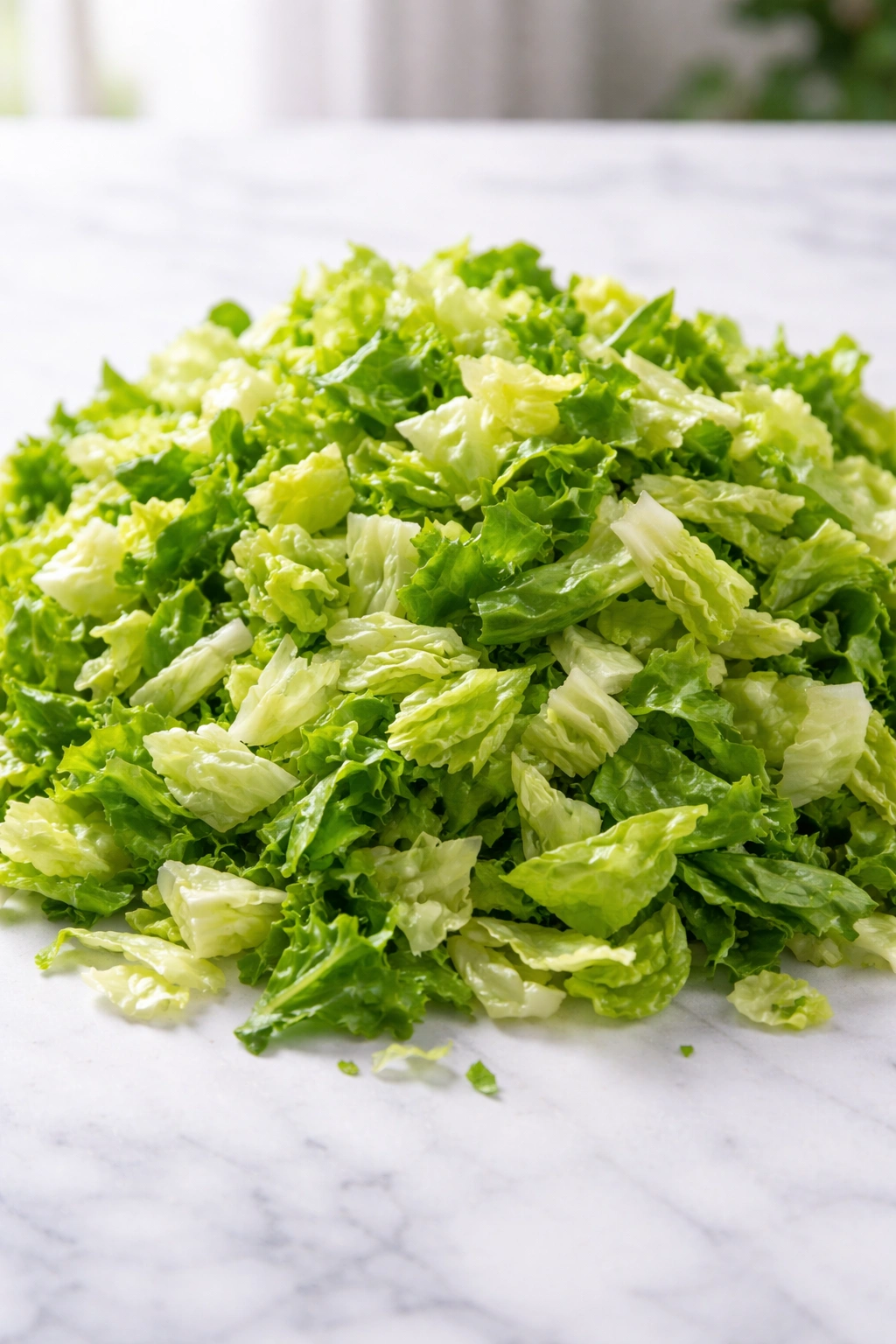
The base of your taco salad matters far more than most people realize. Iceberg lettuce is traditional and classic — it’s mild enough not to compete with the toppings, it stays crisp even when dressed, and it has just enough texture contrast with everything else. But if you want something with a bit more personality, a mix of iceberg and romaine works beautifully, or even a blend of iceberg, romaine, and a small amount of arugula if you like a little peppery bite.
The key is to use enough lettuce that the salad feels substantial when you’re eating it. A meager handful of greens under a pile of toppings doesn’t work — you want at least 4 to 6 cups of chopped lettuce as your base, so that every forkful has greens mixed throughout. Wash your lettuce well, dry it thoroughly (a salad spinner makes this effortless, but patting with paper towels works too), and chop it into bite-sized pieces just before you’re ready to assemble the salad. Wet lettuce and soggy lettuce are two different problems — wet lettuce dilutes your dressing, while pre-chopped lettuce that’s been sitting in the fridge oxidizes and loses that fresh crunch.
If you’re meal-prepping this salad, keep the lettuce and dressing completely separate until you’re actually eating it. Store the lettuce in a container with paper towels to absorb excess moisture, keep the dressing sealed in a jar, and combine them just before you eat. This is non-negotiable if you want crispy greens and not a wilted mess.
Seasoned Ground Beef: The Protein Heart of the Dish
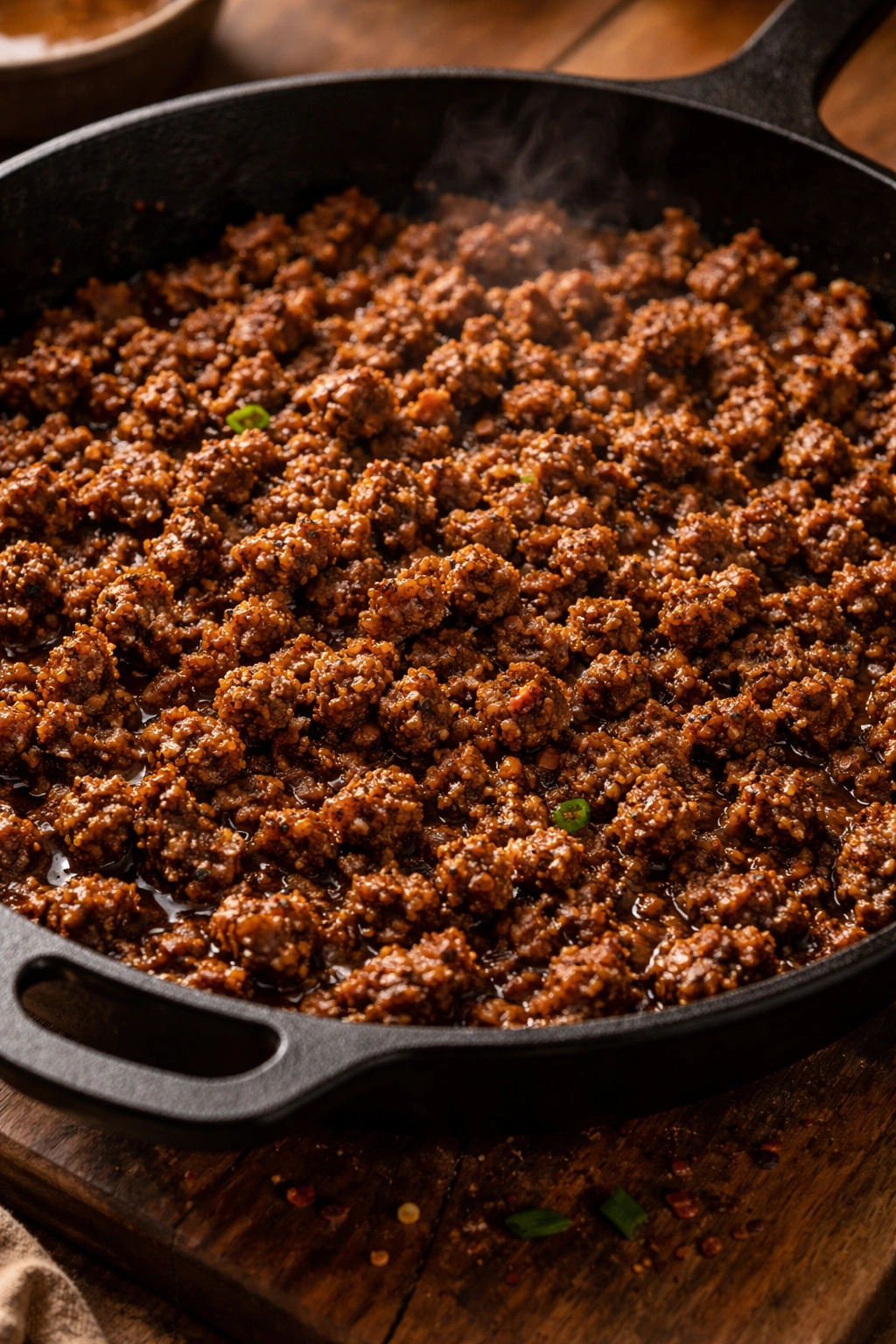
Seasoned ground beef is the traditional protein for a taco salad, and there’s a reason — it’s flavorful, quick-cooking, and pairs perfectly with all the other components. You can use 80/20 ground beef, 85/15, or even 90/10 if you prefer leaner meat; the fattier ground beef will render more flavorful fat and brown more beautifully, while the leaner meat is slightly less rich but still delicious if you cook it properly.
The seasoning approach matters enormously. You can use store-bought taco seasoning — there’s nothing wrong with that, and it works fine — but making your own spice blend takes about two minutes and gives you noticeably more vibrant flavor. Toast your spices gently in a dry pan for thirty seconds before mixing them into the beef, and your whole kitchen will smell incredible. The combination of cumin, chili powder, garlic powder, onion powder, paprika, oregano, and a pinch of cayenne creates a warm, complex flavor profile that feels fresh and alive, not dusty or one-dimensional.
Brown the beef in a wide, heavy skillet over medium-high heat, breaking it into small crumbles as it cooks — aim for bite-sized pieces rather than one solid mass. Once it’s nearly cooked through, add your spices, a squeeze of lime juice, a splash of tomato sauce or chicken broth, and let it simmer for a few minutes so the spices bloom and hydrate fully. Taste it and adjust the seasoning as needed — this is your opportunity to add more lime for brightness, more cumin for depth, more chili powder for heat, whatever your palate is telling you it needs.
Creating Crispy Texture: Tortilla Chips and Crispy Strips
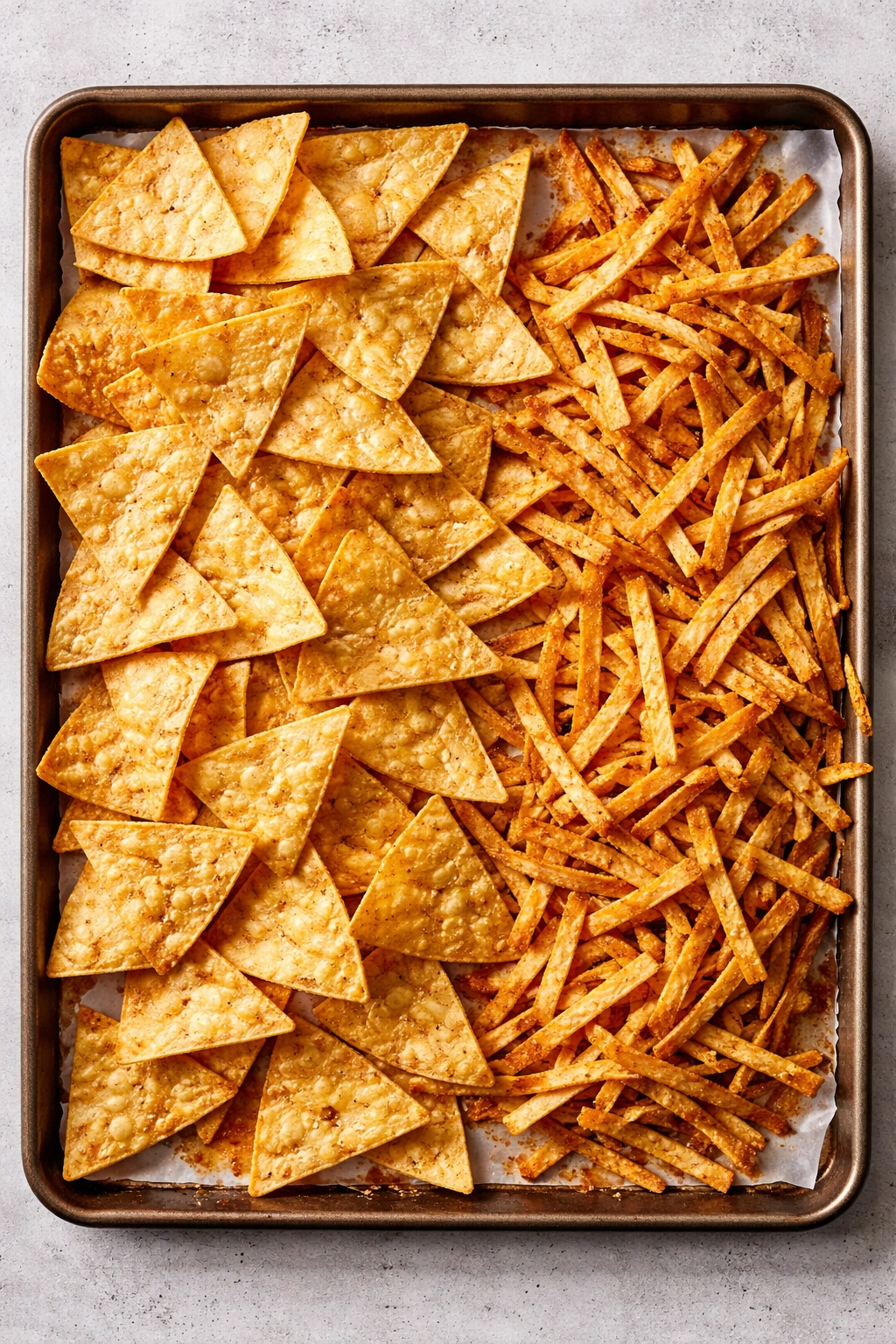
The textural contrast in a taco salad is where half the pleasure comes from. You need crunch — the kind of crunch that stays crispy even when it’s on top of dressed lettuce and warm beef. Store-bought tortilla chips work perfectly well for this, and they’re convenient, but homemade crispy strips taste noticeably better and give you control over salt level and flavor.
To make your own, cut flour or corn tortillas into strips about a quarter-inch wide, toss them lightly with a tiny bit of olive oil and salt, spread them on a baking sheet, and bake at 375°F until they’re golden and crispy — about eight to twelve minutes, depending on your oven. Watch them closely near the end, because they can go from perfectly crispy to burnt in about two minutes. Some people prefer to fry tortilla strips in a shallow pool of oil, which gives you even more crunch and a slightly richer flavor, but oven-baked strips are lighter and less messy.
The timing of when you add your chips to the salad is important. If you toss them in too early, they’ll soften and lose that satisfying crunch. If you add them at the very last second, they might not be distributed evenly throughout the salad and you’ll end up eating mostly chips in the first few bites and none in the last few. The sweet spot is to add them about a minute before you eat — toss everything together gently, so the chips are distributed throughout but haven’t had time to absorb too much moisture.
The Perfect Taco Salad Dressing
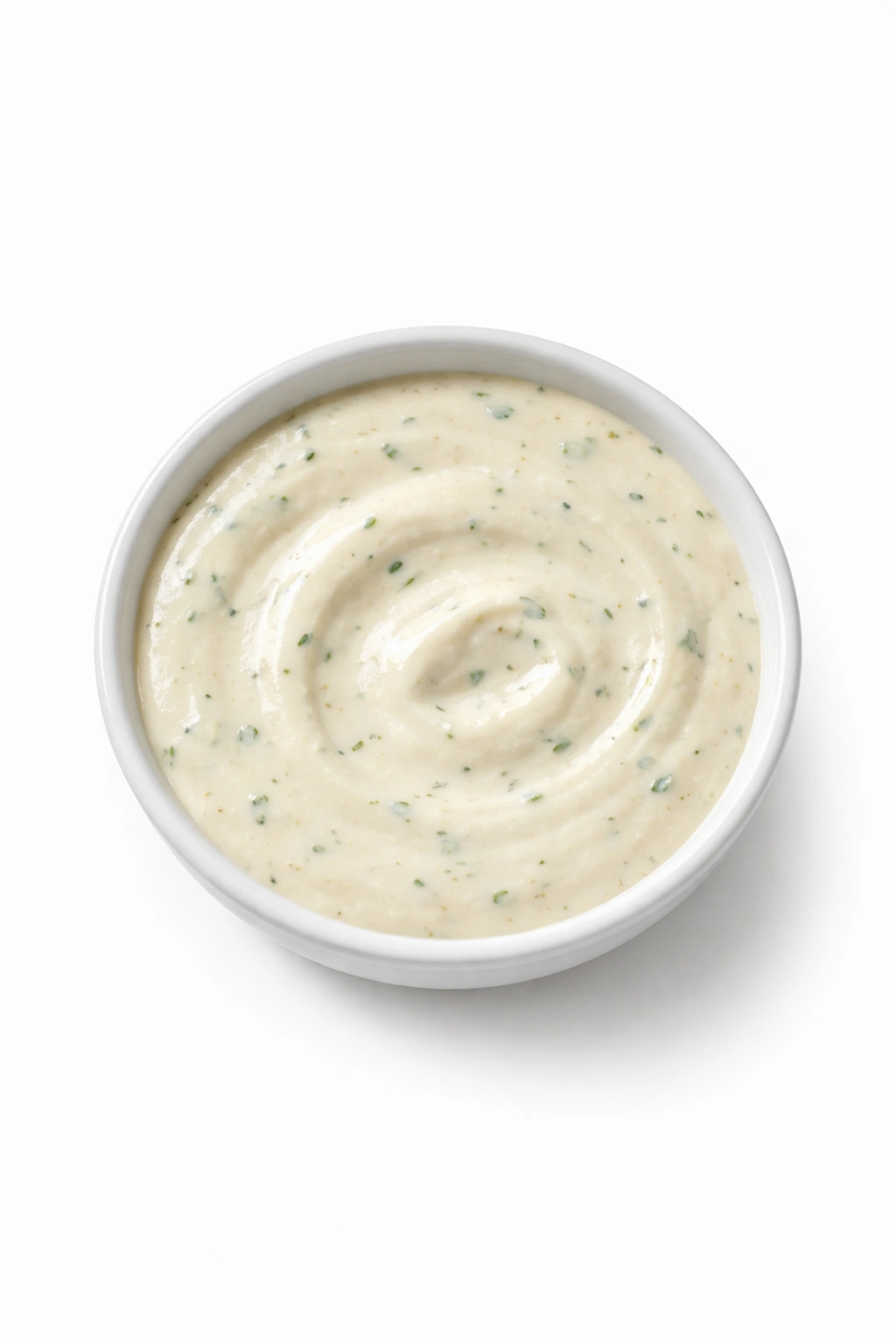
The dressing is what ties everything together and turns a collection of components into an actual salad. A proper taco salad dressing pulls from Latin American flavors — lime, cilantro, cumin, garlic — and gets its richness from either sour cream, mayonnaise, or a combination of both, with good olive oil added for flavor and body.
The easiest version is simply sour cream mixed with a squeeze of lime juice, a minced garlic clove, some chopped cilantro, a pinch of cumin, and salt and pepper to taste. This is creamy, tangy, bright, and completely delicious — and it takes about two minutes to make. If you want something lighter, blend sour cream with a little olive oil and lime juice, and you’ve got something with the same flavor profile but a thinner consistency that coats the lettuce more evenly.
A richer version uses equal parts sour cream and mayonnaise blended with lime juice, garlic, cilantro, cumin, a splash of hot sauce if you like a bit of heat, and salt and pepper. This version is luxurious and coating, with a little more heft to it. Some people add a tablespoon of fresh salsa to their dressing, which adds a slight texture and brightness that works beautifully.
The key is making your dressing thick enough that it coats the lettuce and toppings evenly without sliding to the bottom of the bowl, but not so thick that it’s hard to mix in. You want to be able to toss the salad without effort. If your dressing seems too thick, thin it with a tiny bit of lime juice or water until you get the consistency you’re after.
Serving and Timing Information
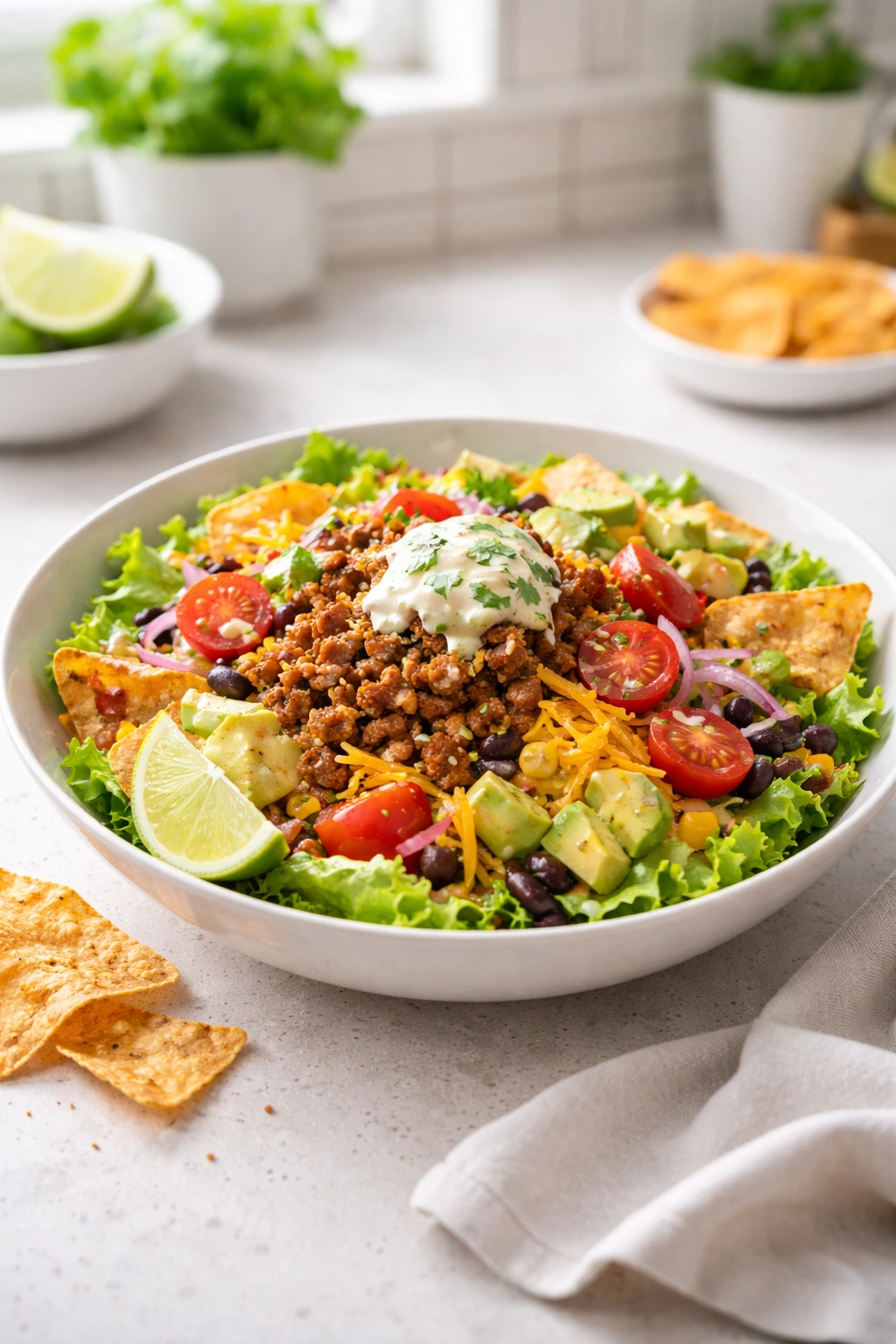
Yield: Serves 2 as a hearty dinner, or 4 as a lighter lunch
Prep Time: 20 minutes
Cook Time: 15 minutes
Total Time: 35 minutes active (does not include chilling times)
Difficulty: Beginner — This salad requires no special cooking techniques or equipment. Everything is straightforward chopping, browning, and assembly. Even someone cooking for the first time will succeed with confidence.
Complete Ingredient List
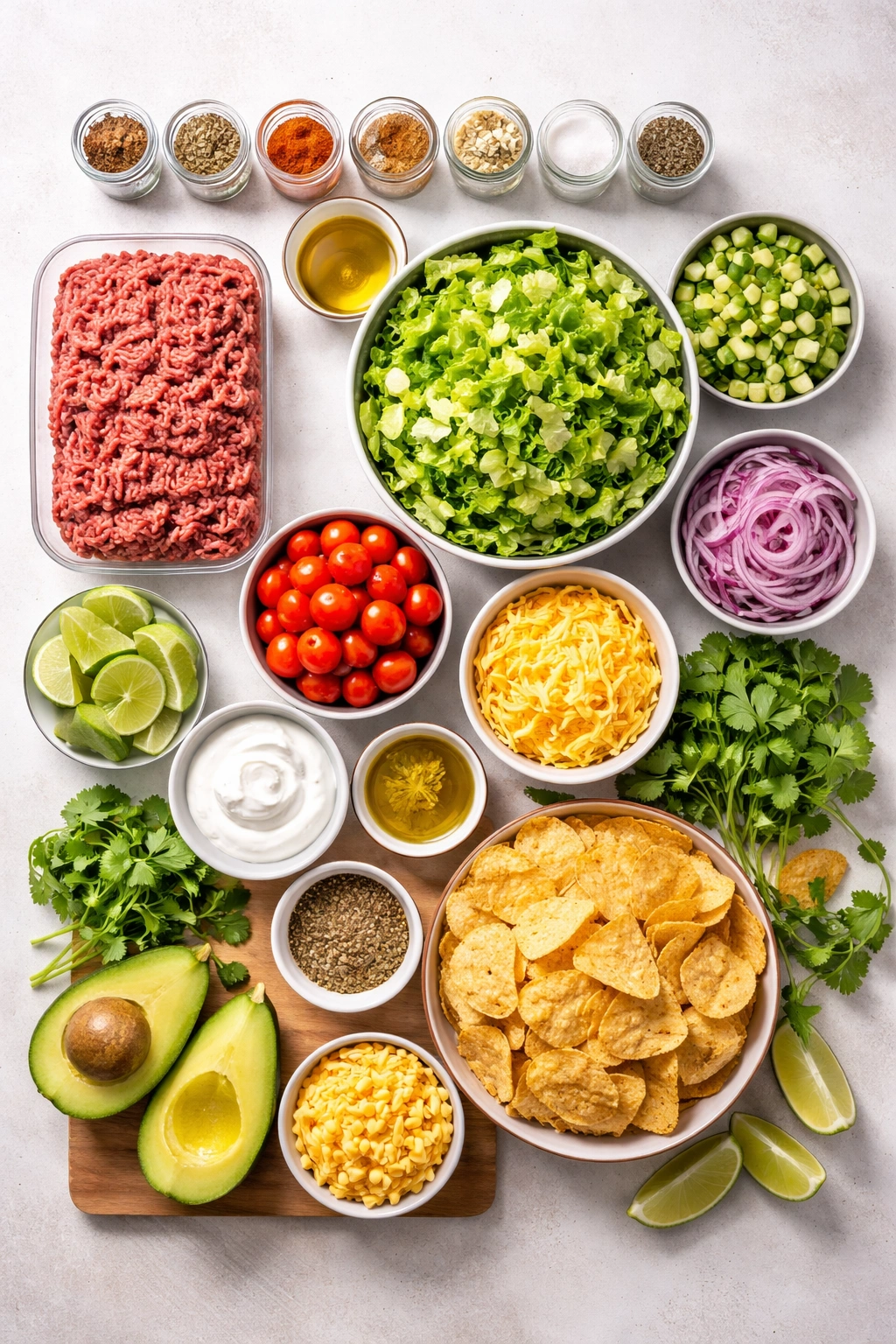
For the Seasoned Ground Beef:
- 1 pound ground beef (80/20 or 85/15 blend)
- 2 teaspoons ground cumin
- 1 teaspoon chili powder
- 1 teaspoon garlic powder
- ½ teaspoon onion powder
- ½ teaspoon smoked paprika
- ¼ teaspoon dried oregano
- Pinch of cayenne pepper (optional, omit if you prefer no heat)
- 2 tablespoons tomato sauce or 3 tablespoons low-sodium chicken broth
- Juice of ½ lime
- ½ teaspoon fine sea salt, plus more to taste
For the Salad Base:
- 4 to 6 cups chopped romaine or iceberg lettuce (or a combination)
- 1 cup cherry tomatoes, halved
- 1 cucumber, diced
- ½ red onion, thinly sliced
- 1 avocado, sliced (add just before serving to prevent browning)
- 1 cup corn kernels (fresh, frozen and thawed, or canned and drained)
- ¾ cup sharp cheddar cheese, shredded
For the Crispy Component:
- 2 cups store-bought tortilla chips, or 3 flour tortillas (cut into strips, fried or baked until crispy)
- Optional: 2 tablespoons fresh cilantro, roughly chopped
For the Dressing:
- ¾ cup sour cream
- Juice of 1 lime (about 2 tablespoons)
- 1 garlic clove, minced very fine (or ¼ teaspoon garlic powder if you prefer)
- ¼ cup fresh cilantro, finely chopped
- ¼ teaspoon ground cumin
- Salt and pepper to taste
- Optional: 1 tablespoon fresh salsa (adds brightness and a slight texture)
Step-by-Step Instructions
Make the Dressing Ahead:
-
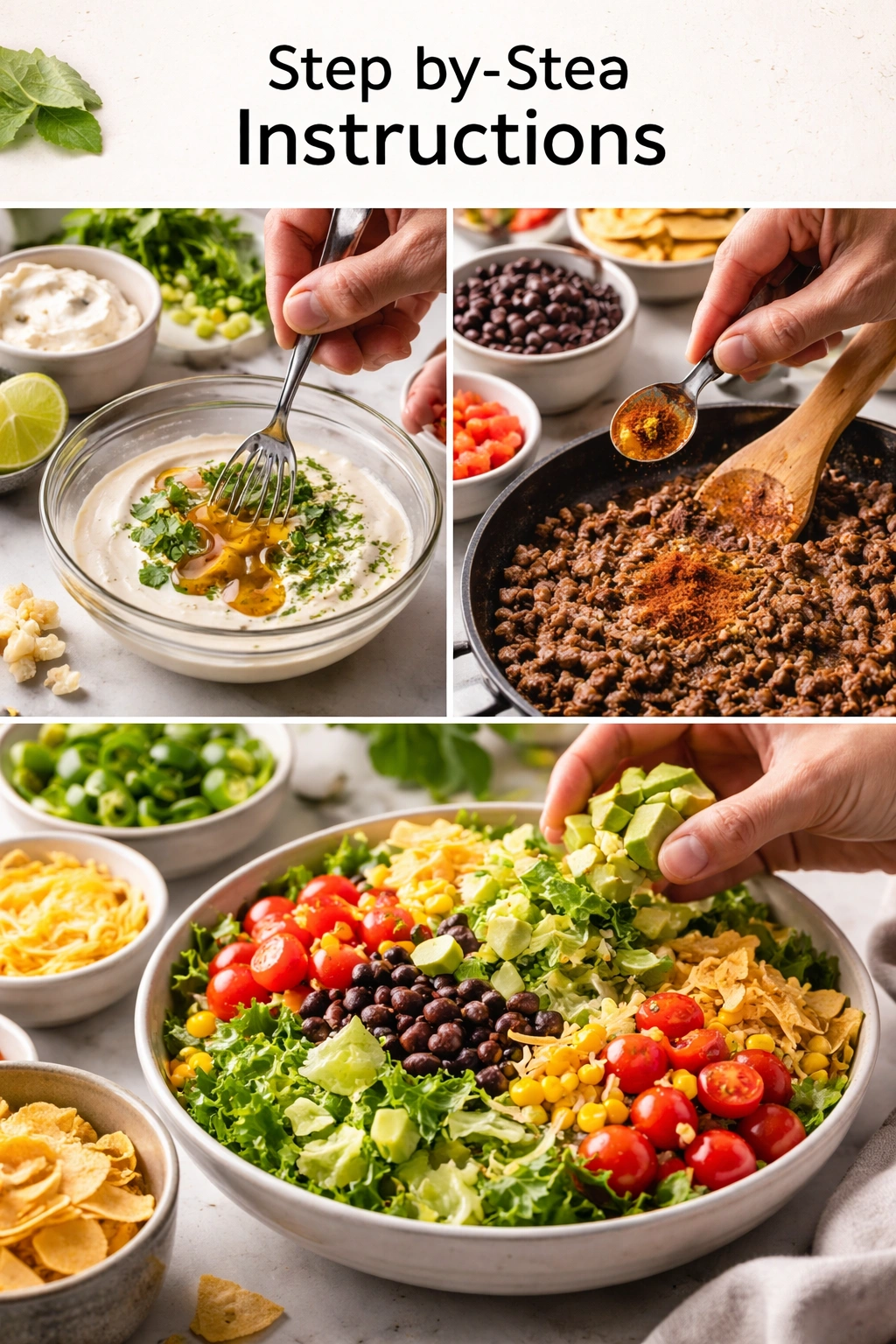
Combine the sour cream, lime juice, minced garlic, fresh cilantro, ground cumin, salt, and pepper in a small bowl or mason jar. Whisk or shake until completely smooth. If the dressing seems too thick, add a splash of water or an extra squeeze of lime juice until it reaches a pourable consistency.
Advertisements -
Taste the dressing and adjust seasonings as needed — it should be bright from the lime, herbaceous from the cilantro, and warm from the cumin. Set aside in the refrigerator while you prepare the other components. The dressing can be made up to 3 days ahead and stored in a sealed container in the fridge.
Prepare the Salad Components:
-
Wash and thoroughly dry the lettuce. Chop it into bite-sized pieces and place in a large bowl or on a serving platter. Add the halved cherry tomatoes, diced cucumber, and sliced red onion. Leave the avocado and tortilla chips separate for now — you’ll add these right before serving to maintain texture and prevent browning.
-
Toast the spices for the beef in a small, dry skillet over medium heat for about 30 seconds, until fragrant. This step is optional but makes a noticeable difference — it wakes up the spices and deepens their flavor. Pour them onto a small plate and set aside.
Brown the Ground Beef:
-
Heat a large, heavy skillet over medium-high heat until it’s quite hot — a drop of water should sizzle immediately when it hits the pan. Add the ground beef in a single layer and let it sit undisturbed for 2 to 3 minutes. This initial sear develops a flavorful crust on the meat. Then break it into small, bite-sized crumbles using a wooden spoon or spatula, stirring occasionally.
-
Continue cooking the beef until it’s no longer pink — this usually takes about 5 to 8 minutes total, depending on the thickness of your crumbles and the heat of your pan. You want it cooked through and lightly browned, not gray and dense from over-stirring. Once the beef is cooked, pour off any excess grease if there’s more than about a tablespoon pooling in the pan.
-
Add the toasted spices (or store-bought taco seasoning if you’re using that), the tomato sauce or broth, lime juice, and salt to the beef. Stir well so everything is evenly coated. Reduce the heat to low and let it simmer for 3 to 4 minutes, stirring occasionally. The mixture should look moist and fragrant, not dry. Taste it and add more salt, lime juice, or your favorite spices if needed.
Assemble the Salad:
-
Slicing the avocado is best done right before assembly — it browns quickly when exposed to air, so don’t cut it too far ahead. Hold the avocado in your palm and slice it lengthwise around the pit. Twist the two halves apart, remove the pit, and either slice the avocado directly into the salad or slice it on a cutting board and add it to the greens carefully.
Advertisements -
While the beef is still warm, distribute it evenly over the bed of lettuce and vegetables. Top with the shredded cheese. Add the corn kernels last, scattering them over the top so they’re visible and won’t fall to the bottom of the bowl.
-
Crush or scatter the tortilla chips over the top of the salad. If you’re making crispy tortilla strips, add them now while they’re still warm and at their crispiest. Garnish with fresh cilantro if you like.
-
Drizzle the dressing generously over the top — start with about half the dressing, toss the salad gently, and add more as needed. Alternatively, serve the dressing on the side and let each person dress their own salad to their preferred wetness level. Serve immediately while the beef is warm and the chips are still crispy.
Pro Tips for Restaurant-Quality Results
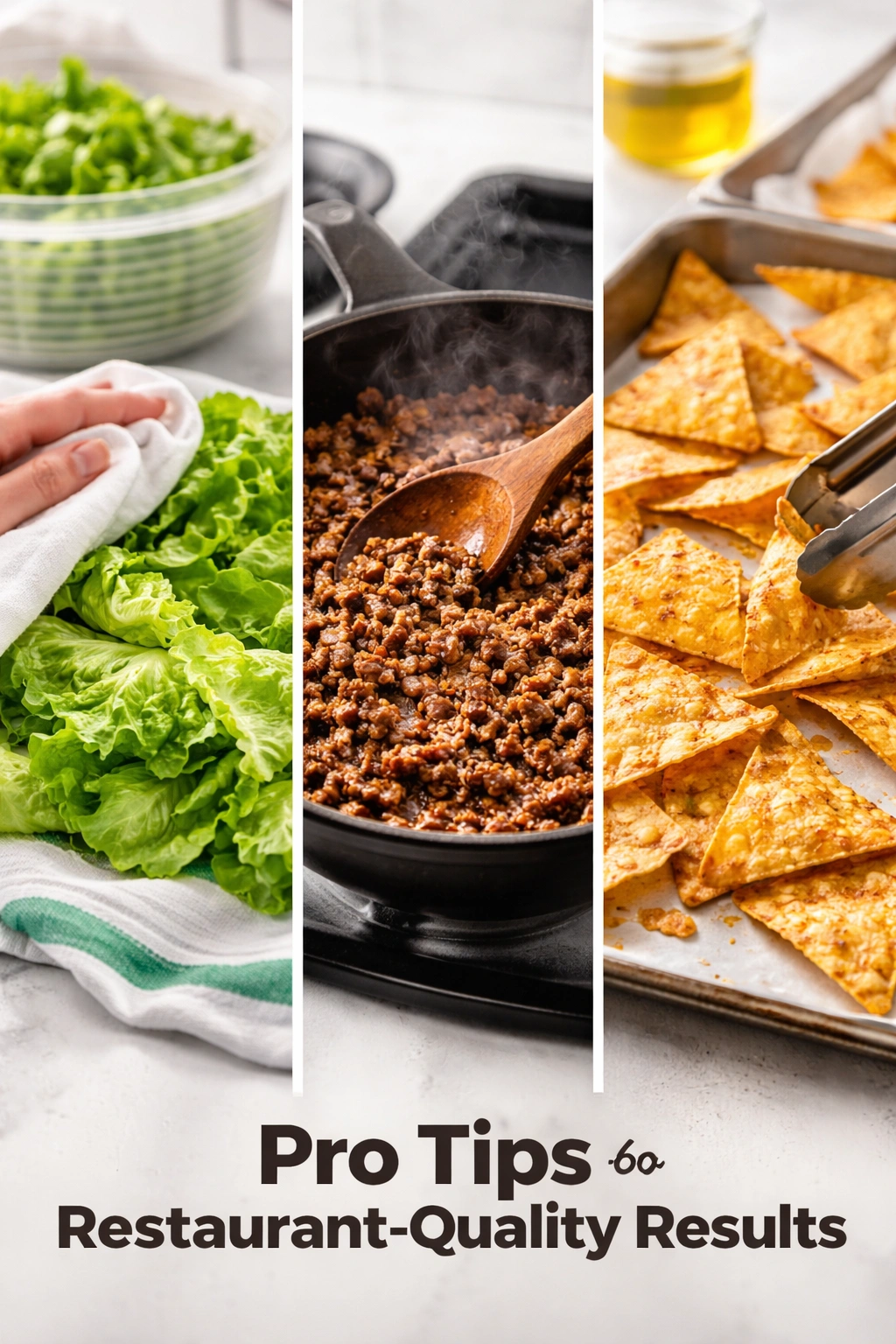
The quality of your final salad depends heavily on how much attention you pay to a few specific details. First, the lettuce must be completely dry before you assemble the salad. Wet lettuce dilutes your dressing, makes everything soggy, and ruins the crisp textural contrast you’re working so hard to build. Wash it, spin it thoroughly in a salad spinner or pat it dry with paper towels, and then give it a few minutes to air-dry if you have time.
Second, warm beef on cool, fresh lettuce is a beautiful contrast — don’t let the beef sit around getting cold before you assemble the salad. Have everything prepped and ready to go, brown the beef last, and assemble the salad while the meat is still hot. The warmth will slightly wilt the lettuce just enough to make it tender, while still keeping enough structure that the salad doesn’t collapse.
Third, the timing of the chips matters tremendously. Add them too early and they’re soggy mush. Add them right at the end and every forkful doesn’t have equal distribution. Add them about a minute before you start eating — toss gently, let them sit for just a moment to start settling in, and then eat. This gives you crispy chips that are distributed throughout without being waterlogged.
Fourth, don’t be shy with the dressing. A salad that’s under-dressed tastes sad and leafy. You want enough dressing that everything is coated, every bite has flavor, and there’s a light pool of dressing at the bottom of the bowl that you can mop up with the last few leaves. That said, don’t dump the entire container of dressing on the salad five minutes before you eat it — the greens will be a sad pile by the time you’re ready to eat. Dress just before serving.
Smart Variations and Swaps
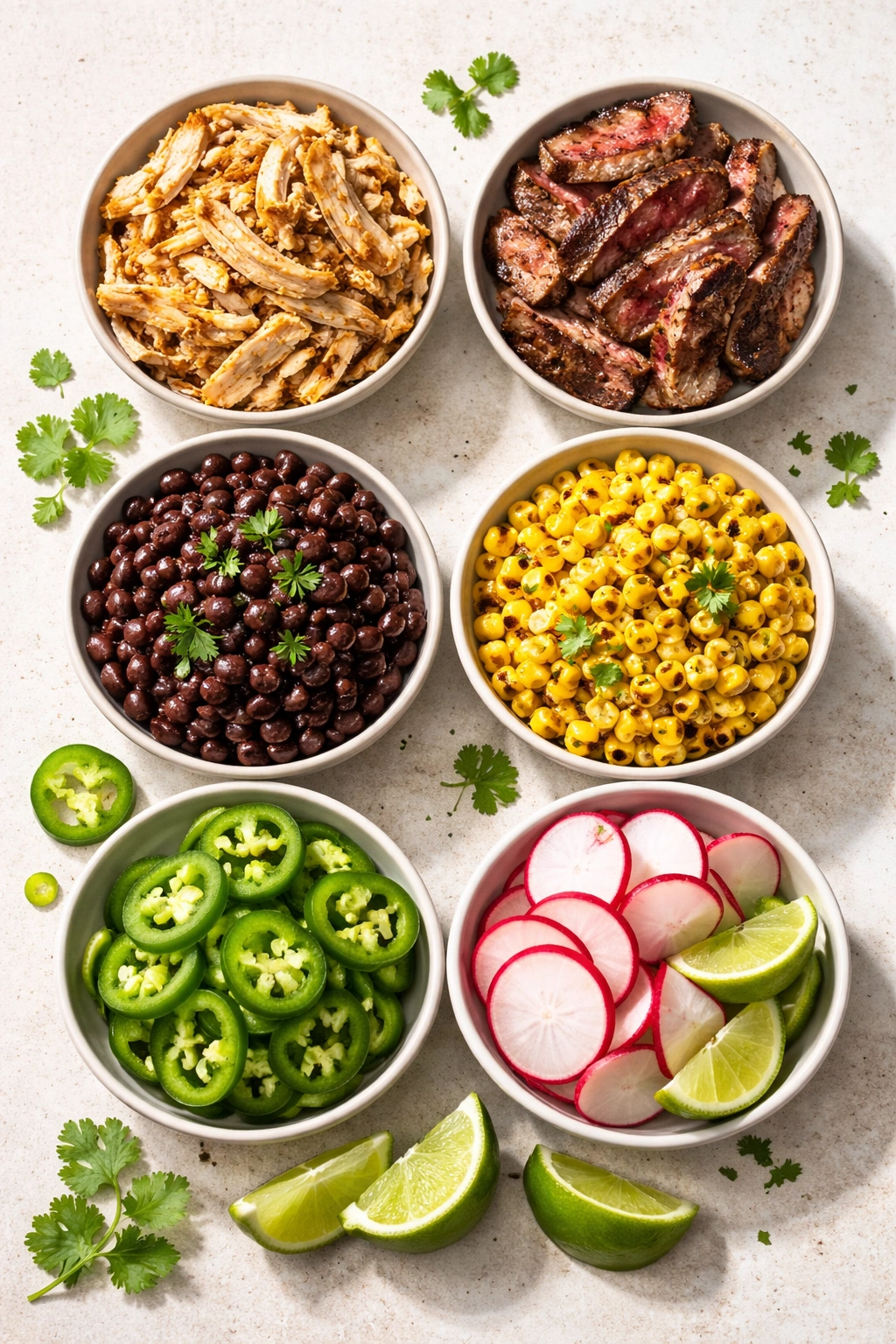
Once you’ve made this salad a few times and understand how the components work together, you can customize it infinitely based on what you have on hand and what you’re craving. If ground beef isn’t your thing, shredded rotisserie chicken works beautifully — skip the browning step and just shred the chicken, then warm it gently in a skillet with the same spices and a splash of lime juice. Steak, cut into thin strips and seared quickly in a hot pan, elevates the salad into special-dinner territory. Even seasoned black beans create a completely satisfying vegetarian version with plenty of protein.
The vegetable components are infinitely flexible too. If you don’t have cucumber, add sliced bell peppers or celery for crunch. If tomatoes aren’t in season or don’t appeal to you, skip them entirely. Roasted corn tastes better than fresh corn if you have time — toss it with a little olive oil and salt and roast it in a hot pan until it’s charred and sweet. Fresh jalapeños add heat. Radishes add peppery crunch. A handful of black beans mixed with the corn creates a more substantial protein base if you’re feeling like you want something even heartier.
For the dressing, experiment with adding a tablespoon of fresh salsa for texture, or a splash of hot sauce if you like heat. A teaspoon of honey or agave balances extra spice beautifully. Some people love stirring a tablespoon of pesto into their sour cream dressing for an entirely different flavor profile that still works beautifully with the salad components.
The cheese isn’t limited to cheddar — cotija cheese is traditional and adds a salty, slightly tangy note that’s beautiful. Queso fresco works perfectly. Even a crumble of feta, while not traditional, creates an interesting flavor contrast.
How to Prep Ahead and Store Leftovers
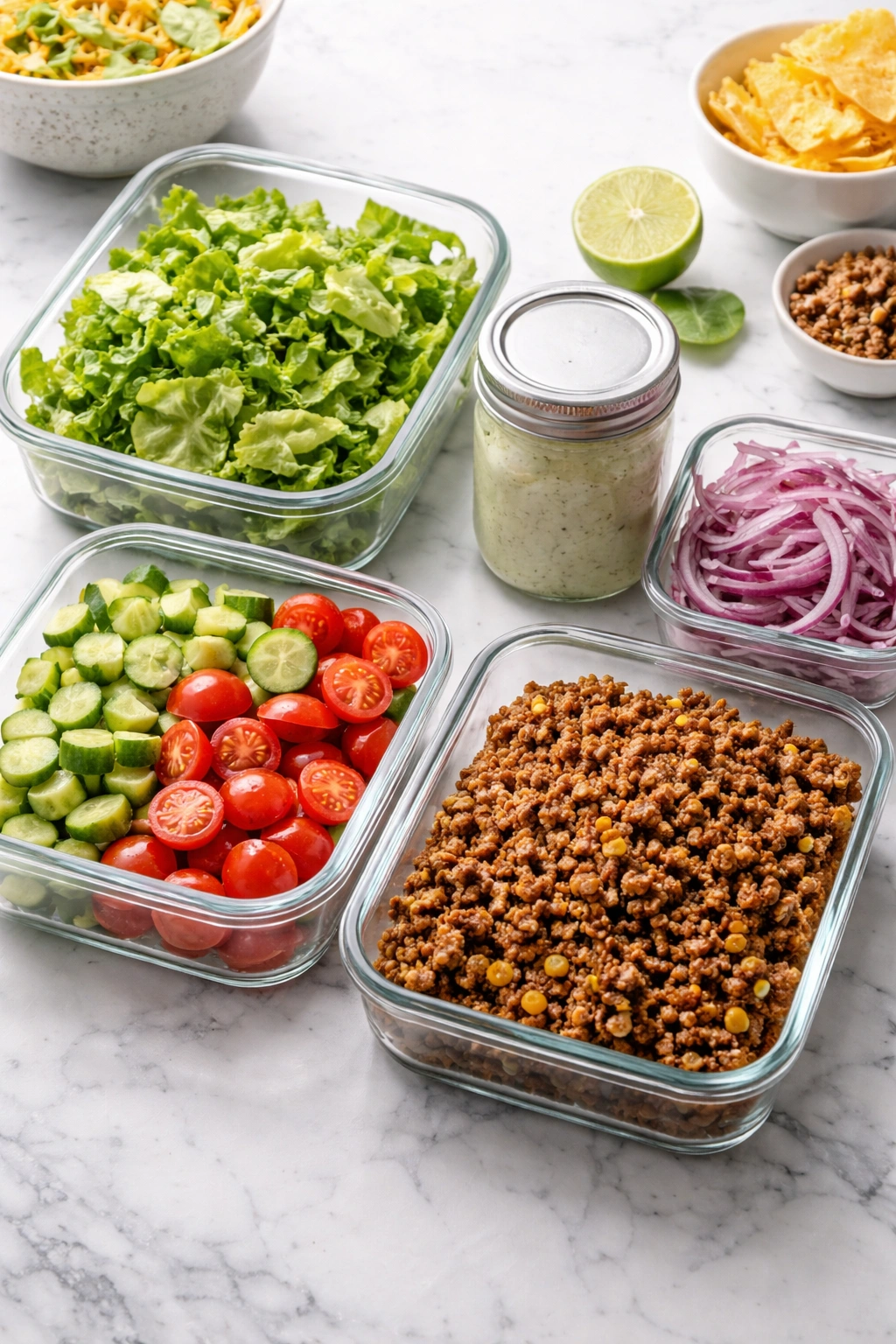
This salad is a meal-prep superstar if you approach it strategically. You can prep most of the components the night before or morning of, and then assemble the actual salad right before you eat it, which takes about five minutes.
Wash and chop the lettuce, storing it in a container lined with paper towels to absorb excess moisture. Store the paper towels and lettuce in the crisper drawer of your fridge — it will keep for up to three days this way. Chop the cucumber and tomatoes and store them separately in sealed containers; they’ll keep for up to two days. The red onion can be sliced and stored in a sealed container; it actually gets milder the longer it sits.
Make the dressing up to three days ahead and store it in a sealed mason jar or container in the fridge. The flavors actually improve as it sits, becoming more integrated.
Cook the seasoned ground beef up to two days ahead and store it in a sealed container in the fridge. You can eat it cold straight from the container, or reheat it gently in a skillet with a splash of water if you prefer it warm. If you want the salad warm, reheating the beef just before you assemble takes about three minutes.
The tortilla chips and crispy strips are best added right before serving to maintain their crunch. If you’ve made homemade strips, store them in an airtight container — they’ll keep for two days at room temperature, or three to four days in an airtight container in the pantry. If they start to soften, you can crisp them up again by laying them on a baking sheet and toasting them in a 300°F oven for three to five minutes.
The avocado should be sliced as close to eating time as possible — within just a few minutes. If you need to prep it ahead, slice it onto the salad, arrange it carefully, and store the whole thing uncovered (not wrapped in plastic) in the fridge, and eat it within an hour.
The assembled salad does not keep well — the lettuce will wilt, the chips will soften, and the whole thing will become sad and unappetizing. This is not a salad that improves with time. Make it fresh right before you eat it, and it’s magical. Make it ahead, and it’s disappointing. It’s worth the extra five minutes of assembly time to wait until you’re ready to eat.
The Best Ways to Serve and Enjoy It
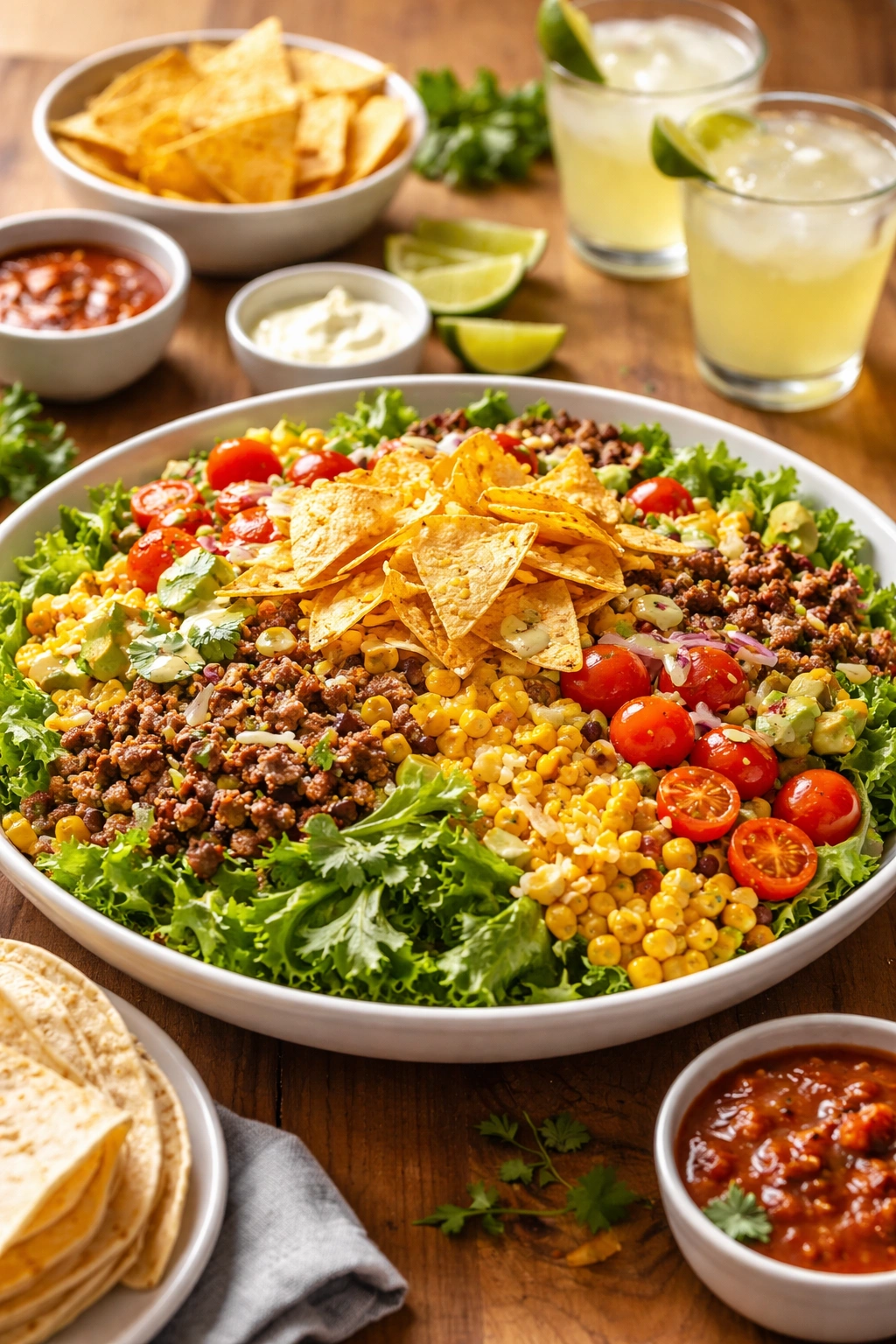
Serve this salad in a wide, shallow bowl or on a large platter — this gives you room to distribute all the components evenly and makes it easier to toss everything together without components flying everywhere. If you’re serving a crowd, you can assemble individual salads in smaller bowls, which looks beautiful and ensures everyone gets an even distribution of all the components.
This salad pairs beautifully with cold beer, especially light lagers, IPAs, or pilsners that won’t compete with the flavors. A crisp white wine like a Sauvignon Blanc or Pinot Grigio works wonderfully. Sparkling water with a squeeze of lime is perfect if you want a non-alcoholic option.
You can serve it as a standalone dinner, and it’s substantial and satisfying enough that you won’t need anything else. If you want to make it a more elaborate meal, warm tortillas on the side let people scoop salad into them like tacos — this turns the eating experience into something fun and interactive. Fresh lime wedges on the side let people add extra brightness right at the table.
For a lighter lunch, cut the portion size in half and you’ve got something that works beautifully at work or outdoors. For a special dinner, present it beautifully with all components visible, use high-quality ingredients like grass-fed beef and fresh cilantro from a farmers market, and suddenly you’ve got something that feels restaurant-worthy.
Final Thoughts
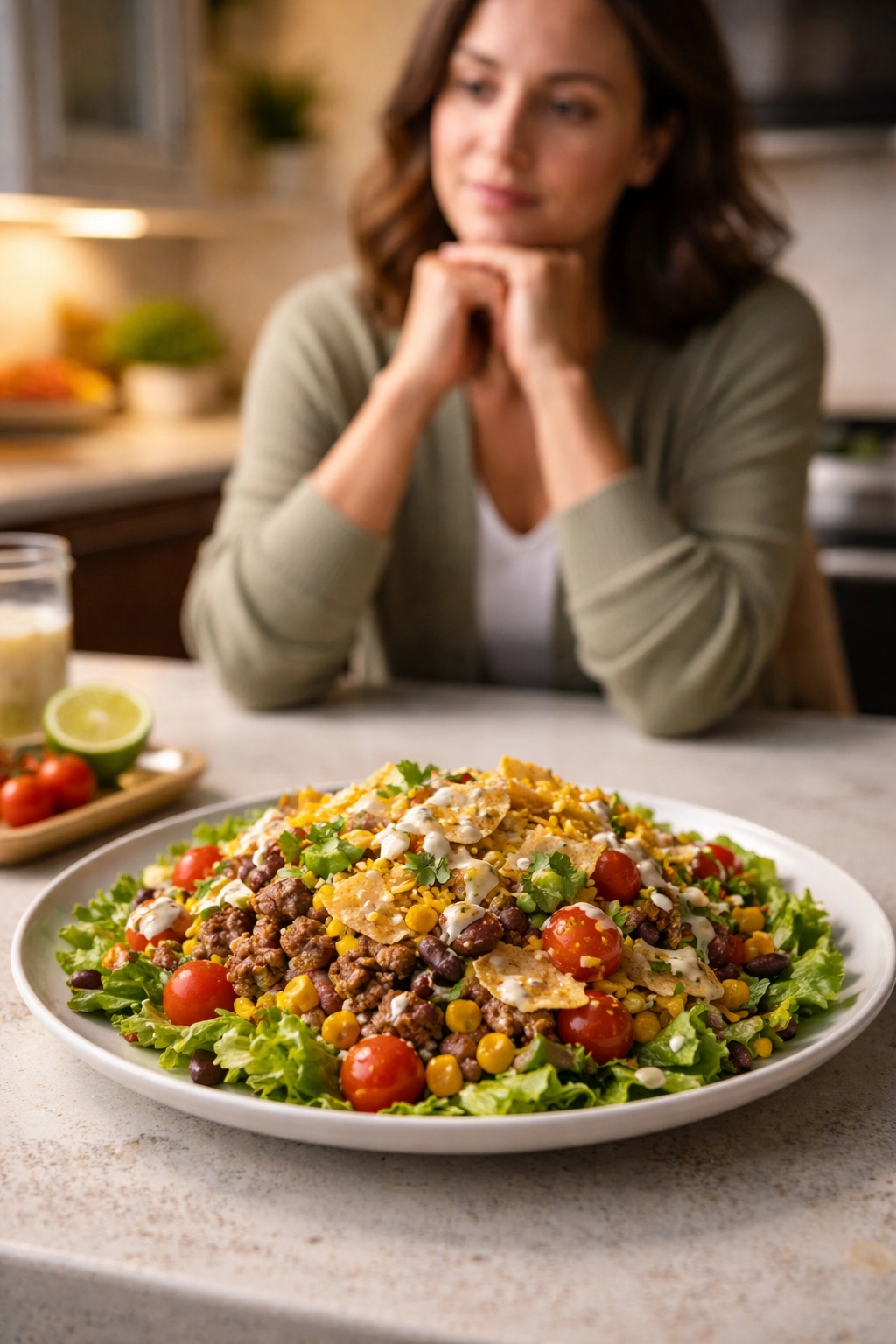
A truly great taco salad isn’t about virtuously eating your vegetables — it’s about eating something you genuinely want because it tastes incredible, happens to be full of fresh greens and lean protein, and leaves you feeling completely satisfied rather than like you’ve compromised on flavor or richness. The pleasure and the nutrition come together seamlessly.
The beautiful part about mastering this particular salad is that once you understand how the components work together — the textural contrast, the flavor balance, the ratio of greens to toppings — you can make it a completely different salad every single time you prepare it. Use different proteins, swap in seasonal vegetables, adjust the dressing to match your mood, and never get bored. It’s the kind of recipe that’s infinitely customizable but so good in its basic form that you’ll come back to this exact version again and again because sometimes the simplest version really is the best.
