
Summer’s arrival brings an abundance of fresh zucchini to farmers markets and home gardens—and if you’ve ever grown this prolific squash, you know how quickly the harvest can become overwhelming. Stuffed zucchini boats represent one of the smartest ways to put that bounty to work, transforming simple halved vegetables into a complete, satisfying meal that’s equally at home on a busy weeknight dinner table or packed in a lunch container for the week ahead. What makes these boats especially brilliant for meal prep is their remarkable versatility: they accommodate virtually any filling philosophy you embrace, hold up beautifully to refrigeration and reheating, and deliver substantial nutrition without the heaviness of traditional baked pasta dishes.
The magic of stuffed zucchini boats lies in their dual identity. They’re light enough to feel like a summer dinner when you’re craving something bright and fresh, yet hearty and protein-rich enough to serve as a true main course that leaves you feeling genuinely satisfied. Unlike many “healthy” vegetable-based meals that feel like they’re missing something, stuffed zucchini boats deliver complexity of flavor, textural interest, and the kind of staying power that makes them genuinely crave-worthy rather than merely virtuous. Whether you fill them with black beans and Mexican spices, mushroom and walnut ragù with marinara, Mediterranean quinoa studded with chickpeas and capers, or protein-packed lentils with fresh herbs, these boats work.
For meal prep enthusiasts, stuffed zucchini boats offer a gift: they perform beautifully when made ahead and stored properly, they reheat without drying out, and they actually taste better the next day as flavors meld and deepen. This guide walks you through everything you need to know to master this simple dish—from selecting the right zucchini to troubleshooting common pitfalls, with detailed instructions for multiple filling variations so you can rotate flavors throughout your meal prep week.
Why Stuffed Zucchini Boats Are Perfect for Meal Prep
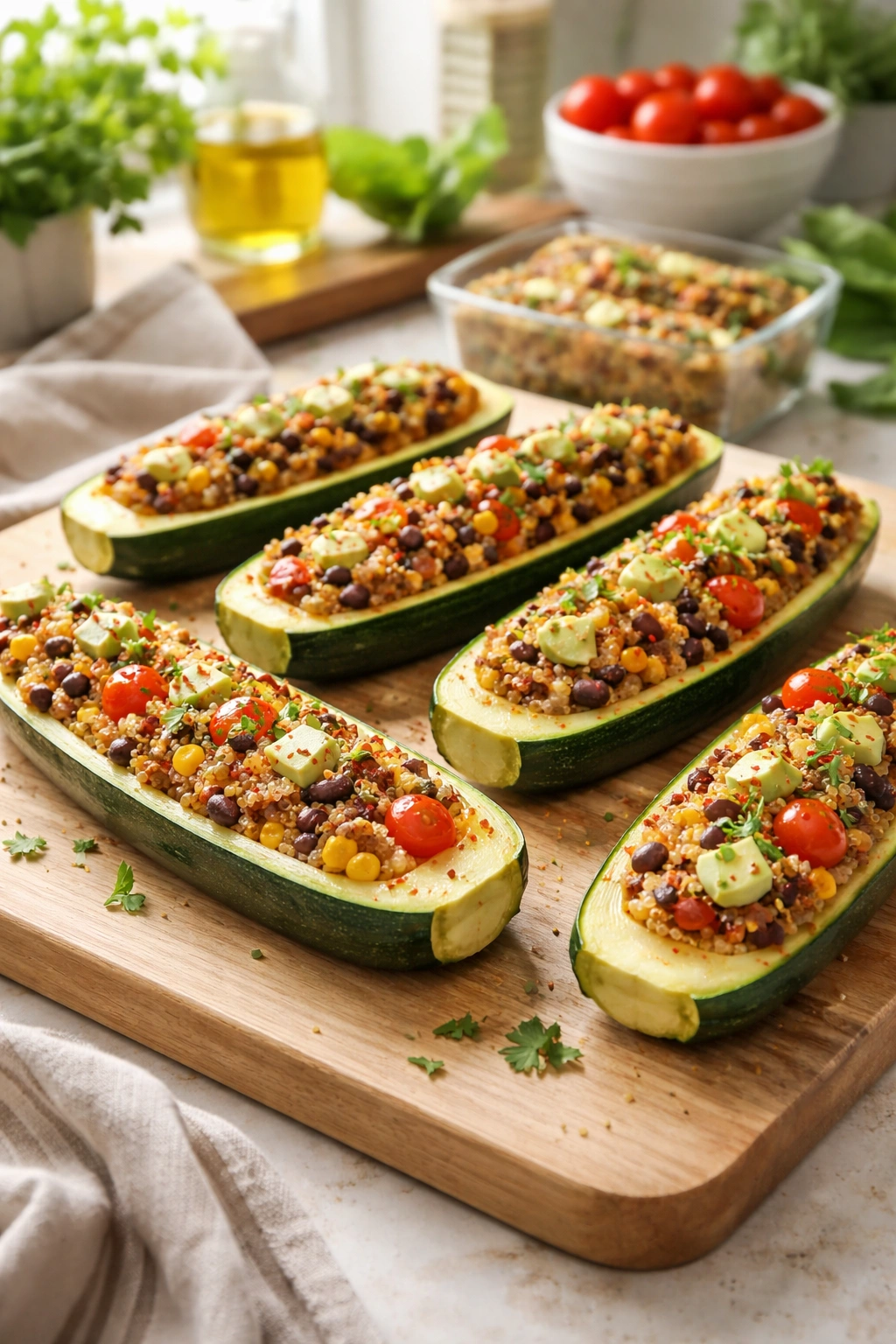
Meal prep success hinges on three non-negotiable factors: recipes that taste genuinely good, components that don’t degrade during storage, and meals flexible enough to adapt to different flavor preferences without requiring completely separate cooking sessions. Stuffed zucchini boats excel at all three, which explains their consistent popularity among meal prep practitioners and why you’ll find variations across virtually every meal prep and plant-based food blog.
The vegetable itself acts as both vessel and ingredient. Unlike delicate greens or crisp vegetables that wilt under refrigeration, zucchini’s sturdy flesh actually softens pleasantly through a few days of storage, becoming more tender and allowing flavors to penetrate deeper. The natural moisture content of zucchini means the filling stays moist without becoming waterlogged—a common problem when storing certain grain or bean-based meals. The boat structure keeps everything contained; you’re not dealing with rice that’s separated from sauce or beans that’ve dried out on their own.
Nutritionally, these meals deliver complete protein (especially when you combine legumes with grains or nuts), substantial fiber, and an impressive array of micronutrients concentrated in the zucchini flesh and vegetable-forward fillings. A single stuffed zucchini boat typically ranges from 150 to 250 calories depending on your chosen filling, making it simple to build satisfying meal prep containers with balanced macronutrients and caloric density.
The timing advantage matters too. You can separate the work: prep and par-bake zucchini one session, prepare the filling in another, and assemble and finish-bake everything when you’re ready. This flexibility means you’re not locked into a single meal prep day where you’re juggling multiple oven temperatures and timing different components.
Choosing and Preparing Your Zucchini
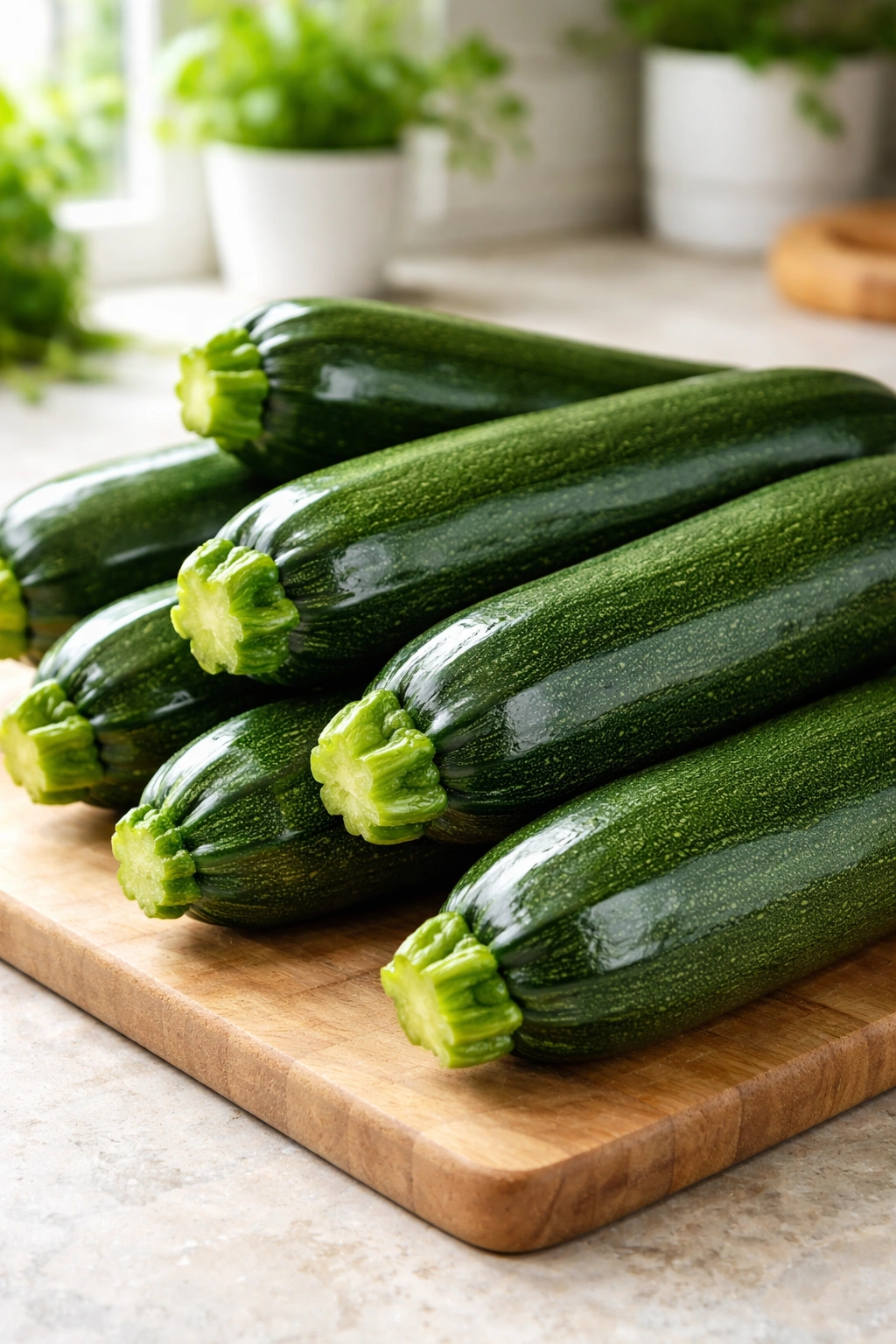
Success begins with selecting the right zucchini. Medium-sized specimens—roughly 7 to 9 inches long—are your ideal choice. They’re large enough to hold a meaningful quantity of filling without being oversized, and their walls are thick enough to maintain structural integrity throughout cooking without collapsing. Smaller zucchini tend to have thinner flesh and scoop out too easily, leaving you with fragile boats that fall apart during cooking. Oversized zucchini develop tougher skin and more prominent seeds that create watery pockets in the filling.
Look for zucchini that feel firm and heavy for their size, without soft spots, blemishes, or discoloration. The skin should appear glossy and unblemished. When you squeeze gently, there should be resistance—mushy zucchini indicates age and compromised quality. Select zucchini that are similar in size so they’ll cook evenly, which matters significantly if you’re preparing multiple boats simultaneously on the same baking sheet. If you’re working with garden-grown zucchini that’s curved or unusual in shape, don’t discard it; simply adjust your cutting approach to create two relatively equal halves rather than requiring perfectly symmetrical results.
Preparation begins with a thorough rinse under cool running water, using a vegetable brush if you have one to remove any soil residue. Pat the zucchini completely dry with a clean kitchen towel—this step prevents excess moisture from creating a watery dish and helps your boats brown properly if you’re searing them before stuffing.
Cutting technique matters more than you’d initially think. Using a sharp knife, slice each zucchini in half lengthwise. Position your knife at the center and cut deliberately down the middle, maintaining even pressure so you create two halves of similar thickness. Some cooks prefer leaving the ends intact (cutting from about a half-inch from each end) to create a more contained boat; others trim the ends flush. Either approach works—the choice comes down to preference and how much filling you want to contain.
Once halved, use a sturdy spoon—a grapefruit spoon works beautifully, though a regular teaspoon or melon baller will do—to scoop out the seeds and flesh from the center. You’re aiming to remove enough to create a channel about three-quarters of an inch deep, leaving roughly a quarter-inch to half-inch thickness of flesh surrounding the skin and at the ends. This thickness maintains structural integrity so your boats don’t tear or collapse during baking, while the scooped-out flesh provides usable ingredients for your filling. Reserve all the scooped flesh; it adds vegetable volume and flavor to your filling without waste.
Pat the scooped zucchini boats dry again. Moisture is the enemy of proper browning and can lead to a waterlogged final dish. Some recipes call for salting the hollowed zucchini boats and allowing them to rest for 20 to 30 minutes—this “sweating” technique draws out excess moisture that accumulates in the channels. If you have the time, this step genuinely improves the final texture, though it’s not strictly necessary for success.
Understanding the Building Blocks of the Filling
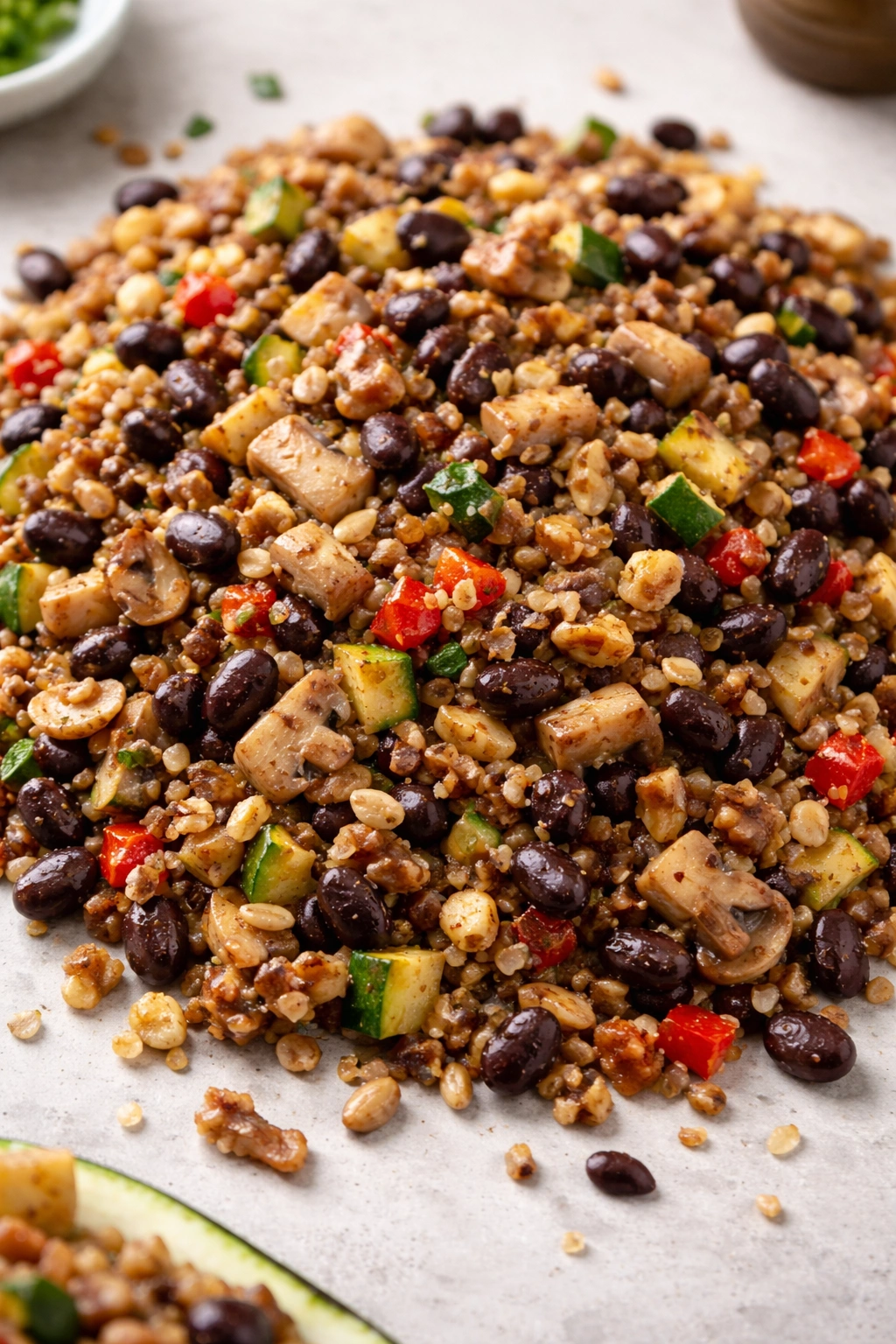
Before diving into specific filling recipes, understanding the architecture of a successful filling helps you improvise confidently with whatever ingredients you have on hand. Every great stuffed zucchini filling combines four essential components: a protein base, aromatic vegetables, binding elements, and seasonings that tie everything together.
The protein base provides substance and satiety. Legumes—black beans, chickpeas, kidney beans, lentils—work beautifully, offering fiber, plant-based protein, and a satisfying texture. For a more robust, meaty texture, mushrooms (finely diced baby bella, cremini, or even finely chopped shiitake) deliver umami depth and a chewy quality. Walnuts, pulsed or finely chopped, contribute omega-3 fatty acids and that slightly crumbly texture reminiscent of ground meat. TVP (textured vegetable protein) or store-bought plant-based ground meat provides immediate, convenient protein with a familiar ground-meat texture. Lentils deserve special mention—they’re naturally protein-rich, cook quickly if you’re using canned, hold their shape during cooking, and have an earthy flavor that plays beautifully with virtually any seasoning profile.
Aromatic vegetables form the flavor foundation. Onions (yellow, red, or white) should be diced small and cooked until they’re translucent and beginning to caramelize—this concentrates their sweetness and removes the harsh bite of raw onion. Garlic, minced fine, requires just a brief cooking time (30 seconds to one minute) so it releases its flavor without becoming acrid. Bell peppers add sweetness, body, and color; red or yellow peppers taste sweeter than green ones, and their longer cooking time ensures they become tender. The scooped zucchini flesh itself serves as an aromatic vegetable once it’s cooked down, adding subtle sweetness and body to your filling.
Binding elements prevent your filling from tasting dry and disconnected. Tomato paste (a tablespoon or two) provides depth, moisture, and umami; it thickens sauces and concentrates tomato flavor without introducing excess liquid. Marinara sauce or tomato sauce serves as both binder and seasoning base. Vegetable broth or water (used judiciously) contributes moisture without overwhelming the filling. Fresh herbs—basil, parsley, cilantro, thyme—should be added near the end of cooking so they maintain their color and brightness.
Seasonings determine character. Cumin and chili powder define Mexican-style fillings. Italian herbs (oregano, basil, thyme), paprika, and garlic powder characterize Mediterranean and Italian variations. Soy sauce or tamari adds salty umami depth to any filling. Hot sauce or red pepper flakes contribute heat. Salt and black pepper are never optional—taste your filling before filling the boats and adjust seasoning aggressively; flavors mellow during baking.
The Nutritional Benefits of This Plant-Based Meal
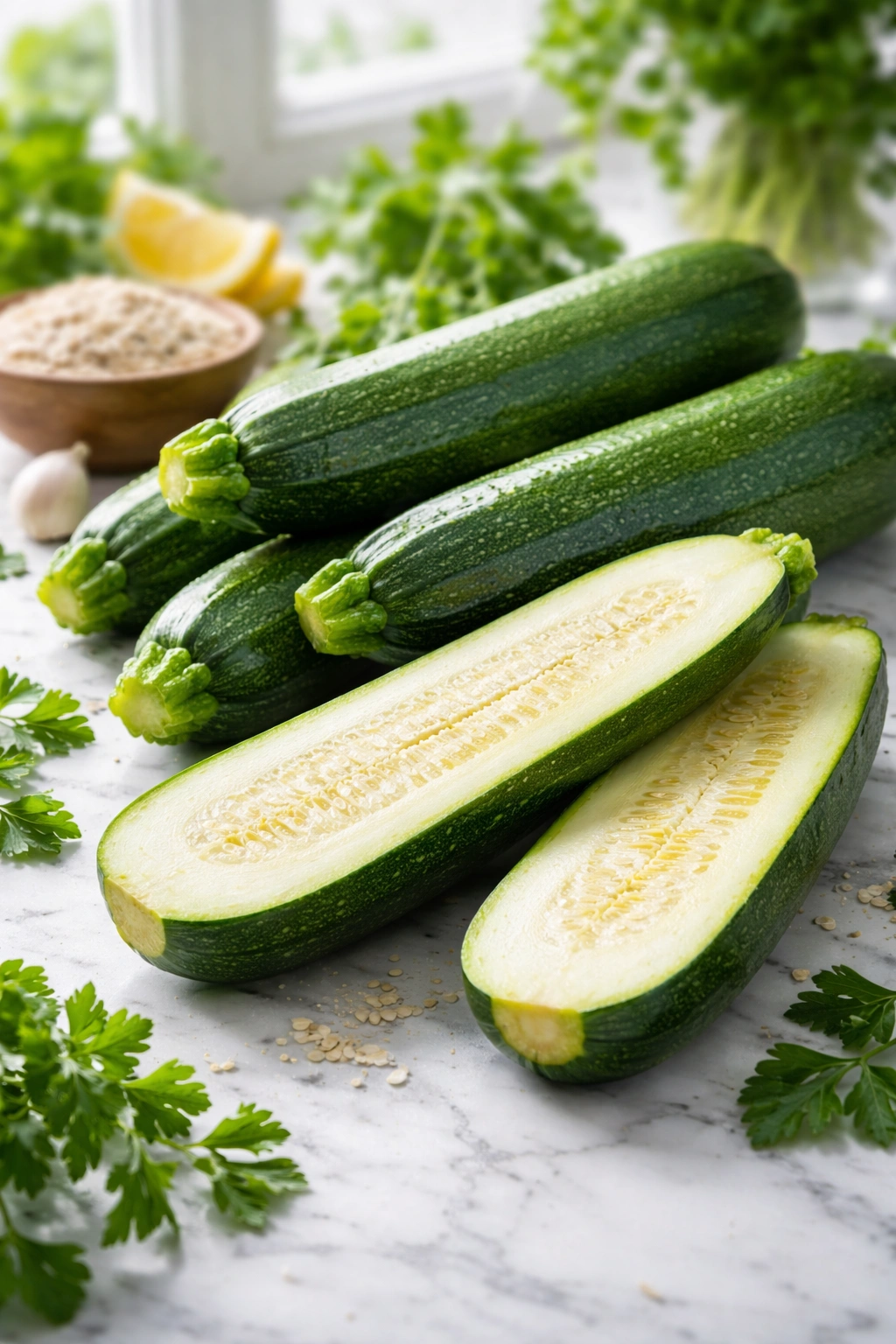
Zucchini itself deserves recognition as the nutritional foundation of this dish. Despite being low in calories—roughly 19 calories per 100 grams—zucchini delivers significant nutrition. It’s an excellent source of vitamin C, supporting immune function and collagen synthesis. The flesh contains notable amounts of vitamin A (in the form of beta-carotene), essential for eye health and cellular function. Zucchini is rich in B vitamins, particularly folate and B6, which support energy production and neurotransmitter synthesis. The vegetable’s fiber content aids digestive health and supports beneficial gut bacteria growth.
Beyond basic nutrition, zucchini contains powerful antioxidants and anti-inflammatory phytonutrients including lutein and zeaxanthin, compounds specifically recognized for protecting eye health and potentially slowing age-related macular degeneration. The vegetable’s high water and fiber content combined with minimal calories makes it genuinely supportive for weight management—you’re getting volume and satiety from actual nutrition rather than empty calories. The fiber in zucchini has been shown to help regulate blood sugar, an advantage if you’re managing blood glucose or prediabetes.
The protein base—whether beans, lentils, chickpeas, or mushrooms—transforms this from a side dish into a complete meal. Plant-based legumes provide not just protein but also fiber (often 6 to 8 grams per half-cup serving), which slows digestion and creates lasting satiety. They’re rich in polyphenols, plant compounds with powerful antioxidant and anti-inflammatory effects. Research consistently shows that including beans and lentils in your diet supports stable blood sugar, improves cholesterol profiles, and promotes beneficial shifts in gut microbiota composition.
When legumes are combined with whole grains (like quinoa, rice, or bulgur) or nuts and seeds, they create a complete protein containing all nine essential amino acids. This matters significantly for plant-based eaters; while individual plant foods don’t contain all amino acids, thoughtful combination ensures your body has everything it needs for protein synthesis and tissue repair. A stuffed zucchini boat featuring black beans and quinoa, or chickpeas with grains, provides genuine nutritional completeness.
The vegetables incorporated into your filling—bell peppers, tomatoes, mushrooms—add micronutrient density and phytochemical diversity. The simple act of cooking tomatoes (in marinara sauce or fresh and diced) increases lycopene bioavailability; this carotenoid becomes more absorbable when heated, particularly in the presence of dietary fat. Mushrooms contain ergothioneine, a powerful antioxidant, plus beta-glucans that support immune function. The variety of colors in a well-constructed filling ensures you’re consuming different classes of protective compounds rather than relying on a single nutrient profile.
The Mexican-Style Filling Version
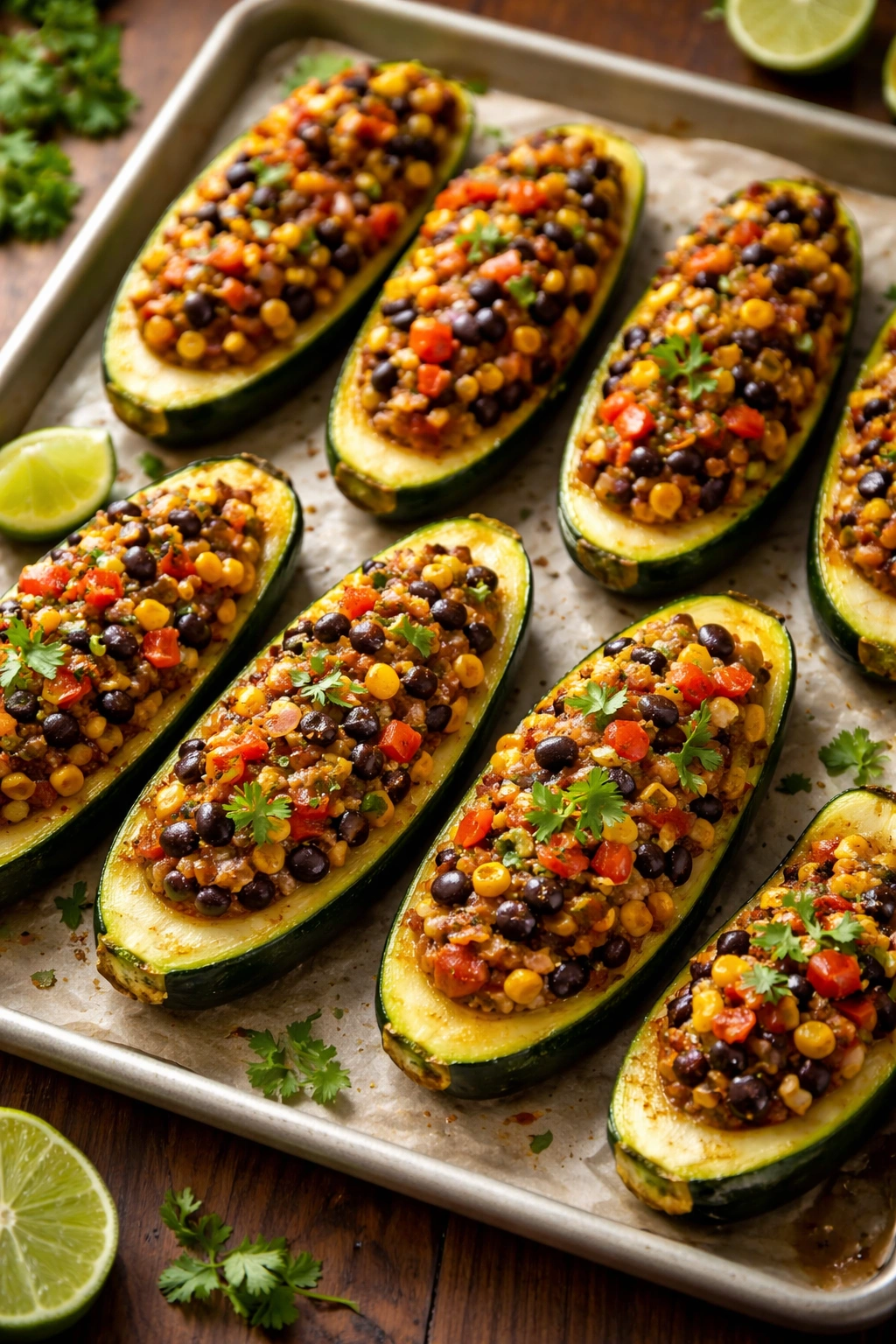
Mexican-inspired stuffed zucchini boats represent perhaps the most straightforward variation—they require minimal ingredients, come together quickly, and deliver satisfying flavors that feel substantial without heaviness. This version celebrates the natural sweetness of zucchini against bright, bold spicing.
The filling typically combines black beans (which have a slightly earthier profile than other bean varieties) with sautéed onions and garlic, diced bell peppers, fresh diced tomatoes or tomato sauce, and corn kernels. The corn adds sweetness and textural variety, transforming the filling from monolithic to interesting. Canned beans work perfectly here; simply rinse and drain them before using.
Spicing relies on cumin, chili powder, paprika, and oregano. Cumin provides warmth and earthiness; chili powder contributes heat and depth; paprika adds color and mild pepper notes; oregano brings herbaceous character. A small amount of hot sauce stirred into the filling adds complexity without overwhelming heat. Fresh cilantro scattered over the finished boats brightens everything and makes the dish feel intentional and special rather than casual.
This version pairs beautifully with toppings: diced avocado, fresh lime wedges, a dollop of vegan sour cream or cashew-based crema, and additional cilantro. Some cooks add a vegan cheese—either store-bought shredded varieties or a homemade sauce—creating a more indulgent finish. The filling reheats perfectly and actually benefits from a day in the refrigerator as spices redistribute and flavors deepen.
The Italian Marinara Version
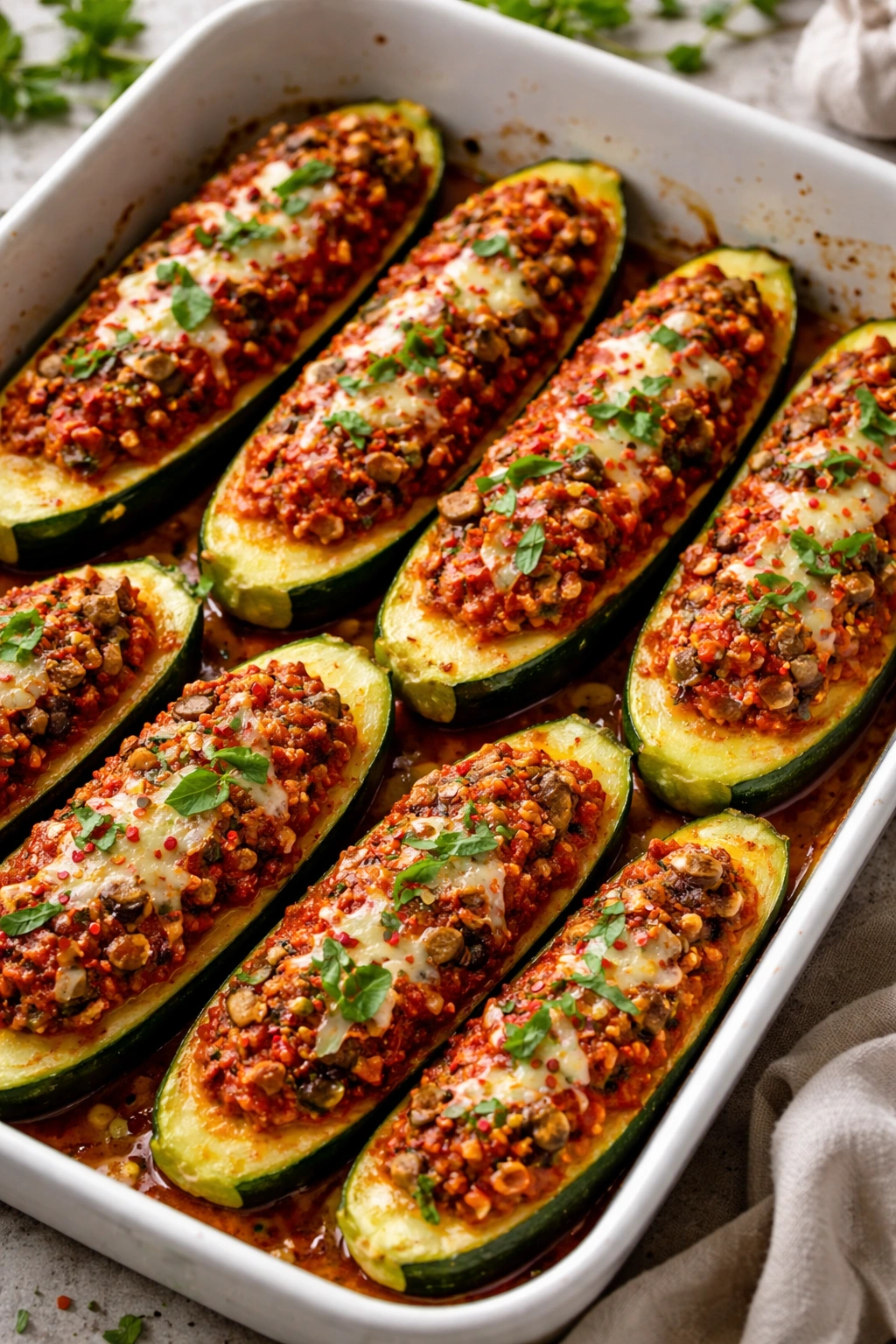
If your meal prep leans Mediterranean, Italian marinara-based stuffed zucchini boats deliver familiar, deeply satisfying flavors while remaining genuinely plant-based. This variation transforms the zucchini into vessels for a deeply savory, umami-rich filling that tastes more substantial than vegetable-based.
The key to depth here involves mushrooms, whose umami compounds mimic meaty qualities. Finely diced baby bella or cremini mushrooms, sautéed until they release their moisture and begin to brown, create the textural and flavor foundation. Combined with finely chopped walnuts (pulsed in a food processor rather than ground to a powder), you develop a mixture with genuine meaty qualities—a revelation for anyone skeptical about plant-based eating. Add sautéed onions and garlic, the reserved zucchini flesh, and generous amounts of Italian seasoning (oregano, basil, thyme combined).
Marinara sauce—preferably a good-quality tomato-forward sauce without added sugar—binds everything together while marinading the filling in authentic Italian flavors. A touch of soy sauce or tamari adds salty umami without introducing savory notes that feel out of place. Some cooks finish with nutritional yeast, which adds a subtle cheesy quality and B vitamin fortification.
Top these boats with vegan parmesan cheese, fresh basil, and perhaps a sprinkle of Italian breadcrumbs mixed with olive oil to create a crispy topping. They emerge from the oven bubbling and golden, looking indistinguishable from traditional lasagna—a point of genuine comfort for those transitioning to plant-based eating or cooking for skeptical omnivores.
The Mediterranean Quinoa Version
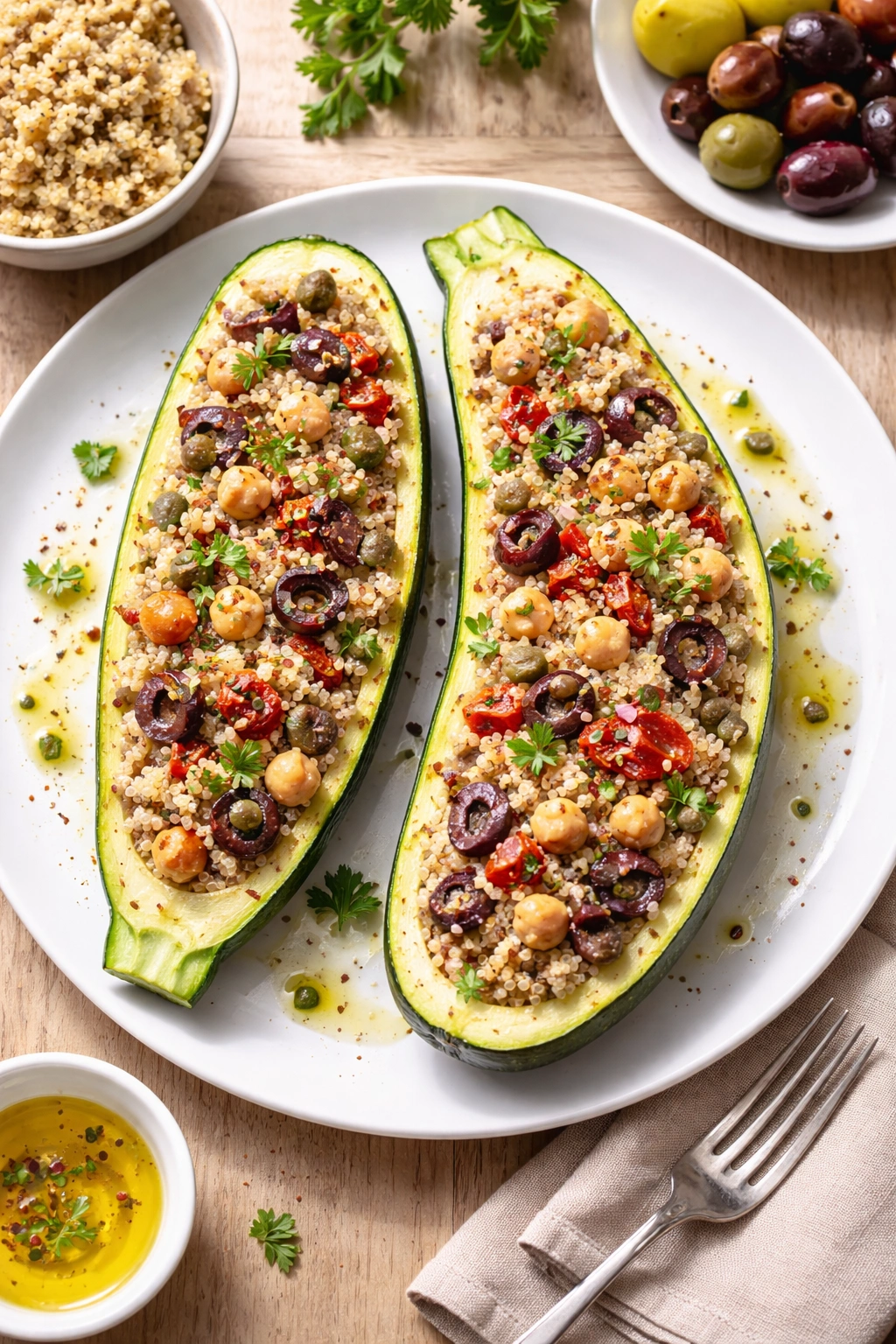
For meal prep that feels celebratory rather than purely functional, Mediterranean stuffed zucchini boats elevate the simple vegetable into something you’d encounter at a resort restaurant. This version features quinoa (cooked until fluffy and nutty) as the grain base, chickpeas as the protein, and a flavor profile rooted in sun-dried tomatoes, capers, fresh thyme, and briny olives.
Quinoa deserves note for meal prep purposes: it’s a complete protein containing all nine essential amino acids, it stores beautifully in the refrigerator without becoming mushy or separated, and its subtle nutty flavor doesn’t compete with supporting ingredients. Combined with chickpeas (either canned and drained or cooked fresh), you create a genuinely balanced meal requiring no separate grain component.
The filling combines cooked quinoa with sautéed onions, garlic, sun-dried tomatoes (which concentrate tomato flavor and add natural sweetness), chopped chickpeas, capers (which introduce briny acidity and distinctive flavor), and fresh thyme. A drizzle of good olive oil, a squeeze of lemon or red wine vinegar, and seasoning salt and pepper complete the mixture. Some versions incorporate a vegan Mediterranean cheese—either store-bought or homemade—for richness.
What distinguishes this version is sophistication of flavor achieved through restraint. Rather than heavy sauce, these boats rely on the natural moisture of vegetables and the briny, umami notes of capers to create balance. They’re equally at home served warm from the oven or at room temperature, making them exceptionally flexible for meal prep.
The Lentil-Based Filling Version
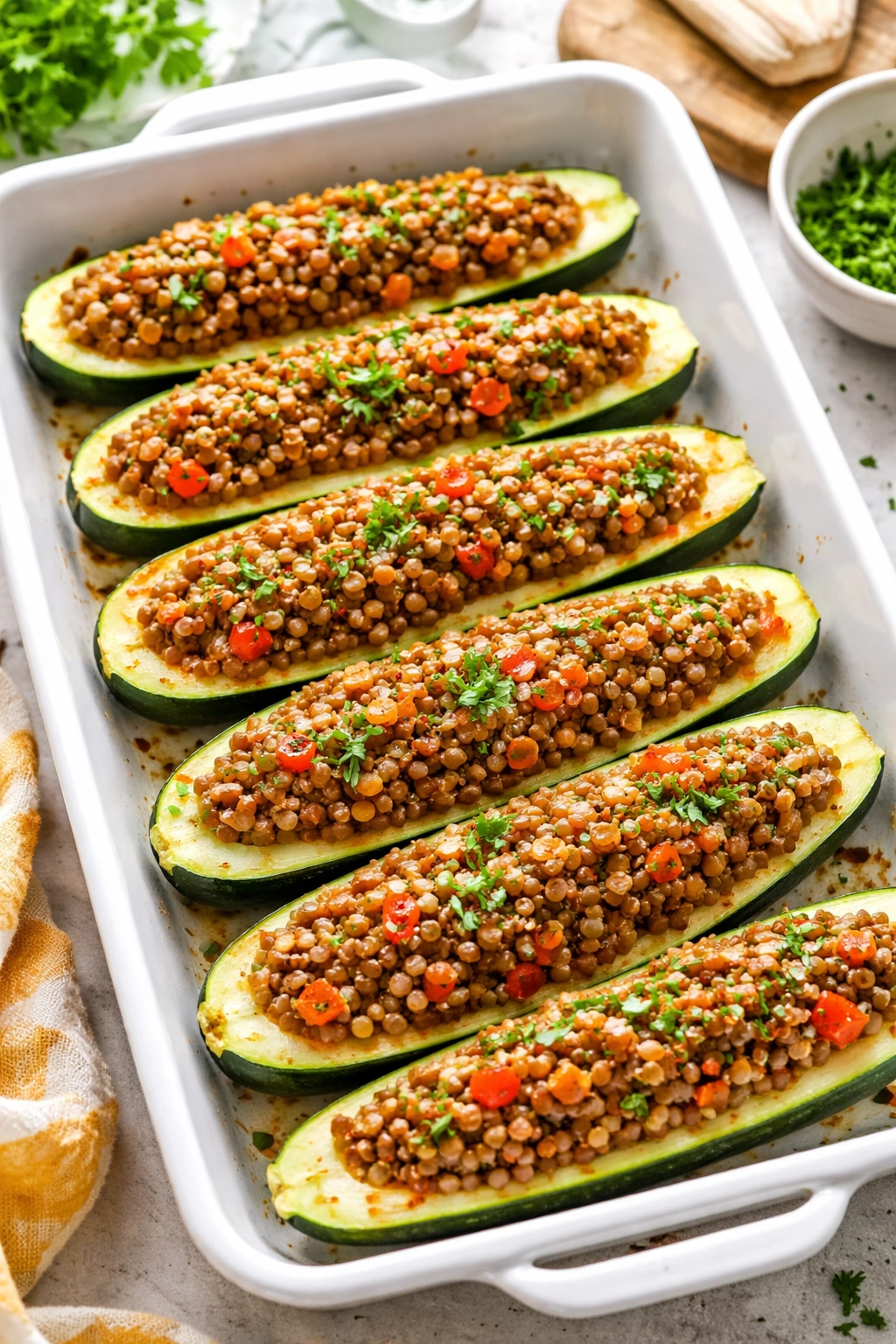
Lentils represent an underrated player in the stuffed zucchini landscape, offering nutrition, texture, and flavor all at once. Cooked lentils have a naturally earthy quality that pairs beautifully with tomatoes, herbs, and aromatic vegetables—creating a filling that feels complete without requiring external sauce.
This version begins with cooked lentils (canned and drained, or home-cooked if you have them on hand) combined with sautéed onions, diced bell peppers, garlic, and the reserved zucchini flesh. Tomato paste, fresh chopped tomatoes (or canned if fresh aren’t available), and vegetable broth create a lightly saucy mixture. Fresh herbs—basil and parsley particularly—brighten the earthy lentils. Cumin and coriander add warmth without veering toward specific cuisine; paprika contributes color and depth.
The advantage of lentil-based fillings is their sturdiness during storage and reheating. The lentils don’t break down or become mushy, they maintain their structure, and the filling actually becomes more flavorful after refrigeration. The filling holds together cohesively, less likely to separate from sauce or dry out completely.
Easy Vegan Stuffed Zucchini Boats
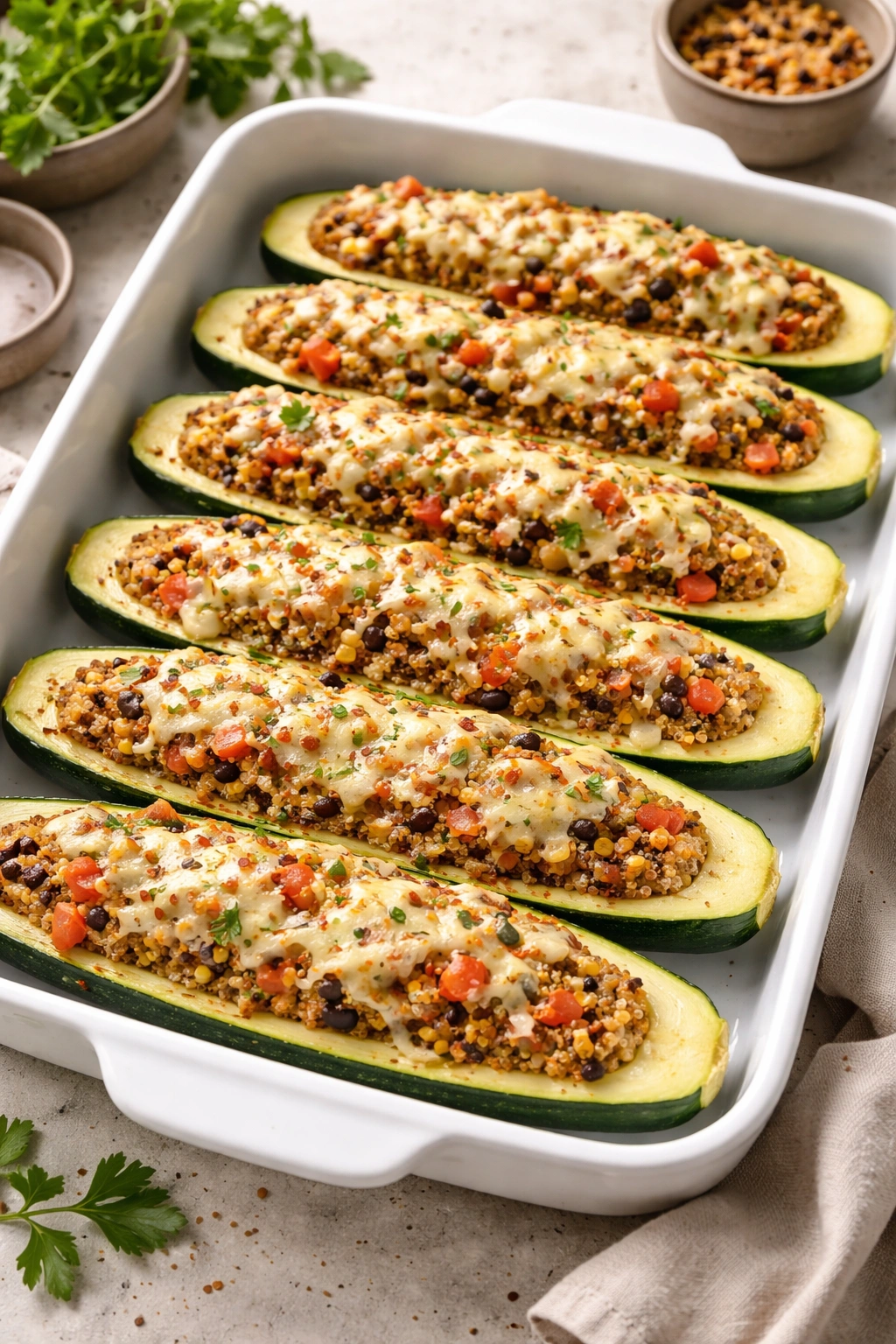
Yield: Serves 4 (2 zucchini boats per serving | Makes 8 boats)
Prep Time: 20 minutes
Cook Time: 35 minutes
Total Time: 55 minutes active + 10 minutes resting
Difficulty: Beginner — This recipe requires only basic knife skills and simple stovetop and oven techniques. A complete beginner can succeed confidently.
Best Served: Warm immediately, or refrigerated and reheated. These taste even better the next day as flavors meld.
For the Zucchini Boats:
- 4 medium zucchini (7 to 9 inches each)
- 1 tablespoon extra-virgin olive oil
- ½ teaspoon fine sea salt
- ¼ teaspoon ground black pepper
- ¼ teaspoon garlic powder
For the Black Bean and Vegetable Filling:
- 1 tablespoon extra-virgin olive oil
- 1 medium yellow or red onion, diced
- 1 red bell pepper, diced (about 1 cup)
- 3 cloves garlic, minced
- 1 (15-ounce) can black beans, rinsed and drained (equivalent to 1¼ cups cooked beans)
- ½ cup fresh corn kernels (or frozen and thawed)
- 1 (14.5-ounce) can diced tomatoes, with juices (equivalent to about 1½ cups)
- 2 tablespoons tomato paste
- ½ cup vegetable broth
- 1 teaspoon ground cumin
- 1 teaspoon paprika powder
- ½ teaspoon dried oregano
- ½ teaspoon chili powder (adjust to taste for more or less heat)
- ¼ teaspoon fine sea salt
- Pinch of black pepper
For Topping:
- ¾ cup vegan cheese, shredded (or use vegan feta or dairy-free parmesan)
- 2 tablespoons fresh cilantro or parsley, chopped
- 1 lime, cut into wedges
- Optional: vegan sour cream or avocado for serving
Prepare the Zucchini Boats:
-
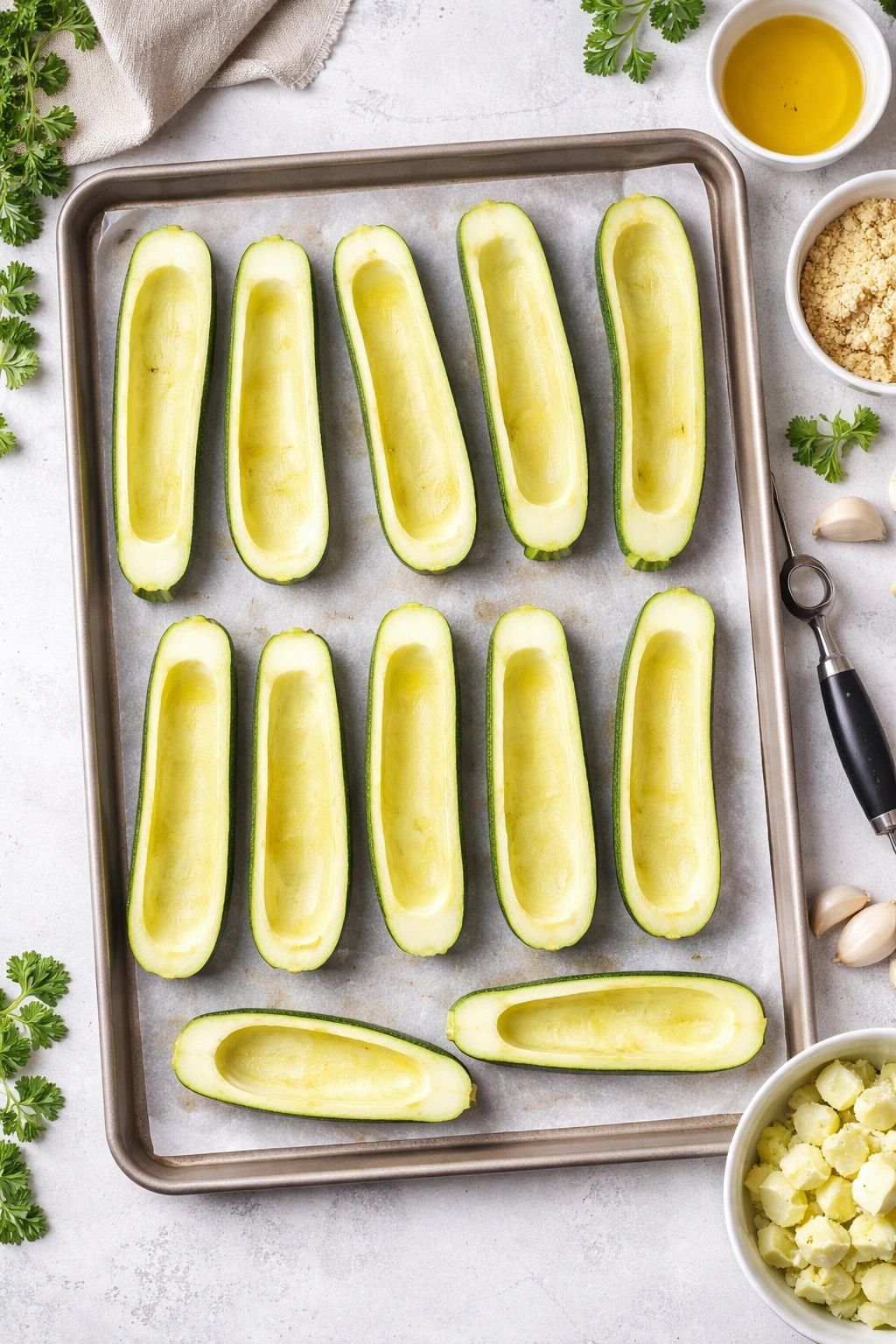
Rinse each zucchini under cool running water and pat completely dry with a clean kitchen towel. Using a sharp knife, slice each zucchini in half lengthwise, creating two equal halves.
-
Using a sturdy spoon (a grapefruit spoon works beautifully, though a regular teaspoon will suffice), carefully scoop out the flesh and seeds from the center of each zucchini half. You’re aiming to create a channel approximately three-quarters of an inch deep, leaving about a quarter-inch of flesh attached to the skin. Preserve all the scooped flesh—you’ll need about 1 cup for the filling.
-
Arrange the hollowed zucchini boats, cut-side up, on a rimmed baking sheet lined with parchment paper. Optional but recommended: Sprinkle the inside of each boat with approximately ¼ teaspoon of salt total (distributed among all boats) and let them sit for 20 to 30 minutes. This allows excess moisture to accumulate on the surface, which you can then blot away with paper towels. This step prevents the finished boats from becoming waterlogged. If you’re short on time, proceed to the next step—the boats will still turn out beautifully.
-
Brush or spray the exterior and interior of each zucchini boat lightly with olive oil (approximately ¼ tablespoon per boat). Season the interior cavities with a small pinch of salt, a few grinds of black pepper, and a light dusting of garlic powder.
Make the Filling:
-
In a large skillet, heat 1 tablespoon of olive oil over medium heat. Once the oil shimmers and becomes fragrant (about 30 seconds), add the diced onion. Cook for 5 to 7 minutes, stirring occasionally, until the onion becomes translucent and the edges begin to turn golden brown. You’re looking for the onion to soften completely and develop light caramelization—this concentrates its natural sweetness.
-
Add the diced bell pepper to the skillet and cook for another 3 to 4 minutes, stirring occasionally, until the pepper becomes tender and slightly softened. The pepper should retain some structural integrity but lose its raw quality.
Advertisements -
Add the minced garlic and cook, stirring constantly, for 30 seconds to 1 minute until the garlic becomes fragrant and loses its raw edge. Be careful not to cook garlic longer than this—prolonged heat turns it bitter and acrid.
-
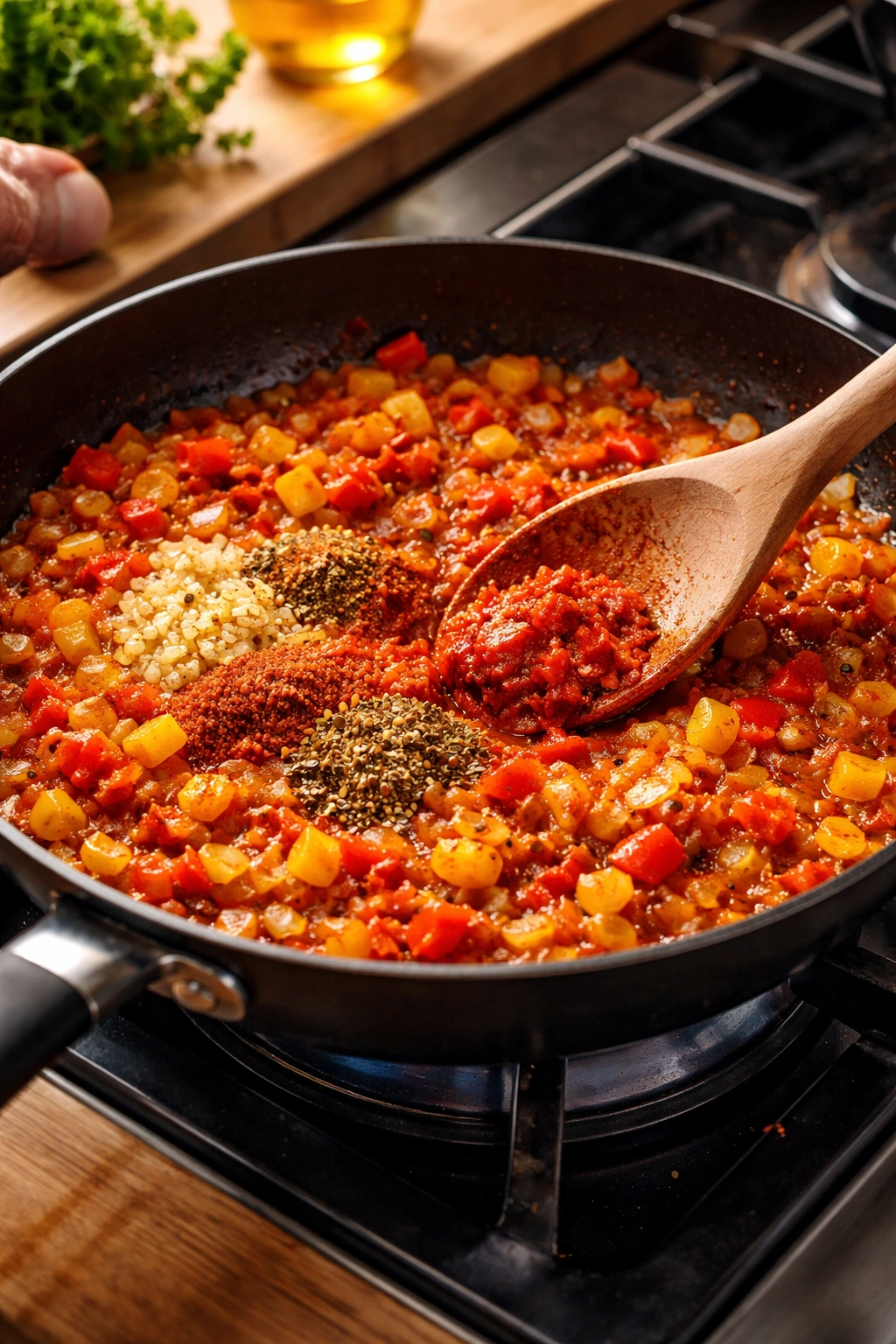
Stir in the tomato paste along with all the spices: ground cumin, paprika powder, dried oregano, chili powder, salt, and black pepper. Cook this spice mixture for 1 to 2 minutes, stirring constantly, until the spices become aromatic and coat all the vegetables evenly. This blooming technique allows the fat in the oil to extract the aromatic compounds from the spices, distributing flavor throughout the filling.
-
Add the chopped zucchini flesh (reserved from hollowing the boats) and stir everything together. Cook for 3 to 4 minutes, stirring occasionally, allowing the zucchini to begin softening. You should notice moisture beginning to release from the zucchini.
-
Pour in the vegetable broth and the diced tomatoes along with their juices. Add the rinsed black beans and corn kernels. Stir everything together thoroughly, ensuring no spice pockets remain. Bring the mixture to a gentle simmer—you should see small bubbles breaking the surface regularly but not a vigorous, rolling boil.
-
Reduce the heat to medium-low and simmer uncovered for 8 to 10 minutes, stirring occasionally. The filling should reduce slightly as excess liquid evaporates, but it should remain moist and cohesive. The mixture is done when the liquid has reduced by roughly one-third and the filling coats the back of a spoon without running off immediately. Taste the filling and adjust seasoning—it should be well-seasoned and balanced, with distinct spice notes rather than bland or underseasoned. Add more salt, cumin, or chili powder if needed.
Assemble and Bake:
-
Preheat your oven to 400°F (200°C) and position the rack in the center of the oven. If you prepped the zucchini boats earlier with the salt-resting step and blotted them dry, your oven should be reaching temperature as you finish the filling.
-
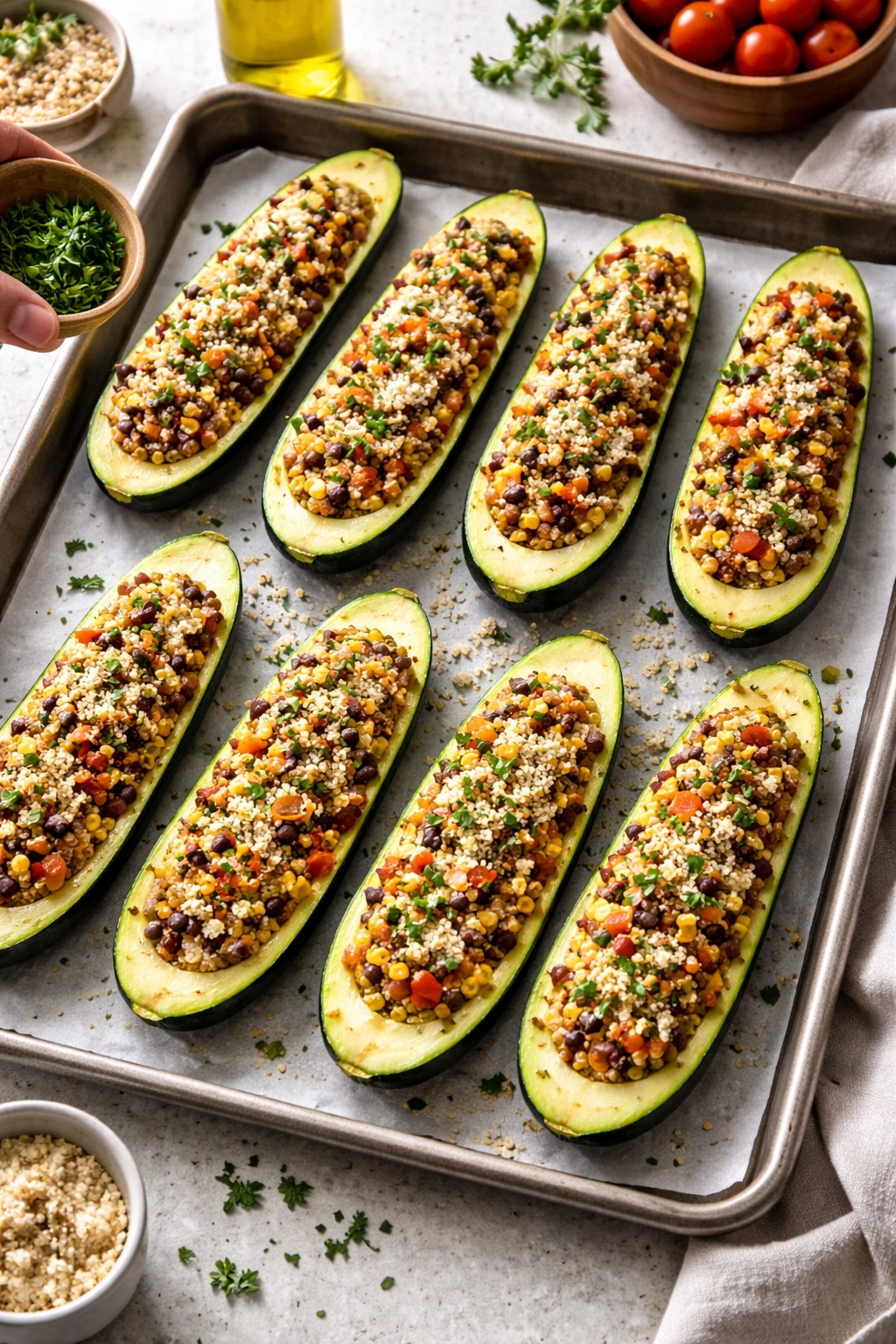
Remove the filling from heat and allow it to cool for 5 minutes—this prevents you from overcooking the zucchini when you assemble and bake the boats. Divide the filling evenly among the eight zucchini boat halves, spooning approximately 3 to 4 tablespoons of filling into each boat. Mound the filling slightly but do not overstuff—if the filling overflows the edges, it will spill onto the baking sheet and create a mess during baking. There should be about a quarter-inch clearance between the top of the filling and the rim of the zucchini boat.
-
Sprinkle approximately 1½ tablespoons of vegan cheese evenly over the filling in each boat. This cheese will melt during baking and create a golden, slightly crispy top layer.
-
Place the assembled boats in the preheated 400°F oven and bake uncovered for 20 to 25 minutes, rotating the baking sheet halfway through if your oven has hot spots. The boats are done when the zucchini flesh is tender (easily pierced with a fork), the filling is bubbling slightly at the edges, and the cheese has melted and begun to lightly brown. The zucchini skin should still be firm, not collapsing or breaking apart.
-
Remove from the oven and allow the boats to rest for 5 to 10 minutes before serving. This brief resting period allows them to cool slightly and firm up, making them easier to handle and eat. Garnish with fresh cilantro or parsley and serve with lime wedges and optional vegan sour cream on the side.
Advertisements
Pro Tips for Perfectly Stuffed Zucchini Every Time
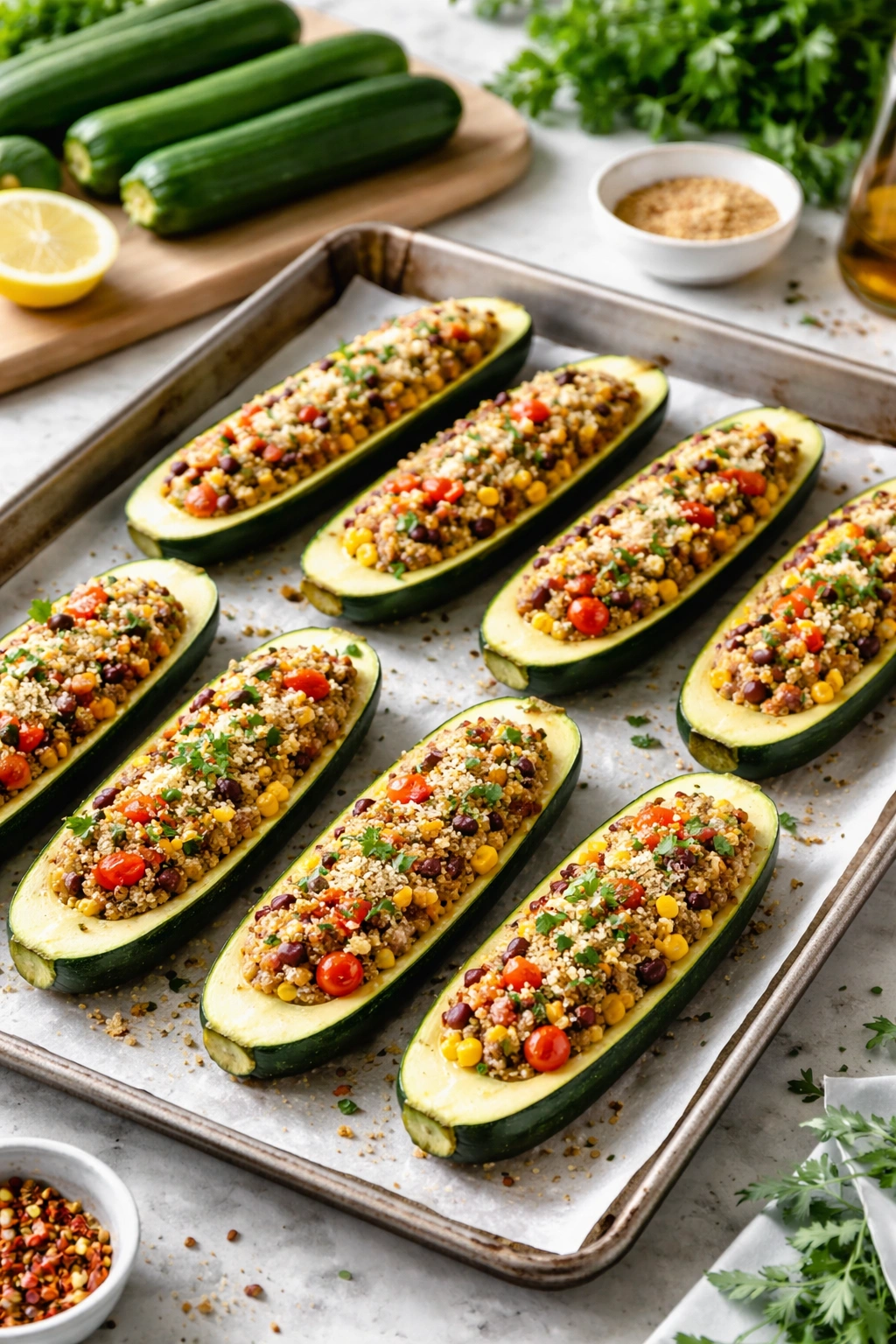
Select zucchini of similar size so they cook evenly. If you’re preparing multiple boats simultaneously, having zucchini that are roughly the same dimensions ensures they’ll all reach doneness at the same time. Oversized boats will still be firm while smaller ones turn mushy, or you’ll need to extend baking time until the largest ones are done, resulting in overcooking the smaller ones.
Don’t scoop too deep into the zucchini flesh. The impulse to create a spacious channel often results in breaching the skin or leaving too-thin walls that collapse during cooking. The ideal boat retains structural integrity throughout baking—you want people to be able to lift it with a fork without it falling apart. Aim for roughly a half-inch thickness of flesh remaining on all sides.
Pat your prepared zucchini boats completely dry before filling. Any excess surface moisture will evaporate into steam during baking, and that steam can make the filling watery. Clean, dry boats allow the filling to concentrate its flavors rather than becoming diluted.
Taste your filling before filling the boats. Seasoning is easier to adjust now than after baking. Cook a small spoonful of filling and taste it—does it need more salt? Is the spice level right, or does it need heat? Bold-seasoned fillings taste better after baking because some seasoning intensity diminishes in the oven.
Don’t overfill your boats. Generous filling is tempting, but overstuffed boats are problematic. Excess filling spills over edges and burns on the baking sheet, creates uneven texture in the final boat (the center might still be hot while edges cool), and can actually overflow so much that the filling prevents the zucchini from cooking properly. If you have extra filling after filling all boats, save it in a separate container—it freezes beautifully and makes a quick filling for other vegetables or a topping for grain bowls.
Ensure your oven is fully preheated before baking. Many oven-related cooking failures happen because the oven hasn’t actually reached the stated temperature when you place food inside. Use an oven thermometer to verify actual temperature, not just what the dial says. A fully preheated oven ensures even cooking and proper browning of the cheese topping.
Rotate your baking sheet halfway through cooking. Most home ovens have temperature hot spots—areas that cook faster than others. Rotating the sheet halfway through cooking prevents boats on the hot side from overcooking while those on the cool side remain underdone.
Bake on the center rack unless otherwise specified. The center rack of your oven receives the most even heating from both top and bottom elements. If you use higher or lower racks, you risk uneven cooking.
Use parchment paper on your baking sheet. This simple step prevents the boats from sticking, makes cleanup trivial, and ensures the cheese doesn’t weld itself to the baking sheet.
Make-Ahead Strategy and Meal Prep Timing
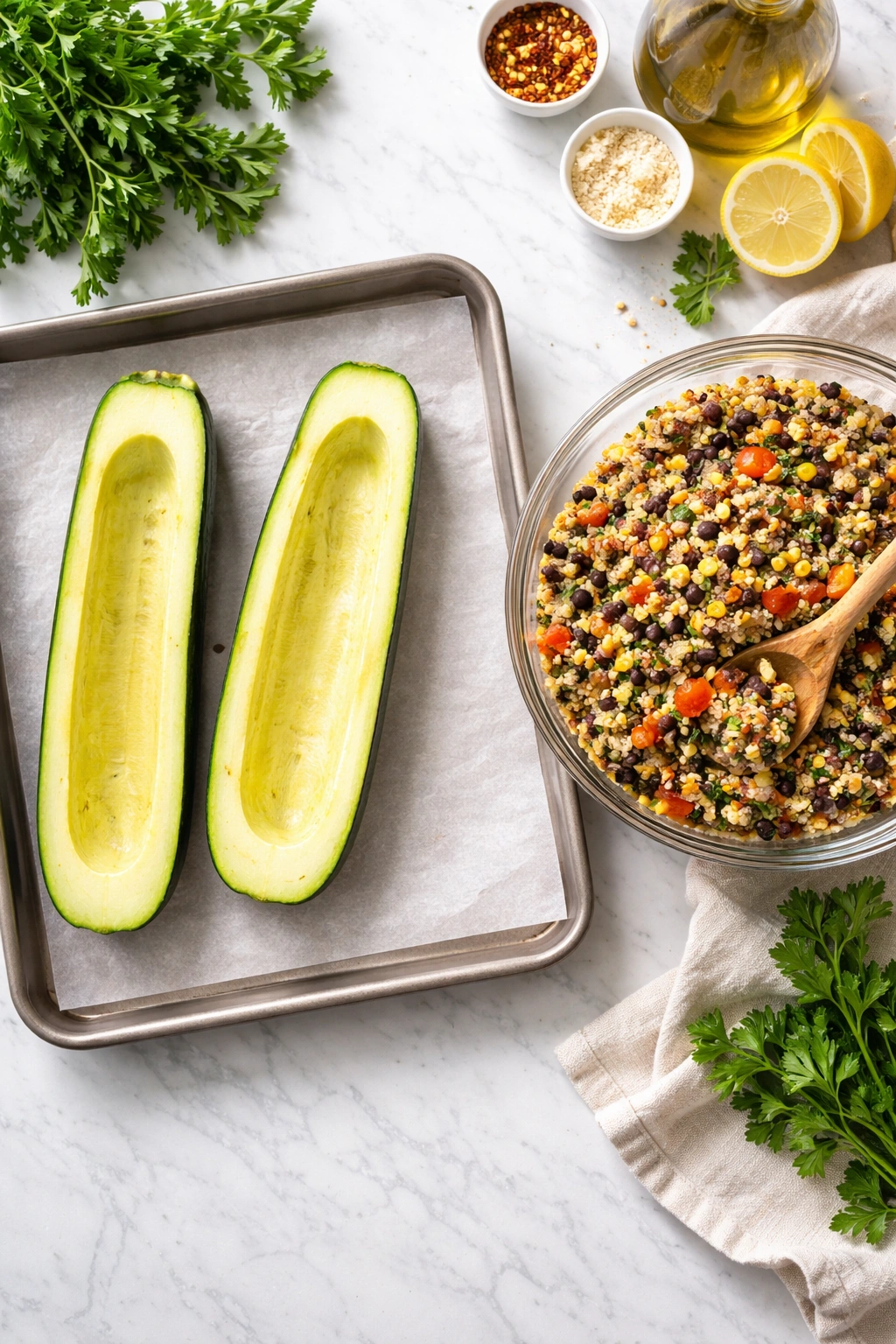
The beauty of stuffed zucchini boats for meal prep lies in their flexibility—you can separate the work into multiple sessions, making them genuinely convenient for busy lives.
Full Assembly, Day Before: Prepare everything completely except baking the night before. Hollow and season the zucchini boats, prepare the filling, assemble the boats with filling and cheese, cover the baking sheet tightly with plastic wrap, and refrigerate. The next day, let the boats come to room temperature for 10 to 15 minutes, then bake at 400°F for 25 to 30 minutes (they’ll take slightly longer since they start cold). This approach minimizes weeknight effort.
Separate Components: Prepare hollowed zucchini boats (optionally salted and rested) and store them in an airtight container for up to 2 days. Prepare the filling separately and store it refrigerated for up to 5 days. Assemble and bake whenever you’re ready. This approach offers maximum flexibility if your schedule is irregular.
Prepared Filling Only: Prepare a batch of filling and refrigerate it for up to 5 days. Hollow fresh zucchini boats when you’re ready to assemble and bake. This works beautifully if you want to bake smaller batches throughout the week rather than preparing everything at once.
Batch Cooking: Prepare a double or triple batch of filling while you’re already cooking, portion it, and freeze it in containers. Thaw overnight in the refrigerator whenever you want fresh stuffed zucchini boats without chopping vegetables all over again.
Storage, Reheating, and Food Safety
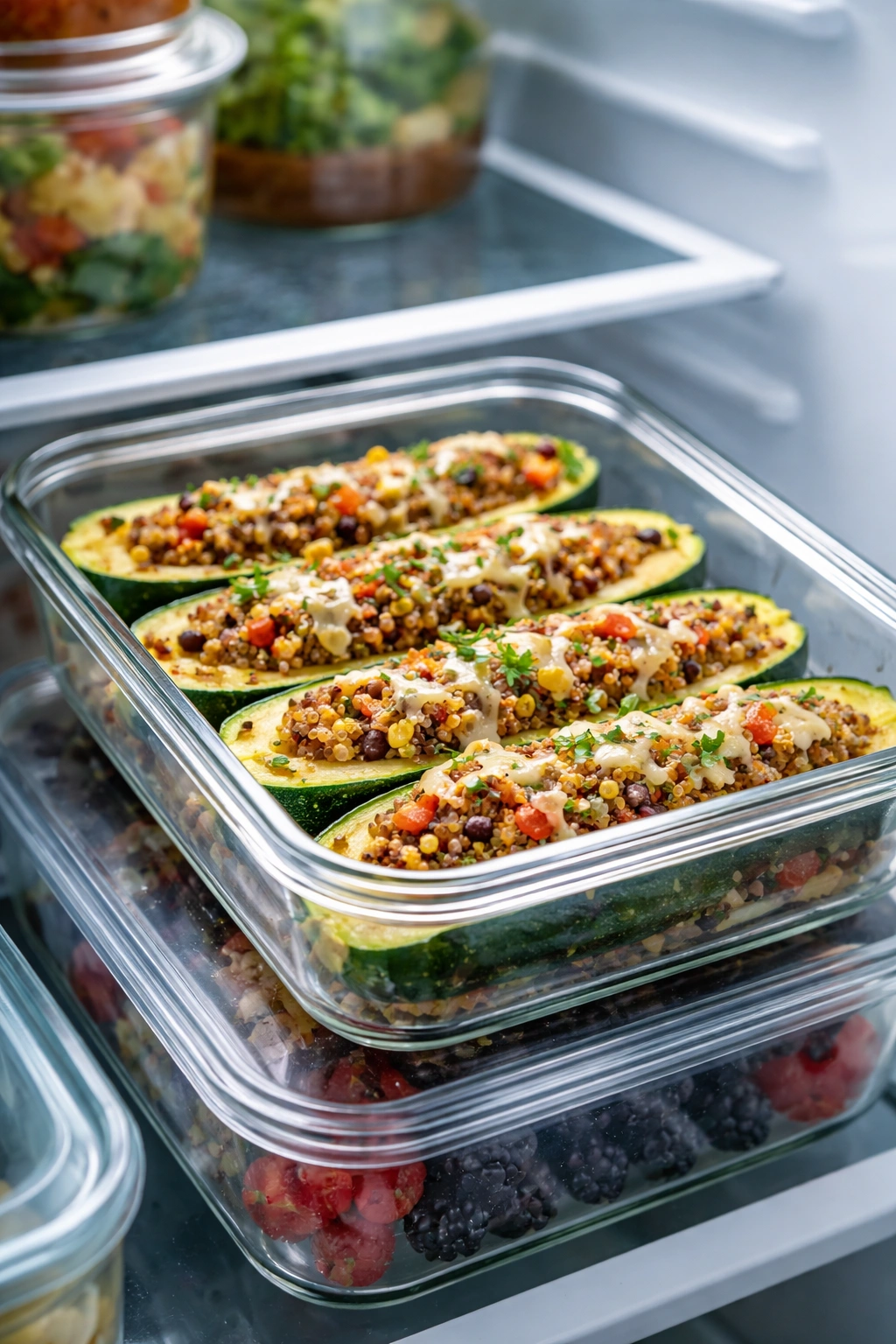
Refrigerator Storage: Assembled, fully cooked stuffed zucchini boats keep in an airtight container in the refrigerator for up to 4 days. The zucchini will continue softening slightly as it cools, and the flavors will deepen and integrate—boats often taste better on day 2 than they do fresh from the oven.
Reheating: For best texture and flavor, reheat in the oven. Preheat the oven to 350°F (175°C), place the boats on a baking sheet covered loosely with foil, and bake for 12 to 15 minutes until they’re heated through and the cheese is warm. The foil prevents drying and allows the zucchini to warm gently throughout. Alternatively, reheat in a microwave in 30-second intervals, checking between each interval, until warmed through. Microwaving is faster but may result in slightly softer zucchini texture.
Freezer Storage: Fully cooked boats freeze well for up to 3 months, provided you freeze them promptly after cooling to room temperature. However, raw zucchini flesh doesn’t freeze well—cooked zucchini becomes mushy after thawing. Always freeze fully cooked boats, never raw ones. Layer parchment paper between individual boats before placing in a freezer-safe container to prevent sticking. Thaw overnight in the refrigerator before reheating. Thawed and reheated boats are slightly softer than fresh ones but remain genuinely palatable and delicious.
Raw Zucchini Boats: Hollowed but uncooked zucchini boats can be refrigerated in an airtight container for 2 to 3 days. They’re more fragile than cooked ones and may break apart more easily during assembly if they become waterlogged from condensation. Store them dry, possibly lined with paper towels, to wick away excess moisture.
Raw Filling: The vegetable-based filling keeps refrigerated for up to 5 days and freezes beautifully for up to 3 months. When freezing filling, allow it to cool completely, portion into freezer-safe containers, and label with the date. Thaw overnight in the refrigerator or heat from frozen (though thawing first results in more even reheating).
Variations and Flavor Customizations
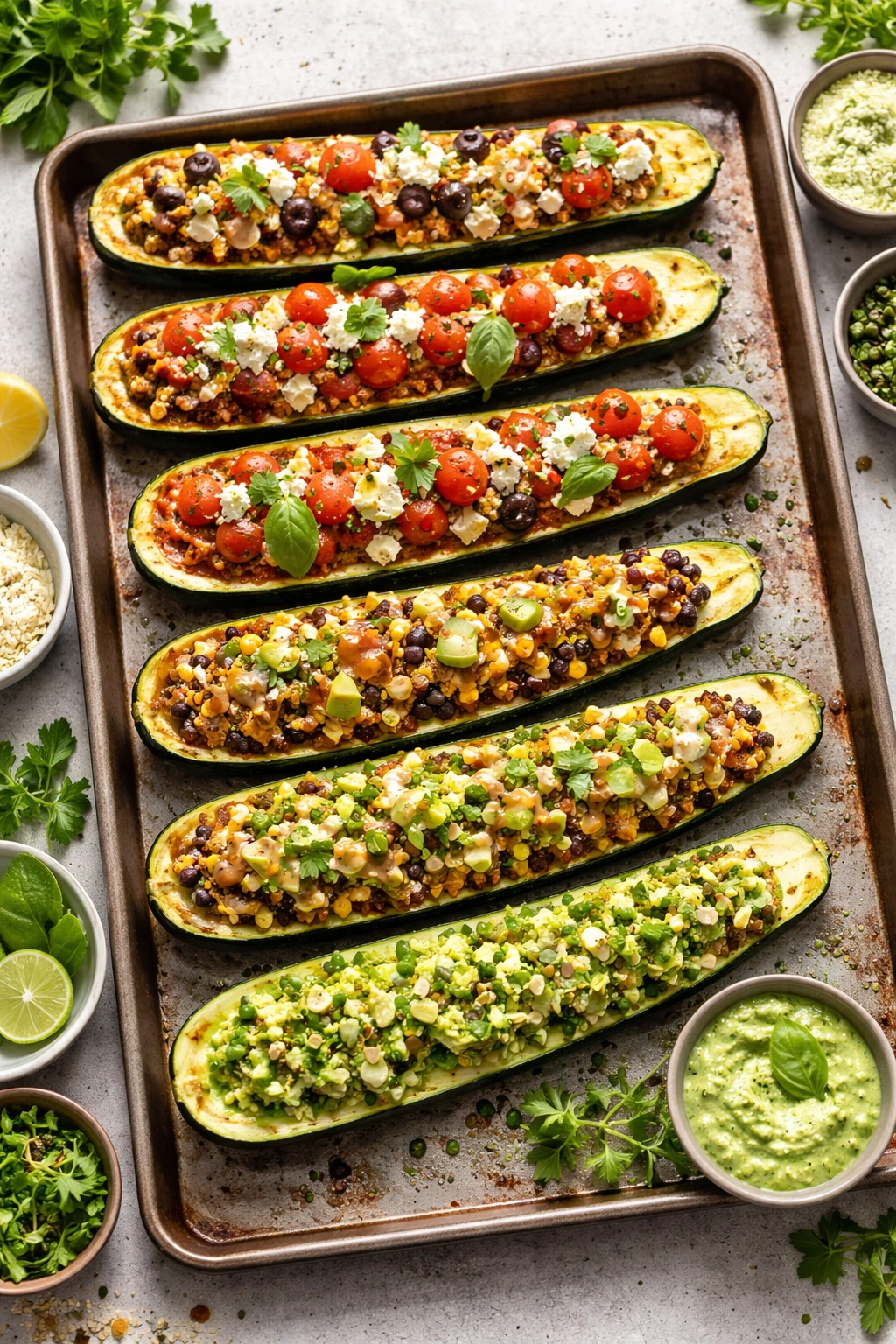
Mediterranean Version: Substitute the black bean filling with cooked chickpeas, fresh diced tomatoes, capers, Kalamata olives, fresh thyme, and cooked quinoa. Omit the chili powder and cumin; instead, use oregano and a touch of red wine vinegar for brightness. Top with vegan feta or Mediterranean herbs before baking.
Italian Version: Replace black beans with cooked lentils. Combine with sautéed mushrooms (cremini, baby bella, or finely chopped shiitake), walnuts finely chopped in a food processor, marinara sauce, Italian seasoning, and a touch of balsamic vinegar. Top with vegan parmesan and fresh basil. This version tastes remarkably meaty despite being entirely plant-based.
Tex-Mex Version: Stick with black beans but add a layer of complexity: combine the filling with 1 to 2 tablespoons of your favorite salsa, a splash of lime juice, and diced jalapeños for heat. Top with vegan cheese and serve with additional salsa, avocado, vegan sour cream, and cilantro on the side.
Green Goddess Version: Use the basic black bean filling but reduce the other vegetables. Add 1 cup of tightly packed fresh spinach (wilted before adding), fresh basil, parsley, and chives. Reduce spices slightly—use just cumin and paprika, allowing the fresh herbs to shine. This lighter version is stunning in spring and summer.
Mushroom Ragù Version: Finely dice 8 ounces of cremini or baby bella mushrooms and cook them with the onions until they release their moisture and begin browning (about 8 minutes). Add tomato paste, Italian herbs, walnuts finely chopped, the reserved zucchini flesh, marinara sauce, and a splash of balsamic vinegar. Omit beans entirely if you prefer. Top with vegan parmesan. This version satisfies any omni skeptics in your household.
Taco-Seasoned Version: Use black beans or chickpeas with a packet (or homemade blend) of taco seasoning rather than individual spices. Add diced jalapeños, fresh cilantro, lime juice, and diced tomatoes. Serve with all the traditional taco toppings: guacamole, salsa, vegan sour cream, shredded lettuce, and cilantro.
Curried Version: Replace cumin and chili powder with curry powder, turmeric, and coriander. Add canned coconut milk (¼ cup) to the filling instead of vegetable broth. Include cooked chickpeas and diced tomatoes, plus fresh spinach if you like. A touch of lime juice brightens the whole thing. Serve with coconut yogurt instead of vegan sour cream.
Grain-Based Version: For additional substance, fold cooked quinoa, rice, or millet into your chosen filling before stuffing the boats. This increases staying power and creates a more complete protein, particularly valuable if your protein base is lighter (vegetables and mushrooms rather than legumes).
Cheese Sauce Alternative: Instead of shredded vegan cheese, prepare a simple dairy-free cheese sauce using ¼ cup nutritional yeast, 3 tablespoons olive oil, 2 tablespoons cornstarch, 1 cup vegetable broth, 1 teaspoon garlic powder, and sea salt to taste. Whisk together, cook over medium heat until thickened, and spoon over filled boats before baking. This creates a more cohesive, sauce-like topping.
Pairing Your Zucchini Boats with Other Meals
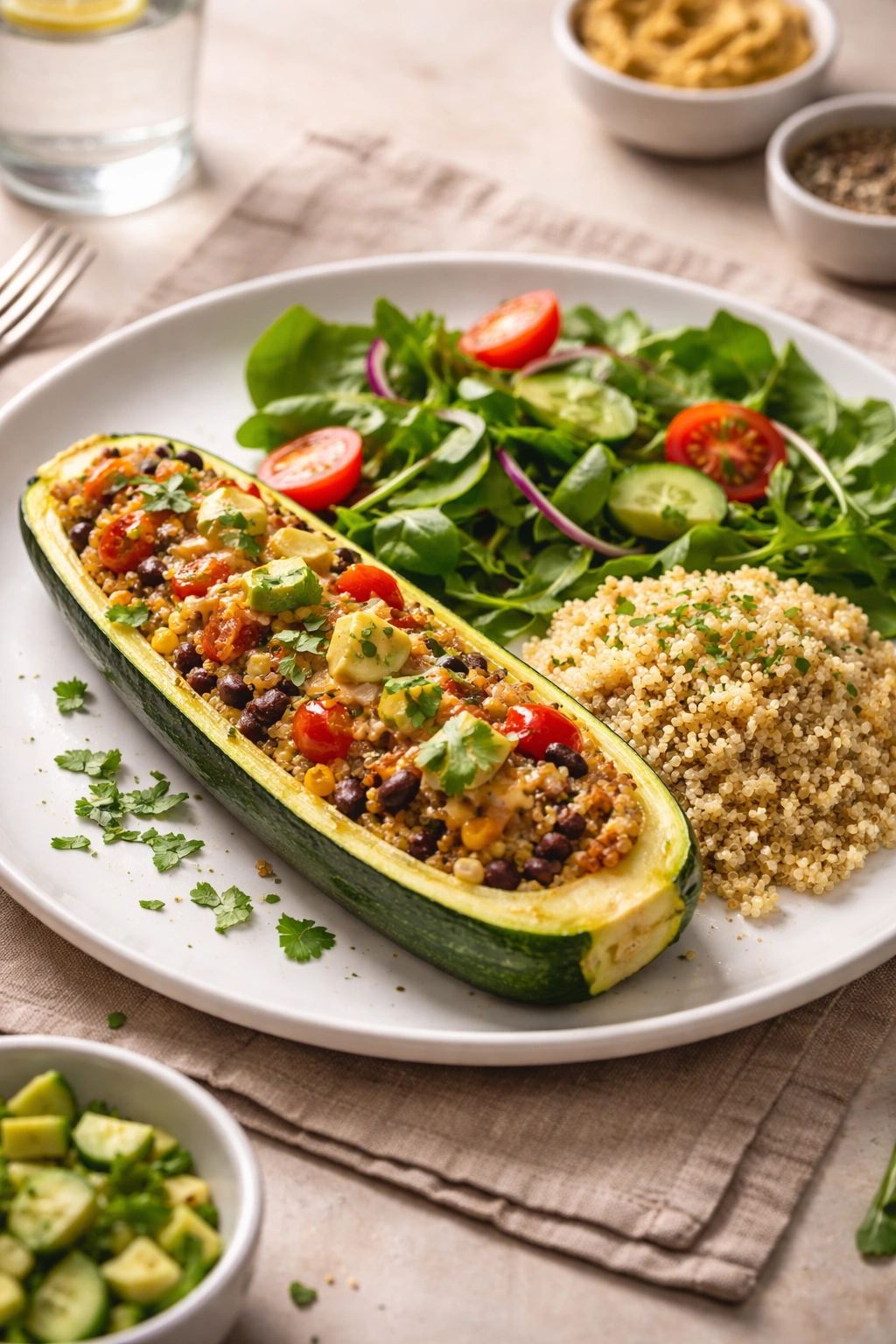
Stuffed zucchini boats don’t require additional sides to create a complete meal, but thoughtful accompaniments elevate the entire dining experience.
Grain Sides: Serve boats alongside cooked rice (white, brown, or jasmine for absorption of sauce), quinoa for complete protein, farro or other grains for nutty flavor, or even couscous for lightness. Keep grain sides simply seasoned—a drizzle of olive oil, squeeze of lemon, and fresh herbs complement rather than compete with the boats.
Salad Accompaniments: A crisp green salad provides textural contrast and brightness. For Mediterranean boats, serve a simple salad of mixed greens with lemon vinaigrette. For Mexican-styled boats, a cilantro lime salad or Mexican slaw (shredded cabbage with lime juice, jalapeños, and cilantro) works beautifully.
Roasted Vegetables: Roasted cauliflower, broccoli, or sweet potato cubes add nutritional diversity and textural interest. Toss vegetables with olive oil, salt, and pepper, then roast at 425°F for 20 to 25 minutes until caramelized.
Legume Sides: Refried beans, seasoned black beans, or chickpea preparations create heartier meals for those with larger appetites. These pair particularly well with Mexican-styled boats.
Bread or Grain Products: For those who want carbohydrate density, serve with crusty bread, garlic toast, or grain-based rolls. Mediterranean boats pair naturally with focaccia or whole grain bread.
Raw or Pickled Accompaniments: Serve with quick pickled red onions, fermented vegetables, or fresh salsa to introduce acidity and brightness. These condiments cut through richness and add digestive enzymes.
Serving Suggestions and Plating Ideas
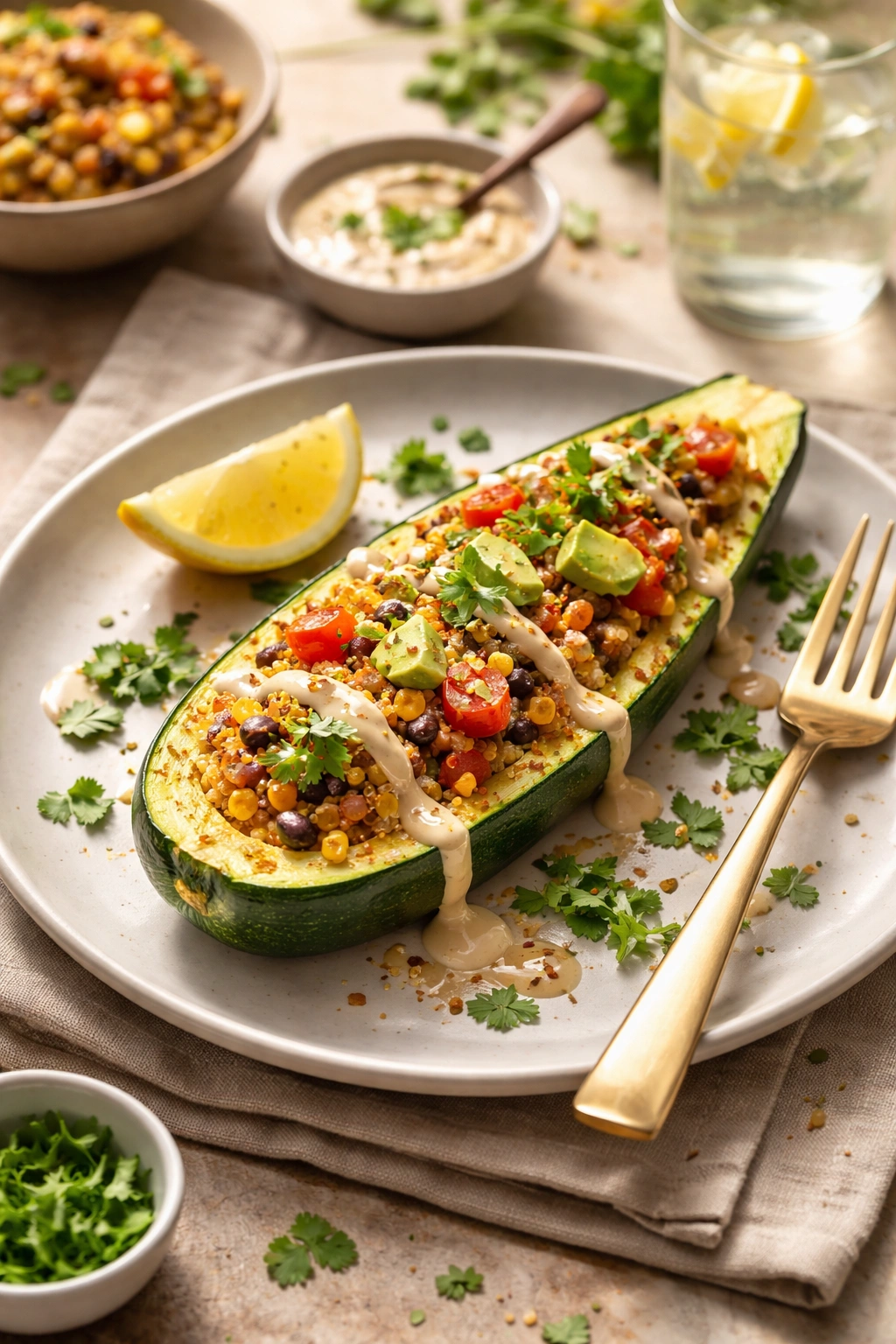
For a Restaurant-Style Presentation: Arrange a single zucchini boat half on a plate with the cut-side slightly raised, perhaps nestled against a small pile of cooked grains. Drizzle any pan juices around the boat for visual interest. Garnish with fresh herbs and microgreens if you have them. A lemon or lime wedge placed beside the boat adds color.
For Family-Style Serving: Arrange boats on a large platter, scattered with fresh cilantro, lime wedges, and optional toppings (avocado, salsa, sour cream). Serve toppings on the side so everyone customizes to preference.
For Meal Prep Containers: Layer a thin bed of grains or salad, then place the zucchini boat on top cut-side up, and tuck accompaniments around it. Include any sauce or dressing in a small separate container to prevent sogginess during storage. This arrangement keeps containers interesting visually even after several days.
Temperature Play: Serve warm boats alongside room-temperature salad and grains for textural and temperature variety that keeps the meal interesting.
Sauce Finishing: Drizzle additional sauce (marinara, tahini-based sauce, cilantro lime dressing, or vegan sour cream mixed with herbs) over the finished boat for both flavor and visual appeal.
Common Mistakes and How to Avoid Them
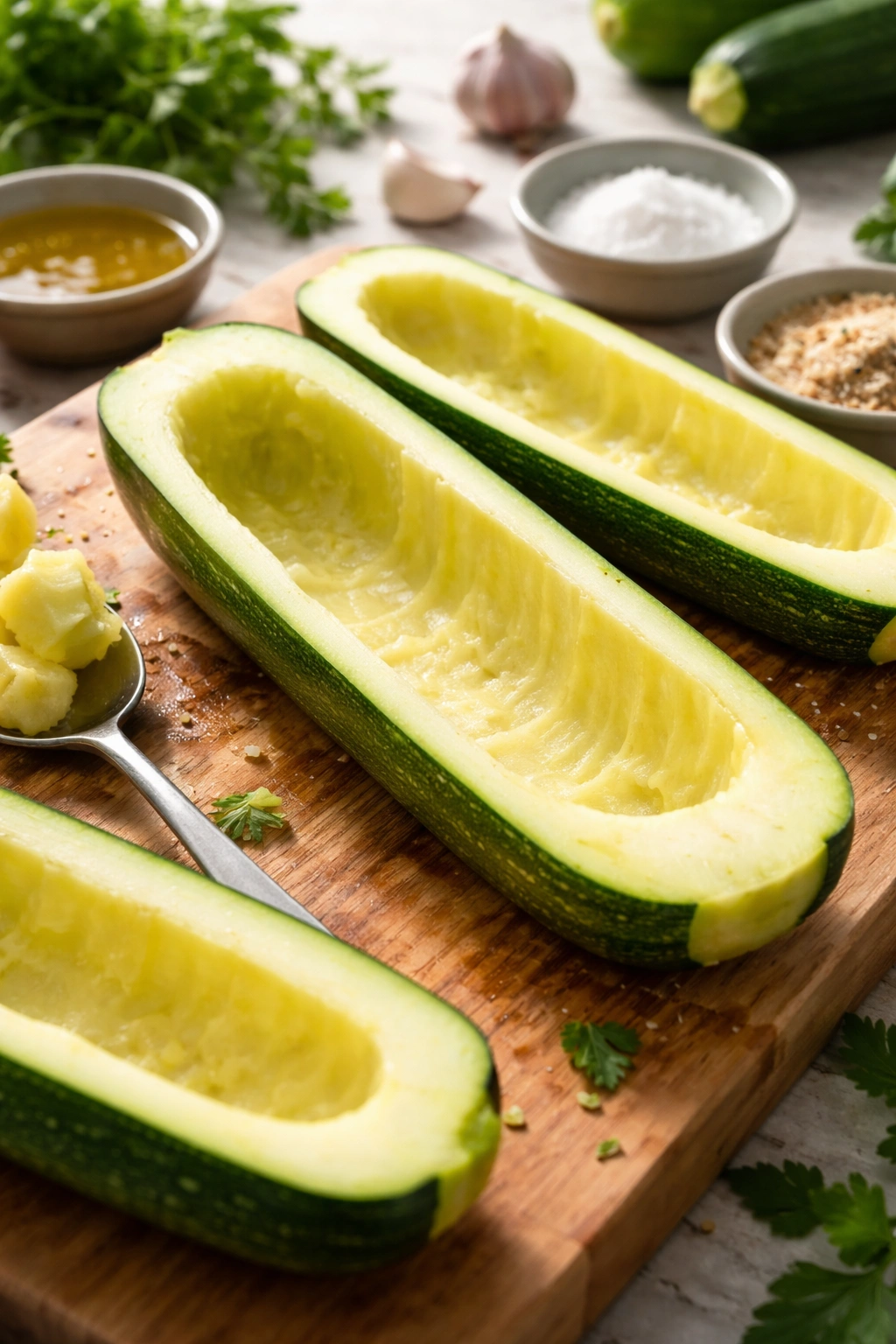
Overscooped Zucchini: Scooping too aggressively creates thin-walled boats that collapse during cooking. Aim for roughly a half-inch thickness of flesh remaining in all directions. When in doubt, err on the side of leaving too much rather than too little.
Oversalting During Prep: While salting and resting the boats is beneficial, oversalting this stage combined with salty filling leads to unpleasantly salty results. Use conservative salt in the prep stage—about ¼ teaspoon total distributed among all boats—and rely on the filling for seasoning.
Waterlogged Boats: Excess moisture is the primary culprit in waterlogged boats. Salt-and-rest step helps, but thorough drying (patting with paper towels) before filling is critical. Ensure your filling has reduced sufficiently (liquid should be mostly evaporated, not saucy) before filling boats.
Underseasoned Filling: It’s easy to underfill boats (both in terms of quantity and flavor intensity) to play it safe. Taste your filling aggressively before filling boats. It should taste well-seasoned and bold—some intensity will diminish during baking, so what tastes perfectly seasoned at filling stage will taste just right when baked.
Overcrowded Baking Sheet: If boats are crammed onto one sheet, they won’t cook evenly. Heat can’t circulate properly around each boat. Give them breathing room—if they’re touching, you have too many on one sheet.
Skipping Ingredient Prep: Zucchini that aren’t thoroughly dried, onions that aren’t fully softened, garlic that’s added to cold oil instead of hot—these small skips accumulate into notably worse results. The “mise en place” approach (preparing and organizing ingredients before cooking) genuinely matters here.
Overfilling Boats: While it’s tempting to stuff boats generously, overfilling results in spillage during baking, uneven cooking, and boats that are difficult to eat without spilling filling everywhere. Stop at roughly three-quarters full, leaving about a quarter-inch of clearance at the boat’s rim.
Using Inferior Zucchini: Oversized, mushy, or damaged zucchini create poor boats. Choose firm, medium-sized specimens. Size consistency matters—similar-sized boats cook evenly.
Not Preheating the Oven: An unpreheat oven means boats start cooking in a cool environment, extending cooking time and resulting in more moisture loss. Always fully preheat before baking.
Final Thoughts
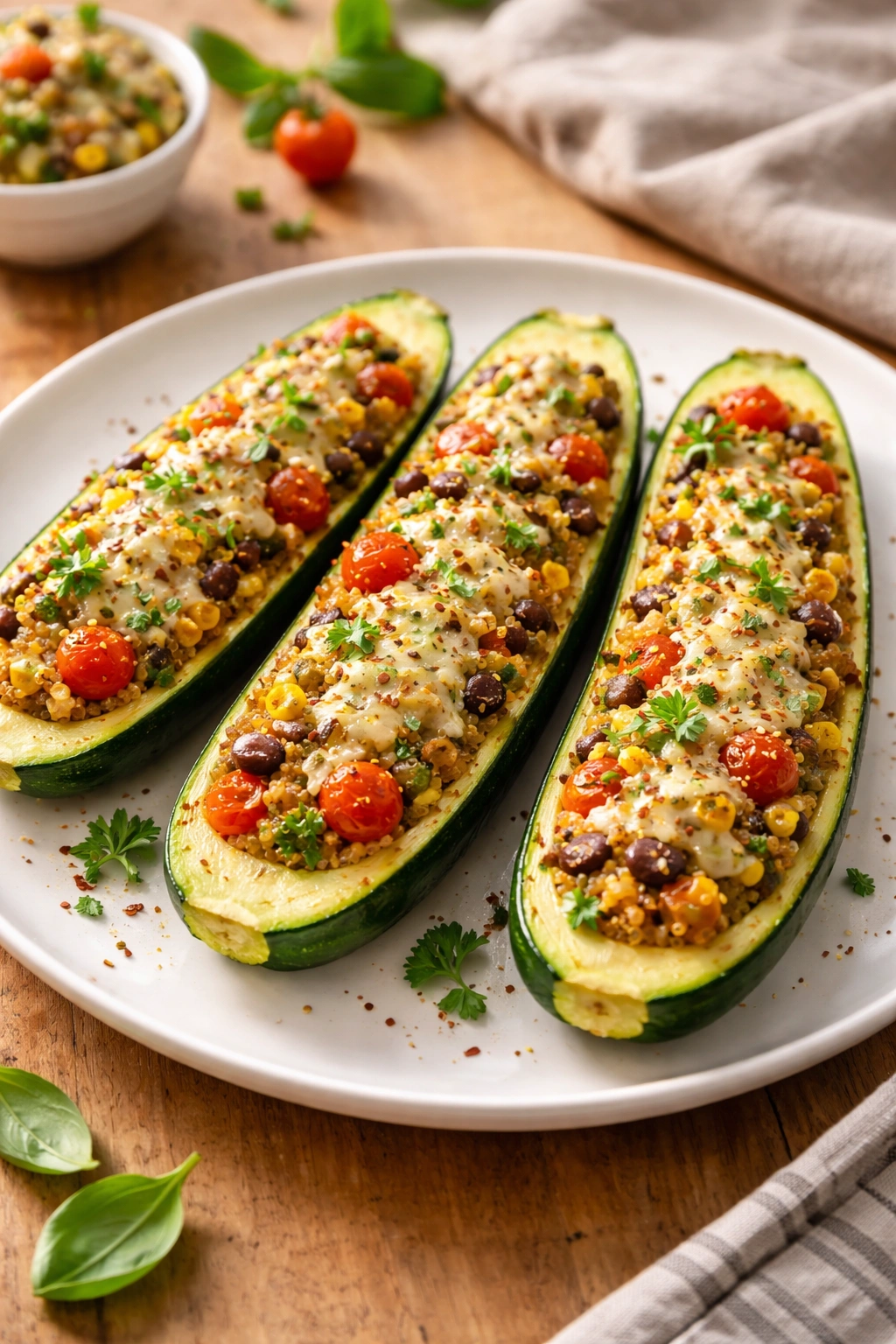
Stuffed zucchini boats represent one of those rare recipes that deliver on their promise: they’re genuinely easy to prepare, accommodate multiple flavor philosophies and dietary approaches, store beautifully, reheat successfully, and most importantly, taste thoroughly delicious rather than virtuous or like a compromise meal. Whether you’re meal prepping for the week ahead or looking for a simple weeknight dinner that feels special without exhausting effort, these boats deliver.
The variations outlined here scratch the surface of what’s possible—once you understand the basic structure (hollowed zucchini plus flavorful filling plus baking), you can adapt endlessly to your preferences, available ingredients, and the different seasons. A summer zucchini harvest becomes an asset rather than an avalanche to manage. A single batch of filling served in multiple ways across a week keeps meals interesting and prevents the monotony that sabotages meal prep consistency.
Cook with confidence knowing that zucchini is forgiving, that a slightly softer boat still tastes wonderful, and that flavor improves over time as components integrate. Your first attempt might not be perfect—and that’s fine. By your second or third time, you’ll have developed intuition about when filling is properly reduced, how the boat should feel at perfect doneness, and how much filling creates the ideal boat-to-filling ratio for your preferences. These small refinements transform a good meal into an exceptional one you’ll actually look forward to eating.