



When dinner time rolls around and you’re staring at the clock wondering how you’ll pull together a satisfying meal in the next hour, chicken is your secret weapon. It’s affordable, cooks quickly, and becomes whatever you want it to be—whether that’s Italian, Mexican, Asian, or comfort food classics. The trick isn’t finding harder recipes; it’s knowing which simple techniques and flavor combinations turn ordinary chicken into something your family actually requests.
Over the years, busy home cooks have discovered that the fastest, most delicious weeknight dinners aren’t the ones with complicated technique. They’re the ones that leverage sheet pans, one-pot shortcuts, and bold seasonings to transform chicken into restaurant-quality meals with minimal cleanup. The recipes below have been tested, retested, and loved by real families who don’t have hours to spend cooking. Each one comes together in roughly 30 to 45 minutes—the sweet spot for weeknight cooking when you still want something that tastes intentional and delicious.
1. Sheet Pan Honey Mustard Chicken and Vegetables
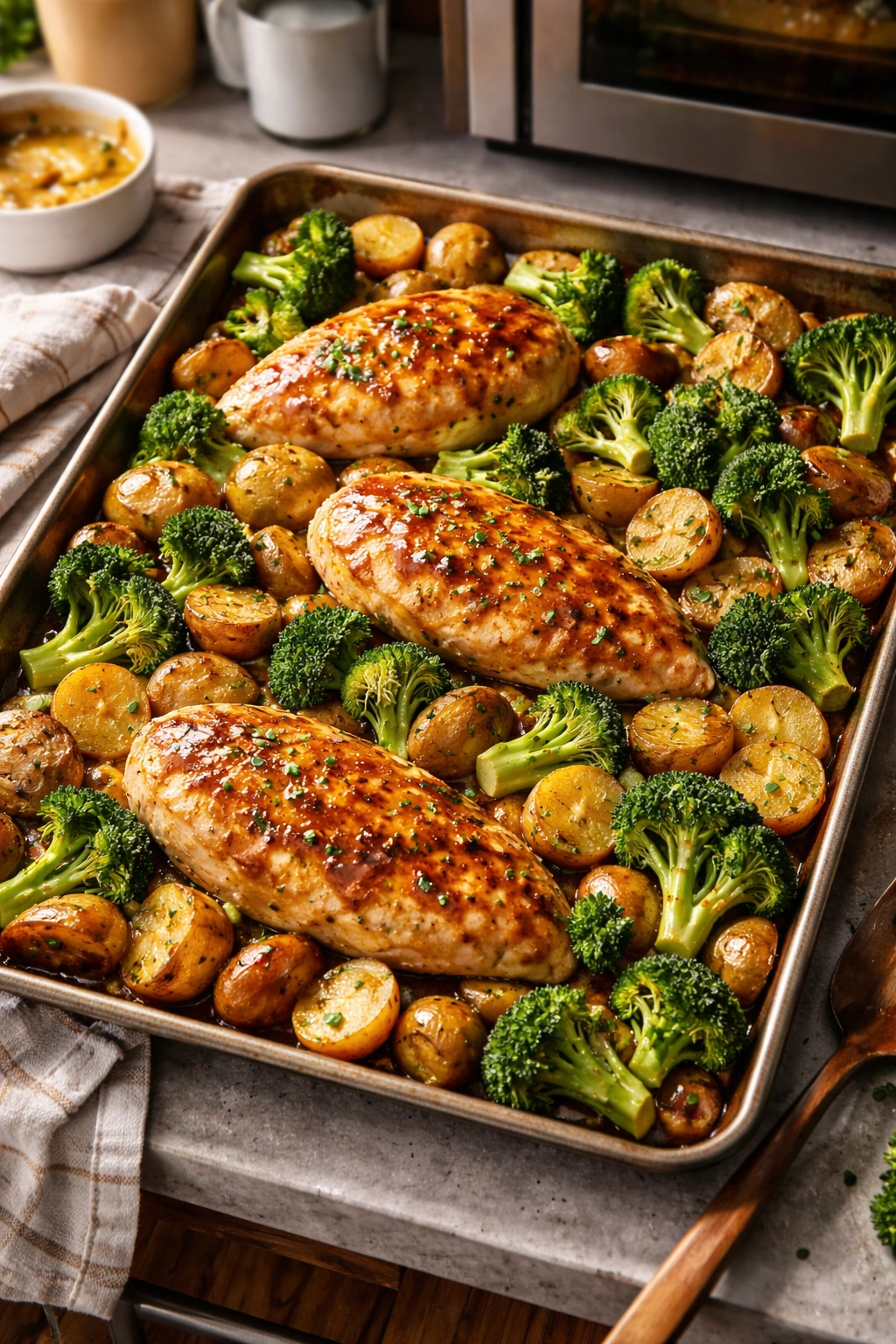
This is the definition of a weeknight win. Chicken breasts and whatever vegetables you have on hand—typically potatoes, broccoli, green beans, or Brussels sprouts—all roast together on a single pan with a golden honey mustard glaze. The real magic happens when you let the chicken and vegetables caramelize slightly in the oven, concentrating the flavors and creating those delicious browned edges.
Why This Works for Busy Nights
There’s almost no prep beyond tossing ingredients with the glaze, and cleanup is genuinely one-pan simple. The beauty of sheet pan cooking is that everything finishes at exactly the same time—the chicken reaches a perfect 165°F internal temperature just as the vegetables develop that tender-crispy texture you’re looking for. Many families who’ve made this recipe report that even their picky eaters scrape up every bit of the sauce from their plates.
How to Build the Flavor
The honey mustard combination is the star here. Combine Dijon mustard with smooth yellow mustard, honey, olive oil, and a squeeze of lemon juice, then coat everything generously. The contrast between the tangy mustard and the sweet honey creates depth that feels almost sophisticated, but it takes literally two minutes to mix together. Pat your chicken dry before coating—this helps it brown instead of steam, which makes a massive difference in texture.
Pro tip: Cut your vegetables into similarly-sized pieces so they roast evenly. Root vegetables like potatoes take longer than delicate ones like zucchini, so if you’re using a mix, either cube the potatoes smaller or give them a 10-minute head start in the oven before adding everything else.
2. One-Pot Lemon Garlic Chicken and Rice
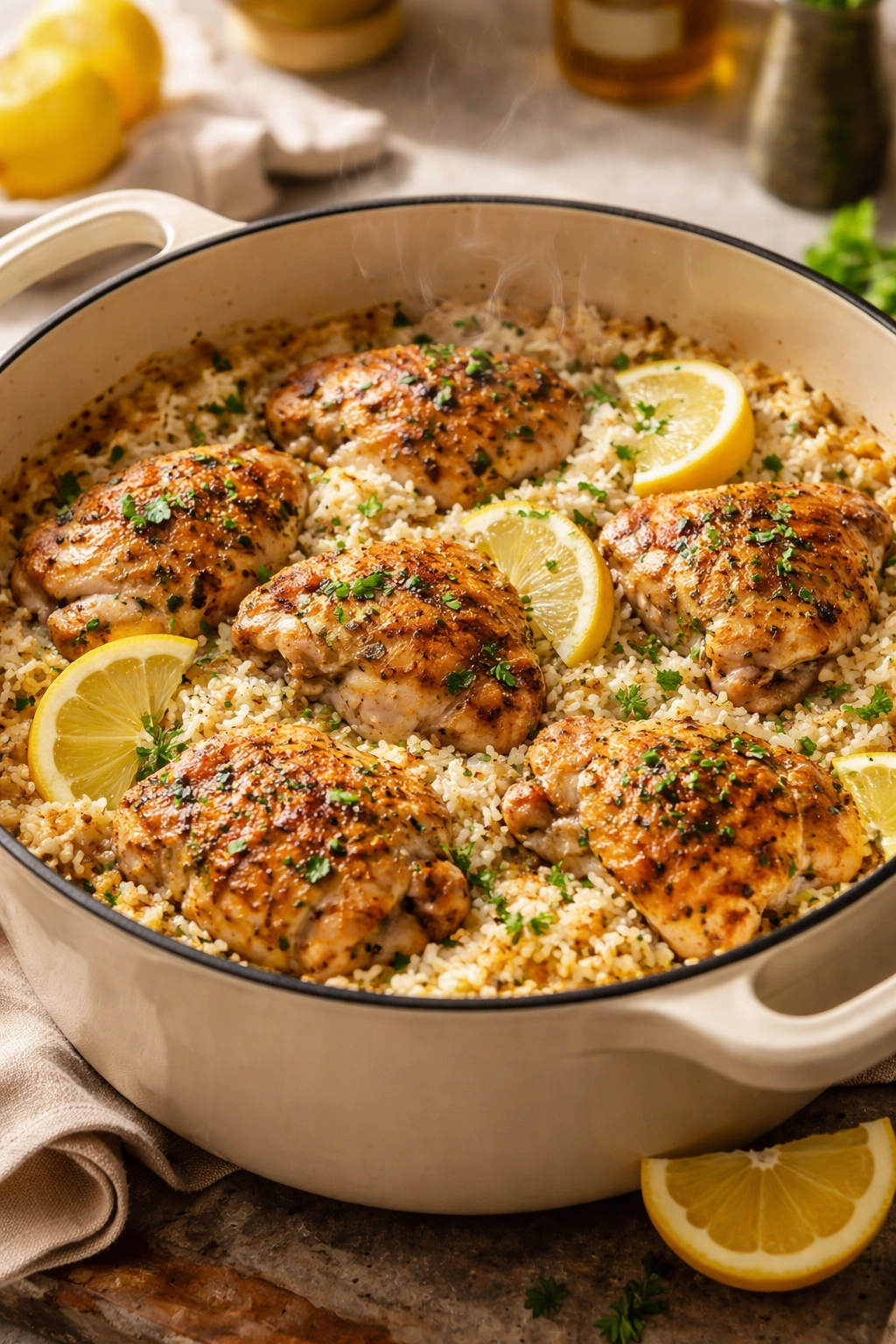
This is the chicken dinner that keeps appearing on “easiest weeknight meals” lists for good reason—there’s a reason it’s loved across countless families. Tender chicken thighs or breasts nestle into fluffy rice and simmer in a savory broth that’s bright with lemon and rich with garlic. Everything cooks in one vessel, which means one pot to wash and genuine contentment on the dinner table.
Why Chicken Thighs Win Here
While you can certainly use chicken breasts, boneless thighs actually stay more forgiving if you’re running late or your timing is slightly off. They contain enough fat that they remain juicy even if they cook a minute or two longer than intended. The thighs also add deeper flavor to the broth than white meat would, creating a more developed taste without extra effort.
The Method That Makes It Simple
Sear seasoned chicken pieces briefly in the pot to develop flavor, then remove them. Sauté minced garlic and diced onion in the remaining oil, add your rice, stir to coat, then pour in broth. Return the chicken to the pot and let everything simmer together for about 20 minutes until the rice is tender and the chicken is cooked through. The rice absorbs all those chicken and lemon flavors as it cooks, so by the end you’ve got a complete, harmonious dish.
Fresh Finish That Elevates It
Right before serving, stir in fresh parsley, a squeeze of lemon juice, and a pinch of lemon zest—this brightens everything and prevents it from tasting flat or heavy. Some cooks add a handful of spinach or peas at the very end, which adds color and a bit of nutritional balance without adding cooking time.
Worth knowing: If your pot isn’t wide enough to hold all the chicken in a single layer, don’t worry—partially submerged chicken still cooks fine as long as everything is covered with liquid. You’re not worried about getting a crust here; you’re after tender, moist meat.
3. Slow Cooker Salsa Chicken with Taco Toppings
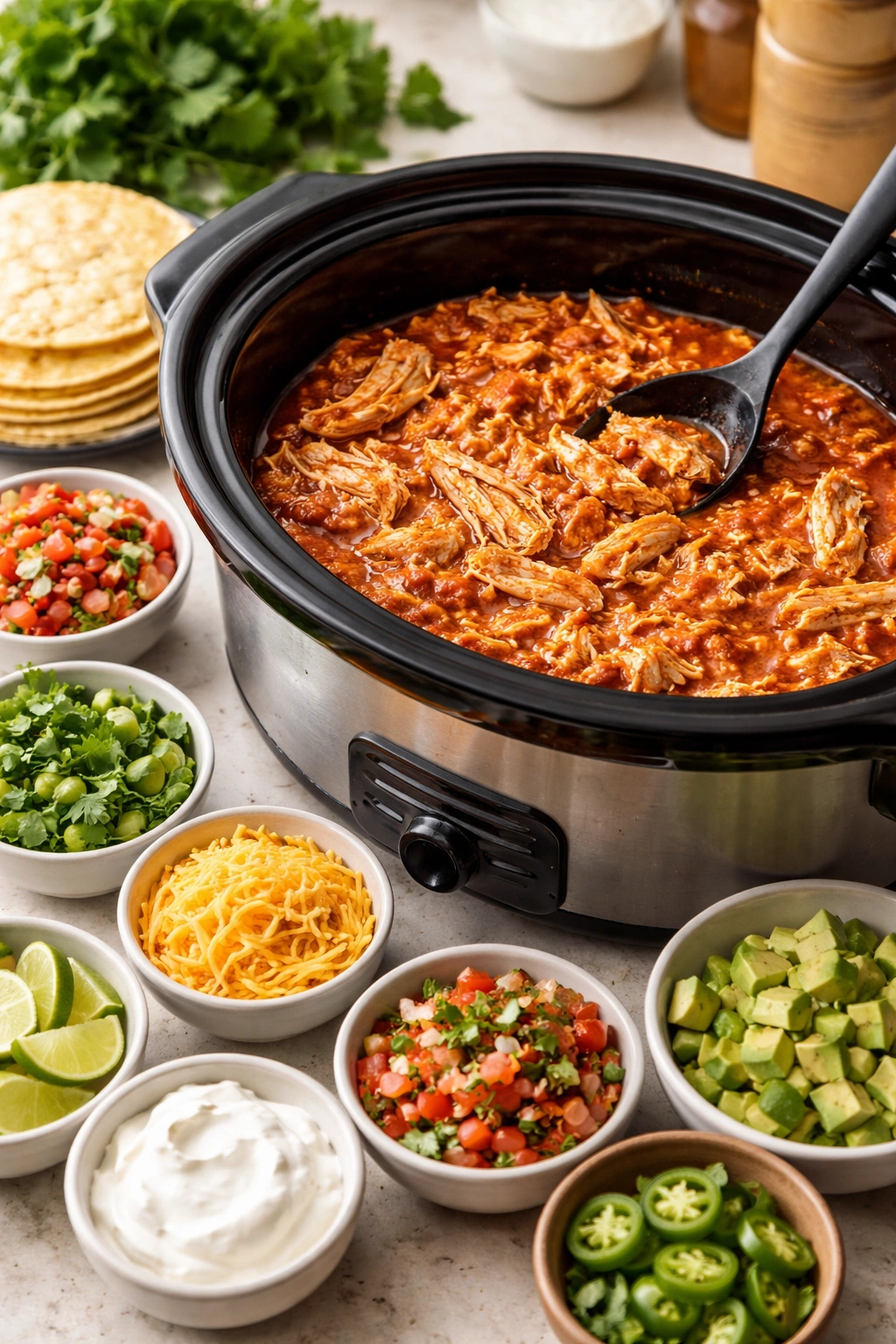
There are two types of slow cooker chicken dinners: those you prep in the morning and forget about, and those you throw together at 4 PM when you realize you forgot to thaw something. This recipe works beautifully for both scenarios. Chicken breasts or thighs, salsa (use whatever style you love—mild, medium, or hot), and basic taco seasonings go into the slow cooker on low for six to eight hours, transforming into shredded chicken that’s impossibly moist and boldly flavored.
Why This Becomes Your Secret Weapon
Frozen chicken works just fine—no thawing required. The slow heat gently breaks down the muscle fibers and infuses the meat with flavor over hours, resulting in chicken that shreds with a fork and tastes like it’s been simmering all day (because it has). The salsa acts as both liquid and seasoning, so you’re not adding random ingredients to the pot.
Endless Serving Possibilities
Once you have this shredded chicken, you can build tacos, burrito bowls, nachos, quesadillas, salads, or even top baked potatoes. This flexibility is what makes busy families keep coming back to this recipe—on Monday it’s tacos, Wednesday it’s a burrito bowl situation, and Friday it’s nachos for a casual dinner. Set out a toppings bar with sour cream, shredded cheese, cilantro, jalapeños, lime wedges, and lettuce, and let everyone build their own meal.
Making It Better Than the Simple Version
Add a packet of taco seasoning or make your own with cumin, chili powder, garlic powder, and paprika—this prevents the salsa chicken from tasting one-dimensional. Some cooks add a splash of lime juice or a can of black beans right into the slow cooker. The chicken itself is subtle enough that it plays well with just about any addition without becoming muddled.
Real talk: If you forget about it for an extra hour or two because life got crazy, it doesn’t matter. Slow cooker chicken forgives you. It just gets more tender.
4. Crispy Pan-Seared Chicken Piccata
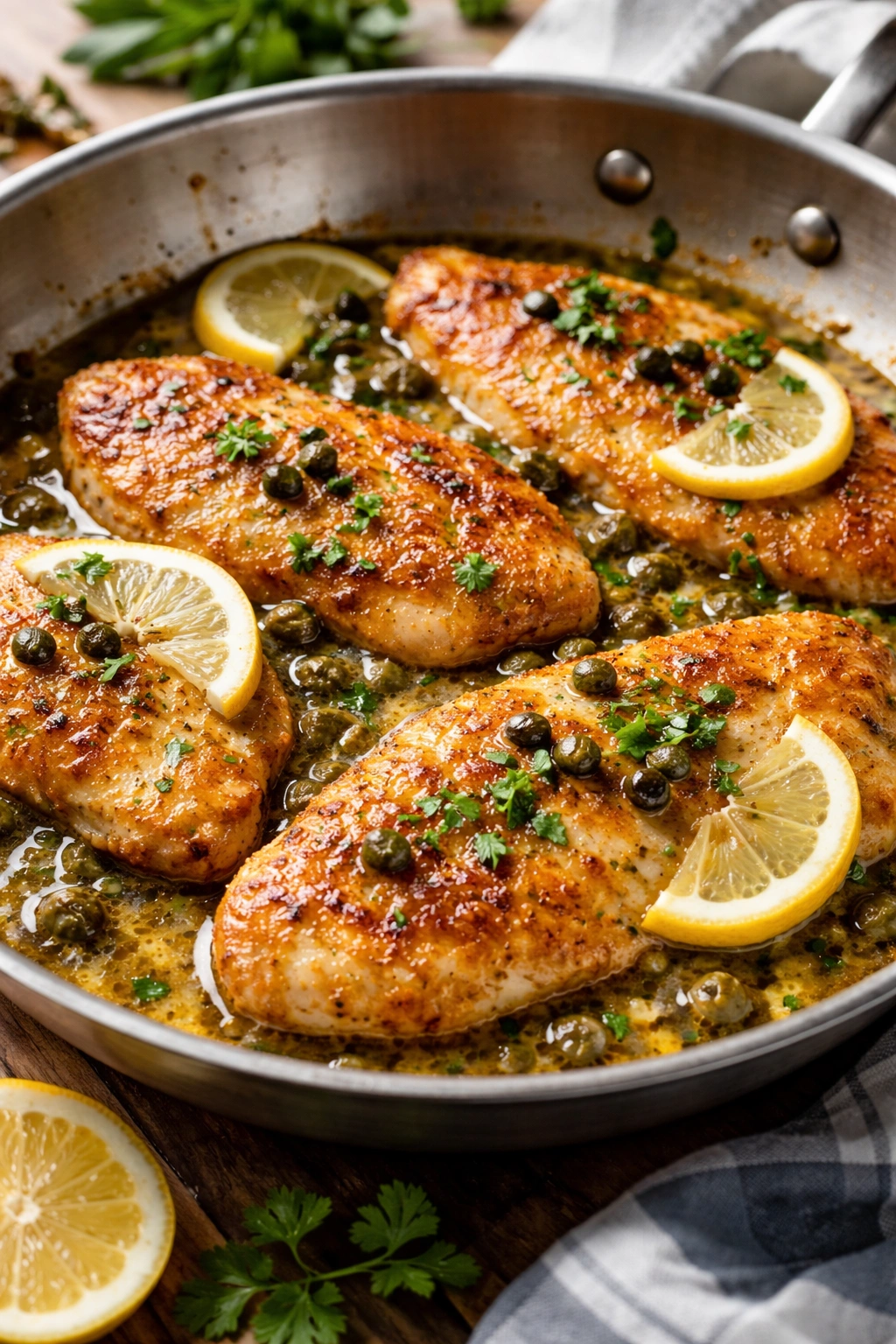
When you want something that feels restaurant-worthy but comes together in under 30 minutes, this Italian classic delivers every single time. Thin chicken cutlets are dredged in flour, seared until golden in butter, then bathed in a bright lemon-butter sauce studded with capers that tastes like you spent way longer on dinner than you actually did.
The Secret to Getting It Right
Ask for chicken cutlets at the butcher counter—they’re chicken breasts that have already been pounded thin. If you can’t find them, buy breasts and pound them yourself between plastic wrap using a meat mallet (or the bottom of a heavy pan). Thin meat cooks quickly and evenly, and it develops that beautiful golden crust that makes this dish feel indulgent.
Building the Sauce While the Chicken Cooks
Once the cutlets are seared and set aside on a plate, there’s just enough fond (those browned bits) left in the pan to build a sauce in literally two minutes. Add minced garlic, lemon juice, and a splash of chicken broth, then let it bubble for a minute while you scrape up all that flavorful browned coating. Add capers and a knob of butter, stir until the butter melts into the sauce, and taste it—you’ll want more lemon than you think.
Why It Tastes So Good for So Little Effort
That combination of salty capers, bright lemon, and browned butter creates a flavor profile that tricks your brain into thinking you’re eating something sophisticated. The sauce is acidic enough to feel fresh rather than heavy, and the capers provide a briny pop that prevents it from being one-note. Serve over pasta, rice, or simply with roasted vegetables and let the sauce do the work.
Insider note: Don’t skip the caper liquid (the brine they’re packed in)—a tablespoon of it in the sauce adds genuine umami depth that makes people wonder what your secret is.
5. Air Fryer Chicken Thighs with Quick Seasonings
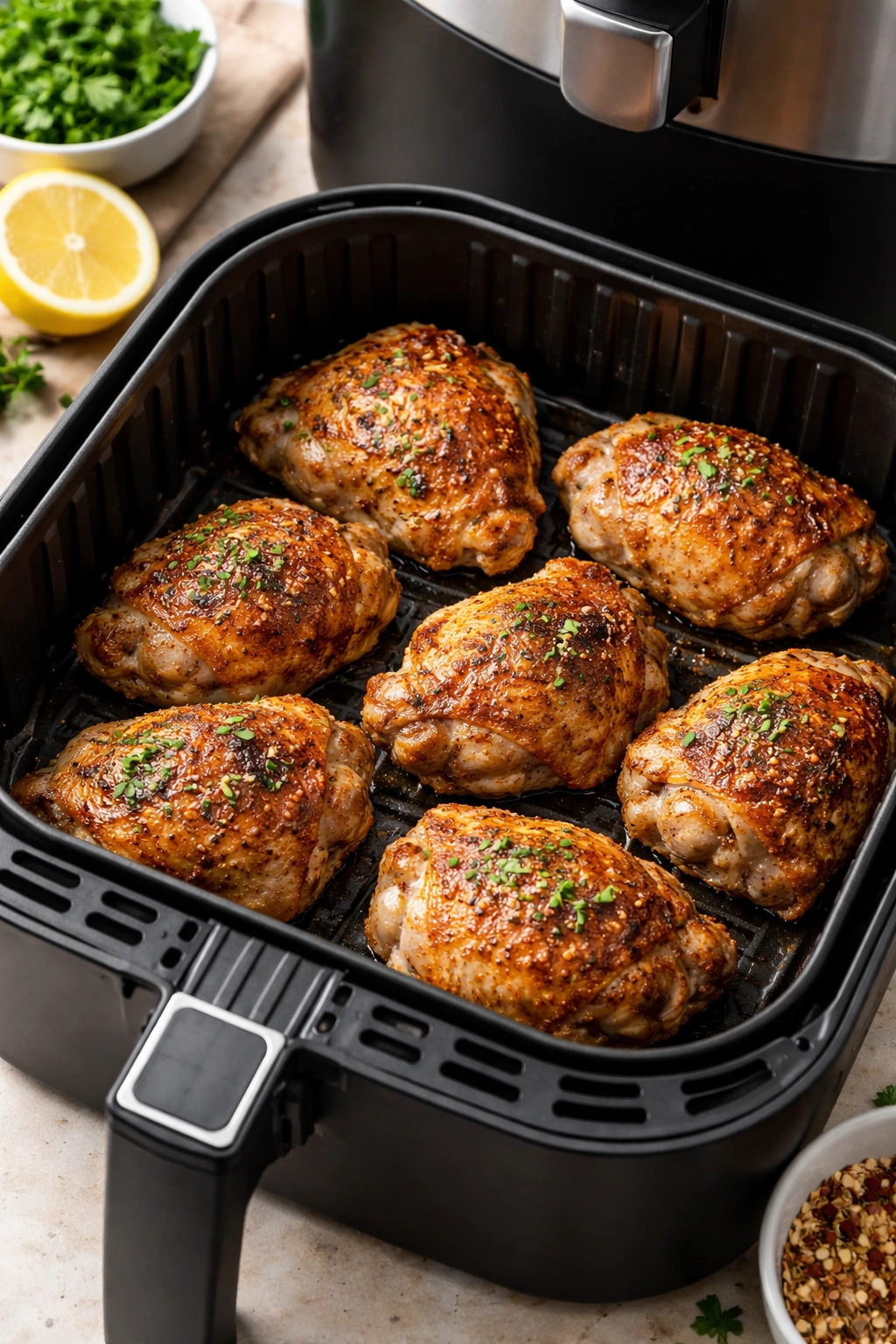
If you own an air fryer, this is your backup dinner that you actually look forward to eating. Bone-in, skin-on chicken thighs seasoned simply with garlic powder, paprika, salt, and pepper hit the air fryer basket and emerge 20 minutes later with crackling crispy skin and juicy, tender meat underneath. It’s the chicken dinner equivalent of pressing a magic button.
Why Thighs Are Better Than Breasts Here
Chicken thighs contain enough fat that they can’t really dry out, even if your air fryer runs a bit hot or you forget about them for five extra minutes. The skin crisps beautifully in the circulating hot air, giving you that satisfying crunch with every bite. The dark meat itself is inherently more flavorful than white meat, so even with minimal seasoning, you’re getting complex taste.
The Setup That Guarantees Success
Pat the thighs dry thoroughly—this is the one step that determines whether you get crispy skin or slightly rubbery skin. Moisture is the enemy of crispiness. Toss with a light coating of olive oil and your seasonings, then arrange them skin-side up in the basket in a single layer. Flip them halfway through cooking so both sides get exposure to the moving air.
Variations That Keep It Interesting
Once you’ve mastered the basic version, swap out seasonings. Try lemon pepper seasoning, Buffalo sauce, barbecue rub, Italian herbs, or a Cajun spice blend. Some cooks drizzle thighs with teriyaki sauce or brush them with barbecue sauce in the last few minutes of cooking. The versatility is part of what makes air fryer chicken thighs such a weeknight workhorse.
Pro tip: Don’t crowd the basket. The air needs room to circulate around each piece, or you’ll end up with some steamed-looking spots rather than all-over crispiness. If you need to cook more chicken than your basket holds, run a second batch—the whole cooking process only takes 20 minutes anyway.
6. Skillet Chicken Fajitas with Peppers and Onions
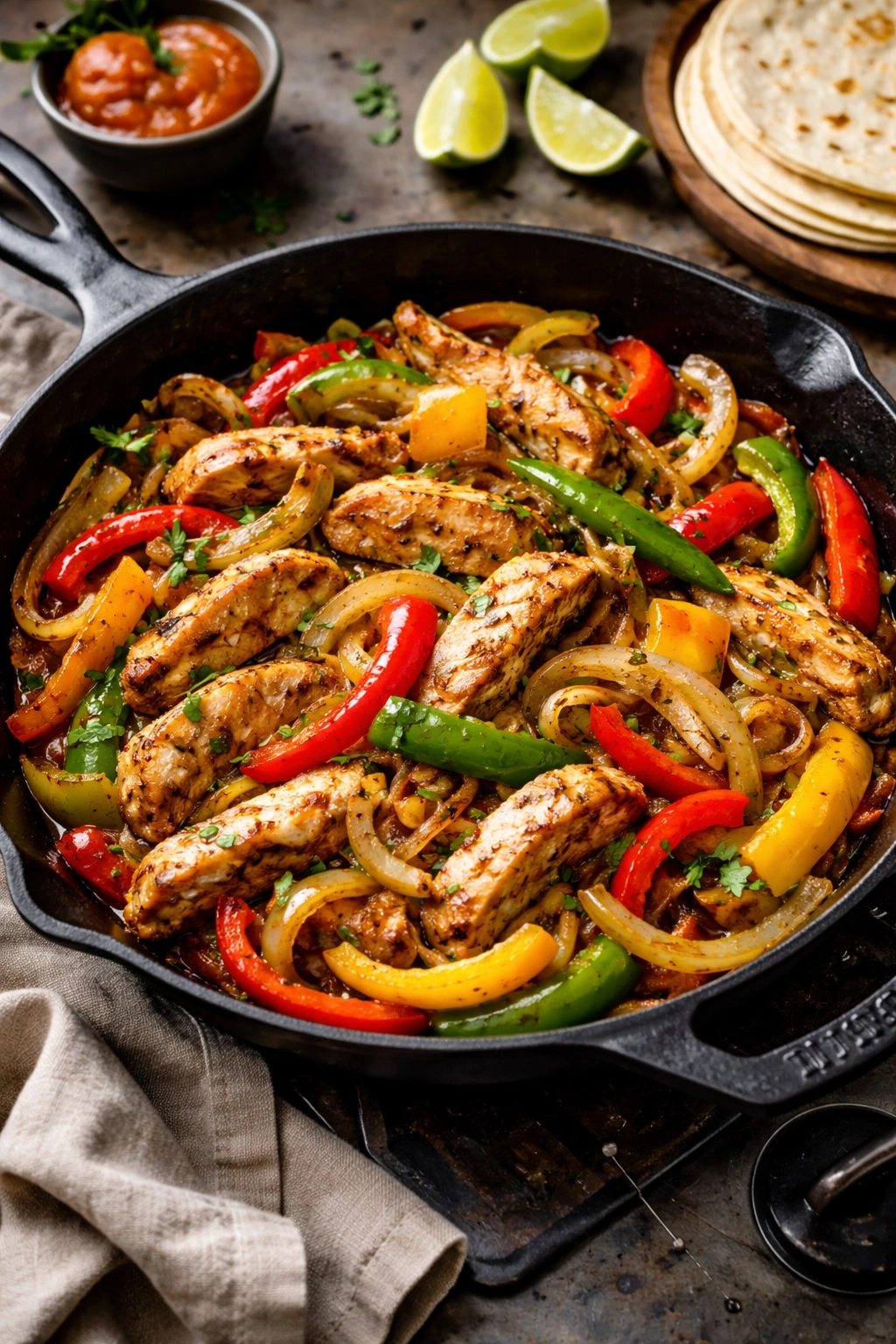
This is the dinner that justifies keeping peppers and onions in your crisper drawer. Sliced chicken breast is seared quickly over high heat until it’s lightly golden, then bell peppers and onions get the same treatment. Everything comes together in one skillet with a homemade fajita seasoning that tastes infinitely better than the packaged version and takes about the same amount of time.
Why Skillet Over Skewers
You might see fajita recipes that suggest grilling or broiling, but a hot skillet is honestly more reliable for weeknight cooking. You’re not managing flames or heating elements—you just need a good piece of cast iron or stainless steel and medium-high heat. The stovetop approach also means you can build a sauce right in the pan rather than having everything separate on a platter.
Building Layers of Flavor
Cook the chicken first with minimal seasoning, just enough to get a crust. Remove it, cook the vegetables until they’re slightly charred at the edges and still have some bite, then return the chicken along with cumin, chili powder, garlic powder, and lime juice. The acid from the lime prevents the whole thing from tasting heavy and adds brightness that reminds you this is fresh food, not heavy comfort food.
The Serve That Makes It Sing
Warm flour tortillas matter more than you’d think—cold tortillas taste limp, but tortillas that have been heated directly over a burner flame or toasted in a dry skillet taste intentional and delicious. Set out toppings (sour cream, guacamole, shredded cheese, cilantro, jalapeños, lime wedges) and let people build their own. This customization is what makes fajitas feel like a restaurant dinner rather than just Tuesday night.
Worth knowing: If you have time, marinate the chicken for 15 to 30 minutes before cooking. A simple marinade of lime juice, olive oil, garlic, and cumin deepens the flavor significantly without adding cooking time, since the chicken still cooks quickly afterward.
7. Creamy Tuscan Chicken with Sun-Dried Tomatoes
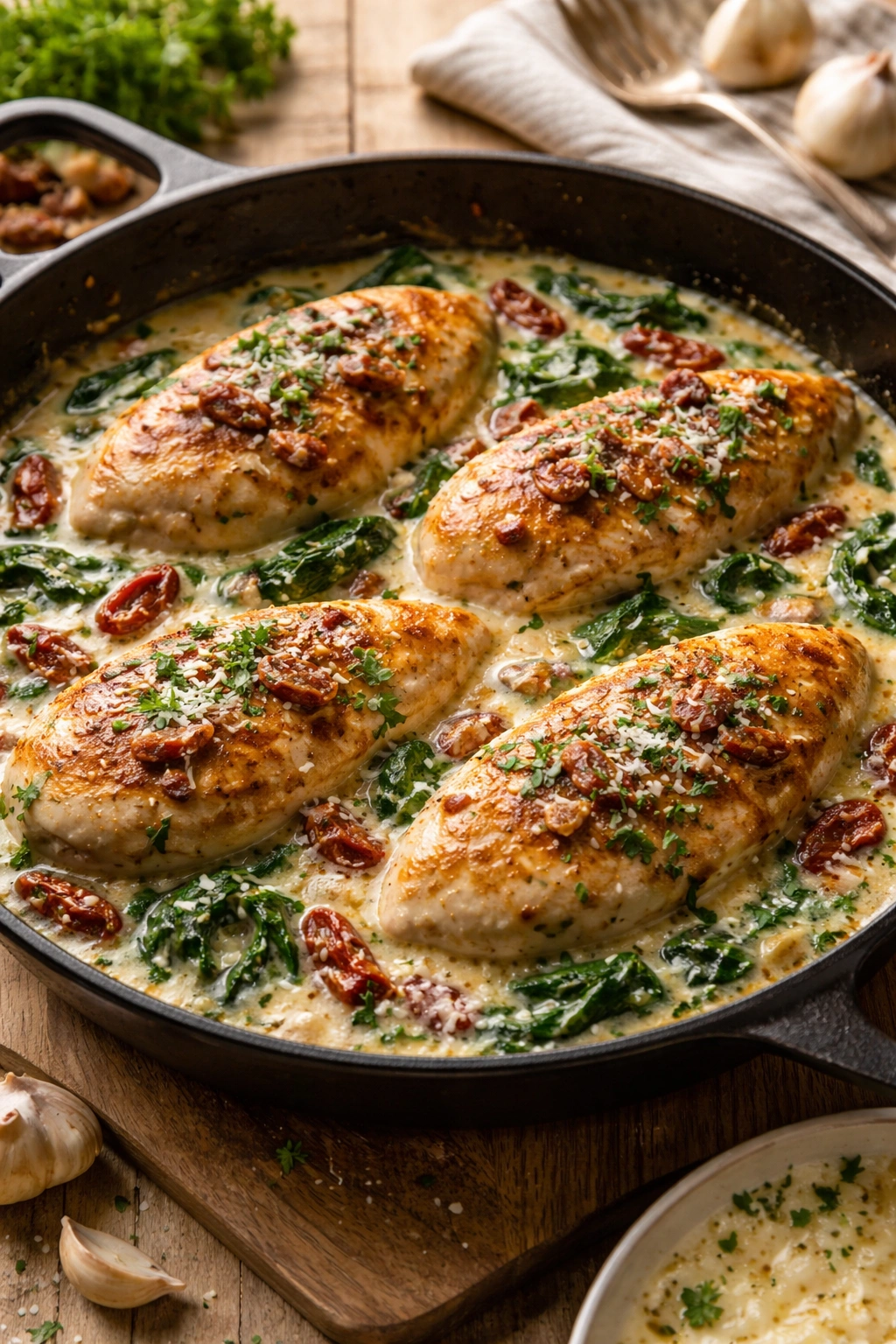
This is the chicken dinner that bridges the gap between “simple weeknight meal” and “impressive enough to serve guests.” Chicken breasts are seared until golden, then finished in a cream sauce enriched with sun-dried tomatoes, spinach, garlic, and Parmesan cheese. It sounds fancy. It tastes fancy. It takes about 25 minutes.
The Technique That Keeps Chicken Moist
Brown the chicken in a hot skillet with a bit of olive oil, then remove it to a plate. The carryover cooking and the fact that it’s finishing in a liquid environment means it stays moist even if it looks barely cooked when it first comes out of the pan. Some cooks worry about food safety here, but the cream sauce will reach a safe temperature as you simmer it, finishing the chicken gently rather than aggressively.
Building the Sauce With Pantry Staples
Garlic goes in next (it’ll pick up all those browned bits from the chicken), followed by sun-dried tomatoes and a splash of white wine or chicken broth to deglaze. Pour in heavy cream or half-and-half, return the chicken, and let everything simmer together for 10 to 12 minutes. Stir in fresh spinach right at the end—it wilts almost instantly—and finish with Parmesan and fresh basil if you have it.
Why This Tastes Like More Than the Sum of Its Parts
Sun-dried tomatoes are concentrated flavor bombs. They bring umami depth, slight sweetness, and a chewy texture that makes the sauce feel sophisticated. The Parmesan adds saltiness and a subtle nutty note. Together with the garlic and spinach, you’ve got a sauce that’s rich but balanced, not heavy or one-dimensional. A squeeze of fresh lemon juice at the very end brightens everything and prevents it from feeling like it’s sitting on your stomach.
Insider note: If you find jarred sun-dried tomatoes in oil, use those—they’re hydrated and ready to go. If you have the dry-packed kind, chop them roughly and let them soften in the warm liquid for a minute or two before building the rest of the sauce.
8. Teriyaki Chicken Stir-Fry with Vegetables
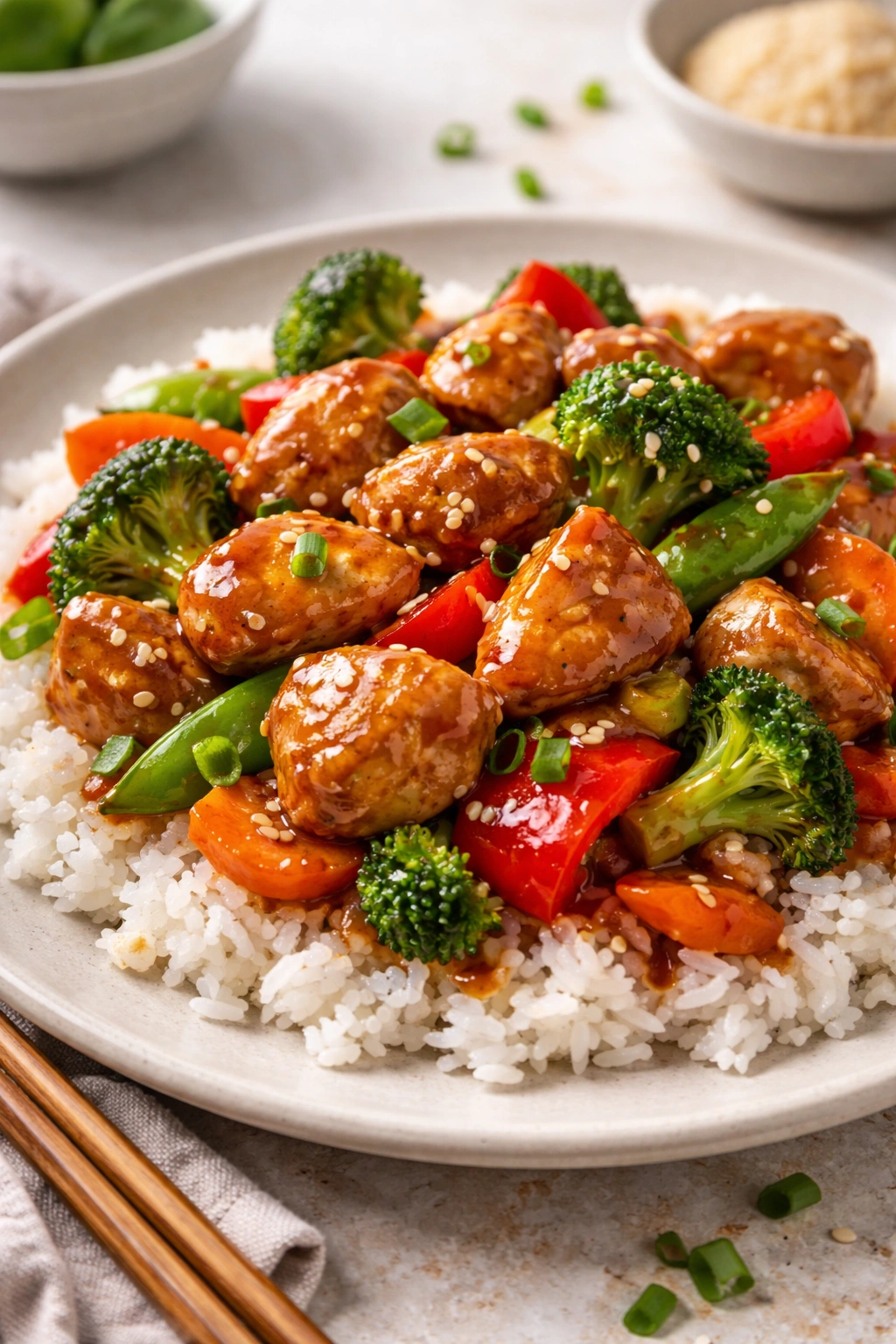
When you want something that tastes authentically good rather than like a shortcut, homemade teriyaki sauce makes all the difference. Chicken pieces are stir-fried quickly over high heat with whatever vegetables you have, then tossed in a sauce that’s sweet, savory, and umami-rich without being overly thick or sticky. Served over rice, it’s the kind of dinner that satisfies in a deeply physical way.
The Sauce That Elevates Everything
Real teriyaki isn’t the thick, glossy brown sauce you get from a bottle—it’s more refined. Combine soy sauce, mirin (or a mixture of honey and rice vinegar if you don’t have mirin), sake or rice wine, and a bit of water, then bring it to a boil and let it reduce for a minute or two until it’s slightly thickened and glossy. Add ginger and garlic, and taste it—the flavors should be balanced, slightly sweet, deeply savory, and clean-tasting rather than muddled.
The Cooking Technique That Works
Heat a large skillet or wok over high heat until it’s genuinely hot—when you flick a drop of water onto it, it should sizzle immediately. Cook the chicken pieces in batches if necessary so they’re not crowded, getting a light golden crust rather than steaming. Remove the chicken, cook your vegetables in the same pan (harder vegetables like carrots and broccoli first, quick-cooking ones like snap peas at the end), then return the chicken and toss everything with the sauce.
Why It Feels Like Restaurant Food
The brightness of fresh ginger, the umami from soy sauce, the sweetness of the glaze, and the textural contrast between the slightly crispy chicken exterior and tender interior all work together to create something that feels thought-through. Adding a squeeze of lime juice and a sprinkle of white sesame seeds right before serving adds final brightness and visual appeal.
Pro tip: Cut your vegetables into bite-sized pieces and your chicken into strips or cubes. Everything should be a similar size so it cooks evenly and combines nicely when you toss it with sauce and rice.
9. Chicken Enchilada Skillet Casserole

This is what happens when you make enchiladas on a busy weeknight—you skip the rolling, skip the layering, and make a skillet version that tastes nearly identical with about 75 percent less effort. Cooked shredded chicken, tortillas torn into pieces, enchilada sauce, and cheese get layered right in the skillet you’re using for cooking, then the whole thing gets a quick bake in the oven.
Why Skillet Over Individual Enchiladas
When you’re making dinner for four people on a Tuesday night, rolling 12 individual enchiladas feels like a project. Shredding everything right in the skillet means fewer dirty dishes and a faster path to dinner. The results are actually better too—the tortilla pieces soak up sauce throughout rather than getting it only where they’re covered, so the texture is more uniform and every bite tastes balanced.
Building the Layers Right
Start with a thin layer of sauce on the bottom of your skillet to prevent sticking, then layer tortilla pieces, chicken, more sauce, and cheese. Don’t worry about making it neat—this is a casserole, not a plated dish. Continue until you’ve used all your ingredients, finishing with sauce and cheese on top. The layering approach means the tortilla pieces have a chance to soften while absorbing flavor rather than staying tough and dry.
The Flavor Profile That Works
Use whatever enchilada sauce you prefer—red, green, or even cream-based. Toss the shredded chicken with some of the sauce before layering so every piece is already seasoned. Add a handful of black beans if you want more substance, or don’t. The flexibility is part of what makes this so practical for real families where some people like it one way and others prefer another.
Worth knowing: You can assemble this in the morning and refrigerate it, then bake it at dinnertime. If baking from cold, add 5 to 10 minutes to the baking time to ensure the filling heats through completely.
10. Mediterranean Baked Chicken with Olives and Feta
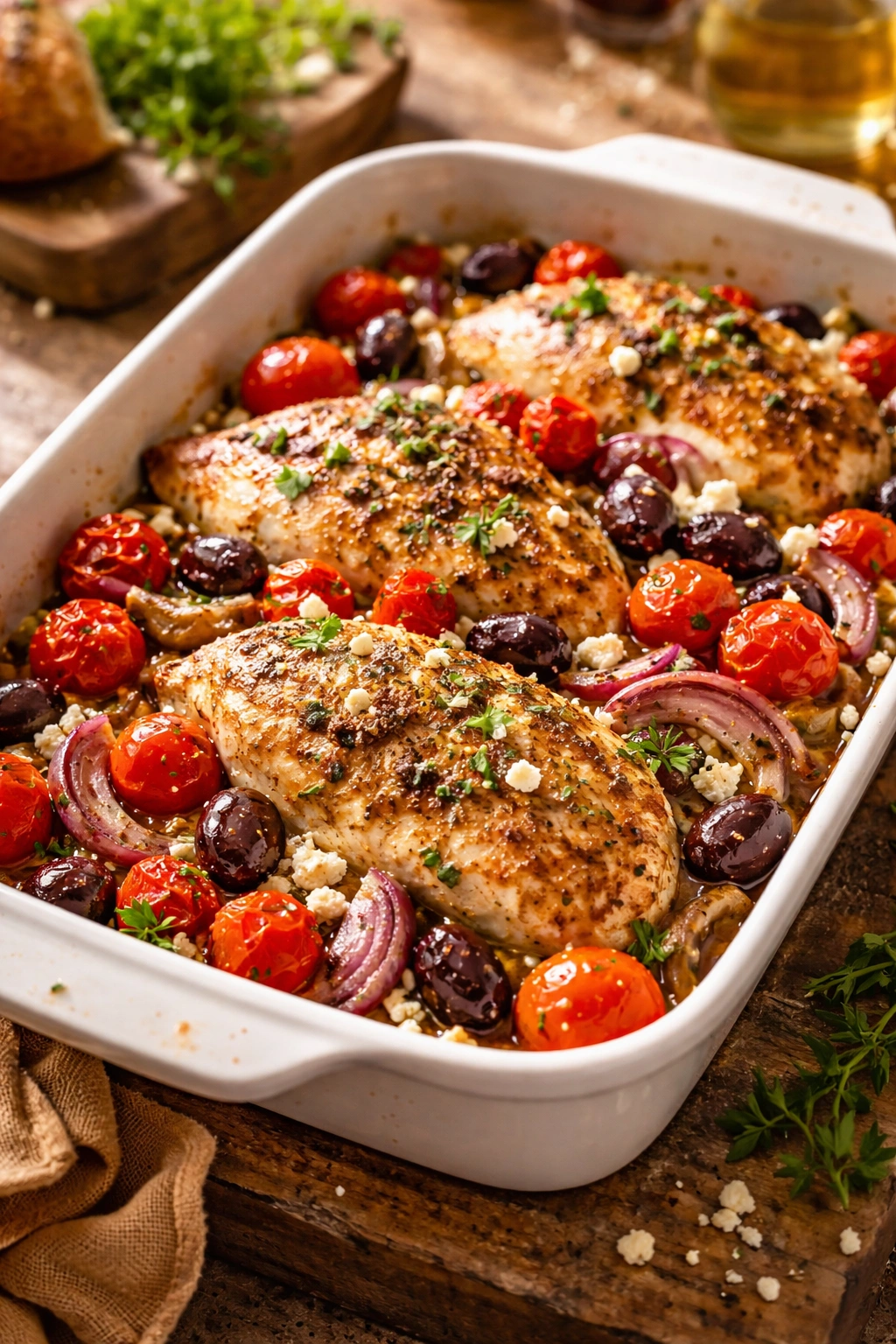
This is your dinner when you want something that tastes like you spent time on it but is actually incredibly straightforward. Chicken breasts are baked with cherry tomatoes, Kalamata olives, red onion, and crumbly feta cheese, creating a one-pan meal that’s bright, salty, and feels almost vacation-like despite being ready in under 30 minutes.
Why This Works as a Complete Dinner
The vegetables cook alongside the chicken and release their own liquid, creating a pan sauce that’s flavorful without being heavy. The saltiness of the olives and feta means you don’t need much additional seasoning. The acidity of the tomatoes and the slight bitterness of the olives balance each other beautifully. By the time the chicken finishes cooking, the whole pan smells incredible and tastes even better.
The Setup That Ensures Success
Pat your chicken dry and season with salt, pepper, and dried oregano. Arrange it in a single layer in a baking dish, scatter olives, halved cherry tomatoes, and thinly sliced red onion around it, then drizzle everything with olive oil and a squeeze of lemon juice. Bake at 400°F until the chicken reaches 165°F internally, usually about 20 to 22 minutes depending on thickness. Crumble feta over the top right before serving so it keeps its texture.
Serving Suggestions That Feel Intentional
This pairs beautifully with couscous (which cooks in the same time the chicken does), crusty bread for soaking up pan juices, or a simple Greek salad on the side. Some cooks serve it over rice or with roasted potatoes, turning it into something more substantial. The beauty is that the pan itself creates enough sauce that you don’t need anything else—just a starch to soak it up.
Pro tip: Use thick-cut chicken breasts or pound them to a uniform thickness before baking. This ensures everything cooks evenly rather than the thin edges being overcooked while the thicker center is still slightly pink.
Final Thoughts

The most reliable weeknight dinners aren’t complicated recipes or ones that require unusual ingredients. They’re the ones that leverage simple techniques, bold seasonings, and a genuine understanding of how to build flavor quickly. The 10 dinners above share something in common—they all deliver restaurant-quality taste in 30 to 45 minutes using ingredients you can find anywhere.
Keep your pantry stocked with basics like soy sauce, lemon juice, olive oil, garlic, onions, and a selection of dried herbs and spices. Make sure you have some kind of protein (frozen chicken works perfectly) ready to go. With these foundations in place, you can build any of these dinners on the nights when cooking feels like an obstacle rather than something you have energy for. Real, delicious food doesn’t require hours of prep or complicated techniques—it requires knowing which flavors belong together and trusting that good ingredients handled simply will always taste good.
