



There’s something truly magical about walking into your kitchen on a busy morning and knowing that a delicious, nutritious breakfast is already waiting for you in the refrigerator. A spinach egg casserole solves one of life’s biggest breakfast dilemmas: how to eat something healthy and satisfying when time is short and energy is even shorter. Unlike scrambled eggs or omelets that require active cooking, this casserole gets made when you actually have time and patience, then simply reheats in minutes throughout the week. It’s one of those rare recipes that tastes homemade and indulgent while also being meal-prep genius.
The beauty of a make-ahead spinach egg casserole lies in its flexibility and forgiving nature. You can assemble the entire dish one night, cover it with foil, slide it into the refrigerator, and bake it fresh the following morning—or bake it immediately and enjoy it all week. Either way, you’re getting a protein-packed breakfast that’s leagues better than anything you’d grab in a rush. Every slice is loaded with fluffy baked eggs, wilted spinach, melty cheese, and whatever other ingredients you’re craving, all bound together into something that feels far more impressive than the 15 minutes of actual hands-on time it requires.
What makes this dish so valuable for busy people isn’t just convenience—it’s the nutritional density that comes packed into every bite. Eggs deliver high-quality protein and essential nutrients like choline and lutein. Fresh spinach adds fiber, iron, calcium, and an impressive array of vitamins. A generous helping of cheese contributes calcium and fat-soluble vitamins, while the creamy texture from a touch of milk or cream makes the eggs remarkably luxurious. You’re eating something that actually fuels your body and sustains your energy through the morning, not something that leaves you hungry an hour later.
Why Spinach Egg Casserole Is the Ultimate Make-Ahead Breakfast
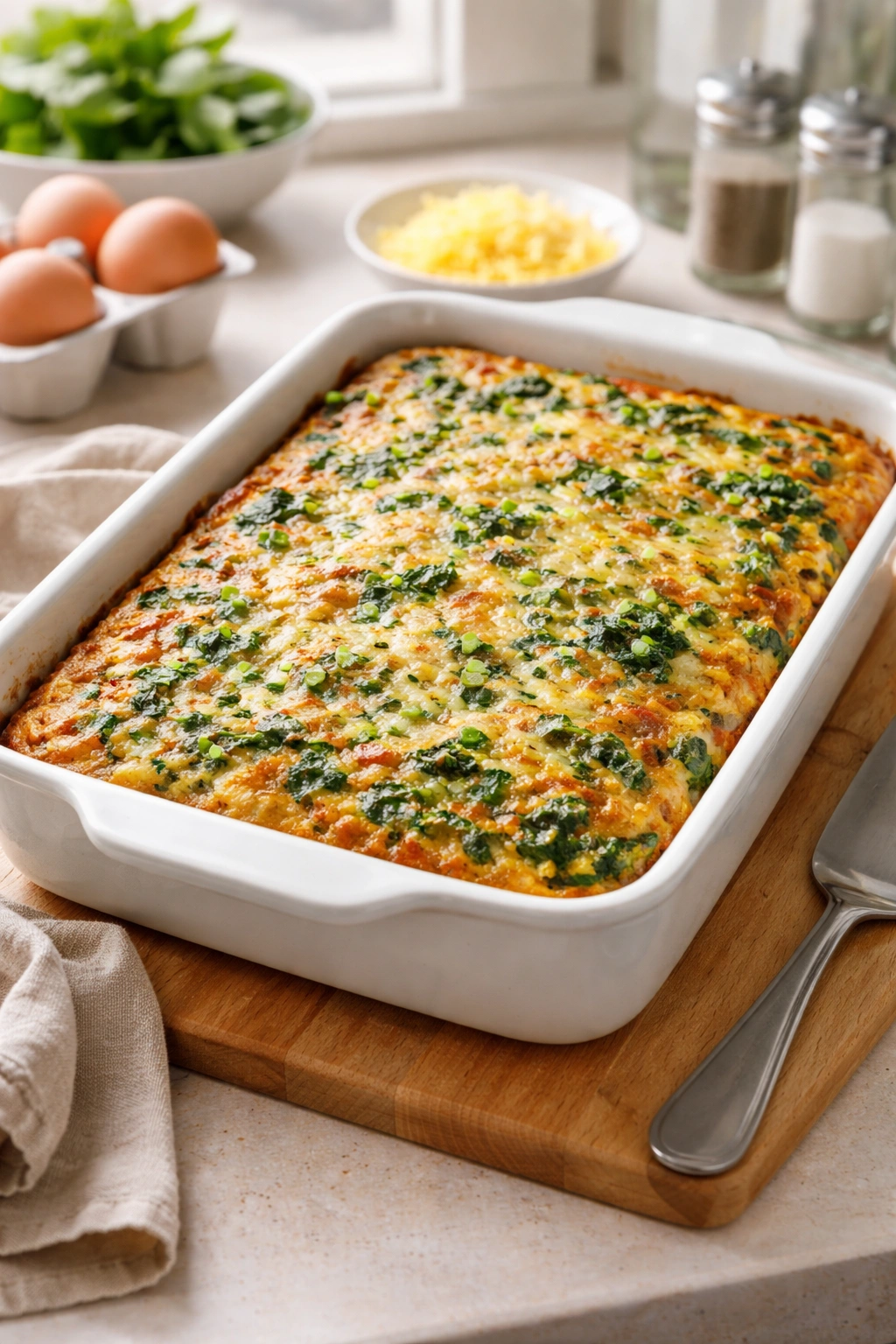
Breakfast casseroles have become increasingly popular for a reason: they solve multiple problems at once. If you’re feeding a family, hosting a holiday brunch, or simply trying to establish better eating habits on weekdays, this single dish covers all of those needs without requiring you to be a morning person or a skilled cook. The spinach-and-egg combination specifically has become a favorite because it hits a sweet spot between sophisticated flavors and straightforward preparation.
The genius of this approach is that you’re essentially creating a giant, vegetable-loaded frittata that’s foolproof because of the gentle, forgiving nature of oven-baking. Unlike stovetop cooking where timing and temperature management are critical, baking in the oven creates even, reliable results. The eggs cook gently and evenly, emerging fluffy and custard-like rather than tough and rubbery. The creaminess comes from the combination of eggs, milk, and cheese—not from complicated technique.
One significant advantage that deserves emphasis: this casserole actually improves slightly when made ahead. The flavors meld together overnight, the ingredients settle, and the overall texture becomes more cohesive. If you’ve ever made a breakfast strata and noticed how much better day-two leftovers taste, you understand this principle. The casserole isn’t just convenient; it’s better when you make it the night before and bake it fresh in the morning.
The Science Behind Perfect Make-Ahead Egg Bakes
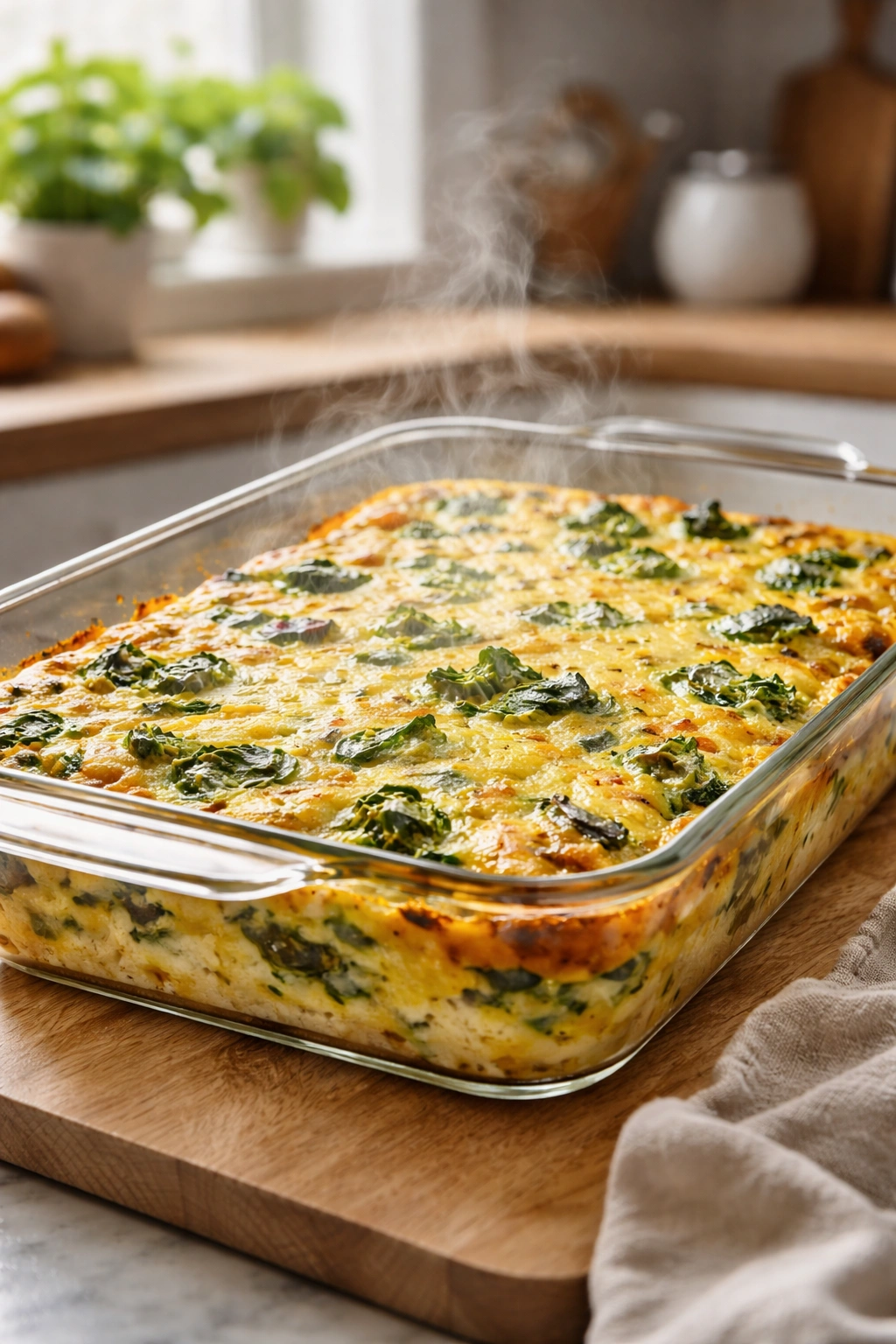
Understanding what’s happening chemically when you bake eggs helps you troubleshoot and create the exact texture you prefer. Eggs are primarily protein and water, with fat from the yolk. When you heat eggs gently, the proteins unfold and bond together, trapping water in their network—this is what creates the custard-like texture everyone loves. Too much heat too quickly causes the proteins to bond too tightly, squeezing out the water and leaving you with rubbery, unpleasant texture.
The addition of dairy—whether milk, cream, or cottage cheese—serves multiple purposes. It increases the total liquid content, which means more time before all the water is trapped by protein bonds. This is why egg casseroles stay creamy; the extra liquid creates a buffer against overcooking. The fat in cream also carries flavor and creates richness on your palate, making even a simple egg casserole taste elegant and indulgent.
Temperature control is genuinely important for achieving the right result. Most spinach egg casseroles bake at 350°F to 375°F—hot enough to cook the eggs through but not so hot that they seize up and toughen. At these temperatures, a 9×13-inch casserole typically takes 35 to 45 minutes to set completely. The edges will cook faster than the center, which is why you’re looking for a slight jiggle in the very middle when you remove it from the oven. That tiny bit of underdone egg will continue cooking as the casserole sits and cools, ultimately giving you perfectly set, creamy results.
Key Ingredients That Make the Difference
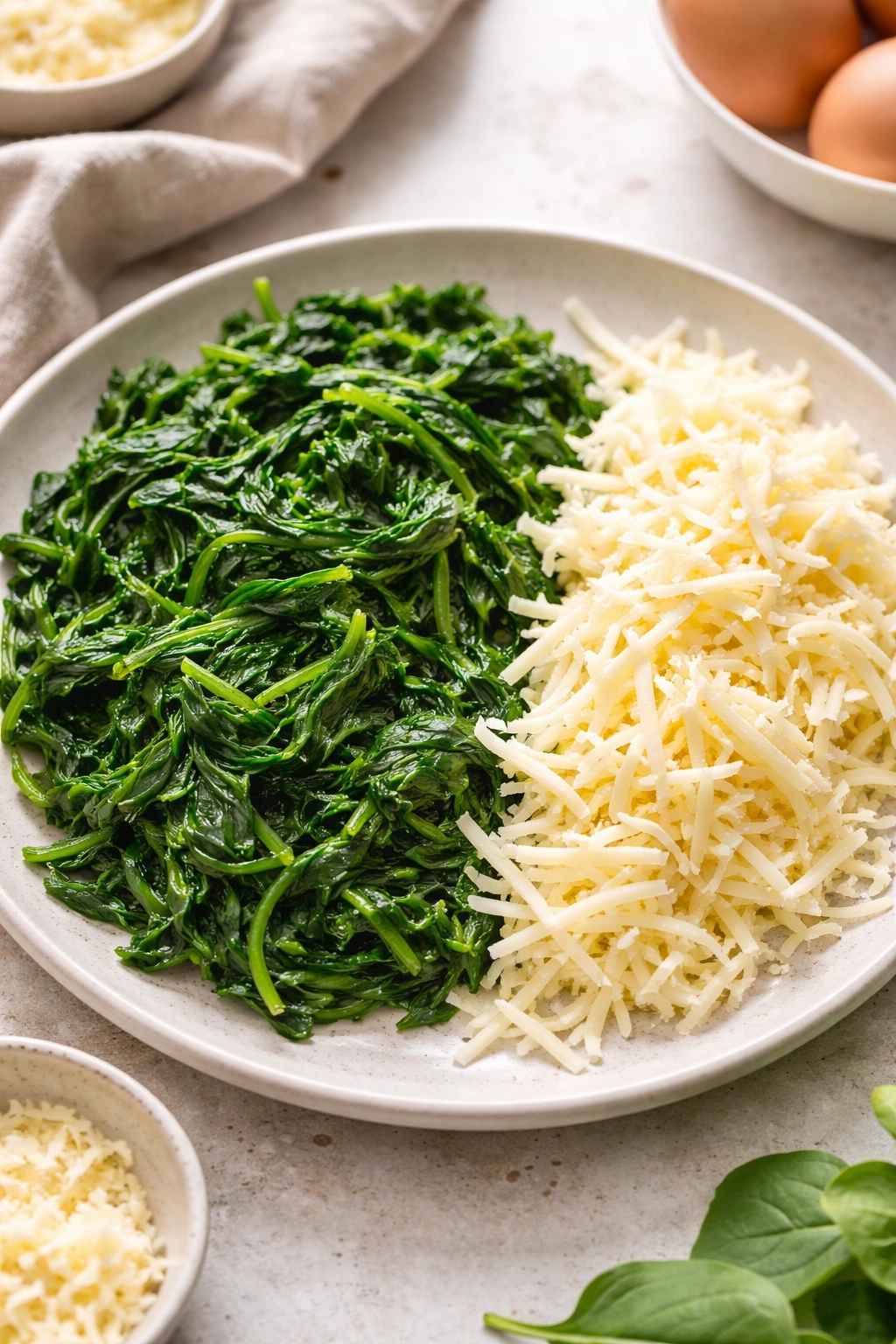
Fresh spinach is genuinely preferable to frozen for this dish, though frozen is absolutely acceptable if that’s what you have. Fresh spinach has a brighter flavor and more delicate texture. When you wilt fresh spinach over medium heat for just a minute or two, it collapses into tender ribbons while maintaining its vibrant color. Frozen spinach requires thorough thawing and aggressive squeezing to remove excess water—otherwise that moisture dilutes your egg mixture and creates a watery casserole. If you’re using frozen, thaw it completely in the refrigerator, then press it firmly in a colander or squeeze it in a clean kitchen towel until no more liquid drips out.
Eggs are the structural foundation of this dish. Large eggs are standard for casseroles because they provide consistent volume and composition. The general rule of thumb is roughly one egg per person for a main-dish casserole, so a 9×13-inch dish serving 6 to 8 people typically calls for 12 eggs. Some recipes go higher with 14 to 18 eggs for a denser, more egg-forward casserole; others use 10 to 12 for something lighter. The amount of milk or cream you add affects the final texture, with more liquid creating a more custard-like result.
Cheese isn’t just a topping—it’s a critical flavor component. Sharp cheddar, feta, mozzarella, and goat cheese all work beautifully. Each brings different characteristics: sharp cheddar provides bold, assertive flavor; feta adds tang and saltiness; mozzarella creates stretchy, melty indulgence; goat cheese contributes creaminess and subtle tartness. Many excellent casseroles use a combination of cheeses—a base of mozzarella or cheddar for melting and body, plus a secondary cheese for complexity. The total amount of cheese usually ranges from 1 to 2 cups, depending on how cheese-forward you want your casserole to be.
Choosing Your Cheese and Flavor Profile
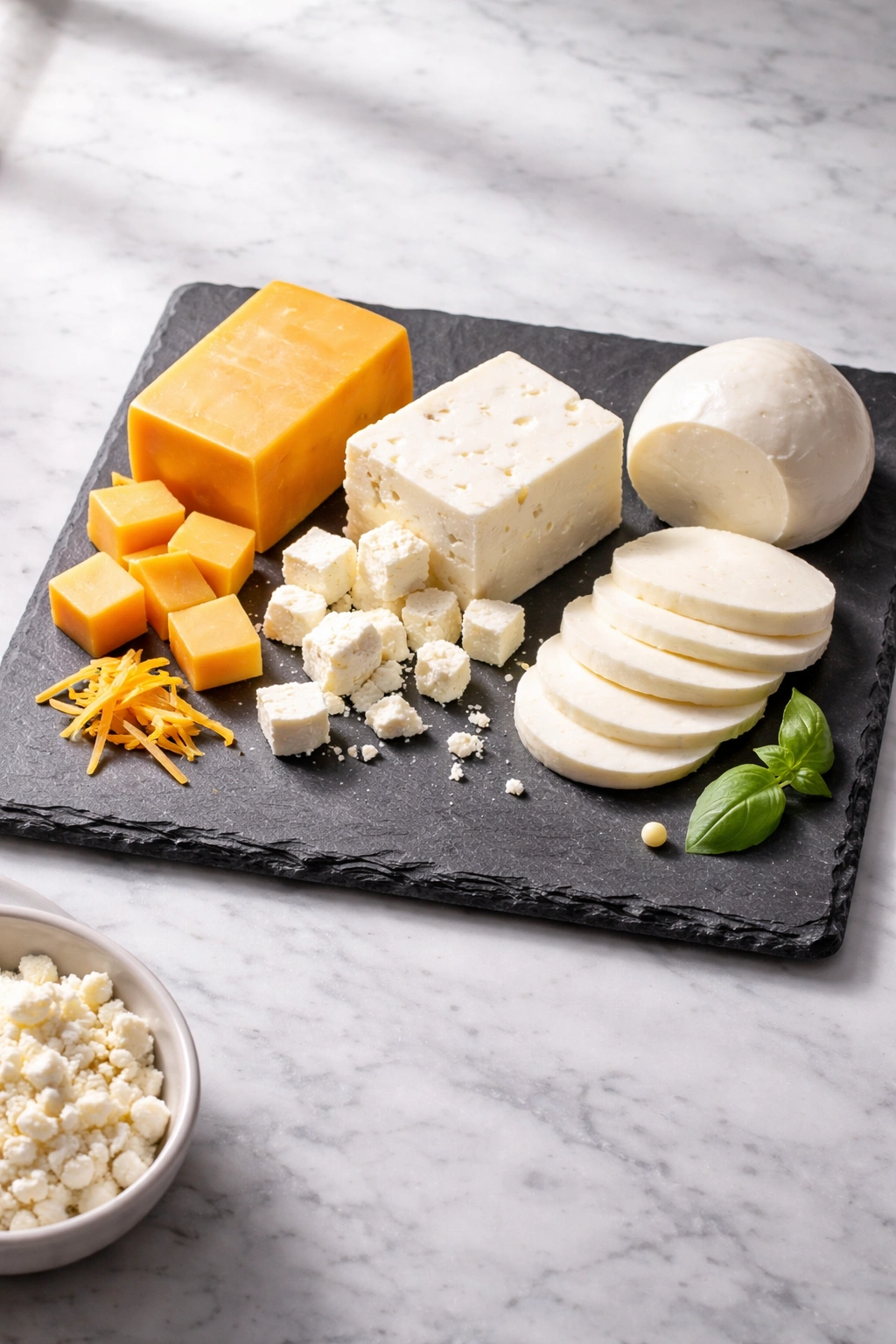
The cheese you select dramatically influences the final flavor profile of your casserole. If you’re serving this to people who prefer familiar, comforting flavors, sharp cheddar is your friend. It’s recognizable and satisfying without being polarizing. If you’re going for Mediterranean-inspired flavors, feta is the clear choice—it pairs naturally with spinach and benefits from additions like sun-dried tomatoes or kalamata olives. Goat cheese creates an elegant, slightly tangy casserole that feels special enough for brunch entertaining but is still straightforward enough for weekday eating.
Don’t be afraid to combine cheeses for complexity. A combination of Swiss cheese with sharp cheddar creates a casserole with interesting depth. Feta mixed with mozzarella gives you the creamy, melty quality of mozzarella with the distinctive tang of feta. Some recipes use ricotta or cottage cheese as part of the base mixture—this is particularly smart because these softer cheeses distribute throughout the casserole rather than settling to the top, creating creaminess in every bite.
Seasonings should be purposeful and balanced. Salt and pepper are essential, but don’t underestimate how much flavor fresh garlic, dried oregano, smoked paprika, or nutmeg can add. A tiny pinch of nutmeg might sound odd, but it’s actually traditional in egg dishes and adds a subtle warmth that makes people say “what’s that amazing flavor?” without being able to identify it. Fresh herbs like dill, chives, or parsley scattered over the top as garnish add brightness and visual appeal.
Why Make-Ahead Preparation Changes Everything
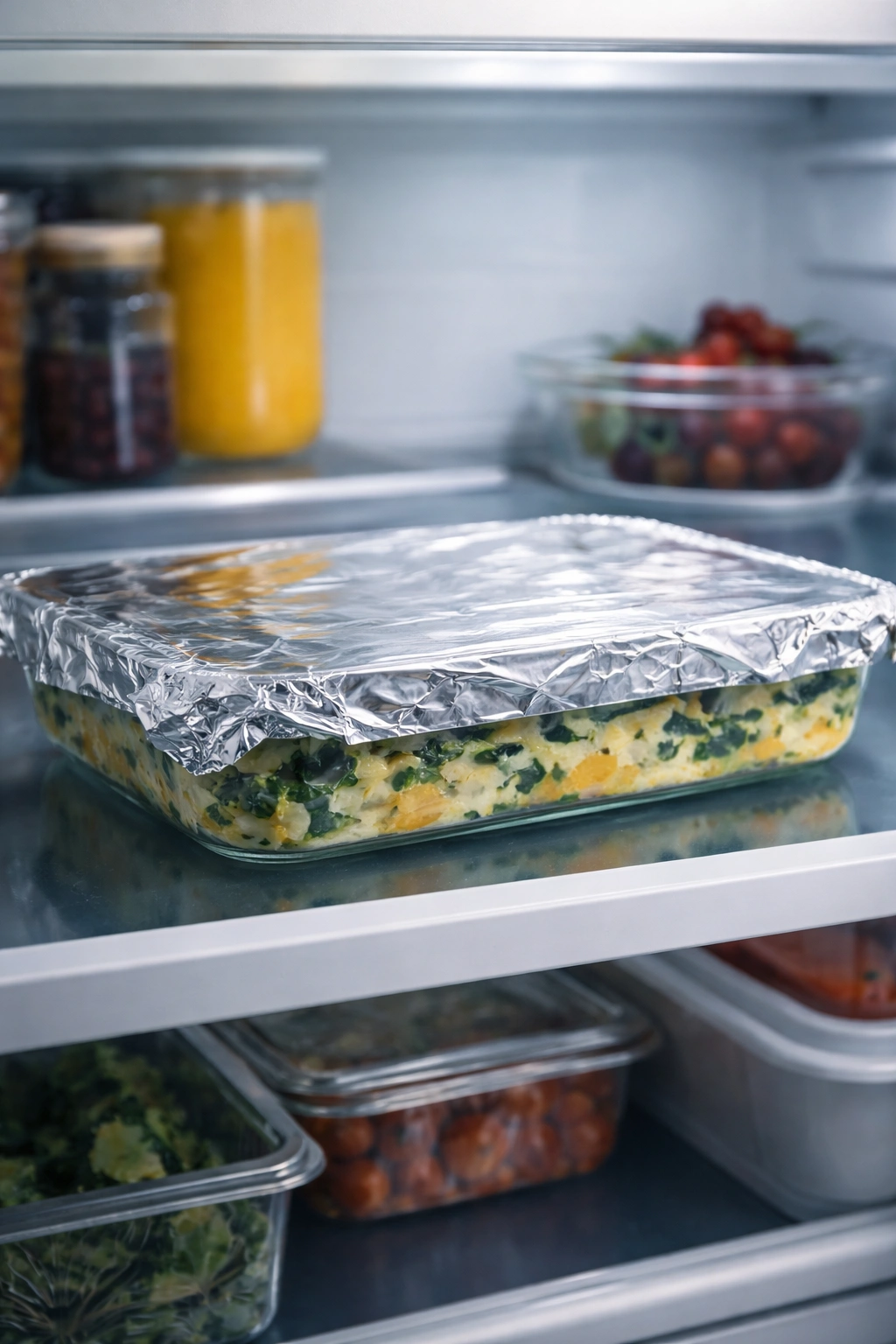
The practical advantages of a make-ahead breakfast casserole deserve their own section because they genuinely impact quality of life. On a typical weekday morning when you’re already behind schedule, the last thing you want is a kitchen project. With this casserole ready to go, you’re literally just reheating—no scrambling, no watching a pan, no risk of burning anything. You can transfer a slice directly from the refrigerator to a plate and into the microwave while you pour coffee and check messages.
The make-ahead aspect also eliminates decision paralysis around breakfast. Rather than staring at the refrigerator wondering what’s for breakfast and defaulting to something suboptimal, you know exactly what you’re eating. This might sound like a small thing, but for people trying to maintain consistent eating habits or hit nutrition goals, having breakfast already decided is genuinely valuable. You’re not making choices while tired and hungry; you made the best choice when you had time and energy.
For holiday entertaining, a make-ahead casserole is almost priceless. You can assemble it the night before or even two nights before, then simply pop it in the oven about an hour before guests arrive. It bakes unattended while you’re finishing other preparations, setting the table, or getting yourself ready. By the time everyone sits down, you can serve breakfast that tastes like you spent your whole morning cooking—when in reality you spent fifteen minutes on prep work.
Yield: Serves 6 to 8 | Makes one 9×13-inch casserole
Prep Time: 15 minutes
Cook Time: 40 to 45 minutes
Total Time: 55 to 60 minutes (or overnight if made ahead and refrigerated before baking)
Difficulty: Beginner — This recipe requires no special equipment or advanced techniques. Everything is straightforward mixing and baking. Even if you’ve never made a casserole, you’ll succeed on your first try.
Complete Make-Ahead Spinach Egg Casserole Recipe
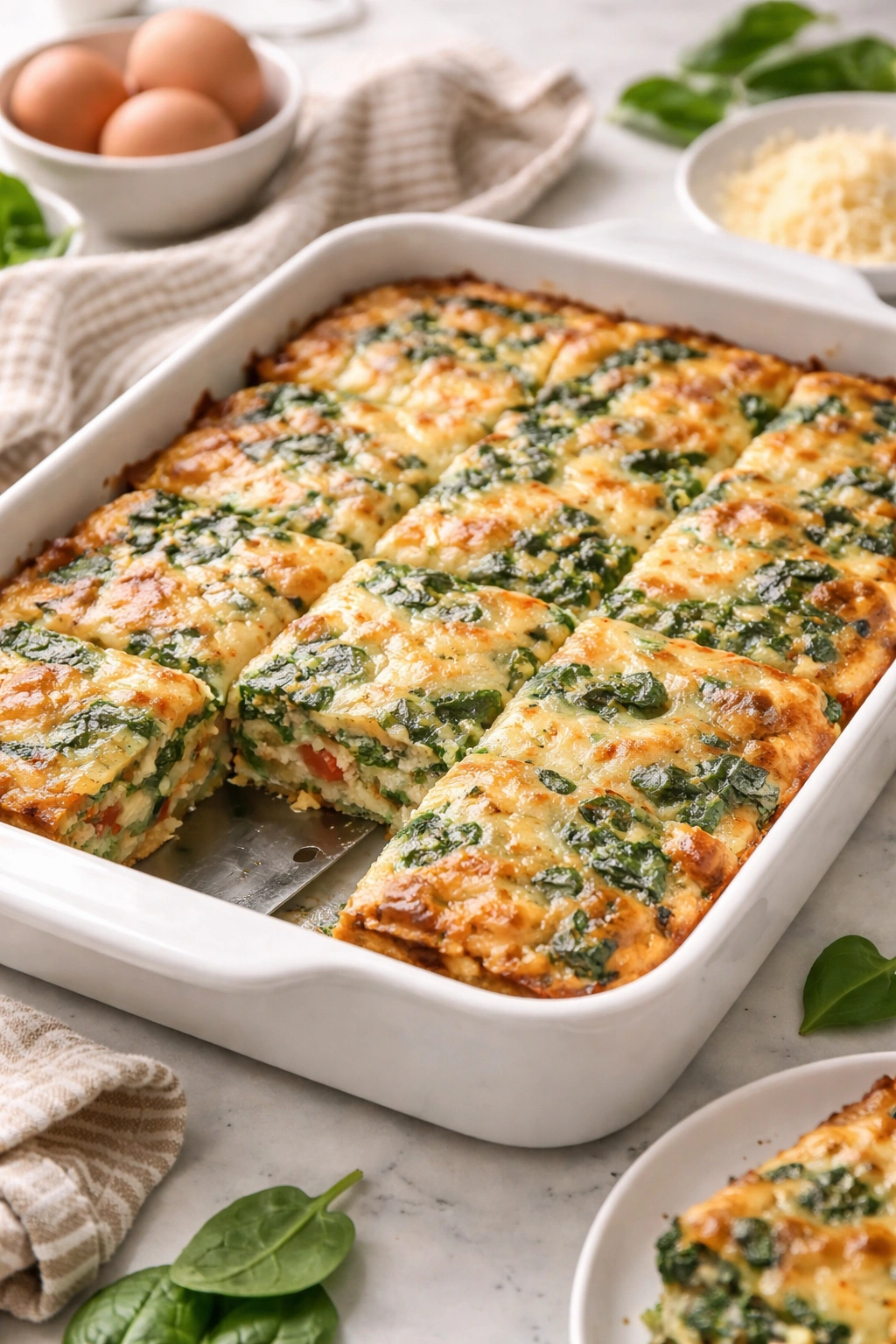
For the Casserole:
- 1 tablespoon olive oil or butter
- 6 cups fresh spinach, loosely packed (or 1 pound fresh baby spinach)
- 1 medium yellow onion, diced (about 1 cup)
- 3 cloves fresh garlic, minced
- 12 large eggs, room temperature
- 1 cup whole milk (any variety works, including non-dairy milk)
- ½ cup heavy cream or half-and-half (optional but recommended for richness)
- 1½ cups shredded sharp cheddar cheese (or your cheese of choice)
- 6 ounces feta cheese, crumbled (or substitute with goat cheese, mozzarella, or your preference)
- 2 green onions (scallions), thinly sliced
- 1 teaspoon kosher salt
- ½ teaspoon freshly ground black pepper
- ¼ teaspoon smoked paprika (optional but adds wonderful color and subtle flavor)
- Pinch of ground nutmeg (optional, truly transforms the flavor)
- Non-stick cooking spray or butter for greasing the baking dish
Prepare the Pan and Vegetables:
-
Preheat your oven to 350°F (175°C) and position the rack in the center. Spray a 9×13-inch baking dish generously with non-stick cooking spray, or brush it lightly with butter, ensuring the entire interior surface is covered. This prevents the egg mixture from sticking and makes cleanup infinitely easier.
-
Heat the olive oil or butter in a large non-stick skillet over medium-high heat. Once the oil shimmers or the butter foams, add the diced onion and cook for 4 to 5 minutes, stirring occasionally, until the onion becomes translucent and begins to soften slightly at the edges. You’re not looking for deep caramelization here—just enough cooking to mellow the raw onion flavor and create sweetness.
-
Add the minced garlic to the pan and cook, stirring constantly, for about 30 seconds until fragrant. Garlic burns quickly, so this is not the time to get distracted. The moment it becomes aromatic, immediately add the spinach to stop the cooking.
-
Add all the spinach to the pan and cook for 2 to 3 minutes, stirring frequently with a wooden spoon or rubber spatula, until every leaf is wilted and no raw green remains. The spinach will look like it’s shrinking and condensing—this is exactly what you want. Once fully wilted, remove the pan from heat and set aside to cool slightly, about 3 to 5 minutes. This cooling allows the vegetables to release any excess steam.
Make the Egg Mixture:
-
In a large mixing bowl, crack all the eggs and beat them together with a whisk until fully combined and slightly frothy, about 1 minute of vigorous whisking. Add the milk and cream, and whisk to combine thoroughly, making sure no pockets of yolk remain unmixed.
-
Add the salt, black pepper, smoked paprika (if using), and nutmeg to the egg mixture. Whisk again for about 30 seconds to distribute the seasonings evenly throughout. Proper seasoning at this stage is important because you can’t easily adjust after everything is mixed together.
-
Gently fold in the cooked spinach and onion mixture using a rubber spatula, stirring until the vegetables are distributed throughout. The mixture should look fairly uniform with no large clumps of spinach in one spot.
Assemble the Casserole:
-
Pour half of the egg mixture into the prepared baking dish, spreading it into an even layer. Scatter half of the shredded cheddar cheese over this base layer, followed by half of the crumbled feta. This layering approach distributes cheese throughout the casserole rather than having it all concentrate at the top.
-
Pour the remaining egg mixture over the cheese layer, then scatter the remaining shredded cheddar and feta over the top. Sprinkle the sliced green onions over everything. Using a fork, gently swirl the mixture 3 to 4 times, being careful not to overdo it—you want the ingredients distributed but not completely homogenized.
Bake or Refrigerate:
-
If baking immediately: Transfer the casserole to the preheated 350°F oven and bake for 40 to 45 minutes. The casserole is done when the edges are set and beginning to pull slightly away from the sides of the dish, the top is lightly golden, and the very center still has just the tiniest bit of jiggle when you gently shake the pan. This small amount of underdone center will continue cooking as the casserole cools, resulting in perfectly set but still-creamy eggs. A toothpick or knife inserted in the center should come out mostly clean with just a tiny bit of wet egg mixture clinging to it.
-
If making ahead: Cover the assembled (unbaked) casserole tightly with aluminum foil and refrigerate for up to 24 hours. When you’re ready to bake, remove the foil and bake at 350°F for 45 to 50 minutes (add 5 to 10 minutes because the dish will start cold). Check for doneness using the jiggle test described above.
Cool and Serve:
-
Remove the casserole from the oven and let it rest on a wire cooling rack for at least 10 minutes before cutting. This resting time allows the proteins to continue setting and makes the casserole much easier to slice without falling apart. Cut into 6 to 8 squares using a sharp knife, wiping the knife clean between cuts for neater edges.
-
Serve warm, at room temperature, or cold. All three ways are delicious, and this flexibility is one of the casserole’s best qualities.
Make-Ahead Strategies That Actually Work
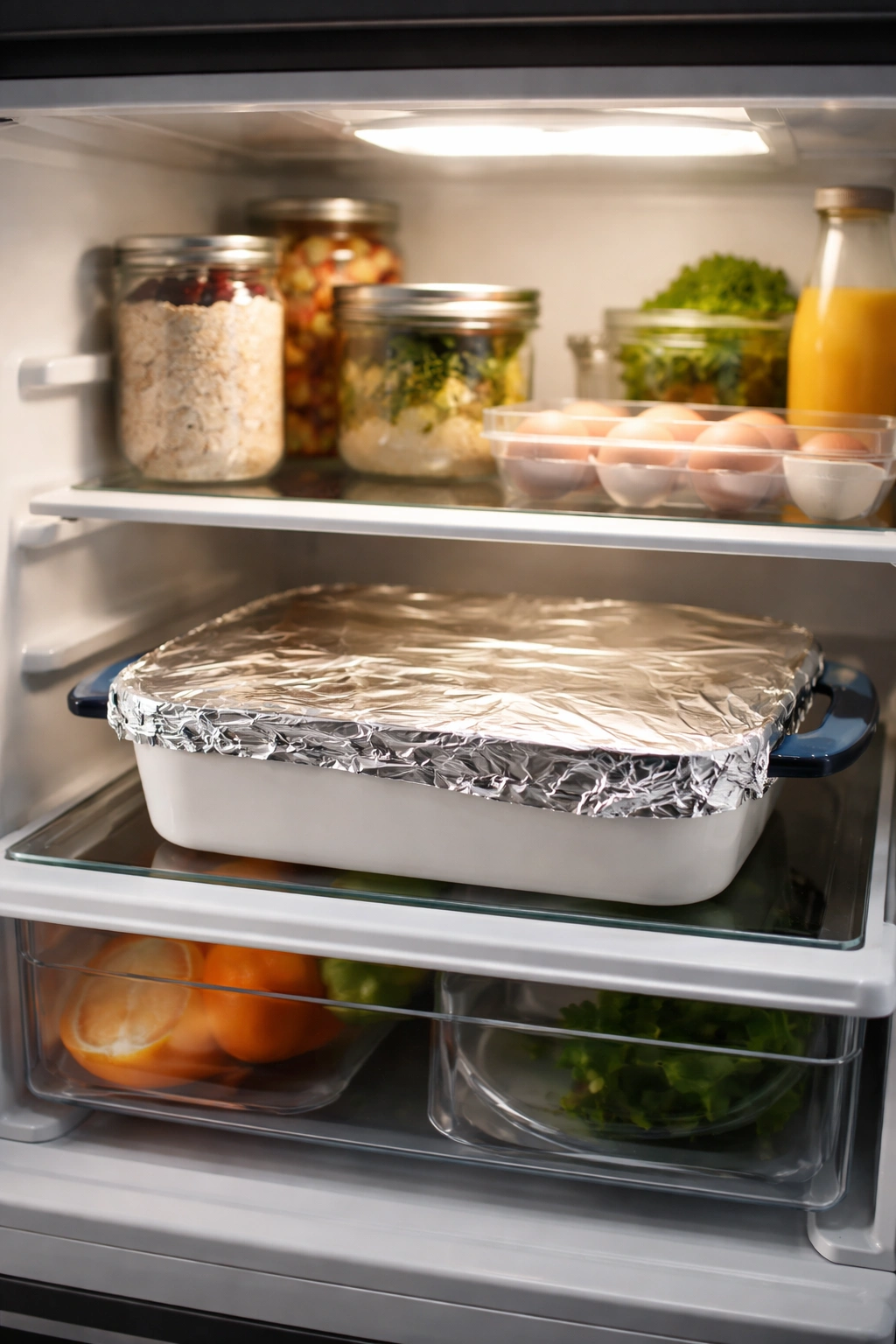
There are several different timelines you can work with depending on your schedule and preferences. The most common approach is the evening-before method: you assemble the casserole when you have time to focus, cover it with foil, and refrigerate it overnight. The next morning, you simply remove the foil and bake. The advantage here is that your oven is already heating up for the morning, so you’re not adding much extra time to your routine. The casserole itself takes no more active work than if you’d baked it immediately after assembly.
Another popular approach is the weekend-prep-for-the-week method. You assemble and bake the casserole on a weekend morning when you have plenty of time. Once it cools completely, you cover it tightly (either in the baking dish or transferred to an airtight container) and refrigerate it. Throughout the week, you reheat individual portions as needed. This requires a bit of planning because the casserole stays best for about 4 to 5 days refrigerated, so if you’re making it on Saturday, you’ll want to eat it by Wednesday or Thursday for best quality.
A third option that works well for some people is partial preparation. You can do everything except bake up to a day ahead—prepare the vegetables, mix the egg base, assemble in the baking dish, cover, and refrigerate. Then on the morning you want to eat it, you simply pop the unbaked casserole into the oven. This gives you make-ahead convenience without committing to eating the casserole on any particular morning.
The key to all of these approaches is tight covering. Whether you use aluminum foil, plastic wrap, or an airtight container, the goal is to prevent moisture loss. Eggs are vulnerable to drying out in the refrigerator if exposed to circulating air, so don’t skip the covering step. If you’re baking from refrigerated, add 5 to 10 minutes to the baking time because the dish starts cold rather than room temperature.
Storage and Reheating for Maximum Convenience
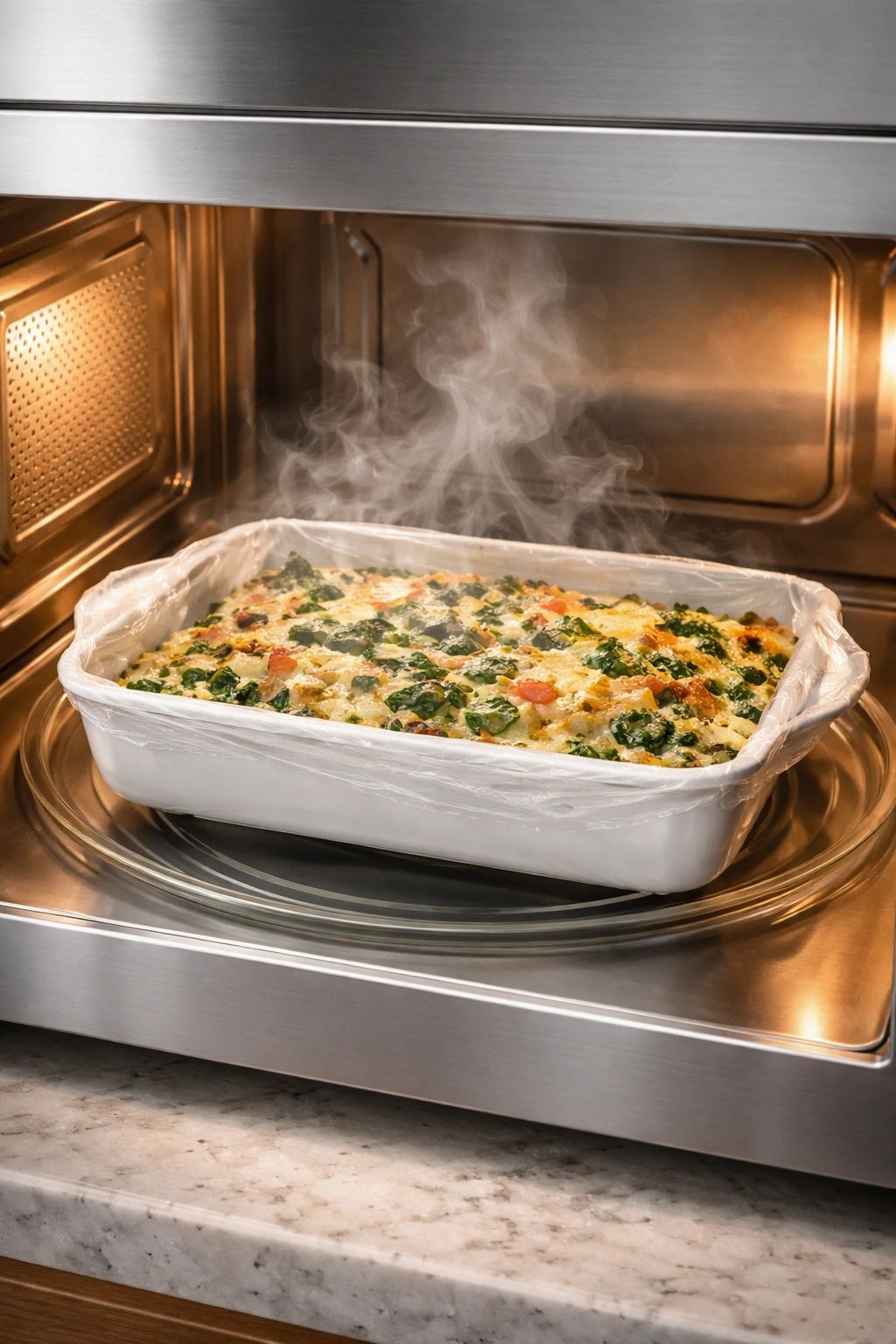
Your cooked casserole will keep in the refrigerator for 4 to 5 days when stored properly in an airtight container or covered with plastic wrap. The flavor actually holds beautifully throughout this period—this isn’t one of those dishes where day-three leftovers taste noticeably inferior. If anything, the flavors marry together and become slightly more cohesive.
For microwave reheating, which is the fastest option for weekday mornings, place a single slice of the casserole on a microwave-safe plate. Microwave on high for 60 to 90 seconds, checking at the 60-second mark. The exact time depends on your microwave’s wattage and the thickness of your slice. You want it hot throughout but not violently steaming, which can make the egg texture slightly weird. If it’s not quite hot enough after 60 seconds, add another 30 seconds rather than trying to do it all at once.
For oven reheating, which produces slightly better texture and is worth doing on weekends when you’re not rushed, preheat your oven to 325°F. Place individual slices on a baking sheet or small baking dish, cover loosely with foil, and warm for 8 to 12 minutes until heated through. The lower temperature and longer time prevent the eggs from overcooking further and maintain creaminess better than high-heat microwave reheating. If you’re reheating the entire casserole rather than individual slices, cover it loosely with foil and warm at 325°F for 20 to 30 minutes depending on the size.
Freezing works well if you want to make a full casserole and ration it out over several weeks. Allow the baked casserole to cool completely, then cut it into individual portions and wrap each one tightly in plastic wrap, then place in a freezer bag. Label with the date. Your casserole will keep frozen for up to 3 months. To reheat, thaw in the refrigerator overnight (or leave on the counter for 2 to 3 hours) and then warm using the oven method above. You can also reheat directly from frozen, but allow an extra 10 to 15 minutes for the warming process.
Customization Ideas and Variations
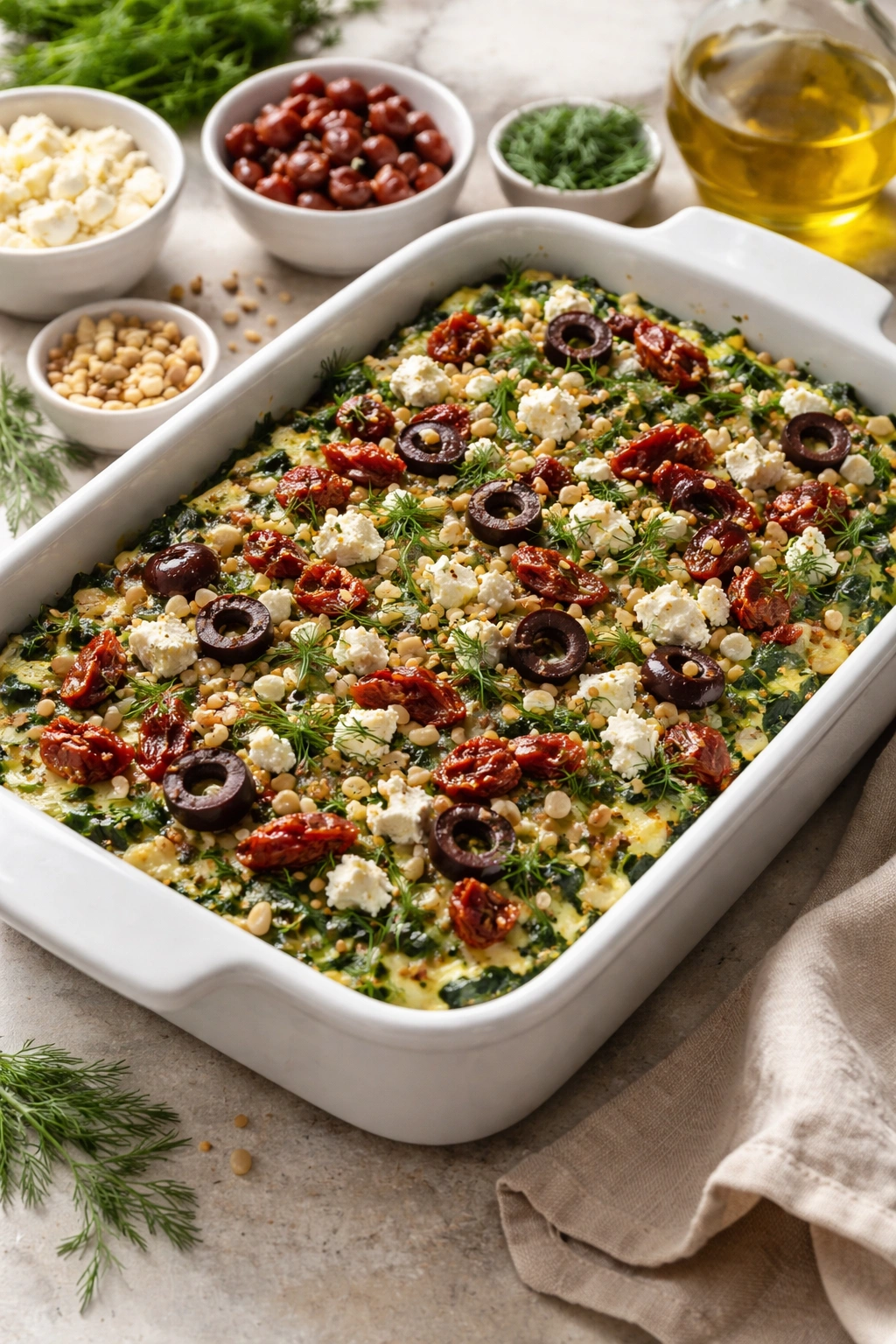
The spinach-and-egg foundation is so solid that you can build almost infinitely on it. For Mediterranean flavors, add sun-dried tomatoes, kalamata olives, and fresh dill. Use primarily feta cheese and consider adding pine nuts scattered over the top before baking. The combination of these elements creates a casserole that feels like vacation breakfast.
For a heartier, more protein-forward version, add cooked and crumbled bacon, breakfast sausage, or diced ham. Add about ¾ to 1 cup of cooked meat, distributing it throughout the casserole so every slice contains some. The fat from the meat adds richness and the umami flavor deepens the overall dish considerably.
Vegetable variations are endless. Sautéed mushrooms add earthiness and body. Bell peppers (red, yellow, or orange for color and sweetness) bring brightness. Broccoli or asparagus add texture and additional nutrition. Zucchini works well but requires brief cooking first to remove excess moisture. Caramelized onions (which require longer cooking but reward you with incredible sweetness and depth) elevate the entire casserole to something quite special.
Herb additions transform the flavor profile significantly. Fresh dill is classic with spinach and eggs, particularly if you’re using feta cheese. Chives add delicate onion flavor. Italian parsley or basil brings Mediterranean vibrancy. Even a small amount of fresh tarragon creates unexpected elegance. Dried herbs can work when fresh aren’t available, but use roughly one-third the amount since dried herbs are more concentrated.
For people preferring non-dairy options, use dairy-free milk (oat or almond works fine) and dairy-free cheese. The texture might be slightly different—dairy-free cheese doesn’t melt quite as smoothly—but the casserole still works and tastes good. Some people use nutritional yeast for cheesy flavor when avoiding dairy entirely.
Common Mistakes to Avoid
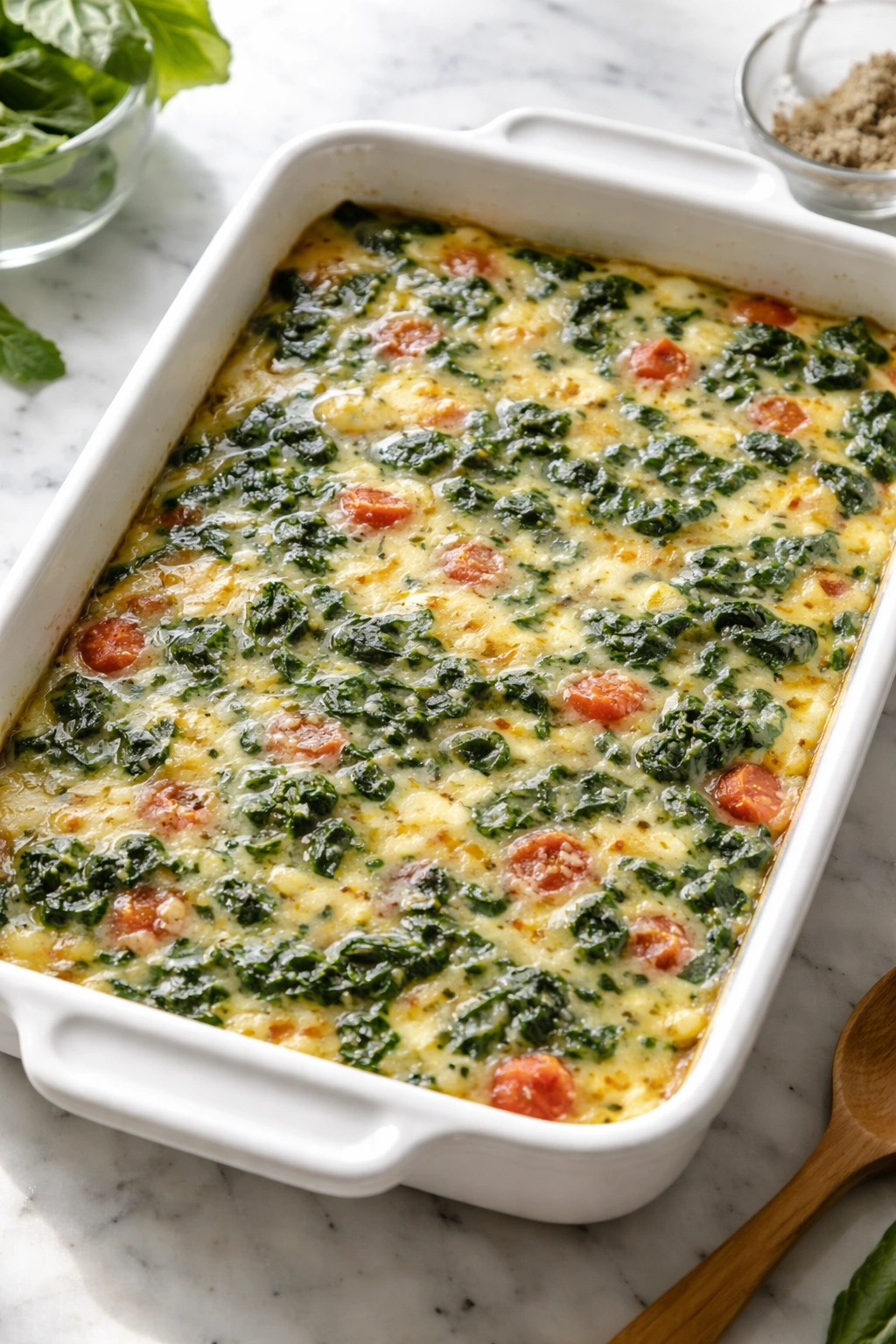
The most frequent mistake is using frozen spinach without proper thawing and squeezing. When frozen spinach isn’t thoroughly dehydrated before adding to the casserole, it releases water as it cooks, diluting the egg mixture into something watery and separated rather than creamy and cohesive. Thaw completely, then squeeze aggressively in a colander or kitchen towel. This step genuinely matters.
Overfilling the baking dish is surprisingly common. A standard 9×13-inch dish has finite capacity, and overfilling means the mixture boils over in the oven, creating a mess and leaving you with a shorter casserole than intended. The mixture should reach about three-quarters of the way up the sides of the dish. If you’re adding lots of vegetables and toppings and running out of space, use a 9×13×3-inch deep dish instead, which holds about 50% more volume.
Overcooking is the second-most-common quality issue. People often bake the casserole until the center is completely firm with no jiggle, resulting in rubber-like texture. Remember that the egg mixture continues cooking as it cools, so you want that barely-jiggly center when it comes out of the oven. By the time it’s cooled to room temperature, you’ll have perfectly set eggs.
Underseasoning happens when people are shy with salt and pepper or seasonings. Eggs need salt to taste their best—more than you might initially think. Season boldly, taste a tiny bit after cooking (if you’re eating it, not sharing with others), and remember that you can always eat it as-is if it’s perfectly seasoned, but you can’t remove salt if you’ve gone overboard. The general rule for savory egg dishes is roughly ¾ to 1 teaspoon salt per 12 eggs.
Skipping the cheese distribution is a mistake that creates an unfortunate texture: a casserole with mostly cheese at the top and bottom and none in the middle. Layering cheese throughout the mixture, rather than simply sprinkling it all on top, ensures every bite contains creamy, delicious cheese. This distributes not just the cheese but the flavor throughout the entire casserole.
Perfect Sides and Serving Suggestions
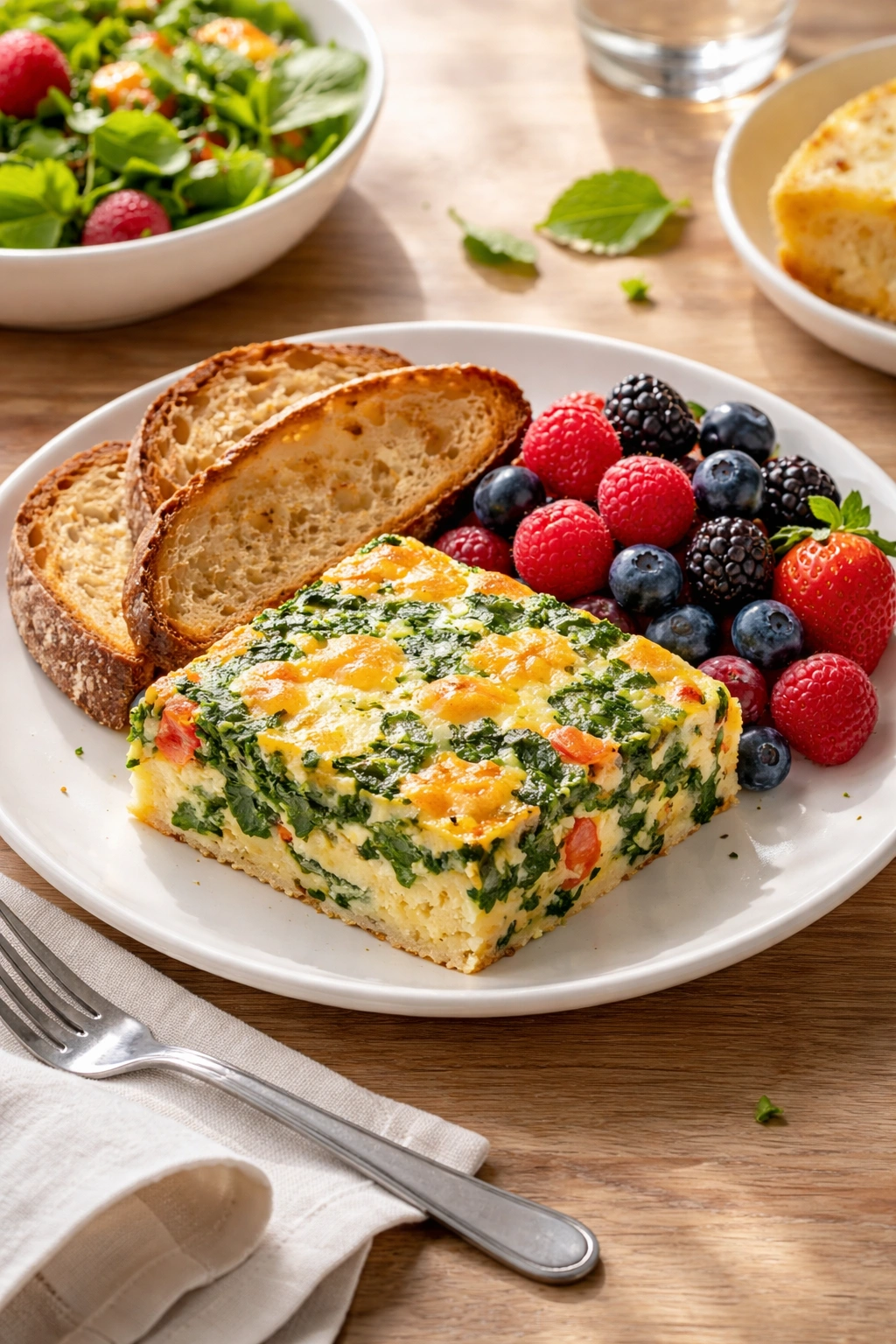
While the casserole is substantial and absolutely can be eaten on its own, pairing it with complementary sides creates a more complete and satisfying meal. Fresh fruit is the obvious choice—berries, melon, citrus, or whatever is seasonal—providing brightness, natural sweetness, and fiber that balance the richness of the eggs and cheese.
Whole grain toast serves beautifully as a vehicle for the casserole or a supporting player on the plate. The structural support and additional fiber help create satiety that lasts through the morning. If you’re making this for brunch entertaining, croissants or a simple bread basket add elegance without requiring you to do any additional cooking.
A simple green salad with light vinaigrette provides textural contrast and refreshes the palate between bites of rich casserole. Arugula or mixed greens with lemon vinaigrette work particularly well. For a more substantial brunch spread, a grain-based salad like quinoa with vegetables or a light pasta salad rounds out the meal nicely without competing for attention.
Breakfast potatoes—whether diced and roasted with herbs, or a simple hash—make the meal more filling and substantial. Some people even add diced potatoes directly into the casserole itself for this reason. Fresh herbs scattered over the plate immediately before serving add color, aroma, and brightness.
Condiments matter more than you might think. A small bowl of sour cream or Greek yogurt for dolloping adds cooling creaminess. Hot sauce is unexpectedly brilliant with this casserole. Sliced avocado or guacamole brings richness and helps balance the savory eggs. Even something as simple as a quality salsa—whether salsa fresca or a roasted red pepper version—adds brightness and complexity.
Frequently Asked Questions About Spinach Egg Casseroles
Can I make this with egg whites or substitute eggs entirely?
You can definitely use egg whites, though the casserole will be less rich and slightly less flavorful since you’re eliminating the yolk. You’ll need about 18 egg whites to replace 12 whole eggs (roughly 1.5 egg whites per whole egg). The cooking time remains the same. If you’re vegan, a combination of silken tofu blended smooth with cornstarch, nutritional yeast, and turmeric creates a surprisingly egg-like casserole, though the results differ noticeably from traditional versions.
How far ahead can I prepare this casserole?
You can assemble the unbaked casserole up to 24 hours in advance. If you’re baking it first, cooked casserole keeps for 4 to 5 days refrigerated or up to 3 months frozen. Some people successfully assemble and refrigerate for up to 48 hours, though quality may suffer slightly from the extended time.
Can I use a different size baking dish?
Yes, but adjust your cooking time accordingly. A 9×13-inch dish is standard, but if you use a smaller deep dish, the casserole will be thicker and take longer to bake (perhaps 50 to 60 minutes). A larger, shallower dish will bake faster, perhaps 30 to 35 minutes. The jiggle test is your guide regardless of dish size.
Why does my casserole come out watery?
This typically means frozen spinach wasn’t properly dehydrated, or too much milk was added. Use the thaw-and-squeeze method for frozen spinach. If using fresh spinach, cook it down in a separate pan first to remove excess moisture before adding to the casserole. The egg mixture should look thick and cohesive, not soupy.
Is this casserole truly gluten-free?
Yes, the basic recipe contains no gluten. However, always check cheese labels for any unusual additives, and be cautious with seasonings if you have severe gluten sensitivity, as some spice blends may be processed in facilities that handle gluten. Reading labels ensures safety.
Can I serve this cold?
Absolutely. Many people actually prefer it cold or at room temperature as a portable meal or light lunch. Cold casserole packs beautifully for work lunches and doesn’t require reheating. The flavor remains excellent.
Final Thoughts
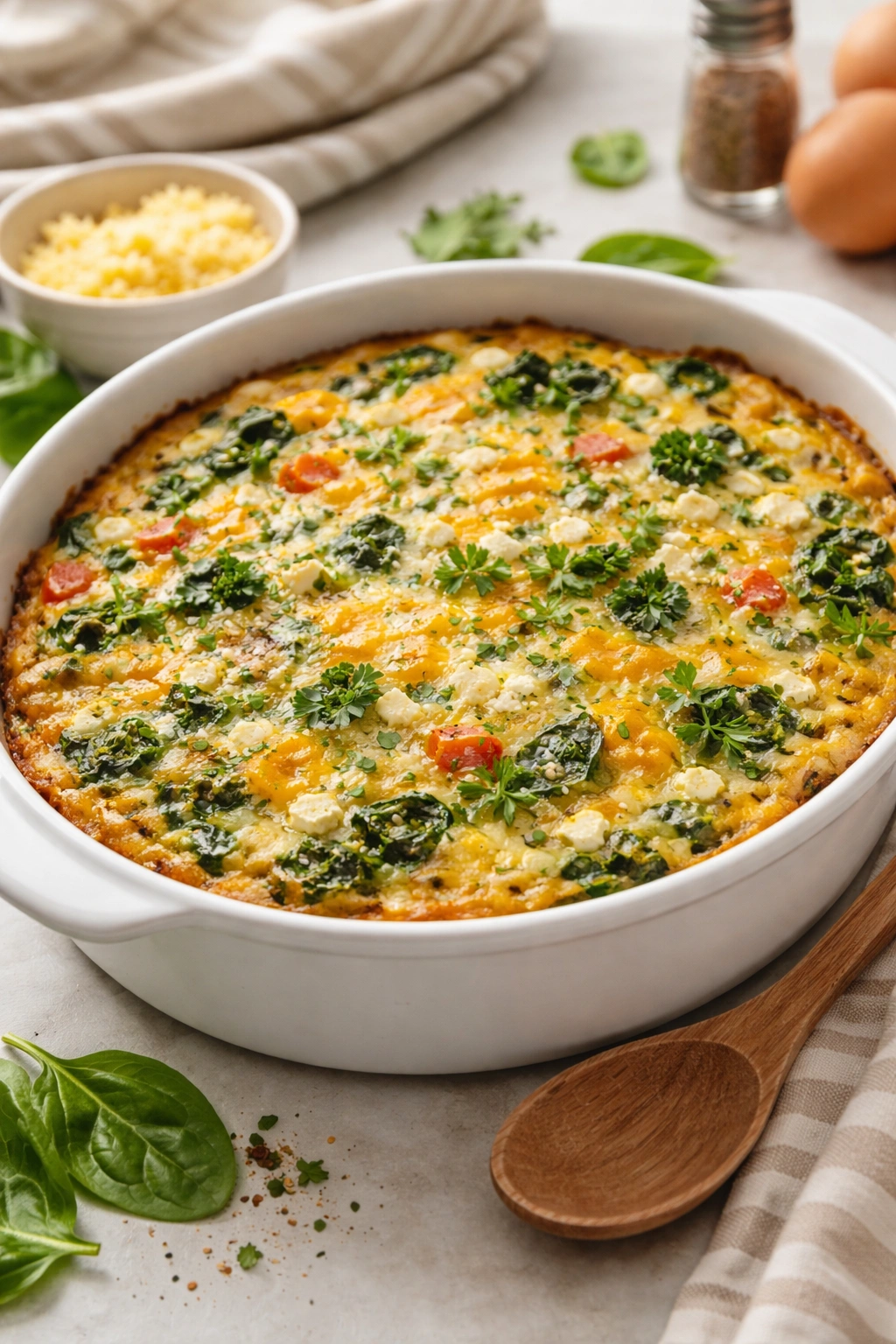
The spinach egg casserole deserves its place as a beloved make-ahead breakfast staple. It checks practically every box: it’s nutritious, adaptable, genuinely delicious, impressive enough for entertaining, and manageable enough for busy weekday mornings. Unlike elaborate breakfast dishes that require you to show up on time and ready to cook, this casserole meets you wherever you are in your morning routine.
The investment is genuinely minimal—15 minutes of actual hands-on work, mostly just chopping vegetables and mixing eggs. The return is enormous: days of breakfast handled, delicious flavor, solid nutrition, and the quiet confidence that comes from knowing you’ve set yourself up for success. Whether you’re trying to eat better, entertain more intentionally, or simply reduce decision fatigue around breakfast, this casserole solves the problem.
Start with the classic spinach, cheddar, and feta combination if you’re making this for the first time. Once you understand how it works and what textures and flavors appeal to you, feel free to experiment. This is a recipe that improves with familiarity because you’ll understand exactly how to customize it to your preferences. A year from now, this may become one of those recipes you’ve made dozens of times, adjusting it slightly based on what’s in your refrigerator and what sounds good that week. That’s the mark of truly valuable recipe: not just that it works, but that it becomes part of your regular cooking rotation because it genuinely makes your life better.
