



There’s something magical about the first bite of shrimp ceviche on a warm evening — that bright burst of citrus, the tender shrimp, the creamy avocado, and that perfect jolt of fresh cilantro all hitting your palate at once. It’s the essence of summer captured in a bowl, and the best part is that this stunning dish requires absolutely zero cooking. No steaming, no sautéing, no heat whatsoever. Just fresh ingredients, sharp knives, and a little patience while the acid from lime and lemon juice works its gentle magic on the shrimp.
I’ve made shrimp ceviche more times than I can count, and I’ve learned that creating an exceptional version at home isn’t about fancy techniques or hard-to-find ingredients — it’s about understanding a few simple principles, respecting your ingredients, and knowing exactly how to layer flavors for maximum impact. Whether you’re hosting a summer gathering, looking for a light dinner option, or craving something refreshing and impressive without spending hours in the kitchen, this is the recipe that delivers every single time.
What makes shrimp ceviche so perfect for the warmer months is its complete lack of heaviness combined with its remarkable depth of flavor. It’s a dish that feels indulgent enough to serve guests, yet it’s healthy, packed with protein, and won’t leave you feeling sluggish on a warm afternoon. The citrus-marinated shrimp combined with crisp vegetables and creamy avocado creates a textural experience that’s satisfying in ways a traditional cooked dish simply can’t match.
Why Shrimp Ceviche Is the Ultimate Warm-Weather Appetizer
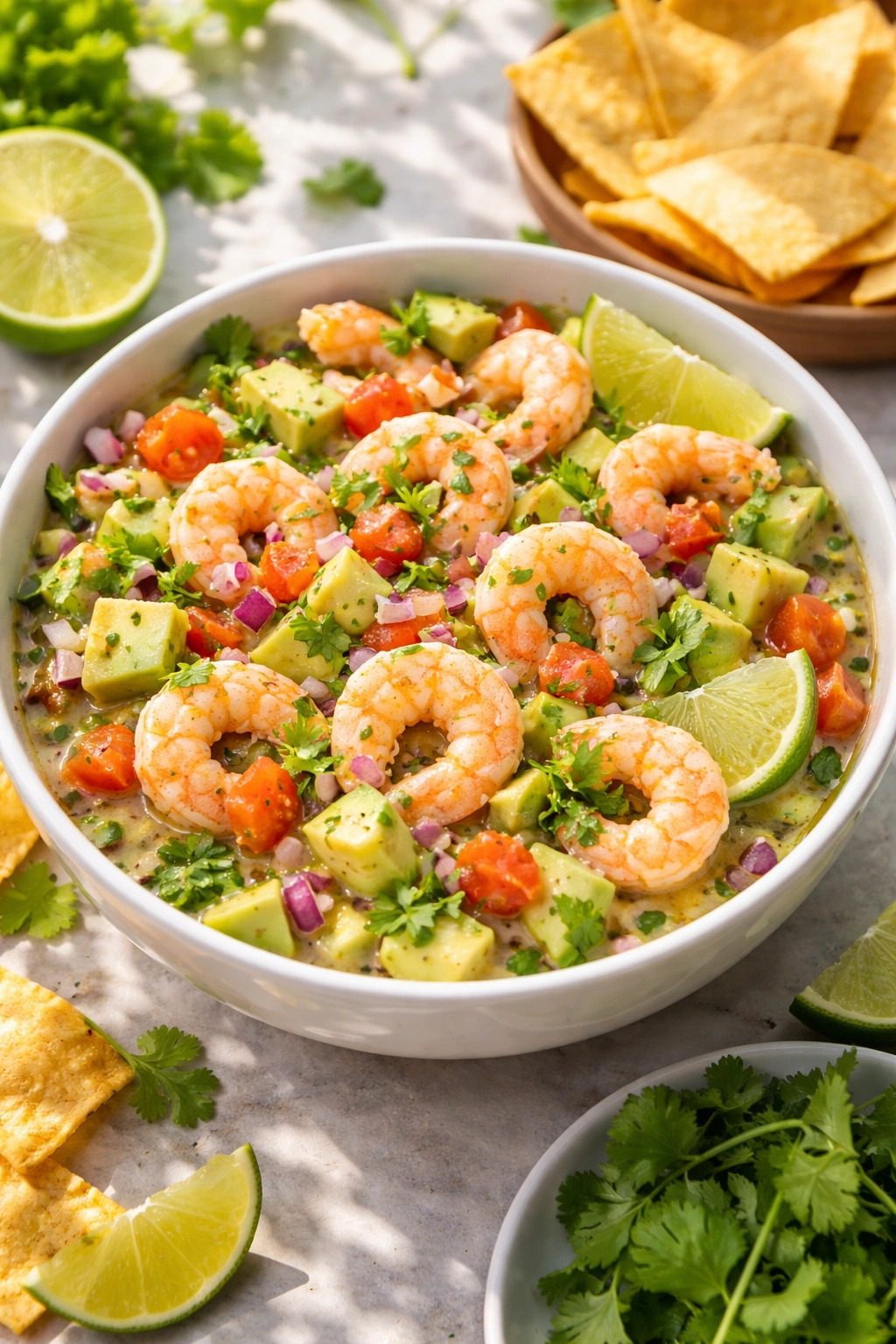
Shrimp ceviche represents everything we crave when the weather heats up — something cold, refreshing, bright, and satisfying without the heaviness of traditional cooked food. It’s a dish that’s been enjoyed along the coasts of Latin America for centuries, and for good reason.
The beauty of ceviche lies in its simplicity and its reliance on technique rather than cooking. The acidic citrus juice denatures the proteins in the shrimp, changing its texture and appearance in a way that mirrors traditional heat cooking, but the result is more delicate and tender. This is why quality matters so much — when you’re not masking anything with cooking temperatures and browning, every ingredient speaks loudly.
For entertaining, shrimp ceviche is genuinely a game-changer. You can prepare it entirely in advance (except for the avocado, which you’ll stir in at the last moment), which means you’re never standing in a hot kitchen while your guests are enjoying themselves outside. It requires only a cutting board, a knife, and a mixing bowl — minimal cleanup, maximum impact.
From a nutrition standpoint, this dish is exceptional. Shrimp is loaded with lean protein while being relatively low in calories. The vegetables provide fiber and nutrients. The avocado contributes healthy fats that help your body absorb fat-soluble vitamins. And the citrus brings vitamin C and beneficial plant compounds. You’re serving something that tastes indulgent but is genuinely nourishing.
Understanding Raw Versus Cooked Shrimp for Your Ceviche
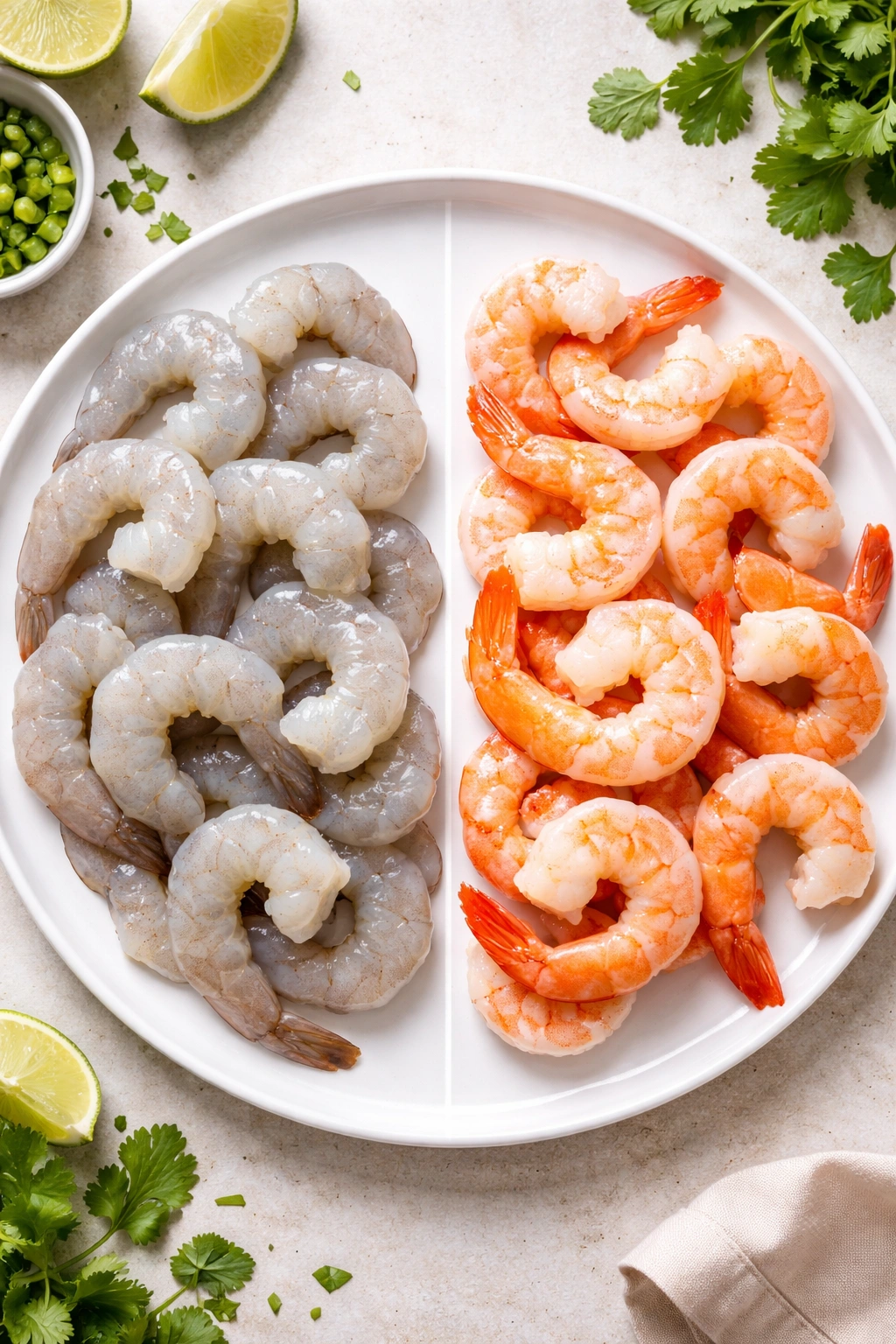
This is perhaps the most important decision you’ll make, and it deserves real consideration because it affects both safety and final result.
Traditionally, authentic ceviche is made with raw seafood — the citrus juice “cooks” it through the denaturing process. The acid breaks down the proteins, turning the shrimp opaque and firm, much like heat would. If you have access to absolutely pristine, sushi-grade shrimp from a trusted source, and you understand the food safety implications, you can absolutely go this route. Raw shrimp ceviche has a delicate, tender texture that’s genuinely beautiful.
However, here’s the honest truth: most home cooks buying shrimp at a grocery store should use cooked shrimp. Even “fresh” shrimp at the supermarket has usually been previously frozen, and shellfish like shrimp can harbor bacteria more easily than finfish. Using pre-cooked shrimp eliminates the food safety concern entirely while still delivering extraordinary flavor because you’re marinating an already-tender shrimp in a bright citrus mixture that absorbs into the meat. The difference in the final dish is honestly minimal, and the peace of mind is significant.
If you do choose raw shrimp, buy from a reputable seafood counter, ask specifically for sushi-grade shrimp, devein them carefully, and marinate them for 1 to 2 hours until they’re completely opaque and firm throughout. Don’t skip on quality here — it matters enormously when you’re serving seafood raw.
For cooked shrimp, marinate them for just 15 to 30 minutes in the citrus mixture. They’re already tender, so you don’t need the extended marinating time. Too long and the acid will start to toughen the meat. The goal is to let them absorb the brightness of the citrus and the flavors of the other ingredients without compromising their texture.
Sourcing Quality Ingredients That Make the Difference
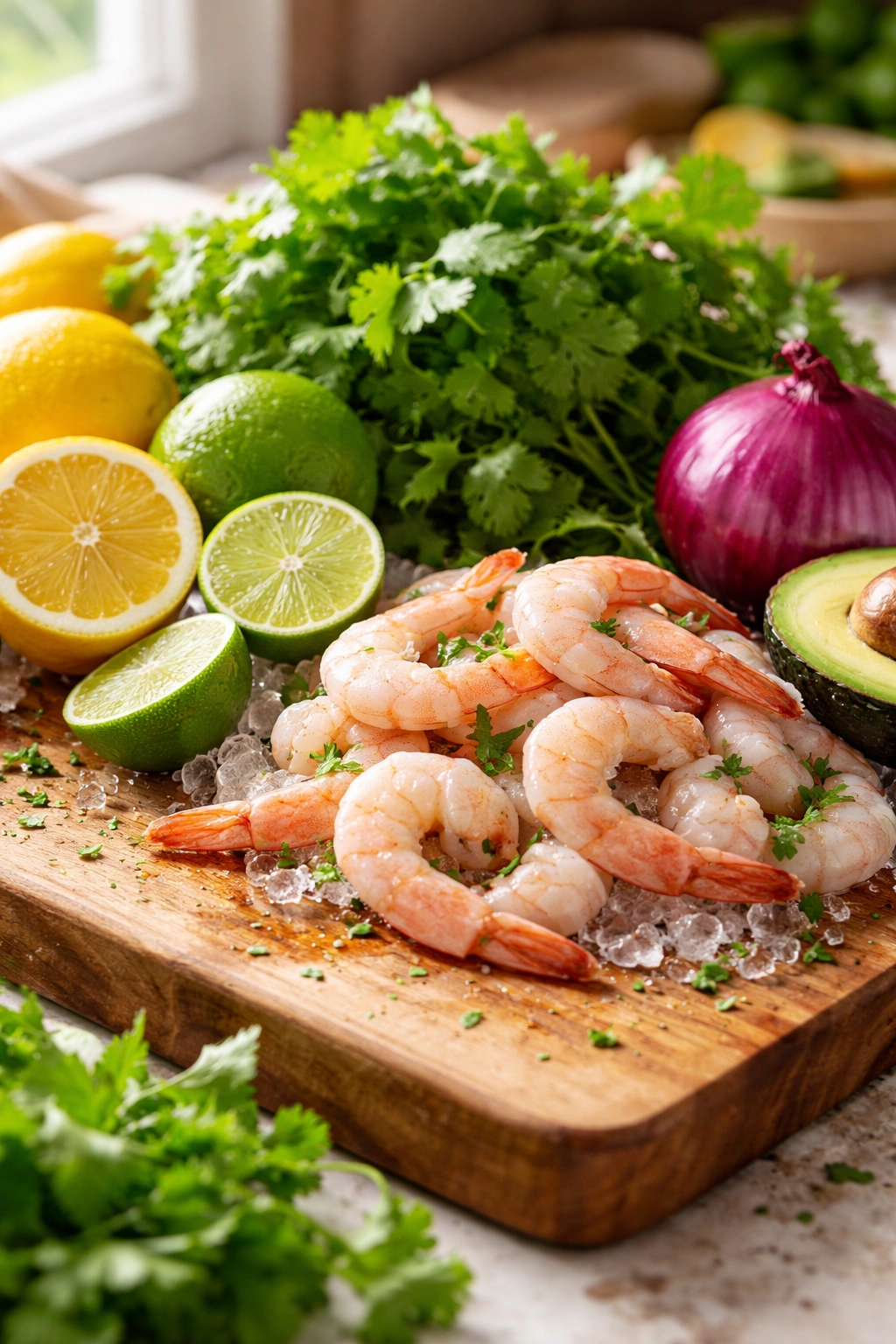
Every single ingredient in ceviche matters because you’re not cooking away imperfections or masking flavors with sauce. This is a dish where quality shines through completely.
Shrimp quality is non-negotiable. If you’re using cooked shrimp, buy it from a seafood counter where there’s turnover, not from a package that’s been sitting in the case. The shrimp should smell like the ocean, not fishy or ammonia-like. If you’re buying raw shrimp, look for firm, translucent meat with a slight curl — any that look mushy or discolored should be avoided. Medium to large shrimp work well because they hold their shape beautifully and are easier to cut into proper bite-sized pieces.
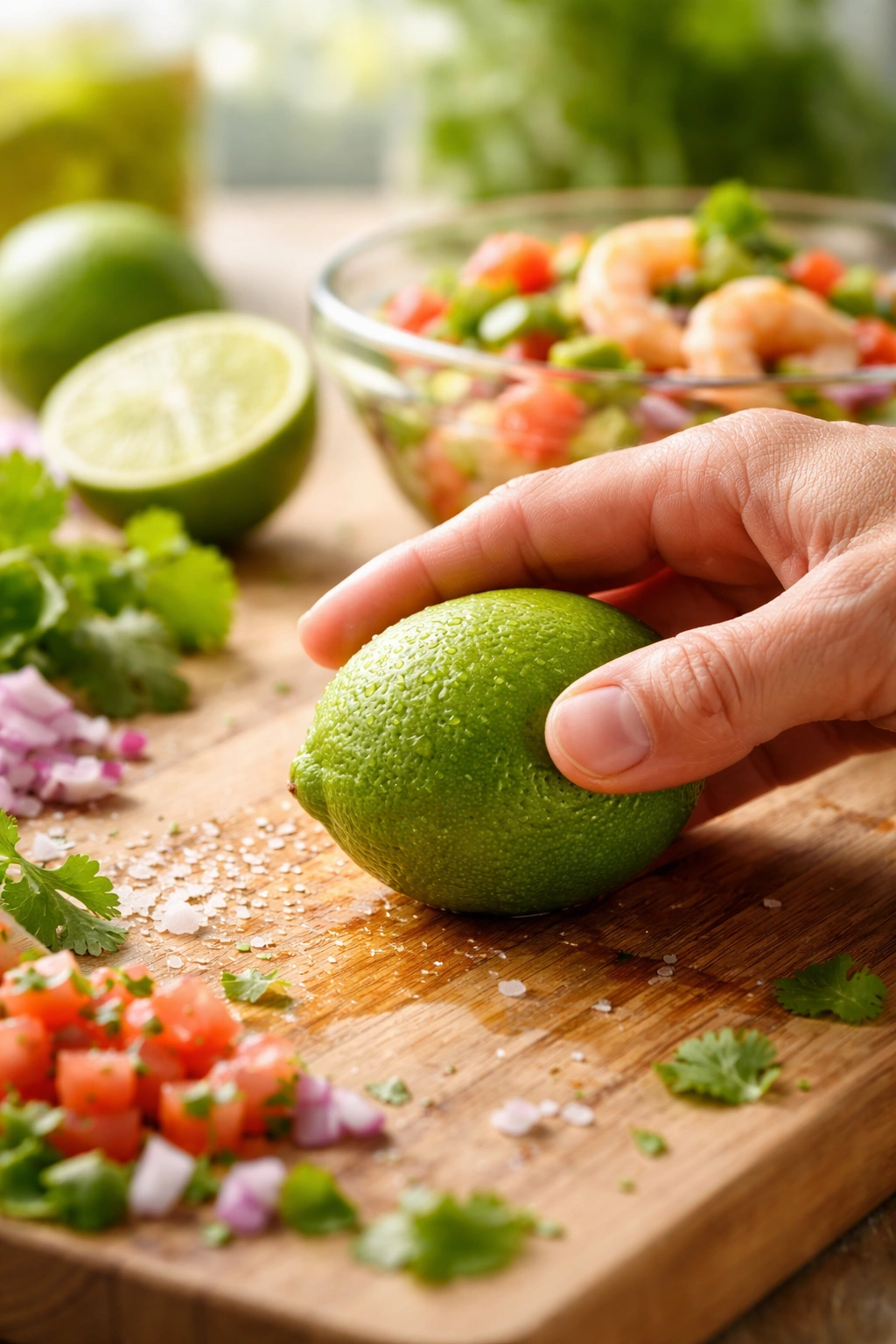
Fresh citrus is absolutely essential — this is one area where you cannot cut corners. Bottled lime juice and lemon juice have preservatives and simply don’t taste the same. The brightness that makes ceviche special comes entirely from fresh citrus juice. A good rule of thumb is that you’ll need about 6 to 8 limes depending on how juicy they are, and 2 to 3 lemons. Roll your limes and lemons on the counter, pressing down firmly with your hand, before cutting and juicing — this ruptures the cell walls and makes them yield more juice.
Fresh vegetables are the supporting cast that brings everything together. Ripe tomatoes should actually be ripe, not mealy or pale. Roma tomatoes or heirloom varieties work beautifully. Red onions add both color and a sharp bite that gets mellowed by the citrus. English cucumbers or Persian cucumbers are better choices than standard slicing cucumbers because they have fewer seeds and less water content, which keeps your ceviche from becoming soupy.
Cilantro should be genuinely fresh, with no brown edges or wilting. If you’re not a cilantro fan, fresh parsley is a direct substitute that provides similar brightness. Jalapeños or serrano peppers bring heat — choose based on your spice preference and whether you want to remove seeds for less heat or keep them for more kick. And avocados should be ripe but still slightly firm so they hold their shape when folded in at the last moment.
The Art of Cutting Shrimp for Perfect Texture
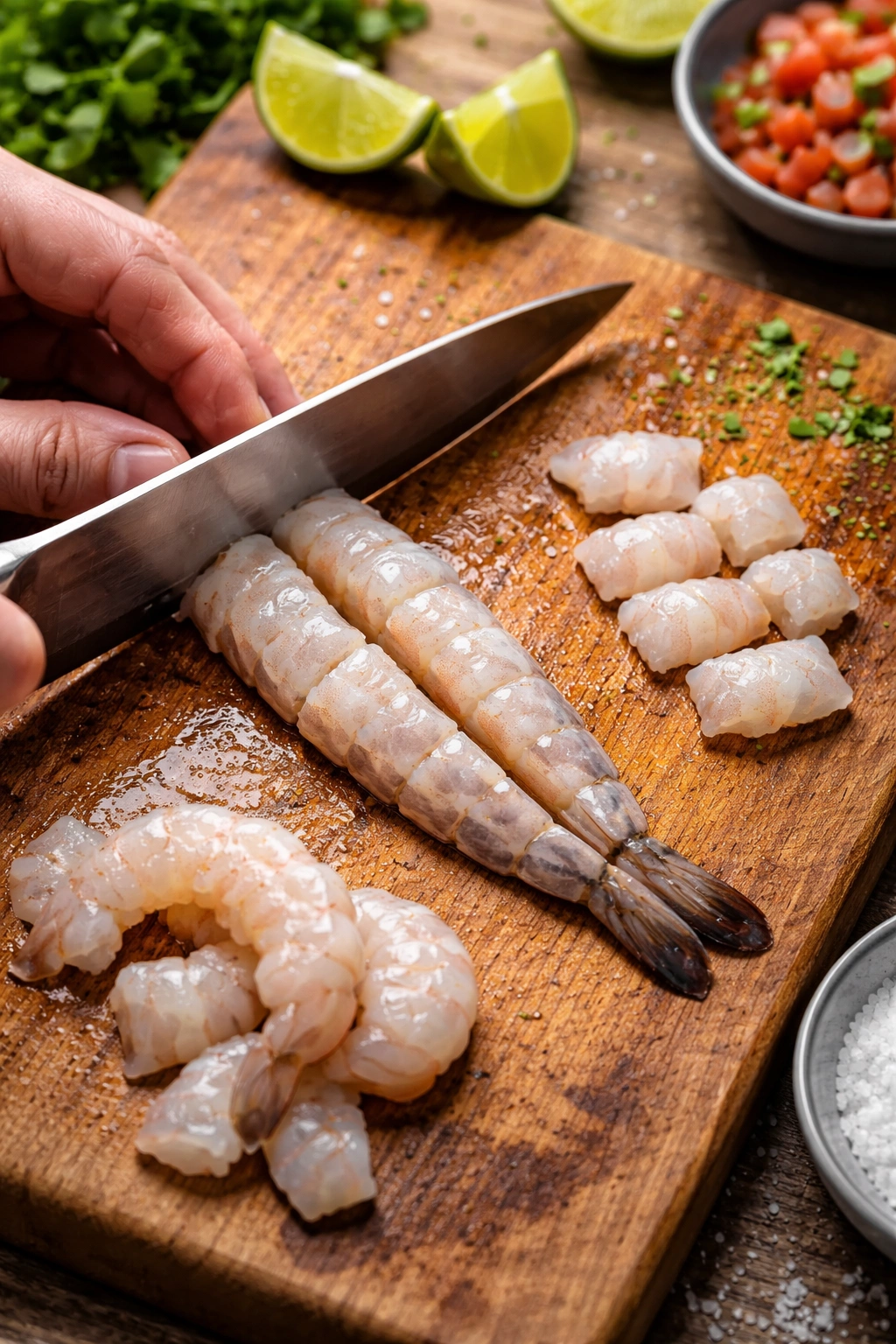
How you cut your shrimp makes a profound difference in the final eating experience, and this is where many home cooks go wrong by simply chopping shrimp into random chunks.
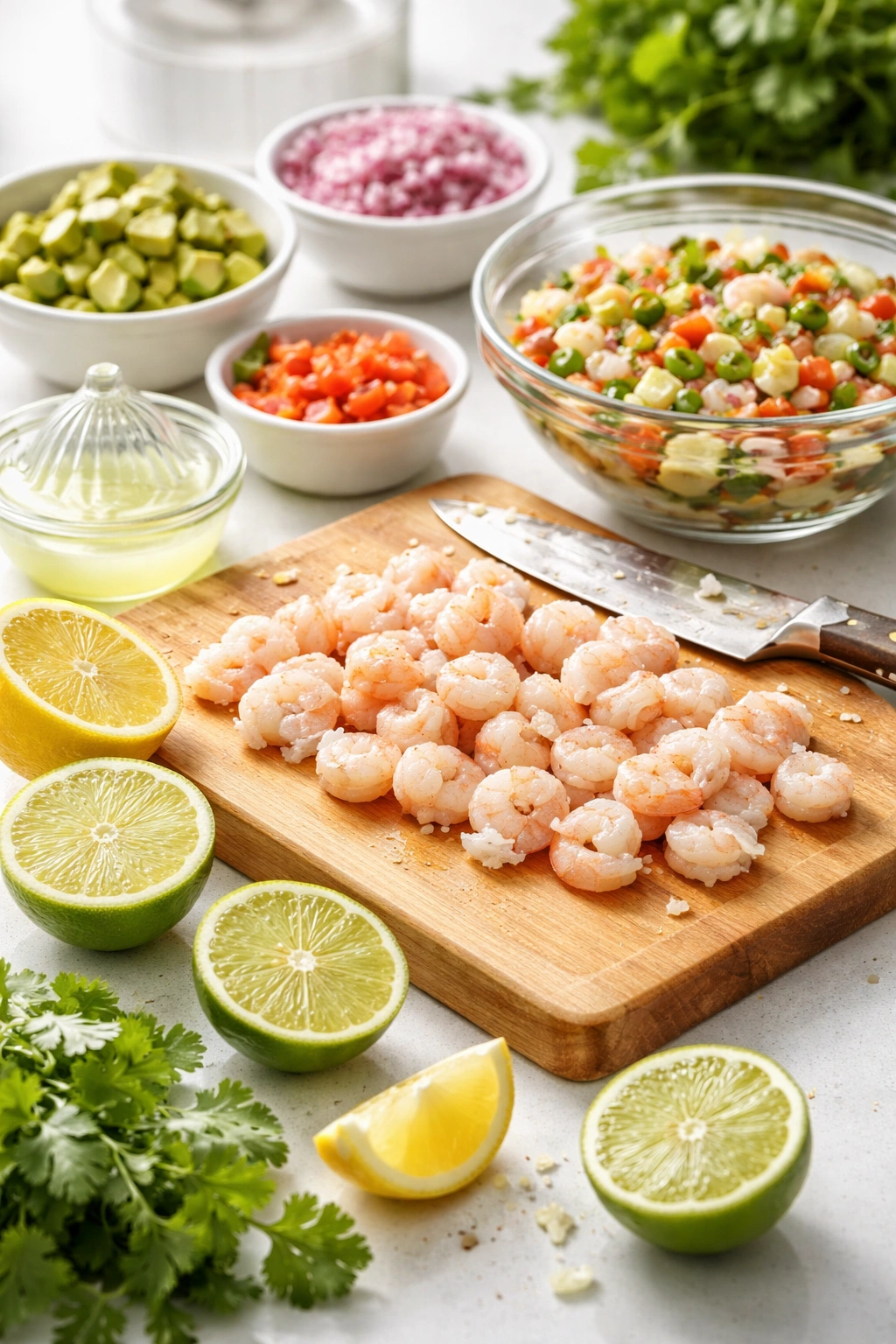
For the most tender, elegant result, cut the shrimp in a specific way. First, lay each shrimp flat and cut it in half lengthwise, creating two thin, flat pieces. This exposes more surface area and prevents any tough, chewy bits. Then, cut each half into 3 to 4 smaller pieces depending on your preference. You’re aiming for bite-sized pieces that are roughly uniform in size so they marinate evenly.
Uniform sizing matters because it ensures even marinating. A huge chunk and a tiny piece will “cook” at different rates. Aim for pieces about the size of a large grape to be generous, or smaller if you prefer. Even better, cut them into long, thin slivers if you’re serving your ceviche on lettuce leaves or tostadas — the elongated shape is more elegant.
The knife you use matters too. A sharp chef’s knife is essential. A dull knife will crush the shrimp, damaging the delicate flesh and making it more likely to break apart during marinating. A good sharp knife will slice cleanly through, creating clean edges that won’t fray and leak moisture.
Mastering the Citrus Cure That Makes Ceviche Special
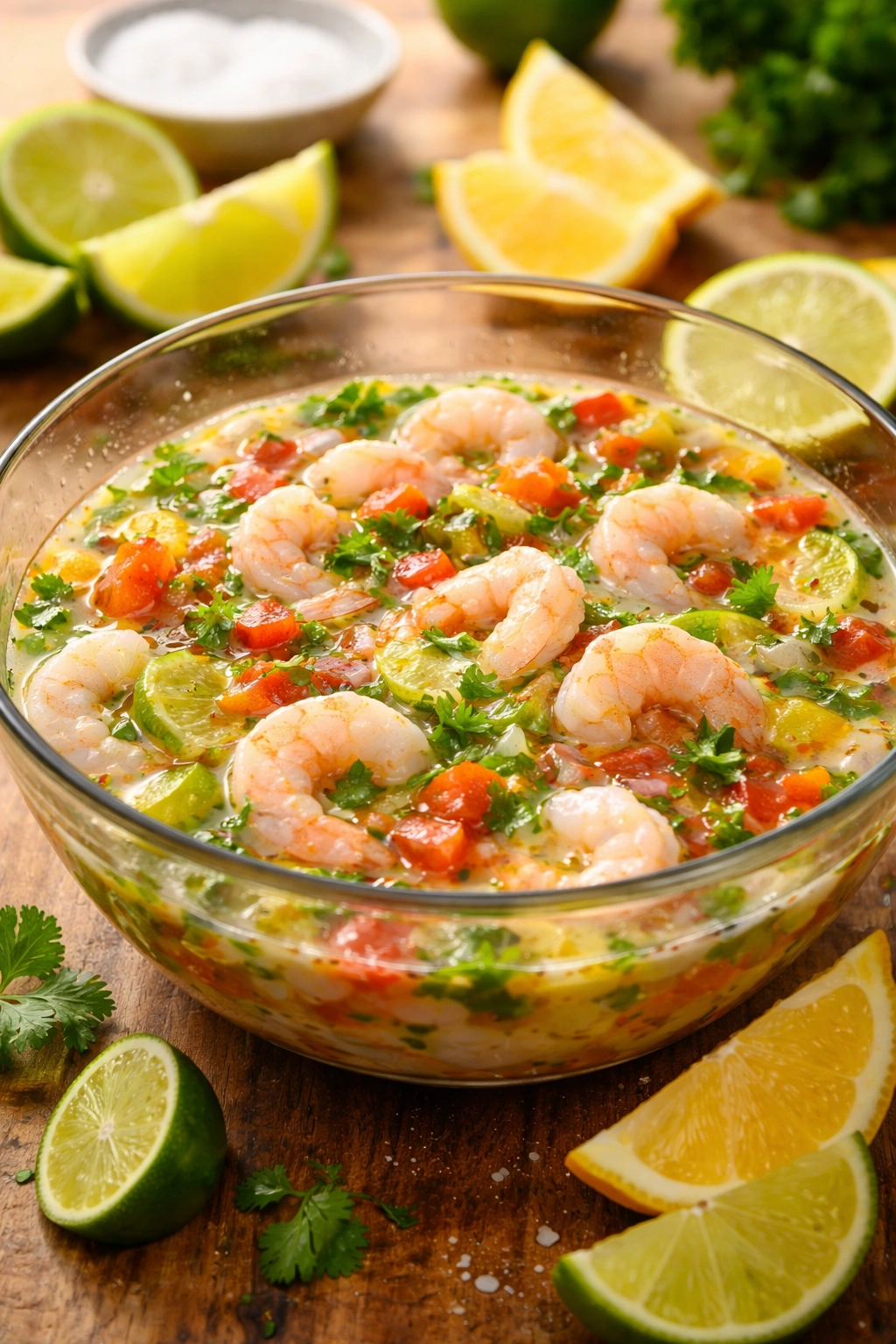
The citrus marinade is the heart of ceviche, and understanding how it works helps you dial in the flavor perfectly every time.
Citric acid denatures proteins through a process called denaturation, changing their structure without applying heat. This is why the shrimp changes from translucent and soft to opaque and firm. This happens fairly quickly — raw shrimp typically becomes opaque within 15 to 30 minutes, though larger pieces may take up to 2 hours. The denaturing process continues the longer the shrimp sits, which is why timing matters. The ideal window is when the shrimp is just cooked through (opaque and firm) but before the acid starts to dry it out.
The ratio of citrus to shrimp is crucial. Aim for about three-quarters cup of citrus juice per pound of shrimp. Too little juice and the shrimp won’t cure evenly. Too much and your ceviche becomes more soup than salad. For cooked shrimp, you can use slightly less juice since you’re not relying on acid to cook the meat.
Many recipes call only for lime juice, which creates a sharp, mouth-puckering intensity. I prefer adding both lime and lemon juice, and often a splash of orange juice. This combination creates a more balanced citrus profile that’s bright without being aggressively sour. The slight sweetness of orange juice rounds out the sharper limes and mellows the acidity beautifully. Some ceviche traditions even add a touch of grapefruit juice, which brings a subtle bitterness that’s quite sophisticated.
Always use freshly squeezed juice, and squeeze it directly over the shrimp if possible. The moment citric acid hits the shrimp, the curing begins. This is why it’s important to have everything else prepped and ready — you want to control the timing precisely.
Building Flavor Layers That Make Every Bite Count
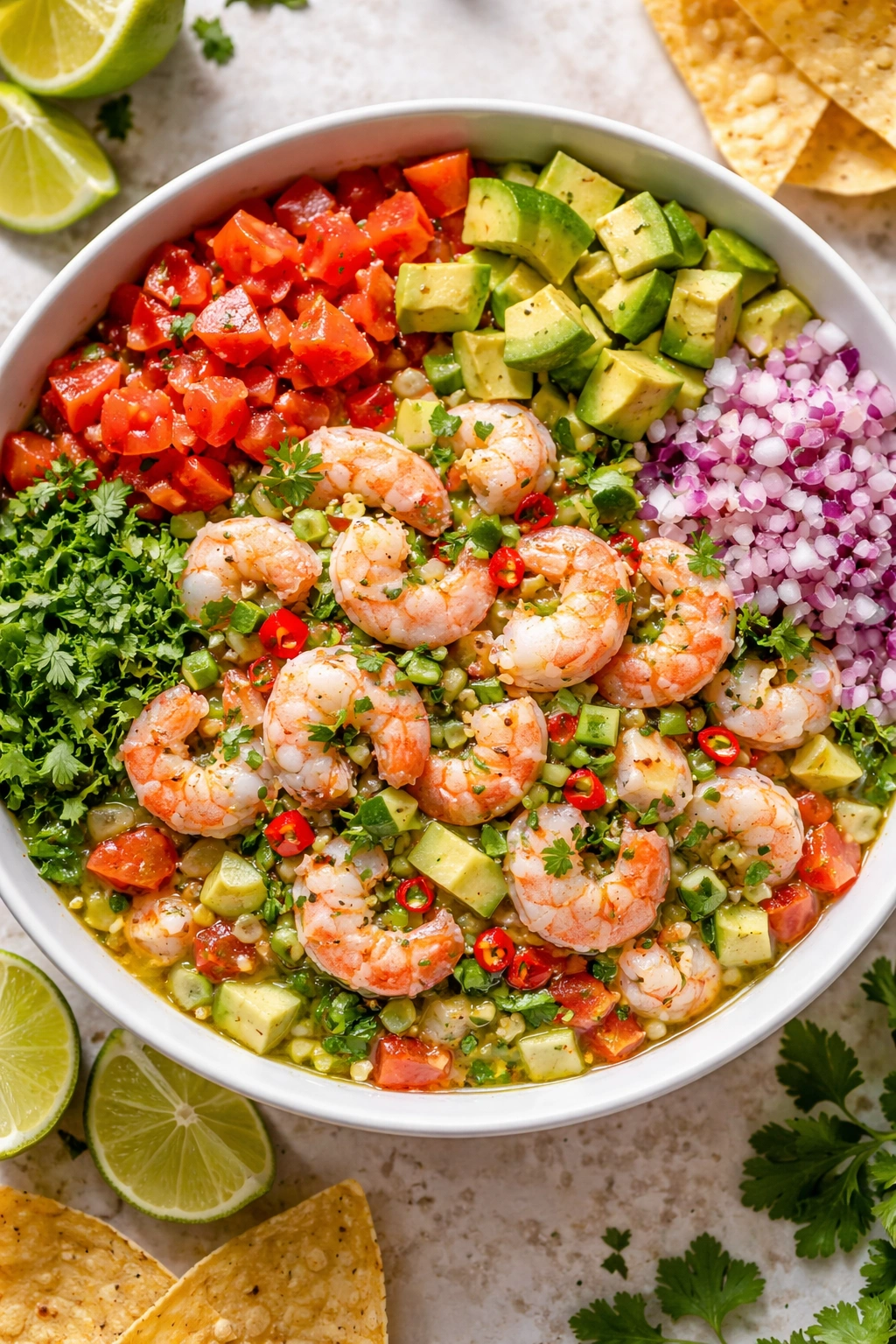
The vegetables and aromatics you add to your ceviche aren’t just garnish — they’re building a complex flavor foundation that develops and deepens as everything marinates together.
The red onion provides both sharp bite and subtle sweetness. Dice it finely and toss it in with the citrus-marinated shrimp early on. The acid will gently pickle the onion, taming its raw sharpness while it infuses the entire dish with its flavor. Some recipes call for white onion, but red onion gives you color and a slightly different flavor profile that’s lovely.
Fresh cilantro is more than decoration — it brings an herbaceous brightness that’s essential to ceviche’s character. Chop it roughly and fold it in about halfway through marinating. If you add it too early, it can become bruised and bitter. If you add it too late, it won’t have time to infuse the dish. The same goes for any fresh herbs you choose.
Tomatoes should be seeded before dicing. This step seems fussy, but it’s genuinely important because tomato seeds and their surrounding gel contribute mostly water and bitterness. Remove the seeds and you’re left with just the flavorful flesh. Dice them evenly and add them with enough time to release their juice into the marinade, which becomes part of the finished dish.
Jalapeños or serrano peppers bring heat and a brightness that plays beautifully with citrus. Remove seeds and the white membrane if you want less heat. Keep them in if you want the full kick. Some recipes blend the peppers with the citrus juice itself, creating a pepper-infused marinade that’s genuinely excellent — the heat becomes more integrated and less biting.
Cucumber adds a refreshing crunch and a subtle water-based sweetness. Peel it and remove the seeds so you avoid adding extra water to the finished dish. Dice it into small, uniform pieces and add it shortly before serving so it stays crisp rather than becoming waterlogged.
Creating Textural Contrast Through Thoughtful Composition
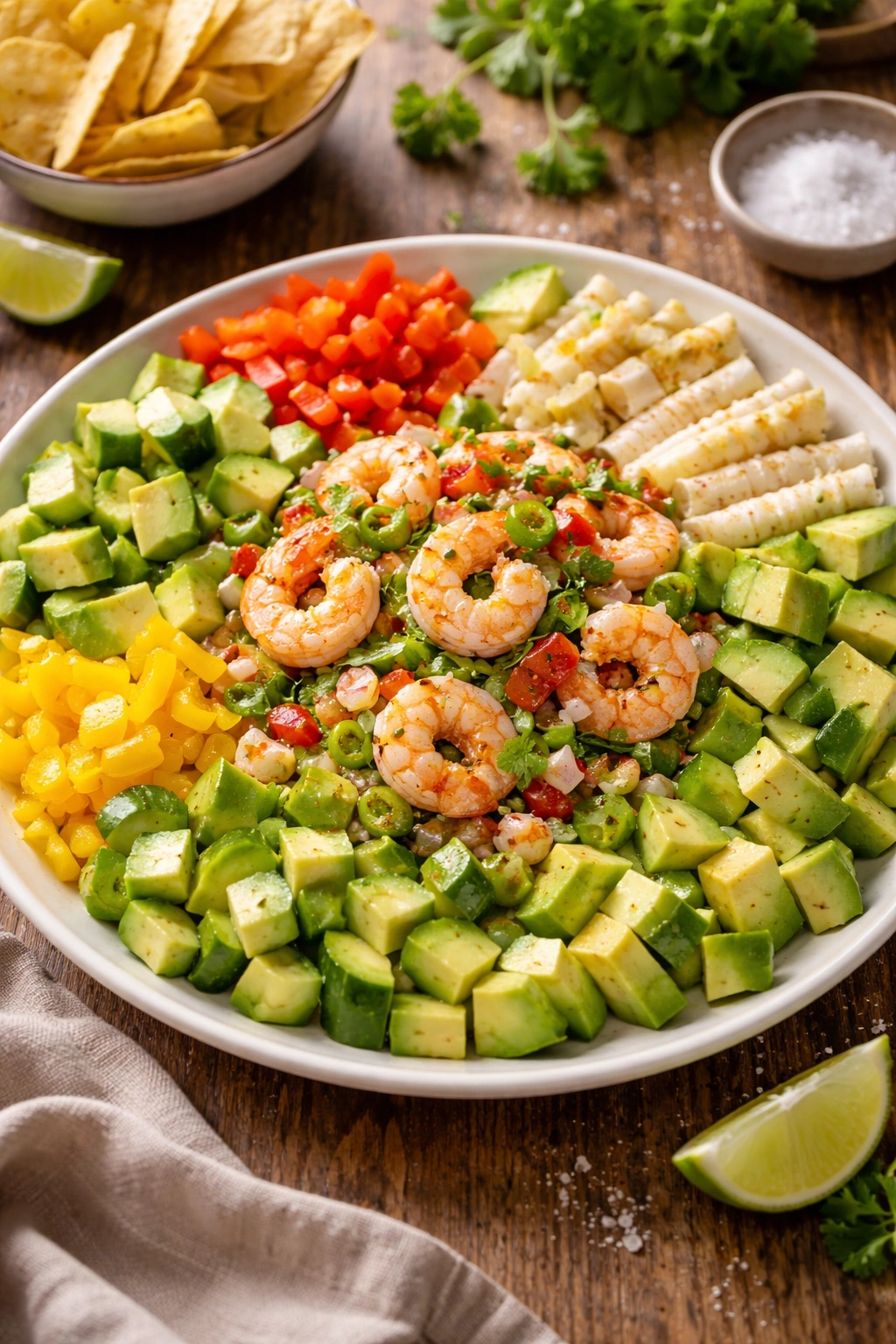
Great ceviche isn’t just flavorful — it’s textually interesting, with a variety of tender, crisp, creamy, and soft elements in every bite.
The shrimp provides tenderness and protein. The vegetables contribute crunch and freshness. The avocado brings creaminess and richness. Even the tortilla chips or other serving vehicle add another textural element. When you’re preparing your ceviche, think about how each component will feel in your mouth and make sure you have good variety.
Avocado is essential for both richness and textural balance. Never add it until the last moment before serving. Avocado browns and breaks down quickly when exposed to acid and air. By adding it at the very end, you preserve its vibrant color, its creamy texture, and its subtle flavor. Dice it just before folding it in, and use avocados that are ripe but still slightly firm — they’ll hold their shape better than fully soft ones.
Some excellent ceviche recipes add diced jicama, a crispy root vegetable with a clean, slightly sweet flavor that brings wonderful crunch. Others add diced mango or pineapple for sweetness that plays beautifully against the acidity and heat. Bell peppers add another layer of crisp sweetness. These variations expand the textural palette beyond just the core ingredients.
The ratio of solid ingredients to liquid matters too. You want enough citrus marinade to flavor everything and create a cohesive dish, but not so much that you’re serving a soup. When plating your ceviche, you might serve it slightly heaped into a small bowl with just enough of the bright citrus liquid clinging to the ingredients.
Storage and Make-Ahead Strategy for Stress-Free Entertaining
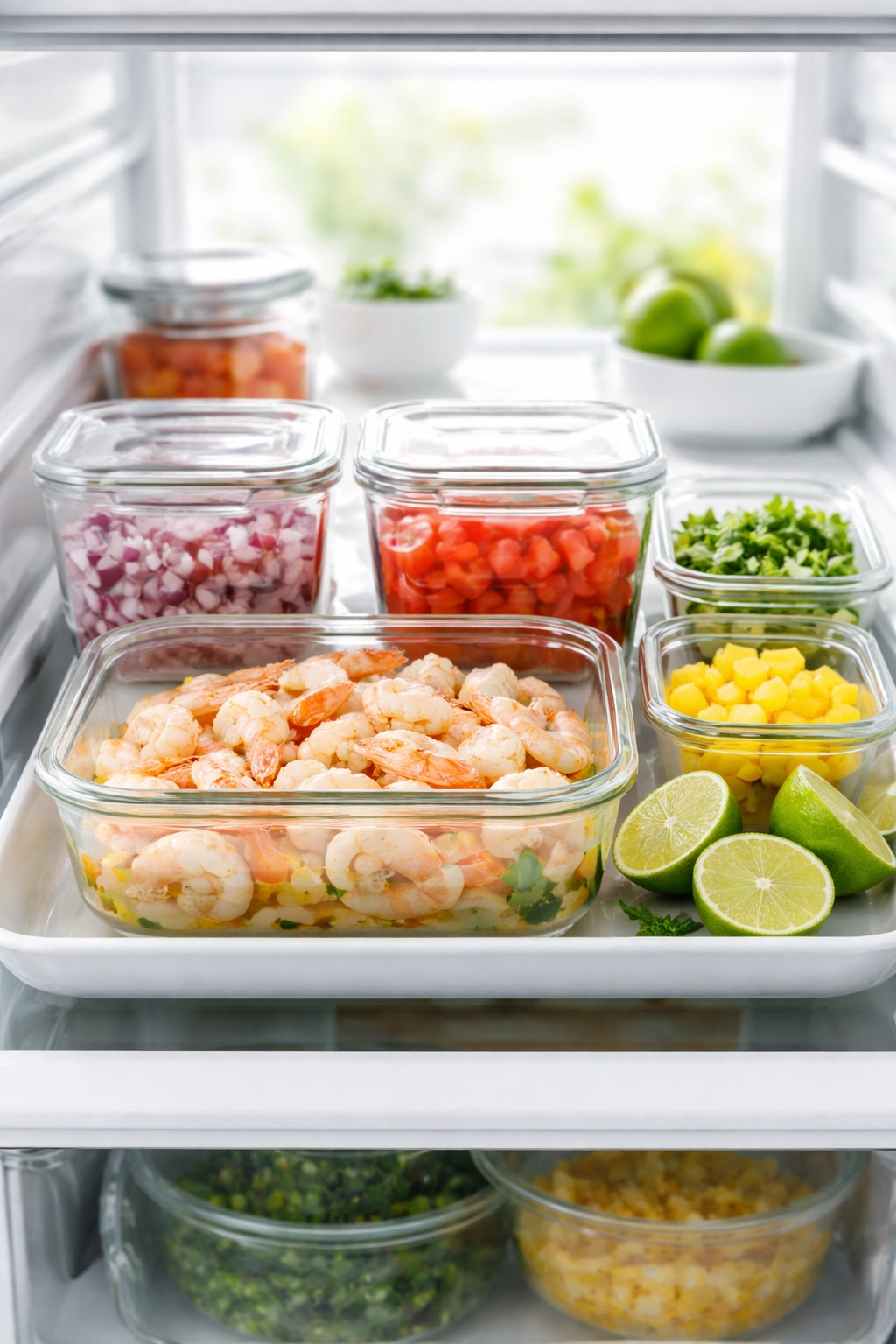
Here’s the genuinely wonderful part: shrimp ceviche can be made hours in advance, making it perfect for entertaining without last-minute stress.
Prep all your vegetables and juice your citrus the night before if you’d like. Store everything separately in airtight containers in the refrigerator. Keep the shrimp separate from the citrus juice until you’re ready to start the curing process. This way, the morning of your gathering, you simply combine the shrimp with the citrus juice, let it cure for the appropriate time, add the other vegetables, and chill until serving. You can do this up to 4 hours in advance.
The one exception is avocado, which must be added just moments before serving to prevent browning and maintain its creamy texture. Add it, gently fold everything together, taste for seasoning, and serve immediately.
If you’re storing finished ceviche (without avocado), it will keep in an airtight container in the refrigerator for up to 24 to 48 hours. The flavors actually deepen slightly after a few hours, so making it several hours in advance is actually ideal. However, the longer it sits, the more the shrimp continues to “cook” in the acid, and it can eventually become overly firm and slightly rubbery. This is why serving it within 24 hours of preparation is best.
Use glass or ceramic containers for storage, not aluminum or copper. Acidic ingredients react with reactive metals and can create off-flavors or discoloration. Non-reactive materials like glass, stainless steel, or ceramic keep your ceviche tasting perfect.
Serving and Presentation Ideas That Make an Impact
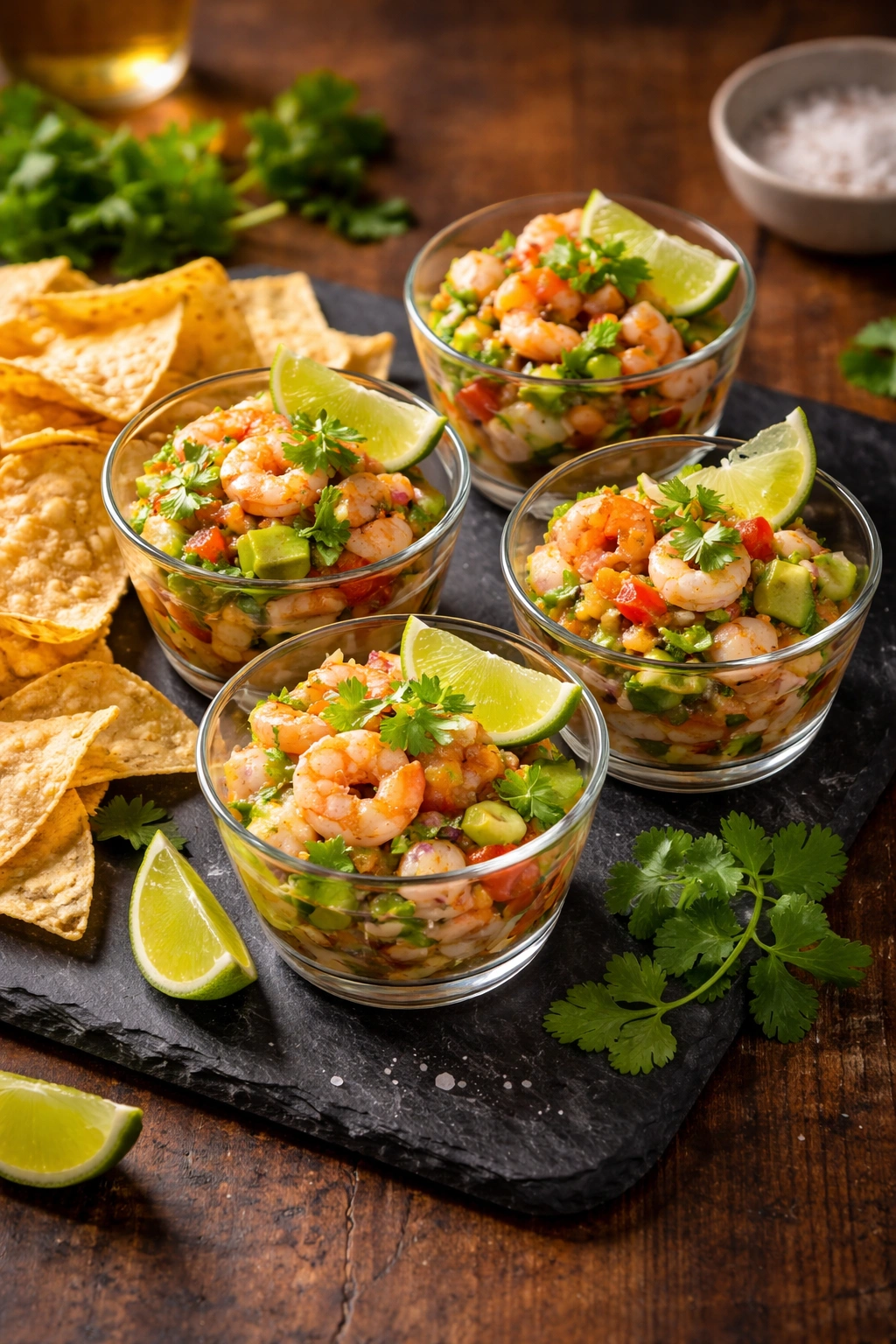
The way you serve your ceviche affects both the eating experience and how impressive it looks when you bring it to the table.
Tortilla chips are the traditional accompaniment, and rightfully so. They provide crunch, a neutral backdrop for the bright flavors, and a vehicle for scooping. Look for high-quality chips made with just corn, salt, and oil — they make a difference in the final experience. Some people prefer plantain chips, which bring their own subtle sweetness and are sturdier than corn chips. Rice crackers work beautifully for a gluten-free option.
Alternatively, serve your ceviche in small glasses or bowls alongside the chips, so your guests can either dip or eat the ceviche with a small fork. This is particularly elegant for a dinner party. You can also serve it on small lettuce leaves as a fresh, low-carb option. Some cooks pile it onto tostada shells, essentially creating an open-faced ceviche tostada that’s more substantial than the traditional appetizer format.
Garnishes elevate the presentation without adding much work. A lime wedge adds a pop of color and allows guests to add more citrus if they want. Fresh cilantro sprigs look beautiful and refresh the herb flavors. A sprinkle of sea salt just before serving can highlight the flavors. If you’re serving this at a party, a small handful of fresh microgreens adds elegance.
Consider the temperature when serving. Ceviche should be thoroughly chilled — ideally straight from the refrigerator. The cold enhances the freshness and brightness. Serve it in chilled bowls if possible. The contrast between the cold ceviche and the warmth of a summer evening is genuinely part of the appeal.
Variations and Flavor Adventures You Can Explore
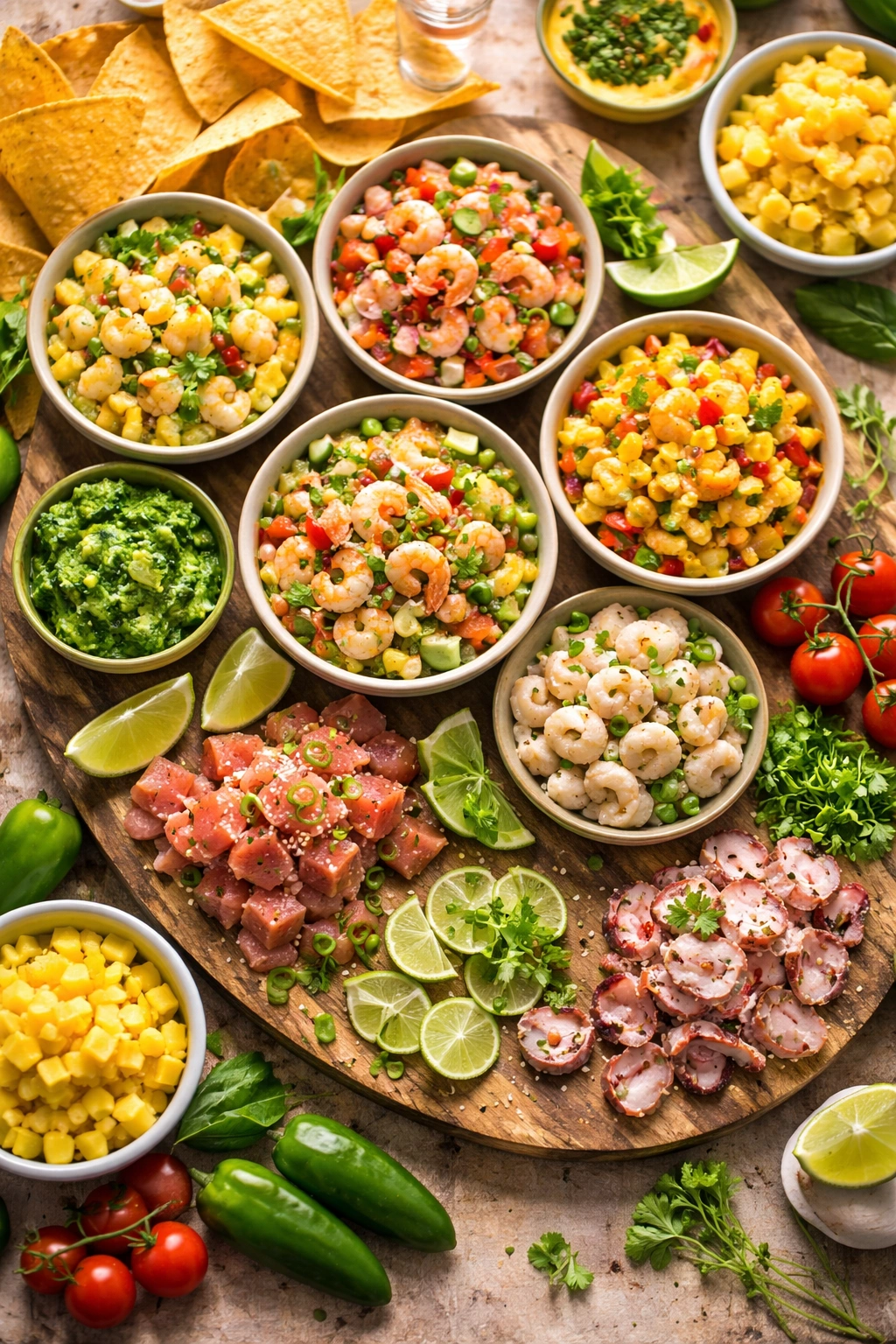
The beauty of ceviche is that the basic technique is solid, but the flavor possibilities are genuinely endless.
Fruity versions swap out tomato for fresh mango, pineapple, or even papaya. These bring sweetness that creates an interesting contrast with the spice and acidity. Some versions use both tomato and fruit — a combination that’s surprisingly balanced. Start by replacing half your tomato with diced mango, see if you like the direction, and adjust from there.
Herb variations substitute cilantro with fresh mint, basil, or a combination. Mint brings a cooling sweetness that’s particularly lovely. Basil adds an almost slightly peppery, anise-like note. Some recipes use dill, which adds brightness in a different way. These aren’t strictly traditional, but they’re delicious variations that let you play with flavor.
Seafood swaps replace some of the shrimp with diced firm white fish like halibut, snapper, or sea bass. You could also include scallops, which have a delicate sweetness that pairs beautifully with citrus. Some versions use a combination of shrimp and other seafood for textural interest. Some ceviche traditions include cubed octopus, though this requires careful preparation (boiling to tenderize first).
Additional vegetables like diced bell pepper, seeded cucumber, or minced green onion expand the flavor and crunch profile. Some recipes add corn kernels for sweetness and texture. Radish brings a peppery bite. Build these into your base recipe to create something uniquely yours.
Spice level adjustments let you dial the heat to your preference. Use serrano peppers instead of jalapeños for more heat. Remove all seeds and membranes for a much milder version. Some recipes incorporate a splash of hot sauce — this should be added just before serving so you can taste and control the intensity.
Regional variations reflect where ceviche is being made. Some versions add clamato juice, the tomato-clam juice combination that brings umami and a briny quality. Some include a touch of soy sauce for depth. Some add cumin and oregano for an earthier, more Spanish flavor profile. These variations honor different traditions while maintaining the core technique.
Common Mistakes and How to Avoid Them
Learning what goes wrong helps you avoid pitfalls and achieve ceviche perfection consistently.
Oversized shrimp chunks are a frequent mistake that results in uneven marinating and an awkward eating experience. Those massive pieces stay too soft while tiny pieces overcook. Cut uniformly and choose appropriately sized pieces. Medium-sized shrimp are actually easier to work with than giant jumbo shrimp because they’re naturally a better size to cut into proper portions.
Using bottled citrus juice is a surprisingly common mistake that ruins an otherwise well-executed dish. The difference between fresh and bottled is dramatic. Bottled juice has preservatives, it’s often not as acidic, and the flavor is dull and flat. This is one area where fresh is genuinely non-negotiable. Give yourself 10 minutes to squeeze fresh juice — it’s worth every second.
Over-marinating shrimp happens when people leave it in the citrus juice too long. Yes, the acid eventually “cooks” the shrimp, but if you leave it for too long, it becomes tough and rubbery. For raw shrimp, stick to 1 to 2 hours maximum. For cooked shrimp, 15 to 30 minutes is sufficient. Once you’ve added all the other ingredients, you can chill it longer, but remove shrimp from pure citrus juice before it over-cures.
Adding avocado too early is a mistake that results in brown, broken-down avocado. Every time. Peel, pit, and dice it mere moments before serving, then gently fold it into the ceviche just before bringing it to the table. This is genuinely your last step.
Watery ceviche happens when you don’t remove seeds from tomatoes and cucumbers. This step seems optional but it’s genuinely important. The watery parts dilute the bright citrus flavors and create an unappetizing consistency. Take 30 seconds to remove seeds and you’ll have a noticeably better dish.
Inadequate seasoning is easy to correct but easy to miss if you don’t taste as you go. The citrus, the shrimp, the vegetables — they’re all flavors that need to be balanced with a little salt. Taste your ceviche once everything is combined and before serving. Add salt gradually until the flavors pop. Remember that tortilla chips are salty, so don’t over-salt your ceviche, but do make sure it has enough salt to taste truly seasoned.
Not properly cleaning raw shrimp is a critical food safety step if you’re using raw shrimp. Devein them carefully — this is the dark digestive tract running along the back. Pull it out with a deveining tool or the tip of a sharp knife. Rinse thoroughly under cold water. This isn’t optional if you’re using raw shrimp.
The Recipe
Yield: Serves 6 as an appetizer | Makes approximately 6 cups
Prep Time: 25 minutes
Cook Time: 0 minutes (no cooking required)
Total Time: 25 minutes active prep + 1 hour to 2 hours marinating = 1 hour 25 minutes to 2 hours 25 minutes total
Difficulty: Beginner — This is one of the most forgiving dishes you can make. If you can chop vegetables and squeeze limes, you can make exceptional ceviche. No cooking skills required, just a sharp knife and a little patience while flavors develop.
For the Ceviche
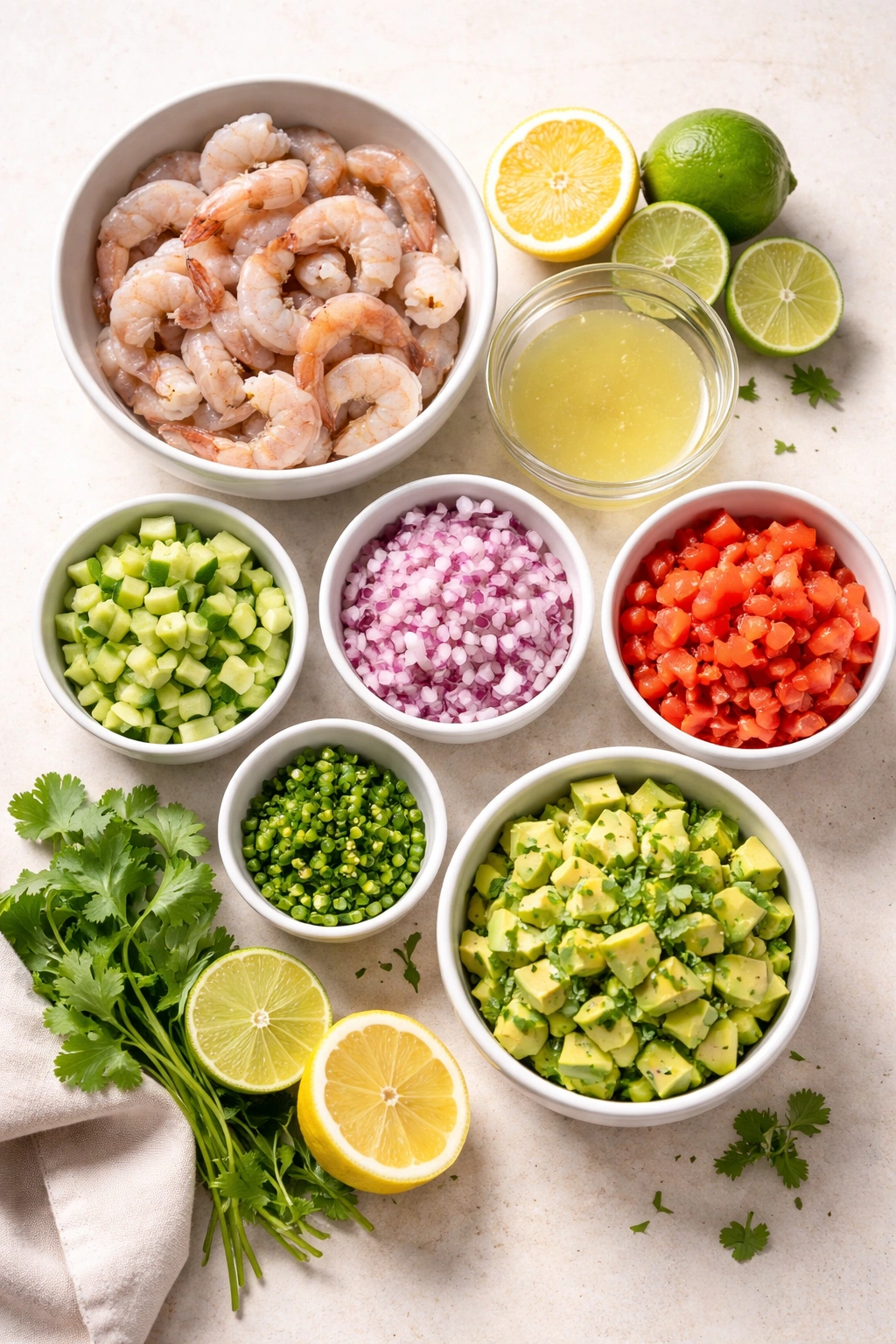
- 1 pound raw large shrimp, peeled, deveined, and tails removed (or use pre-cooked shrimp)
- ¾ cup freshly squeezed lime juice (from approximately 6 to 8 large limes, depending on juiciness)
- ¼ cup freshly squeezed lemon juice (from approximately 2 medium lemons)
- ½ cup freshly squeezed orange juice (from approximately 2 medium oranges, optional but recommended for balanced citrus flavor)
- 2 medium Roma tomatoes, seeds removed and finely diced
- 1 cup seeded English cucumber, finely diced (or use seedless Persian cucumbers)
- ½ medium red onion, finely minced
- 2 to 3 fresh jalapeño peppers (or serrano peppers for more heat), seeds and white membranes removed for less spice, minced
- ½ cup fresh cilantro, roughly chopped (substitute with fresh parsley if preferred)
- 1 teaspoon kosher sea salt, plus more for final seasoning
- ¼ teaspoon freshly ground black pepper
- 1 ripe but firm avocado, peeled, pitted, and diced (add only just before serving)
For Serving
- High-quality tortilla chips, plantain chips, or tostada shells
- Lime wedges for garnish
- Fresh cilantro sprigs for garnish
- Fleur de sel or other finishing salt (optional)
Preparing the Shrimp
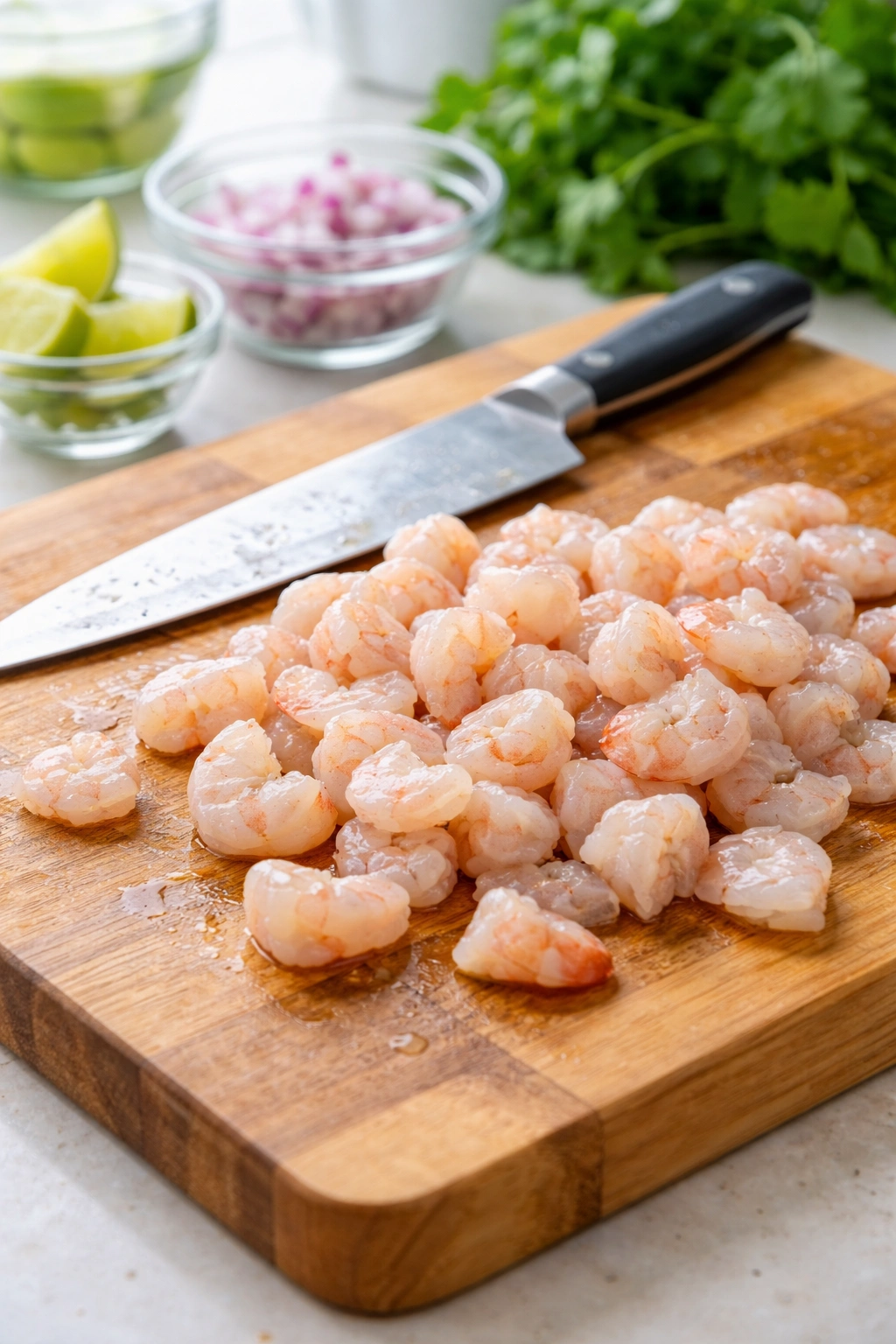
Step 1: Prepare raw shrimp for curing (if using raw shrimp)
Lay the raw shrimp on a cutting board. Using a sharp chef’s knife, cut each shrimp in half lengthwise, creating two thin, flat pieces from each shrimp. Then cut each half into 3 to 4 smaller pieces, depending on your preference for size. You’re aiming for bite-sized pieces roughly the size of a large grape. Uniform sizing ensures even marinating. Rinse the cut shrimp briefly under cold water and place in a large glass, ceramic, or stainless steel bowl (never aluminum or copper, which will react with the citrus acid).
Step 2: Prepare cooked shrimp (if using pre-cooked shrimp)
If you’re using pre-cooked shrimp, follow the same cutting instructions above. If the shrimp are still partially frozen, thaw them by placing them in a bowl and running cool water over them for 10 to 15 minutes until completely thawed, then pat dry with paper towels. Cut and place in your non-reactive bowl.
Creating the Marinade
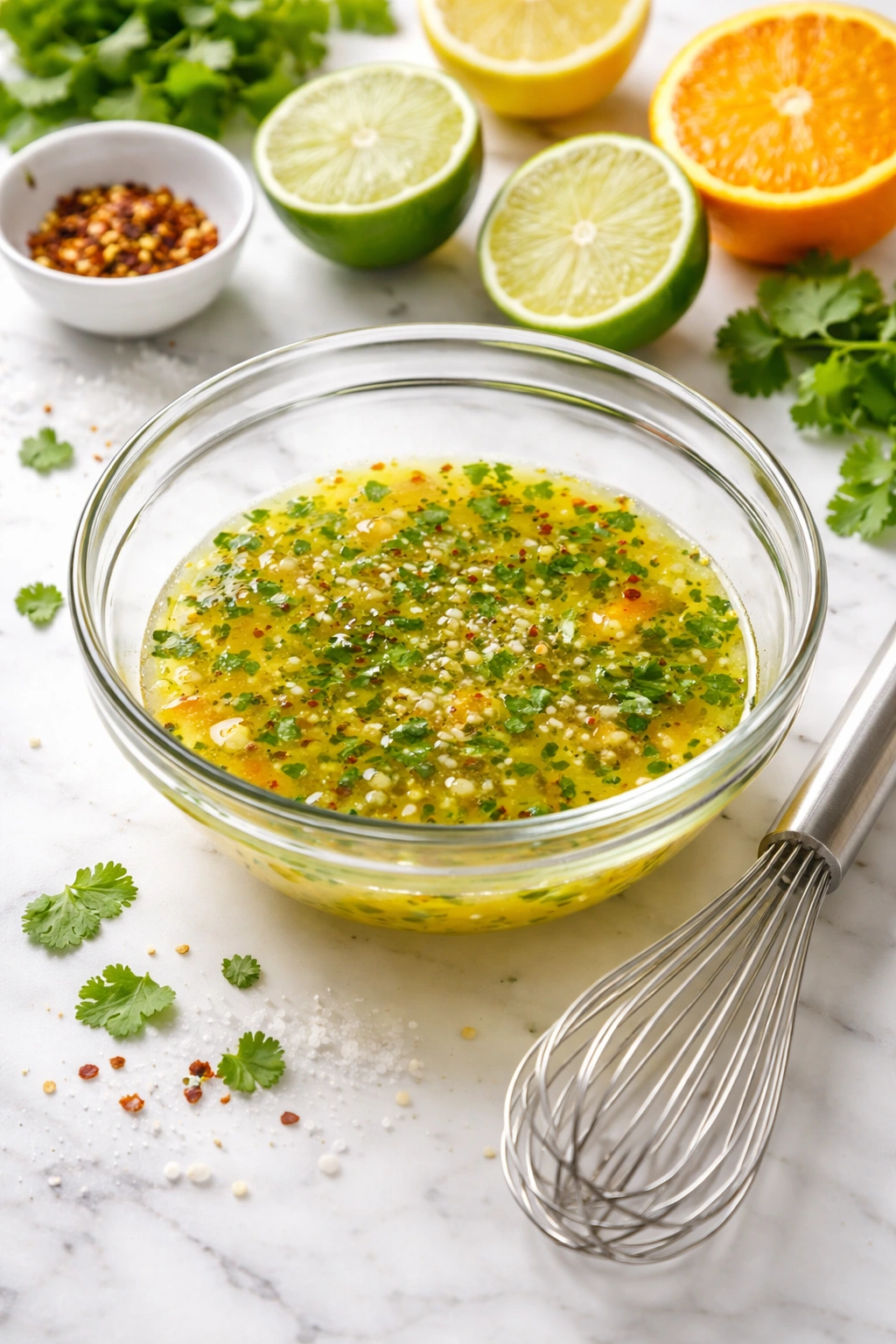
Step 3: Combine citrus juices
In a small bowl or measuring cup, whisk together the freshly squeezed lime juice, lemon juice, and orange juice. Taste the mixture — it should taste bright and acidic but not aggressively sour. If it tastes too sharp, add a bit more orange juice. If it tastes too sweet, add a touch more lime juice. The goal is a balanced citrus profile. Pour this mixture over your prepared shrimp in the non-reactive bowl.
Step 4: Begin curing (for raw shrimp) or marinating (for cooked shrimp)
For raw shrimp: Stir gently to coat all pieces in citrus juice. Cover the bowl with plastic wrap and place it in the refrigerator. Check the shrimp after 30 minutes — it should be starting to turn opaque. Continue marinating for 1 to 2 hours total, until the shrimp is completely opaque and firm throughout. The exact time depends on the size of your shrimp pieces; larger pieces take longer. Do not exceed 2 hours or the acid will begin to over-cook and toughen the meat.
For cooked shrimp: Stir gently to coat all pieces in citrus juice. Cover with plastic wrap and refrigerate for just 15 to 30 minutes. Cooked shrimp is already tender, so you’re simply marinating it in the bright flavors rather than curing it.
Building the Complete Dish
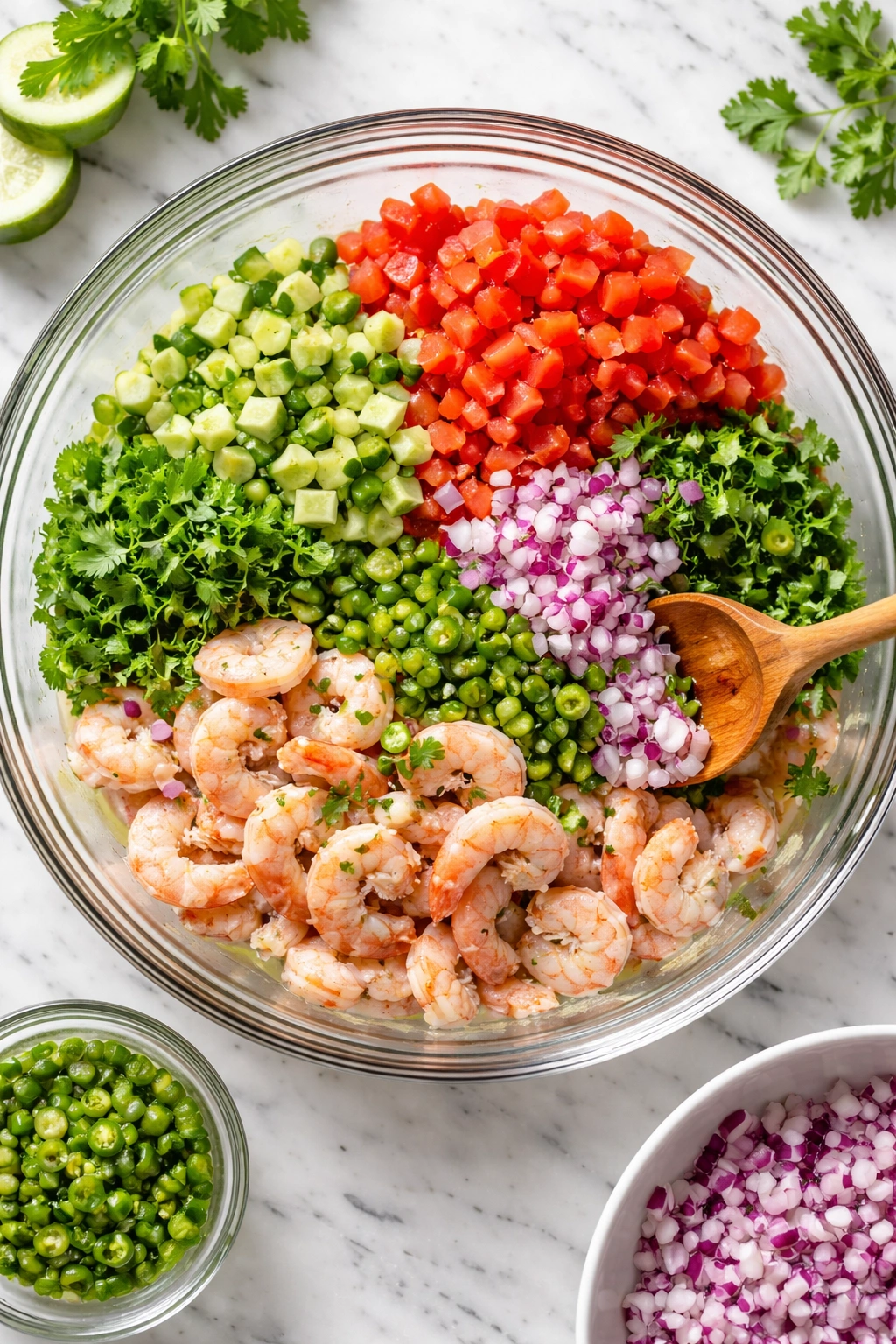
Step 5: Prepare vegetables while shrimp marinates
While your shrimp is curing or marinating, prepare all remaining vegetables. Remove seeds from the tomatoes by cutting them in half and gently squeezing out the seed cavity, then dice finely. Peel the cucumber, remove any seeds by running a small spoon down the center and scraping them out, then dice into small, uniform pieces. Mince the red onion very finely — it should almost melt on your tongue. Remove seeds and white membranes from the jalapeños (or keep them if you want more heat) and mince finely. Roughly chop the fresh cilantro.
Step 6: Add vegetables to the cured shrimp
Once your shrimp has finished marinating (opaque and firm for raw, or absorbed the citrus flavors for cooked), add the diced tomato, cucumber, minced red onion, minced jalapeño, and chopped cilantro directly to the bowl with the shrimp and citrus liquid. Do not drain the citrus juice — this becomes part of your finished ceviche. Add the salt and freshly ground black pepper. Gently toss everything together, making sure every piece gets coated in the bright liquid.
Step 7: Chill before serving
Cover the bowl with plastic wrap and return it to the refrigerator for at least 1 hour (if using raw shrimp, this allows the flavors to fully develop; if using cooked shrimp, this gives the vegetables time to marinate and flavors to meld). You can prepare it up to 4 hours in advance at this point. The flavors actually deepen and improve slightly with a few hours of chilling.
Final Assembly and Service
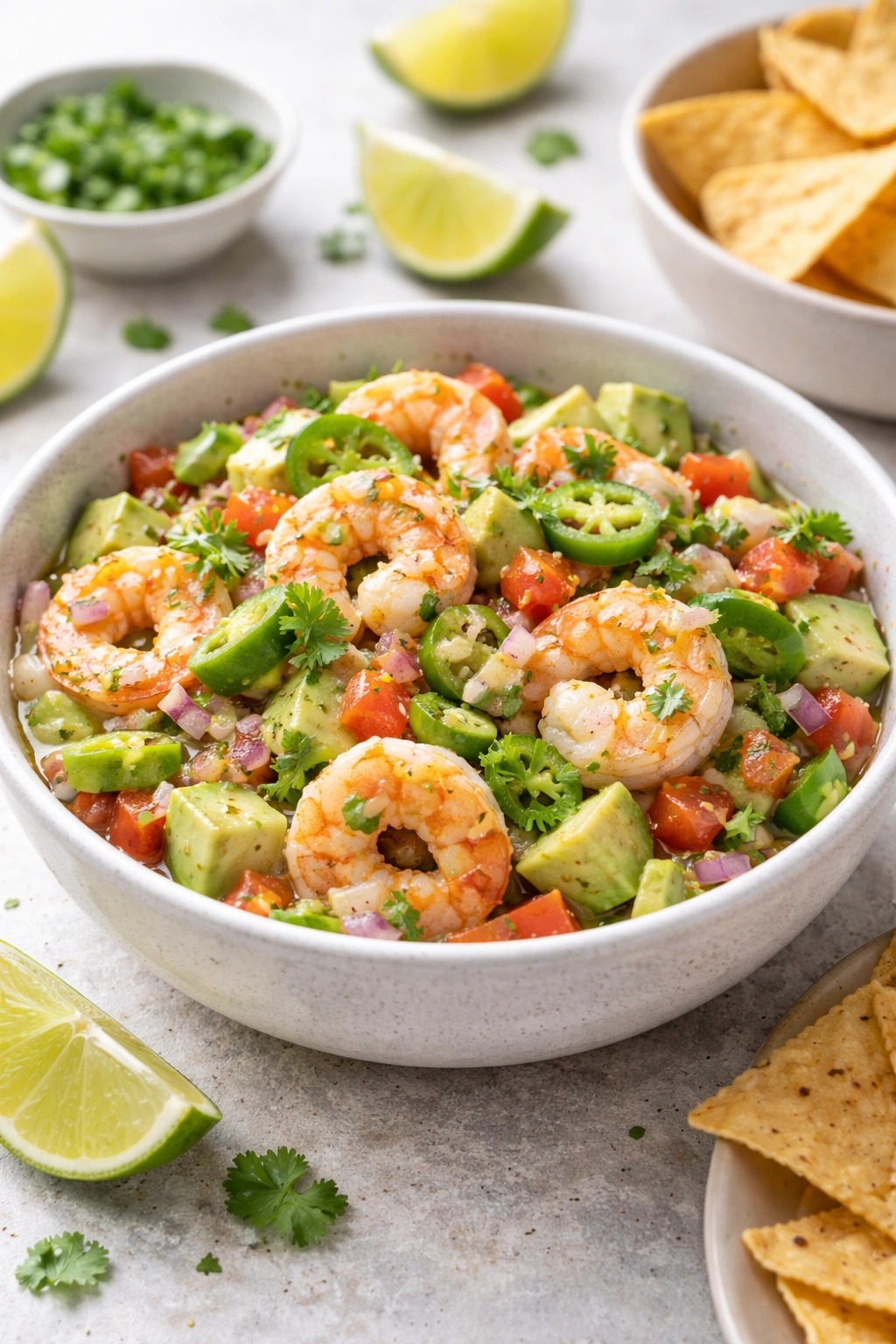
Step 8: Taste and season
Just before serving, remove the ceviche from the refrigerator. Taste a small spoonful with a tortilla chip — this is important because the chip will tell you whether you need more salt (remembering that chips themselves are salty). Add additional salt if needed, just a pinch at a time, until the flavors taste truly seasoned and bright.
Step 9: Add avocado and serve immediately
Peel, pit, and dice the avocado. Gently fold the diced avocado into the ceviche just moments before serving. Serve immediately in chilled bowls or glasses, accompanied by tortilla chips, lime wedges, and fresh cilantro sprigs for garnish. Add a light sprinkle of finishing salt if desired.
Tips for Ceviche Perfection
Quality shrimp matters immensely. If you’re using raw shrimp, buy from a trusted seafood counter where there’s good turnover. The shrimp should smell like the ocean, not like ammonia. It should be firm and slightly translucent. If buying cooked shrimp, taste a piece before committing to the full pound — you want shrimp that tastes good on its own, not mushy or overly salty.
Fresh citrus juice is genuinely non-negotiable. Roll your limes and lemons on the counter before cutting to rupture the cell walls and release more juice. A manual citrus press or hand-held reamer works far better than an electric juicer for these smaller fruits. If you end up with slightly less juice than called for, that’s fine — better to have less than to use bottled juice that will compromise the entire dish.
The shrimp is cooked through when it turns opaque. For raw shrimp, you’re looking for the translucent gray or white turning fully opaque white or pink. If there’s any translucent spot remaining in the center of a piece, it’s not done yet. For even curing, press the shrimp down into the liquid with a spatula so all pieces are submerged and exposed to the acid evenly.
Remove seeds from tomatoes and cucumbers. This takes literally 30 seconds but makes an enormous difference in texture and flavor. The watery, seedy centers dilute your ceviche and make it soupy. Removing them gives you a tighter, brighter final dish.
Orange juice rounds out harsh edges. Pure lime and lemon can be mouth-puckeringly sharp. Adding a splash of fresh orange juice creates a more balanced, sophisticated citrus profile that’s less aggressively sour. It’s optional but genuinely recommended if you like your ceviche bright but not harsh.
Always add avocado at the very last moment. It browns quickly when exposed to acid and air, and it breaks down easily. By adding it just before serving, you preserve its vibrant green color, its creamy texture, and its subtle flavor. Choose avocados that are ripe but still slightly firm — they hold their shape better than fully soft ones.
Taste and season at the very end. All your other flavors have melded by the time you’re ready to serve, and only then can you accurately assess whether you need more salt. Remember that your serving chips are salty, so don’t over-salt your ceviche, but do make sure it’s properly seasoned so the flavors pop.
Storage and Make-Ahead Guidelines
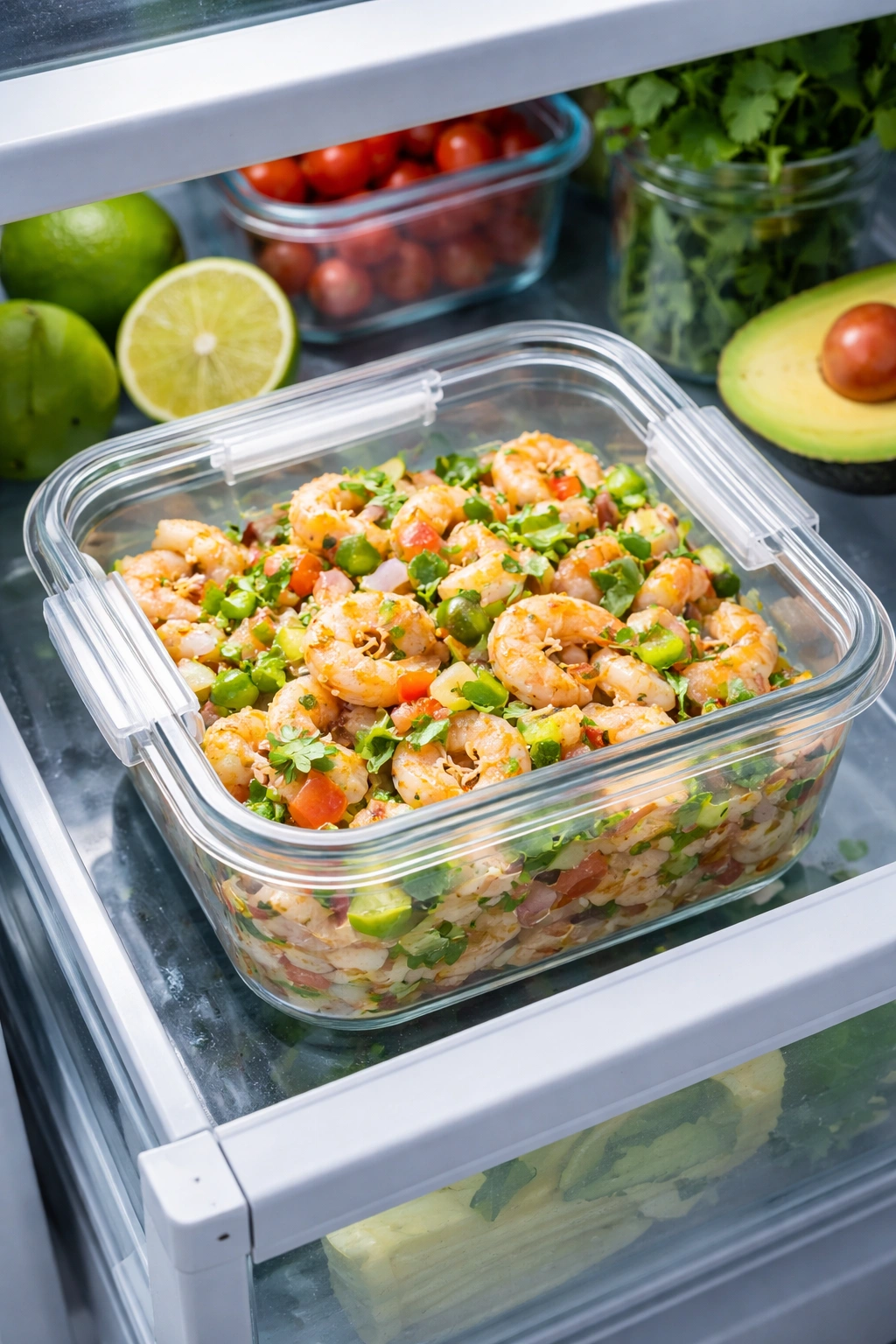
Ceviche is actually better when made a few hours in advance. The flavors have time to develop and deepen. You can prepare everything except the avocado up to 4 hours ahead of serving. Store it in an airtight container in the refrigerator.
Avoid preparing ceviche the night before. While it keeps for 24 to 48 hours refrigerated, the longer shrimp sits in citric acid, the more it continues to “cook,” and eventually it becomes quite firm and slightly rubbery. Make it on the morning of your gathering for the best texture and brightness.
Store in glass or ceramic, never aluminum or copper. The acidic citrus juice reacts with reactive metals and can create off-flavors or discoloration. Non-reactive containers preserve the bright flavors.
Add avocado only moments before serving. If you’re preparing ceviche several hours in advance and don’t plan to serve immediately, omit the avocado entirely. Store it in the refrigerator, cut side down with the pit still in, covered with plastic wrap. Dice and fold it in just before bringing everything to the table.
Leftover ceviche keeps for 1 to 2 days if stored in an airtight, non-reactive container in the refrigerator. The texture gradually softens and the flavors mellow slightly, but it’s still delicious. Serve it cold straight from the fridge. Don’t freeze ceviche — the shrimp and vegetables become mushy when thawed.
Serving Suggestions and Pairing Ideas
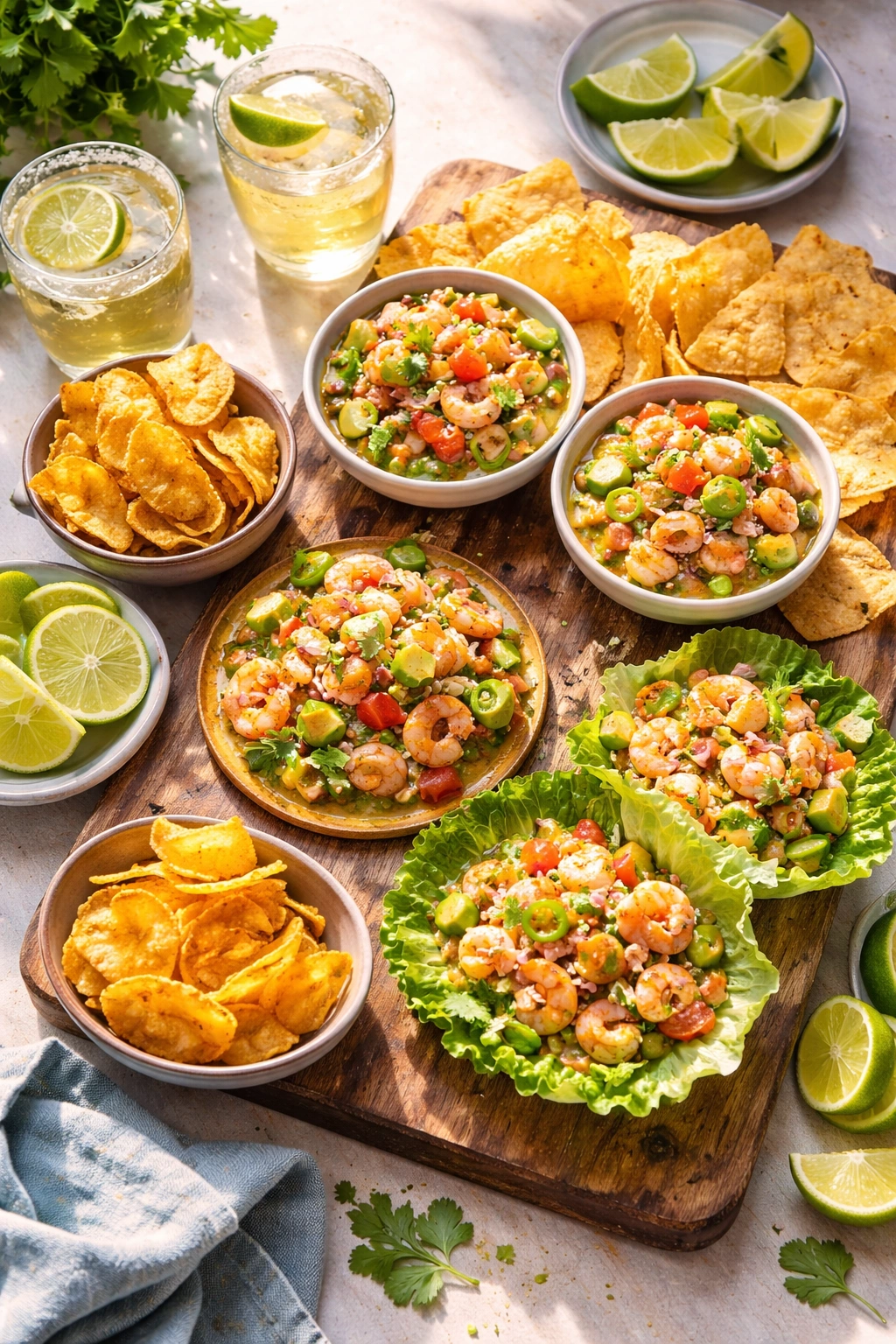
As a classic appetizer: Serve in small bowls or glasses with tortilla chips on the side and lime wedges for squeezing. This is the traditional presentation and works beautifully for any gathering.
On tostada shells: Create ceviche tostadas by piling a spoonful of ceviche onto sturdy tostada shells. Top with a small dollop of sour cream or crema if desired. This is more substantial and works well as a pre-dinner appetizer or a light meal.
On lettuce cups: Serve on crisp romaine or butter lettuce leaves for a low-carb, elegant presentation. This works particularly well at a luncheon or lighter gathering.
With plantain chips: Plantain chips are sturdier than corn tortilla chips and bring their own subtle sweetness that pairs beautifully with bright ceviche.
With complementary drinks: Pair ceviche with crisp, cold beverages like white wine (Sauvignon Blanc or Albariño work beautifully), light Mexican beer, sparkling water with lime, or a refreshing margarita. Avoid heavy red wines or anything too acidic, as you want the ceviche’s brightness to shine.
Alongside other appetizers: Serve as part of a larger appetizer spread with guacamole, tortilla chips, elote, grilled shrimp, or other seafood preparations. Ceviche’s light, fresh nature balances heavier appetizers.
For a seafood dinner: Serve a larger portion as a light first course before a heavier main course. This cleanses the palate and opens the appetite beautifully.
Final Thoughts
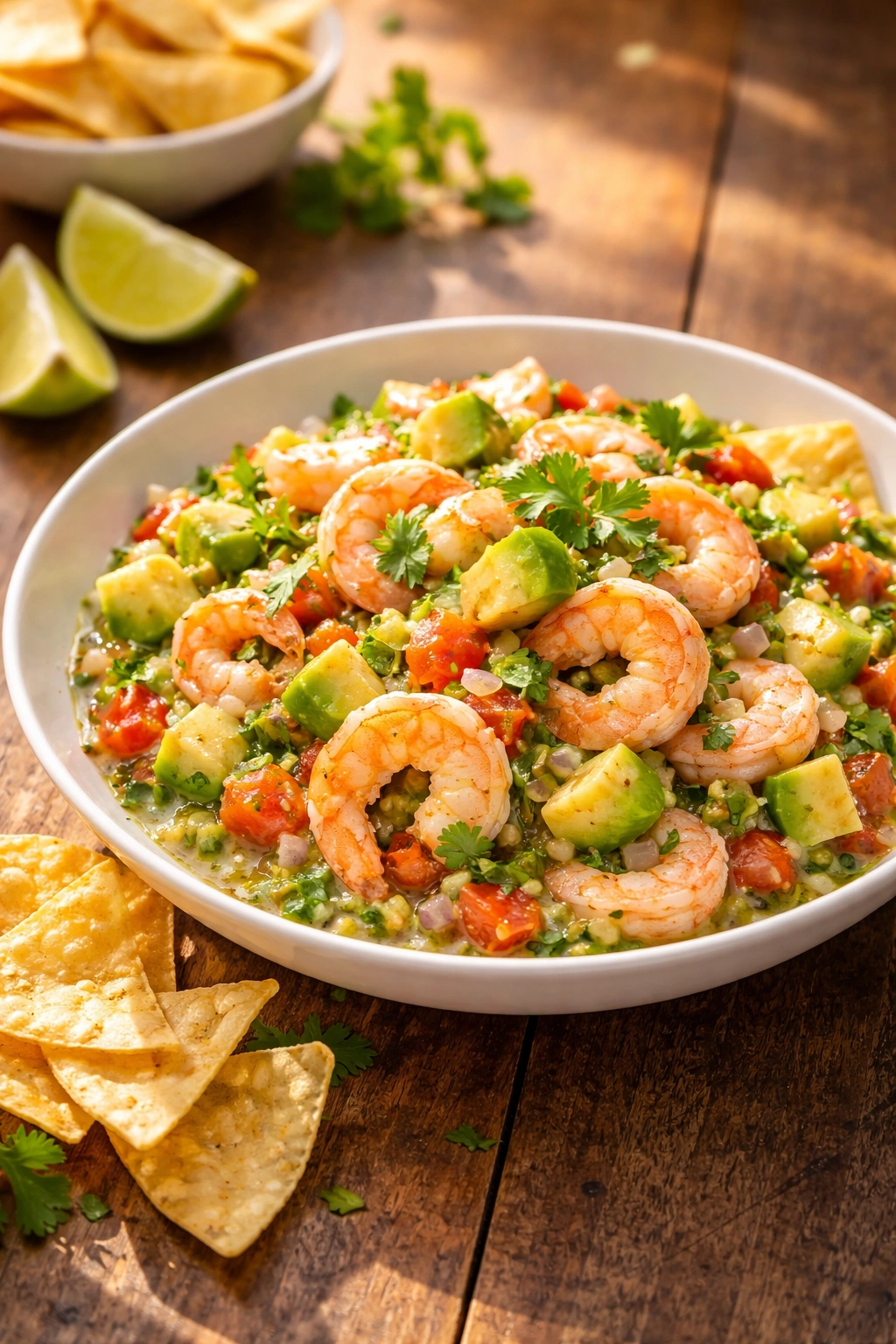
Shrimp ceviche represents everything wonderful about warm-weather cooking — it’s fresh, bright, healthy, impressive, and requires no time hovering over a hot stove. Once you understand the basic technique of letting fresh citrus juice denature the proteins in your shrimp, and you’ve learned to treat your ingredients with respect by choosing quality items and handling them properly, you can make restaurant-quality ceviche in your own kitchen faster than you could drive to a restaurant.
The real magic of this dish isn’t in difficult technique or obscure ingredients. It’s in understanding how a few simple, pristine ingredients transform into something genuinely greater than the sum of their parts. The bright citrus, the tender shrimp, the crisp vegetables, the creamy avocado, the fresh herbs — they exist in perfect balance when you treat them right.
Make this ceviche for the people you love. Serve it on warm evenings when everyone is hungry for something refreshing and satisfying. Adjust the spice level, try different fruit variations, make it your own. Most importantly, start with the best ingredients you can find and give yourself the gift of not cooking. Your guests will be impressed, you’ll be relaxed, and everyone at the table will be transported to that coastal feeling of summer that makes life genuinely good.
