
There’s something magical that happens when you walk into a kitchen filled with the aroma of meatballs simmering in tomato sauce. It’s the smell of generations, of Sunday dinners gathered around a table, of a Nonna who’s perfected this dish over decades. If you’ve ever tasted truly authentic Italian meatballs—the kind that melt on your tongue and taste like pure comfort—you know they’re nothing like the dense, tough versions that often get lumped under the umbrella of “Italian-American cuisine.” The real thing is tender, juicy, and deeply flavorful, a testament to technique rather than fancy ingredients.
The truth is, making meatballs exactly like Nonna made them isn’t complicated, but it does require understanding a few essential principles that separate restaurant-quality results from disappointment. The magic lies in the careful balance of meat, breadcrumbs, eggs, and cheese—each element playing a specific role in creating that signature texture. Many home cooks go wrong right from the start by using the wrong meat-to-binder ratio, overmixing the ingredients, or rushing the cooking process. When you follow the time-tested methods that Italian families have relied on for generations, the results are extraordinary.
This is the recipe that families have guarded like a culinary treasure, the version that’s been refined over years of home cooking and passed down through countless kitchen tables. Whether you’re making these for a special Sunday dinner, a holiday celebration, or simply because you’re craving the most authentic, delicious meatballs you’ve ever tasted, this guide will walk you through every step with the kind of detail that only comes from genuine expertise.
What Makes These Meatballs Authentically Italian
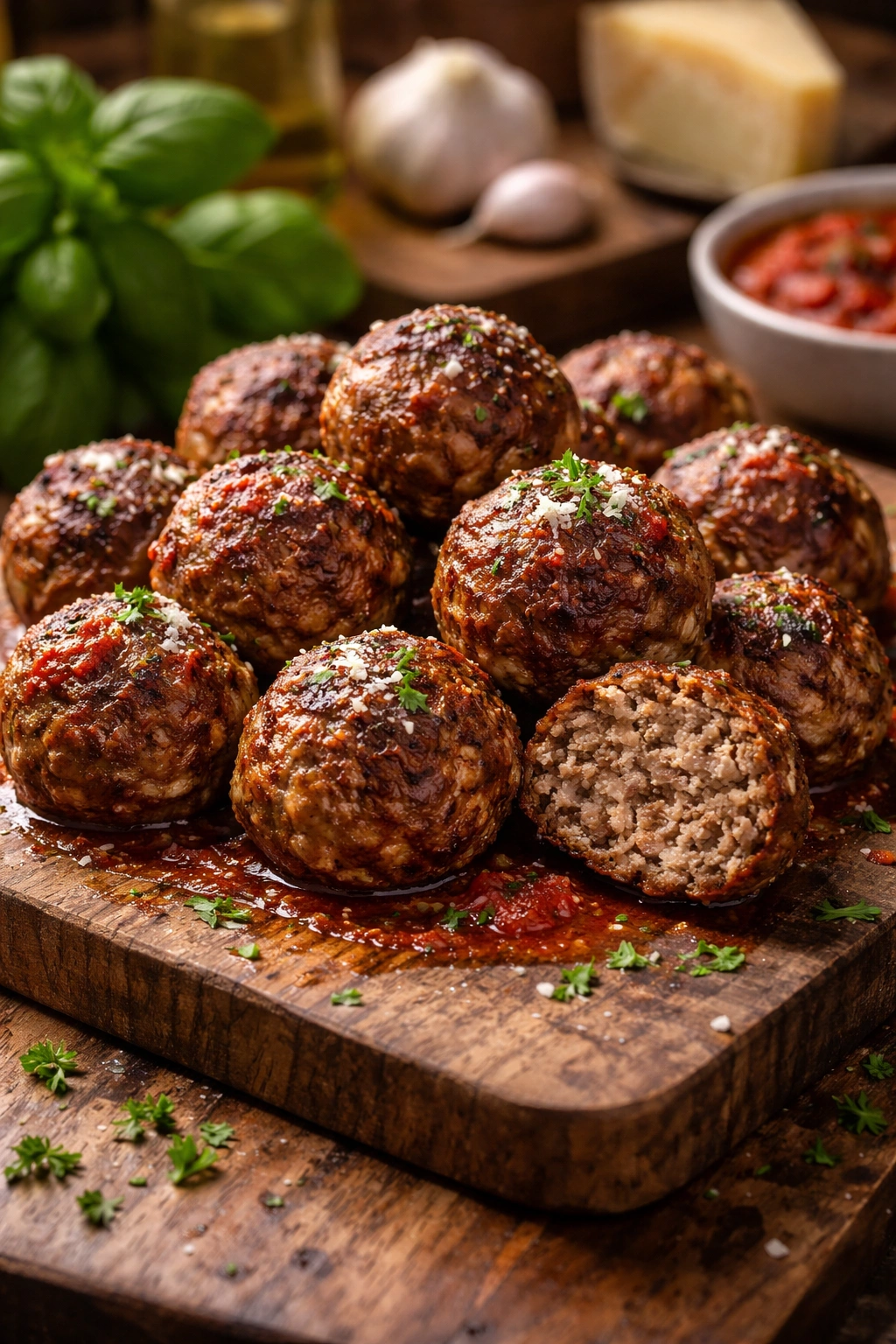
The first thing to understand is that authentic Italian meatballs—or polpette, as they’re called in Italy—are fundamentally different from the American interpretation. In Italy, meatballs are traditionally served as a secondo piatto, or second course, often with crusty bread for soaking up the rich tomato sauce, not piled on top of spaghetti. This distinction matters because it reflects different cooking methods, ingredient choices, and serving philosophies that have evolved over generations.
The defining characteristic of genuine Italian meatballs is their incredible tenderness. This isn’t accidental—it comes from a deliberate combination of specific ingredients used in precise proportions. The meat itself is often a blend of beef, pork, and sometimes veal, with each protein bringing its own qualities to the final product. Beef provides structure and chew, pork adds fat and richness, and veal contributes delicate flavor and additional tenderness.
What sets these meatballs apart from their American cousins is the use of a panade—a mixture of breadcrumbs soaked in milk or water that acts like a moisture sponge. This technique dates back centuries in European cooking and represents genuine culinary science. The breadcrumbs absorb liquid, creating a starchy paste that, when cooked, actually traps the meat’s natural juices inside each meatball rather than allowing them to squeeze out during cooking.
The seasonings in authentic Italian meatballs are intentionally restrained. You won’t find excessive garlic, heavy spice blends, or complicated flavor combinations. Instead, the focus stays on the quality of the meat, the brightness of fresh parsley, the sharpness of aged cheese, and the gentle sweetness of sautéed onions. This simplicity is what allows the true flavors to shine through rather than masking inferior ingredients.
The Secret to Tender, Juicy Meatballs Every Time
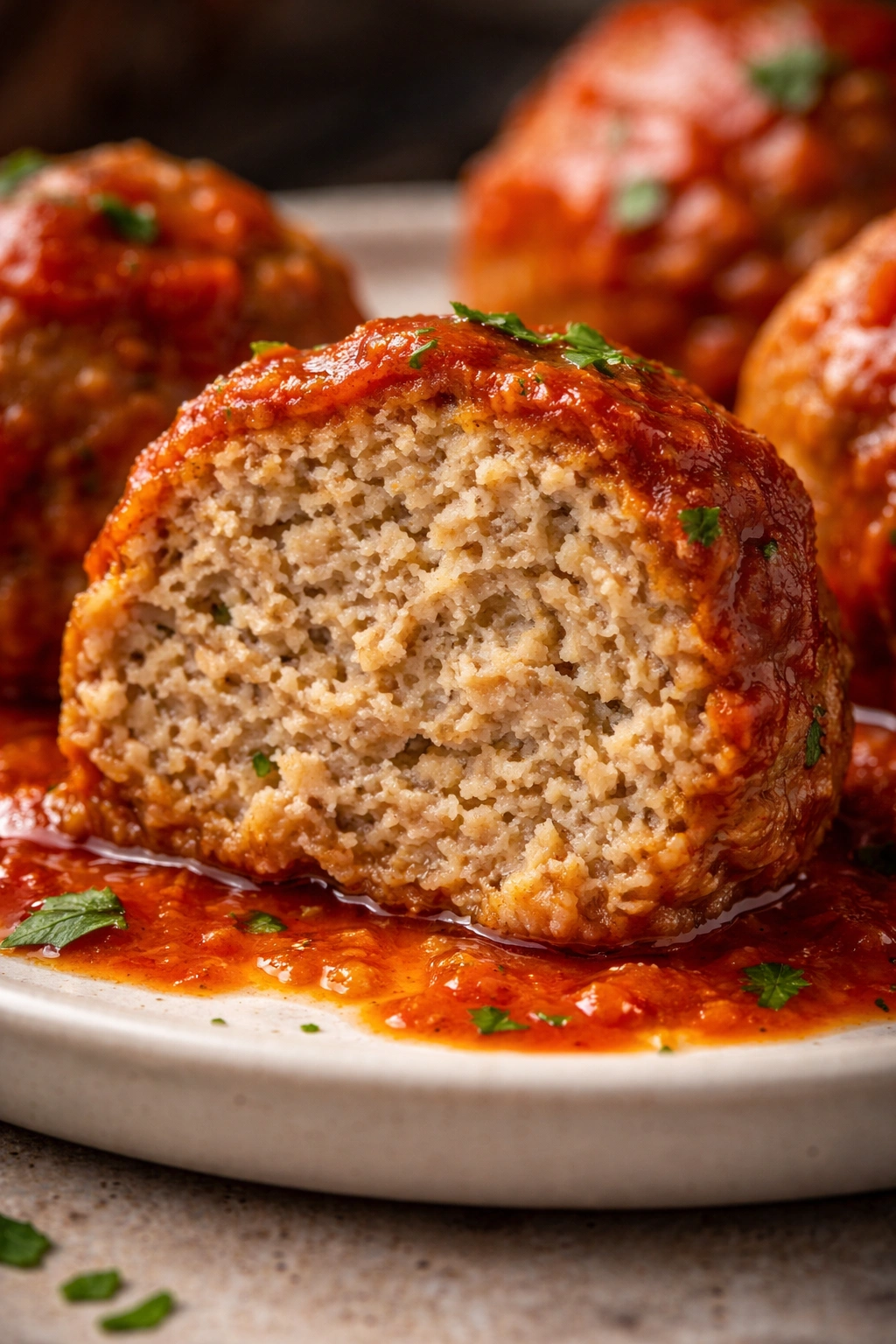
Creating meatballs with that coveted fork-tender texture comes down to understanding what happens at the molecular level when meat cooks. Ground meat is made up of muscle fibers that naturally tighten and contract when exposed to heat, squeezing out moisture and creating a dry, tough texture. The panade—your breadcrumb mixture—combats this by absorbing liquid and swelling during cooking, physically preventing the meat proteins from contracting too severely.
Never overmix your meatball mixture. This is perhaps the single most common mistake home cooks make, and it ruins the texture every time. When you overwork the meat, you’re breaking down the muscle fibers and creating a dense, sausage-like consistency. Your goal is to mix just until the ingredients are evenly distributed—usually 2 to 5 minutes of gentle hand mixing is sufficient. You should see streaks of ingredient still visible in the mixture; it shouldn’t look completely uniform.
The meat temperature matters more than most recipes acknowledge. Bring all your ingredients to room temperature before mixing. Cold ingredients are harder to combine evenly, which naturally leads to overmixing. When everything’s at room temperature, the ingredients incorporate more easily, and you spend less time working the mixture. This small detail makes a measurable difference in your final texture.
The cooking method you choose affects the final result. Some traditional recipes brown the meatballs in a pan first, while others cook them directly in the sauce or partially bake them before finishing in sauce. Each method has merit, and each produces slightly different results. Browning first creates a flavorful crust through the Maillard reaction, but it also removes the meatballs from the sauce, where they absorb additional moisture. Cooking directly in sauce keeps them incredibly moist but requires a very gentle simmer to prevent them from breaking apart.
Understanding the Meat Mixture and Panade
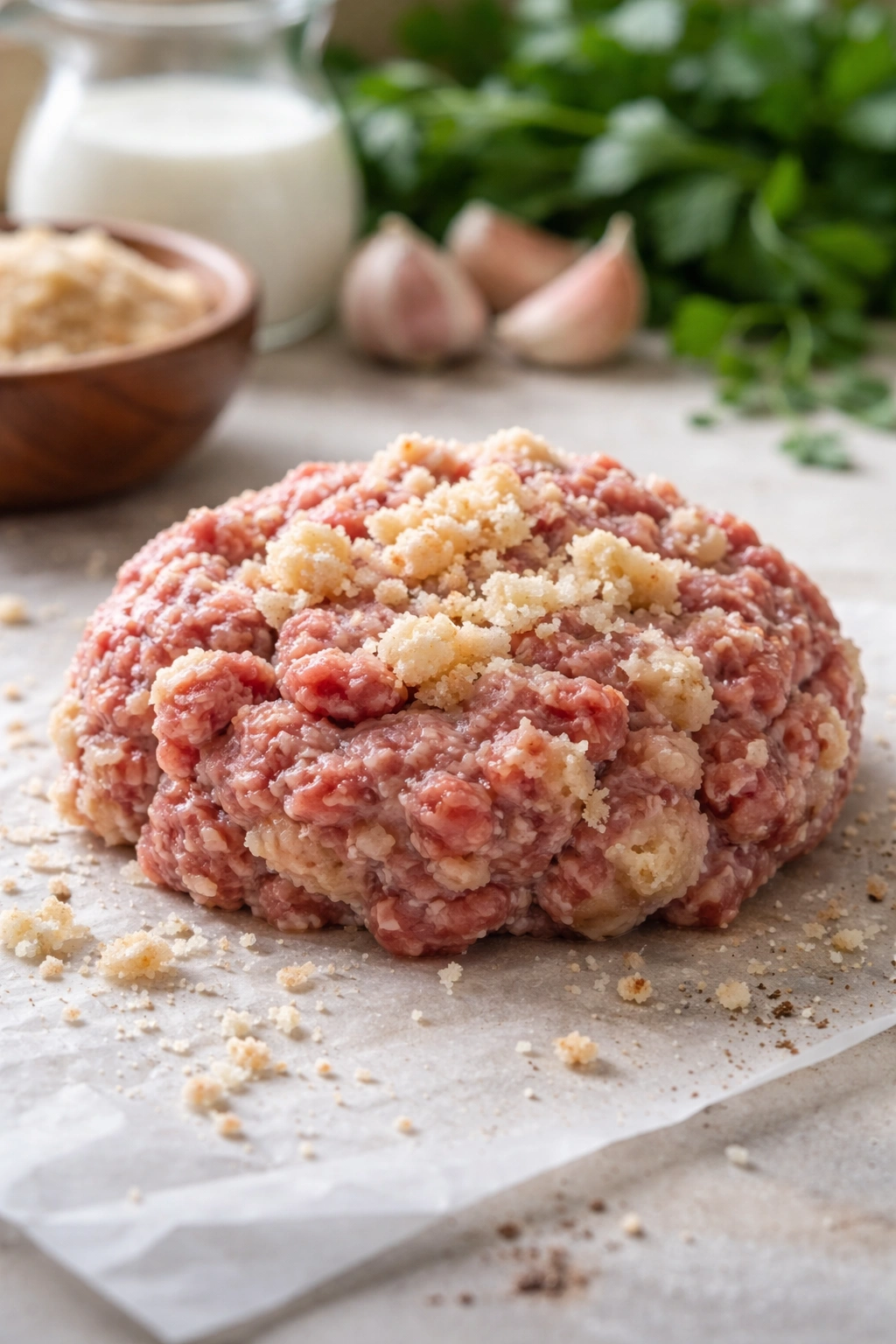
The foundation of exceptional meatballs begins with choosing the right meat. Ground beef ranging from 80% to 85% lean is ideal—lean enough to taste clean and not greasy, but fatty enough to stay moist during cooking. If you’re using a beef-and-pork mixture, aim for equal parts of each, roughly 1 pound total if making a standard batch. Some Nonnas use equal parts beef, pork, and veal for maximum tenderness, and this approach is absolutely worth trying if you can find veal at your market.
The breadcrumb component is equally important. Many recipes call for plain breadcrumbs, while others recommend Italian-style versions. The difference is minimal if you’re making your own flavor adjustments, but plain breadcrumbs give you better control over the seasoning profile. You can use homemade breadcrumbs made from stale bread—simply toast cubed bread in the oven until completely dry, then pulse in a food processor until fine. This produces superior texture compared to store-bought, though good-quality store-bought breadcrumbs work perfectly well.
The liquid component of the panade matters significantly. Traditional recipes use milk, which adds a subtle richness, while others prefer water or beef broth. Milk contains proteins and fats that contribute to browning and flavor, while water is neutral and allows other flavors to shine through. The amount of liquid should be just enough to make the breadcrumbs absorb and become paste-like, creating a mixture that’s moist but not soggy. A good rule is one cup of breadcrumbs to roughly half a cup of liquid, though this varies slightly depending on breadcrumb density.
Eggs serve a dual purpose: they bind the ingredients together and add moisture. One to two large eggs per pound of meat is the standard range. The egg proteins set during cooking, holding the mixture together as the other ingredients expand and contract. Some cooks whisk the egg separately before adding it, which ensures even distribution, though gently mixing it in directly works fine.
The Importance of Proper Seasoning
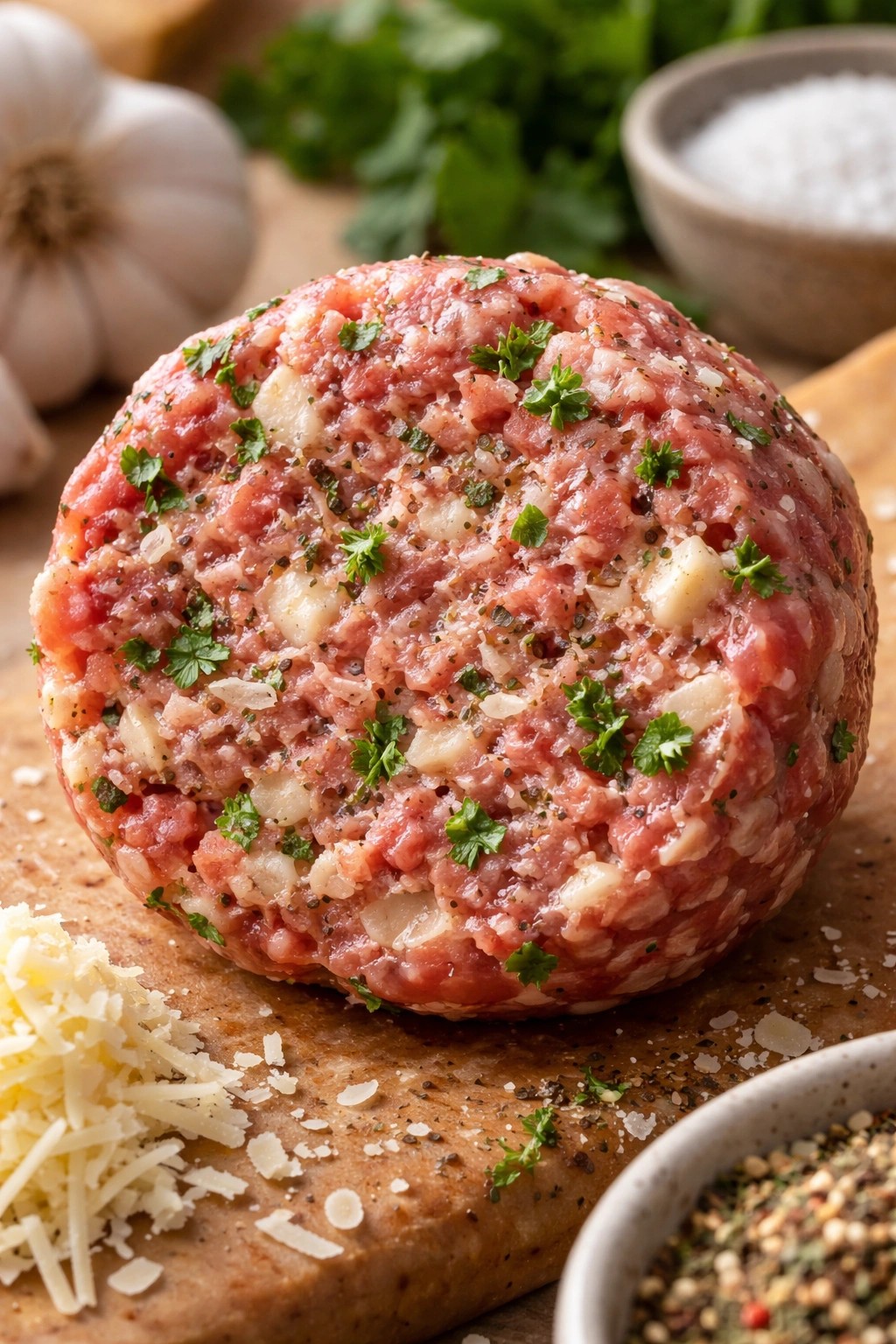
Seasoning Italian meatballs properly means resisting the urge to overdo it. The cheese does much of the heavy lifting here—a good aged Pecorino Romano or Parmigiano Reggiano contributes saltiness and umami that seasons the entire mixture. Freshly grated cheese is non-negotiable; pre-grated cheese contains anti-caking agents that affect how it mixes and melts.
Fresh parsley provides brightness and color, counteracting the heaviness of the meat. Finely mince the parsley so it distributes evenly throughout the mixture rather than creating visible flecks that come loose during cooking. Fresh garlic, minced or pressed, adds aromatic complexity, while salt and black pepper should be tasted as you mix to ensure proper seasoning.
Some recipes add a pinch of dried Italian seasoning—a combination of dried basil, oregano, and thyme—which is perfectly acceptable and adds another layer of flavor. However, if you’re already using fresh parsley and good cheese, dried herbs are optional. The best approach is tasting as you go. Take a tiny piece of the raw mixture, cook it briefly in a pan, and taste it to adjust seasonings before forming all your meatballs.
Yield: Makes 15 to 20 meatballs | Serves 4 to 6
Prep Time: 30 minutes
Cook Time: 2 hours (including sauce simmering and meatball cooking)
Total Time: 2 hours 30 minutes
Difficulty: Intermediate — The technique isn’t complex, but success requires understanding a few key principles about meat science and avoiding common mistakes like overmixing or rushing the cooking process.
For the Meatballs:
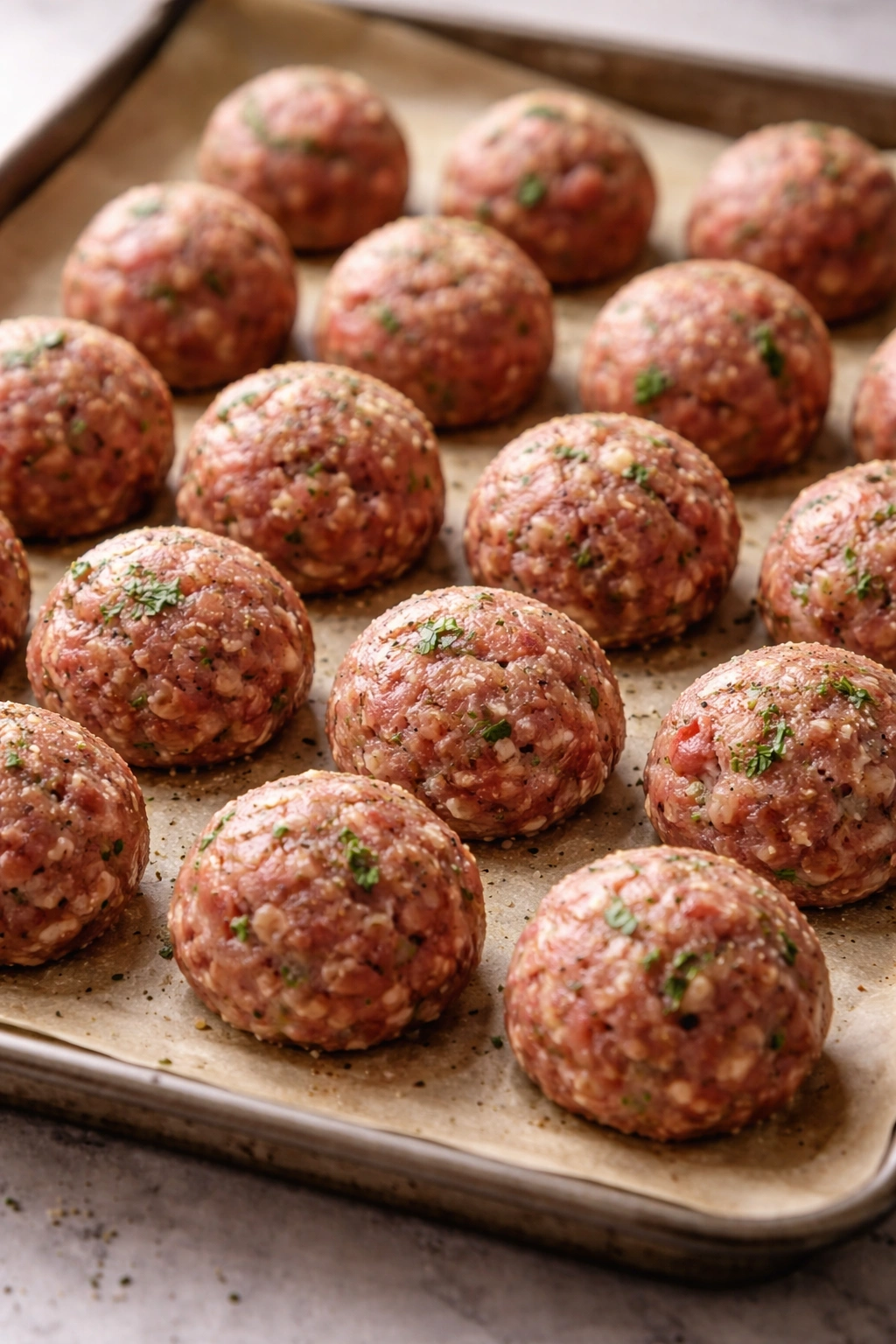
- 2 pounds ground beef (80% to 85% lean)
- 1 pound ground pork (or substitute with additional beef, or use meatloaf mix which combines beef, pork, and veal in equal parts)
- 1 cup plain Italian-style breadcrumbs (or homemade breadcrumbs made from stale bread)
- ½ cup whole milk (or water or beef broth as a substitute)
- 2 large eggs, room temperature
- ½ cup freshly grated Pecorino Romano or Parmigiano Reggiano cheese
- ¼ cup fresh Italian parsley, finely minced
- 3 cloves garlic, minced or pressed (optional but highly recommended)
- 2 teaspoons kosher salt
- ½ teaspoon freshly ground black pepper
- ¼ teaspoon crushed red pepper flakes (optional, for subtle heat)
- Extra virgin olive oil, for browning (2 to 3 tablespoons if pan-browning)
For the Tomato Sauce:
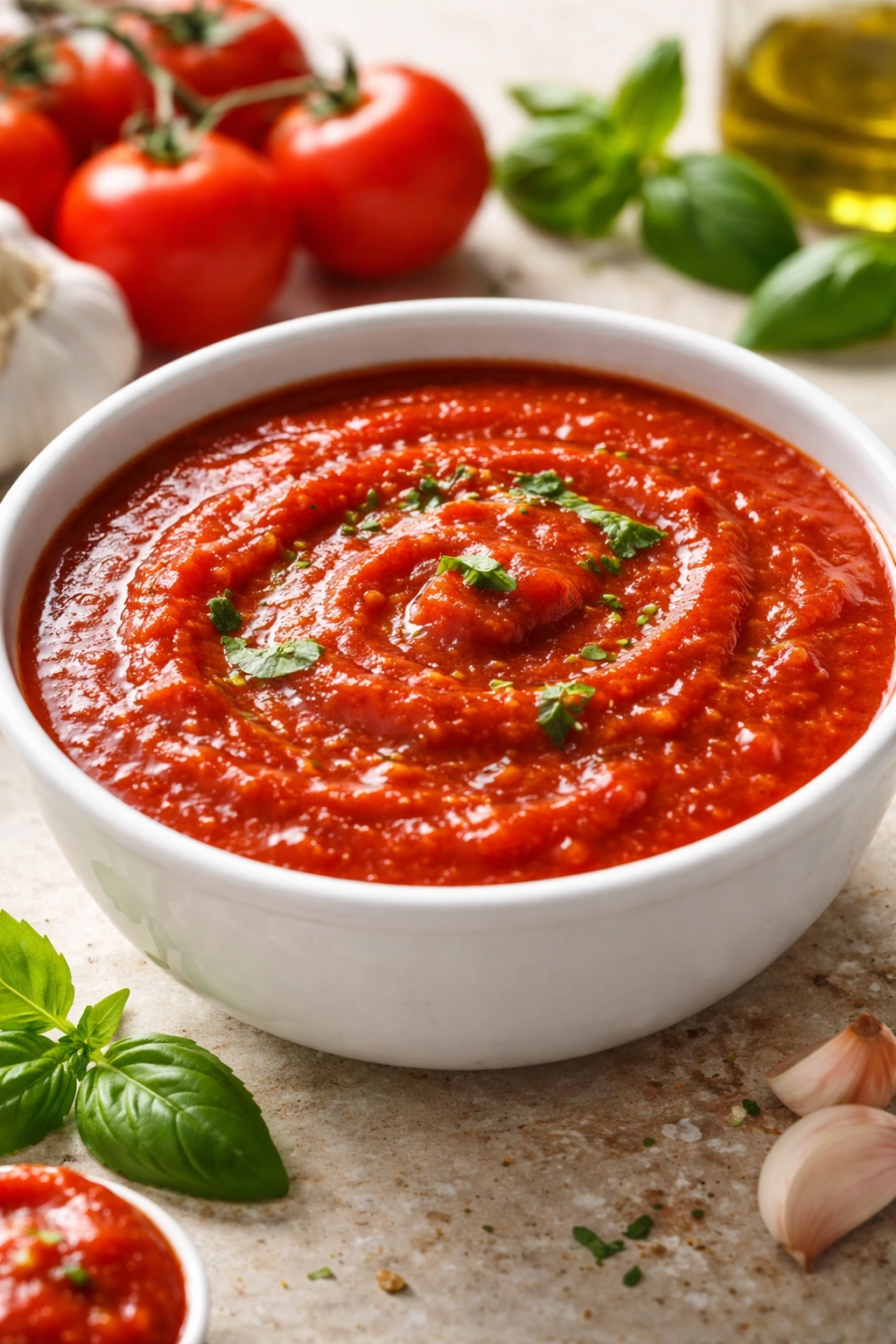
- 3 tablespoons extra virgin olive oil
- ½ large yellow onion, finely diced
- 2 cloves garlic, minced
- 3 tablespoons tomato paste
- 1 can (28 ounces) crushed San Marzano or high-quality canned tomatoes
- 2 cups beef or vegetable broth (or water)
- 2 teaspoons kosher salt
- ½ teaspoon freshly ground black pepper
- 1 pinch granulated sugar (to balance acidity if needed)
- 5 to 6 fresh basil leaves (or 1 teaspoon dried basil)
- Optional: 1 pound country-style pork ribs or Italian sausage links for additional flavor depth
Building Your Tomato Sauce First
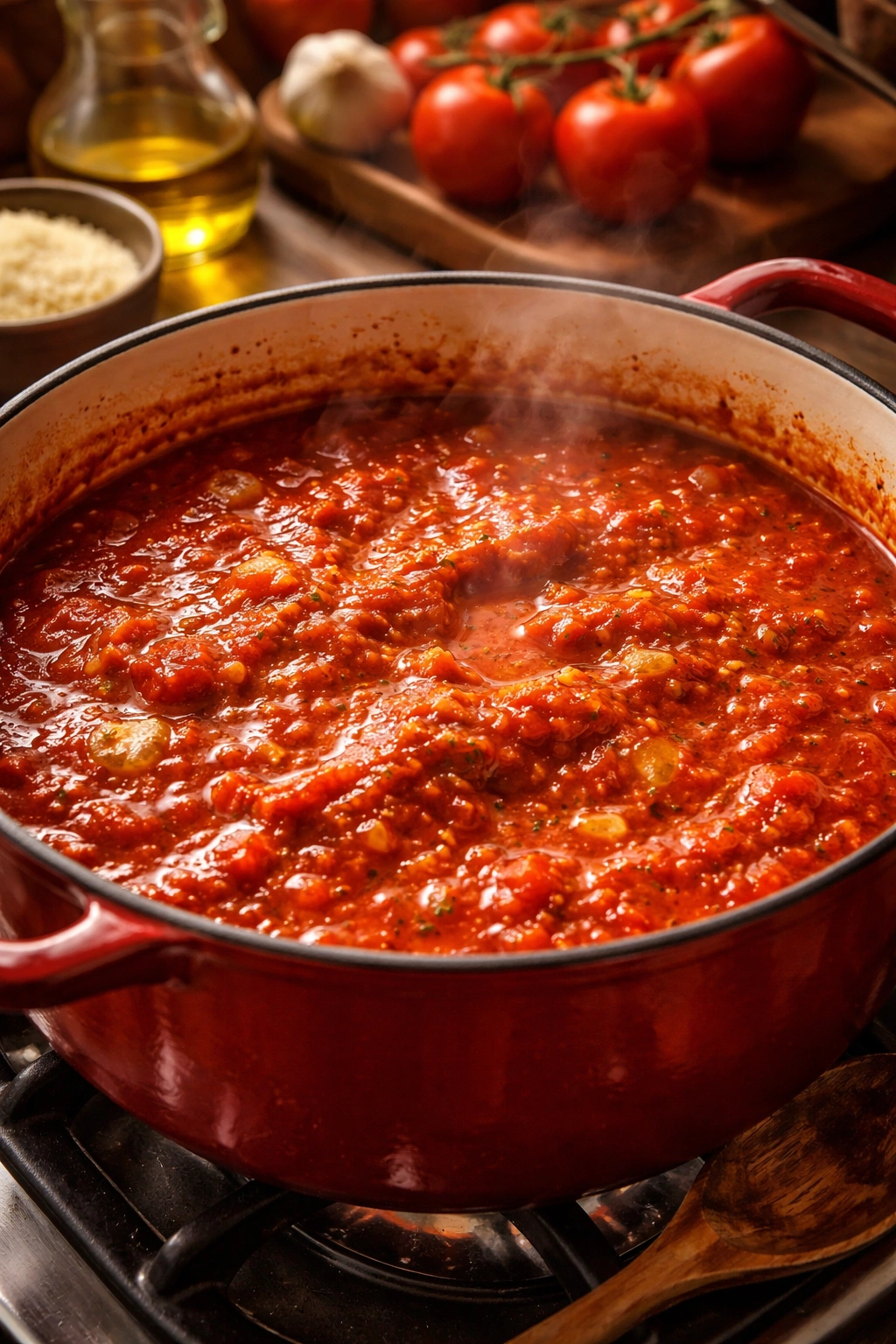
Prepare the Sauce Base:
-
Heat the extra virgin olive oil in a large, heavy-bottomed pot or Dutch oven over medium-low heat until shimmering.
-
Add the diced onion and cook, stirring occasionally, until the onion is completely softened and translucent, about 4 to 5 minutes. You want gentle cooking here, not browning—this develops sweetness rather than caramelization.
-
Stir in the minced garlic and cook for 30 seconds to 1 minute, just until fragrant. Be careful not to let garlic brown, as burned garlic tastes bitter.
-
Add the tomato paste and cook, stirring constantly, for 1 to 2 minutes. This step is crucial—cooking the tomato paste concentrates its flavor and removes any raw, tinny taste. You’ll see the tomato paste deepen in color and stick slightly to the bottom of the pot, which means the transformation is happening.
-
Pour in the crushed tomatoes along with 2 cups of broth, stirring well to combine and dissolving any tomato paste that’s stuck to the bottom of the pot. Use a wooden spoon to scrape up these flavorful browned bits.
-
Add the salt, pepper, and a tiny pinch of sugar if your tomatoes taste overly acidic. Bring the sauce to a gentle simmer, then reduce heat to low.
Advertisements -
If using pork ribs or Italian sausage, add them now and let them brown slightly in the sauce, turning occasionally, for about 5 minutes. These meats will simmer in the sauce and infuse it with incredible depth and richness.
-
Cover the pot with the lid slightly ajar (allowing steam to escape) and let the sauce simmer gently for at least 30 minutes while you prepare the meatballs. The sauce can simmer for up to 2 hours before adding the meatballs—longer simmering develops deeper flavor and thickens the sauce naturally.
Forming the Meatballs
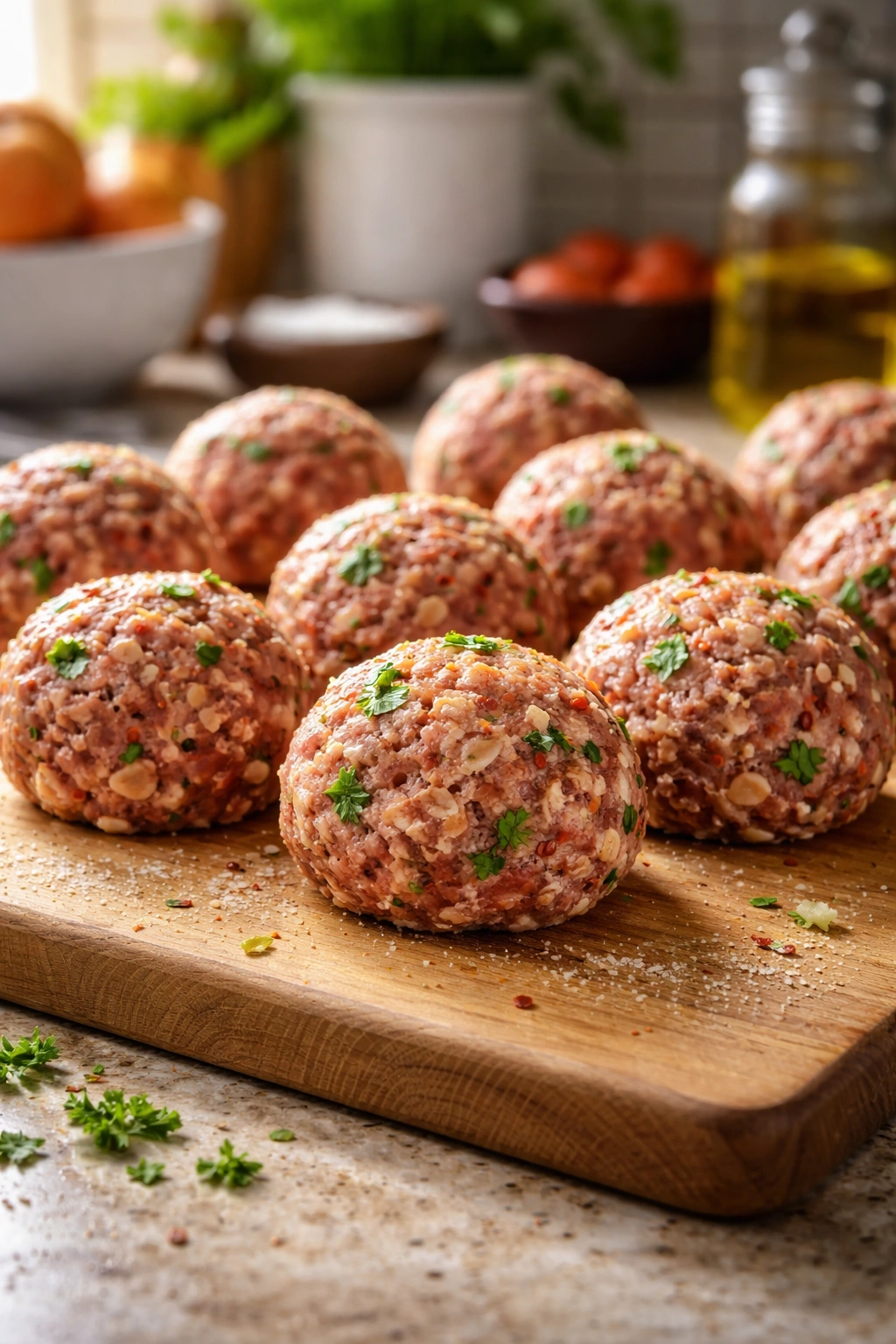
Prepare Your Work Area:
-
In a small bowl, pour the milk and add the breadcrumbs. Stir to combine and let this mixture sit for 2 to 3 minutes until the breadcrumbs have absorbed the liquid and become paste-like. This is your panade, and it’s the key to tender meatballs.
-
In a large mixing bowl, combine the ground beef and ground pork. Using your hands, gently break up the meat and begin to incorporate the pieces together. Don’t smash or aggressively mix—think of it as loosely combining two ingredients rather than kneading dough.
-
Add the soaked breadcrumb mixture to the meat along with the eggs, grated cheese, minced parsley, garlic, salt, pepper, and red pepper flakes if using. Using your hands, gently fold the ingredients together by reaching from the bottom of the bowl and folding toward the center. Turn the bowl as you go, ensuring all ingredients are evenly distributed.
-
Continue mixing gently until no visible streaks of unmixed ingredients remain, usually 2 to 5 minutes. The moment everything appears evenly combined, stop mixing. The mixture should look slightly uneven and chunky, not smooth and uniform like sausage meat. This texture indicates you’ve achieved the right balance—combined enough for structure, but loose enough for tenderness.
Shaping the Meatballs:
-
Fill a small bowl with water and place it within reach. Wet the palms of your hands with water—damp hands prevent the mixture from sticking as you work.
-
Using your hands or a small ice cream scoop (about 1½-ounce capacity), measure out a portion of the meat mixture roughly the size of a golf ball or large walnut. Don’t pack the meatball firmly—gently roll it between your palms using light pressure, allowing it to stay relatively loose.
Advertisements -
Place each formed meatball on a parchment-lined baking sheet, spacing them about 1 inch apart so they don’t touch. Re-wet your hands every few meatballs to keep them from sticking.
-
Continue until all the meat mixture is formed into meatballs. This recipe typically yields 15 to 20 meatballs depending on size—larger meatballs cook more slowly and absorb more sauce flavor, while smaller ones cook faster and are excellent for pasta.
Cooking Methods and Meatball Preparation
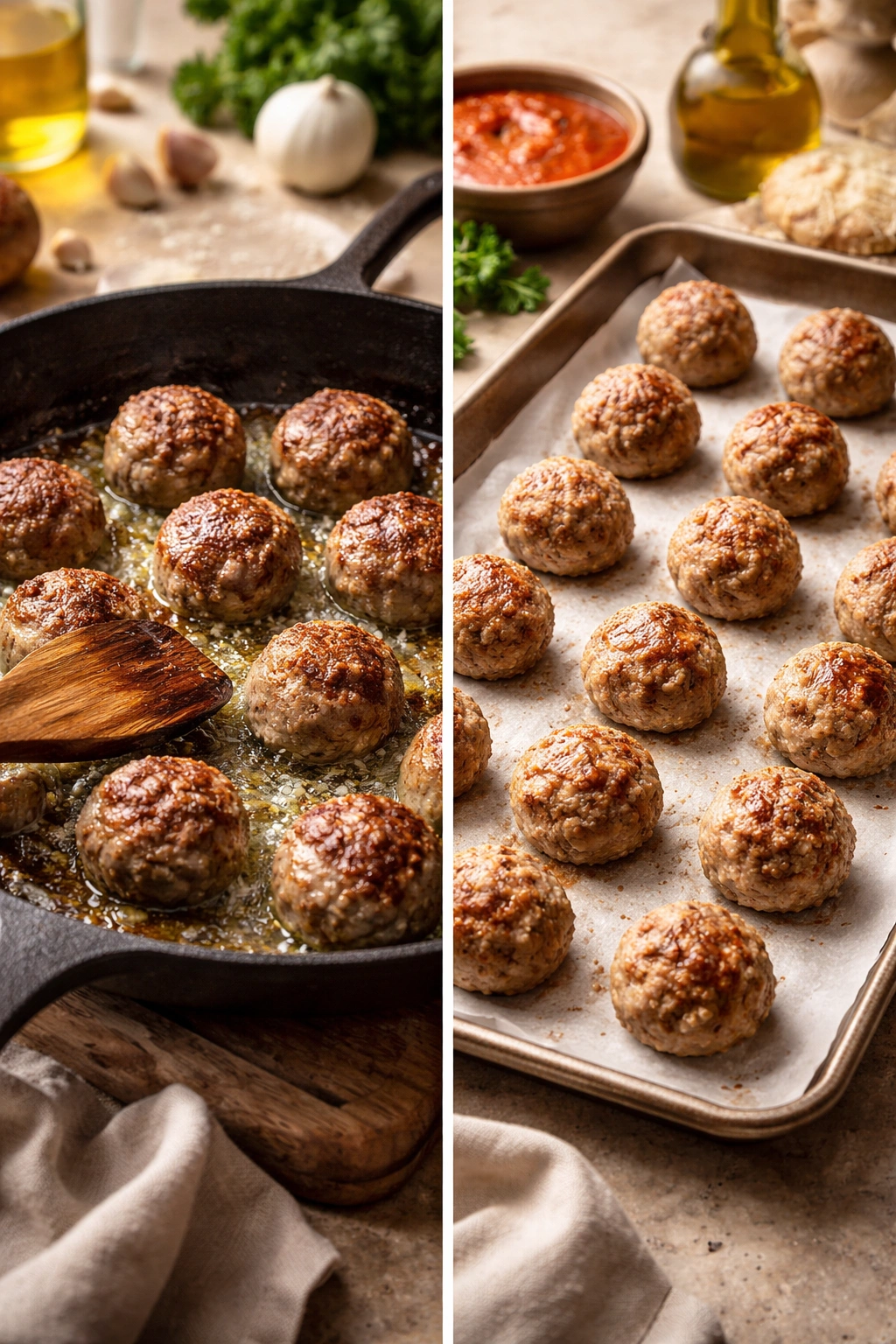
Method 1 — Pan-Browning (Traditional Approach):
-
Heat 2 to 3 tablespoons of extra virgin olive oil in a large skillet over medium-high heat until the oil is hot and shimmering but not smoking.
-
Working in batches to avoid overcrowding the pan, carefully add the meatballs and cook without moving them for 2 to 3 minutes until the bottom is golden brown. Resist the urge to move them around—this browning creates flavor through the Maillard reaction.
-
Using a slotted spoon or two spoons, gently turn each meatball and cook for another 2 to 3 minutes on the next side until golden. You’re not trying to cook them through at this stage, just create a flavorful crust. They should still feel slightly soft to the touch.
-
Transfer the browned meatballs to a clean plate lined with paper towels. Continue with the remaining meatballs, adding more oil to the pan if needed.
Method 2 — Partial Baking (Alternative Approach):
-
Preheat your oven to 375°F (190°C) and position the rack in the center.
-
Lightly coat a baking sheet with extra virgin olive oil or line it with parchment paper.
Advertisements -
Place the formed meatballs on the baking sheet in a single layer, spacing them about 1 inch apart. Bake for 10 to 12 minutes, until the meatballs are lightly browned on the bottom and edges but still very tender inside. They should not be fully cooked at this stage.
-
Remove from the oven and set aside on a plate. The meatballs will finish cooking in the sauce.
Adding Meatballs to the Sauce and Final Cooking
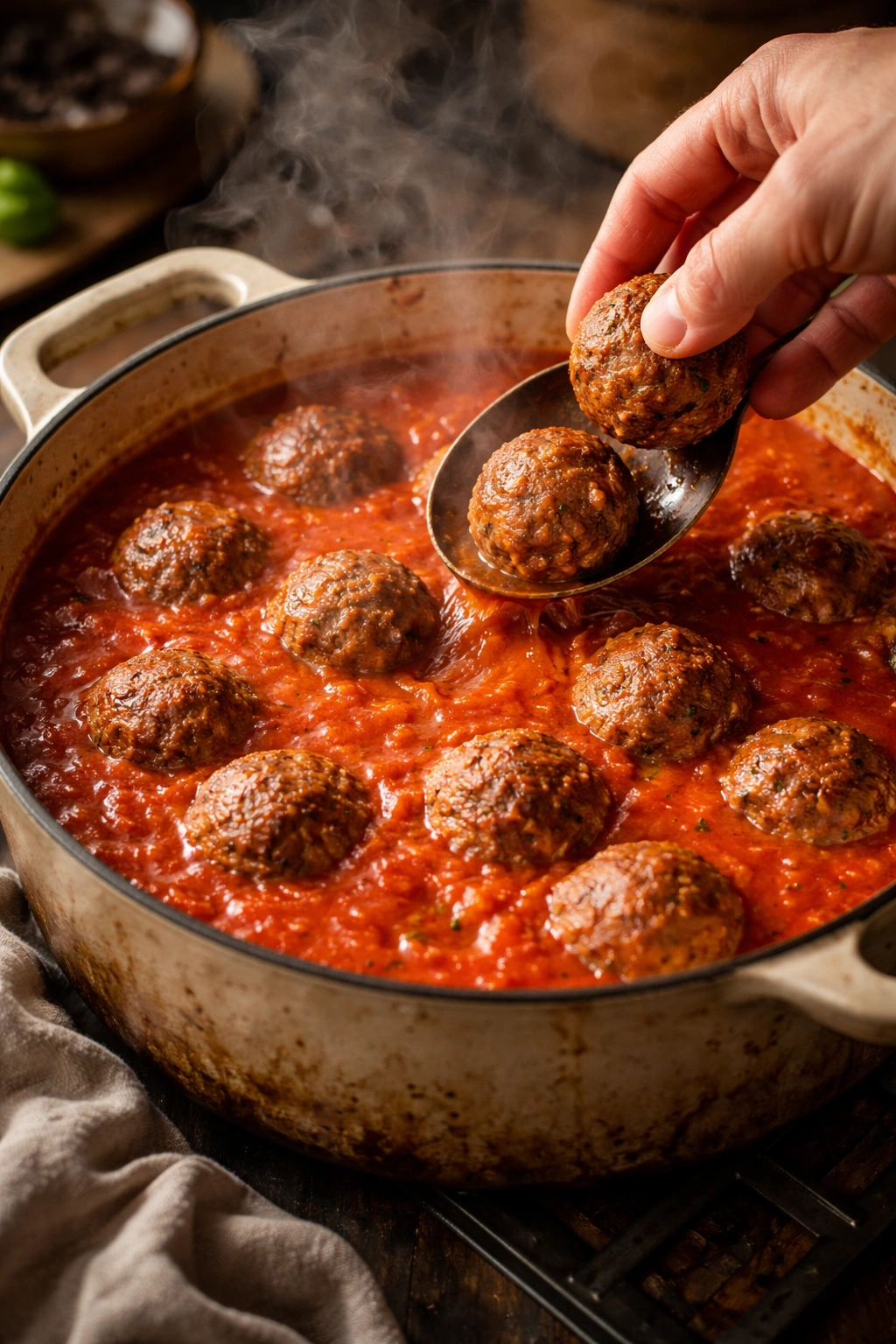
Combining Everything:
-
If your sauce has been simmering, ensure it’s at a very gentle simmer—you should see just tiny bubbles breaking the surface occasionally, not an active boil. Active boiling can cause the meatballs to break apart or develop a grainy texture.
-
Gently add the browned or partially baked meatballs to the sauce, one at a time, allowing each to settle into the liquid before adding the next. Use a slotted spoon and be gentle—rough handling causes meatballs to break apart.
-
Once all meatballs are in the sauce, reduce the heat to low and cover the pot with the lid slightly ajar.
-
Let the meatballs simmer very gently for at least 1½ to 2 hours. During this time, they’ll finish cooking through, absorb the flavors of the sauce, and become incredibly tender. The sauce will thicken and deepen in color.
-
Every 20 to 30 minutes, gently stir the sauce and rotate the meatballs using a wooden spoon. When stirring, use a gentle motion—think of it as rocking the pot slightly to distribute the sauce, rather than aggressively stirring.
-
Taste the sauce periodically and adjust seasoning with additional salt, pepper, or a tiny pinch of sugar if needed. Remember that the cheese in the meatballs and the browned meat contribute saltiness, so taste before adding extra salt.
-
The meatballs are done when they’re completely cooked through and so tender that a fork cuts through them with just gentle pressure. A fork should leave a clean cut, not tear the meatball.
Advertisements -
Just before serving, tear 3 to 4 fresh basil leaves over the pot and gently stir them in. Fresh basil at the end brings brightness and fragrance that finished the dish perfectly.
Common Mistakes That Ruin Your Meatballs
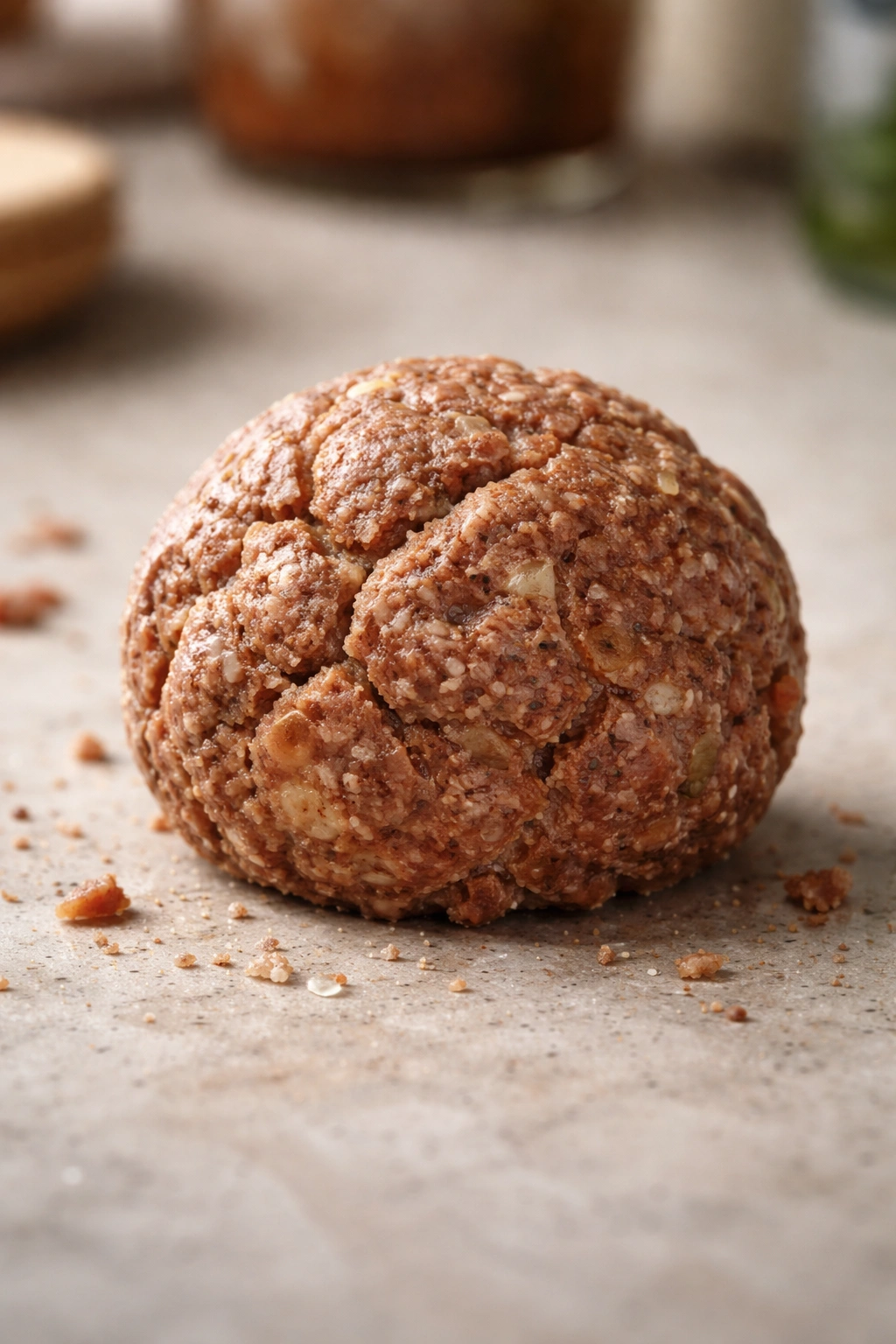
Understanding what goes wrong helps you avoid disasters. Overmixing is the most common mistake, turning meatballs into dense, tough bombs instead of tender morsels. The second most common mistake is using meat that’s too lean—90% or higher lean beef produces dry meatballs because there’s not enough fat to keep them moist during cooking. The third mistake is rushing the cooking, either by boiling the sauce too aggressively or not allowing enough time for the meatballs to absorb the sauce’s flavors and become truly tender.
Many cooks also add too much seasoning, overpowering the delicate flavors of quality meat and cheese. Less is truly more here. If your meatballs taste underseasoned, that’s better than overseasoned—you can always serve them with extra grated cheese at the table, but you can’t remove salt once it’s mixed in.
Another pitfall is opening the pot too frequently to check on them or stir too aggressively. Every time you open the lid, you release steam and interrupt the gentle cooking process. Every aggressive stir risks breaking apart tender meatballs. A gentle approach throughout the entire cooking process yields the best results.
Some cooks add too much breadcrumb or don’t soak it properly, creating a spongy, bread-forward texture rather than tender meat. The panade should create moisture, not dominate the flavor profile. Others skip the soaking step entirely or use dry breadcrumbs, which creates a different texture entirely—drier and coarser rather than melt-in-your-mouth tender.
Variations and Adaptations for Your Kitchen
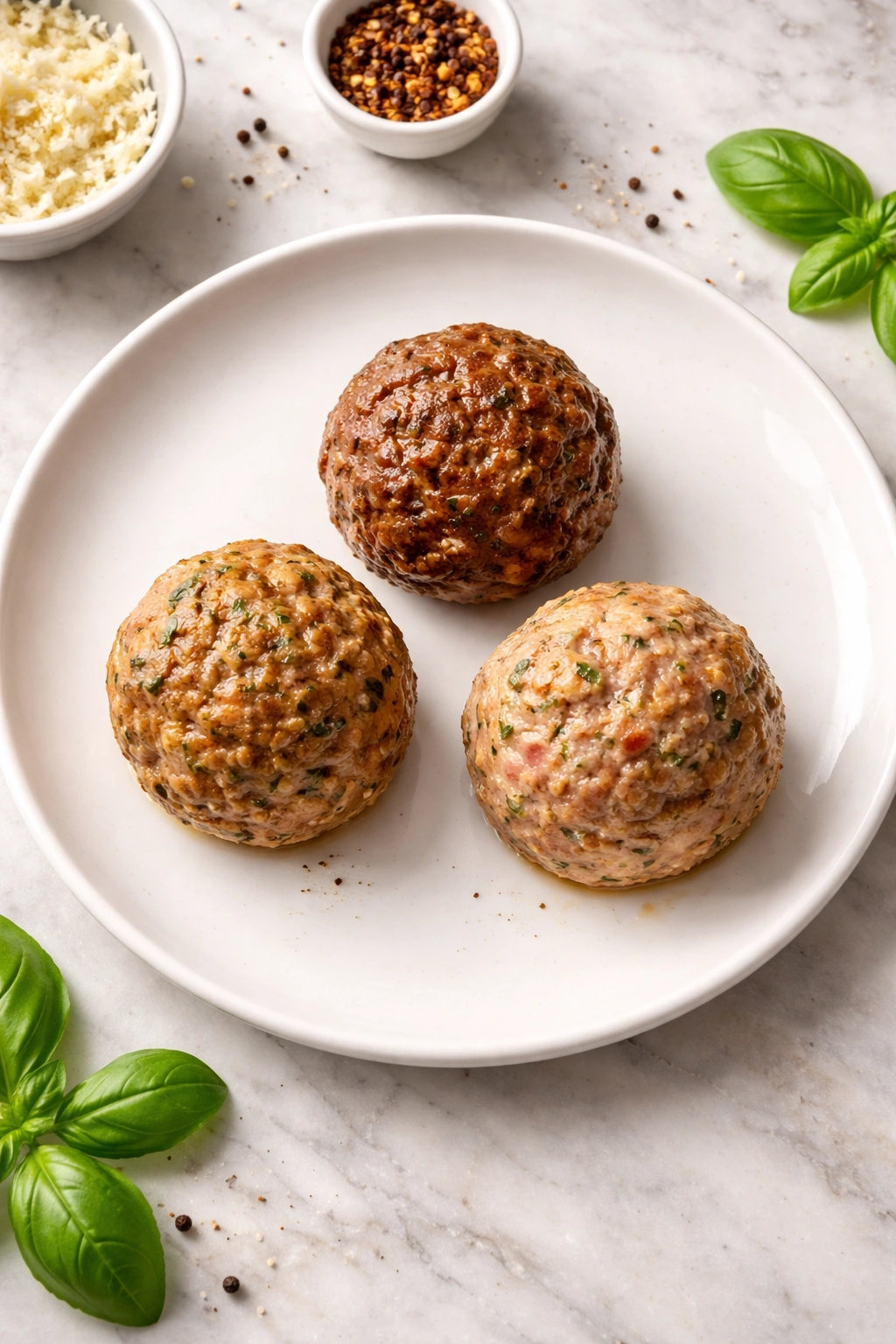
Meat Options and Swaps:
The classic beef-and-pork combination is wonderful, but you can adapt based on what’s available or your preferences. Some Nonnas use ground veal instead of pork for delicate sweetness and additional tenderness, creating a three-way blend of beef, pork, and veal. Others use equal parts ground beef and ground pork with excellent results. Ground turkey or chicken creates lighter meatballs—use about 50% poultry to 50% pork for the best texture, as poultry alone tends toward dryness.
Herbs and Seasonings:
Fresh basil can replace some of the parsley for a different flavor profile. Some recipes add a tiny pinch of nutmeg, which provides subtle warmth without being identifiable. A small amount of crushed red pepper flakes appeals to those who enjoy heat. Some cooks add a tablespoon of finely chopped fresh mint, which is traditional in certain Italian regions and adds brightness.
Sauce Variations:
A lighter version uses white wine and chicken broth instead of tomato sauce, creating a delicate sauce that lets the meatball flavors shine. A richer version adds a splash of heavy cream to the tomato sauce near the end of cooking, creating a creamy tomato sauce that’s absolutely luxurious. You can make a meat ragù by increasing the pork ribs or sausage and reducing the meatballs, creating a sauce where meat flavor dominates.
Cooking Adjustments:
For slow cooker preparation, cook the sauce alone for 1 to 2 hours, then add the browned meatballs and cook on low for 4 to 6 hours or on high for 2 to 3 hours. The longer cooking time in a slow cooker works beautifully for developing deeply flavored meatballs. For pressure cooker cooking, brown the meatballs first, build the sauce, add everything together, and pressure cook for 15 minutes, allowing natural pressure release for 10 minutes before quick release.
Storage, Make-Ahead, and Freezing
Refrigerator Storage:
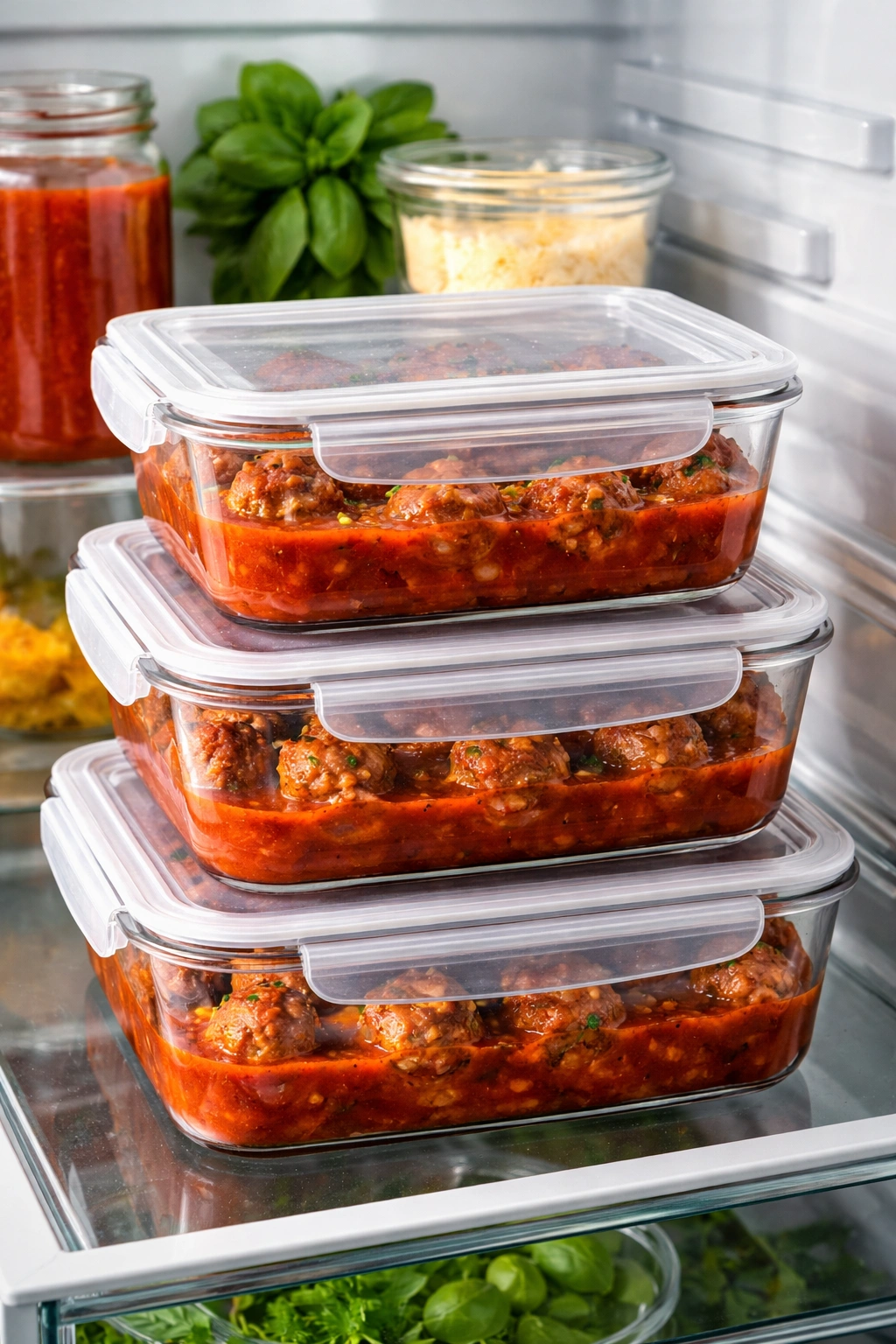
Cooked meatballs in sauce keep beautifully in the refrigerator for 3 to 4 days in an airtight container. The flavors actually deepen and improve after a day or two as the ingredients continue to meld. Simply reheat gently over low heat on the stovetop, stirring occasionally, until warmed through. If the sauce seems thick after refrigeration, add a splash of broth or water to loosen it.
Freezing Cooked Meatballs:
Cooked meatballs in sauce freeze exceptionally well for up to 2 to 3 months. Cool completely before freezing in airtight containers or freezer bags, removing as much air as possible. Label containers with the date so you know how long they’ve been frozen. Thaw overnight in the refrigerator and reheat gently on the stovetop over low heat, stirring occasionally, until hot throughout. The texture and flavor remain excellent after freezing.
Freezing Raw Meatballs:
You can freeze uncooked meatballs before or after browning. For uncooked, unbrowsed meatballs, place them on a baking sheet in a single layer and freeze for 1 to 2 hours until solid, then transfer to a freezer bag. This prevents them from sticking together. Cook from frozen by adding directly to simmering sauce and allowing slightly longer cooking time—about 2 to 3 hours instead of 1½ to 2 hours.
For maximum convenience, freeze already-browned meatballs the same way—on a baking sheet until solid, then in a freezer bag. These only need 1 to 1½ hours of sauce simmering since they’re already partially cooked.
Make-Ahead Preparation:
You can form meatballs up to 4 hours ahead and refrigerate them on a baking sheet covered with plastic wrap. This actually helps them hold their shape during cooking since chilling firms them up slightly. The sauce can be made completely up to 2 days ahead and simply reheated before adding the meatballs. For a complete make-ahead meal, brown the meatballs, make the sauce, and combine everything in the pot. Cool completely, refrigerate, and then reheat gently over low heat for 30 to 45 minutes until hot, stirring occasionally.
Serving Suggestions and Pairing Ideas
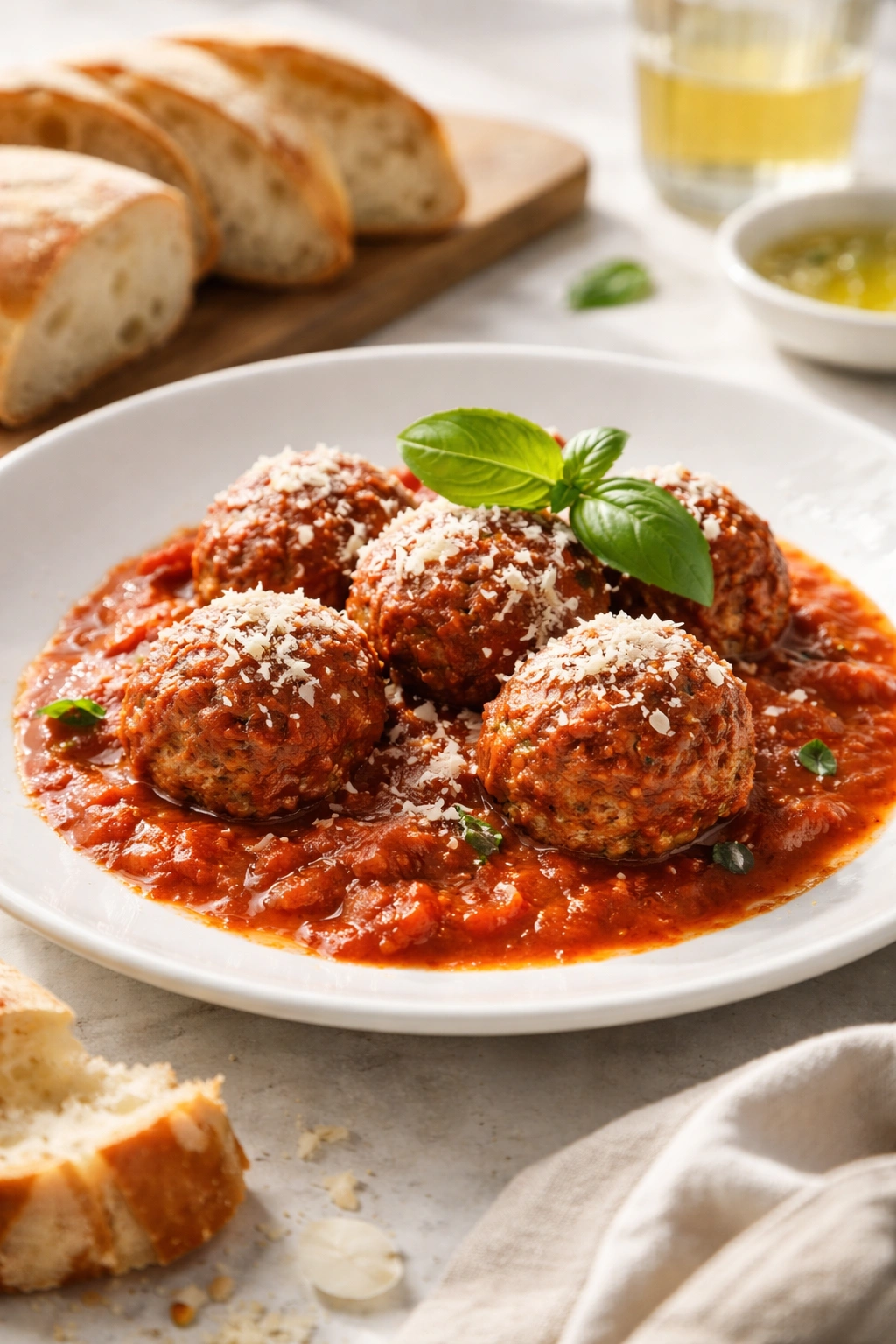
In Italy, meatballs are typically served as a second course (secondo piatto), not as a pasta topping. Traditional serving involves ladling generous portions of the rich tomato sauce onto a shallow plate, nestling the tender meatballs in the sauce, and finishing with a sprinkle of freshly grated Pecorino Romano or Parmigiano Reggiano cheese. Fresh basil torn by hand adds color and fragrance. Crusty Italian bread is essential—for “scarpetta,” meaning “little shoe,” where you use a crust of bread to scoop up every last bit of precious sauce.
If serving with pasta, the traditional approach separates courses: serve pasta with sauce first as the primo piatto, then serve meatballs with additional sauce as the second course. However, modern Italian home cooking often combines them, which is perfectly acceptable. If combining with pasta, pair smaller meatballs (about 1 inch diameter) with delicate pasta shapes like spaghetti or bucatini, and larger meatballs (golf ball size) with hearty shapes like rigatoni or pappardelle.
Vegetable side dishes pair beautifully: roasted or sautéed Italian green beans and potatoes, grilled eggplant, fried artichoke hearts, or a simple arugula salad dressed with lemon and olive oil. The freshness of vegetables contrasts nicely with the richness of the meatballs and sauce.
As an appetizer or main course, meatballs can be served on small plates with crusty bread, or as part of an antipasto spread alongside cured meats, cheeses, olives, and marinated vegetables. They’re also spectacular in meatball sandwiches—split crusty rolls, fill with meatballs and sauce, top with melted mozzarella, and broil until the cheese is bubbly.
Bread options elevate the meal: serve with homemade focaccia, purchased ciabatta, or crusty Italian bread from a quality bakery. Some people make garlic bread by brushing bread with olive oil infused with garlic, then toasting until crispy.
Beverage pairings traditionally include Italian red wines like Chianti, Montepulciano d’Abruzzo, or Barbera d’Alba—wines with enough body to stand up to the richness of the meatballs but with acidity to cut through the sauce. For non-alcoholic options, sparkling water with lemon provides refreshment, or Italian sodas made with fruit syrups and soda water.
Final Thoughts
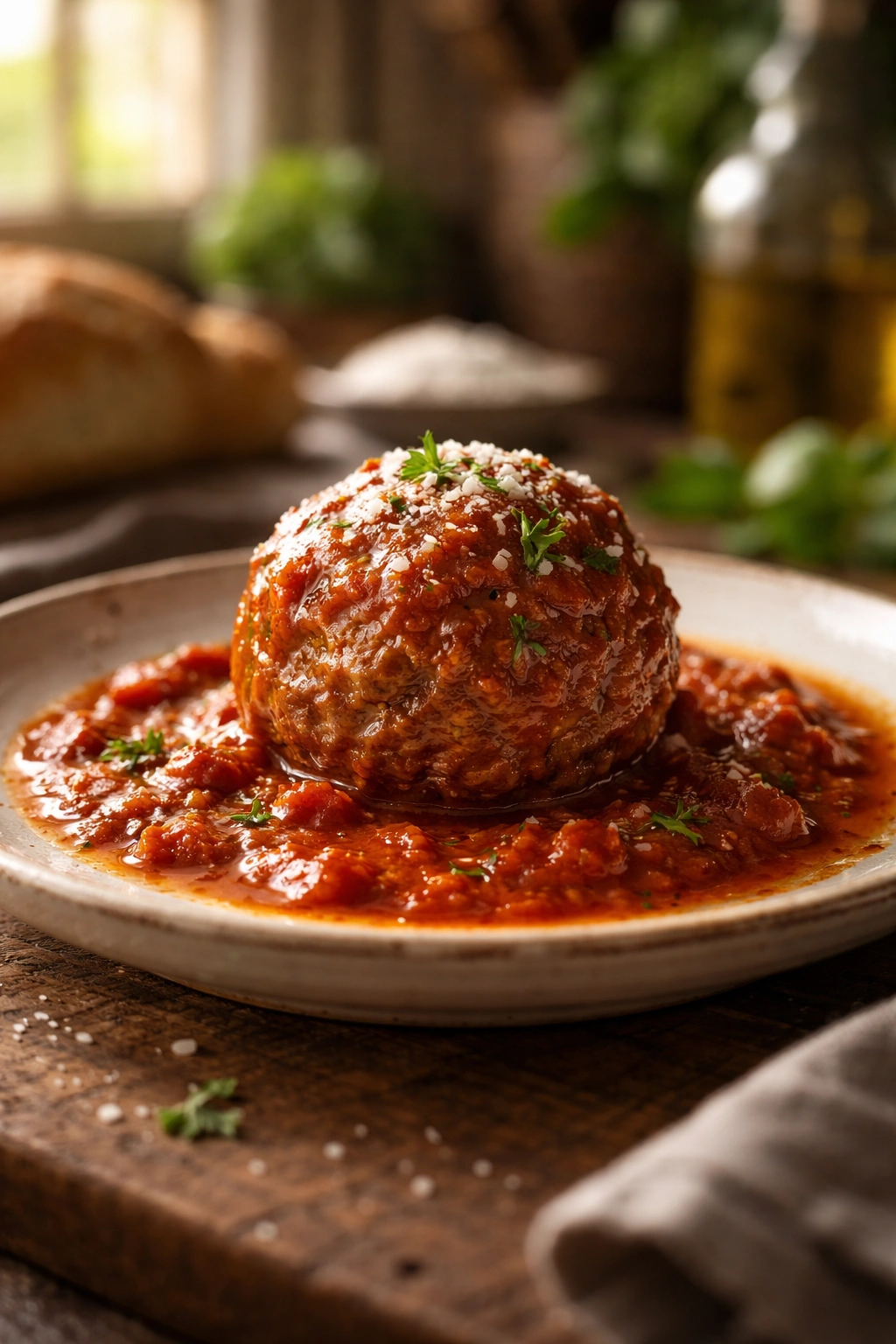
Making meatballs exactly like Nonna made them is one of those cooking projects that teaches you so much more than just how to combine ingredients. It teaches you about meat science, about texture development, about patience, and about the importance of technique over complexity. When you understand why each step matters—why you don’t overmix, why you soak the breadcrumbs, why you simmer gently for hours—you can apply those principles to countless other dishes.
The first time you bite into a meatball that you’ve made following these principles, you’ll understand what all the fuss is about. The texture will be so tender it practically melts on your tongue. The flavor will be rich and deeply satisfying without being heavy. The sauce will cling to the meatball perfectly, infusing it with savory tomato essence. You’ll taste why families guard these recipes like treasures and why Sunday dinners centered around polpette al sugo are such cherished memories.
Don’t be intimidated by the length of the cooking time or the number of steps—most of it is just gentle simmering where the oven or stovetop does the work. The actual hands-on time is relatively short, and the rest is time that allows flavors to develop and meatballs to transform from raw meat into something truly special. Make a big batch, freeze half of it, and you’ll have incredible dinners ready whenever you need them.
The beauty of this recipe is that it’s forgiving enough for beginners but deep enough that experienced cooks will discover new nuances every time they make it. Start with the basic version, taste as you go, and trust the process. Your family will be asking you to make these again and again, and someday, maybe you’ll pass the recipe along to the next generation as something worth passing down.