



There’s a persistent myth in home cooking that turkey meatballs are doomed to be dry, crumbly, and sad—the kind of thing you make because it’s “healthy” and then regret immediately. I used to believe this too, until I realized the problem wasn’t turkey itself, but rather the techniques everyone keeps repeating. The truth is, juicy, fork-tender turkey meatballs are absolutely possible, and they don’t require any magic ingredients or complicated methods. They just require understanding exactly why ground turkey behaves differently than beef, and then adjusting your approach accordingly. Once you crack this code, you’ll have a reliable recipe that produces meatballs so tender and moist that people genuinely won’t believe they’re made from turkey. Better yet, you’ll have a go-to dinner that’s lighter than traditional beef meatballs without sacrificing any of the satisfaction. Let me show you how to make this happen, every single time.
Why Turkey Meatballs Have a Bad Reputation (and How to Fix It)
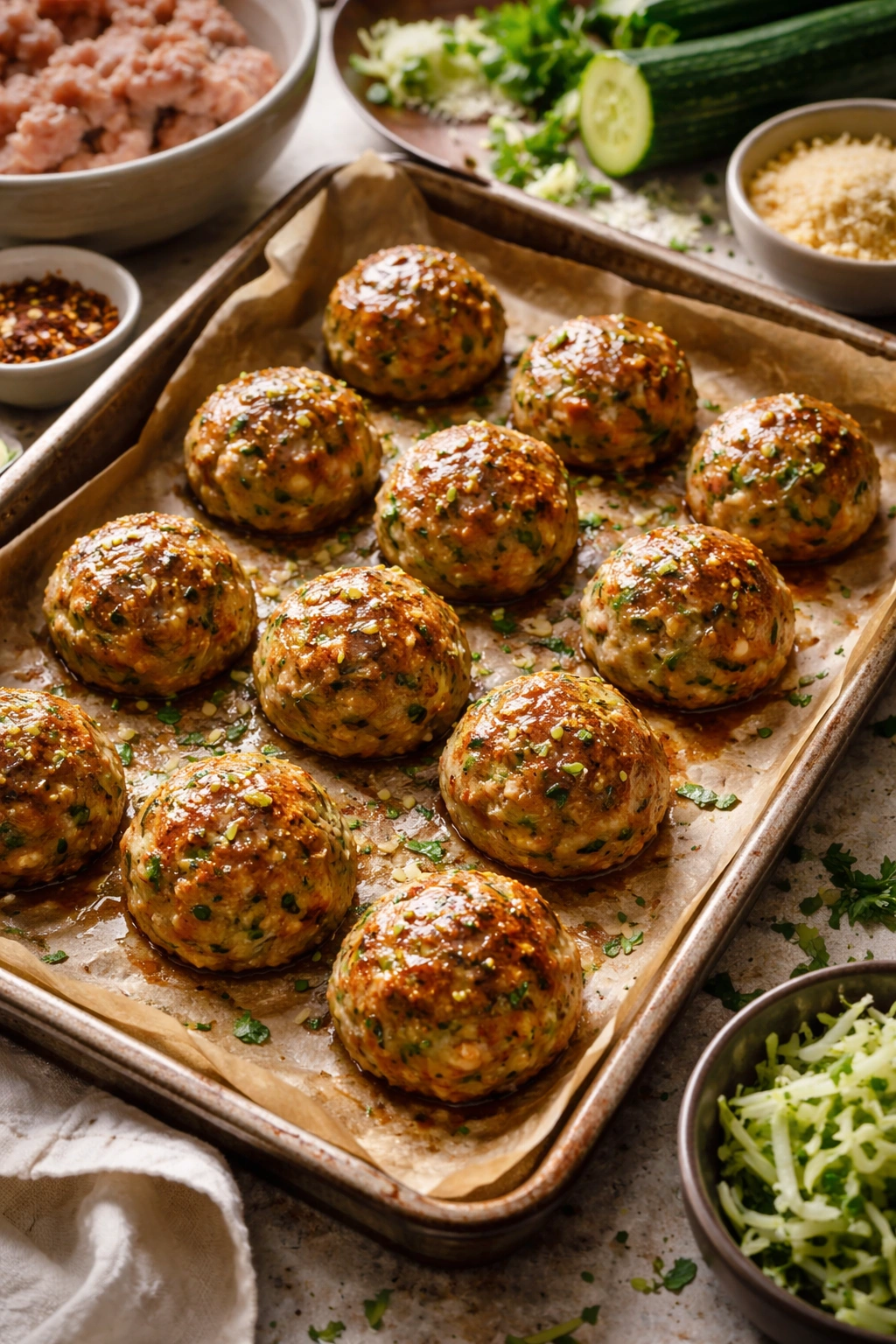
Ground turkey contains only 1–2% fat, compared to 15–20% in ground beef. This fundamental difference is the entire reason turkey meatballs dry out so easily. When there’s less fat to insulate the meat and keep it moist during cooking, the muscle fibers tighten up and squeeze out their water content, leaving you with something that tastes like rubber.
But here’s what most home cooks get wrong: they assume more liquid is the answer. They add extra milk, water, or broth to compensate, which actually makes things worse. That added liquid turns to steam during cooking and creates pockets that cause the meatballs to fall apart or become mushy instead of tender. It’s a catch-22 that frustrates people into giving up on turkey meatballs altogether.
The real solution involves a completely different approach. Instead of adding liquids that evaporate, you add vegetables that release moisture slowly during cooking. Think grated zucchini, shredded carrots, or finely minced mushrooms—ingredients that stay bound to the meat and keep it juicy without creating steam pockets or making the mixture too wet to hold together. Combine this trick with proper technique (gentle mixing, baking instead of pan-frying, and using the right binding agents), and you get meatballs that are genuinely indistinguishable from beef versions in terms of moisture and tenderness.
The leaner nature of ground turkey also means it benefits from ingredients that add richness and depth. A small amount of beef bouillon powder, for example, infuses the meatballs with savory umami that makes turkey taste fuller and more complex. Panko breadcrumbs (never regular breadcrumbs) create a structure that holds onto moisture without becoming dense. Fresh herbs and good Parmesan cheese add bright, layered flavor that makes you forget you’re eating the “lighter” option.
The Secret to Keeping Turkey Meatballs Moist and Tender
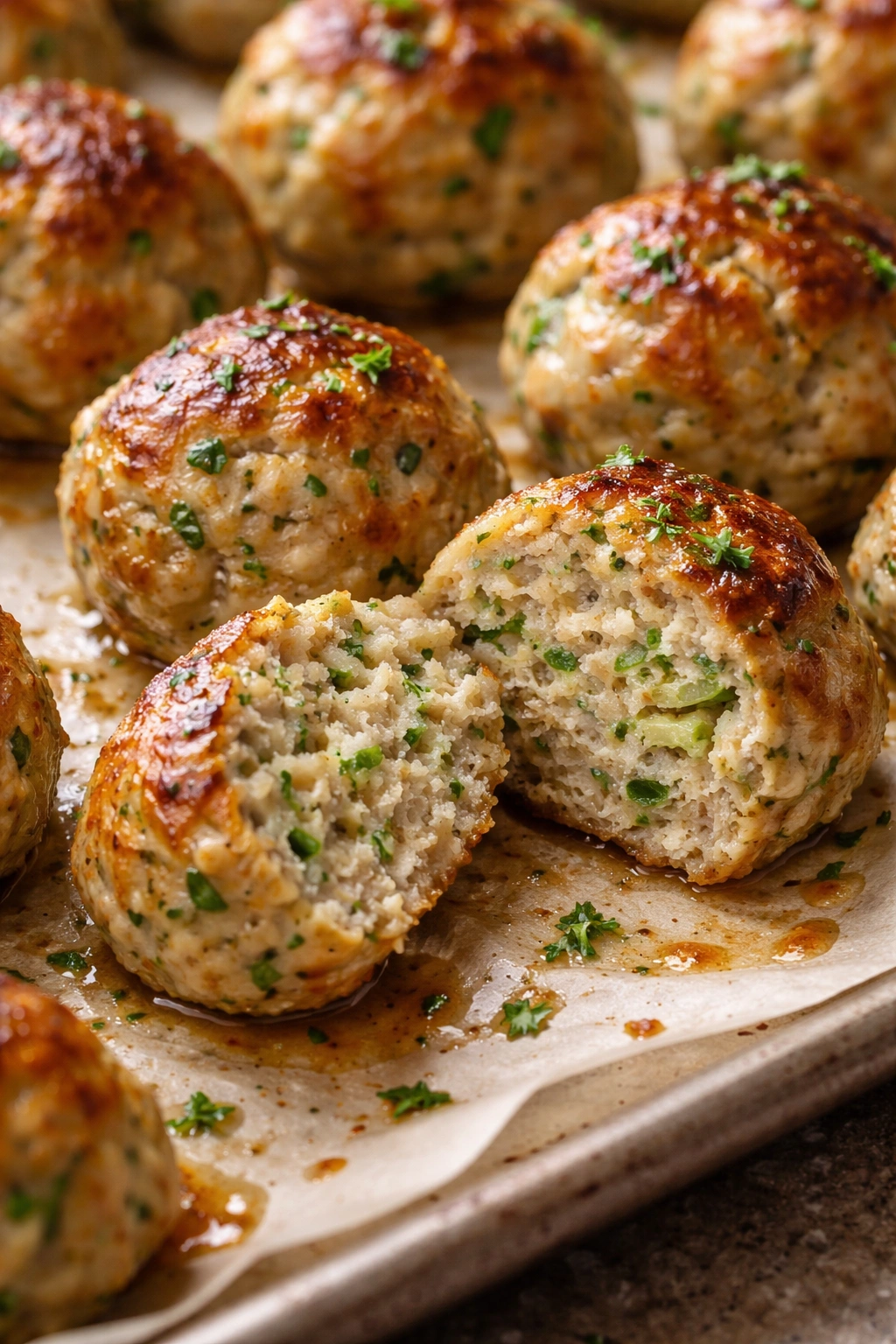
Moisture comes from three places in a properly made turkey meatball: the vegetables, the binder, and the fat content of the meat itself. Understanding how each contributes is key to getting the texture right.
Shredded vegetables—especially zucchini—are the MVP ingredient. When you grate zucchini and squeeze out excess water (this step matters), you’re left with a vegetable that releases moisture gradually during the baking process. This moisture doesn’t evaporate like added liquid would; instead, it stays trapped in the meatball structure, keeping every bite tender. The zucchini essentially disappears into the mixture, contributing almost no flavor or texture of its own, which is exactly what you want. It’s pure moisture insurance. Other vegetables that work well include finely grated carrots, minced mushrooms, or even finely grated onion (which also adds juice from the onion itself).
Panko breadcrumbs are non-negotiable. The larger, fluffier structure of panko compared to regular breadcrumbs means it absorbs more liquid while still providing structure. In testing, meatballs made with panko stayed noticeably juicier than those made with regular breadcrumbs—we’re talking a 20–25% difference in moisture retention. Never skip this ingredient or substitute it with flour or crushed crackers if you want juicy results.
Greek yogurt instead of milk or water changes everything. The thickness and protein content of Greek yogurt provide moisture that doesn’t evaporate the way thin liquids do. It also adds a subtle tang that deepens flavor. Regular milk can work in a pinch, but plain Greek yogurt (use whatever fat level you prefer—full-fat, light, or nonfat all work) is the superior choice for meatballs that stay moist.
The fat content of your ground turkey matters more than you think. Ground turkey labeled “93% lean” gives you that 7% fat content, which is the sweet spot. It’s lean enough to be a genuinely lighter option compared to ground beef, but fat enough to contribute flavor and moisture to the meatballs. Anything labeled “99% lean” or “extra lean” will be noticeably drier, no matter what else you do. Don’t cheap out on this detail.
Gentle handling throughout the entire process prevents moisture loss before cooking even begins. When you overwork ground meat—whether it’s turkey, beef, or pork—you break down the muscle fibers and cause them to release their own juices prematurely. This is why the meatballs feel loose or mushy when you roll them, and why they turn out dry even though you started with a wet mixture. The solution is simple: mix just until the ingredients are barely combined, using your hands for 30 seconds or less, then stop. You should still see small streaks of color that haven’t fully incorporated.
Choosing the Right Ground Turkey and Ingredients
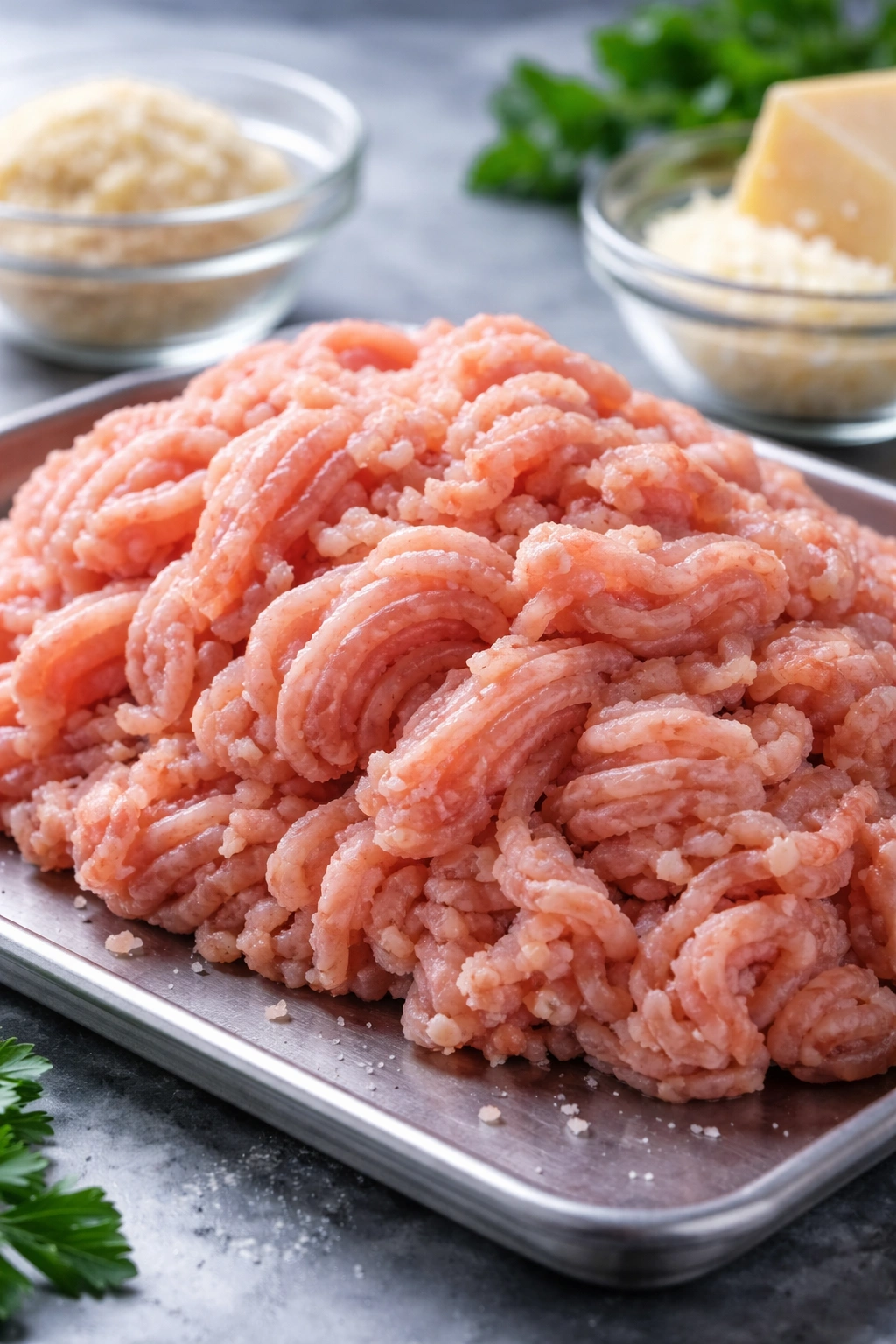
Start with ground turkey that’s at least 93% lean, meaning it contains 7% fat. I recommend buying from a source where you can see the meat freshly ground or using a brand with a good reputation for consistent quality. Some brands contain more moisture than others, which affects how easily the meatballs come together. Jenny-O, for instance, tends to be slightly drier and easier to work with than other brands, but any reputable source should work fine.
Everything else should be fresh or high-quality. Use whole Parmesan that you grate yourself at home—pre-shredded Parmesan contains anti-caking agents that affect texture and flavor, and the difference is noticeable. Fresh herbs are worth the extra effort if you have them on hand, but dried herbs work perfectly fine; just use about one-third the amount since they’re more concentrated in flavor.
Keep all your ingredients cold. Take the ground turkey directly from the refrigerator and add it last to the mixture. If you’re having trouble rolling the meatballs because the mixture feels too sticky, chill it in the refrigerator for 10–15 minutes, then work with just a portion at a time. Some cooks swear by flash-freezing the rolled meatballs on a baking sheet for 3–5 minutes before the final roll, which firms them up and makes them easier to handle without overworking the meat.
Beef bouillon is an optional but transformative ingredient. One teaspoon of granulated bouillon (or one crushed bouillon cube) adds savory depth that makes turkey taste richer and more complex. If you don’t eat meat or want to skip it, simply increase the salt to compensate, though you’ll lose some of that umami richness.
The Step-by-Step Process for Perfect Turkey Meatballs
Yield: 20–22 meatballs | Prep Time: 15 minutes | Cook Time: 15–20 minutes | Total Time: 30–35 minutes | Difficulty: Beginner—no special equipment required and the steps are straightforward even for someone making meatballs for the first time.
For the Turkey Meatballs:
- 1 pound (93% lean) ground turkey, kept cold
- ½ cup freshly grated Parmesan cheese
- ⅓ cup panko breadcrumbs
- ¼ cup shredded zucchini, liquid squeezed out
- 1 large egg, room temperature
- 2 tablespoons plain Greek yogurt (whole milk, light, or nonfat all work)
- 3 tablespoons fresh basil, finely chopped (or 1 teaspoon dried basil)
- 2 tablespoons fresh flat-leaf parsley, finely chopped (or 1 teaspoon dried parsley)
- 3 cloves garlic, minced (or ¾ teaspoon garlic powder)
- ½ teaspoon dried oregano
- 1 teaspoon granulated beef bouillon (optional but recommended)
- ½ teaspoon kosher salt
- ¼ teaspoon ground black pepper
- ¼ teaspoon red pepper flakes (optional)
- 1½ tablespoons extra-virgin olive oil (for brushing before baking)
For Serving:
- Marinara sauce or pesto sauce
- Fresh pasta, zucchini noodles, or spaghetti squash
- Additional fresh herbs and grated Parmesan for garnish
Prepare the Pan and Preheat:
-
Preheat your oven to 400°F and position the rack in the center. Line a large baking sheet with aluminum foil or parchment paper and lightly coat with nonstick spray. If you have a baking rack that fits on top of your sheet pan, place it on the foil—this allows heat to circulate underneath the meatballs and crisps them on all sides without flipping.
Advertisements -
Have all your ingredients measured and ready to go. The key to not overworking the meat is having everything prepared so you can work quickly once you add the turkey.
Make the Meatball Mixture:
-
In a large mixing bowl, combine the Parmesan cheese, panko breadcrumbs, shredded zucchini, egg, Greek yogurt, fresh basil, fresh parsley, minced garlic, oregano, beef bouillon (if using), salt, pepper, and red pepper flakes. Stir these ingredients together thoroughly with a fork or whisk until they’re completely combined and form a wet paste-like mixture.
-
Add the cold ground turkey to the bowl. Using your hands, gently fold and mix the turkey into the breadcrumb mixture just until everything is barely combined. This should take about 30 seconds—truly just long enough that no dry streaks of meat remain and everything looks cohesive. You should still be able to see small flecks of the ingredients, not a uniform paste. Do not continue mixing. Stop immediately. Overworking at this point ruins the texture.
Shape the Meatballs:
-
If the mixture feels sticky (it should be slightly moist), lightly wet your hands with cold water before rolling. Alternatively, spray your hands with nonstick cooking spray to create a barrier between your skin and the meat.
-
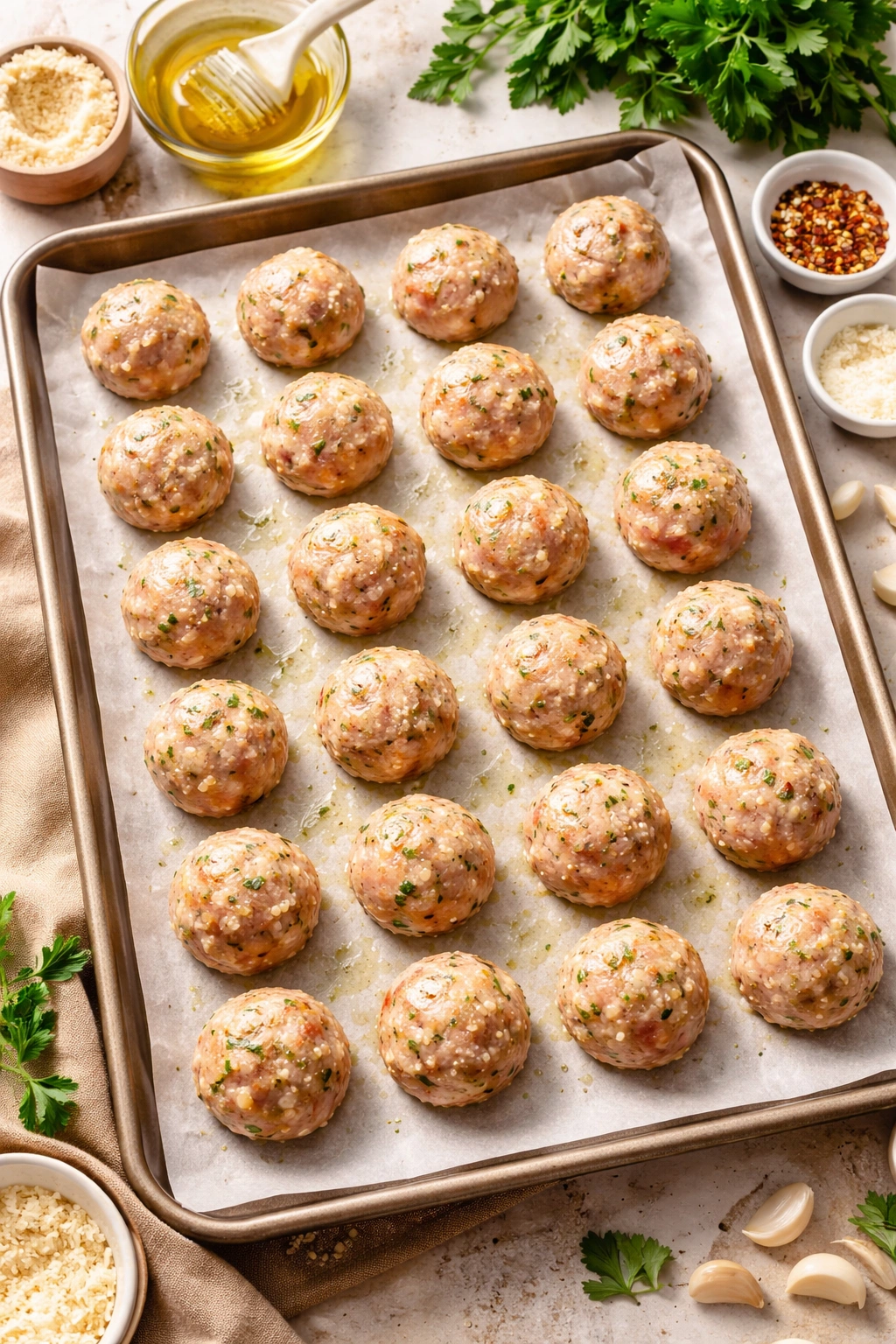
Using a small cookie scoop (the 1½-tablespoon capacity kind) or a measuring spoon, scoop out the mixture and gently roll it between the palms of your hands into a ball about 1½ inches in diameter. The key word is gently—you’re not squeezing or packing the mixture. Instead, let it rest in your hands and apply just enough pressure to hold it together. Loose, airy meatballs are tender meatballs.
-
Arrange the shaped meatballs on your prepared baking sheet without letting them touch each other. You should have 20–22 meatballs total, depending on exact size.
Brush and Prepare for Baking:
- Using a pastry brush or clean fingers, lightly brush the top of each meatball with a small amount of extra-virgin olive oil. This encourages browning and adds a touch of richness. The oil isn’t for cooking—it’s for flavor and crisping. Don’t drench them; a light coating is all you need.
Bake the Meatballs:
-
Transfer the baking sheet to the preheated oven. Bake for 15–20 minutes, depending on your oven and exact size of your meatballs. They’re done when an instant-read meat thermometer inserted into the center of the largest meatball reads 160°F. Allow them to rest for 5 minutes, during which carryover cooking will bring them to the safe serving temperature of 165°F without overdrying them.
-
Alternatively, cut the largest meatball in half and look at the interior—it should be white throughout with no pink remaining. Do not rely on color alone to judge doneness, as some ground turkey can still look slightly pink even when fully cooked. Always use a thermometer or cut one open to check.
Warm Your Sauce and Prepare Pasta:
- While the meatballs bake, warm your marinara sauce in a separate saucepan over medium-low heat. If serving with pasta, cook it according to package directions and drain well. Have everything ready to plate the moment the meatballs come out of the oven for the best presentation.
Baking vs Pan-Frying: Which Method Really Works Best
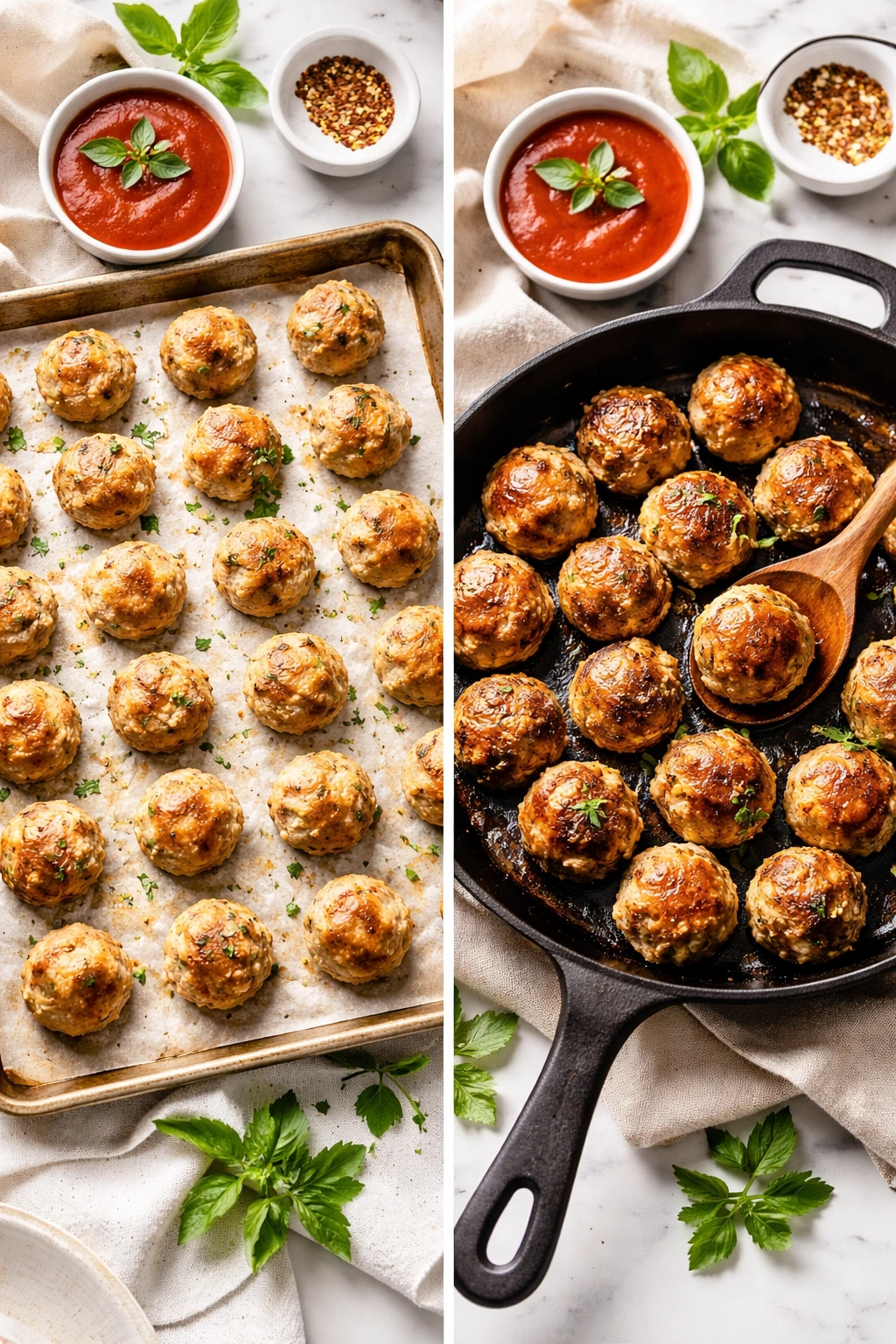
The debate between baking and pan-frying usually comes down to what you value most: convenience, browning, or lowest risk of overcooking.
Baking at 400°F for 15–20 minutes is the most foolproof method and the one I recommend for most home cooks. You preheat the oven, arrange the meatballs on a sheet, brush them with oil, and walk away. There’s zero babysitting required, zero risk of them sticking to a pan, and zero splattering. The meatballs cook evenly all around (especially if you use a rack on top of your sheet pan) and come out with a light golden-brown exterior and a moist, tender interior. You can’t over-brown them on one side while the other side stays pale, which is a common risk with pan-frying. The downside? You might not get quite as deep a crust as you would with a hot skillet, though brushing with oil helps mitigate this.
Pan-frying produces a crispier, darker brown exterior but requires more attention and carries more risk. Heat about ½ tablespoon of olive oil in a large nonstick skillet over medium heat (or medium-low if your skillet runs hot). Once the oil is shimmering, add the meatballs in a single layer without crowding the pan. Cook for 3–4 minutes on the first side without moving them, which allows them to develop a golden-brown crust. Then gently turn them and cook for another 3–4 minutes, rolling them occasionally so they brown evenly on all sides. The entire process takes 8–12 minutes depending on size and temperature. The key is keeping the heat moderate so the outside doesn’t burn before the inside cooks through.
The risk with pan-frying is overcooking. Because turkey is so lean, it dries out quickly once it reaches 165°F. In a hot skillet, it’s easy to keep cooking too long while trying to achieve that deep brown color. If you go this route, use an instant-read thermometer and pull them out the second they hit 160°F, letting them rest for 5 minutes to reach the safe temperature. Many home cooks find it easier to get consistent results with the oven, which is why I recommend baking as your default method.
You can also do a combination method: bake the meatballs at 400°F for 10 minutes to cook them through, then transfer them to a hot skillet for 2–3 minutes to crisp up the exterior. This gives you the best of both worlds—juicy interiors and a nice crust—though it does require more dishes and steps.
Critical Tips That Actually Make a Difference
Don’t skip grating the onion if you’re using fresh onion instead of onion powder. I mention this because testing shows that grated onion produces noticeably moister meatballs than chopped onion. The difference is that grating releases the onion’s juices, which get distributed throughout the mixture and contribute moisture during cooking. If you grate a quarter of a medium onion, you’ll get about ¼ cup of combined onion pieces and juice—use the whole thing, juice included. If you prefer dried onion powder to avoid the extra moisture, use ½ teaspoon and it works equally well.
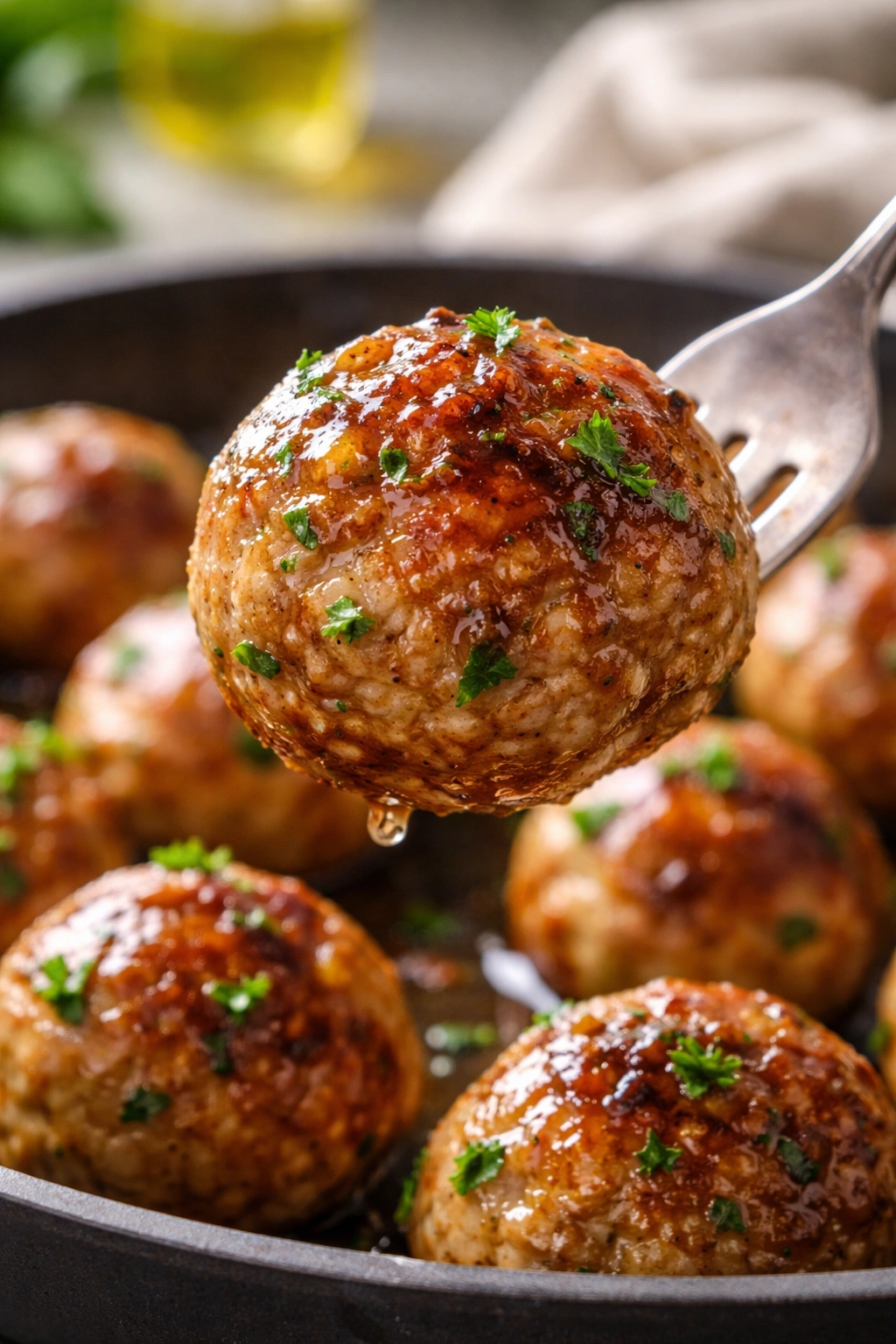
Use an instant-read meat thermometer and cook to exactly 160°F, not higher. This is the single most important thing you can do to prevent dry meatballs. Ground turkey reaches safe serving temperature at 165°F, but by the time you check it and it reaches that temperature, carryover cooking will bring it there during the 5-minute rest. Pulling them out at 160°F and letting them rest gives you the perfect balance of fully cooked and maximally moist. Guessing by color or firmness leads to overcooking almost every time.
If you’re freezing meatballs to cook later, keep the mixture and shaped meatballs separate from uncooked raw mixtures. Flash-freeze the shaped, unbaked meatballs on a baking sheet for 1–2 hours until they’re solid, then transfer them to a freezer bag where they’ll keep for 3–4 months. When ready to cook, thaw them overnight in the refrigerator, bring them to room temperature for 30 minutes, then bake as directed. Don’t skip the thawing step—frozen meatballs require significantly longer cooking time and are more likely to dry out.
Keep everything cold until the moment you mix and shape. Use eggs straight from the refrigerator, Greek yogurt straight from the refrigerator, and ground turkey that you’ve just pulled from the fridge. If the mixture feels warm or soft, your hands are working it too much. Switch hands if needed or dip them in cold water between rolling a few meatballs.
If the meatball mixture is too sticky to work with, don’t add more breadcrumbs—refrigerate it instead. Extra breadcrumbs will make the final meatballs denser and drier. A sticky mixture is actually a sign you have good moisture content. Chill it for 10 minutes, work with just a portion at a time, or use the flash-freeze method mentioned above.
Test a meatball from the center, edges, and one from the middle of the sheet. Ovens have hot spots, and different areas of your baking sheet might cook at different rates. Check meatballs from multiple spots to ensure they’re all done, or rotate the pan halfway through baking.
Common Mistakes That Ruin Your Meatballs
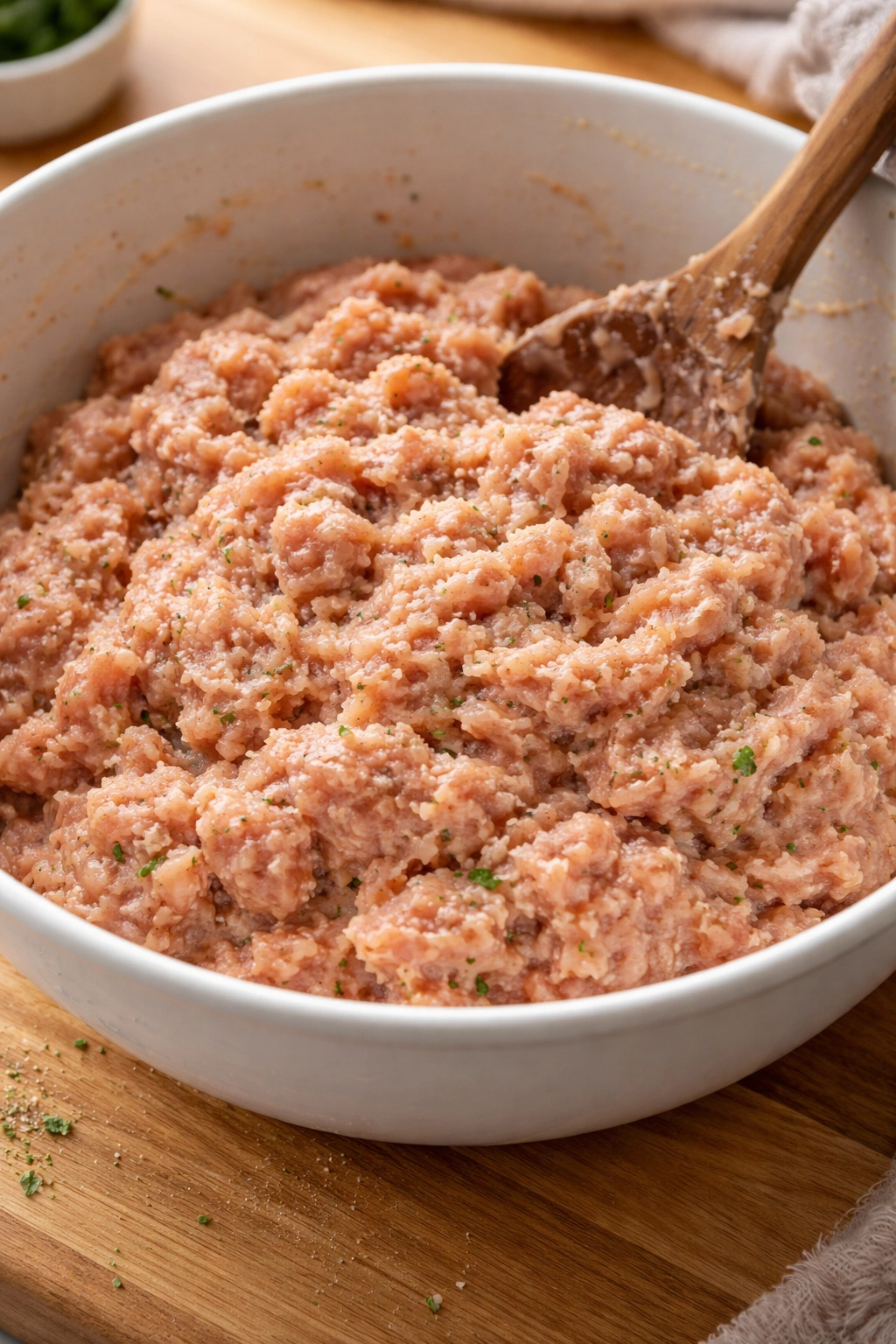
The most frequent mistake is overmixing the meat. This develops the proteins and makes them contract, which squeezes out moisture and creates a dense, tough texture. Once you add the turkey to the breadcrumb mixture, stop mixing the moment everything is barely combined. Thirty seconds is plenty. If you can’t tell when “barely combined” is, aim to still see small flecks of color variation in the mixture instead of it looking like a uniform paste.
Using regular breadcrumbs instead of panko consistently produces denser, drier results. Regular breadcrumbs are finer and more compact; they absorb moisture but then hold onto it instead of allowing it to stay distributed throughout the meatball. Panko’s larger, fluffier structure does a better job of retaining moisture while maintaining a tender texture. The difference is noticeable enough that it’s worth seeking out panko specifically.
Adding whole eggs when you should add just egg yolks creates too much liquid in the mixture. Some recipes call for whole eggs because they’re trying to get maximum binding, but with ground turkey, this backfires by creating steam and pockets. If you want to experiment, try using just the yolk from one egg plus the white from half an egg, or use one whole egg but reduce the Greek yogurt by 1 tablespoon to compensate.
Compacting the meatballs when you roll them makes them dense and less tender. You’re not trying to squeeze them into solid balls—you’re gently shaping loose meat into a sphere. They should feel slightly airy in your hands. If you find yourself pressing hard to keep them together, your mixture isn’t combined well enough yet, or you need more breadcrumbs or less zucchini juice.
Overcooking to achieve browning is a trap many cooks fall into. You want that golden-brown exterior, so you keep cooking, not realizing the inside is already cooked and drying out. Use the oven method if this is a problem for you, since oven-baked meatballs brown naturally without requiring extra cooking time. If you pan-fry, keep the heat moderate and use a thermometer to know when to stop.
Skipping the beef bouillon leaves meatballs tasting flat and one-dimensional. That one teaspoon of bouillon powder adds savory depth that makes turkey taste richer and more complex. It’s optional, but it’s worth including if you want restaurant-quality results.
Flavor Variations to Keep Meatballs Interesting
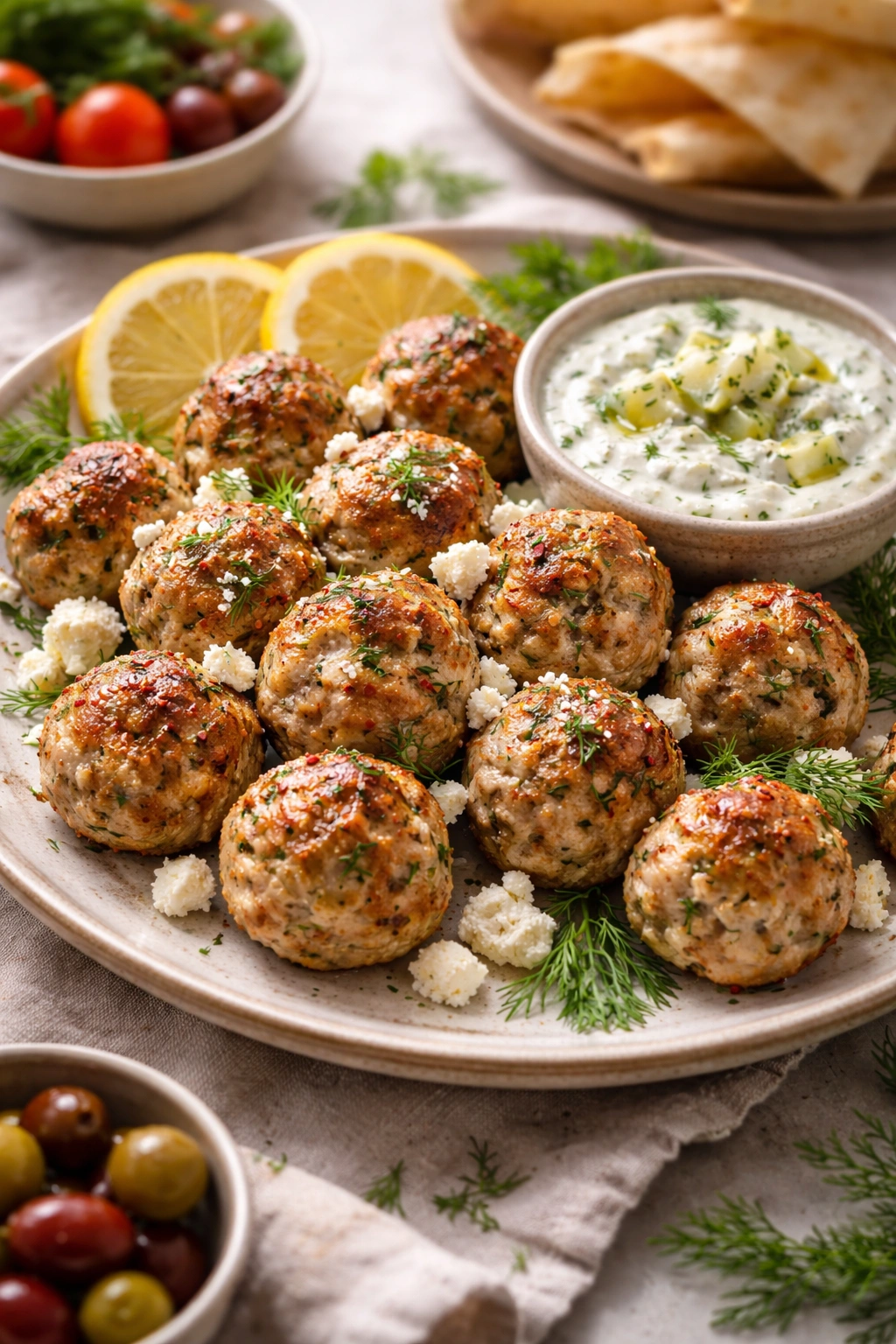
Once you’ve mastered the basic recipe, the foundation is solid enough to adapt for different flavor profiles without losing the juiciness.
Greek-style turkey meatballs swap fresh dill for basil, add ½ teaspoon of ground coriander and ¼ teaspoon of ground cumin, and use a combination of feta and Parmesan cheese instead of Parmesan alone. Serve with tzatziki sauce and lemon orzo for an entirely different meal.
Mediterranean herb blend uses fresh mint, oregano, and a touch of lemon zest along with the traditional basil and parsley. This version works beautifully with marinara sauce but also stands out on a salad or with a light lemon butter sauce.
Asian-inspired meatballs replace the Italian herbs with ½ tablespoon of minced fresh ginger (or ½ teaspoon ground ginger), ½ teaspoon of soy sauce in place of some of the salt, and a pinch of white pepper. Serve with a ginger-soy glaze or sweet and sour sauce for a completely different experience.
Spicy kick version adds ¼ teaspoon of cayenne pepper and ½ teaspoon of smoked paprika to the basic recipe, along with an extra pinch of red pepper flakes if you want serious heat. Serve with marinara or buffalo sauce depending on your mood.
Mushroom and herb blend adds ¼ cup of very finely minced mushrooms (cremini or shiitake work well) in place of some of the zucchini. Mushrooms add umami and moisture naturally, making these especially tender.
Dietary Swaps and Ingredient Substitutions
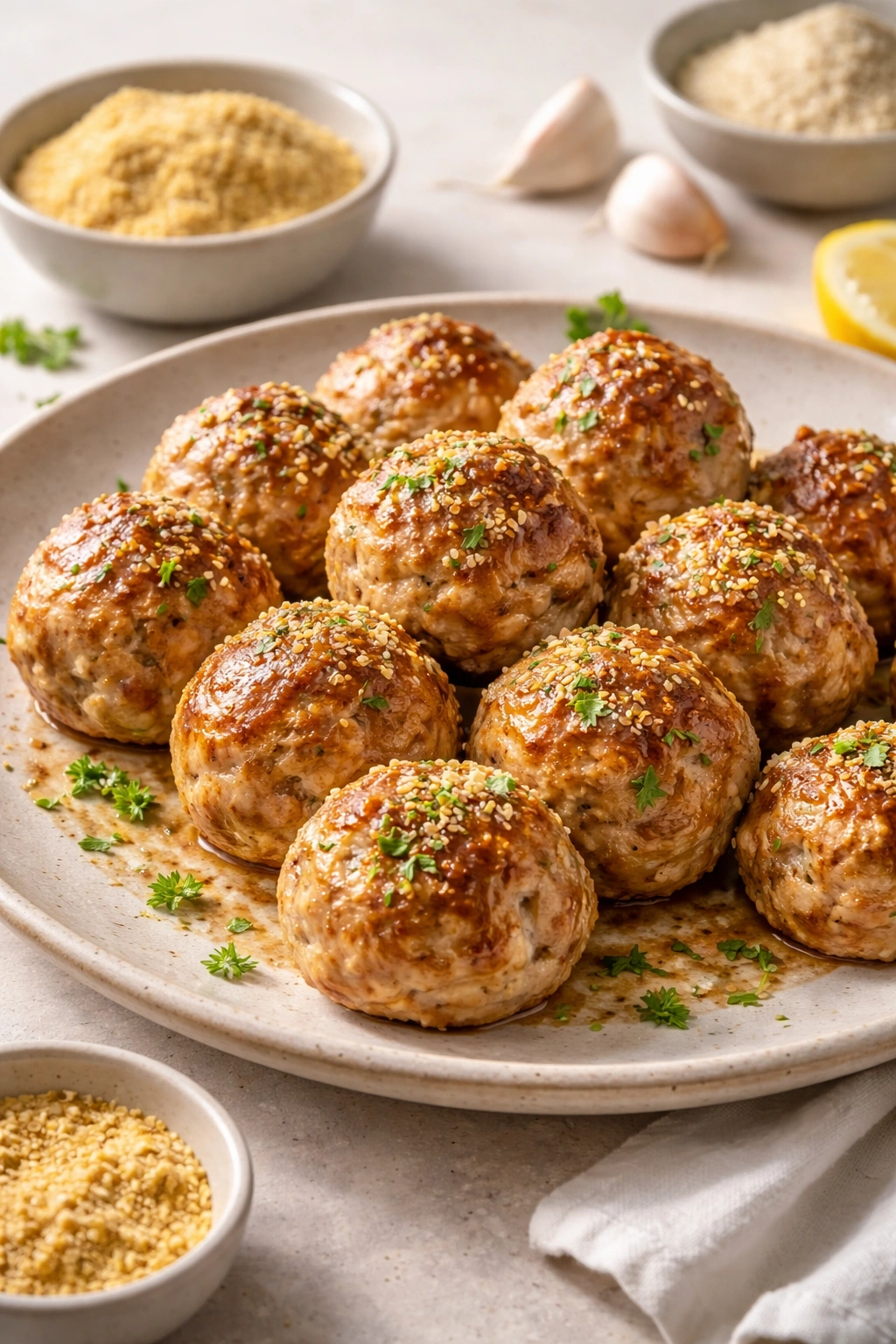
For gluten-free meatballs, swap regular panko for gluten-free panko (available at most grocery stores), or use crushed gluten-free breadcrumbs. Some cooks have success using lightly ground oats in a food processor, though you may need to add a bit more Greek yogurt to compensate for the dryness of oats.
To make them dairy-free, replace the Parmesan with nutritional yeast (which adds that savory umami note) and use plain dairy-free yogurt in place of Greek yogurt. The mixture might be slightly looser, so add an extra tablespoon of panko if needed.
For egg-free versions, substitute one whole egg with 3 tablespoons of aquafaba (the liquid from canned chickpeas) or ¼ cup of unsweetened applesauce. Applesauce works particularly well and adds a subtle sweetness that complements the herbs nicely.
To reduce calories further, use 99% lean ground turkey and skip the olive oil for brushing; instead, spray the meatballs with cooking spray before baking. You’ll lose a tiny bit of browning but save about 20 calories per meatball.
For spice-sensitive eaters, reduce or eliminate the red pepper flakes, garlic, and oregano, replacing them with milder herbs like chives, dill, or tarragon. The beef bouillon becomes even more important for flavor in this version.
Storage, Freezing, and Reheating Your Turkey Meatballs
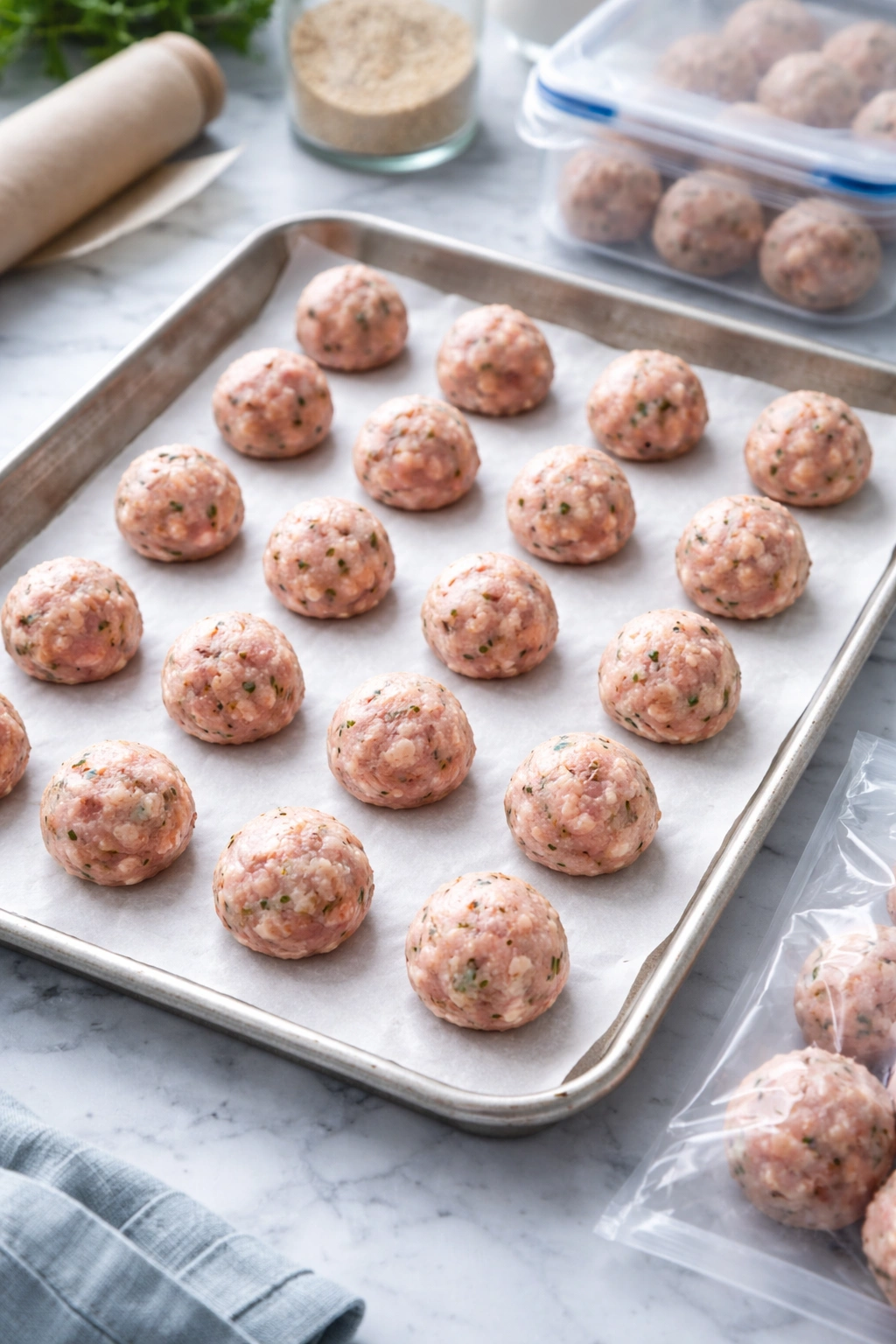
Raw meatballs shaped and ready to cook can be refrigerated in an airtight container for up to 24 hours. Beyond that, I recommend freezing them to preserve quality. They’ll keep in the fridge for 24 hours, but they’re best cooked within that window since the mixture doesn’t improve with age.
To freeze raw meatballs, arrange the shaped, unbaked meatballs on a parchment-lined baking sheet without touching each other. Freeze for 1–2 hours until completely solid, then transfer to a freezer bag and store for up to 3–4 months. When ready to cook, thaw overnight in the refrigerator, bring to room temperature for 30 minutes, then bake according to the recipe directions.
Cooked meatballs can be refrigerated in an airtight container for up to 5 days. To freeze cooked meatballs, cool them completely, then arrange on a baking sheet and freeze for 1–2 hours. Once solid, transfer to a freezer bag and store for up to 3 months. Thaw overnight in the refrigerator before reheating.
To reheat cooked meatballs, the best method is gently warming them in marinara sauce on the stovetop over medium-low heat for 5–10 minutes, stirring occasionally. Alternatively, place them in a covered skillet with a splash of water and warm over medium-low heat for 3–4 minutes, stirring gently. You can also microwave individual portions on a microwave-safe plate for 60–90 seconds, though this can dry them out slightly—cutting them in half helps them reheat more evenly. Never reheat meatballs in the oven, as this will dry them out quickly.
Serving Ideas That Work for Any Occasion
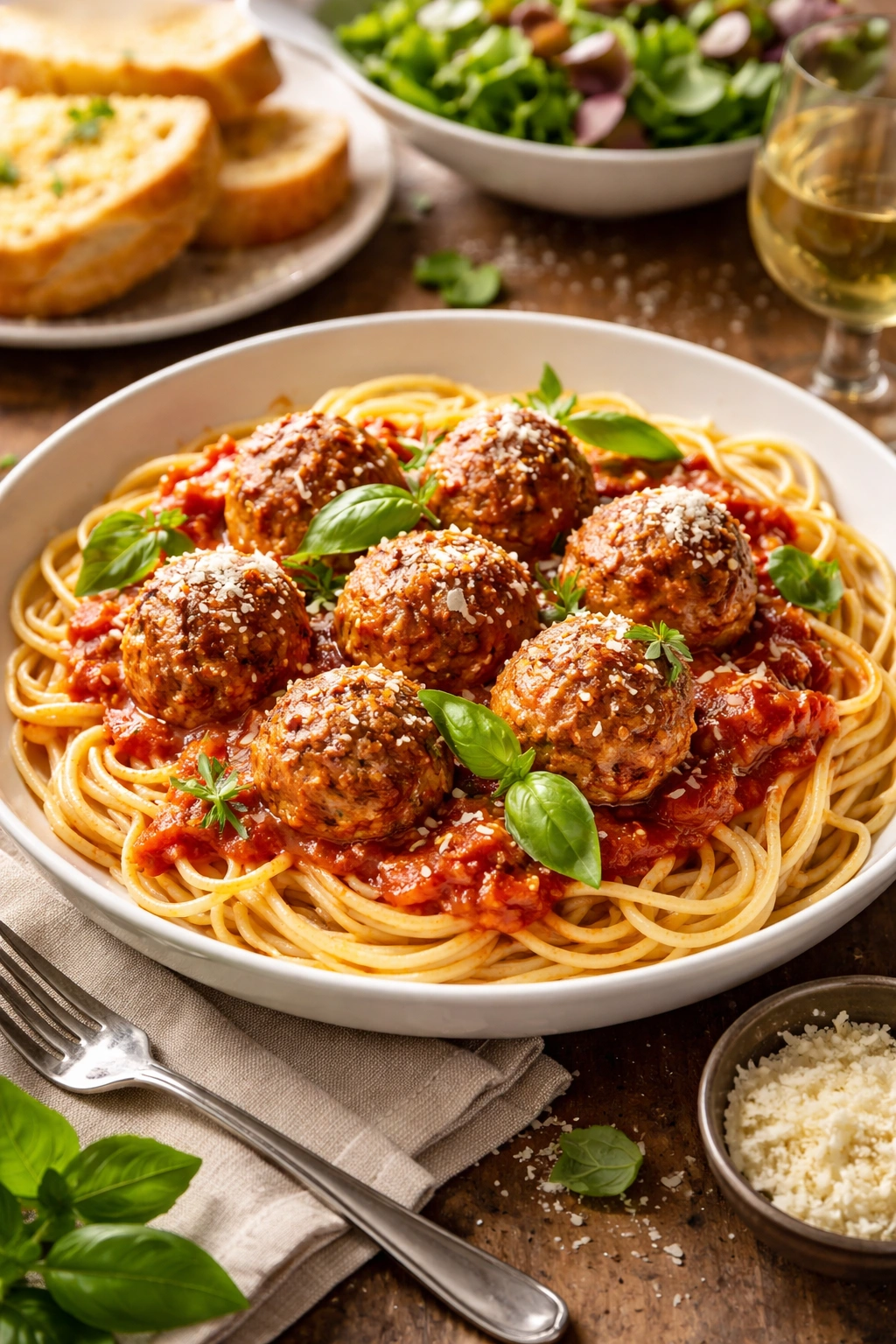
Classic spaghetti and meatballs remains the most satisfying way to serve them. Toss cooked pasta with warm marinara sauce, nestle meatballs on top, and finish with fresh basil and grated Parmesan. The sauce adds needed moisture and warmth.
Meatball subs transform them into a completely different meal. Slice hoagie rolls in half, brush with melted butter, toast lightly, then fill with meatballs and marinara sauce. Top with mozzarella and broil for a few minutes until the cheese melts, or serve cold with just sauce for a lighter option.
Over creamy polenta or mashed potatoes creates a rustic, comforting dinner. The starchy base soaks up sauce beautifully and pairs naturally with the herbs in the meatballs.
In a salad for a protein-packed light meal—toss them with arugula, shaved Parmesan, cherry tomatoes, and a simple lemon vinaigrette.
As an appetizer at dinner parties, serve on a platter with toothpicks and small bowls of marinara sauce or tzatziki for dipping. Most people are pleasantly surprised they’re made from turkey.
With rice pilaf or risotto for a Mediterranean-inspired dinner. The rice catches the sauce and the meatballs provide protein without being heavy.
In soup like a lightly simmered broth with vegetables and orzo pasta, or minestrone—an easy way to stretch a batch into a complete meal.
Over zucchini noodles for a low-carb option that lets the meatballs shine without pasta.
Final Thoughts
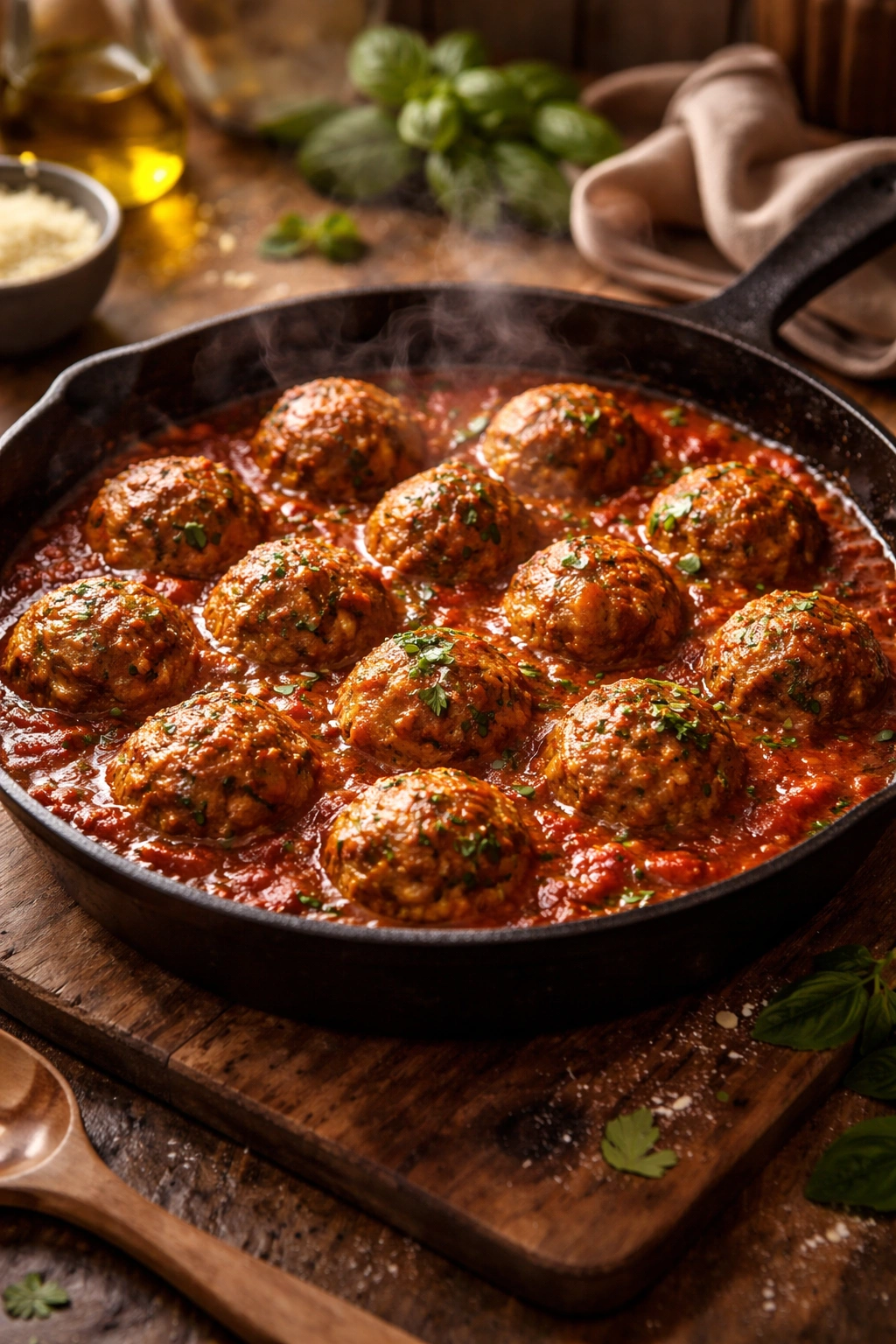
The secret to juicy turkey meatballs isn’t actually a secret at all—it’s understanding that ground turkey needs specific treatment because of its leanness. Grated vegetables for slow-release moisture, panko for structure, and gentle handling throughout form the foundation of meatballs that are genuinely indistinguishable from beef versions in terms of texture and satisfaction. Add proper seasoning with beef bouillon and fresh herbs, bake them instead of pan-frying to avoid overcooking, and use a meat thermometer to pull them out at exactly the right moment.
Once you’ve made them a few times, this recipe becomes automatic—the kind of dinner you can throw together on a weeknight without thinking twice. Make a double batch and freeze half for nights when you need protein fast. Serve them a dozen different ways depending on what you’re in the mood for. The point is they’re finally a recipe worth making again and again, rather than something you’re forcing yourself to eat because it’s the “healthy option.” That’s what really changes the game.
