



There’s something almost magical about a steaming bowl of albondigas soup on a night when the wind is howling outside and you need something warm, nourishing, and deeply satisfying. This traditional Mexican meatball soup has been feeding families through cold seasons for generations, but this lighter version offers all the rich, comforting flavors without the heaviness that can weigh you down on chilly evenings. By using lean ground turkey instead of beef, reducing unnecessary fillers, and loading the broth with fresh vegetables and aromatic herbs, you get a soup that feels indulgent while actually supporting your body’s nutritional needs.
The beauty of this dish lies in its simplicity and versatility. The tender turkey meatballs are infused with fresh cilantro and mint—the signature herbs that make authentic albondigas so distinctive—while the broth builds flavor through a combination of sautéed vegetables, aromatic spices, and quality broth. Unlike heavier versions that rely on white rice and fatty cuts of meat to create richness, this approach lets the natural flavors shine through, creating a soup that tastes like comfort but leaves you feeling energized rather than sluggish. It’s the kind of dish that transforms a cold evening into something cozy and memorable, the soup equivalent of a warm embrace.
Why Albondigas Soup Is Perfect for Cold Seasons
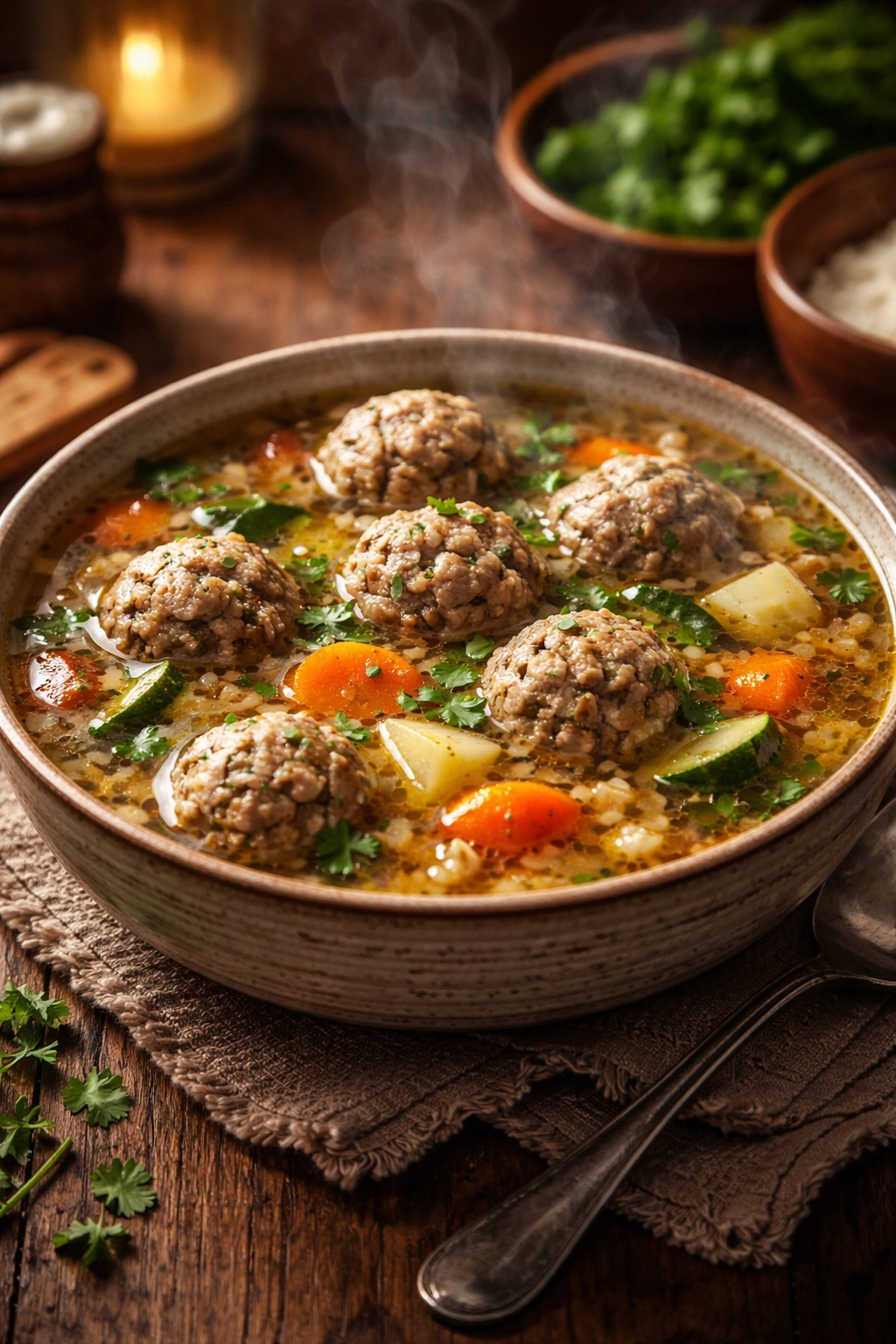
Albondigas—the Spanish word for meatballs—has been a cornerstone of Mexican cuisine for centuries, and there’s genuine wisdom in the tradition. When temperatures drop and your body craves warmth, a bowl of steaming broth with tender meatballs and fresh vegetables is exactly what you need. The soup provides immediate comfort through its warmth while delivering sustained nourishment that actually fuels you through cold nights rather than making you drowsy.
This lighter version maintains the soul of traditional albondigas while being mindful of what modern cooks are looking for: real flavor without excessive calories, satisfying ingredients without unnecessary heaviness, and a dish that’s genuinely good for your body. The combination of lean protein, vegetables, and aromatic seasonings makes this soup perfect for those cold-weather evenings when you want something that tastes indulgent but supports your wellness goals.
There’s also a practical advantage to making albondigas soup when the weather turns cold—your kitchen gets filled with wonderful aromas, the stovetop keeps your cooking space warm naturally, and you end up with leftovers that taste even better the next day. This is meal-prep friendly cooking at its best, allowing you to spend a bit of time on one evening and have multiple satisfying dinners waiting for you throughout the week.
Understanding the Health Benefits of This Lighter Version
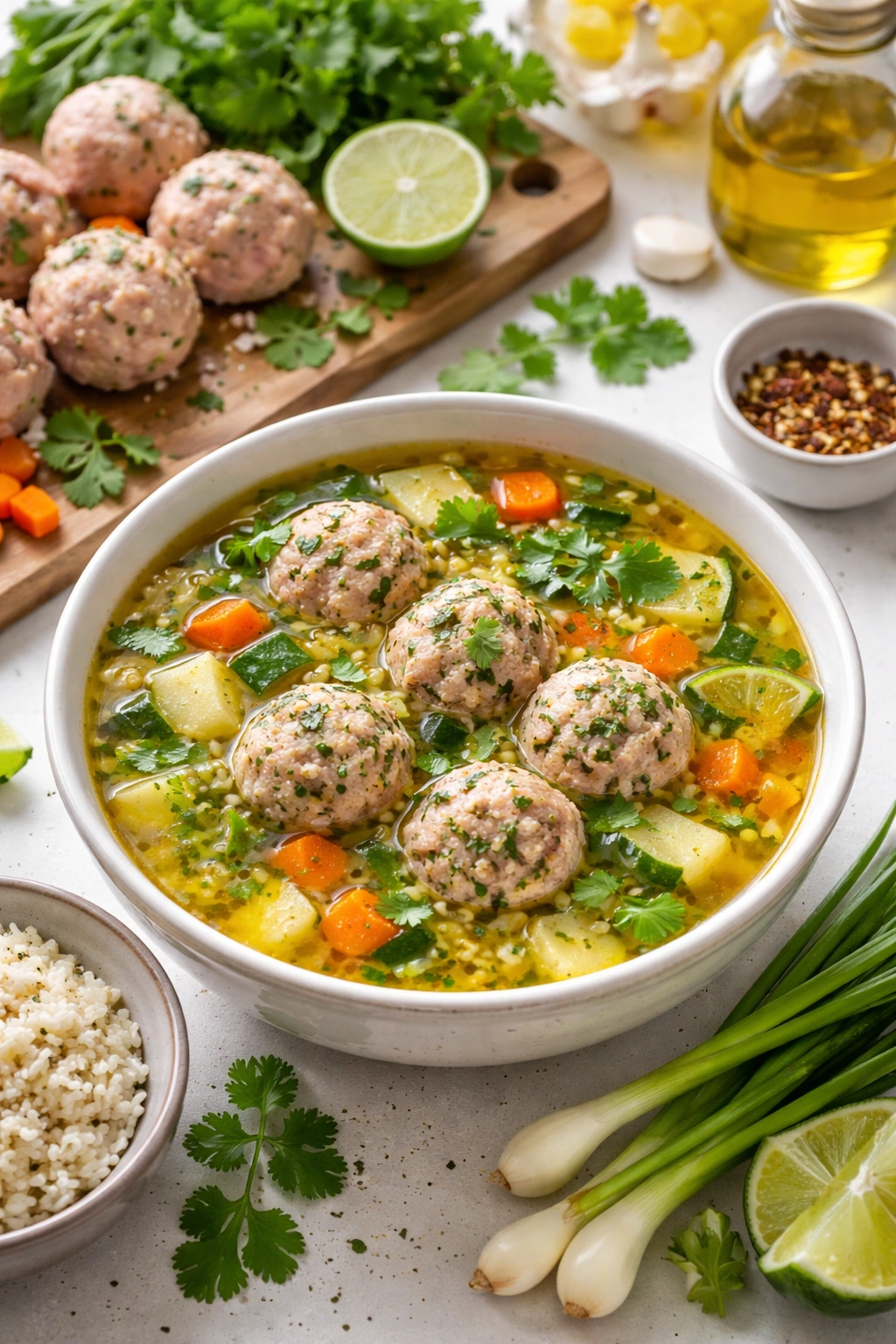
Ground turkey is the foundation of this lighter take on a beloved classic, and it’s worth understanding why this substitution makes such a meaningful difference. A 3-ounce serving of turkey contains approximately 34 micrograms of iodine—about 23% of the daily recommended value—which is crucial for thyroid health and proper hormone production. Unlike beef or pork meatballs that can carry significant saturated fat content, lean ground turkey provides substantial protein while keeping your calorie count reasonable and your cholesterol levels more stable.
The fresh herbs mixed into the meatballs—cilantro and mint—aren’t just there for flavor; they bring genuine nutritional benefits. Cilantro aids in digestion and may help your body process minerals more efficiently, while mint provides a cooling effect that balances the warming spices in the soup. Together, these herbs create a flavor profile so distinctive that you won’t miss any of the heavier ingredients that traditional recipes rely on.
The vegetables loading this soup deserve their own attention. Carrots provide over 400% of the daily recommended vitamin A per cup, which plays a vital role in immune function and eye health—particularly important during cold and flu season. Zucchini, while mild-flavored, is remarkably nutrient-dense, offering excellent amounts of vitamin K, vitamin C, folate, magnesium, and potassium, all while containing just 14 calories per half-cup serving. When you combine these vegetables with quality broth, you’re creating a meal that genuinely nourishes your body while delivering deep, satisfying flavors.
The Key to Perfect Turkey Meatballs
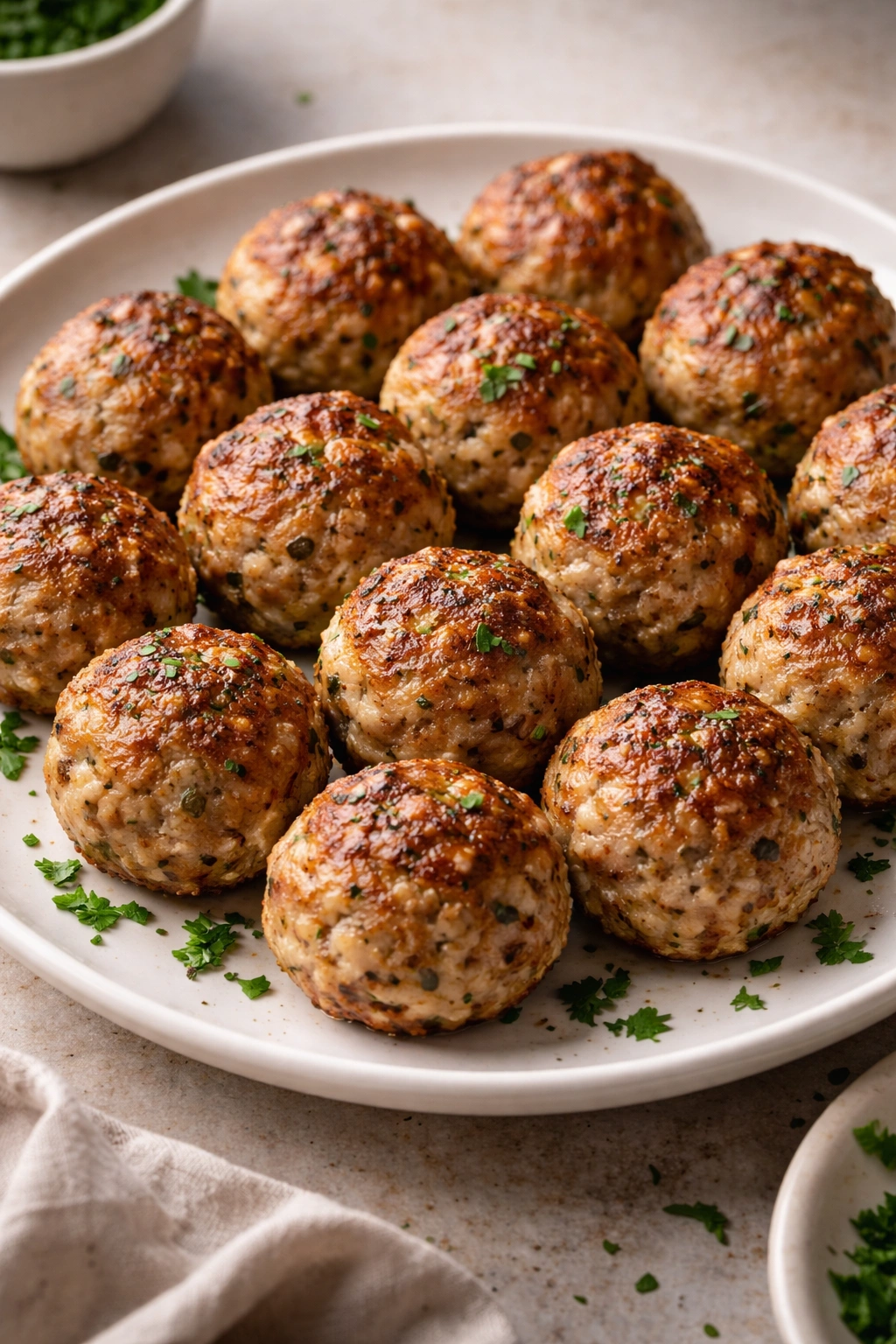
The difference between meatballs that hold together beautifully and those that fall apart in your soup comes down to a few crucial details. The egg is your binding agent, but rather than relying on breadcrumbs—which can make meatballs dense and heavy—this recipe uses cooked brown rice to add structure while keeping the meatballs tender and moist. The rice distributes evenly through the meat mixture, providing stability without creating a dense, stodgy texture.
Mixing technique matters far more than most home cooks realize. Use your hands to gently combine the ingredients, working until everything is just barely incorporated. The moment you see no more visible streaks of color, stop. Overworking the meat develops gluten in the breadcrumbs and makes the protein strands tighten, resulting in hard, rubbery meatballs rather than the tender ones you’re after. Think of it like making pie crust—you want a light touch, not a vigorous workout.
Rolling your meatballs to a uniform size ensures they cook at the same rate, so you avoid the situation where some are still raw while others are overcooked. A simple trick: use a cookie scoop designed for portion control, which holds roughly 2 tablespoons—the perfect size for meatballs that are substantial enough to feel satisfying but small enough to cook through evenly. If your hands get sticky as you roll, dampen your palms slightly with cold water rather than flour, which can make the meatballs dry.
Essential Ingredients and Quality Substitutions
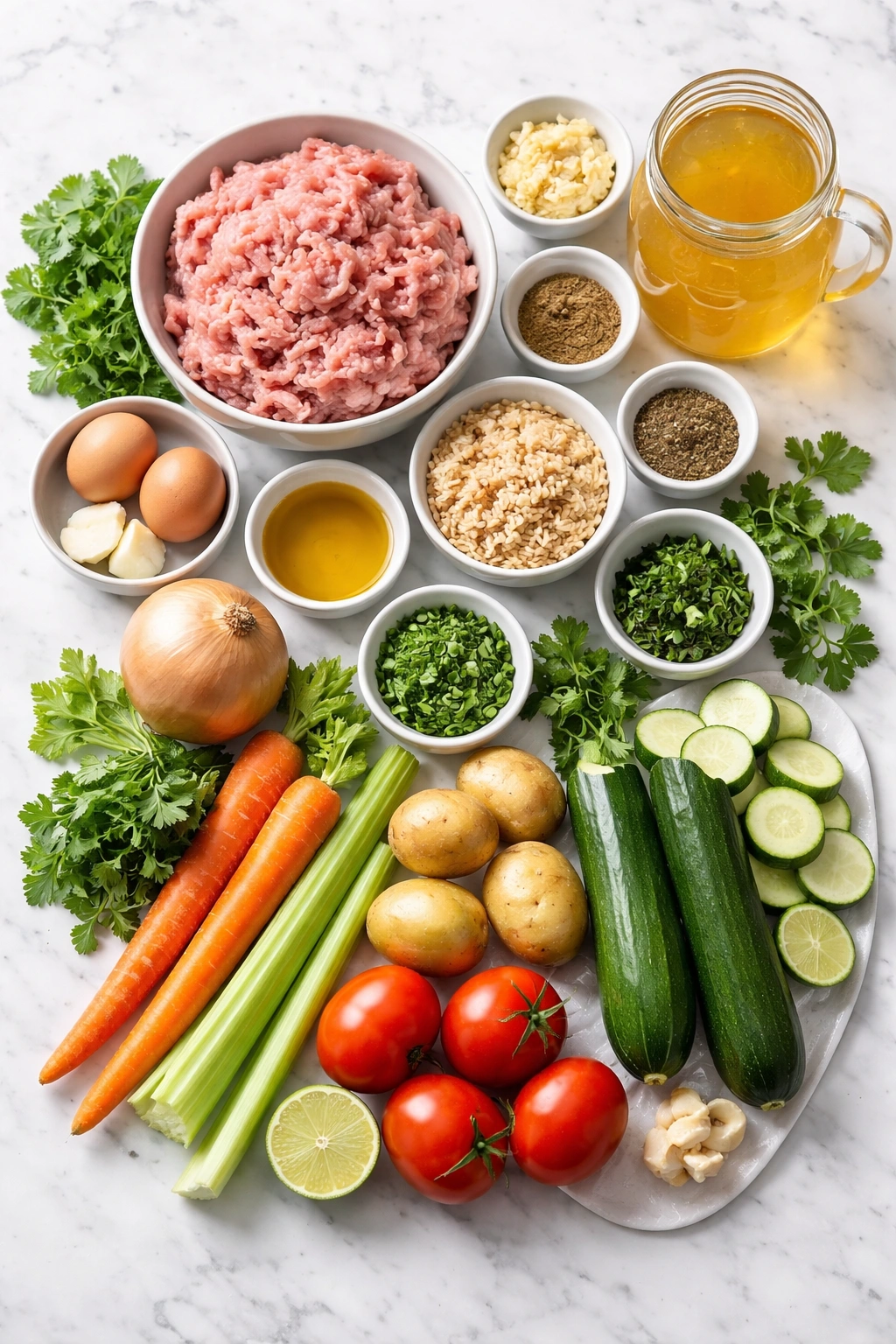
The ingredient list for this soup looks long until you realize it’s actually two separate component lists—one for the meatballs and one for the broth—and each part is straightforward and uses ingredients you likely already have in your kitchen. The magic comes not from exotic or hard-to-find items, but from using high-quality versions of common ingredients and understanding exactly what each one contributes to the final dish.
Ground turkey, specifically: Look for ground turkey thigh rather than ground turkey breast if you can find it. Thigh meat has slightly more fat—usually around 93% lean—which keeps meatballs moist and tender. Ground turkey breast, while leaner, can result in dry, crumbly meatballs because it lacks the fat needed for binding and moisture. If your market only carries ground turkey breast, add a tablespoon of olive oil to the meatball mixture for every pound of turkey to compensate.
The broth base: Use low-sodium chicken broth, not bouillon, and ideally something that lists actual chicken, water, and vegetables as the primary ingredients rather than salt and artificial flavoring. If you have homemade bone broth on hand, this is an ideal place to use it—the collagen and gelatin create a silky mouthfeel and add nutritional value that store-bought broth can’t match. Bone broth brings benefits for gut health, hair, skin, and joint function, making it a genuinely therapeutic addition to your soup.
Fresh herbs: This is where you genuinely cannot cut corners. The mint is absolutely essential—it’s the signature herb in authentic albondigas, and it’s worth seeking out fresh mint specifically for this recipe. If you can’t find fresh mint, don’t substitute with dried; the flavor profile changes completely and the soup loses its distinctive character. Cilantro and parsley are more forgiving, and dried versions can work in a pinch, but fresh is dramatically superior.
Vegetable selection: While this recipe suggests specific vegetables, you have flexibility based on what’s available and what you enjoy. Zucchini, carrots, and potatoes are the traditional base, but bell peppers, celery, cabbage, or even spinach work beautifully. The only consideration is cooking time—dense vegetables like potatoes need a head start, while quick-cooking greens should be added at the very end.
Yield, Prep Time, Cook Time, Total Time, Difficulty
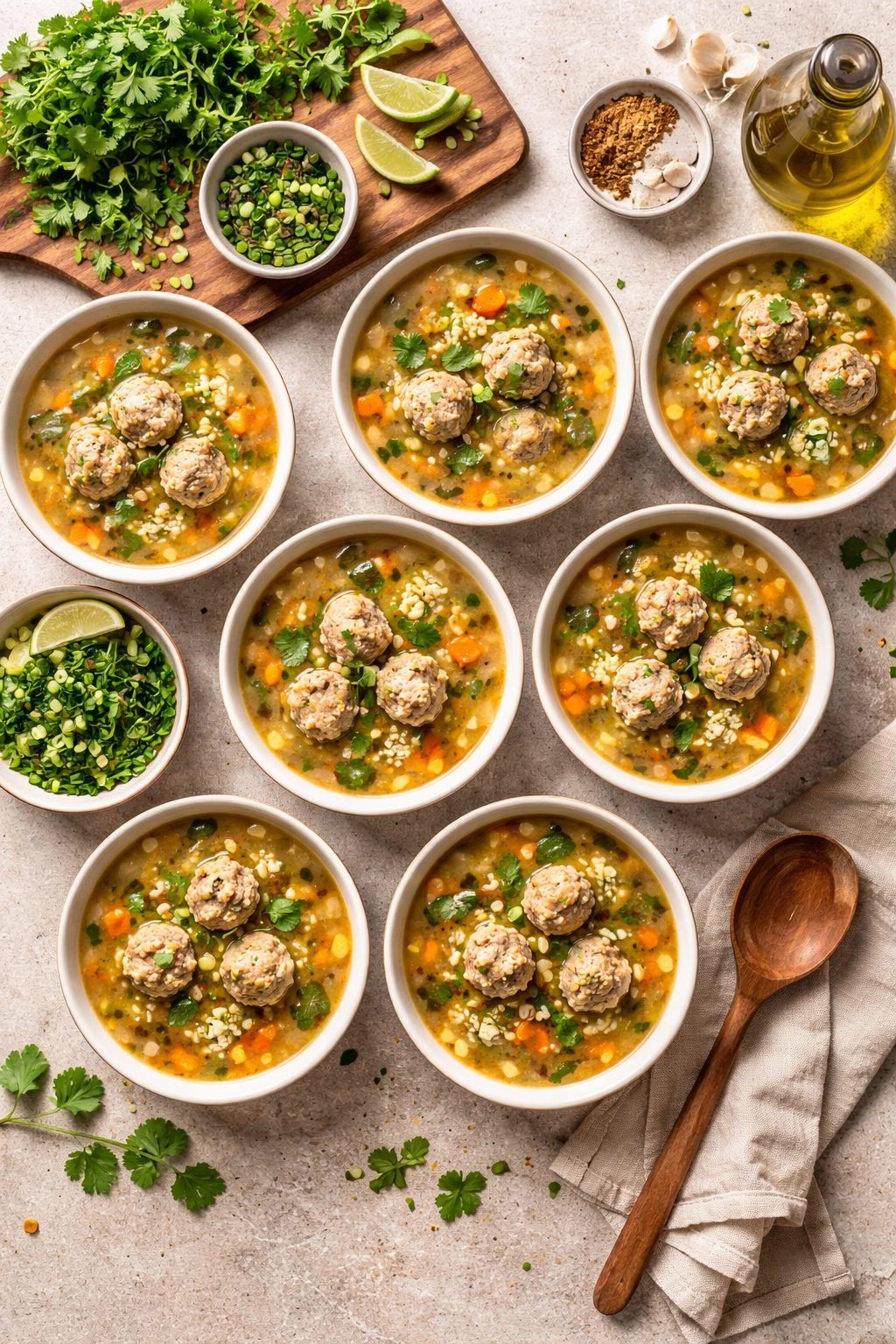
Yield: Serves 6 to 8 people | Makes approximately 8 cups of soup
Prep Time: 25 minutes (chopping vegetables, mixing meatballs, rolling)
Cook Time: 40 minutes (browning meatballs, simmering soup with meatballs)
Total Time: 65 minutes active cooking time
Difficulty: Intermediate — While no special equipment is required and the steps are straightforward, this recipe involves multiple components being prepared simultaneously. First-time cooks will succeed if they read through all instructions before starting. The technique of gently simmering meatballs without breaking them apart requires a light hand, which improves with practice.
Complete Ingredient List
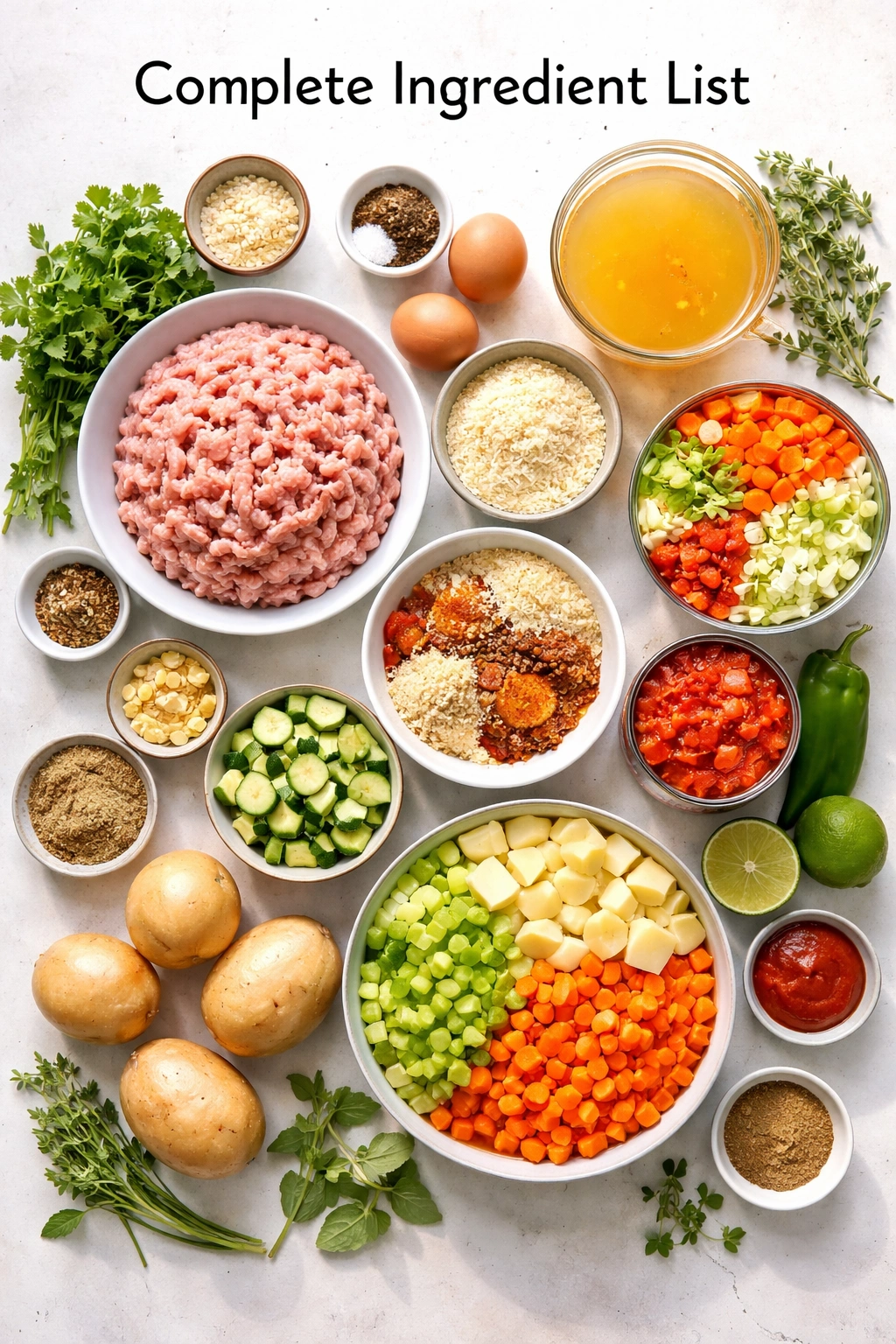
For the Turkey Meatballs:
- 1½ pounds lean ground turkey (93% lean or higher)
- 1 large egg
- ¾ cup cooked brown rice, cooled to room temperature
- 3 cloves garlic, minced
- ½ cup fresh cilantro, finely chopped
- ⅓ cup fresh mint, finely chopped and packed
- ⅓ cup fresh parsley, finely chopped
- 1½ teaspoons ground cumin
- 1 teaspoon dried oregano
- ½ teaspoon salt
- ½ teaspoon freshly ground black pepper
- 2 tablespoons olive oil (for browning)
For the Soup Base:
- 2 tablespoons olive oil
- 1 large yellow onion, diced
- 3 medium carrots, peeled and diced into ½-inch pieces
- 2 celery stalks, diced
- 3 medium russet potatoes, peeled and diced into ½-inch cubes
- 3 cloves garlic, minced
- 6 cups low-sodium chicken broth (or homemade bone broth)
- 1 (14.5-ounce) can diced tomatoes with their juice (or 1½ cups fresh diced tomatoes)
- 3 medium zucchini, halved lengthwise and sliced into half-moons
- 1 teaspoon ground cumin
- ½ teaspoon dried oregano
- Salt and freshly ground black pepper to taste
For Finishing and Serving:
- ½ cup fresh cilantro, chopped
- Juice of 2 fresh limes
- Lime wedges for serving
Step-by-Step Cooking Instructions
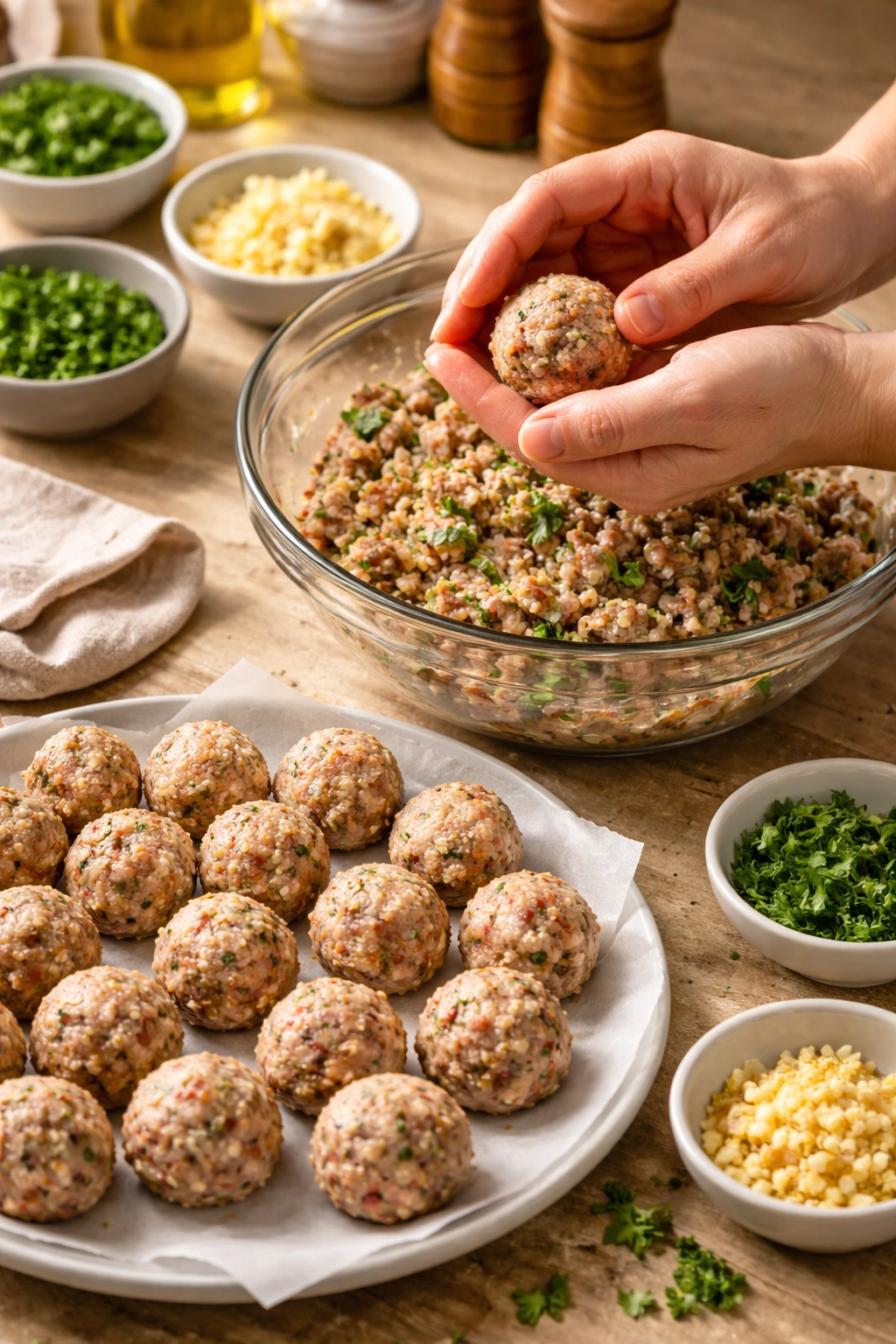
Prepare the Meatballs:
-
In a large mixing bowl, combine the ground turkey, egg, cooled brown rice, minced garlic, cilantro, mint, parsley, cumin, oregano, salt, and pepper. Using your hands, gently mix the ingredients until just barely combined—you should see no more streaks of meat color remaining, but the mixture should still feel light and a bit loose rather than tightly packed together. Do not overmix. Overmixing develops the protein strands and creates rubber-textured meatballs.
-
Using a cookie scoop or by rolling approximately 2 tablespoons between your palms, form the mixture into meatballs about 1½ inches in diameter. You should have approximately 20 to 24 meatballs. If the mixture becomes sticky as you work, dampen your palms lightly with cold water. Set the finished meatballs on a parchment-lined plate and refrigerate while you prepare the soup base.
Prepare the Soup Base:
-
Heat the 2 tablespoons of olive oil in a large pot or Dutch oven (at least 5-quart capacity) over medium-high heat. Once the oil is shimmering and hot, add the diced onion and cook, stirring occasionally, for approximately 4 minutes until it becomes translucent and softens at the edges. Season lightly with a pinch of salt.
-
Add the diced carrots and celery to the pot and stir well to combine with the onion. Continue cooking for approximately 5 to 7 minutes, stirring often, until the carrots soften slightly and the celery becomes fragrant. The vegetables should be tender on the outside but still hold their shape.
Advertisements -
Stir in the diced potatoes and cook for approximately 2 to 3 minutes, stirring gently so the potatoes coat with the oil. Add the minced garlic and cook for exactly 1 minute, stirring constantly, until very fragrant. Be careful not to let the garlic burn—burnt garlic tastes bitter and will compromise the entire soup’s flavor.
-
Pour the chicken broth into the pot and add the diced tomatoes along with their juice. Stir in the cumin, oregano, and a generous pinch of salt and pepper. Increase the heat to high and bring the broth to a boil, stirring occasionally. Once boiling, reduce the heat to a gentle simmer.
-
Add the sliced zucchini to the simmering broth and allow everything to cook for approximately 10 minutes. The potatoes should be nearly tender but still hold their shape slightly when pierced with a knife. Taste the broth and adjust the seasoning with additional salt and pepper as needed.
Cook the Meatballs in the Soup:
-
Carefully remove the meatballs from the refrigerator. Gently lower each meatball into the simmering broth one at a time, allowing it to settle into the liquid. Do not stir the meatballs immediately after adding them—let them rest in the soup for a few minutes to allow the exterior to set. This prevents them from falling apart.
-
Once all the meatballs have been added and the broth returns to a gentle simmer, cover the pot partially with a lid and simmer undisturbed for approximately 25 to 30 minutes. The meatballs will rise to the surface as they cook—this is exactly what you want and signals that they’re nearly done. Avoid stirring the soup vigorously while the meatballs are cooking, as this can cause them to break apart. A gentle stir near the end of cooking is fine.
-
The meatballs are done when they feel firm when gently pressed and have cooked through completely—a fork inserted into the center should meet no resistance. The internal temperature should reach 165°F if you’re checking with a meat thermometer.
Finish and Serve:
-
Remove the pot from the heat. Stir in the fresh chopped cilantro and the lime juice, mixing gently to distribute throughout the soup. Taste once more and adjust the seasoning with additional salt, pepper, or lime juice as you prefer. Some people like an extra squeeze of lime brightness; others prefer it more subtle.
-
Ladle the soup into bowls, making sure each serving gets 3 to 4 meatballs, vegetables, and plenty of broth. Serve immediately, garnished with additional fresh cilantro, a lime wedge, and perhaps a pinch of freshly ground black pepper. This soup is best enjoyed while steaming hot.
Advertisements
Pro Tips for the Best Results
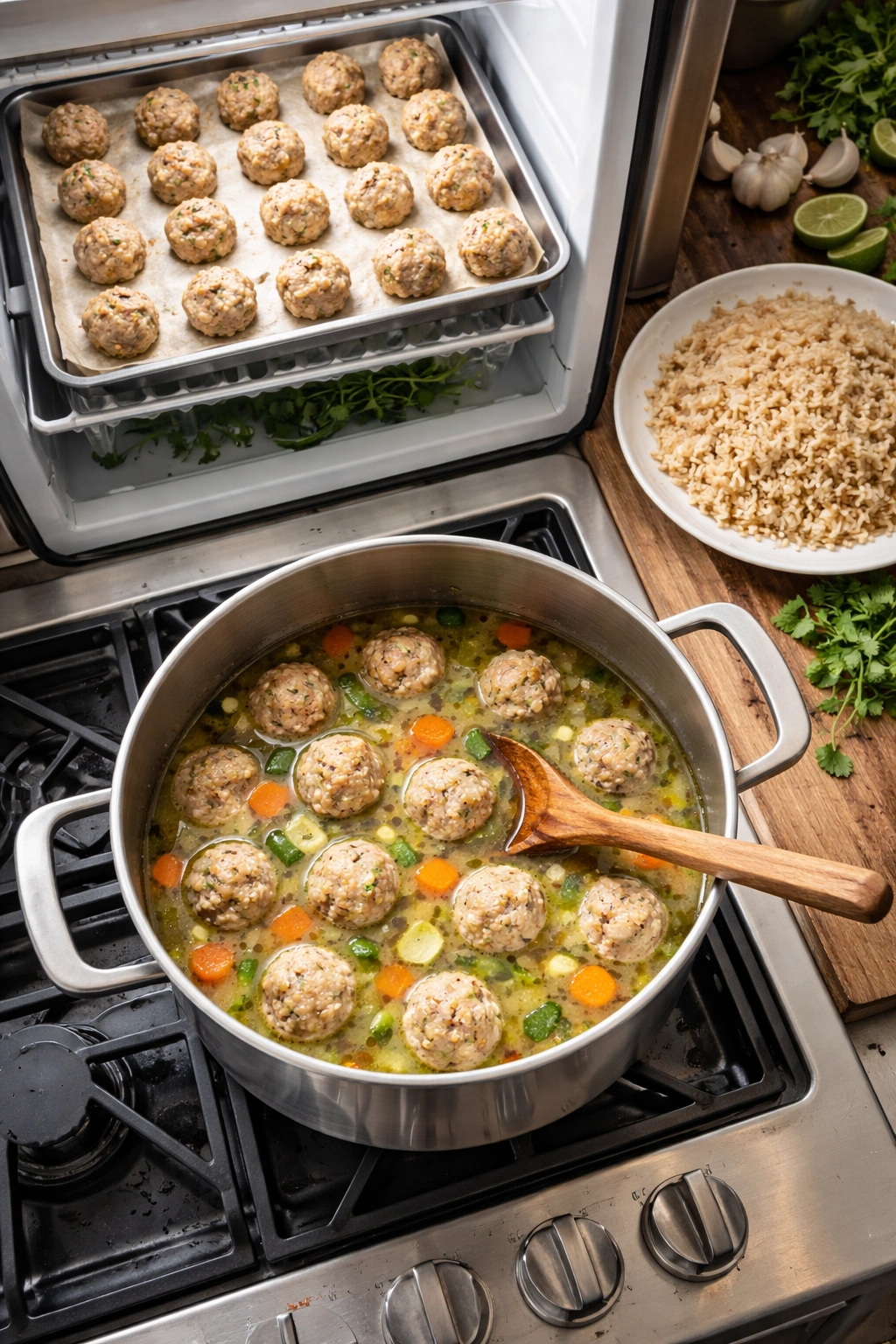
Chill your meatballs before cooking if time allows. Placing the formed meatballs in the refrigerator for 30 minutes to an hour before cooking helps them hold their shape better when they enter the hot broth. This is particularly helpful if you’re making them several hours in advance. The cold mixture tightens up and becomes more stable, resulting in fewer meatballs breaking apart during the initial cooking stages.
Don’t skip the partial cooling step for the rice. Using warm rice in the meatball mixture makes the mixture harder to work with and can partially cook the meat as you mix. Always cook your brown rice ahead of time, spread it on a plate, and let it cool to room temperature before combining with the turkey.
Use a gentle simmer rather than a rolling boil. This makes a tremendous difference in how well your meatballs hold together. A rolling boil creates turbulence that tumbles the meatballs around and causes them to bang into each other and the sides of the pot, leading to cracks and pieces breaking off. A gentle simmer, where small bubbles rise slowly to the surface, keeps the meatballs intact while still cooking them through evenly.
Build the herb flavor gradually. Start with the amount of fresh herbs specified in the recipe, then taste before serving. You can always add more mint or cilantro, but you can’t take it out. If fresh mint seems particularly strong to you, begin with two-thirds of the amount called for and add the remaining mint to the finished soup just before serving, where its fresh flavor will be most prominent.
Save that precious broth to reheat meatballs. If you find yourself with leftover meatballs and broth separately, don’t just reheat them together in a microwave where the meatballs might toughen. Instead, warm the broth gently on the stovetop, then add the cold meatballs and let them heat through slowly in the simmering broth for a few minutes. This keeps them tender and allows them to absorb additional flavor from the broth.
Common Mistakes and How to Avoid Them
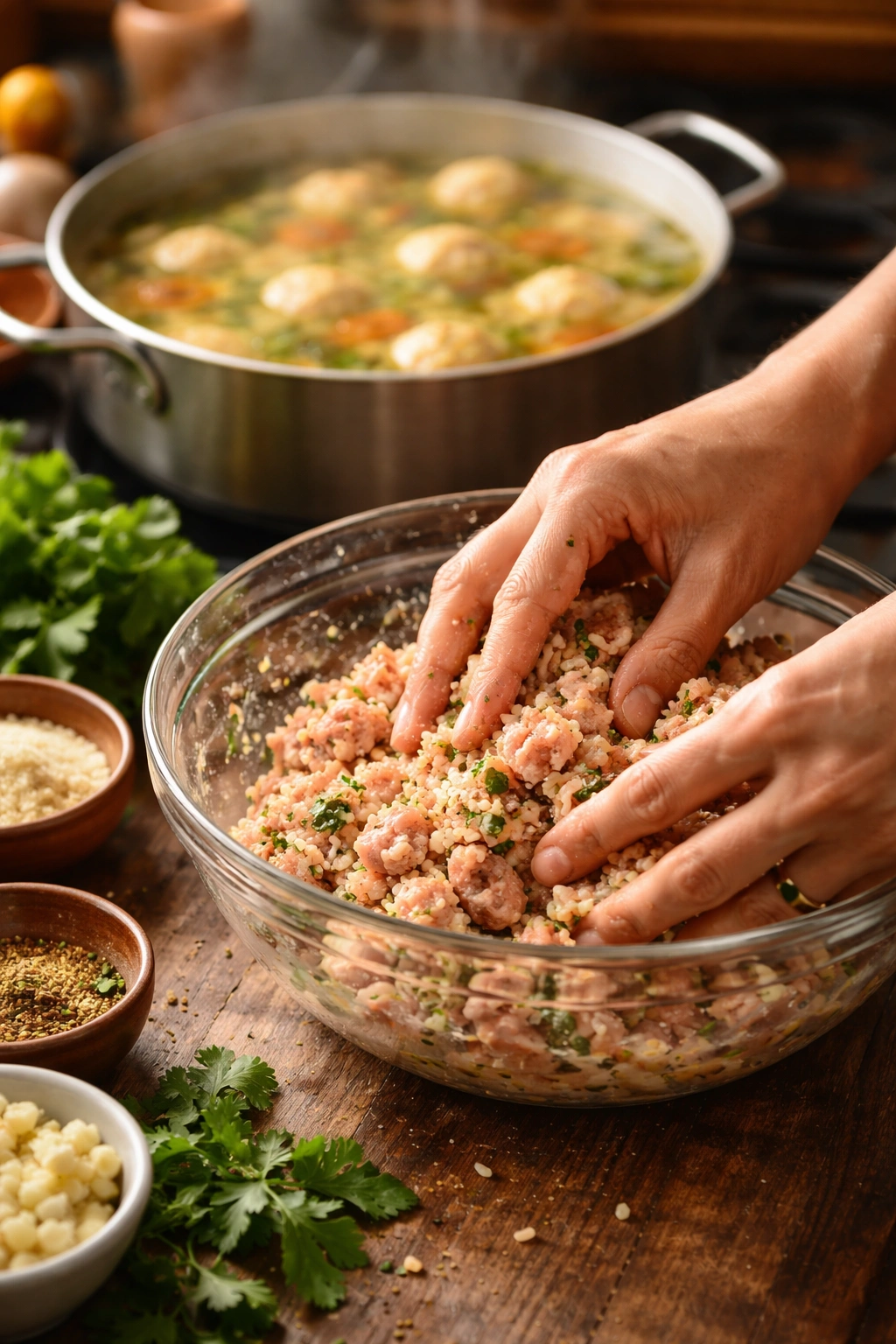
The most common problem with homemade albondigas soup is meatballs falling apart or becoming tough and rubbery. This happens because of one of three things: overmixing the meat mixture, allowing the broth to boil vigorously instead of simmering gently, or using overly lean ground turkey without adequate binding. The solution is understanding that you want to handle the meatball mixture as little as possible—less mixing equals better texture—and maintaining that gentle simmer throughout cooking.
Many home cooks also make the mistake of adding meatballs to broth that’s at a rolling boil, which shocks the cold meatball mixture and causes the exterior to crack before the inside has begun cooking. Always ensure your broth is at a gentle simmer before adding the meatballs, and keep it at that level throughout cooking.
Using dried herbs instead of fresh is another common shortcut that changes the entire flavor profile. Dried mint tastes harsh and medicinal compared to the fresh, bright quality you need in albondigas. The same applies to cilantro and parsley—while dried can work in a pinch, fresh herbs are so dramatically different that your soup will taste noticeably different. This is one area where fresh ingredients are truly non-negotiable.
Another mistake occurs when cooks don’t allow enough time for the soup base to simmer before adding the meatballs. Those first 10 minutes of simmering allow the flavors to marry and develop. If you add meatballs immediately after adding broth and vegetables, the broth hasn’t had time to develop depth. The soup will taste flatter and less satisfying, even if the meatballs themselves are perfect.
Finally, resist the urge to stir constantly while meatballs are cooking. This jostles them around and breaks them apart. A gentle stir near the end of cooking to ensure even flavors is perfectly fine, but once you add those meatballs, let them rest in the broth and do their thing.
Delicious Variations to Customize Your Soup
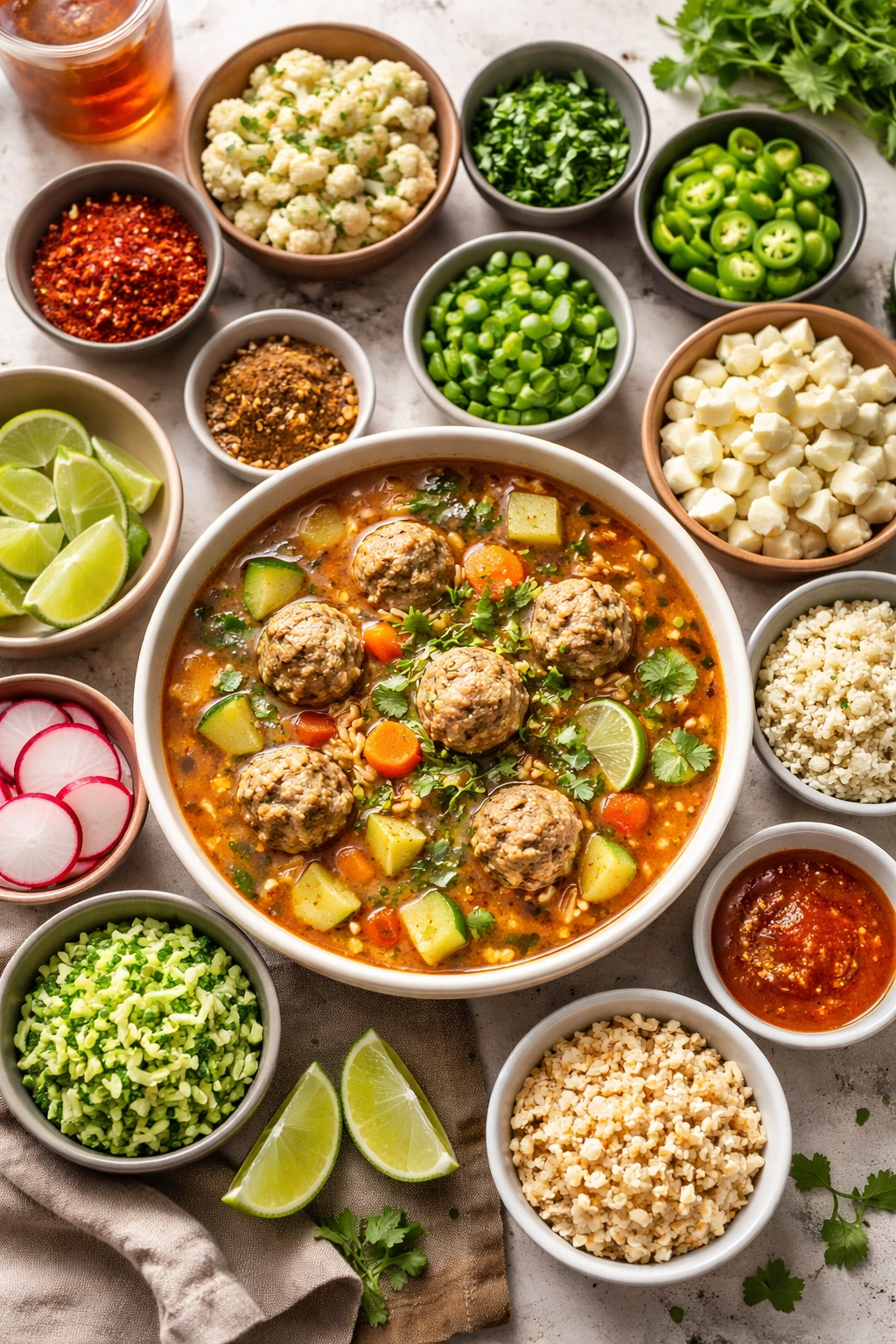
This soup is wonderfully adaptable, and you can create multiple versions depending on what’s available, what you’re in the mood for, or any dietary preferences. The foundation is strong enough to support variations while still tasting authentically like albondigas.
For a spicier version, add one to two minced jalapeño peppers to the soup base when you add the garlic, or stir in a teaspoon of your favorite chili powder along with the cumin and oregano. You can also serve the finished soup with a bottle of hot sauce or sambal oelek on the side, allowing each person to adjust the heat level to their preference. This approach lets the soup shine for those who prefer mild flavors while giving heat-lovers the option to customize.
To make it even lighter, substitute some of the potatoes with cauliflower florets or increase the amount of zucchini. You can also swap white potatoes for white sweet potatoes, which add a subtle sweetness and are technically nightshade-free if you’re avoiding them for dietary reasons.
For a grain-free version, replace the brown rice in the meatballs with finely ground almond flour or cassava flour (about ⅓ cup). This creates a completely different texture that’s slightly more delicate but equally delicious. You may need to add an extra teaspoon of water to the mixture to help bind, since almond flour absorbs liquid differently than rice.
Try adding black beans and hominy to create a heartier version with different texture and flavor components. Add them to the soup during the last 5 minutes of cooking so they warm through without becoming mushy. This addition is inspired by some wonderful regional variations from Mexico where these ingredients feature prominently.
Experiment with different fresh herbs. While mint and cilantro are traditional, you can add parsley or even a small amount of epazote—the traditional Mexican herb—for authentic depth. Some cooks add fresh basil for an Italian-Mexican fusion that’s genuinely delicious.
Make it creamy without cream. While this lighter version celebrates a clear broth, if you want a creamier soup, blend about a cup of the finished soup with a cup of broth, then stir it back in. This creates a naturally creamy texture without adding heavy cream.
Storage and Make-Ahead Strategies
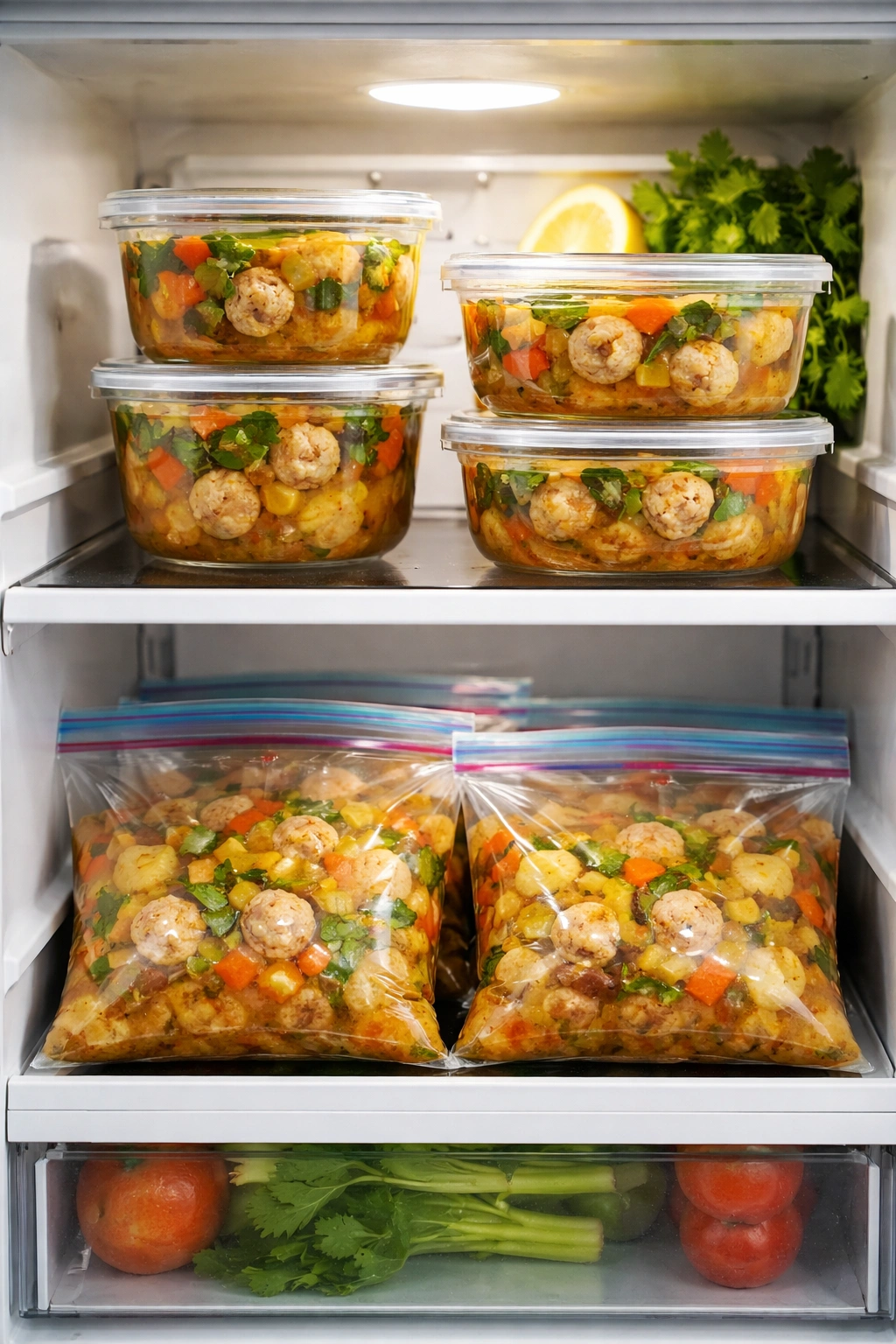
This soup is one of the best dishes to make ahead, and it actually improves over time as the flavors continue to develop and meld together. The meatballs become even more tender as they sit in the broth, absorbing all those wonderful flavors.
The cooked meatballs and broth will keep in the refrigerator for up to 5 days when stored in an airtight container. Ladle the soup into individual portions in glass containers for easy grabbing throughout the week. The flavors actually deepen and become more complex after a day or two, so making this soup on Sunday evening for weeknight meals is perfect timing.
For freezing, store the soup for up to 3 months in freezer-safe containers, leaving about an inch of headspace at the top since soup expands slightly when frozen. Freeze the meatballs and broth together in the same container—they’ll keep each other company and maintain quality better than separate components. For best results, let the soup cool completely to room temperature before transferring to the freezer, as hot soup can thaw other items and create temperature fluctuations.
To reheat from frozen, thaw the soup overnight in the refrigerator, then warm it gently on the stovetop over medium heat, stirring occasionally, until it reaches a gentle simmer. This slow reheating keeps the meatballs tender. Alternatively, you can reheat directly from frozen on the stovetop over low heat—it will just take longer, about 20 to 30 minutes. Avoid using the microwave for reheating, as the intense, uneven heat can make the meatballs tough.
If you want to prepare ahead but serve fresh, make the meatball mixture and store it in the refrigerator for up to 24 hours before rolling and cooking. You can also roll the meatballs and refrigerate them on a baking sheet for the same timeframe. Prepare the soup base separately and store in the refrigerator as well. On the day you want to serve, simply combine them and follow the final cooking steps for truly fresh-tasting soup with the convenience of advance preparation.
The cilantro and lime juice finish should be added just before serving rather than being included in the storage container, as they lose their brightness after a day or two. Add these finishing touches when you reheat the soup, and you’ll taste the difference in how vibrant and fresh it feels.
Perfect Serving Suggestions and Pairings
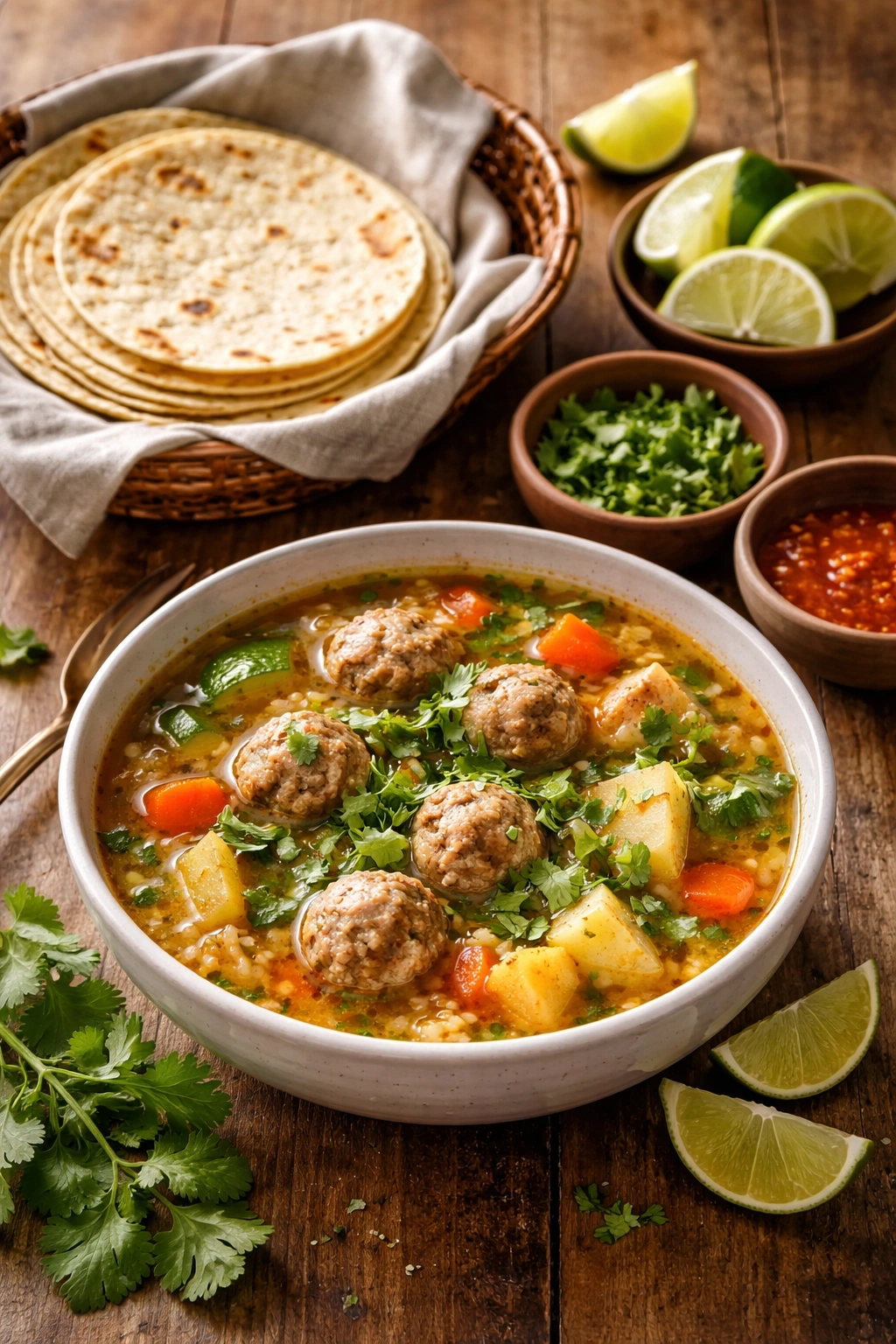
This lighter albondigas soup stands beautifully on its own as a complete meal, but there are several ways to serve it that enhance the experience and create a more rounded dining moment.
The most traditional pairing is warm tortillas—either flour or corn, depending on your preference. Warm them briefly over a gas flame or in a dry skillet so they’re just soft enough to fold easily. You can use them to scoop up the meatballs and vegetables, creating a little wrap with broth-soaked tortilla, or simply tear them into pieces and add them to your bowl for added substance and texture.
A squeeze of fresh lime is essential. Most home cooks add lime when they finish the soup, but serving additional lime wedges alongside allows diners to adjust the brightness to their preference. Lime brings all the flavors forward and adds a brightness that makes each spoonful feel fresher.
Garnish generously with fresh cilantro and perhaps a tiny pinch of dried oregano. Some people also love a dash of hot sauce—whether that’s a traditional Mexican sauce, sambal oelek, or sriracha. These garnishes turn a simple bowl of soup into a more personalized, interesting dish.
Pair with a simple green salad dressed with lime vinaigrette. The fresh crispness of the salad contrasts beautifully with the warm, comforting soup, and the additional lime in the dressing echoes the soup’s finish.
A crispy side like tortilla chips or toasted bread works wonderfully too. Crusty bread is wonderful for dunking and sopping up the last drops of broth. You can also crumble tortilla chips over the top of the soup for added crunch and a salty contrast to the mild broth.
If serving for entertaining, set out a small array of garnishes in bowls so guests can customize their soup: chopped cilantro, lime wedges, sliced avocado, shredded cheese (queso fresco if you can find it), sliced jalapeños, sour cream, and hot sauce. This approach makes the meal more interactive and allows everyone to enjoy the soup according to their preferences.
For beverages, this soup pairs beautifully with something cold and bright to balance the warmth. A crisp beer, a margarita on the rocks with plenty of lime, or even just ice water with fresh lime are all excellent choices. If serving hot beverages, Mexican hot chocolate offers a warming, slightly sweet complement.
Final Thoughts

Creating a bowl of albondigas soup during cold months is more than just putting dinner on the table—it’s engaging in a tradition that spans centuries and cultures, offering comfort in its most literal form. This lighter version honors that tradition while respecting what modern health-conscious cooks are looking for: real, satisfying food that nourishes rather than burdens.
The beauty of this soup lies in its simplicity. You’re not fighting against complicated techniques or hard-to-find ingredients; you’re instead letting fresh herbs, quality broth, and humble vegetables create something greater than their individual parts. The turkey meatballs stay tender and light, the broth develops deep, complex flavor from the aromatic vegetables, and the finishing squeeze of fresh lime brings everything into focus.
Make this soup when you need comfort, when you want to prepare meals ahead for the week, or when you’re seeking a dish that feels indulgent but actually makes you feel energized rather than sluggish afterward. Keep a batch in your freezer during cold months for those evenings when you need something warm quickly. Share it with people you care about—there’s something uniquely bonding about ladling a warm bowl of soup for someone else.
This is the kind of recipe that improves with time and practice. Your first time making it, the technique of gently simmering meatballs might feel unfamiliar. By your third or fourth batch, you’ll have developed an intuition for exactly when they’re done and how gentle that simmer needs to be. That’s when this dish becomes not just a recipe you follow, but one you own.
