



There’s something almost magical about the moment you lift the lid off a pot of simmering soup and that warm, beefy aroma hits you. This One-Pot Burger Noodle Soup captures everything you love about a classic cheeseburger—the savory ground beef, the creamy richness, the melted cheese—but transforms it into something even more comforting: a steaming bowl of pure coziness. It’s the kind of dinner that makes busy weeknights feel special, turns dreary cold evenings into moments worth savoring, and has families gathering around the table without complaint.
What makes this recipe different from other soup variations you’ve encountered isn’t just that it tastes incredible. It’s the engineering of it—how every single element comes together in one pot, how the timing works so perfectly that everything finishes cooking at exactly the right moment, how the flavors deepen as everything simmers together. The tender pasta absorbs all those savory juices, the vegetables soften into the broth, the beef stays flavorful and hearty, and the cheese creates that luxurious, creamy texture that makes this feel like a hug in a bowl.
Best of all? You’ll have it on the table in about thirty minutes, with just one pot to clean afterward. No complicated techniques, no special equipment beyond what’s already in your kitchen, no ingredients you’d struggle to find. Just honest, delicious food that works for a Tuesday night when you’re exhausted, works for Sunday dinner when you want something warming, and works when you’re cooking for people who’ve been skeptical about soup before. This is the recipe that converts them.
Why This Soup Tastes Like a Cheeseburger in Every Spoonful
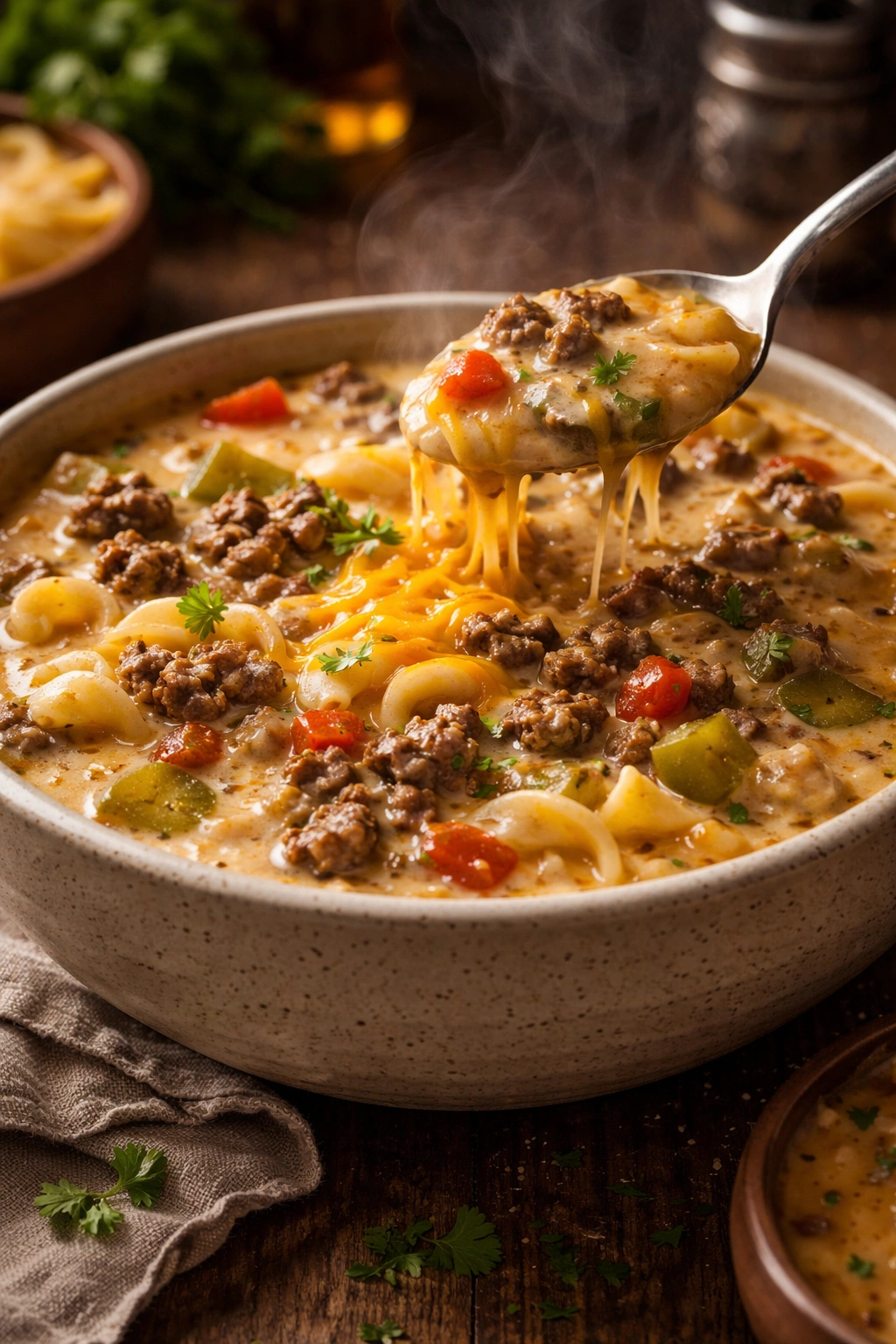
The genius of cheeseburger soup lies in its perfect flavor combination. You start with deeply browned ground beef—not just cooked through, but actually caramelized—which creates that savory, rich foundation every great burger is built on. The beef isn’t just protein here; it’s delivering umami, that fifth taste that makes everything taste more like itself.
Then you add the aromatics: onions, garlic, celery, and carrots. These aren’t just filler vegetables. They’re the building blocks of flavor that add sweetness and depth. When you cook them properly, the onions caramelize slightly, the garlic becomes mellow and fragrant, and everything together creates a flavor base that tastes like a gourmet burger joint took over your kitchen.
The broth is crucial too. Beef broth gives you that meaty backbone, but here’s the secret that most recipes miss: you need enough broth to actually be a soup, but not so much that you lose that concentrated burger flavor. It’s a delicate balance. The broth simmers with the beef and vegetables, and all those flavors meld together, creating something richer than the sum of its parts.
Then comes the cheese. Sharp cheddar works beautifully here because it has enough personality to stand up to the beef without getting lost. The cheese melts into the broth, creating that creamy, luxurious texture that makes this feel indulgent even though it’s genuinely wholesome. Some recipes use processed cheese, and while it works, freshly shredded real cheese makes a noticeably silkier, more sophisticated texture that’s absolutely worth the extra thirty seconds of prep.
And here’s the element that most home cooks overlook: acid. A splash of white vinegar or a spoonful of pickle juice at the very end pulls everything together and adds that bright, almost-burger-condiment flavor that makes people say, “What is that? This tastes amazing.” It’s subtle enough that nobody can identify it, but noticeable enough that it transforms good soup into unforgettable soup.
What Makes This a Perfect One-Pot Dinner
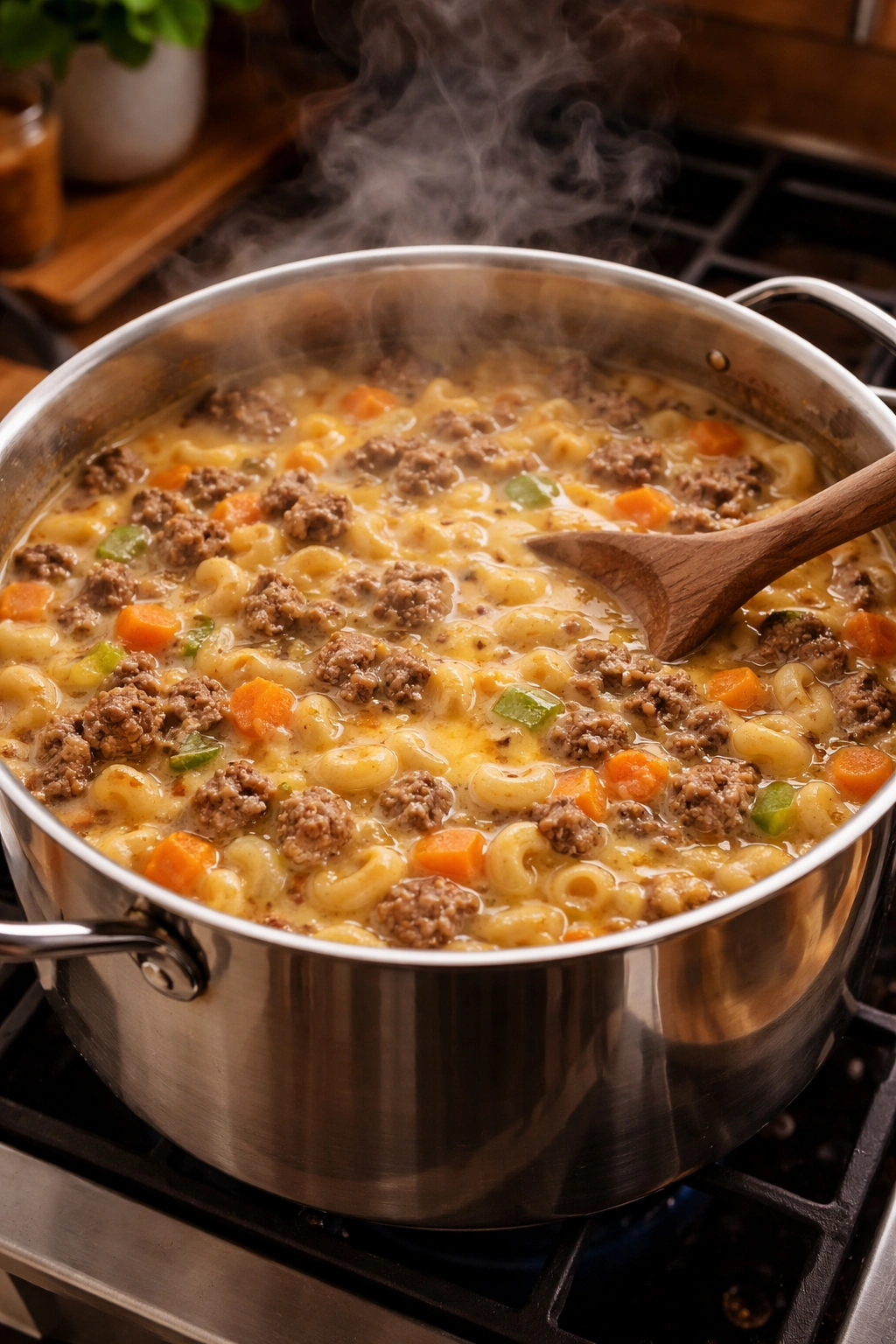
There’s a reason one-pot meals have become beloved by home cooks everywhere. It’s not just about the cleanup, though that’s certainly nice. It’s about the simplicity of process, the predictability of results, and the way flavors develop when everything cooks together in the same vessel.
With this soup, you’re working with what’s called the flavor layering approach. You start by browning the beef hard, which creates fond—those browned bits stuck to the pot—packed with concentrated flavor. Then you sauté the vegetables in that same pot with the rendered beef fat, so they’re picking up all those savory notes. When you deglaze the pot with broth (pouring it in and scraping the bottom), you’re essentially dissolving all that flavor and distributing it throughout your liquid.
This is impossible to achieve if you cook ingredients separately and combine them. The flavors need time to interact, to build on each other, to create something greater than individual components. A one-pot soup gives you that naturally.
The other advantage is that the pasta cooks directly in the broth, which means it absorbs all the liquid and becomes infused with beef and cheese flavor rather than just being neutral noodles that happened to end up in your bowl. This is why homemade soup always tastes better than the canned stuff—the noodles have actually been seasoned.
Cleanup is genuinely minimal. One large pot, one cutting board, one knife. Maybe a skillet if you want to brown the beef separately before adding it (which isn’t necessary, but some cooks prefer the visual of setting ingredients in order). That’s it. When you’ve got exhausted kids and a full day behind you, that simplicity feels revolutionary.
Ingredient Guide and Smart Substitutions
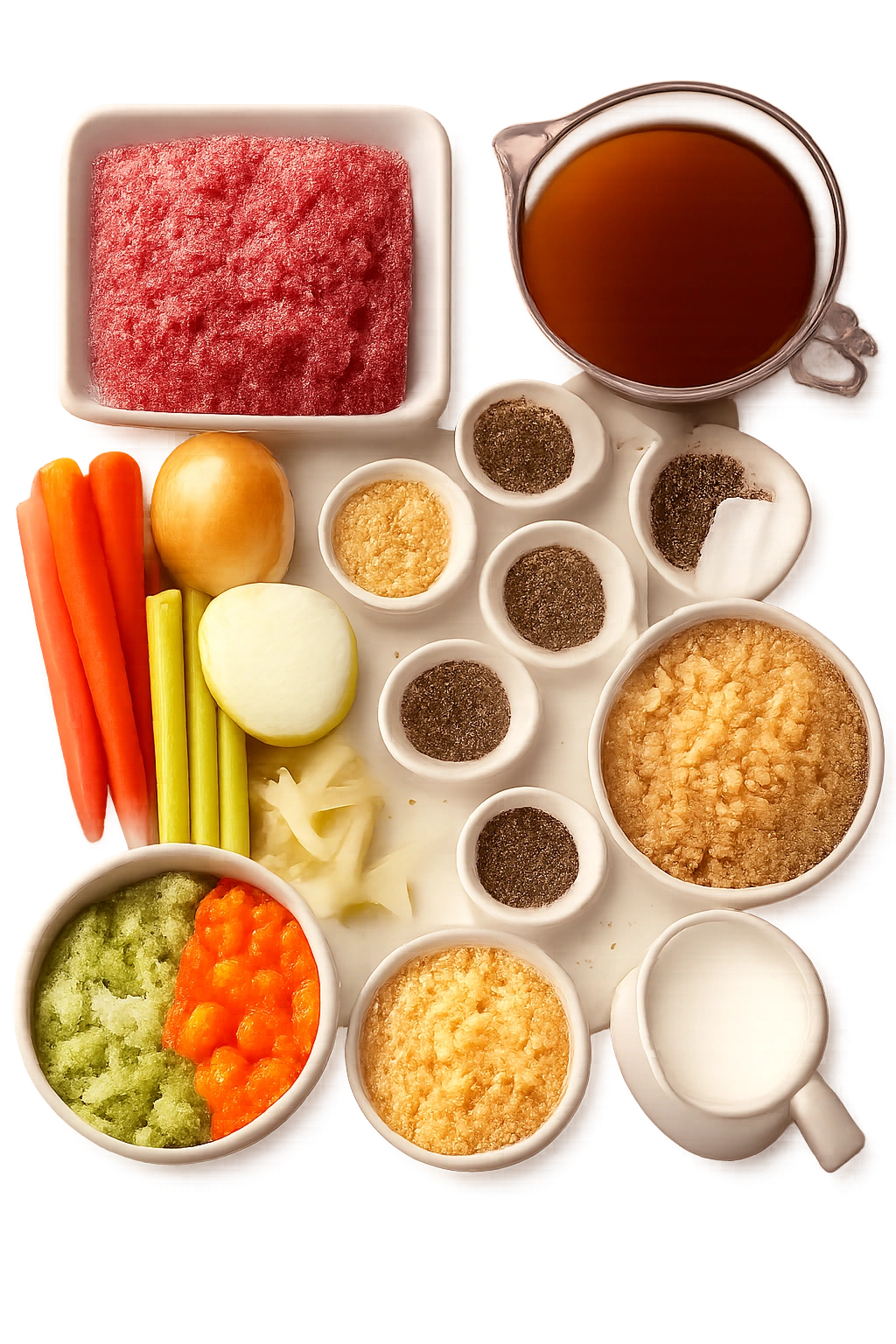
Understanding your ingredients means you can make smarter choices and adapt the recipe to what you actually have on hand. Let’s break down each element.
Ground beef is the hero here, so choose wisely. You want something in the 85/15 to 90/10 range—lean enough that you’re not dealing with excessive grease, but with enough fat to stay flavorful and juicy. Anything leaner than 90/10 tends to taste dry, and anything fattier than 80/20 will have you fishing out pools of grease. If you’re cooking for someone who prefers poultry, ground turkey works surprisingly well and gives you a slightly lighter final product. Ground chicken is milder and works in a pinch. Even a plant-based ground meat can work if you brown it well and use good broth and seasonings to compensate for the flavor difference.
Onions, carrots, and celery—this trio is called mirepoix in cooking, and it’s the foundation of nearly every classic soup. Don’t skip these. The sweetness from the carrots and onions, the subtle earthiness from the celery—they’re what make this taste homemade rather than one-dimensional. You can absolutely find pre-diced mirepoix in many grocery stores now, which saves you time without sacrificing quality. Just make sure whatever vegetables you use are cut roughly the same size so everything cooks evenly.
Garlic should always be fresh and minced by you, not jarred. Jarred garlic has a weird metallic quality that gets more pronounced when it’s been sitting in the pot for thirty minutes. Fresh garlic gets mellow and sweet as it cooks, adding depth without sharpness.
Elbow macaroni or small pasta is ideal because the tiny shapes catch the broth and sauce in every bite. You could use ditalini, small shells, or even broken spaghetti, but avoid long noodles that don’t fit neatly on a spoon. The pasta should be cooked until al dente (still with a slight firmness) because it’ll continue softening as it absorbs broth. If you prefer potatoes to pasta, dice them small and add them with the vegetables—they’ll soften in about twelve to fifteen minutes.
Beef broth is preferable to chicken broth here because it echoes the burger theme, but chicken broth absolutely works and is often what people have on hand. Use low-sodium broth so you can control the salt level. Homemade broth is wonderful if you’ve got it; store-bought is perfect if that’s your reality.
Cheese deserves real consideration. Sharp or extra-sharp cheddar delivers the most flavor, but you could use a blend with some gruyère or even a mild cheddar if that’s your preference. The important thing is that you shred it yourself from a block rather than using pre-shredded—the anti-caking agents in pre-shredded cheese prevent it from melting as smoothly. If you want to keep things simple and you’ve got it on hand, a block of mild cheddar is genuinely fine. Velveeta absolutely works if you’re feeding skeptical kids or if you just prefer how it melts.
Heavy cream adds richness and helps mellow the cheese so it doesn’t curdle. If you only have half-and-half, it works but gives a thinner soup. In a pinch, milk works, though the final texture is noticeably less luxurious. Whole milk is better than low-fat if you’re choosing.
Flour acts as a light thickener, coating the vegetables and helping the soup reach the right consistency. You’re not making it thick or stew-like; you’re just building enough body that it’s not pure broth. All-purpose flour is all you need.
Herbs and seasonings: Dried oregano, basil, and thyme work beautifully here. Don’t use fresh herbs at the beginning because they’ll lose their flavor after thirty minutes of cooking. Fresh parsley as a garnish at the end is lovely, but it’s entirely optional. A good grind of fresh black pepper and kosher salt are non-negotiable.
Serving and Timing Information
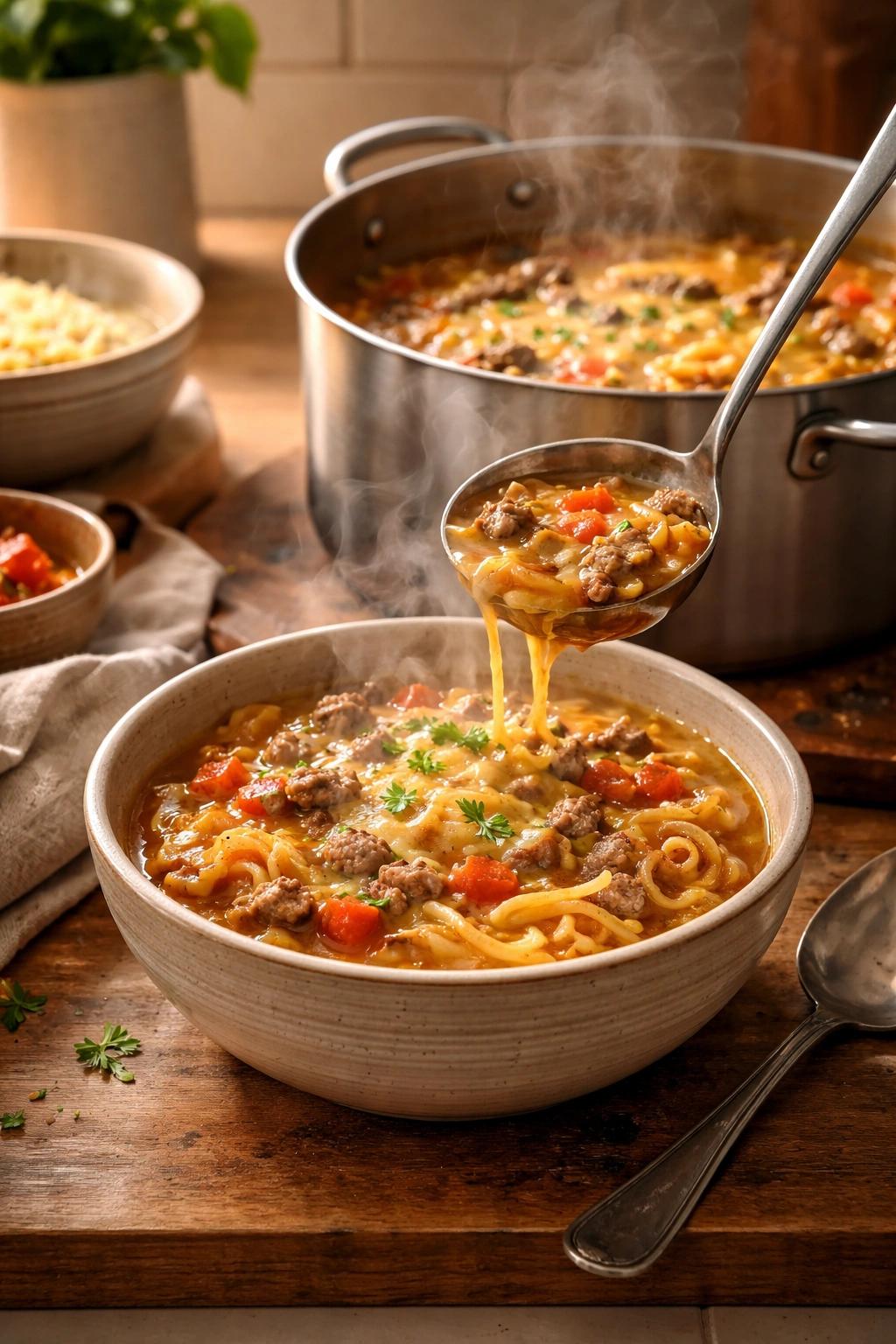
Yield: Serves 6 to 8 | Makes approximately 8 cups
Prep Time: 15 minutes
Cook Time: 25 minutes
Total Time: 40 minutes
Difficulty: Beginner — This recipe requires no special cooking techniques, just basic knife skills and the ability to follow a few straightforward steps. Even if you’ve never made soup before, you’ll succeed here.
For the Soup:
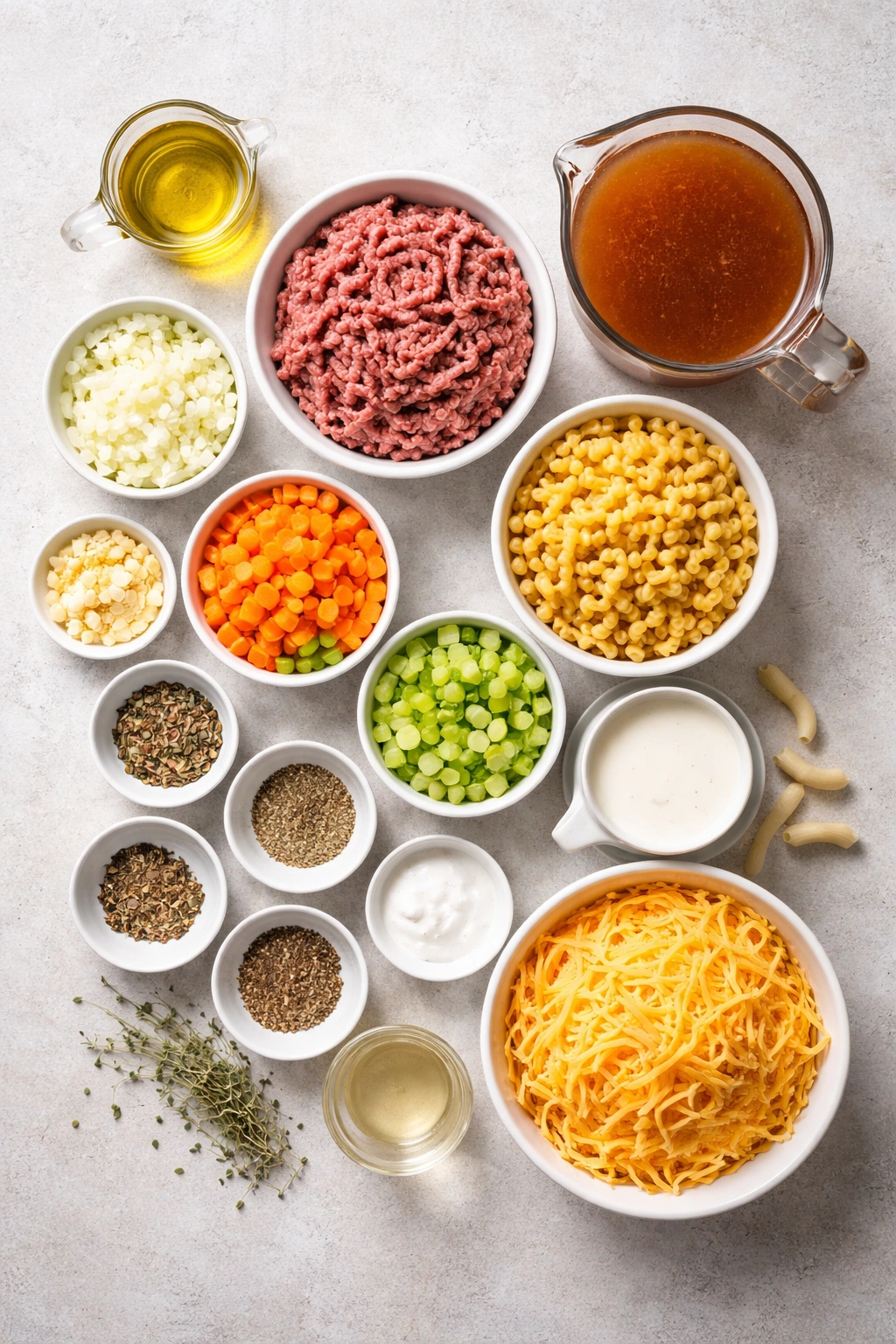
- 1 tablespoon olive oil
- 1½ pounds lean ground beef (85/15 to 90/10 blend)
- 1 medium yellow onion, diced small (about 1 cup)
- 2 medium carrots, diced small (about 1 cup)
- 1 stalk celery, diced small (about ½ cup)
- 4 cloves fresh garlic, minced
- 2 teaspoons dried oregano
- 1 teaspoon dried basil
- ½ teaspoon dried thyme
- ¼ teaspoon freshly ground black pepper
- ½ teaspoon kosher salt (plus more to taste at the end)
- 6 cups beef broth (or chicken broth if preferred)
- 1½ cups elbow macaroni pasta, uncooked
- ½ cup heavy cream, warmed slightly
- 1½ cups sharp cheddar cheese, freshly shredded (about 6 ounces)
- 1 teaspoon white vinegar or pickle juice (the secret ingredient)
- Optional: fresh chopped parsley for garnish
Step-by-Step Cooking Instructions
Prepare and Brown the Beef:
-
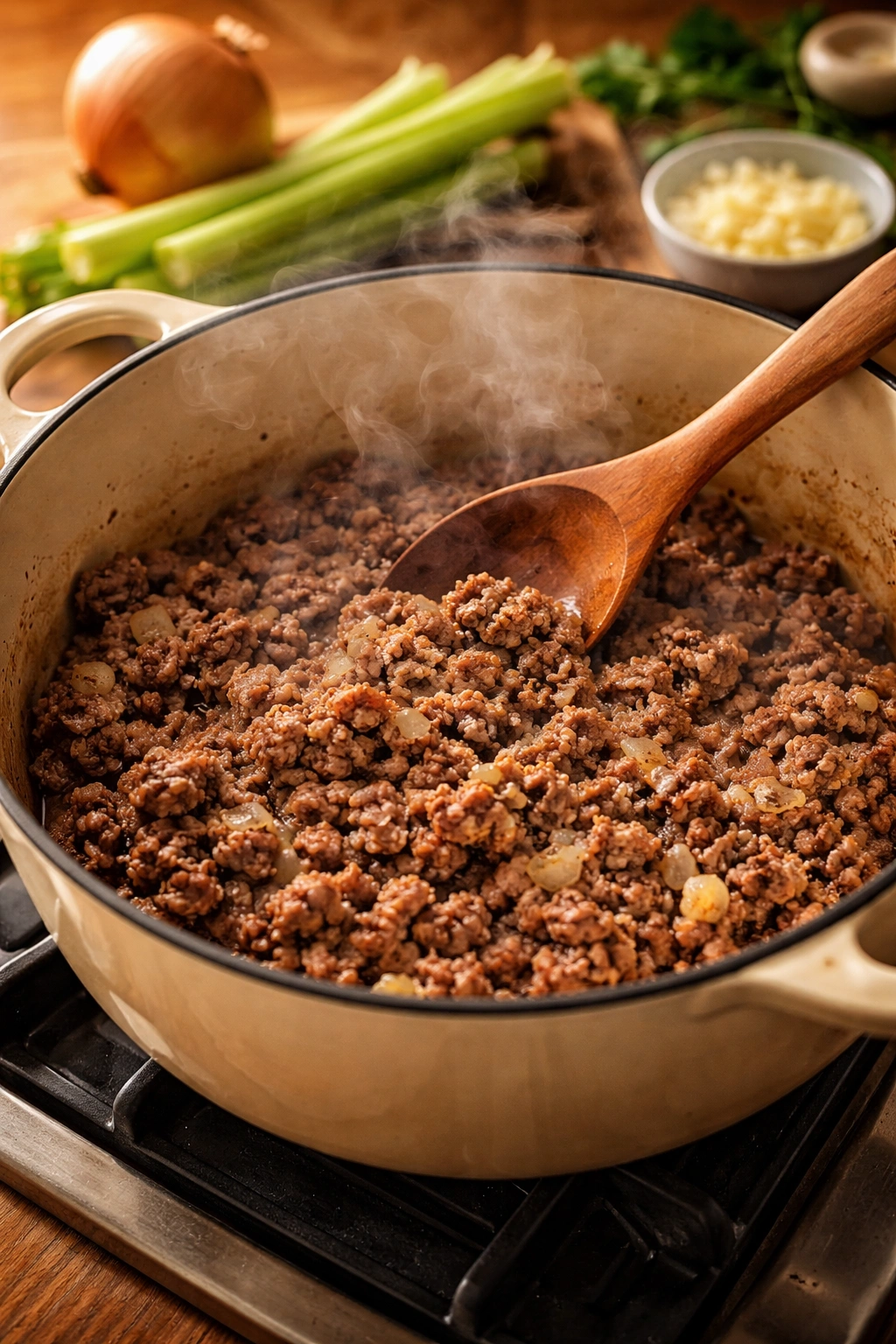
Heat 1 tablespoon olive oil in a large pot or Dutch oven over medium-high heat until it shimmers. Add the 1½ pounds ground beef and resist the urge to stir immediately—let it sit undisturbed for 2 to 3 minutes so it can develop a golden-brown crust on the bottom.
Advertisements -
Break the beef into smaller pieces with a wooden spoon, stirring it around the pot. Continue cooking, stirring occasionally, for 5 to 7 minutes total until the beef is completely browned and no longer pink. You should see a rich, deep brown color, not just cooked-through pale beef. This browning step is absolutely essential—don’t skip it or rush through it because this is where half your flavor comes from.
-
Once the beef is browned, scatter the diced onion, carrots, and celery directly over it. Sprinkle the oregano, basil, thyme, salt, and pepper over the vegetables.
Build the Flavor Base:
-
Stir everything together and let it cook undisturbed for 3 to 4 minutes, allowing the vegetables to start softening and the spices to become fragrant. The beef fat will coat the vegetables and everything will smell incredibly savory.
-
Add the minced garlic and stir well. Cook for exactly 1 minute—just long enough for the garlic to become fragrant without browning. If garlic cooks too long, it becomes bitter, so don’t skip the timing here.
-
Pour in the 6 cups beef broth slowly, stirring as you pour. Use a wooden spoon to scrape the bottom of the pot, dissolving all those caramelized brown bits stuck there. This is called deglazing, and it’s your flavor secret. Everything should come together into a cohesive broth.
Simmer and Cook the Pasta:
-
Bring the broth to a gentle boil over medium-high heat (you’ll see big bubbles breaking the surface). Once it reaches a boil, stir in the 1½ cups uncooked elbow macaroni. Do not skip this step by cooking the pasta separately—it needs to cook in the broth to absorb all the flavor.
-
Reduce the heat to medium and let the soup simmer gently, stirring occasionally so the pasta doesn’t stick to the bottom. Cook for 8 to 10 minutes, until the pasta is tender but still has a slight firmness when you bite it (this is al dente). The vegetables should be completely tender at this point too.
Add Cream and Cheese:
-
Reduce the heat to low. Pour in the ½ cup warmed heavy cream and stir it in. Warming the cream slightly first prevents it from curdling when it hits the hot soup.
-
Scatter the 1½ cups shredded cheese over the surface of the soup. Do not stir immediately—let it sit for 30 seconds, allowing the heat to begin melting it. Then stir slowly and gently for 2 to 3 minutes until the cheese is completely melted and the soup is smooth and creamy. The soup should look silky, not lumpy.
Finish and Season:
-
Remove from heat and stir in the 1 teaspoon white vinegar or pickle juice. This is the secret ingredient that pulls everything together and adds that indefinable “burger” note. Taste the soup and add more salt and pepper if needed. Remember that the broth and cheese already contributed salt, so taste before adding more.
-
Ladle into bowls and serve immediately while hot. Top with fresh chopped parsley if desired, a pinch of extra cheese, or even a few crispy bacon bits if you’re feeling indulgent.
Pro Tips for the Best Results Every Time
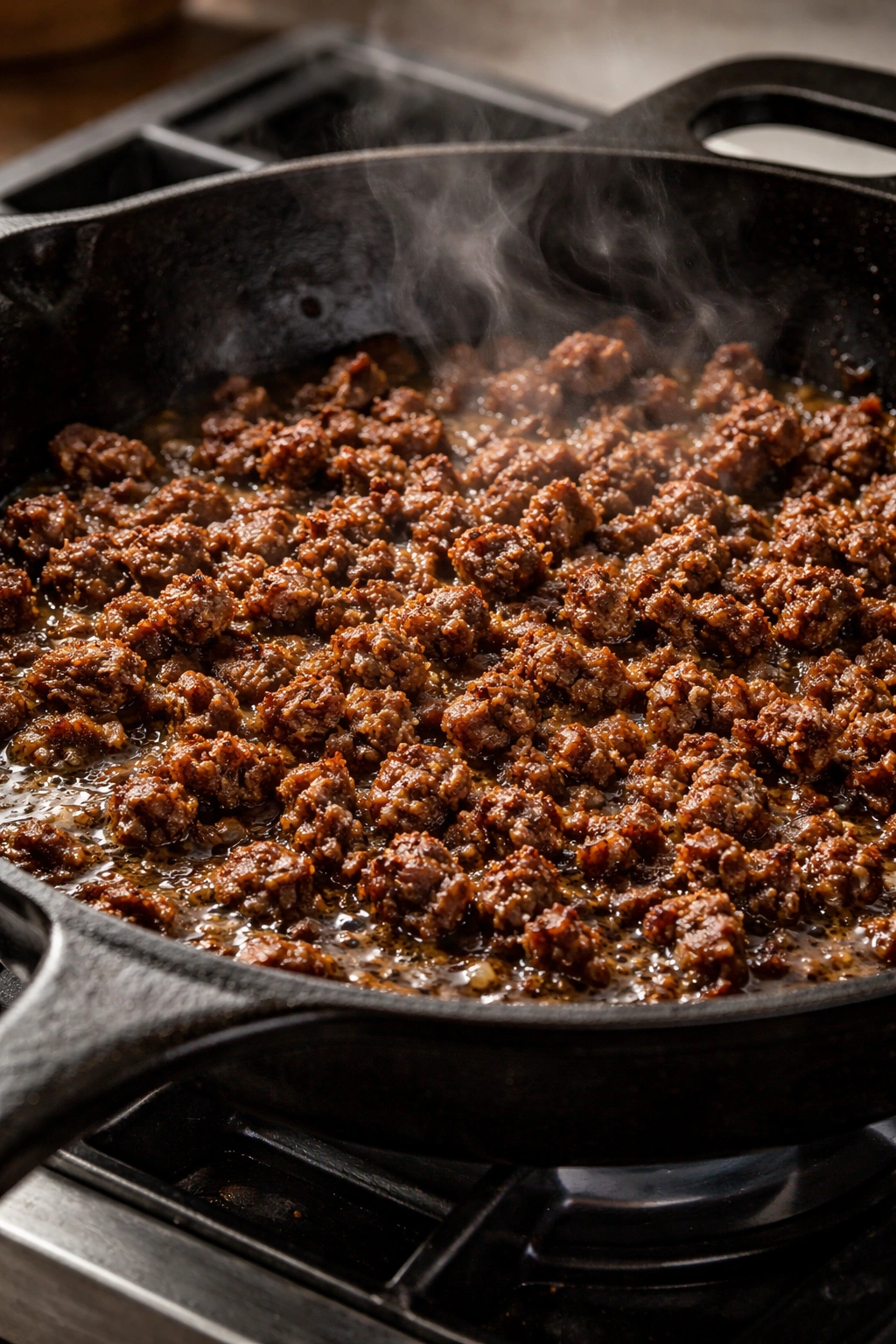
Brown your beef properly. This step determines whether your soup tastes homemade and delicious or flat and one-dimensional. Let the beef develop a real crust—aim for a rich brown color, not gray. If your pot isn’t hot enough or you move the meat around too much, you’ll end up with steamed beef rather than browned beef. The difference is massive.
Don’t crowd the pot when browning the meat. If you pile all the beef in a cold pot, it releases moisture and steams rather than browns. For 1½ pounds, a large pot is ideal. If you only have a small pot, work in batches—it takes a few extra minutes but produces infinitely better flavor.
Taste constantly and adjust at the very end. Broth, cheese, and beef all contribute salt, so don’t over-salt early. Do a final taste right before serving and adjust then.
Warm your cream before adding it. This is a small step that prevents curdling. You don’t need to heat it to hot—just let it sit in a measuring cup while you’re cooking the other ingredients, or run it under warm water for 30 seconds.
Shred your own cheese. This one detail genuinely changes the texture of your final soup. Pre-shredded cheese has anti-caking compounds that prevent smooth melting. Real shredded cheese melts into a silky sauce. It’s worth the two minutes of grating.
Add the vinegar at the very end, not during cooking. Acid can cause the cheese to behave unpredictably if added too early. Adding it just before serving means it contributes flavor without affecting texture. If you’re using pickle juice, make sure it’s the dill kind—sweet pickle juice tastes wrong here.
Save the pasta cooking water. If your soup ends up thicker than you’d like (pasta continues absorbing liquid as it sits), you can thin it with a splash of reserved pasta water or extra broth. Keep some on hand just in case.
Let it rest for five minutes after turning off the heat. The flavors settle and deepen. It’s also safer to serve immediately, and it allows the cheese to stabilize so it stays creamy rather than separating slightly as the soup cools.
Common Mistakes to Avoid
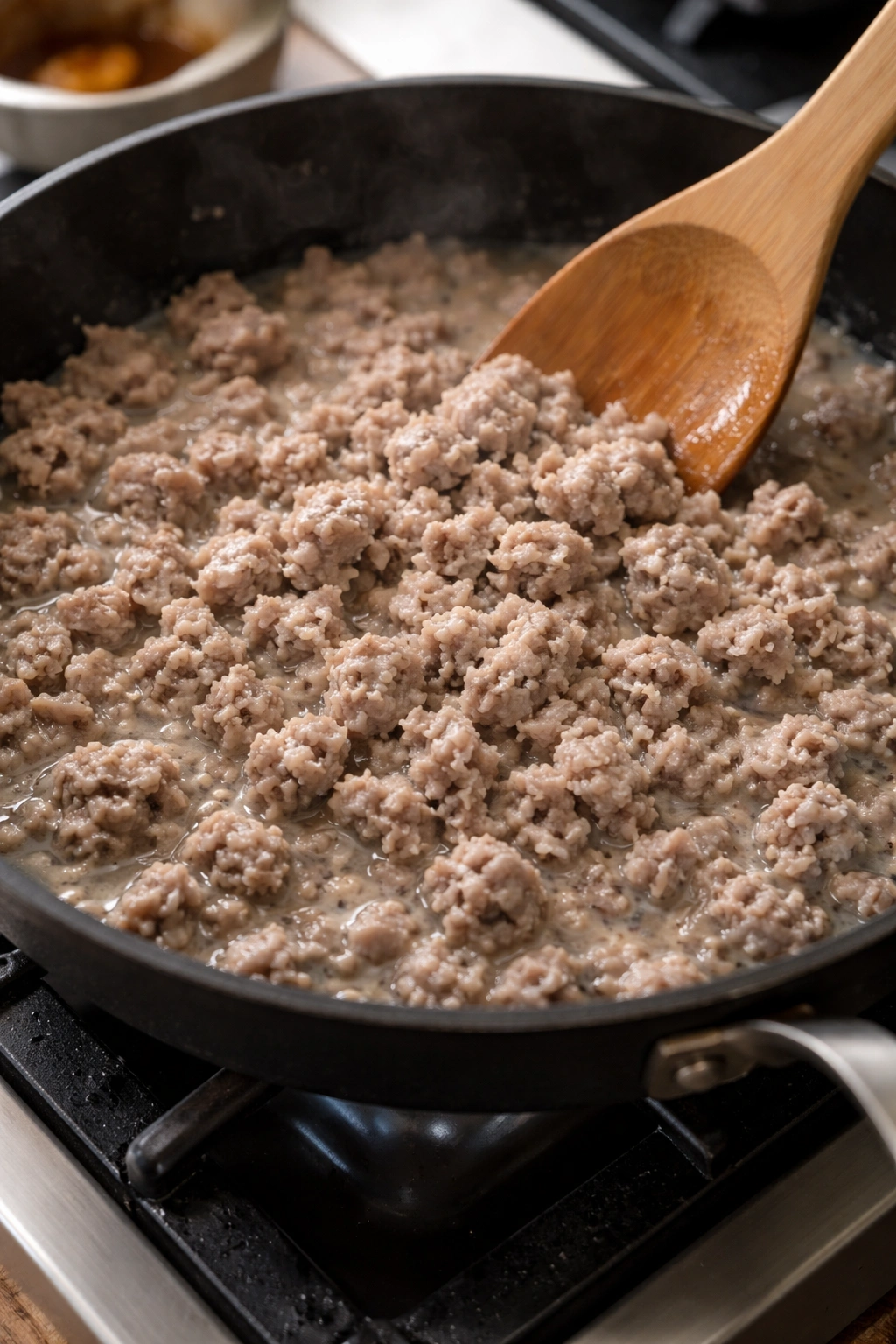
The biggest mistake home cooks make is not browning the beef thoroughly. You’ll be tempted to just get it cooked and move on, but that fond on the bottom of the pot is liquid gold. Spend the full seven minutes getting the beef golden brown. It changes everything.
Another frequent issue is adding the cheese too early or while the soup is still boiling hard. If the temperature is too high when cheese hits it, the cheese can break and become grainy and separated. Keep the heat at medium or low when you add the cream and cheese, and stir gently.
Cooking the pasta too early is another common problem. If you add the macaroni at the beginning instead of near the end, it becomes mushy and overcooked by the time you’re ready to serve. The pasta should spend about 8 to 10 minutes in the broth, cooked, but not falling apart.
Some cooks skip the vegetables or use only onion, thinking they’re not necessary. Don’t do this. The carrots add subtle sweetness, the celery adds earthiness, and together with the onions they create the foundational flavor that makes this taste like comfort. They’re not optional.
Forgetting to use the vinegar or pickle juice means you end up with soup that tastes good but somehow incomplete. This tiny addition is what takes it from “nice soup” to “why does this taste like a gourmet burger?” It’s subtle enough that nobody identifies it, but it matters immensely.
Using only canned chicken broth instead of beef broth is fine taste-wise, but beef broth echoes the burger theme and adds an extra layer of savory depth that’s noticeable when you taste the finished product.
Lastly, reheating leftover soup too aggressively can cause the cream to break and the cheese to separate. Always reheat gently over low to medium heat, adding a splash of broth or milk if the soup seems too thick.
Easy Recipe Variations to Try
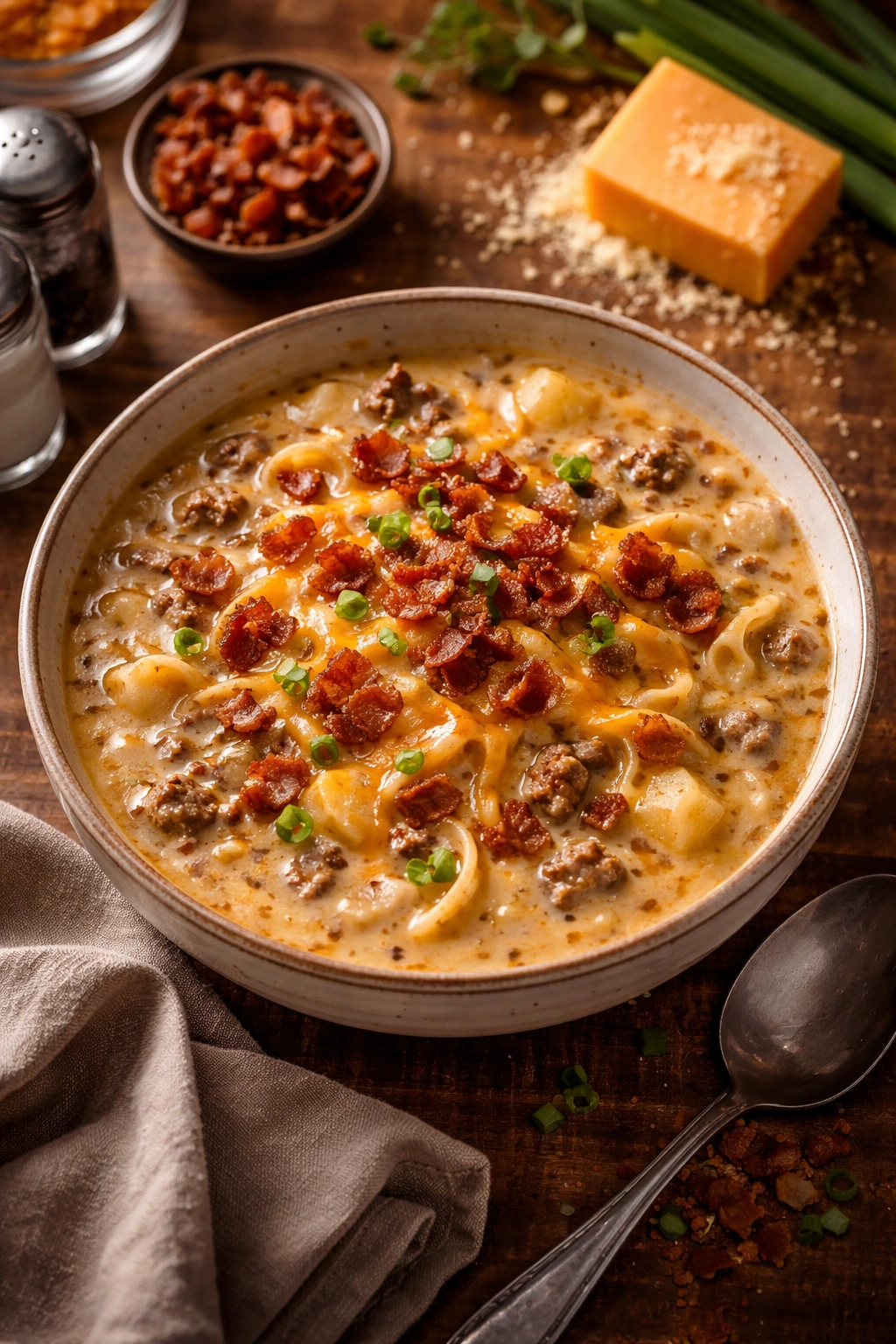
The beauty of this soup is how adaptable it is. You can tailor it to match your family’s preferences or whatever you have on hand.
Bacon Cheeseburger Soup takes things up a notch. Cook 6 to 8 slices of bacon until crispy, crumble it, and reserve it. Use 2 tablespoons of the bacon fat instead of olive oil to brown the beef, then stir the bacon bits back in at the end just before serving. The smoky flavor complements the cheese beautifully, and it feels like a restaurant-quality meal.
Spicy Burger Soup works if anyone at your table likes heat. Add ½ teaspoon cayenne pepper with the dried herbs, or stir in a tablespoon of your favorite hot sauce just before serving. You could also use pepper jack cheese instead of sharp cheddar for a milder heat that’s built in.
Loaded Burger Soup means adding typical burger toppings as garnishes and optional stir-ins. Try diced dill pickles, shredded lettuce, diced tomato, or sliced red onion. Serve these on the side so people can customize their own bowls.
Potato Burger Soup swaps the pasta for vegetables. Use 3 cups of diced Yukon gold potatoes (½-inch dice) instead of macaroni. Add them with the onion, carrot, and celery, and they’ll soften in the same amount of time. This version is slightly heartier and thicker.
Turkey Burger Soup is lighter but stays just as flavorful. Use ground turkey instead of beef, and use chicken broth instead of beef broth. Everything else stays the same, and you end up with something that’s genuinely lighter without sacrificing comfort.
Slow Cooker Version for when you want zero active cooking. Brown the beef in a skillet on the stovetop, then transfer it to a slow cooker with all the vegetables, broth, and seasonings (but not the pasta or dairy). Cook on low for 6 to 8 hours or on high for 3 to 4 hours. About 30 minutes before serving, cook the pasta separately and stir it in along with the cream and cheese.
Double-Cheese Burger Soup combines sharp cheddar with a handful of American cheese slices for extra melting and cheeseburger authenticity. American cheese melts more smoothly than cheddar alone, creating an almost Velveeta-like creaminess while keeping the recipe ingredient-conscious.
Storage, Reheating, and Make-Ahead Strategy
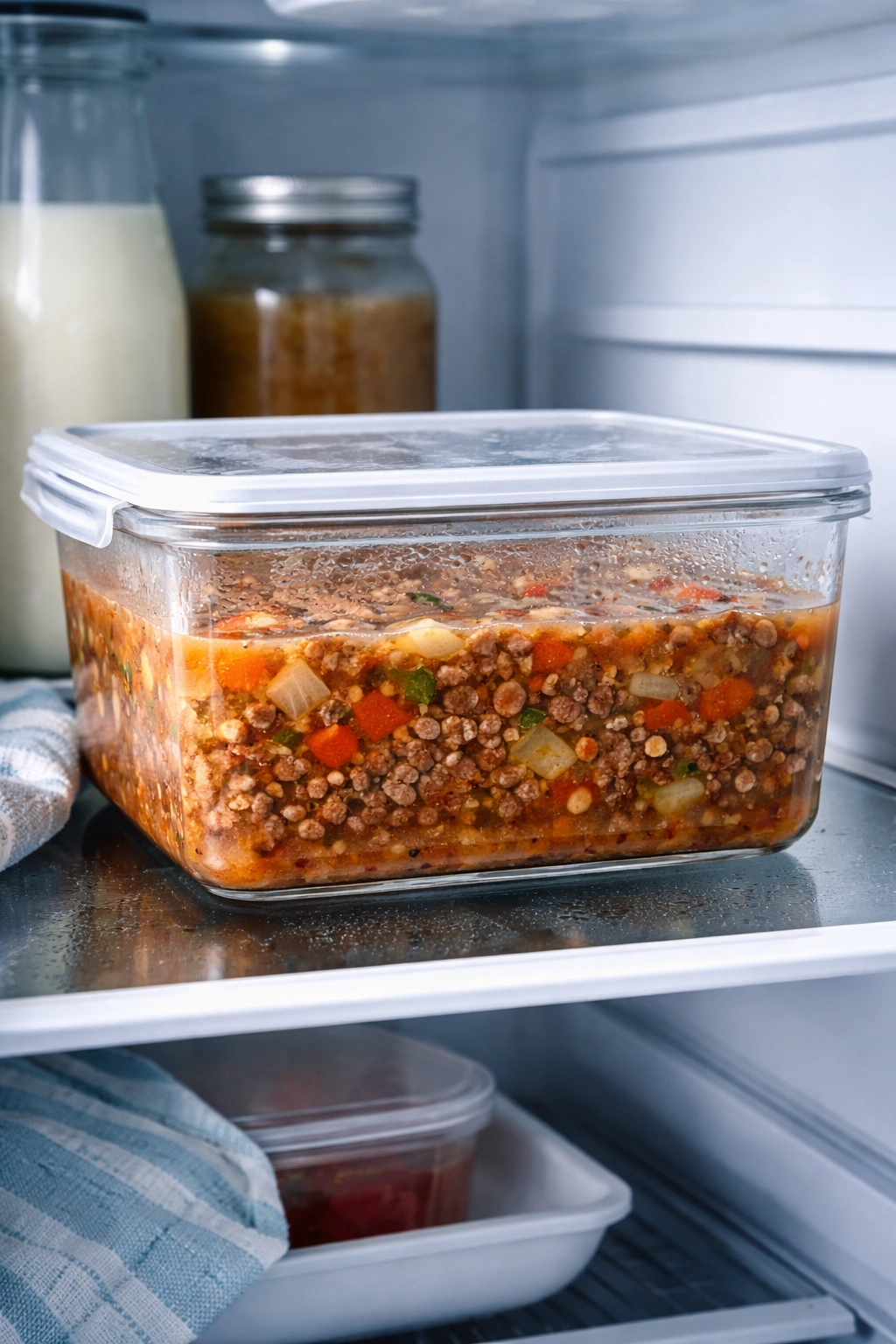
This soup actually improves as it sits because the flavors continue to meld and deepen. However, the pasta does continue to absorb liquid, so leftovers become slightly thicker.
If you’re planning to make this ahead or keep leftovers, cook the pasta separately and add it to each bowl just before serving. This way, the pasta stays al dente instead of becoming soft and mushy. You can store the soup base and cooked pasta in separate containers.
In the refrigerator, the soup keeps for 3 to 4 days in an airtight container. The cheese may separate slightly as it cools—this is completely normal and doesn’t affect flavor. When you reheat, do it gently over medium-low heat on the stovetop, stirring occasionally. Add a splash of broth or milk if it seems too thick.
In the freezer, the soup base (without pasta) freezes beautifully for up to 3 months. Cool it completely before freezing, use freezer-safe containers, and leave a little room at the top because soup expands as it freezes. Thaw overnight in the refrigerator, then reheat gently on the stovetop. Cook fresh pasta to stir in before serving.
Reheating in the microwave works fine if that’s your situation, but do it in 2-minute intervals, stirring between bursts. Microwave reheating can sometimes cause the cream to separate slightly, so stovetop reheating is preferable if you have the time.
Don’t be tempted to reheat the soup at high heat or in a hurry. The dairy can break, the cheese can separate, and you end up with something that tastes fine but looks less appetizing. Low and slow wins with this soup.
Best Side Dishes and Serving Pairings
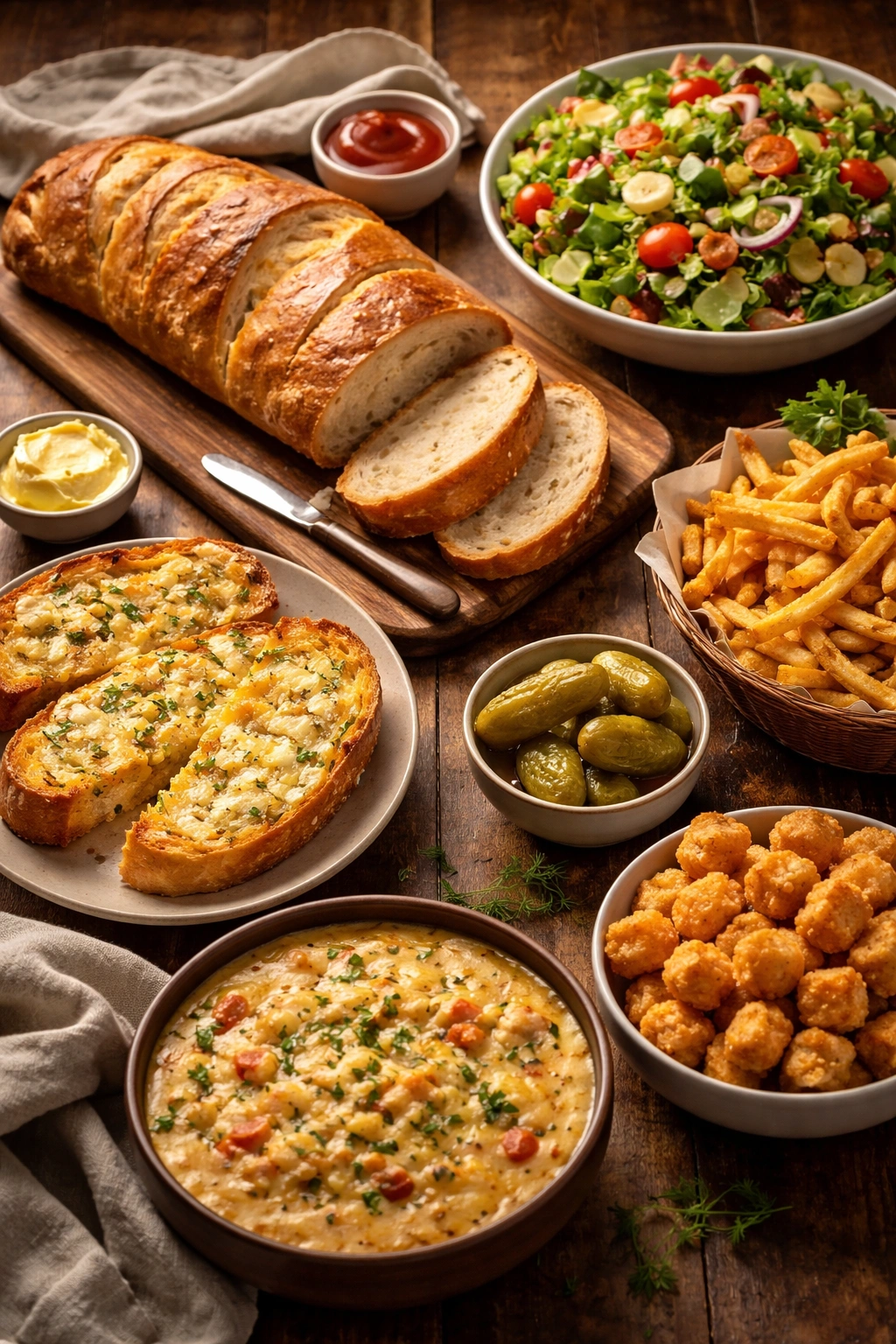
This soup is substantial enough to be a complete meal on its own, but it does benefit from a few companion dishes that round out the experience.
Crusty bread or dinner rolls are the obvious choice. The soup’s creamy broth begs to be soaked up with something carby and warm. Garlic bread works beautifully, or just good-quality crusty bread with butter. If you’re feeling fancy, cheesy bread takes the burger theme even further.
A simple green salad provides contrast to the richness of the soup. Something bright and acidic like a vinaigrette-dressed arugula salad or a basic mixed green salad with lemon dressing balances the creamy, heavy elements of the soup beautifully.
French fries or waffle fries fit the burger theme literally. Bake a batch in the oven while the soup cooks, and let people dip them into their bowls. It’s fun and genuinely delicious—the crispy potatoes against the creamy soup is an excellent texture combination.
Tater tots work the same way. They take a few minutes longer to cook than soup takes, so start them when you start the soup, and they’ll finish together.
Pickles on the side add brightness and that tangy burger element. Dill pickles, bread-and-butter pickles, or even a quick pickle relish all work.
A cheese board makes this soup feel special enough for entertaining. Serve the soup in mugs or small bowls, and let guests pick a few additional cheese varieties, crackers, or cured meats to enjoy alongside.
Grilled cheese sandwiches turn this into a pairing that’s basically a deconstructed burger. Make simple grilled cheese on the side and eat them together—it’s comfort food heaven.
Why Families Keep Coming Back to This Soup
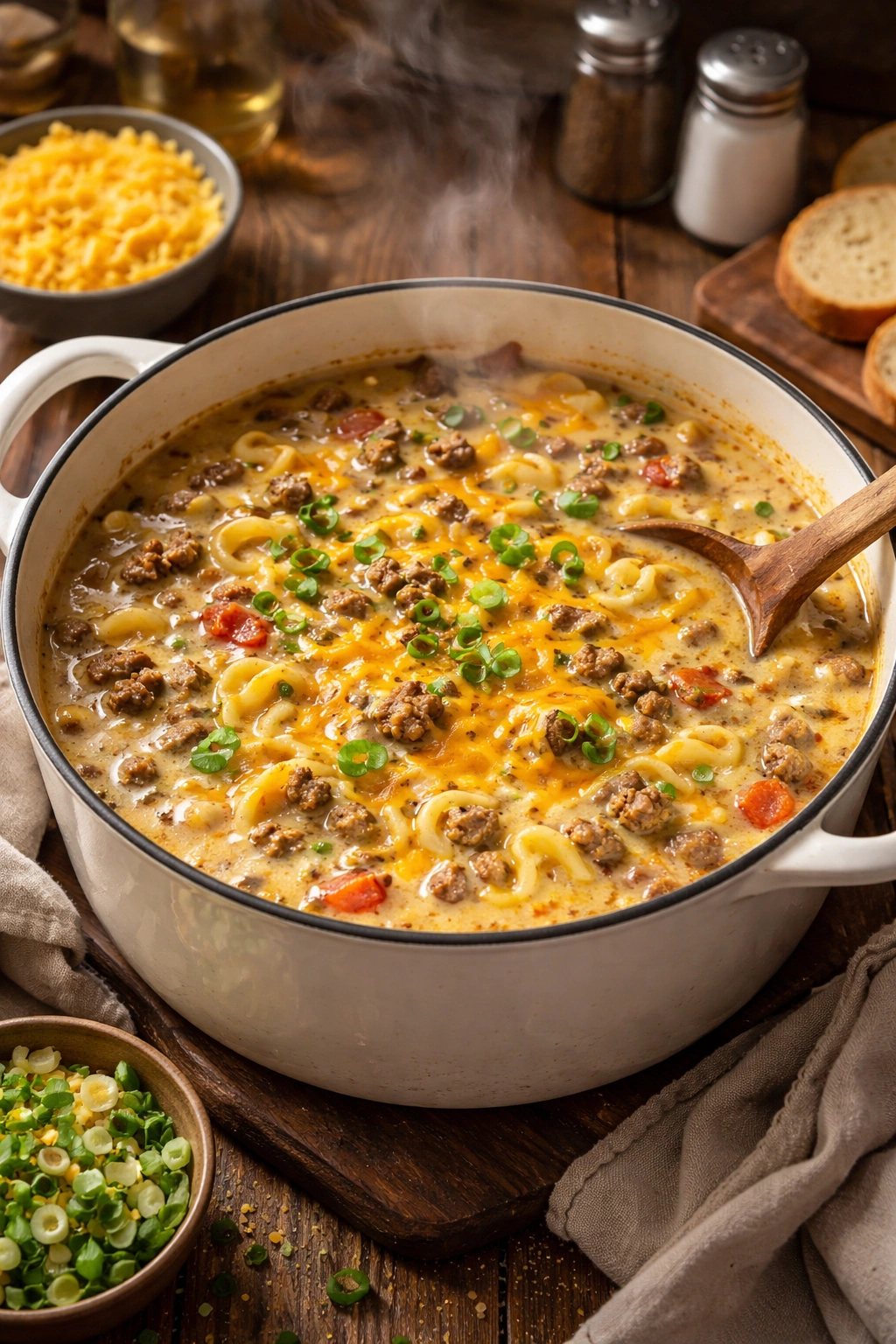
What’s remarkable about this soup is how it crosses age groups and preferences. Kids who claim to dislike soup will eat entire bowls without complaint. Adults who consider themselves too sophisticated for soup realize they were wrong. People watching their diet appreciate how it’s genuinely nutritious—it’s got lean protein, vegetables, and whole grains, but tastes like pure indulgence.
The repetition appeals speaks to something deeper than just taste. Familiar flavors arranged in a new way feel both comforting and exciting. Everyone knows what a cheeseburger tastes like. Experiencing those exact flavors in soup form is surprisingly delightful because it’s unexpected while being completely understandable.
It’s also economical and efficient in a way that feels almost miraculous these days. A pound and a half of ground beef, basic vegetables, and simple dairy and cheese create something that feeds six to eight people for under ten dollars total. Making multiple batches to freeze costs almost nothing and eliminates the stress from future busy weeknights.
The one-pot aspect matters more than people initially realize. Every element of the cooking process is visible and controlable. There’s nothing mysterious happening in the oven or requiring last-minute coordination. You’re making a single dish from start to finish, which means you can relax slightly and just pay attention to timing rather than juggling multiple components.
It’s also genuinely hard to mess up. The forgiving nature of soup means minor variations don’t derail the final result. Used slightly more garlic than specified? Fine, it’s delicious. Couldn’t find beef broth? Chicken broth works. Don’t have heavy cream? Milk works, though the soup is less luxurious. Sharp cheddar unavailable? Mild cheddar or American cheese gets the job done.
Final Thoughts
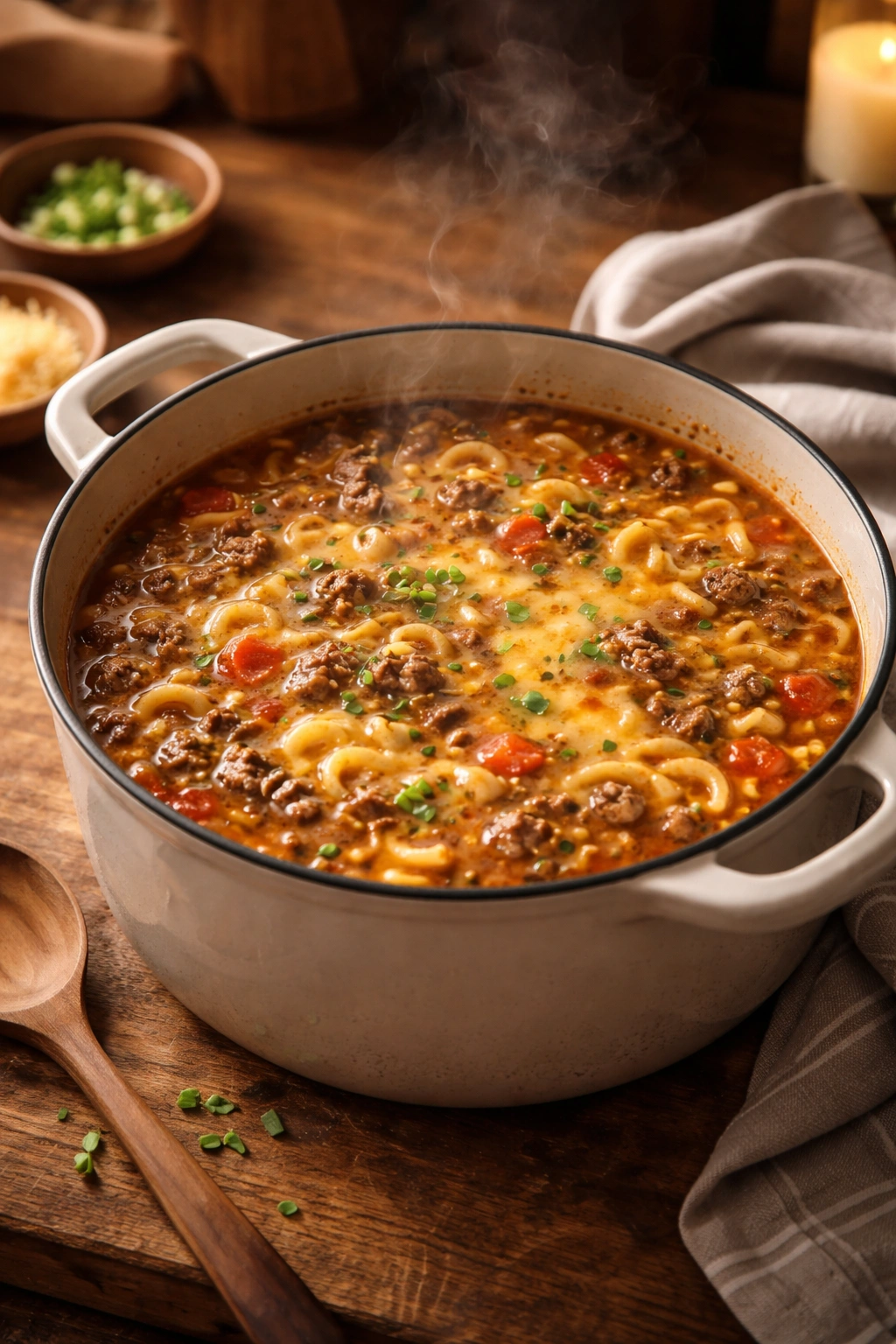
This soup represents everything that’s excellent about home cooking: it’s approachable enough for a weeknight, comforting enough for a difficult day, impressive enough to serve to guests, and economical enough to feel responsible to your budget. The flavors taste restaurant-quality even though you made it at home in under an hour.
More importantly, it’s the kind of food that brings people together. There’s nothing isolating about soup—it’s meant to be shared, to be savored slowly, to be the vehicle for conversation and time together. When you serve this to your family or friends, you’re not just feeding them; you’re creating a moment that feels special without being fussy or complicated.
Make this soup when you need comfort. Make it when you want to impress someone without apparent effort. Make it when you’re tired and need something that tastes like love. Make it repeatedly so your family asks for it by name. This is the kind of recipe that becomes part of your regular rotation, the one you return to countless times because it simply works.
