



When you’re juggling a busy schedule but still want to eat well, sheet pan Greek chicken becomes your new best friend. There’s something almost magical about sliding a single pan into the oven and walking away knowing that dinner—plus tomorrow’s lunch—will be ready in under an hour. No complicated techniques. No six different pots and pans. Just vibrant Mediterranean flavors, tender chicken, and roasted vegetables that taste even better the next day.
This isn’t just another weeknight chicken recipe. Sheet pan Greek chicken is specifically engineered for meal prep success. The flavors deepen as everything sits together in the fridge, the vegetables stay tender and flavorful rather than drying out, and you end up with portions that actually look appealing when you open that container for lunch. That’s the difference between meal prep that feels like a chore and meal prep that feels like self-care.
Why Sheet Pan Greek Chicken Is Perfect for Meal Prep
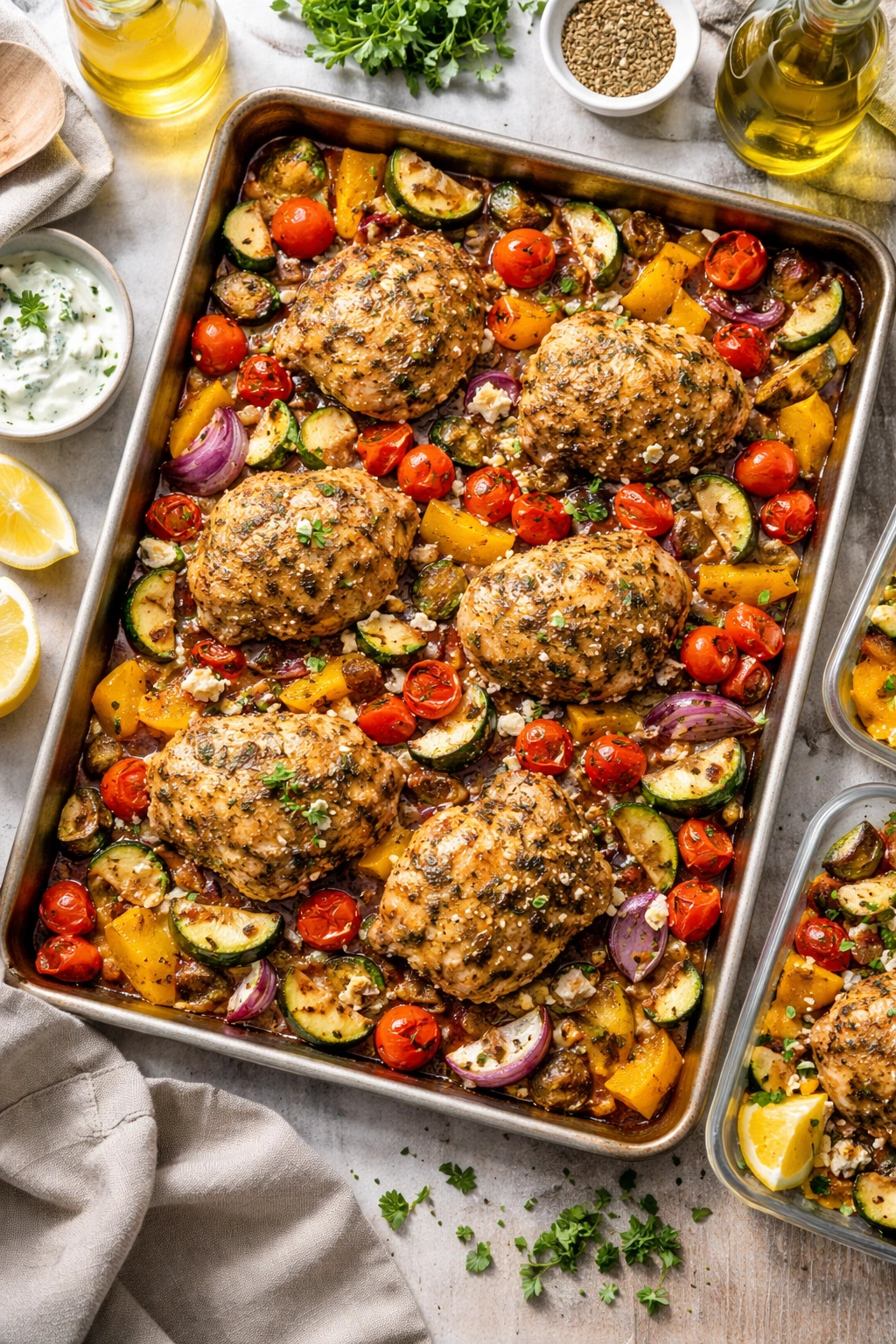
The beauty of sheet pan cooking lies in its fundamental simplicity combined with serious flavor payoff. Everything—the chicken, the vegetables, the herbs, the sauce—cooks together on one pan, which means flavors mingle and deepen throughout the roasting process. The chicken releases its juices, which combine with the olive oil and lemon dressing to create a light sauce that keeps everything moist and delicious, even days later.
This approach solves one of meal prep’s biggest challenges: keeping proteins from drying out during storage. Because the chicken cooks in that flavorful environment and then gets to rest in those pan juices while cooling, it stays remarkably tender and juicy through the middle of the week. Even cold, straight from the fridge, it has texture and taste.
Beyond flavor, the batch-cooking nature of sheet pan meals means you’re making four to six portions at once with minimal extra effort beyond what you’d spend on a single serving. That’s the meal prep magic—you’re not cooking six times; you’re cooking once and getting six meals. The vegetables soften and caramelize, their natural sugars intensifying as they roast, which means they’re actually more flavorful than fresh vegetables would be in a cold salad.
The versatility is another reason this recipe thrives in a meal prep routine. You can eat it straight from the pan as a complete one-bowl meal. You can chop it up and add it to grain bowls, salads, or wraps throughout the week. Leftovers transform into entirely different dishes—a hearty Greek salad with the vegetables chopped fine, filling for pita sandwiches, toppings for grain bowls with rice or couscous, or even a simple pasta toss with some fresh herbs stirred in just before eating.
Understanding Greek Flavors and Mediterranean Seasonings
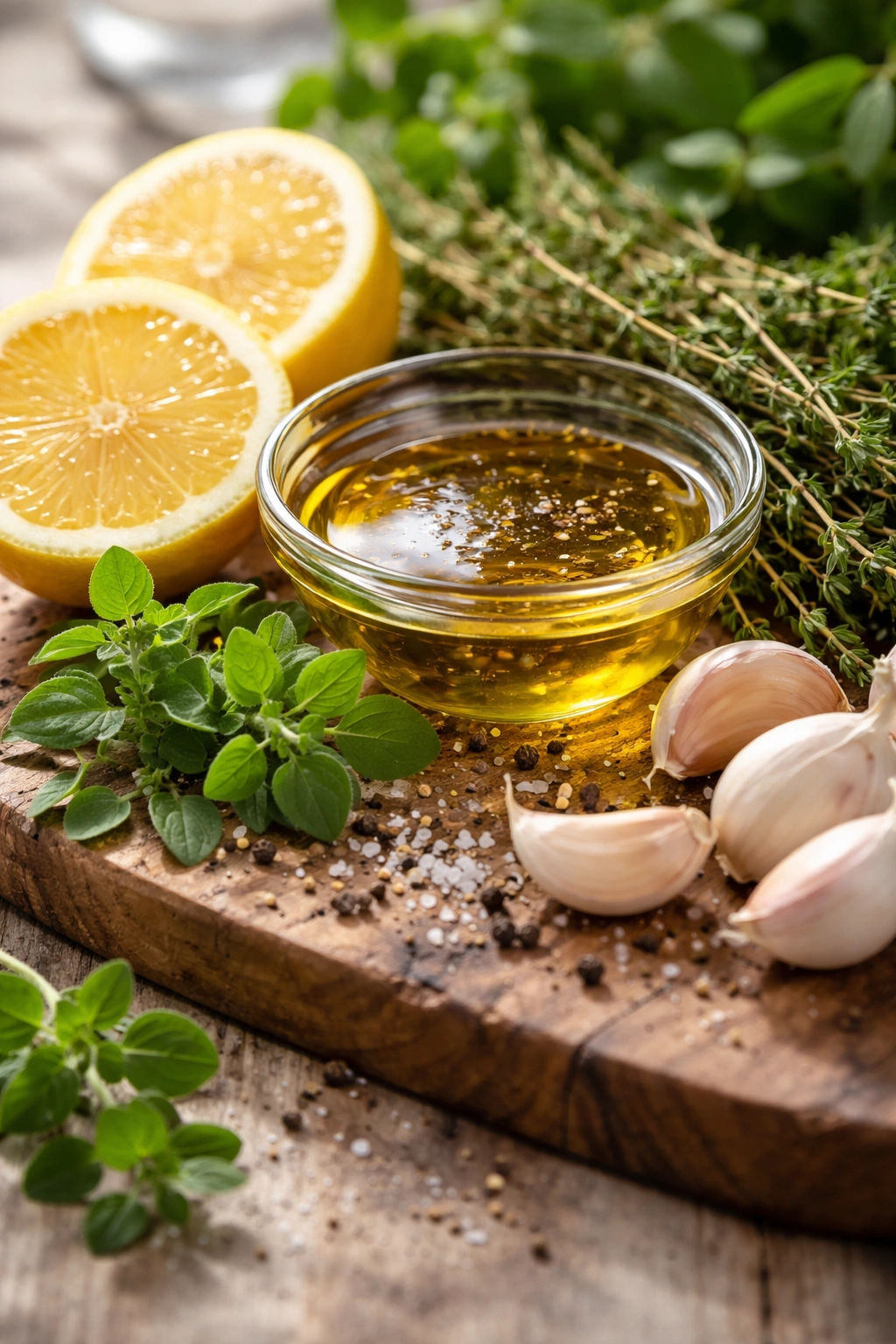
The soul of sheet pan Greek chicken lives in its flavor profile, which draws directly from Mediterranean cooking traditions. This isn’t about complicated technique; it’s about understanding how a handful of simple ingredients create depth and complexity when they work together.
Lemon and olive oil form the foundation. These two ingredients are the backbone of nearly every traditional Greek dish, and for good reason. Lemon juice’s acidity brightens everything it touches while also helping to tenderize the chicken as it marinates. Extra virgin olive oil carries fat-soluble flavor compounds from the herbs and creates a luxurious mouthfeel. Together, they form an emulsion—a vinaigrette of sorts—that coats both the chicken and vegetables.
Oregano is the signature Greek herb. While you might think oregano is subtle or even boring if you’ve only encountered the dusty stuff from a grocery store tin, dried oregano in Greek cuisine carries a completely different character. Mediterranean oregano (sometimes labeled “Greek oregano” or coming from varieties like Origanum vulgare subsp. hirtum) has a more robust, slightly peppery profile with subtle citrus notes. It’s the herb that makes you say, “Yes, that’s Greek food.” Fresh oregano works too, though it’s milder, so you’ll need more of it.
Garlic and thyme add aromatic complexity. Raw garlic provides pungency and bite, while roasted garlic mellows into something sweet and almost nutty. Thyme contributes an earthy, slightly minty undertone that’s distinctly Mediterranean. These two work with oregano to create layers of herbaceous flavor.
Salt and black pepper aren’t afterthoughts. Good kosher salt dissolves readily and seasons evenly. Freshly ground black pepper, added just before cooking, releases volatile oils that add spice and complexity. These basics matter.
Feta cheese and Kalamata olives bring briny, tangy notes. They’re added toward the end of cooking so they warm through without losing their character. The saltiness of both ingredients means you need to taste and adjust your seasoning carefully—these aren’t meant to be diluted in a sauce but rather to provide pockets of intense flavor throughout.
Essential Ingredients for Sheet Pan Greek Chicken
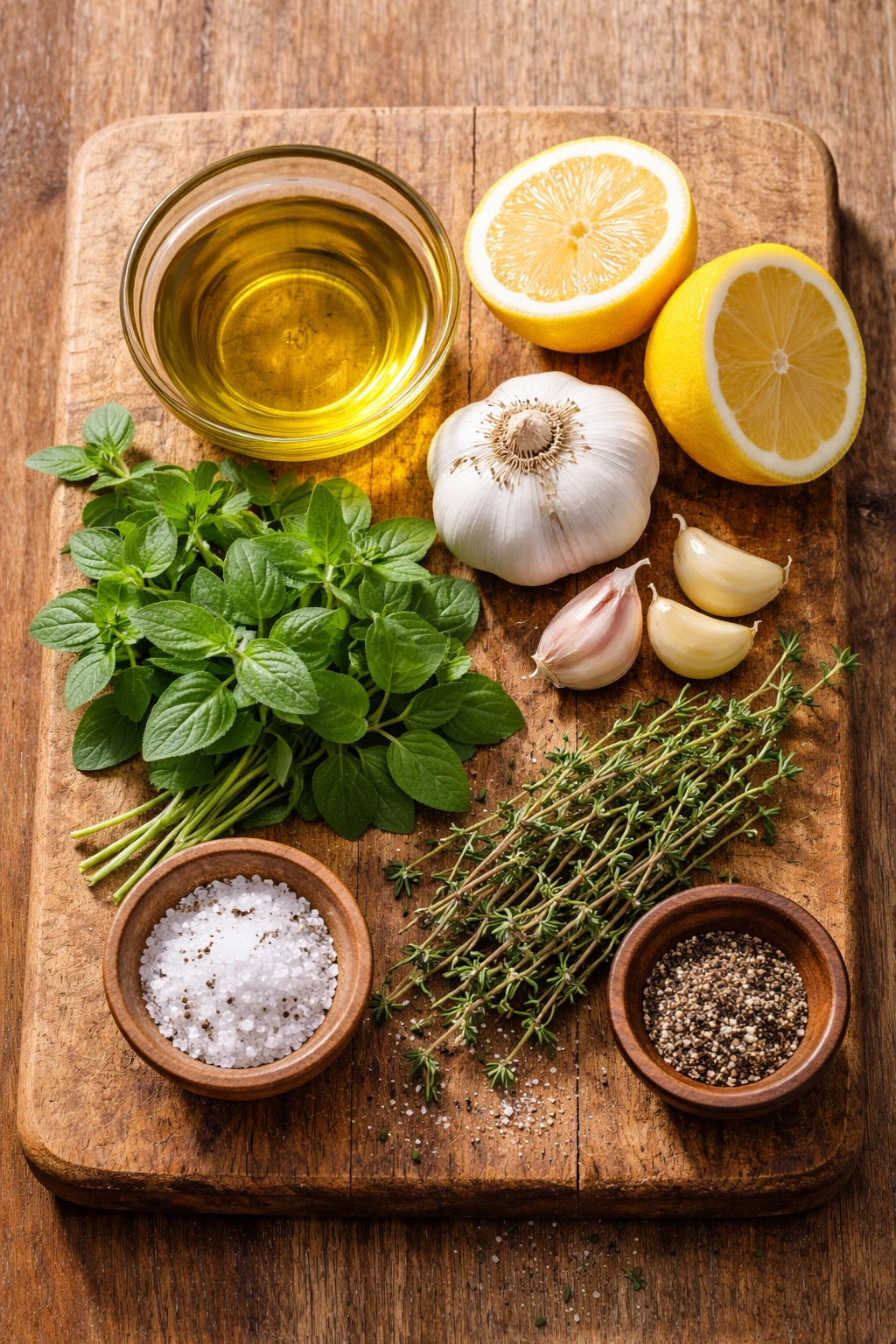
Building a great sheet pan Greek chicken starts with understanding what each ingredient does and why it matters. This isn’t a recipe where you can just grab whatever’s in your pantry and hope it works.
Quality olive oil is non-negotiable. You need enough fat to coat everything and create that essential sauce base. Extra virgin olive oil has more flavor than regular olive oil, which matters here since you’re using it as both a cooking medium and a seasoning component. Look for bottles that seem fresh—olive oil does go rancid—and store it away from heat and direct light.
Fresh lemon juice makes a measurable difference. Bottled lemon juice contains preservatives and tastes noticeably different from juice you squeeze yourself. If you’re squeezing a lemon, roll it on the counter under your palm first—this breaks down the cell walls and releases more juice with less effort.
Dried oregano should smell fragrant. If your oregano smells like dust or hay, it’s too old. Replace it. Fresh oregano is wonderful too, though it has a different flavor—more delicate and slightly minty. If using fresh, double the amount since it’s less concentrated.
Garlic should be fresh and firm. Old garlic that’s been sitting around develops a greenish sprout in the center, which can taste bitter and harsh. Fresh garlic cloves are cream-colored throughout. Mincing or grating garlic before using releases its oils and distributes the flavor more evenly than larger pieces.
Chicken thighs beat chicken breasts for meal prep. Thighs are higher in fat, which means they stay moist and tender during cooking and storage. They’re more forgiving—harder to dry out than breasts. They also taste better, with a richer, more savory flavor. If you do use breast meat, reduce the cooking time slightly and monitor the internal temperature carefully to prevent overcooking.
Vegetables should be ripe but still firm. Soft tomatoes will turn to mush during roasting. Bell peppers should be unblemished and feel heavy for their size. Zucchini and other summer squash should be firm to the touch. Red onions hold their shape better than yellow or white onions during roasting.
Feta cheese should be real feta, preferably in brine. Pre-crumbled feta tends to be drier and loses its tang. Buy a block, then crumble it yourself or cut it into chunks. If you can find Greek feta packed in brine, it’s worth seeking out—the flavor is noticeably better than domestic versions.
Choosing Your Protein: Chicken Cuts That Work Best
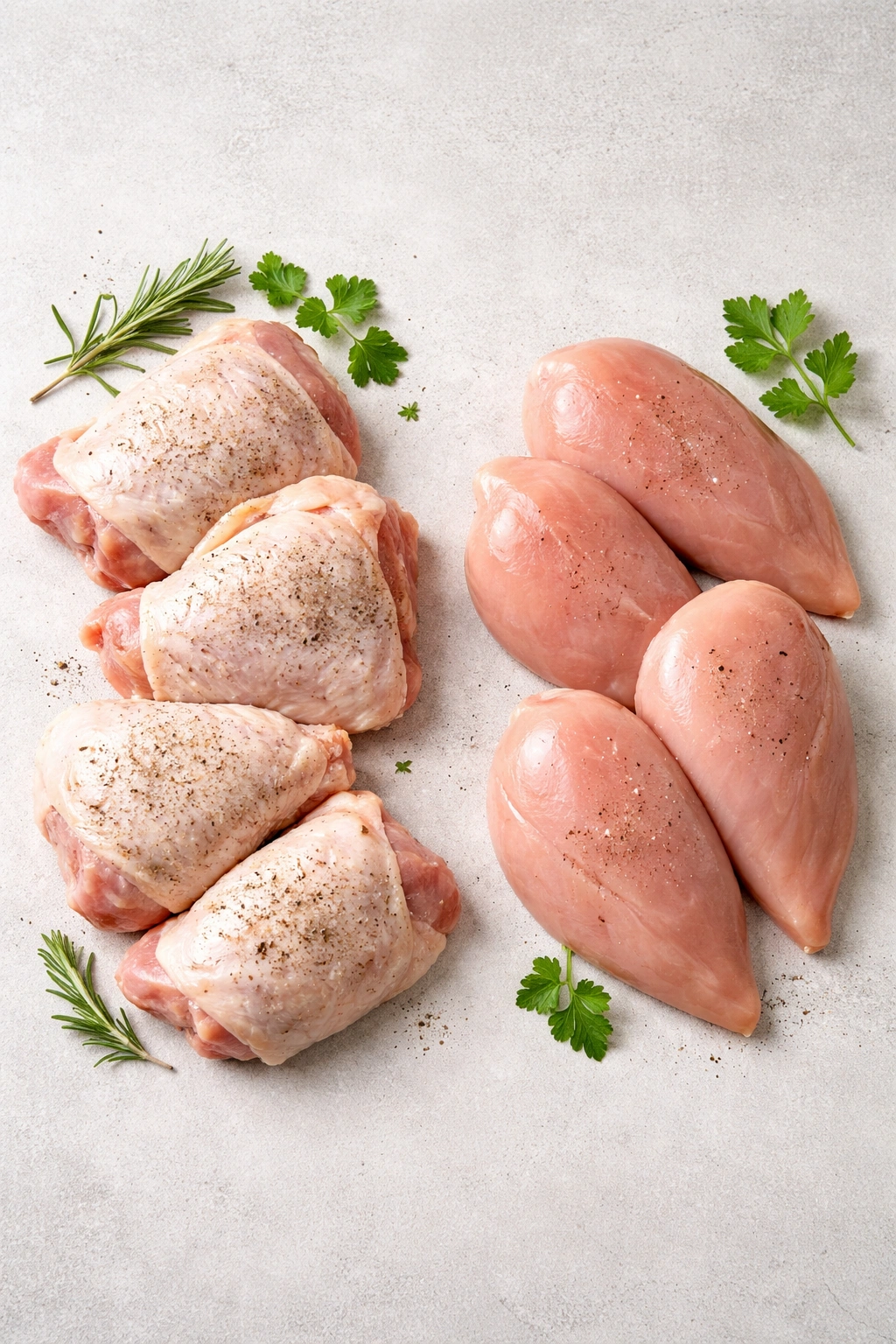
The chicken you choose shapes the entire meal, so this decision deserves thought. Sheet pan Greek chicken works with several different cuts, each with slightly different characteristics.
Bone-in, skin-on chicken thighs are the ideal choice. The skin crisps beautifully in the oven, the bone adds flavor to the cooking liquid, and the higher fat content keeps the meat impossibly moist. They’re also economical. You’ll need about 6 to 8 thighs for four servings. The skin won’t be completely crispy in a sheet pan dinner (it’s more of a light golden finish than a crackle), but that’s fine—the rendered fat from the skin contributes incredible flavor to the surrounding vegetables.
Boneless, skinless chicken breasts work if you prefer leaner protein. They cook faster than thighs, requiring only 20 to 25 minutes instead of 35 to 40. This means you need to adjust your vegetable timing. If you’re using breasts, roast the vegetables for about 10 minutes first, then add the seasoned chicken for its shorter cooking time. Breasts are less forgiving—you need to watch the internal temperature carefully (165°F is the target) because they dry out quickly past that point.
Chicken drumsticks are another great option. They’re inexpensive, flavorful, and somewhere between breasts and thighs in terms of fat content. They roast at the same temperature and timing as thighs. Some people find them more fun to eat with their hands, which makes for great casual entertaining.
Halved chicken breasts (cutting them lengthwise to create thinner cutlets) speed up cooking time. This works well if you want the lower fat content of breasts but need faster cooking. Pound them to an even thickness first so they cook uniformly.
The key is understanding that different cuts need different treatment, but all work within the sheet pan framework. Choose based on your taste preferences, your budget, and how much time you want them in the oven.
Fresh Vegetables That Roast Beautifully
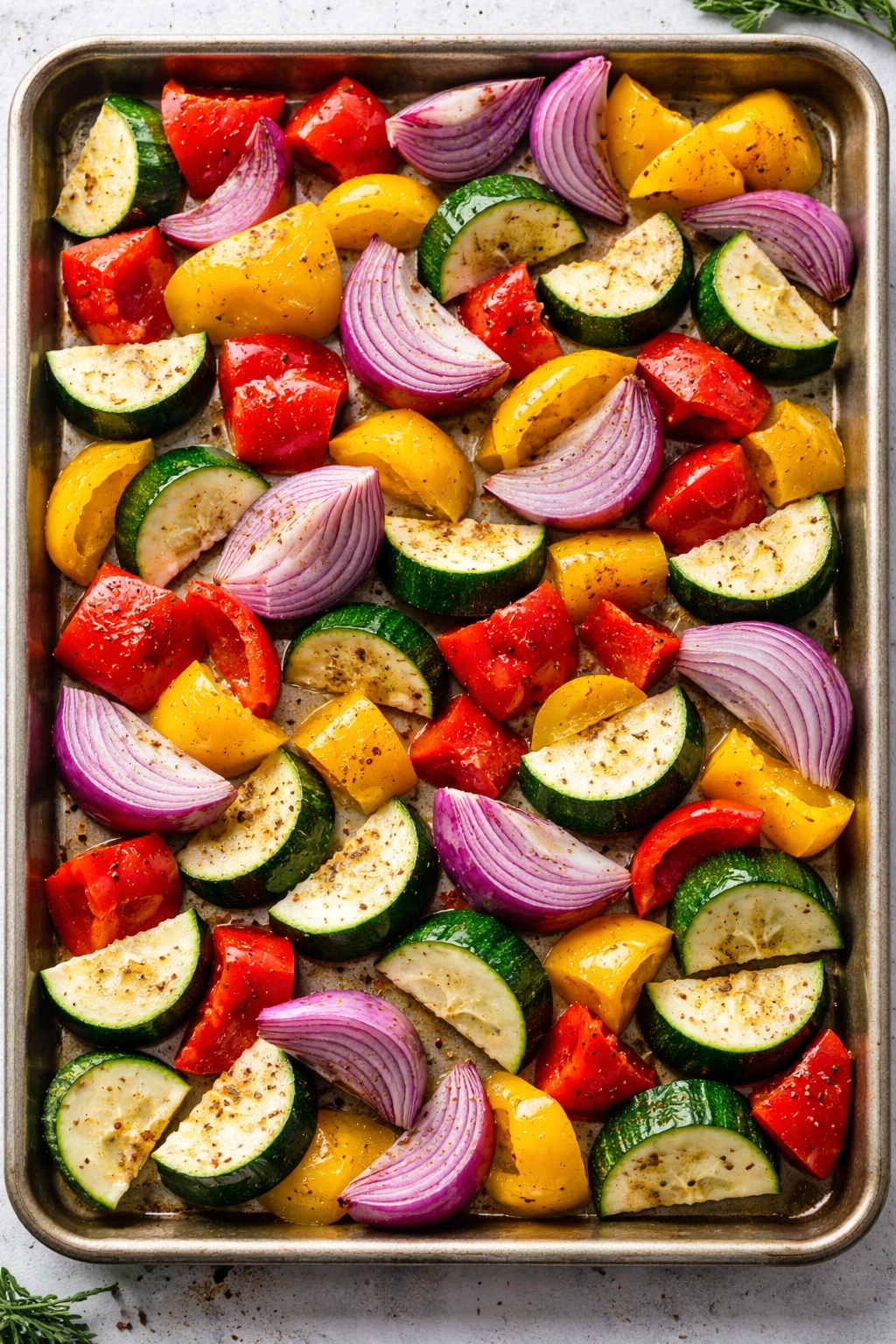
The vegetable selection is where you can make this recipe entirely your own while still keeping that essential Greek character. Some vegetables are classics because they’re proven performers in high heat.
Bell peppers are foundational. They soften and sweeten as they roast, their sugars caramelizing slightly at the edges. Red, yellow, and orange peppers are sweeter than green ones. Cut them into 1-inch pieces so they don’t become too soft before the chicken finishes cooking. They add sweetness, color, and a slight char if the pan gets hot enough.
Red onions hold their shape while becoming mellow. Raw red onions have a sharp, almost aggressive bite. Roasted red onions become creamy and sweet, their harsh edges softened by the heat. Slice them into thick wedges—about half an inch—so they don’t fall apart. The layers hold together through the cooking process and into storage.
Zucchini becomes tender and almost creamy. Slice it into thick half-moons so it doesn’t disintegrate during cooking. Zucchini releases moisture, which is actually beneficial here since it adds liquid to the pan, helping create that pan sauce. Don’t skip the zucchini just because it’s “plain”—its subtle flavor actually lets the other ingredients shine.
Cherry tomatoes are perfect because of their size. They roast whole (or halved if very large), collapsing slightly to release their juice and concentrate their flavor. Regular tomatoes are too big and take too long to roast evenly. Cherry tomatoes also photograph beautifully, which matters if you’re documenting your meal prep.
Artichoke hearts add Mediterranean authenticity. Frozen or canned artichokes work fine—drain them well and pat them dry to prevent extra moisture. Fresh artichokes require too much prep work for a sheet pan dinner. The slightly tangy flavor of artichokes complements the lemon dressing perfectly.
Green vegetables like broccolini or broccoli add color and nutrition. Broccolini is more delicate and roasts more quickly than regular broccoli. Cut thick stems in half lengthwise so they cook at the same rate as the florets. These cruciferous vegetables develop a pleasant slight bitterness when roasted, which balances the richness of the chicken and feta.
Potatoes, especially small fingerling or waxy varieties, work beautifully. They take longer to roast than other vegetables—they need about 35 to 40 minutes to become truly tender—which means they’re perfect for dishes with chicken thighs that also need 35 to 40 minutes. Toss them with the dressing at the beginning so they have plenty of time. Avoid starchy russets, which break apart. Choose waxy varieties like red potatoes or fingerlings.
Yield: Serves 4 to 6 | Makes 4 to 6 meal prep portions
Prep Time: 20 minutes
Cook Time: 40 minutes
Total Time: 60 minutes active (plus cooling and storage time)
Difficulty: Beginner — No special equipment needed beyond a sheet pan, and the steps are straightforward. The oven does most of the work while you relax or prepare sides.
Ingredients for Sheet Pan Greek Chicken
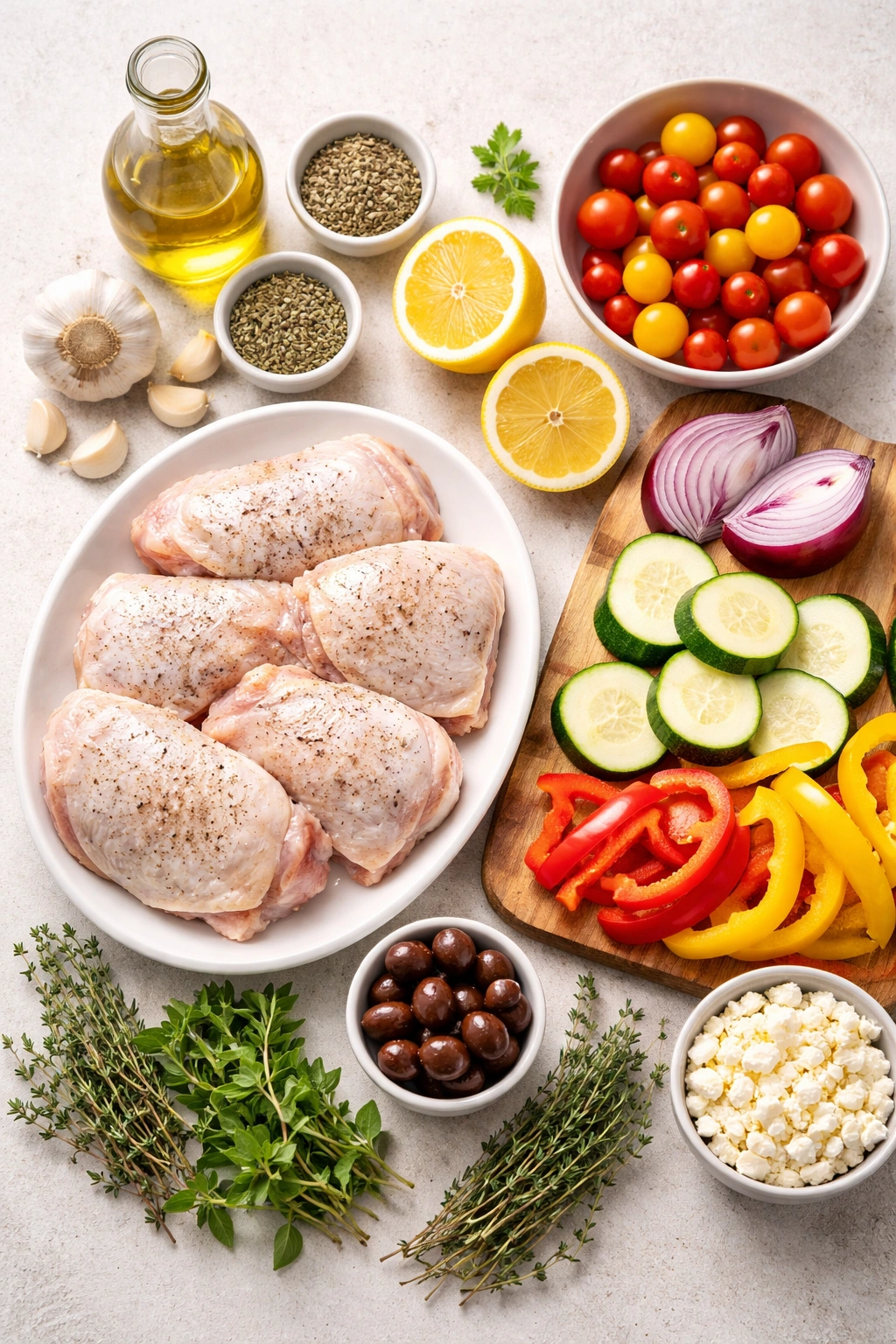
For the Lemon-Herb Dressing:
- ½ cup extra virgin olive oil
- ¼ cup fresh lemon juice (about 2 lemons)
- 2 teaspoons fresh lemon zest
- 4 garlic cloves, minced
- 2 teaspoons dried oregano (or 1 tablespoon fresh oregano, finely chopped)
- 1 teaspoon dried thyme (or 1 tablespoon fresh thyme, finely chopped)
- 1 teaspoon Dijon mustard (optional but adds complexity)
- 1 teaspoon kosher salt, or more to taste
- ½ teaspoon freshly ground black pepper
- ¼ teaspoon red pepper flakes (optional, for a gentle heat)
For the Chicken and Vegetables:
- 6 to 8 bone-in, skin-on chicken thighs (about 2½ pounds), or 2 pounds boneless skinless chicken breasts
- 1 large red onion, cut into thick wedges
- 1 large red bell pepper, cut into 1-inch pieces
- 1 large yellow or orange bell pepper, cut into 1-inch pieces
- 2 medium zucchini, halved lengthwise and sliced into thick half-moons
- 1½ cups cherry or grape tomatoes, left whole or halved if very large
- 1 cup fresh artichoke hearts, drained and patted dry (frozen, canned, or fresh), or 8 ounces fresh broccolini with thick stems halved lengthwise
- ½ cup pitted Kalamata olives, drained
- Kosher salt and freshly ground black pepper, for seasoning
For Finishing:
- ⅓ cup crumbled feta cheese (about 2 ounces), preferably Greek feta
- ¼ cup fresh flat-leaf (Italian) parsley, finely chopped
- 2 tablespoons fresh dill or fresh mint (optional, for garnish)
- Lemon wedges, for serving
Step-by-Step Instructions
Prepare Your Workspace:
-
Preheat your oven to 425°F (220°C) and position a rack in the middle position. Line a large rimmed sheet pan (18×13 inches or similar) with parchment paper or aluminum foil for easy cleanup.
-
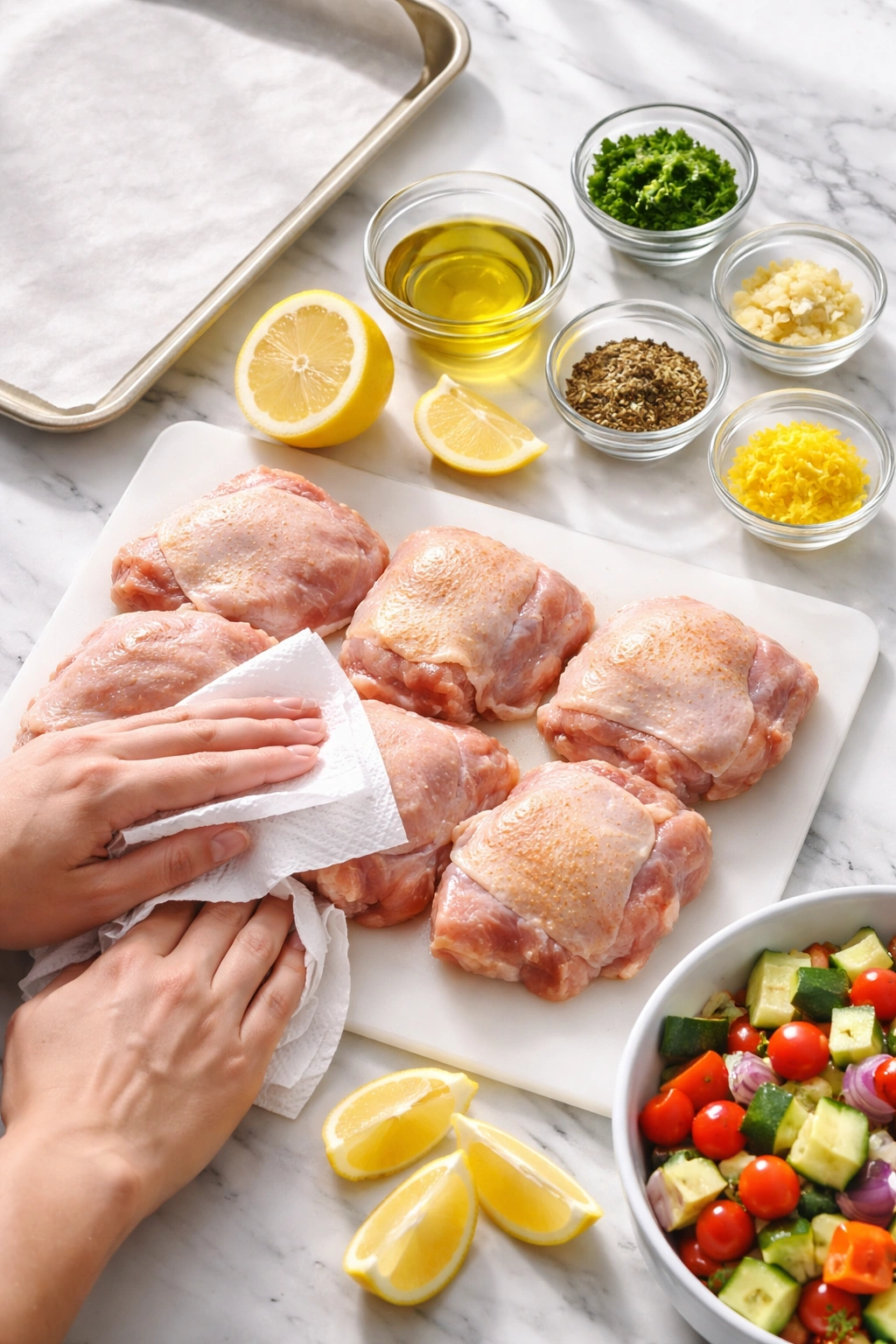
Pat the chicken thighs (or breasts) completely dry with paper towels—this is crucial because dry skin crisps better than moist skin, and it also helps the seasonings adhere. Don’t skip this step.
Make the Lemon-Herb Dressing:
- In a small bowl, whisk together the olive oil, lemon juice, lemon zest, minced garlic, oregano, thyme, Dijon mustard (if using), salt, pepper, and red pepper flakes. Whisk vigorously for about 1 minute until the mixture emulsifies slightly and the salt dissolves completely. Taste and adjust the salt and pepper—this dressing should taste a little salty and assertive because it’s going to season both the chicken and the vegetables.
Season and Arrange the Vegetables:
-
Spread the chopped red onion, bell peppers, zucchini, tomatoes, artichoke hearts (or broccolini), and Kalamata olives directly onto the prepared sheet pan. Don’t worry about neat arrangement at this stage—you’re just getting them on the pan.
-
Drizzle about two-thirds of the dressing (roughly ⅓ cup) over the vegetables, then sprinkle with a pinch of salt and pepper. Using your hands or two large spoons, toss the vegetables thoroughly until everything is coated with the dressing. Spread them out in a single layer, trying to get as much surface area touching the hot pan as possible—this is what creates the caramelization and slight char that makes roasted vegetables taste so good.
Add and Season the Chicken:
-
Arrange the dried chicken thighs (or breasts) skin-side up in the center of the sheet pan, nestling them among the vegetables but not completely burying them in vegetables. You want the skin exposed so it can crisp during roasting.
-
Drizzle the remaining dressing (roughly 3 tablespoons) over the chicken, making sure to coat both the top and sides. Season the chicken generously with a pinch of salt and pepper—remember that you’ve already seasoned the dressing, so you’re not starting fresh here.
Roast the Sheet Pan:
-
Place the sheet pan in the preheated oven. Set a timer for 25 minutes. This is the chicken’s head start before you add any vegetables that roast quickly.
-
After 25 minutes, remove the pan from the oven (watch out—it’s hot and the fat is bubbling). Using tongs or a spatula, gently turn the chicken thighs so the skin-side down briefly makes contact with the hot pan (you’ll turn them back skin-side up shortly). This step ensures even browning. Push the vegetables to the sides if needed to create space.
-
Return the chicken to skin-side up position. Check the chicken’s internal temperature at the thickest part of the thigh (not touching bone) with an instant-read thermometer. It should read 165°F (74°C) or higher at this point, though it’s okay if it’s not quite there yet. Return the pan to the oven for another 10 to 15 minutes, depending on the thickness of your chicken and your oven’s temperature. You’re looking for skin that’s golden and crispy and an internal temperature of 165°F minimum (ideally 175°F for maximum tenderness in storage).
-
When the chicken registers 165°F and the vegetables are beginning to soften and brown at the edges, remove the pan from the oven. If you like, turn on the broiler and return the pan for just 2 to 3 minutes to add extra color to the vegetables and a slight crisp to the feta, but watch carefully—broilers are powerful and things burn quickly.
Finish and Cool:
-
Remove the pan from the oven and scatter the crumbled feta cheese directly over the hot pan. The residual heat will soften it slightly, and the feta will release its creamy, tangy flavor directly into the dish. Sprinkle the fresh parsley and optional dill or mint over everything.
-
Let the sheet pan rest at room temperature for 10 minutes. This allows the chicken to continue cooking slightly through carryover heat while the vegetables settle and the flavors meld. It also makes dividing it into portions easier once it cools slightly more.
Advertisements -
If you’re eating this immediately, serve straight from the pan, or divide into serving bowls. If you’re meal prepping, let the entire pan cool completely to room temperature (about 30 minutes), then divide into meal prep containers. The mixture will cool faster if you spread it out on a large platter rather than leaving it piled in the pan.
Practical Tips for Perfect Results Every Time
Getting great results isn’t about having fancy equipment or special skills. It’s about understanding what actually matters during the cooking process.
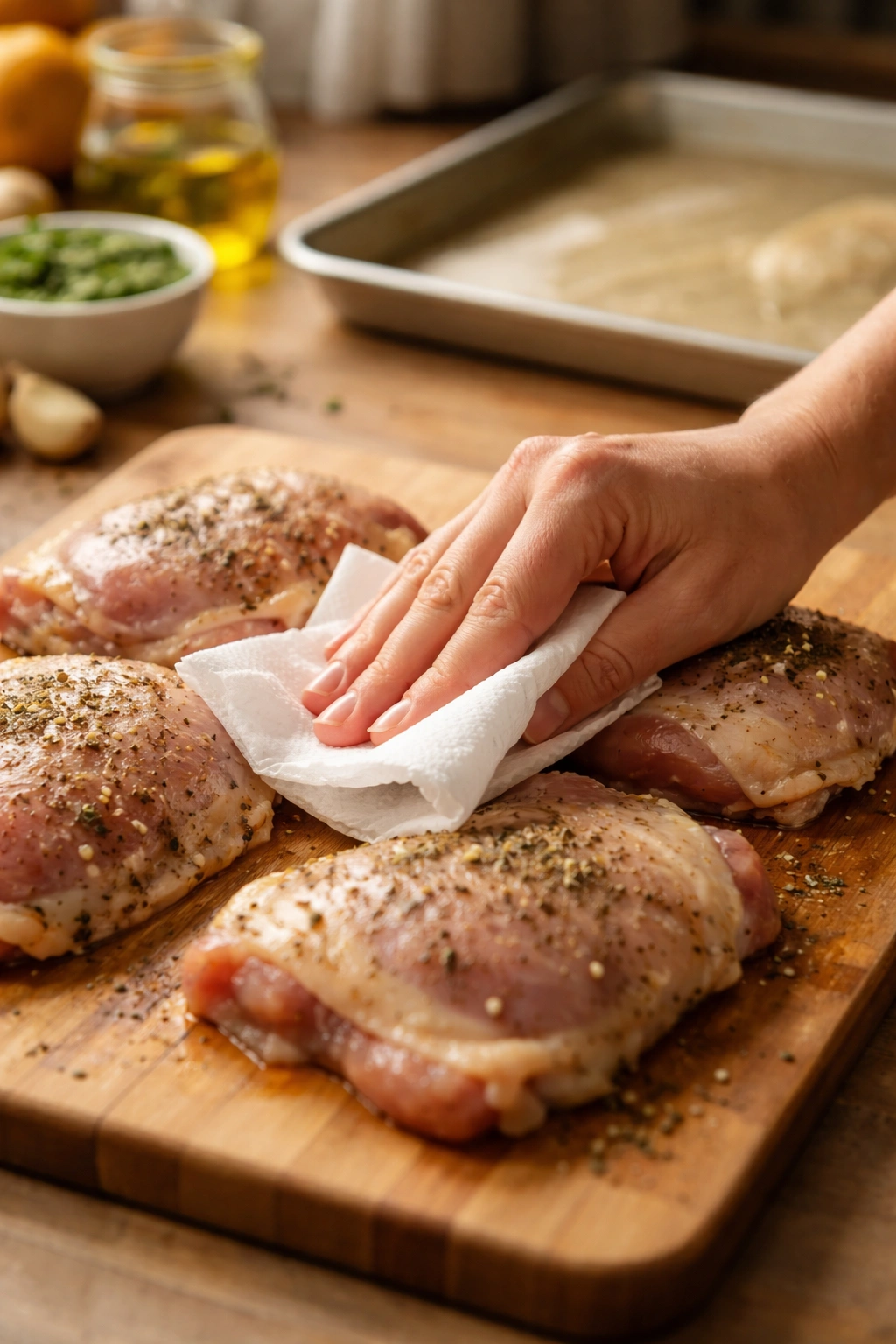
Pat your chicken completely dry before it hits the pan. Moisture on the surface prevents browning and crisping. If your chicken releases moisture during cooking (which is normal), blot it away with a paper towel when you open the oven. That extra step takes 10 seconds and noticeably improves the final result.
Use a sheet pan with sides, not a flat baking sheet. The edges on a rimmed sheet pan (called a half-sheet pan in restaurant terminology) catch the pan juices, which is essential for creating that light sauce. A flat baking sheet lets everything run off the sides and onto your oven, plus you’ll lose valuable drippings for serving.
Don’t crowd the pan. If vegetables are piled on top of each other, they steam rather than roast. If you have a massive quantity and space is tight, use two sheet pans instead. This actually cooks faster because everything roasts evenly instead of some vegetables becoming mushy while others stay firm.
Taste the dressing before you use it. The flavors should be bright and a bit aggressive—bold rather than subtle. Remember that it’s going to season two components (vegetables first, then chicken), so you want it to be assertive. You can always add salt or lemon juice if needed, but you can’t take it out.
Respect the internal temperature of the chicken. An instant-read thermometer is invaluable. For maximum tenderness and food safety, aim for 165°F in the thickest part of the thigh without touching bone. Going higher is fine and actually preferable for meal prep—the extra heat breaks down collagen and makes the chicken more tender as it cools and sits in the fridge.
Don’t be afraid of the broiler finish. Two to three minutes under the broiler at the very end adds incredible color and a slight char to the vegetables and crisps the feta beautifully. Just stay in the kitchen while it’s under the broiler—don’t walk away, because broilers go from perfect to burnt in moments.
Capture those pan juices. When you remove the sheet pan from the oven, use a spoon or spatula to scrape up all the browned bits and pan liquid. Drizzle this over your meal prep containers or bowls just before serving. Those concentrated juices are pure flavor—vegetal sweetness, chicken fat, lemon, garlic, herbs. They’re liquid gold.
Let the pan cool before storing. If you put hot food directly into meal prep containers and refrigerate, the condensation that forms will make everything soggy and encourage bacterial growth. Cool it to room temperature first (takes about 30 to 45 minutes), then store.
Common Mistakes That Stop You From Great Results
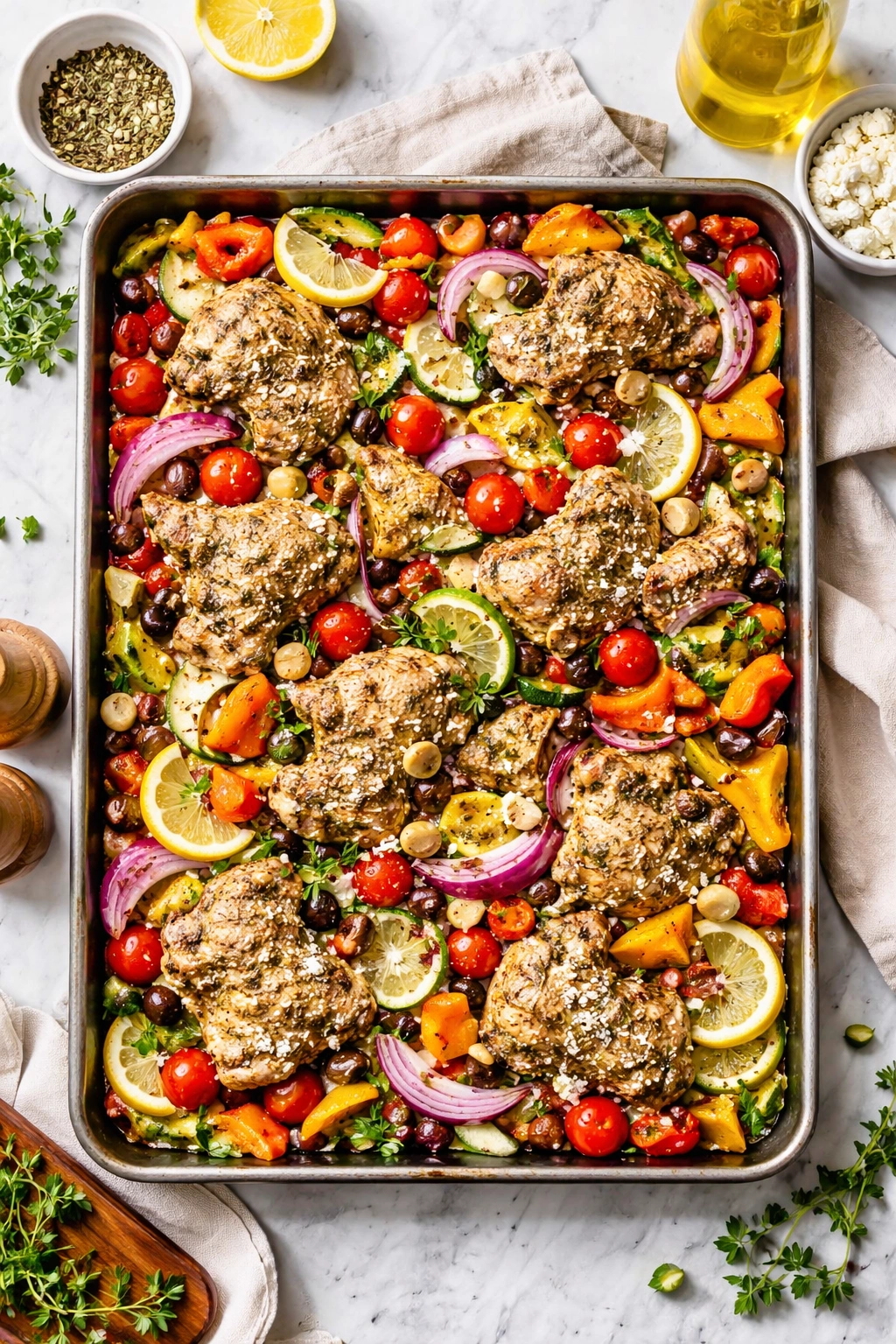
Understanding what goes wrong helps you avoid the pitfalls entirely. These are the mistakes I see most often with sheet pan cooking.
Overcrowding the pan is the biggest culprit. When vegetables are crammed together, they release their moisture, and instead of roasting, they steam. The steam prevents browning and caramelization. If you have more vegetables than space, spread them on two pans. Fifteen minutes of cooking on two pans is faster and produces better results than thirty minutes of steaming on one overcrowded pan.
Using old, stale herbs is the second biggest mistake. Dried oregano loses its flavor after about a year. If your oregano smells musty or dusty, replace it. Fresh herbs are better, but only if they’re actually fresh—wilted parsley or dried-out thyme won’t help. Smell your herbs before you use them. If you wouldn’t notice them in a salad, they’re past their prime.
Forgetting to pat the chicken dry leads to steamed rather than roasted skin. If there’s moisture on the surface when it hits the hot pan, that moisture needs to evaporate before browning can happen. Skip this step and you end up with pale, flabby skin instead of crispy, golden skin.
Adding the feta too early causes it to dry out. Feta is best added in the last 5 to 10 minutes of cooking. The residual heat softens it and makes it creamy without completely melting it into the surrounding food. Add it early and it hardens into little pebbles.
Not tasting the dressing before using it means underseasoned food. The dressing needs to taste a little too salty and too lemony on its own because it’s going to dilute into vegetables and chicken. Taste it from a spoon and adjust while you can still do something about it.
Using too little oil creates dry, bland results. The oil isn’t just for cooking—it’s a crucial flavor component that carries the herbs and garlic throughout the dish. Too little and everything tastes thin and one-dimensional. The amount in this recipe is right.
Storage, Reheating, and Make-Ahead Guidance
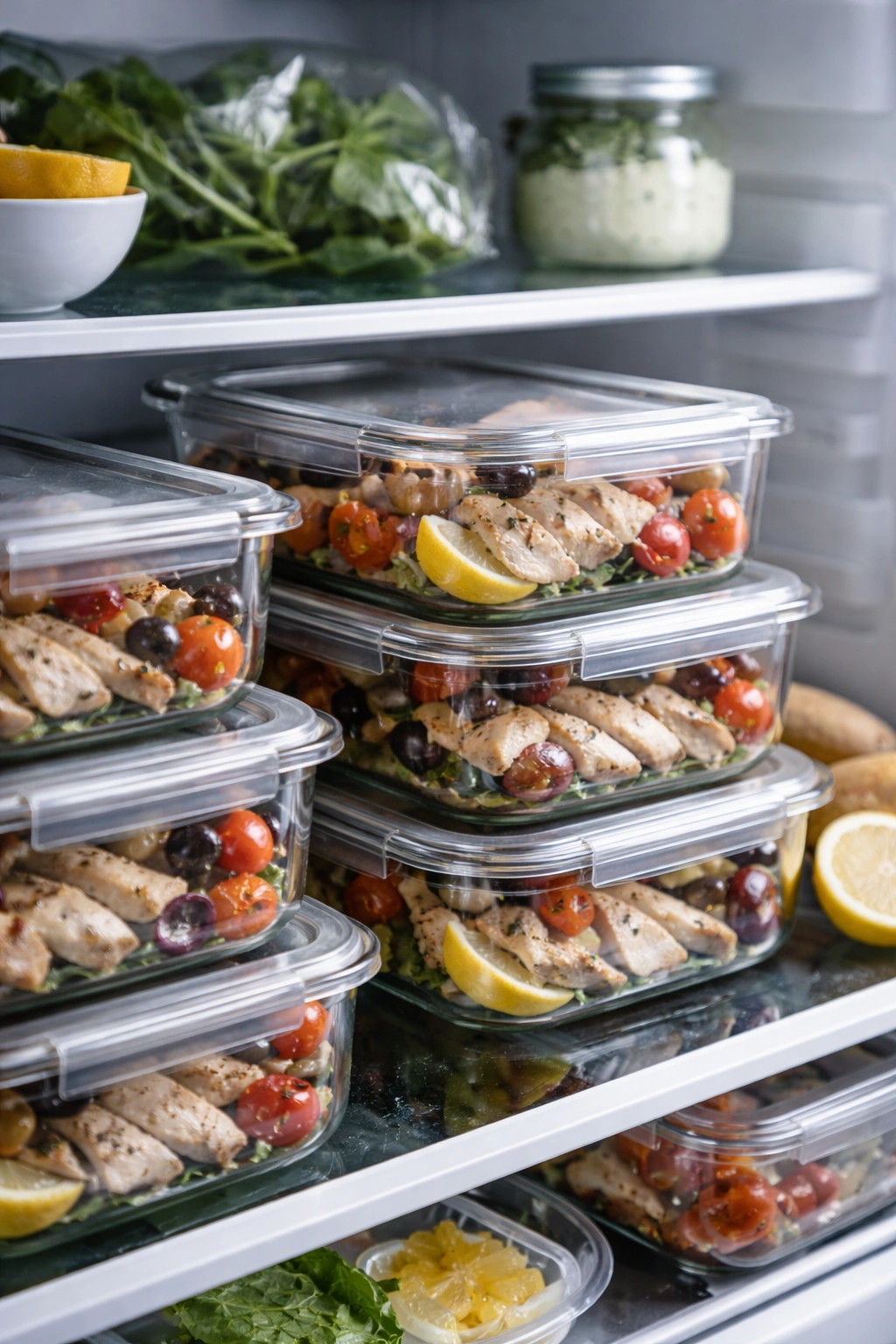
This is where meal prep truly shines with sheet pan Greek chicken. It stores beautifully and actually tastes better after a day or two as the flavors meld.
Refrigerator storage: Let the cooked sheet pan chicken cool completely to room temperature (takes about 30 to 45 minutes), then divide into individual meal prep containers or keep it all together in one large container. It keeps for up to 5 days in the refrigerator. The quality actually improves after the first day—the flavors deepen and the chicken becomes even more tender as it sits in those pan juices.
Freezer storage: You can freeze this dish for up to 3 months. Freeze it in individual portions rather than one large container, which thaws faster and is more convenient. Let it thaw overnight in the refrigerator before reheating, rather than thawing at room temperature, which gives bacteria a chance to multiply.
Best reheating method: The oven is ideal. Preheat to 350°F (175°C), place your meal prep portion on a baking sheet or in an oven-safe dish, cover loosely with foil (so it doesn’t dry out), and reheat for 8 to 10 minutes until everything is warm throughout. This preserves the texture of the chicken and vegetables better than microwaving.
Microwave reheating: If you’re short on time, microwave works. Cover the container loosely with a damp paper towel (which helps prevent splattering and adds moisture), and microwave on 50 percent power for 2 to 3 minutes. Full power can toughen the chicken and make vegetables rubbery. Stir halfway through if possible.
Make-ahead preparation: You can prep the vegetables and make the dressing the day before. Chop everything and store it in separate containers in the fridge. In the morning, assemble everything on the sheet pan, drizzle with the dressing, and bake. This gives you the convenience of sheet pan cooking with the time-savings of advance prep.
Important note: Don’t marinate the raw chicken for extended periods in the citrus-based dressing, as the acid will start to “cook” the chicken’s surface and can make it tough. If you’re prepping early, keep the dressing and chicken separate, then combine them right before baking.
Variations and Adaptations for Your Preferences
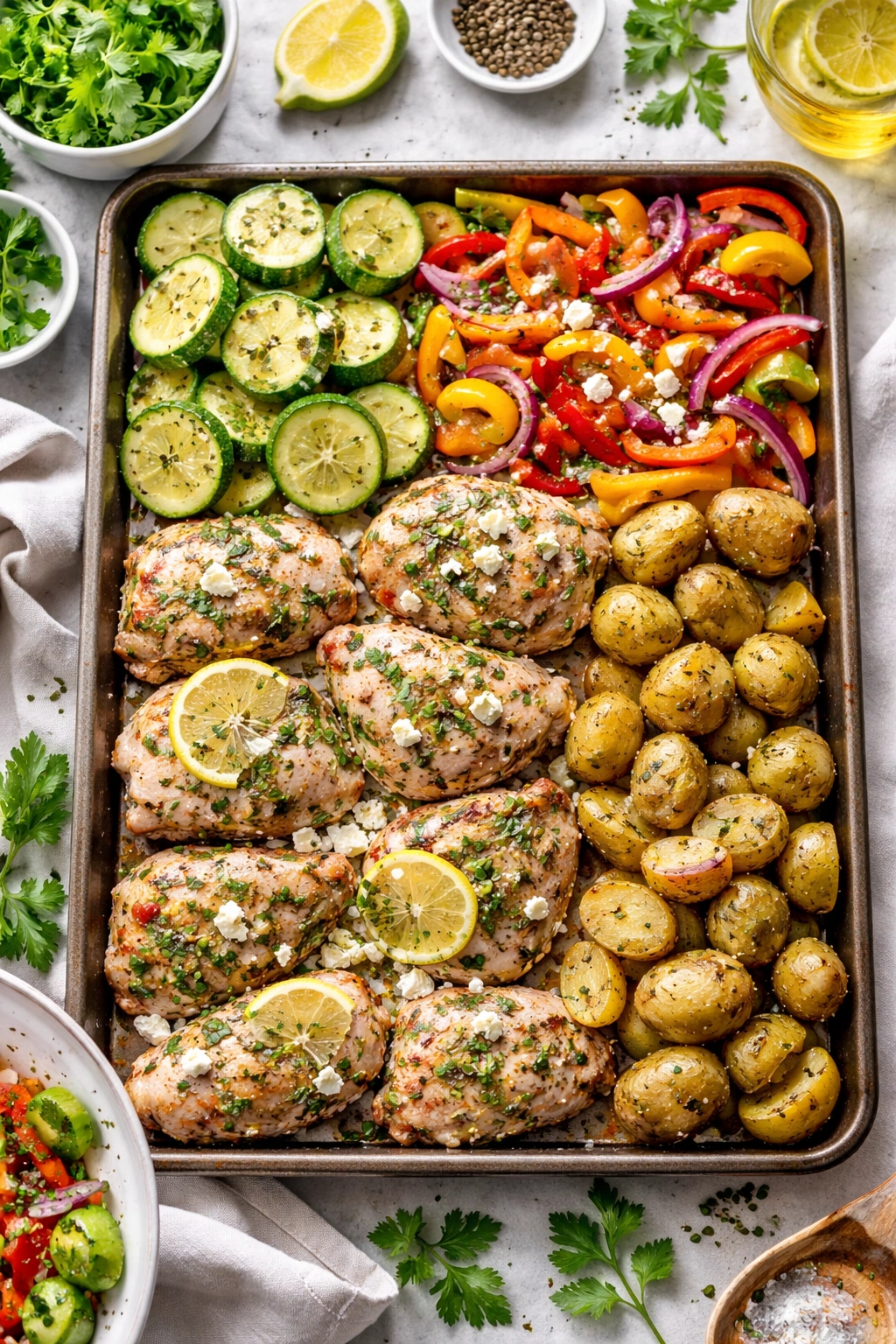
The beauty of this recipe is that it’s a framework, not a rigid prescription. You can adjust it based on what you have, what you like, and how you plan to eat it.
Vegetable swaps that maintain the Greek character: Skip the zucchini and add asparagus instead (it roasts quickly in about 15 to 20 minutes). Substitute eggplant for zucchini for a earthier flavor. Add cauliflower florets for a heartier, more substantial dish. Include small waxy potatoes (halved) if you want carbohydrates built right into the meal—they take the full 40 minutes to roast, so add them at the start with the onions. Green beans work beautifully and roast in about 20 to 25 minutes.
For a heartier, more carb-heavy version: Add about 1½ pounds of baby potatoes (halved) or Yukon gold potatoes (cut into 1-inch chunks) to the pan at the beginning. Increase the dressing by half if you’re adding significantly more vegetables. This transforms the meal into something more like a complete starch-inclusive dinner rather than a lighter vegetable-focused dish.
Protein alternatives: Use chicken drumsticks or split chicken breasts instead of thighs. If you prefer fish, substitute with salmon fillets or white fish like cod or halibut, but reduce cooking time to 15 to 20 minutes. The flavors still work beautifully with seafood. For a vegetarian version, use chickpeas (rinsed and drained) or cubed tofu. Toss the chickpeas or tofu in the dressing along with the vegetables, but add them halfway through cooking since they don’t need as much time as chicken.
Dairy-free adaptation: Simply omit the feta cheese, or replace it with a dairy-free feta alternative if you want that salty, tangy element. The dish is delicious without any cheese—the olives and dressing provide enough salinity and tang.
Herb variations: If you don’t have thyme, use rosemary instead (use less—it’s more potent). If you’re out of oregano, try using Italian seasoning or basil, though the flavor profile shifts slightly away from “Greek” and toward “Italian.” Fresh herbs can replace dried in a 3:1 ratio (use three times as much fresh as you would dried, and add them in the last 5 minutes of cooking if they’re delicate herbs like basil).
For different serving formats: Make it a grain bowl by serving over couscous, orzo, farro, rice, or quinoa. The pan juices become a natural sauce for these grains. Chop everything finely and use it as a filling for pita bread with tzatziki sauce and lettuce. Turn the leftovers into a composed salad by adding fresh greens, cucumbers, and a simple lemon vinaigrette. Use it as a topping for a baked sweet potato. Toss chopped portions with pasta and additional fresh herbs.
Serving Suggestions and Pairing Ideas
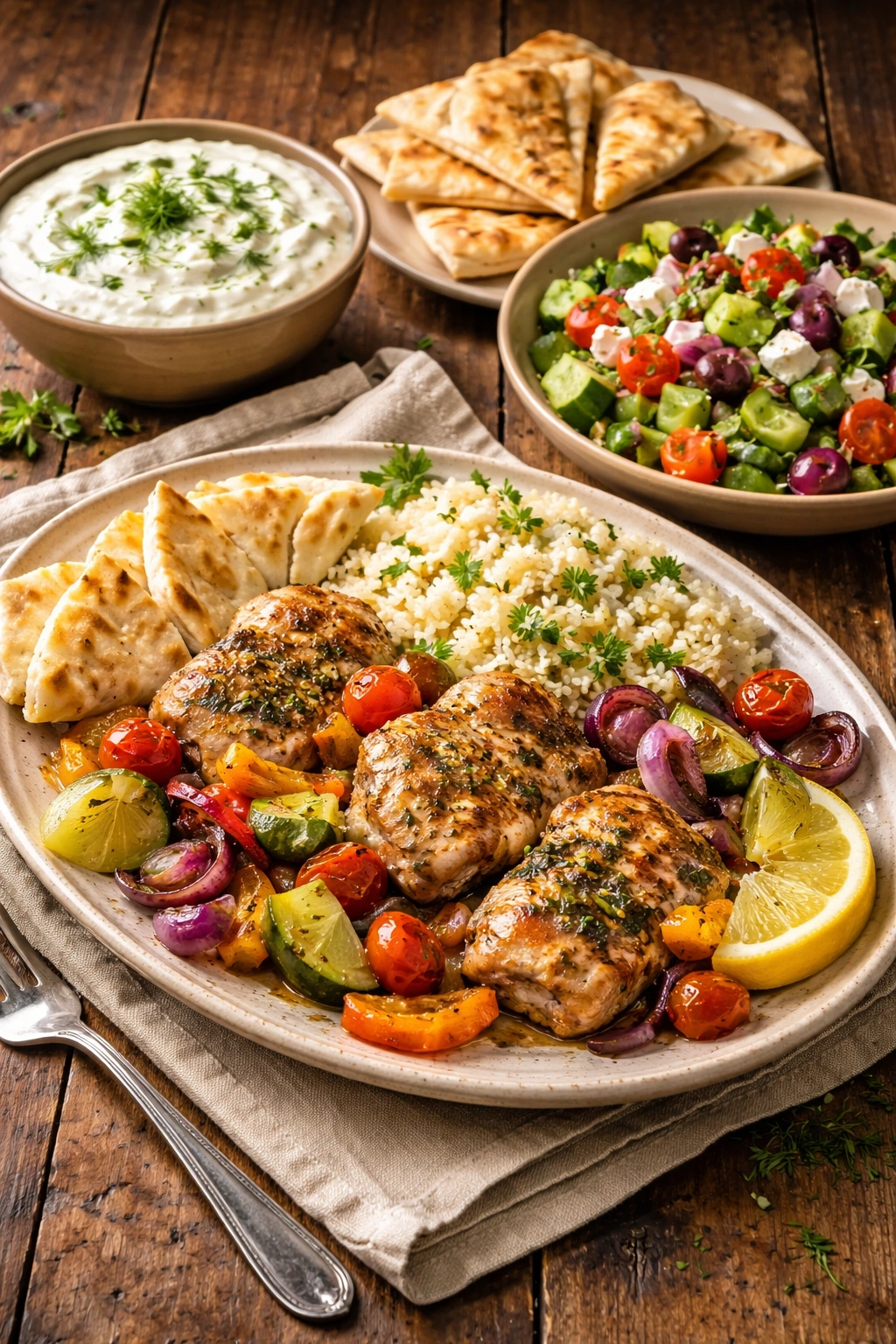
While sheet pan Greek chicken is a complete meal on its own, a few additions elevate it to something special.
Tzatziki sauce is the ultimate companion. This cooling yogurt sauce with cucumber, garlic, and dill is the perfect foil to the warm, herb-forward chicken. Dollop it on the side, or drizzle it over the top just before eating. Homemade tzatziki takes five minutes to make (grated cucumber stirred into Greek yogurt with garlic, dill, and salt), or you can buy quality prepared versions.
Fresh pita bread for scooping and wrapping. The bread soaks up those pan juices and becomes an edible vehicle for loading up your forkful. Warm the pita gently before serving for the best texture.
A simple chopped Greek salad alongside. Tomatoes, cucumbers, red onion, olives, and feta dressed with a basic lemon vinaigrette provide freshness and contrast to the roasted elements. The crispness of fresh vegetables plays beautifully against the warm, soft roasted vegetables.
White rice or orzo for soaking up sauce. If you want carbohydrates alongside rather than mixed in, cook a simple white rice (or prepare orzo pasta) and serve as a base. The pan juices become a natural sauce for the grains.
Roasted or boiled potatoes if you want something substantial. Fingerling potatoes roasted separately, or even just boiled new potatoes tossed with a little of the leftover dressing, turn this into a more filling main course.
Hummus as an appetizer or side. Serve a bowl of homemade or store-bought hummus alongside with fresh vegetables (carrots, bell peppers, cucumber) and warm pita. It adds protein and provides something to nibble while the main course is finishing.
A crisp white wine pairs beautifully. Sauvignon Blanc or Pinot Grigio’s acidity complements the lemon-forward flavors and cuts through the richness of the olive oil and feta. If beer is your preference, a light pilsner or wheat beer works equally well.
Sparkling water with fresh lemon. If you’re not drinking alcohol, add fresh lemon slices and a few sprigs of mint to sparkling water for something refreshing that complements the meal’s flavor profile.
Final Thoughts
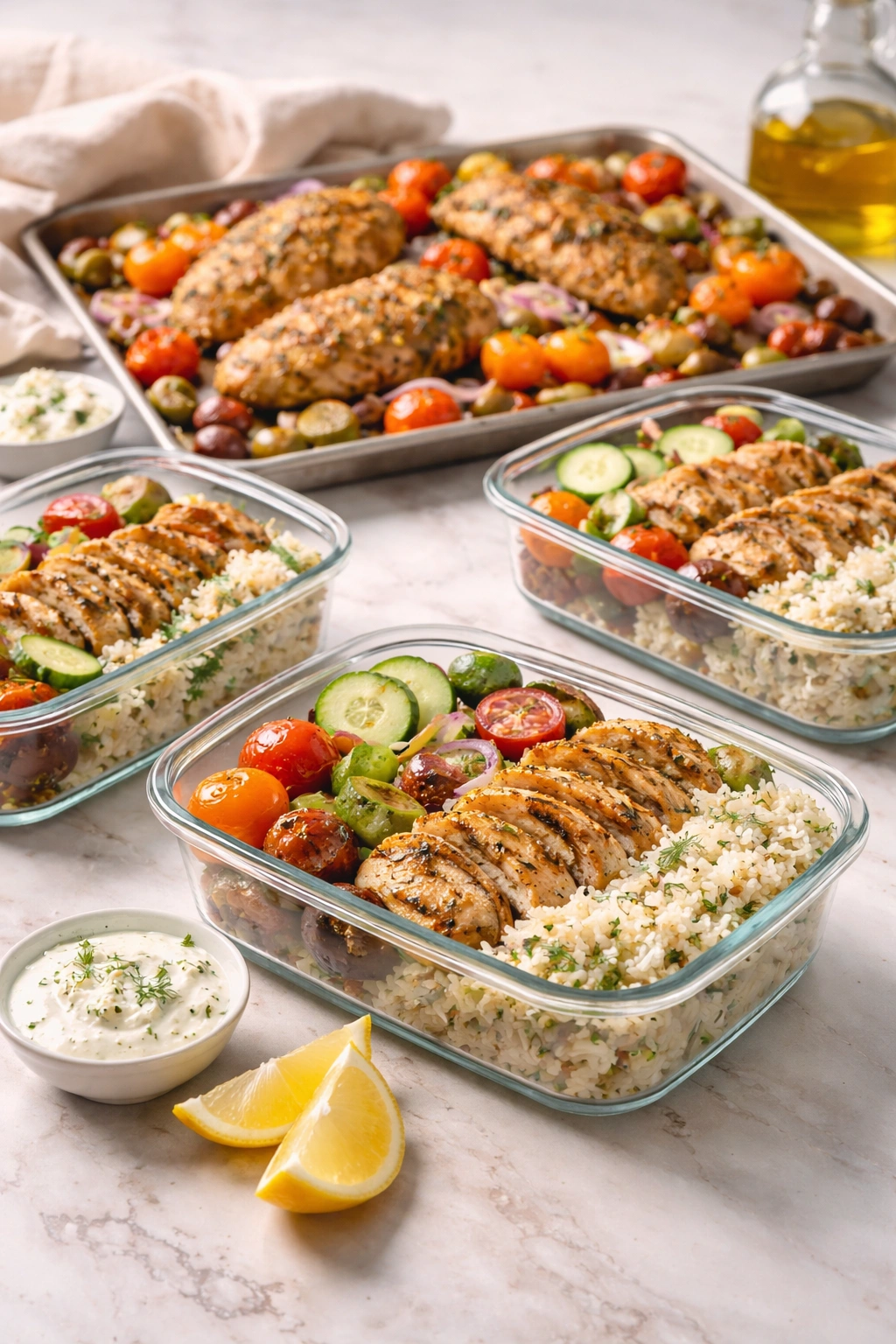
Sheet pan Greek chicken isn’t revolutionary. It’s not trendy or Instagram-famous. But it does something far more valuable than any of those things—it delivers consistently delicious food with minimal effort, stores beautifully for busy weekdays, and tastes genuinely good both hot and cold. That’s the real magic of meal prep done right.
The reason this recipe has become so beloved isn’t because it’s complicated or requires special skills. It’s beloved because it works. You make it once and you eat well for days. The flavors are bright and Mediterranean without being fussy. The chicken stays tender even though you’re not hovering over the stove. The vegetables actually taste like themselves, only better, because roasting concentrates their natural sugars and deepens their flavor.
Start with this exact combination of ingredients and technique. Make it a few times until you understand how the components work together. Then make it your own—swap vegetables based on what’s in season, adjust the herbs to your taste, play with different serving formats. Once you’ve made it a few times, you’ll have internalized the rhythm and won’t need to think about timing anymore. That’s when weeknight cooking becomes simple again, and meal prep becomes something you actually look forward to rather than dread.
