



Steak Salad the Whole Family Will Ask For
There’s something magical about putting a dish on the table that makes everyone pause mid-conversation and actually finish their vegetables. Steak salad has that power. It’s the rare meal where kids don’t need convincing to eat their greens, adults feel genuinely satisfied without craving dessert an hour later, and picky eaters find something they actually love without requiring a separate meal. Whether your family gravitates toward bold, spicy flavors or prefers classic, comforting tastes, steak salad is the one-dish dinner that somehow appeals to every palate at your table.
The magic isn’t complicated. You’ve got tender, flavorful steak—the part that makes everyone excited—paired with crisp, fresh vegetables that feel light rather than like an obligation. Add a dressing that actually tastes good (not like you’re being virtuous), and suddenly everyone’s asking for seconds. It’s elegant enough to impress guests, quick enough for weeknight dinners, and flexible enough that picky eaters can build their own plate.
Why Steak Salad is Perfect for Family Dinners
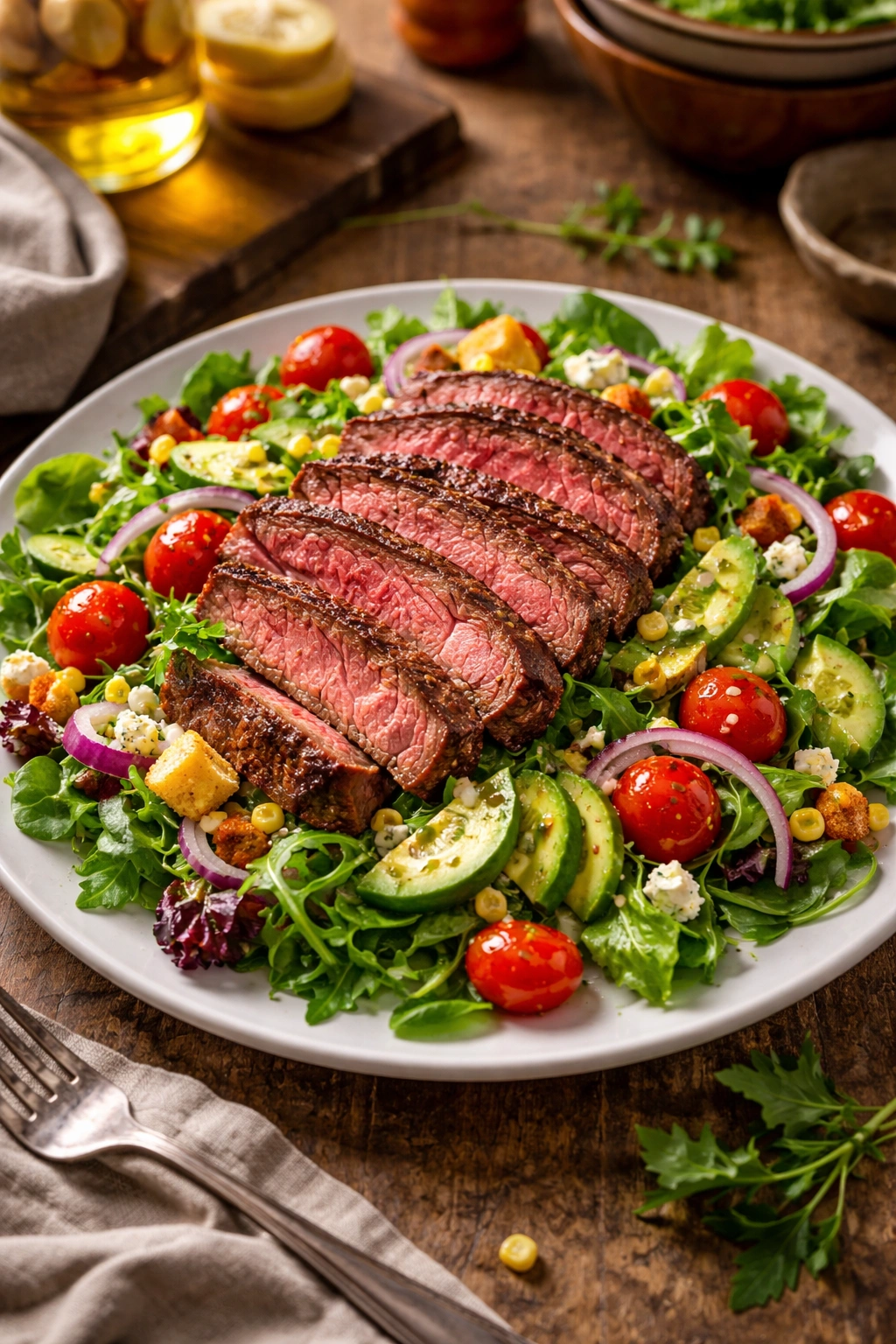
Steak salad solves the problem that plagues many family meals: the need to please different appetites and preferences in a single sitting. Your teenager wants protein to refuel after sports. Your partner wants something hearty that tastes like dinner, not diet food. Your younger kids want recognizable ingredients they actually like. Steak salad delivers all of that without requiring you to cook three separate meals.
It also hits that sweet spot between “feels special” and “doesn’t require three hours of prep.” You’re not fussing with complicated techniques or obscure ingredients. A good steak salad comes together in about 30 minutes of active time, which means you’re not stuck in the kitchen missing time with your family. The steak does most of the heavy lifting flavor-wise, so even basic, fresh vegetables taste absolutely delicious.
The presentation factor matters too. There’s something about the way a beautiful steak salad looks on the plate that makes everyone want to eat it. Colors pop, the steak looks impressive, and suddenly a salad—something that might normally elicit groans from certain family members—feels like a treat. This is psychology you can use to your advantage.
Another reason families keep coming back to steak salad: it’s genuinely flexible about ingredients. If someone doesn’t like tomatoes, you skip them. If another person loves corn, you add it. Unlike a casserole or a one-pot meal where everything’s mixed together, a salad lets everyone customize their plate. This is huge for reducing dinner table negotiations and keeping everyone happy.
Choosing the Right Steak Cut for Your Family
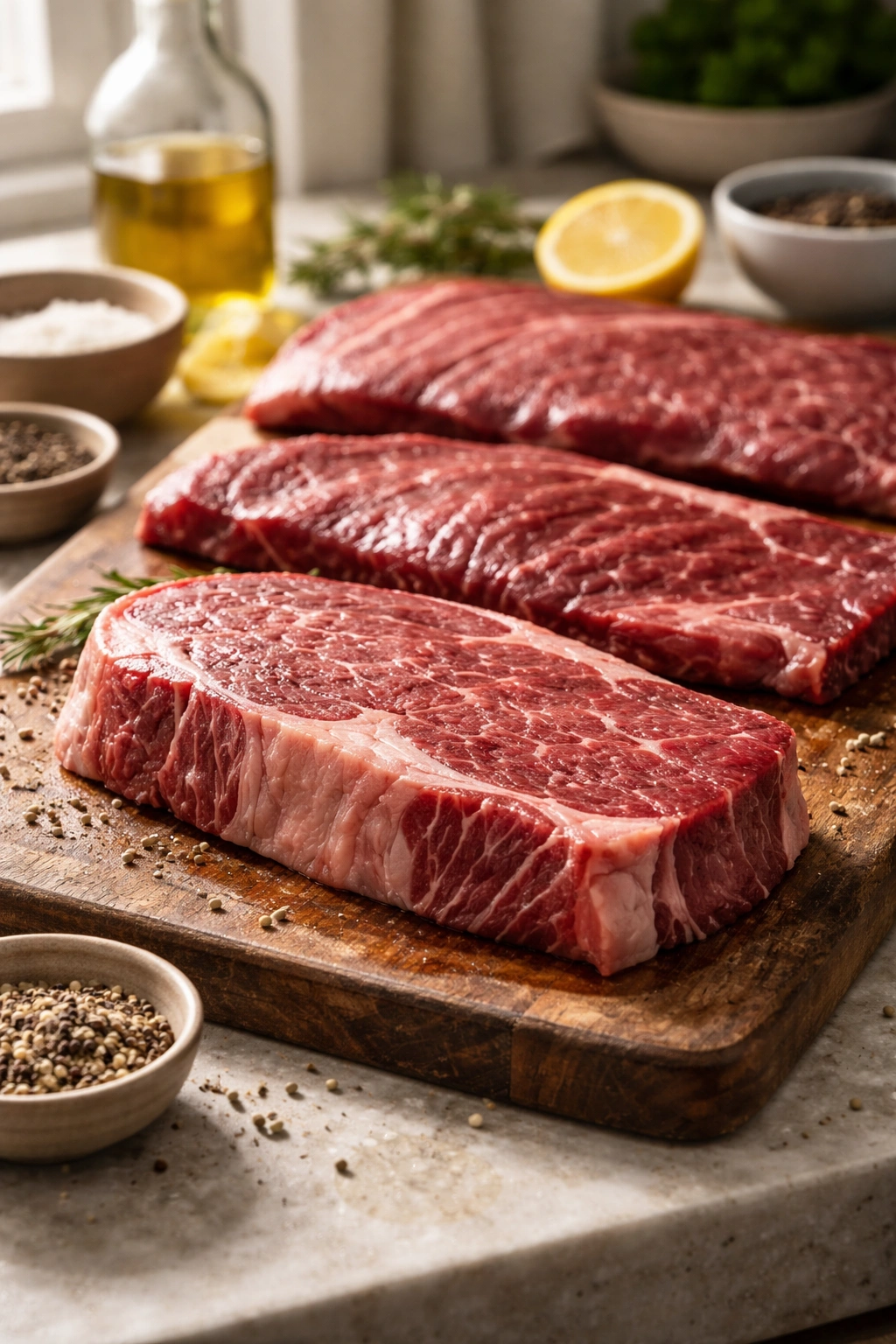
Not all steak cuts work equally well for salad. You want something that’s flavorful, cooks quickly, and becomes tender when sliced thin. The cut you choose will influence how much time you spend at the grill and how satisfied everyone feels.
Flank steak is the most popular choice for family steak salads, and for good reason. It’s affordable—a real consideration when you’re feeding a crowd—and it has excellent beefy flavor even in smaller portions. Flank steak benefits from marinating, which tenderizes it and infuses it with flavor. It cooks fast (usually 4-5 minutes per side), which means you’re not waiting around. The only requirement is that you slice it thin and against the grain, which ensures tender bites rather than chewy ones.
Sirloin steak is another great option, particularly for families on a tighter budget. It’s leaner than flank, making it a slightly healthier choice, though you’ll want to make sure not to overcook it or it can become tough. Sirloin works beautifully marinated and grilled. It has a coarser grain than some cuts, which means marinating and proper slicing become even more important.
Skirt steak offers intense beefy flavor in a relatively thin cut that cooks incredibly fast. If your family loves bold, meaty taste, skirt steak delivers. It’s also reasonably priced. Like flank, it absolutely must be sliced thin against the grain, but when prepared this way, it becomes wonderfully tender.
Rib-eye or New York strip are for those nights when you want to splurge or celebrate something special. These cuts are more tender to begin with, so they don’t require marinating if you’re short on time. They’re fattier than flank or sirloin, which means incredibly juicy, indulgent flavor. These are perfect if your family loves that steakhouse experience, but they’ll cost more per pound.
The key to any cut: marinating helps tenderness, quick cooking prevents toughness, and thin slicing against the grain makes even less-tender cuts feel luxurious in a salad.
Building a Salad Base That Everyone Will Enjoy
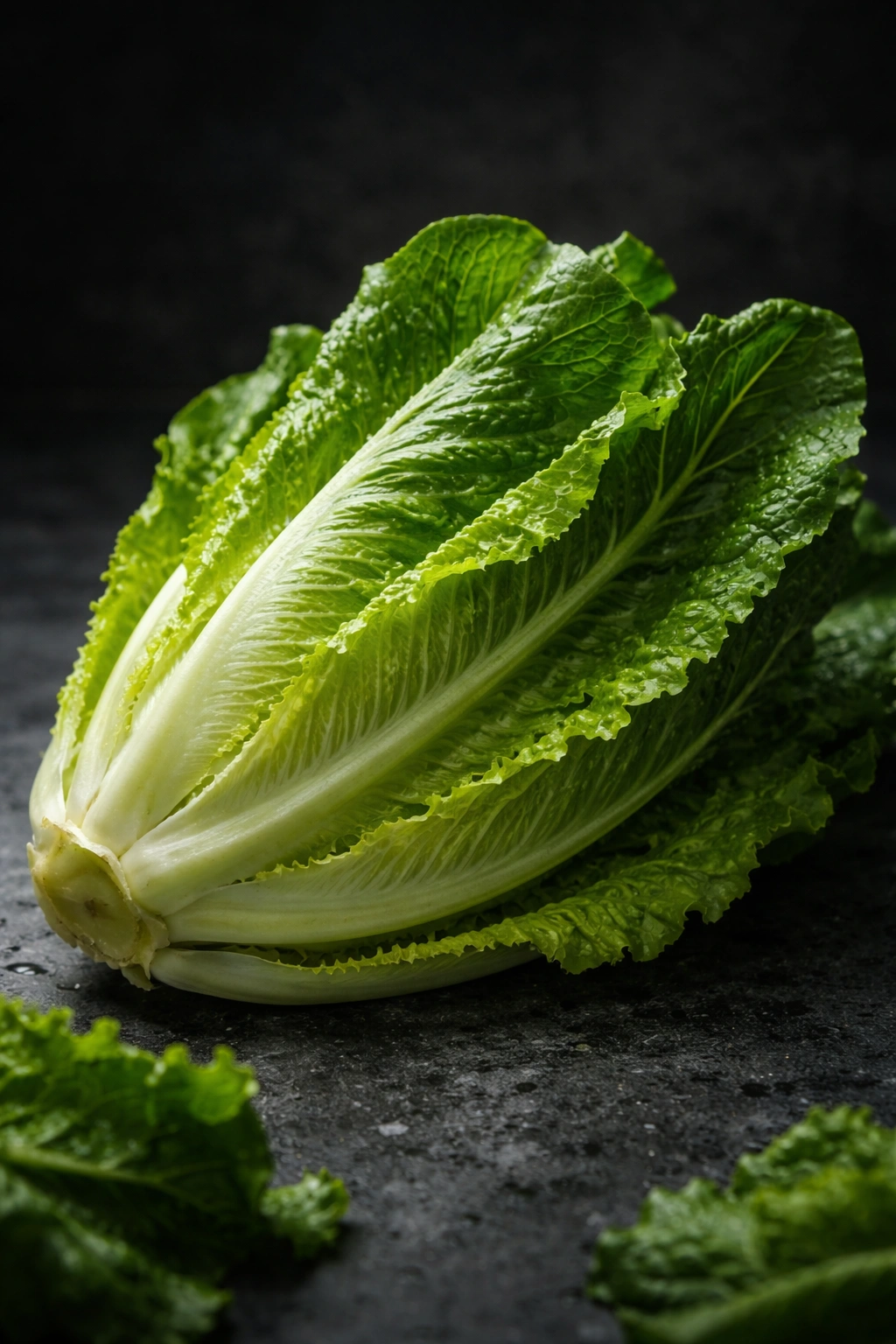
The foundation of your steak salad needs to be something that appeals to your specific family’s preferences. This isn’t the place to experiment with microgreens and specialty lettuces unless you know your family will actually eat them. You’re aiming for crisp, fresh, and familiar.
Romaine lettuce is the workhorse of family steak salads. It’s crispy, it holds up well, and it has just enough flavor that it’s interesting without being weird. Hearts of romaine require less chopping and contain the most tender, flavorful leaves. Many families find romaine strikes the perfect balance between interesting and approachable.
Mixed baby greens offer variety and visual appeal without being intimidating. They’re tender, they look beautiful on a plate, and they’ll eat quickly without wilting under the dressing. If your family includes skeptics about eating salad, mixed greens feel less “healthy” and more like regular food.
Arugula brings a slightly peppery note that pairs beautifully with steak. Some families love it; others find it too strong. If you’re introducing arugula, mix it with milder greens so the flavor isn’t overwhelming. Baby arugula is much more delicate and less intensely flavored than mature arugula, making it more family-friendly.
Spinach or spring green blends are excellent if your family prefers milder flavors. They’re tender, nutrient-dense, and they appeal to families who find arugula or romaine too assertive.
The smart approach: choose greens your family already eats and enjoys. You’re not trying to sneak in ingredients here. You want the salad to feel like something they genuinely want to eat, not something they’re tolerating. If your family primarily eats iceberg lettuce, start there—you can always expand their horizons gradually.
A good ratio is about 4-6 cups of greens per person, depending on how generous you want to be and how much other topping you’re adding. With steak on top, the salad becomes a full meal, so you can use the lower end of that range.
The Secret to a Dressing That Appeals to All Ages
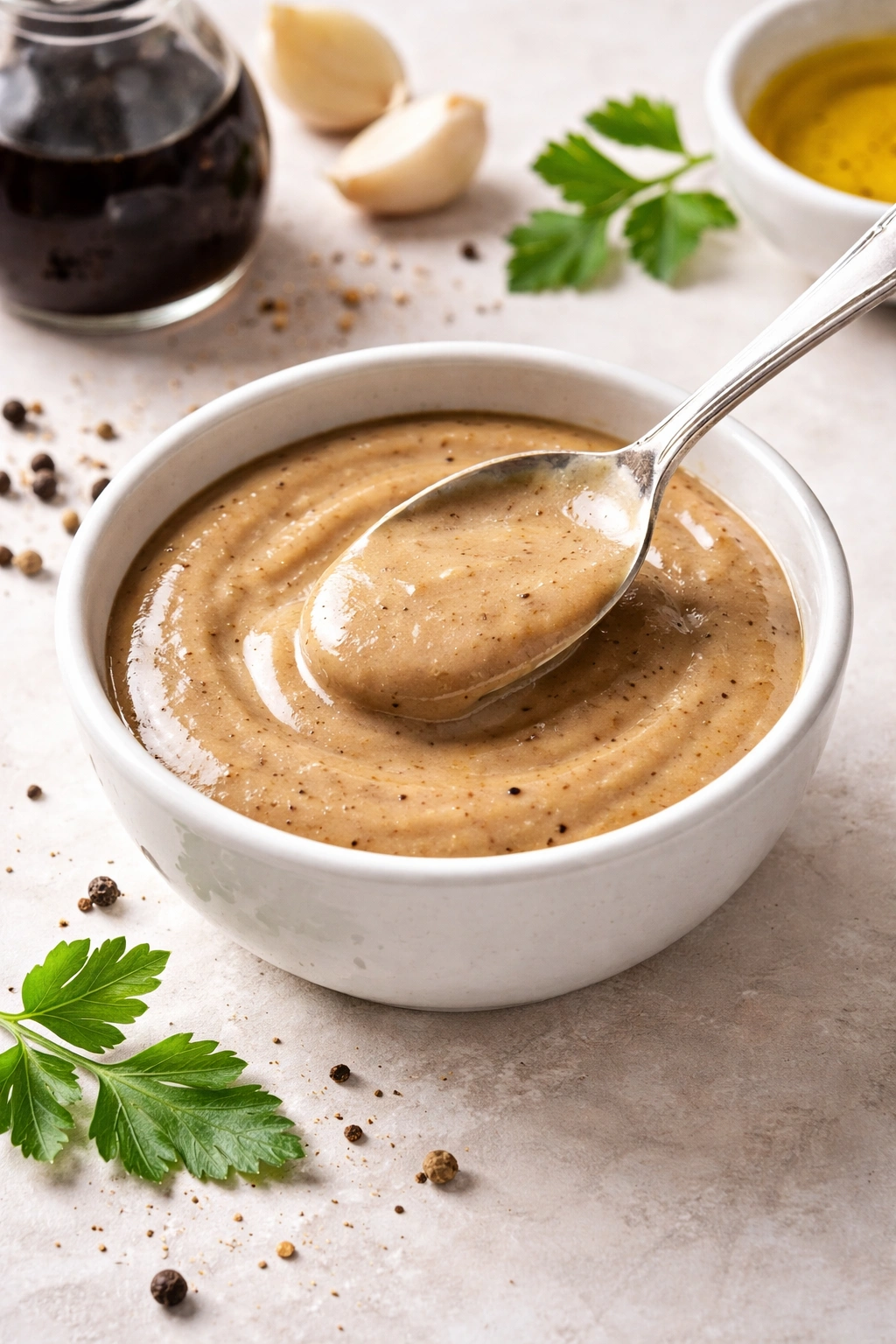
The dressing is where many family salads go wrong. You use something too acidic, too intense, or too “healthy” tasting, and suddenly half the table is pushing salad around their plate. The dressing needs to taste genuinely good—like something people would actually want to pour over vegetables.
Creamy balsamic vinaigrette is the crowd-pleaser that keeps families coming back. It’s richer and more indulgent than a straight vinegar-and-oil dressing, which appeals to people who normally don’t reach for salad. The creaminess comes from mayonnaise or a dijon mustard emulsion, not dairy, so it’s lighter than ranch but more satisfying than straight balsamic. The sweetness of balsamic appeals to younger palates without being cloying.
Ranch-style dressings work beautifully for families with pickier eaters. You can make a simple yogurt-based ranch or use store-bought if time is tight. The mild, familiar flavor appeals to kids, and adults don’t feel like they’re eating something boring alongside the steak.
Cilantro lime dressing works if your family leans toward brighter, fresher flavors. It’s creamy without being heavy, and the lime adds brightness that makes the salad feel summery and light.
The dressing principle: it should taste delicious enough that you’d want to eat it by itself. If you’re grimacing at the dressing while tasting it, your family will notice and reject it. A good dressing for steak salad bridges the gap between flavorful and approachable—bold enough to be interesting, but not so intense that it alienates anyone at the table.
Pro tip: make extra dressing. Family members will pour it more generously than you expect, and having more on hand means nobody stops eating salad because the dressing ran out.
Toppings and Mix-Ins That Satisfy Different Tastes
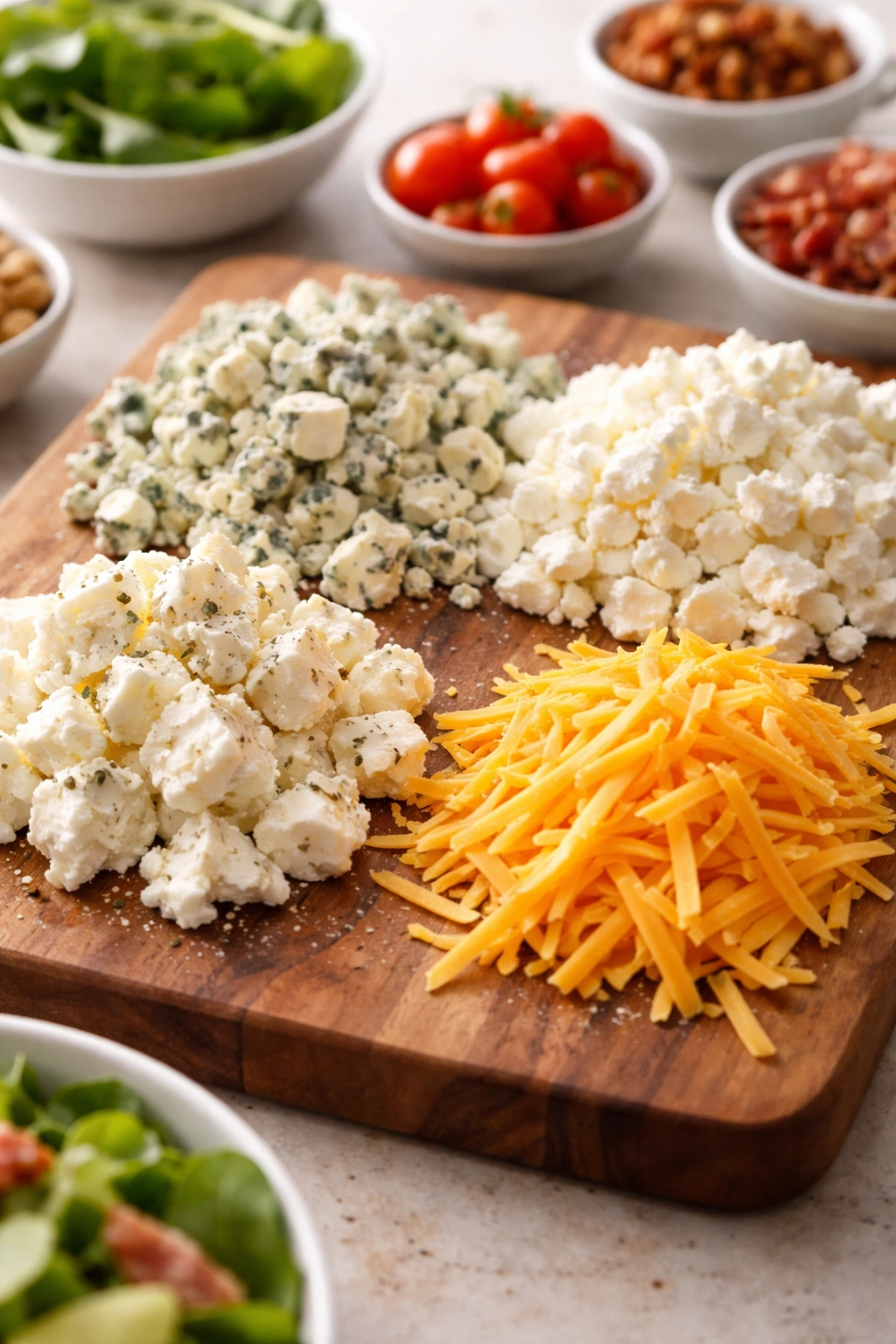
Here’s where steak salad becomes truly family-friendly: the toppings section is customizable chaos, and that’s a feature, not a bug. Instead of mixing everything together in advance, set up components and let people build their own plate.
Cheese is non-negotiable for most families. Blue cheese is traditional with steak—the pungent, creamy funk plays beautifully against the beef—but not everyone loves it. Feta crumbles offer a salty, tangy alternative that’s less intense. Goat cheese provides creaminess with a milder tang. Sharp cheddar shreds appeal to families who want classic, familiar flavor. Keep 2-3 cheese options available if your family has divided opinions.
Tomatoes add freshness and natural sweetness. Cherry or grape tomatoes are ideal because they’re bite-sized and don’t require cutting at the table. If your family includes tomato-avoiders, that’s fine—keep them on the side or skip them entirely. This is one ingredient where personal preference matters more than trying to sneak in vegetables.
Avocado adds creaminess and healthy fat, which makes the salad more satisfying. Slice it just before serving to prevent browning. Not everyone loves avocado, so offer it as an optional topping rather than mixing it in.
Cucumbers bring refreshing crunch. English cucumbers are seedless and have thinner skin, making them more pleasant to eat than conventional varieties. Kids generally enjoy the crunch, and they’re one of the least controversial salad vegetables.
Red onion adds sharpness and color. If you have family members who find raw onion too intense, try soaking thin-sliced onion in water for 10 minutes before serving—this mellows the bite while keeping the flavor and crunch.
Corn (fresh, grilled, or even from a can) adds natural sweetness and texture. If you’re grilling, throw corn on the grill alongside the steak. Raw corn kernels sliced from the cob add a pop of sweetness that appeals especially to younger eaters.
Crispy fried onions or croutons provide texture contrast. These can be store-bought or homemade. The crunch factor matters because it keeps the salad interesting as you eat through it.
Nuts (pepitas, almonds, walnuts) add protein and crunch. Be aware of nut allergies in your family or among guests before adding these.
Black beans or other legumes add protein and fiber, making the salad even more substantial. This is especially useful if someone at your table is vegetarian or eats less meat.
The strategy: set out toppings in separate bowls and let everyone customize their plate. This eliminates the “I don’t like X” objection because everyone builds exactly what they want. Kids especially enjoy having agency over their meal, and you avoid wasting ingredients on things certain family members won’t eat.
How to Cook the Steak So It’s Tender and Juicy
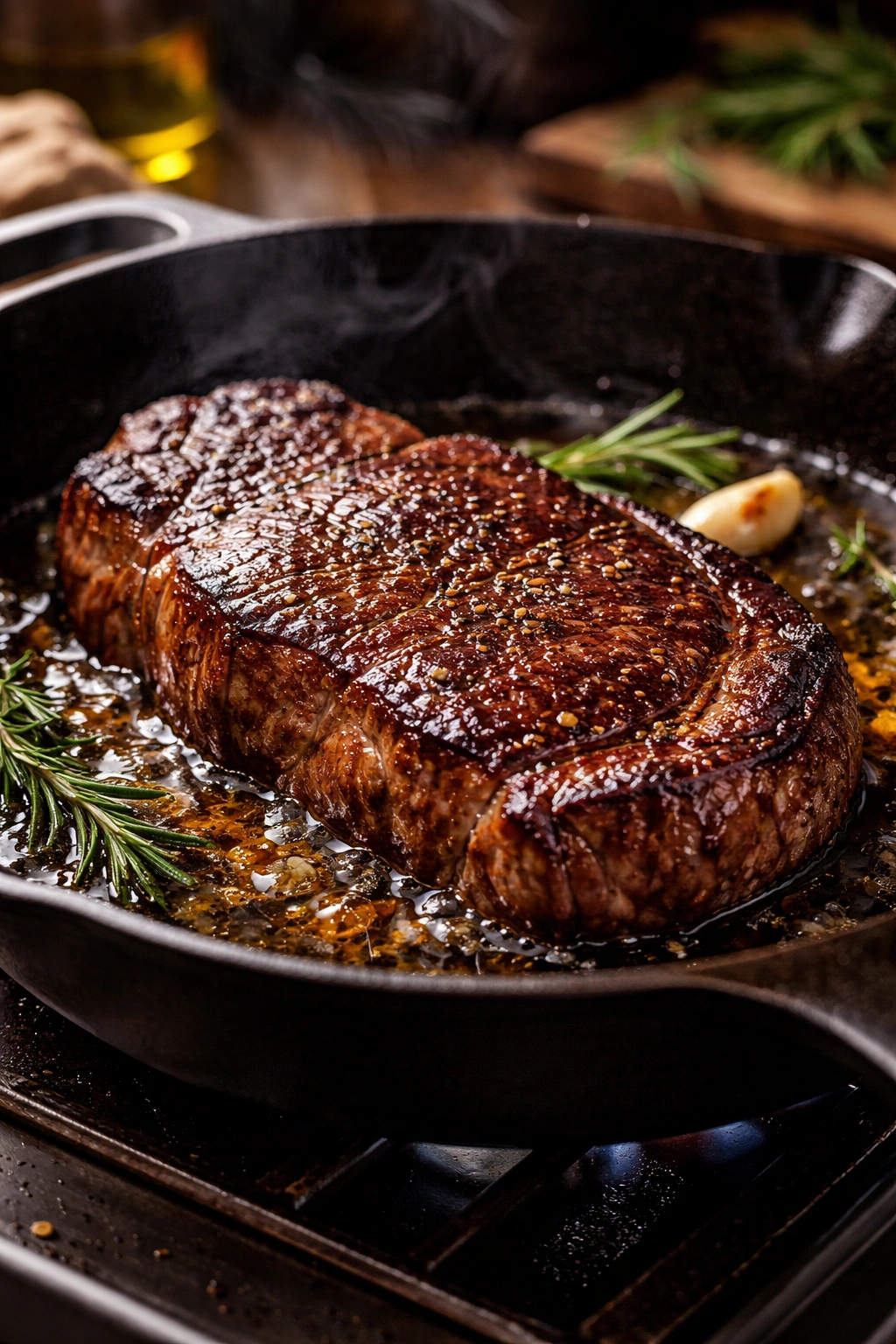
The steak is the star of this show, and getting it right is what makes the difference between a salad people tolerate and one they request repeatedly. Overcooking, undercooking, or skipping the rest step can all result in disappointing, tough steak.
Start with room temperature steak. This sounds fussy, but it matters. Take your steak out of the fridge 20-30 minutes before grilling. Cold steak coming straight from the refrigerator cooks unevenly—the outside overdoes while the inside remains rare. Room temperature steak cooks more evenly, reaching your desired doneness throughout.
Pat the steak completely dry. Moisture on the surface prevents good browning. Use paper towels and really get it dry. This is a simple step that makes a huge difference in the final crust and flavor.
Season generously with salt and pepper just before cooking. Don’t salt the steak minutes in advance if you’re short on time; the salt draws moisture to the surface. You want to season right before it hits the heat. Use kosher salt, which has larger crystals and distributes more evenly than table salt.
Use high heat. For grilling, aim for medium-high heat (around 450°F). For a cast iron skillet, heat it until it’s smoking. High heat creates the flavorful crust through the Maillard reaction—the chemical process that creates browning and deep flavor.
Cook without moving it around. This is hard for people who want to fuss with their food, but resist the urge. Leave the steak alone for 4-5 minutes per side (depending on thickness). Moving it constantly prevents browning and results in a gray, flavorless surface.
Use a meat thermometer to know when it’s done. This takes the guesswork out entirely. For medium-rare, pull the steak at 130-135°F. For medium, 140-145°F. Remember that carryover cooking will raise the temperature 5 degrees while the steak rests.
Rest the steak for 10 minutes. This is absolutely crucial and where many home cooks mess up. Resting allows the muscle fibers to relax and reabsorb the juices, rather than having them all run out onto the cutting board the moment you slice. A rested steak tastes dramatically more juicy than one you cut into immediately.
Slice thin and against the grain. Once rested, identify the direction of the muscle fibers (the grain). Slice perpendicular to those fibers. This shortens the fiber strands, making each bite tender rather than chewy. Thin slices (about ¼-inch) work better in a salad than thick ones.
Classic Creamy Balsamic Steak Salad Recipe
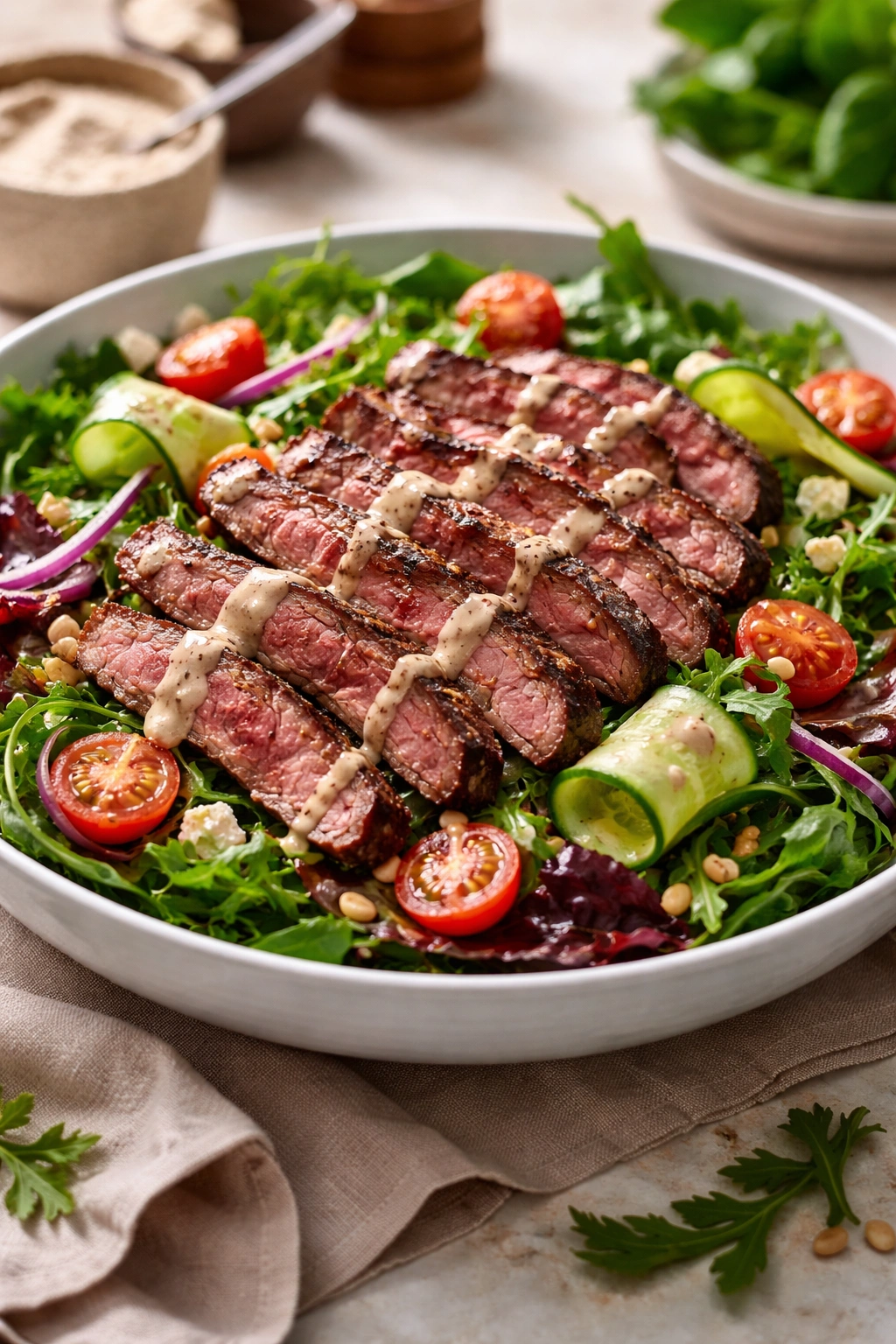
This is the version that reliably gets requests for seconds and recipe shares with friends. It combines the best elements from multiple family-tested versions: a simple marinade that adds flavor without requiring overnight planning, a creamy balsamic dressing that appeals across age groups, and flexible toppings that let everyone build their perfect salad.
Yield: Serves 4 to 6 people
Prep Time: 25 minutes
Cook Time: 10 minutes (plus 10 minutes rest)
Total Time: 45 minutes active time
Difficulty: Beginner — No special equipment required beyond a grill or cast iron skillet, and the steps are straightforward even for a first-time steak salad maker.
For the Steak Marinade:
- 3 tablespoons balsamic vinegar
- 3 tablespoons olive oil
- 2 tablespoons Worcestershire sauce
- 1 tablespoon Dijon mustard
- 2 cloves garlic, minced (or 1 teaspoon garlic powder)
- 1 teaspoon honey or light brown sugar
- ½ teaspoon kosher salt
- ¼ teaspoon ground black pepper
- 1½ to 2 pounds flank steak, sirloin steak, or skirt steak (about 1 to 1½ inches thick)
For the Creamy Balsamic Dressing:
- ⅓ cup balsamic vinegar
- 3 tablespoons mayonnaise (or Greek yogurt for a lighter version)
- 2 tablespoons extra virgin olive oil
- 1 tablespoon water (add more if dressing is too thick)
- 2 teaspoons light brown sugar
- 1 teaspoon Dijon mustard
- 2 cloves garlic, minced
- ½ teaspoon kosher salt
- ¼ teaspoon ground black pepper
For the Salad (serves 4 to 6):
- 6 to 8 cups mixed salad greens (romaine, baby arugula, or mixed spring greens)
- 1½ cups cherry or grape tomatoes, halved
- 1 English cucumber, halved lengthwise and sliced into half-moons
- ½ red onion, thinly sliced
- 1 large avocado, sliced (optional but recommended)
- ½ cup crumbled blue cheese, feta, or goat cheese
- Crispy fried onions or croutons (optional, about ¼ cup)
- Salt and pepper to taste
Prepare the Steak:
-
Remove the steak from the refrigerator and place it on a cutting board. In a small bowl, whisk together the balsamic vinegar, olive oil, Worcestershire sauce, Dijon mustard, minced garlic, honey, salt, and pepper until combined.
-
Place the steak in a large zip-top plastic bag or shallow dish. Pour the marinade over the steak and turn it several times to coat all sides evenly, making sure the marinade gets into any crevices. Seal the bag or cover the dish with plastic wrap.
-
If you have time, refrigerate the steak for 15 minutes to several hours. If you’re short on time, even 15 minutes allows some flavor to penetrate. The longer it sits (up to 8 hours), the more tender and flavorful it becomes, but a quick marinade still delivers excellent results.
-
Remove the steak from the refrigerator about 20-30 minutes before grilling (or cooking in a skillet), so it reaches room temperature. This ensures even cooking throughout.
Make the Dressing:
- While the steak comes to temperature, whisk together the balsamic vinegar, mayonnaise, olive oil, water, brown sugar, Dijon mustard, minced garlic, salt, and pepper in a small bowl. Whisk until the ingredients are fully combined and the dressing has a slightly thick, creamy consistency. If it’s too thick to pour, add a bit more water. Taste and adjust seasoning as needed. Set aside.
Cook the Steak:
-
Pat the steak completely dry with paper towels. Season both sides generously with a pinch of additional salt and pepper (beyond what’s in the marinade).
-
If grilling: Preheat your grill to medium-high heat (about 450°F). Lightly brush or spray the grill grates with oil to prevent sticking. Place the steak on the grill and cook undisturbed for 4-5 minutes until a dark, flavorful crust forms on the bottom. Flip the steak and cook for another 3-4 minutes for medium-rare (the exact time depends on thickness). Use a meat thermometer inserted into the thickest part of the steak, away from bone or fat: 130-135°F for medium-rare, 140-145°F for medium.
-
If cooking in a cast iron skillet: Heat a cast iron skillet over medium-high heat until it’s very hot and just starting to smoke (about 2-3 minutes). Add 1 tablespoon of neutral oil with a high smoke point (avocado or vegetable oil). Place the steak in the skillet and do not move it for 4-5 minutes until a golden crust forms. Flip the steak and cook for another 3-4 minutes until it reaches your desired temperature.
-
Transfer the cooked steak to a clean cutting board and let it rest for 10 minutes. This step is crucial—it allows the juices to redistribute throughout the meat, resulting in tender, juicy slices rather than dry ones. Tenting loosely with foil keeps it warm.
Assemble the Salad:
-
While the steak rests, wash and prepare the vegetables. Place the mixed greens in a large salad bowl or on a large platter. Arrange the tomatoes, cucumber slices, red onion, and blue cheese around the greens.
-
Slice the rested steak thin (about ¼-inch thick) against the grain—that is, perpendicular to the direction of the muscle fibers running through the meat. This is what makes the steak tender in each bite.
-
Arrange the sliced steak on top of the salad. Add avocado slices if using. Drizzle the creamy balsamic dressing over the entire salad, or serve dressing on the side if you prefer people to dress their own portions.
-
Scatter crispy fried onions or croutons on top if using them. Toss gently to combine, or let each person toss their own plate. Serve immediately while the steak is still warm and the greens are crisp.
Advertisements
Tips for Family Success:
The beauty of this recipe is that you can prep everything in advance and assemble just before serving. Chop all your vegetables an hour or two ahead. Make the dressing the morning of, or even the day before—it keeps beautifully in a jar in the refrigerator. This means when dinnertime arrives, you’re just grilling the steak and putting it all together.
If your family includes people who don’t like certain vegetables, simply leave them off the platter or put them on the side. Someone doesn’t like tomatoes? Skip them. Another person wants extra cucumber? Double it. This is the flexibility that makes steak salad so family-friendly.
The dressing makes enough for 4-6 people with some left over. Store extra in an airtight jar in the refrigerator, where it keeps for up to a week. It’s also delicious on regular green salads, roasted vegetables, or even as a dipping sauce for bread.
Southwest-Style Steak Salad for Bold Flavors
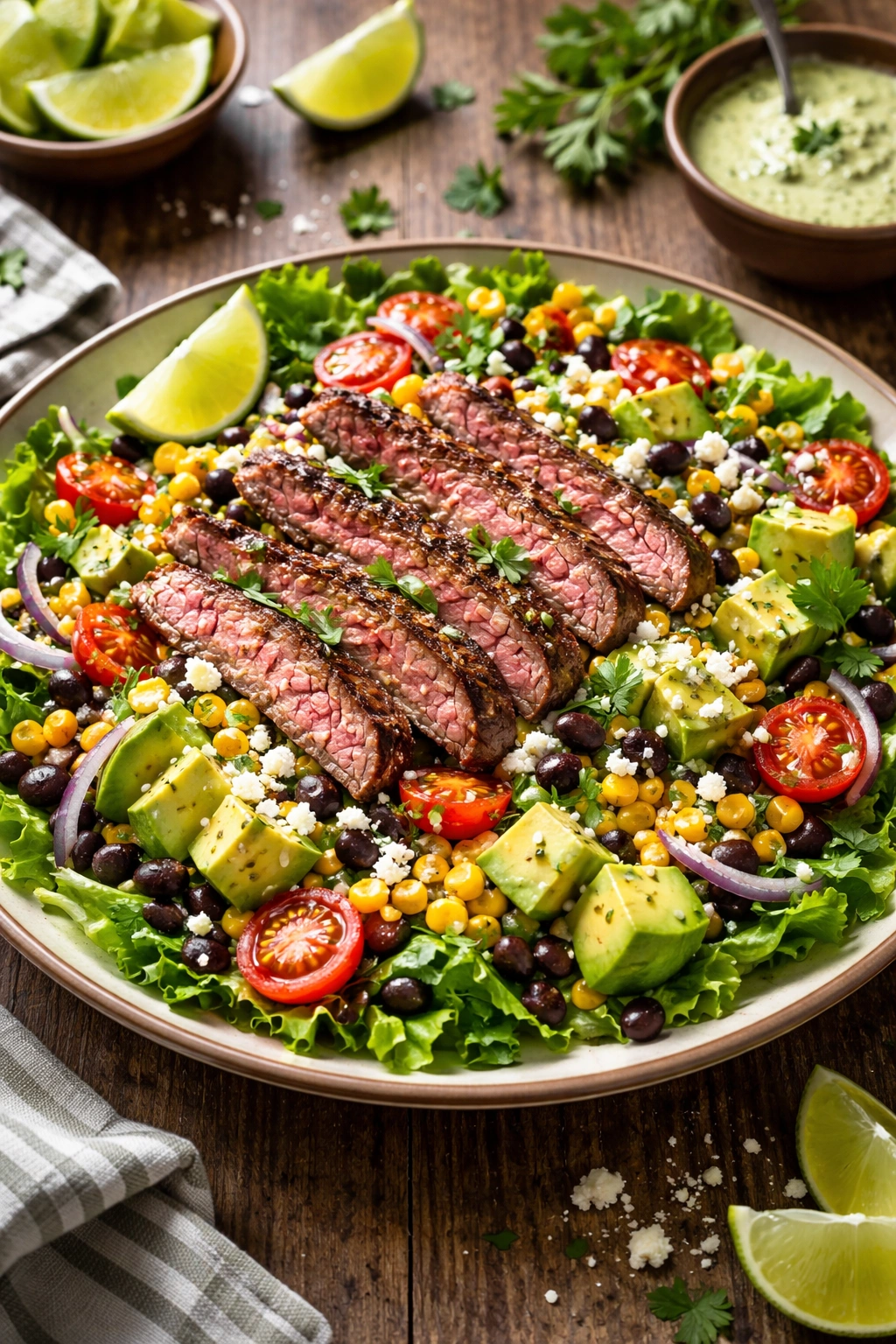
Not every family goes for classic flavors, and that’s where the southwest version comes in. This adaptation is perfect if your family loves a little spice, bold seasonings, and brighter flavors. The same steak salad formula works; you’re just changing the spice rub, the toppings, and the dressing.
For the Southwest Marinade:
Instead of the balsamic mixture, combine 3 tablespoons lime juice, 2 tablespoons olive oil, 1 tablespoon chili powder, ½ tablespoon ground cumin, ½ tablespoon smoked paprika, 1 teaspoon garlic powder, ½ teaspoon ground coriander, and ½ teaspoon kosher salt. Marinate the steak the same way—even just 15 minutes adds great flavor, though longer is better.
For the Southwest Toppings:
Build your salad on a bed of romaine or mixed greens, then add the steak. Instead of blue cheese, use cotija cheese or crumbled queso fresco. Add black beans (canned and drained work fine), fresh corn kernels (raw or grilled), diced bell peppers, avocado, cilantro, and sliced red onion. Cherry tomatoes still work beautifully here.
For a Cilantro Lime Dressing:
Blend ½ cup Greek yogurt (or Mexican crema if you can find it), ⅓ cup fresh cilantro (packed), 2 tablespoons lime juice, 2 tablespoons olive oil, 1 minced garlic clove, ½ teaspoon cumin, salt, and pepper. Add water a tablespoon at a time until you reach pourable consistency. This dressing is bright, creamy, and distinctly southwestern without being heavy.
Southwest steak salad appeals to families who like bolder flavors and aren’t afraid of spice. It feels fresher and lighter than the classic version, and the cilantro-lime combination is more refreshing, especially for warm weather meals.
Make-Ahead Strategies for Busy Families
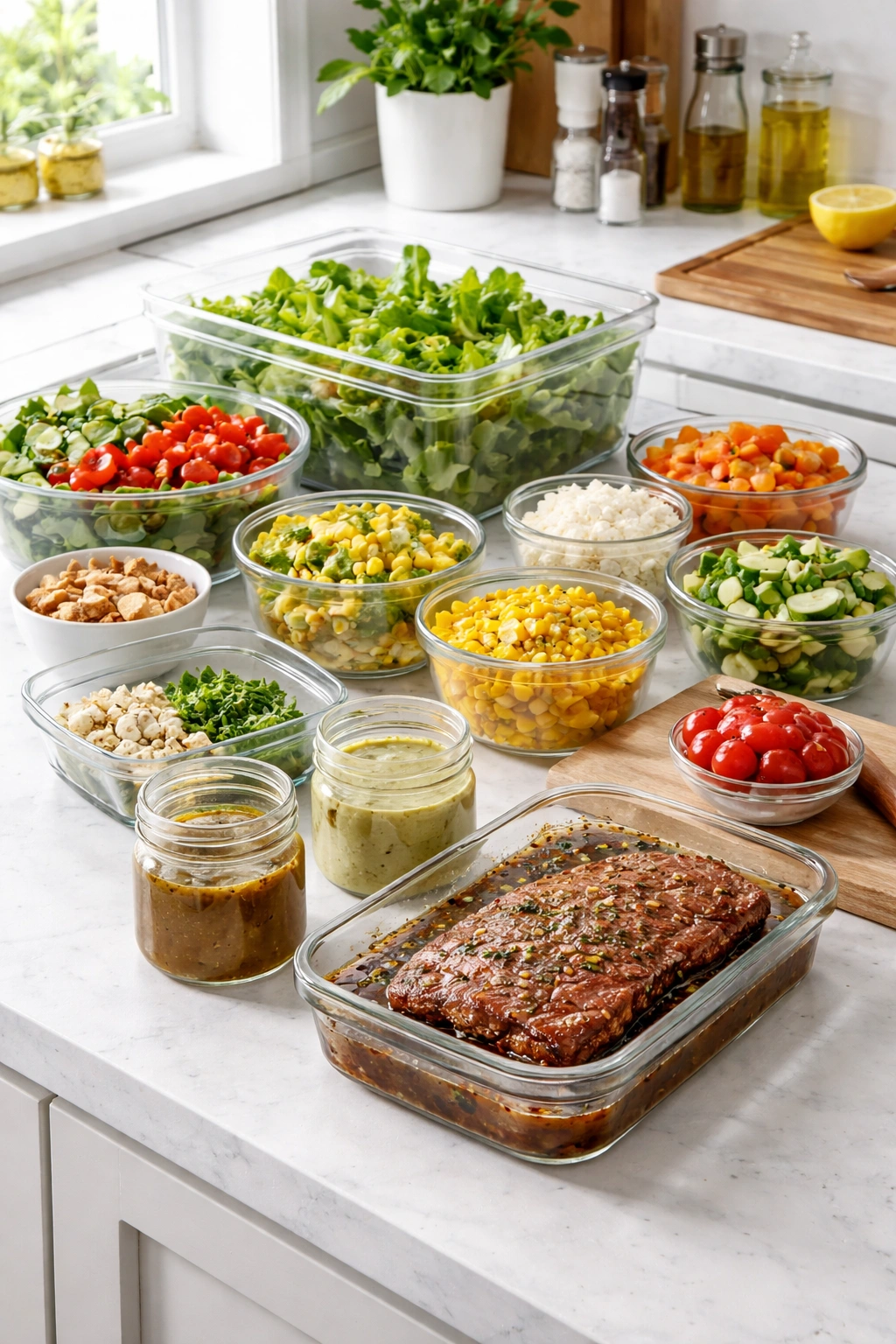
One reason steak salad works so well for families is that you can prepare it ahead, which reduces weeknight stress. Here’s how to prep components in advance without sacrificing freshness.
The day before: Make the dressing. It actually improves slightly overnight as flavors meld. Store it in an airtight jar in the refrigerator. You can also marinate the steak overnight—the longer marinating time means even more tender, flavorful results.
A few hours ahead: Wash and dry the lettuce. Wrap it in a clean kitchen towel and store in an airtight container in the refrigerator. This keeps it crisp and ready to use. Chop all the vegetables (tomatoes, cucumber, onion, peppers) and store them in separate airtight containers. Keep avocado whole and unsliced until just before serving, or toss slices with lemon or lime juice to prevent browning.
30 minutes before serving: Remove the steak from the marinade and let it come to room temperature. Pat it dry. Cook the steak while someone else sets the table or finishes any last-minute tasks.
Right before serving: Slice the rested steak. Assemble the salad—either on individual plates or on a large platter. Add avocado if using. Pour dressing over top.
This approach means you’re not scrambling at the last minute. The heavy lifting happens during less busy times, and dinner comes together quickly when you need it to.
Storage and Leftover Tips
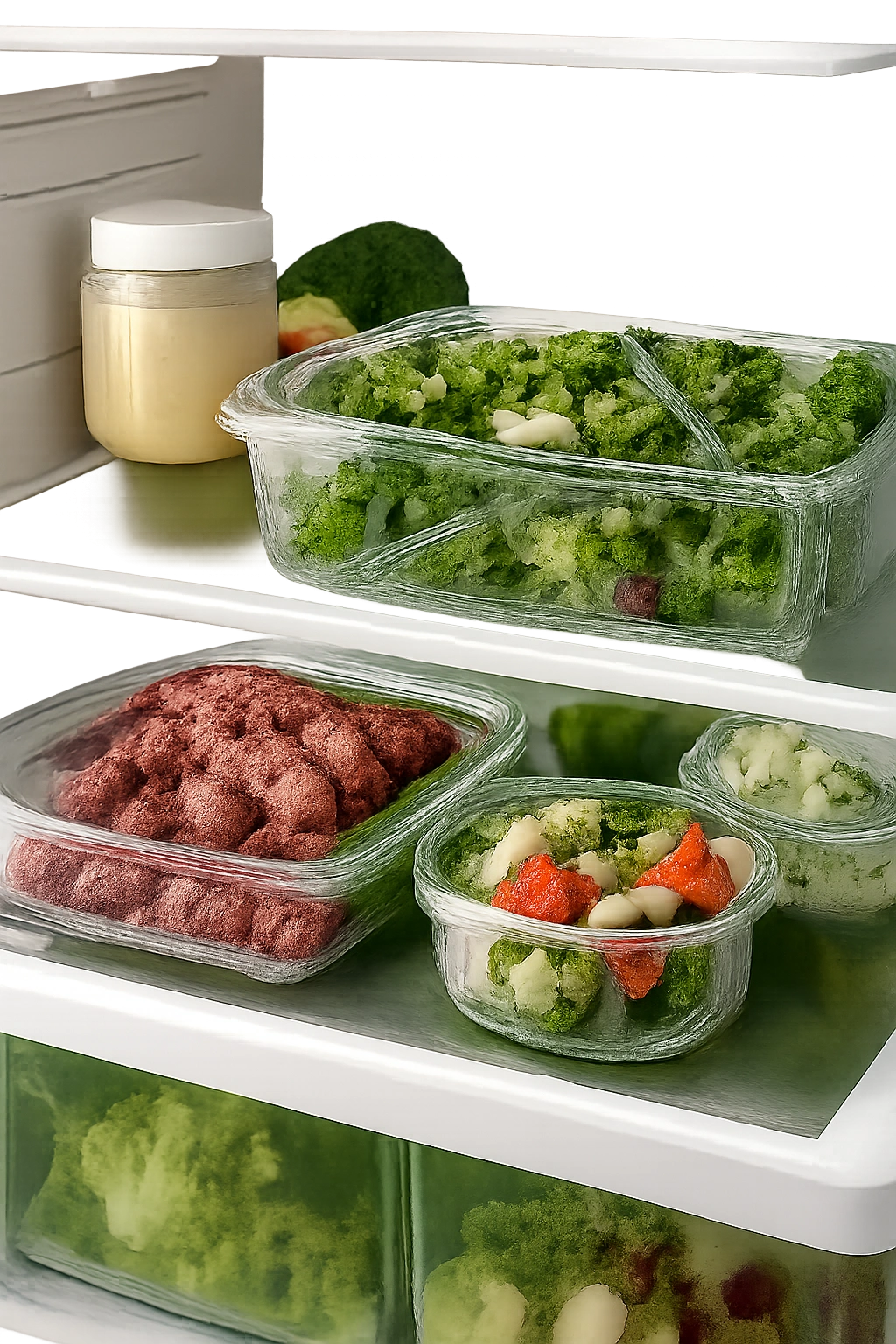
Steak salad is technically a “serve immediately” dish because the greens will eventually wilt if sitting in dressing. However, you can store components separately and reassemble later.
Leftover steak keeps in an airtight container in the refrigerator for up to 3-4 days. You can eat it cold straight from the fridge, slice it and reheat it gently in a warm skillet, or even use it in other dishes (steak and eggs for breakfast, steak sandwiches for lunch, or stirred into a different salad).
Prepared vegetables keep for up to 5 days in airtight containers in the refrigerator, except for avocado, which should be prepared fresh. Dressing keeps for up to a week.
Assembled salad with dressing will get soggy within a few hours, especially if it’s sitting in the fridge. For meal prep or leftovers, store the salad components separately and dress only what you’re about to eat.
To reheat leftover steak: Place slices in a skillet over medium heat with a splash of water or broth, cover, and warm for 2-3 minutes per side. This keeps it tender rather than drying it out in the microwave. You can then serve it warm over fresh greens, or eat it cold if you prefer.
The advantage of steak salad for leftovers is that you have flexibility. You’re not stuck with the exact same dish; you can transform leftover steak into different meals throughout the week.
Serving Suggestions That Impress
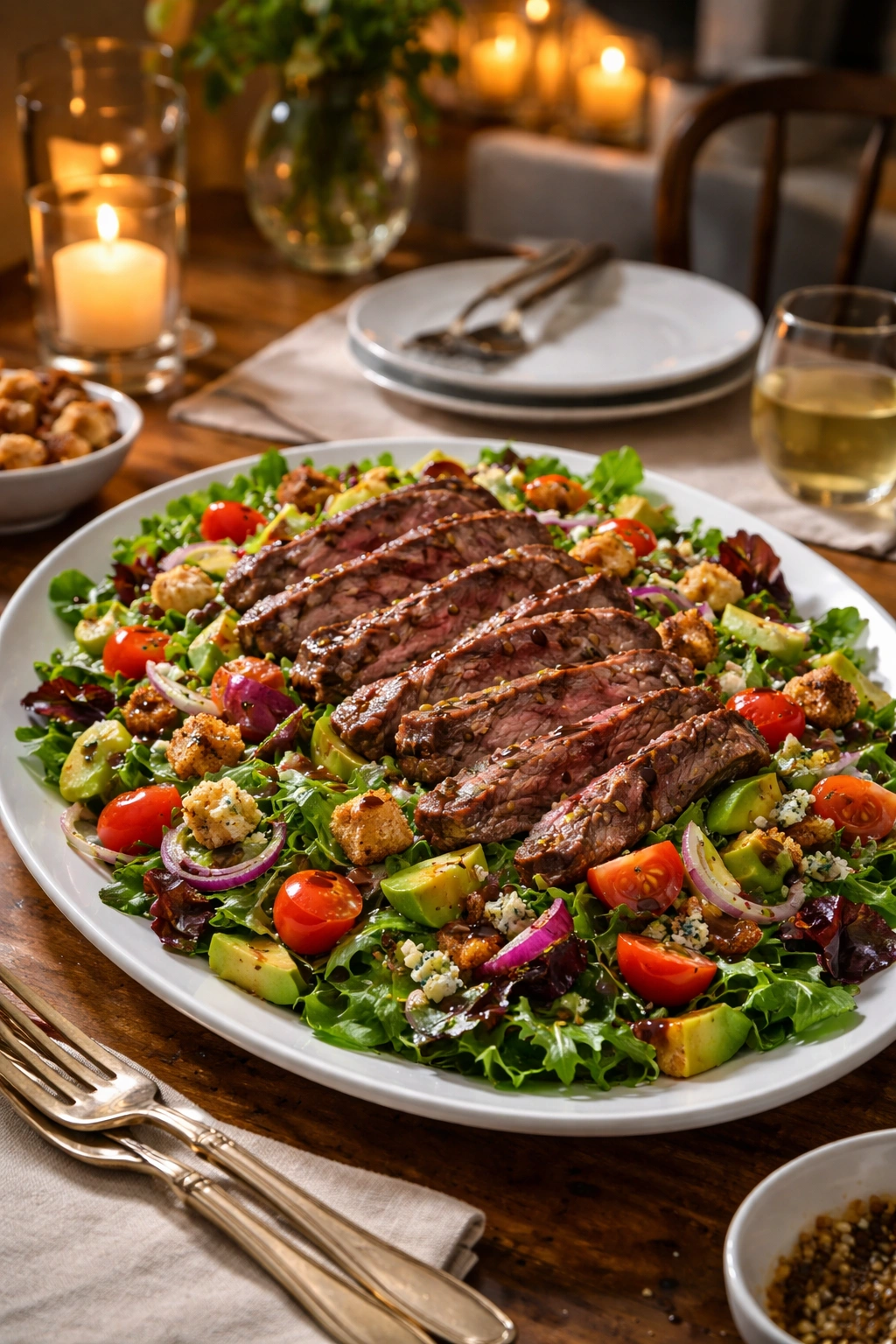
The way you present and serve steak salad can make the difference between “that’s nice” and “this is amazing, can we have it again?” Presentation matters, especially for family meals where everyone’s watching.
Platter presentation: Instead of individual bowls, arrange everything on a large, beautiful platter. Put greens in the center, arrange vegetables in sections around it, pile the sliced steak on top, scatter cheese over everything, and drizzle dressing artfully. This looks restaurant-quality and gives everyone a sense of abundance. It also lets people serve themselves, which appeals to families with different appetites.
Individual plating: If you prefer more control, plate each person’s salad individually. Start with greens, arrange vegetables thoughtfully, top with steak, and finish with cheese and dressing. The visual appeal of a carefully plated salad sets a nicer tone for the meal.
Set up a build-your-own bar: Arrange lettuce, vegetables, cheese, and steak in separate bowls, with dressing on the side. Let everyone assemble their own salad exactly how they like it. This works especially well for families with various preferences because nobody has to pick something off their plate.
Pair with bread: Crusty bread, garlic bread, or even simple rolls complement steak salad beautifully. The bread is useful for soaking up any extra dressing on the plate and adds substance to the meal for anyone who wants more carbs.
Drink pairings: A crisp white wine (like Sauvignon Blanc or Pinot Grigio) pairs well with steak salad, especially the classic version. For red wine lovers, a lighter red like Pinot Noir works. Beer drinkers might prefer a lager or IPA. For non-alcoholic options, iced tea, lemonade, or sparkling water with citrus all work beautifully.
Finish with dessert: Because steak salad is relatively light and fresh, people still have room for dessert. Keep it simple—fresh fruit, a small sweet, or a light frozen treat rather than something heavy.
Troubleshooting Common Family Dinner Issues
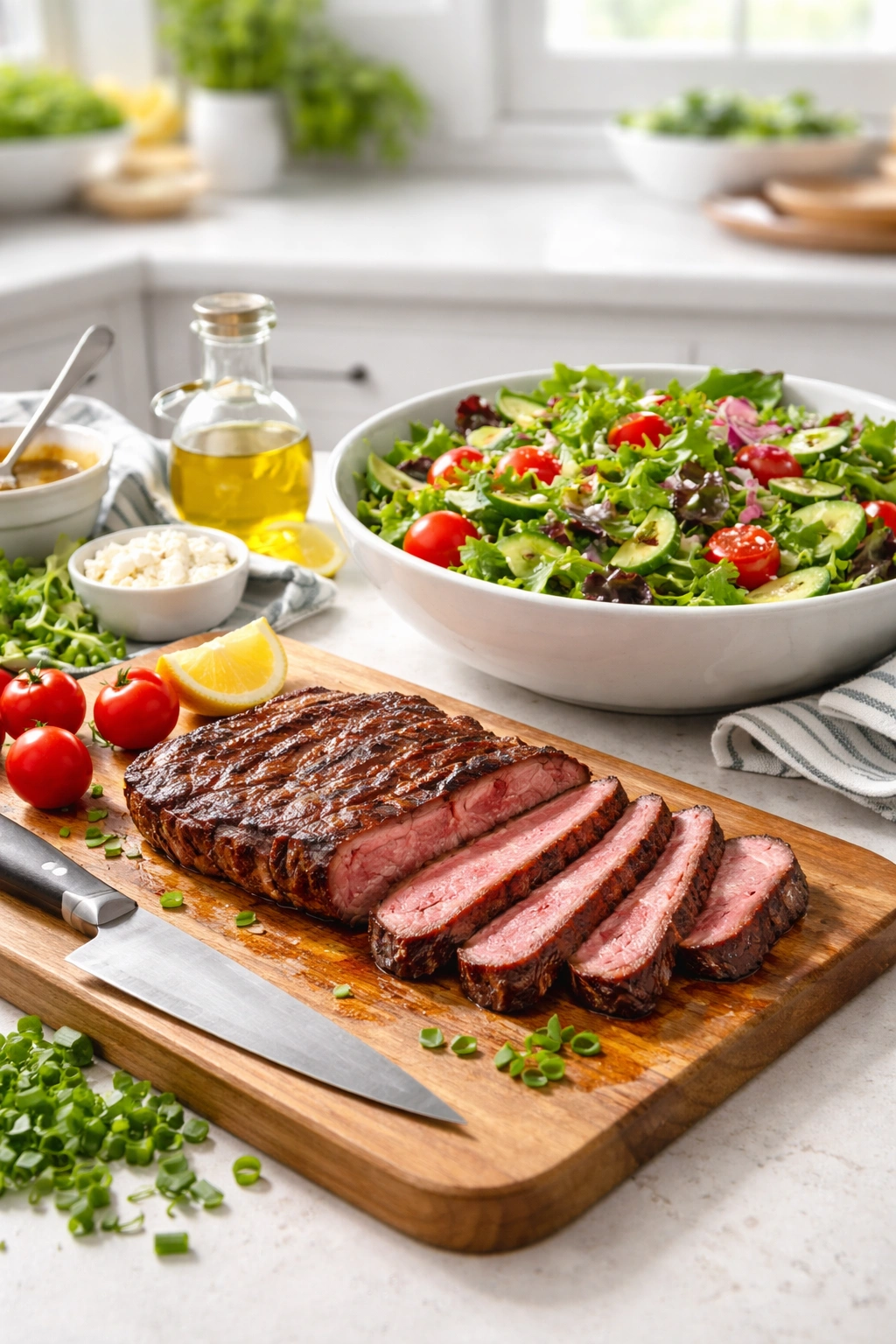
Even with a well-tested recipe, family dinners can have hiccups. Here’s how to handle the most common problems.
“The steak is tough.” This usually means either the steak was overcooked or it wasn’t sliced against the grain. Make sure you’re using a meat thermometer to avoid overcooking, and practice identifying and slicing against the grain. Flank and skirt steaks especially must be sliced against the grain or they’ll be chewy. If this happens, you can still serve the steak; it’ll just require more chewing.
“The salad is wilted.” If dressing was added too far in advance, the greens absorb it and become soggy. Either dress salad immediately before serving, or serve dressing on the side. For future reference, toss the salad and greens more gently, and serve on chilled plates to help keep everything crisp longer.
“Nobody likes the dressing.” Taste preferences vary widely. Keep a simple olive oil and vinegar on the side, or a bottled dressing for people who prefer something more familiar. Over time, you can experiment with different dressing styles to find what your family genuinely enjoys.
“The steak is cold by the time we sit down.” This happens if you’re doing a lot of table setting or other prep right before serving. Cook the steak last, just before people sit down, so it’s still warm when you serve it. Alternatively, place the platter on a warm (but not hot) plate or in a warm oven briefly before serving.
“Someone at the table doesn’t eat meat.” Steak salad is actually easy to adapt. Substitute grilled tofu, chickpeas, white beans, or hard-boiled eggs for the steak. The salad still has substance and protein without the meat, and it satisfies everyone at the table.
“The marinade is too strong/not strong enough.” If the marinade tastes too intense, reduce the amount you use next time, or marinate for less time. If it’s not flavorful enough, extend marinating time, or add more garlic or Worcestershire sauce to the mixture.
Variations That Let Everyone Customize Their Plate
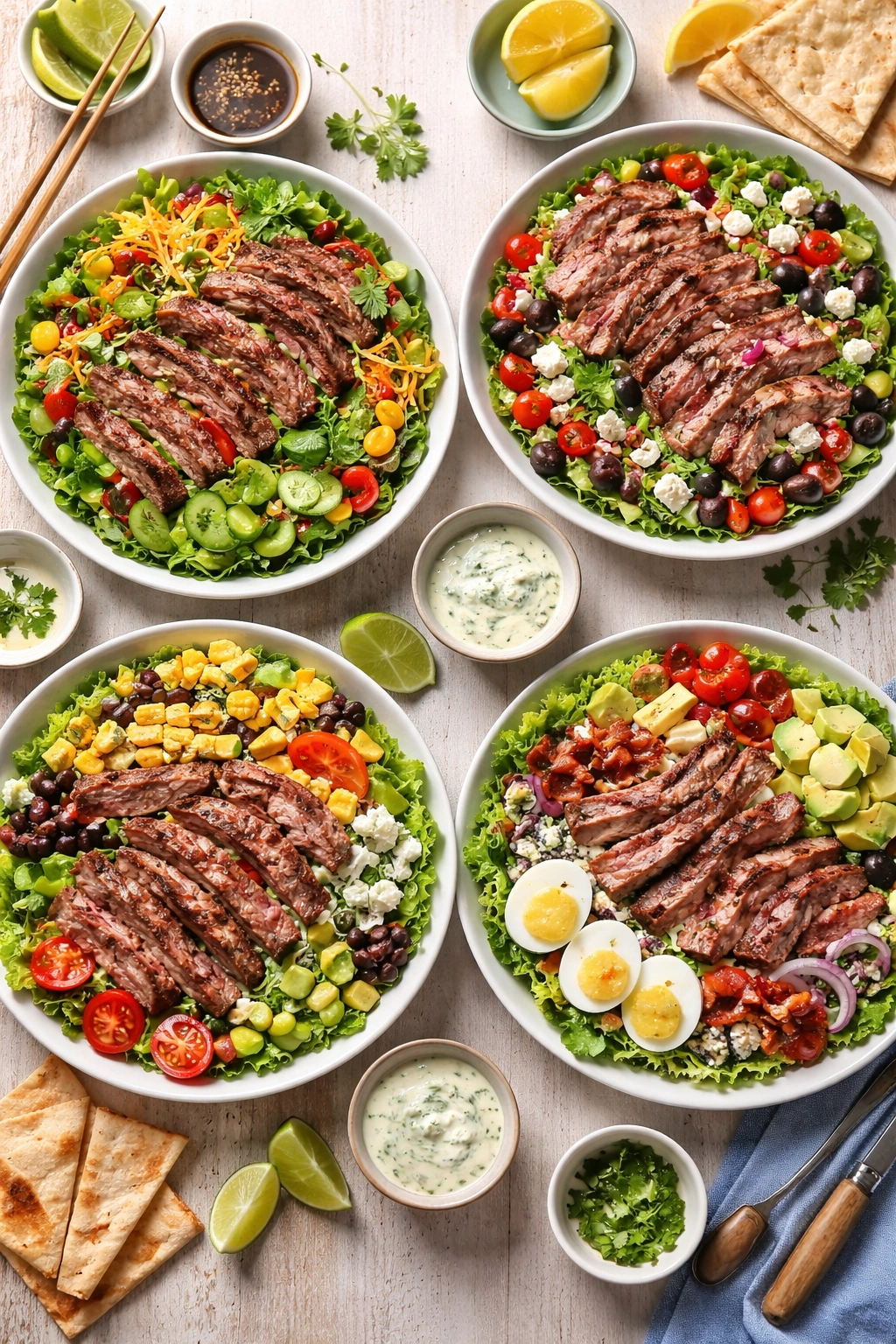
The beauty of steak salad is that it’s a template, not a rigid formula. Once you understand the basic structure—tender steak, fresh greens, vegetables, cheese, dressing—you can customize almost infinitely based on what your family actually enjoys.
Asian-inspired version: Use a ginger-sesame marinade (sesame oil, rice vinegar, soy sauce, ginger, garlic), serve over mixed greens with shredded carrots, cucumber, cilantro, and green onions. Dress with a sesame-ginger dressing. Sprinkle with sesame seeds and sliced almonds.
Mediterranean version: Marinate steak in olive oil, lemon juice, oregano, and garlic. Serve over romaine with tomatoes, cucumber, red onion, Kalamata olives, feta cheese, and fresh herbs. Drizzle with a simple lemon vinaigrette.
Tex-Mex version: This is the southwest version taken further. Add black beans, corn, tortilla strips, cotija cheese, avocado, and fresh cilantro. Serve with a lime-cilantro crema or a creamy jalapeño dressing.
Steakhouse version: Grilled steak served over crisp romaine with blue cheese crumbles, bacon bits, hard-boiled eggs, avocado, and cherry tomatoes. Serve with a classic blue cheese dressing or a creamy Dijon vinaigrette.
Warm salad version: Keep the steak warm (don’t let it fully rest), then place warm steak slices over room-temperature greens and vegetables. The heat from the steak gently wilts the greens without making them soggy, and you get a contrast of warm meat and cool vegetables.
Grain-based version: If someone in your family wants more carbs, toss the steak with cooked quinoa, farro, or brown rice mixed with herbs and a light vinaigrette, then serve over greens. This is more substantial and appeals to people who feel like salad alone isn’t dinner.
Allergy-friendly versions: Steak salad accommodates most allergies easily. Dairy-free? Skip the cheese or use a dairy-free alternative. Gluten-free? Check your Worcestershire sauce (some brands contain gluten) and skip croutons. Nut allergy? Simply don’t add nuts. This flexibility is one reason steak salad works so well for diverse families.
The key is that the core—steak and greens—stays the same, but everything else can shift based on preferences, what’s in season, or what you have on hand.
Final Thoughts
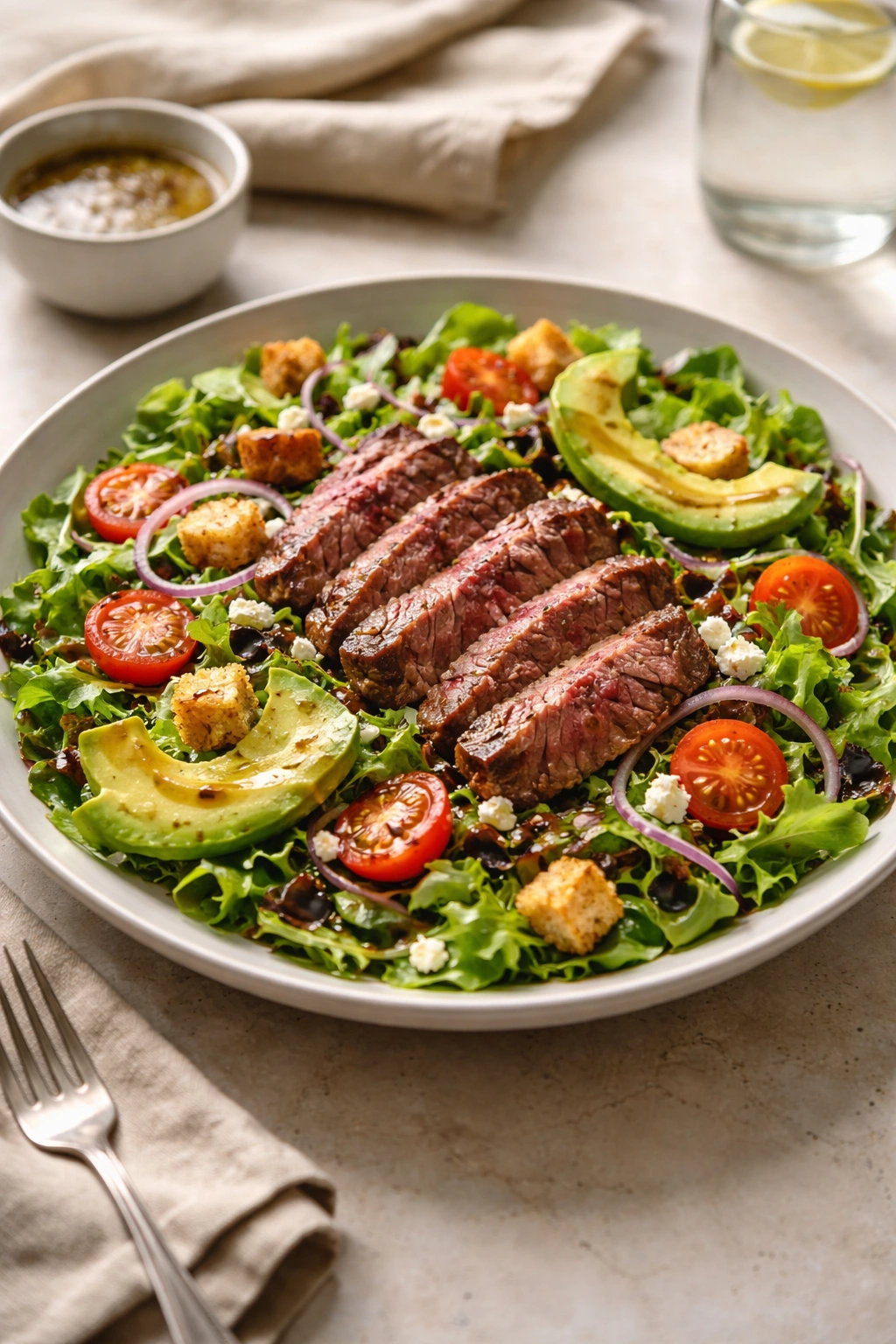
Steak salad earns its place as a family favorite because it’s genuinely delicious, not because it’s virtuous or trendy. Everyone at your table gets something they actually want to eat: protein-rich, satisfying meat; fresh, crisp vegetables; and a dressing that tastes good enough to crave. It comes together quickly on busy weeknights, impresses guests when you’re entertaining, and adapts beautifully to whatever preferences or restrictions exist in your household.
The recipes and techniques here are starting points, not rules. Your version of steak salad might include different vegetables, a completely different dressing, or an entirely different cut of meat—and that’s perfect. The point is building a salad that your specific family keeps requesting, whether that’s the classic creamy balsamic version or something entirely different.
Start with whichever version appeals to you most, make it, and pay attention to what gets eaten, what gets pushed aside, and what prompts requests for seconds. Those observations will guide you toward creating the steak salad your family will ask for again and again. That’s when you know you’ve nailed it.
