



There’s something almost magical about the moment when a pot of stuffed pepper soup comes together—when the beef, the peppers, the tomatoes, and the seasonings finally merge into something that smells absolutely incredible and tastes like pure comfort. This isn’t just soup; it’s the deconstructed version of one of the most beloved comfort food classics, served in a bowl that comes together in under an hour. If you’ve ever made traditional stuffed peppers, you know the routine: prep the peppers, make the filling, stuff each one individually, bake them in the oven for what feels like forever, and hope everyone at your table actually eats what you’ve spent all that time preparing. Stuffed pepper soup strips away all that fussiness and delivers every single flavor you love in a single pot—without the baking dishes, the multiple steps, or the cleanup nightmare that follows.
The genius of this recipe lies in its simplicity. Instead of wrestling with whole peppers that can split, overcook, or remain stubbornly crunchy no matter how long they bake, you chop your peppers into manageable pieces and let them soften into tender, flavorful morsels that blend seamlessly into the broth. The ground beef cooks down into small, flavorful bits that distribute throughout the soup rather than staying concentrated in the center of a pepper. The tomatoes create a savory, slightly sweet base that ties everything together. Add in some rice, a careful blend of seasonings, and a good quality broth, and you’ve got a soup that tastes like you spent hours slaving over it—when really you’ve spent maybe 50 minutes, with much of that being hands-off simmering time.
What makes this soup genuinely special is that it’s deeply flavorful without being complicated. The secret isn’t in exotic ingredients or fancy techniques; it’s in understanding how each component contributes to the final taste, and how to layer those flavors so they support and enhance one another rather than compete. A touch of brown sugar balances the acidity of the tomatoes. Worcestershire sauce and hot sauce add umami depth you can’t quite identify but absolutely notice. Fresh parsley brightens everything at the end. The combination of beef broth and chicken broth (or just one if you prefer) creates a richer foundation than either could alone. This is the kind of soup that gets better as it simmers, with the flavors becoming more cohesive and complex the longer everything cooks together.
Why Stuffed Pepper Soup Is a Game-Changer for Busy Weeknights
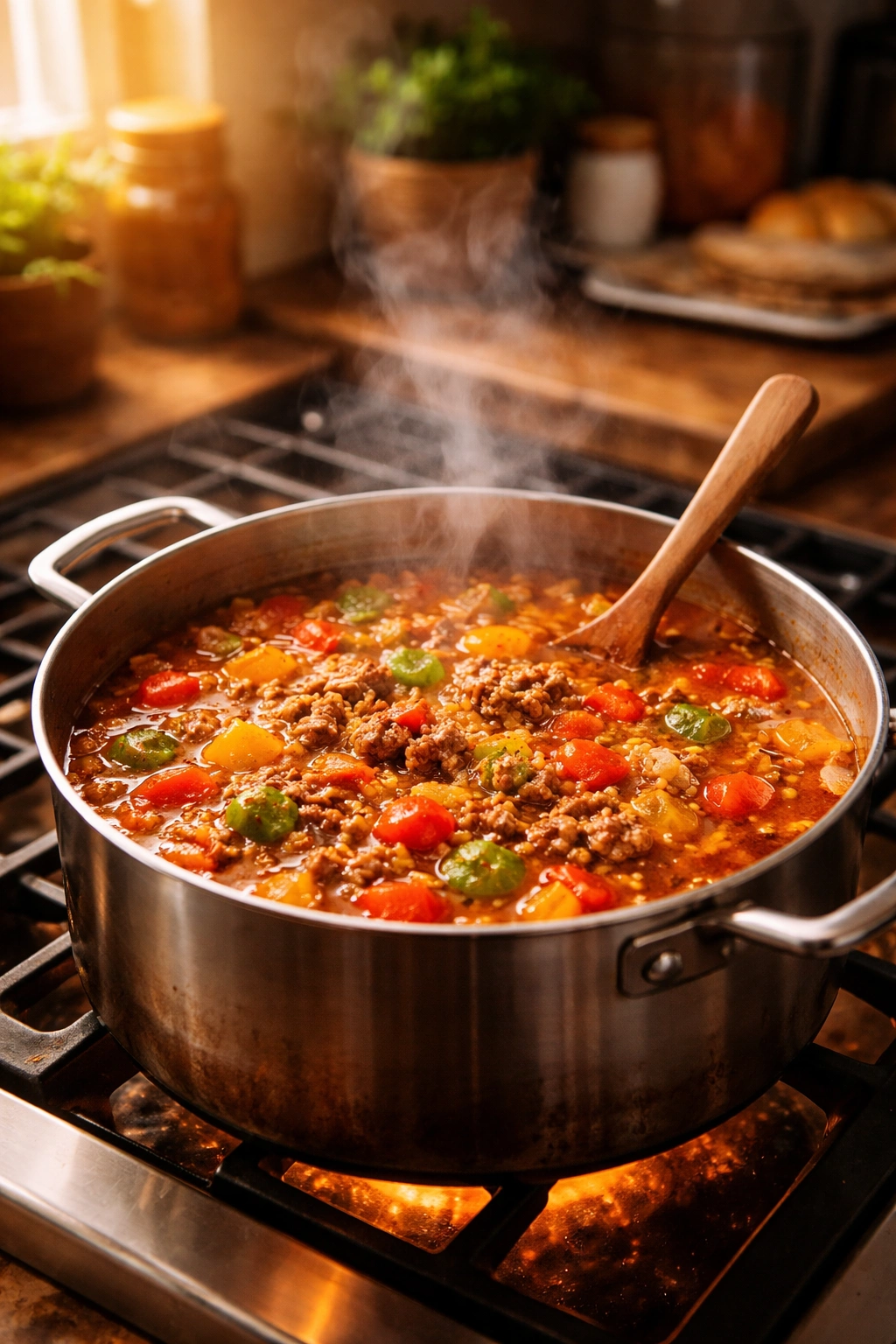
When you’re juggling a packed schedule, the last thing you want is a recipe that requires you to babysit multiple pots, track three different cooking times, or spend an hour doing prep work before you even get to the actual cooking. Stuffed pepper soup obliterates all of those obstacles. Everything happens in one pot, and most of the cooking time is passive—you’re not stirring constantly or managing complicated timing. You brown your meat, sauté your vegetables for just a few minutes, add your liquids and seasonings, and then you can walk away. The soup simmers on its own while you can set the table, make a salad, or simply take a breath.
Beyond the logistics, there’s something psychologically satisfying about this soup. Traditional stuffed peppers are beautiful on a plate, sure, but they can feel a bit precious—like you need to worry about presenting them perfectly or that someone won’t eat theirs because they don’t like the texture of a whole pepper. A soup is infinitely more approachable. Kids don’t intimidate easily by a bowl of soup the way they might by a large pepper sitting on their plate. It feels casual and comforting without losing any of the sophisticated flavor profile that makes the original dish so beloved. You get the exact same taste, but in a format that’s easier to share, easier to serve, and honestly, easier to eat.
The soup format also solves a genuine problem that comes up with traditional stuffed peppers: consistency. When you bake whole peppers, you’re always gambling on texture. Bake them too long and they’re mushy; pull them out too early and the pepper itself is still too firm, even though the filling is perfect. Because you’re working with chopped peppers in a liquid, you have precise control. You cook them until they’re tender, and that’s exactly when they’ll be ready. Every batch tastes the same, every batch comes together perfectly, and there’s no guesswork involved.
What Makes This Soup Taste So Flavorful
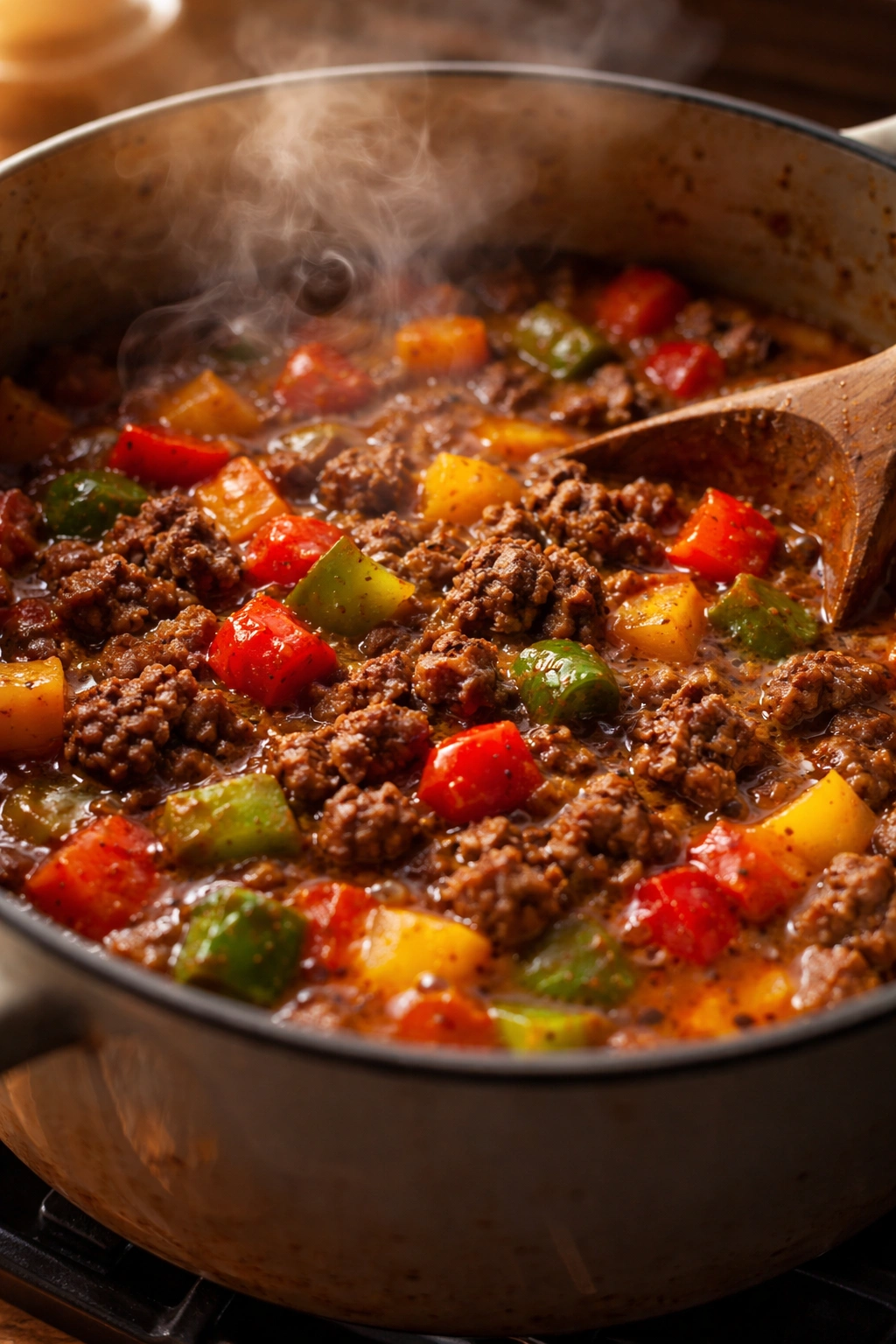
The real secret to maximum flavor in this soup is understanding that you’re not just combining ingredients—you’re building layers of taste that work together. It starts with browning the ground beef properly. When you take the time to actually brown the meat instead of just cooking it until it’s no longer pink, you’re creating something called the Maillard reaction. This is the chemical process that happens when proteins and sugars heat up, creating new, deeper, more complex flavors than existed in the raw meat. This step alone is non-negotiable for a soup that tastes genuinely good. You want your beef to have some color and a slightly crusty edge when you finish cooking it.
The peppers themselves contribute a natural sweetness that’s essential to the soup’s flavor balance. When you sauté them until they begin to soften, they release their sugars, which caramelize slightly in the pot. This natural sweetness is what makes people say “I can’t quite identify what’s good about this, but it’s really good.” You’re not adding candy-like sweetness; you’re bringing out the pepper’s own inherent character. If you use green peppers, the soup will taste more savory and herbaceous. If you use red or yellow peppers, you’ll get a softer, rounder sweetness. Many people use a combination, which gives you the best of both worlds—the depth of green peppers balanced by the gentle sweetness of red ones.
The tomato base deserves its own attention because it’s doing a lot of heavy lifting. You’re using both diced tomatoes and tomato sauce (or paste, in some variations), which serves multiple purposes. The diced tomatoes provide texture and brighten the broth with their acidity. The tomato sauce or paste adds deeper, more concentrated tomato flavor and helps thicken the soup naturally without any flour or cornstarch. The acidity in tomatoes is crucial here because it keeps the soup from tasting flat. But that acidity needs balancing, which is where that small amount of brown sugar comes in. It’s not meant to make the soup sweet; it’s meant to round out the sharp tomato notes and make everything taste more harmonious.
Then there are the flavor enhancers that most people can’t identify but absolutely taste: Worcestershire sauce, a touch of hot sauce, and sometimes a hint of mustard powder. These aren’t ingredients you taste directly—you won’t think “oh, there’s Worcestershire.” Instead, they add umami, which is that savory, deeply satisfying flavor that makes people go back for another spoonful. Worcestershire brings a salty, slightly fermented complexity. Hot sauce adds not just heat but a depth of flavor. Mustard powder (if you use it) adds a subtle sharpness that prevents the soup from tasting one-note. Together, they’re like the background singers in a song—you don’t focus on them, but the song would sound empty without them.
The herbs matter, too. Most recipes call for oregano, basil, and sometimes parsley. These aren’t random choices. Oregano and basil are traditional flavor partners in Italian cooking, and when you pair them with beef and tomatoes, you’re tapping into flavor combinations that have been perfected over centuries. Fresh parsley at the end, sprinkled as a garnish, adds brightness that cuts through the richness of the beef and reminds your palate that you’re eating something fresh, not something that’s been simmering for hours.
Finally, the broth itself is a flavor foundation. Using a combination of beef and chicken broth, or choosing based on your preference, creates the base that ties everything together. Good quality broth makes a measurable difference here. Low-sodium broth is preferable because it lets you control the salt level and ensures the soup doesn’t end up tasting overly salty. If you use high-sodium broth without reading the label, you might find yourself with a soup that’s unpleasantly salty no matter how you adjust the seasonings.
Serving and Timing Information
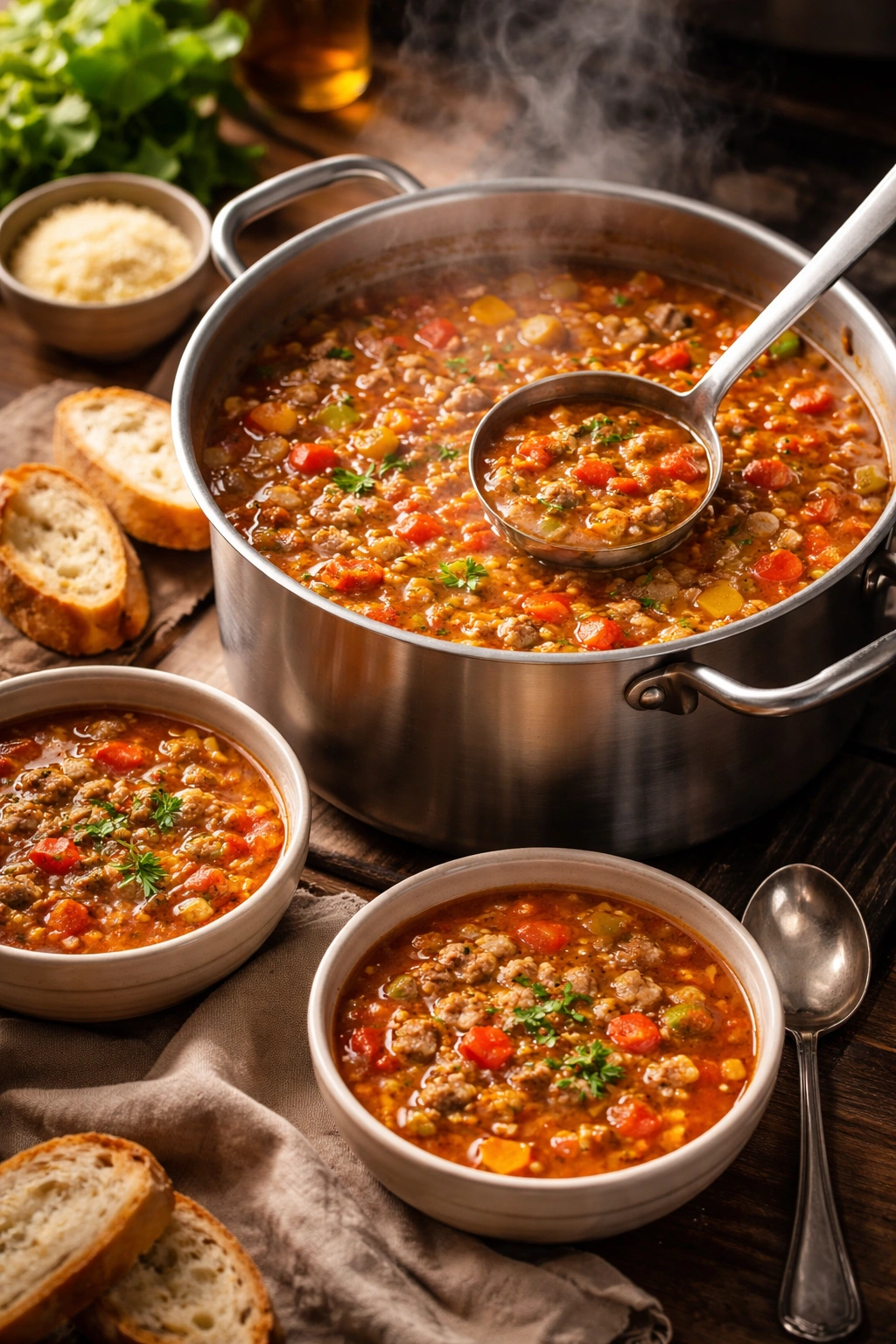
Yield: Serves 6 to 8 | Makes approximately 10 cups of soup
Prep Time: 15 minutes
Cook Time: 40 to 45 minutes
Total Time: 55 to 60 minutes
Difficulty: Beginner — No special equipment required beyond a large pot or Dutch oven, and the steps are straightforward and forgiving, even for someone making this soup for the first time.
Complete Ingredient List
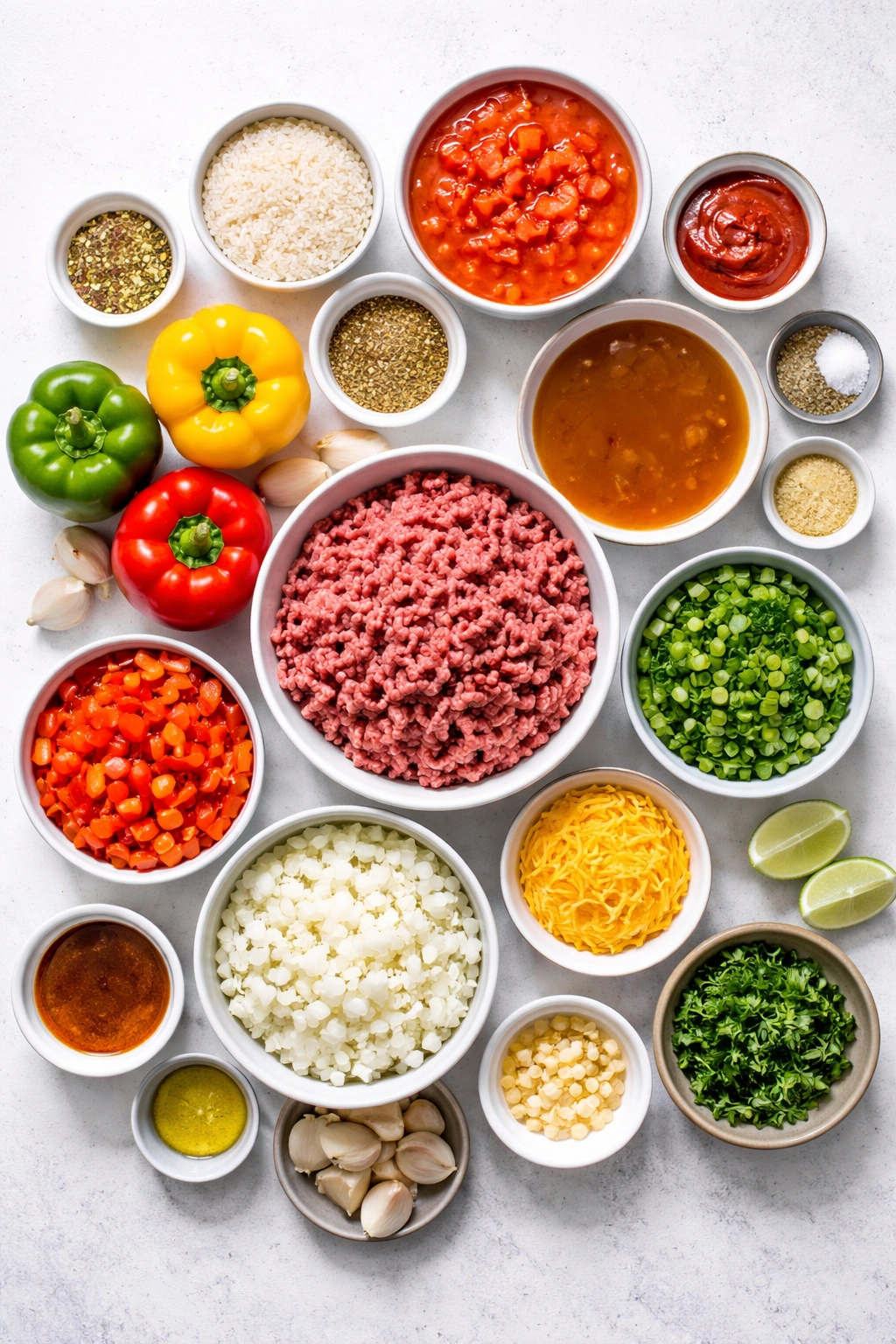
For the Soup:
- 1½ to 2 pounds lean ground beef (90/10 recommended)
- 1 tablespoon olive oil
- 1 large yellow onion, diced (about 1½ cups)
- 3 to 4 cloves garlic, minced
- 2 large bell peppers (one red or yellow, one green), diced into ½-inch pieces
- 1 (28-ounce) can diced tomatoes, with juice
- 1 (15-ounce) can tomato sauce
- 6 cups beef broth (or 3 cups beef and 3 cups chicken broth for added depth)
- 1 (14.5-ounce) can diced tomatoes with green chilies (optional, for a subtle kick)
- 1½ tablespoons Worcestershire sauce
- 1 teaspoon hot sauce (Frank’s RedHot or similar; not spicy, just flavorful)
- 1½ tablespoons brown sugar, packed
- 1 teaspoon dried oregano
- 1 teaspoon dried basil
- ½ teaspoon garlic powder
- ½ teaspoon onion powder
- ¼ to ½ teaspoon black pepper
- Salt to taste
- 2 tablespoons fresh parsley, chopped (plus extra for garnish)
For Serving:
- 2 to 2½ cups cooked white or brown rice (cooked separately, not in the soup)
- Shredded cheddar cheese (optional, but highly recommended)
- Extra fresh parsley for garnish
- Sour cream (optional)
Detailed Step-by-Step Instructions
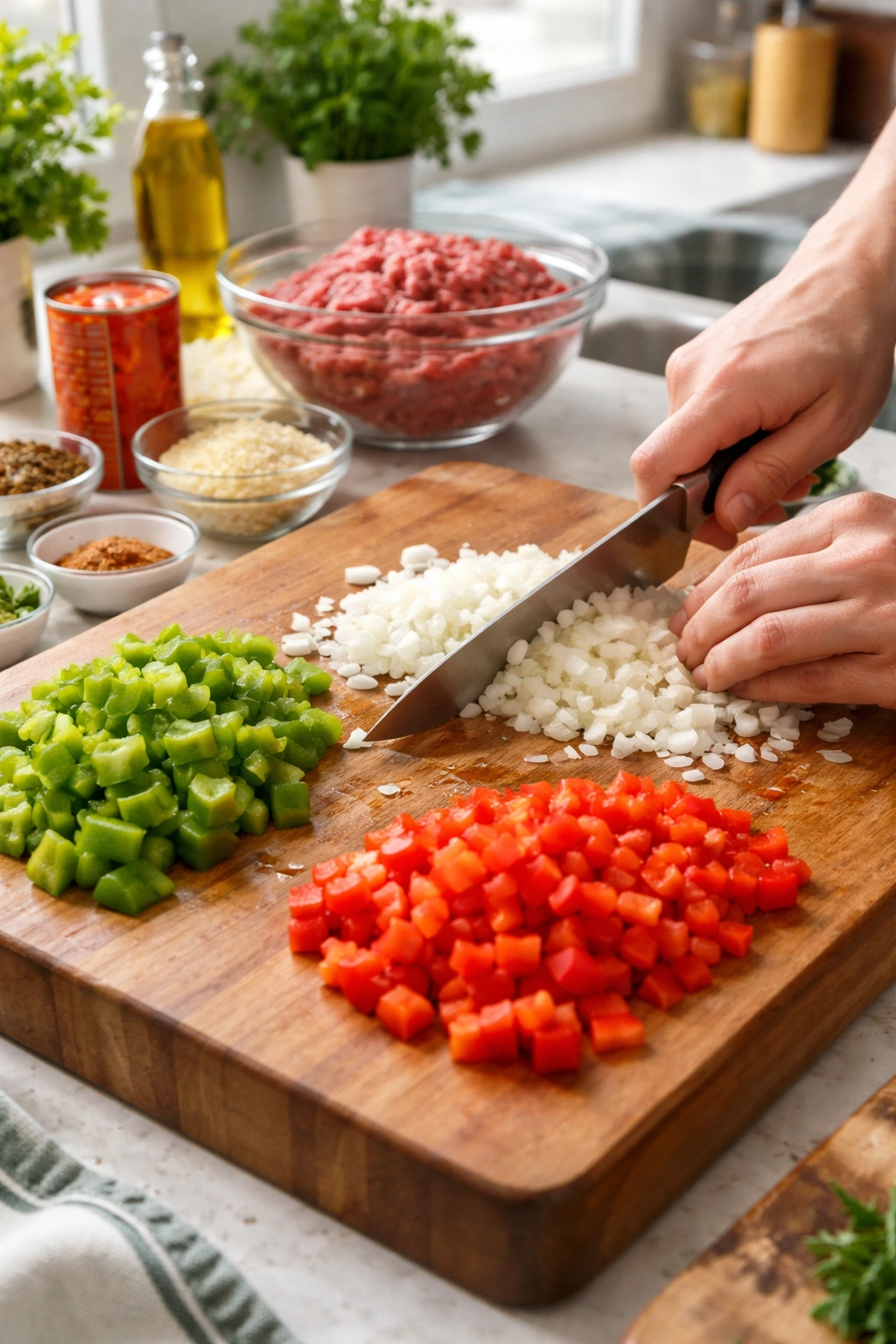
Prepare Your Ingredients:
-
Dice the onion into pieces roughly ¼-inch in size. The smaller pieces will soften faster and distribute more evenly through the soup.
-
Dice the bell peppers into ½-inch pieces, removing all seeds and the white membrane. Aim for consistency in size so they cook evenly.
-
Mince the garlic finely, or use pre-minced garlic from a jar if that’s what you have on hand. Fresh garlic will give you the best flavor, but jarred works in a pinch.
-
Measure out your broth, tomato sauce, canned tomatoes, and all dried seasonings and set them aside. Having everything prepped before you start cooking means you won’t be searching for ingredients while the pot is hot.
Brown the Beef and Build the Base:
-
Heat the olive oil in a large pot or Dutch oven over medium-high heat for about 1 minute, until the oil shimmers and moves easily across the bottom of the pot. Do not use olive oil on the highest heat—it will smoke and taste bitter. Medium-high is the sweet spot.
-
Add the ground beef to the pot and break it apart with a wooden spoon or spatula as it cooks, pressing it against the bottom of the pot to create small, flavorful pieces rather than large clumps. Cook for 5 to 7 minutes, stirring occasionally, until the beef has lost all its pink color and has developed some browned, crusty bits throughout. The meat should look browned, not gray. Drain any excess grease by tilting the pot and using a spoon to push the meat to one side, then carefully pour off the fat into a heat-safe container or onto a plate lined with paper towels.
-
Add the diced onion to the pot with the beef and cook for 3 to 4 minutes, stirring occasionally, until the onion begins to soften and become translucent at the edges. You should start to smell the sweet aroma of caramelizing onion, which is a sign you’re on the right track.
-
Stir in the minced garlic and cook for just 30 seconds to 1 minute, stirring constantly. Garlic burns easily and becomes bitter if you cook it too long, so be quick here. You’re just waking it up, not cooking it fully.
Build Flavor with Tomatoes and Broth:
-
Add the diced bell peppers to the pot and cook for 2 to 3 minutes, stirring gently, until they just begin to soften. You’re not cooking them fully here; you’re just starting the process. They’ll continue cooking in the broth.
-
Pour in the can of diced tomatoes (with all their juice), the tomato sauce, and the broth. If you’re using the optional diced tomatoes with green chilies, add those too. Stir everything together thoroughly, making sure you scrape up any browned bits stuck to the bottom of the pot—those are liquid gold for flavor.
-
Add the Worcestershire sauce, hot sauce, brown sugar, dried oregano, dried basil, garlic powder, onion powder, and black pepper. Stir the pot very well, making sure all the seasonings are completely distributed throughout the liquid. Dried herbs can clump together if you’re not careful.
-
Taste the soup at this point with a clean spoon. It should taste savory, slightly tomato-forward, and maybe a touch too salty (that’s okay for now; the rice will absorb some salt). If it tastes flat or boring, you haven’t added the seasonings yet—go back and check that you’ve added them all. Season with additional salt, a pinch at a time, until the soup tastes like something you actually want to eat.
Simmer Until Perfect:
-
Bring the soup to a boil over medium-high heat, which should take 3 to 5 minutes. You’ll see steam rising and bubbles breaking the surface.
-
Once the soup reaches a boil, reduce the heat to medium-low, cover the pot partially (leave the lid slightly ajar rather than sealing it completely), and let it simmer gently for 30 to 40 minutes. The peppers should become very tender and the flavors should meld together. Stir occasionally—every 10 minutes or so—to ensure even cooking and to prevent anything from sticking to the bottom.
-
After 30 minutes, taste a piece of pepper by fishing one out with a spoon. It should be completely soft and easy to break apart with your tongue. If it still has any firmness, give it another 5 to 10 minutes. The longer the soup simmers, the more flavorful it becomes, so don’t rush this step.
Finish and Serve:
-
While the soup is in its final 10 minutes of simmering, prepare your rice according to package directions if you haven’t already done so. Rice should always be cooked separately for this soup. This prevents the rice from absorbing all the broth and turning the soup into a thick stew.
Advertisements -
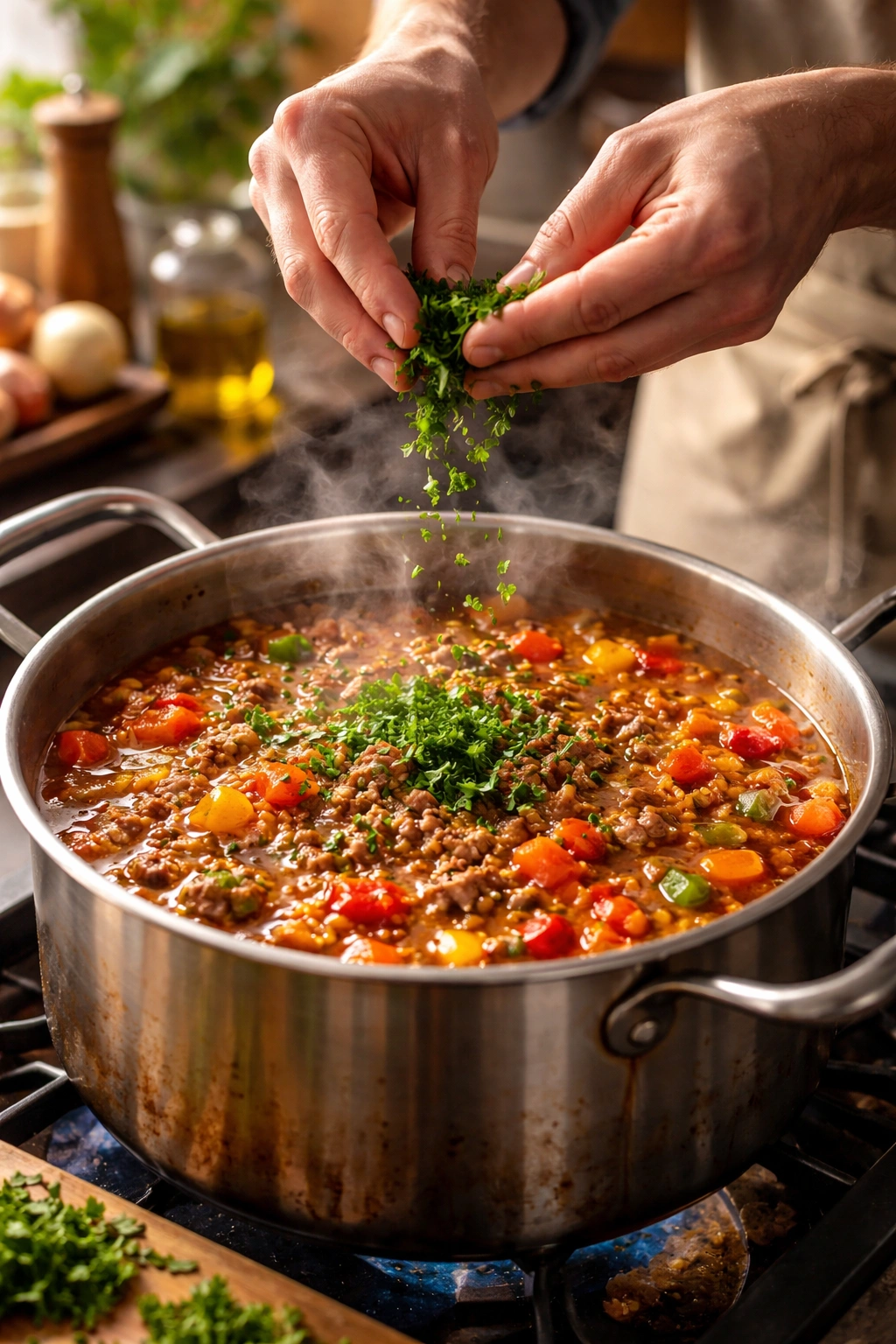
When the soup is ready, remove it from the heat. Stir in the 2 tablespoons of fresh chopped parsley, which will brighten the flavors at the last moment.
-
To serve, spoon cooked rice into the bottom of each serving bowl—about ¼ to ⅓ cup per person. Ladle the hot soup over the rice, filling the bowl. The rice will have room to absorb some broth but won’t get waterlogged because it’s not sitting in the soup while you’re storing leftovers.
-
Top each bowl with a small handful of shredded cheddar cheese and an extra sprinkle of fresh parsley. The cheese will melt into the hot soup and add a creamy, savory dimension. Serve immediately while the soup is at its hottest.
Pro Tips for Maximum Flavor
The rice really does need to be cooked separately if you’re planning to have leftovers. I know this seems like an extra step, and technically you could add uncooked rice directly to the soup and let it cook in the broth, but here’s what happens: as the rice sits in the leftover soup in your refrigerator, it continues to absorb liquid. By the next day, you won’t have soup anymore; you’ll have something closer to a thick stew or congee. If you cook the rice separately and store it in its own container, you can add as much or as little as you want to each serving, keeping the soup at the consistency you prefer.
Use beef that’s about 90/10 lean to fat ratio. This percentage gives you the best balance of flavor and tenderness. Meat that’s too lean (95/5) tends to be tough and stringy in a soup. Meat that’s too fatty will leave a greasy film on the top of your soup that nobody enjoys. If you end up using fattier beef, just drain it more thoroughly after browning.
Don’t skip browning the beef. Some people, in a rush, try to brown the beef and then immediately add the liquids, thinking they’ll cook the meat fully in the broth. What happens instead is the beef stays pale and gray-looking, and the soup tastes less flavorful. Brown meat = better flavor. It’s worth the extra few minutes.
Toast your dried herbs slightly before adding them if you have time. This isn’t essential, but if you want to unlock a tiny bit more depth, you can hold a small spoon of your dried oregano and basil over the hot pot for a few seconds while it’s coming to temperature. The heat brings out their volatile oils, making them taste fresher and more potent. Just don’t let them burn.
Taste and adjust seasonings multiple times throughout cooking. The first taste test should happen before you add the rice. At that point, you can add more salt, more garlic powder, more Worcestershire—whatever the soup needs. Seasoning correctly at the end prevents you from serving a soup that’s underseasoned.
Add hot sauce to taste rather than all at once. Start with 1 teaspoon, taste the soup, and add more if you want. You can’t taste the hot sauce directly—it just adds depth—but too much can make the soup taste slightly off in a way that’s hard to identify.
Save the broth from canned tomatoes. When you open a can of diced tomatoes, don’t drain them. That juice contains flavor and natural thickening pectin. Pour the whole can, juice and all, into your pot.
Common Mistakes That Diminish the Taste
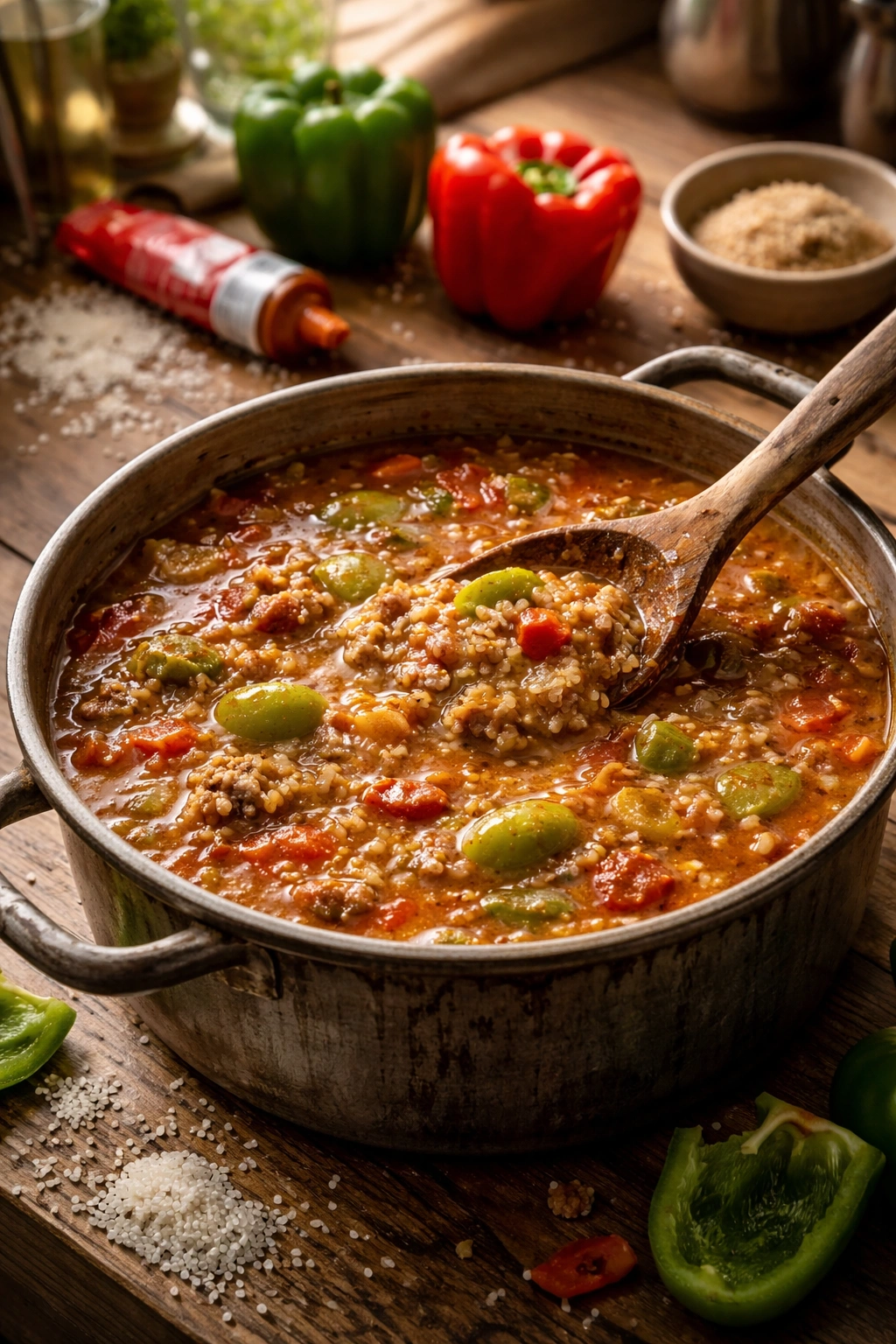
Adding the rice to the soup pot instead of serving it on the side is the biggest flavor problem I see. The rice absorbs the broth aggressively, especially within the first hour. You end up with less soup and a thicker, mushier texture. Serve rice separately and the soup stays flavorful and brothy.
Using tomato paste when the recipe calls for tomato sauce is another common mix-up. Tomato paste is concentrated—a little goes a long way. If you use the amount of tomato sauce the recipe calls for but substitute paste, your soup will taste overwhelmingly tomatoey and thick. If you want to use paste, use only about ⅓ to ½ the amount called for in the sauce.
Skipping the brown sugar entirely, thinking the peppers are sweet enough. The brown sugar isn’t there to add sweetness you can taste; it’s there to balance the acidity of the tomatoes. Without it, the soup tastes slightly sharp or sour, even if you can’t quite identify why. A little brown sugar rounds everything out.
Cooking the peppers too briefly. If you add the peppers and then immediately pour in the broth and call it done, the peppers will still be firm and won’t have released their sugars into the soup. They need time in the broth to become tender and contribute to the overall flavor. 30 to 40 minutes of simmering is not too long; it’s exactly right.
Using a low-quality broth straight from a can with no seasoning. Good broth matters. It’s the foundation of the entire soup. Splurge a little on a better quality broth, and you’ll taste the difference immediately.
Adding all the herbs at the end instead of at the beginning. The dried herbs need time to rehydrate and distribute throughout the soup. If you add them in the last 2 minutes, they’ll taste raw and dusty. Add them when you add the broth so they have 30+ minutes to cook and infuse the liquid with their flavor.
Delicious Variations to Customize Your Soup
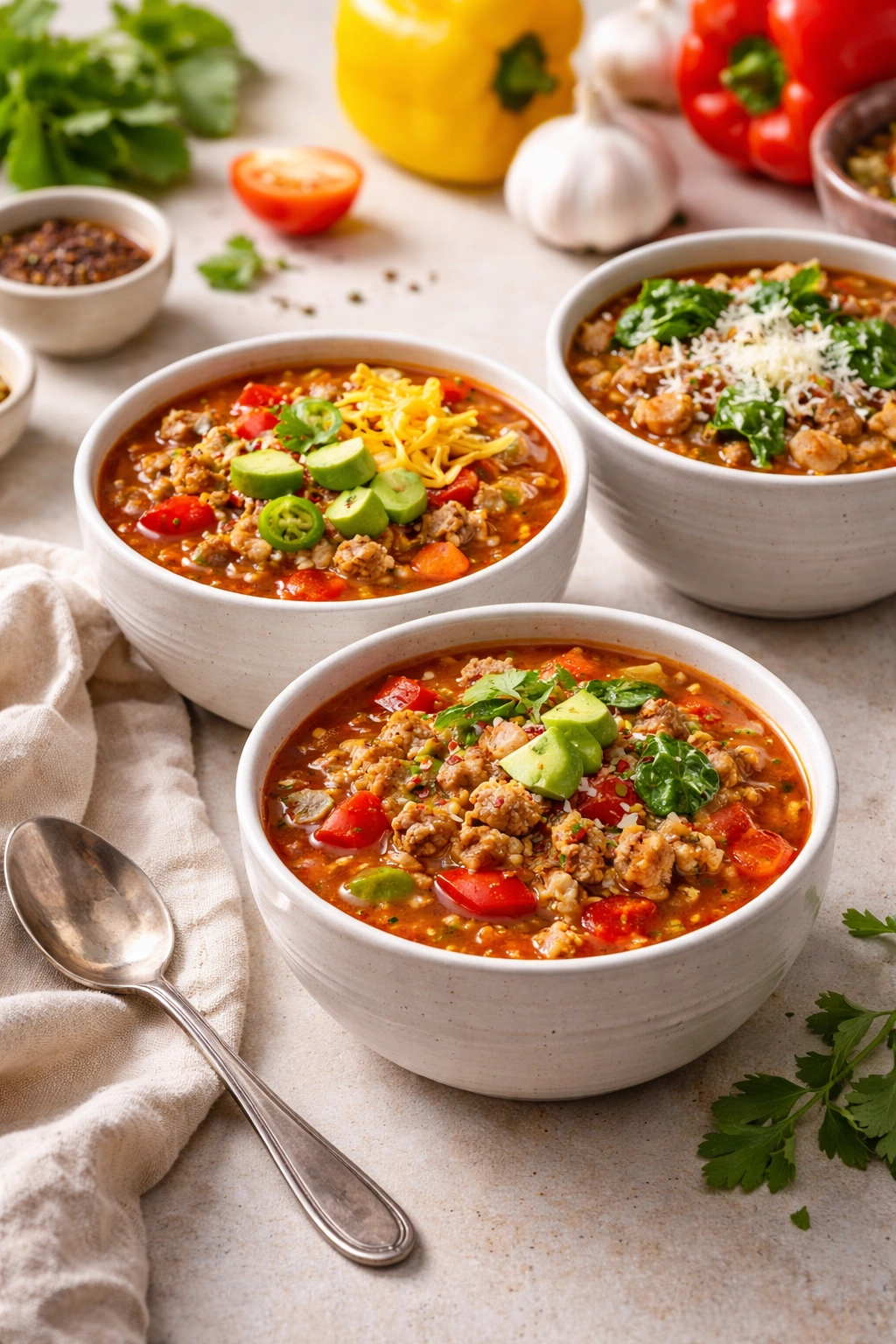
The beauty of this soup is that it’s completely forgiving and adaptable. You can make it your own without changing the fundamental character of the dish.
For a spicier version, use diced tomatoes with green chilies instead of plain diced tomatoes, increase the hot sauce to 1 to 1½ teaspoons, and add a pinch of red pepper flakes or cayenne. You could even use a can of Rotel tomatoes, which have both chiles and spices built in. The soup will still taste like stuffed peppers, just with more heat.
If you want to add more vegetables, consider mushrooms, diced carrots, diced celery, or even frozen corn. Add them at the same time you add the peppers and let them cook in the broth until tender. Spinach or kale can be added in the last 5 minutes, just wilting into the hot soup. These additions won’t change the fundamental flavor profile; they’ll just make the soup even heartier.
For a protein boost, use ground turkey or ground chicken instead of beef, or use a combination of ground beef and Italian sausage (remove the sausage from its casing first). Sausage adds a more pronounced flavor and makes the soup taste more richly seasoned.
To make it lower-carb, use cauliflower rice instead of regular rice, or skip the rice entirely and serve the soup with crusty bread on the side for dipping. You could also use zucchini noodles or shirataki noodles if you want the noodle texture without the carbs.
For a slow cooker version, brown the beef and sauté the vegetables on the stovetop first, then transfer everything to a slow cooker with all the remaining ingredients (except the rice). Cook on low for 6 to 8 hours or on high for 3 to 4 hours. Cook the rice separately and add it when serving.
If you want a thicker, more stew-like consistency, use less broth (5 cups instead of 6) and cook the rice right in the soup during the last 20 minutes of simmering, rather than serving it separately. Just know that leftovers will be even thicker.
How to Store and Reheat Stuffed Pepper Soup
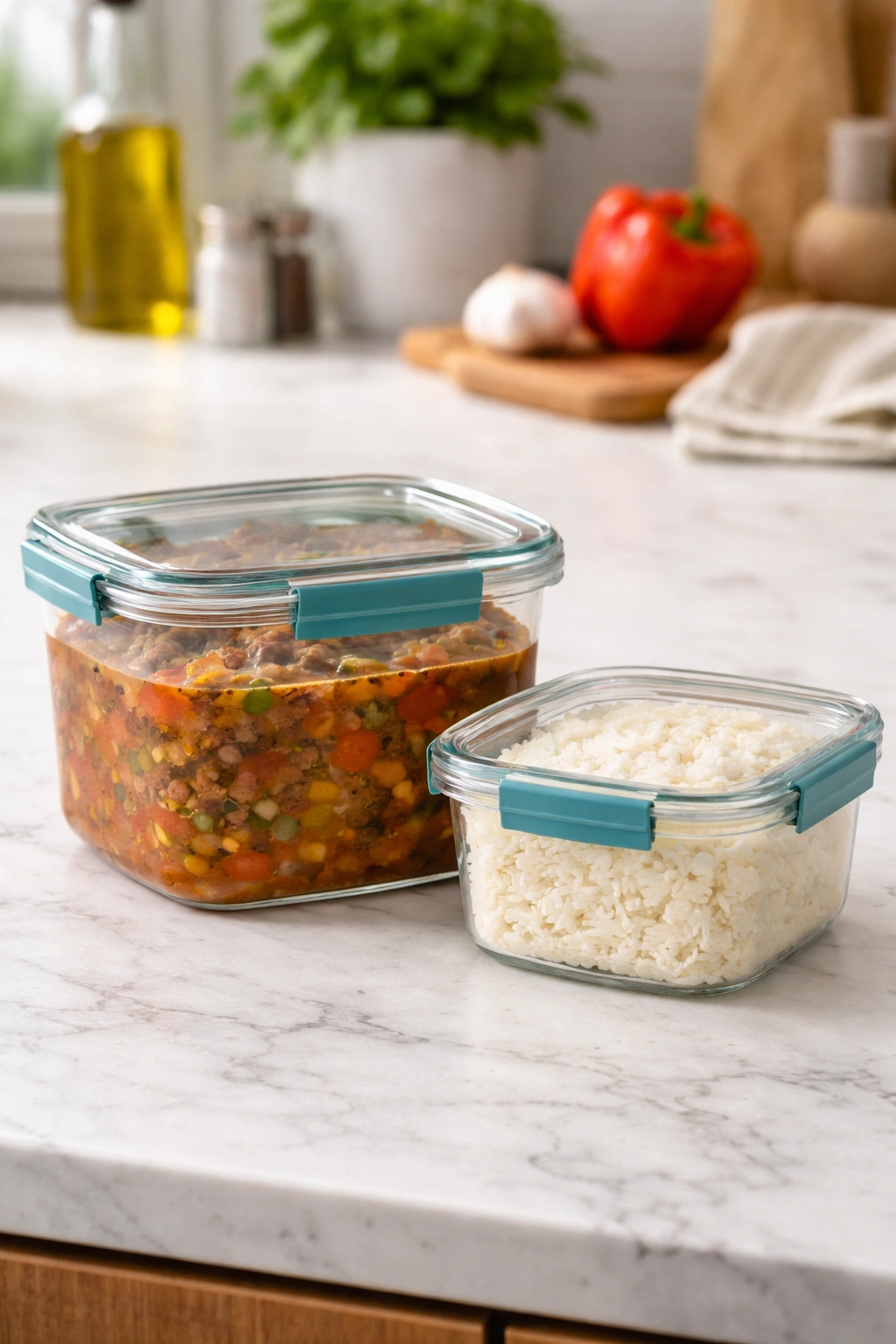
This soup keeps beautifully and actually tastes better the next day as the flavors continue to meld. Store the soup and the rice in separate airtight containers in the refrigerator for up to 4 days. When you’re ready to eat it, gently reheat the soup on the stovetop over medium heat, stirring occasionally, or microwave it in a microwave-safe container until it’s hot throughout. Add fresh cooked rice or reheat the stored rice separately and add it to each bowl just before serving.
To freeze stuffed pepper soup, let it cool completely, then transfer it to freezer-safe containers or zip-top bags. Freeze the soup separately from the rice. The soup will keep in the freezer for up to 3 months. When you’re ready to use it, thaw it overnight in the refrigerator and reheat as you would leftover soup. The rice can be frozen too, but it’s easiest to just make fresh rice when you’re reheating the soup.
One important note: if you accidentally added rice to the soup pot and now you’re looking at leftovers, the rice will continue to absorb liquid. You can reheat it as is, but it will be thicker and less soup-like. Add a little extra broth when reheating to restore some of the broth-to-rice ratio, or plan to eat it within 1 to 2 days before the texture becomes unpleasantly mushy.
The Best Serving Suggestions and Pairings
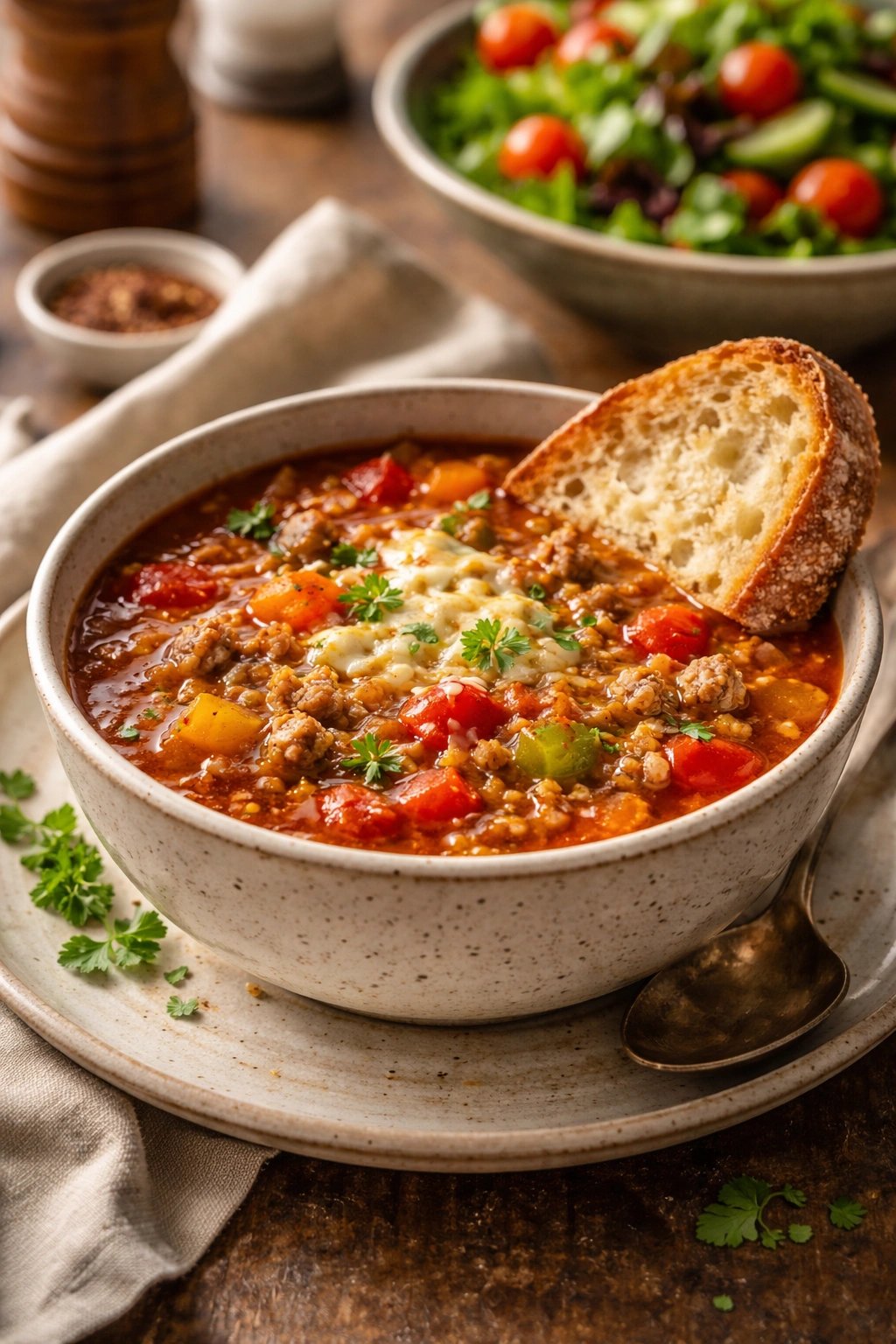
This soup is hearty and filling on its own, but it shines when paired with the right accompaniments. Crusty bread is essential. A crusty sourdough loaf, an Italian ciabatta, or even store-bought crusty rolls are perfect for dipping into the savory broth and soaking up every drop of flavor. Garlic bread is equally delicious and adds richness.
A simple green salad balances the richness of the soup without making the meal feel heavy. Use a bright vinaigrette with lemon juice or red wine vinegar, and add some peppery arugula if you can find it. The acidity and freshness of the salad work beautifully against the savory beef and tomato soup.
Grilled cheese sandwiches are a childhood classic pairing with soup, and they work beautifully here. Use good quality bread and real cheese, and consider adding a slice of tomato or a bit of pesto to elevate it beyond basic.
Cornbread, particularly jalapeno cornbread, adds a slightly sweet, slightly spicy element that complements the soup’s savory profile.
Top each bowl with shredded sharp cheddar cheese, which melts slightly into the hot soup and adds a tangy, creamy element. Monterey Jack is another good option. If you want to get fancy, use freshly shredded cheese from a block rather than pre-shredded; it melts more smoothly.
A dollop of sour cream swirled into each bowl adds coolness and creaminess. It’s not traditional, but it’s absolutely delicious.
Fresh herbs scattered on top—parsley, basil, or even fresh oregano if you can get it—add brightness and visual appeal.
Why Rice Goes in Separately: The Science Behind the Technique
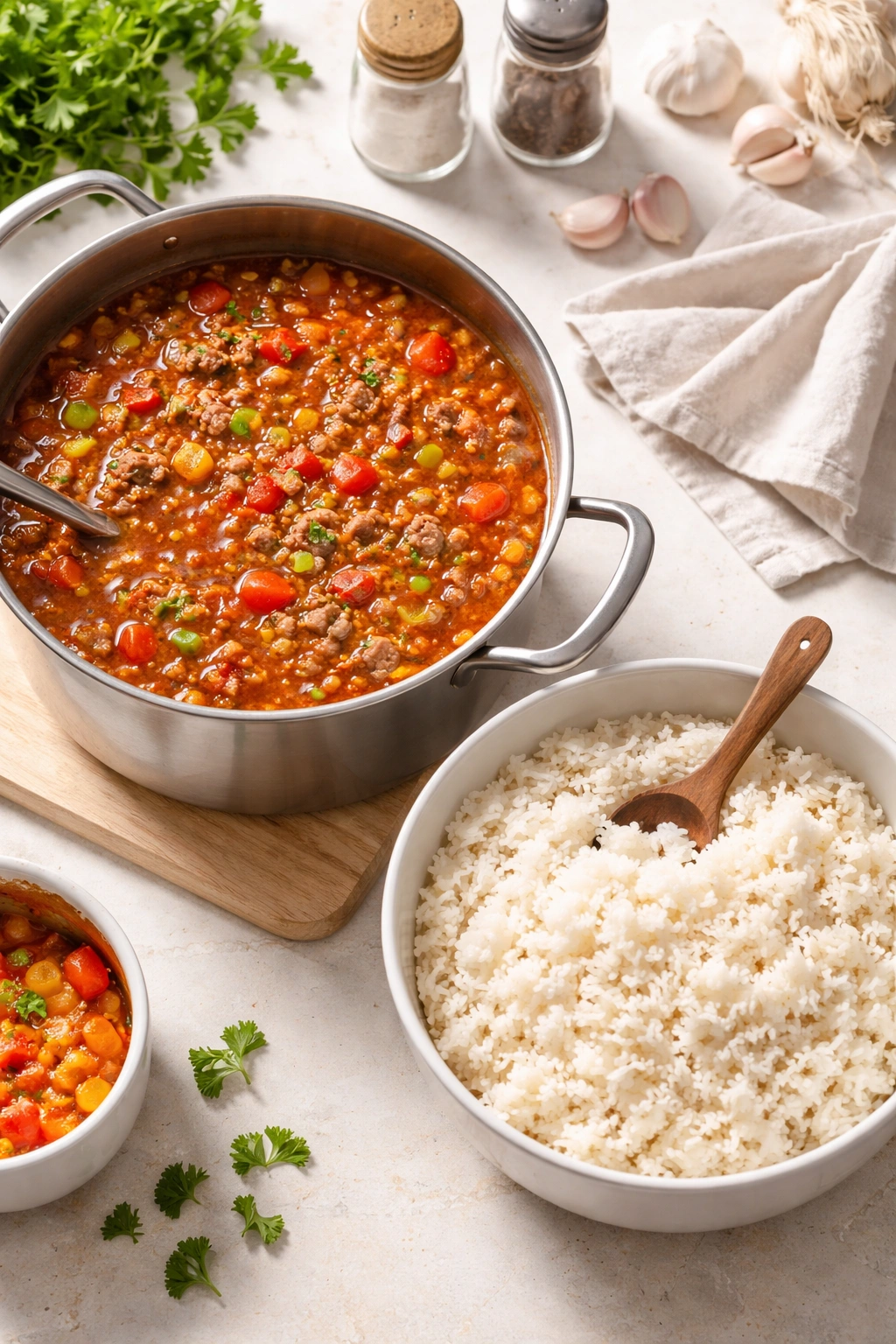
This technique confuses people because many soup recipes call for cooking rice (or pasta, or other starches) right in the pot. Stuffed pepper soup is different, and understanding why will make you a better soup cook across the board.
Rice is absorbent. Very absorbent. Each grain is essentially a sponge that will soak up liquid when submerged in it. When you cook rice on its own in water or broth, that’s by design—you want it to absorb all the liquid and become tender and fluffy. In a soup, if the rice absorbs all the broth, you no longer have soup; you have a thick stew or congee.
More importantly, rice continues absorbing liquid long after it’s cooked. If you add cooked rice to the soup pot and serve immediately, the soup will be at a perfect brothy consistency. But in the refrigerator overnight, that rice will keep absorbing broth. By the next day, you’ll have a soup that’s barely soupy. By the third day, it’ll be thick enough to eat with a fork. This is why serving rice separately is actually the kind thing to do for anyone eating leftovers—it lets them control the rice-to-broth ratio and keeps the soup at the consistency they prefer.
If you’re serving the soup immediately and don’t plan to have leftovers, you technically could add cooked rice directly to the pot at the end. But why change your habits for one meal? If you make it separately once, you’ll see how much better the leftovers taste, and you’ll never go back to the old way.
Final Thoughts
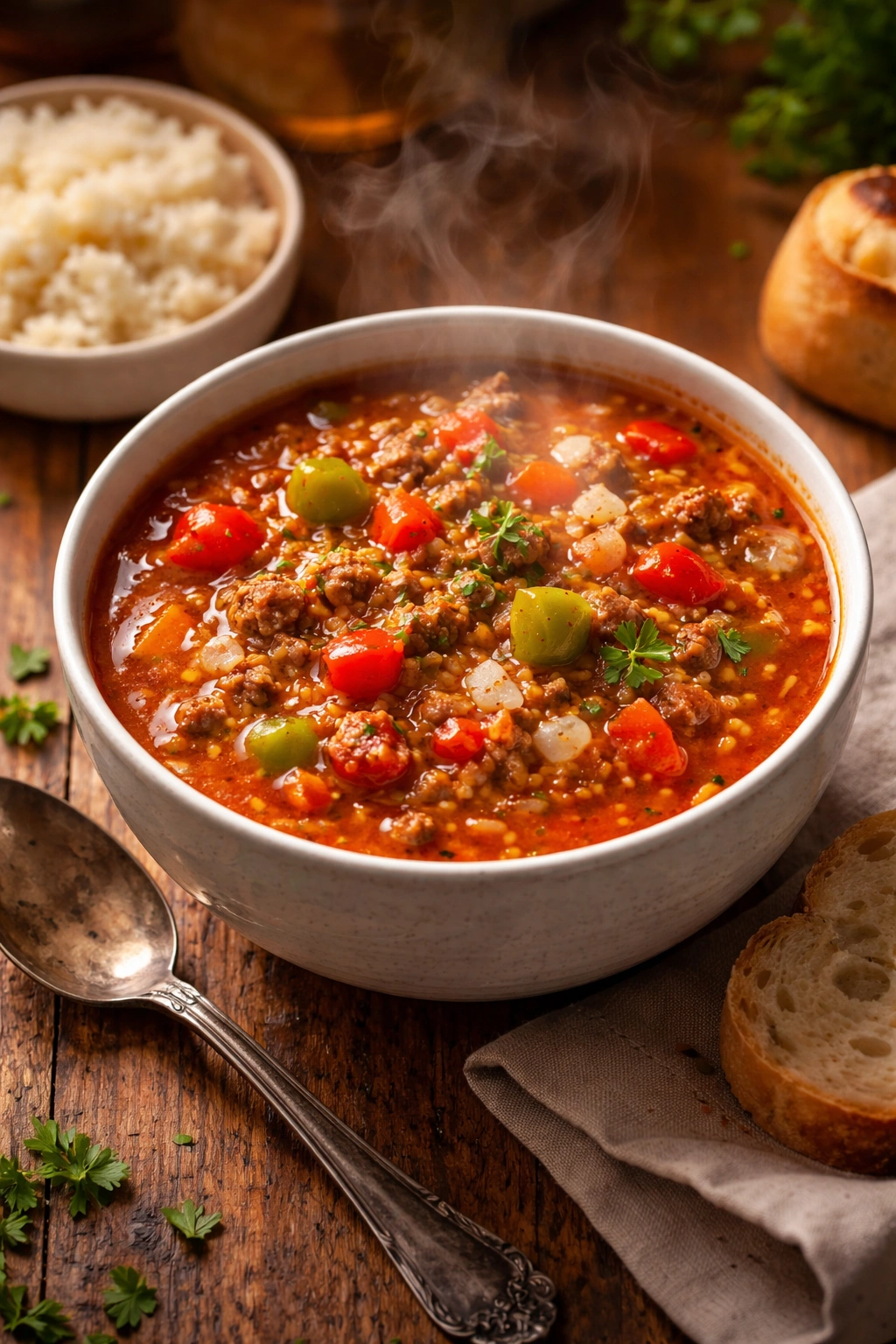
This stuffed pepper soup is proof that the most satisfying dishes don’t have to be complicated. Everything about this recipe is straightforward—brown the meat, sauté the vegetables, add liquids and seasonings, simmer until tender, and serve. And yet somehow, when all these simple components come together, you end up with something that tastes like it took hours of careful preparation and technique.
The real magic is in understanding flavor balance and taking the time to build it properly. Every ingredient serves a purpose. The beef provides savory richness and protein. The peppers add natural sweetness and texture. The tomatoes contribute body and acidity. The broth ties everything together. The seasonings round out the flavors and prevent the soup from tasting one-dimensional. The rice served on the side gives the soup a hearty feel without turning it into a thick stew. Even the seemingly small touches—brown sugar, Worcestershire sauce, fresh parsley at the end—make the difference between an okay soup and one you’ll want to make again and again.
Make this soup, and you’ll find yourself reaching for it on busy weeknights. You’ll make it again when you’re tired and don’t feel like cooking something complicated. You’ll double the batch to have leftovers. You’ll tweak it slightly each time based on what you have in your pantry. You might add mushrooms one time, sausage another time, extra garlic because you love garlic. Over time, this recipe becomes your recipe—your version of stuffed pepper soup that tastes like comfort and home. That’s the mark of a truly good recipe.
