



Nothing beats a steaming bowl of spaghetti and meatballs on a weeknight—or any night, really. This dish has earned its place as an American-Italian classic for a reason: it’s genuinely hard to mess up, it satisfies just about everyone at the table, and it delivers that perfect combination of comfort, flavor, and effort-to-reward ratio that keeps people coming back to it again and again. Whether you’re feeding a family of picky eaters, impressing guests with an elegant-but-effortless dinner, or simply craving something warm and nourishing after a long day, this recipe delivers every single time.
Here’s what makes this version special: the meatballs are moist, tender, and bursting with flavor—not those dense, rubbery hockey pucks that come from overmixing or using the wrong meat blend. The sauce clings beautifully to both the noodles and the meatballs, building deeper flavor as everything simmers together. And because we’re using smart shortcuts (a high-quality jarred marinara combined with the homemade character of freshly-made meatballs), you’ll have dinner on the table in under an hour, with minimal stress and maximum deliciousness. This isn’t a complicated recipe masquerading as simple—it’s genuinely straightforward, and that’s precisely why it works so well.
Spaghetti and meatballs occupies a unique place in the culinary world. While Italian home cooks might debate its authenticity (in Italy, meatballs are often served as a separate course, not directly tangled with pasta), what matters here is that this dish is beloved, accessible, and absolutely worth making well. A single really good bowl of spaghetti and meatballs beats three mediocre ones—so we’re going to focus on getting the fundamentals right.
The History and Appeal of Spaghetti and Meatballs
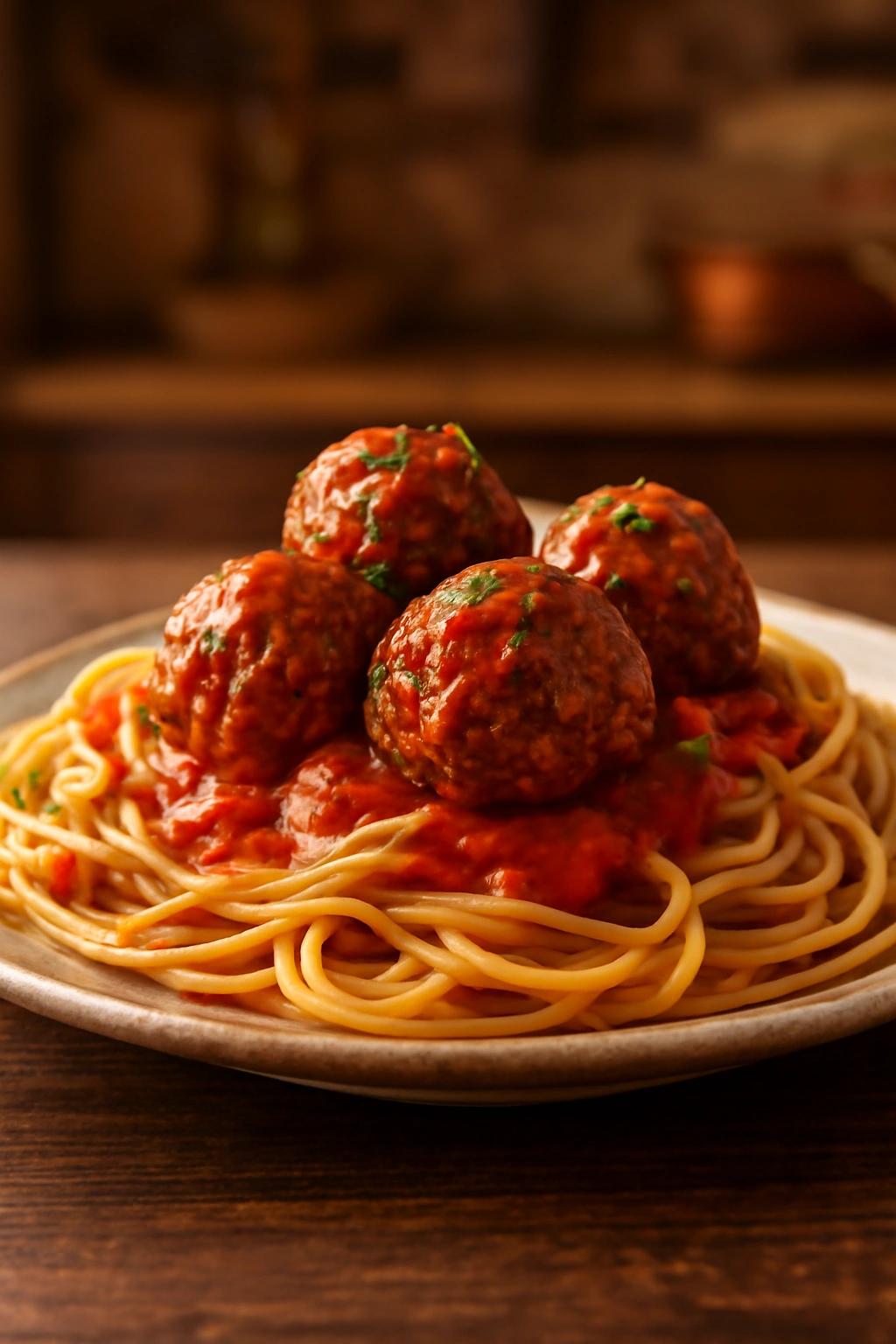
This dish represents something powerful: the evolution of Italian-American cuisine. When Italian immigrants arrived in America, they brought their traditions and adapted them to what was available, affordable, and loved by their adopted country. While Italian cuisine has always celebrated meatballs—polpettone and polpettini are traditional preparations—the combination of spaghetti and meatballs as a single, integrated dish is very much an American invention born from necessity and creativity.
The beauty of spaghetti and meatballs is that it works because it respects fundamental cooking principles. You’ve got protein (the meatballs), carbohydrates (the pasta), fat (from the meat and olive oil), acid (the tomato sauce), and savory umami flavors from cheese, garlic, and herbs. Every element plays a role, and when they’re balanced correctly, the result is deeply satisfying in ways that go beyond just filling your stomach.
What makes this version truly classic is the restraint in the approach. We’re not trying to reinvent the wheel or add seventeen fancy ingredients. Instead, we’re honoring the traditions that made this dish beloved in the first place: quality meat, aromatic vegetables, fresh herbs, good cheese, and a tomato sauce that tastes like tomatoes. That’s it. That’s the formula.
Understanding the Best Meatball Ingredients
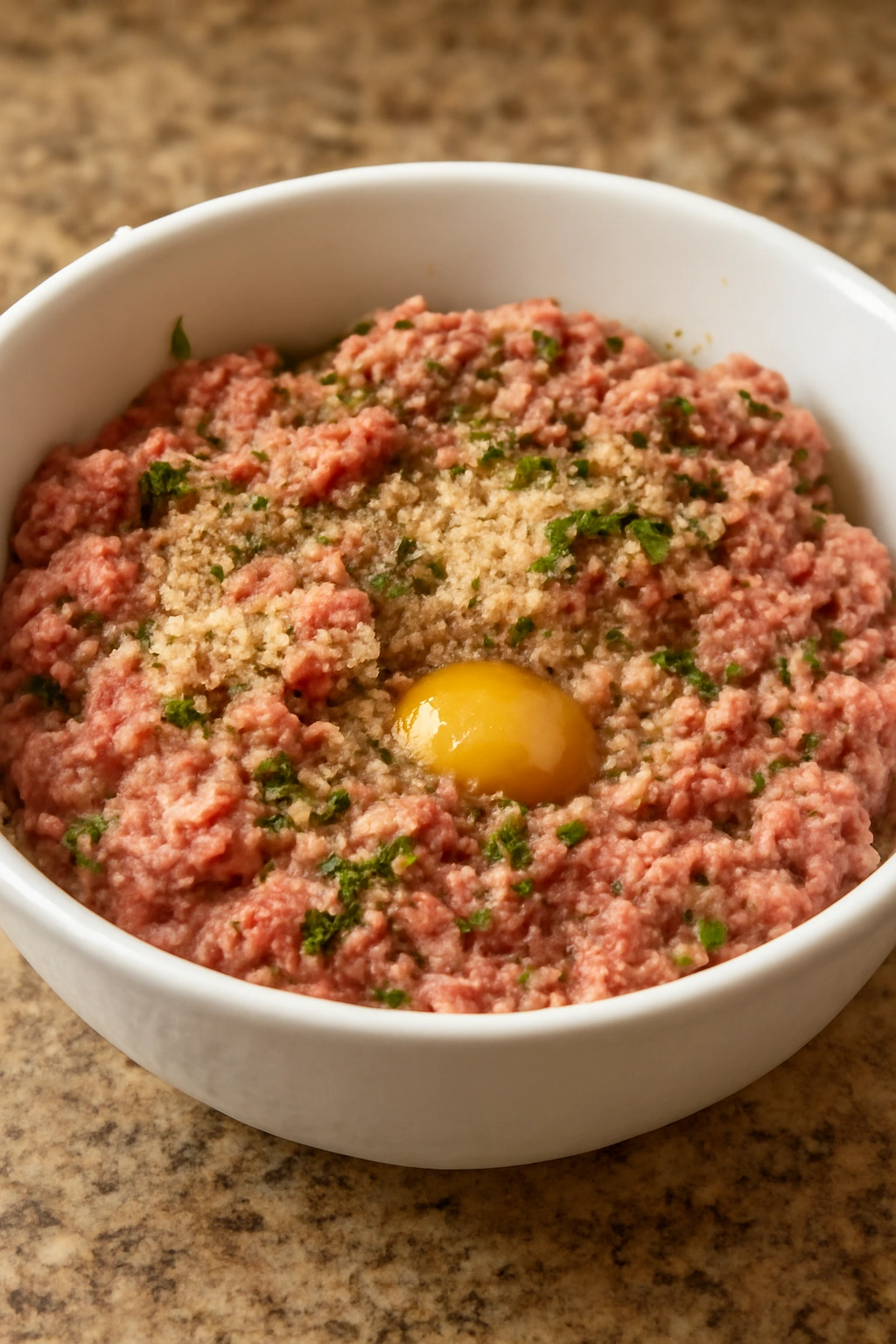
The secret to phenomenal meatballs lives in three places: the meat blend, the binder, and the seasonings. Let’s talk through each one because understanding why certain ingredients matter will make you a better cook.
The meat blend is non-negotiable. Ground beef alone makes dense, tough meatballs because beef is relatively lean and contracts heavily as it cooks. Ground pork adds fat and flavor, which keeps the meatballs moist and tender. Many traditional recipes call for a three-meat blend—beef, pork, and veal—but veal can be expensive and hard to find. A combination of 50% ground beef and 50% ground pork delivers nearly identical results at a fraction of the cost. Some cooks like to add Italian sausage (casings removed) for extra flavor depth; if you go this route, reduce the salt in the recipe slightly since sausage is already seasoned.
The binder is where most home cooks miss an opportunity. A panade—a mixture of breadcrumbs or another starch mixed with liquid—acts like a moisture absorber. When meat cooks, its proteins expand and contract, expelling water. The starch in the panade turns to gel during cooking and lubricates the meat fibers, keeping them tender and juicy. You can use Italian-style breadcrumbs (which are seasoned and finer than regular breadcrumbs), plain dried breadcrumbs, crushed crackers, or even panko. An egg helps bind everything together and prevents the meatballs from falling apart during cooking.
Fresh herbs and aromatics bring brightness and depth. Fresh parsley is the workhorse here—it’s mild, accessible, and adds a fresh note that balances the richness of the meat and cheese. Fresh basil adds complexity if you have it on hand. Garlic, minced fine, delivers savory punch. Freshly grated Parmigiano-Reggiano (not the pre-grated stuff with anti-caking agents) adds nutty, umami richness that’s absolutely worth the thirty seconds it takes to grate it yourself.
The one thing you absolutely must not do is overmix. The moment you start working the meat too aggressively, you’re developing gluten in the breadcrumbs and aligning the muscle fibers in the meat, both of which make the final product tough and dense. Mix just until everything is evenly combined—your hands are actually the best tool for this because you can feel when you’ve reached the right point.
Serving and Timing Information
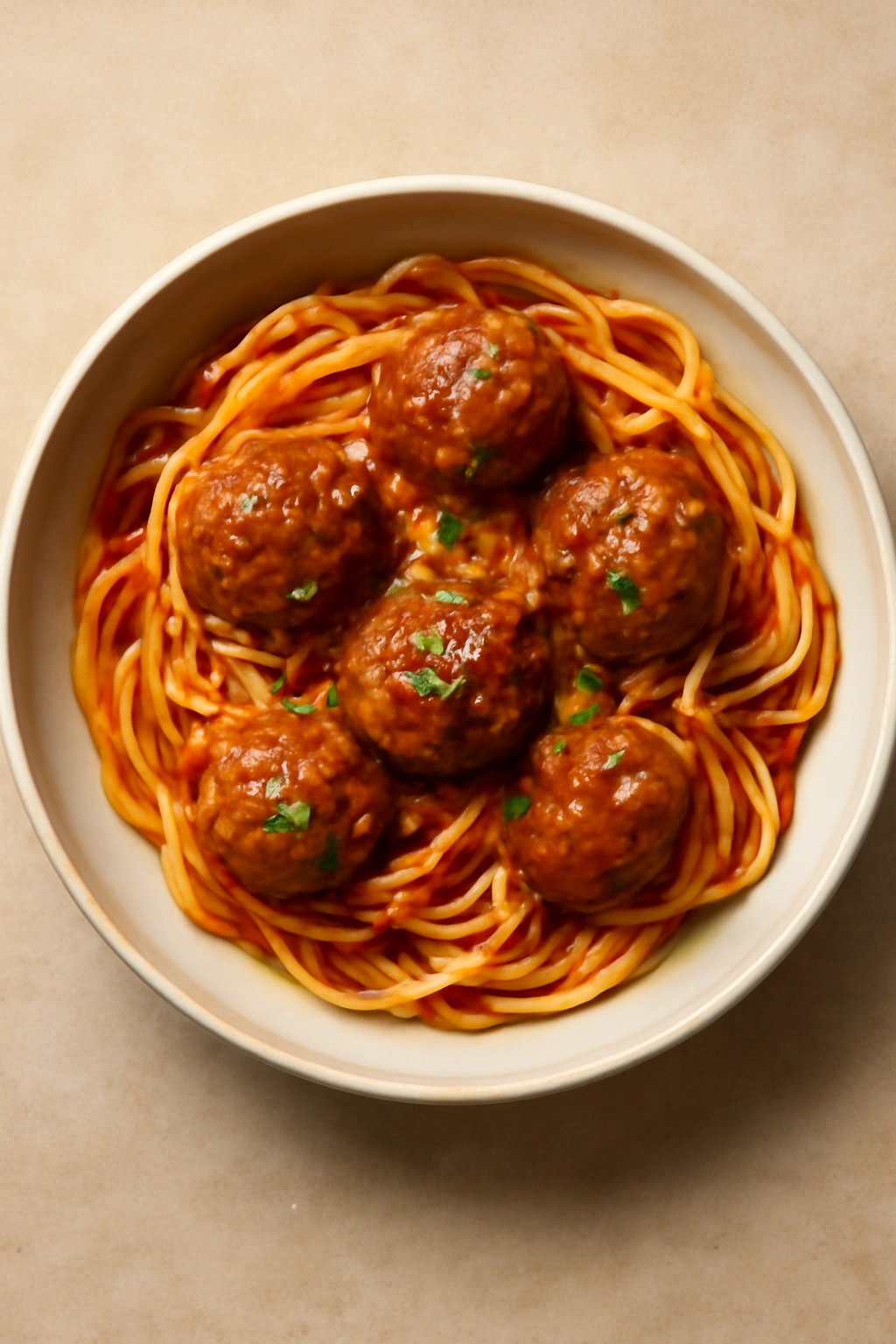
Yield: Serves 4 to 6 people | Makes 18 to 22 meatballs
Prep Time: 20 minutes (hands-on active preparation)
Cook Time: 35 minutes (browning meatballs, simmering sauce, cooking pasta)
Total Time: 55 minutes
Difficulty: Beginner to Intermediate — The techniques are straightforward and forgiving, but success depends on understanding a few key principles about meatball texture and not overworking the meat.
For the Meatballs
- 1 pound ground beef (85-90% lean)
- ½ pound ground pork (or ½ pound sweet Italian sausage with casings removed)
- 1 large egg
- ½ cup Italian-style seasoned breadcrumbs (such as Progresso)
- ⅓ cup whole milk
- ¼ cup freshly grated Parmigiano-Reggiano cheese
- 3 cloves garlic, minced very fine
- ¼ cup fresh flat-leaf parsley, chopped fine
- 2 tablespoons fresh basil, chopped fine (or 1 teaspoon dried Italian seasoning)
- 1 teaspoon kosher salt
- ½ teaspoon freshly ground black pepper
- 3 tablespoons olive oil (for browning)
For the Sauce and Pasta
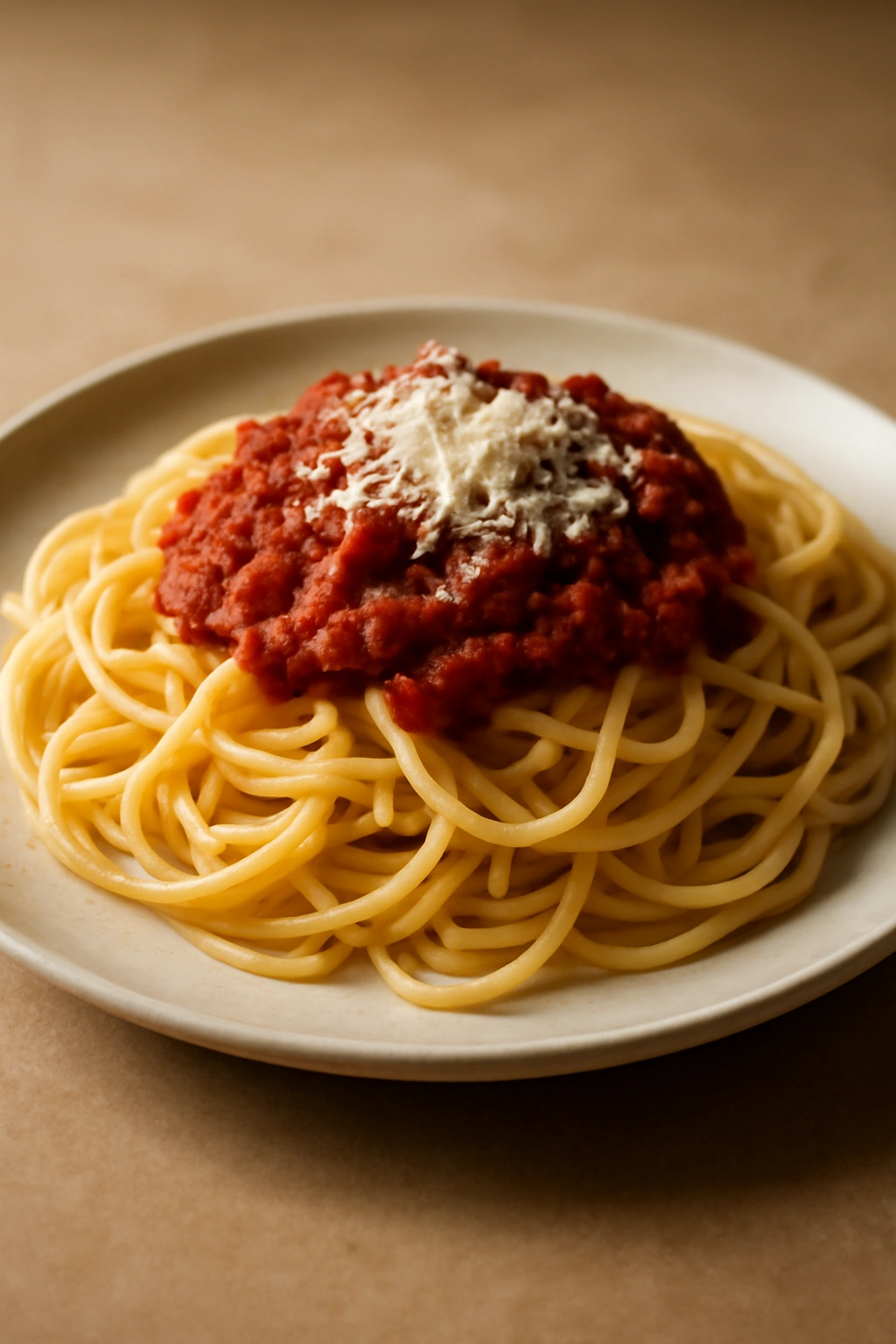
- 1 large jar (32 ounces) good-quality marinara sauce (such as Rao’s or San Marzano-based)
- 1 pound spaghetti
- Salt and freshly ground black pepper to taste
- Fresh basil for garnish (optional)
- Extra Parmigiano-Reggiano for serving
Making the Meatballs: A Step-by-Step Process
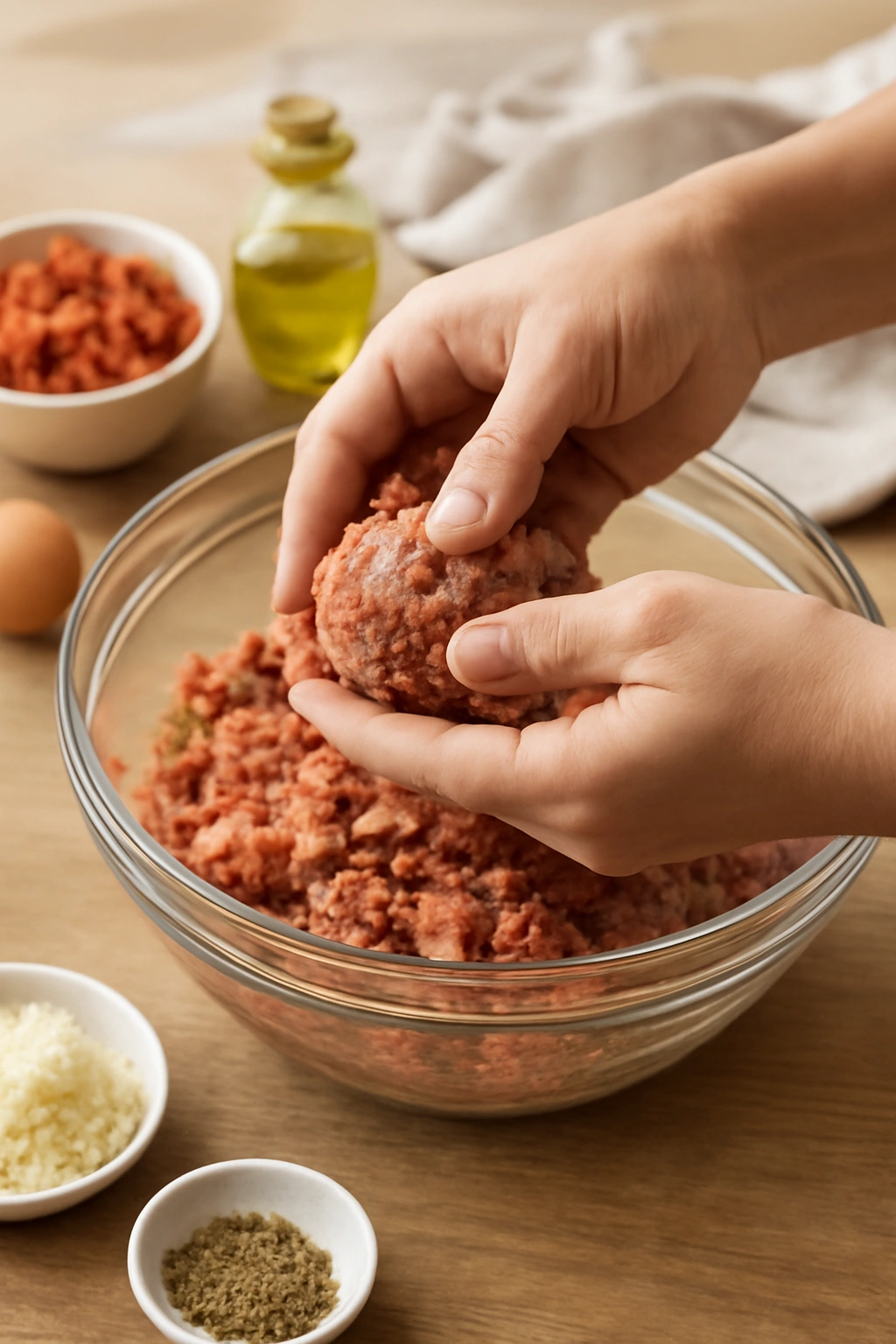
Prepare Your Workspace and Ingredients:
-
Remove the egg and milk from the refrigerator and let them sit at room temperature for 5 minutes—this helps them blend more evenly into the mixture.
-
Mince the garlic very fine (almost paste-like) and chop the fresh herbs. Having everything prepped and ready before you start mixing the meat will speed things up and help you avoid overworking the mixture.
Mix the Wet Base:
-
In a large mixing bowl, whisk together the egg and milk until combined. The mixture should look pale and slightly frothy.
-
Add the breadcrumbs and Parmigiano-Reggiano to the egg-milk mixture and stir gently for about 30 seconds. You’re creating a paste-like slurry here—this is your panade, and it’s the secret to moist meatballs.
-
Let the panade sit for 1 minute so the breadcrumbs can fully absorb the liquid. The mixture should be wet and paste-like, not dry or crumbly.
Combine All Ingredients:
-
Add the minced garlic, fresh parsley, fresh basil, salt, and pepper to the panade and stir to combine. The mixture should look like a thick sauce studded with herbs.
-
Add the ground beef and ground pork to the mixture. Using your hands (clean hands work best), gently fold and combine the meats with the wet ingredients using a motion that’s more like folding than squeezing. Work just until the ingredients are evenly distributed and you don’t see any white streaks of meat or dry spots of breadcrumb—this should take about 30-40 seconds of gentle mixing. Do not overmix. The moment the meat takes on a sticky, paste-like appearance and loses its texture, you’ve gone too far.
Form the Meatballs:
-
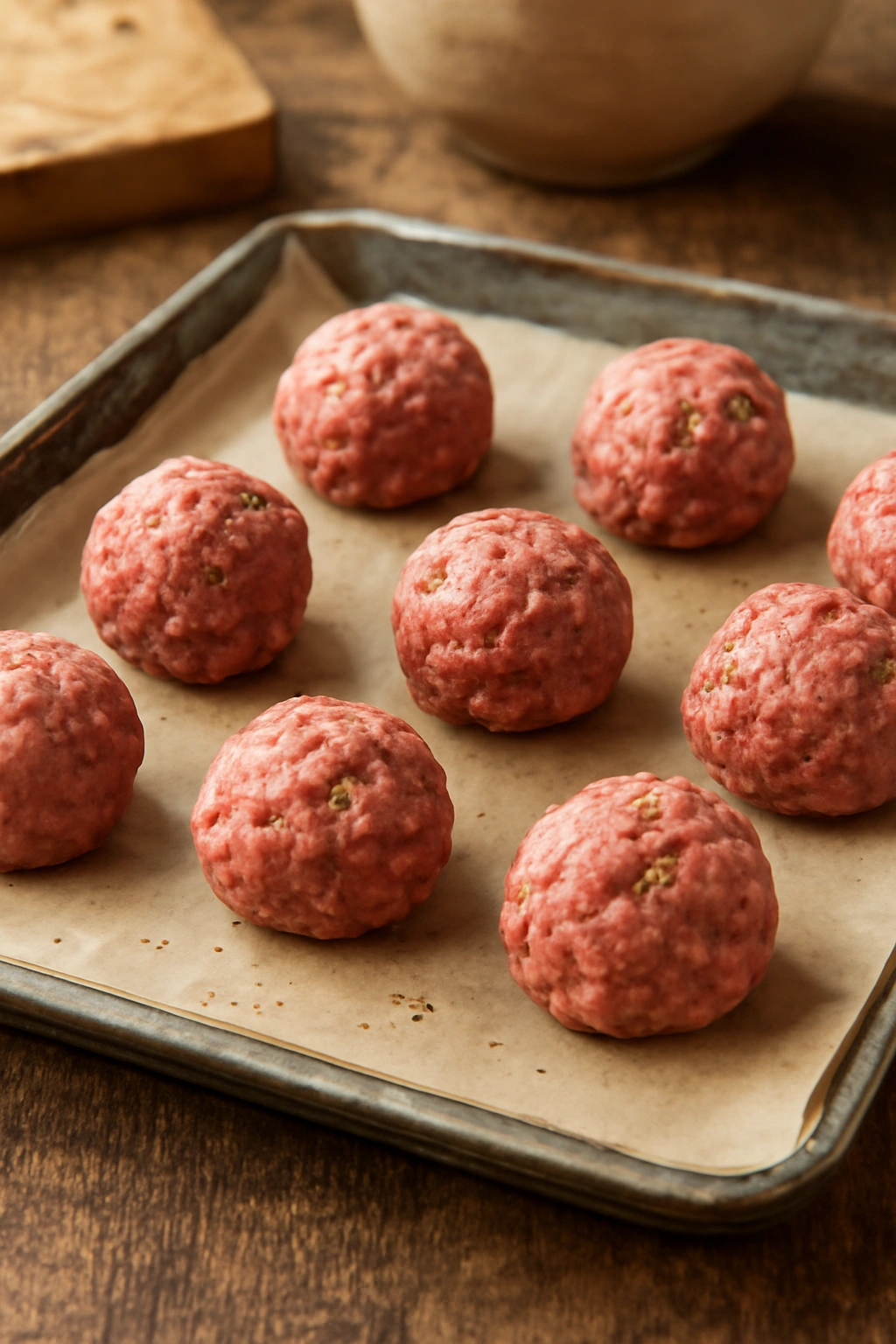
Lightly coat your hands with a tiny bit of olive oil (this prevents the meat from sticking to your palms). Using a cookie scoop (about 1.5 inches in diameter) or your hands, portion the mixture into 18 to 22 balls, each roughly the size of a golf ball.
-
Place the formed meatballs on a plate or a sheet of parchment paper. Refrigerate the meatballs for at least 10 minutes. This resting time firms them up and makes them less likely to fall apart when browning. If you’re making these ahead, you can refrigerate them for up to 24 hours in an airtight container.
Brown the Meatballs:
-
Heat 3 tablespoons of olive oil in a large, deep skillet or Dutch oven over medium heat. When the oil shimmers and moves easily around the pan (about 1 minute), it’s ready.
-
Working in batches to avoid crowding the pan, carefully add the meatballs to the hot oil. Do not move them around immediately. Let each meatball sit undisturbed for about 2 minutes so a crust can develop on the bottom, which adds flavor and helps keep the meatballs intact.
-
Using tongs or a slotted spoon, gently roll each meatball to expose a different side to the hot oil. Continue rolling every 1-2 minutes until the meatballs are browned on multiple sides, about 6-8 minutes total per batch. The meatballs don’t need to be fully cooked at this stage—they’ll finish cooking in the sauce.
-
Transfer the browned meatballs to a clean plate and set aside. If you’re browning multiple batches, add a touch more oil between batches if the pan looks dry.
Building and Simmering the Sauce
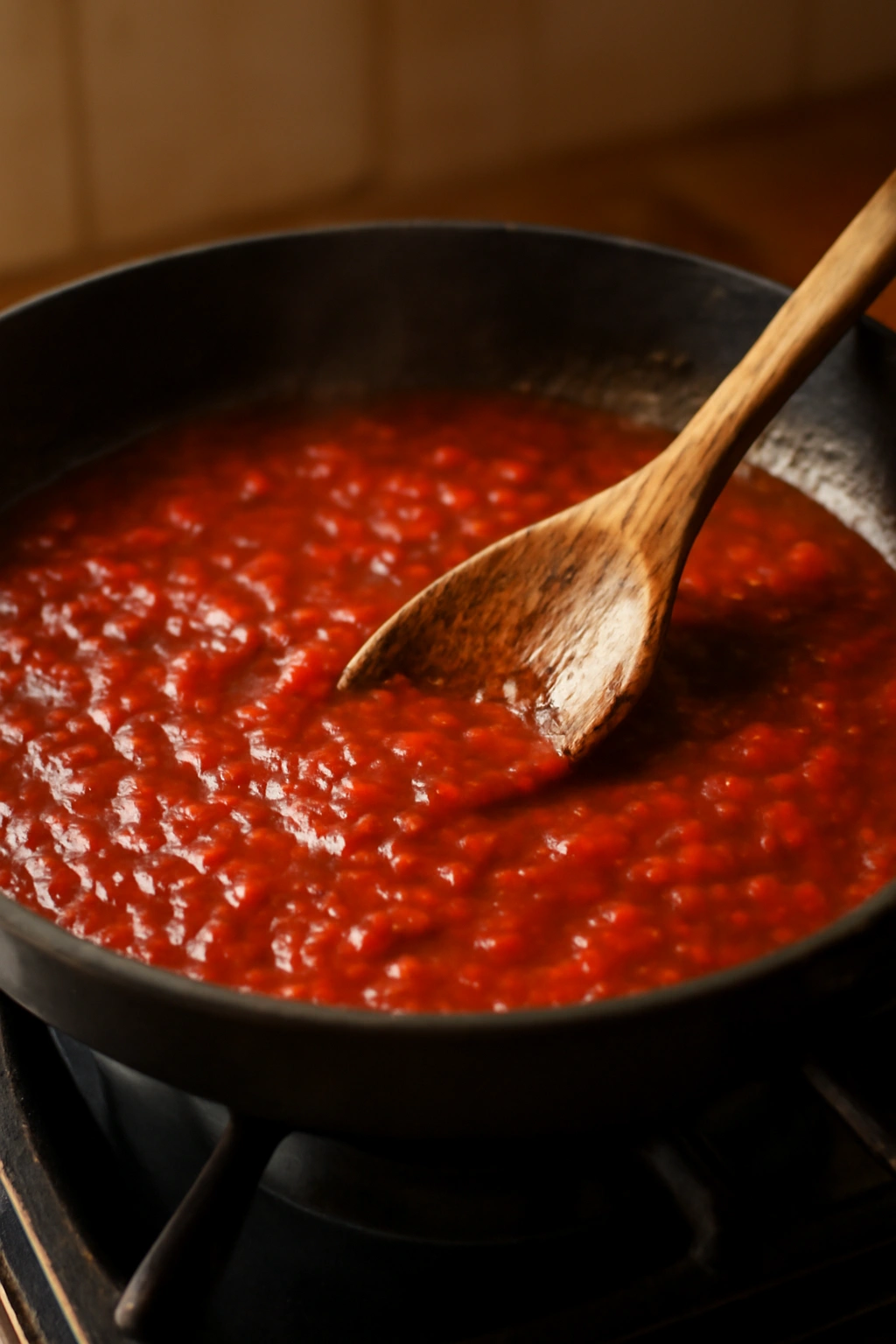
Prepare the Skillet:
-
Once all the meatballs are browned and set aside, examine the bottom of the skillet. You should see a layer of flavorful brown bits (called fond) stuck to the bottom. Do not wash this out. These browned bits are pure flavor and will deepen your sauce immensely.
-
If there’s a large pool of rendered fat from the meat, tilt the pan and spoon off about half of it (leaving some fat behind—this adds richness to the sauce and keeps things flavorful, not greasy).
Add the Sauce and Meatballs:
-
Pour the entire jar of marinara sauce into the skillet, starting over medium heat. Use a wooden spoon to gently scrape the fond from the bottom of the pan as the sauce heats, incorporating all those caramelized bits into the sauce. This process, called deglazing, is what transforms pan drippings into pure flavor.
-
Taste the sauce and season with salt and freshly ground black pepper to your preference. Many store-bought marinara sauces benefit from a pinch of sugar (about ¼ teaspoon) and extra black pepper to balance and brighten the tomato flavor.
Advertisements -
Add the browned meatballs back to the sauce, nestling them gently into the liquid. Do not stir aggressively. You want the meatballs to stay intact, not break apart in the sauce.
-
Bring the sauce to a gentle simmer (small bubbles breaking the surface, not a rolling boil). Reduce the heat to low, partially cover the skillet with a lid or aluminum foil, leaving a small gap for steam to escape, and let everything simmer for 15 to 20 minutes. The meatballs will finish cooking, and their flavors will meld with the tomato sauce. You should occasionally give the pan a gentle shake (without stirring) to rotate the meatballs and ensure even cooking.
-
The meatballs are done when a meat thermometer inserted into the thickest part reads 160°F (71°C), or when you cut into one and there’s no pink in the center. The sauce should have thickened slightly and smell absolutely incredible.
Cooking the Pasta
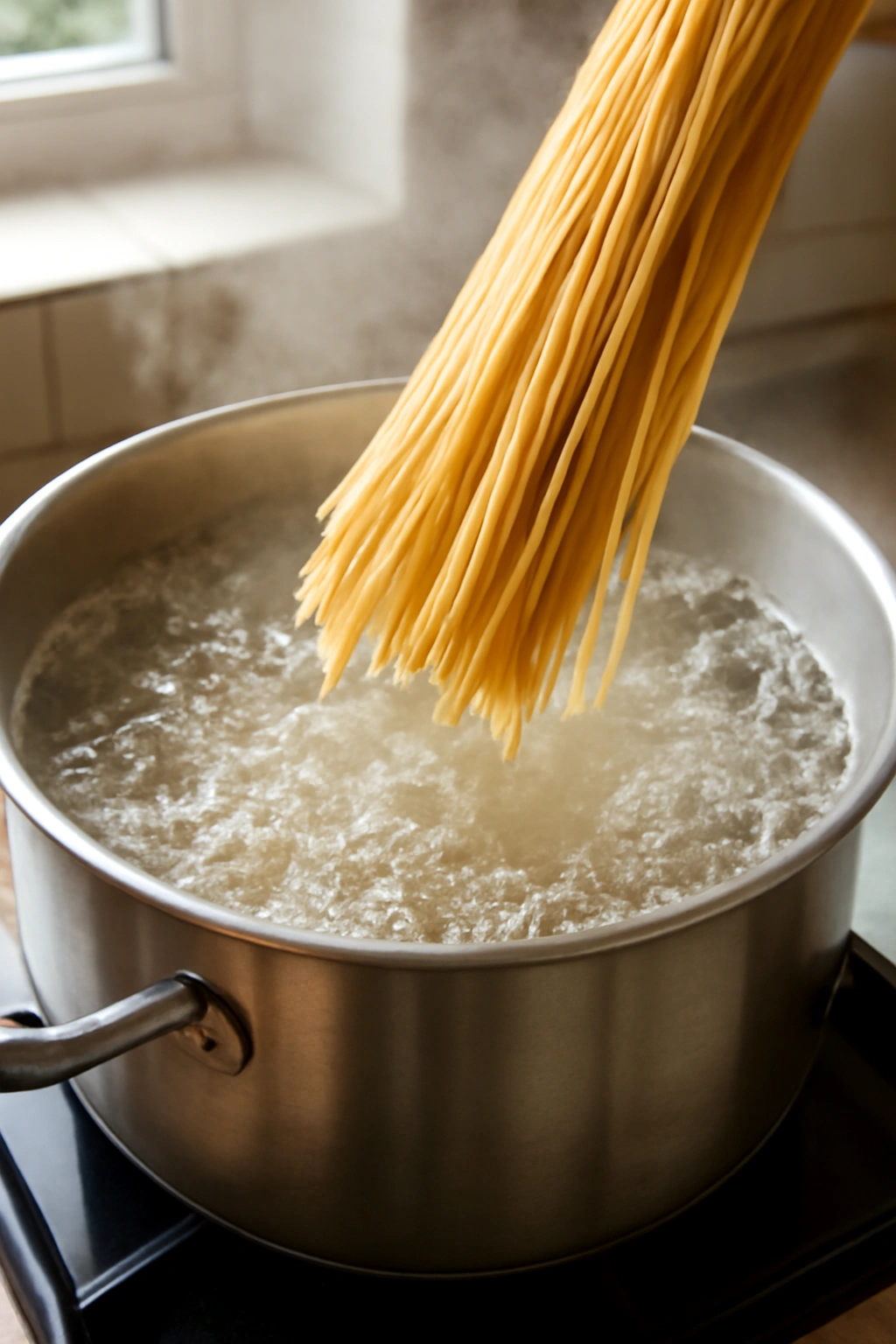
While the meatballs simmer (timing this correctly is important):
-
Bring a large pot of well-salted water (it should taste like seawater) to a rolling boil. This happens around the same time you’re adding the meatballs to the sauce, so the pasta will be ready just as the meatballs finish cooking.
-
Add the spaghetti to the boiling water and stir immediately to prevent sticking. Cook according to the package directions, usually 8-10 minutes, but taste it starting at 2 minutes before the package time. You’re aiming for al dente—tender but with a slight firmness when you bite it. The pasta will continue to soften slightly as it absorbs sauce.
-
Before draining the pasta, reserve at least 1 cup of the starchy pasta cooking water. This liquid is pure gold for adjusting the consistency of your finished dish. Pour it into a measuring cup or small bowl and set it aside.
-
Drain the pasta in a colander (do not rinse it—the starch on the surface helps the sauce cling to the noodles) and return it to the now-empty pasta pot.
Bringing Everything Together
-
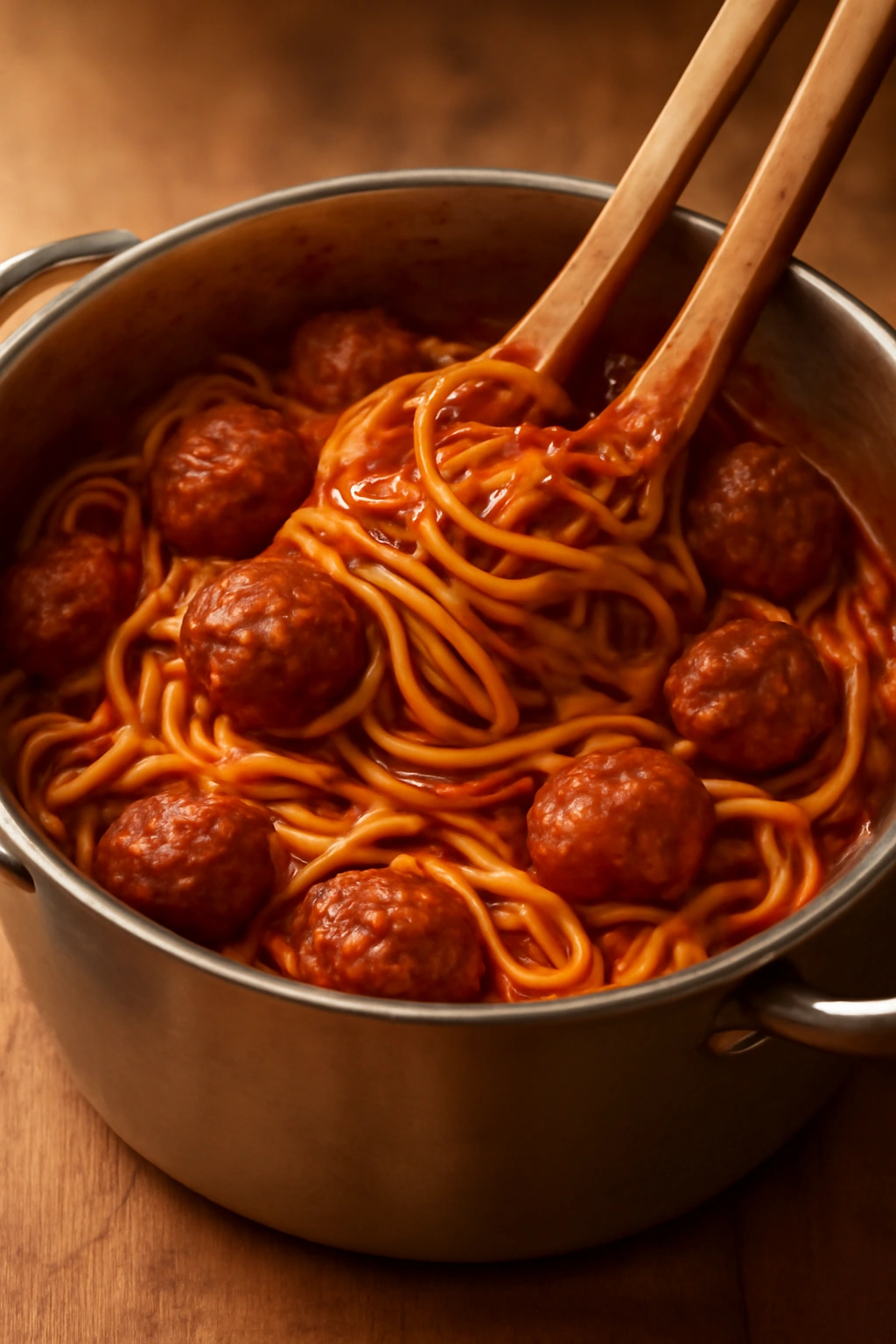
Pour the meatballs and sauce directly over the drained spaghetti in the pot. Using tongs or two forks, gently toss everything together until the pasta is evenly coated in sauce. If the sauce looks a bit thick or the pasta seems dry, add a splash of the reserved pasta water—a few tablespoons at a time—until you reach a consistency where the pasta is glossy and saucy, not swimming in liquid.
-
Taste and adjust seasonings one final time. A pinch of salt, a crack of black pepper, or a small handful of fresh basil can make all the difference at this stage.
Advertisements -
Divide among bowls or a large serving platter, top with fresh basil (if using), a generous handful of freshly grated Parmigiano-Reggiano, and a drizzle of good olive oil. Serve immediately while everything is hot.
Secrets to Achieving Perfect Meatball Texture
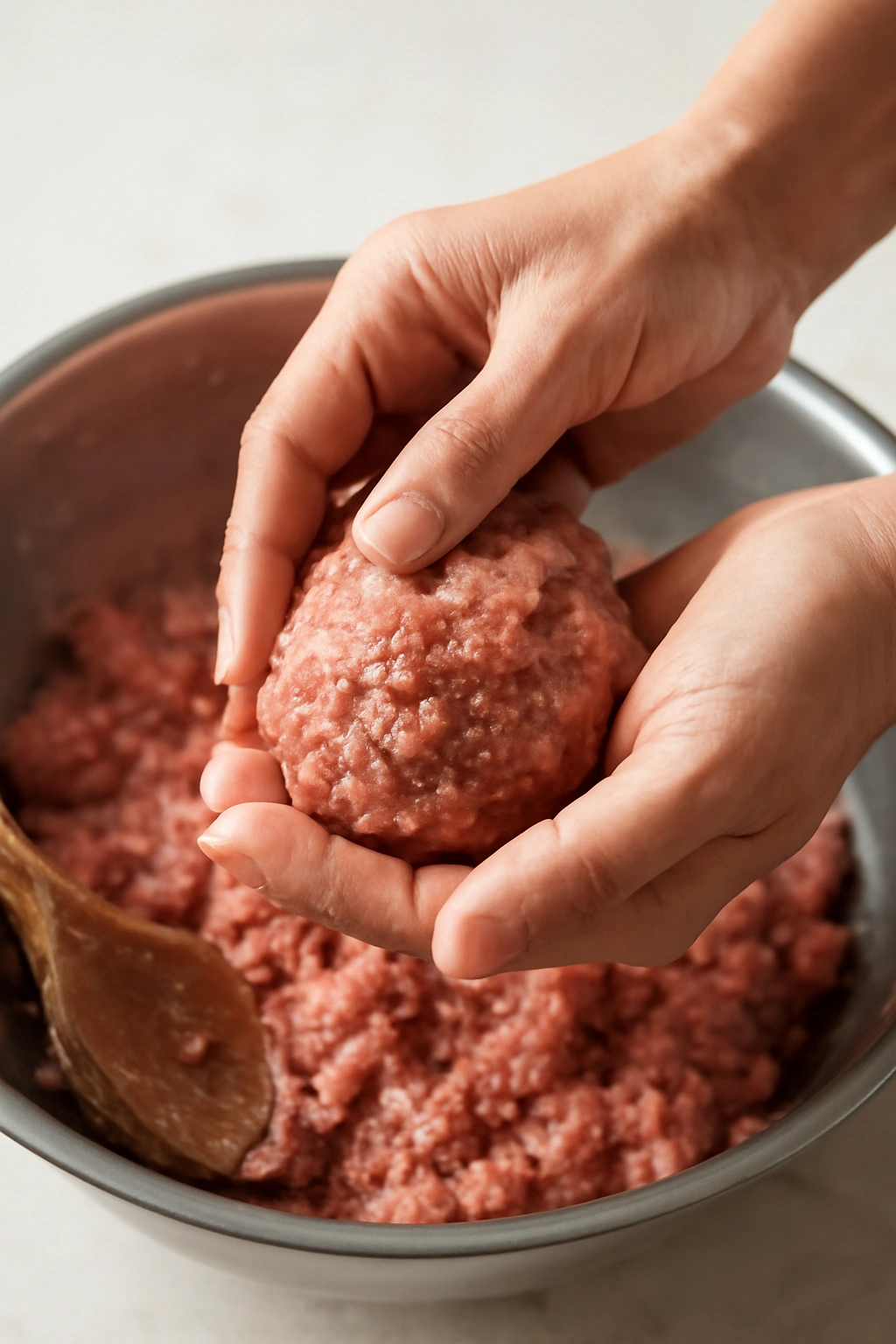
The difference between rubbery, dense meatballs and ones that practically melt on your tongue comes down to understanding what happens to meat during cooking. Ground meat loses about 25% of its weight in moisture as it cooks. The panade—that mixture of breadcrumbs and milk—acts as a moisture reservoir. The starch absorbs liquid initially, then during cooking, it turns into a gel that holds the moisture inside the meatballs while they cook.
Another critical factor is fat content. Meatballs made from pure beef will be drier than meatballs made from a beef-and-pork blend. The pork adds fat (which carries flavor) and helps retain moisture. This is why the 50-50 beef-to-pork ratio is so effective—you get the savory depth of beef with the moisture retention of pork.
Overmixing is the enemy. Every time you fold, squeeze, and work the mixture, you’re developing gluten in the breadcrumbs and aligning the muscle fibers in the meat. Both of these things make the final product tougher and denser. The key is to mix just enough for everything to come together, then stop. You should still be able to see a faint marbling of the different ingredients—that’s actually a sign you’ve done it right.
Browning the meatballs is essential, but it’s not about cooking them all the way through. A quick brown in hot oil develops a flavorful crust through the Maillard reaction (the chemical process that creates browning and deepens flavor). Finish them gently in the sauce, where they’ll cook through while absorbing tomato flavor and staying moist.
Variations You Can Make With Confidence
For a Lighter Version: Replace half the ground pork with finely grated zucchini (squeeze out excess moisture in a clean kitchen towel first) and half the breadcrumbs with almond flour or oat flour. This cuts calories while keeping the meatballs moist.
For a Spicier Take: Add ½ teaspoon of red pepper flakes to the panade, or use spicy Italian sausage instead of sweet pork. Both will give you a pleasant heat that builds as you eat.
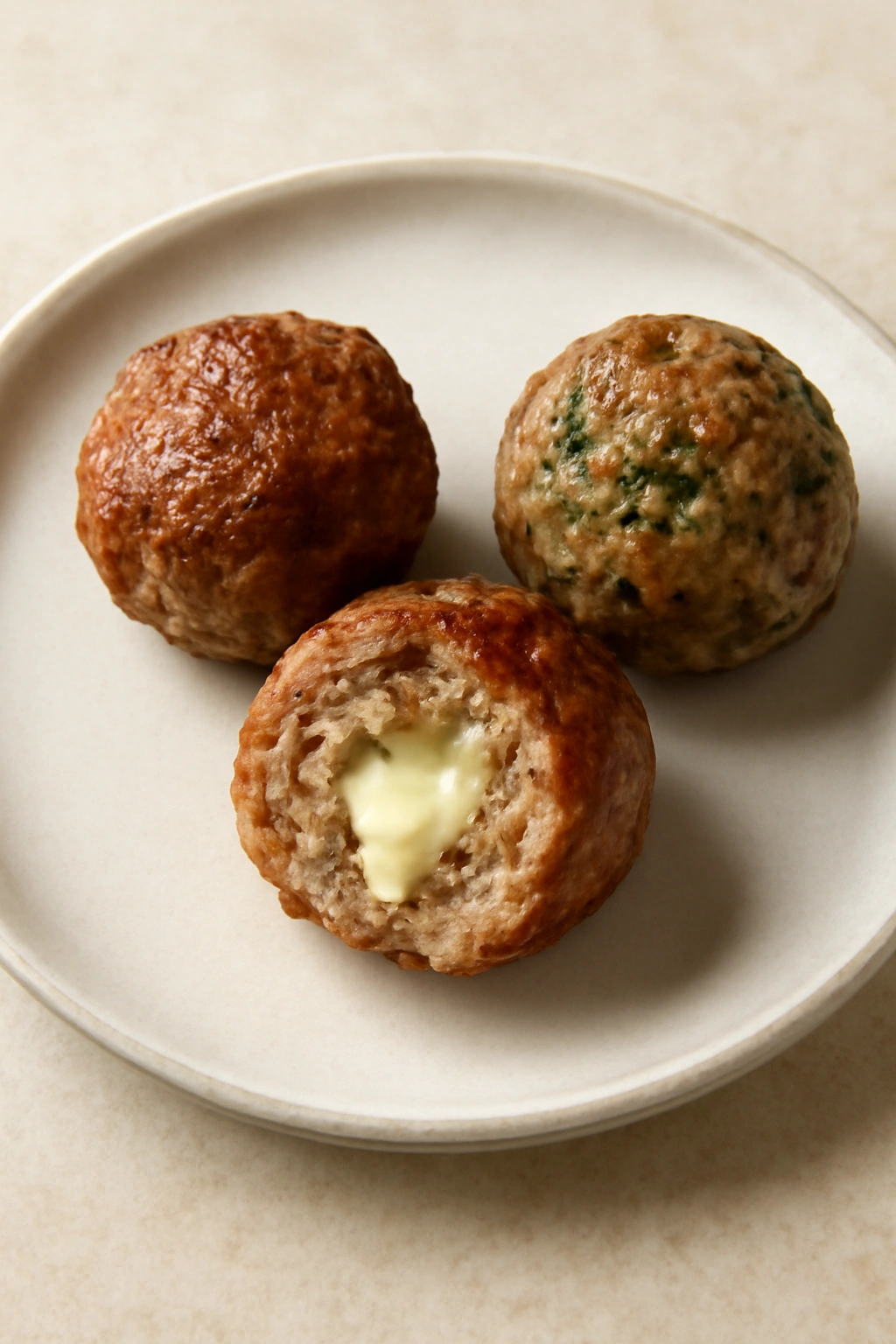
Cheese-Stuffed Meatballs: Place a small cube of fresh mozzarella or Parmigiano-Reggiano in the center of each meatball before browning. The cheese will melt as the meatball cooks, creating a creamy surprise in the center.
Turkey or Chicken Version: Use ground turkey or chicken (85-90% lean) in place of the beef-pork mixture. Add an extra egg yolk and an extra tablespoon of milk to compensate for the lower fat content, which will help keep them moist.
Make It Gluten-Free: Substitute the Italian breadcrumbs with gluten-free panko or crushed gluten-free crackers. Everything else stays the same, and the results are virtually identical.
Using Homemade Marinara: If you’d like to make your own sauce, sauté a diced onion and 4 minced garlic cloves in olive oil until soft. Add two 28-ounce cans of crushed San Marzano tomatoes, 2 bay leaves, a pinch of sugar, salt, and pepper. Simmer for 15-20 minutes, then add the browned meatballs and finish as directed.
Storage, Make-Ahead, and Freezing
Make-Ahead Friendly: You can form and refrigerate the raw meatballs up to 24 hours in advance. Keep them in an airtight container on a plate or parchment paper so they don’t stick together. Brown and cook them as directed when you’re ready to eat.
Brown and Refrigerate: Brown the meatballs as directed, let them cool completely, then store them in an airtight container in the refrigerator for up to 3 days. To serve, add them directly to simmering marinara sauce for an additional 10 minutes to heat through, then combine with pasta.
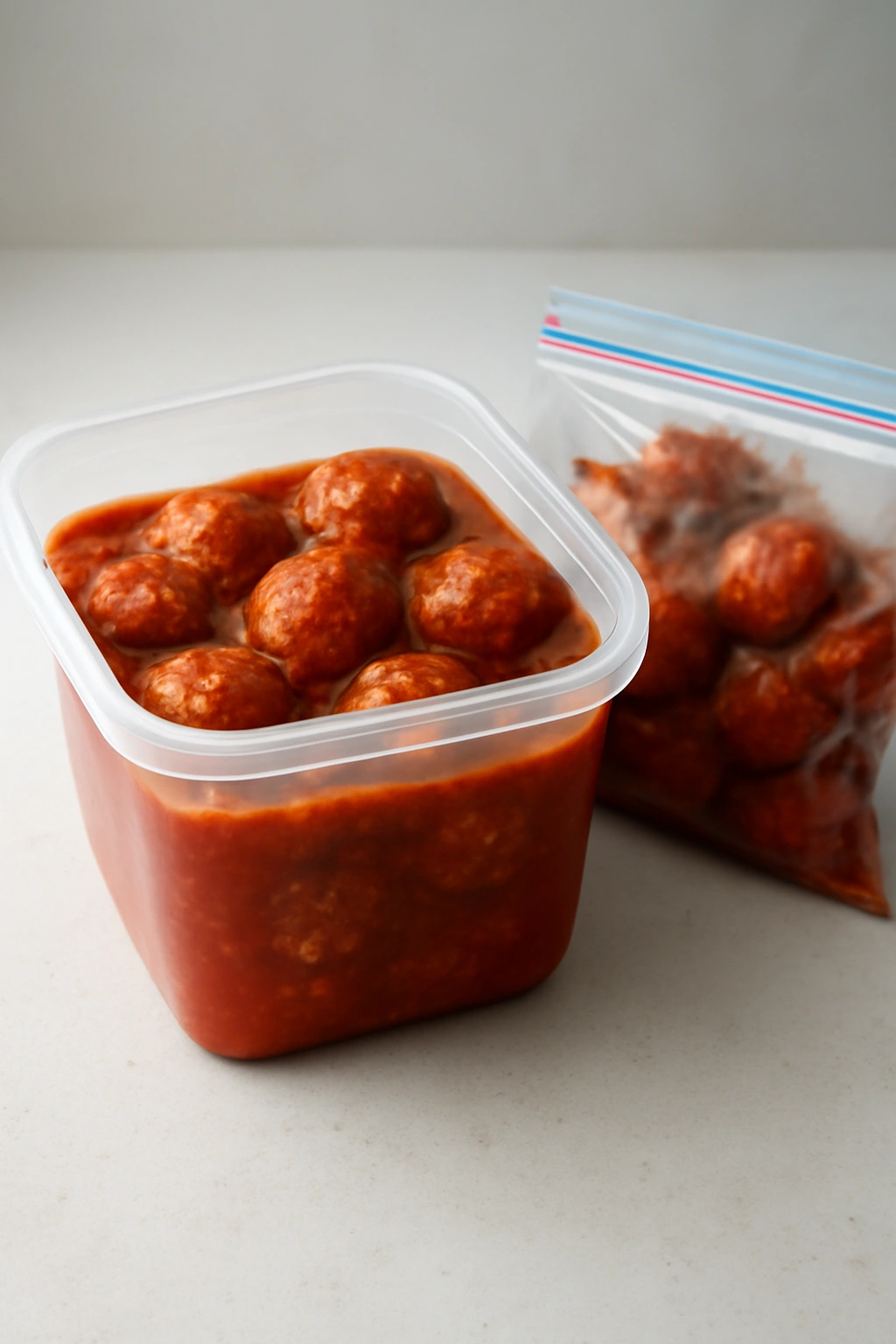
Freezing Cooked Meatballs: Once the meatballs are fully cooked and have cooled completely, transfer them to a freezer-safe bag or airtight container (preferably in the sauce they cooked in). They’ll keep for up to 3 months. Thaw overnight in the refrigerator, then reheat gently on the stovetop in their sauce, or thaw completely and reheat in the microwave (covered, stirring halfway through).
Freezing Raw Meatballs: Form the meatballs and freeze them on a baking sheet (uncovered) for 2-3 hours, then transfer to a freezer bag. This prevents them from sticking together. You can brown them directly from frozen—they’ll just take an extra 2-3 minutes per side.
Refrigerated Leftovers: Cooked spaghetti and meatballs will keep in an airtight container in the refrigerator for 3-4 days. The pasta will continue to absorb sauce as it sits, so it may be thicker when you reheat it. Add a splash of water or pasta water when reheating to loosen it if needed.
Reheating: The best method is to reheat gently on the stovetop in a covered pot over low heat, stirring occasionally and adding a little water or broth if the mixture seems dry. You can also reheat individual servings in the microwave, covered, for 1-2 minutes, stirring halfway through.
Pairing and Serving Suggestions
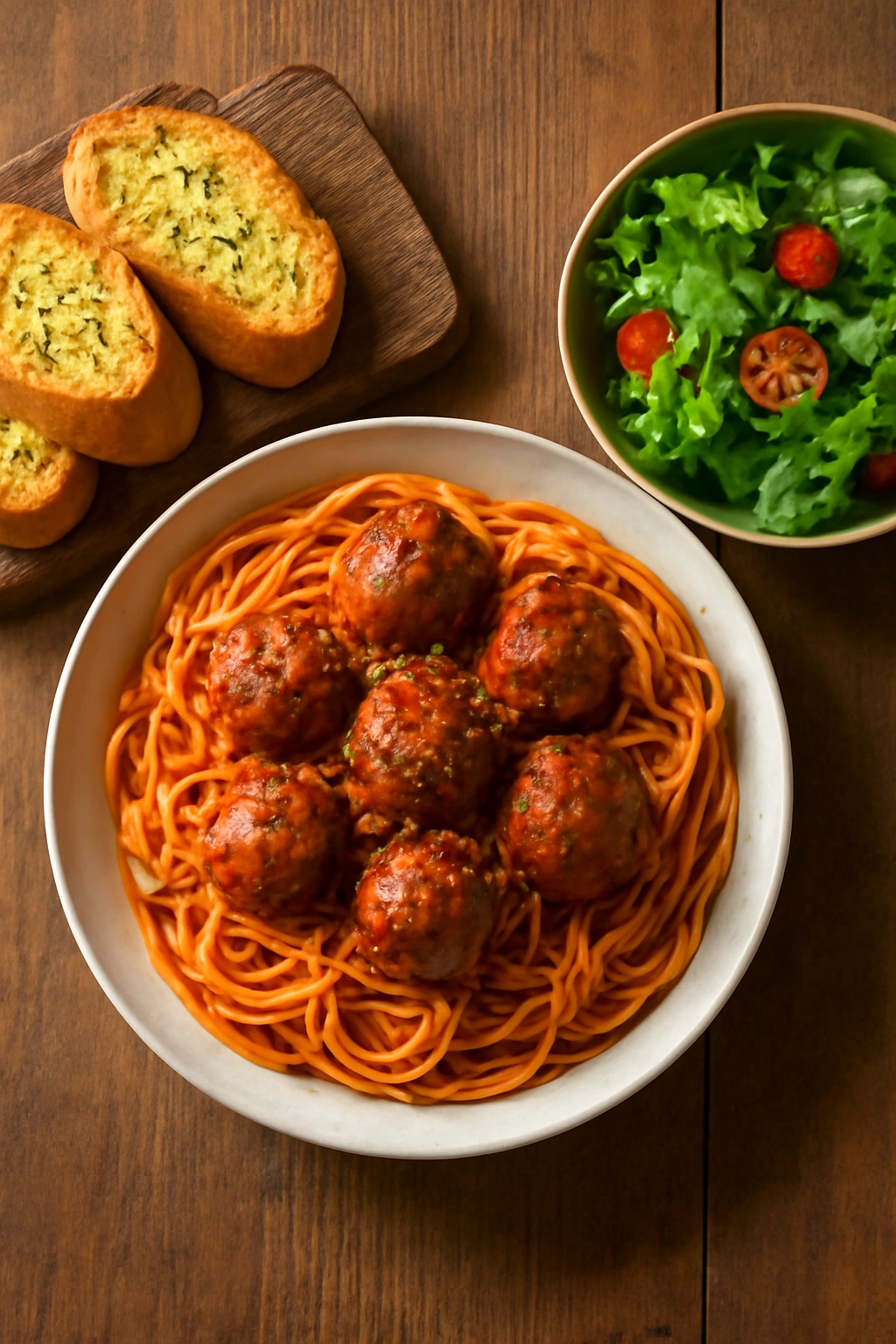
Spaghetti and meatballs doesn’t need much to shine, but a few simple additions transform it from weeknight dinner into something that feels special and complete.
The Classic Sides: Garlic bread is non-negotiable. Slice a good crusty loaf in half lengthwise, brush with olive oil mixed with minced garlic and fresh parsley, then toast cut-side down in a skillet or under the broiler until golden and crispy. A simple green salad—arugula or mixed greens with lemon vinaigrette—provides brightness and cuts the richness of the meatballs beautifully.
Beverages: Red wine pairs naturally here—something medium-bodied and not too tannic, like a Chianti or Barbera, won’t overshadow the dish but will complement the tomato sauce. If you prefer white wine, an unoaked Pinot Grigio or Vermentino works. For non-alcoholic options, sparkling water with lemon is refreshing alongside the richness of the meal.
Finishing Touches: Fresh basil torn by hand (not chopped with a knife, which bruises the leaves) and scattered over each bowl adds brightness. Freshly grated Parmigiano-Reggiano adds nutty richness and umami depth. A small drizzle of good extra-virgin olive oil over each serving adds silkiness and flavor.
For Entertaining: Serve in a large shallow bowl or platter family-style, with the meatballs and sauce in the center, pasta around the edges, and garnishes set out so guests can customize their portions. This creates a beautiful, generous presentation that invites people to serve themselves.
Common Mistakes and How to Fix Them
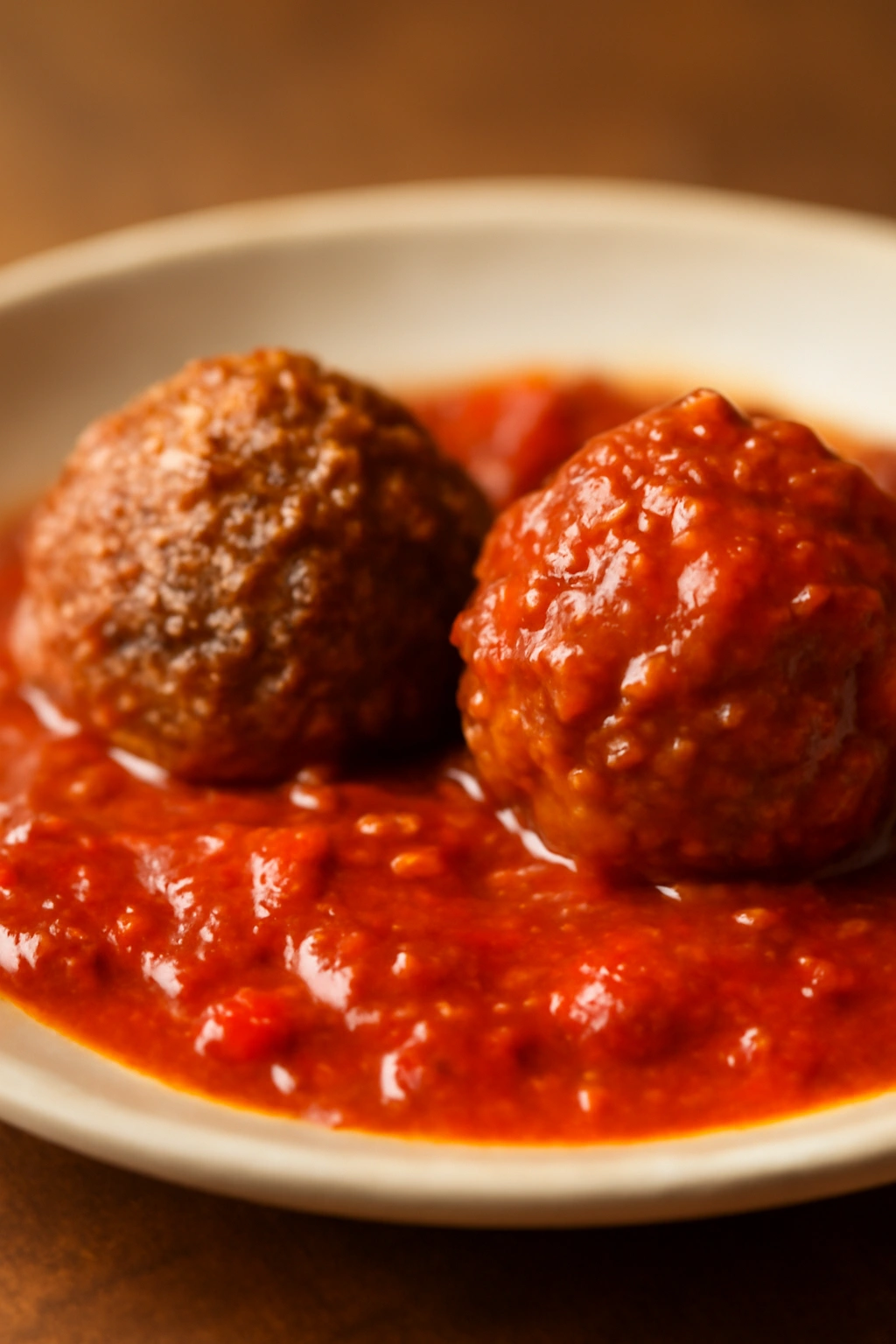
Dense, Rubbery Meatballs: This is almost always caused by overmixing. The solution: mix gently and deliberately, stopping as soon as the ingredients are combined. If you’ve already made them this way, try adding more sauce and simmering longer—the sauce will eventually soften the exterior, though the interior will still be dense.
Meatballs Falling Apart During Cooking: This usually means either too little binder (not enough panade or egg) or the oil wasn’t hot enough when you added them. Make sure your oil is shimmering and moves easily around the pan before adding the meatballs, and resist the urge to move them around constantly—let them develop a crust before turning them.
Sauce Too Thin or Too Thick: Thin sauce means it hasn’t simmered long enough or the meatballs didn’t release enough liquid. Solution: simmer longer uncovered to reduce and thicken. Thick sauce means either the sauce was over-reduced or there’s not enough liquid overall. Add a little reserved pasta water to loosen it.
Bland Flavor: Taste the sauce before adding the meatballs and adjust the seasoning then. Salt should be added to taste progressively, never all at once. If the sauce tastes flat, add a tiny pinch of sugar to balance the acidity, more freshly ground black pepper, or a few fresh basil leaves.
Pasta Absorbing Too Much Sauce: This is normal as leftovers sit, but you can prevent it during the initial serving by not cooking the pasta too far in advance and not mixing it with the sauce until just before serving.
Frequently Asked Questions
Can I use all beef instead of beef and pork?
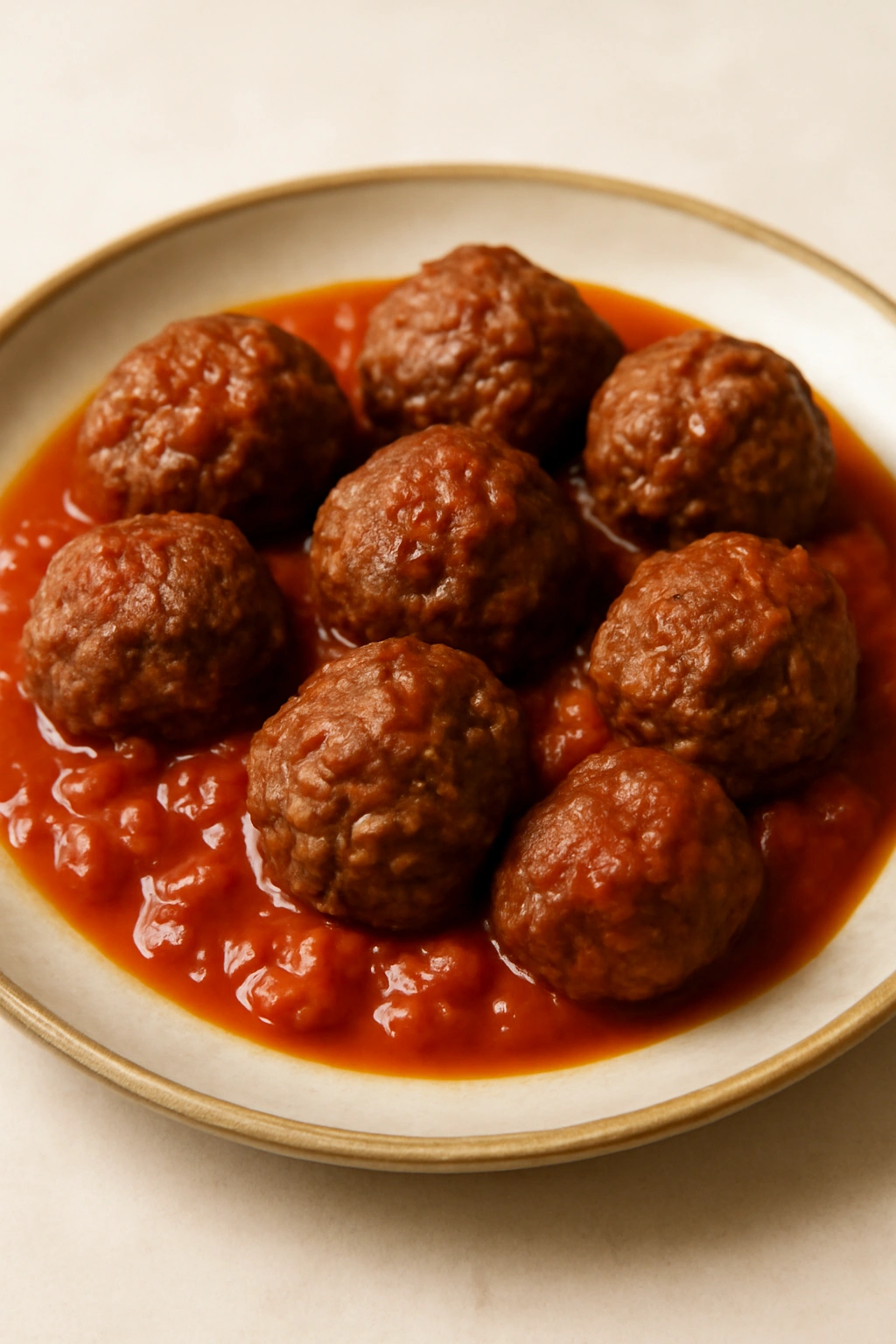
You can, but the meatballs will be denser and drier because beef is leaner than pork. If all-beef is your only option, add an extra egg yolk and reduce the breadcrumb measurement by a quarter cup, replacing it with an extra ¼ cup of milk. This adds more binding power and moisture. You could also use ground chuck, which has a higher fat content (15-20%) than leaner ground beef.
What if I don’t have time to brown the meatballs on the stovetop?
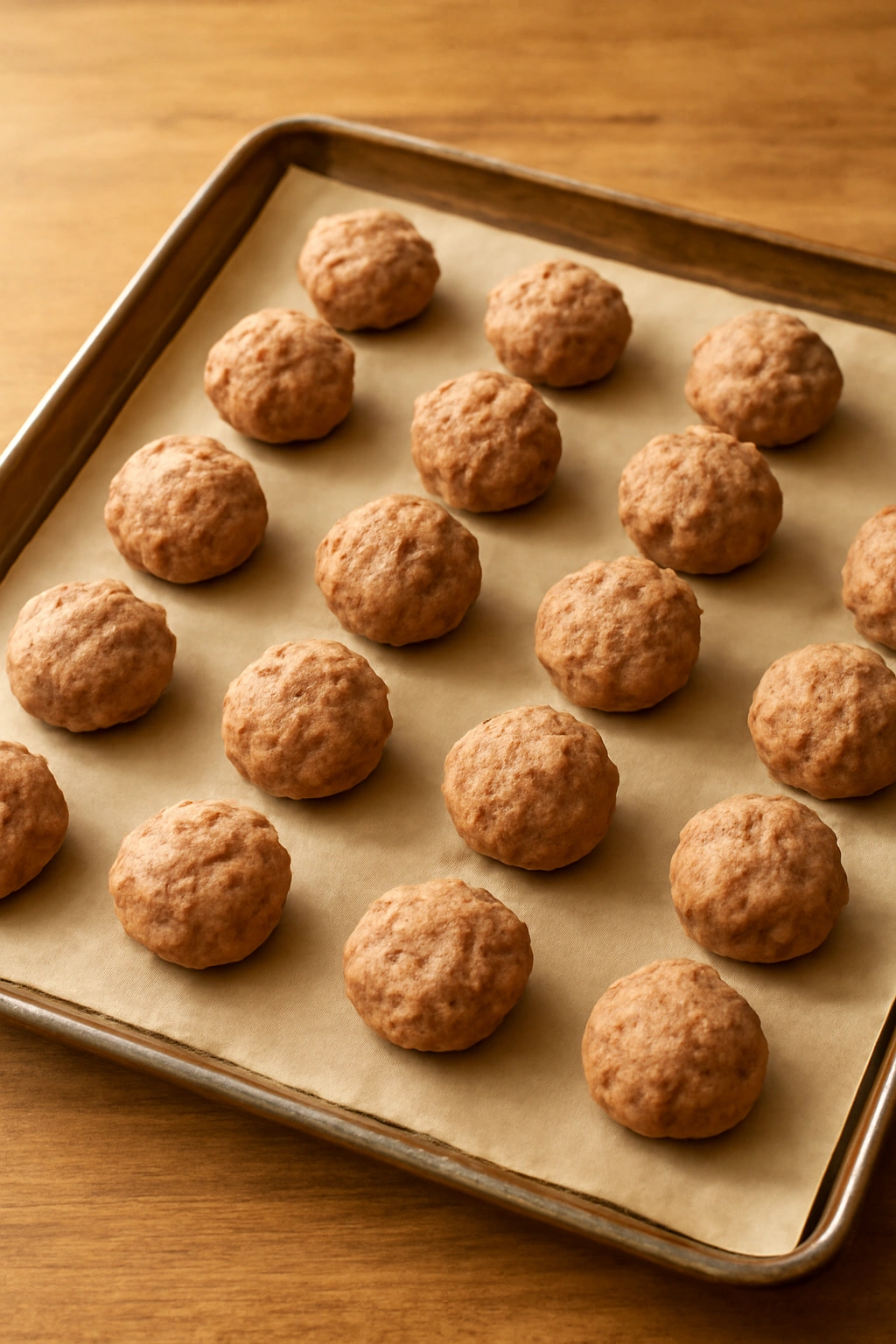
You can bake them instead. Line a baking sheet with parchment paper, arrange the meatballs on it, lightly brush with oil, and bake at 400°F (200°C) for 12-15 minutes, shaking the pan halfway through. They won’t develop quite as dark a crust as pan-browning, but they’ll still be delicious and will finish cooking in the sauce as directed.
How can I make these meatballs smaller or larger?
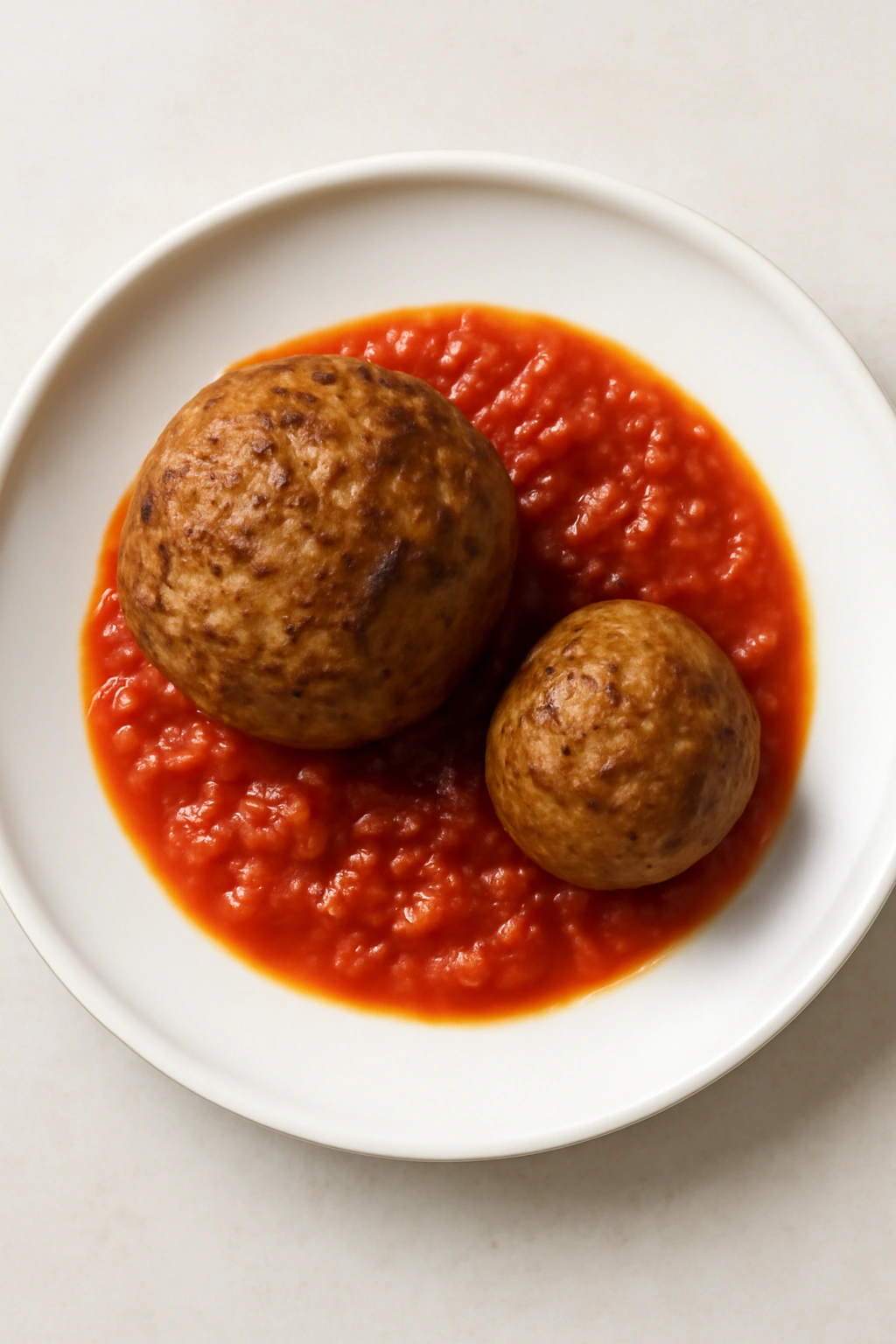
Smaller meatballs (roughly ping-pong ball size) cook faster—about 10-12 minutes in sauce instead of 15-20. Larger meatballs (walnut size) take longer—20-25 minutes. Adjust cooking time based on the size you prefer, using a meat thermometer to check doneness (160°F / 71°C in the center).
Is it better to use fresh or dried herbs?
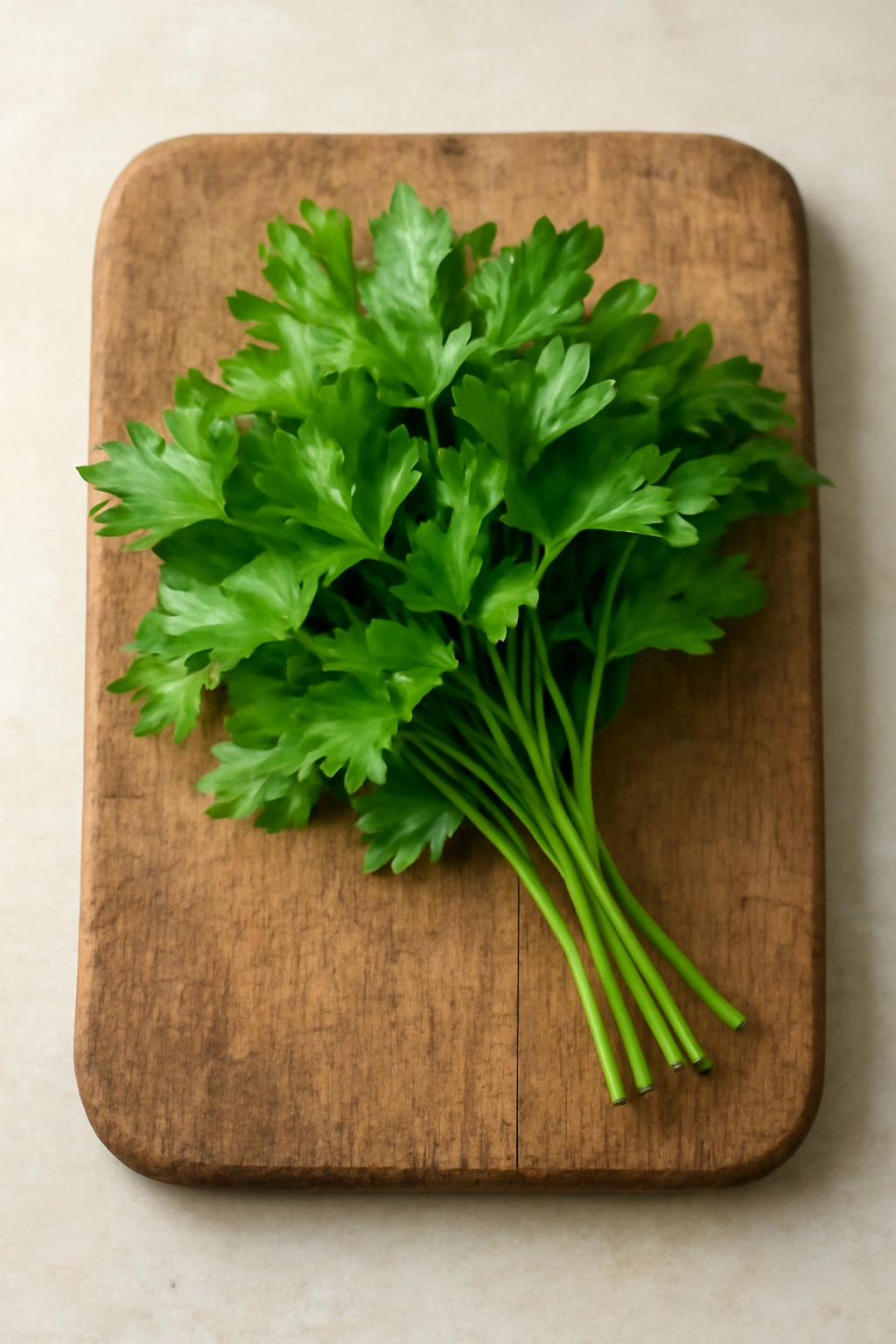
Fresh herbs are superior in flavor, texture, and appearance, but dried herbs will work if that’s what you have. Use one-third the amount of dried herbs compared to fresh (so 1 tablespoon fresh parsley becomes 1 teaspoon dried). Add dried herbs at the beginning of sauce simmering rather than mixed into the raw meatball mixture, so they have time to rehydrate.
Can I make this in a slow cooker?
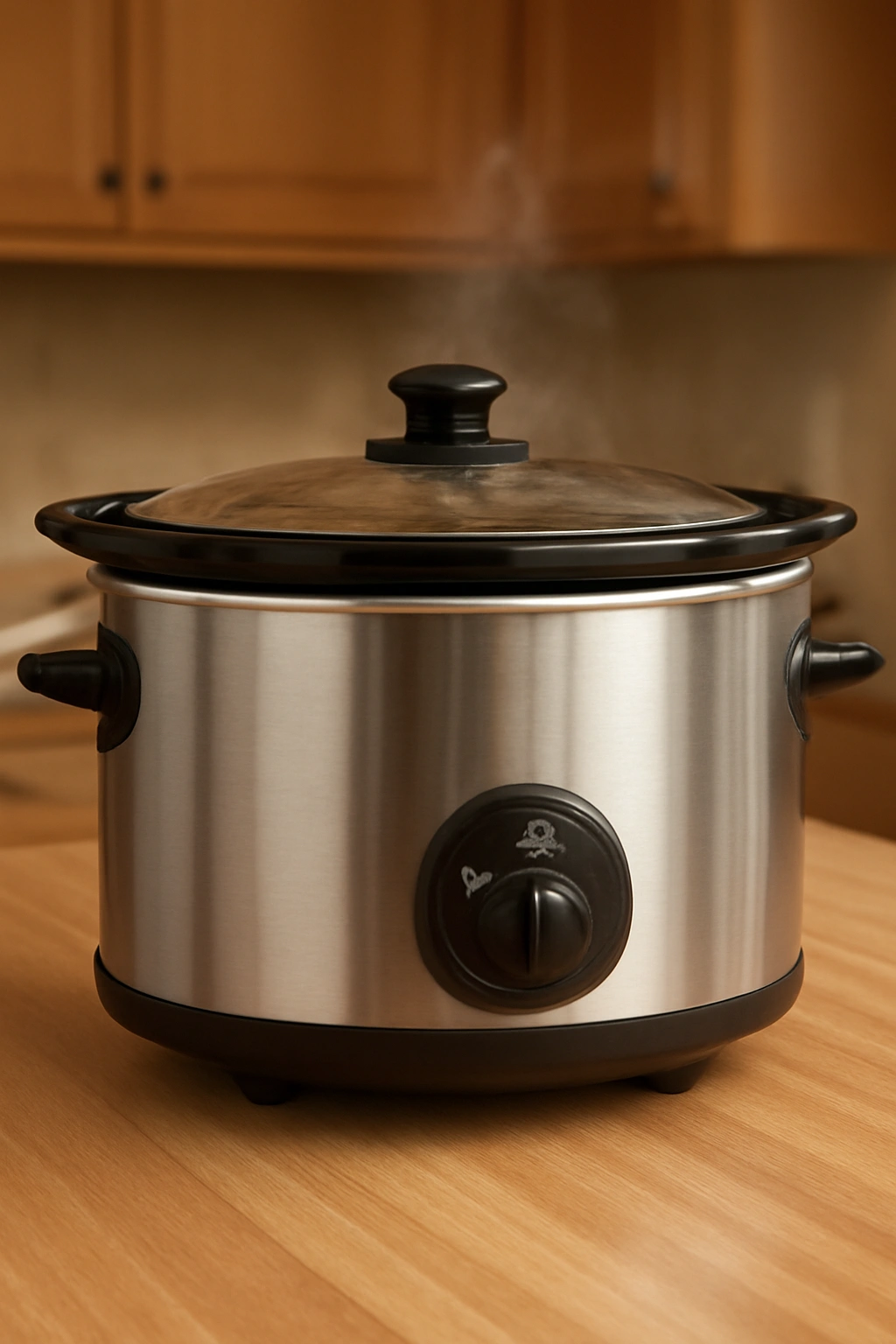
Yes. Brown the meatballs on the stovetop as directed, then transfer them to a slow cooker. Pour in the marinara sauce, stir gently to combine, cover, and cook on low for 4-6 hours or on high for 2-3 hours. Cook the pasta separately and combine just before serving. The longer cooking time in a slow cooker tenderizes the meatballs further and allows flavors to meld beautifully.
What’s the best marinara sauce to use if I’m not making my own?
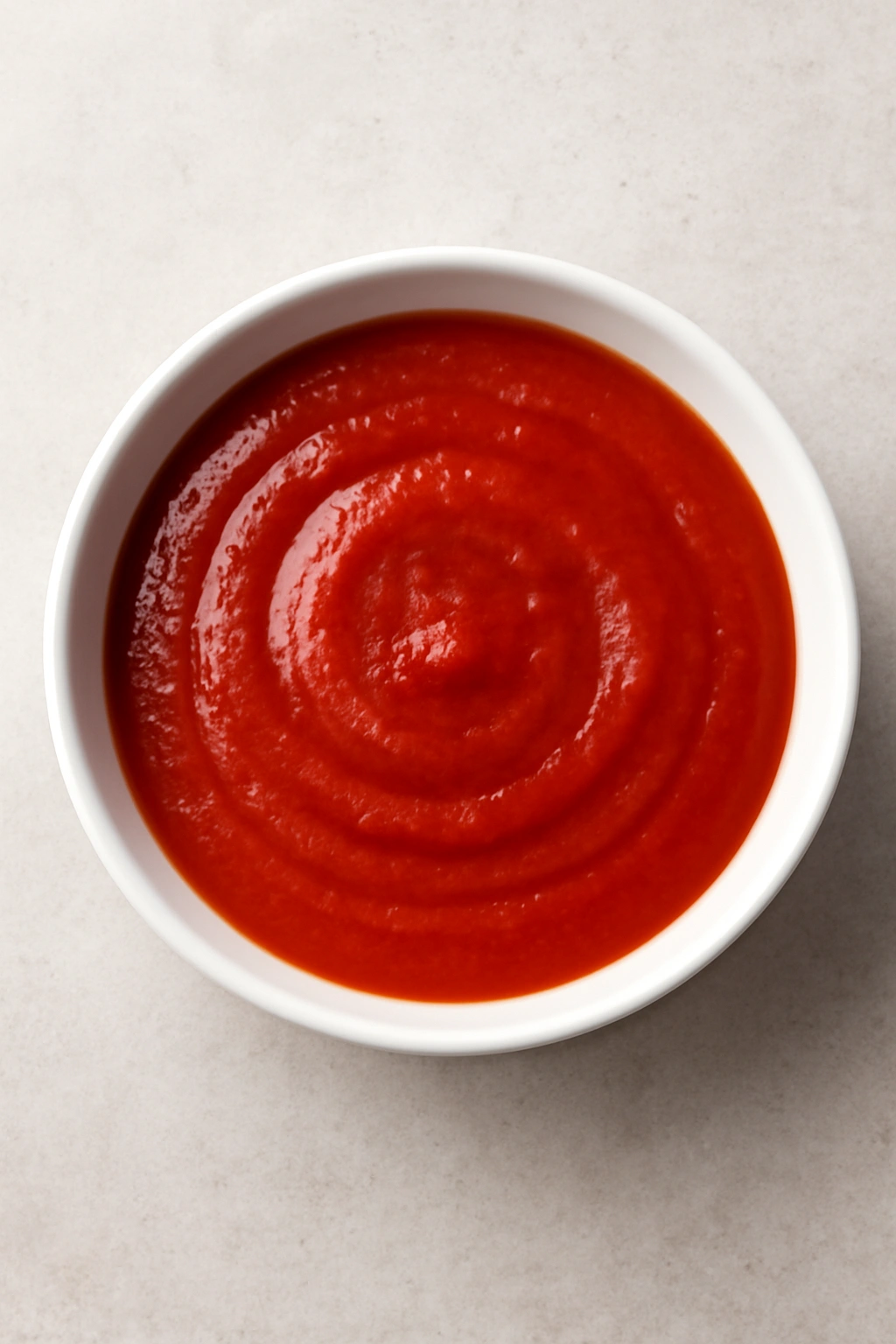
Quality matters here because the sauce is one of only a few ingredients. Rao’s is a chef favorite because it’s made with San Marzano tomatoes, has a smooth texture, and balances sweetness with acidity well. Other excellent options include Victoria, which is also smooth and well-balanced, or any sauce made primarily with San Marzano tomatoes and minimal added sugar. Avoid sauces with a grainy texture or overly sweet flavor—they’ll drag down the whole dish.
Can I prepare this dish entirely ahead for a dinner party?
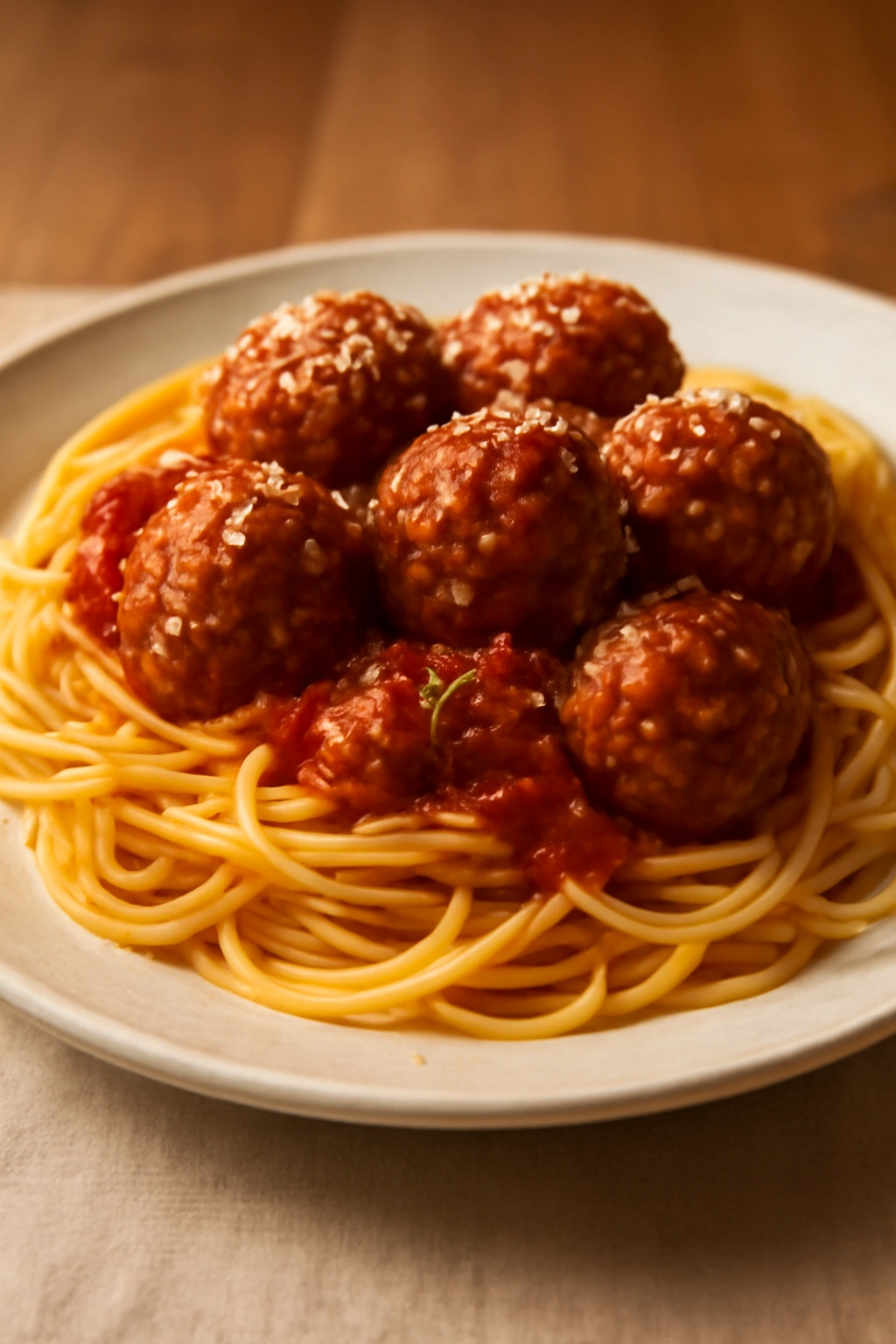
Absolutely. Make and brown the meatballs a day or two ahead, then refrigerate them. On the day of serving, reheat them gently in the sauce on the stovetop while the pasta cooks. This actually works beautifully because the flavors have time to meld overnight. The only thing you should cook fresh is the pasta—old cooked pasta, even reheated, never has quite the same texture.
Final Thoughts
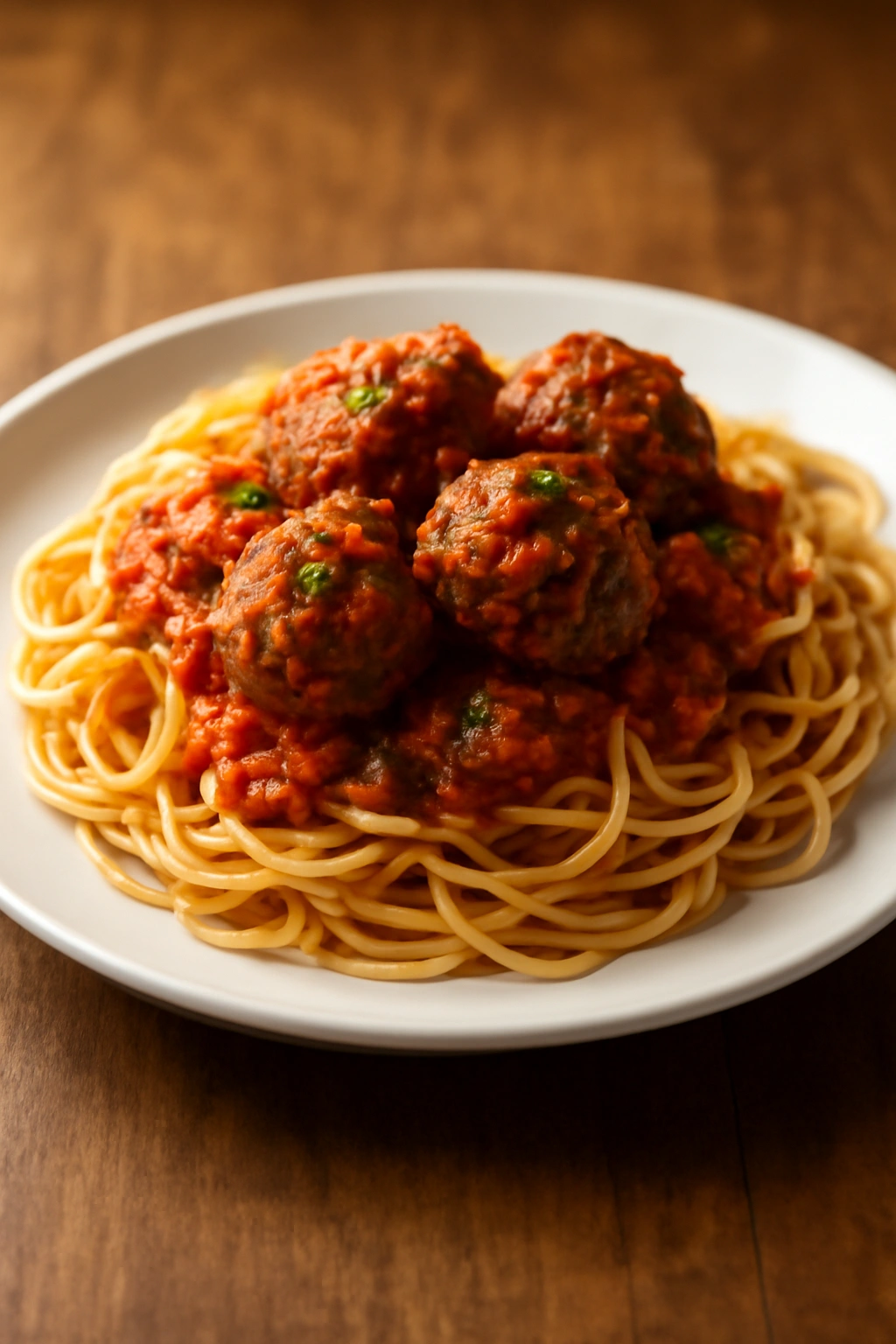
The beauty of this spaghetti and meatballs recipe is that it respects both tradition and practicality. It delivers the comfort and satisfaction that made this dish beloved, without requiring hours of labor or a long list of obscure ingredients. You’re using the same fundamental techniques professional chefs use—building flavor through browning, using the right meat blend for moisture retention, and finishing with fresh herbs and quality cheese—but applied to something straightforward and honest.
What separates good spaghetti and meatballs from forgettable versions comes down to understanding the why behind each step. Why we use a panade (to retain moisture). Why we don’t overmix (to avoid toughness). Why we brown the meatballs properly (to develop flavor). Why we simmer everything together gently (to allow flavors to marry without breaking the meatballs apart). Understand these principles, and you’ll never make a mediocre batch.
Make this recipe once and you’ll understand why it’s been passed down through families and beloved by generations. Make it twice and you’ll have internalized the techniques well enough to adapt it confidently to your own preferences. Make it a third time, and you’ll realize you’ve created something that tastes unmistakably yours—yet still honors the classic formula that makes it work. That’s the real magic of cooking: taking something beloved and making it your own.
