



You’ve got a ham sitting in your fridge looking lonely. Maybe you roasted it for Easter, hosted a holiday dinner, or grabbed one on sale with good intentions. Now you’re staring at a significant amount of leftover ham and wondering how many ham sandwiches one person can actually eat. The good news? That leftover ham is about to become the star ingredient in meals your whole family will request again and again.
The beauty of cooked ham is its remarkable versatility. It’s already prepared, which means you skip the longest part of cooking — you get straight to the flavorful part. Unlike starting from scratch with raw proteins, leftover ham slides seamlessly into casseroles, soups, pastas, breakfast dishes, and sandwiches with minimal effort. Its naturally smoky, salty flavor works across breakfast, lunch, and dinner, and it pairs beautifully with both comforting ingredients like cheese and potatoes and more adventurous flavors like jalapeños and sriracha.
The real secret is knowing where to start. Some people immediately make the classic split pea soup and call it done. Others discover you can transform ham into completely different meals — from crispy fried rice to elegant pasta dishes to handheld breakfast pockets that disappear in minutes. This isn’t about stretching a failing ingredient; it’s about discovering that the leftovers might be better than the original meal.
Transforming Ham Into Creamy Casseroles
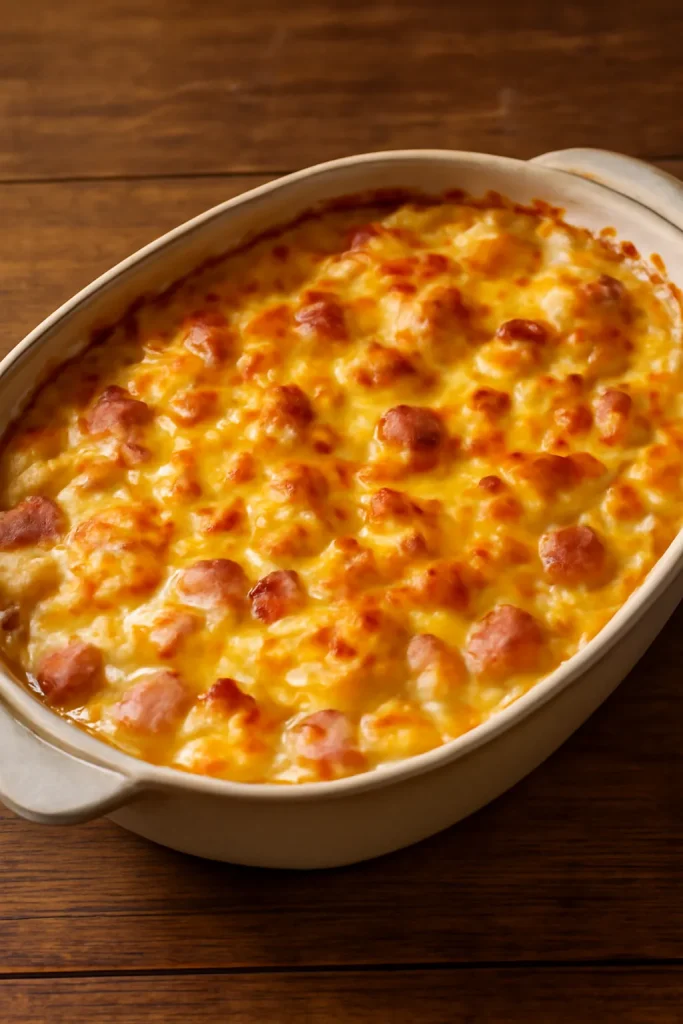
Casseroles might be the single best vehicle for using leftover ham. They’re forgiving, filling, and they transform simple ingredients into meals that taste like you’ve been cooking all day when the actual active time is under 15 minutes. The cream sauce does the heavy lifting, coating potatoes, pasta, or vegetables with richness while the ham adds a savory backbone.
The most straightforward approach starts with potatoes. A ham and potato casserole is pure comfort — diced potatoes and ham mixed with onions, bound together with a creamy cheese sauce (traditionally made with a butter and flour roux), topped with breadcrumbs, and baked until bubbly and golden. The potatoes become tender, the ham’s saltiness plays beautifully against the mild creaminess of the sauce, and the top turns crispy and brown. This works equally well for breakfast, lunch, or dinner, and leftovers reheat beautifully.
Variations expand from there. Mix ham with broccoli and cauliflower, add Swiss cheese instead of cheddar, toss in some green beans with a creamy mushroom sauce, or layer ham with scalloped potatoes for a more refined version. The formula stays the same: protein (ham) plus vegetables plus a creamy binder plus cheese equals a dish that’s ready in under an hour and feeds a crowd.
Soups That Become Better the Next Day

A good ham soup is the definition of a kitchen win. You’re turning scraps into something deeply satisfying and nourishing, and the longer it sits, the better it tastes. The ham bone alone — if you still have it — is liquid gold. Simmer it with vegetables and you’ve got a flavorful broth that becomes the base for everything from split pea to ham and bean to potato chowders.
The classic split pea soup deserves its reputation. The ham provides smoke and salt, the split peas become creamy and thick without any cream at all, and the finished soup tastes like pure comfort. This is the kind of soup you make in a slow cooker in the morning and come home to at night. It freezes beautifully too, so you can make a double batch and have ready-to-heat dinners for weeks.
Beyond split pea, ham works in potato chowders with corn and bacon, in ham and white bean soups where the beans become creamy and the ham adds unexpected depth, in 15-bean soups where you’re using the ham bone plus diced ham for double the flavor, and in creamy vegetable chowders loaded with broccoli, carrots, celery, and potatoes. These aren’t light, brothy soups — they’re hearty, substantial meals that become even better when you reheat them days later because all the flavors have time to meld. Most are naturally salty from the ham, so taste before you add additional salt.
Quick Pasta Dishes for Busy Nights
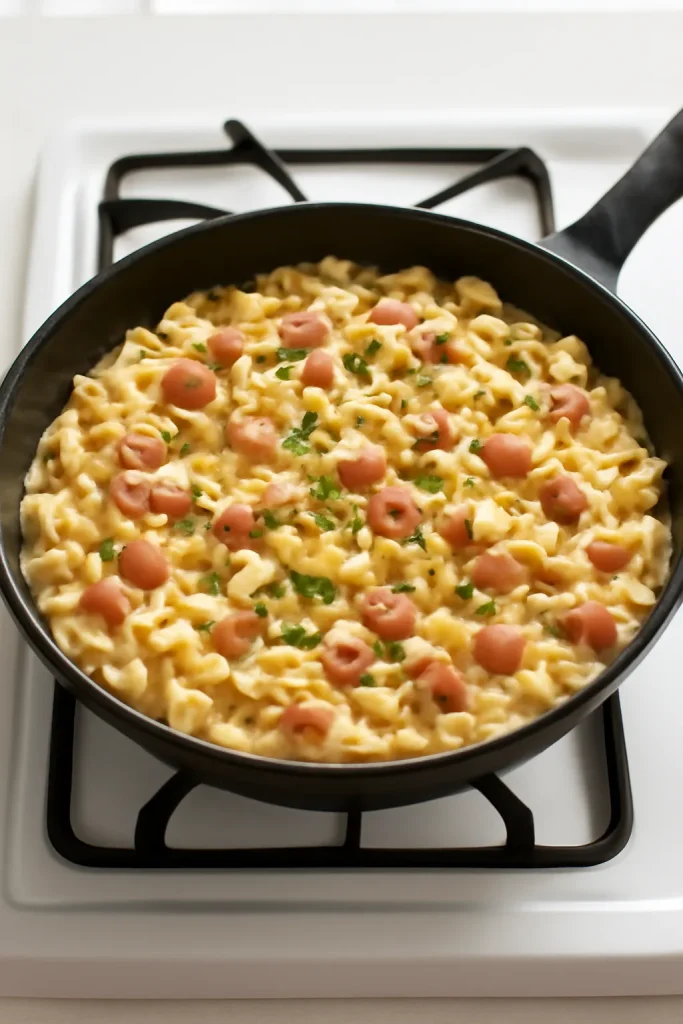
Ham and pasta is a pairing that works because of simplicity and contrast. The pasta is mild and slightly sweet, the ham is assertively salty and smoky, and the sauce — whether it’s cream-based, tomato-based, or oil-based — brings everything together. The whole dish comes together in the time it takes water to boil and pasta to cook.
One-pan ham and pasta dishes are worth their weight in gold. You cook the pasta in broth instead of water, add frozen vegetables directly to the pot, toss in diced ham, and finish with a cream cheese base that melts into a sauce. There’s no pot of boiling water to tend to, no colander to worry about, and minimal cleanup. These work beautifully for weeknight dinners when everyone’s hungry and you need something fast.
Baked pasta dishes take a different approach. Ham works in baked ziti with cheese and tomato sauce, in creamy fettuccine where the sauce is silky and rich, in lasagna where it replaces some or all of the traditional meat, and in macaroni and cheese where it adds smokiness and depth. These can be assembled in advance, refrigerated, and popped into the oven when needed — perfect for meal prep or busy days.
Breakfast Solutions That Actually Use Leftovers
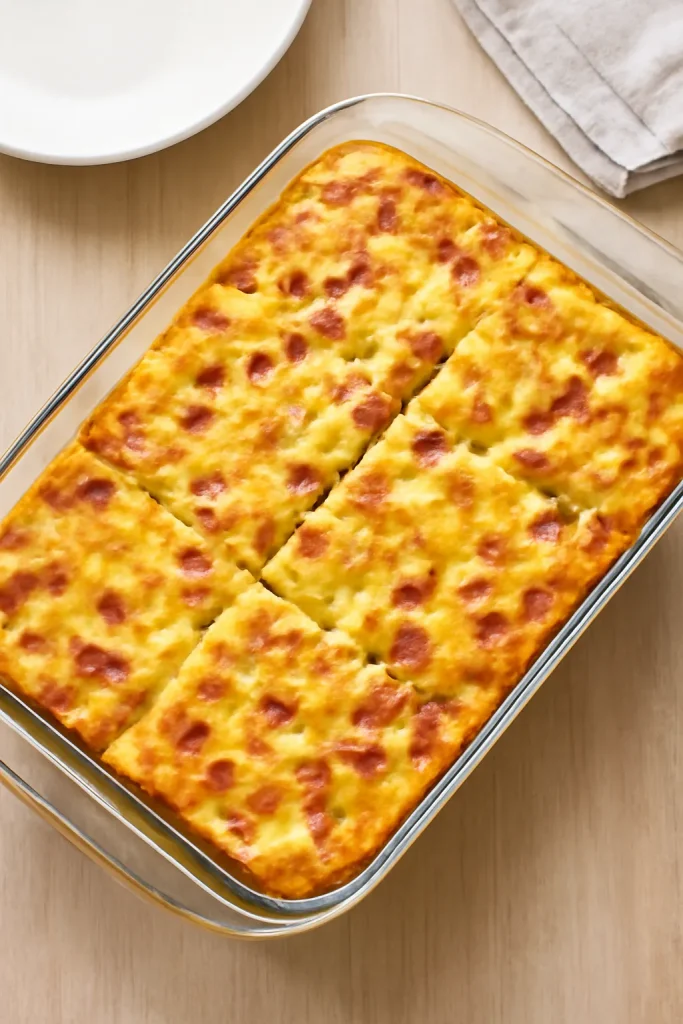
Ham at breakfast isn’t revolutionary, but the ways to use it might surprise you. The traditional ham and egg breakfast is delicious, but so are layered breakfast casseroles, fluffy omelets loaded with ham and cheese, crispy breakfast hashes with potatoes and greens, and hand-held breakfast pockets that can be eaten on the way out the door.
Breakfast casseroles are assembly-line easy and perfect for feeding a crowd. Layer cubed bread, diced ham, cheese, and vegetables in a baking dish, pour over a mixture of eggs and milk, refrigerate overnight, and bake in the morning. The bread soaks up all the egg mixture while everything melds together. Variations include adding spinach and mushrooms, using different cheeses, mixing in ham and apple butter for a slightly sweet version, or topping with crushed pork rinds if you’re going keto. These can feed 12 people from a single 9×13 pan, and they’re a godsend when you’re hosting brunch.
Individual breakfast pockets made with refrigerated crescent roll dough are ready in 20 minutes and become instant handheld breakfast solutions. Stuff them with diced ham, cheese, and a scrambled egg, fold them up, and bake. They’re like homemade Hot Pockets but infinitely better. Breakfast burritos filled with ham, eggs, cheese, and potatoes are another option — make a batch on Sunday and reheat them throughout the week.
Sandwiches and Hand-Held Meals

Not every use of leftover ham has to be complicated. Sometimes a really good ham sandwich is exactly what you need, and the variations on that theme prove there’s more than one way to make it excellent. The difference between a forgettable ham sandwich and one you crave comes down to a few smart choices: quality bread, the right cheese, and one or two complementary flavors that make it stand out.
A classic ham and Swiss on crusty bread with whole grain mustard and a thin slice of apple is legitimately perfect. The apple adds tartness and crunch, the mustard adds tang, the Swiss is mild enough not to compete with the ham, and the crusty bread has enough structure to hold everything together. Upgrade it by adding crispy bacon, a spread of apple butter, or fresh arugula. These aren’t elaborate — they just show that small additions completely change the sandwich.
Sliders on sweet Hawaiian rolls with melted cheese and a simple butter and brown sugar glaze are almost addictive. You can assemble them ahead, cover them with foil, and pop them in the oven when you need them. The rolls are sweet, the ham is salty and smoky, the cheese is gooey, and together they’re greater than the sum of their parts. The Medianoche (Cuban midnight sandwich) is another slider-style option — pressed ham, roast pork, Swiss cheese, and pickles on a sweet roll, all pressed together until the cheese melts and the bread gets crispy.
Hot ham sandwiches work equally well. Thinly sliced ham piled on toasted bread with melted cheese and mustard is simple and satisfying. The Monte Cristo — bread dipped in egg batter, griddled, and topped with ham, turkey, Swiss, and a dusting of powdered sugar — feels fancy but comes together in minutes. These handheld meals are perfect for lunch, for quick dinners, or for feeding a crowd when you need something that doesn’t require plates and forks.
Fried Rice and Global Flavors
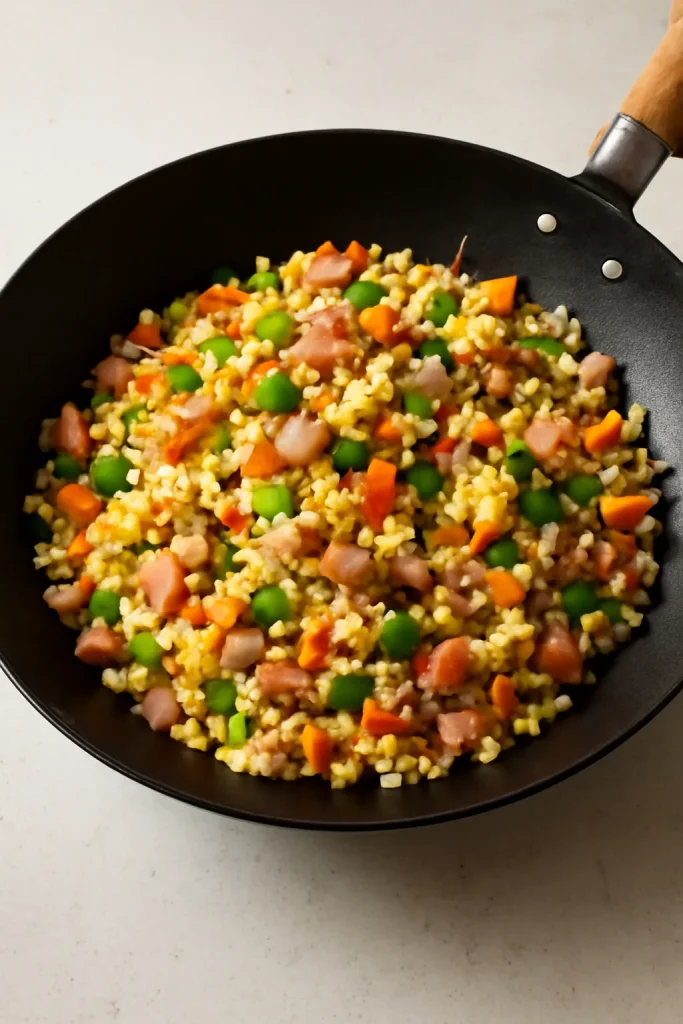
Ham fried rice sounds unconventional until you make it and realize how perfectly the smoky ham plays with garlic, soy sauce, and scrambled eggs. This is a dish that turns leftovers into something that tastes like takeout but costs a fraction of the price and takes about 30 minutes from start to finish.
The technique is straightforward: start with day-old rice (fresh rice steams and becomes mushy), cook the ham until the edges crisp, sauté aromatics, toss in frozen vegetables, scramble eggs, combine everything with rice and soy sauce, finish with a drizzle of sesame oil and sliced green onions. The key is using a large skillet or wok and cooking over medium-high heat so the rice toasts slightly instead of steaming. Add a splash of oyster sauce, hoisin, or fish sauce if you want more depth. Fresh pineapple chunks stirred in at the end echo the classic ham and pineapple pairing and add a slight sweetness.
Ham works in international dishes too. Jambalaya — where ham is cooked with sausage, chicken, and vegetables in a spiced tomato base — is a one-pot meal that’s as much about flavor building as it is about the ham. The ham’s smokiness complements the heat from cayenne pepper and the depth from the Cajun seasoning. Ham and pineapple dinner, where diced ham is sautéed with onions and pineapple in a sweet sauce, feels Hawaiian but comes together on your stovetop in 15 minutes. Muffuletta pasta takes inspiration from the New Orleans sandwich (ham, salami, provolone, and olive salad) and turns it into a creamy, rich pasta dish that’s absolutely decadent.
Creative Uses for Ham Bone and Scraps
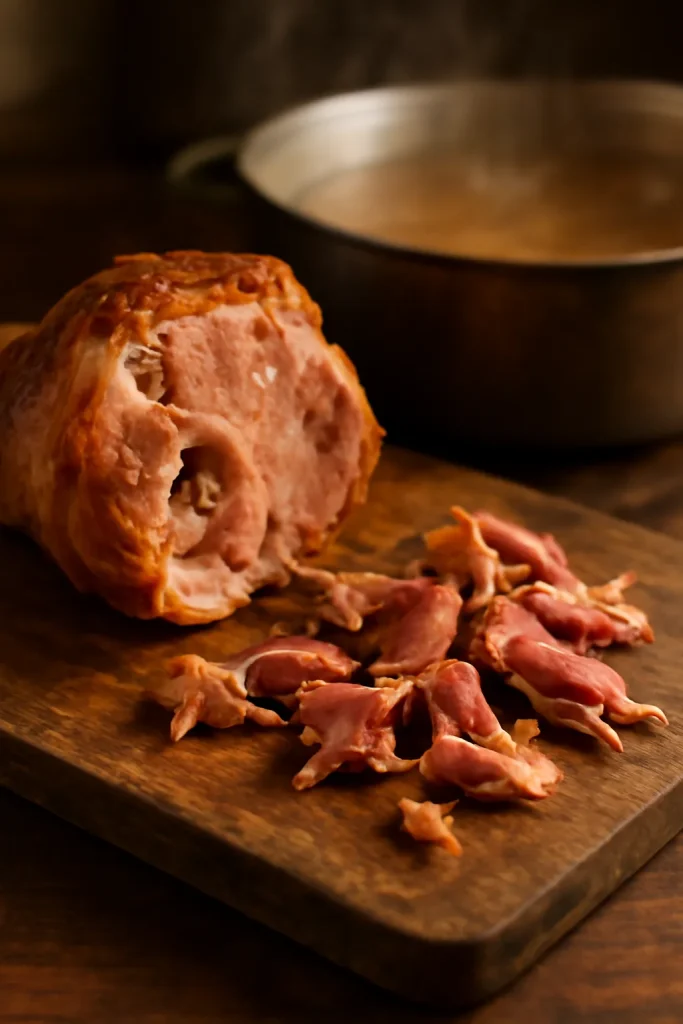
Don’t toss that ham bone. It’s about to become the secret ingredient in your best soups and broths. A ham bone simmered with vegetables for several hours releases collagen and gelatin, creating a naturally rich broth that’s the foundation for beautiful soups. Strain out the solids, pick any remaining meat from the bone, and you’ve got both broth and shredded ham ready for whatever comes next.
Ham bone soup is often split pea, but it doesn’t have to be. Use the broth to make a hearty white bean soup where creamy beans become a vehicle for the ham flavor. Make a lentil soup where earthiness of lentils balances the ham’s saltiness. Create a mixed vegetable soup where the broth makes every vegetable taste like something special. A slow cooker does the work while you do other things — throw the bone in with vegetables, herbs, and water in the morning and come home to finished broth.
Small dice leftover ham becomes the base for deviled ham — a spread made by mixing ground or finely diced ham with mustard, mayonnaise, relish, and Worcestershire sauce. Spread it on crackers as an appetizer, use it as a sandwich spread, or stir it into cream cheese for a dip. Ham salad works similarly — cooked ham mixed with mayonnaise, celery, relish, and seasonings becomes a sandwich filling that’s quick to make and keeps in the fridge for several days. Ham croquettes transform leftover ham into crispy golden bites that are perfect for brunch or as an appetizer.
Storage Strategies That Protect Your Investment
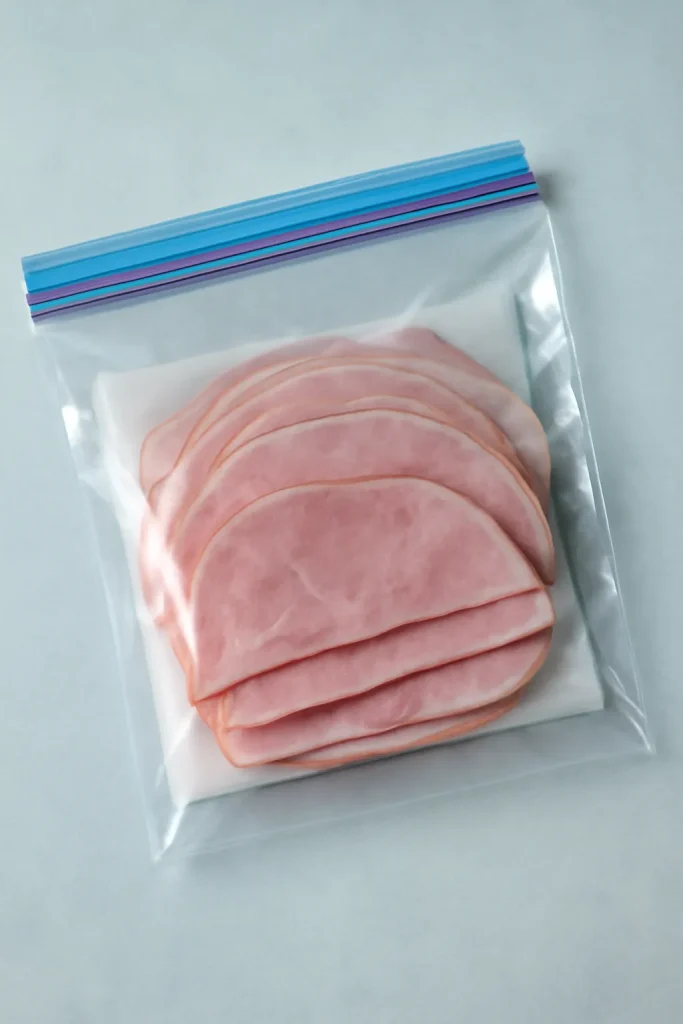
Knowing how to properly store leftover ham determines whether you get to use it in all these recipes or whether it goes to waste. Cooked ham in the refrigerator keeps for three to four days when stored in an airtight container or wrapped tightly. At room temperature, it should be eaten within two hours (this is a food safety thing, not a suggestion). Beyond that window, freeze it.
The freezer is where ham’s longevity really shows. Properly stored cooked ham keeps for up to two months. The key is removing as much air as possible to prevent freezer burn. Slice the ham before freezing so you can pull out exactly what you need without thawing an entire block. Stack slices on parchment paper, wrap them in plastic wrap, then place them in a freezer-safe bag labeled with the date. Diced ham freezes equally well — portion it into one-cup amounts so you can grab exactly what a recipe calls for. Even ham bone freezes beautifully, which means you can save it until you’re ready to make soup.
Thawing happens in the refrigerator overnight. Never thaw at room temperature because it allows bacteria to multiply. Once thawed, use the ham within three to four days. If you find yourself with ham that’s been thawed and sitting around, it’s better to cook it into something (a soup, casserole, or stir-fry) rather than keep eating it plain because the cooking process adds a safety margin.
Impressive Dishes That Don’t Take Hours
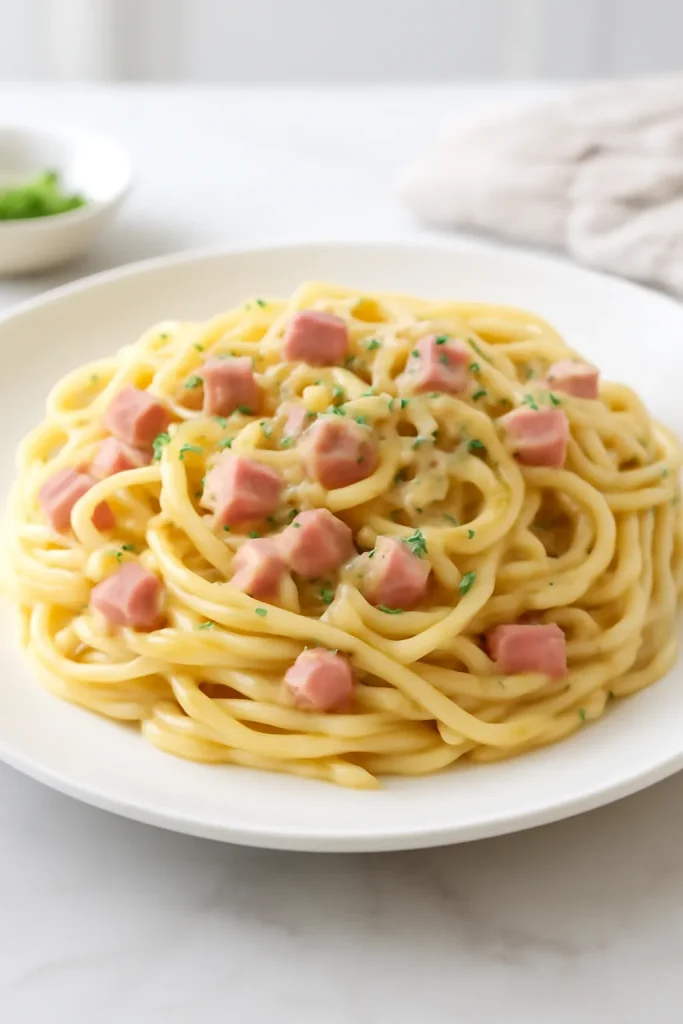
Some of the most elegant uses of leftover ham come together faster than you’d expect. This is where leftover ham shows its true value — you get something that tastes like you’ve been cooking all day when you’ve actually spent 30 minutes in the kitchen.
Chicken cordon bleu pasta takes the concept of chicken cordon bleu (thin chicken wrapped around ham and Swiss cheese) and simplifies it by combining all the components with pasta in a creamy sauce. Cook pasta, make a simple cream sauce with garlic and white wine, add diced chicken and ham, toss it all together, and you have something that tastes like it came from a restaurant. The dish works for weeknight dinners but feels elegant enough for company.
Linguine with ham and Swiss cheese is another creamy pasta that feels more complicated than it is. The sauce is made with cream of mushroom soup (homemade or canned), combined with ham, tossed with pasta, and topped with Swiss cheese. It sounds simple because it is, but the result is silky, rich, and deeply satisfying. A green salad on the side and you have a complete meal.
Ham tetrazzini — a casserole of pasta, ham, mushrooms, and cream sauce topped with cheese and breadcrumbs — comes together in 30 minutes because it uses convenience ingredients like canned cream of mushroom soup and pre-cooked pasta. It bakes until bubbly and golden, and it feeds a crowd. These are the meals that make you look like a talented cook when you’ve actually just combined smart ingredients efficiently.
Quick-Assembly Breakfast Treats and Appetizers

Beyond the full breakfast casserole, there are simpler ways to put leftover ham into morning meals. Quiche is the obvious choice — a filled pie shell holding ham, cheese, spinach, mushrooms, or whatever vegetables you have, bound together with eggs and cream, baked until set. These can be made in advance, sliced cold, and served at room temperature, or reheated gently. Individual quiches in a muffin tin cook faster and are perfect for meal prep.
Scrambled egg bread transforms a camping dish into something you might actually want to cook at home. Split a long loaf of bread lengthwise, hollow out some of the interior, stuff it with scrambled eggs, diced ham, cheese, and herbs, then bake it until the bread is crispy and the filling is set. Slice it into portions and serve it warm. It’s unexpected, it’s filling, and it feels special for breakfast.
Ham and cheese scones are a brilliant way to use leftover ham — savory scones studded with ham and cheddar cheese, served alongside a peach sauce that’s sweet and slightly spicy. They’re light and moist, work equally well as an appetizer or an afternoon snack, and prove that ham can go into baked goods in ways you might not have considered.
Flavor Combinations That Work Every Time
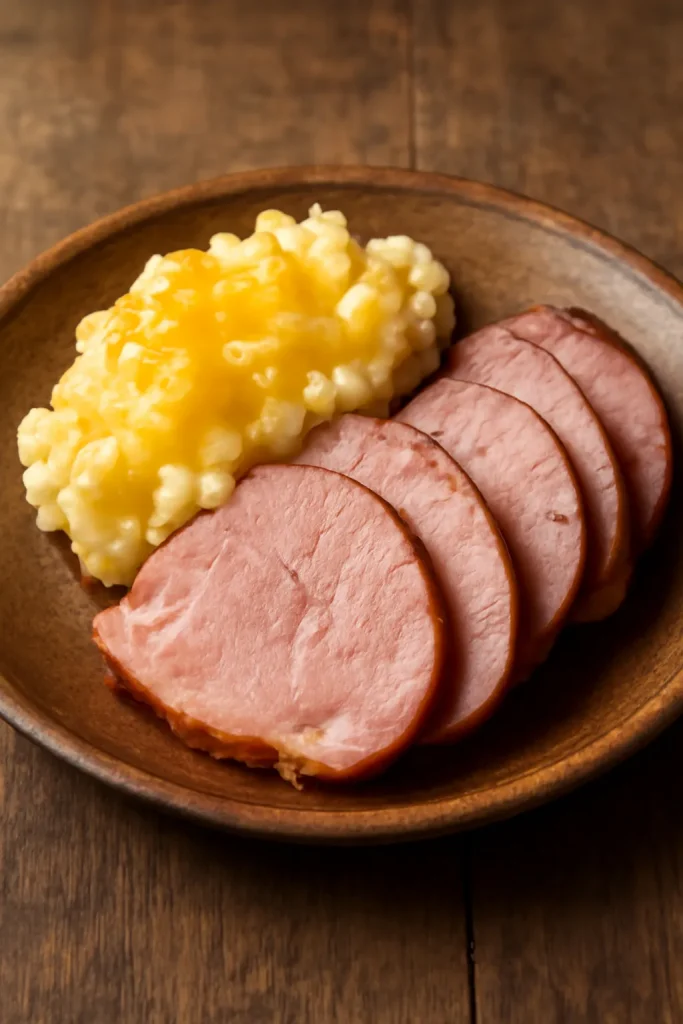
The beauty of having leftover ham is understanding which flavor combinations naturally complement its smokiness and salt. Certain pairings appear across dozens of recipes because they just work.
Ham loves potatoes. Whether they’re diced into casseroles, mashed and topped with ham and sour cream, or turned into hash with onions and peppers, the starchy mildness of potatoes becomes a vehicle for the ham’s flavor. The combination shows up so often across recipes because there’s literally no way to mess it up.
Ham and cheese are the most natural partnership. Whether it’s sharp cheddar, mild Swiss, creamy Gruyère, or tangy gouda, cheese makes ham taste even better. They’re usually combined in casseroles, melted in sandwiches, or layered in breakfast dishes, but the pairing is foolproof.
Ham also loves anything sweet or acidic. Pineapple is the obvious choice — the tartness and sweetness of fresh pineapple against ham’s smokiness is a classic for a reason. Apple butter, apples, pickles, mustard, and vinegar-based sauces all work because they cut through the ham’s saltiness with brightness. This is why ham and cheese sandwiches benefit so much from a thin slice of tart apple or a smear of whole grain mustard — those additions change everything.
Smoke and spice work beautifully together too. Cajun seasonings enhance ham’s natural smokiness. Jalapeños add heat and brightness. A pinch of cayenne pepper in a soup or casserole deepens flavors. These additions show up in jambalaya, in deviled eggs with ham and jalapeños, in spicy creamed corn with ham, and in countless other dishes that prove ham isn’t boring — it’s versatile.
Planning Ahead: Which Recipes Freeze Best
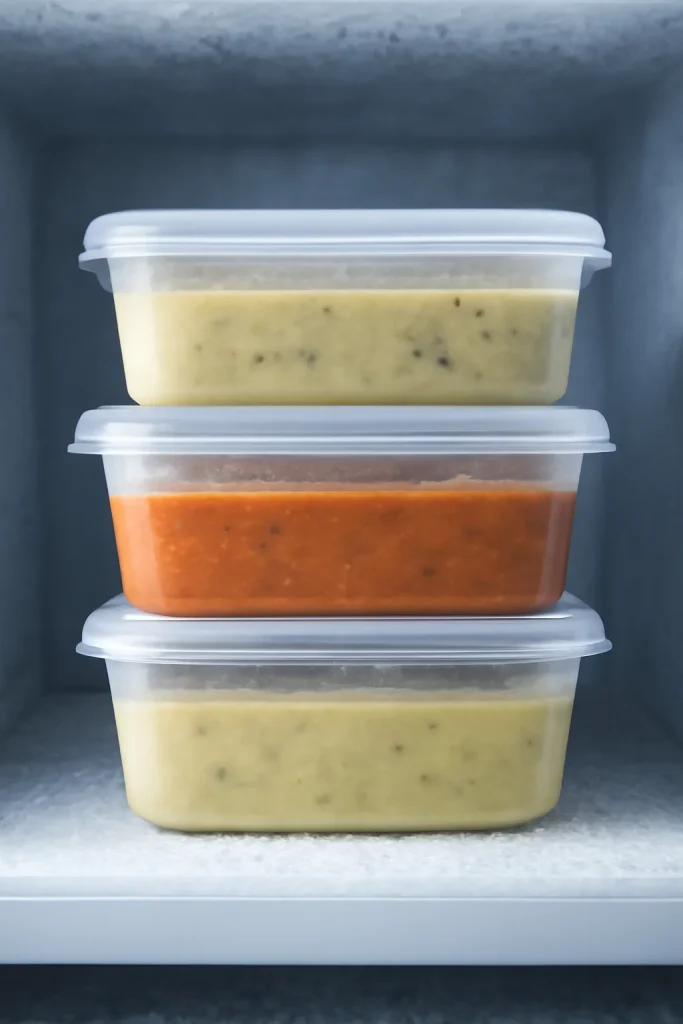
Not every leftover ham recipe is created equal when it comes to freezing. Knowing which ones actually improve in the freezer and which ones you should eat immediately helps you plan your leftover ham strategy.
Soups are freezing champions. Split pea soup, bean soup, potato soup, and vegetable chowder all freeze beautifully and taste just as good — if not better — when reheated. Leave a little headspace in your container for expansion, and freeze in portions that make sense for your household size.
Casseroles freeze wonderfully too. Assemble them in a freezer-safe baking dish, cover tightly with plastic wrap and foil, label with contents and date, and freeze. You can bake them straight from frozen (add 25-50% extra time to the baking time), or thaw overnight in the refrigerator and bake as directed. Pasta dishes, breakfast casseroles, and scalloped potatoes with ham all freeze well.
Fried rice technically freezes, but the texture changes slightly when thawed. It’s better to freeze the components (cooked rice, diced ham, vegetables) separately and assemble the fried rice fresh. If you do freeze it, reheat gently in a skillet over medium heat with a little oil to restore the texture.
Soups and casseroles should stay frozen for up to three months. Casseroles baked and then frozen last up to two months. Thaw in the refrigerator overnight before reheating, or reheat from frozen (which takes longer).
Flavor Boosts That Transform Simple Dishes
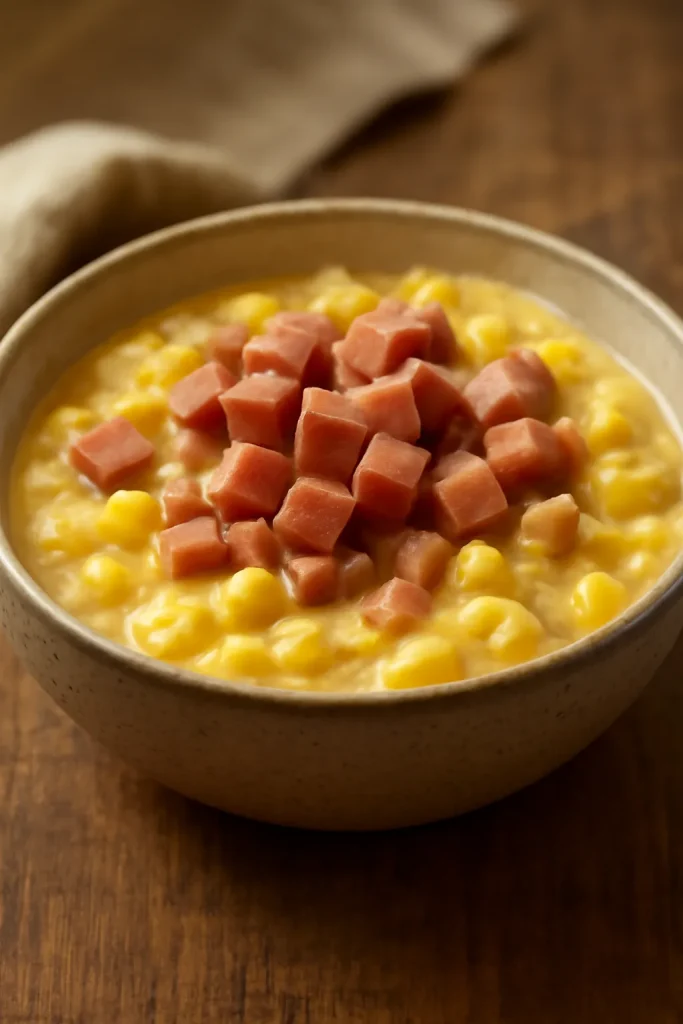
Sometimes leftover ham isn’t the star of the dish — it’s the supporting player that makes everything else taste better. Understanding how to use ham as a flavor booster rather than the main focus opens up even more possibilities.
A small amount of diced ham stirred into cream corn adds smokiness and salt without requiring ham to be the main event. A handful of ham folded into scrambled eggs changes them from basic breakfast into something interesting. Ham added to split pea soup is expected, but ham added to regular vegetable soup or minestrone adds an unexpected depth that makes people ask what the secret ingredient is.
Bacon is often called for in recipes, but ham works beautifully as a substitute when you have it on hand. The smokiness is similar, the saltiness is comparable, and the ham often adds a meatier texture that bacon doesn’t provide. Swap ham for bacon in green bean casseroles, in soups, in vegetable side dishes, and in breakfast preparations.
A ham bone used to make broth elevates every dish it touches. That broth becomes the liquid for cooking rice, for making gravy, or for cooking potatoes. You’re not just using leftovers — you’re creating an ingredient that makes everything taste like you spent hours in the kitchen when you actually spent 20 minutes simmering a bone.
Final Thoughts
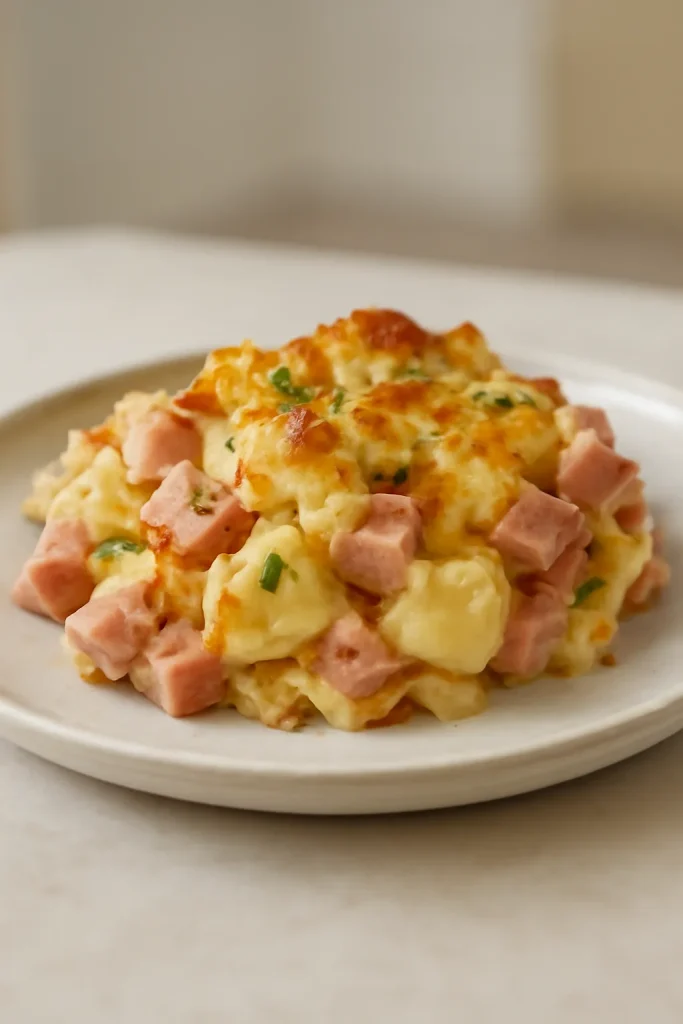
The truth is that leftover ham is the opposite of a problem. It’s a gift that keeps on giving, transforming into completely different meals depending on what you’re in the mood for. Whether you’re craving comfort (casseroles and soups), speed (fried rice and one-pot pastas), elegance (creamy fettuccine and filled quiche), or something handheld (sandwiches and breakfast pockets), there’s a leftover ham recipe waiting for you.
Start simple if you’re new to cooking with leftover ham. Make a ham and potato casserole or a basic ham and split pea soup. Once you see how easily ham transforms into multiple meals, branch out into the fried rice, the fancy pastas, the creative breakfast dishes. Within a few weeks, you’ll have favorite go-to recipes that you specifically cook ham ahead of time just so you can have the leftovers.
The real magic is this: leftover ham makes meal planning easier because it’s already cooked, already flavorful, and already waiting in your refrigerator. Store it properly, choose recipes that match your schedule and appetite, and that ham that seemed like a problem becomes proof that leftovers, when approached creatively, might be the best part of the meal.
